23 Best Concrete Driveway Ideas and Designs
Concrete driveways stopped being just a plain gray slab a long time ago. Below are 23 real ideas, from budget-friendly plain concrete to decorative stamped and stained finishes, plus the cracking, curing, and cost facts most galleries skip entirely. One thing worth deciding before you pick a style: match the driveway’s look to your home’s…


Never miss an update — choose FarmFoodFamily as your preferred source on Google.
How it works: Tap the button below to open Google’s settings page, then check the box next to FarmFoodFamily.
Tap the checkbox to turn it blue — that’s how you know it’s set.
Concrete driveways stopped being just a plain gray slab a long time ago. Below are 23 real ideas, from budget-friendly plain concrete to decorative stamped and stained finishes, plus the cracking, curing, and cost facts most galleries skip entirely.
One thing worth deciding before you pick a style: match the driveway’s look to your home’s actual architecture, a sleek modern design can look out of place against a traditional or Spanish-style house, and vice versa.
Related: 30 Best Driveway Gate Ideas and Designs
23 concrete driveway ideas
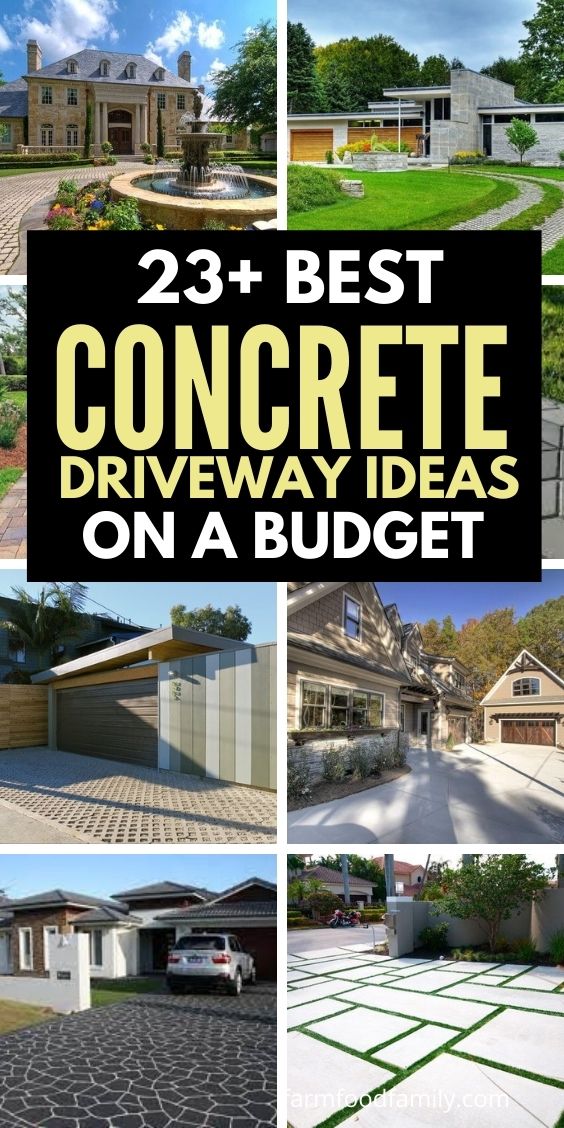
To narrow down your choices, here are 23 concrete driveway ideas which you can pattern your driveway designs on.
1. European fan design
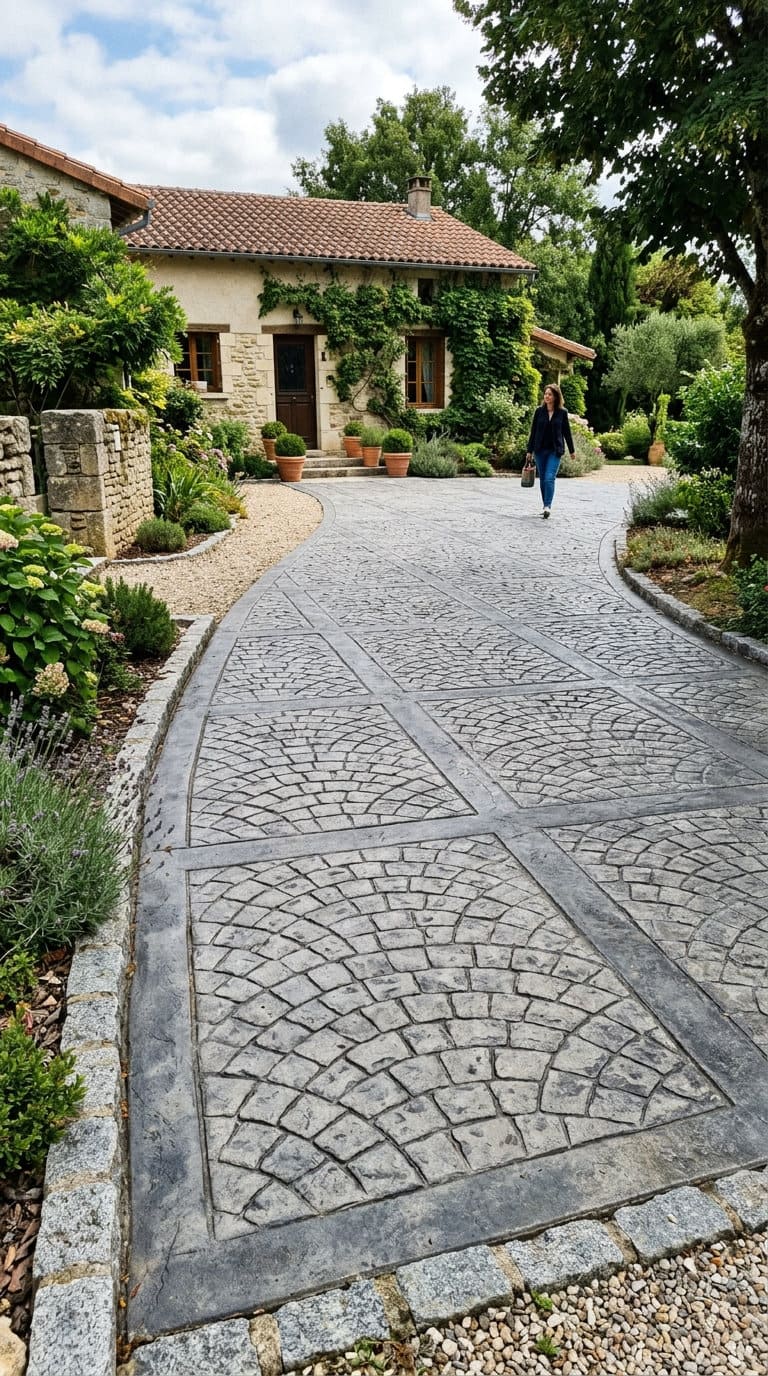
Made of cobblestone, a standout design in its own right thanks to its added angles and dynamics. The fan pattern is imprinted inside a square frame of longer cobblestones.
Finely angled stained cobblestones add even more visual interest. If cobblestone is what you’re after, the cobblestone driveway guide covers real cost and installation detail.
Answer 4 quick questions and get matched to the exact fix for your yard — drainage, budget, layout, or something else entirely.
Take the Free Quiz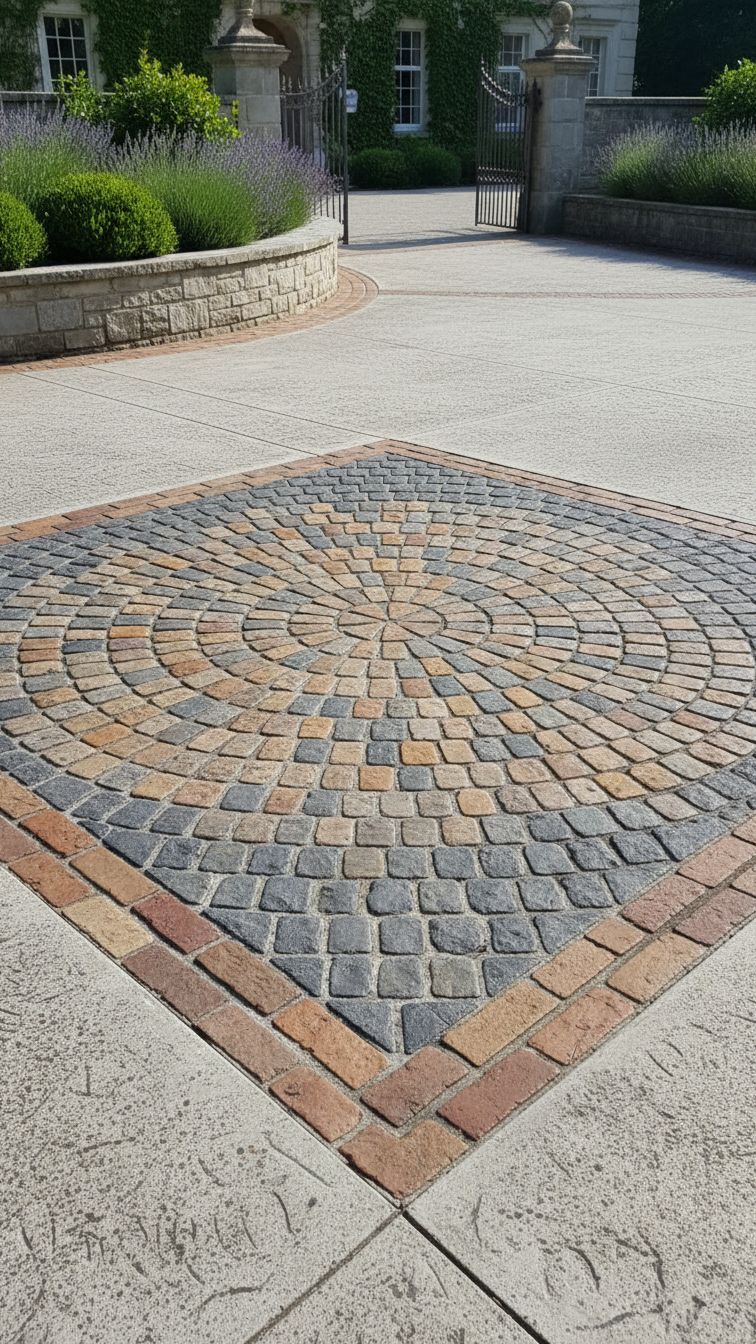
Related: Cobblestone Driveway: Cost, Installation, Pros and Cons
2. The horseshoe driveway
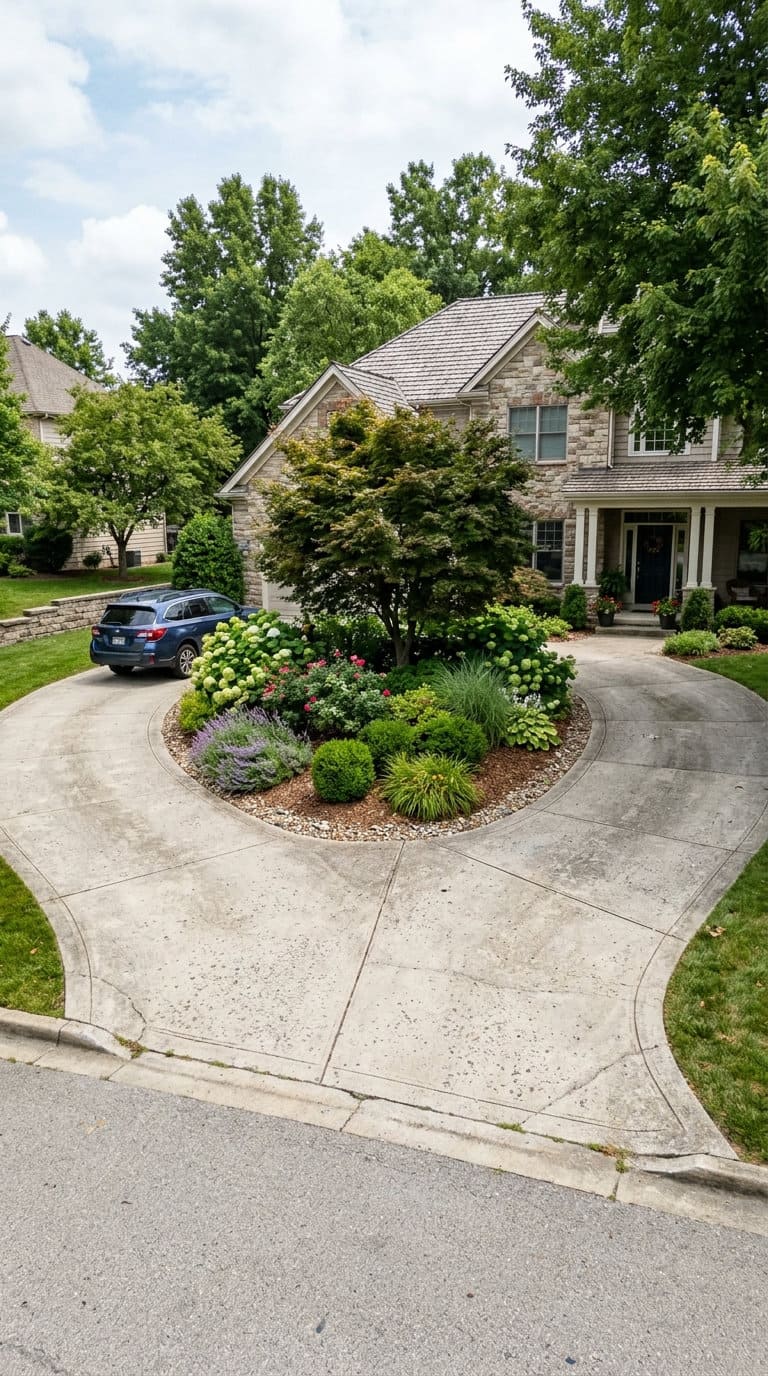
Whether your house is upscale or a modest bungalow, a horseshoe shape gives the driveway real visual interest.
It starts at the main door, curves on both sides, and rounds up at a central point, a natural spot for a flower bed or some greenery. Want the same shape in a different material? Tar-and-chip works well for it too.
Related: Tar And Chip Driveway: Cost, Pros and Cons
3. Slatted concrete paver driveway
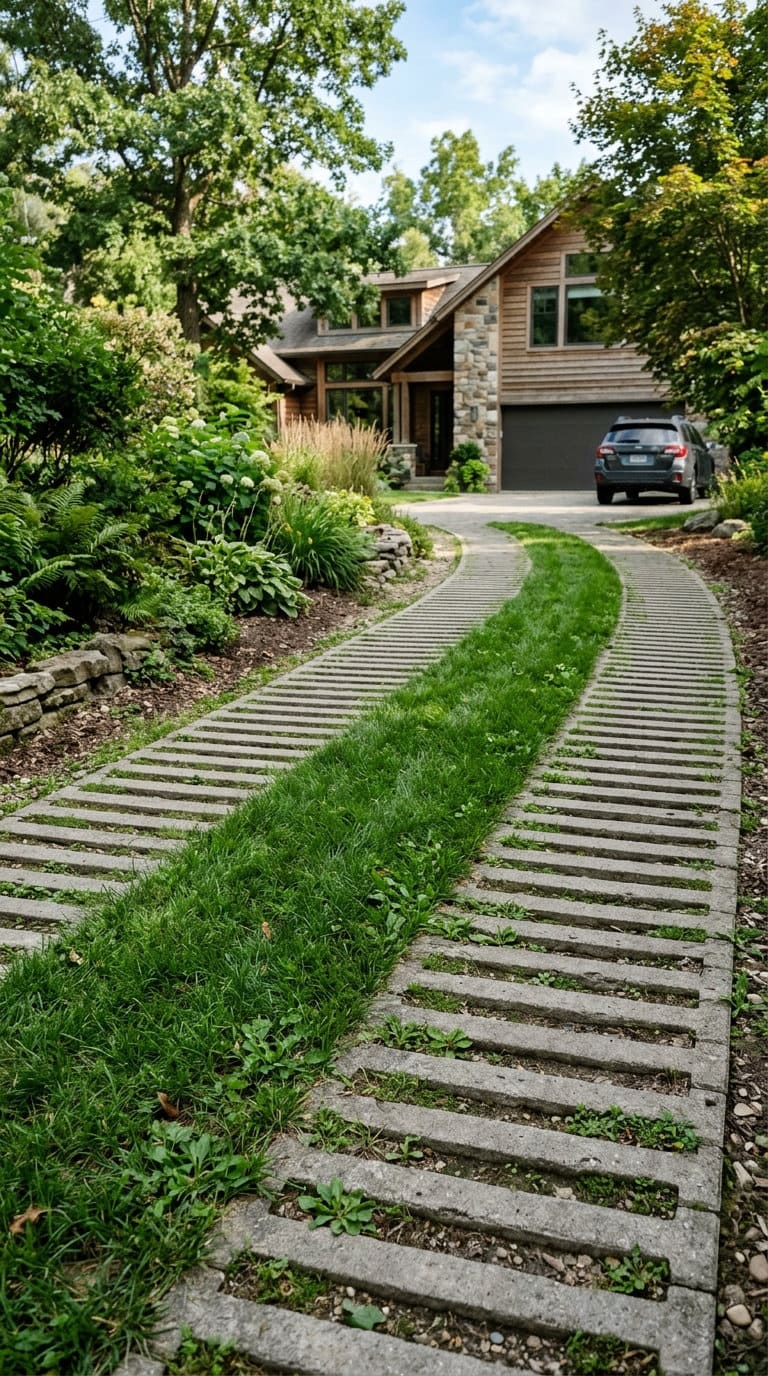
The irregular shape of slatted concrete pavers stands out especially against a contemporary house, and works well with neutral tones and turf grass along the sides. Wood fences and additional concrete accents complement it too.
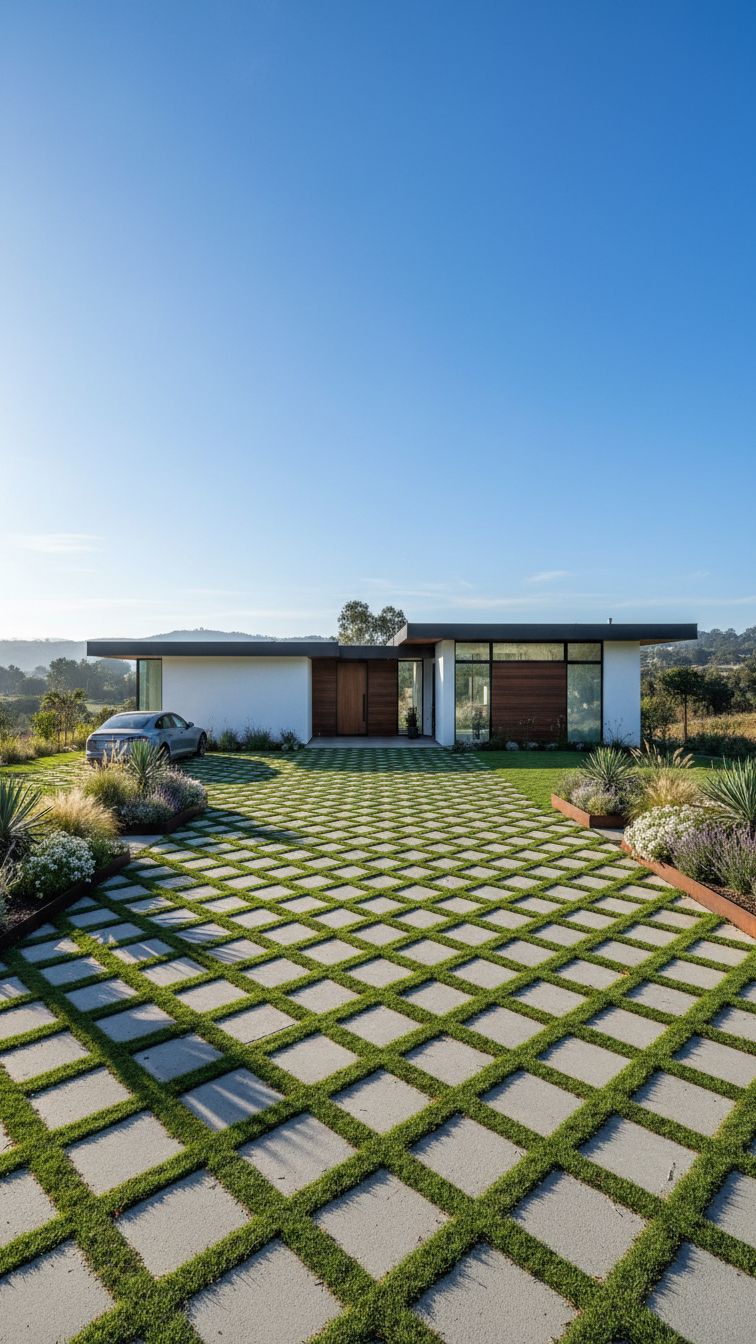
You can also install it grid-style over lush turf, which brightens even a small house and reads as genuinely eco-friendly. For more on paver-based hardscaping generally, the paver patio ideas guide is a good next stop.
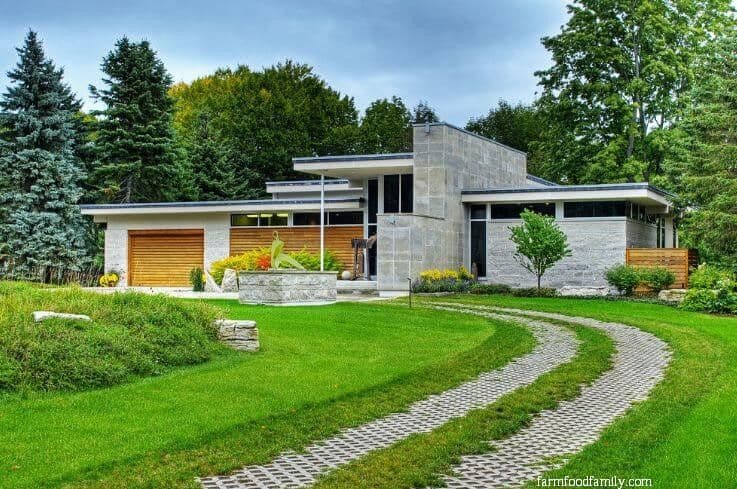
And speaking of slatted concrete paver, you can also install it like a car grid on a field of lush, green turf. Aside from really brightening even the smallest house, it also makes everything look eco-friendly like this one.
Most yard problems trace back to one specific, fixable cause. Find yours in 4 quick questions.
Take the Free QuizRelated: 30+ Easy & Inexpensive Paver Patio Ideas and Designs
4. Large concrete slabs
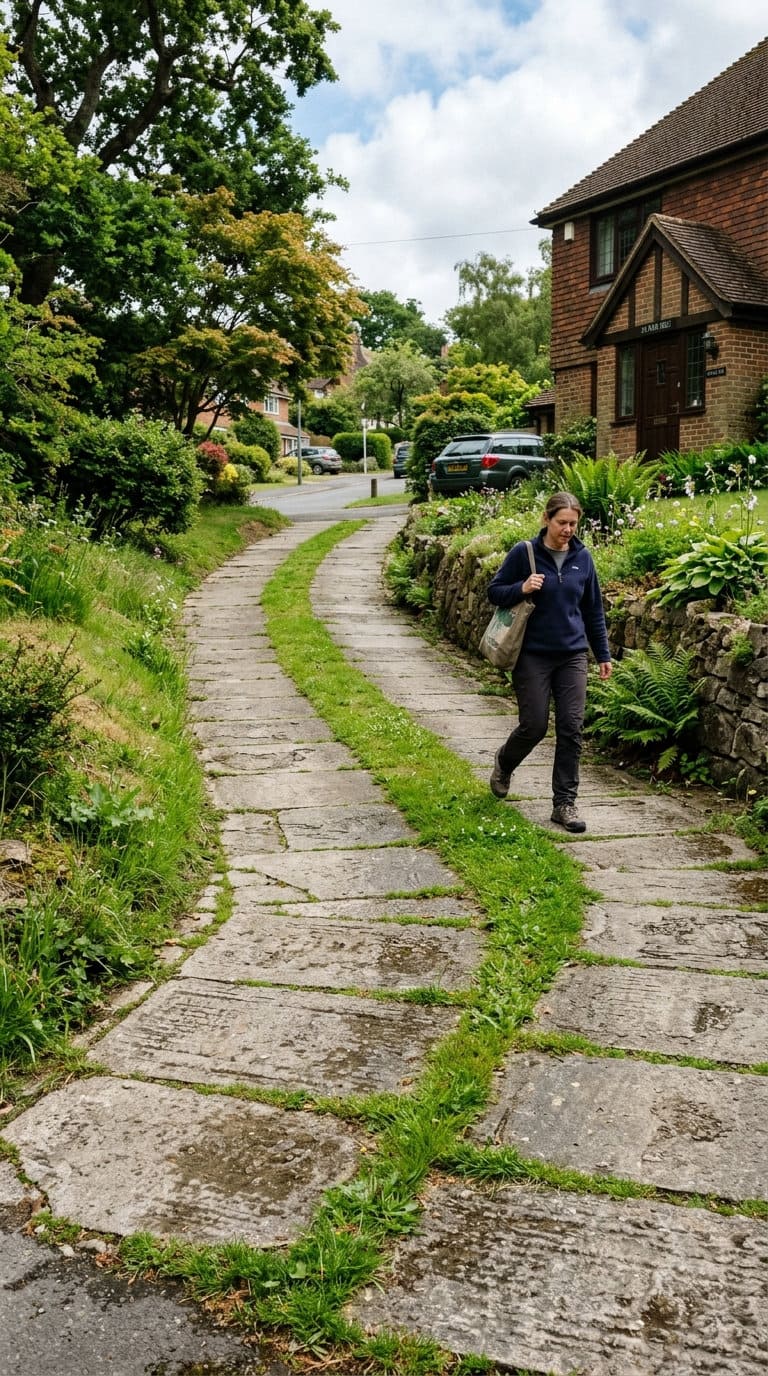
Compared to smaller blocks, large slabs create a real illusion of spaciousness. Trimmed grass or pea gravel between slabs softens the contrast, and staining or reinforcing the slabs adds slip resistance.
This design works especially well on sloped driveways. Pairing slabs with a gravel infill? The types of gravel guide breaks down which kind to use.
Related: 19+ Types Of Gravel For Driveways and Landscaping
5. Stained bricks
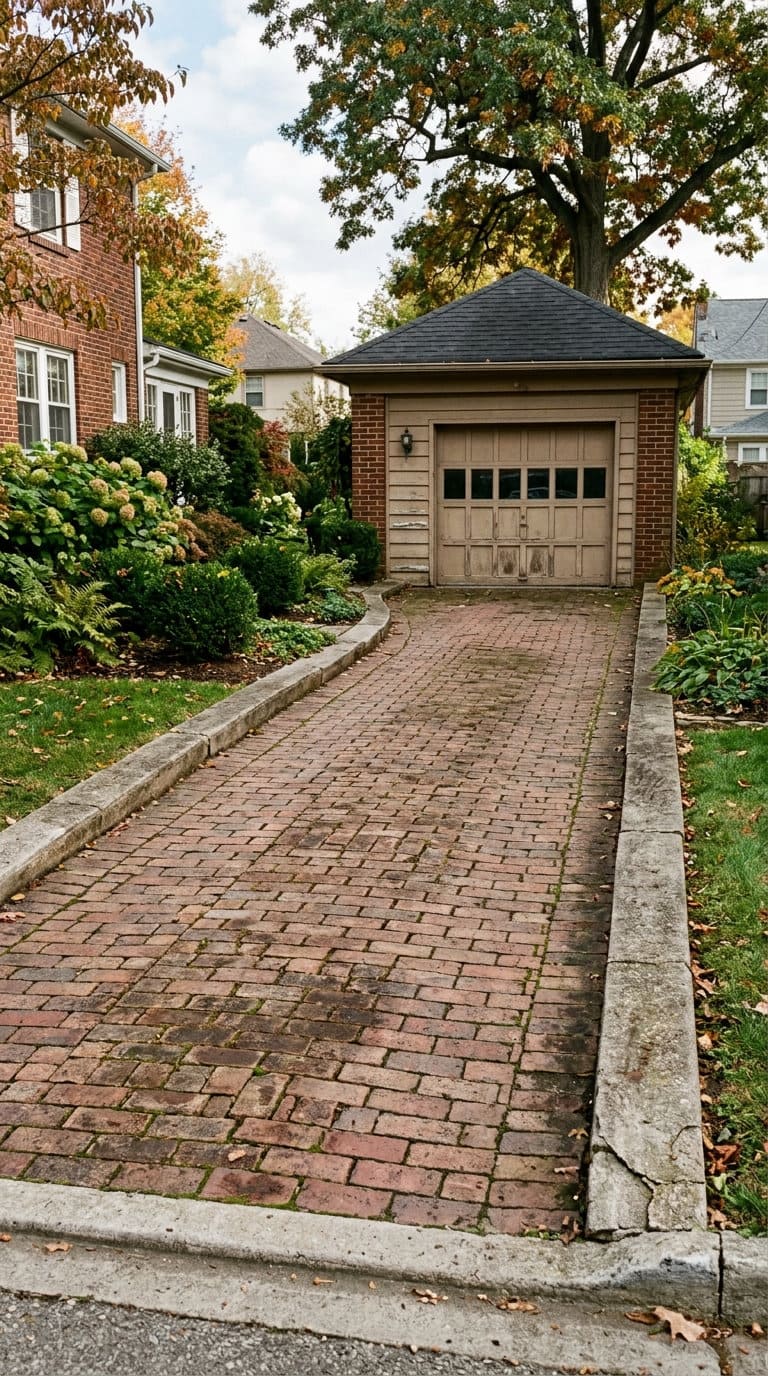
For a Hispanic or modern Mediterranean feel, stained brick driveways deliver both. Pair with flat concrete edging and plants along the path to the garage for a real contrast.
Curious about the material itself? The brick driveway guide covers cost and installation.
Related: Brick Driveway: Cost, Installation, Pros and Cons
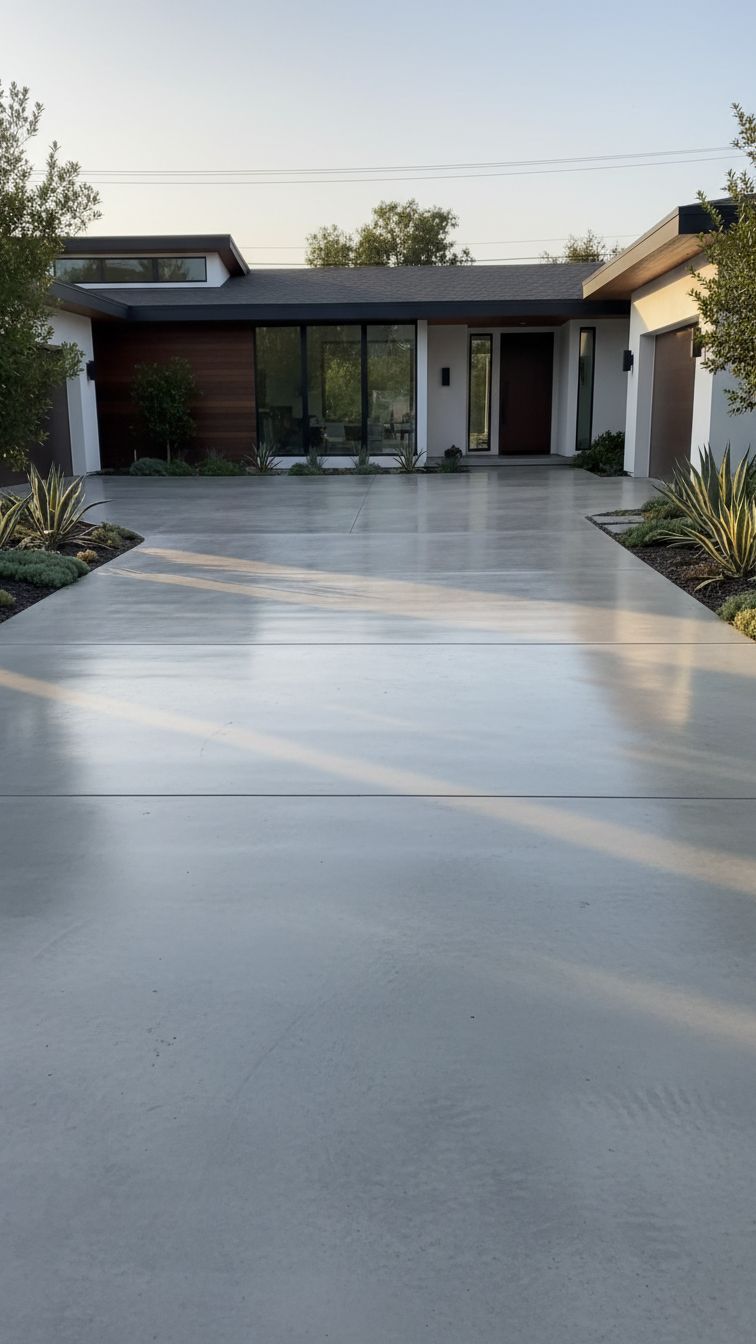
6. Polished concrete driveway
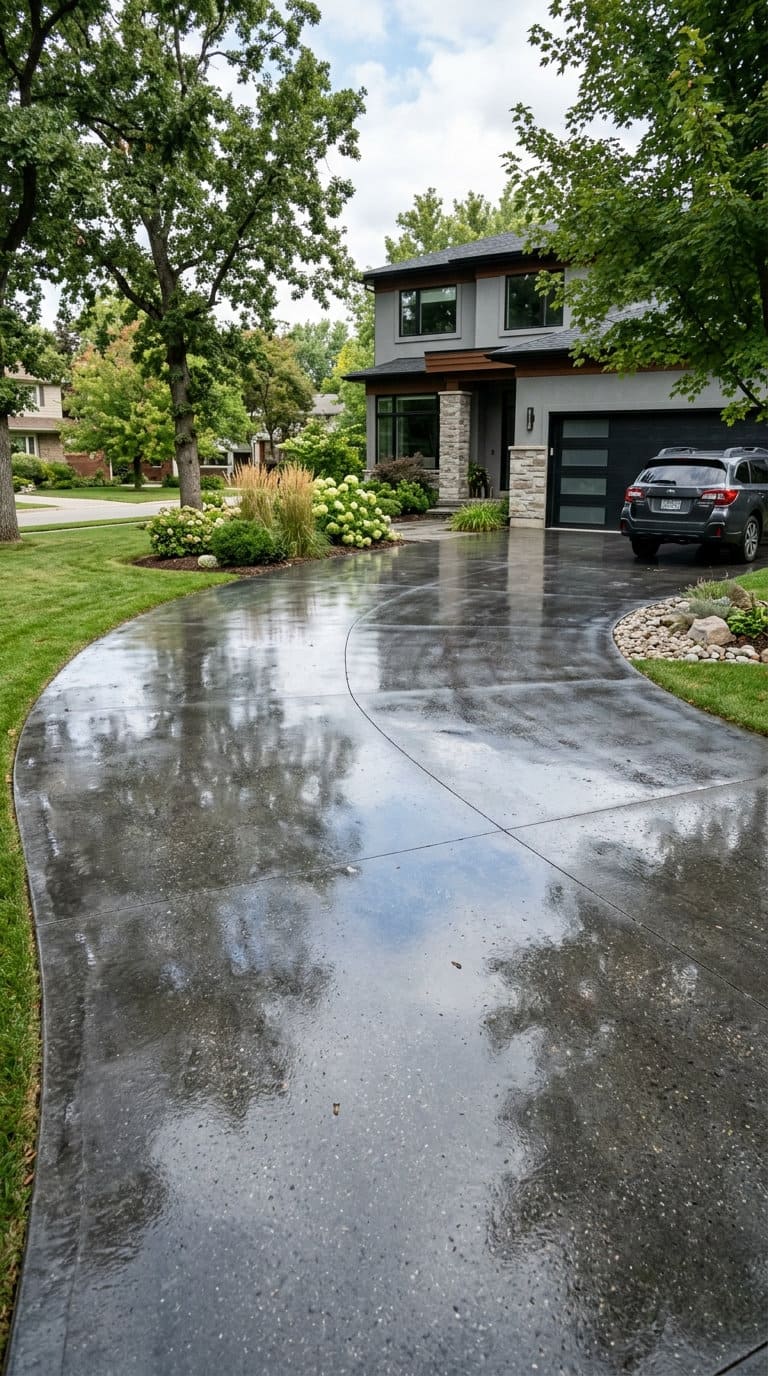
For a shiny, sophisticated look to any home, you can opt for a polished concrete driveway.


It has become a popular option for reinforcing driveways not only for its sleek look but also because it adds UV resistance to the driveway floor and extreme durability.
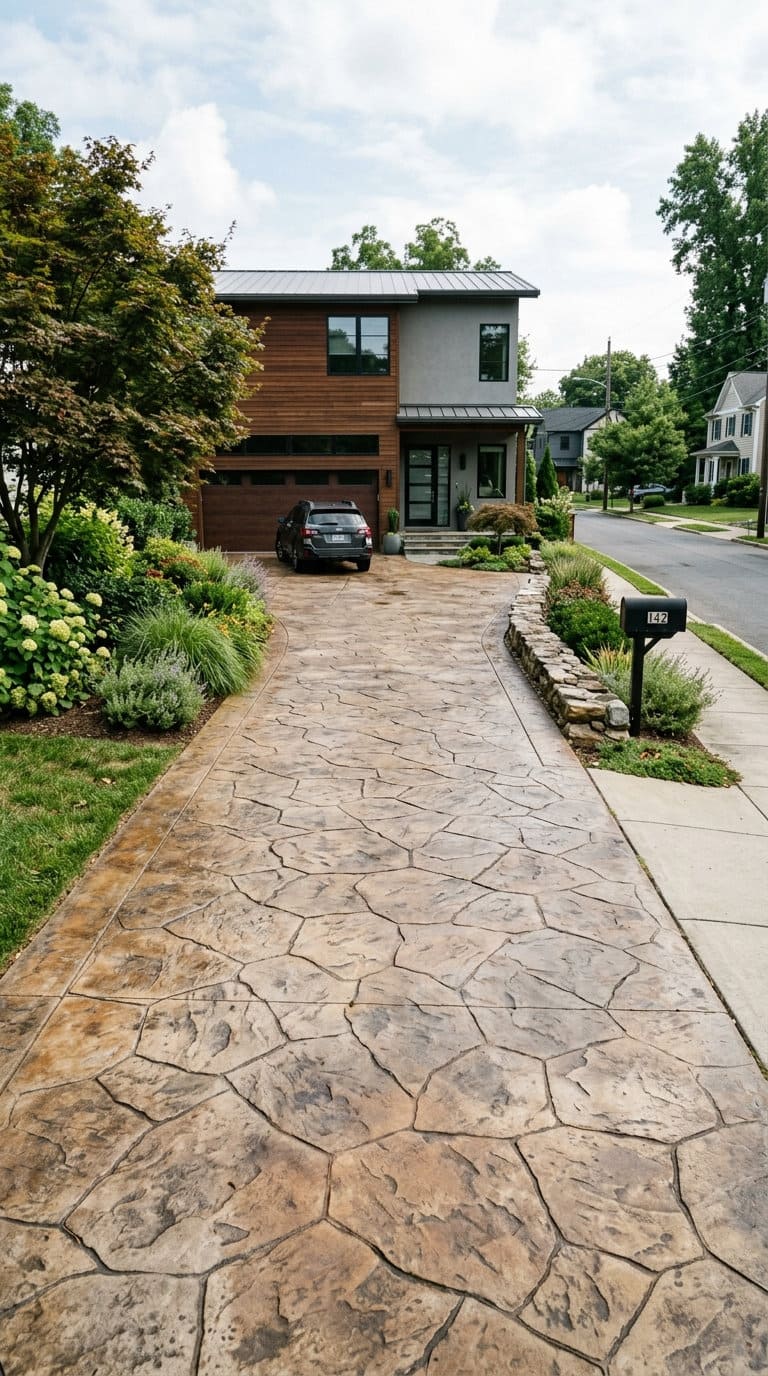
7. Stamped concrete driveway
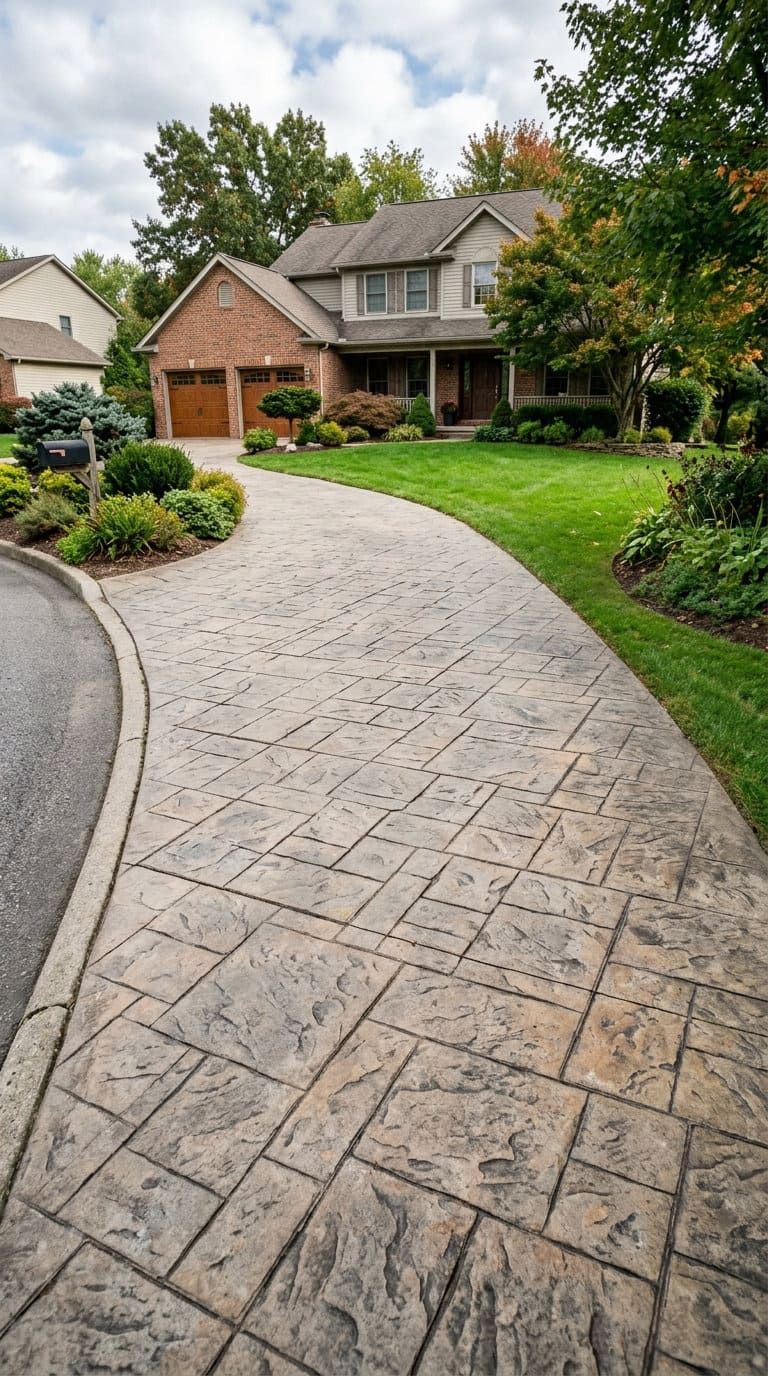
Not only is stamped concrete an impeccable material for patios, courtyards or pool decks, it is also outstanding for driveways. It gives a high-end tone to any driveway. It is a go-to material because of its extreme weather resistance and known durability.
8. Exposed aggregate concrete driveway
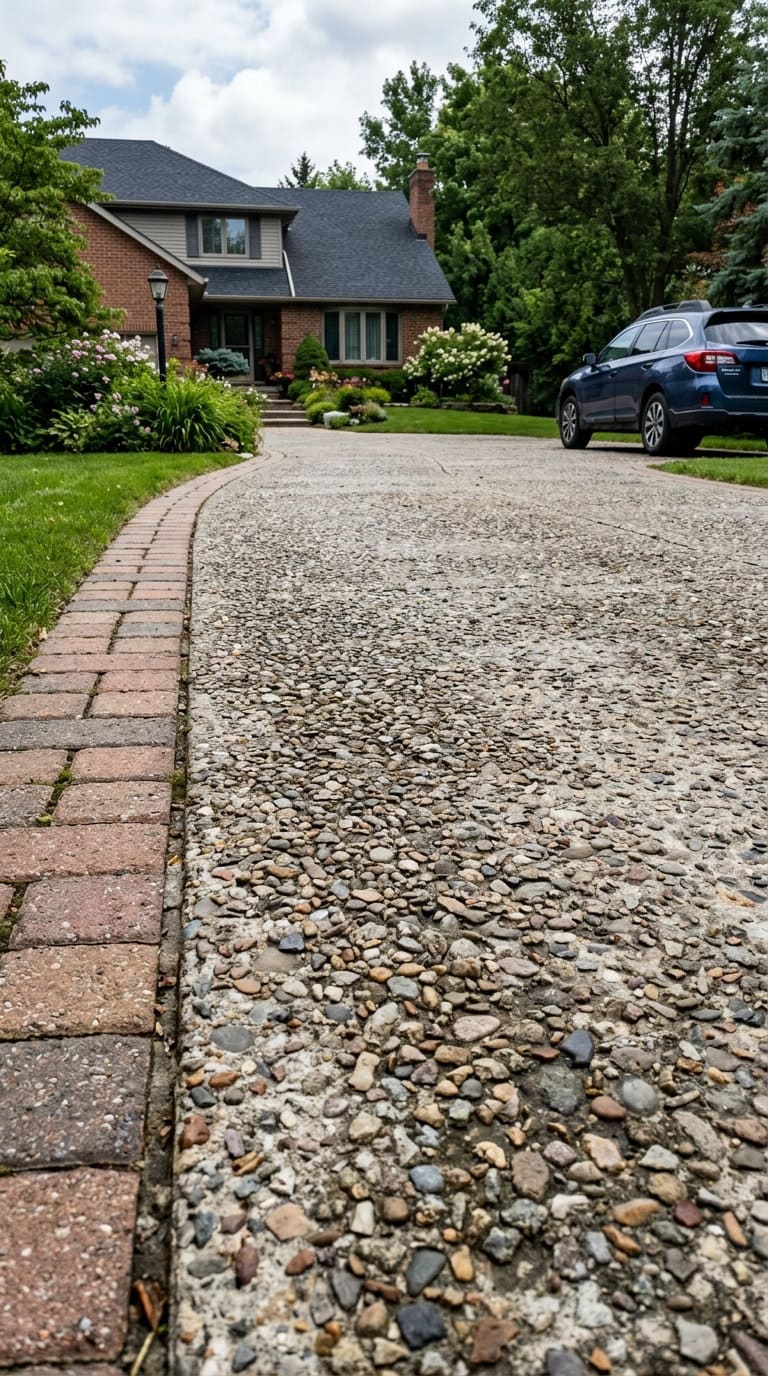
Aside from its durability, it is also a low maintenance choice. It is also skid resistant, making your driveway safer for everyone. While it is more expensive than standard aggregate, it is totally worth the shot especially if you use concrete or brick joints to act as frame.
The average homeowner spends $616/year on yard fixes that don't address the real problem. Find out what yours actually is — before you spend another dollar.
Take the Free Quiz9. Plain concrete driveway
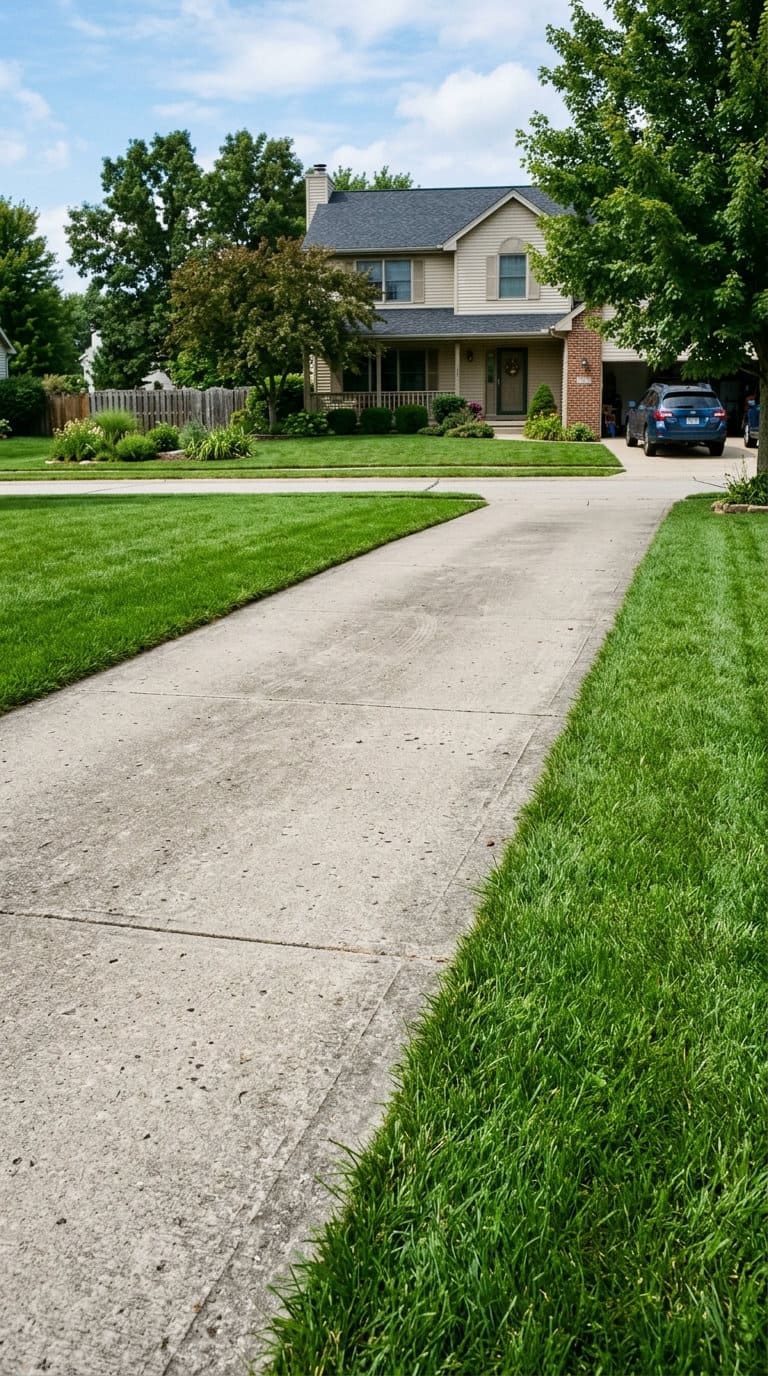
The cheapest concrete driveway of all would be sticking to just poured, plain concrete. You do not need angled joints for this. You can just imprint its own line joint while the concrete is drying up. It can become just as beautiful if you have healthy lawn grasses on the sides.
10. Geometric stamped lines
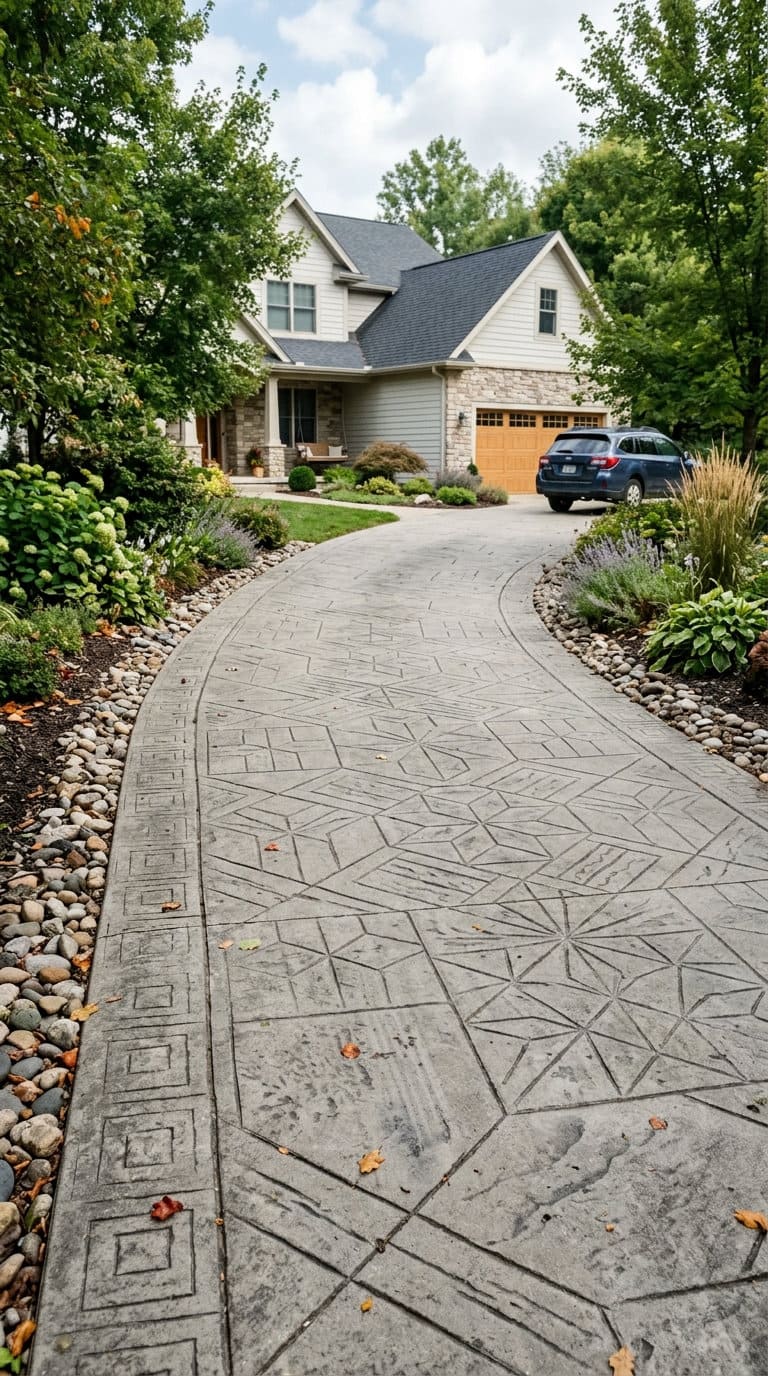
Sometimes, you can use the stamped joints to form geometric patterns on long concrete driveways. You may opt not to polish it for a more rustic feel.
It would benefit more with natural edgings like raised soil beds, some greens, and flowers on the side.
11. Broom finish concrete driveway
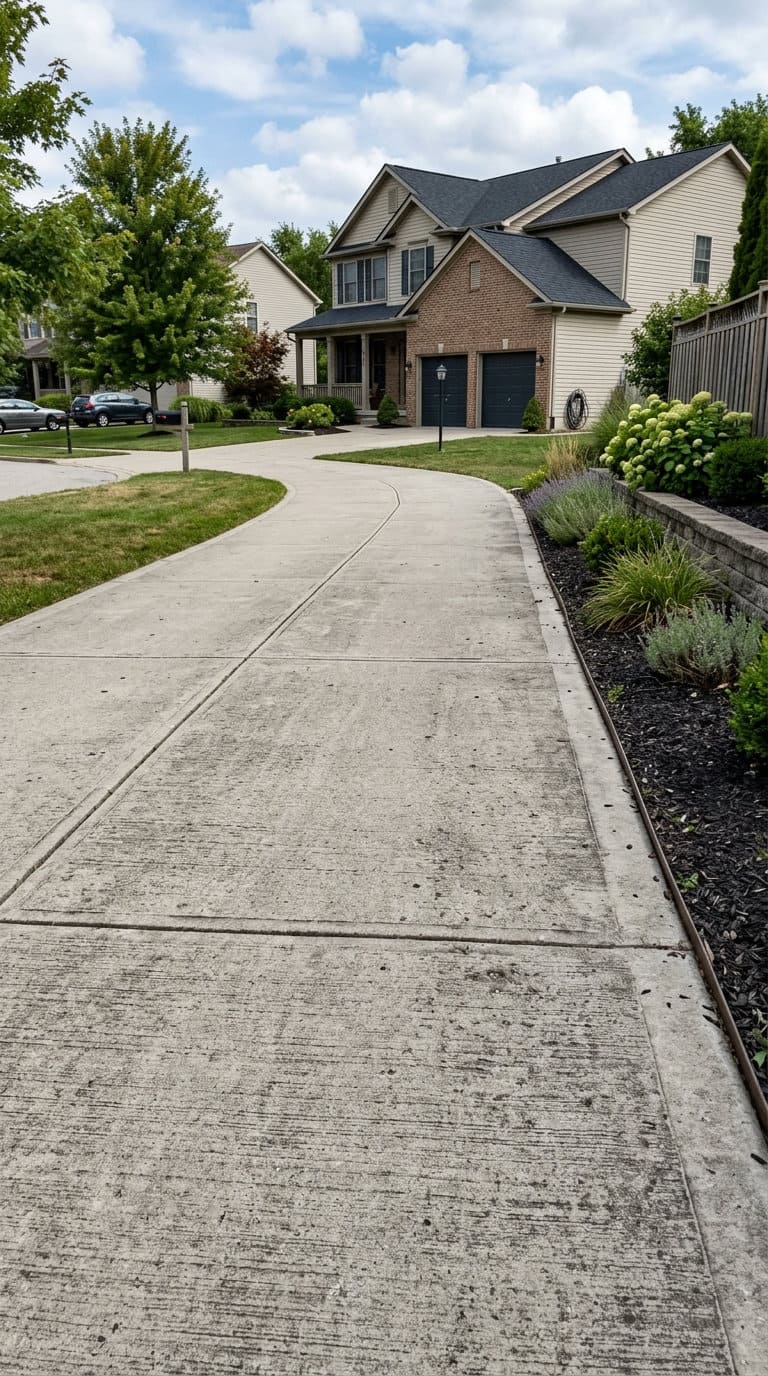
You can notch up your plain concrete through the broom finish technique. It makes the surface rougher but more beautiful. It is done by brushing the concrete surface with a stiff broom before it could completely dry. Adding concrete joints and edging gives a more sophisticated appeal to the concrete driveway like this one.
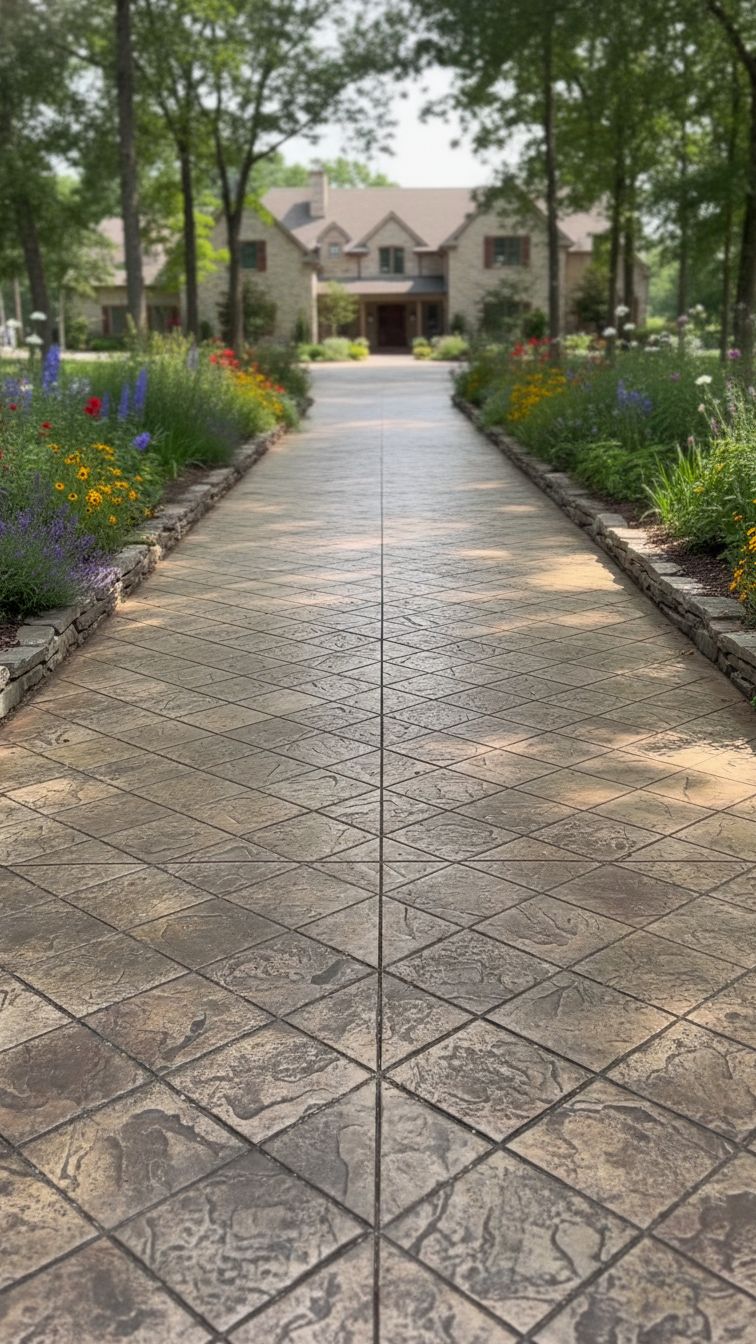
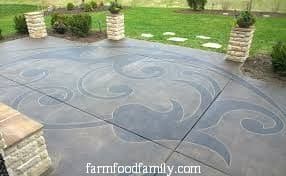
12. Stencil concrete driveway
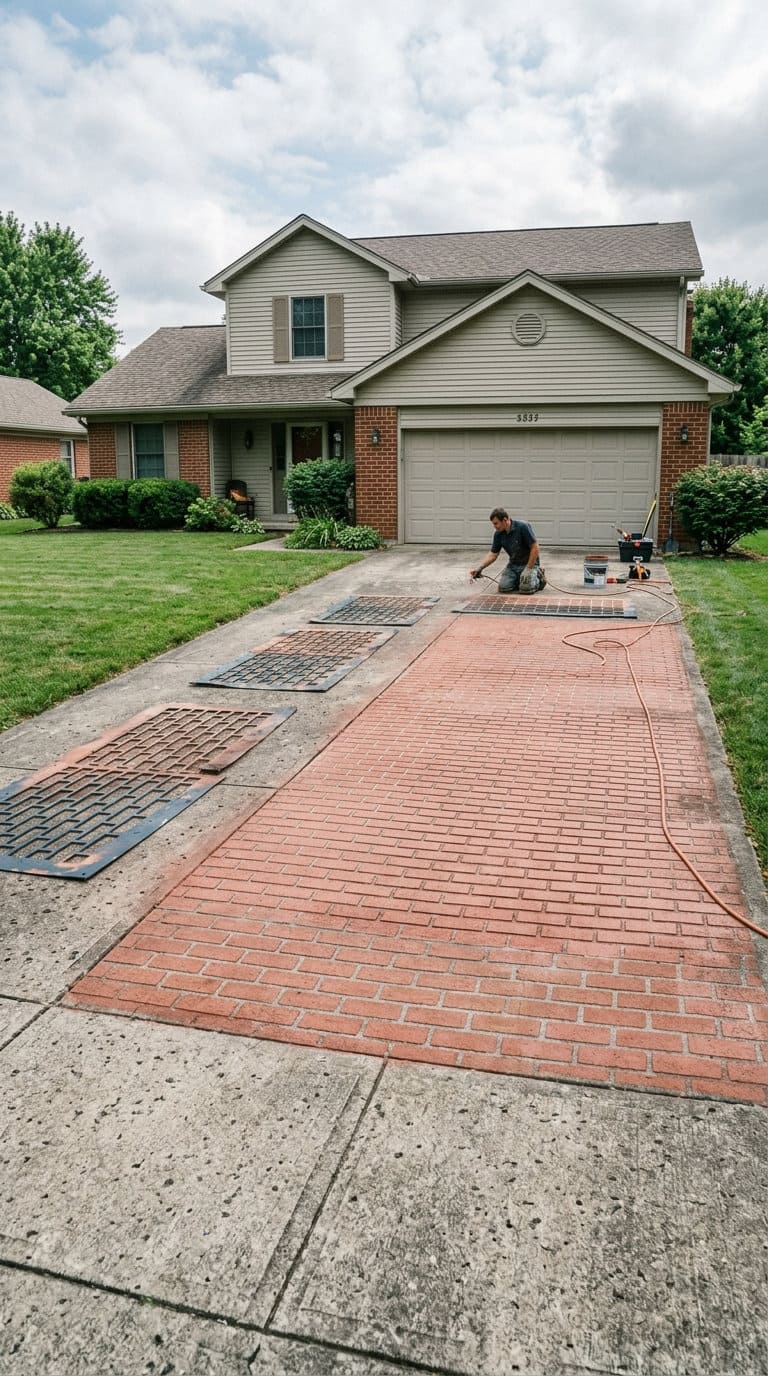
This could be done for new concrete driveways but also in refurbishing old ones. So instead of installing a new concrete driveway entirely, you can just stencil it. You can create brick patterns, slab joint patterns or geometrical shapes and other emblems.
13. Block concrete driveway with grass
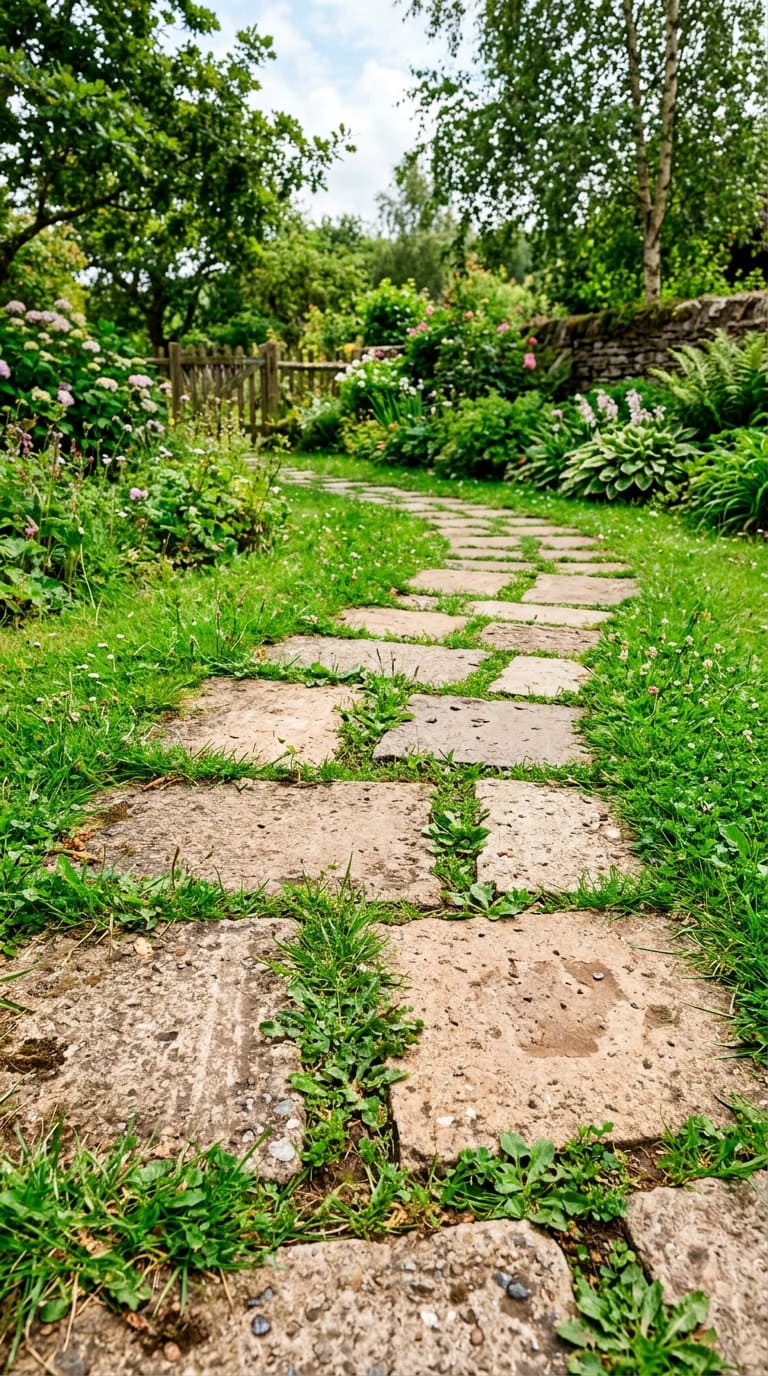
For more curb appeal, you can lay down irregular shaped concrete blocks in your driveway. It should be slightly raised and with a considerable spacing in between. To make it look enlivened, you must put fine thickets of grass in between.
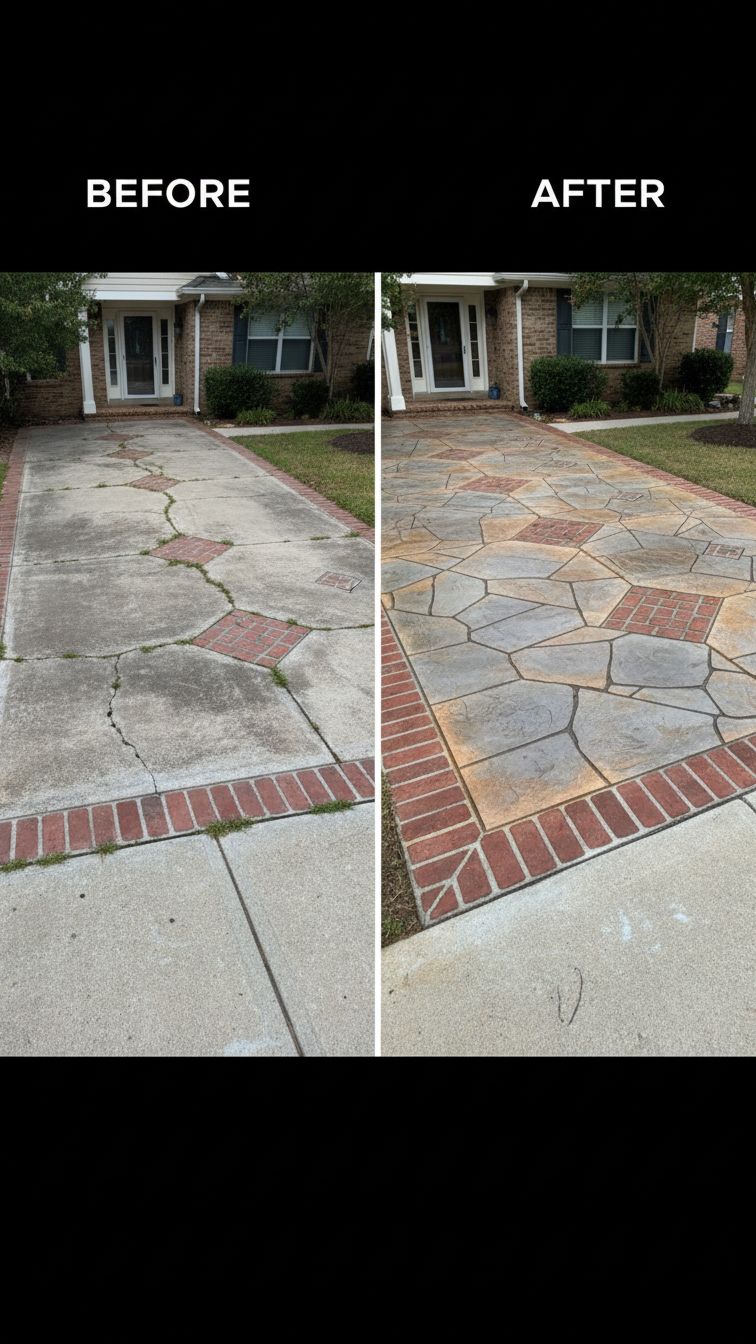
14. Concrete panels
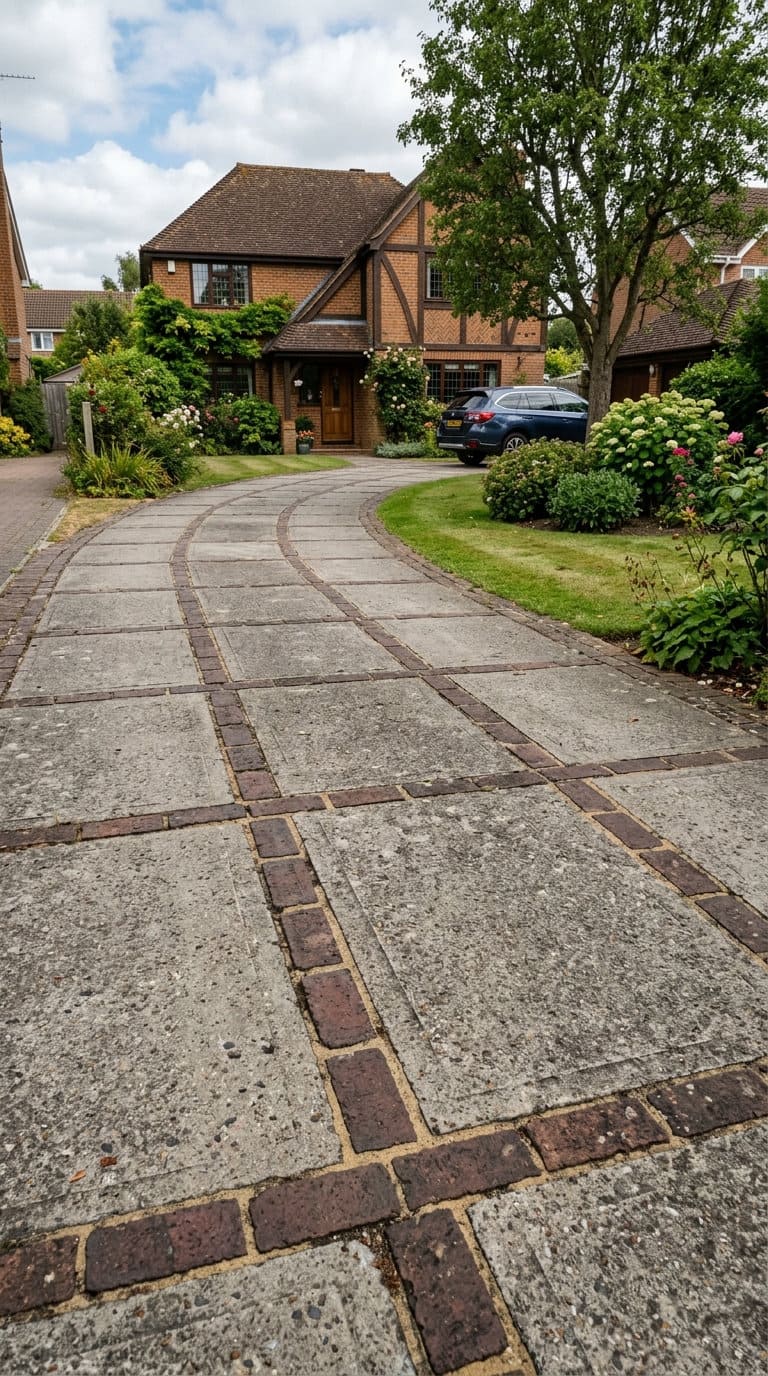
If it is a segmented yet clean look that you want to get for your driveway, you can go for a concrete panel design with brick or flagstone joints and edging. Make sure that there is enough contrast between those edging, joints, and concrete panels to give your driveway a contemporary look.
15. Irregular imprints
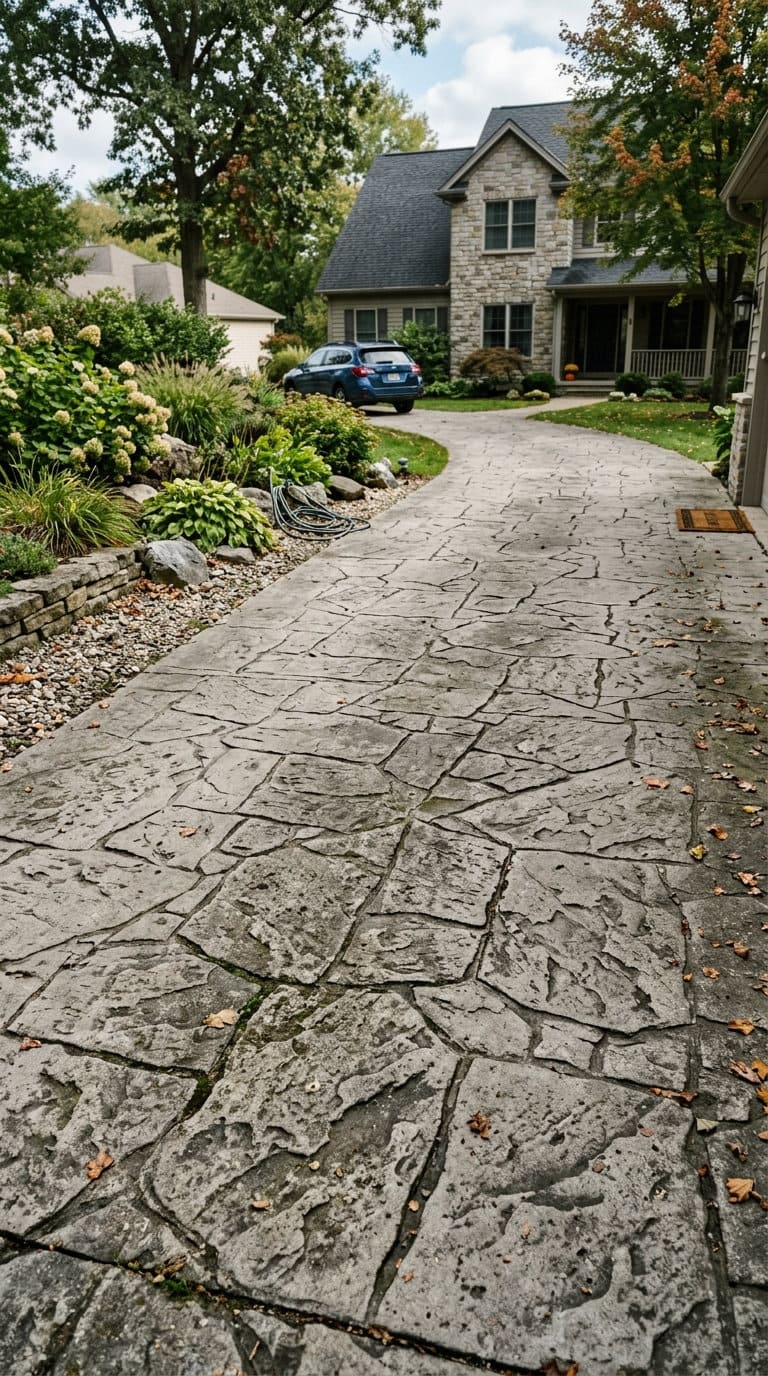
Most of the time, stamping follows symmetry and finite lines but there is something outstanding about irregular imprints on your concrete driveway. It can go without edging but having one gives it a more seamless look. Stained concrete driveways with irregular imprints are also a top-notch choice.
16. Rock salt finish concrete driveway
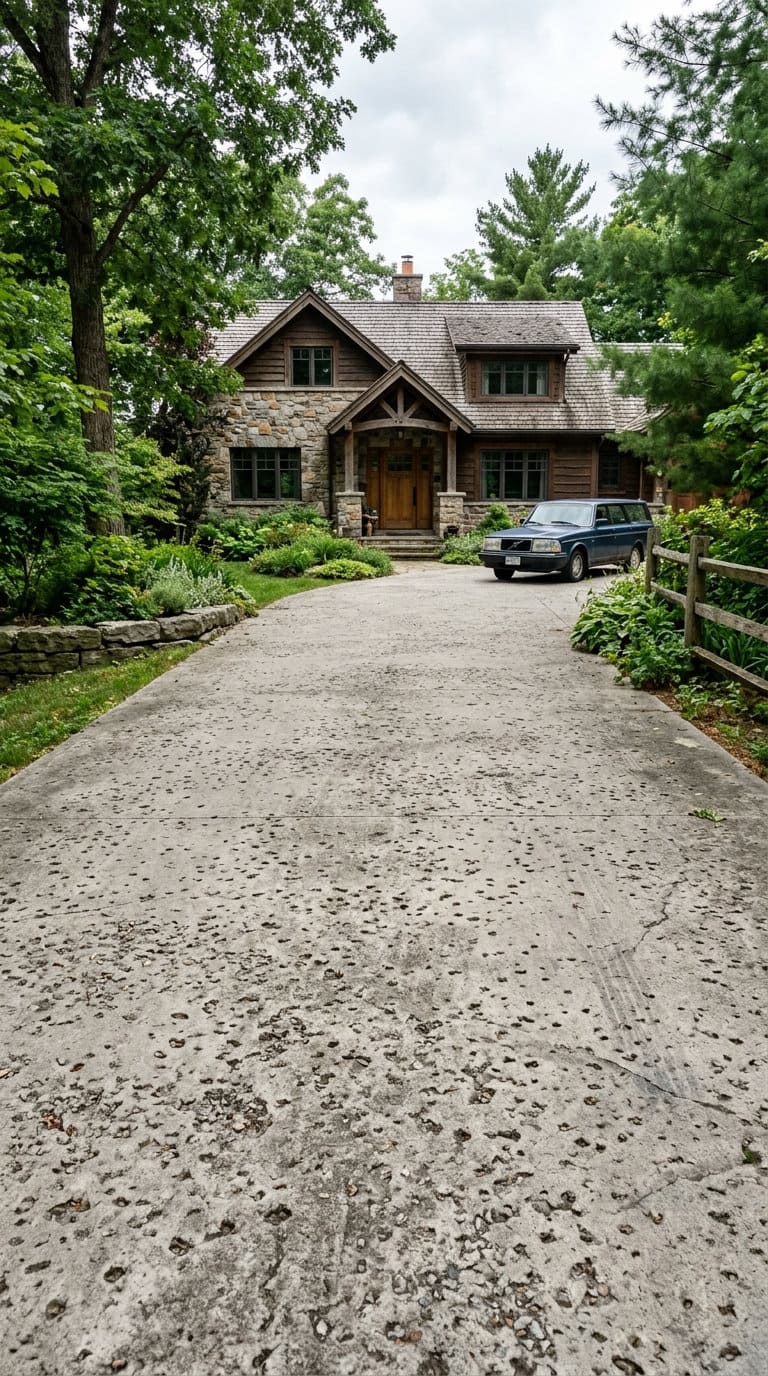
A real technique, not just a style name: rock salt is scattered into freshly poured concrete, and once it dries, the surface is power washed to dissolve the salt out, leaving a pitted, textured finish.
Works well for edging too, for a neat, symmetric look. Common on classic and rustic-style homes, and the driveway lighting ideas piece has good options for highlighting that texture after dark.
Worth knowing, since the name causes real confusion: this technique is unrelated to deicing rock salt damage covered in the FAQ below. This process presses rock salt into wet concrete during installation and washes it back out before it’s ever left to sit on the cured surface, it’s not the same as spreading salt on a finished driveway for winter ice.
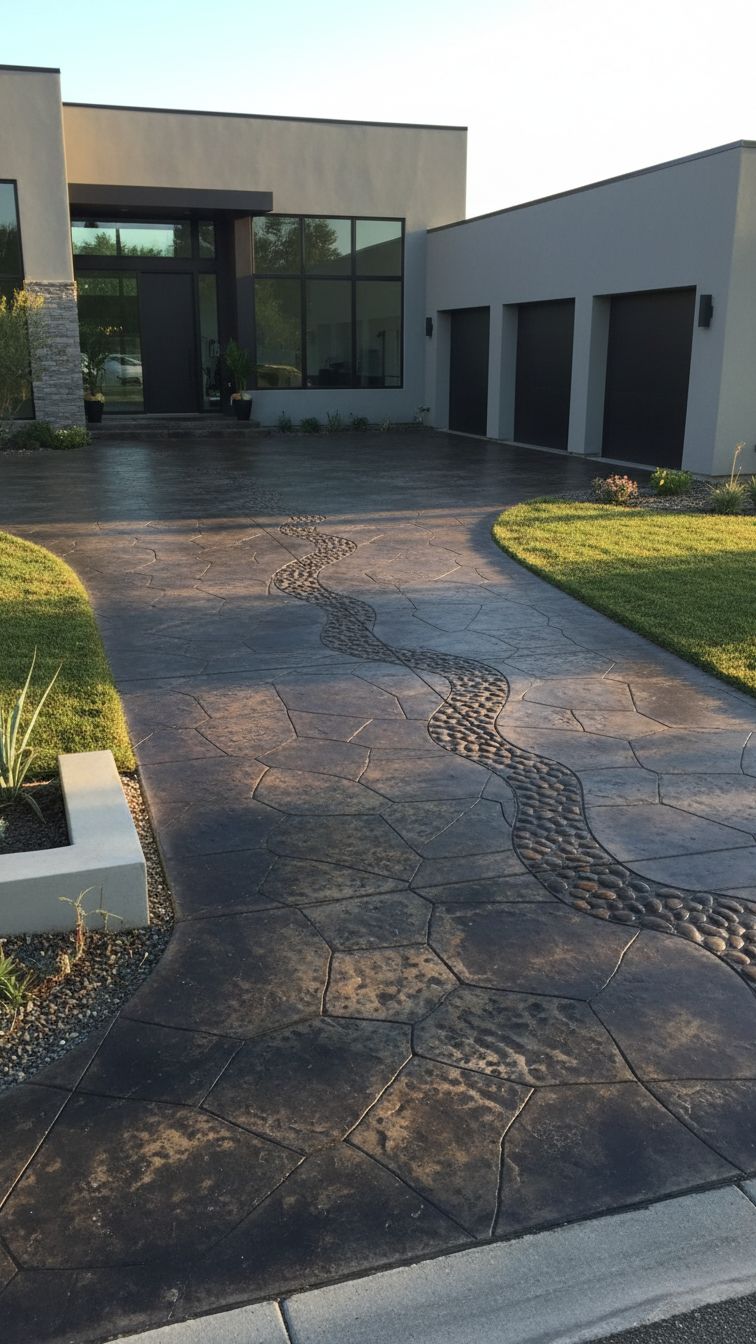
Related: 25+ Best Driveway Lighting Ideas and Designs
17. Slick trowel concrete driveway finish
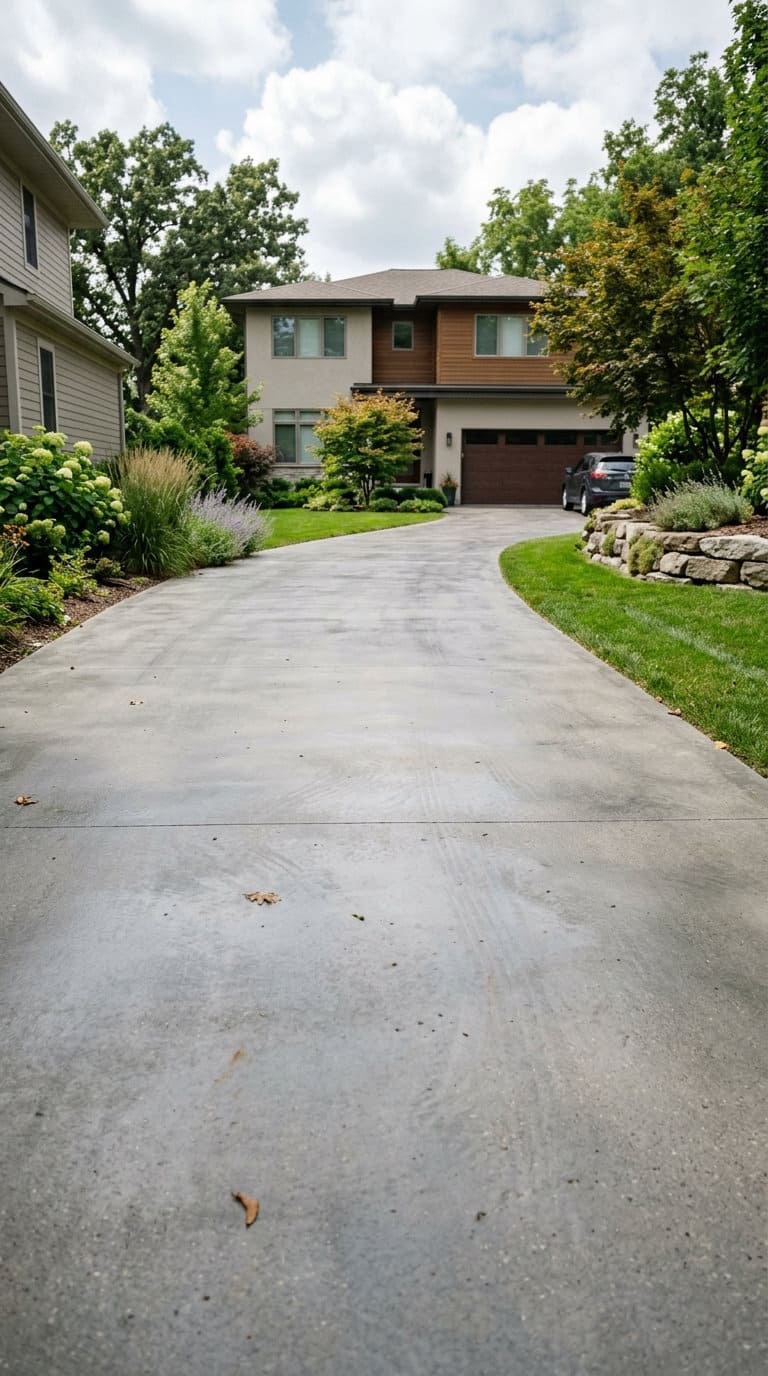
This one is a well-loved finish for concrete driveways because it is easy to clean. The method requires accuracy and great timing as it needs a limited window time before the slick trowel stamp could be placed.
You might also need to reinforce it because it might get slippery during the rainy season and in winters. But overall, it is a beautiful concrete driveway idea.
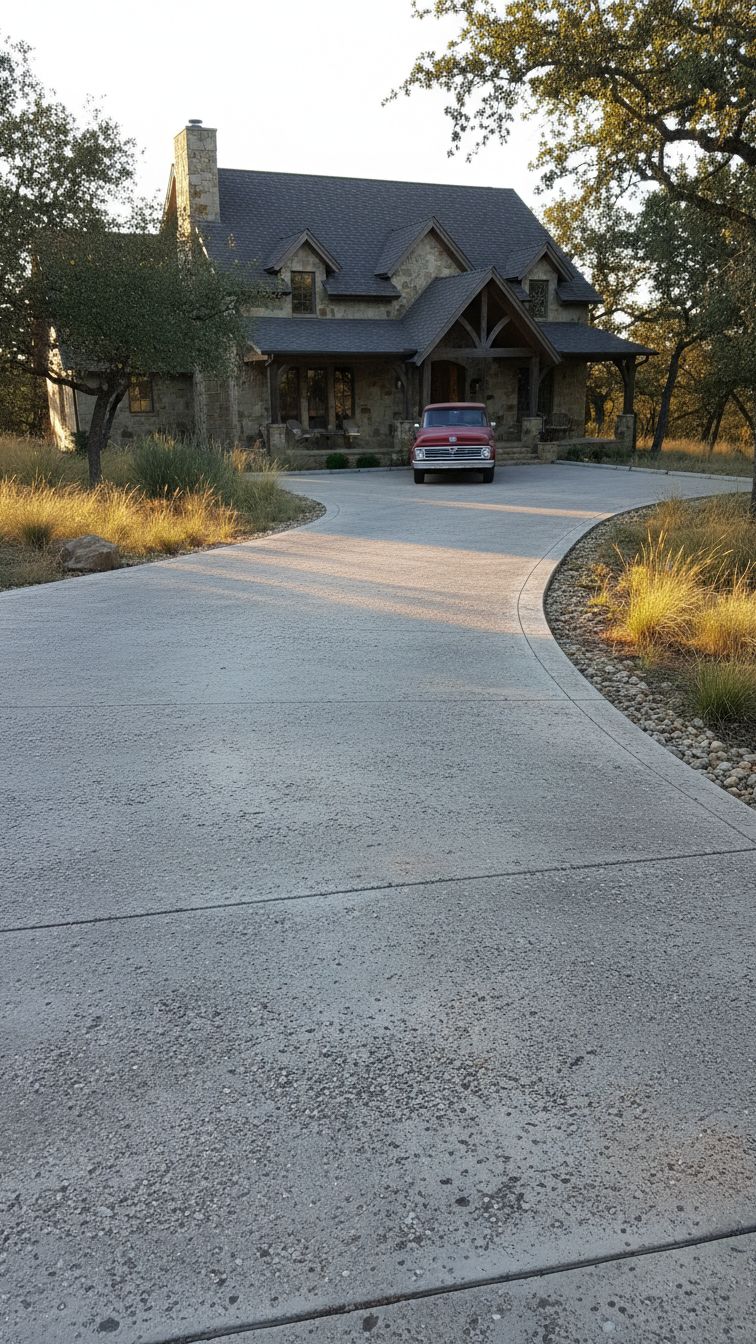
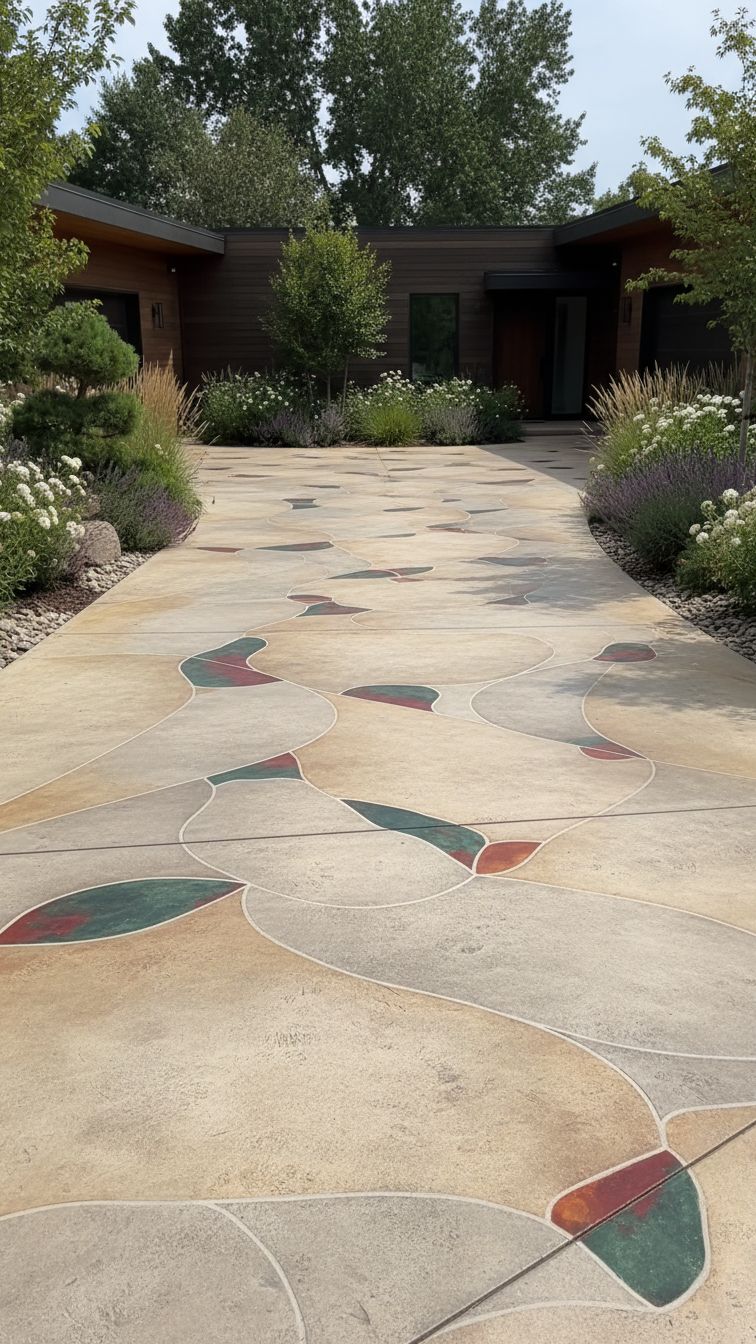
18. Colorful staining with contrast panels
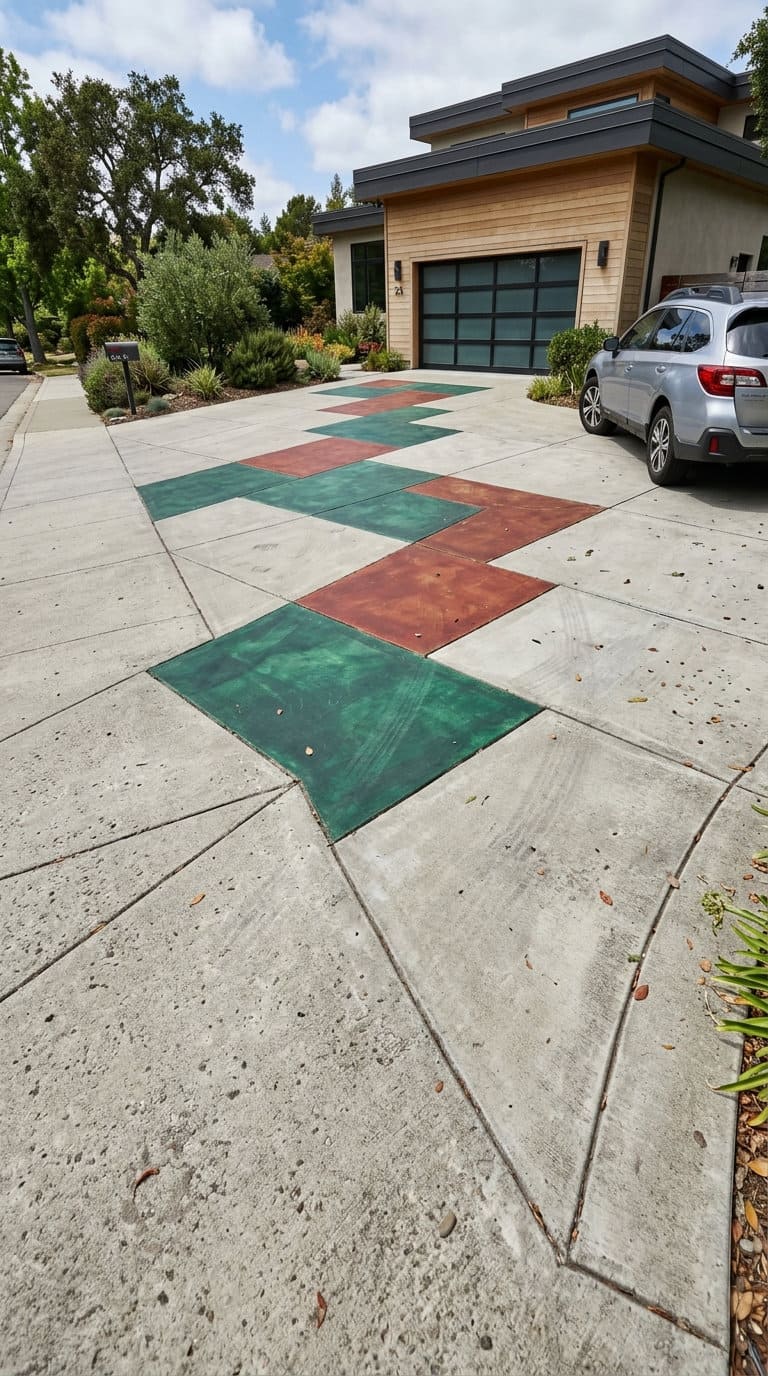
Staining doesn’t have to stay neutral. Emerald green, red, or other tinted panels set within a neutral-toned base create real contrast without overwhelming the driveway, a good way to add personality without committing to color across the whole surface.
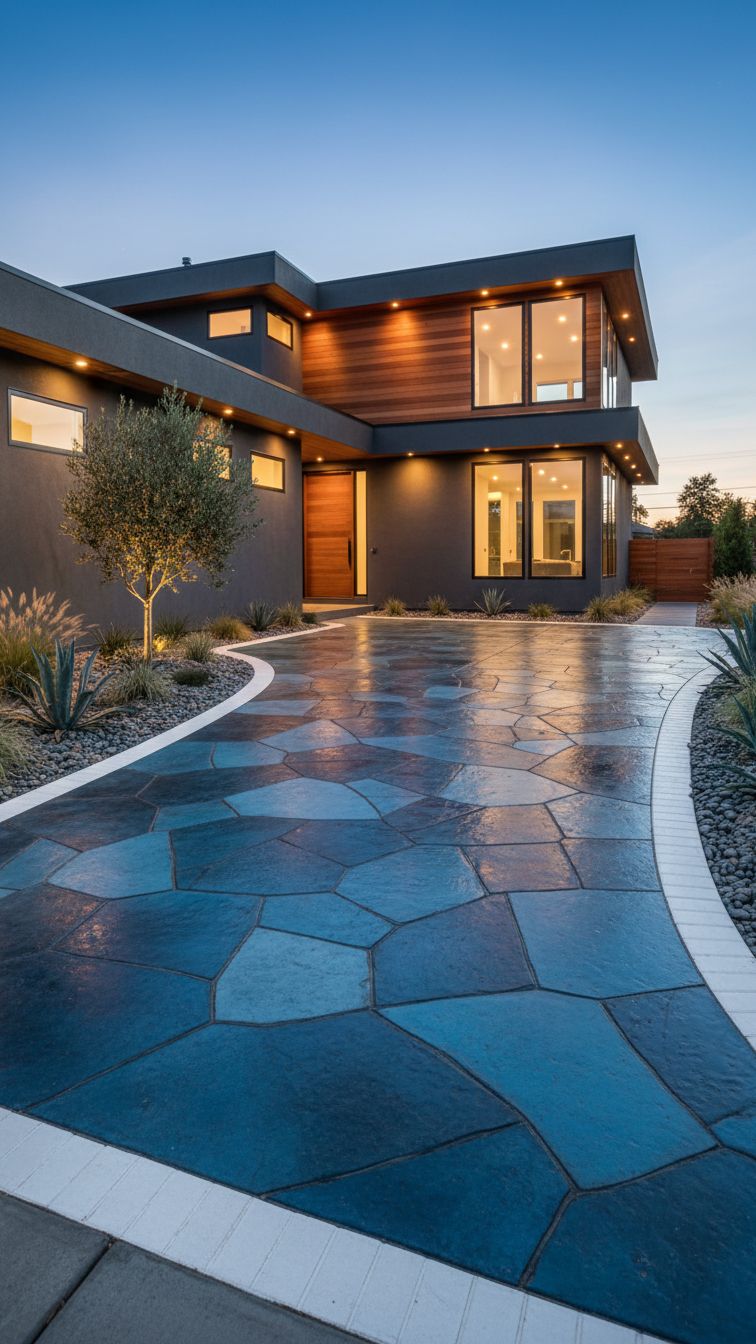
19. Blue-toned flagstone with white paver edging
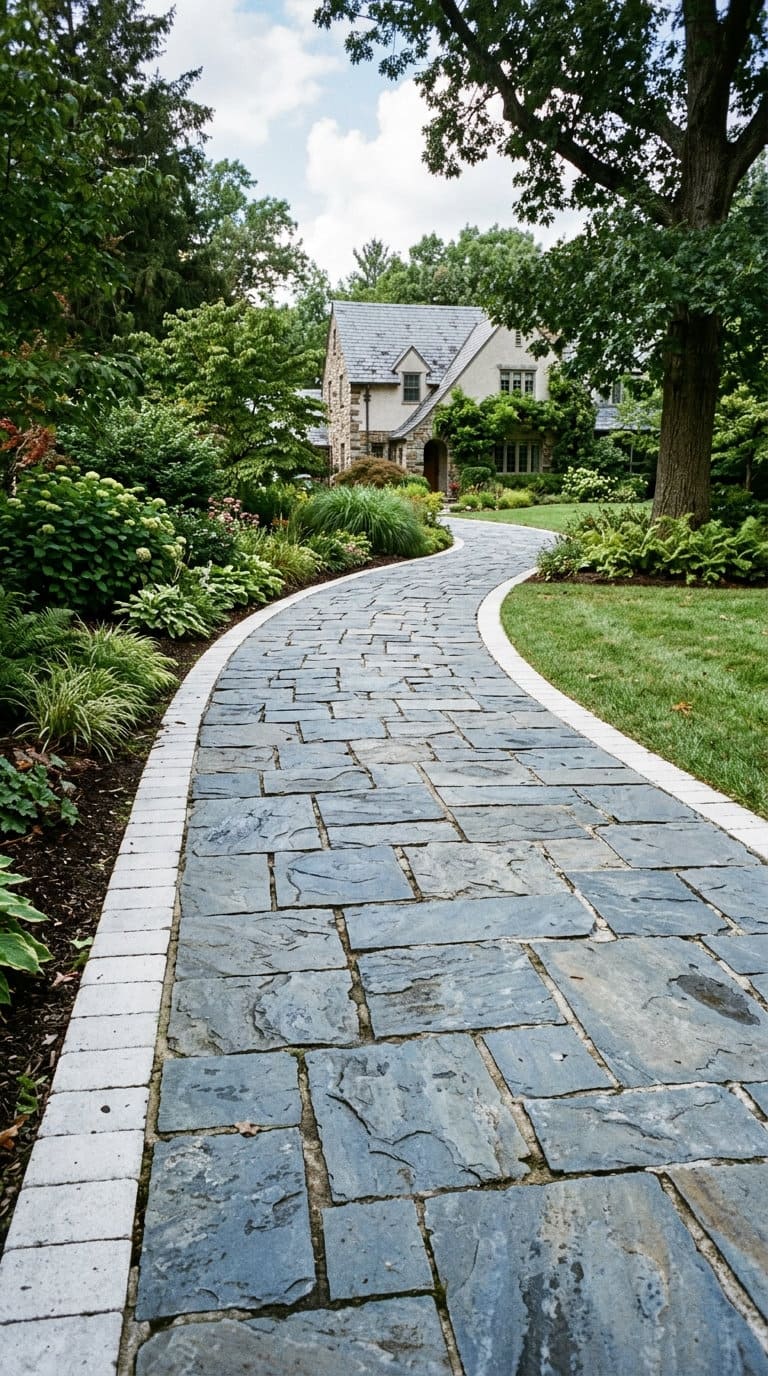
A compact but sleek combination: flagstones in blue tones, edged with white concrete pavers. The twisted layout gives it more texture and angle while keeping the overall footprint tight.
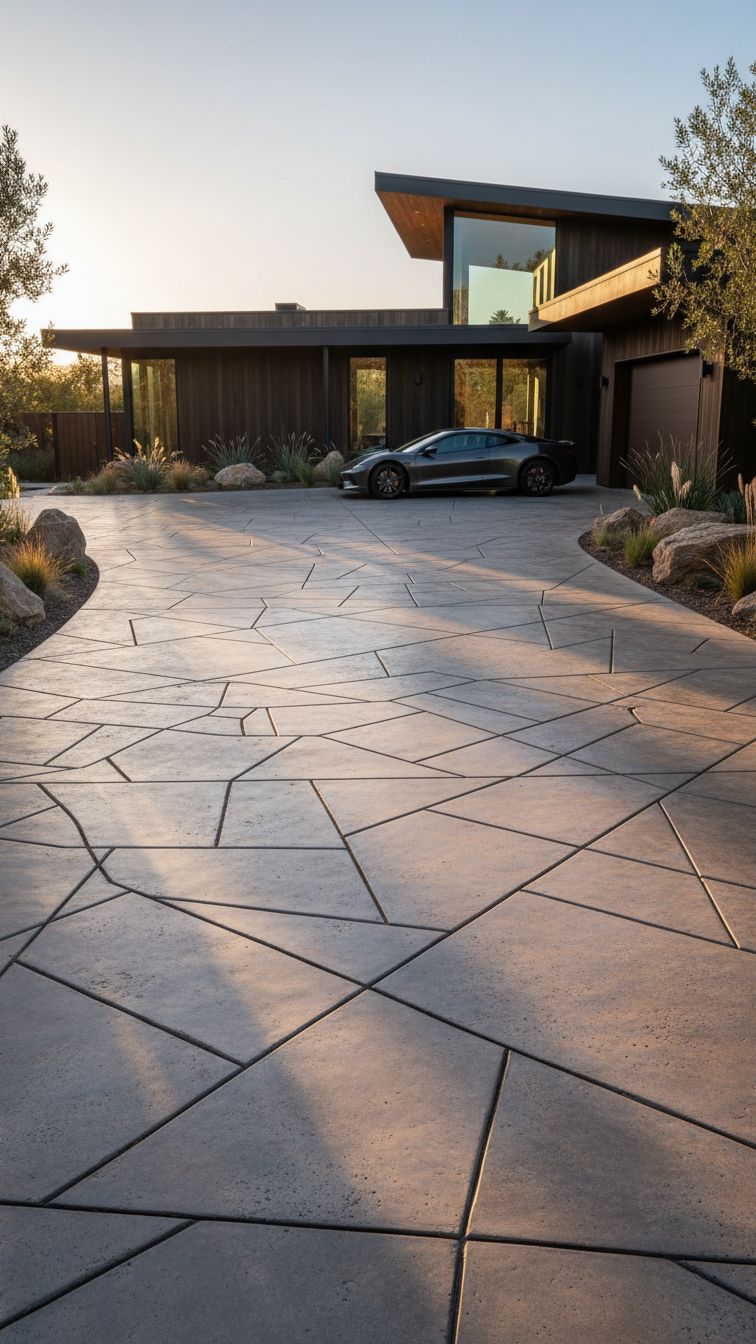
20. Cubist geometric embossing
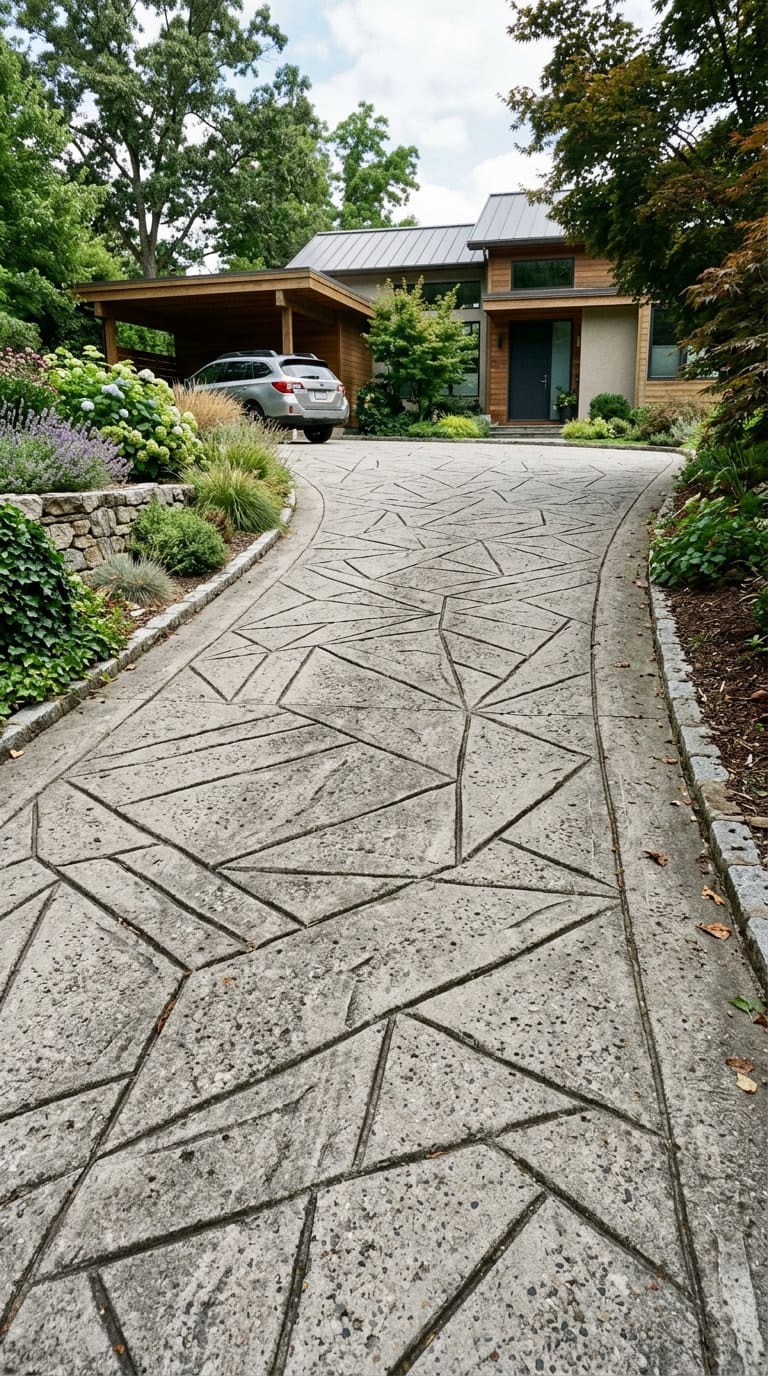
Deeper etchings and angled joints in an embossed geometric style give the surface real dimension, a cubist-inspired decorative approach that reads as more architectural than a standard stamp pattern.
21. Irregularly spaced brick paver edging
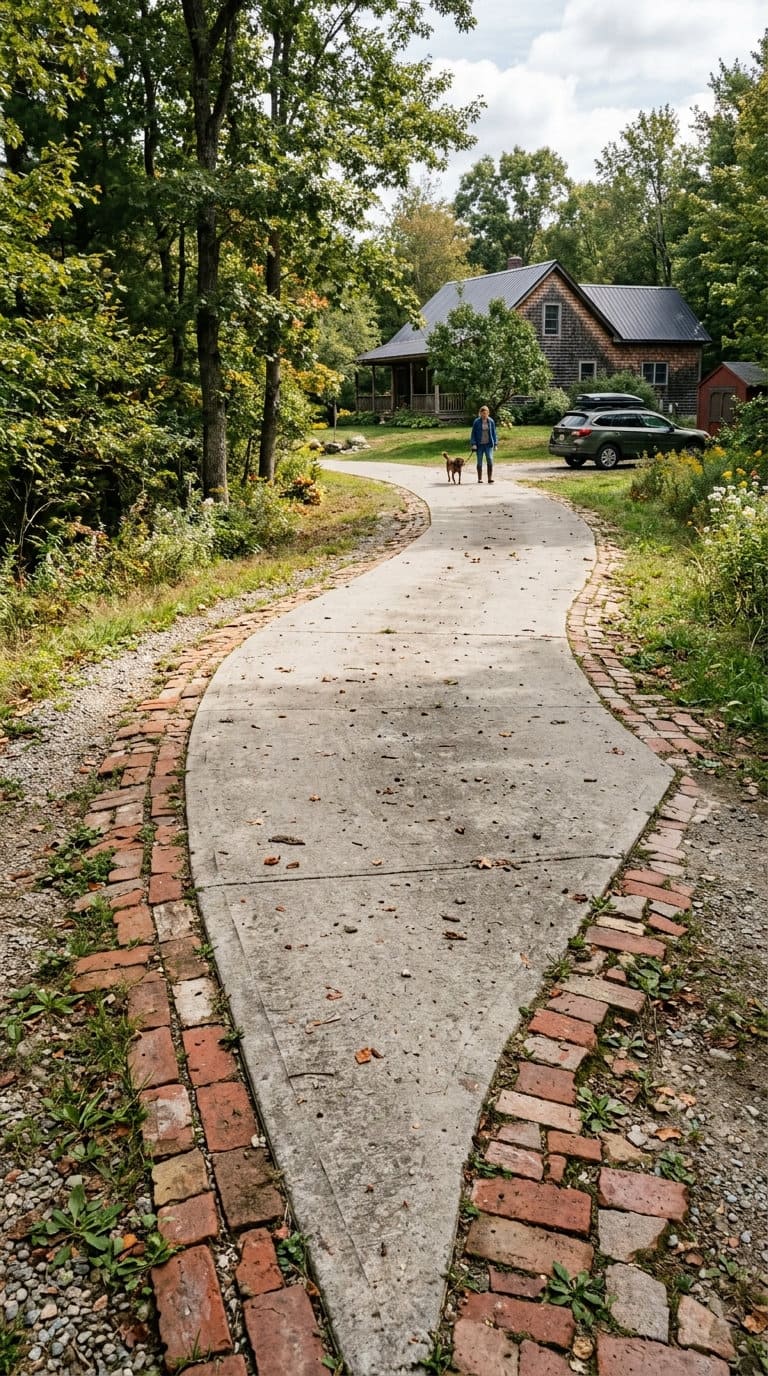
Irregularly spaced brick pavers add real character to a long driveway, especially edged with stone, gravel, or a mounded bed of grass or flowers along the run.
22. Charcoal black stain with stamping
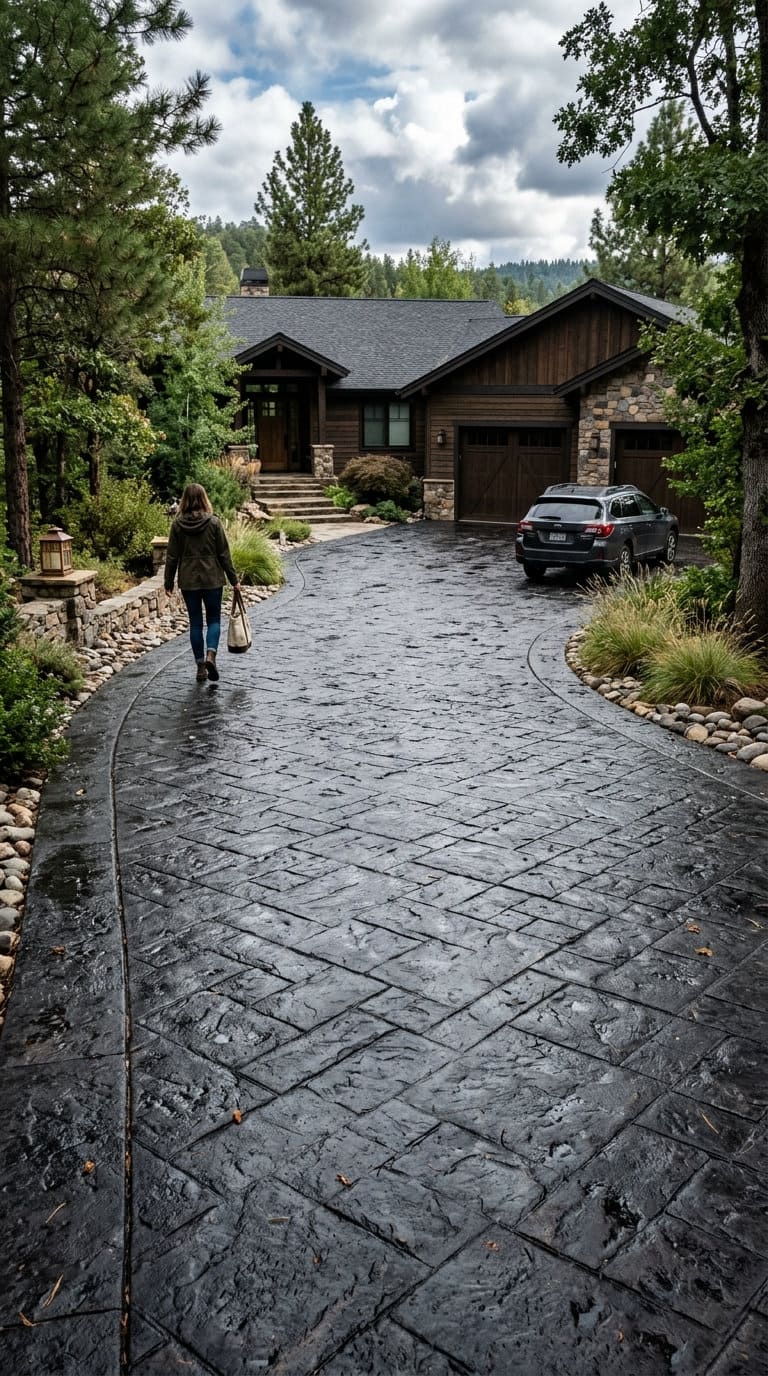
Standard concrete gray isn’t the only option, charcoal black staining combined with polishing and stamping gives the surface real depth and a genuinely upscale, dramatic look.
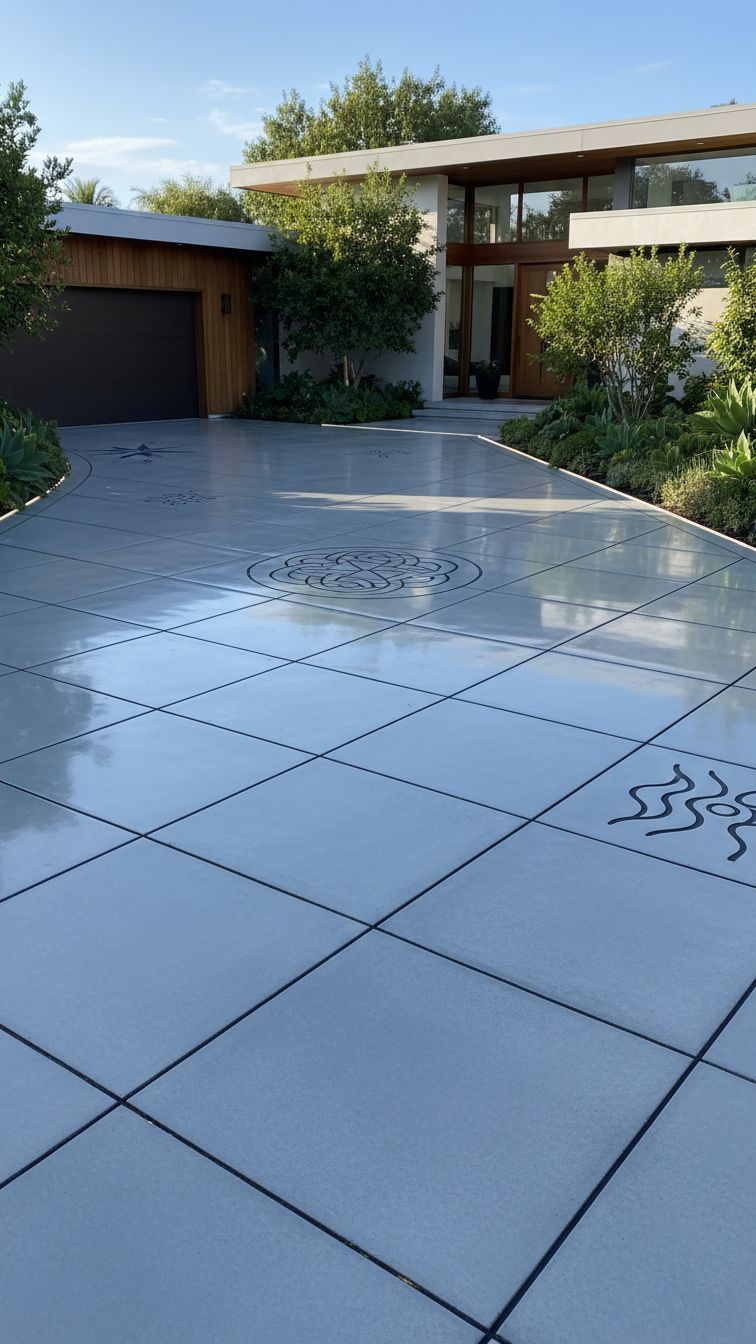
23. Sawn concrete driveway finish
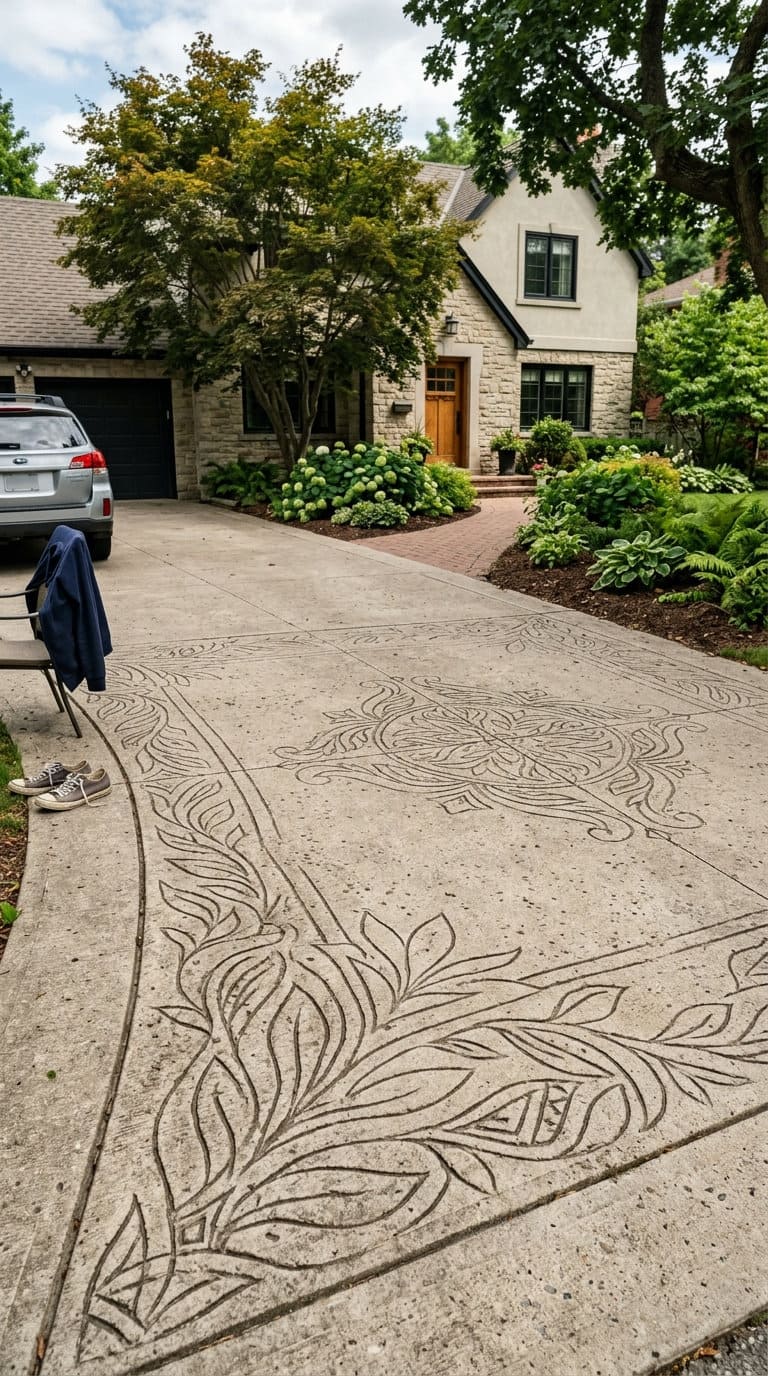
There’s more to sawn concrete than a regular saw pattern etched in before it dries. More advanced versions saw different patterns into polished concrete, even creating symbols for a colored, custom curb.
24. Decorative concrete driveway
There is no limit to what you can do with your concrete driveway. You can have it stained with different colors. Neutral tones are always the best contrasts but adding tinges of emerald green, red or orange are also a good touch.

It could also be as compact but sleek as this one, one, weighing on more blues using flagstones and edging of white concrete pavers. The overall twisted shape gives it more texture and angle, keeping a well-coordinated, polished look for the home and the concrete driveway.
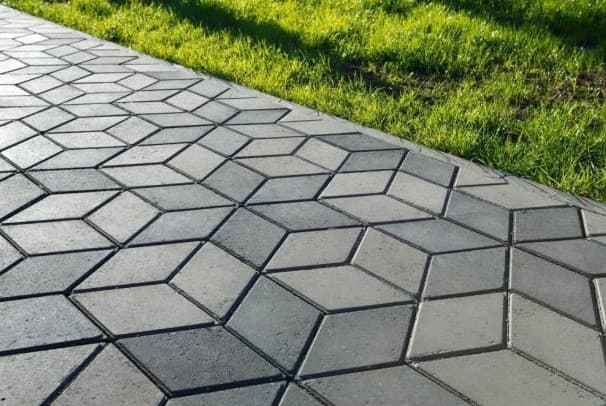
For an embossed geometric style, with deeper etchings and angled joints, you can try this cubist decorative design.
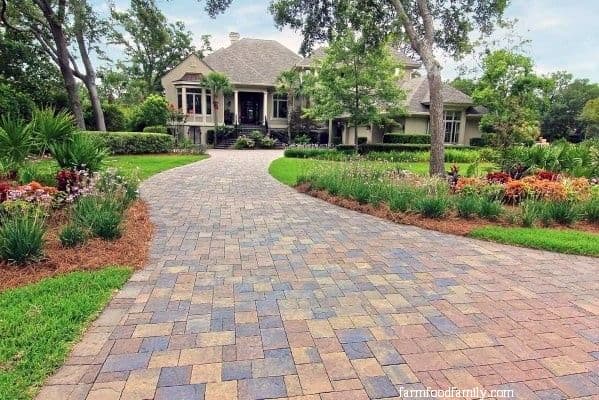
Irregularly spaced brick pavers could also be a thing of beauty for concrete driveways especially on long ones. You can edge it with stone, gravel or just a long mound of grass beds or flower beds on the side.
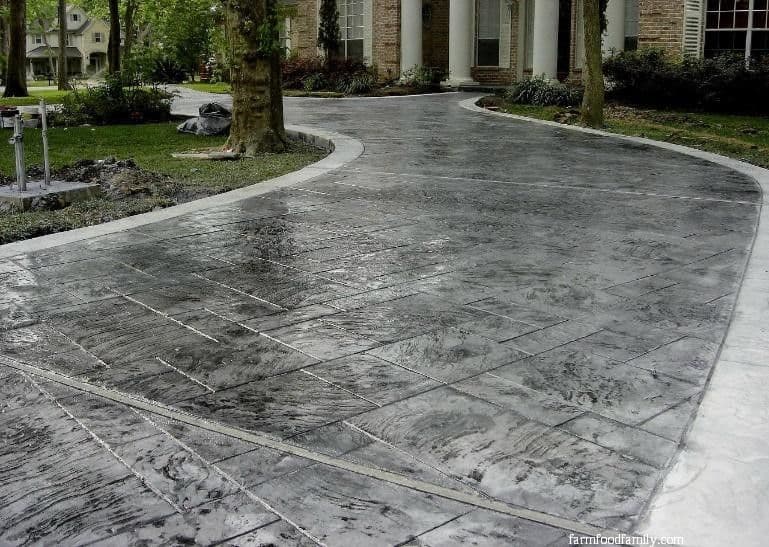
You can also infuse it with more texture, a more delicate stain and stamping. For instance, the standard color of concrete driveways is gray, but staining it with charcoal black polishing is just everything you need to make a driveway statement.
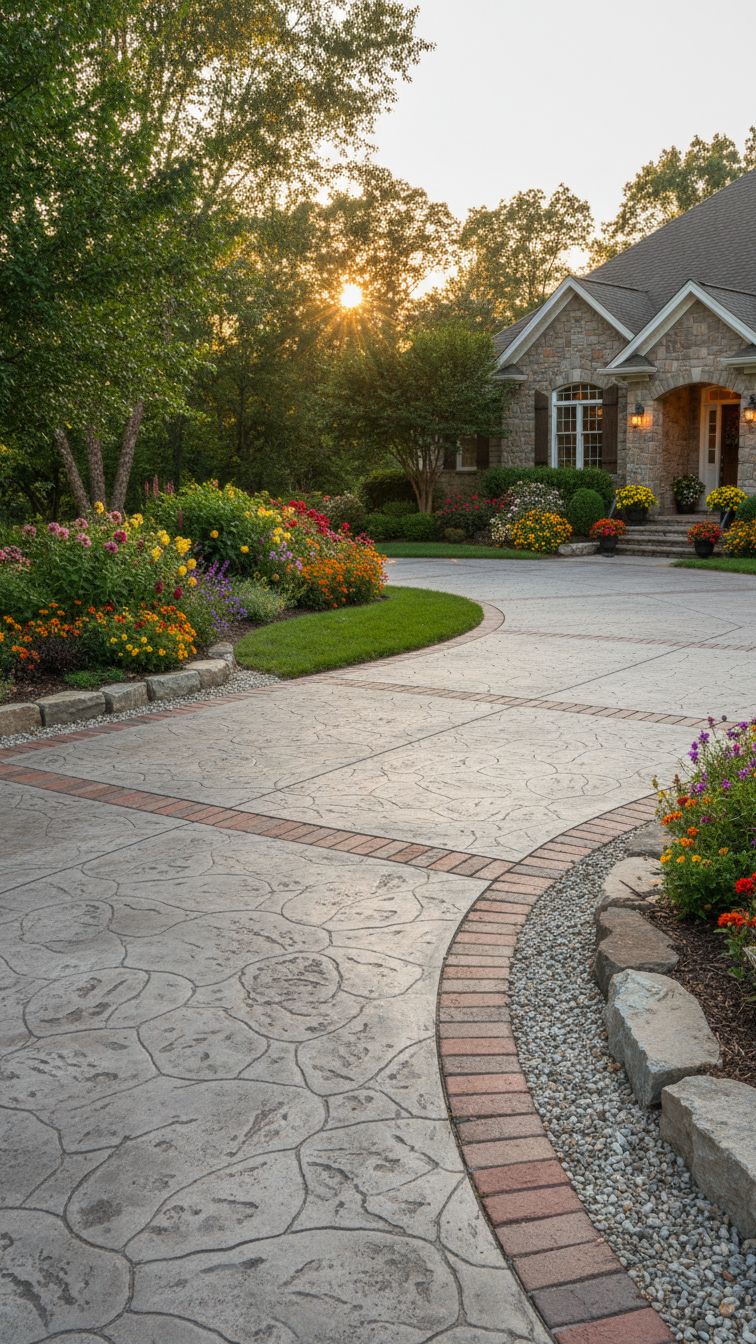
23. Sawn concrete driveway finish
There are more wonders to sawn concrete than just the regular saw pattern etched in it before it dries.
The more professional ones could have different patterns sawn in a polished concrete and could even create symbols for a more colored curb like this one.
More driveway articles:
FAQs about concrete driveways
How can I make my concrete driveway look better?
Six real ways: staining for fade-resistant, permanent color that won’t flake like paint; stamping or a decorative border (a cost-saving strategy several concrete pros recommend: use a cheap broom finish for the main slab and reserve stamped or colored concrete for just a 12-18 inch border along the edges); sealing, which protects against stains and UV fading and needs reapplying every few years; pressure washing regularly to remove the grime that dulls concrete’s look over time; and repairing cracks promptly, since small cracks widen and get more expensive to fix the longer they’re ignored.
How thick should a concrete driveway be?
As a rule of thumb, driveways for passenger cars that aren’t reinforced should be at least 4 inches thick. Driveways for heavier vehicles need at least 5 inches. A slope of about 0.25 inch per foot toward the street is also recommended to prevent water from puddling.
How much should a concrete driveway cost?
Per HomeGuide’s 2026 data, standard concrete runs $6-10 per square foot installed, basic decorative concrete $10-15, and mid-range decorative concrete $15-20. A typical 2-car driveway totals roughly $2,400-$8,600 depending on finish and size. A well-installed concrete driveway lasts 25-30 years with basic maintenance.
Is rebar needed in a concrete driveway?
There are two main reasons to use rebar. One is when the soil where it’s installed has poor retention or is loose. Two, it matters for design reasons, like when slabs are unusually large or there’s a risk of incidental cracking. Since rebar reinforces the strength and durability of the driveway, it’s worth adding if your budget allows.
Does adding a concrete driveway add value to a home?
Yes, and meaningfully. Per Cornerstone Concrete LLC, a concrete driveway typically returns 50-80% ROI, adding an estimated $3,000-$10,000 in home value depending on size, construction quality, and finish, stamped or stained finishes tend to add more perceived value than plain concrete.
Can I paint my concrete driveway?
Yes. Painting gives a concrete driveway a facelift and adds real weather resistance, lessening the chances of flaking and chipping over time. Epoxy paint is the best choice for a concrete driveway specifically.
Why is my concrete driveway cracking?
The most common real causes: a poorly compacted or shifting base underneath the slab, missing or badly-spaced control joints, freeze-thaw cycles, and tree roots pushing up from below. Per Richfield Concrete and A1 Concrete, control joints are one of the most overlooked parts of driveway construction, when they’re spaced too far apart or placed incorrectly, the slab has no defined spot to relieve stress, so cracks form randomly instead. A properly compacted base and correctly placed control joints prevent most of this.
How long before I can drive on a new concrete driveway?
A week for regular vehicles, by day 7 the concrete has reached about 70% of its potential strength. Wait a full 28 days before parking anything heavier, like an RV or a large truck. Avoid driving near the edges specifically for up to 30 days, they’re more vulnerable and take longer to fully cure than the center of the slab.
Does rock salt damage a concrete driveway, and is that different from the Rock Salt Finish idea above?
Yes, deicing rock salt (sodium chloride) is a real, documented cause of concrete damage, it reacts with the concrete to form crystals that expand and cause surface flaking, known as spalling, especially over repeated winters. Per Brickform, calcium magnesium acetate or calcium chloride deicers are gentler alternatives, and resealing every 2-3 years adds real protection. This is unrelated to the Rock Salt Finish idea above, which presses rock salt into wet concrete during installation and washes it back out before the driveway is ever used, not something applied to a finished surface and left in place.
Related: Stone Driveway: Cost, Installation, Pros and Cons
Conclusion
Concrete driveways are always worth the shot and for many reasons. Aside from being weather-proof, they are also durable and versatile to many types of home designs.
Concrete driveways can be expensive but if you are not gearing up to having an over-the-top design, it could be cost-efficient. Fortunately, you have these concrete driveway ideas here to start on.
Never miss an update — choose FarmFoodFamily as your preferred source on Google.
How it works: Tap the button below to open Google's settings page, then check the box next to FarmFoodFamily.
Tap the checkbox to turn it blue — that's how you know it's set.