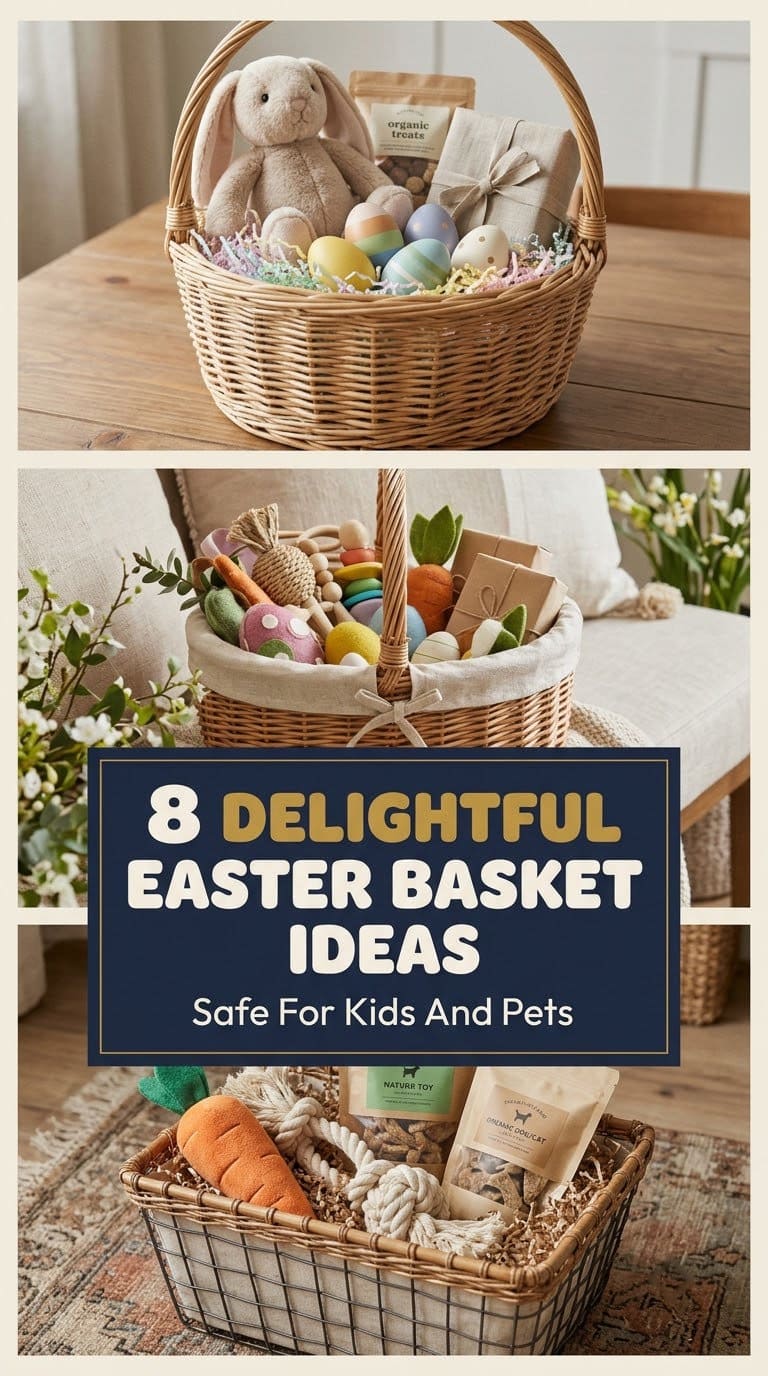
8 Delightful Easter Basket Ideas Safe for Kids and Pets
An Easter basket can be personal and fun for every age, as long as you check small parts, allergies, pets and egg safety before you fill it.

Never miss an update — choose FarmFoodFamily as your preferred source on Google.
How it works: Tap the button below to open Google's settings page, then check the box next to FarmFoodFamily.
Tap the checkbox to turn it blue — that's how you know it's set.
An Easter basket can be personal and fun for every age, as long as you check small parts, allergies, pets and egg safety before you fill it.
Products We Recommend
This post contains affiliate links. We may earn a commission on qualifying purchases at no extra cost to you.

CrinklePak 10 lb Kraft Crinkle Paper Filler
Paper filler to use instead of plastic Easter grass, for ideas 1 to 3.
Shop Now
Large Wicker Easter Basket with Handle and Basket Tags
Empty woven basket for packing any of the eight baskets.
Shop Now
JOYIN 120 pc Jumbo Washable Sidewalk Chalk, non-toxic
Non-food basket filler for ideas 2 and 5.
Shop NowAn Easter basket is one of the sweetest gifts you can make. It’s also easy to get wrong.
A toy can be a choking risk. A candy can trigger an allergy. The pretty plastic grass can make a dog very sick.
These eight ideas give you the fun and the checks. Each one lists what to pack, how to build it and what to watch for.
Quick Answer
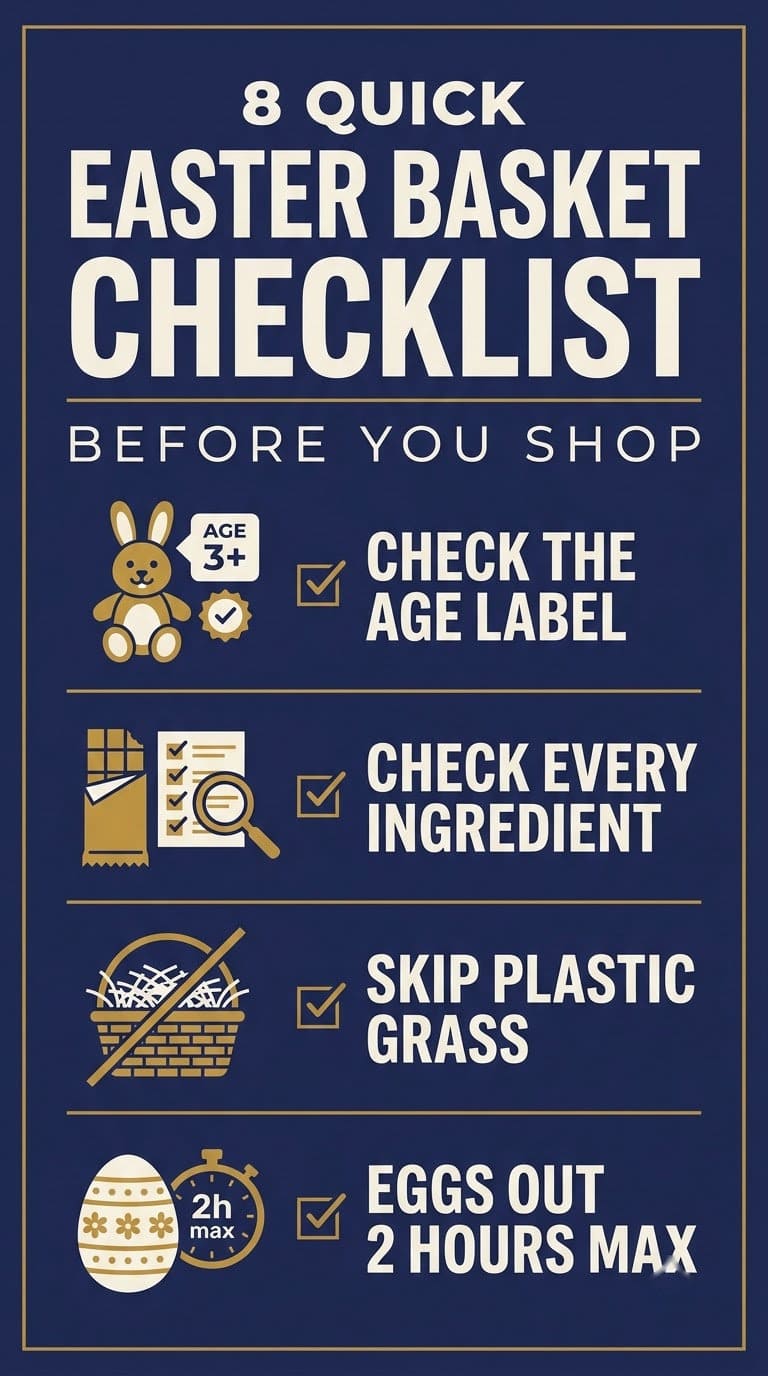
Check the age first. The CPSC says products for children under 3 that present a choking hazard because of small parts are banned hazardous substances.
Think beyond candy. FARE lists non-food ideas for all ages, such as books, bubbles, sidewalk chalk and puzzles, and says to check ingredients even in non-food items.
Check labels on every item. FARE says clay and play dough often contain wheat, and that not every item suits a child with a latex allergy.
Protect the pets. The ASPCA lists chocolate, plastic Easter grass, lilies and xylitol as top Easter hazards.

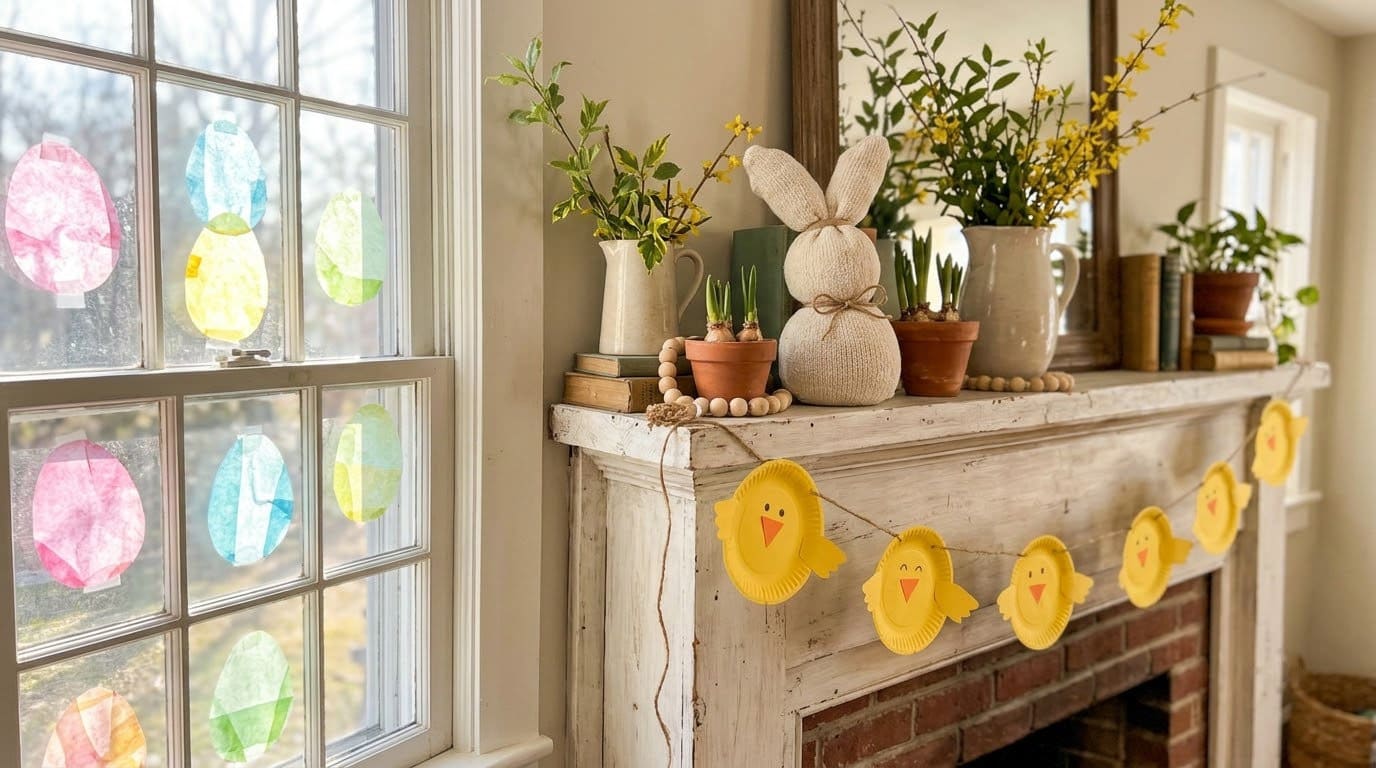
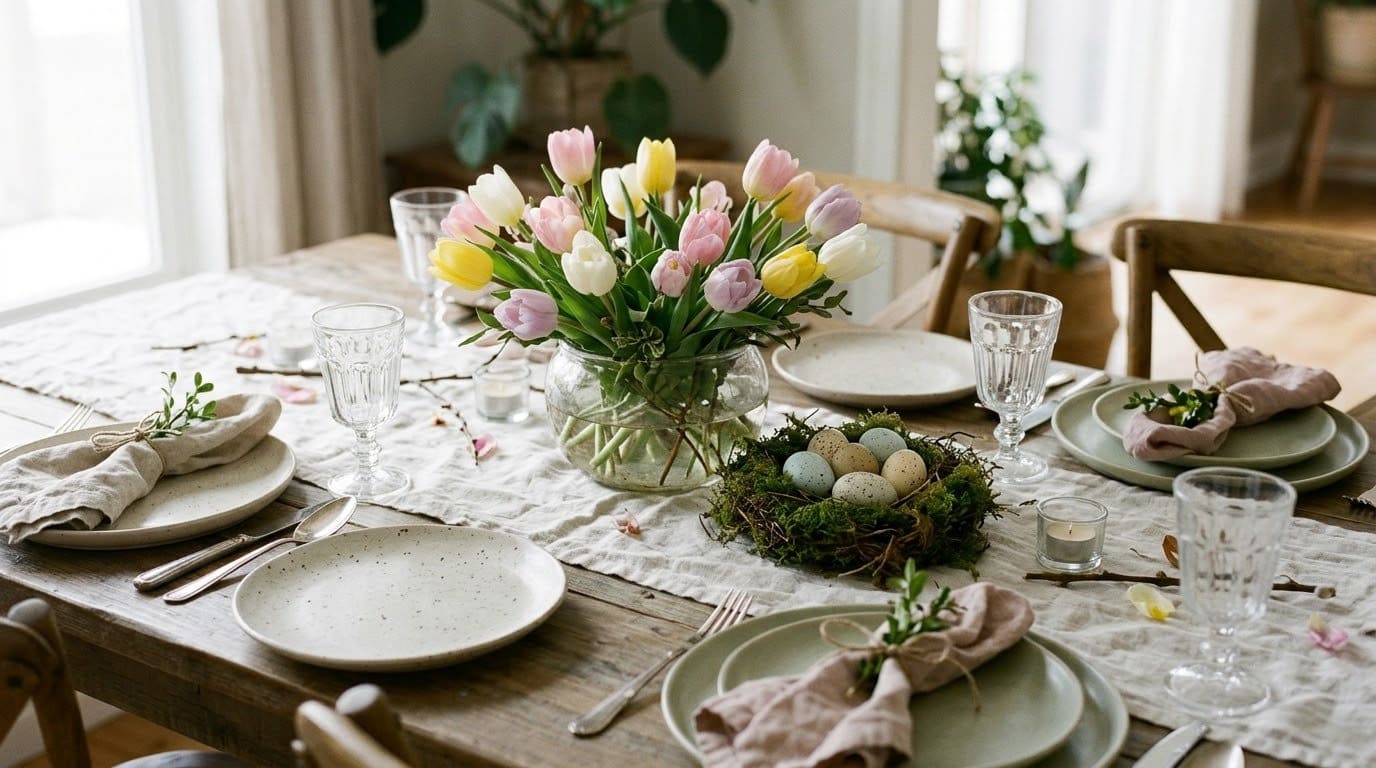
Swap plastic grass for shredded paper or fabric, since the ASPCA says plastic grass can’t be digested and can get stuck in the gut.
And watch the eggs. University of Guam Extension says eggs should be out of the refrigerator no more than two hours during the hunt.
Which Idea Fits You?
Pick by who the basket is for. This table sorts the eight ideas below.
| Idea | Best for | Budget tier | Skill | Main risk |
|---|---|---|---|---|
| 1. A no-small-parts toddler basket | Babies and toddlers | Low | Beginner | Choking |
| 2. An allergy-friendly non-food basket | Kids with food allergies | Low to mid | Beginner | Hidden ingredients |
| 3. A pet-safe basket and hunt zone | Homes with pets | Low | Beginner | Chocolate, plastic grass |
| 4. A garden basket | Kids and adults | Low to mid | Beginner | Sharp tools |
| 5. A craft and activity basket | School-age kids | Low | Beginner | Latex, wheat |
| 6. A teen and adult basket | Teens, adults | Mid | Beginner | Wrong taste |
| 7. An egg-hunt basket | Egg hunts | Low | Beginner | Warm eggs |
| 8. A reusable container basket | Eco-minded families | Low | Intermediate | Loose parts |
Before You Start: Age, Allergies, Pets and Eggs
Four checks cover most Easter basket problems. Run them before you shop.
What does the age rule say?
The CPSC says products for children under 3 that have a choking, aspiration or ingestion hazard from small parts are banned. It describes a “small parts cylinder” that approximates the fully expanded throat of a child under three.
It also says certain products with small parts, balloons, small balls or marbles must carry a warning. Read the age label on every toy.
What does the allergy list look like?
FARE says non-food ideas suit children of all ages, and that smaller items can go inside plastic eggs. It warns that clay and play dough often contain wheat, that not every item suits a child with a latex allergy and to check ingredients even in non-food items.
What are the pet hazards?
The ASPCA lists four. Chocolate is more dangerous the darker it is. Plastic Easter grass can’t be digested and can get stuck in the gut.
Paper filler to use instead of plastic Easter grass, for ideas 1 to 3.
Shop NowThis post contains affiliate links. We may earn a commission on qualifying purchases at no extra cost to you.
Lilies are especially dangerous to cats, and any part can cause kidney injury. Fertilizers and herbicides are the fourth, so store them out of reach.
What are the egg rules?
Jian Yang, PhD, at University of Guam Extension, says eggs should be unrefrigerated for no more than two hours during a hunt. Decorating should also take under two hours.
She says to discard eggs found hours later, found the next day or found with cracked shells. Use refrigerated hard-boiled eggs within one week.
1. A No-Small-Parts Toddler Basket
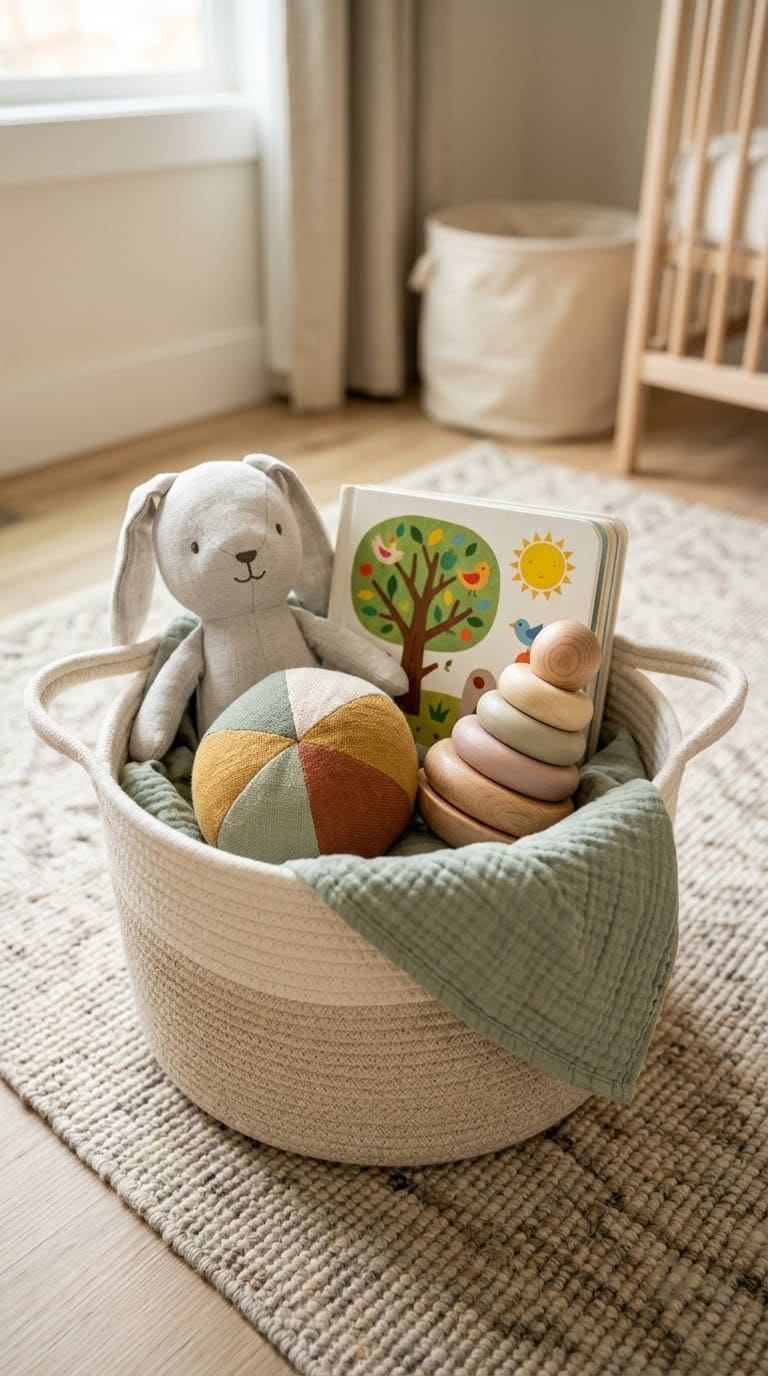
A toddler basket needs to be soft, big and safe. Skip the little pieces.
The CPSC bans products for children under 3 that pose a choking hazard from small parts. Check the age label on each toy, and choose items marked for under 3 when the child is small.
Pack the basket in steps. Start with a soft stuffed bunny with stitched, not button, eyes. Add a board book, a soft ball too big to swallow and a wooden stacking toy. Tuck in a pair of socks or a bib.
Skip the risks. Leave out balloons, marbles, small balls and hard candy. The CPSC says balloons, small balls and marbles need choking warnings.
Test the size. A toilet paper tube is a handy home check. If a piece fits inside it, treat it as too small for a toddler. It doesn’t replace the age label.


Use a safe filler. Use a fabric cloth or crinkled paper instead of loose plastic grass.
Check each toy twice. Squeeze the stuffed bunny and pull on the ears, the eyes and the ribbon. Anything that comes loose is a hazard, so pick another toy.
Think about texture. Toddlers like soft, crinkly and squeaky things. A crinkle book or a soft ball makes a great gift.
Keep the food simple. If you add a snack, choose something soft that melts, and sit with the child while they eat it.
Ask the parents. Check with the child’s parents about allergies and about toys they already have.
Budget: low. Skill: beginner.
2. An Allergy-Friendly Non-Food Basket
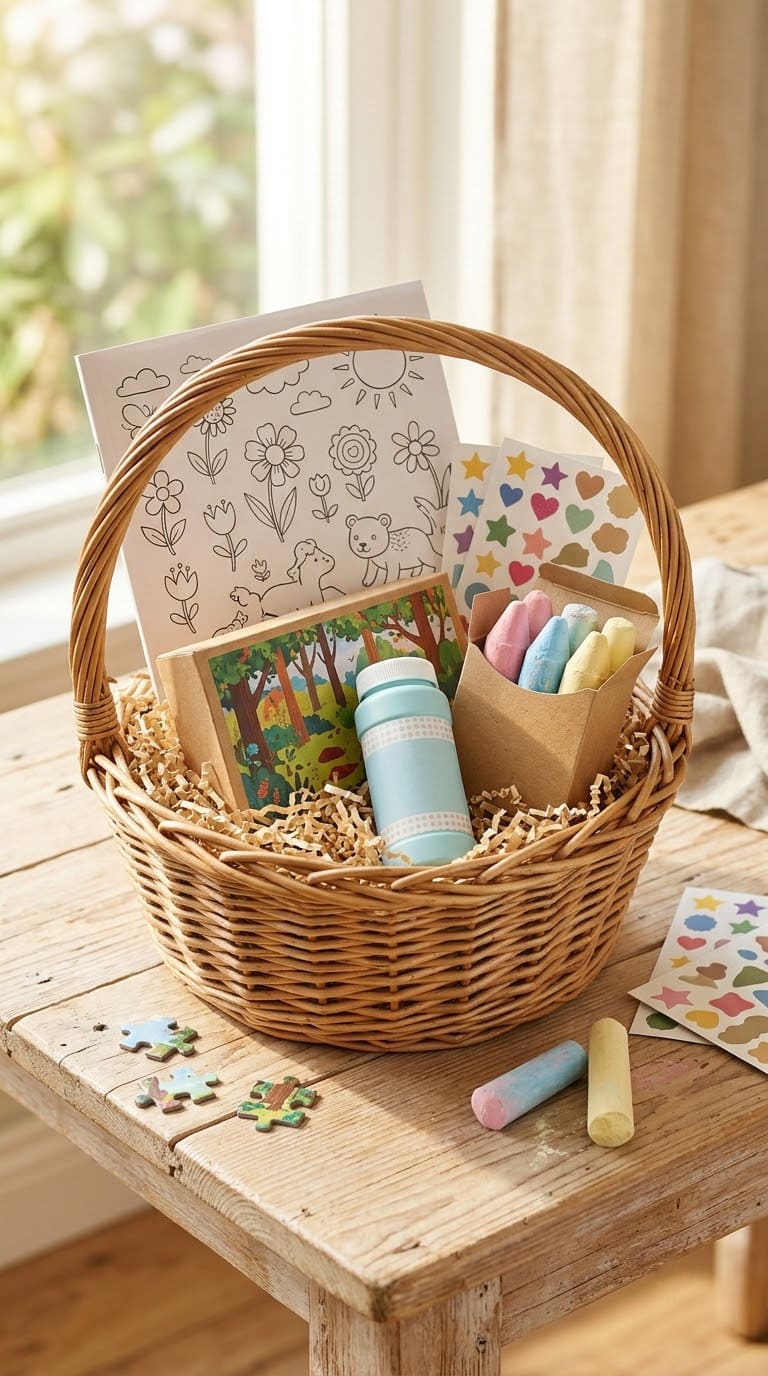
A basket doesn’t need candy. For a child with a food allergy, a non-food basket is the safest and most fun.
FARE lists many ideas, including art and craft sets, books, bubbles, coloring books, puzzles, sidewalk chalk, stickers, stuffed animals and yo-yos. It says smaller items can go in plastic eggs.
Build it by theme. Pick one theme, such as outdoor play with bubbles, chalk and a jump rope. Or choose art with a coloring book, stickers and crayons. A theme makes the basket feel planned.
Check every label. FARE says to always check ingredients, even in non-food items. It warns that clay and play dough often contain wheat, and that not all items suit a child with a latex allergy.
Tell the family. Share the plan with relatives who may add to the basket. A note that says “non-food only” saves a trip to the doctor.
Fill the eggs. Put small stickers, erasers or a coin into plastic eggs for the hunt.
Shop with a list. Write down the allergens to avoid. Check each item at the shop, then check again at home before wrapping.
Wrap things separately. Pack each gift on its own so nothing touches food or a shared surface. Use a clean basket.
Prepare the hunt. Fill plastic eggs with stickers, erasers or a few coins. A non-food hunt feels just as exciting.
Offer a treat swap. If the child wants a sweet, ask the parents for a safe brand and add it only if they approve.
Budget: low to mid. Skill: beginner.
3. A Pet-Safe Basket and Hunt Zone
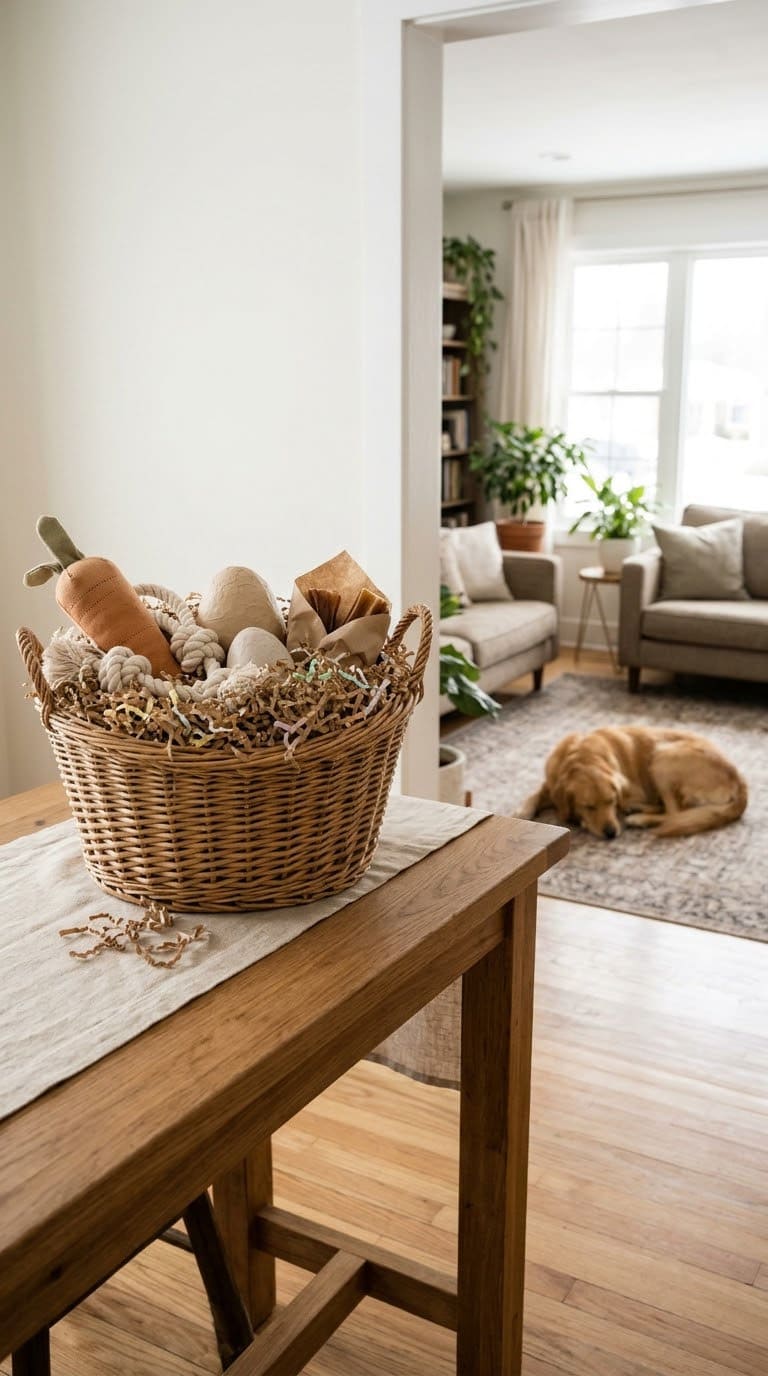
Easter and pets don’t always mix. A few swaps keep everyone safe.
The ASPCA lists chocolate, plastic Easter grass, lilies and xylitol as hazards. It says plastic grass can’t be digested and can cause vomiting, diarrhea, poor appetite, lethargy and stomach pain.
Swap the grass. Use shredded paper, a fabric cloth or tissue paper. The ASPCA says plastic grass gets stuck in the gut, so skip it.
Hide the candy. Keep chocolate, candy with xylitol, raisins and macadamia nuts out of reach. The ASPCA says darker chocolate is more dangerous to pets.
Choose the flowers. The ASPCA says lilies are especially dangerous to cats. Pick other flowers for your table, and see our guide on Easter lily meaning for context.
Plan for emergencies. The ASPCA says to call your vet or the ASPCA Poison Control Center at (888) 426-4435 right away if your pet eats something poisonous.
Set up a hunt zone. Keep the dog in another room during the hunt, and count the eggs and baskets afterwards.
Pick the room for the baskets. Set the baskets on a high table, in a room the pets can’t enter. A closed door is the simplest barrier.
Count the candy. Count each piece you hide. Then count what you find, so nothing stays in a corner for the dog.
Choose safe snacks. Offer a pet treat made for dogs or cats, so your pet joins the fun without the chocolate.
Keep the cleanup quick. Pick up wrappers and foil right away. Pets are drawn to the smell of candy.
Budget: low. Skill: beginner.
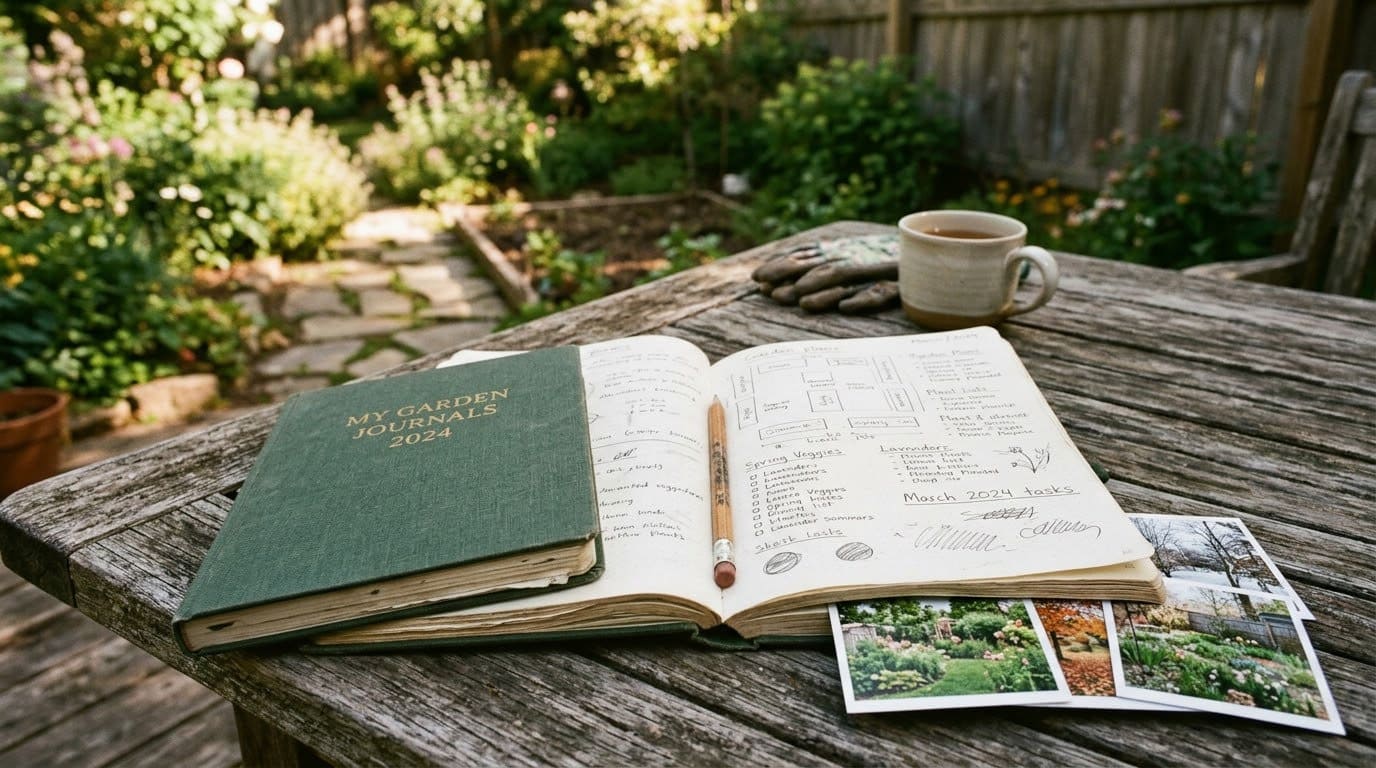
4. A Garden Basket
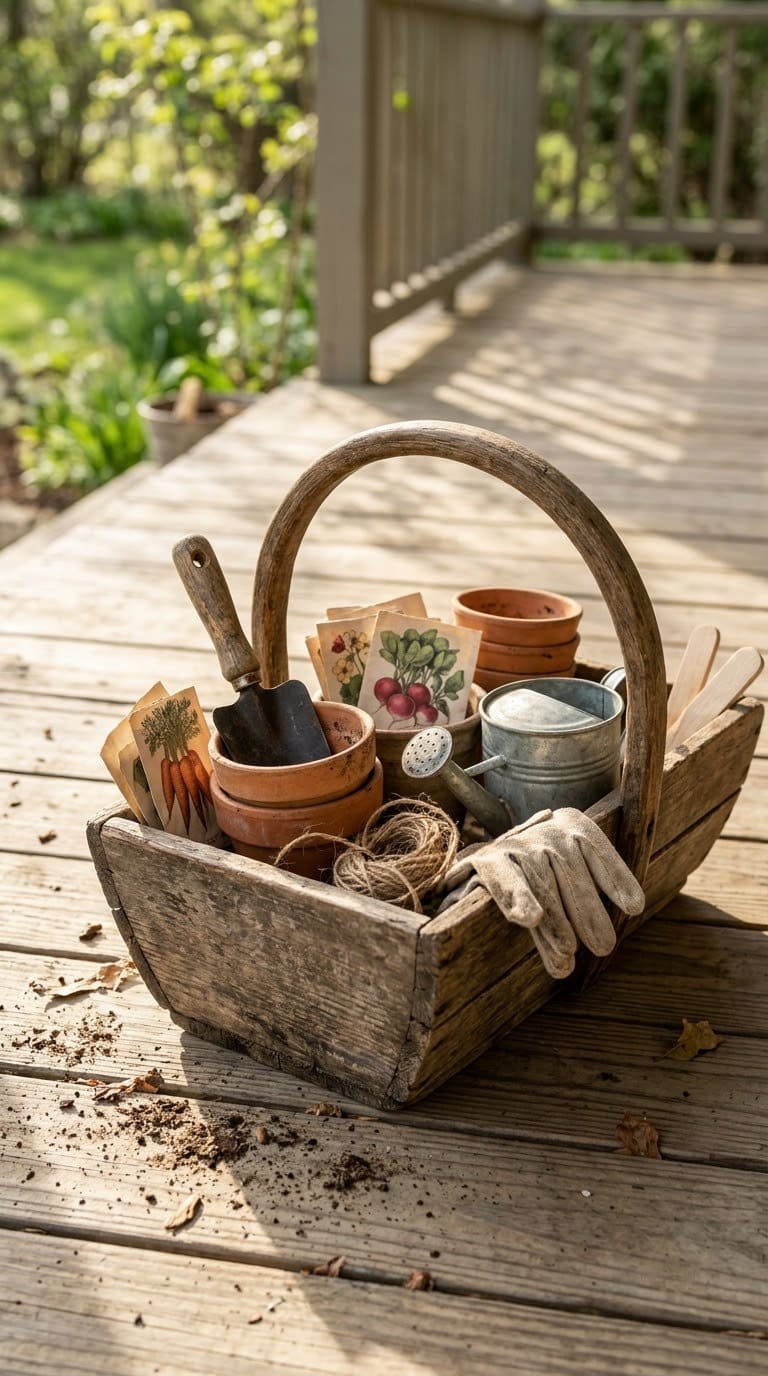
A garden basket gives a gift that grows. It’s a great way to welcome spring.
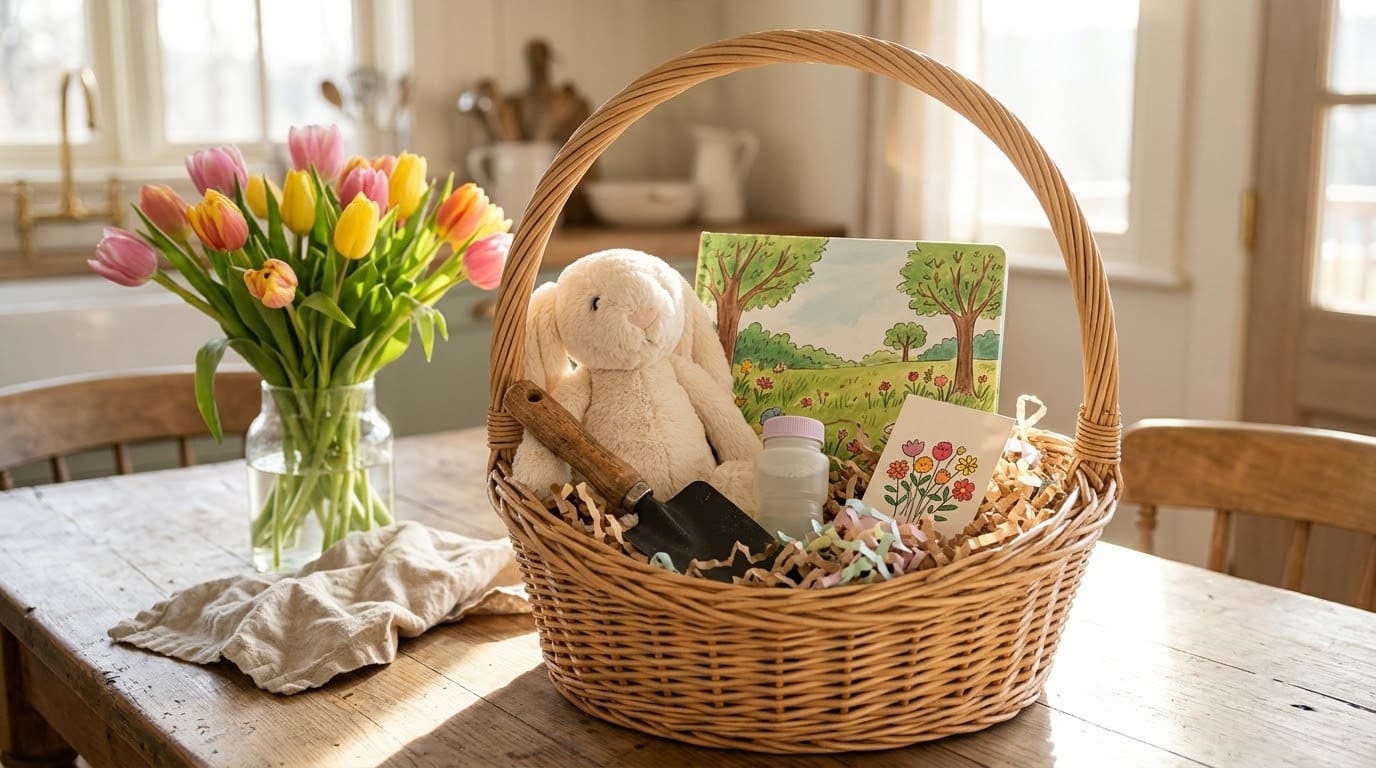
Fill it with seed packets, a small trowel, gloves and a few pots. Pick seeds that sprout quickly, such as lettuce, radishes or flowers.
Choose child-safe tools. Use plastic or blunt metal tools for small children. Check that handles are smooth and the edges are rounded.
Add a planting plan. Write a short card with the planting steps: fill the pot with potting mix, press in the seeds, water gently and place it in a sunny window.
Pair it with a project. Offer to plant together on Easter afternoon. A shared task makes the gift last.
Keep seeds away from toddlers. Seeds are small. Give them only to children old enough to avoid putting them in their mouths, and keep them away from toddlers.
Start the seeds early. If you want the seeds to sprout by Easter, give the child a pot that’s already planted. A pot with small green shoots is a delight.
Add a watering can. A small watering can or a spray bottle makes watering fun. Add a plant marker so the child knows what’s growing.
Pick easy plants. Choose plants that forgive mistakes, such as radishes, lettuce or sunflowers. Add a card with the date to pick them.
Pack for dirt. Add a small tray under the pots and a bag for dirty gloves.
For garden ideas, see our Easter garden ideas and guide to growing veggies and fruits in pots. Budget: low to mid. Skill: beginner.
5. A Craft and Activity Basket
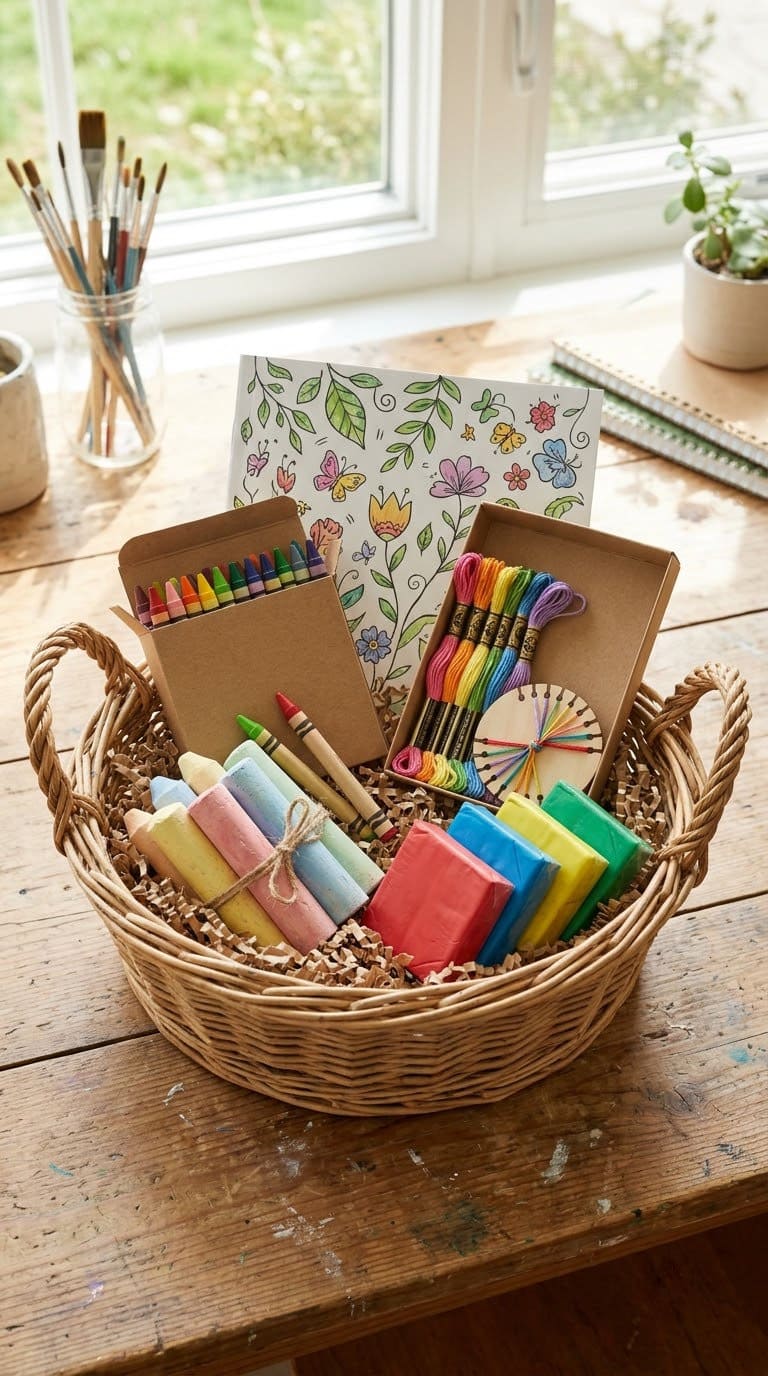
A craft basket keeps kids busy on Easter afternoon. It also gives them a project to keep.
FARE lists art and craft sets, coloring books, sidewalk chalk, friendship bracelet kits, clay and play dough, puzzles and stickers among its non-food ideas. It says many doughs contain wheat, so check the label.
Pick a project. Choose one main activity, such as a bracelet kit, and add the materials to finish it. Include a few crayons or markers and a small pad.
Check the age. Beads and small craft pieces are hazards for young children. The CPSC says some products with small parts must carry a warning, so read the label and save small-part items for older kids.
Add a table cover. Put a plastic cloth or old sheet in the basket for easy cleanup.
Add a storage bin. A small box or a zip bag keeps the supplies tidy. Label the contents so little hands put things back.
Choose washable supplies. Pick washable markers and paint. Add a smock or an old shirt.
Plan a quiet time. Set aside an hour on Easter afternoon for the craft. It gives the family a calm break after the hunt.
Show the finished work. Use a clothesline or a corkboard to display the art. The child sees it as part of the holiday.
For ideas to use the supplies, see our Easter crafts for kids. Budget: low. Skill: beginner.
6. A Teen and Adult Basket
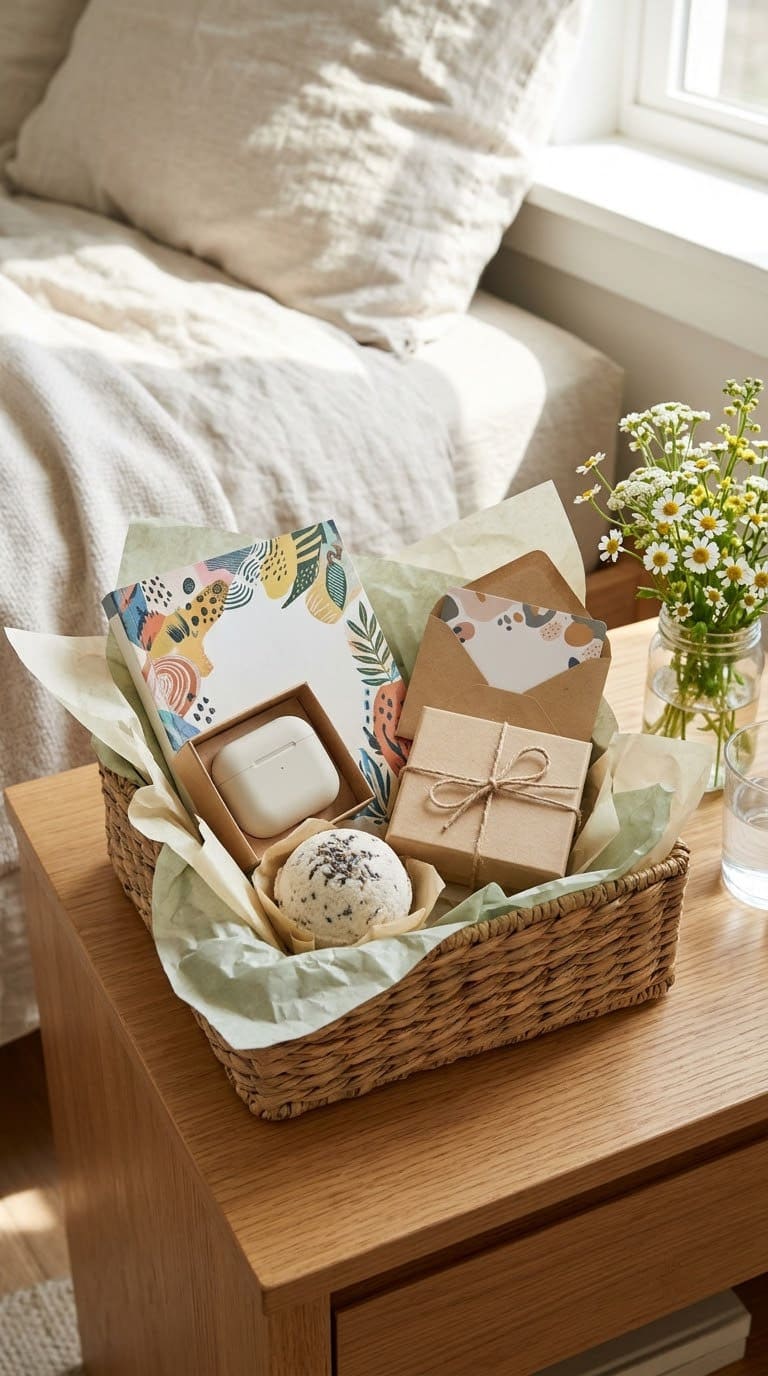
Teens and adults like Easter baskets too. Pick items they’ll use.
FARE lists ideas for older children, including bath bombs, earbuds, gift cards, hair accessories, jewelry and sports items. It also lists money as an option.
Match the person. Pick two or three items from the person’s hobbies, such as a book, a gift card to a favorite shop or a pair of earbuds. A small themed basket beats a big random one.
Add a treat. A favorite snack, tea or coffee makes the basket feel cozy. Check for allergies first.
Wrap it nicely. Use a reusable basket and tissue paper. A handwritten note finishes it.
Ask what they’d use. Think about the person’s week. A gift card for a coffee shop, a good pen or a nice candle suits many adults.
Mix practical and fun. Pair a useful item with a small treat, such as socks with a chocolate, or a book with tea.
Keep it classy. Use natural filler, such as shredded paper or a cloth napkin. Add a tag with a short, warm note.
Check preferences. Ask the family about allergies and tastes before you add food.
Budget: mid. Skill: beginner.
7. An Egg-Hunt Basket
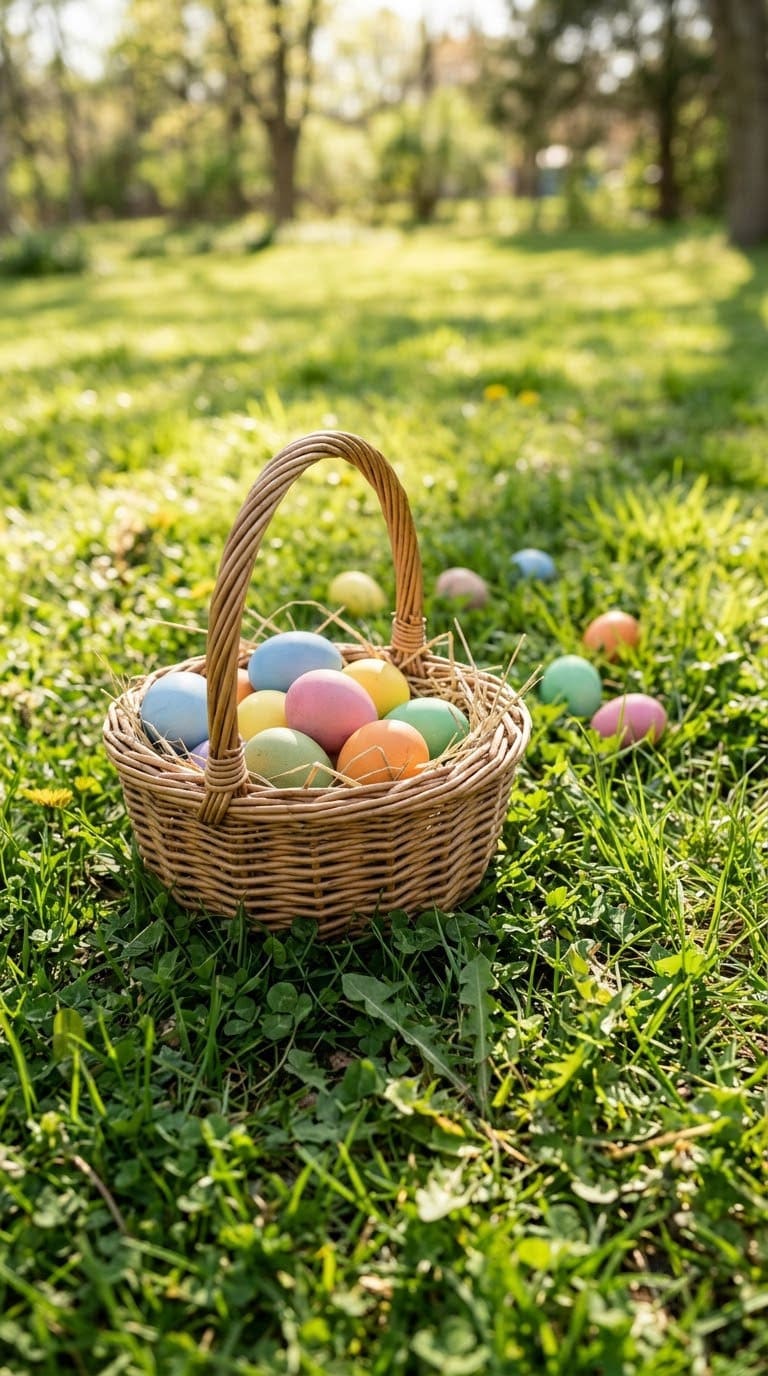
A hunt basket is the star of the morning. It needs a plan for the eggs.
Yang says eggs should be unrefrigerated for no more than two hours during the hunt. She says to refrigerate them right after cooling and dyeing.
Use plastic eggs for the hunt. Plastic eggs can hide stickers, coins and small treats. They avoid the food safety problem and last for years.
Handle real eggs safely. If you hunt with hard-boiled eggs, keep them in the refrigerator until the hunt. Use only food-grade dye, as Yang advises, and don’t dye eggs with cracked shells.
Collect and cool. Refrigerate found eggs right away. Discard eggs found hours later or the next day, and any with cracked shells.
Size the basket. Give each child a basket they can carry. A small basket keeps the hunt fair.
Plan the clock. Write down when the eggs come out of the fridge. Set a timer for two hours, and call the hunt off when it rings.
Hide with care. Hide eggs where pets and dirt can’t reach them. Avoid grass treated with fertilizer or herbicide, which the ASPCA lists as a pet hazard.
Use a count. Hide a set number of eggs and keep a list. At the end, count what the kids found and look for any missing ones.
Wash hands. Set out a jug of water and soap near the hunt. Kids touch eggs, grass and baskets, then eat.
For decorating, see our Easter egg decorating ideas and how to dye Easter eggs with food coloring. Budget: low. Skill: beginner.
8. A Reusable Container Basket
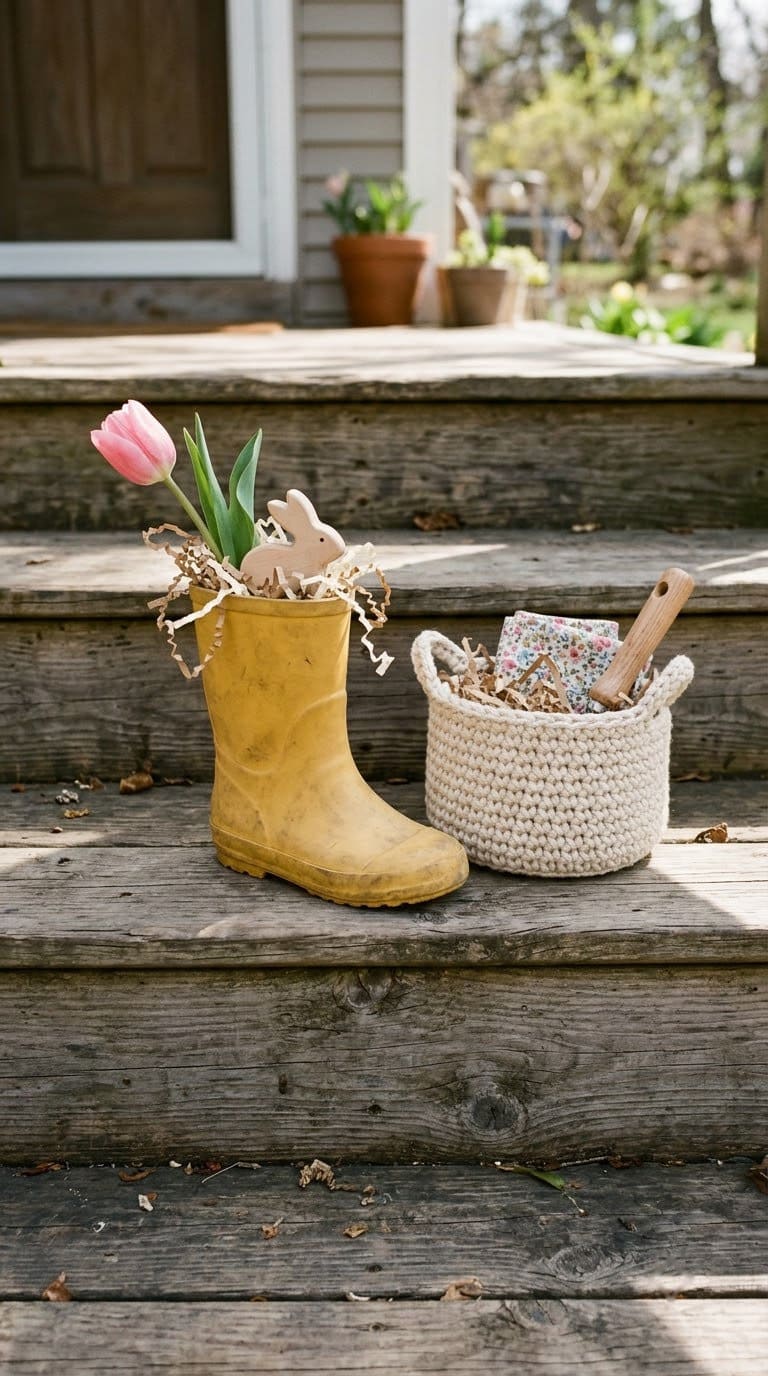
A basket doesn’t have to be a basket. A rain boot, a bucket or a crocheted basket makes a gift that lasts.
Choose a container the child will keep using. A rain boot becomes a puddle gift, and a bucket becomes a beach toy. A crocheted basket holds toys later.
Prepare the container. Wash it and dry it. Check for sharp edges, loose parts and strong smells.
Fill it in layers. Put paper filler in the bottom and the heavy items at the back. Tuck the small gifts in front. Keep the weight low so the container doesn’t tip.
Make it a wreath. Tie a few small items to a wreath ring with ribbon. Hang it on the child’s door. Check that nothing is small enough to pull off for a young child.
Pick the container. Choose one that’s clean, sturdy and the right size for the gifts. Avoid a container that held chemicals or strong smells.
Add a liner. Place a clean cloth or paper in the bottom so small items don’t slip out. Tuck the cloth around the edges.
Think about the afterlife. Tell the child how to use the container later, such as a boot for puddles or a bucket for the beach.
Keep it lightweight. A container that is too heavy is hard to carry on a hunt. Test it before you pack.
For soft, reusable options, see our crochet storage basket patterns and crochet Easter egg cozy patterns. Budget: low. Skill: intermediate.
A Quick Filler Guide
The filler matters. Use this table to swap out plastic grass.
| Instead of | Try this |
|---|---|
| Plastic Easter grass | Shredded paper or tissue paper |
| Loose confetti | A folded cloth napkin |
| Foil wrappers | Paper twists |
| Small loose items | A fabric pouch or a plastic egg |
| Lilies for the table | Other spring flowers, if you have a cat |
How to Pack a Basket in Six Steps
A good basket has a shape. Follow these steps for a basket that looks full and stays tidy.
First, place filler in the bottom, in a loose layer. Second, set the tallest item at the back, such as a book or a stuffed bunny.
Third, add the medium items in the middle. Fourth, tuck small items at the front.
Fifth, add a few plastic eggs in the gaps. Sixth, tie a ribbon and a tag on the handle.
An Easter Morning Plan
A short plan keeps the day calm. Use this timeline.
Before breakfast, set out the baskets in a safe spot. Keep pets in another room. After breakfast, start the hunt and set a timer for the eggs.
When the hunt ends, collect the eggs and refrigerate them right away. Then open baskets and sit down to a craft or a garden project.
A Weekend Prep Plan
You can prepare most of this in a weekend. Here’s a simple plan.
On Friday, decide who gets which basket and check the allergies. On Saturday morning, shop for the gifts and the filler. On Saturday afternoon, pack the baskets and hide them.
On Sunday, set up the hunt zone and keep the eggs chilled until it’s time.
What to Do First
Start with the checks, then pick the fun. This order saves you from returns.
First, decide who the basket is for and check their age and allergies. Second, check your pets and plan the filler.
Then choose the container and the gifts. Last, pack the basket and hide it out of reach.
Common Mistakes to Avoid
Most Easter basket problems come from a short list of oversights. Here’s what to watch for.
Packing small parts for a toddler. The CPSC bans products for children under 3 that pose a choking hazard from small parts.
Forgetting hidden allergens. FARE says to check ingredients even in non-food items, and that clay and play dough often contain wheat.
Using plastic grass around pets. The ASPCA says plastic grass can’t be digested and can get stuck in the gut.
Leaving eggs out too long. Yang says to limit eggs to two hours unrefrigerated during the hunt.
FAQ
What can I put in an Easter basket instead of candy?
FARE lists books, bubbles, sidewalk chalk, puzzles, stickers, stuffed animals and art sets, plus bath bombs, gift cards and jewelry for older kids.
Is plastic Easter grass safe for pets?
The ASPCA says no. Plastic grass can’t be digested and can get stuck in the gut. Use shredded paper or fabric.
How long can Easter eggs be out?
Yang at University of Guam Extension says no more than two hours during the hunt, then refrigerate them.
What’s safe for a toddler’s Easter basket?
Soft toys, board books and large wooden toys. The CPSC bans products for children under 3 with small parts that pose a choking hazard.
How do I make an Easter basket for a baby?
Choose soft toys, a board book and a bib. Check the age label, and skip anything with small parts, as the CPSC advises.
Can I put real candy in a basket for a child with allergies?
Only if the parents approve a safe brand. FARE says to check ingredients, even in non-food items.
How do I keep my dog away from the basket?
Keep it on a high table in a closed room. Use shredded paper instead of plastic grass, and hide the chocolate.
When should I make the baskets?
Pack them the day before Easter and hide them out of reach. Keep eggs refrigerated until the hunt.
Related Posts
Never miss an update — choose FarmFoodFamily as your preferred source on Google.
How it works: Tap the button below to open Google's settings page, then check the box next to FarmFoodFamily.
Tap the checkbox to turn it blue — that's how you know it's set.