12 Ingenious Ways to Keep Spaces Organized That Double as Decor
The best organizing ideas hide clutter in pieces that look like decor, as long as you sort first and anchor anything tall to the wall.

Never miss an update — choose FarmFoodFamily as your preferred source on Google.
How it works: Tap the button below to open Google's settings page, then check the box next to FarmFoodFamily.
Tap the checkbox to turn it blue — that's how you know it's set.
The best organizing ideas hide clutter in pieces that look like decor, as long as you sort first and anchor anything tall to the wall.
Products We Recommend
This post contains affiliate links. We may earn a commission on qualifying purchases at no extra cost to you.

Tsinglax 66L Under Bed Storage With Wheels, 2-Pack
Rolling bins, 30 x 16 x 7.5 in each, with clear lids, for idea 2.
Shop Now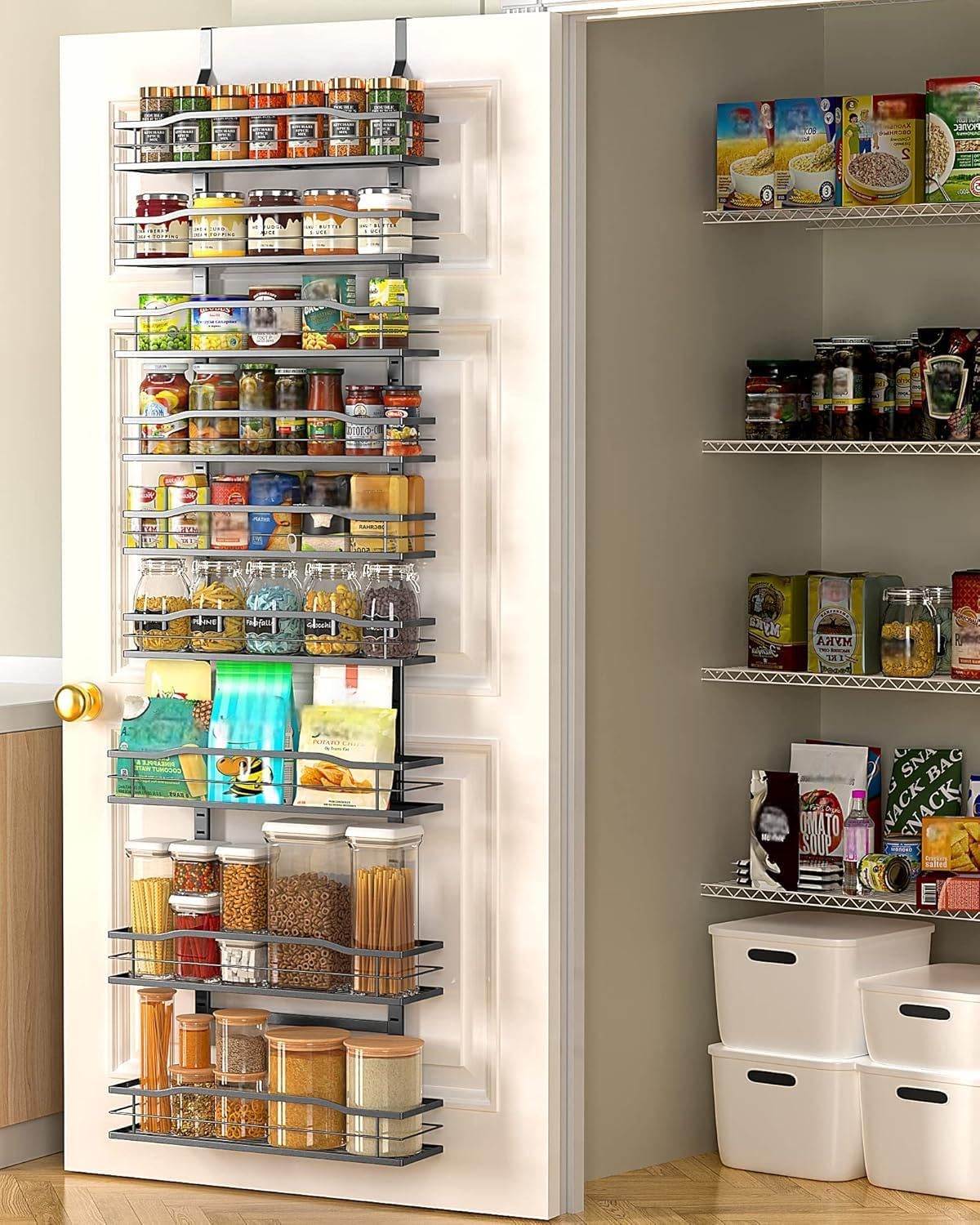
Moforoco 9-Tier Over The Door Pantry Organizer
A metal rack that hangs over a door with no tools or drilling. Measure your door first.
Shop Now
Ougourim Furniture Anchors, 10 Pack
Anti-tip straps listed as ASTM F3096-23 tested, for dressers and bookcases.
Shop NowThe smartest organizing ideas work in three steps. Sort your stuff first, give each item a zone, then store it in something that looks good. A storage ottoman, a window bench or a wall rail with baskets does all three.
Professional organizer Nicole Gabai says to keep daily items in the easiest-to-reach zone and rarely used ones in zones two and three. Hide the rest under beds, behind doors and inside furniture.
That way the pieces you see look like decor, and the mess stays out of sight. Pick the idea that fits your room, your budget and your weekend.
Skip buying bins until you’ve decluttered, because bins bought first rarely fit.
And anchor tall shelves and dressers to the wall, since the U.S. Consumer Product Safety Commission reports 459 child tip-over deaths from 2000 to 2018. These 12 ideas cover every room.
Where Should You Start?
Start with less stuff, not more containers. If you buy bins first, you’ll often buy the wrong size. Sort one small area, then shop.
Hashi Mohamed of Ivy Cleans suggests the four box method. Label boxes keep, donate or sell, trash and unsure. If you haven’t used an item in the past year, it may be time to let it go.


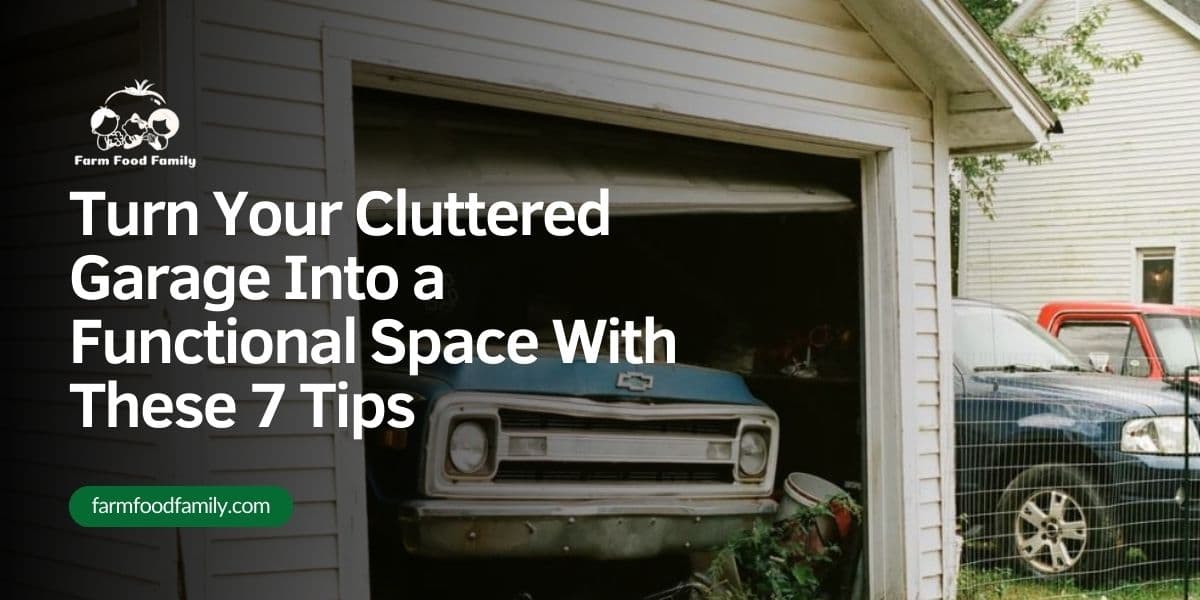
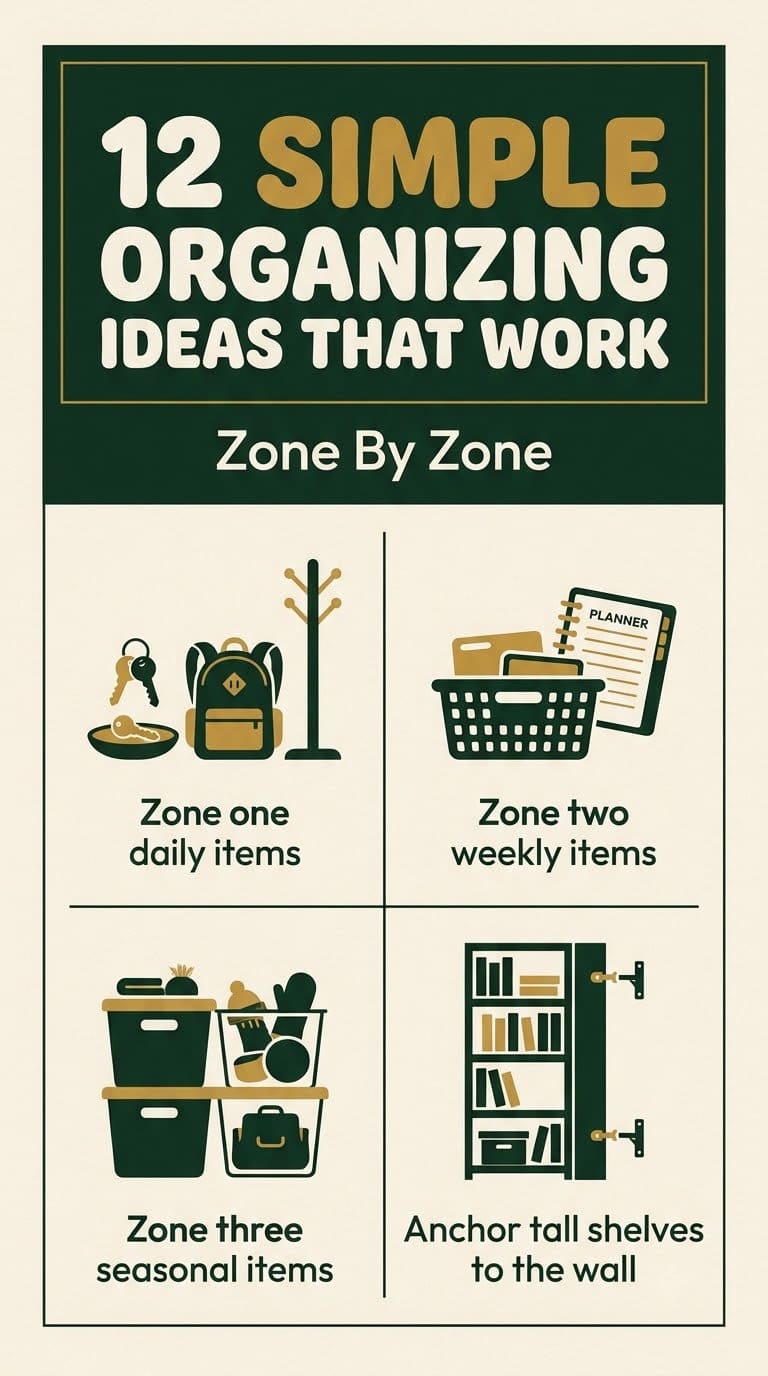
Then divide the room by activity. Nicole Gabai, founder of B. Organized and a NAPO Golden Circle member, calls this sectional organizing.
Think study corner, lounge corner and dressing corner.
Use the table below to match a spot with a zone.
| Zone | What lives there | Where it goes |
|---|---|---|
| Zone one | Daily items like keys, remotes, pens | Eye to waist height, open baskets, hooks |
| Zone two | Weekly items like games, extra towels | Closed bins, shelves, ottomans |
| Zone three | Seasonal items like winter coats | Under the bed, high shelves, behind doors |
What Safety Checks Come First?
Organizing means adding furniture and loading shelves. That’s where the real danger sits. A loaded bookcase or dresser can tip over, especially if a child climbs it.
The CPSC reports 459 tip-over deaths of children 17 and younger from 2000 to 2018. CPSC’s release says 93% involved children 5 and younger. It says furniture a child could bump or climb should be anchored to the wall.
Here are our simple checks for every idea below:
- Anchor any shelf, bookcase or dresser taller than a child’s chest to a wall stud.
- Keep heavy items on lower shelves.
- Check the weight rating on every hook, rail and over-door rack before you load it.
- Keep hallways and doors clear so you can still walk and open them fully.
1. Storage Ottoman and Lift-Top Coffee Table
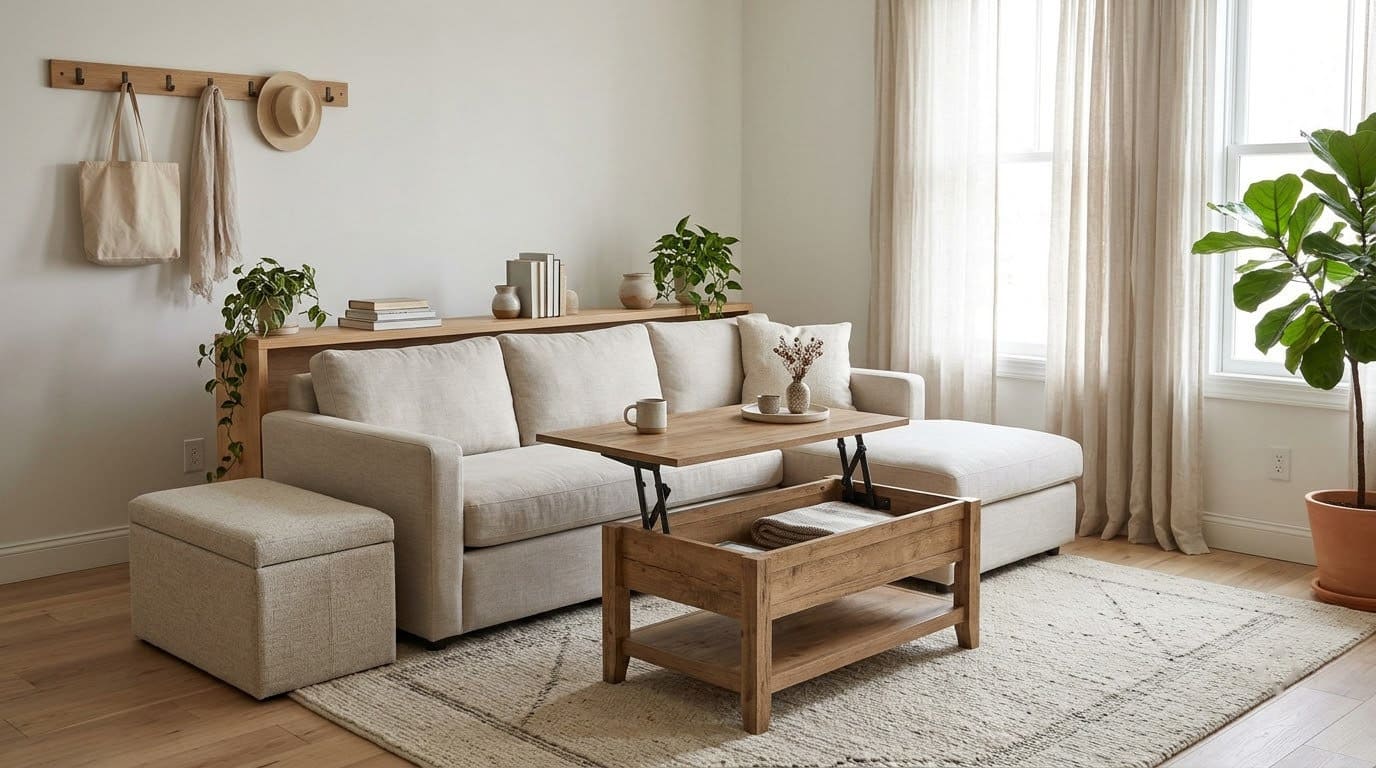
A storage ottoman is the easiest way to hide living room clutter. It works as a seat, a footrest and a toy box. A lift-top coffee table does the same for remotes, chargers and board games.
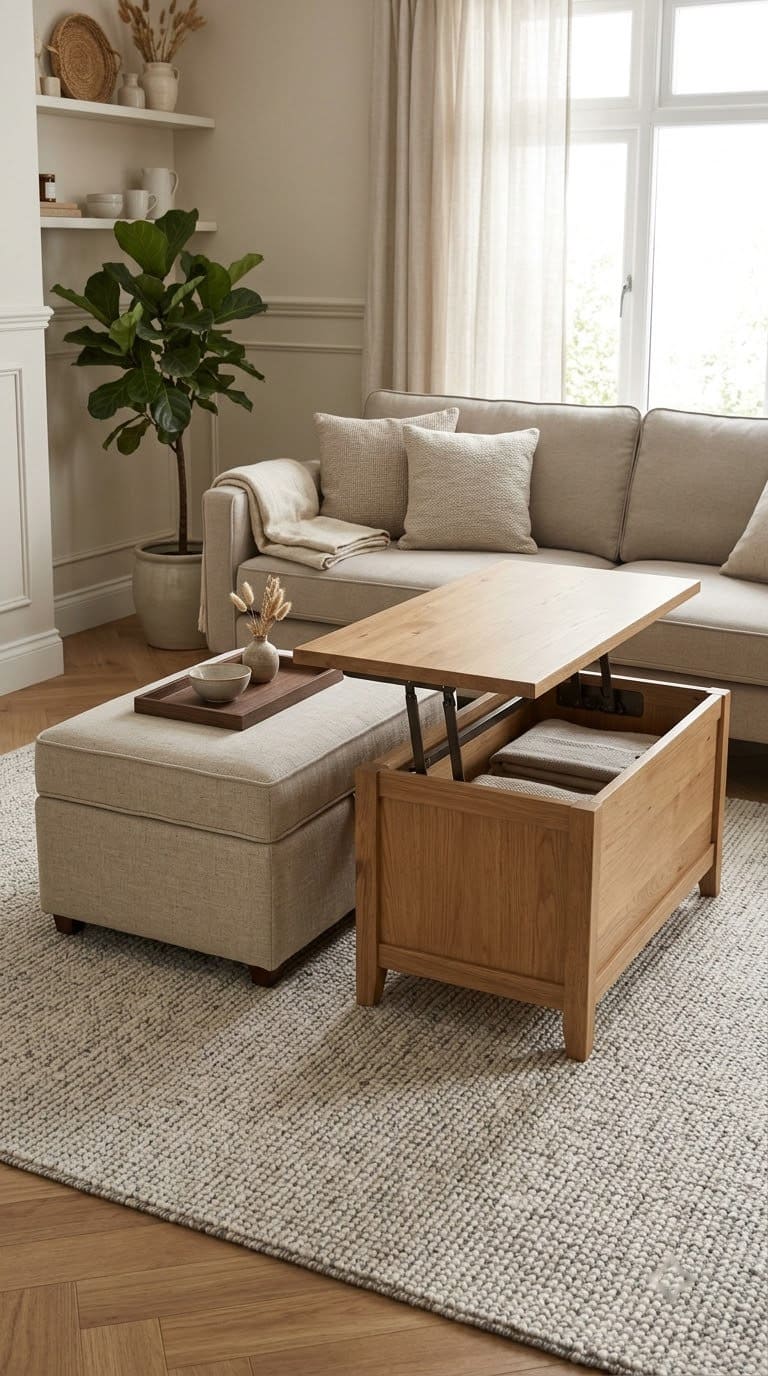
Di Ter Avest, a professional organizer and founder of Diisorganized, suggests these pieces for hidden storage. She says lift-top tables can hold games, puzzles, tech accessories and throws.
Rolling bins, 30 x 16 x 7.5 in each, with clear lids, for idea 2.
Shop NowThis post contains affiliate links. We may earn a commission on qualifying purchases at no extra cost to you.
- Pick an ottoman about the same height as your sofa seat.
- Sort what goes inside by zone. Put weekly items on top and rarely used ones below.
- Add a lid stay or soft-close hinge so little fingers don’t get pinched.
- Keep a tray on top for drinks and a candle.
Where it goes: in front of the sofa or at the foot of a bed. For more living room ideas, see our living room storage ideas.
Decor tip: choose a fabric that matches your throw pillows so it blends in.
2. Rolling Drawers Under the Bed
The space under your bed is the biggest unused spot in most bedrooms. Add wheels to a wide, shallow drawer and it rolls out like a hidden dresser. It keeps off-season clothes and shoes out of sight.
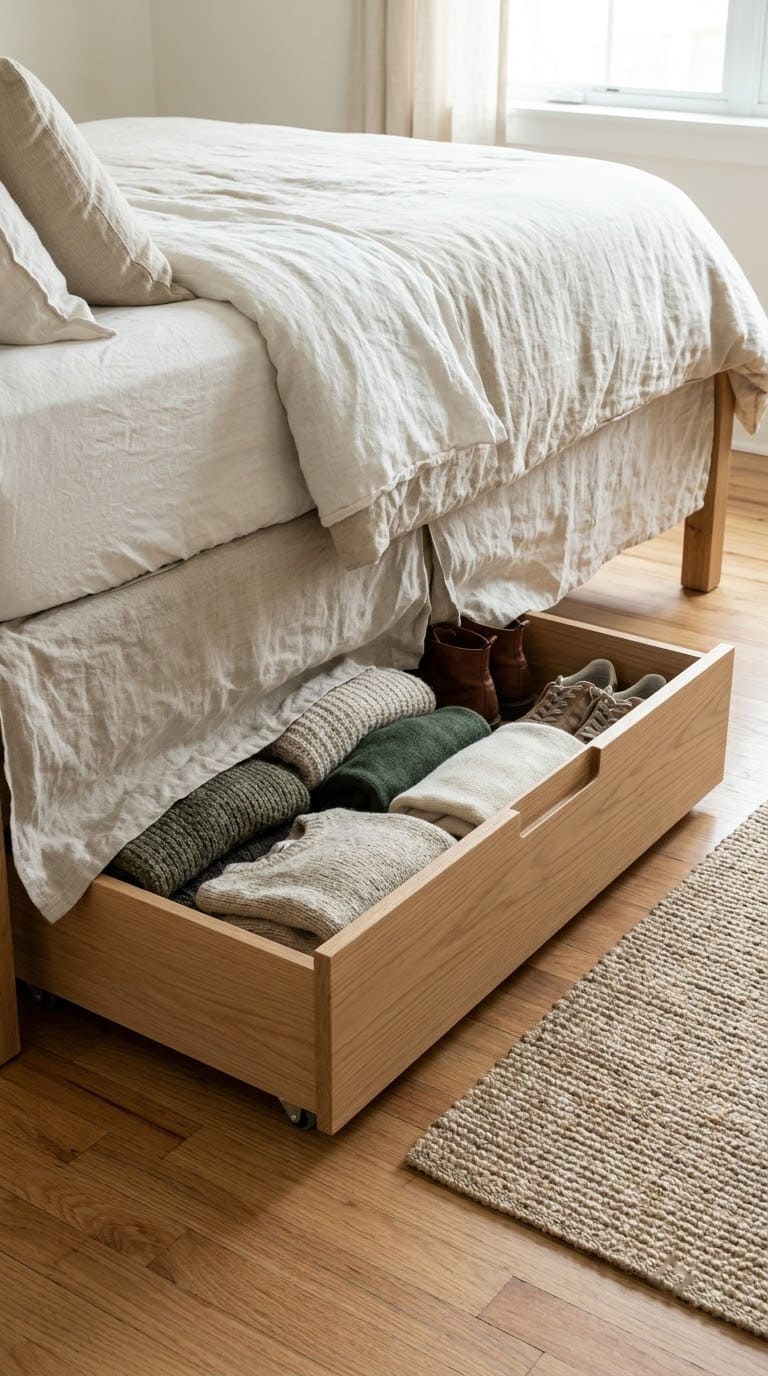
Di Ter Avest names rolling bins and vacuum-sealed bags as her under-bed tools. The bags compress bulky coats, sweaters and blankets.
- Measure the gap from the floor to the bed rail. Pick a bin that clears it by an inch.
- Add locking casters to the bin if it doesn’t have wheels.
- Store off-season items in the back and shoes in the front.
- Label the end of each bin so you can read it without pulling it out.
Where it goes: under any bed with a gap of 6 inches or more. Our guide to bedroom storage for small spaces has more ideas.
Tip: a bed skirt hides the bins and makes the bed look finished.
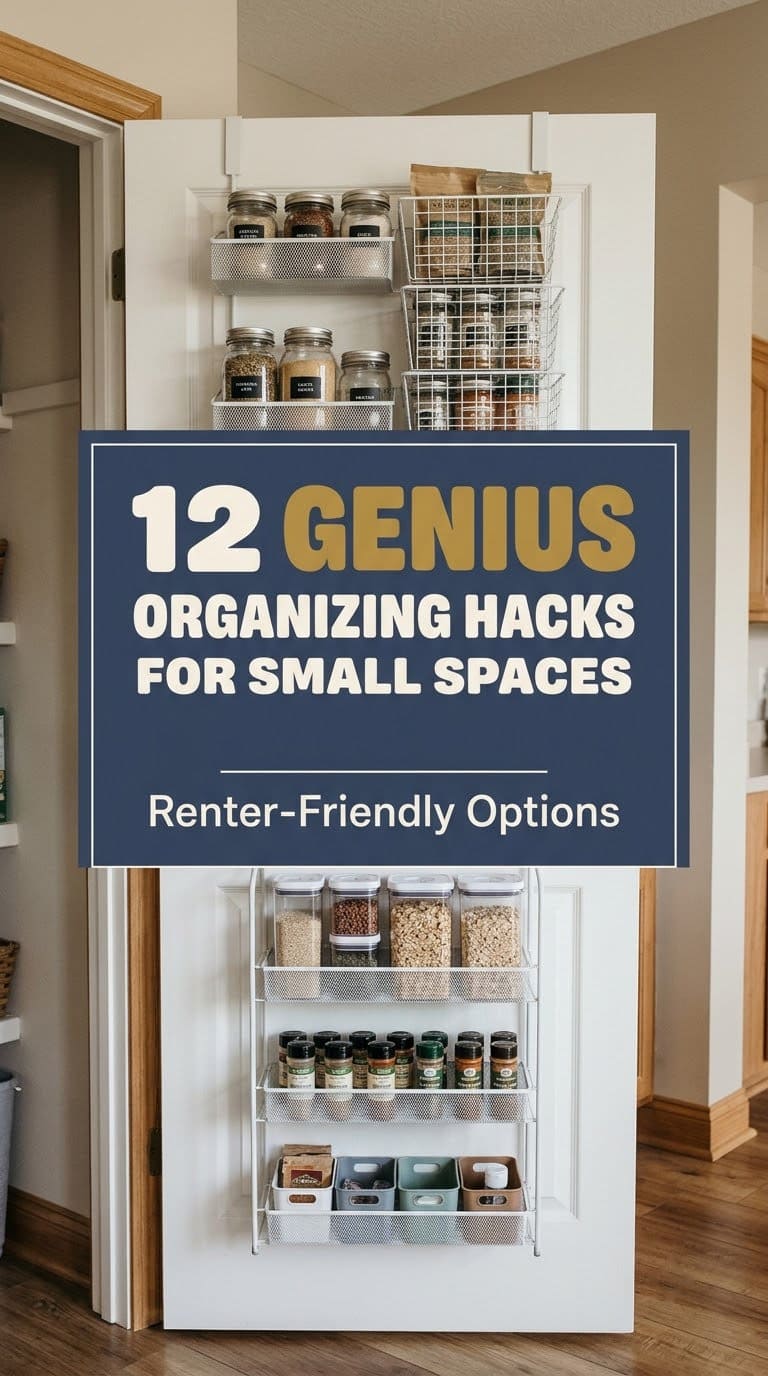
3. Over-the-Door Organizers
The back of a door is free wall space. An over-the-door rack can hold shoes, cleaning supplies, spices or light canned goods. It adds storage without a drill.
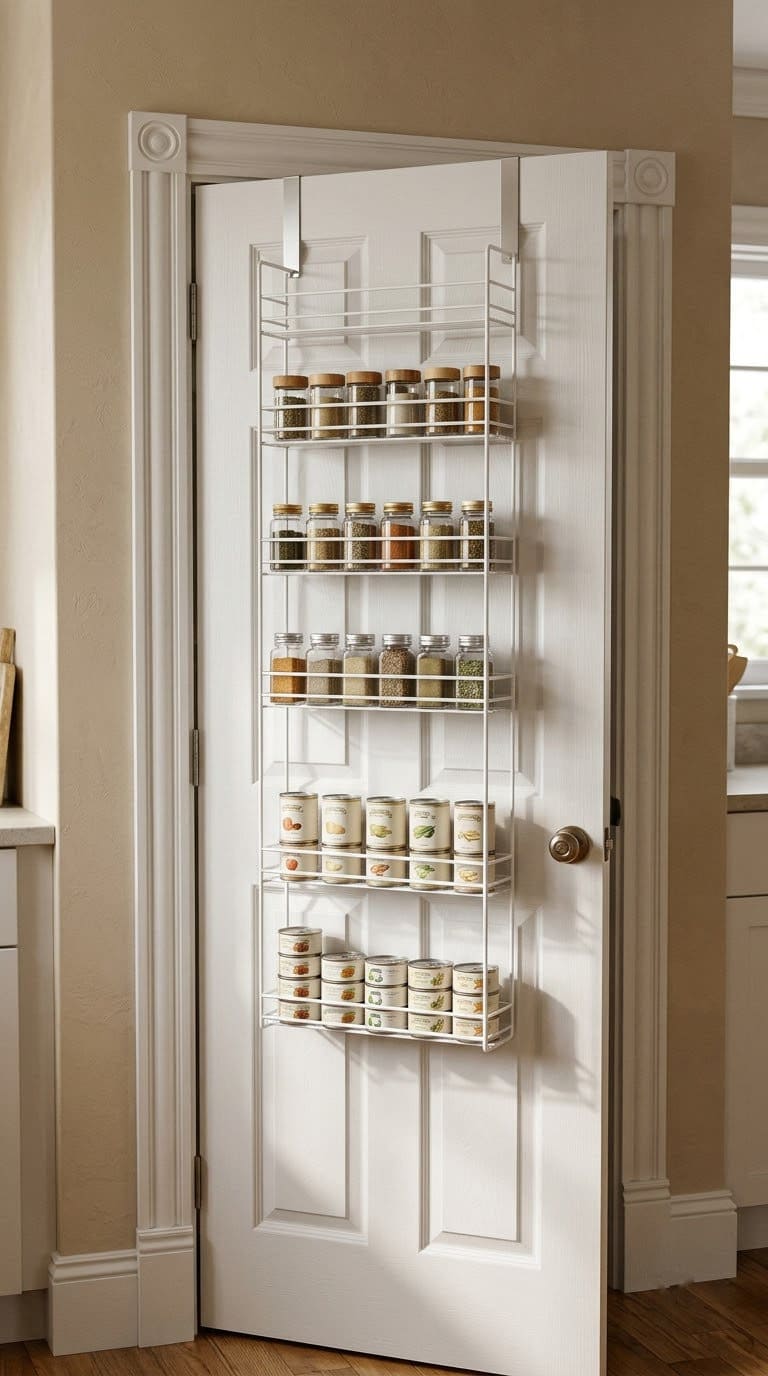
Di Ter Avest points out that this spot isn’t fully hidden, since the door has to be open to conceal the items. She still counts it as a good solution.


- Measure the door thickness and the gap at the top, so the hooks fit.
- Choose a slim rack so the door closes fully.
- Load heavy items at the bottom and light ones on top.
- Test the door a few times to check that it swings freely.
Where it goes: a pantry door, a bathroom door or a closet. See our narrow pantry ideas for a kitchen layout.
Tip: pick a white or wood-toned rack to match your door and blend in.
4. Window Bench With Hidden Storage
A bench under a window gives you seating and a hidden chest in one. It makes a quiet reading spot and keeps blankets and toys out of view. This is a build-it or buy-it project.
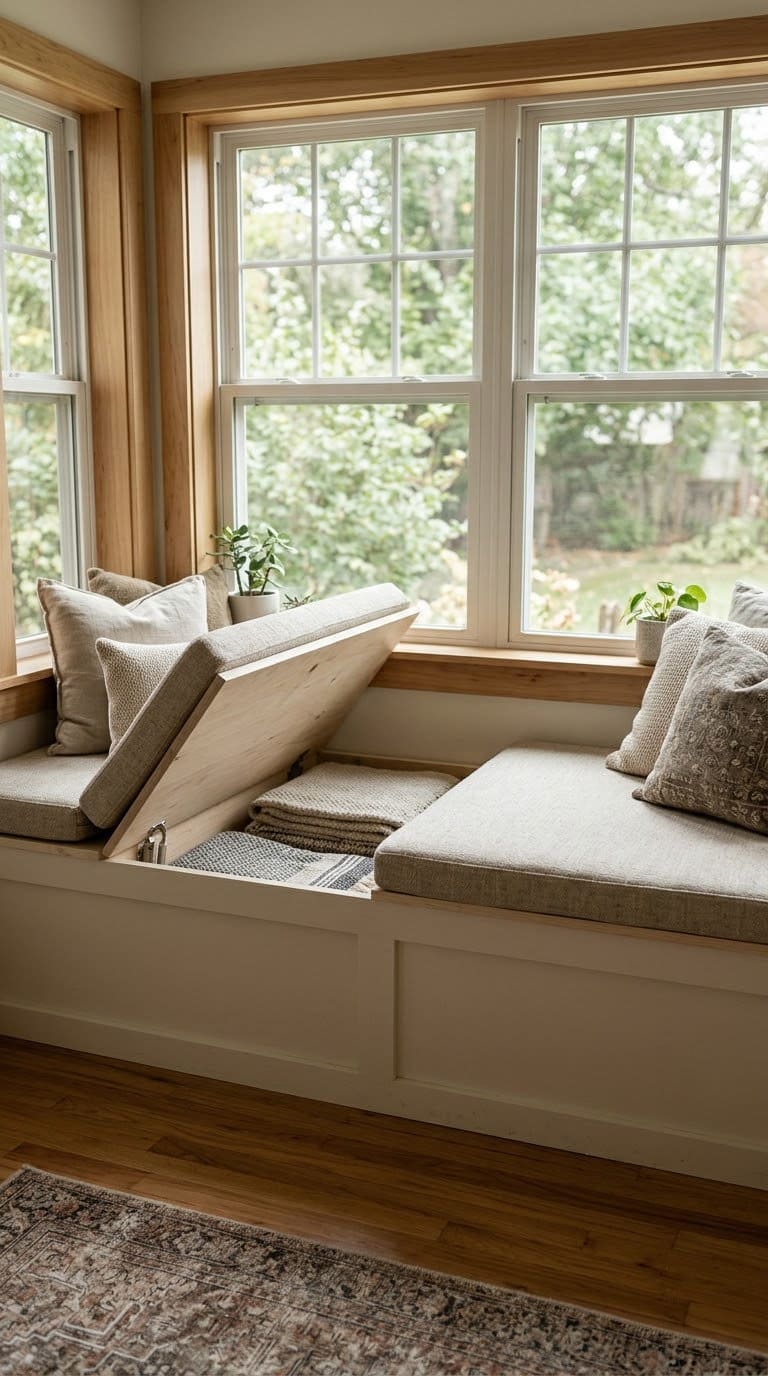
- Measure the window wall and plan a bench about 16 to 18 inches deep.
- Build a box frame, or buy a storage bench that fits the length.
- Add a hinged or lift-off top with a gentle stay.
- Top it with a cushion and a few pillows.
Where it goes: a living room window, a bedroom bay or a hallway.
Safety: add a soft-close hinge, and keep lids light. A heavy, falling lid is a hazard for small hands.
5. Open Shelf Behind the Sofa
A low shelf behind the sofa divides a big room into zones. It gives you a place for books, baskets and a lamp. It also turns a back-facing sofa into a finished look.
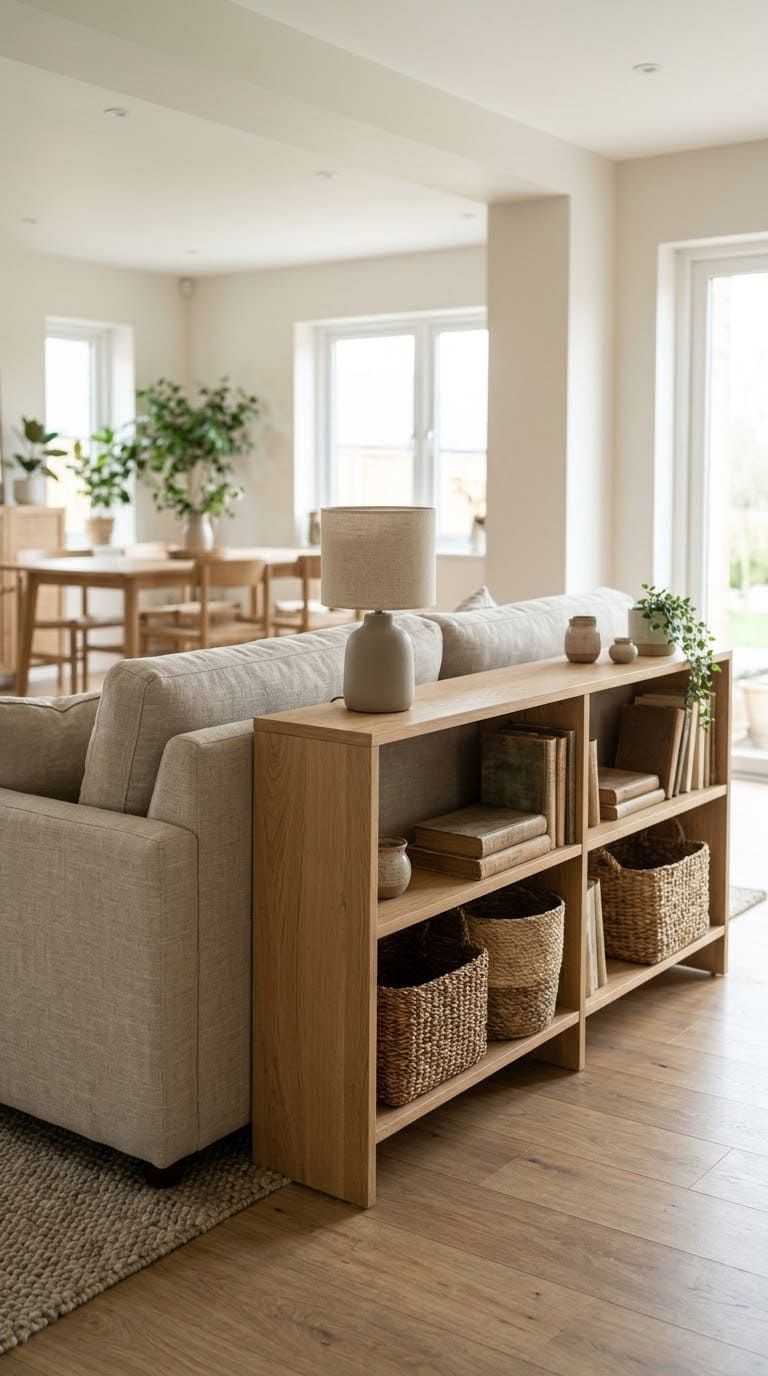
- Choose a shelf no taller than the sofa back, so it doesn’t block light.
- Leave about 3 inches between the sofa and the shelf for cleaning.
- Anchor the shelf to the wall or the floor if it’s tall.
- Put heavy books on the bottom, and baskets of throws and toys on top.
Where it goes: behind the sofa in an open plan. For more, see our smart ways to create storage space.
Safety: the CPSC says furniture that could topple should be anchored to the wall.
6. Pull-Out Baskets in the Kitchen
A sliding basket turns a deep, dark cabinet into an easy-to-reach drawer. Use it for cleaning supplies, snacks or baking pans. You’ll stop digging behind the front items.
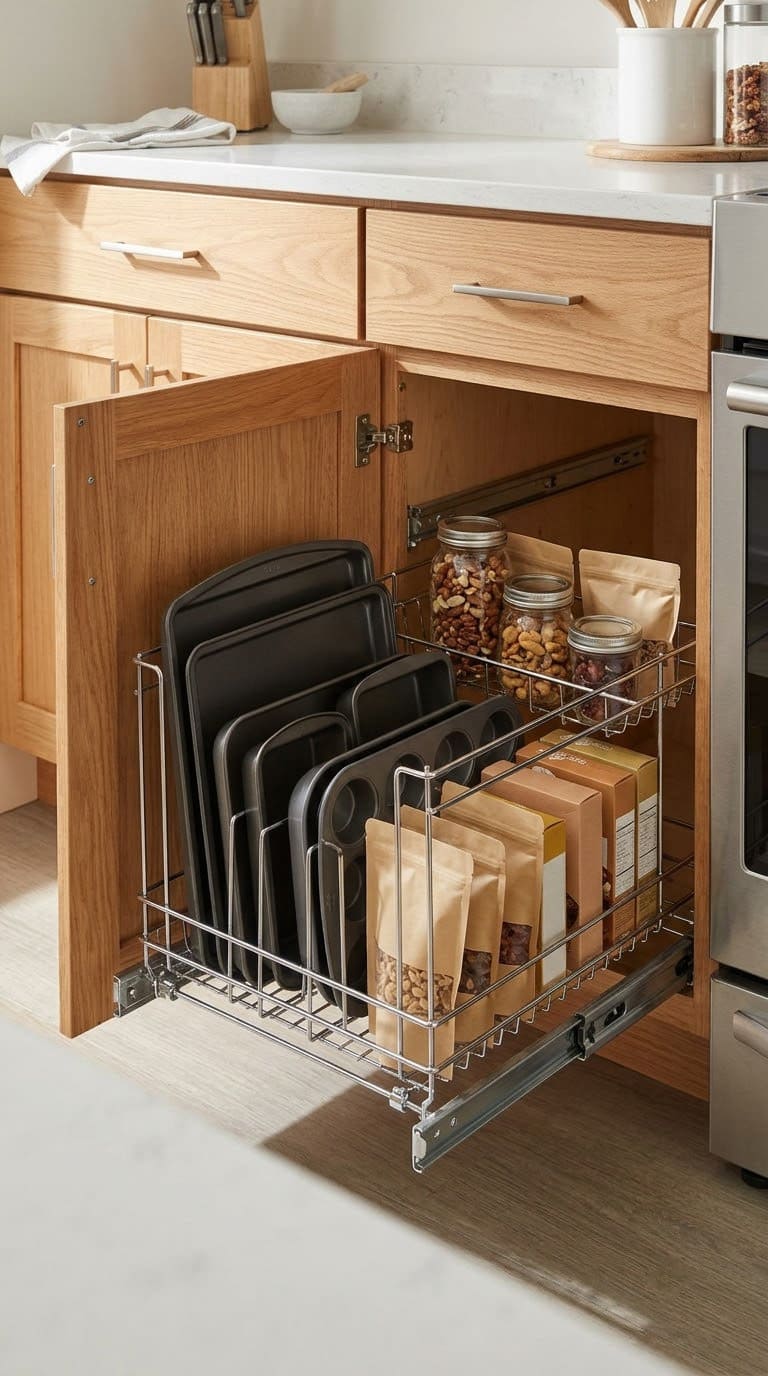
- Measure the inside width and depth of the cabinet.
- Pick a wire or wood basket on glides that fits with a small gap.
- Mount the runners level, using the screws in the kit.
- Group by zone, with the daily items in front.
Where it goes: under the sink, in a base cabinet or a pantry. Our pantry shelving ideas cover more.
Safety: keep cleaning products locked or high if kids are in the house.
7. Wall Rail With Hooks and Baskets
A simple wall rail with S-hooks and small baskets works almost anywhere. Hang pots for beauty items, mugs, scarves or kids’ art. It looks like a farmhouse detail, and it costs very little.
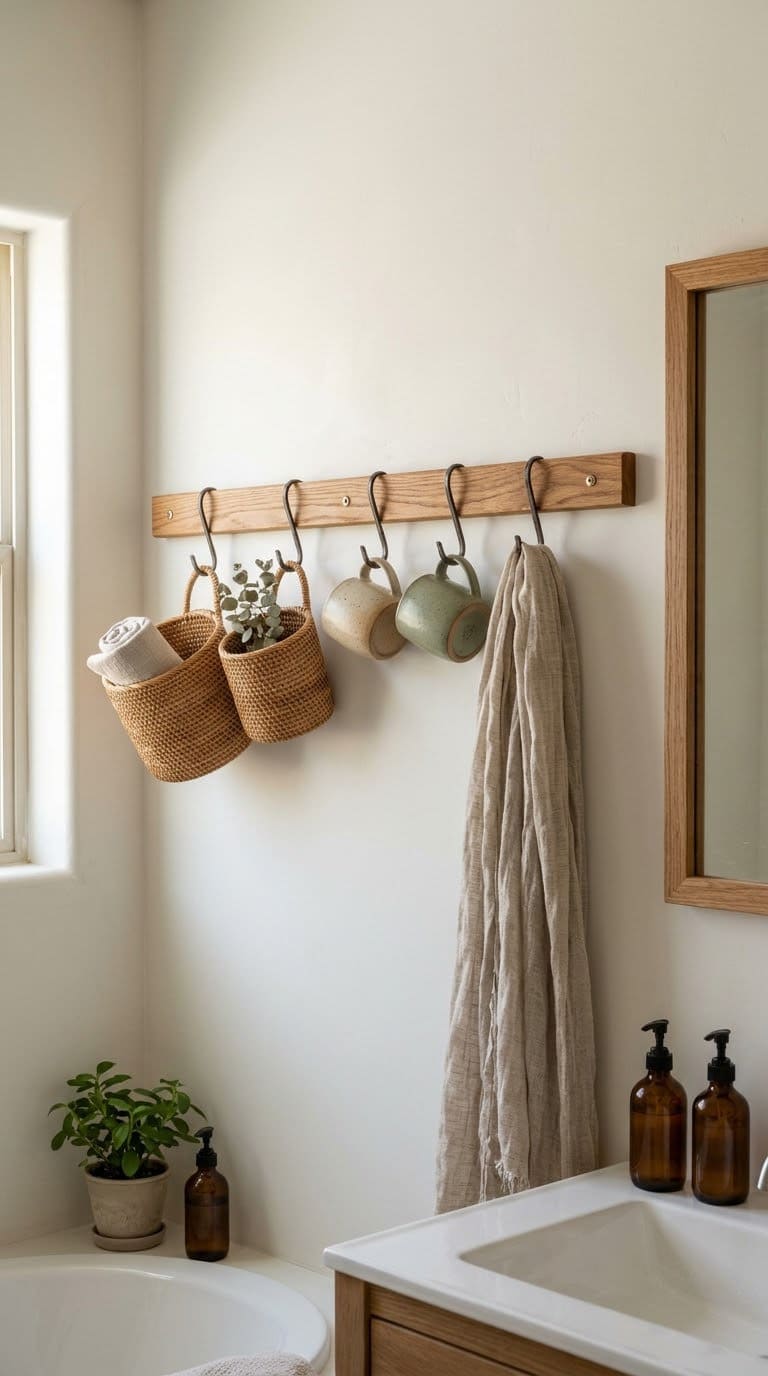
Nicole Gabai recommends using vertical space, like adhesive hooks for hats or extra shelves.
- Cut a rail from a wood strip or buy a metal one.
- Mount it into studs, or use wall anchors rated for the load.
- Hang a few S-hooks and test the weight.
- Add small baskets or metal pots for odds and ends.
Where it goes: a bathroom, a craft nook or an entry. See our towel storage ideas for more on bathroom walls.
Tip: keep hooks about 4 to 6 inches apart so items don’t bump together.
8. Cork and Magazine File Command Center
A cork board with a few magazine files makes a command center for mail and notes. It keeps papers off the counter. It also gives a bare wall a bit of texture.
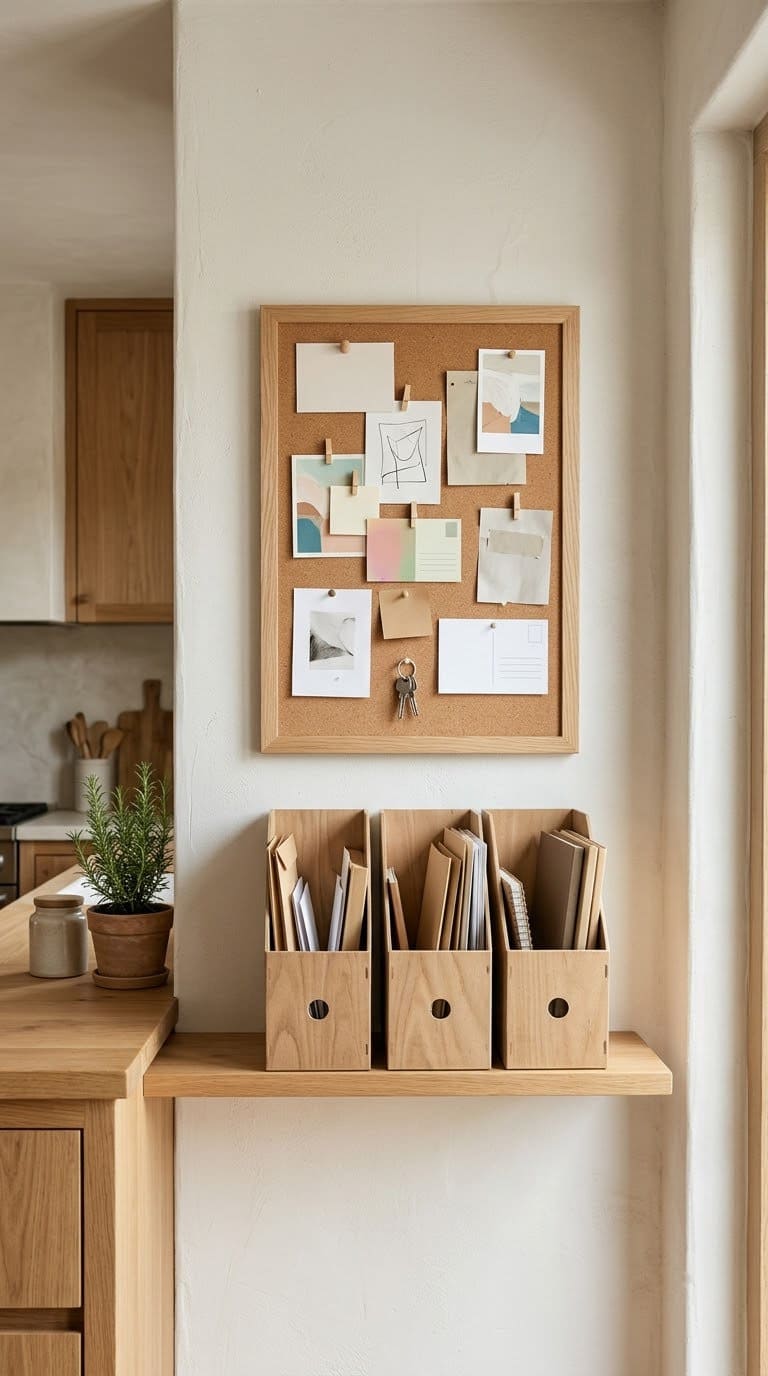
- Cut cork tiles or buy a board and mount it on a wall near the door.
- Add two or three magazine files for mail, school papers and bills.
- Label each file with a clear tag.
- Pin one note per day and clear the board every Sunday.
Where it goes: a kitchen wall, an entry or a home office. Our low-cost closet organization ideas pair well with this.
Tip: paint the files the same color for a clean look.
9. Spice Rack Mini Bookshelf
A narrow spice rack makes a sweet little bookshelf for kids. The front lip holds picture books face out. A child can see the covers and pick one up.
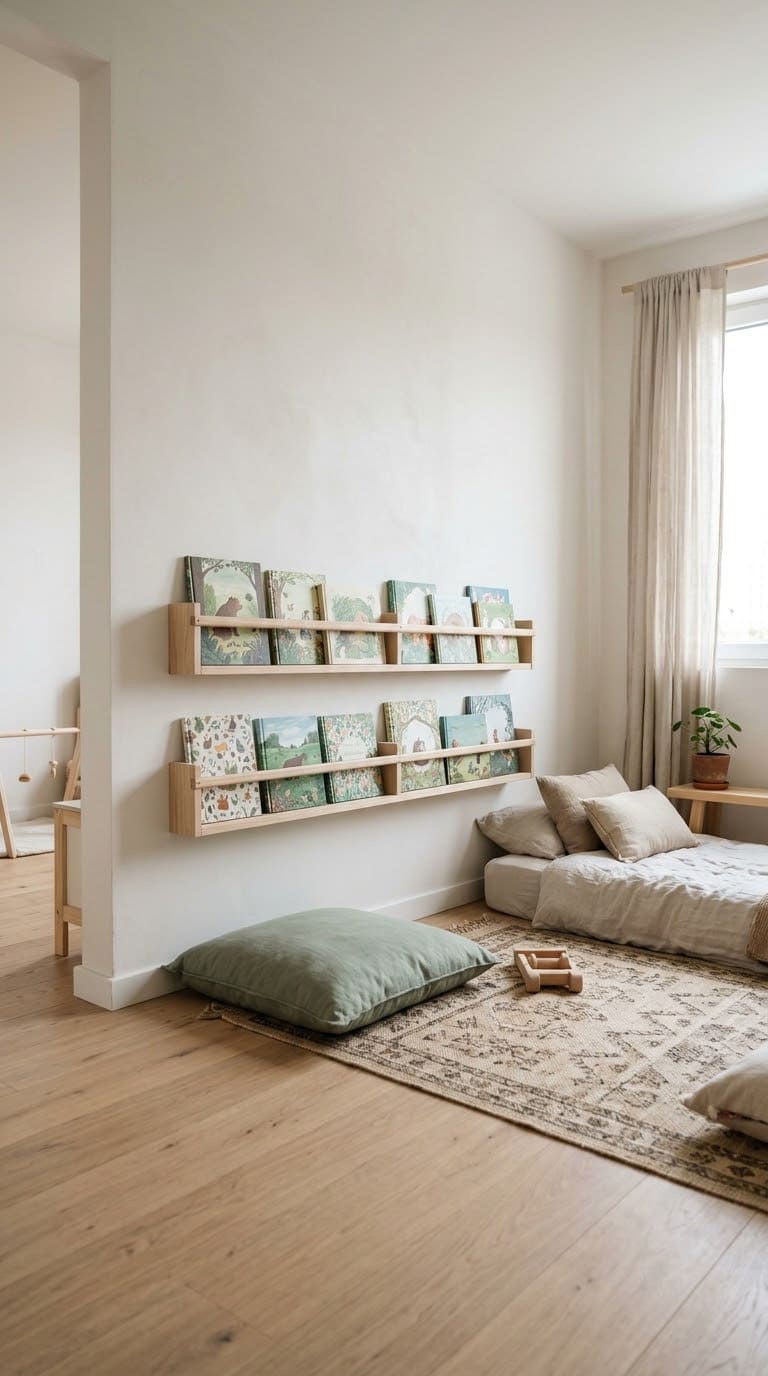
- Choose a wall rack with a raised front edge.
- Mount it low, so kids can reach it, at about knee to waist height.
- Fill it with 8 to 10 thin picture books, face out.
- Rotate the books each month.
Where it goes: a bedroom, a playroom or a hallway. For more kid-friendly ideas, our cubby storage ideas is a good next step.
Safety: mount into a stud, since a child may pull on it.
10. V-Shaped Shoe Shelves in the Entry
Wooden shelves set in a V shape hold shoes at an angle. The pairs face out, so you can grab one fast. It saves floor space and looks sculptural.
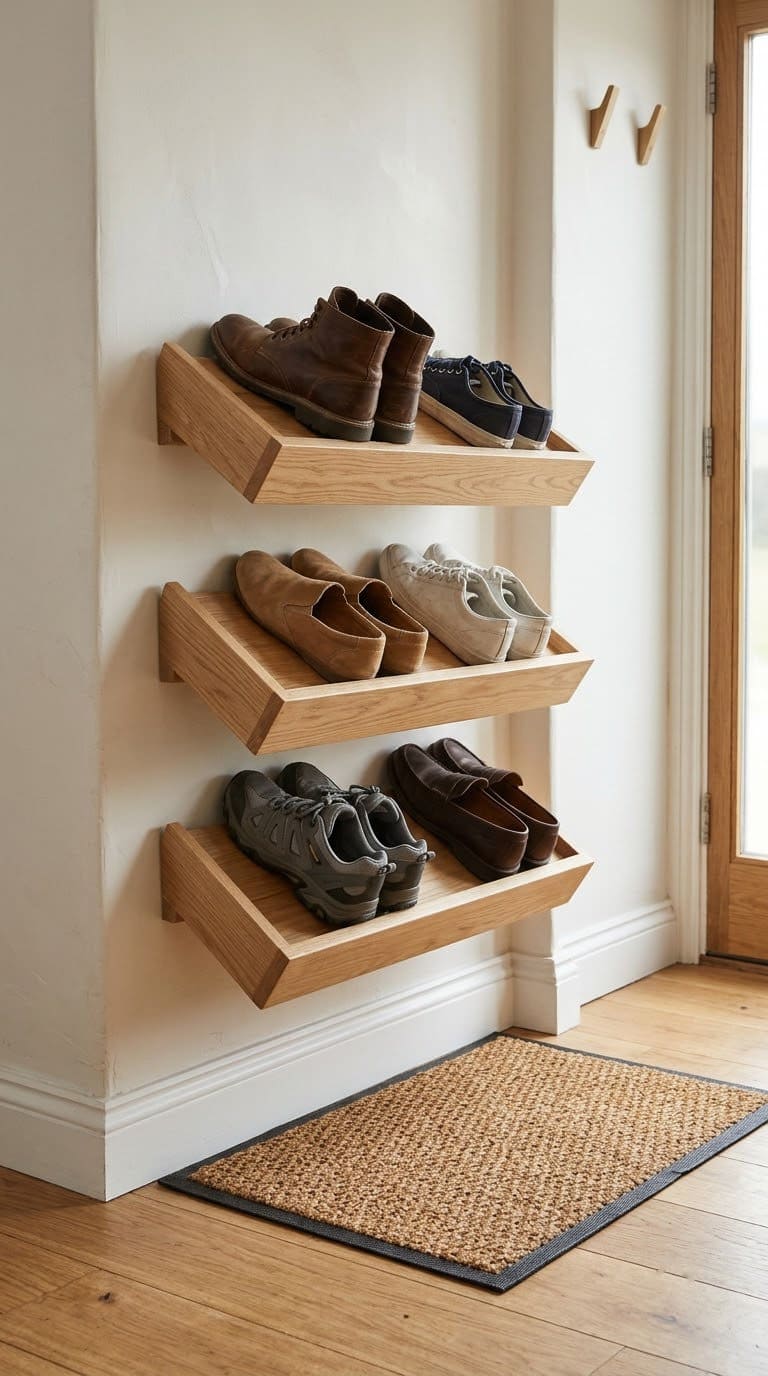
- Plan a shelf set about 30 to 36 inches wide for each V.
- Cut or buy angled boards, and join them at the middle.
- Mount at a height where the lowest shoe clears the floor by a few inches.
- Keep only the shoes you wear each week. The rest go in zone three.
Where it goes: an entry, a mudroom or a closet wall.
Tip: a mat under the V catches dirt and keeps the floor clean.
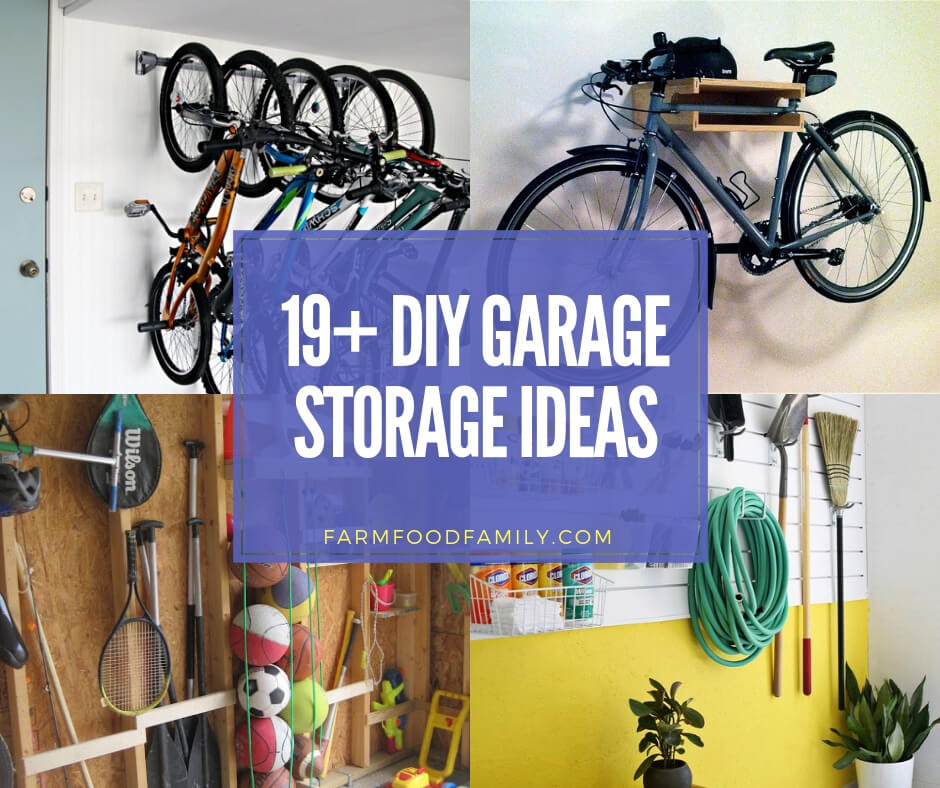
11. Wall-Mounted Bike Pole
A simple pole with wall supports hangs bikes off the floor. It frees up the hallway or garage. It also looks neat, like a gallery piece.
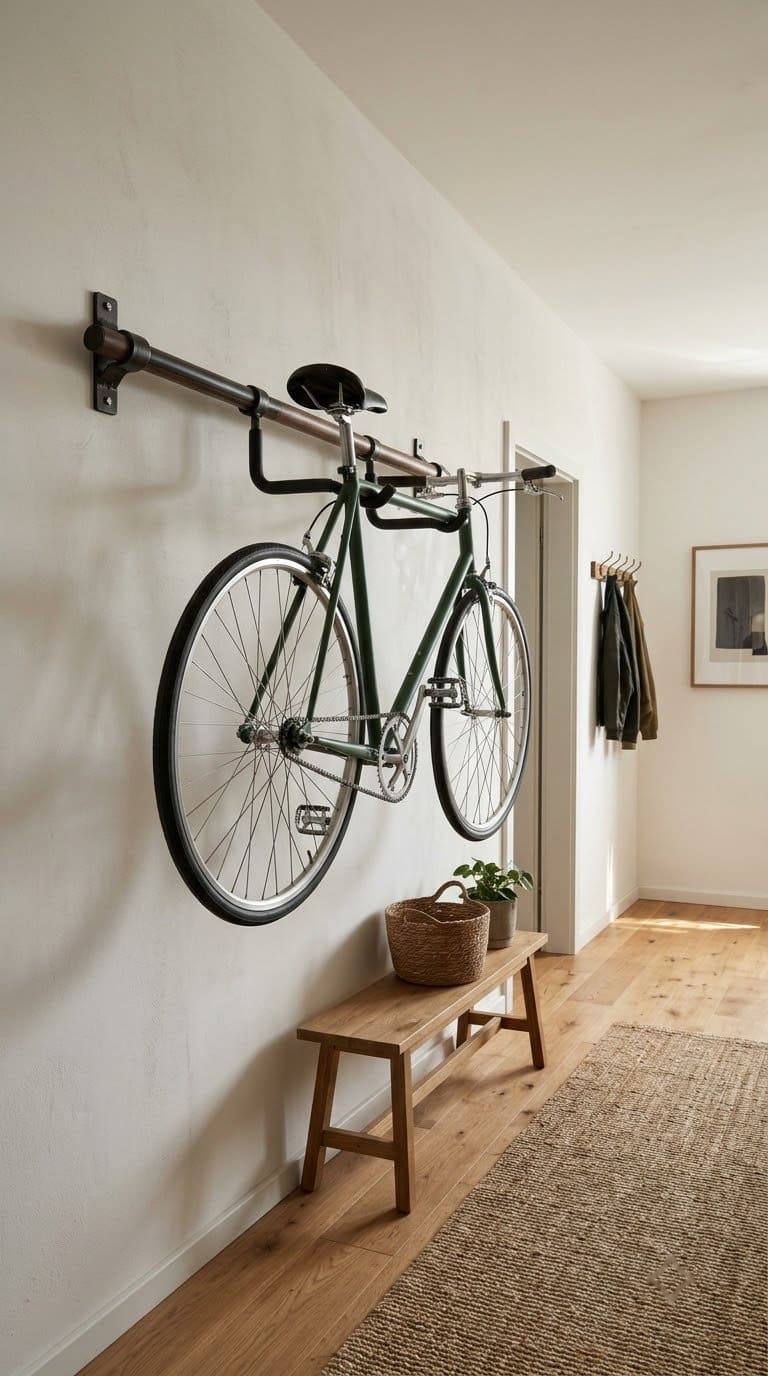
- Find the studs with a stud finder and mark them.
- Mount the supports into studs, not just drywall.
- Check the weight rating on the pole and the brackets.
- Hang the bike by its top tube, with the handlebars facing out.
Where it goes: a garage, a hallway or a mudroom. See our guide to keeping a garage organized.
Safety: keep the bike’s lowest point above head height or out of the walkway.
12. Vases, Jars and Trays as Hidden Organizers
Everyday decor can store things too. A vase holds kitchen utensils.
A tray corrals perfume and jewelry. A jar keeps pens or makeup brushes.
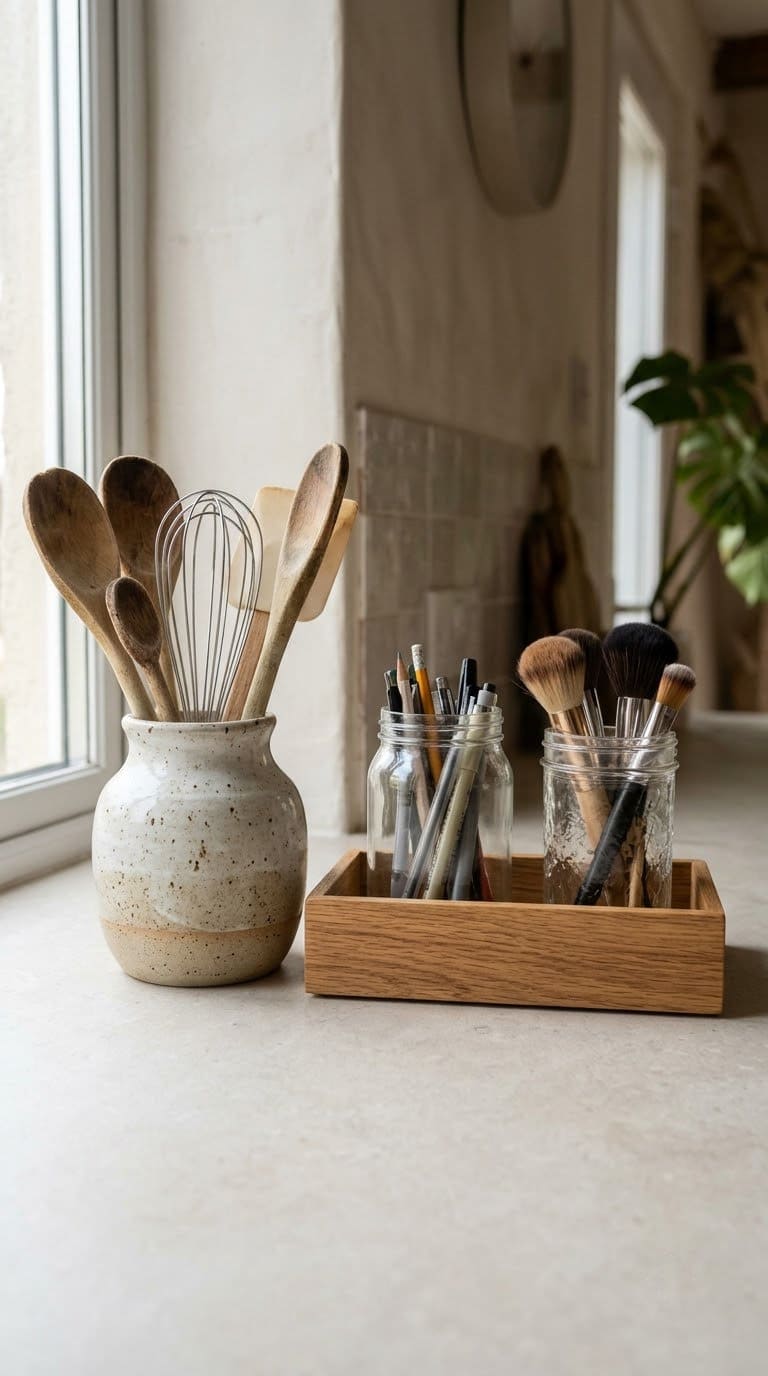
- Gather vases and jars you already own.
- Group items by use, such as cooking tools, pens or brushes.
- Set each group in its own container on a tray.
- Keep the tray on a counter, a dresser or a desk.
Where it goes: a kitchen counter, a dresser or a vanity. For small handbags and totes, see our bag storage ideas.
Tip: pick containers in the same color family so the display looks planned.
What Goes Where, Room by Room?
Different rooms need different hiding spots. Use this list as a shortcut when you plan your weekend.
| Room | Best hidden spot | Daily zone item |
|---|---|---|
| Living room | Ottoman, lift-top table | Remote in a tray |
| Bedroom | Under-bed bins, over-door rack | Phone charger on the nightstand |
| Kitchen | Pull-out baskets, door rack | Utensils in a vase |
| Entry | V shoe shelves, cork board | Keys on a hook |
| Bathroom | Wall rail with baskets | Towels within reach |
| Garage | Bike pole, wall rail | Tools on a pegboard |
Start with the room that annoys you most. A small win there gives you energy for the next one.
Quick Comparison: Which Idea Fits Your Space?
Here’s how the 12 ideas compare. Use it to pick by room, effort and cost.
| Idea | Best room | Effort | Cost | Renter-friendly |
|---|---|---|---|---|
| Storage ottoman | Living room | Low | Medium | Yes |
| Under-bed drawers | Bedroom | Low | Low | Yes |
| Over-door rack | Pantry, bath | Low | Low | Yes |
| Window bench | Living, bedroom | High | Medium | Sometimes |
| Shelf behind sofa | Open plan | Medium | Medium | Yes |
| Pull-out baskets | Kitchen | Medium | Medium | Sometimes |
| Wall rail | Bath, entry | Medium | Low | With anchors |
| Cork command center | Entry, kitchen | Low | Low | Yes |
| Spice rack shelf | Kids’ room | Low | Low | With anchors |
| V shoe shelves | Entry | Medium | Low | Sometimes |
| Bike pole | Garage | Medium | Low | With anchors |
| Vases and trays | Any | Low | Very low | Yes |
For a full rental plan, see our guide to organizing a rental apartment.
How Do You Keep It From Getting Messy Again?
Start with the one-in, one-out rule. When a new item comes in, an old one goes out. This keeps your zones from filling up.
Then set a short weekly reset. Spend 10 minutes on Sunday putting things back in their zone. Mohamed advises regularly reassessing your space so the work lasts.
Label what you can. A tag on a bin saves five minutes of searching, and it helps everyone in the house put things back.
Common Mistakes to Avoid
Buying containers before decluttering. Bins bought first often don’t fit the items. Sort, then measure, then shop.
Skipping the wall anchor. A tall bookcase, a dresser or a loaded shelf can tip. The CPSC advises anchoring furniture a child could climb.
Overloading a hook or rail. Check the weight rating on every hook and bracket. If you aren’t sure, mount into a stud.
Hiding everything. Not every item needs a closed box. Keep your daily things in zone one, in open reach.
Ignoring the door swing. An over-door rack that blocks the door from closing is worse than no rack. Test it before you load it.
A One-Weekend Organizing Plan
You can finish most of this in two days. Here’s the order we’d follow.
Friday evening (30 minutes): Set out four boxes for keep, donate or sell, trash and unsure. Pick one room to start.
Saturday morning: Sort the room with the four boxes. Measure the shelves, drawers and walls you plan to use.
Saturday afternoon: Install the easy ones, like the over-door rack, the cork board and the under-bed bins.
Sunday: Do the wall work. Anchor shelves and mount rails into studs. Put everything in its zone, and label as you go.
FAQ
What is the best way to organize a small space?
Declutter first, then divide the room into zones by activity. Keep daily items in the easiest spot, and use vertical space and hidden storage for the rest.
How do I organize without spending much?
Use what you already have, like vases, jars and baskets. Add a few hooks and a cork board. Many of these ideas cost very little.
Where can I add hidden storage in a bedroom?
Use the space under the bed with rolling bins and vacuum bags. Add an over-door organizer and a storage ottoman at the foot of the bed.
Do I need to anchor shelves and dressers?
Yes, if a child could climb or bump them. The CPSC says furniture that could topple should be anchored to the wall.
How do I keep my home organized long term?
Use a one-in, one-out rule and a 10-minute weekly reset. Label bins so everyone can put things back.
Related Posts
Never miss an update — choose FarmFoodFamily as your preferred source on Google.
How it works: Tap the button below to open Google's settings page, then check the box next to FarmFoodFamily.
Tap the checkbox to turn it blue — that's how you know it's set.