15 Pet-Safe Houseplants Checked Against the ASPCA List (And 6 Popular Ones to Skip)
Plenty of pretty houseplants are non-toxic to cats and dogs, but some popular ones aren’t, so check each plant against the ASPCA list and place it where pets can’t chew it.

Never miss an update — choose FarmFoodFamily as your preferred source on Google.
How it works: Tap the button below to open Google's settings page, then check the box next to FarmFoodFamily.
Tap the checkbox to turn it blue — that's how you know it's set.
Plenty of pretty houseplants are non-toxic to cats and dogs, but some popular ones aren't, so check each plant against the ASPCA list and place it where pets can't chew it.
Products We Recommend
This post contains affiliate links. We may earn a commission on qualifying purchases at no extra cost to you.

feedee Macrame Plant Hangers, 6 Pack
Hanging holders that lift spider plants, Swedish ivy and burro's tail up and away from pets. Check the weight limit and hang from a strong hook.
Shop Now
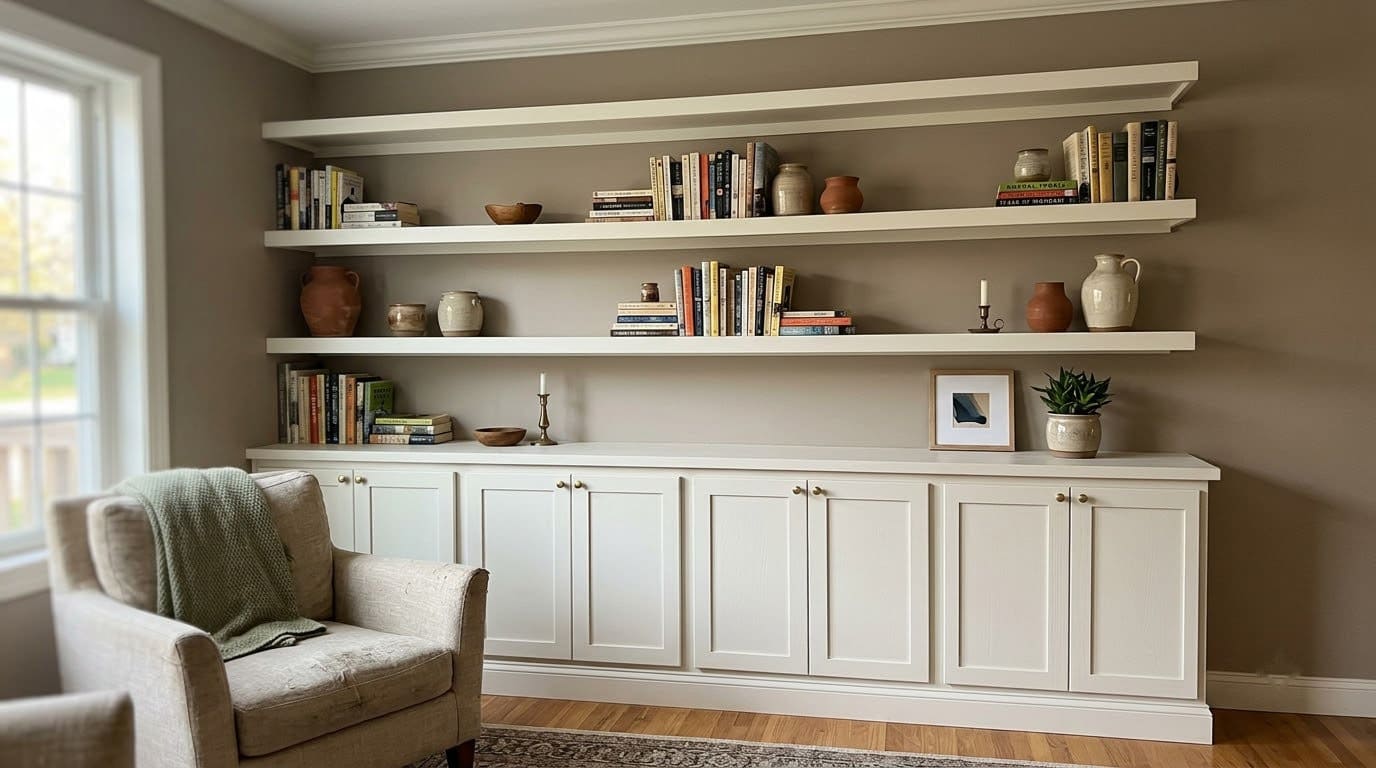
Floating Shelves for Wall, Set of 3, Rustic Brown
Wall shelves that put pet-safe plants out of reach of cats and dogs. Mount into studs or rated anchors.
Shop Now
4 Can Cat Grass Kit, Organic Wheat Seeds, No Soil
A separate pot of grass for your cat to nibble, so your good plants get left alone. Keep it low and refresh it often.
Shop NowIf you share your home with a cat, a dog or a toddler, every plant is a small question mark. Will they chew it? And will it hurt them if they do?
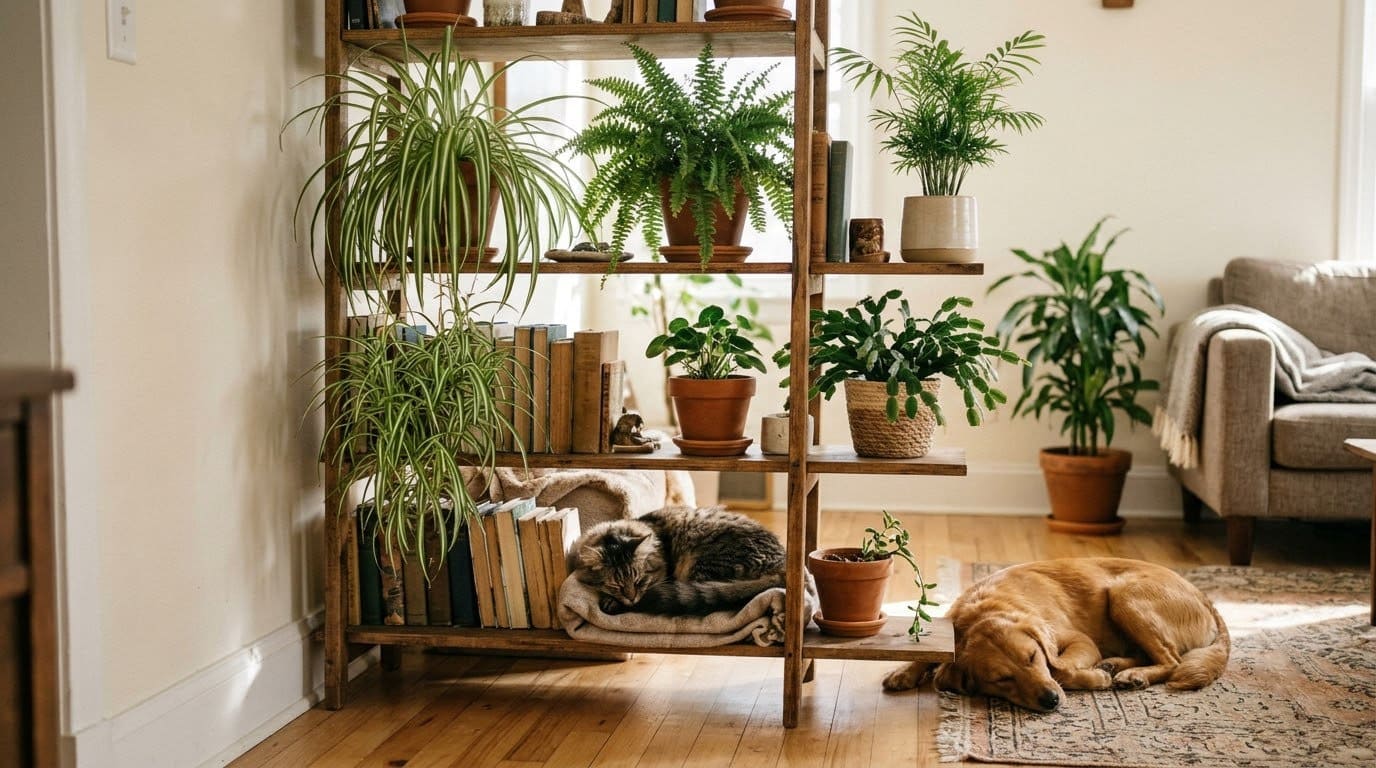
This guide lists 15 houseplants that the ASPCA marks as non-toxic, with simple care steps for each one. It also lists six popular plants you should skip, including two that our old list got wrong.
Use it as a shopping list. You will know what to buy, where to put it and what to do if your pet takes a bite.
Answer 4 quick questions and get matched to the exact fix for your yard — drainage, budget, layout, or something else entirely.
Take the Free QuizQuick Answer
The safest houseplants for pets include spider plant, African violet, Boston fern, parlor palm, prayer plant, Christmas cactus, haworthia and cast iron plant. The ASPCA says plants marked non-toxic aren’t expected to be life-threatening to pets.
But it also says that eating any plant can cause vomiting and an upset stomach in dogs and cats. So put every plant out of reach, even the safe ones.
Skip jade plant, wandering jew, pothos, snake plant, peace lily and aloe. The ASPCA lists all six as toxic. Most safe plants are easy to grow, and many do well in low light or a sunny window.
If your pet eats a plant, call your vet or the ASPCA Poison Control line at (888) 426-4435. A fee may apply. Keep the plant’s name handy so they can help you fast.


How Did We Check Each Plant?
We checked every plant against its own ASPCA page, not a roundup. We noted the scientific name, the status for dogs and cats and any clinical signs the page lists.
Most yard problems trace back to one specific, fixable cause. Find yours in 4 quick questions.
Take the Free QuizSome plants have more than one common name, so we use the scientific name to be sure. A plant with a similar name can be a different species.
- Safe means non-toxic, not edible. A pet can still get a mild stomach upset from chewing leaves.
- Money tree and polka dot plant: The ASPCA marks them non-toxic but lists mild stomach signs, so we note that where it applies.
- We removed two plants. An earlier version of this guide named jade plant and wandering jew as safe. The ASPCA lists both as toxic, so they now sit in the “skip” table below.
Our take: keep the ASPCA search page bookmarked. Check any new plant before you bring it home.
Which Pet-Safe Houseplant Fits Your Home?
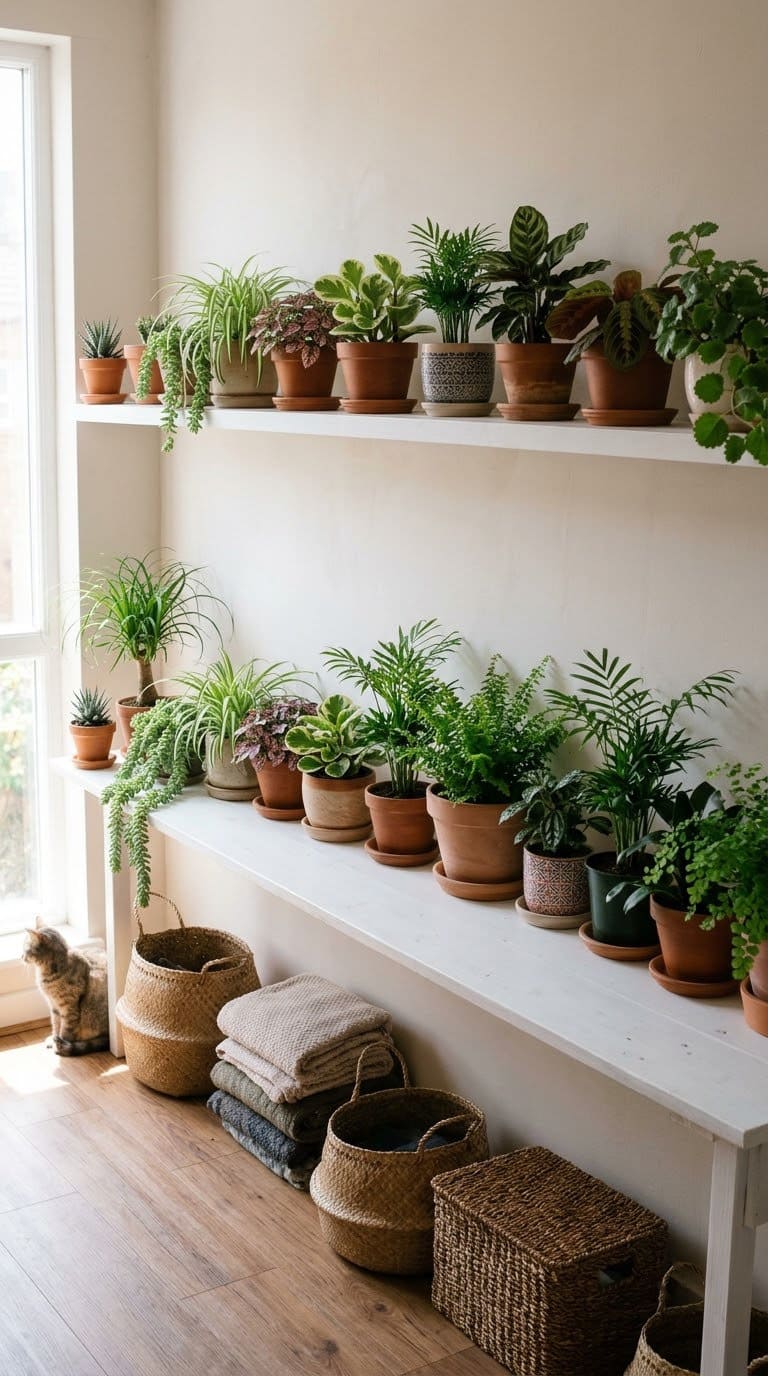
Pick by light first. A plant in the wrong light struggles, and a weak plant gets weaker if a pet nibbles it.
| Plant | Light | Water | Look |
|---|---|---|---|
| Spider plant | Bright, indirect | Moderate | Arching, striped leaves |
| African violet | Bright, indirect | Light, from the bottom | Fuzzy leaves, small flowers |
| Boston fern | Medium | Keep damp | Soft, feathery fronds |
| Parlor palm | Low to medium | Moderate | Slim, graceful palm |
| Prayer plant | Medium | Keep lightly damp | Patterned leaves that fold up at night |
| Peperomia | Medium | Let it dry between drinks | Thick, glossy leaves |
| Christmas cactus | Bright, indirect | Moderate | Flat stems, winter flowers |
| Haworthia | Bright | Sparse | Small, striped rosette |
| Burro’s tail | Bright | Sparse | Long trailing beads |
| Cast iron plant | Low | Sparse | Tough, dark green blades |
| Money tree | Bright, indirect | Moderate | Braided trunk |
| Ponytail palm | Bright | Sparse | Bulb trunk, curly leaves |
| Moth orchid | Bright, indirect | Weekly soak | Arching flower spikes |
| Hens and chicks | Full sun | Sparse | Tight rosettes |
| Swedish ivy | Bright, indirect | Moderate | Round, scalloped leaves |
Our take: the light and water notes are our own general advice. Check the tag on each plant, since care can vary by variety.
15 Pet-Safe Houseplants
1. Spider Plant (Chlorophytum comosum)
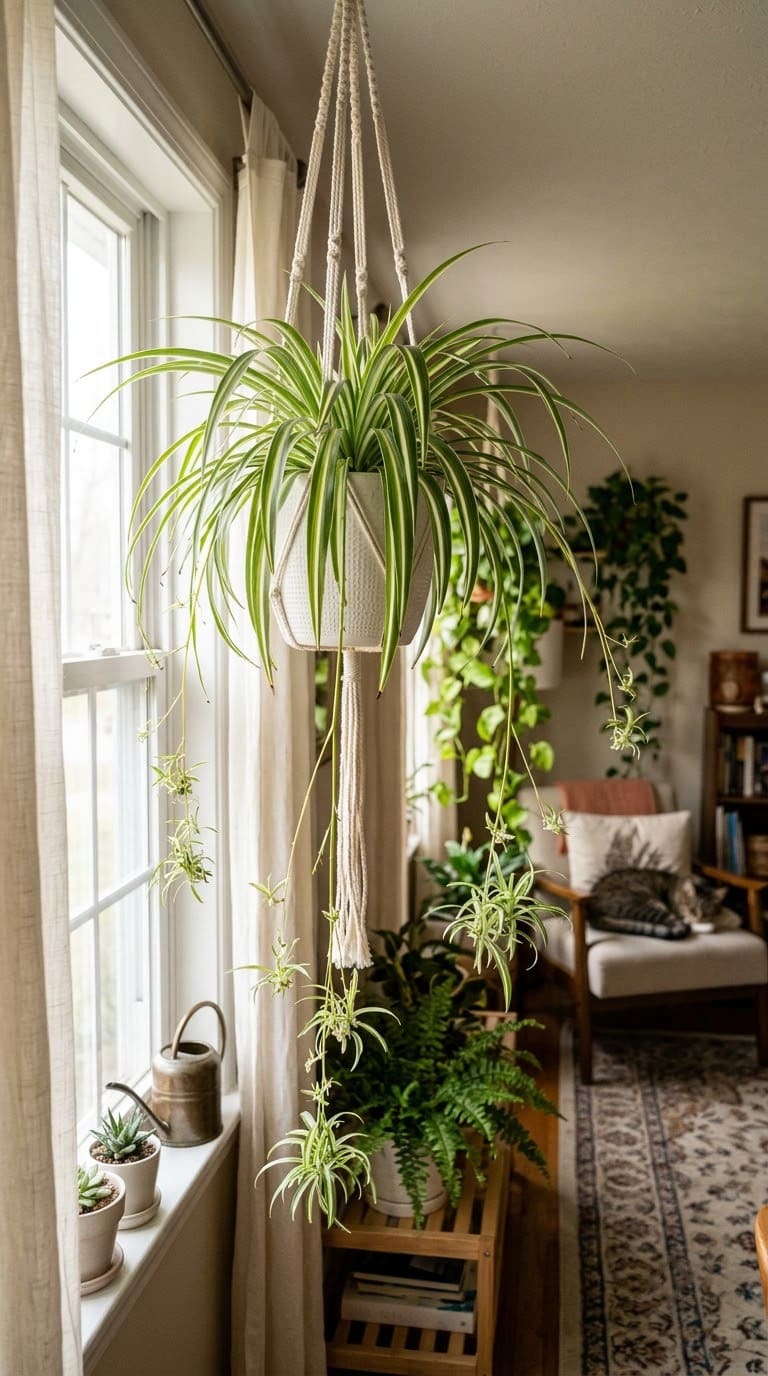
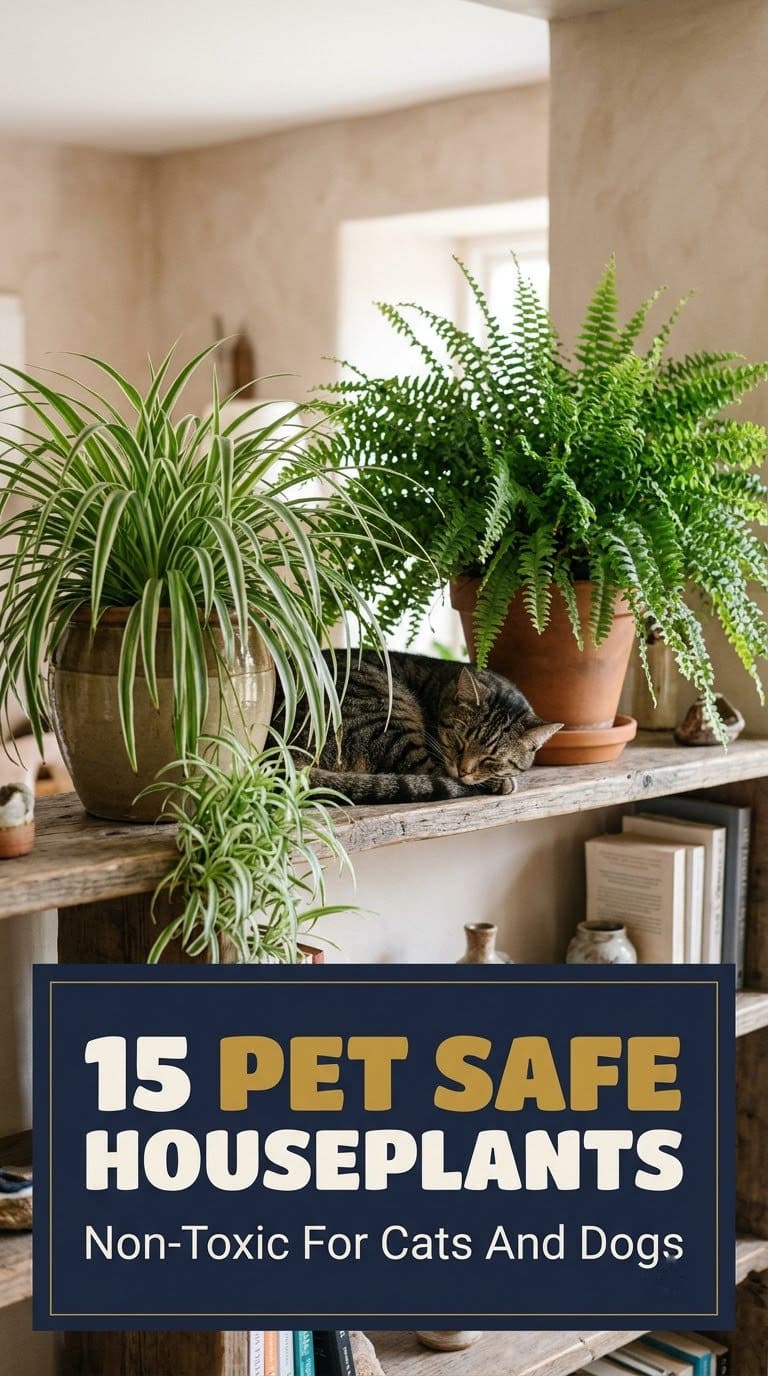
A spider plant is the classic starter. It looks full, grows fast and forgives mistakes. The ASPCA lists it as non-toxic to dogs and cats.
- Light: Bright, indirect light.
- Water: Water when the top inch of soil is dry.
- Step 1: Choose a pot with drainage holes.
- Step 2: Plant it in a standard potting mix.
- Step 3: Hang it or set it on a high shelf, so pets can’t pull at the long leaves.
- Pet note: Cats love to bat at dangling leaves. Hang it high.
Our take: baby plantlets are free plants. Pin one in a small pot of soil and it will root.
2. African Violet (Saintpaulia)
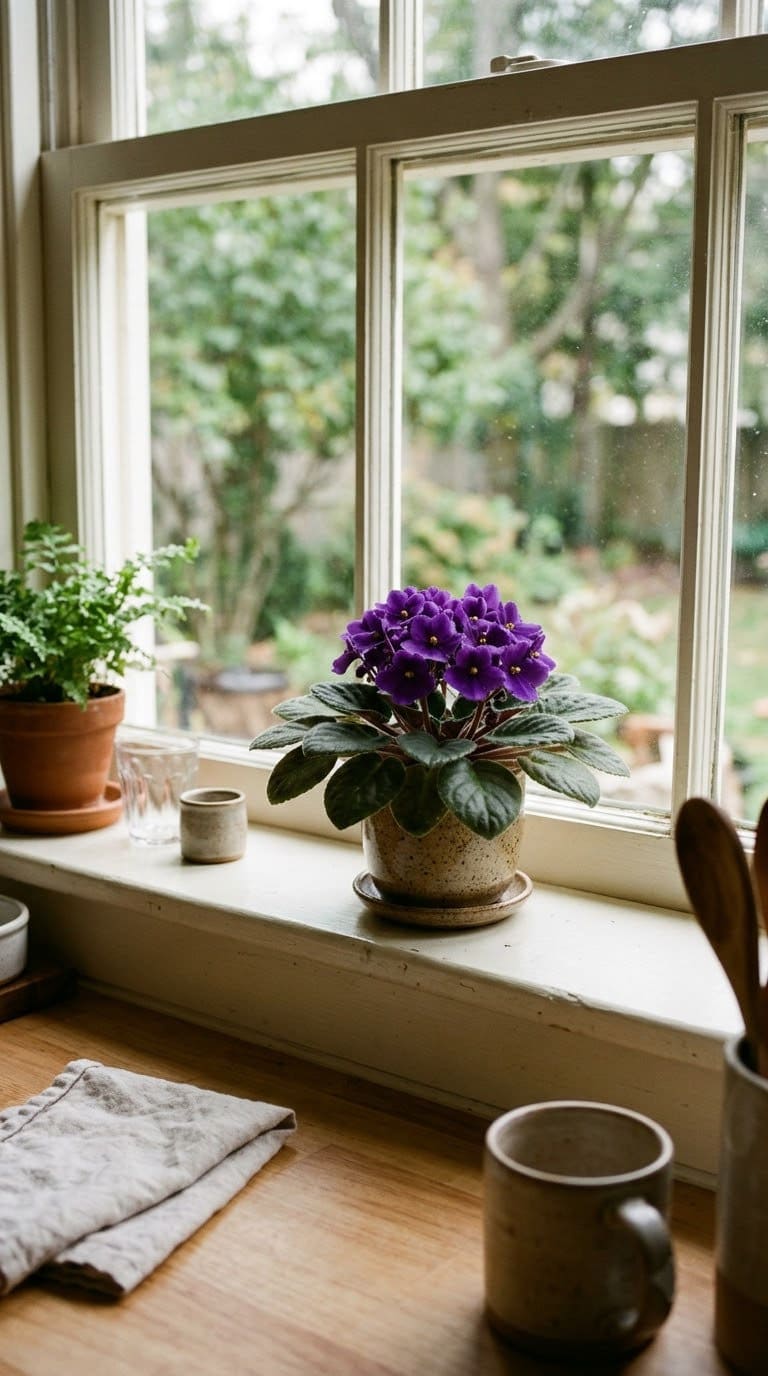
African violets bloom for months on a windowsill. The ASPCA lists them as non-toxic to dogs, cats and horses.
Hanging holders that lift spider plants, Swedish ivy and burro's tail up and away from pets. Check the weight limit and hang from a strong hook.
Shop NowThis post contains affiliate links. We may earn a commission on qualifying purchases at no extra cost to you.
- Light: Bright, indirect light, like an east window.
- Water: Water the soil, not the leaves. Use room-temperature water.
- Step 1: Use a small pot, since violets like to be snug.
- Step 2: Use a light mix made for African violets.
- Step 3: Water from the saucer and pour off any extra after 20 minutes.
- Pet note: The fuzzy leaves tempt curious cats. Keep it on a shelf.
Our take: wet leaves spot and rot. Water from below and you avoid most problems.
3. Boston Fern (Nephrolepis exaltata)
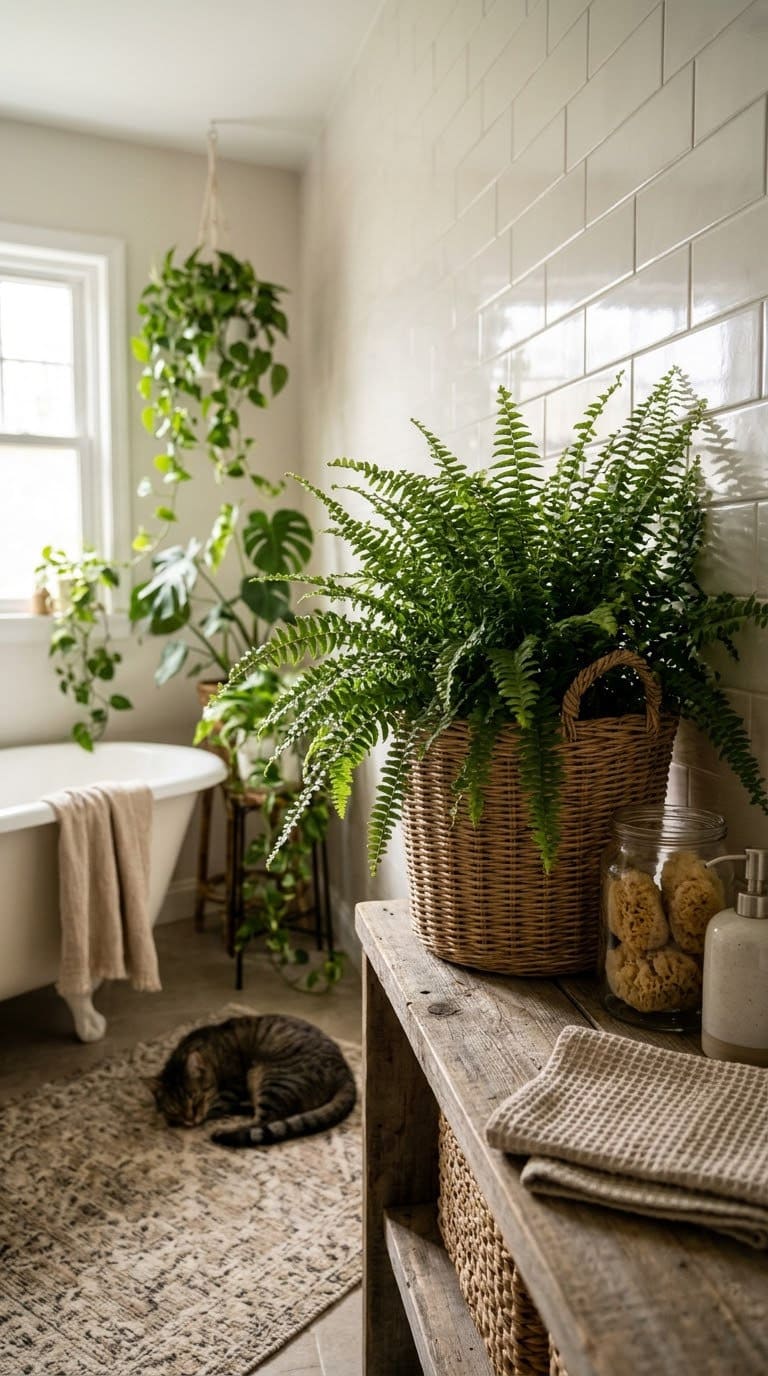
A Boston fern adds a soft, full look. The ASPCA lists it as non-toxic to dogs and cats.
The average homeowner spends $616/year on yard fixes that don't address the real problem. Find out what yours actually is — before you spend another dollar.
Take the Free Quiz- Light: Medium, indirect light.
- Water: Keep the soil lightly damp, never soggy.
- Step 1: Pick a spot away from heaters and drafts.
- Step 2: Mist the fronds or set the pot on a tray of wet pebbles for humidity.
- Step 3: Trim brown fronds at the base.
- Pet note: Fronds are fun to chew. A high stand keeps them safe.
Our take: a bathroom with a bright window is the perfect home for a fern.
4. Parlor Palm (Chamaedorea elegans)
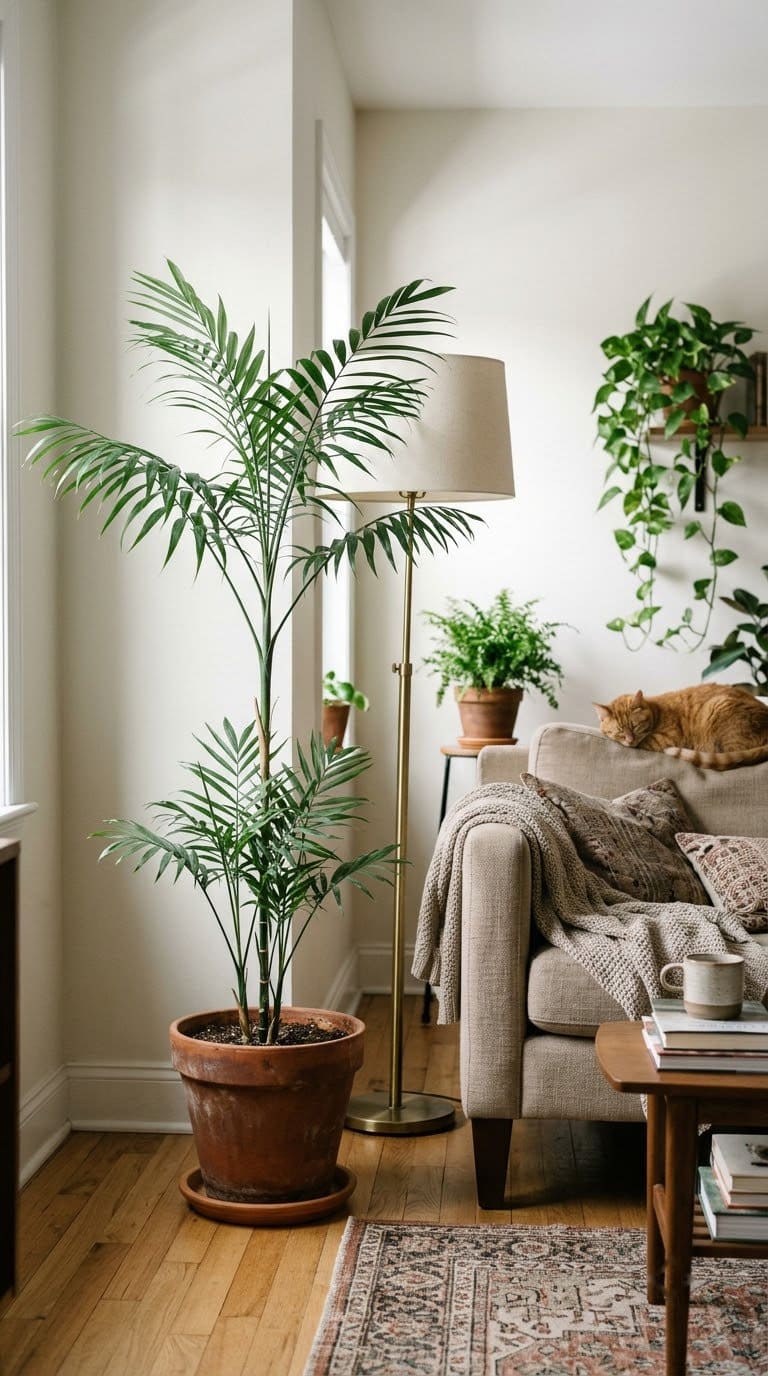
A parlor palm is a slow, graceful plant that handles low light. The ASPCA lists it, under the name bamboo palm, as non-toxic to dogs, cats and horses.
- Light: Low to medium light.
- Water: Water when the top inch is dry.
- Step 1: Choose a heavy pot so it doesn’t tip.
- Step 2: Use a loose, well-draining mix.
- Step 3: Dust the leaves with a damp cloth once a month.
- Pet note: The leaves are soft and tempting. Keep it out of reach of chewers.
Our take: this is a good floor plant for a dim corner. It grows slowly, so it won’t outgrow the room.
5. Prayer Plant (Calathea insignis and relatives)
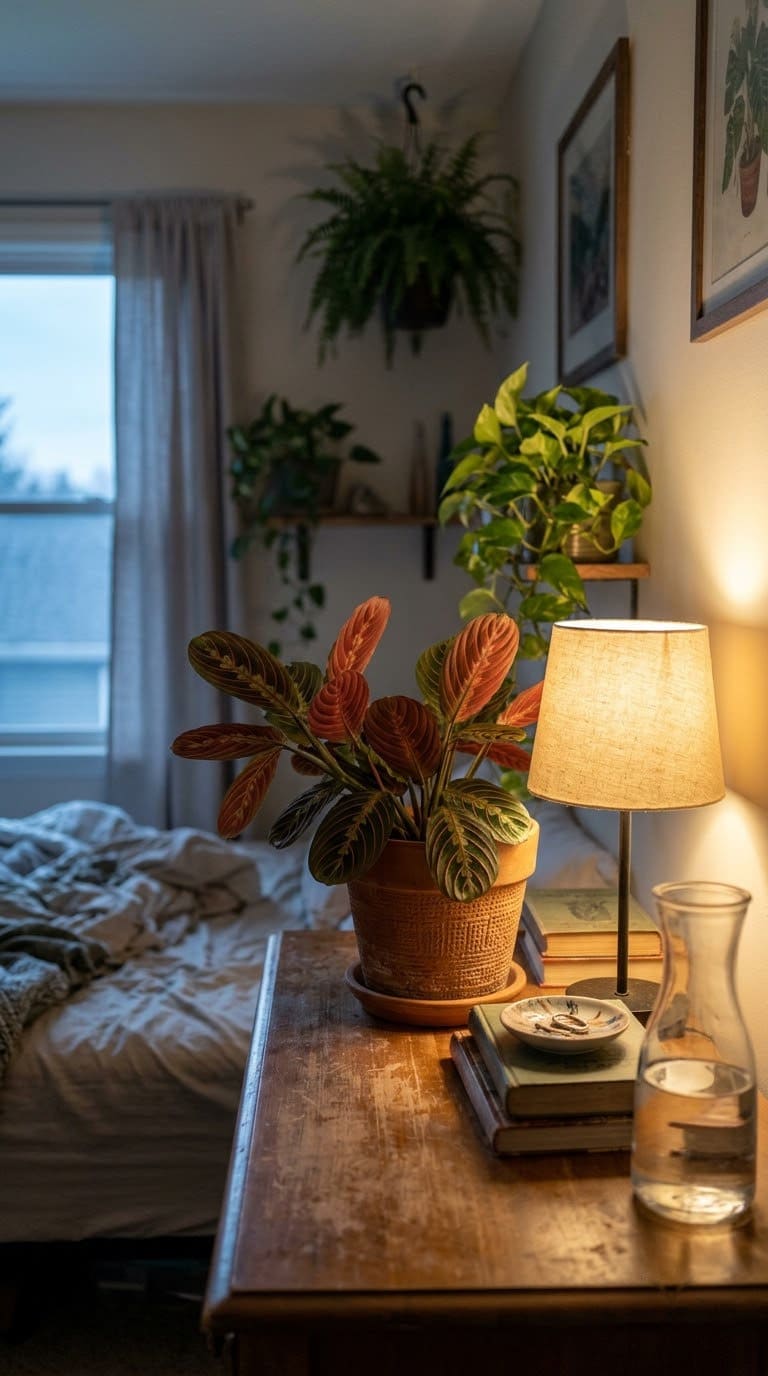
A prayer plant has leaves that fold up at night. The ASPCA lists Calathea insignis, also called rattlesnake plant and Maranta, as non-toxic to dogs, cats and horses.
- Light: Medium, indirect light.
- Water: Keep the soil lightly damp. Use filtered water if your tap water is hard.
- Step 1: Plant in a rich, loose mix.
- Step 2: Keep it away from direct sun, which fades the pattern.
- Step 3: Mist weekly in dry air.
- Pet note: The big leaves attract chewers. Place on a shelf.
Our take: brown tips usually mean dry air. A tray of wet pebbles helps.
6. Peperomia (Peperomia obtusifolia)
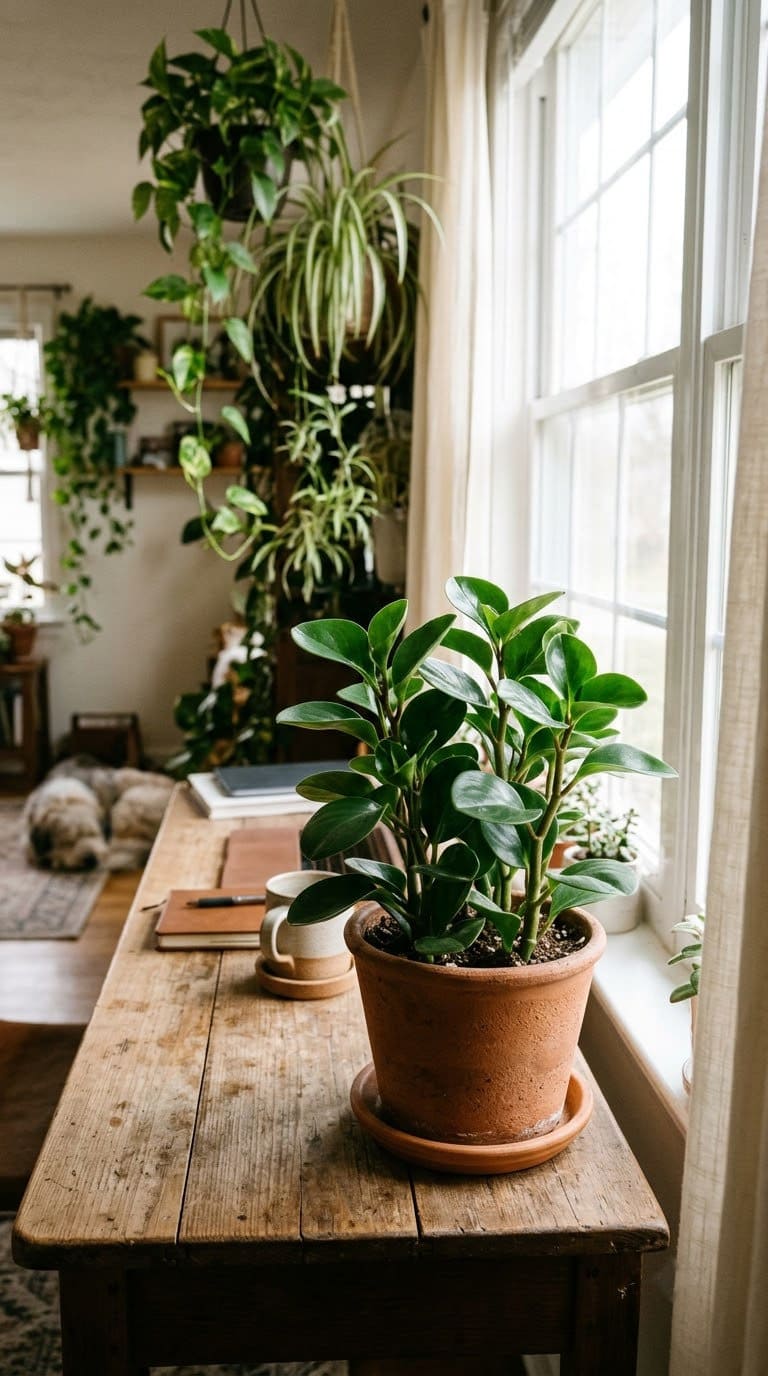
Peperomias are compact and tidy. The ASPCA lists Peperomia obtusifolia, also called baby rubber plant, as non-toxic.



- Light: Medium to bright, indirect light.
- Water: Let the soil dry out between drinks.
- Step 1: Use a gritty potting mix.
- Step 2: Plant in a small pot with a drainage hole.
- Step 3: Water thoroughly, then wait until the top two inches are dry.
- Pet note: The thick leaves hold water, so overwatering rots them. Keep a light hand.
Our take: peperomias suit a desk or shelf. They stay small and keep a neat shape.
7. Christmas Cactus (Schlumbergera)
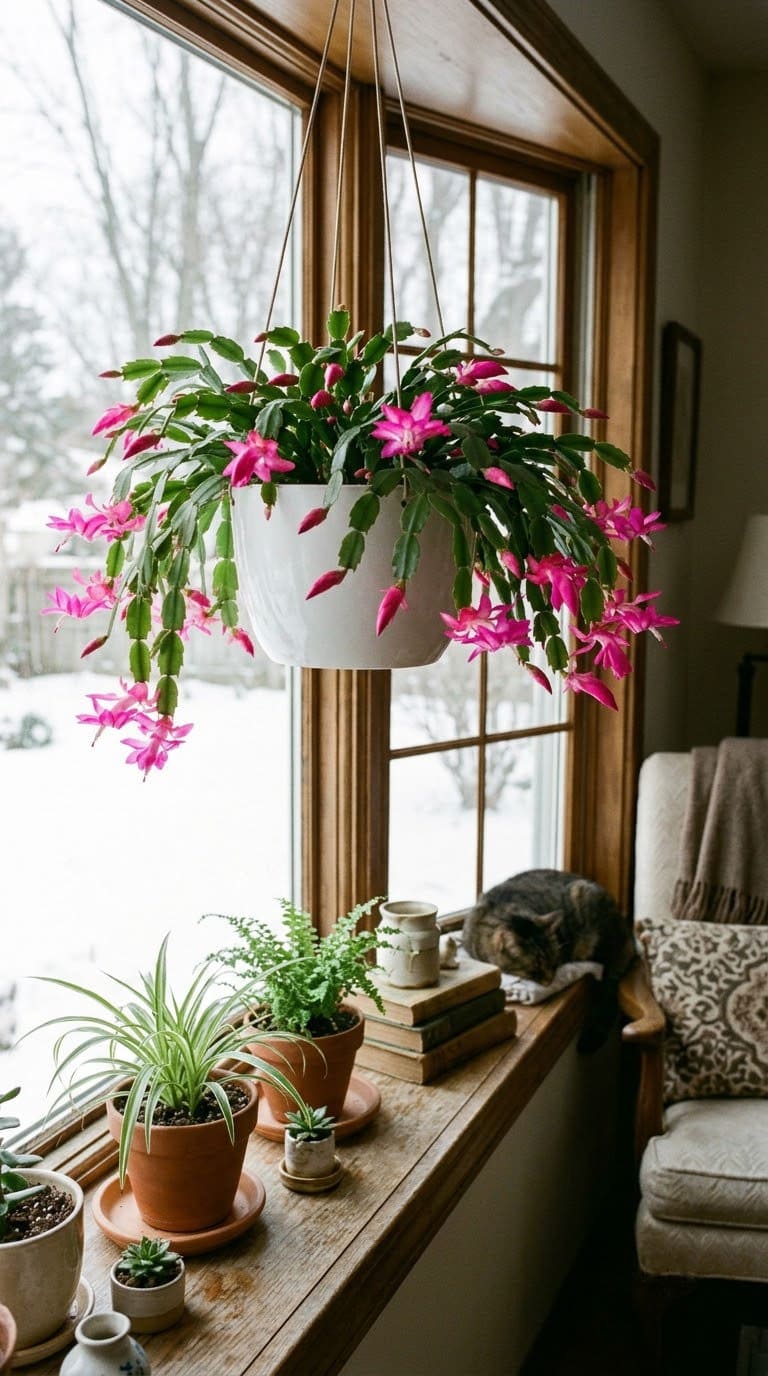
This holiday cactus blooms in cold months. The ASPCA lists it as non-toxic to dogs, cats and horses.
- Light: Bright, indirect light.
- Water: Water when the top inch is dry. It is not a desert cactus.
- Step 1: Plant in a well-draining cactus and potting mix blend.
- Step 2: Give it long, dark nights in fall to set buds.
- Step 3: Keep it away from heat vents.
- Pet note: The soft stems are easy to bite. A shelf keeps them safe.
Our take: don’t move it once buds form. It may drop them.
8. Haworthia
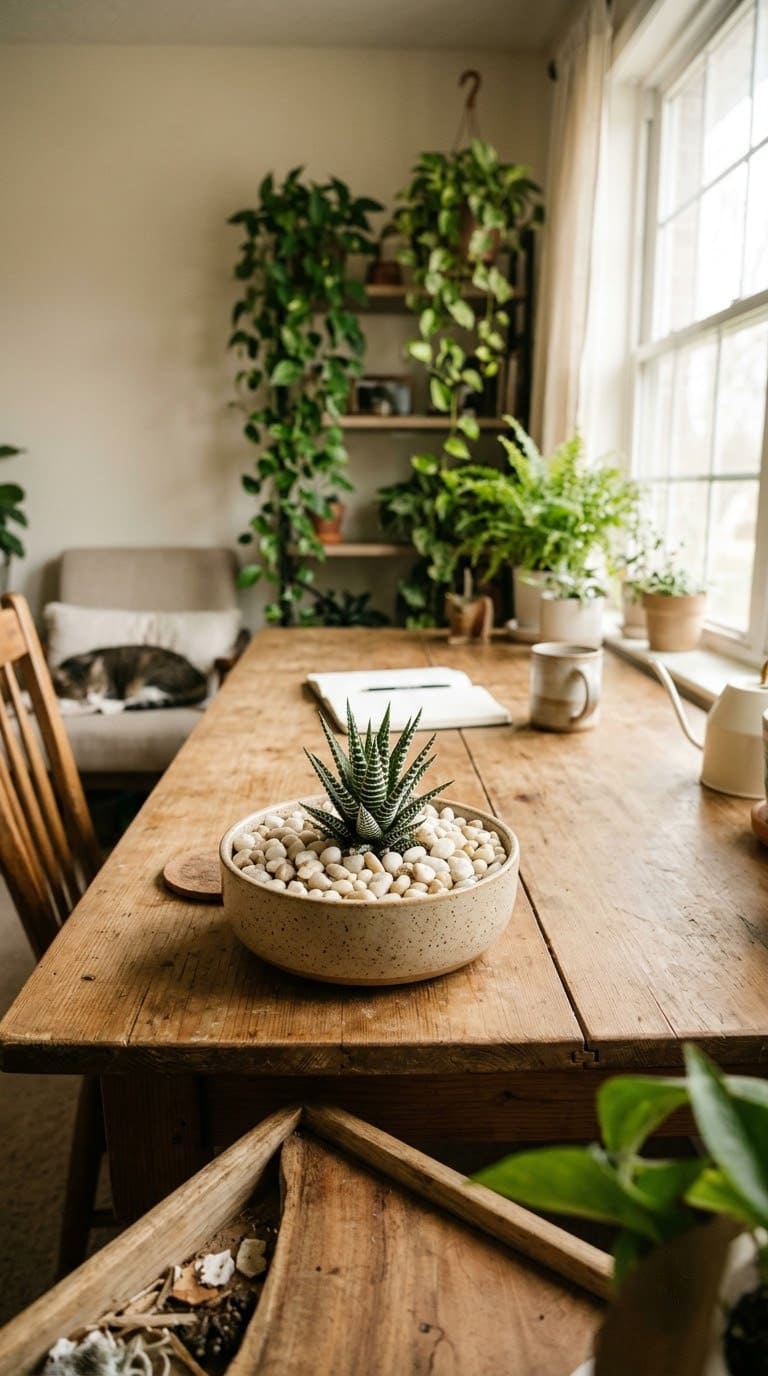
Haworthia looks like a tiny aloe, but it is a different plant. The ASPCA lists haworthia as non-toxic to dogs and cats.
- Light: Bright, indirect light.
- Water: Water deeply, then let it dry completely.
- Step 1: Use a cactus mix with extra grit.
- Step 2: Choose a shallow pot with drainage.
- Step 3: Water about every two weeks in summer and less in winter.
- Pet note: Don’t confuse it with aloe, which is toxic.
Our take: label the pot. Many shops mix up haworthia and aloe.
9. Burro’s Tail (Sedum morganianum)
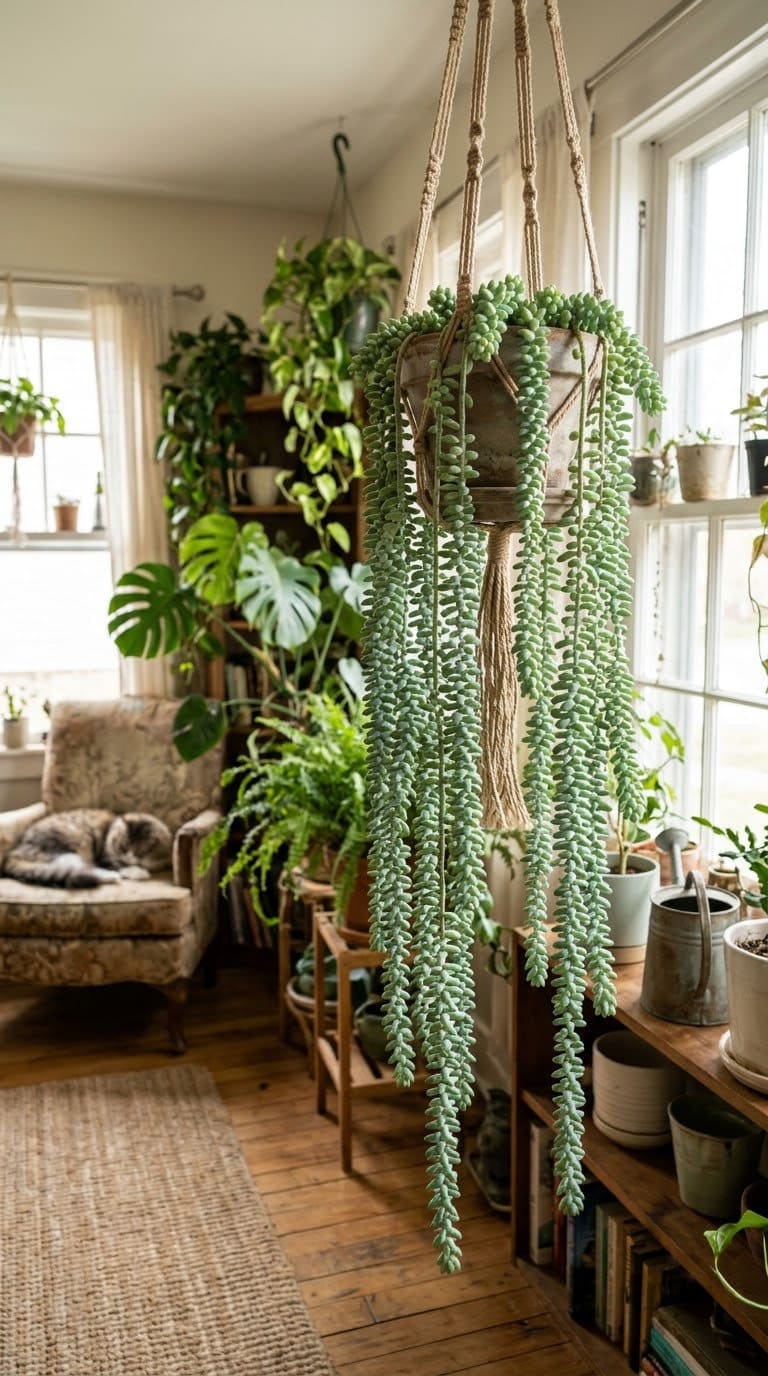
Burro’s tail drapes in thick, plump strands. The ASPCA lists it as non-toxic to dogs, cats and horses.
- Light: Bright light, a few hours of sun.
- Water: Water sparingly, and let it dry out.
- Step 1: Plant in cactus mix in a hanging pot.
- Step 2: Hang it where it gets sun but where pets can’t reach.
- Step 3: Handle gently, because the beads fall off easily.
- Pet note: The beads roll and tempt cats. Hang high.
Our take: fallen beads can root. Press them into soil for new plants. For more drapers, see our trailing and hanging succulents.
10. Cast Iron Plant (Aspidistra elatior)
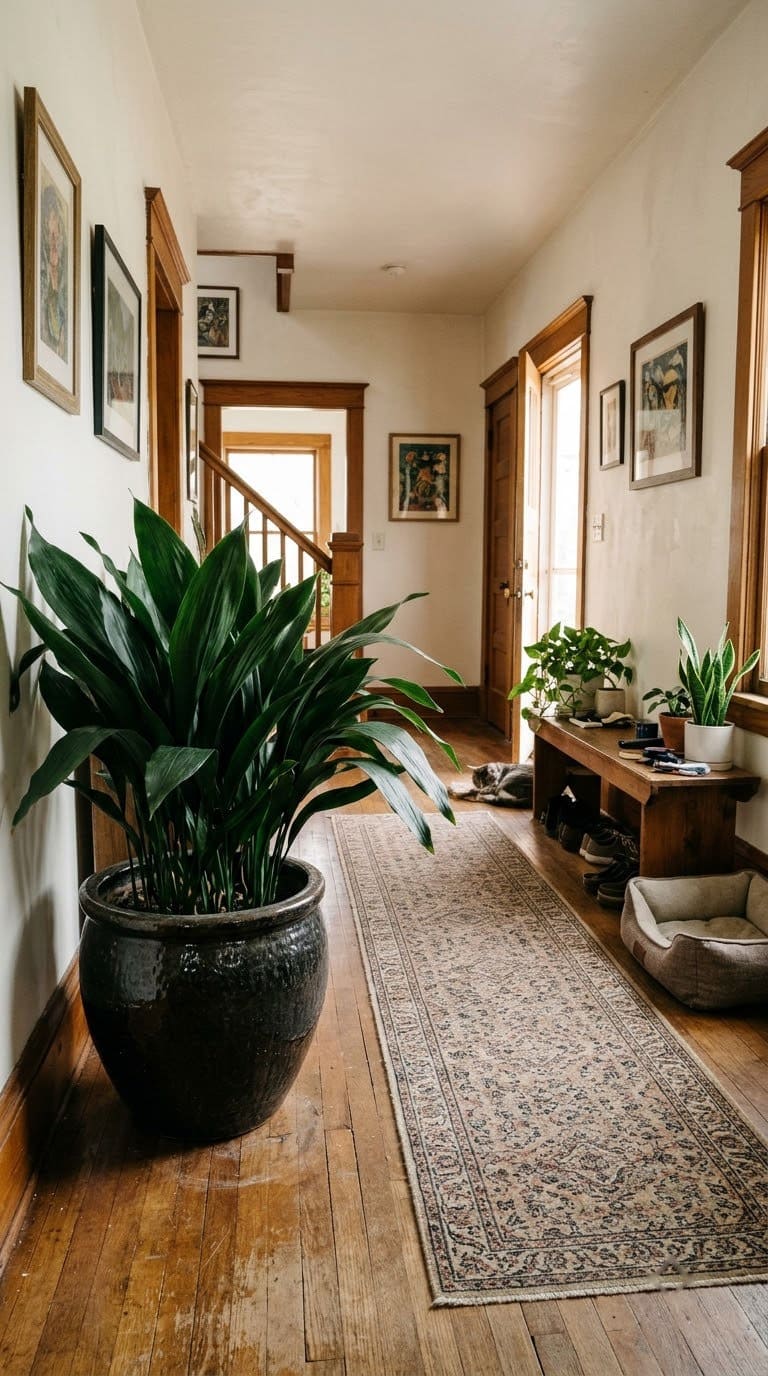
The cast iron plant earns its name by surviving neglect. The ASPCA lists it as non-toxic to dogs, cats and horses.
- Light: Low to medium light.
- Water: Water when the top two inches are dry.
- Step 1: Pick a heavy pot.
- Step 2: Use a basic potting mix.
- Step 3: Wipe the leaves now and then.
- Pet note: The leaves are tough and less appealing to chew.
Our take: this is the best pick for a dark room. Few plants grow in so little light. See our houseplants for low light areas.
11. Money Tree (Pachira aquatica)
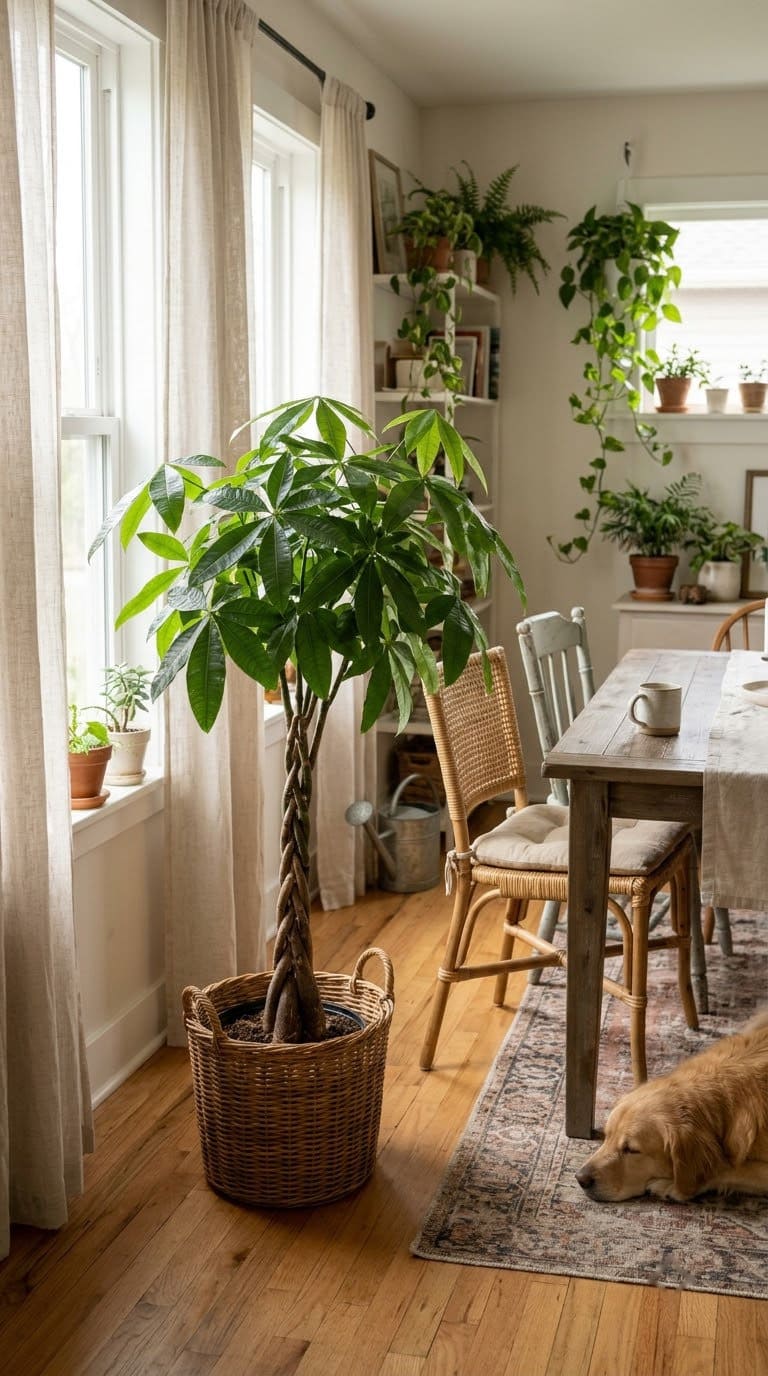
A money tree has a braided trunk and bright green leaves. The ASPCA lists it as non-toxic, but its page lists nausea, vomiting and loose stool as clinical signs.
- Light: Bright, indirect light.
- Water: Let the top half of the soil dry out.
- Step 1: Use a pot with drainage and a loose mix.
- Step 2: Turn the plant a quarter turn each week for even growth.
- Step 3: Keep it away from cold drafts.
- Pet note: Mild stomach upset is possible. Keep it out of reach.
Our take: it is a good “statement” plant, but put it where pets can’t nibble.
12. Ponytail Palm (Beaucarnea recurvata)
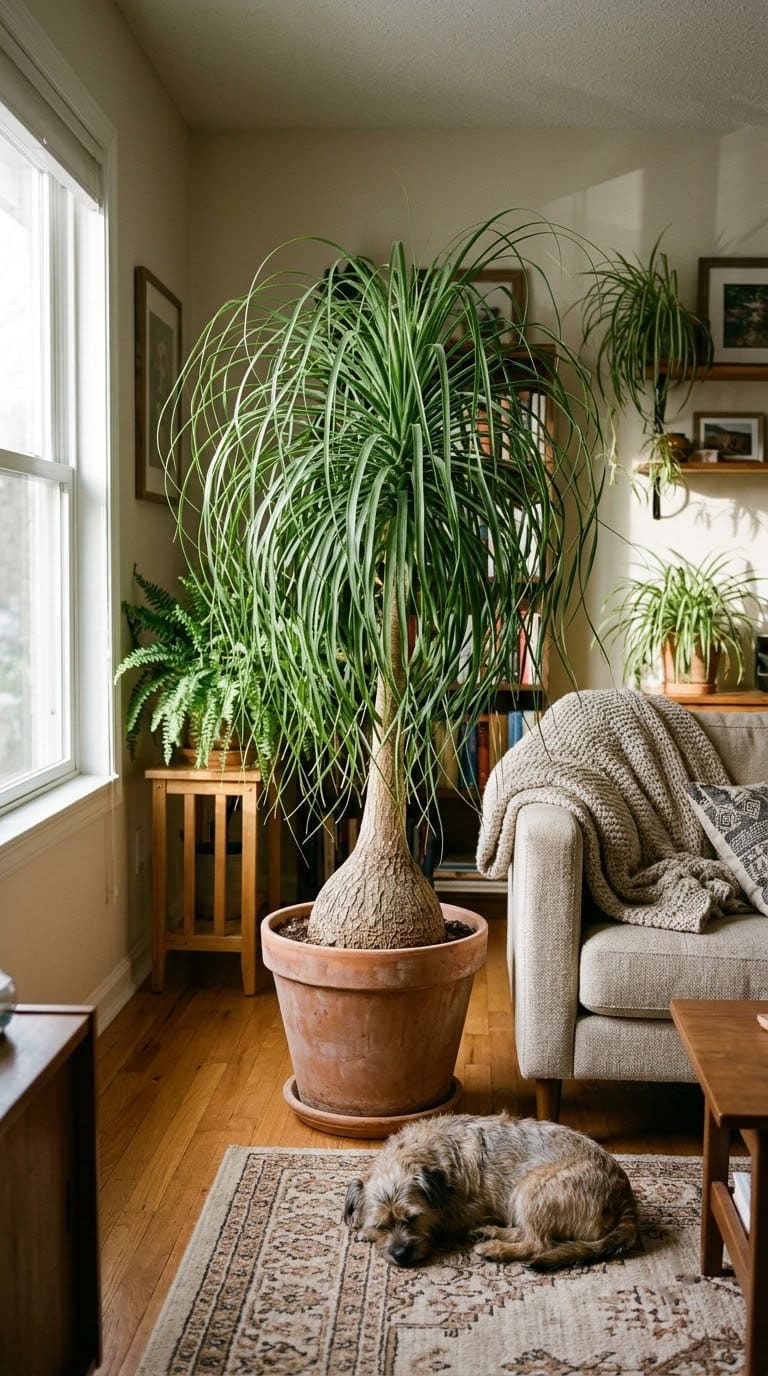
The ponytail palm stores water in its swollen trunk. The ASPCA lists it, as “pony tail,” as non-toxic to dogs, cats and horses.
- Light: Bright light.
- Water: Water deeply and let it dry for a couple of weeks.
- Step 1: Use a cactus mix.
- Step 2: Choose a pot just a bit wider than the trunk.
- Step 3: Water less in winter.
- Pet note: The long, curly leaves are a favorite cat toy. Place it high.
Our take: this plant hates wet feet. Err on the dry side.
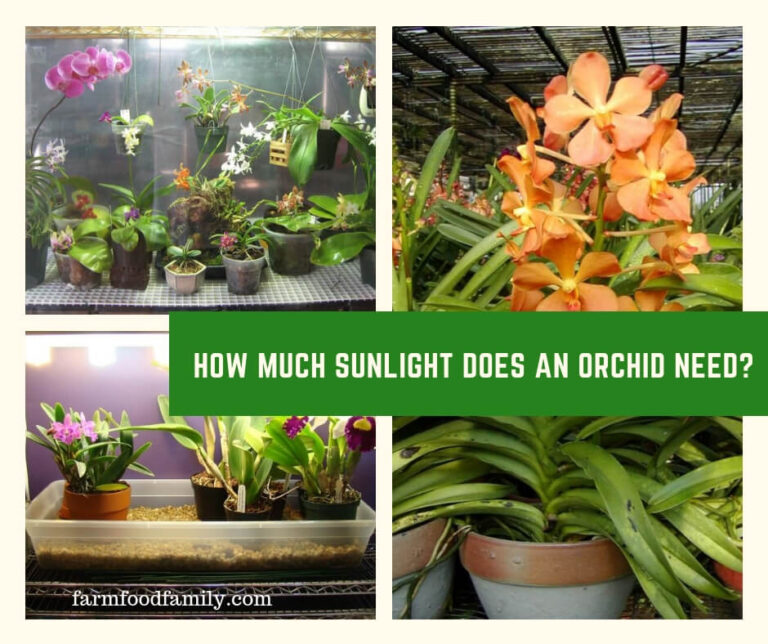
13. Moth Orchid (Phalaenopsis)
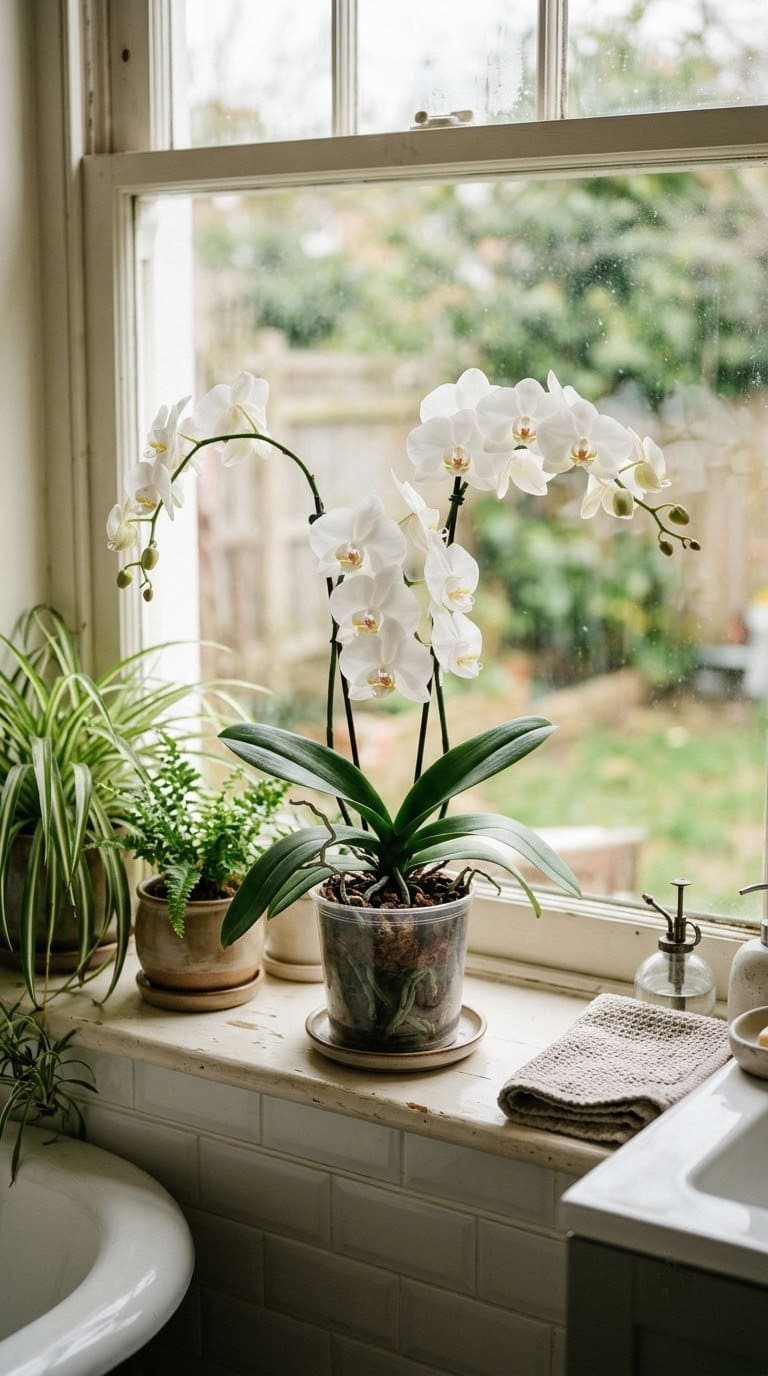
Moth orchids give long-lasting blooms with little work. The ASPCA lists the Phalaenopsis orchid as non-toxic to dogs, cats and horses.
- Light: Bright, indirect light.
- Water: Soak the pot in water for a few minutes once a week, then drain it fully.
- Step 1: Use bark orchid mix, not regular soil.
- Step 2: Keep the roots in a clear pot so you can see them.
- Step 3: Cut the old flower spike after it finishes blooming.
- Pet note: The flowers are delicate. Keep them out of reach.
Our take: silver-green roots mean it needs water. Plump green roots mean it is fine.
14. Hens and Chicks (Echeveria elegans)
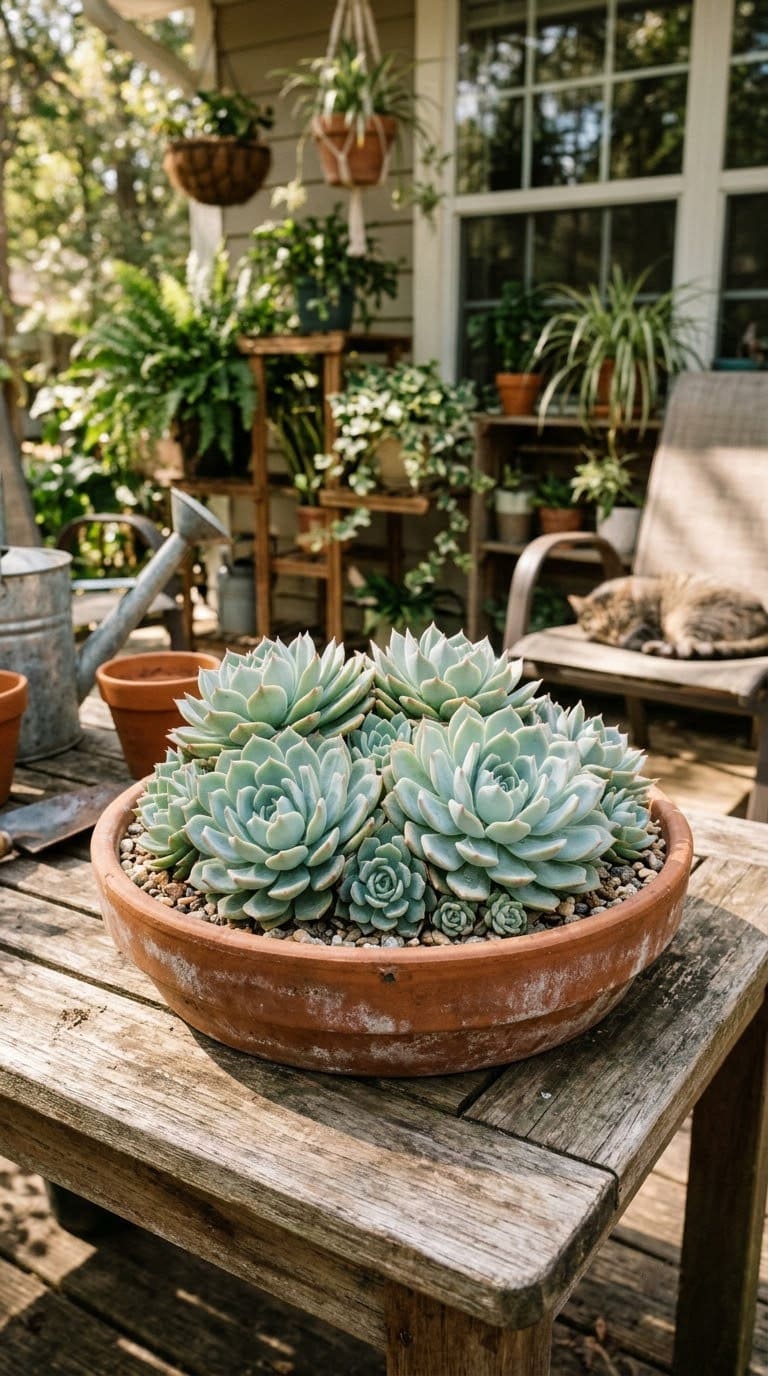
Hens and chicks are small, neat rosettes. The ASPCA lists Echeveria elegans as non-toxic to dogs, cats and horses.
- Light: Full sun or very bright light.
- Water: Water deeply, then wait until the soil is dry.
- Step 1: Plant in a shallow dish with cactus mix.
- Step 2: Add a top layer of grit.
- Step 3: Water at the base and avoid the leaves.
- Pet note: The rosettes can come loose if batted. Use a heavy dish.
Our take: this is a great pick for a sunny sill. See our guide on how to water succulents properly.
15. Swedish Ivy (Plectranthus australis)
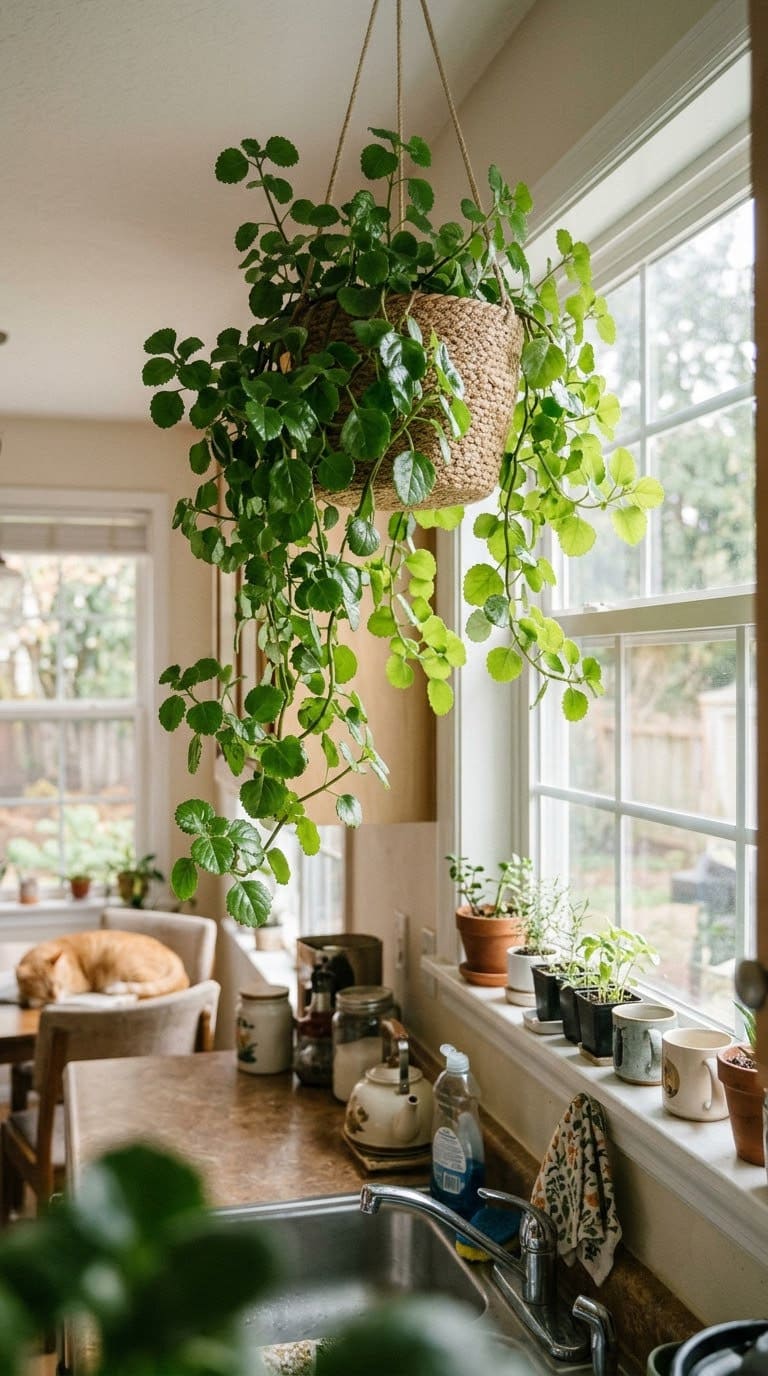
Swedish ivy is a fast, easy trailer. The ASPCA lists it as non-toxic to dogs, cats and horses. It is not a true ivy, so don’t confuse it with English ivy.
- Light: Bright, indirect light.
- Water: Water when the top inch is dry.
- Step 1: Plant in a hanging basket with drainage.
- Step 2: Pinch the tips to keep it bushy.
- Step 3: Root cuttings in water for more plants.
- Pet note: The trailing stems are easy to grab. Hang high.
Our take: pinch often. A trimmed plant looks full, and a long, thin one looks sad.
Which 6 Popular Houseplants Should You Skip?
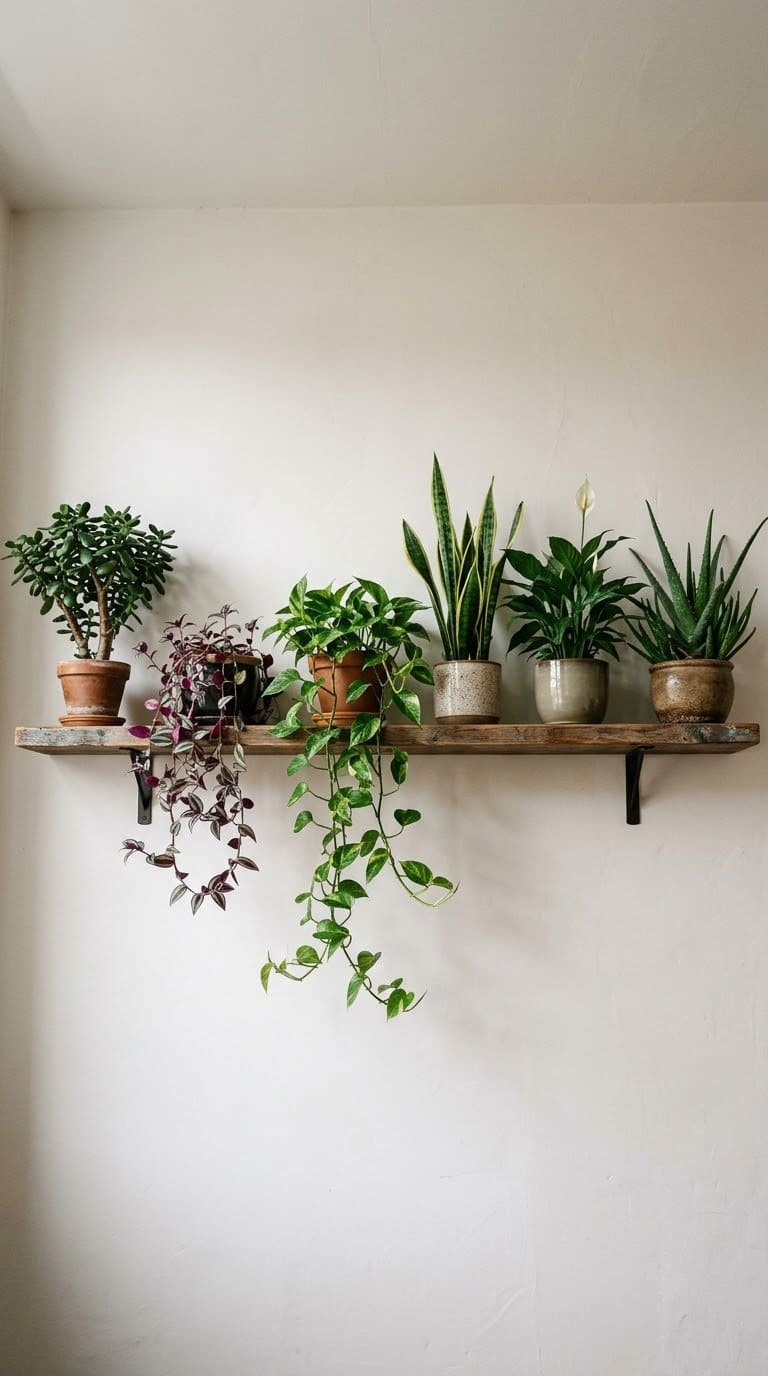
These plants are common in homes and stores, and the ASPCA lists each one as toxic. Keep them away from pets, or skip them.
| Plant | What the ASPCA says | Signs |
|---|---|---|
| Jade plant (Crassula argentea) | Toxic to dogs, cats and horses | Vomiting, depression, poor coordination |
| Inch plant, a wandering jew relative (Tradescantia fluminensis) | Toxic to dogs, cats and horses | Skin irritation |
| Pothos (Epipremnum aureum) | Toxic to dogs, cats and horses | Mouth pain, drooling, vomiting |
| Snake plant (Sansevieria trifasciata) | Toxic to dogs and cats | Nausea, vomiting, diarrhea |
| Peace lily (Spathiphyllum) | Toxic to dogs and cats | Mouth burning, drooling, vomiting |
| Aloe vera | Toxic to dogs, cats and horses | Vomiting, lethargy, diarrhea |
An earlier version of this guide named jade plant and wandering jew as safe, and that was wrong. The ASPCA lists the jade plant and the inch plant as toxic. For more on harmful plants, see our post on toxic flowers that can kill your pet.
Our take: if you already own one of these, move it to a room your pet never enters, or give it away.
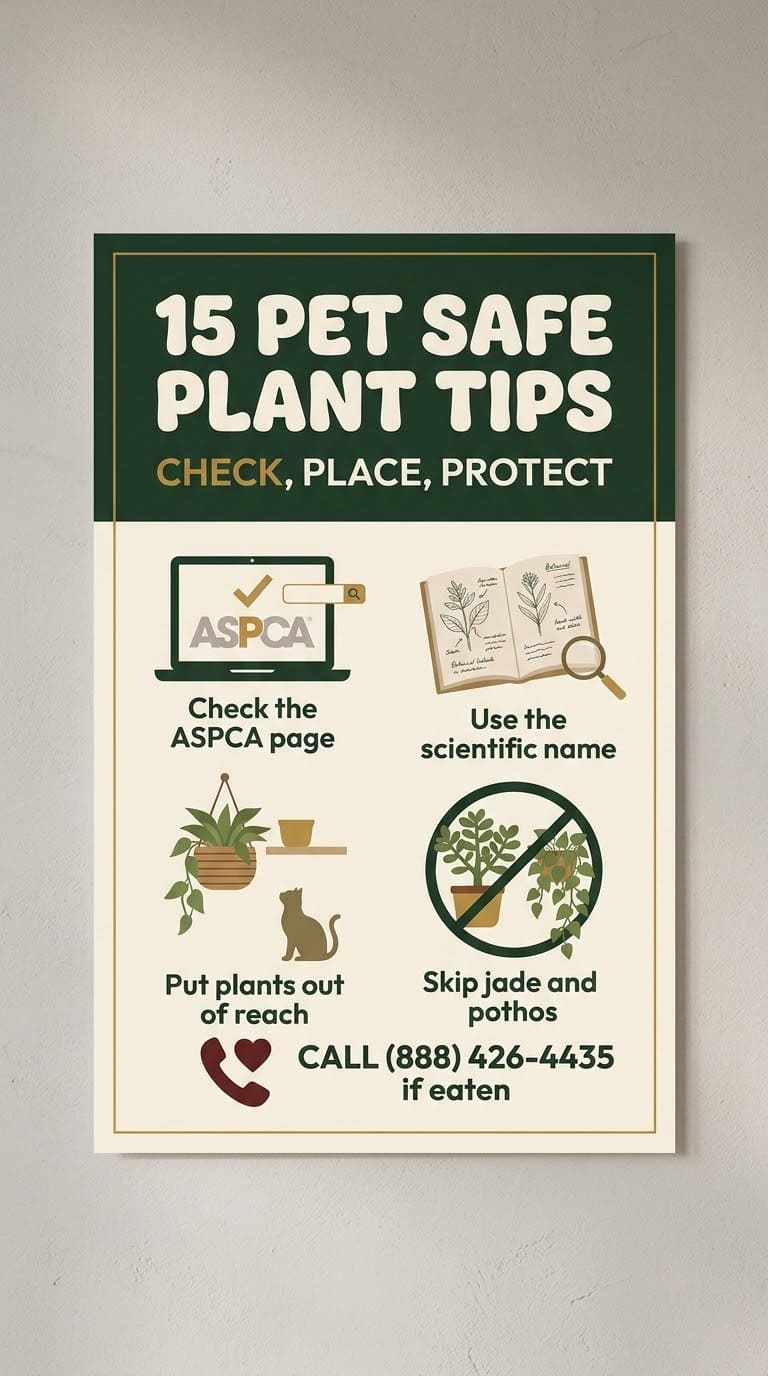
How Do You Keep Pets Away From Plants?
Safe plants still need a little planning. A few habits protect both your pet and your plant.
- Go high. Use hanging baskets, wall shelves and tall stands.
- Give them their own plant. Cat grass in a pot on the floor can pull cats away from your good plants.
- Use heavy pots. A cat can knock over a light pot.
- Cover the soil. A layer of stones stops digging.
- Skip pesticides and fertilizer pellets. Plants may carry them, even if the plant itself is non-toxic.
- Watch for gnats. See our guide to getting rid of fungus gnats in houseplants.
Our take: a pet that chews a lot needs more than a safe plant. Give it toys and enough to do.
What Should You Do If Your Pet Eats a Plant?
Stay calm and act quickly.
- Step 1: Take the plant away and remove any pieces from your pet’s mouth.
- Step 2: Note the plant’s name and how much your pet ate. Keep a leaf if you can.
- Step 3: Call your vet or ASPCA Poison Control at (888) 426-4435. A consultation fee may apply.
- Step 4: Follow their advice. Don’t make your pet vomit unless a professional tells you to.
If a child eats a plant, call the Poison Help line at 1-800-222-1222.
Our take: write the Poison Control number on a sticky note inside a cabinet. You won’t want to search for it in a panic.
What Mistakes Should You Avoid?
Most plant mishaps come from a few simple mistakes.
- Trusting a common name. Many plants share names. Check the scientific name.
- Assuming a plant is safe because it’s popular. Pothos and snake plant are everywhere, and both are toxic.
- Believing “non-toxic” means safe to eat. The ASPCA says any plant can upset a stomach.
- Using light pots. They tip and spill.
- Forgetting small kids. Keep all plants out of reach of toddlers.
Frequently Asked Questions
What are the safest houseplants for cats?
Spider plant, parlor palm, prayer plant, Boston fern and African violet are good picks. The ASPCA lists all of them as non-toxic to cats. Still keep them out of reach, since any plant can cause mild stomach upset.
Is a snake plant toxic to cats and dogs?
Yes. The ASPCA lists the snake plant as toxic to dogs and cats. It can cause nausea, vomiting and diarrhea.
Is a jade plant safe for pets?
No. The ASPCA lists it as toxic to dogs, cats and horses. Signs include vomiting, depression and poor coordination.
Are succulents safe for pets?
Some are, like haworthia, burro’s tail and echeveria. Others, like jade and aloe, are toxic. Check each one before you buy.
For more succulent tips, see our hard-to-kill houseplants.
Your Pet-Safe Plant Plan
- Day 1: Check every plant in your home against the ASPCA list.
- Day 2: Move toxic plants out of reach or out of the house.
- Day 3: Pick two or three safe plants that match your light.
- Day 4: Set them high or in heavy pots and cover the soil with stones.
- Every week: Check the soil, clear the drainage holes and look for chewed leaves.
Start with a spider plant or a cast iron plant. They are tough, they are safe and they will teach you how your pet behaves around plants.
Never miss an update — choose FarmFoodFamily as your preferred source on Google.
How it works: Tap the button below to open Google's settings page, then check the box next to FarmFoodFamily.
Tap the checkbox to turn it blue — that's how you know it's set.