15+ Stunning Front Yard Fire Pit Ideas for Cozy Spaces
A front yard fire pit isn’t the same project as a backyard one, even though most articles treat them like they are. It sits closer to the street, closer to your own front-facing windows, and it usually has to work around a driveway or front walkway instead of an open lawn. And most of the…

Never miss an update — choose FarmFoodFamily as your preferred source on Google.
How it works: Tap the button below to open Google’s settings page, then check the box next to FarmFoodFamily.
Tap the checkbox to turn it blue — that’s how you know it’s set.
A front yard fire pit isn’t the same project as a backyard one, even though most articles treat them like they are. It sits closer to the street, closer to your own front-facing windows, and it usually has to work around a driveway or front walkway instead of an open lawn. And most of the fire pit advice online skips the one thing that actually matters most here: how far away from your house the thing needs to be.
That gap is worth fixing before anything else. So this one leads with real, sourced clearance numbers, not a vague “keep a safe distance” line, and then gets into the design ideas.
The safety numbers most guides skip
According to Michele Steinberg, Director of the Wildfire Division at the National Fire Protection Association, a fire pit should sit at least 10 feet (3 meters) from anything that can burn, siding, decks, deck railings, grass, overhanging branches, or rooflines included. That’s the NFPA’s actual published figure for typical residential fire pits, not the 50-foot rule that applies to larger open recreational fires under fire code. Keep kids and pets at least 3 feet away from the pit itself, and clear flammable debris (leaves, mulch, firewood) from your home’s exterior walls out to a full 5 feet.
Mark McCullough, a mason at This Old House, gives the same number from a completely different angle: when installing a fire pit kit, he tells homeowners to “find a spot on your property at least 10 feet from the house, overhanging structures, and trees.” Two independent professional sources landing on the same 10-foot figure is worth more than either one alone.
One more thing worth doing before you dig or lay a single brick: call your local fire department or municipal office. Permit rules and seasonal burn restrictions vary block to block, and “my neighbor has one” isn’t the same as “mine is legal.” A five-minute phone call beats a fine or a forced teardown later.


Front-yard-specific placement
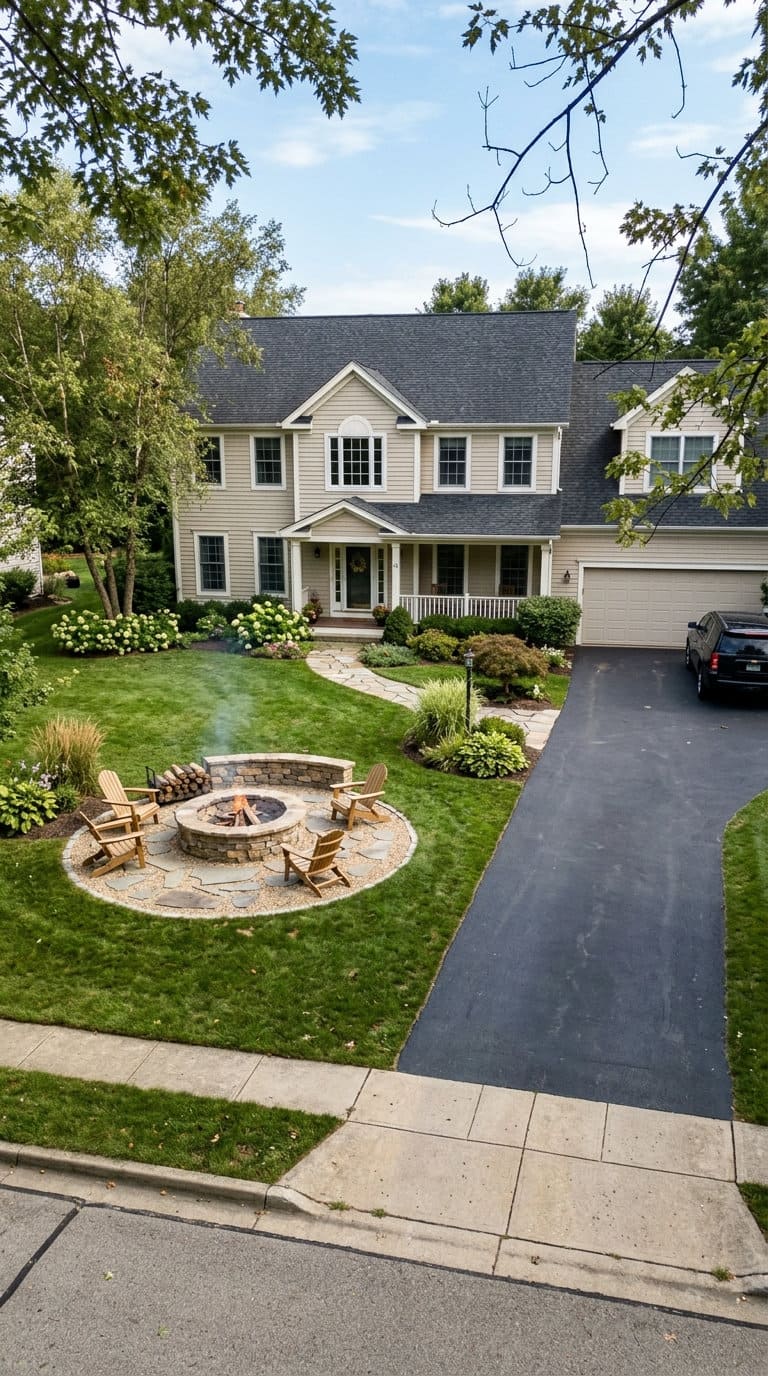
Beyond the general clearance rule, a front yard adds a few considerations a backyard doesn’t have. Keep the pit clear of your driveway approach and any parked-car sightlines, nobody wants smoke drifting across the spot where you’re backing out at night.
Answer 4 quick questions and get matched to the exact fix for your yard — drainage, budget, layout, or something else entirely.
Take the Free QuizMind your home’s front-facing windows too, if the pit sits directly in line with a living room or bedroom window, expect smoke smell indoors on still nights. And because a front yard fire pit is visible to literally everyone walking or driving by, it’s worth checking whether your HOA or municipality has a rule about fire pits being screened from the street, some do, most don’t, but it’s a five-minute check worth doing alongside the burn permit call.
Front Yard Fire Pit Ideas
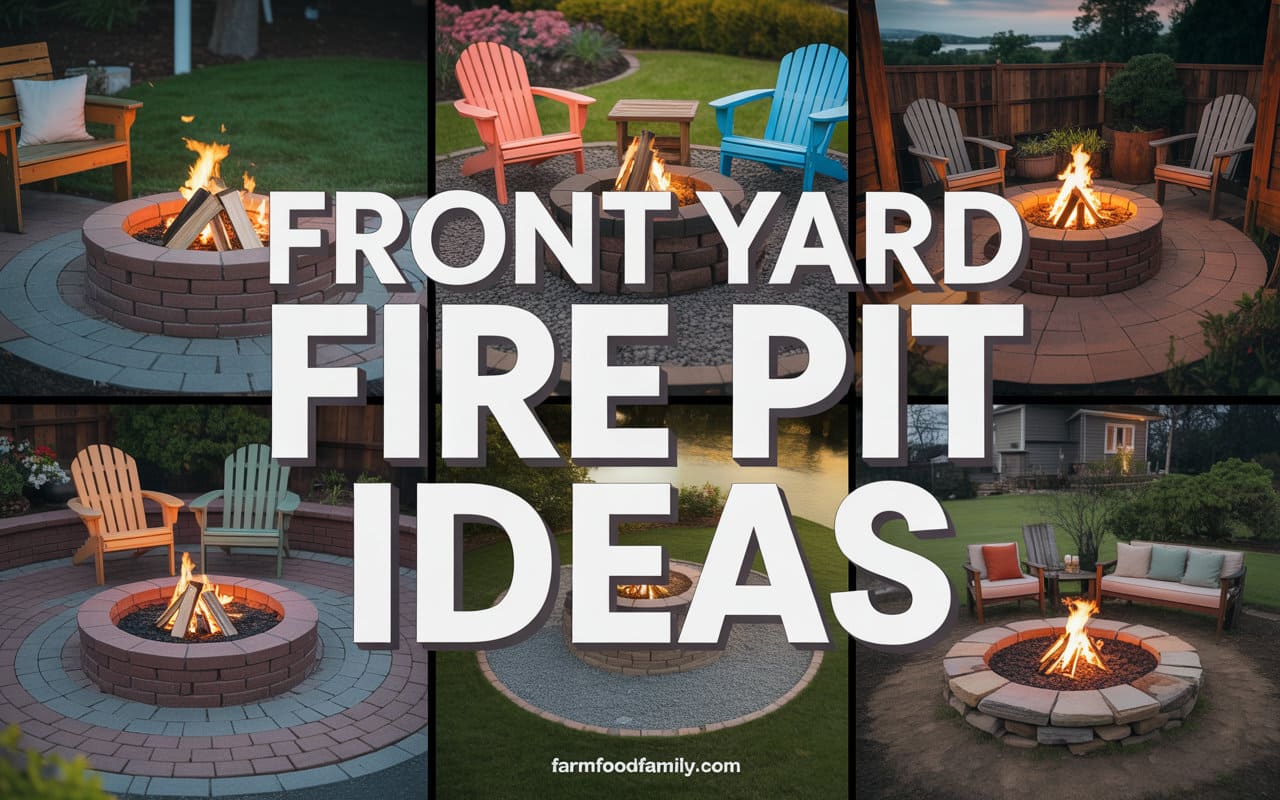
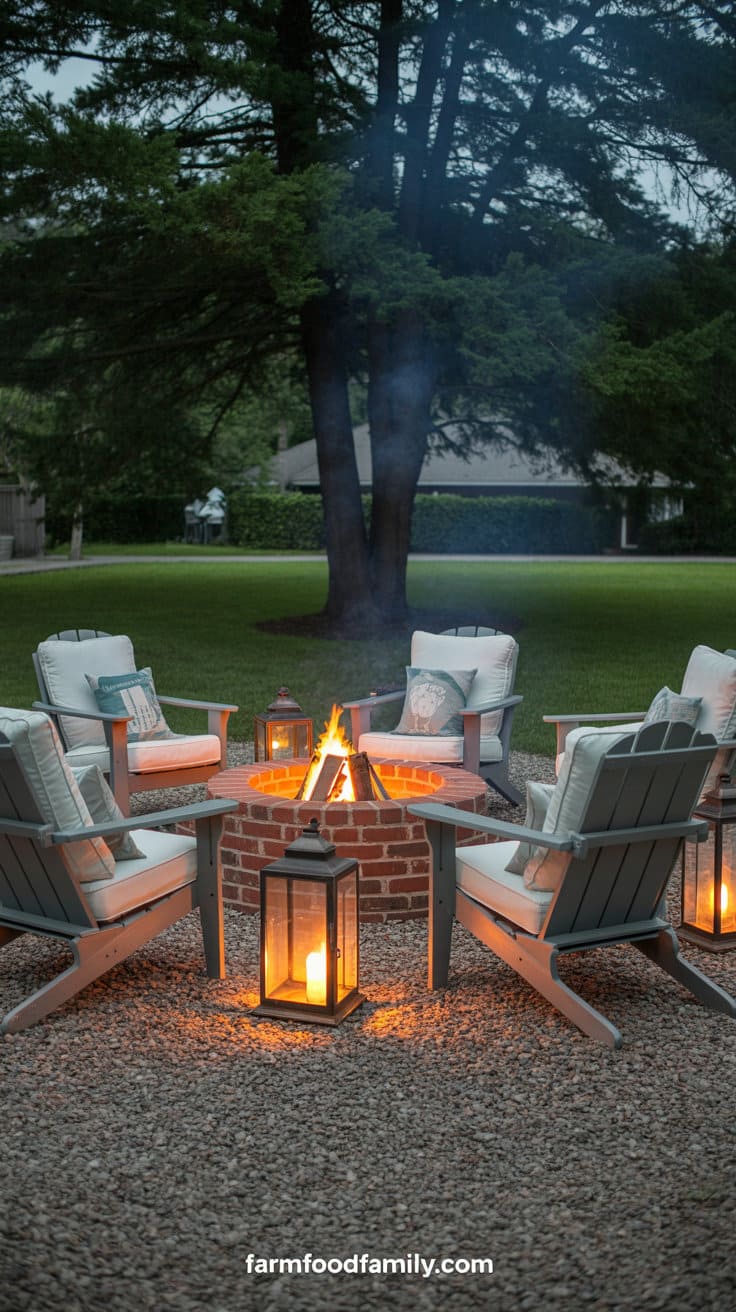
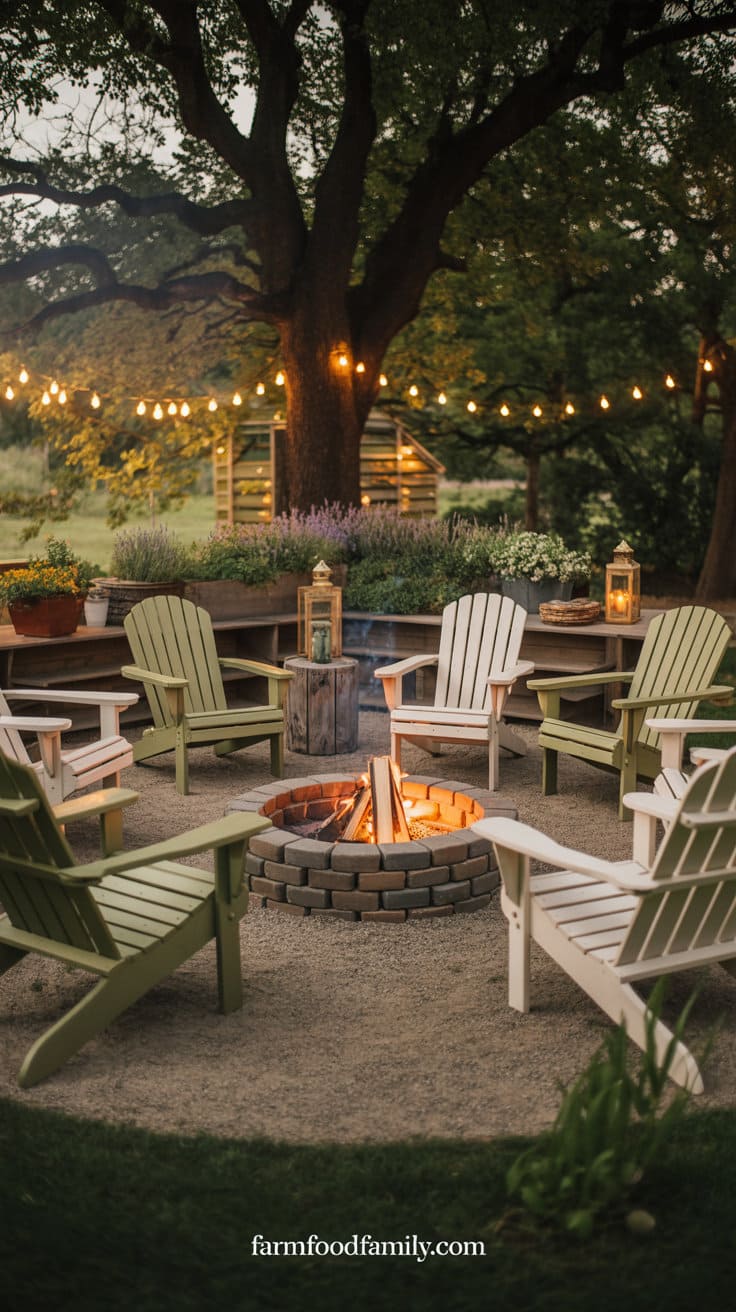
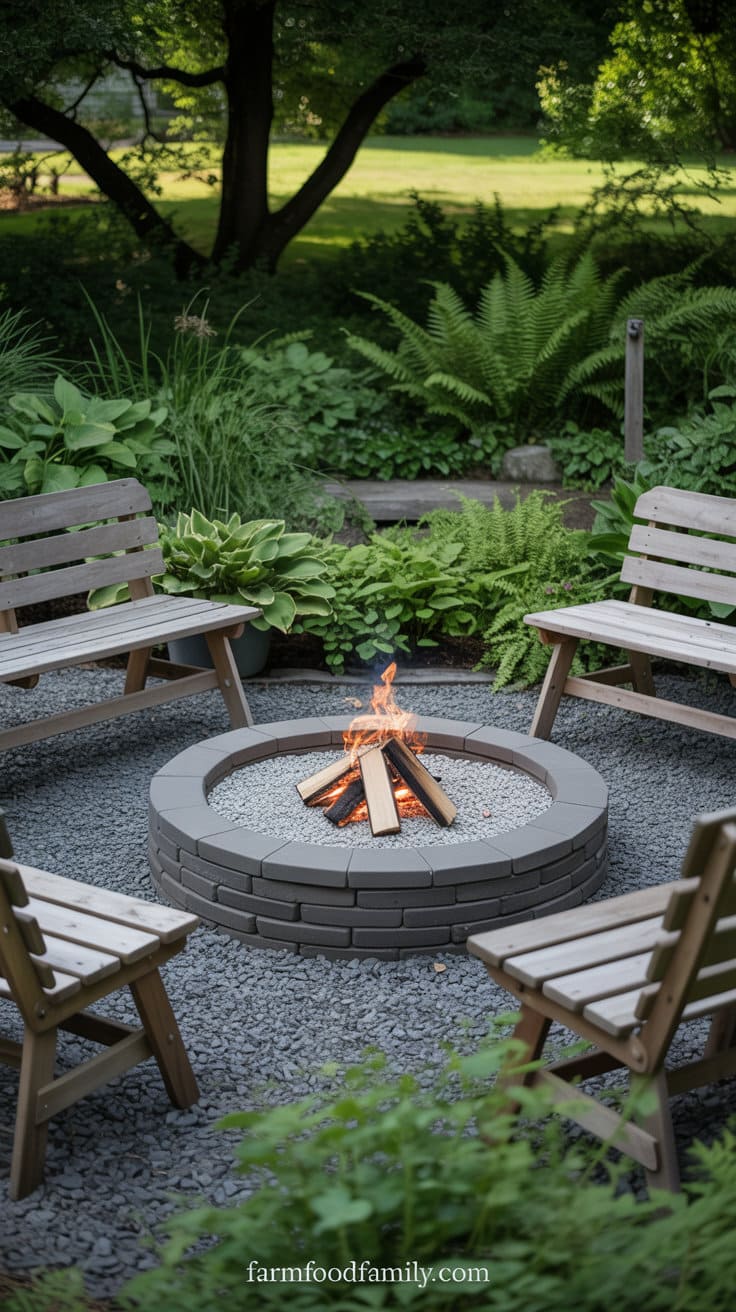
1. Circular Brick Fire Pit with Seating Ring
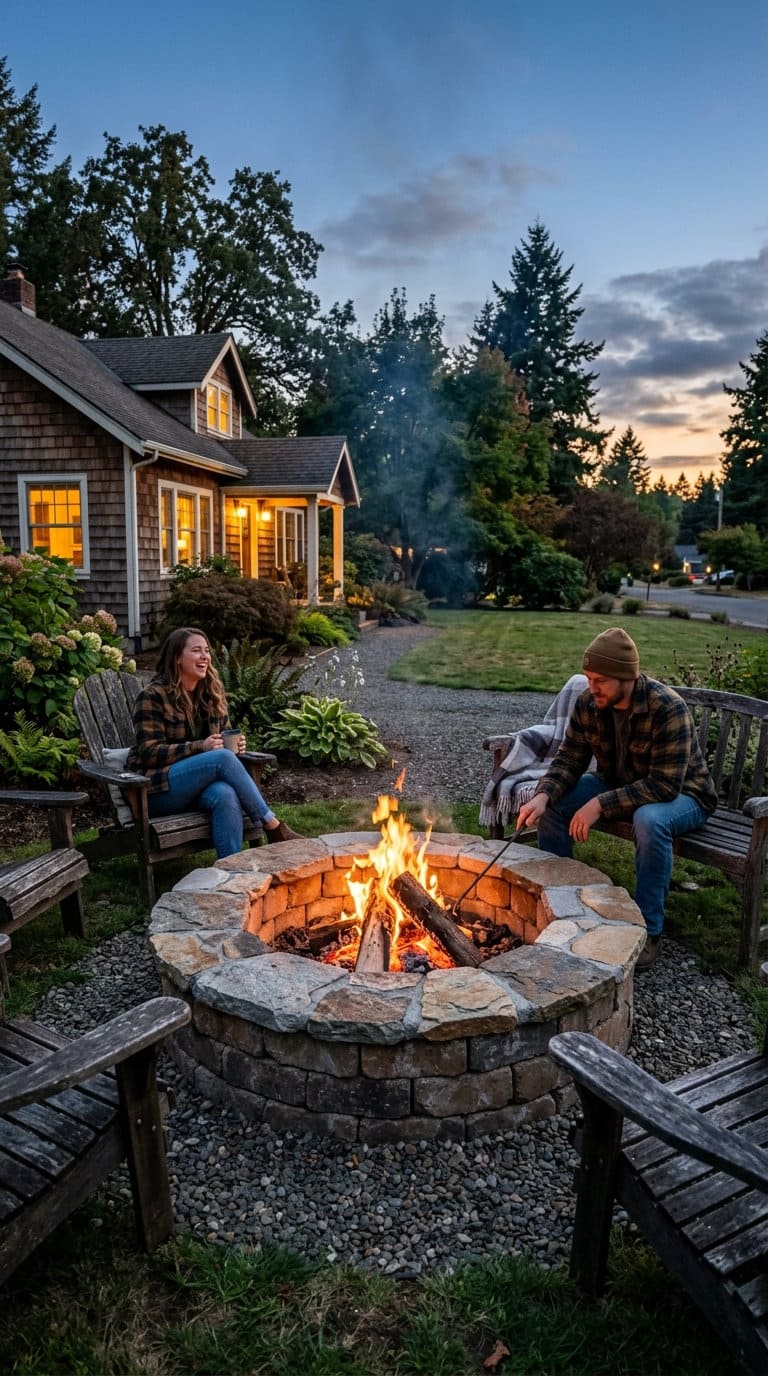
A ring of fire brick, mortared or dry-stacked, is still the most durable option for a front yard that gets regular use. Fire brick specifically, not regular clay brick, since regular brick can crack and spall under repeated heat cycling.
Budget a full weekend for a dry-stacked version, or bring in a mason for mortared work if you want it to last decades without maintenance.
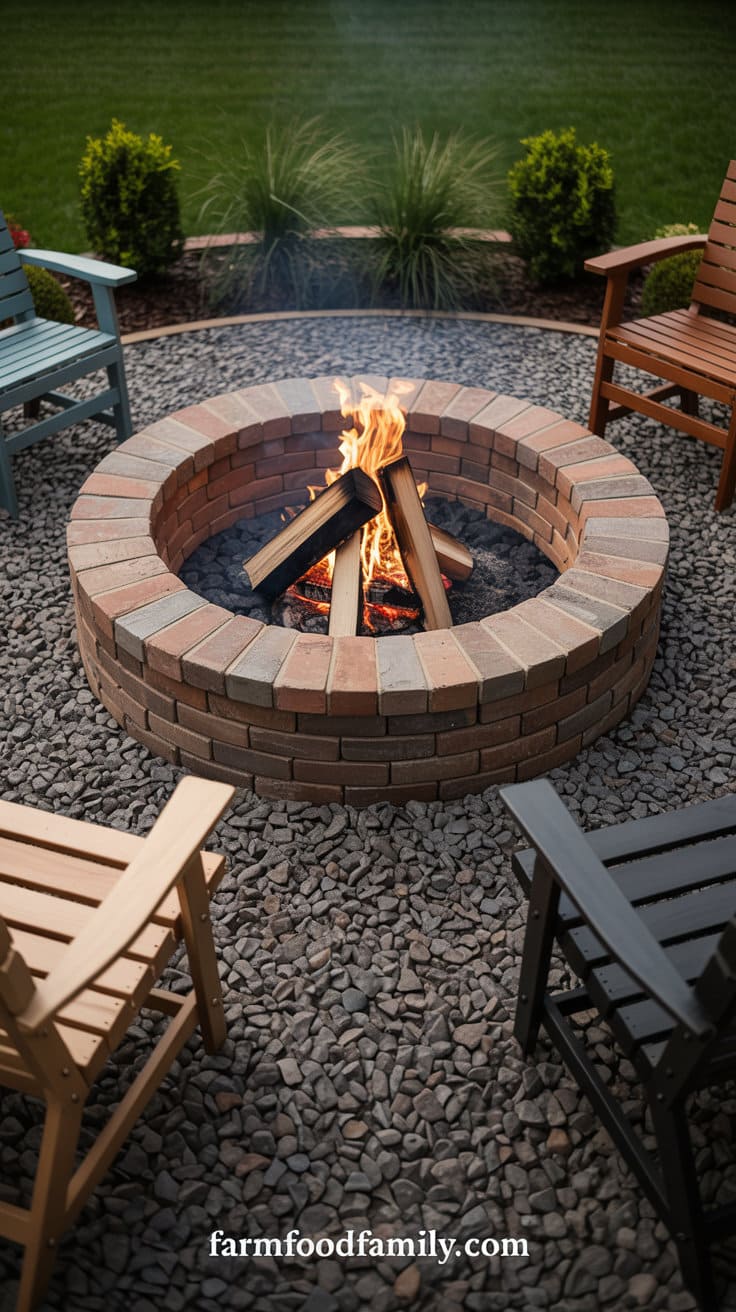
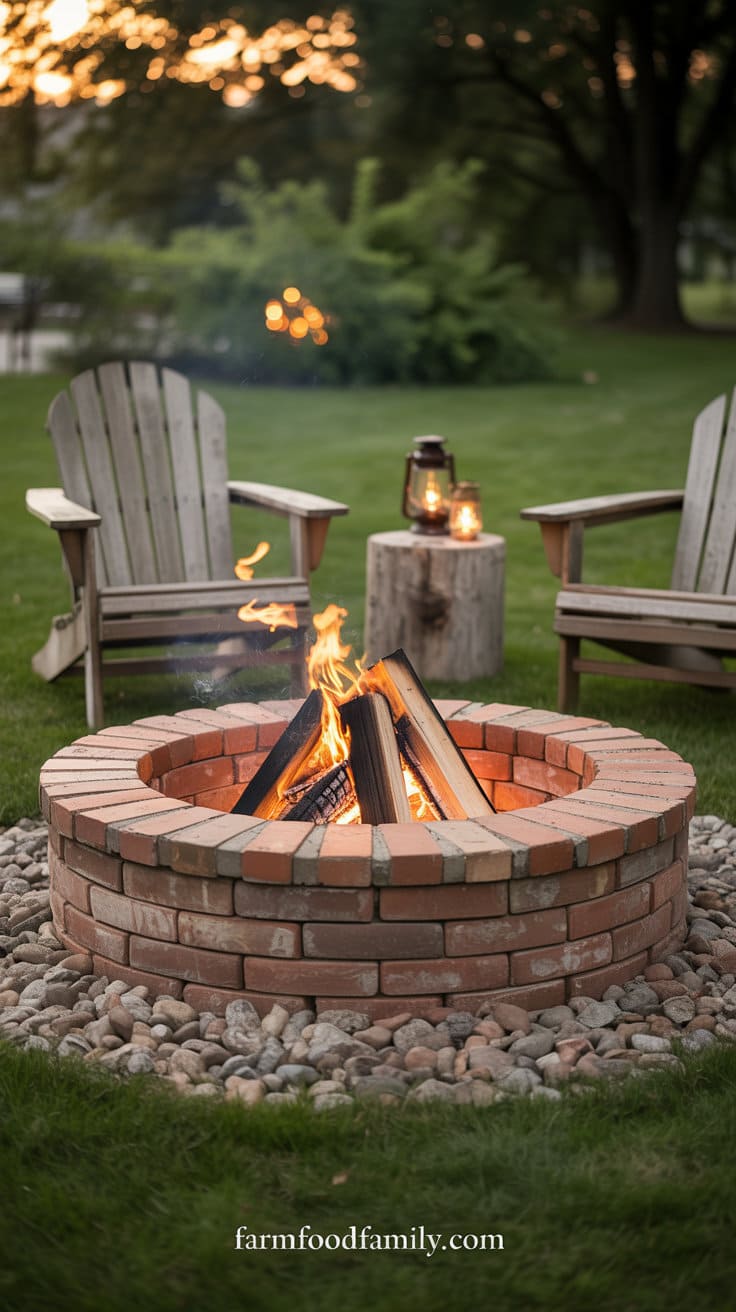
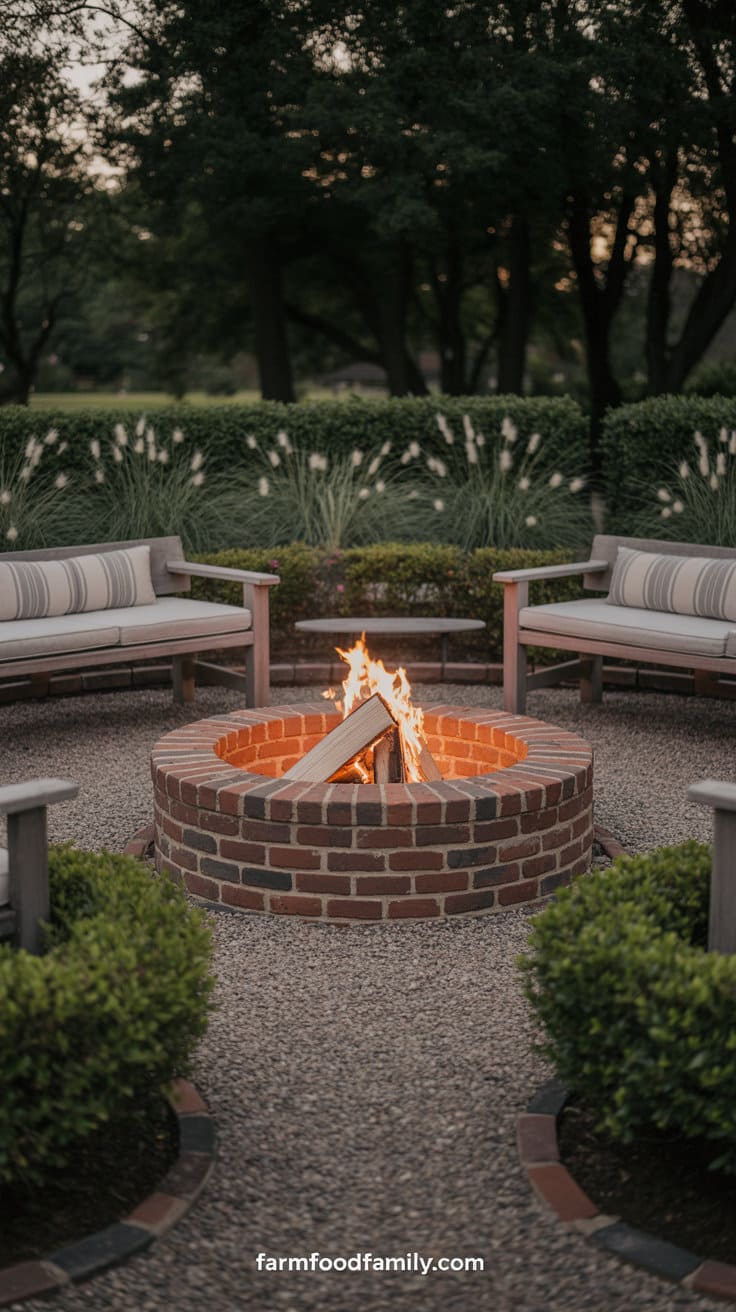
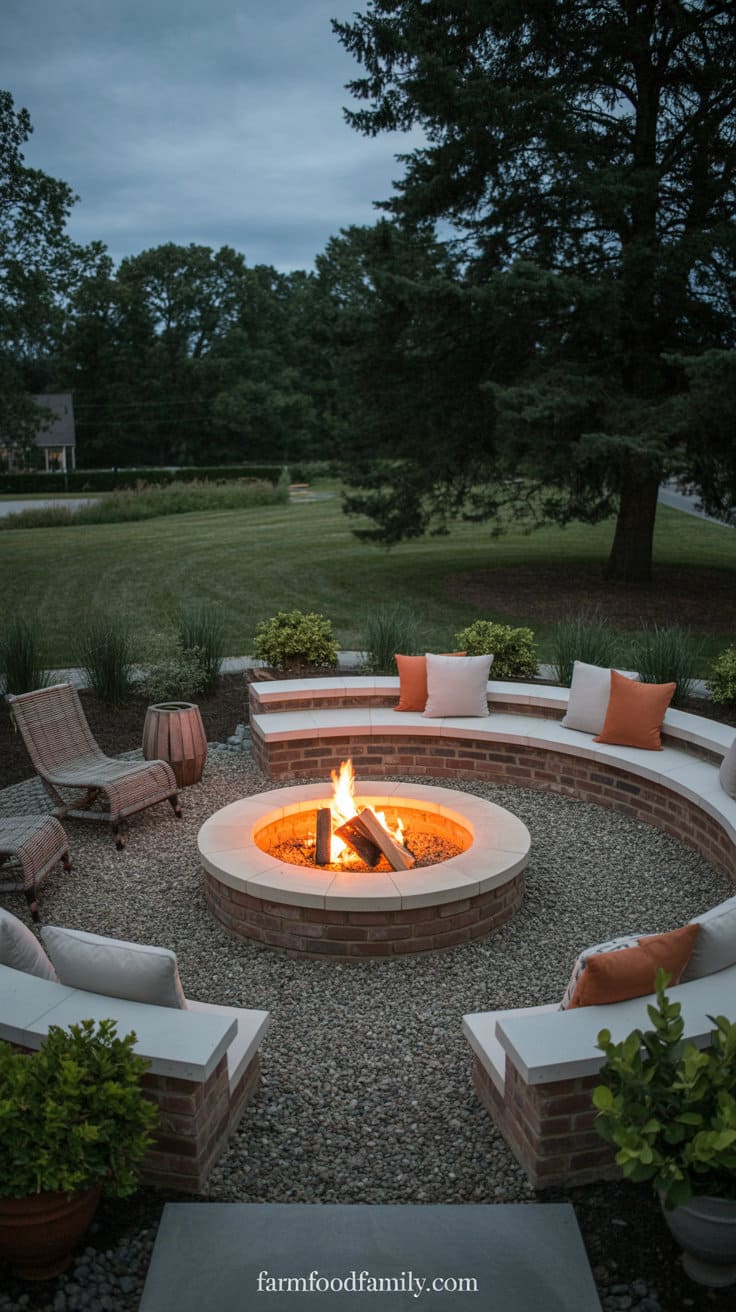
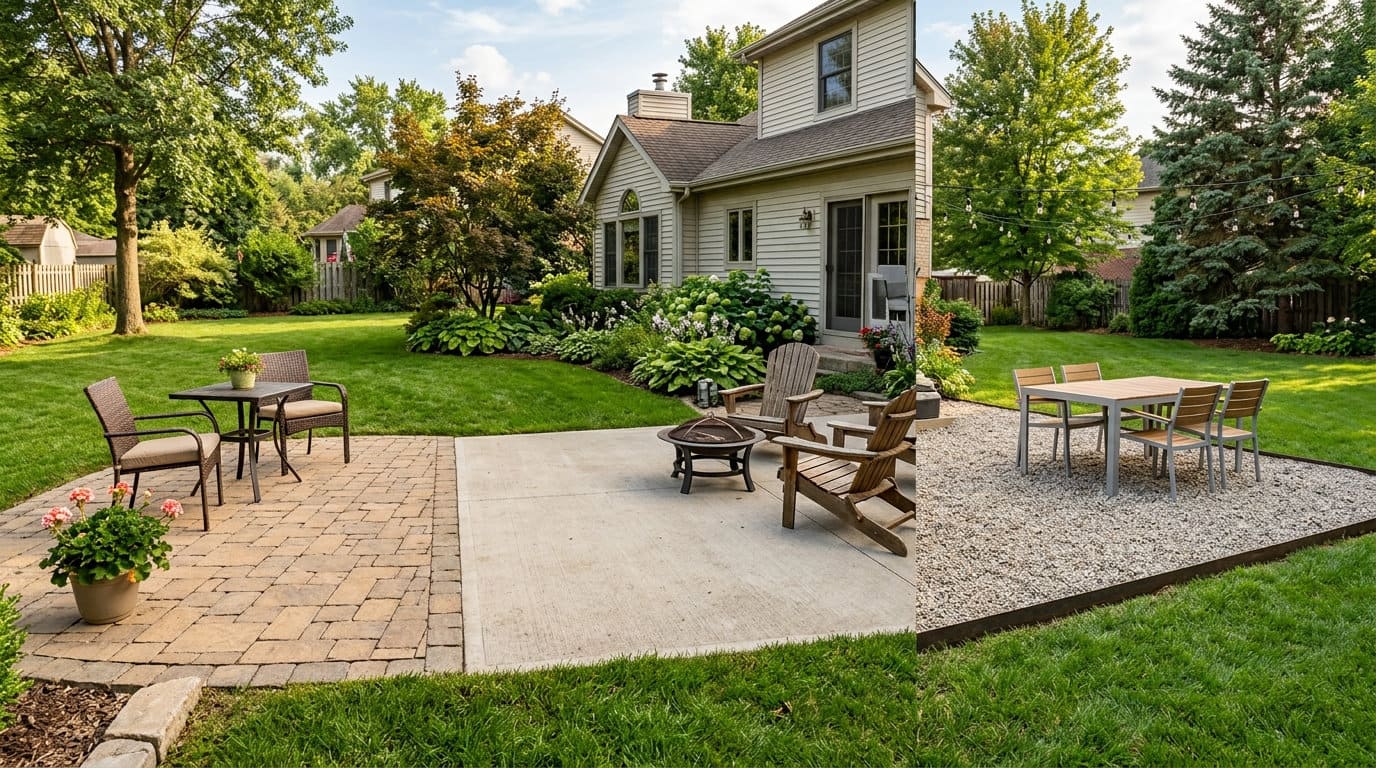
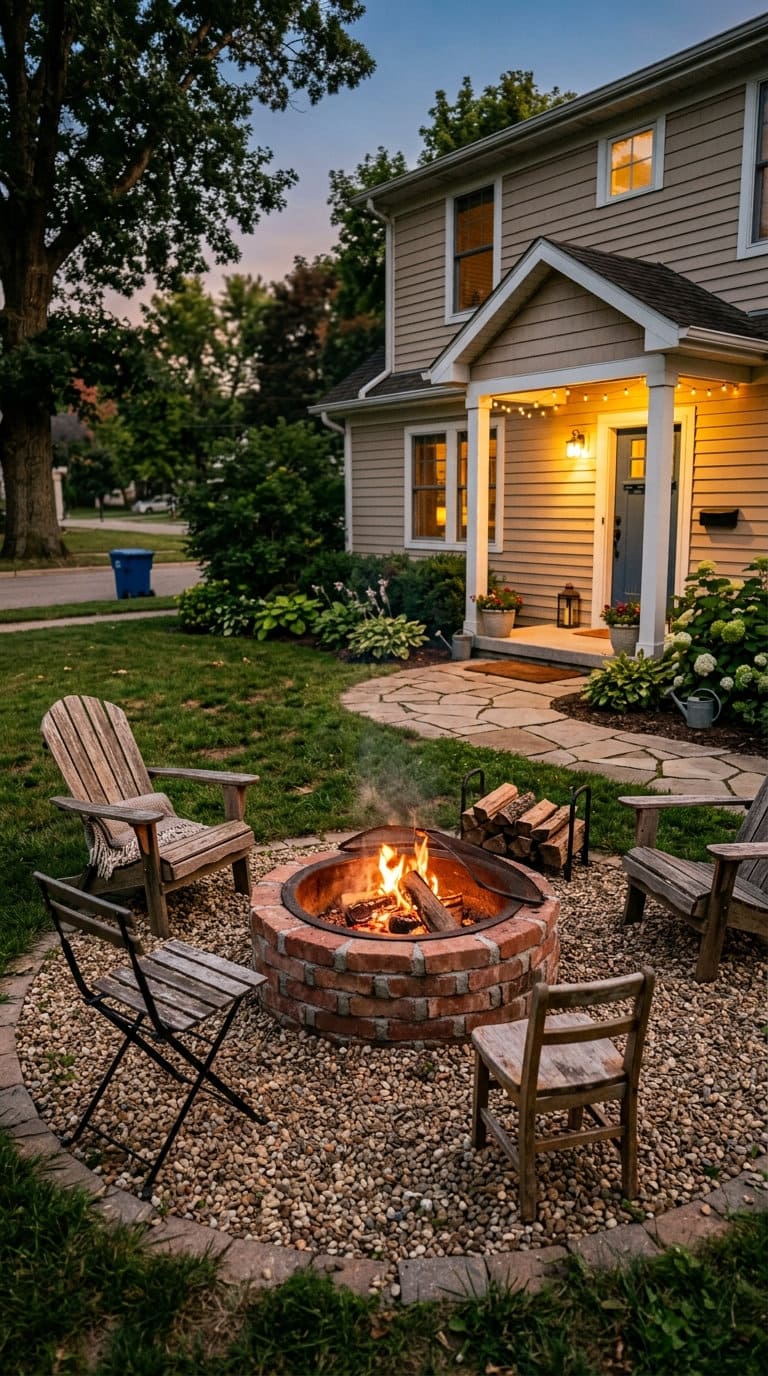
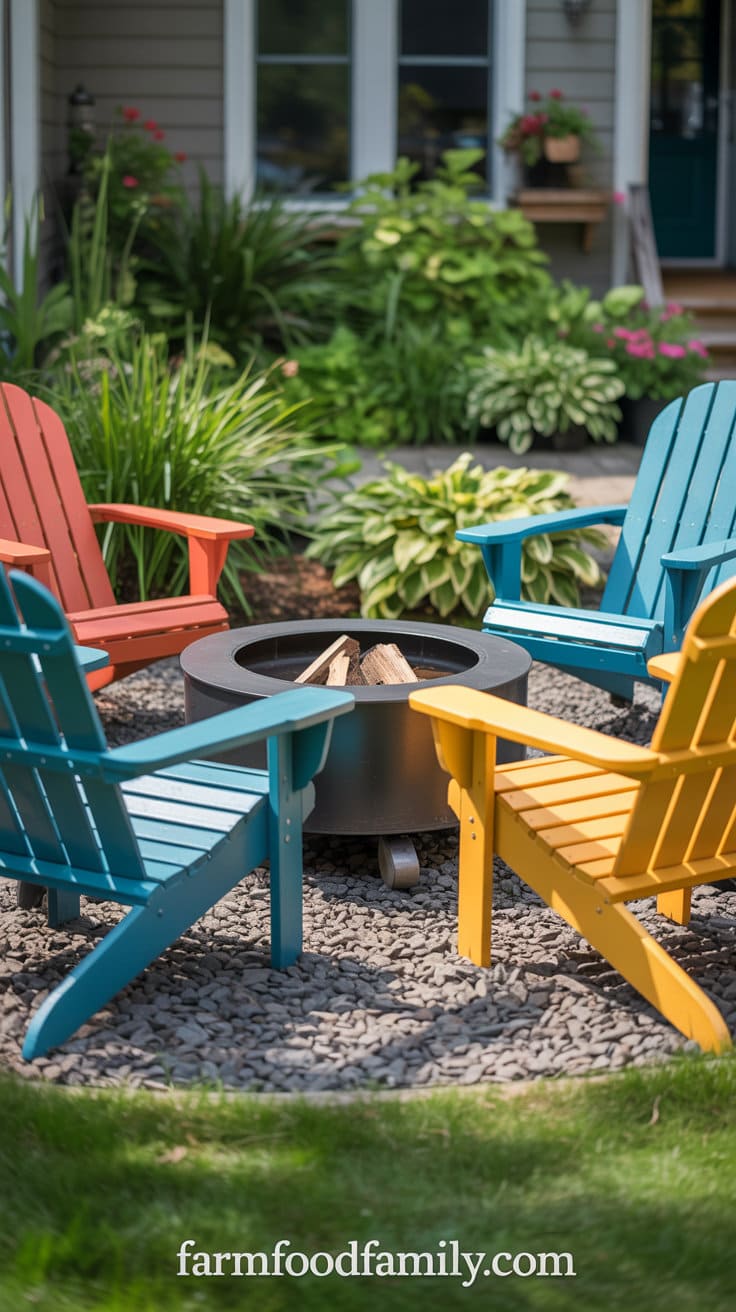
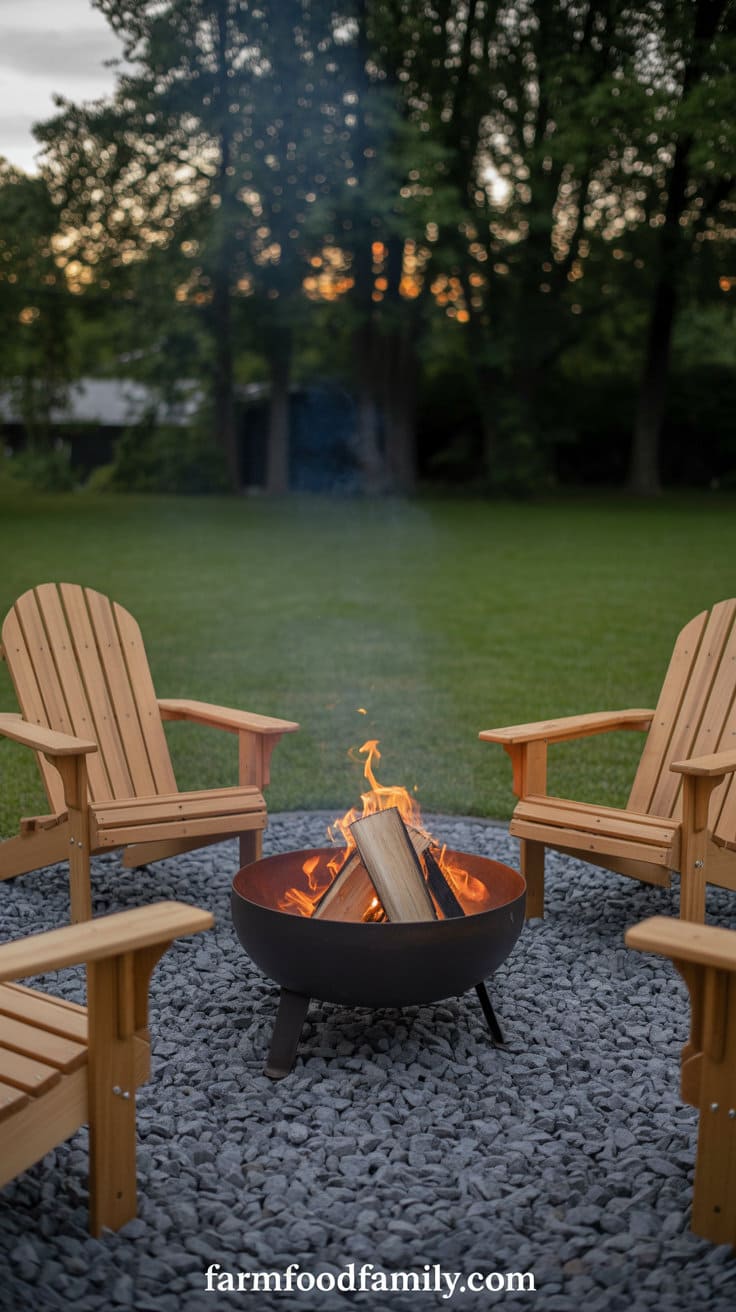
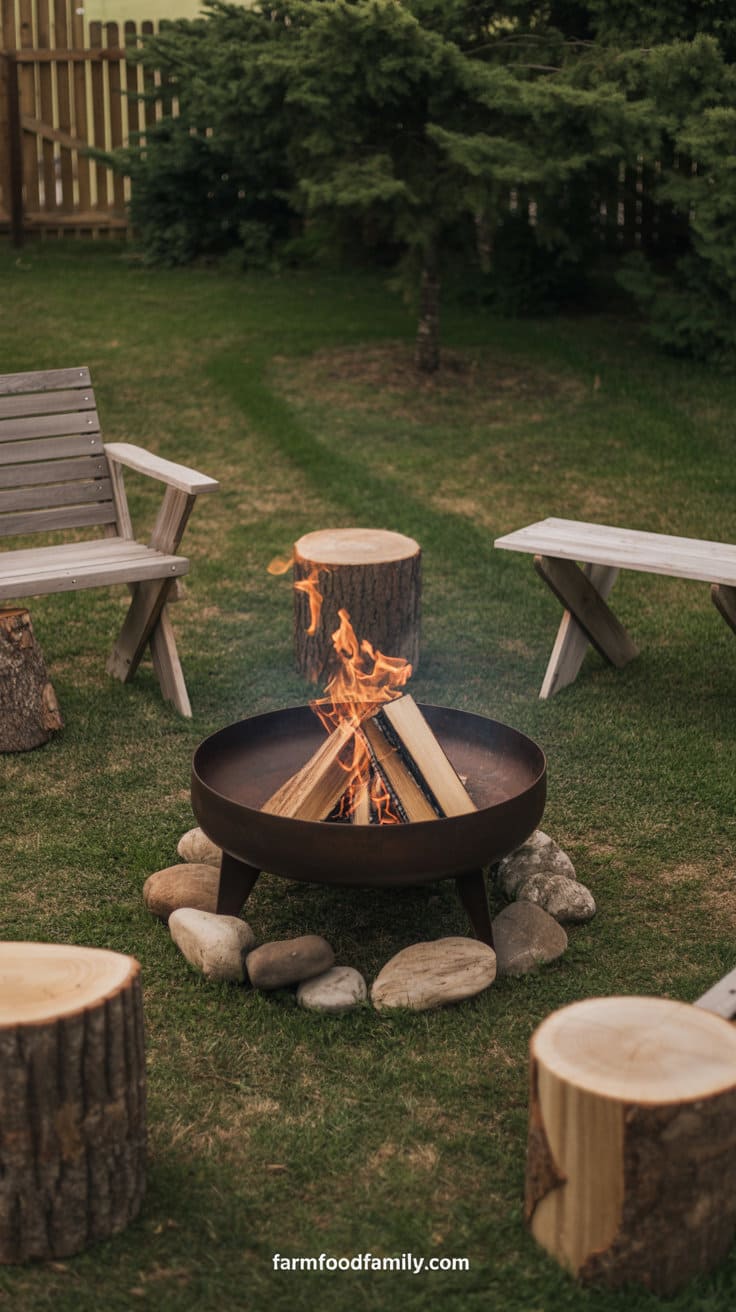
2. Gravel Fire Pit Circle with Adirondack Chairs
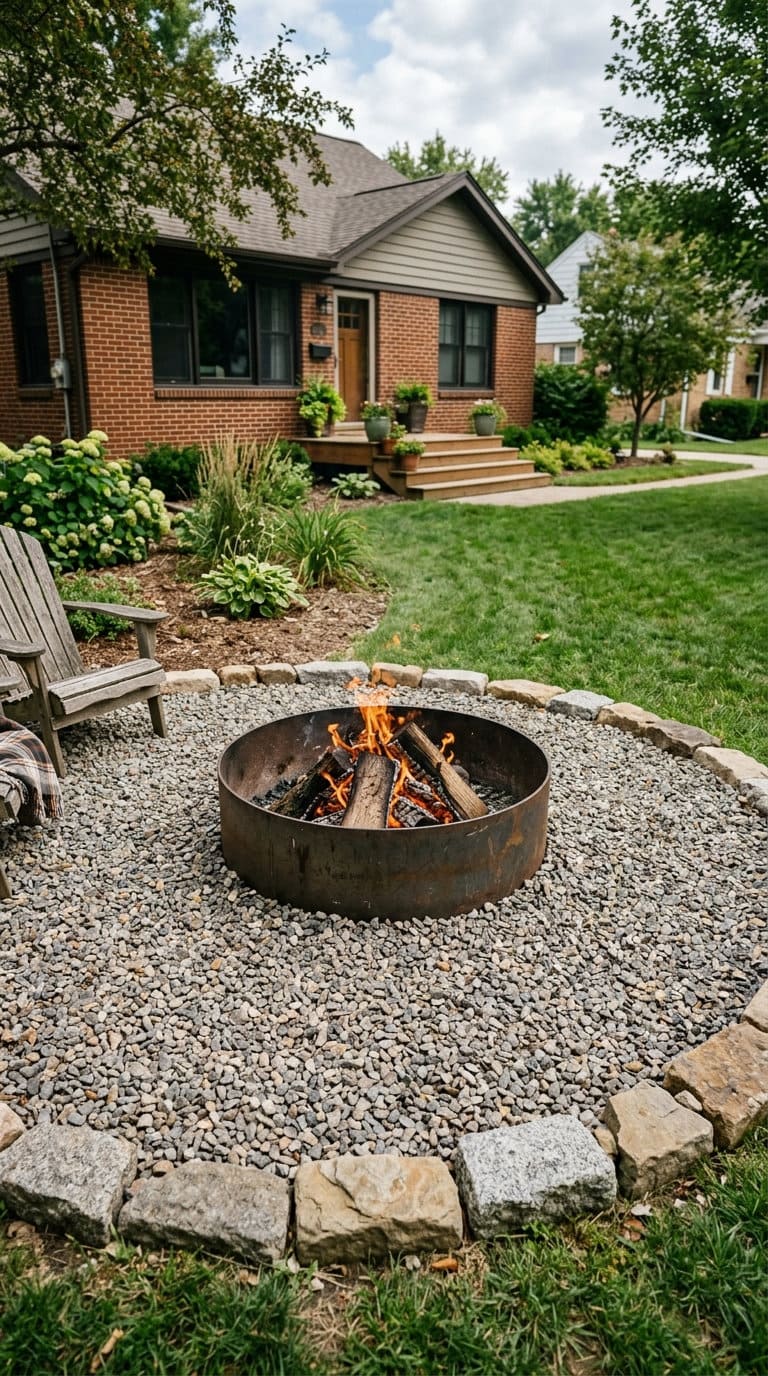
A steel or stone fire ring set into a bed of crushed gravel costs less than a full masonry build and still meets the “level, non-flammable surface” requirement NFPA recommends.
Gravel also drains better than grass or mulch after rain, which matters more in a front yard that’s the first thing guests see when they pull up.
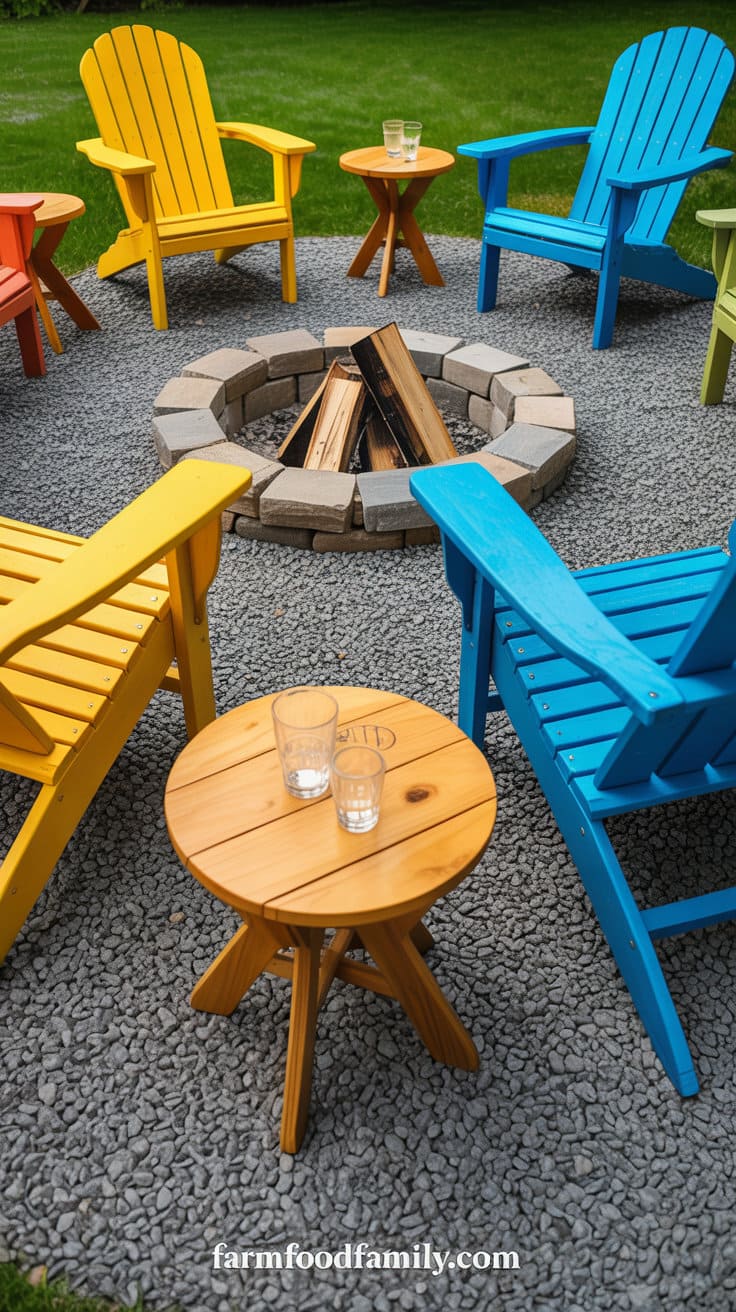
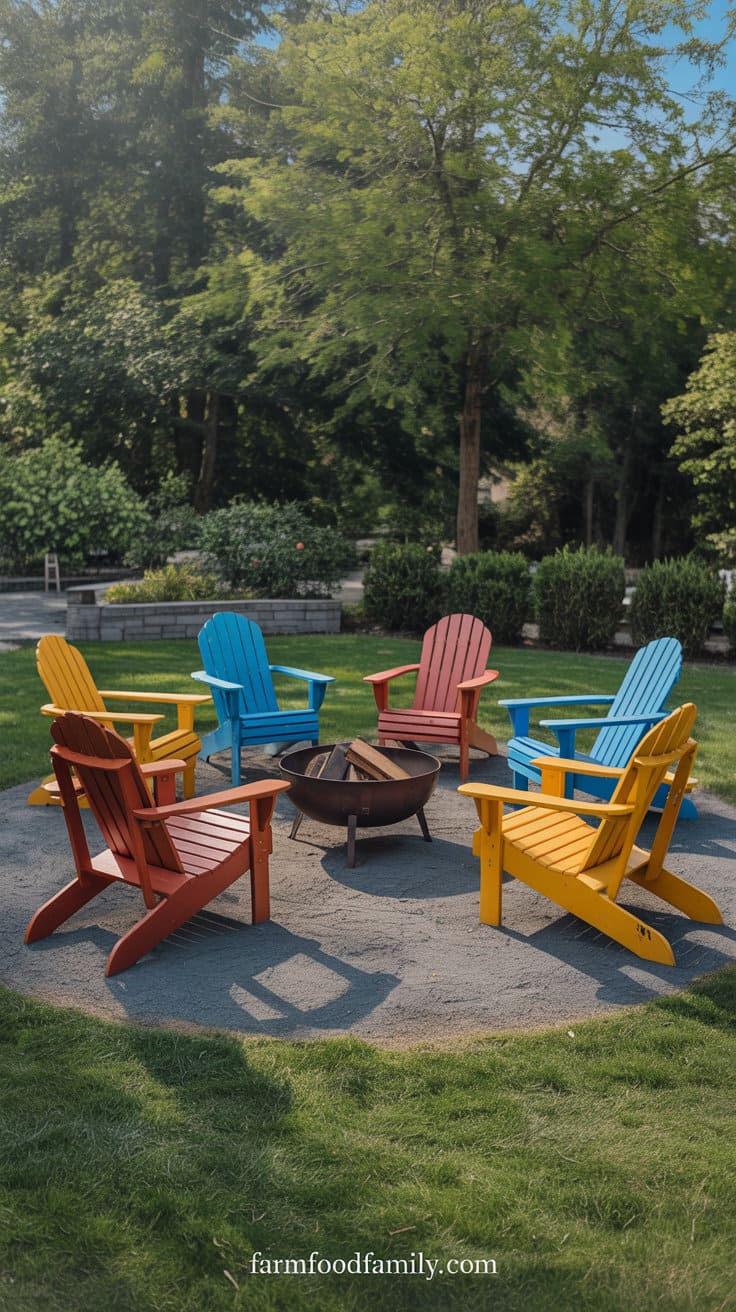
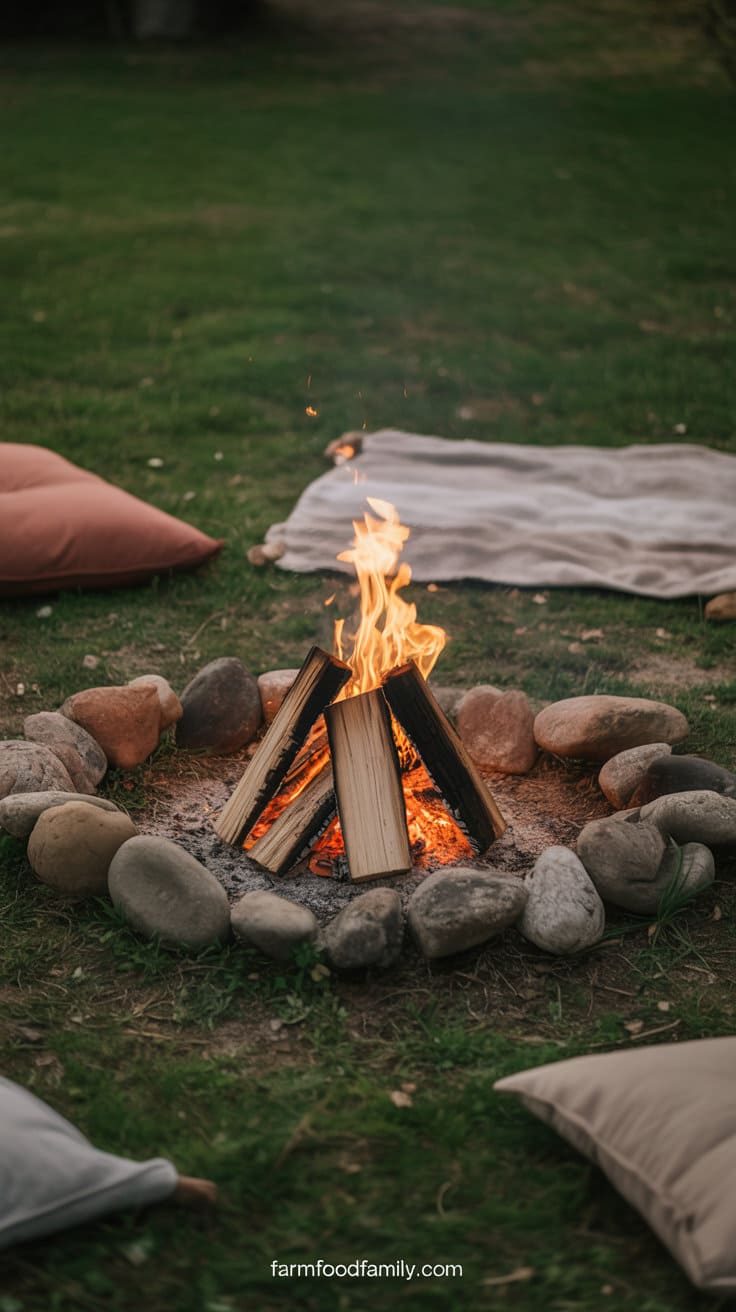
3. Ground-Level Fire Pit for a Natural, Simplified Look
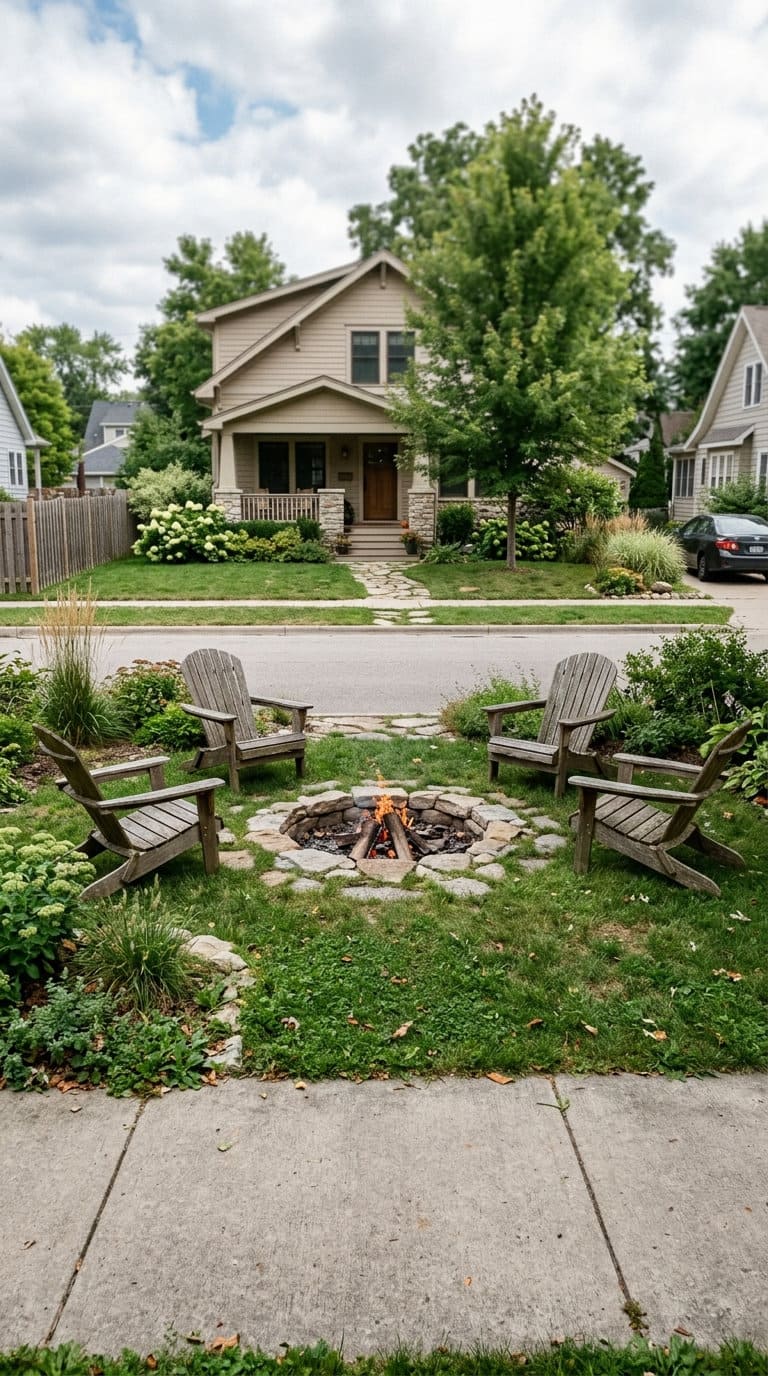
A sunken or flush-to-grade fire pit reads as more understated from the street than a raised structure, which some homeowners prefer for a front yard specifically since it doesn’t dominate the curb view.
It needs a metal liner and proper drainage underneath to avoid becoming a water collection point, that’s not optional, a waterlogged pit is both a mosquito problem and a fire-won’t-start problem.
Most yard problems trace back to one specific, fixable cause. Find yours in 4 quick questions.
Take the Free Quiz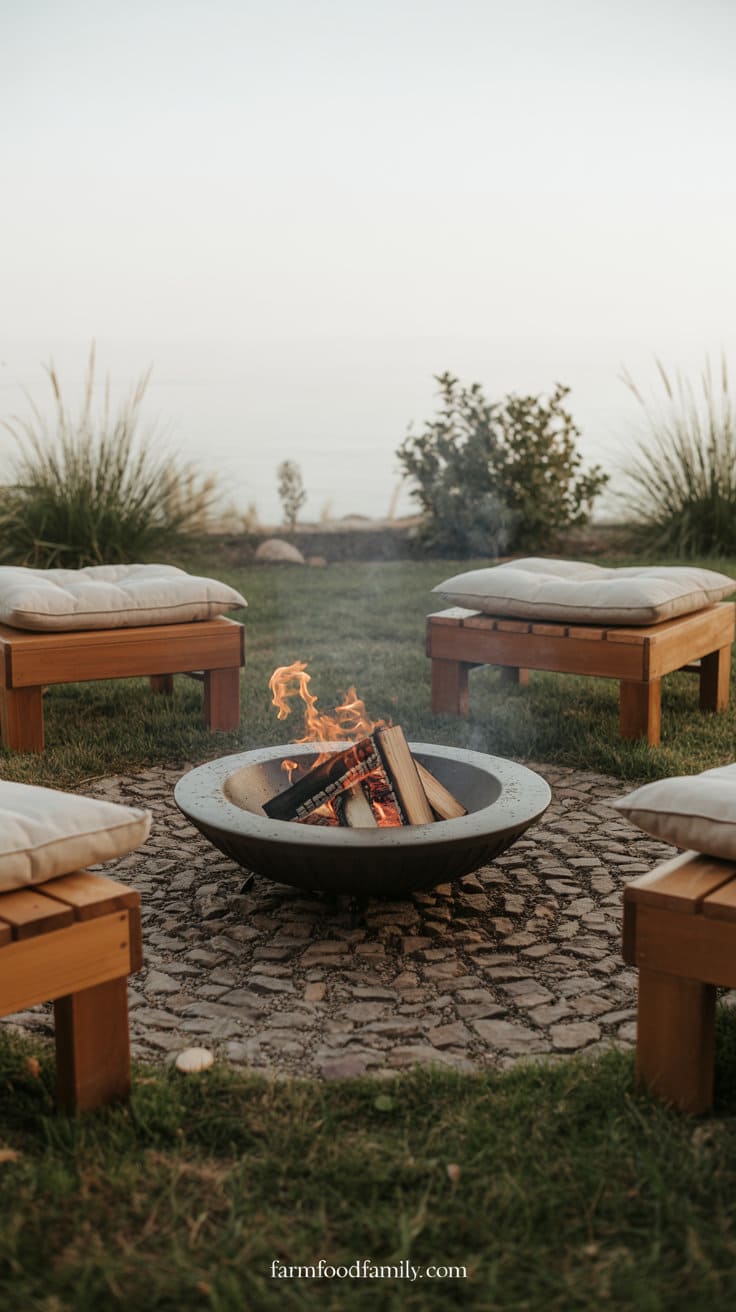
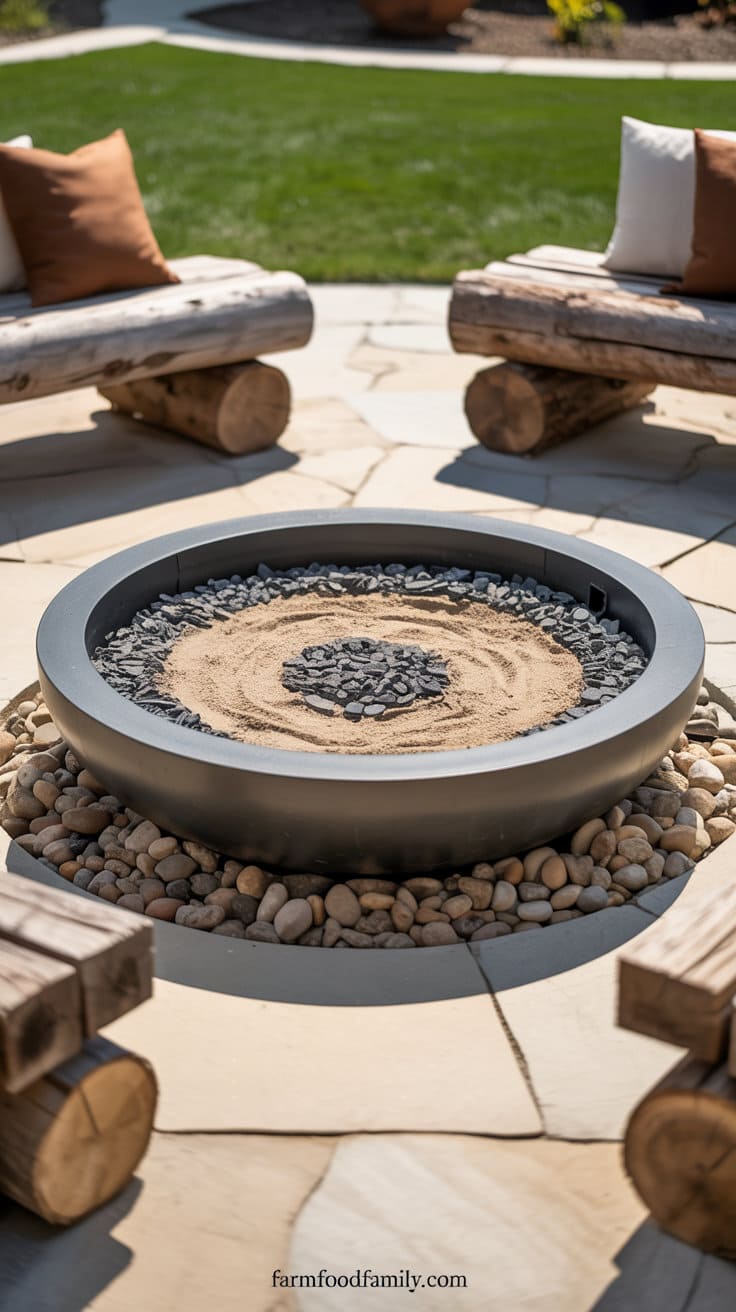
4. Primal but Timeless Fire
The open, flush-to-the-ground design seems organic and primal, inviting a sense of timeless comfort that’s almost like having a campground in your own backyard.
To maintain the earthy, informal vibe, arrange low-slung seats, wood stumps, or even pillows around the edge.
What makes this design appealing is its raw simplicity, which is easy to develop, thoroughly grounded, and visually unobtrusive.
While the structure is simple, it necessitates careful safety precautions: keep the pit away from anything flammable and keep a fire extinguisher available at all times.
This simple layout is ideal for individuals who desire a cozy gathering spot without overcomplicating their outdoor space.
5. Modern concrete fire bowl
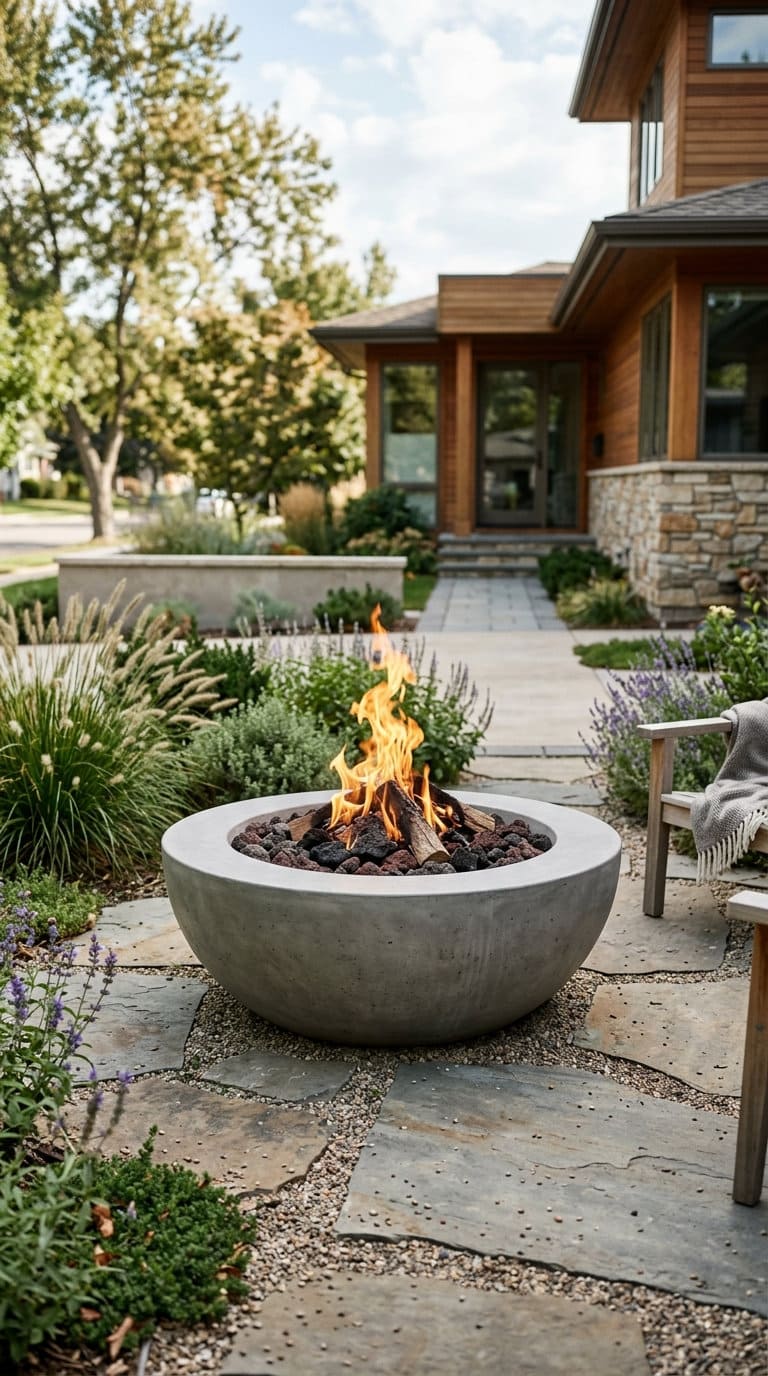
Sculptural concrete fire bowls, smooth curves, refined edges, a centered flame, are one of the most requested styles going into 2026, and they read as more intentional than a big backyard-style pit, which suits a front yard’s smaller, more visible footprint. Most popular sizes land in the 48 to 54-inch range, big enough for real warmth without taking over the whole front lawn.
6. Compact fire table
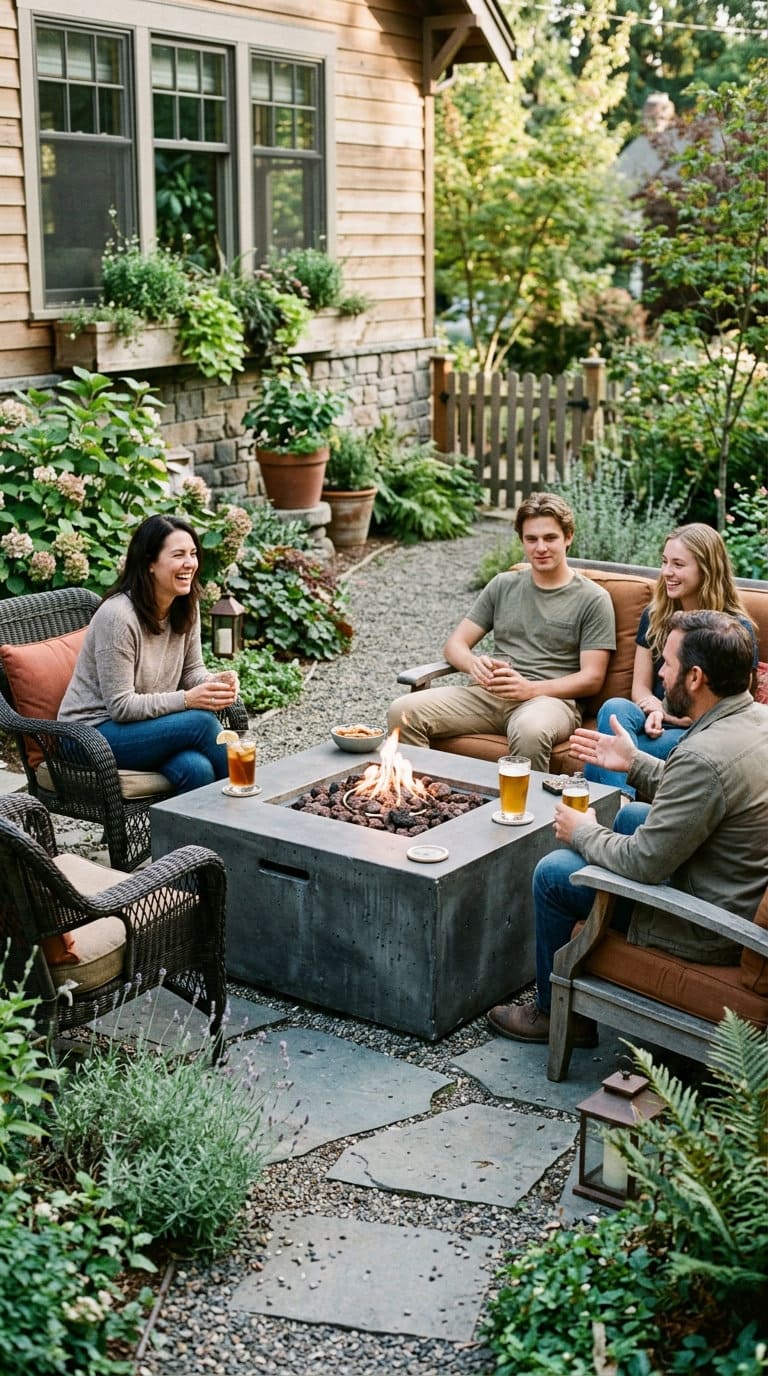
A fire table doubles as a surface for drinks, which matters in a front yard where space is often tighter than a full backyard patio. Square concrete fire tables in particular work well for smaller, more intimate seating arrangements, everyone’s within reach of both the flame and the table surface without needing extra furniture.
7. Built-in seating wall
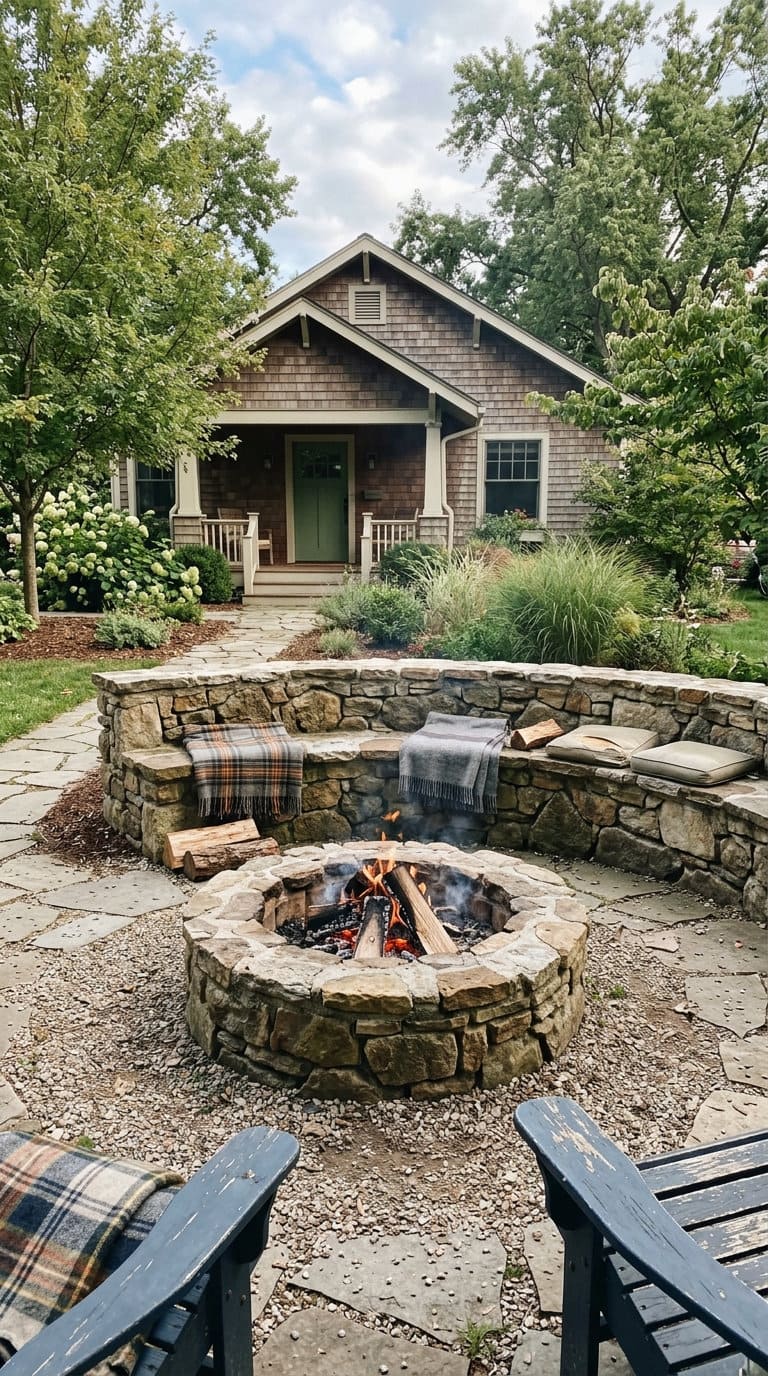
A low seating wall built around (not directly touching, mind that 10-foot rule) the fire pit area does double duty: permanent seating without hauling furniture in and out, and a defined edge that makes a front yard fire pit look designed rather than dropped in.



Built-in seating is increasingly replacing separate patio furniture in 2026 fire pit installs specifically because it keeps the footprint tighter, a real advantage on a front yard that’s smaller than most backyards to begin with.
8. Windbreak landscaping
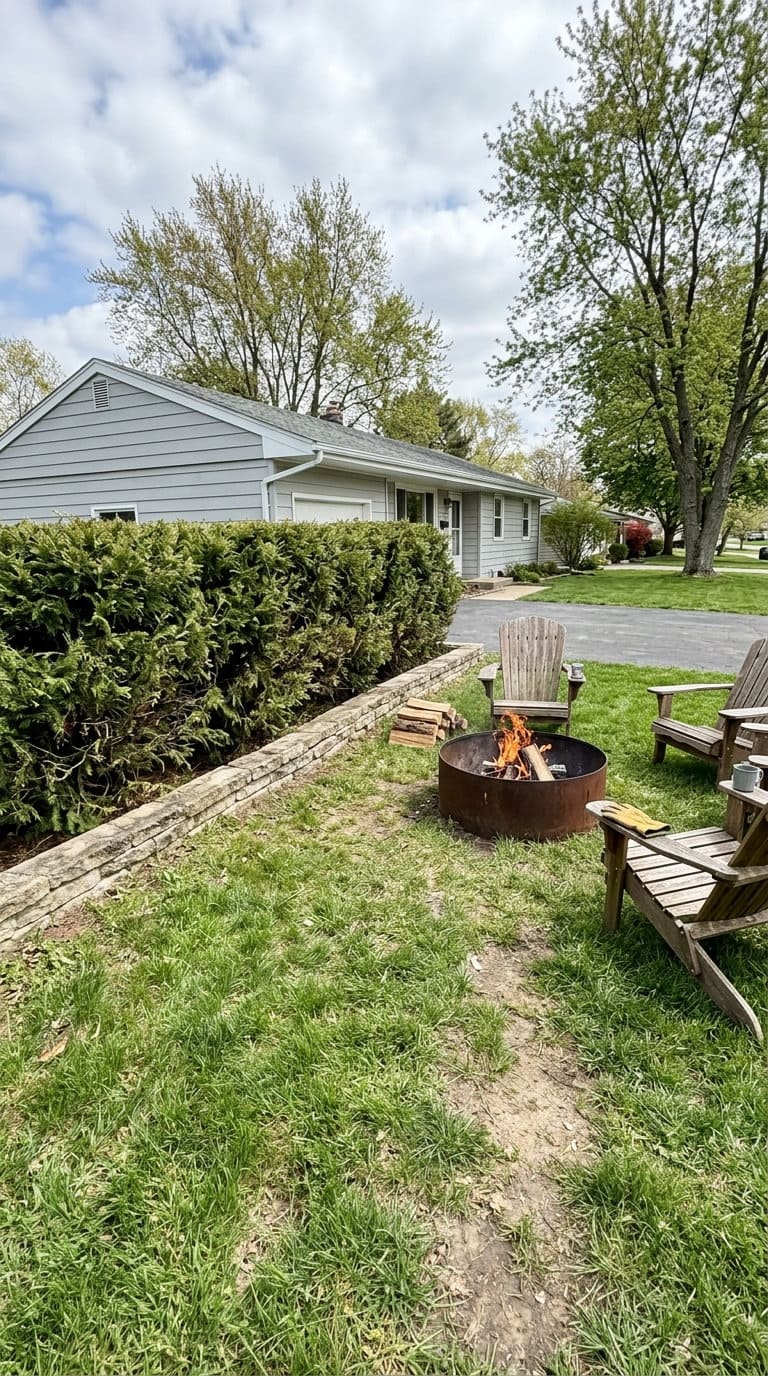
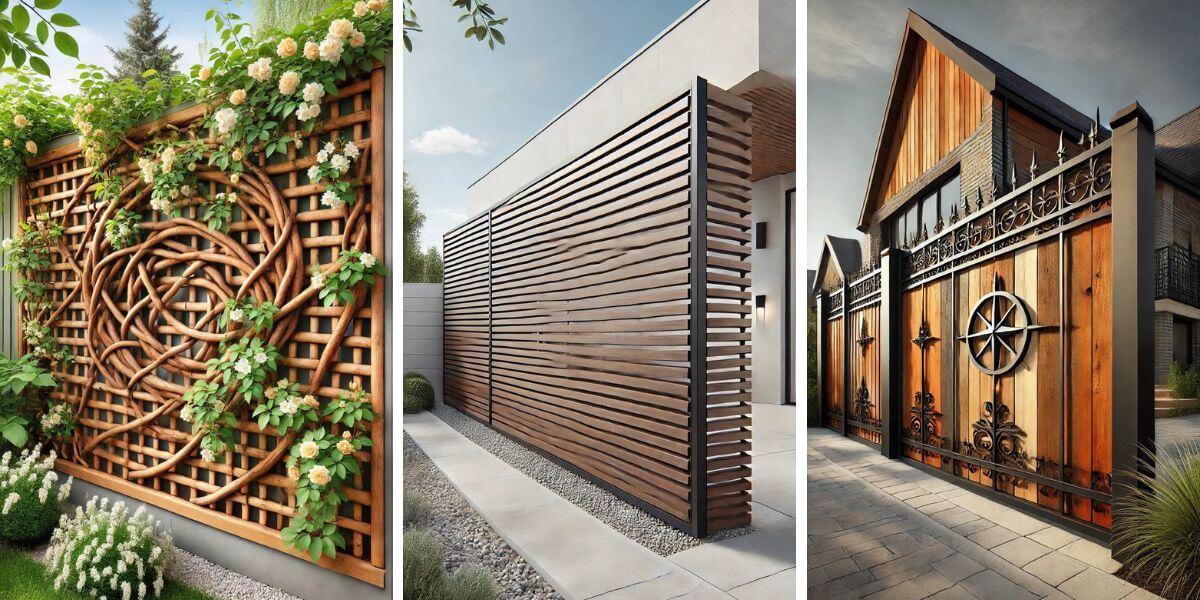
Wind direction affects both comfort and safety, a fire pit sitting in a natural wind tunnel throws embers further and burns less predictably. A low hedge, a short garden wall, or a simple screen positioned upwind of the pit cuts wind exposure without blocking the view from the house or street. This is also a legitimate way to soften how visible the fire pit is from the sidewalk, if that’s a concern for your specific street.
9. Keep corners away from your front door
If you’re going with a square or rectangular design, pay attention to which way the corners point. A corner aimed directly at your front door or main walkway reads as a subtle barrier, walking toward a sharp point just doesn’t feel as inviting as walking toward a flat edge or a curve.
The average homeowner spends $616/year on yard fixes that don't address the real problem. Find out what yours actually is — before you spend another dollar.
Take the Free QuizIt’s a small detail, but it’s the kind of thing that makes a front yard fire pit feel like part of the entrance experience instead of an obstacle in front of it.
10. Contrast the fire pit material against the walkway
Using a different material for the fire pit than for your front walkway or driveway, natural stone pit against concrete pavers, or brick against a poured walkway, keeps the fire pit from visually blending into the hardscape and disappearing as a design feature. It’s a simple contrast trick that costs nothing extra if you’re already sourcing materials for both.
FAQ
How far should a front yard fire pit be from my house? At least 10 feet (3 meters) from anything that can burn, according to the National Fire Protection Association’s Educational Messages Desk Reference, a figure independently confirmed by This Old House’s own fire pit installation guidance. Keep that clearance from siding, decks, overhanging branches, and rooflines specifically, not just open lawn.
Do I need a permit for a front yard fire pit? Possibly, permit requirements and seasonal burn restrictions vary by city and county, so check with your local fire department or municipal building office before you start. Some jurisdictions limit how many permits they issue at all, so this isn’t a step to skip or assume your way through.
Is a front yard a normal place for a fire pit? Yes, it’s less common than a backyard installation but it’s a real, established choice, front yards just add a few extra placement considerations a backyard doesn’t: staying clear of your driveway approach and front-facing windows, and checking whether your HOA has any rule about street visibility.
Pick two or three of these that actually fit your front yard’s size and your street’s realities, and get the safety clearance right before you get attached to a specific design. A beautiful fire pit that has to be moved or torn out over a code violation isn’t a win.
Incorporating a fire pit into your front yard is more than just a trendy design move as it redefines how you use your home’s most public space.
These fire pit ideas demonstrate that the front yard can become a warm and multifunctional area for connection, relaxation, and expression.
When done right, a front yard fire pit transforms curb appeal into curb experience, turning passing glances into lasting impressions and solitary spaces into social sanctuaries.
Let your front yard invite light, laughter, and life one flame at a time.
If this article helped you out, leave a comment below and make sure to share it with your friends.
Never miss an update — choose FarmFoodFamily as your preferred source on Google.
How it works: Tap the button below to open Google's settings page, then check the box next to FarmFoodFamily.
Tap the checkbox to turn it blue — that's how you know it's set.