19+ Creative Front Yard Stone Ideas That Actually Hold Up Over Time
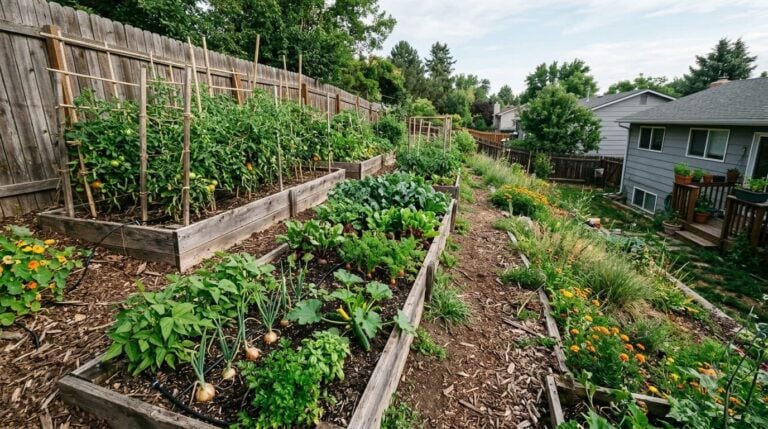
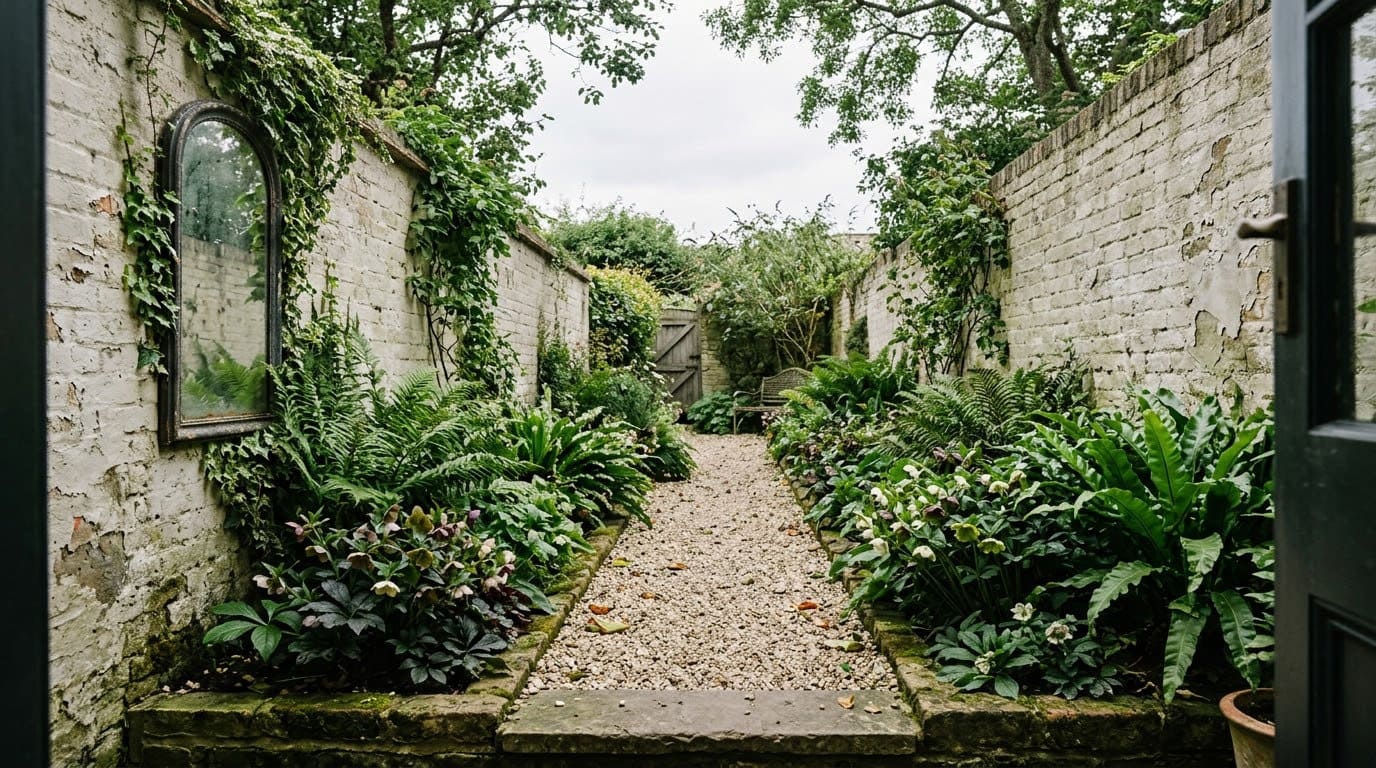
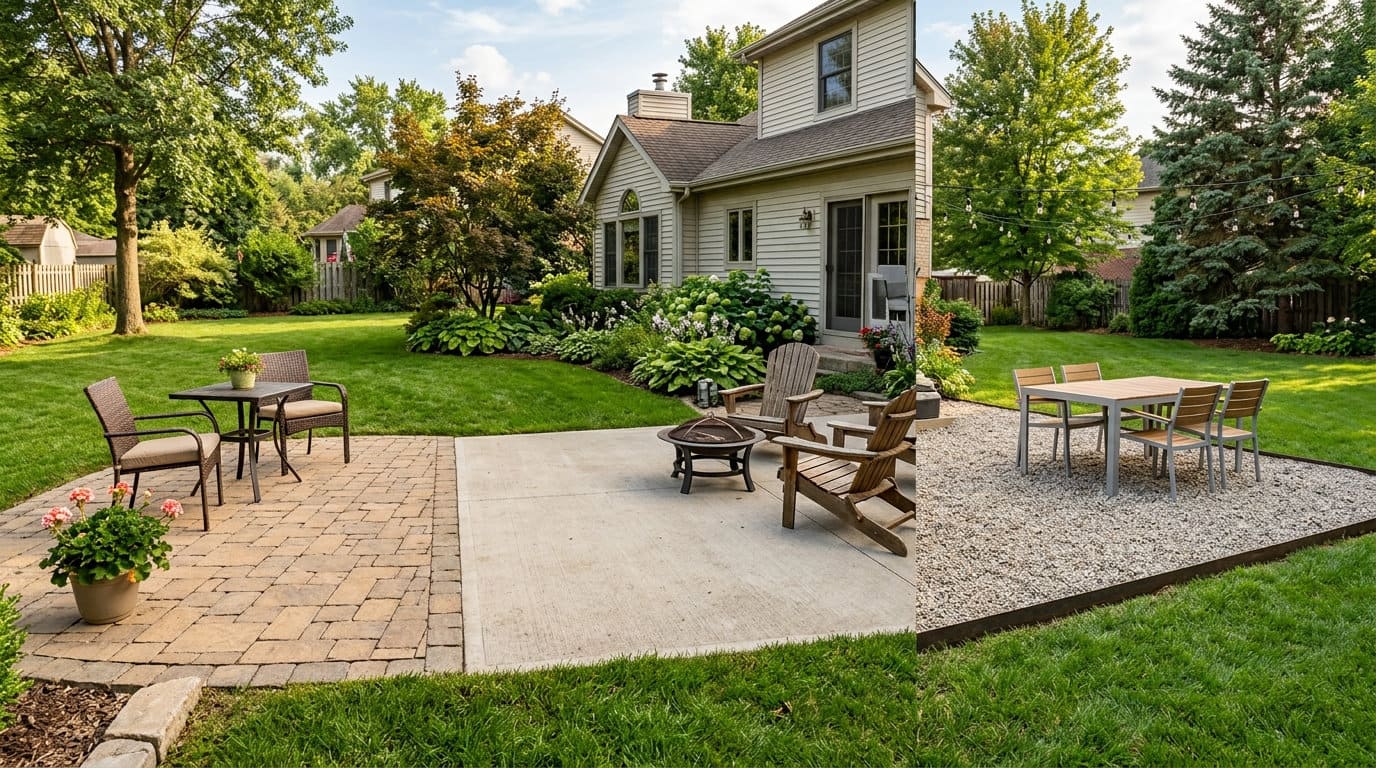
Stone landscaping in the front yard offers a timeless, low-maintenance, and highly versatile way to enhance curb appeal while adding structure and style. Stones can help you define spaces, guide the eye, and highlight your home’s architectural features. This approach also complements a wide range of plants, making it easy to personalize your front yard…

Never miss an update — choose FarmFoodFamily as your preferred source on Google.
How it works: Tap the button below to open Google’s settings page, then check the box next to FarmFoodFamily.
Tap the checkbox to turn it blue — that’s how you know it’s set.
Stone landscaping in the front yard offers a timeless, low-maintenance, and highly versatile way to enhance curb appeal while adding structure and style.
Stones can help you define spaces, guide the eye, and highlight your home’s architectural features.
This approach also complements a wide range of plants, making it easy to personalize your front yard while keeping it elegant.
These stone landscaping ideas for a front yard incorporate stone in ways that mulch or grass alone can’t achieve.
1. What actually keeps stone landscaping from sinking, cracking, or becoming a hazard
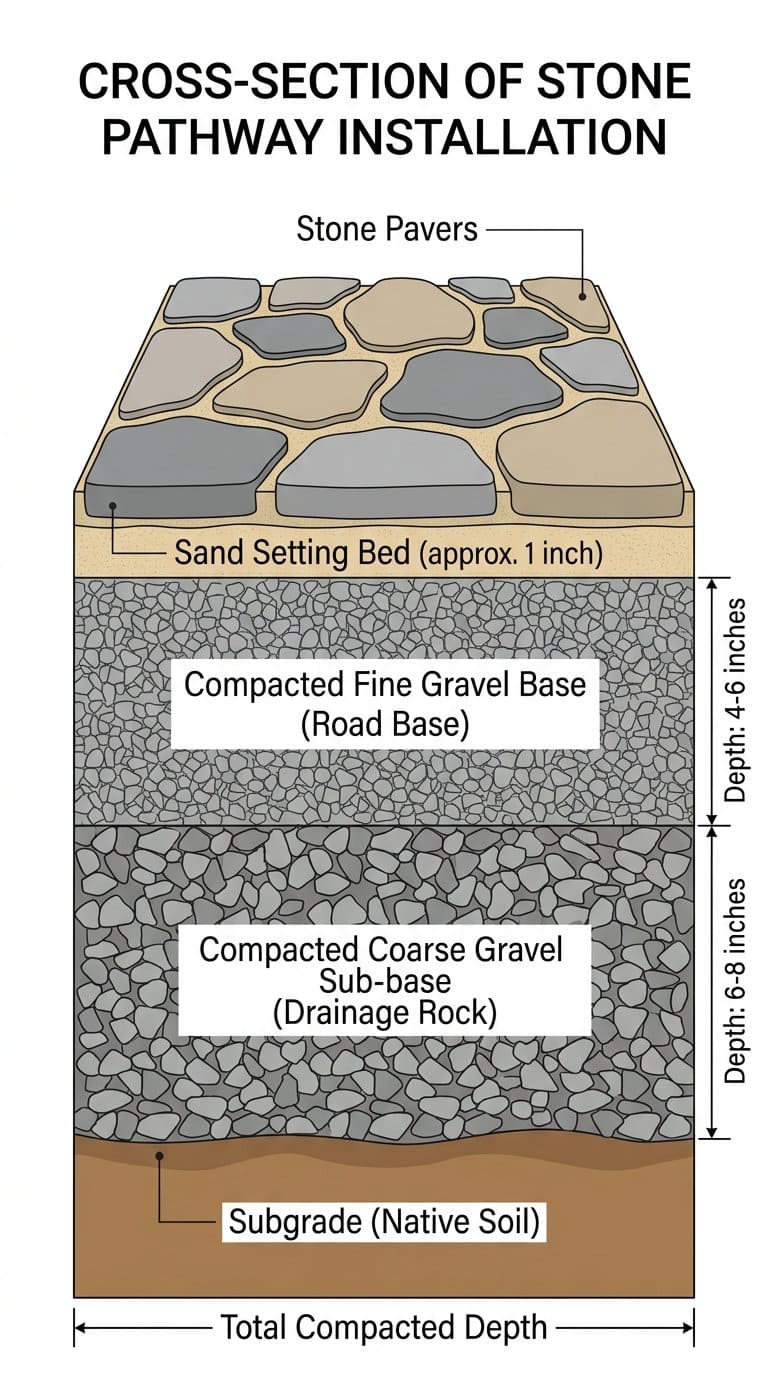
Start underground. Pathways need 3 to 4 inches of compacted gravel base, patios need 4 inches or more, and driveways need 6 to 8 inches, with a slope of roughly ¼ inch of fall per foot so water actually runs off instead of pooling. This isn’t an optional upgrade.
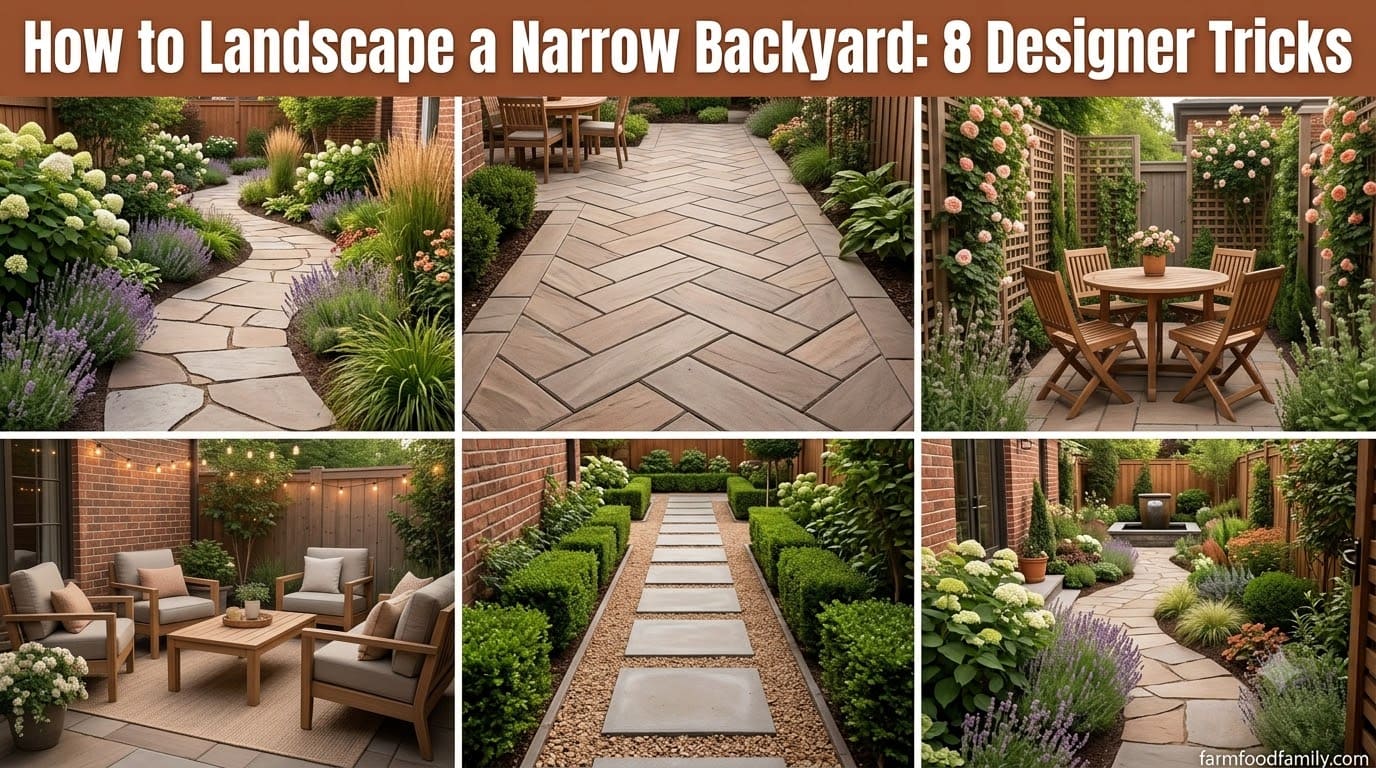
A real, extremely common DIY complaint on landscaping forums confirms exactly what happens when it’s skipped: stones sink into soft or uncompacted subgrade within a few years, and the fix people land on is the same one every time, pull the stones up, add stone dust or crushed gravel instead of sand, and compact it properly before relaying anything.
Answer 4 quick questions and get matched to the exact fix for your yard — drainage, budget, layout, or something else entirely.
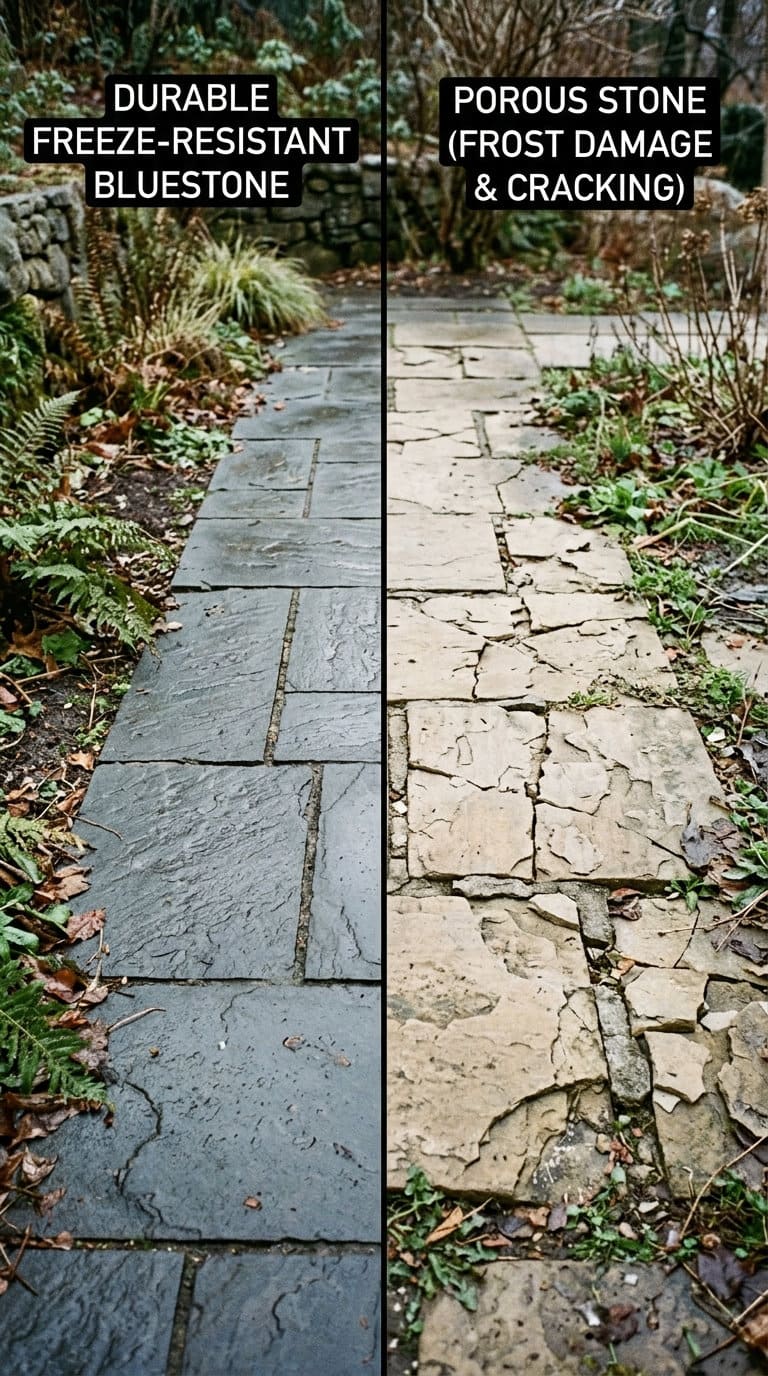
Take the Free QuizNot all stone holds up the same in every climate. Porous stone, cheaper sandstone especially, absorbs water that then freezes and expands, cracking the stone from the inside over repeated freeze-thaw cycles, while bluestone, quartzite, and granite hold up far better in cold climates. If you’re in a freeze-thaw region, that’s worth checking before you fall in love with a soft, porous stone in a showroom.
On cost, a dry-laid flagstone patio runs roughly $15 to $32 per square foot all-in, mortar-set jumps to $20 to $42, and concrete-set runs $23 to $45, with the compacted gravel base itself adding $2 to $5 per square foot. Material alone for flagstone runs about $2 to $6 per square foot depending on type and how far it has to travel.
Two of the ideas below carry real stakes beyond looks. On retaining walls, most jurisdictions exempt walls under 3 feet from needing a permit, some allow up to 4 feet, and anything taller, or any wall holding back water, a structure, or unstable soil, typically needs a licensed engineer’s stamped plans.
The real cause of wall failure is usually water pressure building up behind the wall, not the wall’s mass, so proper drainage (gravel backfill plus a perforated drain pipe near the footing) matters more than how thick or heavy the wall is.
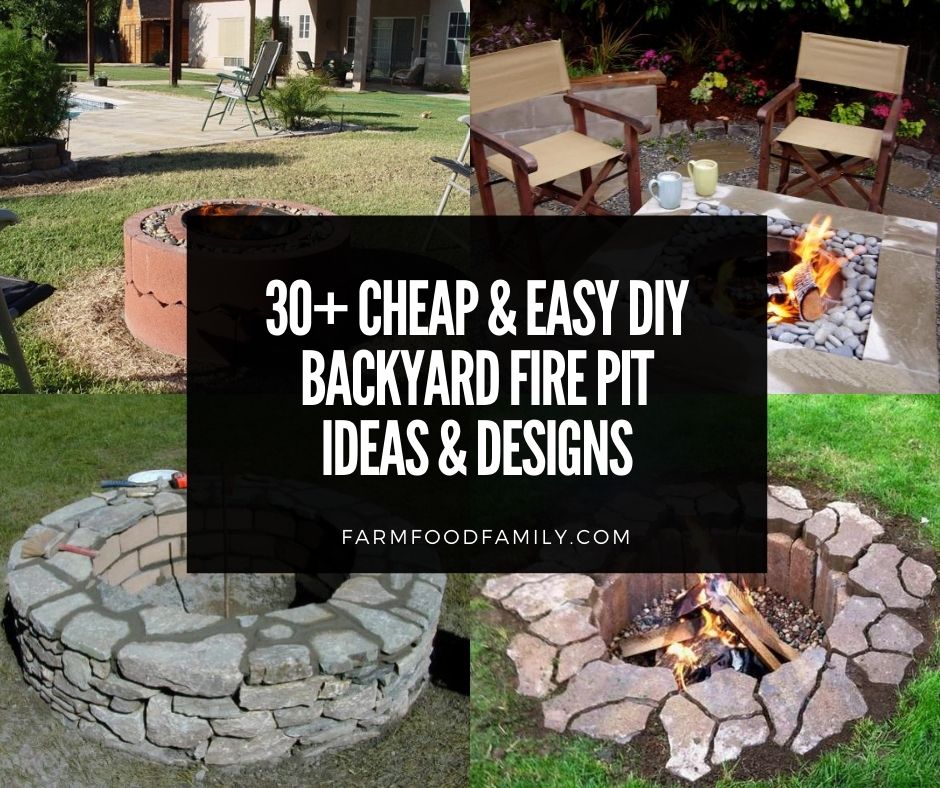
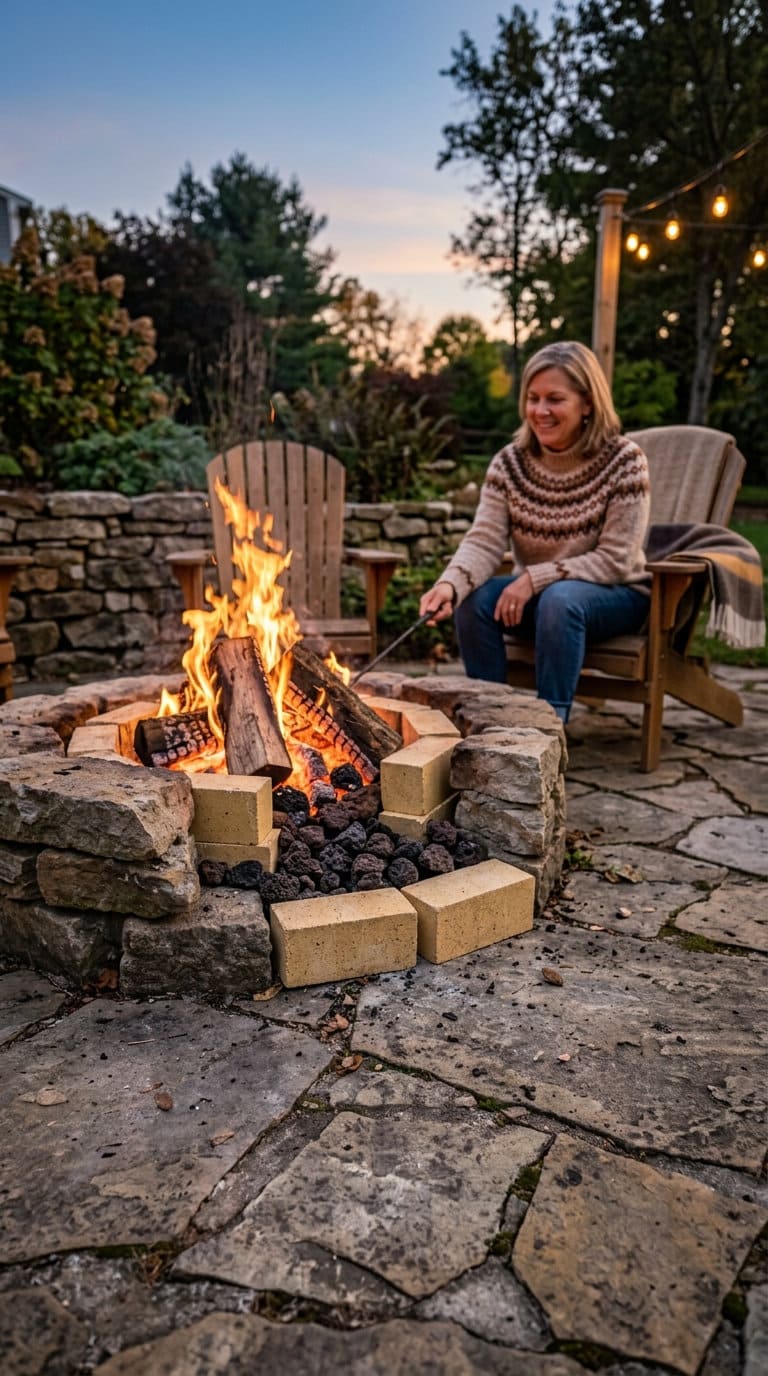
On fire pits, never use river rock, creek stone, sandstone, limestone, or bluestone as the liner or base, since these stones trap moisture in internal voids you can’t see from the outside, and when that trapped water heats up it flashes to steam and can crack or violently explode the stone, throwing hot fragments.
This isn’t a rare fluke, it’s a well-documented, frequently reported hazard among people who’ve tried it. Fire brick, lava rock, and fire-rated pavers are the safe choices for anything touching direct flame; river rock is fine only as decorative surround well outside the fire zone.
One more thing worth knowing if you care where your stone comes from: locally sourced stone is a genuinely sustainable material choice, according to landscape architect Falon Mihalic, PLA, founder of Falon Land Studio: “Local stone lasts a lifetime. You will not have to send it to a landfill ever, because it can be reused again and again.” It’s also usually cheaper once you factor in transport distance.
Most yard problems trace back to one specific, fixable cause. Find yours in 4 quick questions.
Take the Free QuizWith the ground rules covered, here are 19 ways to actually use stone in a front yard.
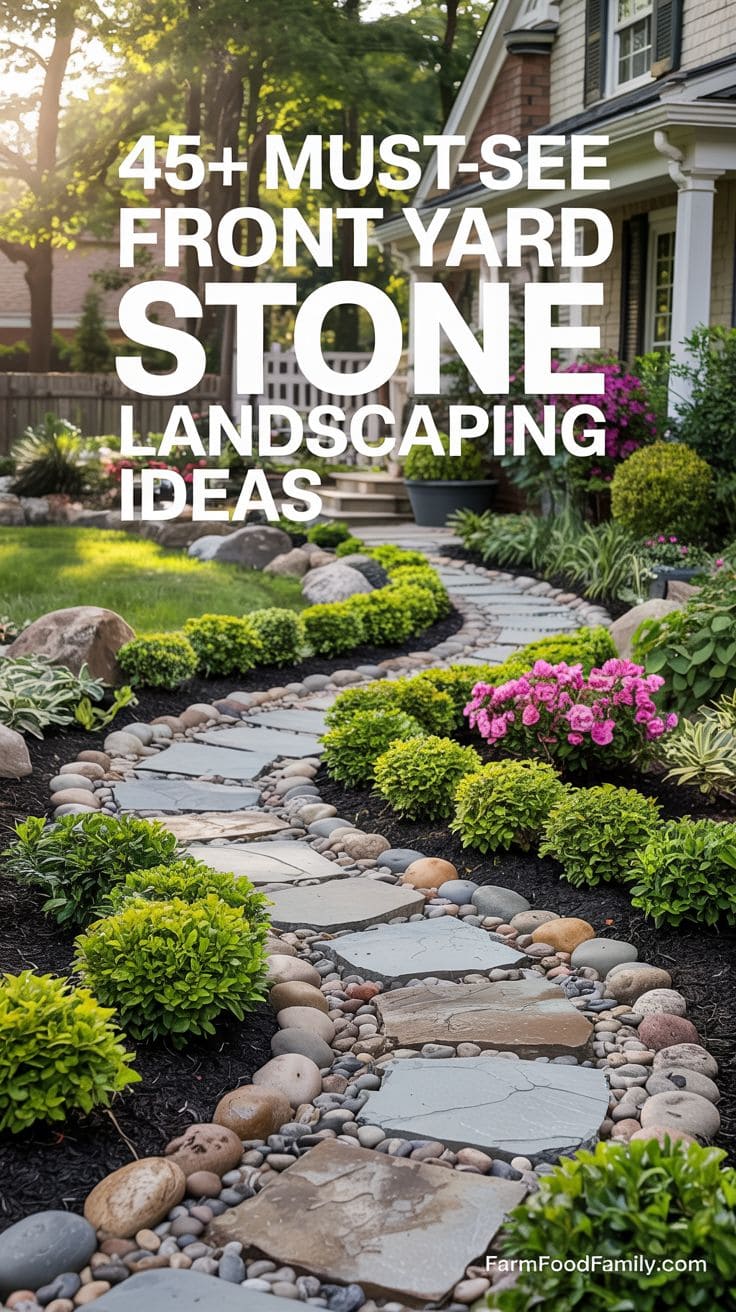
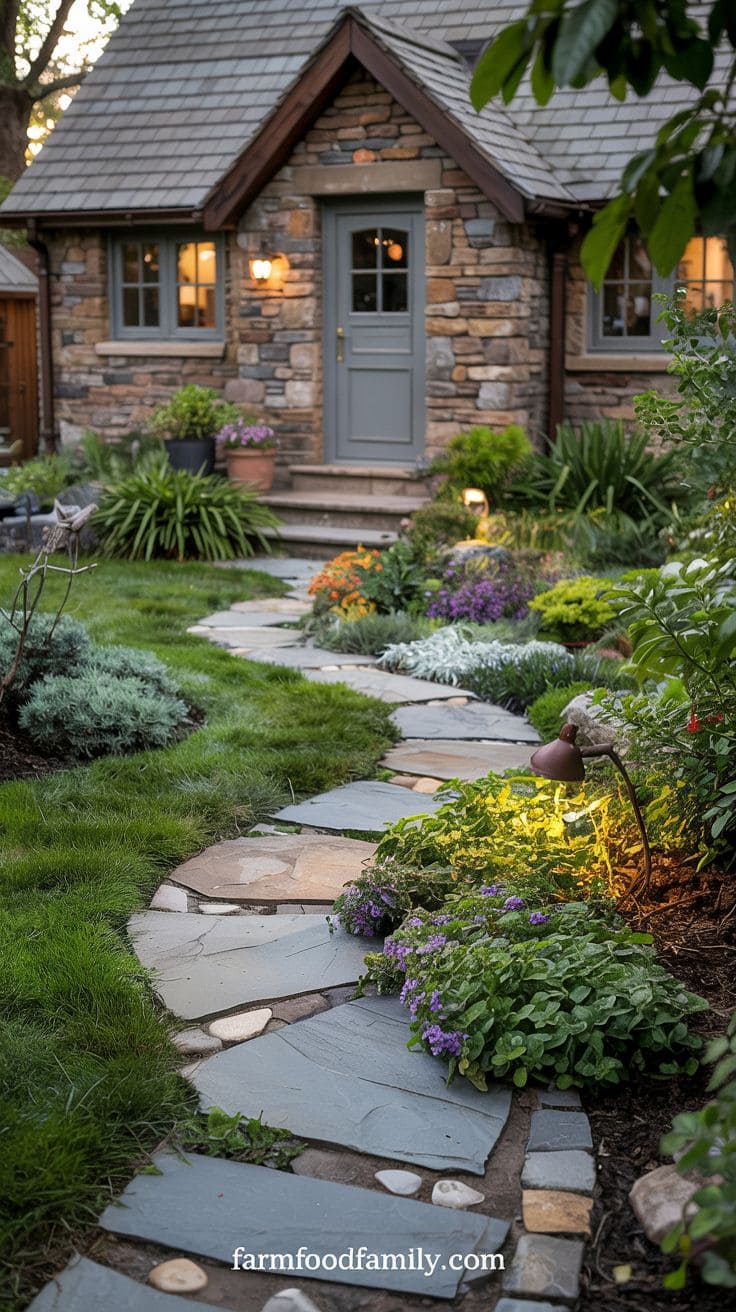
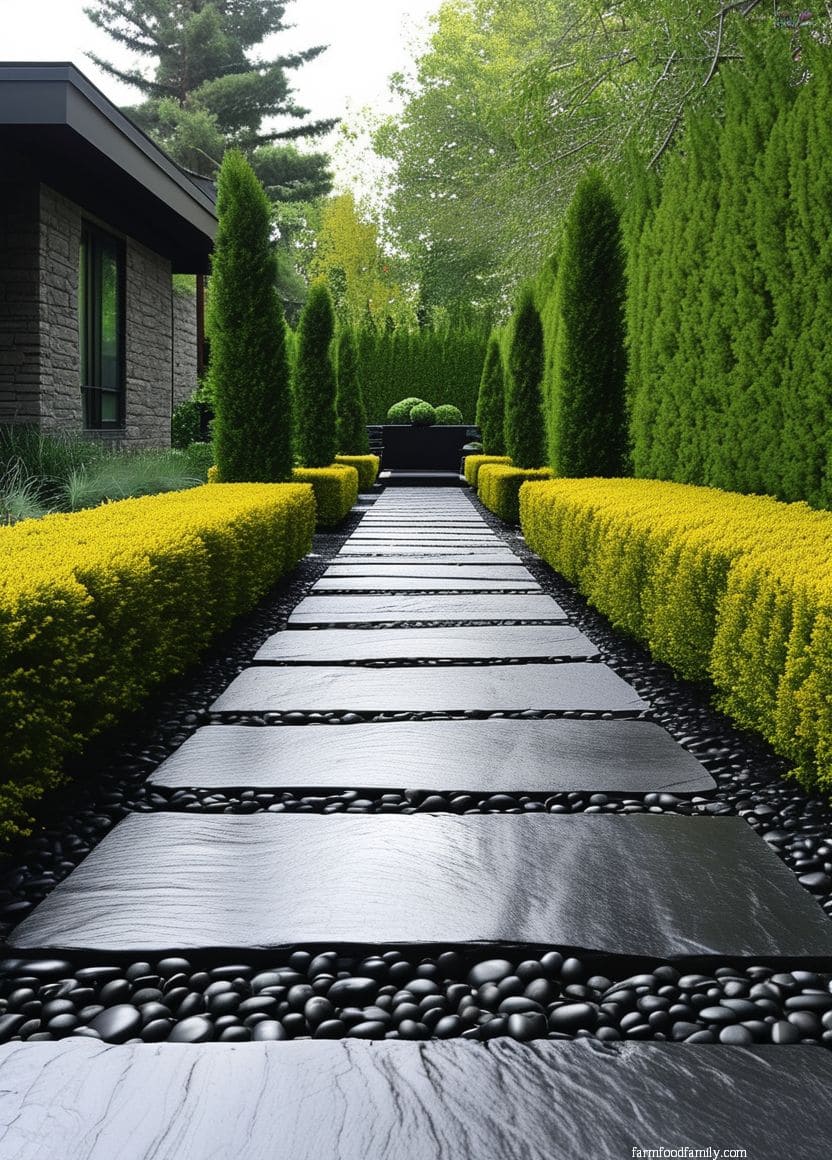
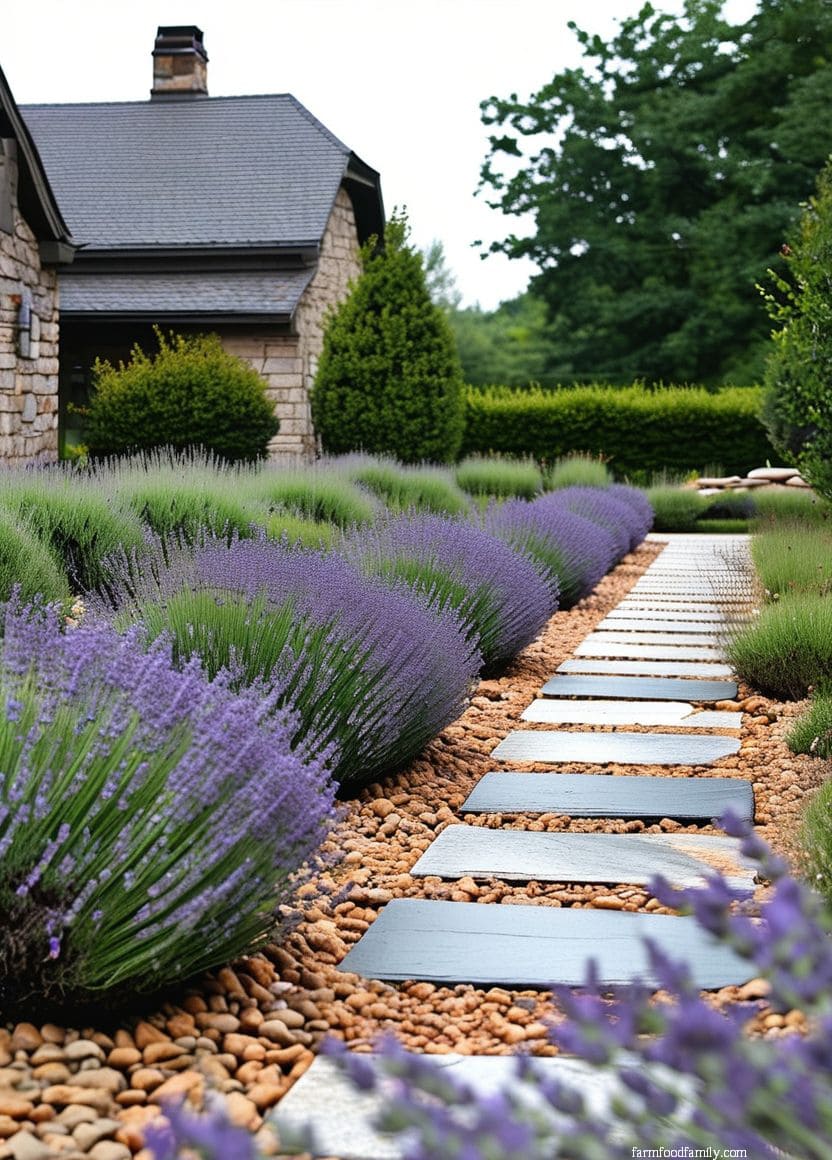
2. Stone Path Leading to the Front Door
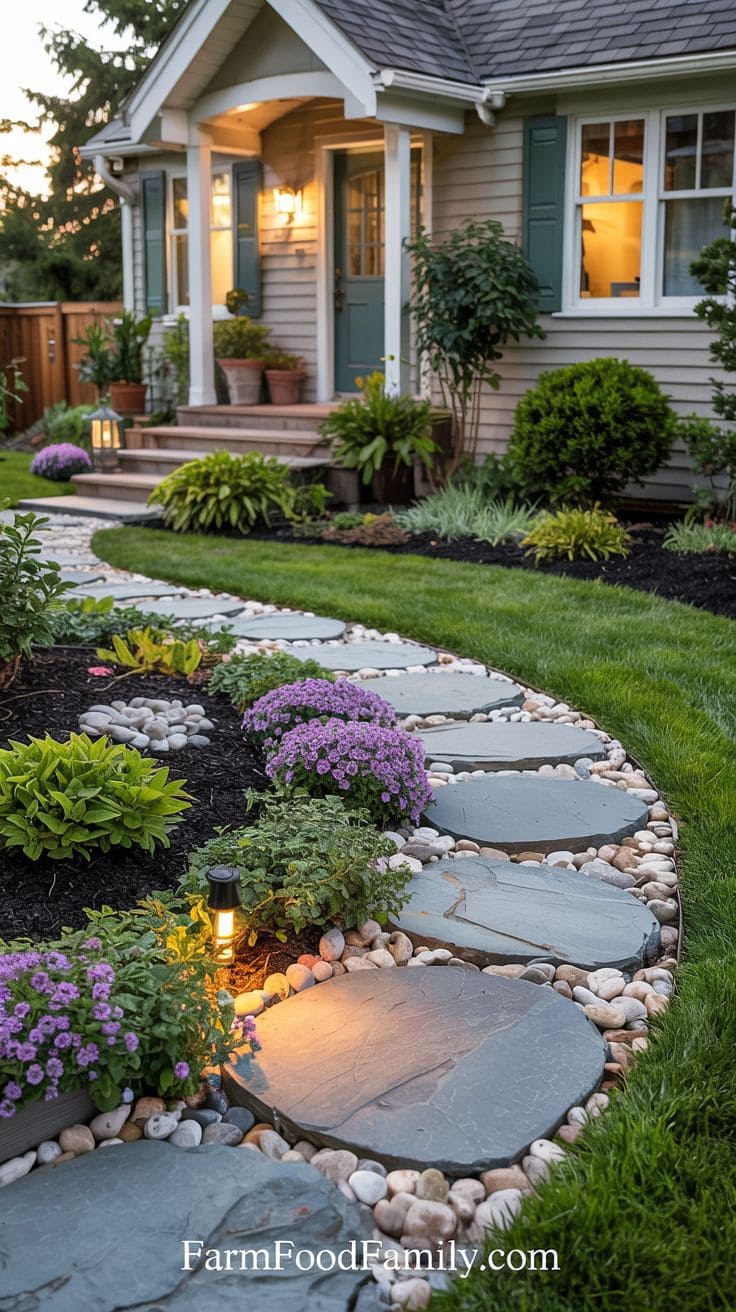
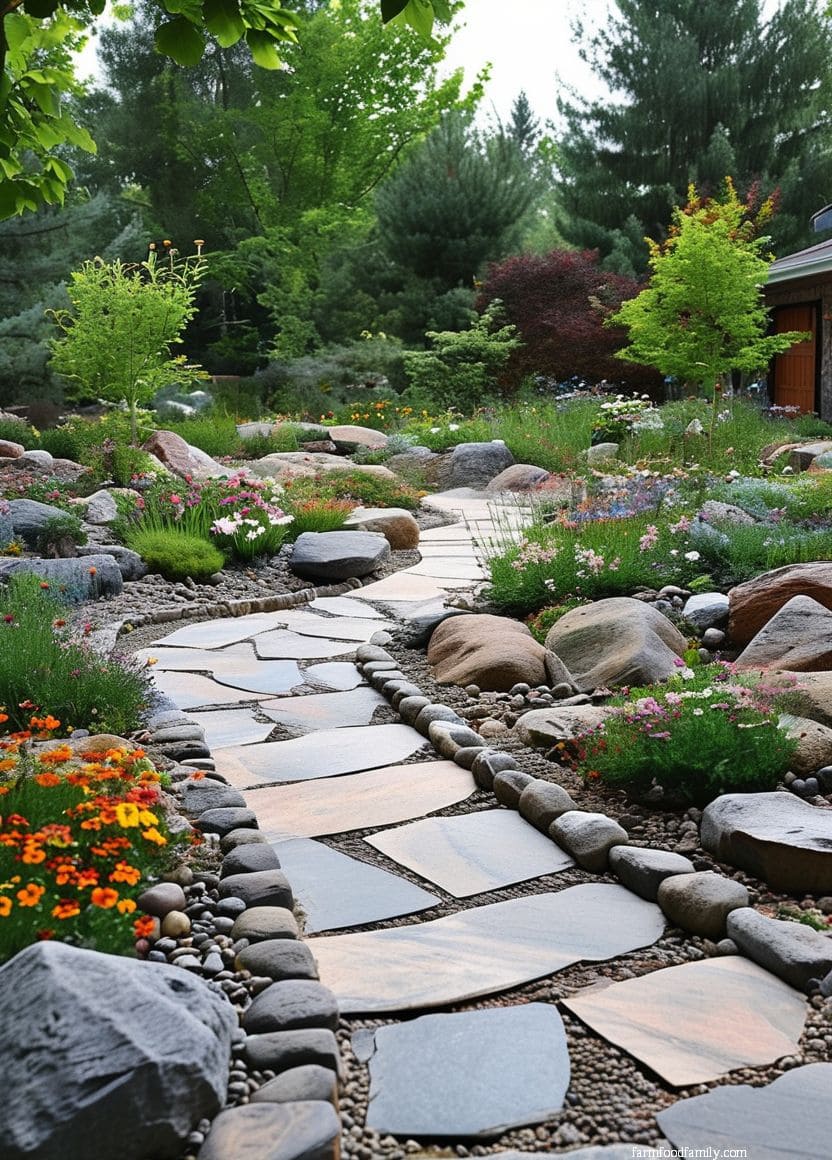
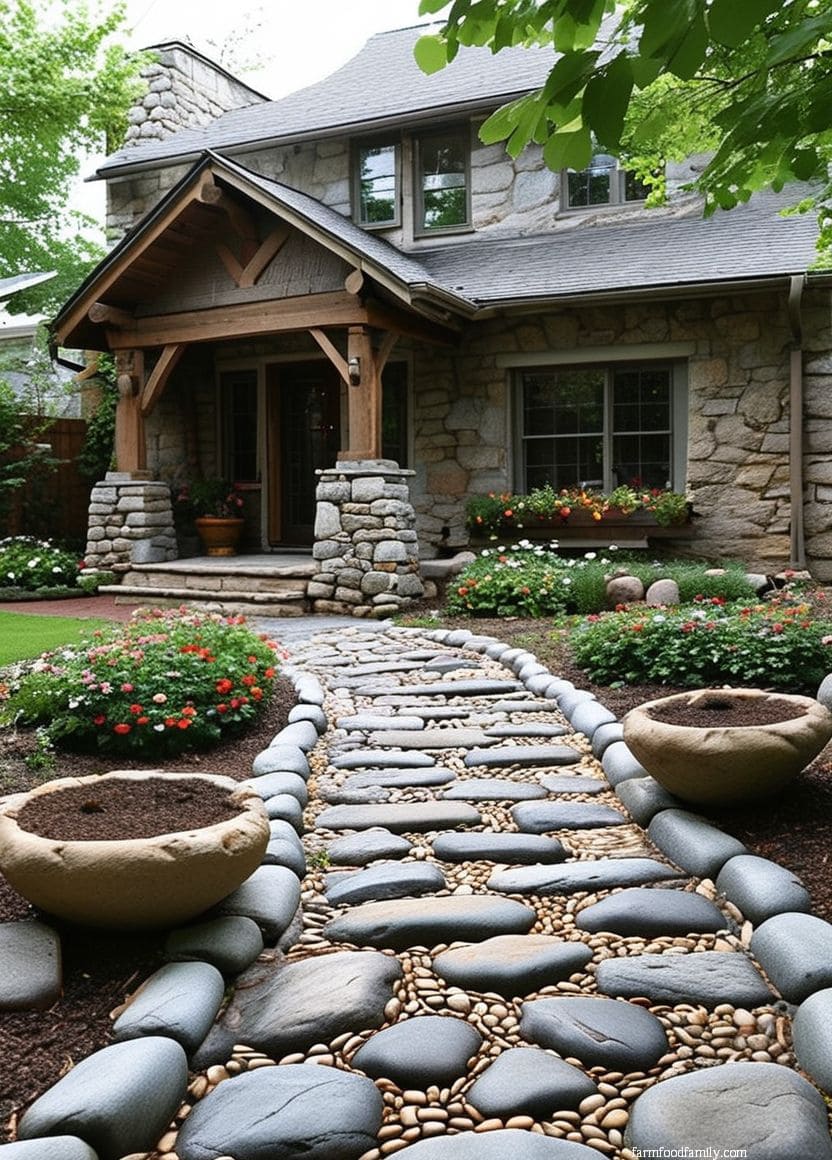
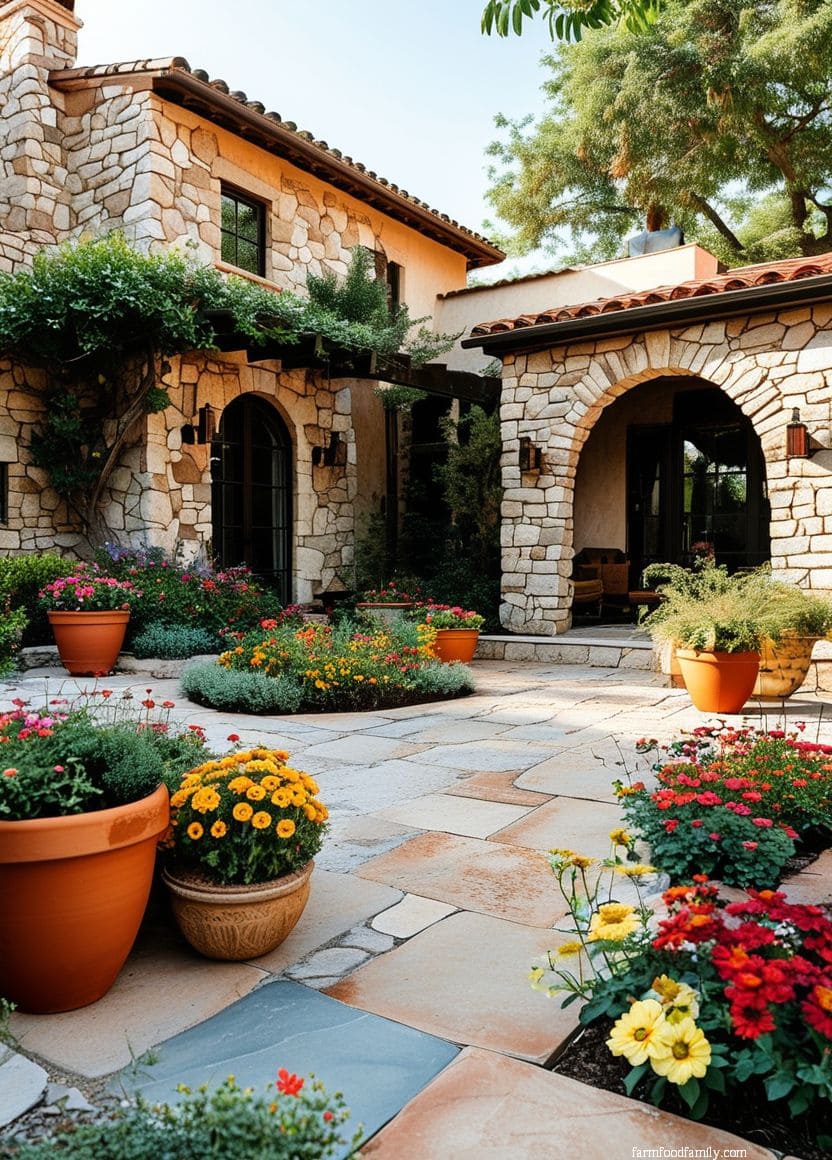
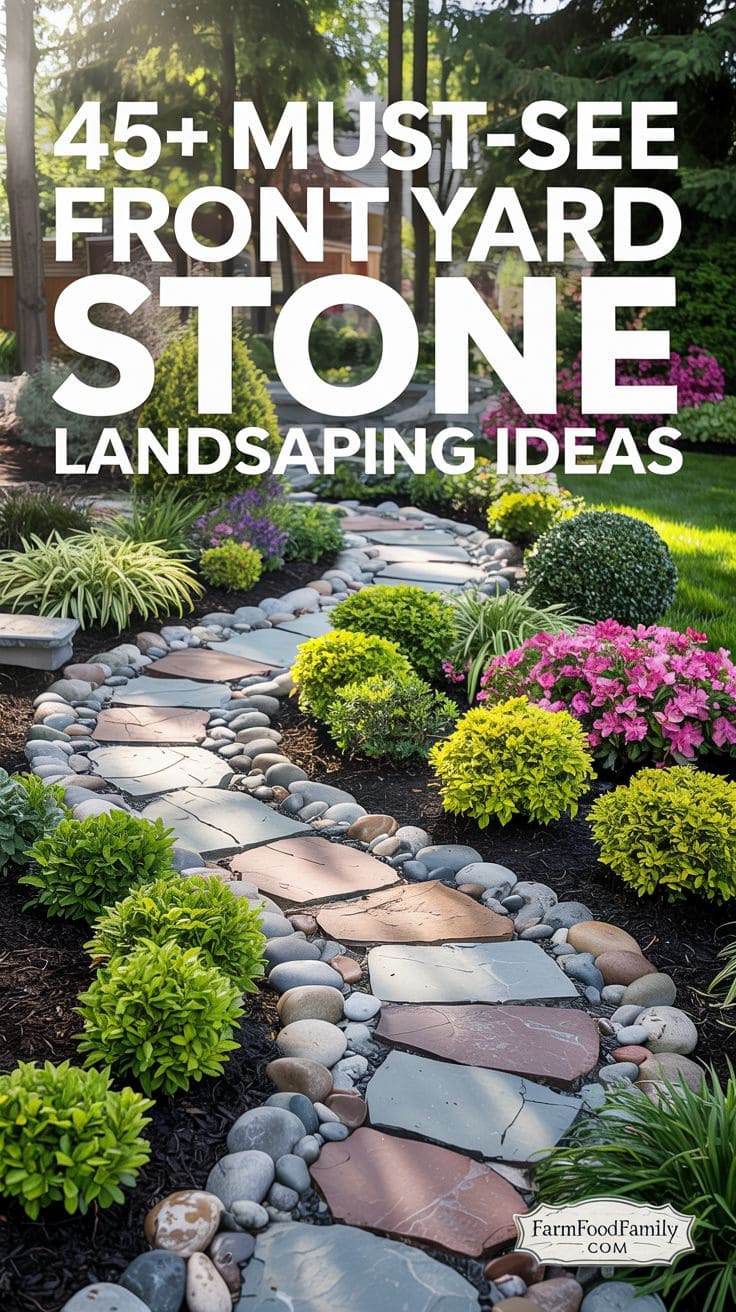
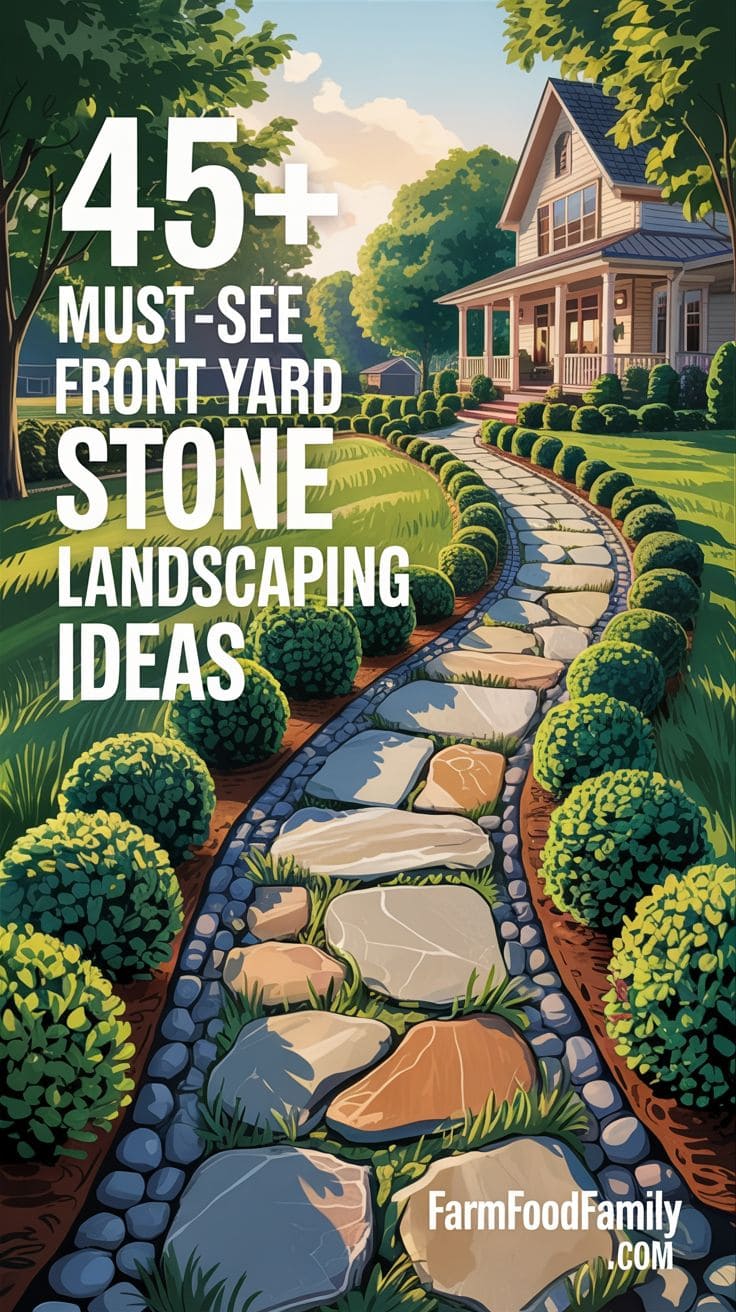
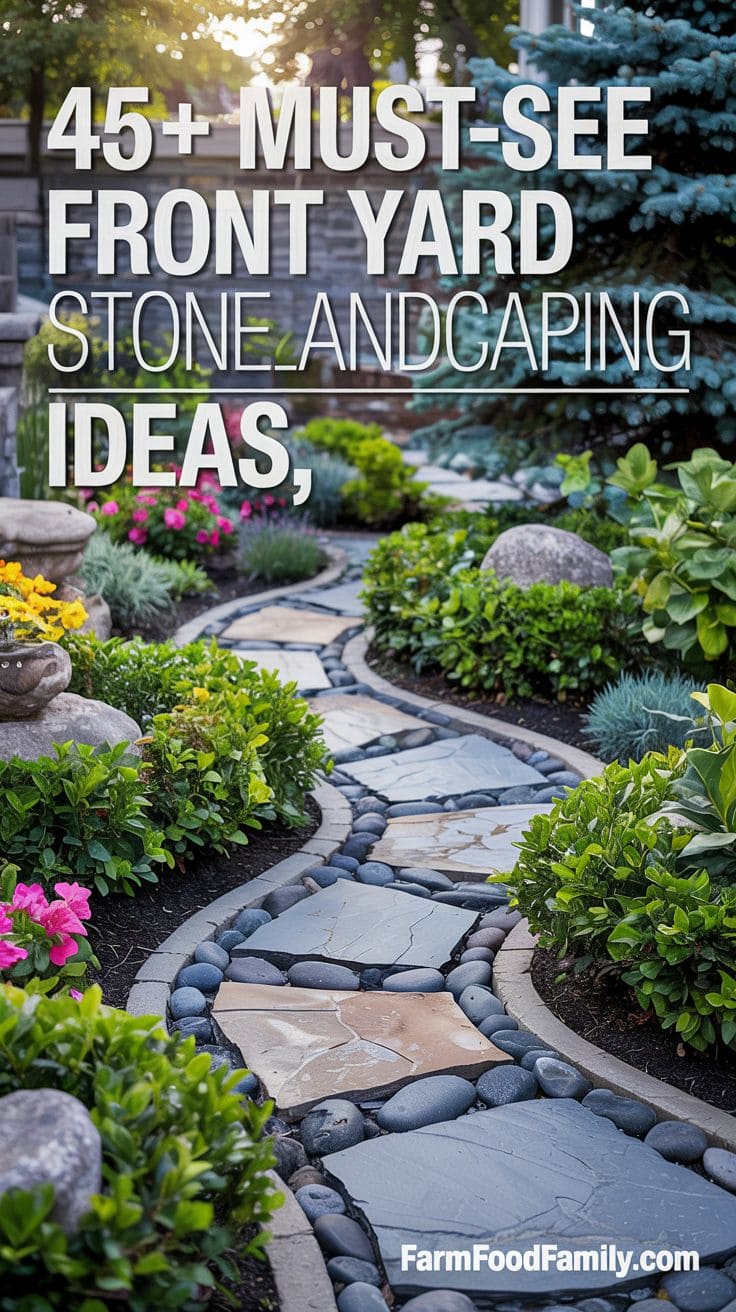
A stone pathway directs attention to your entryway and creates a grounded, inviting atmosphere. Use natural flagstone or cut pavers in a soft, neutral color scheme to fit in with your home’s facade.
Allow the walkway to softly curve rather than running directly straight, as this softens the appearance and adds visual appeal.
Edging the sides with small pebbles or groundcovers such as creeping thyme adds texture and greenery.
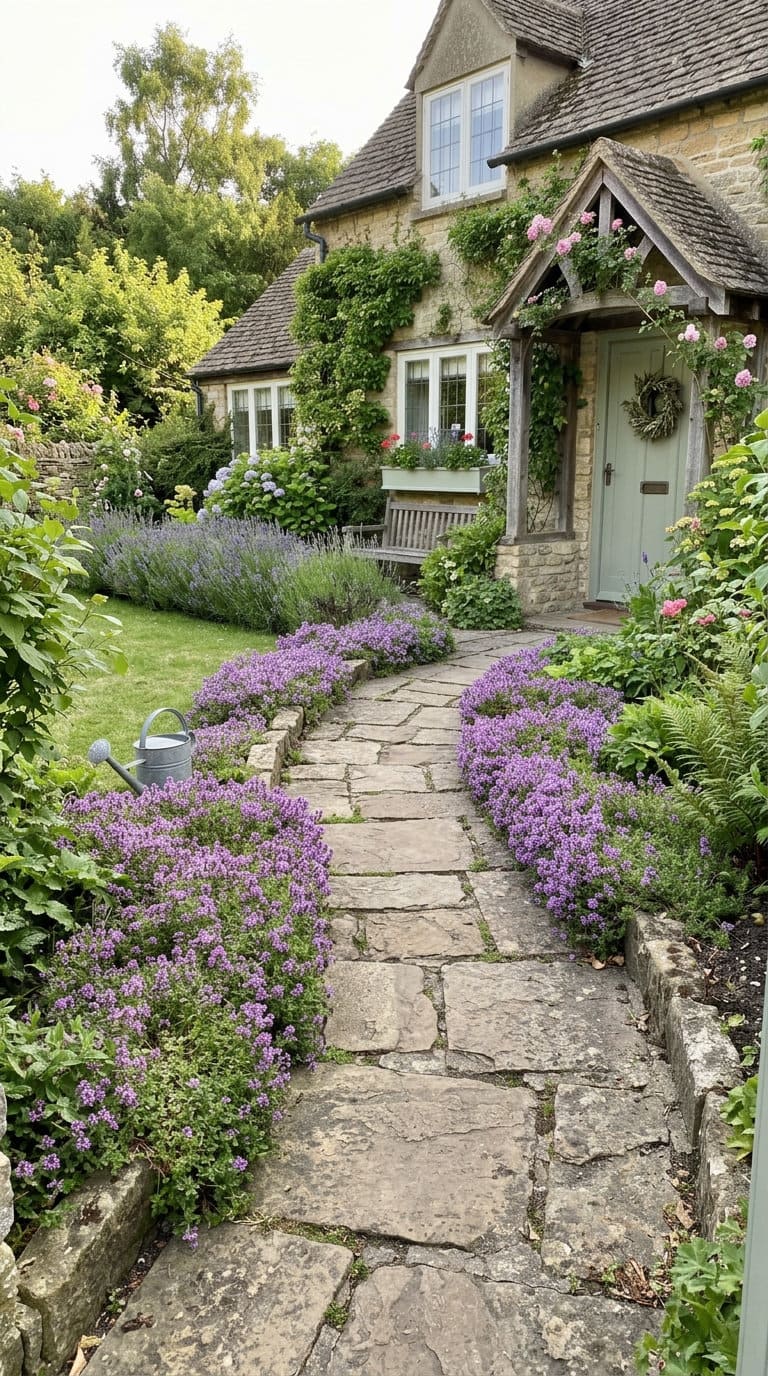
To avoid a sterile appearance, choose stones with minor variations in tone.
A well-laid path seems purposeful and welcoming, directing visitors while anchoring your environment with a strong, useful design element.
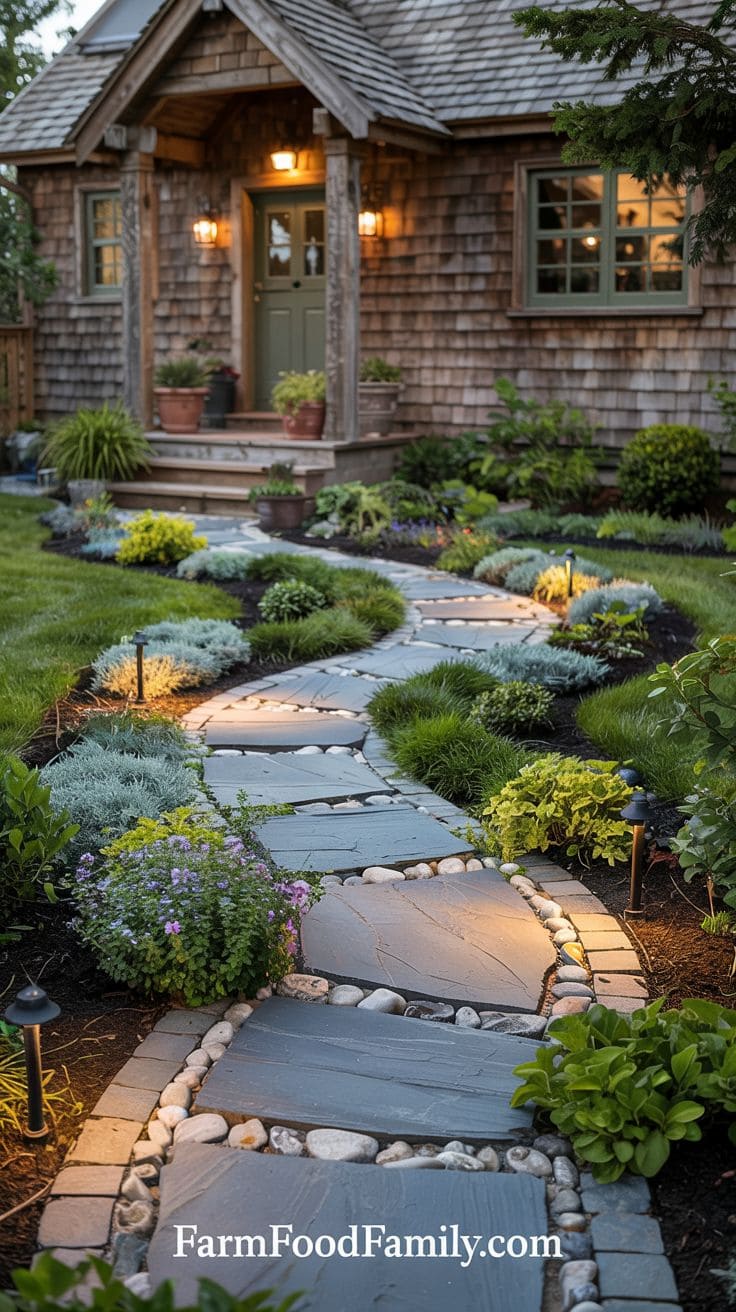
3. Stone Border Beds with Clean Edges
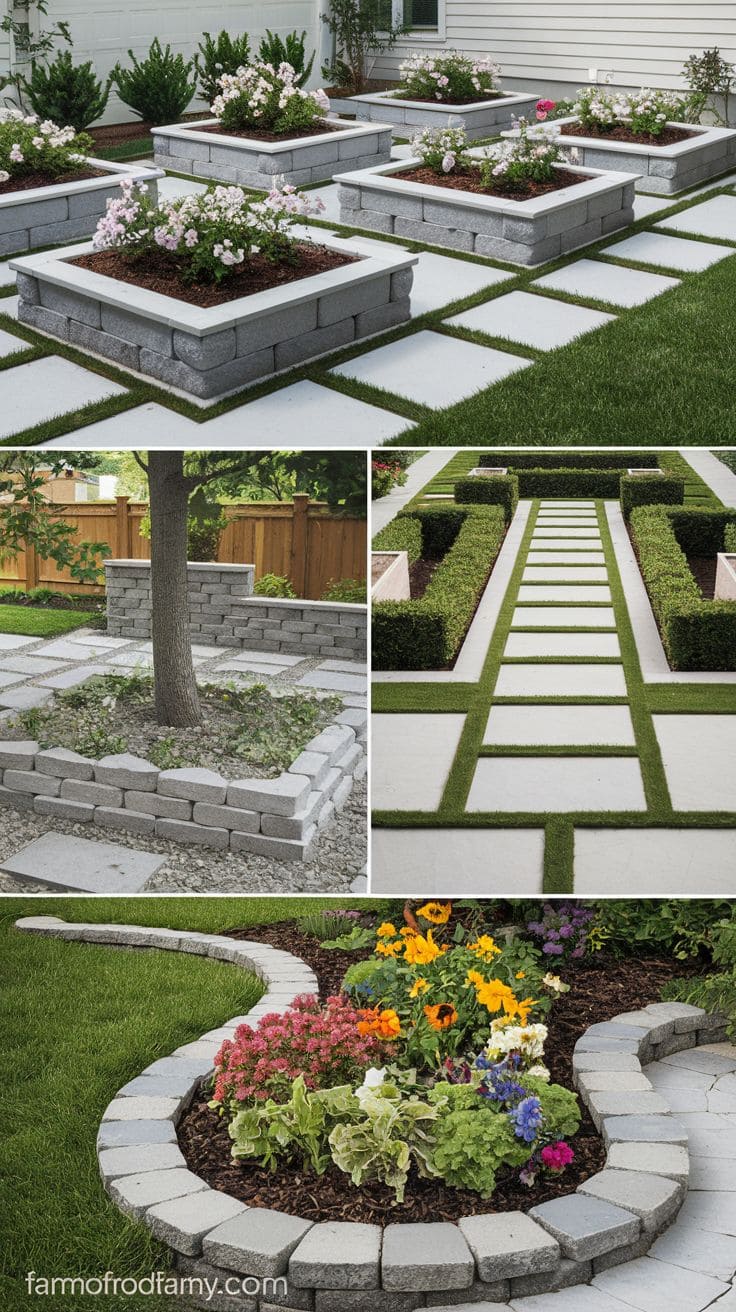
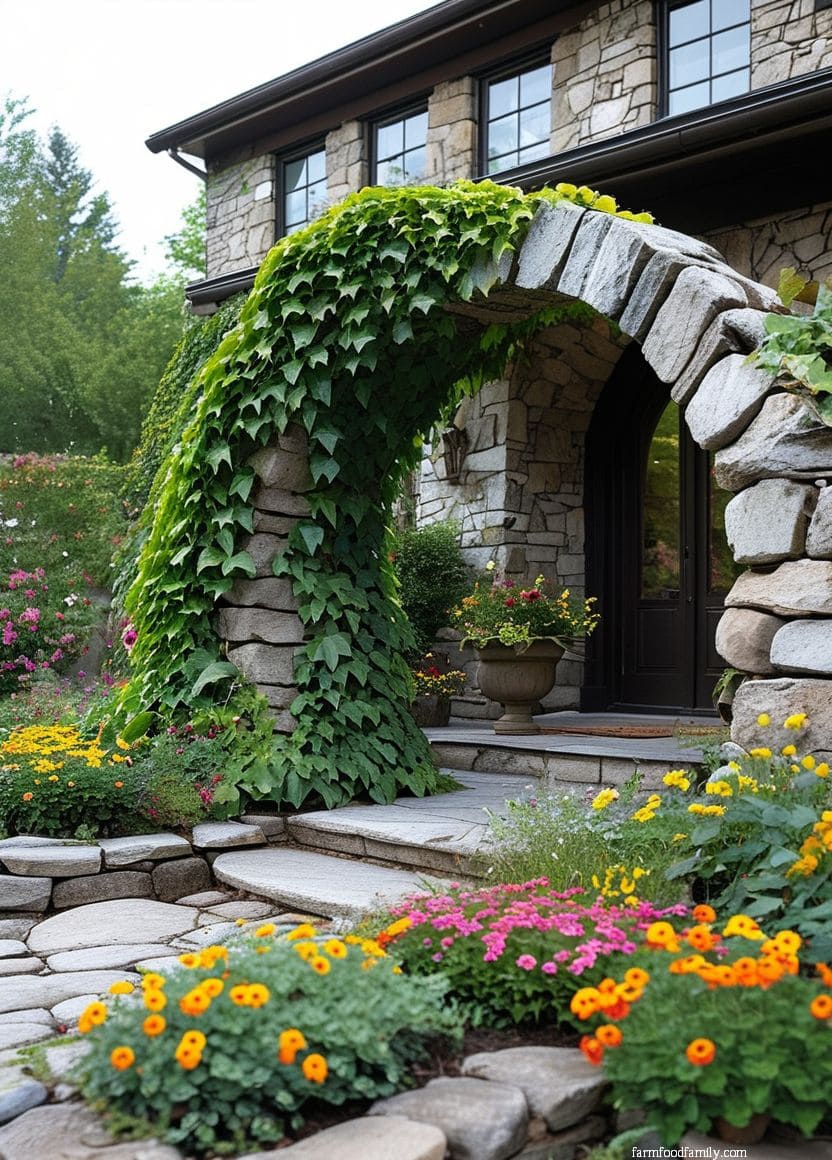
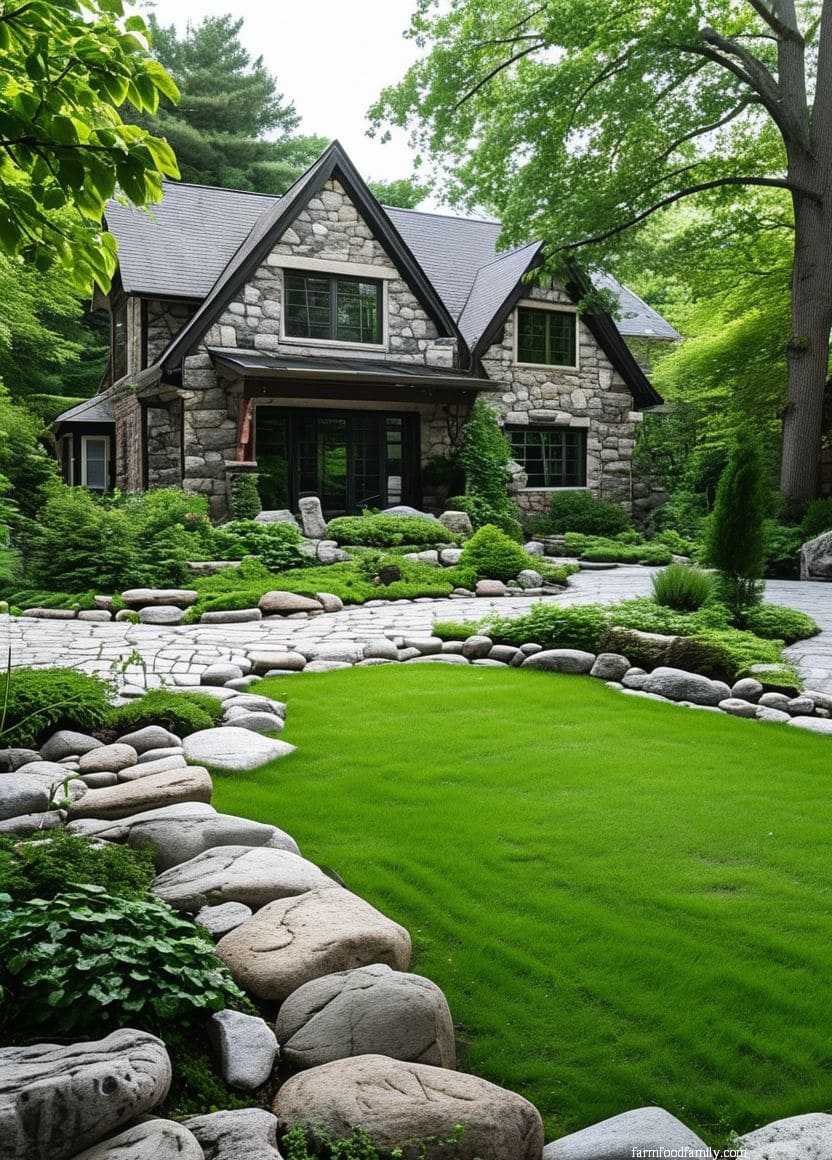
Using stone blocks or piled stones to create neat, well-defined boundaries quickly improves the appearance of your front yard. Frame planting beds, trees, and shrubs with granite cobbles, limestone bricks, or tumbled concrete pavers.
The contrast between soft vegetation and strong stone highlights each feature, especially when you stack textures by incorporating fine gravel mulch into the beds.

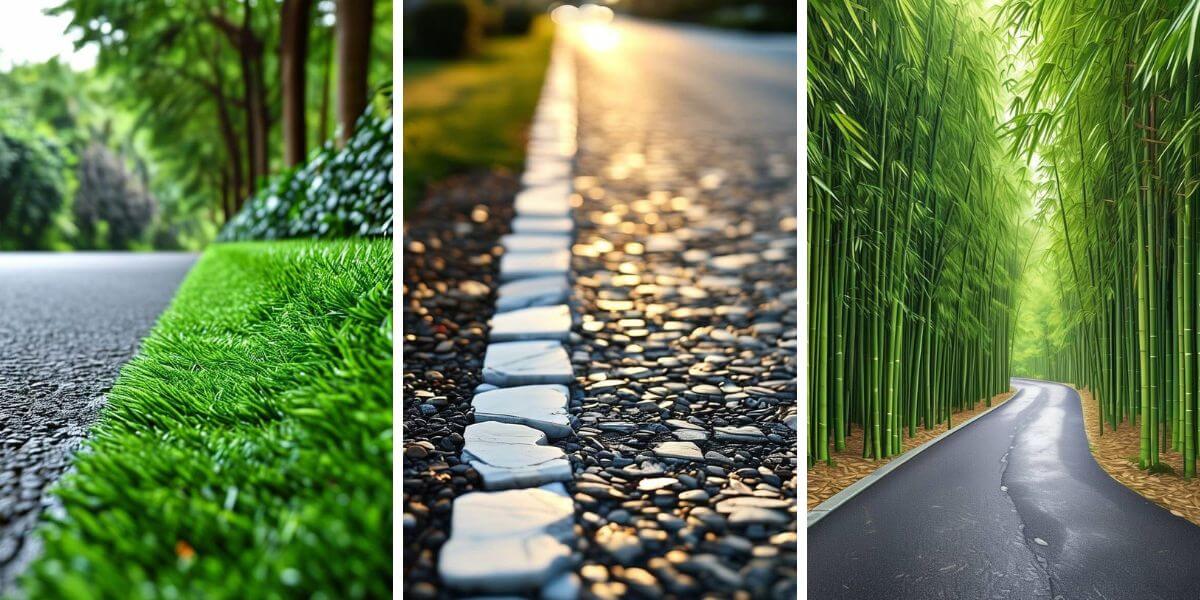
You can choose between a more natural, stacked-stone style and mortared, symmetrical stones for a more formal sense.
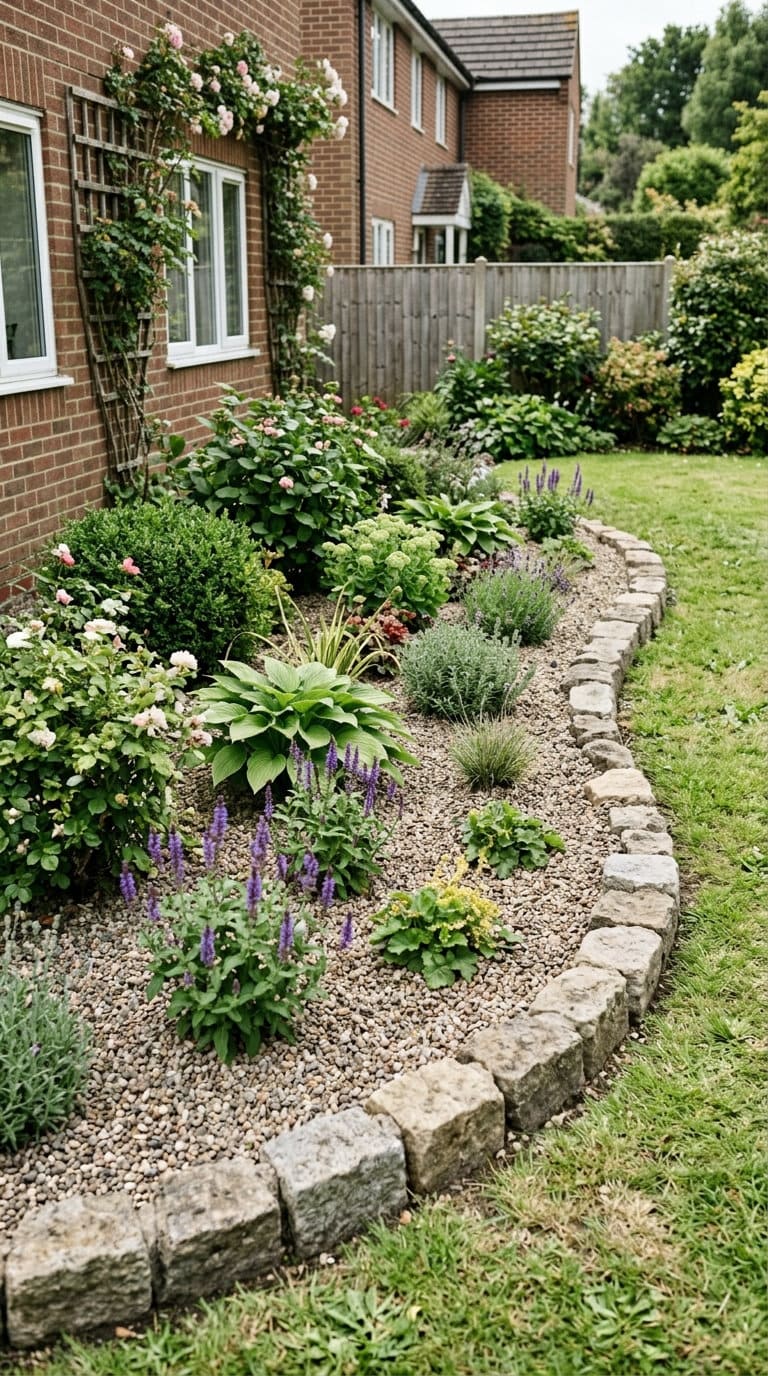
This simple addition artistically organizes your landscape while also simplifying upkeep by keeping mulch and plants contained.
4. Gravel or Crushed Stone Ground Cover
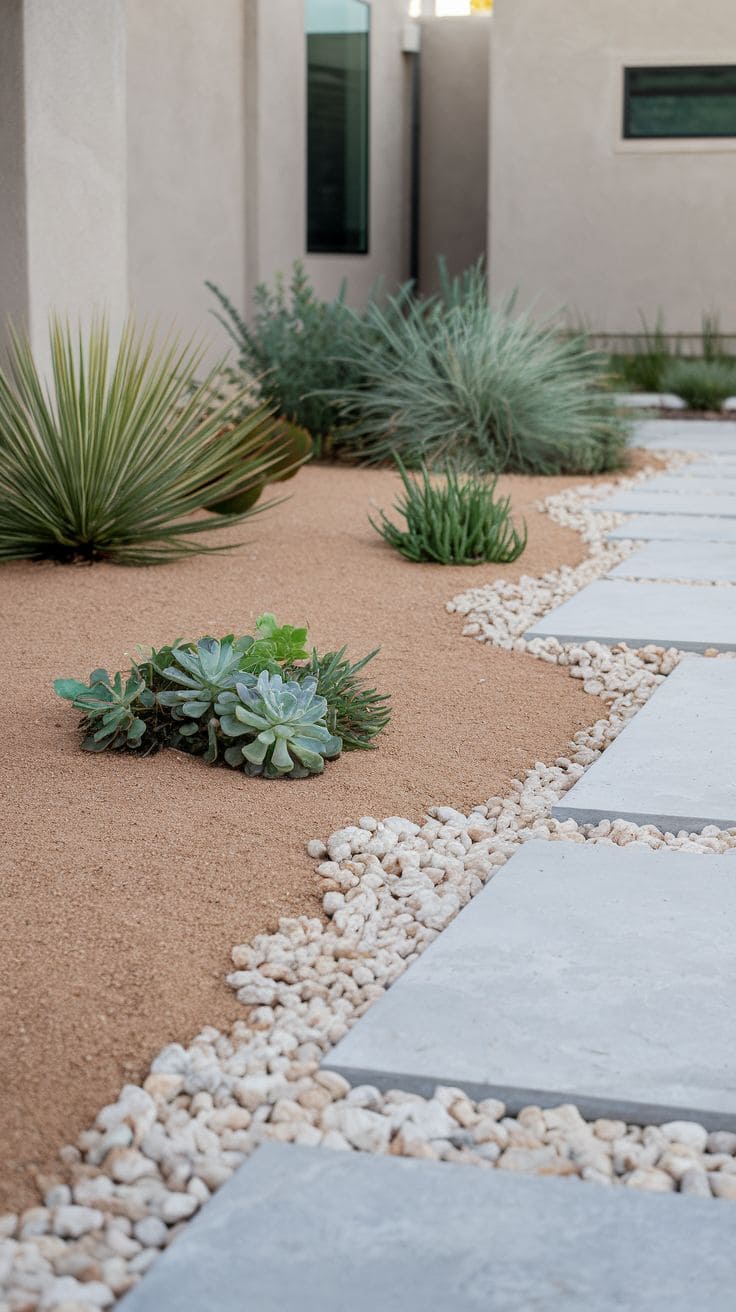
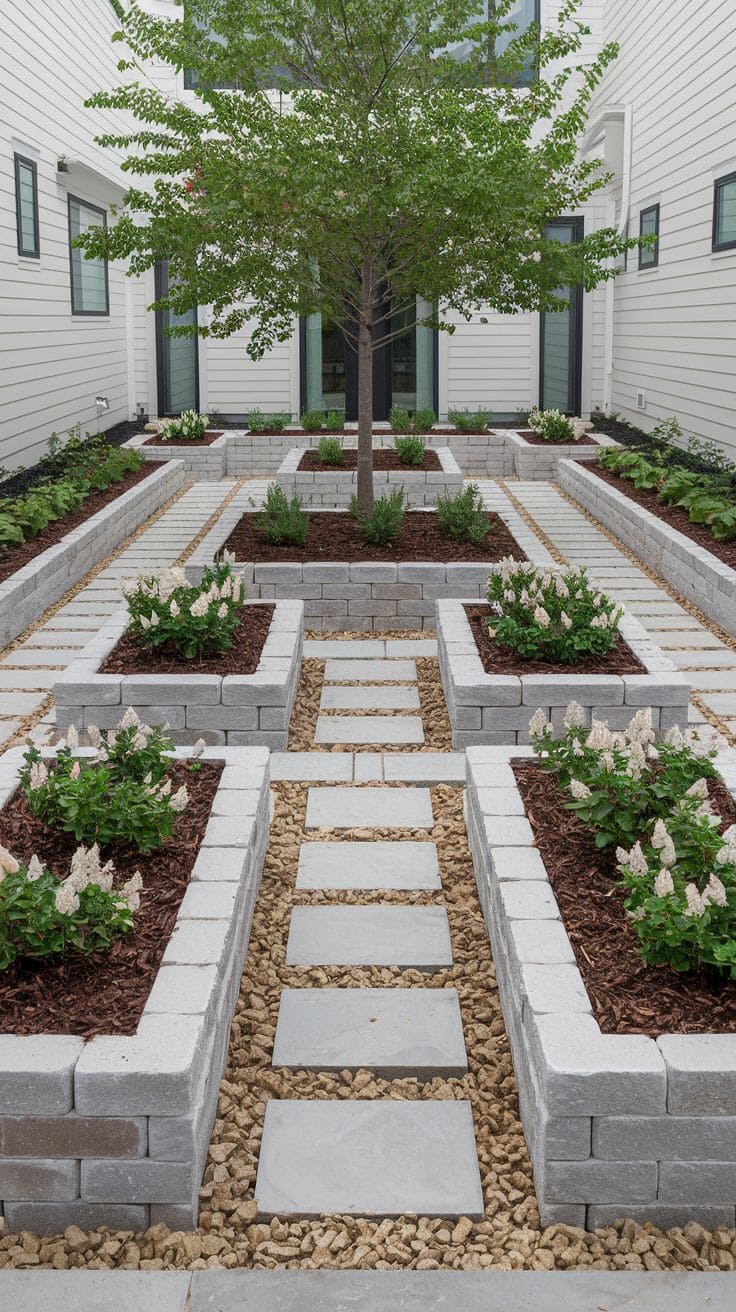
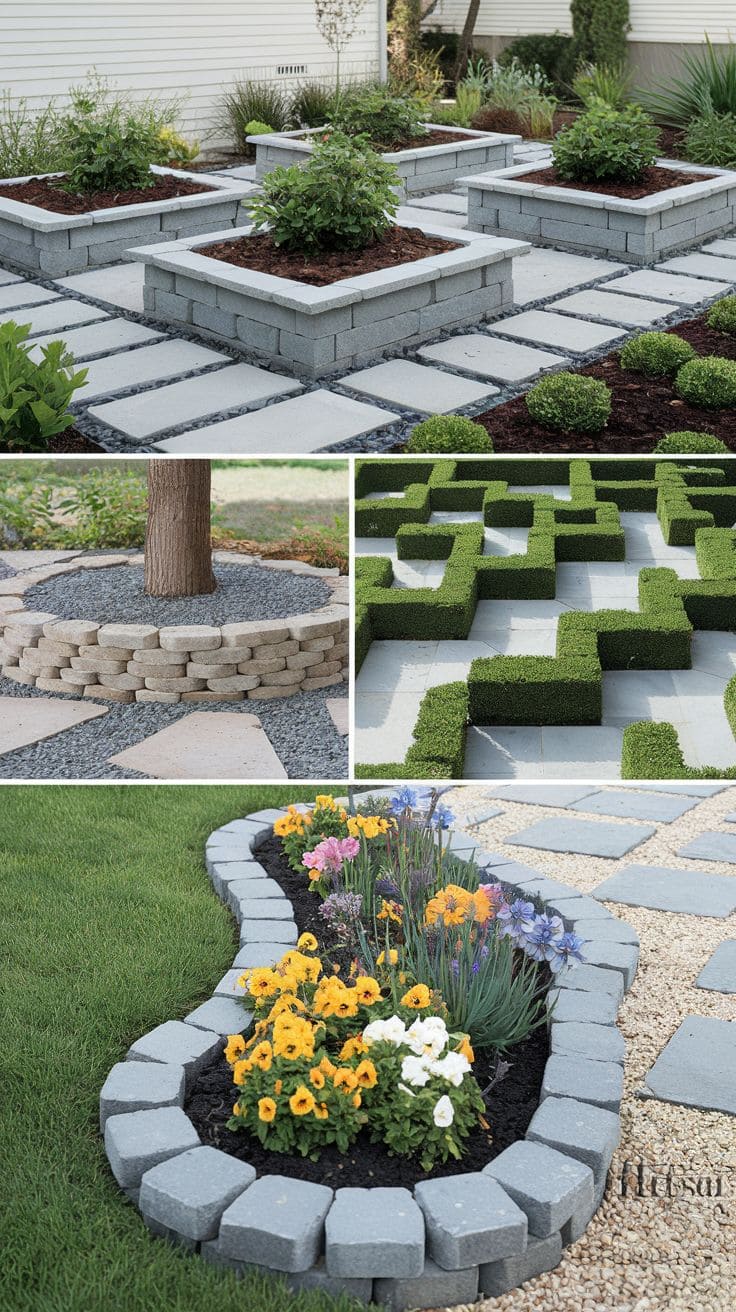
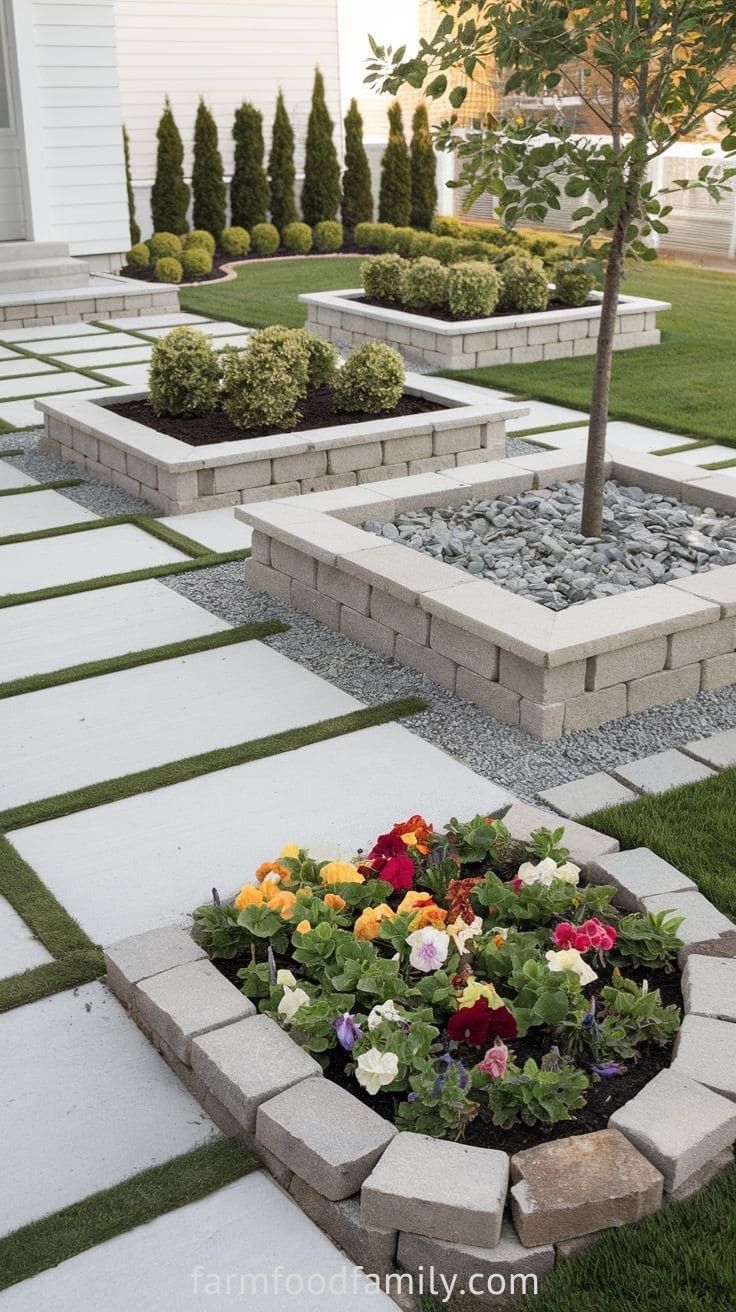
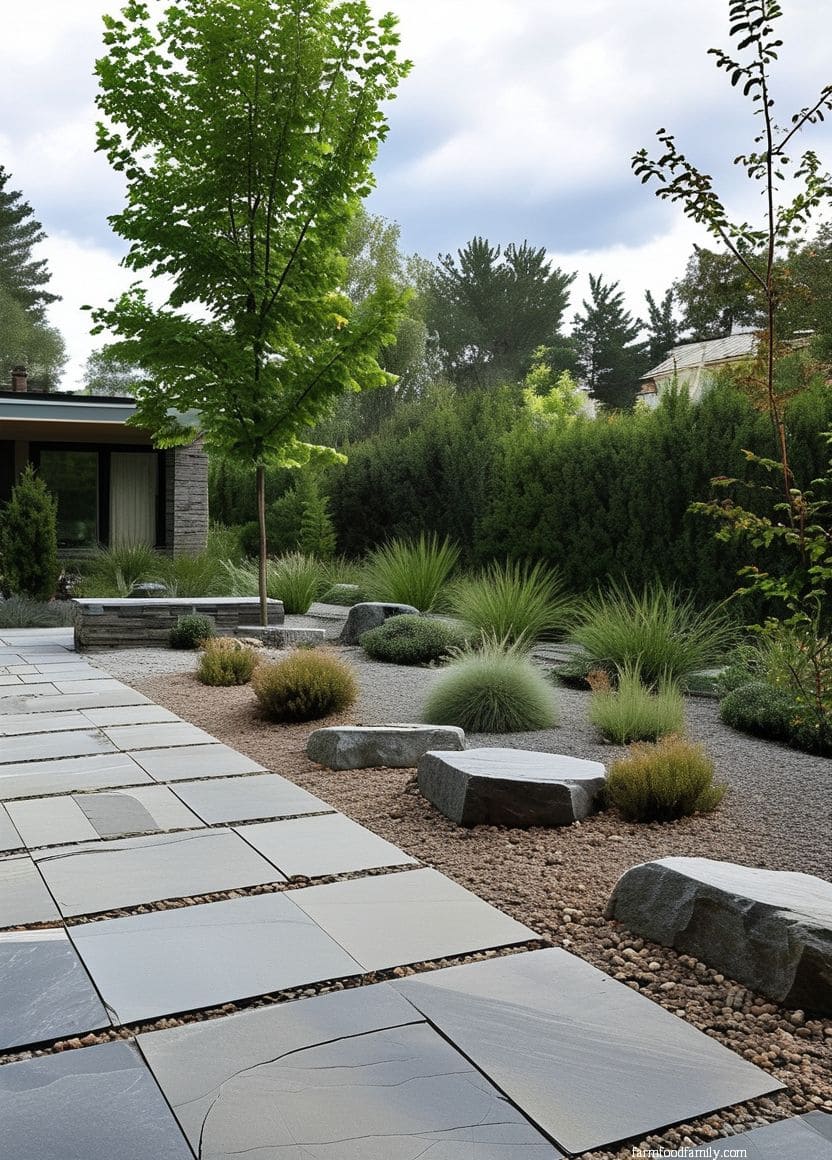
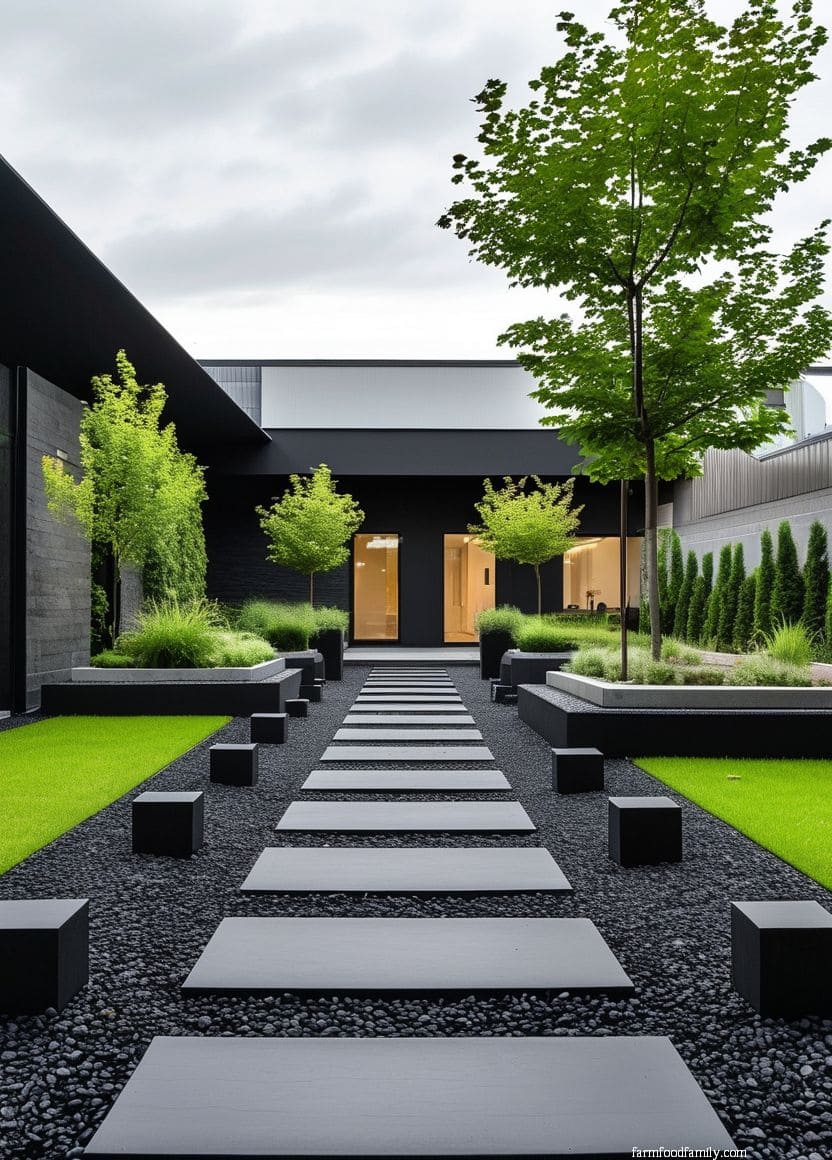
Gravel or crushed stone can be an attractive and drought-tolerant alternative to lawns. Choose pea gravel, decomposed granite, or crushed marble for a varied yet coherent texture. The ground cover is a good way to add contrast to your front yard.
The average homeowner spends $616/year on yard fixes that don't address the real problem. Find out what yours actually is — before you spend another dollar.
Take the Free QuizLay it around stepping stones, behind shrubs, or throughout low-traffic areas to lessen the need for mowing and watering.
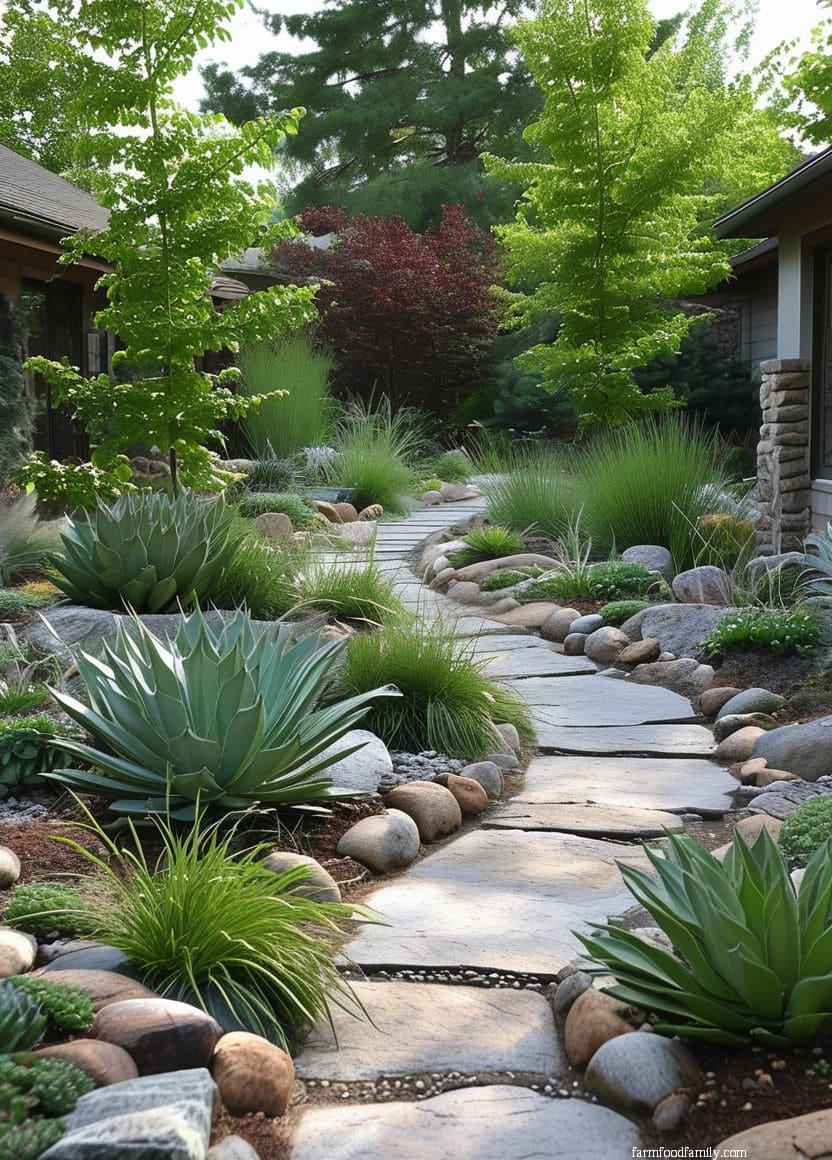
Combine with tall decorative grasses or succulents to create a clean, minimalist look.
Installing weed barrier fabric beneath the stone layer keeps things low-maintenance, and metal edging assures a clean finish.
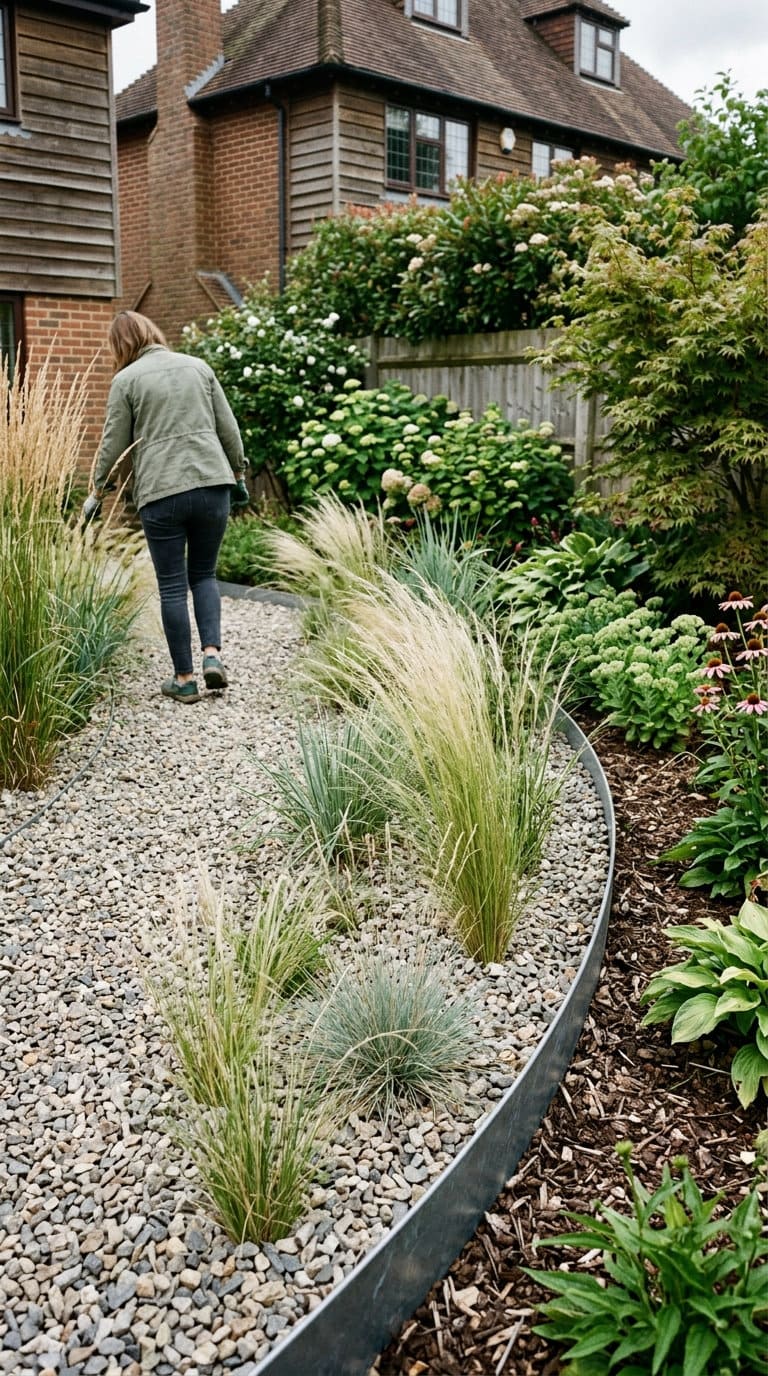
This method works best in modern, desert-inspired, or Mediterranean-style homes that emphasize simplicity and texture.
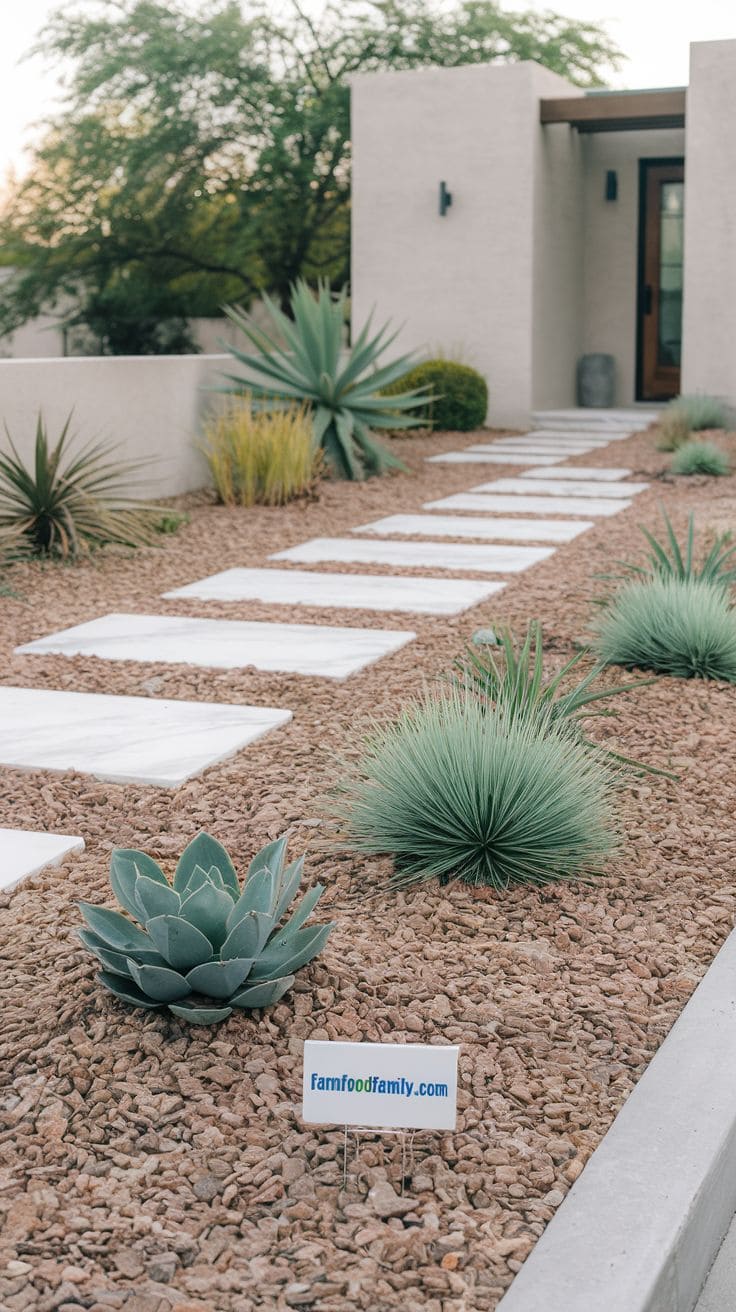
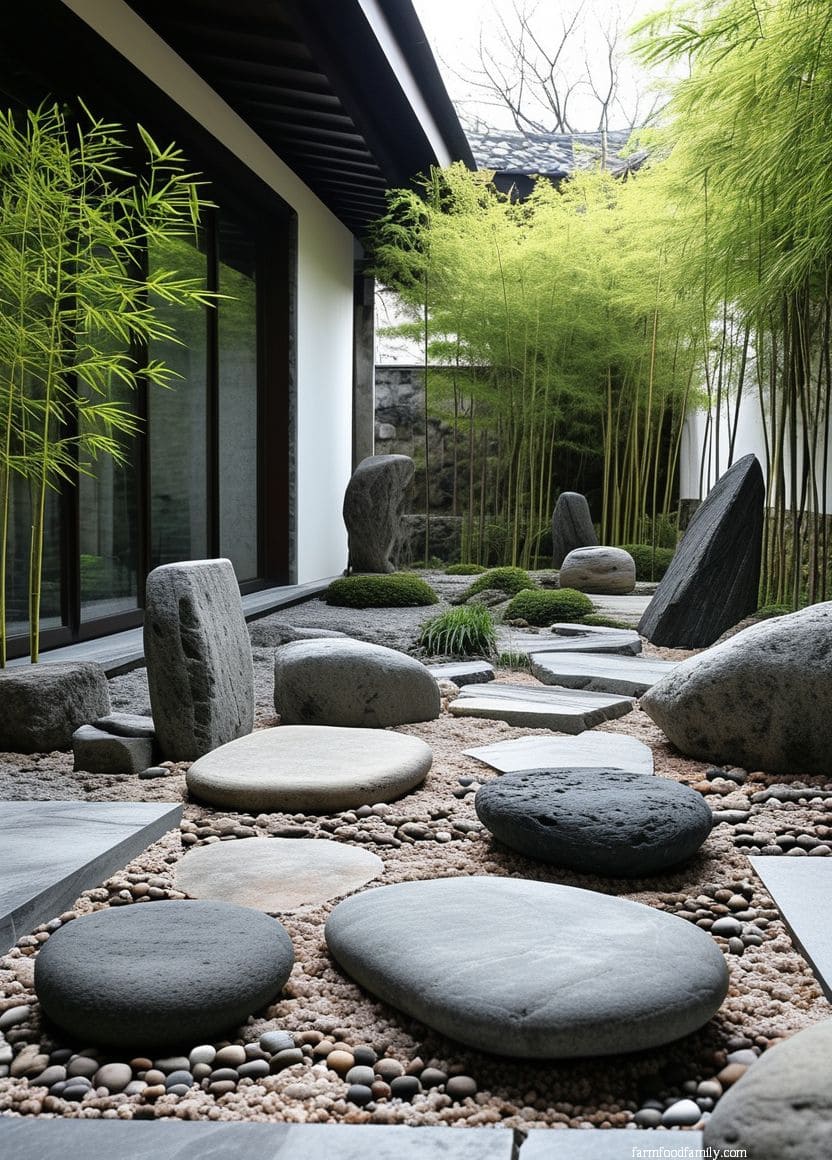
5. Large Boulders and Stone Accents
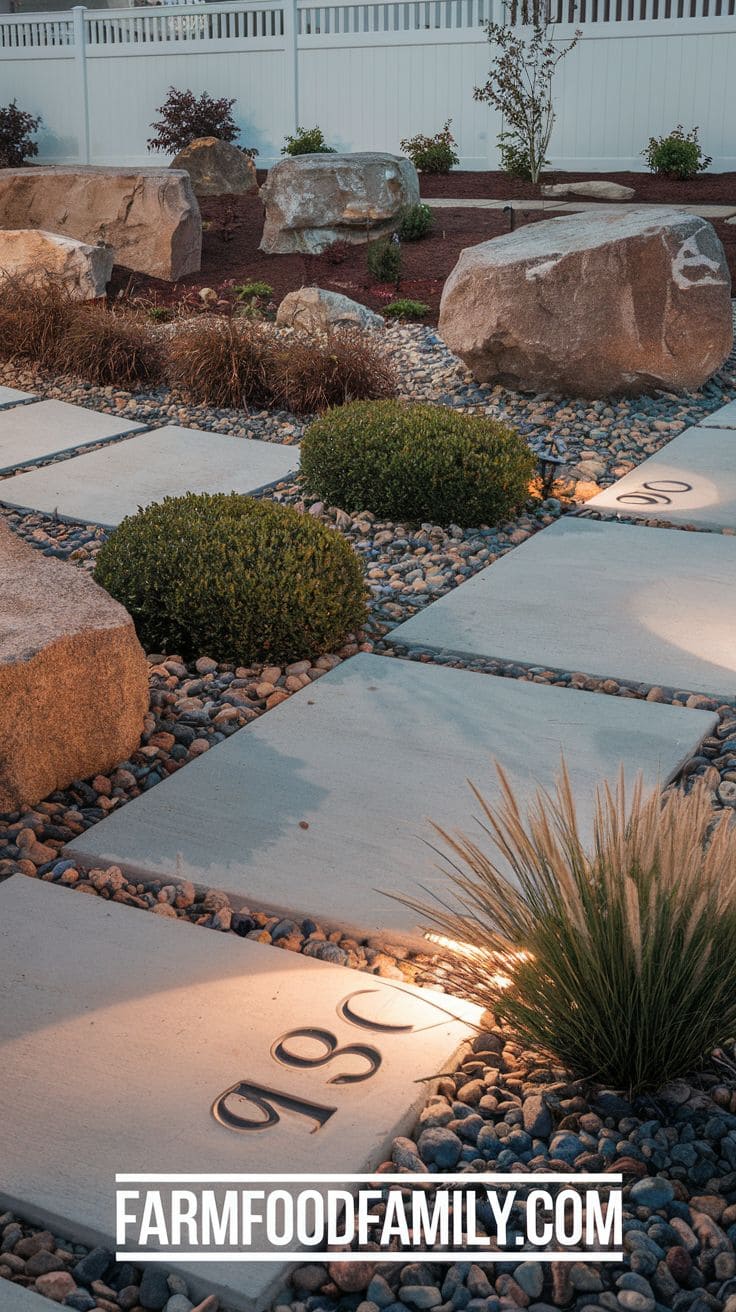
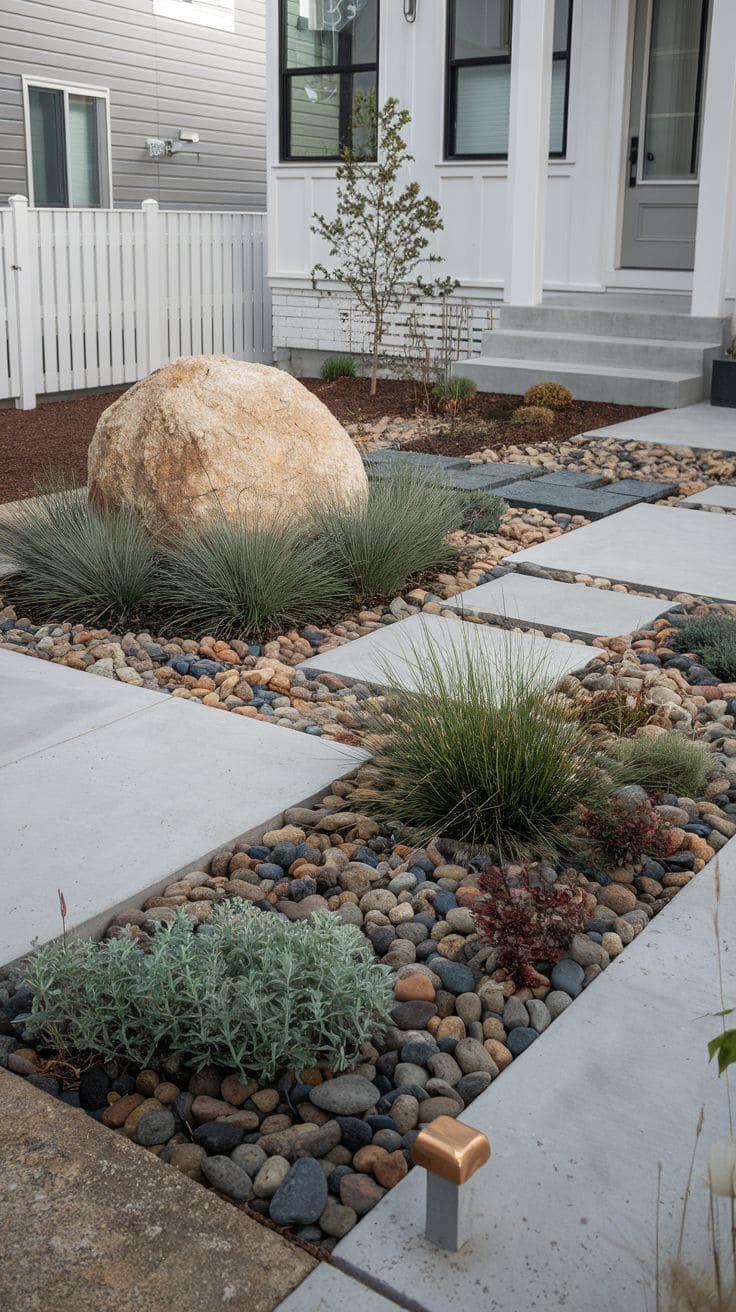
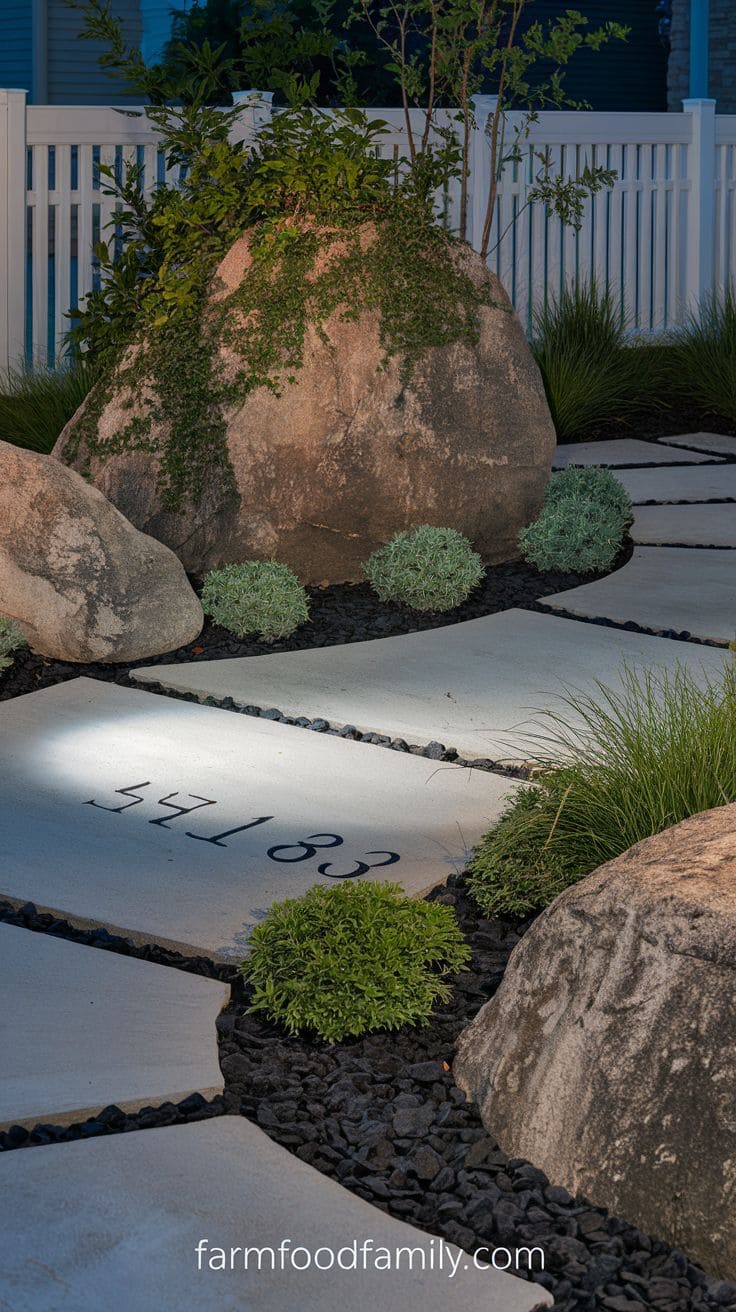
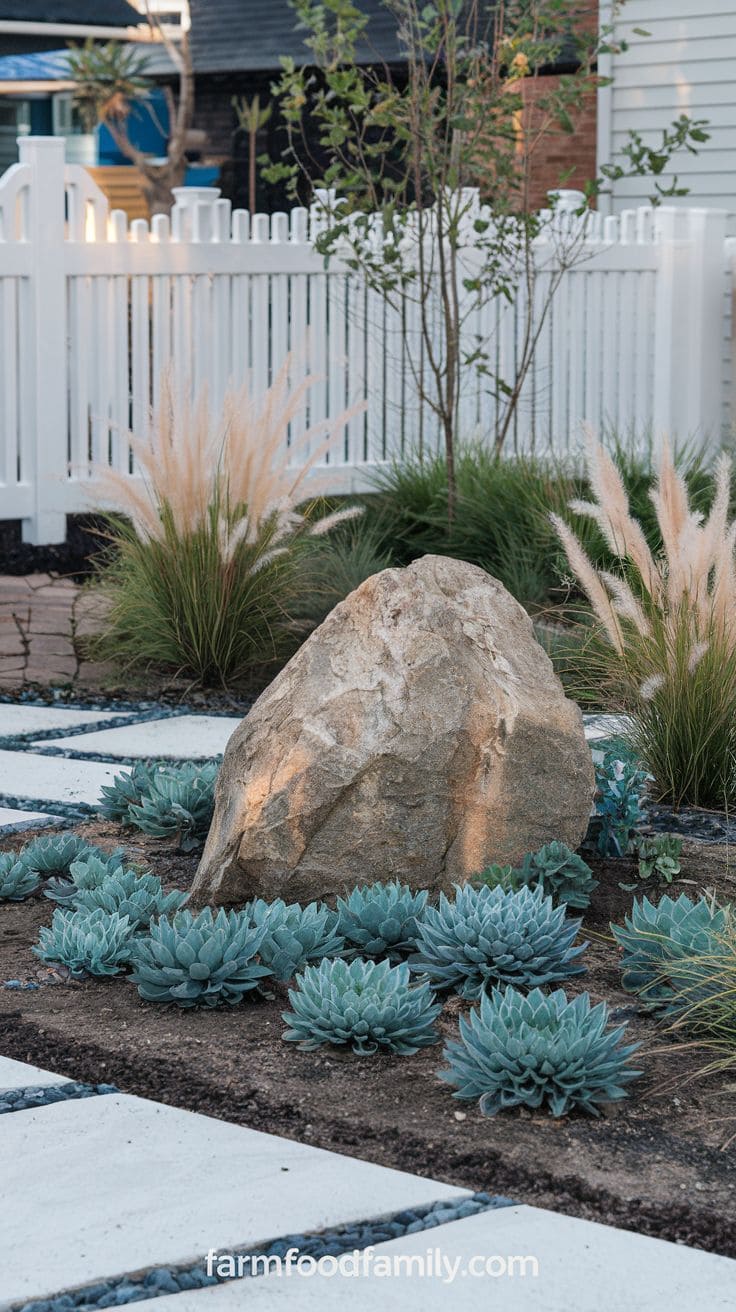
Boulders or big stones placed strategically might act as sculptural features in your front yard.
Choose stones with unusual shapes or natural veining to add uniqueness. Nestle them partially into the ground, so they feel integrated rather than dumped in.
To get a balanced look, surround with smaller pebbles or drought-tolerant plants such as lavender or sedum.
For added use, use one as the basis for a home number plaque or a tiny lamp.
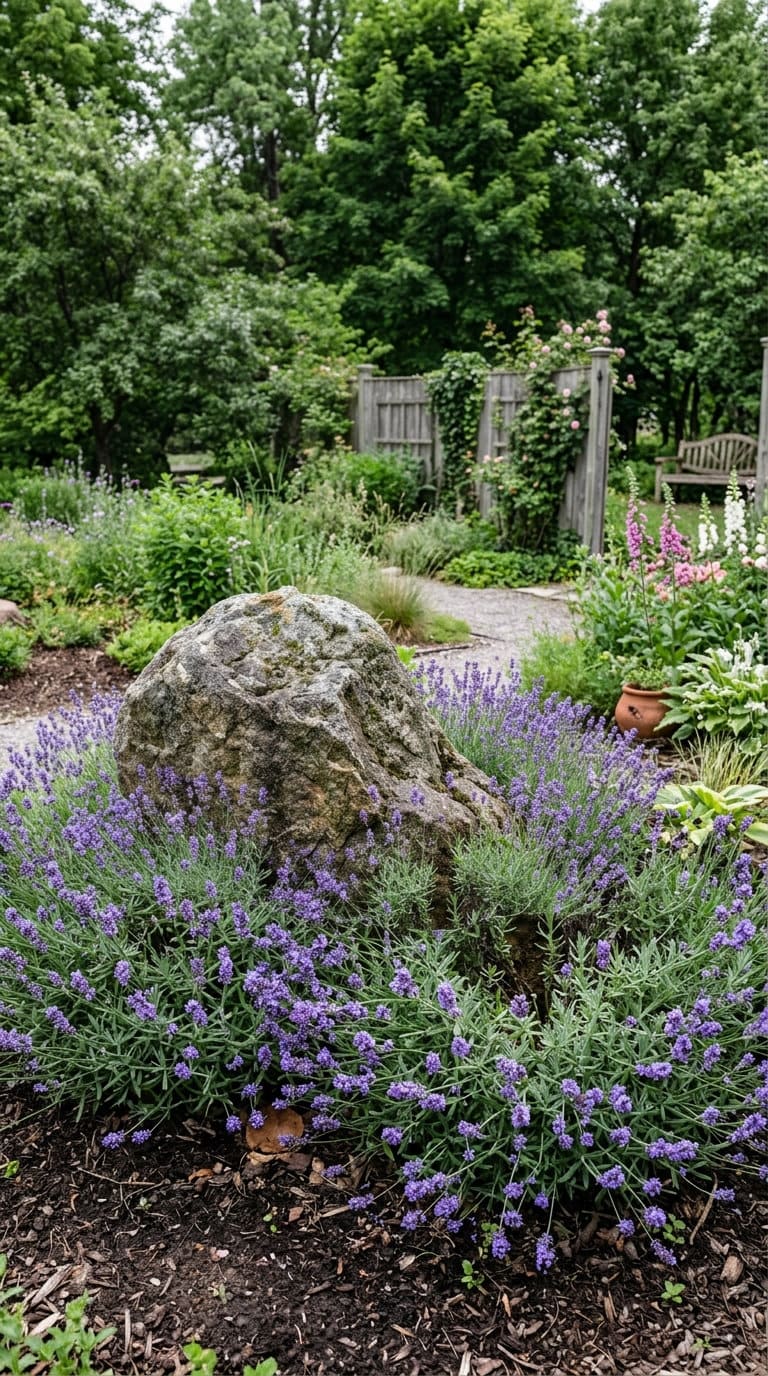
These statement stones provide permanency and help fill wide gaps in planting areas without making the space feel congested or overbuilt. Make sure it isn’t too large since you don’t want to overshadow your own home.
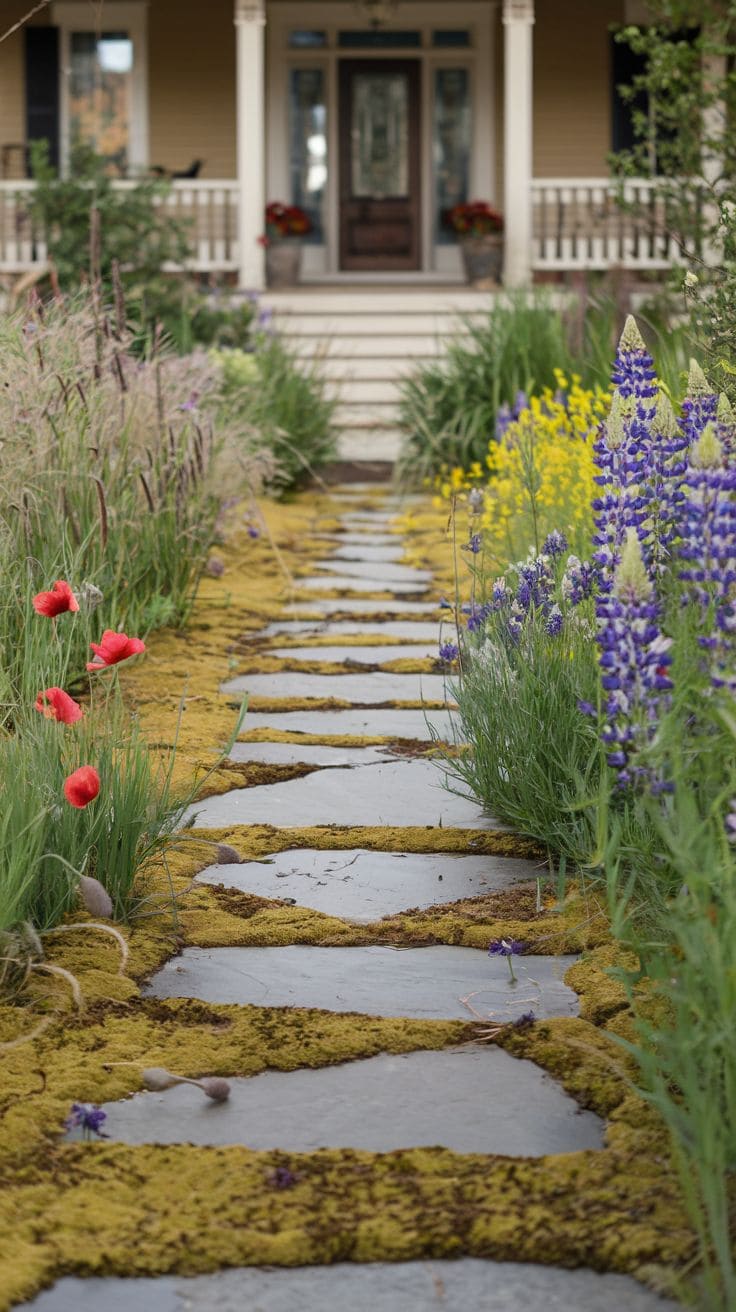
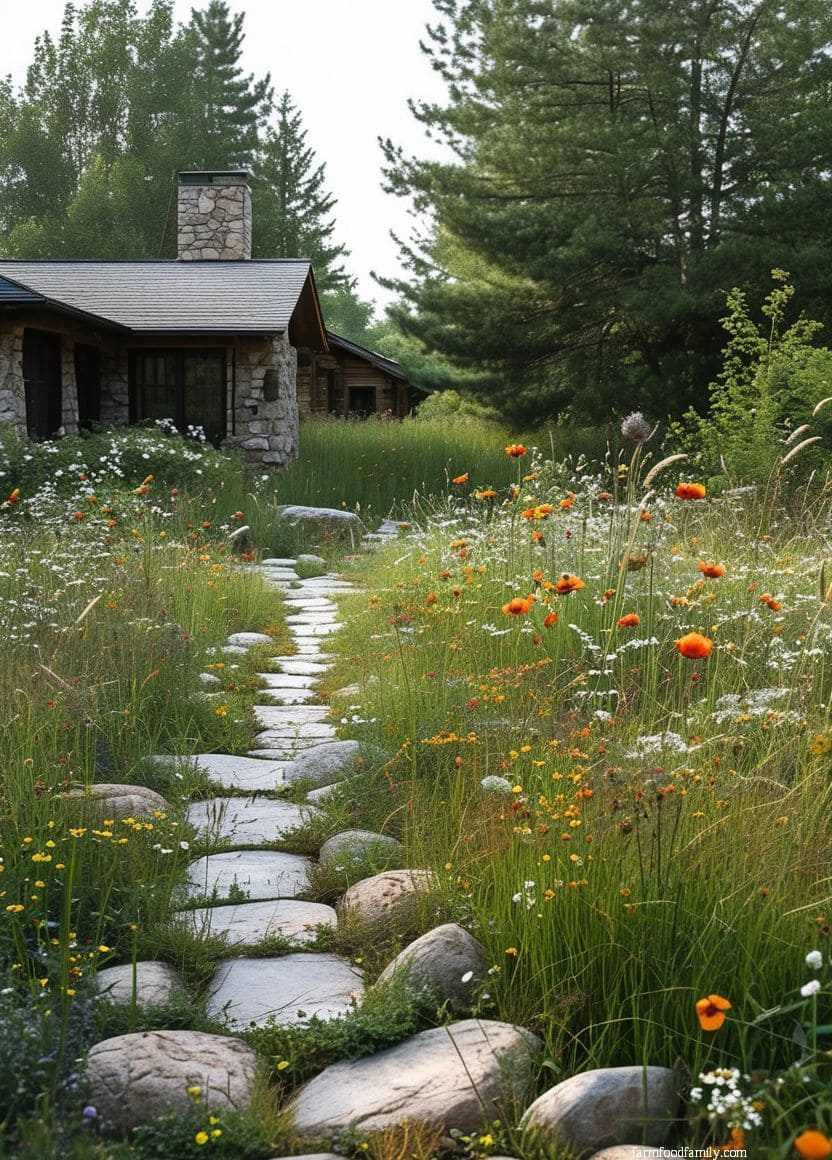
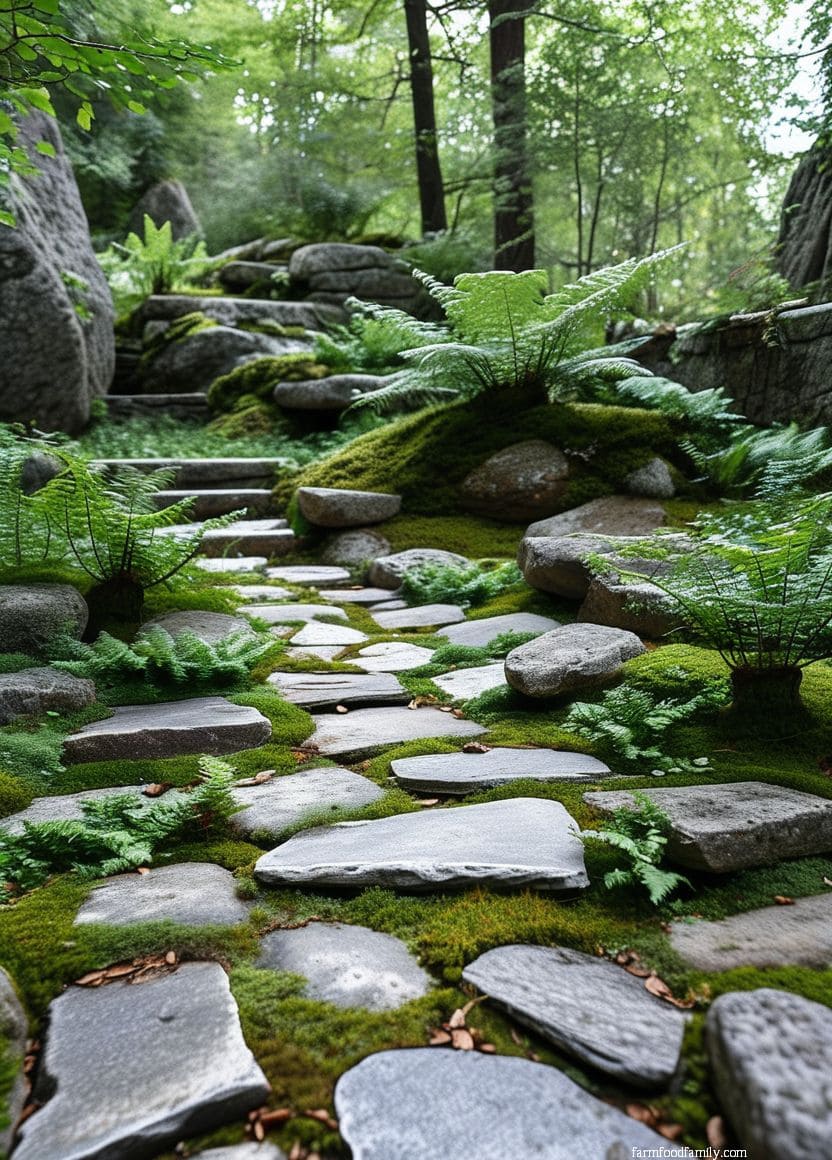
6. Stepping Stone Garden Path with Ground Cover
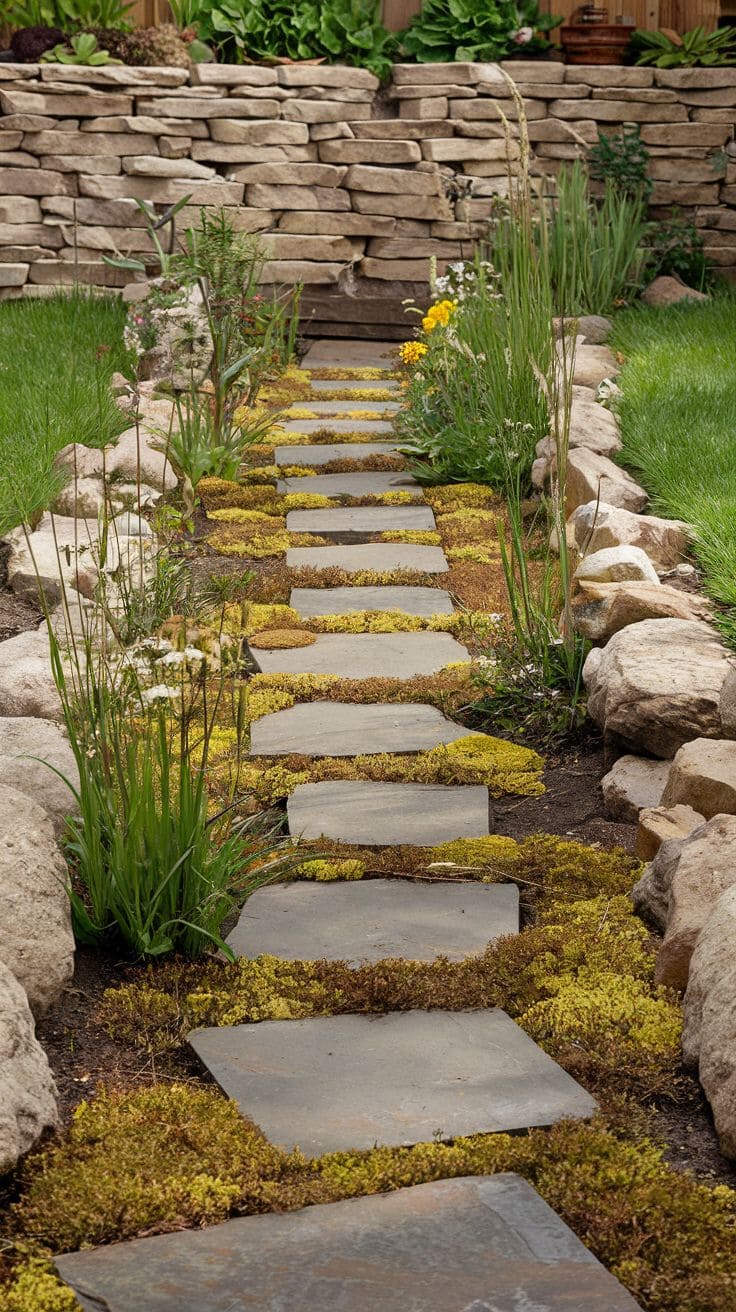
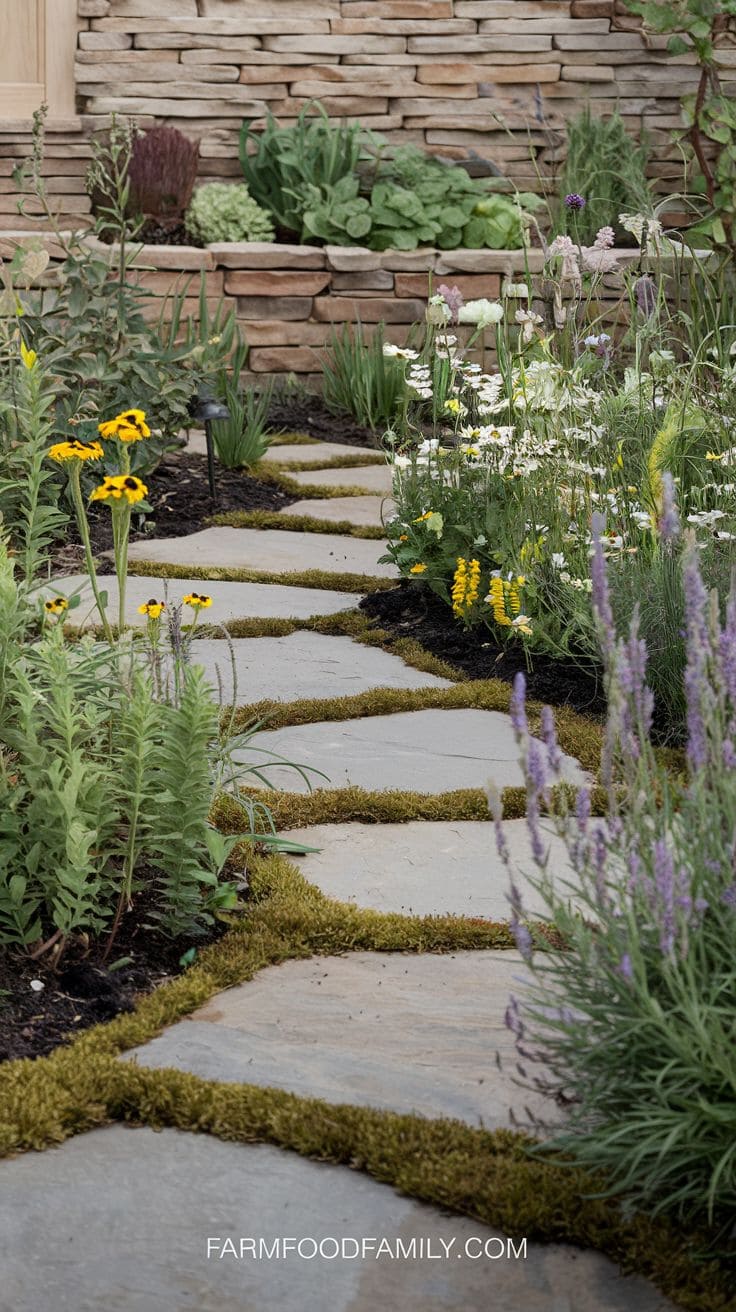
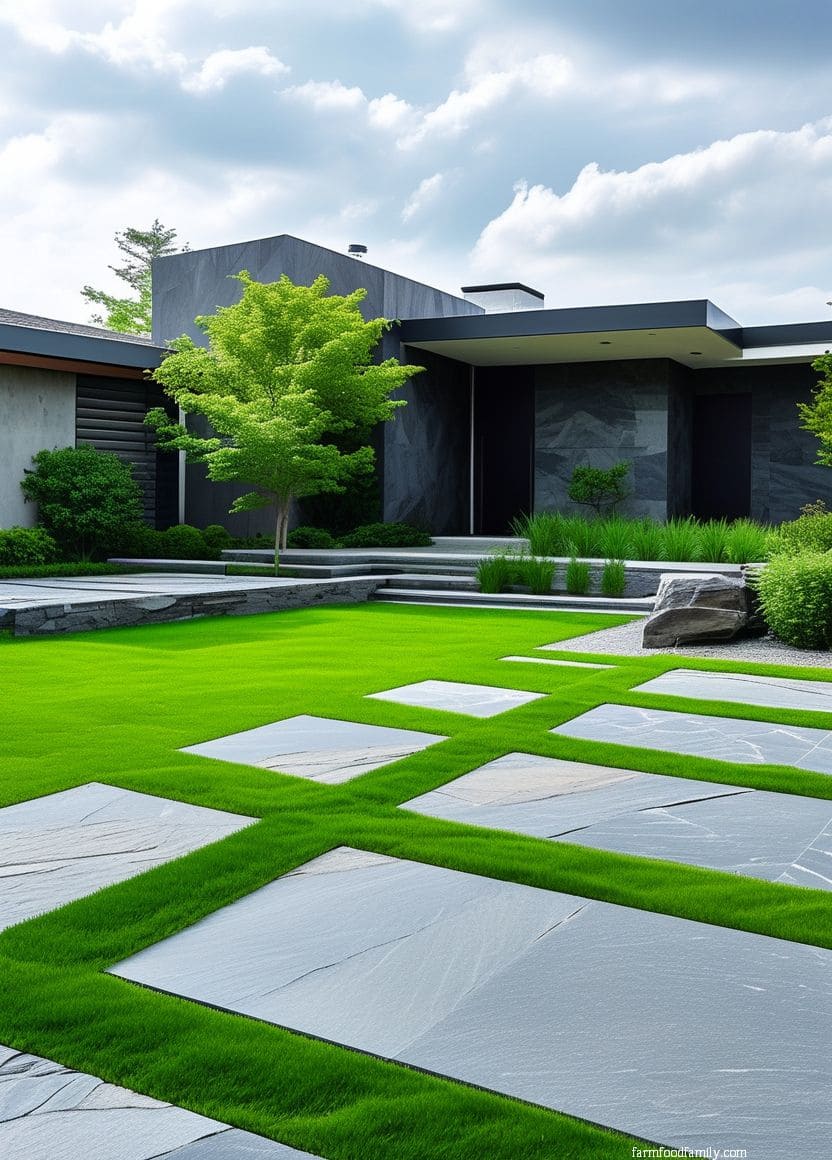
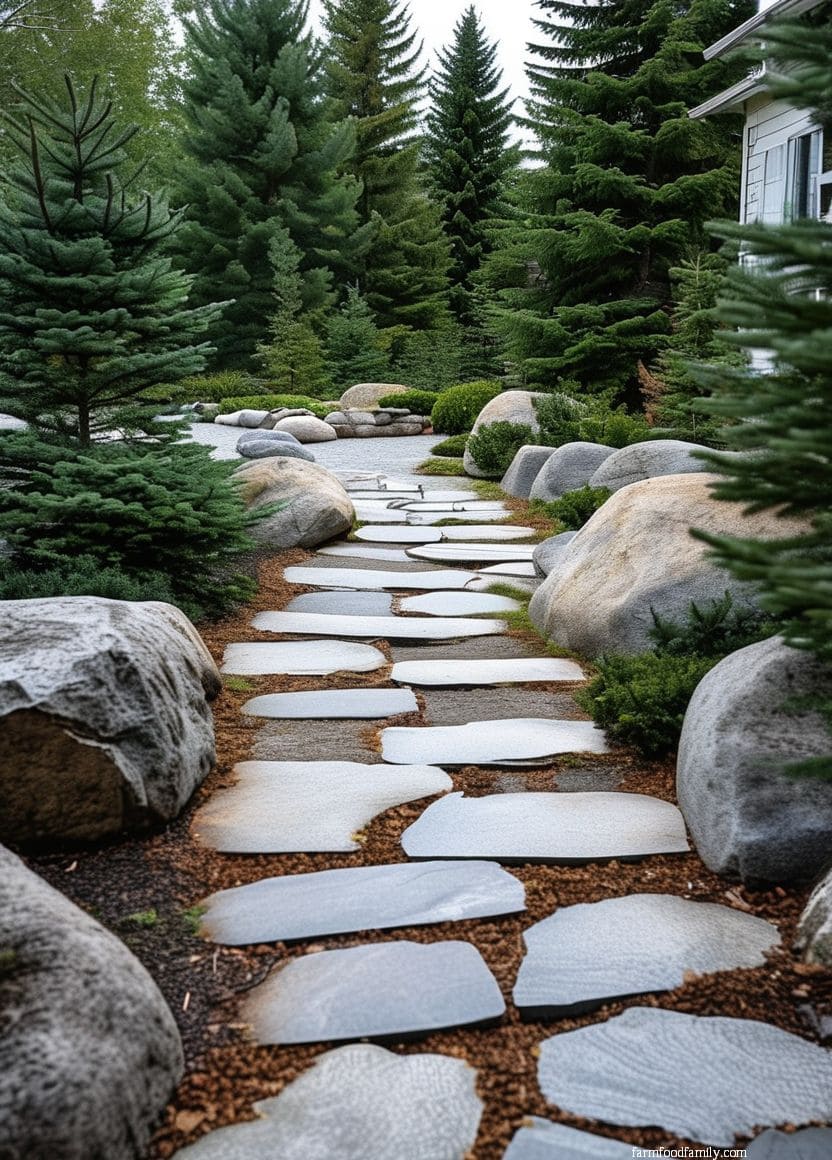
Make a casual yet attractive garden path with huge stepping stones bordered by spreading groundcover such as moss, thyme, or Irish moss. This pattern is ideal for meandering garden margins or between flower beds with a more rustic vibe.
For a natural effect, choose irregular stone forms, whereas square-cut stones are more formal. The lush green around each stone softens the image while adding a burst of life between the hardscaped features.
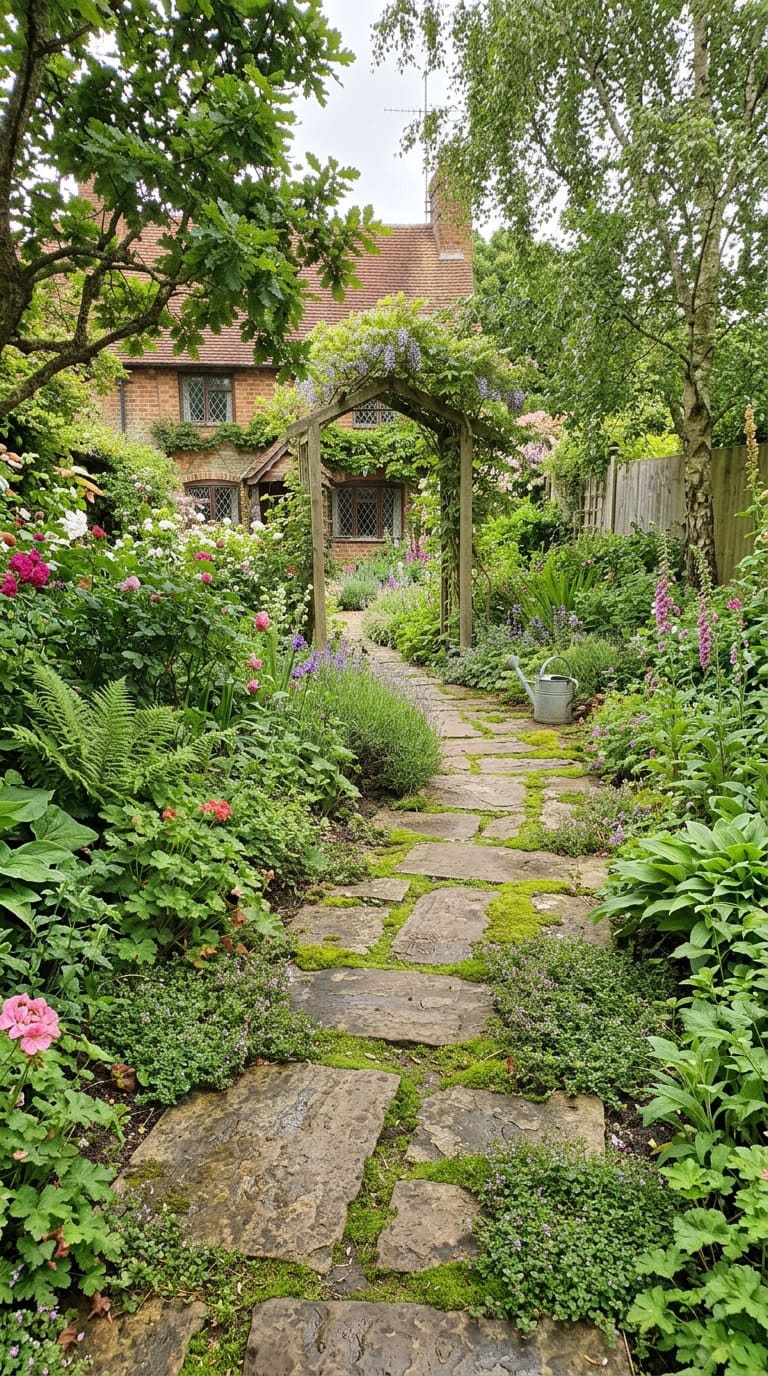
This combination produces a gentle transition between hard surfaces and natural plantings, which is great for front yards that require a bit more visual movement.
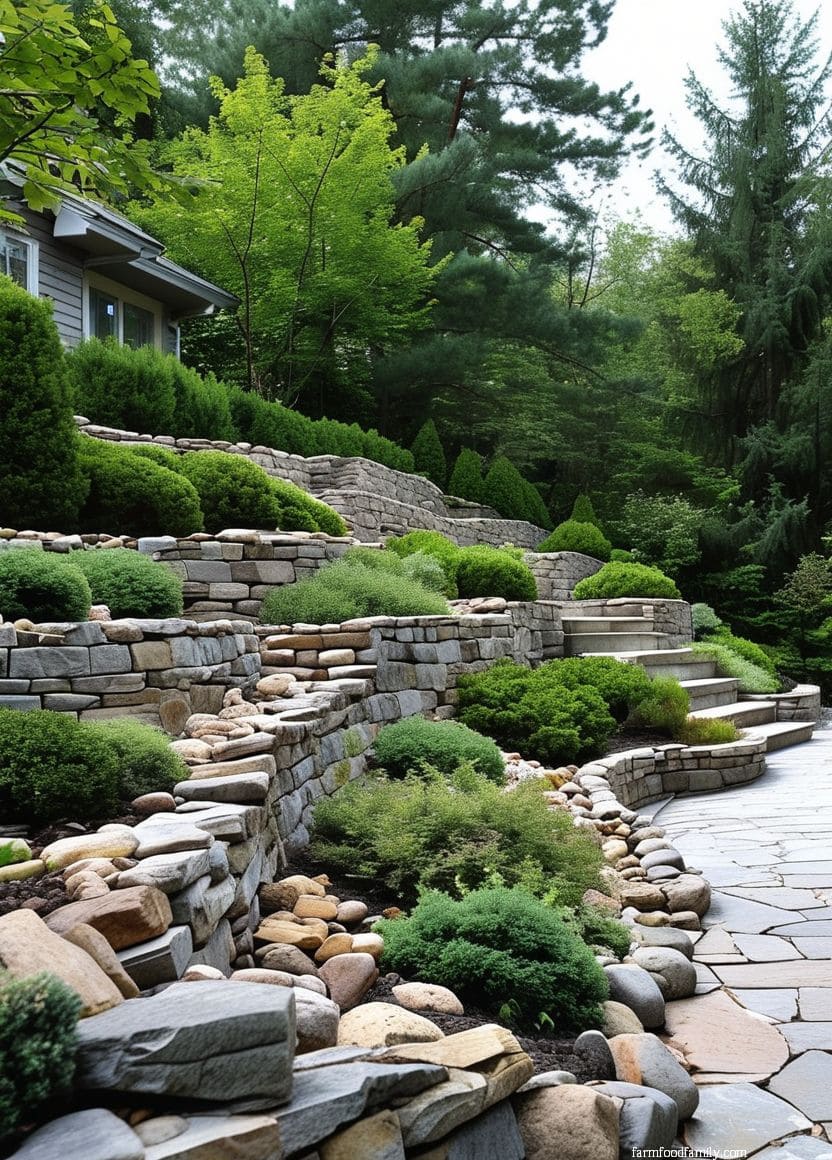
7. Stone Retaining Walls
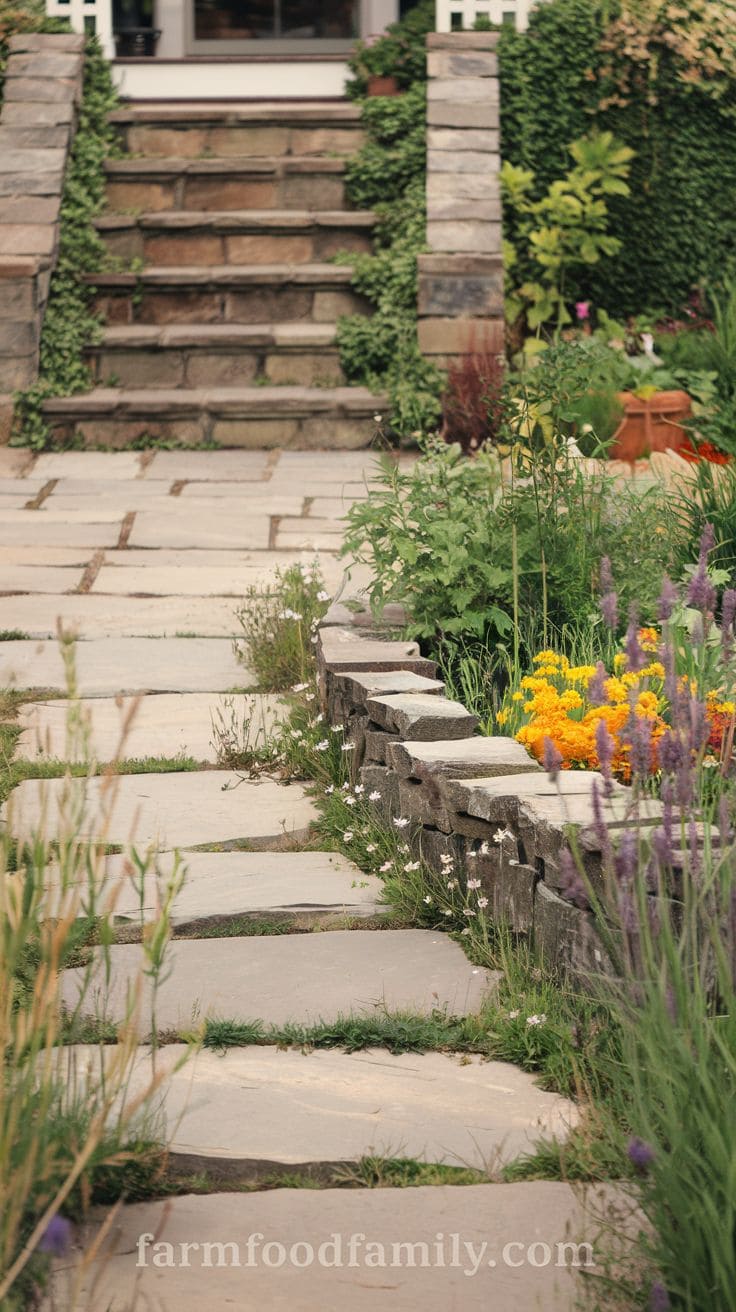
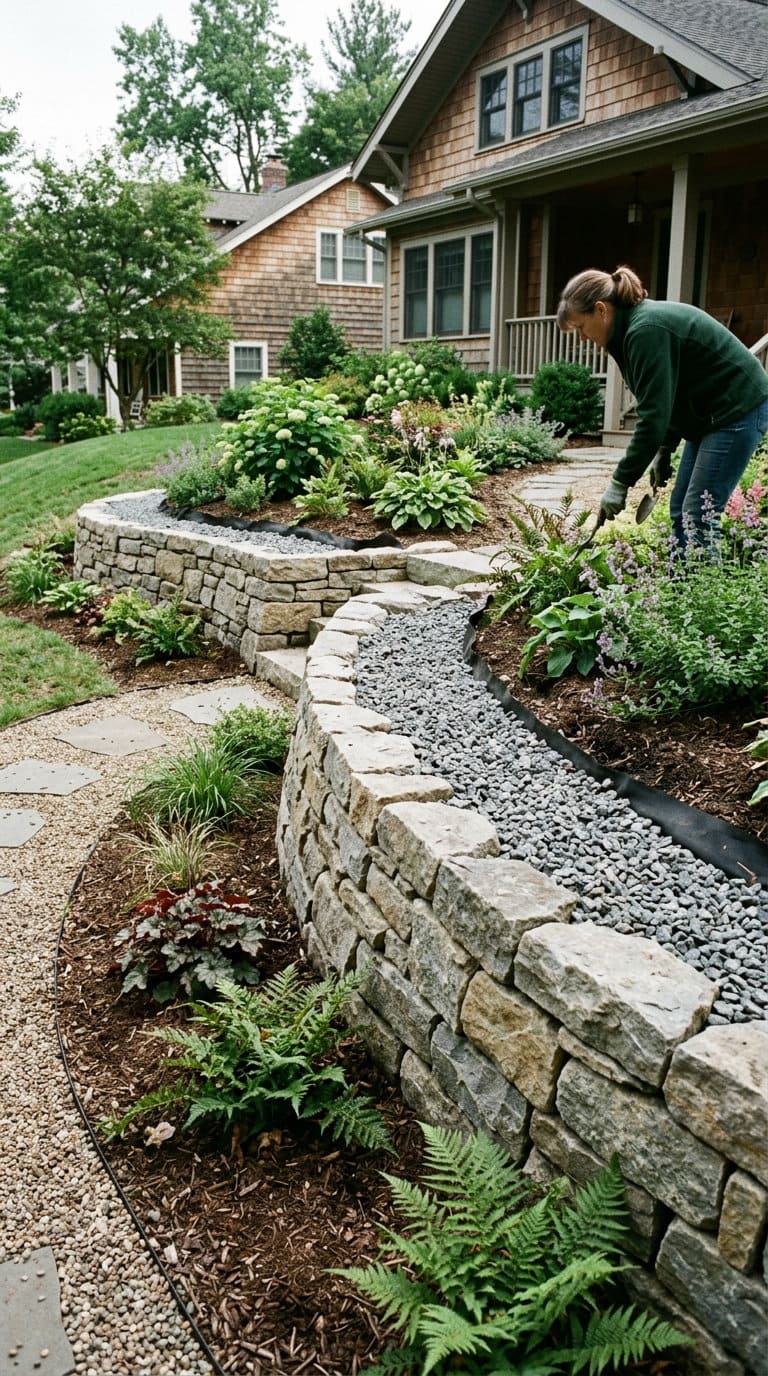
A retaining wall does real structural work, holding back soil on a slope, so it’s worth building to the guidance in section 1 rather than guessing. Check your local permit threshold before you start, most places exempt anything under 3 feet, but taller walls or ones holding back water need a stamped engineering plan.
Drainage behind the wall (gravel backfill and a perforated drain pipe near the base) matters more to long-term stability than how thick the wall is.
Dry-stacked natural stone gives the most organic look for a low wall; mortared block construction is the safer choice once you’re above a couple of feet, since the mortar bond resists the lateral soil pressure better than gravity alone.
8. Stone Flower Beds
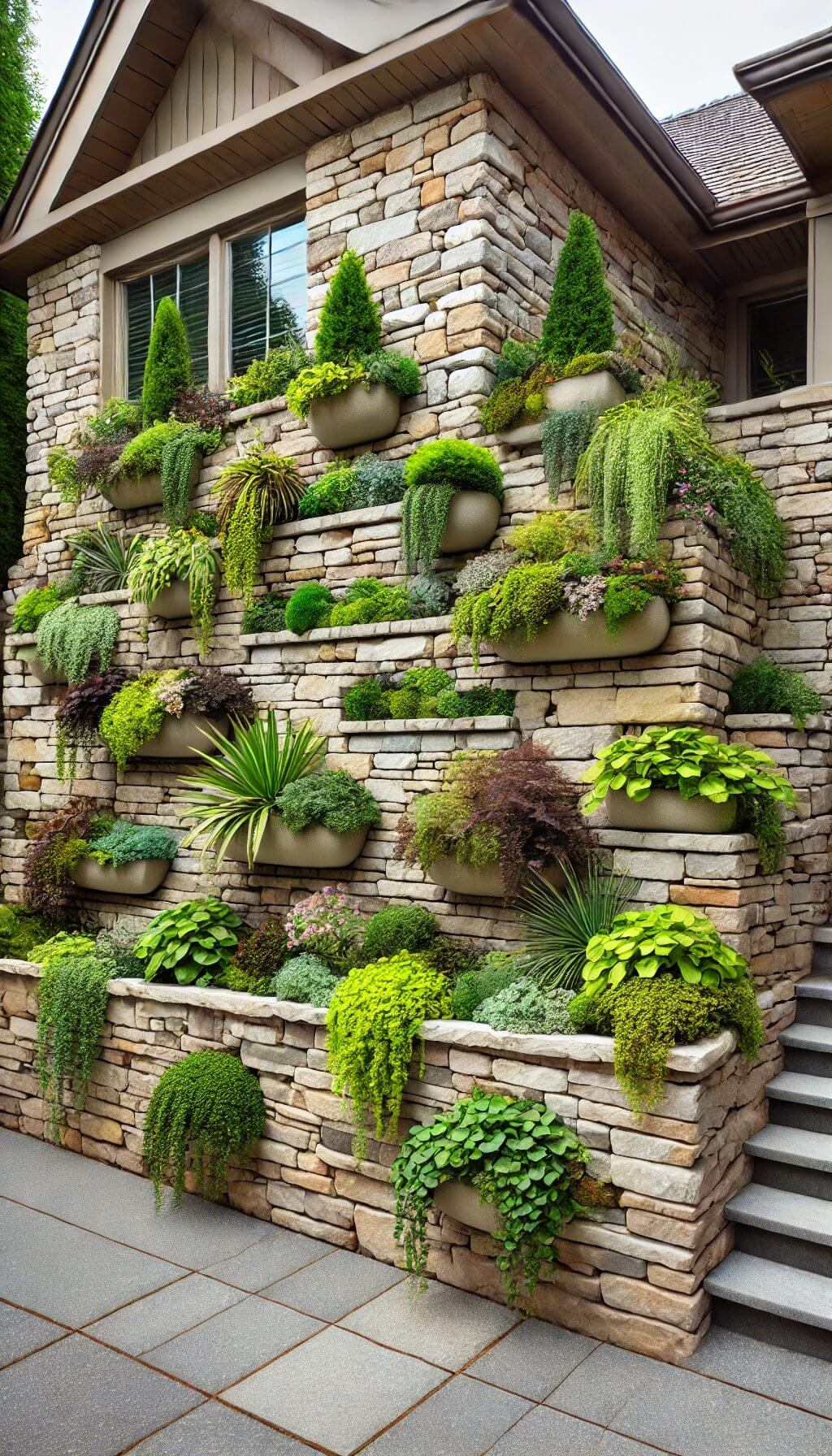
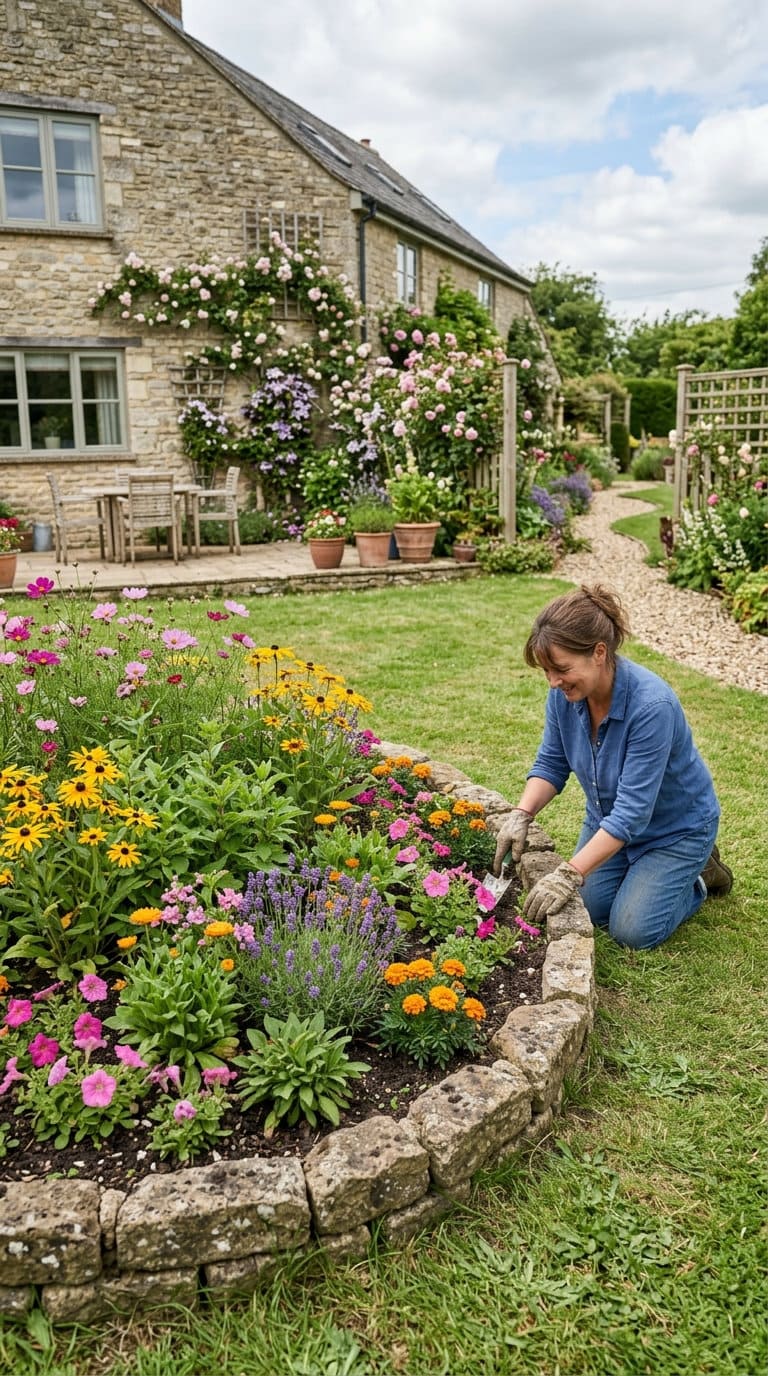
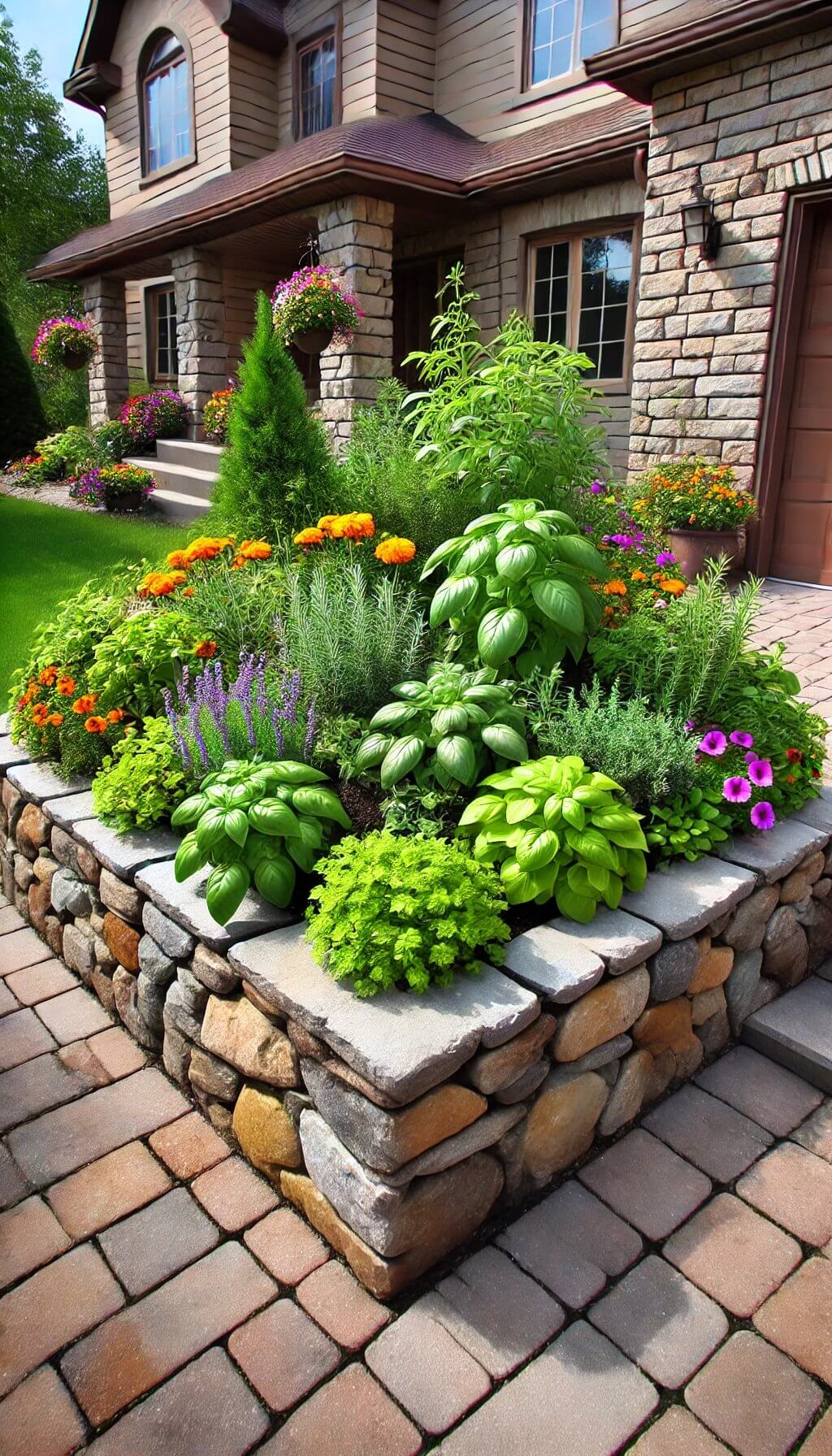
Lining a flower bed with fitted or stacked stone gives it a defined, intentional edge that plain mulch alone doesn’t provide.
Flat fieldstone laid in a low, single-course border works well for a casual cottage look, while cut limestone block reads more formal.
Leave small gaps between stones in a dry-stacked border so water can drain through rather than pooling against the bed.
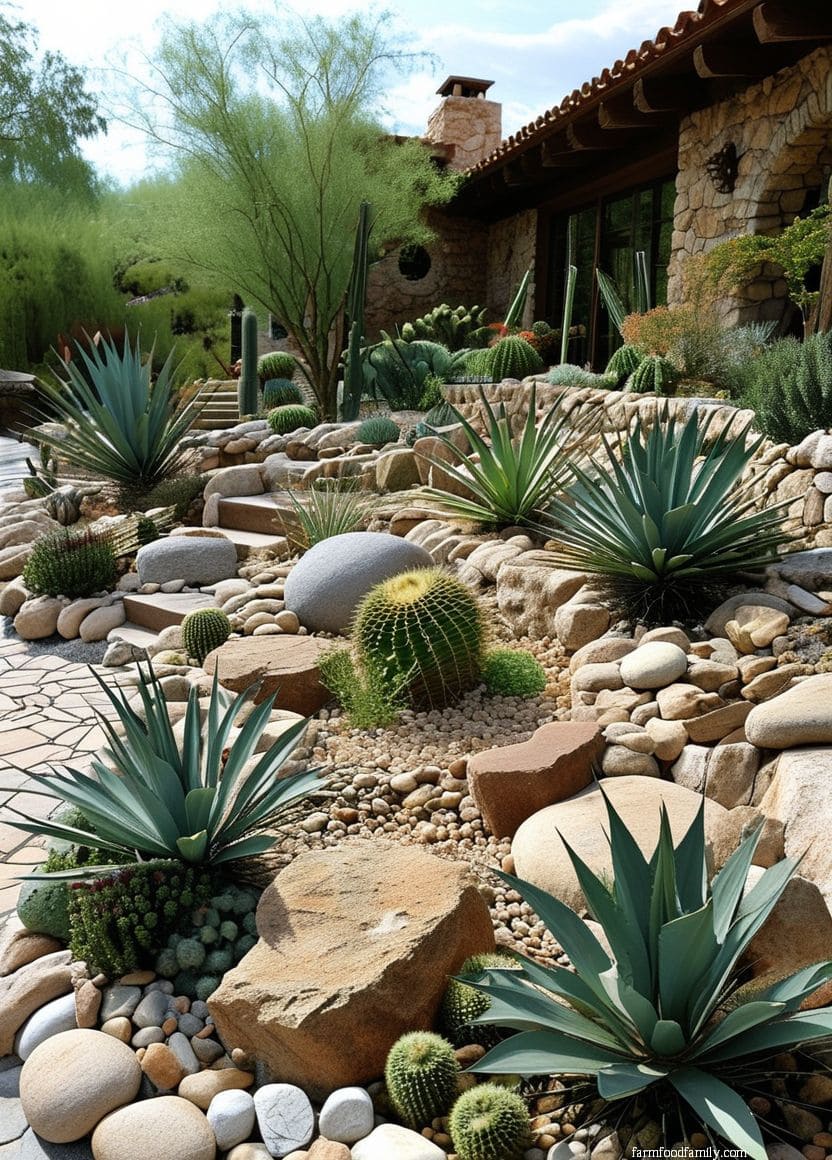
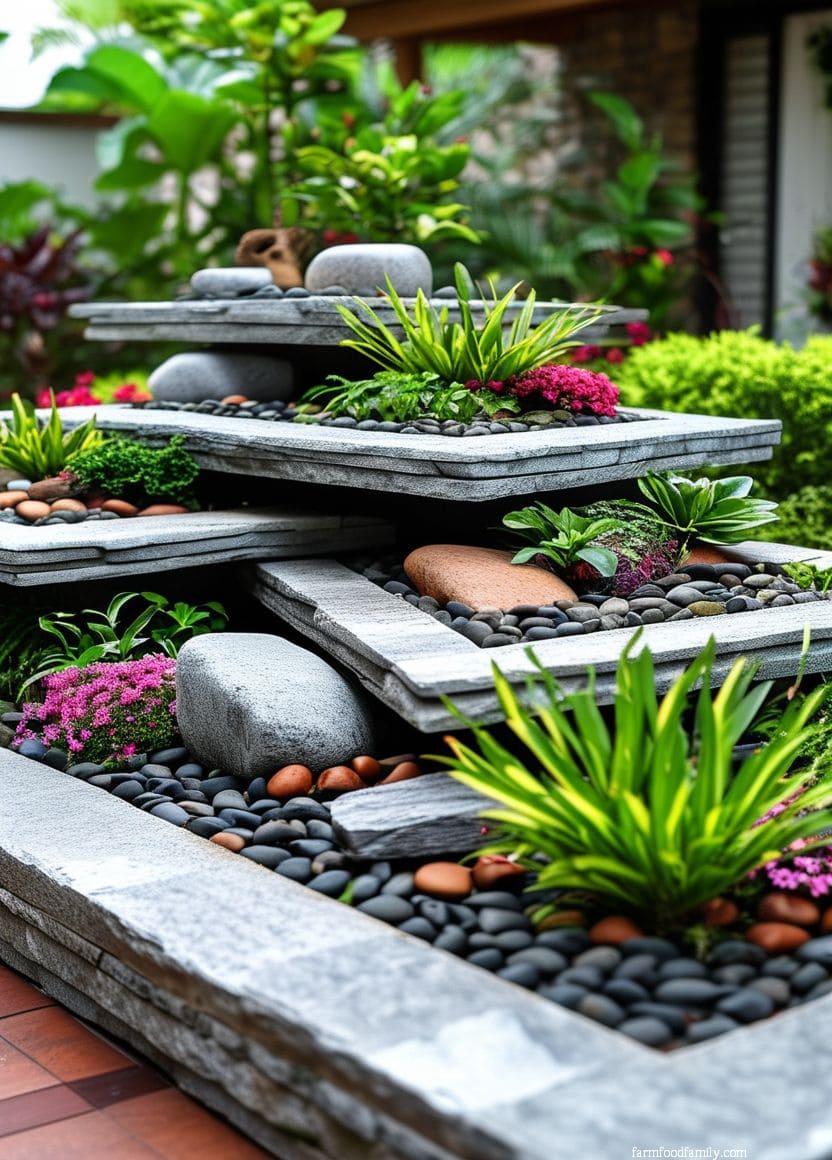
9. Rock Gardens
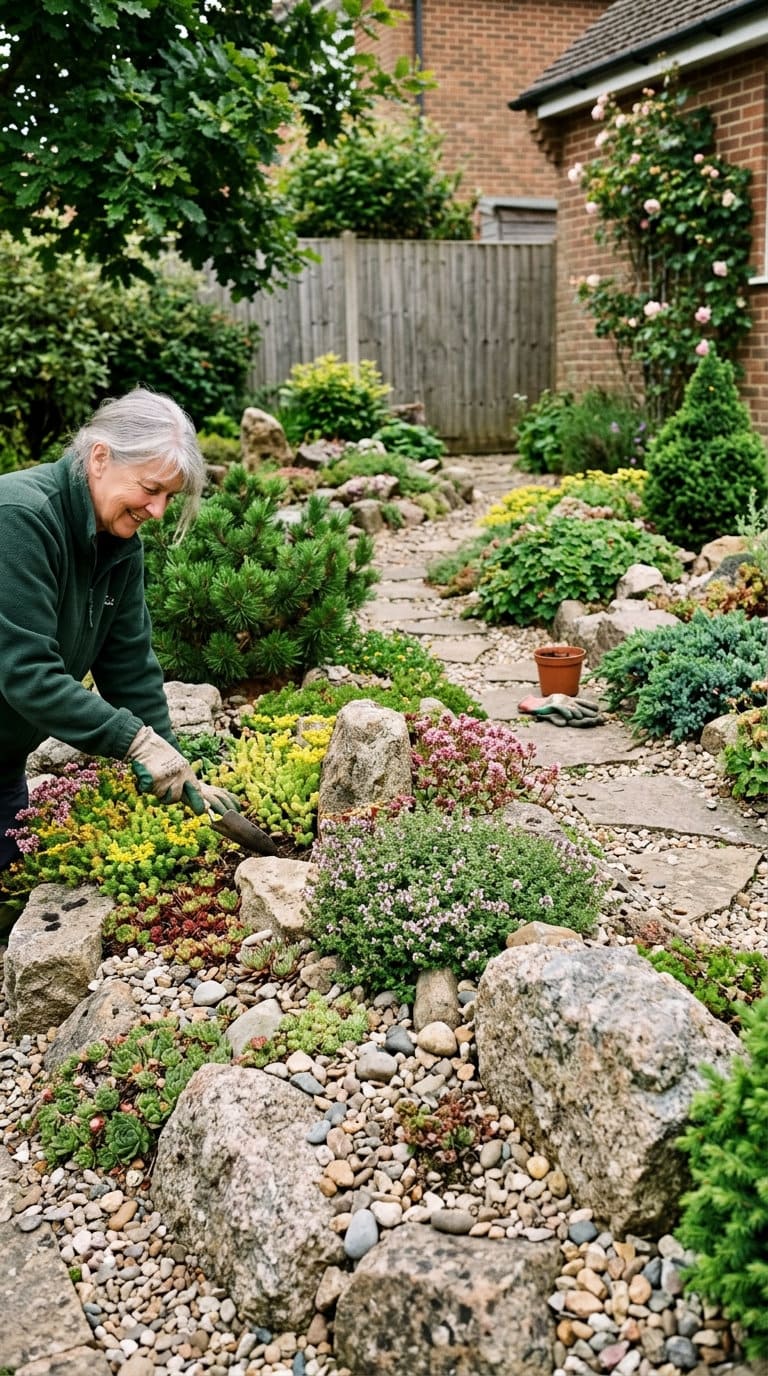
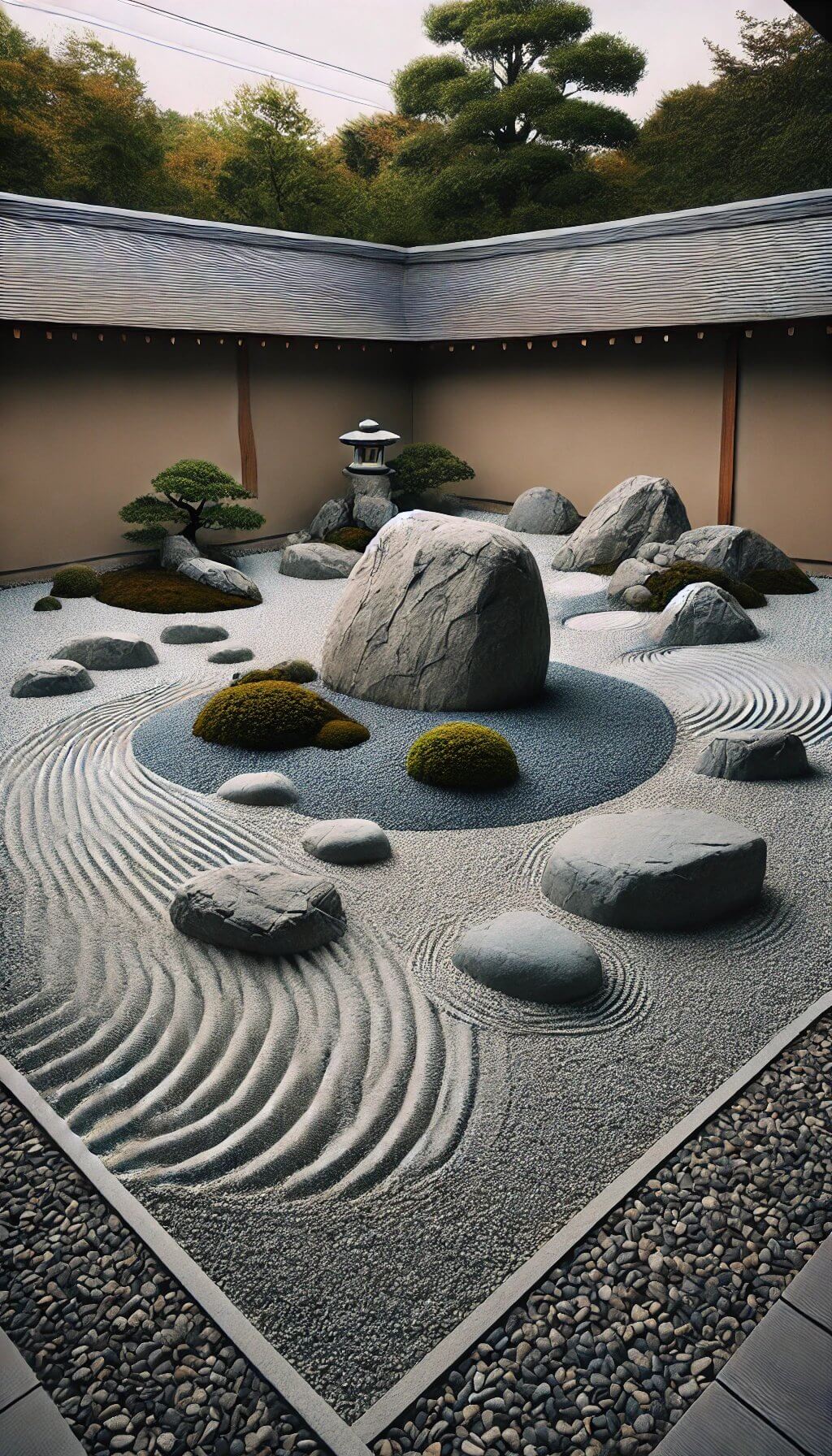
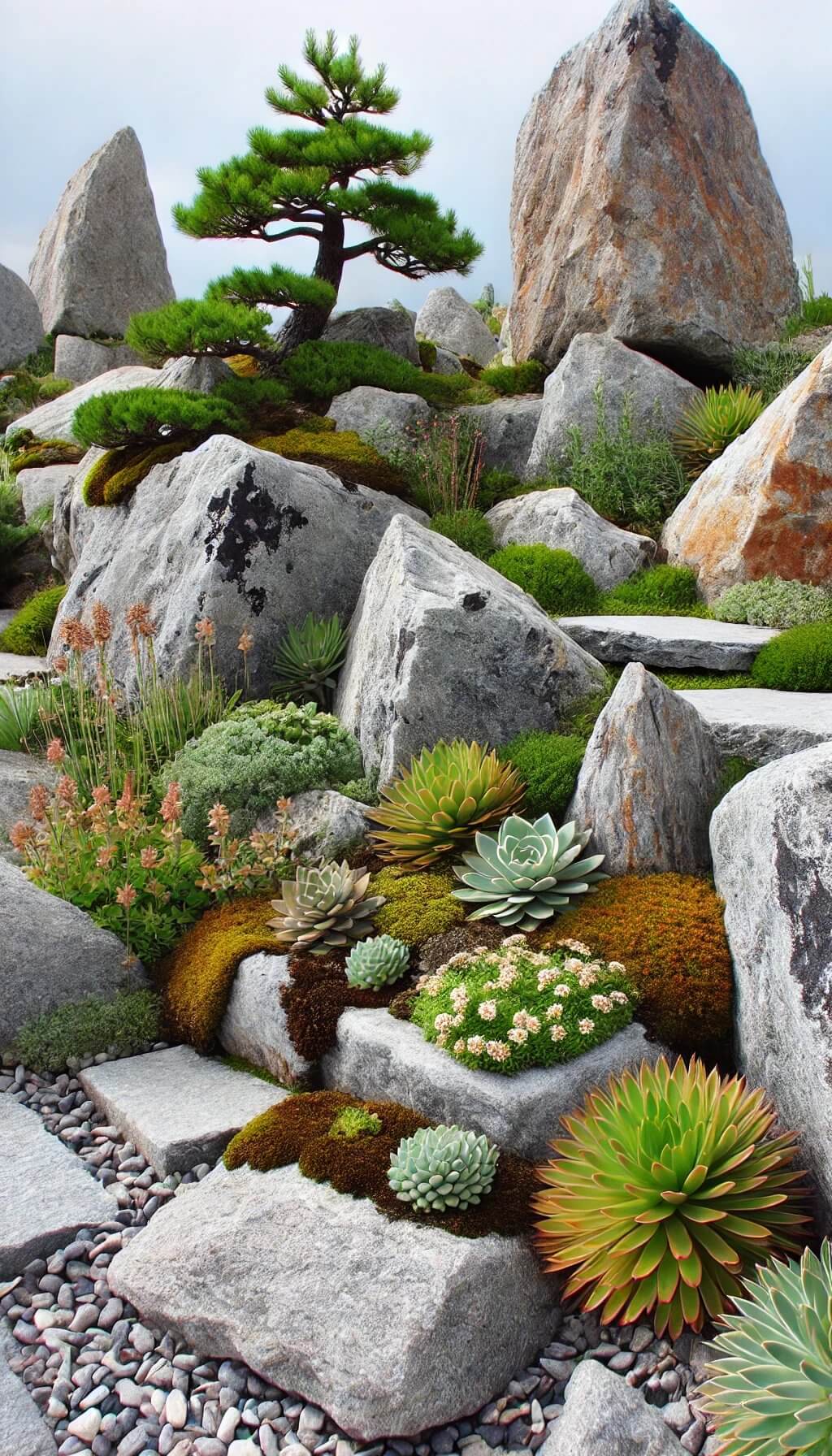
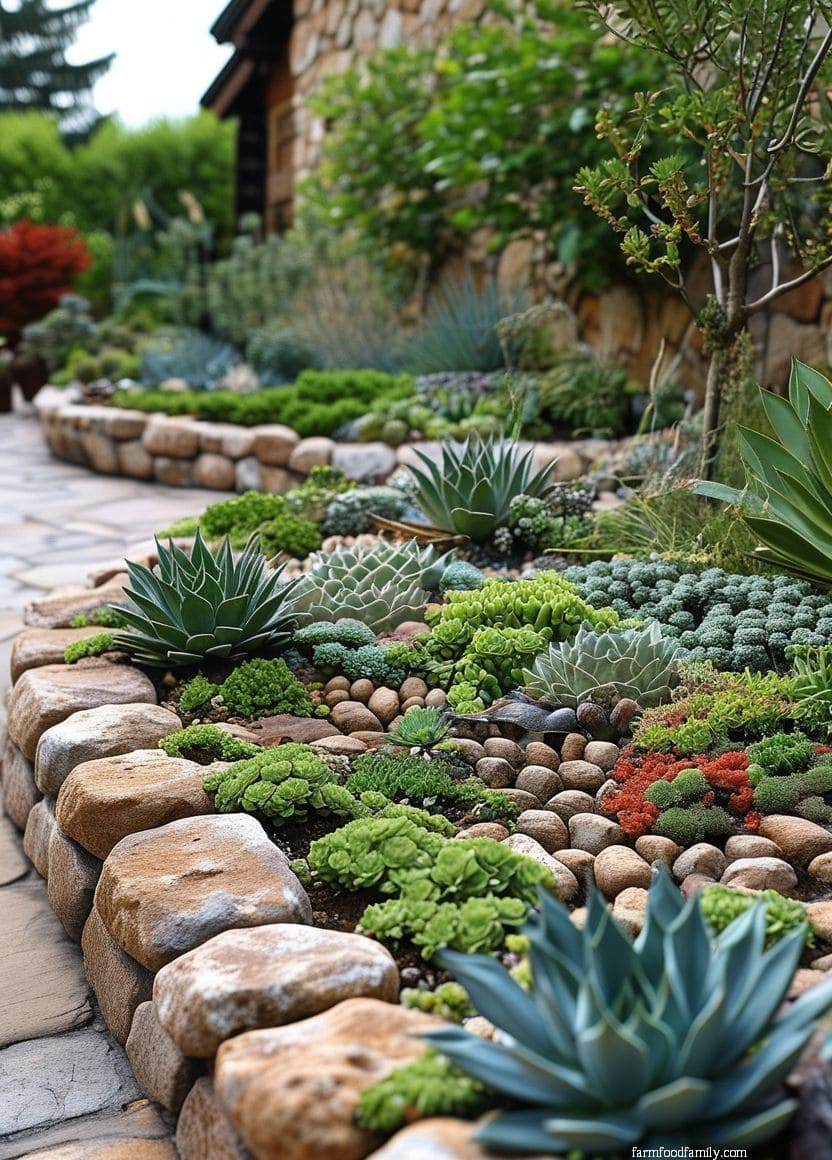
A rock garden pairs varied stone sizes, from gravel up to medium boulders, with drought-tolerant plants like sedum, creeping thyme, or dwarf conifers, tucked into the gaps between stones.
Grade the stones so larger ones sit lower and smaller ones cluster near the top, mimicking how rock naturally settles on a slope.
This is one of the lowest-maintenance front yard treatments available once established, since the plants chosen are typically the same ones that tolerate poor, rocky soil in the first place.
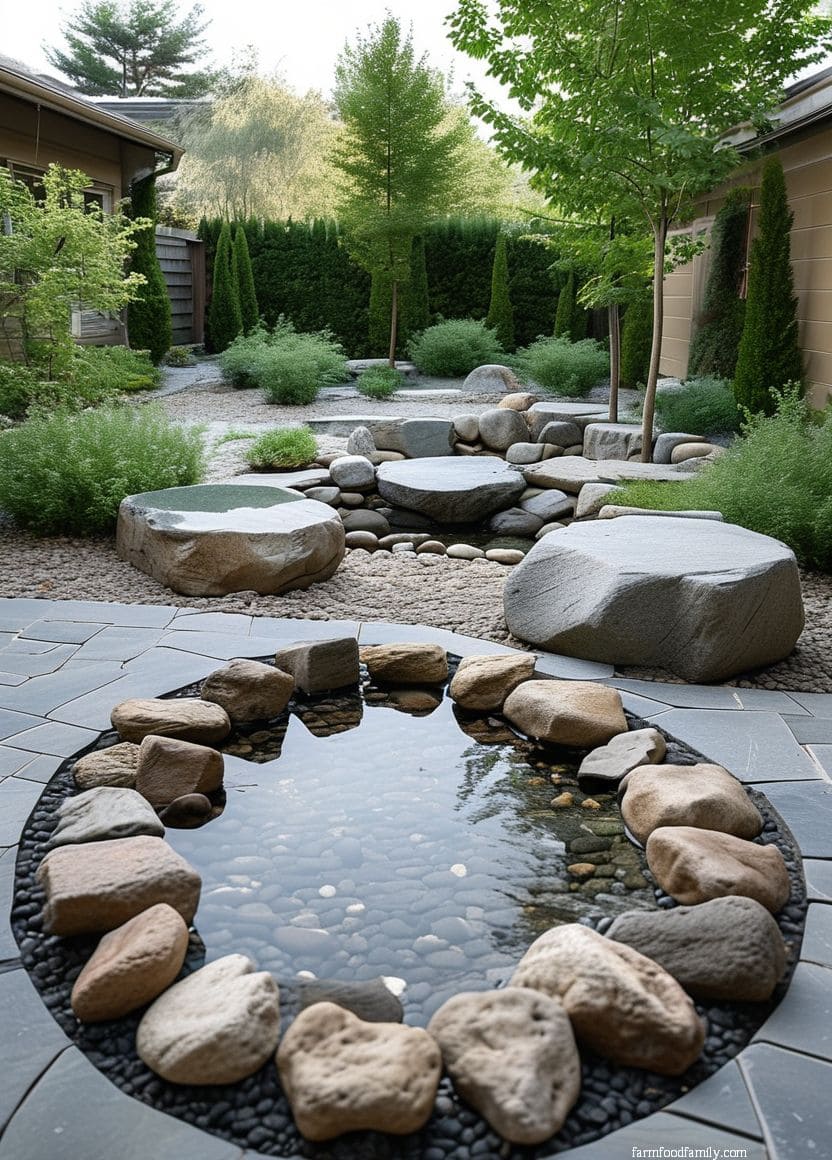
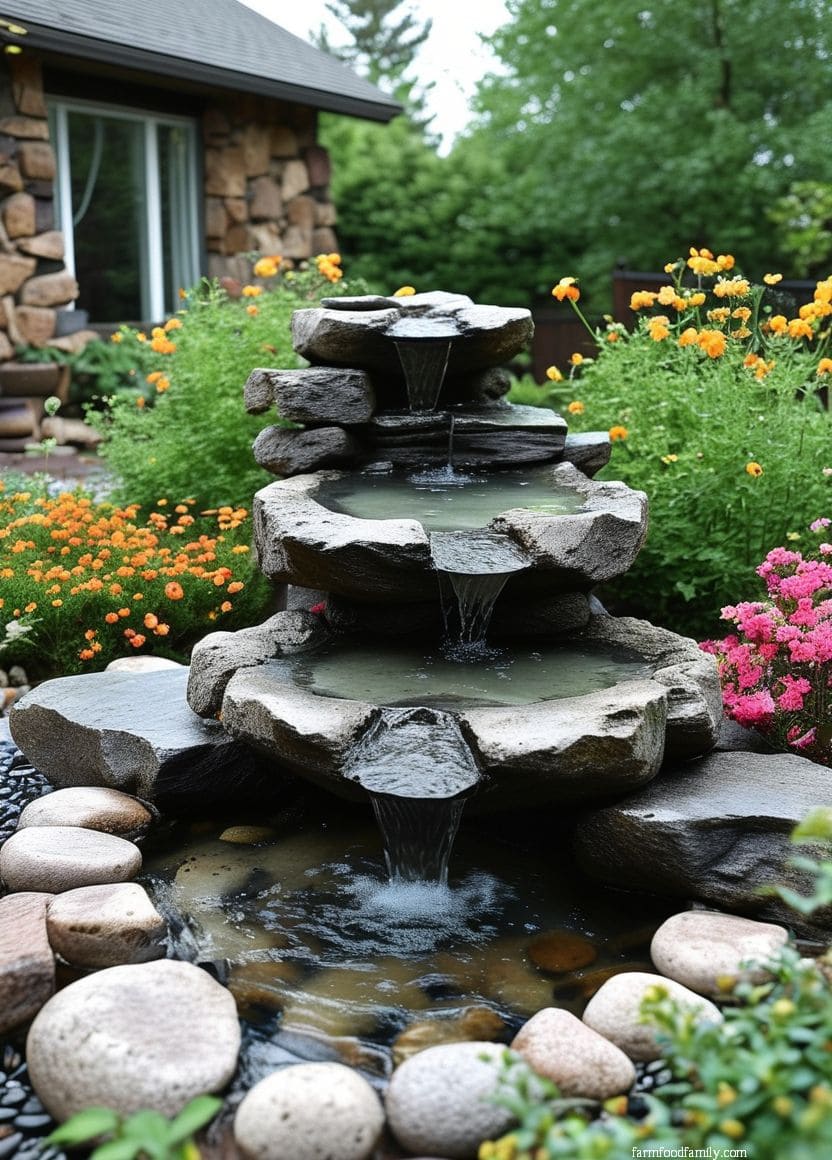
10. Stone Water Features
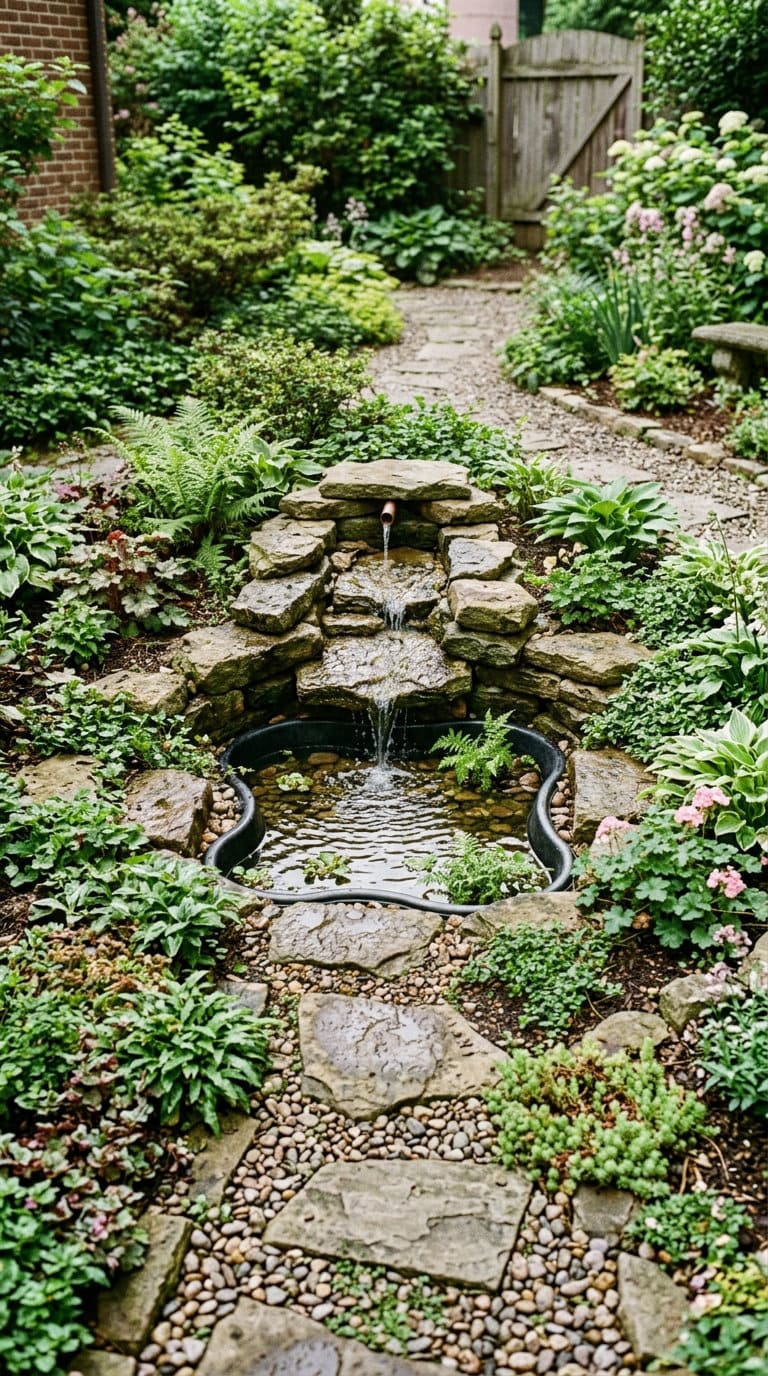
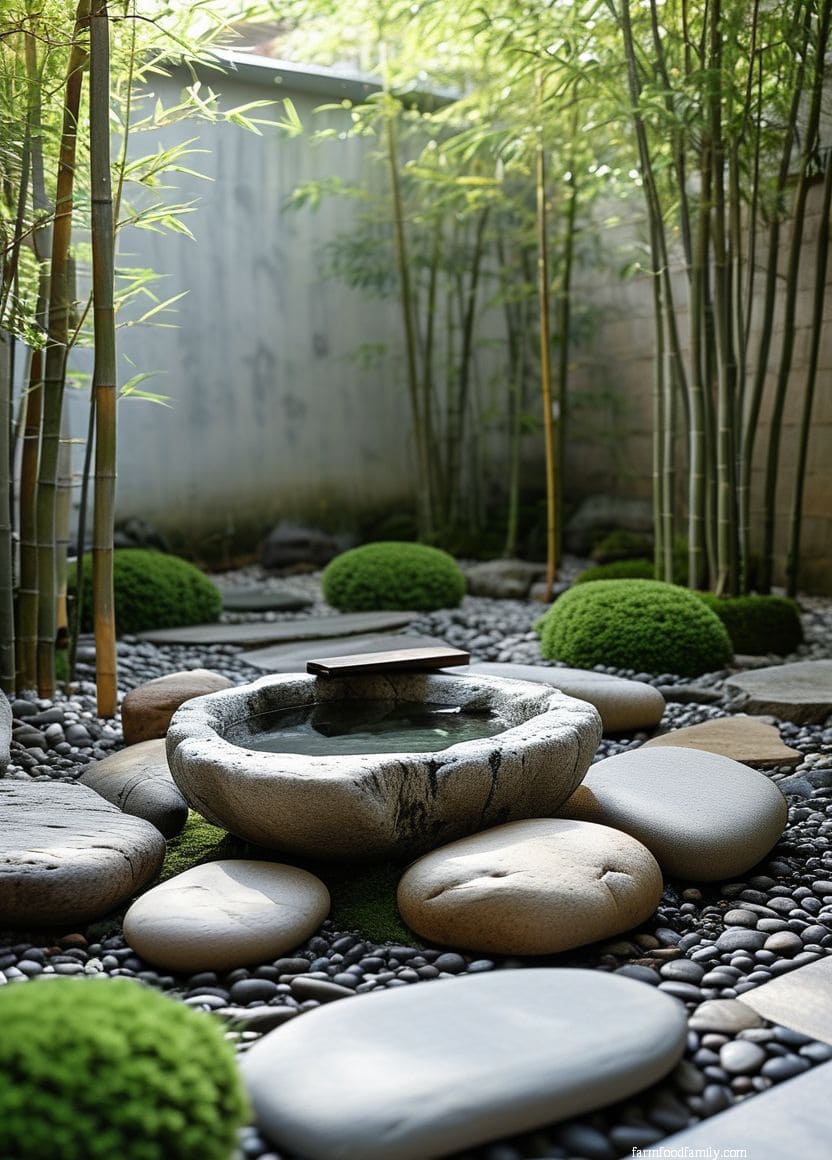
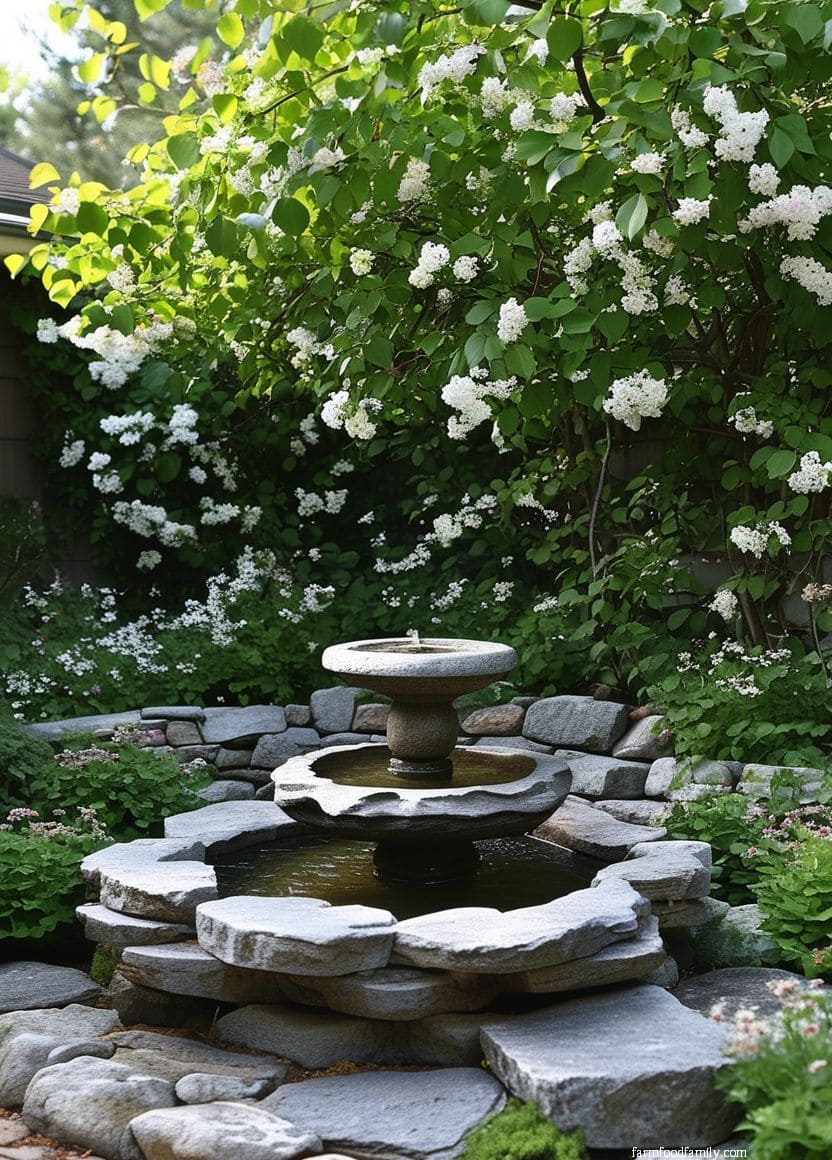
A small stone-lined pond, bubbling urn fountain, or stacked-stone waterfall brings movement and sound to an otherwise static front yard.
Stack flat stones dry (no mortar) around a preformed liner or basin for the most natural look, and hide the pump and tubing behind or beneath the stone rather than routing it visibly.
Check local mosquito-control guidance if the water sits still between pump cycles, moving water is far less hospitable to mosquito breeding than standing water.
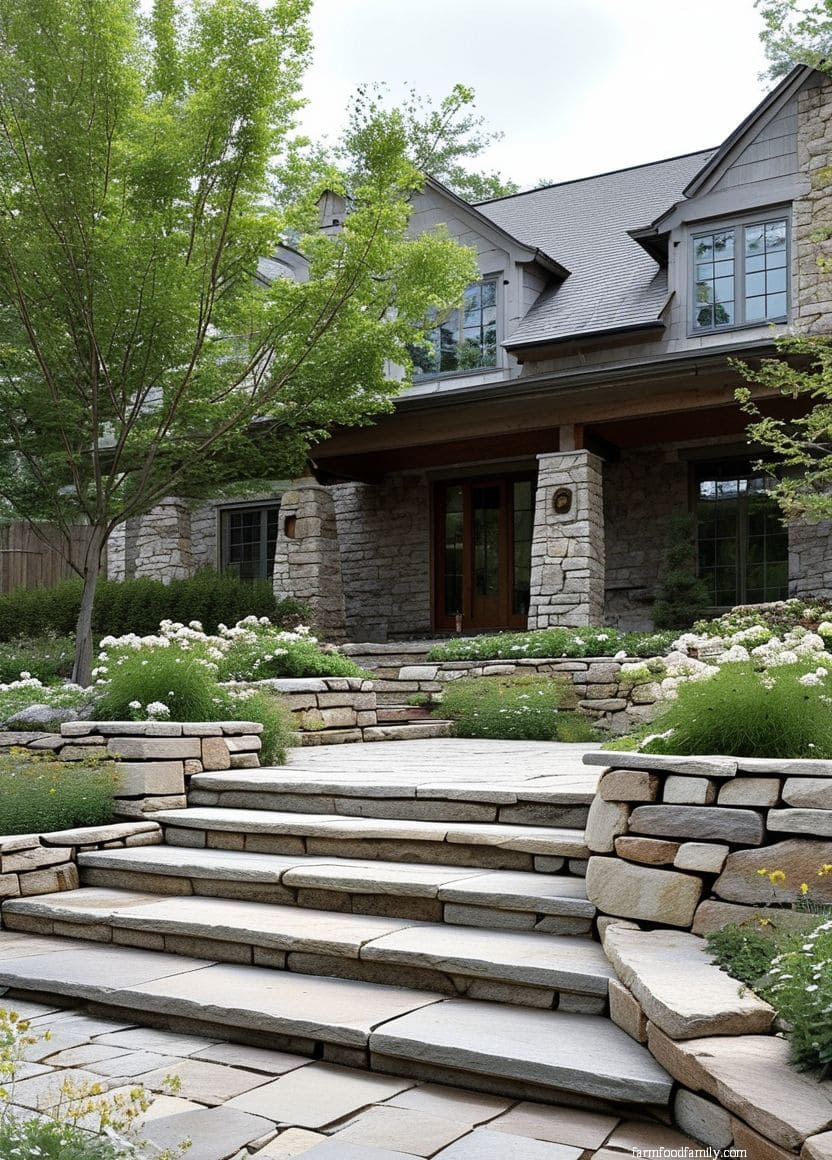
11. Stone Steps
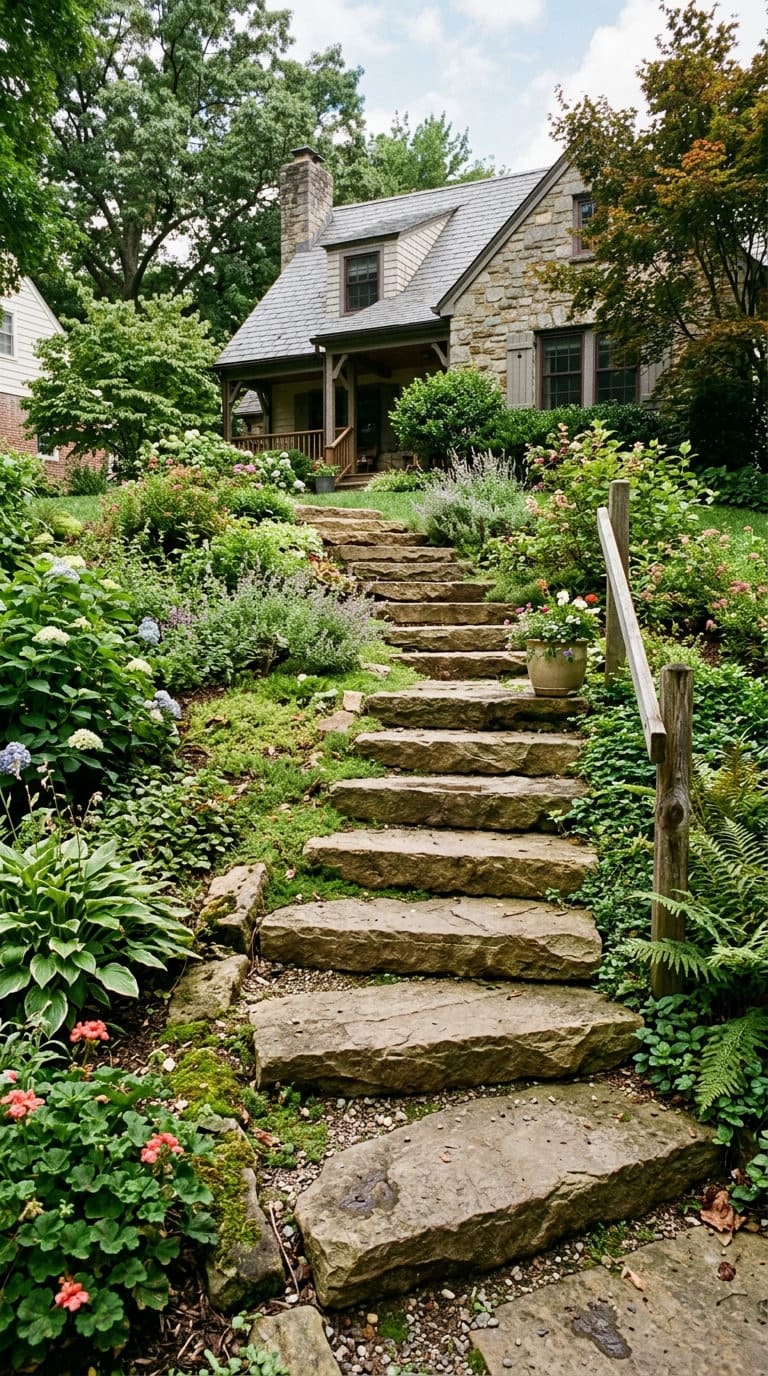
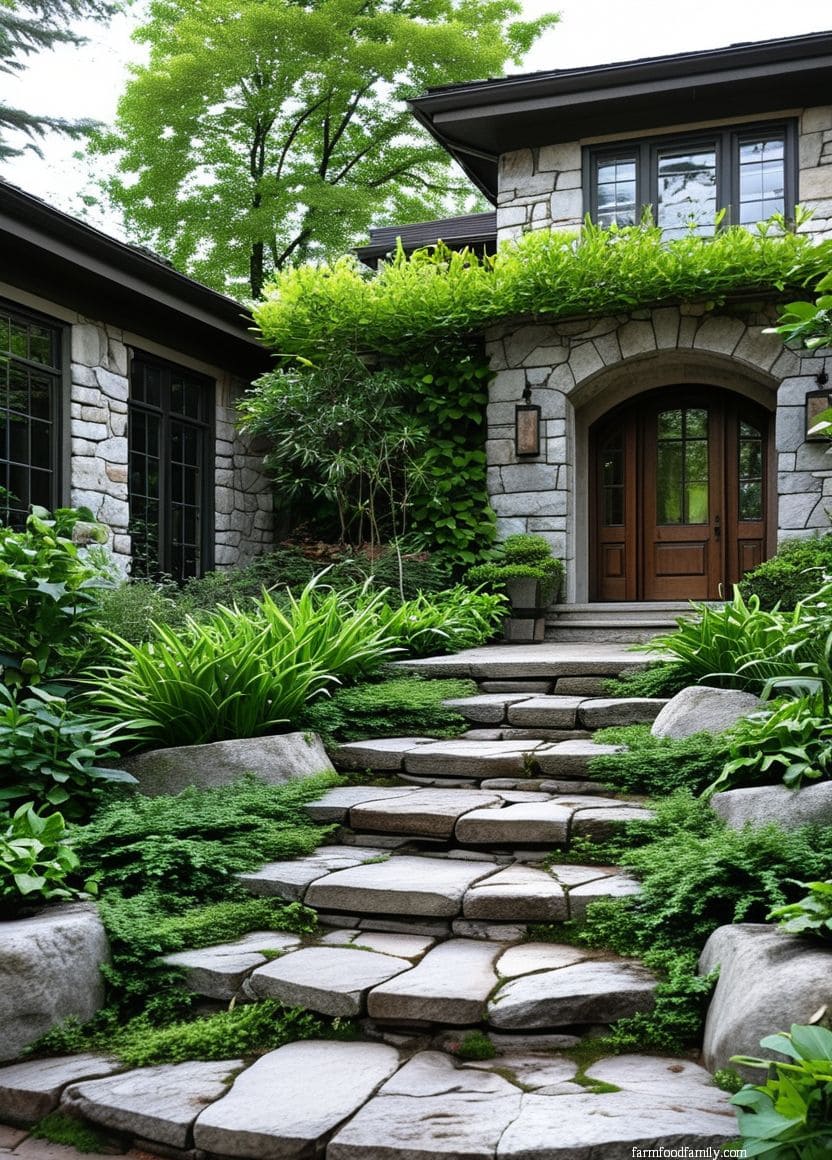
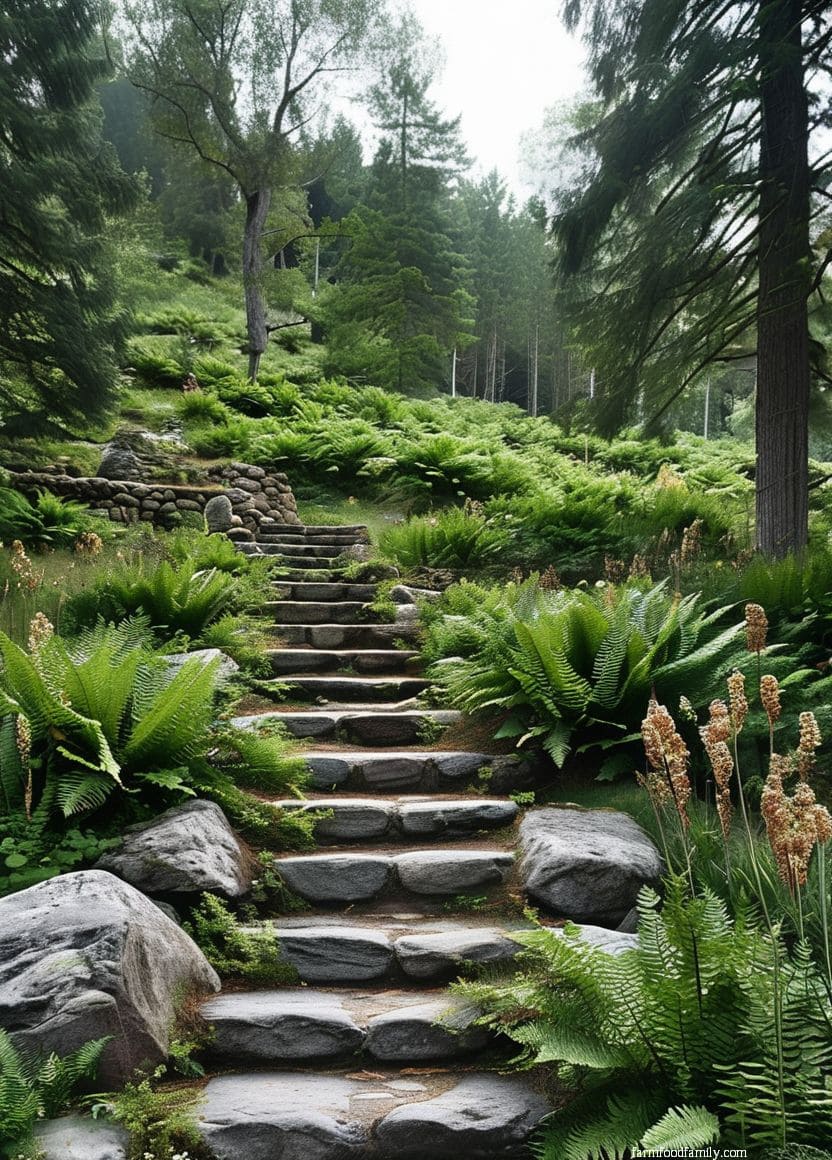
Stone steps need the same compacted base treatment as any other stone hardscape (see section 1), plus a consistent rise-and-run so nobody trips: 6 to 7 inches of rise per step is the standard comfortable range, matched with a run (depth) of at least 11 inches.
Choose thick-cut slab stone for durability underfoot rather than thin veneer pieces, which can crack under repeated foot traffic.
12. Stone Edging
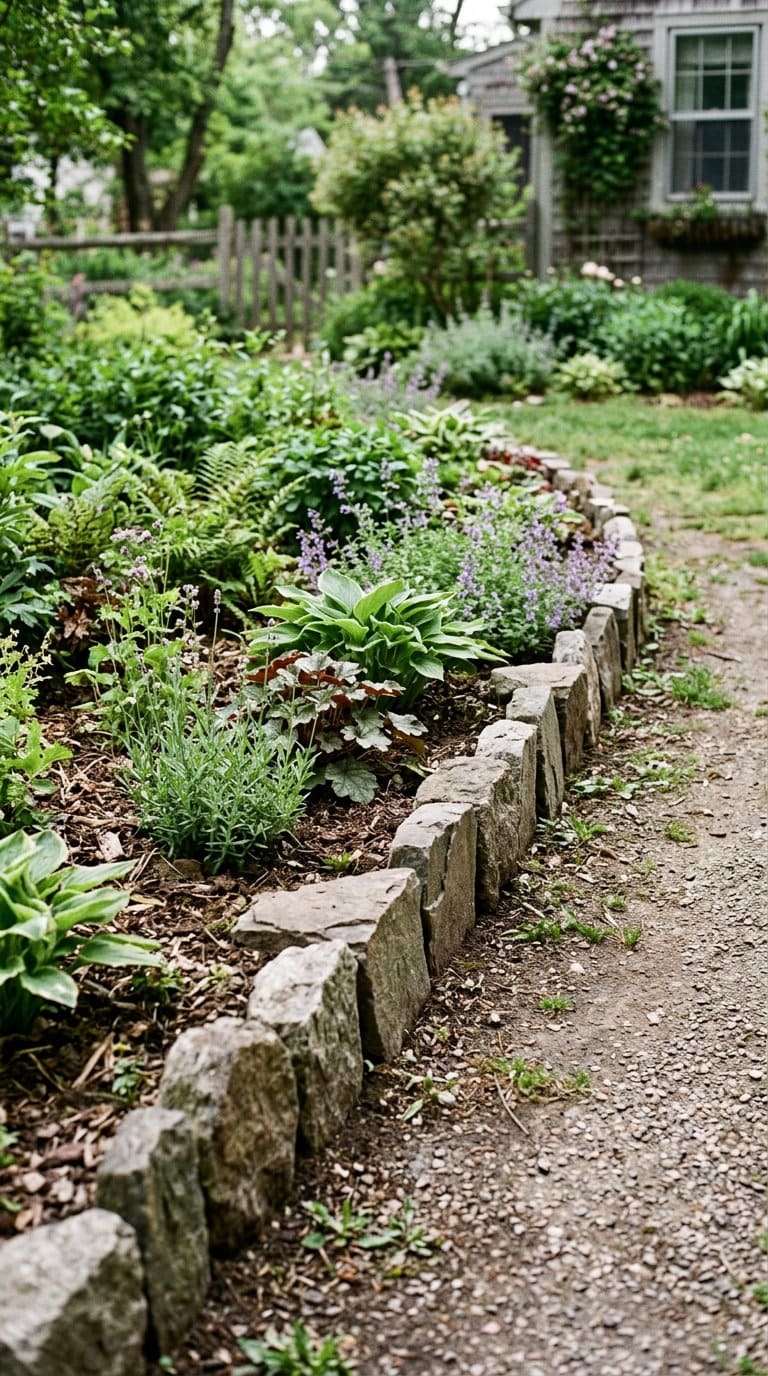
A single, low course of stone along a bed or path edge is one of the simplest upgrades on this list.
Cobblestones set on end give a rounded, cottage-garden look, while flat-laid pavers give a cleaner, more architectural line. Bury about a third of each stone below grade so mowing and edging don’t shift it out of place over time.
13. Stone Mulch
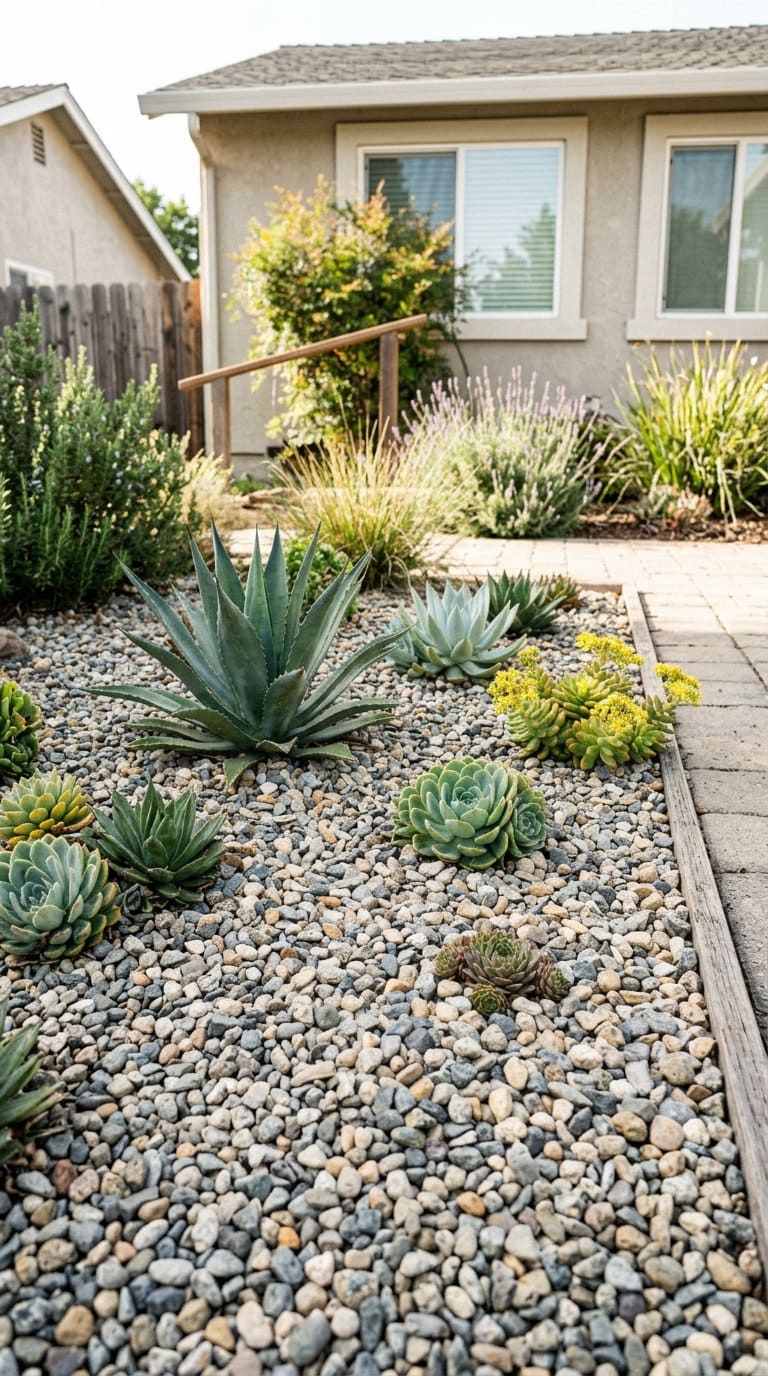
Crushed stone or pea gravel used as mulch around plants (instead of wood mulch or bark) lasts far longer and never needs annual replacing.
It’s a genuinely good fit around drought-tolerant plants and succulents, but keep it away from acid-loving plants like azaleas and rhododendrons, since stone mulch doesn’t break down and add organic acidity to the soil the way bark mulch does.
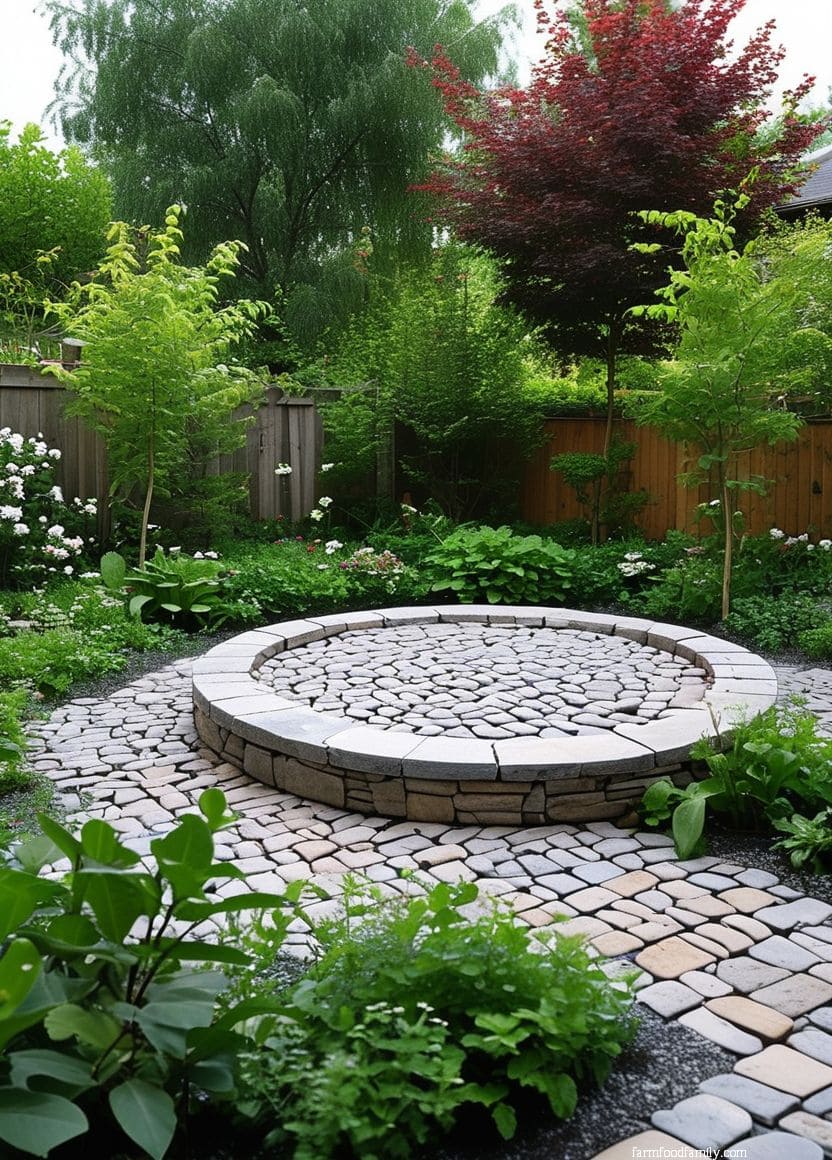
14. Stone Patios
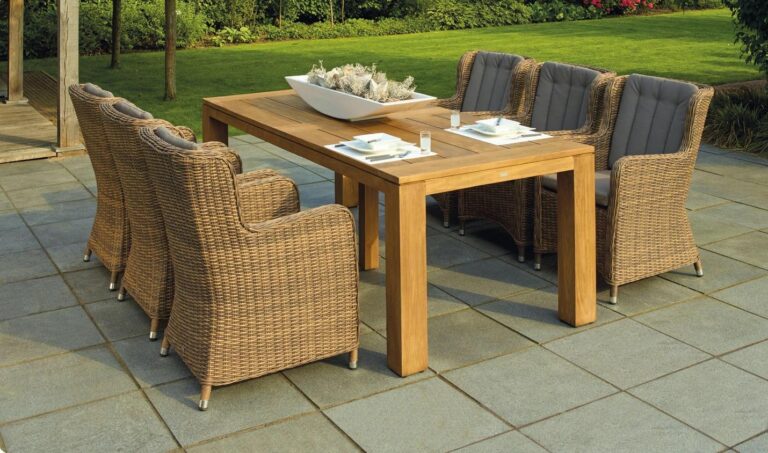
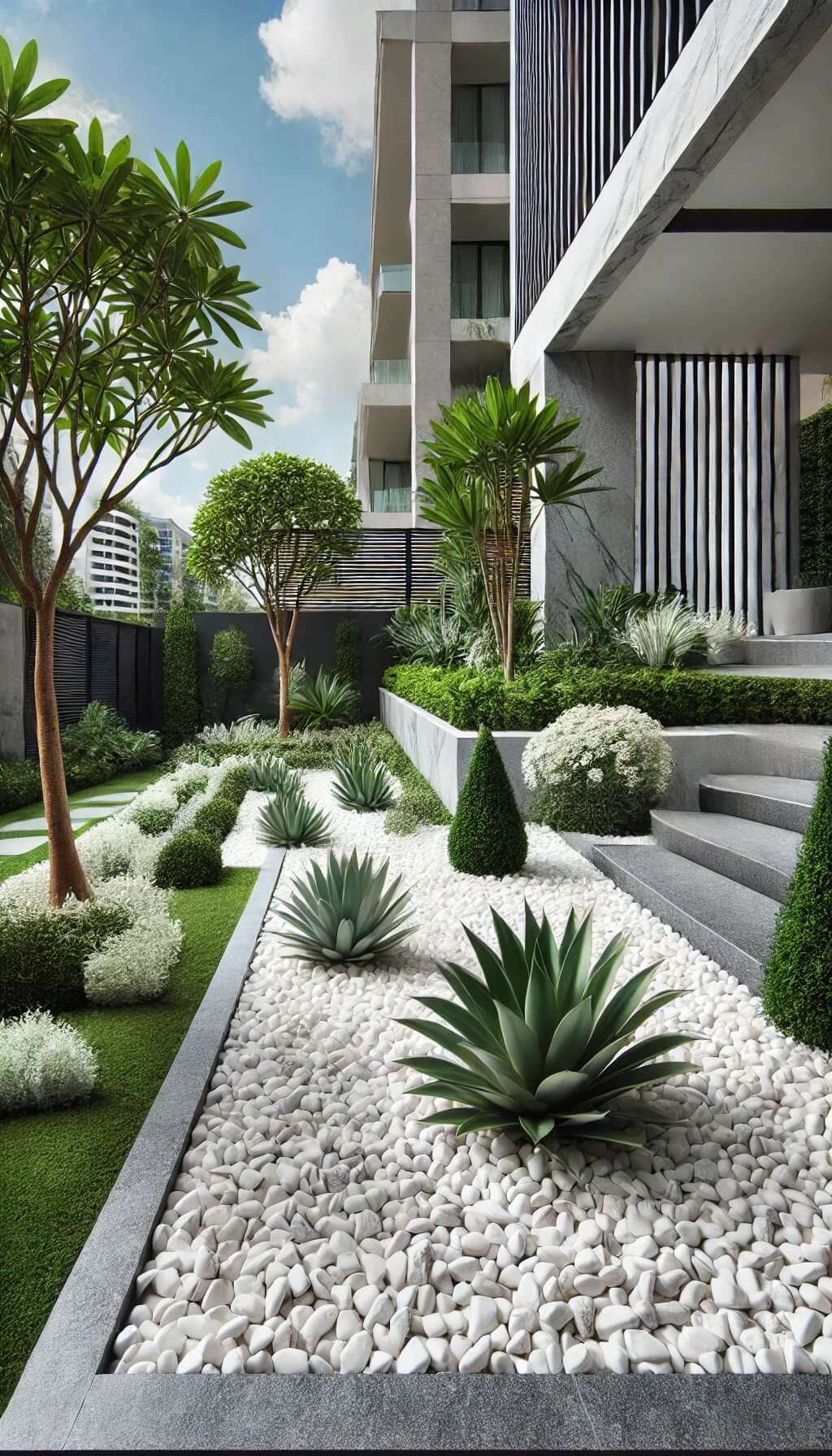
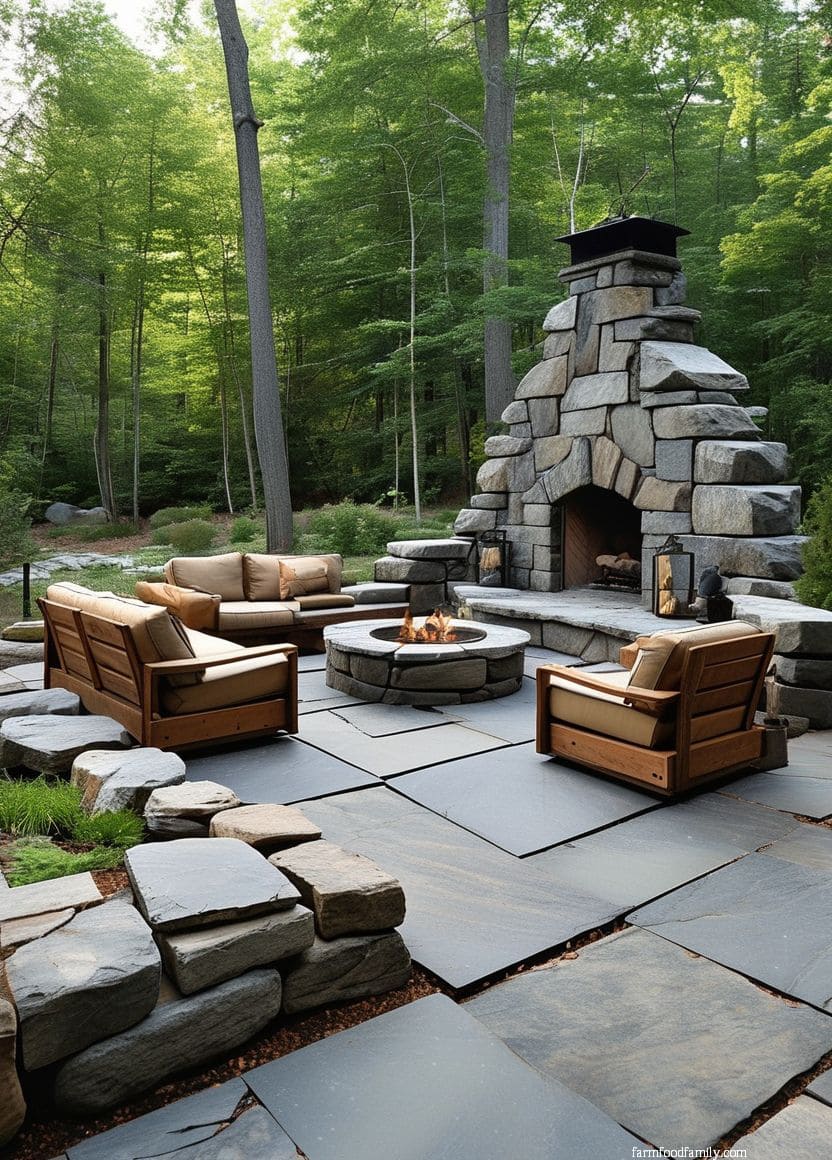
A stone patio is a bigger commitment than a path, both in material and base depth, so it’s worth getting the fundamentals right. This Old House’s Roger Cook recommends 1½ to 2-inch-thick bluestone for most patios, thick enough to handle foot traffic and furniture without cracking.
On sizing, landscape architect Paul Maue’s rule of thumb is roughly 25 square feet of patio per person you want to comfortably seat, and his real warning is worth repeating directly: “Getting the scale right is the hardest thing, you always need more space than you think.”
15. Stone Fire Pits
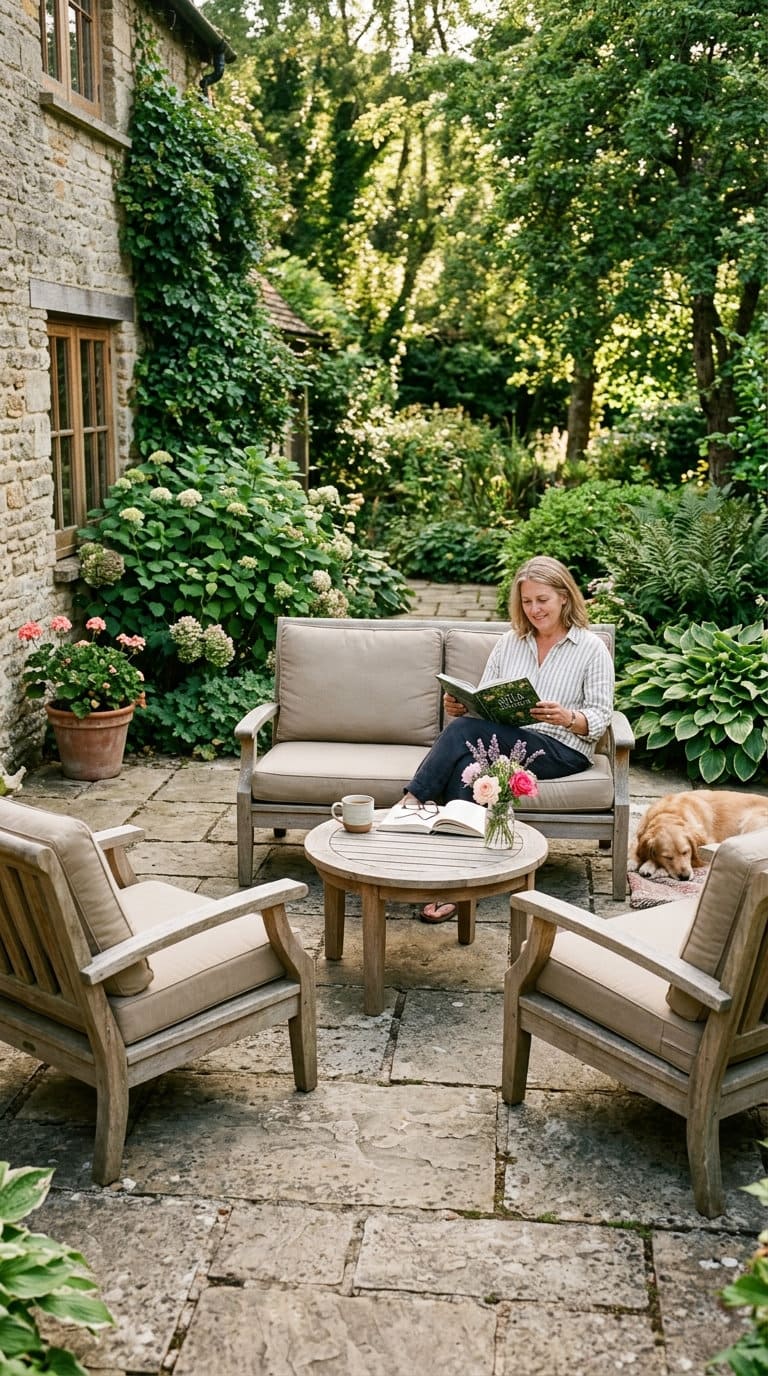
Follow the safety guidance from section 1 here directly: never build the fire pit’s inner ring or base from river rock, sandstone, limestone, or bluestone, since trapped moisture in these stones can flash to steam and crack or explode the stone when heated.
Fire brick or a fire-rated paver product built specifically for direct flame contact is the safe choice for the inner ring.
Decorative river rock is fine scattered around the seating area well outside the actual fire zone, just not touching the flame or the coals.
16. Stone Planters
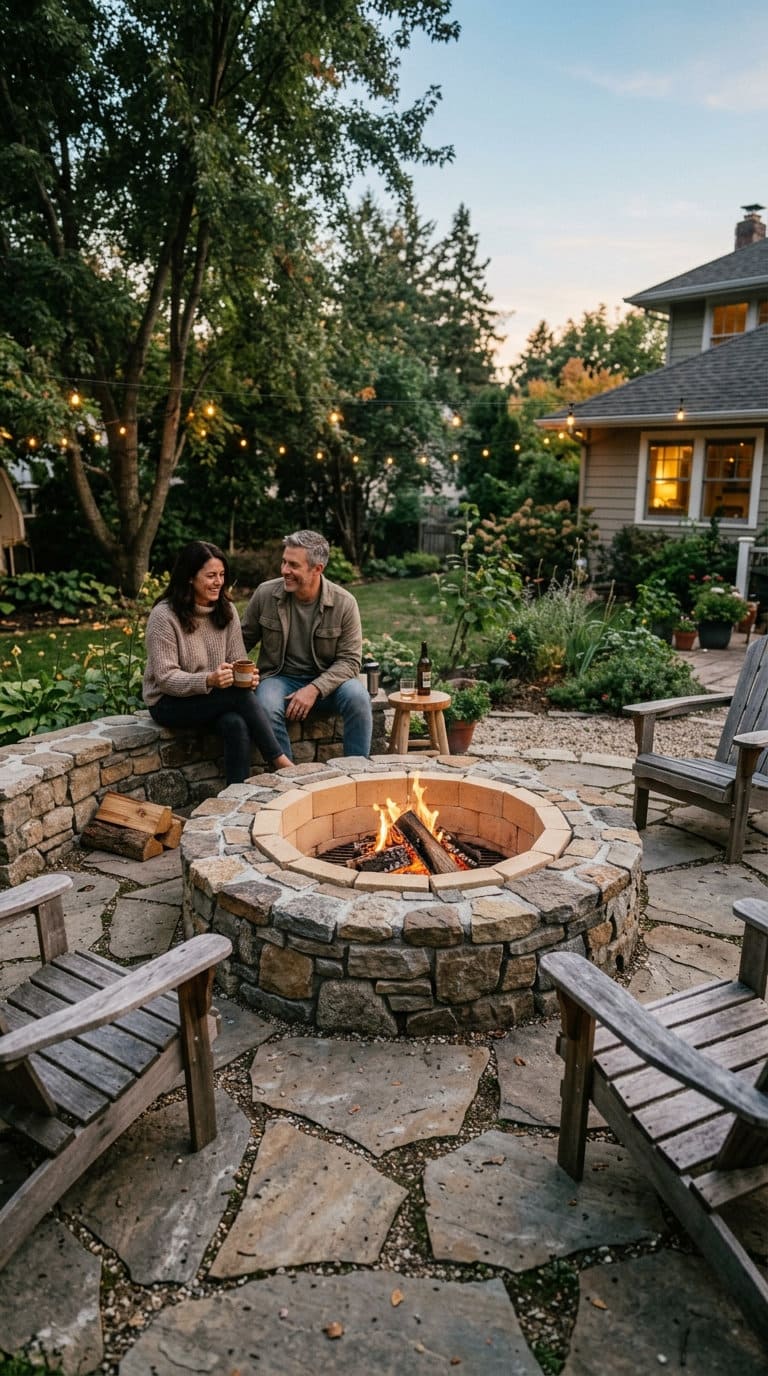
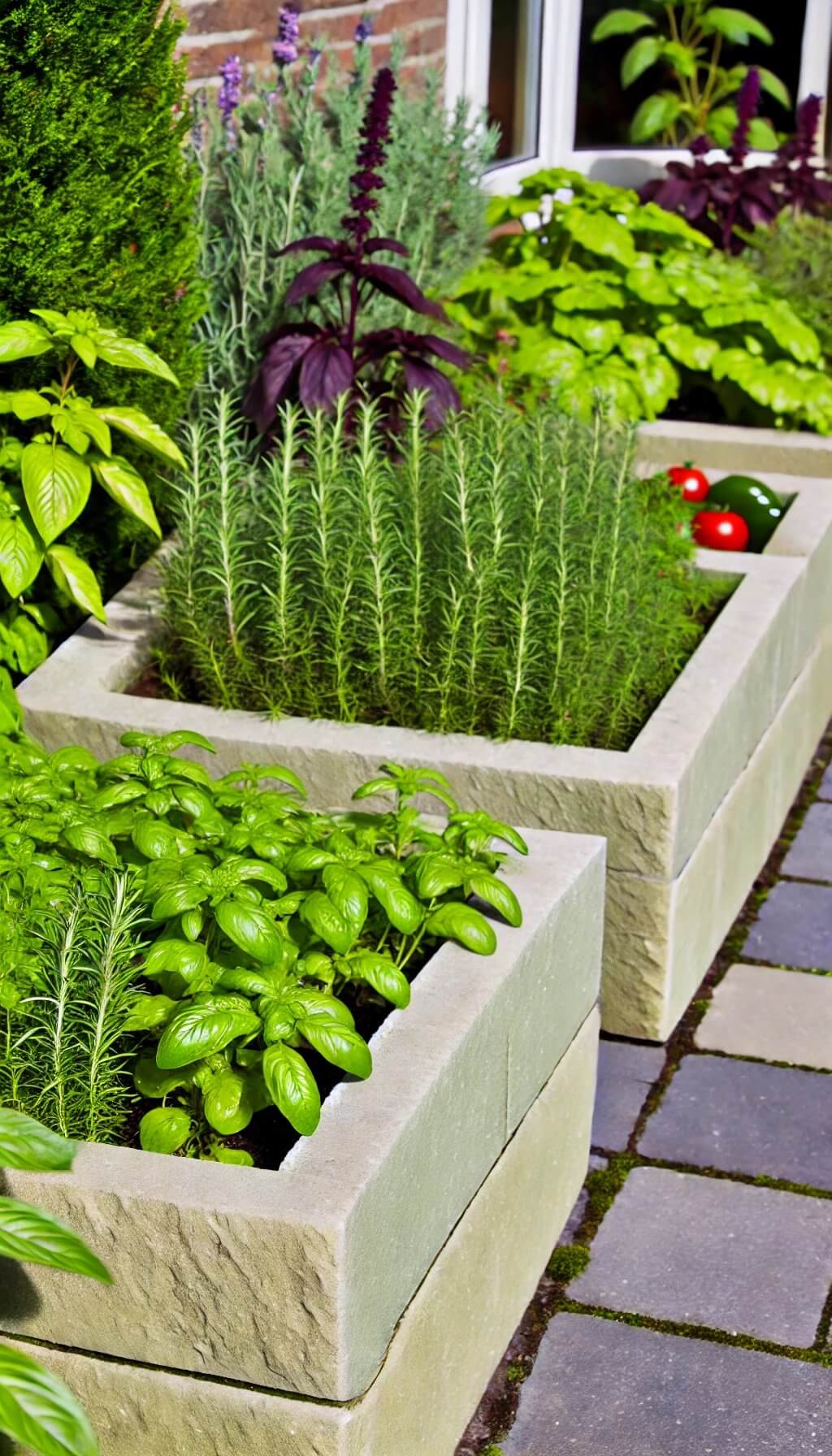
A planter box built from stacked stone or fitted stone veneer over a concrete block core gives a permanent, substantial look that a store-bought pot can’t match.
Make sure the base has drainage holes or a gravel layer at the bottom, stone looks solid but a planter without drainage will waterlog plant roots just as fast as any other container.
17. Stone Benches
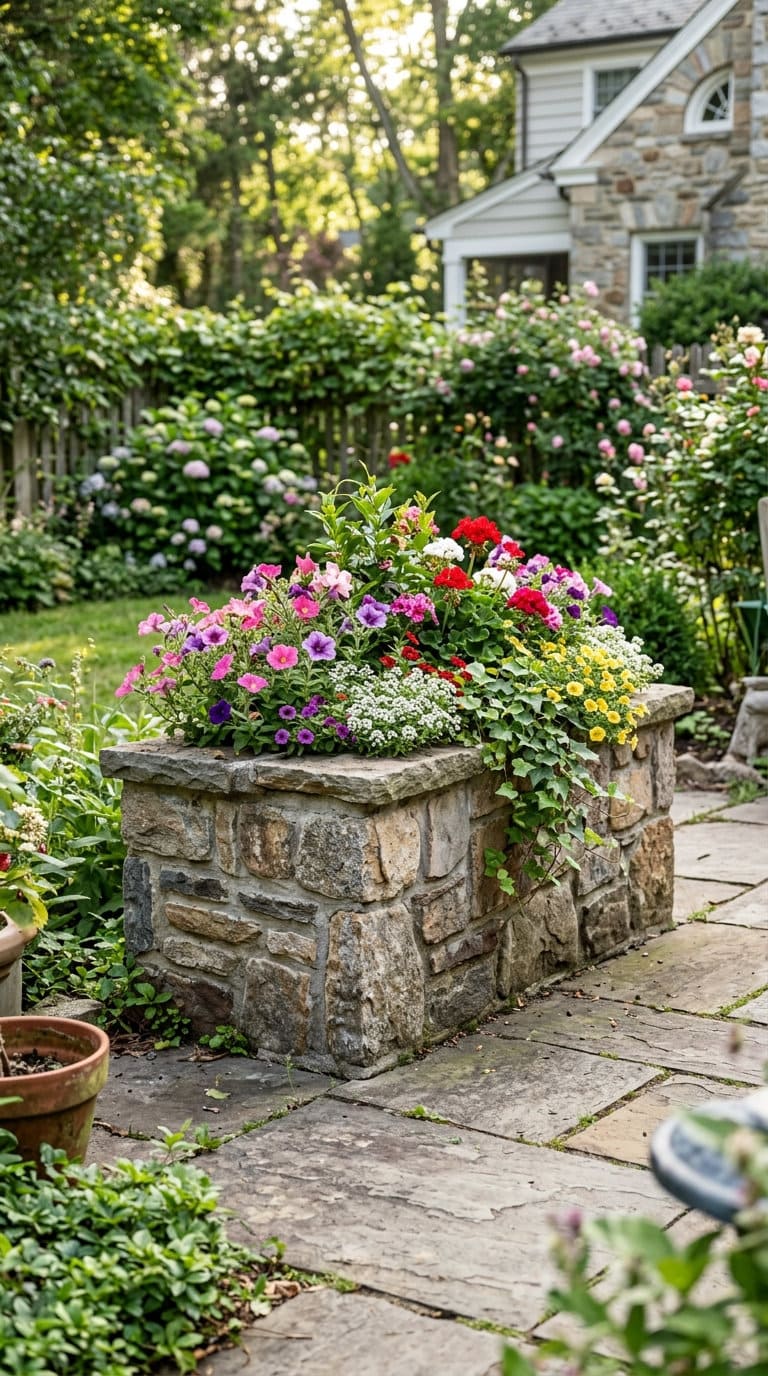
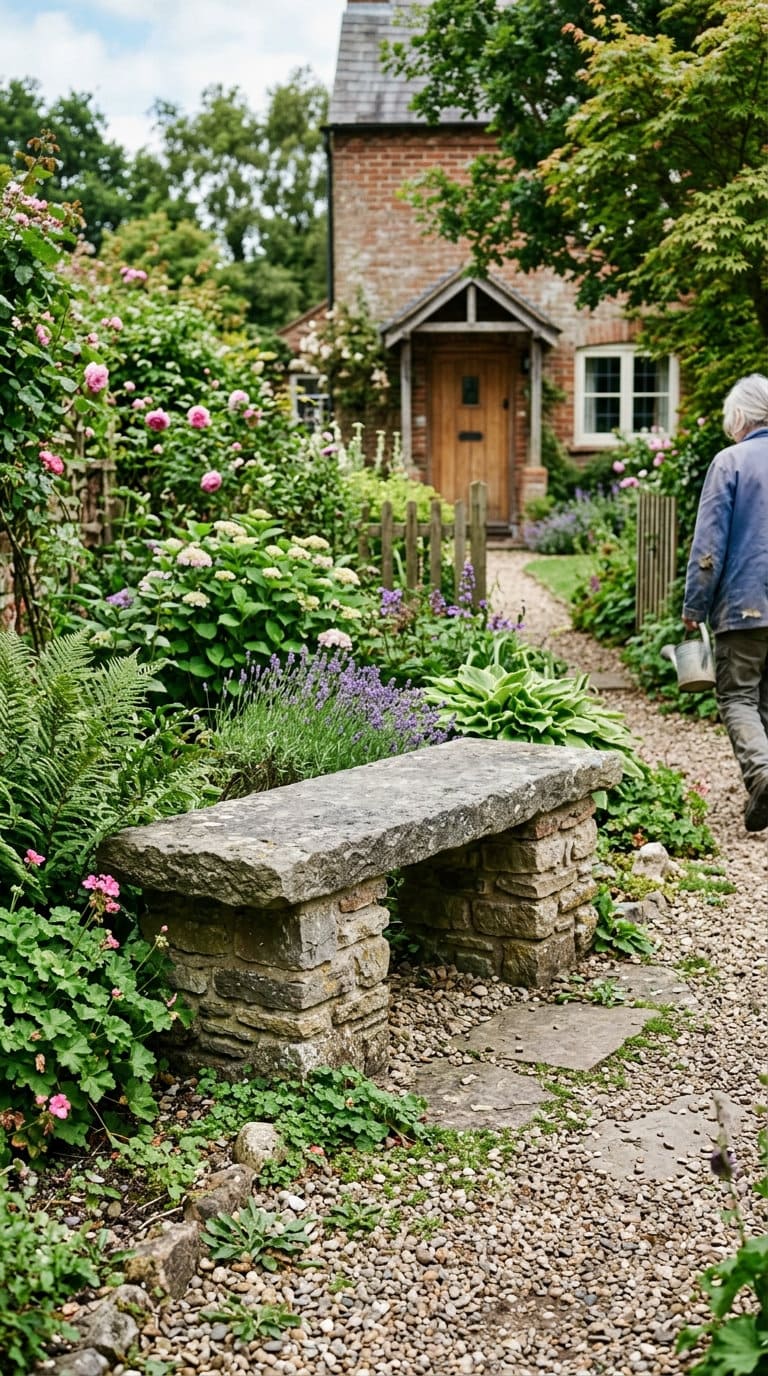
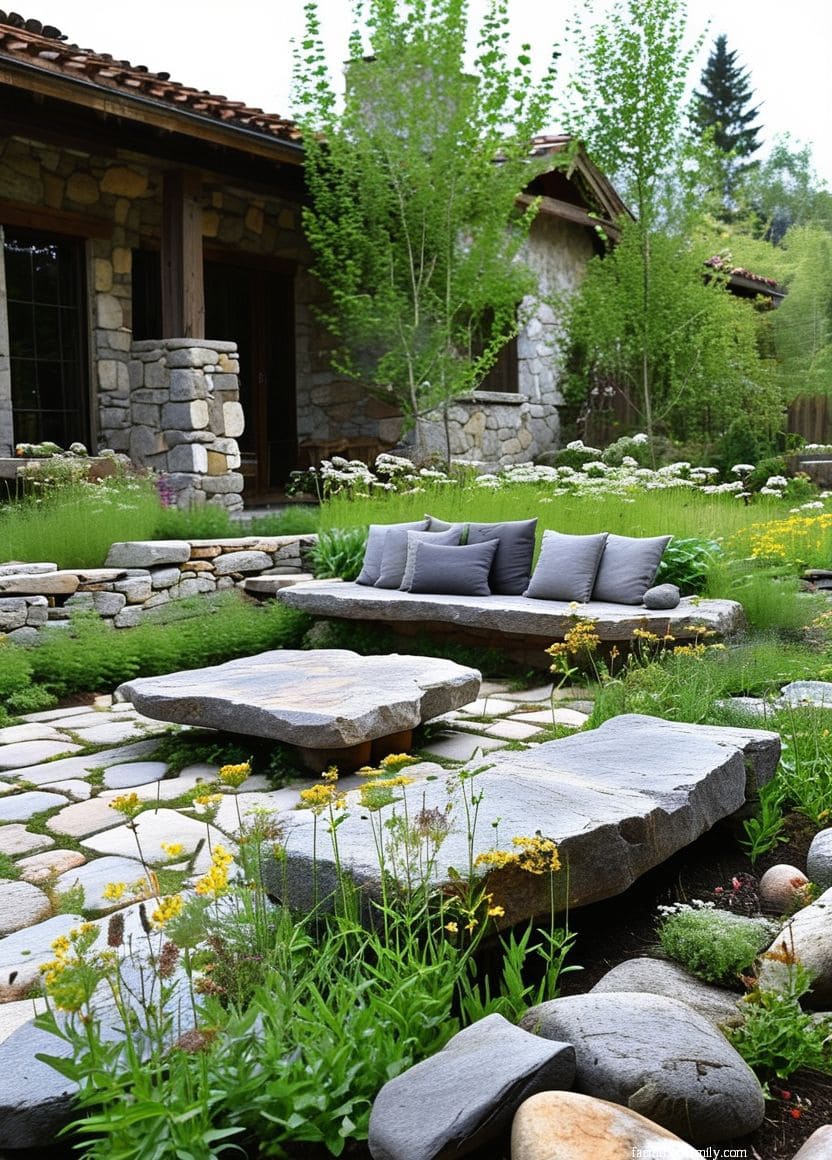
A simple stone slab set across two stacked stone piers makes a genuinely durable outdoor bench that needs zero maintenance beyond an occasional rinse.
Keep the seat height around 17 to 19 inches, comparable to a standard chair, and make sure the base piers are wide and stable enough that the bench can’t tip if someone sits on the edge.
18. Stone Sculptures
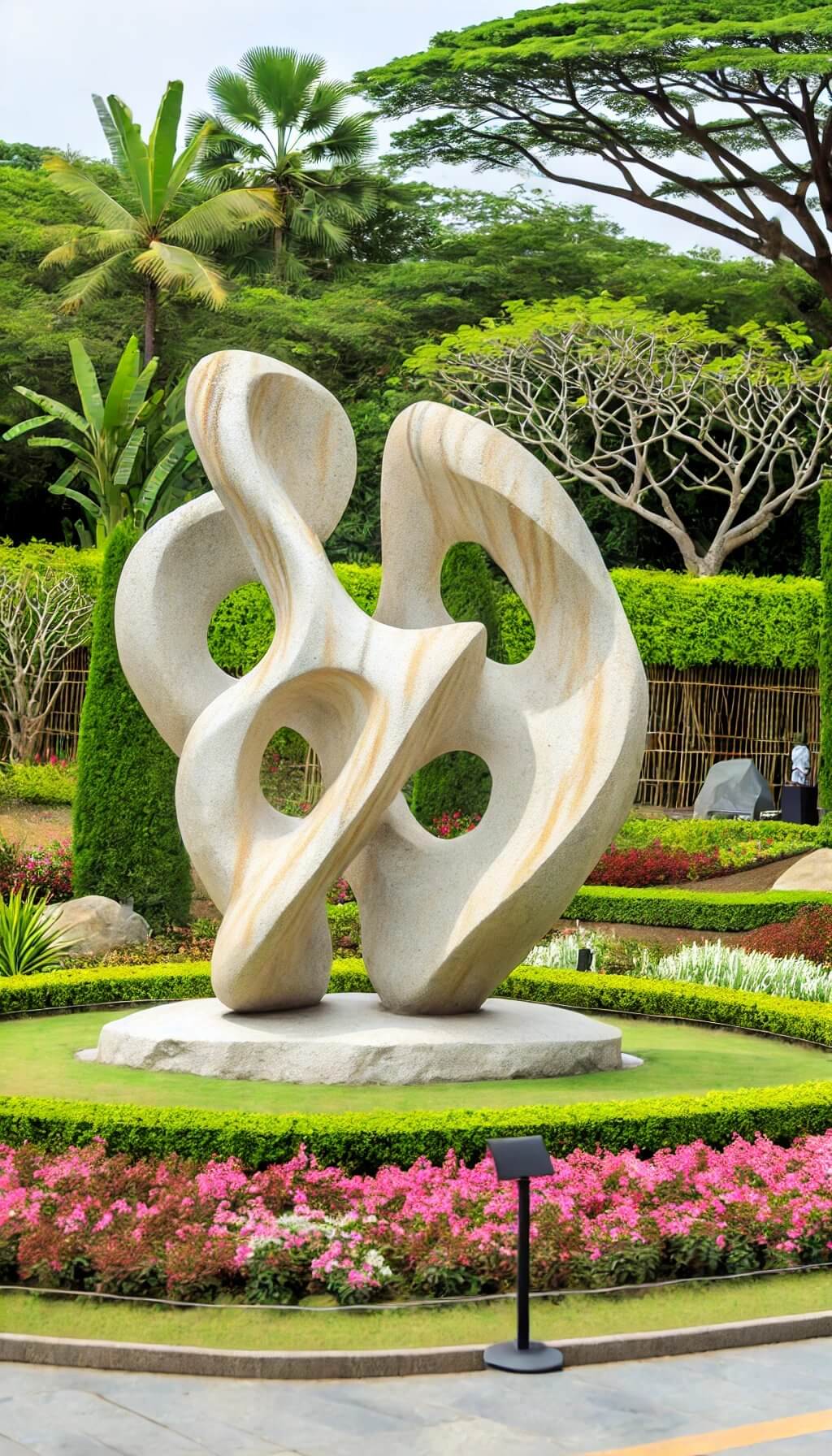
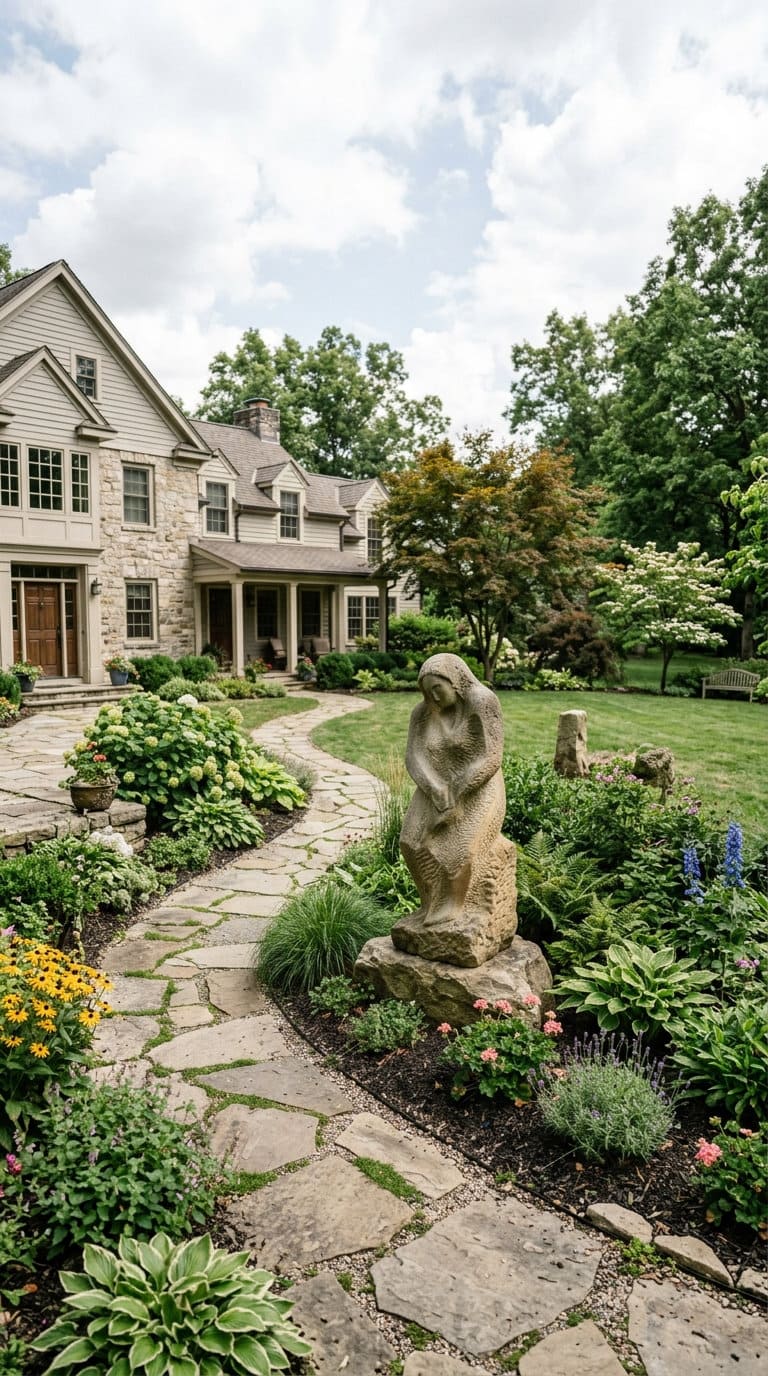
A carved stone sculpture, an abstract form, a classical figure, or even a simple balanced cairn of flat stones, gives a front yard a genuine focal point.
Keep the scale proportional to the space, a sculpture that would suit a large estate lawn can overwhelm a small suburban front yard.
Placement near a path bend or at the far end of a sightline from the street tends to work better than dead center in the lawn.
19. Stone Driveways
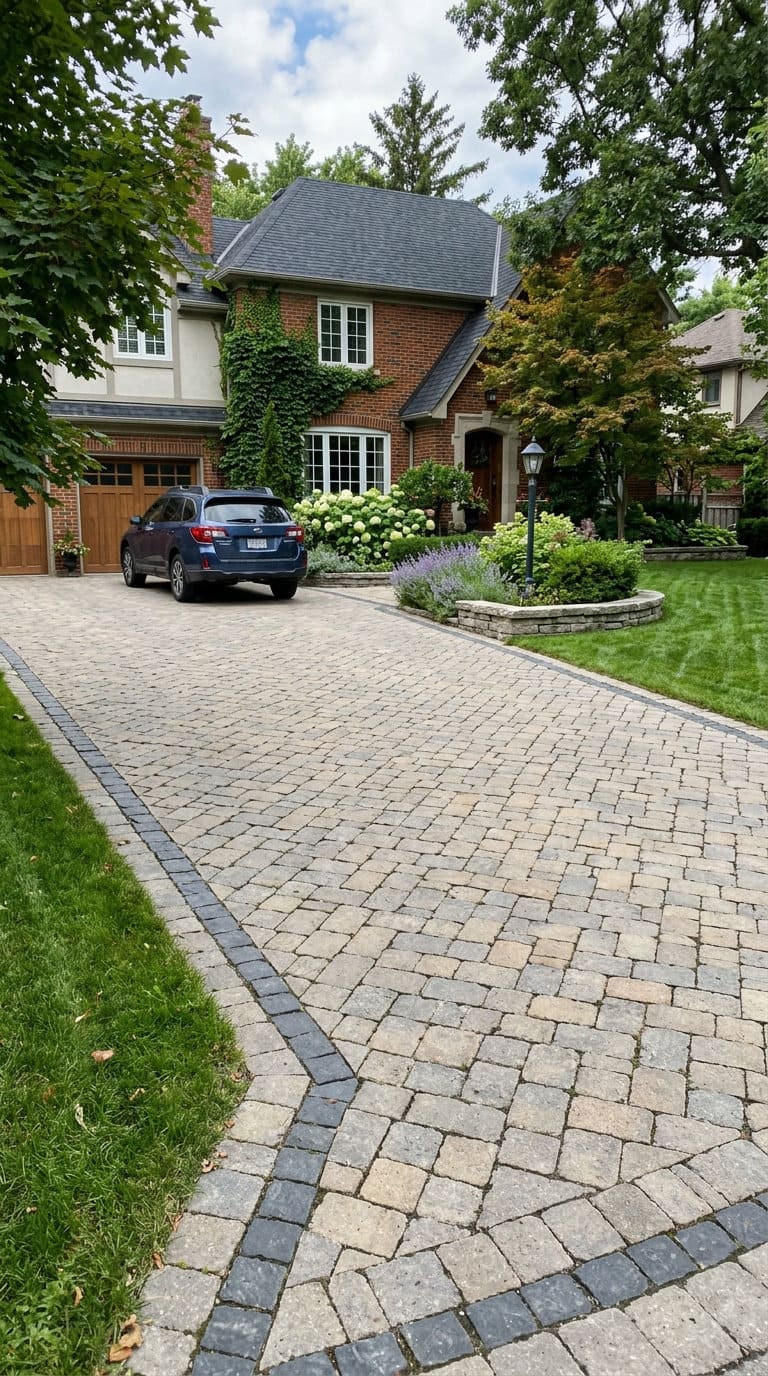
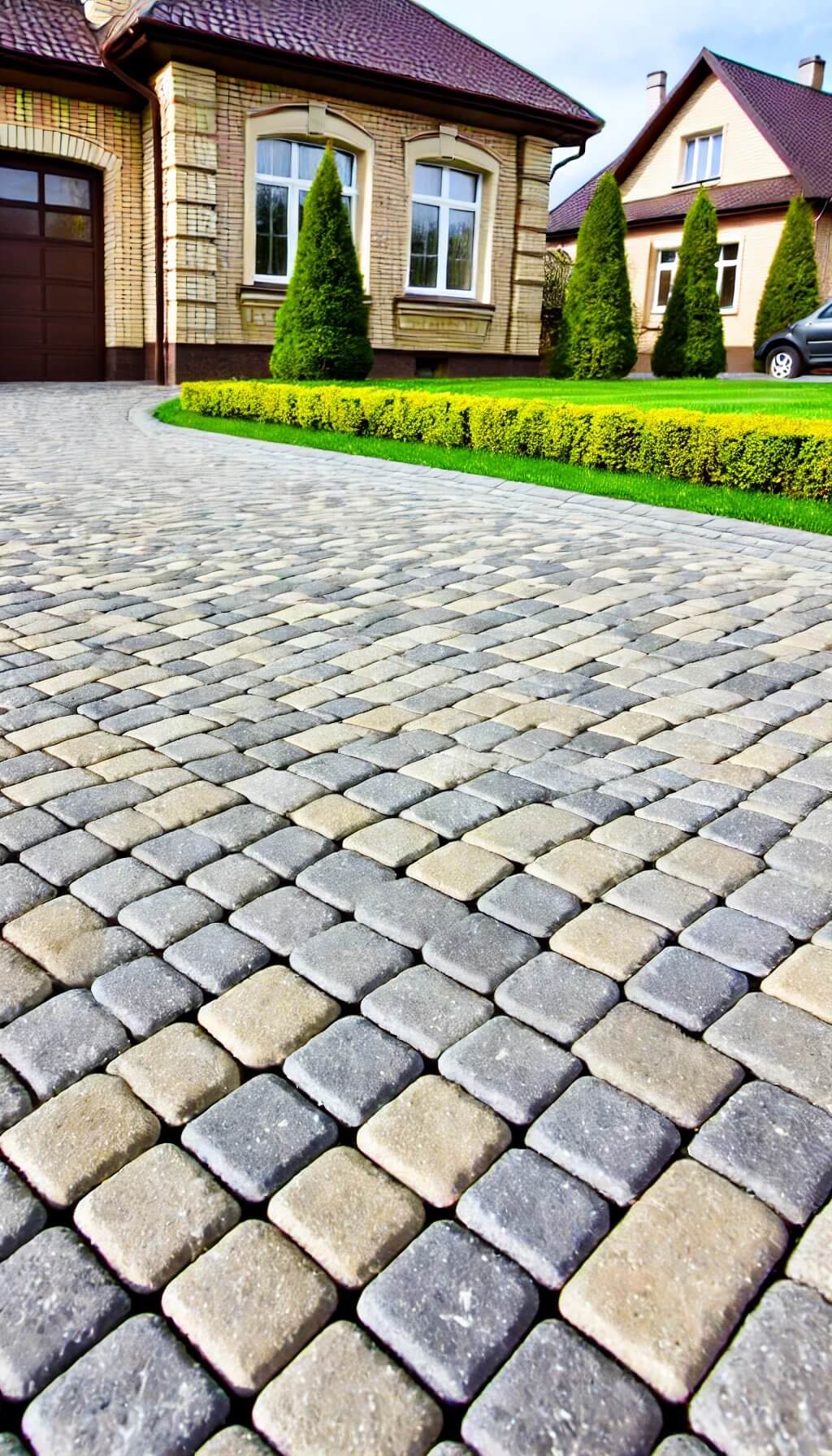
A stone driveway, whether cut paver, cobblestone, or a stabilized gravel surface, needs the deepest base of anything on this list. 6 to 8 inches of compacted gravel is standard for driveway loads, since a car’s weight is concentrated on a much smaller contact area than foot traffic and will find any weak spot in the base over time.
Stabilized gravel (gravel with a permeable grid or binder underneath) is a genuinely lower-cost alternative to full paver coverage if the budget doesn’t stretch to a full stone driveway.
20. Stone Ground Covers
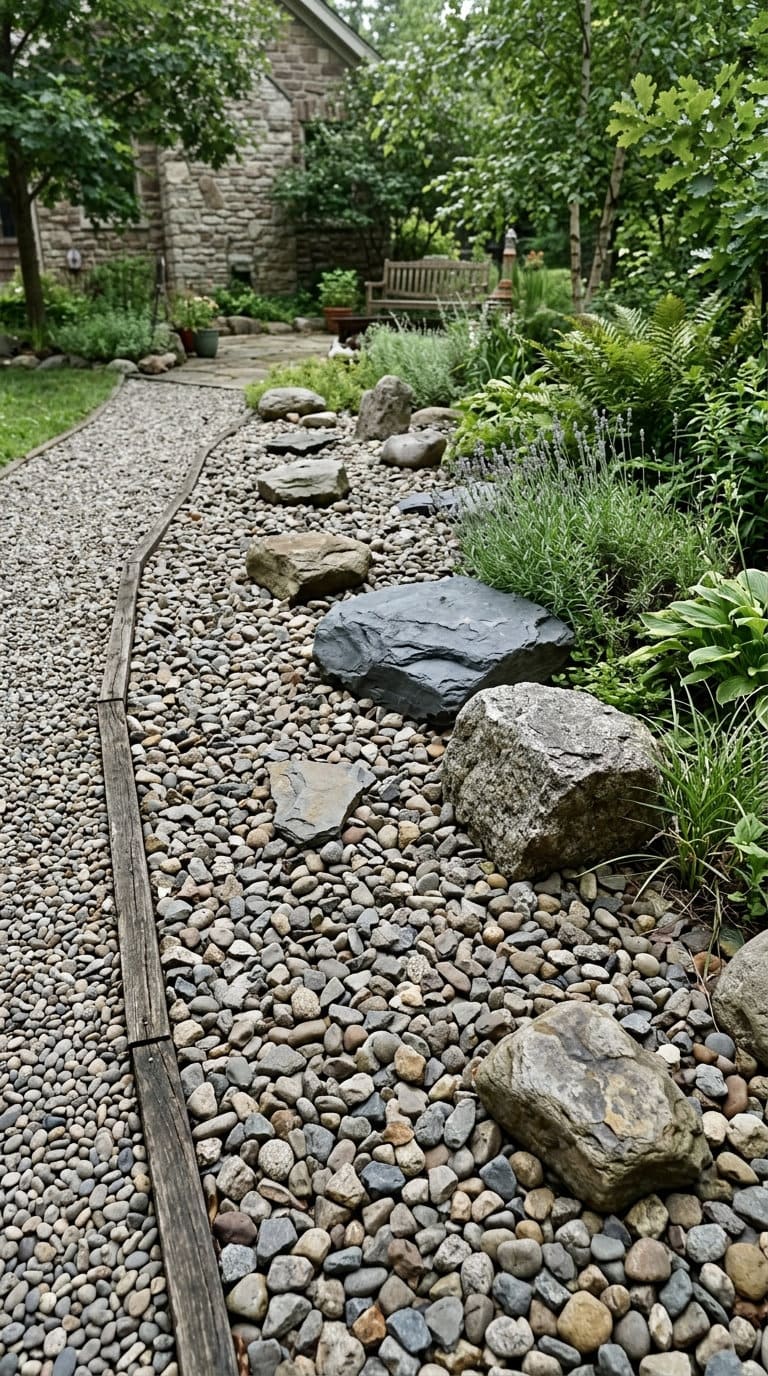
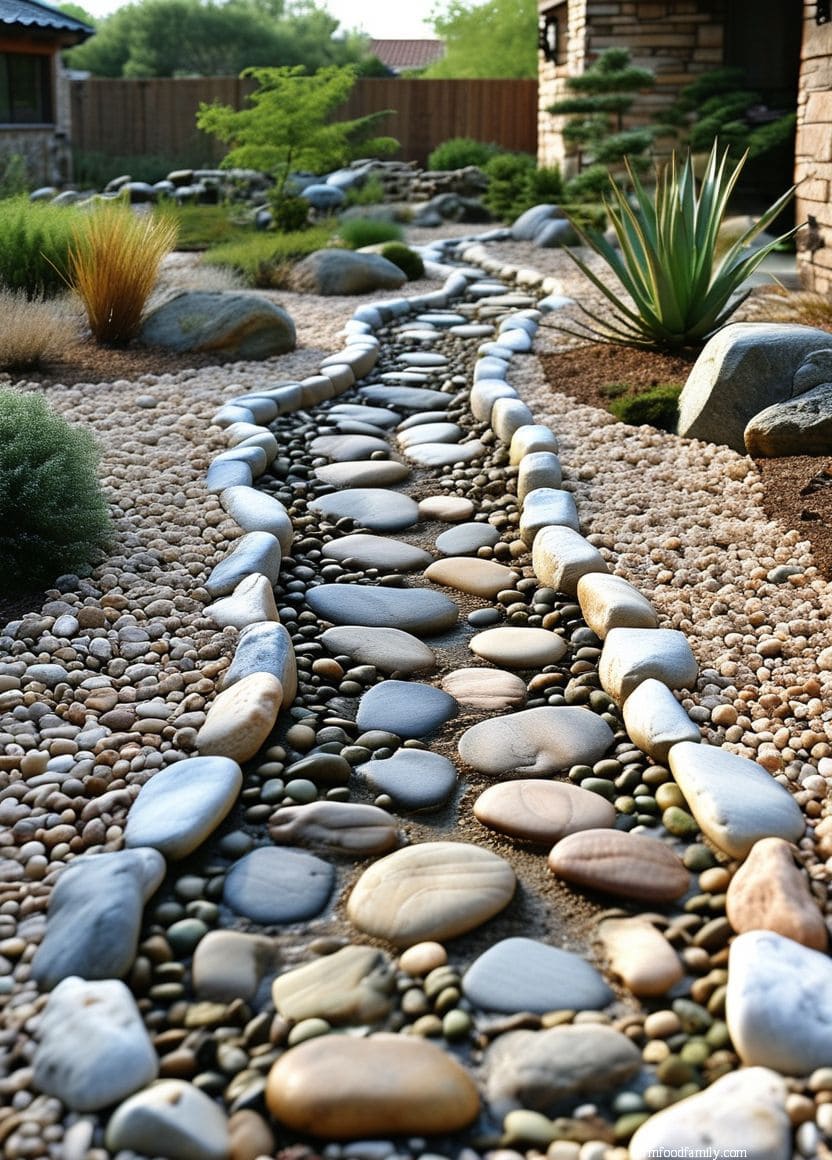
Beyond a single gravel bed, mixing stone sizes, small pebbles near a path edge, medium gravel filling the middle ground, and occasional larger accent stones, gives a front yard’s stone areas more visual depth than one uniform gravel size everywhere.
This approach reads as more deliberately landscaped than a single flat gravel bed and gives you flexibility to vary texture zone by zone.
A few more things worth planning around
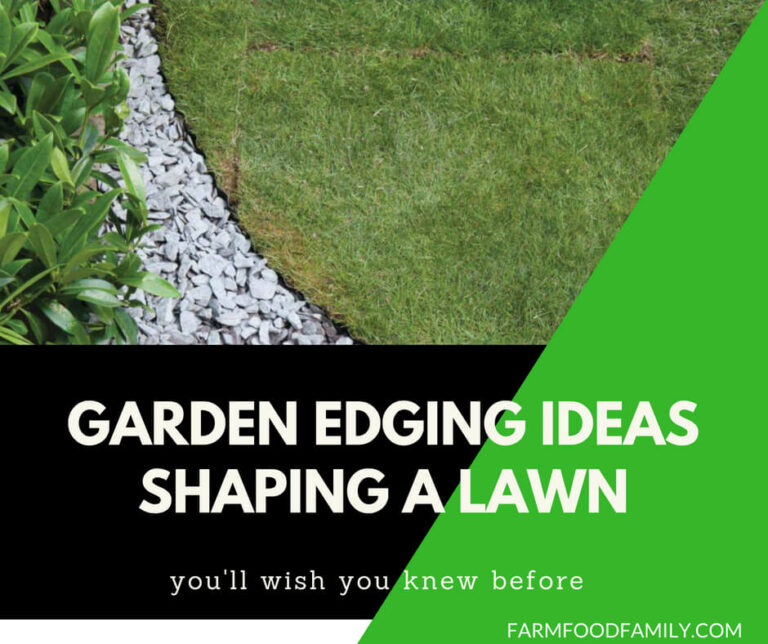
If boulders caught your eye in idea 5, boulder landscaping ideas goes deeper on placement and scale. For idea 9, rock garden ideas has more on plant pairings. If you’re leaning toward the gravel approach in ideas 4 or 13, white gravel decoration ideas covers a specific popular gravel style. For stone edging specifically, shaping a lawn with slate chippings is worth a look. And if a retaining wall is part of a bigger drainage or grading project, culvert landscaping ideas covers related stonework for managing water flow.
FAQ
How deep should the gravel base be under a stone pathway or patio?
Pathways need 3 to 4 inches of compacted gravel, patios need 4 inches or more, and driveways need 6 to 8 inches, with roughly ¼ inch of fall per foot so water drains off instead of pooling. Skipping this is the single most common reason stone installations sink or shift within a few years.
Do I need a permit for a stone retaining wall?
It depends on height and what the wall is holding back. Most jurisdictions exempt walls under 3 feet, some allow up to 4 feet, but anything taller, or any wall retaining water, a structure, or unstable soil, typically needs a licensed engineer’s stamped plan. Check your local building department before starting, since the threshold genuinely varies by location.
Can I use river rock in a fire pit?
No, not as the liner or base touching direct flame. River rock, along with sandstone, limestone, and bluestone, traps moisture in internal voids that can flash to steam under heat and crack or explode the stone. Fire brick or a fire-rated paver is the safe choice for the parts touching flame. River rock is fine as decorative surround well outside the actual fire zone.
How much does a stone patio cost?
A dry-laid flagstone patio runs roughly $15 to $32 per square foot all-in, mortar-set jumps to $20 to $42, and concrete-set runs $23 to $45, with the compacted gravel base adding another $2 to $5 per square foot on top of the stone itself.
Wrapping It Up
Stone landscaping in the front yard delivers a timeless, elegant, and practical solution for homeowners looking to make a lasting first impression. The beauty of stone lies in its versatility and ability to pair with nearly any architectural style.
Its durability ensures that your yard stays polished with minimal upkeep, while its variety of colors and textures opens the door to creative, personal expression.
If this article has assisted you on your landscaping journey, leave a comment below and share it with family and friends!
Never miss an update — choose FarmFoodFamily as your preferred source on Google.
How it works: Tap the button below to open Google's settings page, then check the box next to FarmFoodFamily.
Tap the checkbox to turn it blue — that's how you know it's set.