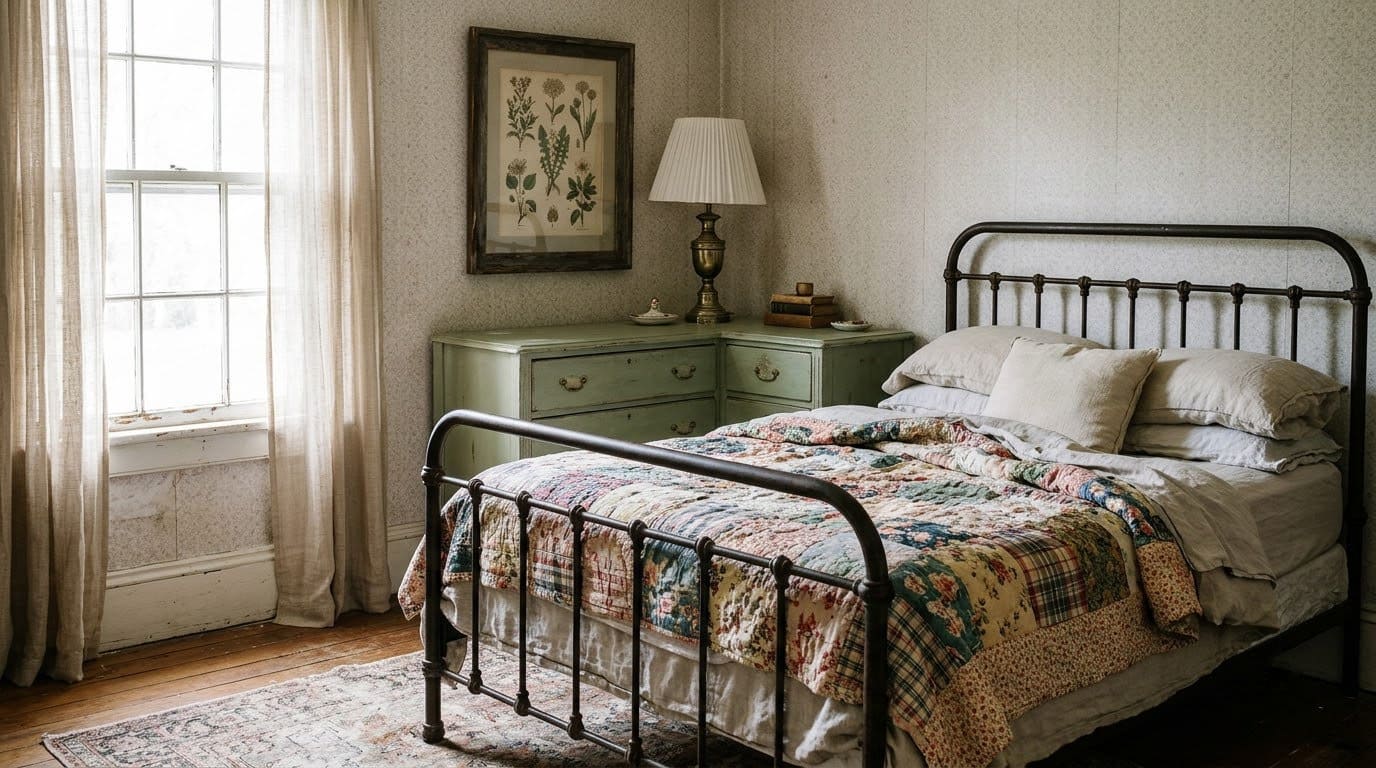
8 Charming Vintage Bedroom Decor Ideas That Are Safe and Fit Right
A vintage bedroom feels warm and layered when you commit to one era, as long as you check the paint, the bed size and the wiring before you bring old pieces home.

Never miss an update — choose FarmFoodFamily as your preferred source on Google.
How it works: Tap the button below to open Google's settings page, then check the box next to FarmFoodFamily.
Tap the checkbox to turn it blue — that's how you know it's set.
A vintage bedroom feels warm and layered when you commit to one era, as long as you check the paint, the bed size and the wiring before you bring old pieces home.
Products We Recommend
This post contains affiliate links. We may earn a commission on qualifying purchases at no extra cost to you.

Lamp Making Kit, 3-Way Socket With 12 Foot Cord, Antique Brass
Replacement socket, cord and hardware set for the lamp rewiring in idea 6.
Shop Now
Command Medium Picture Hanging Strips, 16 Pairs
Damage-free strips for lightweight frames on the gallery wall in idea 7, rated 10 lb per set.
Shop Now
GO&SO Set of 2 White Linen Drum Lamp Shades, 10 x 10 x 10 Inch
Spider-fitter shades that give a rewired vintage lamp base a fresh look in idea 6.
Shop NowMost vintage bedroom ideas stop at “hang an old door and add a suitcase.” That’s a fun photo. But old pieces bring real questions.
Will a modern mattress fit that antique bed? Is the paint on that dresser safe to sand? Can you plug in a lamp from 1950?
These eight ideas answer those questions. Each one gives the look, the checks and the budget, so you can build a room that feels old and lives well.
Quick Answer
Pick one era and let it lead. A single look, such as 1920s glam or 1970s earth tones, reads as intentional. A mix of everything reads as clutter.
Test old paint before you touch it. The EPA says homes built before 1978 are more likely to have lead-based paint. It also lists refinishing old furniture as a job that can expose you to lead.
Measure before you buy an antique bed. Sizes vary a lot, and many frames need new rails or a custom mattress. A typical antique twin runs about 72 inches long, while a modern twin mattress is 75.
Have old lamps rewired before use, since brittle cords are a shock and fire risk. Start with bedding, lamps and frames, because they’re the cheapest way to change the mood. They’re also easy to swap if you change your mind.


Which Idea Fits You?
Pick by budget, skill and how much risk you want to manage. This table sorts the eight ideas below.
| Idea | Best for | Budget tier | Skill | Main risk |
|---|---|---|---|---|
| 1. One-era palette | Any bedroom | Low | Beginner | Mixing too many looks |
| 2. Antique bed that fits | Larger rooms | Mid to high | Intermediate | Wrong mattress size |
| 3. Vintage bedding and linens | Renters and starters | Low | Beginner | Fragile or musty fabric |
| 4. Moody or floral walls | Owners | Low to mid | Intermediate | Lead paint underneath |
| 5. Thrifted dresser or nightstand | Budget builds | Low | Beginner to intermediate | Painted pieces with lead |
| 6. Rewired vintage lamps | Any bedroom | Low to mid | Electrician or shop | Old wiring |
| 7. Gallery wall of old frames | Renters | Low | Beginner | Heavy frames on weak walls |
| 8. A statement chair or vanity corner | Large and small rooms | Mid | Beginner | Crowding the room |
Before You Start: Checks That Keep Old Pieces Safe
Old furniture is wonderful until it isn’t safe. Run through these checks first.
Is the old paint safe to sand or strip?
Assume old paint may contain lead until a test says otherwise.
The EPA gives rough odds by build year. The likelihood is 24 percent for homes built 1960 to 1977 and 69 percent for 1940 to 1959. It climbs to 87 percent before 1940.
It says to hire a certified lead-based paint inspector or risk assessor to find out, and to use a lead-safe certified contractor for paint work. The same page says not to try removing lead-based paint yourself.
Will a modern mattress fit an antique bed?
Probably not without help. Hunker says antique iron beds were made by independent makers, so no standard sizes existed. A typical antique twin runs about 72 inches long, while a modern twin mattress is 75.
Measure the inside length and width of the frame, and measure the side rails. Many people end up with replacement rails or a custom mattress.
Is the wiring on that lamp safe?
Treat any lamp with a cracked or stiff cord as unsafe. Old insulation turns brittle, and that’s how shocks and short circuits happen.
Replacement socket, cord and hardware set for the lamp rewiring in idea 6.
Shop NowThis post contains affiliate links. We may earn a commission on qualifying purchases at no extra cost to you.
Cord and plug replacement is a small job for a lamp shop or an electrician. Always unplug the lamp first.
How do you get the old smell out?
Musty fabric is the top complaint with thrifted linens. Air them outside in shade for a day, then wash gently if the label or the fabric allows it. Avoid mothballs in a bedroom, since the smell lingers and you sleep in the room.
1. A One-Era Palette
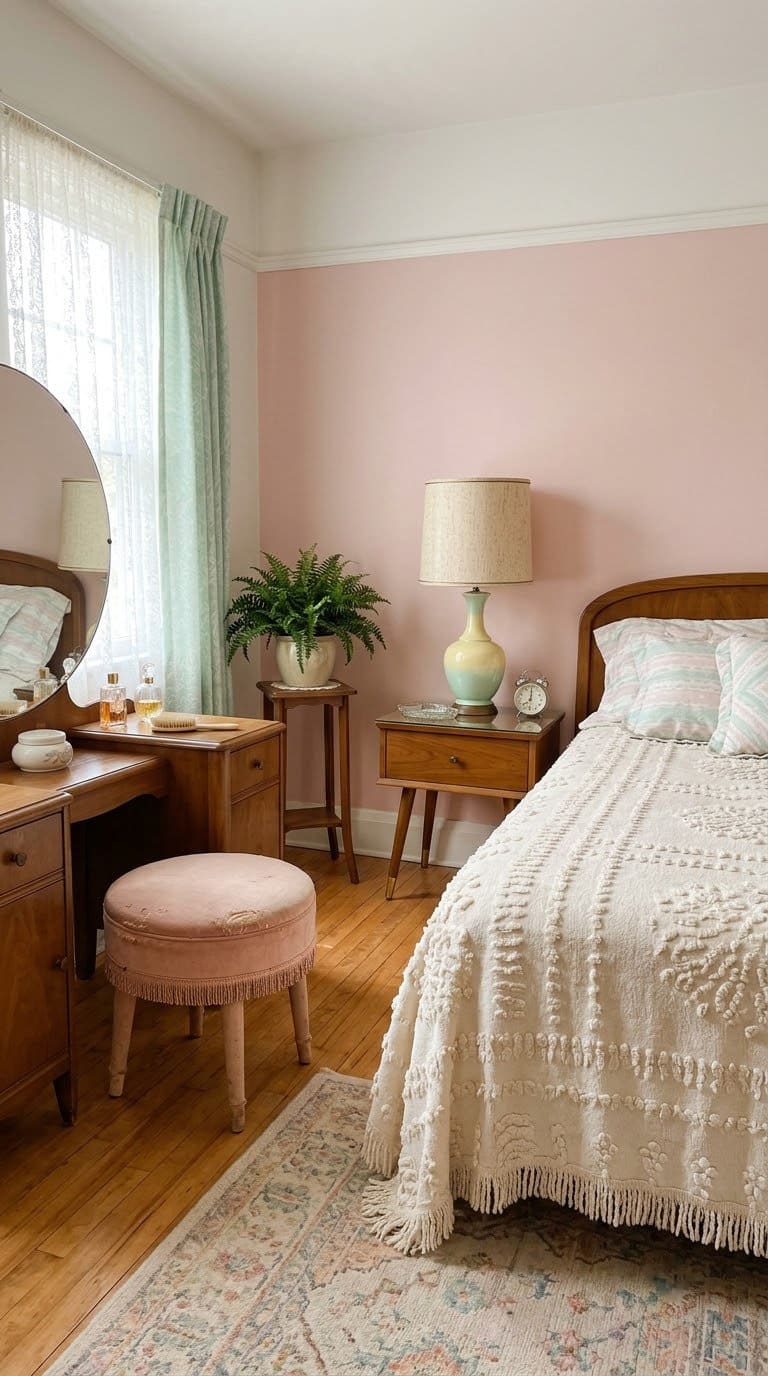
The easiest way to get a vintage room that looks planned is to pick one era. Everything else follows from that choice.
A Hunker roundup by Shelby Deering opens with this idea. It says to commit to one era and gives a 1970s example with macramé, paint-by-number art and a maize throw.
Use this table to choose a lane and pull a palette from it. It’s our own summary of common looks, so treat it as a starting point.
| Era look | Palette | Signature pieces |
|---|---|---|
| Victorian | Deep red, forest green, cream | Brass bed, heavy drapes, lace |
| 1920s glam | Black, gold, blush | Mirrored dresser, beaded lamp |
| 1950s pastel | Pink, mint, sky blue | Chenille spread, ceramic lamps |
| 1970s earth | Rust, mustard, brown | Rattan chair, macramé, woven rug |
Repeat each color three times. Use a color on the wall, in the bedding and in one small object, so the room feels tied together.
Pick one hero piece. Real Homes quotes Scarlett Blakey, Creative Partner of Ophelia Blake Interior Design, who says one vintage statement piece can change the feel of a room. Let it shine, and keep the rest quiet.
Let one thing be modern. A mattress, a charger or a smoke alarm doesn’t need to be old. A clean modern piece keeps the room from feeling like a museum.

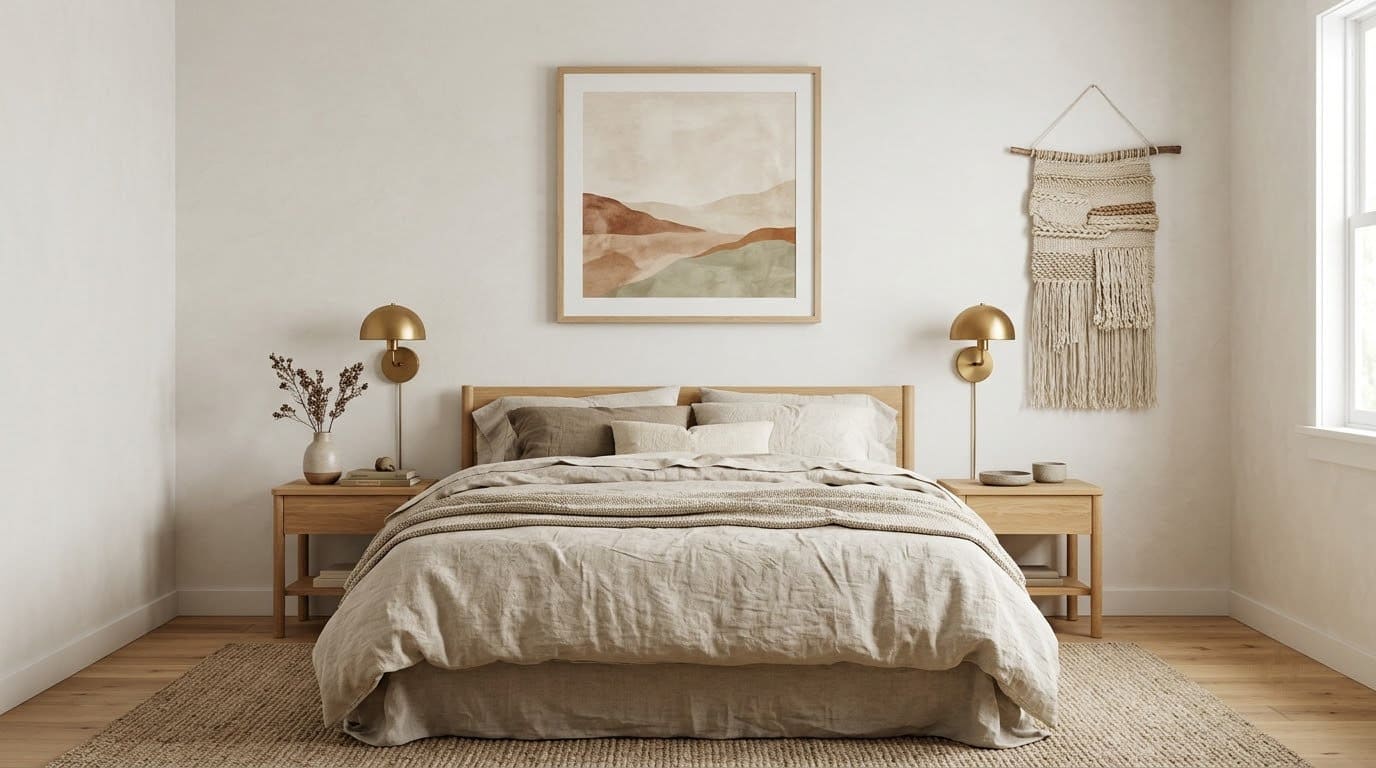
Our guide to DIY vintage decor has craft projects that suit any era. Budget: low. Skill: beginner.
2. An Antique Bed Frame That Fits a Modern Mattress
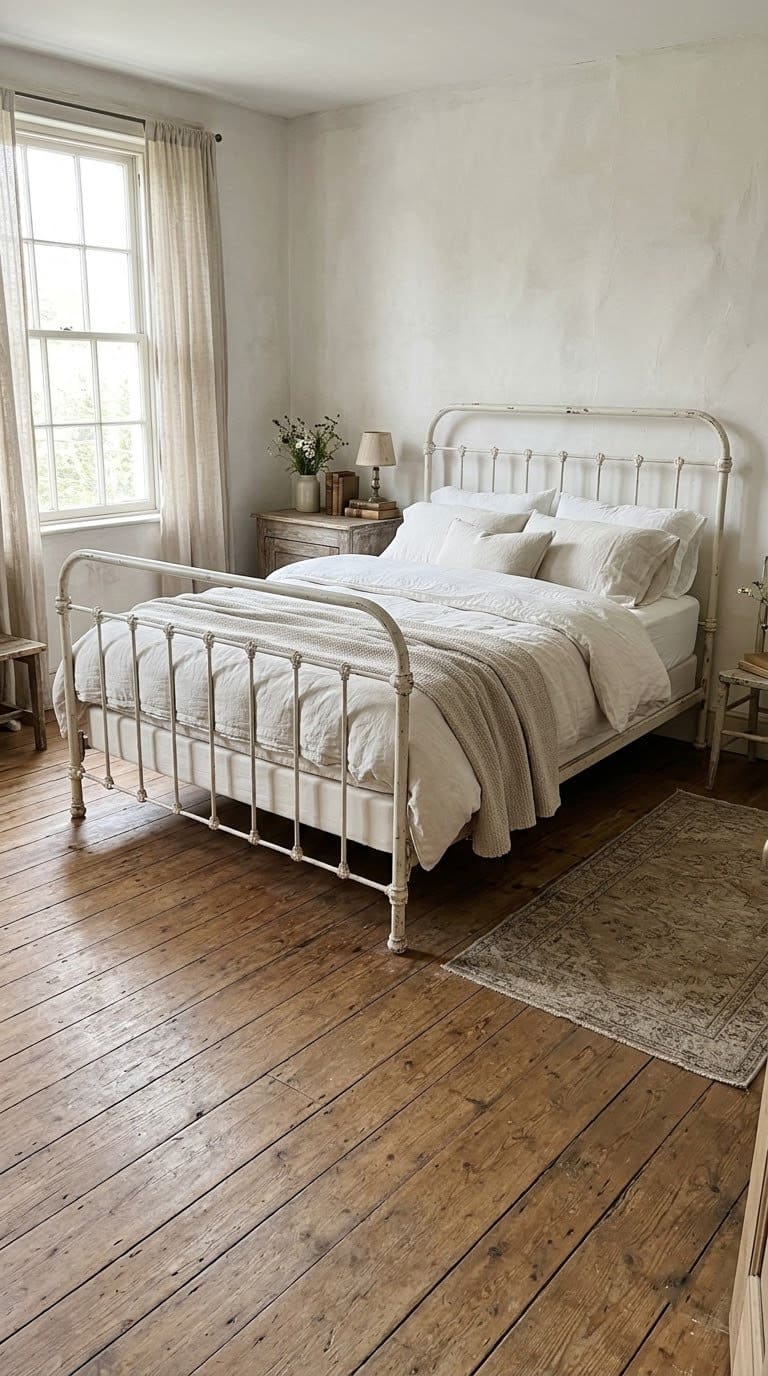
An iron or brass bed is the star of a vintage room. It also needs the most planning.
Hunker writer Laurie Brenner says to measure the bed’s length to confirm a modern mattress will fit the frame. She also says to measure the side rails, since you may need to replace them along with the hook-up hardware.
Plan on new rails for very old frames. Brenner says frames roughly 100 to 150 years old will likely need replacement rails from a store that specializes in antique bed parts. Search for an antique bed parts dealer rather than a regular furniture store.
Weigh your mattress choices. A frame that’s short or narrow may need a custom mattress. Some people try a three-quarter size first, since it’s a common fit. Ask the maker to confirm it will suit your frame before you order.
Decide on slats or a box spring. Many antique frames have no center support. A set of wood slats or a bed rail kit holds the mattress up better than a spring set. Check the frame’s weight limit with a restorer.
Treat a painted frame as a lead risk. Brenner’s cleaning steps use paint stripper and a wire brush, and her guide doesn’t mention lead. Test the paint first and follow the EPA’s advice before you strip or sand a painted frame.
Repair rust the safe way. She says to have rusted-through holes repaired by a professional welder. Don’t leave a cracked weld under a sleeping adult.
For more headboard styles that suit an older bed, see our DIY headboard ideas. Budget: mid to high. Skill: intermediate.
3. Vintage Bedding and Linens
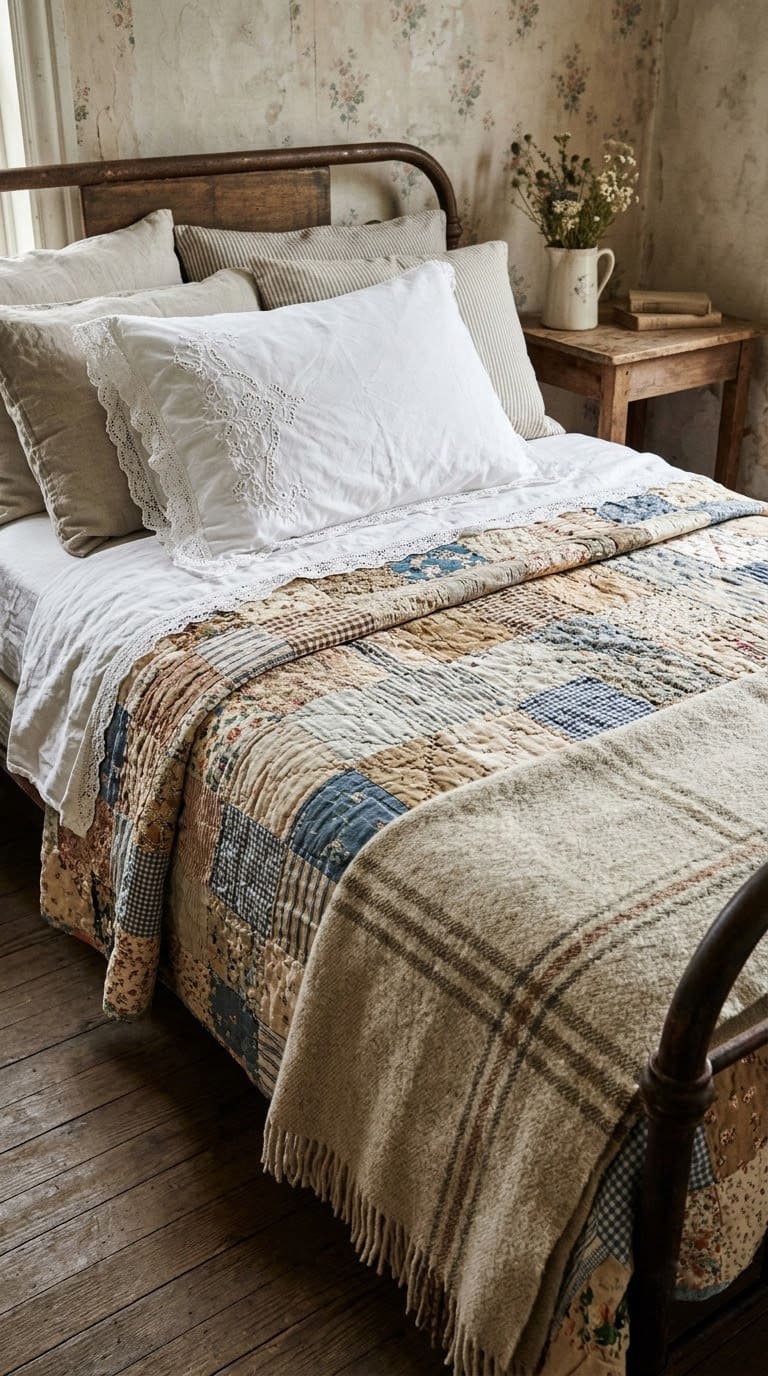
Bedding is the cheapest and fastest way to get the look. Layer a quilt, a blanket and a few mismatched pillows.
Hunker quotes Ashley Daly, an interior designer and founder of Retro Den, who suggests checking vintage sheets for condition by holding them up unfolded. Look for thin spots, stains and tears before you buy.
Hold it to the light. A thin sheet shows its weak spots against a window. Skip pieces with large holes or a strong chemical smell.
Wash gently. Use cool water and a mild detergent, and dry flat or on low heat. Test an unseen corner for color bleed first.
Use fragile pieces as décor, not as bedding. A very old quilt works better folded at the foot of the bed than on top where you sleep.
Protect it from sun. Keep antique textiles out of direct light, since sun fades color and weakens thread. Rotate pieces every few months.
Mix patterns with one rule. Blakey says to introduce contrasting prints with soft paint colors that complement each other. Keep one color in common, such as faded rose or dusty blue.
For color pairings, our guide to how to choose bedding color helps. Budget: low. Skill: beginner.
4. Moody or Floral Walls
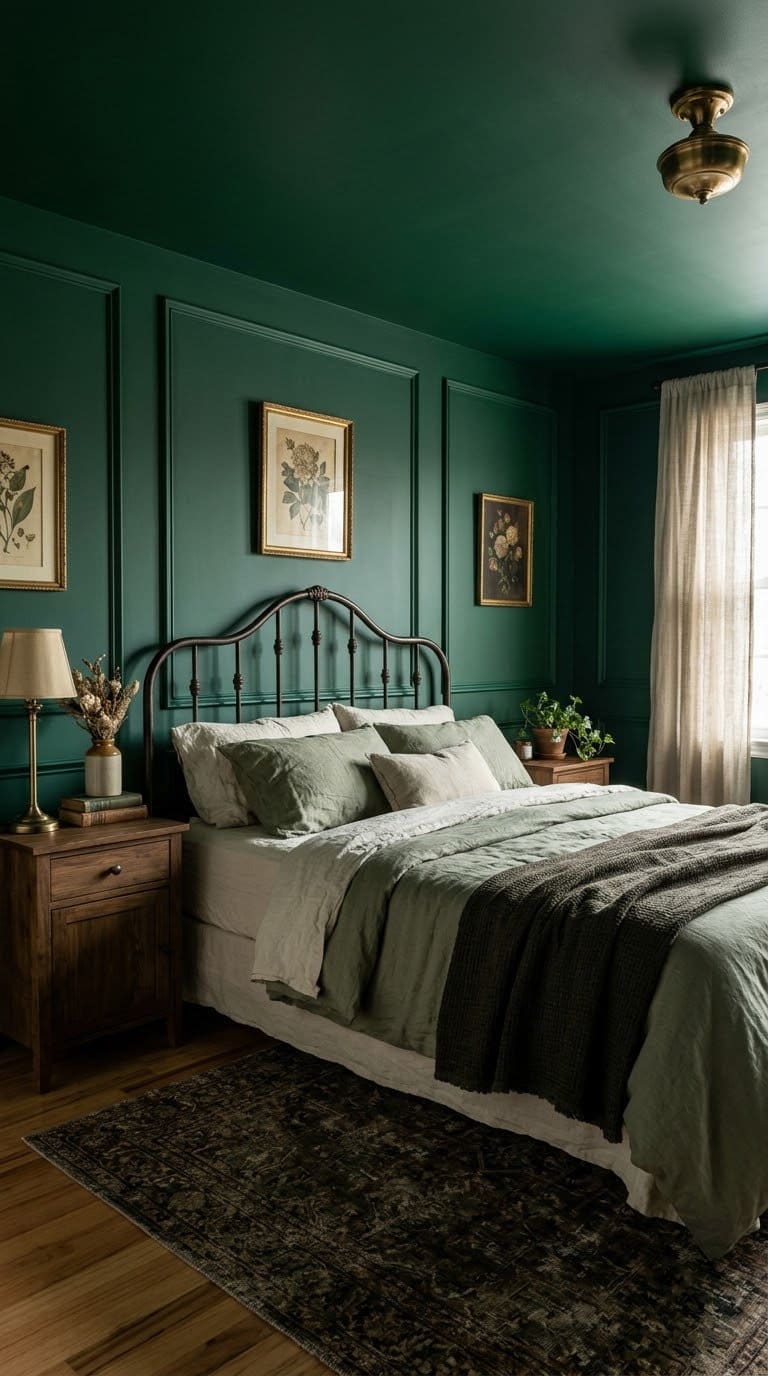
Walls set the era faster than furniture. Hunker suggests darker colors such as emerald green and slate gray, and says to carry the color onto the ceiling.
It also lists bygone wallpaper with curvy or symmetrical floral patterns, and picture-frame trim behind an antique dresser and a wrought iron headboard.
Check the walls before you scrape. In an older house, test the paint before sanding or stripping. The EPA says to fix small damaged areas under 6 square feet without sanding. If you must sand, wet the area first and clean up thoroughly.
Clean peeling paint safely. The EPA says to wipe up chips and dust with a damp paper towel and throw them out. Use wallpaper where it’s easy. Peel-and-stick paper suits a renter, and traditional paper suits an owner who plans to stay. Floral prints look best on one wall behind the bed.
Add molding for depth. Thin picture-frame molding makes a quick panel behind a dresser. Paint it the same color as the wall for a soft look.
Try the dark ceiling. A deep ceiling makes a bedroom feel like a cocoon. Pair it with warm bulbs.
Our bedroom accent wall ideas show more ways to use color behind the bed. Budget: low to mid. Skill: intermediate.
5. A Thrifted Dresser or Nightstand
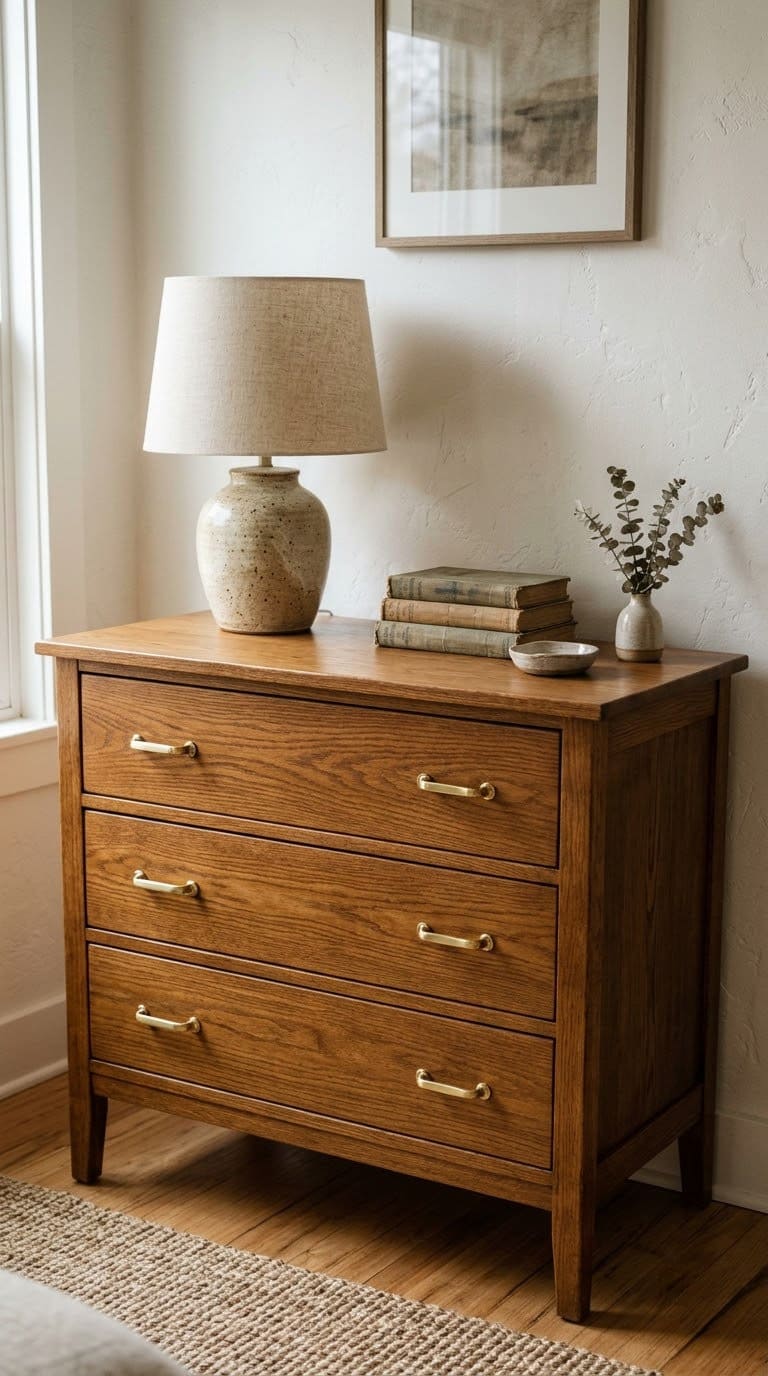
A thrifted dresser is the best deal in a vintage bedroom. It’s solid wood, it costs less than new, and it has character.
Daly says vintage wood often needs only dusting, oiling or waxing, or tightened screws. So start with the gentlest fix before you reach for stripper.
Check it in the store. Pull each drawer all the way out and push it back. Look for wobbly joints, bowed bottoms and signs of insects.
Smell the drawers. A smoky or damp smell stays in wood. If it’s strong, leave the piece.
Swap the hardware first. Hunker suggests refreshing a thrifted nightstand with new drawer hardware or paint. A set of new pulls changes the look in an hour.
Know your paint. If the dresser has chipped old paint, it may carry lead. Test it before you sand, since the EPA lists refinishing old furniture as a job that can expose you to lead. Seal the piece, or choose a different one.
Keep the finish if it’s sound. Original finish adds value. Clean and wax before you paint.
Use the top well. Put a lamp, a tray and a few books on top. Keep the surface half empty so the piece breathes.
Our painted dresser ideas cover safe painting steps and color choices. Budget: low. Skill: beginner to intermediate.
6. Rewired Vintage Lamps
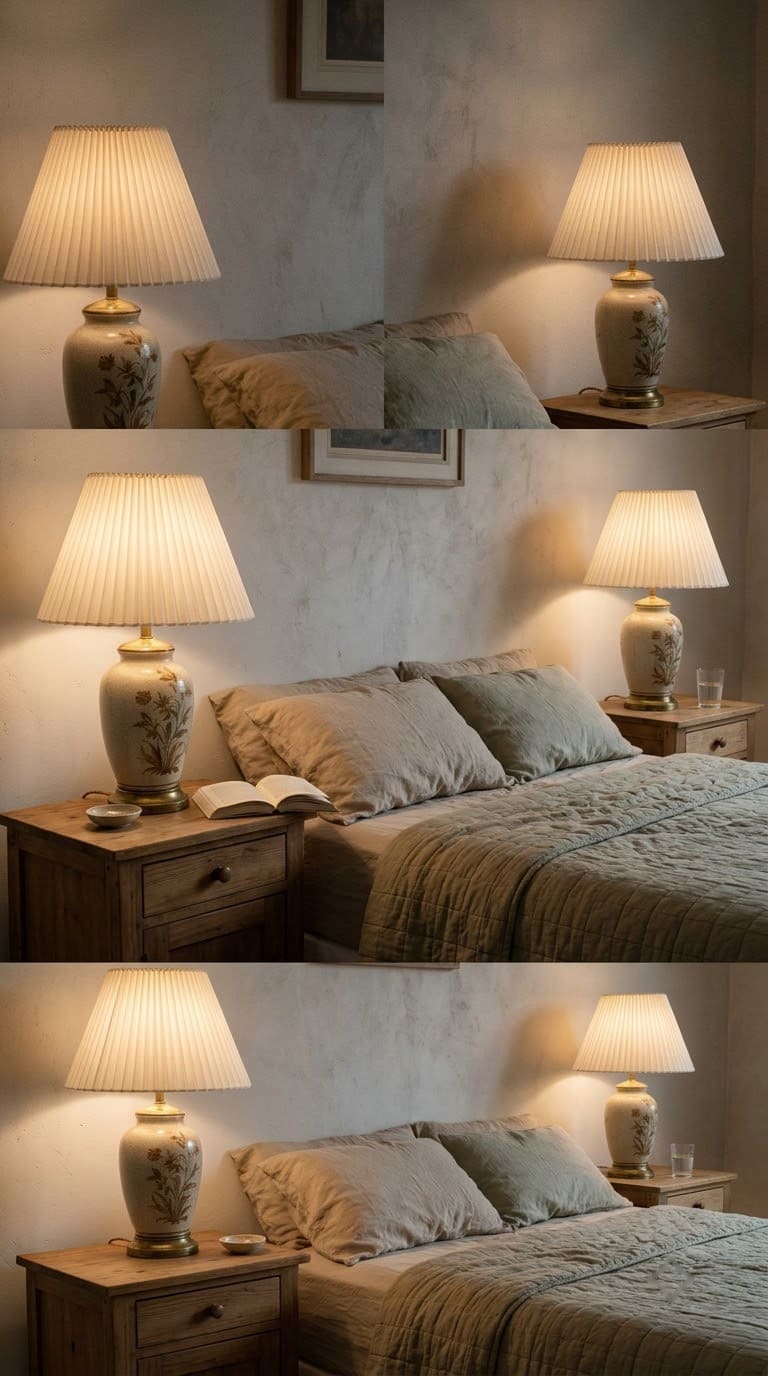
Old lamps are charming and cheap. They’re also the item most likely to be unsafe.
Hunker notes that vintage lamps can be rewired at a hardware store. A modern cord, plug and socket make an old base safe to use.
Inspect the cord first. Look for cracks, frayed cloth and a stiff plug. If any show, don’t plug it in.
Follow the steps. This Old House, in a guide by Amy R. Hughes on rewiring a vintage lantern, says to turn off the breaker.
It says to confirm the power is off with a tester and to use a UL-listed socket assembly. It also says to call a licensed electrician if you’re unsure.
Use the right bulb. Pick a low-heat LED bulb that matches the socket and the shade. Heat from old shades and tight sockets is a fire risk.
Check the base. The base should sit flat and not tip. Add felt pads to protect your nightstand.
Pair lamps with the era. A beaded or fringed shade suits a 1920s look, and a ceramic base with a pleated shade suits the 1950s. Hunker also lists milk glass fixtures.
Add layered light. One lamp is rarely enough to read by. Pair a lamp with a wall sconce so you have light at the bed.
Our bedroom lighting ideas explain how to layer ambient and task lights. Budget: low to mid. Skill: electrician or lamp shop.
7. A Gallery Wall of Old Frames, Maps and Textiles
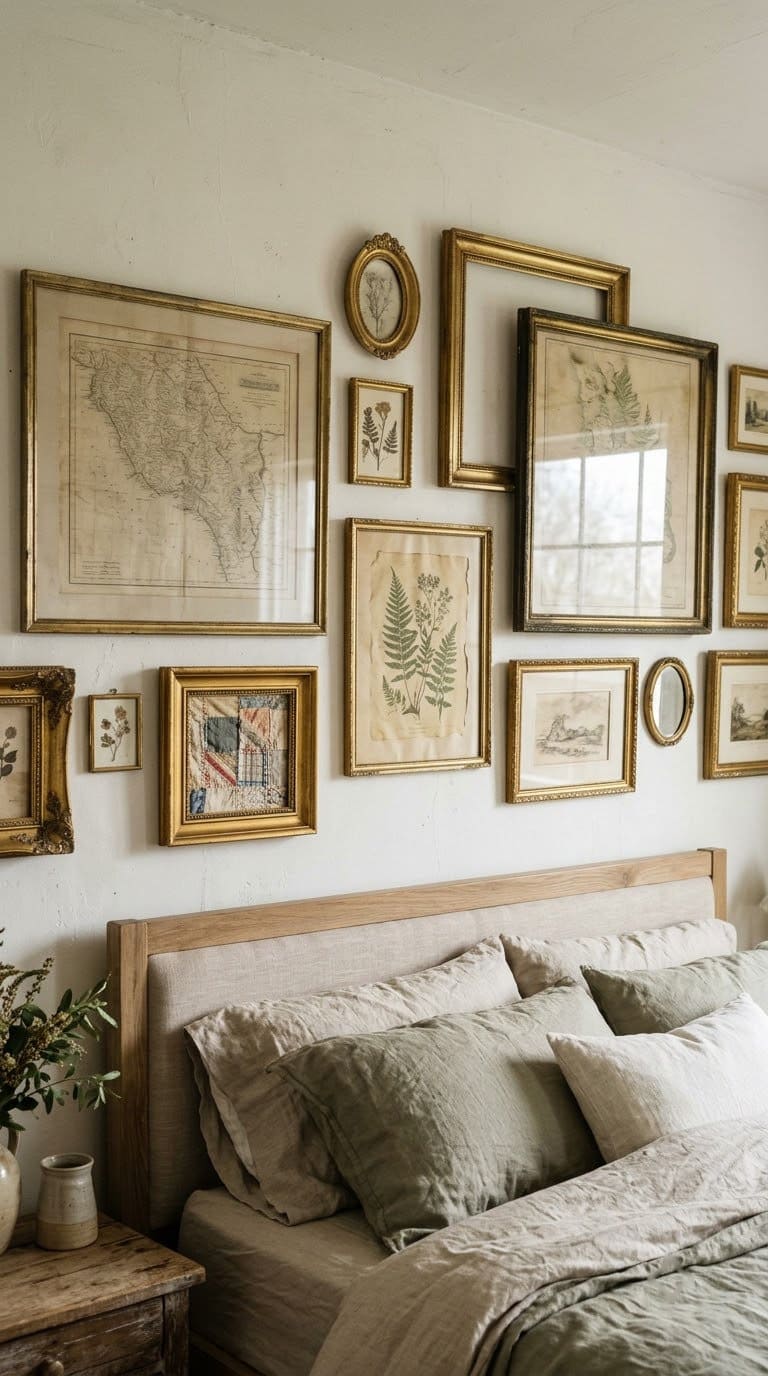
A gallery wall adds age without taking floor space. It’s also the best idea for renters.
Hunker lists a gallery wall that mixes similar art with objects such as framed quilt blocks, plates or baskets. It also suggests framing an antique map of your hometown above the bed.
Reframe, don’t replace. Daly recommends swapping the frame and re-matting vintage prints, which lets an old print fit your colors.
Plan on the floor first. Lay the frames on the floor and rearrange them until the spacing feels even. Take a photo before you hang them.
Match the weight to the wall. A heavy gilt frame needs a stud or a rated anchor. Light frames can hang on small nails or adhesive strips.
Use one color thread. Gold frames, or all-black frames, hold a mismatched set together. Pick one and stick to it.
Hang above the bed with care. Use a secure mount, and keep heavy pieces off the wall behind a sleeper’s head. Choose lighter art there.
Rotate seasonally. Swap two or three pieces each season. The room stays fresh without a full redo.
Our bedroom wall decor ideas offer more layouts. Budget: low. Skill: beginner.
8. A Statement Chair or Vanity Corner
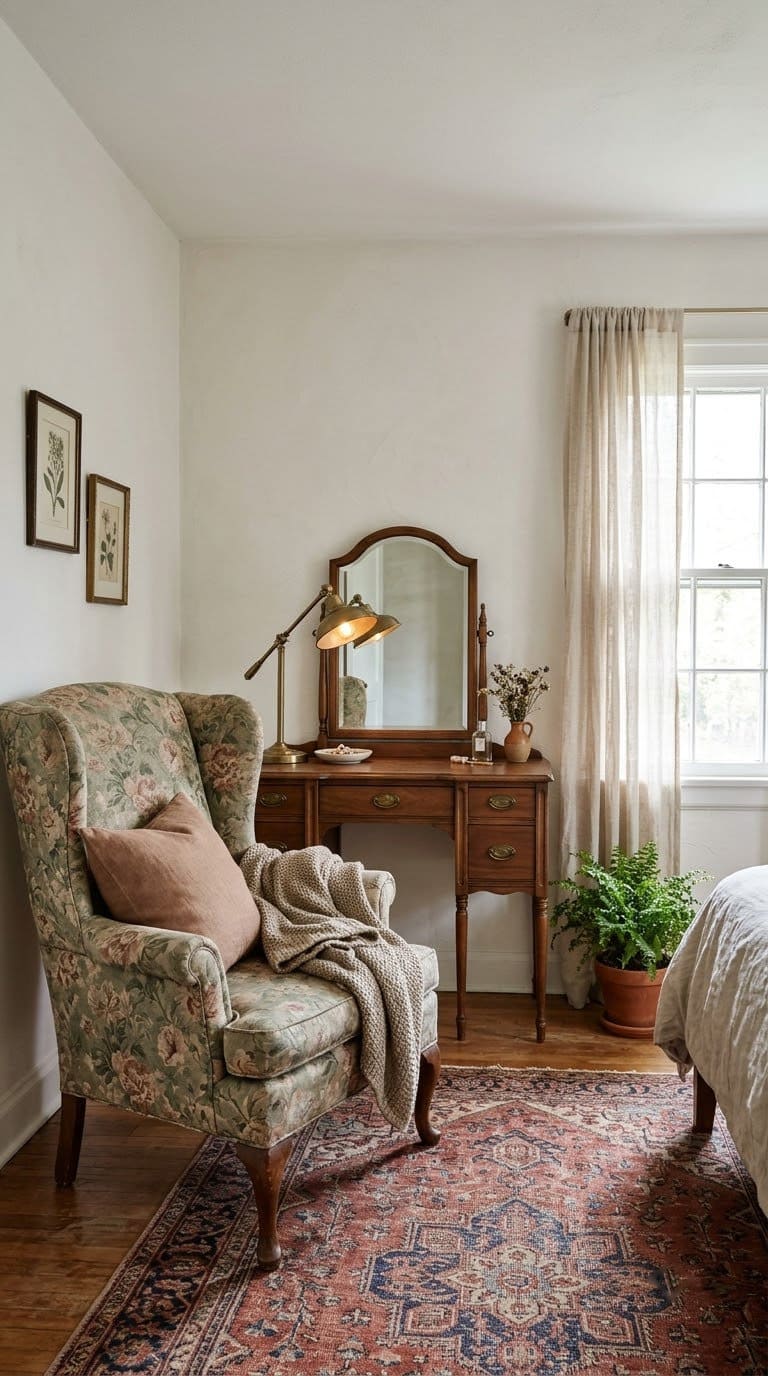
One generous corner gives the room a place to sit. It also gives your best vintage find room to breathe.
Hunker lists a wingback chair with floral upholstery and a wood vanity with a mirror, a matching chair and a task lamp. It also suggests a vintage rug beneath one standout piece.
Pick the chair for comfort. Sit in it before you buy. Check for wobble, sagging springs and smells.
Leave walking room. Keep a clear path of about 30 inches around the bed and the chair. That’s a common planning number, and it’s our own rule of thumb.
Anchor with a rug. A flat-weave vintage rug under the chair defines the corner. Add a rug pad so it doesn’t slide.
Pair the vanity with good light. Place a lamp on each side of the mirror or use a single task lamp. Warm bulbs flatter faces and old wood.
Add a bench at the foot. Hunker suggests an upholstered bench with a dust ruffle at the foot of the bed. It’s a handy spot for blankets.
Keep it small. A small room gets one corner, not three. Choose chair or vanity.
Our DIY canopy ideas pair well with a corner chair if you want a softer feel. Budget: mid. Skill: beginner.
Rental-Friendly Ways to Get a Vintage Bedroom
You don’t need to own the walls to get the look. These swaps travel with you.
Layer vintage quilts and linens on the bed, add a rewired lamp, and hang frames with adhesive strips. A thrifted rug and a wingback chair do the rest.
Use peel-and-stick wallpaper on one wall, and test a corner first. Keep pieces off walls you can’t patch.
How Do You Mix Eras Without a Cluttered Look?
Mixing works when one thing leads. Use this simple filter.
Pick one main era, one accent era and one modern item. Keep the colors in a tight range. Leave some empty surface on the dresser and nightstand.
If the room looks busy, take one piece out. Blakey’s advice to let one statement piece shine works here too.
How Should You Spend the Budget?
Spend where safety and sleep are involved. Save on decor you can swap.
| Spend more on | Save on |
|---|---|
| A mattress that fits the frame | Frames and prints |
| New rails or a safe bed repair | Quilts and linens |
| Lamp rewiring | Lamp shades |
| Lead testing for old paint | Picture hooks |
| A comfortable chair | Throw pillows and books |
Thrift shops, estate sales and flea markets are the usual sources for old pieces. Our guide to finding good pieces at thrift stores explains how to spot value.
What to Do First
Start with checks, then build the look. This order saves time and money.
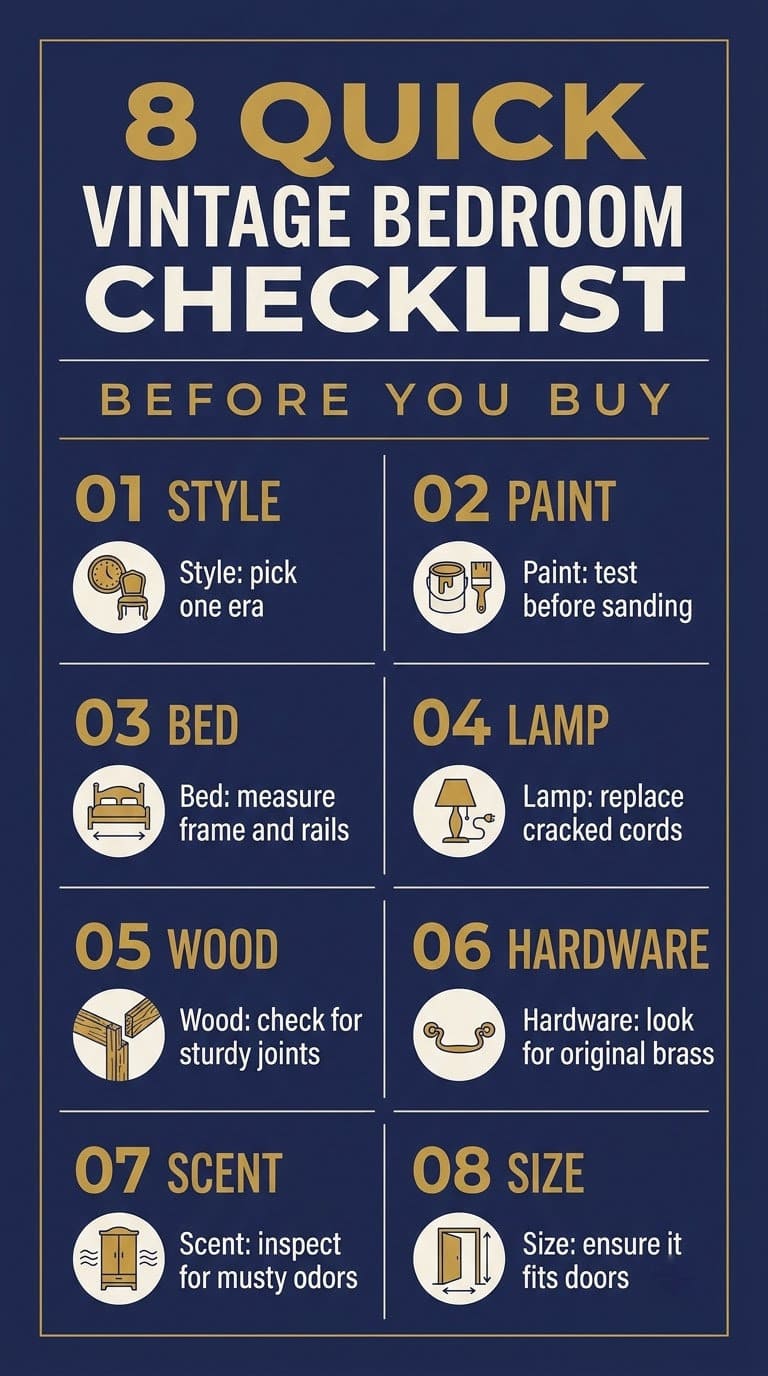
First, test any old paint you plan to sand or strip. Second, pick your era and a three-color palette. Third, measure the bed and the room before you buy anything big.
Then add lamps, linens and frames. Last, add the small decor.
Common Mistakes to Avoid
Most vintage bedrooms go wrong in the same few ways.
Sanding old paint without a test. The EPA says not to remove lead-based paint yourself, and it says to hire a certified professional.
Buying a bed without measuring. Hunker says antique beds had no standard sizes. Measure the frame and the rails before you pay.
Plugging in an old lamp. Brittle cords cause shocks. This Old House says to turn off the breaker and call a licensed electrician if you’re unsure.
Mixing too many eras. Hunker’s first idea is to commit to one era. The room reads as calm when one look leads.
Skipping the fabric check. Daly says to hold vintage sheets up unfolded to check their condition. A thin sheet tears the first week.
Crowding the room. A small bedroom can hold one big vintage piece, not five.
FAQ
What is the easiest way to make a bedroom look vintage?
Start with bedding, lamps and frames. A patchwork quilt, a rewired lamp and a few gold frames change the mood without any big purchase.
Is it safe to sand an old painted dresser?
Test the paint first. The EPA lists refinishing old furniture as a job that can expose you to lead. It says to hire a lead-safe certified contractor for paint work.
Will a modern mattress fit an antique bed?
Often not. Hunker says antique beds had no standard sizes, and a typical antique twin is about 72 inches long while a modern twin mattress is 75. Measure the frame and rails, and ask about custom sizes.
Can I use an old lamp in the bedroom?
Only after you check the cord and plug. Replace anything cracked or stiff, and use a UL-listed socket. Call a licensed electrician if you’re unsure.
How do I get the musty smell out of old linens?
Air them outside in shade for a day, then wash gently. Skip mothballs in a bedroom.
What colors suit a vintage bedroom?
Soft pastels, dusty rose and sage suit a gentle look. Hunker also lists emerald green and slate gray for a moody one.
Related Posts
Never miss an update — choose FarmFoodFamily as your preferred source on Google.
How it works: Tap the button below to open Google's settings page, then check the box next to FarmFoodFamily.
Tap the checkbox to turn it blue — that's how you know it's set.