24 Genius Concrete Patio Ideas That Totally Transform Your Backyard
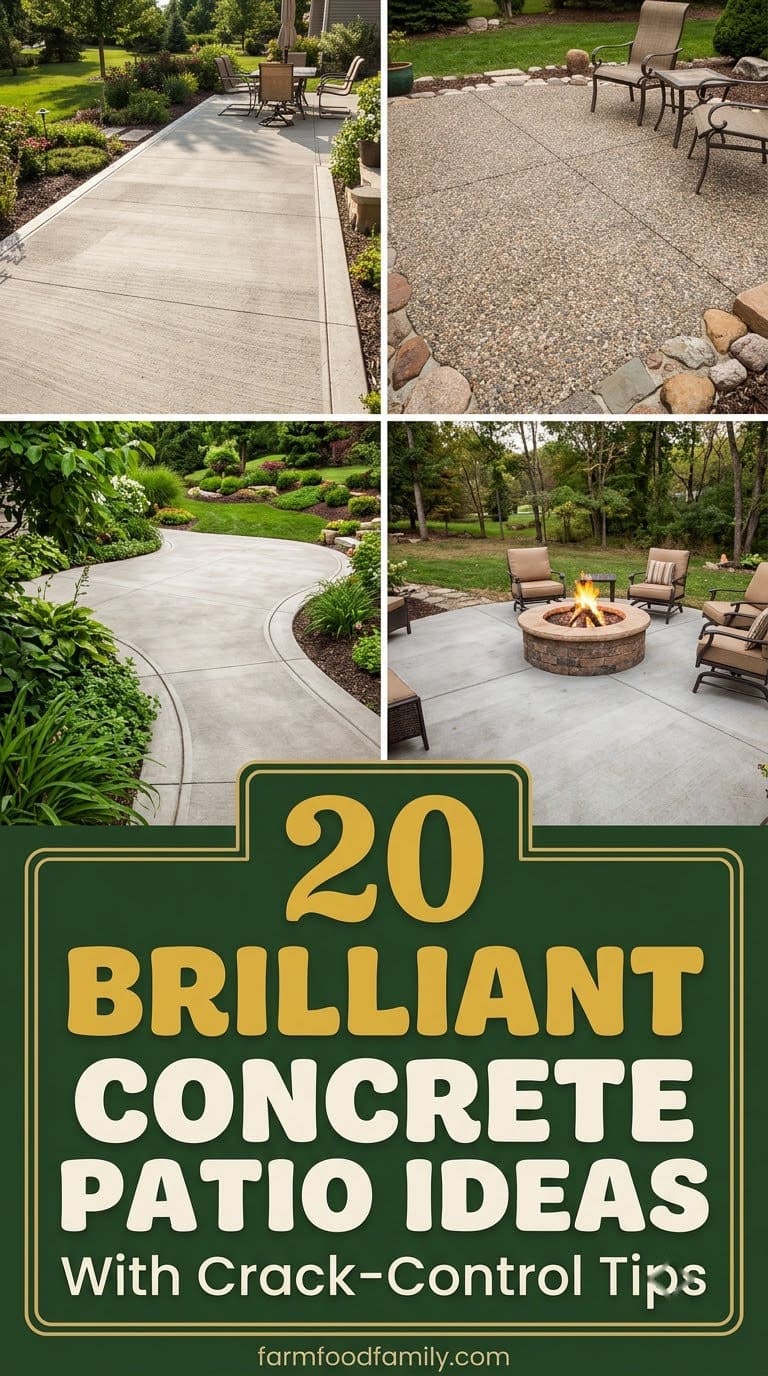
Concrete gives you a durable backyard patio in almost any shape, as long as the slab, joints and sealer are done right.

Never miss an update — choose FarmFoodFamily as your preferred source on Google.
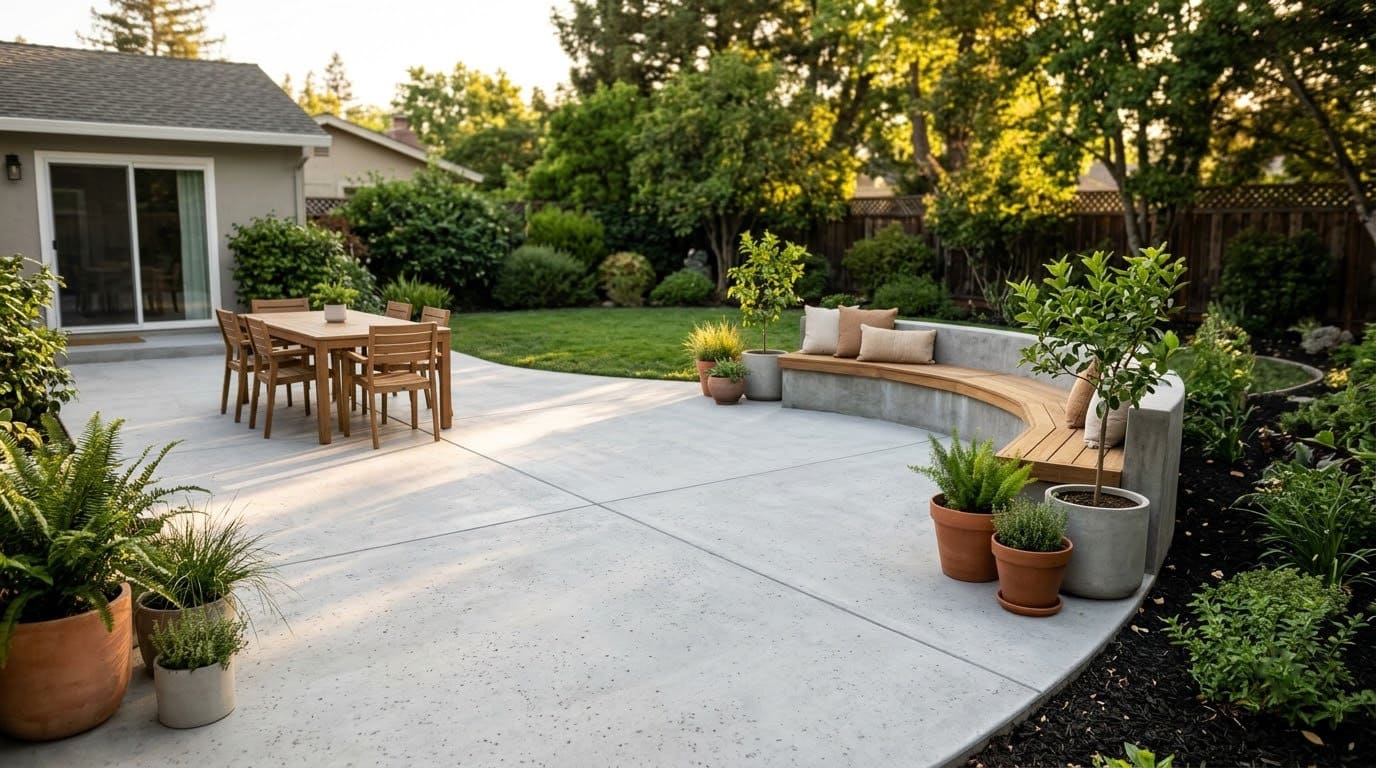
How it works: Tap the button below to open Google's settings page, then check the box next to FarmFoodFamily.
Tap the checkbox to turn it blue — that's how you know it's set.
Concrete gives you a durable backyard patio in almost any shape, as long as the slab, joints and sealer are done right.
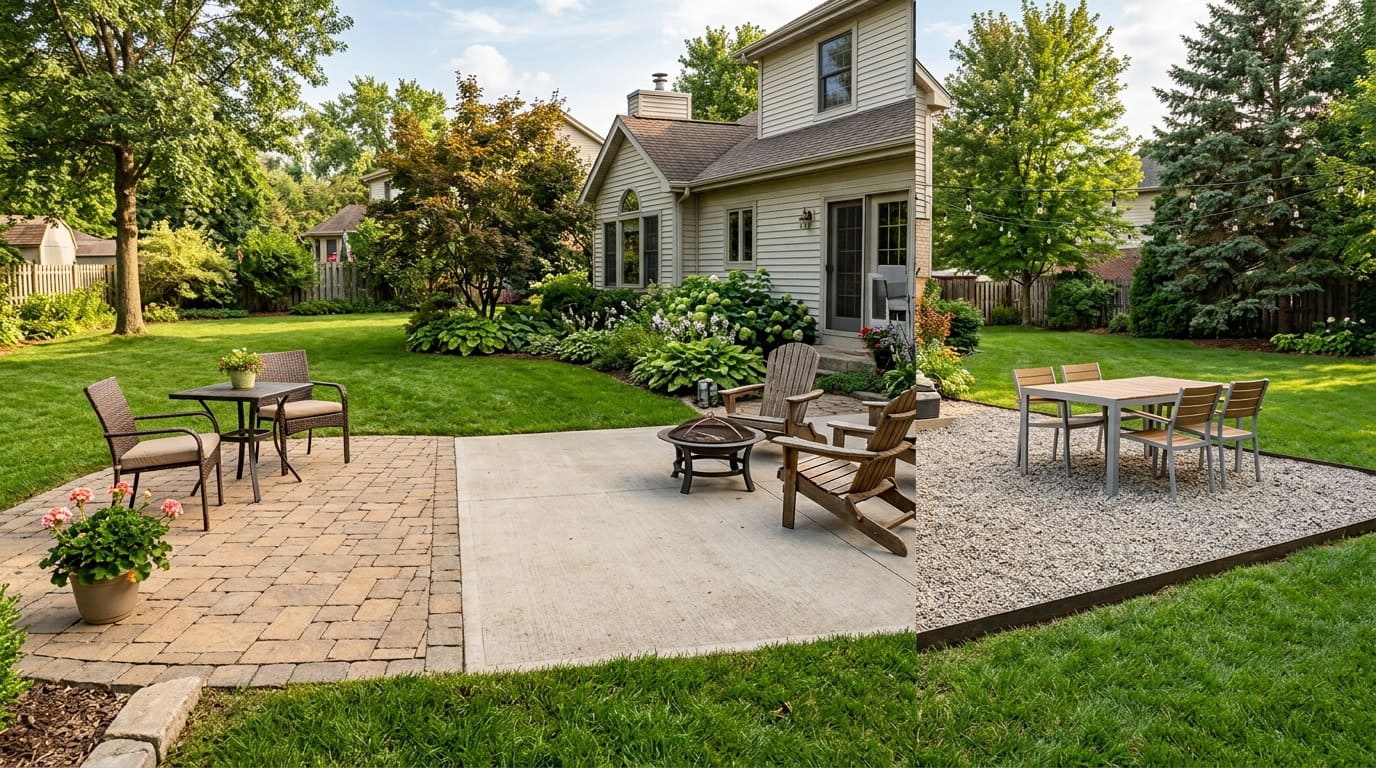
Concrete patios are a versatile and durable foundation for outdoor living, offering endless customization through color, texture, layout, and pairing with other materials.
Whether you’re aiming for a rustic style or a cozy look, concrete serves as a blank slate for creative expression.
Unlike wood or stone, concrete can be poured to fit any shape, stamped for texture, stained for color, or polished for a sleek finish.
It pairs beautifully with landscaping, furniture, fire features, and lighting, which is ideal for homeowners who want a low-maintenance outdoor area.
The following concrete patio ideas showcase the many ways concrete can elevate your backyard, offering both practical function and aesthetic appeal. Each idea is meant to inspire unique solutions tailored to your home and lifestyle.
Answer 4 quick questions and get matched to the exact fix for your yard — drainage, budget, layout, or something else entirely.
Take the Free QuizRelated: 23 Best Concrete Driveway Ideas and Designs
Quick Answer
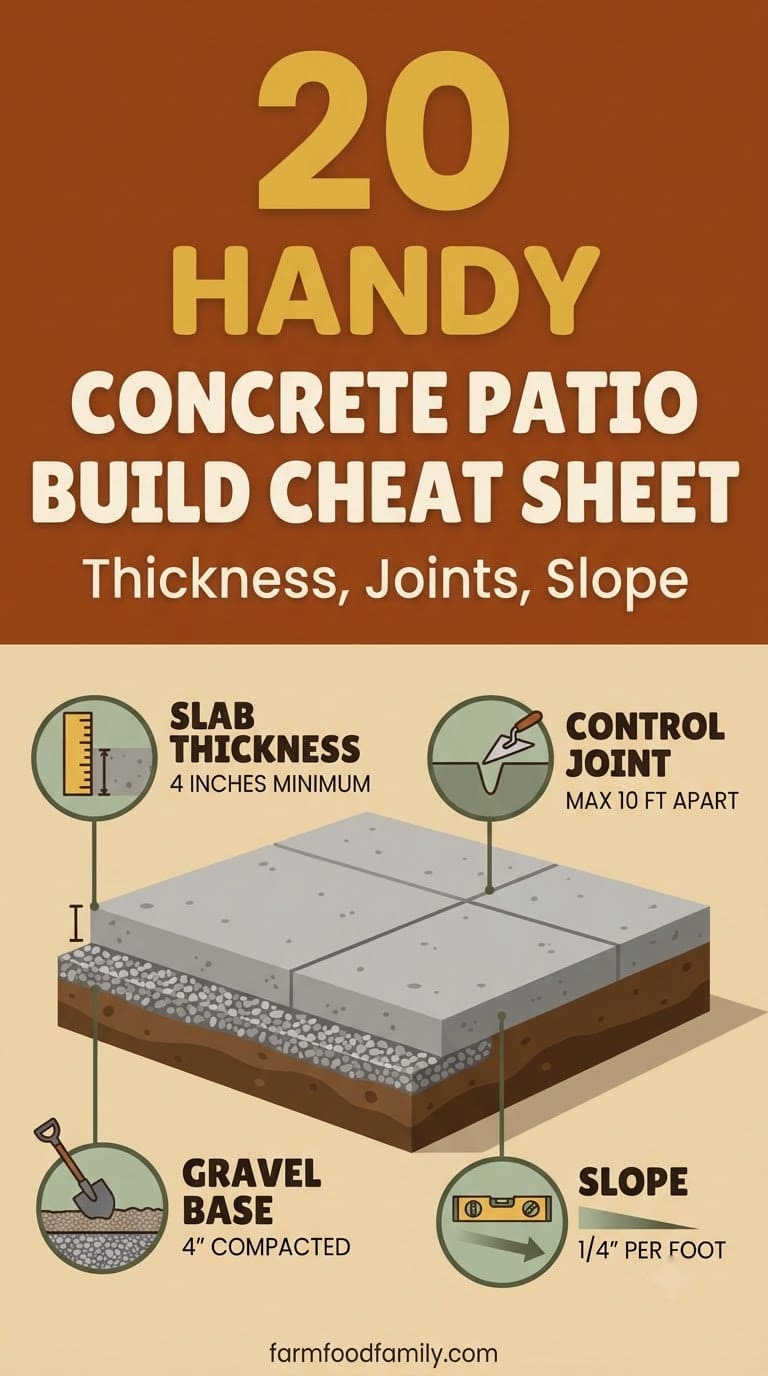
A good concrete patio comes down to two choices: the look and the build. Pick a finish like broom, exposed aggregate or stamped for the look. Then make sure the slab is at least 4 inches thick, slopes away from the house and has cut joints.
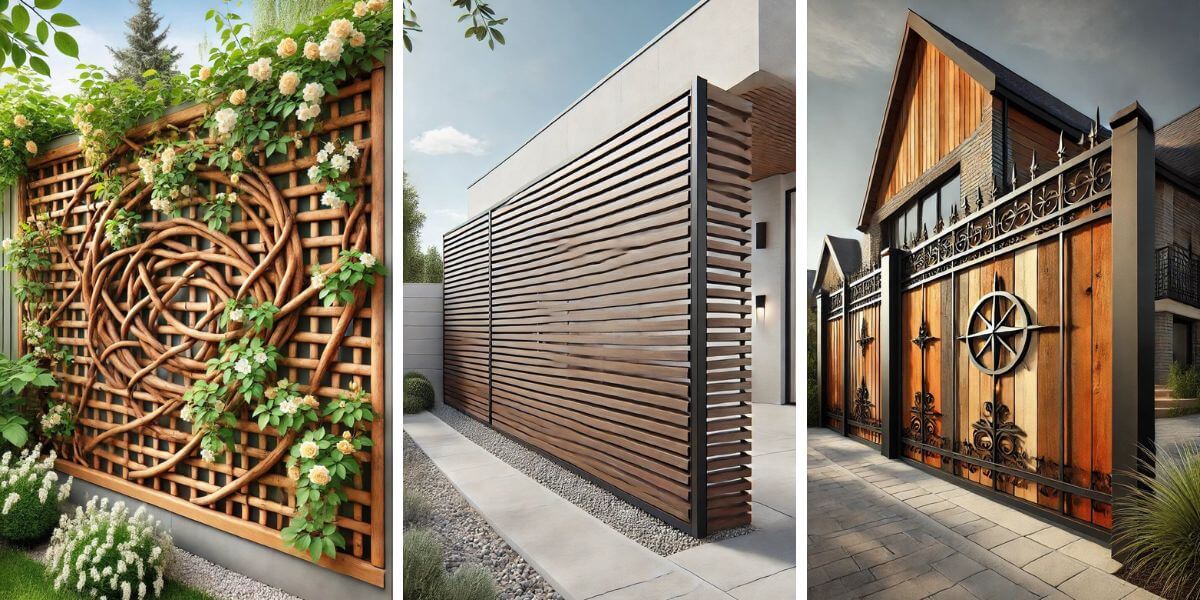
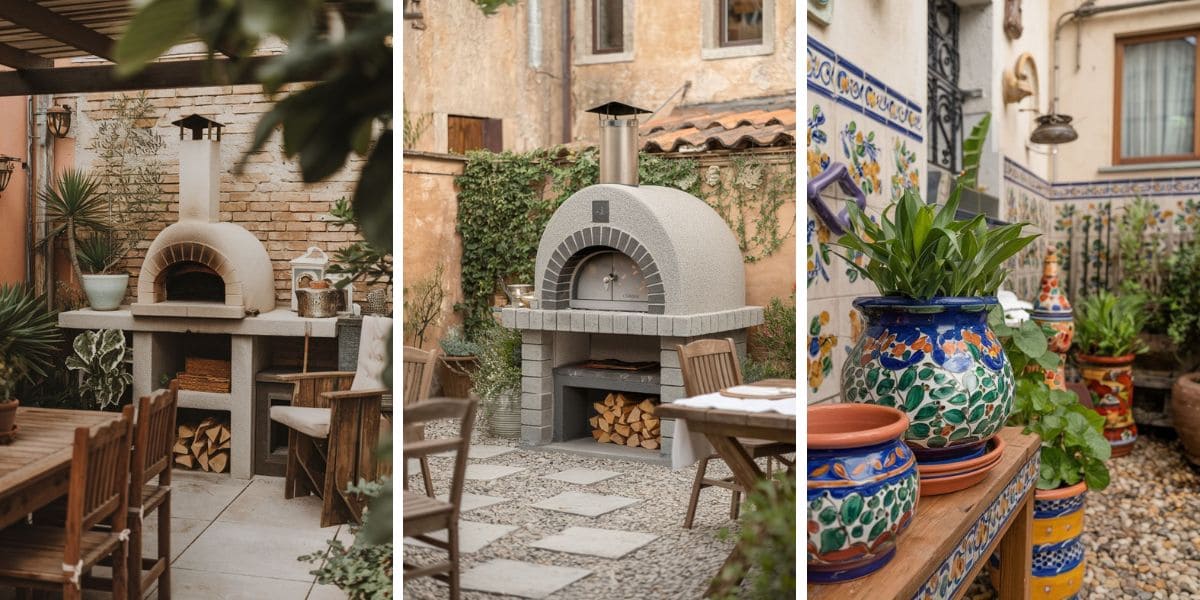
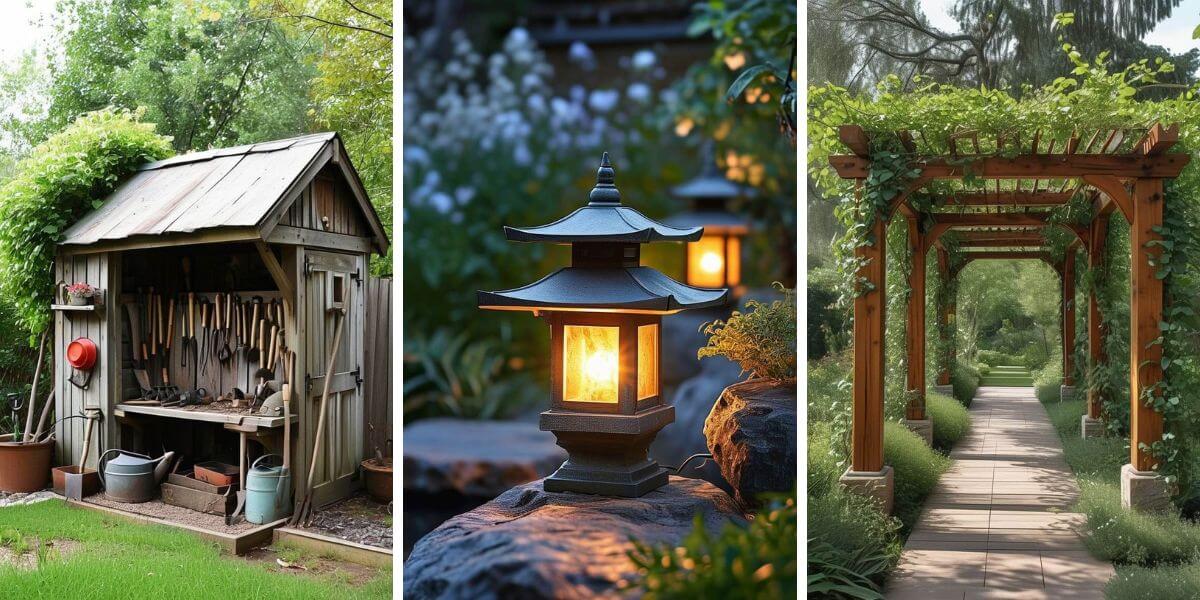
The build matters most because concrete always shrinks as it cures. Control joints cut to about one quarter of the slab depth tell the cracks where to go. And a sealer keeps water out of the surface, though a glossy one can turn slick when wet.
Below you’ll find 20 backyard layouts, from simple slabs to fire pit surrounds, plus the slab specs behind them and the sealer tips that keep your footing safe. We also cover where the experts disagree, so you can decide with real numbers instead of guesses.
What Should You Know Before You Pour?
Most patio regrets come from the slab, not the style. These are the basics worth settling first.
| Detail | What to aim for | Source |
|---|---|---|
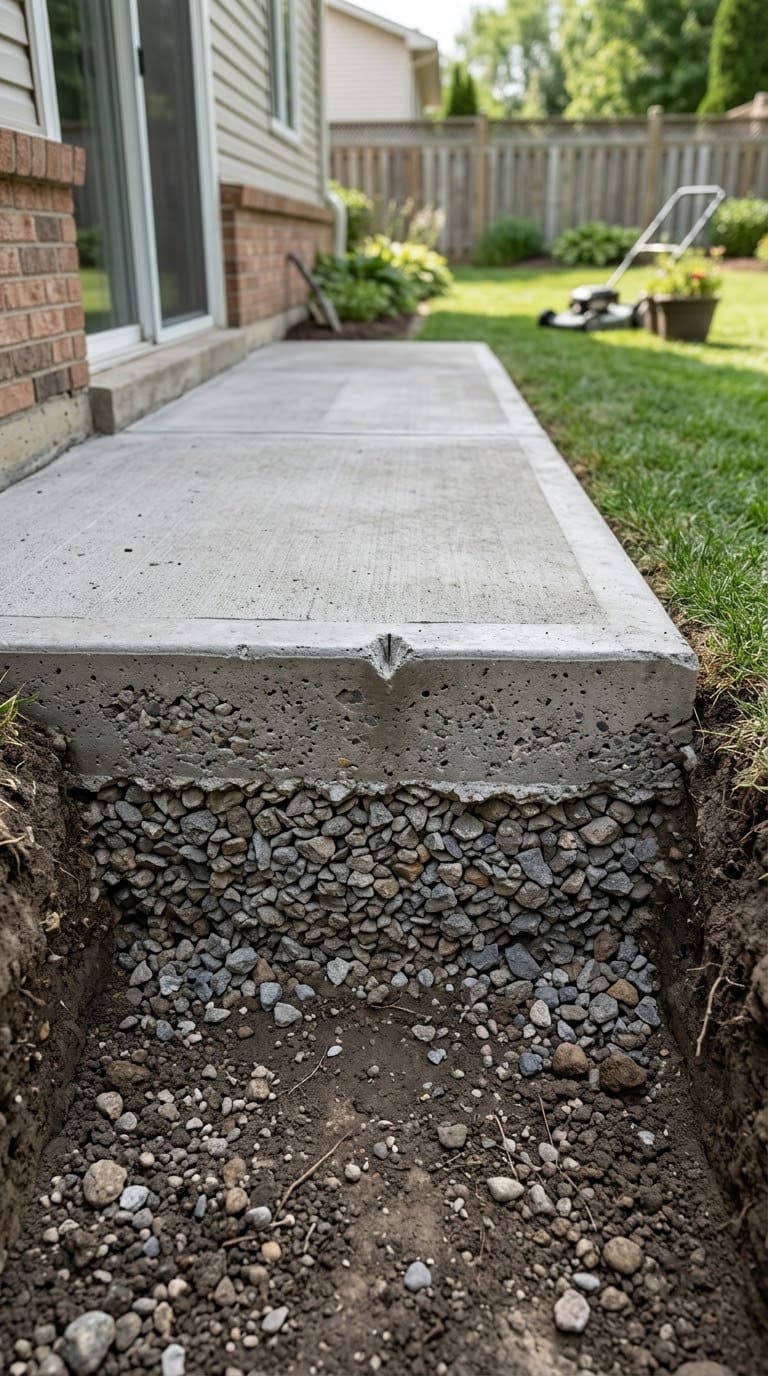
| Thickness | 4 inches minimum for a patio | Tim Carter at Ask the Builder |
| Heavy loads | 4 to 6 inches depending on weight | QUIKRETE |
| Slope | 1/4 inch per foot away from the house | QUIKRETE, “check local codes” |
| Joint depth | At least one quarter of the slab thickness | Carter and QUIKRETE agree |
| Where it meets the house | Expansion joint strip against walls and foundations | QUIKRETE |
QUIKRETE says larger jobs and poorly drained sites need a deeper dig and several inches of gravel under the slab. Soft or wet soil is where slabs sink and crack. If you aren’t sure, ask a local contractor, since codes and soil vary.
How Far Apart Should Control Joints Be?
This is where the experts disagree, so we put both views side by side.
Most yard problems trace back to one specific, fixable cause. Find yours in 4 quick questions.
Take the Free Quiz| Source | Joint spacing | Joint depth |
|---|---|---|
| QUIKRETE technical sheet | Every 6 to 8 feet in a 4 inch slab | Roughly 1/4 of the slab thickness |
| Tim Carter | No slab larger than 15 feet on a side | At least 1/4 of the thickness, 1 inch for a 4 inch slab |
Our take: the tighter spacing is the safer pick for a DIY pour. Tighter joints give shrinkage cracks more places to go. A wide patio may also need a joint down the center, according to QUIKRETE.
Timing matters too. Carter says a hand tool often doesn’t cut deep enough. He recommends sawing the joints that evening or the next morning.
He says you can still cut as late as three days after the pour.
Why Does a Concrete Patio Get Slippery When It’s Sealed?
Sealer protects the surface, but it can cost you grip. Mike Day of Day’s Concrete Floors says a topical sealer makes water bead up and cuts friction underfoot. His advice is to avoid high-gloss sealers and choose a lower sheen or a penetrating sealer.
He also says to apply thin coats instead of one thick one. Anti-slip additives mixed into the sealer add traction. Test a sample board first, especially if your patio is shaded and stays damp.
How Do You Protect a Patio From Freeze and Thaw?
Water is the enemy in cold climates. EVstudio, a Denver design firm, explains that entrained air creates tiny bubbles that relieve the pressure of freezing water. It adds that this “isn’t magic,” and enough freeze-thaw cycles will start to spall any slab.
Ask your concrete supplier whether the mix has entrained air. Use only deicers made for concrete, and use them lightly. And point downspouts away from the patio so water never runs across it.
20 Concrete Patio Ideas
1. Stamped Concrete for a Stone-Look Patio

Stamped concrete is a popular choice for people seeking the appearance of natural stone without the high expense or care requirements. This method includes pressing patterns into freshly poured concrete to give the illusion of flagstone, slate, brick, or even wood planks.
Choose earthy tones such as sandstone, charcoal, or warm browns to give the room an organic, grounded appearance.
The textured surface adds flair and improves traction, making it more suitable for wet conditions. To frame the space and define its edges, use stamped borders.
To create a cozy, natural atmosphere, combine this style with wrought iron or wood patio furniture, potted plants, and soft outdoor lighting.
The average homeowner spends $616/year on yard fixes that don't address the real problem. Find out what yours actually is — before you spend another dollar.
Take the Free Quiz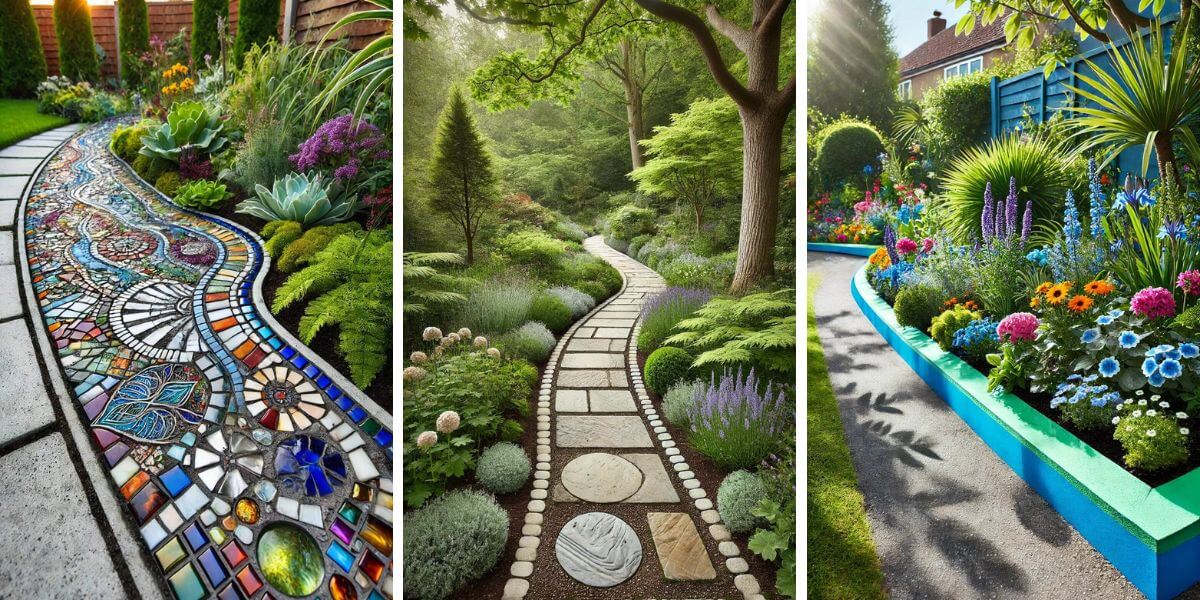
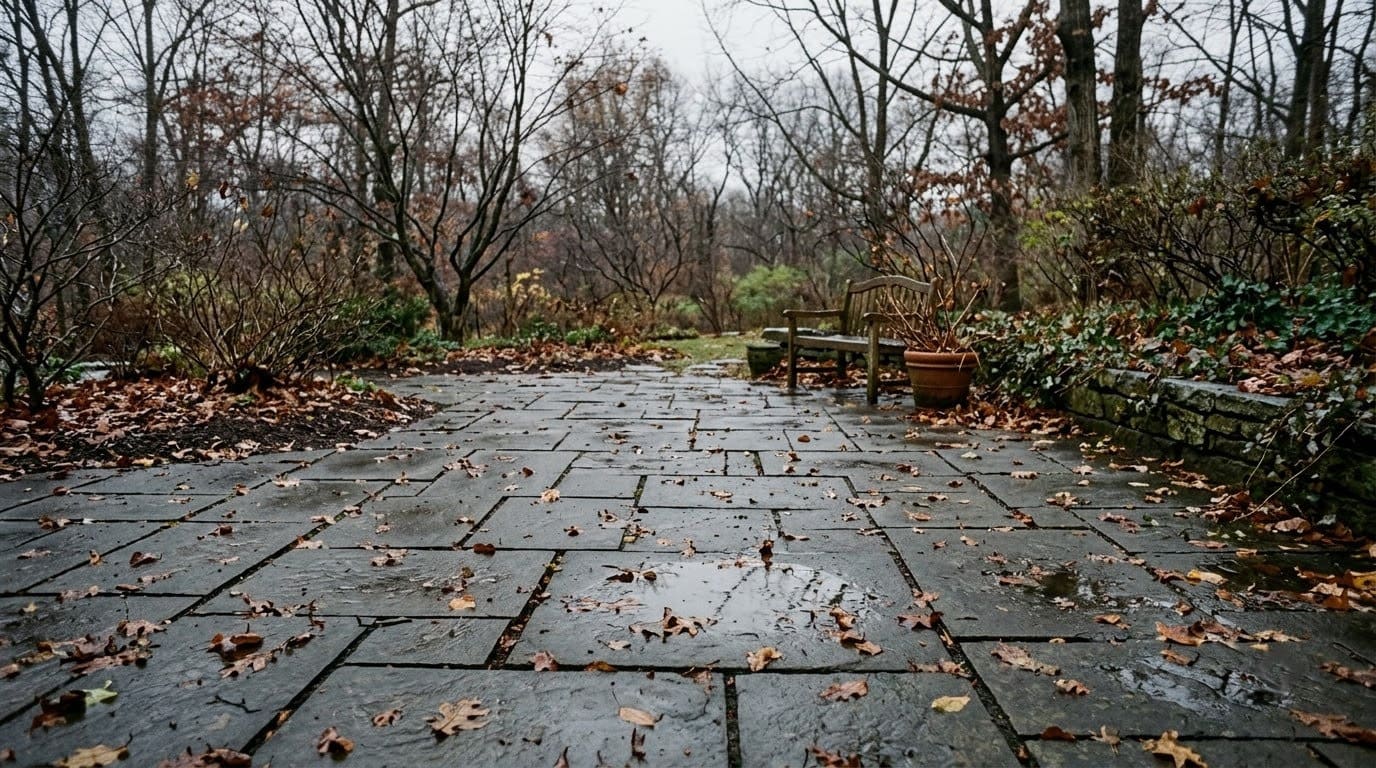

Stamped concrete looks great in classic gardens and rustic backyards, combining elegance and resilience in one seamless surface.

2. Sleek Modern Slab Layouts

Large rectangular concrete slabs offer a clean, contemporary design. This design defines the patio with simple geometric shapes, while the distance between slabs facilitates drainage and adds texture.
This layout pairs well with modern architecture and minimalist garden designs.
To maintain a fresh and modern appearance, choose smooth, light gray, or white-toned concrete.
The addition of fine black gravel or creeping ground covers between the slabs can provide a startling contrast while relaxing the landscape.
For a coherent, stylish look, consider adding low-profile seating, built-in benches, or sleek outdoor sectionals.
This patio design is also suitable for smaller spaces because it creates a sense of openness and organization.

3. Concrete Patio with Built-In Planters and Seating

Pouring a concrete patio with integrated elements such as planters and seating walls is one way to maximize the functionality of your outdoor space.
These built-ins can be poured into the slab with concrete blocks and finished with stucco, smooth plaster, or textured concrete.
Built-in planters allow you to include greenery and flower decorations directly into your patio design, eliminating the need for additional pots and furnishings.
Raised concrete benches can serve as retaining walls in sloped yards or as casual seating around a fire pit or table.
Paint or stain the concrete elements to provide visual interest, or leave them natural for a raw, industrial look.
For comfort and softness, combine cushions and climbing plants, combining hardscape and landscape in a smooth flow.

4. Polished Concrete Patio for a Refined Look

Polished concrete converts a typical patio surface into a smooth, glossy expanse that reflects light and creates a luxurious, modern ambiance.
This finish is obtained by grinding the concrete surface with increasingly finer tools until it has a mirror-like gloss.
Polished concrete is not only physically appealing, but also extremely durable and easy to maintain.
To add depth, apply an acid stain or dye before polishing to achieve a marbled effect or rich color variation.
This look complements modern patio furniture, sculptural planters, and minimalist lighting.
Polished concrete is particularly suitable for covered patios or areas protected from direct sunlight and rain, as it retains its shine better under regulated conditions.

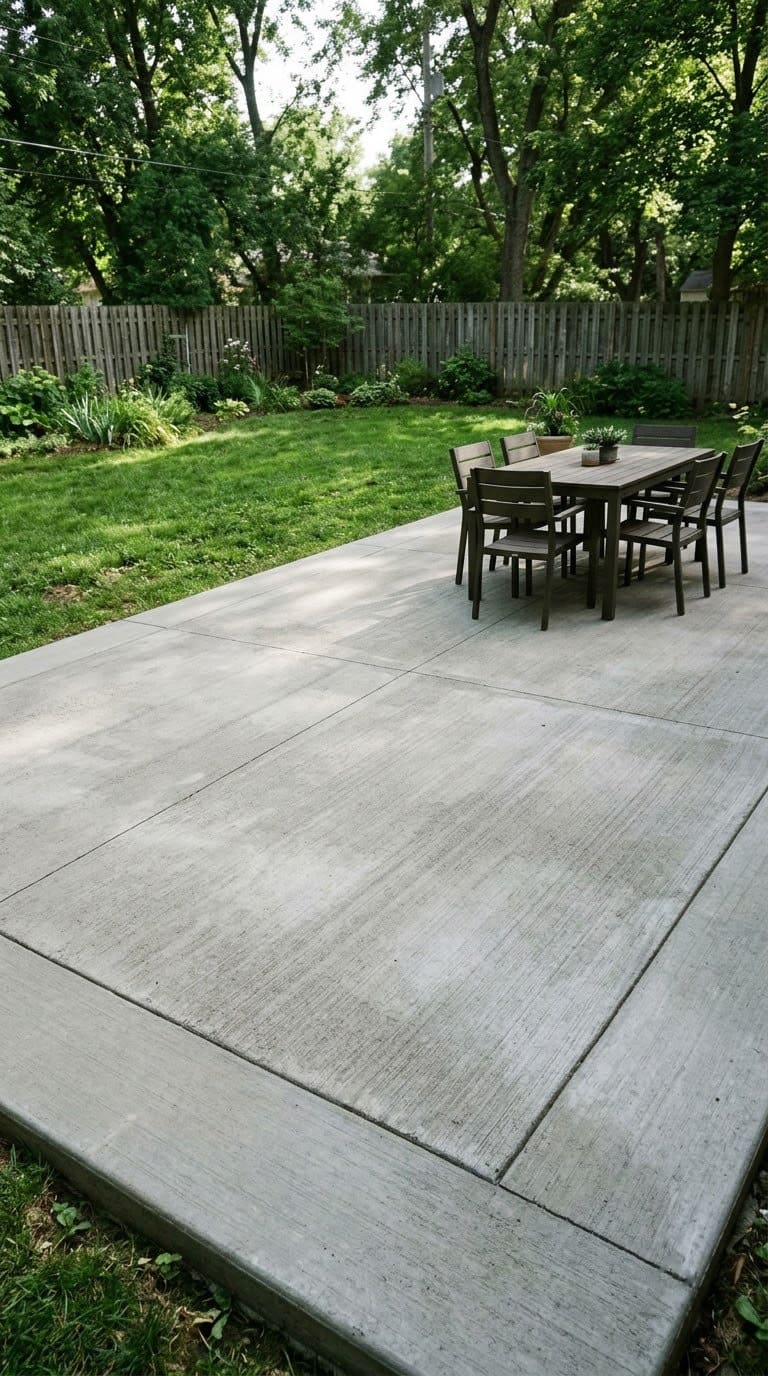
5. Classic Broom-Finish Patio With a Smooth Border
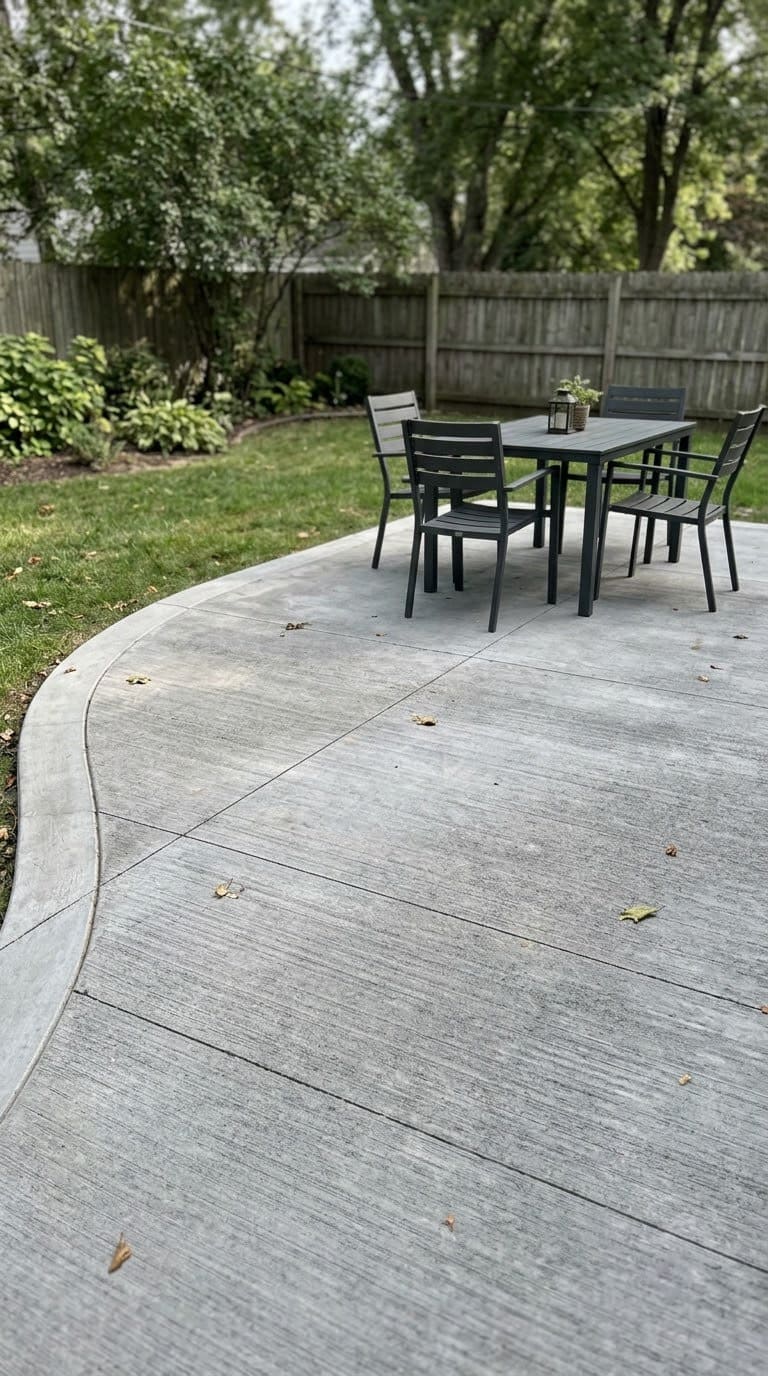
A broom finish is a light texture dragged across the wet slab. It gives good grip and costs less to finish than fancy surfaces. Add a 6 inch smooth border, troweled flat, to frame the space.
Pick a soft gray or tan for a calm look. The texture hides small marks well. It’s a good starter patio for a family backyard.
6. Exposed Aggregate for Texture
Exposed aggregate washes the top film off the slab to show the small stones inside. The pebbles give a natural, pebbly texture. It reads as more upscale than plain gray.
The rough surface also helps with wet grip. Ask your installer to show a sample board in your stone color. Seal it to keep the stones bright.
7. Integral Color for a Warm Tone
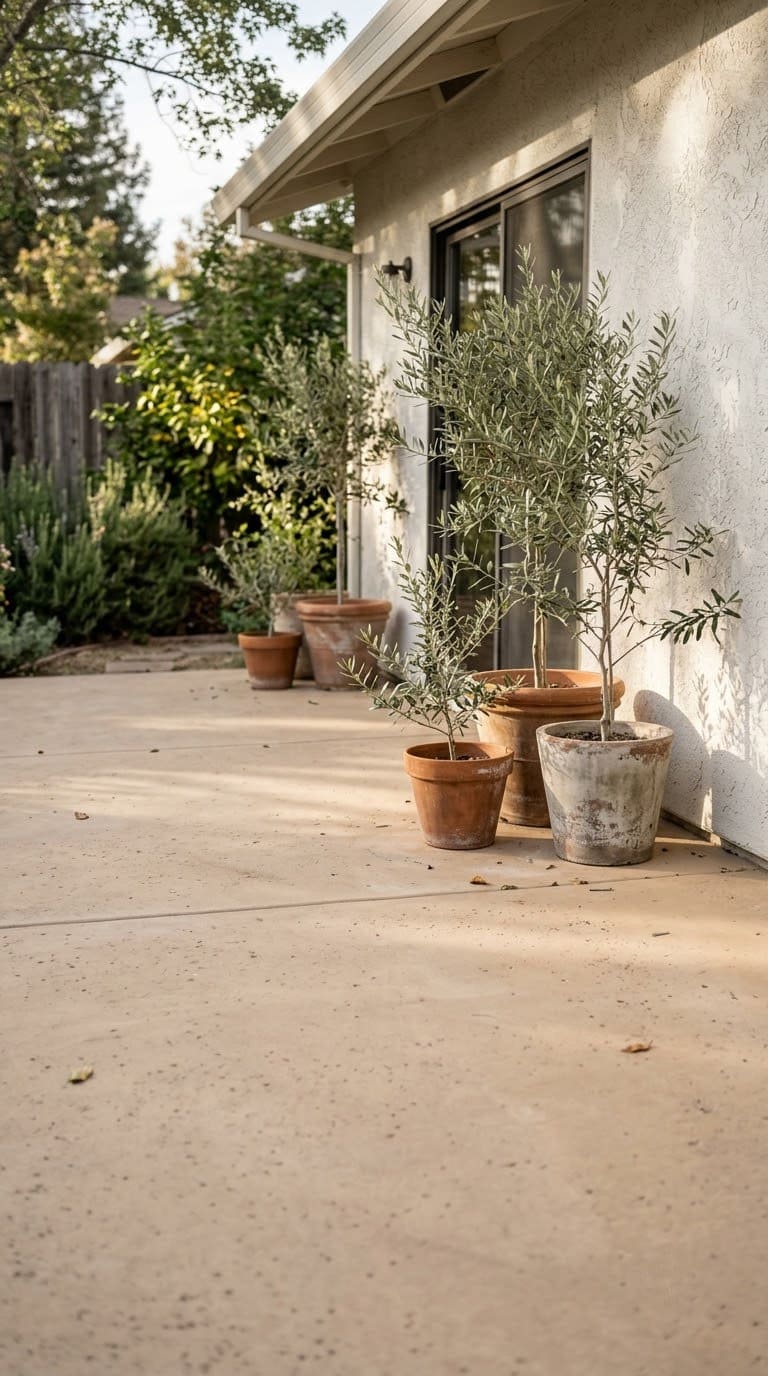
Color pigment mixed into the whole batch runs through the slab. Chips won’t show a gray patch underneath. Earth tones like sand, clay and charcoal work with most houses.
Order all the concrete for the pour at once so the shade matches. Batches can vary a little in tone. Pair it with a broom finish for traction.
8. Modular Slab Grid With Gravel Joints
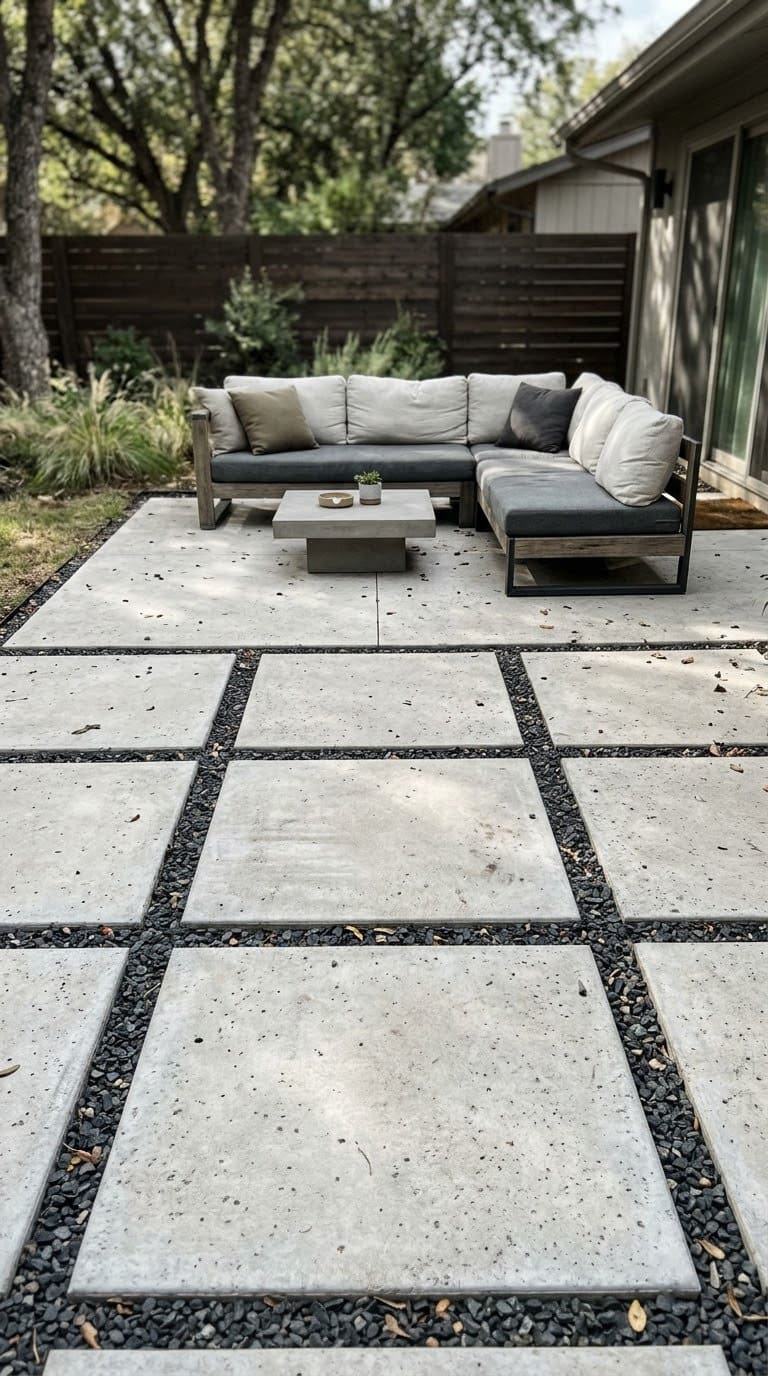
Pour large squares, about 4 feet each, and leave 3 to 4 inch gaps between them. Fill the gaps with fine gravel or low ground cover. It looks modern and lets rain drain between the slabs.
The gaps also act as built-in joints. Keep each slab at least 4 inches thick. See more layouts in our concrete slab designs.
9. Curved Free-Form Patio
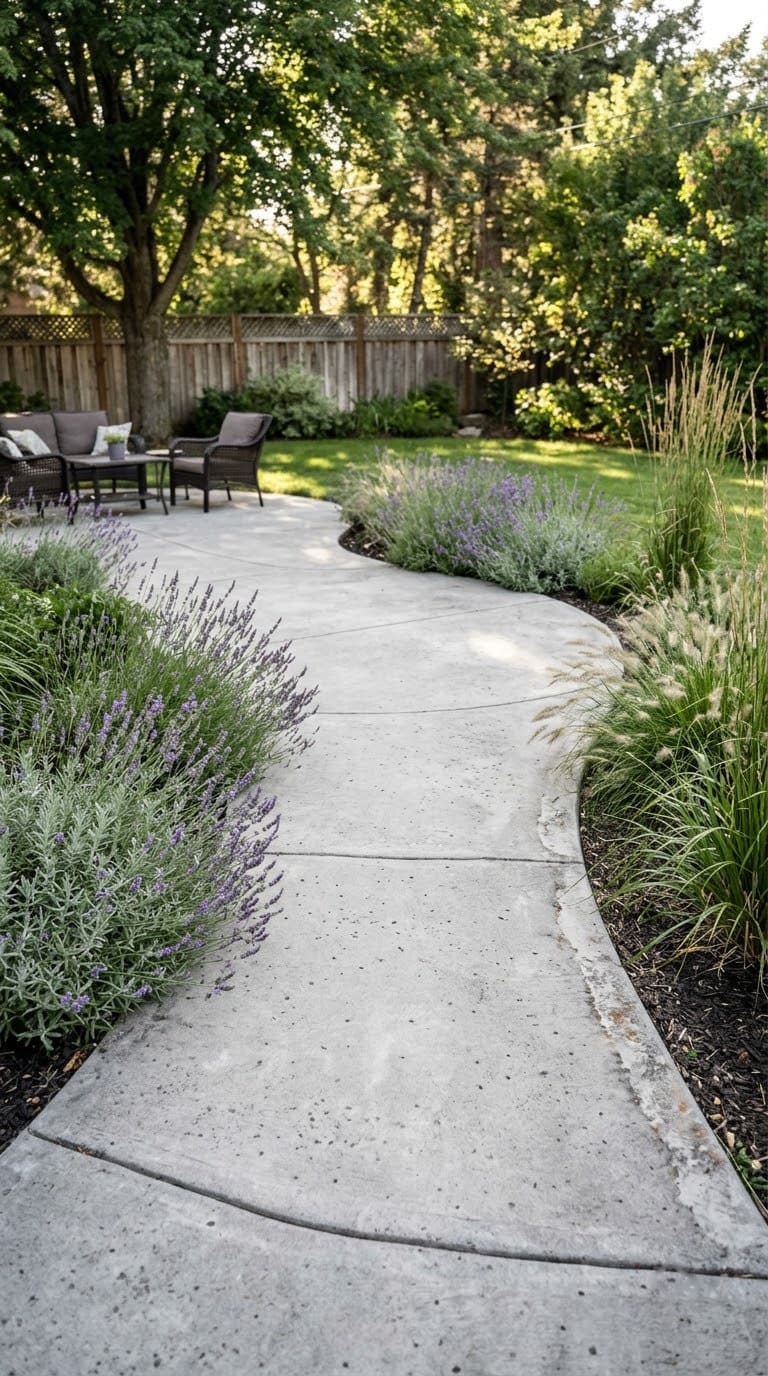
A curved edge softens the hard look of concrete. Build the forms from flexible hardboard staked every foot or two. Pour in sections so you can finish each part before it sets.
Curves need more joints because the shape isn’t a simple rectangle. Plan the joint lines before you pour. Edge the curve with plants.
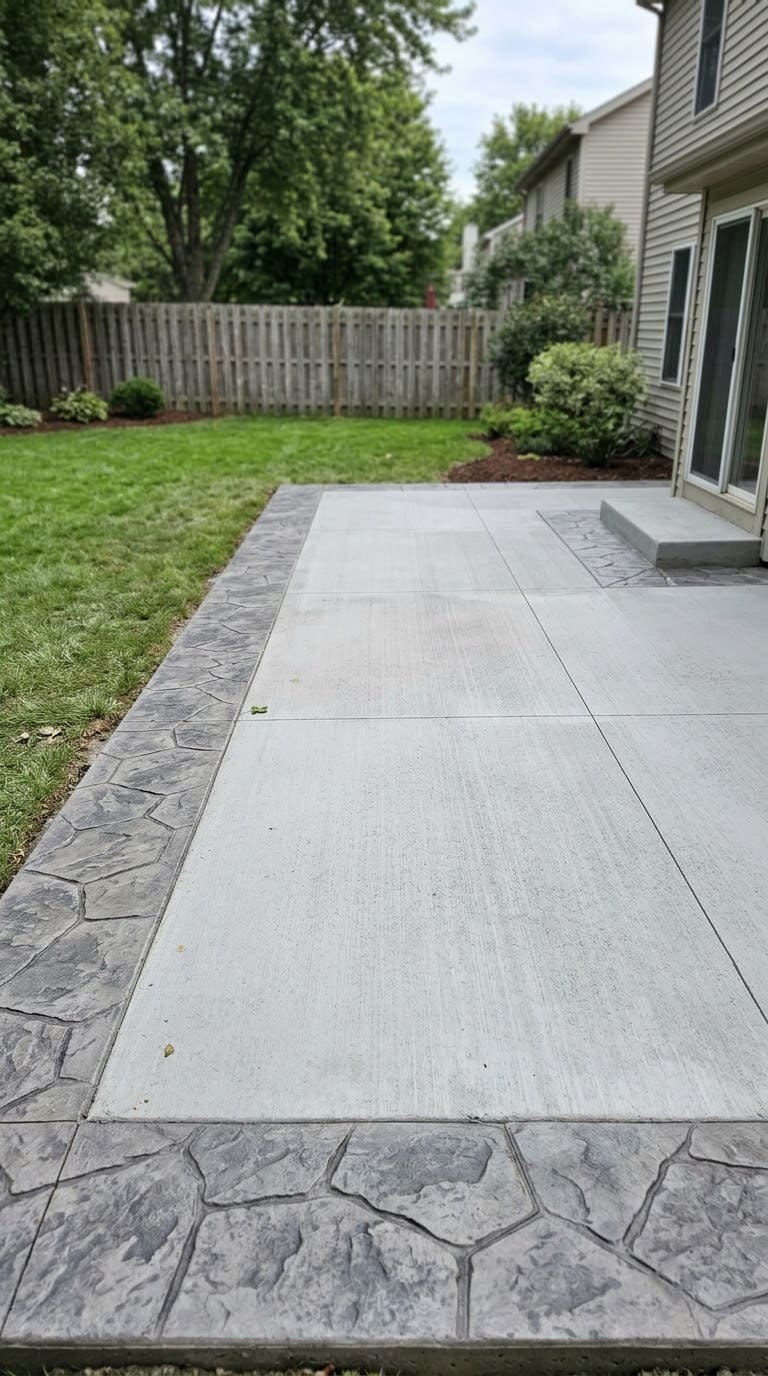
10. Stamped Border Around a Plain Center
Stamping the whole slab costs a lot. A stamped border around a broom-finish center gets the stone look for less. Mike Day puts stamped concrete between $15 and $25 per square foot, depending on place and project.
Stamped surfaces need sealing and resealing every two to three years, he says. Our stamped concrete patio ideas cover patterns in depth. Pick a pattern that matches your home style.
11. Single-Color Stained Patio
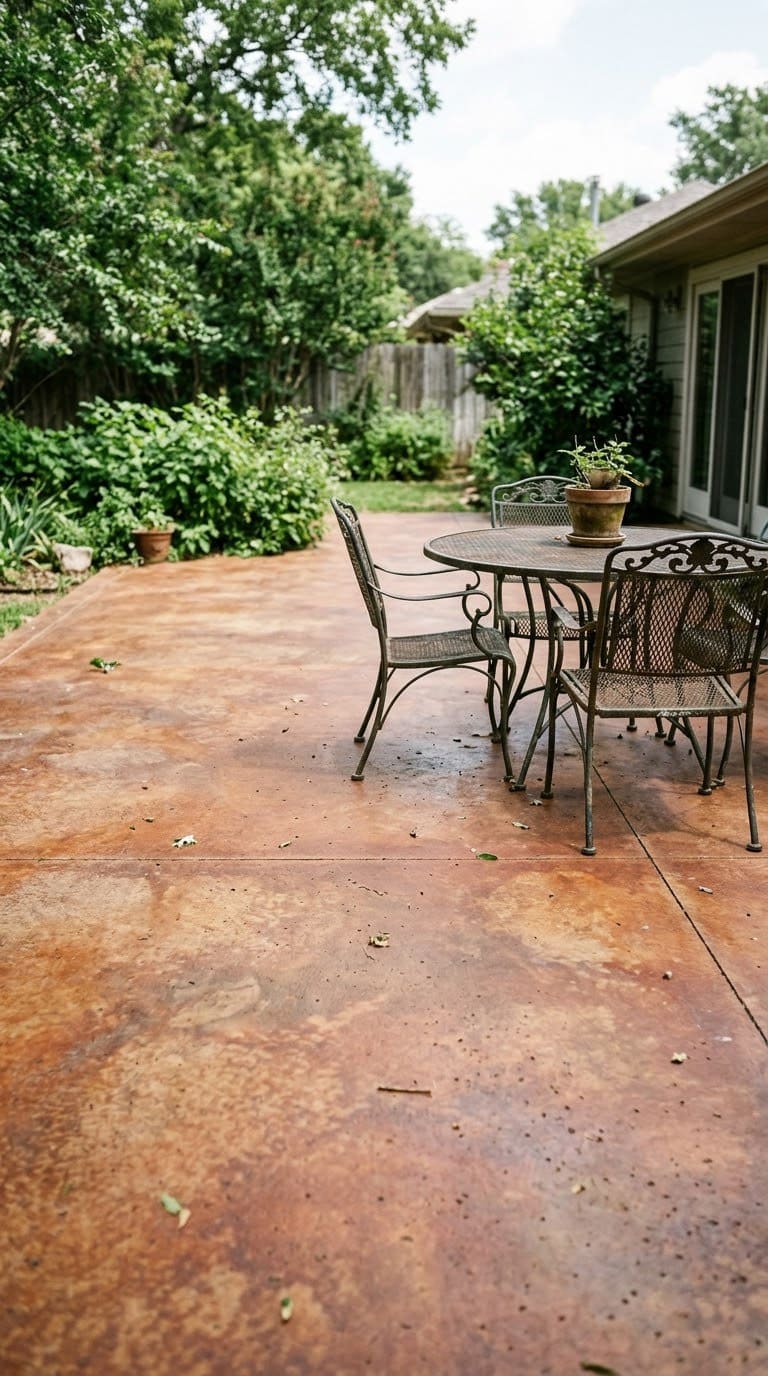
Stain soaks into the surface and gives a mottled, earthy color. A single color keeps the job simple. It suits both new and old slabs.
Choose a lower-sheen sealer so the stained surface doesn’t get slick. We have more color ideas in our stained concrete patio guide. Test the stain on a hidden corner first.
12. Polished Look Under a Cover
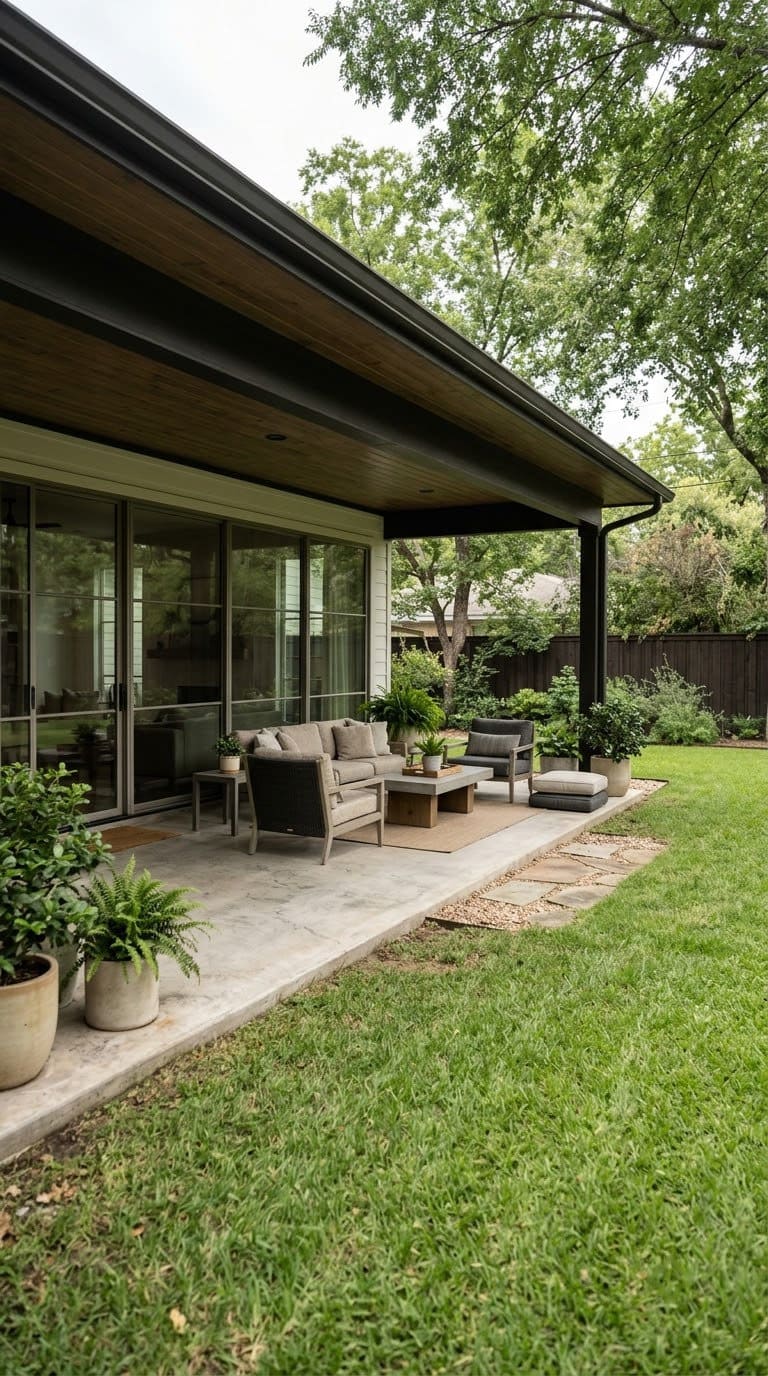
Polished concrete is ground to a soft sheen. It looks best under a roof where rain and sun can’t dull it. It’s more of an indoor-outdoor porch finish.
Polished floors can be slick when wet. Keep this look for covered spaces. Our polished concrete floors guide covers the pros and cons.
13. Two-Level Stepped Patio
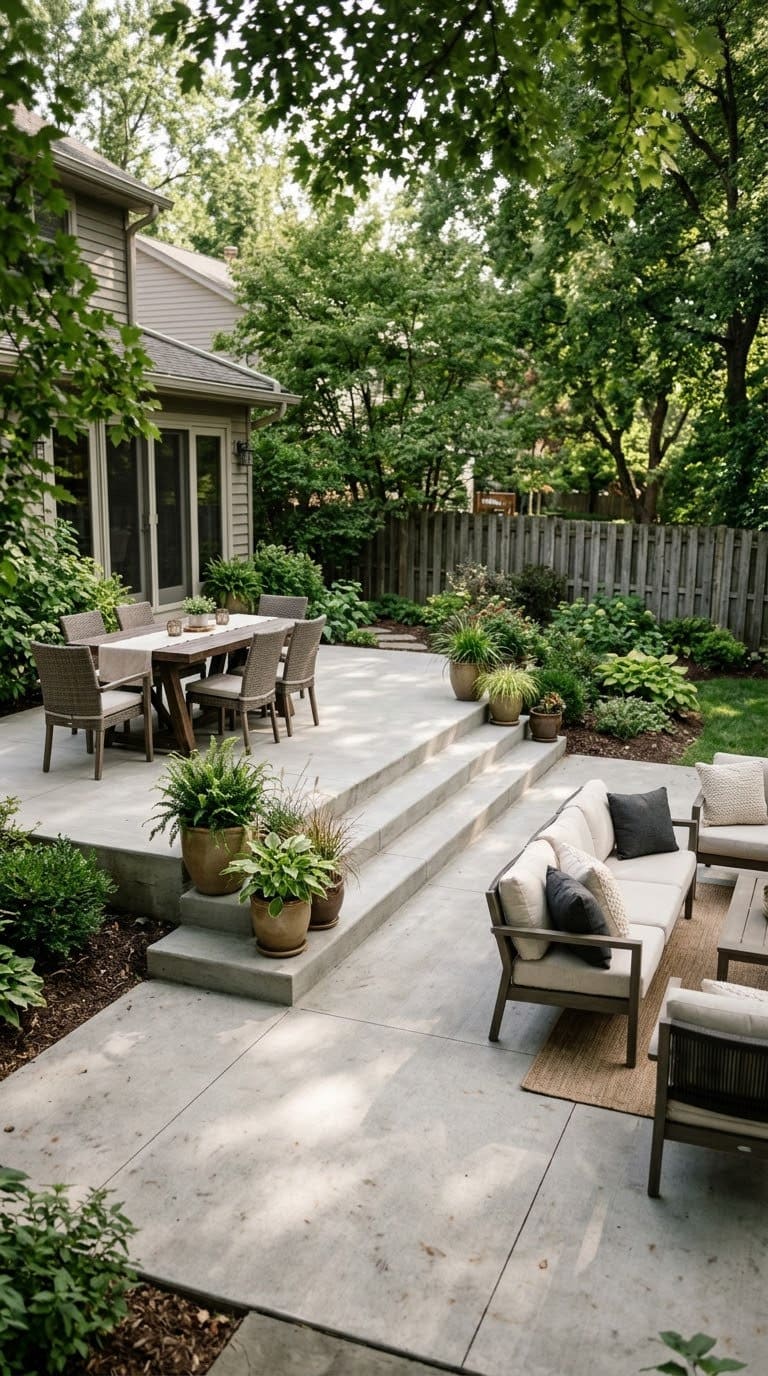
On a sloped yard, pour a lower dining level and a higher lounge level. Join them with two or three wide steps. A change of level separates zones without walls.
Keep step heights equal, usually 6 to 7 inches, because uneven steps cause trips. Check local code for stair rules. Our raised patio ideas with steps show more options.
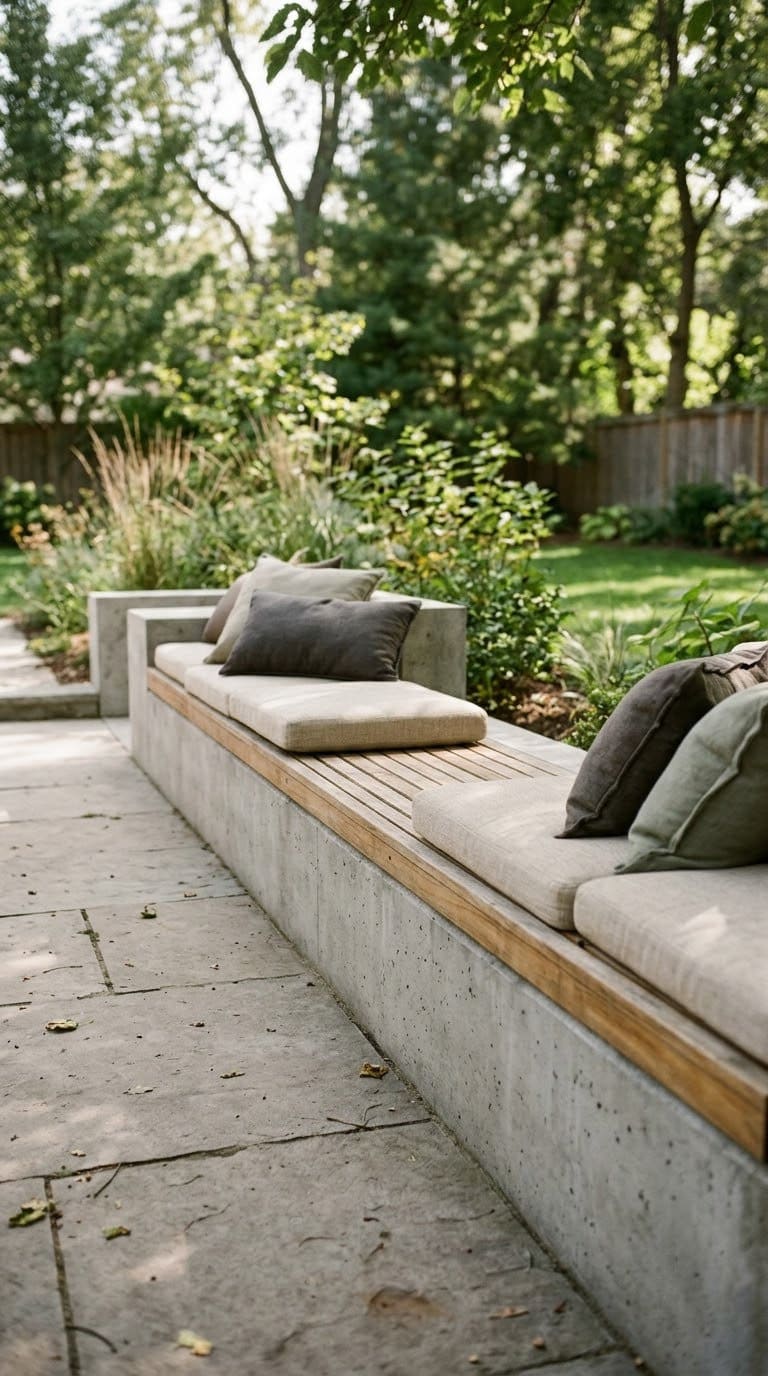
14. Built-In Concrete Bench
Pour a low seating wall along one side of the patio. Make it about 17 to 18 inches tall for comfortable seating. Add wood slats or cushions on top for warmth.
The wall doubles as an edge for the slab. Put a footing under it as your local code requires. It saves space compared with loose chairs.
15. Built-In Planters
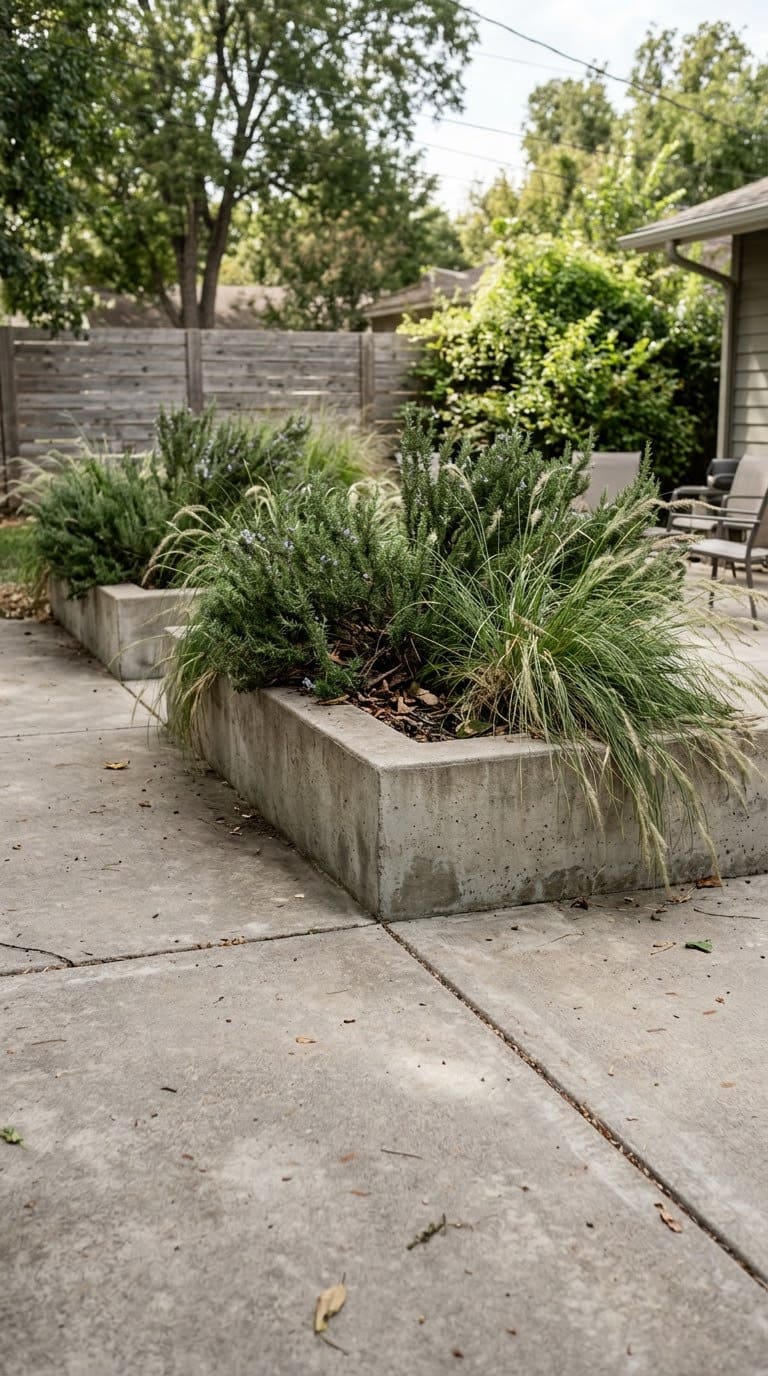
Add raised planter boxes into the patio edge. Leave drain holes at the bottom so soil never sits in water. Fill them with herbs, grasses or small shrubs.
Plants soften concrete and add shade. Line the inside with a drainage layer of gravel. Choose plants with shallow roots near the slab.
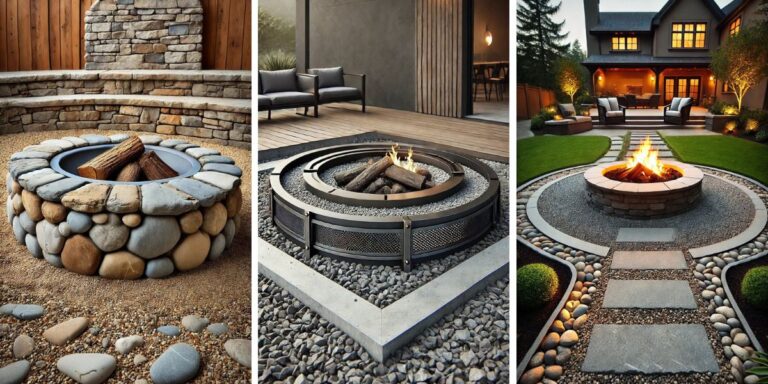
16. Fire Pit Surround
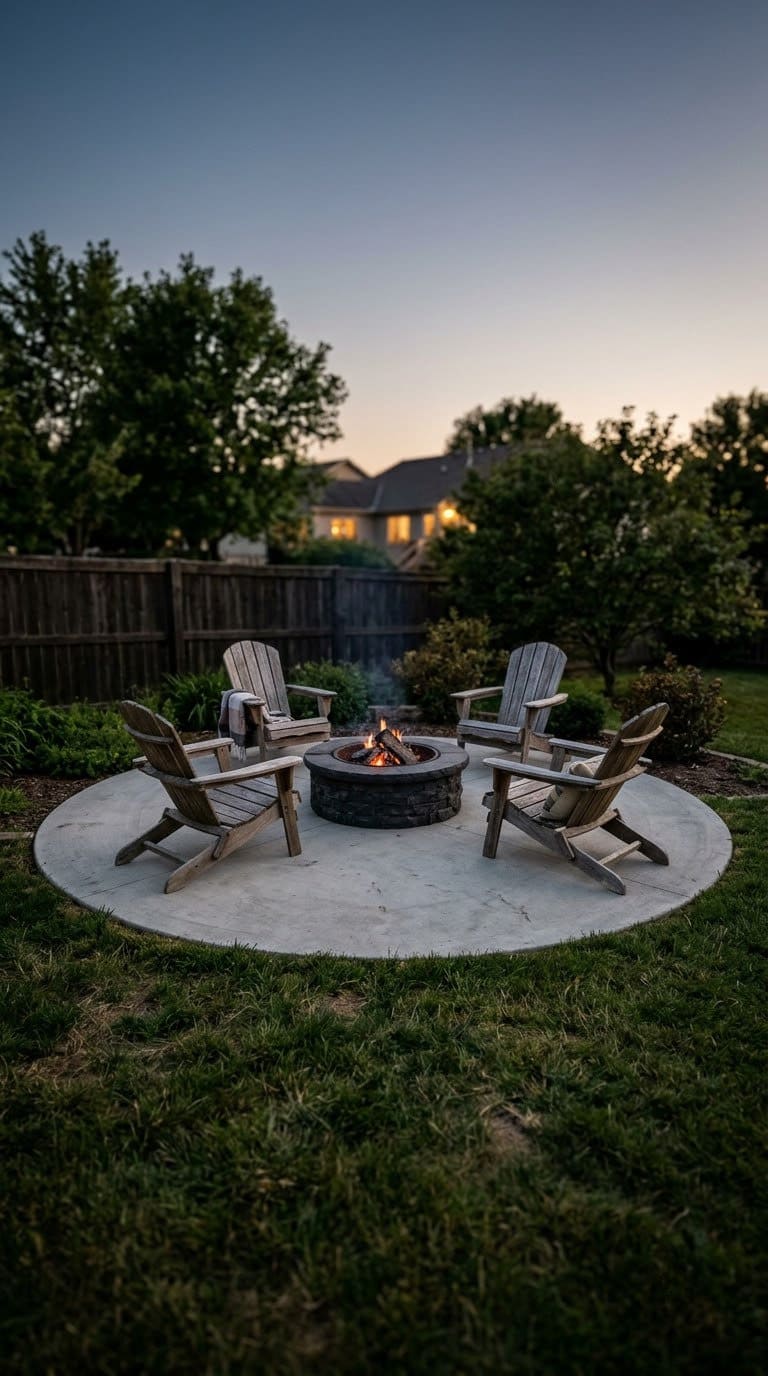
Set a gas or wood fire pit in the center of a round pour and extend the patio about 6 feet beyond the ring. This gives seating space around the heat. Check local rules for open flames.
Keep a clear zone around the fire. Our concrete fire pit ideas go deeper on designs. Use a fire-rated liner if you build a wood-burning pit.
17. Grill and Outdoor Kitchen Pad
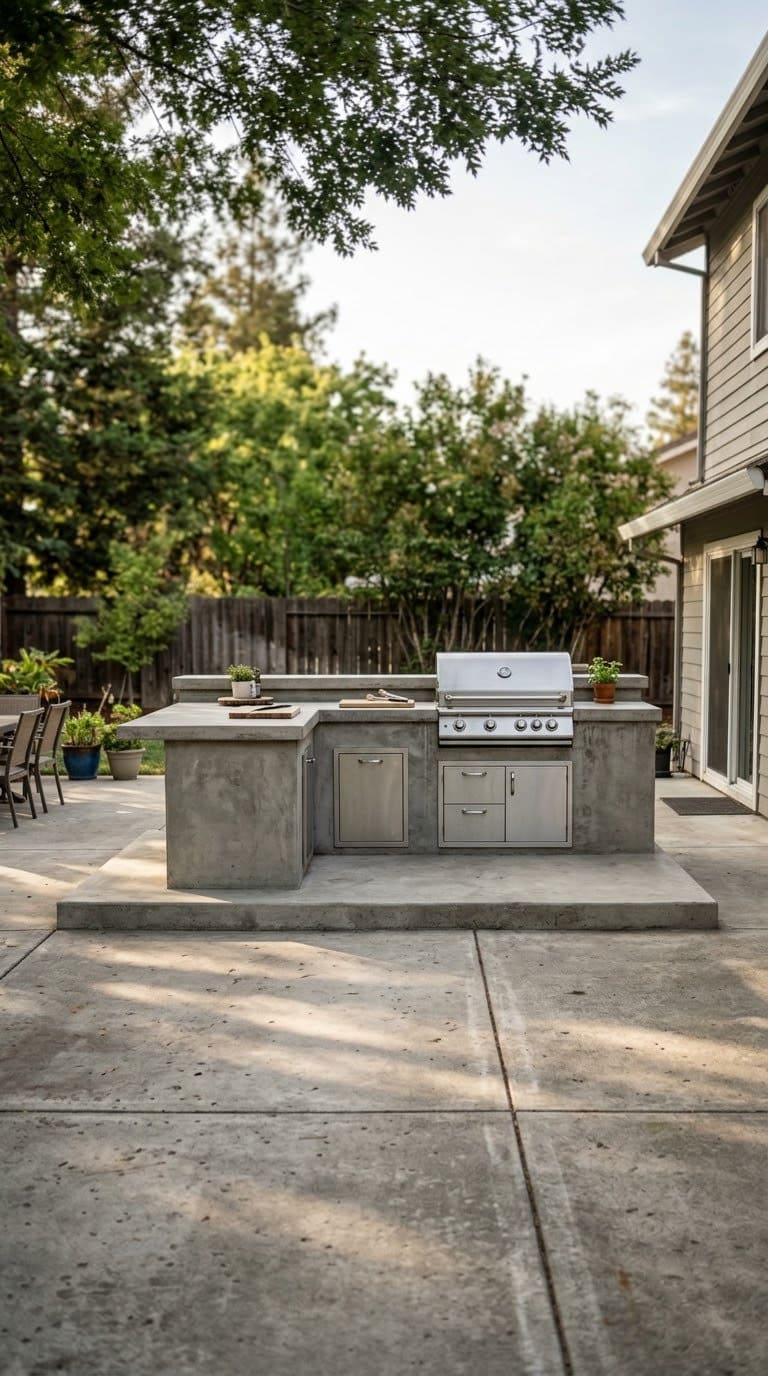
Pour a thicker section where the grill or counter goes. Heavy appliances may need a slab thicker than 4 inches. Ask your contractor about the exact load.
Keep the grill pad close to the house for easy access, but never right against siding. Add an expansion joint where the pad meets the main slab. Plan gas and power lines before the pour.
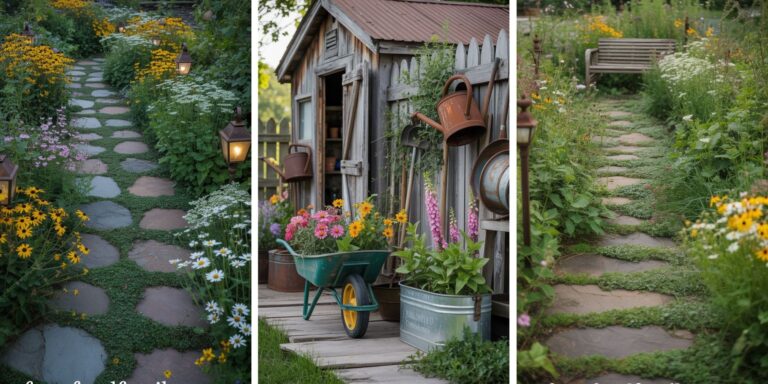
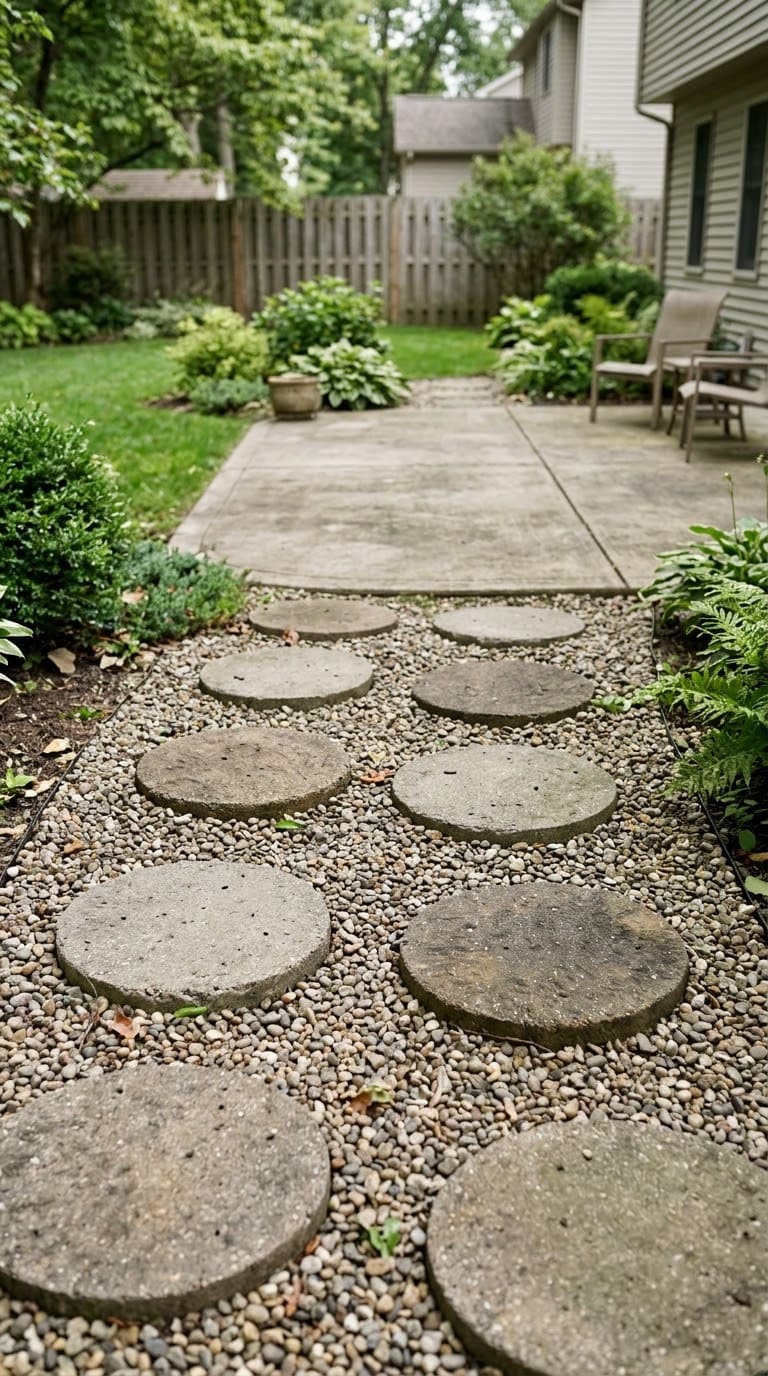
18. Stepping-Stone Path to the Patio
Pour round or square stepping stones in forms and set them in a gravel bed. A cake pan makes a round form, an easy craft. Link the patio to the house with a path of stones.
Space stones about one stride apart. Set them level with the soil so a mower rolls over. They make a cheap weekend project.
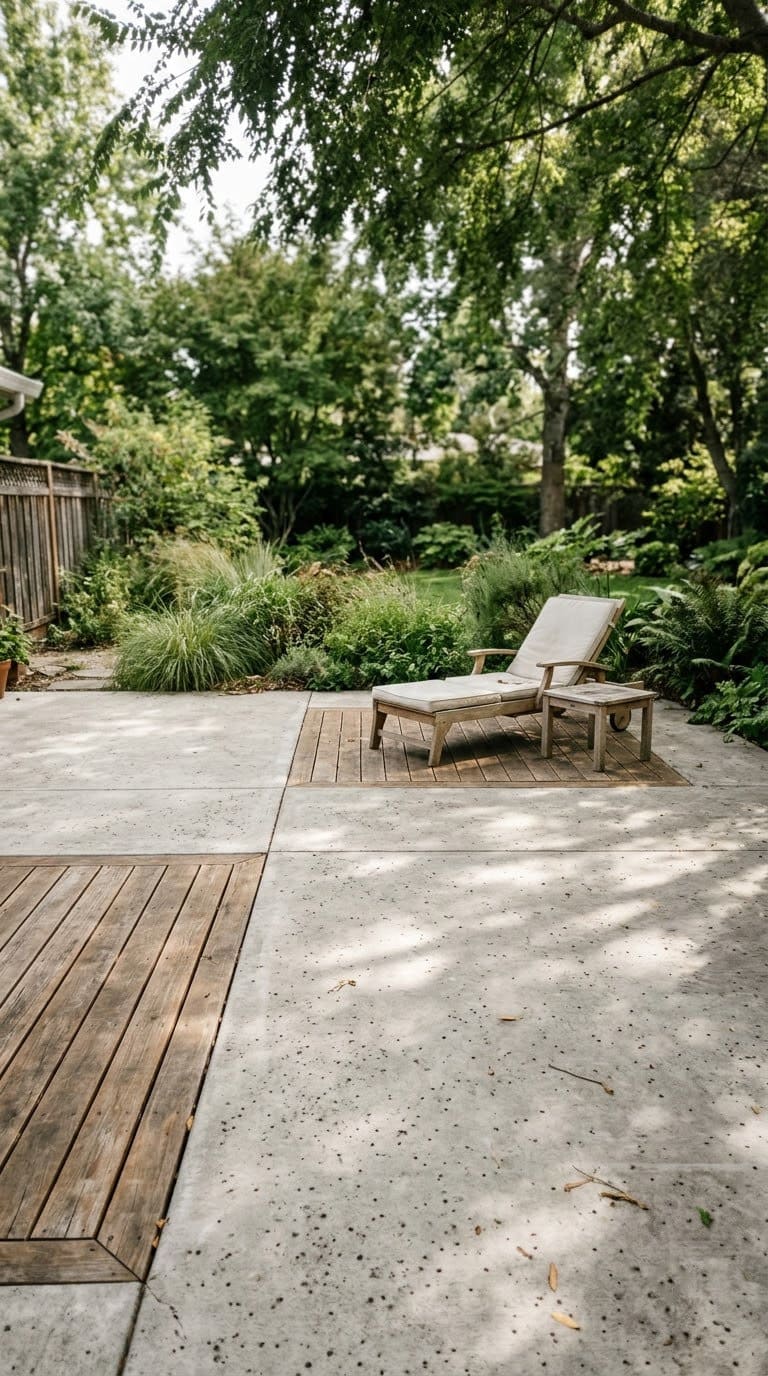
19. Wood Plank Insets
Leave rectangular openings in the pour and lay wood decking in them. The mix of warm wood and cool concrete feels designer-made. It also breaks up a big slab.
Use rot-resistant wood and leave gaps for drainage. Seal the wood each year. Raise the planks slightly above the slab edges.
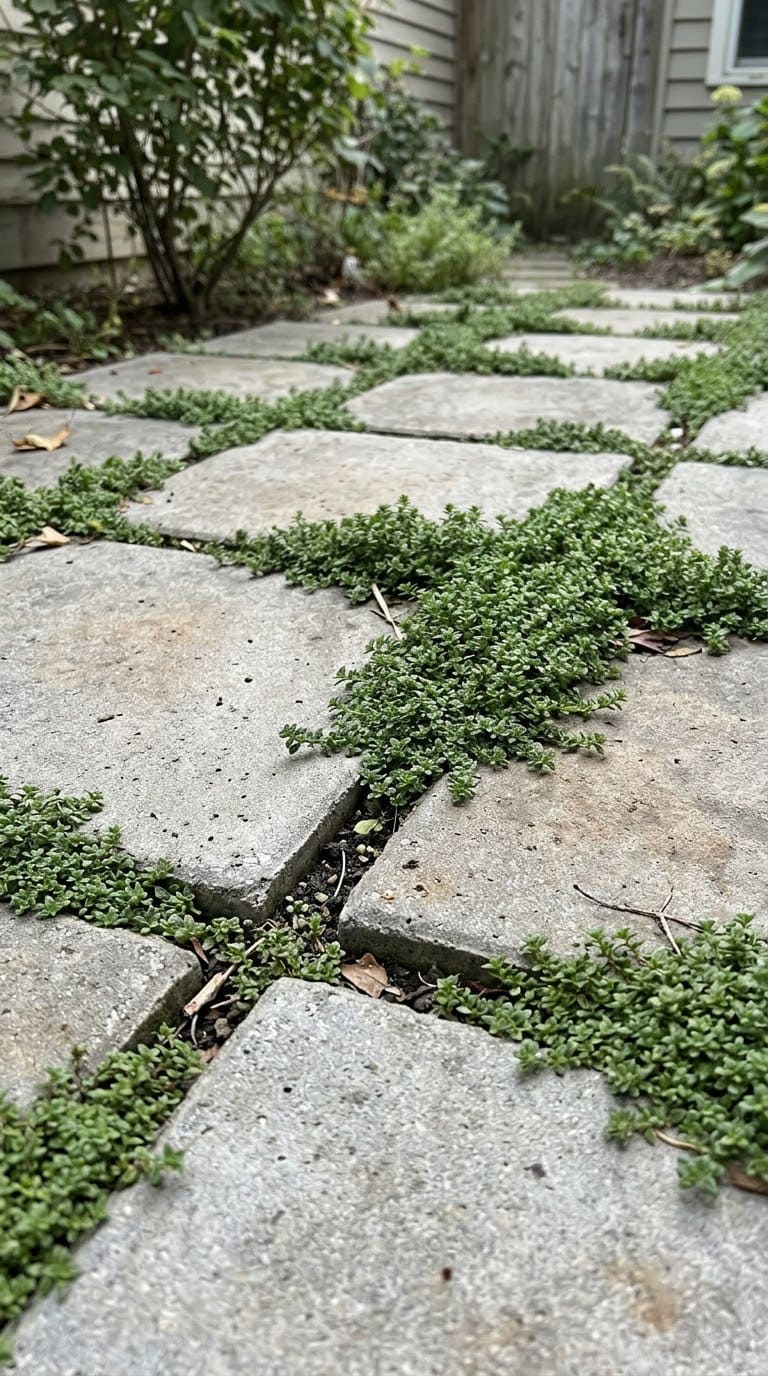
20. Turf or Moss Joints
Replace the gravel in a slab grid with low turf or moss. The green lines soften the pattern. Pick a tough, low-growing plant.
Water the green strips lightly in dry spells. Edging keeps roots out of the slab. This look suits cottage and modern gardens alike.
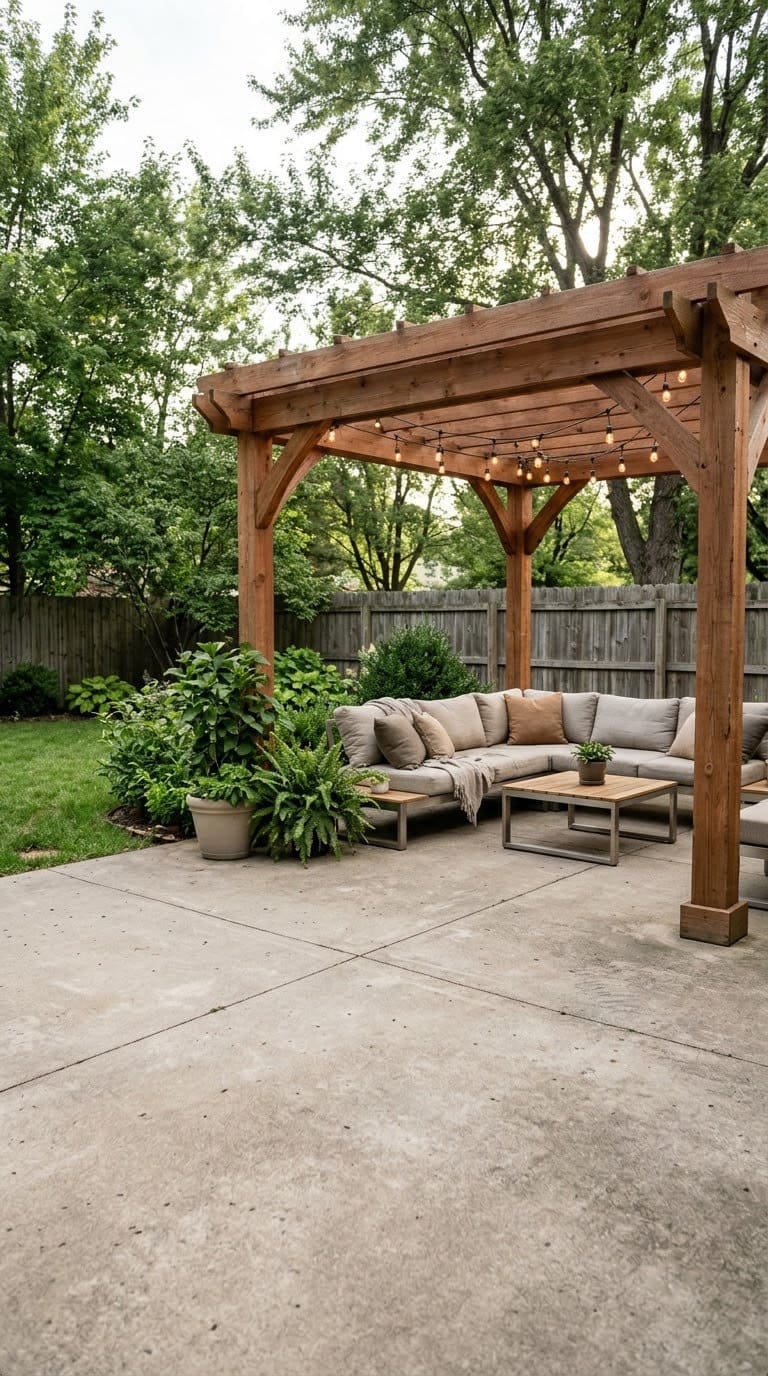
21. Pergola Over the Patio
A pergola adds shade and a ceiling to the space. The posts need footings or secure anchors, not just resting on the surface. Plan the post locations before the pour so you can build in the hardware.
See our guide on how to anchor a pergola for the basics. Check wind rules in your area. Hang string lights from the beams.
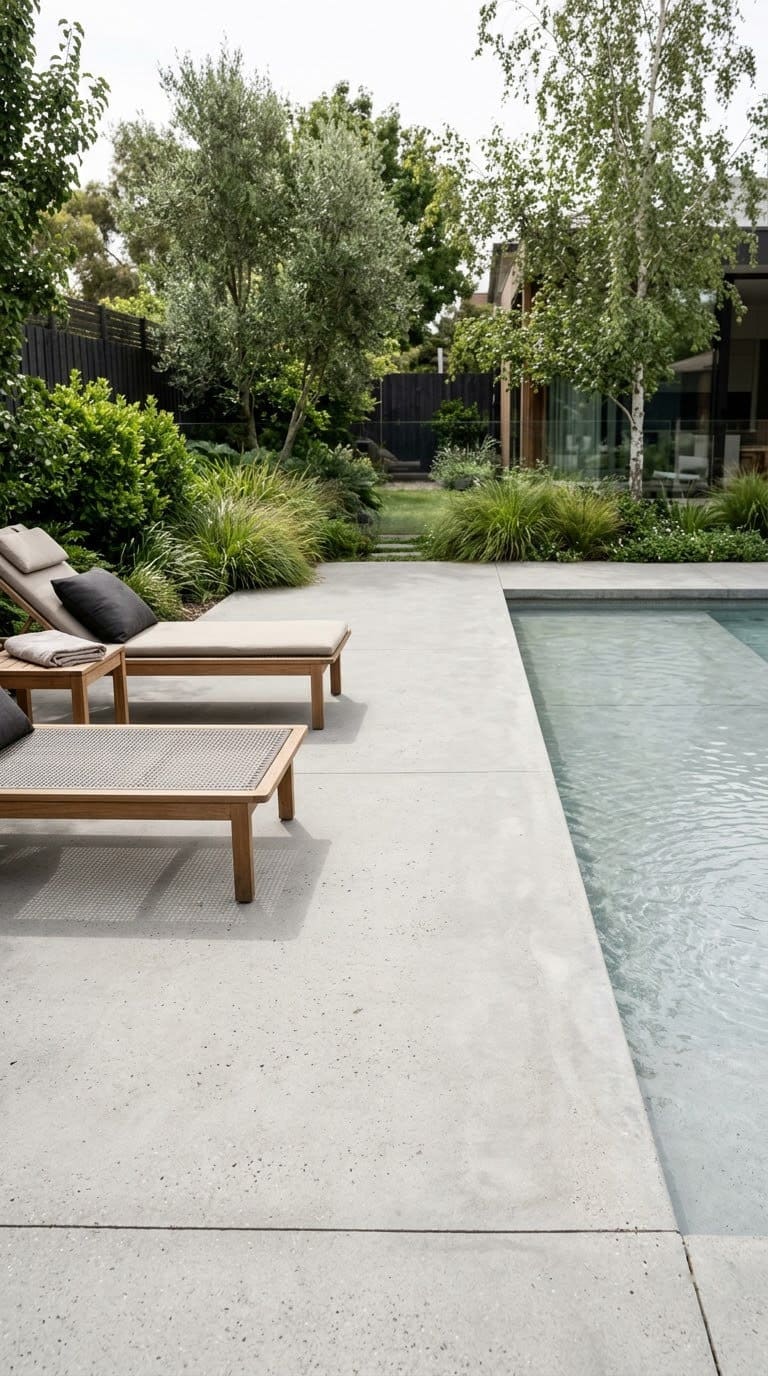
22. Poolside Patio With Extra Grip
Around a pool, grip matters most. Use a broom or exposed aggregate finish and skip glossy sealer. Slope the surface away from the pool so water doesn’t pool.
A light color keeps the surface cooler on bare feet. Mike Day’s tip applies here too: choose a low-sheen or penetrating sealer. Test traction wet before you open the pool.
23. Resurfaced Old Slab
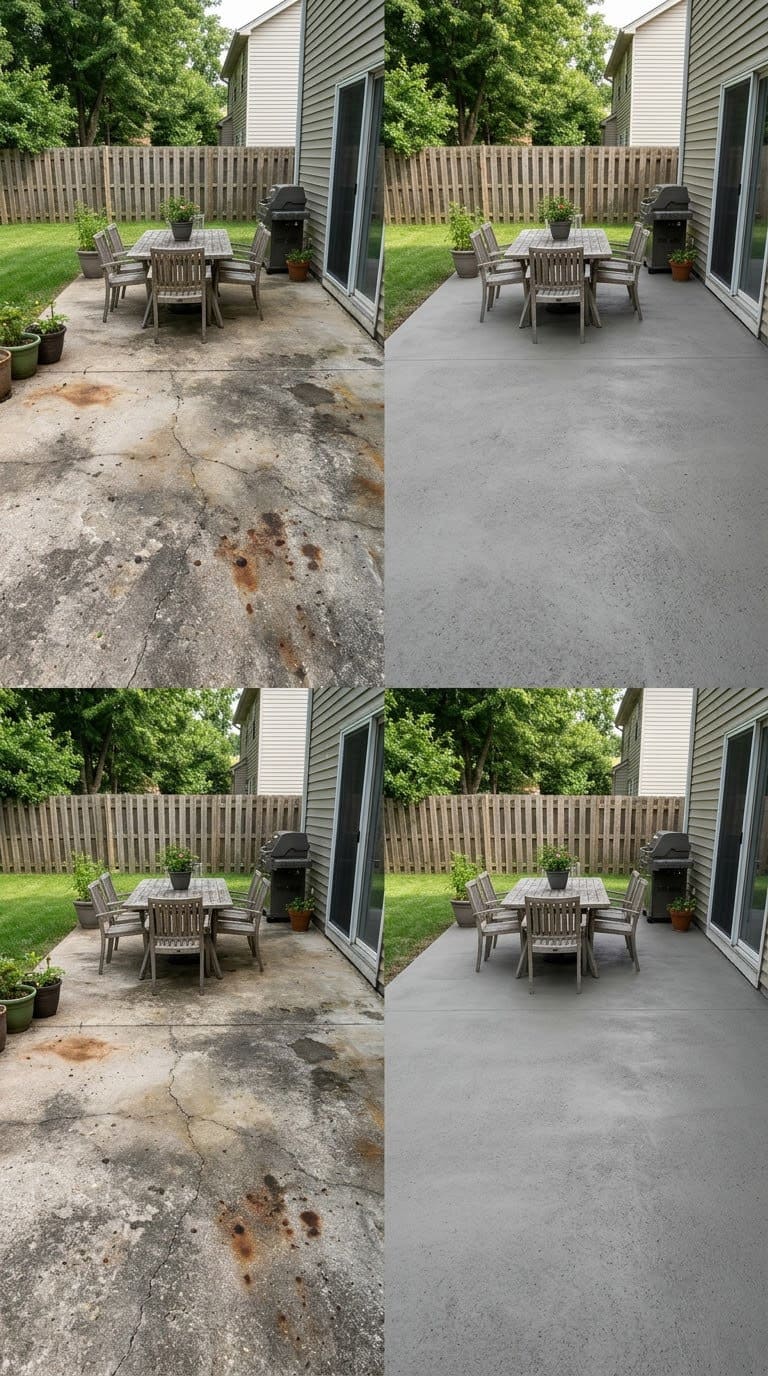
If your old slab is sound but ugly, a thin overlay can refresh it. Clean the surface and remove old coatings first. A good overlay will not fix a badly cracked or sunken slab.
Fill cracks and check that the base is stable. Then choose a color or stencil finish. It costs far less than tearing out and repouring.
24. Small Downsized Patio
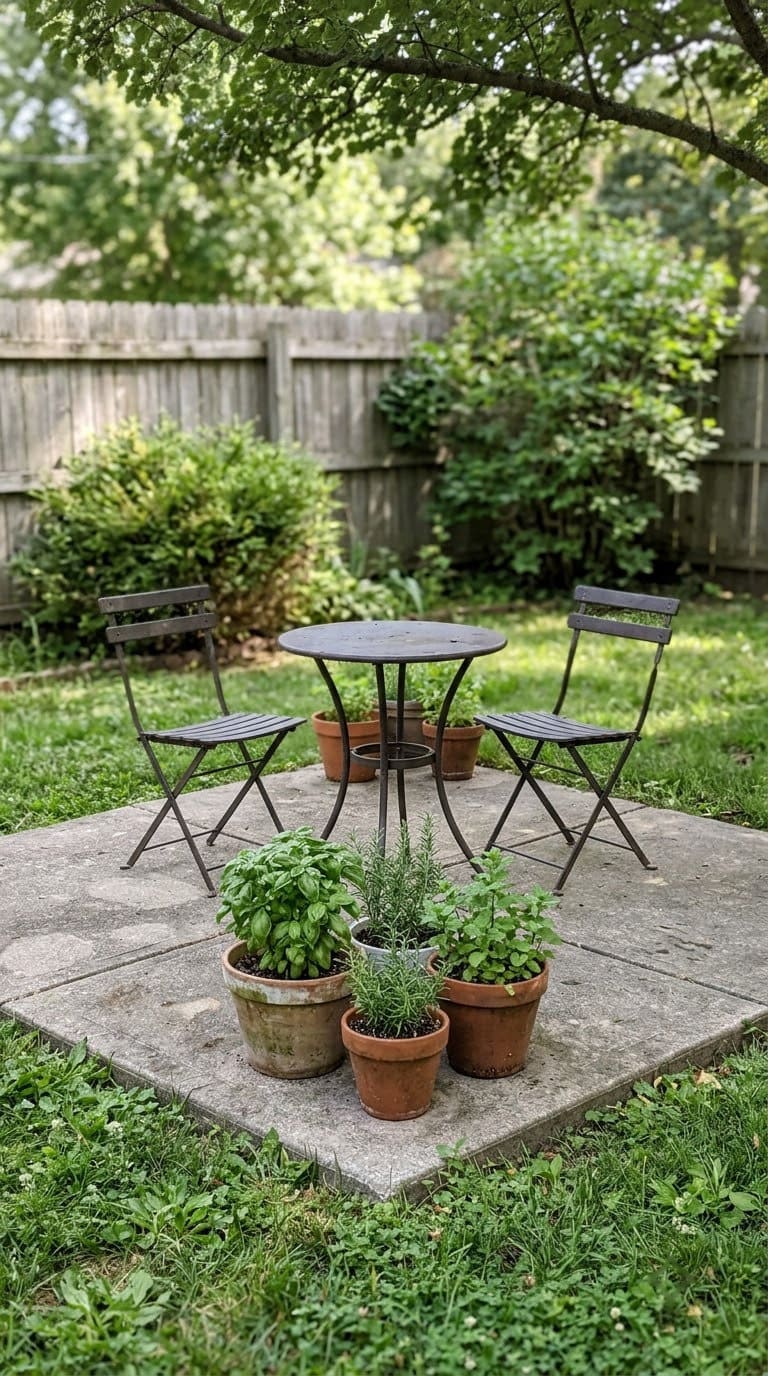
A compact 10 by 10 foot slab is enough for a bistro set and two chairs. Smaller slabs cost less in material and labor. They also need fewer joints.
Use a pretty finish on a small slab because it’s seen up close. Add pots and a rug for warmth. For furniture that fits a small slab, browse these DIY concrete block projects.
Common Mistakes to Avoid
The most common mistake is skipping or under-cutting the control joints. Tim Carter says joints should be at least one quarter of the slab thickness, which is 1 inch for a 4 inch slab. He also says a jointing tool usually doesn’t cut deep enough, so he recommends sawing the joints that evening or the next morning.
The second is a glossy sealer. Mike Day says a topical sealer makes water bead up and reduces friction underfoot, so he advises a lower sheen or a penetrating sealer in thin coats.
The third is ignoring water. EVstudio says air entrainment helps against freeze and thaw but isn’t magic, and it advises using only deicers made for concrete and keeping downspouts from draining across slabs.
If you only fix one thing, plan the extras before the pour. Posts, a grill pad and a bench are far easier to build in than to add later. That one is our advice, not a sourced rule.
Frequently Asked Questions
How thick should a concrete patio be?
Four inches is the minimum for a patio, according to Tim Carter. Heavier loads like a hot tub or grill may need more. Ask a contractor for your site.
Do I need control joints in a concrete patio?
Yes. Concrete shrinks as it cures, and joints direct the cracks. Cut them to at least one quarter of the slab thickness.
Should a concrete patio slope?
Yes. QUIKRETE suggests about 1/4 inch per foot away from buildings. Check local codes and your site.
How do I stop a sealed patio from getting slippery?
Choose a lower-sheen or penetrating sealer and apply thin coats. Anti-slip additives add traction. Test a sample first.
Can I cover an old cracked concrete patio?
A thin overlay can refresh a sound slab. It won’t fix severe cracks or a sunken base. Repair or replace those slabs first.
Never miss an update — choose FarmFoodFamily as your preferred source on Google.
How it works: Tap the button below to open Google's settings page, then check the box next to FarmFoodFamily.
Tap the checkbox to turn it blue — that's how you know it's set.