Skip to content
FarmFoodFamily
  • HomeExpand
    • FamilyExpand
      • Home Organization
    • Farm
    • Crafts
  • GardenExpand
    • DIY Project
    • Flower
    • Herbs
    • Landscape
    • Backyard
    • Indoor
    • Plants
    • Houseplants
    • Succulent
    • Lawn Grass
    • Tree
    • Pest Control
    • Tools
    • Gardening and Plant Care Review Board
  • Home DecorExpand
    • Bathroom
    • Bedroom
    • Design Software
    • OutdoorExpand
      • Swimming Pools & Spas
    • Kitchen
    • Living RoomExpand
      • Fireplace
      • Sofas & Couches
    • Home Lighting
    • Interior Design
    • Exterior DesignExpand
      • Roofing
    • Entryway
    • Wall
    • Home Flooring
    • Storage Ideas
    • Garage
    • Office
    • Farmhouse
    • Furniture
    • Garage
    • Basement
    • Doors
    • Architecture
    • Dimensions
    • Color
  • HolidayExpand
    • Halloween
    • Thanksgiving
    • Christmas
    • Valentine
    • Easter
    • Patriotic Day
  • Home ImprovementExpand
    • AppliancesExpand
      • Refrigerators
      • Washer & Dryers
      • Dishwashers
      • Air Fryers
      • Dryers
      • Blenders
      • Air Purifiers
    • Heating & Cooling
    • Painting
    • Plumbing
    • Water System
    • Cleaning
    • Home Improvement Review Board
  • Home Trends
  • Buying Guide
  • Shop
FarmFoodFamily
140+ PAGE PDF GUIDE · 9 PARTS · 42 CHAPTERS

Your tiller has been lying to you every spring for years.

The No-Till Revolution shows you exactly why tilling wrecks your soil, and gives you the complete 3-year system — built from university research, not forum advice — to fix it for good.

Get the guide — $27 one-time
7-Day Action Guarantee University-sourced research Instant PDF download
MULCH LAYER — 3″+ ACTIVE TOPSOIL earthworms + fungal network BIOPORE ZONE roots reach 24″+ by Year 3 DEEP SUBSOIL
10×faster water absorption than tilled soil
60–140%more soil biology, no-till vs tilled
140+
Pages
42
Chapters, 9 parts
30+
Original diagrams
5
Bonus spreadsheets
15+
University & USDA sources
Ohio State University Extension Penn State Extension Kansas State University USDA Agricultural Research Service Michigan State University LTER Oregon State University USDA NRCS
THE CYCLE YOU KNOW TOO WELL

Every April, you till. Every July, you regret it.

1
Symptom

The bed looks great in May — loose, dark, freshly turned. By July it’s cracked, bone-dry by noon, and you’re watering twice a day just to keep plants alive.

2
Consequence

You’re spending $300+ a year on tiller rental, fertilizer, and replacement plants — and your water bill doubles every summer. Weeds come back thicker every single year, no matter how much you pull.

3
Identity

You’ve started to wonder if you’re just not cut out for this — if other people have some green-thumb gene you skipped, and no amount of effort is going to change that.

You were never a bad gardener. You were given a bad tool — and told it was the only way.

KC

Kimberly Crawford

Farm Food Family

“The garden that’s waiting for you on the other side is extraordinary.”

HOW I FIGURED THIS OUT

I quit no-till once. It’s the reason this guide exists.

For seven years, I dragged a rented tiller out every April, believing fluffy, dark soil in spring meant I was doing it right. I just wanted a garden that could actually feed my family through summer.

What I got instead: a bed that cracked open by July, needed watering twice a day, and produced smaller harvests every year despite the fertilizer and effort I kept throwing at it.

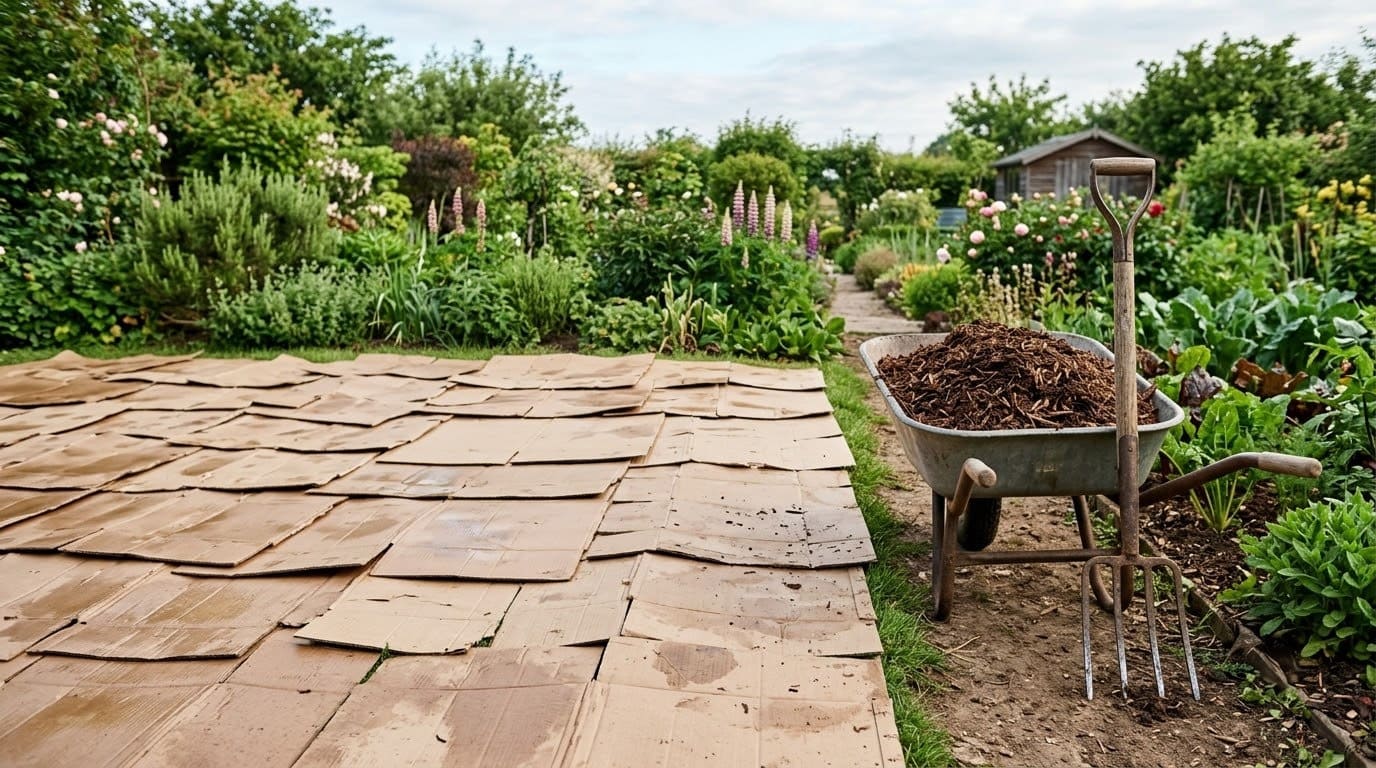
I tried “no-till” once, half-heartedly — 2 inches of straw instead of the 3 it actually takes, no cardboard underneath. Six months later, weeds were worse and my tomatoes were pale. I rented the tiller again that fall and told myself no-till “wasn’t for me.”

“I genuinely sat on the back steps looking at a cracked, lifeless bed and thought: what is wrong with me.”

The turning point was an Ohio State University Extension fact sheet on soil compaction I found at 2 a.m. — a diagram showing exactly the hardpan layer I’d been creating under my own “fluffy” soil, year after year, with my own hands.

What that research actually said:

“Mature no-till soil absorbs rainfall 10× faster than tilled soil — because the biology tilling destroys is what creates the drainage in the first place.”

I rebuilt the system properly this time — full sheet mulch, real cardboard, the 3-inch rule, three full years of patience. Here’s what changed:

Year 3
Best harvest of my gardening life, zero fertilizer
$0
Amendment spend by Year 5 (down from $370/yr)
18
Earthworms per sq ft, up from 2 at the start

“I’m not a naturally gifted gardener. I’m someone who finally stopped fighting the biology that was trying to do the work for free.”

THE OFFER, PLAINLY

Exactly what you’re getting

What is it

A 140+ page PDF

9 parts, 42 chapters, read on any device or printed for the shed. Plus 5 bonus tracking spreadsheets.

Who it’s for

Backyard tillers

Suburban and backyard gardeners currently tilling every spring and getting worse results every year.

What it does

Rebuilds your soil

Gives you the exact 3-year no-till system to end hardpan, cut watering in half, and stop buying fertilizer.

What’s inside

Science + system

The soil biology explained in plain English, plus step-by-step methods, diagnostics, and a full-year action plan.

How long it takes

1 weekend to start

Your first no-till bed can go in this weekend. Full soil transformation: a documented 3-year timeline.

This guide is NOT —

  • An overnight fix. No-till takes one full growing season to show results, three to fully transform your soil.
  • Forum advice or garden folklore. Every claim traces back to a named university study or USDA source.
  • Written for 10-acre homesteaders. Every method is sized for backyard beds, raised beds, and suburban lots.
  • A physical book. It’s a digital PDF delivered instantly — no shipping, no waiting.
INSIDE THE GUIDE

Four systems, one transformed garden

The Science Made Simple

Understand exactly what’s happening underground, in plain English.

FUNCTIONAL

Diagnose your soil with 6 at-home tests — no lab, no cost, 20 minutes total.

EMOTIONAL

Stop guessing why your plants struggle and finally know what’s actually wrong.

SOCIAL

Explain to a skeptical neighbor exactly why their soil is failing — with data, not opinion.

IDENTITY

Become the gardener on your block who actually understands soil, not just plants.

The No-Till Method

Step-by-step: sheet mulch, raised beds, conversions, weed control, irrigation.

FUNCTIONAL

Build your first no-till bed this weekend using the complete 7-step sheet mulch protocol.

EMOTIONAL

Feel in control of your garden instead of constantly reacting to what went wrong.

FUNCTIONAL

Cut weeding time by 80%+ using the 3-inch mulch rule, backed by UF IFAS research.

FUNCTIONAL

Convert an existing tilled bed without starting over — exact season-by-season steps.

Composting for Biology

Not disposal — cultivation. Build the exact biology your soil needs.

FUNCTIONAL

Run a 3-system setup — cold pile, worm bin, compost tea — in under 30 min/week.

EMOTIONAL

Never again wonder if your compost is “done” — three definitive tests tell you exactly.

FUNCTIONAL

Turn kitchen scraps into the most potent amendment available — 10–100× more biology than store-bought.

SOCIAL

Stop your family asking why you’re hauling wood chips — show them the harvest instead.

Your First Full Season Plan

A month-by-month calendar, complete shopping list, and troubleshooting guide.

FUNCTIONAL

Follow the exact 12-month calendar so you never miss a critical seasonal action.

FUNCTIONAL

Know precisely what to buy, get free, and skip — most gardeners overspend by $200+/year.

IDENTITY

Reach Year 3 instead of quitting in Year 1 — with the documented timeline that keeps you going.

EMOTIONAL

Garden with confidence instead of dread, knowing exactly what “normal” looks like each season.

THREE YEARS FROM NOW

Picture this October morning

You’re kneeling at the edge of your garlic bed, pushing your hand into soil that’s dark all the way down — not gray, not cracked, no resistance at six inches. It smells like rain even though it hasn’t rained in three days.

Your neighbor, the one who watched you switch from tilling three years ago with a raised eyebrow, walks over and pushes his own hand into the dirt without asking. He pulls it back holding two earthworms he wasn’t even looking for. “That’s not what my soil looks like,” he says. You just nod — you remember exactly what yours looked like, too.

You haven’t bought fertilizer in over a year. The hose sits mostly coiled up by the shed. What’s growing in front of you took almost nothing from you this season except patience, three years ago, when the bed still looked like it was fighting you.

Dopamine

The quiet thrill of pulling back your hand and finding earthworms you weren’t even looking for.

Oxytocin

Your neighbor’s unspoken respect, the moment he reaches into your soil without asking.

Serotonin

The settled confidence of finally understanding your own garden instead of guessing at it.

Endorphin

The physical ease of a season with almost no watering, no weeding, no fighting the ground.

WHY YOU CAN TRUST THIS

Every claim traces back to a real source

University-sourced data

Every statistic traces to a named study or extension publication — Ohio State, Penn State, Kansas State, USDA ARS, Michigan State LTER, and more. No forum advice, no invented numbers.

Field-tested, not theoretical

Every method described was actually run in a real suburban backyard through three full seasons — not summarized secondhand from a research abstract.

Fact-checked against extension sources

Every data point was cross-referenced against publicly available university extension and USDA publications before being included — you can verify any of it yourself.

Written by someone who failed first

Kimberly quit no-till once before making it work. The guide is written specifically to prevent the mistakes that caused that first failure.

THE OFFER

Everything you need, one payment

Value = (a completely transformed garden × a documented 3-year system) ÷ (one weekend to start)

The No-Till Revolution — full guide140+ pages, 9 parts, 42 chapters
$47
Garden Setup PlannerBed tracker + cover crop rotation, 2 tabs
$12
Compost TrackerPile log, worm bin log, compost tea log, 3 tabs
$12
Annual Feeding + Soil Diagnostic Trackers2 spreadsheets, 6 tabs total
$15
First Season Master PlannerChecklist, layout grid, weekly log — 3 tabs
$12
Total value
$98
Everything included
ONE-TIME PAYMENT
$98
$27
Save 72%
  • Full 140+ page PDF guide, instant download
  • 5 bonus tracking spreadsheets (14 tabs total)
  • 30+ original diagrams and quick-reference charts
  • Printable Quick Reference Card for your shed
  • 7-Day Action Guarantee
Get instant access — $27
Secure checkout Instant delivery 7-day guarantee
Have more than one soil or pest problem?

Get this guide — plus 3 more — in the Organic Soil & Garden Health Bundle

This guide is one of 4 complete systems covering no-till gardening, rebuilding living soil, apartment composting, and chemical-free pest defense — 500+ pages and 10+ bonus worksheets in one download.

$108$37
Upgrade to the Full Bundle →

Save 66% · Instant download · Covered by the 7-Day Action Guarantee

7 DAY ACTION GUARANTEE

You’ve bought a “fix” before and been let down. Fair.

Most digital guides are downloaded, skimmed once, and forgotten — refund policies get abused in both directions because nobody actually tries anything. This one is built differently: it asks you to do exactly one thing from Part 3 in the first week, because that’s the only way to know if the system fits your situation.

If you run the 6 soil diagnostic tests from Chapter 33 and build your first no-till bed using Chapter 11’s method within 7 days, and you don’t feel it’s right for you — email us your results and we’ll refund you in full. No hoops beyond that.

01

Full refund within 7 days if you complete the first action step and it’s not for you.

02

Free lifetime updates — if the guide is revised with new research, you get the new version at no cost.

03

Email support for 30 days after purchase for any question about applying the system to your specific soil.

04

Stuck on something unusual? Reply to any email from us and describe your situation — we read every one.

IS THIS FOR YOU?

Let’s be honest about who this helps

This is for you if —

  • You till every spring and your soil keeps getting worse, not better.
  • You garden a backyard, suburban lot, or raised bed setup — not 10 acres.
  • You want the actual science, in plain English, not just a list of tips.
  • You’re willing to commit one full season before judging results.

This is not for you if —

  • You want overnight results. No-till takes one season minimum to show change.
  • You already run a working no-till system and know this material.
  • You want a printed hardcover — this is a digital PDF only.
  • You’re managing farm-scale acreage with commercial equipment needs.
QUESTIONS

Before you decide

I barely have time to garden, let alone read 140 pages. +
Fair concern — that’s exactly why it’s structured the way it is. You don’t need to read it cover to cover before starting. Read the front matter and Part 1 (about 30 minutes), then build your first bed using Chapter 11’s step-by-step method. The rest of the guide is there as reference material you return to as questions come up, not homework you finish first.
I’ve already read gardening blogs about no-till — what’s different here? +
Most no-till content online is written at one of two extremes: surface-level tips with no explanation of why they work, or academic soil science papers full of jargon you’d need a degree to parse. This guide sits in the middle — the actual university and USDA research, translated into plain English, with a specific system to follow instead of scattered advice.
Is $27 a lot for a PDF? +
Compare it to what conventional gardening actually costs: tiller rental, fertilizer, replacement plants, and extra water typically run $300–370/year, based on the numbers tracked inside this guide. $27 once, versus that every single year indefinitely — and no-till spending drops toward $0 by Year 3.
What if it doesn’t work for my soil? +
Part 9 covers this directly — clay, sandy, alkaline, rocky, and every other common soil type, with the specific tool emphasis each one needs. No-till has been documented as effective across USDA hardiness zones 3 through 10. If you still don’t feel it’s right for you after completing the first action step, the 7-Day Action Guarantee covers you.
Can I just buy this later, closer to planting season? +
You can, but the biggest advantage of starting now is the fall sheet-mulch window described in Chapter 11 — beds built in fall have a full winter to begin breaking down before spring planting. Waiting until spring means starting a season behind.
I need to think about it. +
Completely reasonable. One thing worth considering while you decide: the 7-Day Action Guarantee means there’s no real risk in starting now — if you run the first diagnostic tests and build one bed and it’s not for you, you get a full refund. The only cost of waiting is another season of tilling in the meantime.
What format is this and will it work on my device? +
It’s a standard PDF, readable on any phone, tablet, computer, or e-reader, and printable if you prefer working from paper in the shed. The 5 bonus trackers are Excel (.xlsx) files that also open in Google Sheets or Numbers at no extra cost.
FROM READERS

What early readers are saying

Fast win
★★★★★

“I’ve tilled every spring for 8 years because that’s just what you do, right? First season without tilling and mulching heavy instead — my soil held moisture through a heat wave that killed my neighbor’s beds.”

G.
G. Ferreira
Tulsa, OK
Full transformation
★★★★★

“The chapter on why tilling resets weed seed banks every year genuinely changed how I think about my yard. Weeds dropped noticeably by the second season of no-till.”

S.
S. Whitfield
Richmond, VA
Overcame doubt
★★★★★

“I was skeptical this would work on my heavy clay soil specifically. The guide actually addresses that case directly instead of just assuming everyone has ideal loam — that’s what sold me.”

P.
P. Okafor
Cincinnati, OH

Put the tiller away for good.

140+ pages · 42 chapters · 30+ diagrams · 5 bonus spreadsheets · 7-Day Action Guarantee

$98 $27
Get instant access — $27
7-Day Action Guarantee Instant download Secure checkout

Recommended Reads

This Type of Wind Chime Is Good Luck in Feng Shui — Here’s Where to Hang It, and Which Sound Works Best This Type of Wind Chime Is Good Luck in Feng Shui — Here’s Where to Hang It, and Which Sound Works Best This Type of Garden Fountain Is Good Luck in Feng Shui — Here’s Where to Put It, and Which Work Best This Type of Garden Fountain Is Good Luck in Feng Shui — Here’s Where to Put It, and Which Work Best 5 Feng Shui Rules for Your Driveway You Should Really Learn to Invite More Prosperity 5 Feng Shui Rules for Your Driveway You Should Really Learn to Invite More Prosperity 20 Clever Ideas to Hide Your Trash Cans Outside (That Raccoons Can’t Undo) 20 Clever Ideas to Hide Your Trash Cans Outside (That Raccoons Can’t Undo)
20 Clever Ideas to Hide Your Trash Cans Outside (That Raccoons Can’t Undo) 20 Clever Ideas to Hide Your Trash Cans Outside (That Raccoons Can’t Undo) 28+ Genius Concrete Patio Ideas That Totally Transform Your Backyard 28+ Genius Concrete Patio Ideas That Totally Transform Your Backyard 40+ Clever Ways to Organize Screws Without a Toolbox 40+ Clever Ways to Organize Screws Without a Toolbox Rustic Aesthetic: Designing the Perfect Barn Shed for Your Property Rustic Aesthetic: Designing the Perfect Barn Shed for Your Property
This Type of Wind Chime Is Good Luck in Feng Shui — Here’s Where to Hang It, and Which Sound Works Best This Type of Wind Chime Is Good Luck in Feng Shui — Here’s Where to Hang It, and Which Sound Works Best This Type of Garden Fountain Is Good Luck in Feng Shui — Here’s Where to Put It, and Which Work Best This Type of Garden Fountain Is Good Luck in Feng Shui — Here’s Where to Put It, and Which Work Best 5 Feng Shui Rules for Your Driveway You Should Really Learn to Invite More Prosperity 5 Feng Shui Rules for Your Driveway You Should Really Learn to Invite More Prosperity 6 Feng Shui Rules for Your Mailbox and House Numbers — And Why They Matter for Good Luck 6 Feng Shui Rules for Your Mailbox and House Numbers — And Why They Matter for Good Luck

We occasionally link to goods offered by vendors to help the reader find relevant products. Some of these links may be affiliate in nature, meaning we earn small commissions if items are purchased. Here is more about what we do.

  • About us
  • Contact us
  • Editorial Guidelines
  • Press Kit
  • Advertise with us

© 2026 FarmFoodFamily

Privacy Policy | DMCA | Sitemap

Facebook X Instagram Pinterest YouTube
  • Home
    • Family
      • Home Organization
    • Farm
    • Crafts
  • Garden
    • DIY Project
    • Flower
    • Herbs
    • Landscape
    • Backyard
    • Indoor
    • Plants
    • Houseplants
    • Succulent
    • Lawn Grass
    • Tree
    • Pest Control
    • Tools
    • Gardening and Plant Care Review Board
  • Home Decor
    • Bathroom
    • Bedroom
    • Design Software
    • Outdoor
      • Swimming Pools & Spas
    • Kitchen
    • Living Room
      • Fireplace
      • Sofas & Couches
    • Home Lighting
    • Interior Design
    • Exterior Design
      • Roofing
    • Entryway
    • Wall
    • Home Flooring
    • Storage Ideas
    • Garage
    • Office
    • Farmhouse
    • Furniture
    • Garage
    • Basement
    • Doors
    • Architecture
    • Dimensions
    • Color
  • Holiday
    • Halloween
    • Thanksgiving
    • Christmas
    • Valentine
    • Easter
    • Patriotic Day
  • Home Improvement
    • Appliances
      • Refrigerators
      • Washer & Dryers
      • Dishwashers
      • Air Fryers
      • Dryers
      • Blenders
      • Air Purifiers
    • Heating & Cooling
    • Painting
    • Plumbing
    • Water System
    • Cleaning
    • Home Improvement Review Board
  • Home Trends
  • Buying Guide
  • Shop