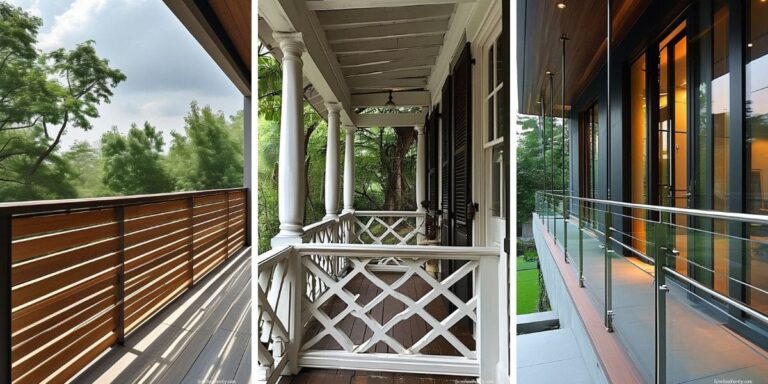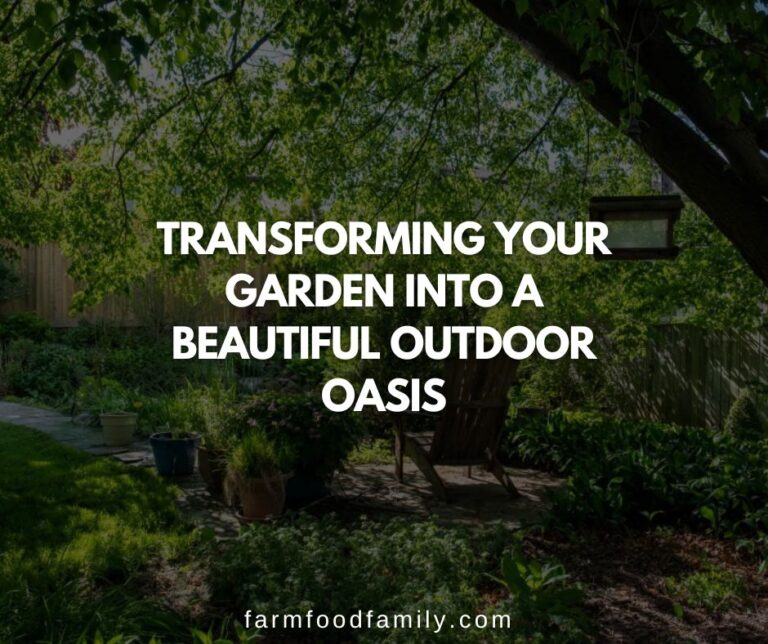
55 Genius Backyard Landscaping Ideas for Any Budget
55 real backyard landscaping ideas by budget, plus the permit and utility-locating rule most people find out about the hard way.

Never miss an update — choose FarmFoodFamily as your preferred source on Google.
How it works: Tap the button below to open Google’s settings page, then check the box next to FarmFoodFamily.
Tap the checkbox to turn it blue — that’s how you know it’s set.
Backyard landscaping ranges from a $20 bag of mulch to a full swimming pool build, and most idea roundups treat every project as if it costs and requires the same thing.
Below are 55 real ways to transform a backyard, organized from simple weekend projects to bigger investments, plus the budget framing and safety basics (permits, clearances, utility locating) that actually determine what’s realistic for your yard and your wallet.
How to Landscape a Yard
Yard Planning
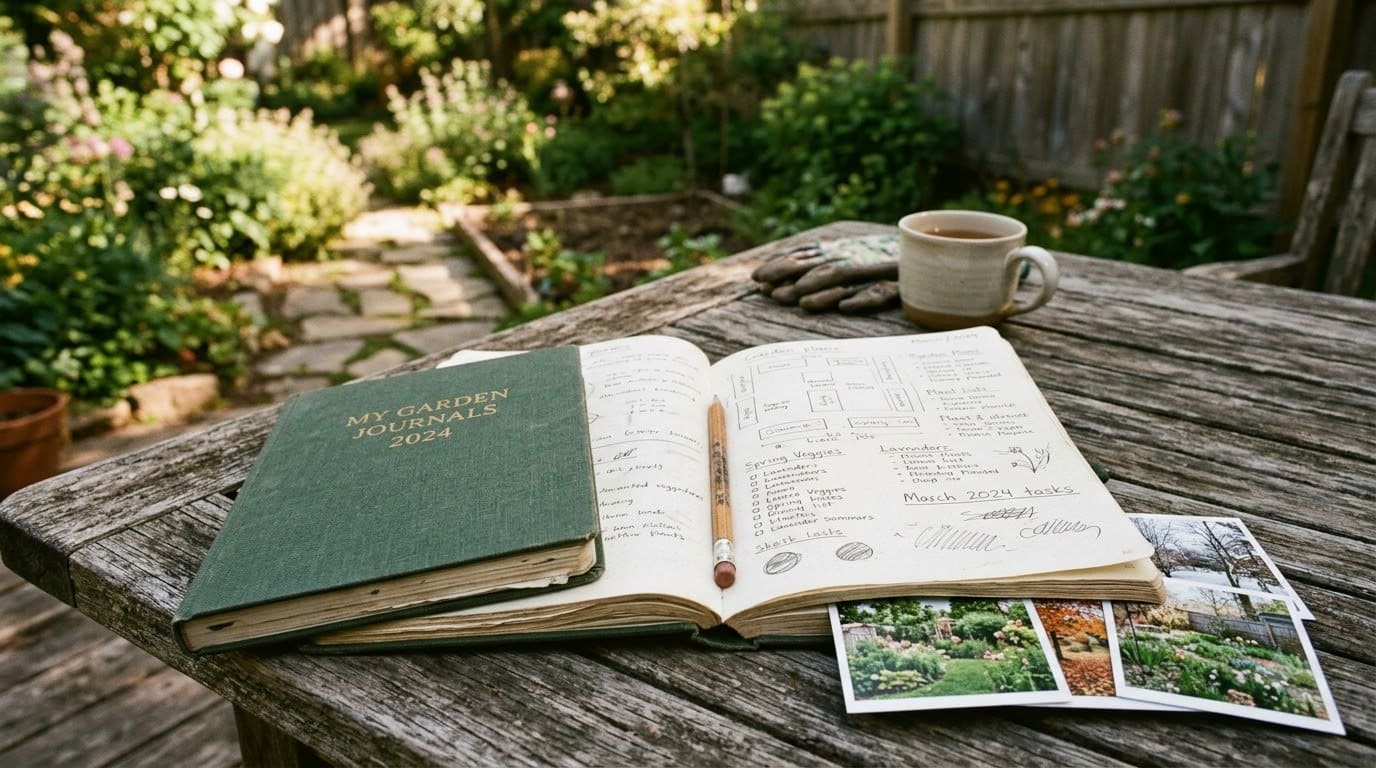
Every good landscape starts with a plan, not a shopping trip to the garden center. Before buying anything, walk your property and map out: lot boundaries, underground utilities and overhead wires, slopes and drainage patterns, downspouts and any spots where water pools, existing trees and plantings worth keeping, and which views you want to highlight or screen out.
A rough sketch, even hand-drawn, saves real money by catching conflicts (a planned patio sitting over a drainage swale, a tree too close to a planned fence line) before you’ve spent anything.
Soil Preparation and Site Planning
Soil quality determines whether everything you plant afterward thrives or struggles. Test your soil’s drainage and composition before committing to a full planting plan, poor drainage kills more new landscaping than any other single factor.


This is also the stage to plan irrigation runs and any outdoor lighting conduit, since both are far cheaper to install before hardscaping goes down than after.
Answer 4 quick questions and get matched to the exact fix for your yard — drainage, budget, layout, or something else entirely.
Take the Free QuizDesigning Walls and Fences
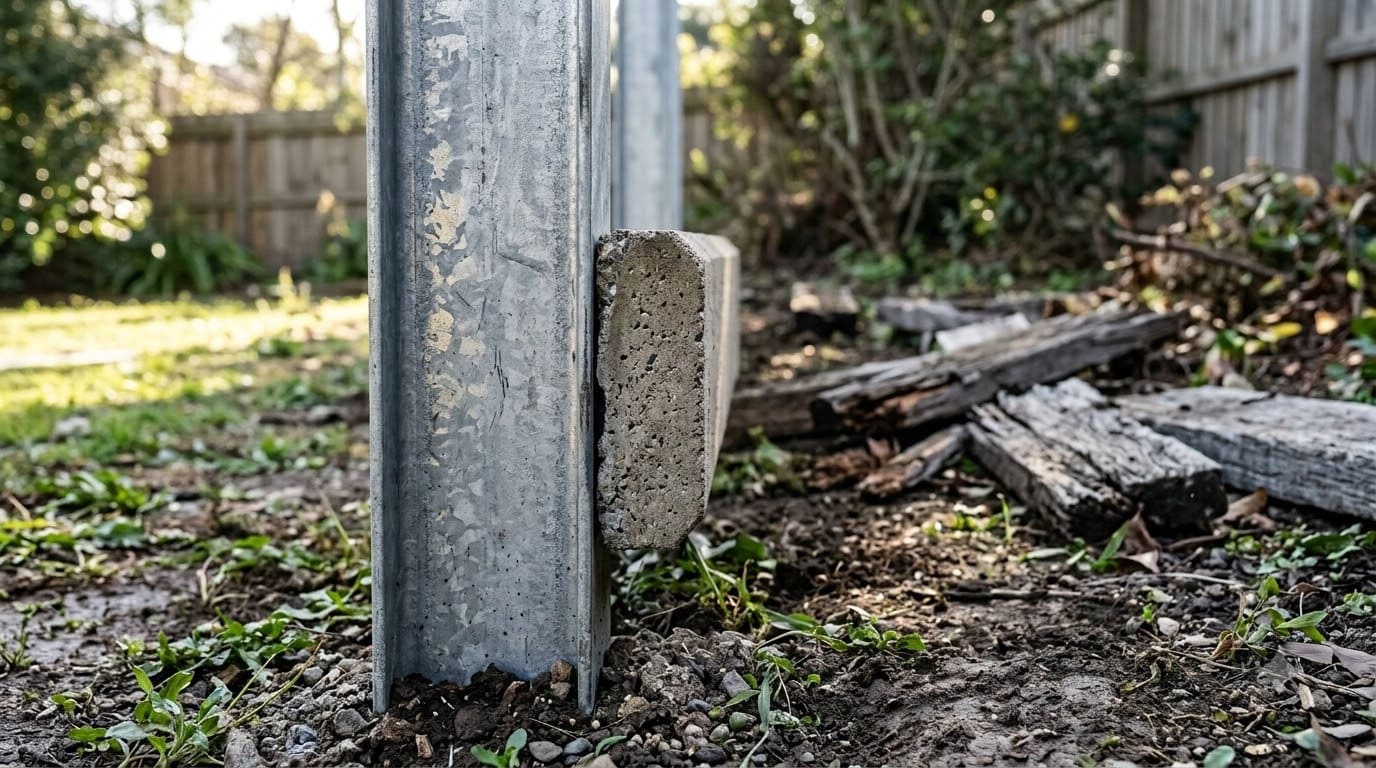
Walls and fences create privacy and define space, but they’re also one of the more regulated parts of a backyard project. Beyond the design choice (a living hedge fence, a wood privacy fence, a pool fence), check local height limits and, for anything load-bearing, whether a permit applies before you build.
If your yard needs a dedicated dog fence or pool safety fence, plan its footprint into the overall design early rather than squeezing it in afterward.
Trees and Shrubs
Trees and shrubs have the biggest long-term impact on a yard’s feel, and they’re also the easiest thing to get wrong by planting too close to a foundation, fence, or underground line.
Learn proper pruning and staking technique, choose species suited to your actual climate zone rather than what looked good at the nursery, and plan for the tree’s mature size, not its size at purchase.
Lawn Care
A lawn is either a blank canvas or a maintenance burden depending on how it’s planned. Decide upfront whether you’re planning a full lawn, a reduced-lawn layout with more planting beds, or a no-mow groundcover alternative, since retrofitting an existing lawn’s footprint later is far more work than deciding it during the initial design.
All About Flowers
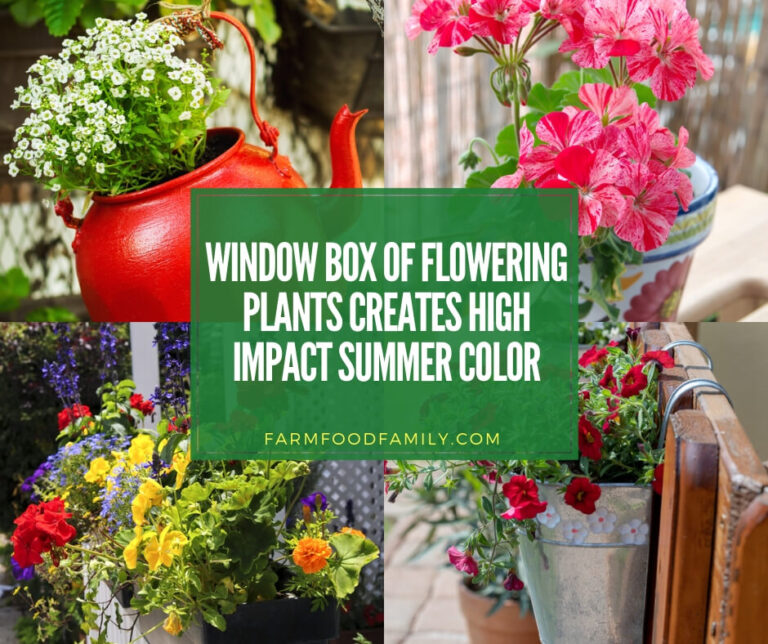
Flowers add color and, done right, a genuine sense of design intention rather than random color.
Plan borders and beds with attention to height, color, and bloom timing so something is always flowering across the season, mix perennials (the long-term backbone) with annuals (cheap seasonal color you can change yearly), and consider a small cutting garden if you want fresh flowers indoors without raiding your display beds.
Most yard problems trace back to one specific, fixable cause. Find yours in 4 quick questions.
Take the Free Quiz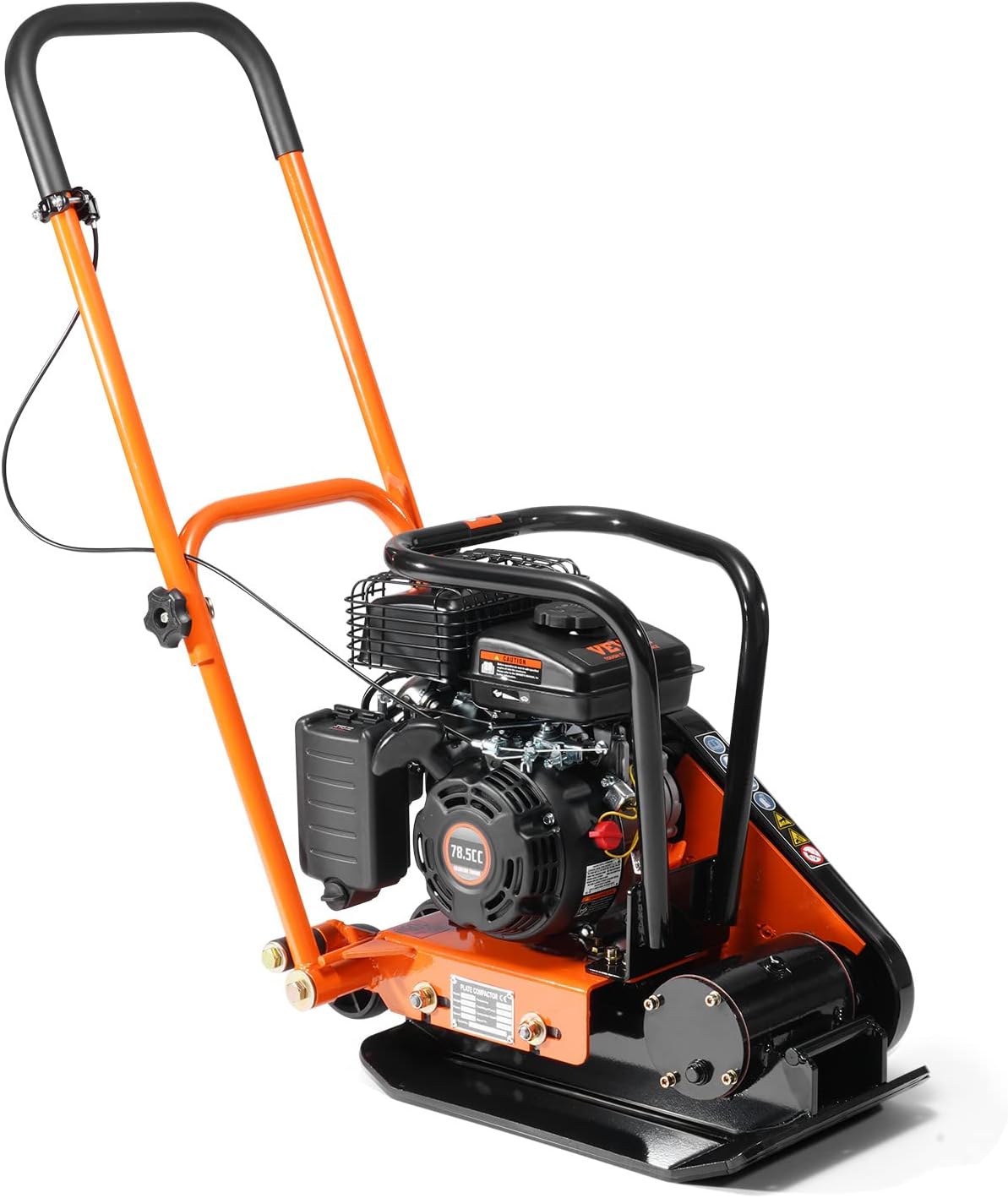
A rentable-alternative plate compactor for a genuine DIY paver patio or walkway base, covered in ideas #1 and #11
Shop NowThis post contains affiliate links. We may earn a commission on qualifying purchases at no extra cost to you.
Garden Design Basics
Starting from a completely blank yard is genuinely overwhelming, and most general gardening books try to cover too much ground to be useful to a true beginner.
The simplest way through it: pick 2-3 “must-have” elements (a patio, a fire feature, a vegetable bed) to anchor the design, then build everything else around them rather than trying to plan the whole yard at once.
Before You Start: Real Budget and Safety Basics
Budget by percentage of home value, not a flat number. The American Society of Landscape Architects recommends planning to spend roughly 10-20% of your home’s value on outdoor living space over time, starting conservative at 5-10% for an initial phase. ASLA also suggests weighting spend toward the backyard over the front yard (roughly 65/35), and phasing a big project across multiple seasons rather than trying to do everything in one summer, both genuinely make a large yard project financially realistic instead of overwhelming.
Call 811 before you dig, for any project. 811 is the free, national call-before-you-dig service that marks buried utility lines (gas, electric, water, sewer, internet) before you break ground. This applies to more projects than people expect, not just a pool or retaining wall, but fence posts, raised garden beds, and tree planting too, and it’s typically required a few business days ahead of digging, not optional.
Retaining walls have a real permit threshold. Most U.S. jurisdictions require a permit, and walls above a certain height (commonly around 4 feet, sometimes as low as 3 feet, measured from the footing to the top) require engineer-stamped plans, since soil pressure increases sharply as wall height grows. Check with your local building department before planning anything beyond a low garden-bed border.
Fire pits need real clearance, not just “far enough.” Wood-burning fire pits generally need 10-25 feet of clearance from structures and combustible material, 25 feet under the National Fire Protection Association’s formal “recreational fire” definition, while gas fire pits typically need 5-10 feet, always confirmed against your local fire code. Never place a fire pit under overhanging branches or on a wood deck.
Pools and stock tank pools need a real barrier, and often a permit. Outdoor pools, including a stock tank repurposed as a pool, generally require a barrier at least 48 inches (4 feet) high per most local codes, and permit requirements vary significantly by city, some exempt shallow portable pools under 18 inches deep, others require a permit and inspection regardless of size. Check your local building department and HOA before installing, not after.
55 Best Backyard Landscape Ideas
Backyard landscaping is a wanted hobby for many people because there are a lot of backyard landscape transformations to take inspiration from.
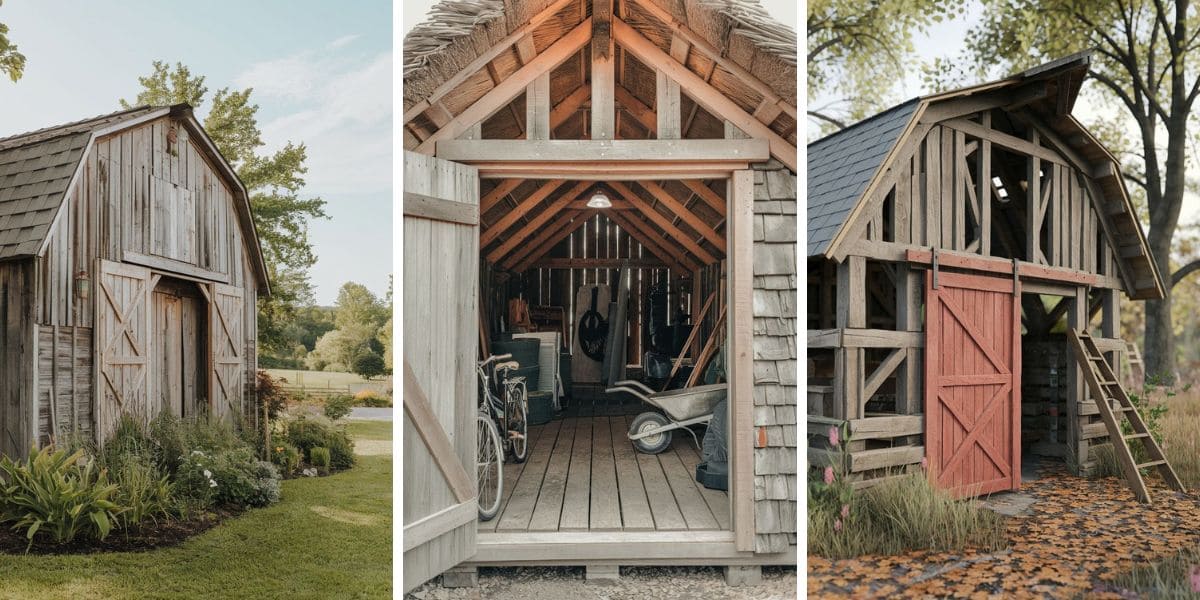
If you are looking for some backyard landscaping ideas to anchor your final design from, here is a list of ideas to scour ideas from, so, read on.
The average homeowner spends $616/year on yard fixes that don't address the real problem. Find out what yours actually is — before you spend another dollar.
Take the Free QuizThe backyard is a multi-functional space. Families and friends can come over for small soirees, birthdays and other occasions as well as daily family time. As such, let us dive right into some of the most notable backyard landscaping ideas to help you in sprucing up your backyard.
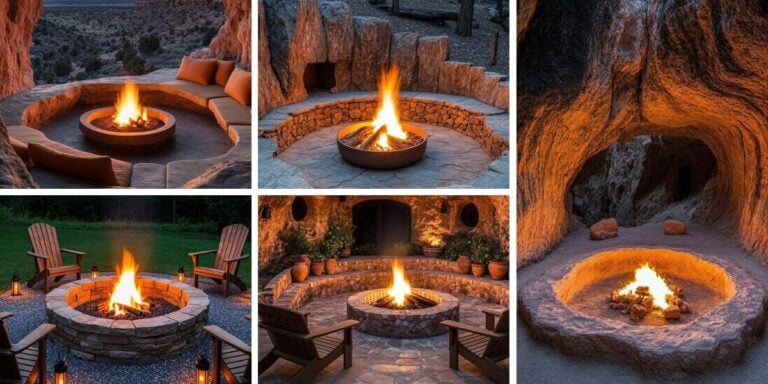
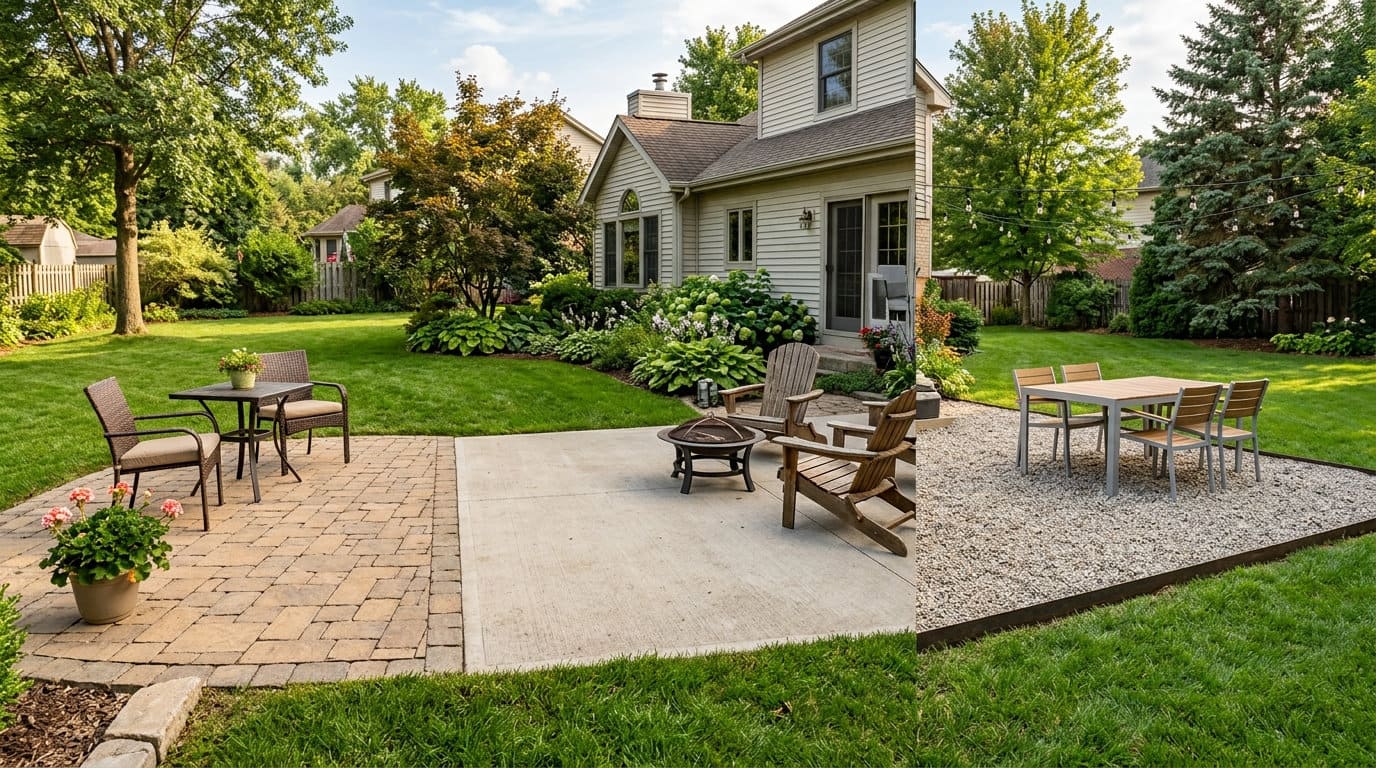
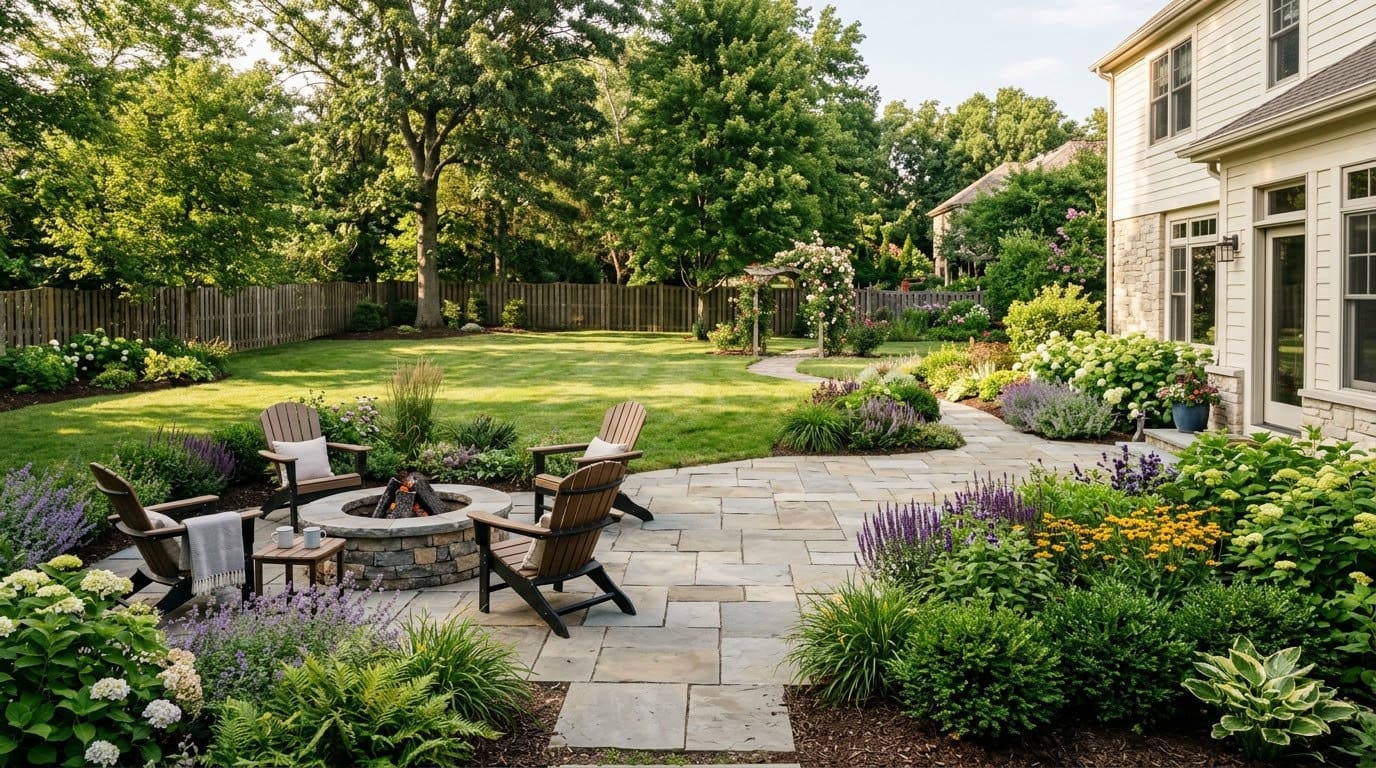
1. A DIY Paver Fire Pit Patio
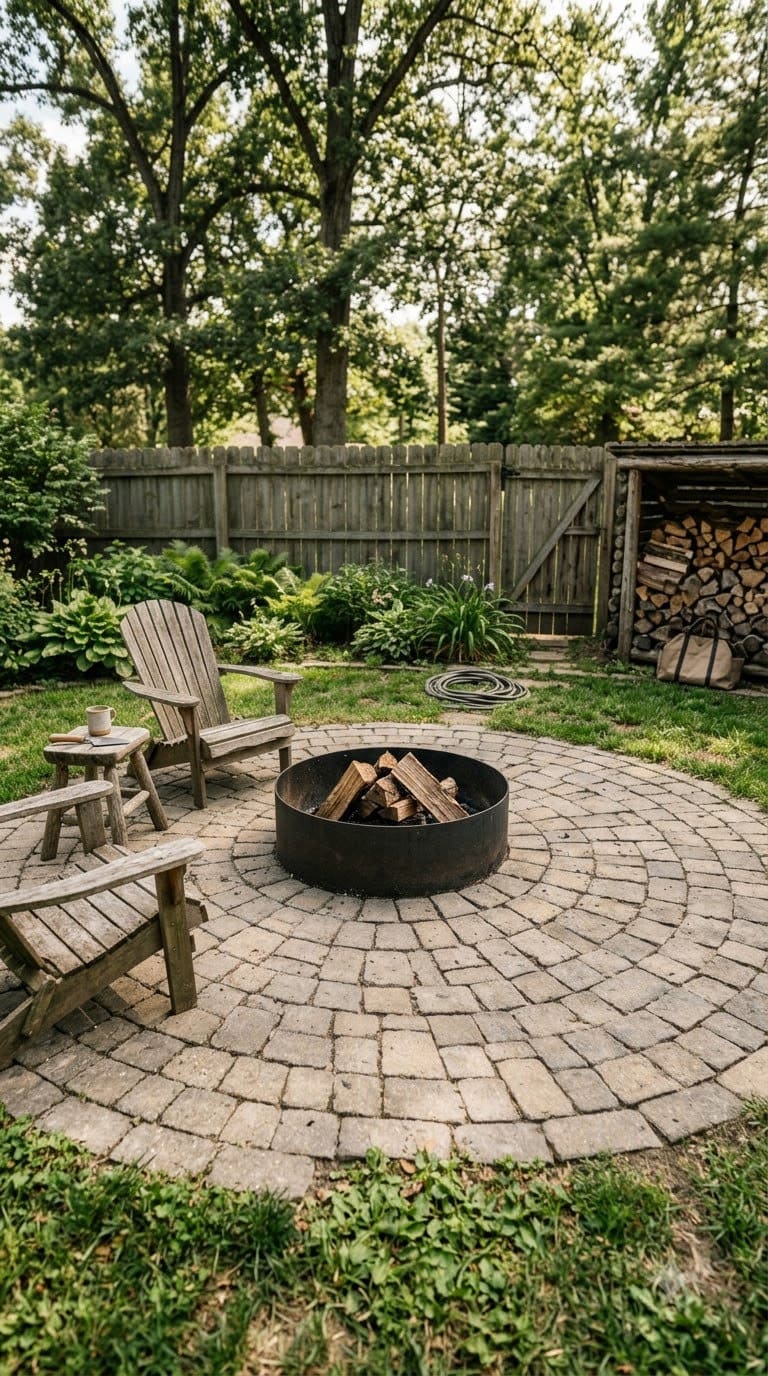
A paver patio built around a fire pit is one of the most approachable weekend-DIY projects on this list: interlocking pavers don’t require mortar, and a pre-fab steel fire ring keeps the fire-safety side simple.
Budget-wise, this is one of the cheapest hardscaping projects here, most of the cost is the pavers themselves, and it’s genuinely doable without a contractor if you’re comfortable with basic leveling and a rented plate compactor.
2. Install a Backyard Waterfall
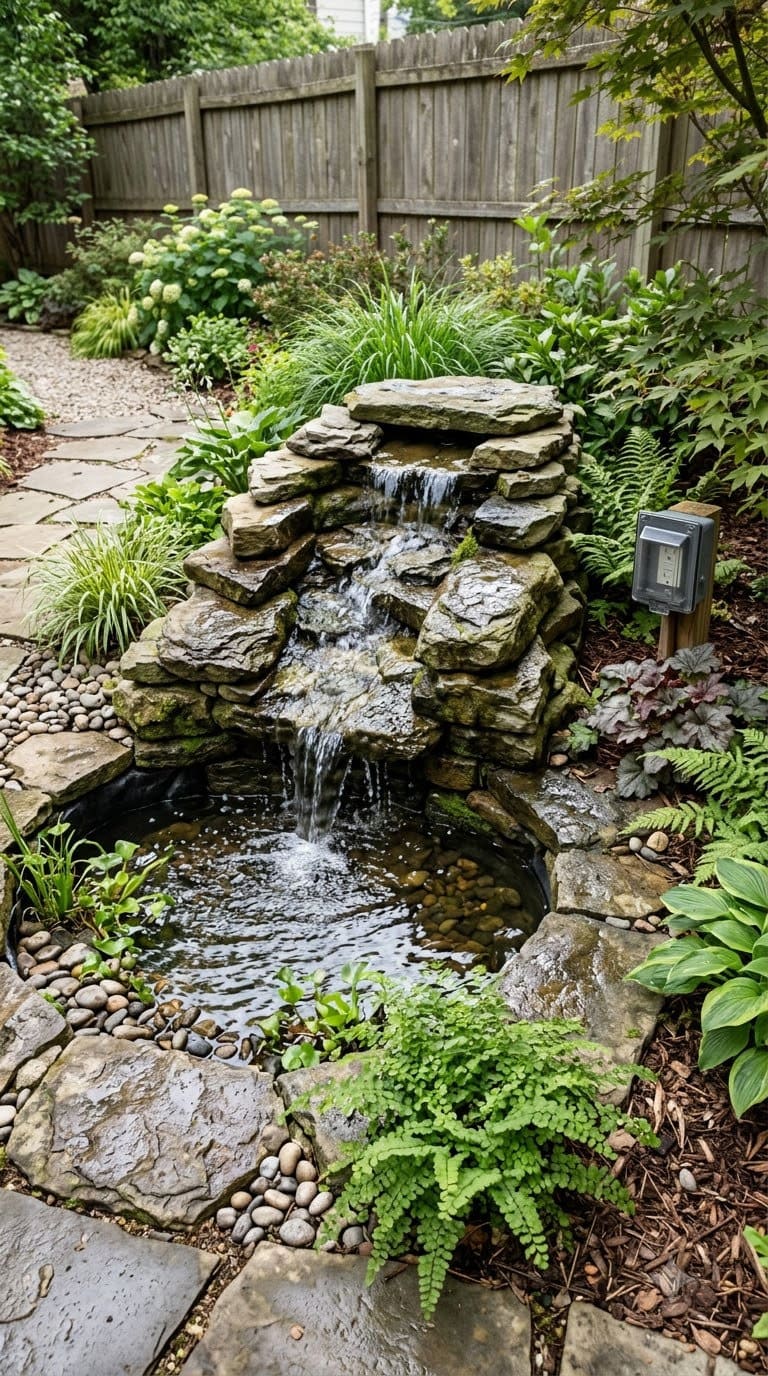
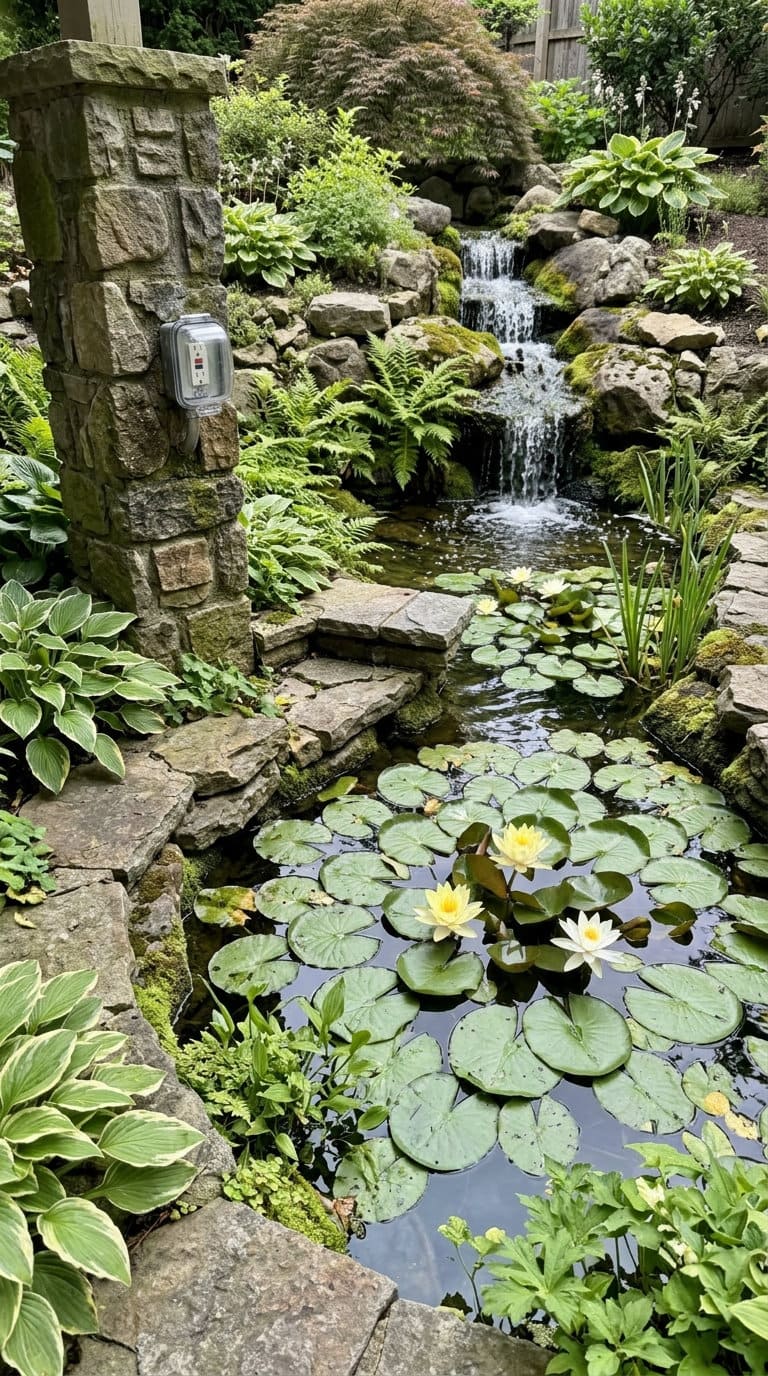
A small backyard waterfall (a recirculating pump over a stacked-stone or pre-formed basin) adds real ambient sound and a genuine focal point.
The one detail most guides skip: the pump needs a GFCI-protected outlet, bathrooms and outdoor water features are both required to be on GFCI circuits for exactly this reason, water and standard electrical components are a real safety risk together. Budget for a licensed electrician if you don’t already have a GFCI outlet nearby.
3. Backyard Oasis
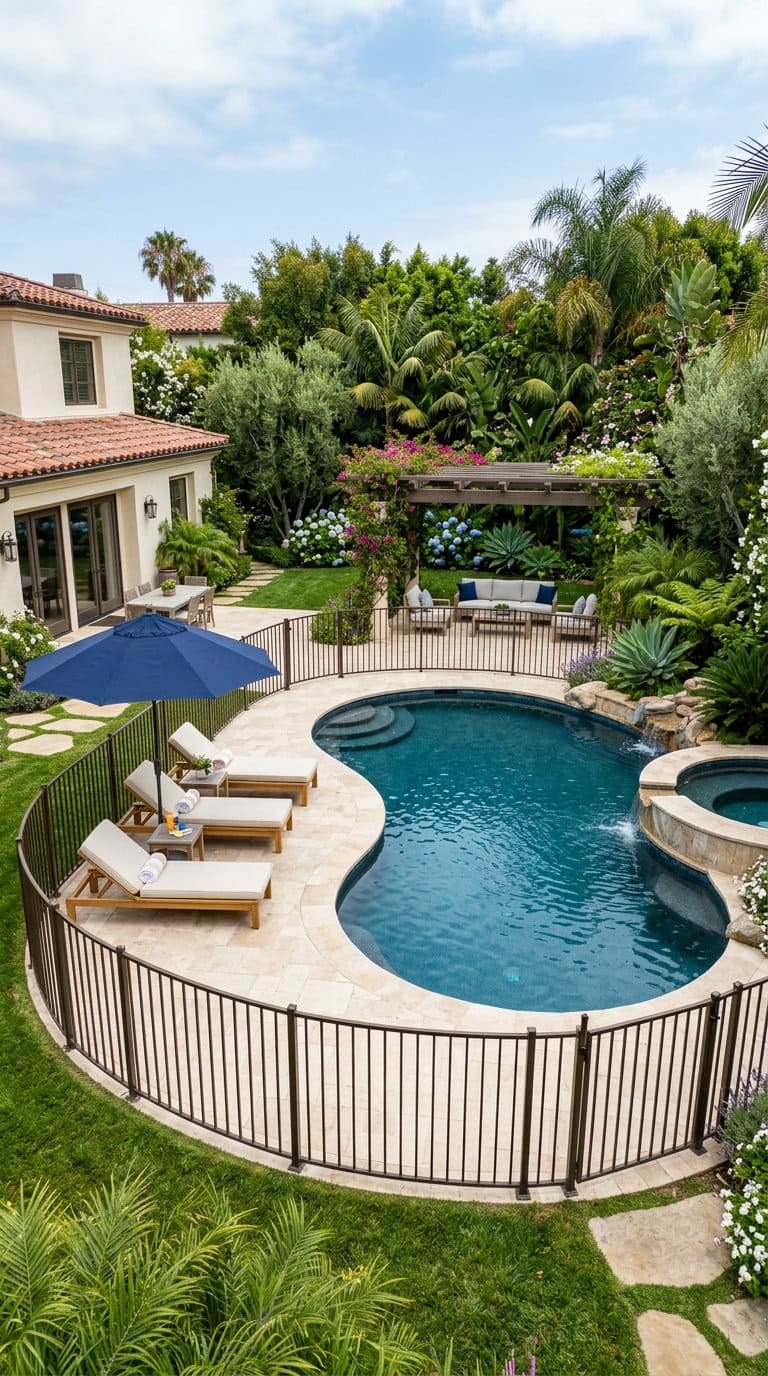
A full in-ground pool is the single biggest investment on this list, real budgets typically run from the tens of thousands into six figures depending on size, material, and region, and it’s also the item with the most regulatory requirements: permits, inspections, and a code-compliant barrier (see the safety section above) in nearly every jurisdiction.
If a full pool isn’t realistic yet, several smaller ideas further down this list (the stock tank pool, the rolling-deck pool) scale the same basic idea down to a fraction of the cost. Check here for a wide selection of pool kits.
4. Install Raised Garden Beds
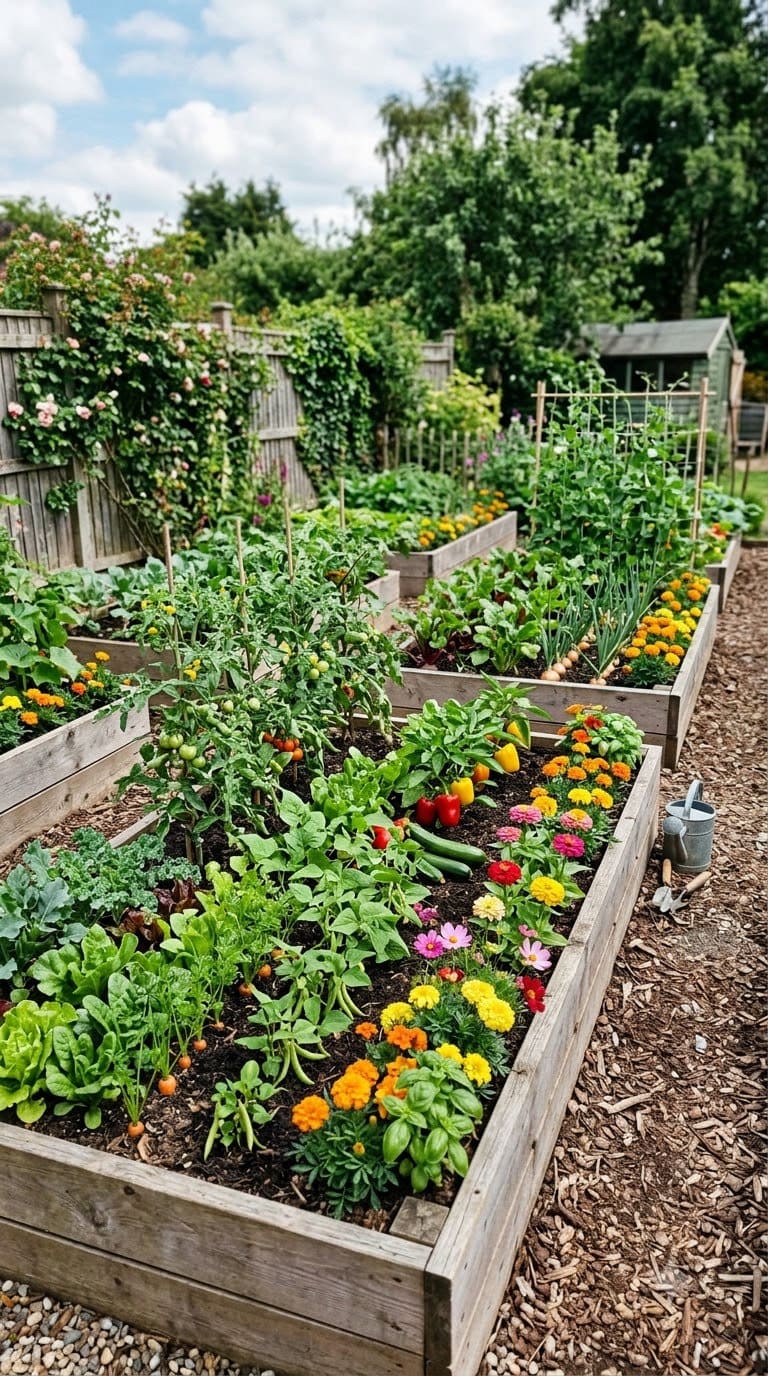
Raised beds keep vegetables and flowers organized, improve drainage over native soil, and are genuinely one of the more beginner-friendly weekend projects here, cedar or composite lumber kits are widely available and don’t require special tools.
Call 811 before digging footings for anything permanent, even a raised bed frame, if it involves posts set below the frost line.
5. Stock Tank Pool
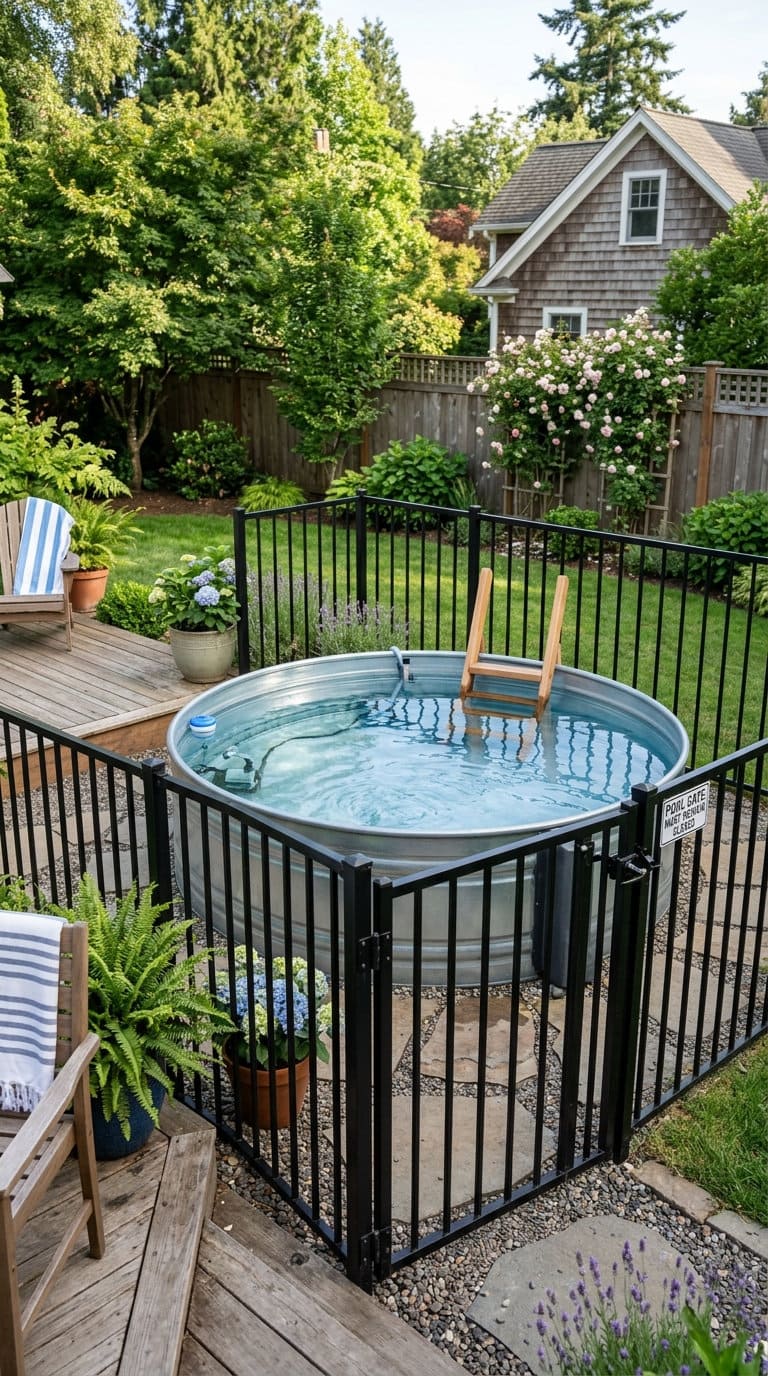
A galvanized stock tank repurposed as a small pool is a real, popular budget alternative to a full in-ground build, often costing a small fraction of the price.
The real caveat most posts leave out: many cities still require a barrier and sometimes a permit even for a stock tank pool, especially once it holds more than about 18 inches of water, so check local code before assuming “it’s just a tank” exempts you from pool rules.
6. Natural Stone Accents
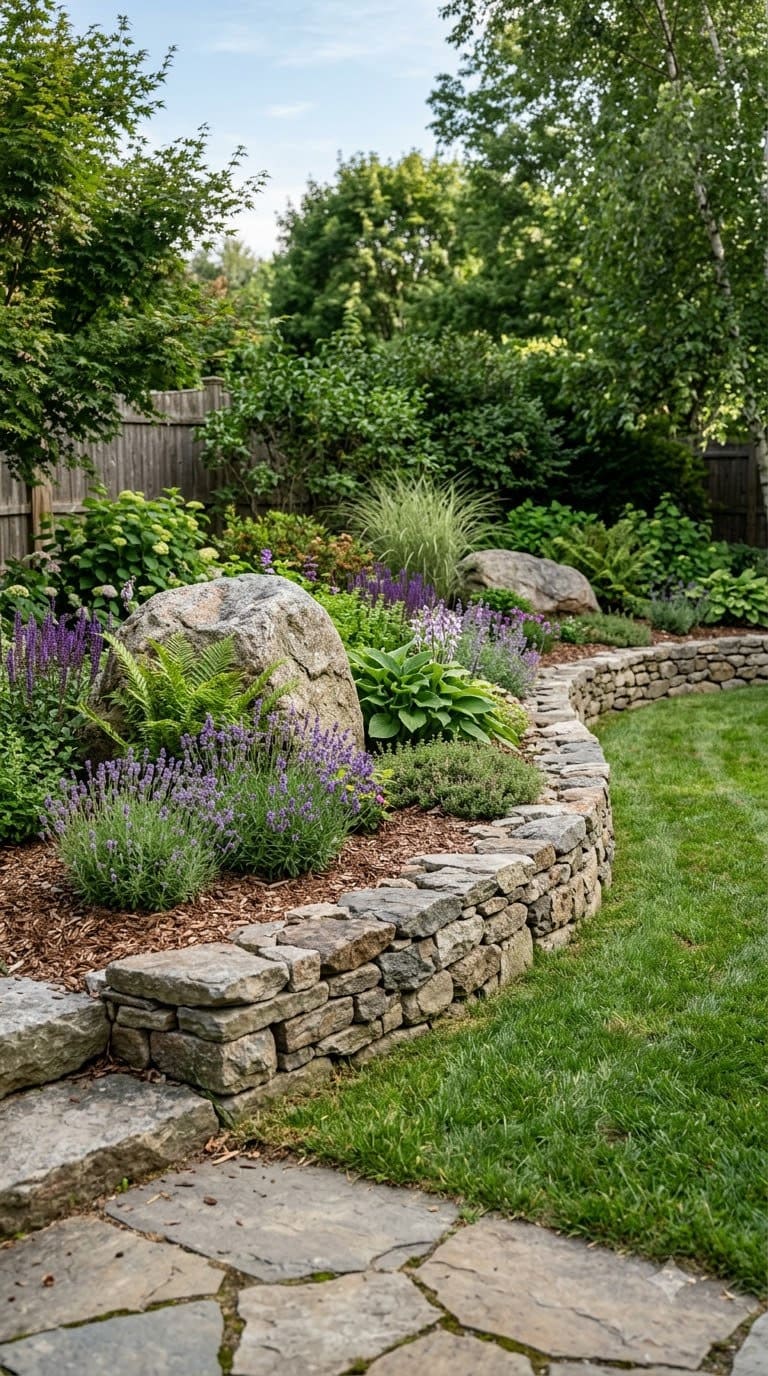
Natural stone, a low stacked-stone wall, a stone-edged planting bed, a few large boulders as focal points, adds real texture and a sense of permanence to a yard.
Stick to stone sourced or rated for your climate (some porous stones crack in freeze-thaw regions), and if you’re placing large boulders, get help moving anything you can’t lift safely alone, a genuine and common landscaping injury.
7. Install a Solar-Powered Fountain
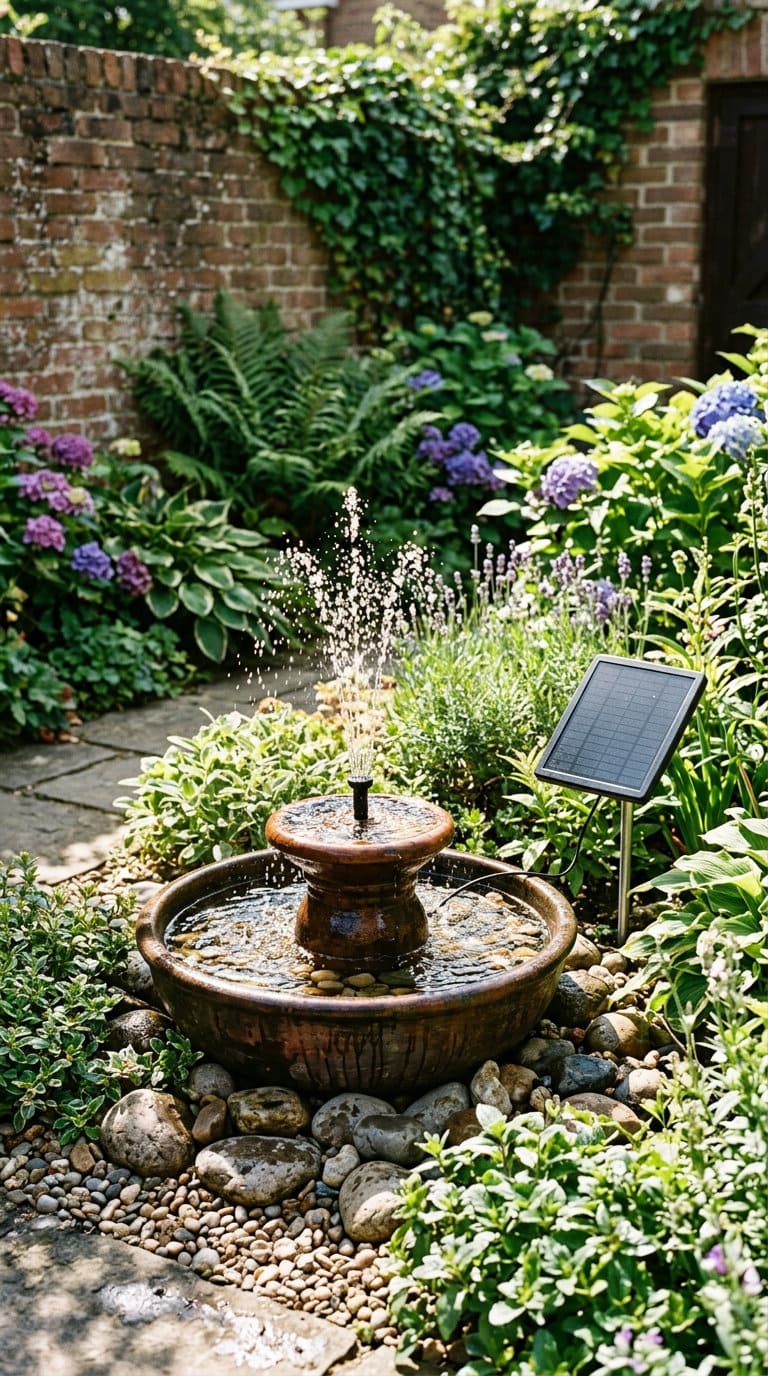
A solar-powered fountain is one of the easiest ways to add moving water without any wiring or electrician involved, the solar panel and pump run independently, and moving water is a genuine draw for birds if that’s part of your goal.
The tradeoff: solar fountains typically only run in direct sun, so placement matters more than with a plug-in model.
8. Create a Cobblestone Patio
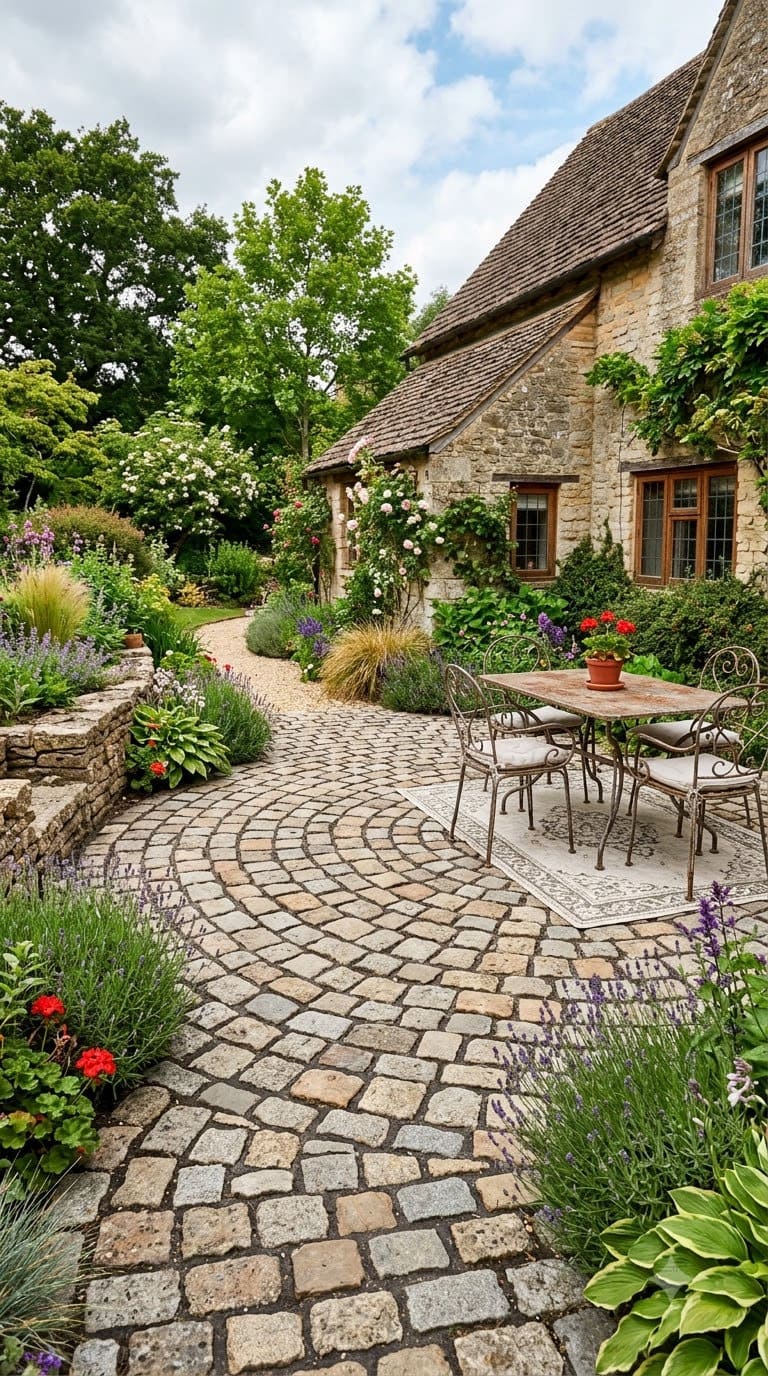
Cobblestone brings genuine old-world texture and is relatively low-maintenance once set, though it’s a pricier and more labor-intensive material than standard concrete pavers, expect to hire a professional for a full patio unless you have real masonry experience.
It holds up well long-term and rarely needs the resealing some other stone patios require.
9. Four-Tier Fountain
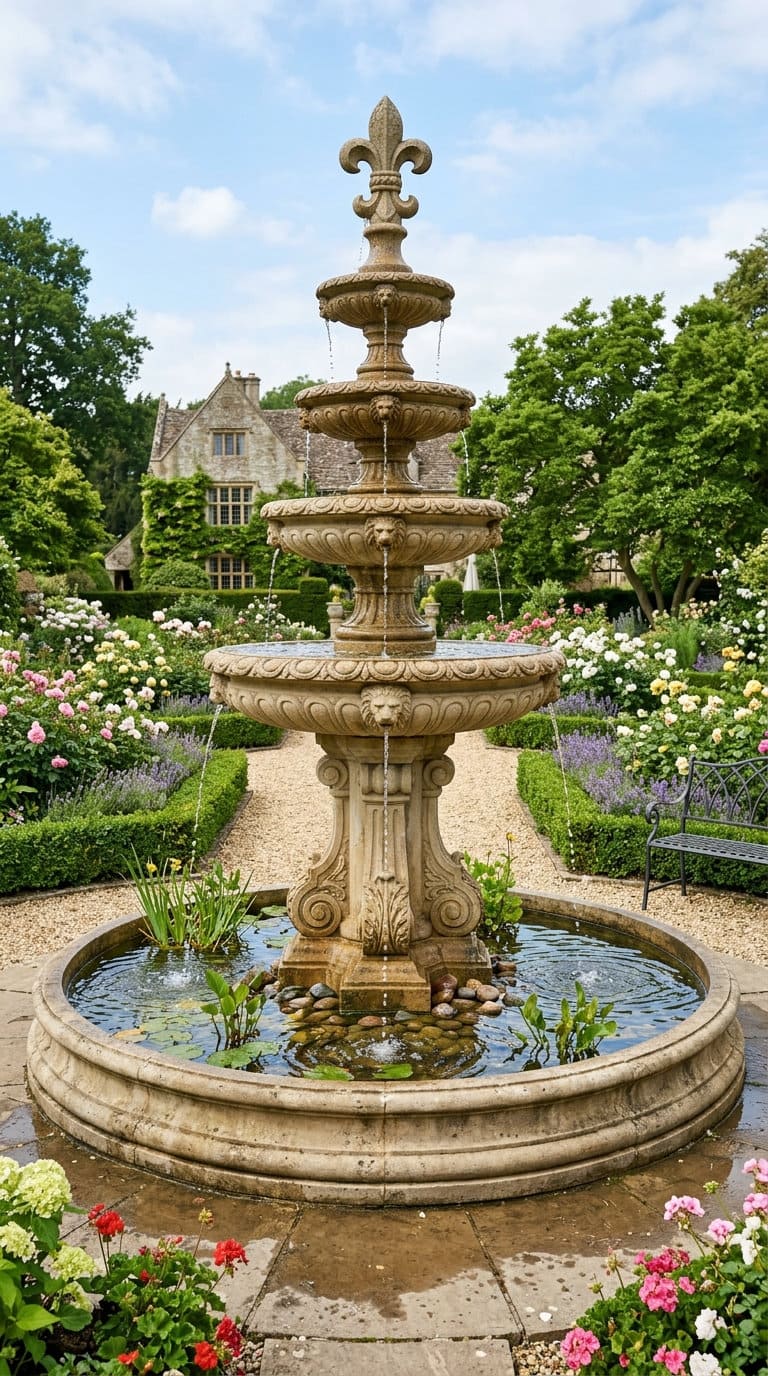
A tiered fountain (fleur-style or classic column) reads as a genuine focal point and works well as a centerpiece in a symmetrical garden layout.
Like any plug-in water feature, it needs a GFCI-protected outlet nearby, and larger tiered fountains are heavy enough that the base pad needs real, level, compacted support, not just soil, to avoid settling and cracking over time.
10. Install a Rolling Deck Swimming Pool
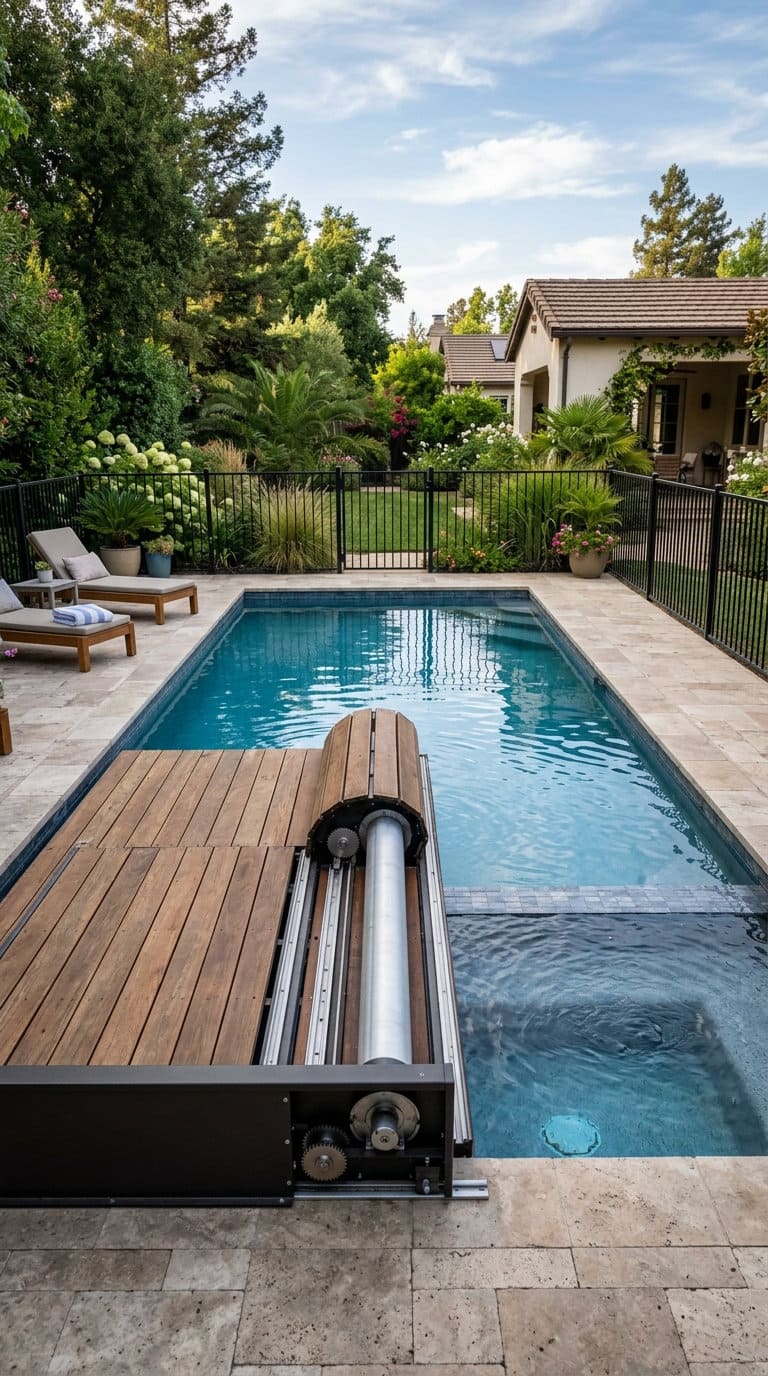
A pool with a rolling deck cover protects the water from debris and mosquitoes and reclaims usable floor space when closed.
It’s a genuine upgrade over a bare pool cover, but it’s also a bigger investment on top of the pool itself, and the same barrier/permit requirements covered in the safety section above still apply regardless of the deck feature.
11. Build a Paver Walkway
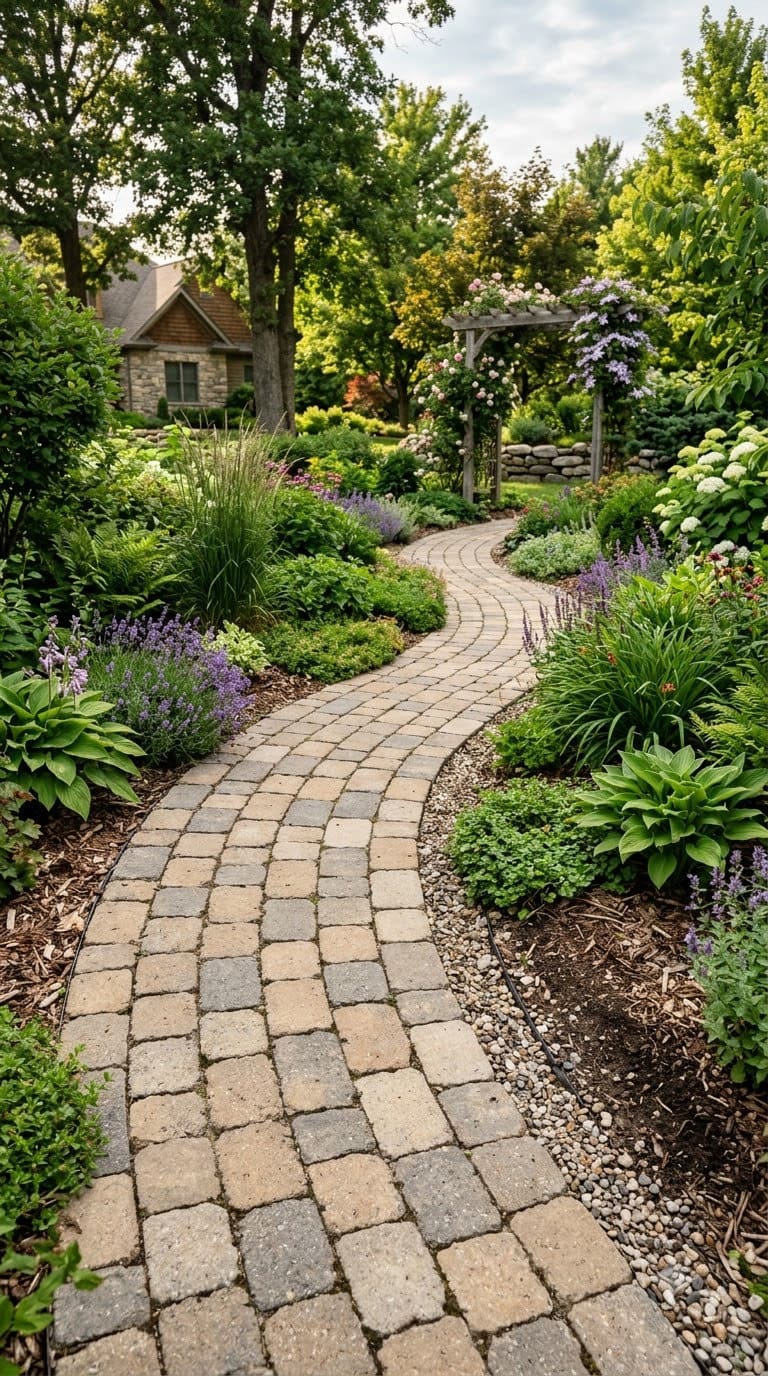
A paver walkway is one of the more forgiving DIY hardscaping projects: a compacted gravel base, sand leveling layer, and interlocking pavers, with no mortar required.
Curve the path slightly rather than running it dead straight, a small curve reads as far more intentional and less like a poured slab, and edge-restrain the pavers so they don’t shift over a season of freeze-thaw or foot traffic.
12. Install Landscape Lighting
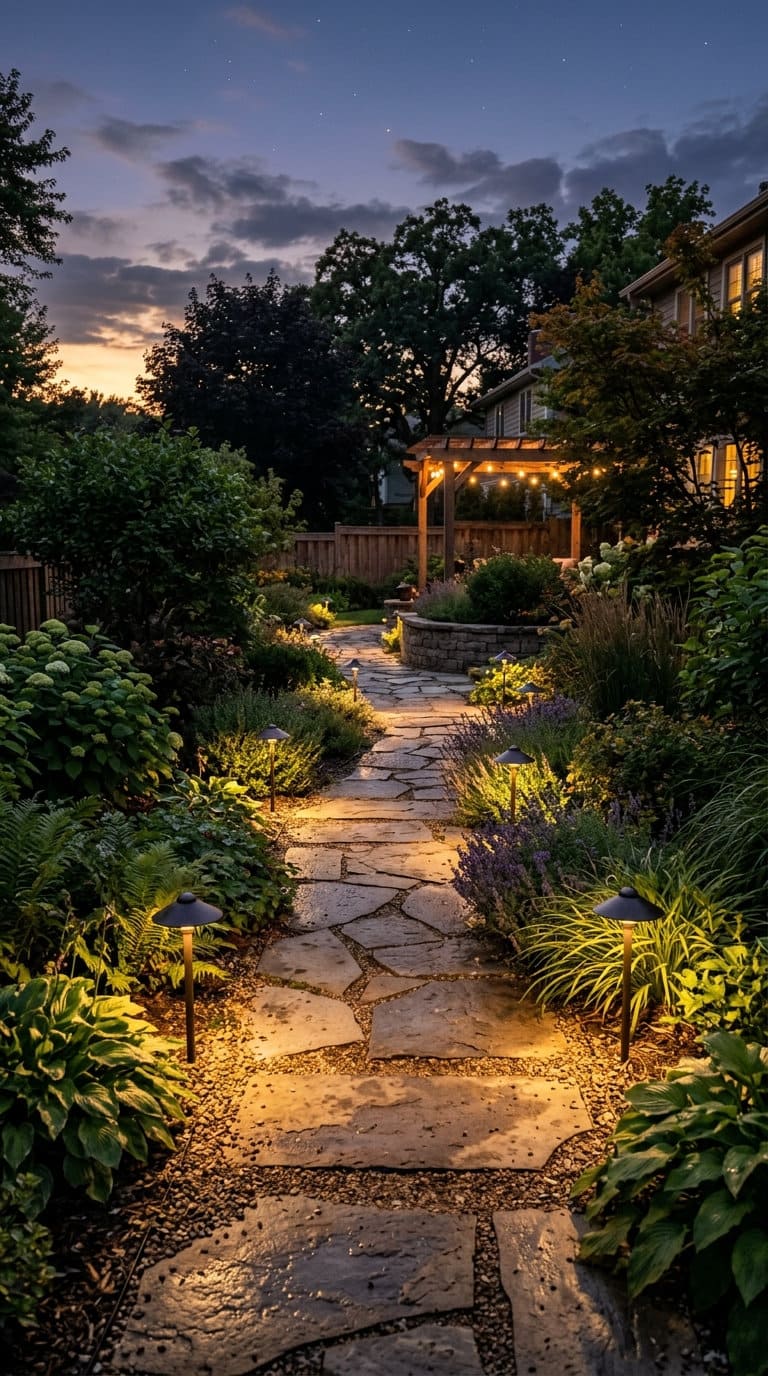
Landscape lighting matters as much for nighttime safety (lighting a path or steps) as it does for atmosphere.
Low-voltage LED kits are a genuinely approachable DIY project, no electrician required for most plug-in transformer kits, while anything tied into your home’s main electrical panel should go to a licensed electrician.
Warm-white bulbs (around 2700-3000K) read as far more inviting than cool white for most backyard settings.
13. Install a Fence
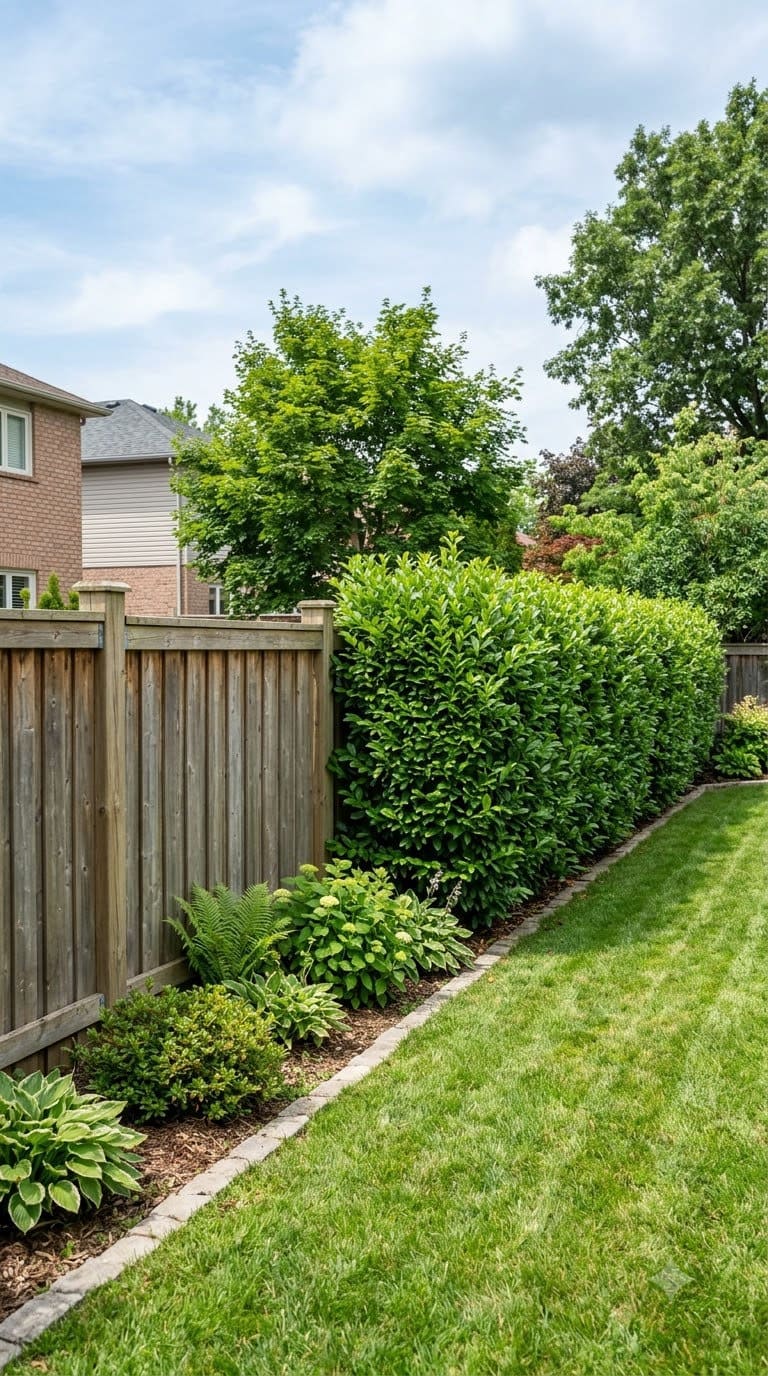
Fencing options range from a simple picket fence to a living hedge fence, and the right choice depends on whether you’re prioritizing privacy, a pool safety barrier, or just defining the yard’s edge.
Check your local height limits and, for a pool, confirm your fence meets the real code barrier height (generally 48 inches) before installing, a decorative fence that doesn’t meet pool-barrier code may need to be redone.
14. Install an Outdoor Entertaining Area
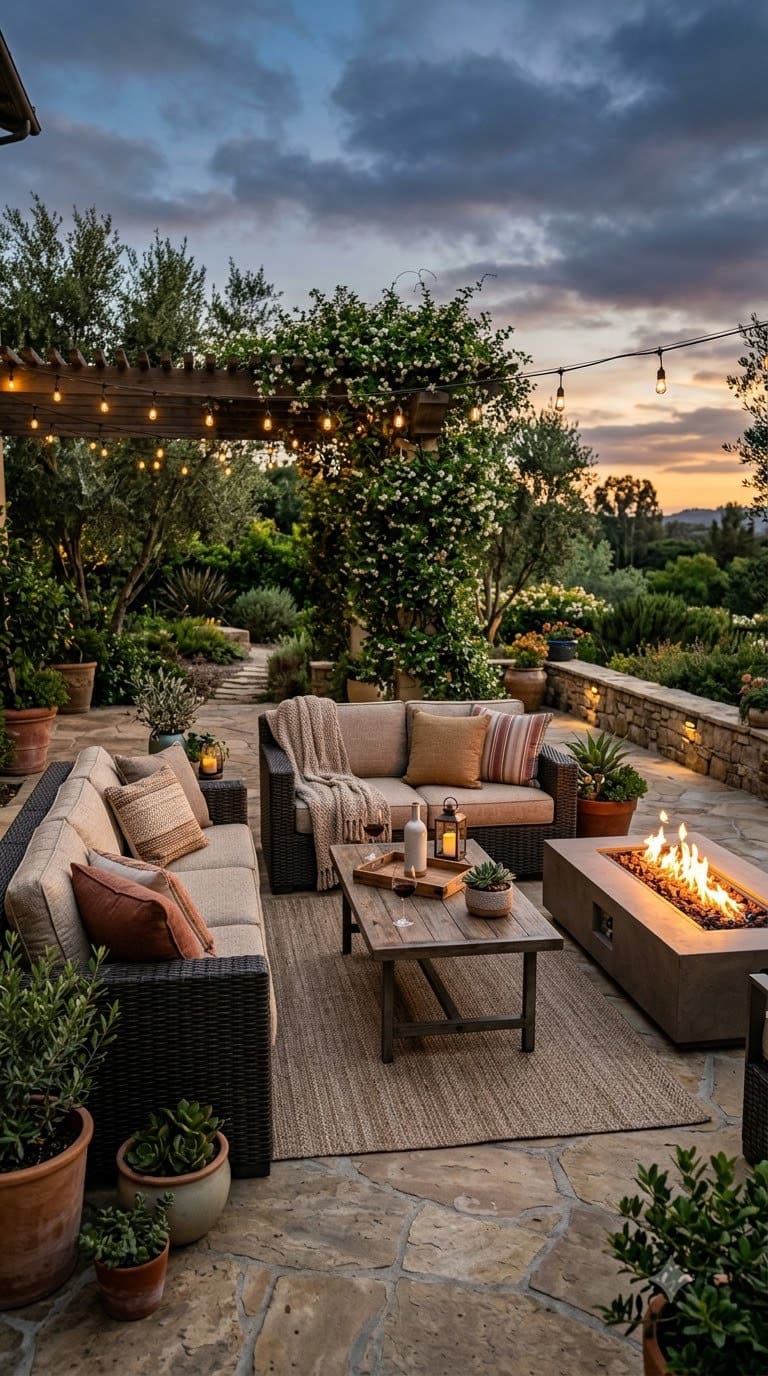
An outdoor living room, weatherproof seating, a coffee table, maybe a fire feature or heater, extends how many months a year the backyard actually gets used.
Start with furniture rated for outdoor conditions in your climate (UV-resistant fabric, rust-resistant frames) rather than moving indoor furniture outside, it won’t hold up nearly as long.
15. Install a Moongate
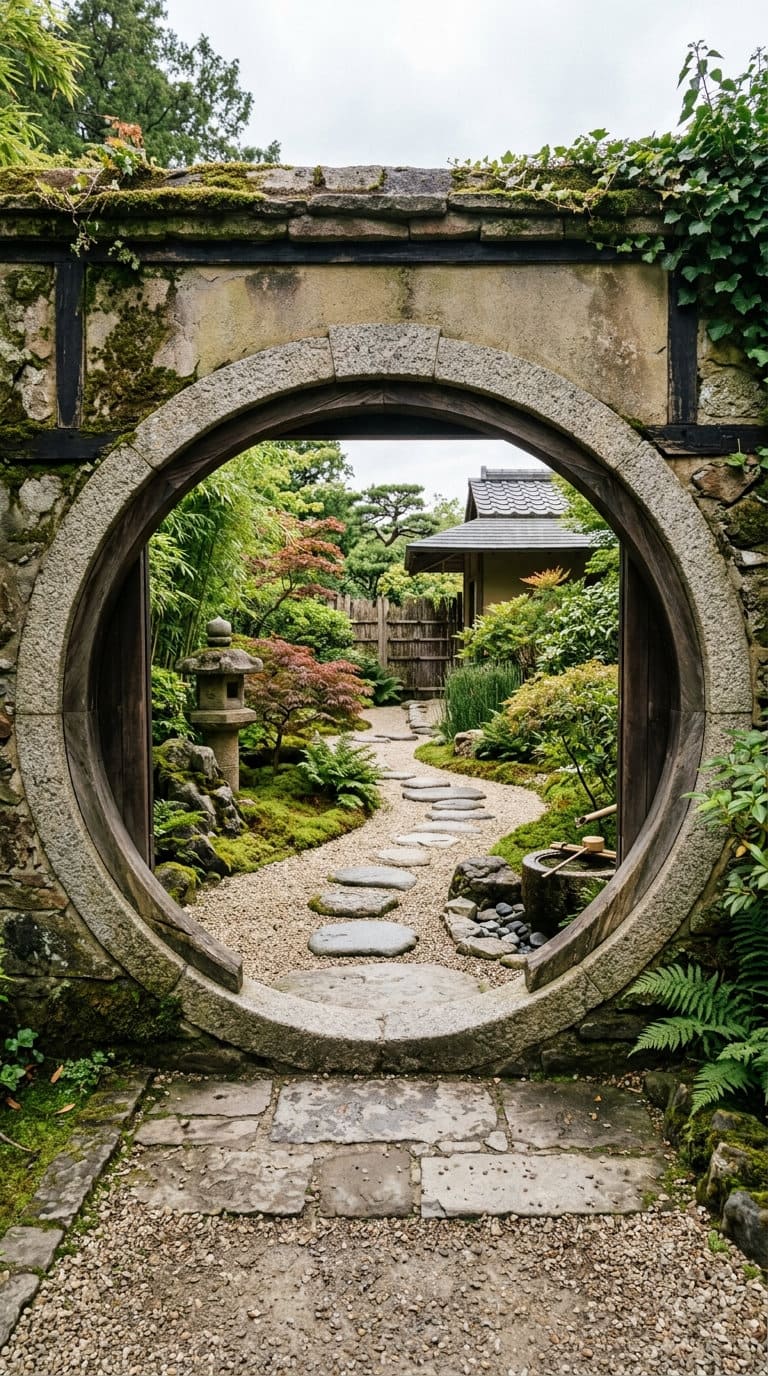
A circular moongate, a classic feature in Chinese garden design, makes a strong visual statement as an entry point into a garden “room” and pairs especially well with a zen-inspired planting style.
It’s a more specialized masonry or carpentry project than most items on this list, budget for a contractor unless you have real construction experience, since the circular framing needs to be structurally sound, not just decorative.
16. Multi-use landscaping
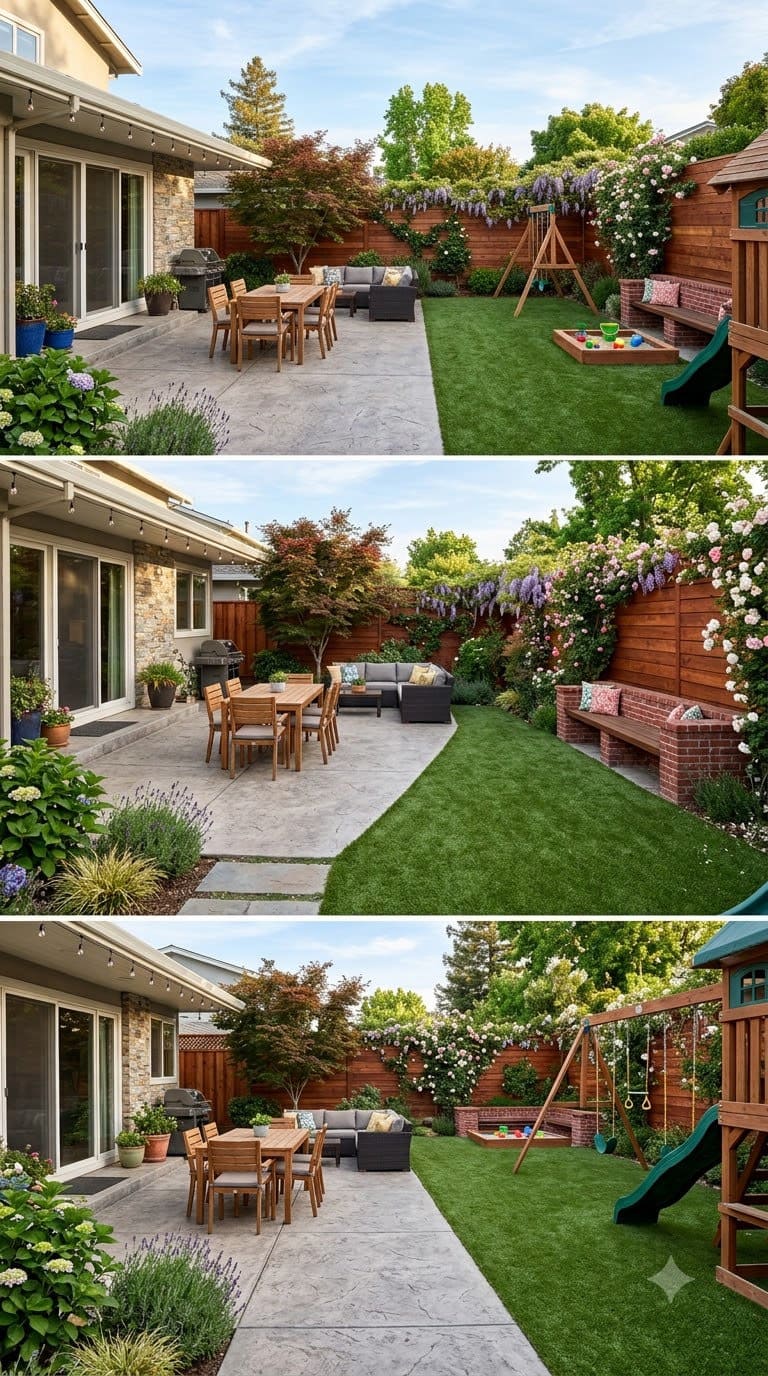
A yard built for more than one purpose, a no-mow turf area for kids to play on, an extended concrete patio for entertaining, a built-in brick bench for extra seating, gets more real use than a yard designed around a single look.
Plum or flowering vines trained along a fence add a lush backdrop without eating into usable floor space.
17. Woodland Garden
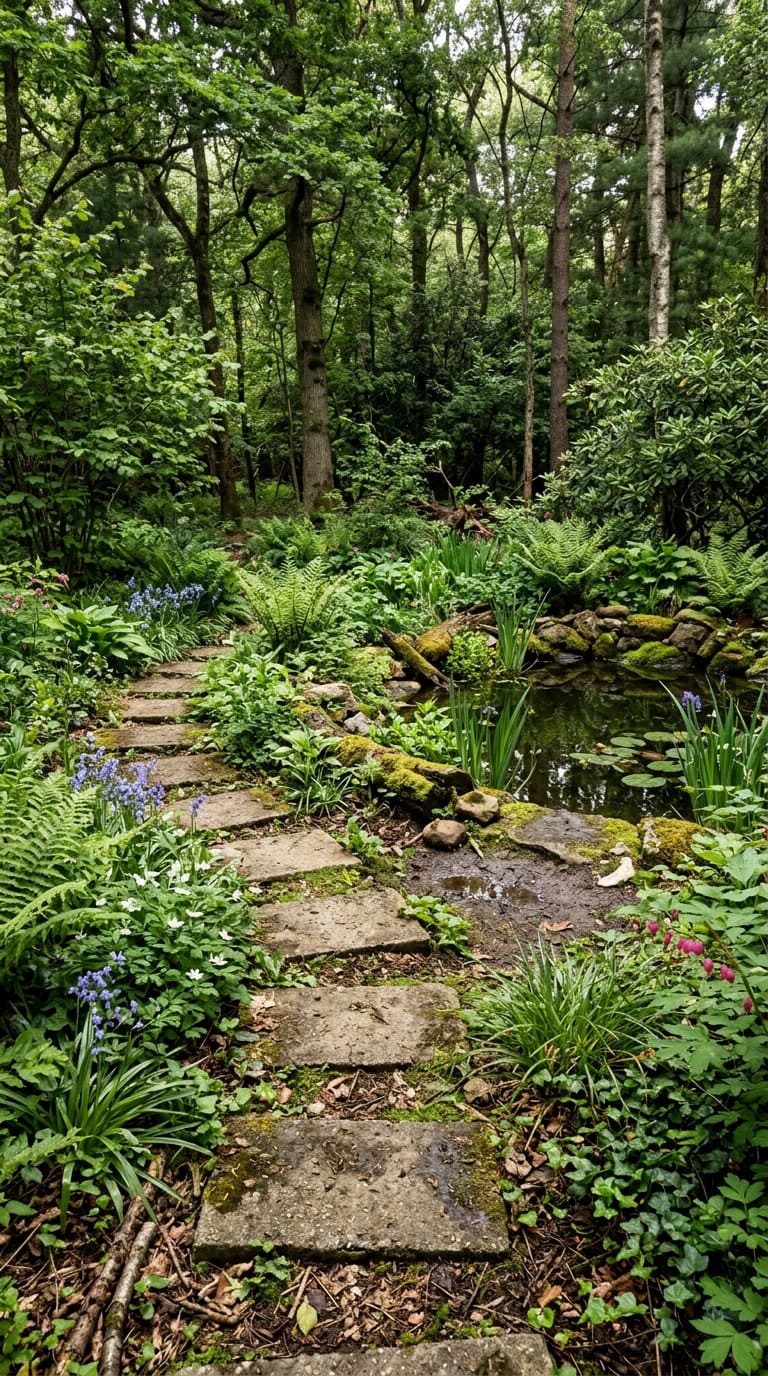
A woodland-style garden mixes varied plant species in a looser, forest-inspired layout rather than tightly manicured beds, with concrete stepping stones and a small water feature reinforcing the natural feel.
Adding a fireplace or fire feature as a centerpiece, with intimate seating gathered close, turns this into a genuine year-round gathering spot rather than just a summer look.
18. Ornate Courtyard
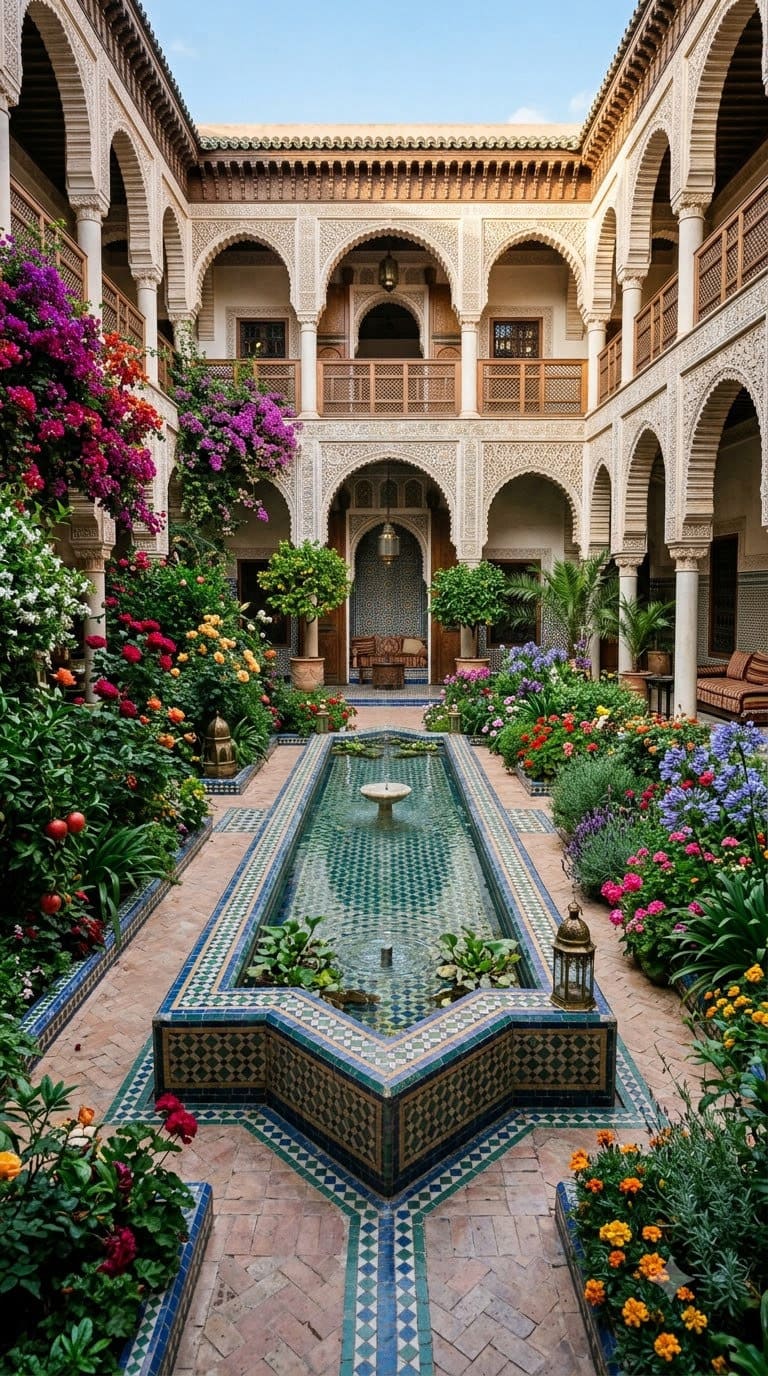
A courtyard built around a large central water basin, in the Middle Eastern garden design tradition, works well split into two zones: a water-focused corner and a separate seating or summerhouse corner.
Concrete planter boxes lined up symmetrically reinforce the formal, minimalist feel this style is built around.
19. Backyard stage
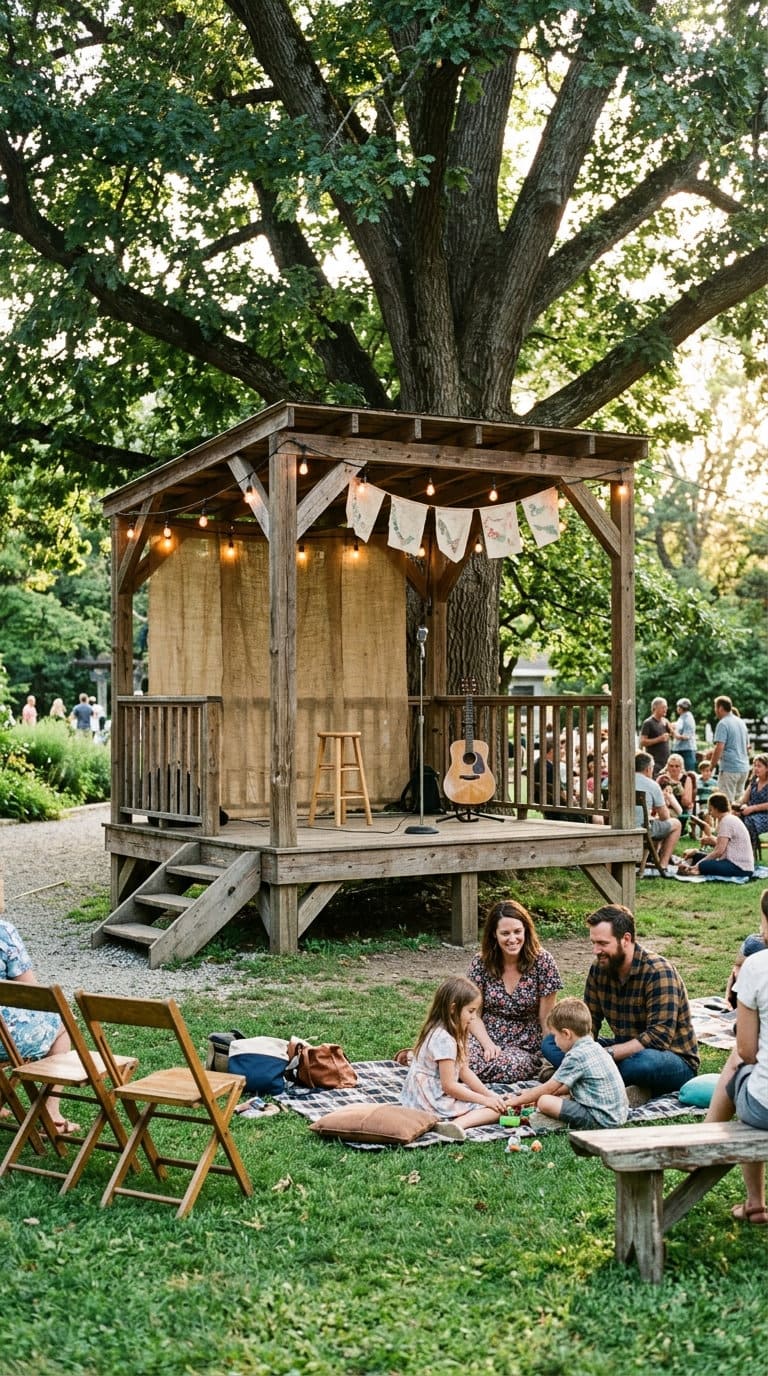
A small performance stage under a tree sounds unconventional but genuinely works as flexible, multi-generational space, kids’ play, family game nights, casual performances, all in one spot.
It’s a bigger carpentry undertaking than most ideas on this list (a raised platform needs real structural support), so budget for a contractor unless you’re comfortable with framing work.
20. Water-wise backyard
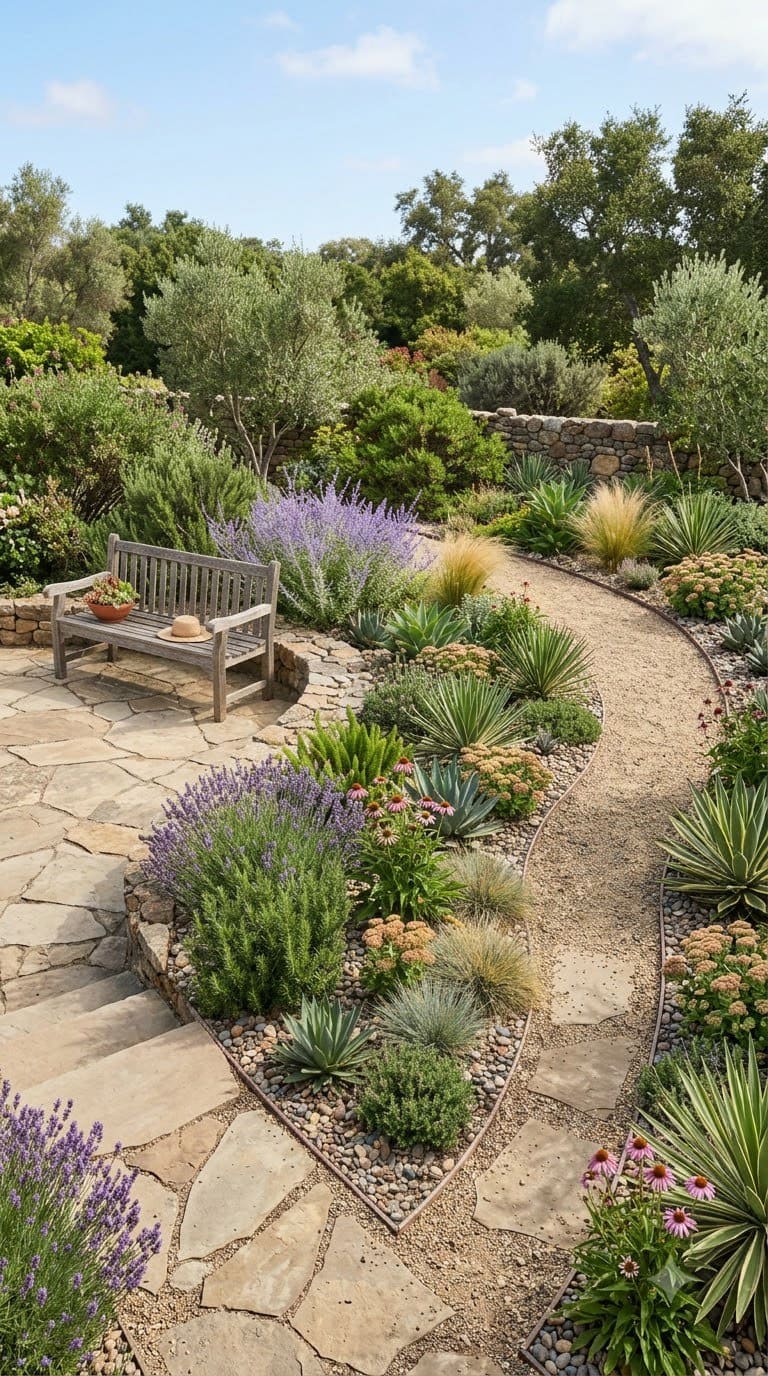
A drought-tolerant planting bed, shaped into a decorative border, cuts real water use and maintenance time compared to a traditional lawn-heavy yard.
Pairing it with a simple wood bench creates a low-maintenance spot to sit that still feels intentional rather than sparse, and a single bold color (like red-leafed plants against green groundcover) keeps a water-wise bed from reading as plain.
21. Intimate backyard landscaping
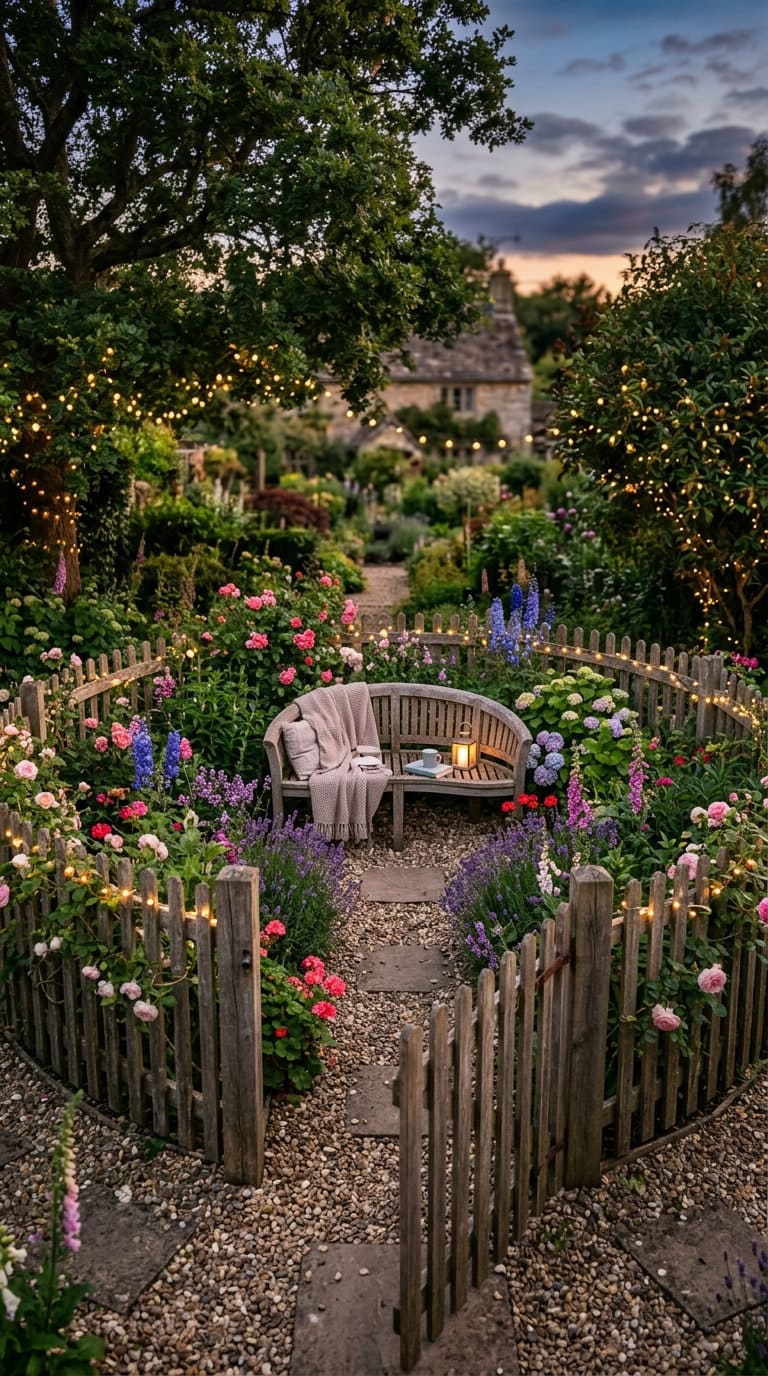
A circular planting bed with flowers arranged for a romantic, gathering-focused feel works well for a small wedding, proposal, or date-night setup, especially with a wooden bench tucked into the circle.
This is a lower-cost idea relative to most on this list, since the impact comes from arrangement and plant choice rather than expensive hardscaping.
22. Woodland Backyard
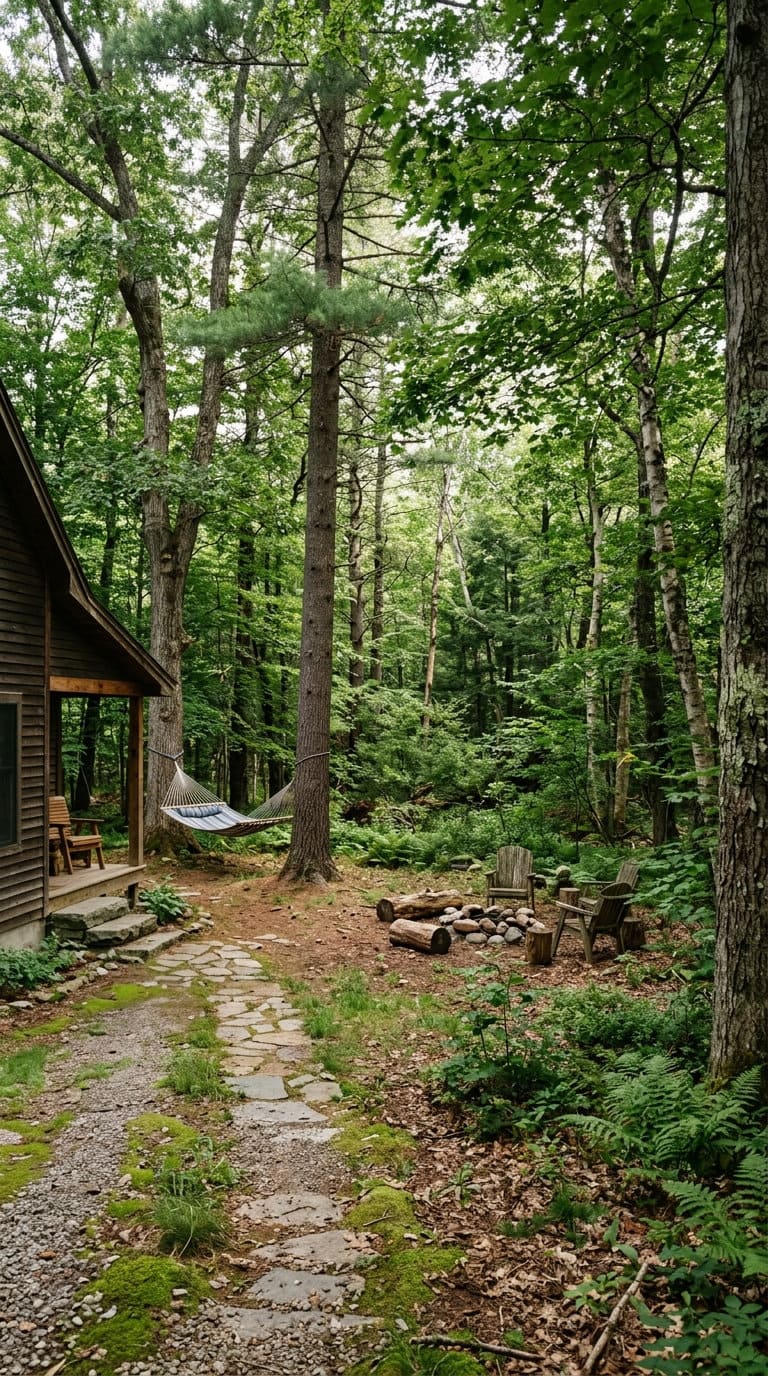
If your yard already backs onto real tree cover, leaning into that rather than clearing it saves both money and years of growth.
A minimal planting palette layered between existing trees, with a simple understory fence line, turns an already-forested lot into a private retreat without a major landscaping budget.
23. Vegetable Backyard
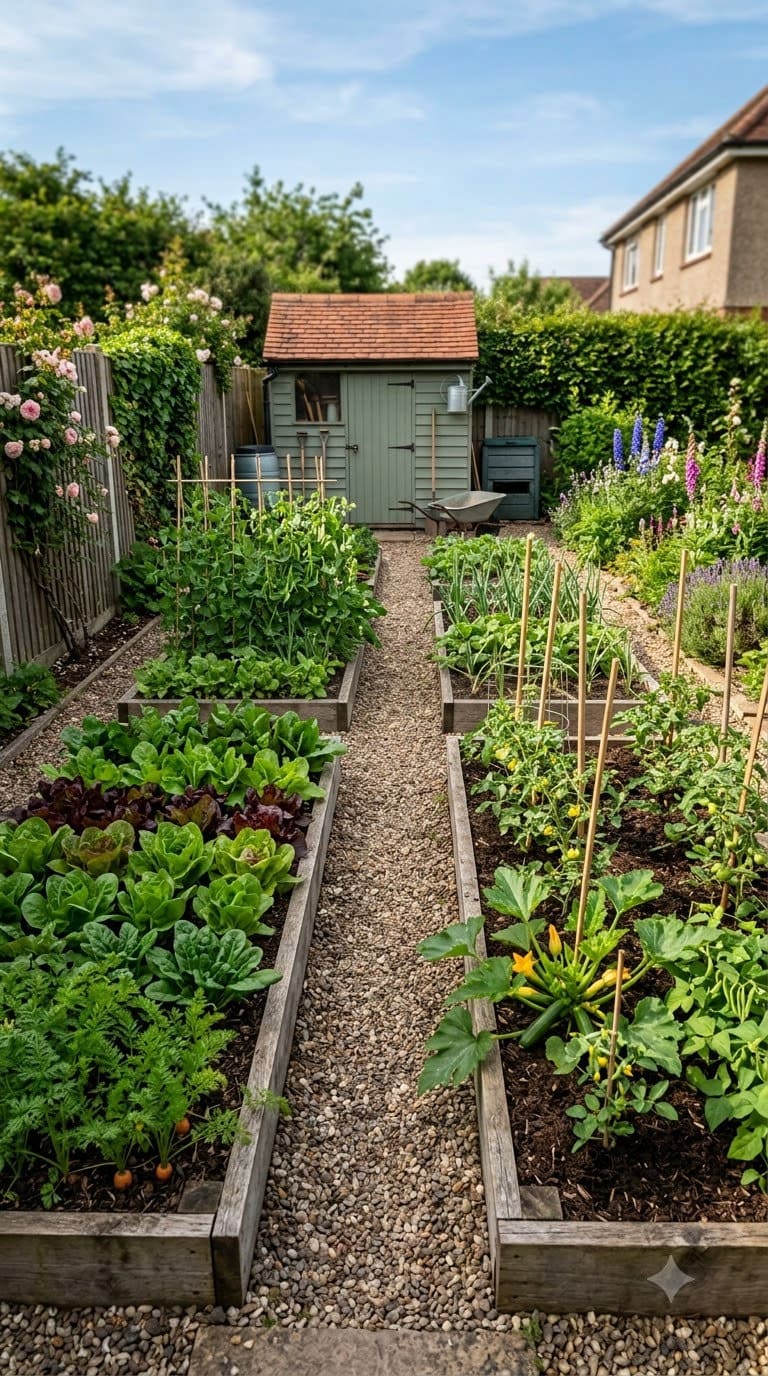
A dedicated vegetable garden trades pure decoration for genuine food production, and these raised vegetable garden bed ideas go deeper on layout and material choices if you want to build this out properly.
Choose crops suited to your actual growing zone and season rather than what looks good in a photo, this is the idea on the list most dependent on real regional planning.
24. A Flower-Focused Backyard
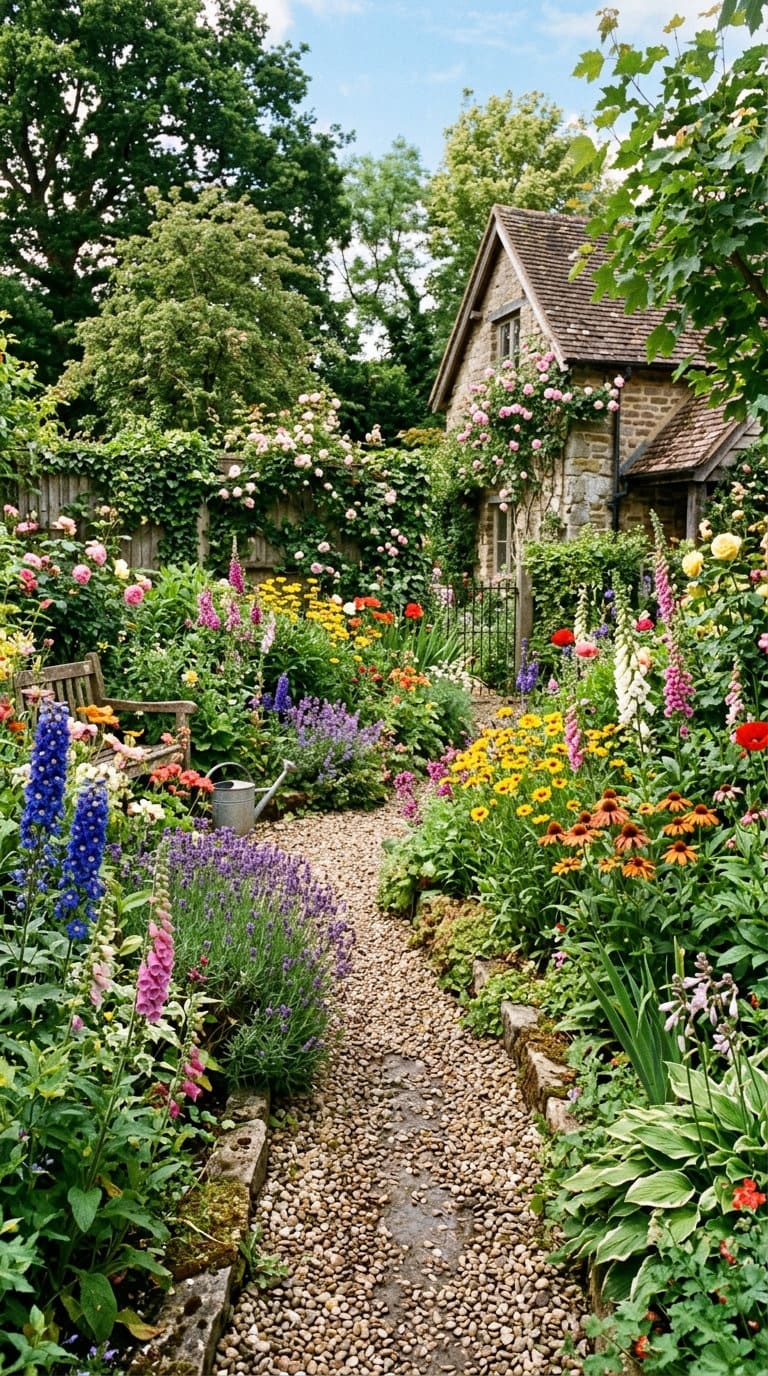
A yard built primarily around bold, abundant flowering plants rather than structure or hardscaping is one of the lower-cost ways to transform a plain backyard, most of the visual impact comes from plant choice and density rather than construction.
Layer bloom times across the season so the display doesn’t peak and then go bare for months.
25. Pathway Landscapes
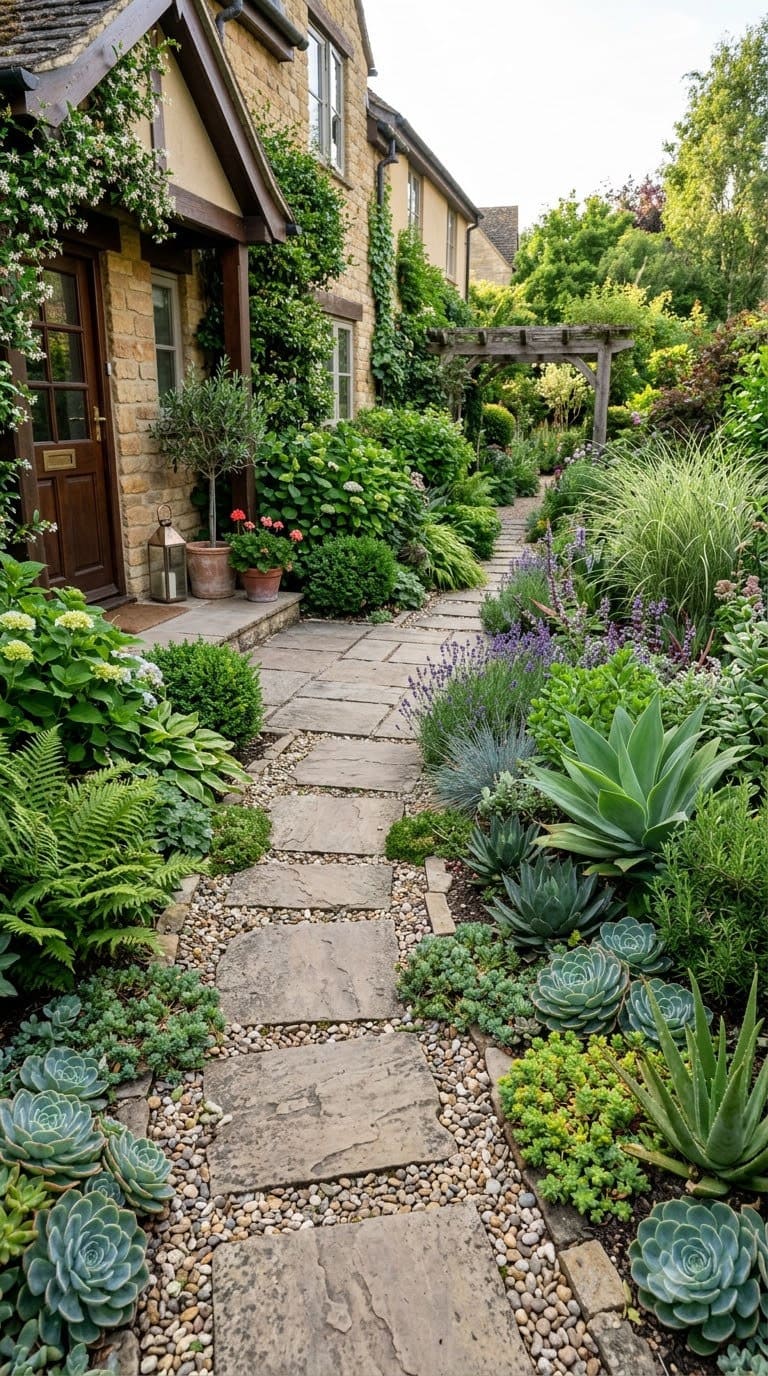
A clearly defined pathway from the house through the yard, framed with mixed greens, seasonal color, and succulents along the edges, does real functional work (a clear route) while still looking intentional.
This is a good project to pair with idea #11’s paver walkway technique if you’re starting from scratch.
26.Lush, Simple Lawn
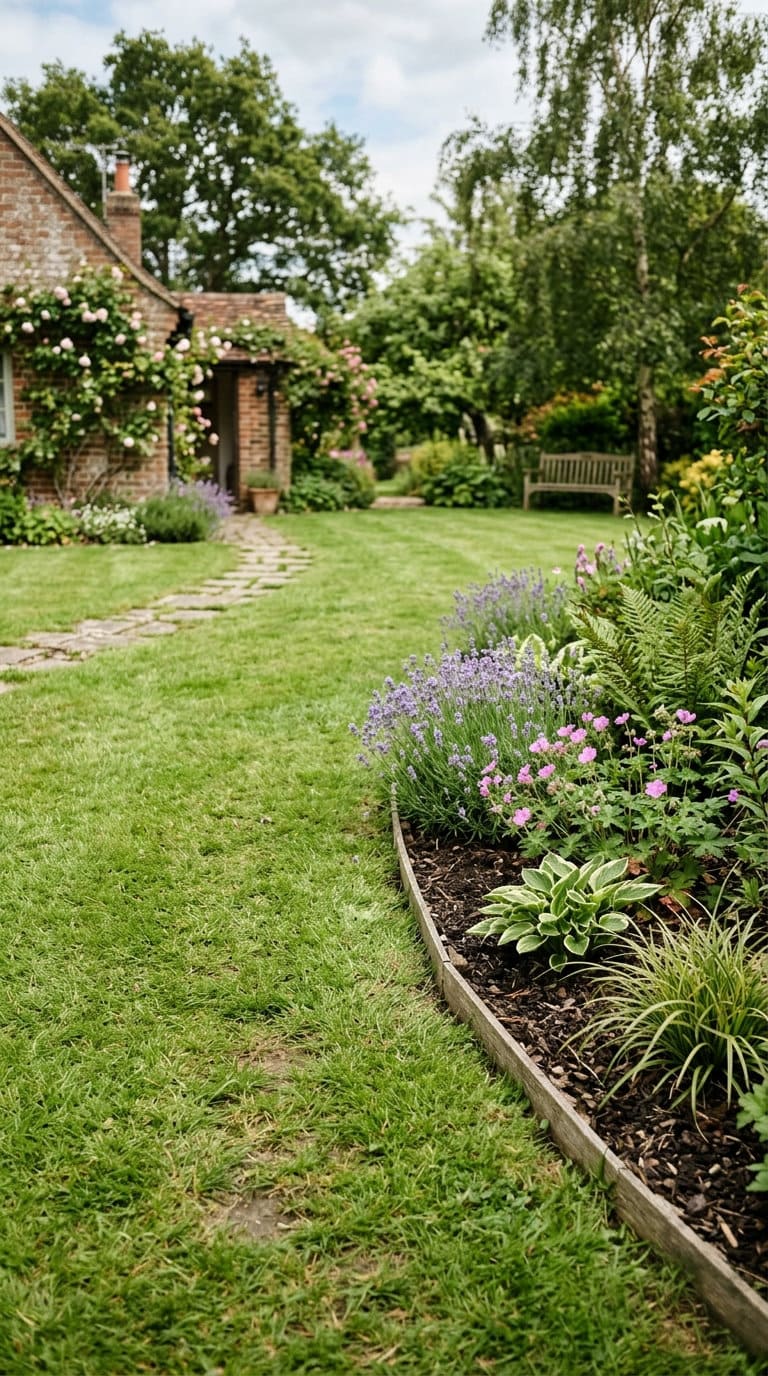
Sometimes the most effective backyard update is the most restrained: a well-kept lawn with a handful of carefully chosen plants, rather than filling every square foot.
This is also one of the lowest-cost ideas on the list, the investment is mostly time (mowing, edging, occasional overseeding) rather than materials.
27.Modern Day Landscape
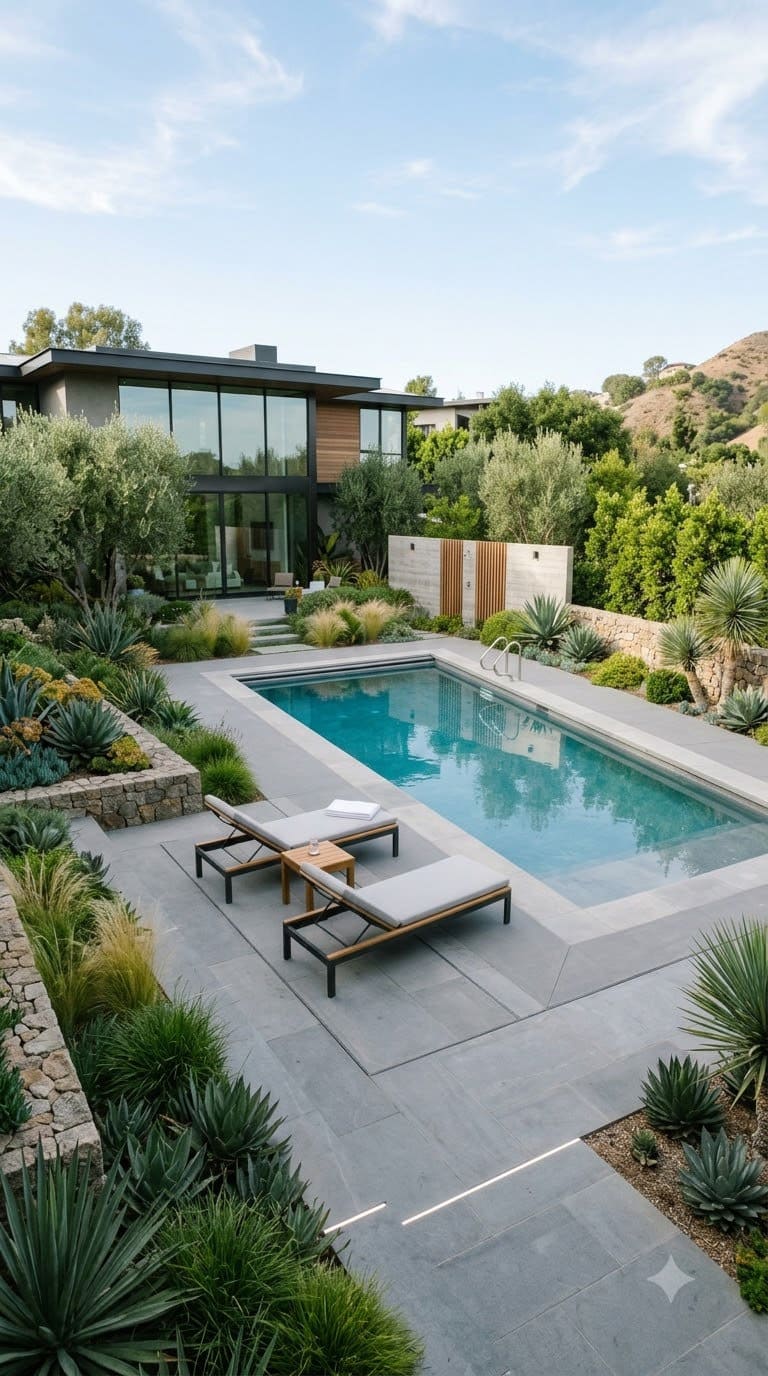
A high-end modern look, clean hardscaping lines, a pool, minimalist resting chairs, reads as a total departure from a traditional planted yard.
This is a bigger-budget direction overall, since the “clean and classy” effect depends heavily on quality hardscaping materials and precise installation rather than plant volume.
28. Small, private backyard
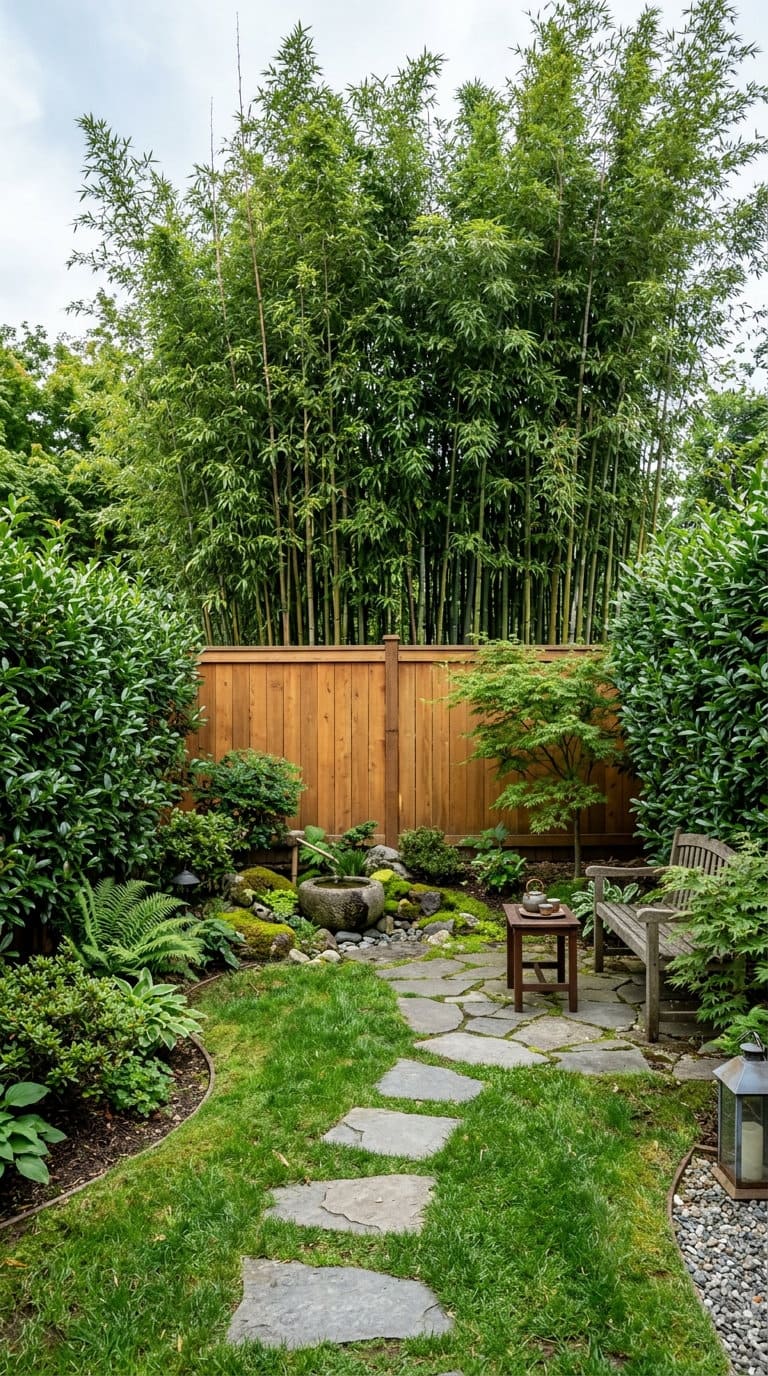
A compact backyard doesn’t need to feel cramped: wood tones on the fencing and flooring, paired with tall bamboo and other screening plants (Japanese privet works well), create real privacy and coziness in a small footprint.
This is a good template for a townhouse or narrow-lot yard where a wide, open layout isn’t an option.
29. Circle Garden
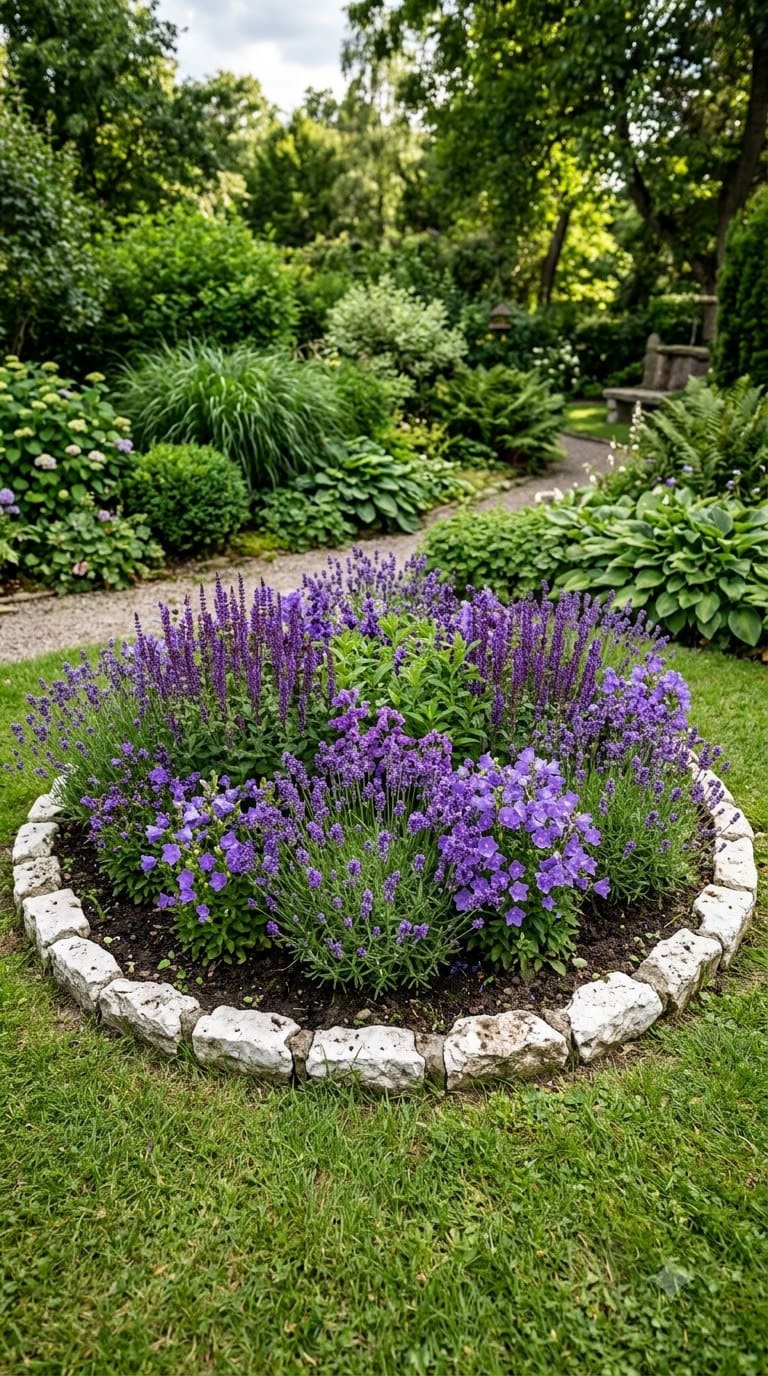
A circular planting layout, reinforced with white stone edging to highlight the shape, reads as more polished than a standard rectangular bed for a similar cost.
Mixing in a smaller number of standout-color plants (like violet against a mostly green palette) draws the eye more than a uniformly colorful bed would.
30. Backyard Playground Space
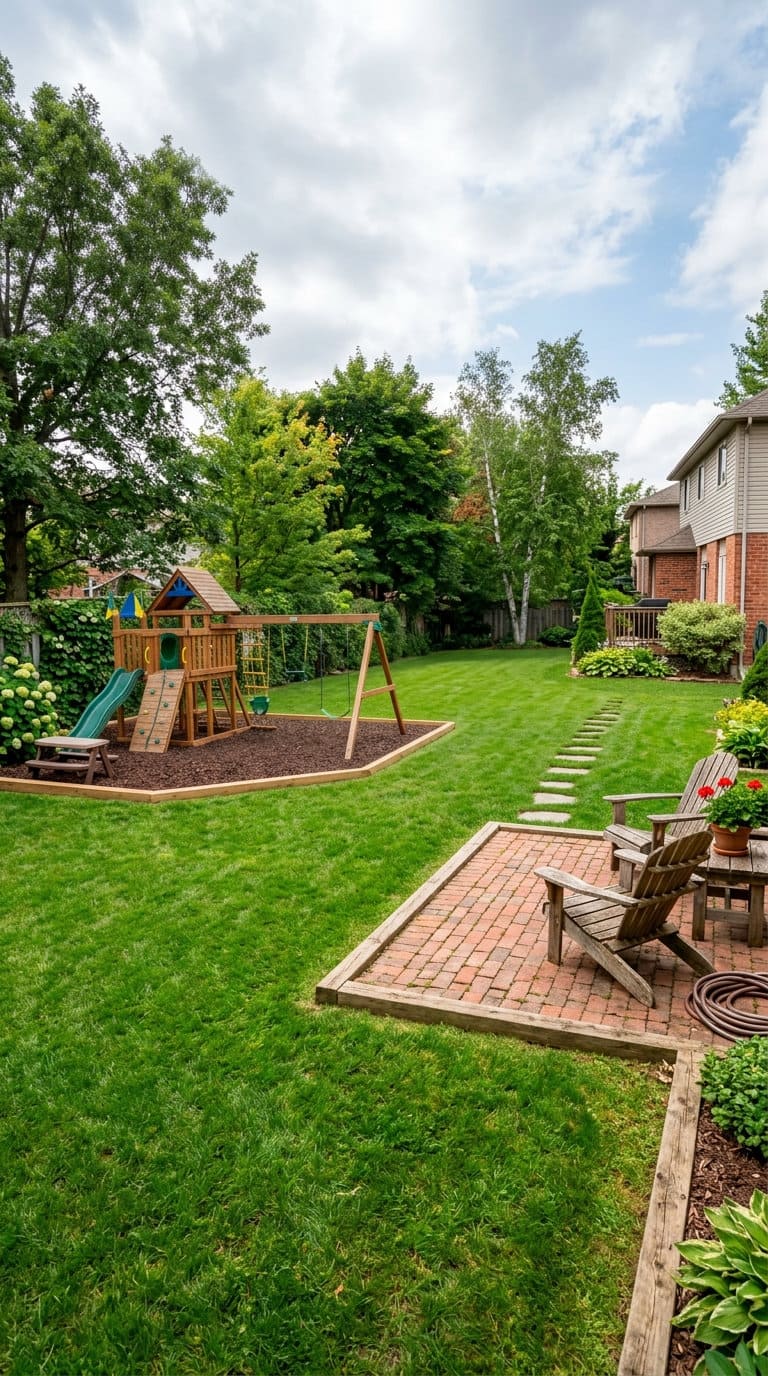
A wide, mostly-open grass area with one defined hardscaped zone (a small wood-brick patio for picnicking or supervising) gives kids real room to play without the yard feeling like a commercial playground.
If you’re adding actual play equipment (a swing set, climbing structure), check manufacturer fall-zone and surfacing guidance, a genuine, common source of backyard injuries when skipped.
31. Floating Bench Nook
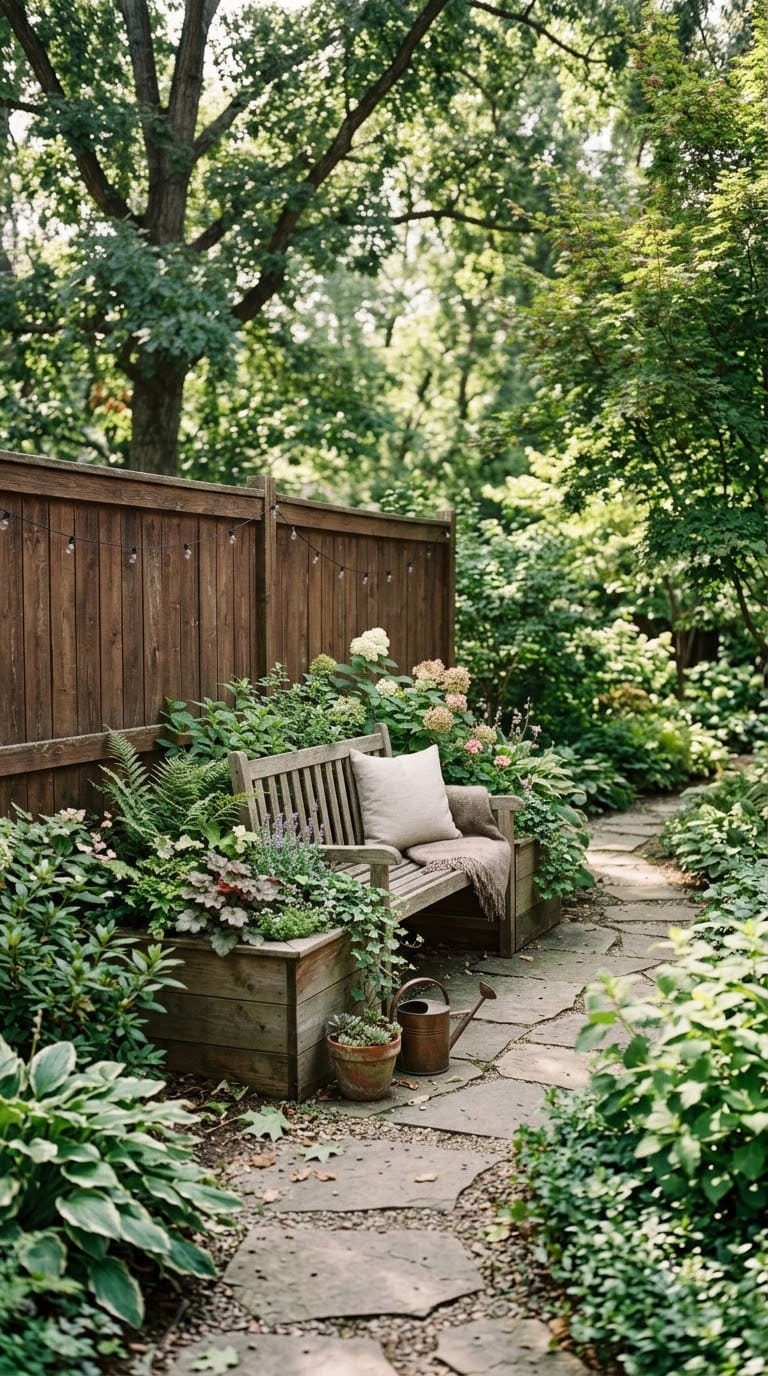
A simple wood bench tucked into a plant box, framed by a fence, creates a quiet, private spot for conversation or stargazing without needing a full patio build.
This is one of the most budget-friendly ideas on the list, a bench and a modest planting bed cost a fraction of any hardscaping project here.
32. Timeless Pergola Living Room
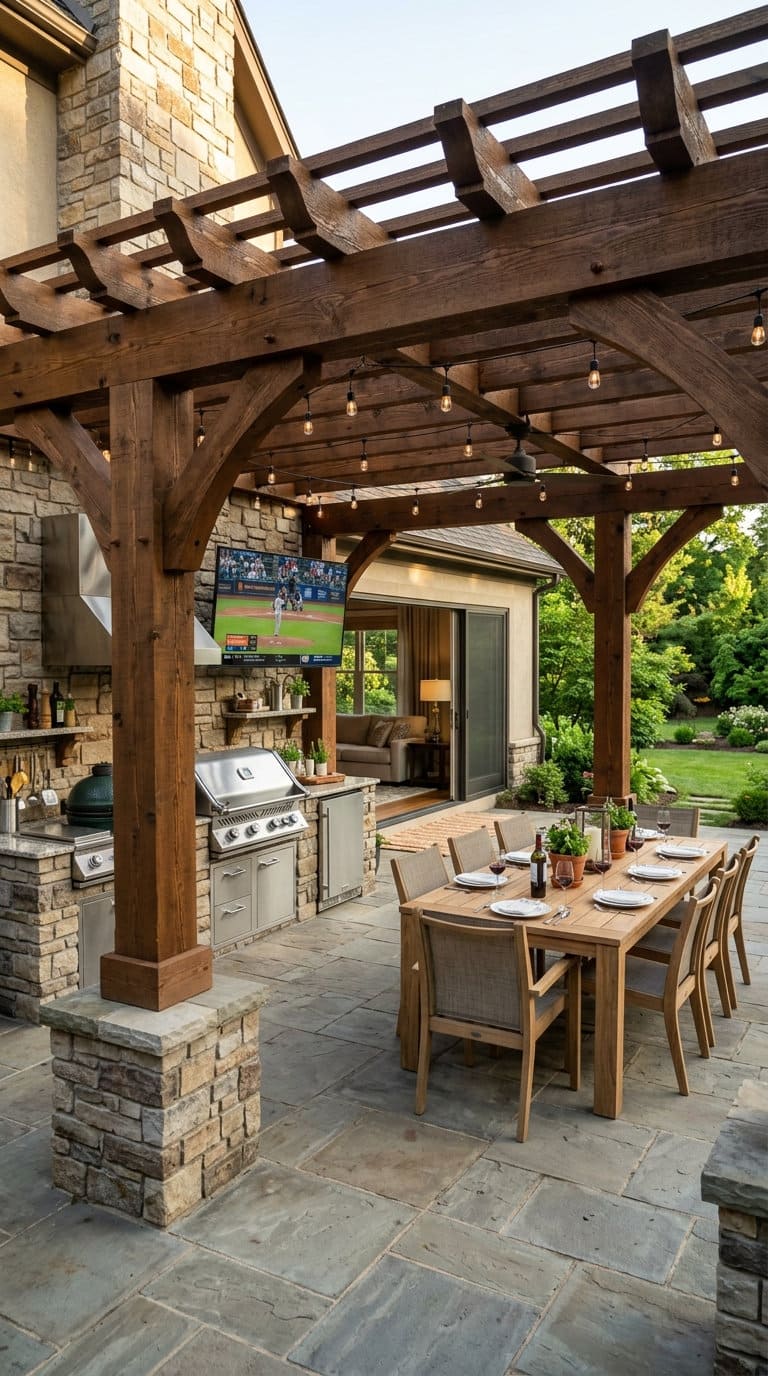
A pergola extends your living space outdoors, and pairing it with these pergola ideas for structural and style options helps if you’re planning to add an outdoor kitchen or TV setup underneath.
Anything with real weight (a grill, mounted appliances) means the pergola’s footing needs to be engineered for that load, not just decorative posts, budget for a contractor if you’re adding real kitchen equipment.
33. Maximizing a Narrow Yard
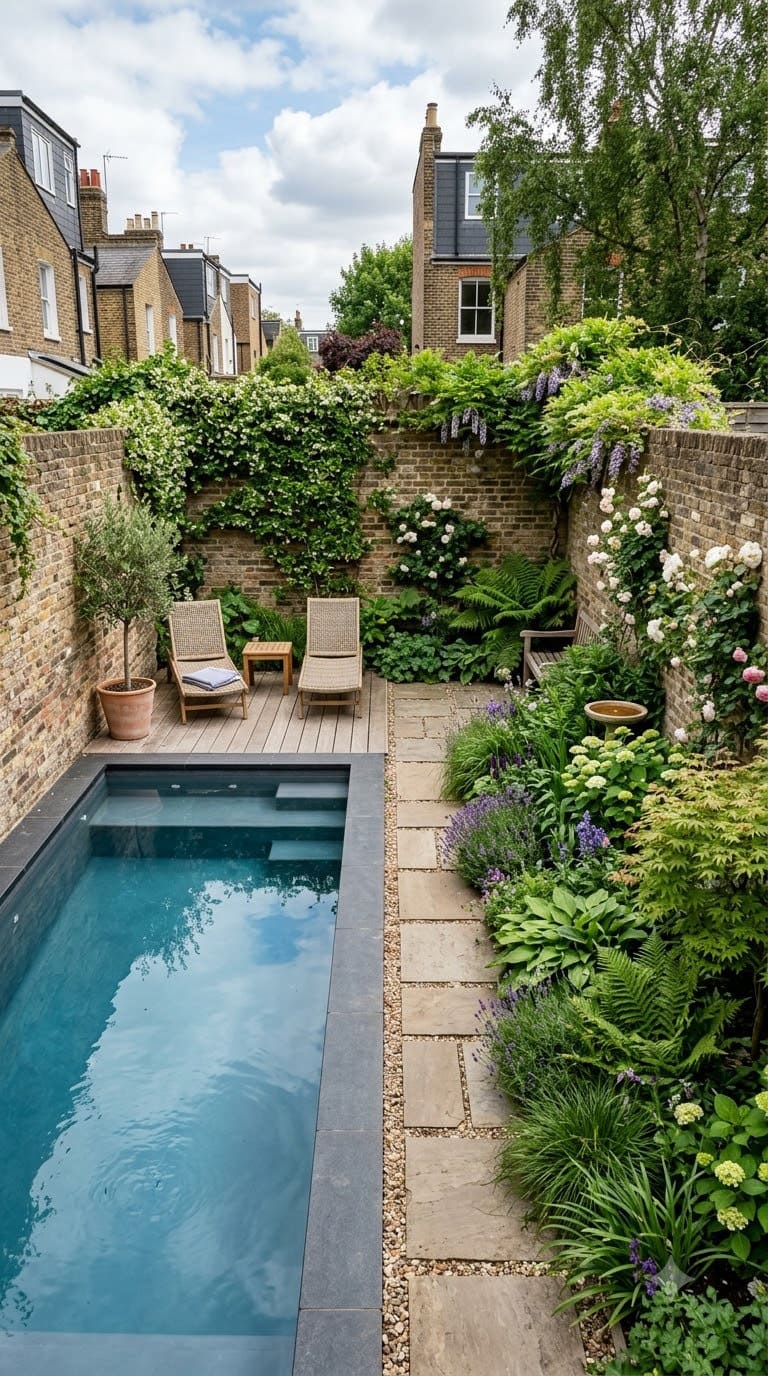
A narrow lot can still fit a pool if the layout is planned carefully around walkways and planting space rather than forcing the pool to be the widest possible size.
Splitting the yard conceptually into a “water half” and a “green half” makes a small footprint feel more balanced and less cramped.
34. A burst of color
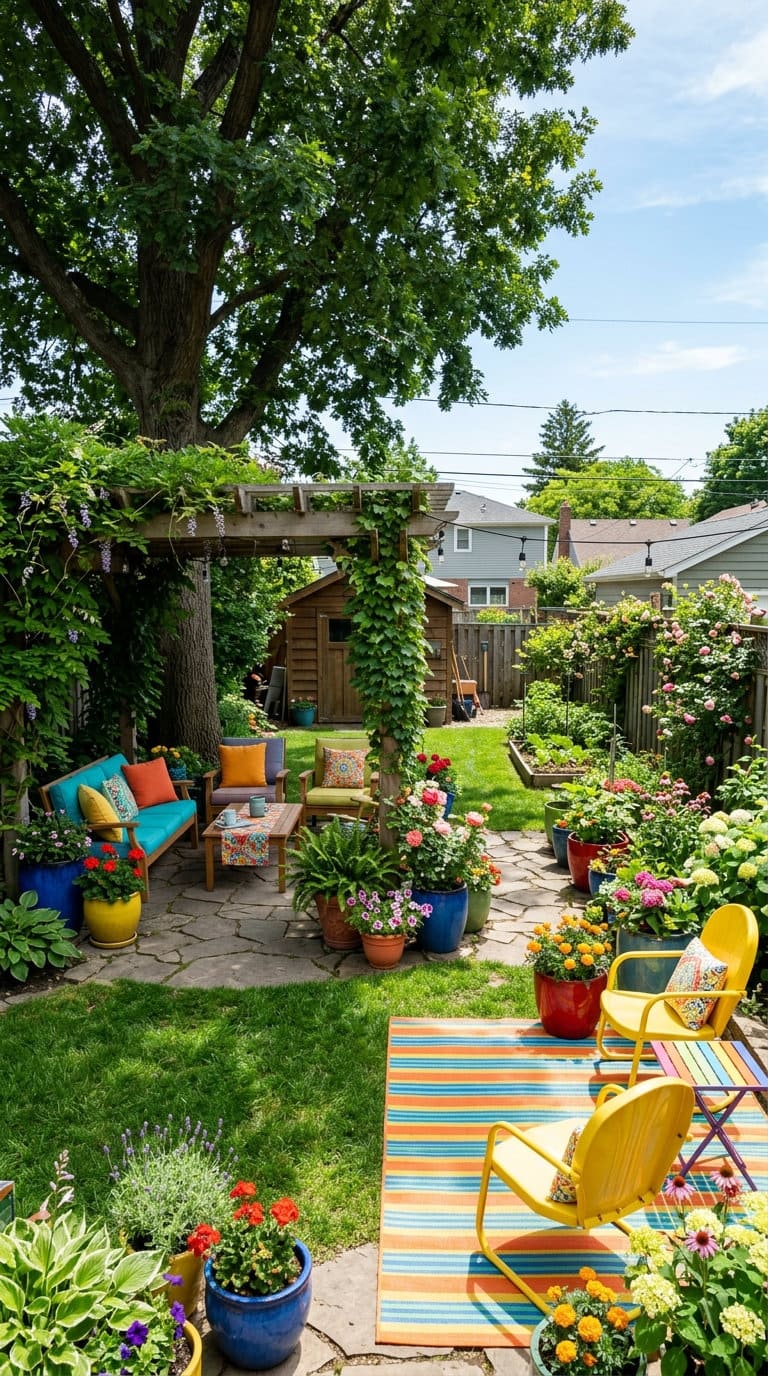
A yard with two distinct zones, one shaded, one in direct sun, gives you real flexibility for different times of day, and bright furniture colors (a bold couch, colorful planters) make even a modestly sized space feel more lively without major construction.
This works well as a lower-cost refresh of an existing patio rather than a full rebuild.
35. High-End Valley View Backyard
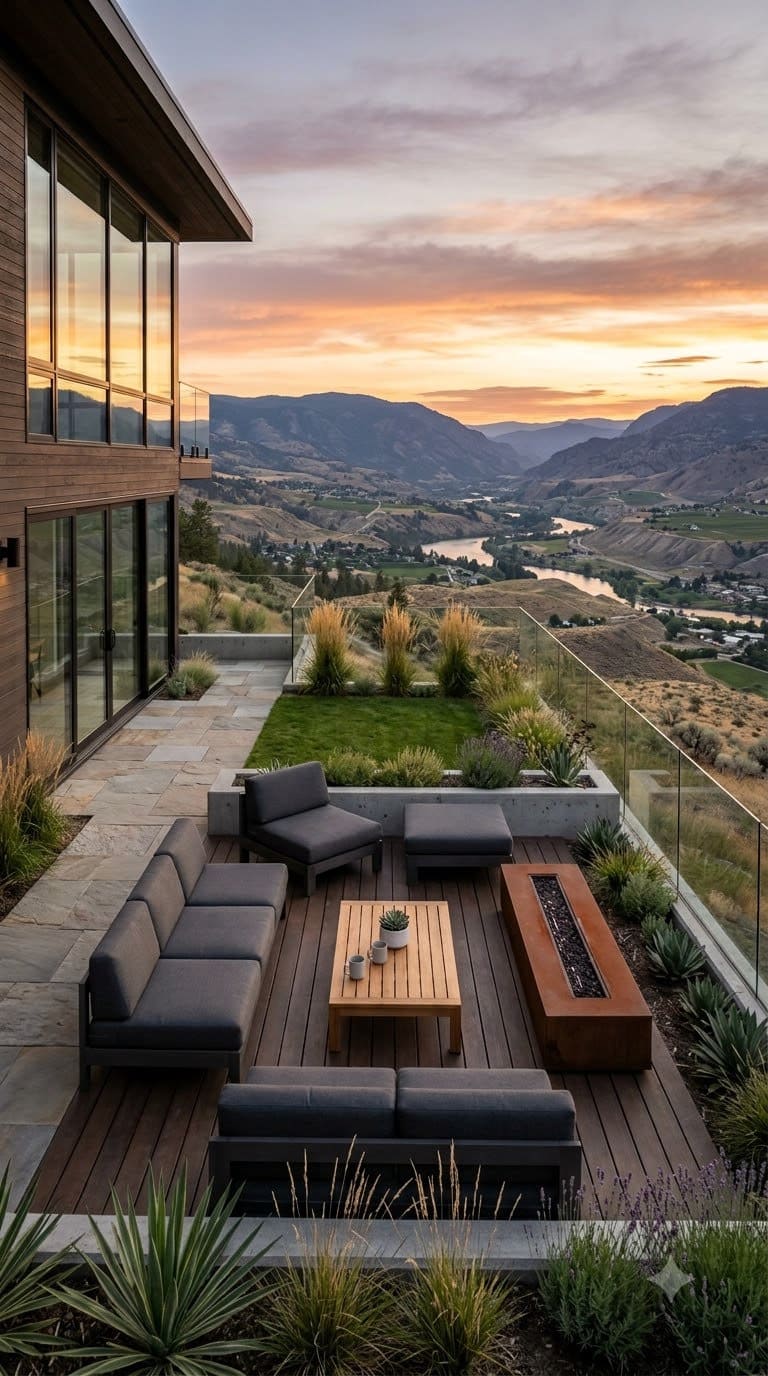
A backyard designed to maximize a real view, modern furniture, an open layout, minimal visual clutter, works best when the landscaping gets out of the way of the view rather than competing with it.
This is a bigger-investment look overall, driven mostly by furniture and hardscaping quality rather than plant volume.
36. Backyard Fire Pit Gathering Spot
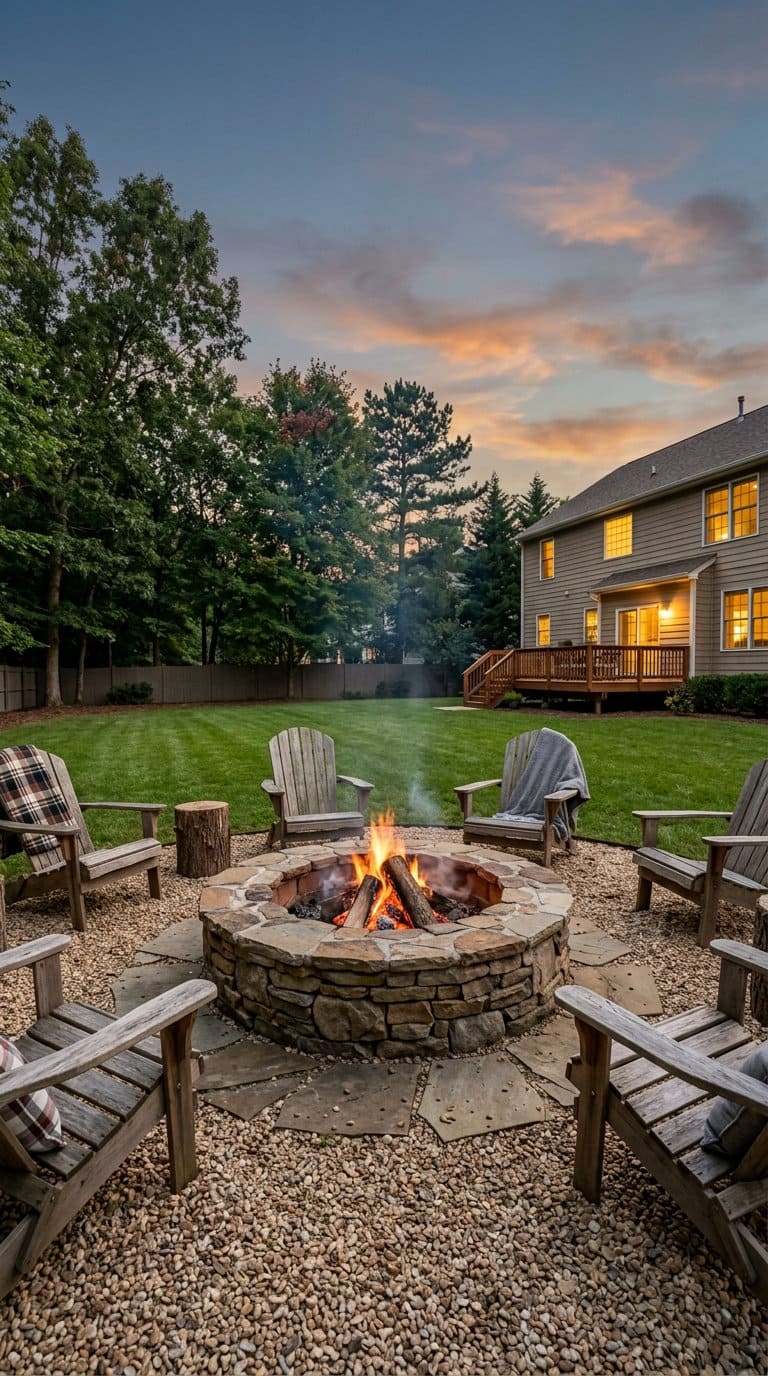
A fire pit with simple seating on either side is one of the most reliably popular backyard features, and it’s genuinely budget-flexible, a basic steel ring and camp chairs cost very little, while a built-in stone surround with permanent seating costs considerably more.
Whatever the budget, follow the fire pit clearance guidance in the safety section above (10-25 feet from structures for wood-burning, 5-10 feet for gas), and never place one under overhanging branches or on a wood deck.
37. Framed Court
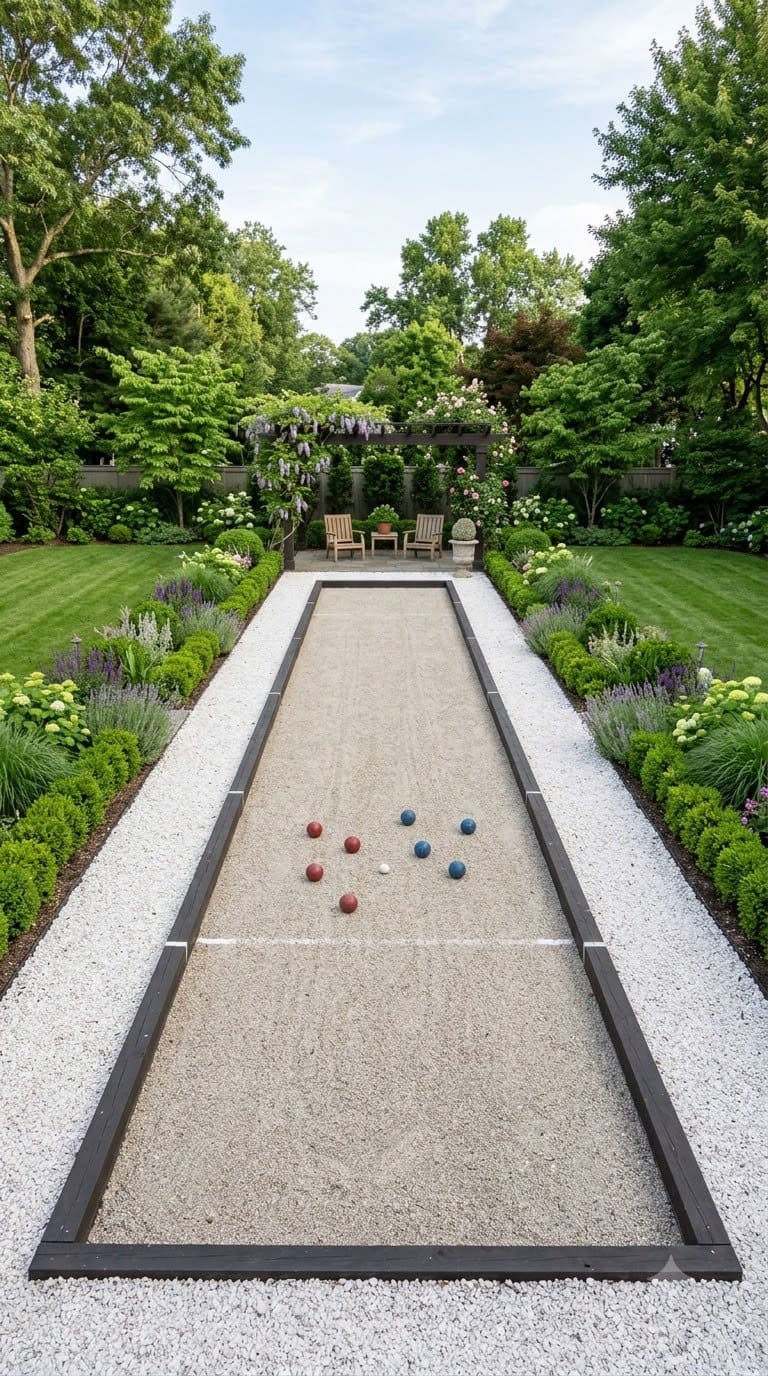
A formal, symmetrical layout, aligned plants, a long bocce or lawn-game court, a stone walkway, and a large anchor tree, creates a genuinely elegant look built for viewing and short walks rather than heavy daily use.
This style rewards precise installation, budget for a professional if you want the alignment to actually read as intentional.
38. Natural Flower Canopy
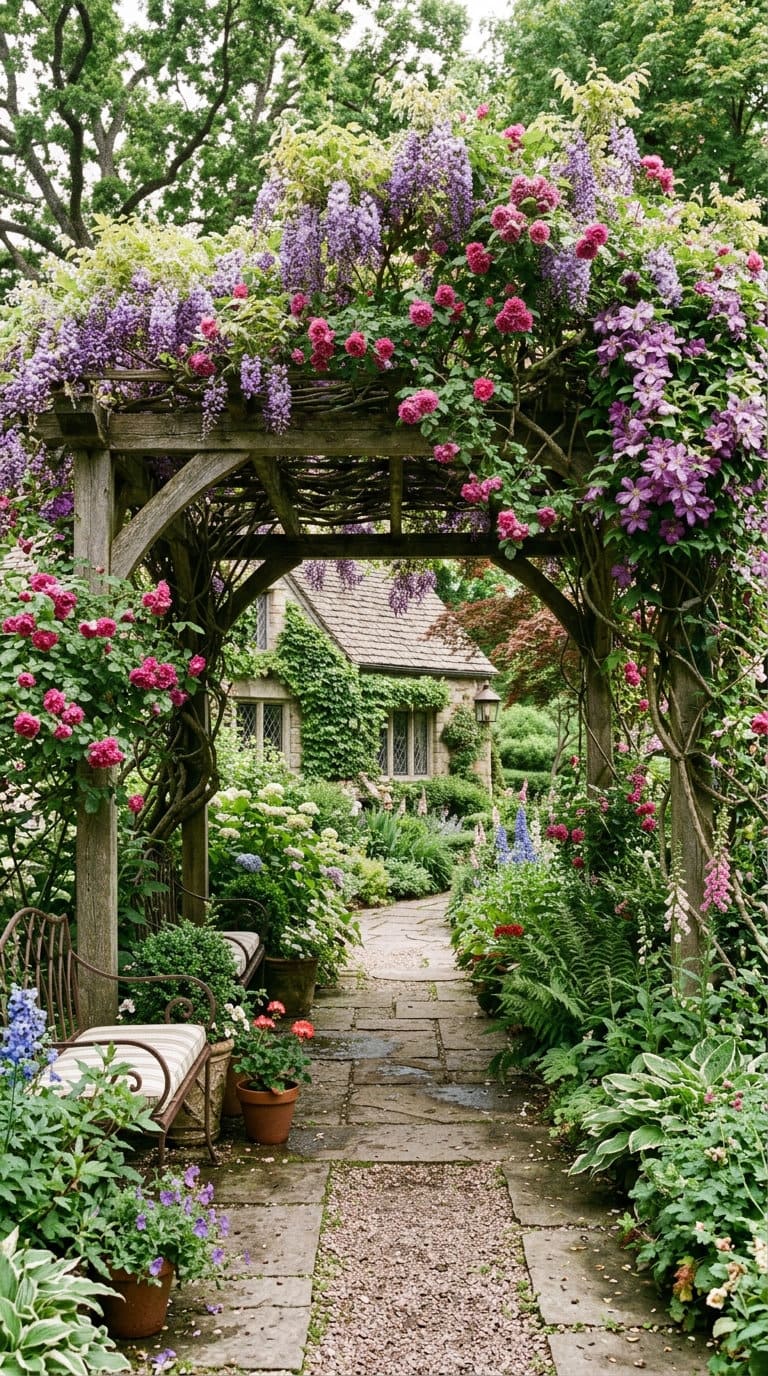
A dense flowering canopy, vines or climbing plants trained over a breezeway or arbor, takes real time to establish (often years, not one season), so this is a long-term project best started early if it’s on your wish list.
The payoff is a genuinely dramatic, shaded flower tunnel that’s difficult to fake with any quick installation.
39. Rooftop-Style Mid-Century Modern Yard
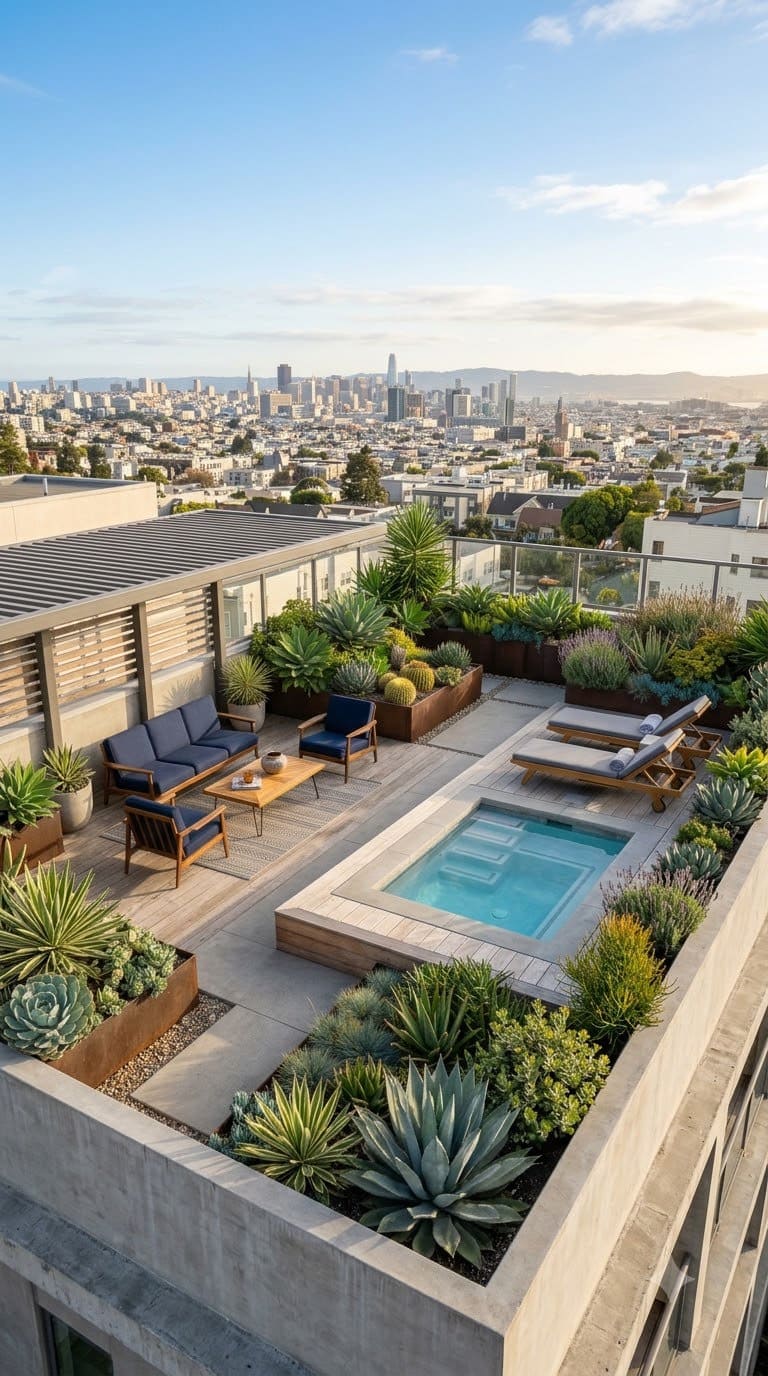
A yard designed with mid-century modern simplicity, a small pool, minimal shaded seating, and drought-tolerant plants like succulents, works especially well on an elevated or rooftop-style space that gets direct sun most of the day.
Choose plants genuinely suited to full-sun, low-water conditions rather than fighting the site’s natural conditions.
40. Earthy Retreat Scape
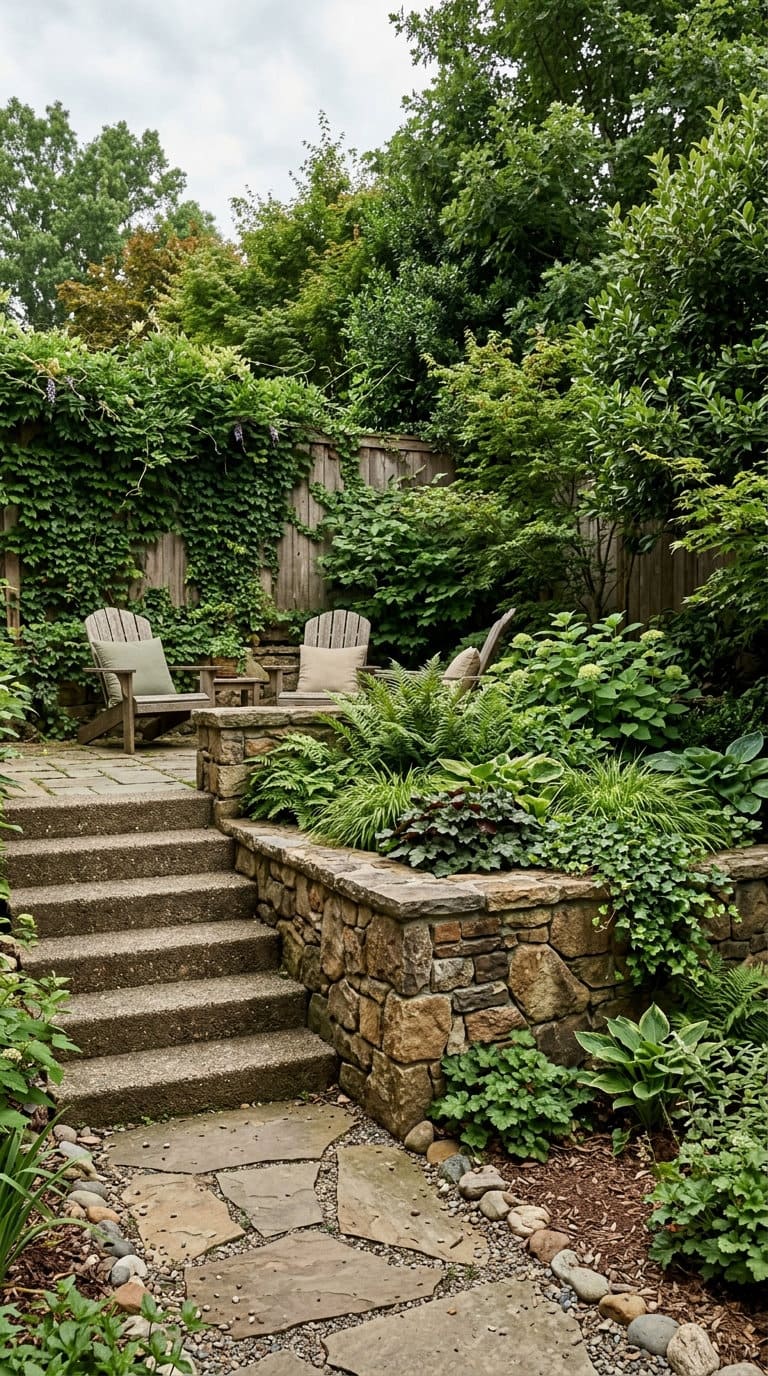
An earth-toned yard, a stone-framed planter, concrete steps, layered greenery, works as a genuine private retreat, whether that’s solo downtime or a quiet date-night setup.
The stone and concrete elements here are a moderate hardscaping investment, less than a full pool or pergola build, but more than a planting-only refresh.
41. Small-Space Yard in Bloom
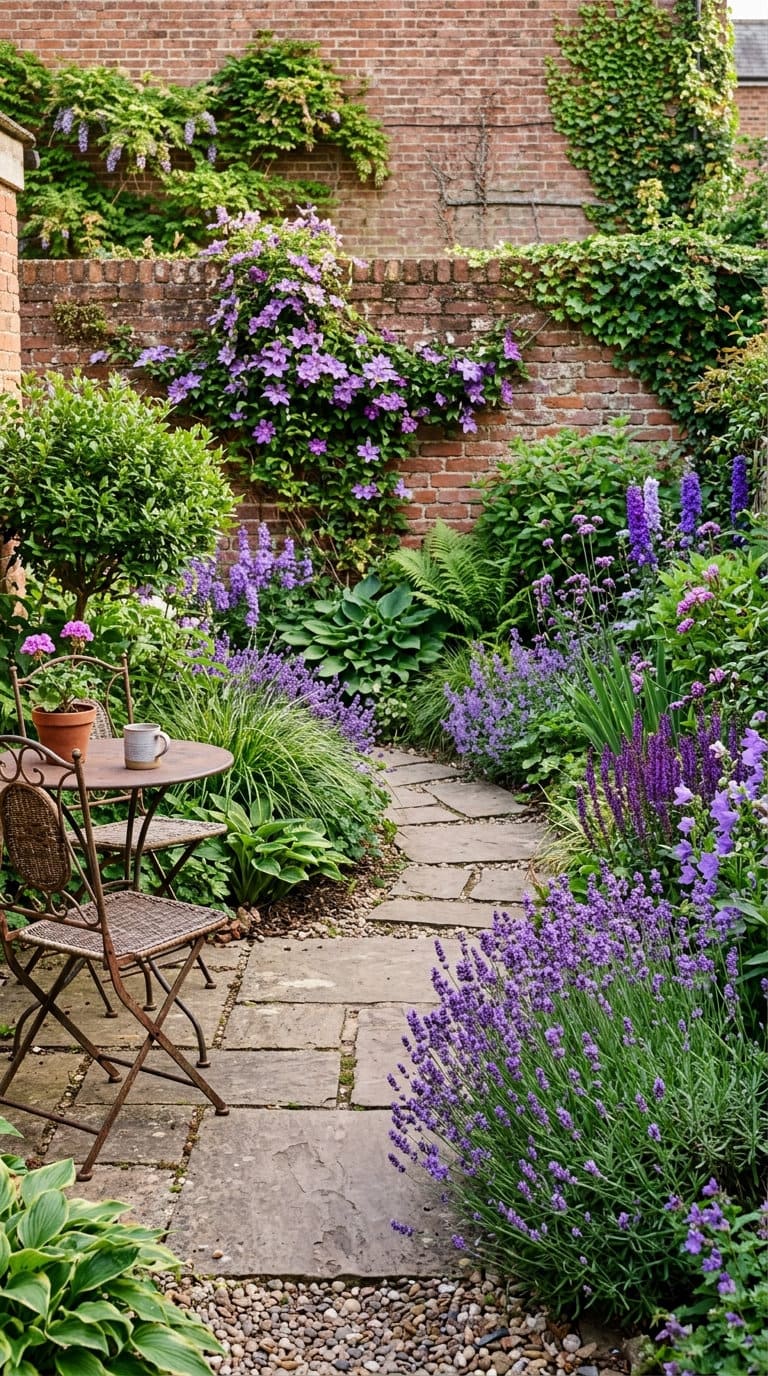
For a genuinely small yard, letting flowers carry most of the visual weight (rather than furniture or hardscaping) makes the space feel intentional instead of empty.
A brick fence backdrop with a purple-and-green color scheme reads as considerably more polished than a mixed, busy palette in a tight space.
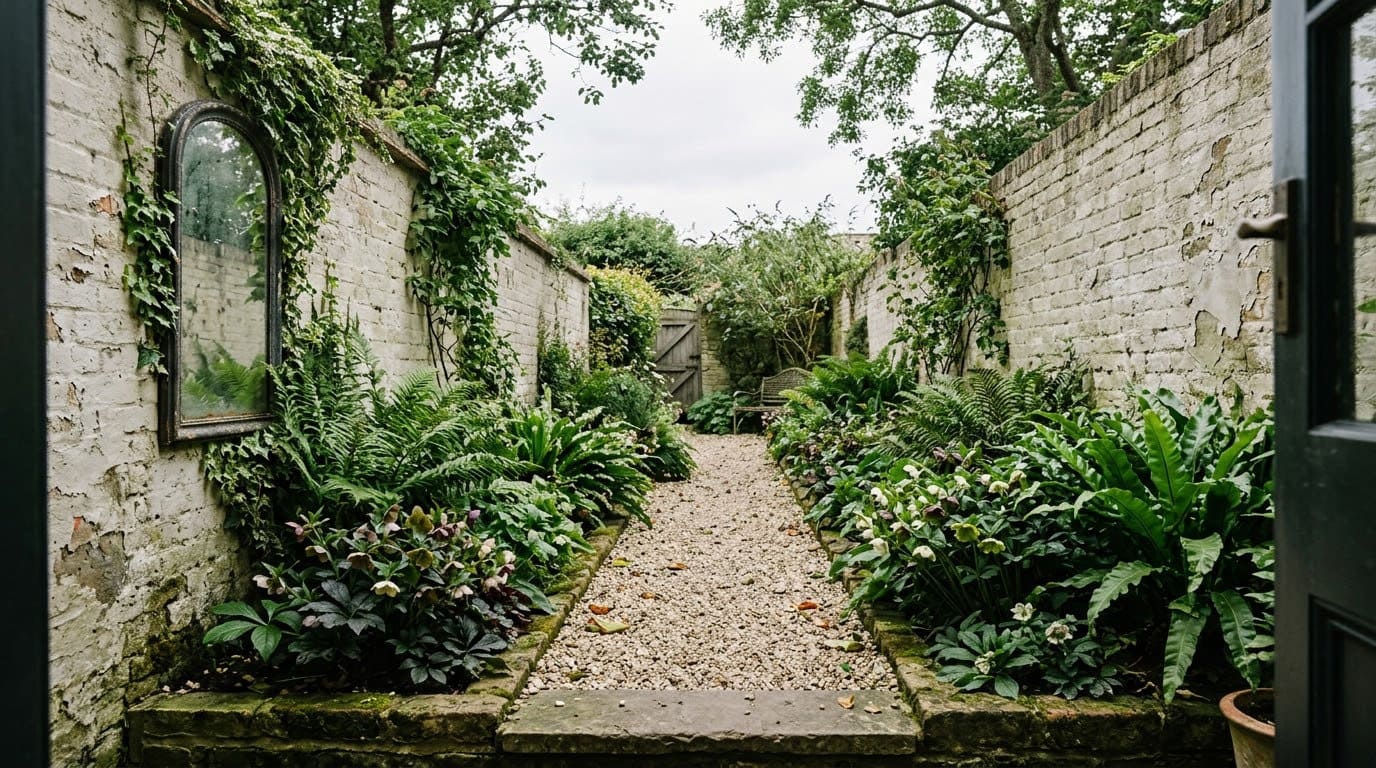
42. Evergreen Passage
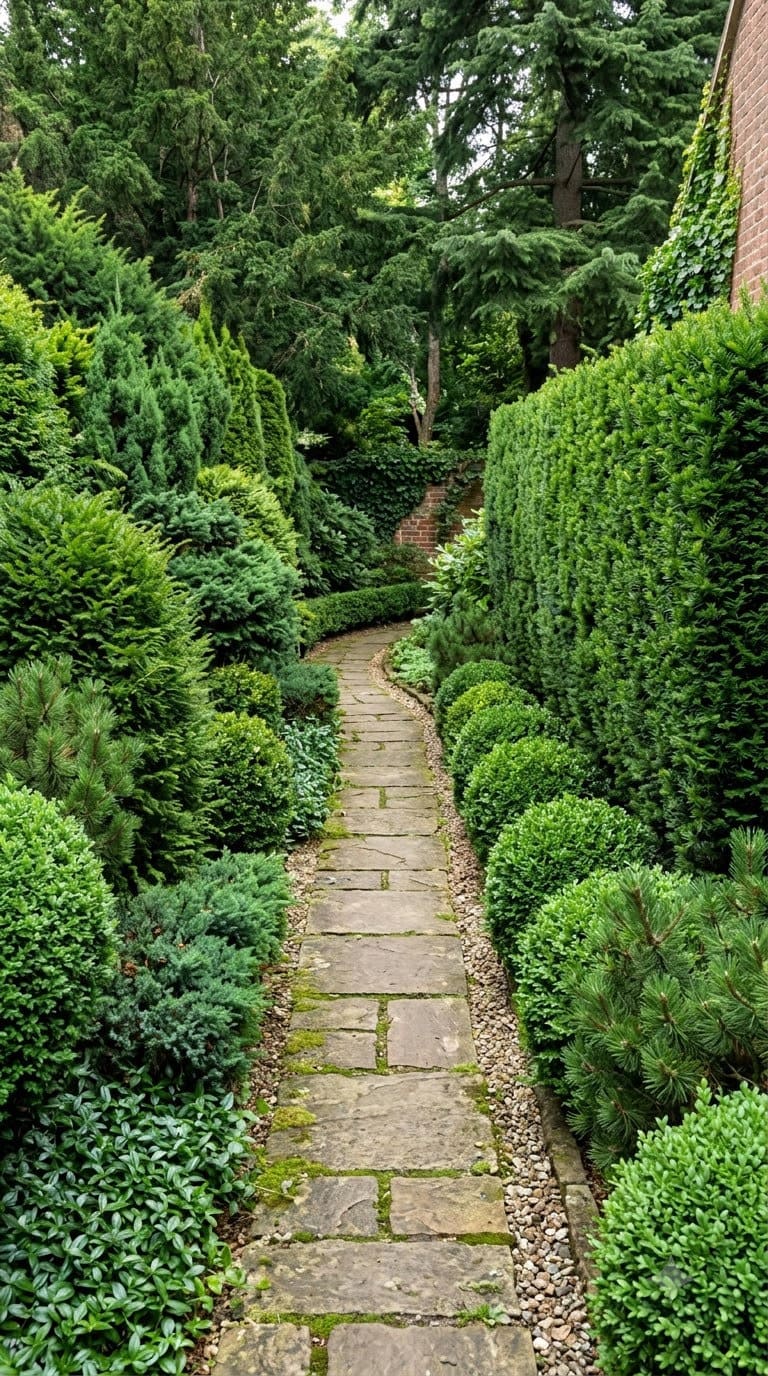
An all-green planting scheme, layering different shades and textures of evergreen rather than relying on flower color, gives a yard a genuine year-round presence instead of a look that fades after bloom season.
Classic hedging technique here is what separates a “green passage” from a look that just reads as unkempt.
43. Green and White Border
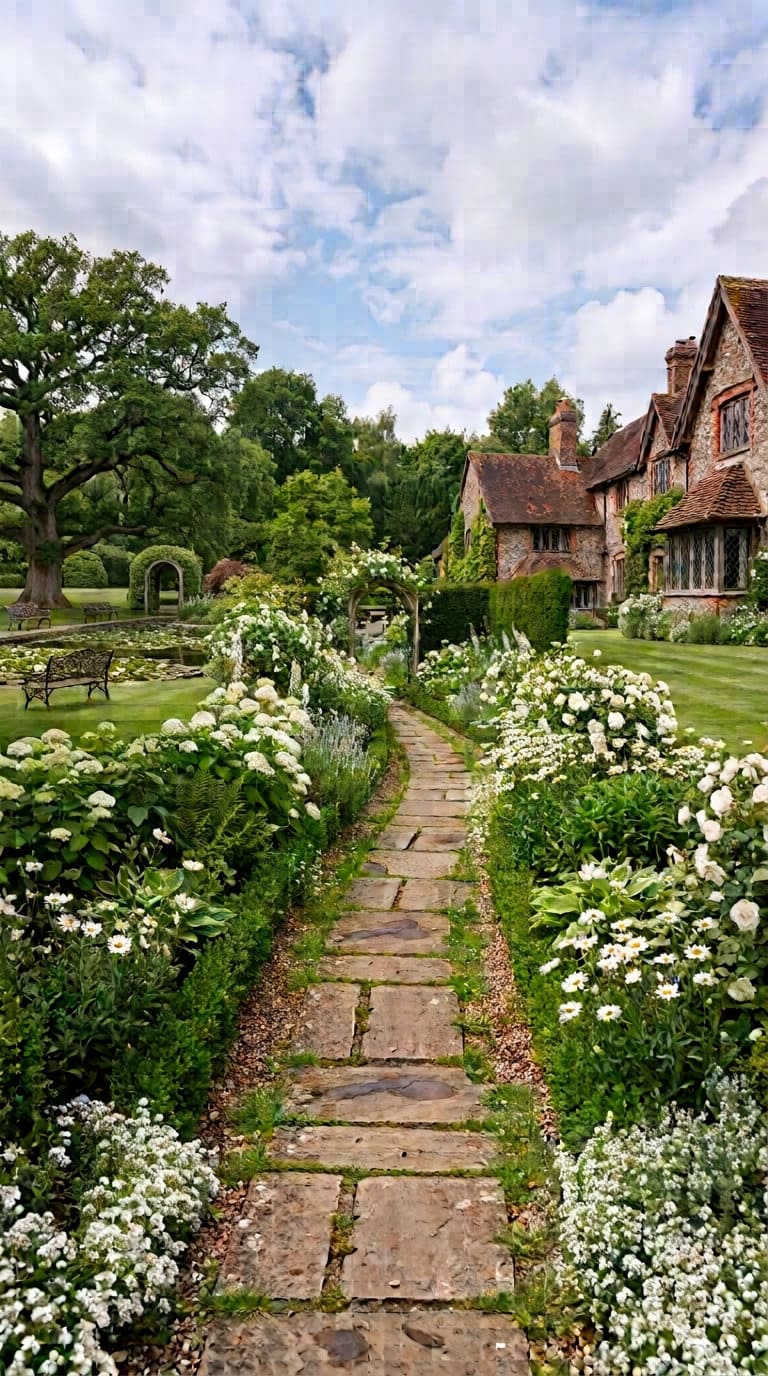
A pathway bordered by white-blooming flowers against a green backdrop is one of the more classic, low-risk color combinations in garden design, it’s genuinely hard to get wrong and photographs well in most lighting.
This is a moderate-cost refresh if you’re working with an existing pathway and just replanting the borders.
44. Hydrangeas by the Pool
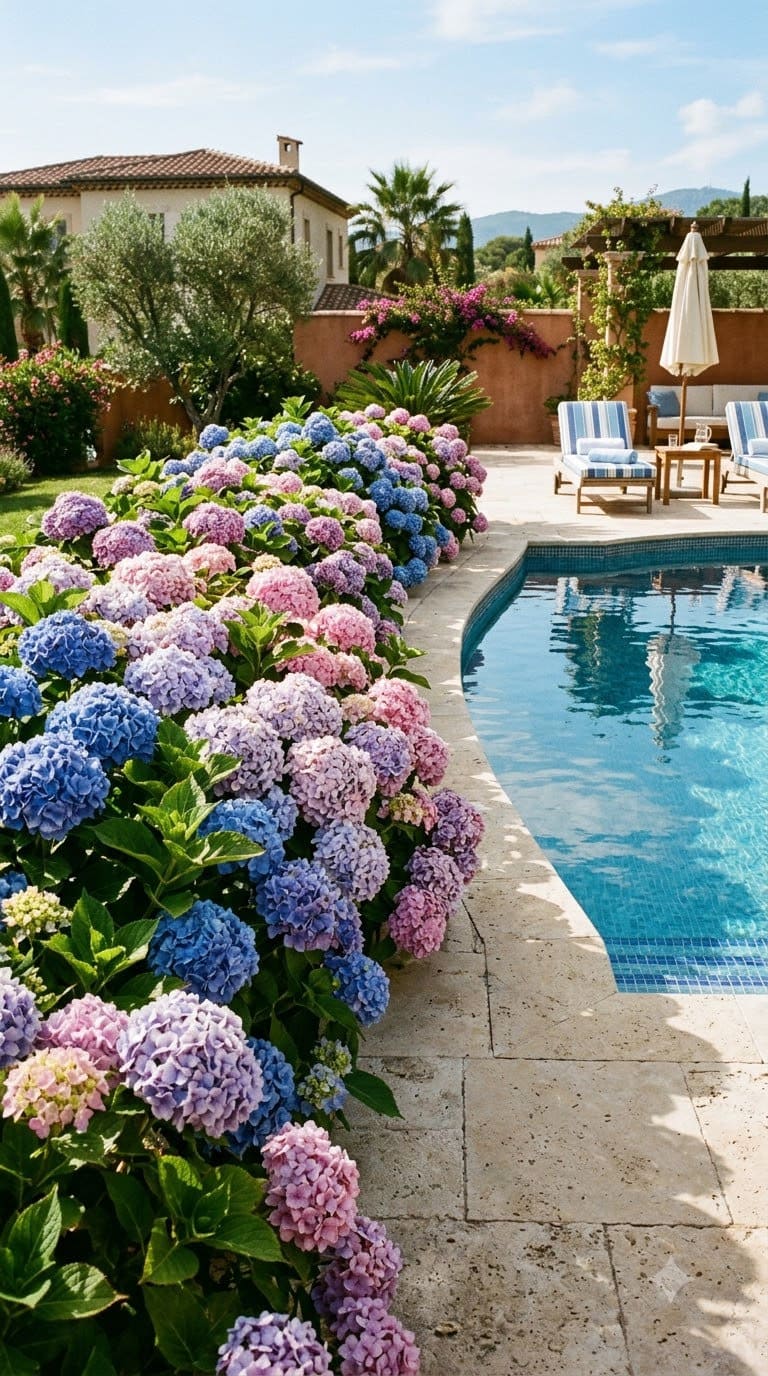
Hydrangeas in pink, blue, and lavender tones read especially well against pool-adjacent hardscaping.
One real, practical note most decorative posts skip: hydrangea bloom color in many varieties is genuinely affected by soil pH (more acidic soil trends blue, more alkaline trends pink), so if you’re chasing a specific color, test and amend your soil rather than relying on the plant tag alone.
45. Forested Cottage Garden
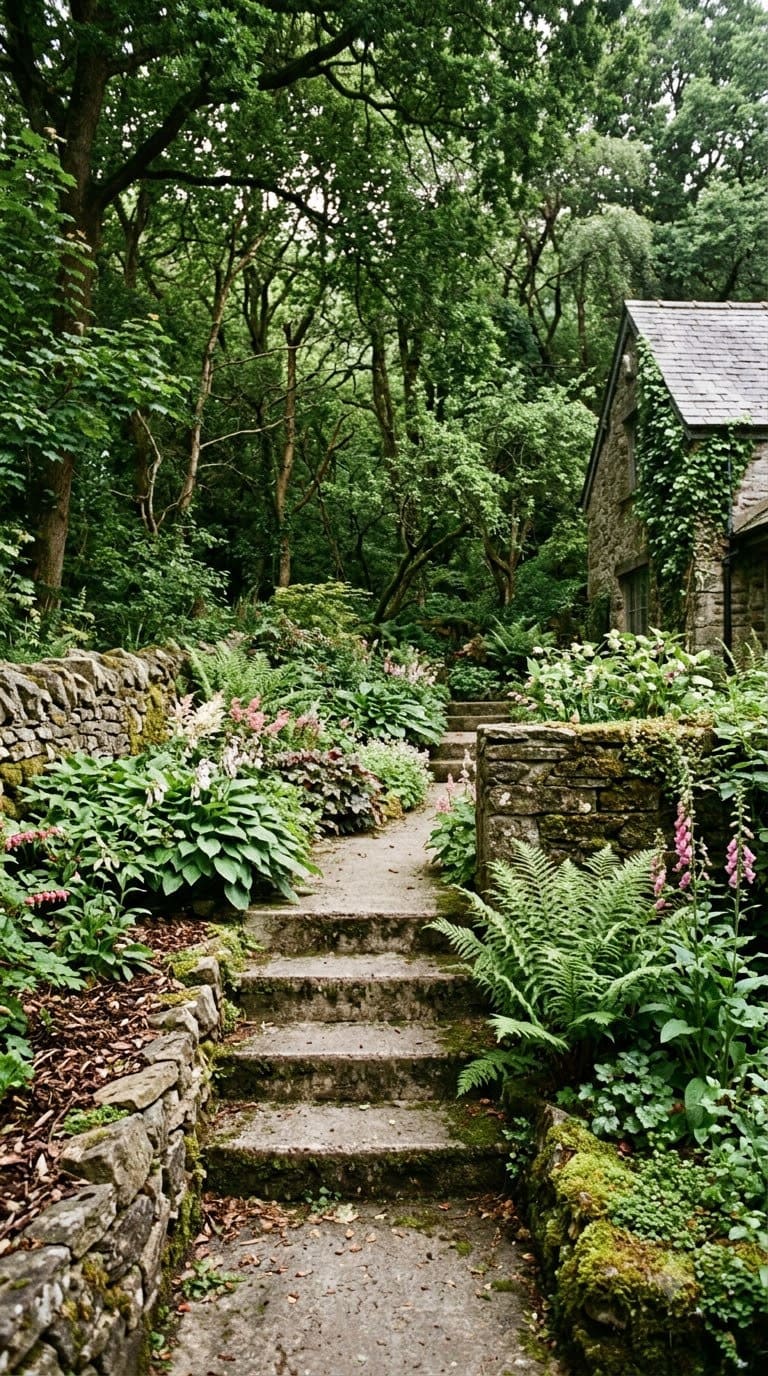
A cottage garden built inside real existing tree cover uses stone as both a boundary and a visual divider, with concrete steps doubling as a walkway.
Fitting a genuinely varied planting mix into a small forested footprint is the core challenge here, prioritize shade-tolerant flowering species over full-sun varieties that will struggle under canopy.
46. Shades of Green Patio
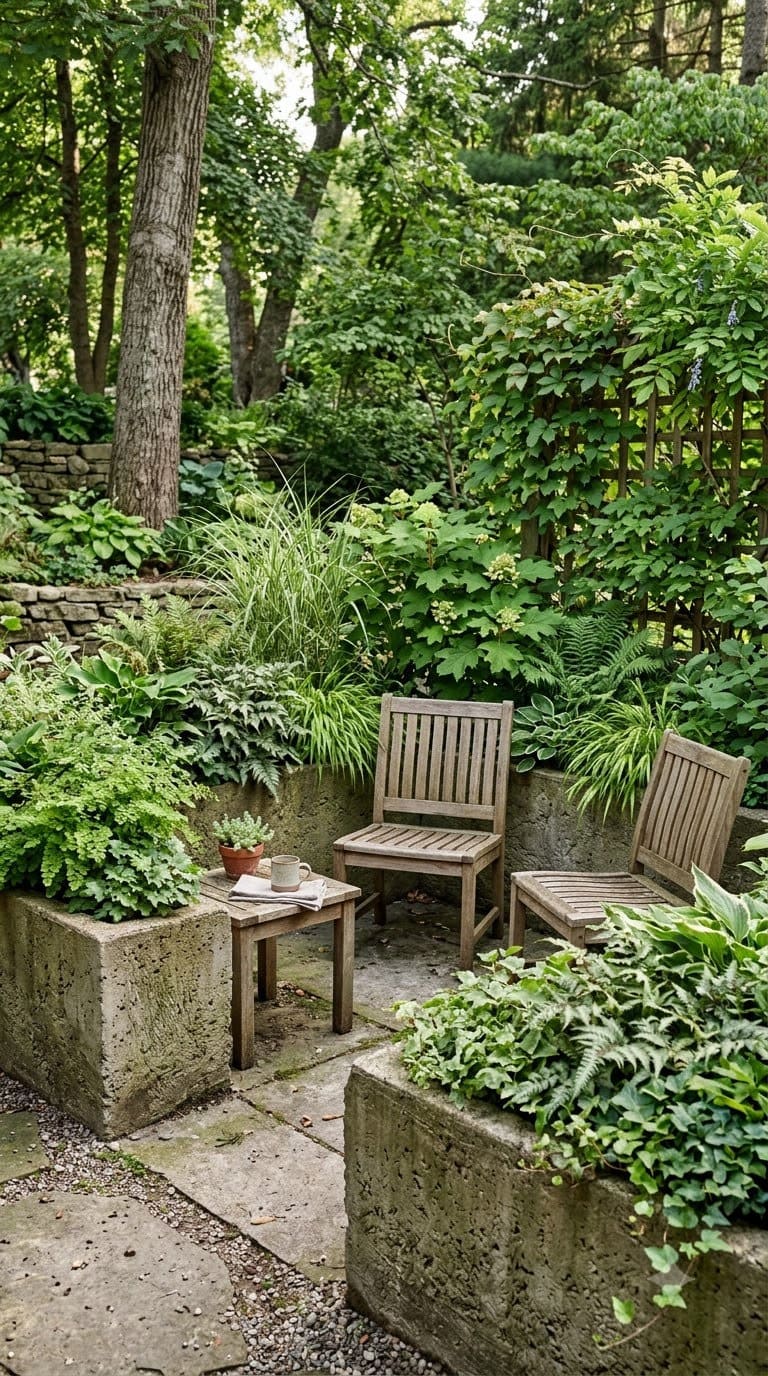
Grass-textured concrete planter boxes paired with simple wood chairs make a strong, low-maintenance patio look built almost entirely around plant texture rather than color.
This is a genuinely budget-friendly idea, most of the cost is the planter construction, with plant material being the cheapest part.
47. Edged Patio Dining Space
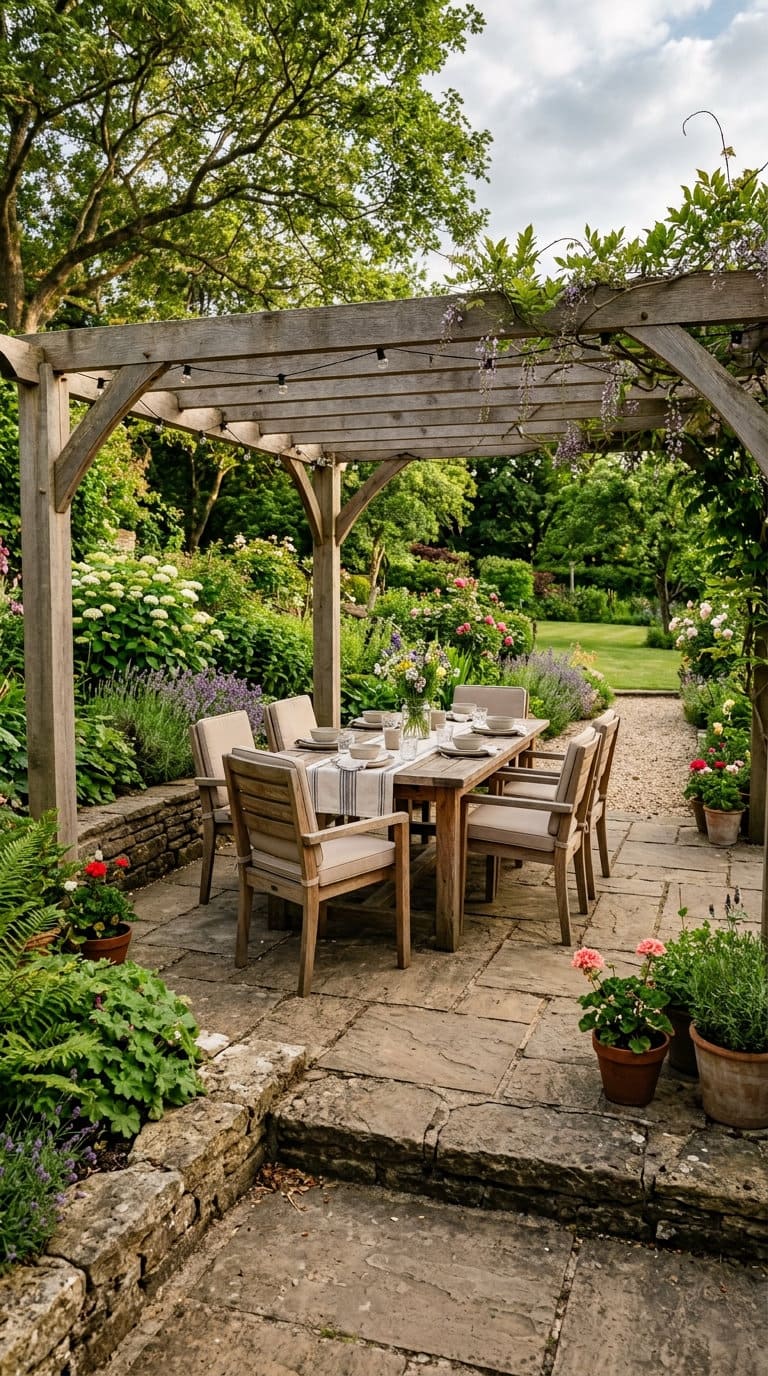
A patio with a defined dining area, an outdoor table set under a simple wood pergola or stand, works well for everything from client meetings to movie nights outdoors.
Edging the patio clearly (a stone or brick border) is what separates this from a plain slab, it reads as an intentional “room” rather than an afterthought.
48. Two-Level Yard with Brick Walls
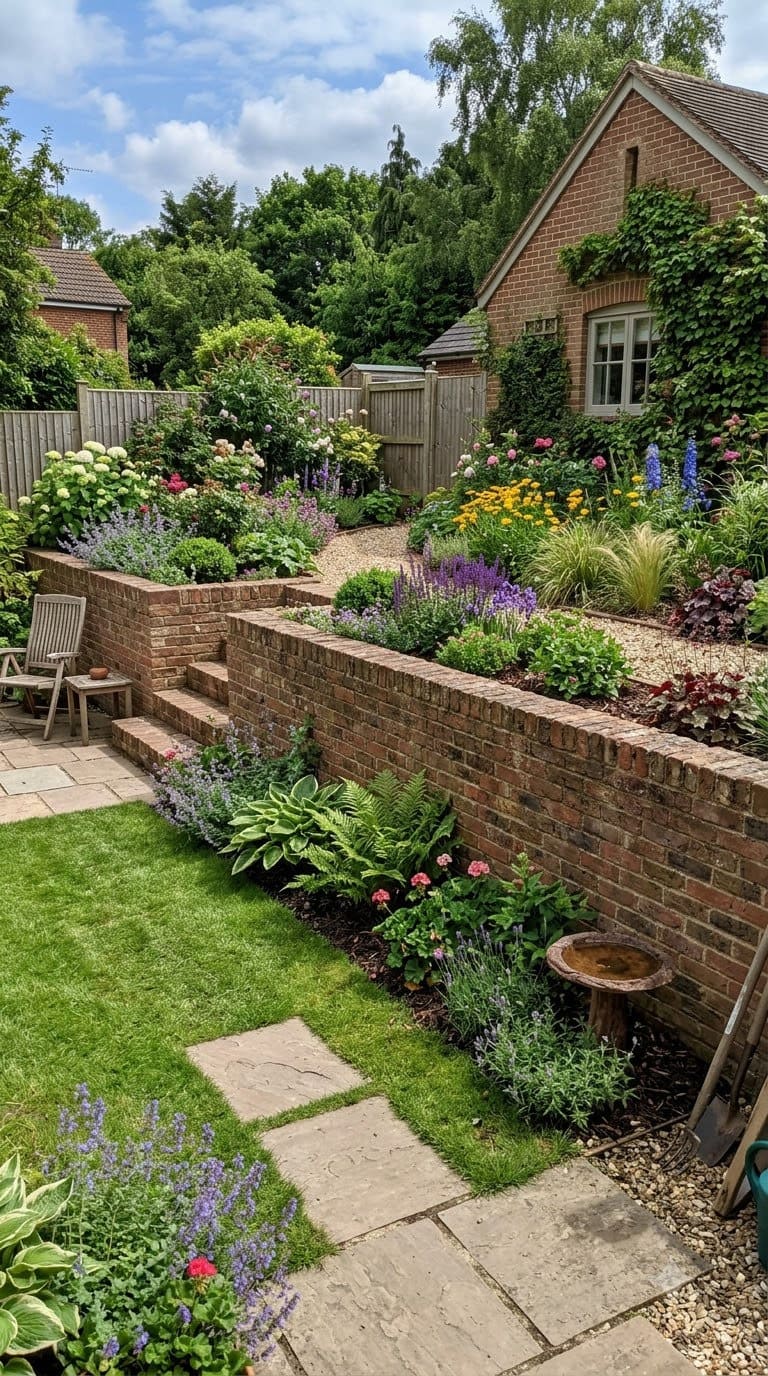
Brick retaining walls used to separate a yard into two levels double as both structure and a strong visual anchor.
If your grade change requires a wall taller than the roughly 4-foot common permit threshold covered in the safety section above, budget for engineer-stamped plans, this isn’t a project to eyeball without checking your local code first.
49. Scenic Hillside Yard
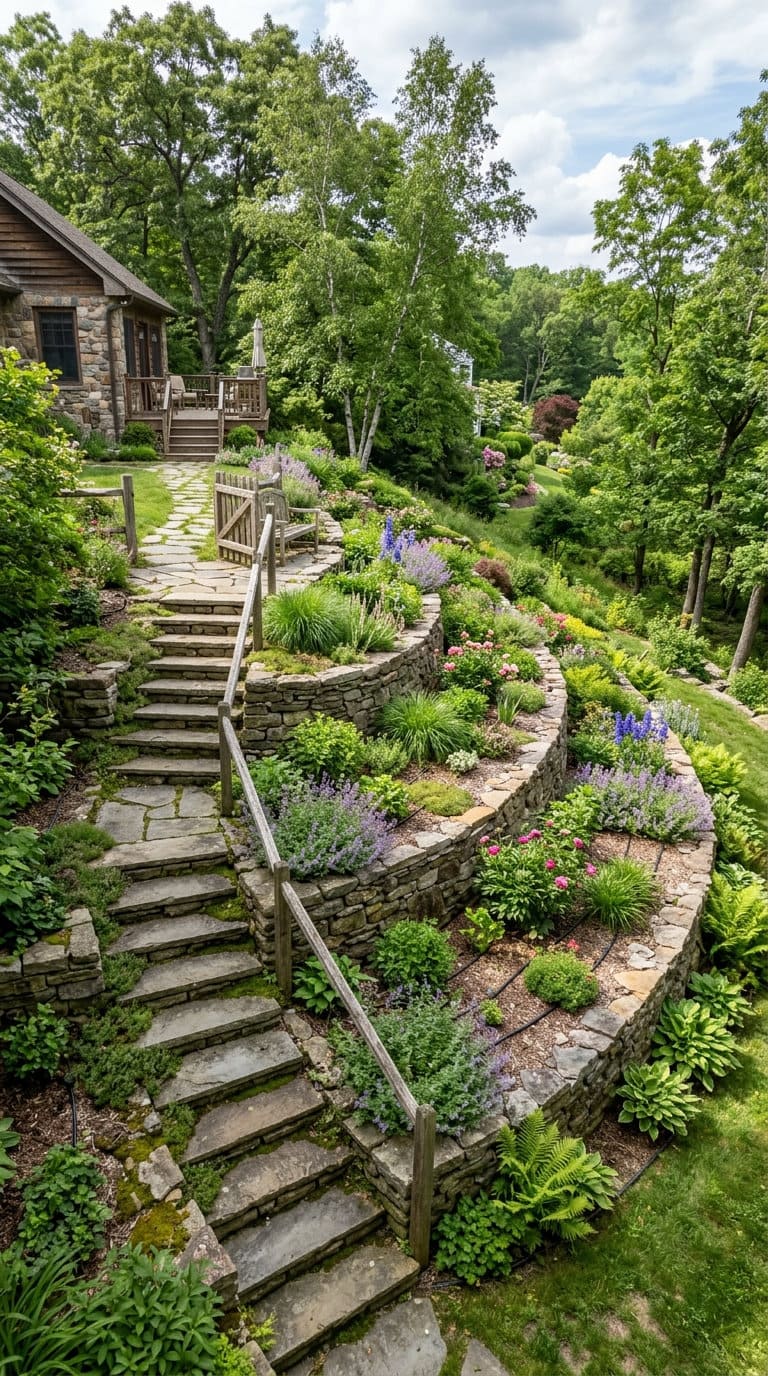
A sloped or hillside yard works with the grade rather than fighting it, terracing planting beds and adding stairs or a path that follows the natural contour.
These sloped backyard ideas go deeper on layout and drainage if your yard has real grade change to work with, and any retaining structure involved should follow the same permit-threshold guidance as idea #48.
50. Short Garden Walks
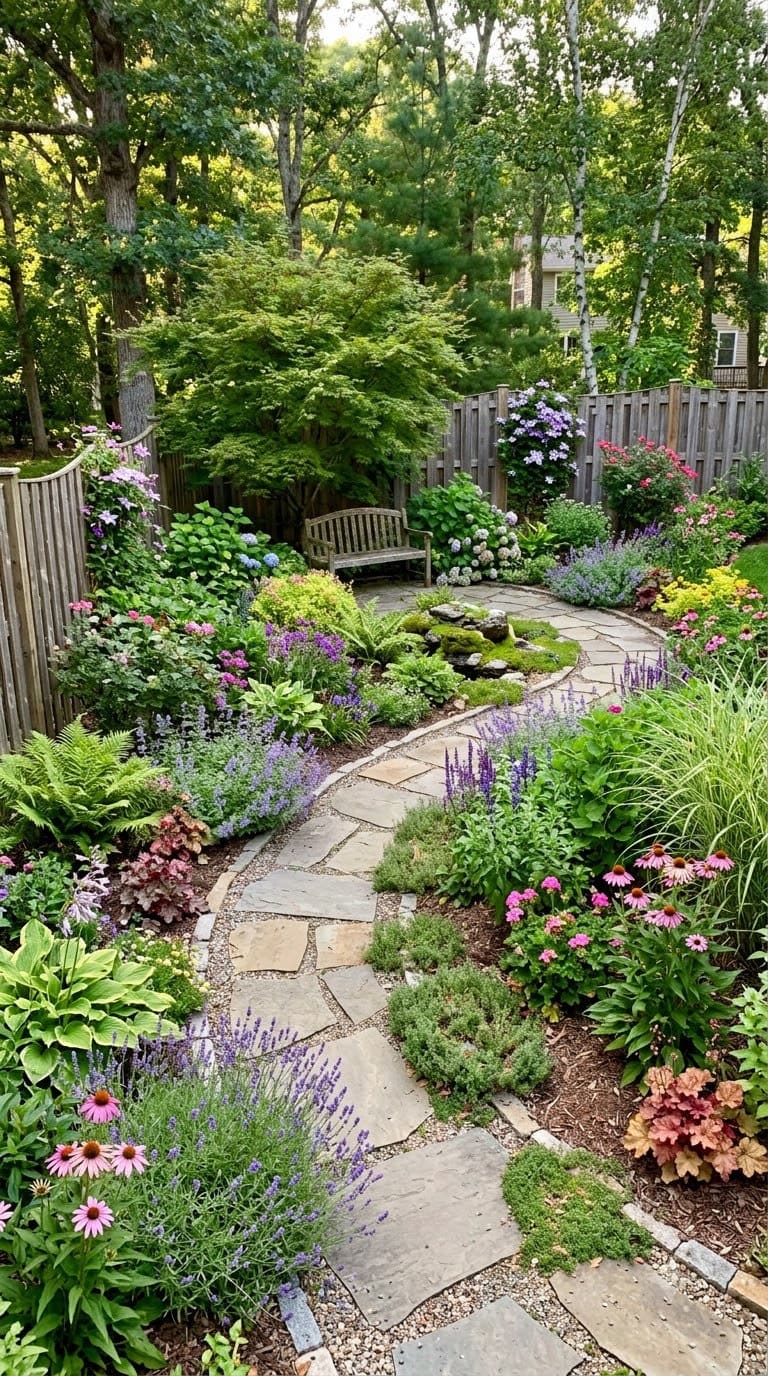
A yard designed around a short, meandering walking loop, rather than a single destination like a patio or fire pit, gives you a reason to actually move through the space daily rather than just view it from the porch.
This pairs well with a mixed planting palette along the route, since a walking loop gives you far more edge space to plant than a single bed does.
51. Pergola for Privacy
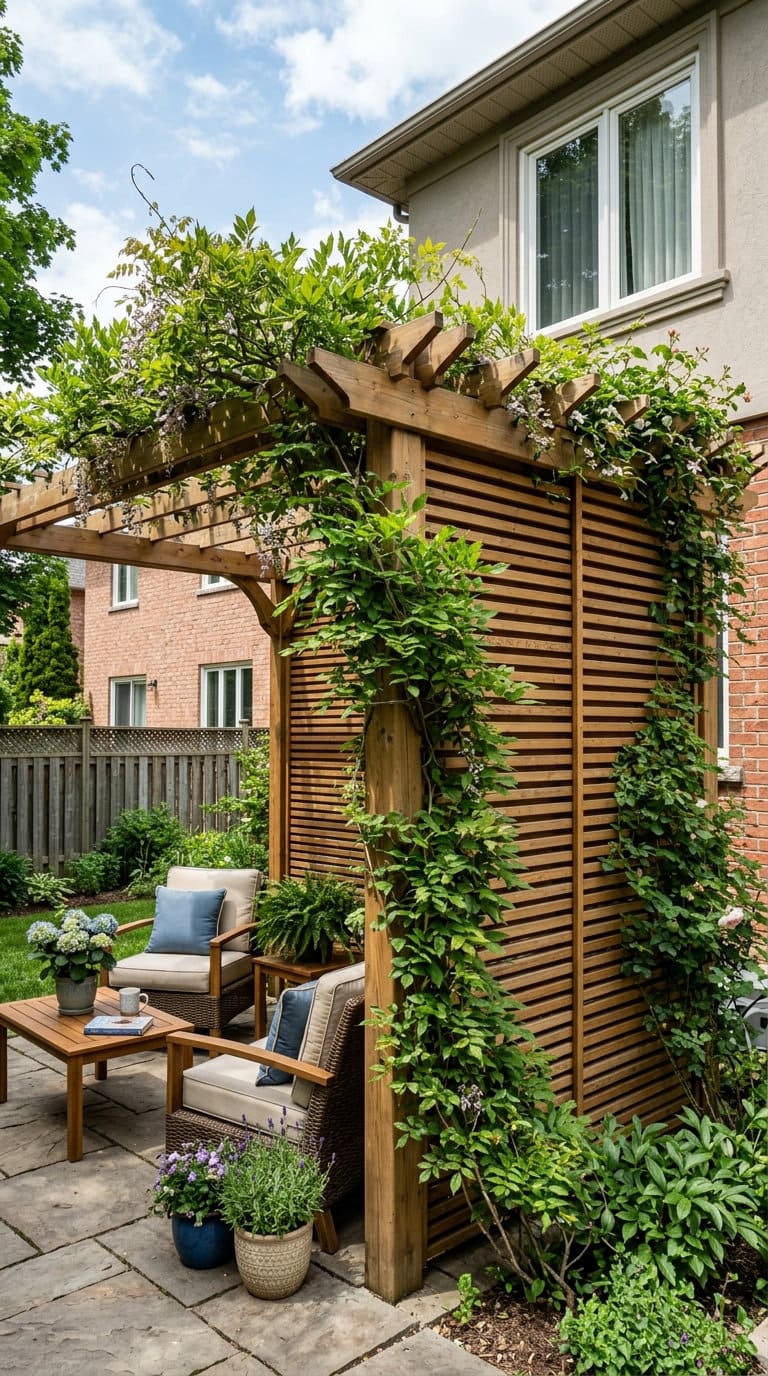
Beyond shade, a pergola with climbing vines or slatted panels genuinely blocks sightlines from neighboring windows or decks, a real privacy function most people only think of as decorative.
Budget the same way as idea #32, footing and structural sizing depend on what you’re eventually hanging or mounting on it.
52. Hardscaping with bluestone
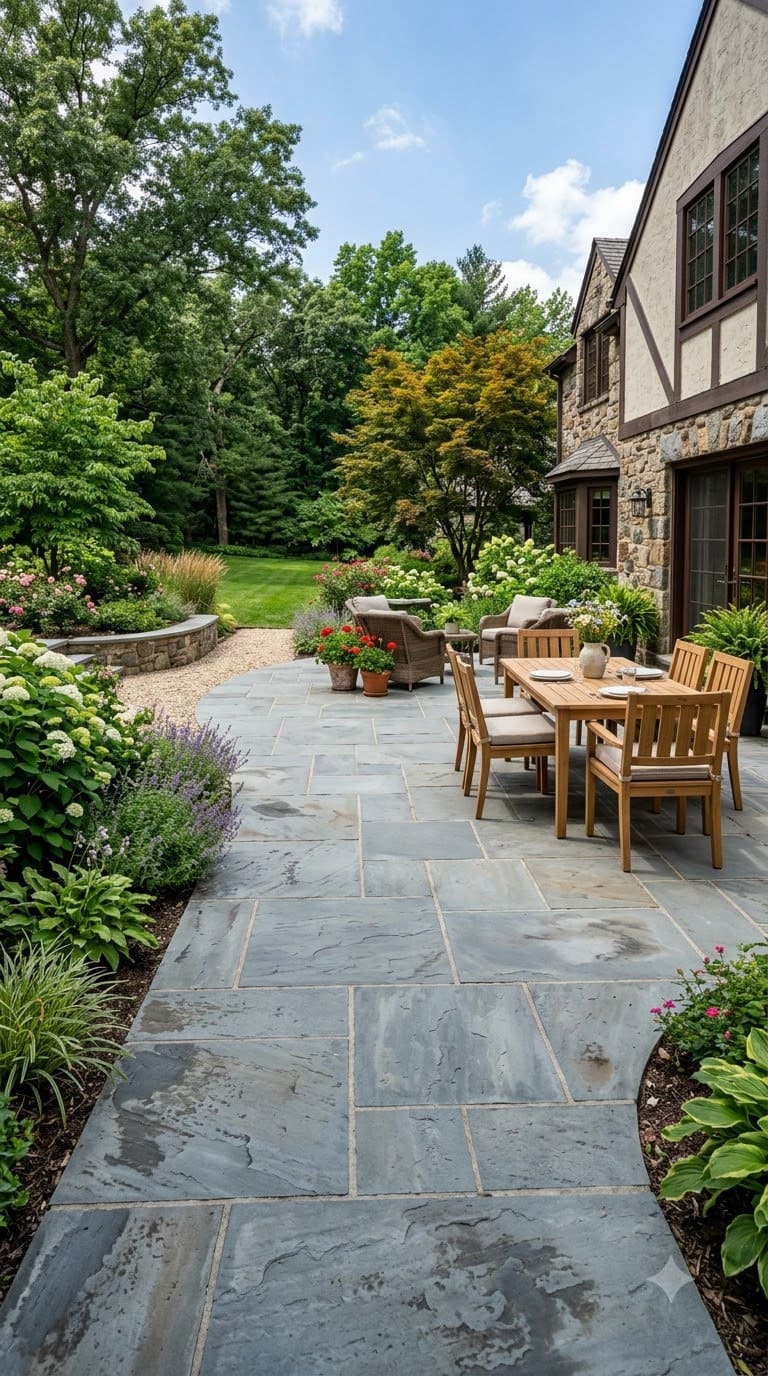
Bluestone is a genuinely premium natural paving material, more expensive than standard concrete pavers, but with a distinctive blue-gray tone and durability that holds up well over decades. Because of the cost, this is often a “do it once, do it right” material choice best paired with professional installation rather than a DIY attempt.
53. Desert-Style Yard
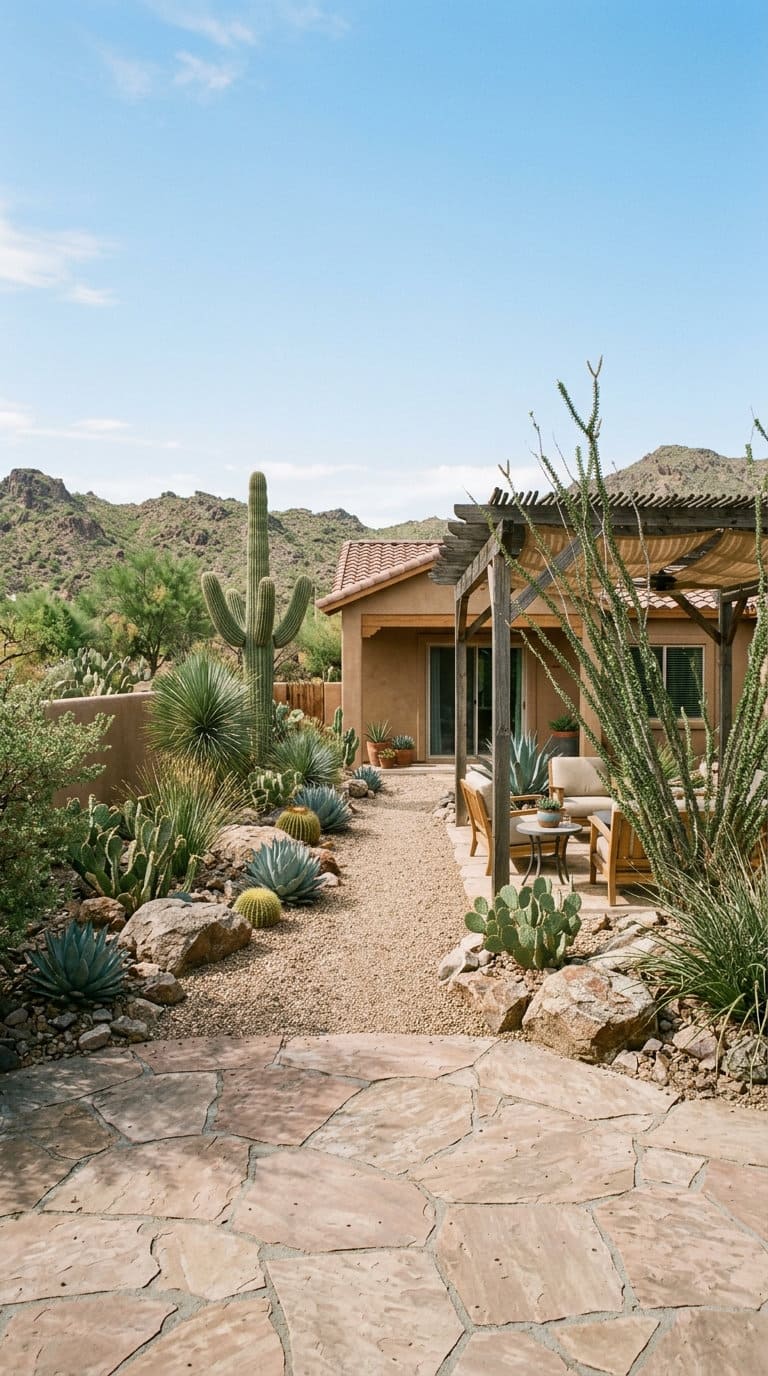
A yard built around real drought-tolerant, desert-adapted planting (think cactus, succulents, and gravel groundcover in place of turf) genuinely cuts water use and maintenance in hot, dry climates.
This only works well if you match plant choices to your actual USDA hardiness zone, a desert palette transplanted into a humid climate will struggle regardless of how good it looks in photos.
54. Long Backyard Arrangement
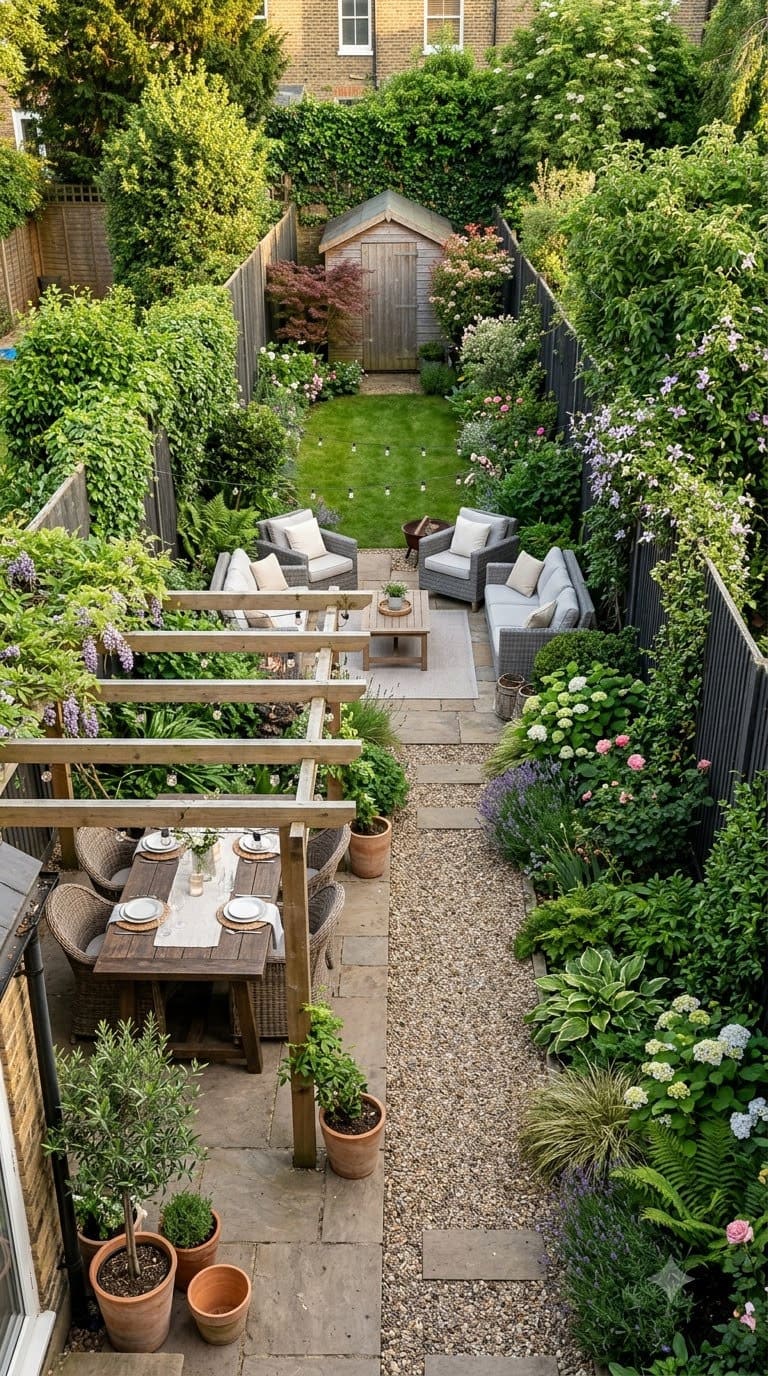
A long, narrow backyard benefits from breaking the space into distinct zones along its length (a dining area, a lounge area, a planting buffer) rather than treating it as one continuous stretch.
This zoning approach is low-cost to plan, mostly a matter of layout, though each zone’s furnishing adds up.
55. Modern Dining Terrace
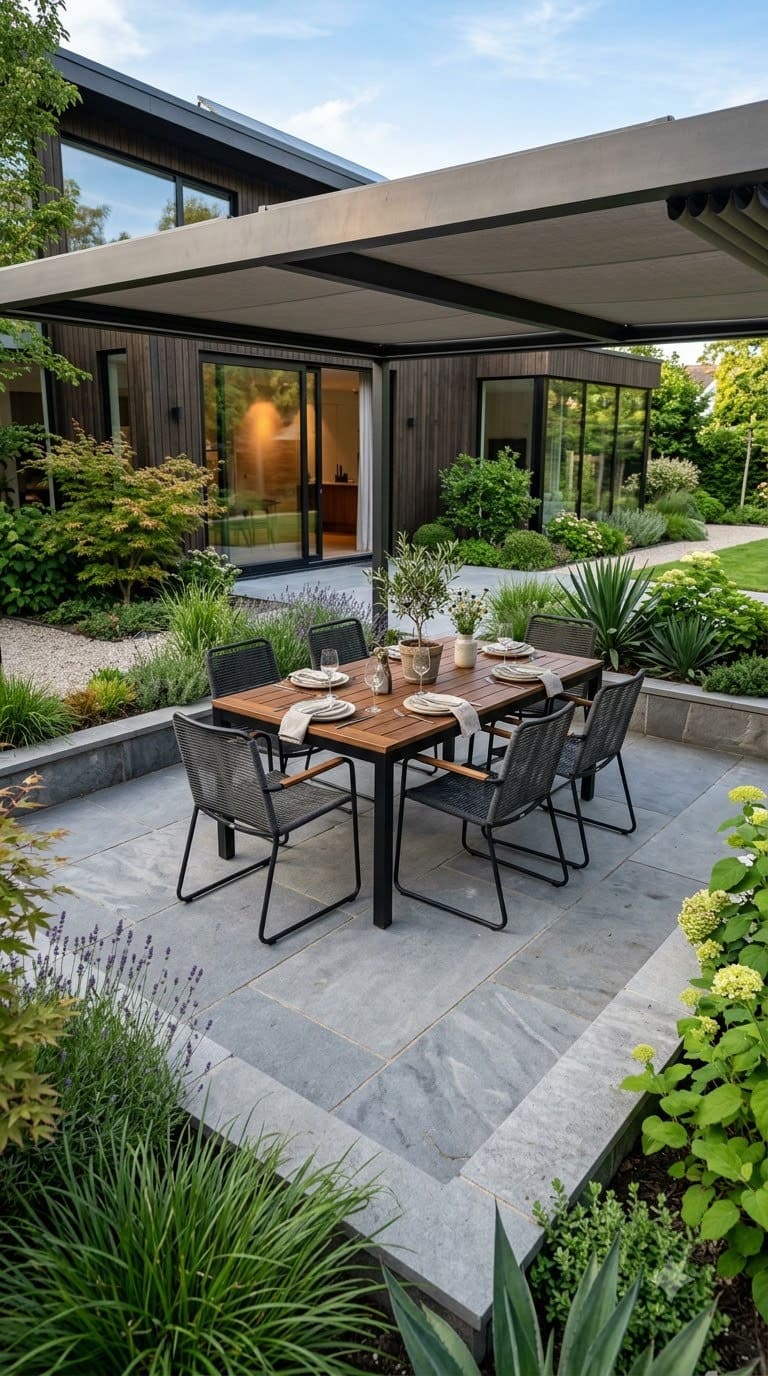
A dedicated outdoor dining terrace, a defined hardscaped area sized specifically for a table and chairs, works best when it’s proportioned to the furniture rather than oversized.
This is a moderate investment focused on hardscaping (pavers or a poured pad) plus furniture, and it’s one of the more universally useful additions on this list since almost every household eats outdoors when the option exists.
Frequently Asked Questions
Aside from what we have covered here, it is also very essential that you get acquainted with various backyard landscaping FAQs. In this section, we shall give a rundown of some of the backyard landscaping essentials and other useful information that would help you in your backyard landscaping projects.
When is the best time to do backyard landscaping? Early spring or fall generally give plants the best establishment conditions (mild temperatures, more consistent rain) before summer heat or winter cold stresses new roots. Hardscaping projects (patios, walls, fences) can happen almost any time of year in most climates, though frozen ground makes digging and footings difficult in winter.
What are the best plants to grow in a private backyard? This depends heavily on your USDA hardiness zone, sun exposure, and soil type, there’s no single universal answer. As a starting approach: choose 2-3 “anchor” plants suited to your actual conditions first (not what looked good at another climate’s photo), then fill in around them with seasonal color.
How do I choose the right backyard landscape plants? Match plant choice to your real site conditions first (sun/shade, soil drainage, hardiness zone), then to your maintenance appetite, some plants genuinely need far more pruning, watering, or pest management than others. A local extension office or independent nursery can usually tell you what actually thrives in your specific area faster than a general online list.
What plants should not be planted in backyard landscapes? Avoid known invasive species for your region (check your state’s invasive plant list, since what’s invasive varies by state), and be cautious with fast-spreading root systems (like bamboo or certain willows) near foundations, septic systems, or shared property lines, they can cause real, expensive damage over years.
What is the average backyard landscaping cost? It varies enormously by project scope, from a few hundred dollars for a planting refresh to tens of thousands for a full hardscape-and-pool build. The ASLA’s rough guidance of budgeting 10-20% of home value for outdoor living space over time (see the safety and budget section above) is a more useful planning anchor than any single flat number.
What is the cheapest type of landscaping? Planting-focused projects (adding flowering perennials, a mulched bed, a simple lawn refresh) are almost always cheaper than hardscaping (pavers, walls, water features, pools), since materials and labor for construction cost far more than plants and soil amendment.
What budget tips should be considered in backyard landscaping? Phase big projects across multiple seasons rather than trying to do everything in one summer, repurpose existing materials or plants where you can rather than starting from a completely blank slate, and get the underground work (drainage, irrigation, utility locating via 811) right before any hardscaping goes down, redoing hardscaping to fix a drainage problem underneath it costs far more than getting it right the first time.

Conclusion
The strongest backyards in this list aren’t the most expensive ones, they’re the ones where the scope actually matched the budget and the site conditions.
Start with the planning basics (utilities, drainage, slope), be honest about what’s a weekend DIY project versus what needs a permit and a professional, and phase the bigger investments over seasons rather than trying to build all 55 of these at once.

Products We Recommend
This post contains affiliate links. We may earn a commission on qualifying purchases at no extra cost to you.
VEVOR Plate Compactor, 2.8 HP, 1,920 lbs Force
A rentable-alternative plate compactor for a genuine DIY paver patio or walkway base, covered in ideas #1 and #11
Shop Now
Leviton GFWT1-W Weather-Resistant GFCI Outlet, 15-Amp
The exact outlet type needed for any plug-in water feature or pump near water, covered in ideas #2, #7, and #9
Shop Now
ECO-WORTHY Solar Fountain Water Pump Kit, 12W
A real solar fountain pump kit matching the no-wiring option covered in idea #7
Shop NowNever miss an update — choose FarmFoodFamily as your preferred source on Google.
How it works: Tap the button below to open Google's settings page, then check the box next to FarmFoodFamily.
Tap the checkbox to turn it blue — that's how you know it's set.