5 Brilliant Designer Fixes for a Damp, Gloomy Small Garden
A shady, narrow garden feels damp and dark because walls block both light and air, and five cheap designer fixes tackle both, as long as you start with the surfaces and not the plants.

Never miss an update — choose FarmFoodFamily as your preferred source on Google.
How it works: Tap the button below to open Google’s settings page, then check the box next to FarmFoodFamily.
Tap the checkbox to turn it blue — that’s how you know it’s set.
You step outside and the garden feels like a cellar with no roof. The walls are close, the paving is dark, and nothing ever quite dries out. It’s easy to blame the lack of sun and give up.
But sun isn’t the only problem. In a small shady space, light and air both get stuck behind the same walls and fences. Once you fix both, the same garden can feel bigger, drier and a lot friendlier.
We pulled advice from university extension guides, the Royal Horticultural Society and working designers. Below you’ll find a quick diagnosis, then five fixes in the order we’d do them.
Quick Answer
A small shady garden feels damp and gloomy because walls and fences block light and also block airflow. Leaves stay wet longer, dark surfaces soak up what little light arrives, and the whole space reads heavy.
The fix is five moves. Paint boundaries a pale color, lay pale paving or gravel, add mirrors and lights, thin plants so air can move, and plant in light, glossy layers.

Colorado State University Extension says dense leaf canopies hold moisture and favor disease, so thinning helps. Designers such as Tony Woods also suggest soft, light neutrals on boundaries to bounce light back.
Answer 4 quick questions and get matched to the exact fix for your yard — drainage, budget, layout, or something else entirely.
Take the Free QuizStart with the cheapest change first, which is paint. It shows results in a weekend and tells you whether you need the rest.
Then work down the list. Each fix adds a little light or a little airflow, and together they change the whole feel.
Why Does a Small Shady Garden Feel Damp and Gloomy?
Three things stack up. Light is low, air is still, and dark surfaces swallow the light that does get in. Each one makes the others worse.
Colorado State University Extension explains the damp side well. Water or high humidity activates fungal and bacterial problems, and dense leaf canopies hold moisture because air barely moves through them. That’s why a crowded border in a walled garden can stay clammy for days.
Here’s a twist that surprises people. A wall or fence base isn’t always wet. The Royal Horticultural Society notes that wall-side borders can be drier than open beds because the wall casts a rain shadow.
So “damp” in your garden might come from trapped humidity, poor drainage, or both. Use this table to match what you see to the fix that helps most.
| What you see | Likely cause | Start with fix |
|---|---|---|
| Dark, heavy look even on bright days | Dark walls, dark paving | 1 and 2 |
| Green slime or moss on paving | Constant moisture, little light | 2 and 4 |
| Leaf spots, mildew on plants | Crowded plants, wet foliage | 4 |
| Bare, tired corners | Low light, wrong plants | 3 and 5 |
| Narrow space feels like a corridor | Long straight lines, no focal point | 2 and 3 |
If you’re also fighting a long thin plot, our guide to making a long, narrow backyard feel wider pairs well with everything below.
Most yard problems trace back to one specific, fixable cause. Find yours in 4 quick questions.
Take the Free Quiz
Lightweight self-adhesive acrylic mirror that won't shatter. A low-cost way to test a mirror spot on a fence or wall in shade.
Shop NowThis post contains affiliate links. We may earn a commission on qualifying purchases at no extra cost to you.
1. Can Paint Really Brighten a Shady Garden?
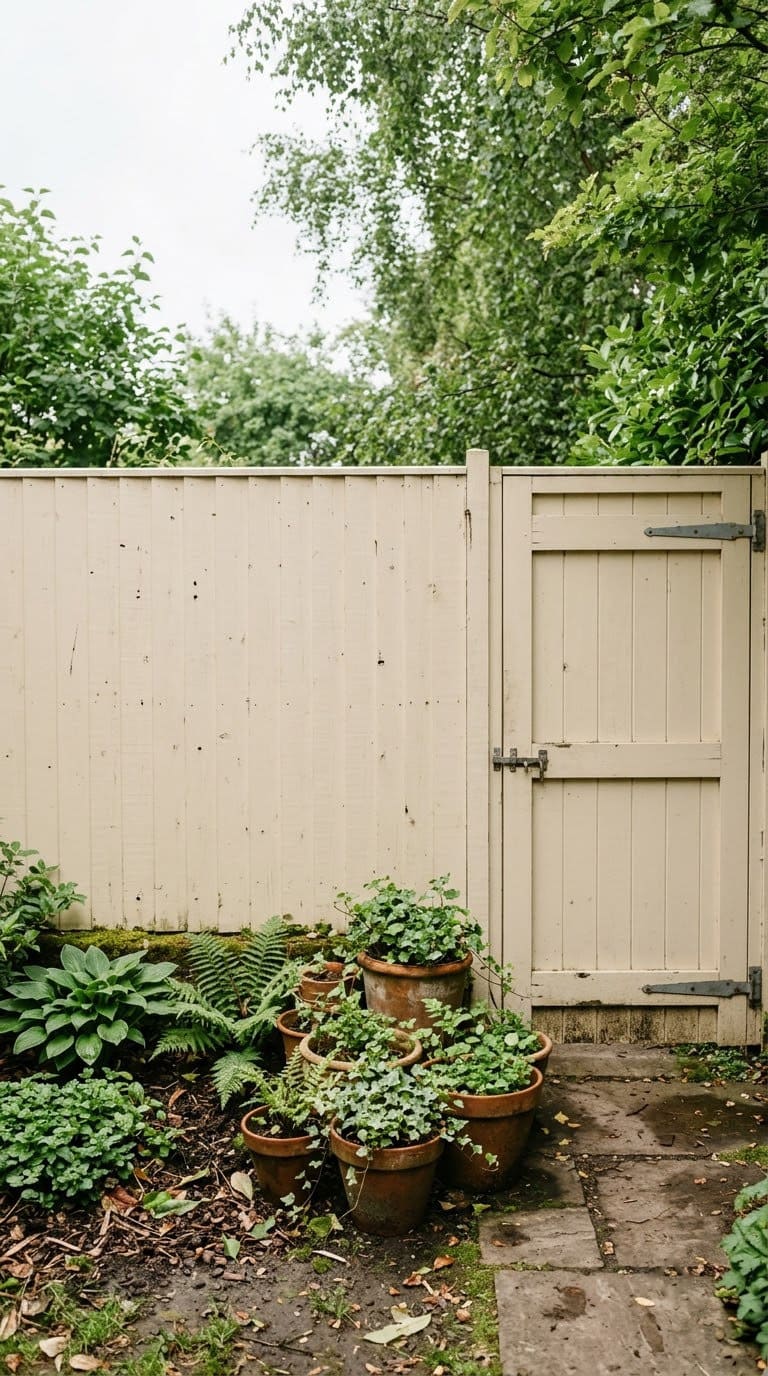
Yes, and it’s the fix with the best effort-to-impact ratio. In a small garden the walls are most of what you see, so their color sets the mood. Dark brick or weathered gray fence panels drink light.
Garden expert Tony Woods of Garden Club London recommends painting boundaries in soft, light neutral colors to reflect light. He’s talking about a fresh backdrop, not stark white. Warm creams and soft grays feel kinder in low light than a bright blue-white.
Don’t stop at the walls. Painted doors, window frames, pots and even pavers carry the effect to ground level.
Richard and Jacqui Drew did exactly that in their award-winning shaded garden. They painted doors, window frames, pots and pavers in a matching blue-grey, and the whole space looked lighter. When the pavers wore out, they mixed in gravel instead of replacing them.
Quick tip: Before you paint a wall or fence, check it’s dry and clean. Paint over damp or green surfaces tends to flake, so scrub off algae first and follow the can’s label for exterior masonry or timber. Pick one pale color and repeat it in two or three places, so the garden reads as one calm picture.
Test two shades on a small patch first, and look at them on a gray morning, not a sunny afternoon. Colors read cooler and darker in shade than they do on the shop card.
Budget: Cheap and DIY-friendly. A weekend and a few tins of exterior paint.
2. Should You Swap Dark Paving for Pale Paving or Gravel?
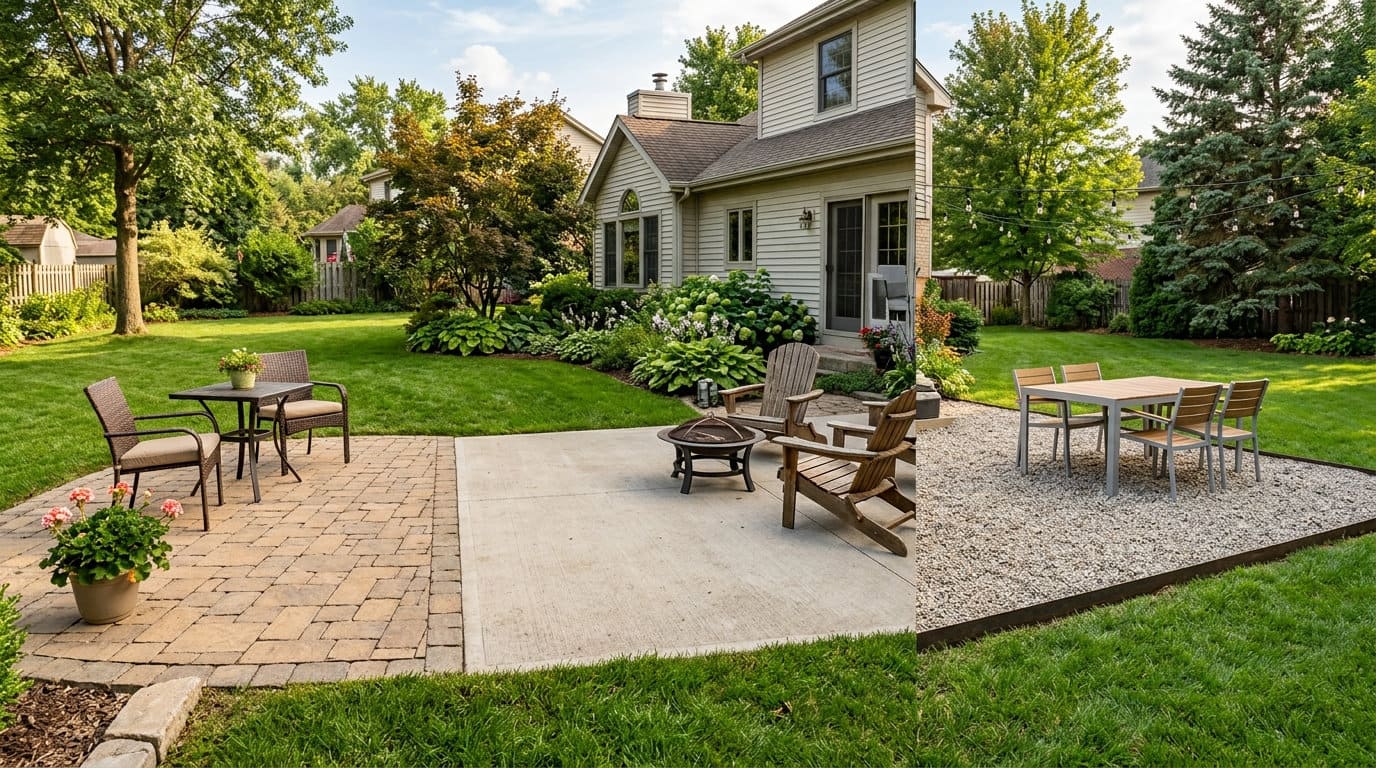
Dark, wet paving is the second big light thief. Slate-gray stone turns almost black when it rains, and in a shady garden it rarely dries out fully. A paler surface gives the whole space a lift from the ground up.

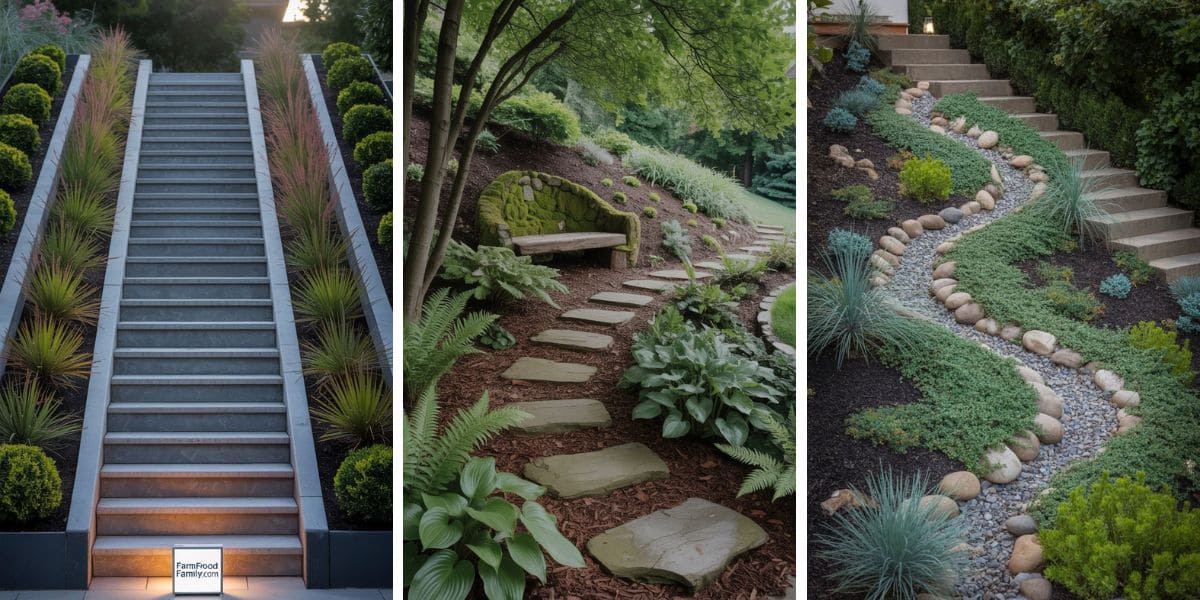
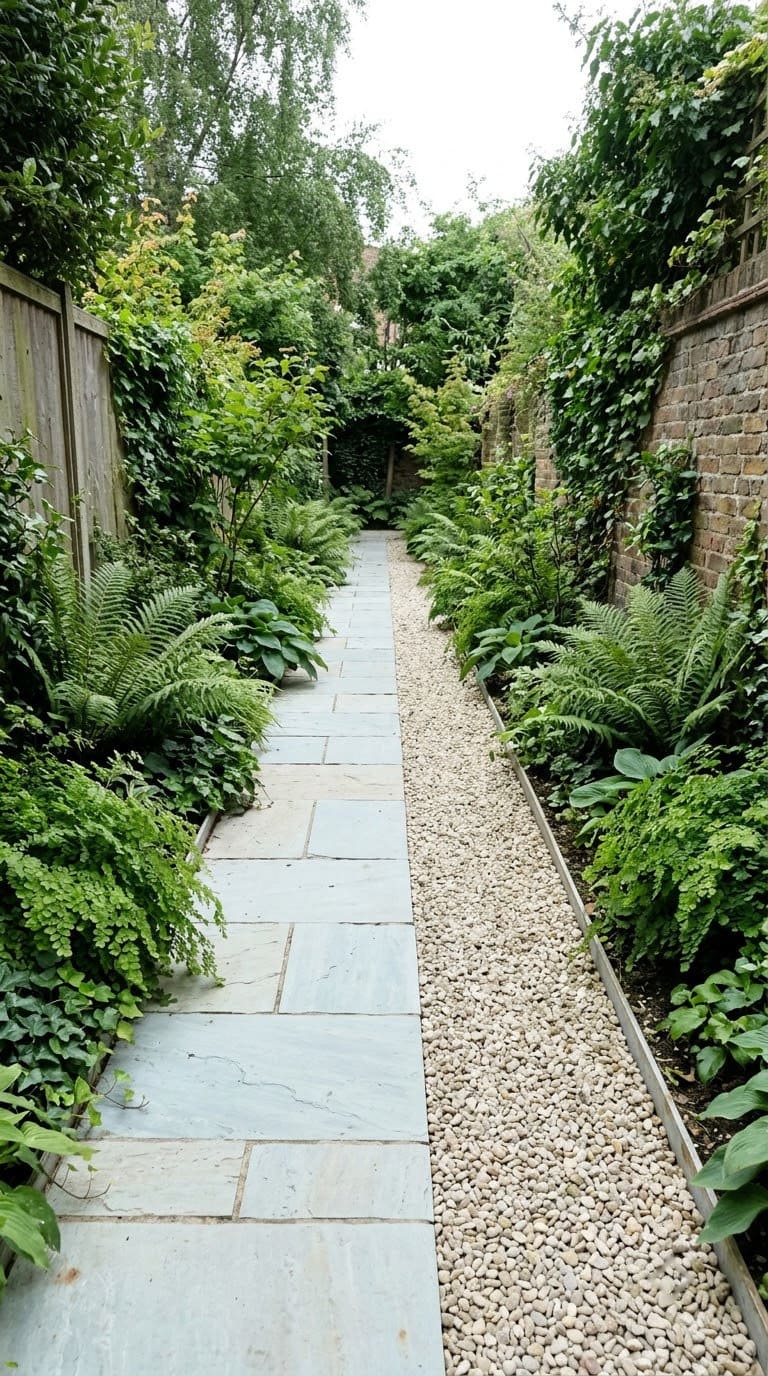
New York designer Kat Aul Cervoni of Staghorn used thermal bluestone pavers in a light blue-grey in a shaded garden shown by Livingetc. Light-toned stone is the point, because it reflects instead of absorbing. If a full repave is too much, try painted pavers or a gravel inlay like the Drews did.
The average homeowner spends $616/year on yard fixes that don't address the real problem. Find out what yours actually is — before you spend another dollar.
Take the Free QuizWhite or pale gravel adds a second benefit after dark. House Digest notes that light from inside your home or exterior fixtures bounces off white gravel and brightens the area. It also helps on overcast days and through long dreary winters.
Here’s a layout trick for narrow plots. Run paving or decking boards across the width of the garden, not along its length. Cross-lines make a corridor feel wider.
Quick tip: Gravel drains freely, which helps in a soggy spot. But it can drift onto lawn and into beds, so use a firm edging strip and a weed membrane underneath.
Budget: Gravel is DIY-cheap. A full repave is a pro job and a major investment.
If you’re short on border space, this is also a good moment to look at ideas for planting around a fence line.
3. Do Mirrors and Lighting Work in a Dark Garden?
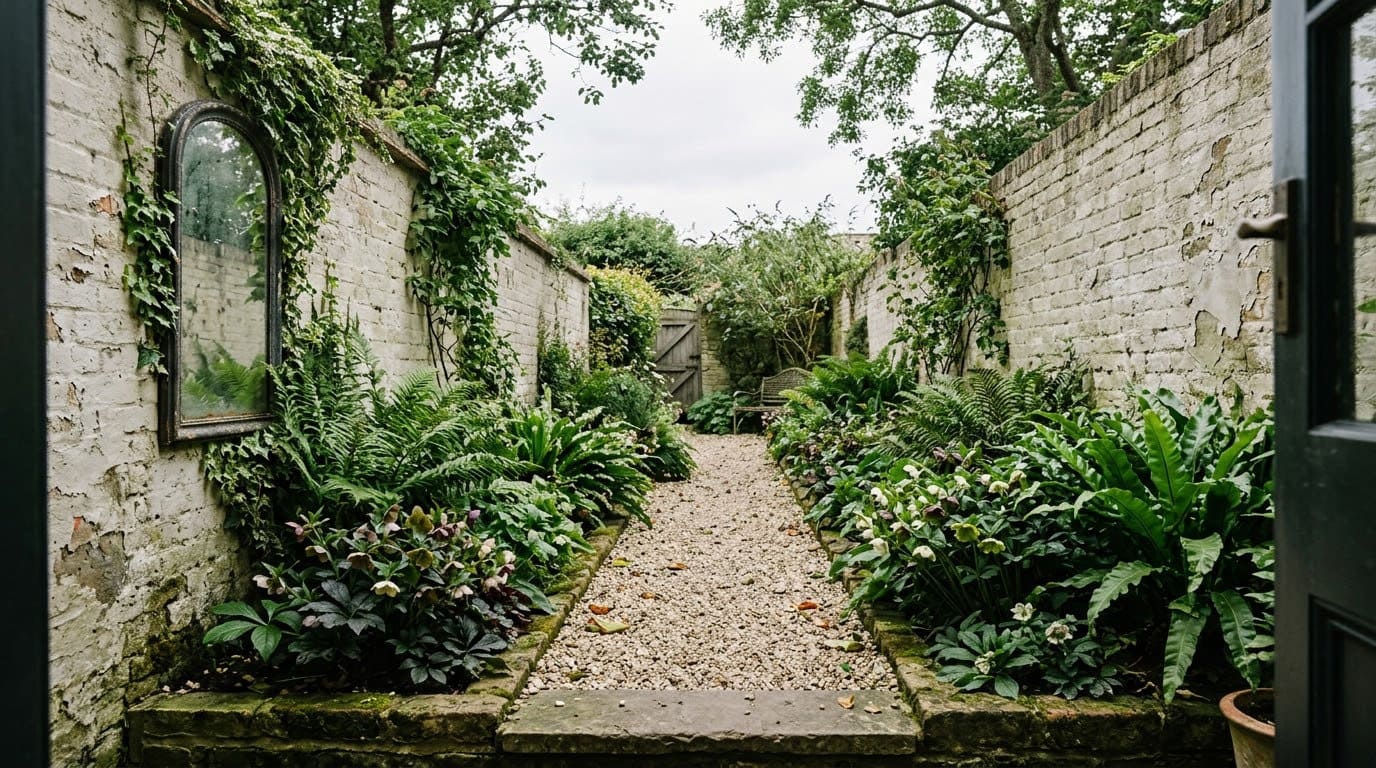
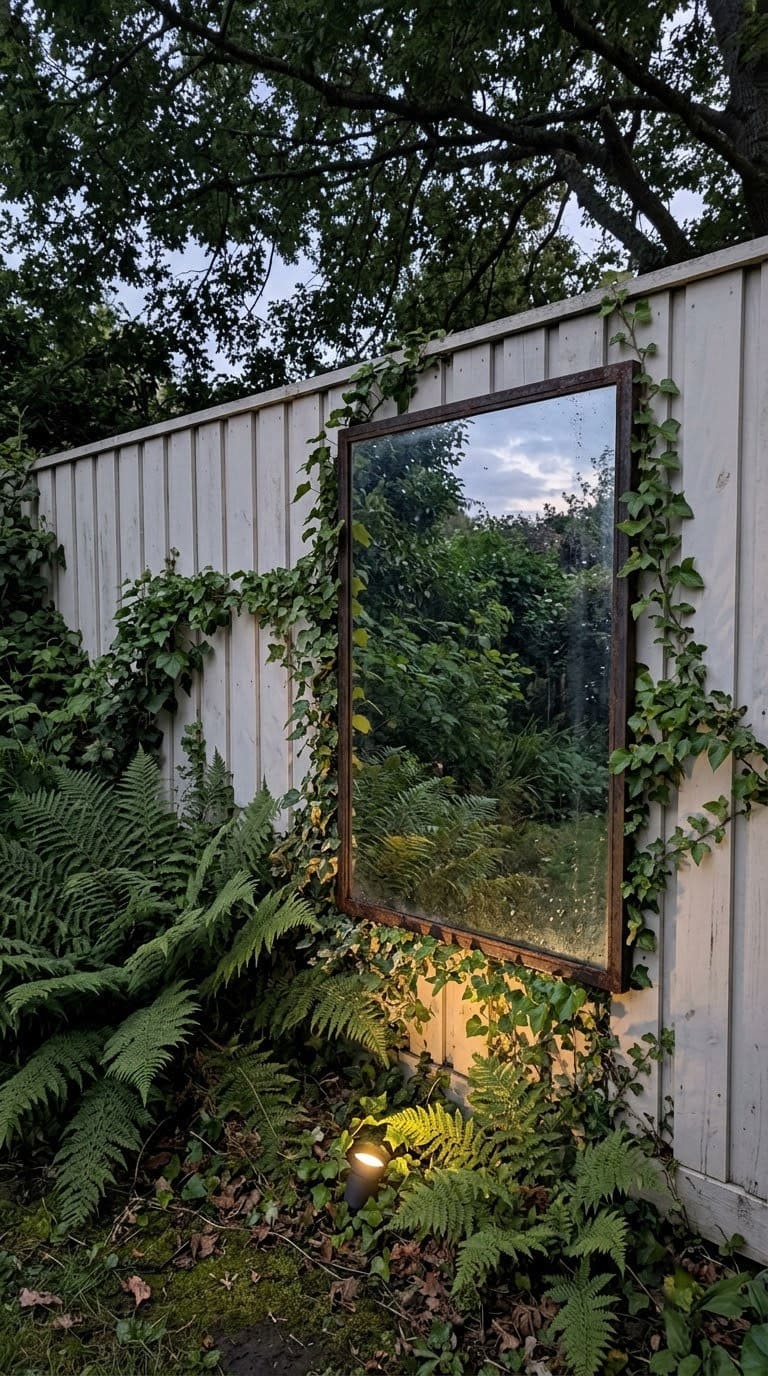
They do, if you place them well. A mirror doubles the view of whatever it faces. Face it toward your best plants and a little bit of sky, and the corner behind it feels like it has more depth.
Mount a large outdoor mirror on a side wall or fence, framed by foliage so it looks like a window onto more garden. Use a mirror made for outdoor use, since indoor glass and backing will fail in wet weather.
We found two safety points repeated across designer and gardening guides. Keep mirrors in shade, so they can’t focus sunlight and scorch plants or start a fire. And keep them low and visible so birds don’t fly into them.
Lighting finishes the job.
Small uplights at the base of a pale wall, or solar lights set into a gravel path, keep the garden from going black at 4 p.m. in winter. And white gravel from fix 2 doubles their effect.
Where should the mirror go? Stand at the back door and look down the garden. The best spot is the far end or a side wall you see first, because that’s where an extra “room” will feel most natural.
Tilt it very slightly so it reflects planting and sky, not your bins or the neighbor’s window. Check it from two or three spots before you drill.
Quick tip: Light the walls and foliage, not the floor. A glow on a pale wall makes the whole garden feel larger at night.
Budget: Mirrors and solar lights are DIY-cheap. Mains wiring should go to a licensed electrician.
4. How Do You Fix the Damp and Stale Air?
This is the fix that cures the “clammy” feeling. Light helps, but moisture sits in the air and on the leaves. You need to let it escape.
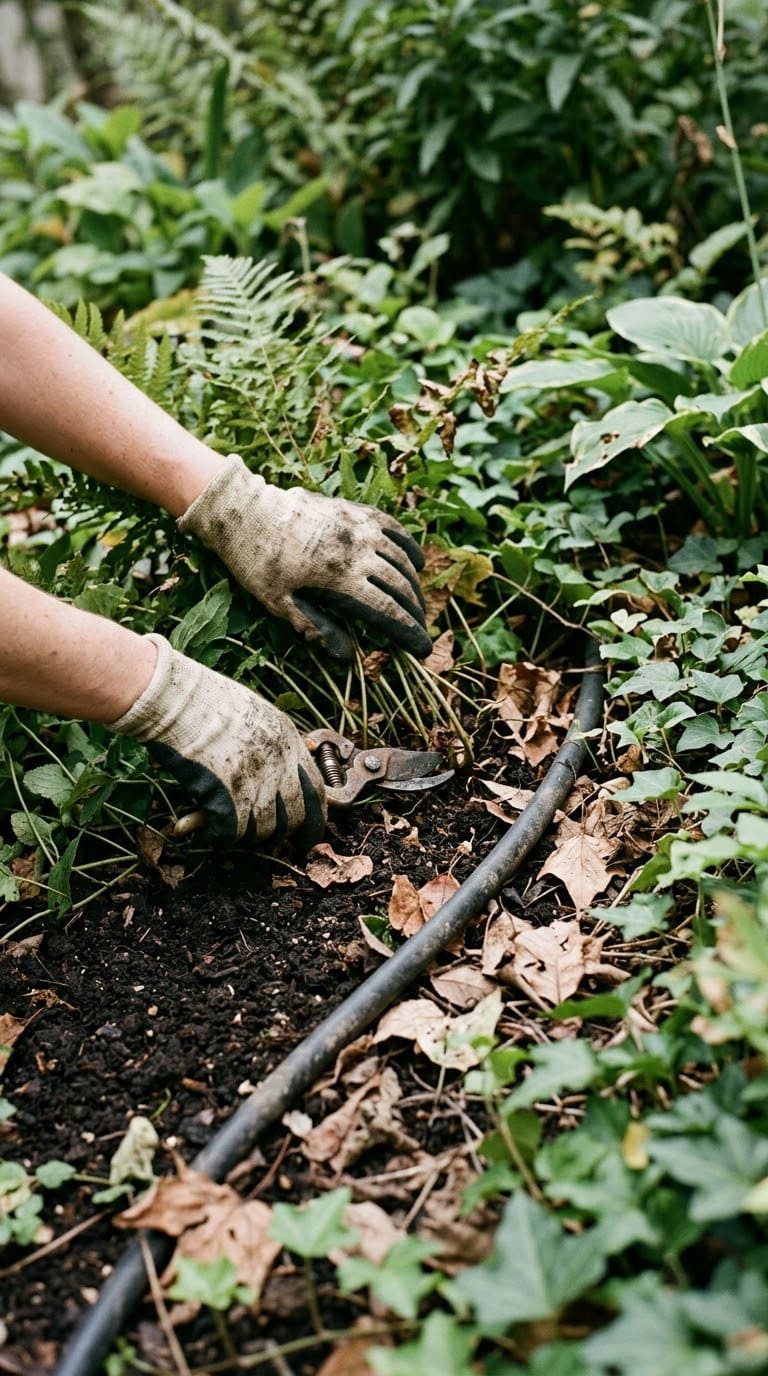
Colorado State University Extension says dense canopies keep humidity high, and that careful thinning and pruning lets drying air move through plants. It also recommends drip irrigation instead of sprinklers for sensitive plants. A drip line puts water on the soil, so leaves stay dry.
Space plants a little wider than the tag says. It feels wrong in a small garden, but crowded plants make a damp pocket. Cut back anything touching a wall or fence so air can pass behind it. If the real shade comes from a large overhanging tree, get a qualified arborist to crown-thin or lift the canopy rather than hacking at it yourself. An arborist in Melbourne, for example, can also tell you whether your council needs a permit first.
Now check the soil. If water pools after rain, loosen compacted soil and dig in compost, or raise the bed.
If the base of a house wall is the problem, the RHS advises keeping soil below the damp-proof course. It also recommends a mulch layer at least 5 cm (2 in) thick on wall-side borders.
Quick tip: Water in the morning, if you can. Leaves then have the day to dry instead of sitting wet overnight.
Budget: Pruning and spacing are free. A drip kit is DIY-cheap. Regrading or adding drains is a pro job.
5. Which Plants Brighten a Shady Garden?
Plants are the last fix because they do the least on their own. But the right ones finish the job. Think pale, glossy and layered.
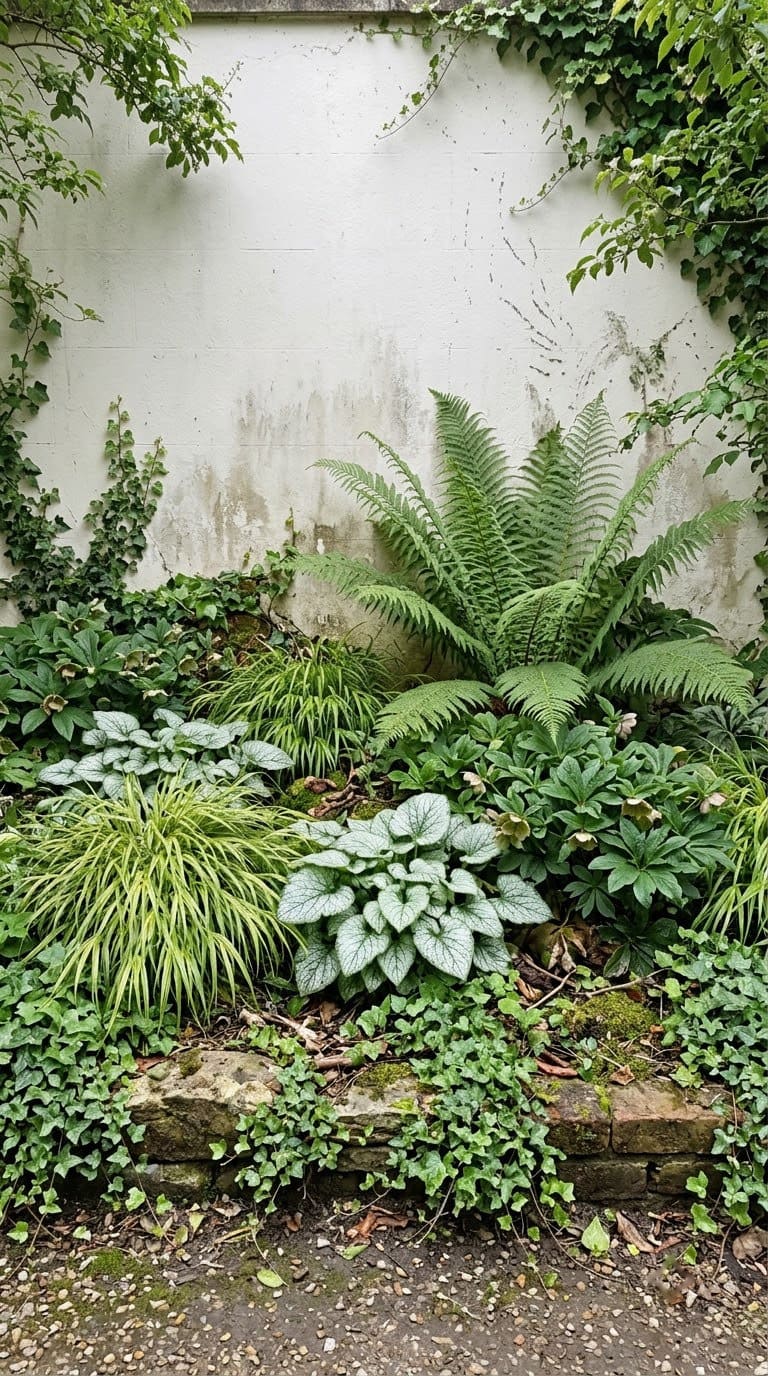
Woods suggests silver foliage such as Brunnera ‘Jack Frost’ and Lamium ‘White Nancy’ to lift a shady scheme. He also likes zesty green or variegated plants under trees. A little white variegation goes a long way, so use it as an accent.
Kat Aul Cervoni’s shaded gardens use evergreen shrubs for year-round shape, plus ostrich ferns, hellebores and hakonechloa grass. English ivy softens a wall. And she says an all-green palette gives a clean, minimalist feel, which works well in a small space.
Layer the planting, with tall plants on the wall, mid-height plants in front, and low ground cover at the edge. Vertical interest draws the eye up and away from the boundary. For plant lists, our small north-facing patio shade plants and flowering plants for deep shade pages go deeper.
Mind the mix of leaf shapes too. Pair big, bold leaves like hostas or ferns with fine grass blades. The contrast keeps a shady border from looking like one flat green blanket.
Quick tip: Repeat three or four plants instead of buying one of everything. Repetition makes a small space look calm and bigger.
Budget: Plants are DIY-cheap to mid-range, depending on size.
What We Learned the Hard Way
Here’s what most guides skip. The first mistake is treating the whole problem as “not enough sun.” We did that, and it sent us shopping for the wrong things. The real culprits were dark surfaces and trapped, wet air.
The second mistake is painting over damp. If a wall is wet or green, wait, clean and dry it first. Paint over that surface tends to peel, and then you’re repainting in a year.
The third is skipping drainage and going straight to plants. If the soil stays soggy, even shade-lovers sulk. That’s why fix 4 matters as much as the pretty fixes.
And one more. A wall base isn’t always wet.
If one border stays bone dry under the wall, don’t assume damp is your problem there. The RHS rain-shadow point means you may need mulch and water in that spot, not drainage.
If you want a wider menu of planting and layout ideas to pick from, our shade garden ideas and narrow garden ideas guides cover plenty.
What Should You Fix First? A Simple Weekend Plan
Not sure where to begin? Work from cheapest and fastest to slowest and priciest. That way you see progress early and can stop when the garden feels right.
| Order | Fix | Time | Cost level |
|---|---|---|---|
| 1 | Clean and paint one wall or fence | One weekend | DIY-cheap |
| 2 | Thin and cut back crowded plants | One afternoon | Free |
| 3 | Add a mirror and solar uplights | One afternoon | DIY-cheap |
| 4 | Lay pale gravel or paint old pavers | A weekend | DIY-cheap to mid-range |
| 5 | Replant with pale, glossy layers | A season | Mid-range |
Why this order? Painting and pruning cost almost nothing and change the look right away. Paving and replanting cost more, so you want to know the garden’s new light before you spend.
Take a photo from the same spot before you start and after each step. It’s the easiest way to see what’s working. And if a fix doesn’t pay off, you’ve lost a weekend, not a season.
Frequently Asked Questions
Why is my small garden always damp?
Walls and fences block both sun and wind, so moisture lingers on leaves and soil. Dense planting makes it worse. Thin plants, use drip watering and check for pooling after rain.
What color should I paint a shady garden fence?
Soft, light neutrals such as warm cream or pale gray reflect light and feel gentle in low light. Avoid dark colors. Test a patch first and look at it on a gray day, because that’s when it matters most.
Do garden mirrors work in the shade?
Yes, they bounce light and add depth. Place them in shade, frame them with plants, and keep them visible to birds. Choose an outdoor-rated mirror.
Is white gravel a good idea in a shady garden?
It can be. White gravel reflects light from your home or fixtures and brightens the area, and it drains well. Use edging so it stays where you put it.
Can I grow flowers in a damp, shady garden?
Yes. Hellebores, ferns and hakonechloa suit shade, and silver-leaved plants like Brunnera add light. Match plants to how wet your soil really is.
Related Posts
Products We Recommend
This post contains affiliate links. We may earn a commission on qualifying purchases at no extra cost to you.
Marsui 12 x 24 Inch Acrylic Safety Mirror, Outdoor Shatterproof
Lightweight self-adhesive acrylic mirror that won't shatter. A low-cost way to test a mirror spot on a fence or wall in shade.
Shop Now
GKGG Solar Spot Lights Outdoor, Warm White, 4 Pack
Weatherproof solar spotlights for uplighting a pale wall, fence or plant bed without wiring.
Shop Now
Rain Bird GARDENKIT Drip Irrigation Kit
Starter drip kit that waters the soil, so leaves in a shady border stay dry.
Shop NowNever miss an update — choose FarmFoodFamily as your preferred source on Google.
How it works: Tap the button below to open Google's settings page, then check the box next to FarmFoodFamily.
Tap the checkbox to turn it blue — that's how you know it's set.