15 Risky Plants to Keep Away From Hydrangeas (and the Real Reason Why)
Most bad neighbors for hydrangeas fail on water, light, or roots, and only a few, like black walnut, carry a documented chemical risk.

Never miss an update — choose FarmFoodFamily as your preferred source on Google.
How it works: Tap the button below to open Google’s settings page, then check the box next to FarmFoodFamily.
Tap the checkbox to turn it blue — that’s how you know it’s set.
A gardener in Kent County, Michigan, planted hydrangeas 75 feet from a huge black walnut, maybe 200 years old. Year one looked great. By year three, several were dead.
The gardener wrote to Ask Extension, and the expert who answered was surprised too.
Honestly, that story bugs us. Everyone says “keep hydrangeas away from walnuts,” but nobody says how far. And walnut is only one name on a very long list of bad neighbors.
So we sorted 15 of them by how good the evidence is. A few carry real chemistry. Most just want dry soil while your hydrangea wants a drink.
Quick Answer
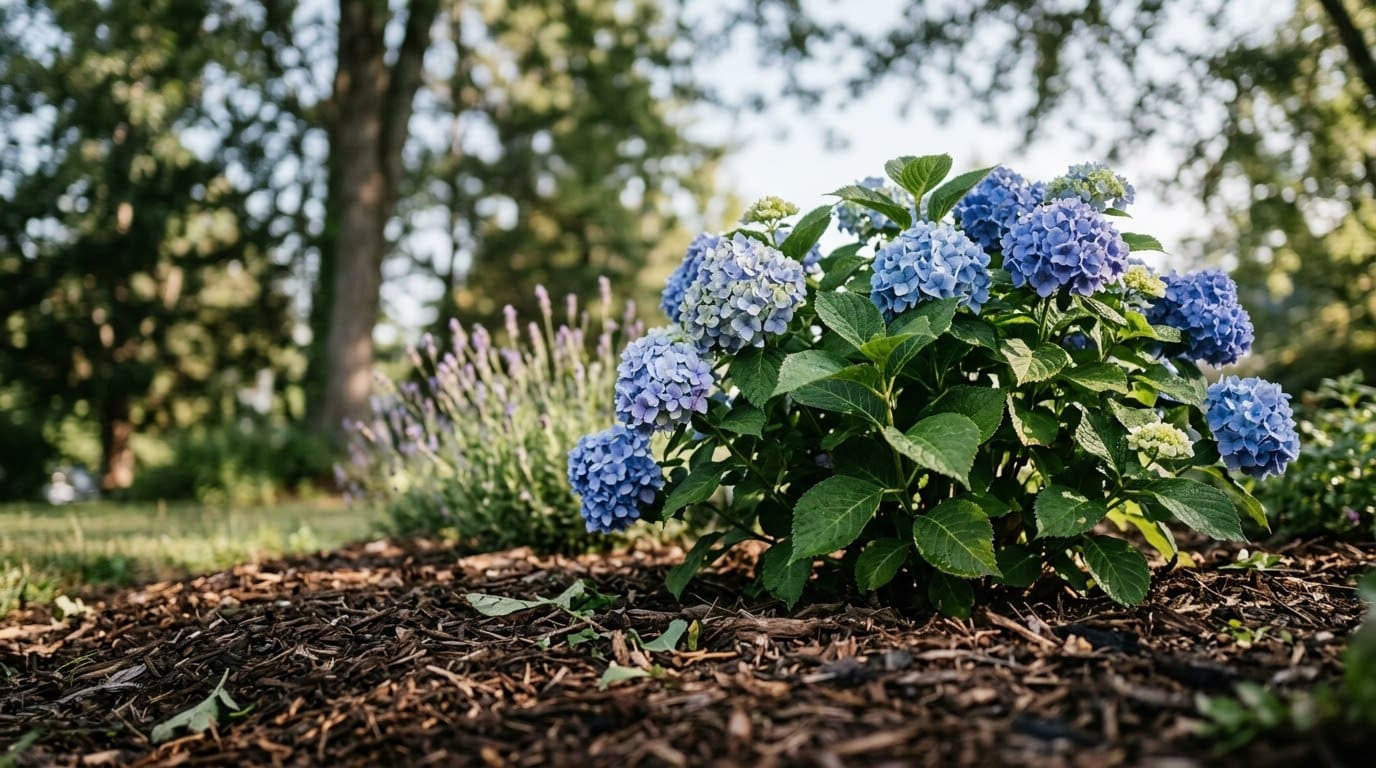
Hydrangeas want steady moisture and morning sun, and they want room for their roots. So the worst neighbors want the opposite, like lavender and thyme, or they steal water, like willows and silver maples. Give those their own bed or plenty of distance.
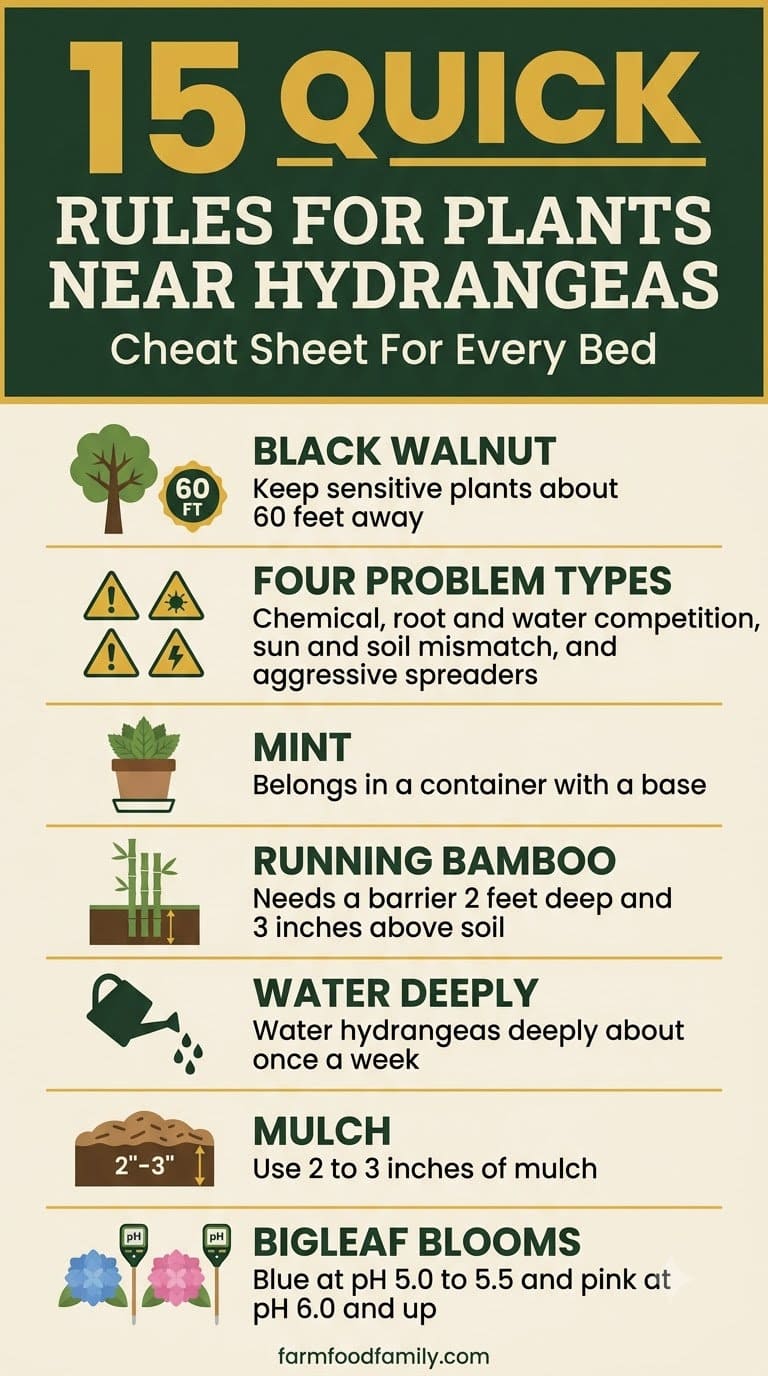
Black walnut is the one proven chemical enemy, and UW-Madison Extension lists hydrangeas as sensitive to its juglone. Keep sensitive plants about 60 feet from the trunk, and treat that as a minimum. Even 75 feet wasn’t safe in one Michigan case.
Answer 4 quick questions and get matched to the exact fix for your yard — drainage, budget, layout, or something else entirely.
Take the Free QuizSpreaders like mint, English ivy, and running bamboo slowly crowd hydrangeas out. Keep them in pots or behind a deep barrier, or skip them and save yourself the weeding.
Plenty of other “bad neighbors,” like garlic and marigolds, have little proof behind them. Match the growing conditions and most pairings work fine. Trust the conditions, not the label.
How do hydrangeas pick fights with their neighbors?
Hydrangeas are easy to please. Clemson’s Home and Garden Information Center says bigleaf types like morning sun with afternoon shade. They want deep watering at least once a week in summer heat.
Hot, dry, exposed spots are trouble. That last bit explains most of this article. A plant that loves hot, dry ground will clash with a plant that needs a weekly soak.
| Problem type | Examples | What happens | Usual fix |
|---|---|---|---|
| Chemical | Black walnut, tree of heaven | Stunting, yellow leaves, wilting, death | Distance, raised beds, pots |
| Root and water competition | Willow, silver maple, eucalyptus | Dry soil, weak growth, few blooms | Distance, deep watering, mulch |
| Sun and soil mismatch | Lavender, rosemary, thyme, sedum, yucca, lilac | One plant is always unhappy | Separate beds |
| Aggressive spreading | Mint, English ivy, running bamboo | Hydrangea gets crowded out | Pots or barriers |
Who’s this for? Bigleaf growers in hot climates feel the water and sun problems first. If you grow smooth hydrangeas or garden under tall trees, roots and chemistry matter more.
One caution. Most plant lists in this area come from observation, not lab testing. Treat every list, ours included, as a starting point.
If your hydrangea is already sulking, read why a hydrangea keeps wilting first. The cause might not be a neighbor at all.
Most yard problems trace back to one specific, fixable cause. Find yours in 4 quick questions.
Take the Free Quiz
A cheap way to check bed pH before you plant. Clemson says bigleaf hydrangeas bloom blue near pH 5.0 to 5.5 and pink at 6.0 and up.
Shop NowThis post contains affiliate links. We may earn a commission on qualifying purchases at no extra cost to you.
Which 15 plants should you keep away from hydrangeas?
The first three have a chemical angle. Only the first one is well proven.
1. Black walnut
Black walnut makes a chemical called juglone, and hydrangeas are on the sensitive list. Sensitive plants end up stunted, yellow, wilted, or dead. The highest levels sit in the root zone, where roots, hulls, and fallen leaves pile up.
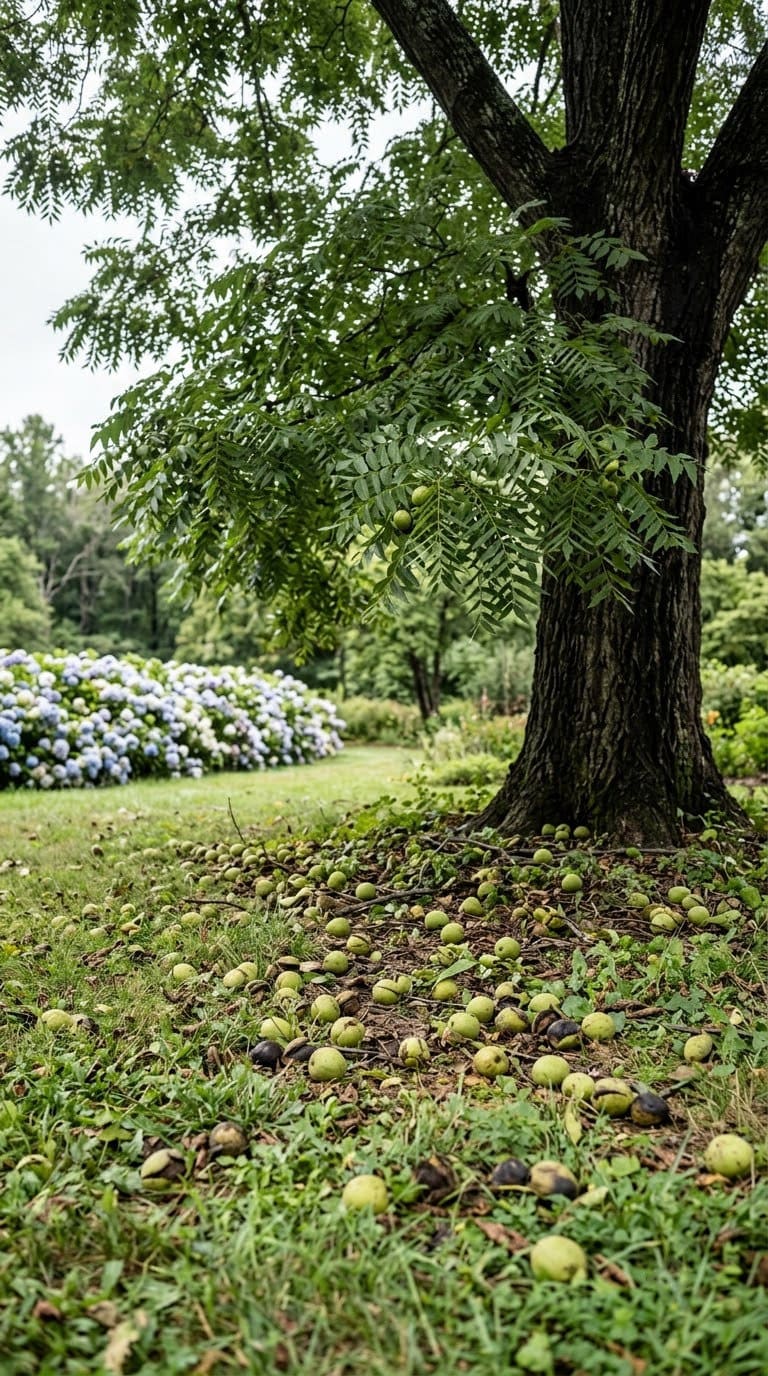
So how far is far enough? The usual advice is at least 60 feet, and symptoms show up within an average of 50 to 60 feet of the trunk. But the Michigan plants at 75 feet still died, so we’d treat 60 feet as a bare minimum.
Never mulch hydrangeas with walnut leaves, hulls, or wood chips. And don’t count on cutting the tree down to reset things. The roots stay in the soil and keep affecting sensitive plants for a long time.
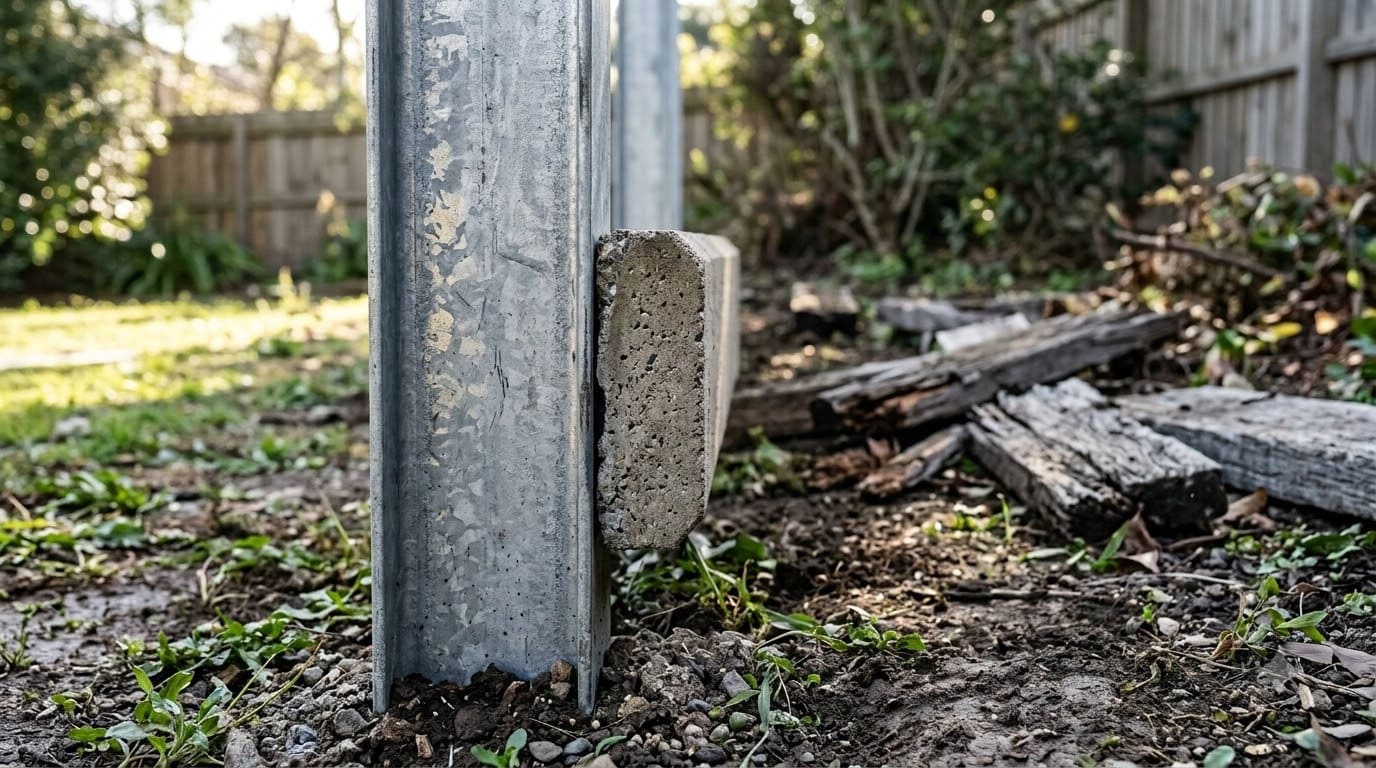
If you have to plant close, build a raised bed with a solid bottom, like concrete or rubber patio blocks, or use big tubs. Landscape fabric may not be enough.
Not sure it’s a walnut? Our walnut tree guide helps you tell. Viburnums and ferns are safer picks nearby.
2. Tree of heaven
Tree of heaven is a fast, weedy tree with a nasty reputation. It spreads by suckers and seed, and it’s invasive in many states. Some research suggests it also holds back nearby plants chemically, but we’d call that less proven than walnut.
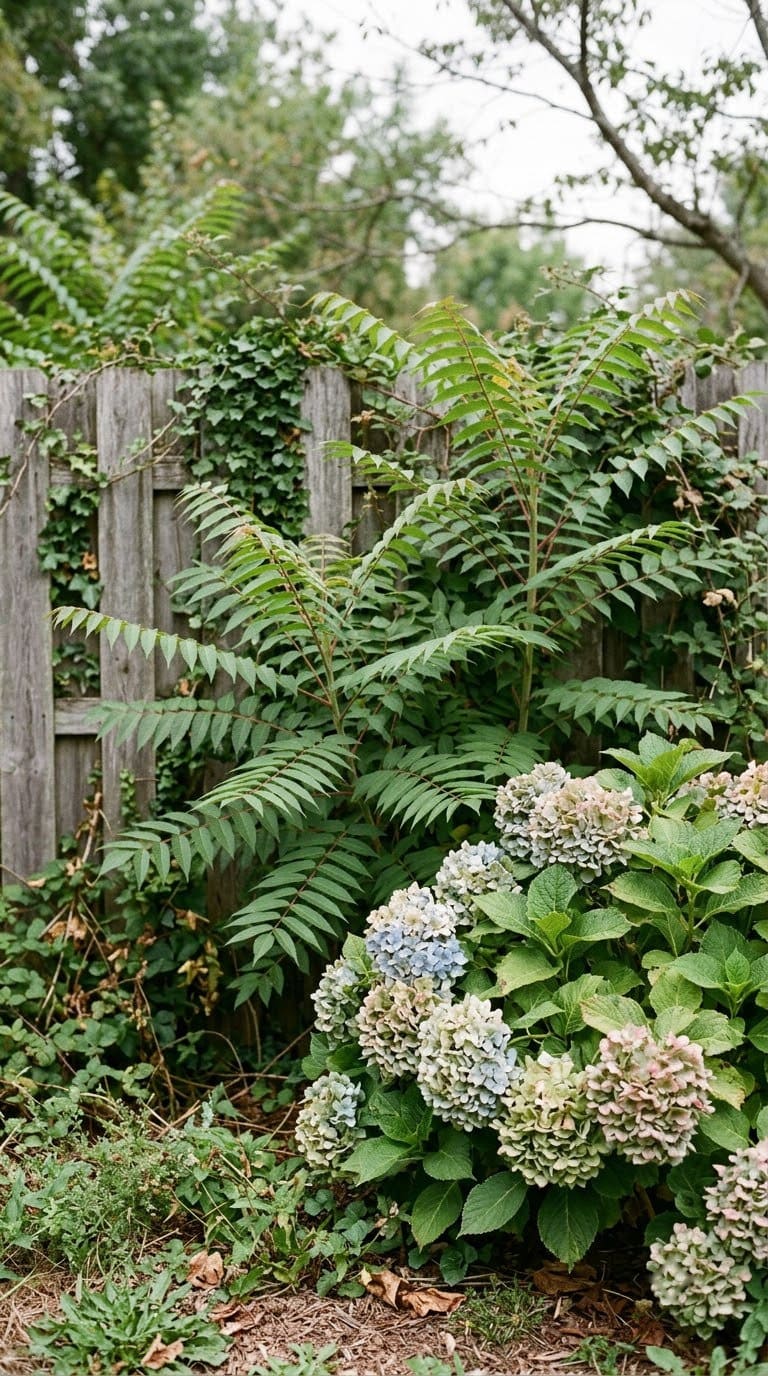
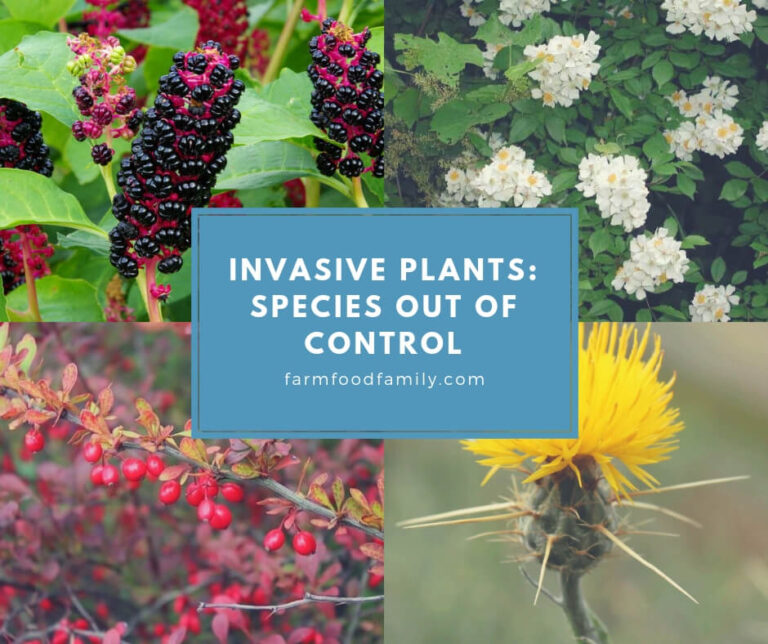
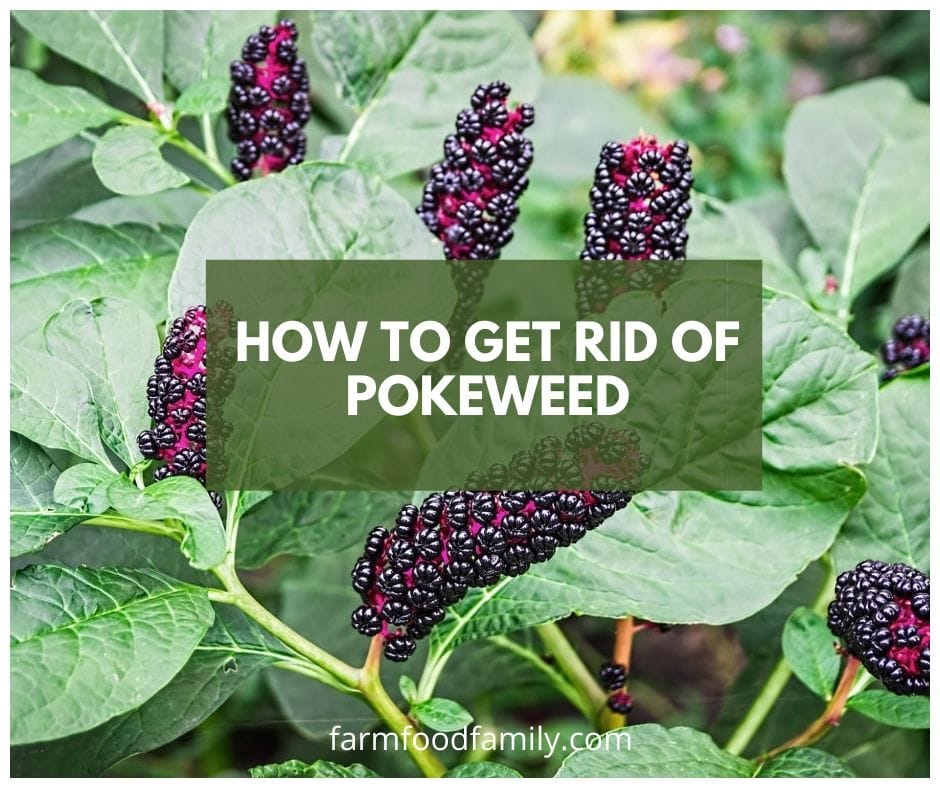
Honestly, the behavior matters more than the chemistry. Pull seedlings early, and check our invasive plants guide for who to call about big ones. Until it’s gone, grow hydrangeas in pots with fresh soil, never soil from under the tree.

3. Sunflowers
Sunflowers get blamed a lot, and most of it is overblown. They can release substances that slow some neighbors, a process called allelopathy. But Georgia gardening columnist Walter Reeves points out that the studies behind it didn’t match home garden conditions, and the effect looks mild.
The average homeowner spends $616/year on yard fixes that don't address the real problem. Find out what yours actually is — before you spend another dollar.
Take the Free Quiz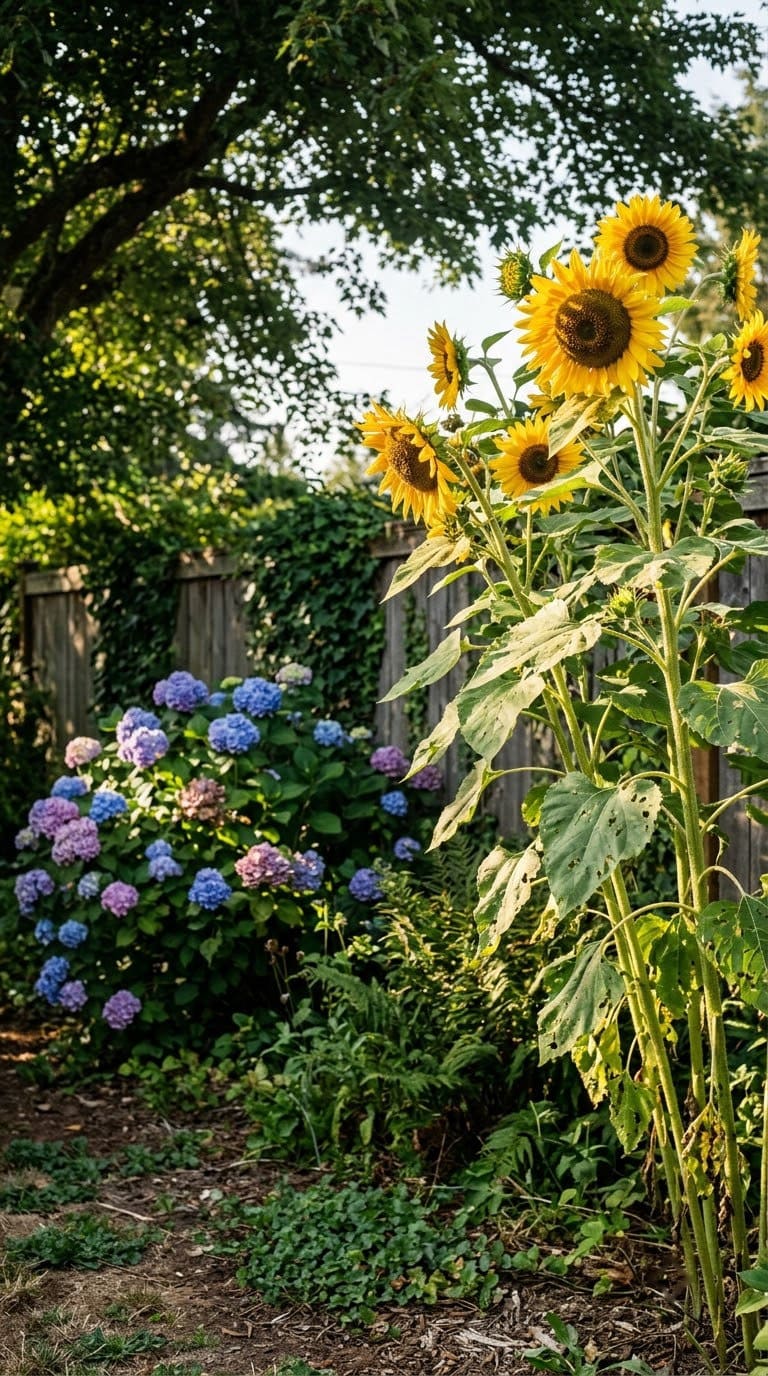
The real conflict is light. A tall sunflower in full sun shades a hydrangea that wants a break from afternoon heat. Give them separate beds, a few steps apart.
A few sunflowers won’t bother a hydrangea. A whole field of them is another story.
The next three compete for water, not chemistry.
4. Weeping willow
Willows are the classic water thieves. Their roots spread far beyond the canopy, and they’ll out-drink a hydrangea every time.
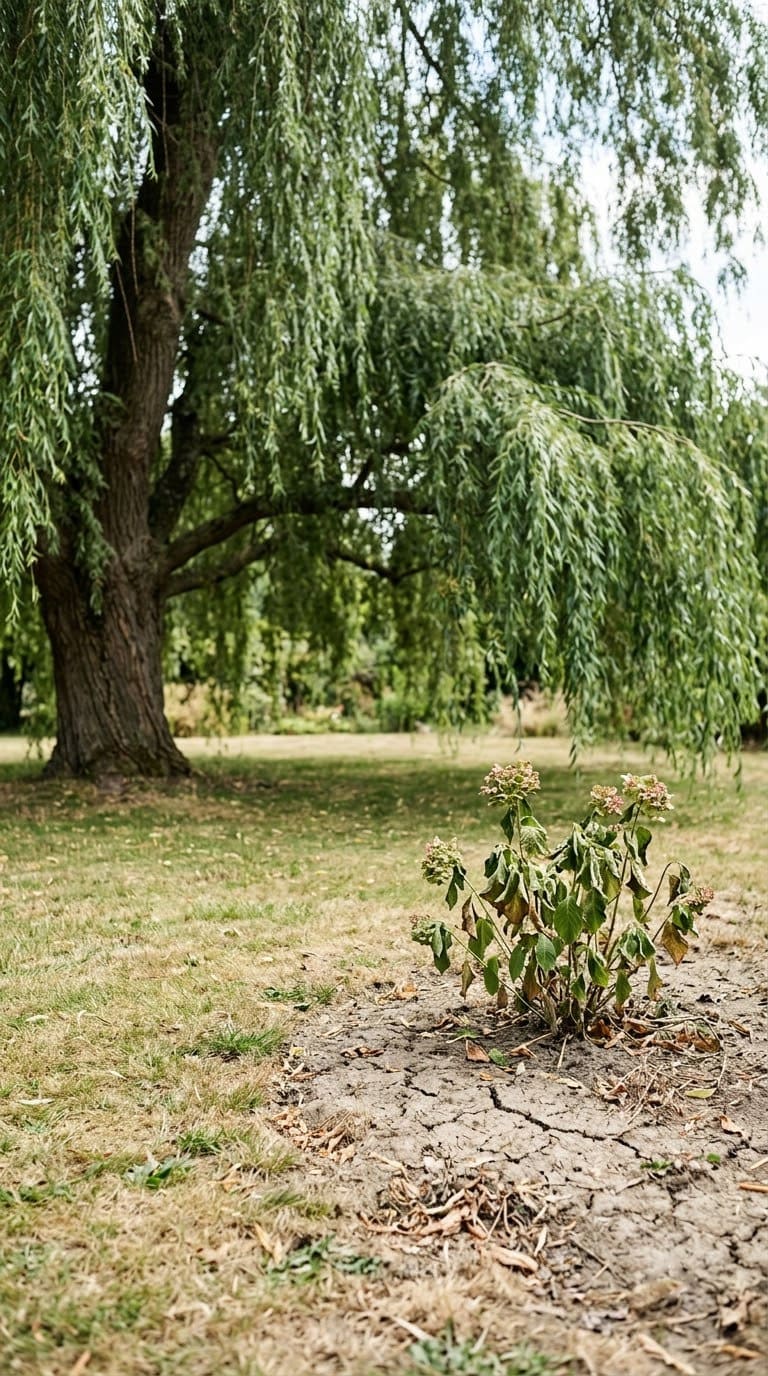
A hydrangea on a weekly watering habit can’t win that fight, and staying out of the dripline isn’t enough. Plant it well outside the spread of the canopy.
Moving a hydrangea is a free weekend job. Removing a mature willow means a tree crew, so make the cheap move first. Our guide to willow tree types shows how big they get.
5. Silver maple
Silver maples grow fast and run shallow, wide roots right through the top foot of soil, which is exactly where hydrangea roots live.
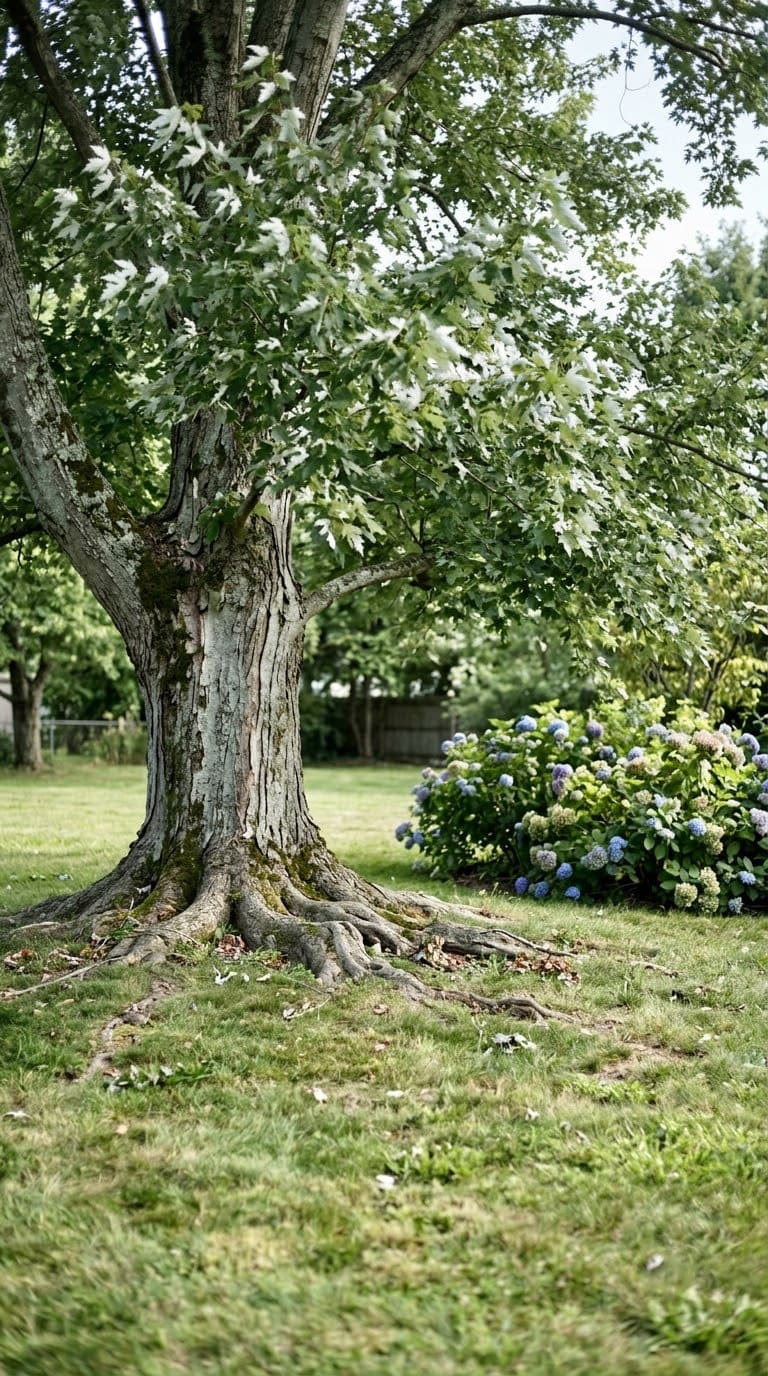
Planting under a mature tree is the usual mistake. The light is perfect, but the soil is dry and packed with feeder roots. If you can’t move the shrub, water deeply and keep 2 to 3 inches of mulch on top.
Trees you already have are fine. It’s new planting under them that causes trouble.
Some nurseries say smooth hydrangeas cope better in dry shade than bigleaf types. We haven’t tested that ourselves, so try one plant first. More options are in our shade shrubs list.
6. Eucalyptus
Eucalyptus is a thirsty, fast tree common in warm regions. Its litter and big roots leave little water for neighbors.
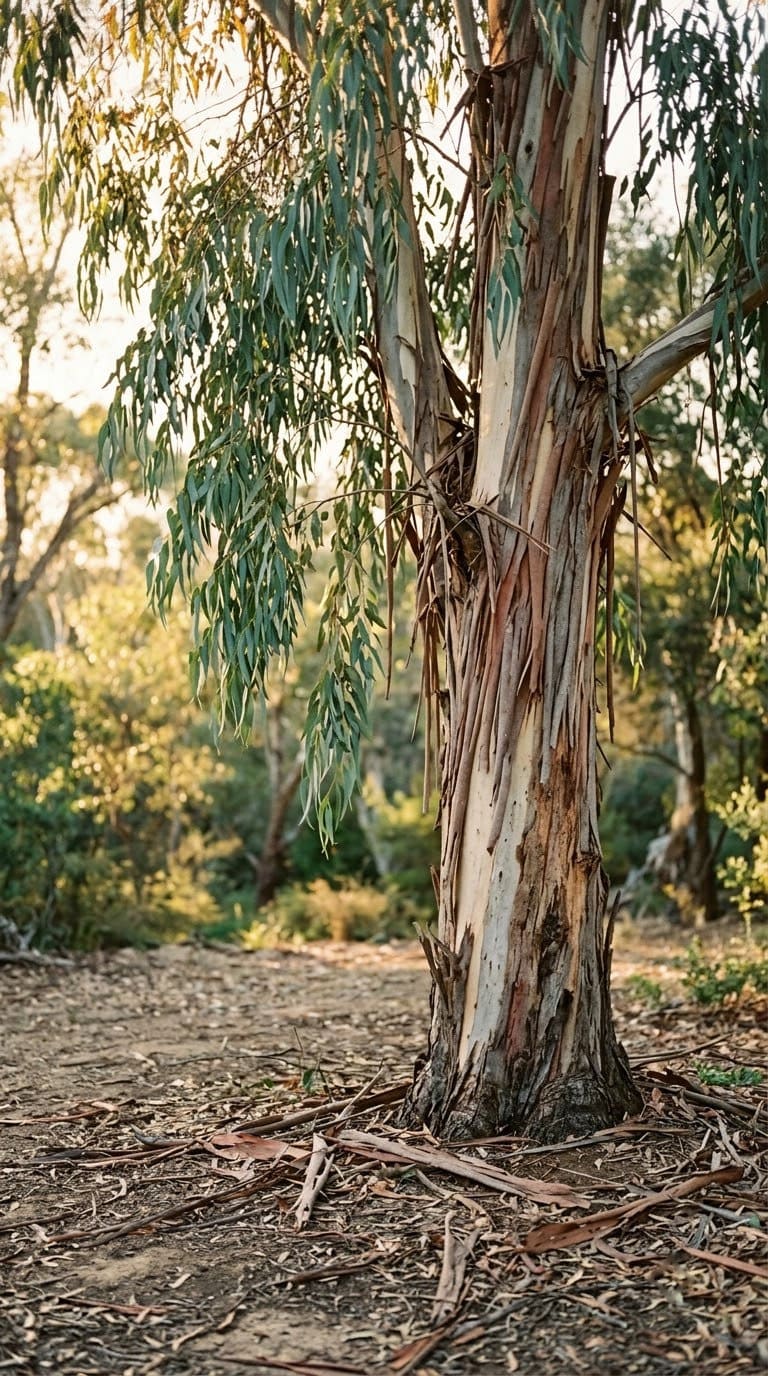
People say it poisons the soil. That’s contested. One California study of blue gum found no chemical block on native seedlings, so water and shade probably explain the bare ground.
Keep hydrangeas out of its root zone and expect to water more if they sit nearby. A crape myrtle at a respectful distance makes a lighter shade tree.
The next six fail on sun and soil. None are poisonous. They just want a different life.
7. Lavender
Lavender wants full sun and dry, well-drained soil. Hydrangeas want a weekly soak and afternoon shade. Put them side by side and one of them will always be unhappy.
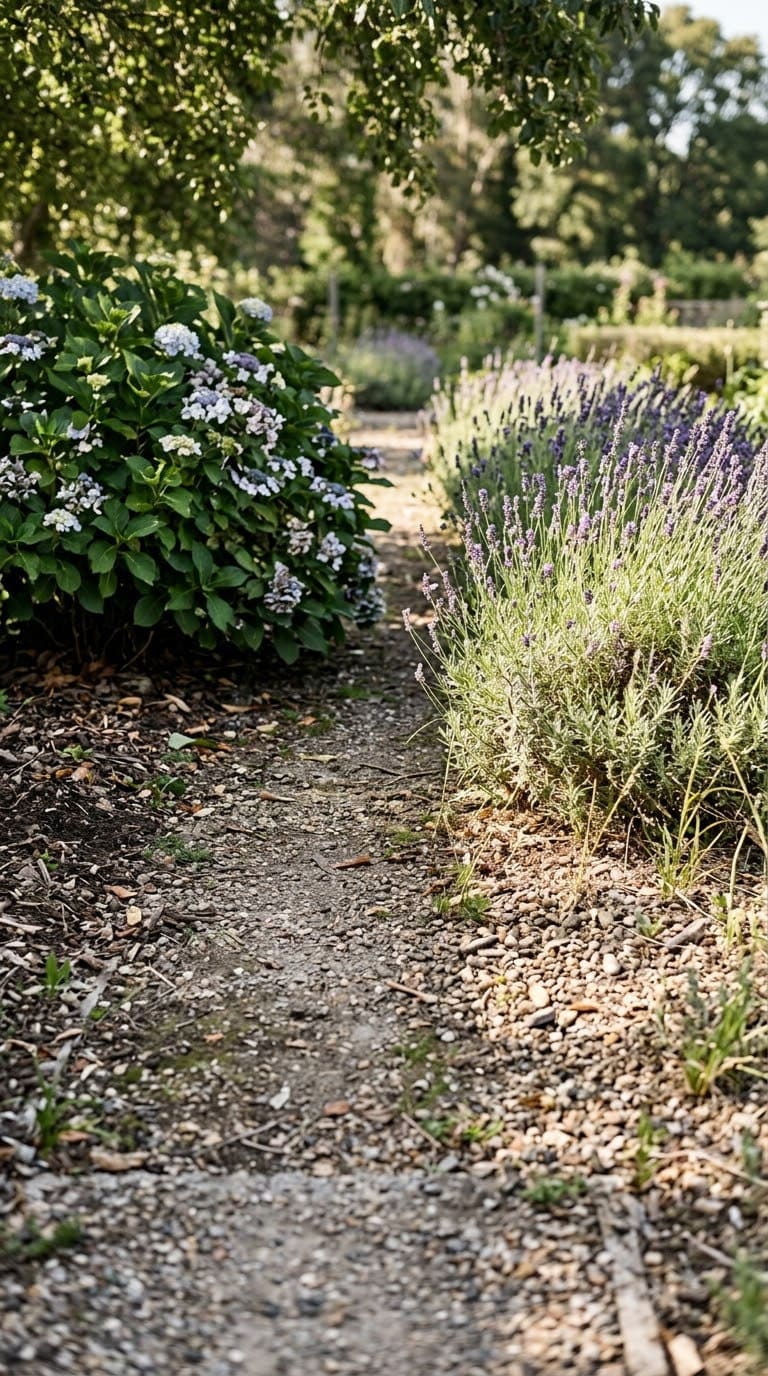
Overwatering is what kills lavender, so it can’t share a hydrangea’s irrigation. Give it a sunny bed with gravel mulch and a path in between. Our guide to types of lavender shows which ones handle humidity.
Catmint is a good stand-in that tolerates more moisture and looks great beside a blue hydrangea.
8. Rosemary
Rosemary is a Mediterranean herb, and it hates wet feet. A hydrangea’s regular watering will rot its roots in a wet spring.
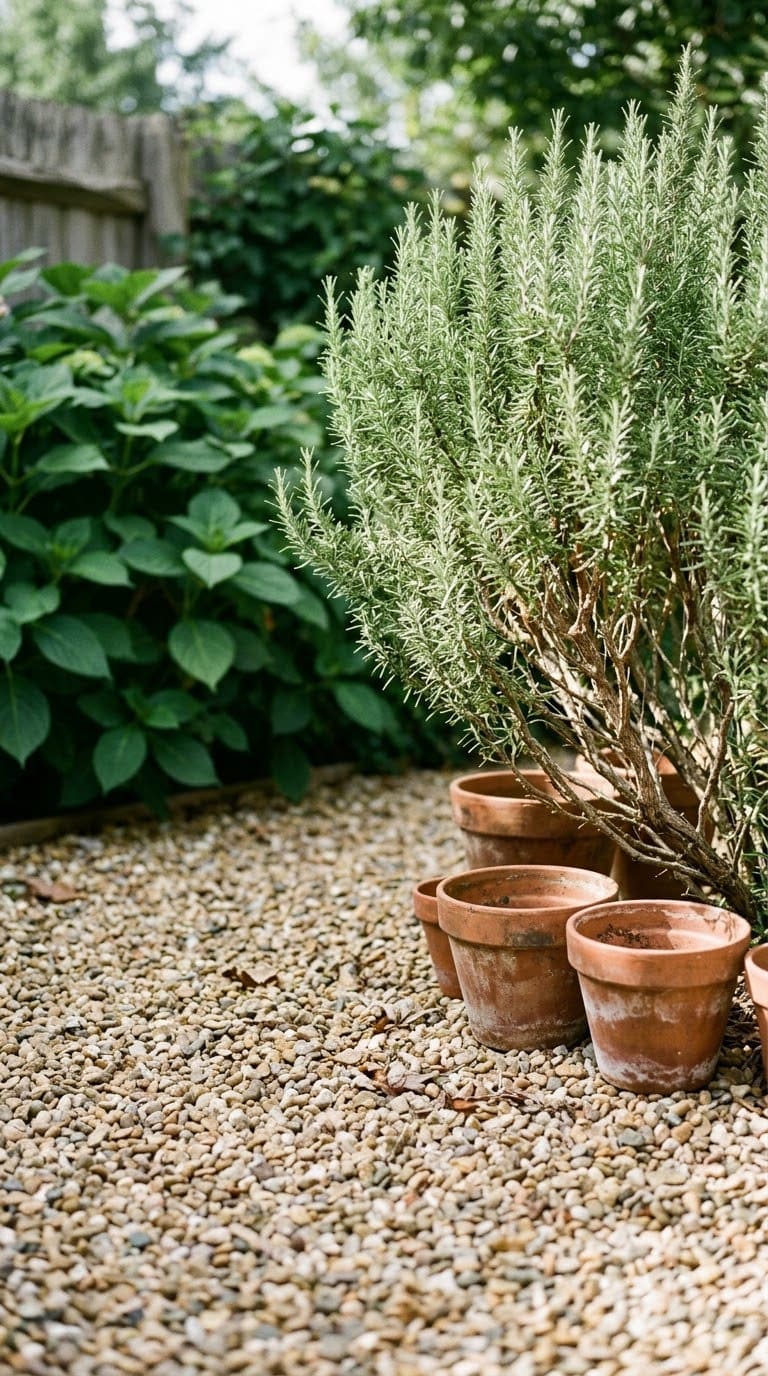
You’ll see claims that rosemary oil is toxic to hydrangeas. We couldn’t confirm that anywhere reliable, so we left it out. The real problem is the watering mismatch.
Pot it in gritty mix so it keeps its own schedule. Our rosemary guide covers the rest.
9. Thyme
Thyme is small and tough, and it’s tempting to tuck it under a hydrangea as ground cover. Don’t. Damp shade makes it leggy and rot-prone.
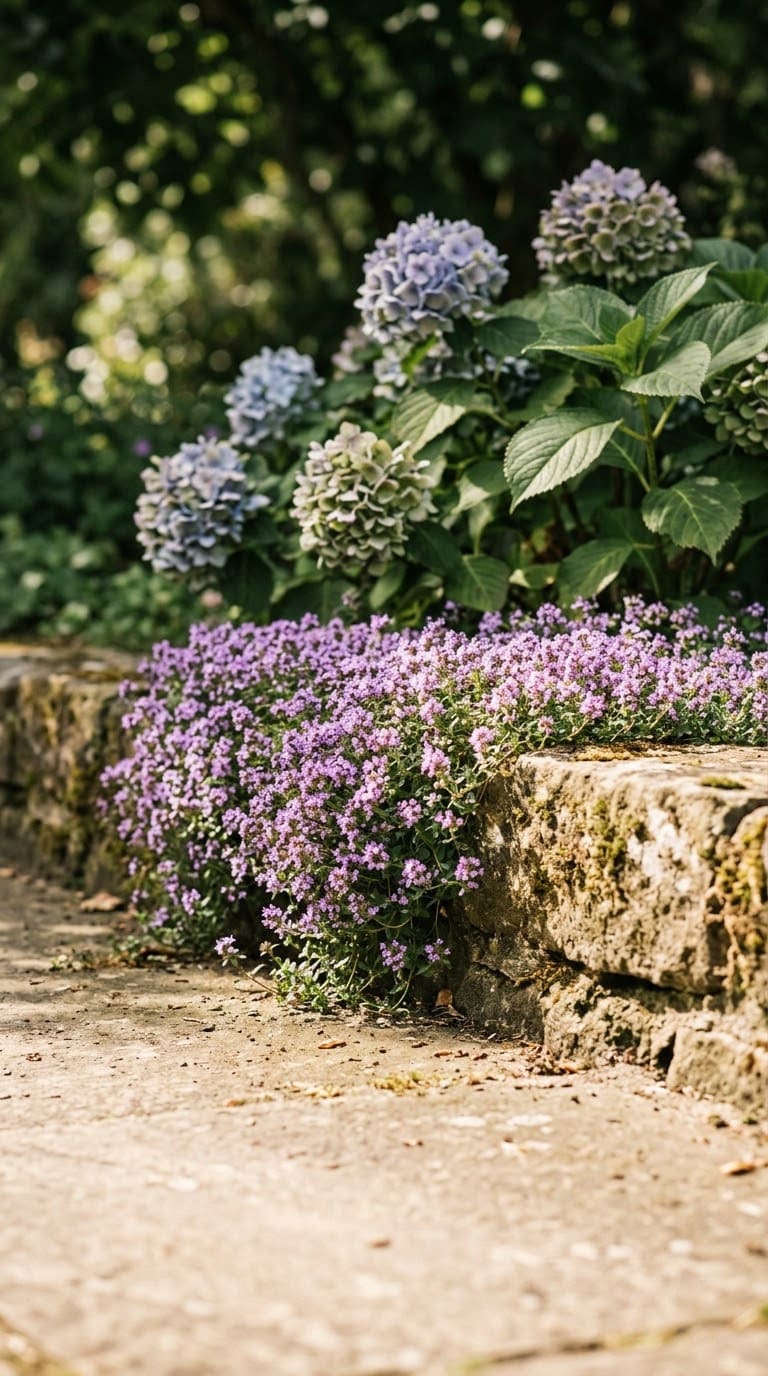
There’s a pH side issue too. Hydrangea color follows soil acidity, so blue bigleaf blooms need a pH of 5.0 to 5.5, while 6.0 and up gives pink. Thyme tends to like neutral soil, which is the opposite of what blue blooms want.
Give thyme a sunny edge bed. Our thyme guide covers spacing. Sweet woodruff is a happier ground cover for shade.
10. Sedum
Most sedums store water in thick leaves and want sun and sharp drainage. Upright stonecrop looks lovely next to a hydrangea in photos. In real life they live on different water schedules.
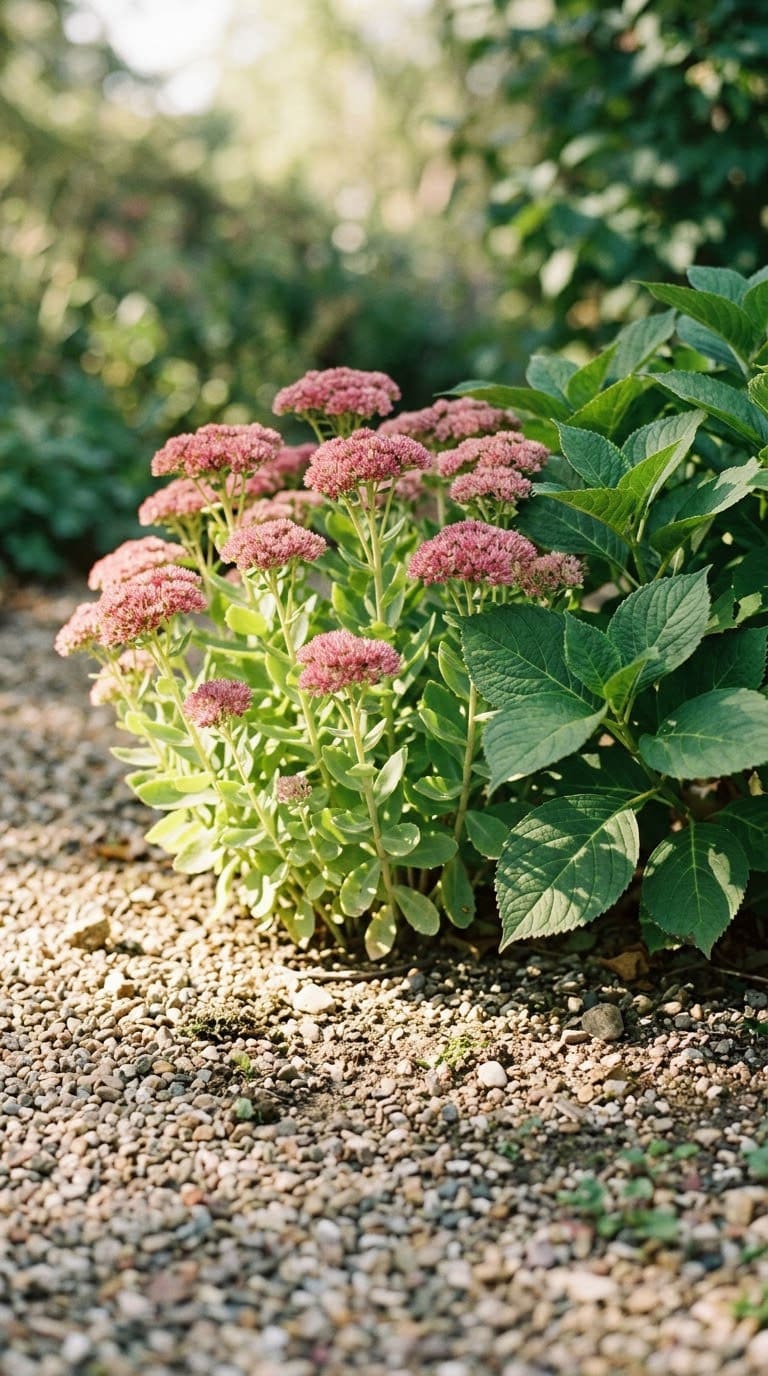
A sedum in moist shade turns floppy and rots at the base. A hydrangea in dry, gravelly soil wilts every afternoon. One of you has to move.
A container of sedum on the patio dries out fast, which it likes. Coral bells give a similar mounded look in shade.
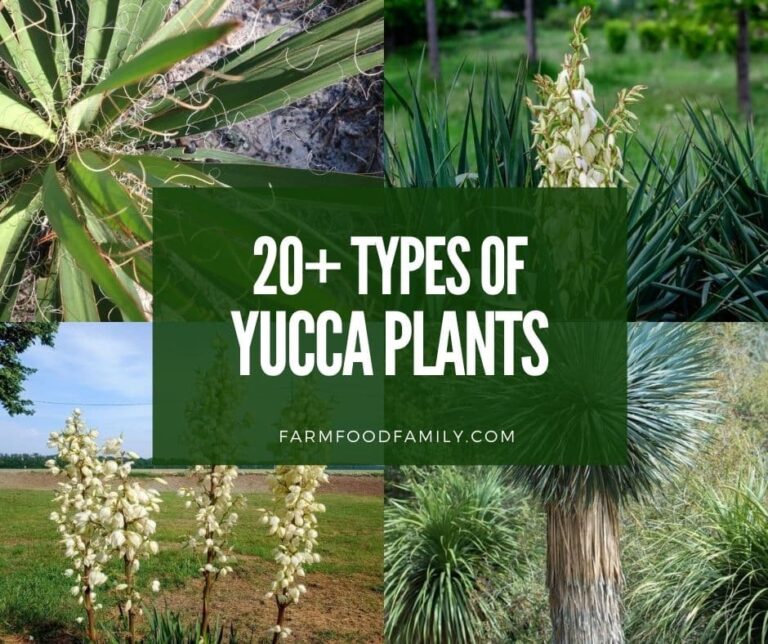
11. Yucca and agave
Desert plants want full sun and lean soil, with almost no summer water. Put one next to a hydrangea and either the agave sits in wet soil, which can kill it, or the hydrangea goes thirsty.
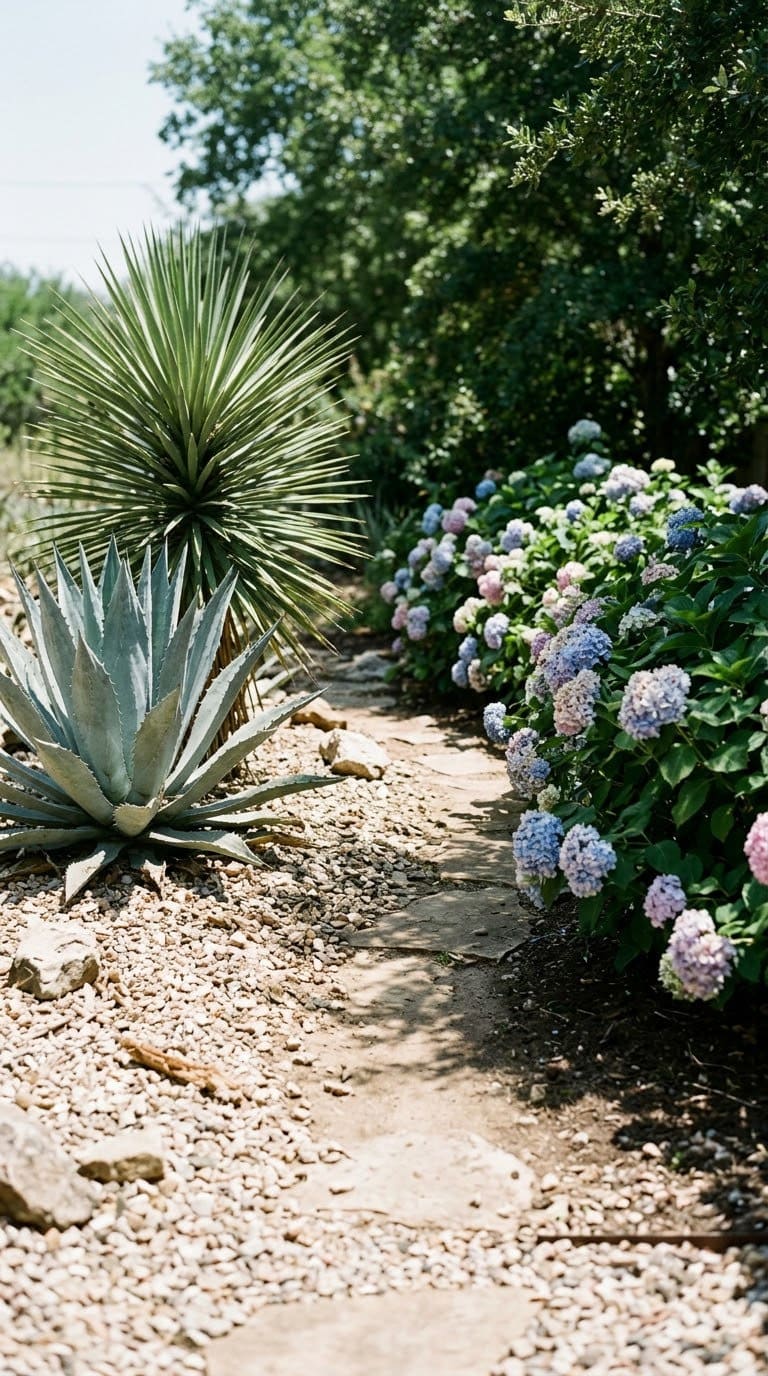
And those leaf tips hurt when you reach in to deadhead. Honestly, that alone is reason enough for a separate bed.
Hosta gives you bold leaves without the spikes, and it loves the same shade.
12. Lilac
Lilac wants full sun and neutral to alkaline soil. A hydrangea growing for blue blooms wants shade and acidic soil. They fight over light, and they pull the soil in opposite directions.
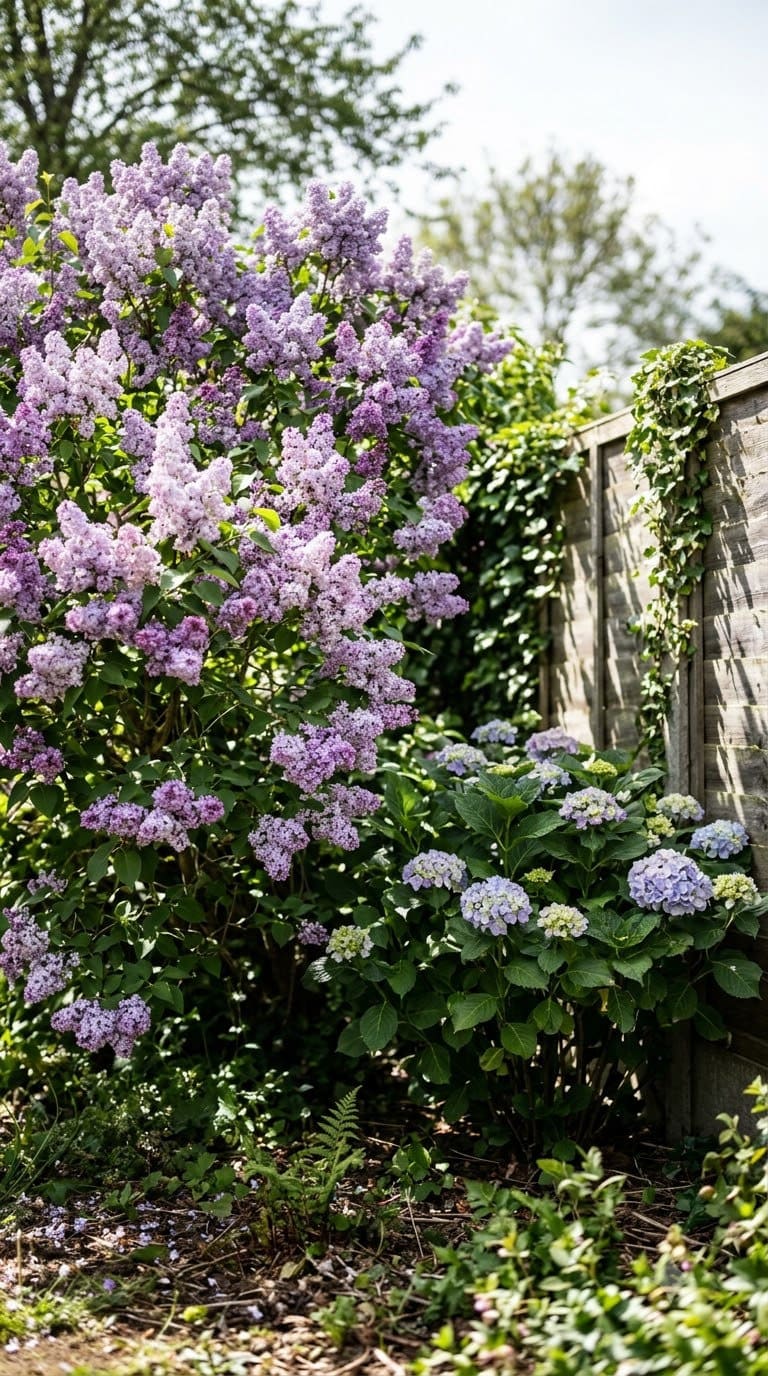
Lilacs are also on the walnut-sensitive list, so they’re picky in their own way. Neither one wins a fight over a small bed.
Put the lilac in full sun at the back of the yard. A mock orange or a dwarf viburnum handles shade better.
Now come the spreaders. These win by taking over.
13. Mint
Mint spreads by underground runners. In a hydrangea bed it weaves through the shallow roots and takes water.
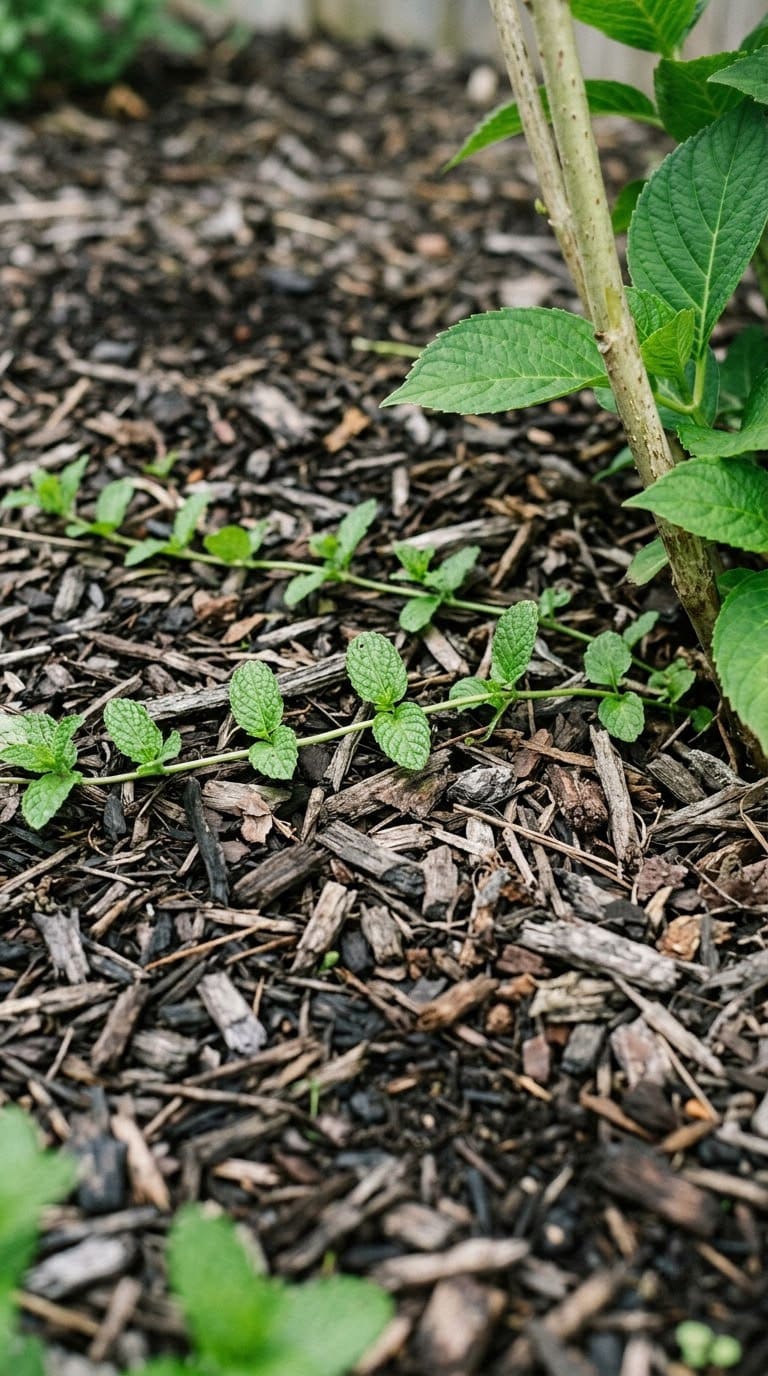
Sinking a bottomless pot into the soil doesn’t always work, because runners find the gap. So use a pot with a base and set it on a hard surface. Our guide to choosing and growing mint shows which types are tamer.
Cut runners every month. Pulling a whole plant out of a hydrangea bed is much harder, since every root fragment can regrow. Basil is a polite replacement.
14. English ivy
Ivy forms a thick mat that climbs and smothers. A small hydrangea doesn’t stand a chance.
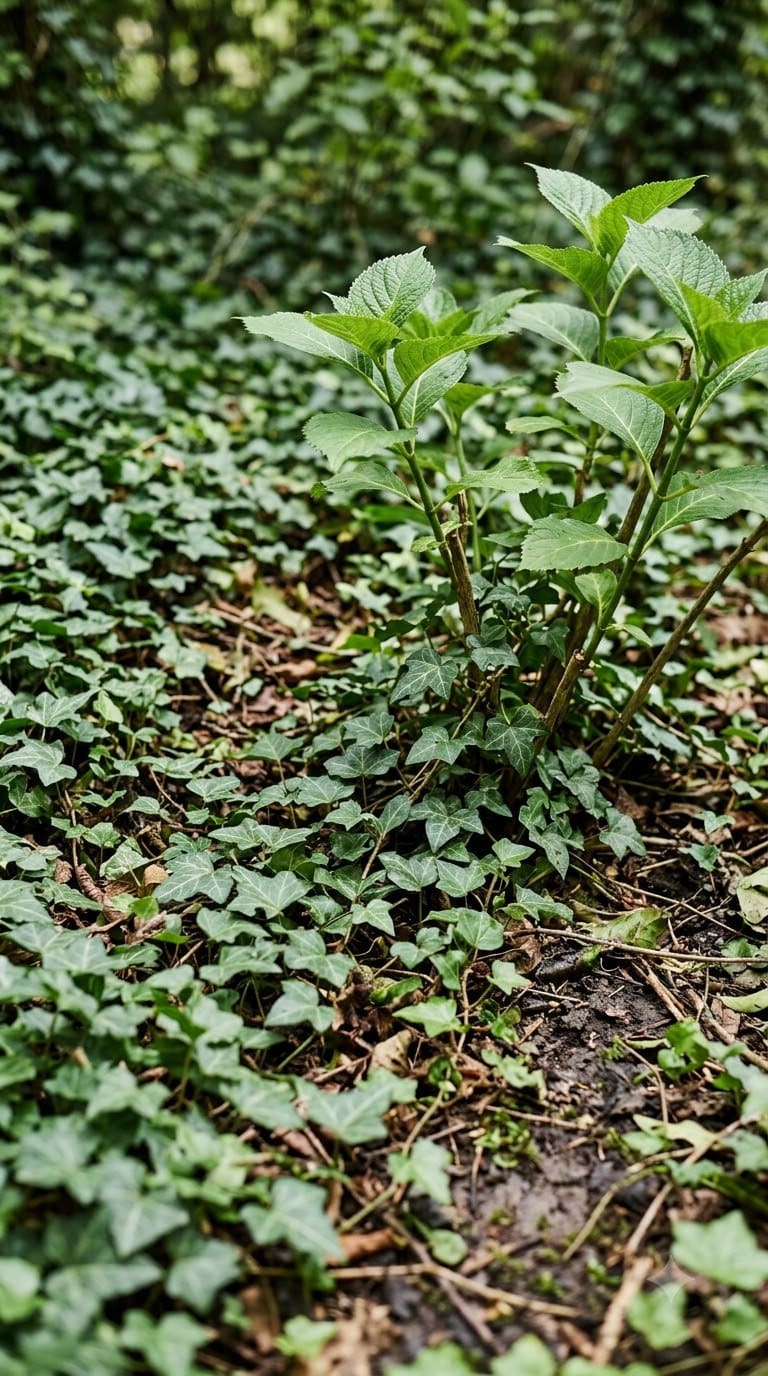
It’s also invasive in parts of the country, so check your state’s rules before planting. See our English ivy guide for how it behaves.
If it’s already there, pull it after rain when the soil is soft. Wear gloves, because the sap can irritate skin. Pachysandra is a tamer ground cover and tolerates walnut.
15. Running bamboo
Running bamboo travels sideways through the top foot of soil. The Royal Horticultural Society says the rhizomes can spread more than 3 feet a year in good conditions. A hydrangea bed is an easy target.
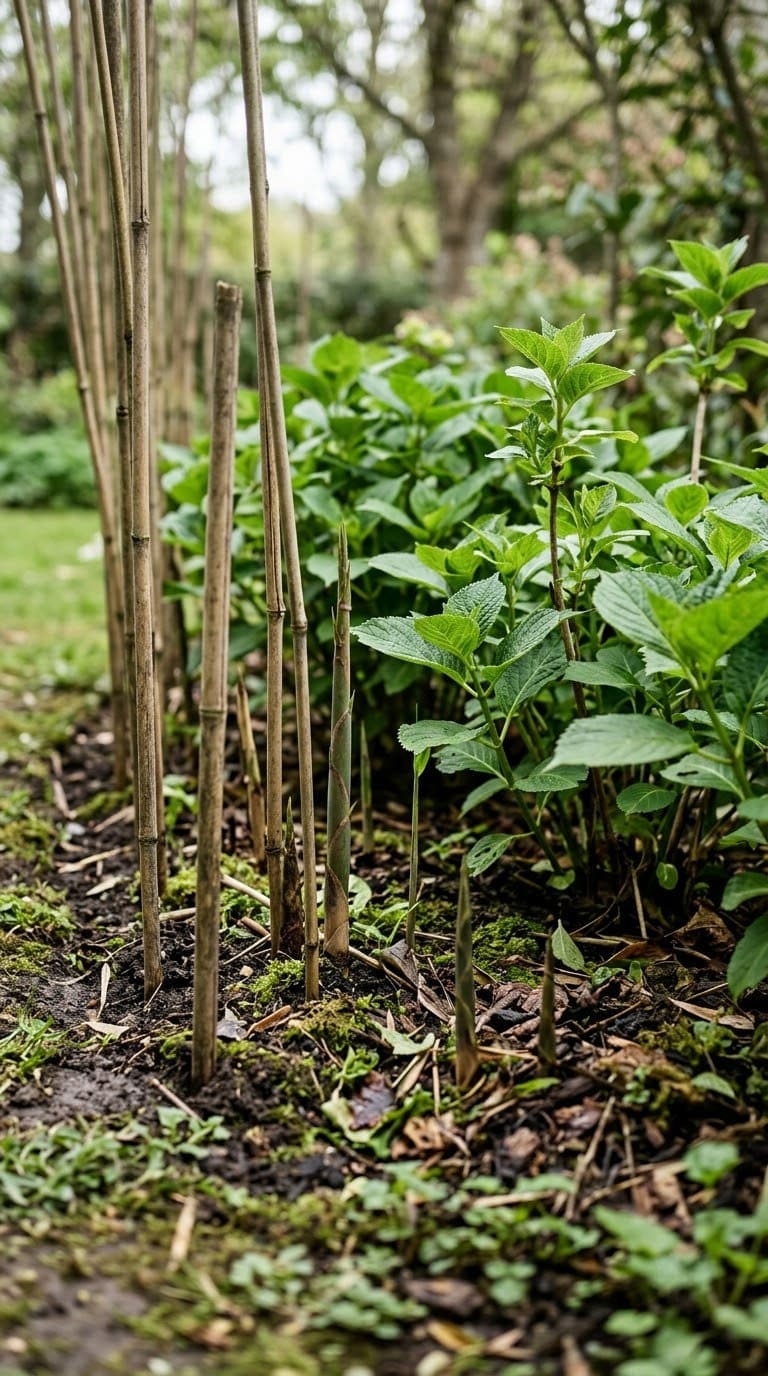
A barrier should go at least 2 feet deep and stand 3 inches above the soil, with overlapping joints. That’s a weekend project. Digging out an escaped grove is a job for a pro, and our bamboo types guide helps you know what you’re dealing with.
If the bamboo is next door, trench along the property line and sink the barrier there. Clumping bamboo or miscanthus stays put.
Which “bad neighbors” are actually myths?
Plenty of other plants get blamed online. We couldn’t find good evidence for many of them, so here’s where each one stands.
| Claim | What we found |
|---|---|
| Garlic stunts hydrangeas | No reliable source. Treat it as unproven. |
| Marigolds are bad neighbors | They like sun and drier soil, but they don’t harm hydrangeas. |
| Goldenrod is allelopathic | It gets labeled that way, but we found no hydrangea evidence. It likes sun, so spacing handles it. |
| Forsythia stunts hydrangeas | It’s on the walnut-tolerant list, which is a different issue. We found no evidence against hydrangea. |
| Azaleas and rhododendrons are bad | Most gardeners pair them because they share acidic soil. Give them room so roots don’t tangle. |
| Roses can’t sit next to hydrangeas | Roses want more sun. Some pairings work if the bed gets morning sun and afternoon shade. |
Our take: trust the conditions, not the label. If two plants need the same light and water, they can share a bed.
What should you plant next to hydrangeas instead?
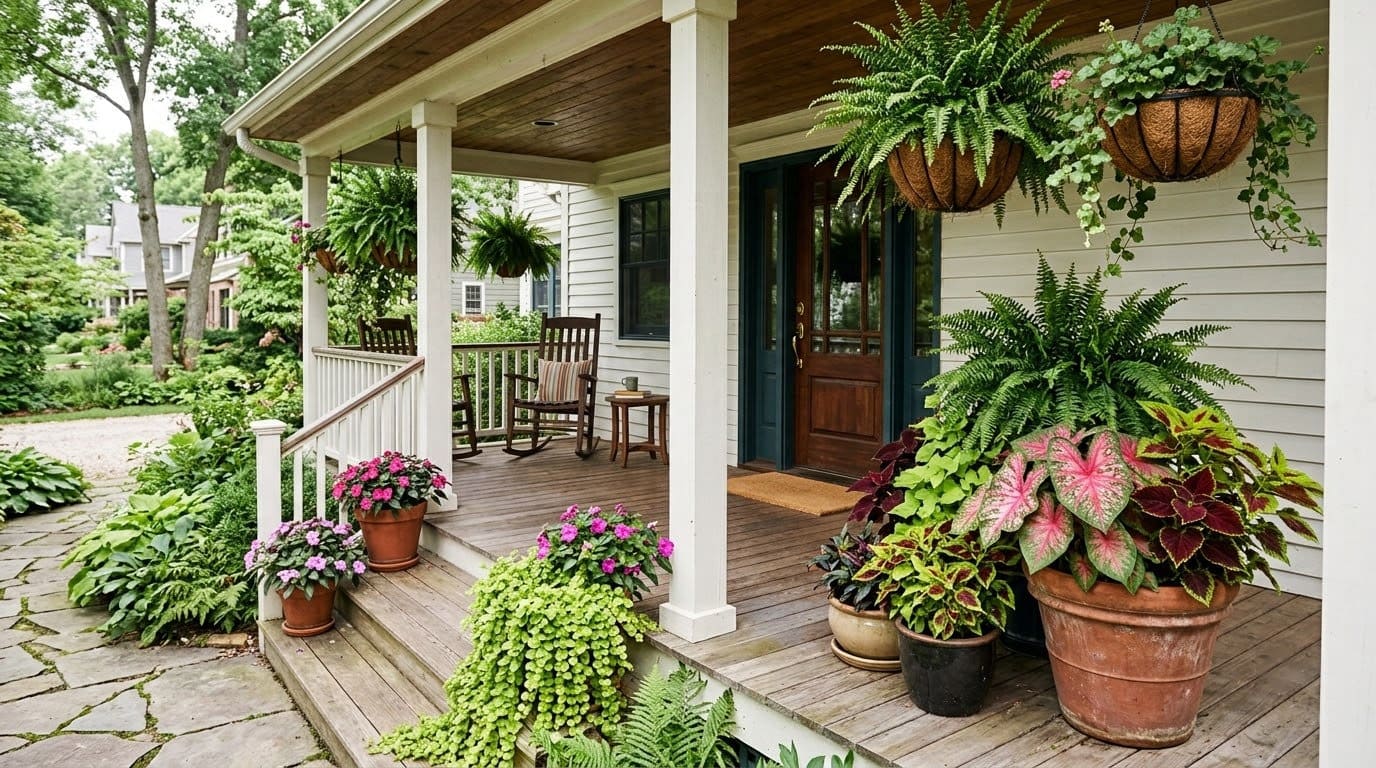
These plants like the same moist, part-shade life.
| Plant | Why it works | Watch for |
|---|---|---|
| Astilbe | Likes moisture and shade, and tolerates walnut | Dries out in full sun |
| Ferns | Same shade and moisture | Spread slowly |
| Hosta | Bold leaves, shade tolerant | Slugs |
| Coral bells | Mounded color under shrubs | Needs drainage |
| Azaleas | Acidic soil, similar light | Keep roots from tangling |
| Boxwood | Neat evergreen backdrop | Slow growing |
For design ideas, see our guide to plants that pair with hydrangeas. That one tells you what to add, and this one tells you what to skip. For acid-loving partners, read our azalea care guide.
How far apart should these plants be?
Distance is where most gardeners guess. Here’s a cheat sheet.
| Neighbor | Suggested approach |
|---|---|
| Black walnut | At least 60 feet, or a raised bed with a root barrier |
| Tree of heaven | Pots with fresh soil until it’s removed |
| Willow, silver maple | Outside the root spread, which is wider than the canopy |
| Mint | Pot with a base, set on a hard surface |
| Running bamboo | Barrier 2 feet deep, 3 inches above soil |
| Dry-soil plants | Separate bed, own watering |
What did we learn the hard way about hydrangea neighbors?
Distance advice is a guess, not a promise. The Michigan gardener followed the rules, planted 75 feet from a walnut, and still lost plants. On paper, that distance should have been enough.
The lists don’t agree either. One may call a plant tolerant while another calls it sensitive. We’d test with one cheap plant before planting a whole bed.
And cutting down a walnut doesn’t clear the soil, because the roots stay behind.
The most common mistake is the simplest. People put a dry-soil herb next to a thirsty shrub because it looks pretty in a photo. Then they water for the shrub and kill the herb.
What do you do if a bad neighbor is already there?
Start with the cheapest fix. Moving a hydrangea in fall or early spring costs nothing but effort.
Next, change the bed. A raised bed with a solid bottom barrier is the standard fix for walnut trouble. For spreaders, add a deep barrier.
Deep weekly watering and 2 to 3 inches of mulch both help with root competition. Our post on why mulch matters explains why that’s worth doing.
Need a bigger bed? Try the raised bed method.
For a tall tree you can’t remove, call a certified arborist. And for invasive plants like tree of heaven or English ivy, check your state or county rules first.
FAQ
Can hydrangeas grow near a black walnut?
Sometimes, but it’s risky. Hydrangeas are on the sensitive list, and about 60 feet is the usual advice. Some gardeners report smooth hydrangeas doing better, but the lists come from observation, so test with one plant first.
Is lavender really bad for hydrangeas?
It isn’t toxic. The problem is that lavender wants dry soil and full sun, while hydrangeas want regular water and afternoon shade. Give each its own bed.
Do roses and hydrangeas mix?
They can, if the bed has morning sun and afternoon shade and you water deeply. In hot, dry spots the sun mismatch causes trouble.
Are azaleas bad companions?
Not usually. They share acidic soil and part shade with hydrangeas. Just give them space so roots don’t compete.
How far should a tree be from a hydrangea?
There’s no single number. Stay outside the root spread of thirsty trees like willow and silver maple. For black walnut, use about 60 feet.
Does removing the bad neighbor fix the problem?
Not for walnut. The roots stay in the soil and can affect sensitive plants for a long time.
Products We Recommend
This post contains affiliate links. We may earn a commission on qualifying purchases at no extra cost to you.
Soil Test Kit, 100 Soil pH Test Strips (3.5 to 9 range)
A cheap way to check bed pH before you plant. Clemson says bigleaf hydrangeas bloom blue near pH 5.0 to 5.5 and pink at 6.0 and up.
Shop Now
Garden Root Barrier, 30 in x 25 ft, HDPE
A heavy plastic barrier deep enough for the 2-foot depth the RHS advises for running bamboo. Also useful for lining raised beds near spreading roots.
Shop Now
Quarut 12-Inch Plant Pots, 4 Pack, with Drainage Holes and Saucers
Solid-base pots for mint, rosemary, and thyme, so they stay out of the hydrangea bed and on their own watering schedule.
Shop NowNever miss an update — choose FarmFoodFamily as your preferred source on Google.
How it works: Tap the button below to open Google's settings page, then check the box next to FarmFoodFamily.
Tap the checkbox to turn it blue — that's how you know it's set.