9 Deadly Plants That Are Toxic to Horses and Livestock (And How to Spot Them)
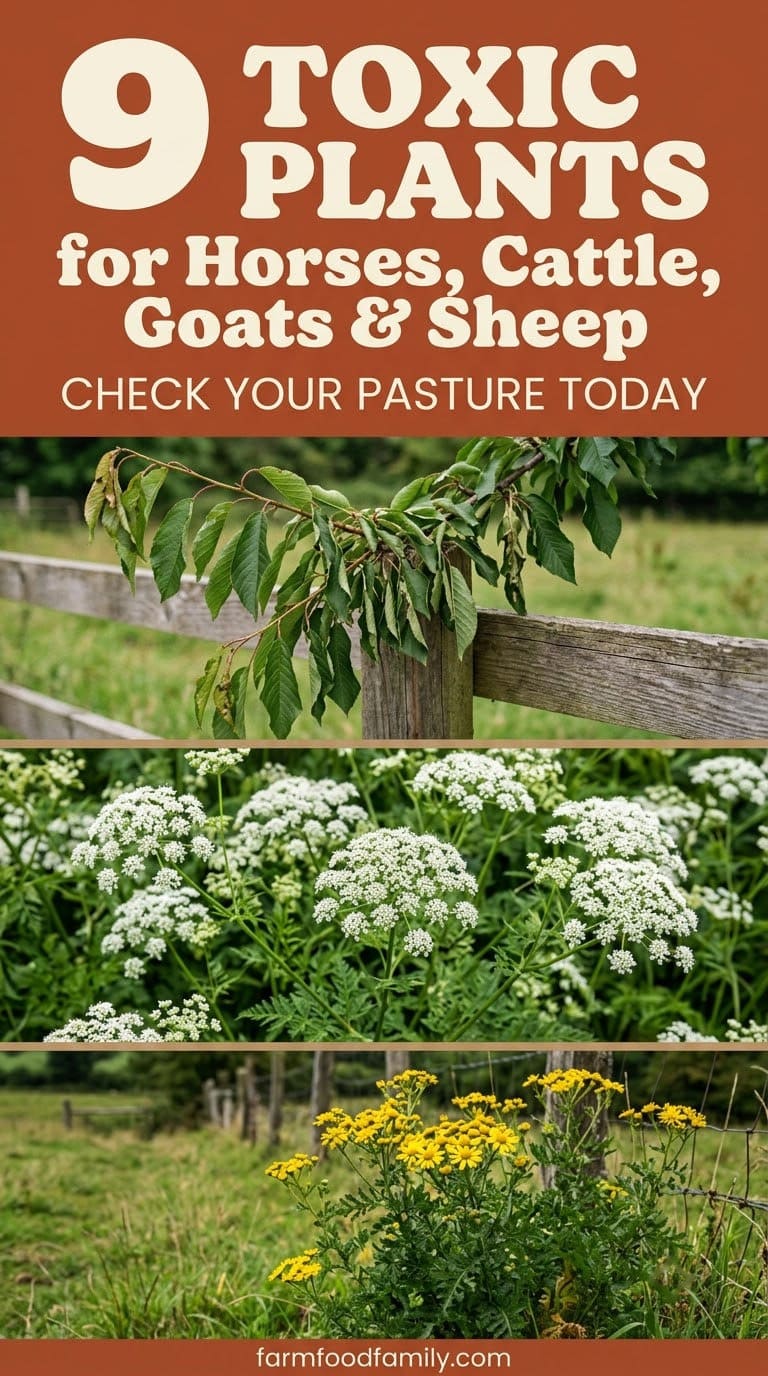
Nine common plants can sicken or kill horses, cattle, goats and sheep, and most of them grow right along your fence line, so learn to spot them before the next storm or hay delivery.

Never miss an update — choose FarmFoodFamily as your preferred source on Google.
How it works: Tap the button below to open Google’s settings page, then check the box next to FarmFoodFamily.
Tap the checkbox to turn it blue — that’s how you know it’s set.
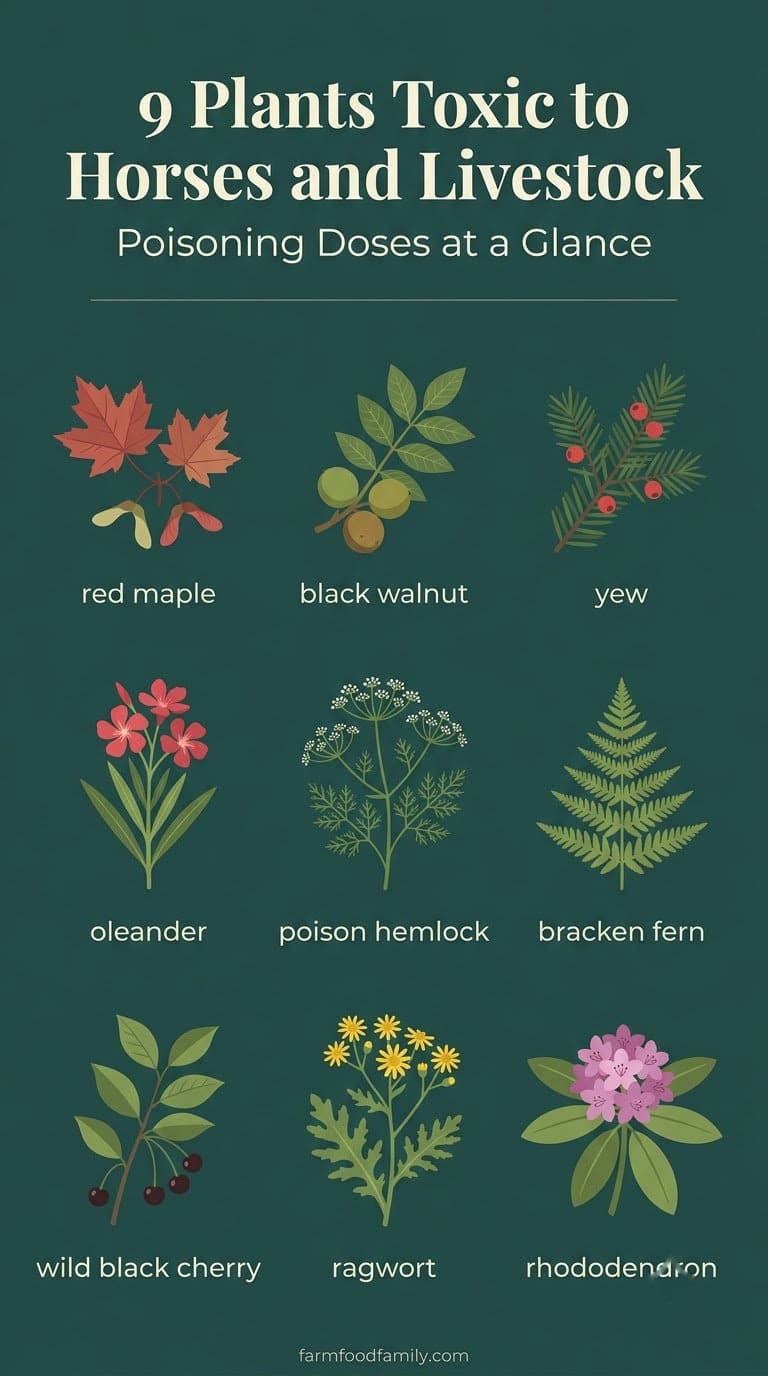
The nine plants most toxic to horses and livestock are red maple, black walnut, yew, oleander, poison hemlock, bracken fern, wild black cherry, ragwort and rhododendron. Most animals skip them. The trouble starts when grass runs short, a storm drops a limb, or hay hides a weed.
Texas A&M clinical assistant professor Dr. Leslie Easterwood says horses usually leave toxic plants alone when other forage is on offer.
So the job is simple. Know these nine, keep them away from hungry animals, and know what to do in the first hour.
Key Takeaways
- A 1,000 pound horse can reach a poisoning dose with about 0.8 ounces of oleander or 1 to 5 pounds of yew.
- Wilted red maple leaves stay dangerous for about 30 days after they fall.
- Wild cherry signs can start 15 to 20 minutes after an animal eats the leaves.
- Ragwort damages the liver quietly, and signs often show only after the harm is permanent.
Quick Answer
The nine plants most likely to hurt horses and livestock are red maple, black walnut, yew, oleander, poison hemlock, bracken fern, wild black cherry, ragwort and rhododendron. Some act fast, and some do slow damage you can’t see for weeks.
Wilted maple and cherry leaves are the common storm-season traps after a windstorm. Hay is the stealth route for hemlock and ragwort, since you can’t see the weeds once the bales are stacked in the barn.


For a 1,000 pound horse, even a few pounds of yew, rhododendron, hemlock or red maple can be a poisoning dose. Oleander is far worse, at under one ounce of leaves.
Answer 4 quick questions and get matched to the exact fix for your yard — drainage, budget, layout, or something else entirely.
Take the Free QuizIf you suspect a bite, remove the animal from the plant, collect a sample and call your vet right away. Don’t wait for signs, since several of these toxins show up after the damage is done.
Why do animals eat poisonous plants?
Hunger and hay do most of the damage. An overgrazed paddock pushes animals toward plants they’d normally skip.
Hay is the second trap. Once a weed is cut, dried and baled, your animals can’t tell it from the good stuff.
Storms are the third. A snapped cherry limb or a drift of red maple leaves lands inside the fence overnight, and wilted leaves are often the most dangerous form.
The fix is the same in all three cases. Keep good forage in front of your animals, check the property after weather, and buy hay from sellers you trust.
How much is too much? A quick dose table
Doses change with body size, so treat these numbers as warning lights, not safe limits. The horse figures below are for a 1,000 pound horse, drawn from UConn Extension and Penn State Extension.
| Plant | Dose that can poison a 1,000 lb horse | Who it hits |
|---|---|---|
| Red maple (wilted leaves) | 1.5 to 3 lb toxic, about 6.6 lb fatal | Horses and ponies |
| Black walnut (bedding) | 5 to 20% shavings in bedding | Horses |
| Yew | 1 to 5 lb | All livestock |
| Oleander | About 0.8 oz | All livestock |
| Poison hemlock | 4 to 5 lb | All livestock |
| Bracken fern | 3 to 5% of the diet for 30+ days | All livestock |
| Wild black cherry | See entry 7, ruminants are most at risk | Cattle, sheep, goats |
| Ragwort | No safe amount known | Horses especially |
| Rhododendron and azalea | About 2 lb | All livestock |
Small animals have a much smaller margin. A 180 pound sheep or a goat can reach a poisoning dose with a fraction of what a horse needs.
Most yard problems trace back to one specific, fixable cause. Find yours in 4 quick questions.
Take the Free Quiz
Grippy, breathable gloves for pulling hemlock or ragwort by hand, so bare skin never touches the plant.
Shop NowThis post contains affiliate links. We may earn a commission on qualifying purchases at no extra cost to you.
Quick tip: scale by body weight, not by herd. If a plant is risky at 2 pounds for a horse, a goat can be in trouble with a small handful.
Which animals are at risk from which plants?
Not every plant hits every animal. Use this table to match the plant to the animals you keep.
| Plant | Horses and ponies | Cattle | Goats and sheep |
|---|---|---|---|
| Red maple | Yes | Not listed | Not listed |
| Black walnut | Yes (bedding, wood) | Not listed | Not listed |
| Yew | Yes | Yes | Yes |
| Oleander | Yes | Not listed | Not listed |
| Poison hemlock | Yes | Yes | Yes |
| Bracken fern | Yes | Yes | Yes |
| Wild black cherry | Yes | Highest risk | Highest risk |
| Ragwort | Most sensitive | Not listed | Not listed |
| Rhododendron and azalea | Yes | Yes | Yes |
“Not listed” means the sources we read didn’t name that animal. It doesn’t prove the plant is safe, so keep every species away from all nine.
1. Is red maple toxic to horses?
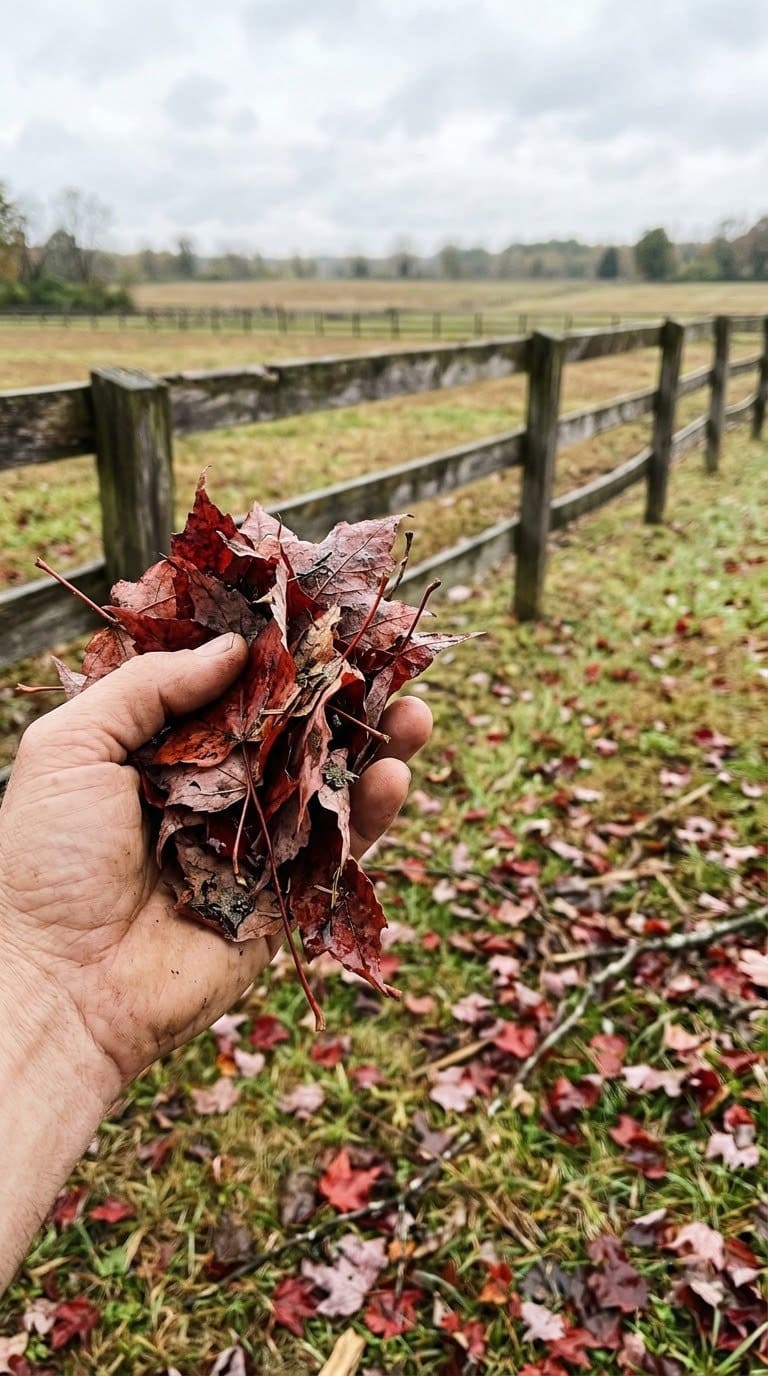
Yes, wilted or dried red maple leaves are toxic to horses and ponies. Fresh leaves on the tree are less of a worry.
Penn State Extension puts toxicity at 1.5 to 3 pounds of leaves. UConn lists about 6.6 pounds as fatal. The sources don’t match, so our rule of thumb is simple: any bucketful of wilted leaves is a vet call.
Signs include breathing trouble, jaundice and dark brown urine. Fallen autumn leaves stay dangerous for about 30 days, so a fall windstorm matters more than most owners think.
Walk the paddock after every storm. Rake leaves out and look past the fence line to your neighbor’s trees. If you’re trying to tell your maples apart, our guide to maple tree types helps.
Budget note: raking is free. Removing a big maple near a fence is a job for a licensed tree service, so plan for a real bill and don’t climb it yourself.

2. Is black walnut toxic to horses?
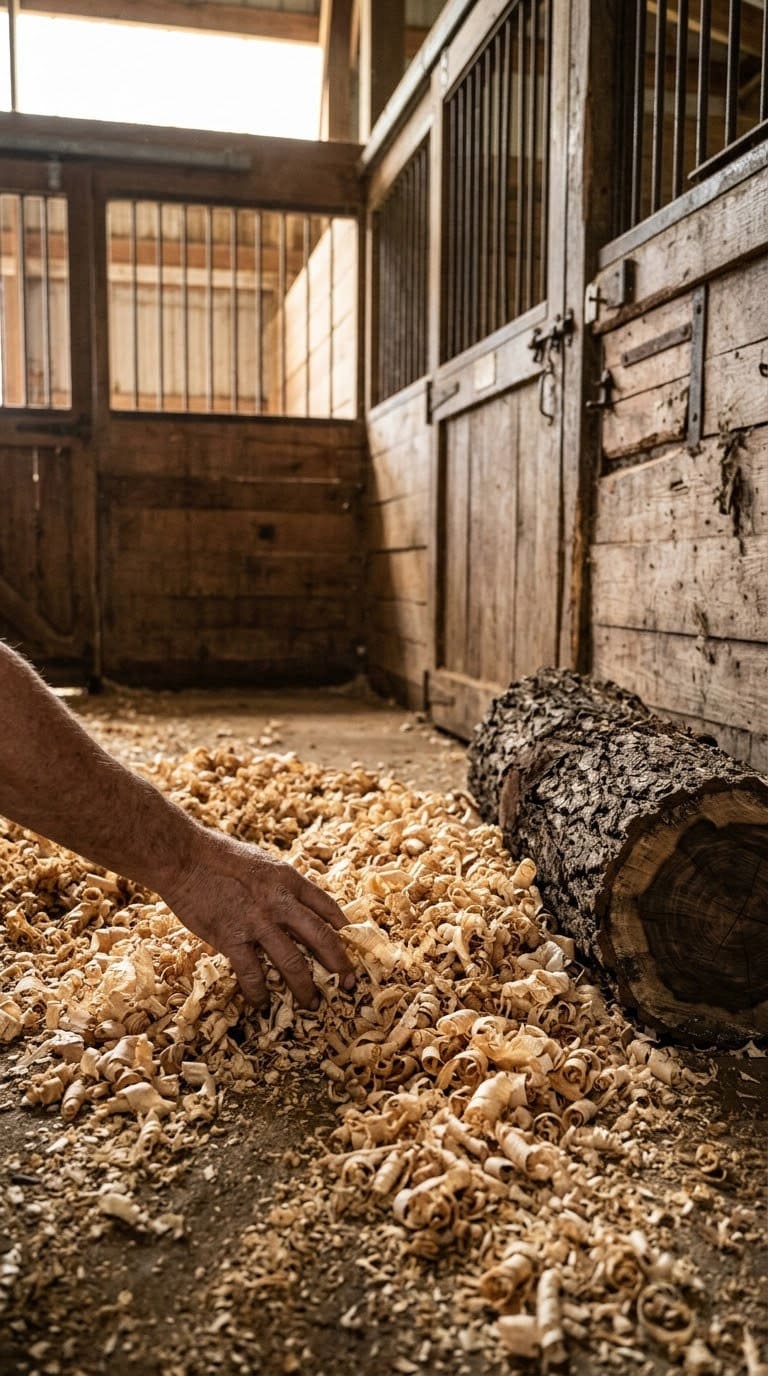
Yes, but the usual route is the stall floor, not the pasture. Walnut shavings in bedding can trigger laminitis, a painful hoof condition.
The average homeowner spends $616/year on yard fixes that don't address the real problem. Find out what yours actually is — before you spend another dollar.
Take the Free QuizThe toxin is juglone. UConn lists as little as 5 to 20% walnut in a bedding load as enough to cause trouble, and Penn State is blunter: no amount of black walnut is acceptable in bedding. Signs include colic, swelling and laminitis.
The trap is where shavings come from. A cheap load from a local sawmill can include walnut without a label, so ask the seller what species went into it.
Keep horses off walnut logs and bark too. If a tree stands inside the pasture, fence it out.
DIY or pro? Checking shavings costs nothing. Taking down a big walnut is a pro job.
3. Is yew poisonous to horses and livestock?
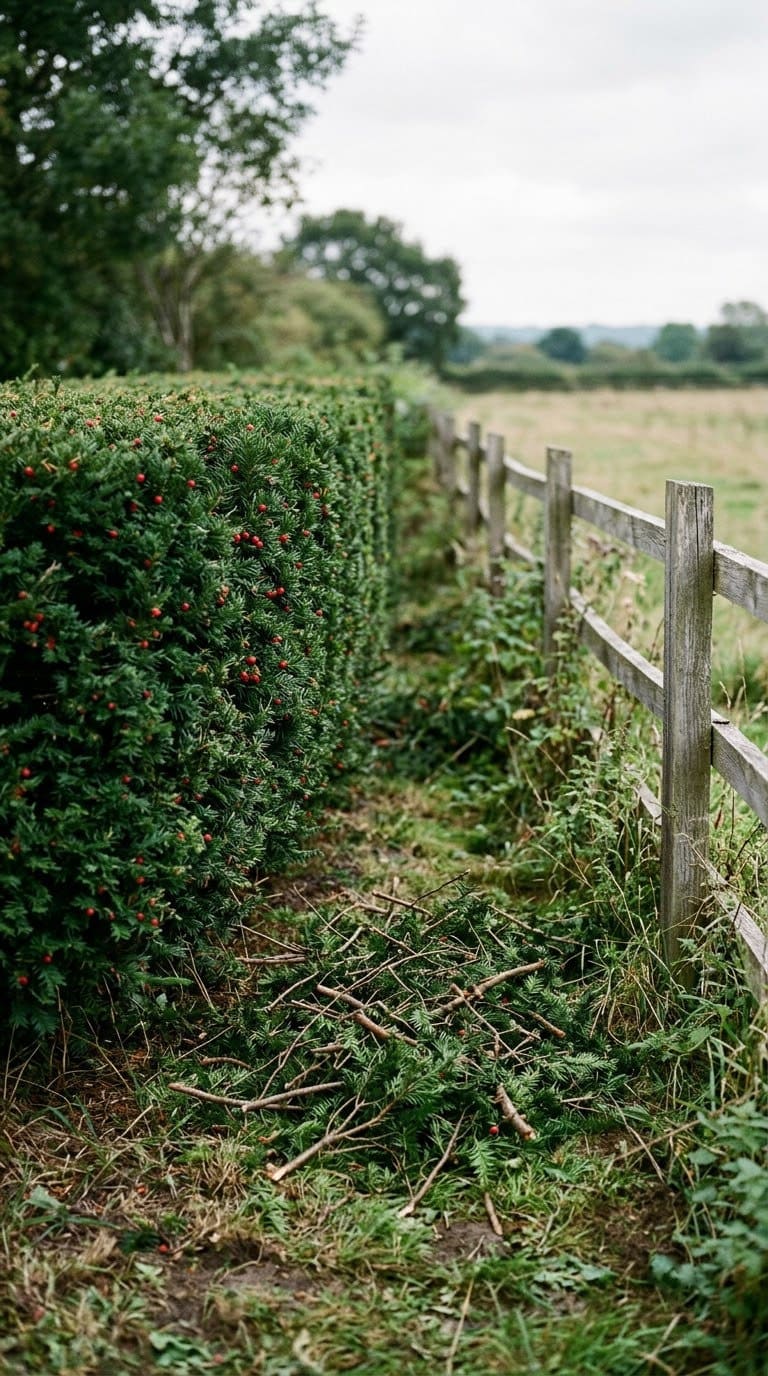
Yes, and it’s one of the fastest killers on this list. Yew is a tidy evergreen that shows up in foundation plantings and hedges, which is why it ends up near animals.
UConn puts a poisoning dose at roughly 1 to 5 pounds for a 1,000 pound horse. That’s a few armfuls of clippings. Signs include muscle trembling, poor coordination, colic and a slow heart rate, and Penn State notes it can kill.
Trimmings are the usual way in. UConn advises you to avoid neighbors’ yard clippings, so ask nearby owners not to toss hedge cuttings over the fence.
Keep a yew behind a barrier your animals can’t reach. For other shrub options, see our shrubbery landscaping ideas.
4. Is oleander poisonous to horses and livestock?
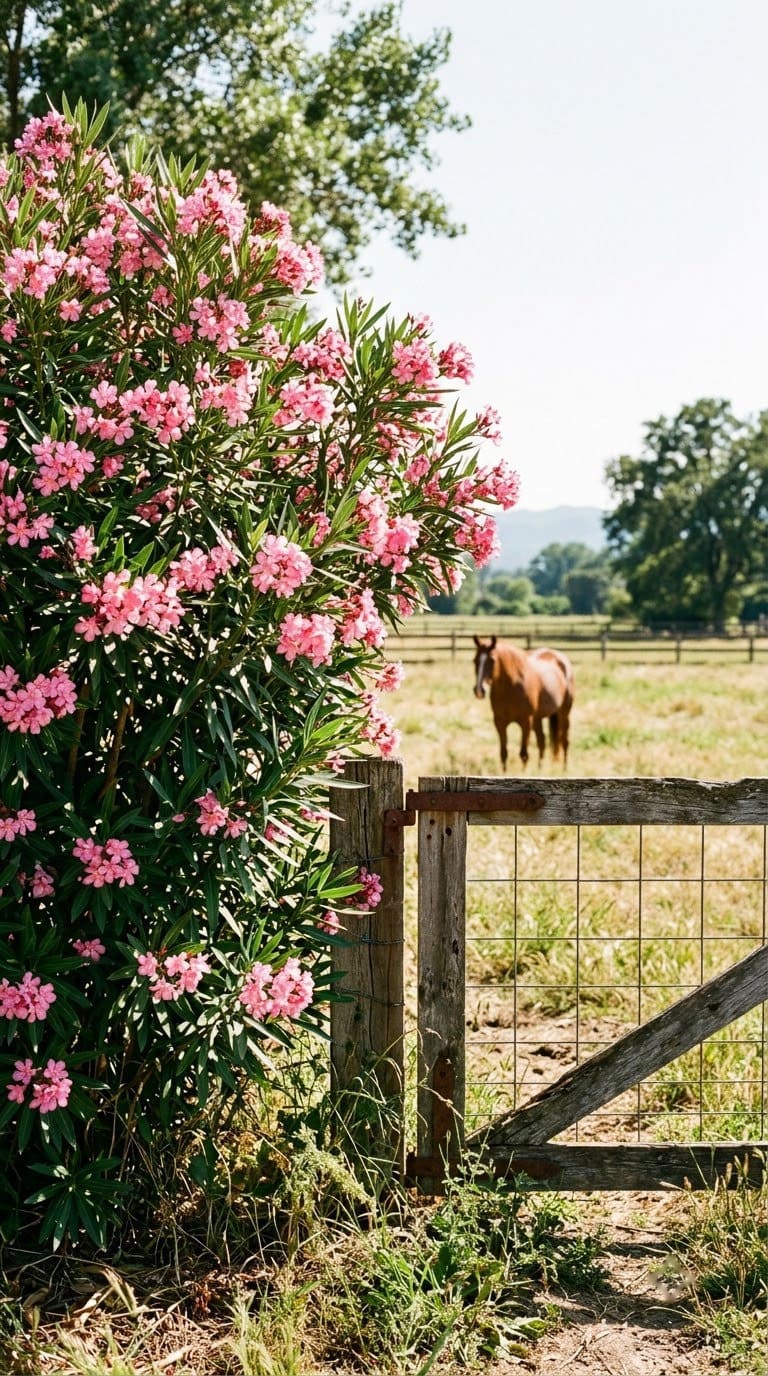
Yes, and the dose is tiny. UConn lists about 0.005% of body weight, which is under an ounce for a 1,000 pound horse.
Oleander is a favorite in warm climates, so check every property edge if you live in the South or on the West Coast. Hedges often run along driveways, and driveways often run beside paddocks.
Don’t toss prunings into a paddock, and keep clippings well out of reach. When in doubt, bag them and haul them off.
5. How dangerous is poison hemlock to livestock?
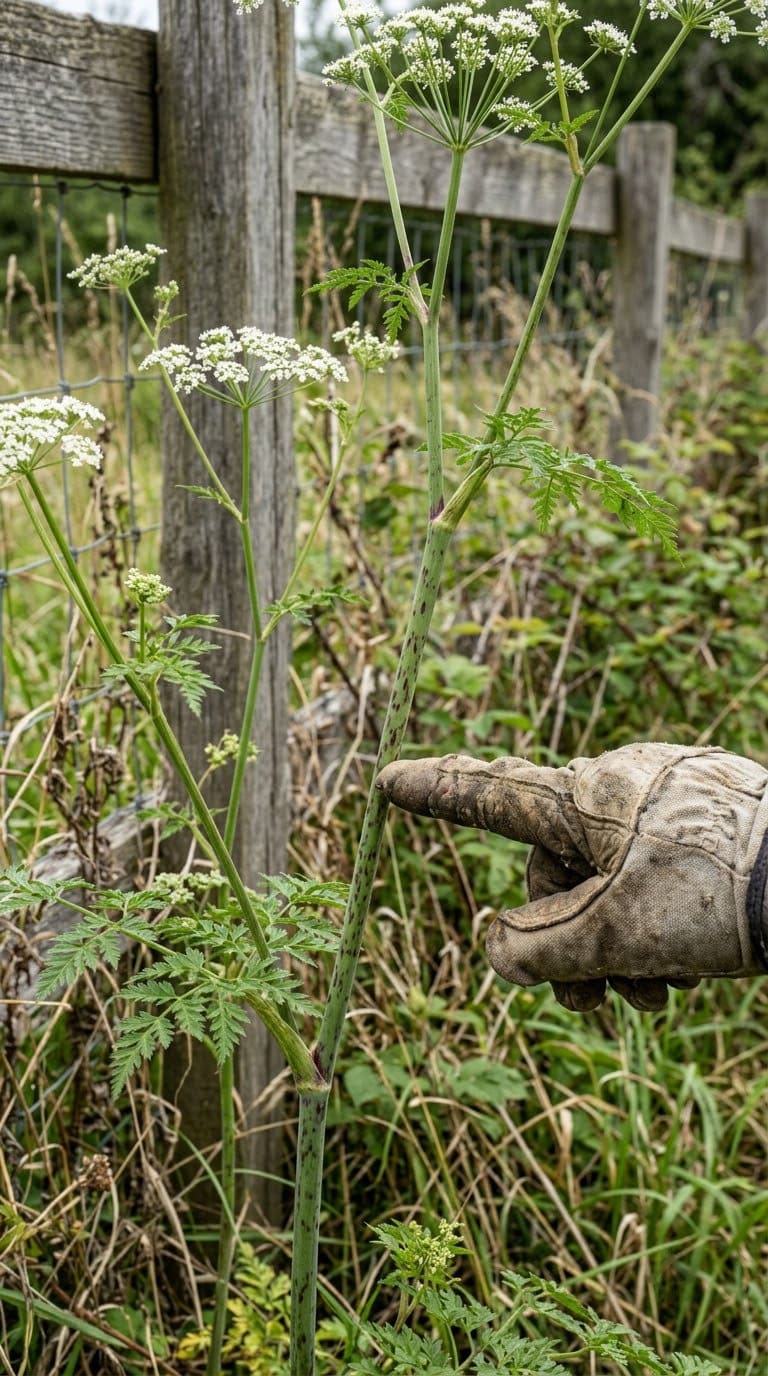
Very. Penn State lists 4 to 5 pounds as enough to kill a 1,000 pound animal. Signs include tremors, poor coordination, paralysis and sudden death from respiratory failure.
It’s the plant most likely to ride in on your hay. Look for a smooth, hairless stem with purple spots. Queen Anne’s lace looks similar, but its stem has fine hairs.
You can’t pick hemlock out of a bale once it’s stacked. Our precaution: if you find it in a hayfield or a bale, reject the load.
Wear gloves, long sleeves and long pants when you pull it, since it’s dangerous to people too. If you use herbicide, follow the label and keep animals out of the field until the plants have died.
Tradeoff: mowing slows seed set but scatters cut plants around, so many owners lean on a well-timed herbicide instead. Ask your county extension office what fits your area.
6. Is bracken fern poisonous to horses and livestock?
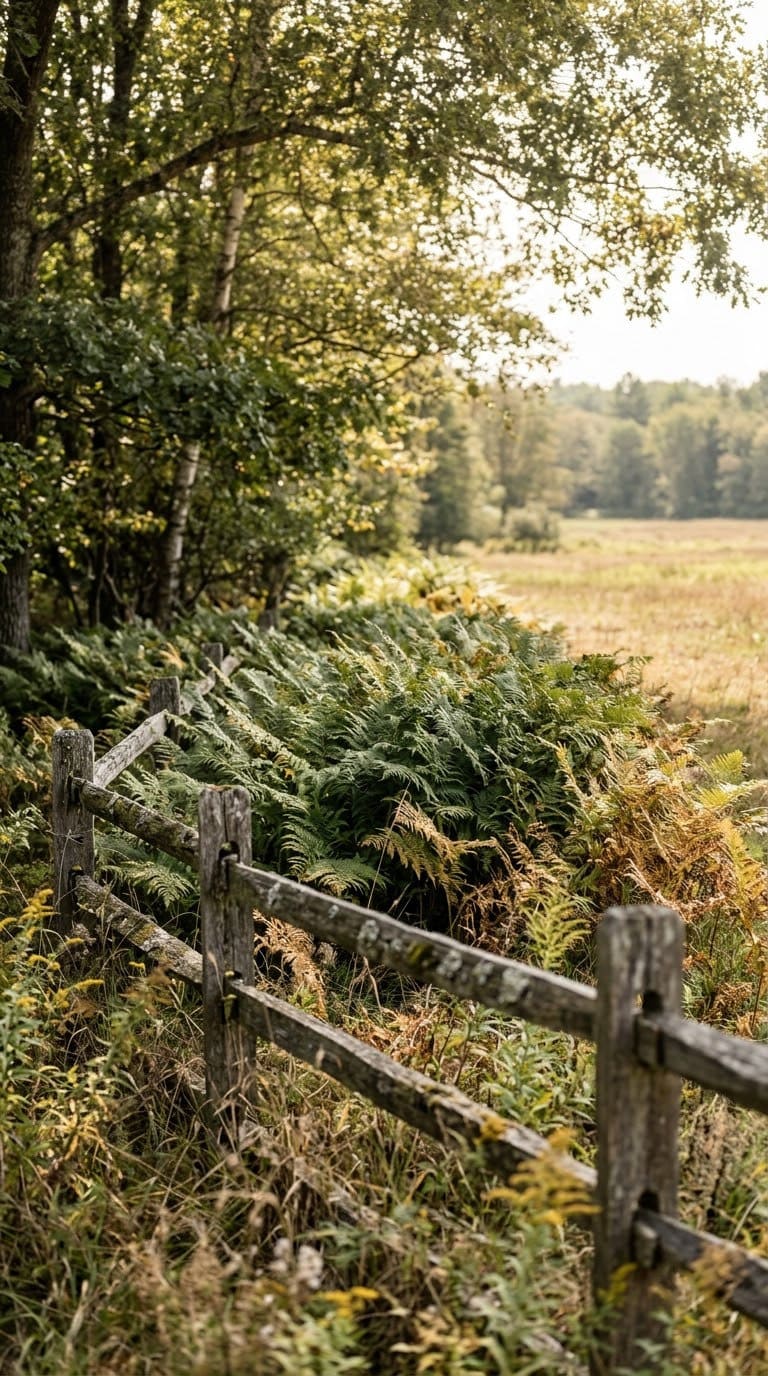
Yes, and it works slowly. Bracken destroys thiamine (vitamin B1), so animals can look fine for weeks and then start losing weight and stumbling.
Penn State lists weight loss, weakness, gait problems, abnormal heart rate, inability to rise and death. UConn’s figure is 3 to 5% of the diet for 30 days or more. That’s why it’s a hay and woodland-pasture problem, not a one-bite problem.
It loves damp, shaded edges and cleared forest. If your paddock backs onto woods, walk the border each spring.
Pull or mow young fronds early and keep forage thick so animals don’t graze it. Our guide to fern types can help you tell bracken from the harmless kinds.
7. Is wild black cherry poisonous to cattle, goats and sheep?
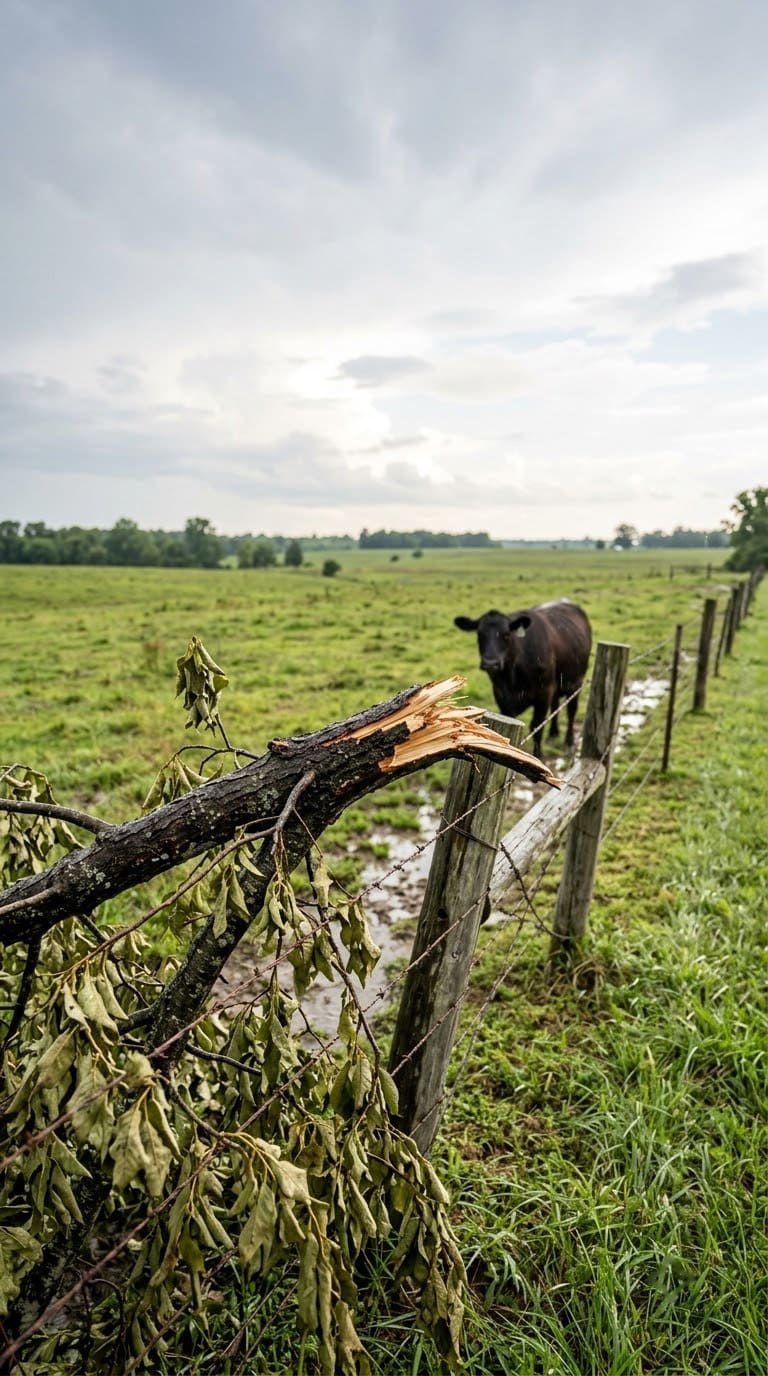
Yes. Wilted cherry leaves release cyanide, and ruminants like cattle, sheep and goats are hit hardest. A broken limb after a storm is the classic risk.
Amanda Grev, Brittany Fletcher and Jeff Semler of University of Maryland Extension give the numbers. As little as 1.2 to 4.8 pounds can kill a 1,200 pound cow, and 0.18 to 0.72 pounds can kill a 180 pound sheep.
Signs can start 15 to 20 minutes after eating. At a high dose, the progression can run 10 to 15 minutes, and at a lower dose it can stretch to 45 to 60 minutes. That leaves almost no time, so your first call after a storm is to your vet.
Leaves still attached to a broken branch hold more cyanide. Fully air-dried brown leaves lose much of their danger. Remove fallen limbs fast, and treat cherry stumps with glyphosate, triclopyr or dicamba if you cut a tree, as UMD advises.
8. Is ragwort poisonous to horses?
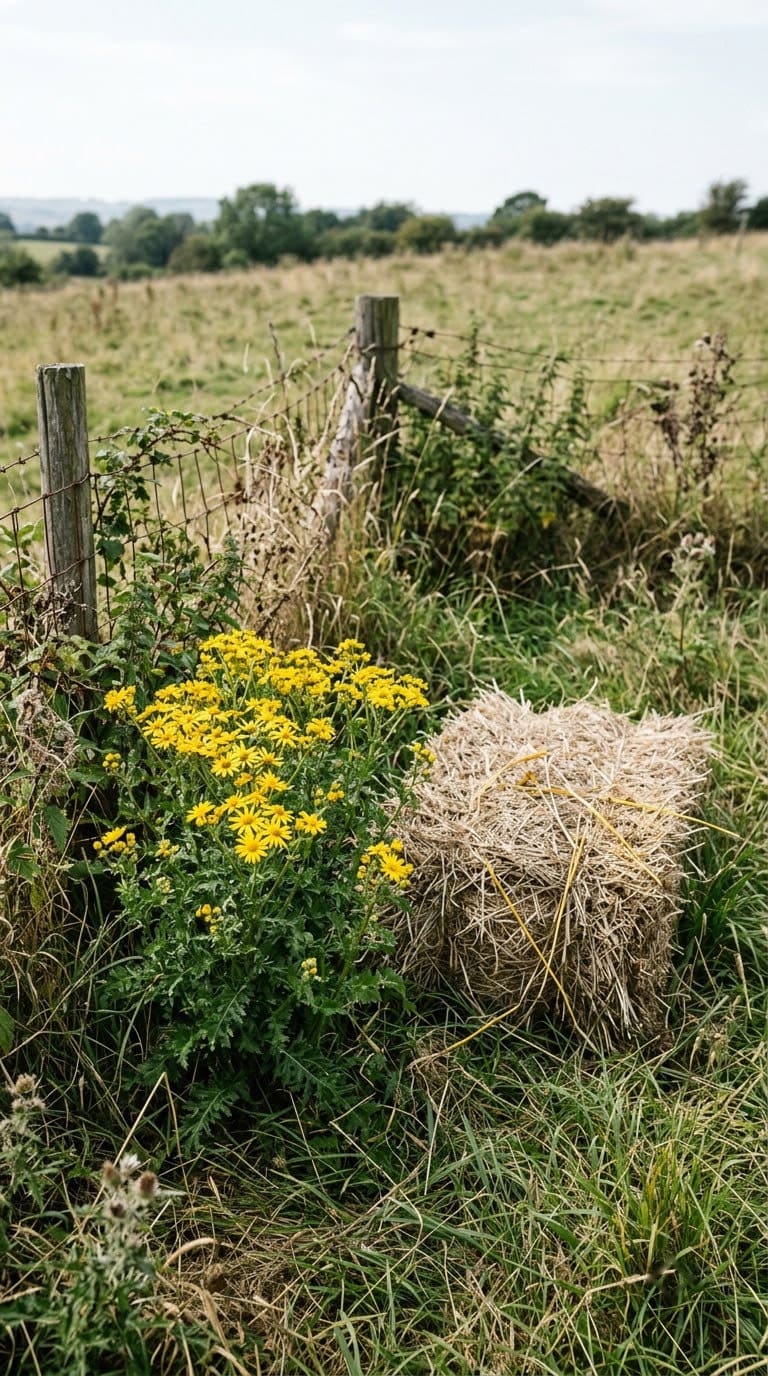
Yes, and it’s the poison you can’t see working. Ragwort contains pyrrolizidine alkaloids (jacobine, erucifoline and senecionine) that damage the liver.
HorseDVM warns that signs take time to show, usually after liver damage is advanced and irreversible. Horses may lose weight, turn jaundiced, press their heads against walls or circle.
Horses naturally avoid it in the field. Contaminated hay and scarce forage are the danger.
Pull plants by hand with the entire root, and wear gloves.
9. Are rhododendron and azalea poisonous to livestock?
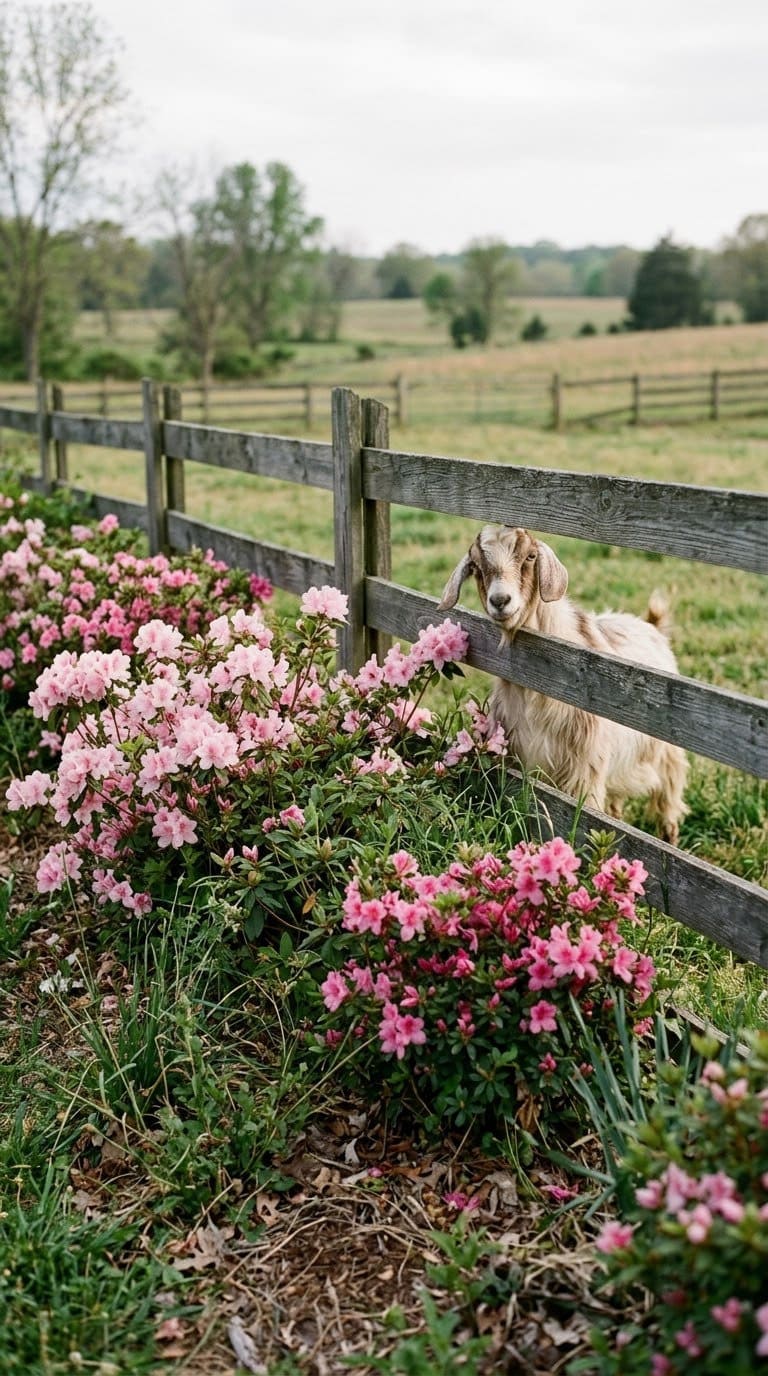
Yes. Rhododendron, azalea and mountain laurel are popular shrubs, and all of them are toxic to livestock. UConn lists about 0.2% of body weight, roughly 2 pounds for a 1,000 pound horse.
Signs include stomach irritation, abdominal pain, abnormal heart rhythm, convulsions and coma. Most cases start with clippings fed over a fence or an animal reaching a bed at the edge of a yard.
Keep these beds on the far side of a barrier and never toss prunings into a paddock. For safer ideas, browse our garden shrubs for shade.
What should you do in the first hour?
Move fast and stay calm. This is our checklist, and your vet’s advice always comes first.
First, take the animal away from the plant and stop all feeding. Then photograph the plant and bag a sample for identification.
Next, call your vet right away. Describe the plant, the amount and the time. Keep the animal quiet, and skip home remedies until your vet says what’s safe.
Treatment depends on the plant, and your vet makes that call. Keep your vet’s emergency number on the barn wall, and write the after-hours line next to it. Most poisonings don’t happen at noon on a weekday.
Our pet plant safety guide covers the household side of this.
When should you check your pasture?
A short calendar beats good intentions.
| When | What to check |
|---|---|
| Late winter to early spring | Look for young hemlock and plan weed control with your extension office |
| Spring | Walk fence lines for bracken, ragwort and wild cherry sprouts |
| After every storm | Remove broken limbs and drifted leaves |
| Fall | Rake maple leaves out of the paddock for about 30 days |
| Every hay delivery | Open a few bales and look for stems and leaves |
How do you buy safer hay and bedding?
Hay is where most surprises hide. UConn advises getting hay from a reputable farmer and being careful about neighbors’ yard clippings.
Break open bales and look for yellow flowers, purple-spotted stems and strange leaves. Ask where the field is and whether it’s sprayed for weeds.
Quick tip: open a bale from the middle of the stack, not just the top. Weeds cluster in certain cuts, and a clean top bale doesn’t prove the rest.
For bedding, ask the seller to name every wood in the load. Walnut shavings are an easy mistake.
What does a 30-day pasture safety plan look like?
Here’s a month-long plan you can start today.
| Timeline | Action |
|---|---|
| Day 1 to 3 | Walk every fence line and photograph unknown plants. Bag a sample of anything odd |
| Day 4 to 7 | Take samples to your county extension office for identification |
| Week 2 | Remove or fence off any of the nine plants you found. Rake wilted maple leaves |
| Week 3 | Check your hay and bedding sources. Ask the seller about field weeds and wood species |
| Week 4 | Post your vet’s emergency number in the barn and set a reminder to walk the fence after each storm |
What we learned the hard way
The biggest mistake is trusting the animal’s instincts. They do skip many toxic plants, but a bare paddock or a dry bale changes the math.
The second mistake is thinking only about your own land. Hemlock seeds blow in, maple leaves drift over, and a neighbor’s yew trimmings can land on your side.
If we could change one habit, it would be walking the property after every storm. It takes ten minutes, and it’s the cheapest insurance on this list.
And please skip the guesswork on plant ID. Your county extension office can identify a sample, and a bagged sample helps your vet more than a guess.
How we researched this
We read the University of Connecticut Extension horse toxic plants publication, Penn State Extension’s toxic plants guide, University of Maryland Extension’s cherry leaf bulletin, Texas A&M’s veterinary guidance and HorseDVM’s ragwort entry. Every dose in this guide comes from one of those pages.
Where they disagreed, like red maple, we said so. We found no verified vet-bill figures, so we left costs qualitative.
Frequently Asked Questions
What plants are most toxic to horses?
Yew, oleander, poison hemlock, red maple and rhododendron are among the most dangerous. Some act within hours. Ragwort and bracken do slow damage.
Are the same plants toxic to cattle, goats and sheep?
Many are, but not all. Red maple mainly affects horses and ponies. Wild cherry is most dangerous to ruminants.
How long do fallen red maple leaves stay toxic?
Penn State says fallen autumn leaves can stay toxic for about 30 days. Remove them from the pasture and check the hay.
Can poison hemlock end up in my hay?
Yes, and you can’t pick it out of a bale once it’s stacked. Open bales before you buy, and reject a load that contains purple-spotted stems.
My horse ate something it shouldn’t have. What do I do?
Remove the animal from the plant, bag a sample and call your vet immediately. Don’t wait for signs.
Can I keep yew or rhododendron on a farm property?
Yes, if animals can’t reach it and nobody tosses clippings into a paddock. Many owners choose safer shrubs near fences.
Where can I get a plant identified?
Your county extension office can identify a sample, and Texas A&M’s Dr. Easterwood recommends starting there.
Products We Recommend
This post contains affiliate links. We may earn a commission on qualifying purchases at no extra cost to you.
LOCCEF MicroFoam Nitrile Coated Safety Work Gloves (6 Pairs)
Grippy, breathable gloves for pulling hemlock or ragwort by hand, so bare skin never touches the plant.
Shop Now
Fiskars Hori Hori Garden Knife with Sheath
Sturdy digging knife that helps you get the whole root out of ragwort and other pasture weeds.
Shop Now
Chapin 29002 2-Gallon Stand 'N Spray Pump Sprayer
Compact sprayer for spot-treating weeds or cherry stumps. Follow the herbicide label and keep animals out until plants have died.
Shop NowNever miss an update — choose FarmFoodFamily as your preferred source on Google.
How it works: Tap the button below to open Google's settings page, then check the box next to FarmFoodFamily.
Tap the checkbox to turn it blue — that's how you know it's set.