35+ Best Porch Post and Column Ideas and Designs On A Budget (Photos)
A porch post has to hold the roof up and look right doing it, and the material decision matters more to how it ages than any style choice on top of it.

Never miss an update — choose FarmFoodFamily as your preferred source on Google.
How it works: Tap the button below to open Google's settings page, then check the box next to FarmFoodFamily.
Tap the checkbox to turn it blue — that's how you know it's set.
A porch post has to hold the roof up and look right doing it, and the material decision matters more to how it ages than any style choice on top of it.
Products We Recommend
This post contains affiliate links. We may earn a commission on qualifying purchases at no extra cost to you.

Adjustable Vinyl Post Sleeve Wrap Kit (8-Pack)
White PVC post wrap for a 3-6.5 inch post, a direct real-product match for idea #19's post-wrap technique.
Shop Now
Adjustable Deck Post Anchor Base Brackets (8-Pack)
Keeps a post's base off direct ground contact, the exact detail the FAQ's IBC/pressure-treated-wood answer is built around.
Shop Now
Thompson's WaterSeal Multi-Surface Waterproofer Stain
Clear waterproofing stain for wood posts, addresses the "Wood" material section's real maintenance downside (humidity, sun, insect vulnerability).
Shop NowA porch post does two jobs at once: it holds the roof up, and it’s often the first architectural detail anyone notices walking up to the house. Get the material wrong and it’s a maintenance headache for years.
Get the style wrong and nothing else about the porch quite works. Thirty-one style ideas below, a straight material comparison after that, and a materials FAQ grounded in actual building code, not guesswork.
Related: 17 Different Types Of Porches (With Pictures)
Answer 4 quick questions and get matched to the exact fix for your yard — drainage, budget, layout, or something else entirely.
Take the Free Quiz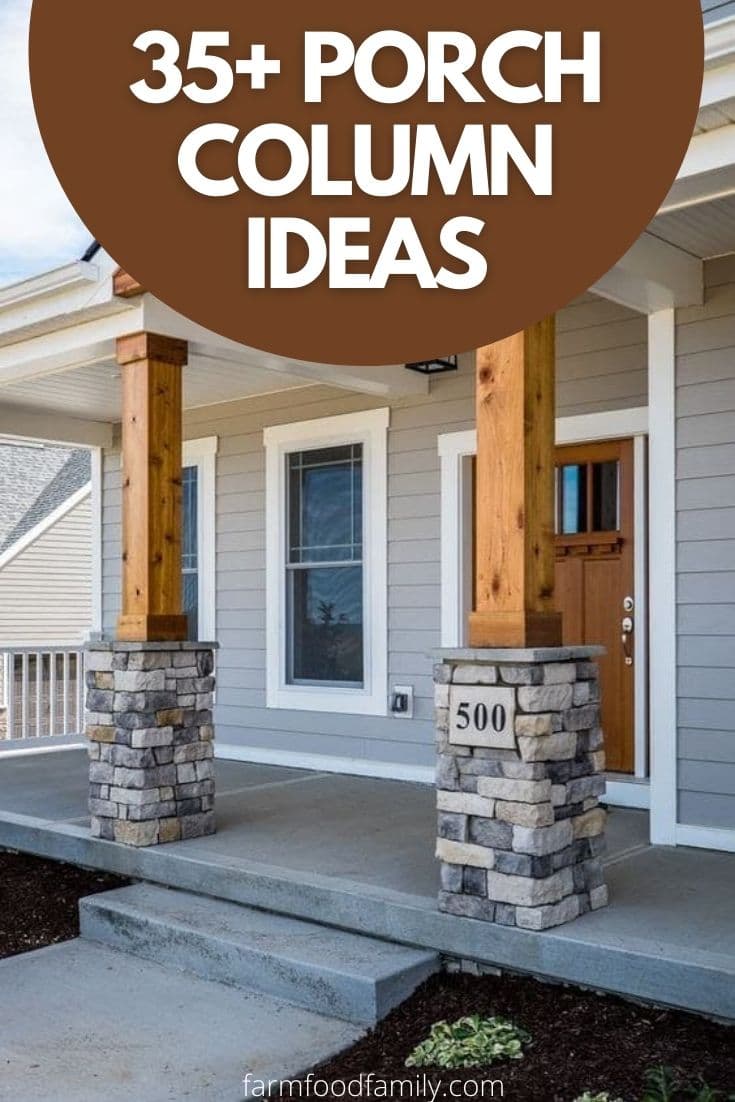
35 Porch Post Ideas and Designs On A Budget
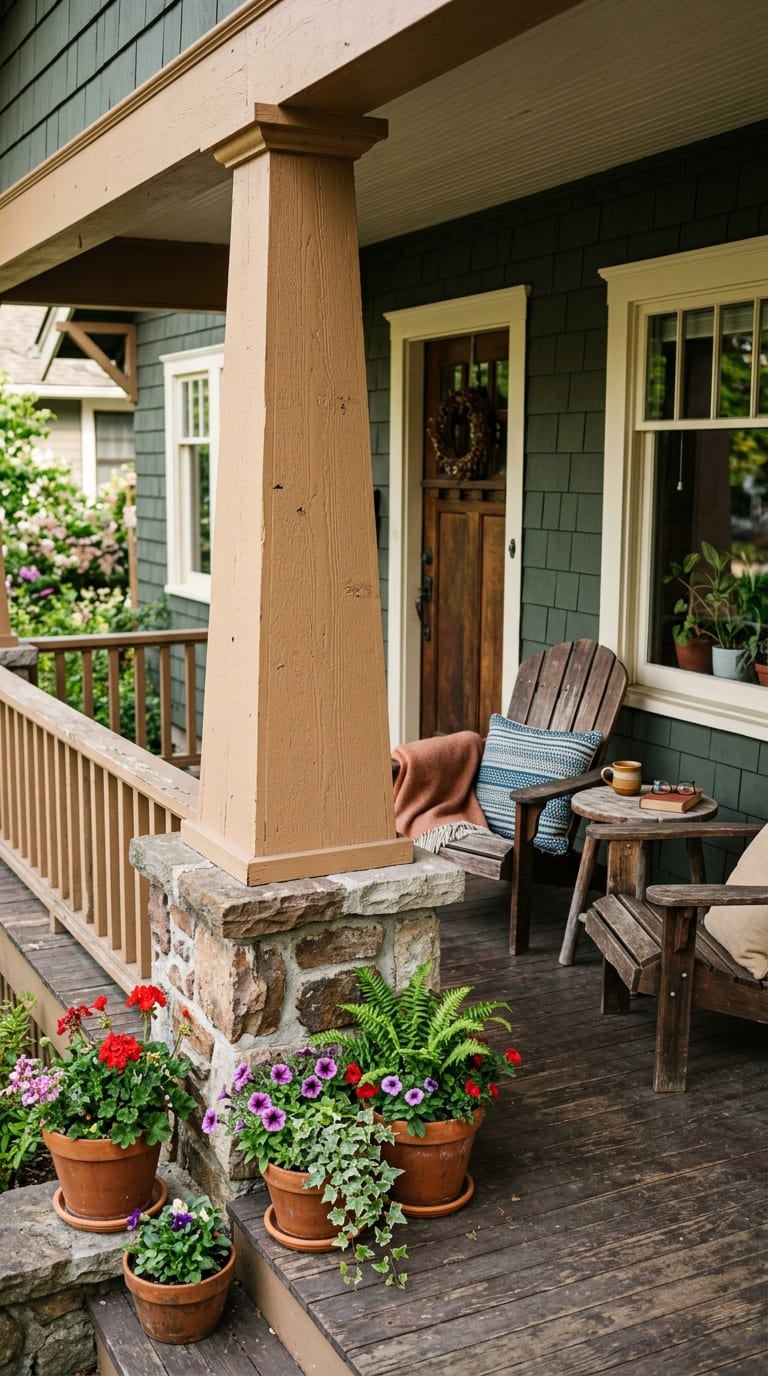
1. Craftsman-Style Post in Warm Light Brown
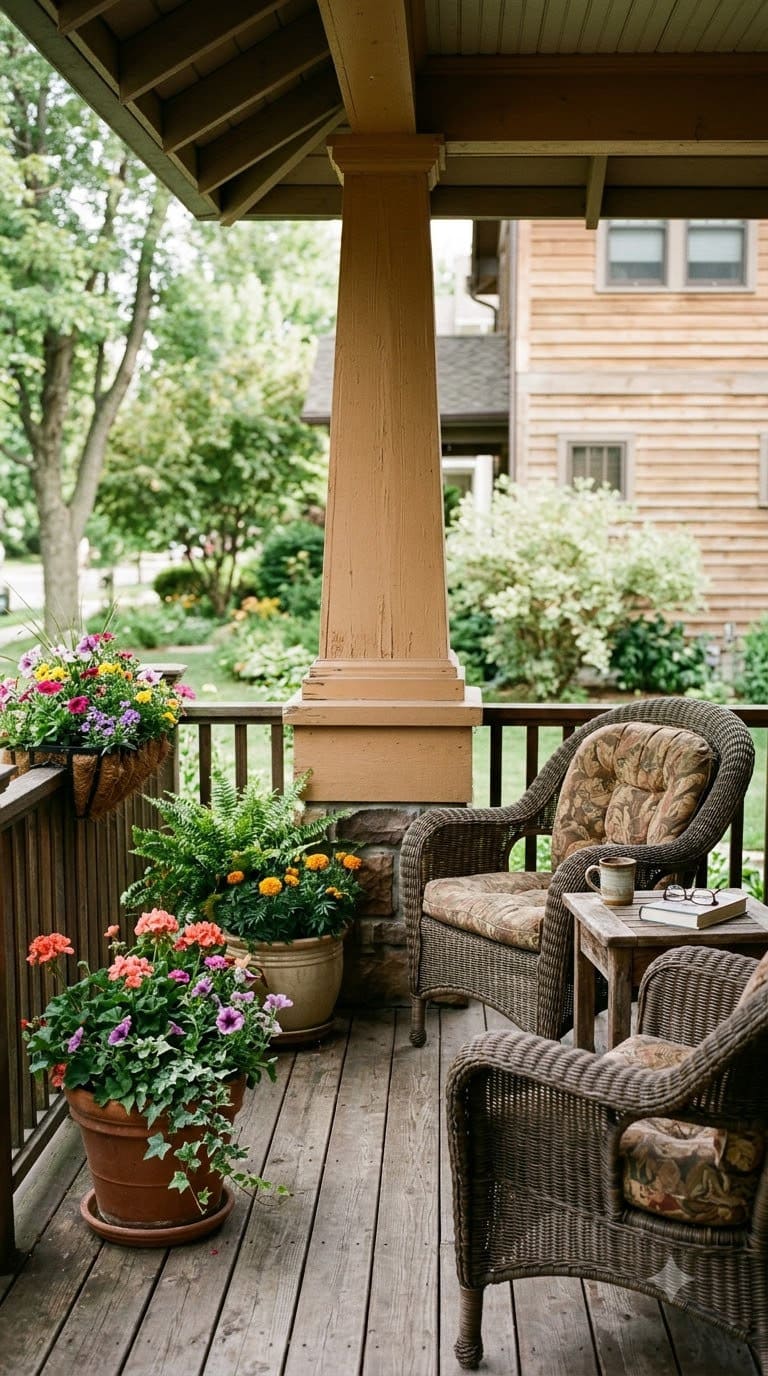
A minimalist craftsman post has become one of the most requested styles in recent years, and a warm light brown finish is a big part of why it reads as welcoming rather than stark.
It suits a small porch just as well as a larger one, comfortably fitting two chairs and a small side table without feeling cramped.
Layer in a few potted flowers or a simple lighting fixture and the whole setup reads as considered rather than sparse.
2. Cedar Post With a Steel Railing Accent
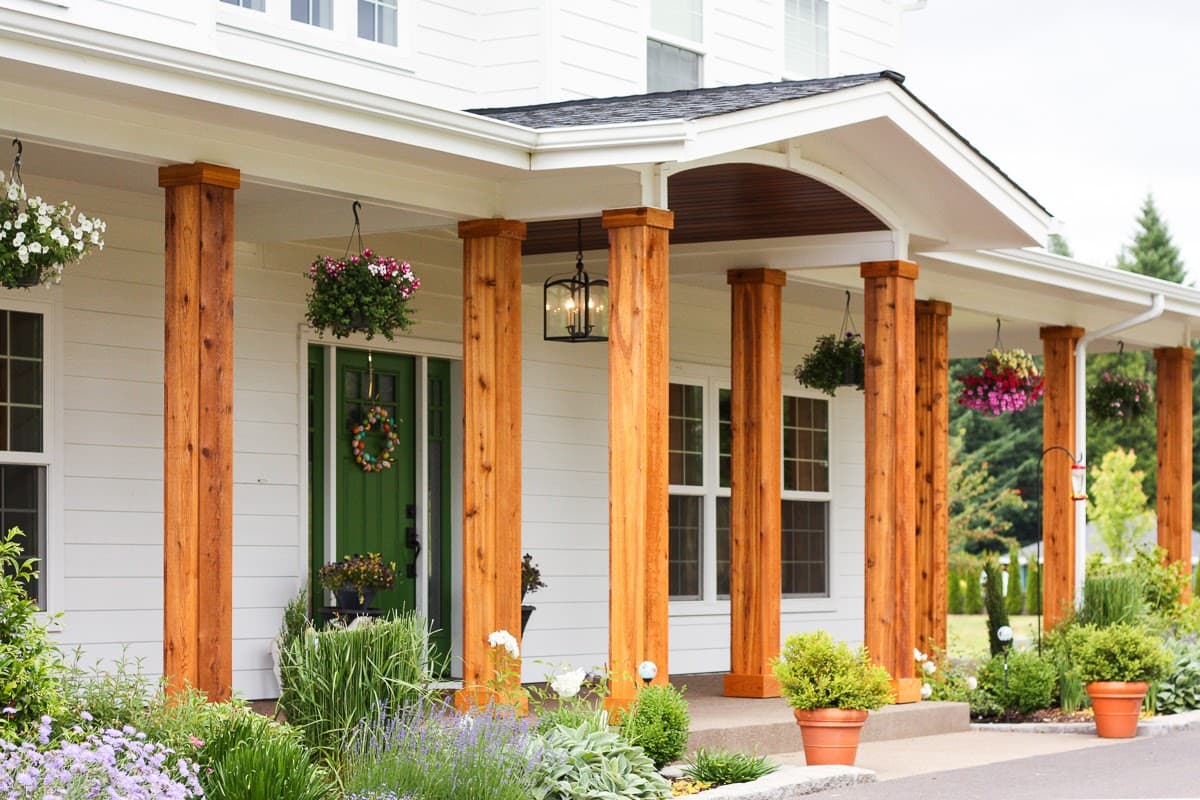
Cedar paired with a sturdy steel railing is a genuinely traditional combination, and it carries real cultural weight in a way a lot of newer materials don’t. The wood brings warmth, the steel brings a cleaner, more modern edge to the same porch.
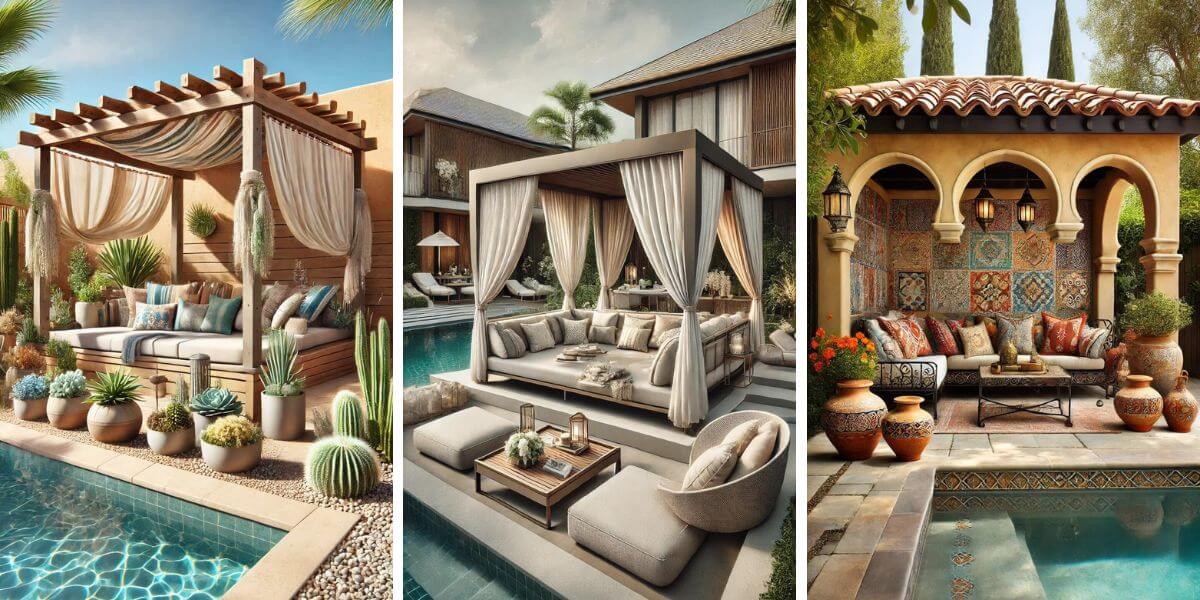
A lounge chair or bench nearby rounds out the look and gives the post a reason to be more than just structural.
Most yard problems trace back to one specific, fixable cause. Find yours in 4 quick questions.
Take the Free QuizRelated: 45+ Best Screened In Porch Ideas and Designs (With Pictures)
3. Modern Steel-and-Concrete Post for a Minimalist Facade

Metal on a porch post shifts a home’s whole exterior toward modern territory almost instantly. A steel-and-concrete post finished in a deep brown reads as genuinely upscale rather than industrial, especially alongside twin windows that keep the facade balanced.
Keep additional decoration minimal here. Restraint is part of what makes a contemporary facade actually read as contemporary.
Related: What Does A Green Porch Light Mean?
4. Stone-Based Column With a Wood Post (Farmhouse)
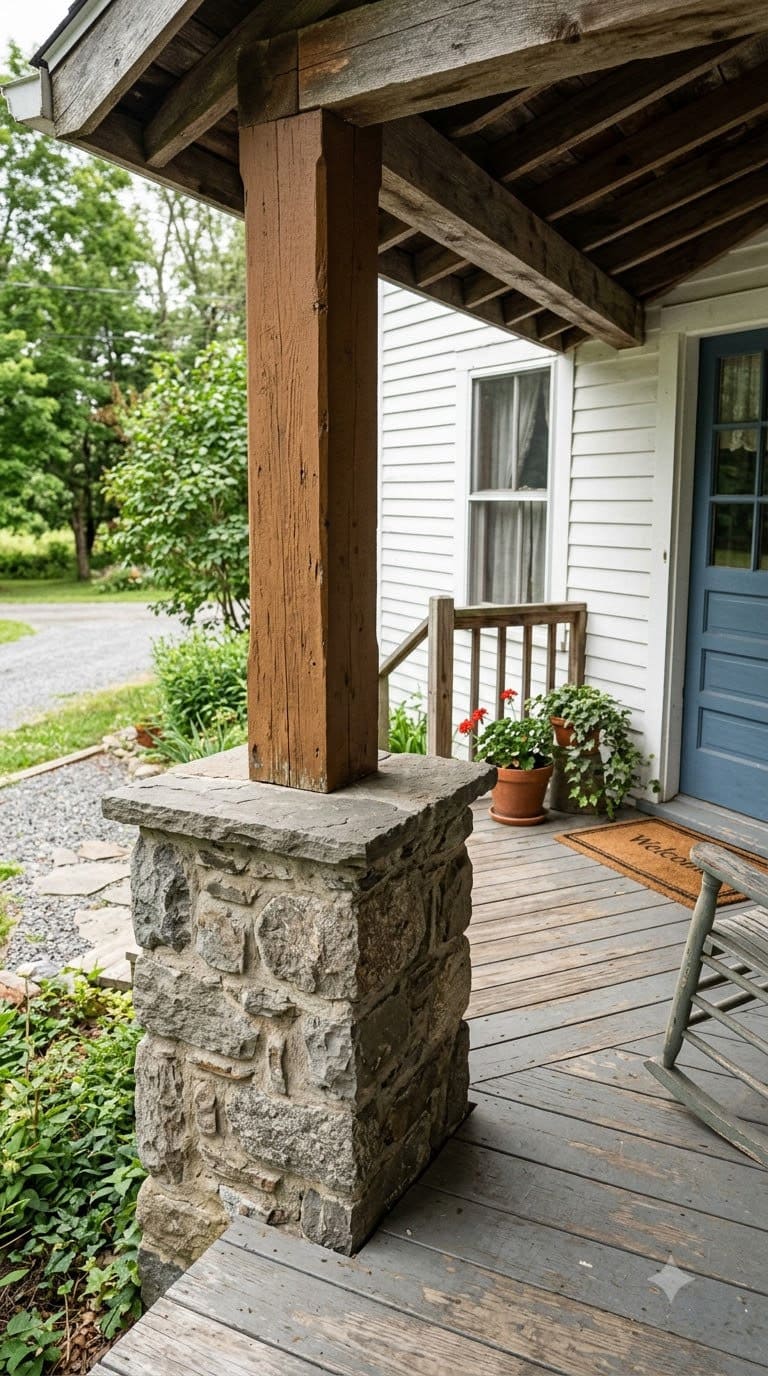
Timber and stone together is a classic pairing for a real reason: stone at the base gives a wood post real physical support, not just visual weight.
A gray stone base with a brown wood highlight reads as traditional without tipping into dated.
This combination stays flexible enough to work across a range of farmhouse looks, from rustic to more refined.
White PVC post wrap for a 3-6.5 inch post, a direct real-product match for idea #19's post-wrap technique.
Shop NowThis post contains affiliate links. We may earn a commission on qualifying purchases at no extra cost to you.
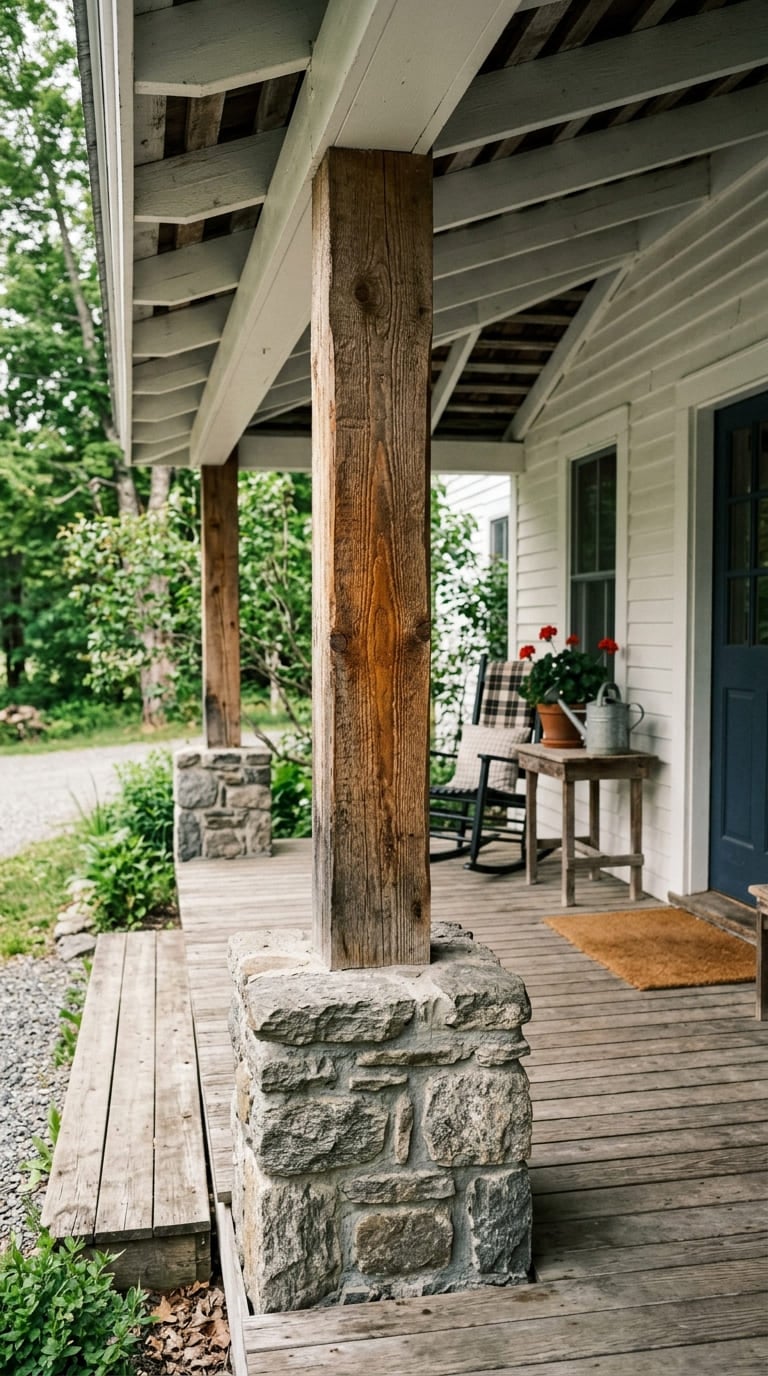
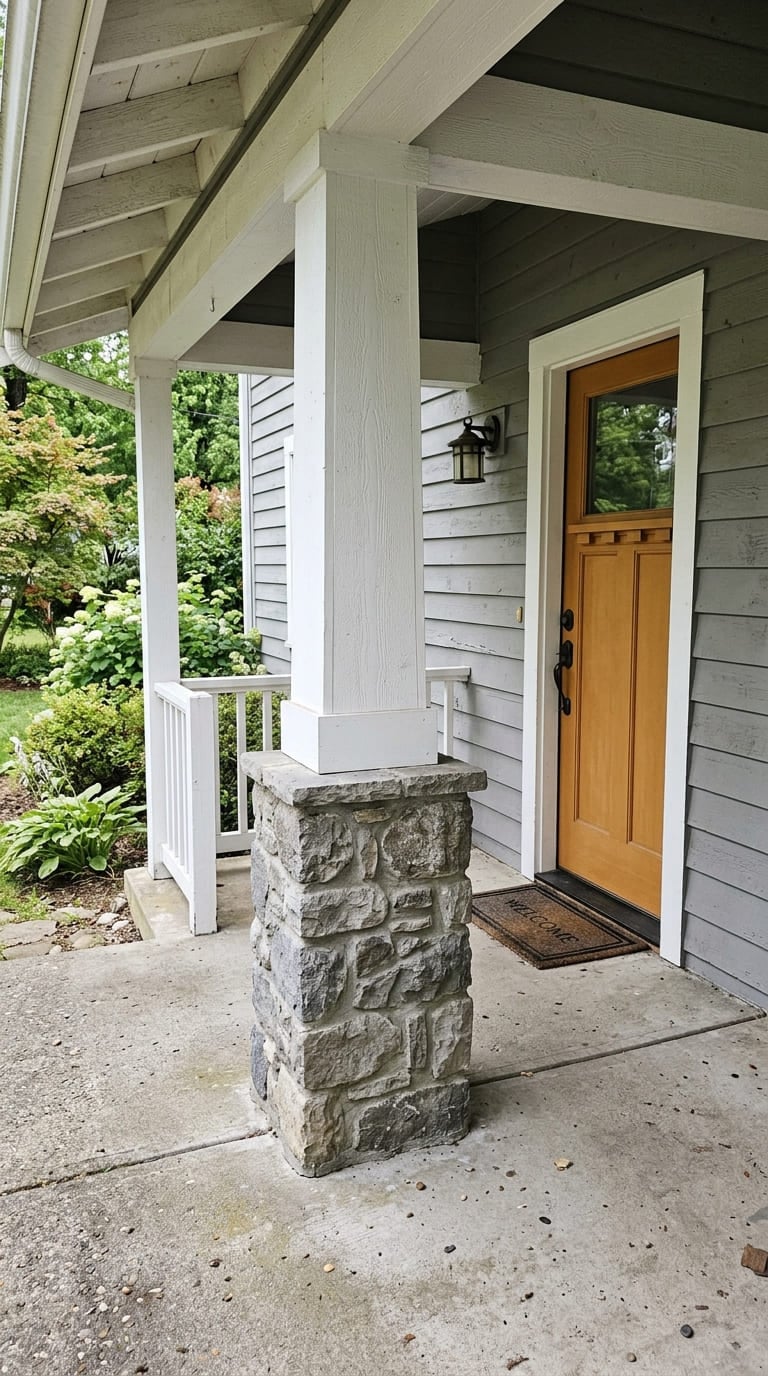
5. Grey Stone Post With a White Upper Half
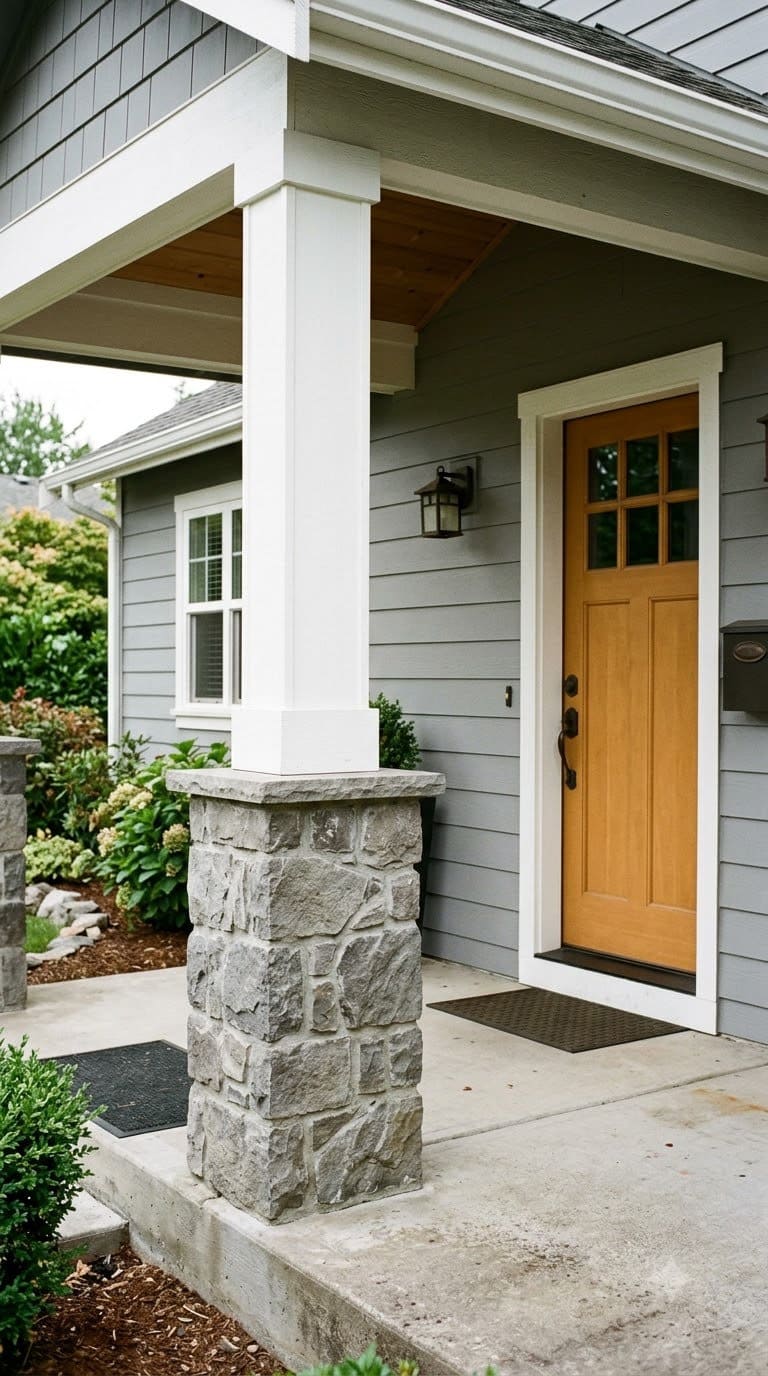
Wood-and-stone isn’t the only way to pair natural materials with paint.
A grey stone lower half topped with a clean white upper section creates a minimalist look that still reads as substantial, and it pairs naturally with a gray exterior wall.
The average homeowner spends $616/year on yard fixes that don't address the real problem. Find out what yours actually is — before you spend another dollar.
Take the Free QuizA camel-toned front door adds warmth to an otherwise cool-toned facade.
Related: 30+ Cheap Porch Ceiling Ideas and Designs
6. White Vinyl Post With String Lighting
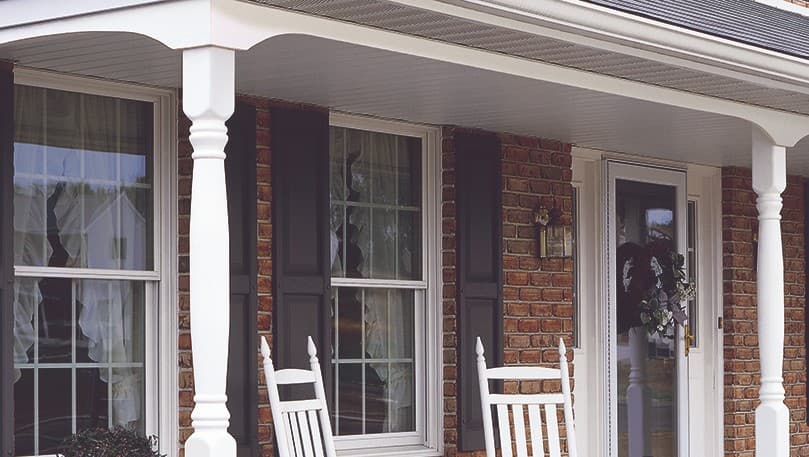
Vinyl doesn’t have to mean a complicated build. A white post keeps the whole exterior looking clean and current, and a gray accent color nearby is a popular pairing right now for exactly that reason.
String lighting along the post is a low-cost way to give the porch a warm glow after dark without any structural changes.
Related: What Does A Green Porch Light Mean?
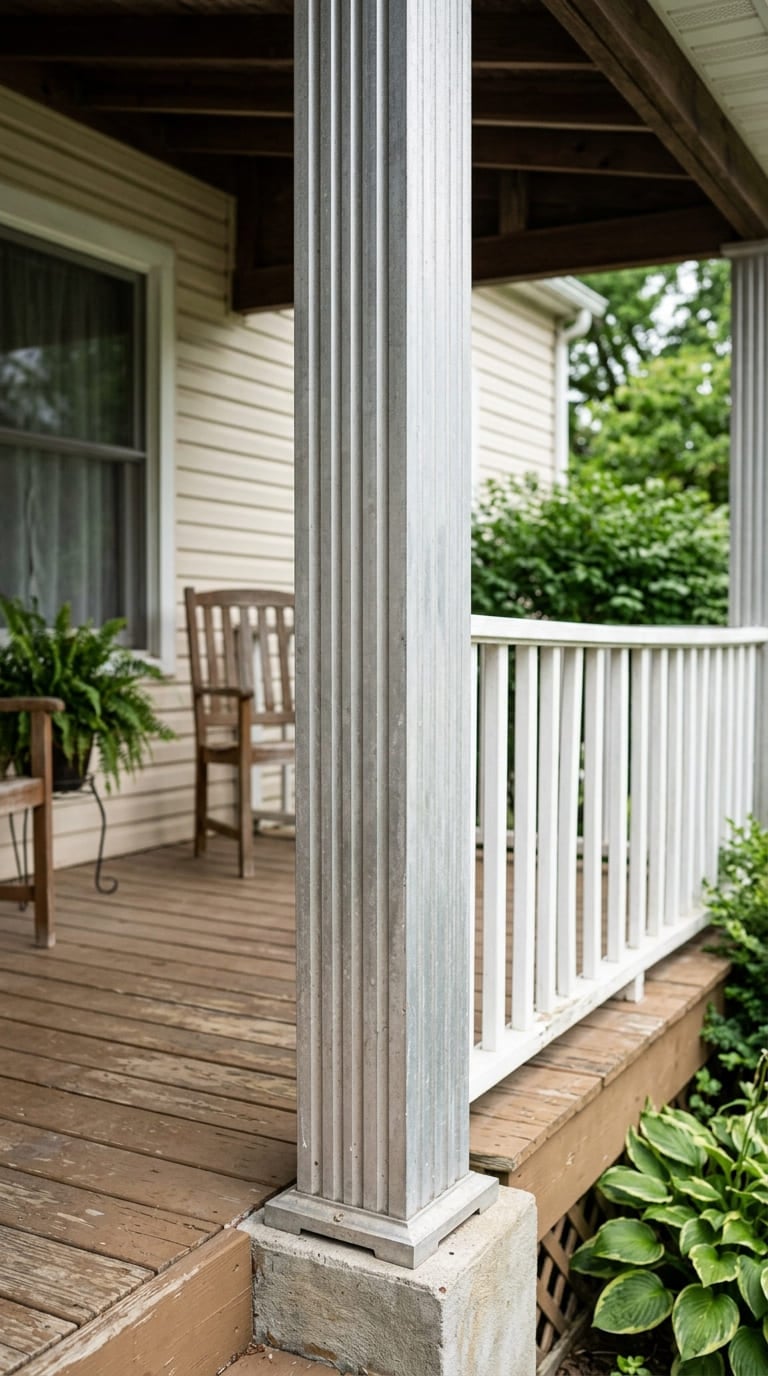
7. Square Fluted Aluminum Post, Kept Simple
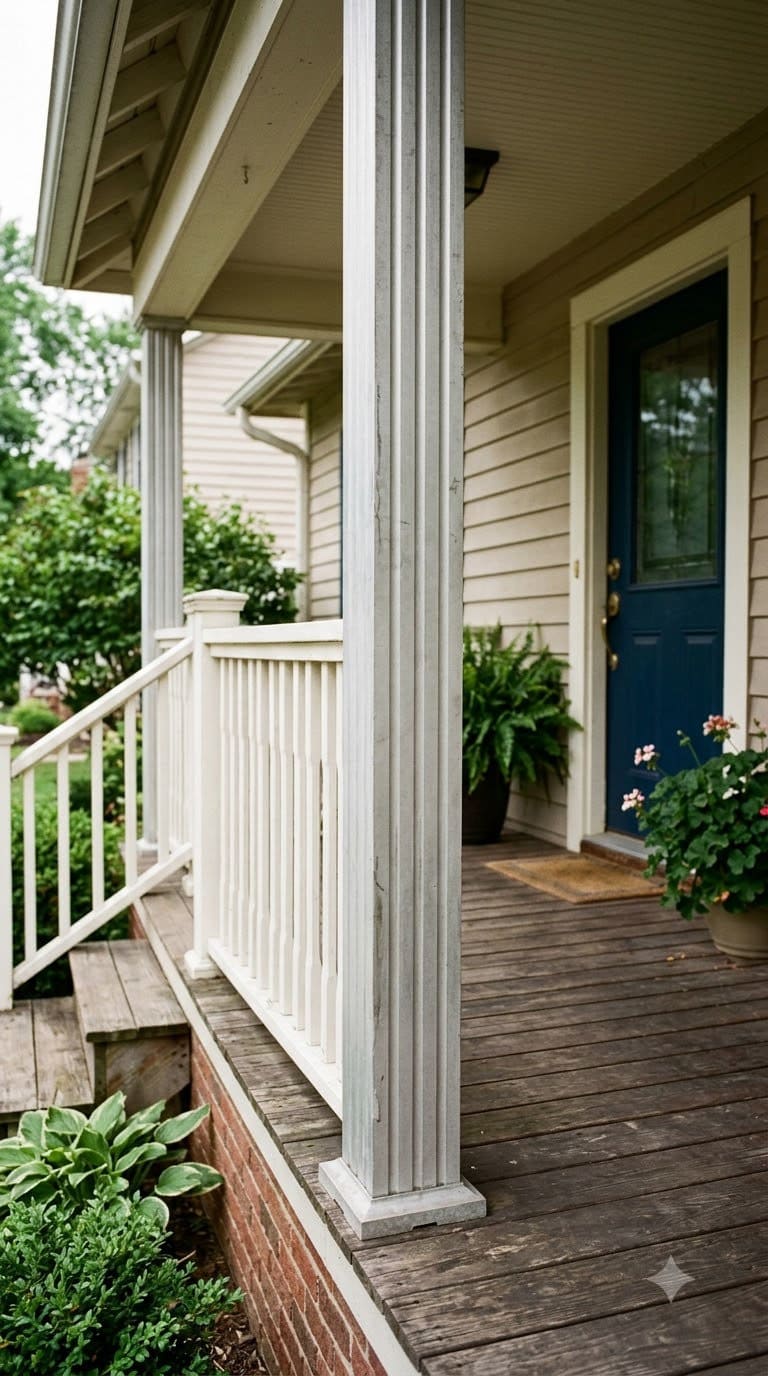
A square, fluted aluminum post keeps things architecturally interesting without adding real complexity to the build.
It’s a good option for anyone who wants a bit of detail without committing to an elaborate design.
Related: 20+ Cozy Farmhouse Porch Decor Ideas
8. Faux Stone Column Wrapped and Painted White
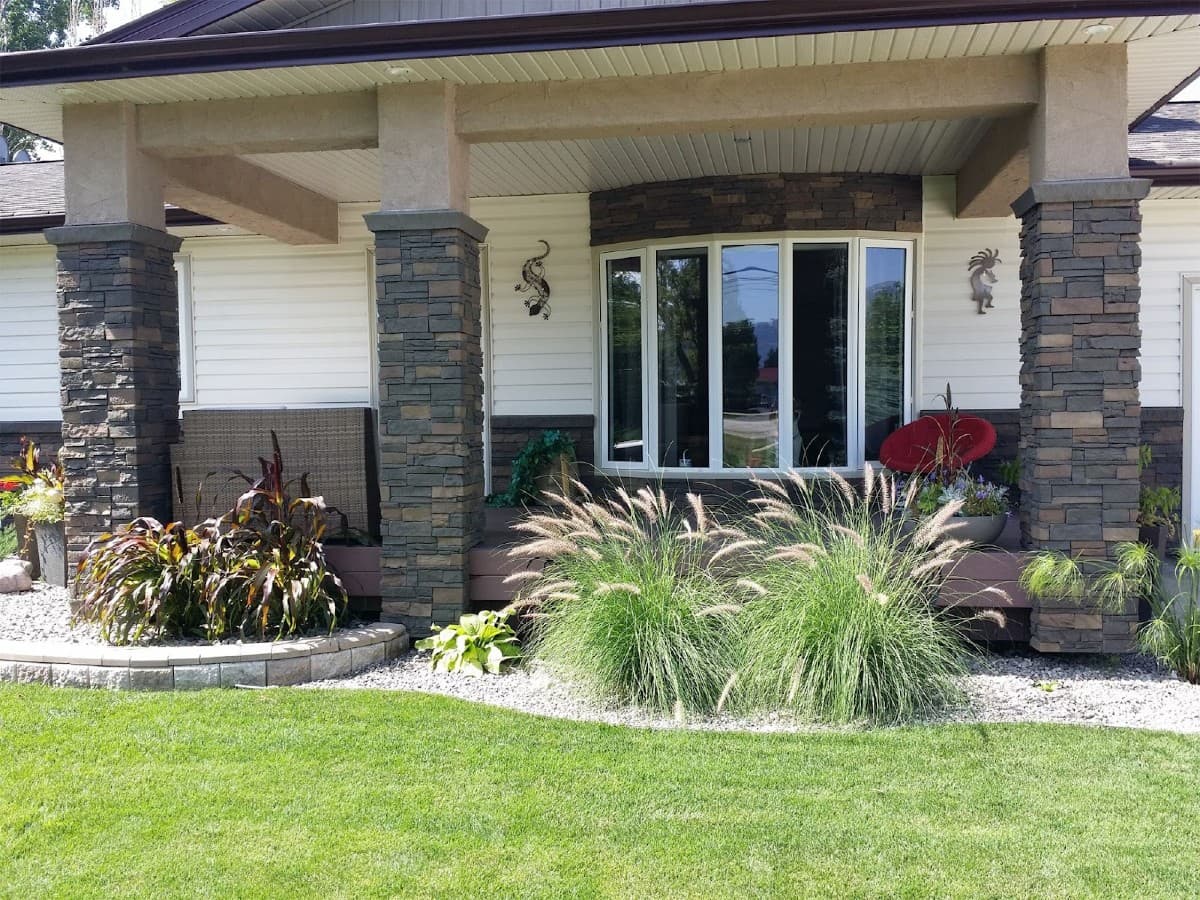
Faux stone gets a real material’s texture without the weight or cost, and wrapping it in white paint keeps the whole thing from reading as an obvious substitute.
It’s a practical middle ground for anyone who wants a stone look on a real budget.
Related: 25+ Best Christmas Porch Decoration Ideas
9. Modern Vinyl Post for a Terrace-Style Home
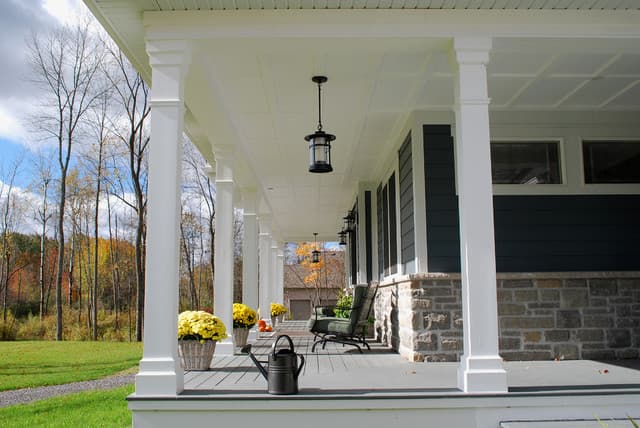
Vinyl posts work especially well when the rest of a home’s exterior already leans on vinyl elements, since the materials read as one coherent system rather than mismatched parts.
It’s a lower-maintenance option for a terrace-style layout specifically.
Related: 15+ DIY Porch Decoration Ideas For This Summer
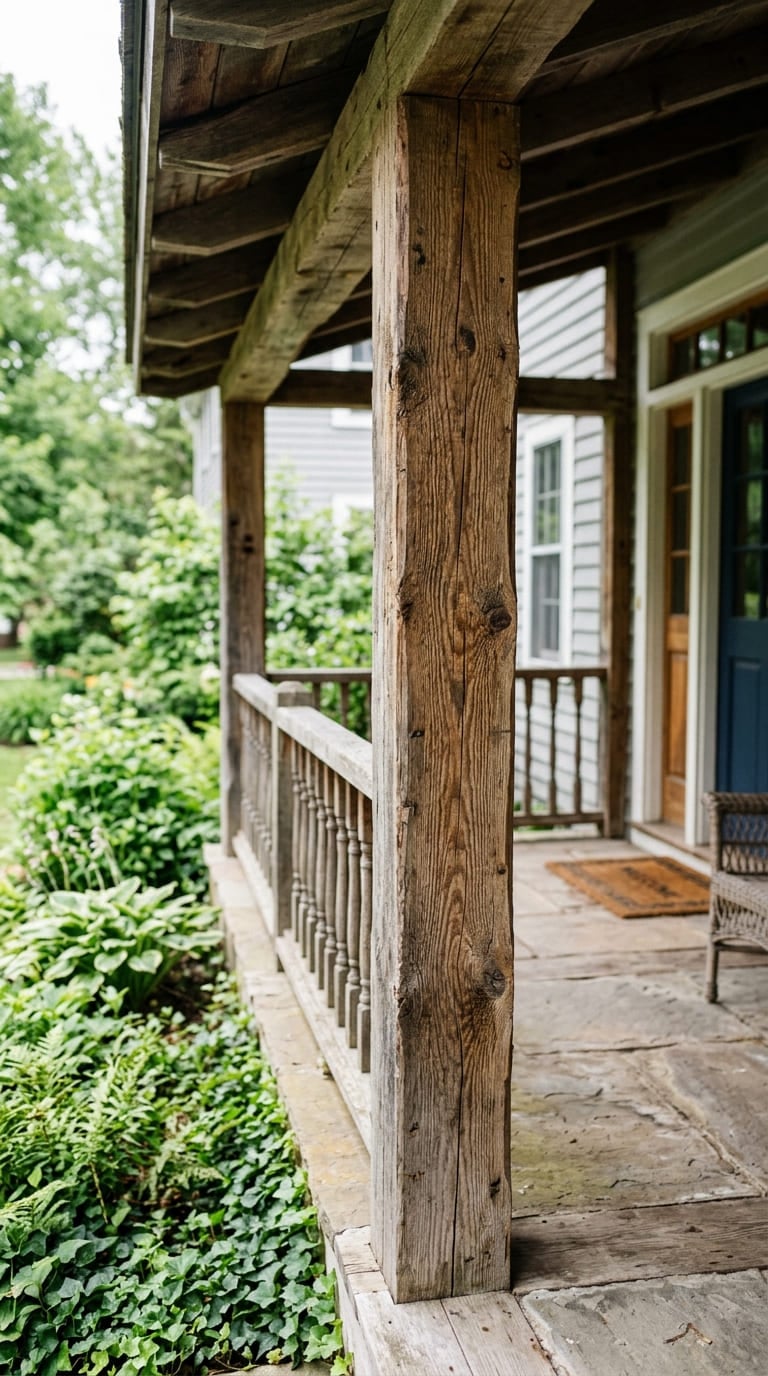
10. Natural Timber Post, Left Unpainted
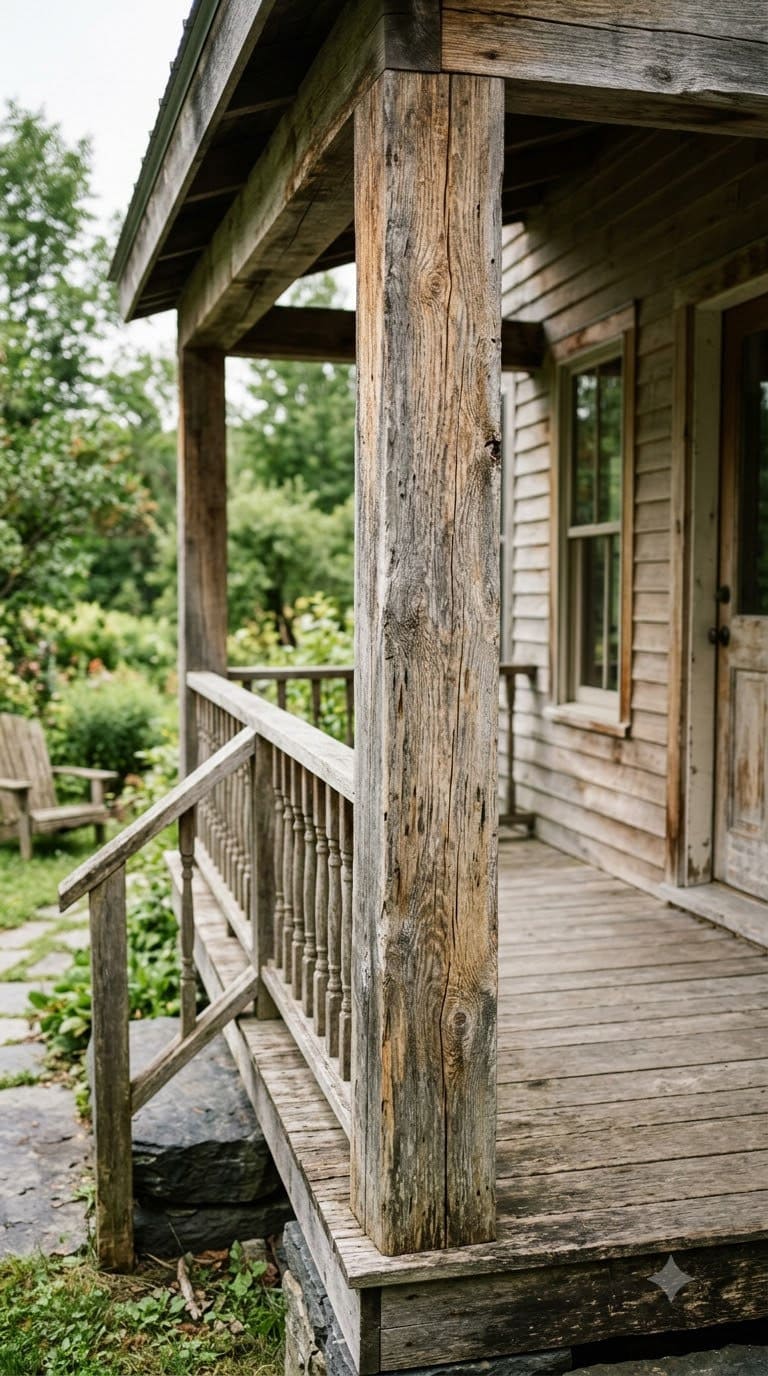
Leaving timber posts unfinished, or close to it, lets the wood grain do the visual work instead of a paint color.
It’s one of the more traditional-feeling options on this list, and it ages into real character rather than needing to be repainted to stay attractive.
Related: 17+ Beautiful Porch Wall Decor Ideas
11. Traditional White Pillar With a Hardwood Terrace Floor
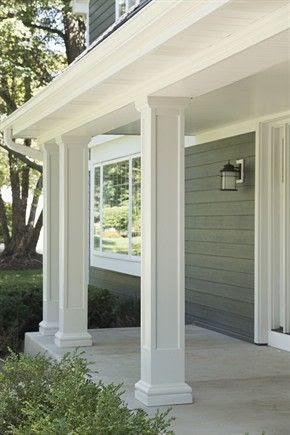
Classic homes have gotten harder to find in a lot of neighborhoods, which is part of why a traditional white pillar with a hardwood terrace floor stands out.
A dark accent color nearby keeps the overall look sophisticated rather than plain.
A potted plant or two, real or artificial, adds life without adding maintenance if that’s a concern.
Related: 17+ Repurposed Spring Porch Decor Ideas
12. Industrial Metal Post With Ornamental Accents
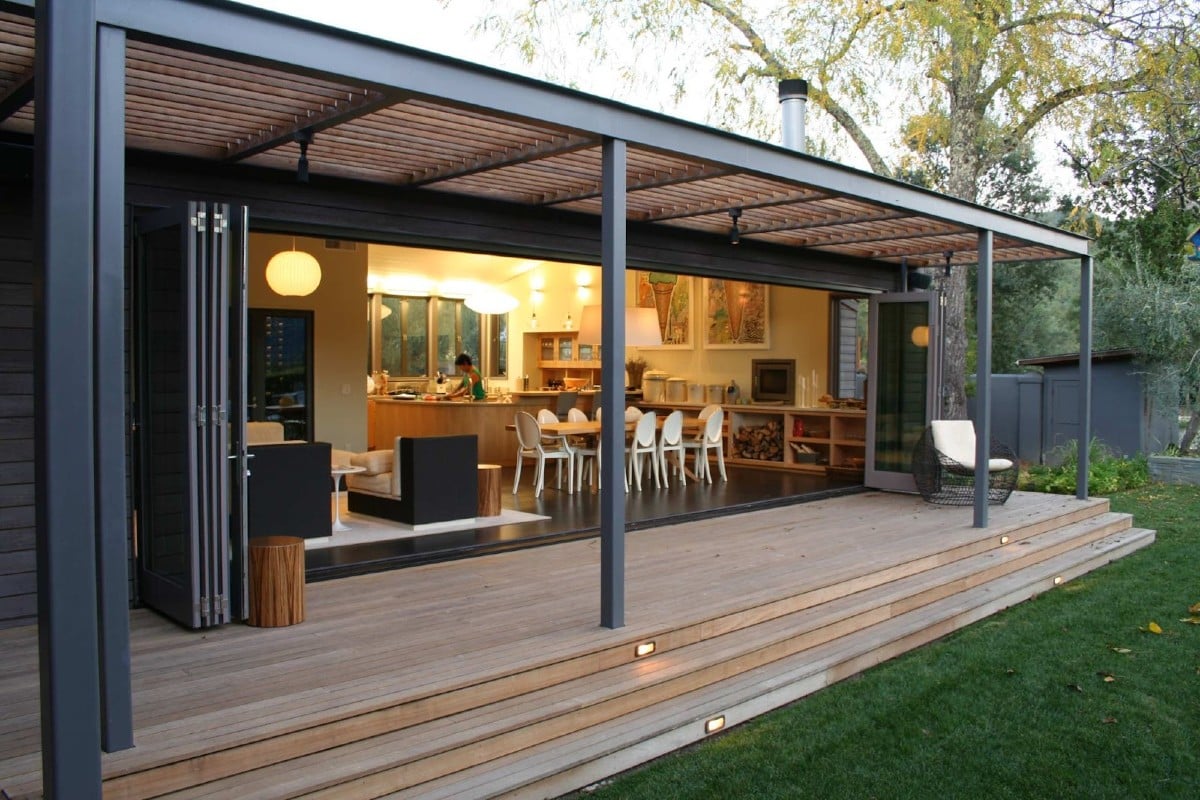
An industrial-leaning metal post on an otherwise traditional home reads as a deliberate, memorable choice rather than a mismatch, as long as it’s executed with intent.
Steel gives the whole exterior a lasting, solid feel.
13. Colonial-Style Post in Gray and White
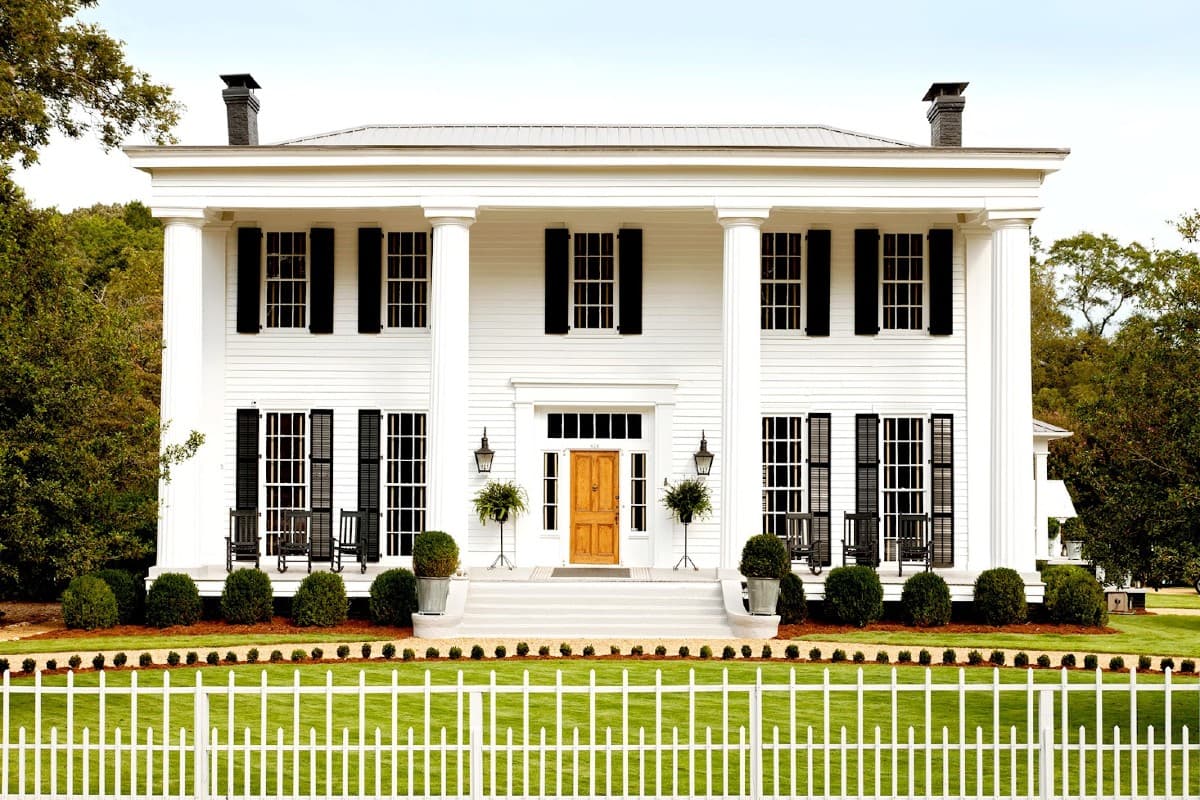
A colonial post design brings real staying power to a facade, and a gray-and-white color scheme keeps that traditional shape from feeling heavy.
Black accents worked in carefully add contrast without overwhelming the rest of the palette.
14. Wrought Iron Post for a Tight Terrace
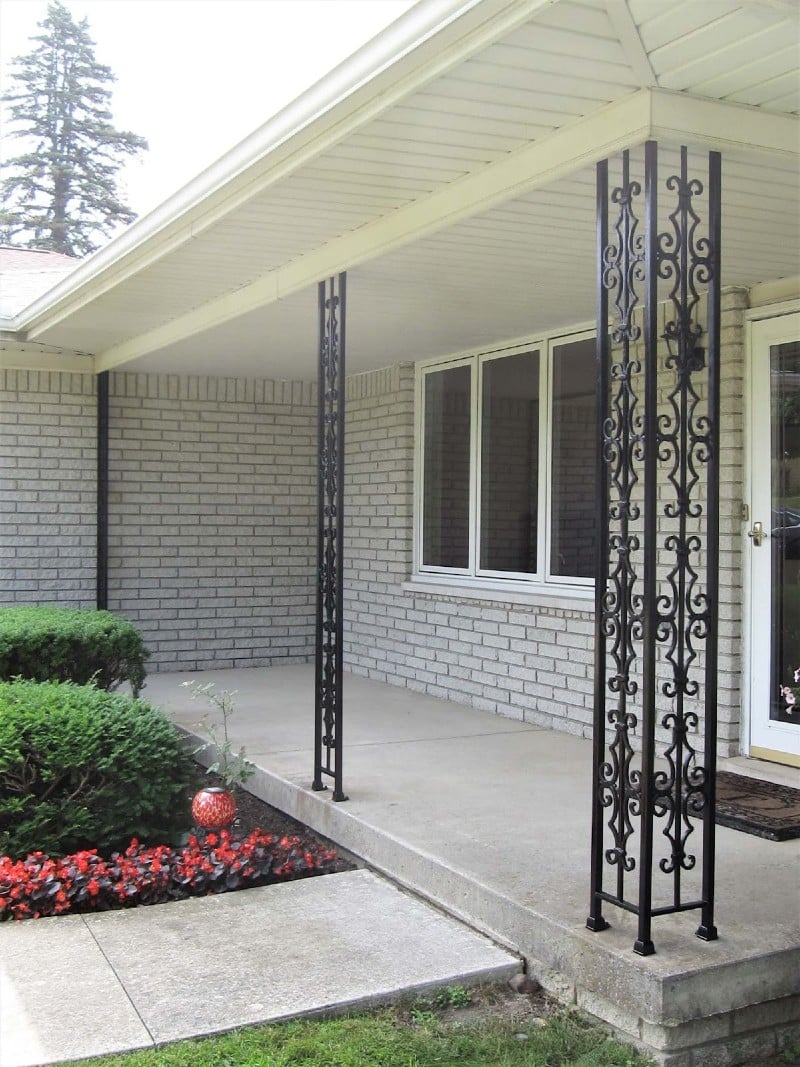
A small terrace doesn’t leave much room to experiment with a bulky post, which makes wrought iron worth considering.
It reads as minimalist and classic at once, and it frames an entry door especially well against a dark tone.
Flower pots on either side finish the look without adding real bulk to the space.
Related: 30+ Best Porch Lighting Ideas & Designs
15. Dark Aluminum-Framed Post With Black Railing
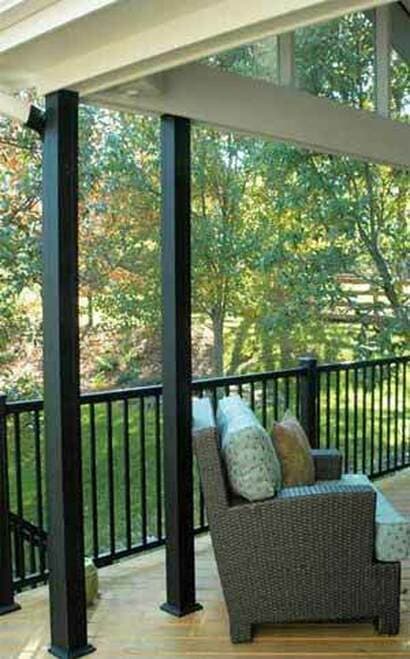
Aluminum brings real strength to a porch post while still reading as a modern material choice.
A black railing running the length of the terrace ties the whole structure together and makes a clear design statement rather than a purely functional one.
Related: 41+ Rustic Vintage Front Porch Decor Ideas
16. A Stone Base Under a Wood Post
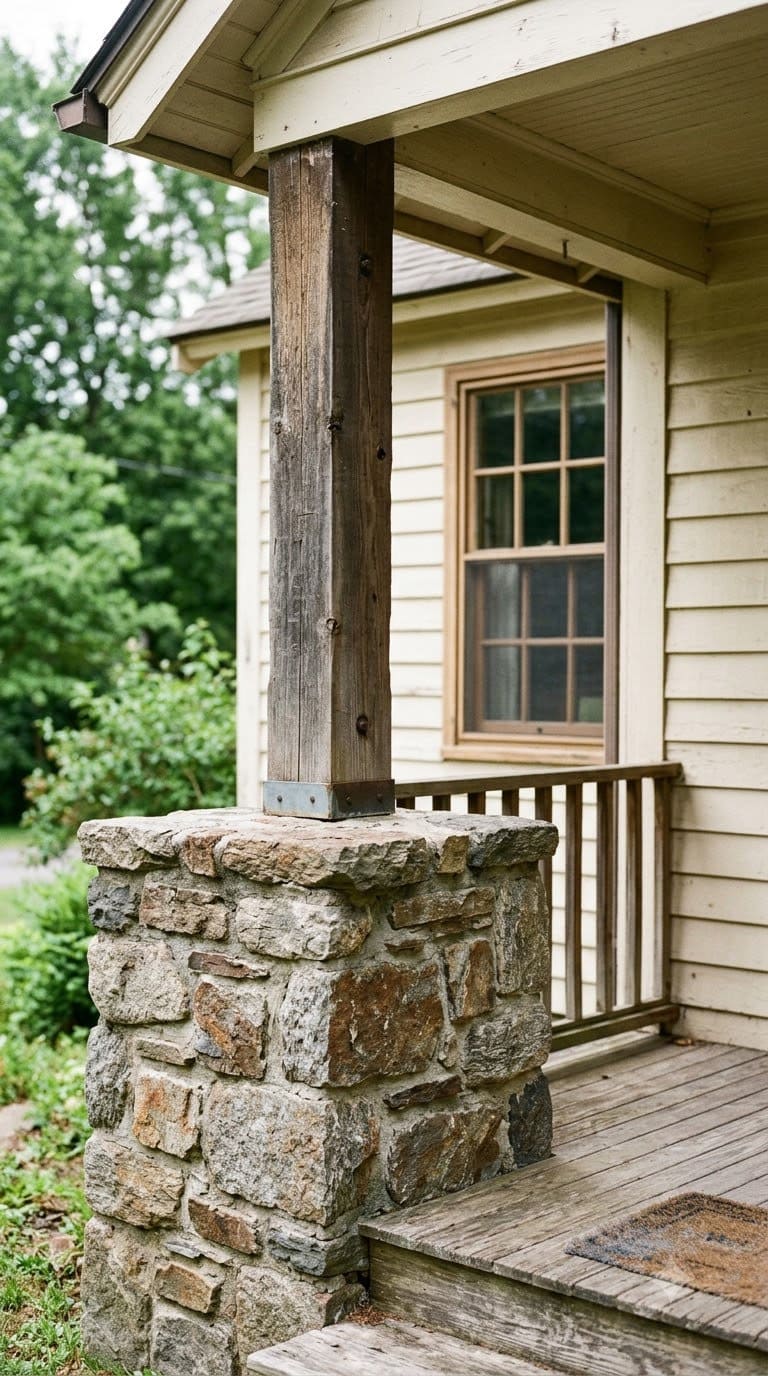
A wood post often needs a real foundation to look intentional rather than temporary, and a substantial stone base does exactly that.
Concrete works well as the structural material underneath, giving the whole facade a solid, grounded feel even on a small porch.
This approach doesn’t need extra ornamentation to work. On a compact porch especially, the base alone carries enough visual weight.
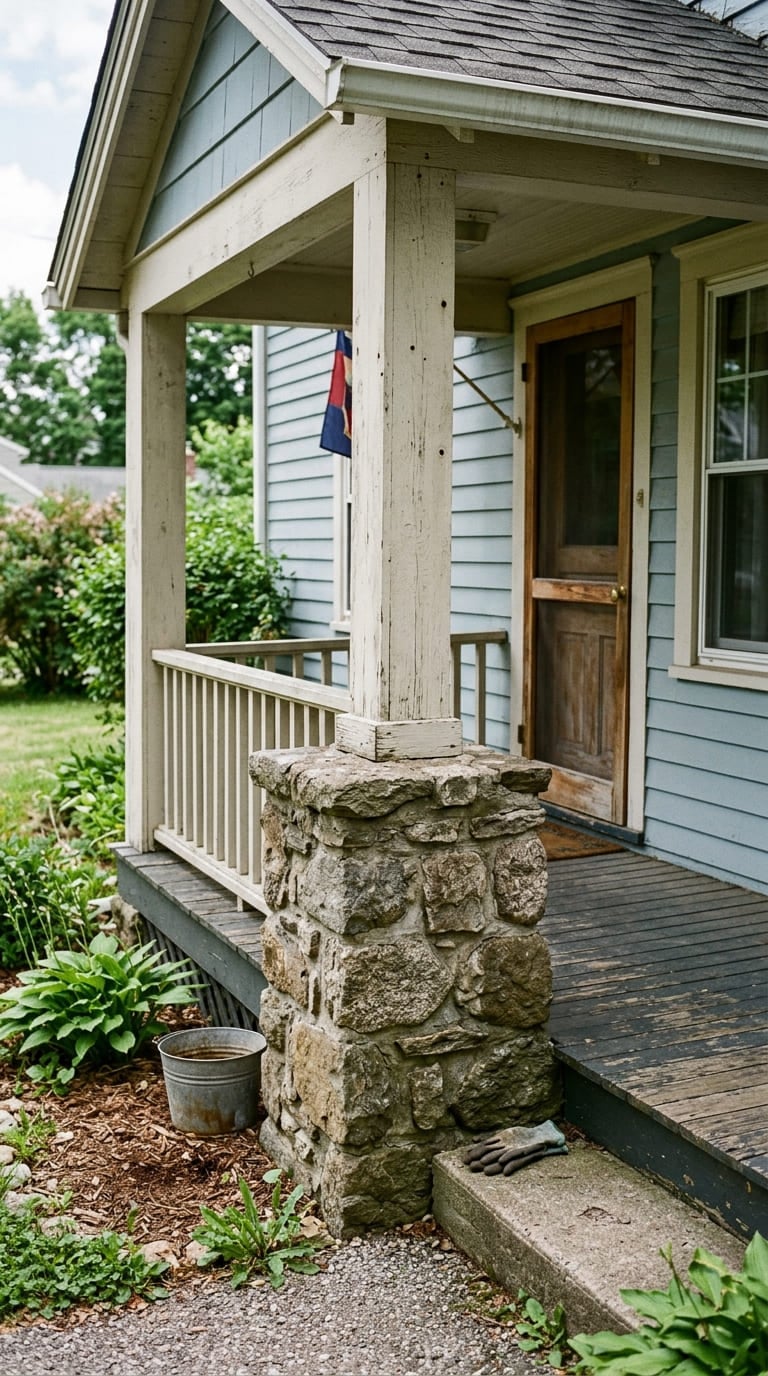
17. White Rectangular Pillar Against a Brick Wall
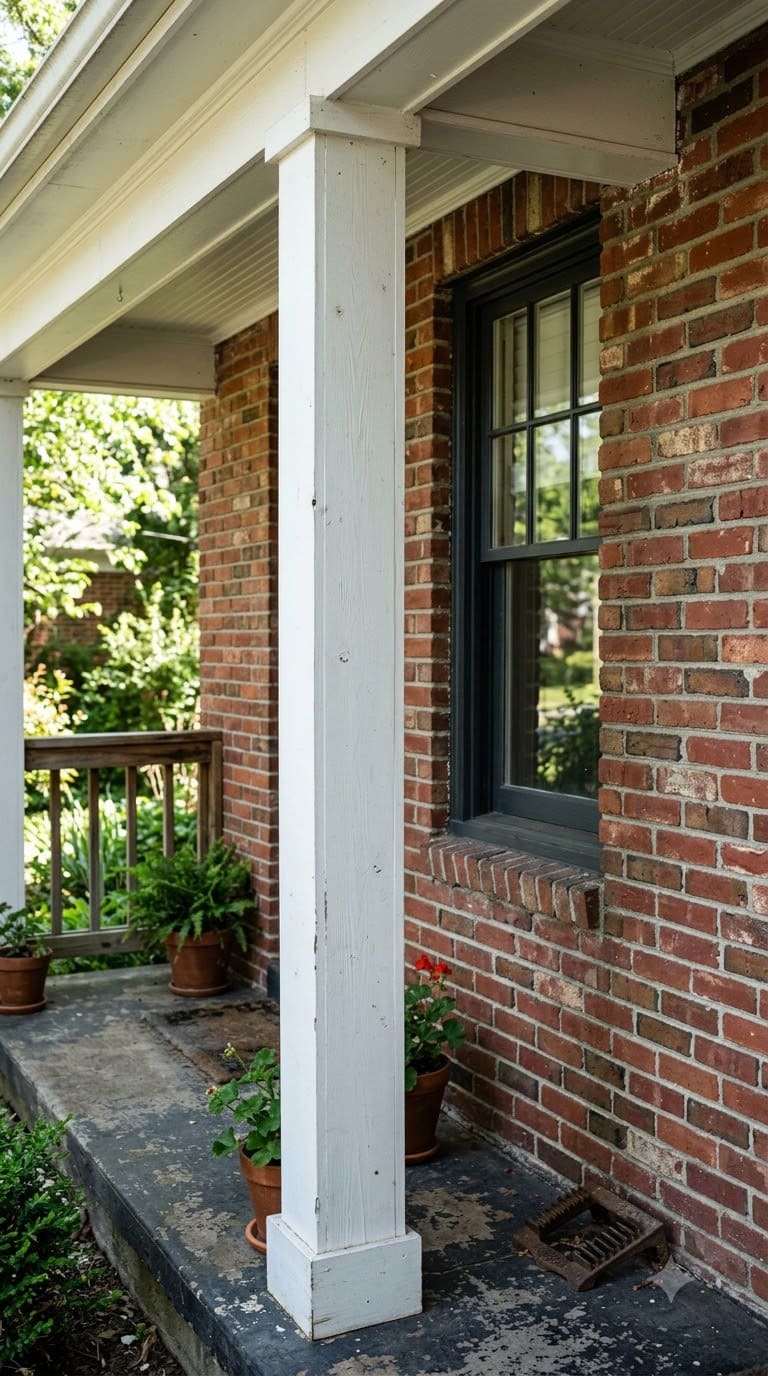
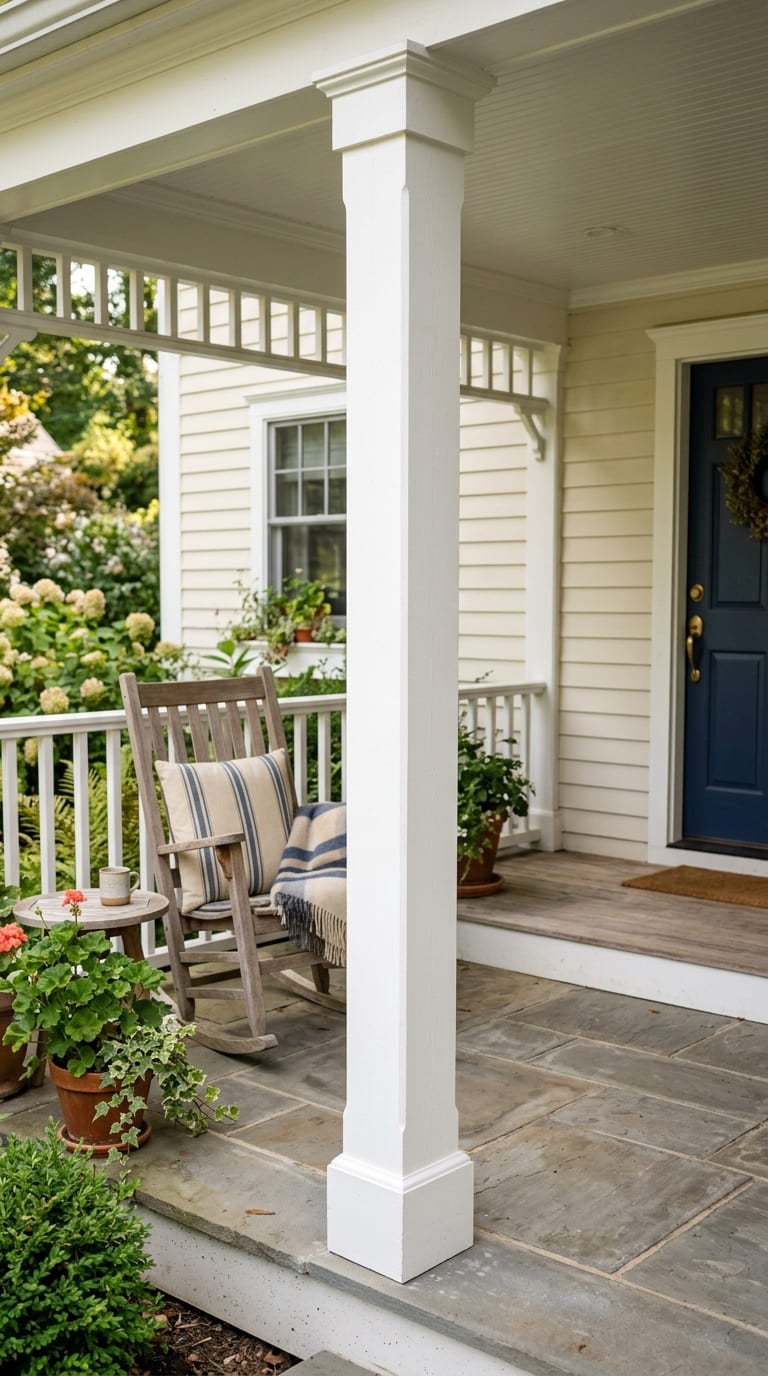
The pairing of a brick wall and a clean rectangular white pillar is about as close to a definitive traditional porch look as this list gets.
A neutral color scheme keeps the whole thing calm rather than busy, and a beige stone wall with dark window trim finishes it with a soft, cohesive contrast.
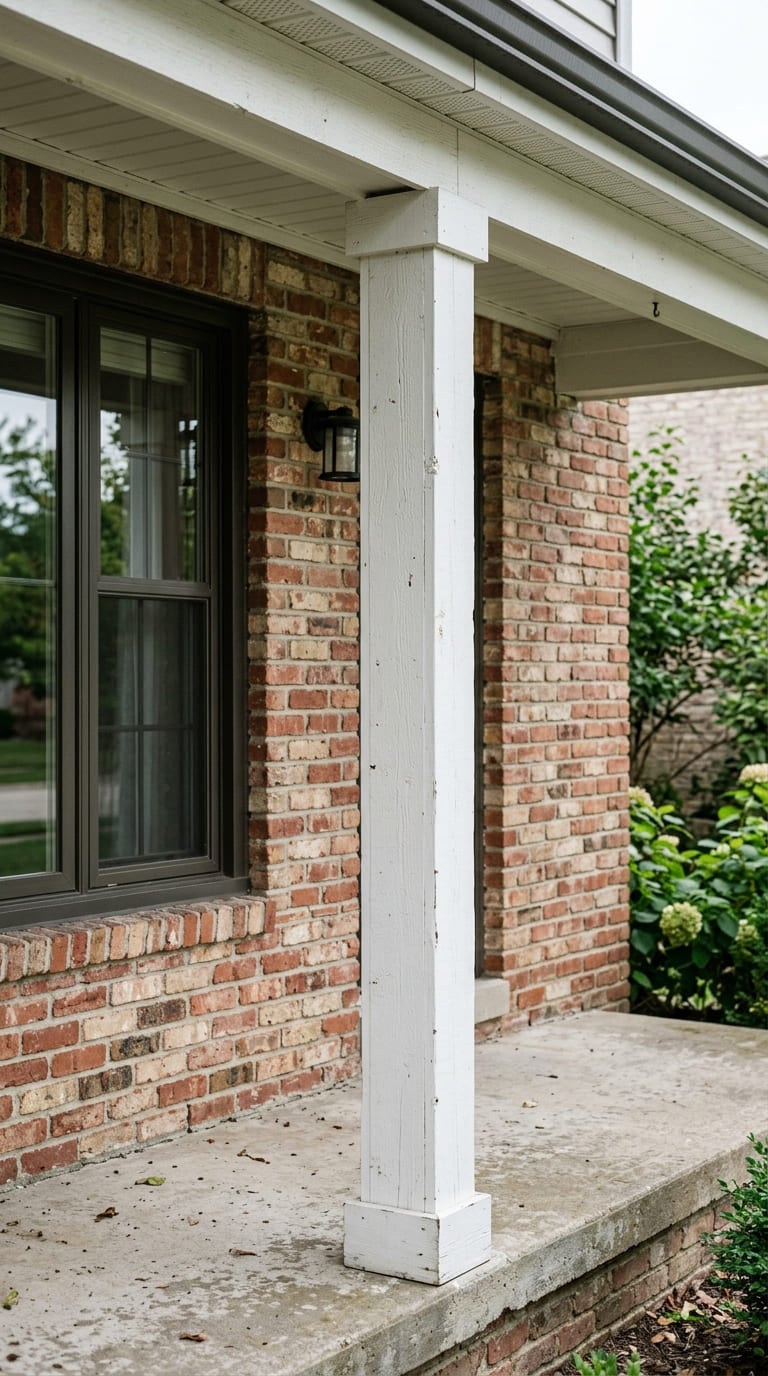
18. Vertical Beam Posts for a Conservative Look
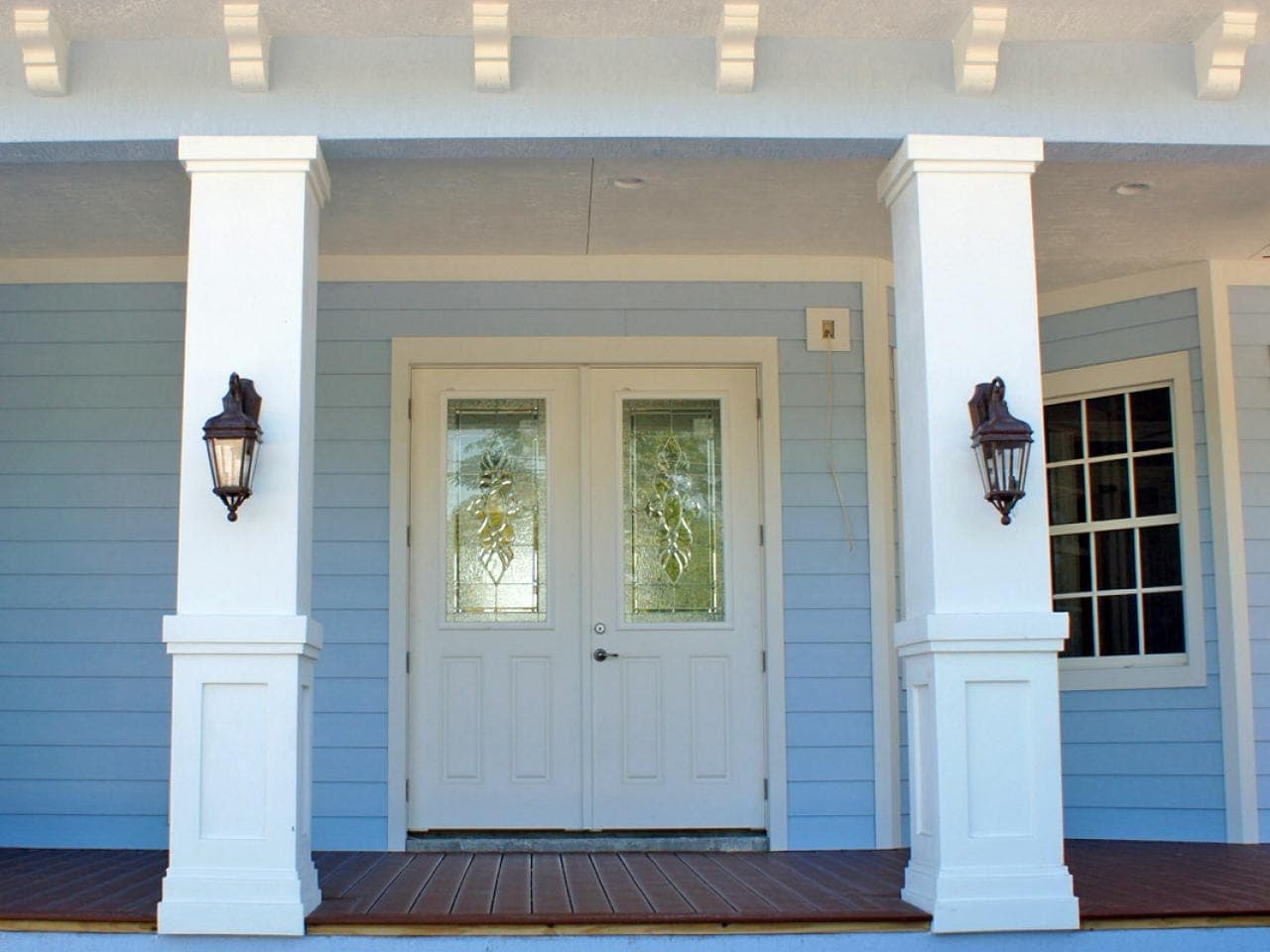
Standard vertical beams create clean, sharp lines that pair naturally with matching railings and soffit details.
It’s a conservative, traditional approach that works especially well on a home with a lot of other exterior detail already competing for attention.
19. A Post Wrap That Mixes Materials
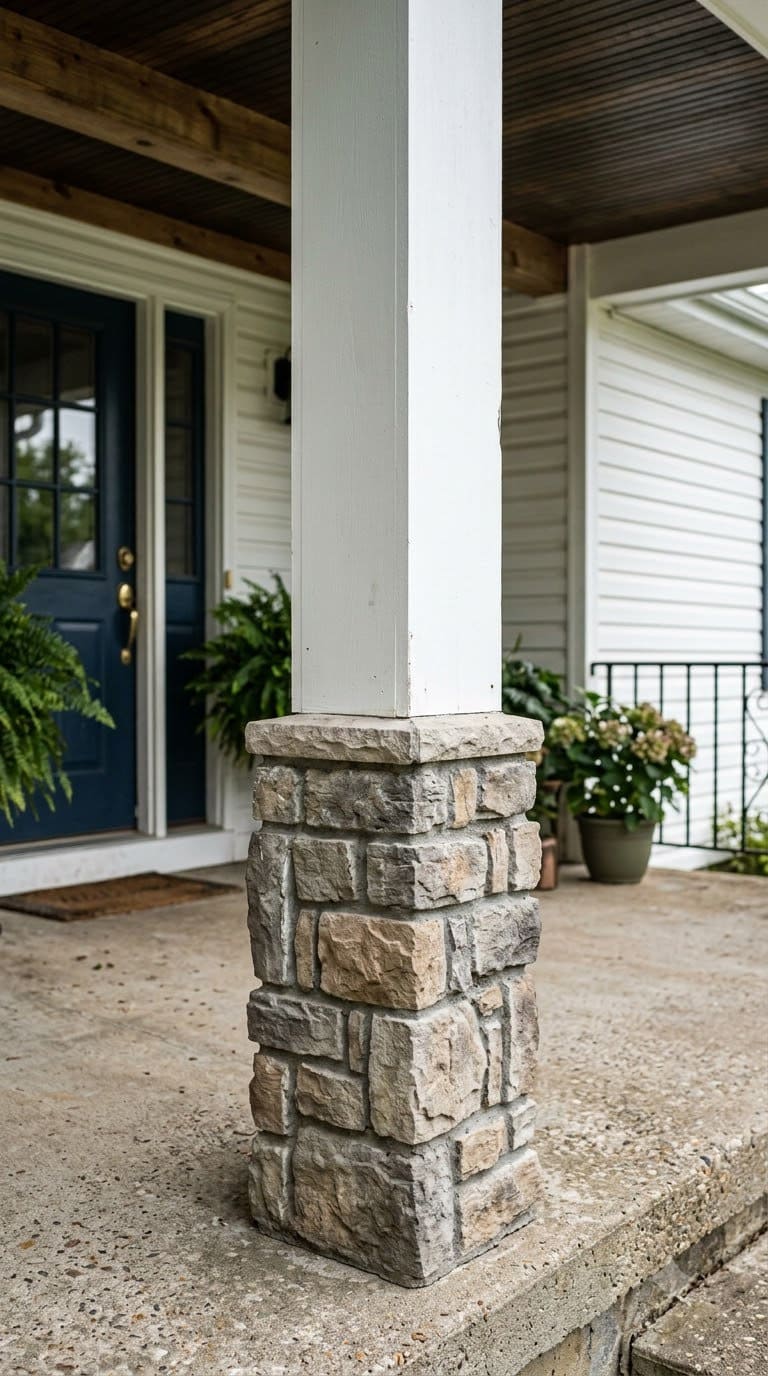
Wrapping a plain post is one of the fastest ways to add real visual interest to a dull facade, and mixing materials, a stone-look base under a plain white column, for instance, gives the wrap more depth than a single material would.
Kristi Linauer, who documented her own porch post wrap project on her renovation blog Addicted 2 Decorating, ended up going thicker than originally planned: “I made these columns a bit thicker and chunkier than I had originally planned.” A wrap that’s genuinely proportional to the porch, not just technically bigger than the original post, is usually the difference between a wrap that looks intentional and one that doesn’t.
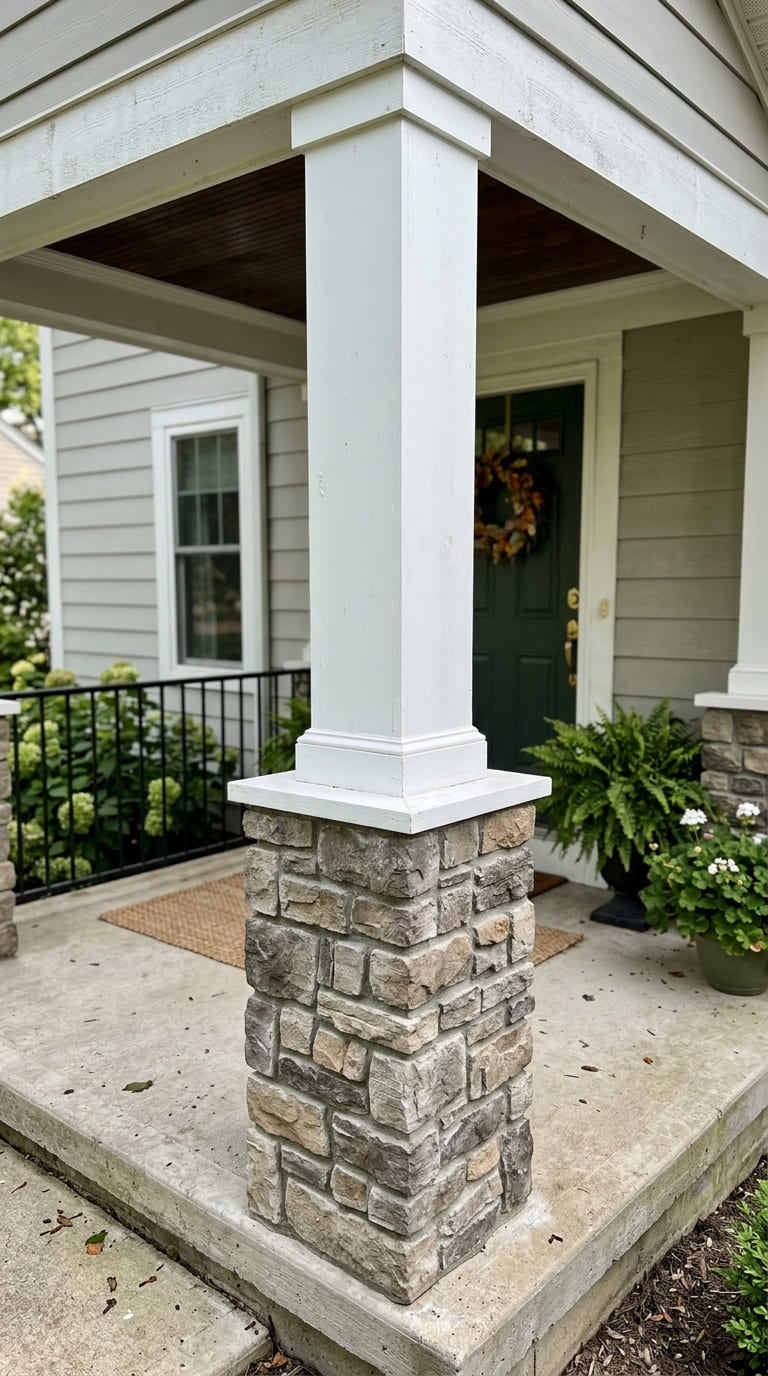
20. Wood Buttressing for Extra Structural Style

Mimicking internal or external buttressing on a porch post is a way to extend real architectural detail beyond what’s strictly necessary for support.
Done in wood, it adds genuine structural stability on top of the decorative impact, not just the appearance of it.
21. Tall White Cylindrical Pillars for a Grand Look
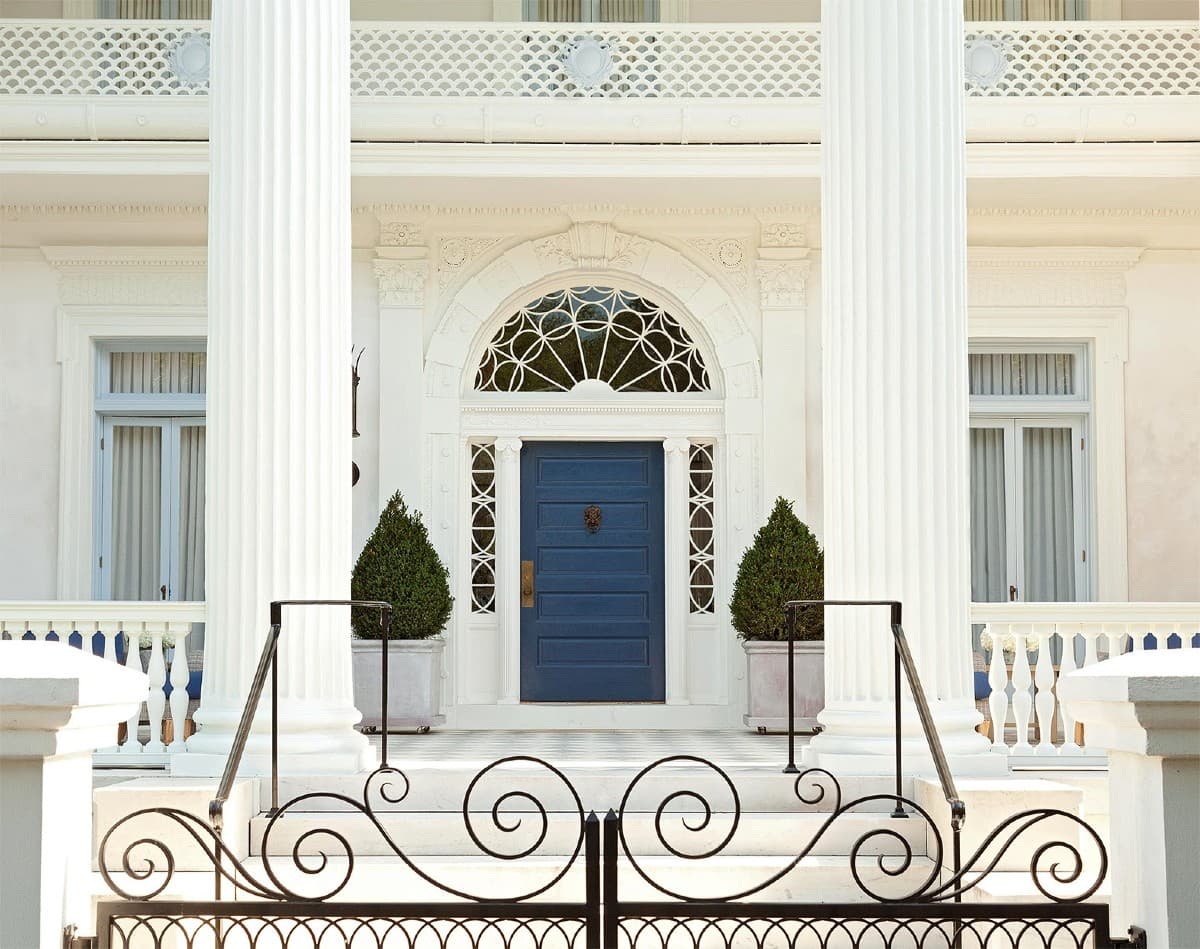
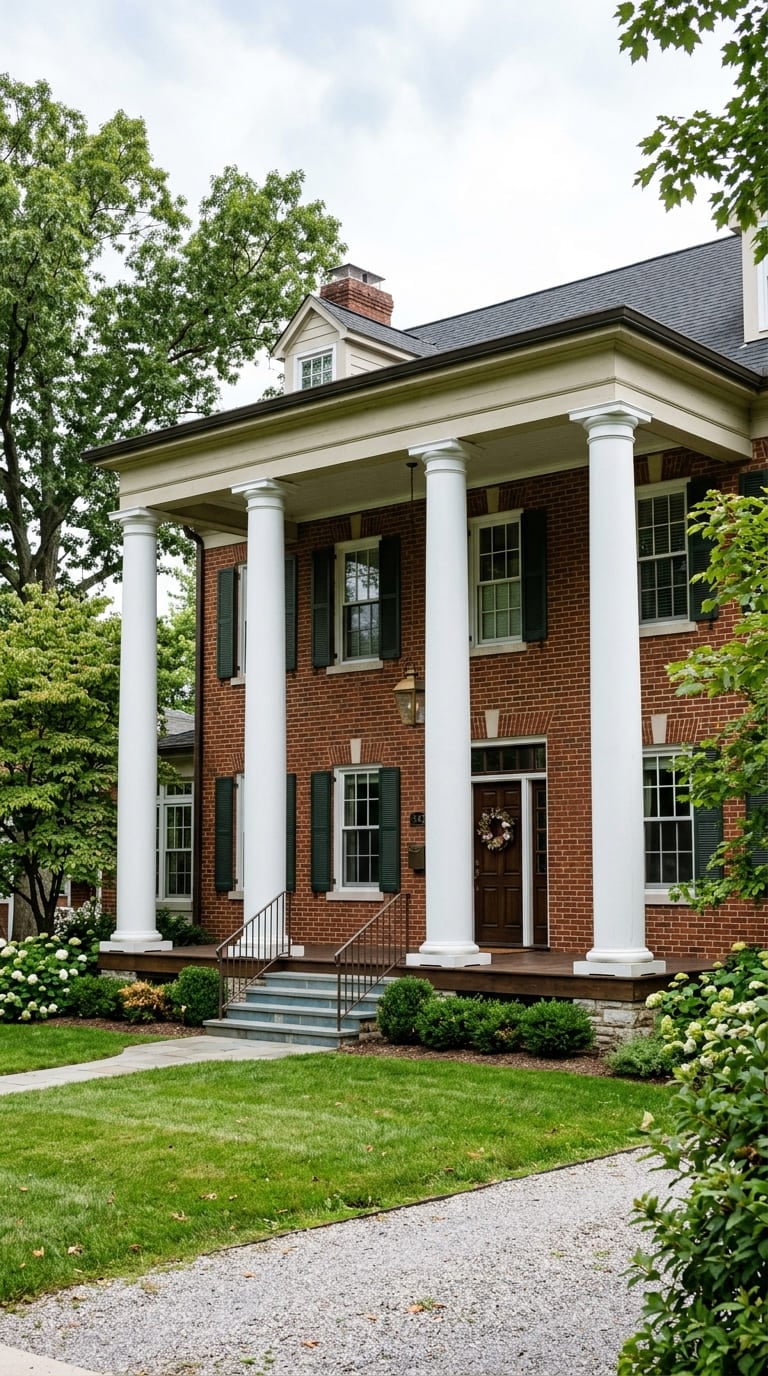
Cylindrical pillars in pure white read as genuinely majestic, especially on a larger home.
It’s a timeless combination against red brick siding specifically, one of the more classic pairings in residential architecture.
22. Earth-Toned Wood Grain Against Stone Siding
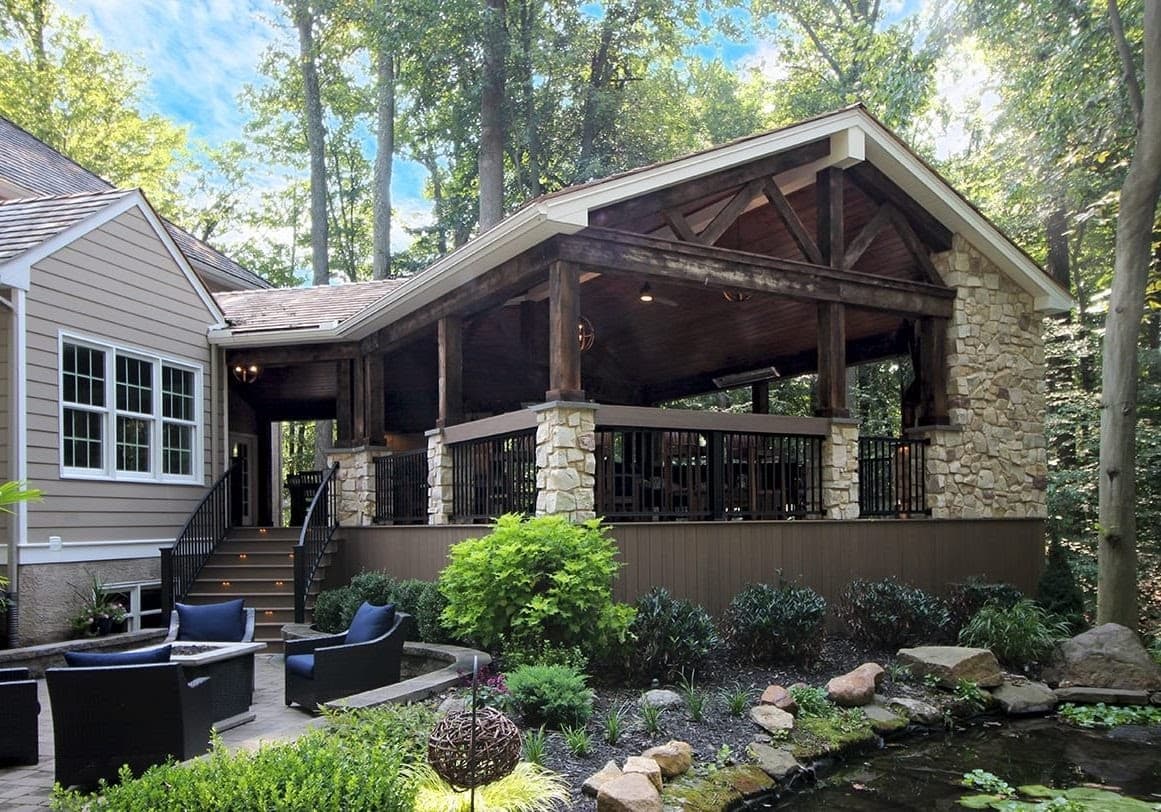
Sticking to earth tones is a reliable way to keep a porch feeling grounded and natural.
Wood posts with visible, interesting grain pair especially well against stone or dark siding, where the texture actually gets to show.
23. Stacked Posts for a Double-Decker Porch

Lining posts up on a two-story porch creates a real sense of drama, stretching the visual line of the structure and making it read as taller than it actually is.
It’s one of the more architecturally striking ideas on this list, though it only applies to homes with a second-level porch to begin with.
24. A Fully Customized, Personal Post Design
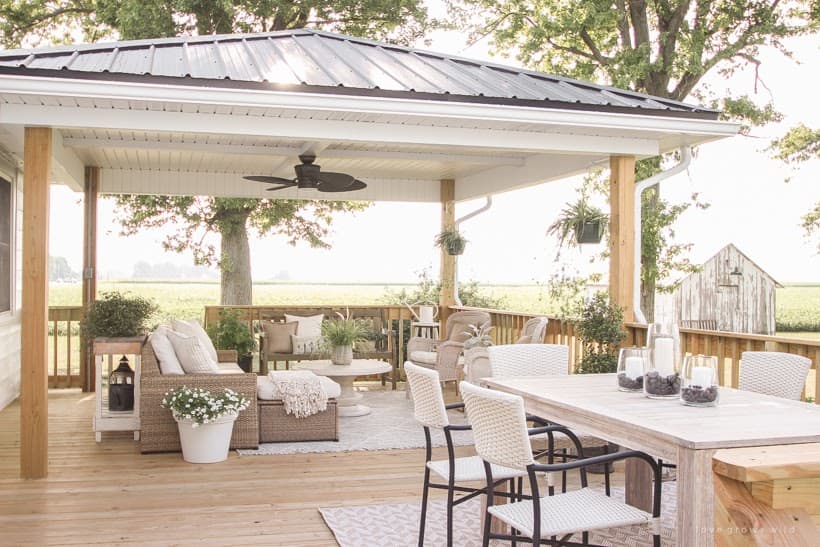
A porch post doesn’t have to fit neatly into one category.
Mixing styles and materials, adding carving, or using an unexpected paint choice all let a post reflect the homeowner’s actual taste rather than a generic template.
Classical Column Styles
These five orders come from real architectural history, not just decorative trends, and they carry specific proportions and details worth getting right if the goal is an authentic look rather than a generic “columned” porch.
25. Romanesque-Style Posts
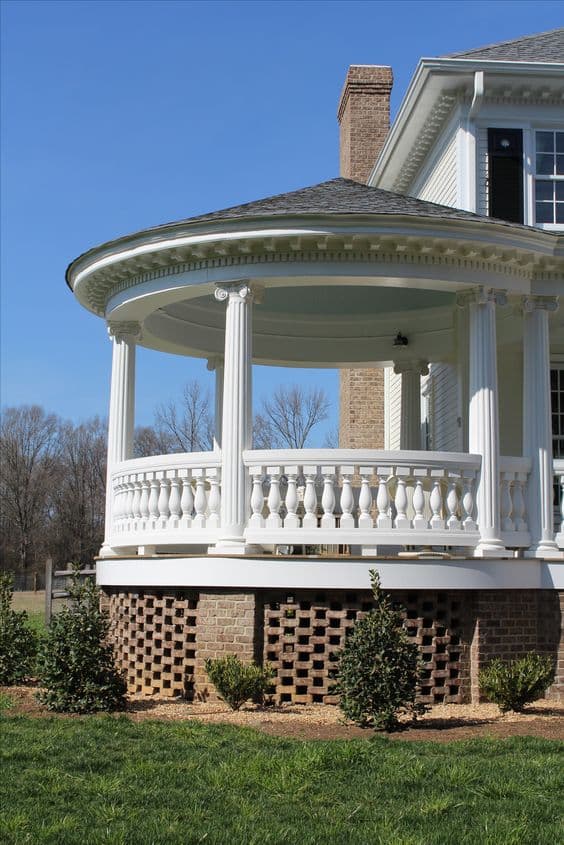
Romanesque posts tend to be squat and square with large bases, sometimes carrying organic ornamental detail.
In a simpler, less ornamented profile, this style shows up often on colonial and craftsman homes.
26. Ionic-Inspired Posts

Ionic columns carry a rounded foot and distinctive scrolling shapes, called volutes, at the top, making them one of the classic Greek orders. Compared to Doric columns, Ionic shafts are usually fluted and have a more delicate profile.
The style appears on Greek Revival, Georgian, and Neoclassical homes, and on ancient sites like the Colosseum in Rome, where Ionic columns make up the building’s second tier above a ground-floor Doric level.
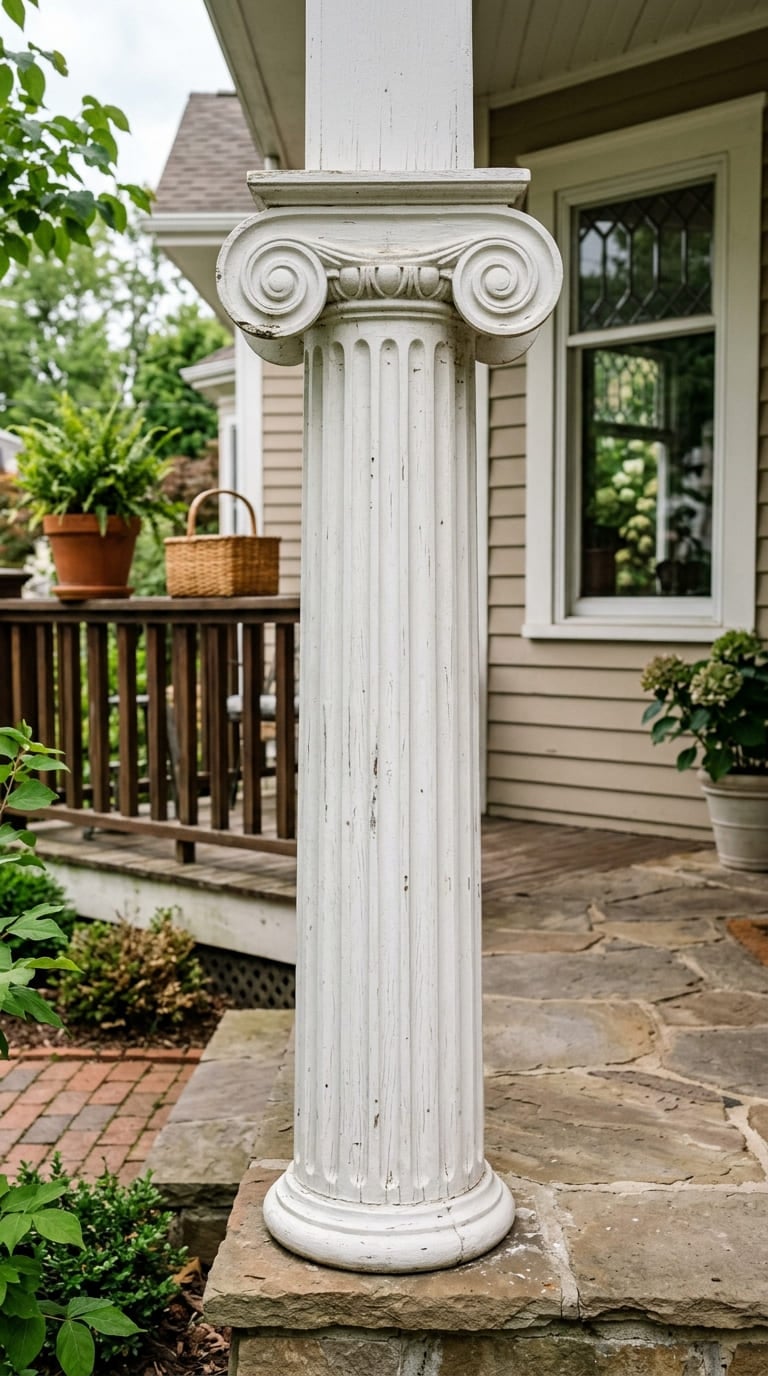
27. Doric-Style Posts
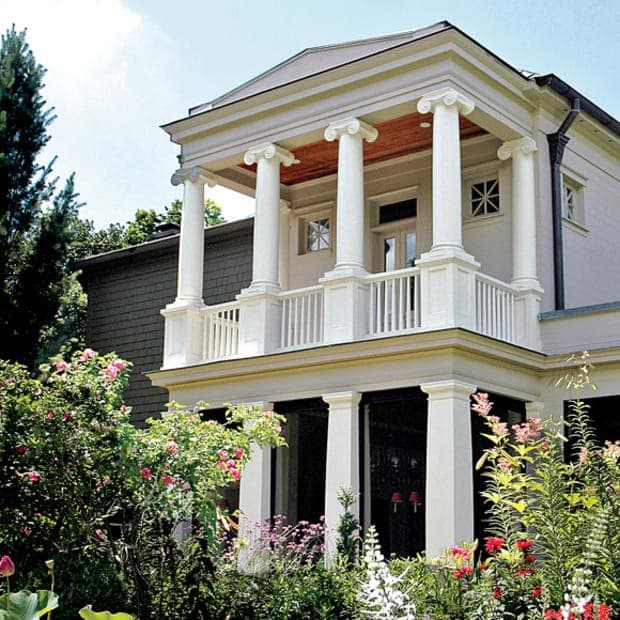
Doric columns are fluted along the sides with a smooth top, and they skip the base or podium other Greek styles include, making them broader and less ornamental overall. This is the order most commonly found on Neoclassical homes.
28. Egyptian-Style Posts

Egyptian-style columns usually taper toward the top, sometimes with leaf motifs or horizontal bands worked in at intervals.
Egyptian Revival homes from the 1800s are the clearest real-world example of the style.
29. Corinthian-Style Posts
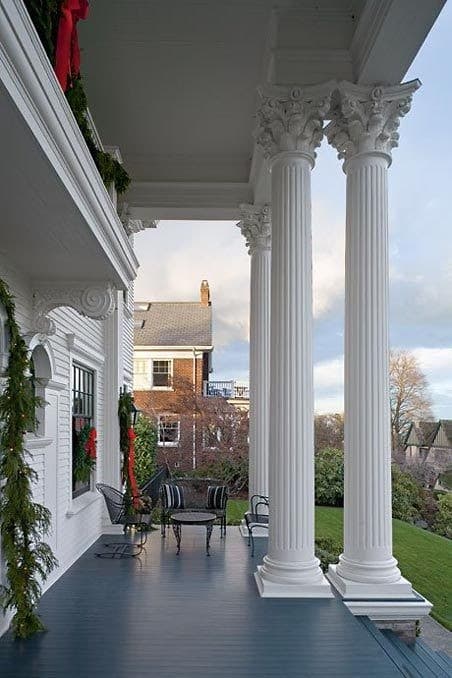
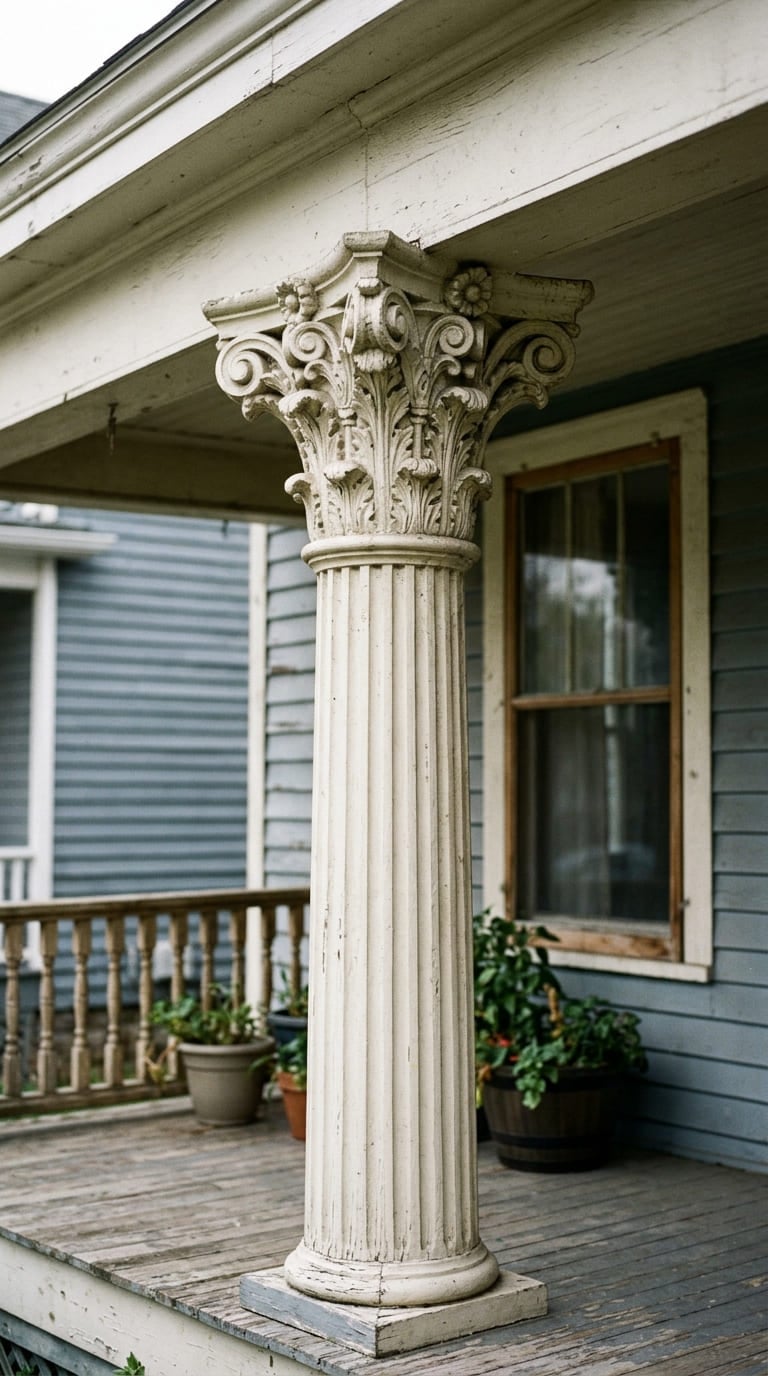
Corinthian is the most elaborate of the classical orders, shaped like an overturned bell with fluted shafts and foliage or flower ornamentation near the top.
It originated in Greece and shows up on landmark buildings like the U.S. Capitol and the Supreme Court Building. It’s more commonly seen on public architecture than private homes, though it does appear on grander Greek Revival-style residences.
30. Multiple Posts for a Wide, Shaded Porch

A wide porch doesn’t need to rely on just two posts. Bracing the roofline with several columns instead creates a genuinely comfortable, shaded seating area, ideal for a pair of rocking chairs on a hot afternoon.
Multiple posts spaced evenly also tend to match porch railings more cleanly than a two-post layout, giving the whole facade a more unified look.
31. Twisted Brick Posts for a Rare, Custom Look
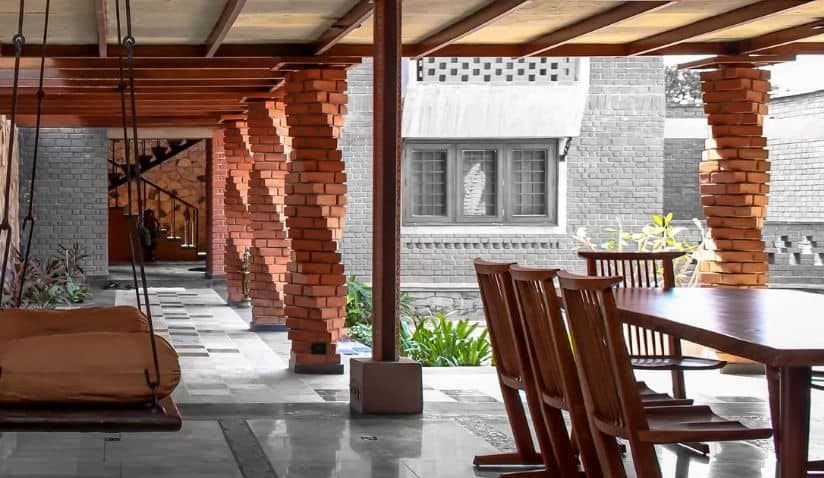
A twisted post design is uncommon for a reason: it’s genuinely difficult to build well. Done in raw brick, the twisted pattern shows off real masonry skill and gives the porch a rustic, one-of-a-kind character.
It’s not a DIY weekend project, but a professional mason can handle it, and the porch décor around it matters more once the posts themselves are this distinctive.
Choosing a post material
The style ideas above all assume a material decision has already been made. Here’s what actually separates the common options.
Wood

Traditional timber posts carry a romantic, classic feel that’s hard to replicate in anything else, but they’re genuinely high-maintenance.
Wood is vulnerable to humidity, sun, and insects, so expect to repaint, reinforce, or occasionally replace posts that twist, rot, or weaken over time.
Treated Wood
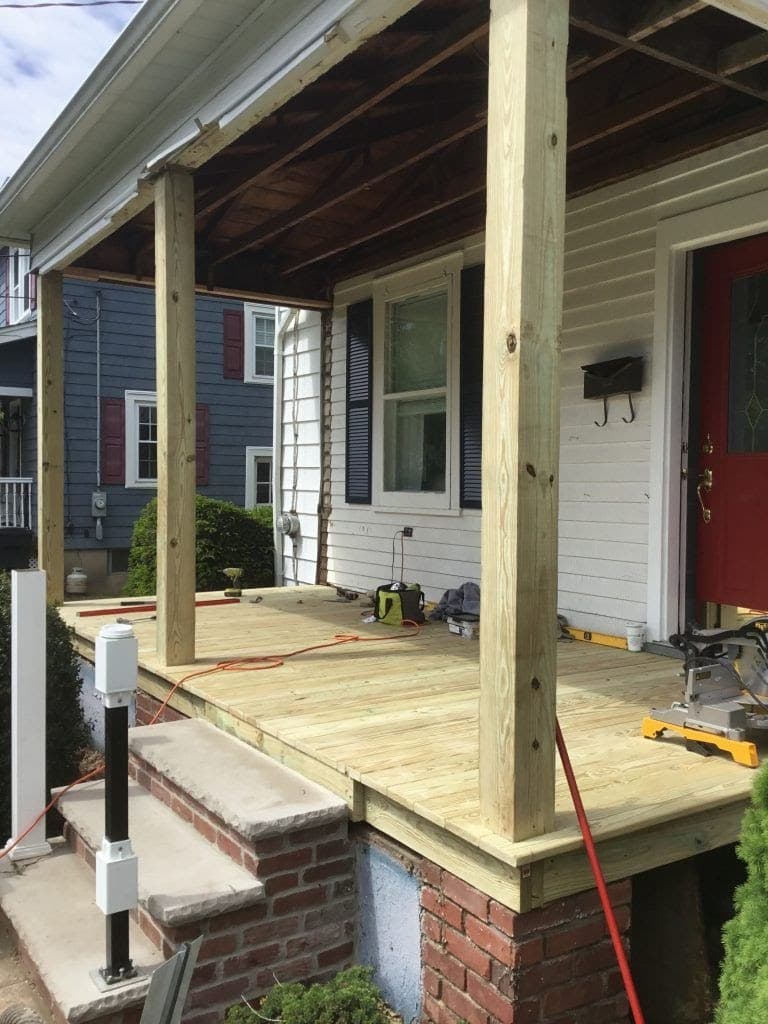
Pressure-treated posts keep the same classic look as natural wood while holding up considerably better, thanks to modern treatment and finishing processes.
This is the more durable version of the same material, not a different look entirely.
Vinyl
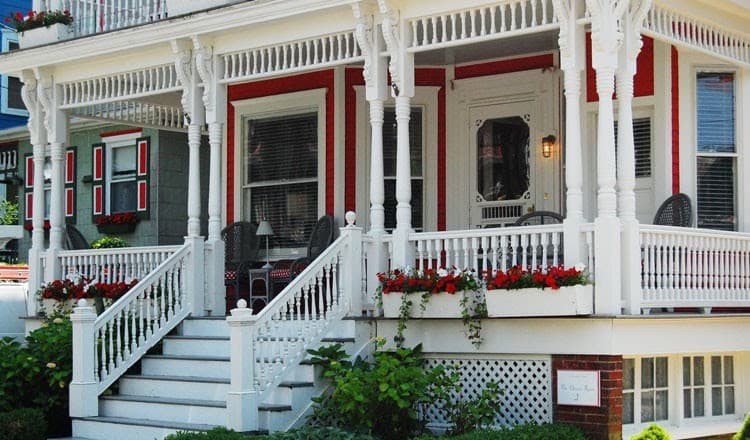
Vinyl porch posts create a coherent look when paired with other vinyl elements already on a home’s exterior.
The tradeoff is durability: vinyl is genuinely more vulnerable to moisture, wind, and impact damage than most alternatives.
Aluminum
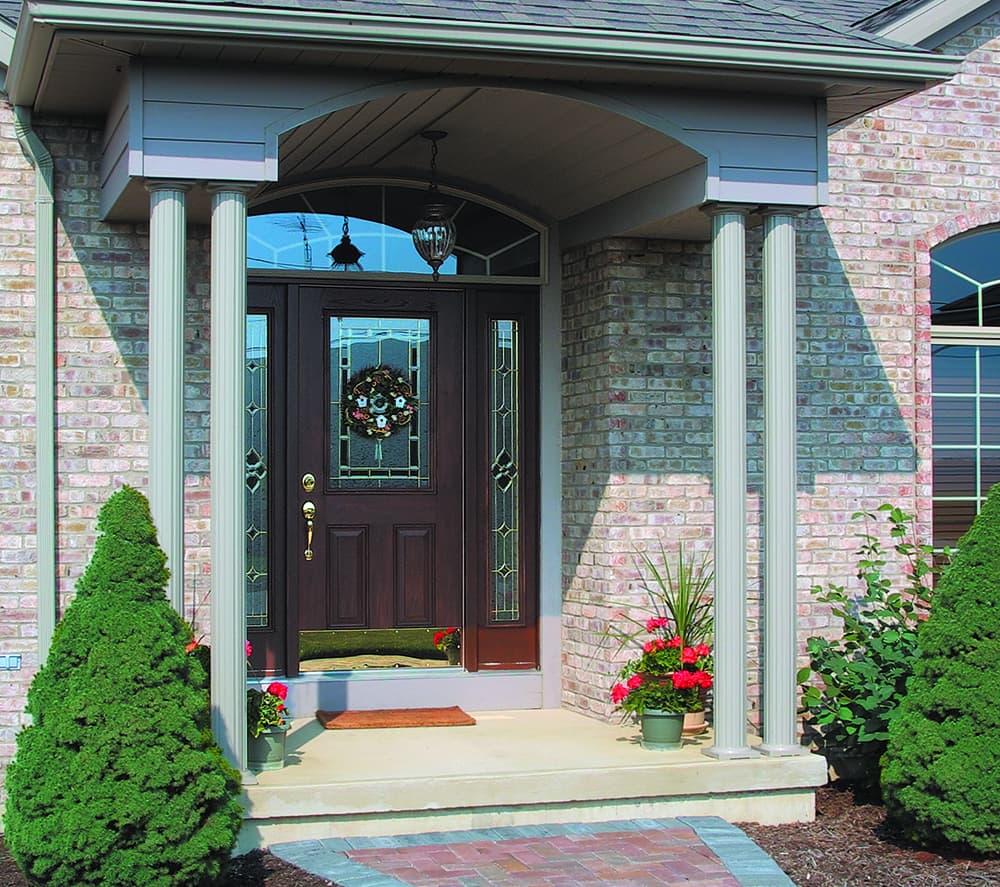
Aluminum gives a porch a metallic counterpart to more traditional materials, but quality varies a lot by manufacturer. Thinner aluminum dents and dings easily, which makes it a poor fit for areas that see regular hail or severe weather.
On the higher end, structural aluminum posts with a vinyl sleeve are rated for real load: one common product sold through home improvement retailers lists a 2,500-pound capacity on a 4-inch, 108-inch column, worth knowing if a post needs to carry real structural weight rather than just look the part.
Frequently Asked Questions
Do porch posts need to be pressure treated?
Yes, in any spot where the wood stays in contact with something that can hold moisture. That includes posts buried in or touching the ground, and it also includes wood that touches masonry or concrete, since both materials absorb and hold water. The International Building Code requires pressure-treated wood for structural posts, columns, girders, and beams within 12 inches of exposed soil, and the Southern Forest Products Association recommends checking the lumber’s end tag or ink stamp for an “above ground” or “ground contact” rating before buying, per American Wood Preservers Association Use Class standards for ground-contact wood.
How can I make my porch posts look better?
Repainting or fully remodeling an existing post can change the whole look of a porch without a structural rebuild. Talk through the direction with a contractor or designer if the goal is a specific style, since a lot of the ideas above (wraps, stone bases, classical detailing) can be added onto an existing post rather than requiring a full replacement.
Are my porch columns load bearing?
Look for a visible foundation at the base. Load-bearing columns need a solid footing to carry real weight, so check the area around the bottom of the post for any kind of base or footer. If there’s no visible foundation and the post seems to be resting loosely, get it checked before assuming it’s purely decorative, structural aluminum posts rated for real capacity (2,500 pounds is a common spec) look similar to decorative ones from a distance.
What is the difference between a post and a column?
Both terms describe the same basic structure: an extended vertical support that carries beams or slabs above it. “Post” gets used a bit more loosely in everyday language, including for structural pieces that aren’t strictly vertical, while “column” sticks closer to the vertical, load-bearing sense. In practice on a residential porch, the two words are used interchangeably often enough that either one is understood.
Conclusion
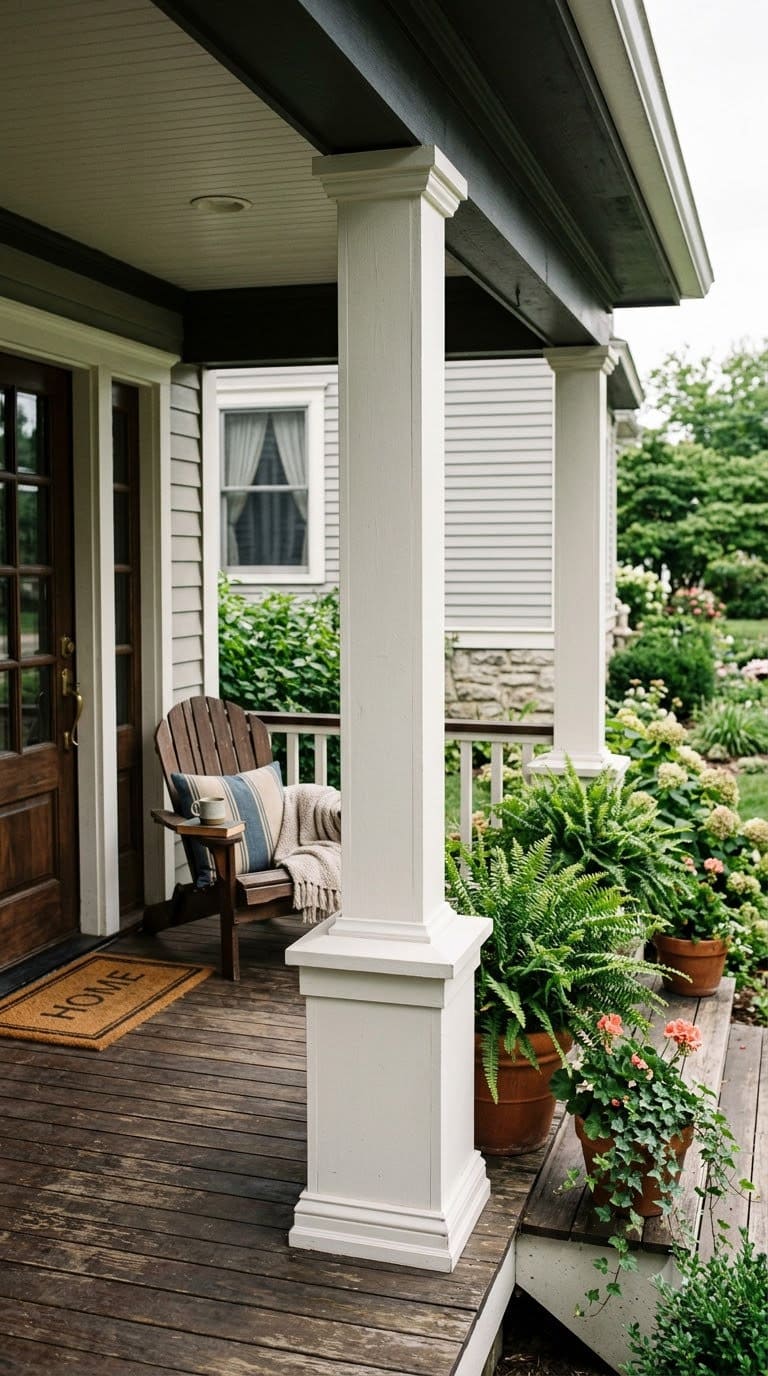
With this many directions to choose from, the real constraint usually isn’t ideas, it’s picking one and committing. Start with the material that fits the budget and maintenance tolerance, then layer in the style detail on top.
A post that’s structurally solid and reasonably well-matched to the house will look better in five years than a more elaborate one that was never built to last.
Never miss an update — choose FarmFoodFamily as your preferred source on Google.
How it works: Tap the button below to open Google's settings page, then check the box next to FarmFoodFamily.
Tap the checkbox to turn it blue — that's how you know it's set.