9 Whimsical Repurposed Spring Porch Decor Ideas, From Rain Boots to Old Ladders
Old boots, buckets and crates make cheerful spring porch decor, as long as every planter can drain and nothing toxic ends up in your soil.

Never miss an update — choose FarmFoodFamily as your preferred source on Google.
How it works: Tap the button below to open Google's settings page, then check the box next to FarmFoodFamily.
Tap the checkbox to turn it blue — that's how you know it's set.
Old boots, buckets and crates make cheerful spring porch decor, as long as every planter can drain and nothing toxic ends up in your soil.
Products We Recommend
This post contains affiliate links. We may earn a commission on qualifying purchases at no extra cost to you.

COMOWARE Step Drill Bit Set, 5 Pcs Ti-Coated, 3/16" to 1-3/8"
Step bits that punch clean drainage holes in metal buckets, cans and plastic. Check that your drill accepts the three-flat shank before you buy.
Shop Now
12 Pack Invisible Pot Feet, Solid Rubber Pot Risers
Small rubber feet that lift pots off the porch so water can leave the drainage holes. Match the foot height to the 1 to 2 inches the extension guide suggests.
Shop Now
Coco Liners for Planters, 12 Inch, 6 Pack
Round coconut fiber liners for wire baskets and hanging planters. They hold potting mix in while water drains, but they dry fast, so water often.
Shop NowSpring porch decor doesn’t have to come from a store. A pair of old boots, a rusty milk can or a wobbly chair can all hold flowers. And the odd, one-of-a-kind look is the whole charm.
The catch is simple. Most old objects have no drainage, and some carry old paint or past chemicals. This guide fixes both before you plant.
For ready-made sign and number projects, see our spring porch sign ideas and house number ideas.
Quick Answer
Choose a sturdy object, give it drainage, and fill it with potting mix instead of garden soil. Rain boots, buckets, baskets, birdcages and chairs all work as planters. Crates, milk cans and ladders work as tables and stands.
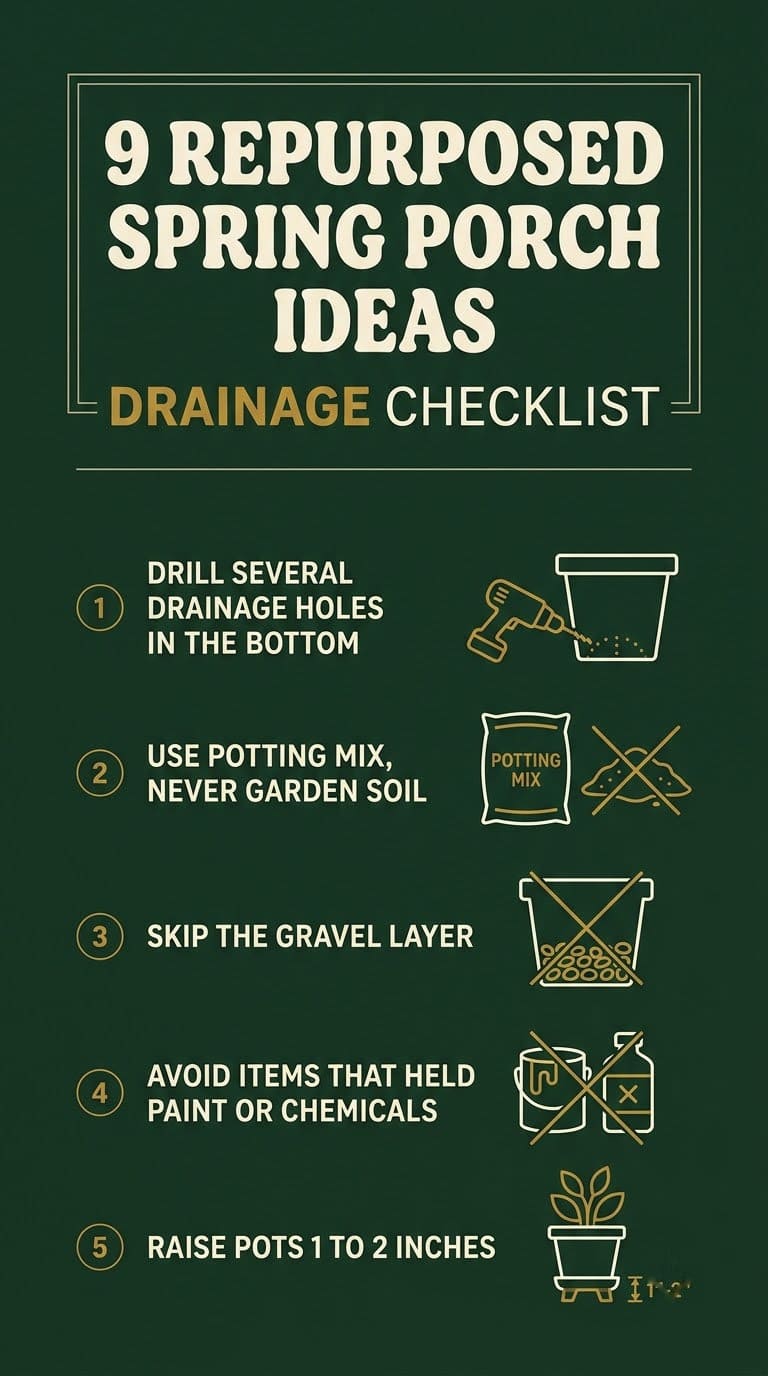
Drill several holes in the bottom of anything that holds soil. Skip the gravel layer, because extension guides say it doesn’t improve drainage. Raise pots an inch or two so water can leave.
Avoid any item that once held paint, chemicals or toxic material. Check old painted pieces for lead if your home is older. Then keep the porch tidy, with one bold focal point and a few calm supporting pieces.
Not sure where to begin? Start with a pair of rain boots. They take one afternoon, cost almost nothing, and teach you the whole drainage routine.
Before You Plant: Drainage, Soil and Safety
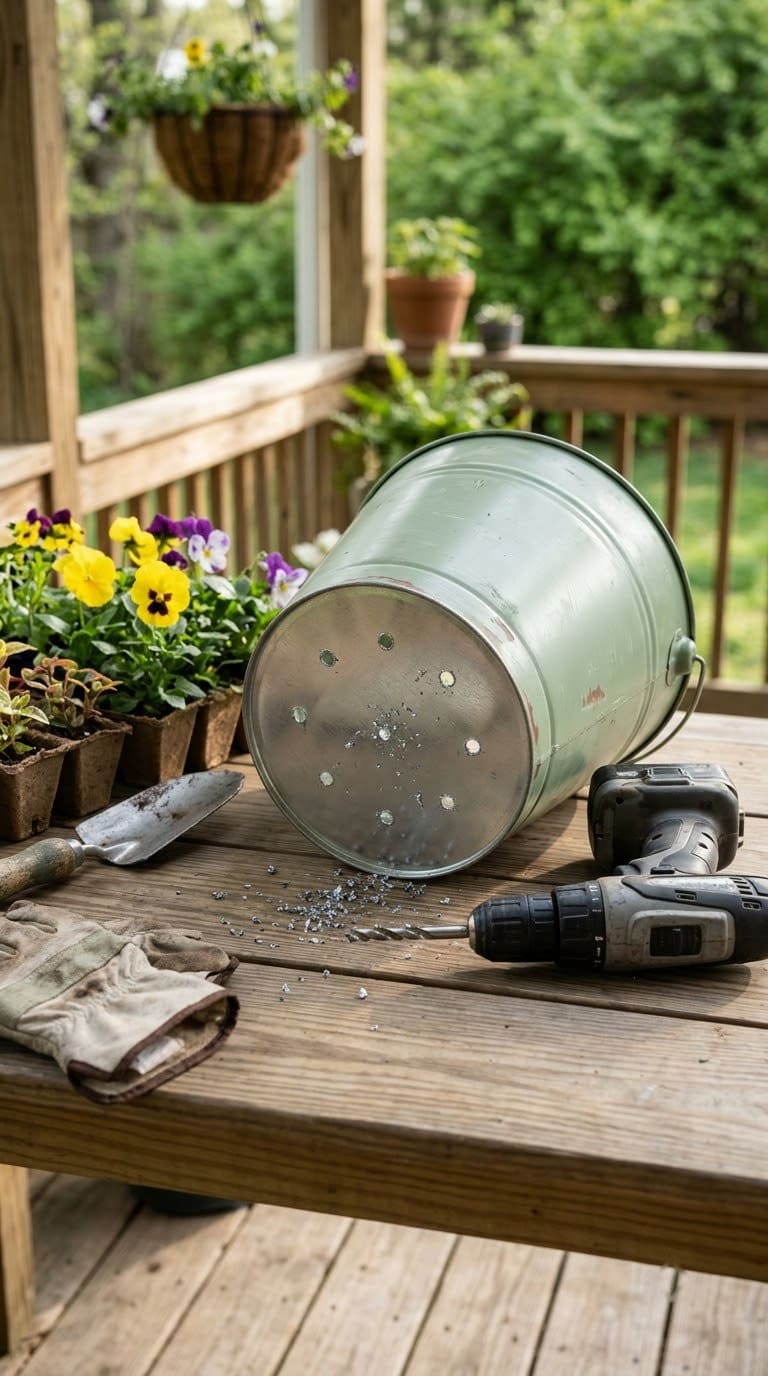
Start with drainage. Colorado State University Extension calls it the most important factor. If a container has no holes, it says to drill multiple holes in the bottom.
Use potting mix, not garden soil. Colorado State says native soil compacts and cuts oxygen to the roots. It also says to avoid any container that held toxic materials, especially if you plan to grow edible plants.
Next, skip the gravel. The University of Maryland Extension says rocks, gravel or pot shards in the bottom don’t improve drainage.
They can raise the water table and waterlog the mix. It makes one exception: you may add weight to steady a light container that tips.
Maryland also says to raise pots 1 to 2 inches with bricks, scrap lumber or pot feet. It adds that a large 20-inch container with moist mix and plants can weigh about 100 pounds. So plan where it will sit before you fill it.
How Do You Make Any Old Object Into a Planter?
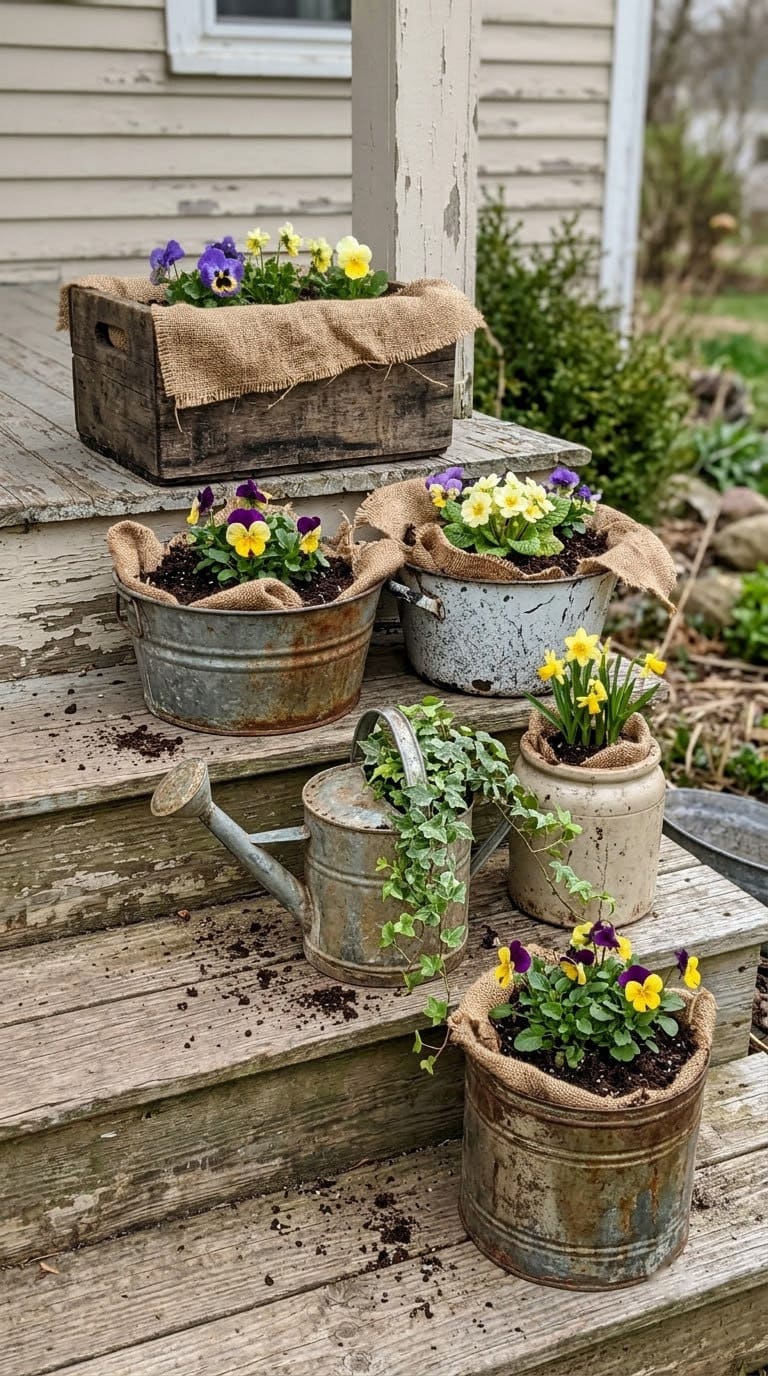
Use this routine for every idea below.
- Step 1: Clean the item with soapy water and let it dry.
- Step 2: Check what it held before. Skip anything that held paint, detergent or chemicals.
- Step 3: Drill several drainage holes in the bottom.
- Step 4: Cover big holes with window screening, burlap or a coffee filter.
- Step 5: Fill loosely with fresh potting mix to about an inch below the rim.
Never reuse last year’s mix straight from the old pot. Colorado State warns it may carry disease organisms. Use fresh mix or blend old and new.
Which Plants Suit a Porch Spot?
Match the plant to the light, not just the color. Colorado State lists daily sun needs: about 8 hours for flowering plants, 6 for root vegetables, and 4 for leafy vegetables and many herbs. Some foliage plants do well in filtered light or shade.
Step bits that punch clean drainage holes in metal buckets, cans and plastic. Check that your drill accepts the three-flat shank before you buy.
Shop NowThis post contains affiliate links. We may earn a commission on qualifying purchases at no extra cost to you.
Watch your porch for a day. Note how many hours of direct sun each spot gets. A deep covered porch suits foliage and ferns, while an open step suits flowers.
House Digest suggests succulents for low-water care, and petunias and pansies for spring color. Place thirsty plants where you pass often, so you remember to water them.
Ideas for the Door and Wall
Hang these at eye level, near the door. They add height without taking floor space.
1. Rain Boot Planters
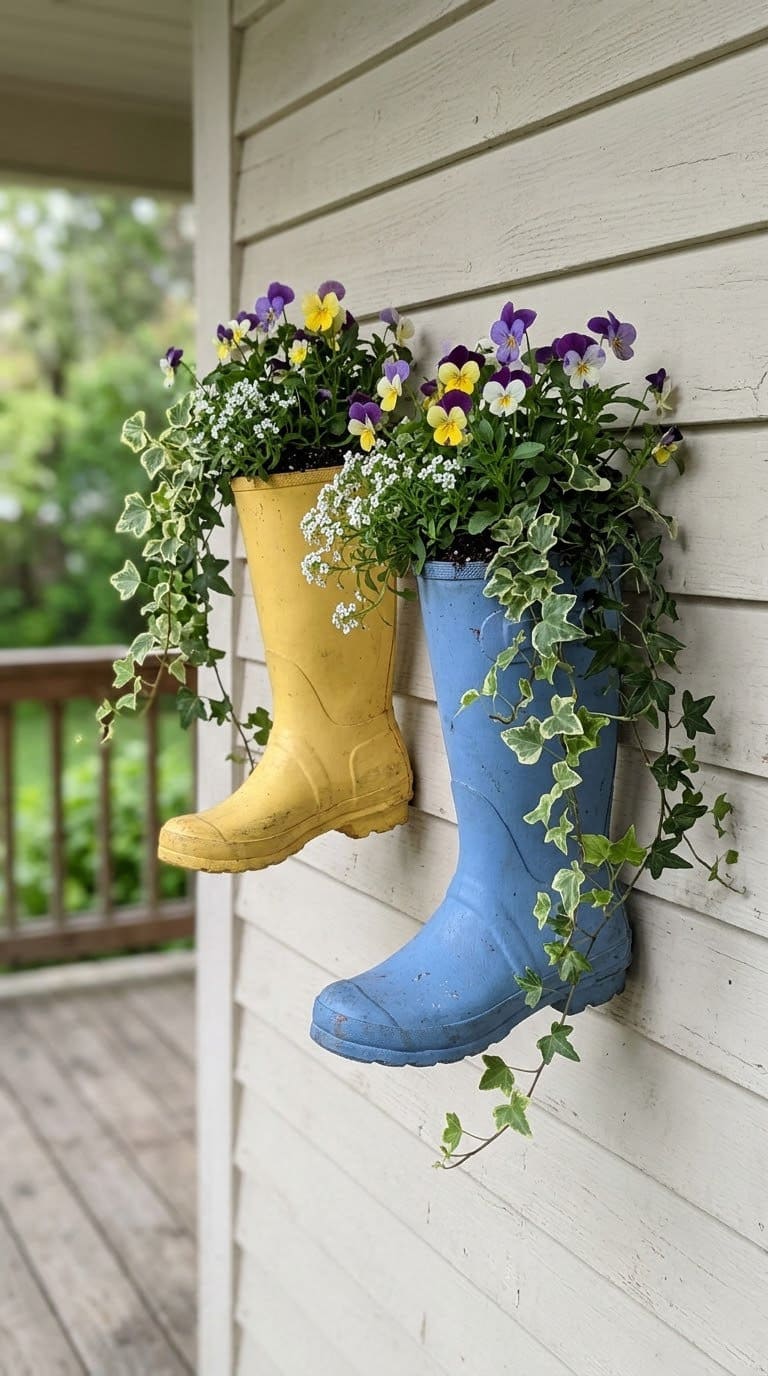
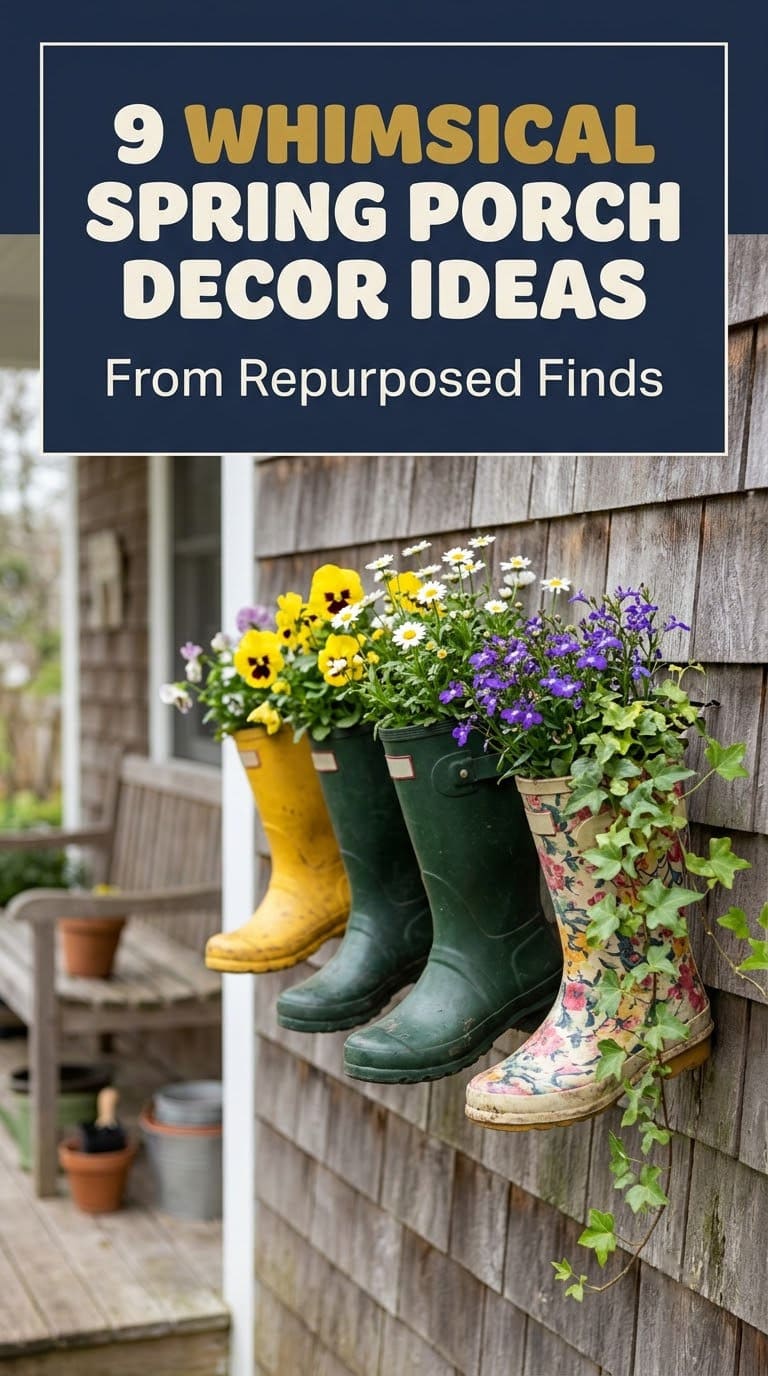
House Digest walks through this classic. Scrub the boots with soapy water, then spray paint them in a bold color. Let them dry.
Make three to five drainage holes in each boot’s base. Line the bottom with landscape fabric, coffee filters or coconut fiber. Fill with potting mix, then plant succulents, petunias or pansies.
Mount them on a fence, hang them from sturdy hooks with strong cord, or screw them to a trellis. Rotate the boots now and then so every side gets sun. For more shoe ideas, see our planters from recycled footwear.
2. Vintage Wire Baskets
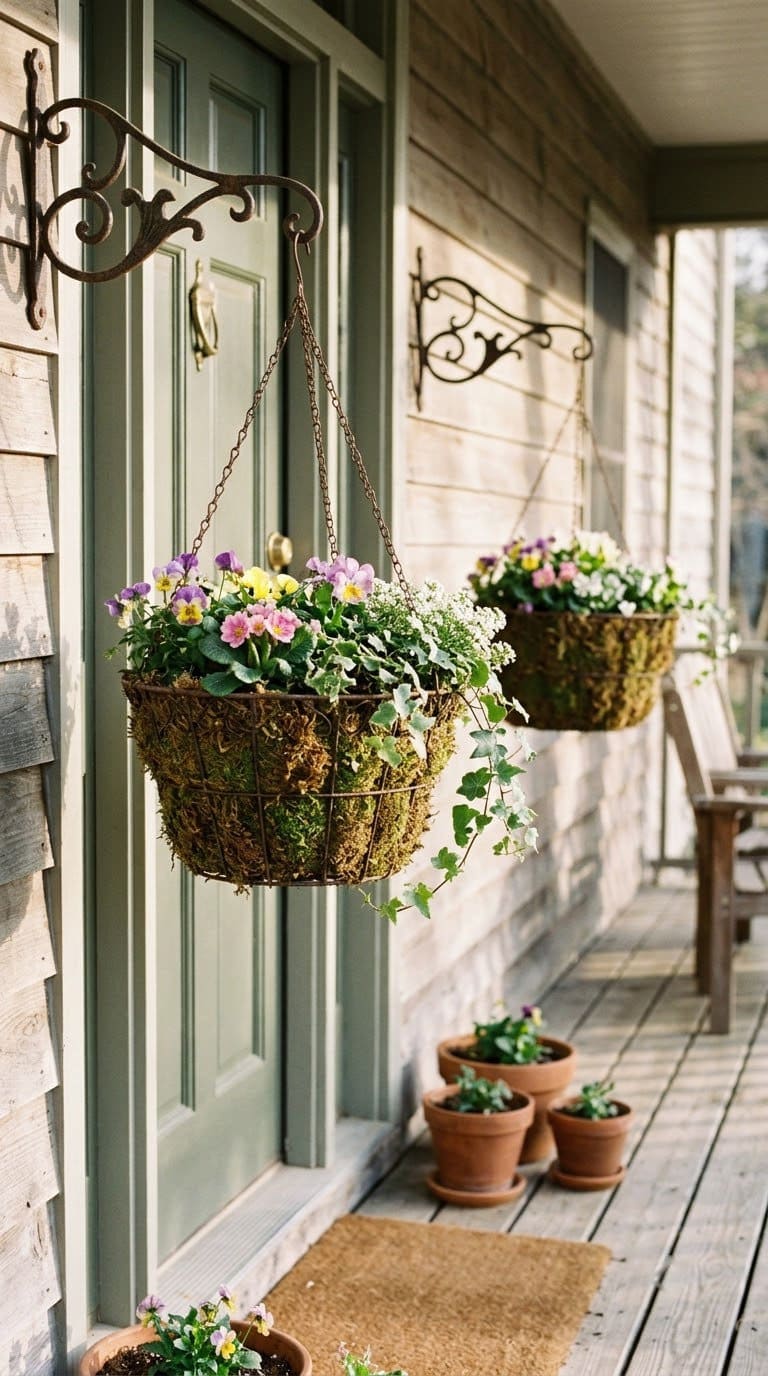
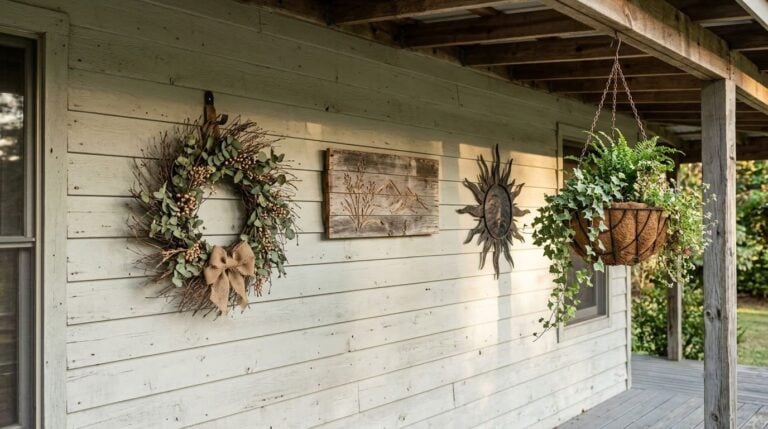
A wire basket has built-in drainage. Line it with sheet moss or coconut fiber so the mix stays in. Then add a small pot or loose soil and a mix of trailing and upright flowers.
Colorado State lists wire baskets among containers that work. They dry faster than plastic, so check them often.

Hang one on each side of the door for a balanced look. Use a hook rated for far more than the wet basket weighs.
Plant three layers in each basket: a tall flower in the middle, a mounding plant around it, and a trailing plant over the edge. Water until a little runs out of the bottom.
3. The Birdcage Floral
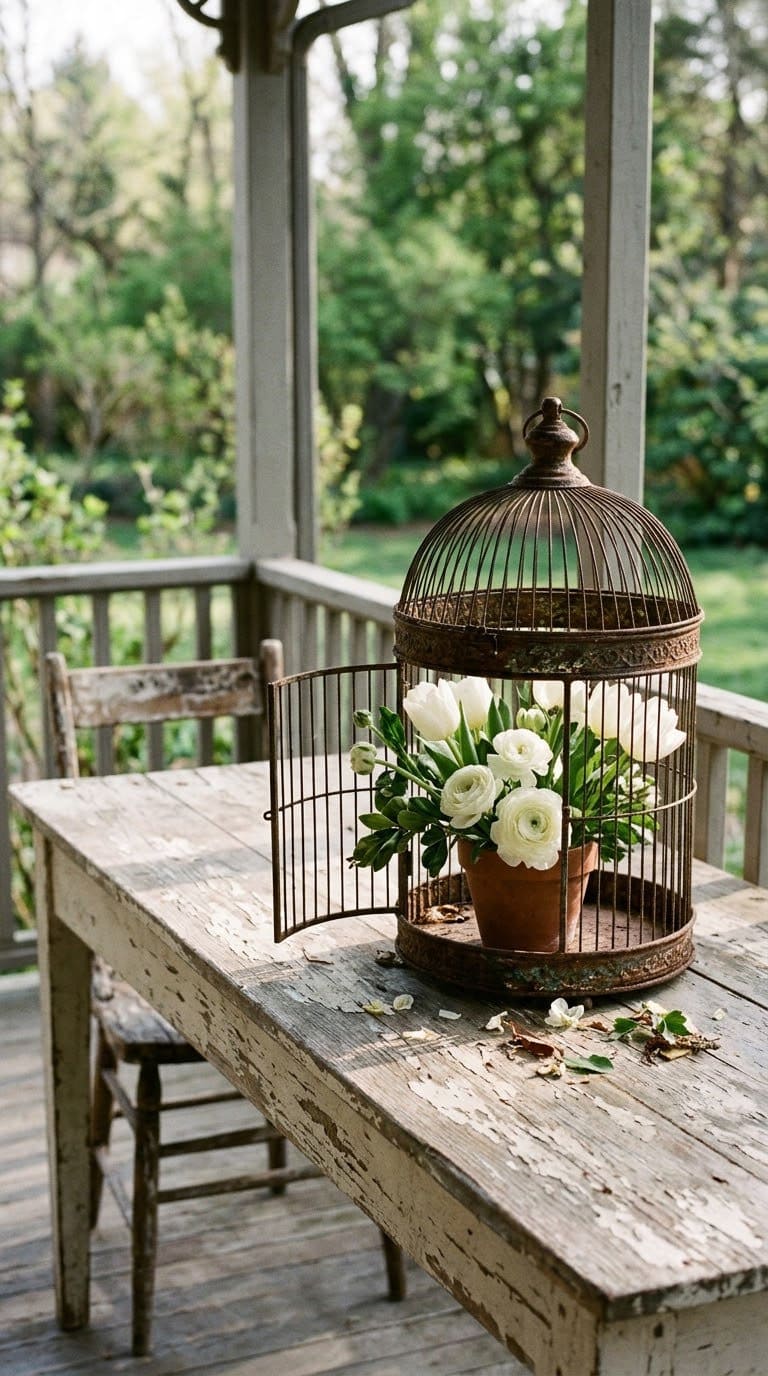
Skip planting into the cage floor. Set a small potted plant on the bottom and tuck moss around it. Leave the door open or remove it.
Keep the pot inside its own saucer or tray. That keeps drainage clear and protects the cage from rust stains. Move the whole piece under cover in heavy rain.
A white cage with soft pink and white flowers reads fresh and light. Use an odd number of flowers so it feels natural.
Hang the cage from a sturdy hook, or set it on a small table at eye level. Tie the door open with thin wire so wind can’t swing it shut.
Ideas for the Floor and Steps
These carry the weight. Plan for stability, since wind and busy feet can knock them over.
4. Painted Bucket Flower Pots
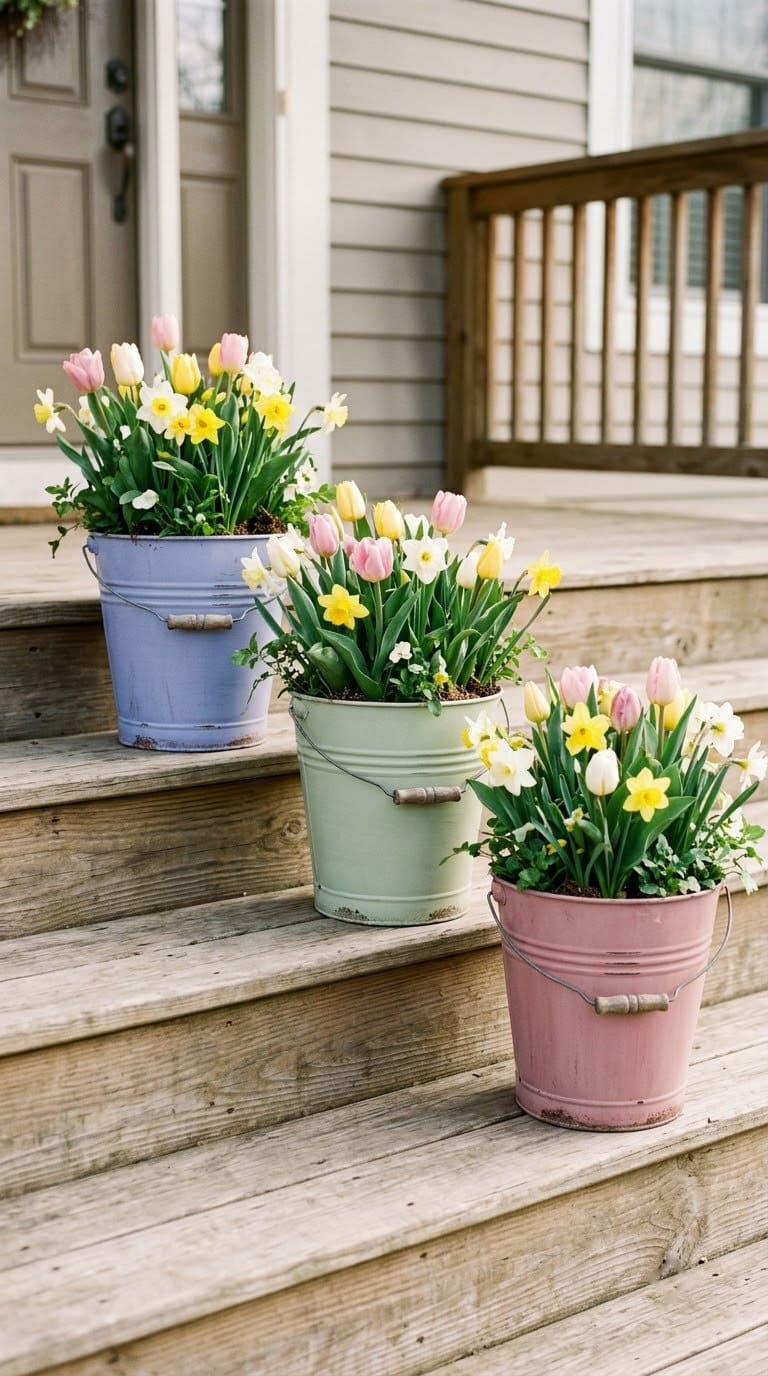
Buckets are easy and cheap. Use a clean metal or food-grade plastic bucket. The University of Maryland Extension says a 5-gallon bucket is a common choice, and to drill drainage holes and cover them with fiberglass window screening.
Do not reuse buckets that held paint, detergent or adhesives. Maryland says to skip those.
Paint the outside in soft pastel tones for a French flower market look. Group three in different heights on a step.
Plant the tall bucket with tulips or daffodils, the middle one with pansies, and the short one with trailing ivy. Three heights make the group feel planned.
5. The Old Chair Planter
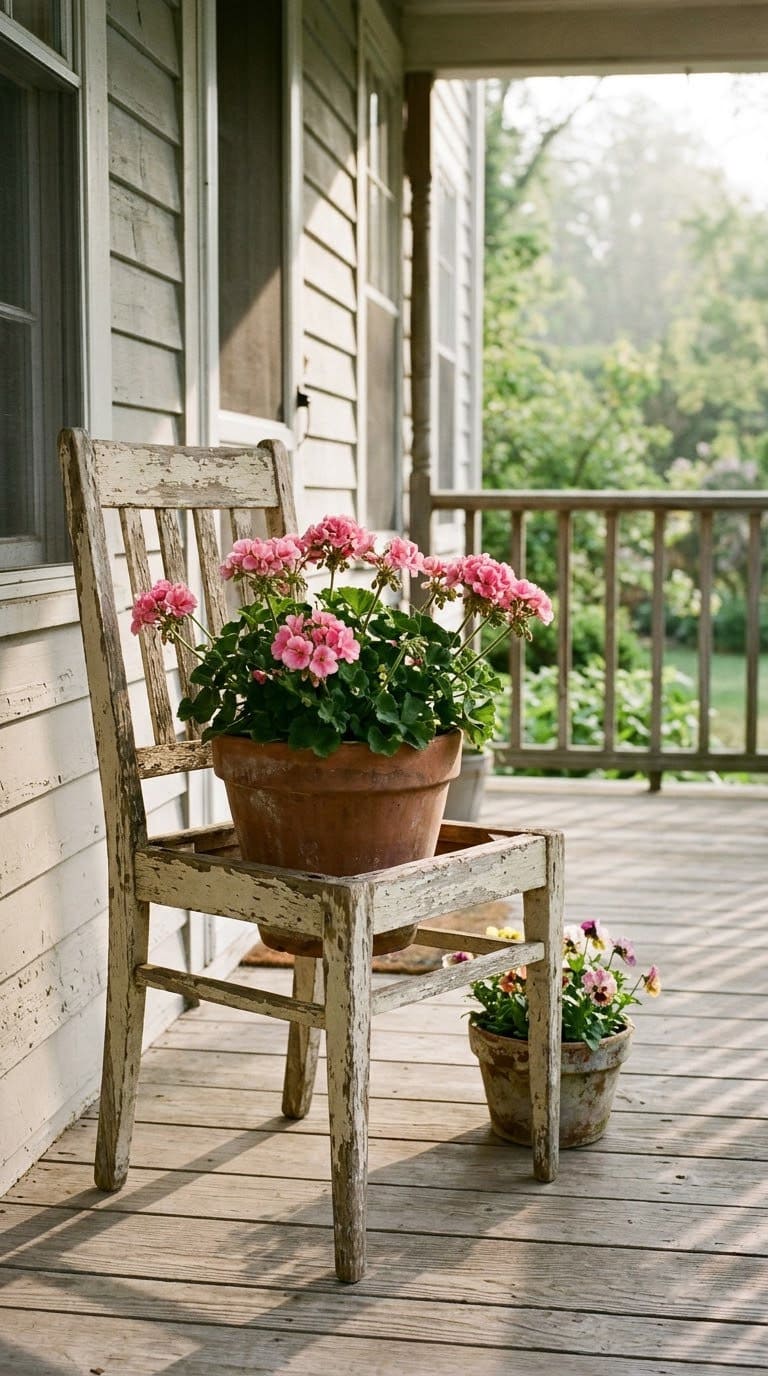
Take the seat out of an old wooden chair. Set a pot of flowers into the opening, or fit a deep pot into the frame. The pot handles the drainage.
Sand and repaint the frame in a weatherproof color. If the chair is very old, test it for lead before sanding.
The US EPA says peeling or chipping paint dust can be hazardous. It also says not to remove lead-based paint yourself, and that homes built before 1978 are more likely to have it.
Place the chair on a flat spot near a corner. Choose a pot that sits snug in the frame, not a heavy one, so the chair isn’t strained.
Seal the cut edges of the seat opening with outdoor paint. Bare cut wood soaks up water and splits first.
6. The Ladder Flower Stand
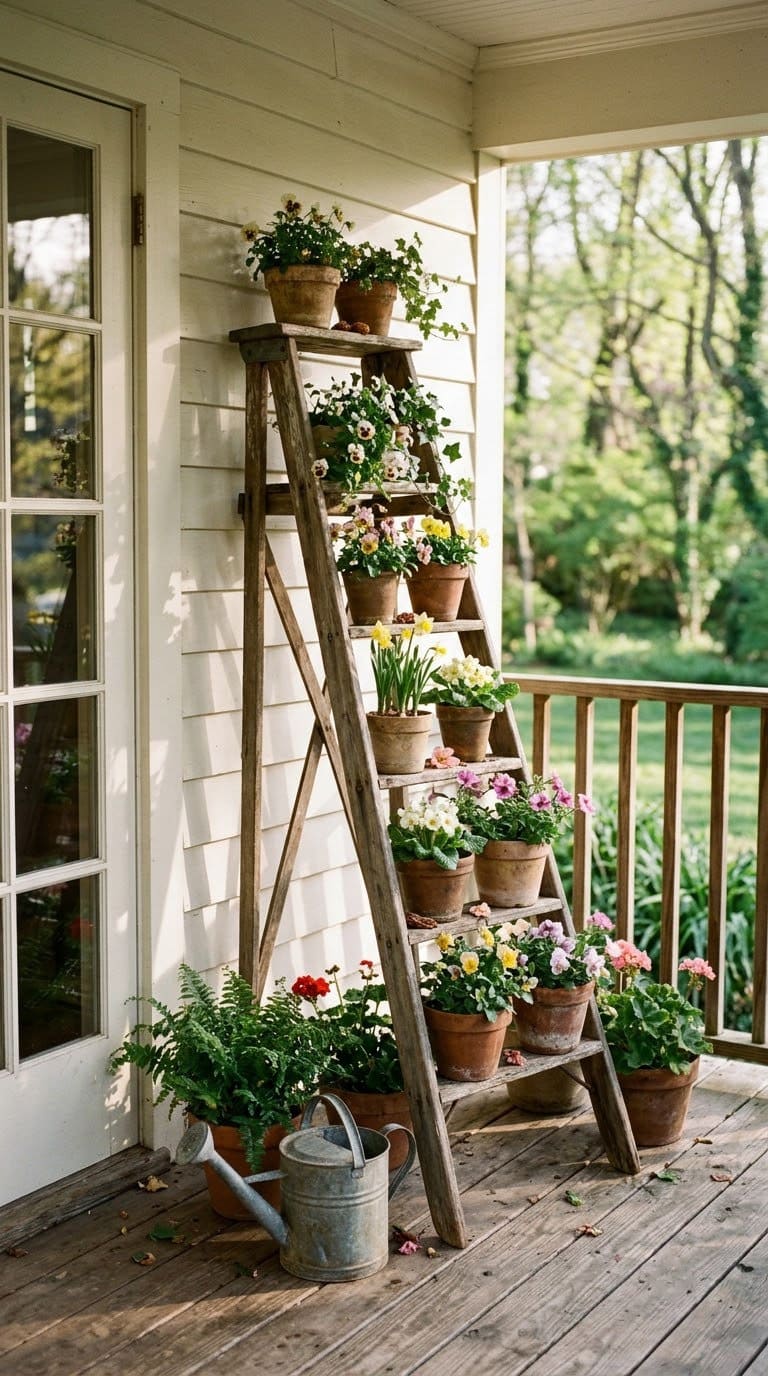
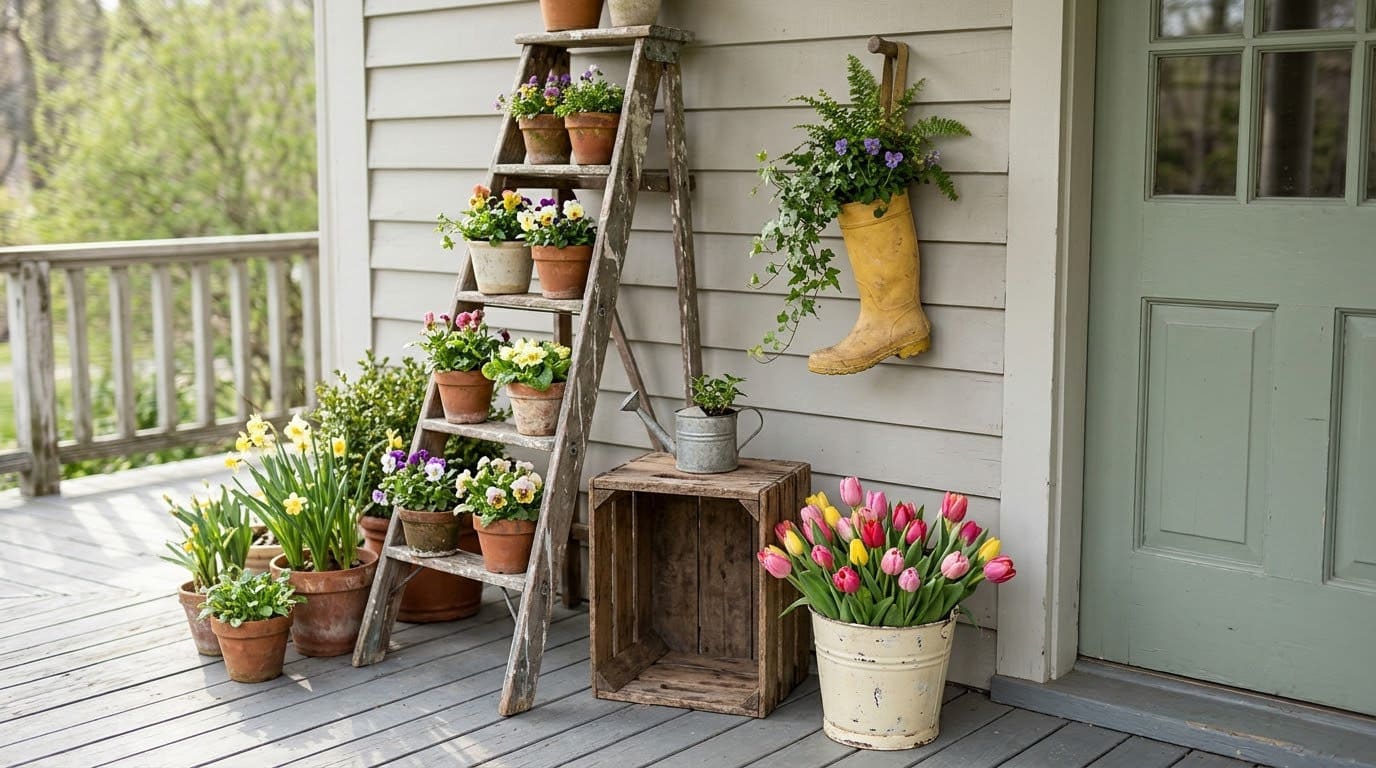
An old wooden ladder makes a tall stand for pots. Lean it against a wall, or use a step ladder that stands on its own. Put one pot on each rung or step.
Check weight first. Maryland says a big container can weigh about 100 pounds when full. Keep the heavy pots on the bottom step.
Choose pots with saucers or sit them in shallow trays. Water drips down a ladder fast, and you don’t want it staining the floor.
Ideas for Tables and Surfaces
Give guests a place to set a cup or a plant. These ideas also hide old marks, so they suit scuffed finds from a yard sale.
7. The Milk Can Table
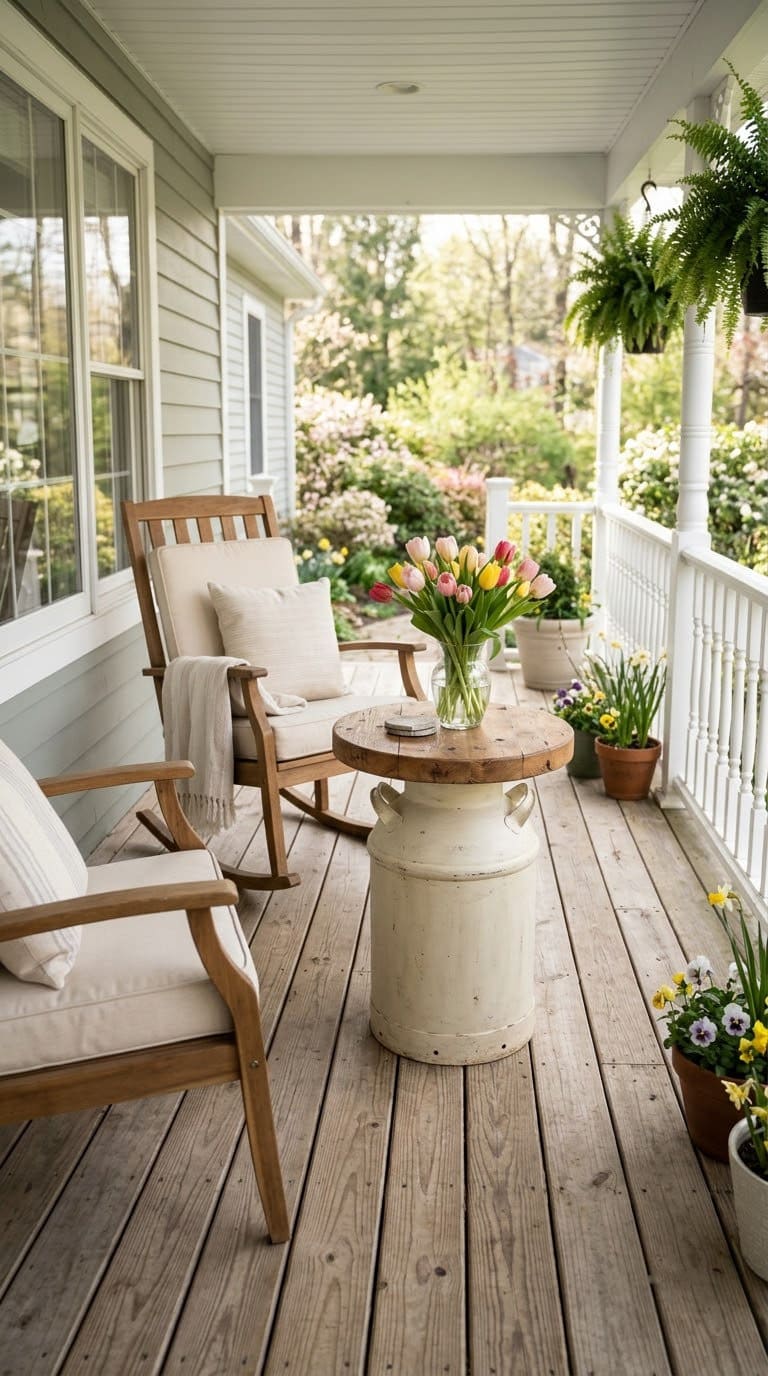
An old milk can makes a sturdy side table. Set a round wooden top or a glass top on the lid. Paint the can a bright spring color.
You can also plant in it, but the can has no drainage. Drill holes in the base first. A can used as a table needs no drilling.
Wipe the inside and check it for old residue. Then keep it dry inside so it doesn’t rust.
If you want a planter version, drill holes first and set a plastic pot inside the can. Colorado State notes that non-porous containers hold water longer, so water less often.
8. The Painted Crate Display
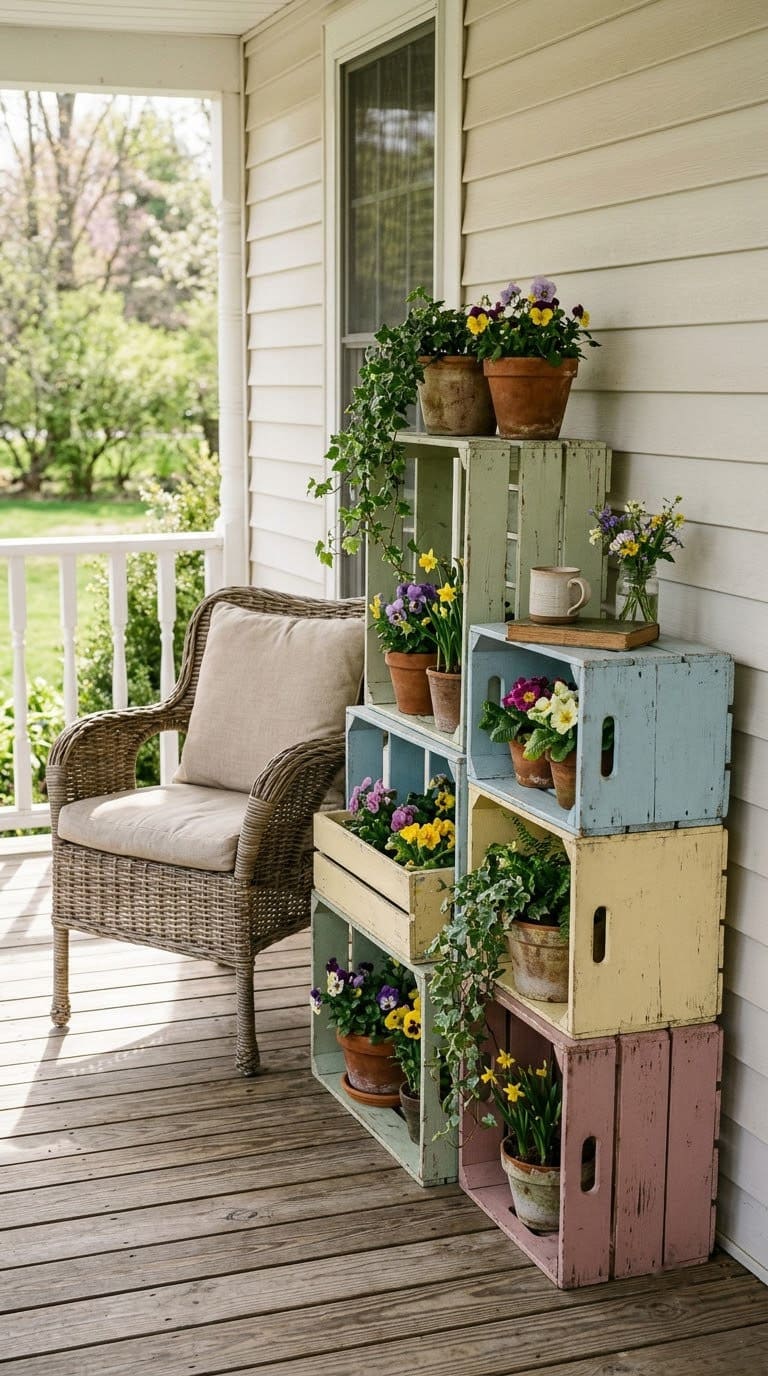
Stack two or three wooden crates in different sizes. Paint them in soft colors and seal them for outdoor use. Set pots on each level.
Wood can rot if it stays wet. Colorado State notes that porous containers like wood dry faster, which helps. Still, set the crates on a few scraps of lumber so air moves underneath.
Screw the crates together if the stack is tall. That stops the top one from sliding in wind.
9. The Reclaimed Wood Plant Stand
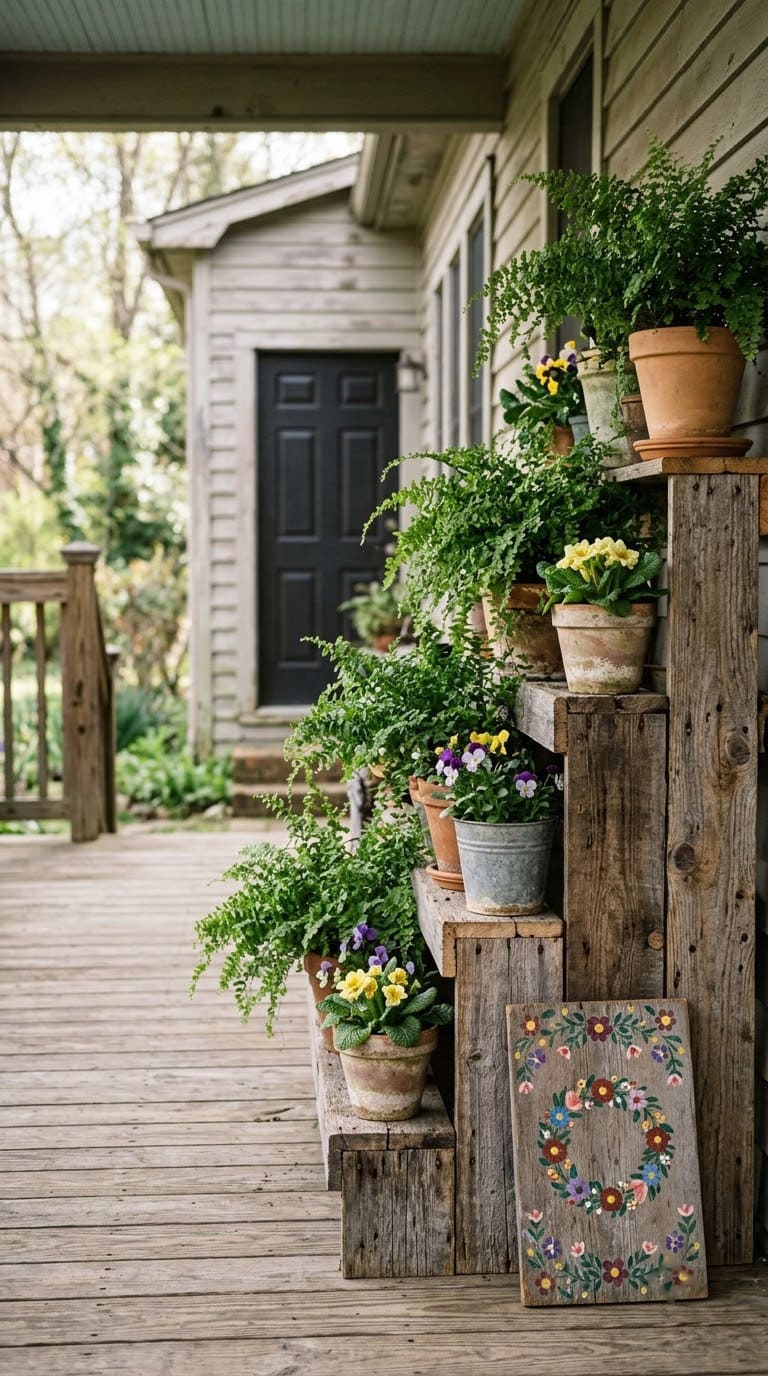
A pallet board stand holds several pots at different heights. Sand the boards to prevent splinters, then seal or paint them.
Add a small board with a welcome message on the top shelf. Keep the wording short, since a long message is hard to read from the street.
Choose boards with no stains or odd smells. Skip any wood that held chemicals.
Gravel or No Gravel? A Tradeoff
Sources disagree on one small step.
| Source | What it says | What to do |
|---|---|---|
| House Digest | Add a handful of pebbles to the base of a boot for stability | Use only for tippy, light containers |
| University of Maryland Extension | Gravel doesn’t improve drainage and can waterlog the mix, except to steady a light container | Never use it for drainage |
Our read: both fit. Use a few pebbles or a small stone only as ballast in a light piece. Never use a drainage layer.
What Does Feng Shui Say About a Spring Porch?
Feng shui is a tradition, not a science. It still gives you a handy porch checklist. Michele Duffy, a Canyon Ranch Feng Shui Master, shares front-entrance tips in Lamorinda Weekly.
She says to clear clutter from the yard, pathway and porch. She suggests a bright, cheerful door color and a tall, healthy plant on each side of the door that doesn’t block it. She also suggests white lights around the porch.
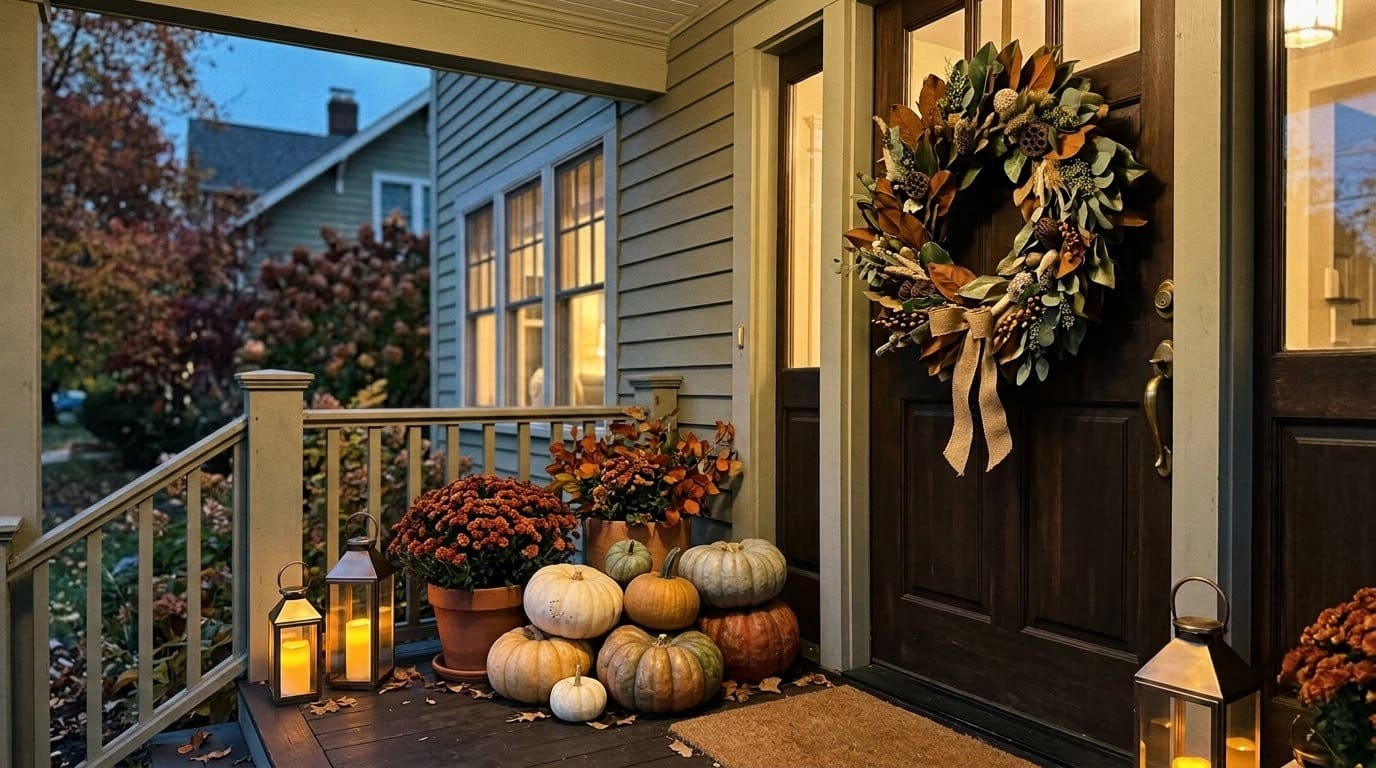
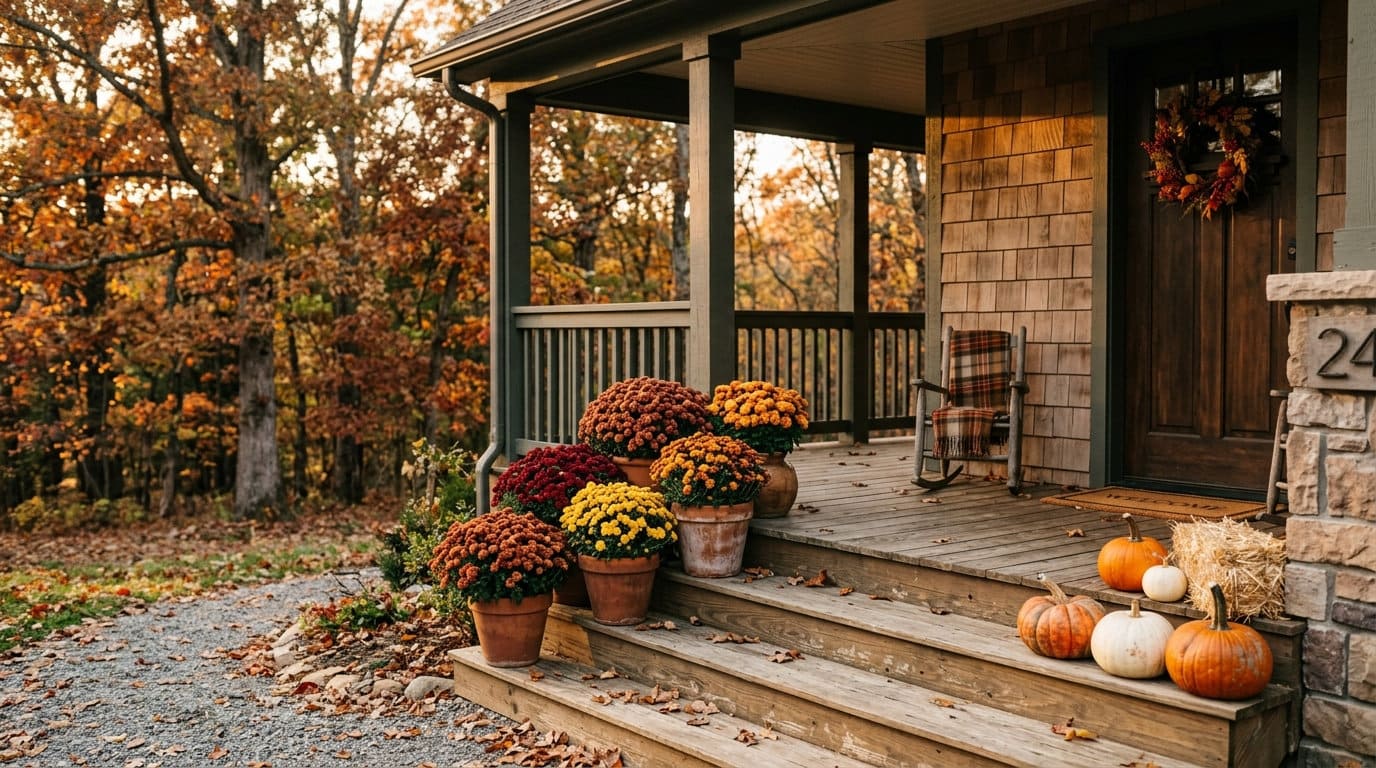
That fits this guide. Pick two or three of the nine ideas, not all of them. A tidy porch with a few strong pieces feels more welcoming than a crowded one.
How Do You Keep a Repurposed Porch Looking Good?
- Water often. Colorado State says larger container plants may need water once or twice a day, and containers shouldn’t dry out completely.
- Rotate pieces so every plant gets sun.
- Check for standing water after rain and tip it out.
- Wipe dust and cobwebs from stoop and railings.
- Swap flowers as the season warms.
Because the pieces are mixed, tie them together with one color. Pick two paint colors, and repeat them on every item.
Common Mistakes to Avoid
- No drainage. Colorado State calls it the most important factor.
- A gravel layer. Maryland says it doesn’t help and can waterlog the mix.
- Toxic containers. Both extension guides say to avoid anything that held paint or chemicals.
- Old lead paint. The EPA says peeling paint on old items can create hazardous dust.
- Heavy pots on a weak stand. A full large container can weigh about 100 pounds, according to Maryland.
- Too many pieces. Clutter hides the best ones.
Frequently Asked Questions
What can I use as a planter?
Almost anything works, according to Colorado State. It lists clay, plastic, wood, wire baskets, ceramic and cement blocks. Just add drainage and avoid containers that held toxic materials.
Do I need gravel at the bottom of a pot?
No. The University of Maryland Extension says gravel doesn’t improve drainage. Use it only to weigh down a light container.
Is it safe to plant herbs in an old container?
Be careful. Colorado State says never use a container that held toxic materials if you grow edible plants. When in doubt, use decorative flowers only.
How many drainage holes does a boot need?
House Digest suggests three to five holes in each boot’s base. Make them in the bottom, then line the bottom with fabric.
How do I keep wind from tipping my pots?
Use heavier containers low and light ones high. Maryland says you may add weight to steady a light container.
Your Weekend Plan
- Friday: collect three or four old items and check what they held.
- Saturday: clean, drill, paint and let everything dry.
- Sunday: fill with fresh mix, plant, and place with a focal point.
Start with the rain boots if you want a quick win. Add a bucket group next.
Never miss an update — choose FarmFoodFamily as your preferred source on Google.
How it works: Tap the button below to open Google's settings page, then check the box next to FarmFoodFamily.
Tap the checkbox to turn it blue — that's how you know it's set.