14 Charming Wine Bottle Craft Ideas for the Garden (With Safe Cutting Tips)
Empty wine bottles become edging, lights, planters and feeders in an afternoon, as long as you handle the glass and the fuel safely.

Never miss an update — choose FarmFoodFamily as your preferred source on Google.
How it works: Tap the button below to open Google's settings page, then check the box next to FarmFoodFamily.
Tap the checkbox to turn it blue — that's how you know it's set.
Empty wine bottles become edging, lights, planters and feeders in an afternoon, as long as you handle the glass and the fuel safely.
Products We Recommend
This post contains affiliate links. We may earn a commission on qualifying purchases at no extra cost to you.

NoCry Clear Safety Glasses, Anti-Fog, ANSI Z87
Eye protection for every cutting and finishing step
Shop Now
Schwer ProGuard Cut Resistant Work Gloves, ANSI A9
Hand protection when handling and finishing cut glass
Shop Now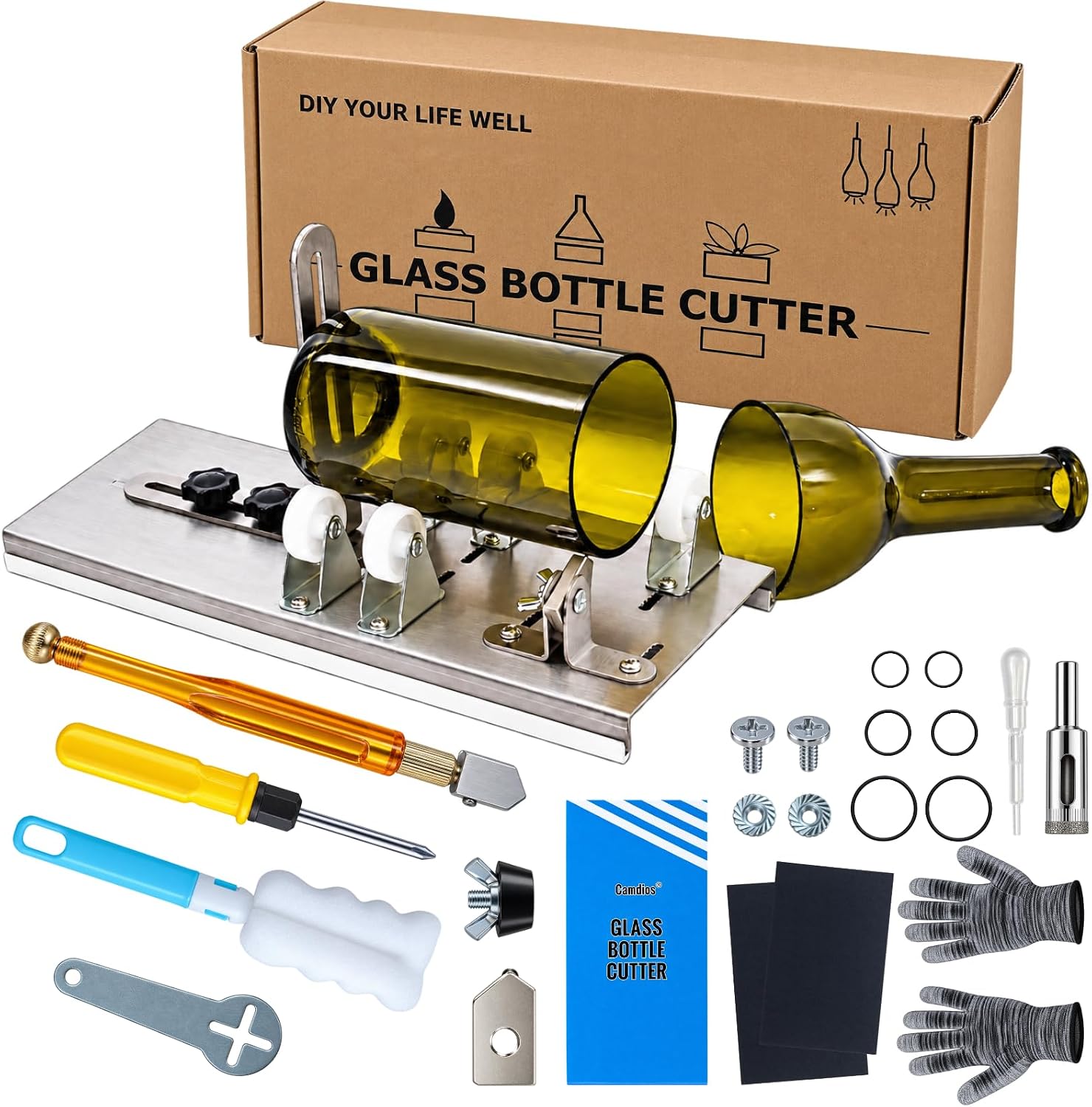
Glass Bottle Cutter, Upgraded Bottle Cutting Tool Kit for Round Bottles
Scoring jig with cutting wheel for ideas 5, 7, 8 and 12
Shop NowWine bottles work in the garden as edging, plant markers, light covers, planters, bird feeders and watering helpers. The easiest builds need no cutting at all, and nine of the 14 below fit that bucket. You flip a bottle neck-down for edging, or slip a cork light inside for a glowing accent.
Cutting glass is where projects go wrong. Make magazine‘s Sean Michael Ragan says glass cutting can’t be forced, and uneven heat sends cracks off in random directions. A patent on bottle cutters calls hot wire and string methods dangerous.
But there is a simple rule. Start with no-cut projects and add cut ones once you can score and finish an edge. Below are 14 ideas, each marked no-cut or cut, plus the cleaning, edge-finishing and fuel rules that keep them safe in a family garden.
Answer 4 quick questions and get matched to the exact fix for your yard — drainage, budget, layout, or something else entirely.
Take the Free QuizShould You Cut Glass Bottles at All?
Not at first. Many of the best garden ideas need no cutting. Choose by skill and risk.
| Project type | Cutting? | Risk level |
|---|---|---|
| Edging, hose guides, bottle tree, markers | No | Low, handle intact bottles |
| Cork lights, jute-wrapped lanterns | No | Low, use LED only |
| Drip watering bottle | No | Low |
| Sideways planter, inverted planter | Yes | Medium, sharp edges |
| Cut-bottom light covers | Yes | Medium, sharp edges |
| Wind chime necks | Yes | Medium, sharp edges |
If you do cut, practice on spare bottles first. Ragan says to expect to ruin a few while learning.
How Do You Cut a Wine Bottle Safely?
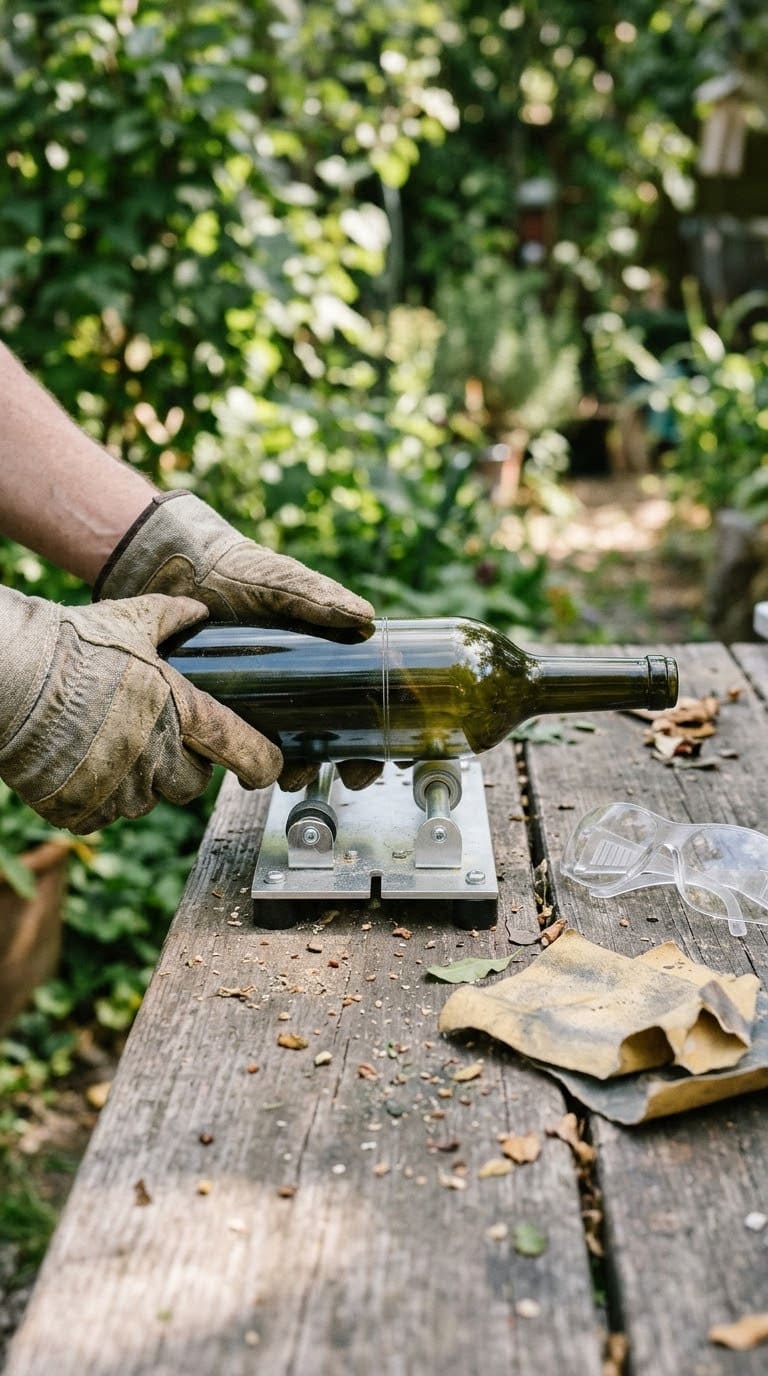
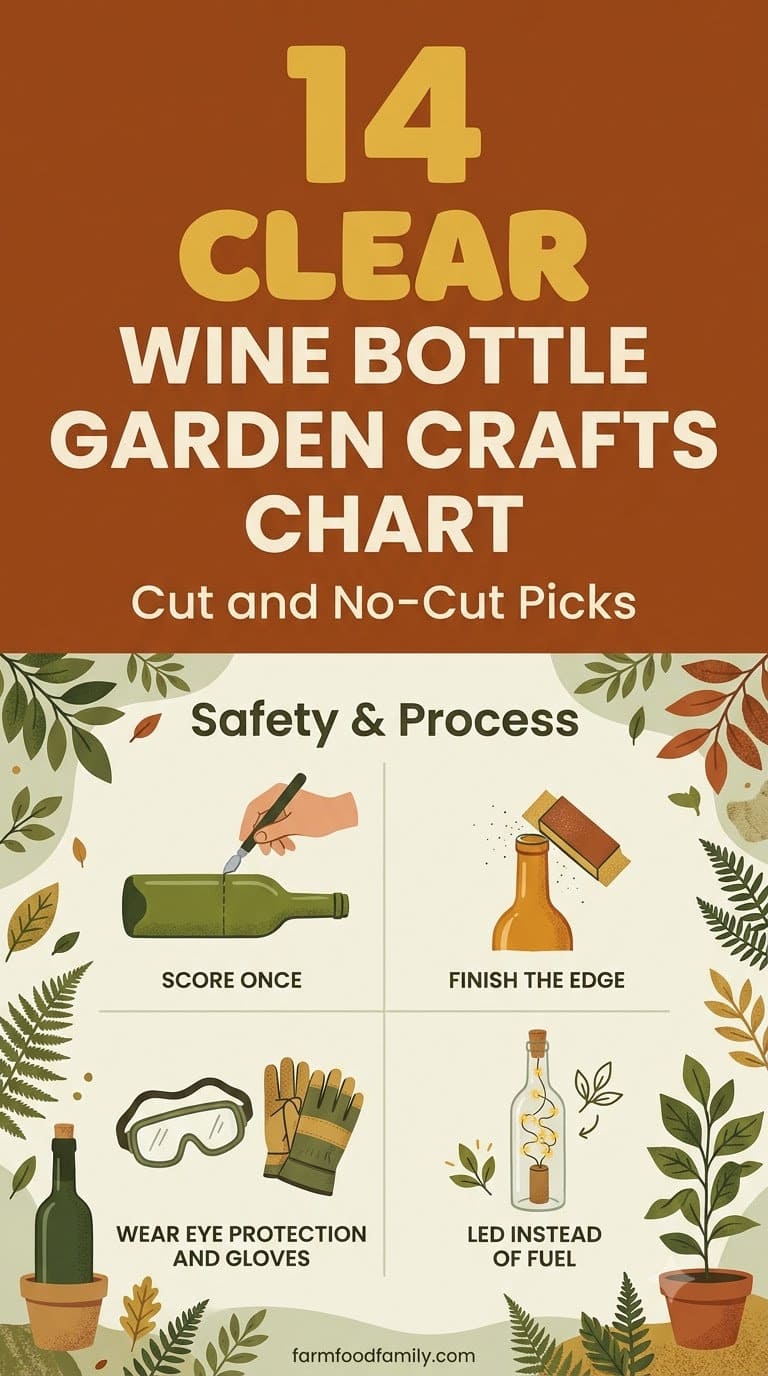
Score once, break cleanly and finish the edge. Make describes a jig with a glass-cutting wheel and oil. Apply firm, steady pressure while you rotate the bottle one full turn and stop when the score meets itself.
Ragan warns not to go over the same score more than once. The method then heats the score with a small butane torch while the bottle turns. The article says the break takes patience and that nothing in the process can be forced.
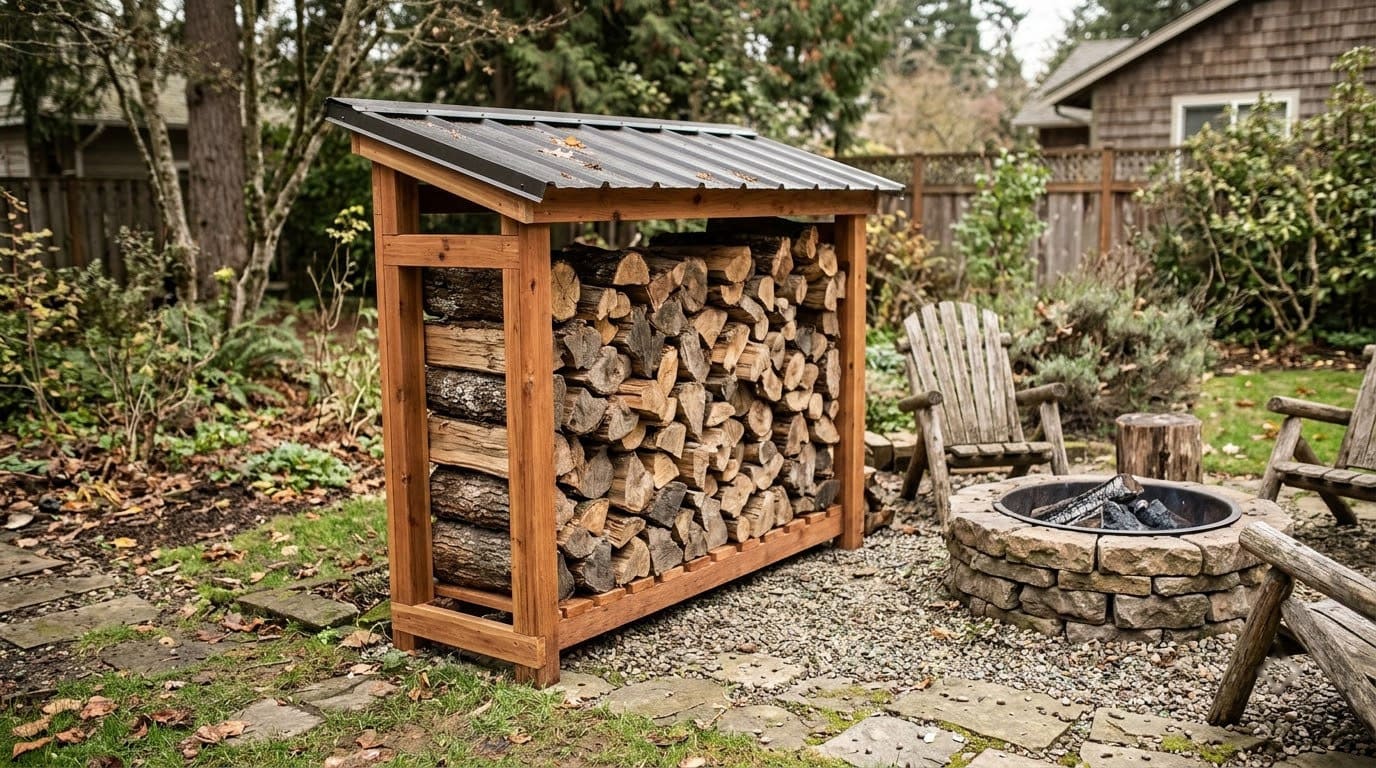
Skip the hot wire and string methods. The bottle cutter patent says these methods can be dangerous and that wrapping a bottle in hot wire or string and cracking along it leads to shattering. That is also why we don’t recommend the old candle-flame-then-cold-water trick.
Most yard problems trace back to one specific, fixable cause. Find yours in 4 quick questions.
Take the Free QuizFinish every cut edge. Ragan laps the edge on wet grit over a scrap of plate glass, then breaks the corners with silicon carbide sandpaper.
Why Skip the Wine Bottle Torch?
We left oil torches out on purpose. The old page showed one with no fuel or safety advice. A glass bottle full of fuel can tip and break, and the fuel is a poisoning risk for children.
The National Capital Poison Center says paraffin lamp oil is poorly absorbed from the stomach but can be aspirated into the lungs, causing severe breathing difficulties and pneumonia. Its lamp oil guidance says to keep fuel in its original container, store it up high and out of reach, and never leave lit lamps burning when no adults are present.
If a child swallows any, call poison control at 1-800-222-1222. For evening light, use LED cork lights instead. Our garden lantern guide covers safe options.
How Do You Keep a Bottle Bird Feeder Safe for Birds?
Clean it often. Tancey Cullum Belken of Clemson Extension says seed feeders should be cleaned at least every two weeks. Belken adds to clean more often with many visitors, after rain, or if you find dead birds in the yard.
Clemson recommends a 10 percent bleach solution, which is 1 part bleach to 9 parts water, as the most effective way against salmonella. Scrub off debris first, soak for 10 minutes, rinse well and let the feeder dry completely before refilling.
A bottle feeder is hard to scrub inside, so pick a design you can take apart. For more feeder styles, see our wine bottle bird feeder ideas.
Eye protection for every cutting and finishing step
Shop NowThis post contains affiliate links. We may earn a commission on qualifying purchases at no extra cost to you.
How Do You Prepare Wine Bottles for Garden Crafts?
Start with clean, intact bottles. Soak them in warm soapy water to loosen labels, scrub off the glue and rinse well. Dry them fully so paint, vinyl and glue stick.
Reject any bottle with a chip, crack or star mark. A flaw can turn into a break when you cut, bury or hang the bottle. Thick, dark bottles survive garden knocks better than thin clear ones.
The average homeowner spends $616/year on yard fixes that don't address the real problem. Find out what yours actually is — before you spend another dollar.
Take the Free QuizGather the kit for your project before you begin.
| Item | Used for |
|---|---|
| Glass-cutting wheel and jig | Scoring cut projects |
| Cut-resistant gloves and safety glasses | Every cutting and finishing step |
| Silicon carbide sandpaper and wet grit | Finishing cut edges |
| Outdoor paint pen or vinyl | Markers and painted bottles |
| LED cork lights | Glowing no-cut accents |
The wheel, grit and sandpaper come from Ragan’s method at Make. The gloves, glasses and the rest are our additions.
Which Bottle Crafts Are Rain-Ready?
Glass handles weather well. The weak points are the hardware, the lights and the paint. This table is our guide.
| Project | Outdoors all year? | Weak point |
|---|---|---|
| Edging, hose guides | Yes | Glass can chip under a mower |
| Bottle tree | Yes | Rod must stay upright |
| Cork lights | Check the label | Battery packs need shelter |
| Planters | Yes | Drainage |
| Feeders | Yes, but clean often | Seed spoils when wet |
| Painted bottles | Reapply paint | Cheap paint peels |
| Wind chimes | Covered spot best | Cord wears |
14 Wine Bottle Craft Ideas for the Garden
1. Neck-Down Bottle Edging (No Cut)
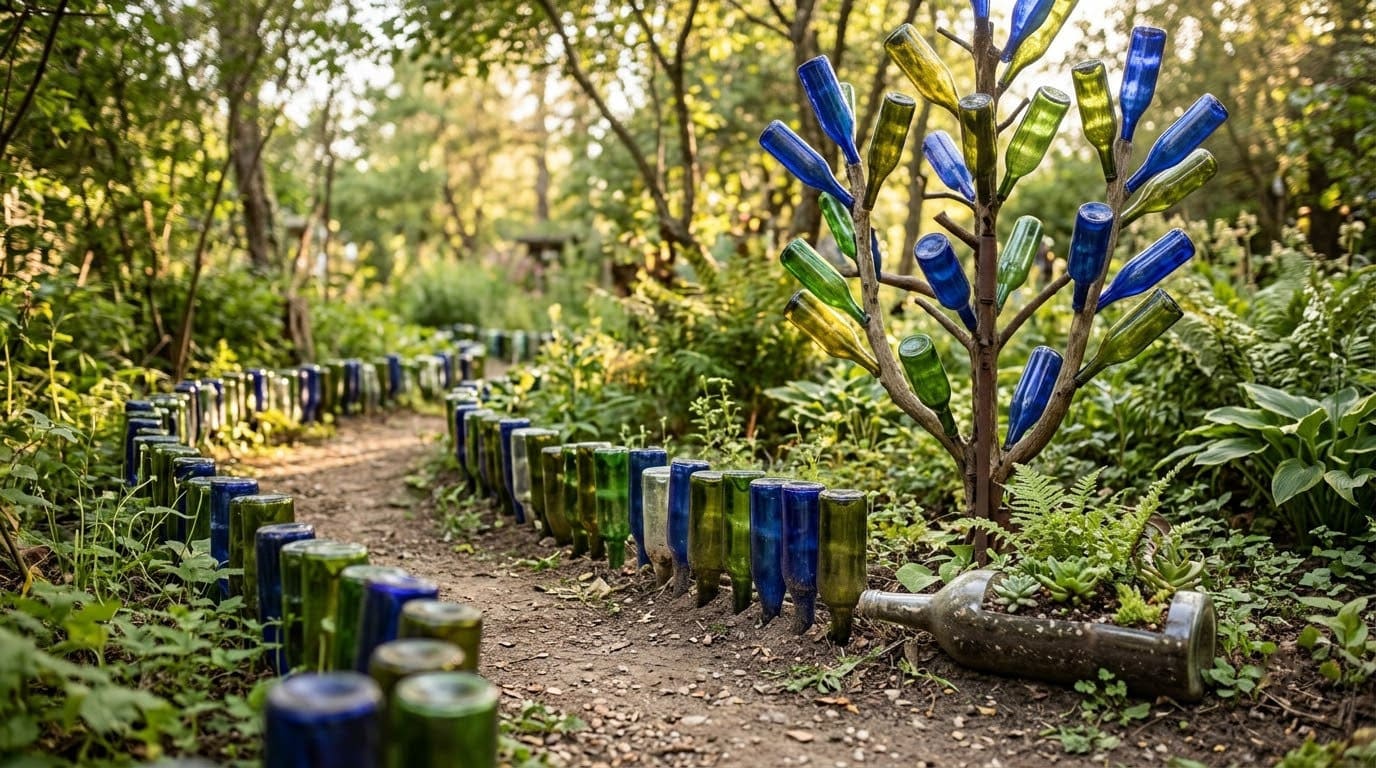
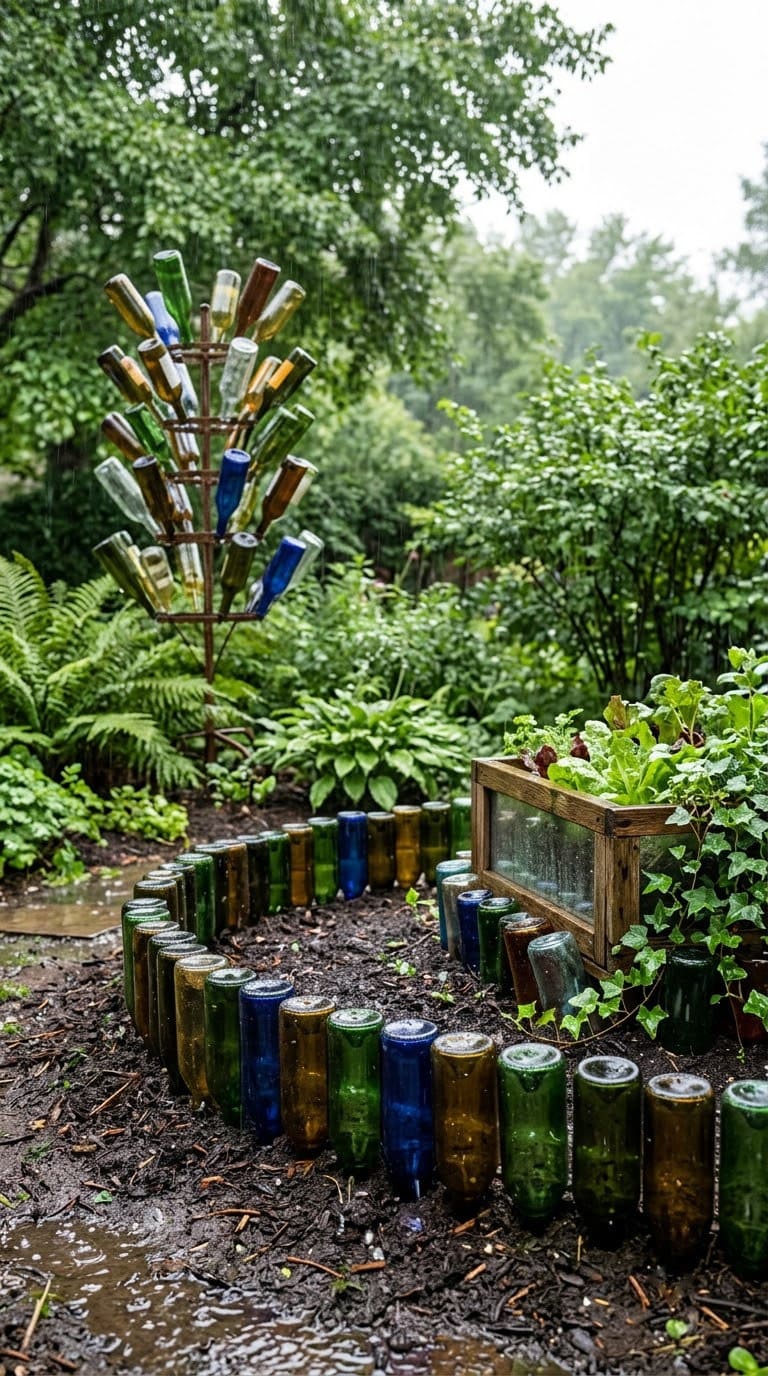
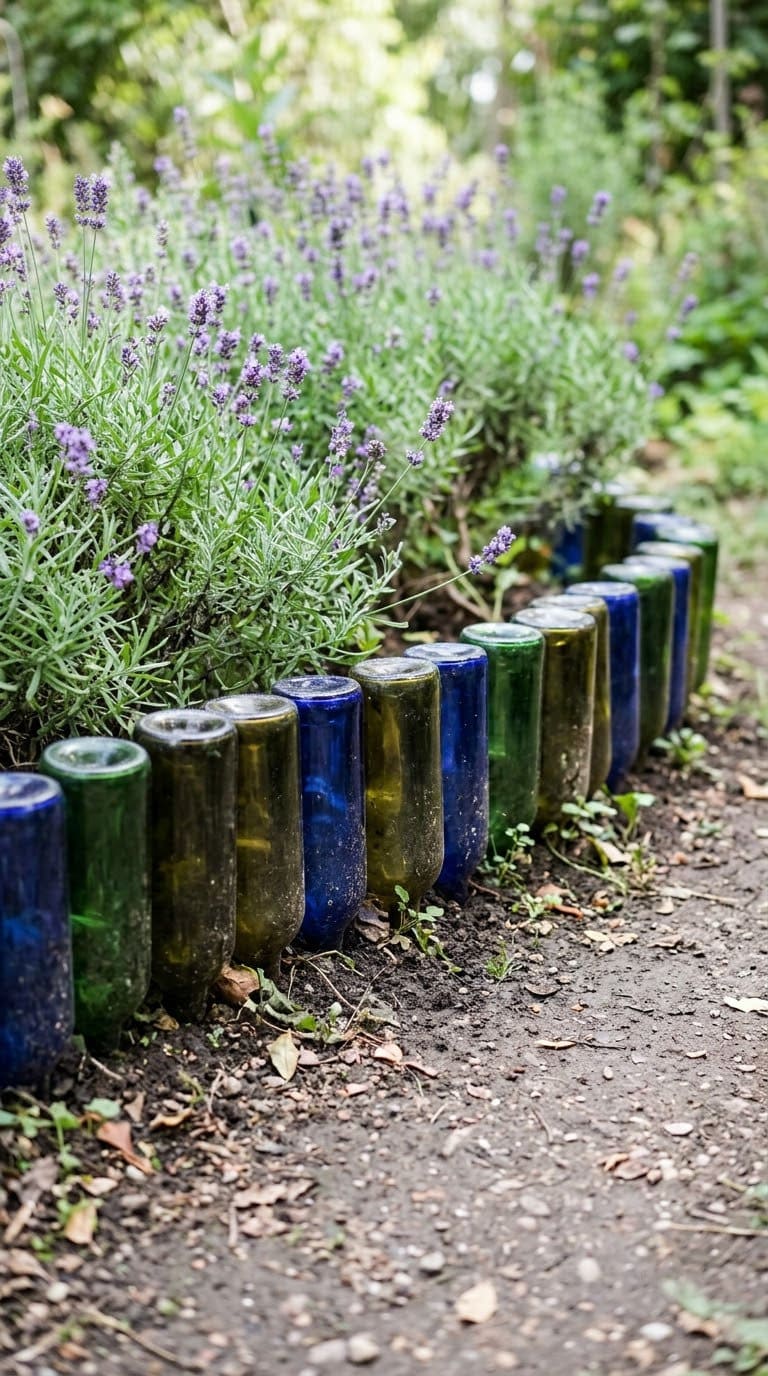
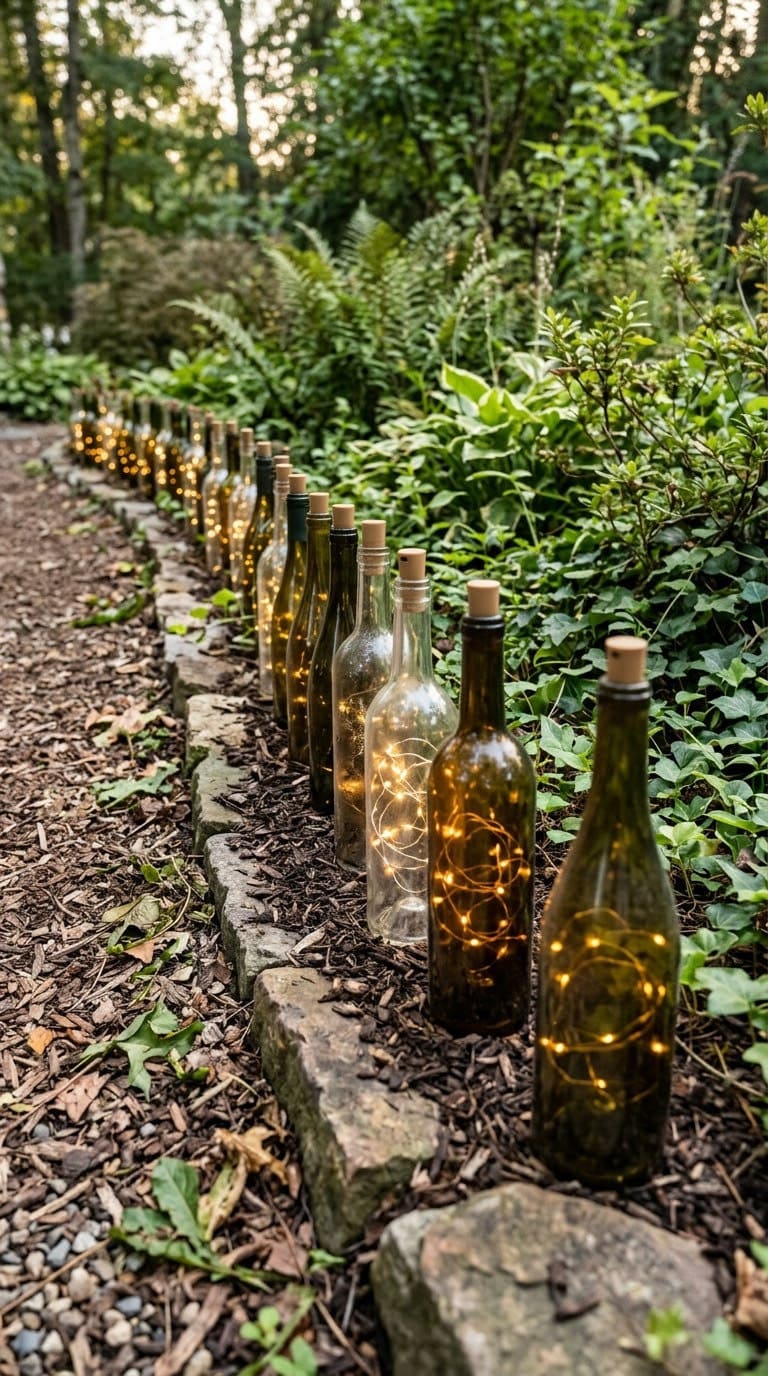
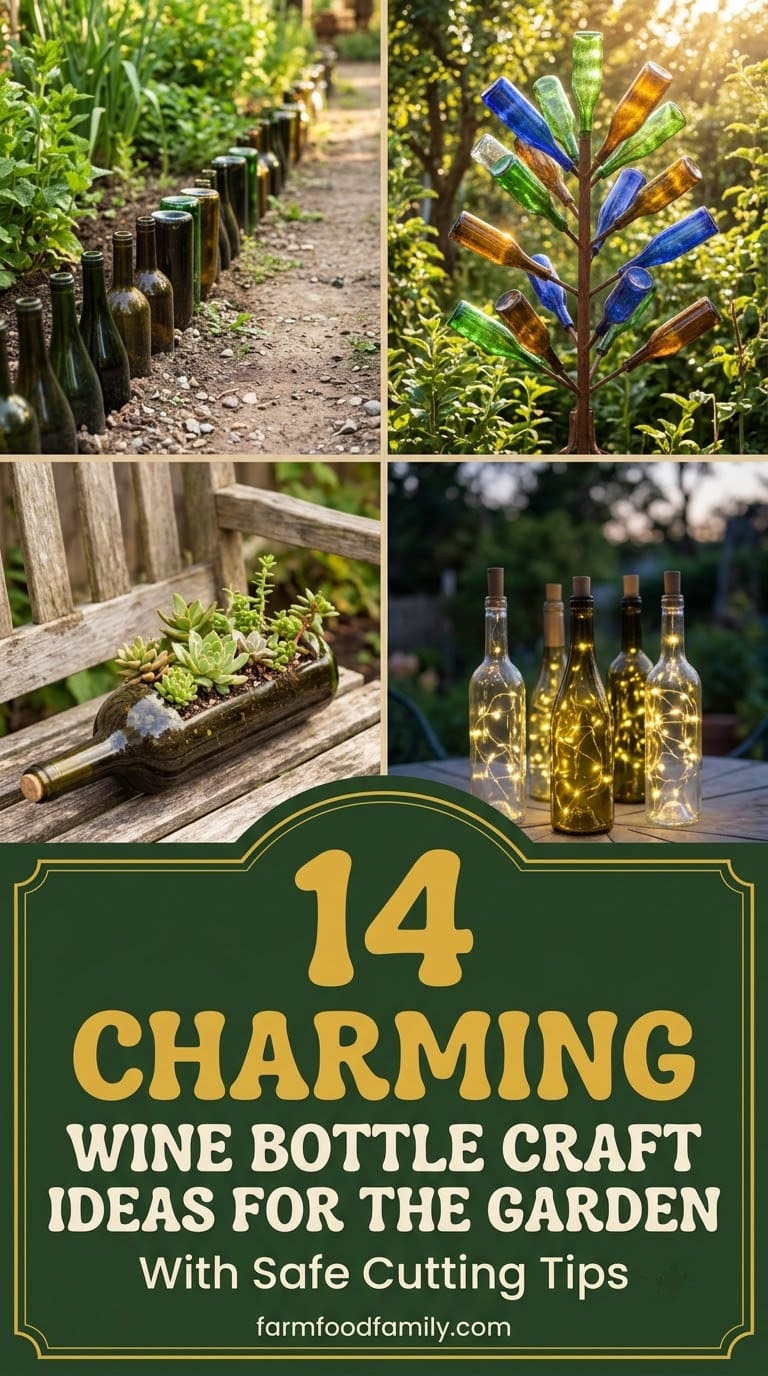
Melinda Myers suggests using wine bottles to create a colorful edge along a path or around a bed. Set each bottle neck-down in the soil, with the base facing up. The tip leaves out a burial depth, so we suggest burying about half the bottle.
Dig a shallow trench, set the bottles shoulder to shoulder and pack soil tightly around them. Use one color for a calm line or mix greens and blues. Our garden edging ideas compare other styles.


2. Bottle Hose Guides (No Cut)
Myers notes that individual bottles make great hose guides. Set one neck-down at each bed corner so the hose slides around it. This protects plants from being crushed.
Bury the bottle deeper at corners where the hose pulls hard. Use thick bottles and avoid chipped ones. Place them away from the mower path.
3. Wine Bottle Tree (No Cut)
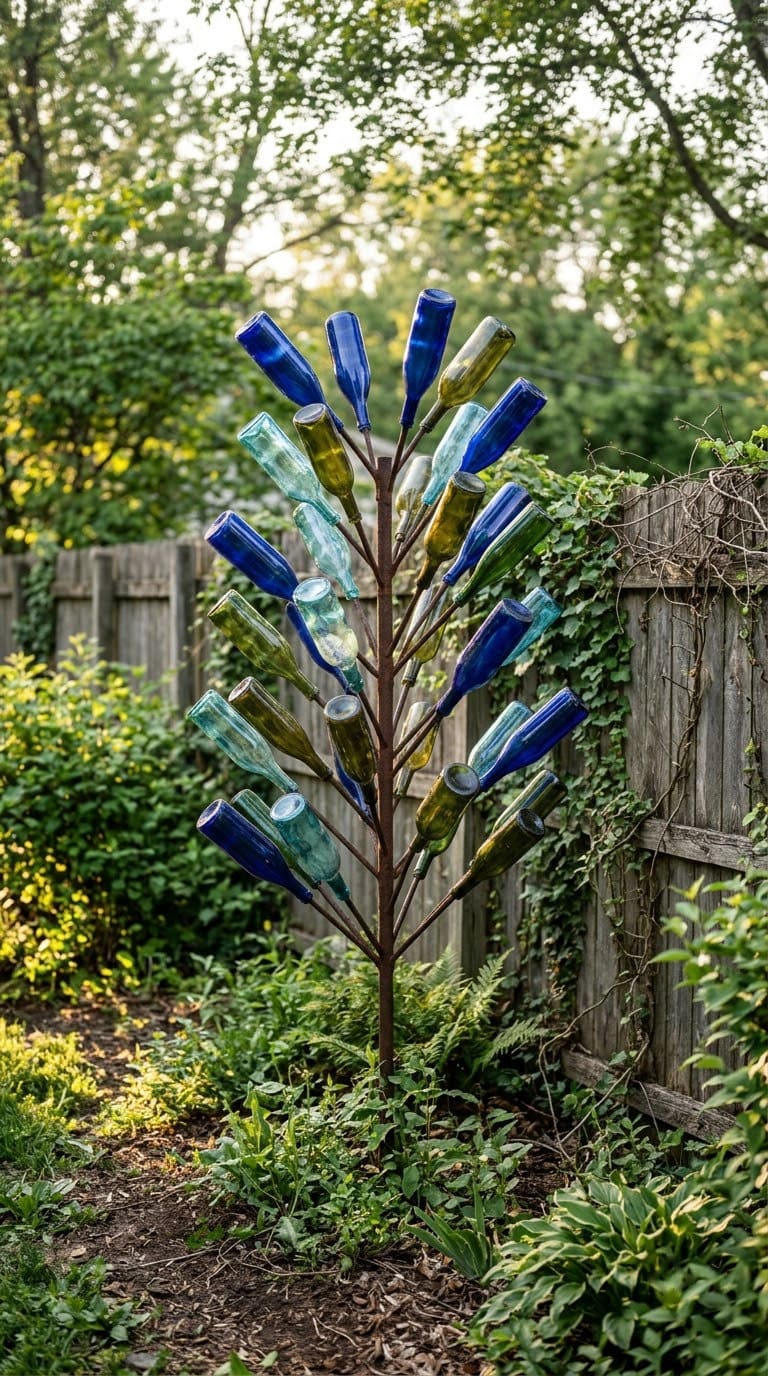
Sink a steel rod or pipe into the ground and slip bottles over the branches of a metal frame. The glass catches the sun. This is a classic garden art piece and Myers lists the bottle tree among the ideas.
Cap the rod ends with caps so no one gets hurt. Set the base in concrete or a deep hole so the tree stays upright in wind. Use only intact bottles with no chips.
4. Drip Watering Bottle (No Cut)
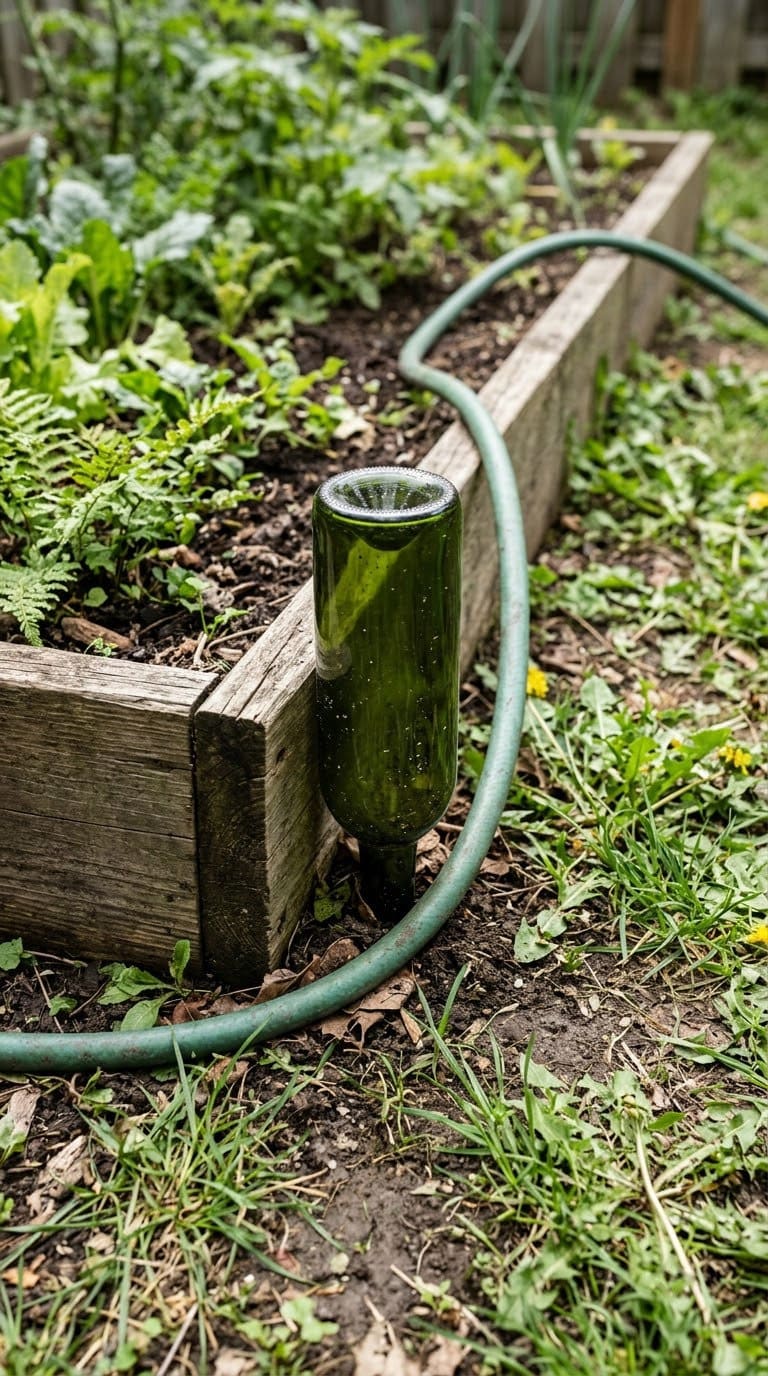
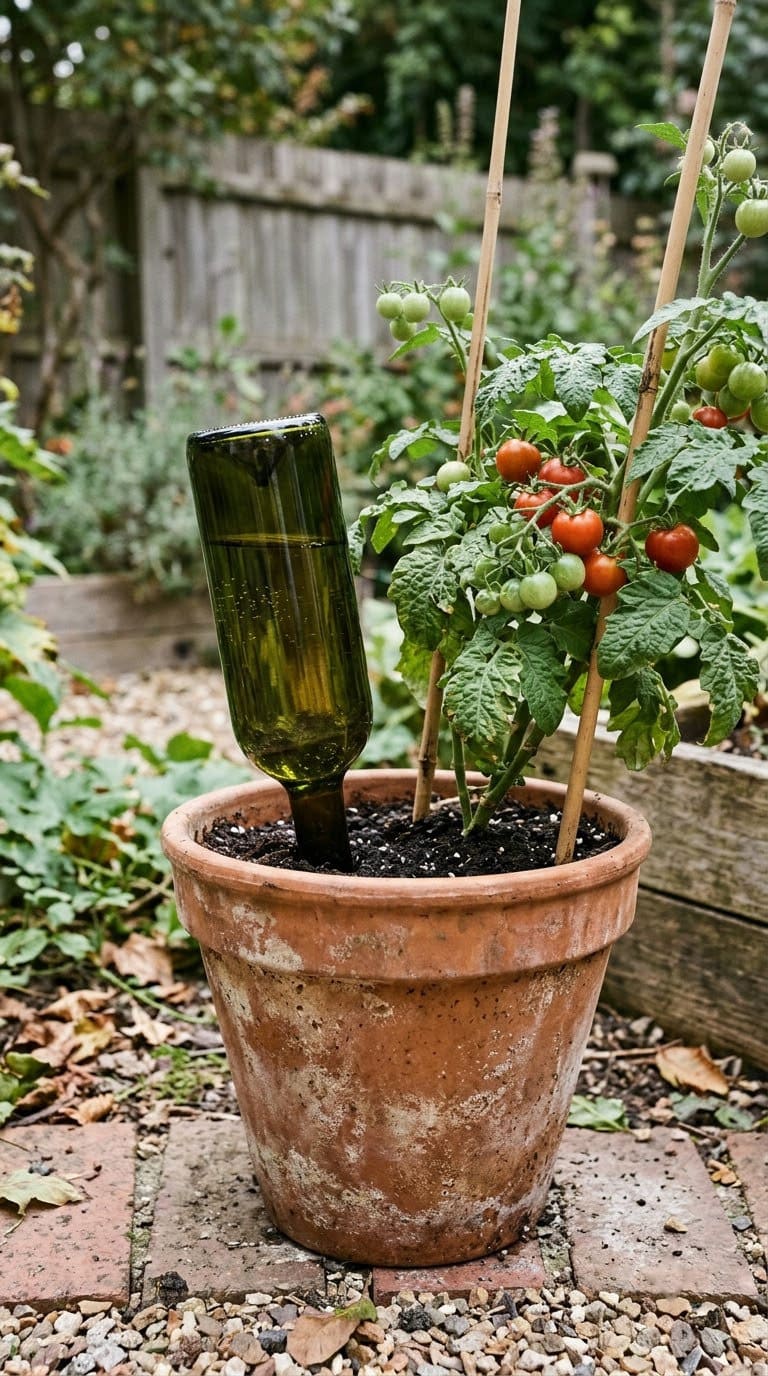
Myers describes a drip-style watering device. Punch a small hole in the soil of a container, fill the bottle with water and invert it into the hole. Myers notes that hollow terra cotta spikes called Plant Nannies can hold the bottle in place.
Test it on a pot before you leave for a trip. Fill the bottle slowly so it doesn’t gush. Check plants regularly, since this is not a full irrigation system.
5. Cut-Bottom Light Covers (Cut)
Myers says to cut off the bottom with a glasscutter and place the bottle over an LED bulb, singly or over a string of lights. The bottle diffuses the glow. Use LED lights only.
Finish the cut edge so it is smooth to the touch. Set the bottle over a stake or a ground light so it can’t tip. Keep the electrical parts under cover.
6. Cork Light Bottles (No Cut)
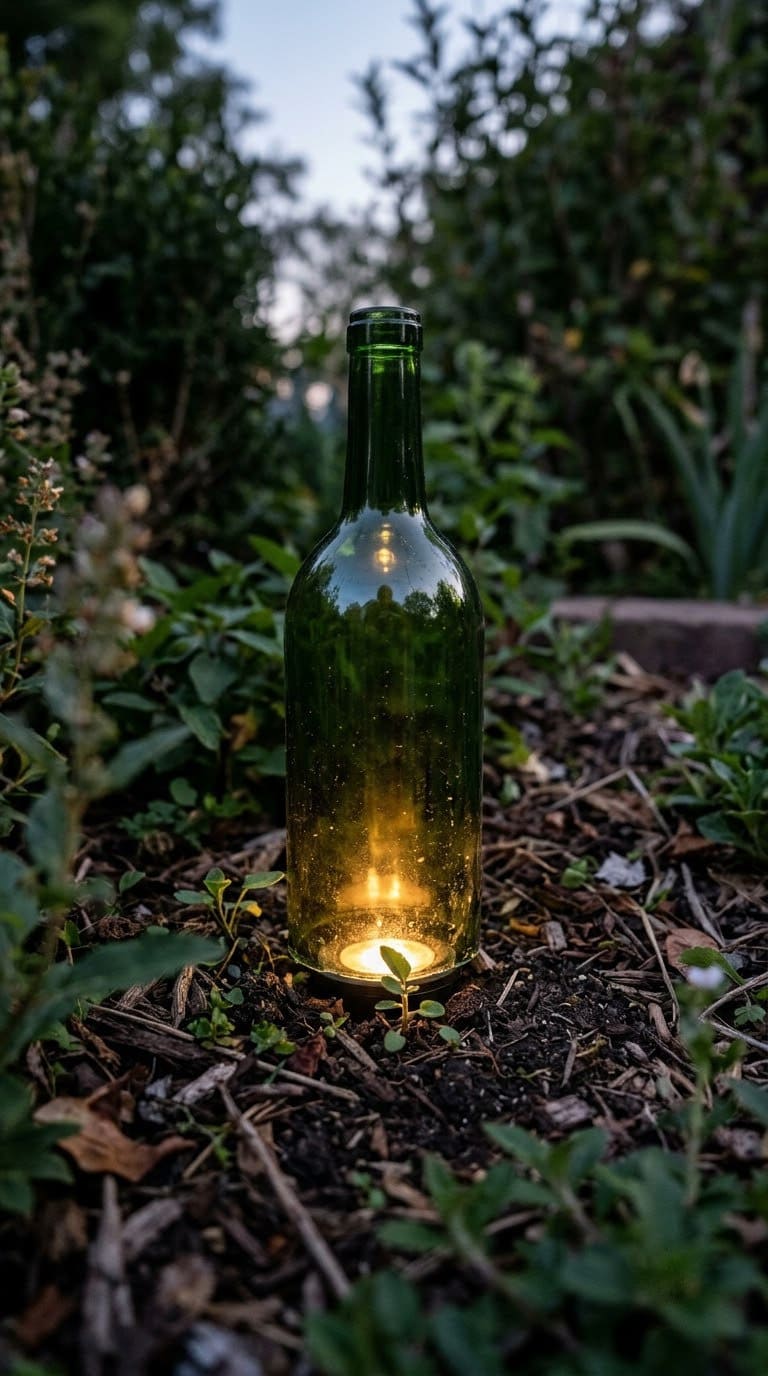
Drop a battery cork light into an empty bottle. The cork seals the neck and keeps rain out. Line up five or six along a border.
Choose clear or colored glass for different moods. Keep battery packs in a dry spot. Check our solar light crafts for more light projects.
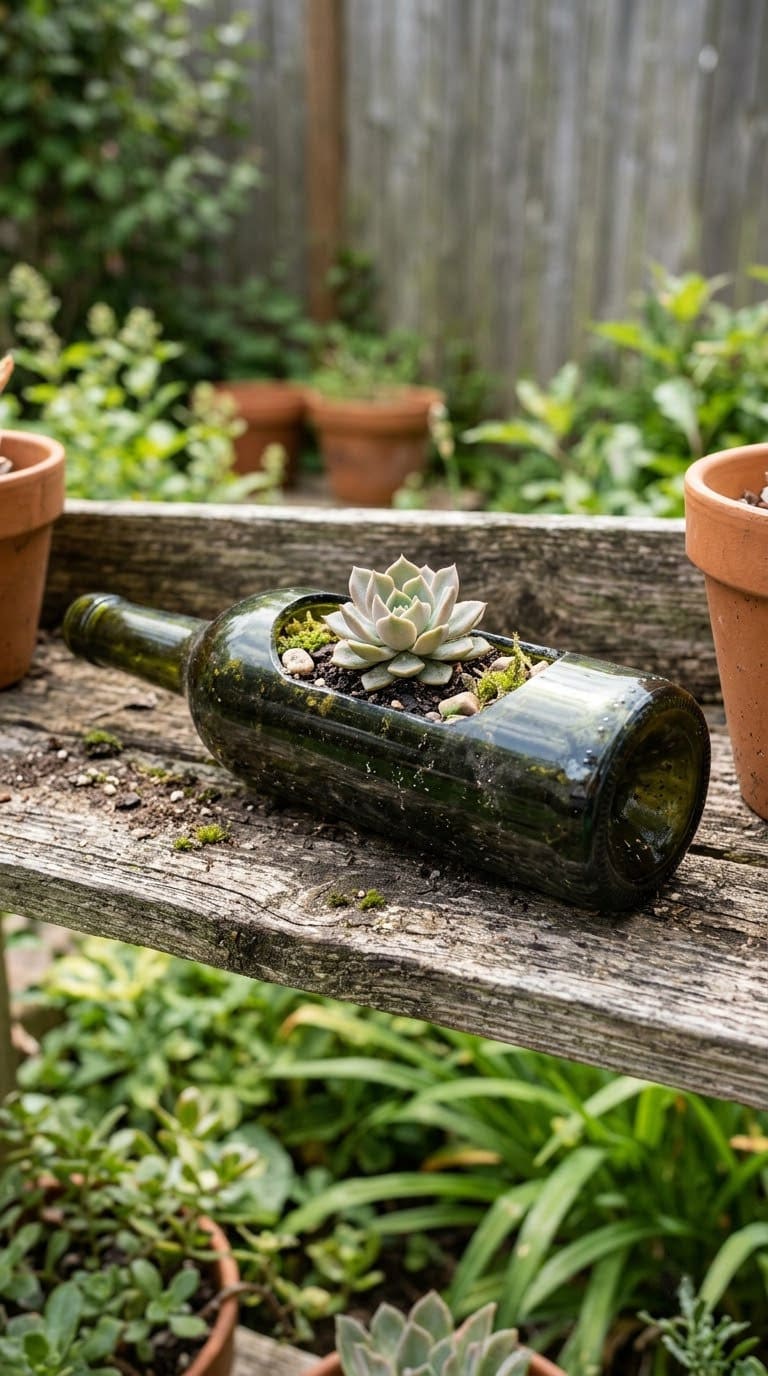
7. Sideways Bottle Planter (Cut)
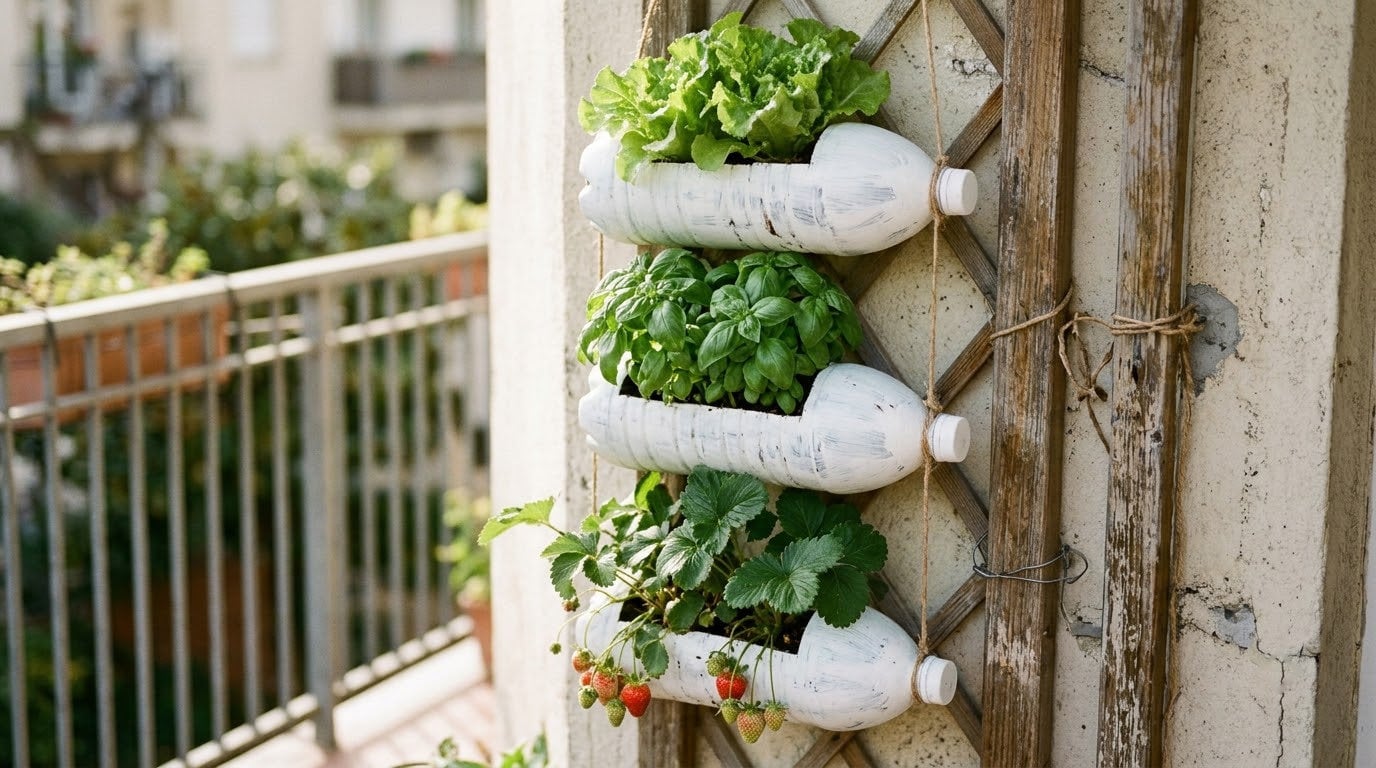
Myers says to cut an opening in one side, lay the bottle on its side, secure it, fill it with soil and plant. Lay it on bricks so it can’t roll. Plant a small herb or succulent.
Drainage is the weak point, since a wine bottle has no bottom hole. Fill only to a few inches and water lightly. Finish the cut edges first.
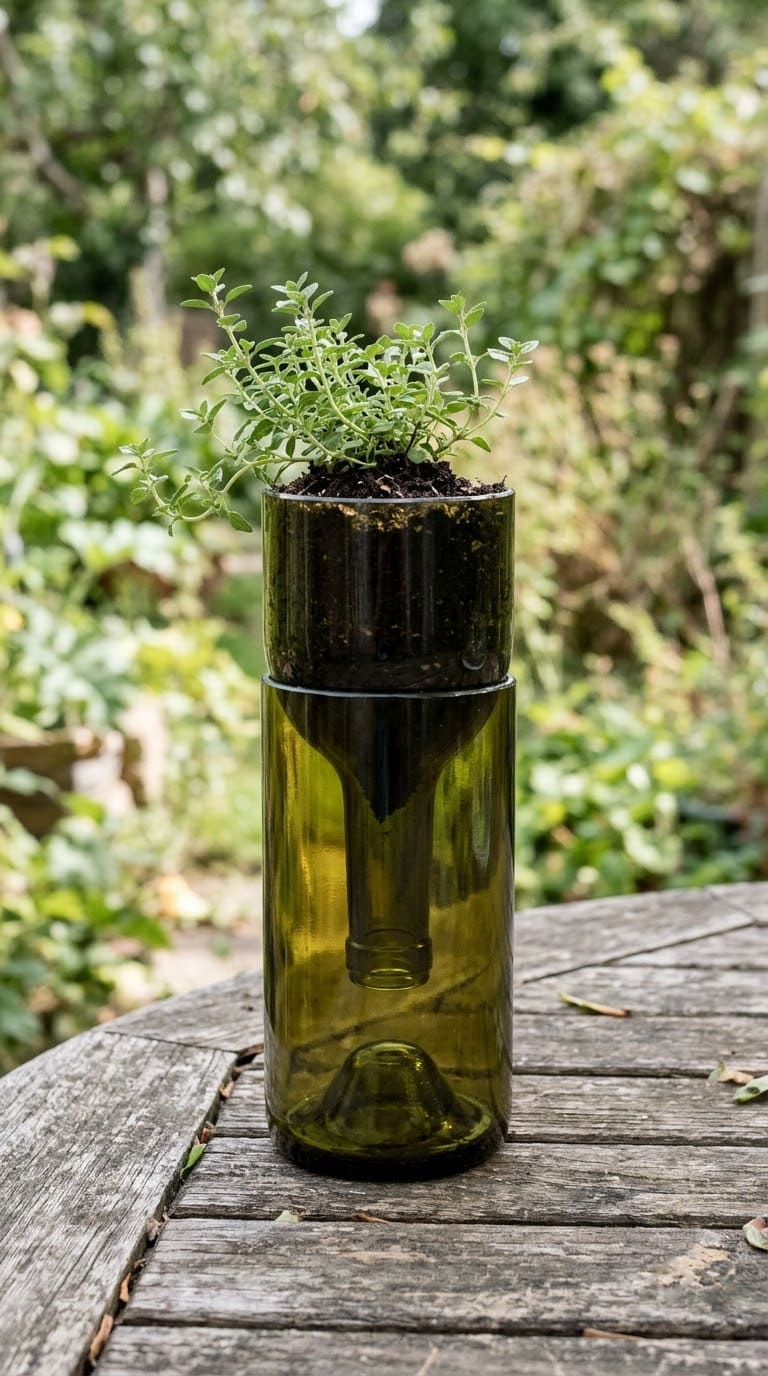
8. Inverted-Top Planter (Cut)
Cut the top off, invert it into the base and use the original opening as a drain hole, as Myers describes. The base then works as a saucer. Fill the top with potting mix.
The inner piece sits snug in the base. Check that the two pieces are stable before you add soil. Water slowly so it drains.
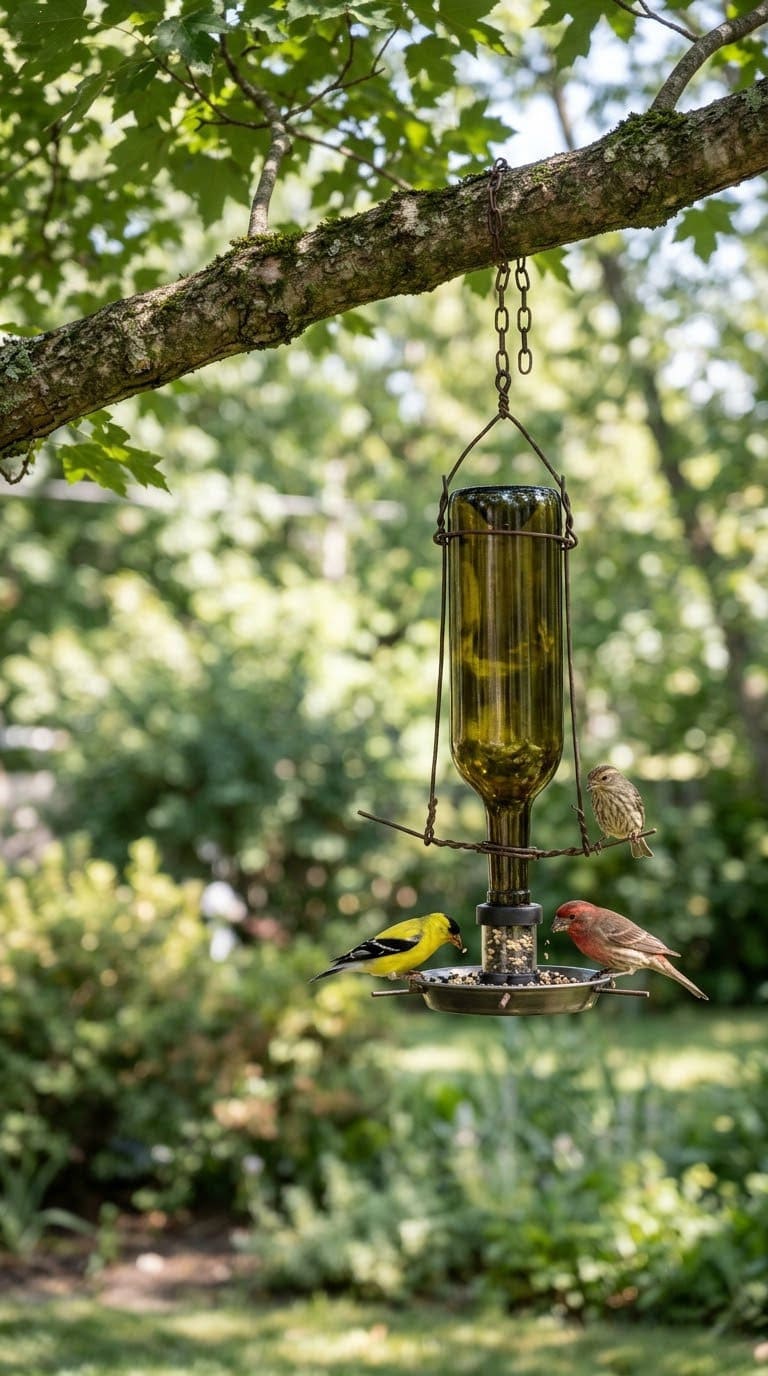
9. Bottle Bird Feeder (Cut or No Cut)
A bottle filled with seed can hang from a wire frame as a simple feeder. Choose a design you can take apart. Clean it as Clemson advises, at least every two weeks.
Use a strong frame, since a seed-filled bottle is heavy. Hang it where cats can’t reach. Wine bottle bird feeder ideas on our site show more designs.
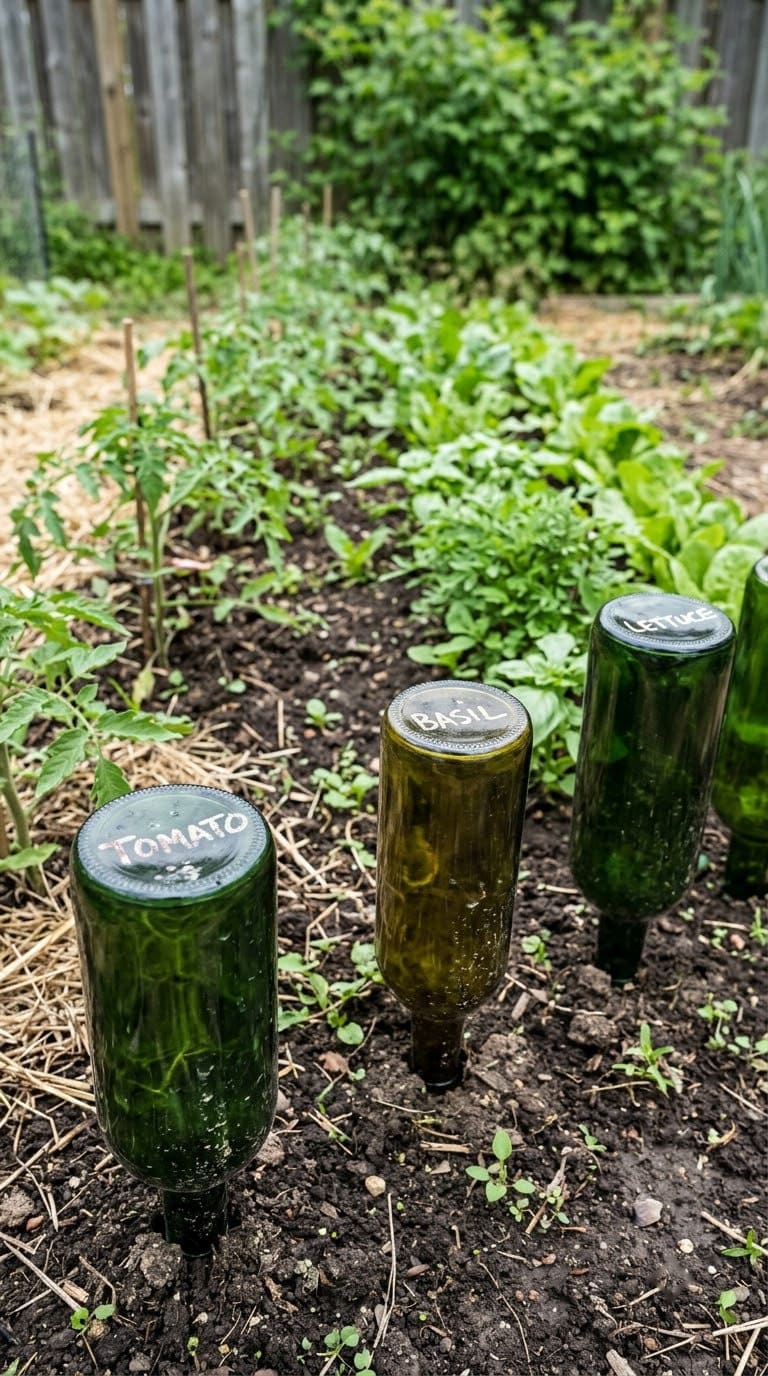
10. Garden Markers (No Cut)
Use outdoor vinyl or a paint pen to write plant names on the bottle bases. Set the bottle neck-down at the end of a row. The glass lasts all season.
Write in a bold, simple script. Use a clear coat to protect the lettering. Place the markers where they won’t be knocked by tools.
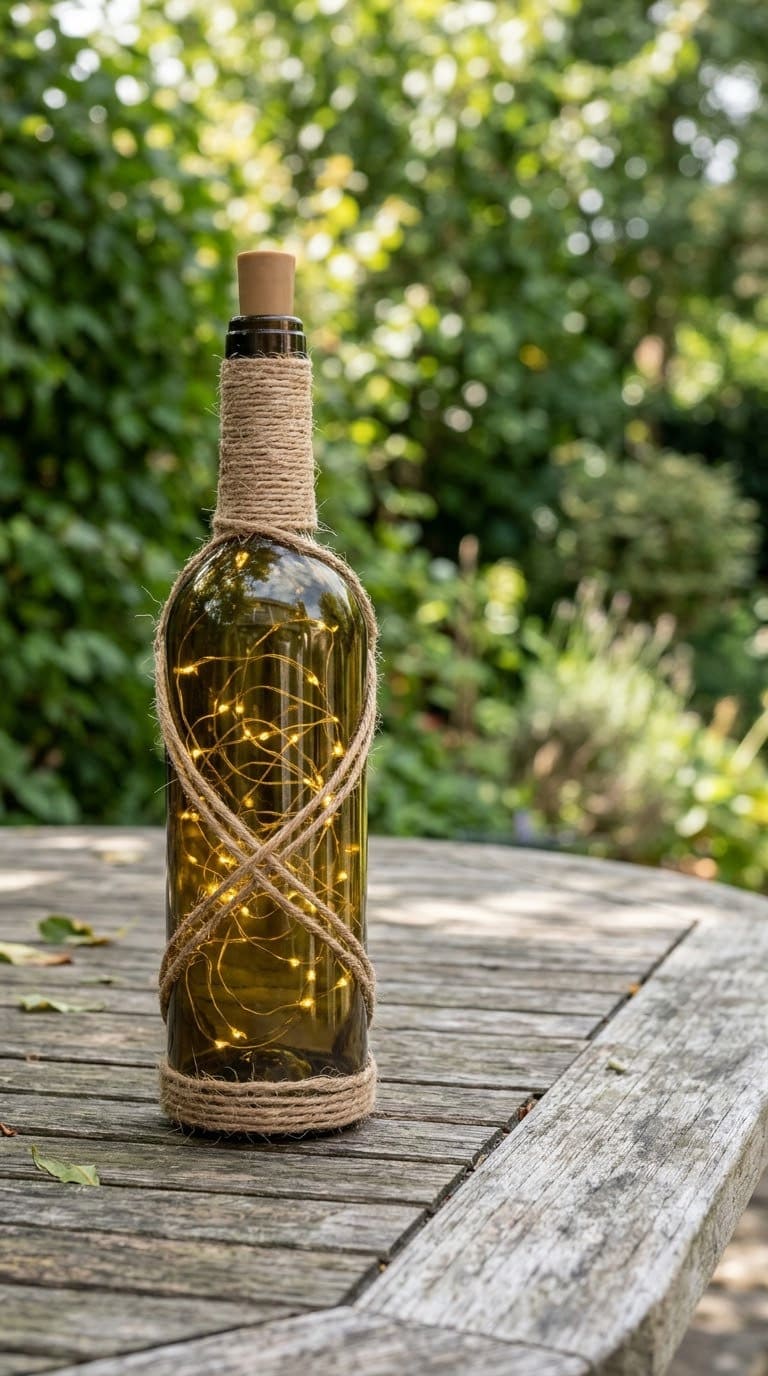
11. Jute-Wrapped Lantern (No Cut)
Wrap a bottle in jute twine from base to neck, gluing the ends. Drop a short string of battery fairy lights inside. The bottle looks rustic by day and glows at night.
Keep the battery pack dry in a pouch. Use LED lights only. Use a bottle with a smooth shoulder so the twine sits flat.
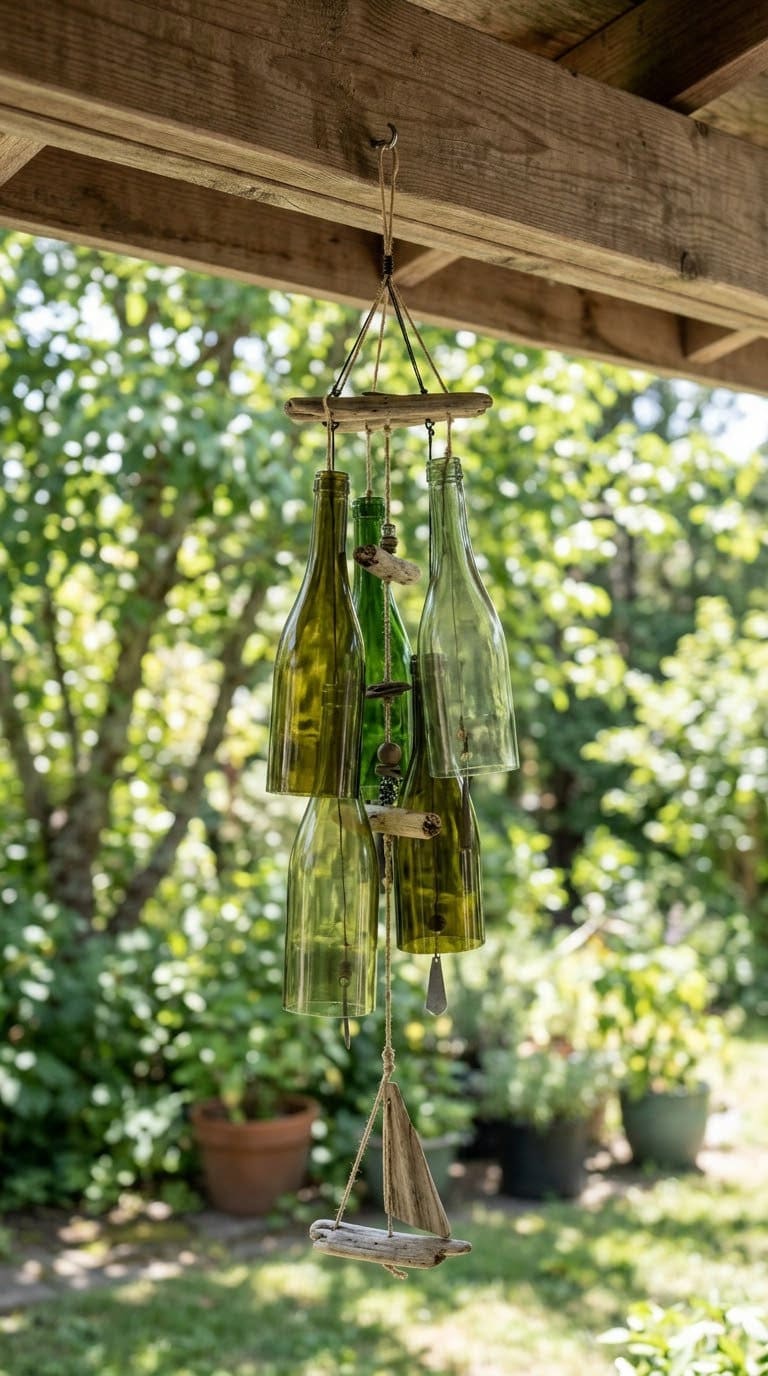
12. Bottle Neck Wind Chimes (Cut)
Cut the necks off several bottles and hang them from a ring so they knock together. Sand every edge smooth. Add a flat clapper from a scrap of wood.
Glass chimes can chip, so hang them under a roof. Use strong cord and check the knots. Keep them away from where children play.
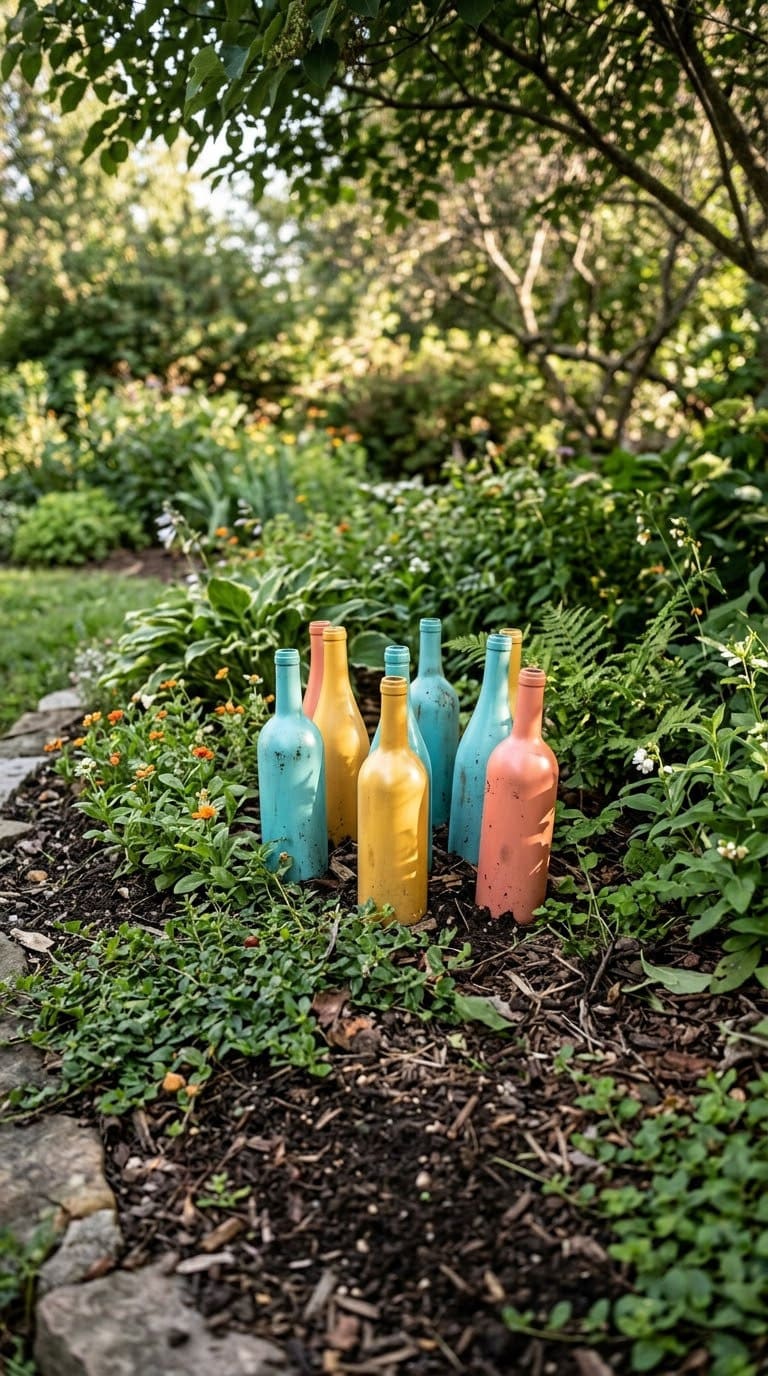
13. Painted Bottle Sculptures (No Cut)
Paint clear bottles with outdoor-rated paint for bright garden accents. Group them with different heights. Seal the paint with a clear exterior coat.
Reapply the paint when it fades. Use a solid base so the bottles don’t tip. Our garden art projects have more painted ideas.
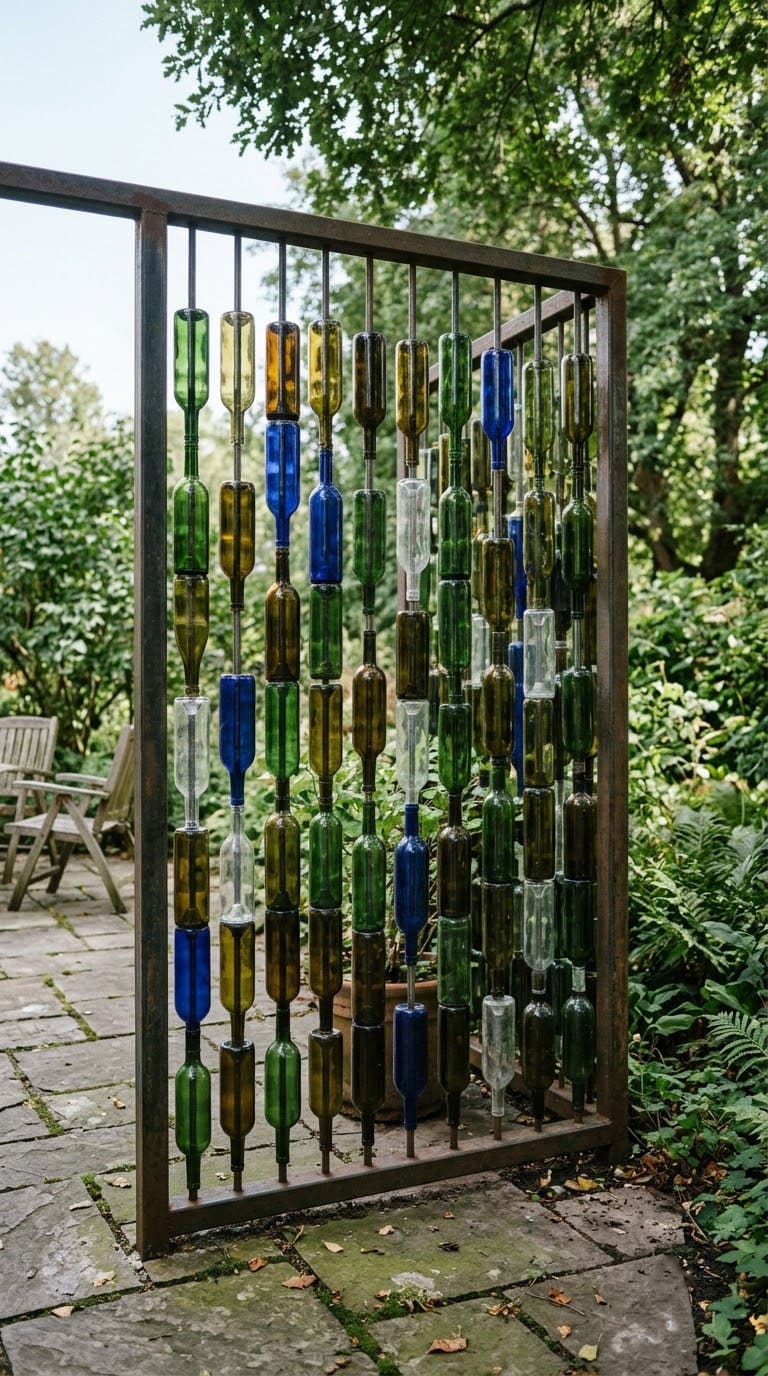
14. Bottle Privacy Screen (No Cut)
Thread bottles onto vertical rods in a frame to make a stained-glass screen. The light shines through the colored glass. Anchor the frame firmly in the ground.
The screen is heavy, so use steel rods and sturdy posts. Check local rules before you build a tall screen. Keep it away from where children run.
Common Mistakes to Avoid
The biggest mistake is cutting with heat tricks. The bottle cutter patent calls hot wire and string methods dangerous and says they can shatter the bottle. Score once, as Make advises, and finish the edge.
The second is forgetting the fuel risk. The National Capital Poison Center warns that lamp oil can be aspirated and cause pneumonia, so keep fuel in its original container and out of reach, or skip fuel entirely and use LED.
The third is a dirty feeder. Clemson says to clean seed feeders at least every two weeks and more often after rain or if you find dead birds.
If you only fix one thing, start with the no-cut projects. They look great and carry the least risk.
Frequently Asked Questions
What is the safest way to cut a wine bottle?
Score it once with a glass-cutting wheel and break it cleanly. Don’t go over the score more than once.
Then finish the edge. Skip hot wire and string methods, which a bottle cutter patent calls dangerous.
Can you use wine bottles for garden edging?
Yes. Melinda Myers suggests setting them neck-down in the soil along a path or bed. Keep them away from where you mow.
How do I make a wine bottle watering device?
Punch a small hole in the soil of a container, fill the bottle with water and invert it into the hole. Myers says terra cotta Plant Nannies can hold it in place.
How often should I clean a bottle bird feeder?
At least every two weeks, according to Clemson Extension, and more often with many visitors or after rain. Use 1 part bleach to 9 parts water, soak for 10 minutes and dry completely.
Is a wine bottle torch safe?
We don’t recommend it. Torch fuel is dangerous if swallowed, and the National Capital Poison Center warns it can be aspirated into the lungs. Use LED lights instead.
Never miss an update — choose FarmFoodFamily as your preferred source on Google.
How it works: Tap the button below to open Google's settings page, then check the box next to FarmFoodFamily.
Tap the checkbox to turn it blue — that's how you know it's set.