Rain Garden Calculator: How to Size, Design, and Budget Your Rain Garden the Right Way
🌿 Rain Garden Calculator Design the perfect rain garden — estimate size, dimensions, plant counts, and full project cost 🇺🇸 United States 🇪🇺 Europe 🇬🇧 United Kingdom 🇨🇦 Canada 🇦🇺 Australia You May Like Gravel & Paver Calculator: Pavers, Base, and Sand in One Tool What is a Linear Foot? A Guide to Measurement and…

Never miss an update — choose FarmFoodFamily as your preferred source on Google.
How it works: Tap the button below to open Google’s settings page, then check the box next to FarmFoodFamily.
Tap the checkbox to turn it blue — that’s how you know it’s set.
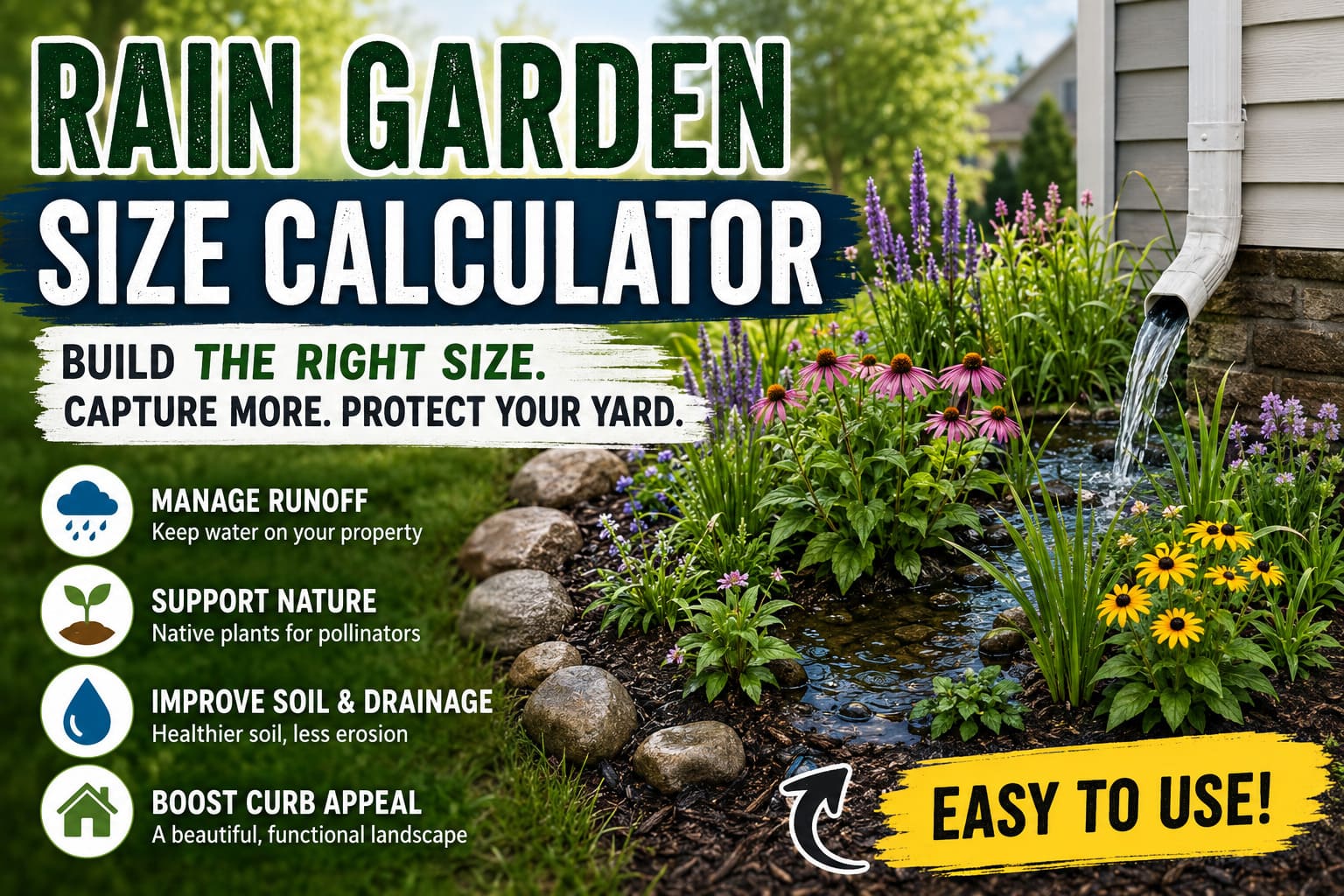
🌿 Rain Garden Calculator
Design the perfect rain garden — estimate size, dimensions, plant counts, and full project cost
That first heavy storm after a long dry spell reveals everything about a yard.
Water pours off the roof. It races down the driveway. It cuts tiny channels through the lawn before disappearing into the nearest storm drain, carrying topsoil, fertilizer, and oil residue along with it.
Most homeowners watch this happen for years before asking the obvious question.
What if all that water stayed on the property and actually did something useful?
A rain garden is the answer.

And despite how technical the term sounds, building one is usually much simpler than people expect. The hardest part is getting the size right.
Build it too small and the basin overflows during the next heavy storm. Build it too large and you spend unnecessary money on excavation, soil amendments, mulch, and plants you never needed in the first place.
That is exactly what the rain garden size calculator above is designed to solve.
What Is a Rain Garden?
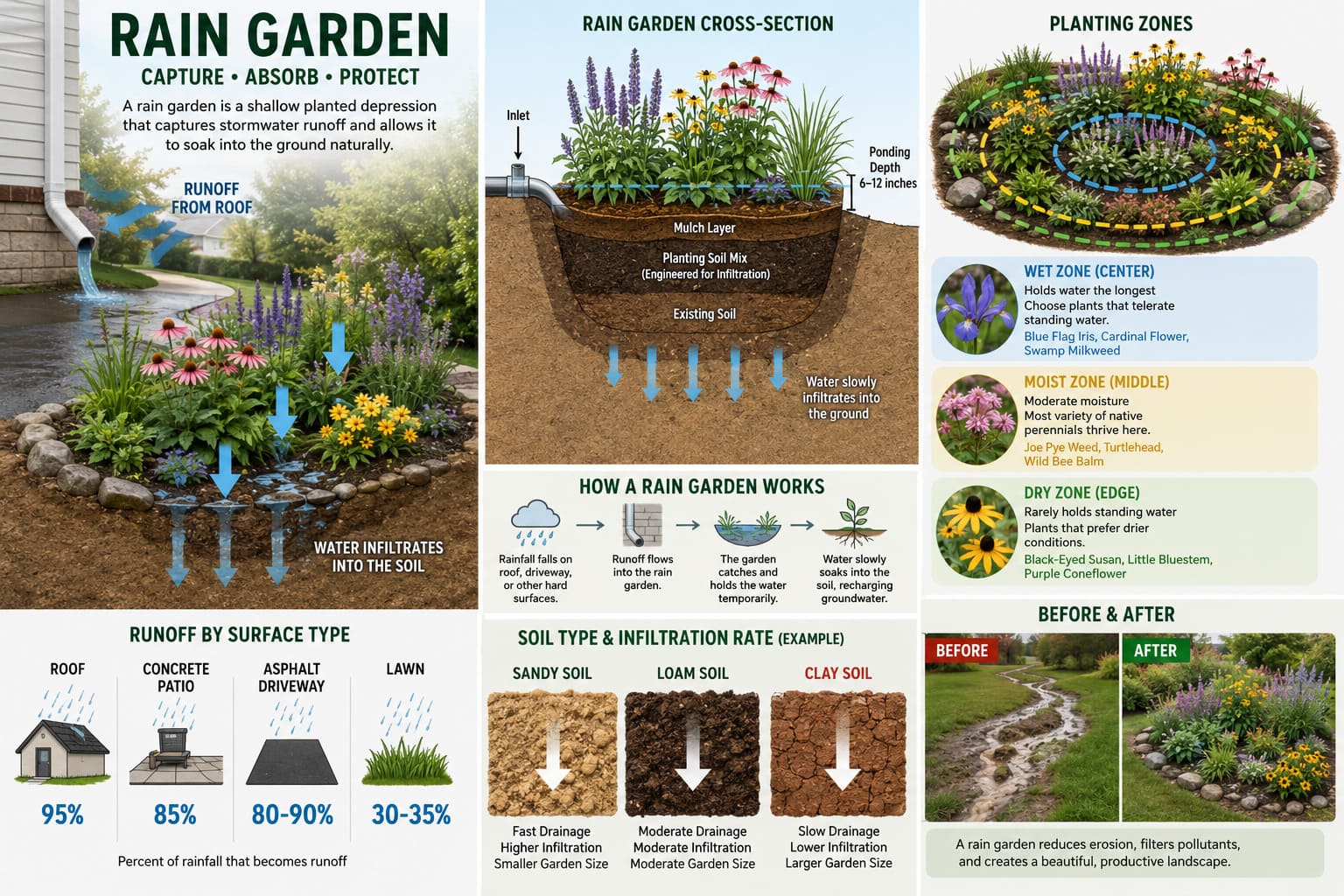
A rain garden is a shallow planted depression designed to capture and absorb stormwater runoff from hard surfaces like:
- roofs
- driveways
- patios
- sidewalks
Instead of allowing runoff to rush into storm drains, the basin temporarily holds the water and lets it slowly soak into the ground.
A properly designed rain garden is not supposed to function like a pond.
Water should drain within 24 to 48 hours. That timeline is long enough for moisture-loving native plants to thrive, but short enough to prevent mosquito breeding.
According to the United States Environmental Protection Agency, rain gardens help reduce polluted runoff while improving groundwater recharge and supporting local ecosystems.
Why Rain Garden Size Matters
Rain garden sizing is not just landscaping. It is stormwater engineering.
The basin must be large enough to safely handle runoff from the drainage area feeding into it. If the size is wrong, problems appear quickly.
A rain garden that is too small may:
- overflow during storms
- erode surrounding soil
- stay constantly saturated
- damage nearby foundations
A rain garden that is too large often:
- costs more than necessary
- requires excess mulch and plants
- creates unnecessary excavation work
- wastes valuable yard space
The goal is simple: build a garden that captures runoff efficiently while draining properly after each storm.
How to Size a Rain Garden
Five variables determine the final size recommendation.
Even small adjustments can dramatically change the required footprint.
1. Drainage Area and Surface Type
The first variable is the amount of hard surface draining toward the garden.
Different surfaces produce different amounts of runoff.
Typical runoff rates include:
| Surface Type | Approximate Runoff |
|---|---|
| Roof | 95% |
| Concrete Patio | 85% |
| Asphalt Driveway | 80–90% |
| Lawn | 30–35% |
A roof generates far more runoff than a grassy lawn because almost none of the water can soak in before reaching the garden.
Choosing the correct surface type can easily double or halve your final rain garden size.
2. Rainfall Depth
Rainfall depth represents the design storm your garden is built to handle.
For most residential projects in North America, one inch of rainfall over 24 hours is the standard benchmark.
Some regions in Europe and the UK measure storm intensity differently using millimeters per hour, but the principle remains the same.
The calculator automatically converts the units based on your selected market.
The important thing is to size for realistic local storms instead of rare once-a-decade extremes. Regional rainfall intensity data is often available through NOAA precipitation frequency maps and local stormwater departments.
3. Soil Type
Soil infiltration rate has one of the biggest impacts on rain garden sizing.
Sandy Soil
Sandy soils drain quickly and usually require a smaller garden footprint.
Loam Soil
Loam provides balanced drainage and is considered ideal for most rain gardens.
Clay Soil
Clay drains slowly and often requires:
- a larger basin
- soil amendments
- longer infiltration times
If you are unsure what soil type you have, perform a simple percolation test. Homeowners can also verify local soil conditions using the USDA Natural Resources Conservation Service soil survey maps.
Dig a hole about 12 inches deep, fill it with water, and measure how quickly the water level drops.
4. Ponding Depth
Ponding depth refers to how deep the basin sits below the surrounding grade.
Most residential rain gardens use:
- 6 inches for shallow installations
- 8–12 inches for larger storage capacity
Deeper basins hold more water, but they also take longer to drain.
In heavy clay soils, deeper is not always better.
5. Drain-Down Time
This is one of the most overlooked rain garden design factors.
Industry standards recommend drainage within:
- 24 hours ideally
- 48 hours maximum
Faster drainage usually requires a larger footprint because more infiltration surface area is needed.
The calculator automatically adjusts sizing recommendations based on:
- soil type
- ponding depth
- infiltration target
How to Use the Rain Garden Size Calculator
Using the calculator only takes a few minutes.
Step 1: Select Your Market
Choose your region first.
This automatically switches:
- measurement units
- currency
- rainfall defaults
Step 2: Enter the Drainage Area
Input the square footage or square meters draining toward the garden.
Do not know your roof drainage area?
Use the downspout estimator.
Simply enter:
- total roof area
- total number of downspouts
- number of downspouts feeding the garden
The calculator handles the rest automatically.
Step 3: Choose Surface and Soil Type
Select the surface contributing runoff:
- roof
- patio
- driveway
- lawn
Then choose your soil type.
If you have not performed a percolation test yet, loam is usually the safest starting assumption for established residential yards.
Step 4: Adjust Ponding Depth and Rainfall
Use the sliders to customize:
- ponding depth
- design storm size
Your local stormwater department or extension office often publishes recommended rainfall design values.
Step 5: Set Drain-Down Target
Choose a 24-hour drain-down target unless a soil engineer recommends otherwise.
The calculator automatically applies infiltration adjustments based on your selection.
Understanding Your Rain Garden Results
The final result gives you more than just square footage.
Recommended Rain Garden Area
This is the actual footprint needed to manage your target runoff volume.
The suggested dimensions assume a 2:1 length-to-width ratio because that shape:
- distributes water evenly
- looks natural
- simplifies excavation
You can reshape the basin into:
- an oval
- a kidney shape
- a curved natural layout
as long as the overall square footage stays roughly the same.
Infiltration Time
The infiltration estimate tells you how long water should remain in the basin after a storm.
If the estimate exceeds your target:
- your soil may need amendments
- your basin may be too deep
- your drainage area may be too large
Estimated Installation Cost
Many online calculators ignore real-world installation expenses.
This calculator includes:
- excavation
- edging
- inlet piping
- mulch
- soil amendments
- plants
- permit costs where applicable
Clay-heavy sites often require additional compost or engineered soil blends to improve infiltration.
Best Plants for a Rain Garden
Rain gardens work best when planted in moisture zones rather than traditional rows.
Wet Zone Plants
The wet zone sits in the center of the basin where water remains longest.
Good options include:
- Blue Flag Iris
- Cardinal Flower
- Swamp Milkweed
These plants tolerate standing water for short periods after storms.
Moist Zone Plants
The moist zone forms the middle ring of the garden.
This area supports the widest variety of native perennials, including:
- Joe Pye Weed
- Turtlehead
- Wild Bee Balm
Dry Zone Plants
The dry zone transitions into the surrounding landscape.
Plants here rarely experience standing water.
Popular choices include:
- Black-Eyed Susan
- Little Bluestem
- Purple Coneflower
Why Native Plants Work Best
Native plants perform best in rain gardens because their deep root systems dramatically improve infiltration over time.
Research from university stormwater studies shows native root systems can improve soil infiltration rates several times over once established.
They also support pollinators, reduce maintenance, and improve drought resistance. Organizations like the Xerces Society provide excellent regional guidance for pollinator-friendly native plant selection.
For more inspiration, browse our guide to low maintenance native landscaping and natural garden materials.
Frequently Asked Questions
How deep should a rain garden be?
Most residential rain gardens are between 6 and 12 inches deep depending on soil type and runoff volume.
Can a rain garden attract mosquitoes?
Not if it drains properly.
Mosquitoes usually need stagnant water lasting more than several days to reproduce.
How far should a rain garden be from a house?
Most experts recommend placing rain gardens at least 10 feet away from foundations to avoid drainage issues.
Do rain gardens work in clay soil?
Yes, but clay sites often require:
- larger basins
- compost amendments
- slower infiltration expectations
What plants grow best in rain gardens?
Native plants adapted to local rainfall conditions usually perform best because they tolerate fluctuating moisture levels naturally.
From Calculator to Real Garden
A rain garden is one of the few landscaping projects that improves almost every part of a property at the same time.
It:
- manages stormwater
- improves soil health
- supports pollinators
- reduces erosion
- adds curb appeal
The calculator gives you the numbers.
The next step is walking outside with a shovel, a tape measure, and a better understanding of where water already wants to go.
If you want more ideas before starting, explore our low maintenance front yard landscaping ideas and our DIY backyard drainage landscaping guide for layouts that pair beautifully with a working rain garden.
Never miss an update — choose FarmFoodFamily as your preferred source on Google.
How it works: Tap the button below to open Google's settings page, then check the box next to FarmFoodFamily.
Tap the checkbox to turn it blue — that's how you know it's set.