5 Feng Shui Rules for Your Driveway You Should Really Learn to Invite More Prosperity
Your driveway is the single widest, longest channel of energy leading straight to your house, feng shui treats it as a river of chi, and getting the shape, slope, and surface wrong can mean actual drainage and safety problems too, not just bad luck.

Never miss an update — choose FarmFoodFamily as your preferred source on Google.
How it works: Tap the button below to open Google’s settings page, then check the box next to FarmFoodFamily.
Tap the checkbox to turn it blue — that’s how you know it’s set.
Most homeowners think about a driveway purely in terms of parking and curb appeal.
Feng shui treats it as one of the most consequential features on the whole property, because unlike a garden path, a driveway is wide enough and long enough to genuinely direct the volume of energy (and, symbolically, opportunity) moving toward your home.
Here are the five rules that matter most, cross-checked against real building codes and stormwater regulations that most feng shui guides never mention.
1. Curve it toward the house, never away
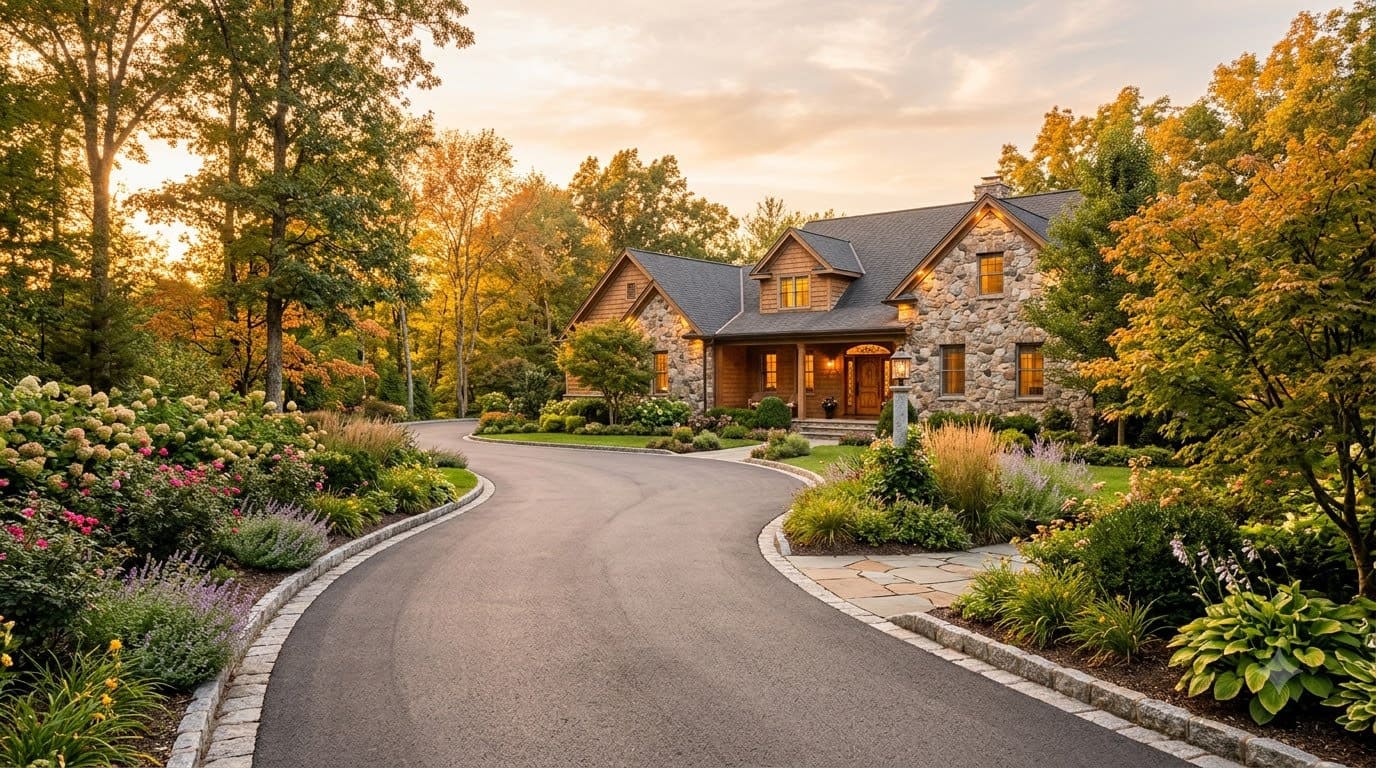
Anjie Cho, architect and feng shui expert, founder of Holistic Spaces, is direct about this: a driveway, especially a circular one, should curve toward and “embrace” the house, bringing wealth, health, and opportunity inward.
A driveway that curves away from the property does the opposite, symbolically directing energy and opportunity off the lot instead of toward it.
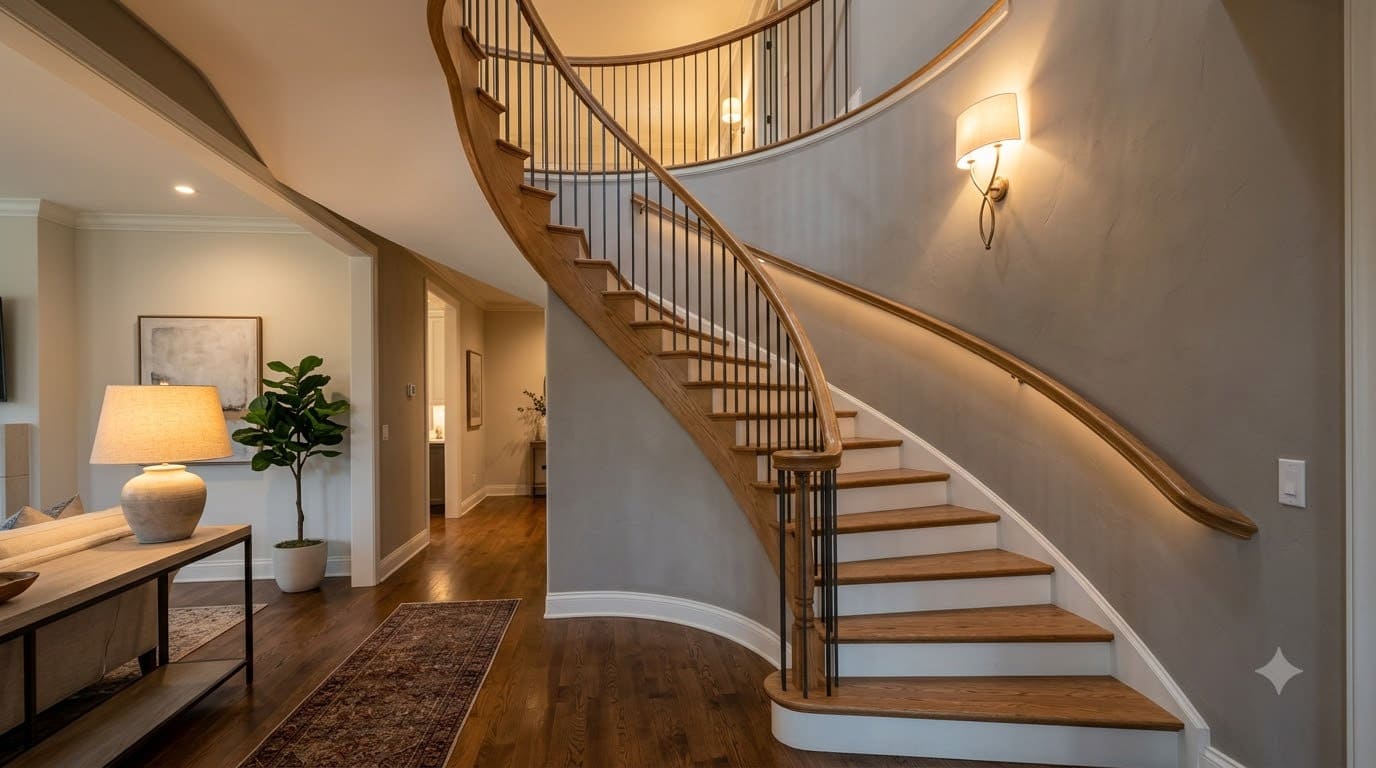

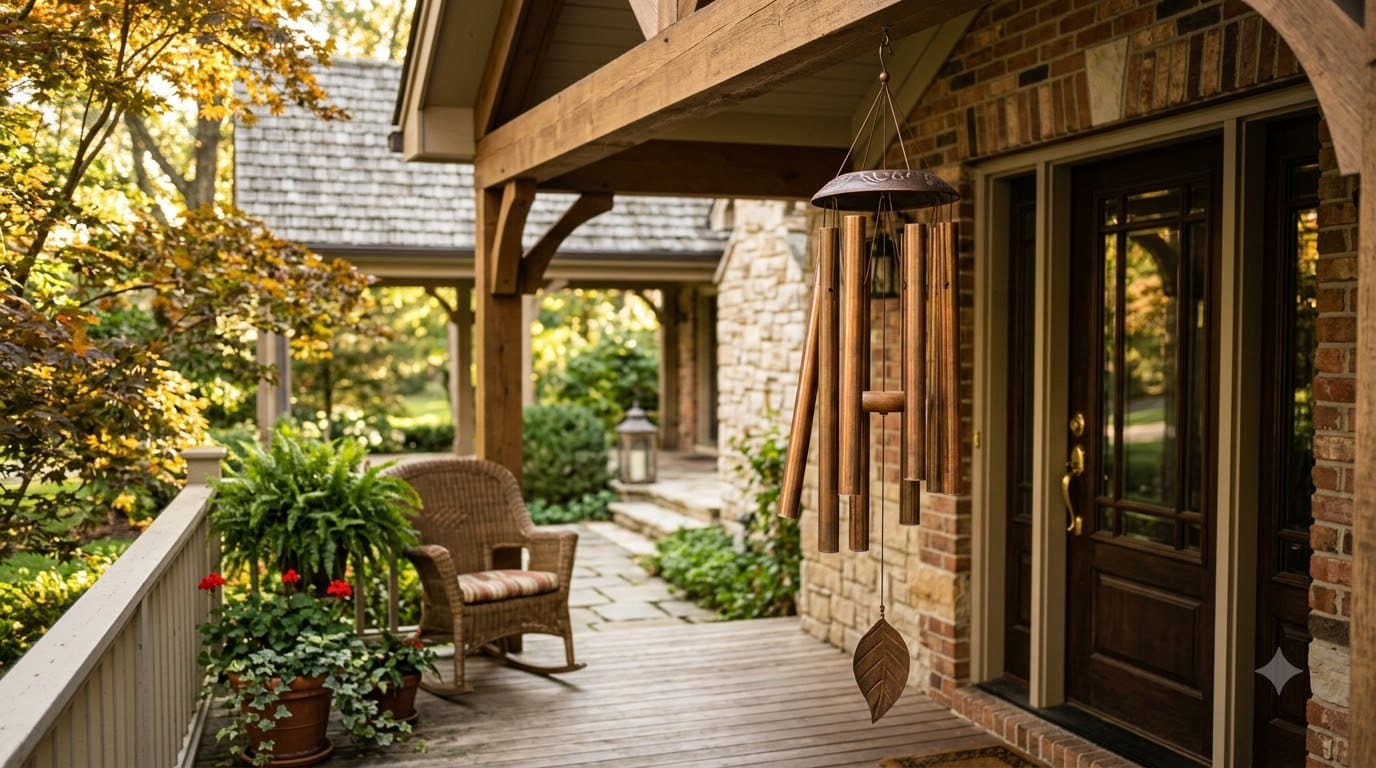
If you’re planning a new driveway, this is a siting decision that costs nothing extra, our circular driveway ideas gallery has real curve-toward-the-house layouts to start from.
Answer 4 quick questions and get matched to the exact fix for your yard — drainage, budget, layout, or something else entirely.
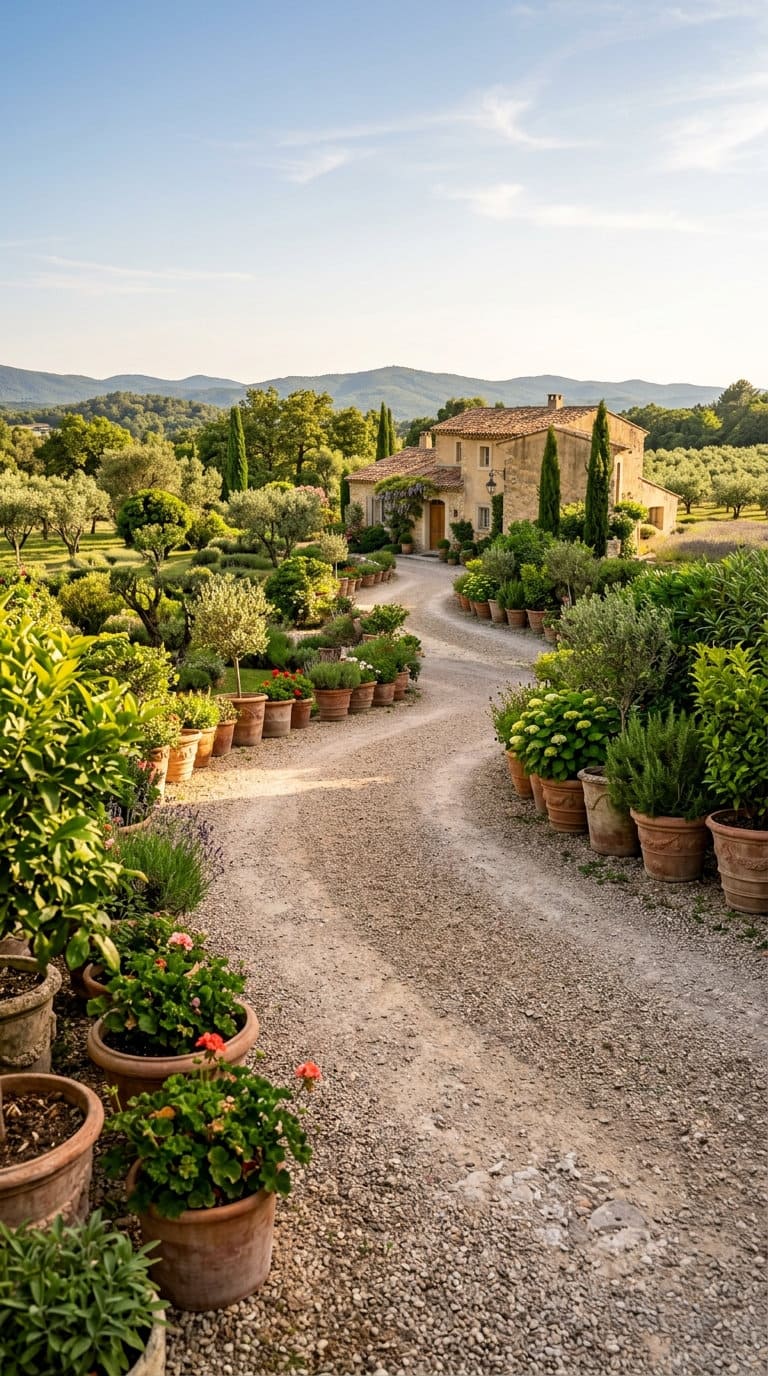
Take the Free QuizIf you already have a straight or outward-curving driveway, you don’t need to repave: potted plants in rounded containers along the edges, placed in odd numbers (traditionally avoiding the number 4, associated with death in Chinese numerology), soften the straight line without touching the pavement itself.
2. Keep it flat or gently sloped upward, never steep or sloped down toward the house
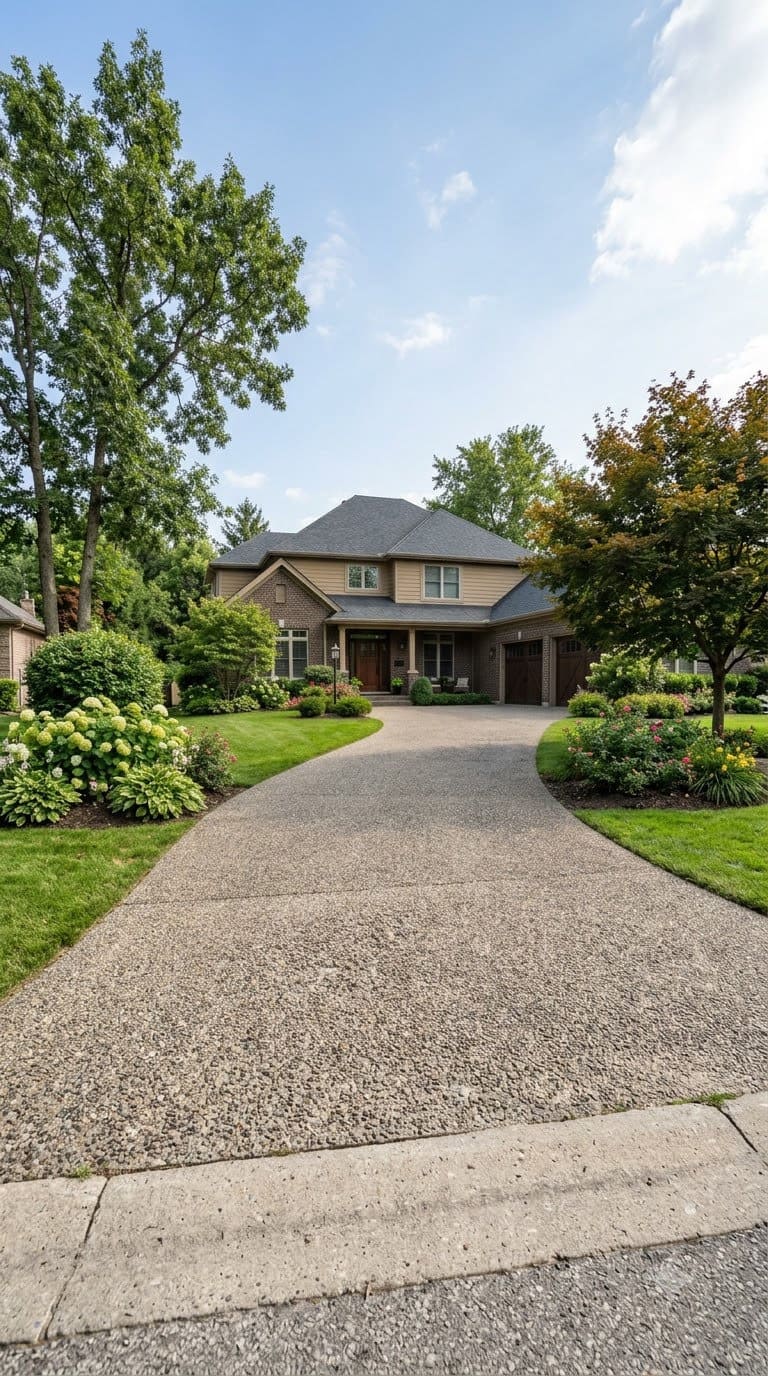
Feng shui is specific here: a flat surface or a gentle upward slope toward the house is favorable, while a driveway that slopes down toward the house is thought to create problems with money, relationships, health, or career, the energy essentially runs downhill past the house instead of settling into it.
This is one of the clearest overlaps between feng shui and real safety code on this entire list. Most U.S. building codes cap residential driveway grade at roughly 12 to 15 percent for safety (some jurisdictions allow up to 20 to 25 percent, others cap lower), while requiring a minimum 2 percent slope purely for proper water drainage.
A driveway within that safe, moderate range is, in practice, exactly the kind of gentle grade feng shui is describing, not a coincidence so much as both systems converging on the same practical truth: extreme slopes are hard to control, whether you’re talking about chi or a car in icy weather.
Budget note: regrading an existing steep driveway is a genuinely expensive project. If a full regrade isn’t realistic, adding traction strips, driveway lighting, and drainage channels addresses the real safety risk even if the underlying grade stays the same.
3. Don’t let it run in a straight shot at your front door, and don’t let it narrow toward the road
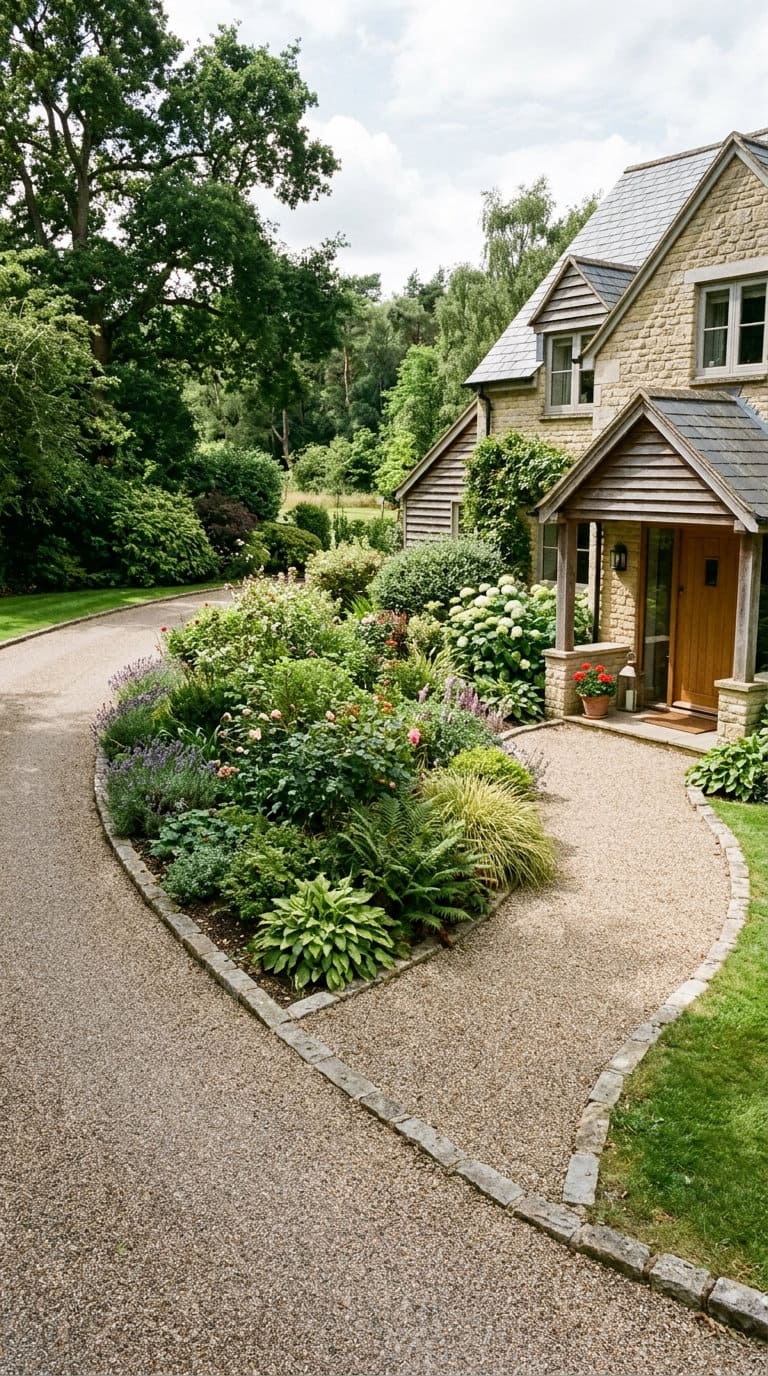
This is the same “poison arrow” principle covered in feng shui pathway guidance, scaled up.
A driveway running dead-straight into the front door is thought to send energy rushing at the house too fast to settle, the same rushed, unsettled feeling a straight garden path creates, just with more volume behind it given a driveway’s width.
Most yard problems trace back to one specific, fixable cause. Find yours in 4 quick questions.
Take the Free Quiz
Covers rule #1 and #3's softening remedy for a straight or outward-curving driveway
Shop NowThis post contains affiliate links. We may earn a commission on qualifying purchases at no extra cost to you.
There’s a second, less obvious version of this rule: a driveway that narrows as it approaches the street is thought to symbolically constrict opportunity and career growth, since less “room” is left for chi (or a car, practically speaking) to move freely at the point where the property meets the wider world.
The traditional fix for a narrowing driveway is to add a visual marker at its foot, a lamppost, a clearly visible address sign, or flowering plants near the mailbox, widening the felt sense of the entrance even if the pavement itself stays the same width.
If your driveway already runs straight at the door, the same fix used for garden pathways works here: a planted bed, an angled stone feature, or a slight offset in the walkway that continues from the driveway to the door breaks the direct sightline without a repave. Our driveway edging ideas guide has real examples of this kind of edge treatment.
4. What driveway material actually handles water the way feng shui wants it to?
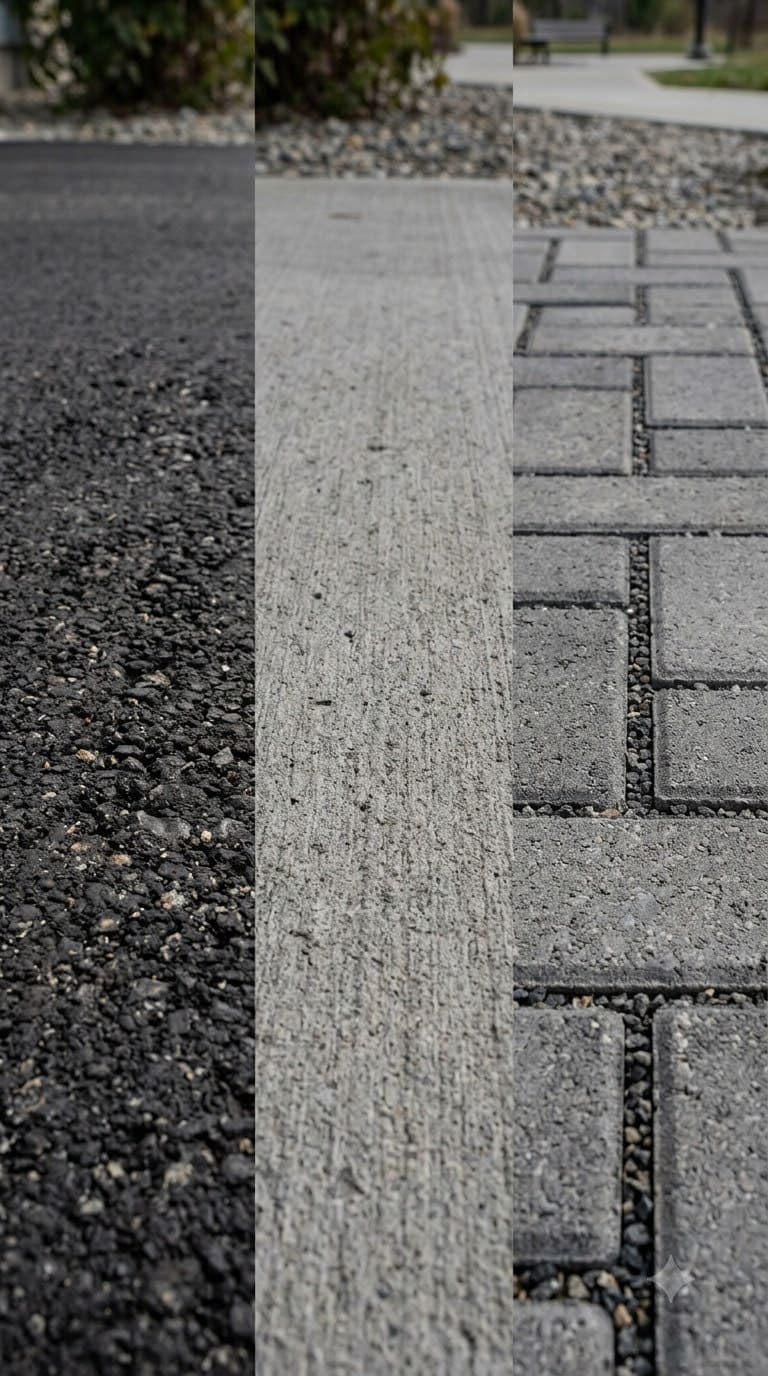
Every feng shui driveway source treats “good” energy as settled and flowing, not stagnant, but none of them mention the real regulatory layer connected to how a driveway handles water.
Many municipalities regulate or cap the amount of impervious (water-blocking) surface a property can have, and some require permeable paving once a driveway crosses a certain square footage threshold, a genuine permit issue that can catch homeowners off guard mid-project.
Here’s the real material tradeoff:
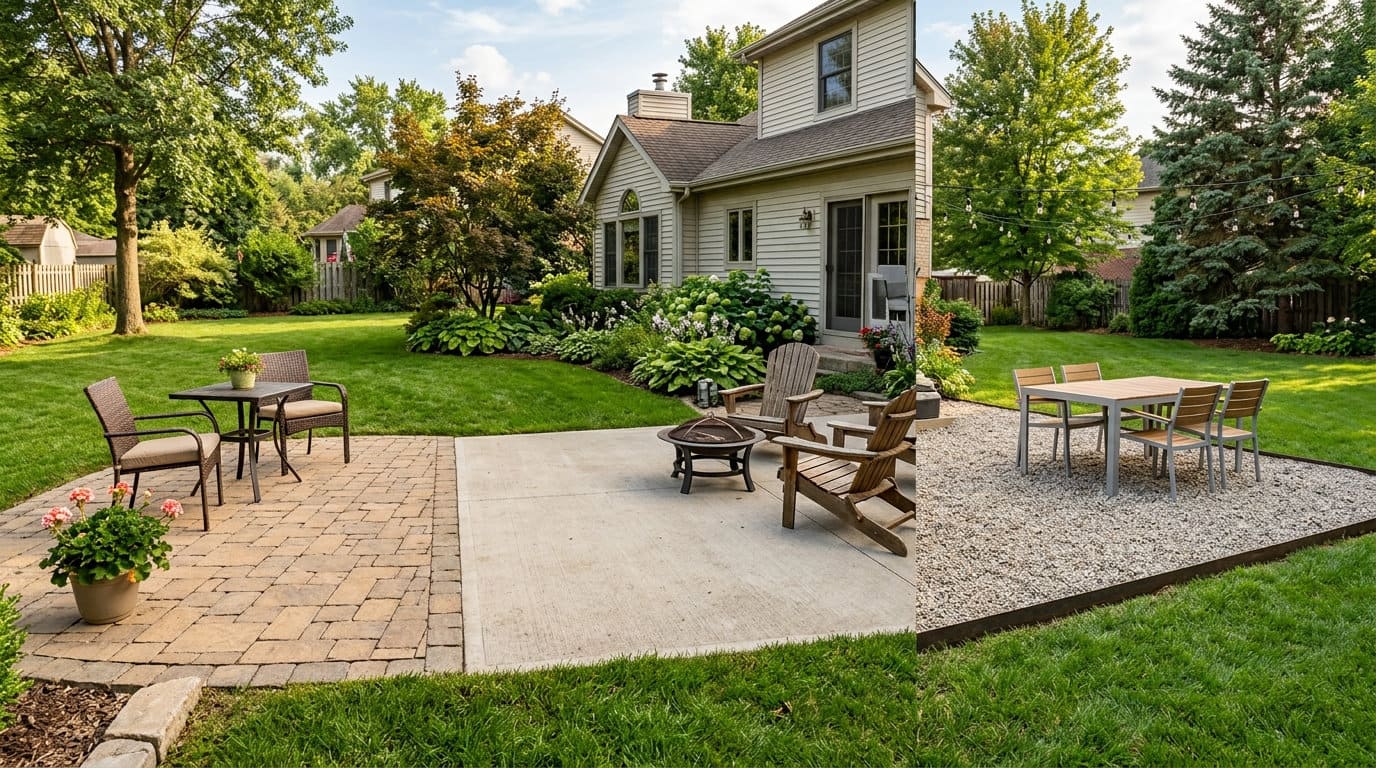
| Material | Water handling | Maintenance | Cost |
|---|---|---|---|
| Poured asphalt | Impervious; needs proper crown/slope for runoff | Resealing every 2-3 years | Lower upfront |
| Poured concrete | Impervious; cracks without proper base/drainage | Low, occasional sealing | Mid-range |
| Permeable pavers | Water drains through joints, reduces runoff | Periodic joint-sand refresh | Higher upfront, may satisfy local stormwater rules |
| Gravel | Naturally permeable | Needs periodic top-up and edging | Lowest cost |
If your property is anywhere near a local impervious-surface threshold, permeable pavers or gravel aren’t just a feng shui-adjacent choice, they can be the difference between getting a permit approved without a fight and needing a stormwater variance.



For material-specific inspiration once you’ve settled on a direction, see our driveway paving ideas guide.
The average homeowner spends $616/year on yard fixes that don't address the real problem. Find out what yours actually is — before you spend another dollar.
Take the Free Quiz5. Keep the whole approach proportional and well-kept, the door should never look smaller than the driveway
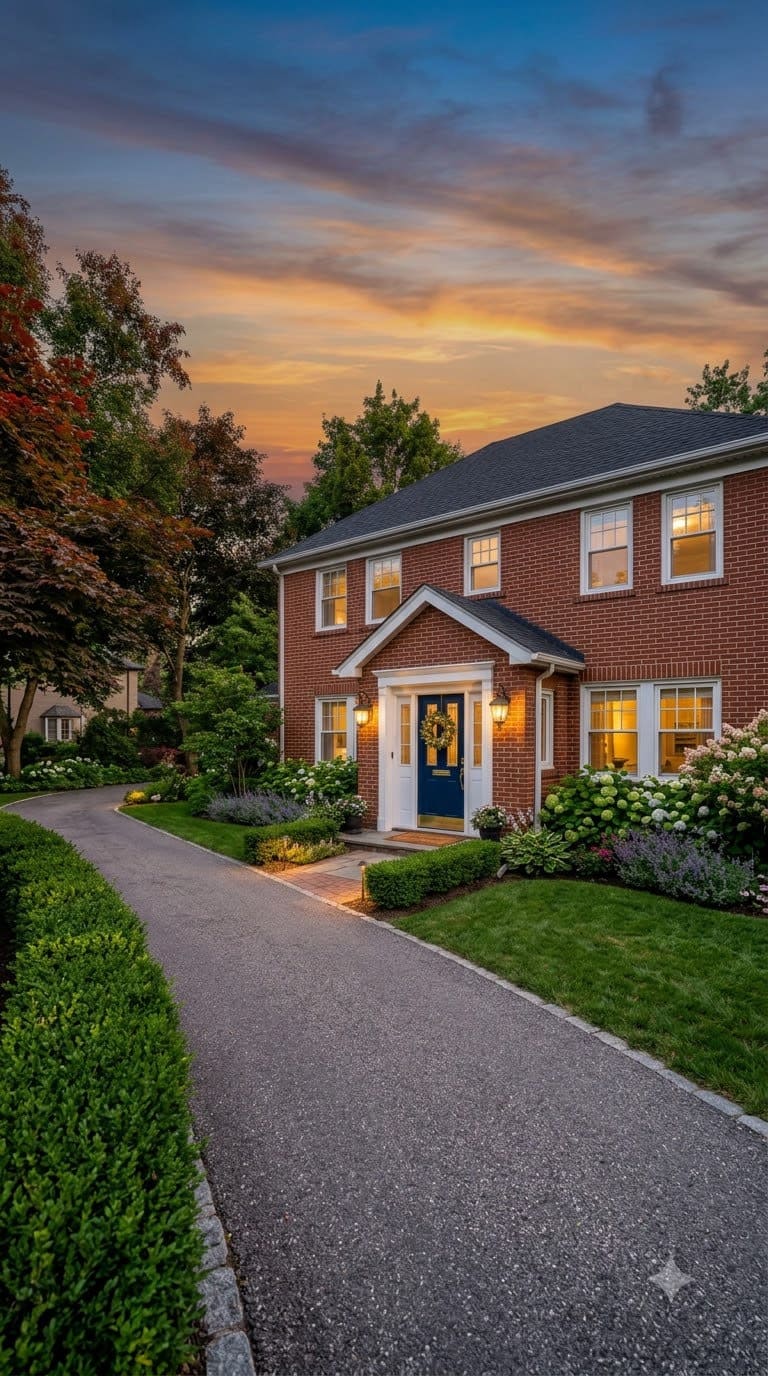
A driveway that’s visually wider or more dominant than the front door it leads to is thought to overwhelm the entrance, the “mouth” of the house looking undersized next to the channel feeding it.
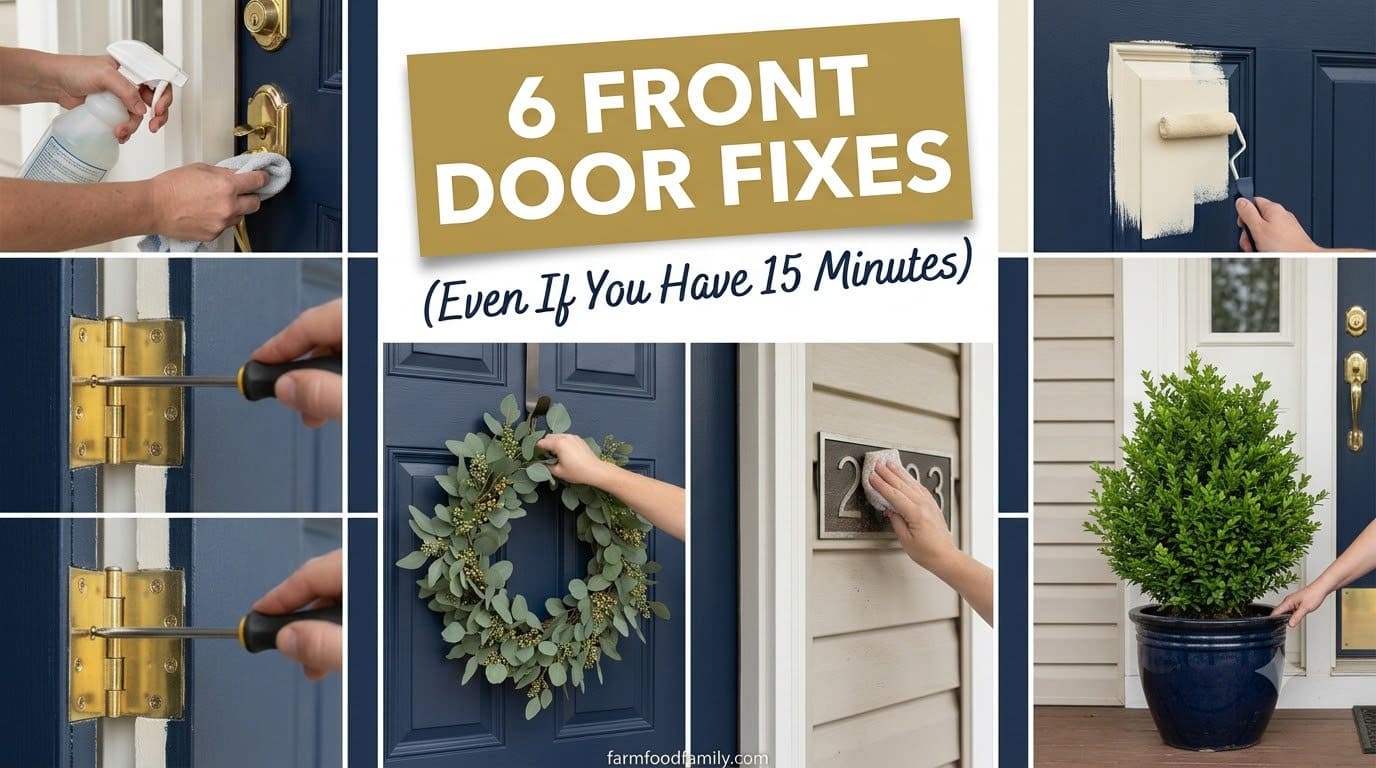
Keeping the front door a proportionally confident feature, fresh paint, good lighting, clear visibility from the driveway, balances this out even when the driveway itself is generously sized.
Peeling paint, dim or broken entry lighting, and an address that’s hard to read from the driveway are all treated the same way a cracked or neglected driveway surface is: small signals of decline that undercut whatever else you’ve gotten right.
What we learned the hard way
The stormwater/permit issue is the one that blindsides people mid-renovation. Homeowners who plan a driveway expansion purely around feng shui curve-and-slope guidance sometimes don’t find out about a local impervious-surface cap until a permit application gets flagged, by which point switching to permeable pavers costs meaningfully more than if it had been the plan from day one.
Slope is the second regret. A driveway that felt fine to walk and drive on when a house was purchased in summer can become a genuine ice hazard in a first real winter if it sits anywhere near the top of the safe grade range, worth testing traction concerns before committing to a steep regrade purely for curb appeal.
FAQs
My driveway is straight and can’t realistically be curved. What can I do? Use potted plants in rounded containers along the edges (odd numbers, skip 4) to soften the straight line, and address any direct sightline to the front door with a planted bed or angled feature partway down, the same fix used for straight garden pathways.
Is a steep driveway automatically bad feng shui? A steep downward slope toward the house is the specific concern, not steepness in general. If regrading isn’t realistic, focus on the real safety fixes (traction, drainage, lighting) even if the feng shui concern stays partly unresolved.
Do I need a permit to change my driveway material or size? Often yes, especially for an expansion. Check your local impervious-surface and stormwater regulations before committing to a material, some jurisdictions require permeable paving above a certain square footage.
What if my driveway is shared with a neighbor? The curve-toward-house and slope guidance still apply to the portion of the driveway on your property; a shared straight section is harder to change, so lean on the softening remedies (potted plants, lighting, address markers) rather than expecting a full redesign.
Related reading on farmfoodfamily.com: for the pathway-specific version of the straight “poison arrow” fix, see our feng shui garden pathway guide.
Related Posts
- 5 Vital Things You Need to Know About Your Garden’s Pathway in Feng Shui
- 20 Stunning Cedar Fence Ideas That Will Transform Your Yard
- 45+ Bold Front Door Colors for Gray House That Will Wow Your Neighbors
- Circular Driveway Ideas
- Driveway Lighting Ideas
- Driveway Edging Ideas
- Concrete Driveway Ideas
- Half Circle Driveway Ideas
- Driveway Ideas on a Budget
Products We Recommend
This post contains affiliate links. We may earn a commission on qualifying purchases at no extra cost to you.
Diyfire 24" Round Outdoor Planters (Set of 2)
Covers rule #1 and #3's softening remedy for a straight or outward-curving driveway
Shop Now
Solar Address Sign
Addresses rule #3's narrowing-driveway remedy and rule #5's visibility/lighting concern
Shop Now
Lifegrip Anti-Slip Traction Tape
Real safety fix for a steep-grade driveway referenced in rule #2
Shop NowNever miss an update — choose FarmFoodFamily as your preferred source on Google.
How it works: Tap the button below to open Google's settings page, then check the box next to FarmFoodFamily.
Tap the checkbox to turn it blue — that's how you know it's set.