32+ Brilliant DIY Pergola Ideas and Plans (Plus the Structural Rules Most Guides Skip)
A pergola can turn a flat backyard into a real outdoor room, as long as you get the footing depth and beam span right before you fall in love with a roof style.

Never miss an update — choose FarmFoodFamily as your preferred source on Google.
How it works: Tap the button below to open Google’s settings page, then check the box next to FarmFoodFamily.
Tap the checkbox to turn it blue — that’s how you know it’s set.
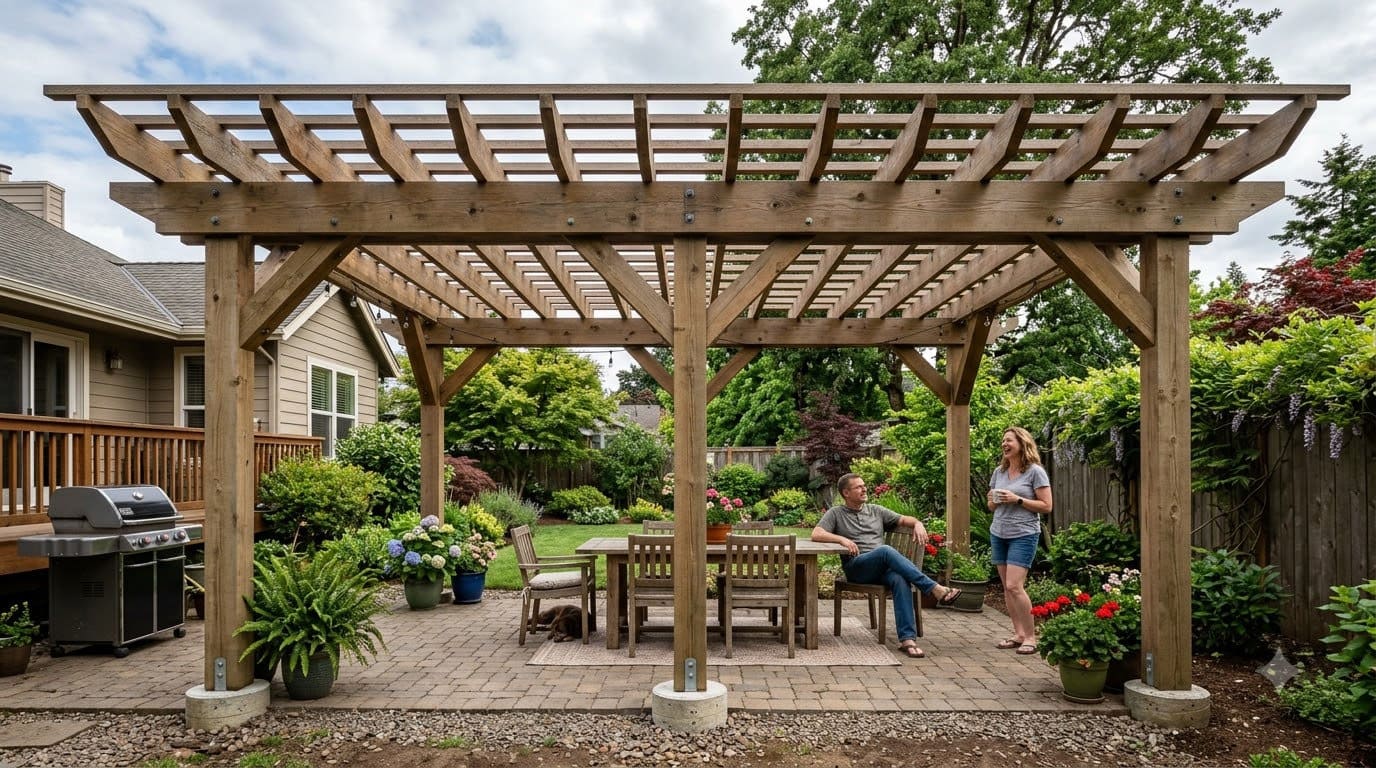
Most pergolas fail visually before they fail structurally, sagging beams and racking posts show up years before real collapse, and the two most common causes are an unsupported beam span pushed past what the lumber size can hold and a footing set above the local frost line.
A properly built pergola needs footings poured below the frost line (as shallow as 12 inches in warm climates, up to 48 inches in northern states), beam spans kept under roughly 12 feet unsupported, and a roof style matched to your local wind exposure, open lattice handles wind easily, a solid or fabric roof needs real engineering for it.
Get those three right first, permits and setbacks second, and the 32 design directions below become a styling decision instead of a structural gamble, rather than a repair job waiting to happen.
Most pergola roundups are all inspiration and zero engineering, pretty photo, vague caption, next. What they skip is the part that actually determines whether the thing is still standing straight in five years: footing depth, beam span, and what wind does to a roof that isn’t fully open.
So before the 35 design ideas and build plans below, here’s what actually holds a pergola up.


What actually holds a pergola up (and what fails first)
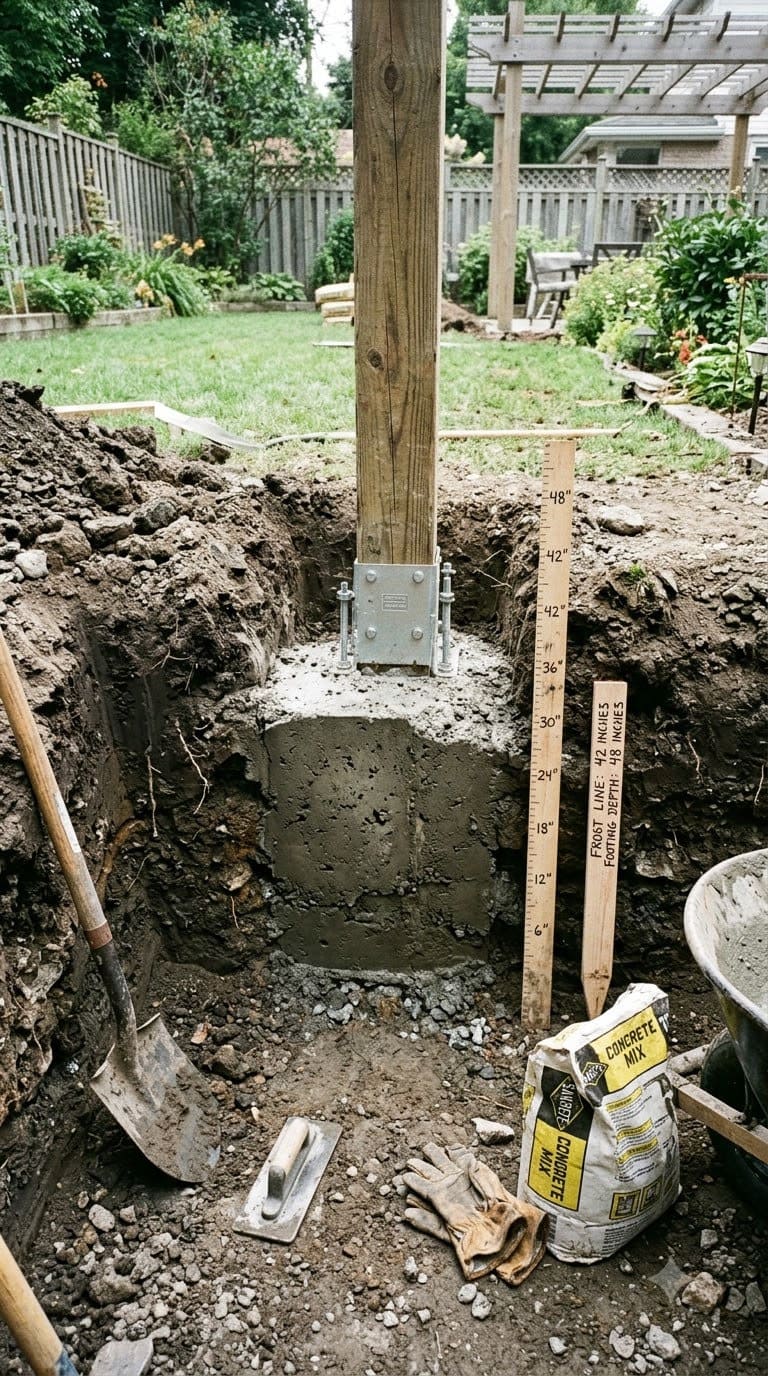
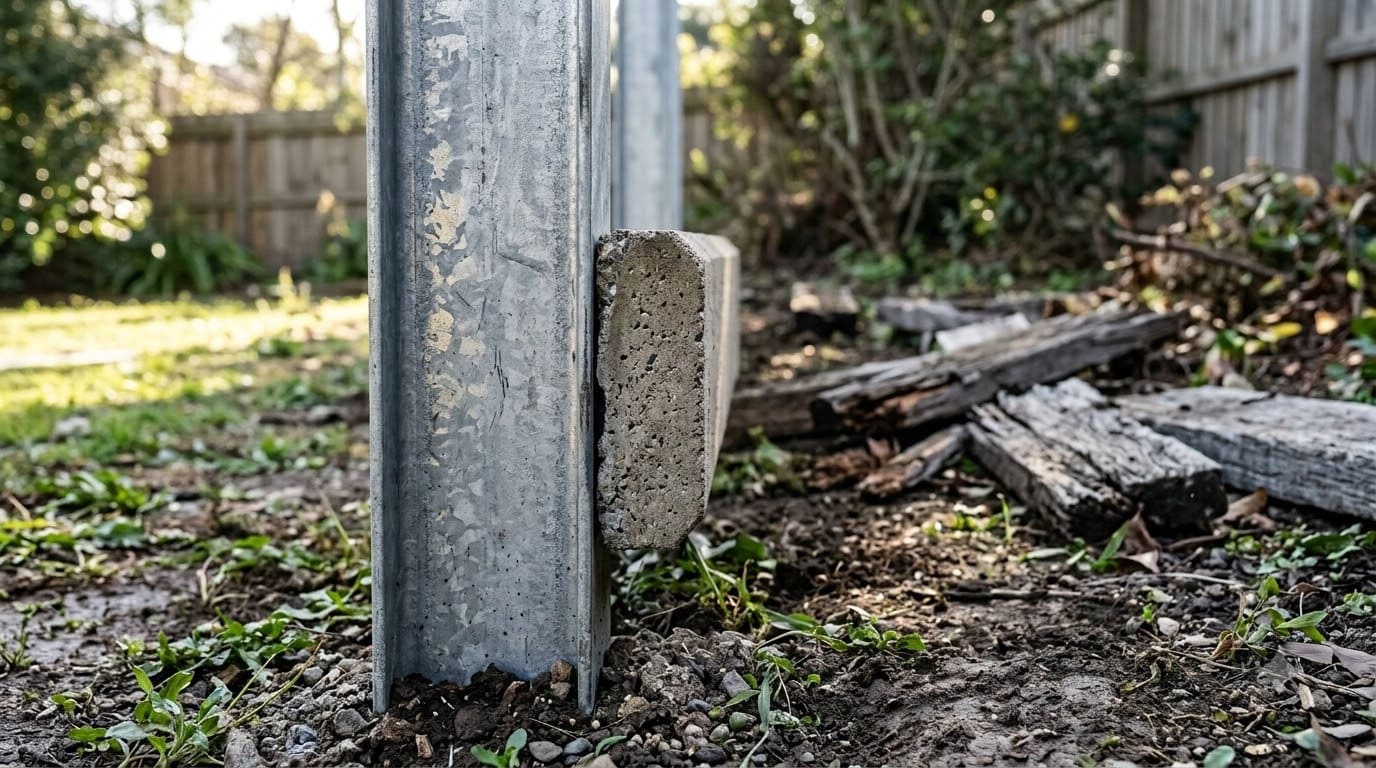
Footing depth is the first thing people underestimate. Building code requires footings to bear below the local frost line and at least 12 inches below undisturbed ground, and that frost line varies a lot by region, as shallow as 12 inches in warm climates, up to 36 to 48 inches or more in northern states like Minnesota, Wisconsin, or Montana. Skip this and a single hard winter’s freeze-thaw cycle can heave and shift the posts.
Answer 4 quick questions and get matched to the exact fix for your yard — drainage, budget, layout, or something else entirely.
Take the Free QuizBeam span has a real practical ceiling too. A widely-used builder rule of thumb keeps unsupported spans at around 12 feet or less regardless of post size, since wood creep causes visible sag over a long enough span, even under the beam’s own weight, not just whatever roof or lattice material sits on top of it. Double 2×6 beams are only good for roughly 6 to 8 feet; step up to 2×8 or larger for a 10×10 to 12×12 footprint.
Wind is the risk category most DIY plans skip entirely. It acts on a pergola two ways, uplift and lateral load, and the roof covering changes how much of a problem that is. Open lattice presents very little wind resistance. A solid roof, fixed fabric, or polycarbonate panel presents a lot more, and needs to be engineered for it. Louvered roofs split the difference, you can open the blades before a storm and let wind bleed through instead of loading a sealed surface.
Permits and setbacks are real and there’s no universal size threshold that exempts you. Any pergola attached to the house generally needs a permit regardless of size; freestanding structures are sometimes exempt below roughly 120 to 200 square feet, but that varies by jurisdiction, and typical setback rules run 5 to 15 feet from side or rear property lines. Check with your local building department before starting rather than assuming a size cutoff applies everywhere.
On materials: wood typically looks good for 5 to 10 years without upkeep, and can structurally last 20-plus years if you actually reseal or stain it every 2 to 3 years and check for rot annually. Vinyl runs 10 to 25 years, low maintenance, but performs worse under heavy snow or wind load and can crack in extreme temperature swings. Aluminum is the most durable option at 25 to 30-plus years, doesn’t rust, warp, or rot, and powder-coated aluminum is close to maintenance-free outside of checking any moving louvered parts.
Backyard Pergolas
Pergolas are often used in backyard spaces to define the sitting area or patio. They can be constructed over a cement or tile sitting area to provide some shade, depending on the plants grown on it.
They are also used farther out in the garden, drawing people out in the yard to sit on a bench under the leafy bower.
Entrance Pergolas
Pergolas are also used to invite people into a home or business. They may cover a sidewalk or arch over a front door. In the photos, a pergola is used to welcome people to the house and provide a front yard sitting area.
Most yard problems trace back to one specific, fixable cause. Find yours in 4 quick questions.
Take the Free QuizIt also helps to beautify the empty space in front of the garage.
Walkway Pergolas
Sometimes the wooden arbor structures are used to direct traffic flow. They may be used between businesses at strip malls or to link public spaces in a subdivision.
Pergolas can draw someone up toward the building from the front sidewalk or out from the building toward a backyard feature such as a water garden or swimming pool.
Furniture for Pergolas
For wooden structures that are built over patios or as resting spots in gardens, durable outdoor furniture is best. Iron benches or cafe table and chairs provide function and can endure different seasons.
Pillows can be added in good weather. Besides seating, garden artwork, such as small metal sculptures or candle holders, may be added to a post of the pergola. New artwork being showcased at art fairs or garden centers is capable of weathering whatever the out-of-doors may bring.
Proper Plants for Enhancing Your Pergola
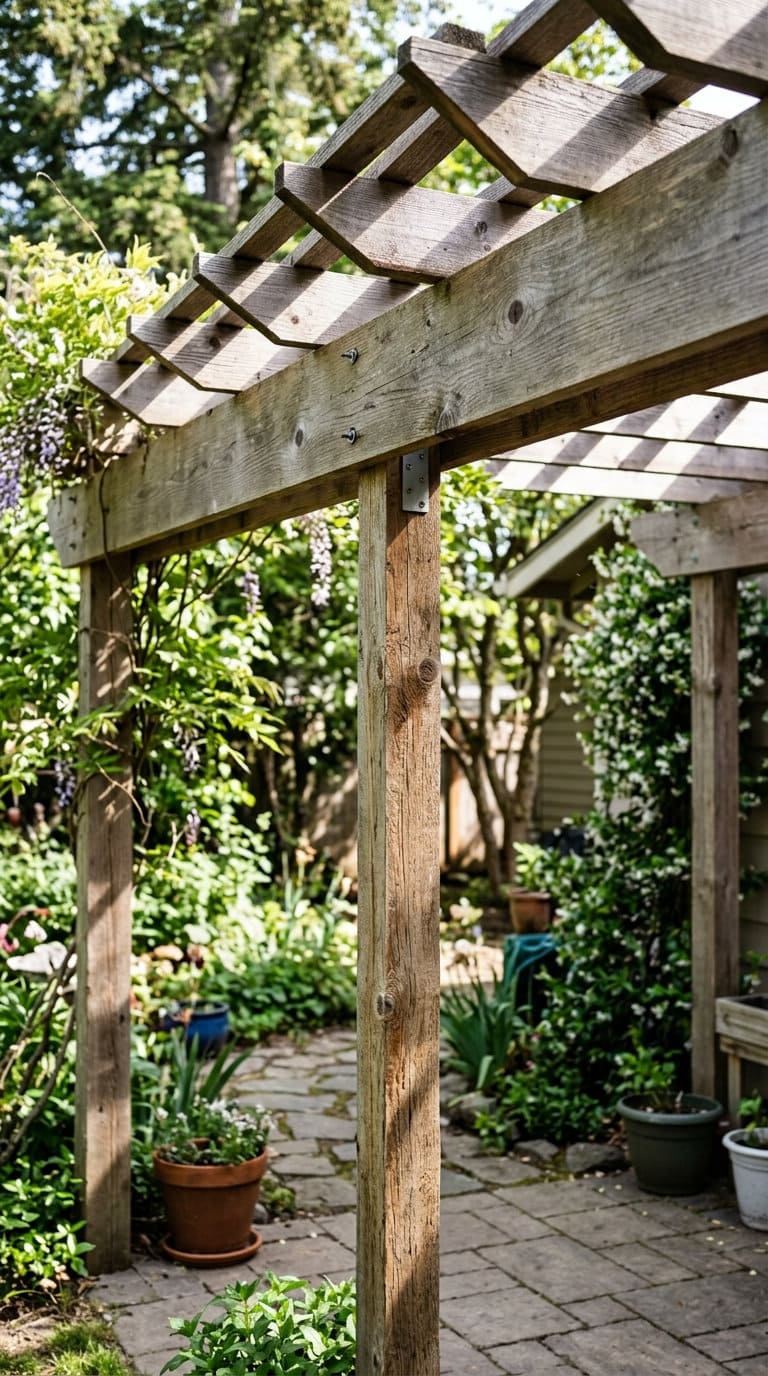
Pergolas are made for climbing plants. What type of plant you choose depends on the area in which you live. Clematis, climbing roses, climbing hydrangeas, snapdragons, vines, and morning glory are all possibilities.
You can plant multiple types of plants on one pergola or stick with one theme. Don’t forget to use hanging baskets on the pergola while to add interest higher up as the climbing plants are still growing. Potted plants also add color to a concrete or tile floor.
1. With a smart pergola, you can make your home more efficient and productive.
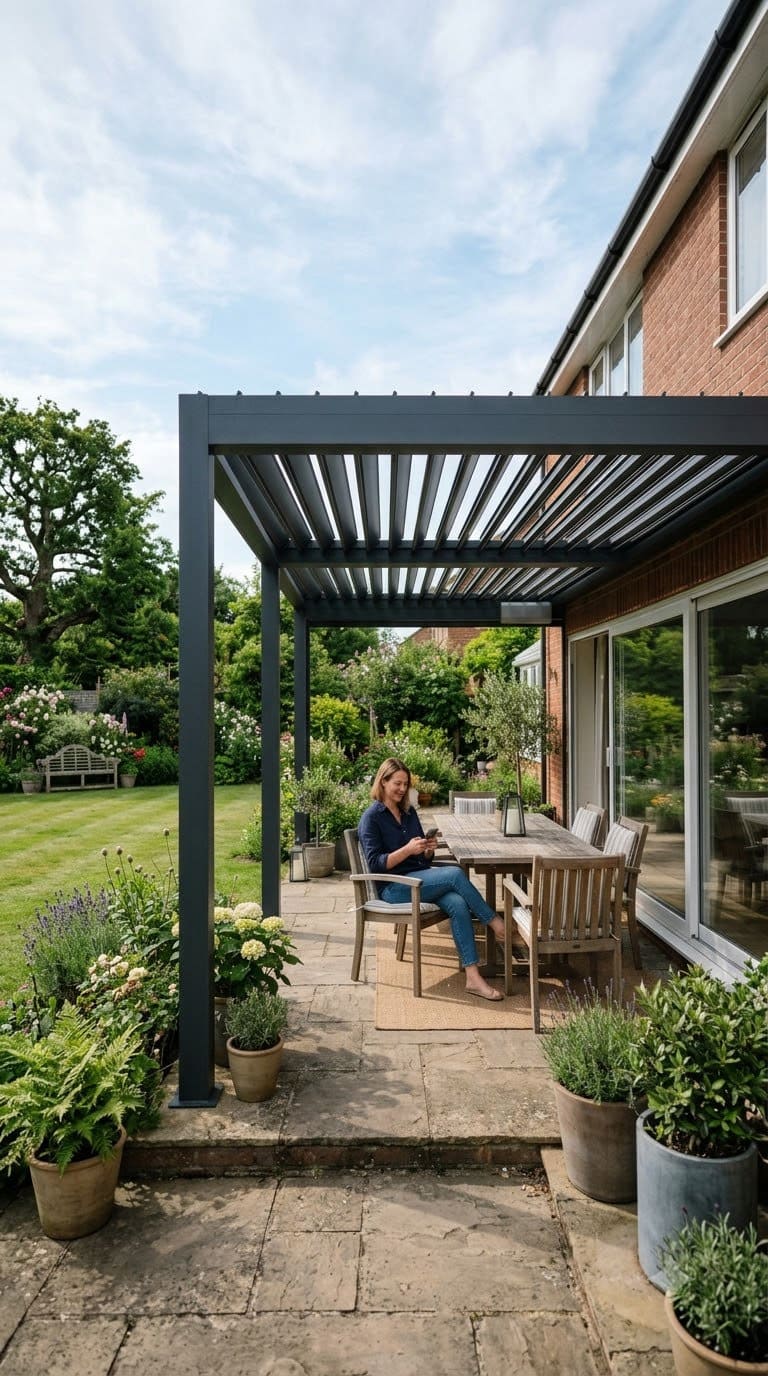
A remote-controlled louvered roof lets you rotate the slats closed for shade or open for airflow depending on the weather, a step up from a fixed pergola roof that can’t adjust to a hot, humid afternoon versus a cooler evening.
2. Get the size right for your yard
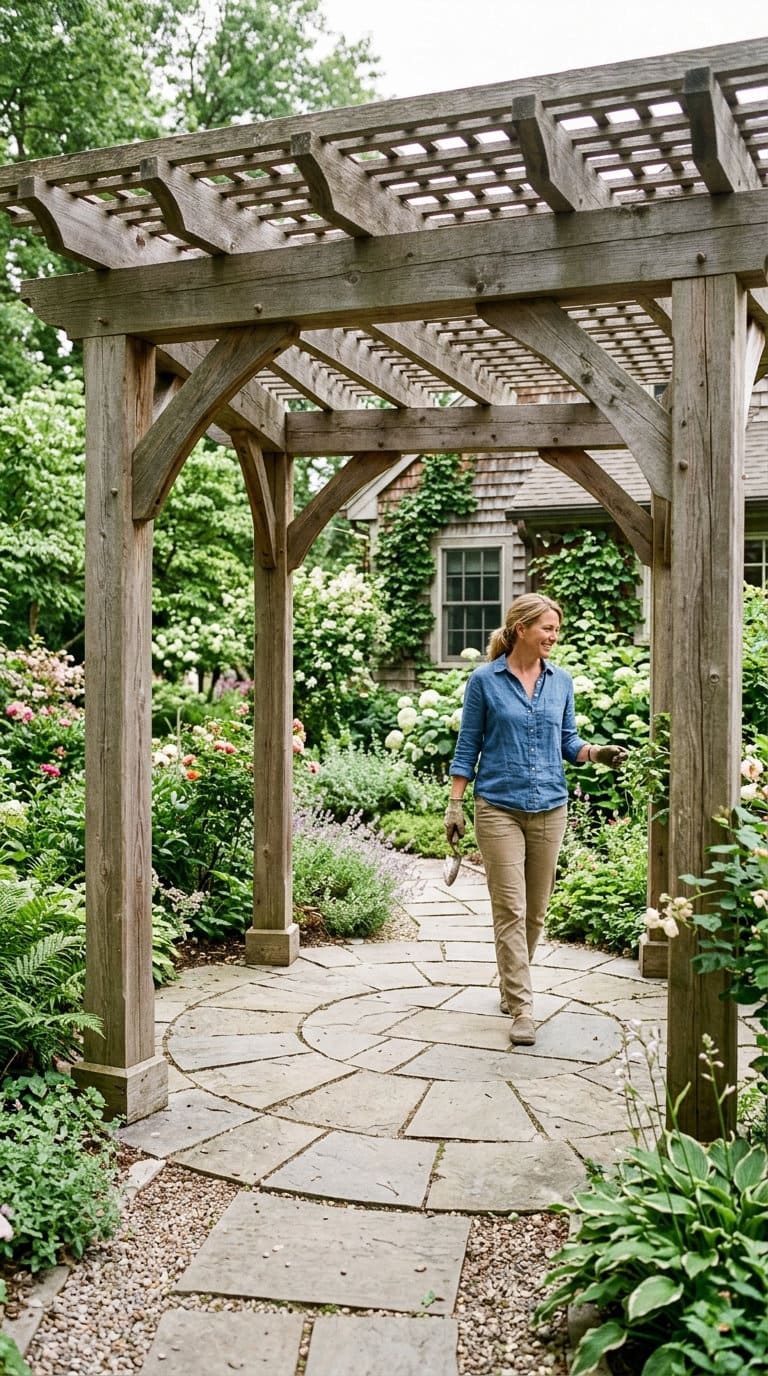
The most common sizing mistake is building a pergola too low and narrow for the space. Study the uprights’ height and the overall frame dimensions relative to your yard before committing, an undersized structure reads as an afterthought rather than a real outdoor room.
3. Build Around a Bold Color Palette
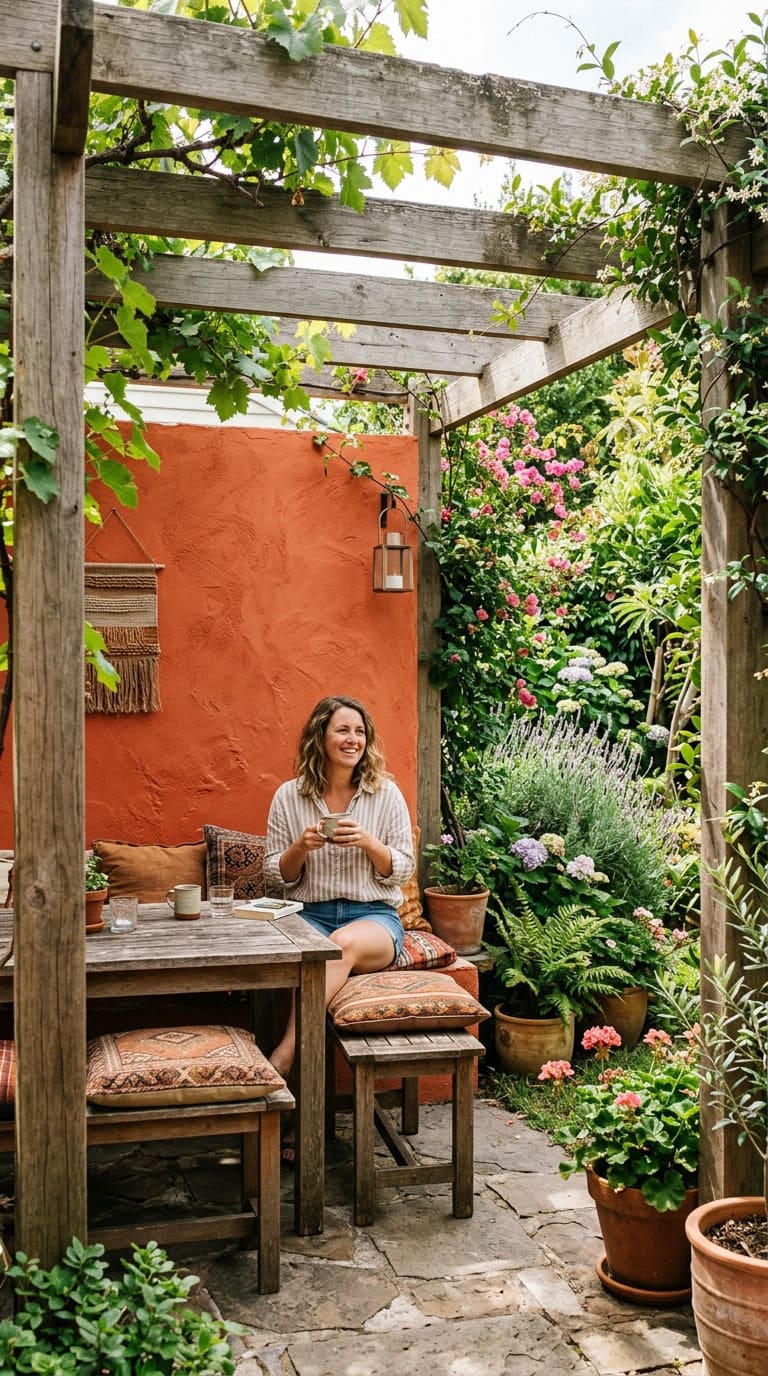
Color is one of the fastest ways to give a pergola its own identity, and there’s real range depending on the mood you’re after. For a warm, sun-soaked feel, pair a terracotta-toned fence with a timber-paneled pergola in a complementary wood tone, then carry the motif through with soft furnishings in warm hues and a mix of textured plant pots. Keep the patio pavement lighter so the deeper tones don’t overpower the space.
For a more dramatic, industrial-leaning look, charcoal, black, or deep gray frames create real contrast against warm patterned fabrics and hanging string lights, a combination that reads modern without feeling cold. Or go the opposite direction entirely with a painted pastel frame paired with sleek pavement and trendy furnishings for a lighter, summery feel.
The average homeowner spends $616/year on yard fixes that don't address the real problem. Find out what yours actually is — before you spend another dollar.
Take the Free QuizWhichever direction you pick, the mistake to avoid is mixing more than two or three color families across the frame, furniture, and plantings, a pergola holds visual weight in a yard, and an overcrowded palette makes it read as busy rather than intentional.
4. Choose the ideal location
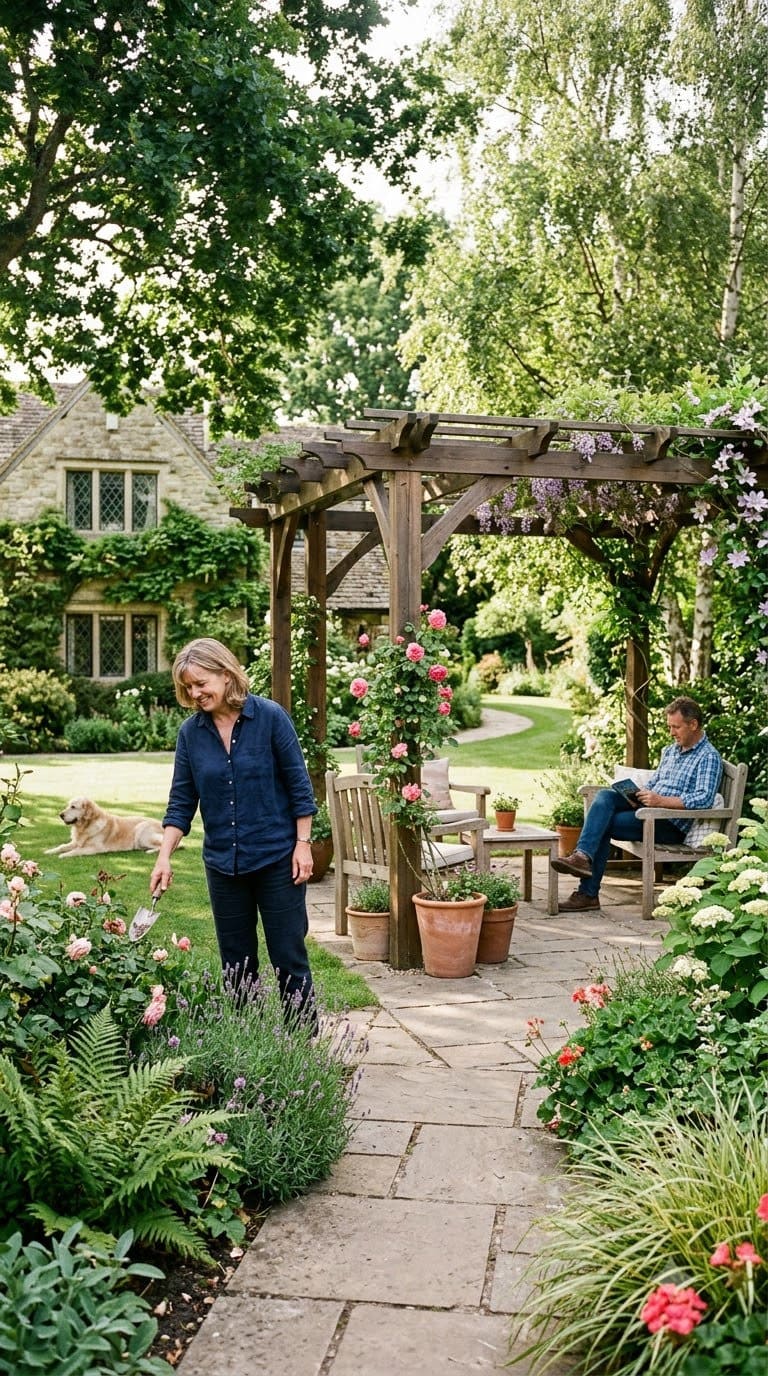
The optimum location for a pergola would be determined by the form of your garden and the factors you want to include pergola ideas into your landscape.
The clean, contemporary style of the yard for this townhouse nicely compliments the sharp lines of such contemporary architecture. It’s important to place a pergola in a way that doesn’t obstruct the garden’s flow.
Pergolas are frequently used as a place to relax, so choose a location where you’ll be able to sit comfortably without obstructing the view of your neighbors, and treat it as a way to establish a zoned, sit-down space in the garden rather than leaving the yard as one undifferentiated stretch of lawn.
Frame it with a coffee table and real seating rather than a single bench, and angled decking underneath the pergola reinforces the sense of a separate room within the larger yard.
When creating a bright garden, it’s crucial to think about shade, and a colonnade is a good way to make a semi-shaded space that blends in with the remainder of the landscape.
5. Create a shaded, private sitting space
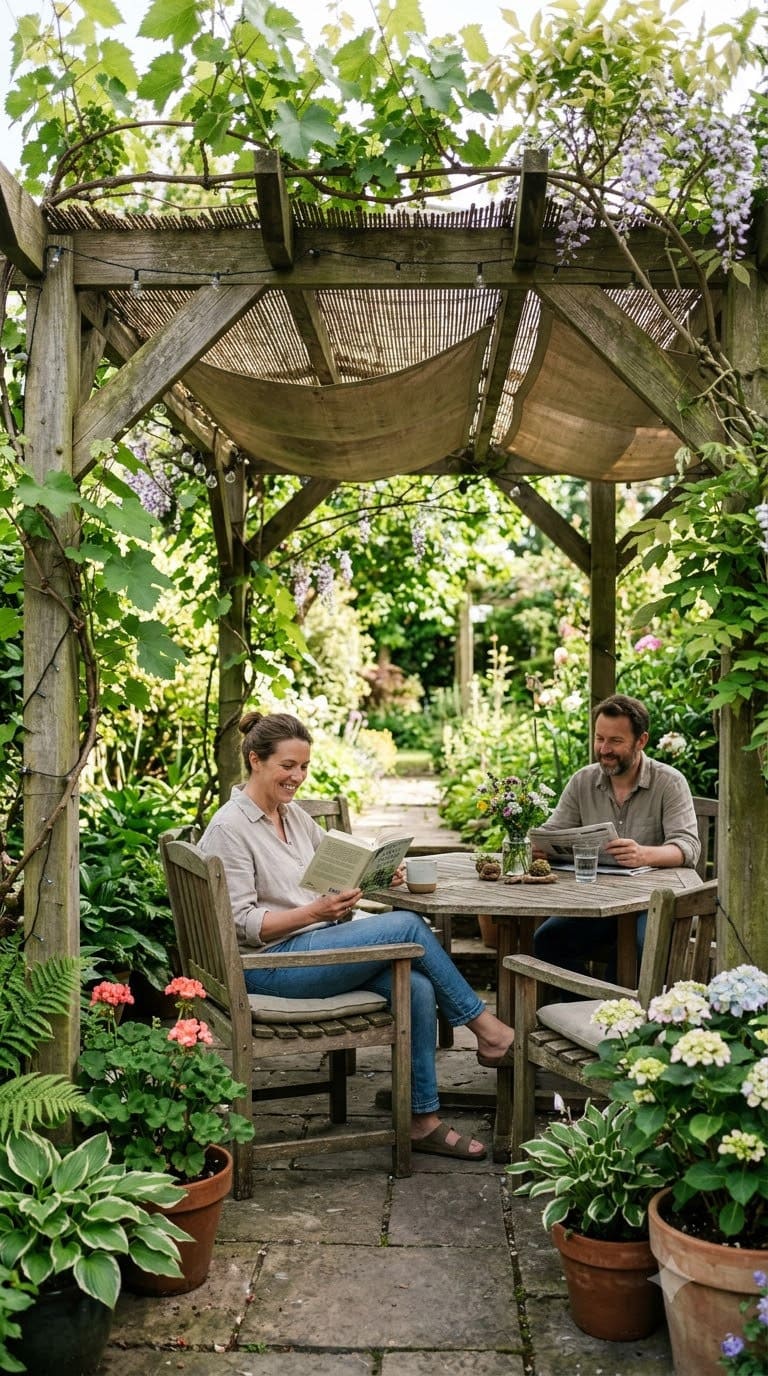
Based on the period of day you might use it more, pergola ideas may be used as either a patio cover or a shade patio cover. On a warm summer day, a slightly covered pergola in a south-facing yard may provide a peaceful hideaway and relaxation.
By combining stunning patio planting concepts, such as aromatic hanging baskets and climbers filled with colorful perennials, this Mediterranean-style outdoor space pictured above has been turned into a sun-baked, covered lounging area.
6. Combine a natural roof pattern with real structure
A woven natural-material roof, reed, bamboo, or thatch, gives texture that a flat lattice doesn’t, while still needing the same structural attention to span and support underneath it that any other roofing choice does.
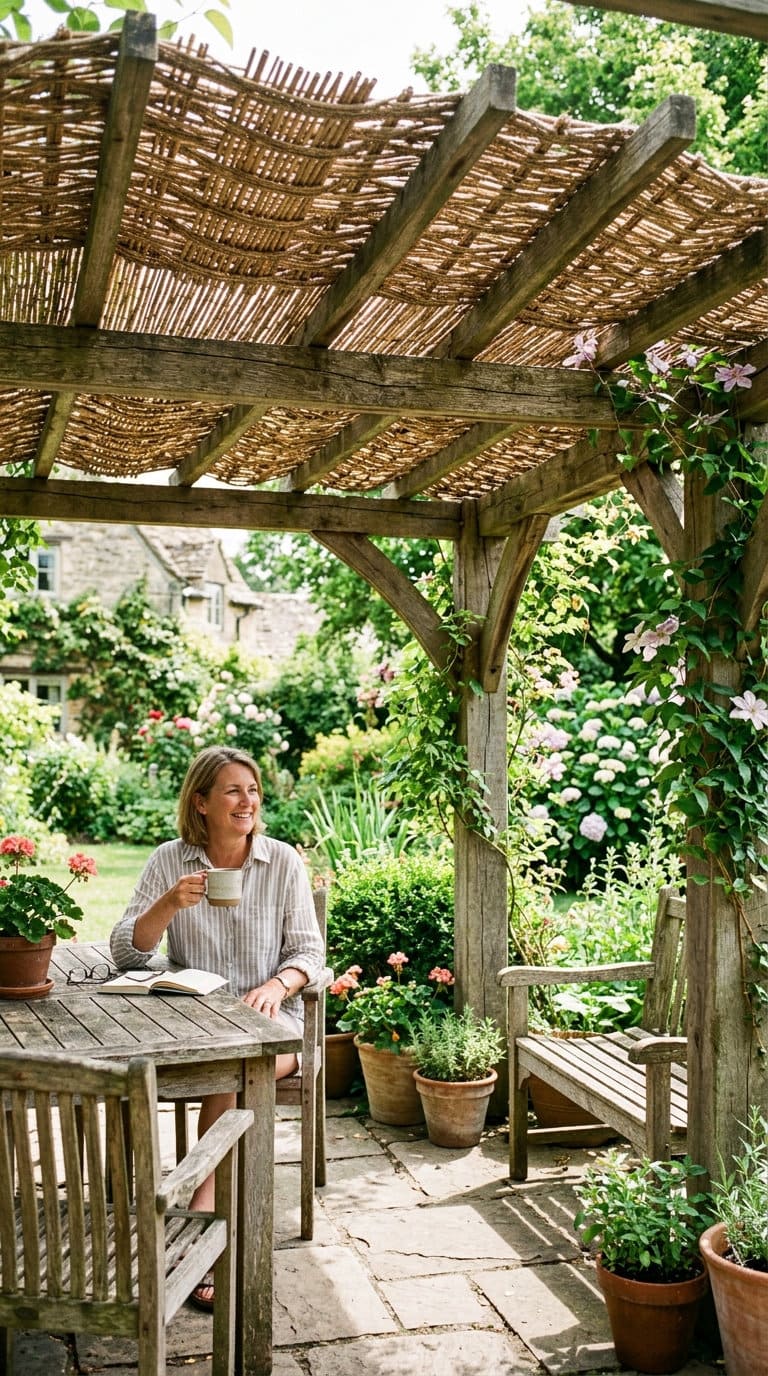
Climbing plants may be grown up and above your pergola in a similar fashion to the one seen above. It’ll create a natural roof that will shelter you from the sun and rain, making it ideal for your patio seating plans.
Train the vines up the structure of a pergola and then over the top, keeping the other sides open to prevent the space seeming too contained. For a warm glow, complete the setting with a string of twinkle lights and floating paper lanterns.
7. Build an outdoor cooking space
Positioning a pergola over a grill or full outdoor kitchen setup gives cooking a permanent covered spot. Keep in mind the roof covering choice matters more here specifically, open lattice handles cooking heat and smoke better than a solid or fabric roof would.
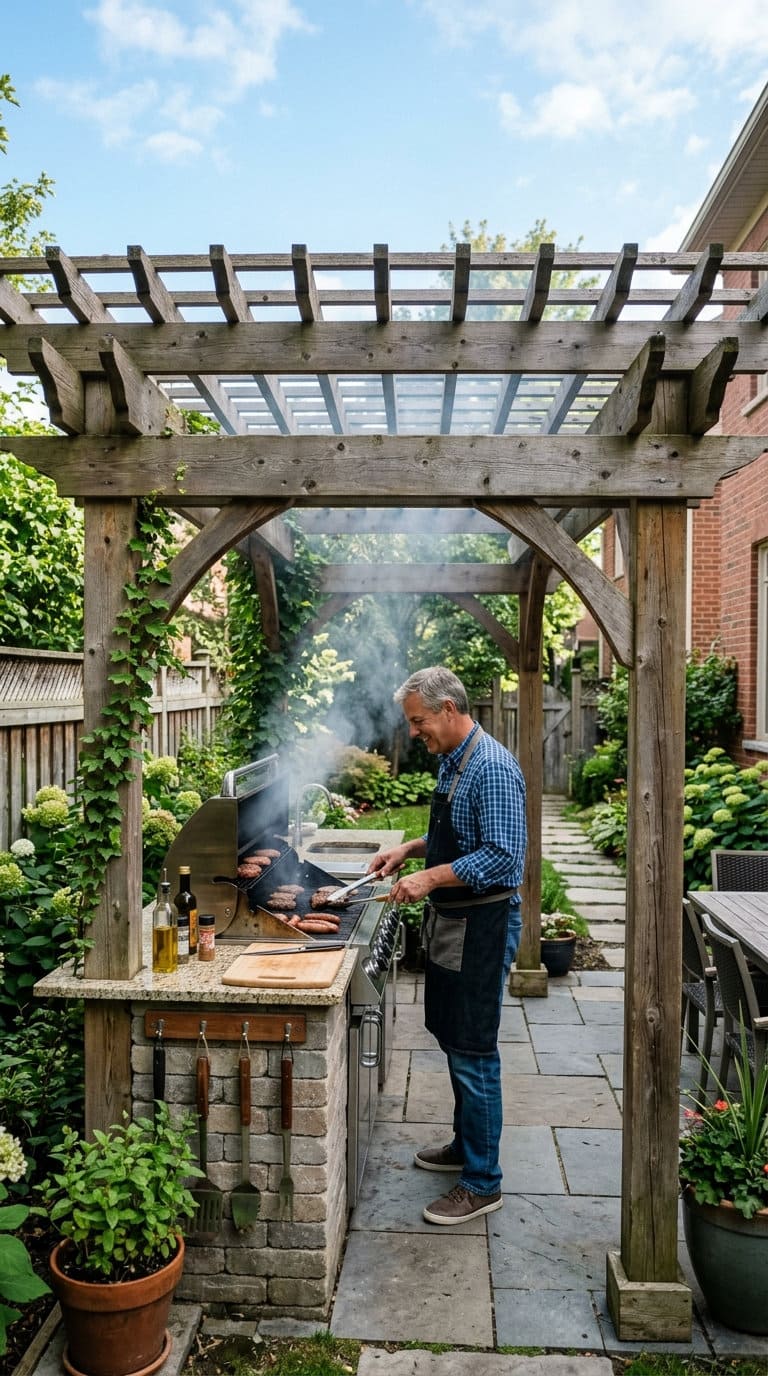
Although it’s tempting to cook outside on bright days, using pergola ideas to add additional garden cover to an alfresco kitchen area is far more functional and enjoyable.
You may construct a shaded pergola or plant vines and wisteria up your pergola and provide wonderful diffused light and reprieve from the warmth if your yard may not have a covered place that offers sun protection.
Sail-type panels can be connected to the bottom of the pergola top for more continuous shade.
8. Make a tiny pergola accent for a fence line
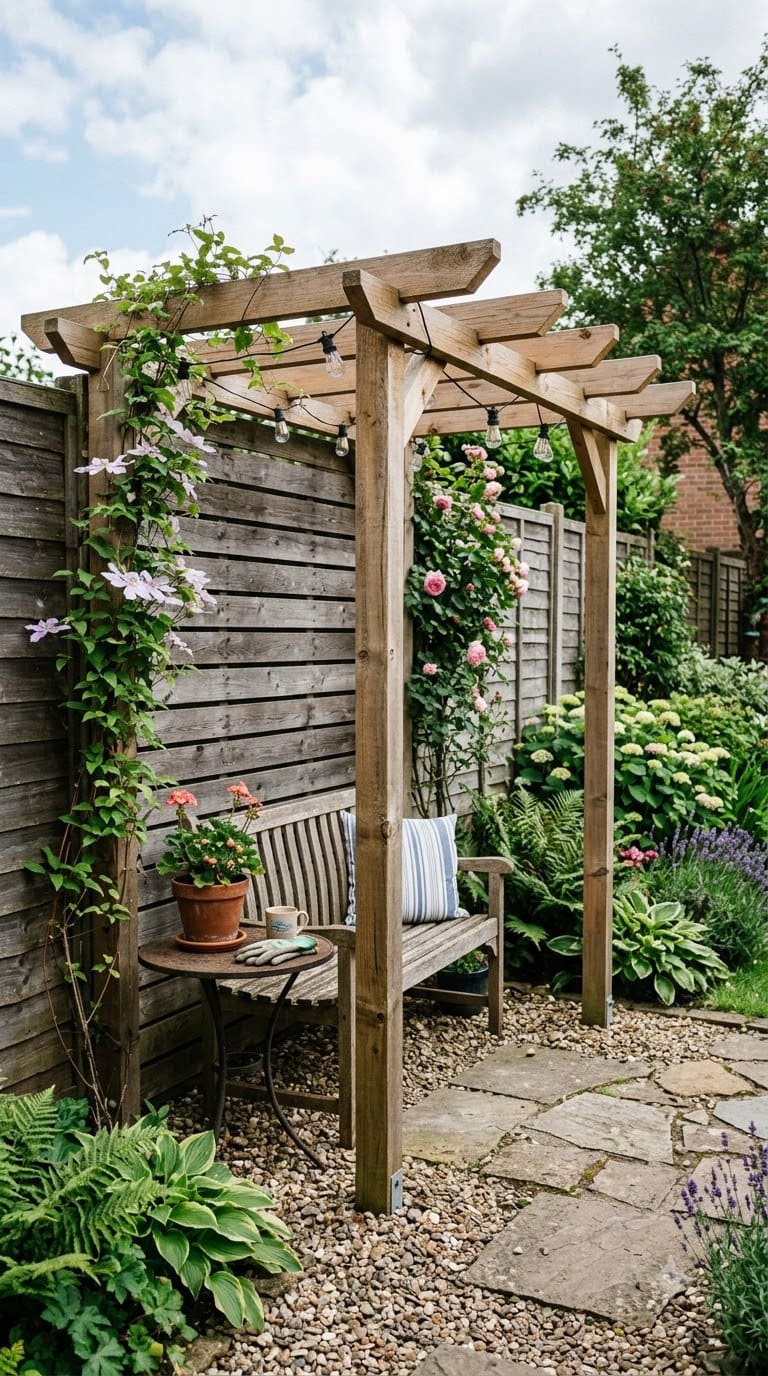
Would you like to try something new with your pergola design? Consider putting a small version of the fence on it. It will give its closest surroundings a burst of shade while also adding height and architectural definition.
It’s also a great way to support ascending plants, that will lighten the appearance and provide a leafy and green screen as they develop when combined with a trellis. If you’re considering modernizing your garden fence designs, it’s absolutely one to think about.
9. Divide your garden with pergola sections
Using pergola sections as a soft divider between different functional areas of a yard, dining, lounging, gardening, creates a sense of distinct rooms without solid walls.
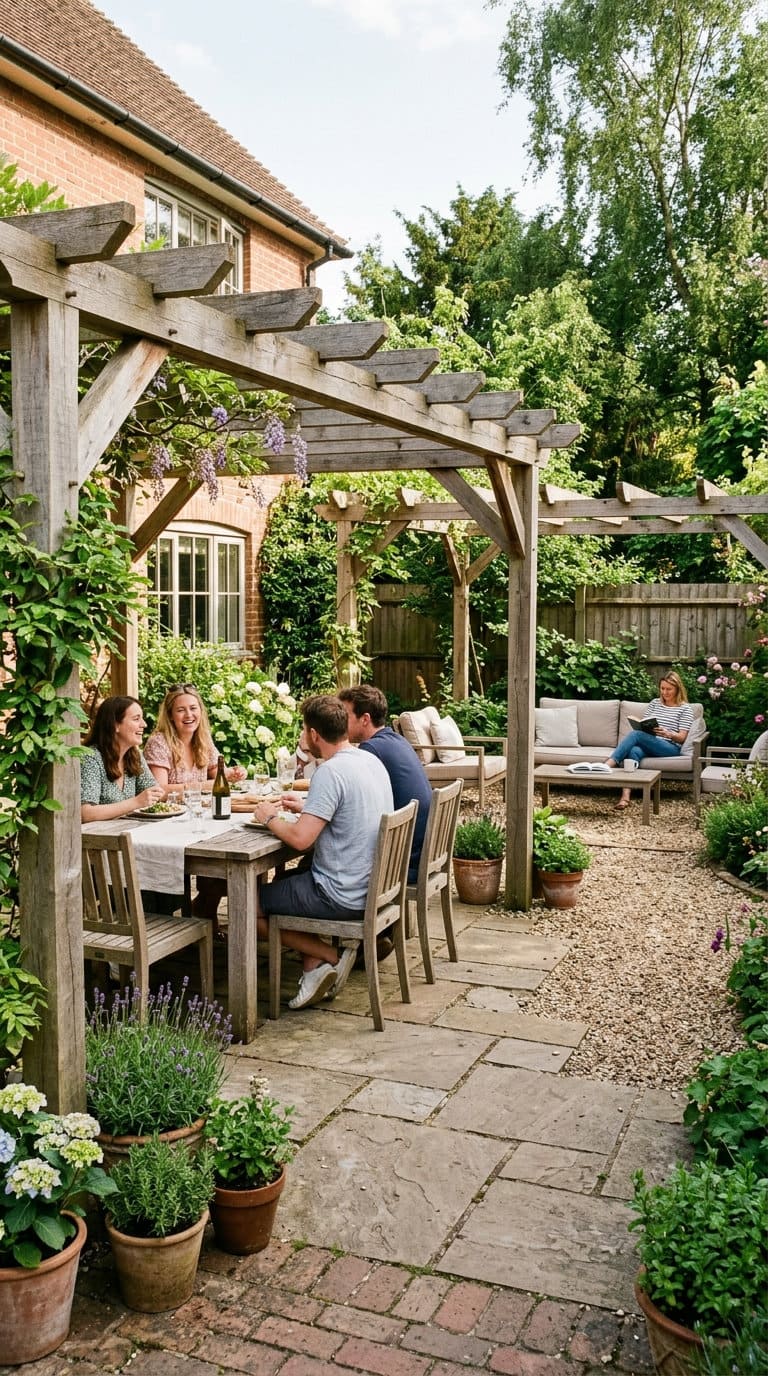
Pergola ideas may be used in a variety of ways to divide off regions of the landscape. Pergolas are a great way to move from a terrace to a lawn.
A pergola may offer a sense of solitude and isolation when placed over an eating area. Pergolas, as constructions, may help to create a feeling of separation in a place without being too obvious.
They can be utilized in conjunction with plants to draw the eye down into the yard by obscuring anything beyond. They might also be used to surround a walkway by forming a succession of arches.
10. Add a perfumed pathway
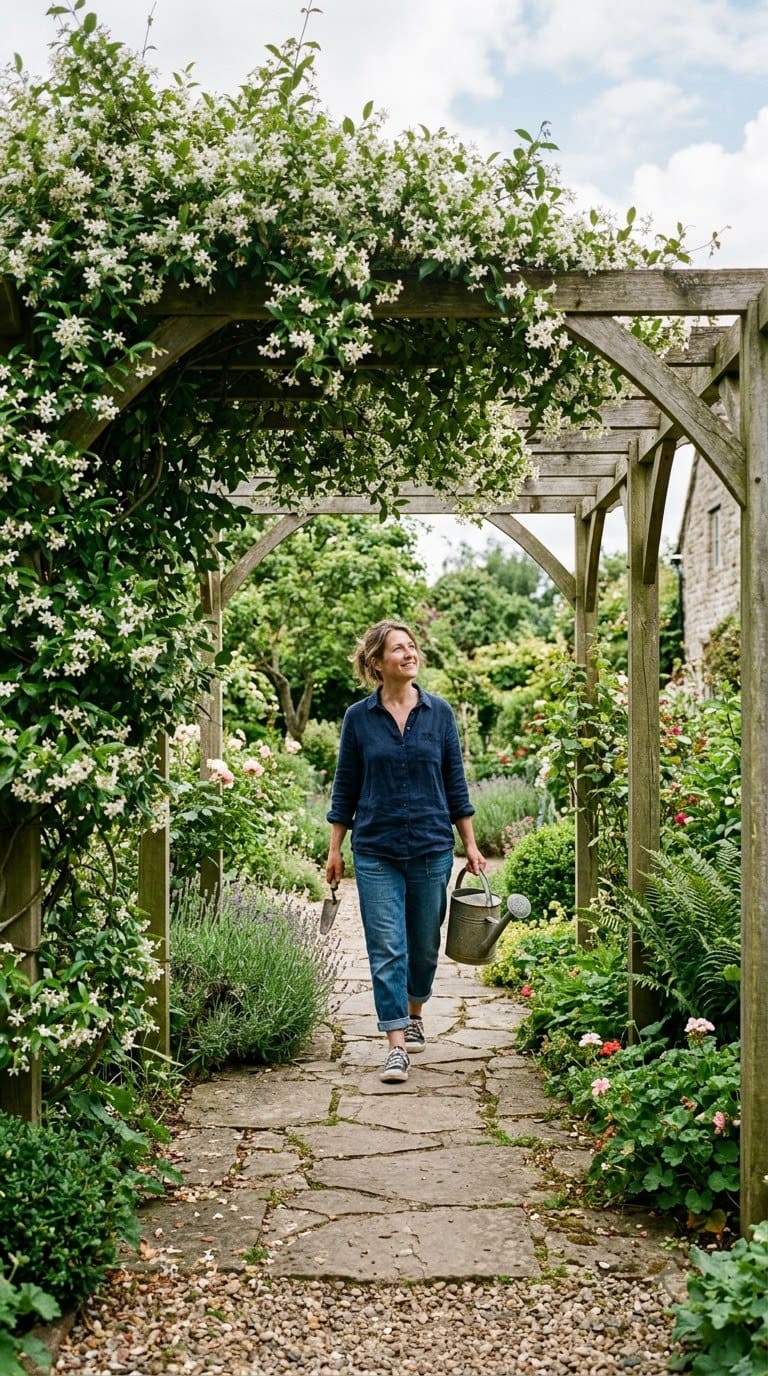
To produce a covered and perfumed tunnel, garden designers suggest a pergola which arches above a passage through the garden. Depending on where you place the pergola concepts, you may create a romantic atmosphere.
A pergola there at the end of a very long garden may serve as a focal point at various times of the day which can also serve as a screen for a garden or garage shed.
11. Build a conventional wooden pergola
A traditional timber frame with classic proportions works in almost any yard style, and it’s the design most building-supply stores stock plans and materials for specifically, worth considering if you want a straightforward build without sourcing unusual materials.
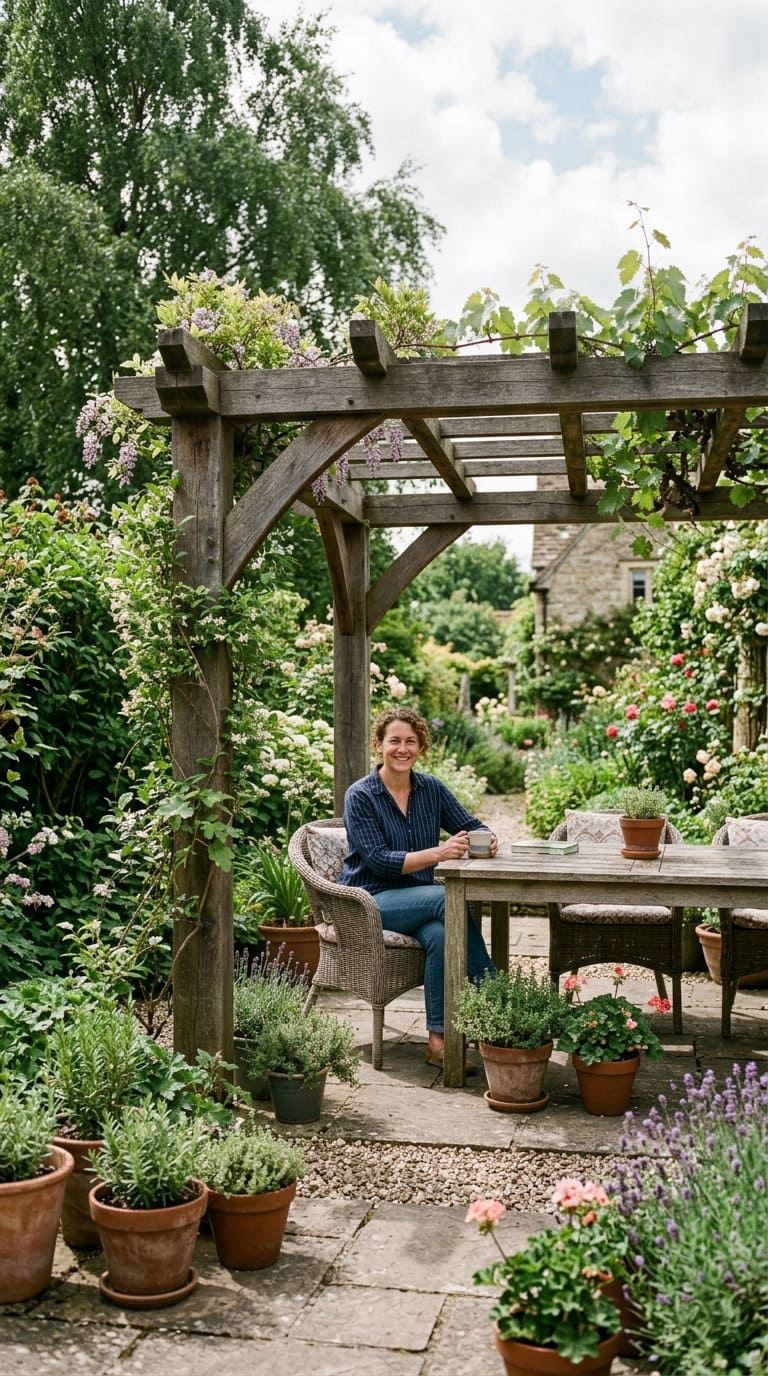
Pergolas are most typically made of wood, with western red cedar, oak, and iroko being the most preferred right now.
You can lay a patio manually, but regardless of what you pick for the pergola designs, it’s critical that the pergola be designed and constructed by an expert.
It has to survive the elements as well as the load of the flora, so consider the expense of a skilled pergola installation when planning your patio.
12. Add a fashionable hanging chair
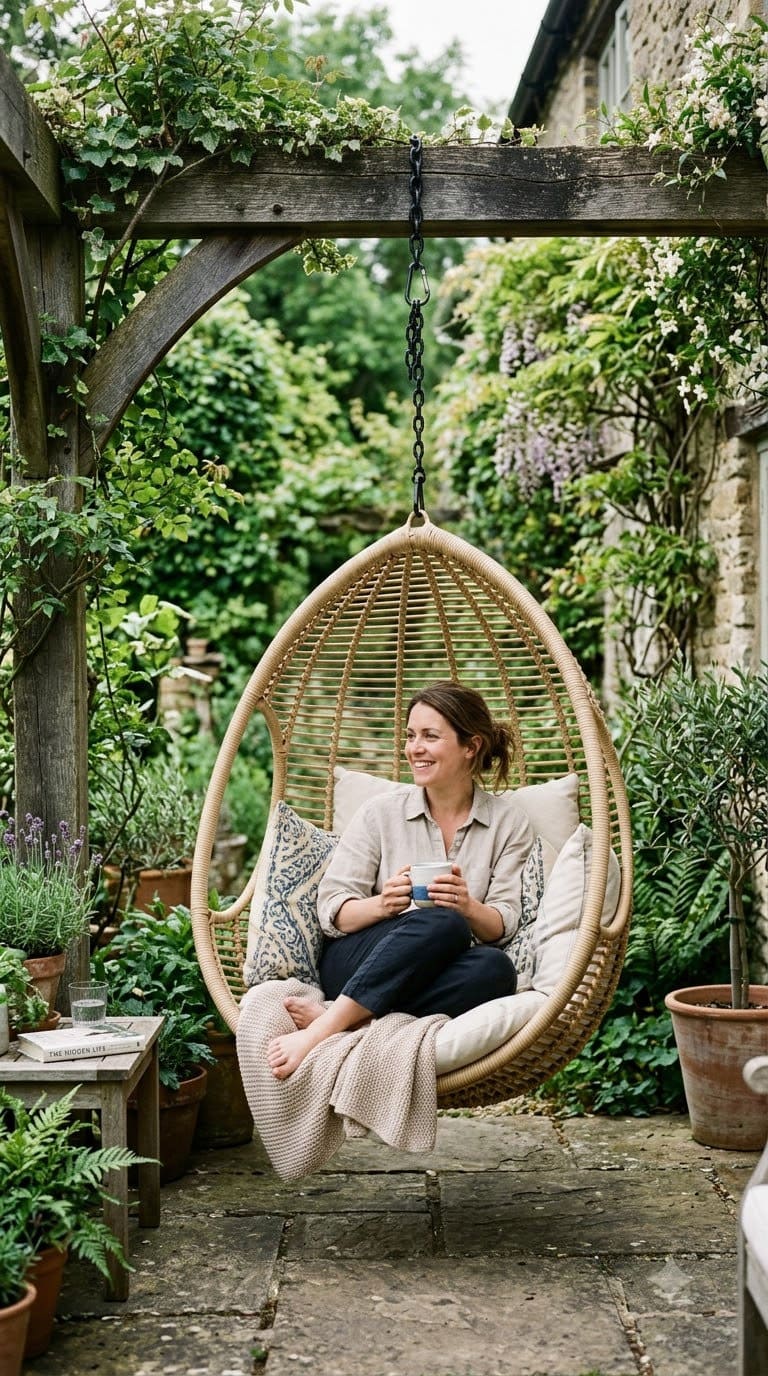
A hanging egg chair or swing suspended from a structurally reinforced beam gives a pergola a genuine lounging feature beyond standard patio furniture. Confirm the beam and its connection point are rated for the added swinging load, not just static weight.
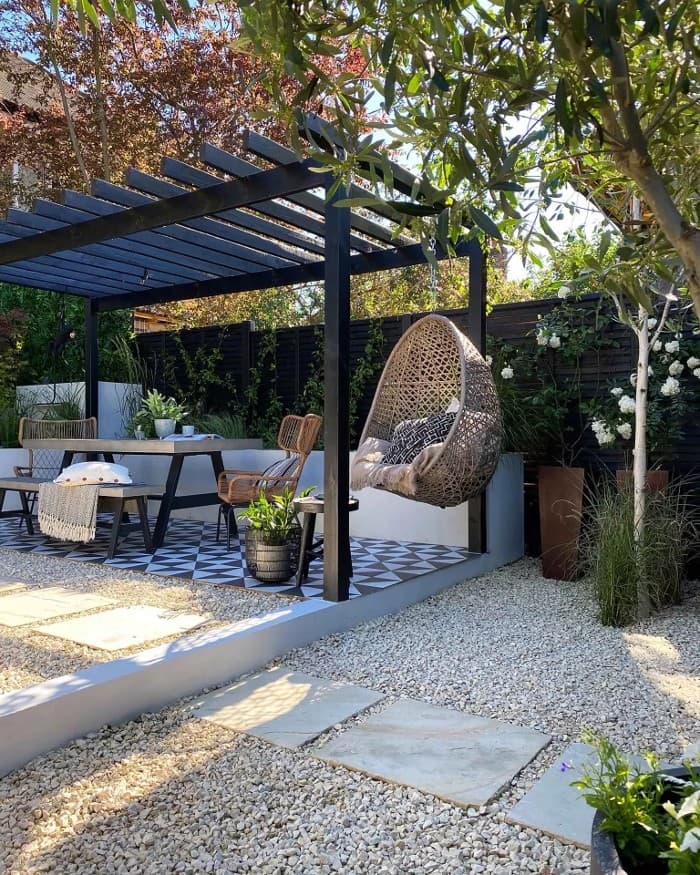
The slender pergola adds a nice finishing touch to this sitting arrangement. It’s a bold central focus in a black shade that goes well with the on-trend pavers as well as pared-back wall panels in the area. A dangling egg chair, which is this year’s must-have sitting option, is also supported by it.
For contemporary garden designs, vibrant color schemes and statement furnishings are always a fantastic choice, so this is an excellent illustration of that.
13. Go for something more modern
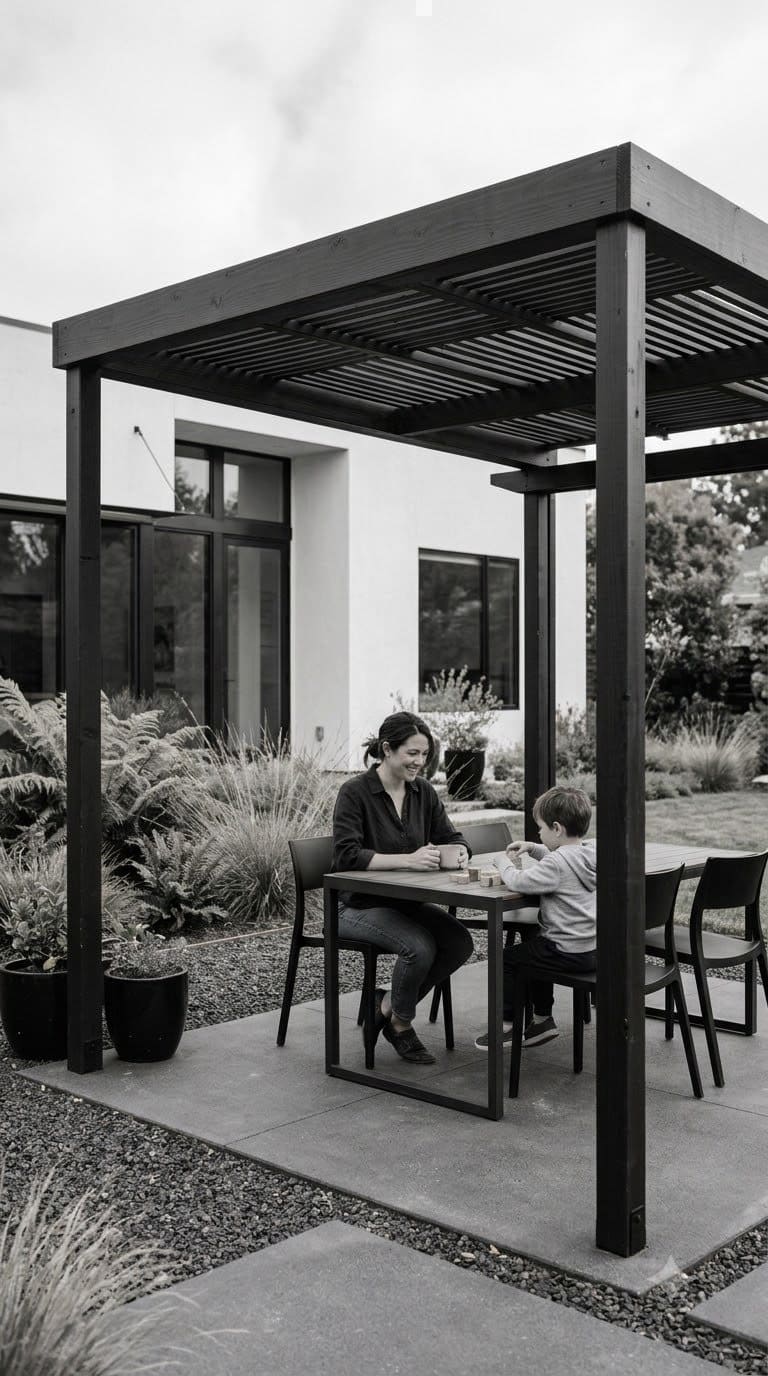
If we’re striving for a more modern look, we’ll sometimes utilize metal or even burned oak. Modest structural systems, such as this modern pergola design may be quite effective.
By rounding up the edges and corners of a timber pergola, you may give it a more contemporary aspect. It might also be made from steel to offer it a sleek, modern look.
Metal that has been powder coated or painted will have a more smooth aspect if it is weathered to a gorgeous rich orange copper patina.
14. Combine shaded seating with unobstructed views
Position the pergola so it provides real shade without blocking a view you actually want to keep, a lower or open-sided design can shade a sitting area while still leaving sightlines to a garden feature or a view beyond the yard.
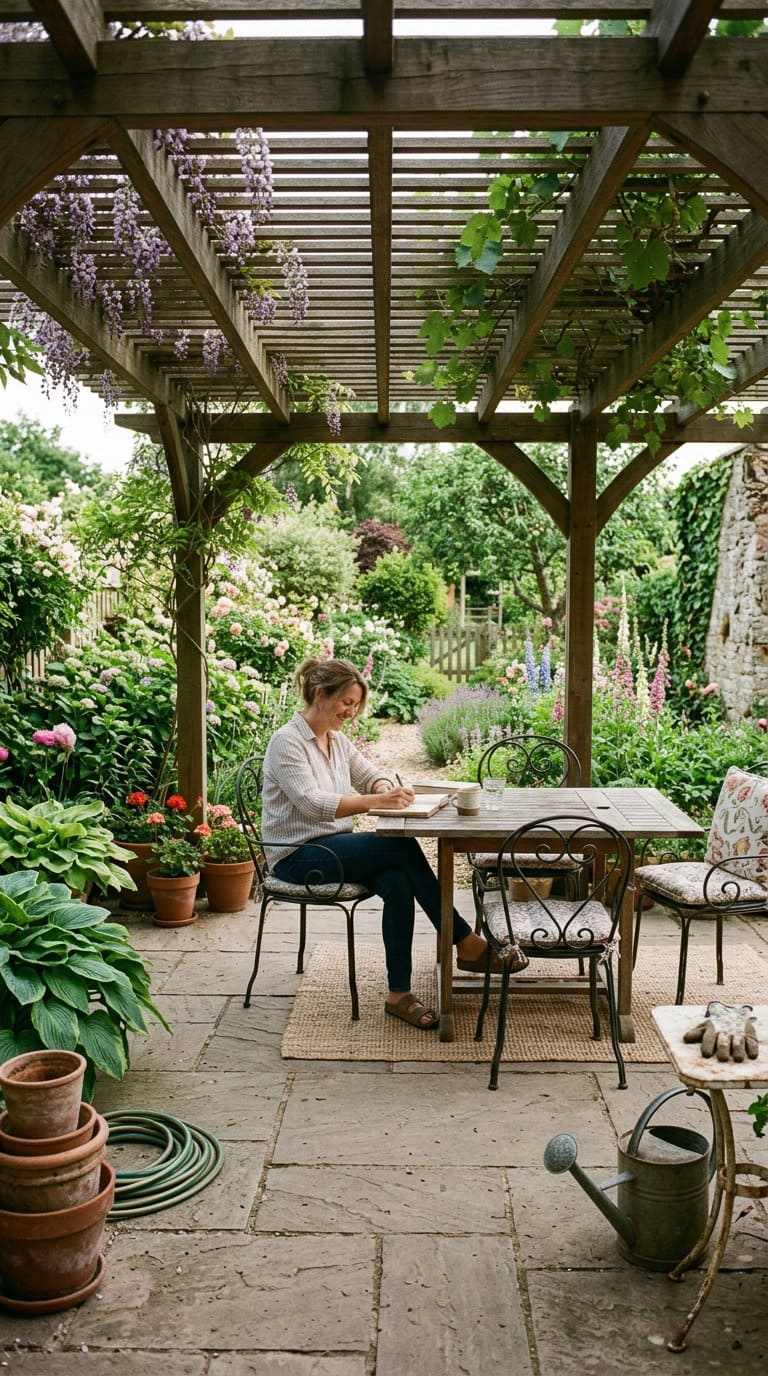
Choose fragrant climbing vines for a great atmosphere boost if you’re going to merge your pergola concepts with dangling plants. Take, for example, this gorgeous design.
It’s created up of recycled oak and rigging poles, with star jasmine blooms interwoven across a wall built of reused oak and rigging poles.
The room has an old-world, nearly untamed air to it, yet the cold gray hardscaping maintains the tone fresh. It’s also a good idea to separate the area from the remainder of your scheme to make it seem more secure and to clarify the limits.
15. Set up al fresco dining in a private setting
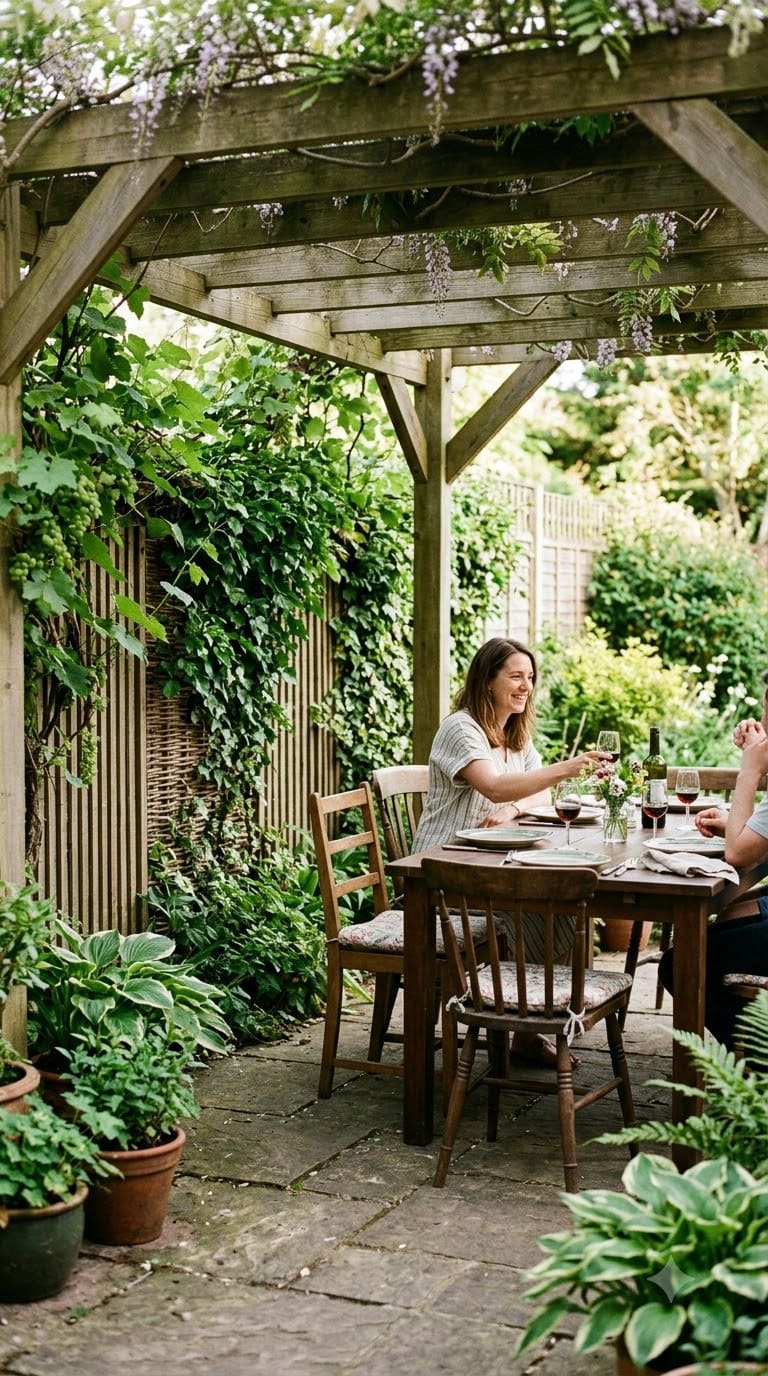
To emphasize the impression of flow, consider creating a pergola and a patio space for dining from an outer wall. This might be extended half way or even all the way along the edges of the pergola, and it could be placed against a fence or border at the back to keep the room feel more contained.
A pergola cantilevering across an open kitchen’s perfect, and with just one side of the supports, it enables for more circulation around and below it. Under your pergola, you’ll have additional room for a choice of patio furniture designs.
16. A place to relax and unwind
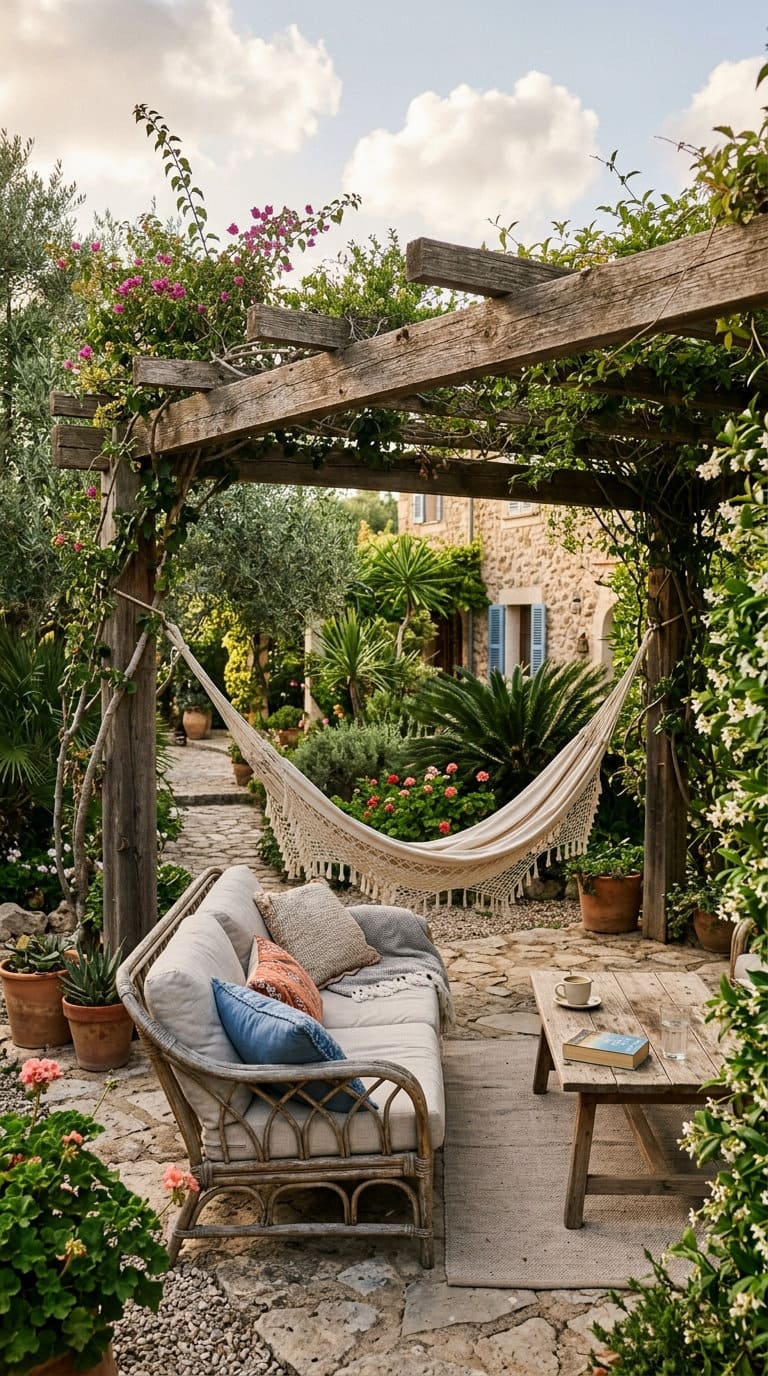
Pergola ideas might be the perfect accompaniment if you enjoy hosting friends and family and have a spacious patio spot to do so. The zone is defined by an attractive building like this, and while it’s certainly large, the light-toned timber and breezy height prevent it from appearing overwhelming.
Fern-filled hanging pots soften the image even further and provide some pleasant green to the top. Pergolas may also be used to hang a few pendant lights over the outdoor eating table to keep the area lit at night.
17. Let wisteria beautify the frame
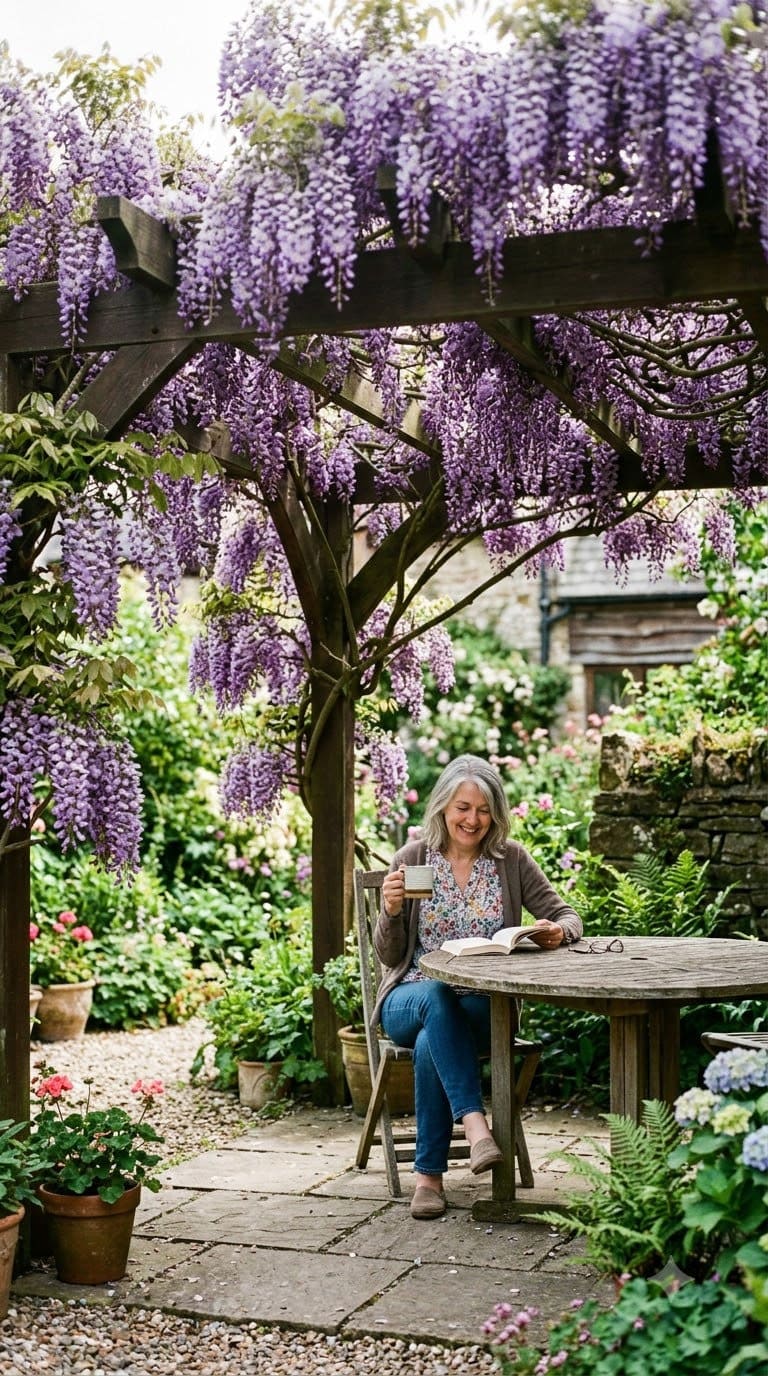
Pergola designs with wisterias are a marriage made in heaven. Wisteria floribunda and Wisteria sinensis are two of the ten species in the wisteria family. They’re a deciduous plant with white, blue, purple, or pink blooms that are delightfully perfumed.
Wisterias require at least six hours of sunshine every day to bloom well, and they like to be grown in a west or south-facing location.
Wisterias are strong once established, although it might take several years for them to establish themselves. Wisteria is an excellent choice for pergola designs since it is sturdy, long-lived, and generates a lot of fragrant flowers.
18. Extend your home’s living space outward
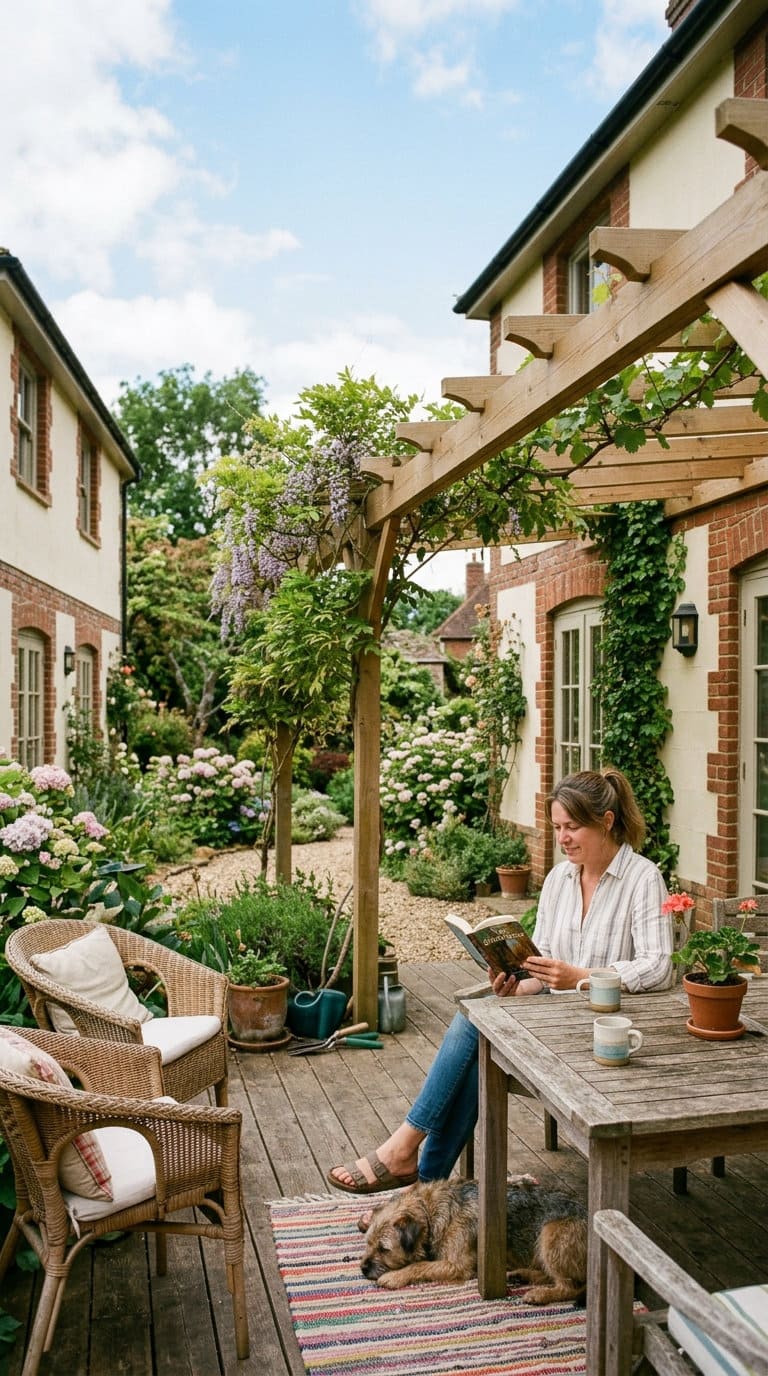
A pergola could be constructed on its own or attached to the house’s facade. In this case, install a pergola onto your patio immediately from your rear entrance for fast shade if it needs one or if it gets too much direct sunlight. This may serve as a sort of expansion to your home, giving it a more open sense.
In addition, if you choose a type with a cover, you’ll be able to enjoy a portion of your yard whenever it rains. Another option is to look for awning ideas. However, we appreciate this traditional appearance, which is enhanced by the inclusion of climbing roses.
19. Relax poolside under a pergola
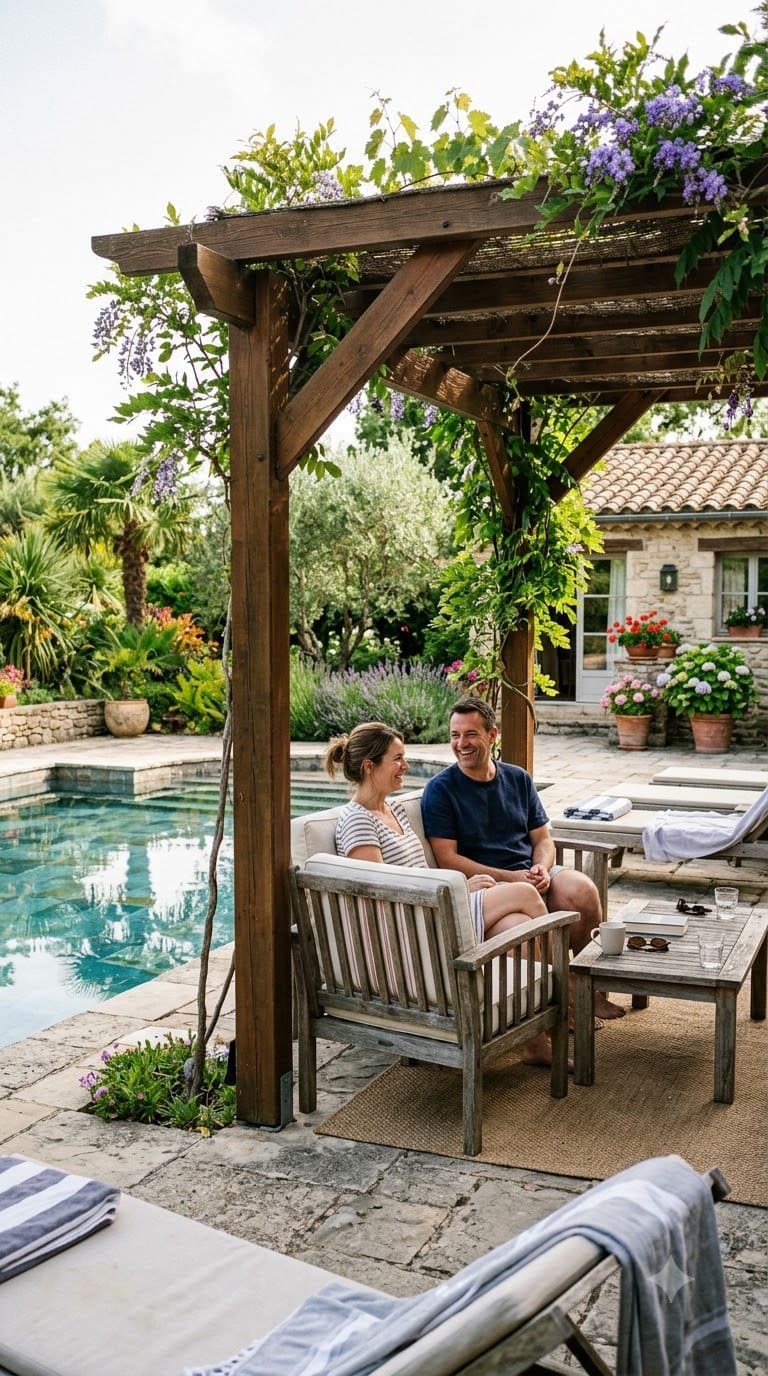
To create the ideal spot for poolside sunbathing, include a pergola among your pool designs. For dappled sunshine and a genuinely tropical ambiance, clothe your pergola using grape vines.
As their fragrances are discharged, fragrant flowers such as lavender and jasmine will conjure up wonderful memories of sun-drenched vacations, so draw cues from Mediterranean landscape ideas and plant them.
It might, however, be a really modern place with a clean, minimalist feel to that too, with which case planting around it would not be the best idea.
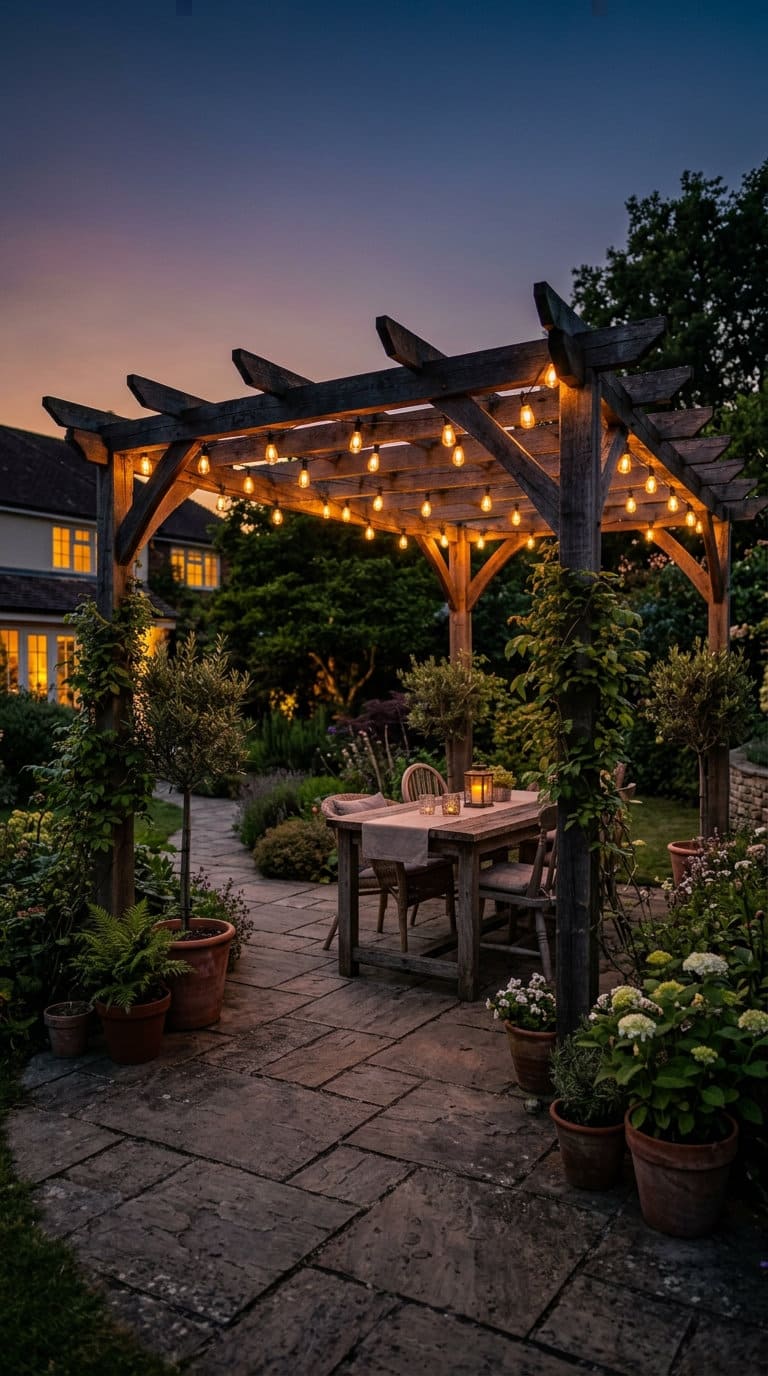
20. Add Lighting for Evening Use

A pergola that only works during daylight hours is leaving half its usable time on the table. String lights woven through the rafters are the simplest option and work with almost any style, but integrated post lighting (fixtures mounted into the posts themselves) gives a cleaner, more finished look without visible cords overhead.
Solar-powered options avoid running electrical out to the structure entirely, a real advantage for a freestanding pergola out in the yard rather than one attached to the house.
Backyard lighting ideas goes deeper on fixture types, placement spacing, and low-voltage wiring basics if you want a more permanent installation than string lights.
21. Make a statement with a water feature
A small fountain or water feature positioned near or under a pergola adds ambient sound and a genuine focal point, particularly effective in a Mediterranean or resort-style design.
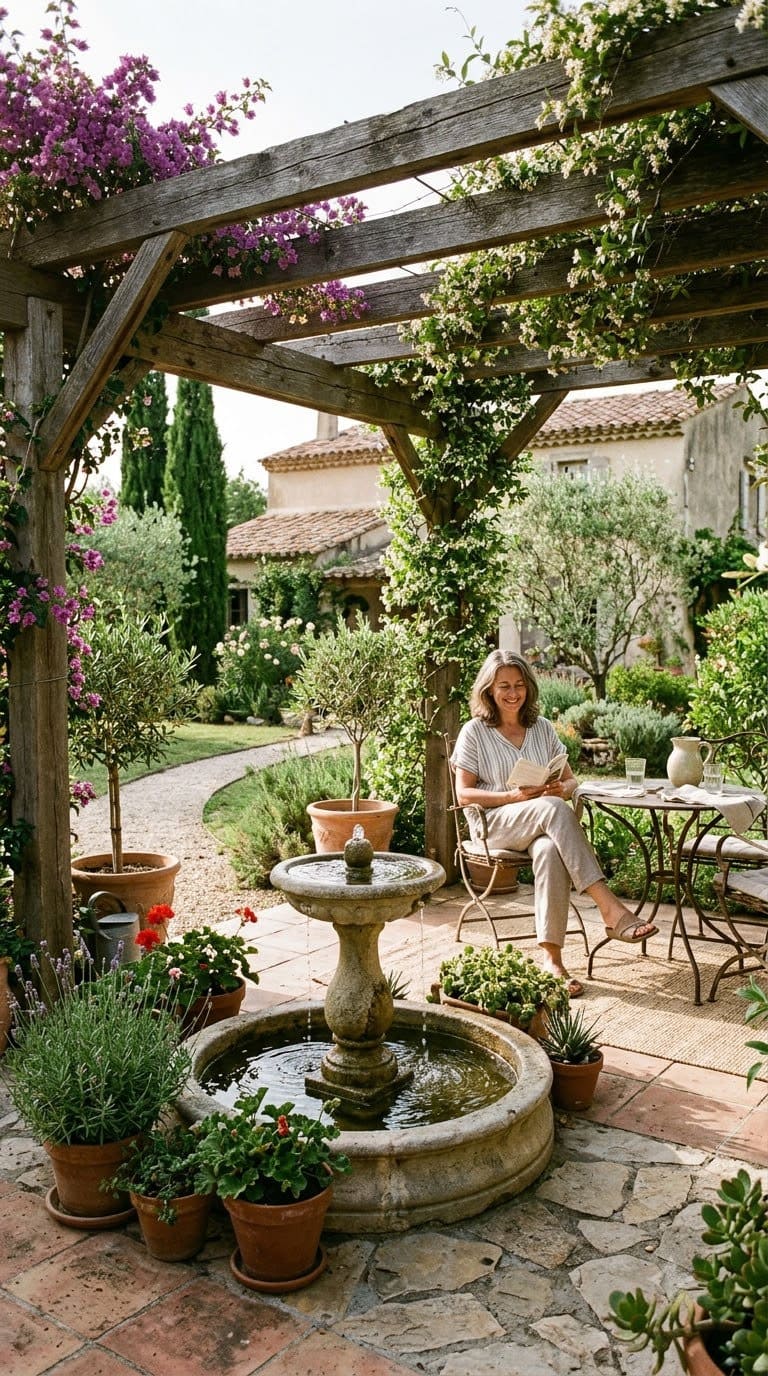
Are you looking for water features and pergola design ideas? For a truly spectacular impact, this set-up illustrates how to mix the two. The waterfall layout complements the space’s tropical flora while also providing multi-sensory advantages.
It’s a terrific method to keep comfortable sitting in place, and it contrasts beautifully with the underfoot’s clean stone and steel.
Even though a personalized design like this isn’t for the faint of heart, the startling impression it creates is definitely worth spending the extra money for. If all the lush plants as well as other architectural greenery has piqued your curiosity, there are plenty more tropical garden ideas to choose from.
22. Match a slatted roof to your furniture style
Coordinating the slat spacing and wood tone of the roof with the furniture underneath ties the whole space together visually, rather than treating the structure and the furnishings as unrelated design choices.
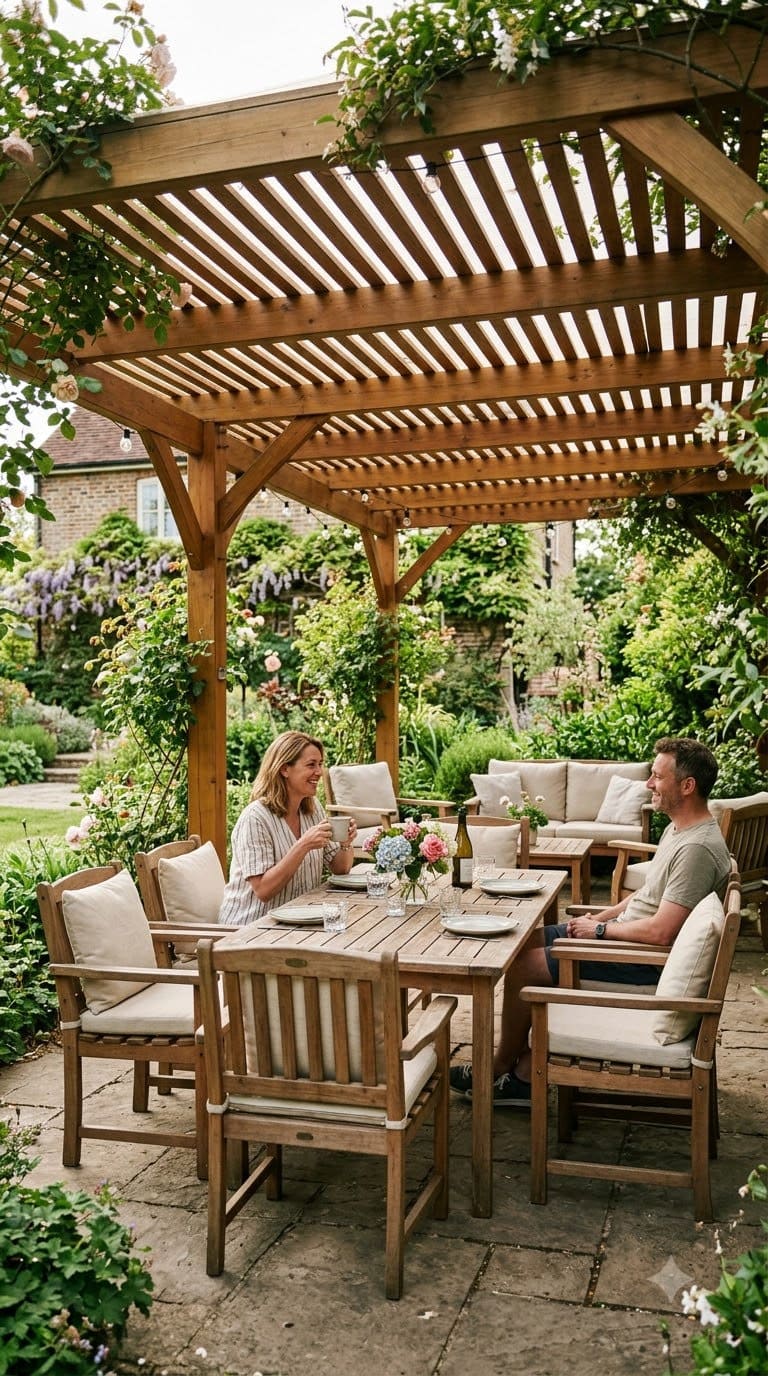
The wooden iroko was used to create this remarkable pergola, which not only looks great but also adds a brilliantly natural and pleasant style to the spot. Furthermore, the slatted strategy will enable a cool summer breeze to pass through while still providing ample shade.
It adds a genuine feeling of balance to the zone when paired with hardwood dining furniture in a complementing shade. There’s also a contemporary kitchen area discreetly out of view, so you’ll have all you need for a stylish outdoor lifestyle.
23. Build a fully sheltering pergola
Adding a more complete roof covering (rather than open lattice) turns a pergola into genuine shelter from light rain, not just sun, though per section 1, a solid covering needs real wind-load consideration that open lattice doesn’t.
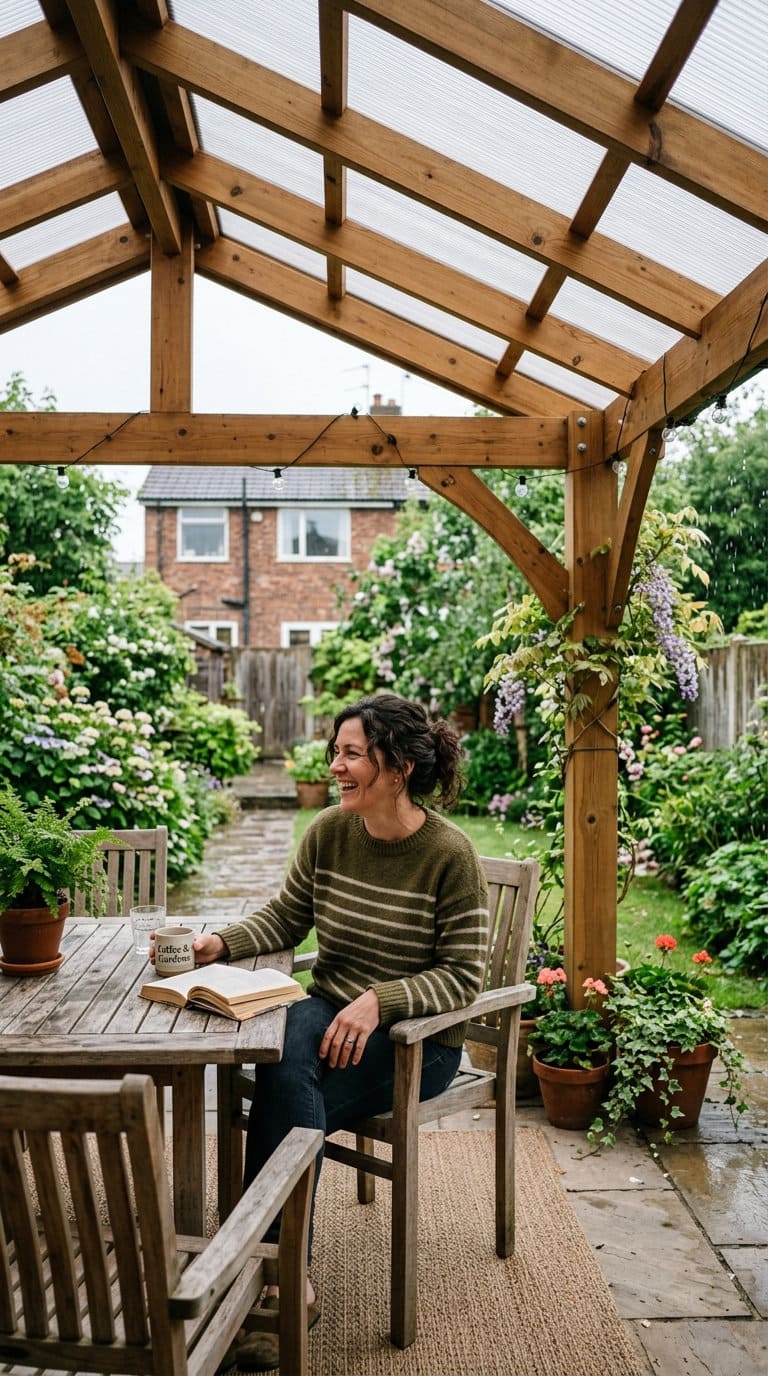
Pergola designs can shield you from the heat as well as the rain and wind, which is especially important if you reside in a region where the temperature is unpredictable.
There’s a lot of discussion about the yard as an “outside room,” but rooms include ceilings, so giving a room a more full perimeter adds a lot of weight to the feeling of the place. A pergola could also give protection from the wind by using plant covers, panels, or terracing.
24. Expand your porch’s usable footprint
Extending a pergola off an existing porch roofline increases covered outdoor space without a full structural addition to the house itself, a lower-cost way to add covered square footage.
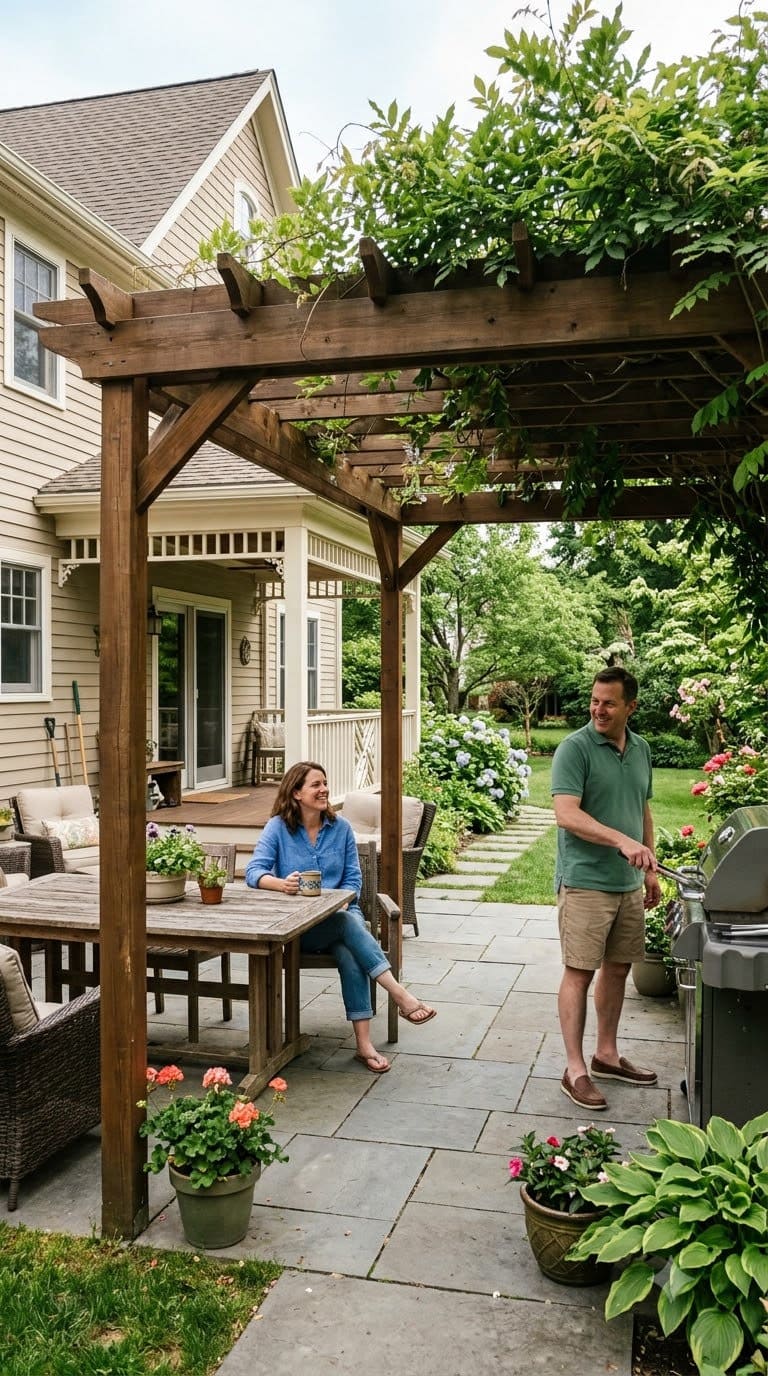
A pergola on your patio or deck adds not just shade but also architectural appeal to your space. This all-black variant looks great with the wooden veranda and provides the appearance of a huge outside space.
The appearance is completed with a modest seat and a suspended swing affixed to several of the beams.
25. Build something more personal and private
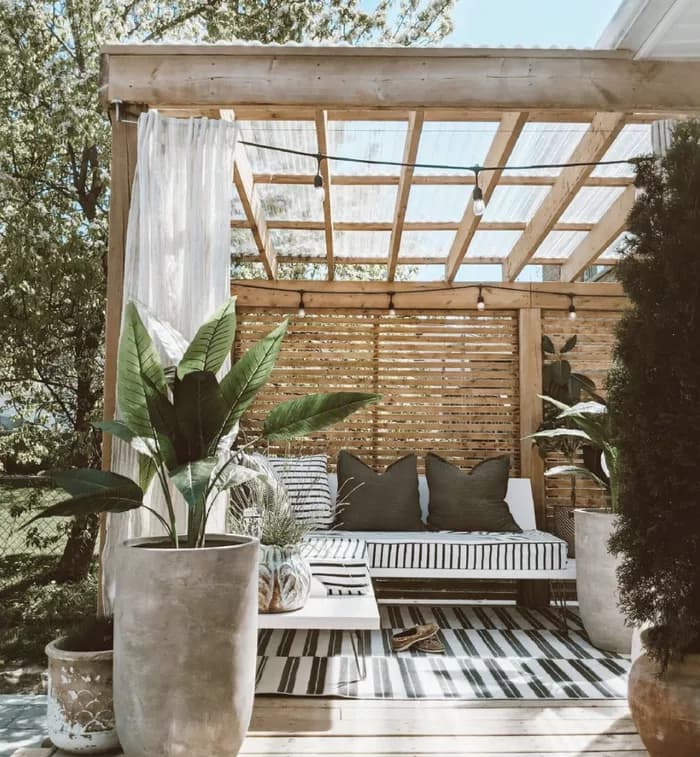
Taller side panels, dense plantings, or a more enclosed frame design work well if the goal is a private retreat rather than an open, visible structure.
Vertical slats spaced roughly 2 to 3 inches apart block sightlines from a neighbor’s upper-story window while still letting light and air through, a tighter spacing than a purely decorative screen needs.
Pair it with a fast-growing screening plant like clematis or a climbing hydrangea (see the planting section above) along the side panels specifically, not just the roof, for privacy that fills in within a season or two rather than immediately.
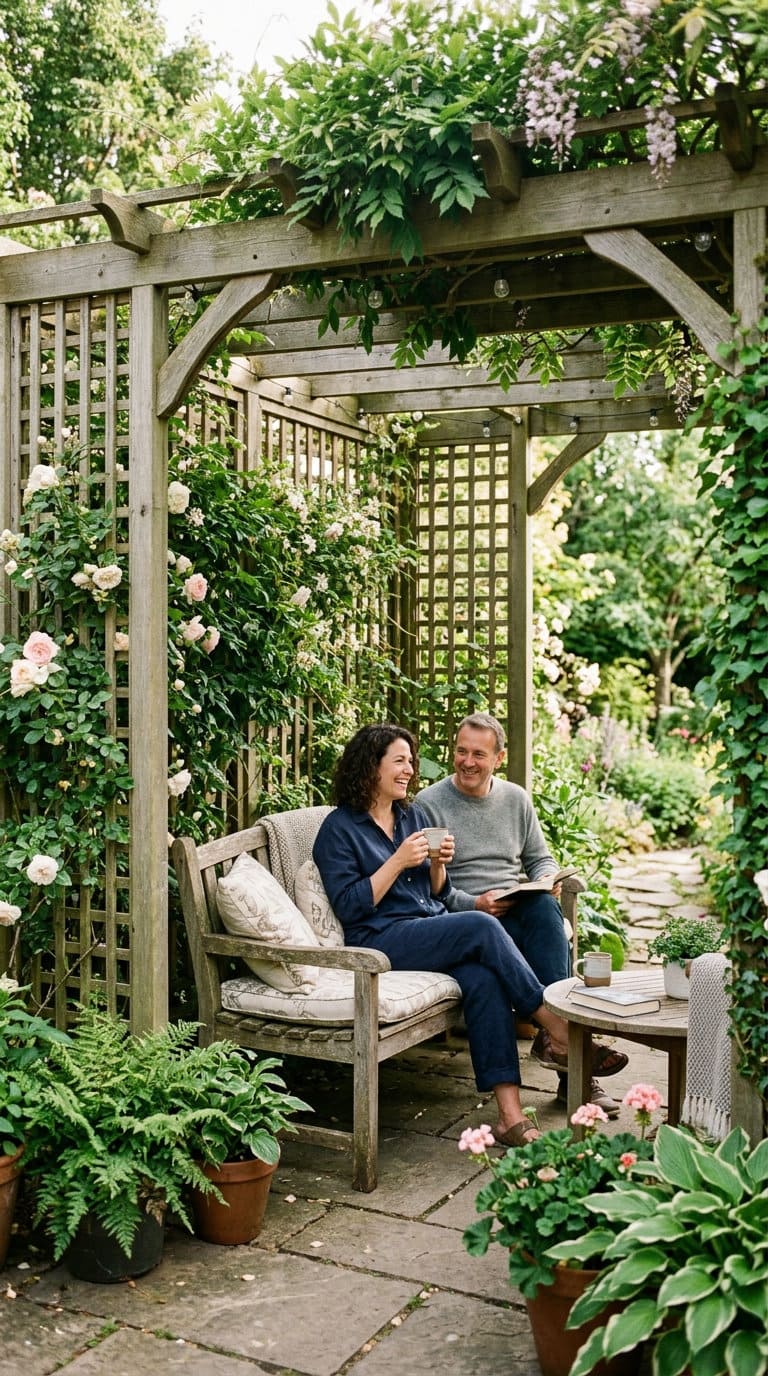
26. Create the ultimate garden entrance
A pergola positioned as a garden’s entry point, especially with an arched or gated design, gives the whole space a clear, intentional starting point rather than an ambiguous open edge.
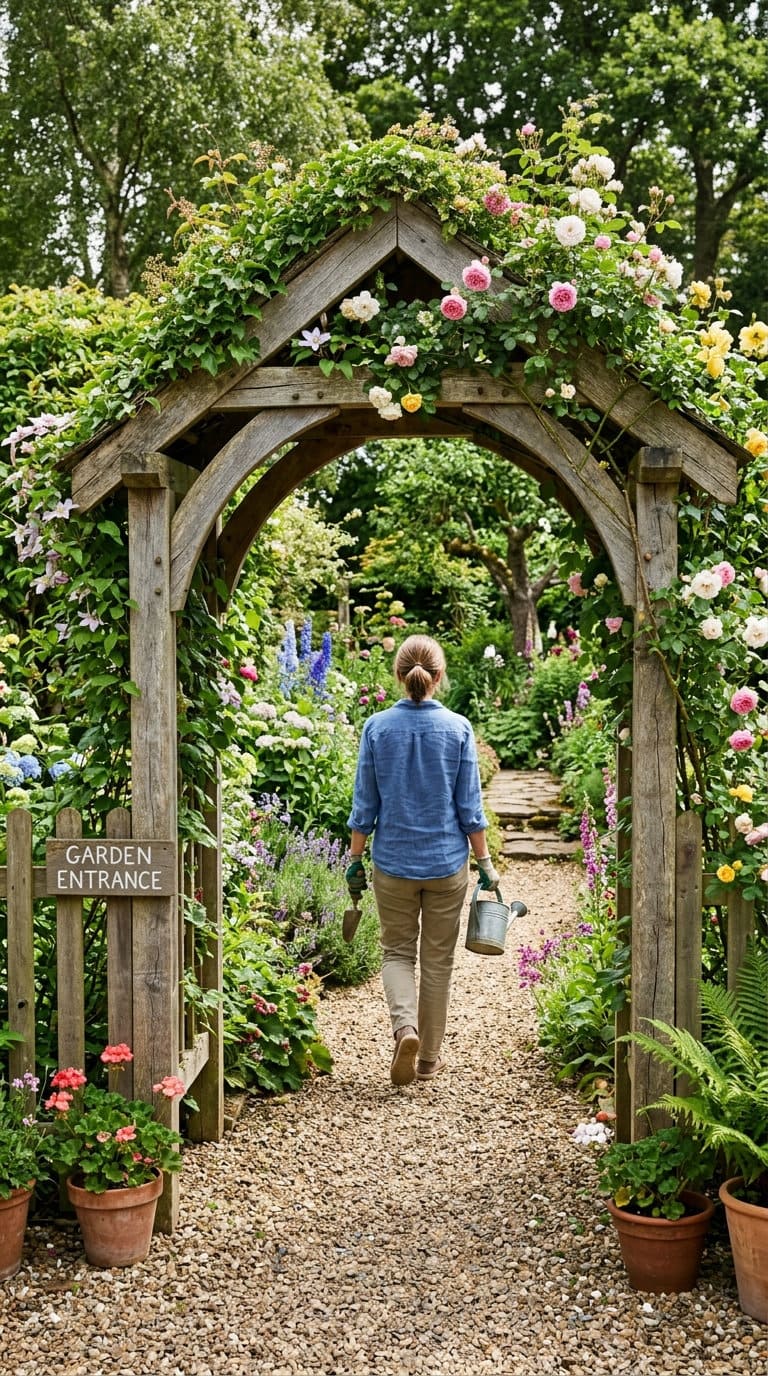
It’s simple to see the reason why pergolas are so popular in gardens. Lady Landscape’s lovely set features a strong building amidst lush flora and appears completely at home.
The pergola acts as a doorway to a basic wooden patio with a few comfy seats to sit on while taking in the views of the garden.
27. Personalize with decorative screen panels
Custom-cut decorative screen panels along the sides add pattern and privacy at once, and can be swapped out or repainted more easily than changing the structure’s core frame.
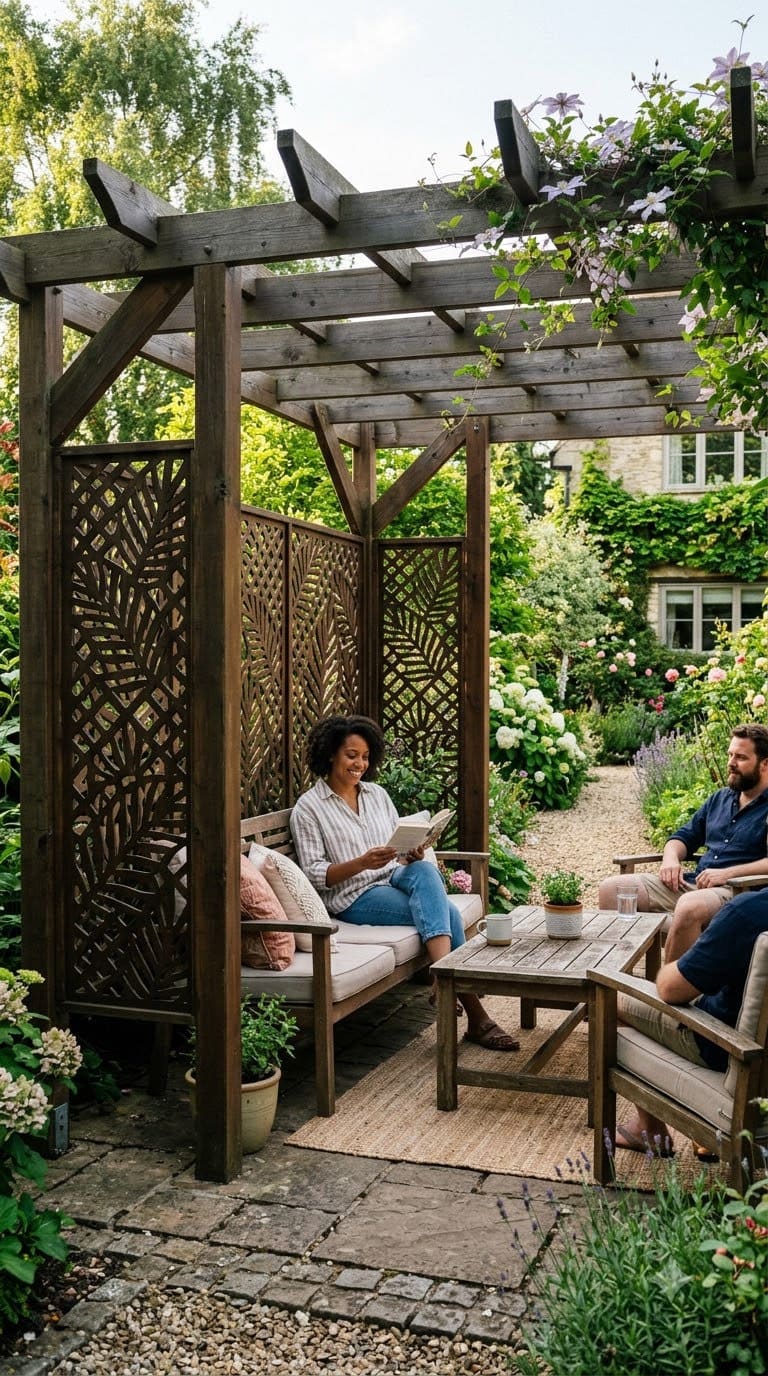
Pergolas can benefit from the addition of coverings and screens, and they can even give them a unique look.
With white and pink pillows, banquette, and plants on each side, this pleasant spot already has a reputation for itself, but the leaf pattern screens truly stand out. The screens, on the other hand, may be hung on the wall.
28. Go Coastal for a Summer Look
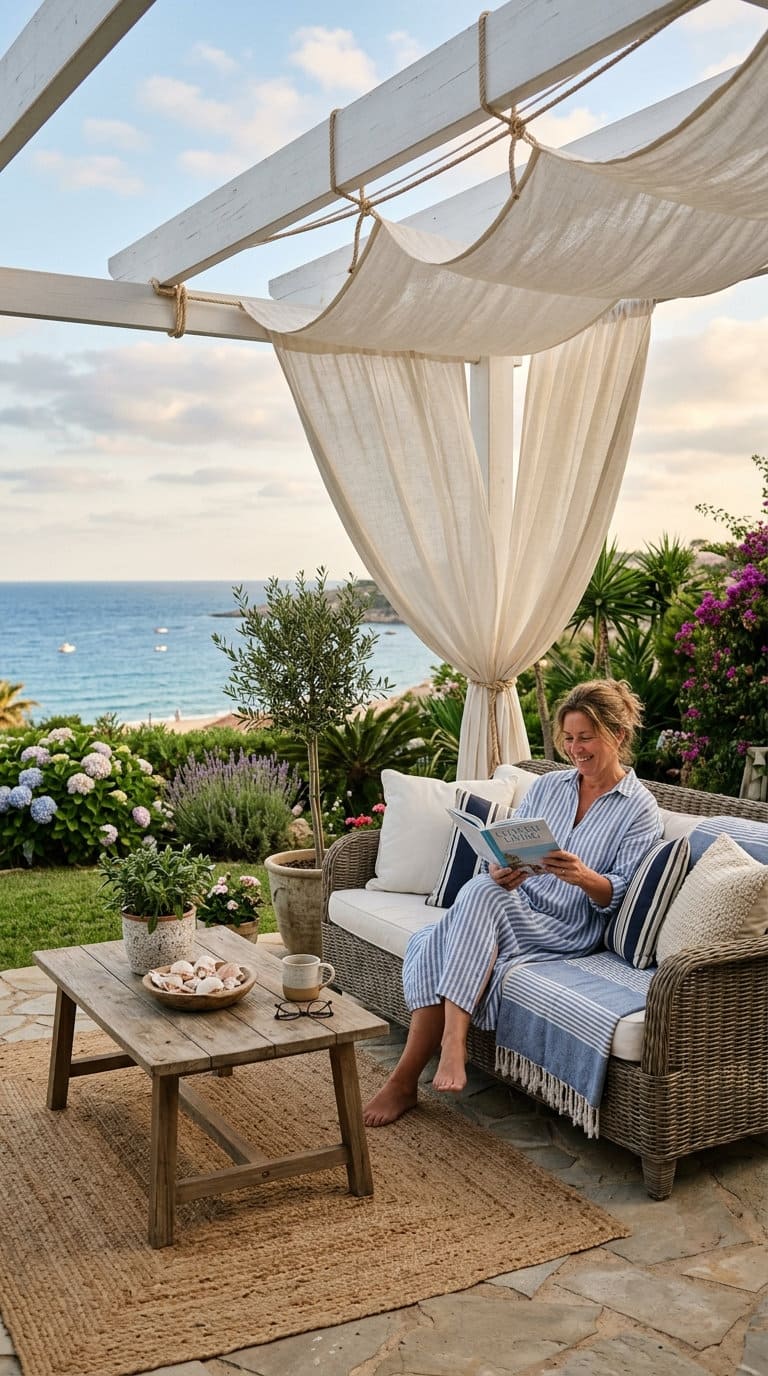
Locally sourced, natural fabrics keep this look relaxed and summery rather than themed, paired with gray pebble paving for a double pergola-porch space that reads as one continuous coastal setting.
The warm contrast of stone steps against a white roof structure, stretching from the home out to columns that blend wood and gray stone, ties the whole look together without leaning on any one literal coastal motif.
29. Add slatted blinds for adjustable shade
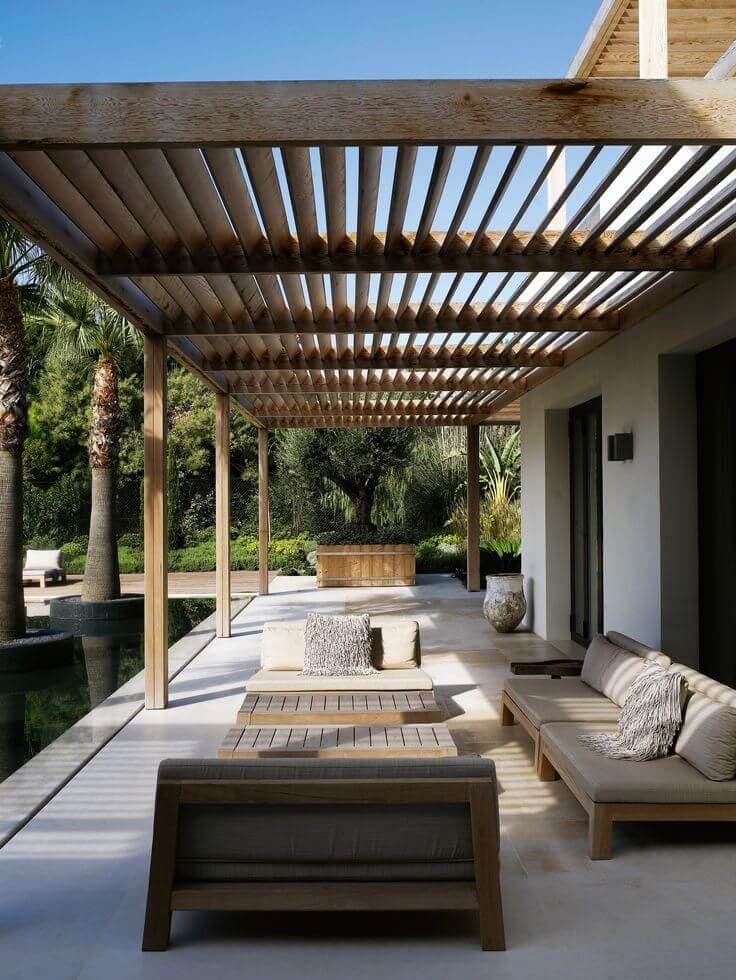
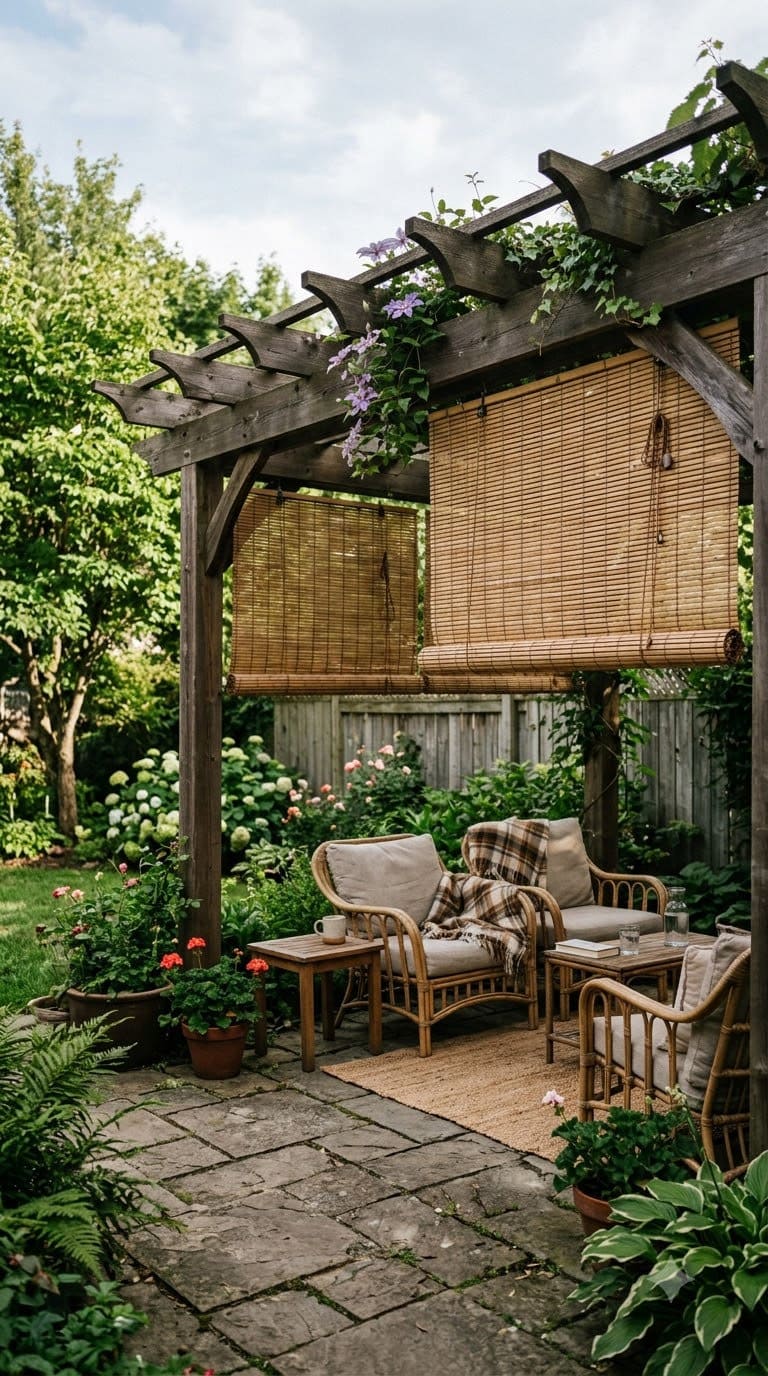
Roll-down slatted blinds (bamboo or similar) attached to the pergola’s sides let you close off wind or low-angle sun without a permanent wall, and roll back up when you want the space fully open.
During hot summer days, the pergola’s angled slats provide a more cool, calming cover. The pergola’s wood complements the wood utilized for the chairs and tables, and also the timber used surrounding the house’s façade. The grays utilized in the cushions, table top’s tiles, and pillows.
30. Invest in a metal pergola frame
A powder-coated aluminum or steel frame trades wood’s periodic maintenance for a higher upfront cost and a genuinely longer service life, worth it specifically if you don’t want a multi-year restaining cycle.
See the materials comparison table below, or a deeper look at metal pergola-and-patio pairings specifically, for the real lifespan comparison across materials.
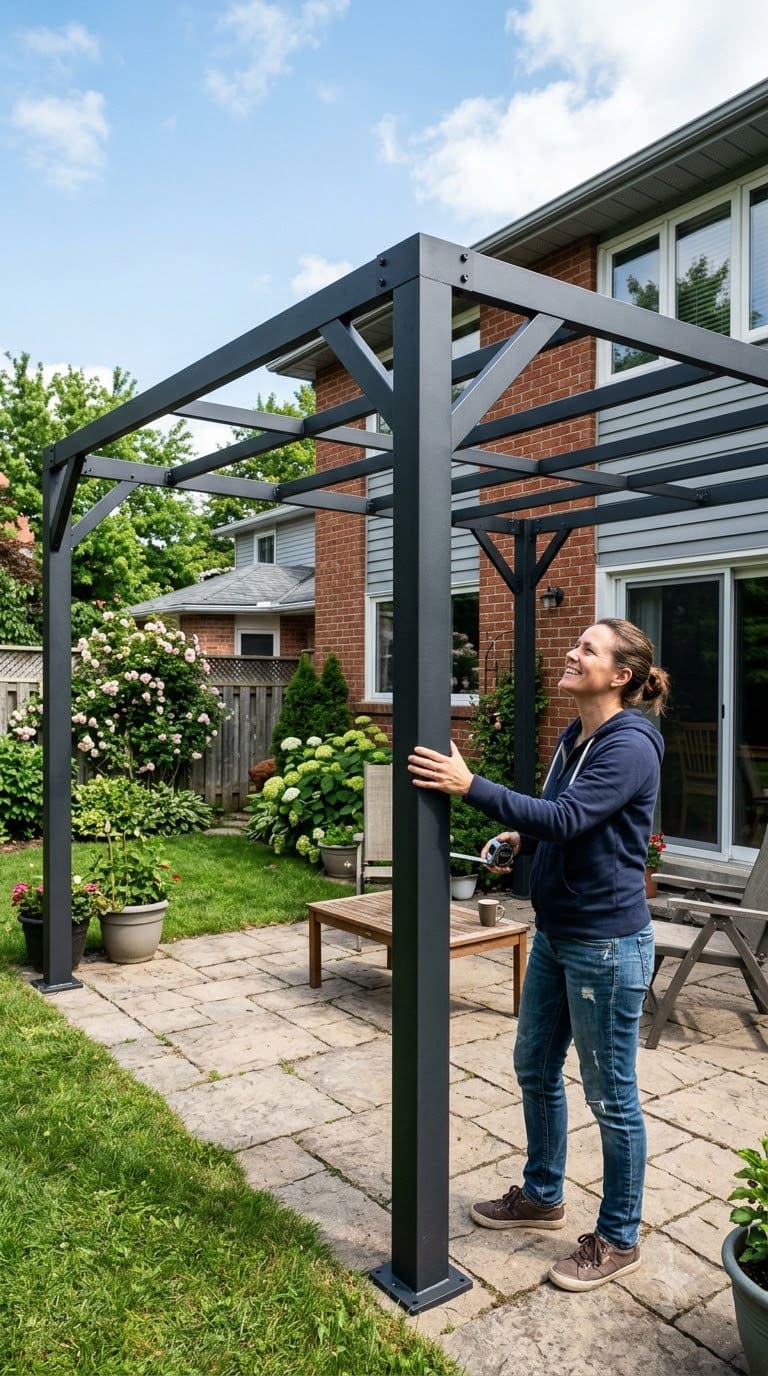
As proven by this spectacular metal design, wood isn’t the only element which can be utilized to make a beautiful pergola. Other materials, such as vinyl, fiberglass, or even galvanized steel, such as the one pictured below, are more expensive than wood.
31. Bring in whites and wicker
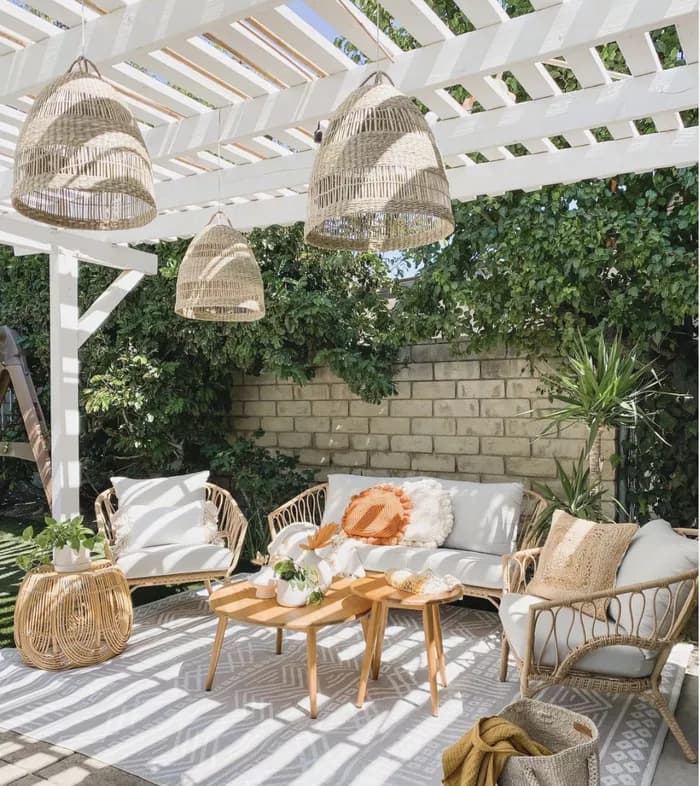
Pairing a light or white-painted frame with wicker or rattan furniture gives a soft, classic look that works especially well in a traditional or cottage-style yard.
Keep the wicker under cover or choose a resin wicker rated for outdoor use, natural rattan left exposed to direct rain will swell, crack, or mildew within a season or two, which is the most common complaint with this look done wrong.
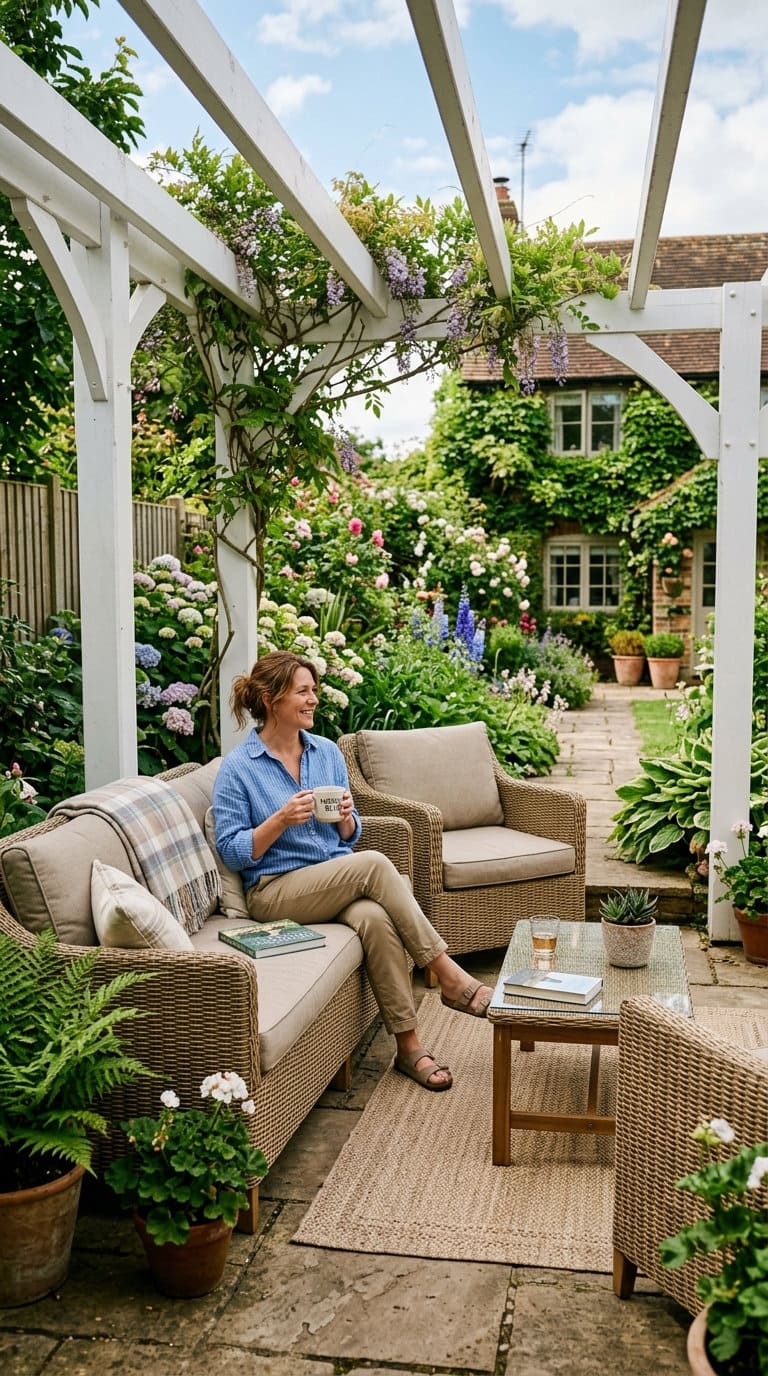
32. Build a garage-adjacent awning-style pergola
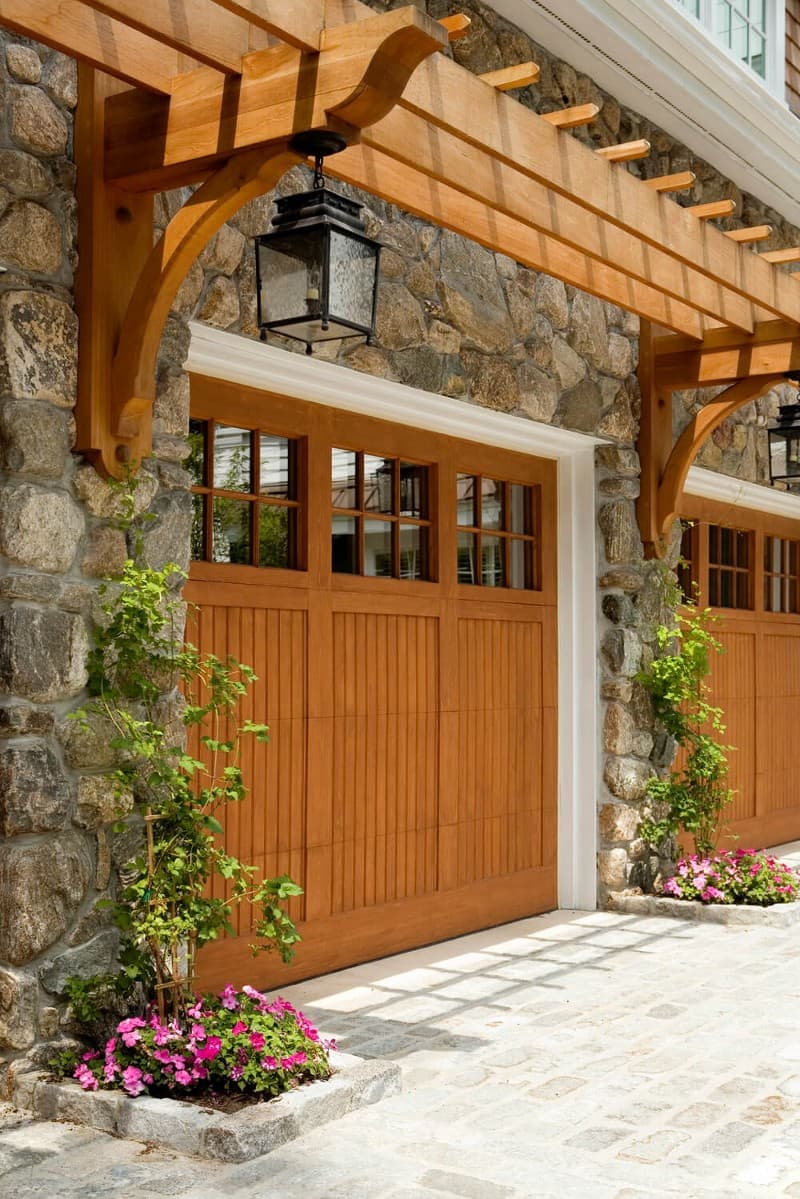
Extending a pergola off a garage in an estate-awning style gives that section of the yard covered space without a full carport structure, useful for covered parking-adjacent seating or storage.
Because one edge attaches directly to the garage wall rather than standing freestanding on four posts, this style needs proper ledger-board flashing where it meets the siding, the same detail that matters on an attached deck, or water will work its way behind the siding over time.
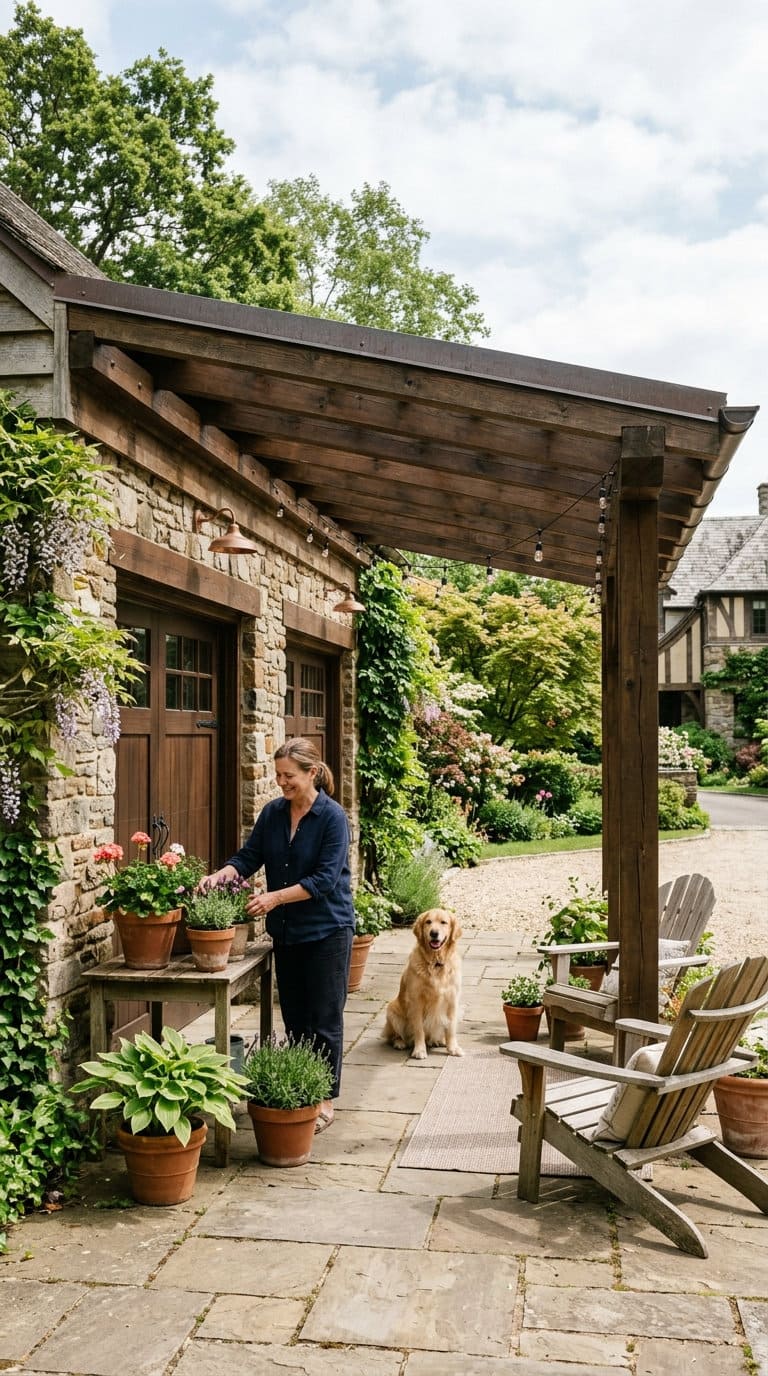
It’s also worth checking with your local building department here specifically, since an attached structure like this one almost always needs a permit regardless of size, per the structural section above; the connection details for framing directly off a garage wall are worth reviewing before starting.
The Garden Arbor
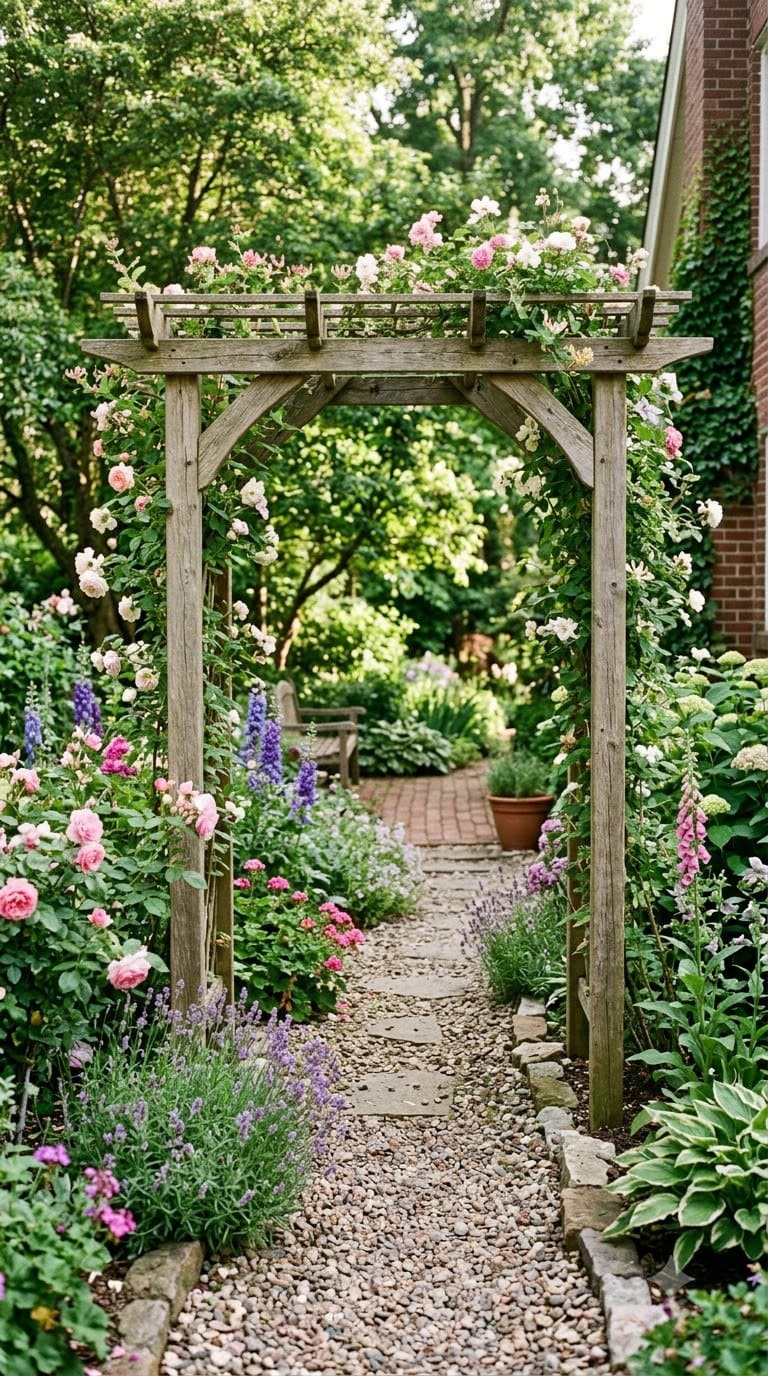
A garden arbor is a smaller, narrower cousin of a full pergola, typically framing a single entry point or walkway rather than covering a full seating area.
It uses the same footing and span principles from section 1 at a smaller scale, and works well as a lower-cost entry project if a full pergola feels like too much to start with.
The 4-Step Pergola
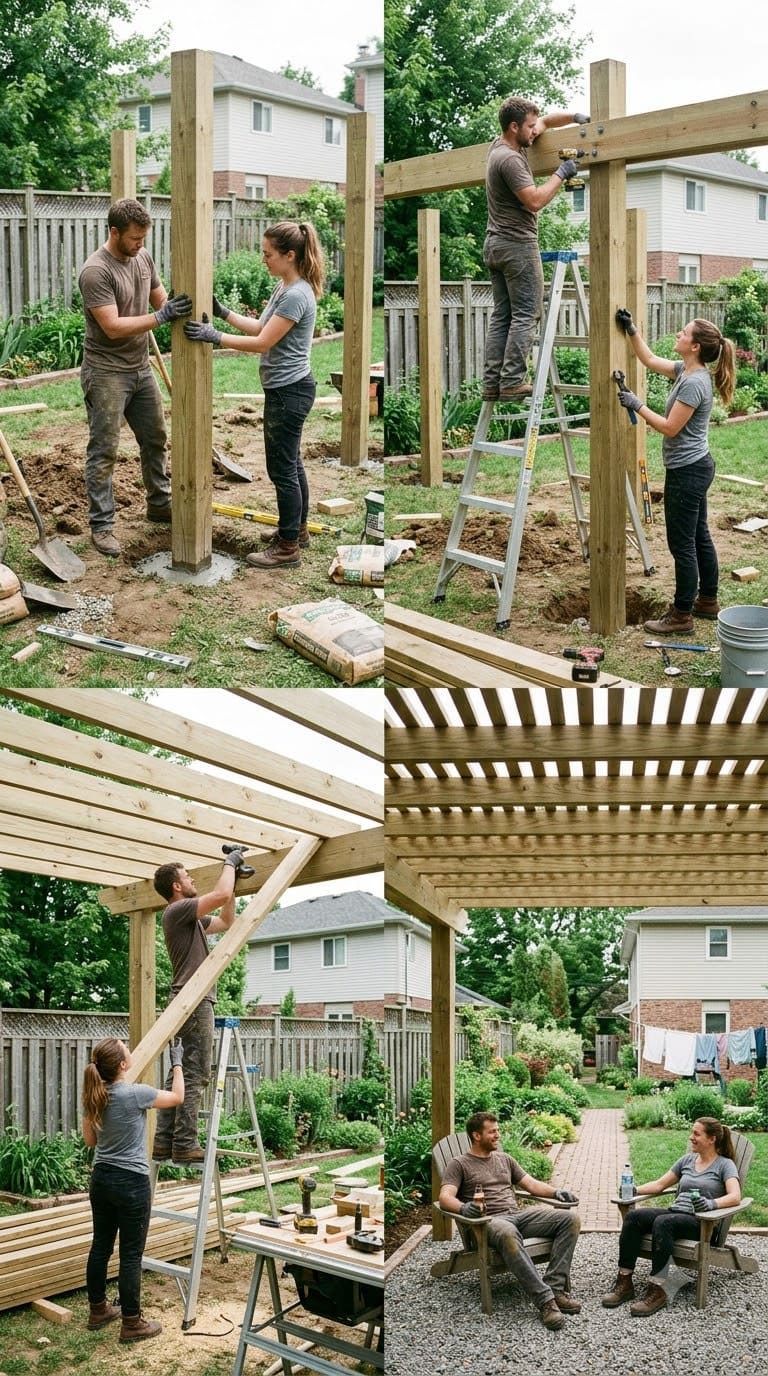
For a straightforward build using standard dimensional lumber, four main steps cover it: set posts on footings dug below your local frost line, attach the main beams across the posts (keeping spans within the section 1 guidance), add the rafters perpendicular to the beams, and finish with the lattice or slat roof on top.
Following this order, footings first, then beams, then rafters, then roof, keeps the structure square and properly supported at each stage.
The 7-Minute Pergola
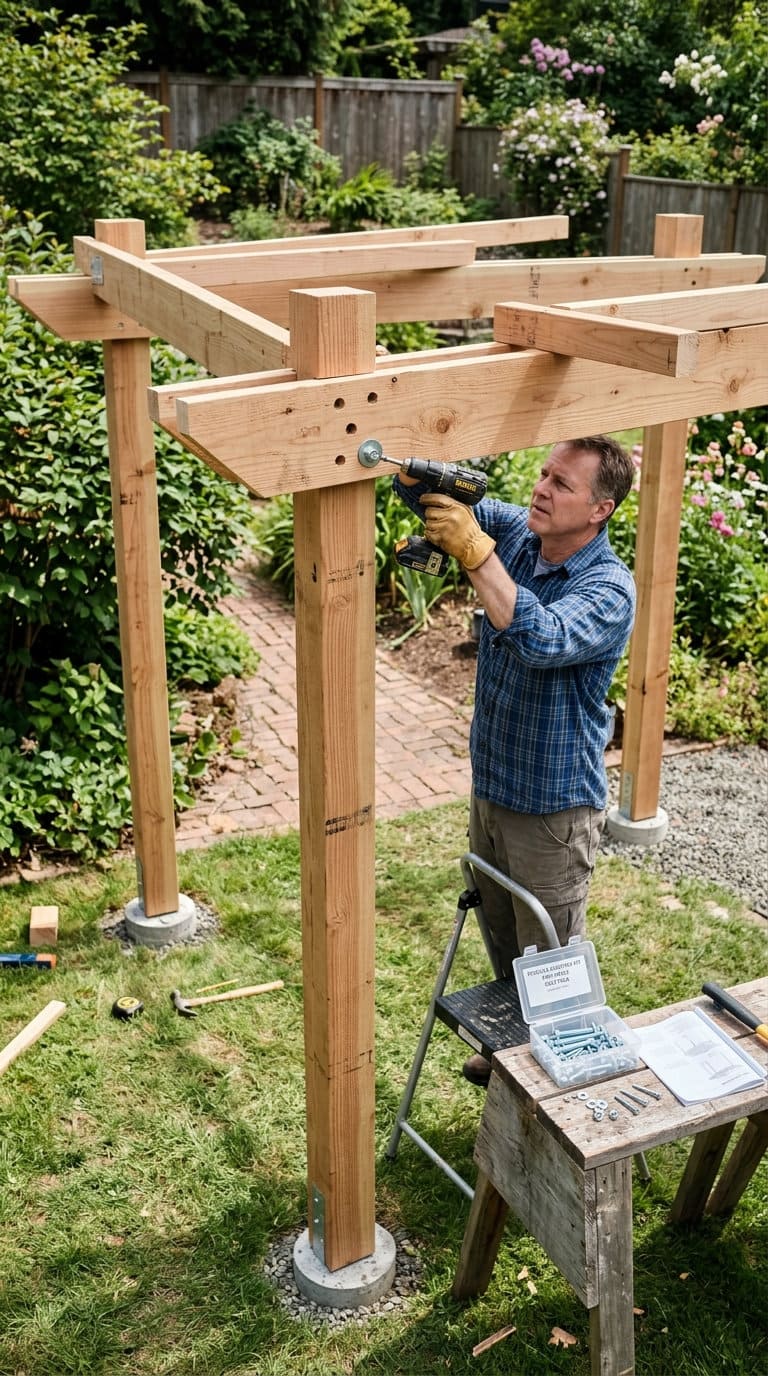
For a genuinely fast build, a pre-cut kit with pre-drilled holes and included hardware can go up in well under an hour once the footings have cured, the “7-minute” framing refers to the frame assembly itself, not the footing work, which still needs its own cure time regardless of how fast the kit assembles. Don’t skip the footing cure time just because the kit assembly is quick.
What Material Actually Holds Up Best?
There’s no single best pergola material, only the best one for a given budget, climate, and maintenance tolerance. Here’s how the three common options compare, pulled from the same lifespan data already cited in the structural section above:
| Material | Typical Lifespan | Maintenance | Best For |
|---|---|---|---|
| Wood | Looks good 5-10 years without upkeep; structurally lasts 20+ years with resealing/staining every 2-3 years | High, needs periodic resealing and annual rot checks | Lower upfront cost, easiest to customize or repair yourself |
| Vinyl | 10-25 years | Low | Budget-conscious builds in milder climates, avoid in heavy snow/wind areas |
| Aluminum | 25-30+ years | Very low, close to maintenance-free | Long-term investment, doesn’t rust, warp, or rot |
What People Actually Struggle With After Building One
Most pergola guides sell the fantasy and skip what people actually run into once it’s built. A few real, recurring issues worth planning around before you commit to a design:
A bare pergola doesn’t actually block much sun. Open lattice or slatted roofing, the style most of the ideas above use, casts dappled shade, not real shade, until climbing plants fill in or you add a secondary cover like slatted blinds (see idea 32) or a louvered roof (idea 1). If full sun protection is the actual goal, budget for one of those from the start rather than assuming the bare structure will be enough.
Vines take real time to establish, plan around a season, not a weekend. Wisteria, climbing roses, and clematis (see the planting section above) all need at least one full growing season, often two, before they provide meaningful coverage. If shade is needed sooner than that, pair the planting with a temporary shade cloth or choose a solid/louvered roof instead of waiting on the plants alone.
Height matters more than most first-time builders expect. A pergola built too low relative to nearby windows can mean looking directly into the side of a beam from inside the house, and one built too short for the yard reads as an afterthought rather than a real outdoor room (see idea 2 above). Mock up the height with stakes and string before finalizing post length.
Permits and anchoring aren’t optional just because it “looks small.” Even modest kit pergolas often need anchoring, the specific hardware and technique differs depending on whether you’re setting posts into pavers, concrete, or open ground, and depending on your municipality, a permit, regardless of how small or DIY-friendly the structure looks in the box. Check with your local building department before ordering materials, not after, per the permits guidance in the structural section above.
A few more things worth planning around
If you’re deciding between a pergola and a similar structure, pergola vs. arbor vs. trellis breaks down which one actually fits your use case. For the space underneath, paver patio ideas on a budget and coffee table decor ideas cover the hardscape and furnishing side.
If you’re attaching the structure to an existing deck, how to build a pergola on a deck covers that specific connection point. If a pergola isn’t quite private enough on its own, DIY fence ideas covers options for enclosing the space further.
FAQs
Is it cheaper to build or buy a pergola?
It depends on how you value your own labor and how long you want the structure to last. A basic kit can run a few hundred dollars, while a premium pre-built pergola can run well over $1,000. Building your own can save money upfront, but a lower-quality build that needs frequent repair often costs more over time in materials and labor than paying more for a quality structure from the start.
How do you make a pergola look good?
Good proportions do most of the work, keep the height and footprint scaled to your actual yard rather than undersized or oversized, per section 3. Beyond that, a pergola that’s built to last (with the footing and span basics from section 1 handled correctly) will look better for longer than one that’s visually appealing on day one but starts sagging or shifting within a year.
Will a pergola increase home value?
Not automatically, and this is a common misconception. Whether a pergola adds resale value depends heavily on your local market and property type, a large wooden pergola might be a strong selling point on a country property with a big yard, but add little to nothing for a small urban lot. Any value added typically shows up gradually rather than immediately, and isn’t guaranteed to hold at the time of sale.
Is aluminum or vinyl better than timber?
It depends on what you’re optimizing for, there’s no single best material, only the best one for your budget, climate, and maintenance tolerance. Aluminum is the most durable option, 25 to 30-plus years, and close to maintenance-free, but costs more upfront than wood and can be harder to modify later. Vinyl runs 10 to 25 years with low maintenance but performs worse under heavy snow or wind load. Timber costs less upfront and is the easiest to customize or repair yourself, but needs real periodic maintenance, resealing or staining every 2 to 3 years, to hit its full structural lifespan rather than just its cosmetic one.
Conclusion
The right pergola comes down to three decisions made in order: get the footing and beam span right so it’s still standing straight in five years, pick a roof style that actually matches how much shade or shelter you need rather than just how it photographs, and only then choose the design direction from the 32 above that fits your yard and budget.
Skip the first two and even the best-looking design from this list won’t hold up the way it should.

Never miss an update — choose FarmFoodFamily as your preferred source on Google.
How it works: Tap the button below to open Google's settings page, then check the box next to FarmFoodFamily.
Tap the checkbox to turn it blue — that's how you know it's set.