9 Treacherous Flowers That Sabotage Your Vegetable Garden Instead Of Helping It
Flowers can genuinely help a vegetable garden, but these nine popular picks are the exceptions, quietly poisoning the soil, luring in disease-carrying insects, or swallowing the bed whole while you assume they’re doing you a favor.

Never miss an update — choose FarmFoodFamily as your preferred source on Google.
How it works: Tap the button below to open Google’s settings page, then check the box next to FarmFoodFamily.
Tap the checkbox to turn it blue — that’s how you know it’s set.
There’s a piece of gardening advice that gets repeated so often it stops getting questioned: flowers help your vegetable garden. Pollinators, pest confusion, a little extra beauty, what’s not to like. And a lot of the time it’s true. But somewhere along the way that advice turned into “any flower is a good flower,” and that part is wrong.
Some of the most commonly recommended companion flowers actively work against the vegetables they’re supposed to be helping, through allelopathy, aggressive spreading, disease-carrying insects they draw in, or a trap-crop strategy that backfires the moment it’s planted too close.
I’ve made most of these mistakes myself, including the nasturtium one, which I’ll get to. This guide covers nine specific flowers, the actual mechanism behind each problem (not just “it’s bad”), and what to do if you already planted one of them too close to your tomatoes.
Quick Answer
Nine popular flowers cause real, documented problems for vegetable gardens, and the mechanism differs for each one. Sunflowers and ornamental fennel release allelopathic compounds through their roots, a recognized effect confirmed by Penn State Extension for sunflowers.
New England aster attracts the aster leafhopper, which vectors aster yellows disease into lettuce, tomatoes, carrots, and celery, per University of Maine Cooperative Extension.


Nasturtiums are a trap crop, not a repellent, and planting them inside the bed instead of well away from it moves aphids closer to your food. Morning glory and bee balm both spread aggressively, one by reseeding, the other by rhizomes, both confirmed by University of Illinois Extension.
Answer 4 quick questions and get matched to the exact fix for your yard — drainage, budget, layout, or something else entirely.
Take the Free QuizBaby’s breath carries a Cal-IPC “Watch” rating. Four o’clocks are mildly toxic and self-seed hard, per NC State Extension. Dahlias and tall sunflowers can shade out sun-hungry vegetables. None are unplantable, they just need real distance, a container, or a different bed.
Why Do Some Flowers Actually Hurt a Vegetable Garden?
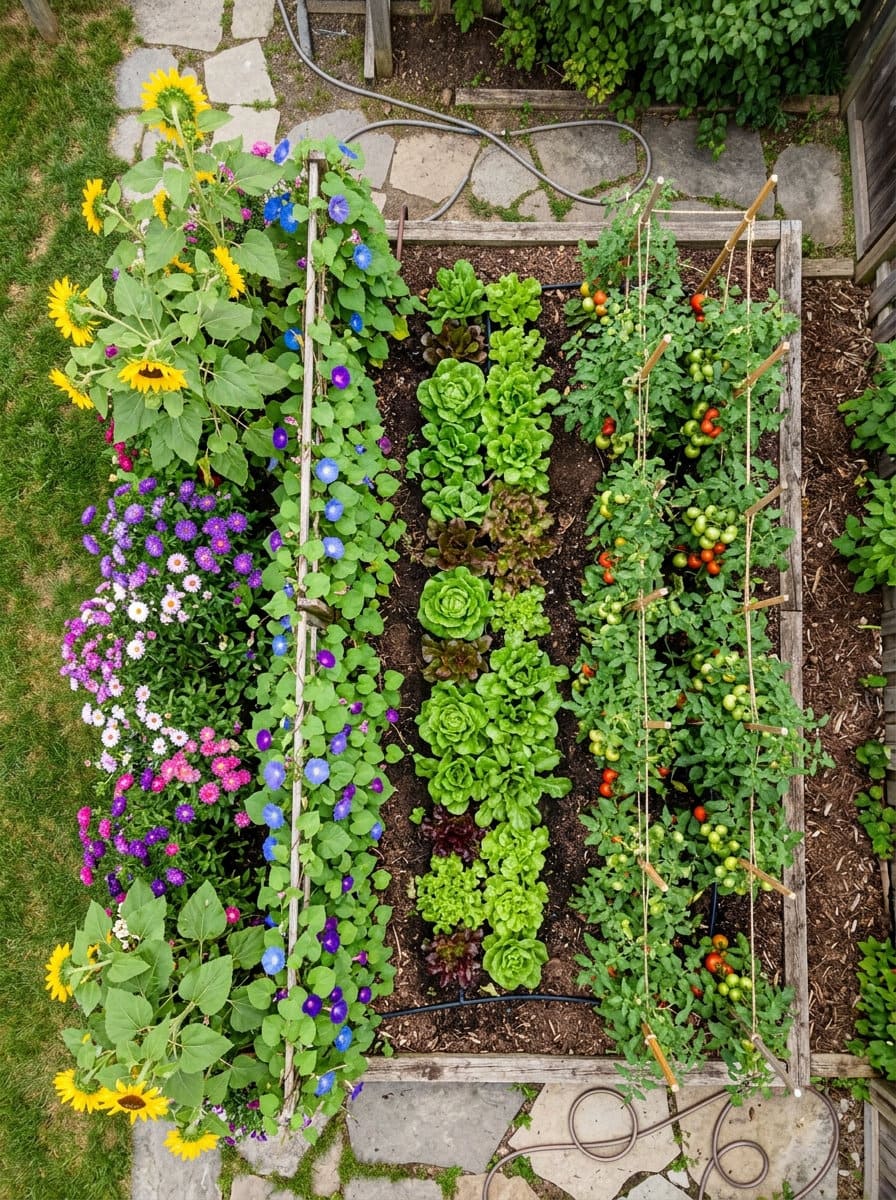
Five separate mechanisms explain almost every flower-vegetable conflict, and knowing which one applies to a given flower changes how you actually fix it.
Allelopathy, or chemical warfare through the roots. A handful of flowers release compounds through their roots or decomposing plant matter that suppress germination or stunt growth in nearby plants. Sunflowers are a documented example, per Penn State Extension’s overview of allelopathic garden plants. This isn’t about resource competition, it happens even in soil with plenty of water and nutrients to spare.
Aggressive self-seeding or spreading. Some flowers don’t stay where you planted them. Morning glory reseeds itself into every open patch of soil within reach. Bee balm and baby’s breath spread by rhizome or by wind-scattered seed. Left unmanaged, any of these can physically crowd out a vegetable row within a season or two.
Disease vectoring through insects. This is the mechanism most home gardeners never connect to their flower bed. Certain flowers, New England aster especially, are a preferred host for the aster leafhopper, an insect that picks up a plant pathogen from one infected host and injects it into the next plant it feeds on, vegetable or flower.
Trap crops that backfire. Nasturtiums genuinely work as pest management, they just work by attracting aphids, not repelling them. Planted in the wrong spot, that “working as intended” trap crop becomes a pest breeding ground six inches from your squash.
Resource and light competition. Heavy-feeding, thirsty, or simply tall flowers, dahlias and sunflowers among them, can out-compete vegetables for water and nutrients or shade out anything planted too close on their sunny side.
Most yard problems trace back to one specific, fixable cause. Find yours in 4 quick questions.
Take the Free QuizThe 9 Flowers at a Glance
| Flower | Mechanism | Severity | Fix |
|---|---|---|---|
| Sunflowers | Allelopathy + tall-growth shading | Moderate | 2+ ft separation, plant on the north side of shorter crops |
| Ornamental fennel | Allelopathy + aggressive self-seeding | Moderate-Severe | Grow alone, deadhead before seed-set |
| Nasturtiums | Trap crop planted too close (aphids spread to vegetables) | Moderate | Plant well away from the vegetable bed, not woven through it |
| New England aster | Attracts aster leafhopper, vectors aster yellows disease | Moderate-Severe | Separate bed, remove any infected plant immediately |
| Ornamental morning glory | Aggressive reseeding vine smothers neighbors | Severe | Deadhead before seed-set, grow in a contained trellis area |
| Bee balm (Monarda) | Aggressive rhizome spread | Moderate | Root barrier or container, divide every 2-3 years |
| Baby’s breath | Cal-IPC “Watch”-rated spreader, competes for water | Low-Moderate | Deadhead, avoid dry beds shared with vegetables |
| Four o’clocks | Mild toxicity (skin/ingestion) + vigorous self-seeding | Moderate | Gloves when handling roots, deadhead, keep from kids/pets |
| Dahlias | Heavy feeder + tall varieties shade nearby crops | Low-Moderate | Feed and water separately, place on the north/east side |
1. Sunflowers
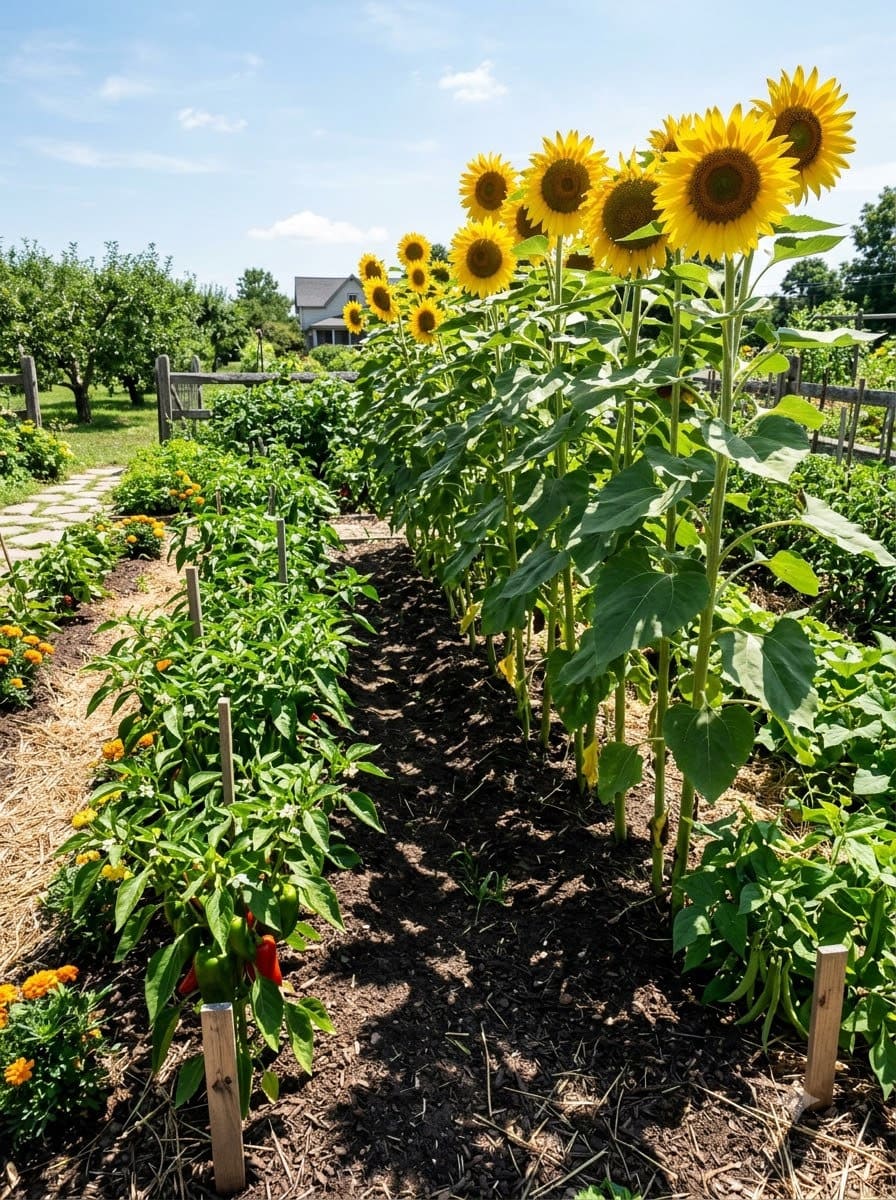
Sunflowers get recommended constantly as a companion for beans, corn, and squash, the classic “Three Sisters plus a sunflower” version of that pairing floats around a lot of garden forums.
The problem is real but narrower than the internet makes it sound. Sunflowers are a documented allelopathic plant, per Penn State Extension’s overview of allelopathy in home gardens, meaning they release compounds that can suppress germination and growth in sensitive neighbors.
Gardeners commonly report trouble specifically with beans and potatoes planted too close to sunflowers, though the exact crop-by-crop sensitivity list isn’t something Penn State’s page itself breaks down, so treat that specific pairing as widely repeated field experience rather than a precisely sourced lab finding.
On top of the chemical issue, sunflowers get tall fast, some varieties past 8 feet, and they’ll shade out anything planted directly south of them for most of the day.
The fix: keep at least 2 feet of separation between sunflowers and anything sensitive, and if you’re growing beans or potatoes anywhere near them, watch for stunting and be ready to move the vegetable rather than assume it’s a watering problem. Plant sunflowers on the north side of your bed so their shadow falls away from your vegetables, not across them.
Our guide to the different sunflower varieties and their mature heights is worth checking before you decide where to put them, since a 3-foot dwarf variety causes a lot less trouble than a 10-foot giant.
2. Ornamental Fennel
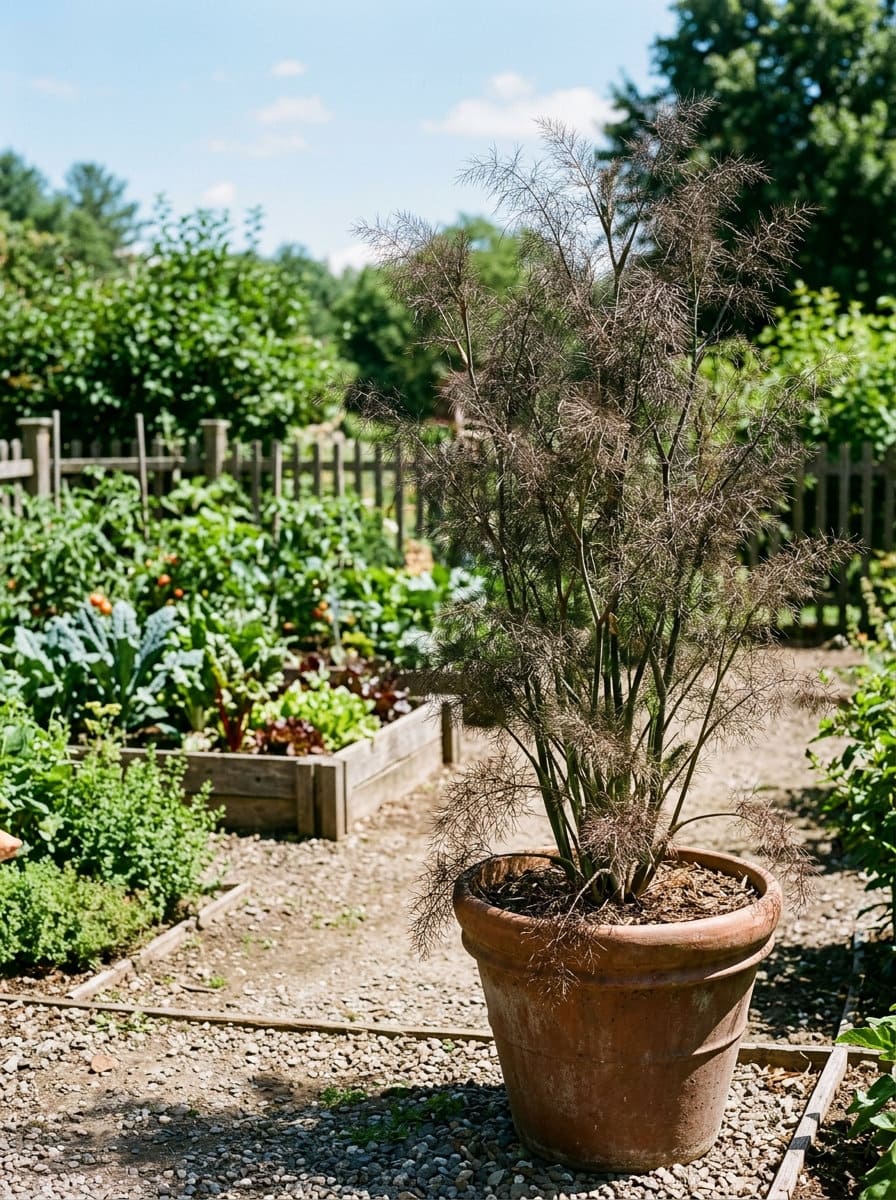
Bronze and green ornamental fennel show up in a lot of “pollinator flower” recommendations, and it’s true that fennel flowers pull in beneficial insects.
What those lists usually skip is that fennel is one of the more aggressive self-seeders in a home garden. NC State Extension’s plant database confirms fennel has “escaped gardens and naturalized” in some regions, and specifically recommends removing spent flowers before seed forms to prevent it from spreading uncontrolled.
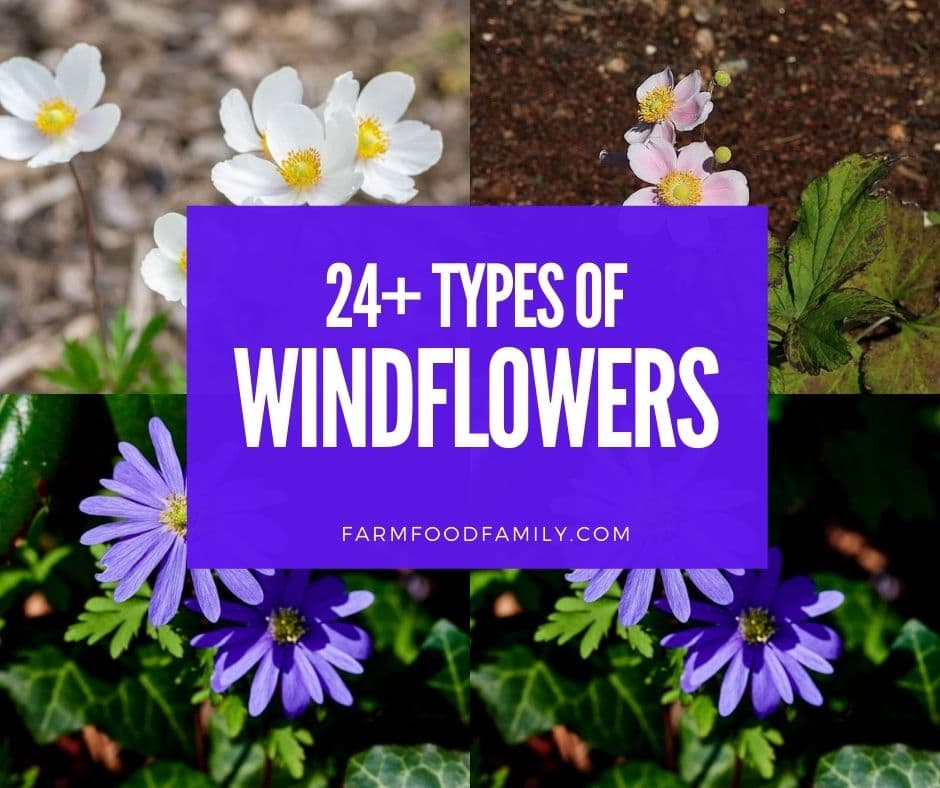
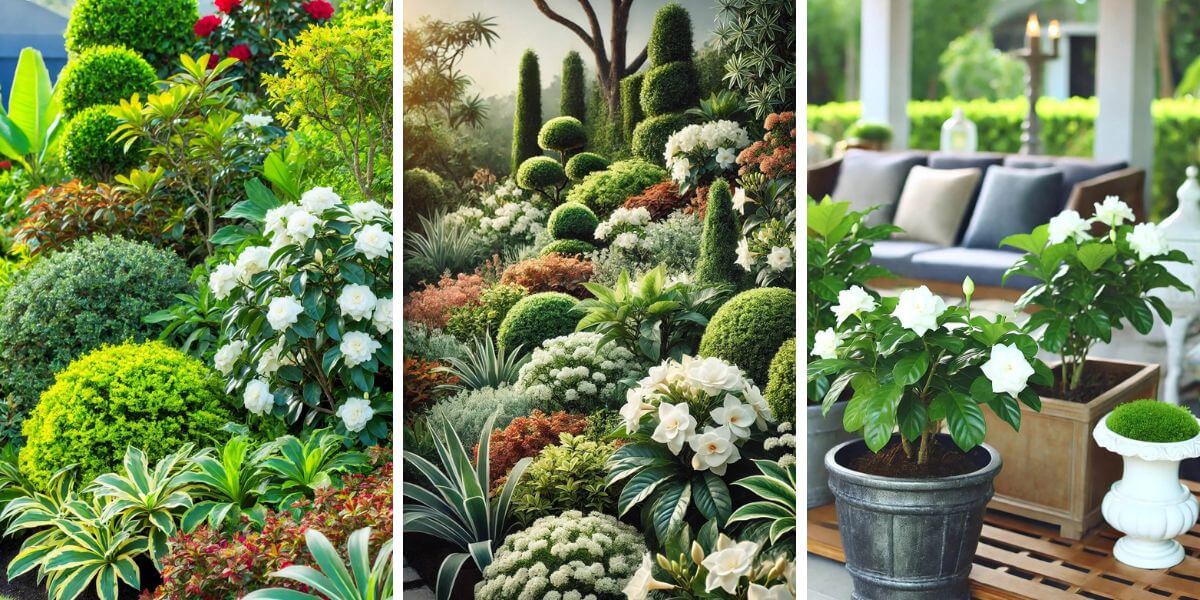

Fennel also carries a widely documented allelopathic effect on nearby seedlings through its roots and leaf litter, a mechanism separate from and in addition to the self-seeding problem.
That combination, a plant that discourages germination nearby and also seeds itself aggressively, means fennel doesn’t need distance just once. It needs ongoing management for as long as it’s in the ground.
The fix: grow fennel alone in its own bed or a large container, several feet from vegetables you’re actively trying to establish from seed. Deadhead the flower heads before they go to seed, every season, not just the first year.
The average homeowner spends $616/year on yard fixes that don't address the real problem. Find out what yours actually is — before you spend another dollar.
Take the Free QuizIf fennel volunteers keep popping up in a vegetable bed, pull them while they’re small, the taproot gets harder to remove the longer you wait.
Our growing fennel guide covers container-versus-ground-bed placement if you want the fuller pollinator benefit without the spread.
3. Nasturtiums
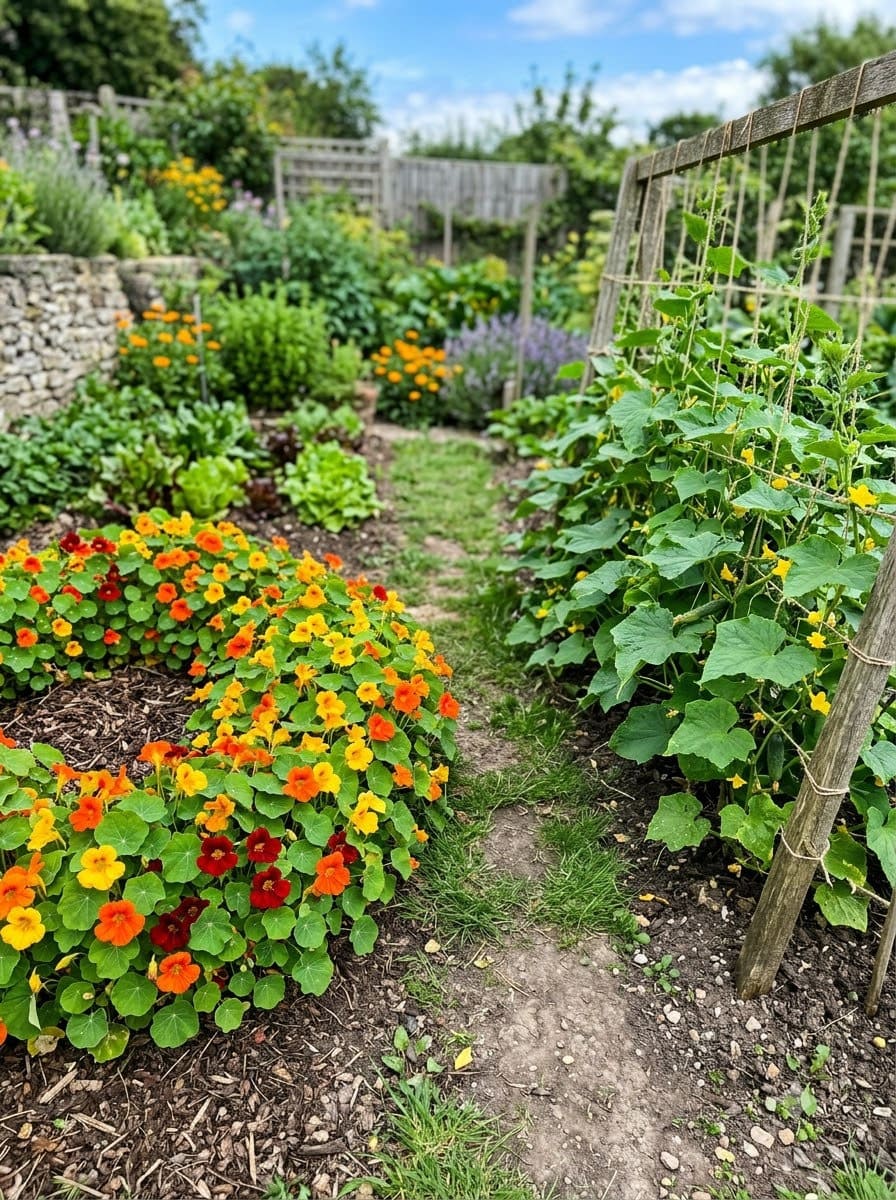
This is the one that trips up the most people, including me the first year I gardened seriously. Every “flowers that help your vegetable garden” list mentions nasturtiums, and most of them get the mechanism backward. Nasturtiums don’t repel aphids.
According to Gardening Know How’s guide to nasturtium pest management, aphids “love nasturtiums and prefer them over cabbage and other tender vegetables,” which makes nasturtiums a trap crop, a decoy that pulls pests toward itself instead of toward your food.
That’s a genuinely useful strategy. The catch is placement: the same source is explicit that “the trick to using trap crops is to plant the sacrificial nasturtiums safely away from your garden,” not tucked in between your squash and your peppers the way most companion-planting graphics show it.
Plant nasturtiums six inches from your cucumbers expecting protection, and what you’ve actually built is an aphid breeding colony right next to the plants you’re trying to protect. The aphids show up in bigger numbers than they would have otherwise, and they don’t stay put once the nasturtium gets crowded.
The fix: if you want the trap-crop benefit, plant nasturtiums in a ring several feet out from the vegetable bed, not woven directly through it, and check them regularly for aphid buildup so the population doesn’t explode and spread.
If you just want the flowers and the edible leaves, that’s fine too, just don’t count on them as pest protection unless they’re genuinely far enough away to intercept pests before those pests reach your vegetables.
Pair this with our list of plants that actually repel aphids if repelling, not decoying, is what you actually want.
4. New England Aster
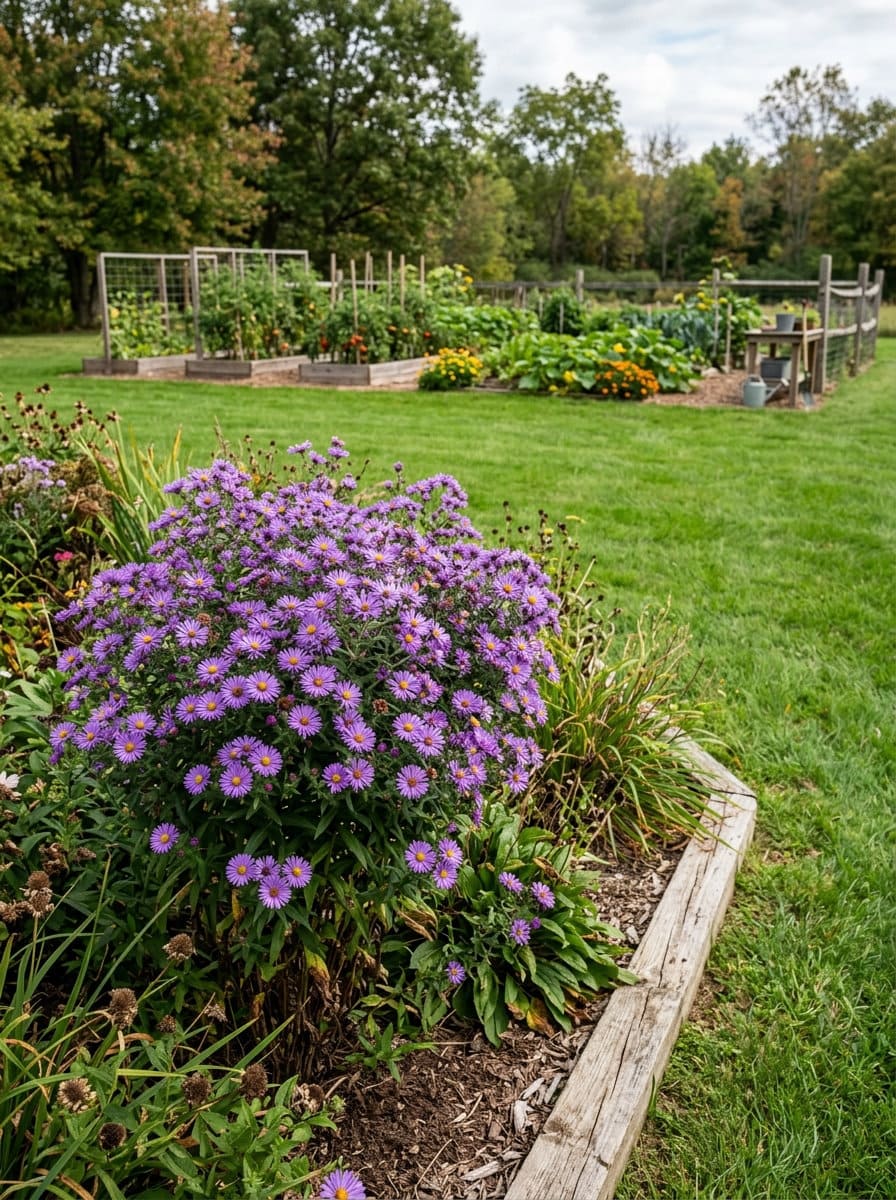
This is the flower-vegetable connection almost nobody makes until something’s already gone wrong.
New England aster, along with a long list of other flowers, coneflowers, daisies, zinnias, snapdragons, and chrysanthemums among them, is a preferred host for the aster leafhopper, and per University of Maine Cooperative Extension’s fact sheet, that leafhopper “serves as a vector for the mycoplasma-like pathogen known as aster yellows.”
The same page lists lettuce, tomatoes, celery, carrots, and parsnip specifically as vegetable hosts, alongside more than 150 plant species across 40-plus families that can carry the disease.
The way it actually plays out in a garden: a leafhopper feeds on an infected aster, picks up the pathogen, then moves a few feet over and feeds on your lettuce or carrots, passing it along.
Infected plants show yellowing, stunted growth, and small, malformed leaves or flowers, symptoms that look enough like a nutrient deficiency that a lot of gardeners never connect it back to the flower border ten feet away. There’s no cure once a plant is infected, and University of Maine Extension’s guidance is to remove infected plants rather than try to treat them.
The fix: if you’re growing New England aster (or the other host flowers listed above) near lettuce, tomatoes, carrots, or celery, keep real distance between the beds, and if you spot the telltale yellowing-and-stunting combination on a vegetable, pull it and check your nearby flowers before assuming it’s a soil problem.
This isn’t a reason to give up asters entirely, they’re genuinely valuable for late-season pollinators, it’s a reason to keep them out of the vegetable rotation specifically.
5. Ornamental Morning Glory
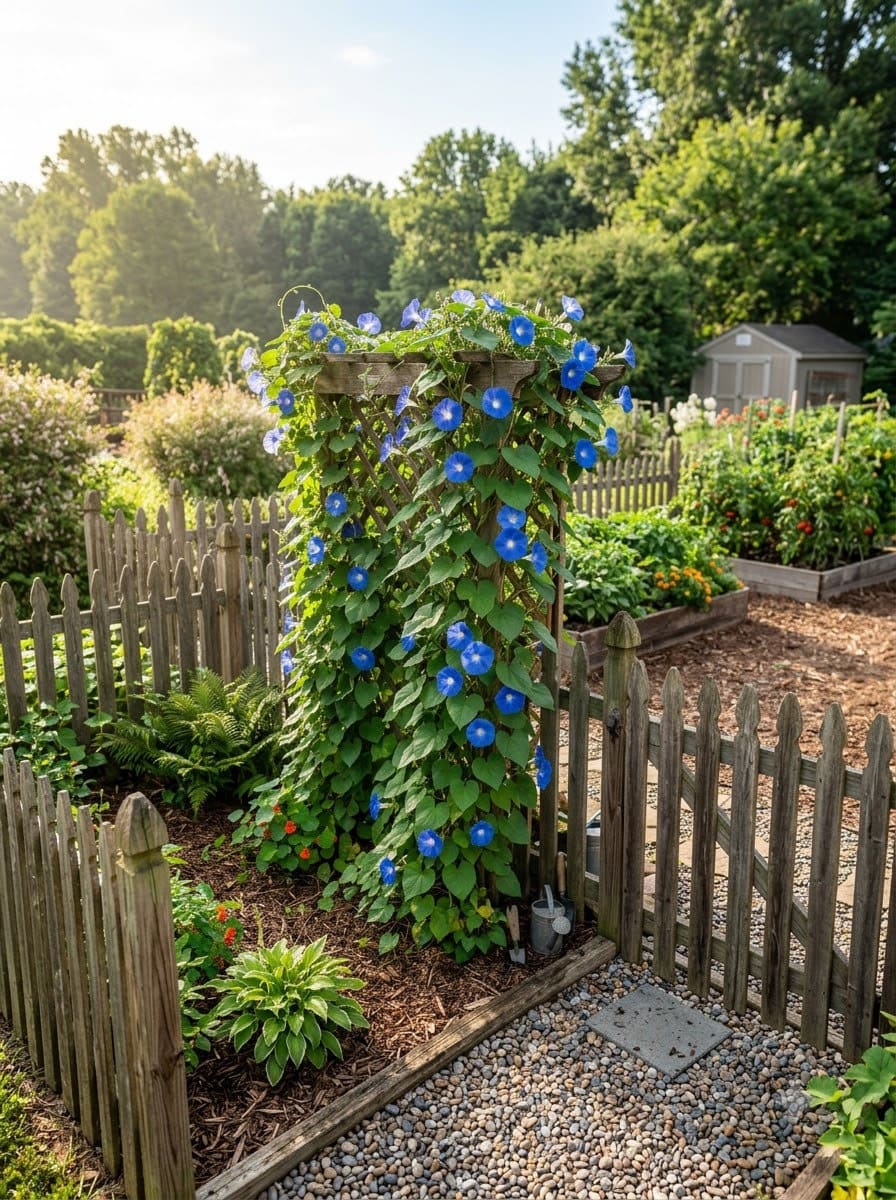
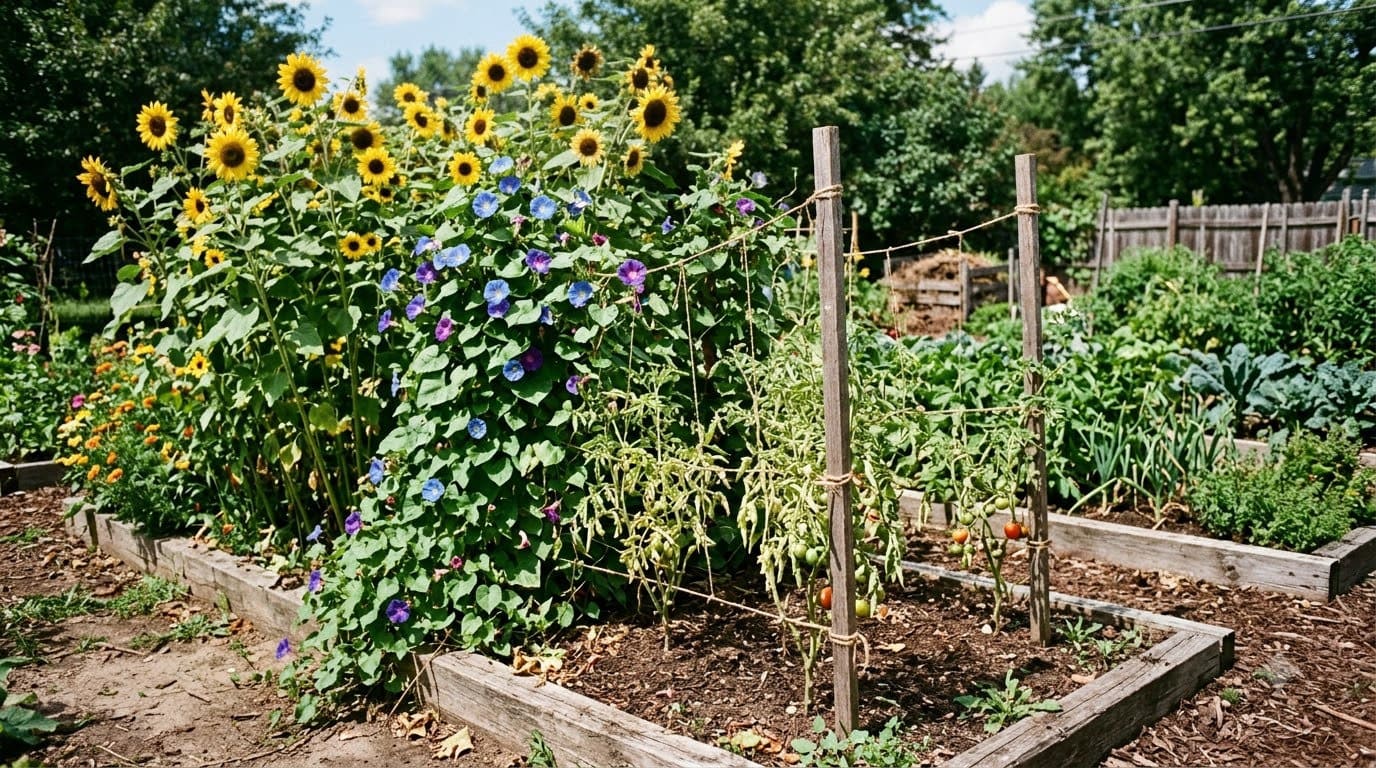
Morning glory gets planted for a fast-growing, low-effort trellis flower, and it delivers on that in the worst possible way.
University of Illinois Extension’s own garden writer describes planting morning glory intentionally, only to watch it “completely take over an adjacent daylily bed, covering it with a mass of vines and flowers” the following year, entirely from self-sown seed the plant dropped the season before.
Morning glory vines can put on several feet of growth in a single season, wrapping around anything nearby, vegetable stakes, tomato cages, pepper stems, and pulling light and water away from whatever they’ve climbed.
Unlike a lot of aggressive flowers, morning glory’s real damage shows up a year after you think you’ve dealt with it. The vines themselves are easy enough to pull. The seeds they drop are the actual problem, and they germinate readily the following spring right in the middle of whatever you plant there next.
The fix: if you’re growing ornamental morning glory, deadhead it aggressively before seed pods form, every single one, not just most of them. Give it its own trellis or fence section well away from the vegetable bed, since even a contained vine still drops seed downward.
If morning glory volunteers show up in a vegetable row the following spring, pull them as seedlings, the root system gets more extensive and harder to fully remove the longer you wait.
6. Bee Balm (Monarda)
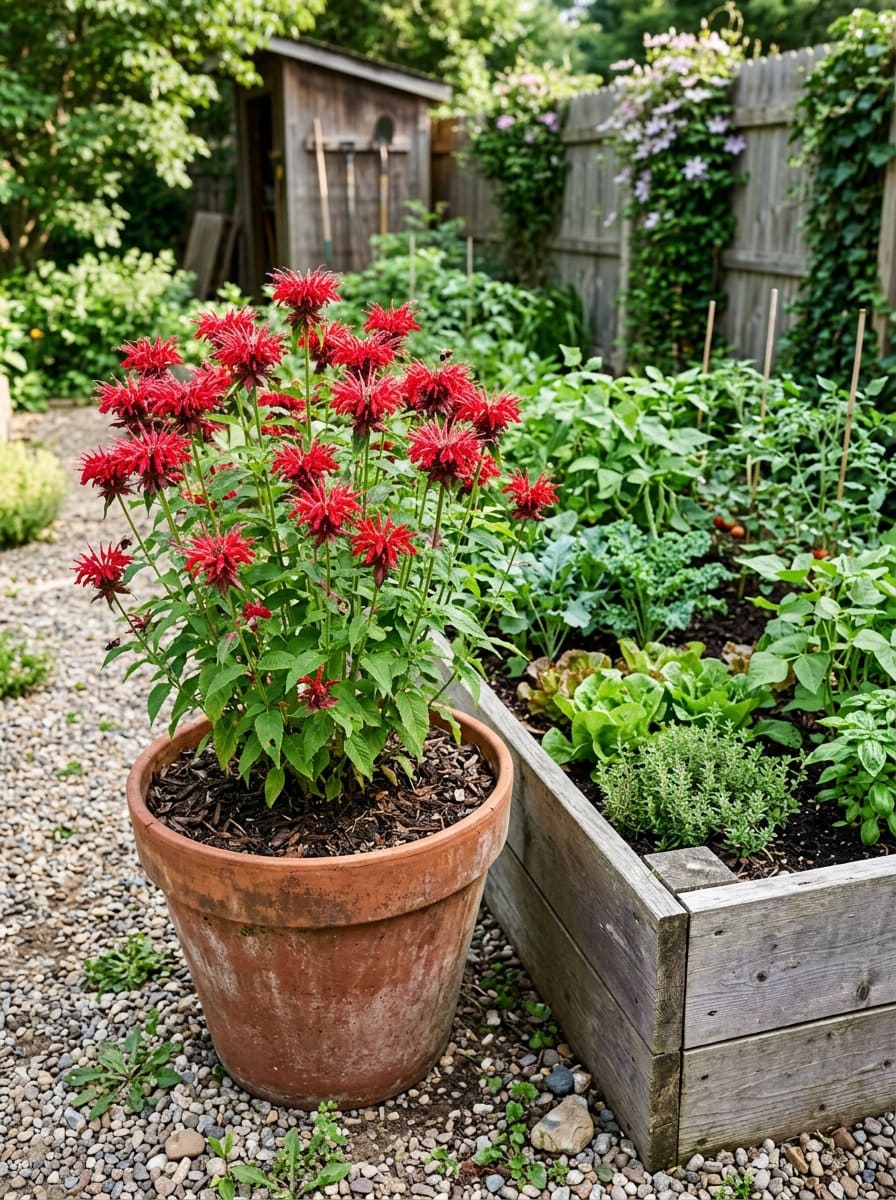
Bee balm gets recommended for pollinator gardens next to vegetable beds constantly, hummingbirds and bees love it, and that part of the reputation is earned.
What gets left out is that Monarda is, per University of Illinois Extension’s plant profile, a mint-family member that “spreads by rhizomes and may outcompete less vigorous neighboring plants.” That’s the same underground-runner growth habit that makes mint infamous in an herb garden, just on a flower most people don’t expect it from.
Planted right at the edge of a vegetable bed, bee balm’s rhizomes don’t respect that edge. Give it a season or two and it’s sending up new shoots inside the row you meant for tomatoes or peppers, competing directly for root space, water, and nutrients the whole time.
The fix: treat bee balm the way you’d treat mint, a container, or a rigid barrier sunk well below the soil line if you want it in-ground near a vegetable bed. Divide it every two to three years to keep the spread in check regardless of containment method.
If it’s already established and encroaching, dig out the outer rhizomes in early spring before new shoots emerge, that’s easier than fighting it mid-season.
Our guide to growing Monarda covers the division schedule in more detail if you want to keep it long-term without the takeover.
7. Baby’s Breath
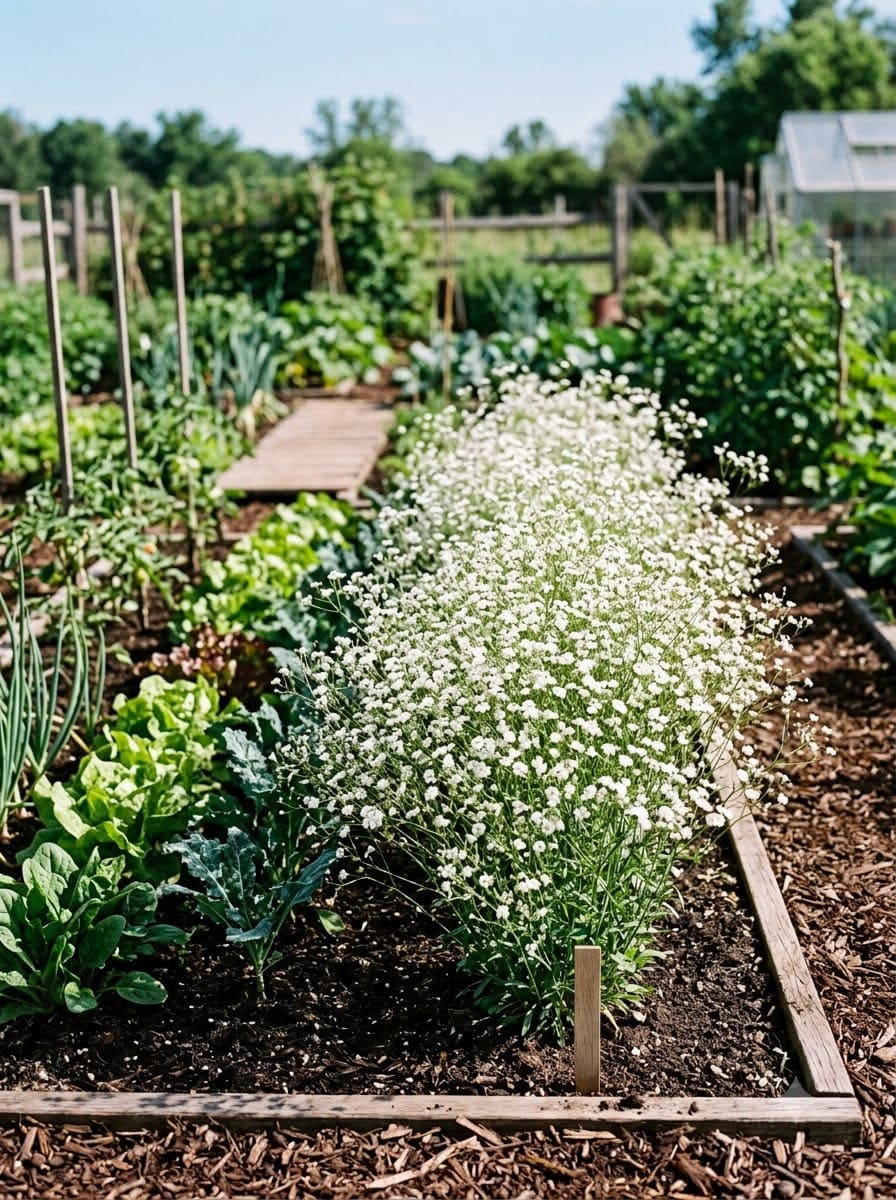
Baby’s breath earns a spot on cutting-garden and pollinator lists for its airy filler look, and in a vase it’s completely harmless.
In the ground, California Invasive Plant Council rates Gypsophila paniculata a “Watch” species and notes a CDFA “B” classification, meaning it’s recognized as a pest of known economic or environmental detriment, even if its distribution is still limited in a given region.
The plant reproduces through large numbers of wind-dispersed seeds, which is exactly the mechanism that lets it show up well outside where it was originally planted.
In a vegetable garden specifically, the practical issue is less about invasiveness in the wild and more about water competition. Baby’s breath tolerates dry, poor soil better than most garden flowers, which sounds like an advantage until it’s sharing a bed with vegetables that need consistent moisture, the baby’s breath will out-survive a dry spell that stresses your tomatoes or peppers.
The fix: deadhead spent blooms before they set the wind-dispersed seed that lets this one travel, and avoid planting it in the same dry, low-water zone as thirsty vegetables. It’s a better fit for a separate cutting bed than woven directly through a vegetable row.
8. Four O’Clocks
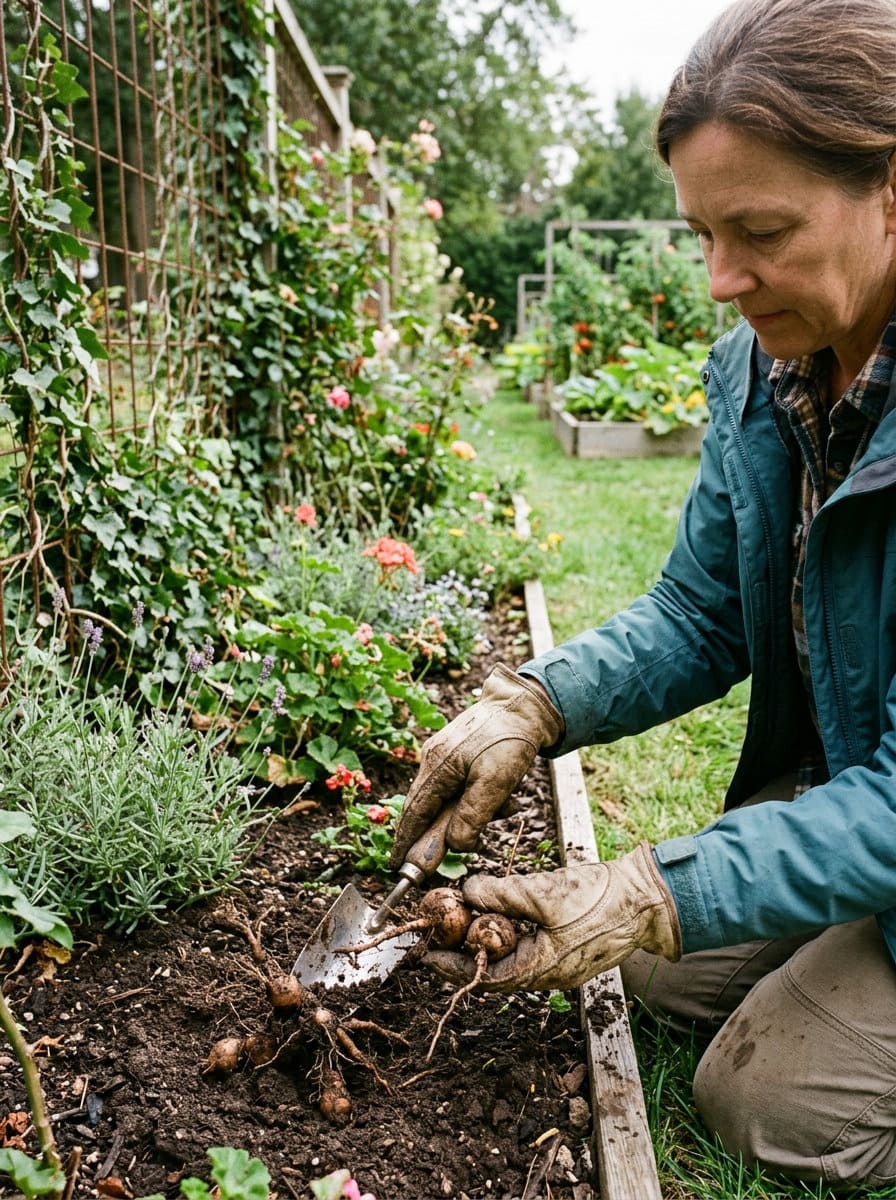
Four o’clocks, Mirabilis jalapa, get planted for their evening fragrance and old-fashioned cottage-garden look, and most gardeners have no idea the plant carries a real toxicity warning.
Per NC State Extension’s plant database entry, the poison symptoms listed are “stomach pain, nausea, vomiting, diarrhea,” with the roots and seeds specifically flagged, and handling the roots “may cause dermatitis.” The same entry notes the plant “can self-seed vigorously and become weedy,” tagging it directly as a weedy species in NC State’s own classification system.
That combination matters more in a vegetable garden context than in an ornamental bed, since vegetable gardens tend to be the part of the yard where kids and pets are actively encouraged to dig, taste-test, and handle things.
A tuber that causes stomach upset if chewed on isn’t a plant you want volunteering itself into a bean row where a toddler is helping pick vegetables.
The fix: wear gloves when dividing or handling the roots, deadhead before seed drops if you don’t want volunteers, and think twice about planting four o’clocks directly inside a family vegetable garden if young kids or curious pets have regular access to that bed. It’s a better fit for a fenced ornamental border than tucked between the tomatoes.
9. Dahlias
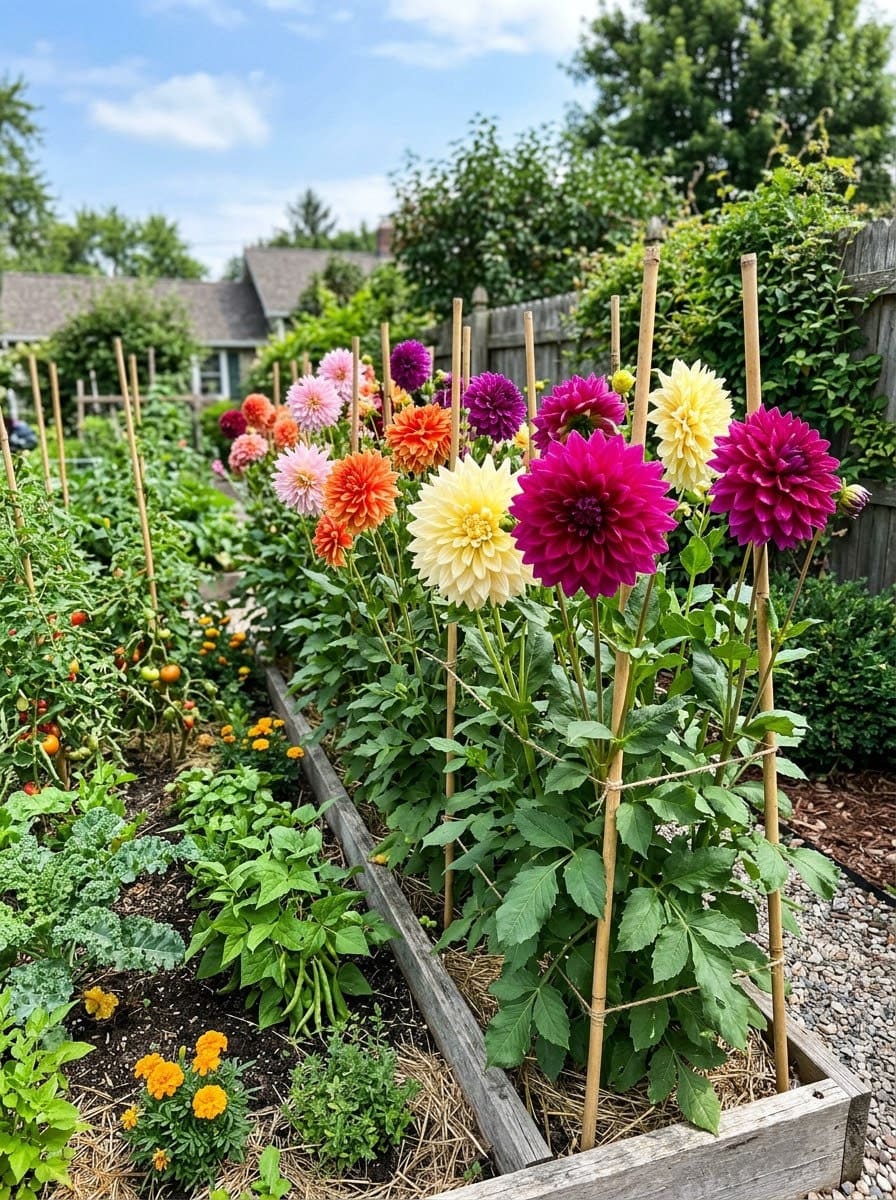
Dahlias don’t have a chemical or disease mechanism working against them, they’re a straightforward resource-competition problem. Dahlias are heavy feeders that need consistent fertilizing and steady moisture to produce their signature large blooms, and tall dinnerplate varieties commonly reach 3 to 5 feet.
Planted directly beside a vegetable row, both of those traits work against the vegetables: the dahlia pulls a disproportionate share of the water and nutrients from shared soil, and a tall variety on the south side of a bed shades sun-hungry crops like tomatoes and peppers for a meaningful part of the day.
This is the mildest entry on this list, dahlias aren’t spreading, toxic, or disease-vectoring, they’re just demanding, and demanding plants placed carelessly cost their neighbors yield.
The fix: feed and water dahlias on their own schedule rather than assuming shared irrigation and a single fertilizing pass covers both, and place taller varieties on the north or east side of a vegetable bed so their shadow falls away from the sun-dependent crops instead of across them.
Our guide to the different dahlia types and their mature sizes is useful for picking a shorter variety if bed space is tight, and our notes on overwintering dahlia tubers cover the yearly dig-up-and-store routine if you’re relocating them away from the vegetables this fall.
Want to Keep Growing These Flowers Anyway? Here’s How to Do It Safely
Nothing on this list is a reason to rip out your whole flower border. The fix for almost every entry above is the same basic move: real physical distance, a container, or a dedicated bed instead of mixing the flower directly into the vegetable row.
Sunflowers and dahlias just need placement on the shady side of your layout so their height works for you instead of against your vegetables.
Fennel, morning glory, bee balm, and baby’s breath need deadheading discipline and, in bee balm’s case, a root barrier, so their spread stays where you put it.
Nasturtiums need real distance, six feet or more, to work as the trap crop they actually are instead of an aphid magnet next door.
New England aster and four o’clocks are the two where the honest answer is a separate bed altogether, one for a disease-vector risk, one for a toxicity risk around kids and pets.
What We Learned the Hard Way
The nasturtium mistake is the one I made first, and it’s the one I see repeated most often in gardening forums and comment sections.
I planted a ring of nasturtiums right against my squash bed my second year gardening, following advice that made it sound like a repellent, and spent the whole summer wondering why the aphid problem got worse instead of better.
It took actually reading past the headline-level advice to realize nasturtiums were doing exactly what they’re supposed to do, just six inches too close to work as intended.
The aster yellows problem is sneakier because it doesn’t look like a flower problem at all. If you’ve ever had a row of lettuce or a few tomato plants go yellow and stunted for no obvious reason, tested the soil, adjusted the fertilizer, and still couldn’t figure it out, it’s worth checking whether you’ve got New England aster, coneflower, or a few other common flowers within a few feet.
That was never on my radar until I actually read what the aster leafhopper does, and honestly, it’s a weird one to explain to someone else, “a bug bit my flower and then bit my lettuce” sounds made up even though it’s exactly what happened.
And the morning glory seed problem, that one’s just patience. It looks completely handled the first fall, every visible vine pulled, bed cleared. Then spring comes and there are two dozen seedlings coming up in a bean row from seed nobody saw drop the year before.
I don’t think there’s a real fix for that one beyond just staying ahead of deadheading every single season, forever, if you’re going to grow it at all.
FAQs
Do nasturtiums actually repel aphids?
No, and this is the most commonly repeated myth about this flower. Nasturtiums attract aphids as a trap crop, pulling them toward the flower and away from your vegetables, but only if they’re planted well away from the vegetable bed, not intermixed with it. Planted too close, they concentrate more aphids near your food, not fewer.
Can I still plant sunflowers next to my beans if I really want to?
Keep at least 2 feet of separation and watch for stunting rather than planting them directly adjacent. Sunflowers are a documented allelopathic plant per Penn State Extension, and gardeners commonly report trouble with beans and potatoes specifically, though the exact distance where the effect stops isn’t precisely established in university sourcing, so treat 2 feet as a reasonable starting buffer, not a guarantee.
How do I know if my vegetables have aster yellows instead of a nutrient problem?
Look for yellowing combined with stunted growth and small, malformed leaves or flowers, and check whether you have aster, coneflower, daisy, zinnia, or a few other common flowers growing nearby. There’s no treatment once a plant is infected, per University of Maine Cooperative Extension, so removal is the only real response.
Is it safe to grow four o’clocks if I have kids or pets?
It’s manageable with precautions, gloves when handling the roots and prompt deadheading, but per NC State Extension’s plant database, the roots and seeds are toxic if ingested and can cause skin irritation on contact. If your vegetable garden is a space where young kids dig and taste-test regularly, a fenced ornamental bed elsewhere is the safer placement.
What’s the fastest-spreading flower on this list?
Bee balm and morning glory both spread aggressively but through different mechanisms, rhizomes underground versus reseeding above ground, and morning glory tends to surprise gardeners more because the damage shows up a full season after the vine itself looked handled.
Related Posts
Never miss an update — choose FarmFoodFamily as your preferred source on Google.
How it works: Tap the button below to open Google's settings page, then check the box next to FarmFoodFamily.
Tap the checkbox to turn it blue — that's how you know it's set.