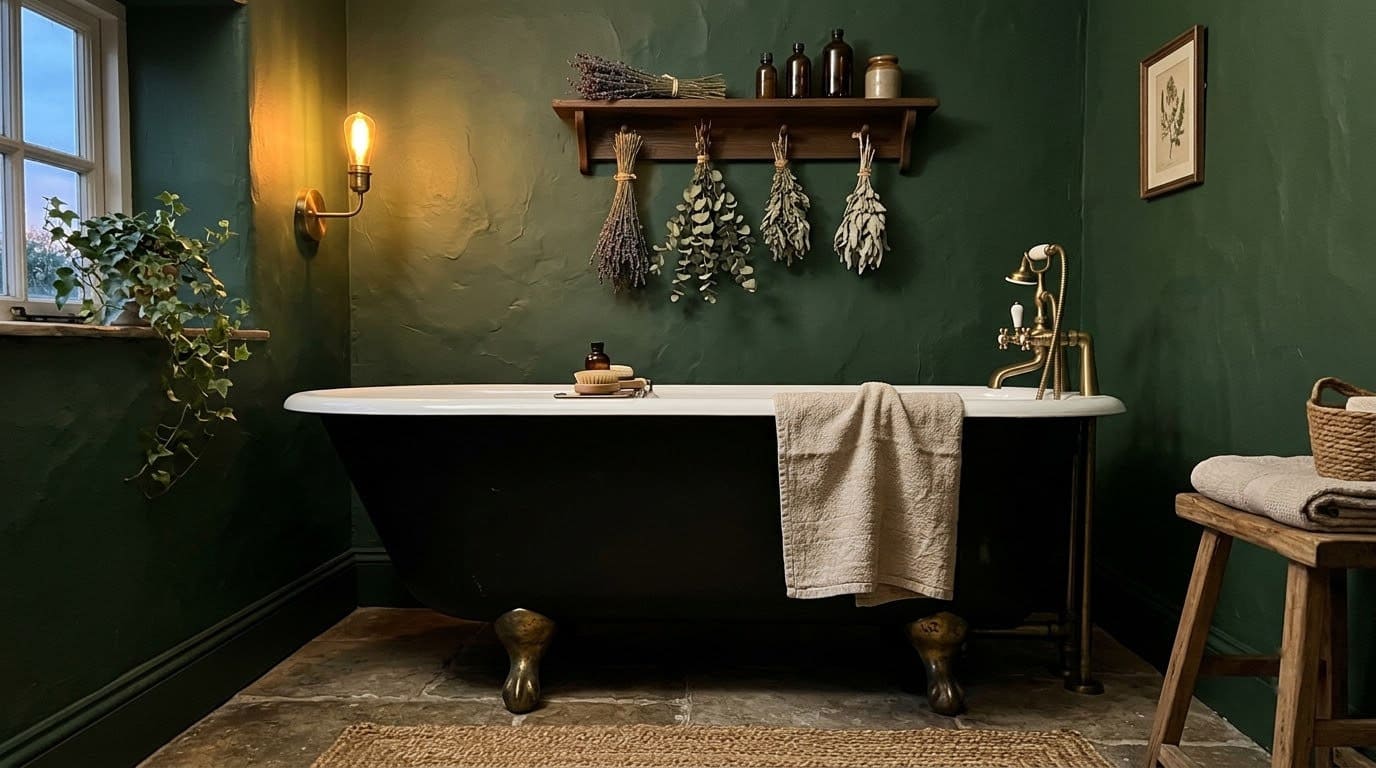
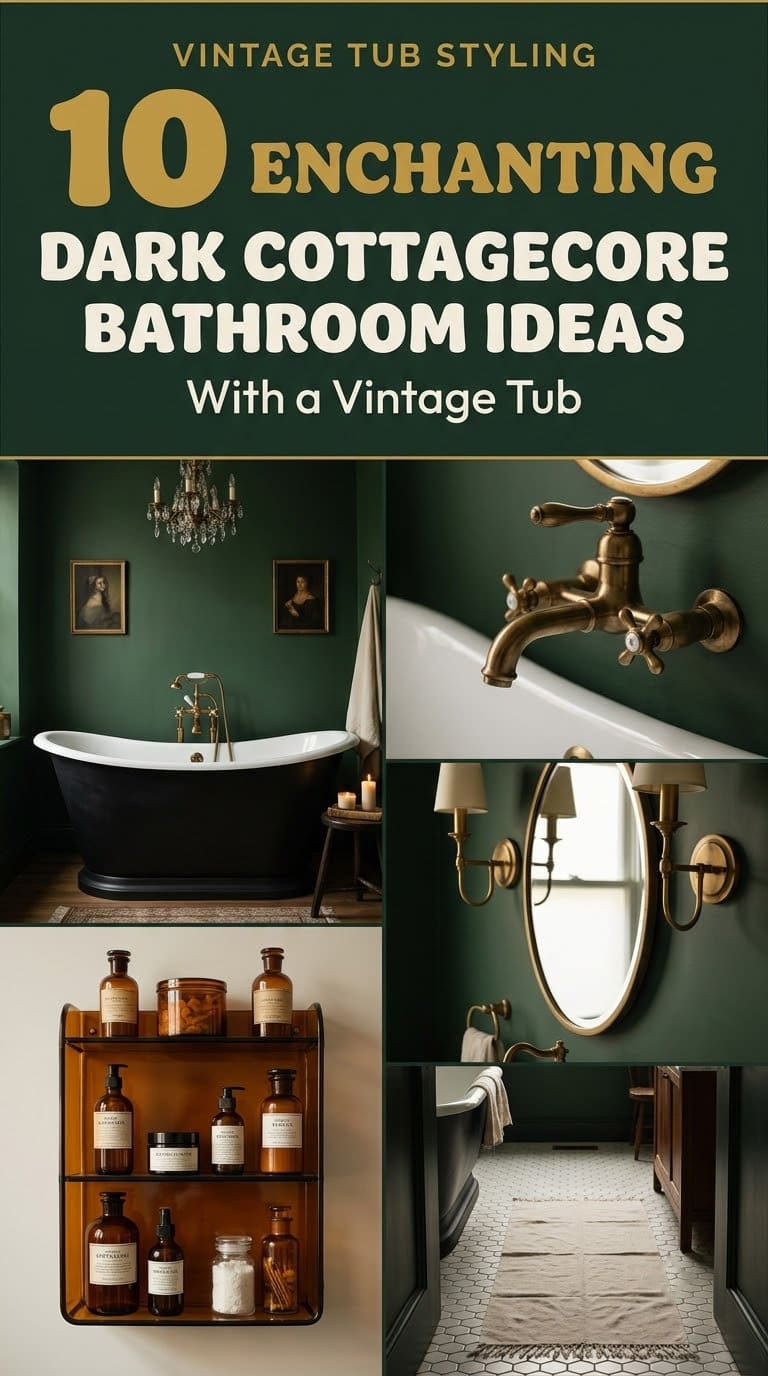
10 Enchanting Dark Cottagecore Bathroom Ideas With a Vintage Tub
A dark cottagecore bathroom with a vintage tub is easy to love, as long as you check the floor, the faucet holes, and the lighting rules first.

Never miss an update — choose FarmFoodFamily as your preferred source on Google.
How it works: Tap the button below to open Google’s settings page, then check the box next to FarmFoodFamily.
Tap the checkbox to turn it blue — that’s how you know it’s set.
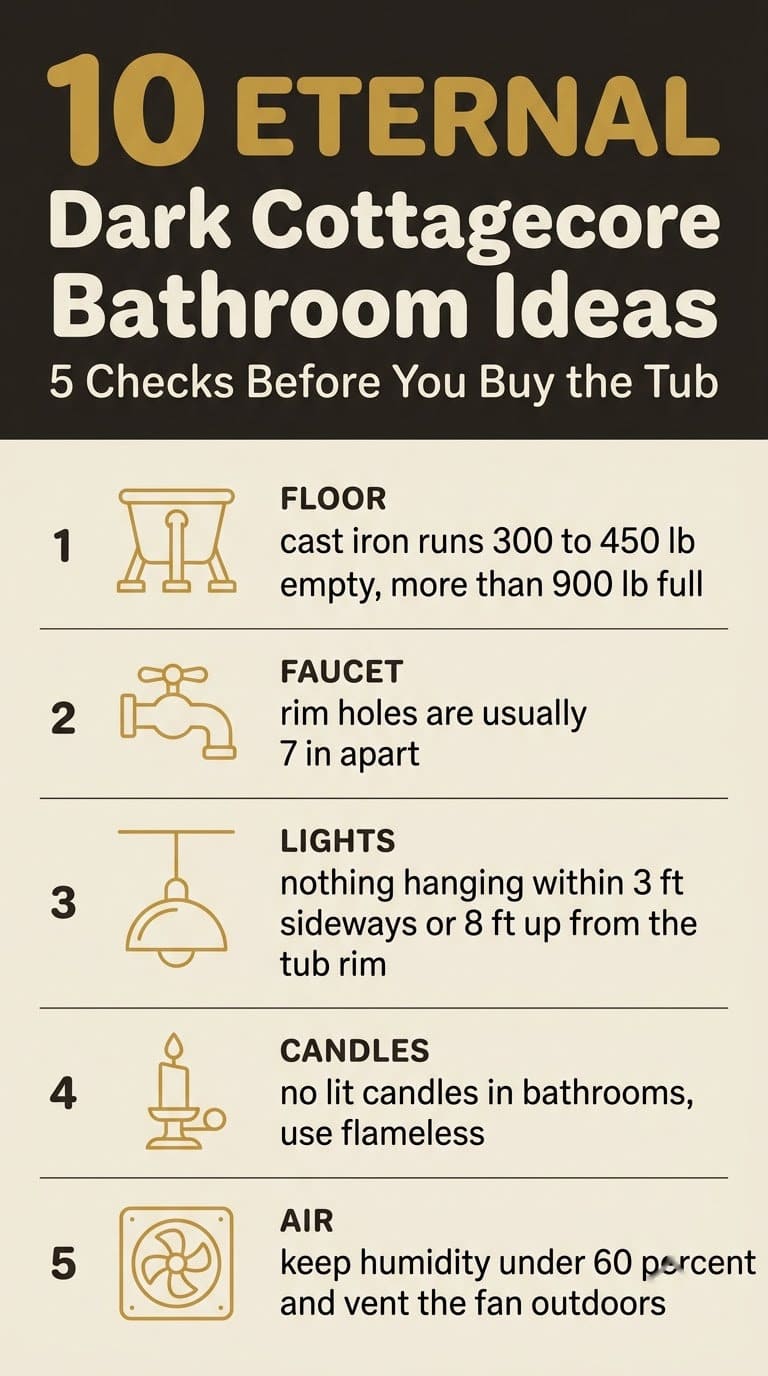
A dark cottagecore bathroom with a vintage tub works when you settle three things before you buy anything. First, check the floor. A cast iron tub weighs 300 to 450 pounds empty and can reach 900 pounds or more when full, which matters most in older houses and upstairs bathrooms.
Second, match the faucet to the tub. Most clawfoot tubs come drilled for a deck-mount faucet with holes 7 inches apart. The exposed parts cost two to three times what regular ones do.
Third, keep light and fire away from the water. The National Electrical Code bans hanging fixtures within 3 feet sideways and 8 feet up from the tub rim, and lights inside that space must be rated for damp or wet locations.
The U.S. Fire Administration says not to burn candles in bathrooms at all. Get those right, then paint the walls forest green and light the room low and warm.
What makes a bathroom “dark cottagecore”?
Regular cottagecore is pale and sunny. Think lace and pastel florals, with a window full of daylight.



Dark cottagecore keeps the handmade, countryside mood. It swaps the palette for forest green, plum, walnut, and old brass.
The vintage tub is the anchor because it looks like it has been there for a hundred years. That is the fun of it. It is also the reason this room needs more planning than a paint-and-styling job.
Here is how it sits next to the other dark bathroom styles on this site.
| Style | Palette | Mood | Tub role |
|---|---|---|---|
| Dark cottagecore | Forest green, plum, walnut, aged brass | Countryside, handmade, candle-soft | The centerpiece, planned first |
| Classic cottagecore | Pastels, cream, floral prints | Bright, sweet, airy | One idea among many |
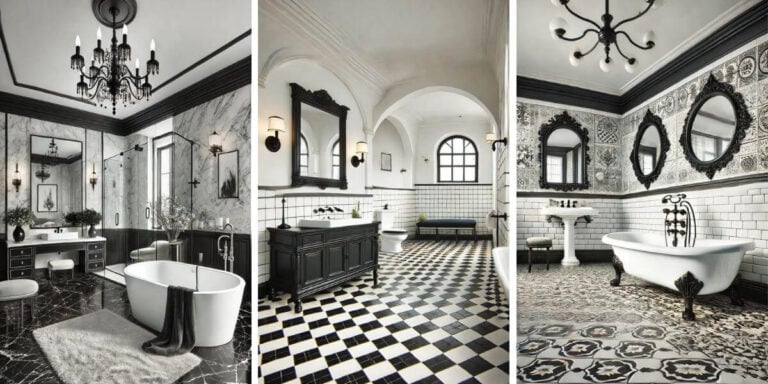
| Moody | Charcoal, navy, black, marble | Sleek, dramatic | Optional |
| Dark academia | Oxblood, ink, dark wood | Library, scholarly | A single fixture |
If you like the softer, pastel version of this look, the cottagecore bathroom ideas page covers it. For sleek dark rooms, there is a long list of dramatic dark bathrooms elsewhere on the site. And if you lean toward shelves of old books, dark academia bathrooms go that way instead.
Renter-friendly, first
A real clawfoot tub is not a renter project. It needs plumbing, a floor check, and a landlord’s yes. So each idea below has a cost tag and says whether a renter can do it.
If you rent, skip to the ideas about lighting, textiles, wallpaper, and shelving. They give you most of the mood without touching a pipe. And if you own an older home, read the tub sections twice.
Which vintage tub setup fits your bathroom?
1. A cast iron slipper tub with a deep-color outside
Cast iron holds heat longer than acrylic, which matters in a room built for long baths. Eric Kotlyar owns True Form Renovation in the Toronto area.
He told AOL that cast iron holds warmth for 30 to 40 minutes. Acrylic cools faster.

Battery-operated flickering LED tapers with a wax coating, a remote, and 2, 4, 6, or 8 hour timers. Safe stand-ins for real candles on the tub tray.
Shop NowThis post contains affiliate links. We may earn a commission on qualifying purchases at no extra cost to you.
The dark part comes from the outside of the tub. Paint it forest green, aubergine, or black. Use a metal primer and a durable enamel, and leave the inside white.
A dark tub against dark walls disappears, so keep the walls a step lighter or a different hue.
Cost: bigger investment. Renters: no. Pairs well with idea 2, because the weight question decides whether cast iron is even an option.
Quick tip: hold a paint chip against the tub’s white interior before you choose. A cool green next to warm porcelain can look muddy. A warm moss green looks right at home.
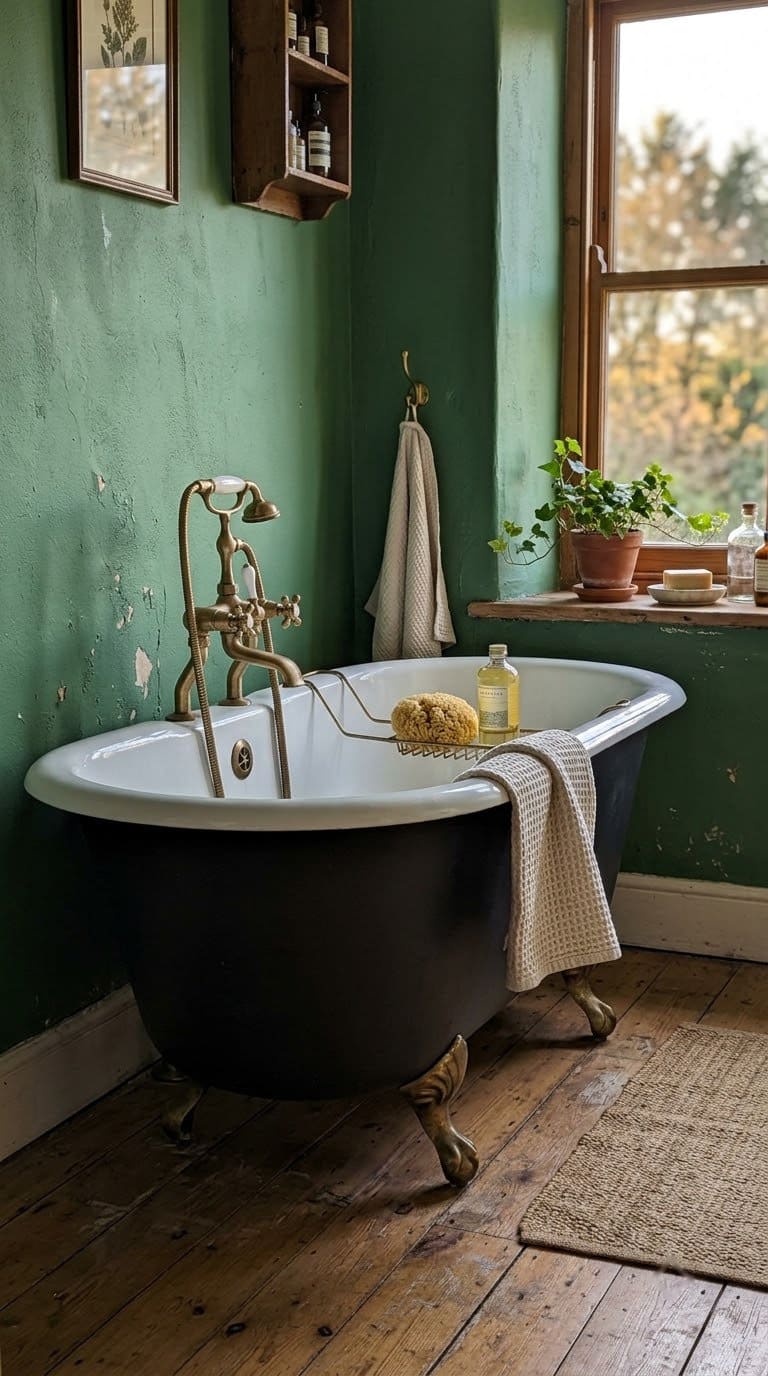
2. An acrylic or copper tub when the floor cannot take cast iron
Not every floor can carry cast iron. A 60-inch cast iron clawfoot runs 350 to 450 pounds empty, per the retailer Giving Tree. A 67-inch acrylic model weighs about 99 pounds.
So a lighter tub in the same silhouette is the smart move for an upstairs bathroom. Copper runs about 50 to 100 pounds lighter than cast iron in the same size, per the same source. Copper also ages into a warm, dark patina that fits this style.
| Tub material | Empty weight | Notes |
|---|---|---|
| Cast iron, 60 in | 350 to 450 lb | Holds heat longest, hardest on the floor |
| Copper | 50 to 100 lb less than cast iron | Warm patina, fits dark palettes |
| Acrylic, 67 in | About 99 lb | Cools faster, easiest on old joists |
Cost: moderate. Renters: no.
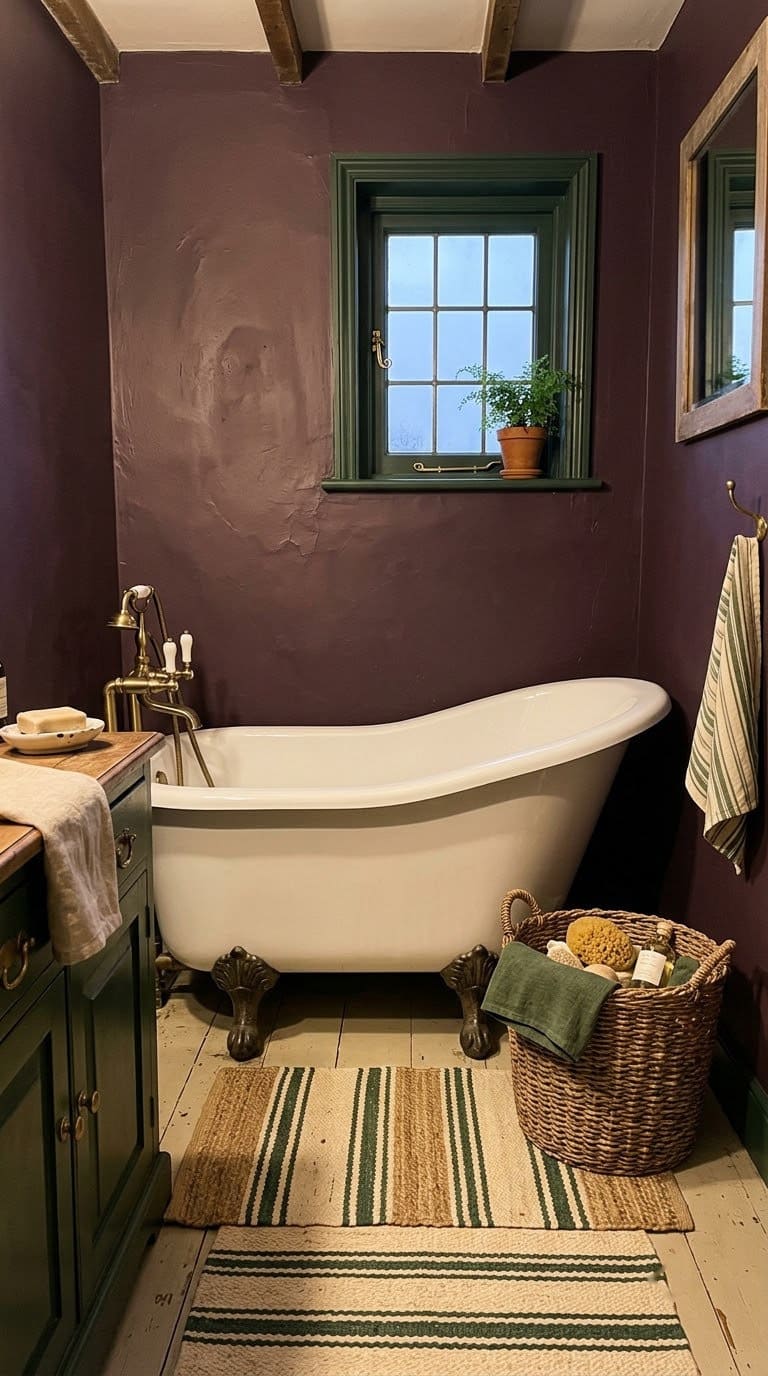
3. Forest green walls in a finish that survives steam
Forest green is the classic dark cottagecore wall. It reads like a shaded garden. Brass and wood look good against it.


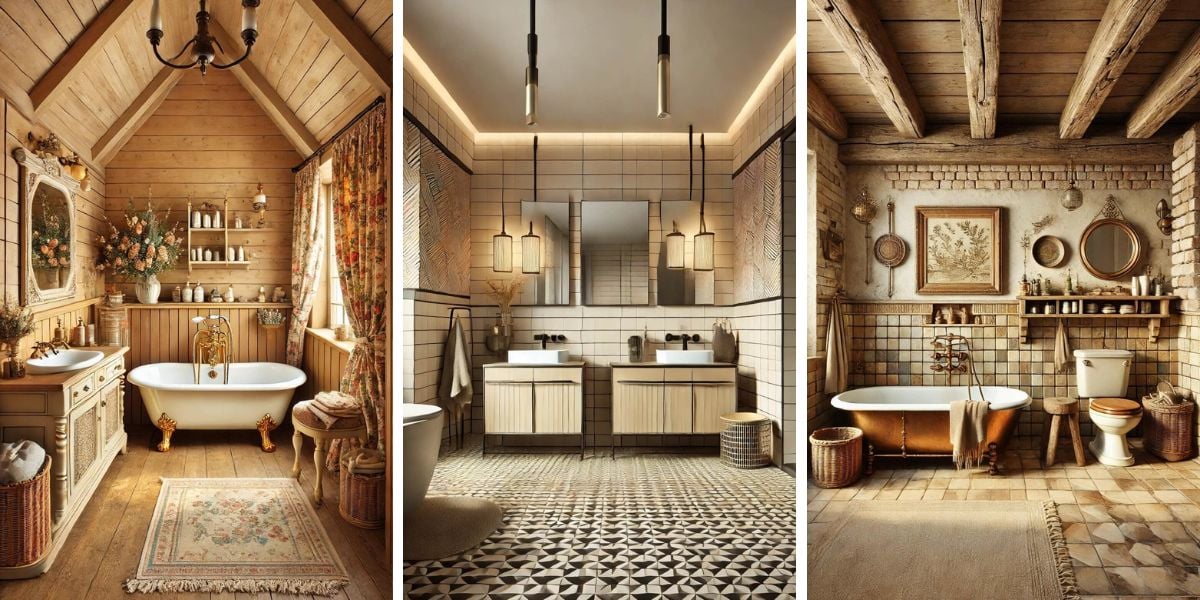
Pick a finish made for bathrooms. Farrow & Ball makes a matte paint with 7 percent sheen called Modern Emulsion. The maker calls it mold protected and washable, and suited to bathrooms.
Other paint makers sell bath-rated lines too, so check the can. Here is my honest opinion. Do not go dark on every surface.
Dark walls, a dark ceiling, and a dark floor turn a bathroom into a cave. Leave the ceiling lighter, or paint the trim a warm cream.
Cost: cheap DIY. Renters: only with a yes from your landlord. Peel-and-stick paper is the fallback.
Quick tip: paint a large sample board and move it around the room for a week. Dark greens shift a lot from morning to evening. A week is cheaper than a repaint.
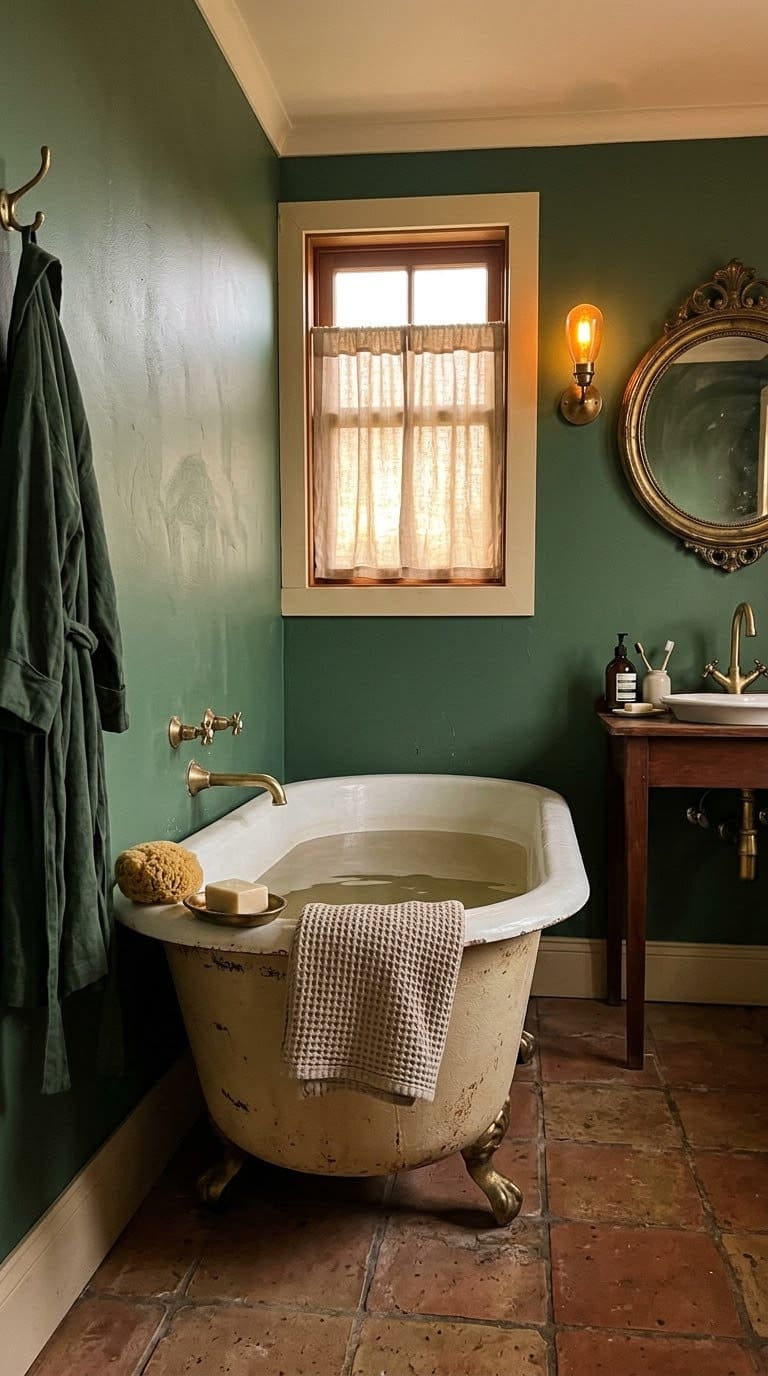
4. Black-and-white hex tile, softened with a cotton rug
A small hex or checkerboard floor gives a vintage tub the right stage. It looks right for the period. Tile also handles splashes better than wood.
Skip wall-to-wall carpet here. The EPA advises against installing carpet near tubs, sinks, and toilets. Use a washable cotton or wool-blend runner that you can hang to dry.
If the tub is cast iron, tell your tile setter about the load before they start. Ask whether the subfloor needs blocking under the feet.
Cost: bigger investment. Renters can lay a washable rug and stop there.
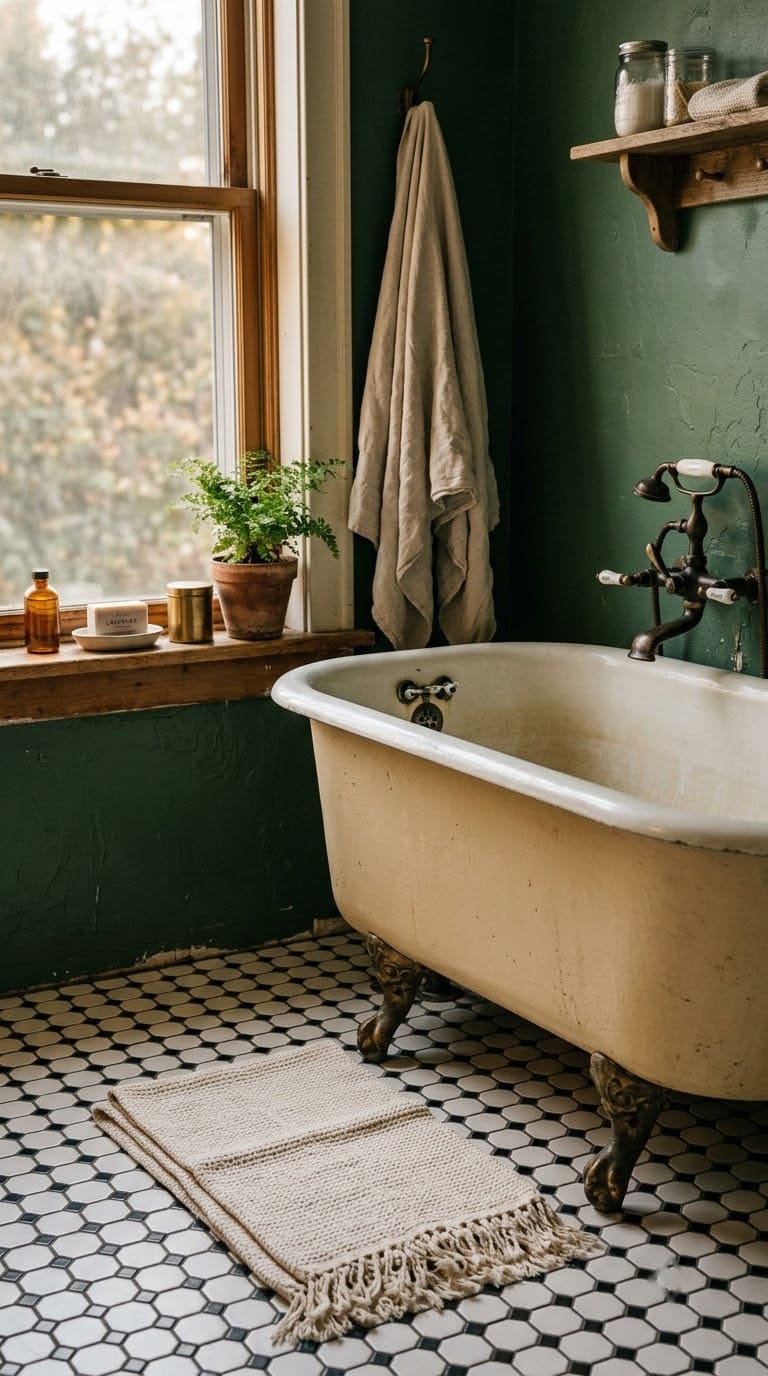
5. An exposed brass deck-mount faucet, matched to the tub
The faucet is where a vintage tub quietly gets expensive. Clawfoot tubs typically come predrilled for a deck-mount faucet with holes 7 inches apart, per vendors like Signature Hardware. Buy the faucet to match the holes, not the other way around.
For more period fixtures, see these Victorian bathroom ideas.
Kotlyar says everything is exposed on a clawfoot. So the decorative parts run two to three times the price of regular ones. He also puts drain rerouting at $500 to $1,000 and line alignment around $300.
He works in Toronto, so treat those as rough guides and get local quotes. Aged brass suits the moody palette.
A hand shower on a hose is worth the extra money if anyone rinses hair in the tub.
Cost: bigger investment. Renters: no.
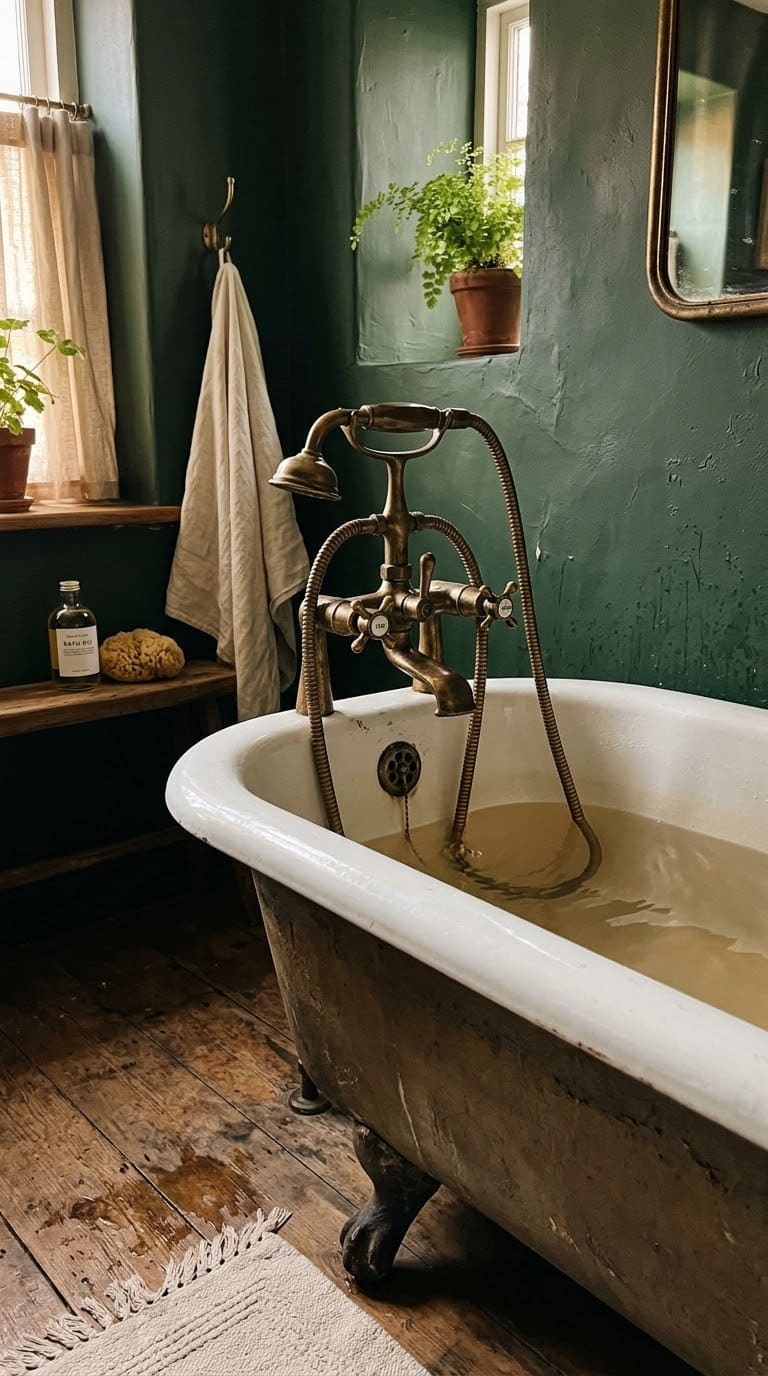
How do you light a dark bathroom safely?
6. Wall sconces in warm bulbs, not a chandelier over the tub
Dark walls need low, warm light. Look for 2700K or lower on the bulb box, and use a dimmer if you can.
A chandelier over the tub is the classic mistake. The 2020 National Electrical Code has a rule for this, 410.10(D). It bans hanging lights, track lighting, and paddle fans within 3 feet sideways and 8 feet up from the tub rim.
Lights inside that space must be rated for damp or wet locations. Put sconces on either side of a mirror instead. More layouts live in a guide to vanity lighting over the mirror.
Keep the chandelier for a spot well away from the water. A gallery of bathroom chandeliers covers those rooms. Codes vary by town, so ask your local inspector which edition applies.
Cost: moderate. Renters can use plug-in sconces and skip the wiring.
Quick tip: put the dimmer switch where you can reach it from the tub. It sounds small. You will use it every bath.
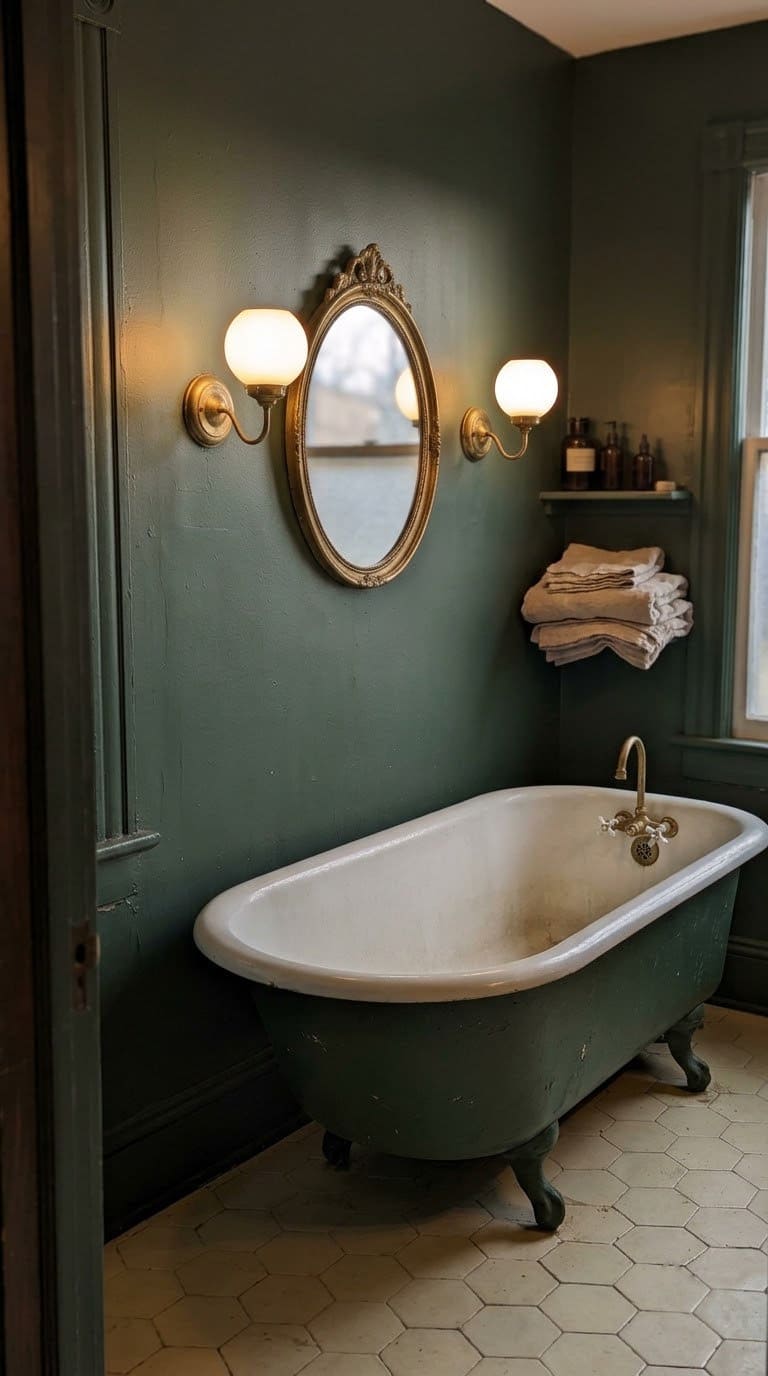
7. Flameless candles on a tray beside the tub
Candles are half the appeal of this style. They are also the biggest fire risk in the room.
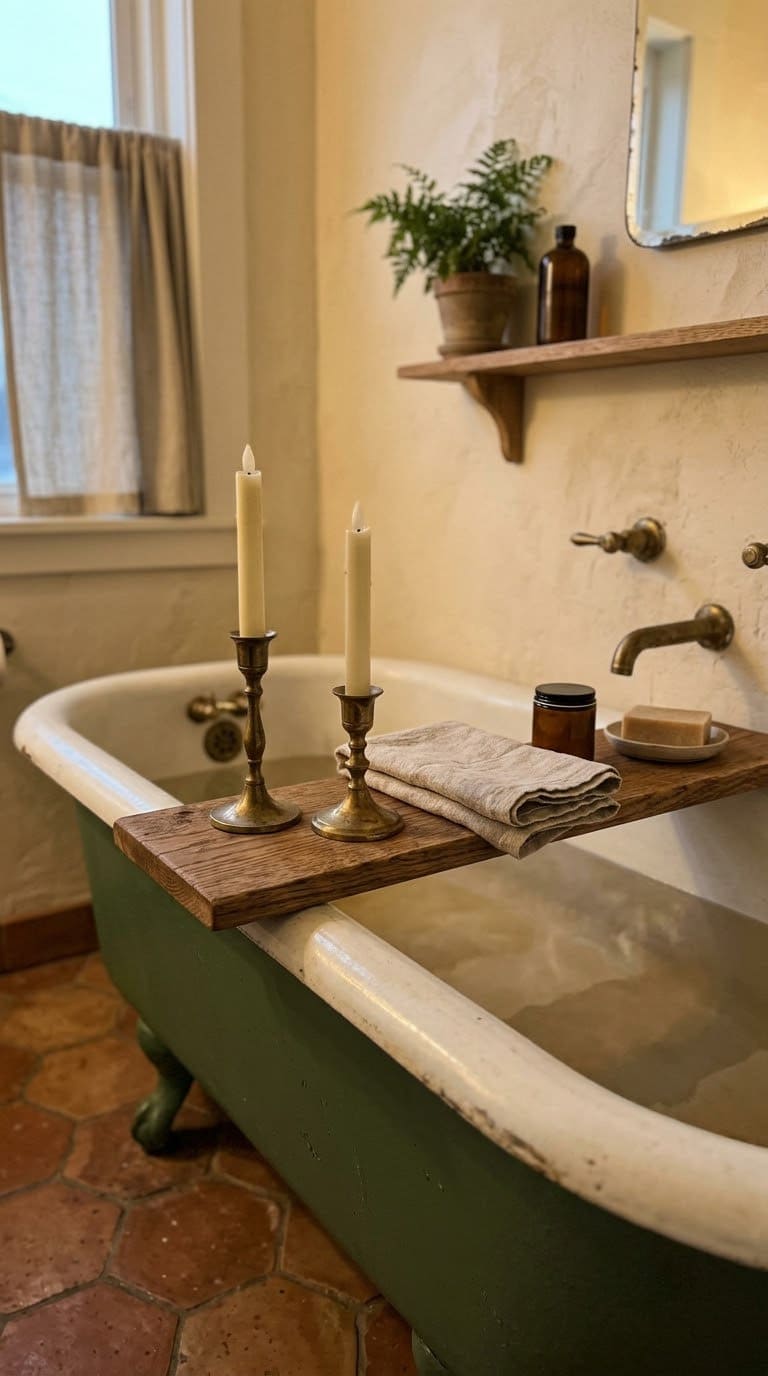
The U.S. Fire Administration says to keep candles 12 inches from anything that burns. It also says not to use them in bathrooms, bedrooms, or sleeping areas.
It suggests battery-operated flameless candles instead. About 20 home candle fires happen each day in the U.S.
Set a wooden tray on the tub’s wide end and load it with flameless tapers in tarnished brass holders. Hair spray, robes, and towels all count as things that burn, so real flames are a bad fit here. For the crystals-and-candles side of this mood, try the witchy bathroom ideas.
Cost: cheap DIY. Renters: yes.
Quick tip: buy flameless tapers with a timer. Many run for a set number of hours, so they shut off if you fall asleep in the bath.
What finishing touches complete the look?
8. An apothecary shelf out of the steam
Amber glass jars and a bunch of dried lavender give the room its storybook feel. Put them on an open shelf across from the tub, not right beside it.
Dried stems get brittle and dusty fast in heavy steam, so rotate them out. Real plants that like humidity handle the job better, and bathroom plants that tolerate steam are worth a look. A tall fern in the corner beats a hundred dried flowers.
Pairs well with idea 7. The same tray can hold a small jar and a candle.
Cost: cheap DIY. Renters: yes.
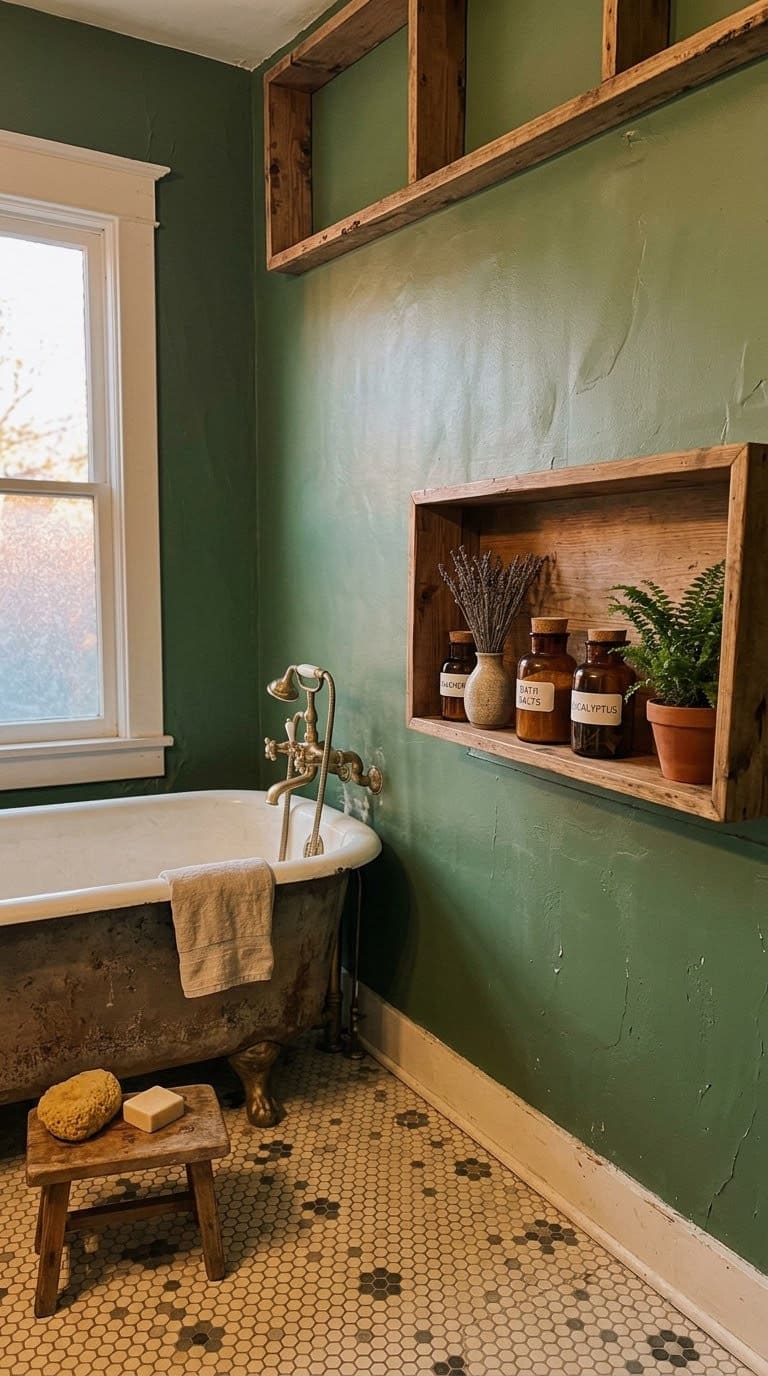
9. One botanical wallpaper wall, away from the splash zone
Dark floral paper adds the storybook layer that paint alone cannot. Use one wall only, and choose the wall behind the vanity or the one facing the tub.
Keep paper out of the direct splash zone beside the tub. Wet paper peels. The EPA says mold usually will not grow if damp material dries within 24 to 48 hours.
Peel-and-stick paper is the renter route, though it still needs a dry wall to stick to. The room gets busy quickly, so keep the pattern to one wall and let the rest stay plain.
Cost: moderate. Renters: yes, with peel-and-stick.
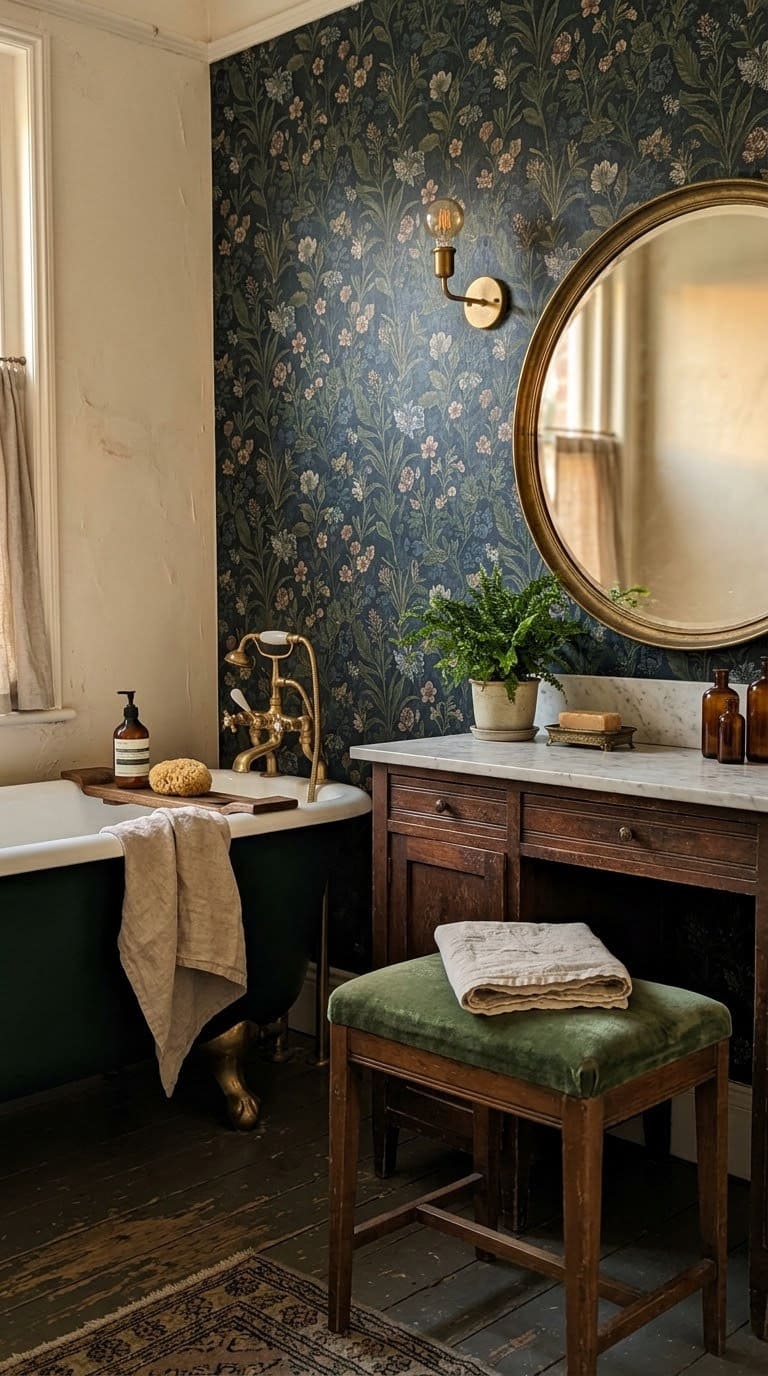
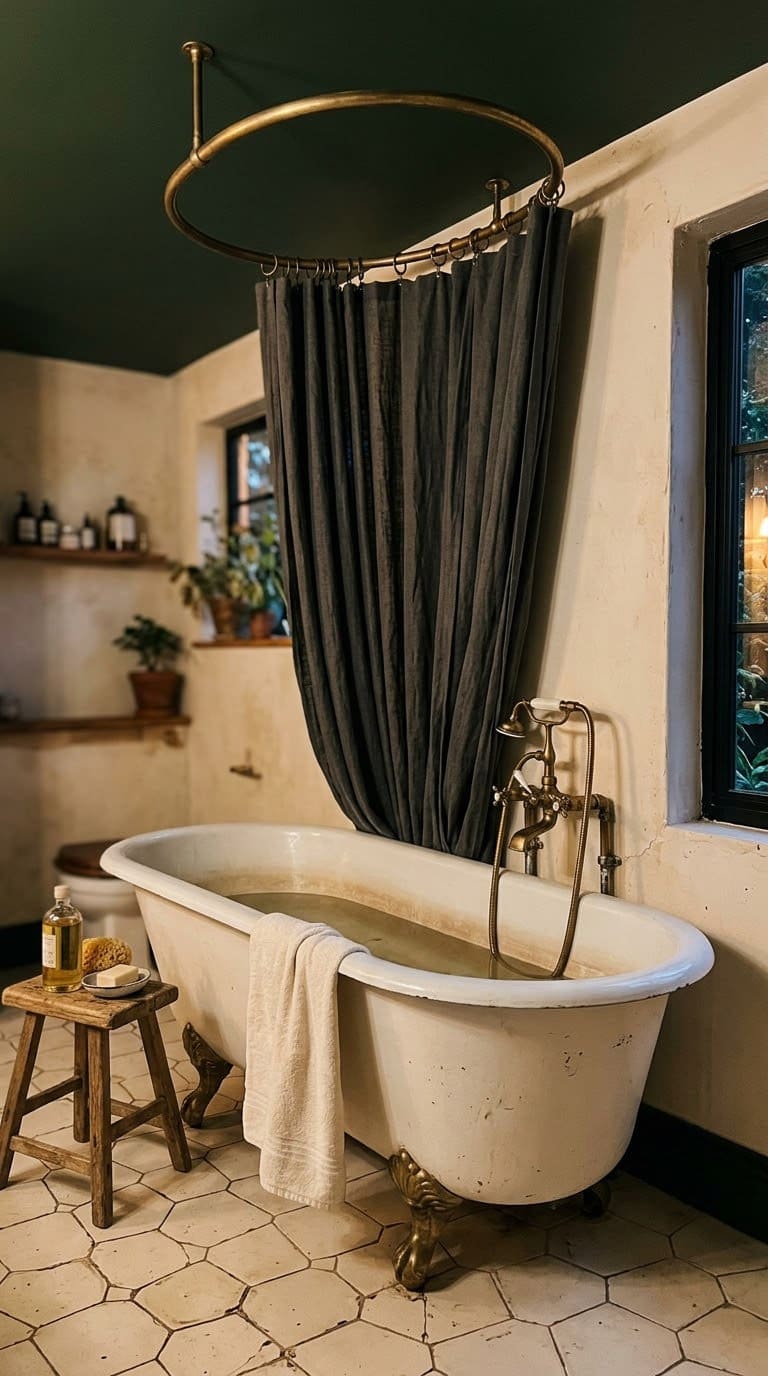
10. A ring rod and a heavy linen curtain for showering
If anyone showers in a clawfoot tub, you need a full-circle curtain. A ceiling-hung ring rod holds the curtain around the tub, and a liner keeps the linen dry. Some kits clamp to the tub instead, which suits renters.
Choose a heavy linen or cotton curtain in a dark tone. It should look like part of the room.
Pull it open after every use so it dries. A curtain bunched against the tub grows mildew.
Cost: moderate. Renters: only with the clamp style.
What order should you do all this in?
The order matters more than the shopping list. Get it wrong and you paint twice or move a heavy tub twice. This sequence costs the least.
| Step | What to do | Why it comes here |
|---|---|---|
| 1 | Have the floor checked | It decides cast iron or acrylic |
| 2 | Fix the drain and supply lines | The tub feet sit over the drain |
| 3 | Paint and hang wallpaper | Easier before the tub arrives |
| 4 | Set the tub and faucet | Heavy work goes in after messy work |
| 5 | Add sconces, curtain, and shelf | Small pieces come last |
Renting? Do steps 3 and 5 in a single weekend. The rest can wait for an owner’s budget.
What does the tub work actually cost?
The tub is only part of the bill. Refinishing, plumbing work, and faucet parts add up, and prices vary a lot by region.
| Job | Typical cost | Source |
|---|---|---|
| Refinish a cast iron tub (pro) | $300 to $650 | This Old House |
| Refinishing kit (DIY) | Under $100 | This Old House |
| Professional tub repair | $400 to $700 | Kotlyar |
| Drain rerouting | $500 to $1,000 | Kotlyar |
| Line alignment | About $300 | Kotlyar |
The Toronto contractor’s numbers are probably Canadian dollars, so use them as a ratio, not a quote. The refinishing figures are U.S. averages.
Is your old tub safe to refinish?
Older porcelain tubs may contain lead. Richard Tretheway is the plumbing and heating expert at This Old House. He suggests sealing the tub under an epoxy primer and a paint topcoat, which is safer than sanding.
The EPA’s lead rule covers paid renovators in homes built before 1978. They must be certified and use lead-safe work practices. The page does not mention tubs or homeowner DIY.
Ask your refinisher how they handle an older tub. And run a fan while the coating cures.
Do dark bathrooms need a stronger fan?
Dark paint does not cause damp. But a vintage tub, a deep bath, and no window can.
The EPA’s remodeling guide cites 50 cubic feet per minute for a fan you switch on and off. It cites 25 for one that runs all the time. It also says to vent outdoors and not into the attic.
The mold guide adds that indoor humidity should stay under 60 percent, ideally between 30 and 50. A cheap hygrometer tells you where you stand. If it climbs past 60 after a bath, run the fan longer.
What we learned the hard way: the gap between the photo and the tub
The photo shows the tub. It does not show the joists. Kotlyar says most older houses need a supported subfloor under cast iron.
He puts a filled tub well over 1,000 pounds. Other sources disagree, and that is the annoying part.
The vendor Magnus Home Products says reinforcement is not required for standard installs. Giving Tree calls it a must in older homes.
The 2024 residential code sets floors at 40 pounds per square foot. That is a spread-out design load, and a tub stands on four feet.
So I would not trust any single number. If the bathroom is upstairs or the house is old, pay a contractor or structural engineer to look first. It costs less than a ceiling repair.
The second mistake is going dark everywhere at once. If there’s one thing worth doing differently, it’s painting one wall first and living with it for a week.
And take this with a grain of salt, since I have not tested every bulb. Still, warm bulbs make dark paint look richer.
FAQ
Can I put a clawfoot tub on a second floor?
Maybe. A filled cast iron tub is heavy, so check an upstairs floor first and ask a contractor about your joists. An acrylic tub weighs far less.
Does a dark bathroom need a window?
No. It needs a fan that vents outdoors and a way to keep humidity under 60 percent. A window helps, but a fan does the real work.
Is a chandelier allowed over a clawfoot tub?
Usually no. The National Electrical Code bans hanging fixtures within 3 feet sideways and 8 feet up from the tub rim. Ask your local inspector, since towns use different code editions.
Can I use real candles in a bathroom?
The U.S. Fire Administration says not to use lit candles in bathrooms. Use flameless candles that run on batteries.
Related Posts
Products We Recommend
This post contains affiliate links. We may earn a commission on qualifying purchases at no extra cost to you.
Wondise Gold Flameless Taper Candles with Timer & Remote, 9 Inch, Set of 6
Battery-operated flickering LED tapers with a wax coating, a remote, and 2, 4, 6, or 8 hour timers. Safe stand-ins for real candles on the tub tray.
Shop Now
Oval Shower Curtain Rod Hoop, 58.3" x 24", Bronze
Aluminum hoop rod made for clawfoot and freestanding tubs, ceiling-supported, with screws and brackets included. Fits idea 10.
Shop Now
TempPro TP50 Digital Hygrometer Thermometer
Small humidity and temperature gauge with dry, comfort, and wet icons. Sits on a shelf or sticks to a magnetic surface so you can watch the 60 percent line.
Shop NowNever miss an update — choose FarmFoodFamily as your preferred source on Google.
How it works: Tap the button below to open Google's settings page, then check the box next to FarmFoodFamily.
Tap the checkbox to turn it blue — that's how you know it's set.