65+ Best Deck Color Ideas and Designs (With Pictures)
Most deck color guides hand you a wall of pretty photos and skip the one thing that actually determines whether a color works: your house. The right deck color starts with your siding, not a swatch you liked on Pinterest. Gray stains pair naturally with white, gray, or blue houses. Warm brown tones like walnut…


Never miss an update — choose FarmFoodFamily as your preferred source on Google.
How it works: Tap the button below to open Google’s settings page, then check the box next to FarmFoodFamily.
Tap the checkbox to turn it blue — that’s how you know it’s set.
Most deck color guides hand you a wall of pretty photos and skip the one thing that actually determines whether a color works: your house. The right deck color starts with your siding, not a swatch you liked on Pinterest.
Gray stains pair naturally with white, gray, or blue houses. Warm brown tones like walnut or cedar pair with beige, tan, or brick exteriors. Get that match right first, and most of the 23 ideas below become an easy yes or no instead of a guessing game.
Below: real design directions, a straight answer on which finish type actually fits your situation, and the prep work that matters more than the color itself.
35 Best Deck Color Ideas and Designs
1. Warm Wood with Trimmed Dark Boards
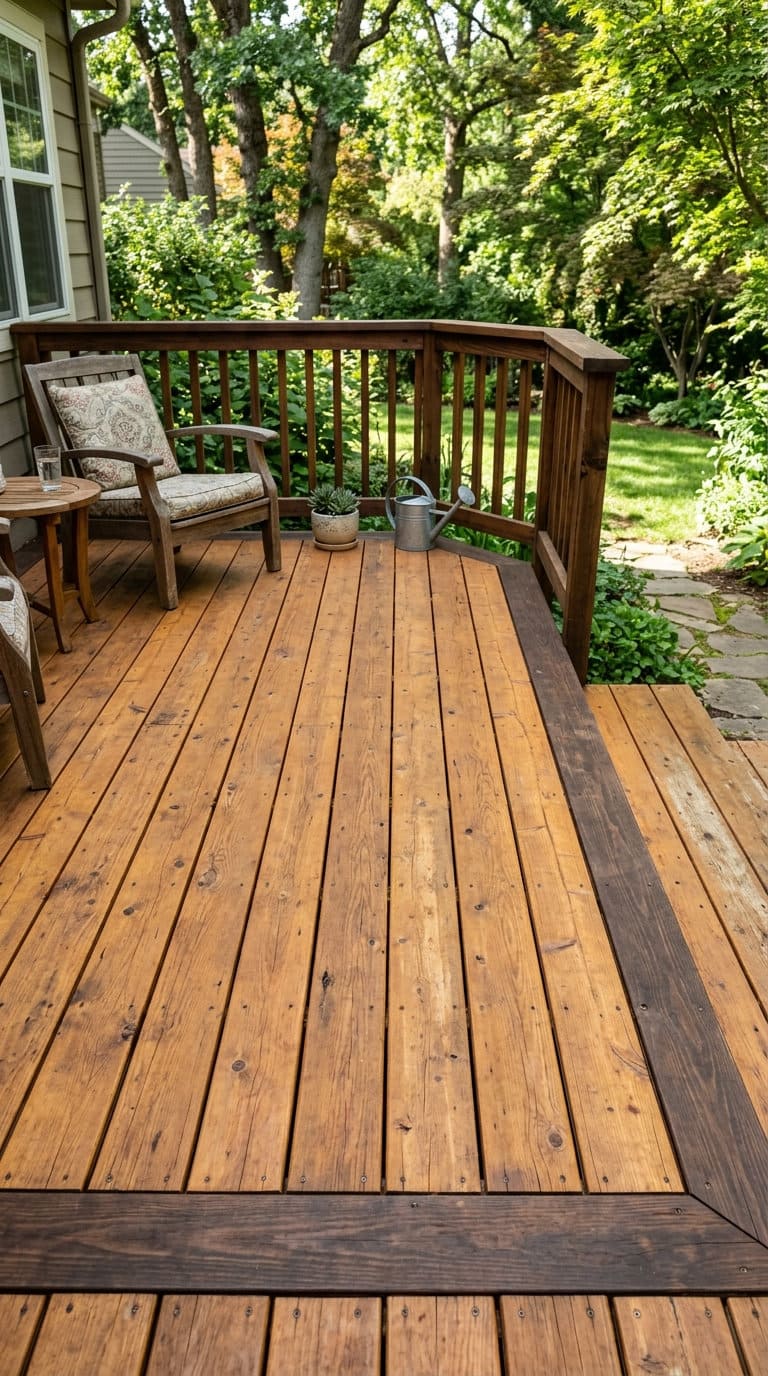
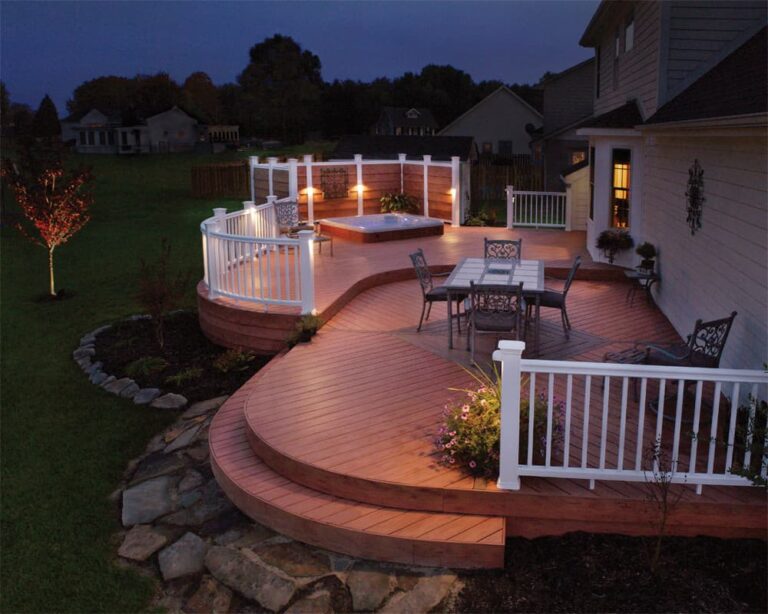
A classic amber-toned wood deck gets real visual interest from one simple move: making the edge and trim boards a shade darker than the rest. It’s subtle, but it reads as intentional, and it doubles as a way to visually frame stairs or create a rug-like effect at the deck’s center.
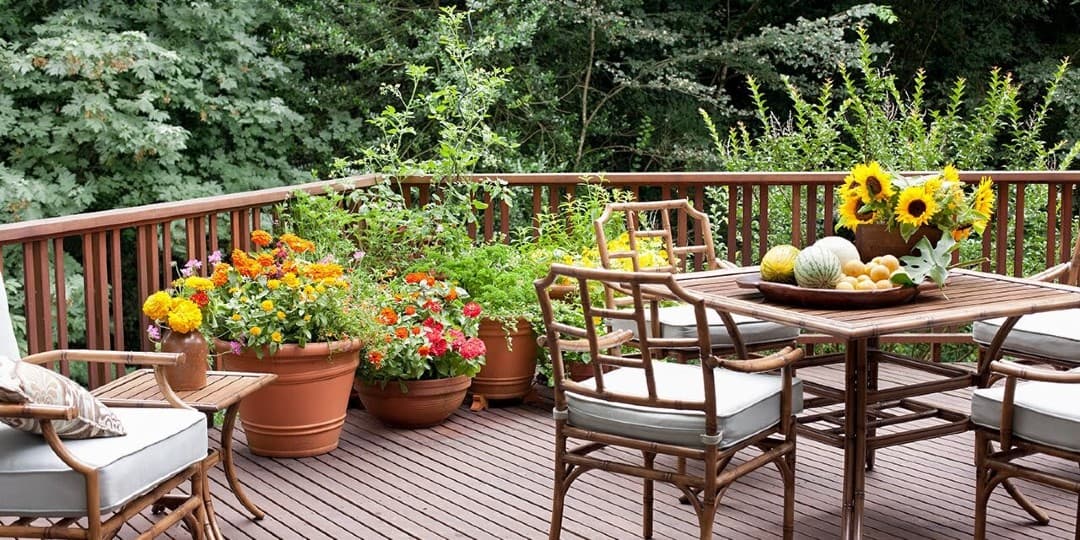
Warm wood tones with undertones of amber may be a great addition to any classic house. When it comes to wood deck color ideas, however, this design takes it to the next level.



The deck’s edge and trim boards are a shade darker than the remainder of the deck, which adds visual intrigue. It’s a modest decision that has a big impact, and it also allows you to accent stairs and even generate a false area rug look.
Answer 4 quick questions and get matched to the exact fix for your yard — drainage, budget, layout, or something else entirely.
Take the Free Quiz2. Mixed Wood-Tone Composite Boards
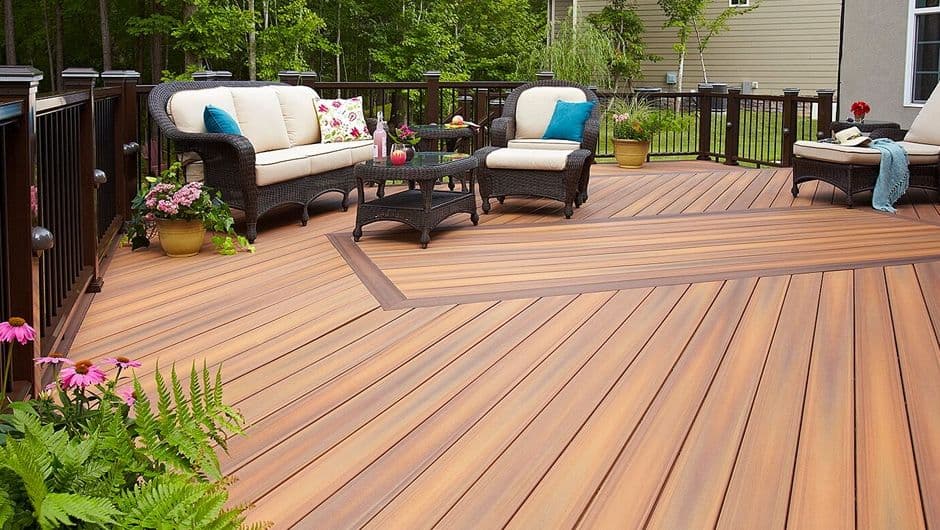
Composite decking that varies between darker chocolate brown and mid-toned orange within the same install avoids the flat, slightly artificial look that a single uniform composite color can have.
The variation reads as more natural than a perfectly consistent tone would, and it adds real texture depth.
Related: 35+ Best Deck Gate Ideas and Designs (With Pictures)
3. Taupe and Red Wood Tones

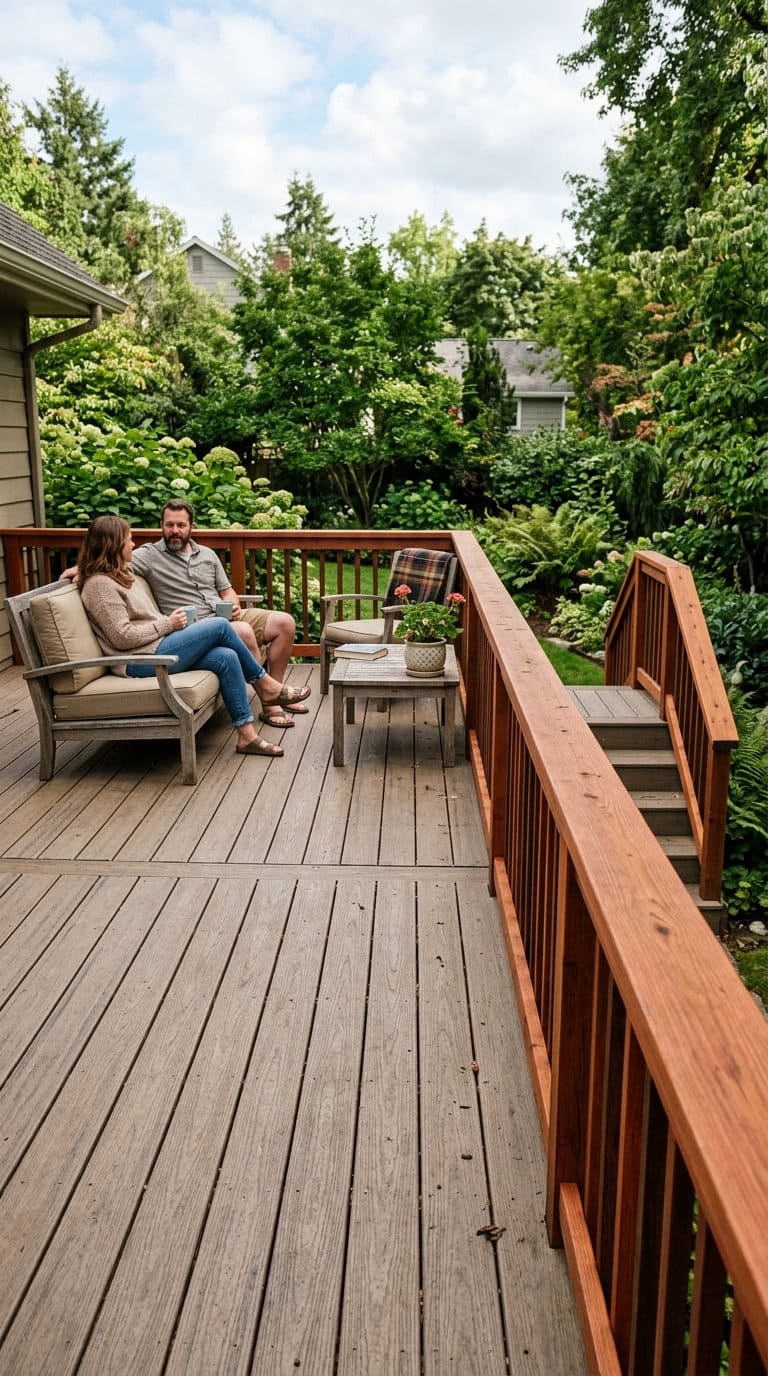
A good option against a tan or brown exterior.
Taupe with gray and brown undertones is versatile enough to sit comfortably against earth-toned siding, and reddish wood accents on railings or skirting add a controlled pop of color without overwhelming the palette.
Related: 45+ Best Deck Lighting Ideas & Designs
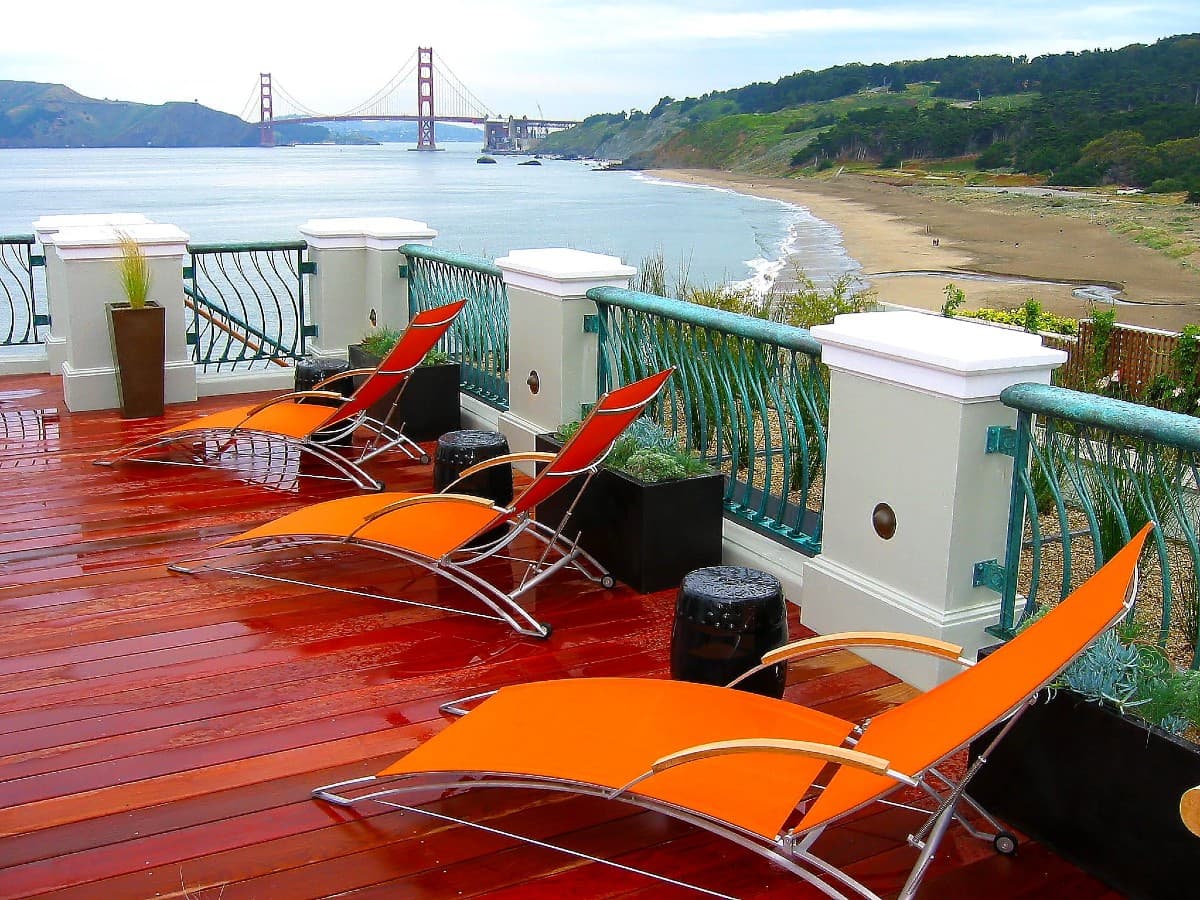
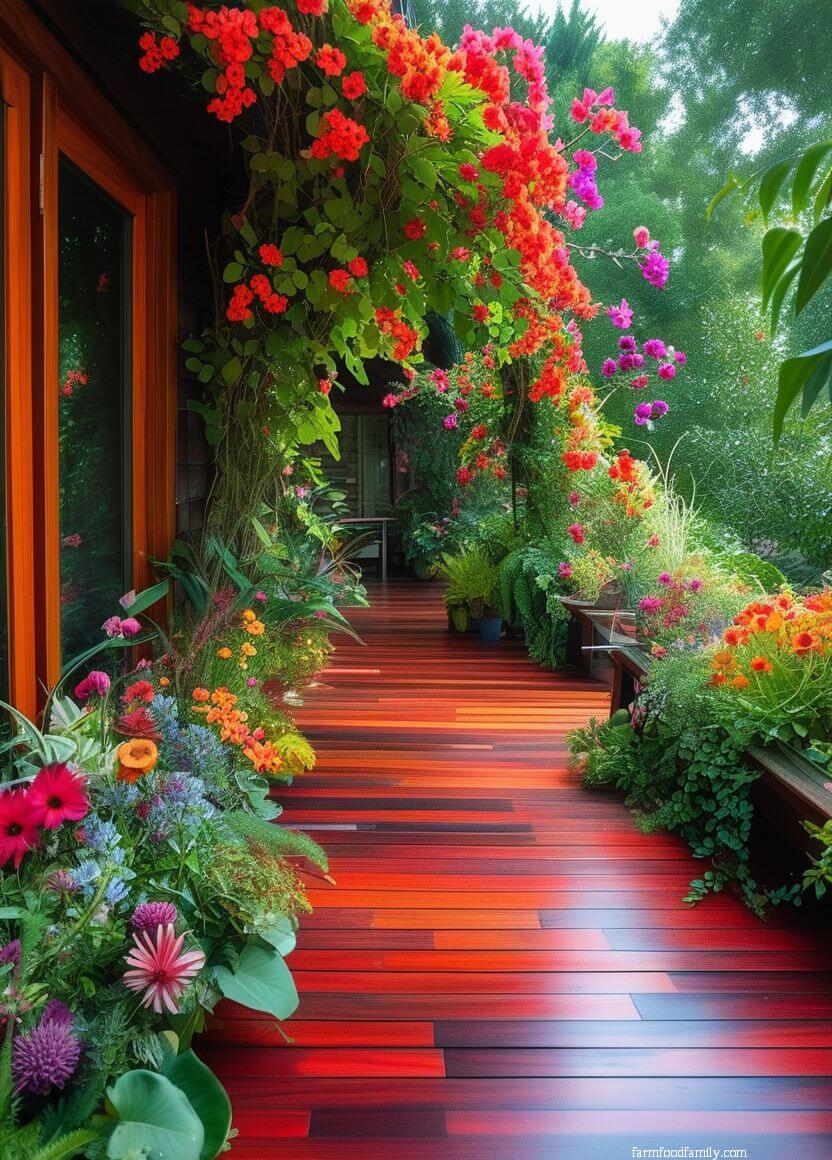
4. Vibrant Red and Orange
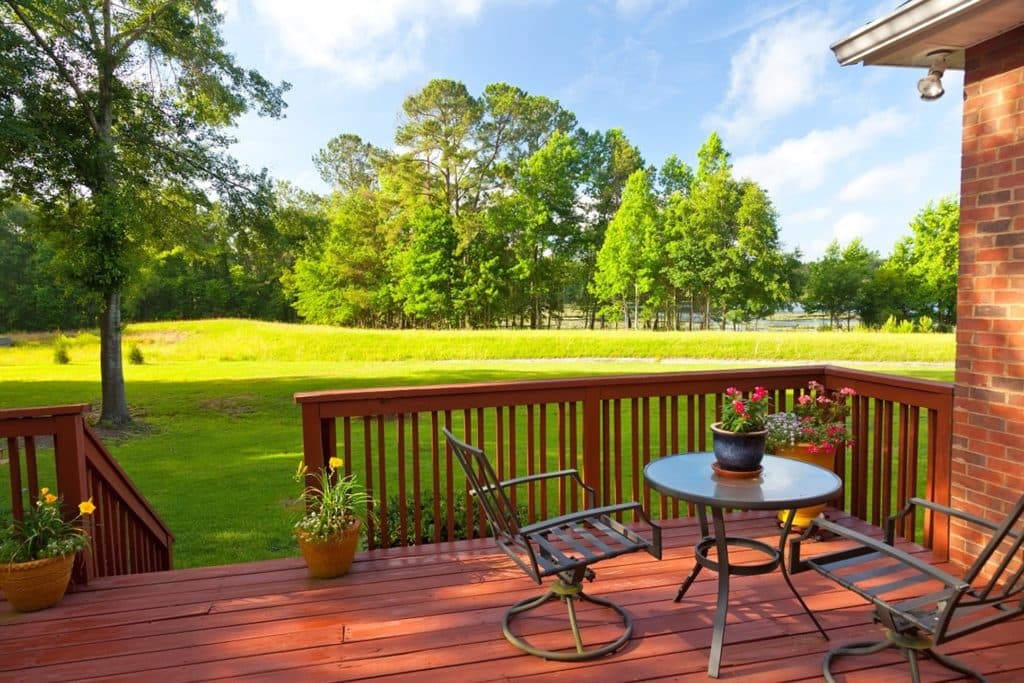
A bolder move than staining alone typically achieves. Flame-red and orange tones blended with brown create real warmth, and this pairing works well against tan exteriors specifically, sand to dark chocolate, without dominating the space.
Most yard problems trace back to one specific, fixable cause. Find yours in 4 quick questions.
Take the Free Quiz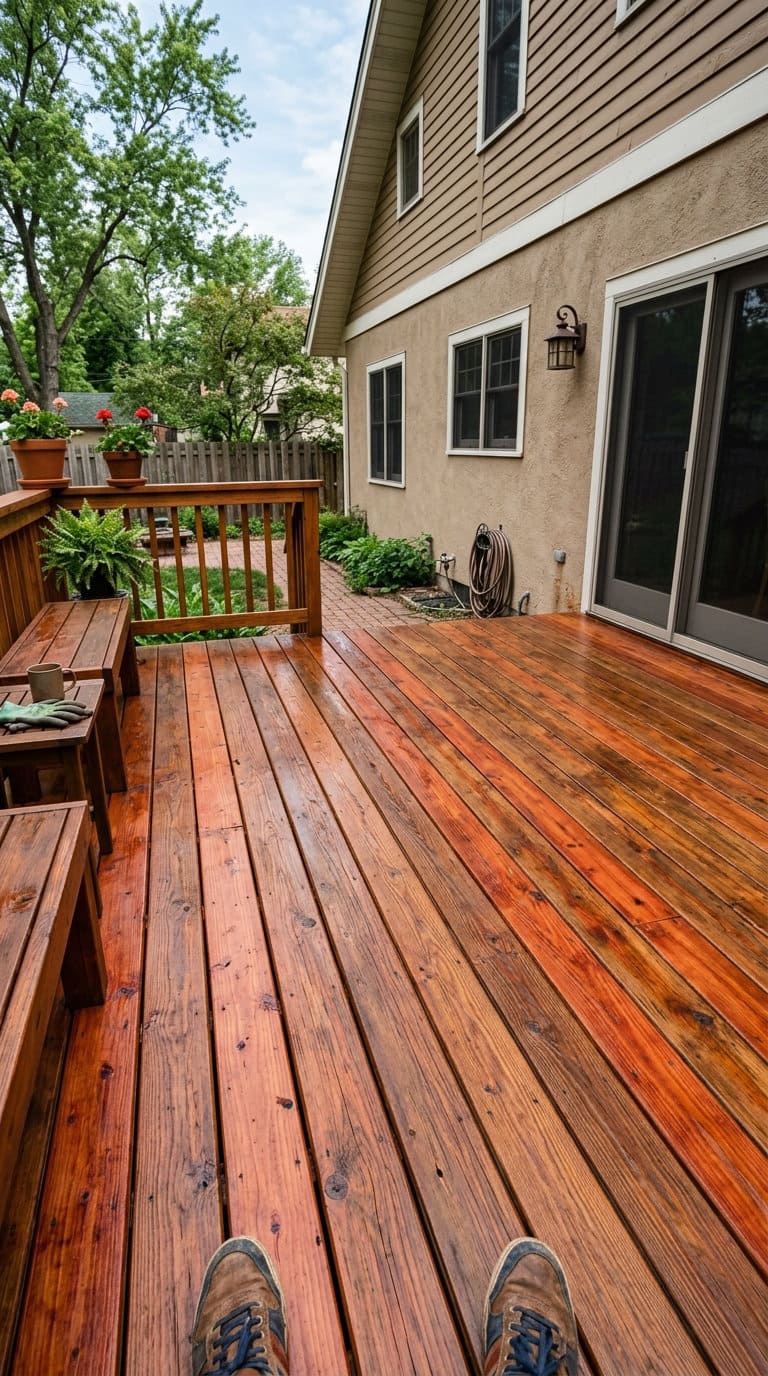
Related: 35+ Best Trex Composite Decking Ideas and Designs (With Pictures)
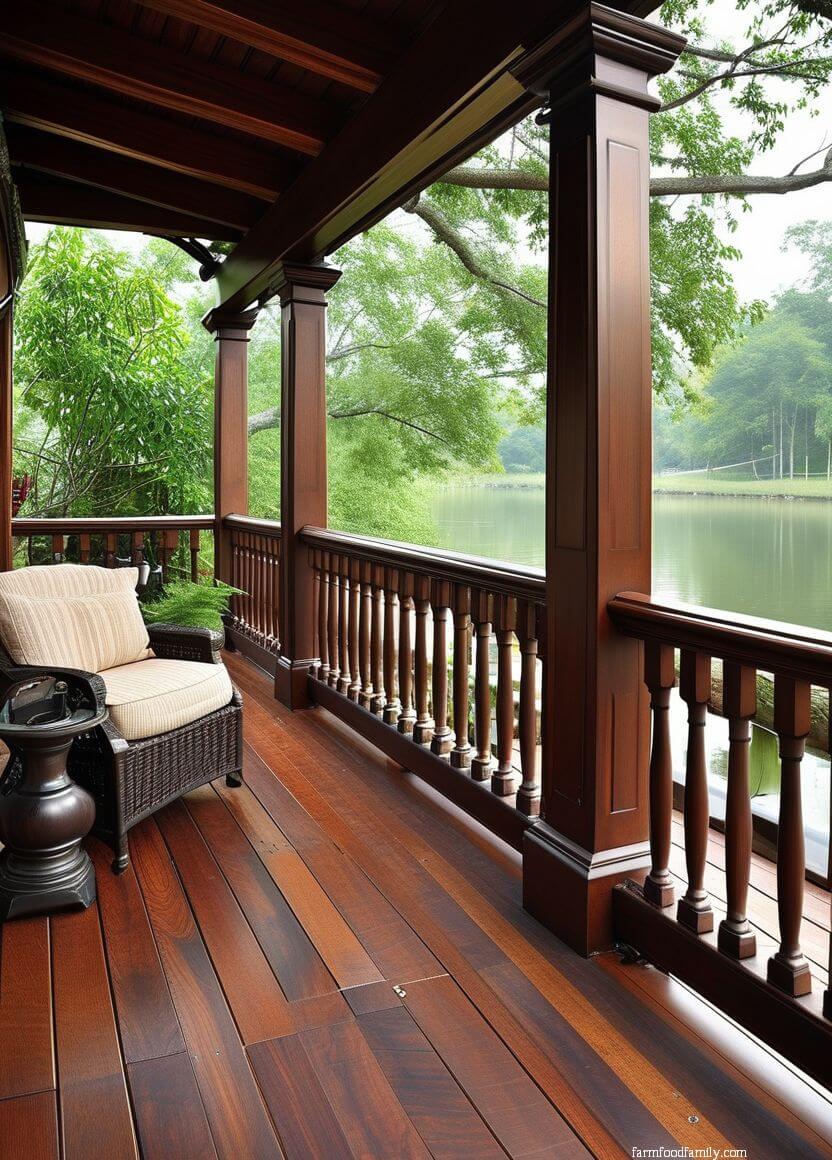
5. Deep, Uniform Brown
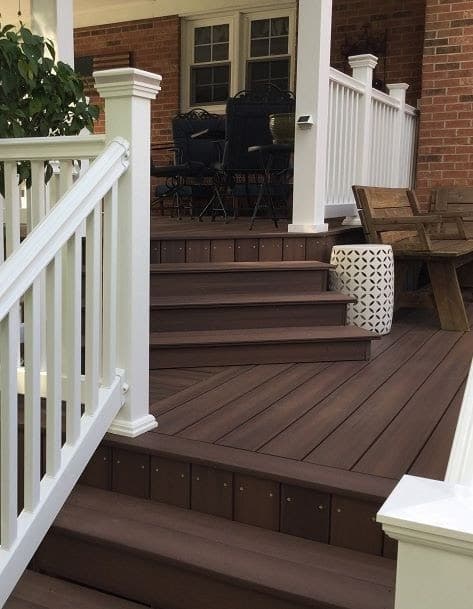
A single consistent chocolate-brown finish reads as more modern than a variegated one, especially paired with clean linear deck shapes and adjacent concrete elements. The contrast between warm wood and cold concrete is the real visual payoff here.
Related: 31+ Creative DIY Deck Fire Pit Ideas and Designs (With Pictures)
6. Reddish Brown, Organic Curves
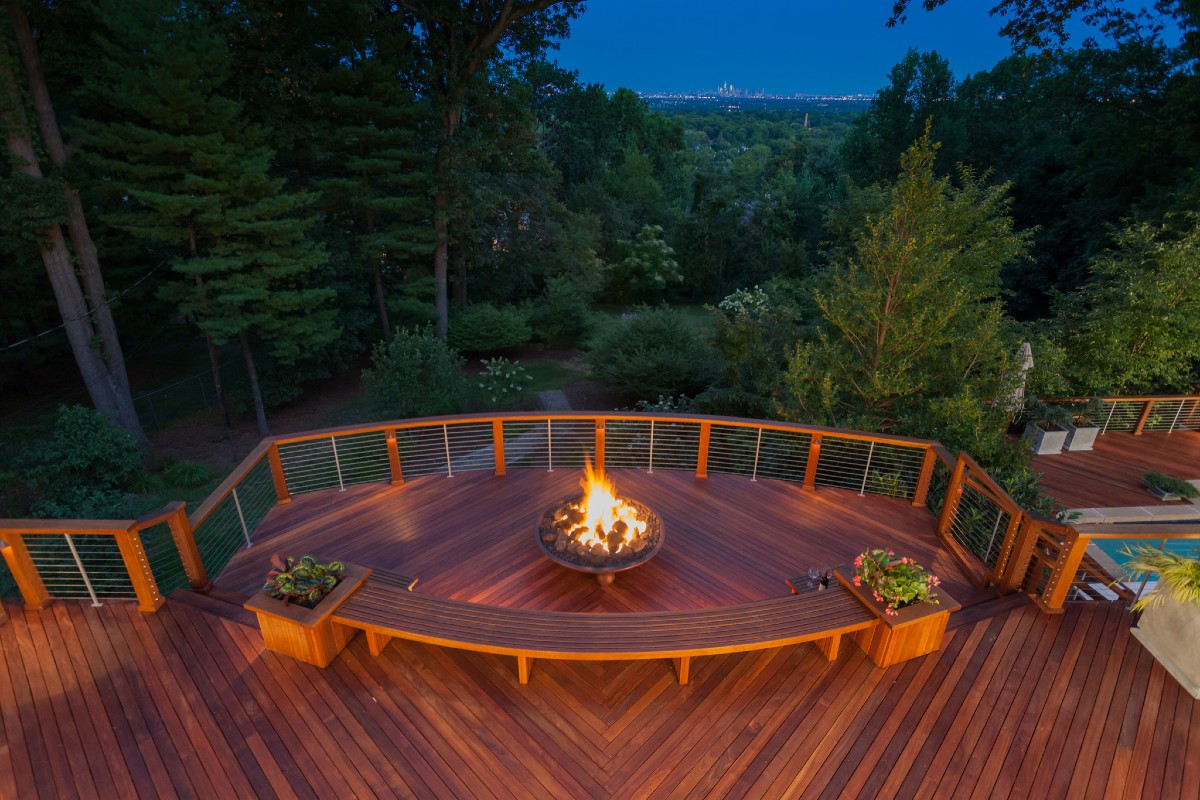
Reddish undertones make surrounding greenery pop by contrast, and pairing that warm tone with a curved rather than rectilinear deck shape reinforces an organic, blend-into-the-landscape feel rather than a structure that stands apart from it.

Related: 35+ Simple Covered Deck Ideas and Designs On a Budget (Photos)
7. Cool Mid-Toned Brown
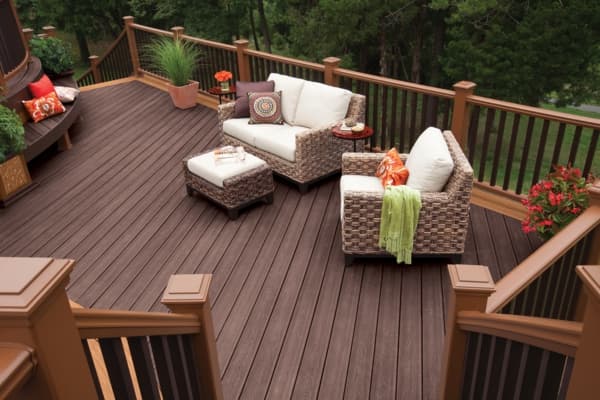
Worth considering against a white house specifically.
A grayer, cooler-leaning brown creates gentle contrast against white siding without clashing, and white trim or railings tie the two together. It also works reasonably well against tan or gray exteriors.
Related: 35+ Awesome Deck Steps and Stairs Ideas and Designs (With Pictures)

8. Pale, Light Wood

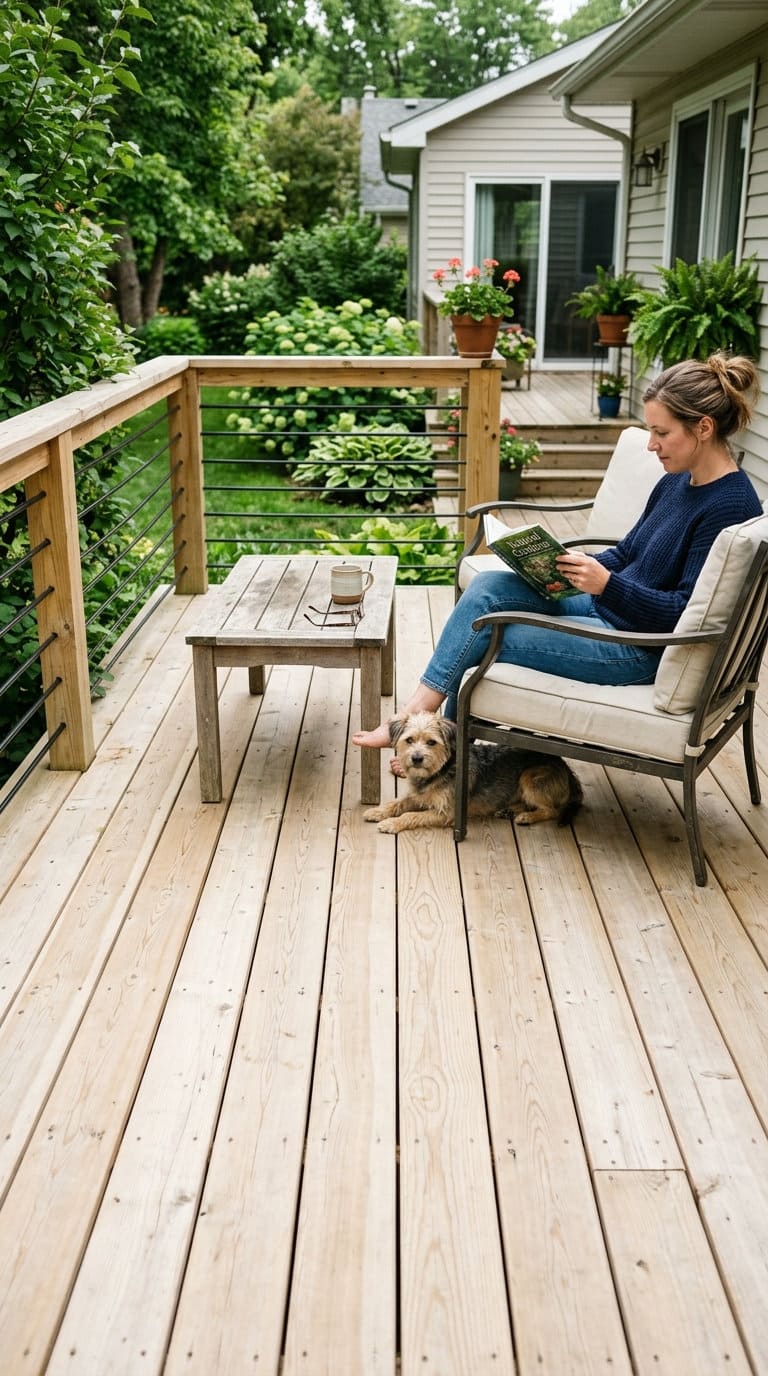
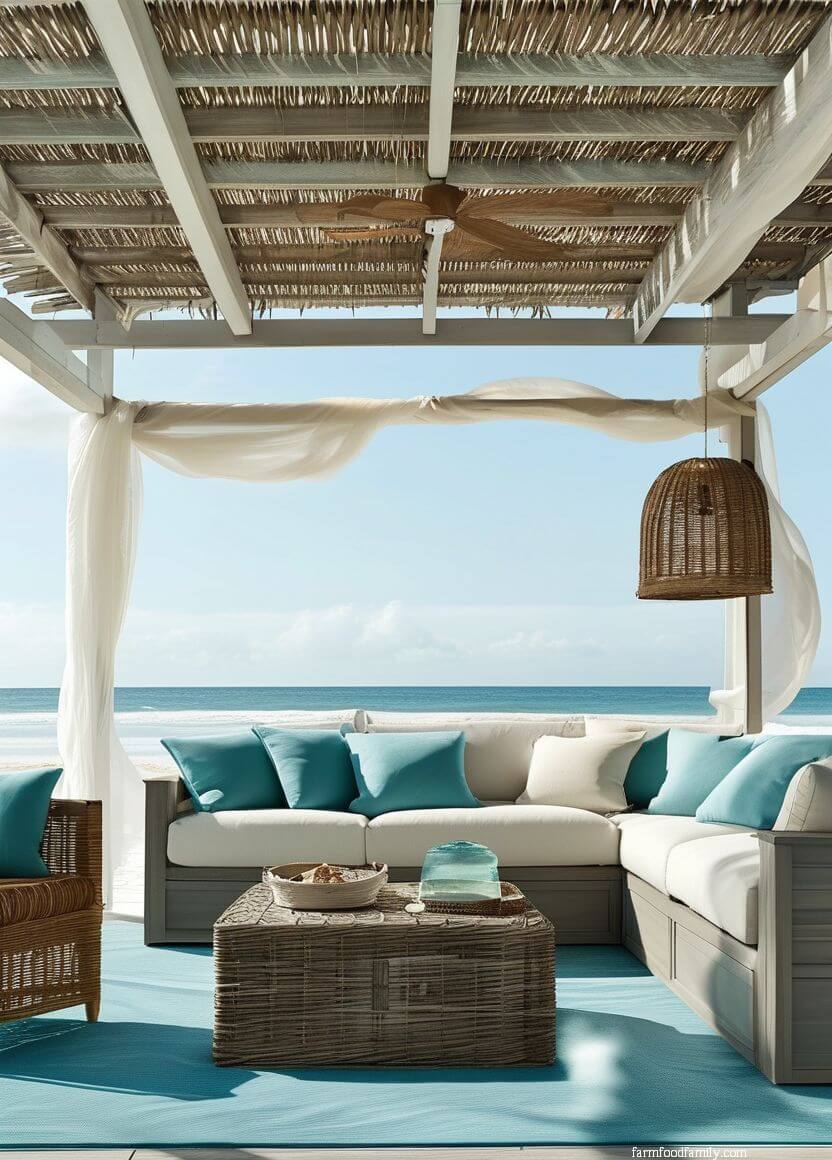
A light wood tone supports a beachy feel and pairs naturally with lighter homes.
Against a darker house, the same pale tone becomes a deliberate contrast move, especially effective paired with navy or forest green trim for a more contemporary look.
Related: 35+ Best Deck Shade Ideas and Designs (With Pictures)
The average homeowner spends $616/year on yard fixes that don't address the real problem. Find out what yours actually is — before you spend another dollar.
Take the Free Quiz9. Gentle Gray Wash
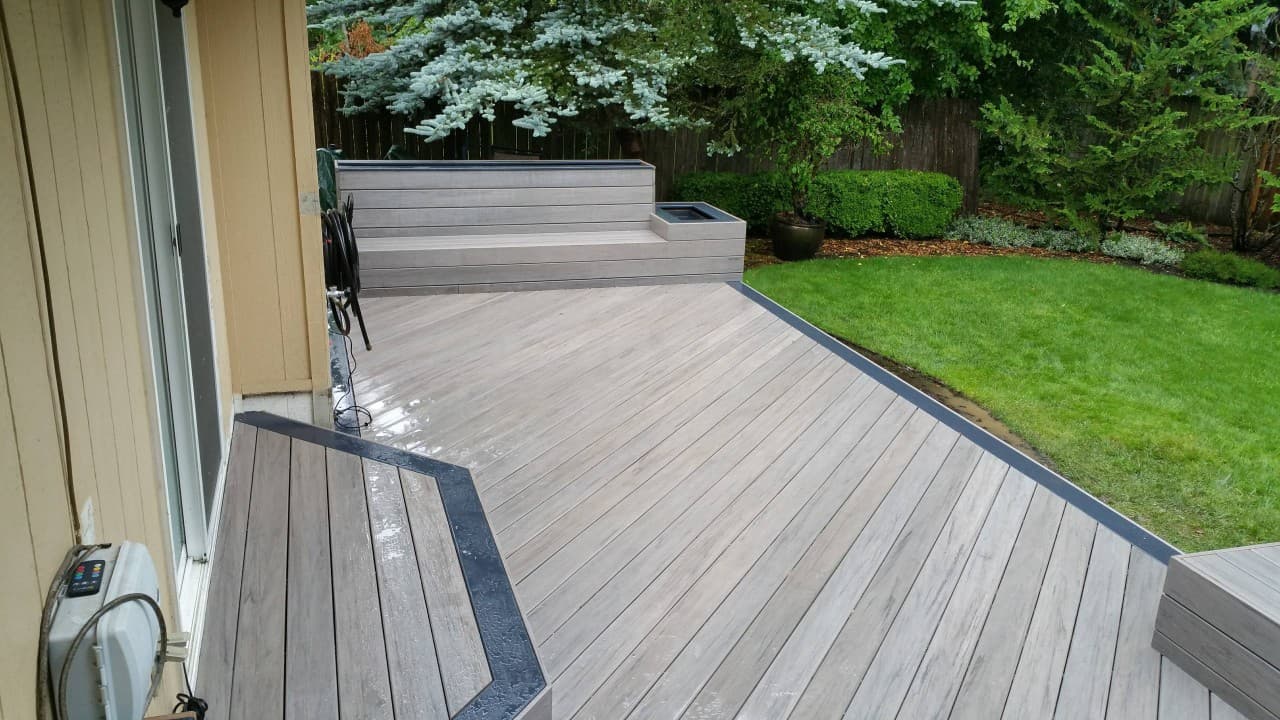
A gray wash lets the natural wood grain show through subtle color variation rather than flattening it into a solid tone.
It reads as understated and versatile, comfortable on both a historic property and a more contemporary one.
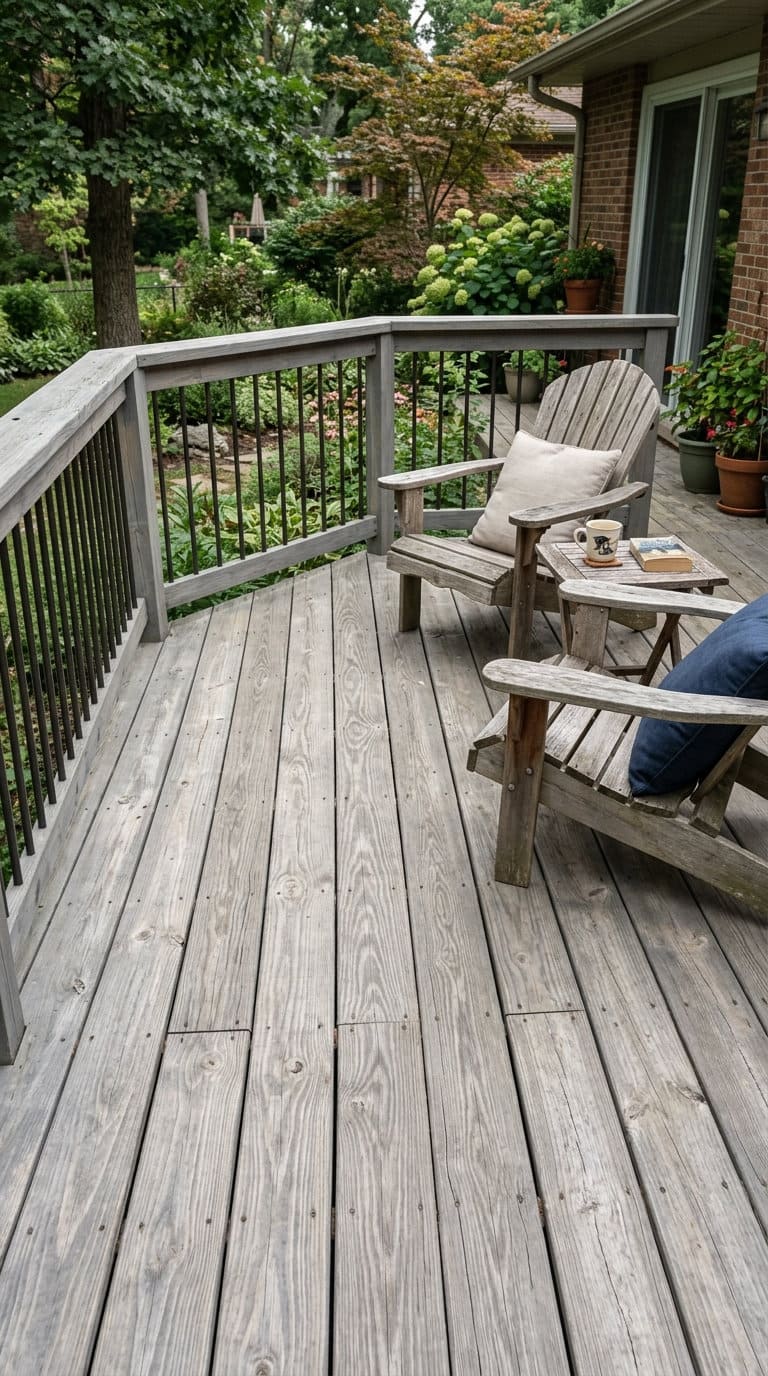

10. Modern Multi-Level Deck
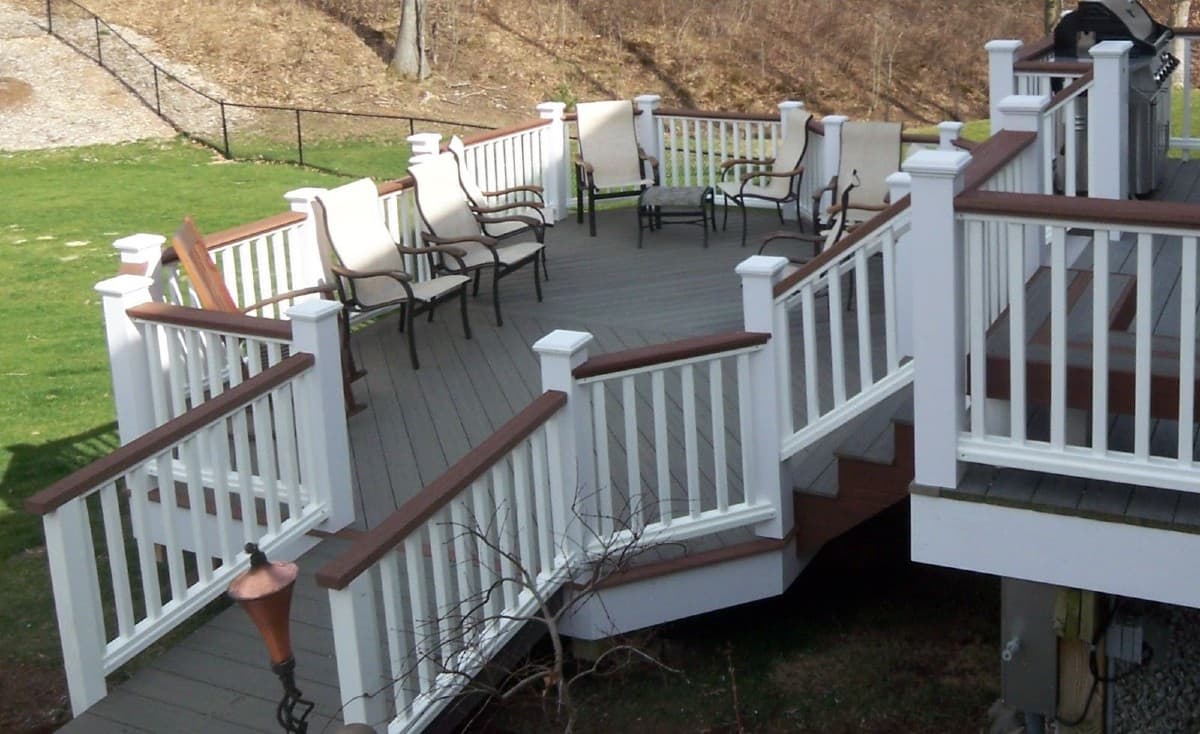
A reddish-brown deck with a hint of gold, paired with horizontal privacy fencing and transparent lower railing, reads as distinctly more modern than a standard picket-and-solid-board approach.
Works with white trim or, for more contrast, navy blue accents. For more on the railing itself, see porch railing ideas and DIY deck railing ideas.
Related: 35+ Best Deck Skirting Ideas and Designs
11. Cedar with a Pergola

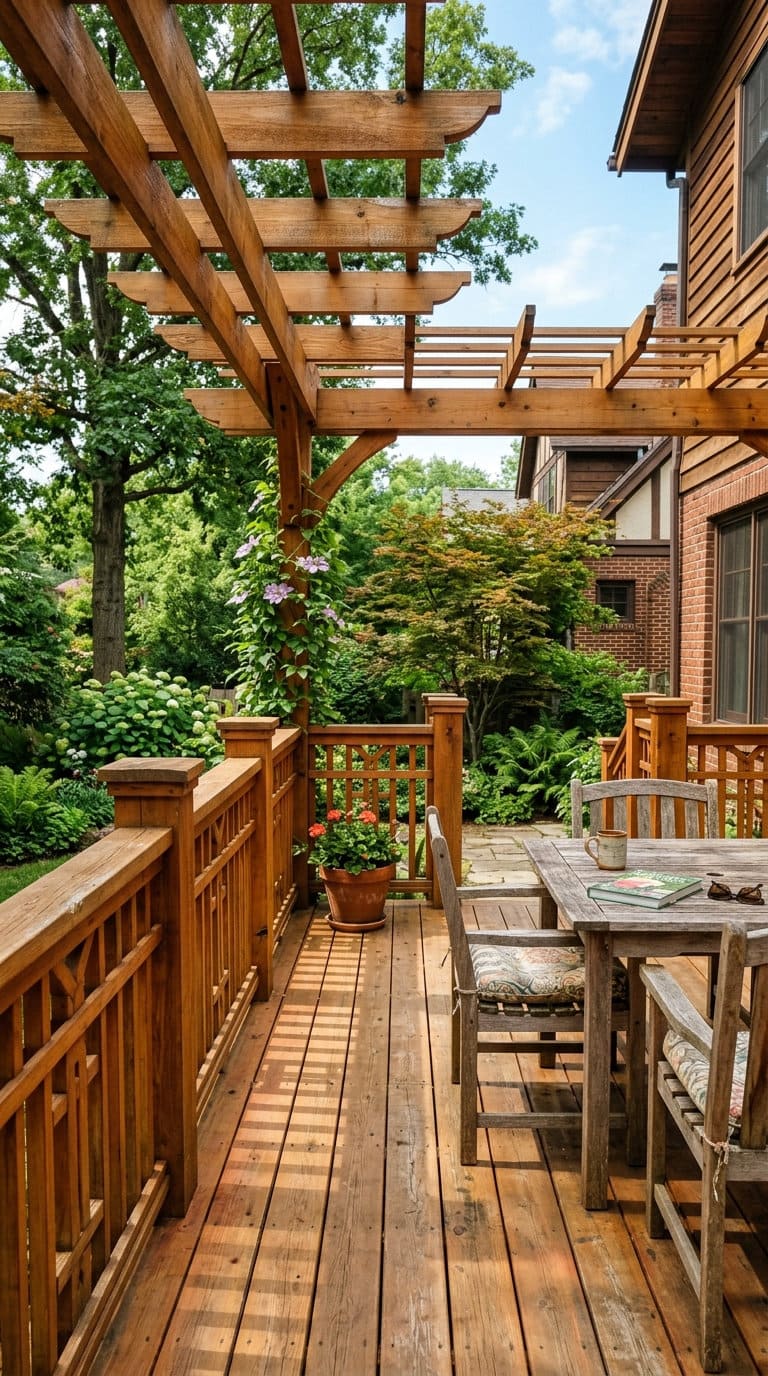
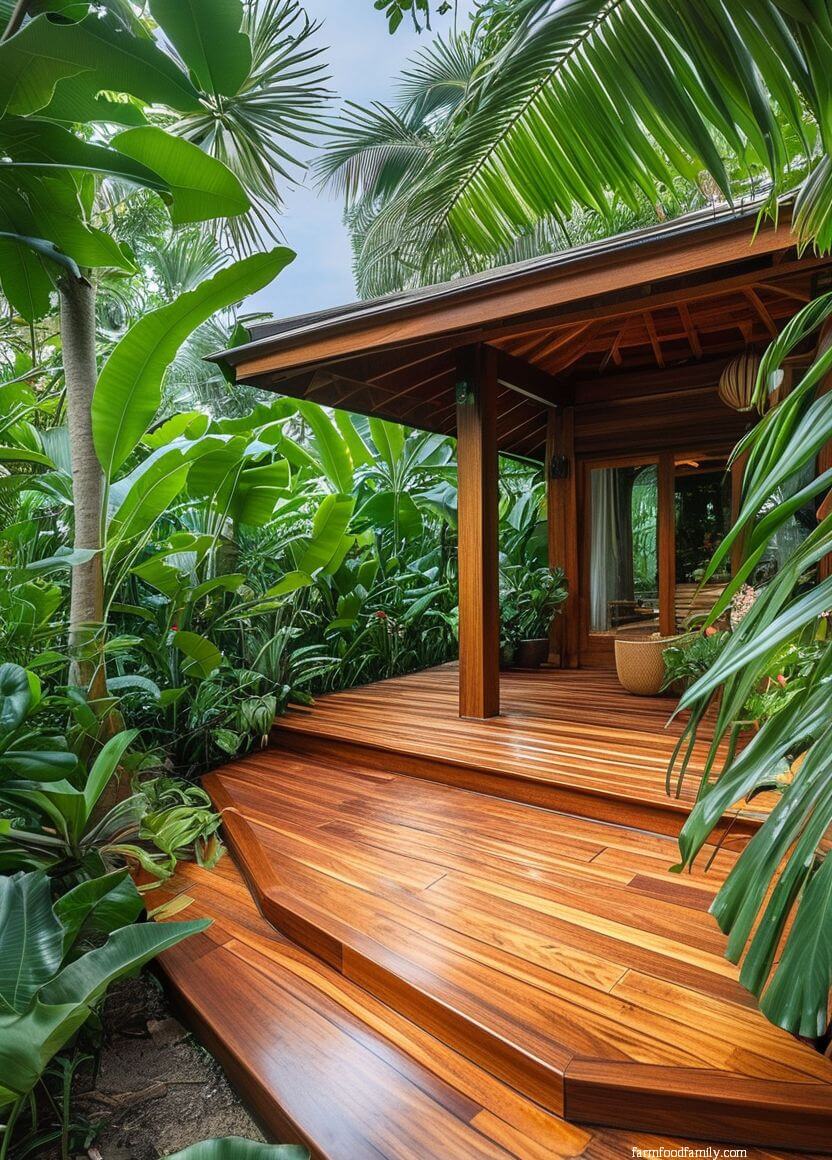
Cedar is a genuinely practical choice in damper climates since it’s naturally water-resistant, and its warm golden-to-crimson undertone pairs well with a pergola and traditional arts-and-crafts detailing on posts and railings.
Related: 55 Easy and Cheap Floating Deck Ideas For Your Backyard
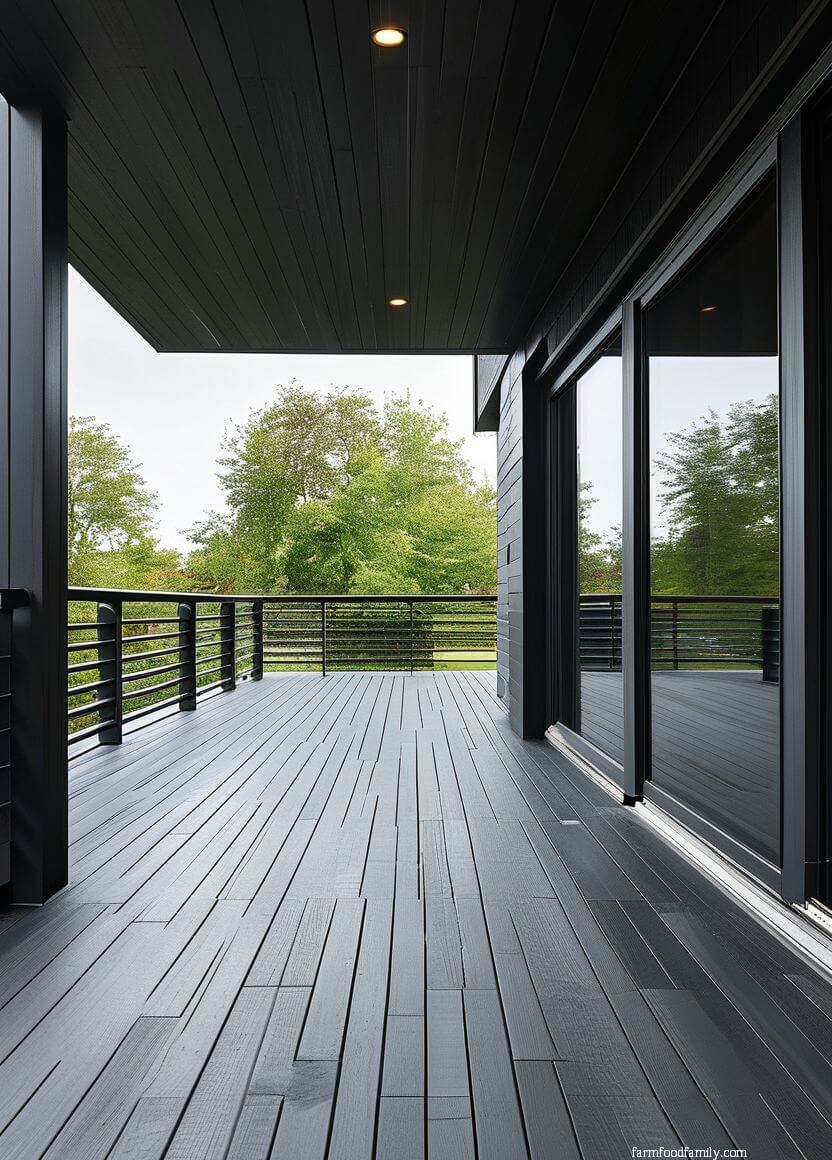
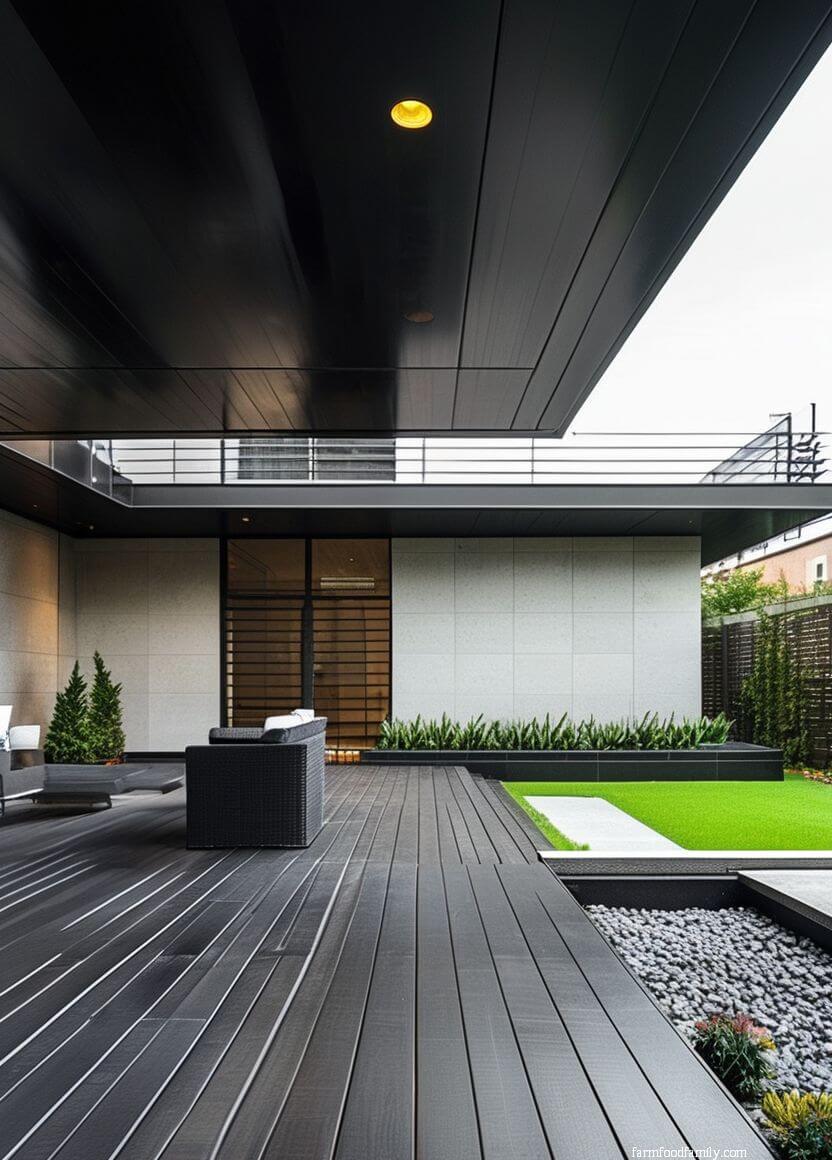
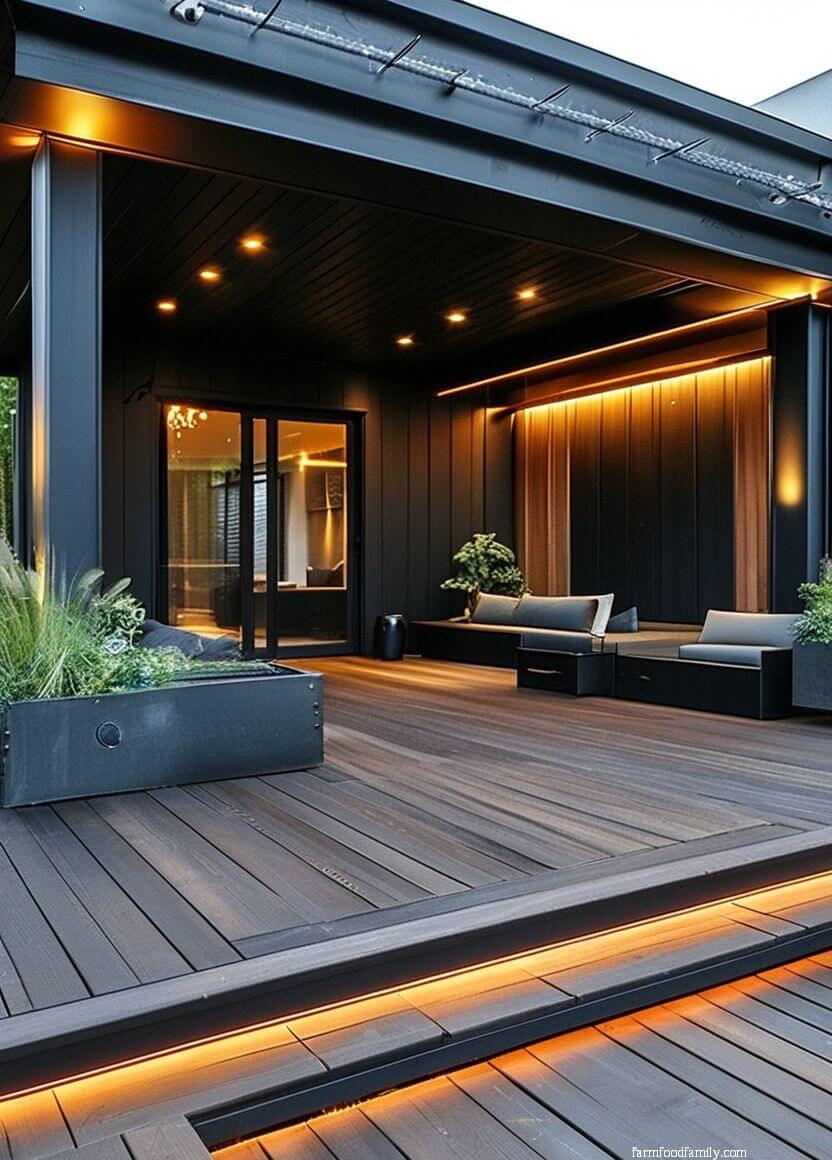
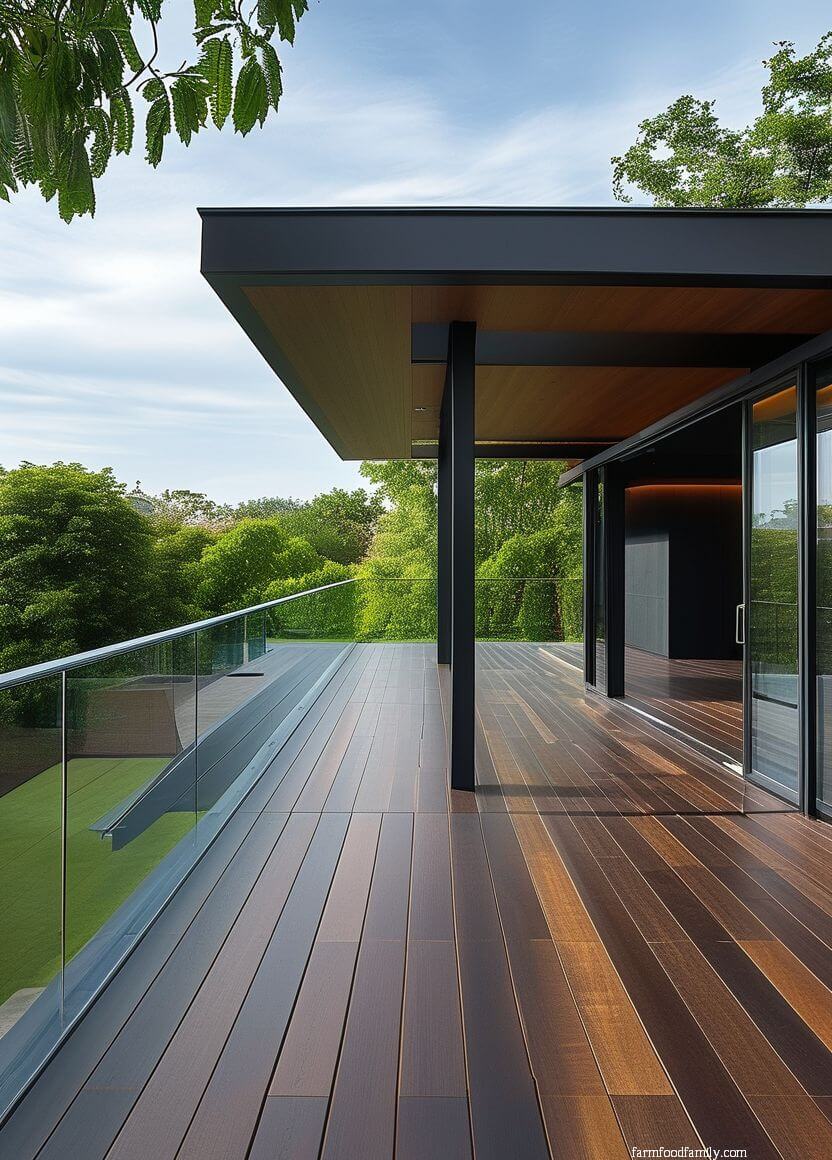
12. Charcoal Gray, Modern
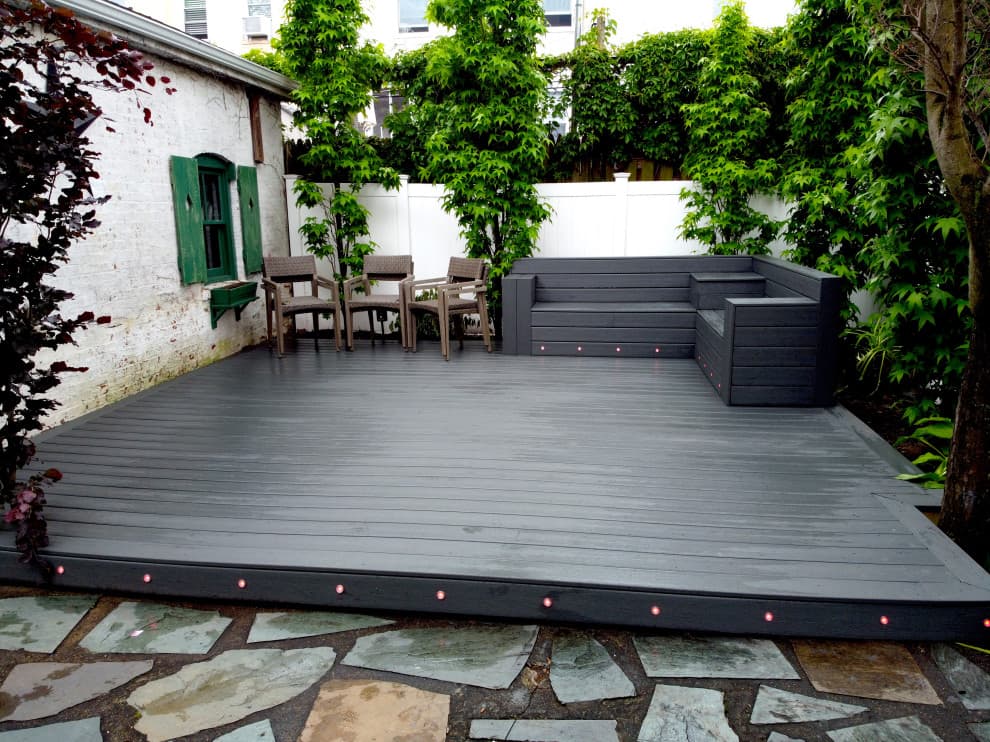
Charcoal is one of the strongest moves toward a modern look without committing to full black. Paired with white trim and clean lines, it keeps the wood grain visible while still reading as a deliberate, contemporary choice, especially against lighter-colored homes.
13. Golden Herringbone
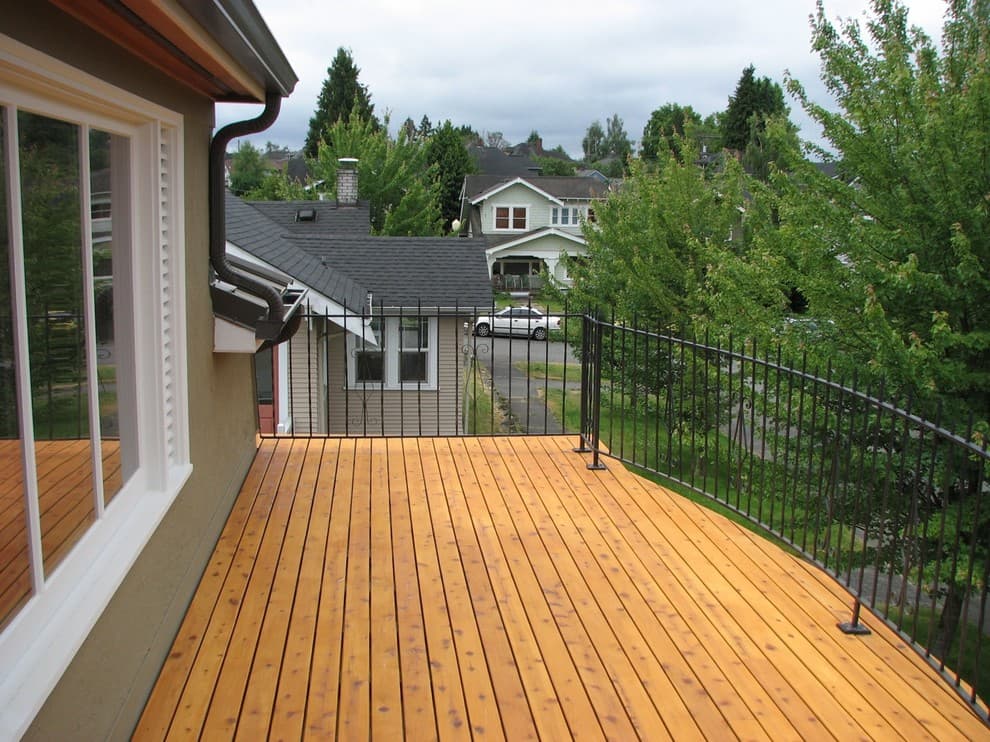
An oak-toned deck with a herringbone-pattern section on some levels reads as classic or transitional rather than trend-driven.
If your home has oak flooring, this is a genuine way to visually extend an interior material outdoors. Pairs well with cooler home exteriors, softer greens and blues especially.
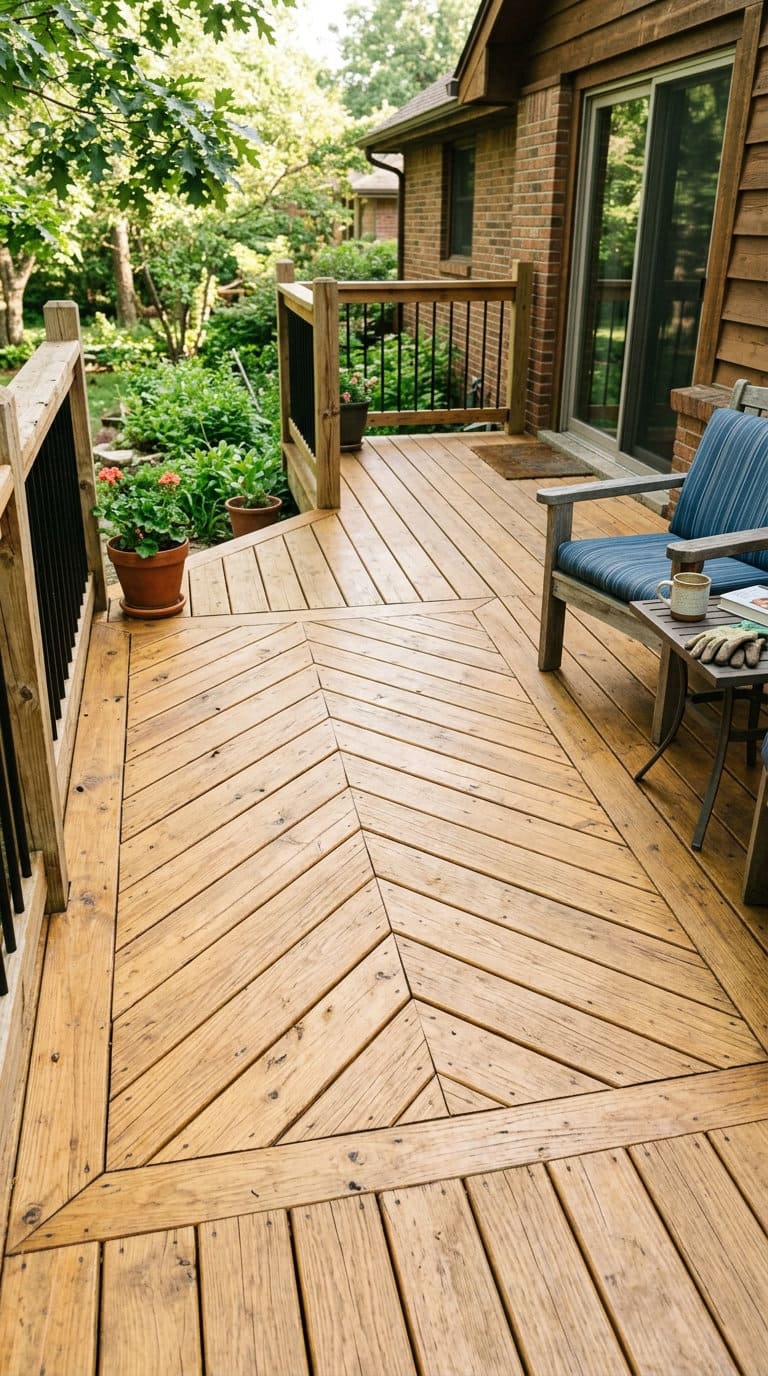
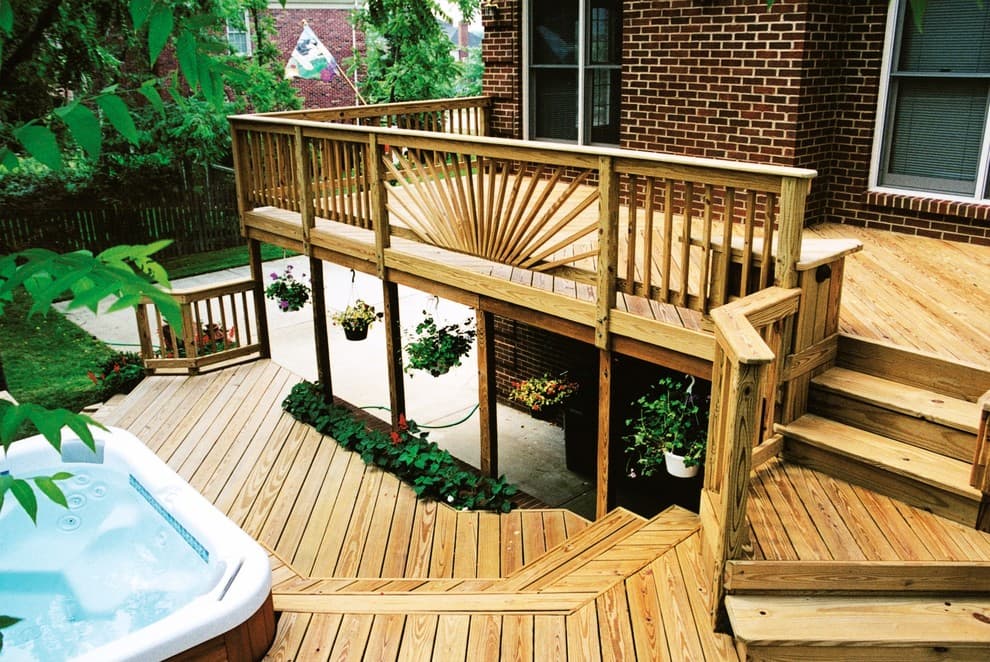
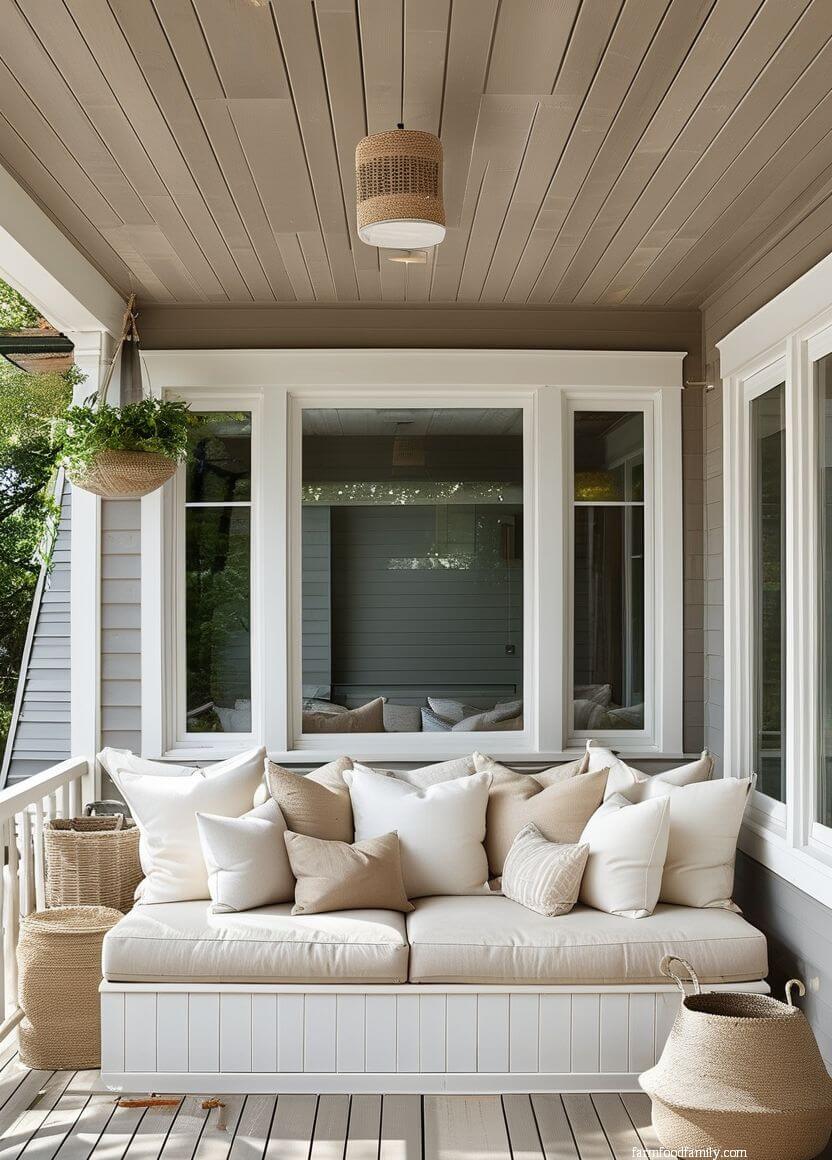
14. Light Greige

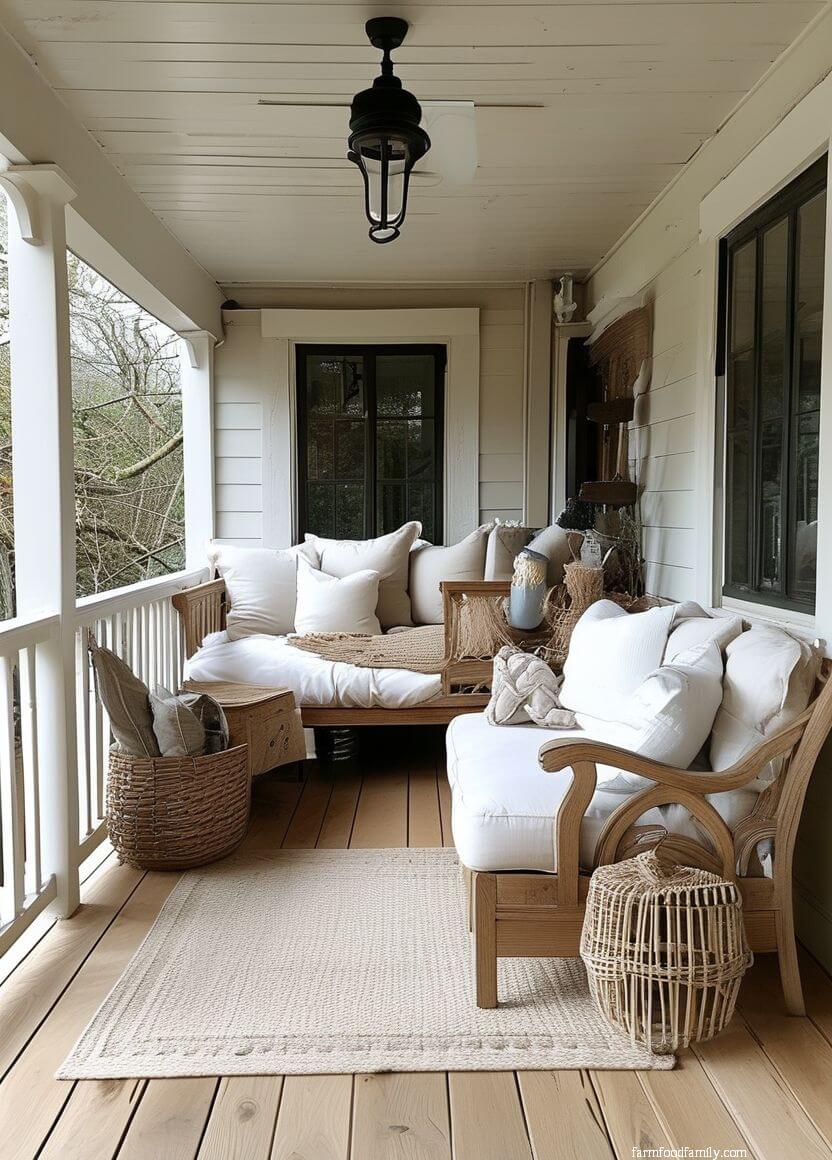
Greige splits the difference between warm and cool, which makes it one of the most broadly compatible neutral choices on this list.
It’s a safe, adaptable pick if you like a lighter deck but aren’t confident matching a specific color to your house, and it pairs with most brick tones except yellow-leaning ones.
15. Two-Tone Multi-Level
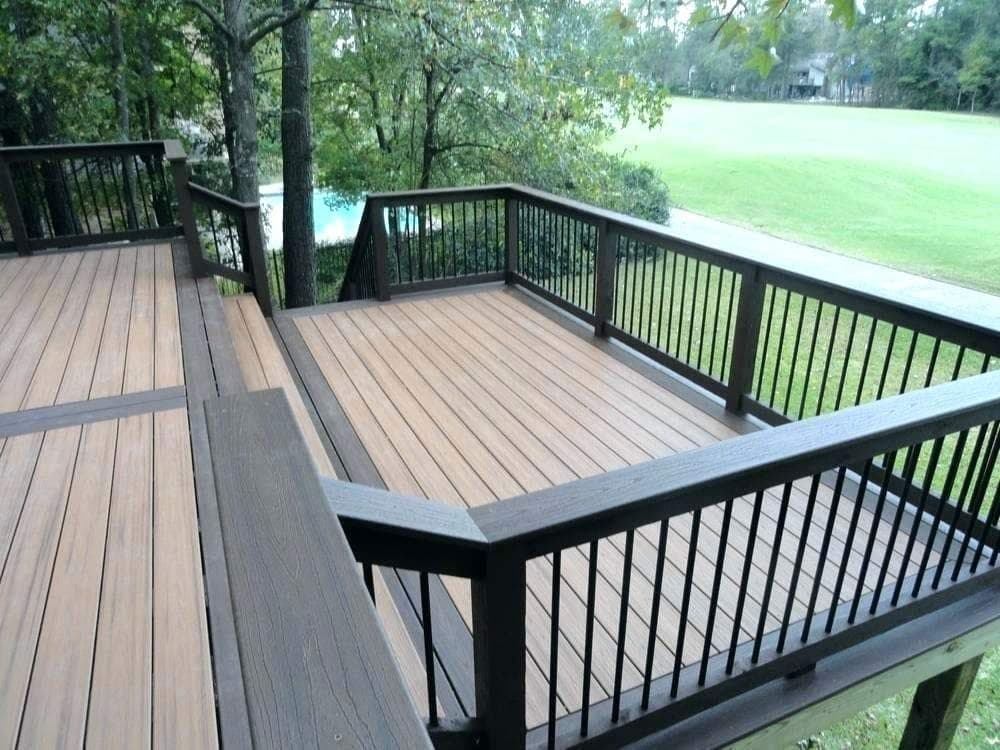
Using two distinct browns, one with a warmer reddish tint, one cooler and more neutral, across different deck levels gives each level its own visual identity while still reading as one cohesive design. It also doubles as a practical way to highlight step transitions for safety.
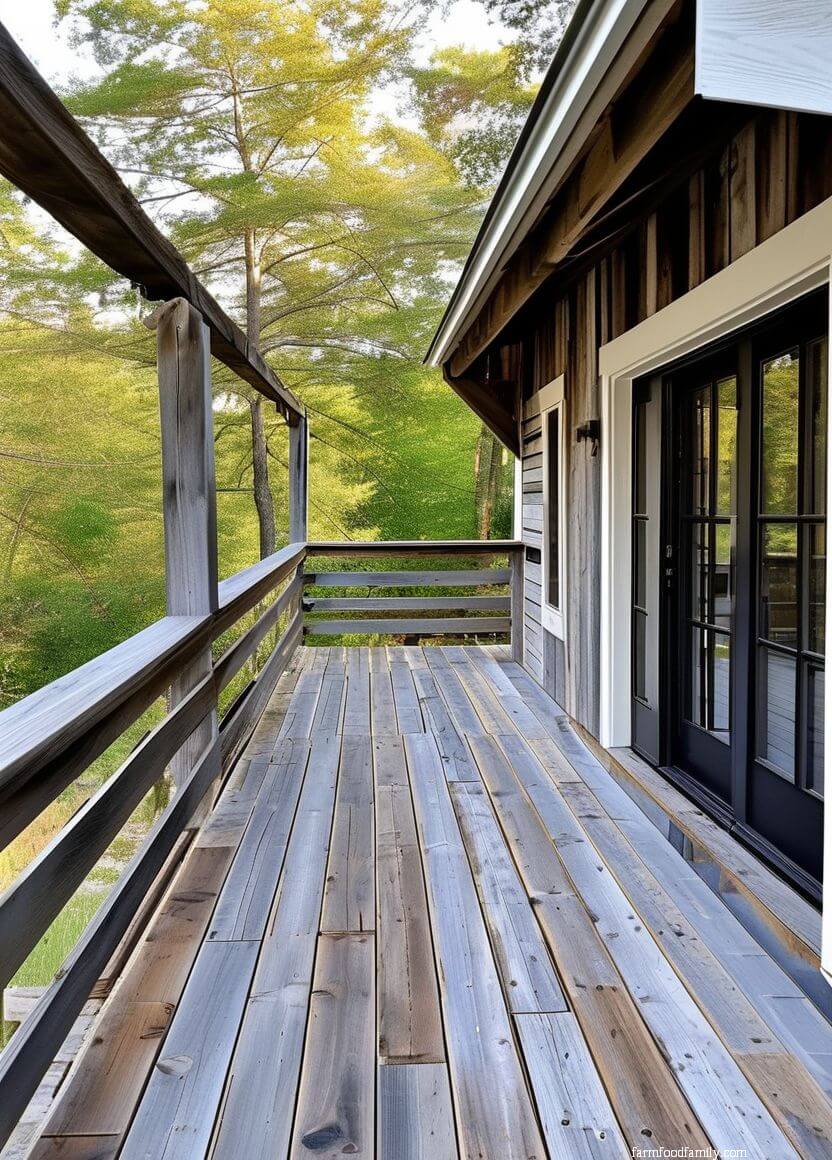
16. Gray Stain, Driftwood Look
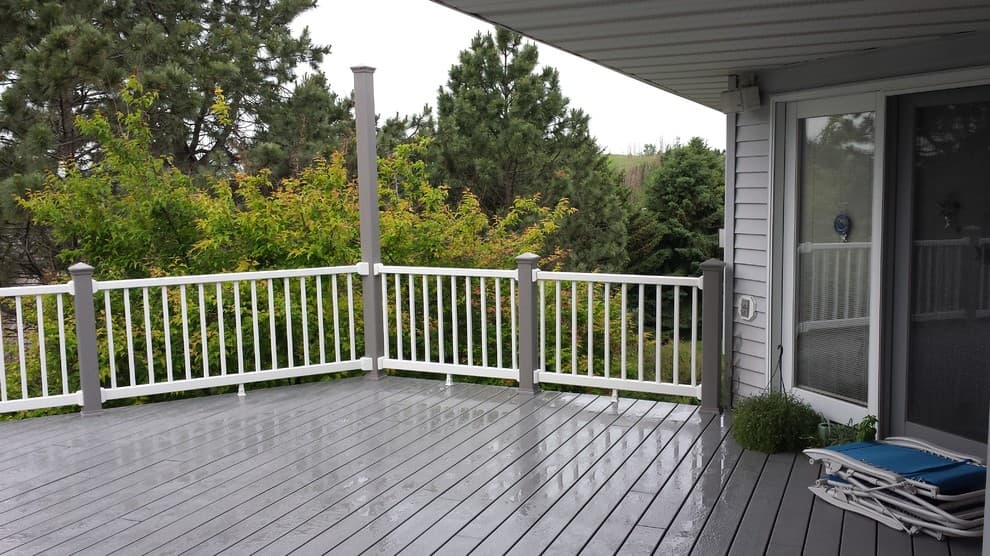
A gray, driftwood-style stain leans coastal and works especially well in sunny climates. It reads as contemporary against straight-lined boards, and pairs with a wide range of exterior colors, blue, charcoal, even black, plus brighter accent colors like coral or turquoise if your palette skews playful.
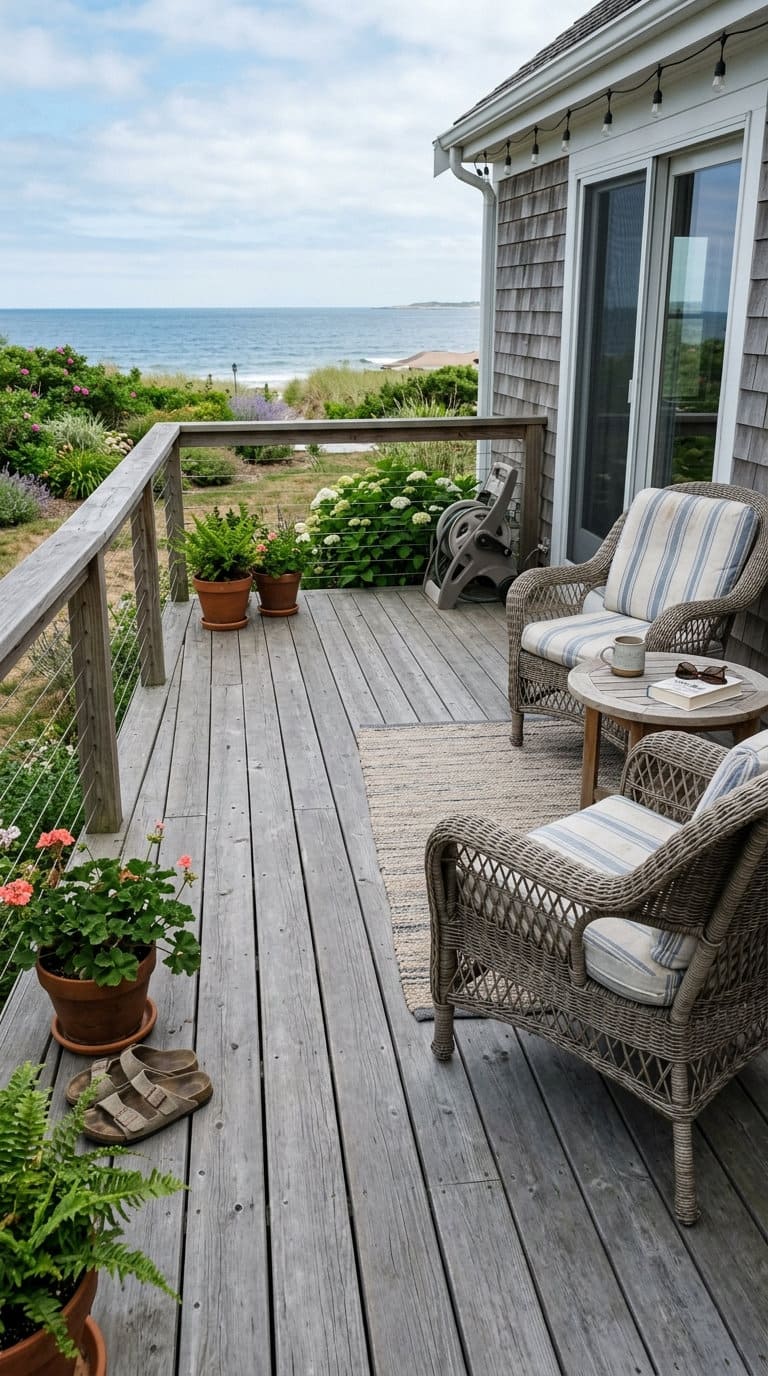
17. Bluish Gray, Flat Finish
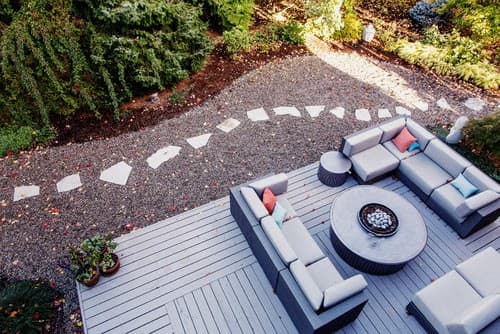
A cooler, more subdued gray with a flat rather than glossy finish. Works well as a quieter alternative to a driftwood gray when you want the neutral-gray benefits without the more textured, weathered look.
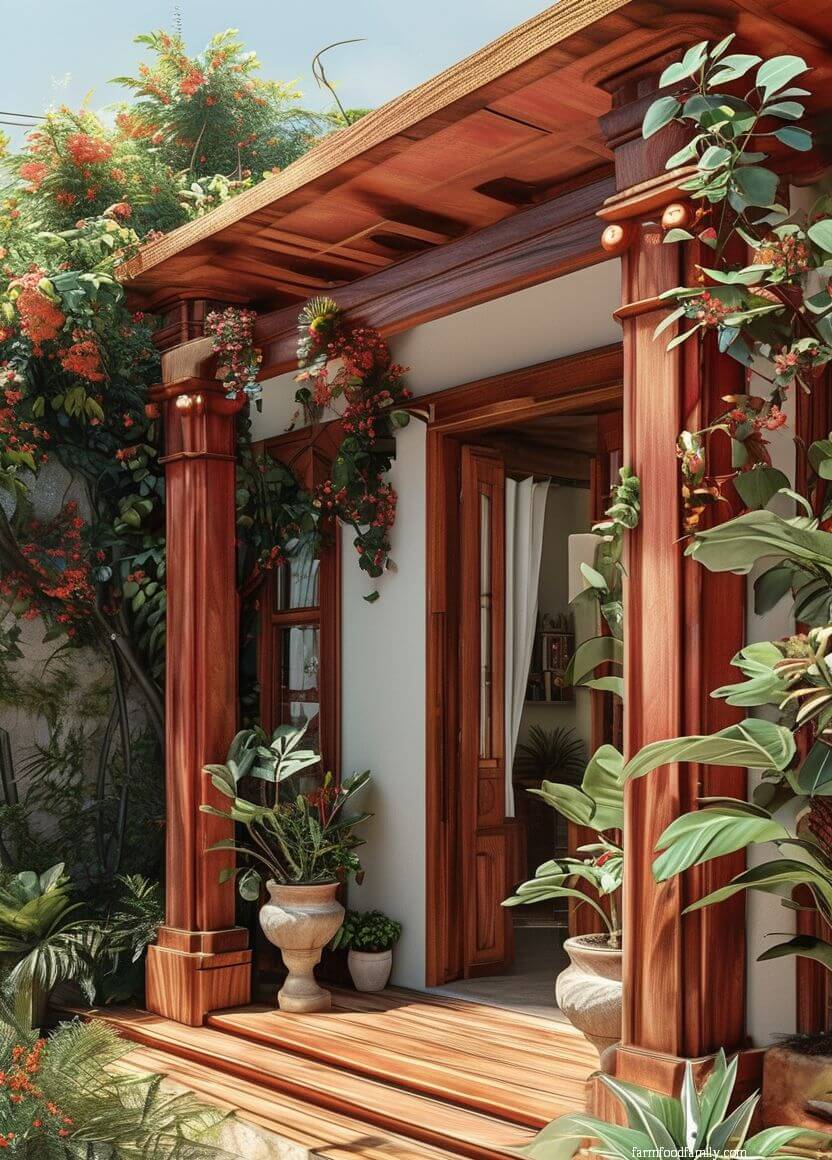
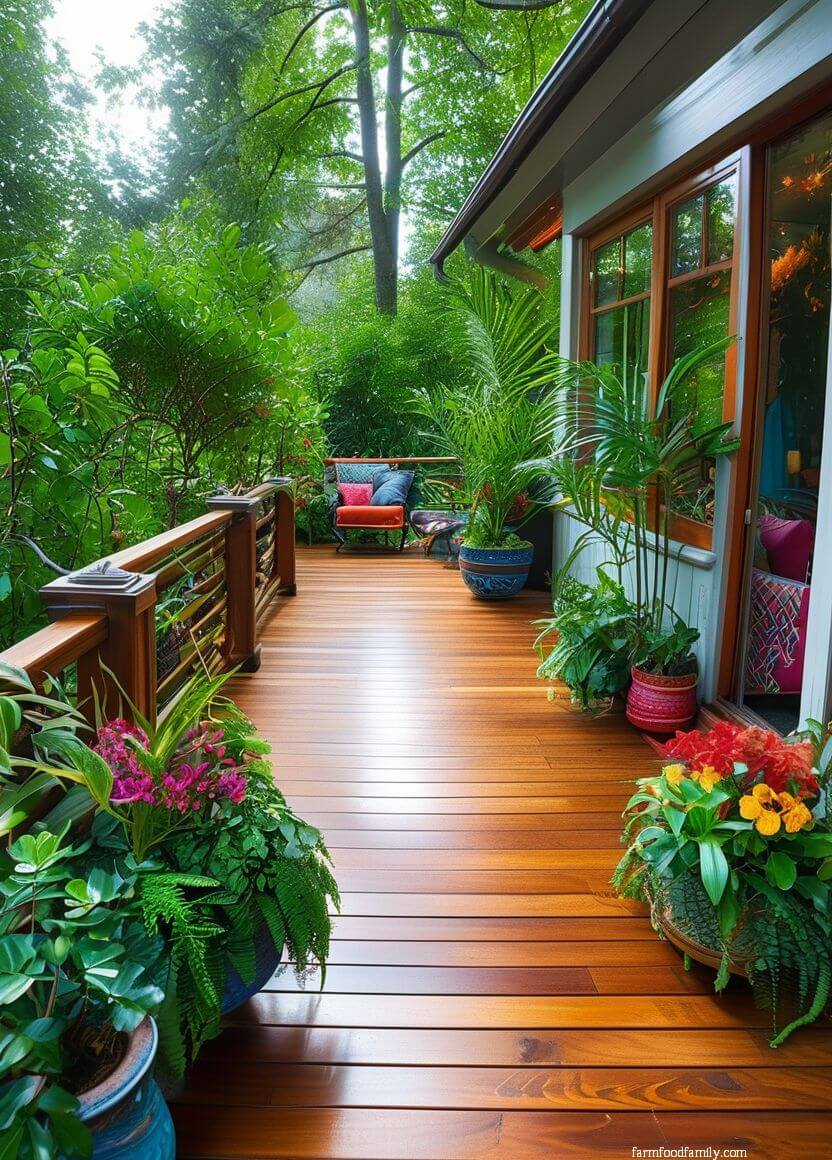
18. Natural Mahogany
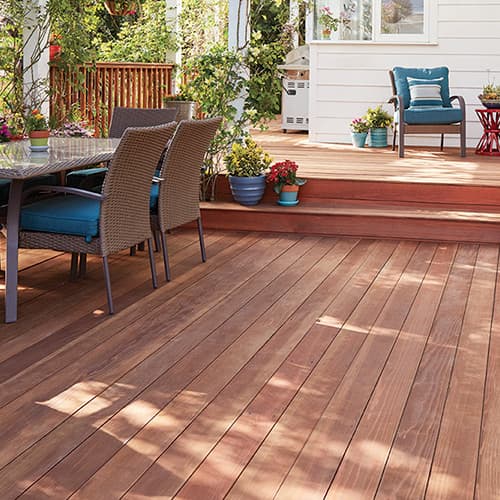
Letting mahogany’s natural mid-toned color, with honey and gold overtones, show through works well against light or cool-toned homes.
It’s less reliable against warm exterior colors like red brick or yellow-leaning paint, but a strong pick for blue or white houses specifically.
19. Almost-Black Deck
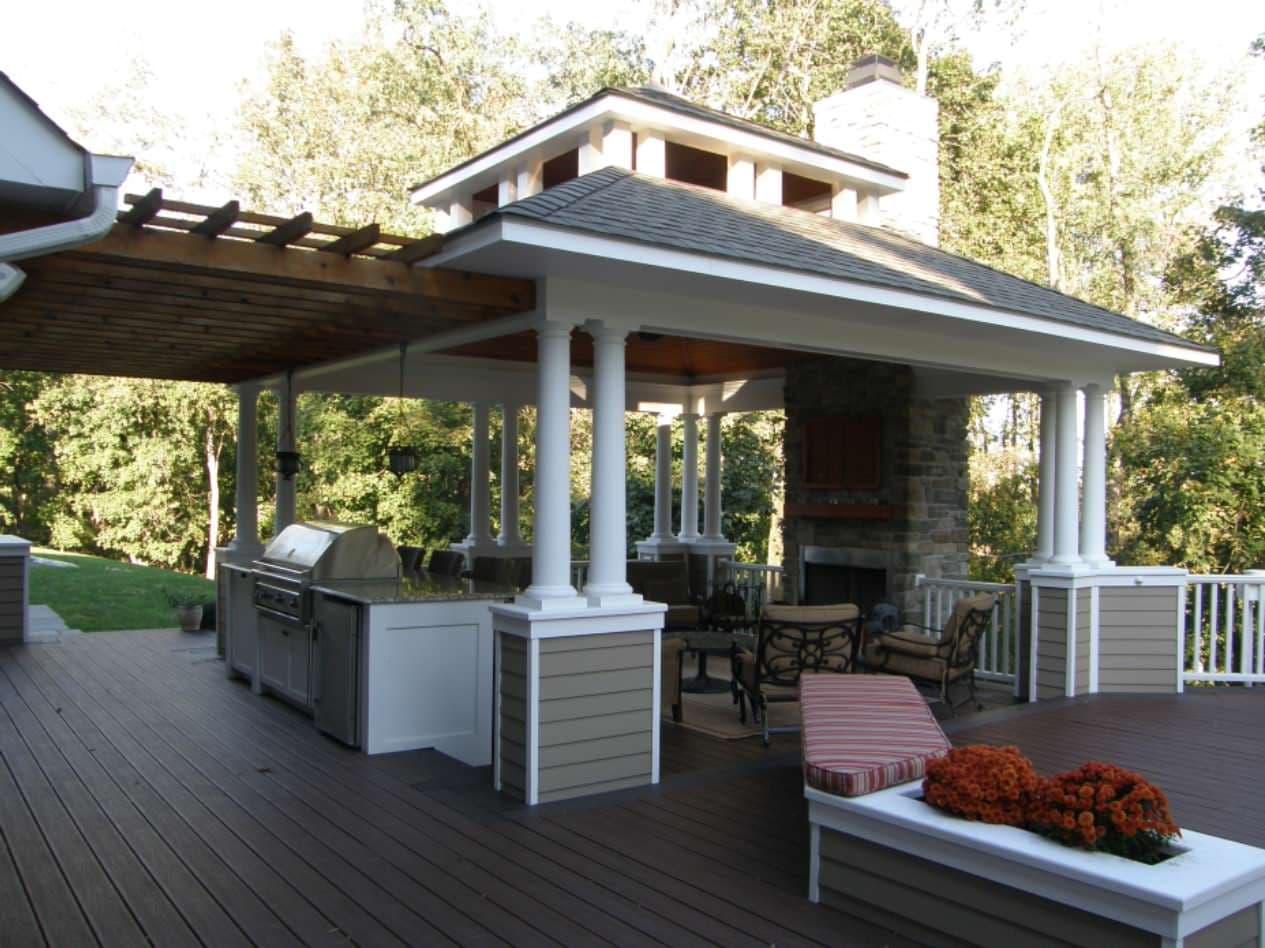
A near-black, cool-toned dark brown creates strong contrast against a white house, especially with white pergola posts or columns reinforcing the depth. This is a bold, high-contrast choice, best reserved for lighter-colored homes rather than already-dark exteriors.
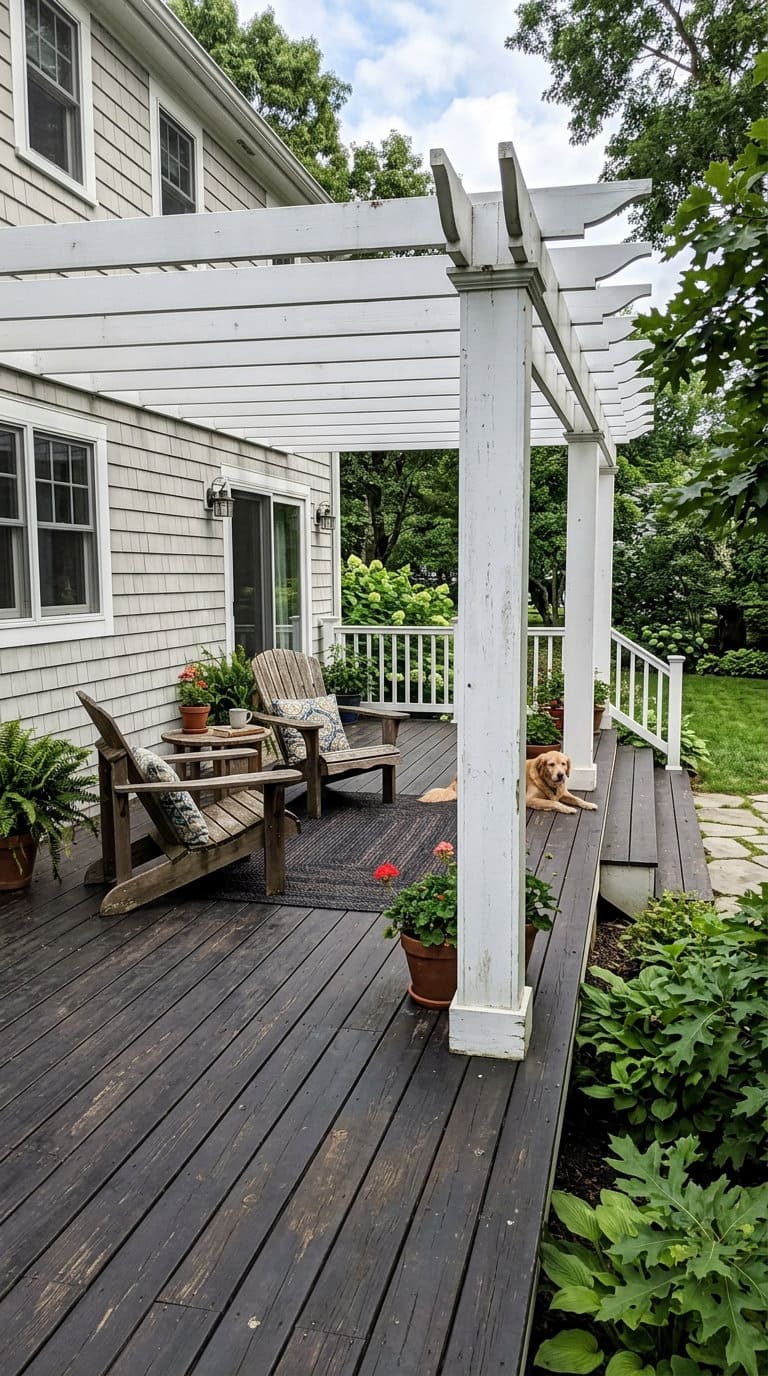
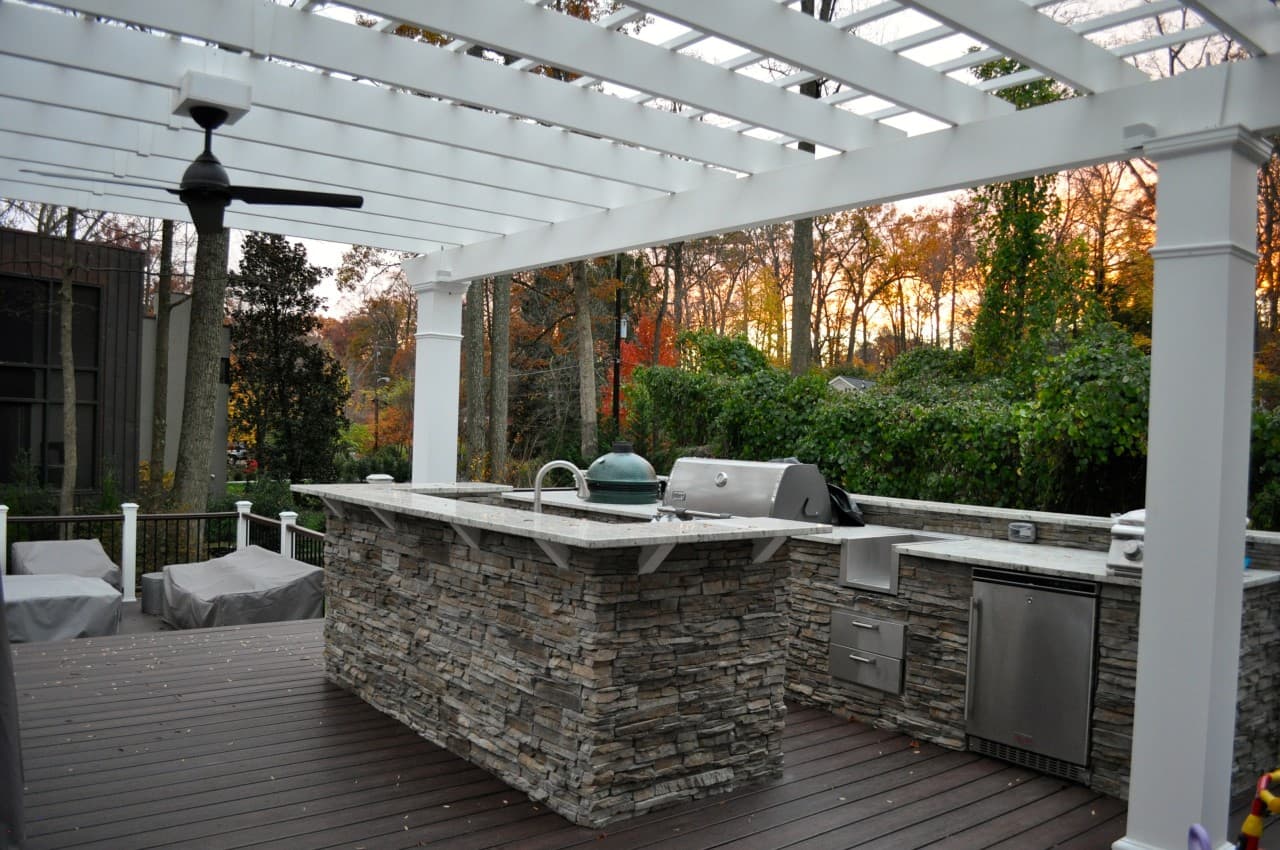
20. Honey-Colored Boards

A warm honey tone offers comfort without the visual weight of red-leaning stains, and it’s flexible enough to sit well against a range of neutral house colors, white included.
Straight board layout with gray planters gives it a clean, contemporary feel while still working in a more rustic setting.
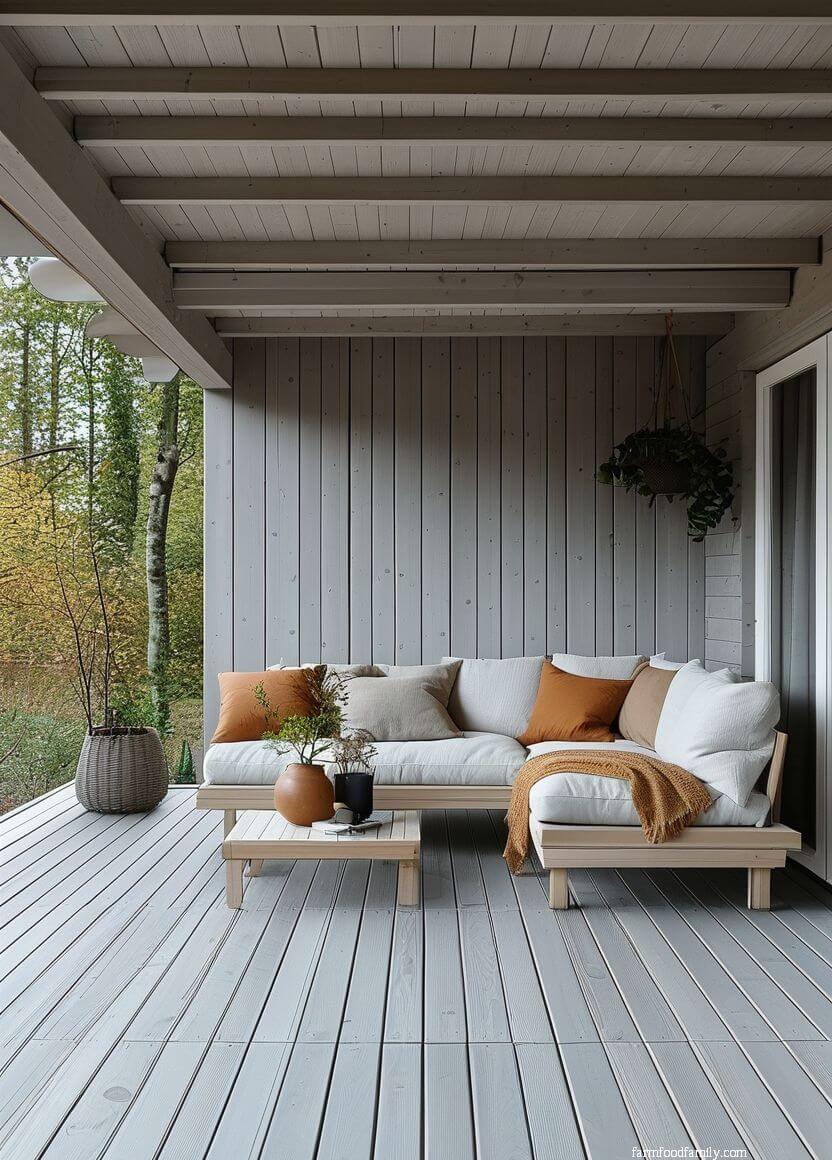
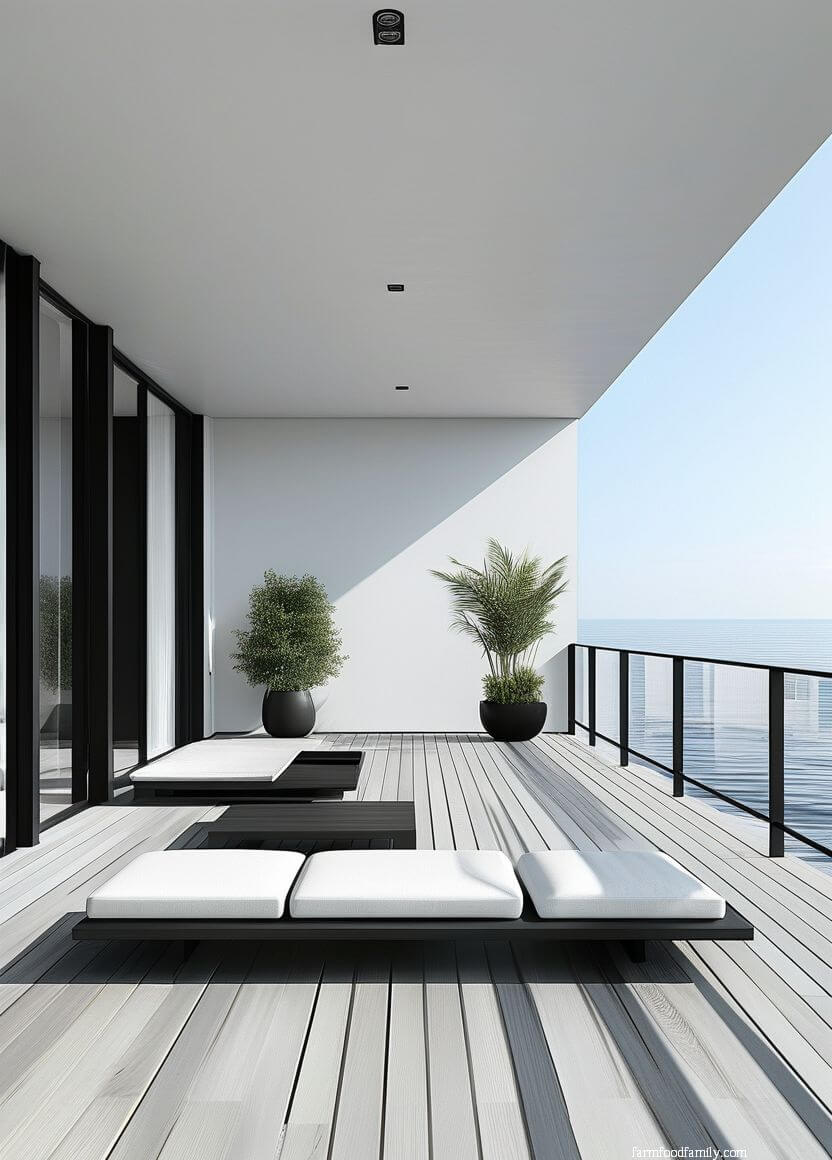
21. Grey
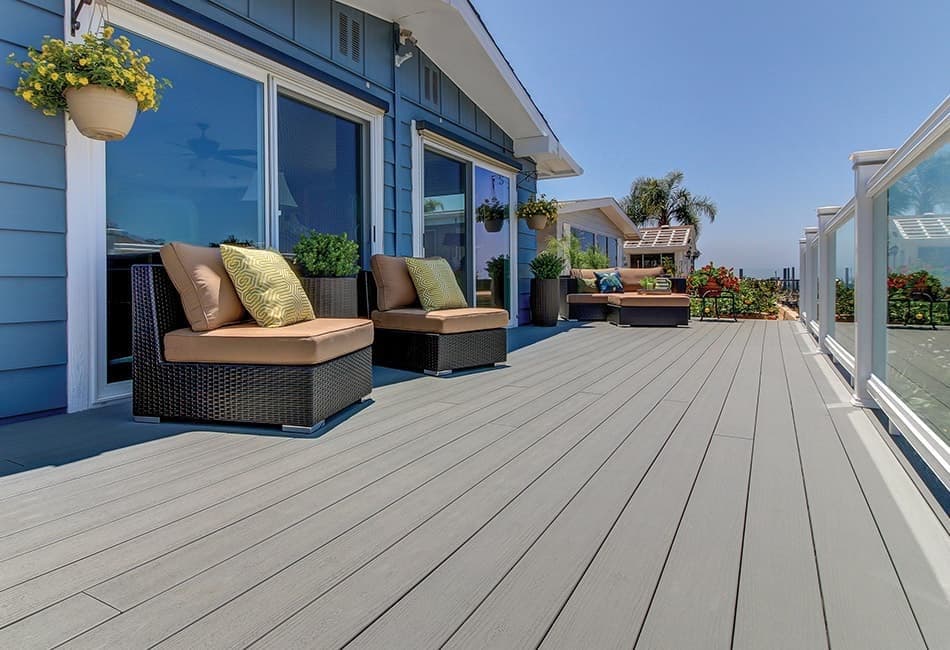
Grey has resurfaced as a go-with-everything neutral after a period of being regarded drab and uninteresting. Grey deck stains or wood paint give a wood deck personality.
Grey is available in a wide spectrum of cold and warm hues, ranging from mild marble to dark charcoal. Grey acts as a bridge between these opposites, so any of these colors look well on a white or neutral home with dark trim.
22. Real Slate
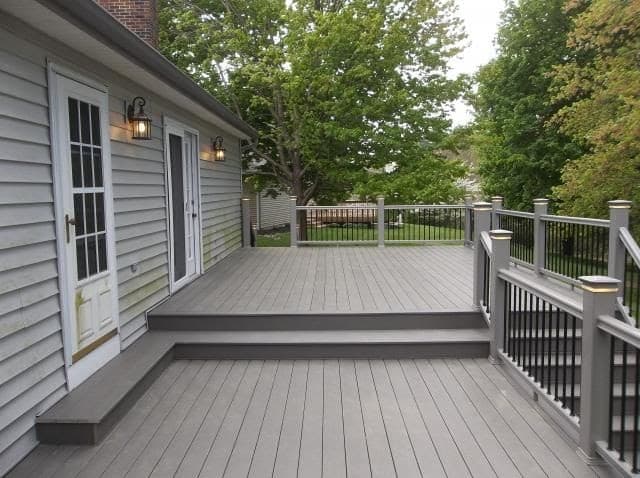
If you want a genuinely different material rather than another wood stain, slate brings a dark, cool stone look, most practically achieved via tinted or stamped concrete rather than actual slate tile, since real slate gets slippery when wet and isn’t a great decking surface on its own.
23. Stain
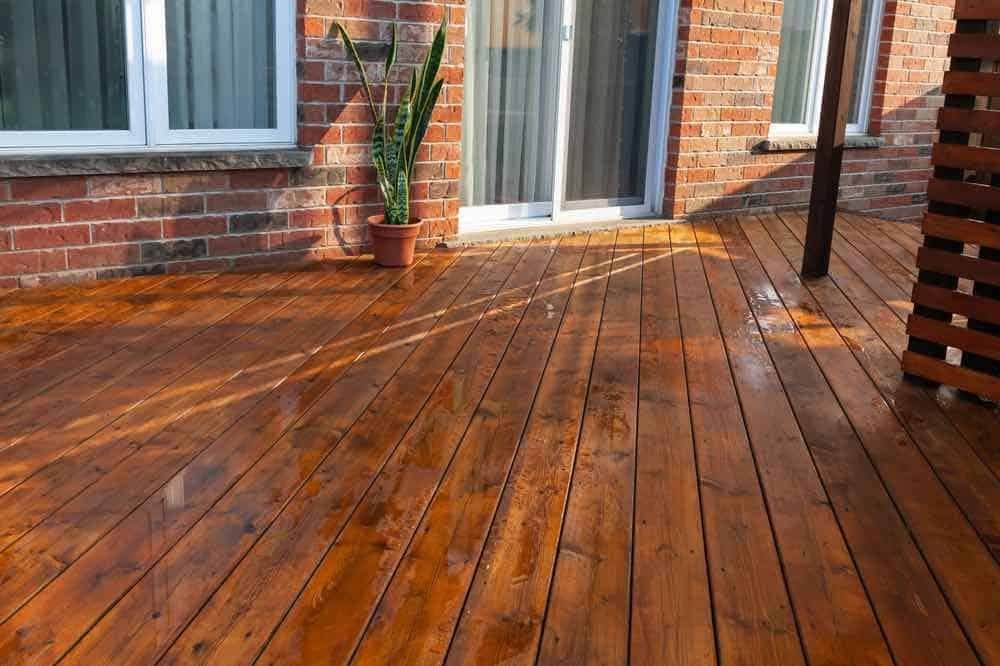
Deck stain not just gives your deck the shade you choose, but it also preserves it from the weather. The kind of deck stain you select will affect how much of the wood’s inherent qualities are visible.
24. Stain that is solid
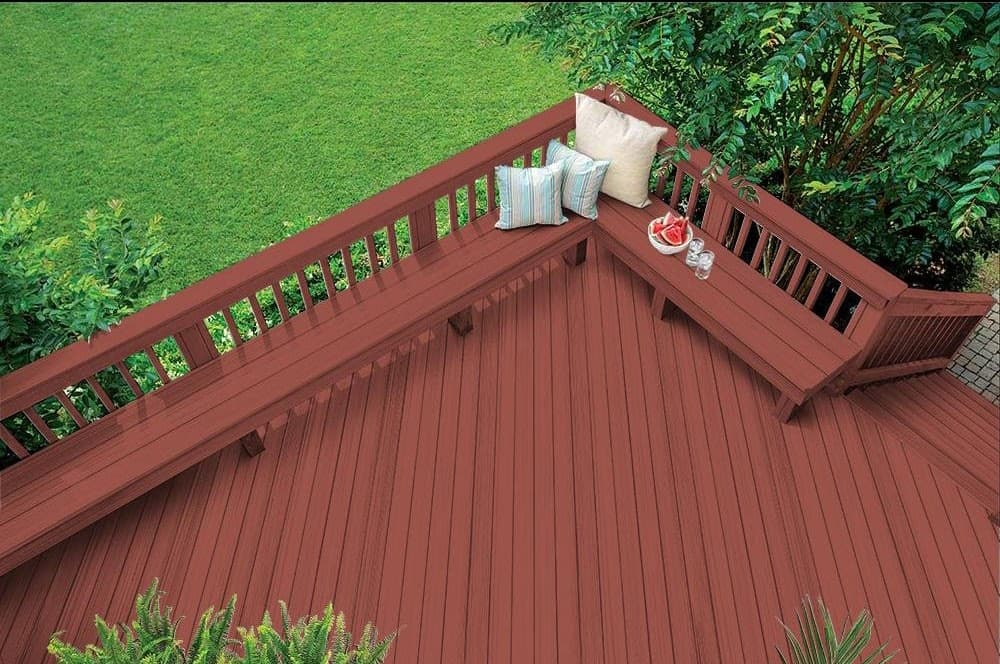
Like paint, it makes up the majority of the grain and color of the wood. If your deck color plans include obtaining a dark, consistent appearance, solid deck stain is the way to go.
25. Stain that is semi-transparent
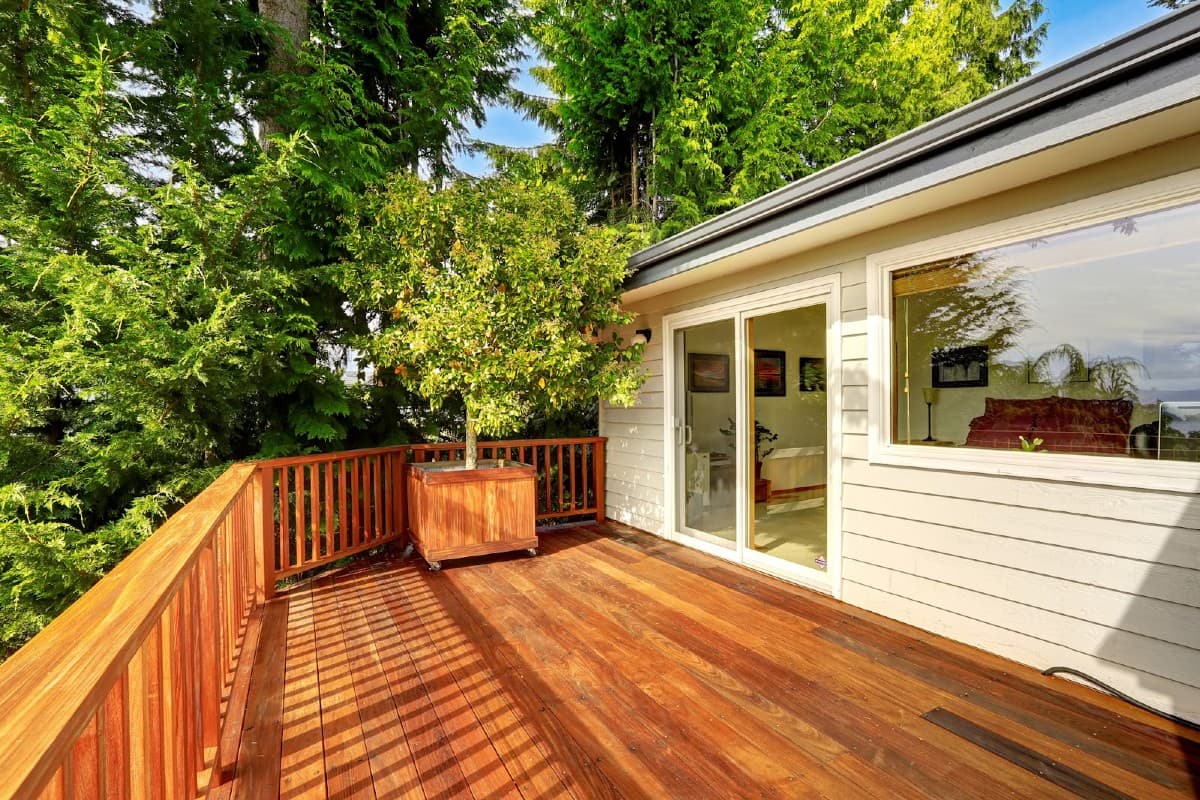
Allows the wood’s inherent qualities to come through while providing UV protection and weatherproofing. Once your deck plans include acquiring a high-quality type of wood, this is the tool to use.
26. Clear wood preserves
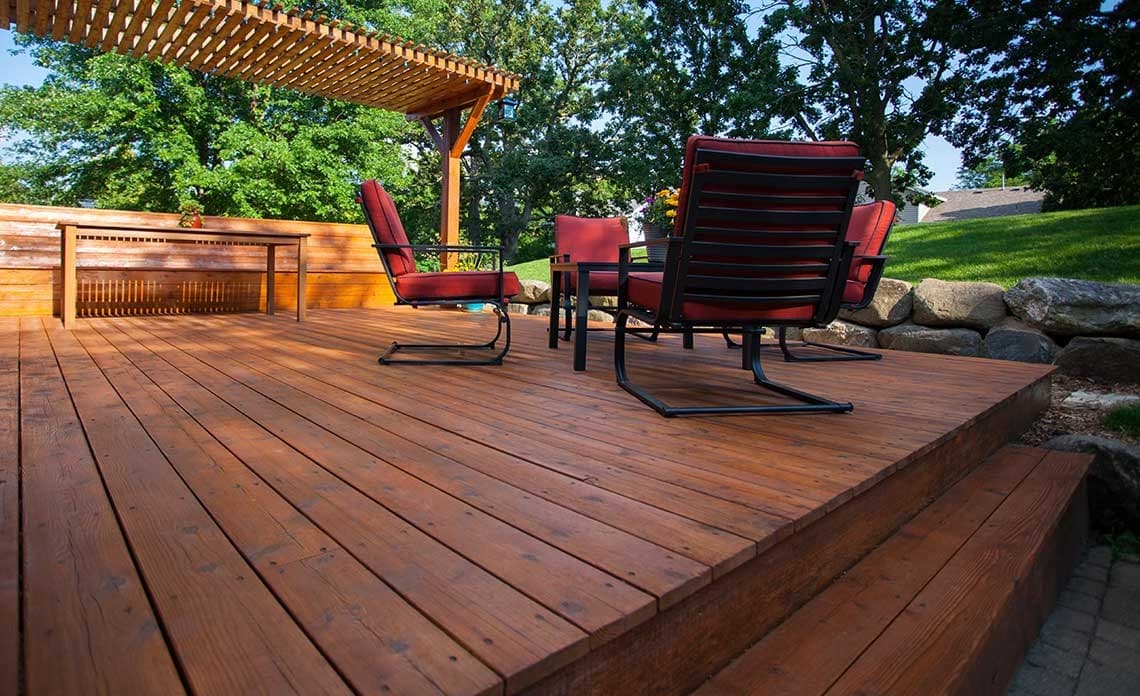
This clean finish will highlight the beauty of redwood, cedar, or any gorgeous wood if you’re planning a natural wood deck makeover.
These transparent stain treatments give UV protection and weatherproofing while allowing the natural beauty of the wood to shine through on your pool deck, patio, or porch.
27. Tan
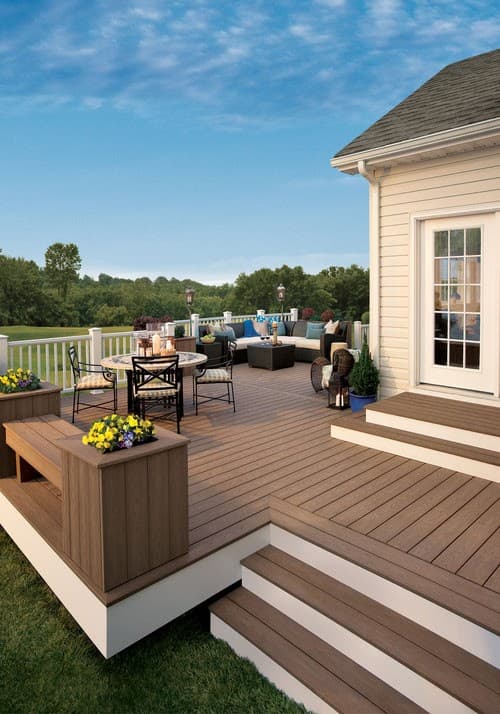
Tan comes in a variety of tints, from the lightest, coolest khaki to rich maple and honey hues. Tan is a favorite deck stain shade since it complements almost any home’s outer color theme.
Tan deck stains are the greatest at reflecting the material’s original qualities since nearly every natural shade of wood falls into the tan range. Browns and tans are also good options in desert settings since their colors blend very nicely with the surroundings.
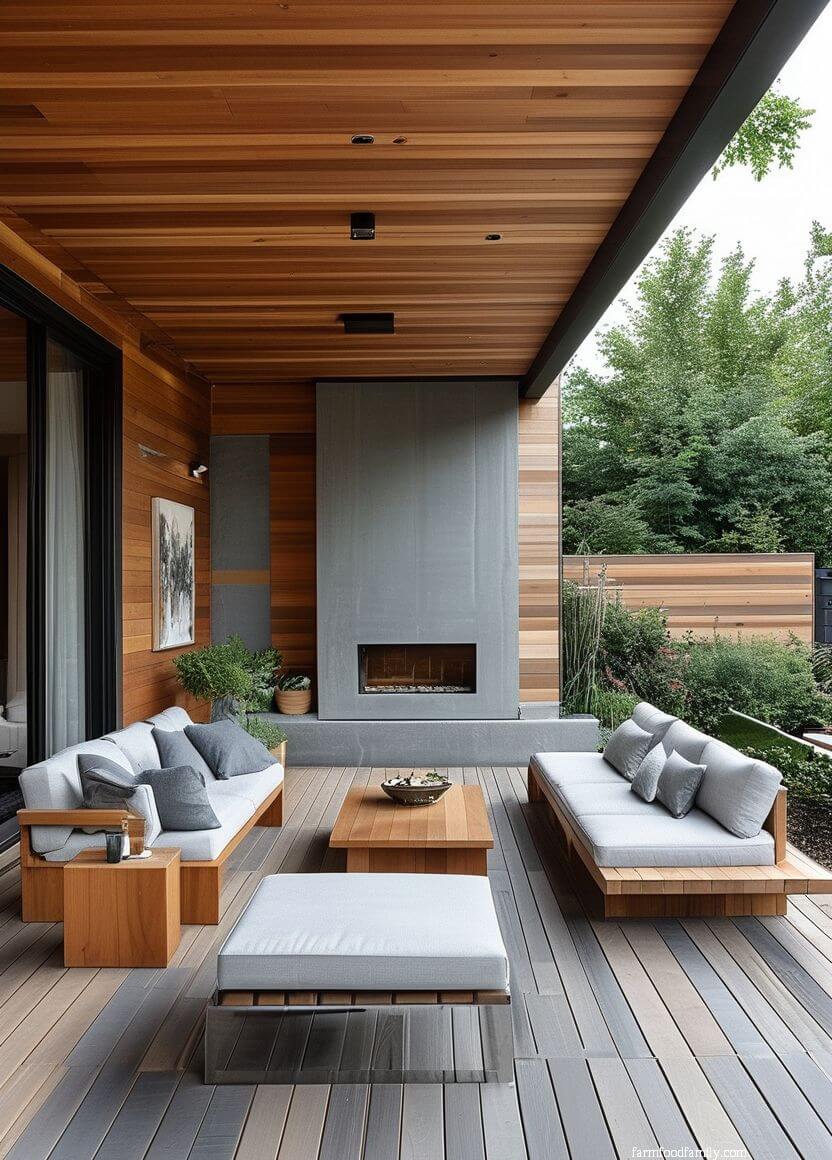
28. Tone on Tone
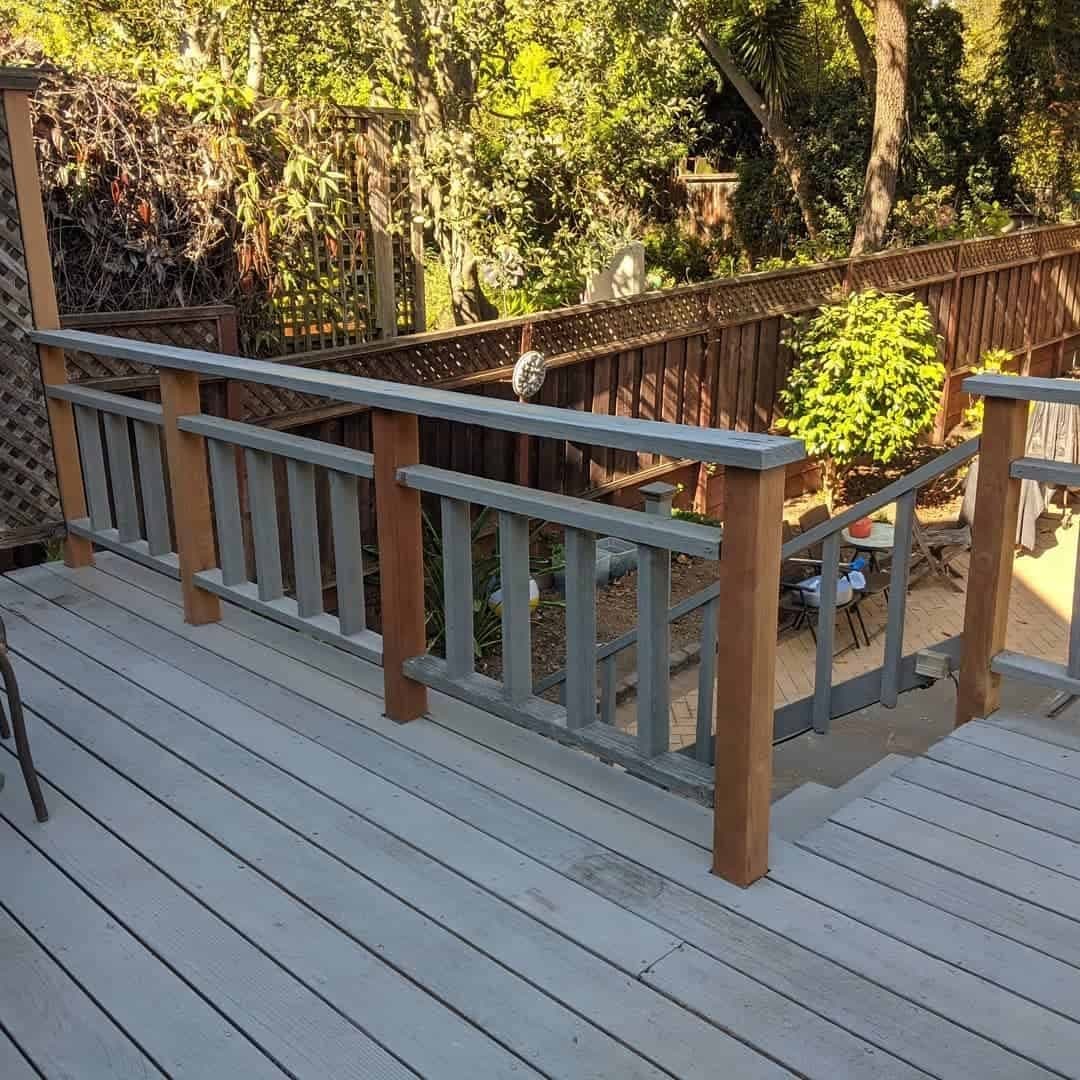
If you can’t quite decide on just one color for your deck, there are tons of ways to incorporate multiple or more shades into your design.
Rich brown wood slats and deck boards contrast beautifully with shiny black columns and handrails. White posts and guardrails stand out against step surfaces and dark decks. Three or more hues, such as black, maple, and grey, are used in certain deck designs.
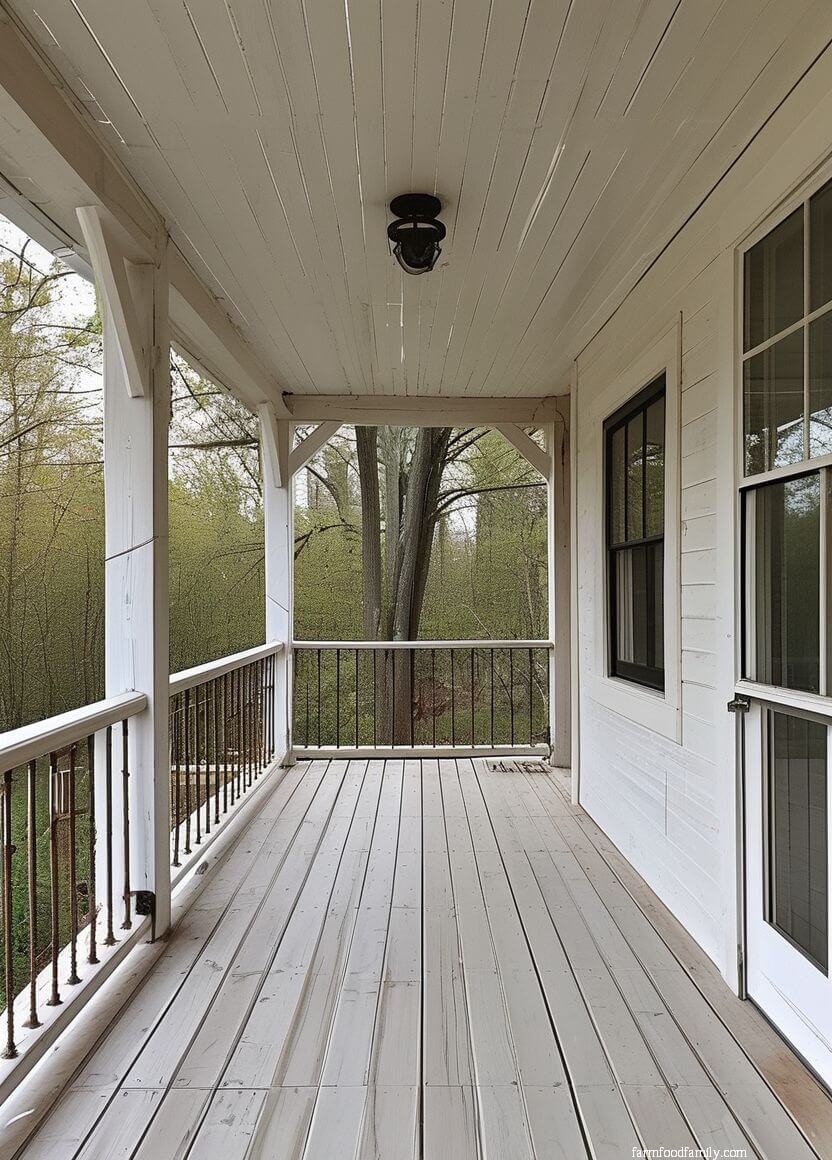
29. White
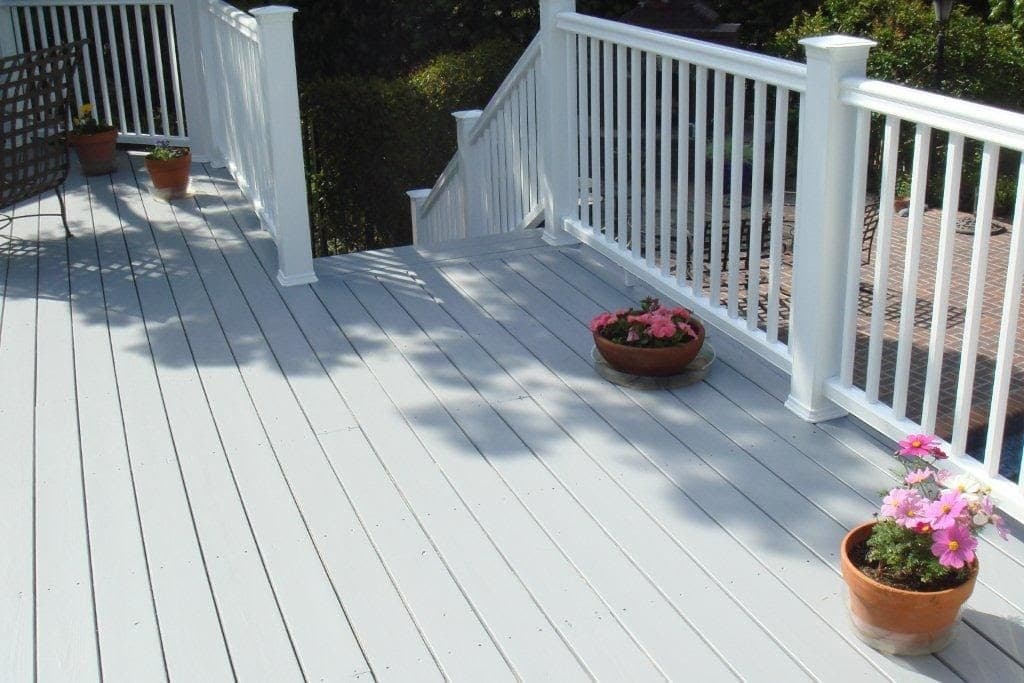
Though an all-white deck is more difficult to clean and maintain than other hues, it is occasionally the greatest option.
White decking, railings, and trim are popular choices for coastal houses and porches that are Victorian. In warmer climes, a white deck is useful because it reflects instead of accumulating the heat from the intense noon sun.
30. Wood
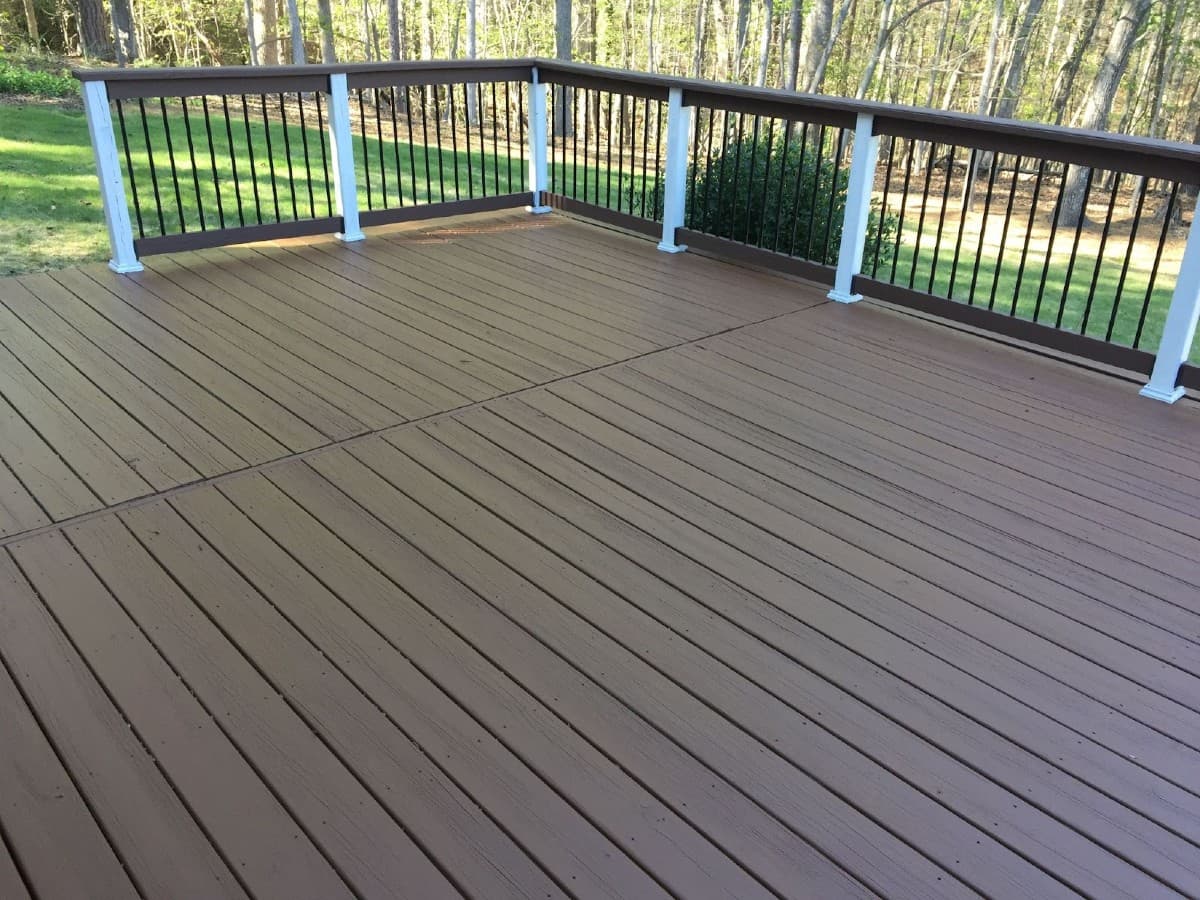
Natural wood dressings are a great way to make your patio or deck blend in with the surrounding environment.
Although the appearance of raw wood is pleasing, the surface must be weatherproofed with a stain or finish. Semi-transparent coatings are a terrific way to give your deck a pop of color without covering up the gorgeous wood grain.
31. Colors that are fresh and light
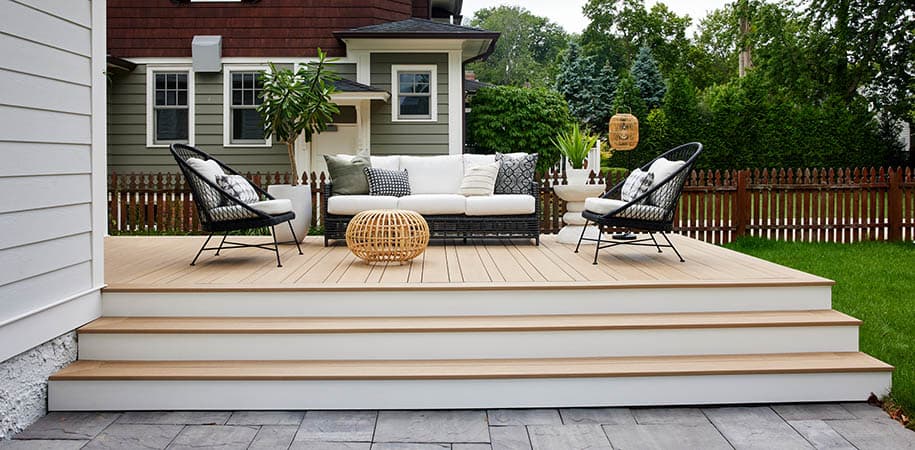
The light color patterns of grays, tans, white, and blues that characterize coastal-style homes reflect the style’s seashore beginnings. Vibrant composite decking in tans and light grays is ideal for a well-matched deck.
32. Hues that are dark and textured
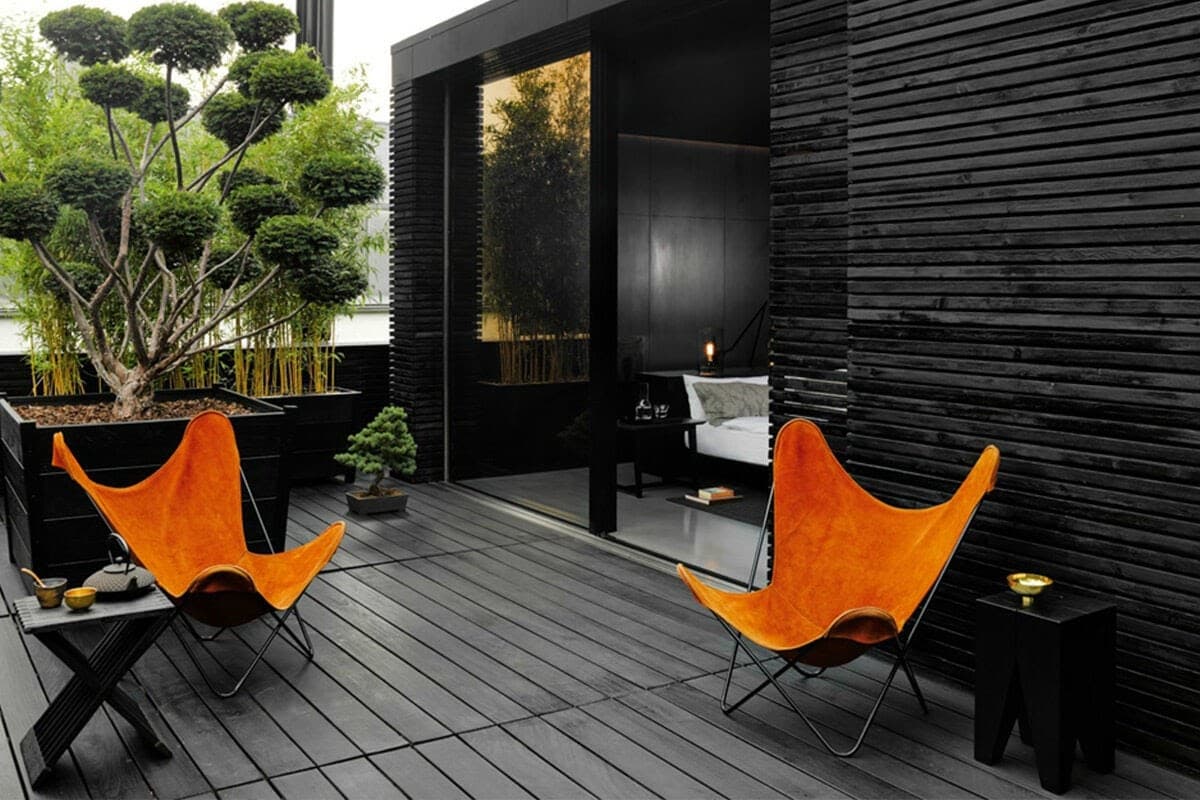
For a dimensional effect, mid-century contemporary homes have angular shapes and a variety of materials such as metal, stone, and wood.
Choose dark, embossed composite decking for rustic wooden tones in your mid-century contemporary architecture.
33. Tones with a lot of personality
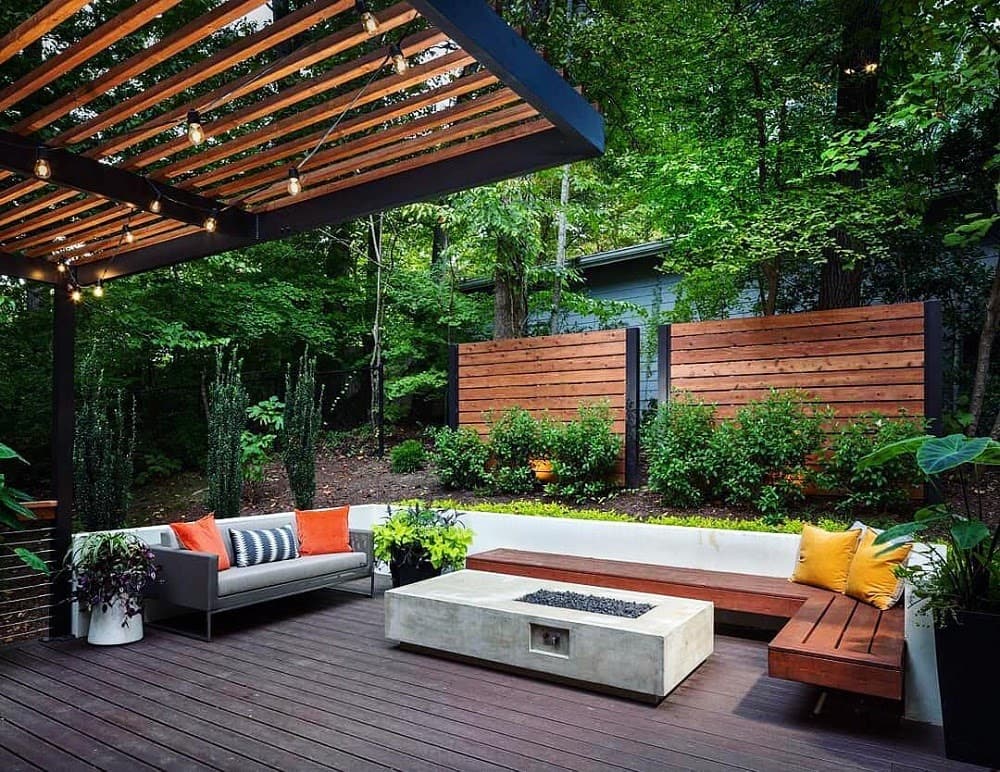
Originality and a handmade touch are emphasized in the artisan approach. The color palettes for these homes’ decks can be rather varied, but they almost always slant toward cooler tones.
To compliment the handcrafted vibe of these unique residences, choose a moderate gray composite deck shade with character-rich color variance.
34. Rustic Pecan Against Green Siding
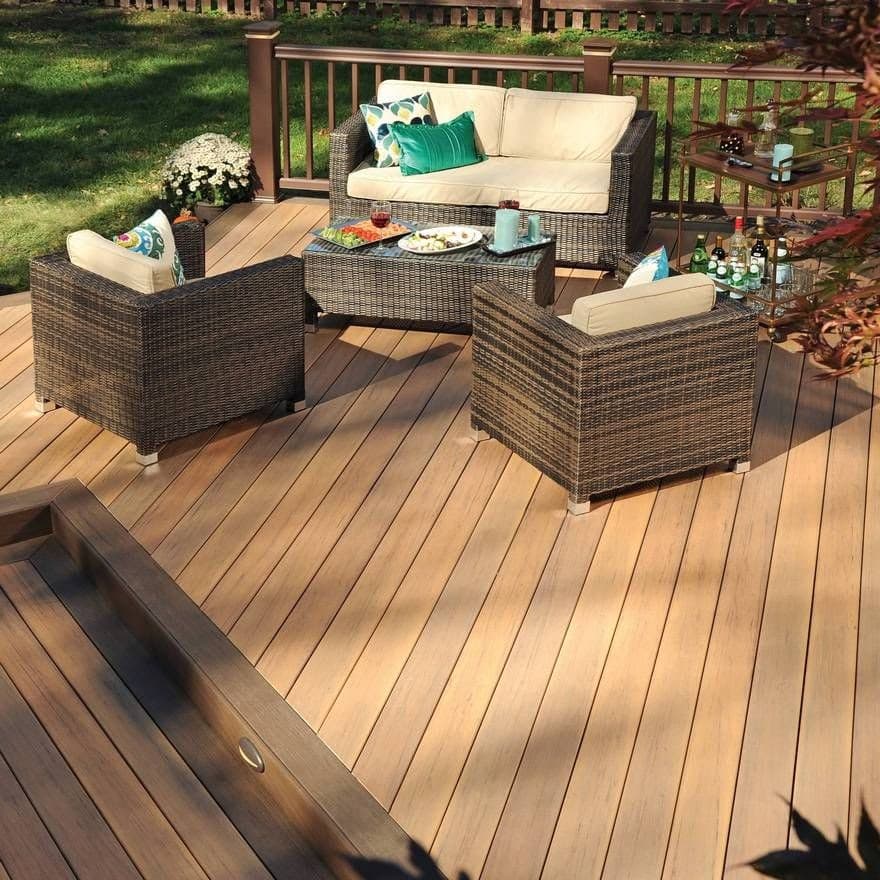
Green house siding is uncommon enough that it opens up a distinctive pairing: a rustic, pale pecan-toned natural wood deck. It’s one of the more specific, house-color-driven combinations on this list, and it works on both traditional and more contemporary homes.
35. Redwood Against a White House
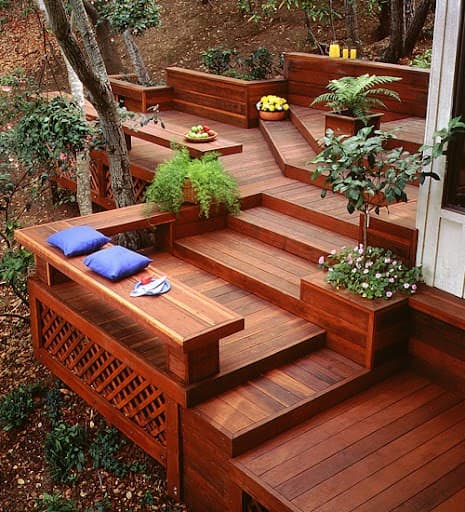
White siding is close to a blank canvas, and it makes whatever color you pair it with stand out more than it would against a colored exterior.
A true redwood tone is a bolder choice here; a deeper coffee-chocolate brown is the more conventional alternative against the same white backdrop. Once the deck itself is settled, deck privacy ideas covers screening it from neighbors without clashing with whatever color you land on.
Matching Your Deck to Your House’s Architecture
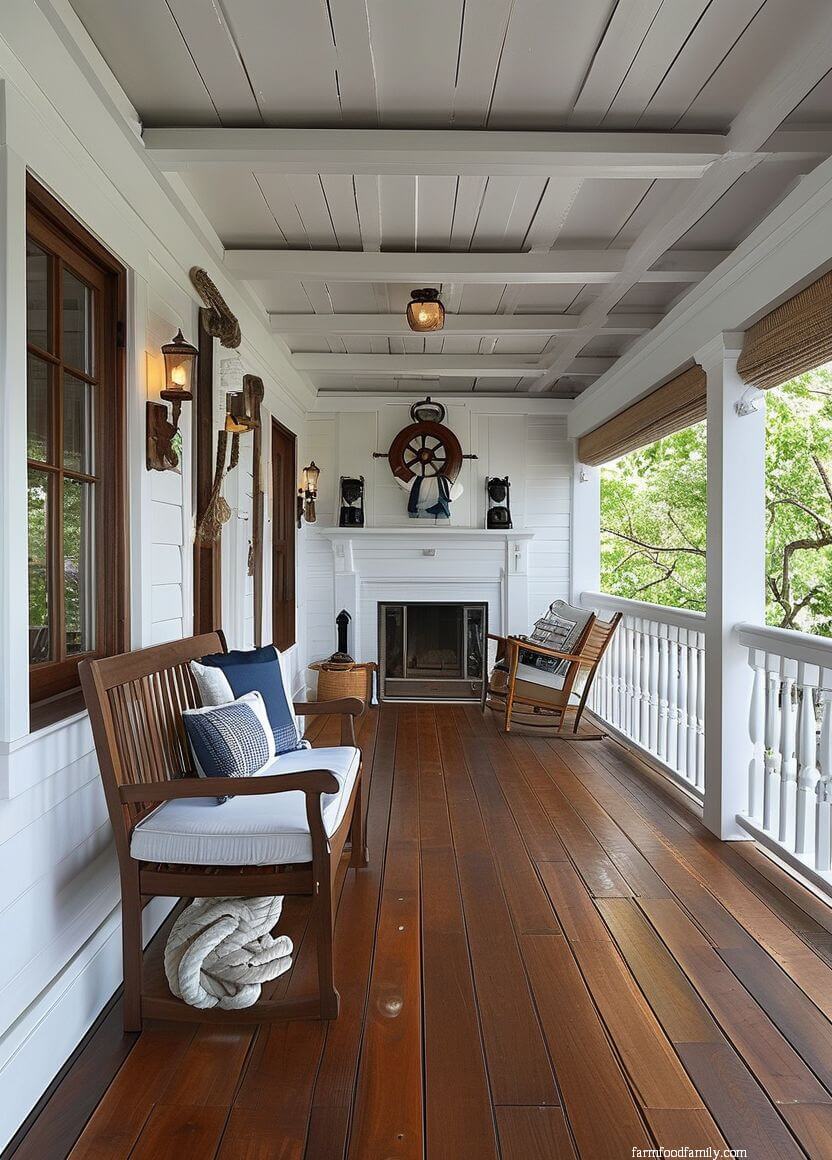
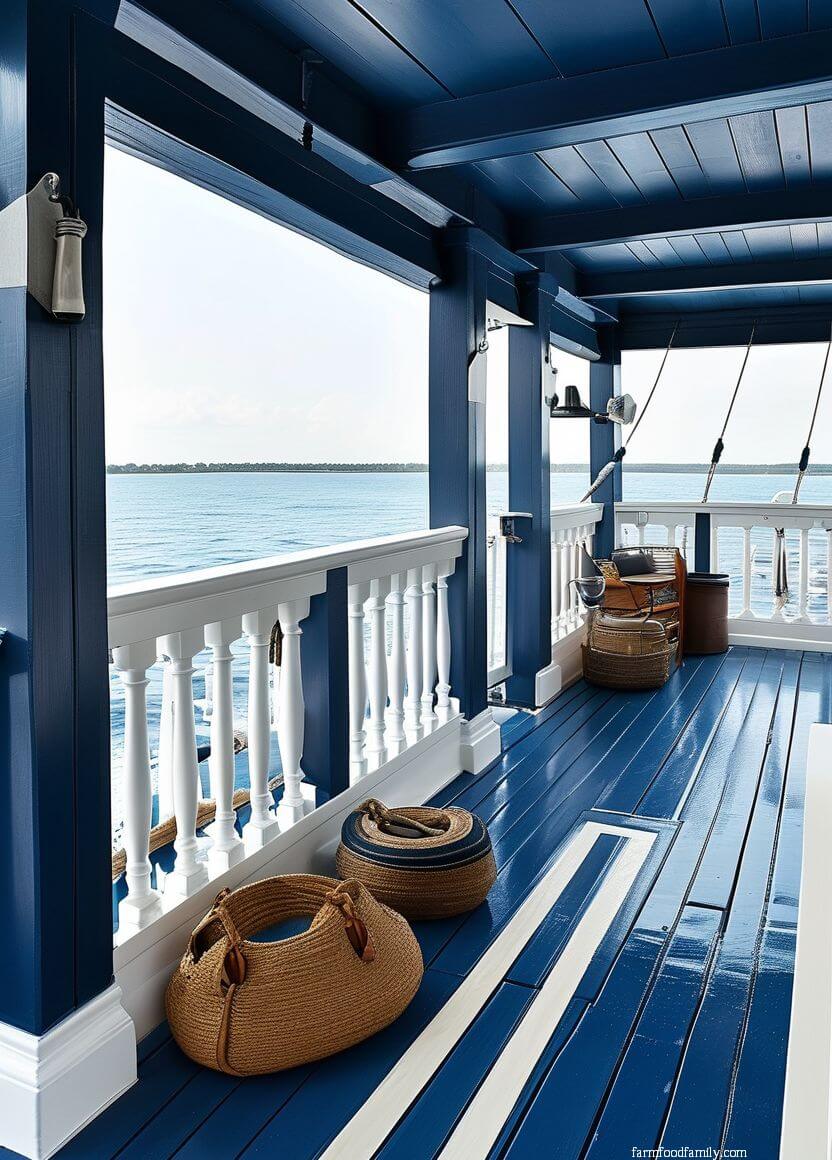
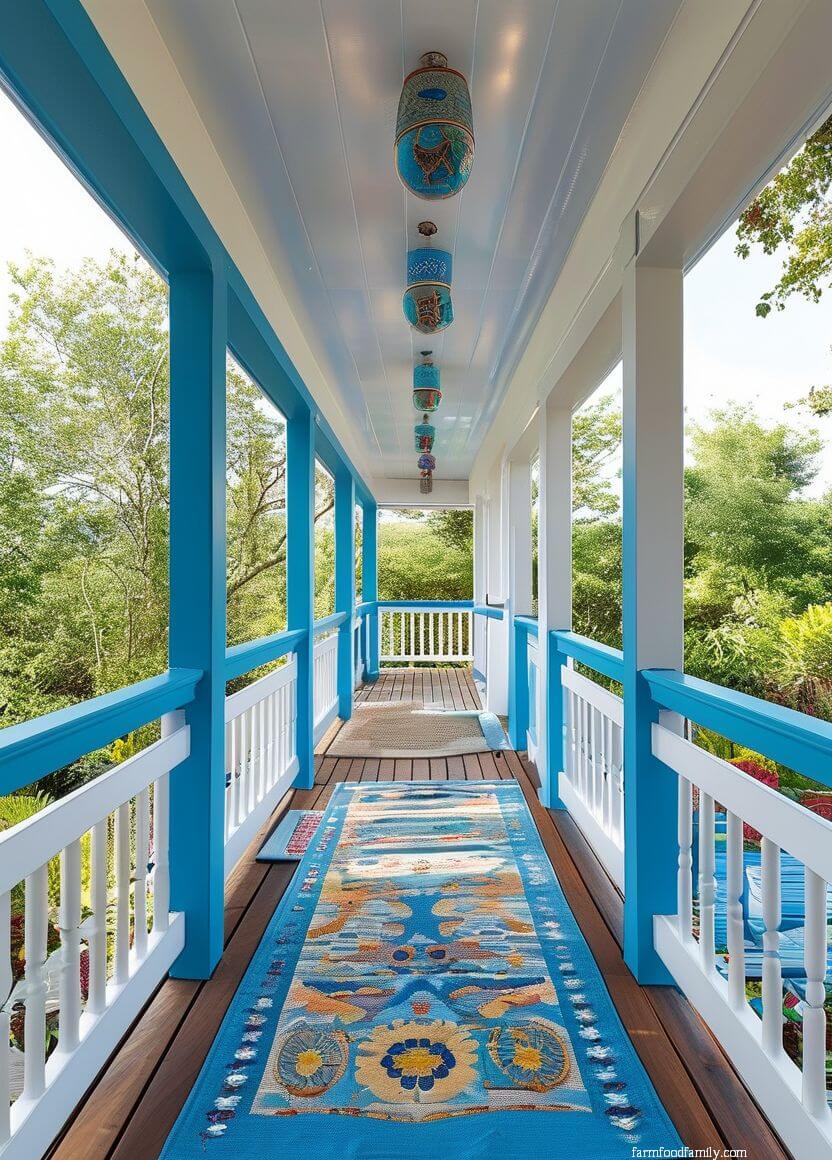
Beyond siding color, the style of your house is worth factoring in. Coastal-style homes generally look best with light, fresh palettes, tans, light grays, whites, and blues, echoing the style’s beach-town origins.
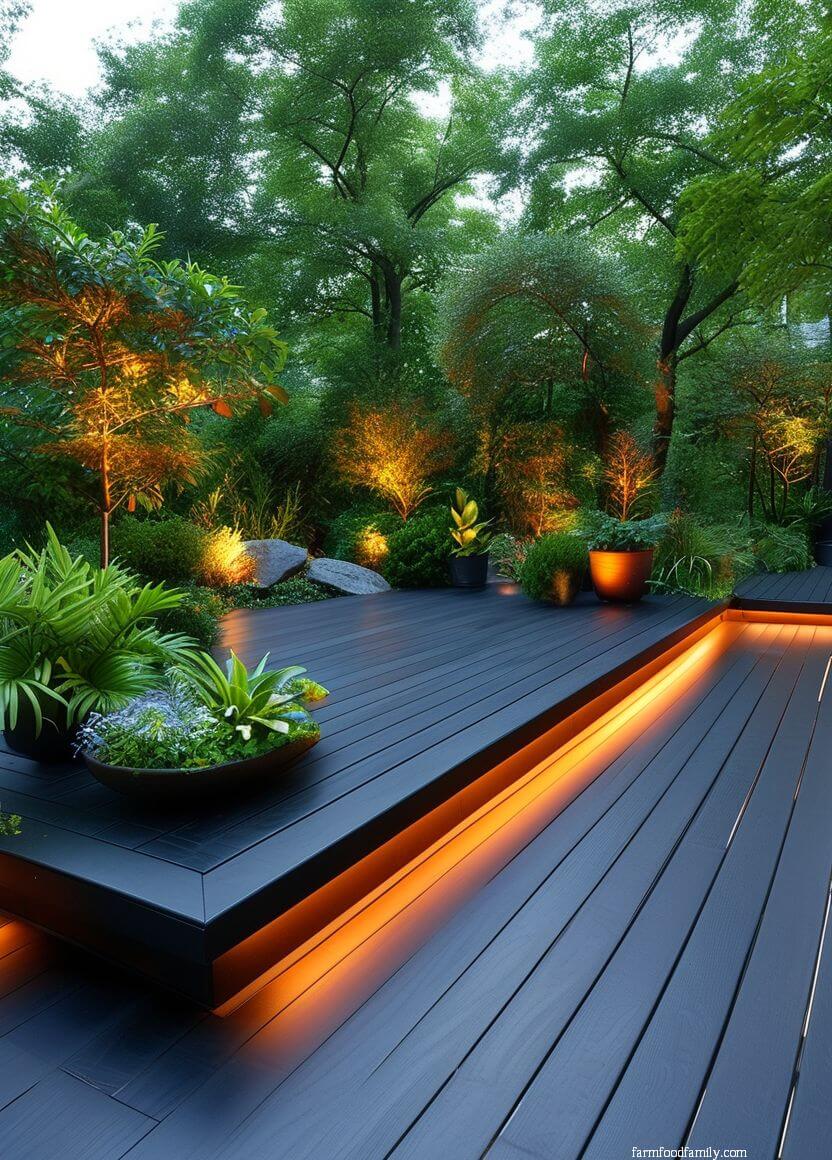
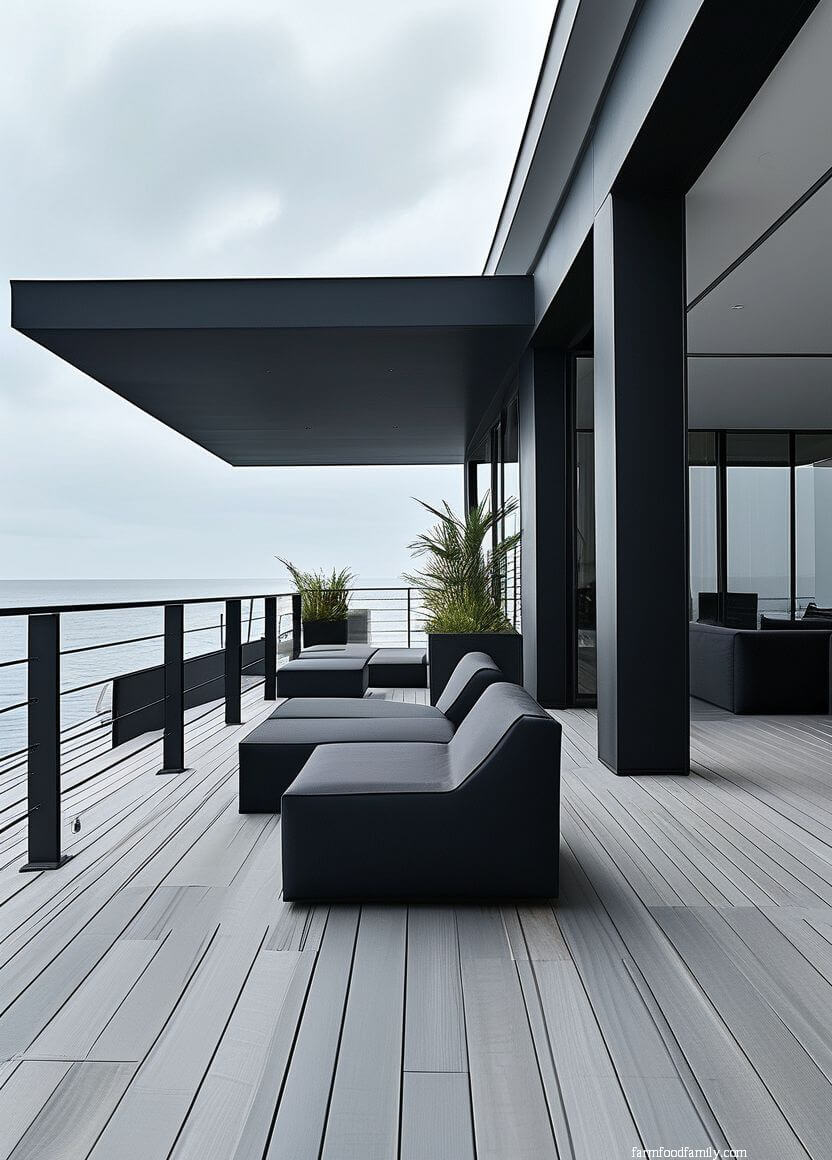
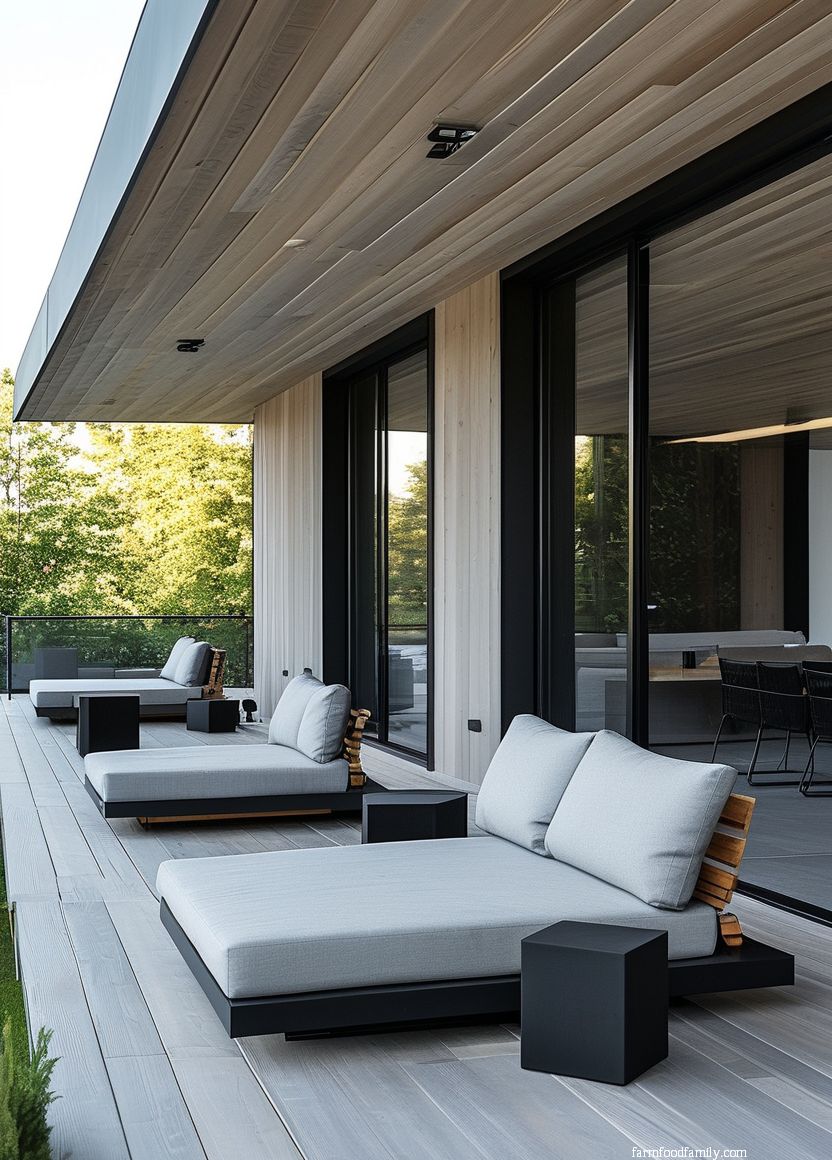
Mid-century modern homes, with their angular shapes and mixed materials (metal, stone, wood), tend to suit darker, more textured composite decking that adds dimension rather than competing with the architecture’s existing geometry.
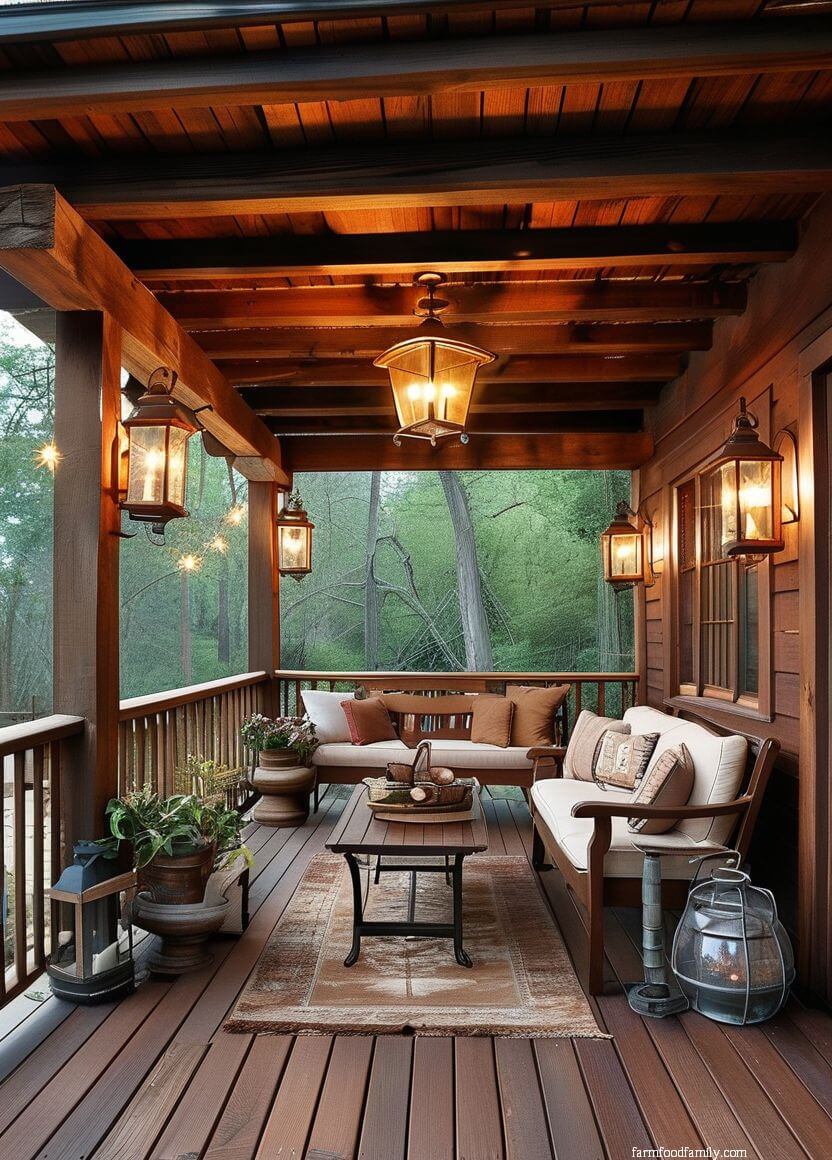
Artisan-style homes, with their handmade, original character, generally pair best with a moderate gray composite that has real color variance rather than a flat, uniform tone, reinforcing the handcrafted feel rather than fighting it.
Deck Finish Types, Explained
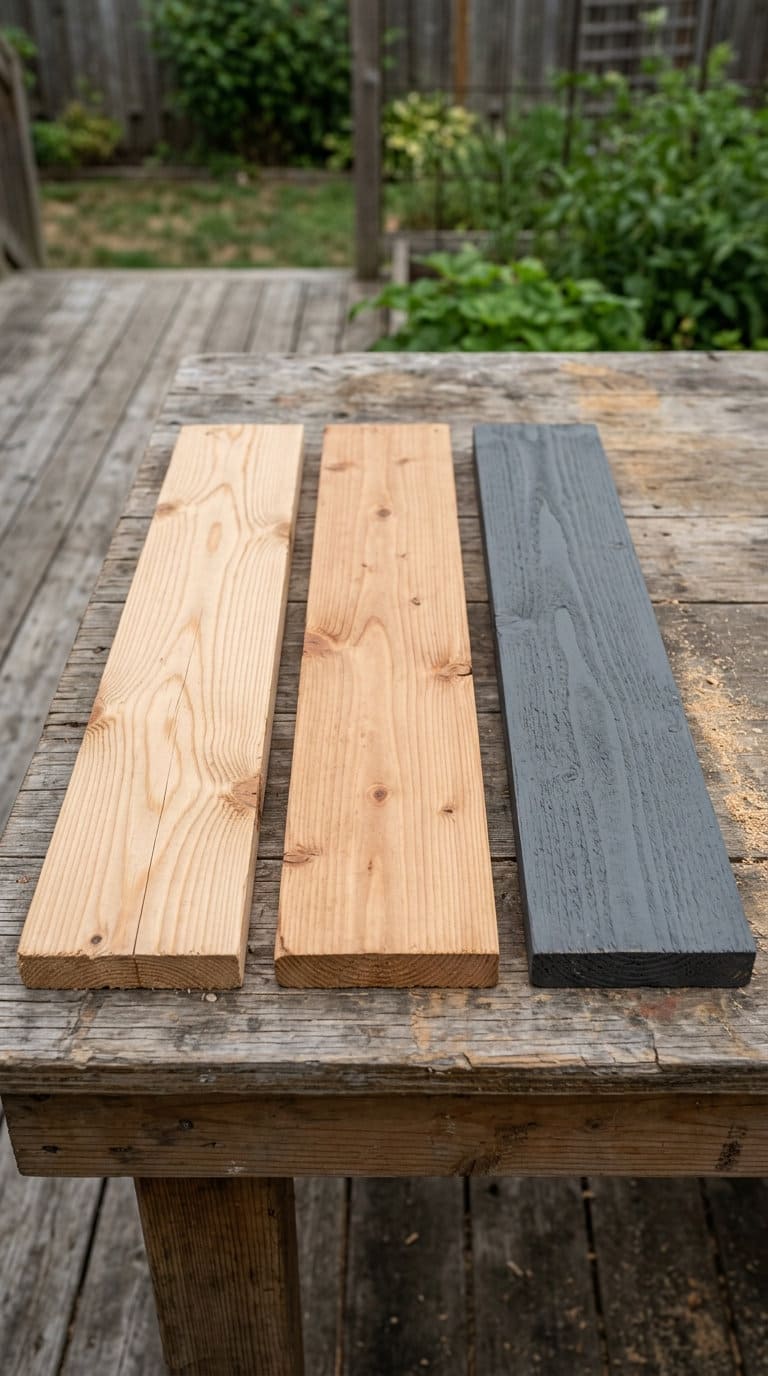
The finish you choose matters at least as much as the color, since it determines how much wood grain shows and how often you’ll be redoing this project.
| Finish Type | Wood Grain Visibility | Typical Lifespan Before Reapplication | Best For |
|---|---|---|---|
| Clear wood preservative | Maximum, no color added | ~1 year | Showing off new, high-quality wood; least UV protection, needs the most frequent refresh |
| Semi-transparent stain | High, tints while showing grain/texture | 3-5 years | Decks in good condition where you want color and visible wood character |
| Solid stain | Low, opaque and paint-like | 4-5 years typical, up to 8 years for some products | Older decks with imperfections to hide, or maximum UV/moisture protection |
Sources: DeckStainHelp, Consumer Reports.
The rule of thumb: protection rises with opacity. More pigment and film means longer life and better UV protection, but less of the actual wood grain visible underneath. One practical note: solid stain can go over old solid stain, but a previously painted deck needs to be fully stripped before a semi-transparent stain will take properly.
One honest caveat worth knowing before you pick solid stain purely for its longer lifespan: a real account from a deck-restoration discussion described tearing out two decks, 11 and 13 years old respectively, both finished with solid stain, that had suffered extensive rot to the decking, joists, posts, and railings, damage attributed to the solid film trapping moisture against the wood rather than letting it breathe. Solid stain isn’t wrong, but it’s not a risk-free upgrade either, especially in wetter climates.
Prep Matters More Than Color
This is the section most deck-color guides skip entirely, and it’s the one that determines whether any of the colors above actually hold up.
Wait before you stain new pressure-treated wood. The most consistently repeated advice from experienced deck owners and builders is to let new PT lumber dry for a full season, often a year, before staining. A simple water-bead test helps confirm readiness: water that absorbs into the wood means it’s ready; water that beads on the surface means it’s still too wet. A moisture meter reading under roughly 14-17% is a more precise version of the same check.
Open the wood’s pores before staining. One experienced deck builder’s practical tip: wash the deck with a diluted bleach-and-water solution (roughly 10-15%) before the first stain coat, since it opens the wood’s pores and helps the stain penetrate and last longer. The same source recommends re-washing before every annual recoat for the first five years of a deck’s life.
Know the real tradeoff between penetrating and film-forming products. Penetrating oil stains soak into the wood rather than sitting on top of it, so they don’t peel or flake, and a faded coat typically just needs a simple recoat rather than a full strip. Film-forming stains and paint sit on the surface, offer more color options and can look more finished at first, but they’re more prone to peeling and trapping moisture over time, which is part of why the rot account mentioned above happened with a solid stain, not a penetrating oil.
Get a second opinion before committing to a big, expensive product. Independent testing from Consumer Reports and contractor-based reviews like DeckStainHelp, run by a restoration contractor with 10,000+ decks of hands-on experience, are worth checking before you commit to a specific product, since results vary more by brand and formulation than most marketing suggests.
Frequently Asked Questions
How long will a painted deck last?
A well-applied paint job can last up to a decade, longer than most stains. Paint also opens up more color options than stain, which is largely limited to brown, gray, and neutral tones, and it hides surface imperfections (gaps, small cracks) better than stain does. The tradeoff, per the prep section above, is a higher risk of peeling and trapped moisture over time compared to a penetrating oil stain.
Should your deck be the same color as your house?
Not necessarily the exact same color, but it should relate to your house’s existing exterior palette. Either pull a color already present somewhere on your home’s exterior, or choose a deliberate accent color that complements rather than clashes with it. This is the practical version of the “match to your siding” framework covered at the top of this guide.
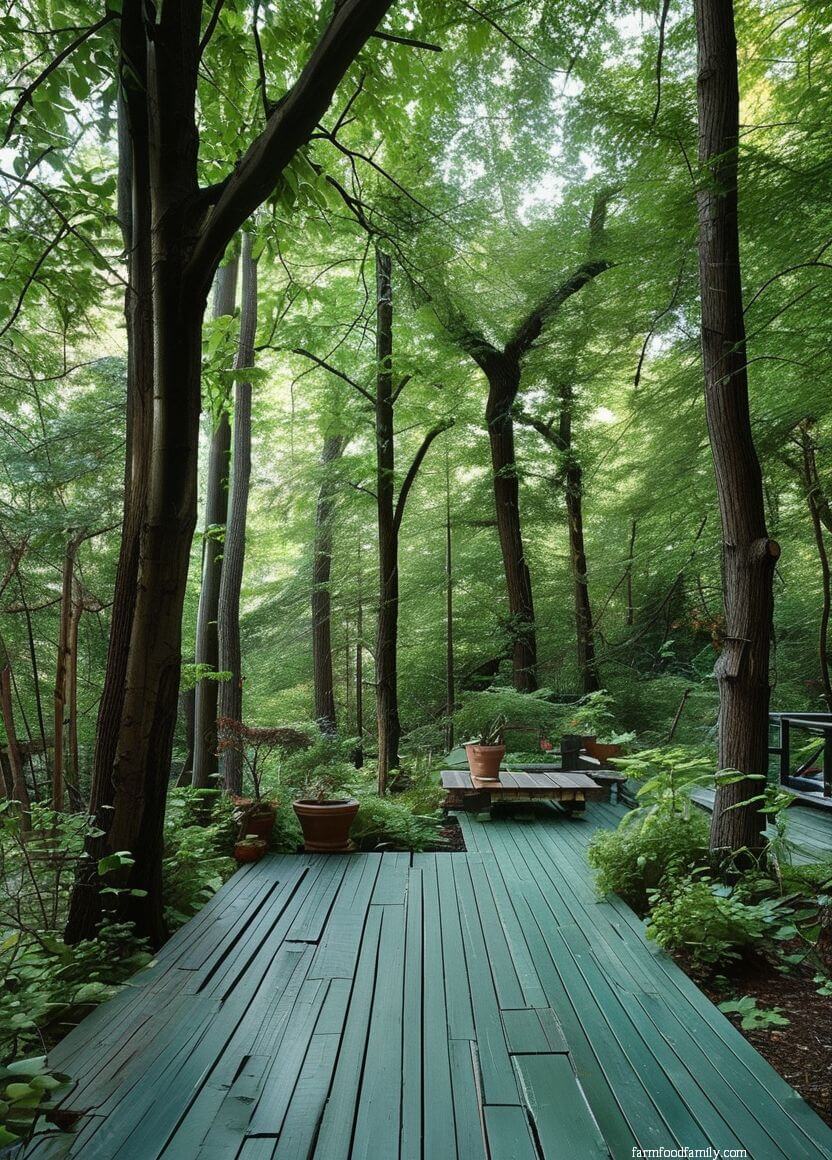
What color should I paint my deck?
There’s no single right answer, but green is a genuinely popular and versatile choice, it works on both classic and contemporary homes and pairs well with red, black, or taupe accents. Beyond that, let your siding color and architectural style (see the sections above) narrow the real options.
What is the most popular stain for a deck?
Cedar-toned stains remain one of the most consistently popular choices, since the warm tone works across a wide range of home styles and doesn’t skew too dark for summer or too light for a cozy winter look. A more useful rule than chasing a single “most popular” color: start with the most prominent color already in your yard or house and work outward from there.
Should I paint my deck black?
Black is one of the boldest, highest-contrast deck color choices available, and it can look genuinely striking against the right exterior. It’s also less forgiving than gray: dust, pollen, and wear show up more visibly, and you’ll need to be more deliberate about matching outdoor furniture to it. Worth it for the right house, but go in knowing the maintenance tradeoff.
Conclusion
The best deck color isn’t the one that looks best in isolation, it’s the one that actually works with your house’s siding color and architectural style, which is why this guide led with that framework instead of a flat list. Once you’ve narrowed the color, the finish type and prep work matter just as much: a beautiful semi-transparent stain applied to wet, unprepped lumber will fail just as fast as the wrong color choice, if not faster.
Never miss an update — choose FarmFoodFamily as your preferred source on Google.
How it works: Tap the button below to open Google's settings page, then check the box next to FarmFoodFamily.
Tap the checkbox to turn it blue — that's how you know it's set.