20 Easy DIY Rustic Storage Projects That Hold a Lot and Stay Safe
You can build rustic storage with basic tools and plain wood, and the safe way is to use clean materials, anchor tall pieces to the wall, finish in a ventilated spot and handle finish rags with care.

Never miss an update — choose FarmFoodFamily as your preferred source on Google.
How it works: Tap the button below to open Google's settings page, then check the box next to FarmFoodFamily.
Tap the checkbox to turn it blue — that's how you know it's set.
You can build rustic storage with basic tools and plain wood, and the safe way is to use clean materials, anchor tall pieces to the wall, finish in a ventilated spot and handle finish rags with care.
Products We Recommend
This post contains affiliate links. We may earn a commission on qualifying purchases at no extra cost to you.

Furniture Anchors 10 Pack, Anti-Tip Earthquake Straps
Wall straps for the blanket ladder, shoe cabinet, toy console and any tall piece. The CPSC says to anchor bookcases and dressers to the wall.
Shop Now
Zircon StudSensor A100 Stud Finder with Live Wire Detection
Finds wall studs so shelves, racks and cabinets hold their weight. Mark the studs before you drill.
Shop Now
KKOYING Leather Work Gloves, Reinforced Cowhide, Puncture and Cut Resistant
Thick gloves for sanding, handling rough wood and pulling nails from pallets. Pick your size from the listing.
Shop NowA rustic storage project does two jobs. It holds your things, and it looks good doing it. Rough wood, simple shapes and warm finishes make a home feel calm.
This guide gives you 20 projects, from a one-hour hook board to a weekend storage bench. Each one is written in plain steps.
You’ll see what you need, how long it takes, how to build it and how to keep it safe. You don’t need special skills, just basic tools and a little patience.
Answer 4 quick questions and get matched to the exact fix for your yard — drainage, budget, layout, or something else entirely.
Take the Free QuizFor tidy-up habits that go with these builds, see our tricks to organize your home.
Quick Answer
Start with a small build, like a hook board or a spice rack. Learn how your tools and wood behave, then try a bench or a cabinet.
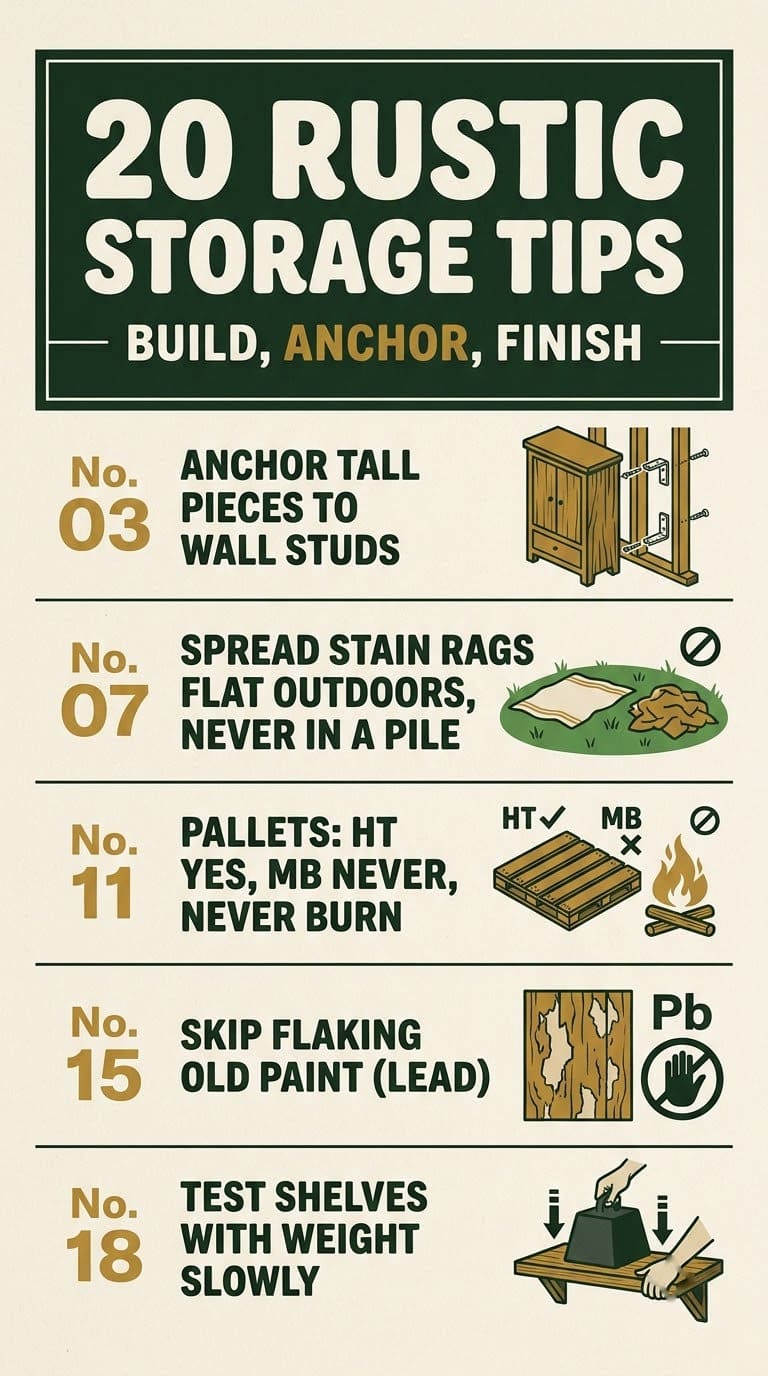
Anchor anything tall. The CPSC says about 17,800 people are hurt each year in furniture and TV tip-overs, and children are 44% of them. It says to anchor bookcases and dressers to the wall.
Handle stain rags with care. The National Park Service says oily rags can heat up and catch fire.


If you use pallets, pick ones stamped HT, and never use MB pallets, says Penn State Extension.
Most yard problems trace back to one specific, fixable cause. Find yours in 4 quick questions.
Take the Free QuizBut keep it simple. Sand every edge, finish outdoors and mount into wall studs. Test each piece with weight before you fill it, and keep a spare board for mistakes.
Wear gloves and glasses for every cut, and take a break when you feel rushed.
What Makes Storage Look Rustic?
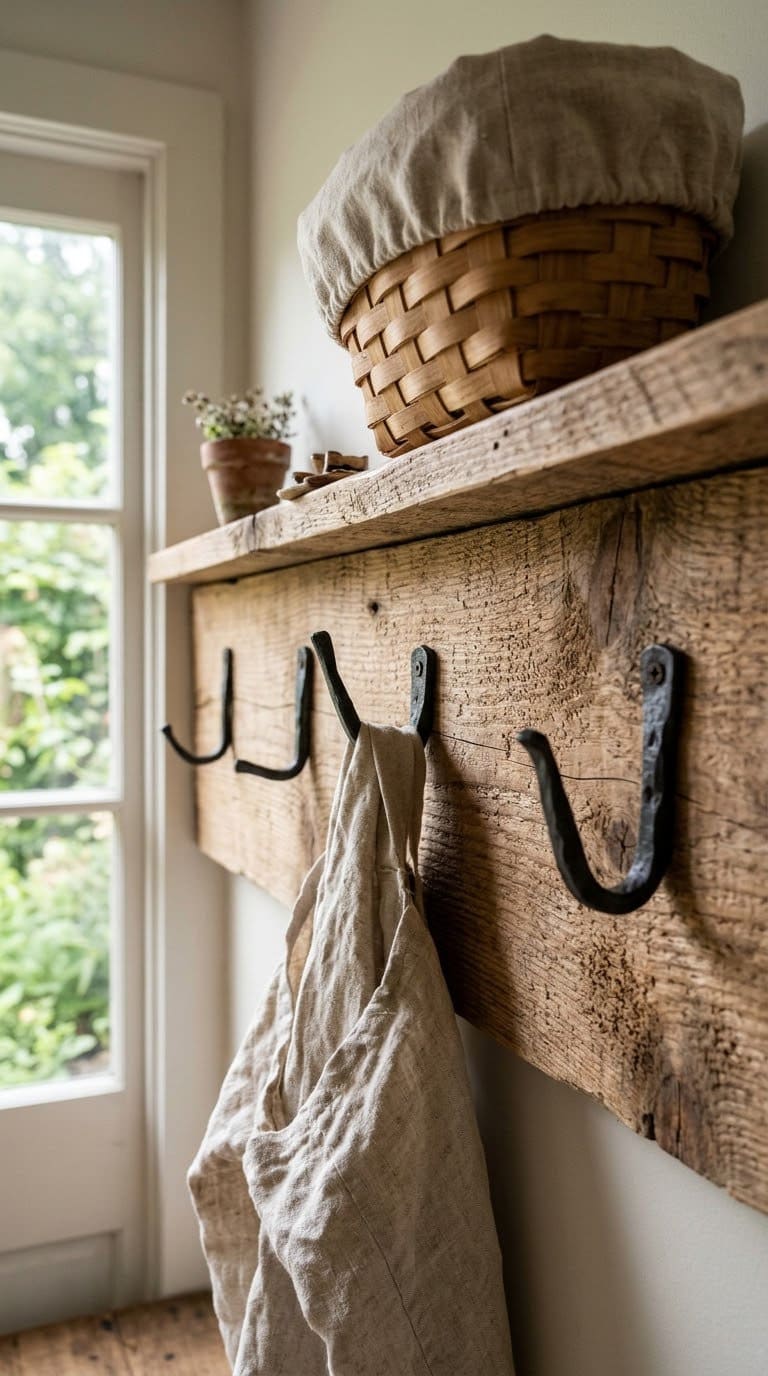
Rustic means natural and a little worn. You get the look from three things.
- Wood with grain. Pine, cedar, barn wood and pallet wood all work.
- Simple shapes. Boxes, shelves and ladders beat fancy curves.
- Honest hardware. Black iron, rope, leather straps and plain screws.
You don’t need to buy “distressed” wood. A little sanding, a warm stain or a coat of whitewash gives the same feel.
Our take: keep it plain. A well-built plain box looks better than a messy fancy one.
Which Wood and Tools Should You Use?
Most projects use the same simple kit. Borrow what you don’t own.
| Item | What it’s for | Tip |
|---|---|---|
| Pine boards | Cheap, easy to cut | Pick straight boards without large knots |
| Cedar | Damp spots like bathrooms | Smells good and resists rot |
| Pallet wood | Free rustic look | Use HT-stamped pallets only |
| Drill and screws | Joining wood | Pre-drill to stop splits |
| Sandpaper | Smooth rough edges | Start rough, finish fine |
| Level and tape | Straight, square builds | Measure twice |
| Gloves and glasses | Protection | Wear them every time |
Our take: buy one extra board. You will make a cutting mistake, and a spare saves a trip.
Wall straps for the blanket ladder, shoe cabinet, toy console and any tall piece. The CPSC says to anchor bookcases and dressers to the wall.
Shop NowThis post contains affiliate links. We may earn a commission on qualifying purchases at no extra cost to you.
How Do You Stay Safe While You Build?
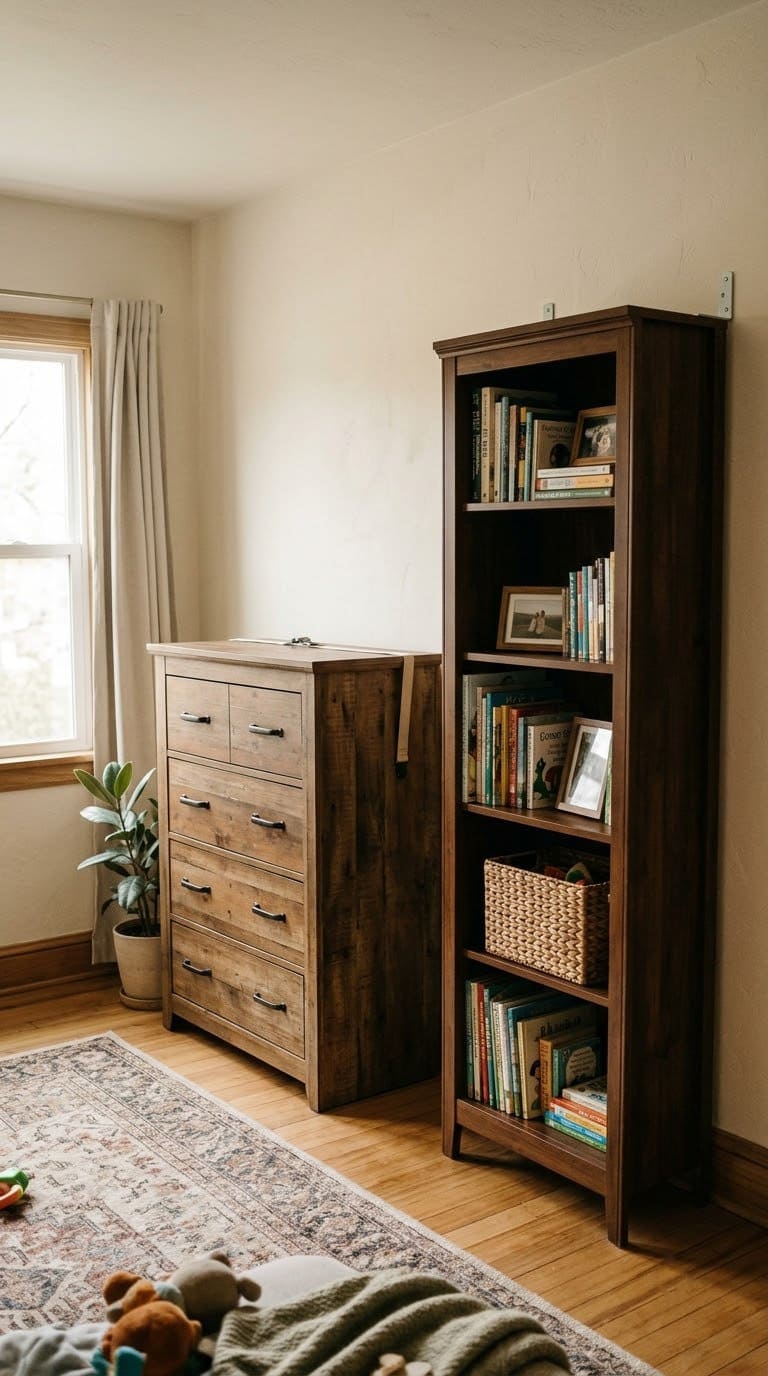
Four safety habits matter more than any skill.
- Anchor tall pieces. The CPSC says to anchor bookcases and dressers to the wall. It also says to store heavier items on lower shelves and not to leave toys or remotes where kids may climb.
- Be careful with finish rags. The National Park Service says oily rags can self-heat until they ignite. It describes a crew that used linseed oil with a rag, and the rag started a fire even though it was left flat on a workbench. Its advice is to spread rags in a single layer on concrete, out of direct sun, with the corners held down.
- Pick pallets wisely. UC ANR says heat-treated (HT) pallets are generally safe, and it says to avoid MB and be careful with unmarked ones. Penn State Extension says never to burn pallet wood.
- Check old paint. The EPA says old or worn lead paint creates chips and dust. It also says refinishing old furniture can expose people to lead. Skip flaking pieces.
Our take: finish your wood outdoors or in a garage with the door open. Fresh air is a safety tool too.
The average homeowner spends $616/year on yard fixes that don't address the real problem. Find out what yours actually is — before you spend another dollar.
Take the Free QuizHow Do You Finish Wood to Look Rustic?
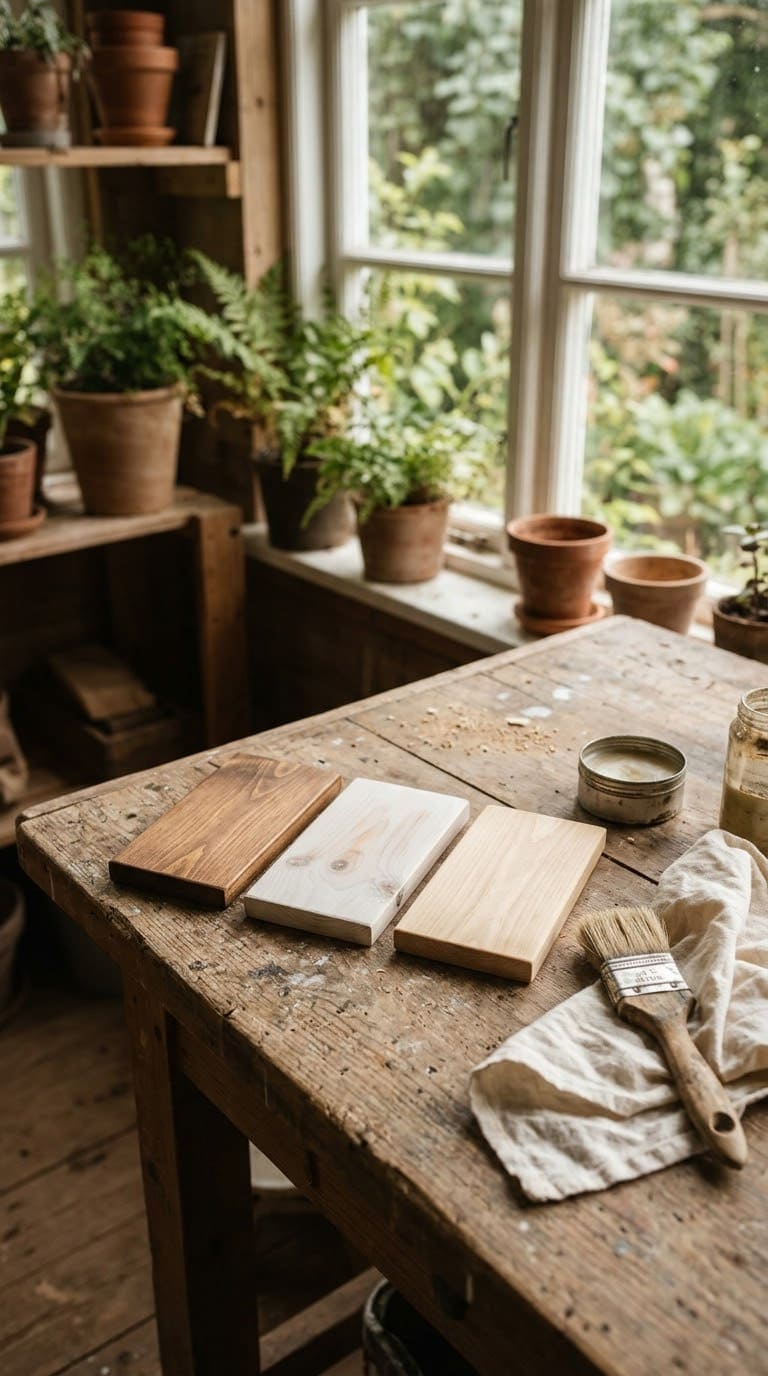
You don’t need many products. Three finishes cover almost every look.
- Stain. Wipe on a warm brown stain, then wipe off the extra. It brings out the grain.
- Whitewash. Mix white paint with water, brush it on and wipe it back. It gives a soft farmhouse look.
- Wax or oil. Rub it on for a natural feel. Remember the rag rule.
- Distressing. Rub the edges with sandpaper after painting for a worn look.
Here is how to do any finish.
- Sand the wood smooth, then wipe off the dust.
- Test your finish on a scrap board first.
- Apply thin coats and let each dry.
- Lay used rags flat on concrete outdoors until they are dry, as the National Park Service advises. Check your local rules for disposal.
Our take: thin coats beat one thick coat. They dry faster and look better.
20 DIY Rustic Storage Projects
1. Leaning Blanket Ladder
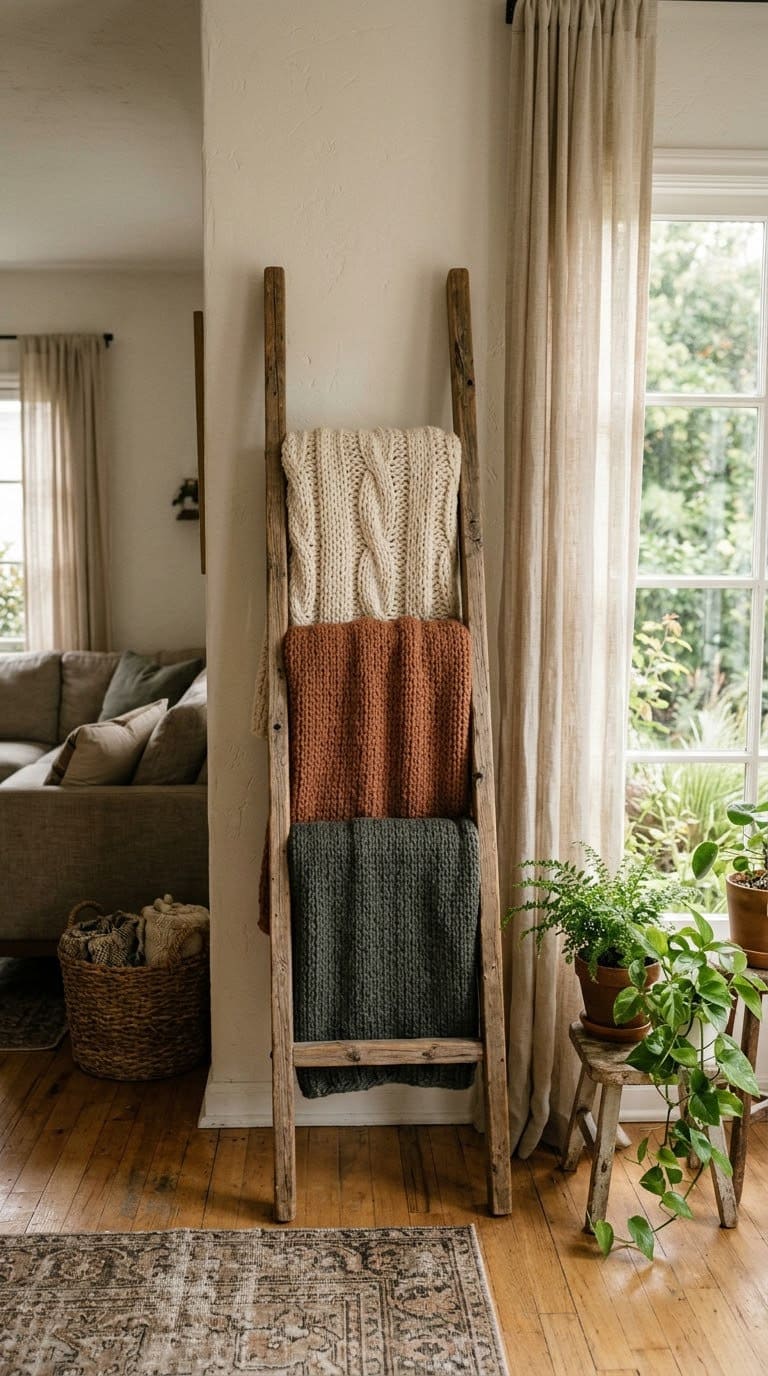
A blanket ladder looks great and holds throws and towels.
- Skill and time: Easy, an afternoon.
- Where it fits: Living room, bedroom or bathroom.
- What you need: Two long boards for the sides, three or four round dowels or smaller boards for rungs, wood glue, screws, sandpaper and a finish.
- Step 1: Cut the sides to the same length. Mark where the rungs go, evenly spaced.
- Step 2: Drill holes for the dowels or cut notches for flat rungs.
- Step 3: Glue and screw the rungs in place. Check that it is square.
- Step 4: Sand and finish.
- Step 5: Lean it against the wall at a gentle angle.
- Make it last: Re-tighten screws once a year.
- Watch: Tipping. Add a wall strap, since kids may climb a ladder.
Our take: add rubber feet. They stop slips on wood floors.
2. Pallet Wine Rack
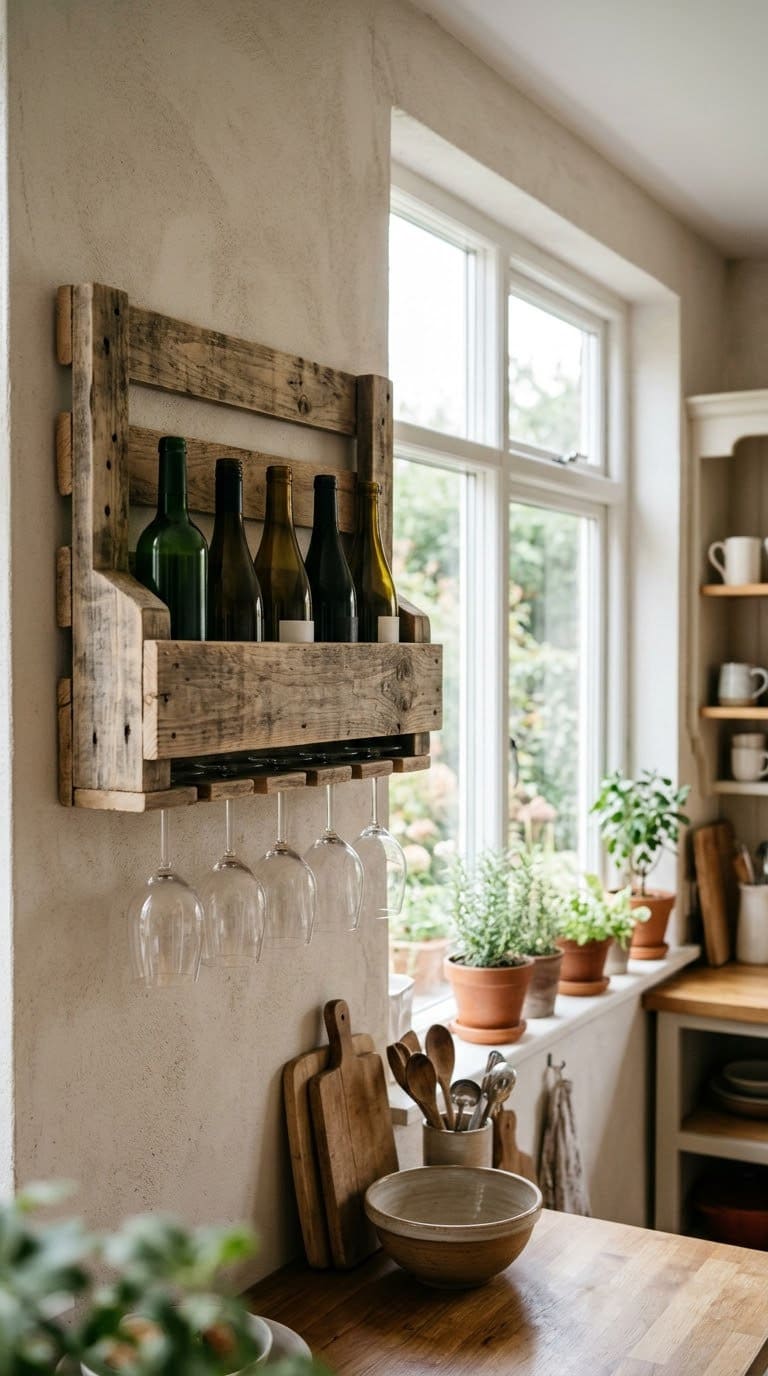
A pallet rack is cheap and sturdy.

- Skill and time: Medium, an afternoon.
- Where it fits: Kitchen, dining room or bar corner.
- What you need: One HT-stamped pallet, a saw, sandpaper, wall anchors, screws and a finish.
- Step 1: Check the stamp and pull out rusty nails.
- Step 2: Cut the pallet to a size that fits your wall.
- Step 3: Sand every surface and finish it.
- Step 4: Mount into wall studs with long screws.
- Make it last: Wipe it with a dry cloth.
- Watch: Weight. Wine is heavy. Mount into studs, and not just drywall.
Our take: store bottles on their sides. The corks stay moist.
3. Branch Shelf
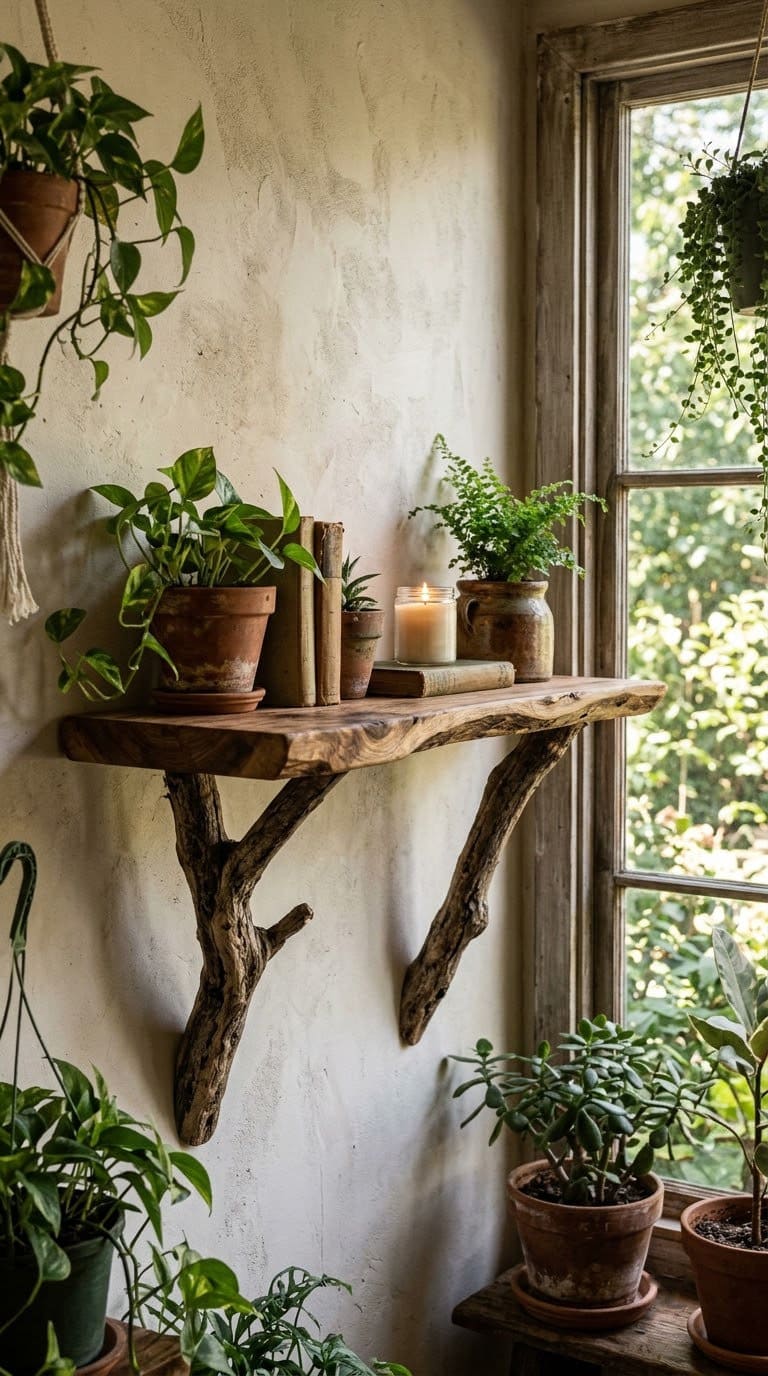
A branch shelf has a natural, forest look.
- Skill and time: Easy, an hour.
- Where it fits: Entryway, bathroom or bedroom.
- What you need: A straight dry branch, a board, brackets, screws and sealer.
- Step 1: Choose a dry branch, strip any loose bark and let it dry well.
- Step 2: Sand the cut ends and seal the branch.
- Step 3: Mount two brackets into the wall studs and rest the board across.
- Step 4: Add a small lip so items don’t slide off.
- Make it last: Keep it off damp surfaces.
- Watch: Bugs and moisture. Dry the branch fully before bringing it inside.
Our take: keep loads light. This is a display shelf, not a bookshelf.
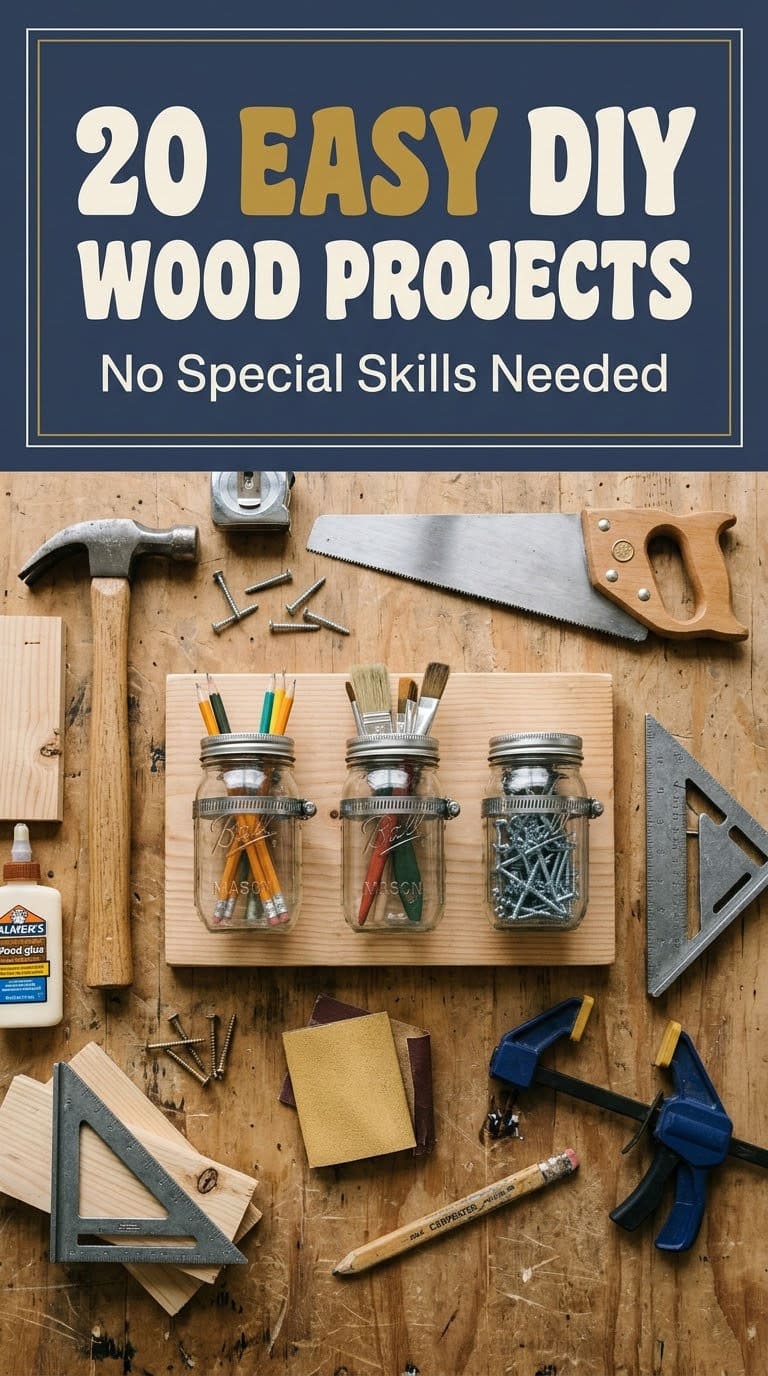
4. Mason Jar Wall Organizer
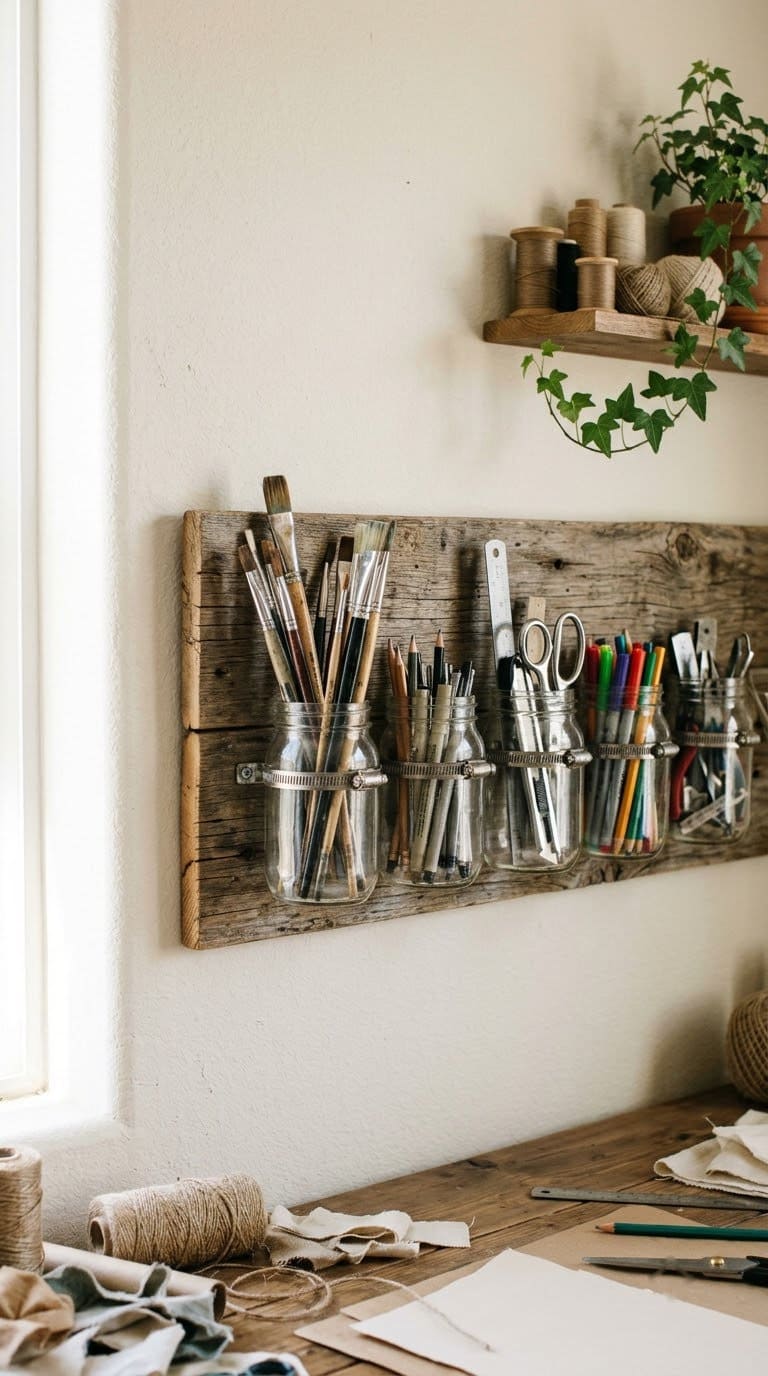
Jars keep small things visible and sorted.
- Skill and time: Easy, an hour.
- Where it fits: Craft room, kitchen or garage.
- What you need: A board, hose clamps or jar rings, screws and jars.
- Step 1: Sand and finish the board.
- Step 2: Space the clamps evenly and screw them in.
- Step 3: Mount the board into studs.
- Step 4: Slip the jars into the clamps.
- Make it last: Check the clamps every few months.
- Watch: Glass above little hands. Use plastic jars for kids.
Our take: label the lids with chalk. You will find things faster.
5. Coffee Cup Rack
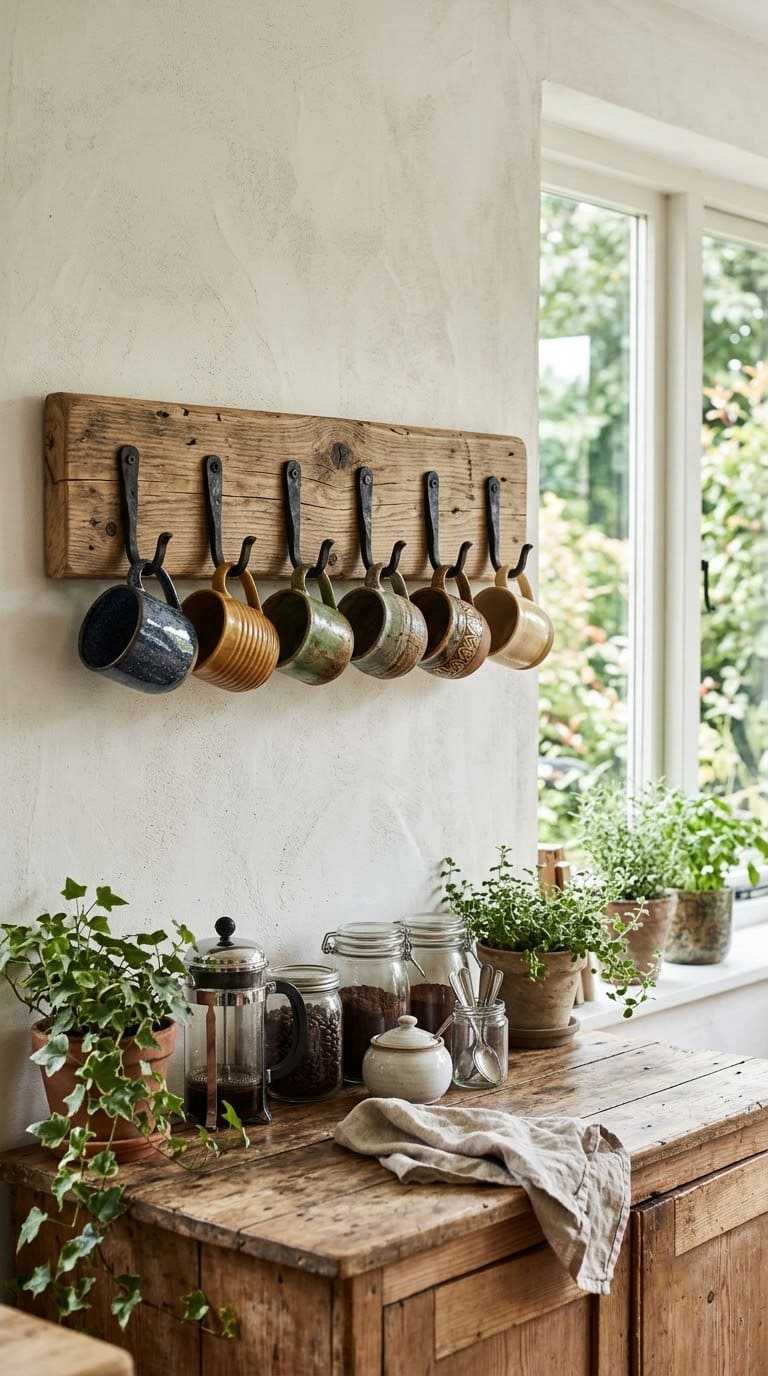
A rack frees cabinet space and shows off pretty mugs.
- Skill and time: Easy, an hour.
- Where it fits: Kitchen or coffee station.
- What you need: A plank, cup hooks, sandpaper and finish.
- Step 1: Measure and mark evenly spaced hook points.
- Step 2: Drill small guide holes and screw in the hooks.
- Step 3: Sand and finish before you add the hooks if you can.
- Step 4: Mount into studs.
- Make it last: Wipe off steam and drips.
- Watch: Overloading. Hang one mug per hook.
Our take: leave enough space between hooks so handles don’t bump.
6. Tilt-Out Trash Cabinet
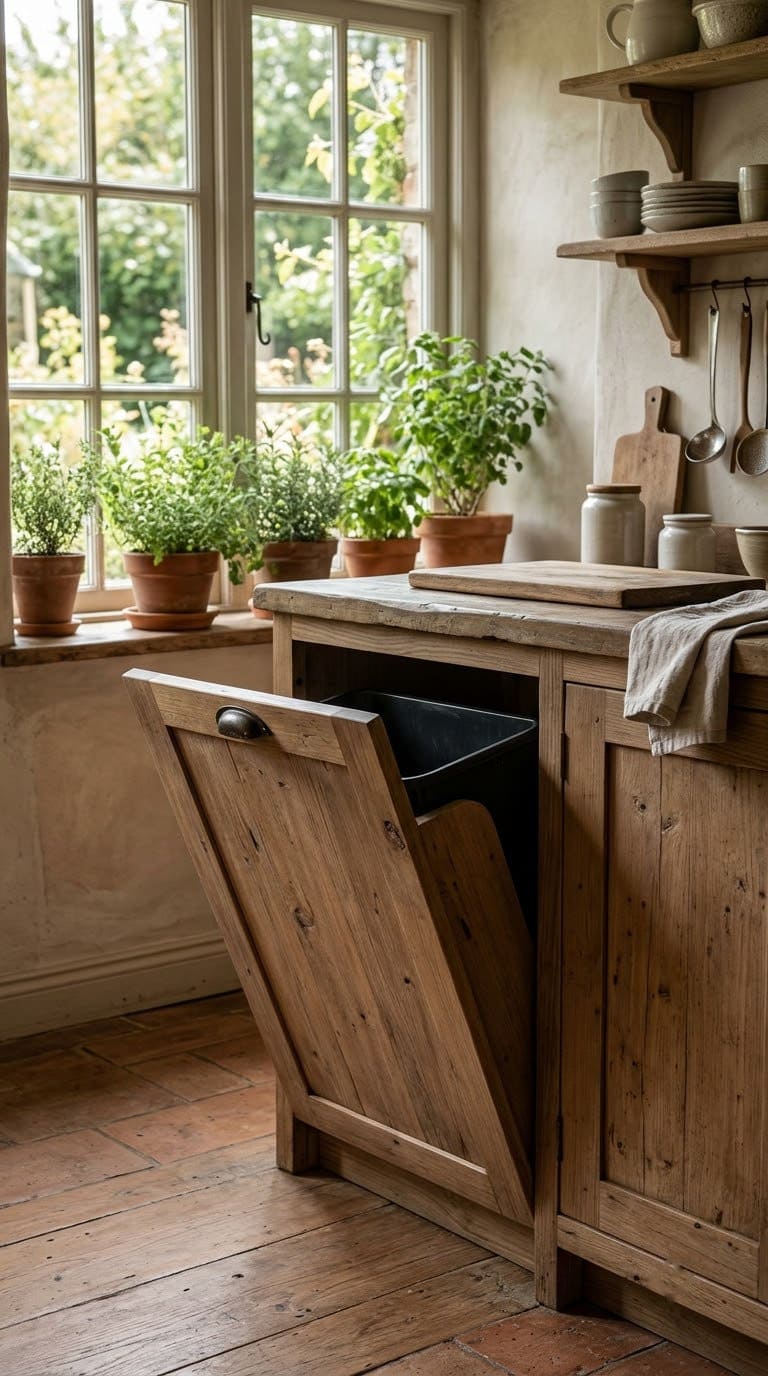
A cabinet hides the bin and looks like furniture.
- Skill and time: Medium to hard, a weekend.
- Where it fits: Kitchen or mudroom.
- What you need: Boards for a box, a hinged tilt door, a bin that fits, screws and finish.
- Step 1: Measure your bin, adding space around it.
- Step 2: Build a simple box with a back and a top.
- Step 3: Hang the front on tilt hinges so it swings out.
- Step 4: Sand, finish and place the bin inside.
- Make it last: Wipe the inside often.
- Watch: Tipping and heat. Keep it away from the stove, and keep the bin stable.
Our take: leave a gap at the back for air. It reduces smells.
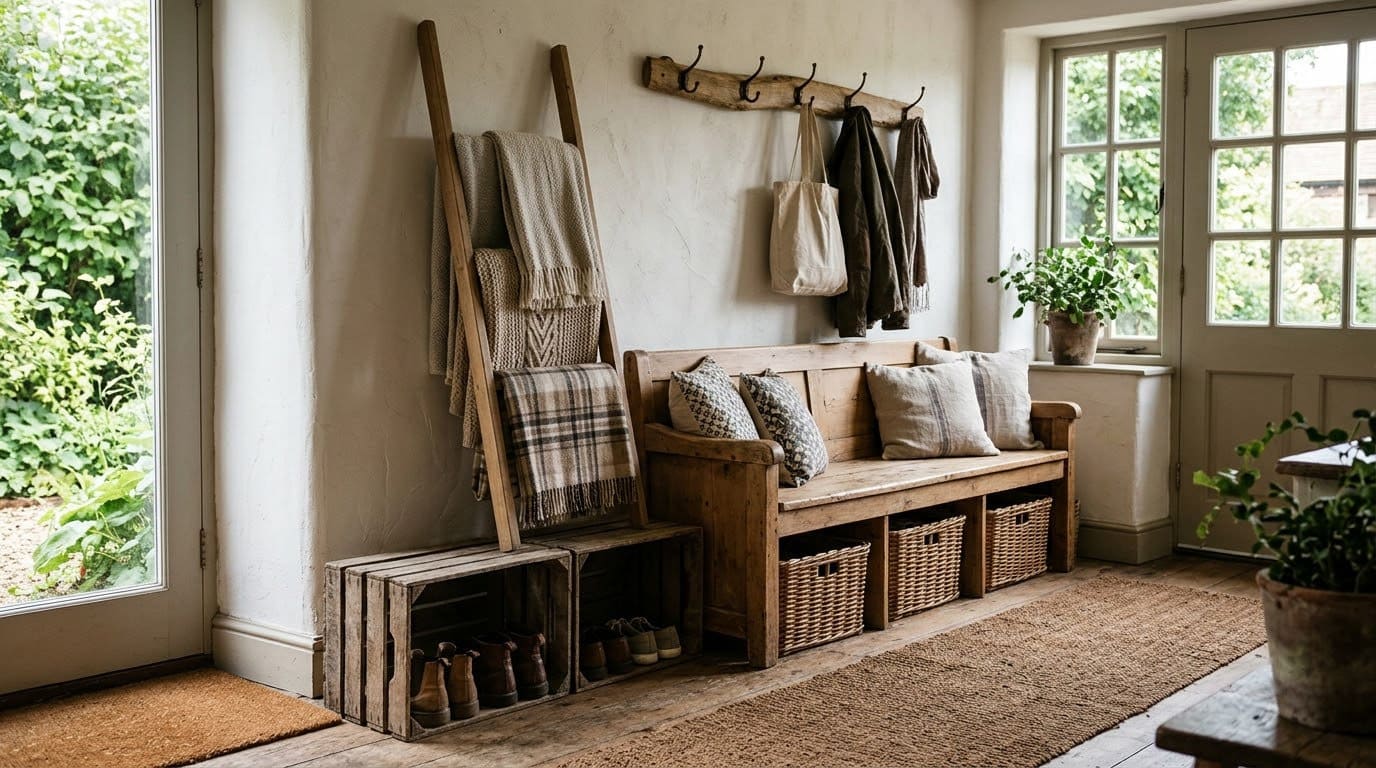
7. Crate Boot Rack
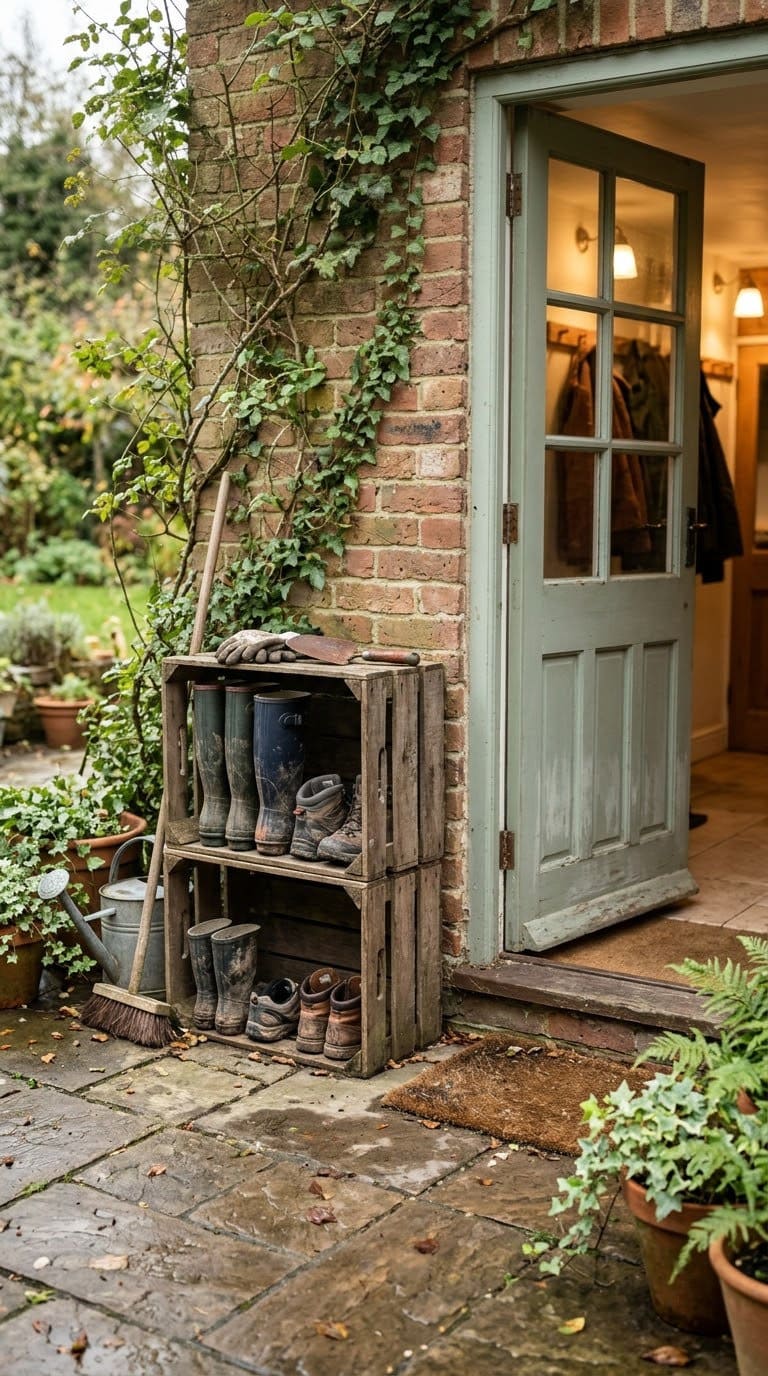
Crates make a quick home for shoes.
- Skill and time: Easy, an hour.
- Where it fits: Entryway or mudroom.
- What you need: Wooden crates, screws, sandpaper and finish.
- Step 1: Sand every rough edge.
- Step 2: Stack the crates on their sides, like shelves.
- Step 3: Screw them together through the sides.
- Step 4: Set them on a tray to catch mud.
- Make it last: Wipe with a damp cloth.
- Watch: Splinters and tipping. Sand well and secure tall stacks to the wall.
Our take: line the bottom with a washable mat.
8. Hanging Crate Storage
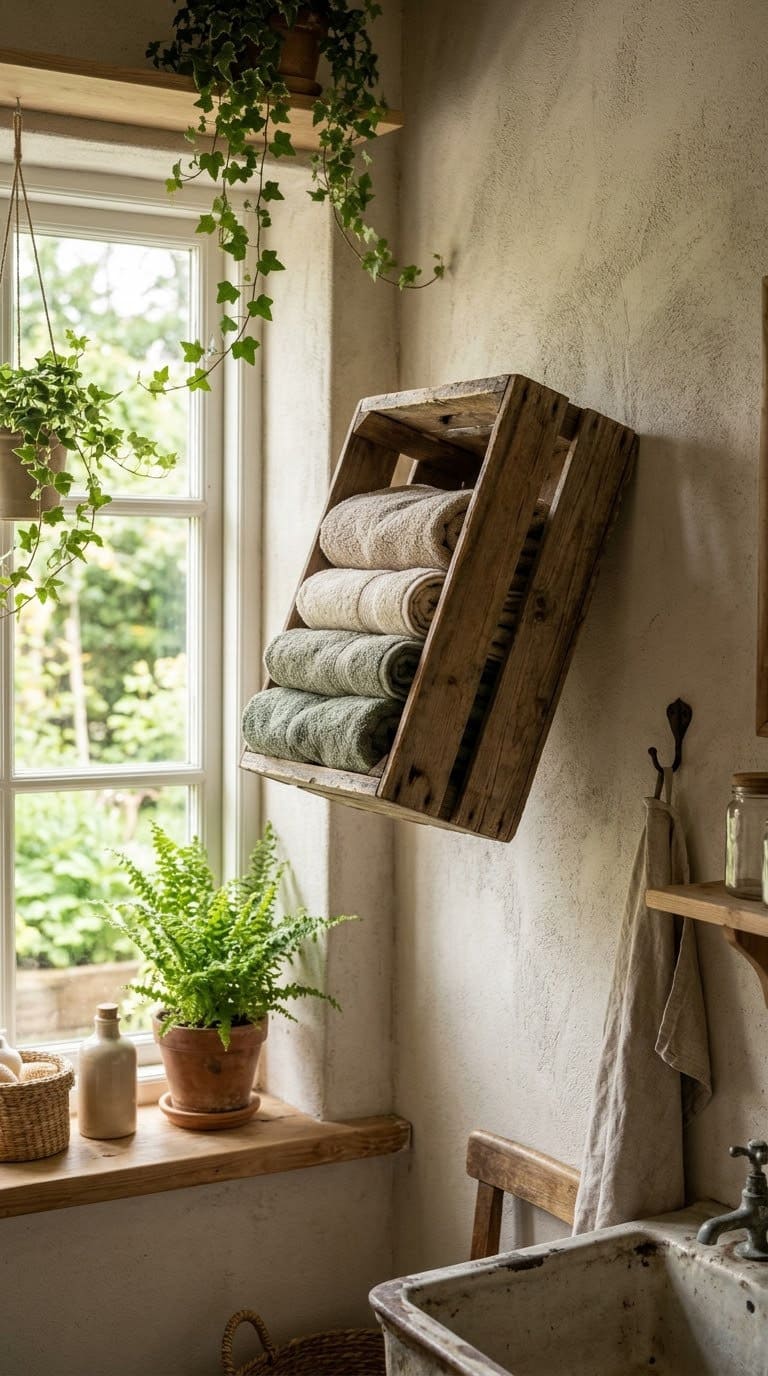
A wall crate is storage that doubles as a decoration.
- Skill and time: Easy, an hour.
- Where it fits: Bathroom, kitchen or laundry.
- What you need: A crate, wall screws, sealer.
- Step 1: Seal the crate for damp areas.
- Step 2: Mark the mount points and level them.
- Step 3: Screw through the back of the crate into studs.
- Step 4: Fill with light items.
- Make it last: Re-seal each year in humid rooms.
- Watch: Weight. Use it for towels or paper goods, not heavy jars.
Our take: see our small bathroom storage ideas for more.
9. Farmhouse Storage Bench
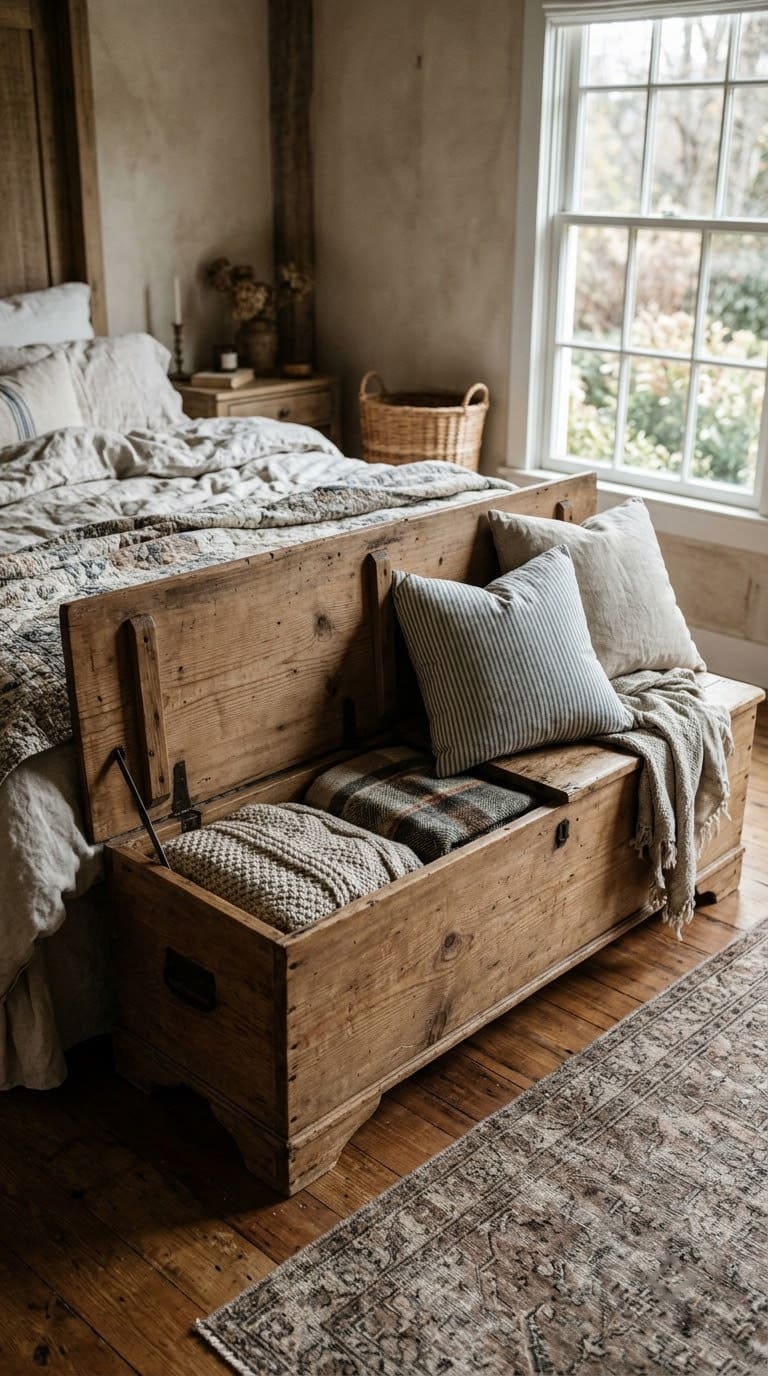
A bench seats and stores.
- Skill and time: Medium, a weekend.
- Where it fits: Entryway, bedroom or mudroom.
- What you need: Boards for a box, a lid, hinges, a safety lid support, screws and finish.
- Step 1: Build a simple box from boards and screws.
- Step 2: Add a lid with hinges.
- Step 3: Fit a lid support so it doesn’t slam shut.
- Step 4: Sand and finish. Add a cushion.
- Make it last: Check hinges each season.
- Watch: Lid slams and kids climbing inside. Use a support, and don’t add a latch that could trap a child.
Our take: this is the most useful build here. Make it as long as the wall allows.
10. Rustic Spice Rack
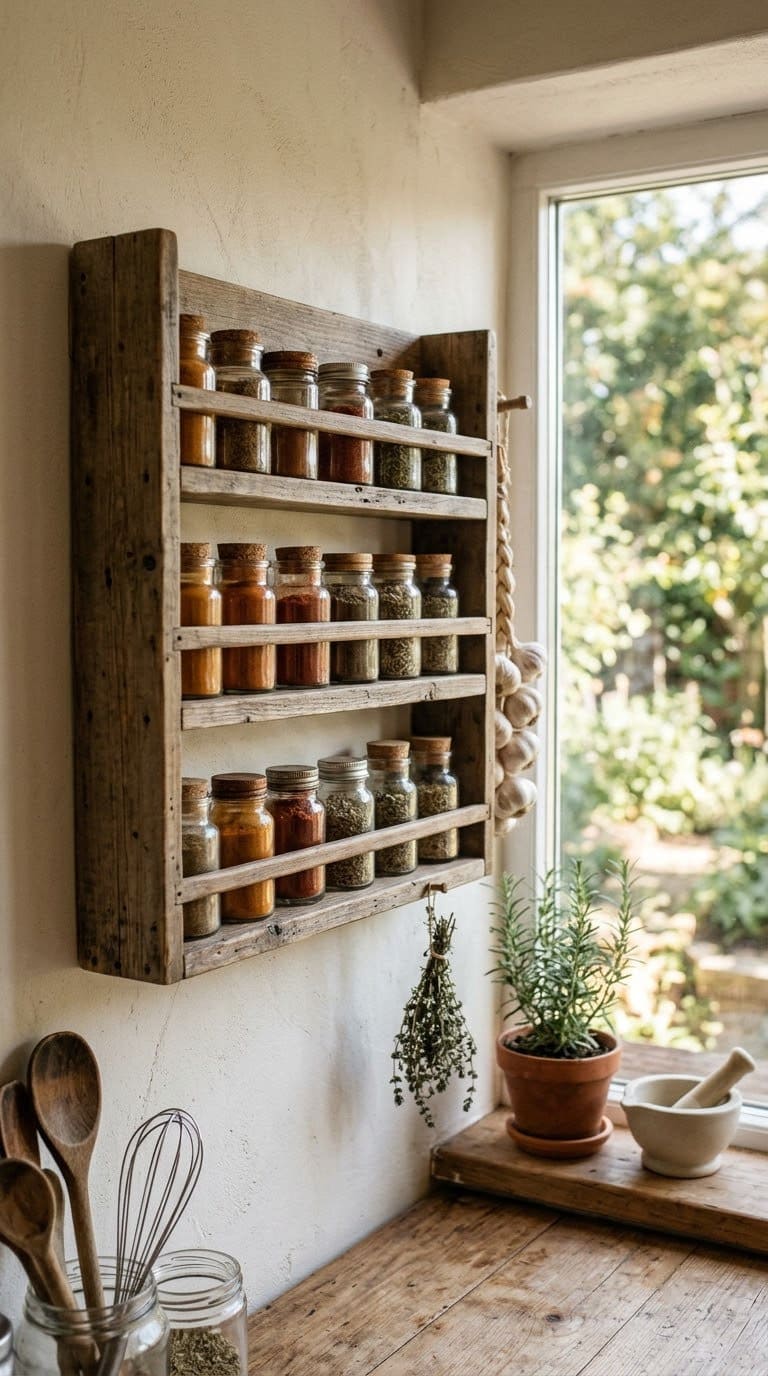
A narrow shelf puts spices within reach.
- Skill and time: Easy, an hour.
- Where it fits: Kitchen wall beside the stove or inside a cabinet door.
- What you need: Two thin boards, a small front rail, screws, finish.
- Step 1: Cut a back board and one or two shelves.
- Step 2: Add a front rail on each shelf.
- Step 3: Sand and finish.
- Step 4: Mount into studs, away from direct heat.
- Make it last: Wipe off grease.
- Watch: Heat and grease. Keep it away from the stovetop.
Our take: keep spices in the dark if you can. Light fades flavor.
11. Scrap Wood Wall Rack
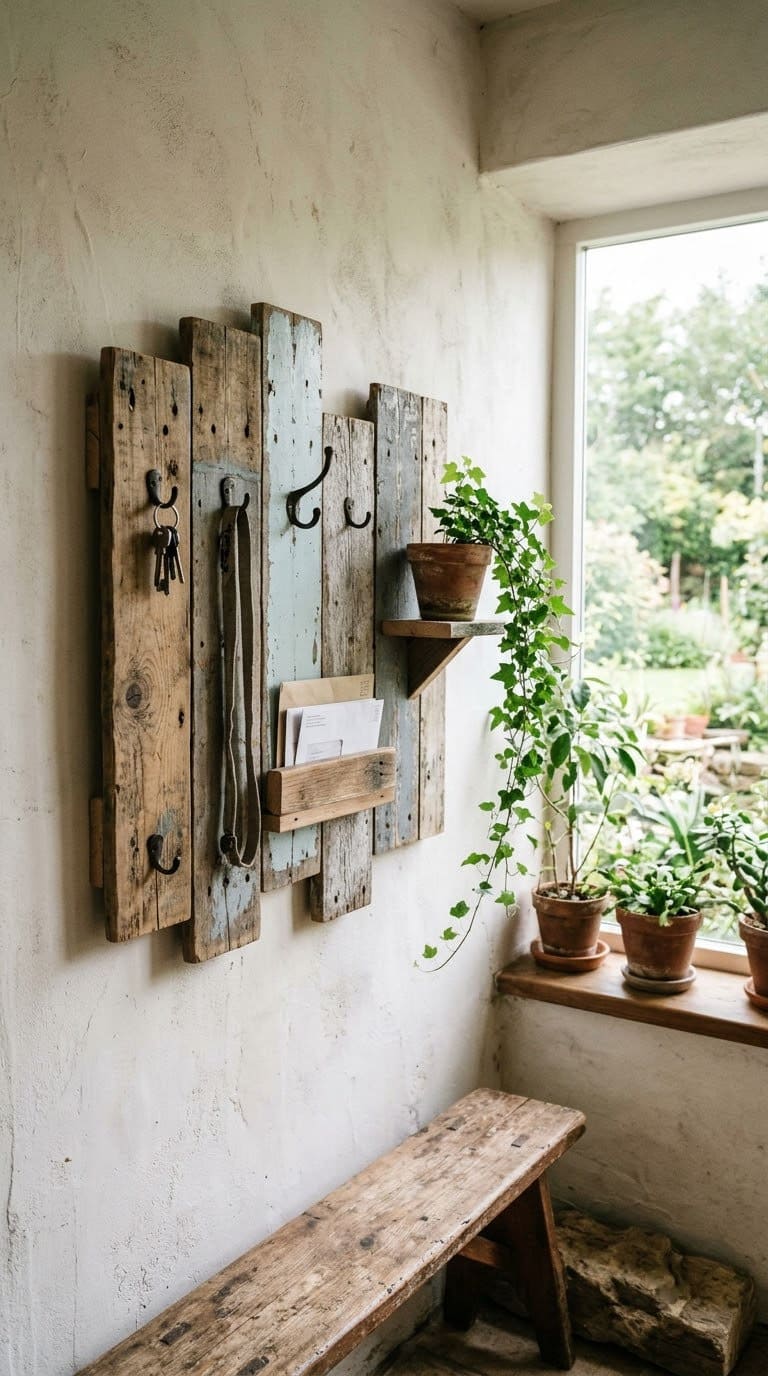
Scraps make a one-of-a-kind rack.
- Skill and time: Easy, an afternoon.
- Where it fits: Entryway, craft room or garage.
- What you need: Scrap boards, hooks, screws and finish.
- Step 1: Arrange the scrap boards on the floor like a puzzle.
- Step 2: Screw them to two backing boards.
- Step 3: Add hooks and a small shelf.
- Step 4: Mount into studs.
- Make it last: Keep it out of damp spots.
- Watch: Old paint on scraps. The EPA says old lead paint is a risk, so skip painted scraps that are flaking.
Our take: match the stain on all boards for a calmer look.
12. Hidden Shoe Cabinet
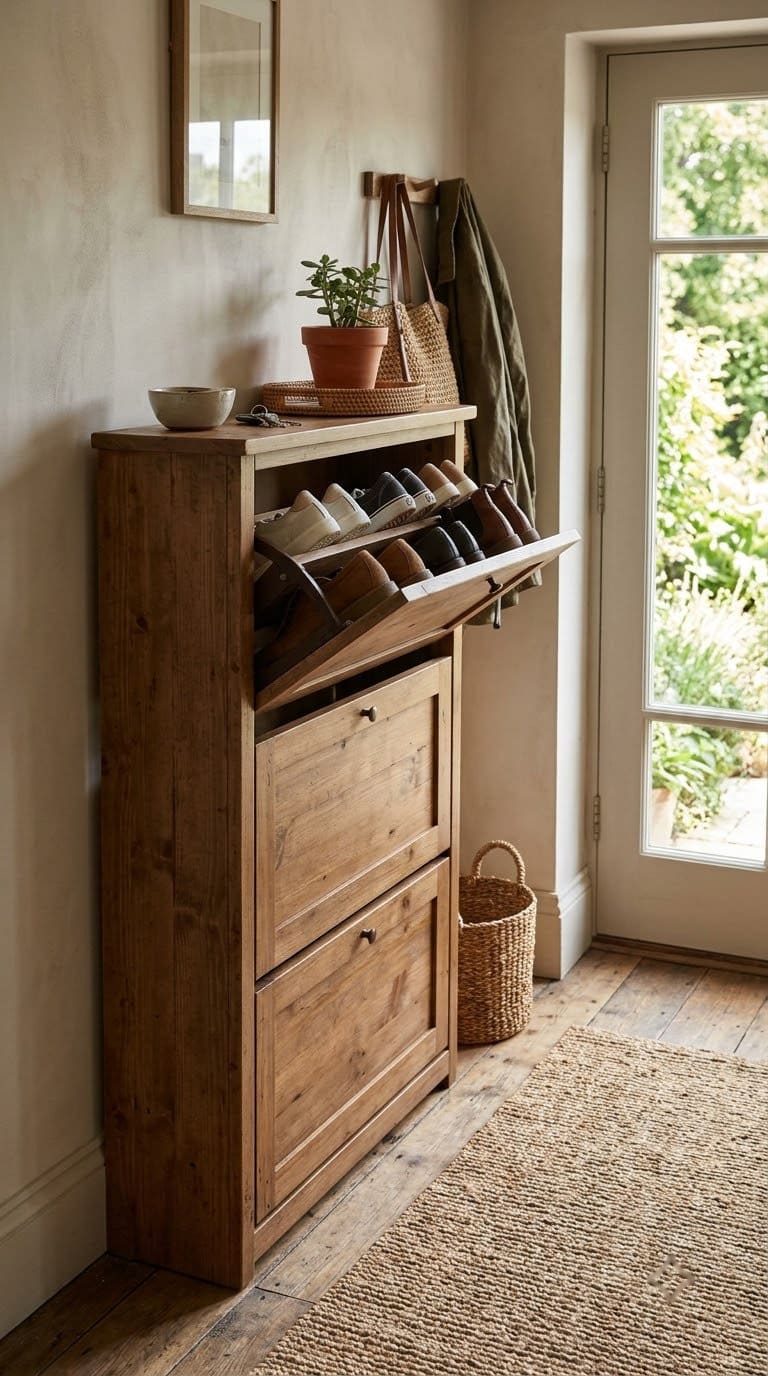
A slim cabinet hides lots of shoes.
- Skill and time: Hard, a weekend.
- Where it fits: Entryway.
- What you need: Boards for the box, tilt hinges, shelf supports, screws, finish and a wall strap.
- Step 1: Build a tall, shallow box.
- Step 2: Add slanted shelves inside.
- Step 3: Hang a front panel that tilts open.
- Step 4: Sand, finish and fasten the cabinet to the wall.
- Make it last: Wipe the inside regularly.
- Watch: Tipping. The CPSC says to anchor tall furniture to the wall.
Our take: this one is worth the extra time. It clears your entry floor.
13. Bulk Wood Bins
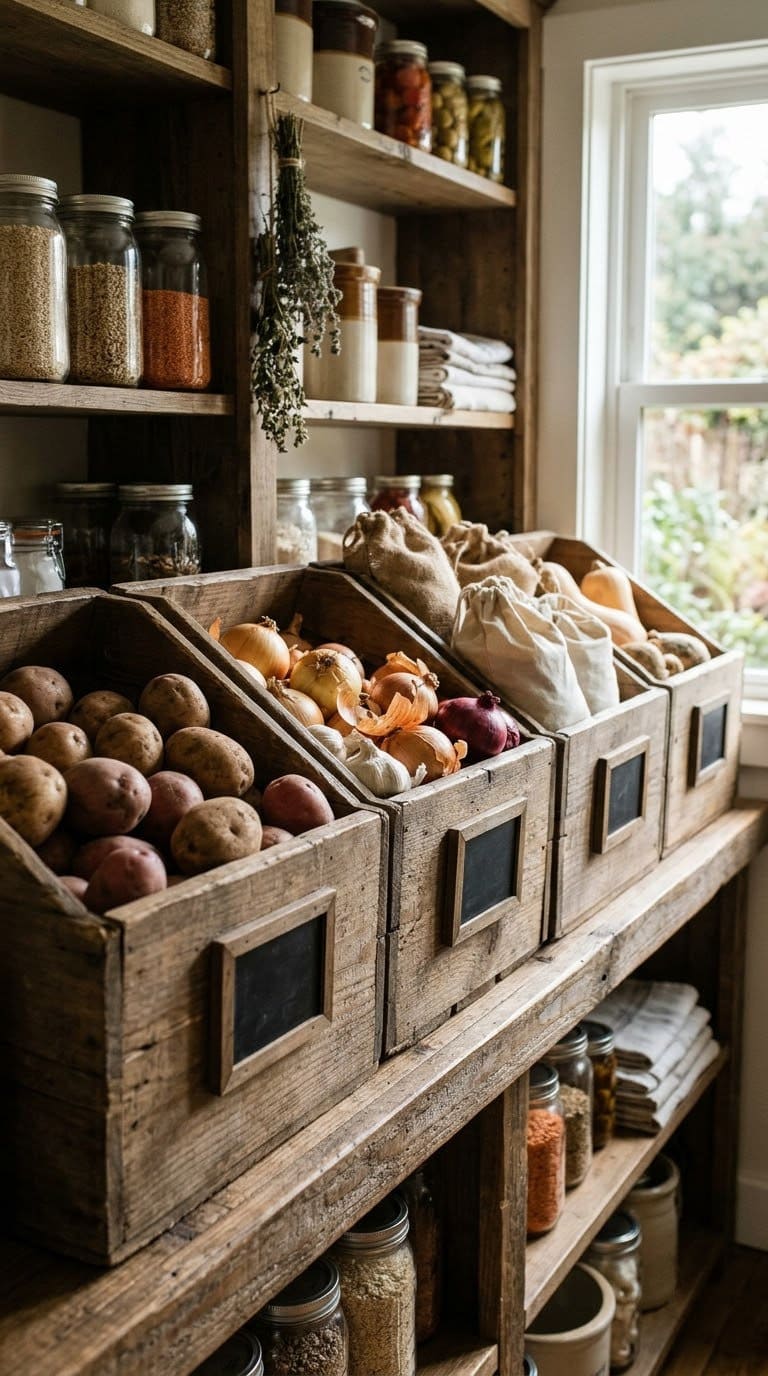
Wood bins are good for pantry items and toys.
- Skill and time: Easy to medium, an afternoon.
- Where it fits: Pantry, garage or playroom.
- What you need: Wide boards, screws or glue, sandpaper.
- Step 1: Cut four sides and a base for each bin.
- Step 2: Screw or glue the corners.
- Step 3: Sand and apply a food-safe finish if bins hold food.
- Step 4: Add a handle cut-out or a rope handle.
- Make it last: Wipe dry.
- Watch: Splinters and chemicals. Use clean, untreated wood for food.
Our take: use the same size for every bin. They stack and slide neatly.
14. Bathroom Hook Rail
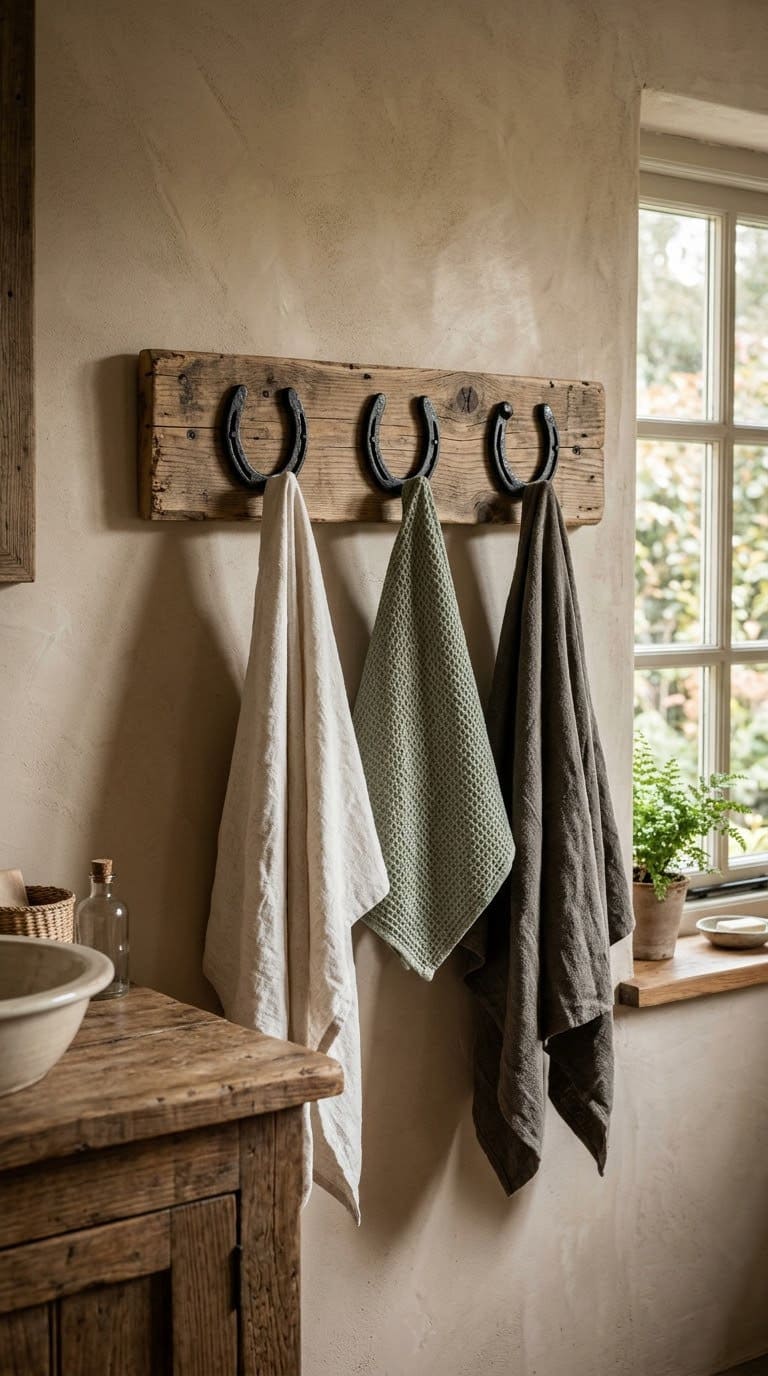
A hook rail is simple and useful.
- Skill and time: Easy, an hour.
- Where it fits: Bathroom, entry or laundry.
- What you need: A cedar or sealed pine plank, hooks, screws, sealer.
- Step 1: Seal all sides of the plank.
- Step 2: Mark and drill hook holes evenly spaced.
- Step 3: Attach the hooks.
- Step 4: Mount into studs.
- Make it last: Dry towels before hanging.
- Watch: Damp wood. Seal every side and edge.
Our take: use cedar. It handles humidity well.
15. Cleat-Mounted Floating Shelf
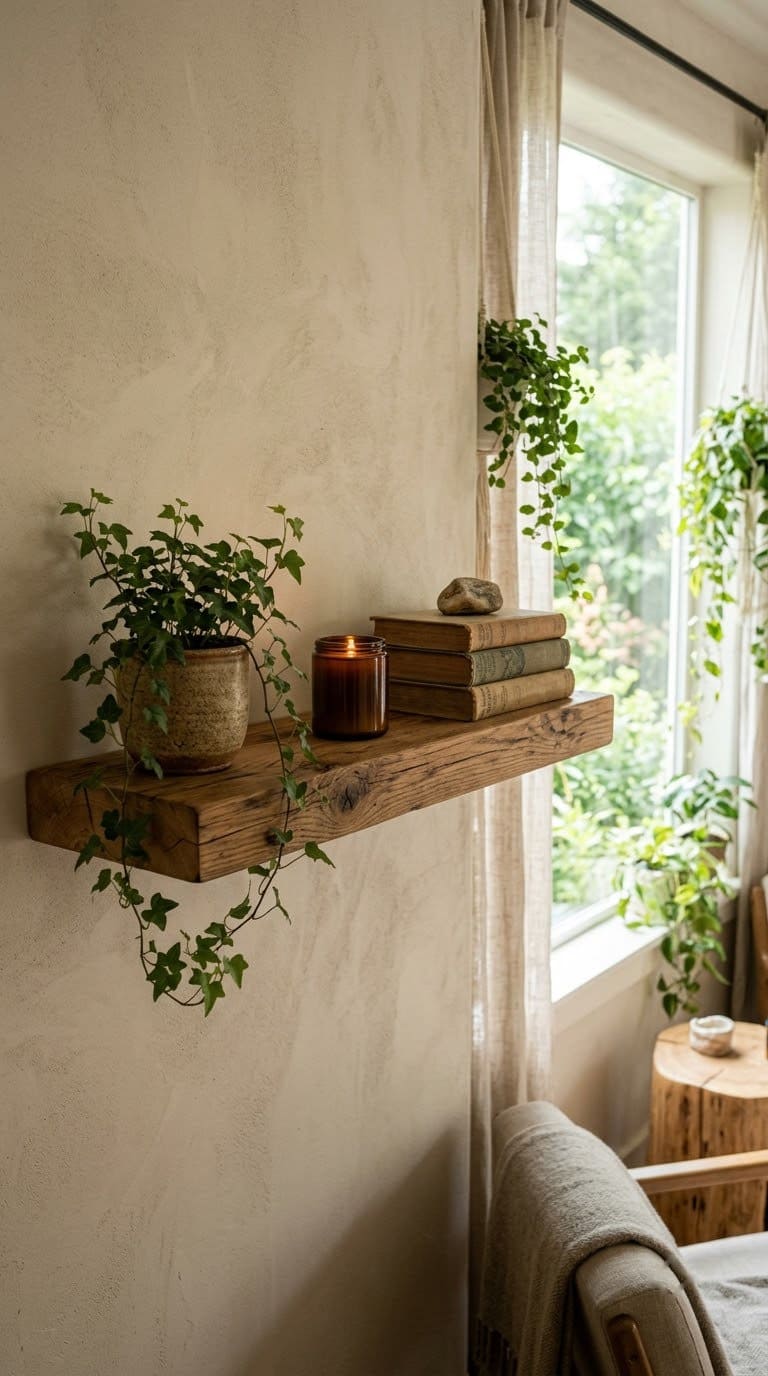
A hidden cleat makes a clean shelf.
- Skill and time: Medium, an afternoon.
- Where it fits: Living room, bedroom or hallway.
- What you need: A thick board, a cleat strip, long screws, a level.
- Step 1: Cut a cleat strip and screw it level into wall studs.
- Step 2: Cut a hollow in the back of the shelf, or build a box.
- Step 3: Slide the shelf over the cleat.
- Step 4: Add small screws up through the cleat to hold it.
- Make it last: Don’t overload it.
- Watch: Weak mounts. Use studs and test the load slowly.
Our take: use shelves for light things. Heavy books want a stronger bracket.
16. Stepladder Side Table
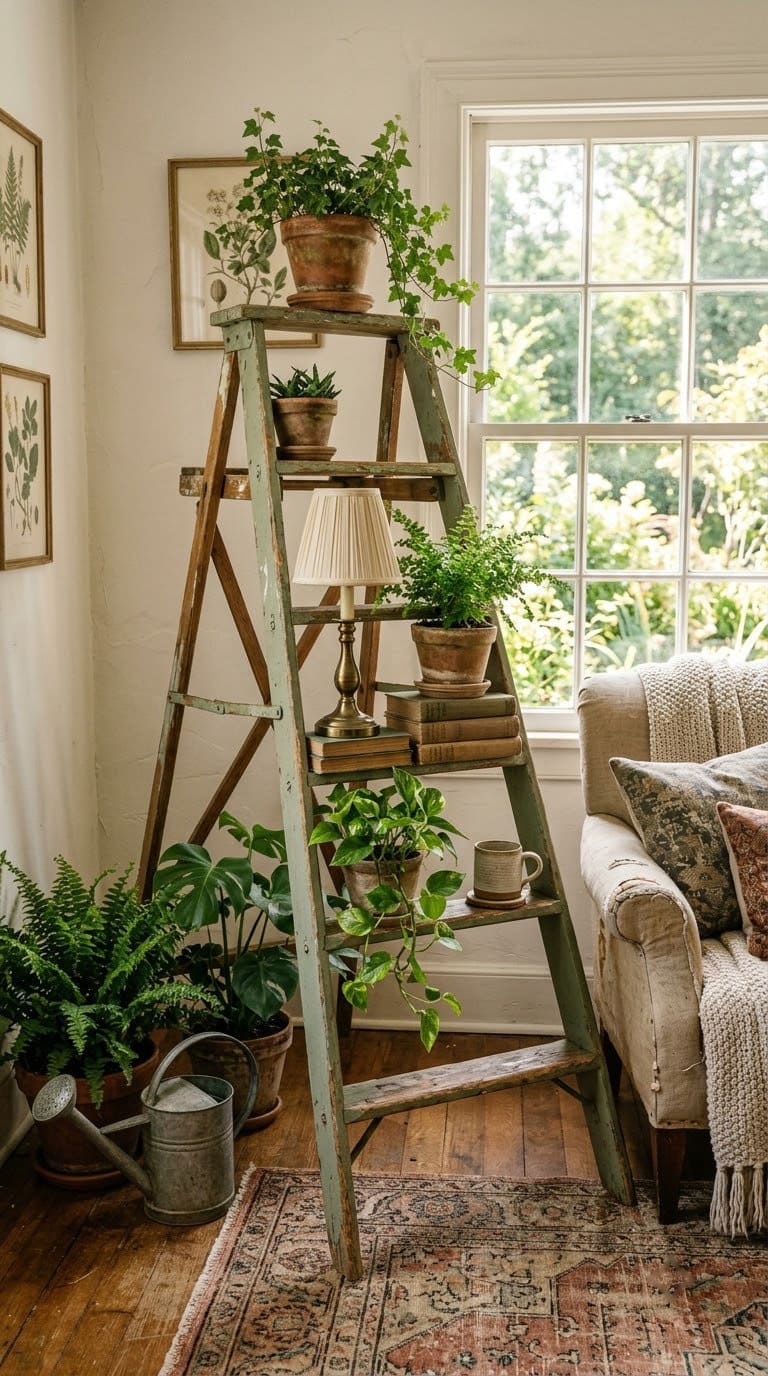
An old ladder becomes a side table.
- Skill and time: Easy, an afternoon.
- Where it fits: Living room, bedroom or porch.
- What you need: A sturdy stepladder, sandpaper, paint or stain and a small board for the top.
- Step 1: Check that the ladder is solid and not wobbly.
- Step 2: Sand and paint or stain it.
- Step 3: Fix a board across the steps if you want a flat top.
- Step 4: Add felt pads to the feet.
- Make it last: Re-tighten the joints each year.
- Watch: Old paint. If it is flaking, use a different ladder. The EPA warns about lead in old paint.
Our take: keep loads light. A lamp and a plant are plenty.
17. Numbered Pallet Crates
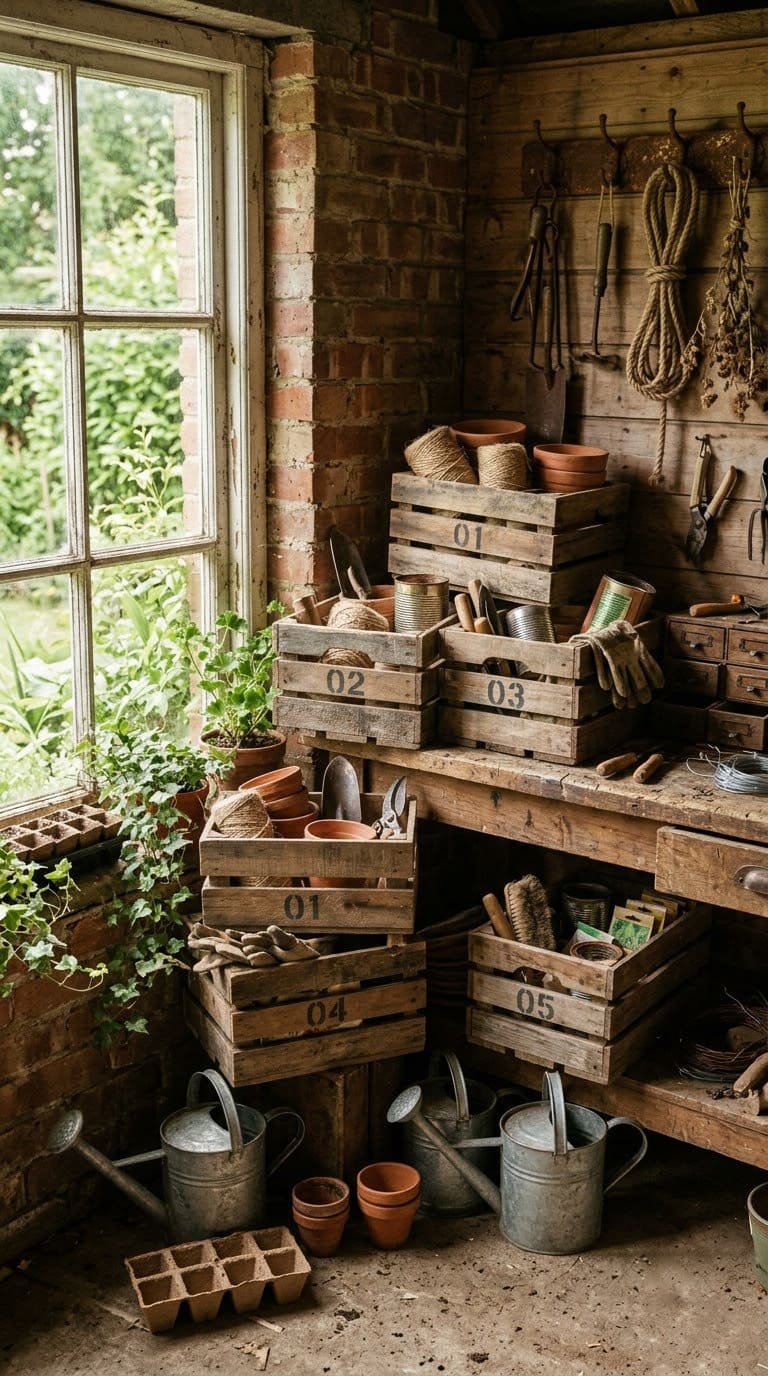
Numbered crates make a tidy system.
- Skill and time: Medium, a weekend.
- Where it fits: Garage, craft room or shed.
- What you need: HT-stamped pallet wood, saw, sandpaper, screws, number stencils and paint.
- Step 1: Check the stamp and pull out nails.
- Step 2: Cut boards and build open boxes.
- Step 3: Sand and stencil numbers on the front.
- Step 4: Stack or mount on shelves.
- Make it last: Seal the wood to keep out moisture.
- Watch: Splinters and chemicals. Penn State Extension advises gloves, and warns against MB pallets.
Our take: keep a simple list of what each number holds. You will thank yourself.
18. Toy Storage Console
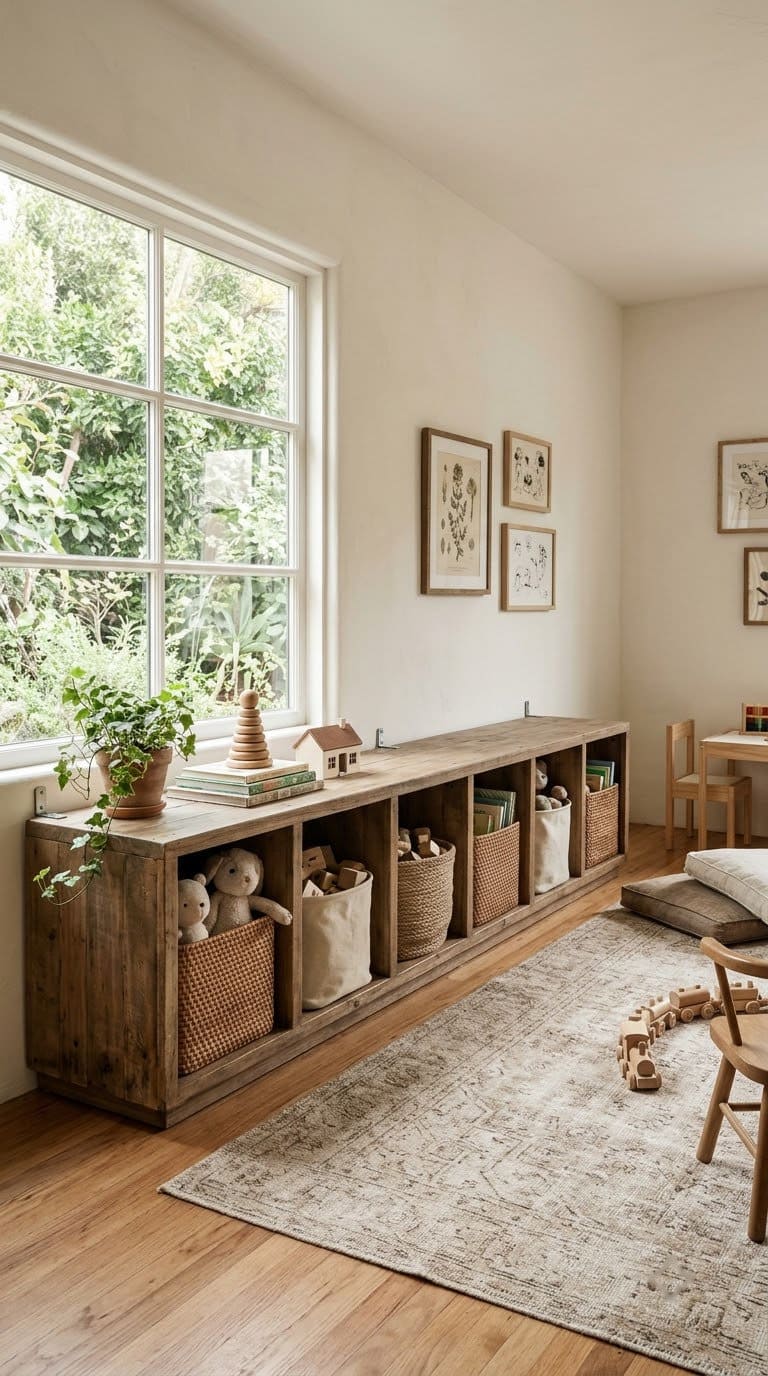
A low console keeps toys in reach and out of sight.
- Skill and time: Medium, a weekend.
- Where it fits: Playroom or living room.
- What you need: Boards for a long low box, dividers, bins, screws, finish and a wall anchor.
- Step 1: Build a long, low frame with cubbies.
- Step 2: Sand every edge and corner.
- Step 3: Finish with a non-toxic, kid-safe finish.
- Step 4: Anchor the console to the wall.
- Make it last: Check the anchors twice a year.
- Watch: Climbing and tipping. The CPSC says to anchor furniture and not leave toys where children may climb to reach them.
Our take: round the corners. It’s safer for small heads.
19. Entryway Storage Chest
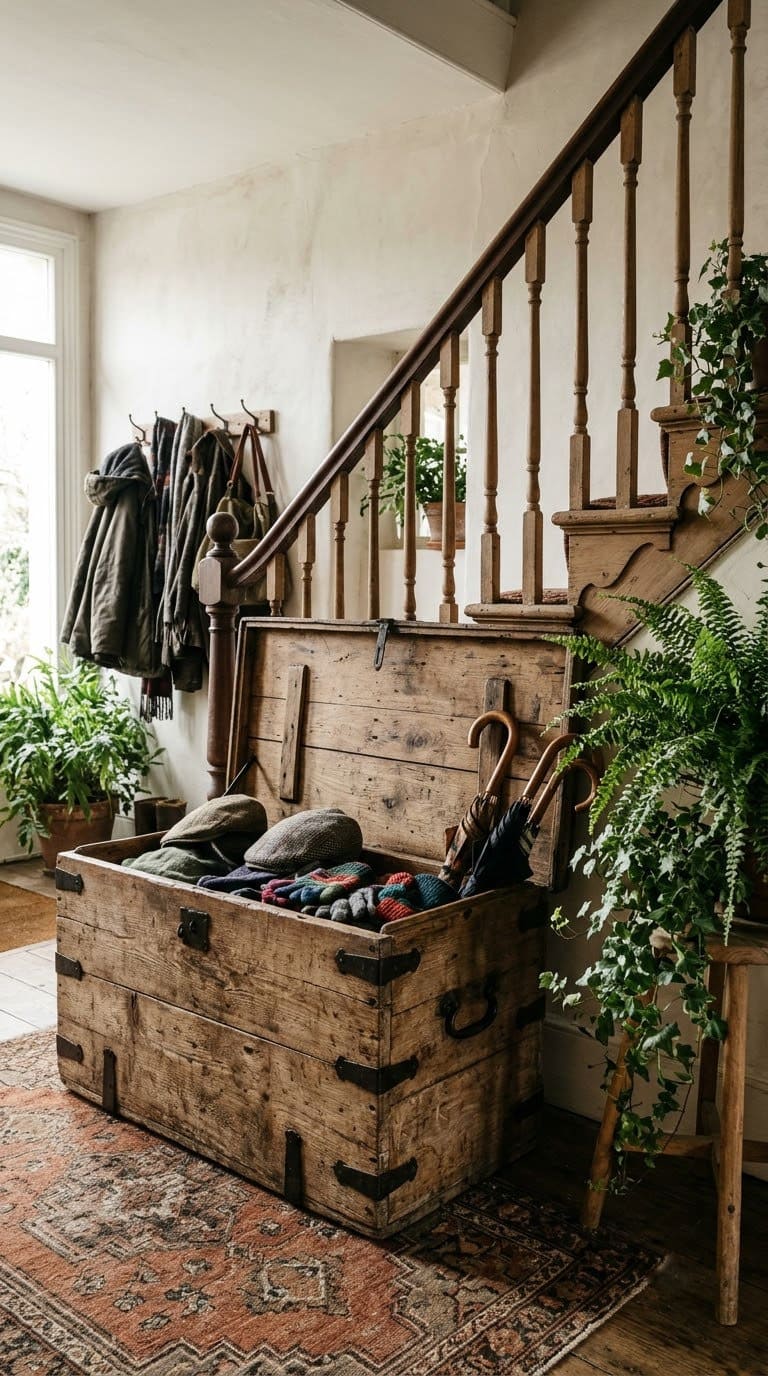
A chest holds seasonal items and looks like furniture.
- Skill and time: Medium to hard, a weekend.
- Where it fits: Entryway or bedroom.
- What you need: Boards for a box, a lid, hinges, a lid support, handles and finish.
- Step 1: Build a sturdy box and add a base.
- Step 2: Make a lid and attach hinges.
- Step 3: Add a safety support, and skip a latch.
- Step 4: Add handles, sand and finish.
- Make it last: Oil the hinges once a year.
- Watch: Lid slams and trapped children. Use a support and don’t add a lock.
Our take: line it with cedar planks if you store wool.
20. Jewelry Organizer Cabinet
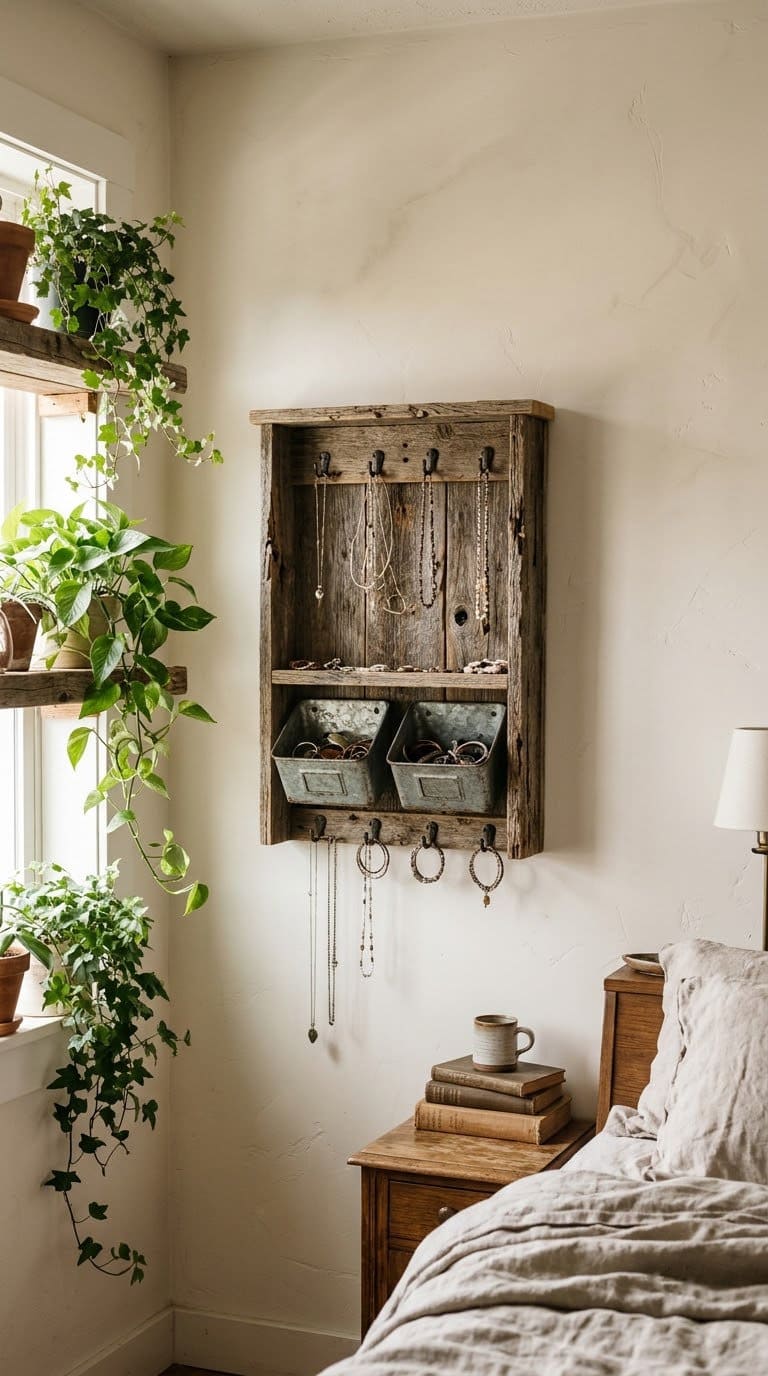
A small cabinet keeps jewelry tidy.
- Skill and time: Medium, an afternoon.
- Where it fits: Bedroom or dressing area.
- What you need: A shallow box or old frame, a hinged door, hooks, small bins or bread tins and felt.
- Step 1: Build or find a shallow cabinet.
- Step 2: Line the back with felt.
- Step 3: Add hooks for necklaces and tins for rings.
- Step 4: Mount it on the wall into studs.
- Make it last: Wipe it with a dry cloth.
- Watch: Old paint. Skip flaking pieces, and wash your hands if you handled them.
Our take: keep it at eye level. You will use it daily.
How Do You Mount Storage on a Wall?
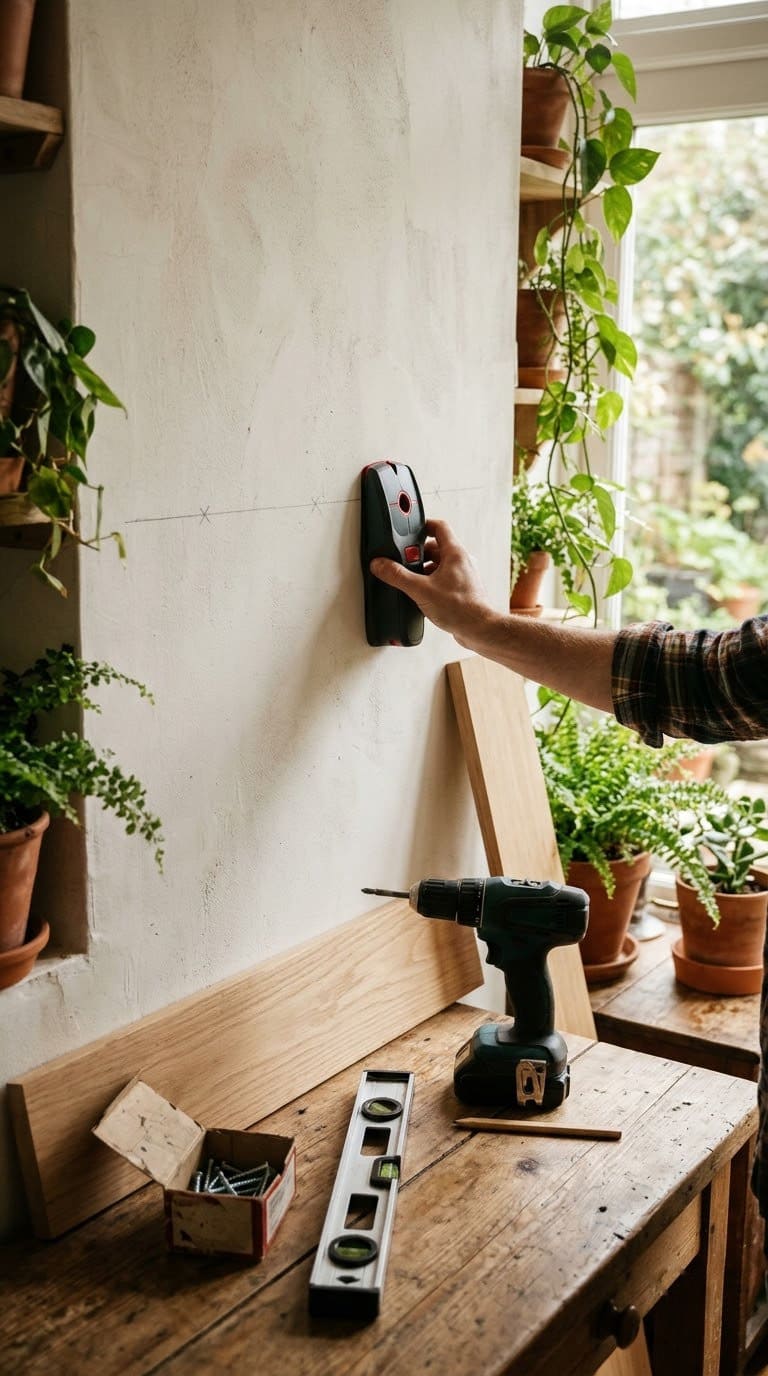
Most failures come from weak mounting.
- Find the studs with a stud finder, and mark them.
- Use screws long enough to reach into the stud.
- Use wall anchors only for light loads.
- Check level before you drive the final screws.
- Test the load slowly before you fill the shelf.
Our take: when in doubt, add one more screw. A wall repair costs more than the screw.
What Mistakes Should You Avoid?
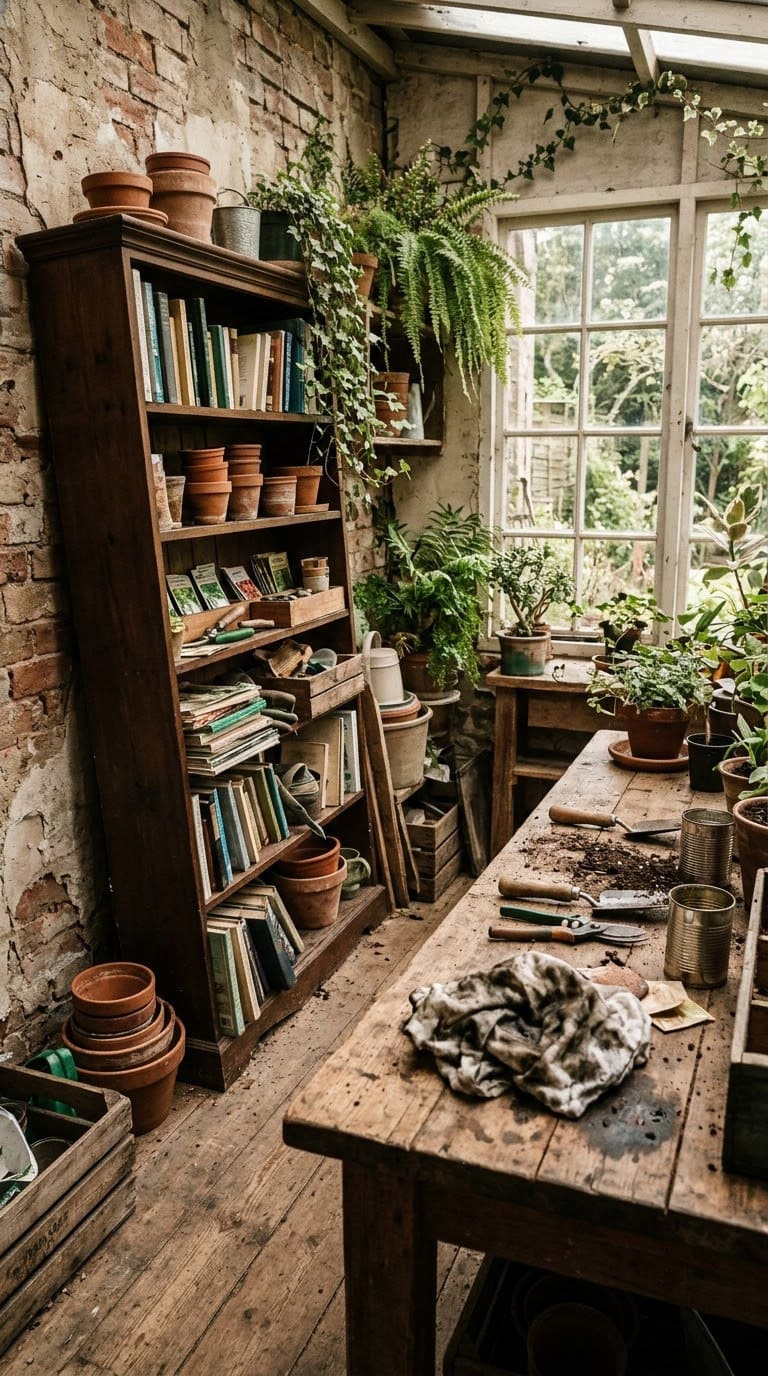
Most problems are about tipping, fire and wood choice.
- Not anchoring tall pieces. Anchor them.
- Leaving oily rags in a pile. Spread them flat outdoors.
- Using MB pallets. Avoid them, and never burn them.
- Mounting into drywall only. Find studs.
- Skipping the sanding. Splinters hurt.
- Starting too big. Build a small project first.
Frequently Asked Questions
What is the easiest rustic storage project for a beginner?
A hook rail or a mason jar wall organizer. Each takes about an hour and uses few tools. You can finish one in an afternoon.
Is pallet wood safe for storage furniture?
If it is stamped HT, UC ANR says it is generally safe. Penn State Extension says never to use MB pallets, and not to burn pallet wood. Skip pallets for food-contact items.
How do I make wood look rustic?
Sand it, stain it or whitewash it, and rub the edges with sandpaper for a worn look. Test on a scrap board first.
How do I stop tall storage from tipping?
Anchor it to the wall studs with a strap or bracket. The CPSC says to anchor bookcases and dressers, and to keep heavy items on the lower shelves. See our living room storage ideas for more tips.
Your Rustic Storage Plan
- Day 1: Pick one room and list what needs a home.
- Day 2: Choose a project from the list and gather materials.
- Weekend: Build, sand and finish it outdoors.
- Next day: Dry the finish rags flat outdoors and mount the piece into studs.
- Every season: Check screws, anchors and hinges.
Start with a simple build, finish it safely and anchor anything tall. That is how a rustic home stays tidy.
Never miss an update — choose FarmFoodFamily as your preferred source on Google.
How it works: Tap the button below to open Google's settings page, then check the box next to FarmFoodFamily.
Tap the checkbox to turn it blue — that's how you know it's set.