How to Rescue Heat-Stressed Plants (Houseplants, Vegetable Gardens, and Outdoor Trees)
Most heat-stress guides treat every plant the same way, water it more and hope for the best. That’s not quite right. A wilting houseplant, a struggling tomato patch, and a stressed backyard tree are three genuinely different situations with different fixes, and almost nobody actually names a recovery timeline you can hold onto while you…

Never miss an update — choose FarmFoodFamily as your preferred source on Google.
How it works: Tap the button below to open Google’s settings page, then check the box next to FarmFoodFamily.
Tap the checkbox to turn it blue — that’s how you know it’s set.
Most heat-stress guides treat every plant the same way, water it more and hope for the best. That’s not quite right.
A wilting houseplant, a struggling tomato patch, and a stressed backyard tree are three genuinely different situations with different fixes, and almost nobody actually names a recovery timeline you can hold onto while you wait.
Here’s the real diagnostic sign first, then what actually helps depending on what kind of plant you’re dealing with.
The one sign that actually matters
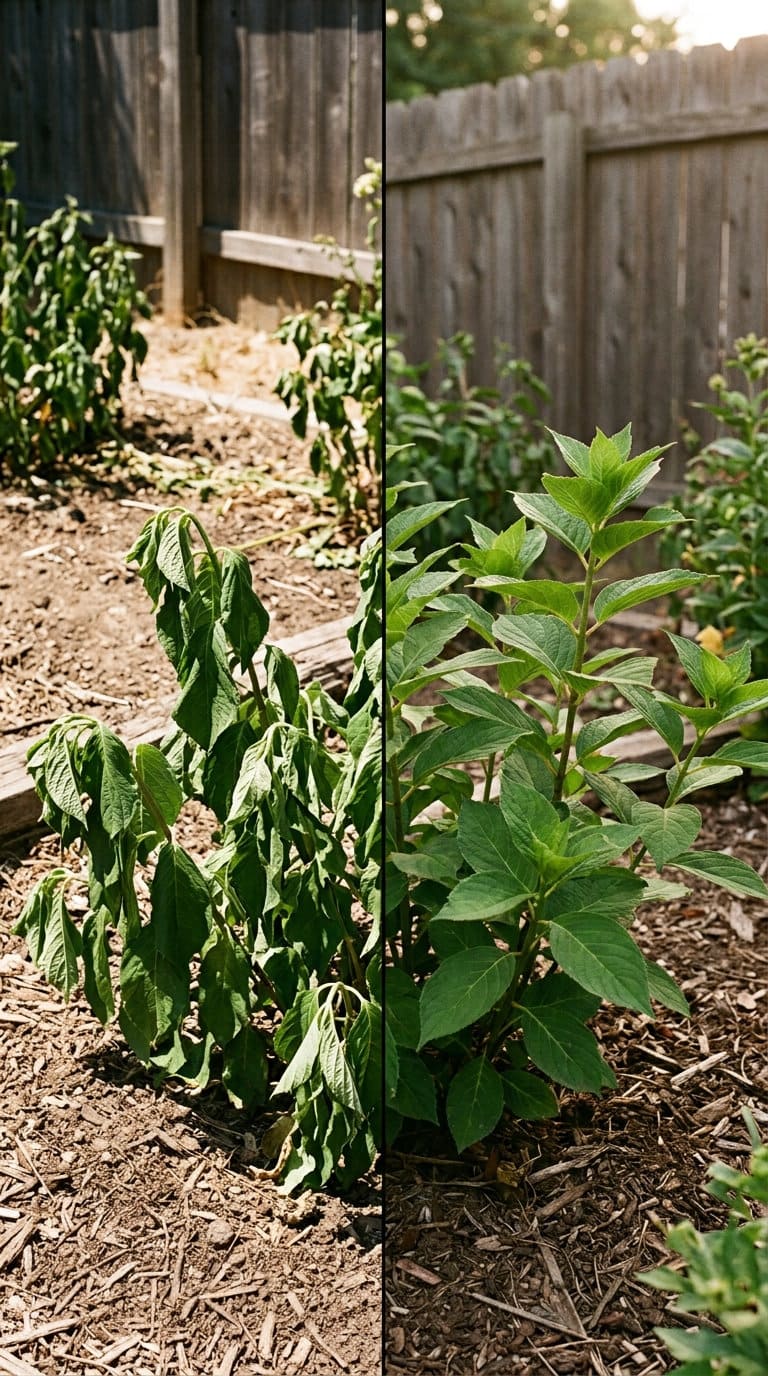
If a plant wilts hard during the hottest part of the day and perks back up by evening or the next morning, that’s heat stress, not necessarily underwatering, disease, or a pest problem.
That daily wilt-and-recover cycle is the single most useful thing to check before you start changing your watering routine or reaching for fertilizer.
Other real signs: leaf scorch (browning or yellowing at the edges), leaves curling inward to cut down on water loss, flowers or fruit dropping early, and growth that just stalls out because photosynthesis is disrupted.

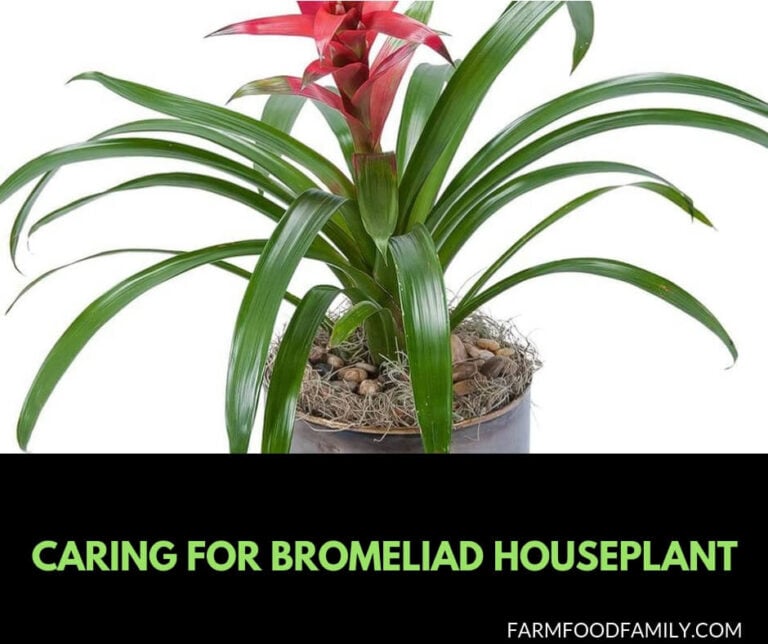
Houseplants
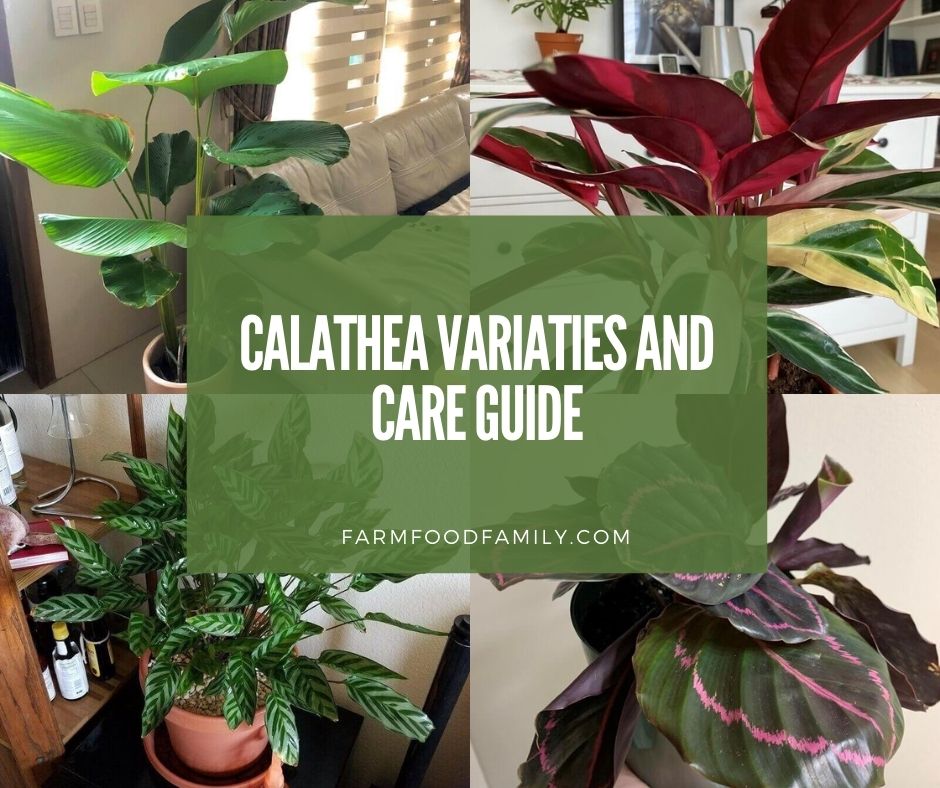
Justin Hancock, Director of R&D and Horticultural Content at Costa Farms and a horticulturist with over 20 years in the business, makes a point that’s easy to miss: for a lot of houseplants, it’s temperature swings, not heat itself, that cause the real problems.
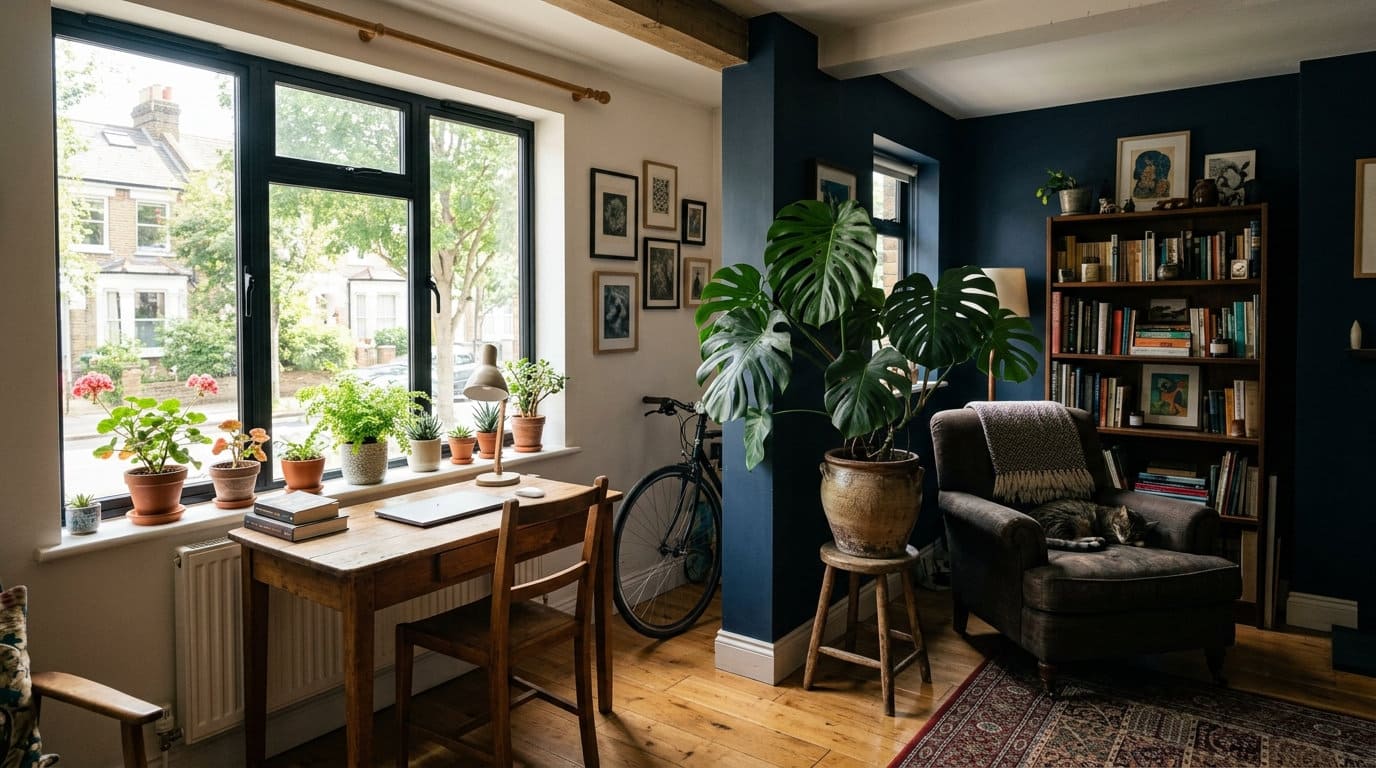
Most common houseplants come from tropical or subtropical regions built to handle real heat. Temperatures in the 90s might set a plant back a little, but it’s often not enough to actually show symptoms.
Answer 4 quick questions and get matched to the exact fix for your yard — drainage, budget, layout, or something else entirely.
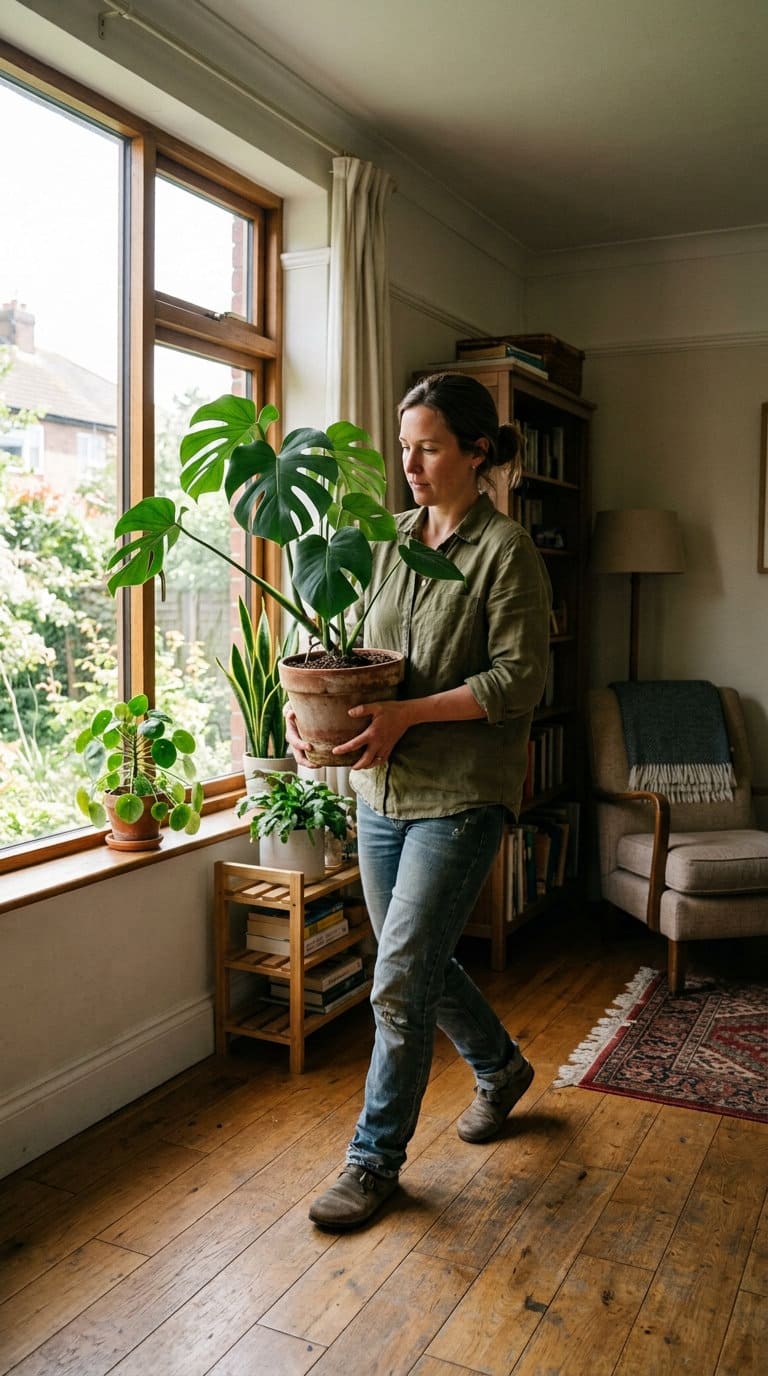
Take the Free QuizSo before assuming a wilting houseplant is a heat problem specifically, check whether it’s sitting somewhere with a big daily temperature swing, right against a hot window during the day and a cold draft at night, for instance.
Moving it a few feet away from direct window heat solves more of these cases than people expect.
Vegetable gardens and tomatoes specifically
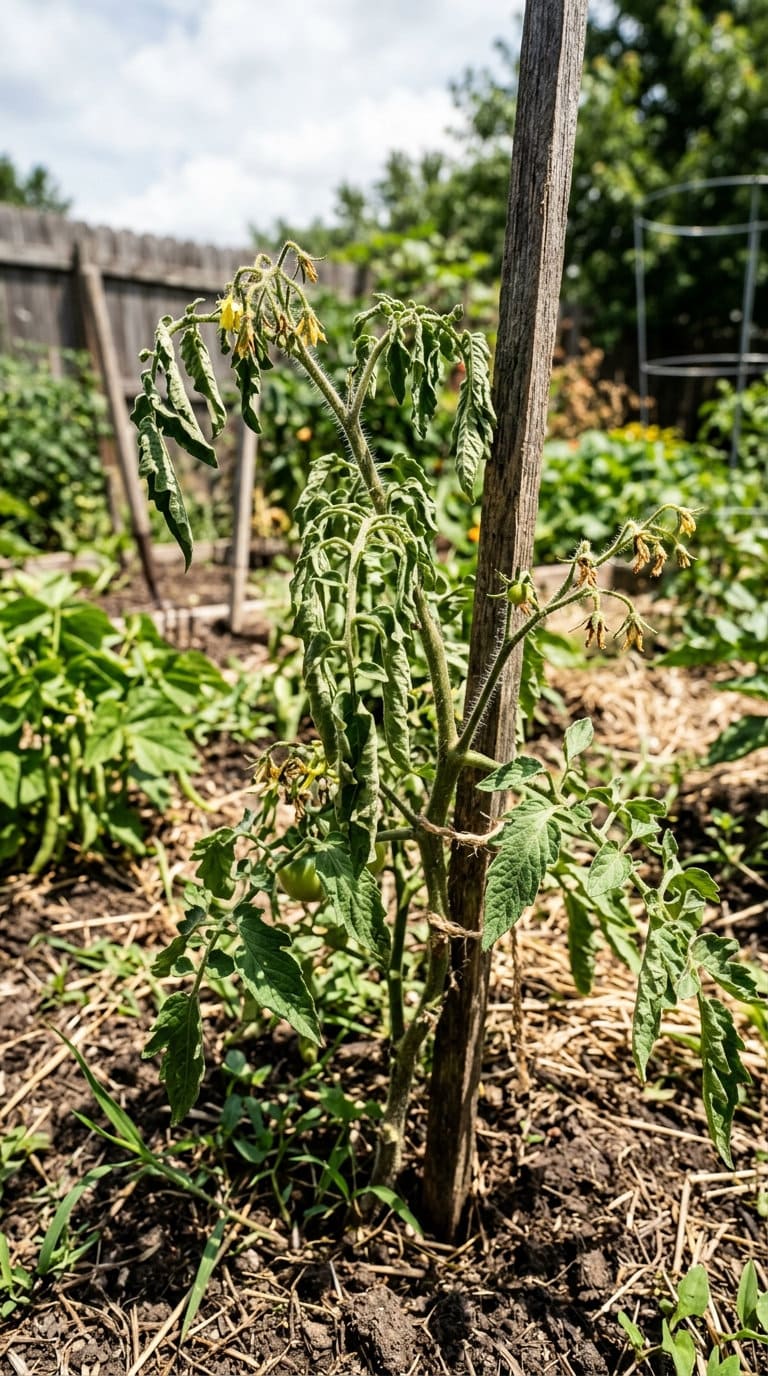
Tomatoes get their own section because they behave differently than most garden plants under heat.
Frank Hyman, a North Carolina horticulturist and author of Ripe Tomato Revolution, points out you can actually see it on the plant, the fuzzy hairs on tomato stems and leaves are evidence they evolved in a dry climate. Tomatoes handle some drought reasonably well.
What they genuinely struggle with is temperature in the 90s and up, that’s when flower and fruit drop shows up as the visible sign something’s wrong.
The fix is the same one that works across most vegetable gardens under heat: water deeply and infrequently, timed for early morning rather than midday, so moisture actually reaches the root zone before the sun pulls it back out through evaporation. A quick soil check, two inches down, still damp means wait a day.

The deep, infrequent watering method the article recommends for vegetable gardens and outdoor plantings, delivers water at the root zone rather than the surface.
Most yard problems trace back to one specific, fixable cause. Find yours in 4 quick questions.
Take the Free QuizThis post contains affiliate links. We may earn a commission on qualifying purchases at no extra cost to you.
Outdoor trees, shrubs, and garden beds
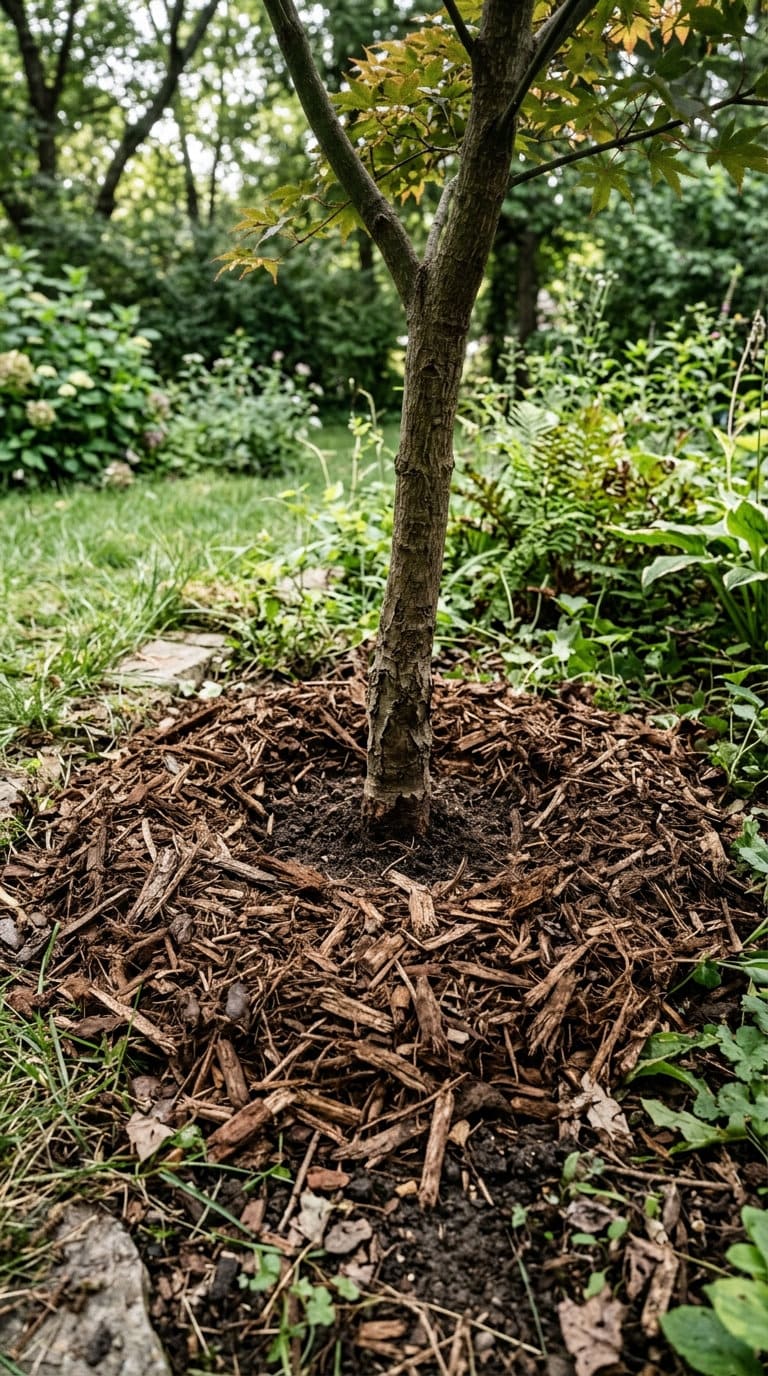
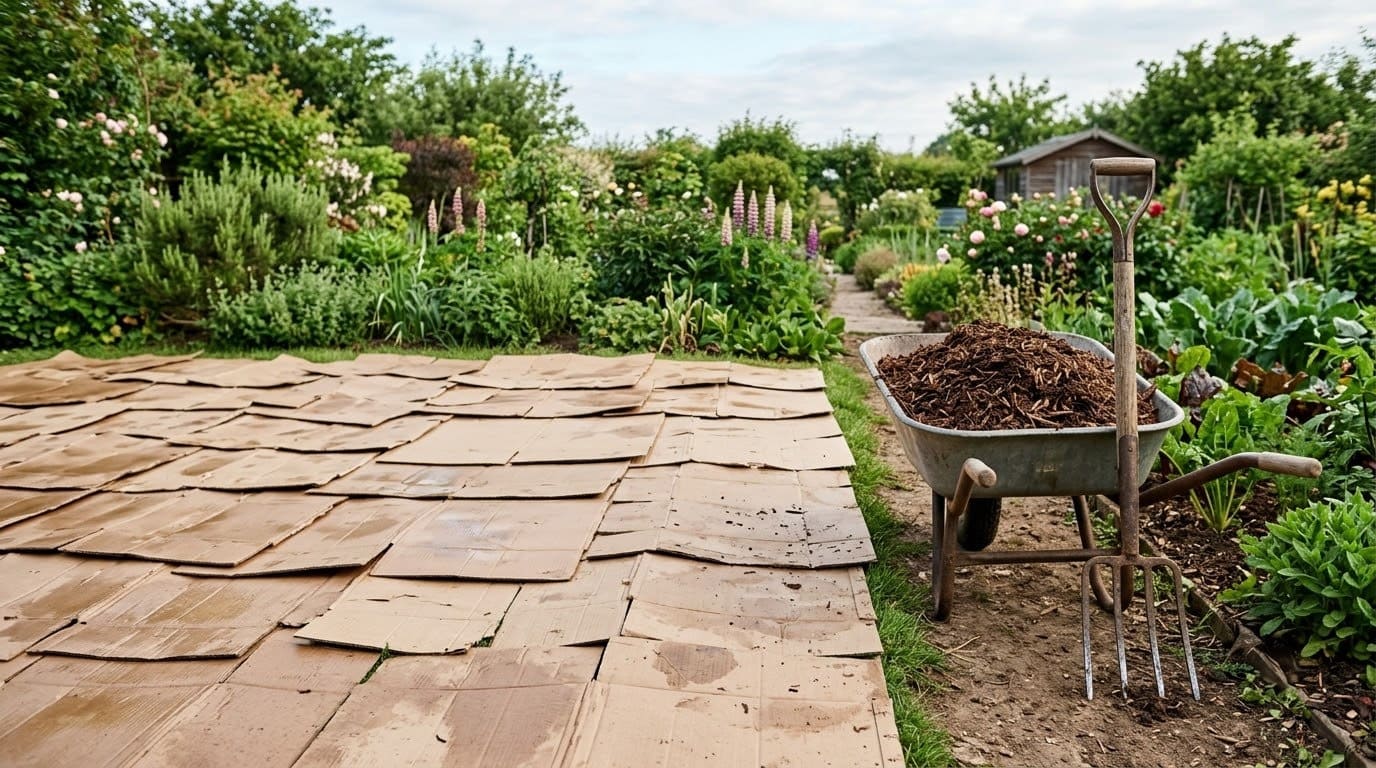
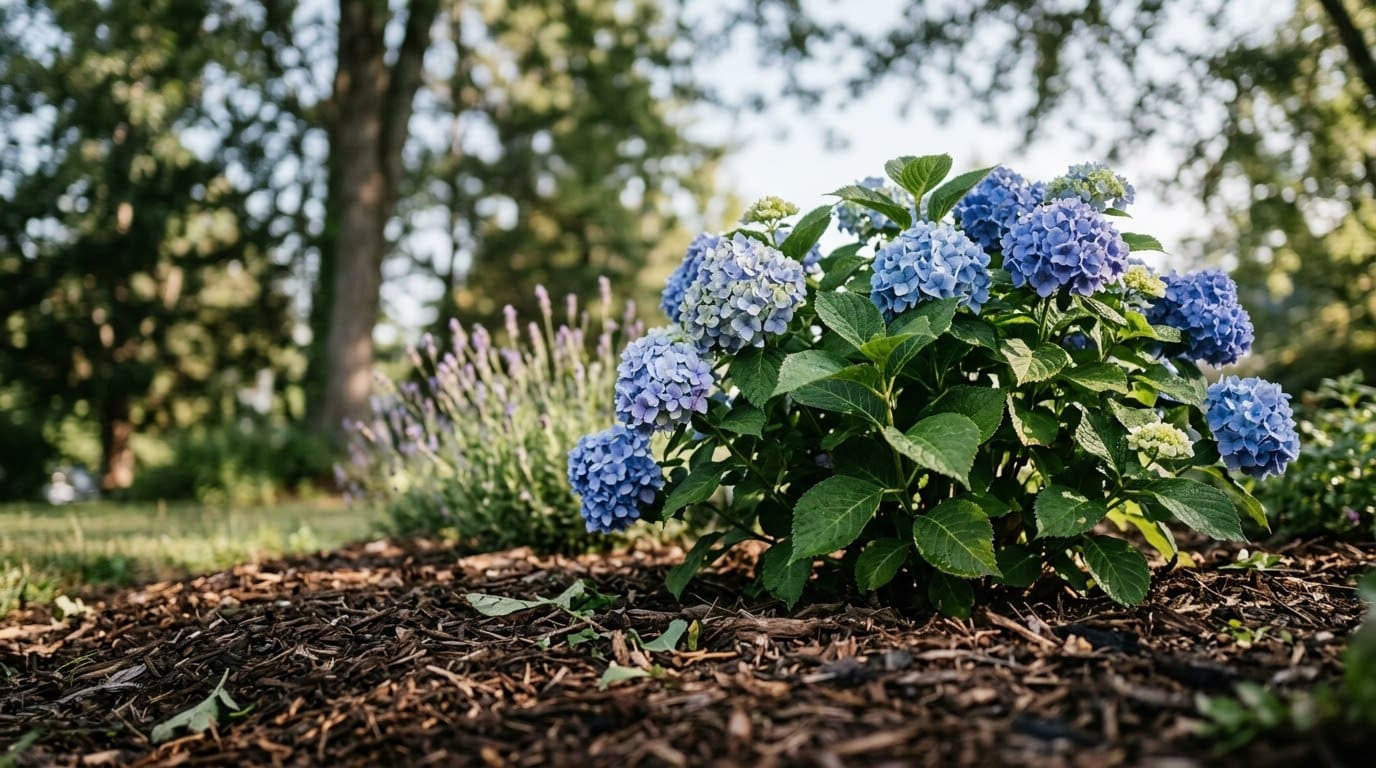
For general outdoor plantings, the same handful of practices show up consistently across gardening advice: deep, early-morning watering rather than frequent shallow watering, a 2 to 3 inch layer of mulch around the base to hold soil moisture, and pruning only the clearly dead or scorched material, not healthy tissue, so the plant isn’t spending energy it doesn’t have to spare.
One genuinely counterintuitive point worth repeating: don’t fertilize a plant that’s actively heat-stressed.
Fertilizer is chemically a salt, and salts pull water out of roots rather than helping, which makes dehydration worse at exactly the moment the plant needs the opposite. Wait until you see real signs of recovery, new growth, perked-up leaves, before feeding again.
How long recovery actually takes
Most heat-stressed plants bounce back within 1 to 3 weeks once they’re properly rehydrated and given time, assuming the stress hasn’t gone on so long it caused permanent damage.
Don’t panic-prune or overcorrect with extra water in the first few days, that timeline needs patience more than intervention.
If a plant is recovering with new growth after a stressful stretch, ease it back into full sun gradually over 7 to 10 days rather than moving it straight back into the same conditions that stressed it in the first place.
If you’re specifically nursing back a struggling houseplant like an orchid, this orchid revival guide covers heat and sunburn as one of several distinct problems worth ruling out. And if yellowing leaves (a different but sometimes overlapping symptom) are the main thing you’re seeing, this pothos yellowing guide walks through the other 17 real causes worth checking before assuming it’s heat.
FAQs
How do I know if my plant is heat-stressed vs. just thirsty?
Watch the timing. A plant that wilts hard in the afternoon heat and recovers on its own by evening or the next morning is showing heat stress, the daily cycle is the tell.


A plant that stays wilted regardless of time of day, or that’s wilting despite consistently moist soil, points toward a different problem (root issues, disease, or actual underwatering) rather than heat alone.
Should I fertilize a heat-stressed plant to help it recover?
No. Fertilizer is chemically a salt, and applying it to an already-stressed, dehydrated plant pulls more water out of the roots rather than helping. Wait until you see real signs of recovery, new growth or perked-up foliage, before feeding again.
The average homeowner spends $616/year on yard fixes that don't address the real problem. Find out what yours actually is — before you spend another dollar.
Take the Free QuizHow long does it take a heat-stressed plant to recover?
Typically 1 to 3 weeks once it’s properly rehydrated, assuming the stress didn’t go on long enough to cause permanent damage. Resist the urge to over-water or heavily prune in the first few days, recovery mostly just needs time and consistent (not excessive) care.
Patience, Not Panic
A heat-stressed plant usually isn’t a dying plant, it’s a plant that needs the right kind of help for what it actually is: a houseplant dealing with temperature swings, a tomato plant hitting its real limit, or an outdoor shrub that needs water where its roots actually are. Get the diagnosis right first, then give it the 1 to 3 weeks it actually needs.
Products We Recommend
This post contains affiliate links. We may earn a commission on qualifying purchases at no extra cost to you.
LAVEVE Soaker Hose (50ft x 2-Pack, Heavy Duty)
The deep, infrequent watering method the article recommends for vegetable gardens and outdoor plantings, delivers water at the root zone rather than the surface.
Shop Now
AMERISCAPE Canadian Pure Cedar Mulch (2 Cu. Ft.)
The 2-3 inch mulch layer the outdoor-plant section points to for retaining soil moisture during heat stress.
Shop Now
XLUX Soil Moisture Meter (No Battery Needed)
A fast way to check the "two inches down, still damp" test mentioned in the tomato/vegetable garden section before watering again.
Shop NowNever miss an update — choose FarmFoodFamily as your preferred source on Google.
How it works: Tap the button below to open Google's settings page, then check the box next to FarmFoodFamily.
Tap the checkbox to turn it blue — that's how you know it's set.