25 Bulletproof Low-Maintenance Plants That Thrive on Neglect
Tough garden plants can handle a forgetful gardener, as long as you give them one steady season of water and a spot with good drainage.

Never miss an update — choose FarmFoodFamily as your preferred source on Google.
How it works: Tap the button below to open Google’s settings page, then check the box next to FarmFoodFamily.
Tap the checkbox to turn it blue — that’s how you know it’s set.
Plants that thrive on neglect aren’t plants that need nothing. They need one season of steady help, then almost nothing after that. University of Illinois Extension says it plainly: there’s no such thing as no maintenance, only lower maintenance.
Nebraska Extension defines a drought-tolerant perennial as one that lasts three or more years with little or no extra water.
Even so, its guide says to water new plants a half inch to one inch a week, rain included. Keep that up until they settle in. After that, you taper off slowly.
Pick the plant for your spot, not your wish list. That choice saves more work than any watering schedule.
Most tough plants want full sun and well-drained soil, and a few handle dry shade. Add 1 to 2 inches of mulch, skip the fertilizer, and leave them alone.


What Does “Thrive on Neglect” Actually Mean?
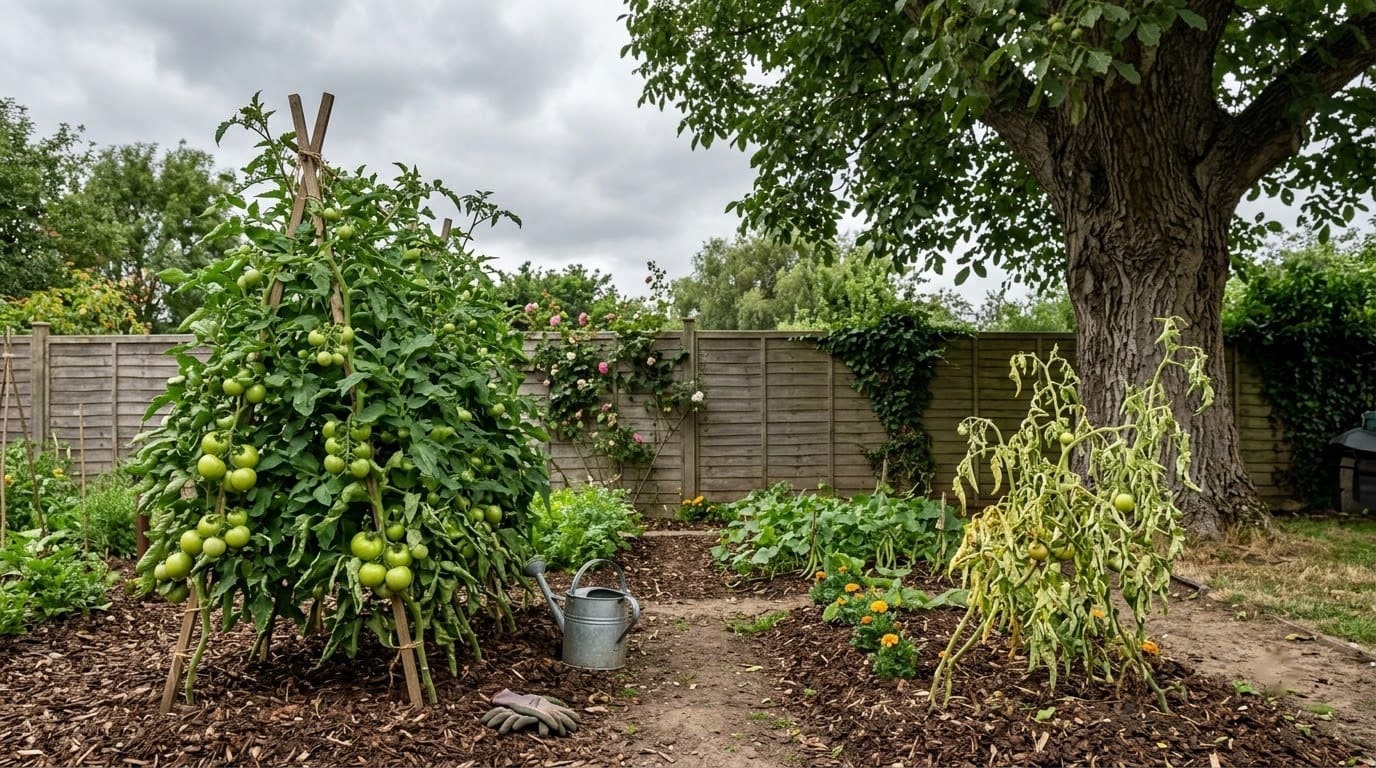
We’ve all bought the “unkillable” plant that died by July. Usually the plant wasn’t the problem. The spot was.
Answer 4 quick questions and get matched to the exact fix for your yard — drainage, budget, layout, or something else entirely.
Take the Free QuizHere’s the honest version of neglect. You water often in year one, so the roots can chase moisture deep into the soil. In year two and beyond, rain does most of the work.
Drainage matters more than water. Nebraska Extension says to loosen the soil at least 12 inches deep.
Then mix in organic matter, about one part to four parts soil. That’s about 3 inches of compost on a 12-inch bed.
Climate matters too. The same guide warns that many drought-tolerant plants do poorly where humidity and rainfall run high. A plant that thrives in a dry western yard can sulk in a wet eastern one.
So check your USDA hardiness zone on the official USDA map before you buy. Then ask your local extension office which of these plants behave in your area. We left per-plant zones out on purpose, because the published ranges don’t always agree.
Not sure how much sun you get? Watch the bed on a clear day. Six or more hours of direct sun counts as full sun, and most of the plants below want it.
Which plant fits the way you forget?
| If you… | Best picks from this list | Why they work |
|---|---|---|
| Forget to water | Pale purple coneflower, blanket flower, butterfly weed | Deep roots, built for dry spells |
| Never prune or divide | False indigo, prairie dropseed, daylily | Long-lived clumps that don’t need splitting |
| Have poor or rocky soil | Lance-leaved coreopsis, blue grama, prairie smoke | Happy in lean, infertile ground |
| Have shade you ignore | Wild ginger, Solomon’s seal, ferns | Cover the ground without fuss |
| Want a shrub that fends for itself | Common ninebark | Tolerates dry spells once rooted |
Each plant below is sorted by the kind of neglect it forgives best. Pair plants with the same water needs, because Nebraska Extension lists that as a core rule of water-wise design. And if you want more flower ideas that skip the fuss, our guide to low-maintenance flower garden ideas is a good companion.
Most yard problems trace back to one specific, fixable cause. Find yours in 4 quick questions.
Take the Free Quiz
Battery-free probes that show whether the soil is dry, moist, or wet before you water. Handy for new plantings in year one.
Shop NowThis post contains affiliate links. We may earn a commission on qualifying purchases at no extra cost to you.
Which Plants Forgive You for Forgetting to Water?
These eight are the “I was on vacation for three weeks” group. All want full sun and well-drained soil. Water them well in year one, then step back.
1. Pale Purple Coneflower
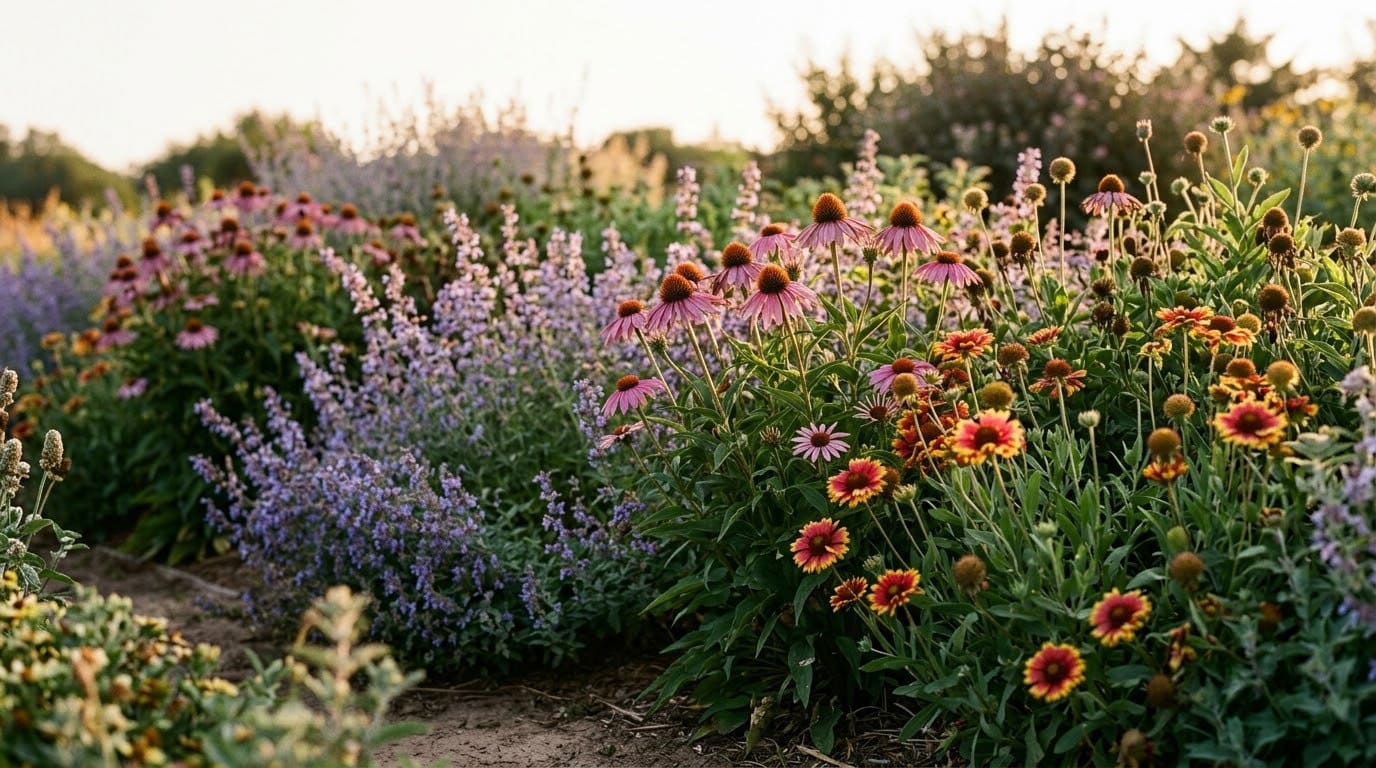
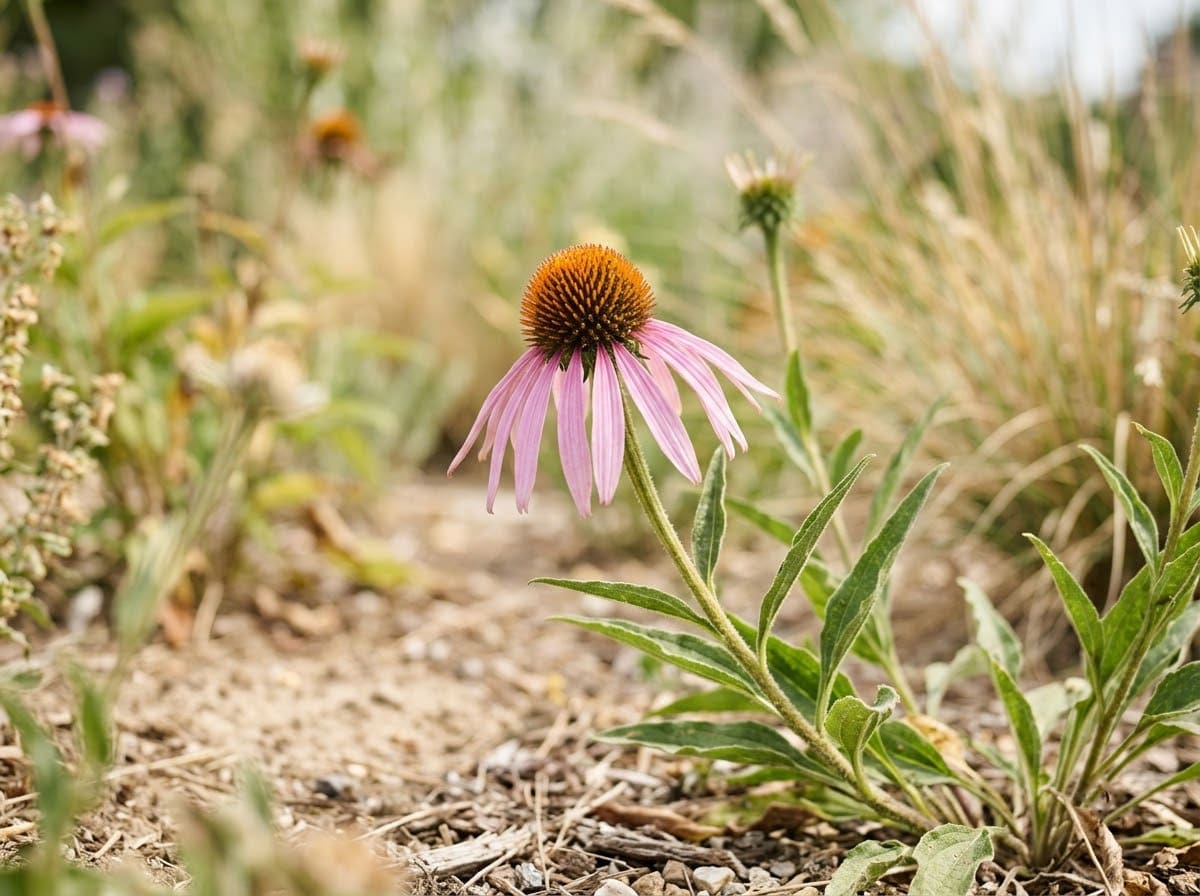
Nebraska Extension’s plant table calls pale purple coneflower (Echinacea pallida) the most drought-tolerant coneflower species. It grows about 30 inches tall and blooms in June and July.
Illinois Extension adds that it loves dry to average soil and brings in hummingbirds and butterflies. The flowers look a little shaggier than classic purple coneflower. That’s the trade for being tougher.
Plant it in full sun and skip the fertilizer. Rich soil makes it floppy.
Cost-wise, a nursery pot or a packet of seed both work. It pairs well with idea 4, blanket flower, for a long summer color run.
2. Purple Coneflower
This is the classic. Nebraska Extension lists Echinacea purpurea at about 36 inches tall with a bloom window from June through August, and it notes the plant seeds itself. Illinois Extension says it flowers across a long July-to-September stretch and tolerates drought in well-drained soil.
The catch is that self-seeding. You’ll get a few babies each spring.
That’s a gift if you want a drift and a chore if you don’t. Pull the extras while they’re small.
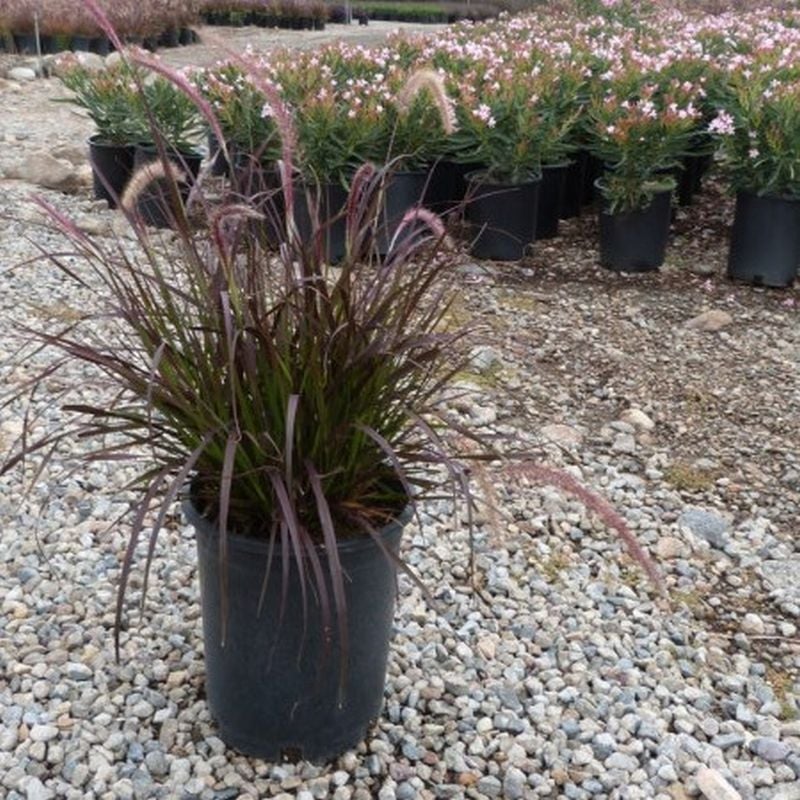


Leave the seed heads standing through winter. Birds eat them, and the stems help hold leaves and snow around the roots, which Nebraska Extension describes as natural insulation.
The average homeowner spends $616/year on yard fixes that don't address the real problem. Find out what yours actually is — before you spend another dollar.
Take the Free Quiz
3. Butterfly Weed
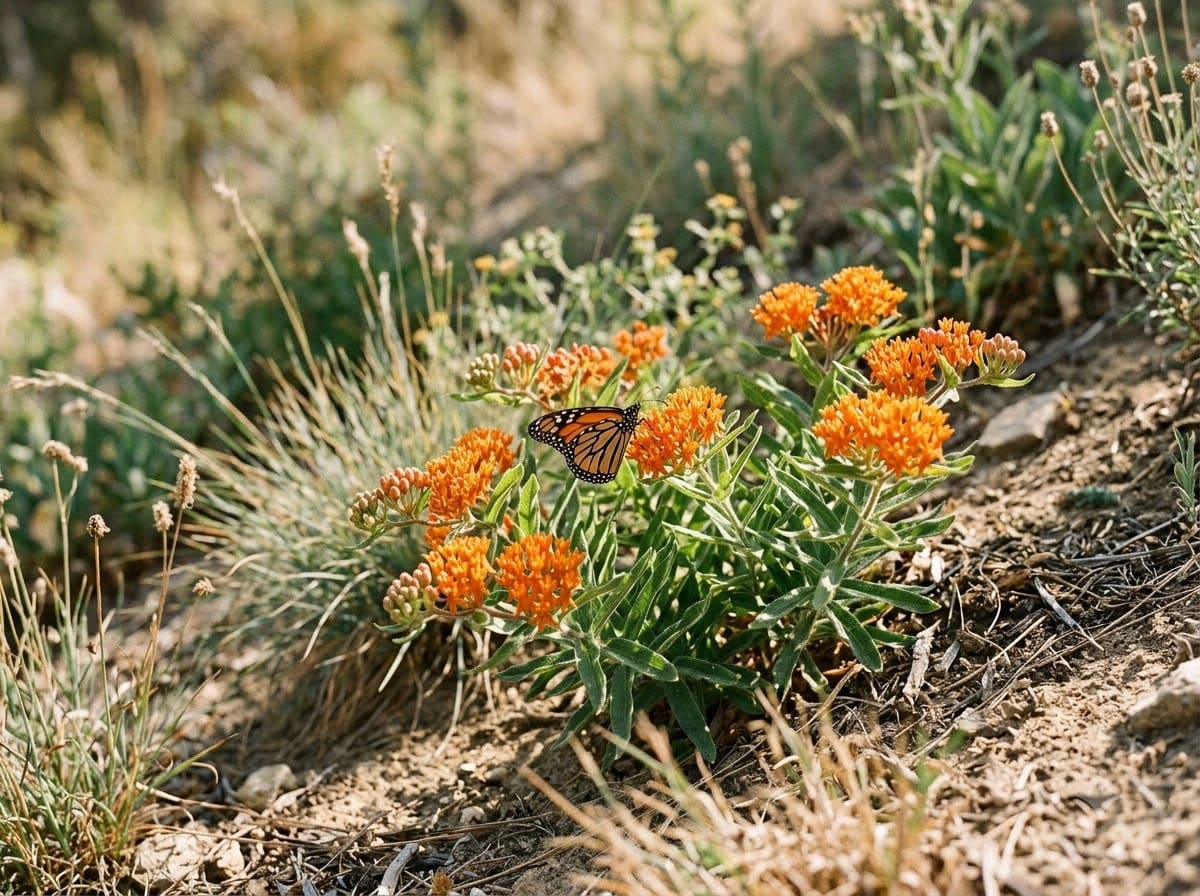
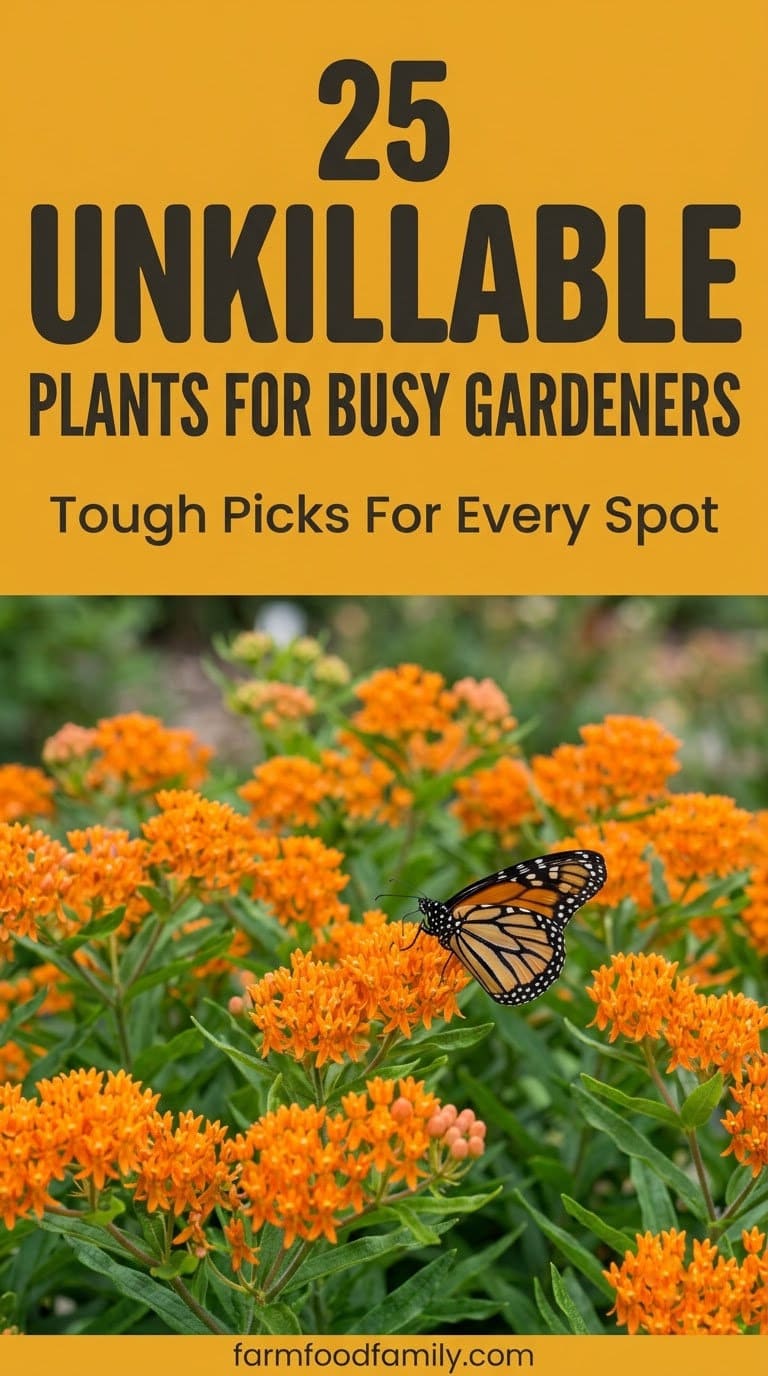
Butterfly weed (Asclepias tuberosa) grows 1 to 2 feet tall with orange flower clusters that last through summer. Illinois Extension lists it for full sun, dry to average soil, and even clay. Monarchs use it too.
It builds a deep taproot, so don’t move it once it’s settled. Pick the spot carefully in the first place. It also looks bare in spring because it wakes up late, so mark it with a stake.
Milkweeds are toxic if eaten, so keep it where pets and toddlers won’t chew it. It’s a good match for the cottage-style ideas in our drought-tolerant native wildflowers list.
4. Blanket Flower
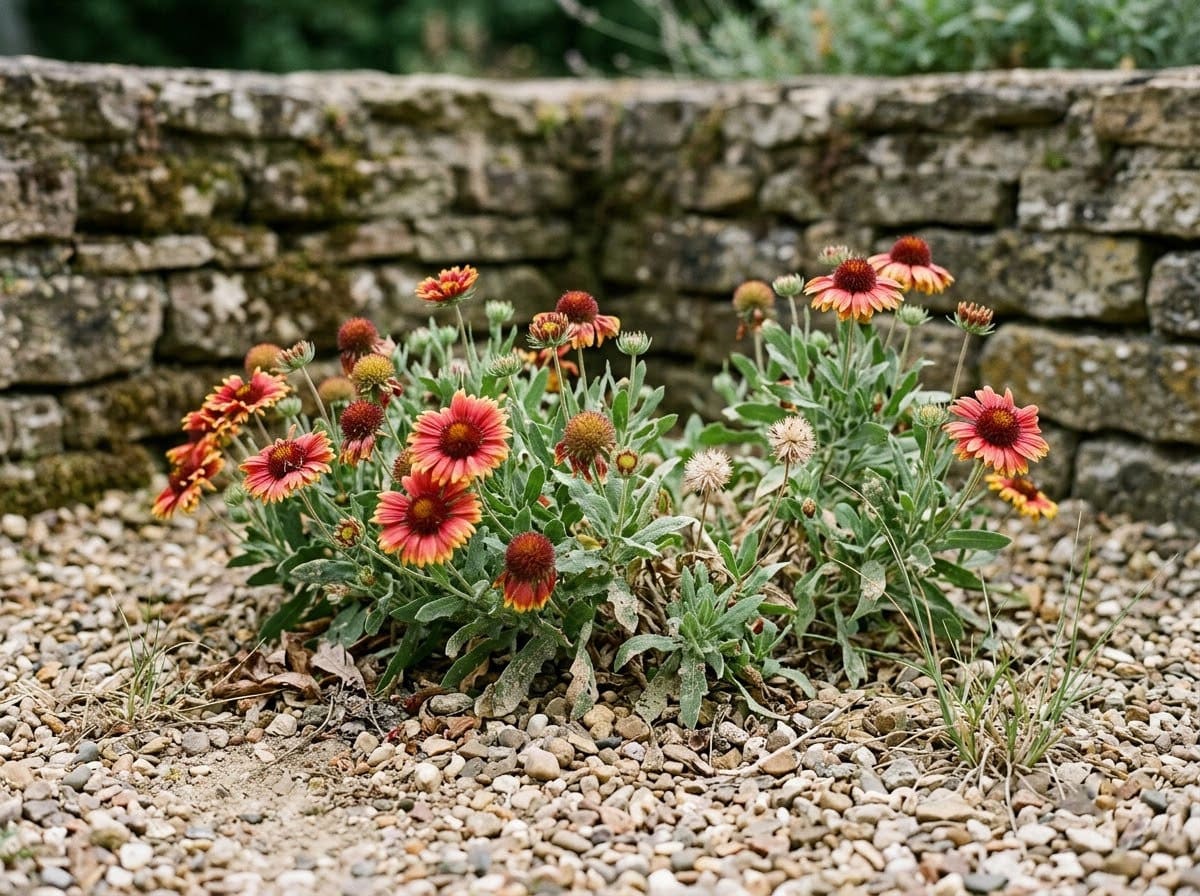
Blanket flower (Gaillardia aristata) is one of the plants Nebraska Extension stars as most drought-tolerant. It grows 18 to 24 inches tall and blooms from June to September in yellow and red.
The table also flags two things. It seeds itself, and it can be short-lived.
So don’t panic if a plant fades after a couple of years. Let a few flowers go to seed and new ones will pop up nearby.
Plant it in the hottest, driest corner you have. That’s where it shines. Keep it away from sprinklers, because wet feet are the thing that actually kills it.
5. Threadleaf Coreopsis
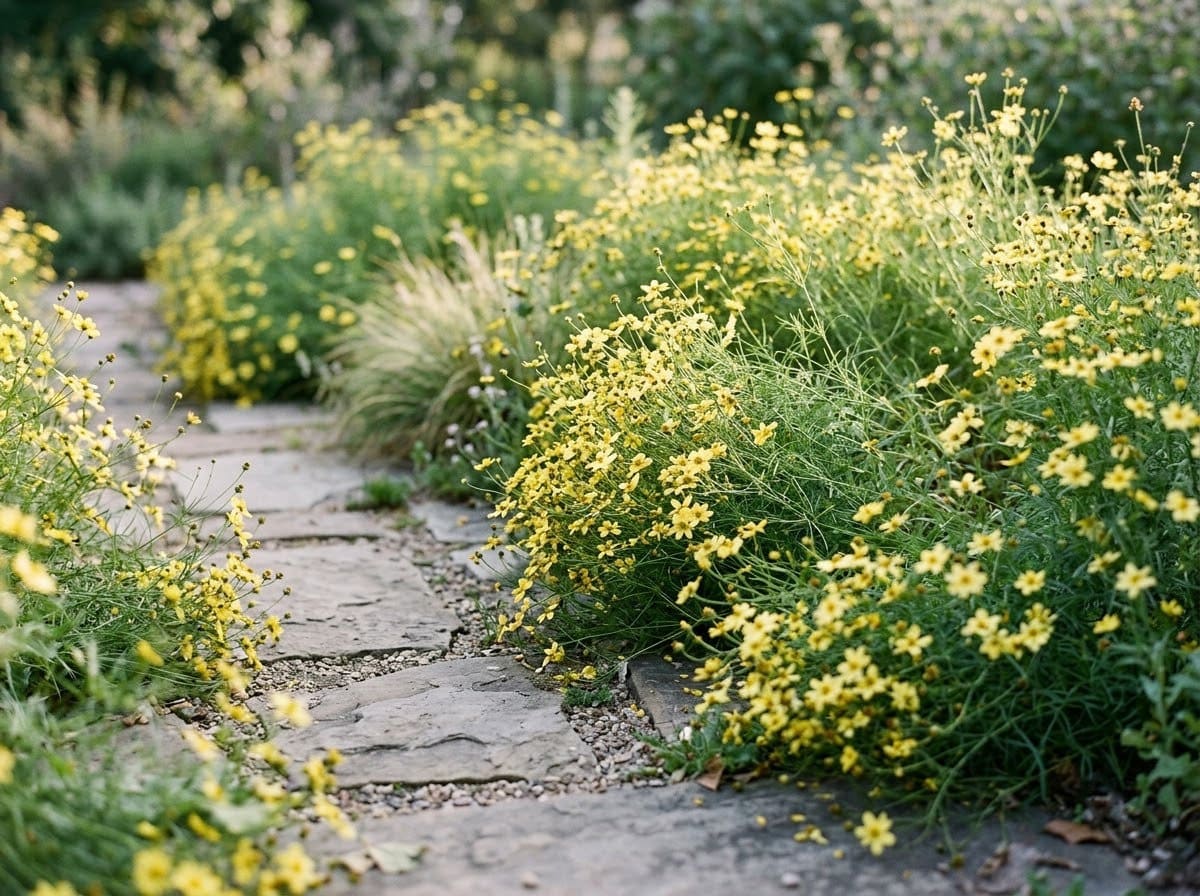
Threadleaf coreopsis (Coreopsis verticillata) gives you fine, feathery foliage and yellow flowers from June to September. Nebraska Extension lists it around 18 inches tall and calls out its long bloom season.
It’s a good edging plant. The fine leaves soften a path or a mailbox bed. And because it spreads gently, a few starts go a long way.
Water it well the first summer. After that, ignore it. If the bloom slows in August, a quick shear tidies it, though it’s optional.
6. Catmint
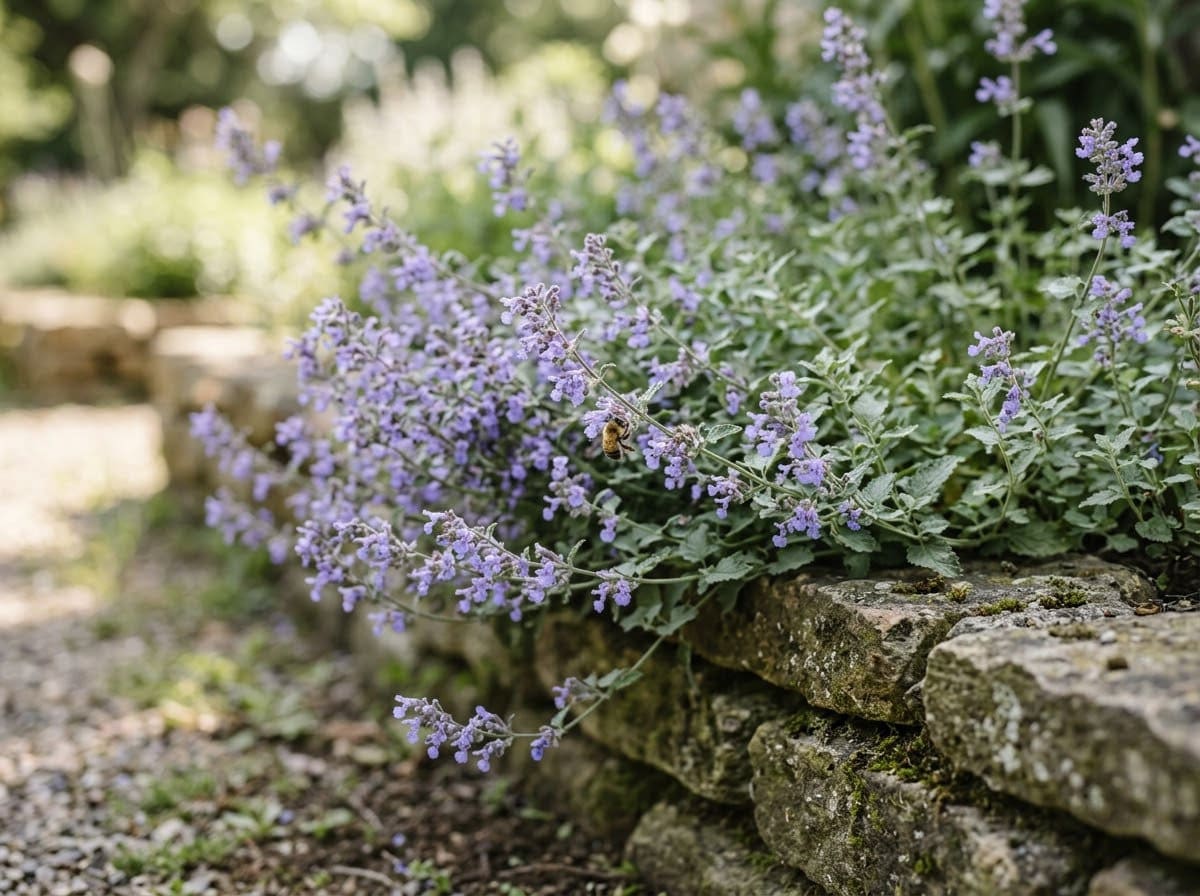
Catmint (Nepeta) forms a soft blue mound 18 to 24 inches tall. Nebraska Extension lists it blooming from May to September and says to shear it for a repeat bloom.
That one shear is the only chore. Cut it back after the first flush and a second wave follows.
Skip it and the plant still lives. It just rests.
Give it full sun and lean soil. Rich, wet ground makes it flop open in the middle. For lavender itself, our lavender growing tips cover the fussier side.
7. Daylily
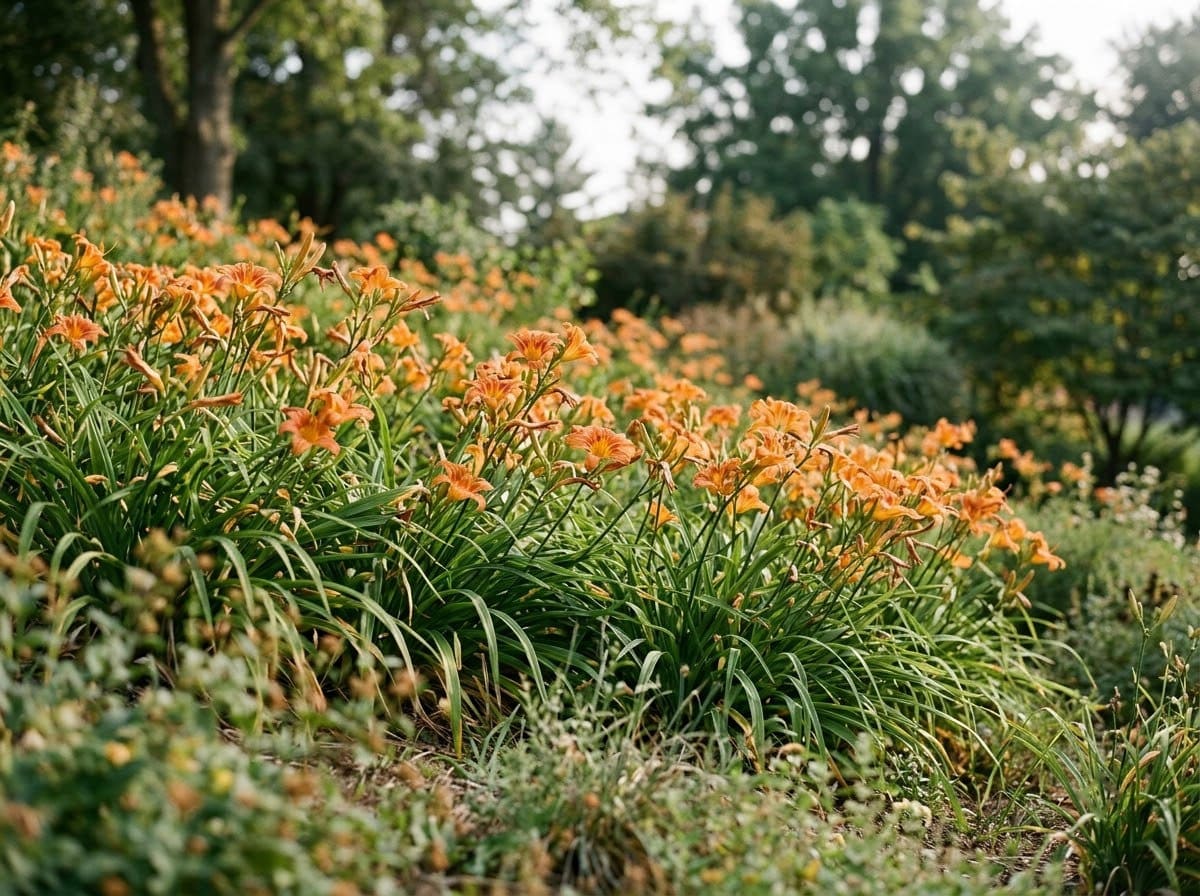
Nebraska Extension stars daylily (Hemerocallis) as one of its most drought-tolerant perennials. It blooms from June to October, and many varieties rebloom, which keeps the show going.
Daylilies clump up slowly and crowd out weeds. They’re a classic for slopes, mailbox beds, and the ugly strip by the road. Plant them in full sun and let them knit together.
If you want to dig deeper, our daylily care guide covers dividing and varieties. You’ll rarely need to divide, though, which is the point.
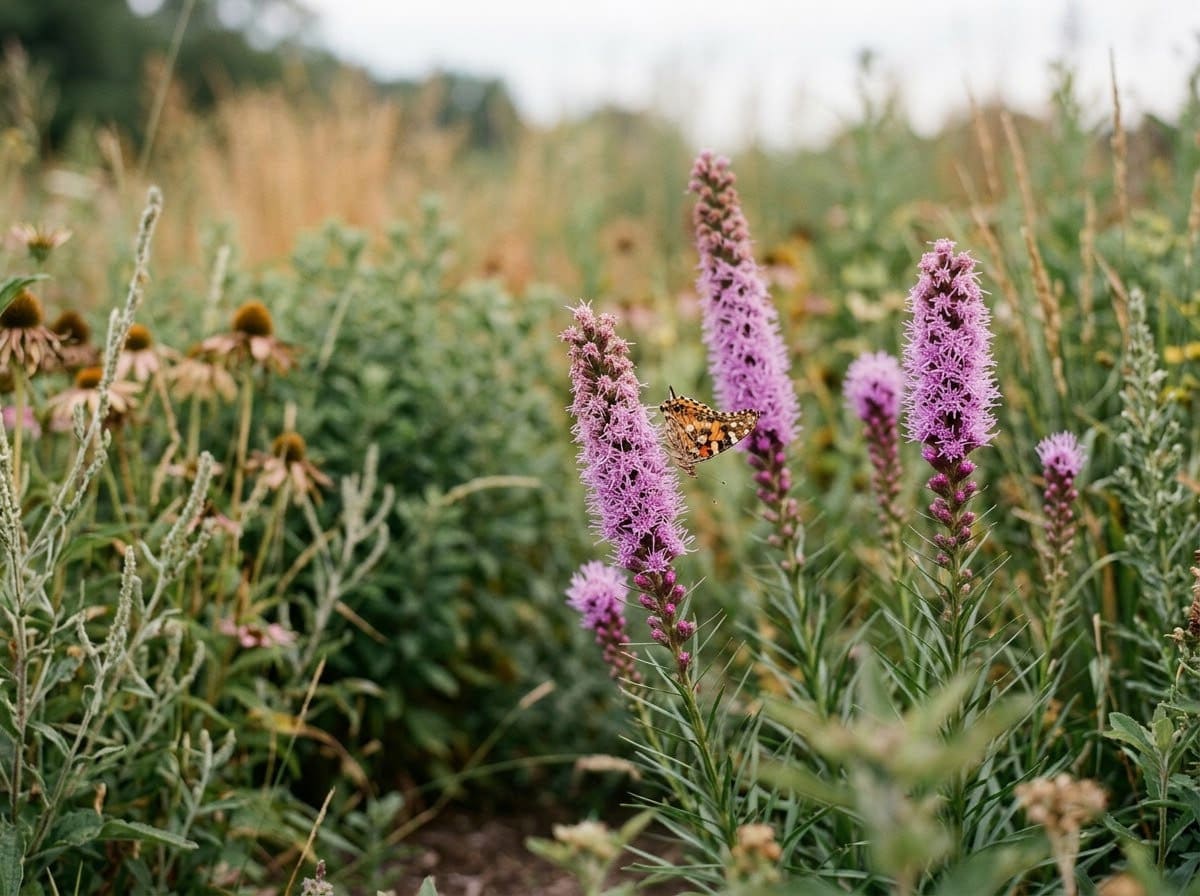
8. Dotted Gayfeather
Dotted gayfeather (Liatris punctata) is a Nebraska native that the state extension guide stars as one of its most drought-tolerant plants. It grows about 24 inches tall with rose-purple spikes in July and August.
It has a deep root system, so it handles drought. It also draws butterflies. The spikes rise from a grassy tuft, which makes a nice contrast with rounder flowers like coneflower.
Give it sun and well-drained soil, and don’t overwater it. Wet soil, especially in winter, rots the crown. That’s the one way people kill it.
Which Plants Never Need Pruning or Dividing?
Nebraska Extension notes that many drought-tolerant plants go for years without division and may suffer if you disturb them. These seven are the “plant it and walk away” group.
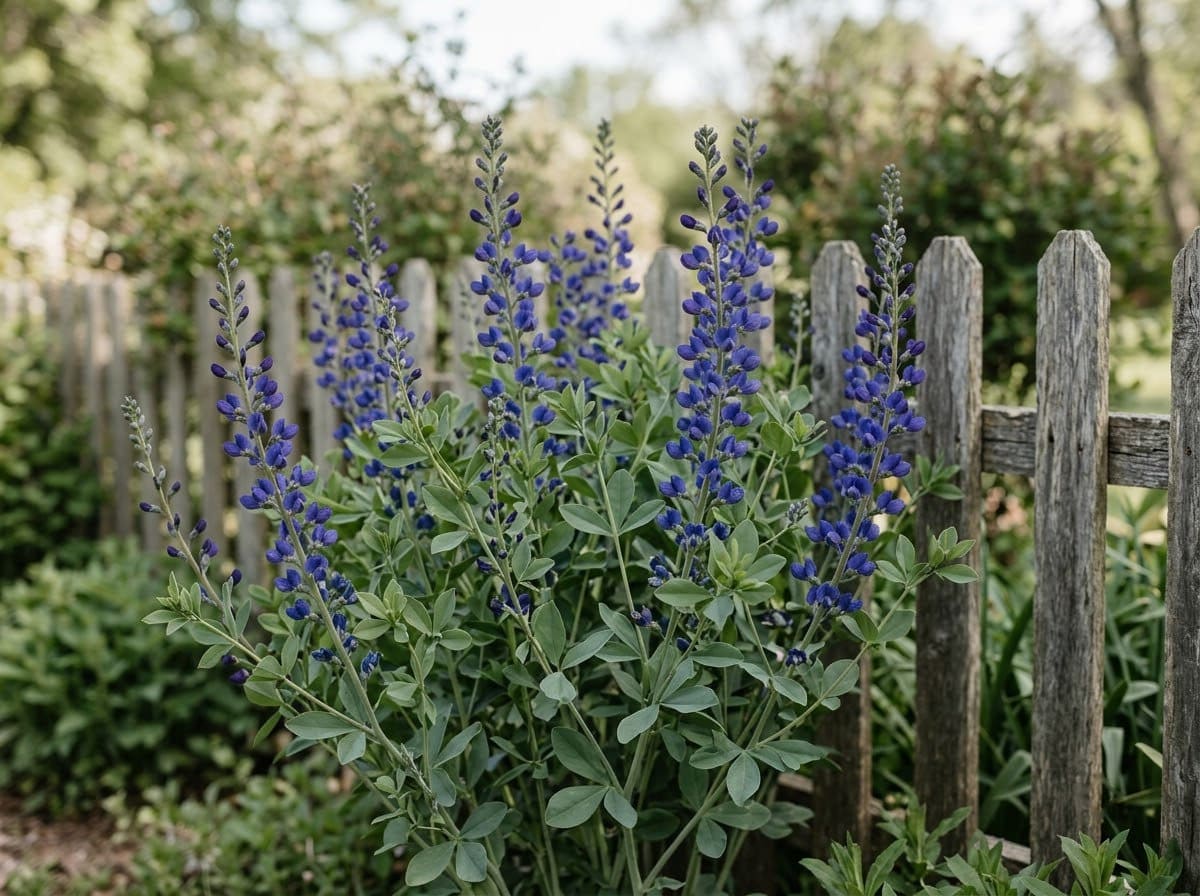
9. False Indigo
False indigo (Baptisia australis) grows 3 to 4 feet tall and wide and blooms blue in May. Illinois Extension lists it for full sun to part shade and says it’s drought tolerant.
It builds a taproot, which makes it hard to transplant. So choose carefully. The plant looks like a small shrub by its third year, and the seed pods are handy in dried arrangements.
It can take two or three seasons to bloom well. Be patient and don’t fertilize. For a budget option, buy a small pot and wait, since bigger plants cost much more.
10. Dwarf False Indigo
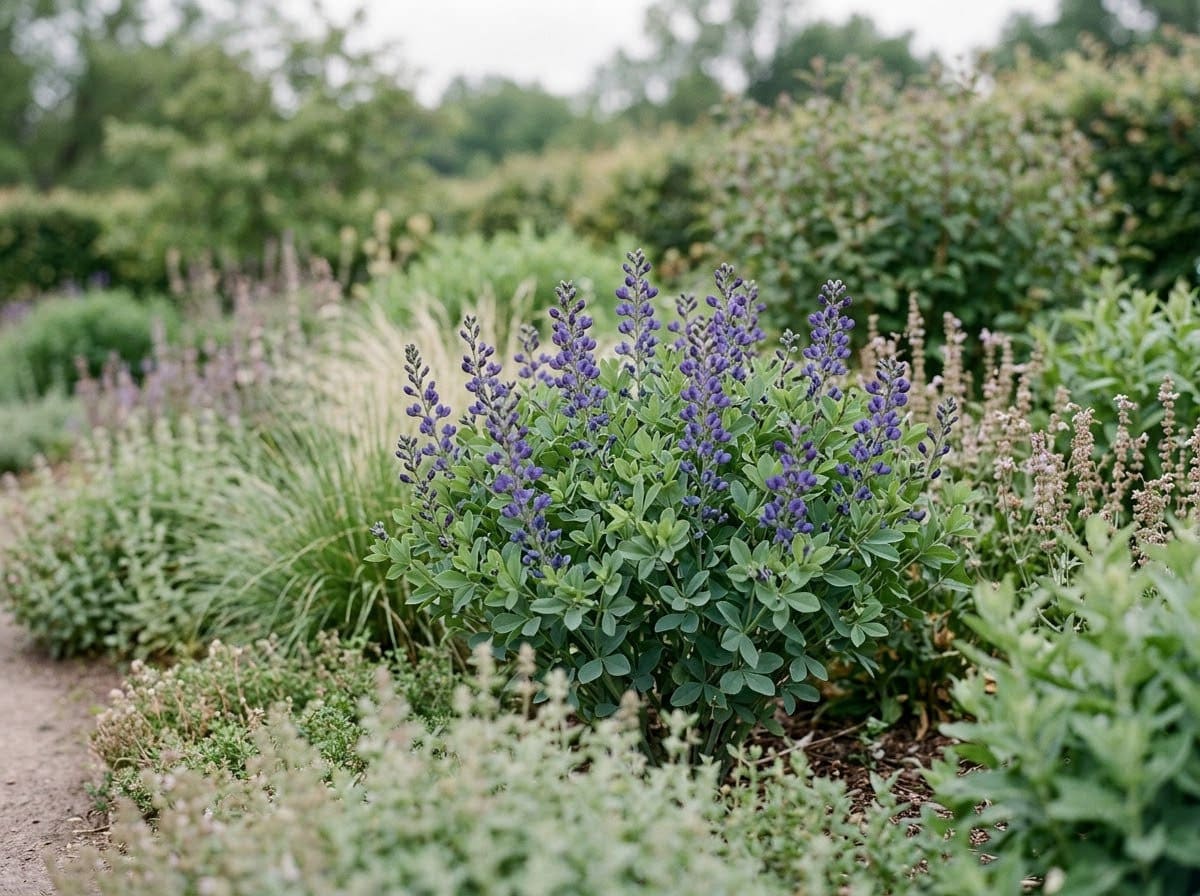
Need the same look in a smaller space? Nebraska Extension lists a dwarf form of Baptisia australis at about 30 inches tall. It carries the same blue May flowers and the same easy habit.
It works as a backbone plant at the middle of a border. Plant it behind lower plants like catmint (idea 6) so the base stays covered after bloom.
Same rules apply as idea 9. Pick the spot once, because the taproot makes moving it a hassle.
11. Globe Thistle
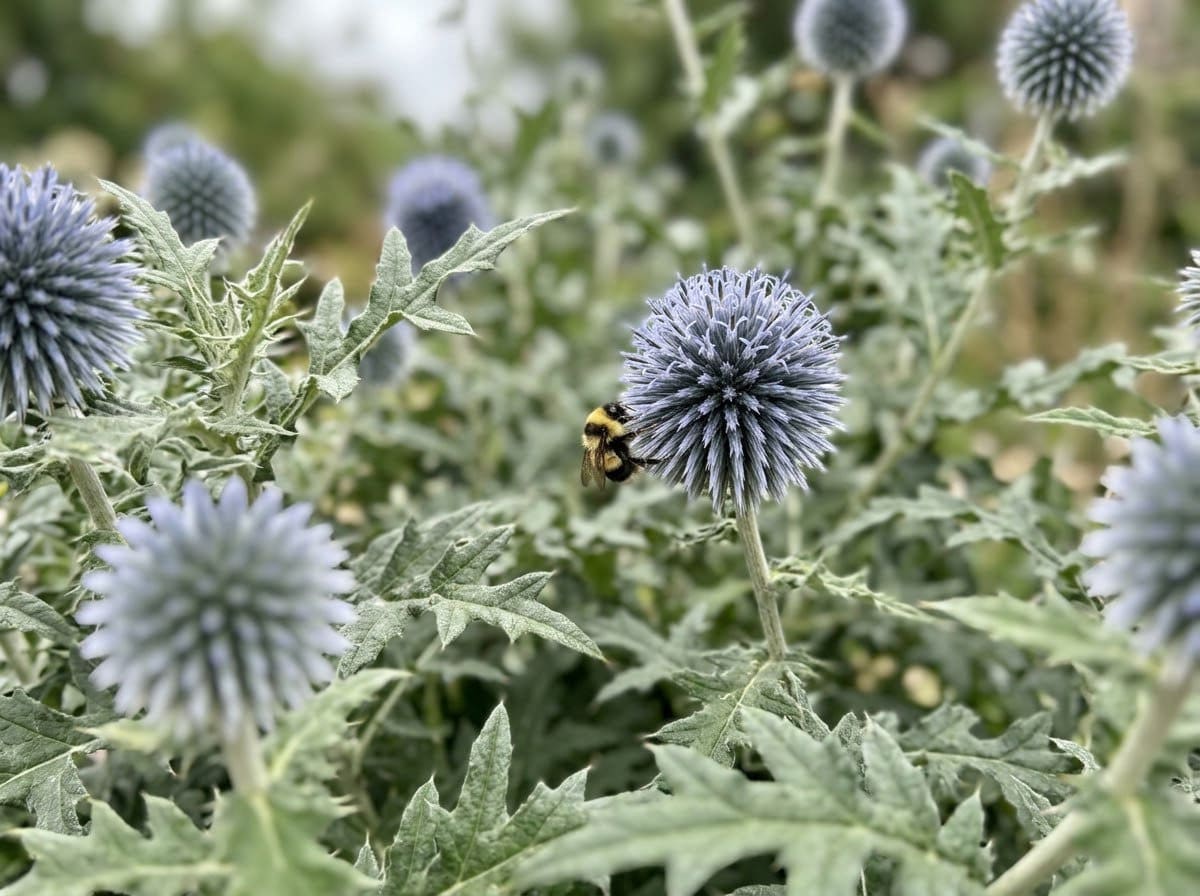
Globe thistle (Echinops ritro) forms round steel-blue balls on stems about 24 inches tall. Nebraska Extension lists the bloom window as June through September.
The spiky leaves keep deer interest low in many yards, though no plant is deer-proof. Bees love the flowers. The heads dry well for arrangements too.
Plant it in full sun and average to dry soil. It’s a nice texture change among the daisy shapes. Leave it alone for years.
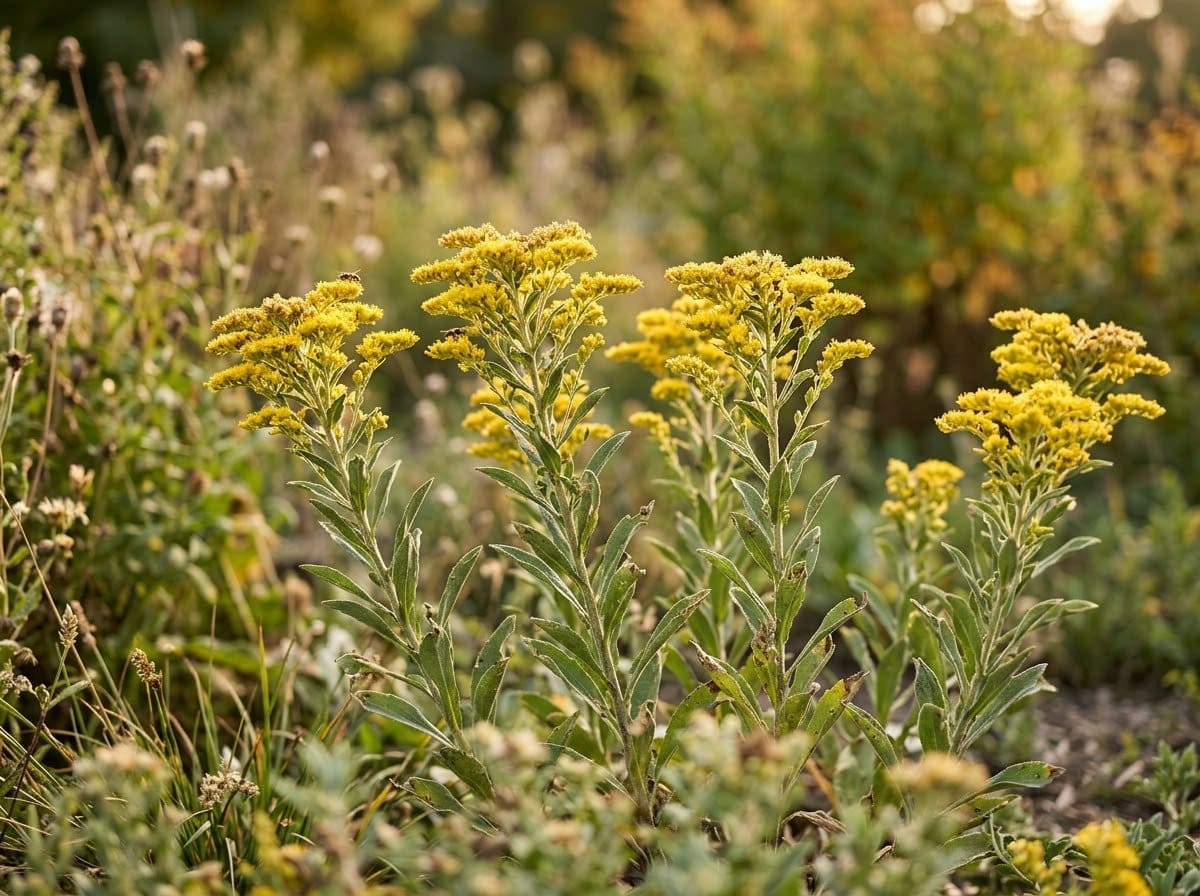
12. Stiff Goldenrod
Goldenrod gets blamed for hay fever, but the culprit is usually ragweed. Nebraska Extension lists stiff goldenrod (Solidago rigida) as a native, about 36 inches tall, with yellow blooms from July to September.
It rates as one of the most drought-tolerant plants in that table, and it makes a good cut flower. Pollinators swarm it in late summer when other beds fade.
Give it full sun and leave it alone. It’s a strong choice for the back of a border or a meadow-style patch. See idea 13 for a grass that pairs well.
13. Prairie Dropseed
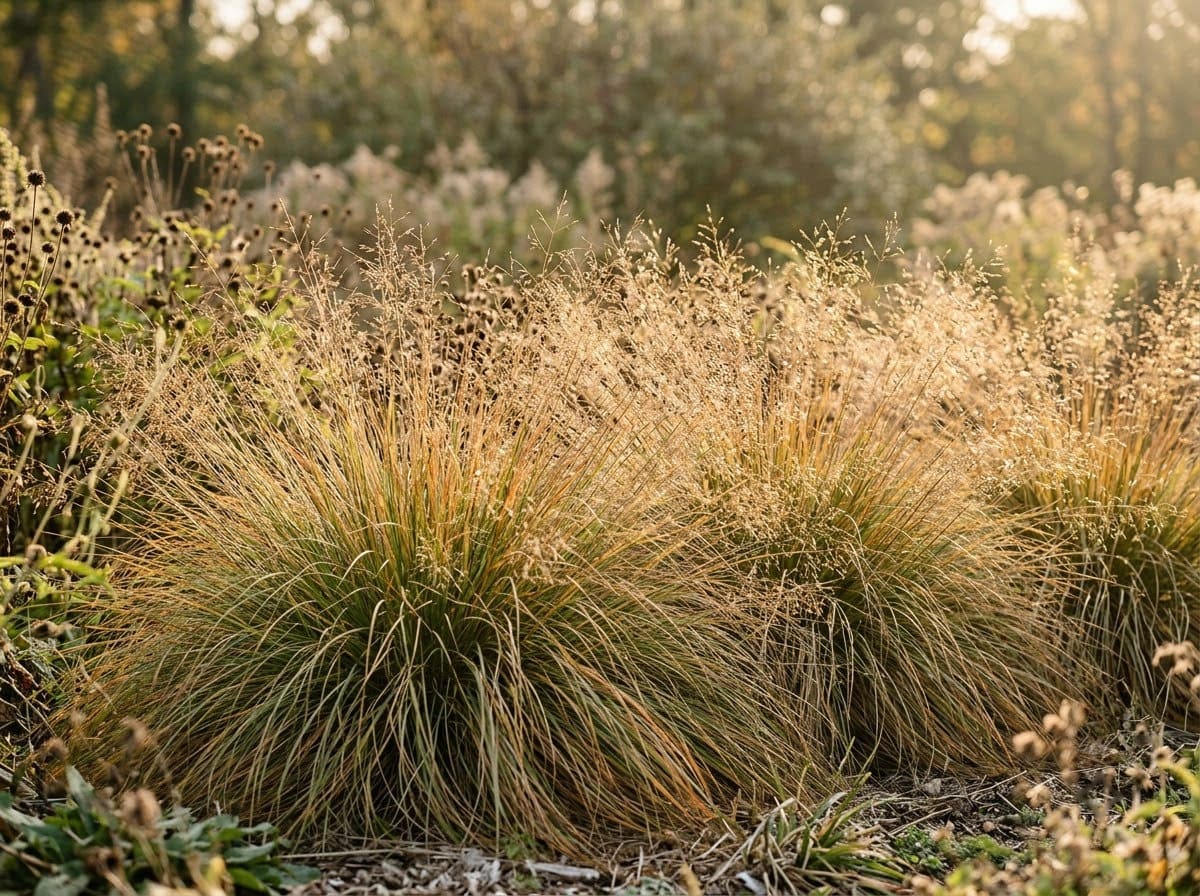
Prairie dropseed (Sporobolus heterolepis) is a fine-textured grass that grows 2 to 3 feet tall. Illinois Extension lists it for full sun, heat, and drought. It also notes the flowers smell like buttered popcorn.
It grows in a neat fountain shape and turns copper in fall. It never needs mowing during the season. Cut it back to a few inches in late winter, and that’s the whole job.
It grows slowly, so patience helps. A small pot is the usual budget route.
14. Little Bluestem
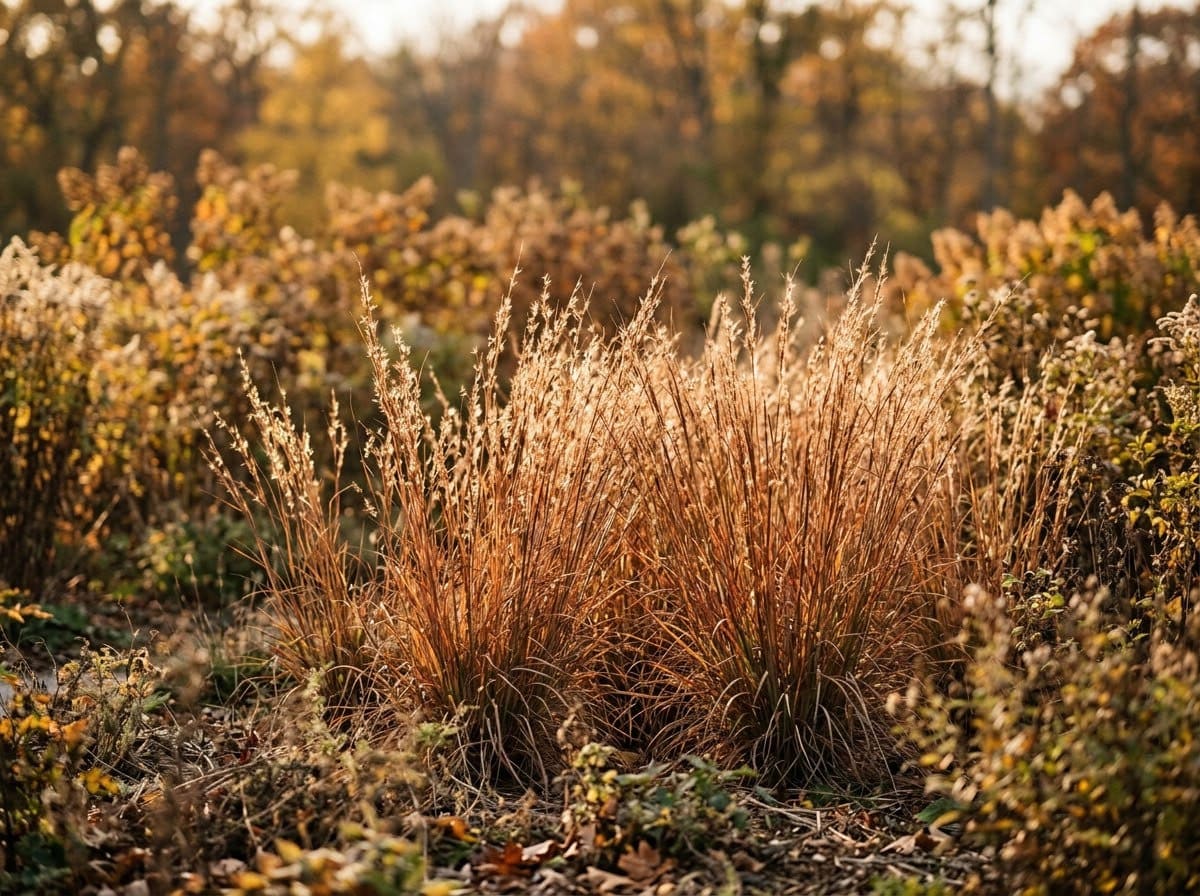
Little bluestem (Schizachyrium scoparium) grows about 3 feet tall. Illinois Extension lists it for full sun and most soils, except wet ones. It spreads readily by seed, so it’s good for naturalizing.
It has blue-green summer color and warm copper tones in fall and winter. Birds eat the seeds. And it holds up through snow, which gives you winter interest for free.
Don’t plant it in soggy ground. If seedlings pop up where you don’t want them, pull them in spring. They come out easily.
15. Blue Grama
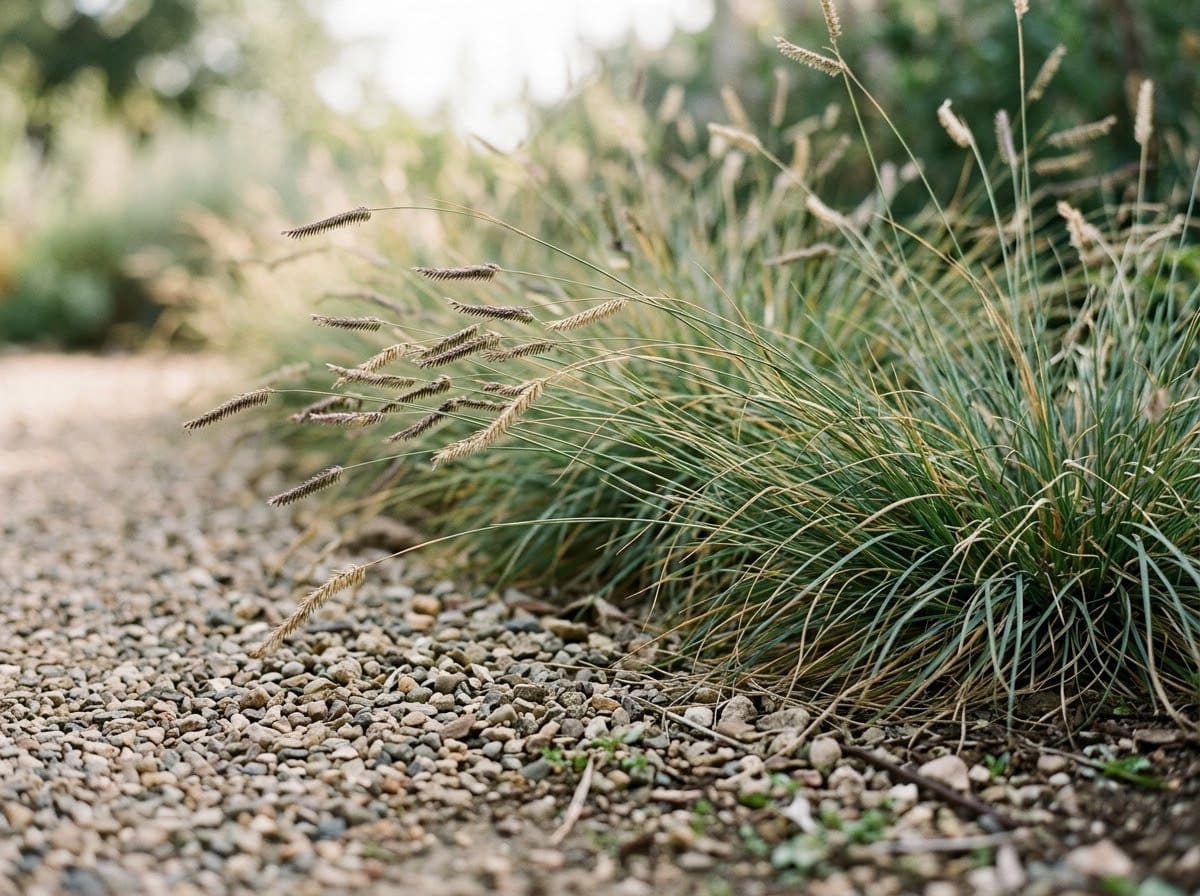
Blue grama (Bouteloua gracilis) is a short native grass. Illinois Extension lists its foliage at 8 to 12 inches, up to about 2 feet in flower, and says it tolerates heat, drought, and poor soils.
The flower spikes look like little eyebrows and work in fresh or dried arrangements. It suits a gravelly front strip or between pavers better than a lawn, since it won’t love foot traffic.
It’s one of the cheapest ways to cover dry ground from seed. Sow it in spring and keep the seedbed watered for the first season.
Which Plants Handle Poor, Rocky, or Lean Soil?
Most of the tough plants hate rich soil. Illinois Extension warns that lance-leaved coreopsis flops when you over-fertilize it. These five thrive on the dirt other plants refuse.
16. Lance-Leaved Coreopsis
Lance-leaved coreopsis (Coreopsis lanceolata) grows 1 to 2 feet tall. Illinois Extension says it tolerates drought and infertile soil, often self-sows, and gets floppy if over-fertilized.
So the rule is simple. Feed it nothing. A plant that’s starved a little stands up straighter and blooms more.
It fills in gaps fast. Scatter seed in fall or early spring for the cheapest start. And if it spreads, a quick spring weeding keeps it in bounds.
17. Foxglove Beardtongue
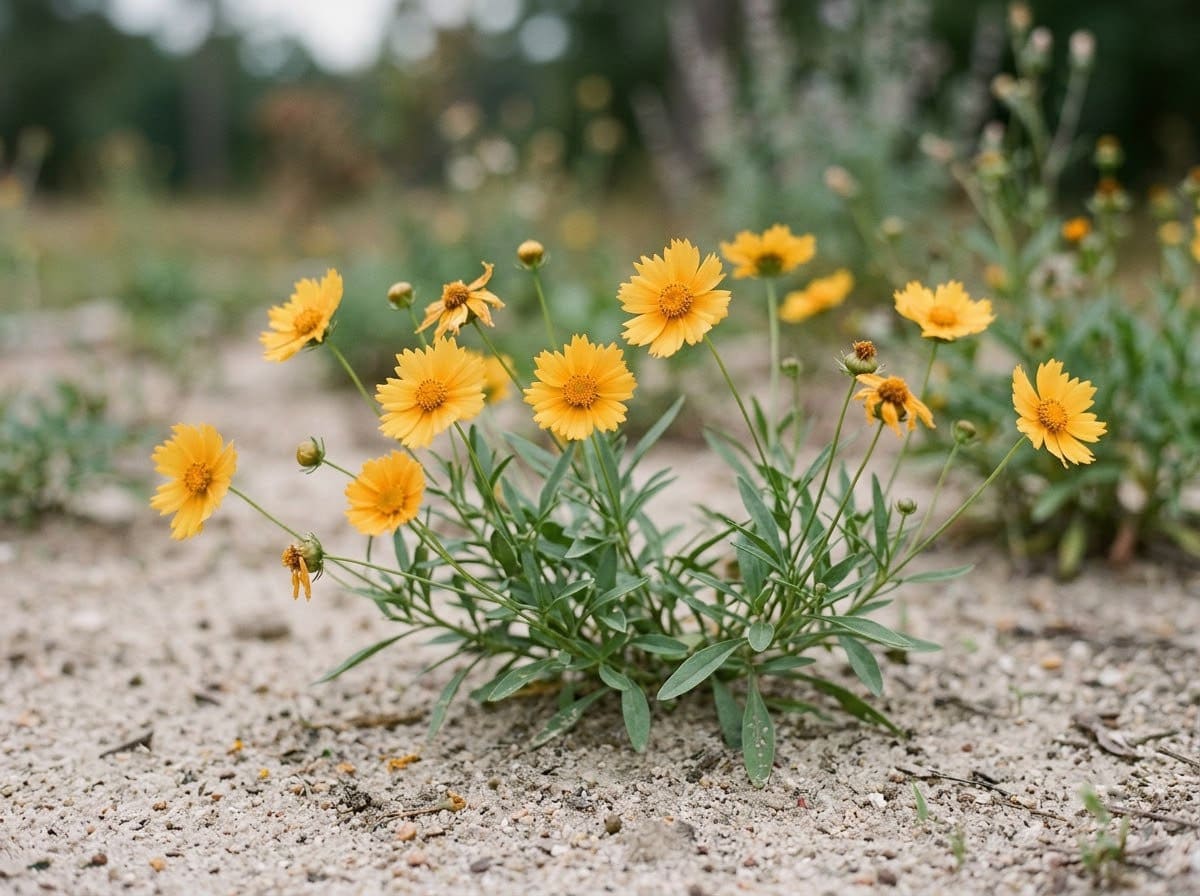
Foxglove beardtongue (Penstemon digitalis) reaches about 4 feet, according to Illinois Extension. It likes full to part sun and medium to medium-dry soil. Bees go for it, and it grows easily from seed.
The flowers are pale and tubular, held on tall stems. They look elegant in a cottage border.
Skip rich soil and heavy mulch against the crown. If you grow it from seed, expect blooms in the second year.
18. Prairie Smoke
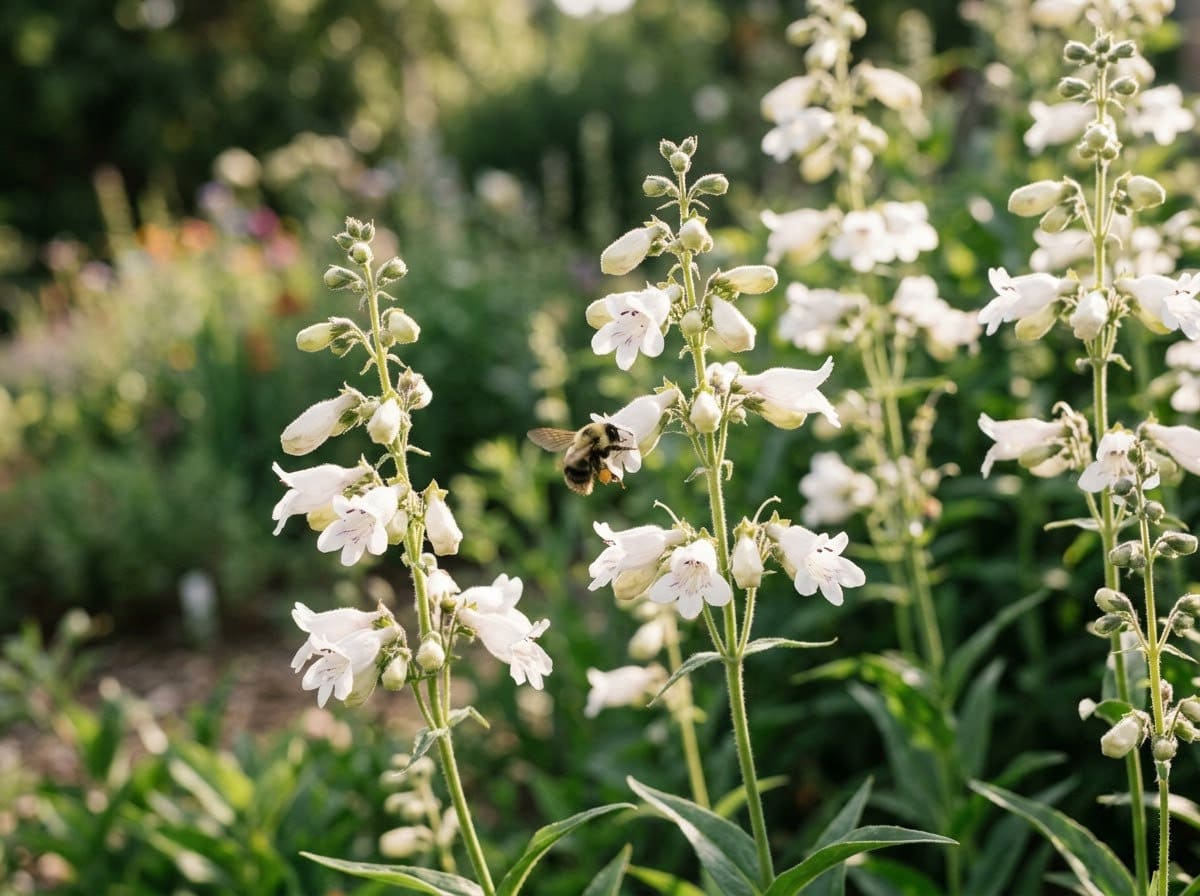
Prairie smoke (Geum triflorum) stays low at 6 to 12 inches. Illinois Extension lists full sun and well-drained soil, and notes it grows best in cool temperatures.
Its nodding pink flowers turn into feathery seed plumes that look like smoke. It’s a lovely edging plant for a rock garden. Hot, humid summers may stress it, which fits Nebraska Extension’s humidity warning.
Plant it in gravelly soil with sharp drainage. Ask your local extension office whether it suits your summers.
19. Yellow Coneflower
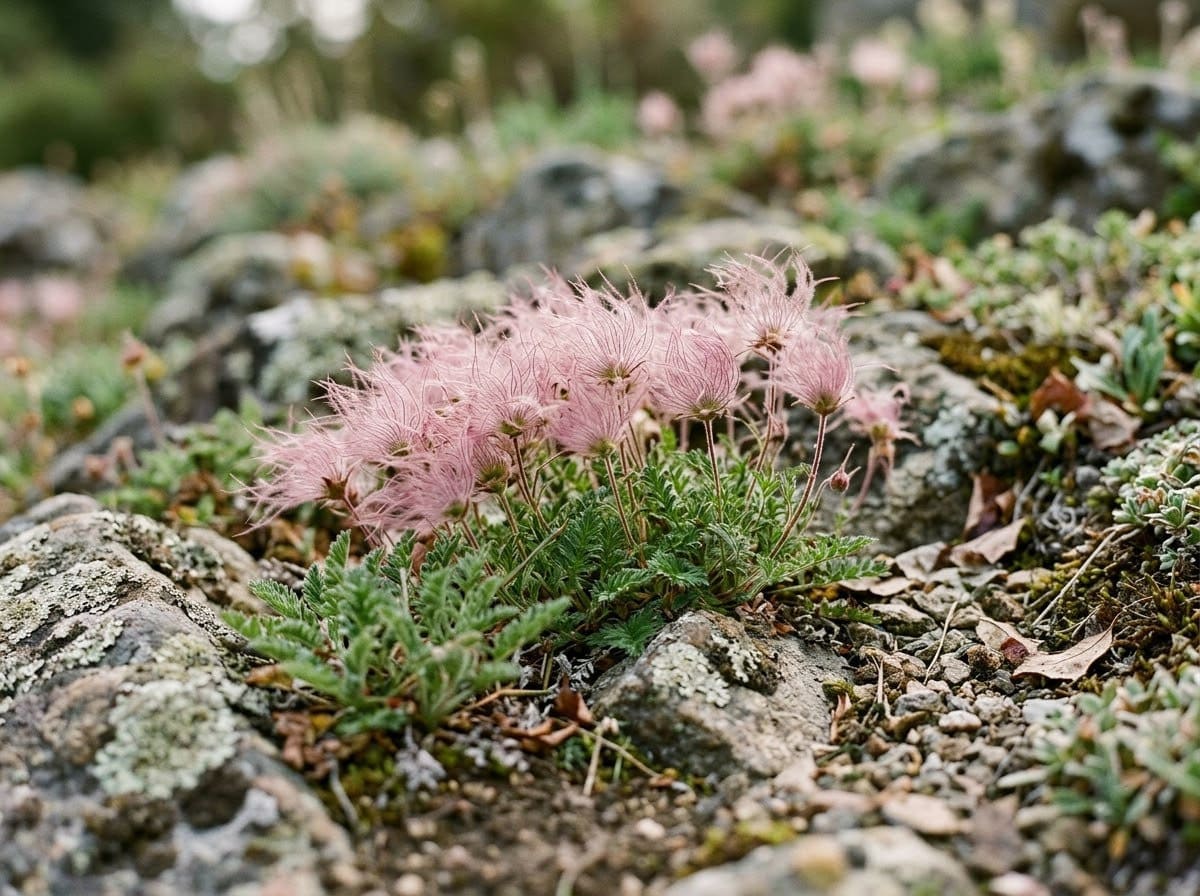
Yellow coneflower (Ratibida pinnata) grows 3 to 5 feet tall. Illinois Extension says it tolerates road salt and drought, helps pollinators and birds, and resists deer.
That road-salt tolerance makes it a smart pick for the strip beside a driveway or sidewalk. Its drooping yellow petals and cone-shaped center are easy to spot from the street.
It’s tall, so give it the back of the bed. Plant in full to part sun and average soil, and let it be.
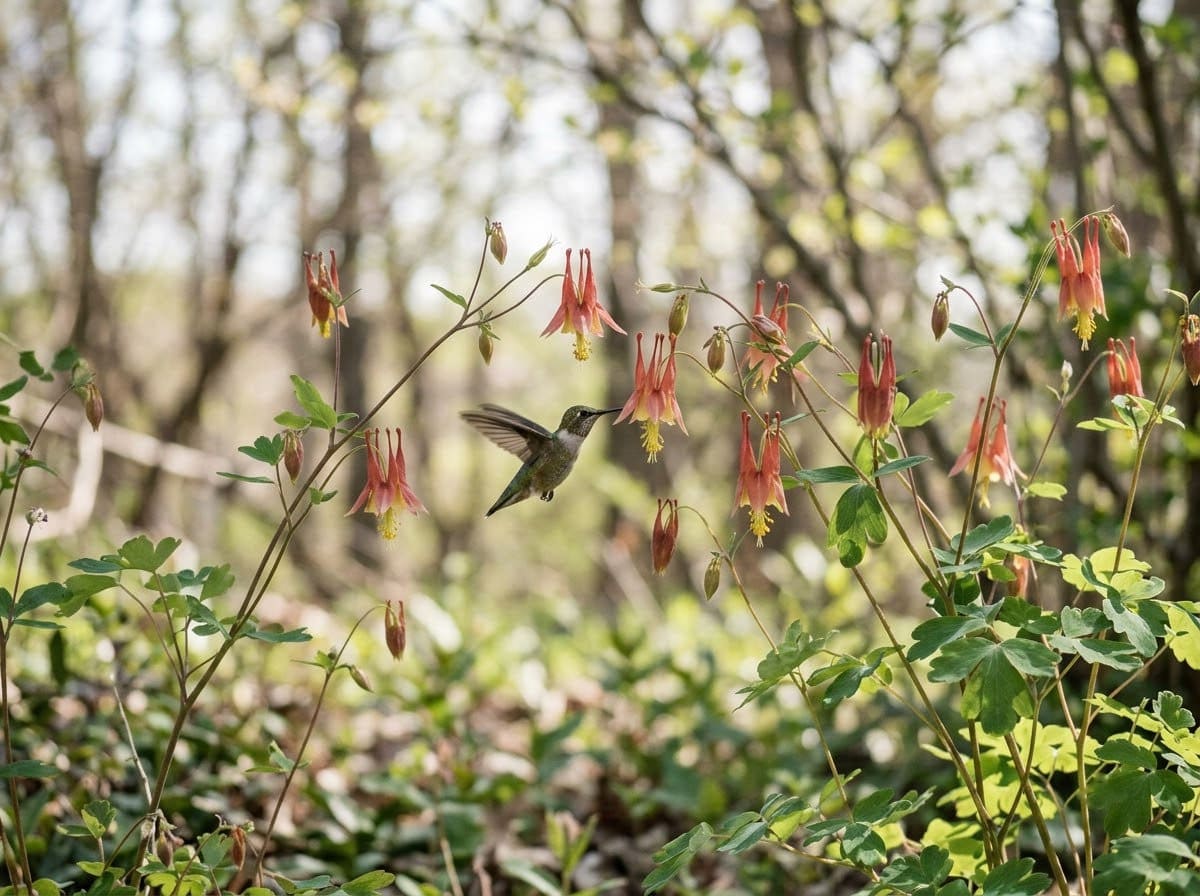
20. Wild Columbine
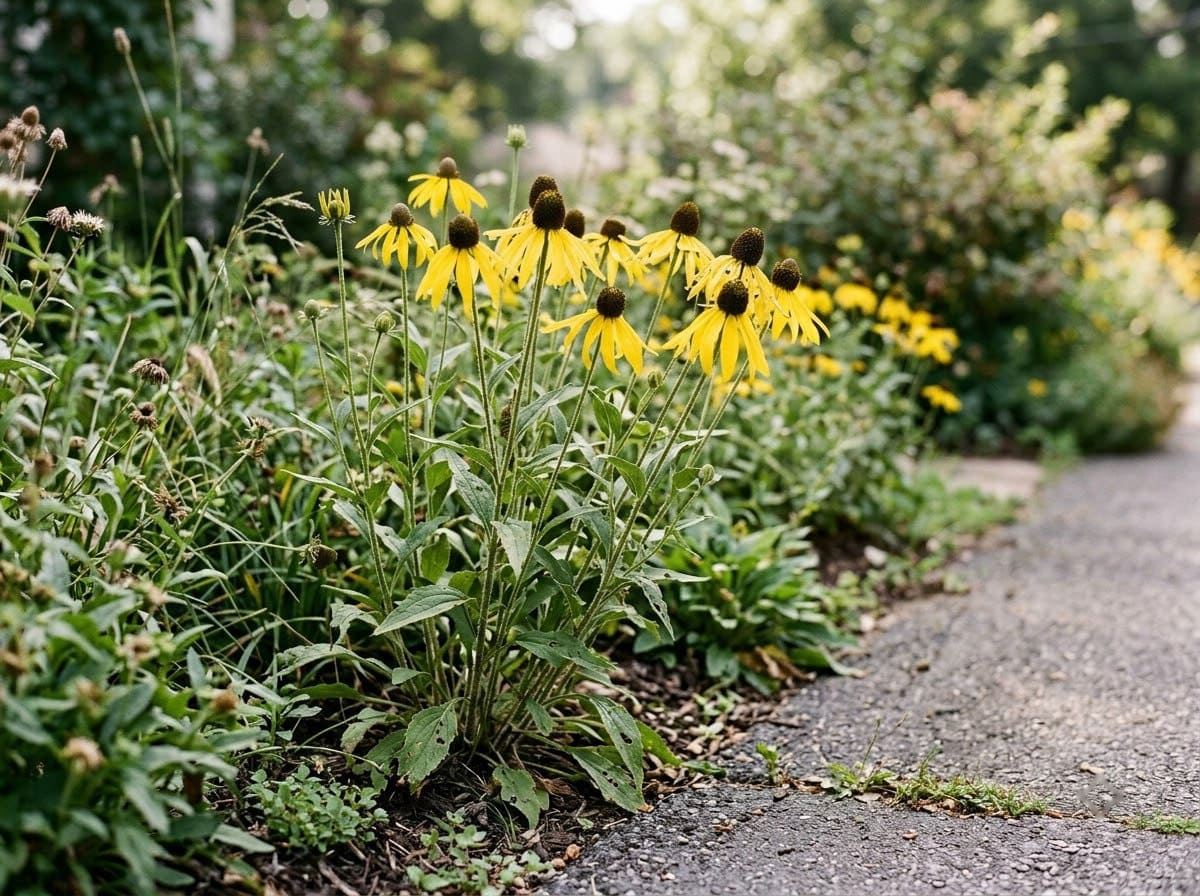
Wild columbine (Aquilegia canadensis) grows 1 to 2 feet tall and takes any light, from sun to shade. Illinois Extension lists medium to dry soils. It reseeds but doesn’t take over.
The red and yellow flowers show up in early spring and feed bees and hummingbirds. Few plants bloom this early with so little effort.
Plant it near a path where you’ll see it. And it’s a lovely bridge between the shade plants in the next section and the sun plants above.
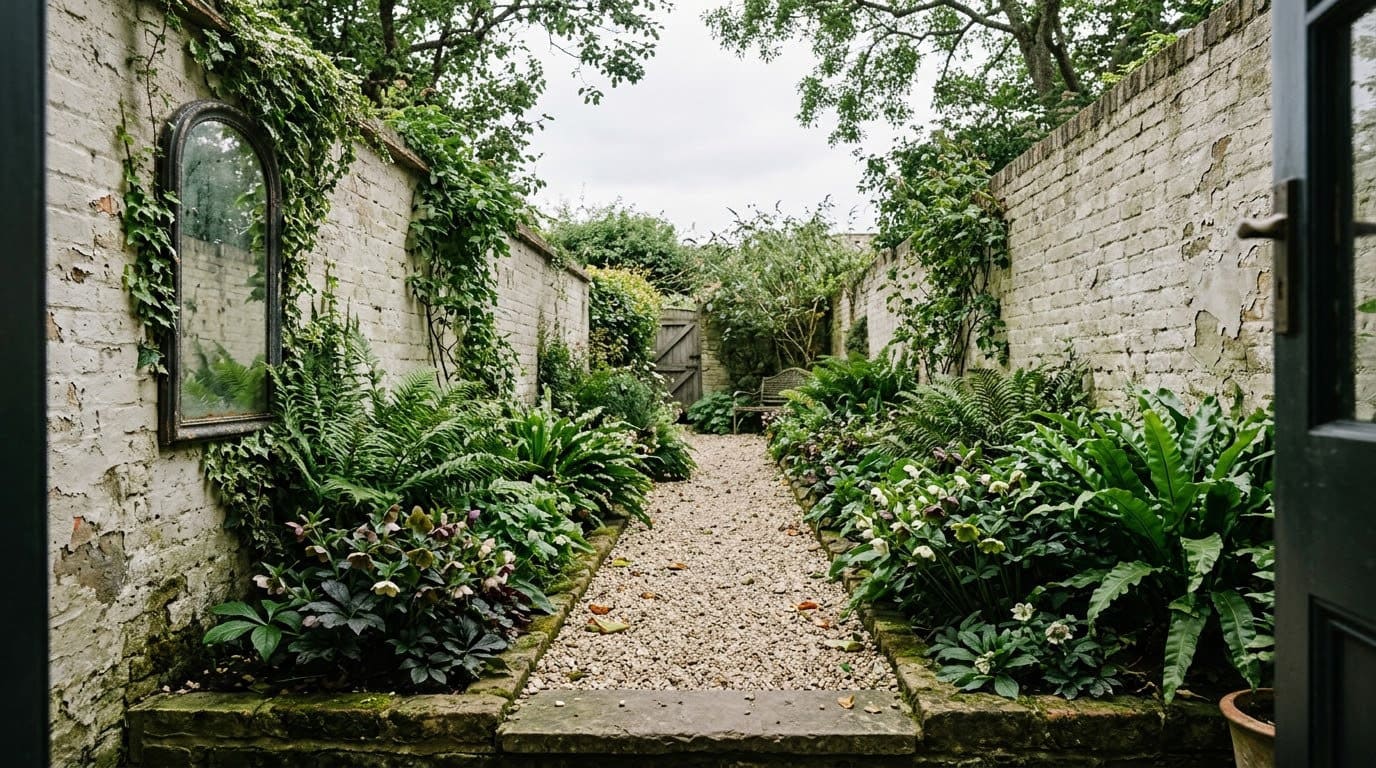
Which Plants Handle Shade You Ignore?
A few tough plants prefer dry shade.
Nebraska Extension notes that some drought-tolerant perennials thrive there. Use these under trees and along north walls. For more shade ideas, our shade garden ideas go further.
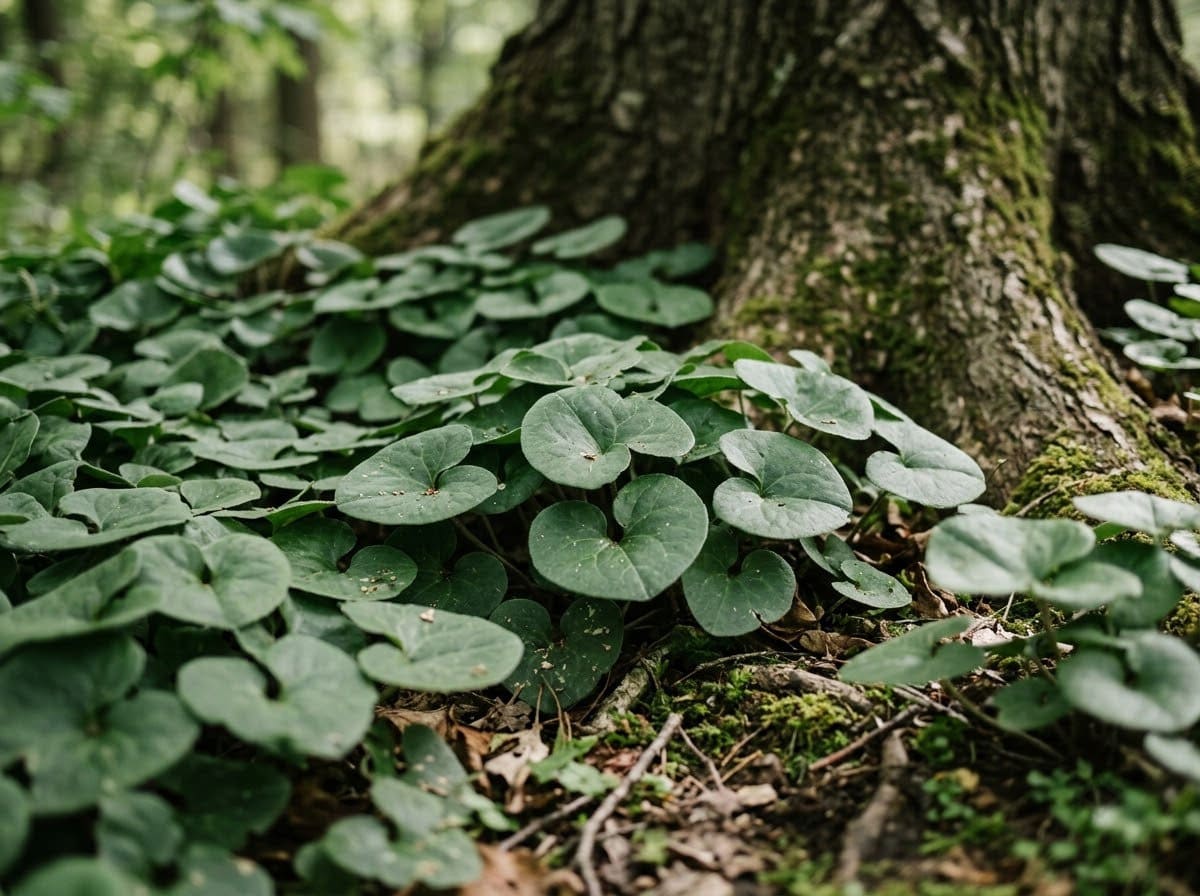
21. Wild Ginger
Wild ginger (Asarum canadense) grows about 6 inches tall. Illinois Extension lists shade and average to wet soil, and notes the fuzzy kidney-shaped leaves last all summer.
It spreads slowly into a dense groundcover that blocks weeds. The small maroon flowers hide at ground level in April and May. You have to lift a leaf to see them.
Give it moisture the first year. Hostas are the famous shade plant. Our hosta landscaping ideas show what to pair them with, but wild ginger asks for less.
22. Solomon’s Seal
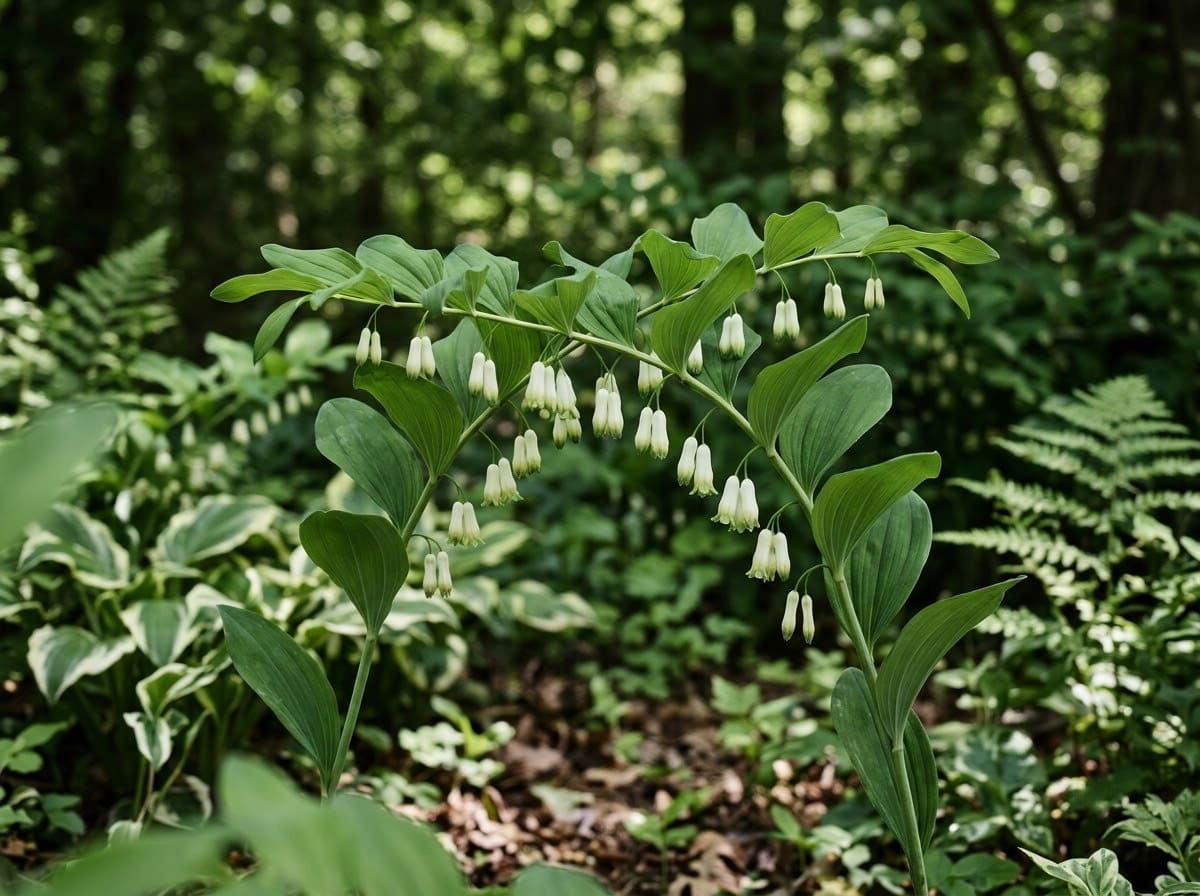
Solomon’s seal (Polygonatum biflorum) grows 1 to 2 feet tall. Illinois Extension lists part sun to full shade and moist, well-drained soil. It forms small clusters by rhizomes and attracts hummingbirds and butterflies.
The arching stems and dangling white bells give a graceful look. The leaves turn yellow in fall. It sits well behind wild ginger (idea 21).
Divide it only if the clump gets crowded. Otherwise, leave it alone.
23. Ferns
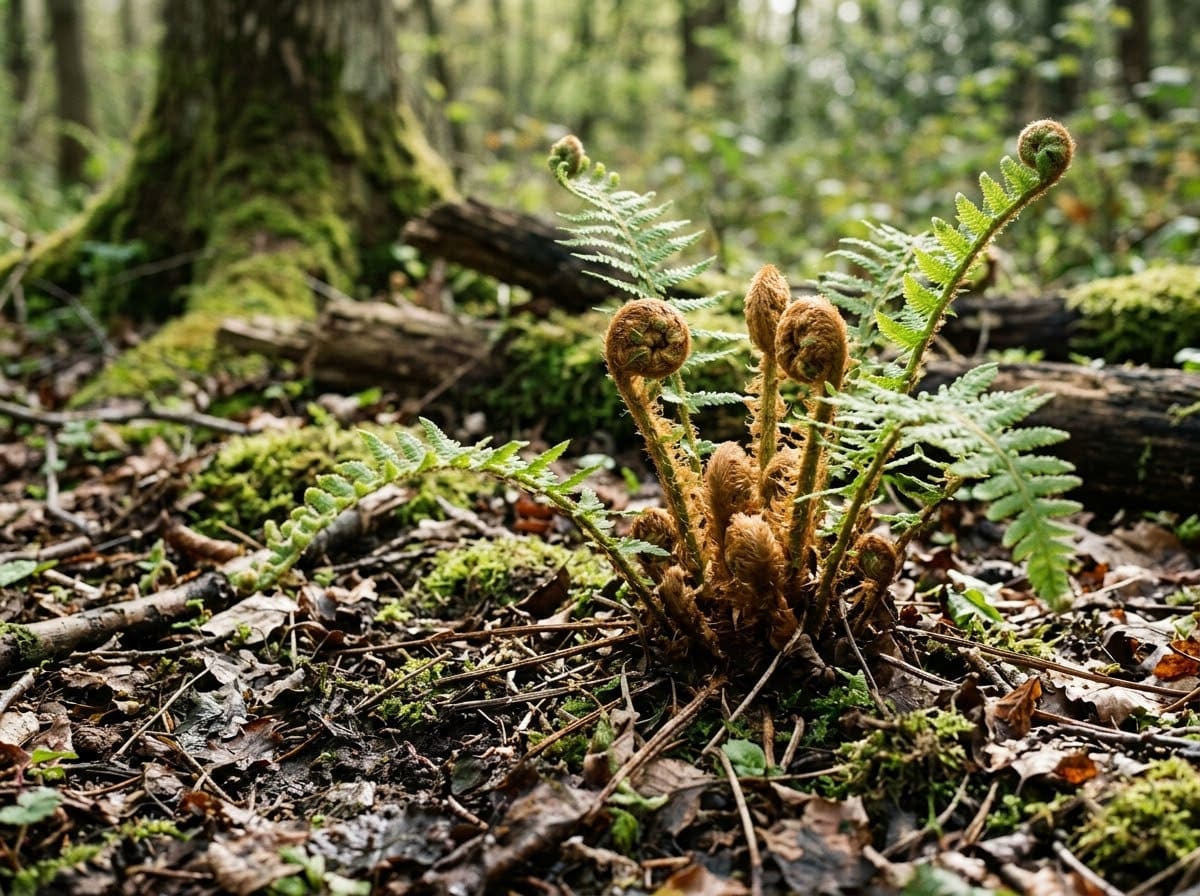
Illinois Extension lists lady fern, interrupted fern, and cinnamon fern as good choices for shade. But it warns that some, like ostrich fern, can be aggressive.
So choose by spread. Lady and cinnamon fern stay polite. Ostrich fern is great for filling a large bare area and a headache in a small bed.
Plant them in humus-rich soil with morning shade. Water the first season, then leave them. Fiddleheads in spring are a free bonus.
24. Bigroot Cranesbill
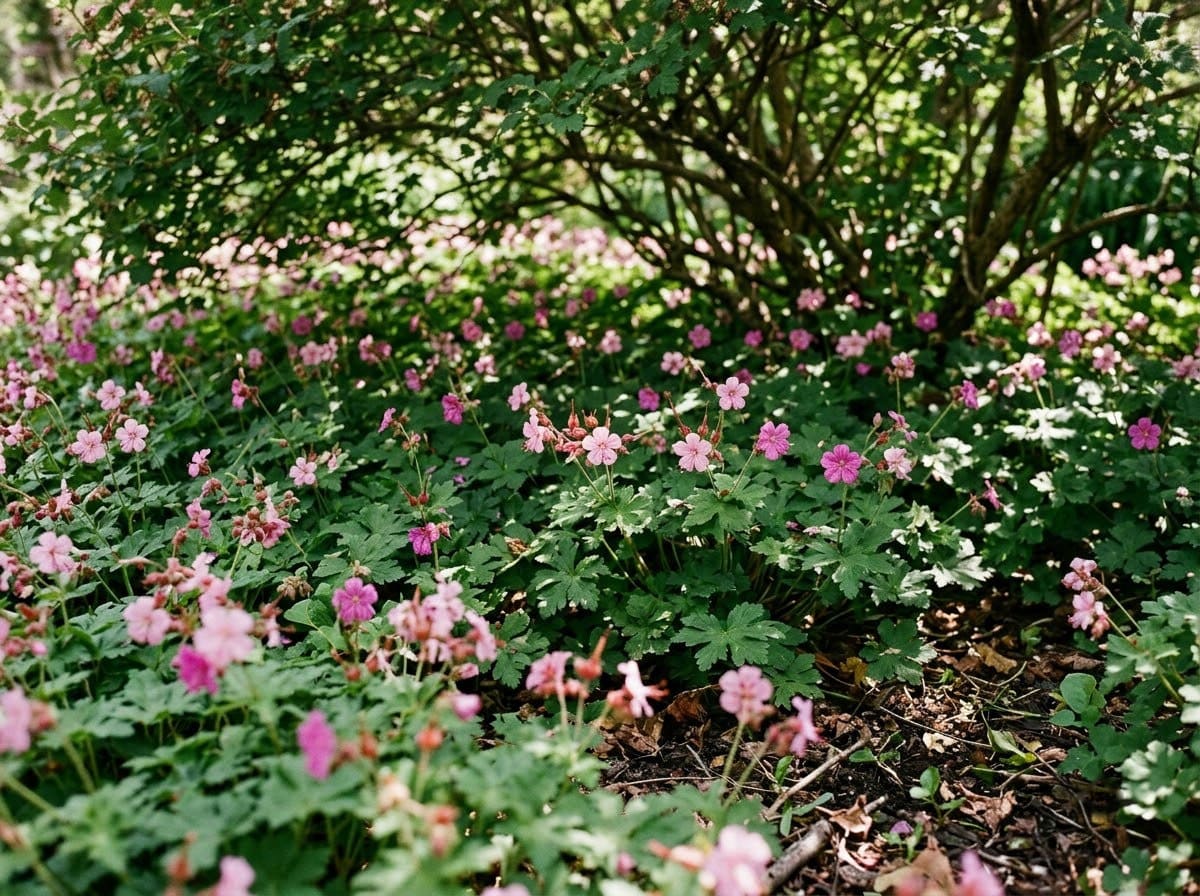
Bigroot cranesbill (Geranium macrorrhizum) grows about 18 inches tall. Nebraska Extension lists it for part to full shade and calls it semi-evergreen, with pink flowers in May.
It’s a true hardy geranium, not the pot geranium from the garden center. The leaves smell spicy when crushed. And they take on red tones in fall.
It spreads by roots to make a weed-blocking carpet under shrubs. A few pots cover a lot of ground over time, so it’s a budget-friendly choice.
Which Shrub Takes Care of Itself?
25. Common Ninebark
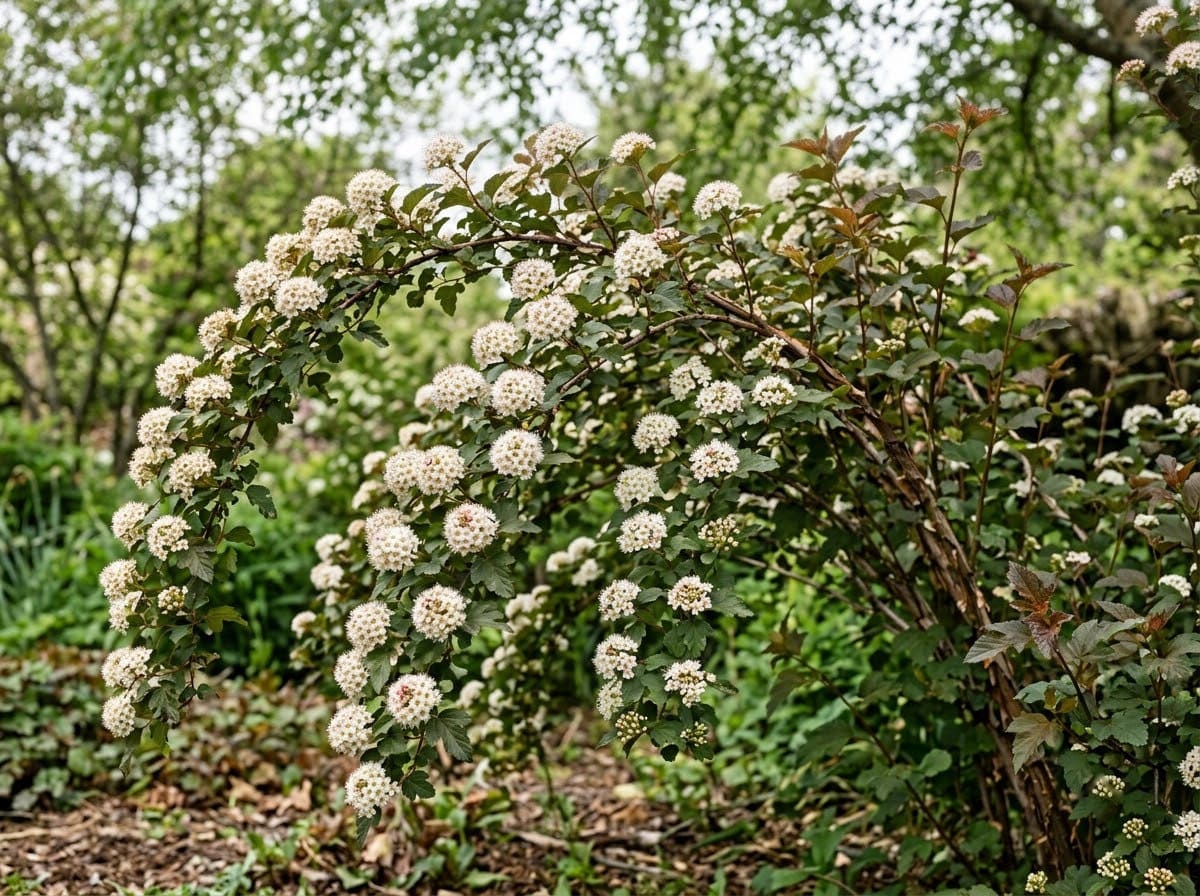
Common ninebark (Physocarpus opulifolius) reaches 6 to 9 feet tall. Illinois Extension lists full sun, moist to wet sites, and says it tolerates dryness, with white flowers in late spring that birds like.
It’s a good shrub for a hedge or a back corner. And its peeling bark gives winter interest. Many gardeners also like the purple-leaved varieties, though Illinois lists the plain native.
Give it room, because it gets big. Prune only to remove dead wood or to shape it after it blooms. That’s about the only maintenance it wants.
What We Learned the Hard Way About “Tough” Plants
Most dead “unkillable” plants die from kindness. We water too much, fertilize too much, and mulch too close. The extension guides keep repeating the same few lessons.
First, drainage beats water. If the bed holds puddles, no amount of drought tolerance helps. Nebraska Extension suggests adding small rocks, pebbles, or coarse sand to very poorly drained soil.
Second, mulch carefully. Nebraska Extension recommends a 1 to 2 inch layer.
But it warns that rock and gravel hold heat and reflect light, which can hurt the plants they protect. Keep mulch off the crowns too, since air and drainage matter through winter.
Third, don’t feed them. Fertilize only when plants show weak growth or yellowing leaves, the guide says. Illinois Extension notes that lance-leaved coreopsis flops when over-fertilized.
Fourth, resist the urge to move things. Taprooted plants like butterfly weed and false indigo hate it. Nebraska Extension warns that many drought-tolerant plants can be destroyed if disturbed.
If a plant dies out in the middle, divide it. Do that in early spring or late August to early September.
Finally, watch the weather.
If a plant sulks in a wet summer, that’s the humidity warning at work. It’s not your fault, and it’s a sign to try another plant next time. For more ways to cope with dry spells, see these simple drought-fighting strategies and our guide to xeriscape gardening ideas.
How Do You Set Up a Neglect-Proof Bed? A Simple Plan
Here’s a plan that works for most beds. Do it once in spring or early fall.
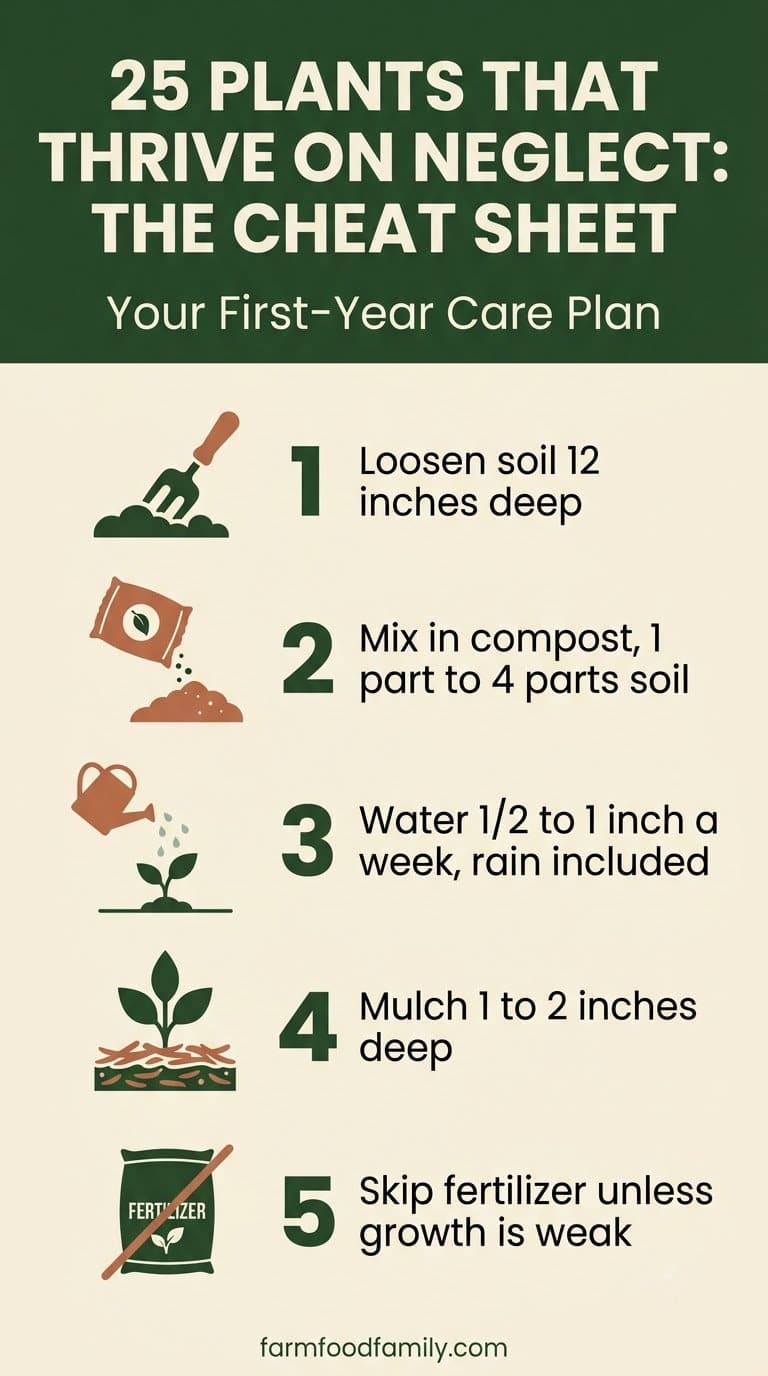
Step 1: Loosen the soil 12 inches deep. Mix in compost at about one part to four parts soil.
Step 2: Group plants with the same water needs. Space them for their mature size, so air can move through the leaves.
Step 3: Water new plants a half inch to one inch a week, rain included. Taper slowly as the roots grow.
Step 4: Mulch 1 to 2 inches deep with chopped leaves or shredded bark. Leave a gap around each stem.
Step 5: Skip fertilizer. Add it only when growth looks weak.
Step 6: Leave seed heads and stems standing over winter, then cut back in early spring.
Frequently Asked Questions
How long do I have to water new low-maintenance plants?
Plan on the whole first growing season. Nebraska Extension says even the most drought-tolerant perennials need extra water until they’re established. Apply a half inch to one inch a week, rain included, and taper slowly.
What’s the easiest plant to grow with no watering?
No plant is truly no-water in year one. Once established, pale purple coneflower, blanket flower, and daylily are among the plants Nebraska Extension marks as most drought-tolerant.
Do native plants need less care?
Often, yes. Illinois Extension picked its easy-care natives because they have few insect and disease problems and adapt to many conditions. But it still says there’s only lower maintenance, never none.
Will these plants survive a two-week vacation?
Established plants usually will. New plants may need a helper to water them. Mulch helps hold moisture while you’re away.
What kills “tough” plants most often?
Wet soil, too much fertilizer, and mulch piled against the crown. Poor drainage is the biggest culprit, especially in winter.
Products We Recommend
This post contains affiliate links. We may earn a commission on qualifying purchases at no extra cost to you.
Gouevn 2-Pack Soil Moisture Meter
Battery-free probes that show whether the soil is dry, moist, or wet before you water. Handy for new plantings in year one.
Shop Now
LINEX 50 ft Sprinkler Soaker Hose with Hose Stakes
A soaker hose that delivers slow, deep water at the roots. A good fit for the weekly watering new perennials need.
Shop Now
Outsidepride Perennial Little Bluestem Grass Seed, 1 lb
Native prairie grass seed that is drought resistant and long-lived. Matches idea 14 in this guide.
Shop NowNever miss an update — choose FarmFoodFamily as your preferred source on Google.
How it works: Tap the button below to open Google's settings page, then check the box next to FarmFoodFamily.
Tap the checkbox to turn it blue — that's how you know it's set.