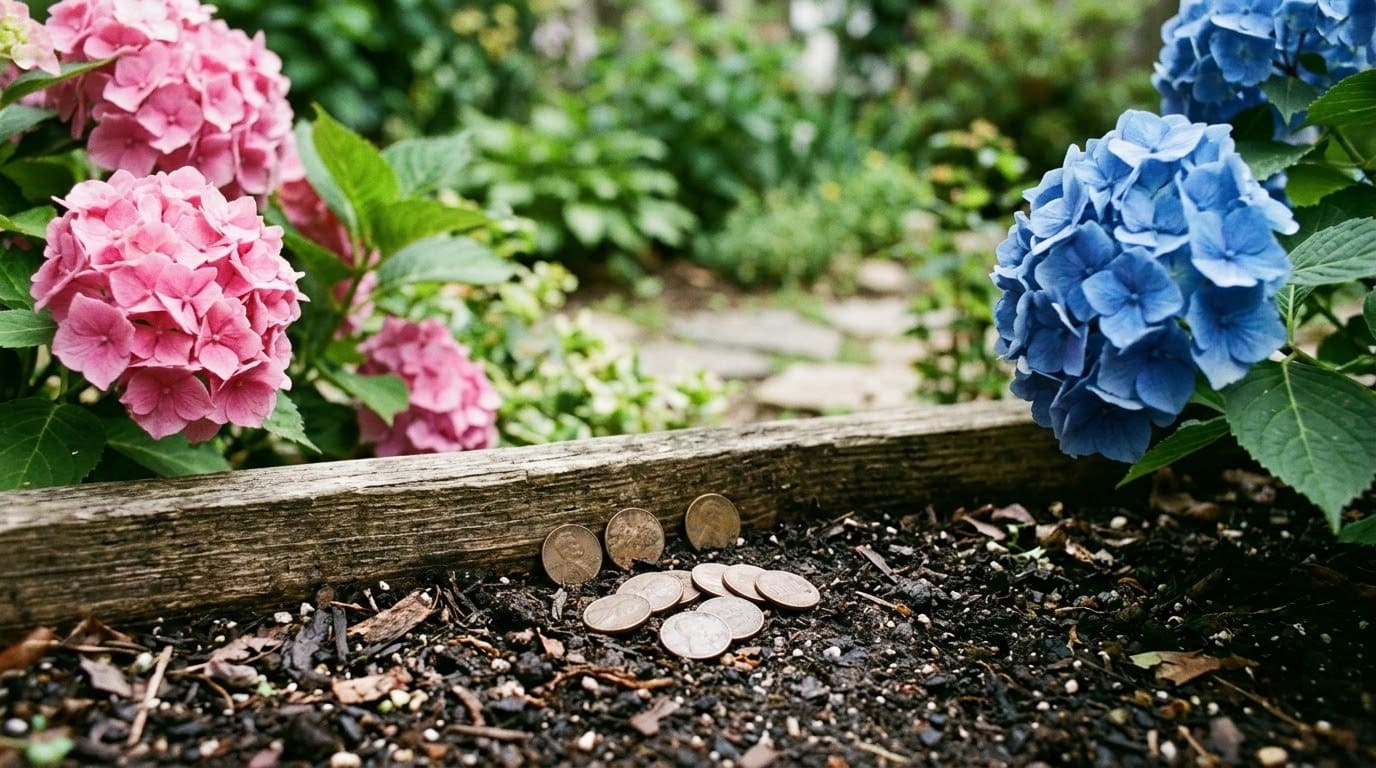
The Magic Penny Trick: Does Burying Pennies Really Turn Hydrangeas Blue?
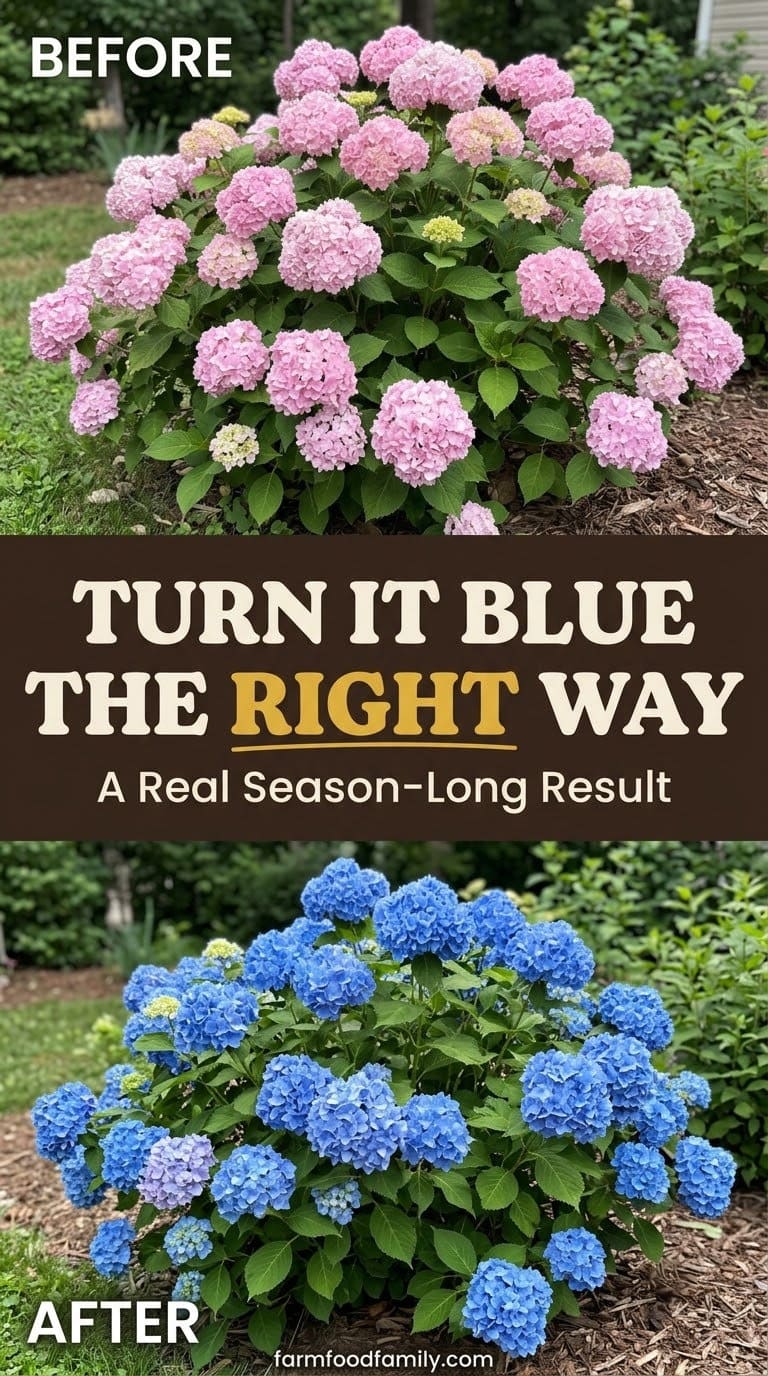
Burying pennies under your hydrangea is a popular one-dollar trick, but the real color-changing element is aluminum, not copper, so the penny itself does essentially nothing.

Never miss an update — choose FarmFoodFamily as your preferred source on Google.
How it works: Tap the button below to open Google’s settings page, then check the box next to FarmFoodFamily.
Tap the checkbox to turn it blue — that’s how you know it’s set.
Quick Answer: Does the Penny Trick Turn Hydrangeas Blue?
No, burying pennies does not turn hydrangeas blue. This is a persistent gardening myth. Hydrangea flower color comes from aluminum availability in the soil, not copper, according to Clemson Cooperative Extension’s Home & Garden Information Center and the University of Georgia CAES Field Report.
Modern pennies are mostly zinc with a thin copper coating, not solid copper, and even solid copper wouldn’t help since copper plays no role in the anthocyanin pigments that create blue or pink blooms. Even a large quantity of pennies buried in soil won’t meaningfully shift soil pH or add usable aluminum.
The real method works by lowering soil pH to around 5.0 to 5.5 with sulfur or aluminum sulfate, which makes aluminum available for the plant’s roots to absorb, per Clemson HGIC. It only works on certain hydrangea species, takes more than one growing season, and needs to be repeated as soil naturally drifts back toward its original pH.
Why the Penny Myth Persists
The penny trick sounds believable because the logic seems to line up: pennies are made of copper, copper is a mineral, minerals affect soil chemistry, so pennies must be able to change a plant’s color. Each individual link in that chain has a grain of truth to it, which is exactly what makes the overall conclusion so easy to believe.
The problem is the specific mineral. Copper genuinely is a plant micronutrient, and soil minerals genuinely do affect hydrangea color, but the pigment-controlling mineral is aluminum, not copper. Swapping in the wrong element breaks the entire chain of logic, even though each piece sounded reasonable on its own.


What Actually Changes Hydrangea Color
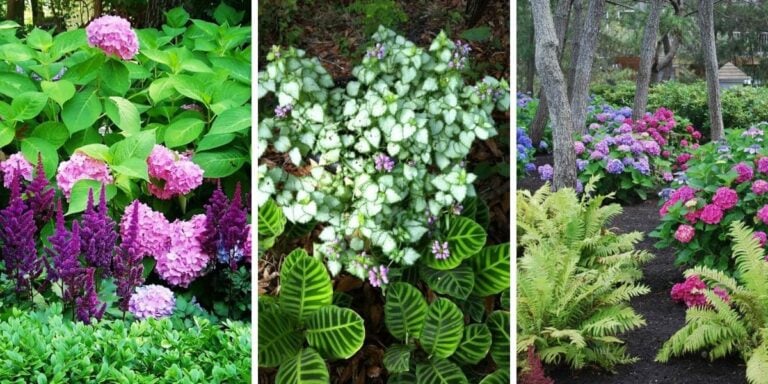
Hydrangea flower color, at least for the species that change color at all, comes down to how much aluminum the plant’s roots can absorb, and that depends entirely on soil pH.
Answer 4 quick questions and get matched to the exact fix for your yard — drainage, budget, layout, or something else entirely.
Take the Free QuizIn acidic soil, aluminum becomes soluble and available for uptake, which produces blue blooms. In alkaline soil, aluminum stays locked in a form the roots can’t absorb, which produces pink blooms. Soil right around neutral pH tends to produce purple or a mix of both colors on the same plant, per University of Georgia CAES Field Report.
This only applies to certain hydrangeas. David Trinklein, State Floriculture Specialist at University of Missouri Extension, notes that color-changing behavior is specific to Hydrangea macrophylla and Hydrangea serrata varieties. White hydrangeas and most panicle or oakleaf varieties won’t change color regardless of soil treatment, since they don’t produce the same aluminum-sensitive pigments.
Other Hydrangea Color Myths Worth Knowing
Pennies aren’t the only folk remedy floating around for hydrangea color, and knowing where the others stand helps you avoid repeating the same mistake with a different object.
Rusty nails get the same treatment as pennies, buried near the roots on the theory that iron will “feed” a color change. Iron is a real plant micronutrient, but like copper, it plays no documented role in the aluminum-uptake process that actually controls hydrangea pigment.
Coffee grounds are a more defensible middle-ground myth: used coffee grounds are mildly acidic, so working them into the soil over time can nudge pH downward slightly, but the effect is far weaker and slower than a proper sulfur or aluminum sulfate application, and coffee grounds alone won’t reliably get soil into the 5.0-5.5 range Clemson HGIC recommends for blue blooms.
Vinegar drenches work on a similar logic to coffee grounds, acidic in theory, but vinegar breaks down too quickly in soil to produce a lasting pH change, and repeated heavy applications risk damaging roots.
The pattern across all of these: real acidifying amendments exist (sulfur, aluminum sulfate), and they work through a well-documented mechanism. Household folk remedies borrow the general idea of “acid changes color” without actually delivering enough of the right acidifying compound in a form the plant can use.
Most yard problems trace back to one specific, fixable cause. Find yours in 4 quick questions.
Take the Free Quiz
A pH, moisture, fertility, and light meter for testing your actual starting soil pH before applying any amendment.
Shop NowThis post contains affiliate links. We may earn a commission on qualifying purchases at no extra cost to you.
How to Actually Turn Your Hydrangeas Blue, Step by Step
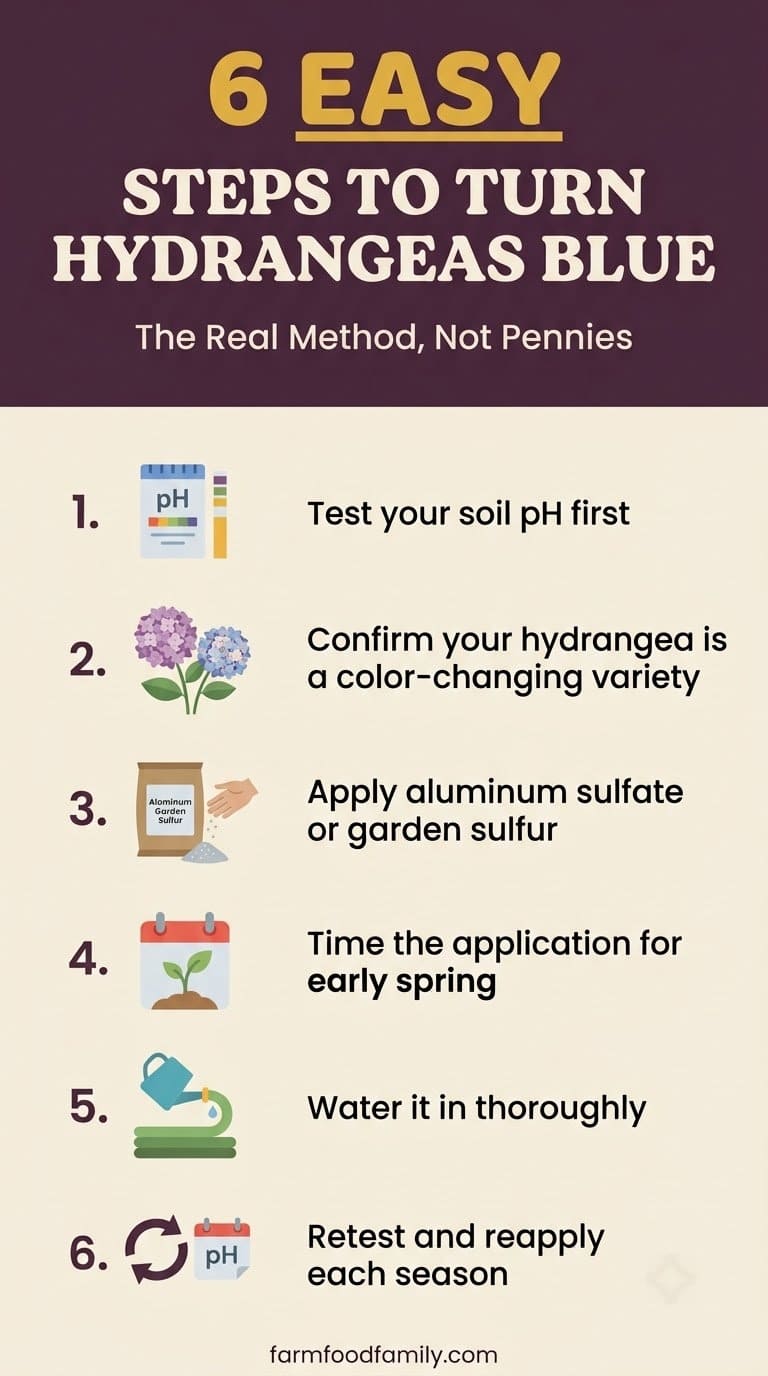
Step 1: Test Your Soil pH First
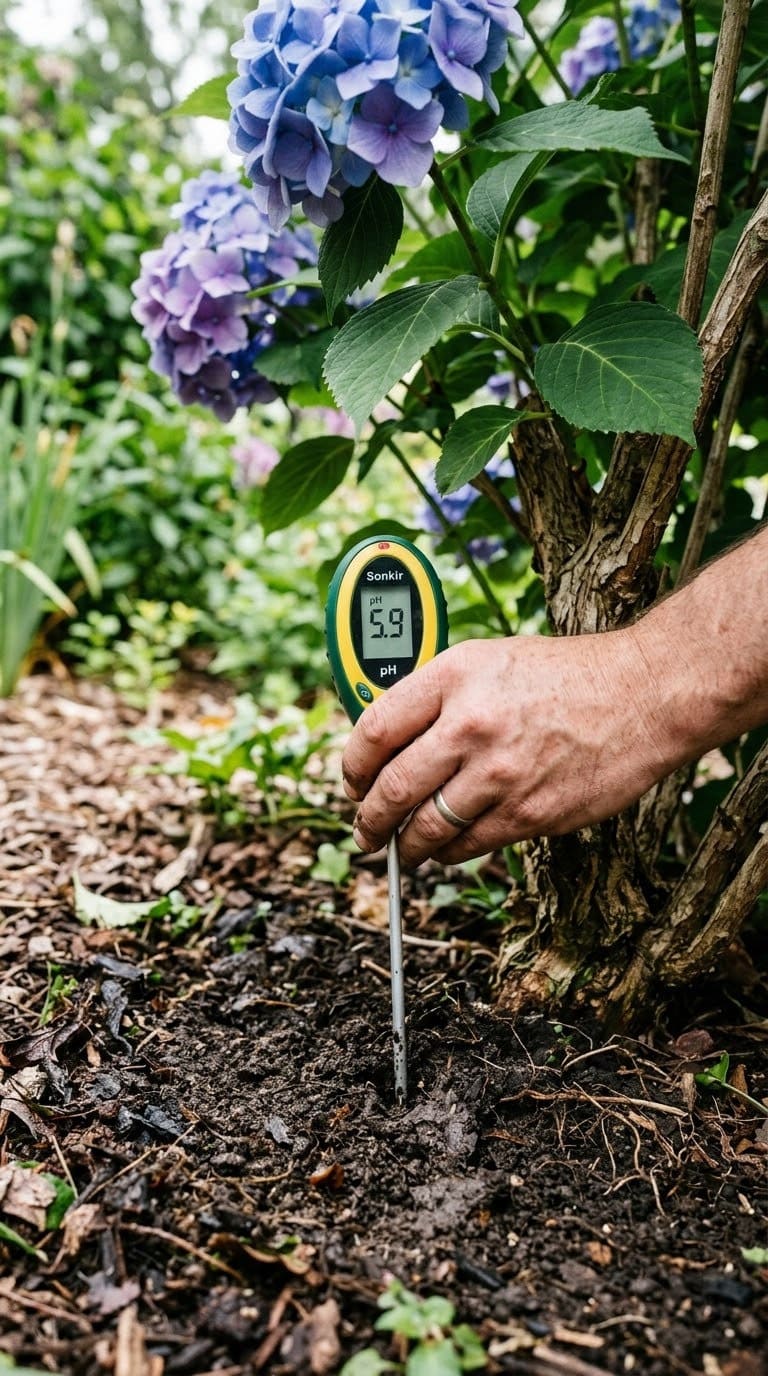
Test your soil’s current pH with a home test kit or meter before adding anything, so you know your actual starting point instead of guessing.
Step 2: Confirm Your Hydrangea Is a Color-Changing Variety
Check your hydrangea’s tag or variety name to confirm it’s a macrophylla or serrata type, since other varieties won’t respond to any pH change.
Step 3: Apply Aluminum Sulfate or Garden Sulfur
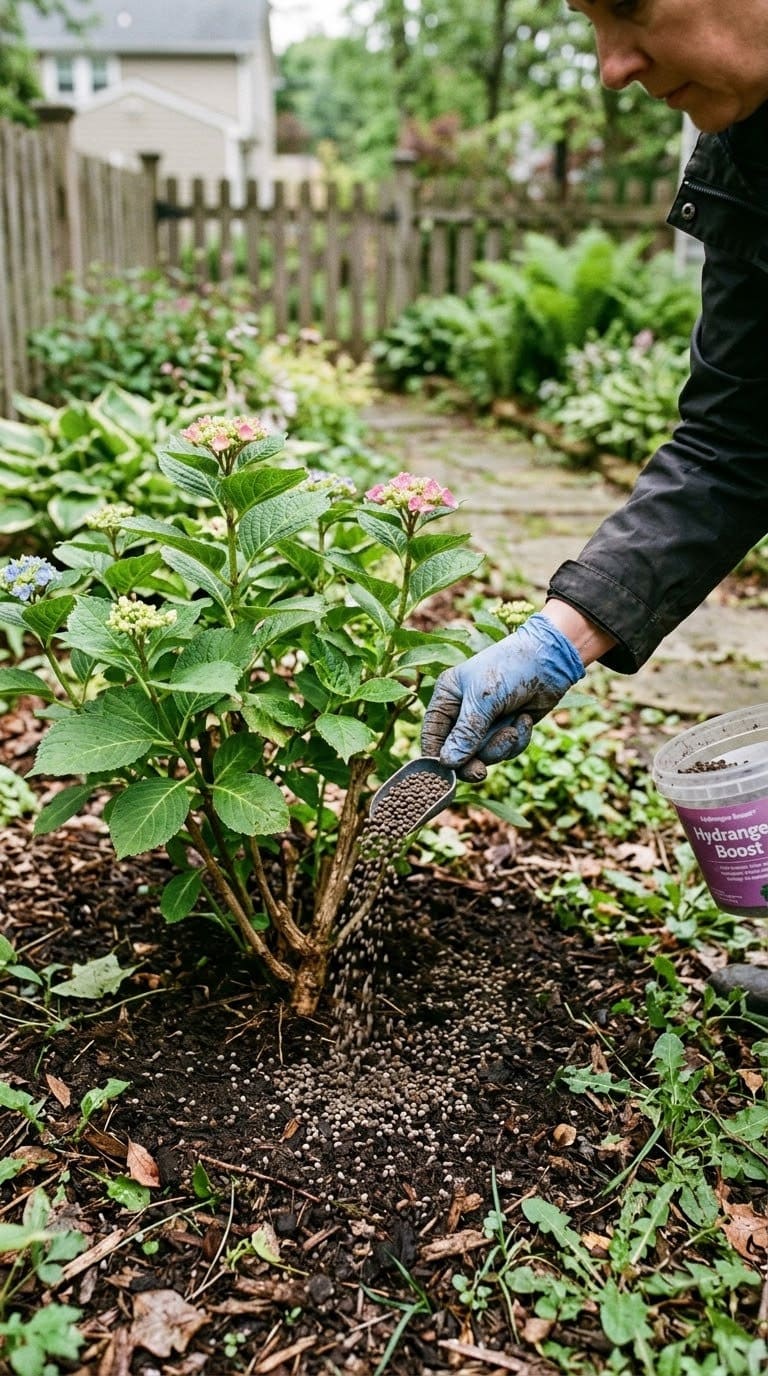
Apply aluminum sulfate or garden sulfur around the plant’s root zone following the product’s label rate, aiming for a soil pH of about 5.0 to 5.5 for blue blooms, per Clemson HGIC.
Step 4: Time the Application for Early Spring
Apply the amendment when new growth emerges in early spring, matching the timing Clemson HGIC recommends, since this gives the plant a full growing season to take up the aluminum before it sets that year’s flower buds.
Step 5: Water It In Thoroughly
Water the amendment into the soil thoroughly after applying it, so it reaches the root zone rather than sitting on the surface.
Step 6: Retest and Reapply Each Season
Retest your soil pH the following spring and reapply as needed, since soil naturally drifts back toward its original pH over time and a single application rarely holds permanently.
Real pH Chart by Hydrangea Color
| Target color | Soil pH range | What to add | Source |
|---|---|---|---|
| Blue | 5.0-5.5 (acidic) | Sulfur or aluminum sulfate | Clemson HGIC |
| Purple | Around 6.0 (near neutral) | Minimal amendment, natural drift | Clemson HGIC |
| Pink | 6.0 or higher (alkaline) | Garden lime | Clemson HGIC |
Penny Trick vs. Real Color-Changing Methods
| Method | Real effect on soil | Cost | Time to see results |
|---|---|---|---|
| Burying pennies | None, copper doesn’t affect aluminum uptake or pH meaningfully | Essentially free | Never |
| Aluminum sulfate / sulfur | Lowers pH, makes aluminum available for uptake | $10-15 per bag | One full growing season or more |
| Garden lime | Raises pH, locks aluminum out of reach (for pink) | $8-12 per bag | One full growing season or more |
What We Learned the Hard Way
Real hydrangea color-changing attempts rarely go as fast or as simply as a viral trick suggests. A few things trip people up even when they’re using the correct method.
One application usually isn’t enough. Soil naturally buffers back toward its original pH over months, so a single spring treatment often needs a repeat application the following year before the color shift holds consistently.


It doesn’t work on every hydrangea. Per David Trinklein’s guidance, only macrophylla and serrata varieties respond to pH changes at all. Applying aluminum sulfate to a panicle or oakleaf hydrangea expecting a color change wastes the effort entirely.
The average homeowner spends $616/year on yard fixes that don't address the real problem. Find out what yours actually is — before you spend another dollar.
Take the Free QuizOver-applying aluminum sulfate can stress the plant. Following the product label rate matters here, more isn’t better, and excess aluminum sulfate can actually damage roots rather than speed up the color change.
Can You Grow Both Colors on One Property?
Yes, and this is one of the more genuinely useful things to know if you’re planting more than one macrophylla or serrata hydrangea. Since color depends on soil pH in the immediate root zone rather than some fixed trait of the plant, two hydrangeas of the same variety planted in different beds, or even different spots in the same bed, can end up different colors if their local soil chemistry differs.
This is also why a hydrangea that arrived from the nursery blue sometimes fades toward purple or pink after a season or two in your own garden, your soil’s natural pH is reasserting itself over whatever the grower used to produce that shade for sale. If you want to keep a specific color consistent across multiple plants, each one technically needs its own soil treated to the same target pH, not just one bag of amendment spread across the whole bed and assumed to even out.
Container-grown hydrangeas make this easier to control precisely, since you’re managing a contained volume of soil rather than an entire garden bed’s worth of native soil working against you. If consistent color matters more to you than in-ground growth, a large container with a soil mix you fully control is worth considering over fighting your yard’s natural pH indefinitely.
Mistakes to Avoid
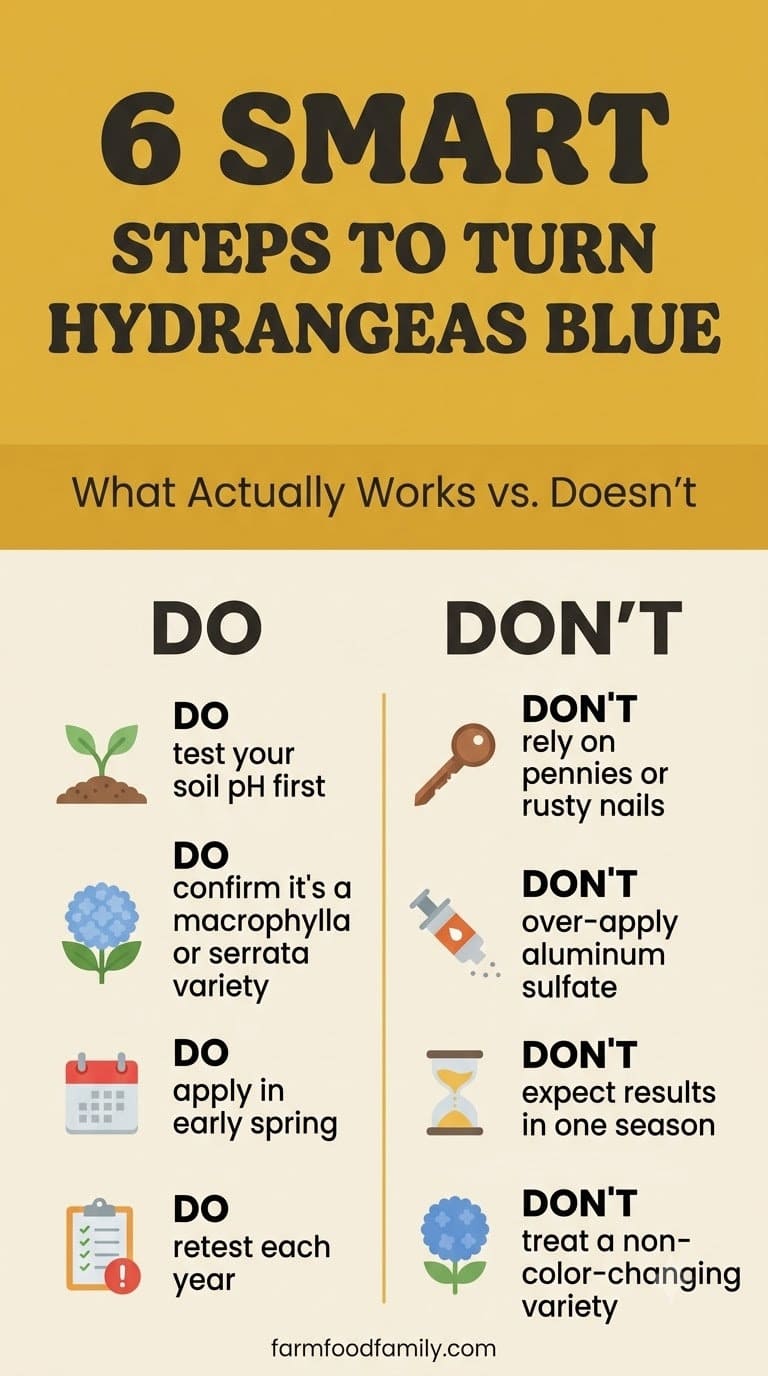
- Relying on the penny trick at all. It has no real mechanism behind it, copper isn’t the color-determining element.
- Skipping a soil pH test first. Without knowing your starting pH, you’re guessing at how much amendment you actually need.
- Applying to the wrong hydrangea species. Confirm it’s a macrophylla or serrata variety before treating the soil.
- Expecting results in one season. Give it a full growing cycle, sometimes two, before judging whether it worked.
- Over-applying aluminum sulfate. Stick to the product’s label rate to avoid root stress.
FAQ
Why do people think pennies work on hydrangeas? The logic sounds plausible: pennies contain copper, copper is a mineral, and minerals affect soil. But the specific mineral that controls hydrangea color is aluminum, not copper, so the chain of reasoning breaks at the final step.
What’s the real difference between pink and blue hydrangeas? Soil pH and aluminum availability. Acidic soil (roughly pH 5.0-5.5) makes aluminum available for the plant to absorb, producing blue blooms. Alkaline soil (pH 6.0 or higher) locks aluminum out of reach, producing pink blooms.
Do all hydrangeas change color with soil treatment? No. Only Hydrangea macrophylla and Hydrangea serrata varieties respond to pH changes. White hydrangeas and most panicle or oakleaf types stay their original color regardless of soil treatment.
How long does it take to see a real color change? Expect at least one full growing season, sometimes longer, since the plant needs to take up the aluminum and set new flower buds before the color shift shows up in the blooms.
Can potted hydrangeas change color too? Yes, and often more predictably than in-ground plants, since you’re controlling the entire soil volume in the container rather than working against your yard’s native pH. A dedicated potting mix formulated for acid-loving plants makes it easier to hold a consistent pH than treating a patch of garden soil that keeps drifting back toward its original chemistry.
Related Posts
- What to Plant With Hydrangeas
- Why Is My Hydrangea Wilting?
- Grow Organic Blueberry Plants in the Garden
Products We Recommend
This post contains affiliate links. We may earn a commission on qualifying purchases at no extra cost to you.
Luster Leaf 1818 Rapitest 4-in-1 Soil Tester
A pH, moisture, fertility, and light meter for testing your actual starting soil pH before applying any amendment.
Shop Now
Earth Science Fast Acting Sulfur Granules, 5lb
A sulfur-based soil acidifier for lowering pH toward the 5.0-5.5 blue-hydrangea range.
Shop Now
Hoffman Blue Magic Aluminum Sulfate
A purpose-made aluminum sulfate product formulated specifically for blueing hydrangea blooms.
Shop NowNever miss an update — choose FarmFoodFamily as your preferred source on Google.
How it works: Tap the button below to open Google's settings page, then check the box next to FarmFoodFamily.
Tap the checkbox to turn it blue — that's how you know it's set.