How to Build an Effective Household Dust- and Allergen-Reduction Routine
Layered habits beat one big clean: keep dust out, damp-dust before you vacuum, and keep bedroom humidity in check. Even then, no routine removes dust entirely.

Never miss an update — choose FarmFoodFamily as your preferred source on Google.
How it works: Tap the button below to open Google's settings page, then check the box next to FarmFoodFamily.
Tap the checkbox to turn it blue — that's how you know it's set.
Layered habits beat one big clean: keep dust out, damp-dust before you vacuum, and keep bedroom humidity in check. Even then, no routine removes dust entirely.
Quick answer: how do you reduce household dust and allergens?
An effective dust and allergen routine is layered, because no single cleaning session removes dust for good. Reduce what enters the home, damp-dust before you vacuum, and clean floors on a schedule that matches your foot traffic and pets. Floor care helps, but on its own it does not touch airborne particles, bedding, or upholstery.
Bedrooms need special care. The EPA advises washing bedding in hot water once a week, using dust-proof covers on pillows and mattresses, and keeping indoor humidity between 30 and 50 percent.
People with allergies or asthma should leave the room while someone vacuums, since vacuuming can stir up dust. Keep filters, brushes, and bins maintained, and see a clinician if symptoms persist.
Start small. Pick the two areas where dust builds up fastest, and clean them consistently before you expand the routine.
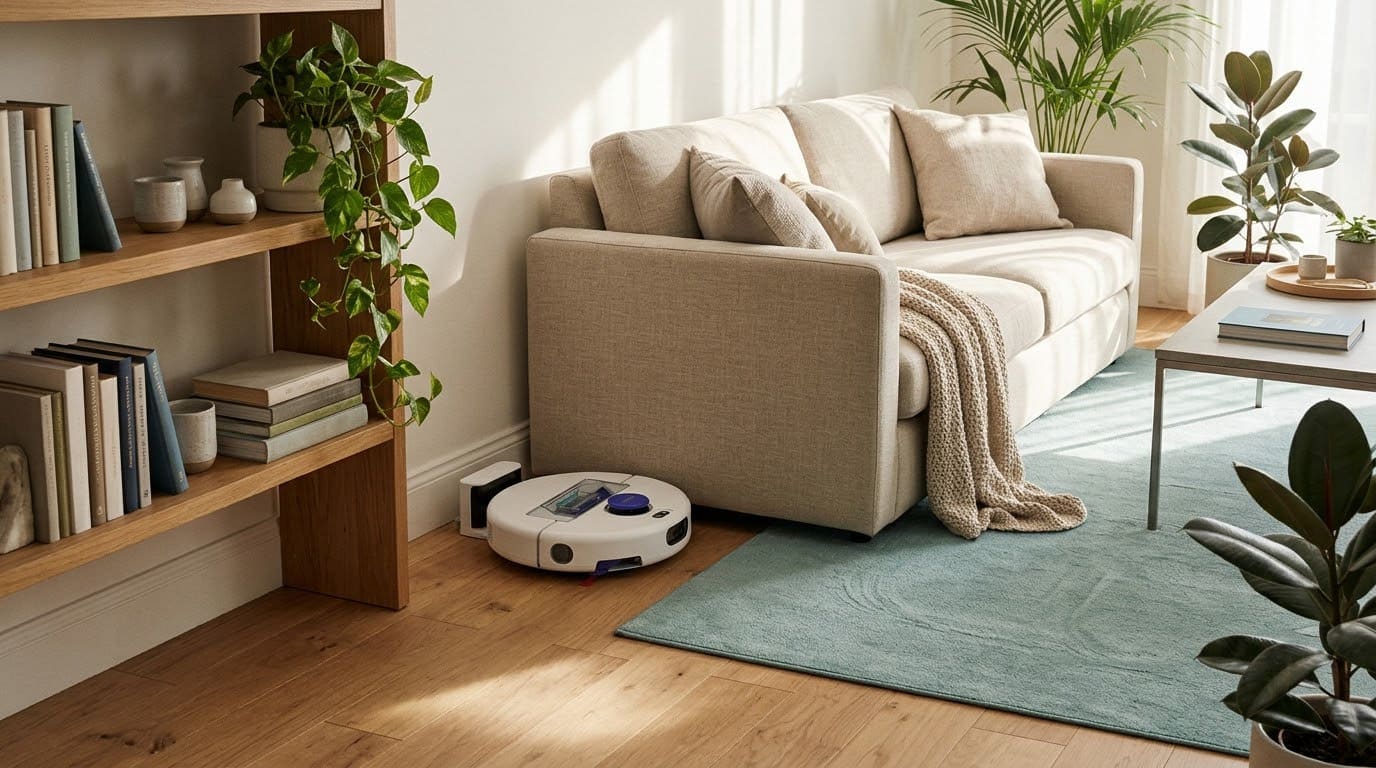
Household dust is rarely just one substance. It’s actually a mixture of fabric fibers, soil tracked in from outside, pollen, skin flakes, pet dander, and all sorts of microscopic debris that settles on every surface of a home. For people sensitive to allergens, components like dust mites, pollen, and pet dander can trigger sneezing, congestion, or asthma flare-ups. Managing this mixture effectively isn’t about a single cleaning session. It takes consistent habits: surface cleaning, moisture control, bedding care, and reducing what enters the home in the first place. Many households rely on a robot vacuum to keep up with regular floor-cleaning, but floor care is only one piece of a much larger routine. On its own, it doesn’t touch airborne particles, bedding, or upholstery.
What household dust contains and where it accumulates
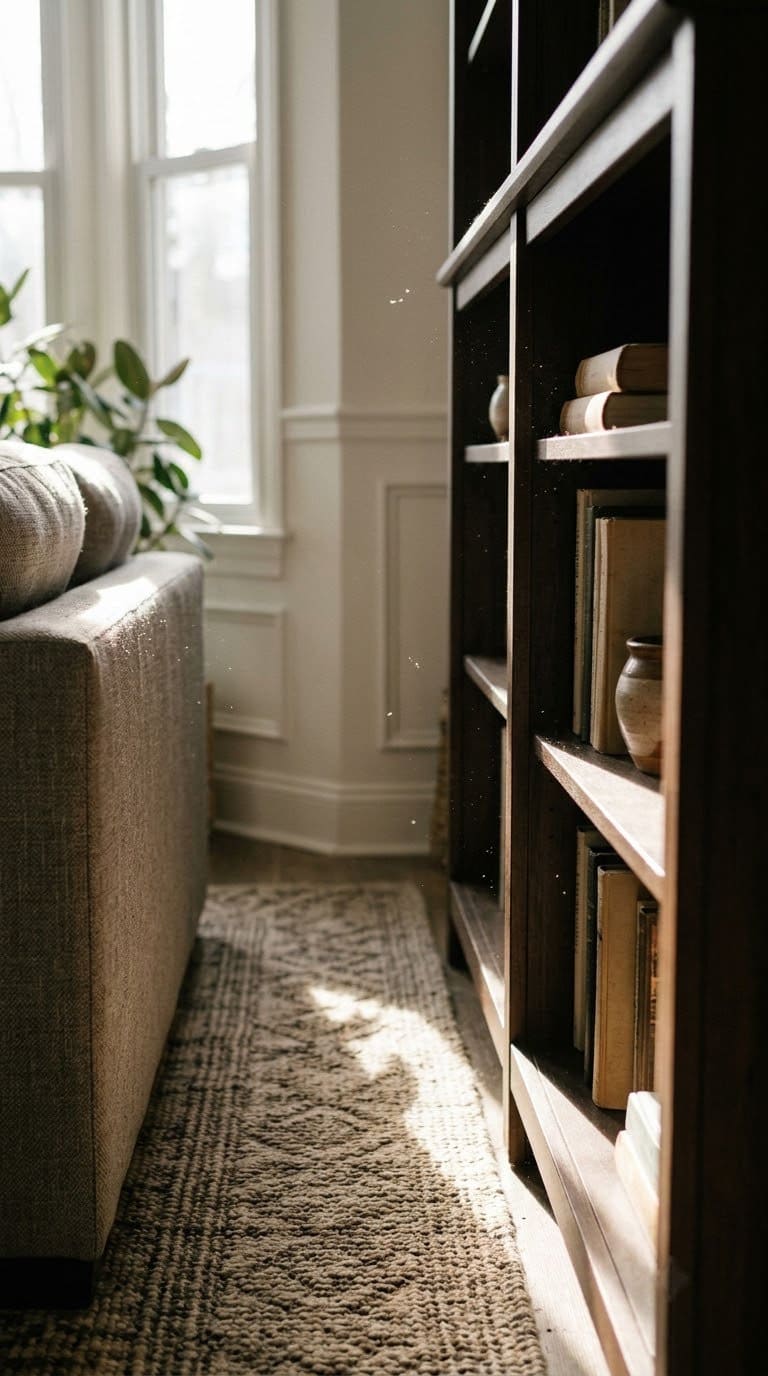
Indoor dust typically includes outdoor soil and pollen carried in on shoes, clothing, and pets, along with fabric fibers, paper particles, skin cells, and dust-mite waste. The exact mix varies from one household to the next, depending on occupants, pets, flooring type, ventilation, and climate.
Dust tends to collect most heavily in carpets and rugs, upholstered furniture, mattresses and pillows, and along baseboards, blinds, shelves, and vents. It also gathers under furniture, in corners, and within fabric items like curtains and stuffed toys.


Settled dust rests visibly on surfaces. Airborne particles stay suspended in the air and can be inhaled. A home that looks spotless may still carry elevated airborne allergen levels, since visible dust isn’t a complete measure of indoor air quality.
Build a cleaning routine that reduces dust without spreading it
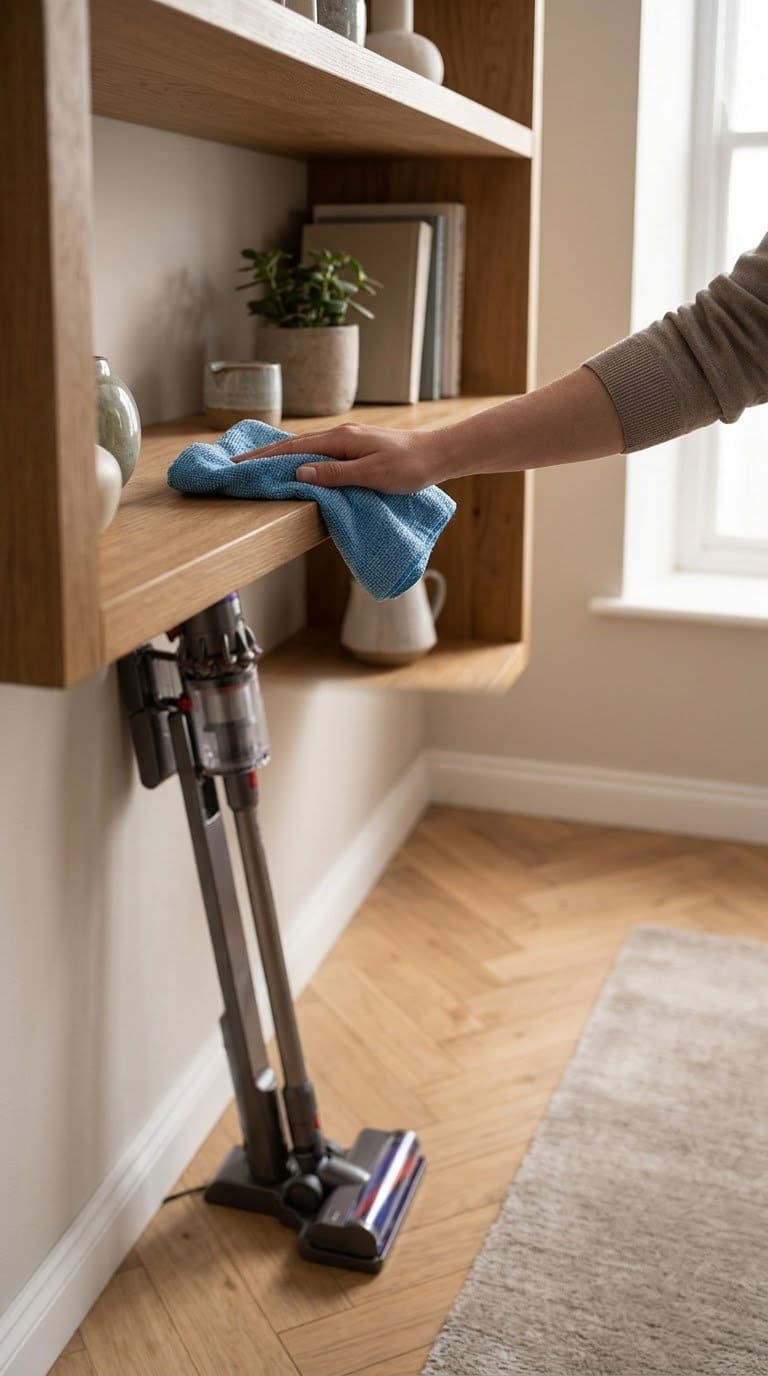
A top-to-bottom sequence works best: dust shelves, ceiling fans, and blinds before vacuuming or mopping, so that dislodged particles land on the floor and get captured last instead of resettling on surfaces you’ve already cleaned.
Reach for damp cloths or mops designed to trap particles rather than dry dusting, which usually just redistributes dust into the air instead of removing it. Pay extra attention to baseboards, corners, and the spaces under furniture, and clean high-traffic rooms more often than those rarely used.
When it comes to vacuuming, choose a schedule based on foot traffic, pets, and household sensitivities, and keep the machine’s filtration in good shape according to manufacturer instructions. Empty canisters or replace bags carefully so you’re not releasing collected material right back into the air. Vacuuming can temporarily stir up airborne dust, so sensitive individuals may want to step out of the room during and shortly after cleaning. Regular cleaning reduces dust and allergens. But it won’t eliminate them, and no routine does.
Control dust-mite conditions in bedrooms
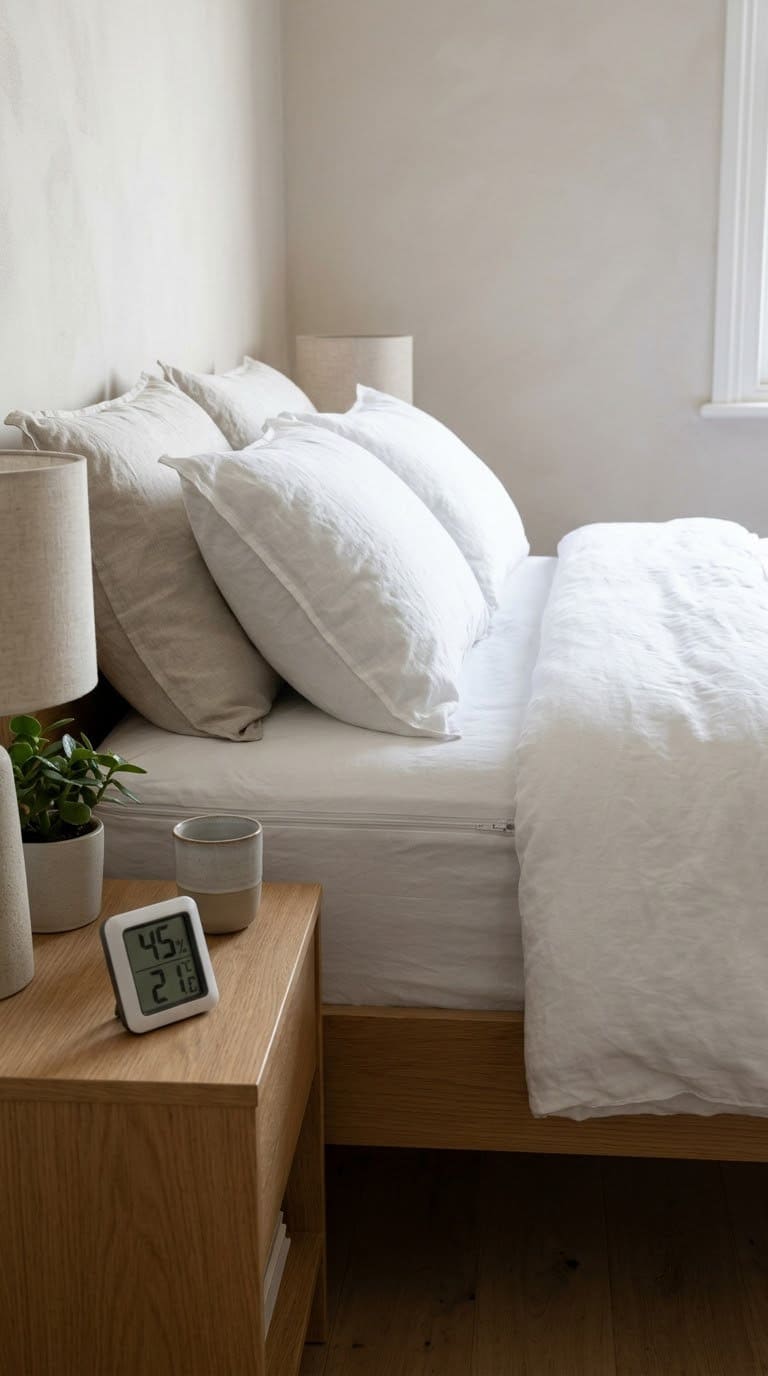
Dust mites thrive in humid environments, so keeping indoor relative humidity (the amount of moisture in the air compared to what it can hold at a given temperature) in roughly the 30% to 50% range can help limit their growth. A simple hygrometer makes it easy to keep track.
Wash sheets and blankets regularly, following fabric-care instructions, and consider hot-water washing where guidance and the fabric allow. Allergen-impermeable covers for mattresses and pillows, along with cutting back on excess decorative pillows or stuffed toys, can further limit dust-mite habitats.
Carpets and upholstered furnishings in bedrooms tend to retain more dust than hard flooring, though whether to switch flooring is a personal decision that depends on comfort, cost, and practicality.
Example: Consider two households with similar layouts. One cleans only when dust becomes visible. The other follows a modest weekly floor-care schedule, damp-dusts surfaces, and washes bedding regularly. Over time, the second household should see less visible buildup, and the credit goes to consistent, layered habits rather than any single product.
Adapt the routine for pets, children, and allergy-sensitive residents
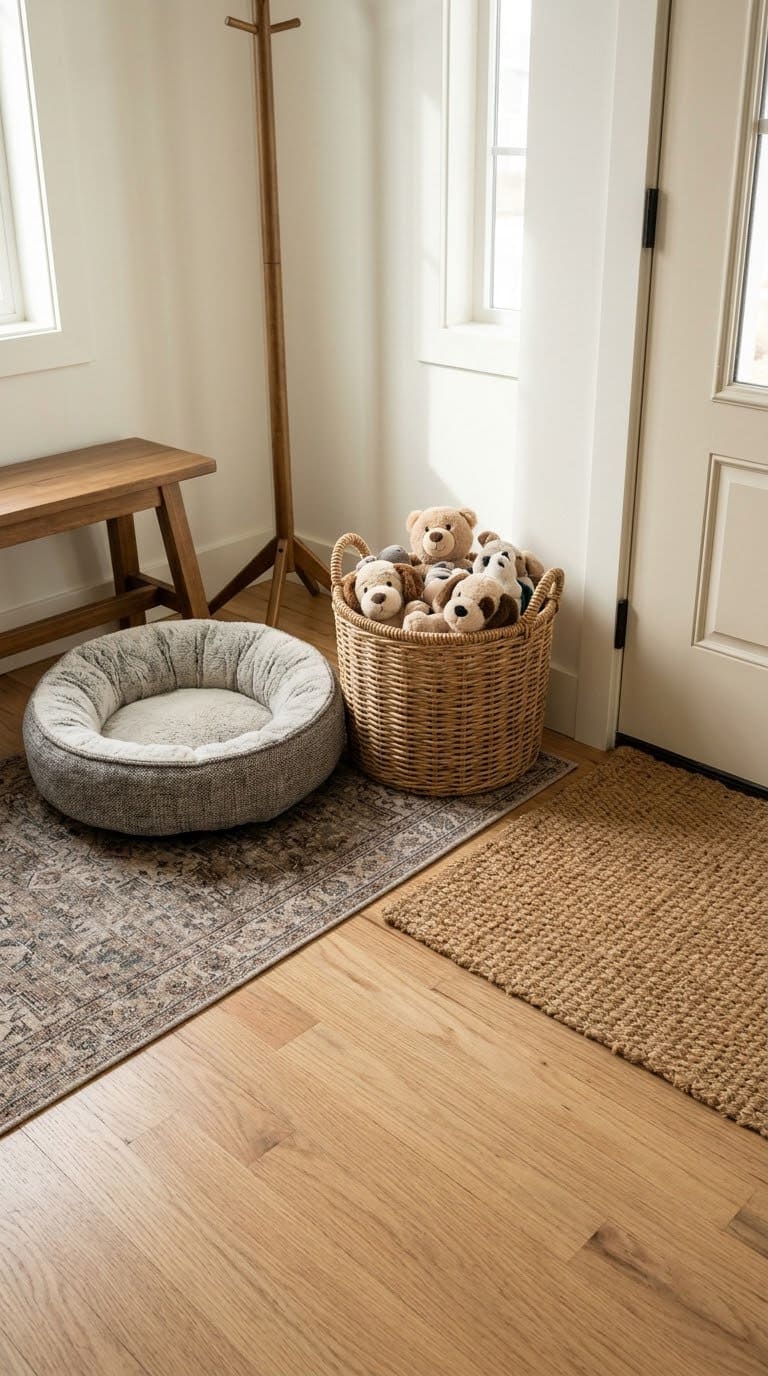
Pet bedding, rugs, and favorite resting spots often collect dander and hair, so washing pet bedding and grooming pets in designated areas can help a lot. Cleaning entryways reduces tracked-in soil and pollen for every household member, pets included.
In homes with children, play areas, rugs, and stuffed toys deserve regular attention. Use household-appropriate products, and skip unnecessary fragrance or aerosol exposure.
For allergy- or asthma-sensitive residents, staying out of the room during vacuuming can reduce exposure to stirred-up particles. Cleaning habits support symptom management, but they don’t replace medical evaluation. Anyone dealing with persistent or severe symptoms should consult a qualified clinician.
Making the routine practical and sustainable
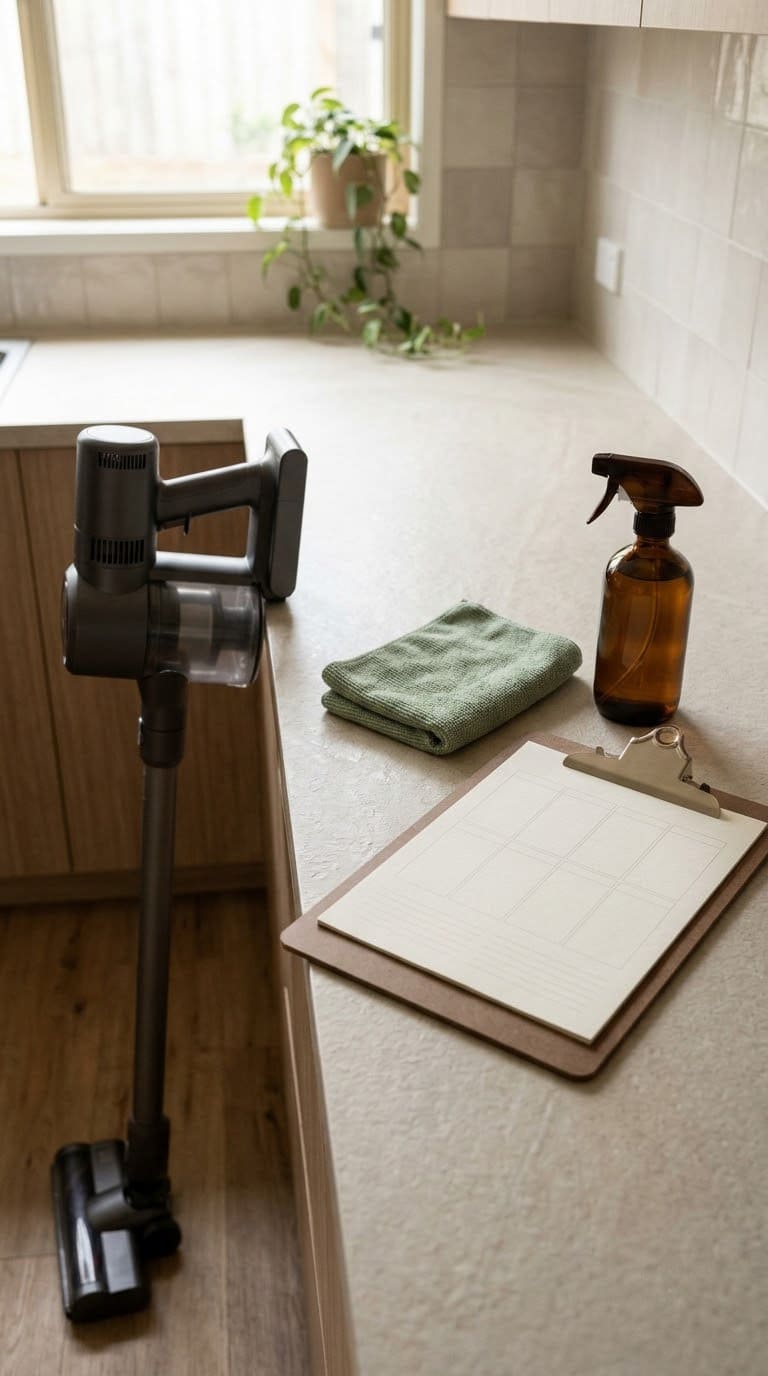
A simple frequency guide helps keep things manageable:
- Daily: Manage spills and entryway debris.
- Weekly: Vacuum, dust major surfaces, wash bedding.
- Monthly: Clean vents, blinds, baseboards, and under furniture.
- Seasonally: Check filters and adjust for pollen or weather shifts.
Common mistakes include dusting after vacuuming instead of before, using dry cloths that scatter particles rather than trap them, neglecting filters and bags, and assuming one deep clean will solve the problem for good.
The most effective approach is layered: reduce what enters the home, capture settled dust carefully, manage bedroom humidity, and clean fabrics regularly.
Evaluating cleaning tools objectively
Any cleaning tool should be judged on how well it suits specific surfaces, its filtration quality, maintenance needs, and how accessible it is for the household using it. Automated floor-cleaning devices can support routine maintenance but typically can’t reach stairs, upholstery, or tight corners. Weigh filtration claims alongside the device’s overall seals and exhaust. That includes references to HEPA filtration (a standard requiring a filter to capture a very high percentage of fine particles). Always follow manufacturer guidance for safe use and filter care.
A simple whole-home checklist


- Identify rooms where dust accumulates fastest.
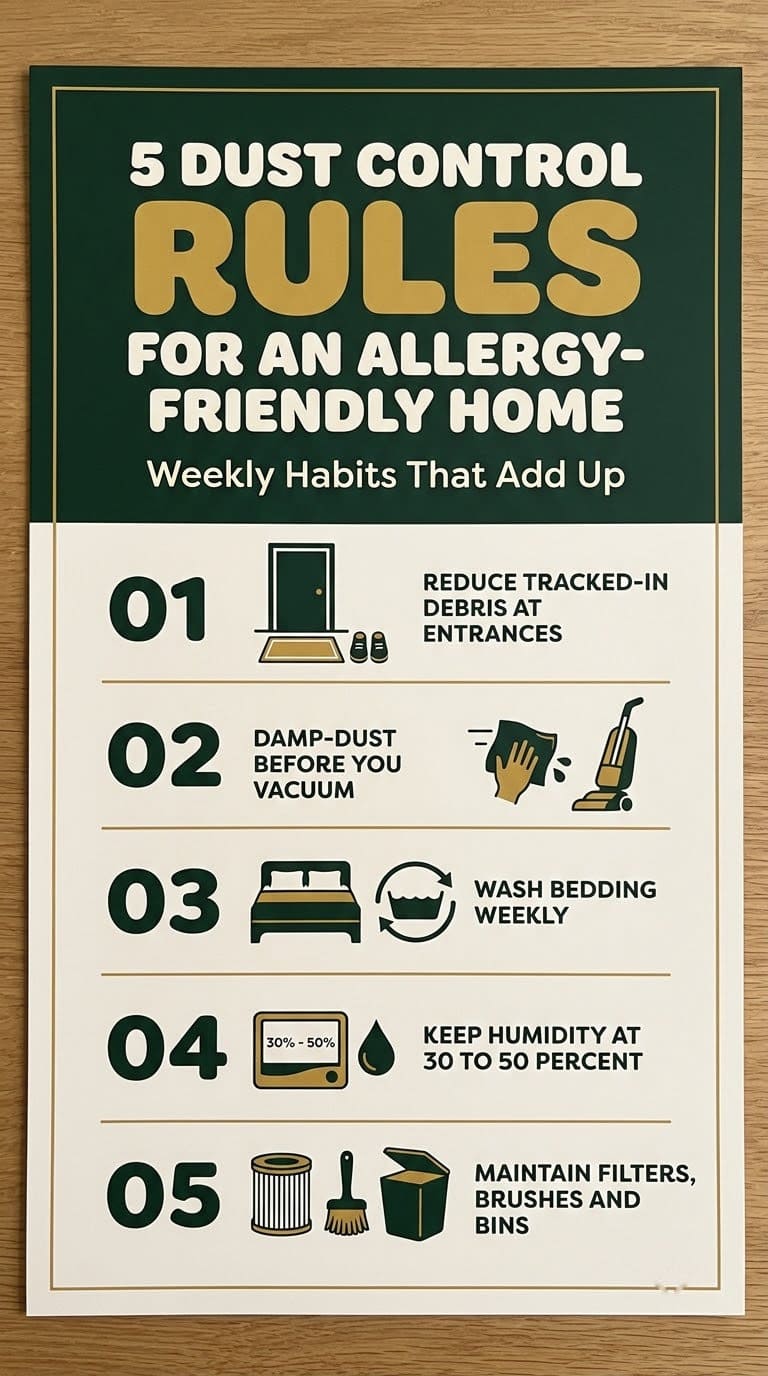
- Reduce tracked-in debris at entrances.
- Damp-dust elevated and high-use surfaces.
- Clean floors on a traffic-based schedule.
- Wash bedding and pet fabrics as directed.
- Keep humidity in a suitable range.
- Maintain filters, brushes, and bins.
- Keep sensitive residents away from active cleaning.
- Seek medical advice for ongoing symptoms.
Turning dust control into a manageable habit
A consistently comfortable home usually comes down to small, repeated habits, not one big cleaning push. Reducing dust effectively means combining source control, careful surface cleaning, regular floor care, bedding maintenance, and humidity management. Every household is different, with its own pets, flooring, climate, and medical sensitivities. So adjust the routine to fit instead of copying it exactly. As a starting point, identify the two areas in your home where dust builds up fastest, and focus on those consistently before expanding the routine further. Honestly, two areas done well beat a whole-house plan you drop by week two.
Dust and allergen routine FAQs
What is household dust made of?
Household dust is a mixture of fabric fibers, soil tracked in from outside, pollen, skin flakes, pet dander, and other microscopic debris. The exact mix depends on occupants, pets, flooring, ventilation, and climate.
Should I dust before or after vacuuming?
Dust before you vacuum. A top-to-bottom sequence lets dislodged particles land on the floor and get captured last, instead of resettling on surfaces you already cleaned. Use damp cloths or mops, because dry dusting usually redistributes dust.
What humidity level helps limit dust mites?
Keeping indoor relative humidity in roughly the 30% to 50% range can help limit dust-mite growth. A simple hygrometer makes it easy to track.
How often should I wash bedding?
Wash sheets and blankets weekly, following fabric-care instructions. Consider hot-water washing where guidance and the fabric allow, and use allergen-impermeable covers on mattresses and pillows.
Should allergy-sensitive people leave the room when someone vacuums?
Yes. Vacuuming can temporarily stir up airborne dust, so sensitive residents may want to step out during and shortly after cleaning.
Can a robot vacuum handle all my dust?
No. Automated floor-cleaning devices can support routine maintenance, but they typically can’t reach stairs, upholstery, or tight corners. Floor care is only one piece of the routine.
Never miss an update — choose FarmFoodFamily as your preferred source on Google.
How it works: Tap the button below to open Google's settings page, then check the box next to FarmFoodFamily.
Tap the checkbox to turn it blue — that's how you know it's set.