6 Genius Trees and Shrubs to Plant in September While the Soil Is Still Warm
September planting gives roots a six-to-eight-week head start before winter, as long as you pick the right six plants and skip the broadleaf evergreens that still need spring.

Never miss an update — choose FarmFoodFamily as your preferred source on Google.
How it works: Tap the button below to open Google’s settings page, then check the box next to FarmFoodFamily.
Tap the checkbox to turn it blue — that’s how you know it’s set.
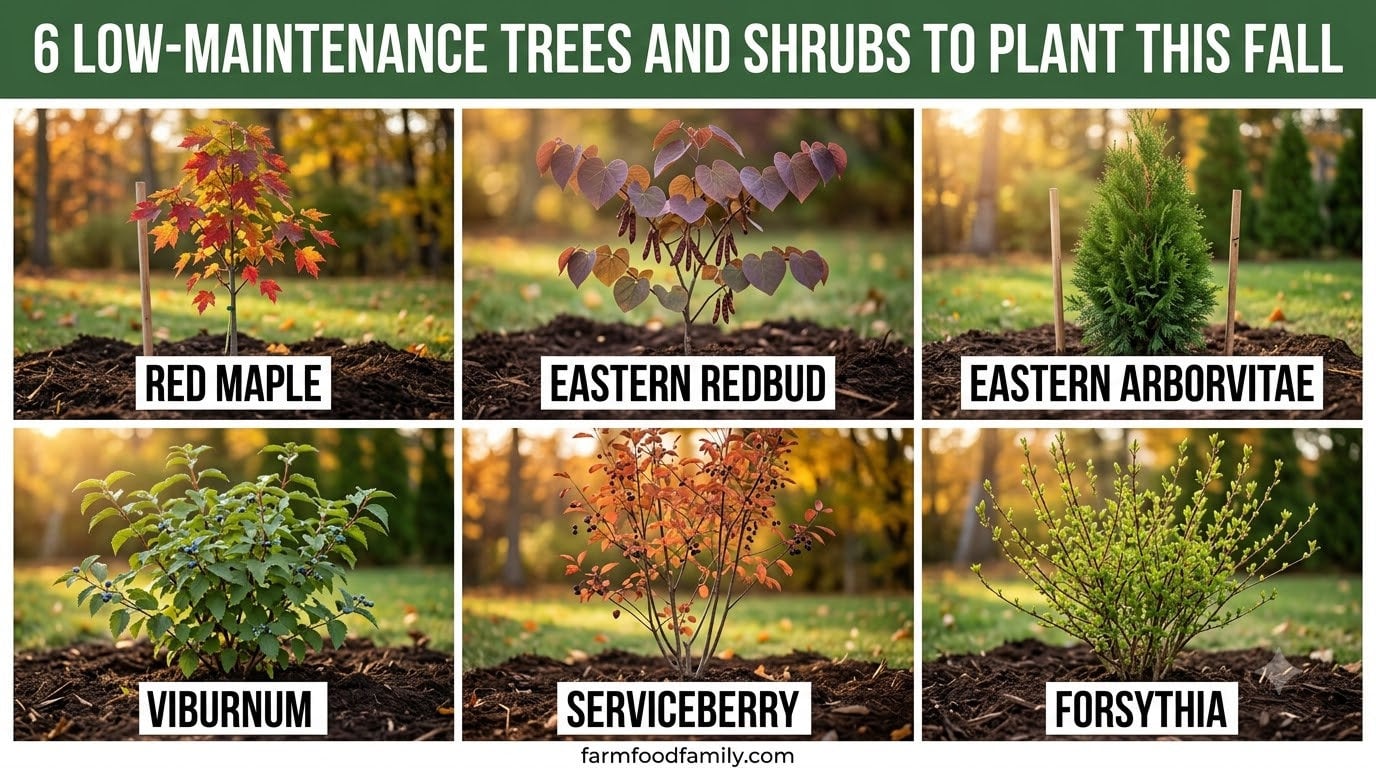
Quick Answer: Plant trees and shrubs in September because the soil is still warm from summer while the air is cooling, a combination that pushes strong root growth without the leaf-driven water stress of a spring or summer planting. University extension guidance from UMass Amherst and the University of Missouri points to the same practical window: get the plant in the ground 6-8 weeks before your area’s first hard frost, with soil at least 55°F when measured six inches down. Good September choices include red maple, eastern redbud, arrowwood viburnum, Emerald Green arborvitae, serviceberry, and forsythia, each chosen because it roots easily in cooling fall soil. Skip broadleaf evergreens like rhododendron for now, those genuinely establish better with a full spring and summer ahead of them. Dig the planting hole twice as wide as the root ball and no deeper than it, then water deeply once a week straight through until the ground actually freezes solid.
Most people think planting season ends when summer does. It doesn’t. It just changes what you’re planting.
September is actually one of the best windows of the whole year for trees and shrubs, and most gardeners skip right past it because it feels backward. Nobody plants when the leaves are about to drop, right?
Except the part of the plant that matters most this time of year isn’t the leaves. It’s the roots, and they’re just getting started.
Why does September work better than spring for planting trees and shrubs?
The short version: warm soil, cool air, less stress.

Soil holds heat from a whole summer of sun, so even once the mornings turn crisp, the ground six inches down often still sits well above 55°F into late September or early October. Roots don’t care what the thermometer says at 7am, they care what’s happening underground, and underground still feels like August.
Answer 4 quick questions and get matched to the exact fix for your yard — drainage, budget, layout, or something else entirely.
Take the Free QuizMeanwhile the plant’s top growth is slowing down or stopping. Per the University of Missouri Extension’s Integrated Pest Management program, as a plant heads into dormancy above ground, it redirects its energy toward root development below ground instead. That’s the opposite of what happens with a spring planting, where a new tree has to grow roots and leaves and fight rising summer heat all at once.
The UMass Amherst Center for Agriculture, Food, and the Environment puts a number on the timing: get plants in the ground at least six weeks before the ground freezes, ideally closer to eight. That gives roots enough real growing time to anchor the plant before winter dormancy fully sets in.
One important exception. Not everything belongs in a September hole. Broadleaf evergreens like rhododendron and narrow-leaf evergreens like yew do better waiting for spring.
Their evergreen foliage keeps losing moisture through winter even while the roots are still trying to establish. The six plants below were chosen specifically because they’re on the safe side of that line.
6 plants at a glance
| Plant | Mature size | Sun needs | Why plant it now |
|---|---|---|---|
| Red maple | 40-60 ft tall, 25-40 ft wide | Full sun to part shade | Fast-growing shade tree, roots establish quickly in warm fall soil |
| Eastern redbud | 20-30 ft tall, 25-35 ft wide | Full sun to part shade | Small ornamental tree, blooms next spring on wood set this fall |
| Arrowwood viburnum | 6-10 ft tall and wide | Full sun to part shade | Dense screening shrub, berries feed birds through winter |
| Emerald Green arborvitae | 12-14 ft tall, 3-4 ft wide | Full sun to part shade | Narrow-leaf evergreen, one of the few evergreens safe to plant in fall |
| Serviceberry | 15-25 ft tall and wide | Full sun to part shade | Edible fruit tree with fall color, low-fuss establishment |
| Forsythia | 8-10 ft tall and wide | Full sun | Fastest-establishing shrub on this list, blooms first thing in spring |
1. Red maple (Acer rubrum)
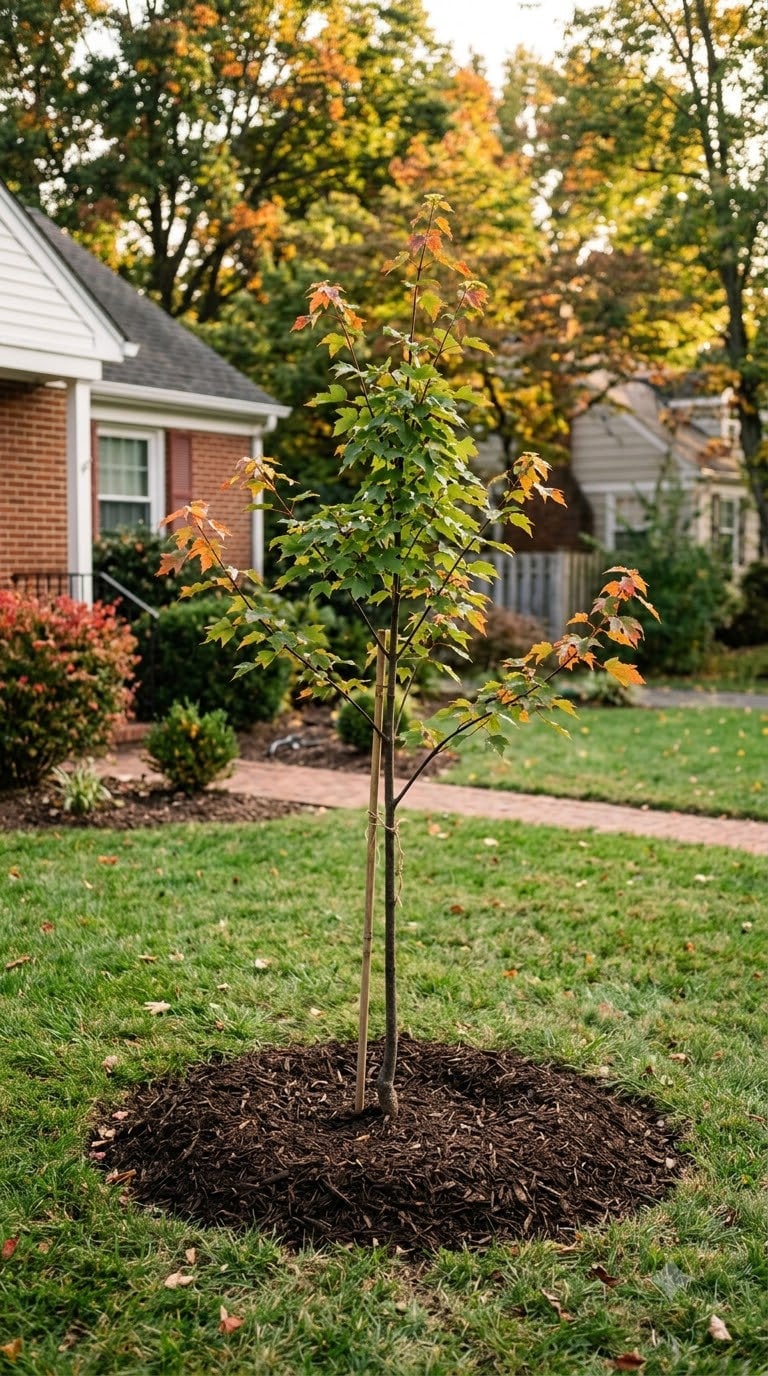
A red maple is the shade tree most people picture when they think “big tree in the yard,” and for good reason. It grows fast, tolerates a wide range of soils, and turns a genuinely striking red-orange in October, which is a nice bonus if you plant it this fall and get to watch it color up within weeks.
Mature size: 40-60 feet tall, 25-40 feet wide. Hardiness zones: 3-9.
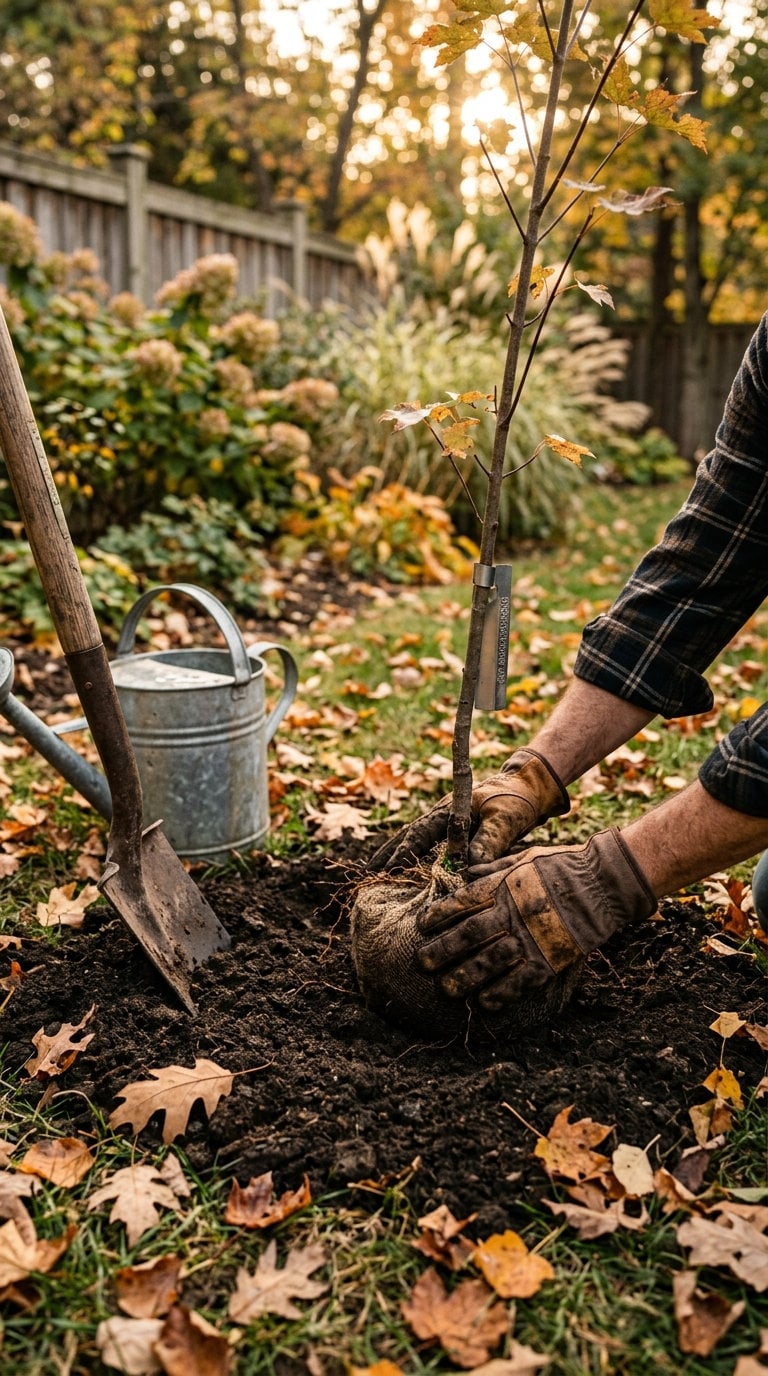
Dig the hole twice as wide as the root ball, but no deeper. Planting too deep is one of the most common mistakes with young trees, per the University of Maryland Extension, and it can slowly suffocate the roots over a couple of seasons.
Most yard problems trace back to one specific, fixable cause. Find yours in 4 quick questions.
Take the Free Quiz
Mycorrhizae-inoculated starter fertilizer for the planting hole, supports root development on all 6 plants above without pushing top growth
Shop NowThis post contains affiliate links. We may earn a commission on qualifying purchases at no extra cost to you.
Set the root flare, the point where the trunk widens into roots, right at or slightly above grade, and backfill with the native soil you dug out, skipping heavy amendment. Water deeply right after planting, then once a week through fall until the ground freezes.
Why September specifically: Red maple roots grow fastest when soil sits between 60-75°F, right in the range September soil typically holds even after air temps drop. A fall-planted red maple can put on more root mass before spring than a spring-planted one manages by the following summer, because it never has to fight a hot, dry August as a brand-new tree.
2. Eastern redbud (Cercis canadensis)
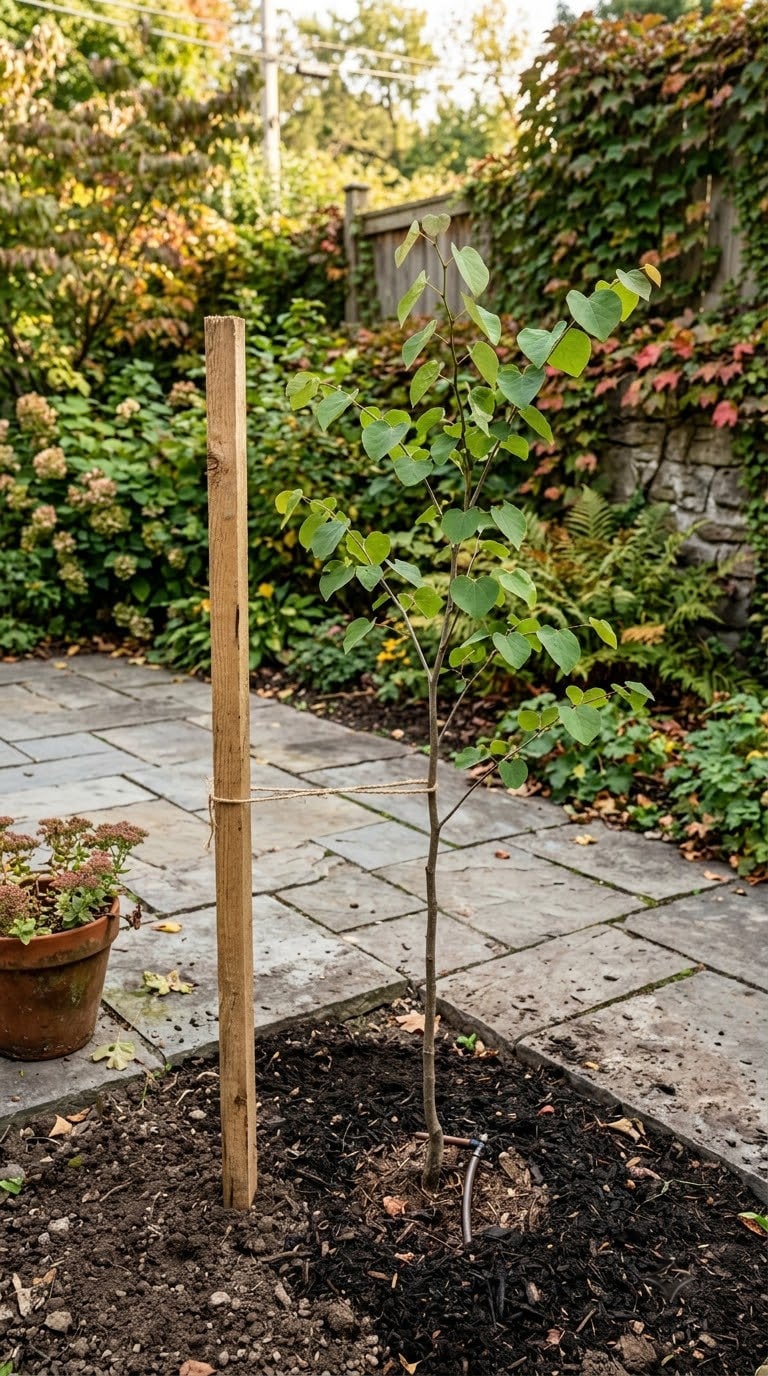
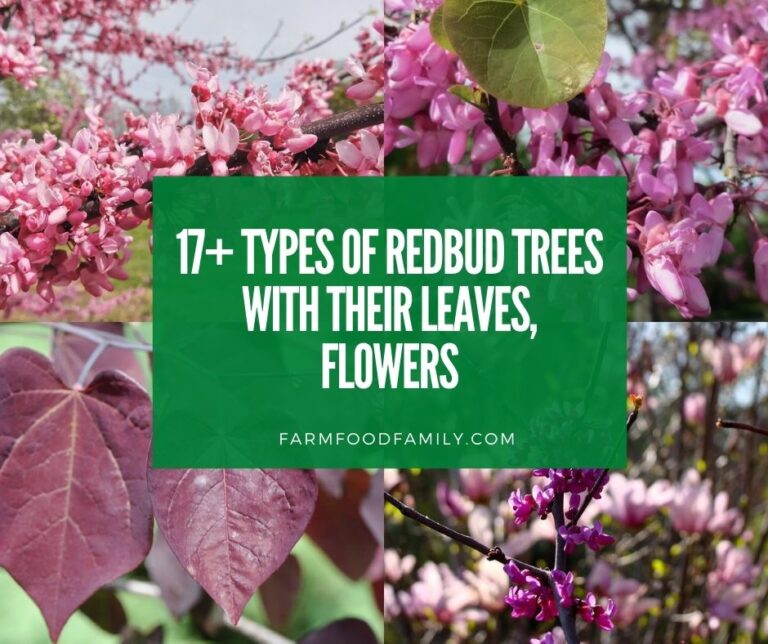
Eastern redbud is the small flowering tree for a yard that doesn’t have room for a 50-foot maple. It stays under a house’s roofline, tucks into a corner near a patio, and rewards you with a cloud of pink-purple blooms directly on the bare branches before the leaves even open in spring.
Mature size: 20-30 feet tall, 25-35 feet wide. Hardiness zones: 4-9.
Redbuds have a somewhat shallow, wide-spreading root system, so a September planting matters more here than for a deep-rooted tree. Give it the same wide, shallow hole as the red maple, stake it loosely for the first year only if your site is windy (a permanently staked tree develops weaker trunk taper), and mulch 2-3 inches deep out to the edge of the canopy, keeping mulch a few inches clear of the trunk itself.
Why September specifically: Because redbud sets its flower buds on new wood the summer and fall before it blooms, a plant that’s already actively rooting by September has a real head start on next spring’s bloom show. Roots planted now spend fall establishing instead of just barely surviving a first winter on a thin root system.
3. Arrowwood viburnum (Viburnum dentatum)
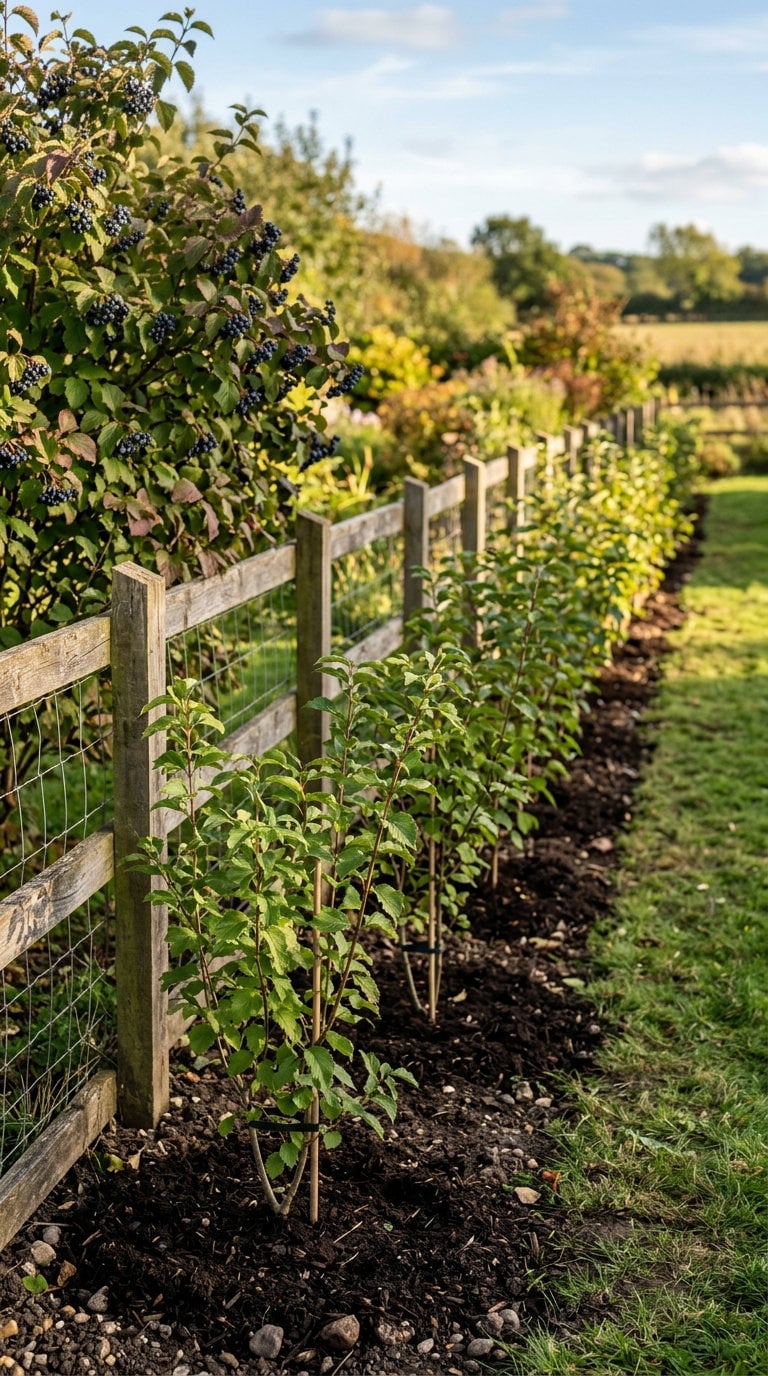
If the goal is a living privacy screen that also does something for wildlife, arrowwood viburnum earns its spot. Clusters of white spring flowers turn into blue-black berries by late summer, and those berries stay on through much of winter feeding songbirds when other food sources thin out.
Mature size: 6-10 feet tall and wide. Hardiness zones: 3-8.


Space multiple plants 5-6 feet apart if you’re building a hedge line, since it fills in fairly wide. Dig the same 2x-width, same-depth hole, and water it in well. Viburnums are more forgiving of a range of soil types than either tree above, which is part of why they’re a reliable fall-planting choice.
The average homeowner spends $616/year on yard fixes that don't address the real problem. Find out what yours actually is — before you spend another dollar.
Take the Free QuizWhy September specifically: Viburnums are deciduous shrubs, and per the UMass Amherst fact sheet, most deciduous shrubs establish easily in fall specifically because they drop their leaves and stop demanding water through foliage right around the same time fall planting happens. The root system gets a clean, low-stress season to settle in before the shrub has to support new leaf growth again.
4. Emerald Green arborvitae (Thuja occidentalis ‘Smaragd’)
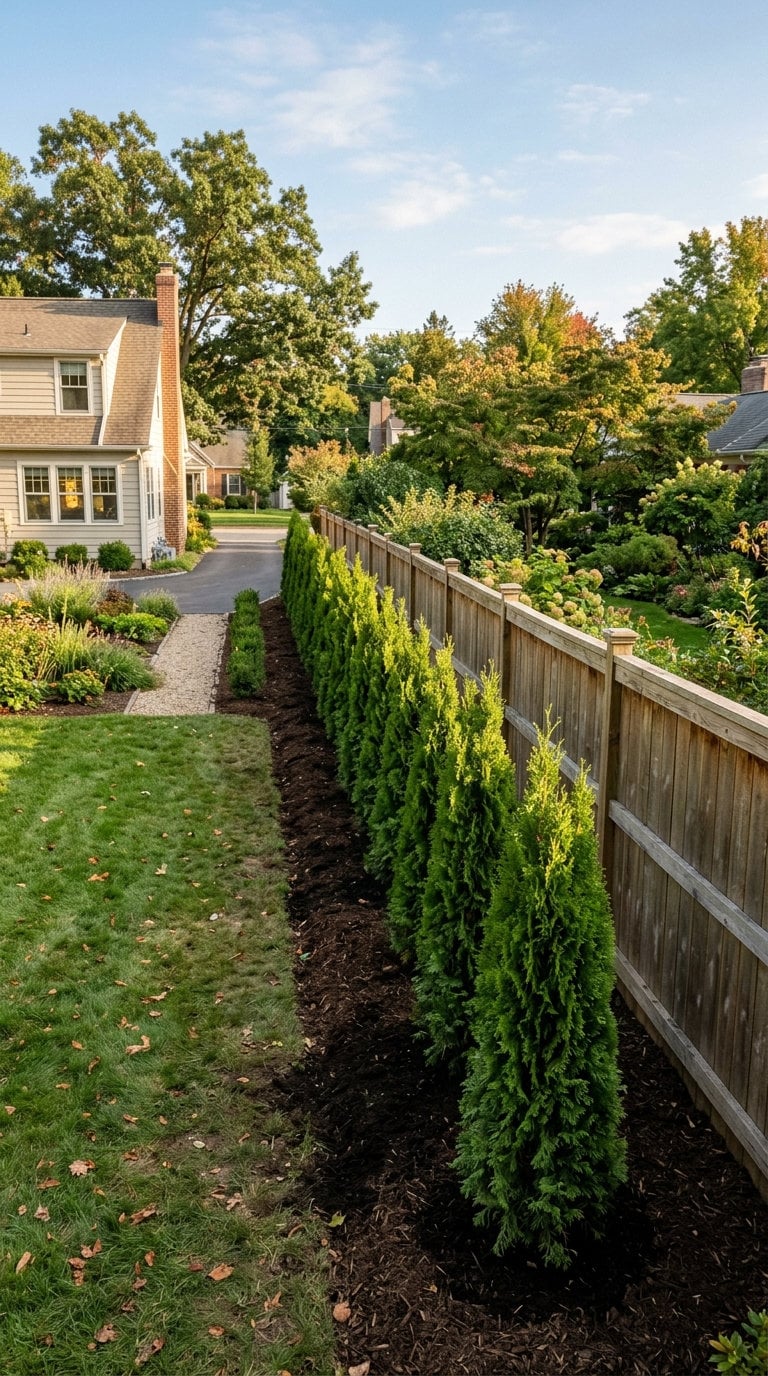
Arborvitae is the go-to narrow-leaf evergreen for a privacy hedge that doesn’t eat half the yard, and Emerald Green is the most common cultivar for exactly that reason: it stays columnar without a lot of pruning.
Mature size: 12-14 feet tall, 3-4 feet wide. Hardiness zones: 3-7.
This is the one plant on this list where the “not every evergreen belongs in a fall hole” caveat actually clears it rather than excludes it. Narrow-leaf evergreens like arborvitae and yew are the exception the UMass fact sheet calls out as fine for fall planting, unlike broadleaf evergreens such as rhododendron. Still water it through fall and into a mild winter if there’s a dry stretch, evergreens lose some moisture through their needles all winter long.
Why September specifically: Its narrow, needle-like foliage loses far less water through transpiration than a broadleaf evergreen’s leaves, so it can handle establishing roots through fall and winter without the moisture-loss risk that keeps rhododendron and similar plants on the “wait for spring” list.
5. Serviceberry (Amelanchier canadensis)
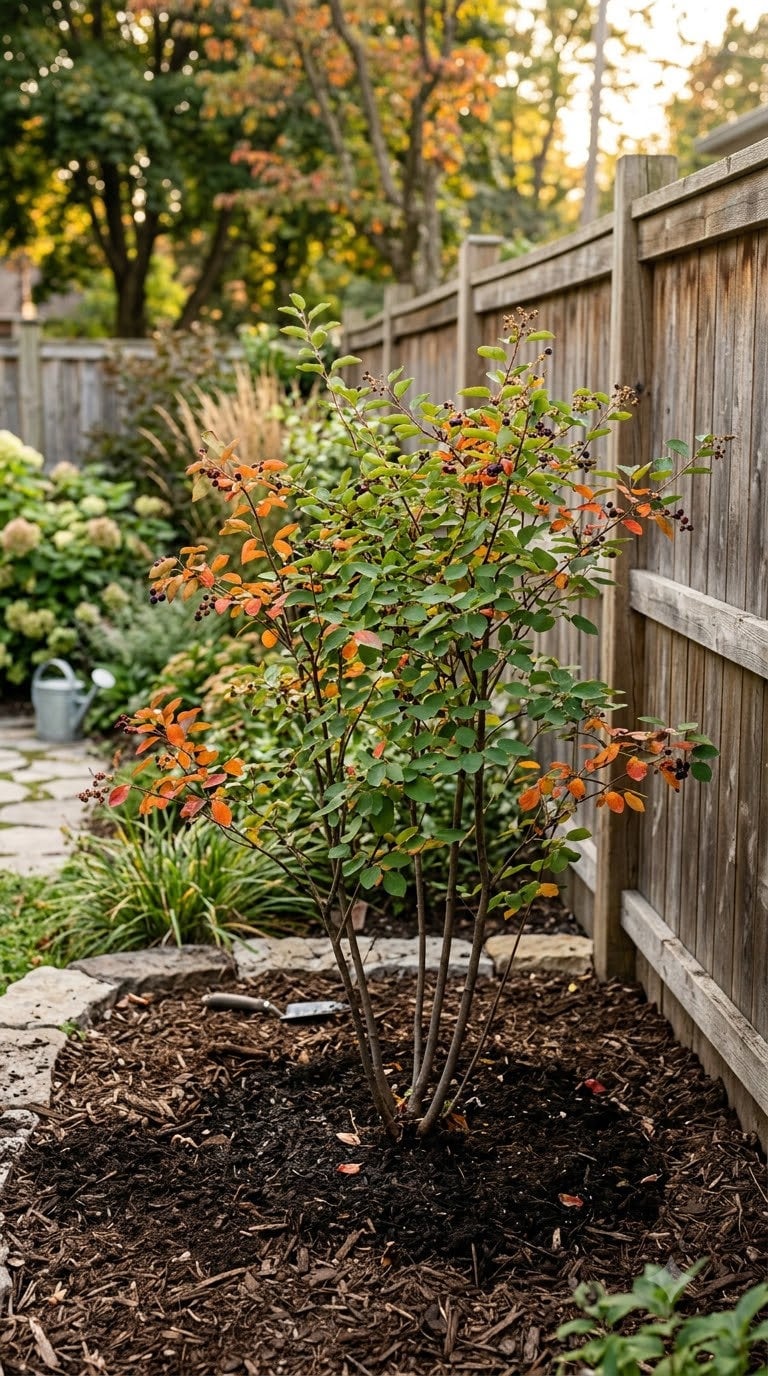
Serviceberry, sometimes sold as Juneberry or shadbush, is the plant to reach for if the yard should also feed people, not just birds. White spring flowers turn into small blueberry-like fruit by early summer that’s genuinely good in a pie or by the handful, and the foliage turns a solid orange-red in fall.
Mature size: 15-25 feet tall and wide (multi-stem shrub form or single-trunk tree form, depending on how it’s pruned). Hardiness zones: 4-9.
Plant it in the same wide, shallow hole, and if you bought a multi-stem form, resist the urge to prune it into a single trunk right away, let it establish for a full season first. Water weekly through fall the same as the others.
Why September specifically: Serviceberry is a genuinely low-drama plant to establish, and fall planting means it skips having to flower and fruit in its first spring while still building a root system, which is exactly the kind of double-duty stress fall planting avoids. Roots get a full fall and following spring before the plant is asked to do much else.
6. Forsythia (Forsythia x intermedia)
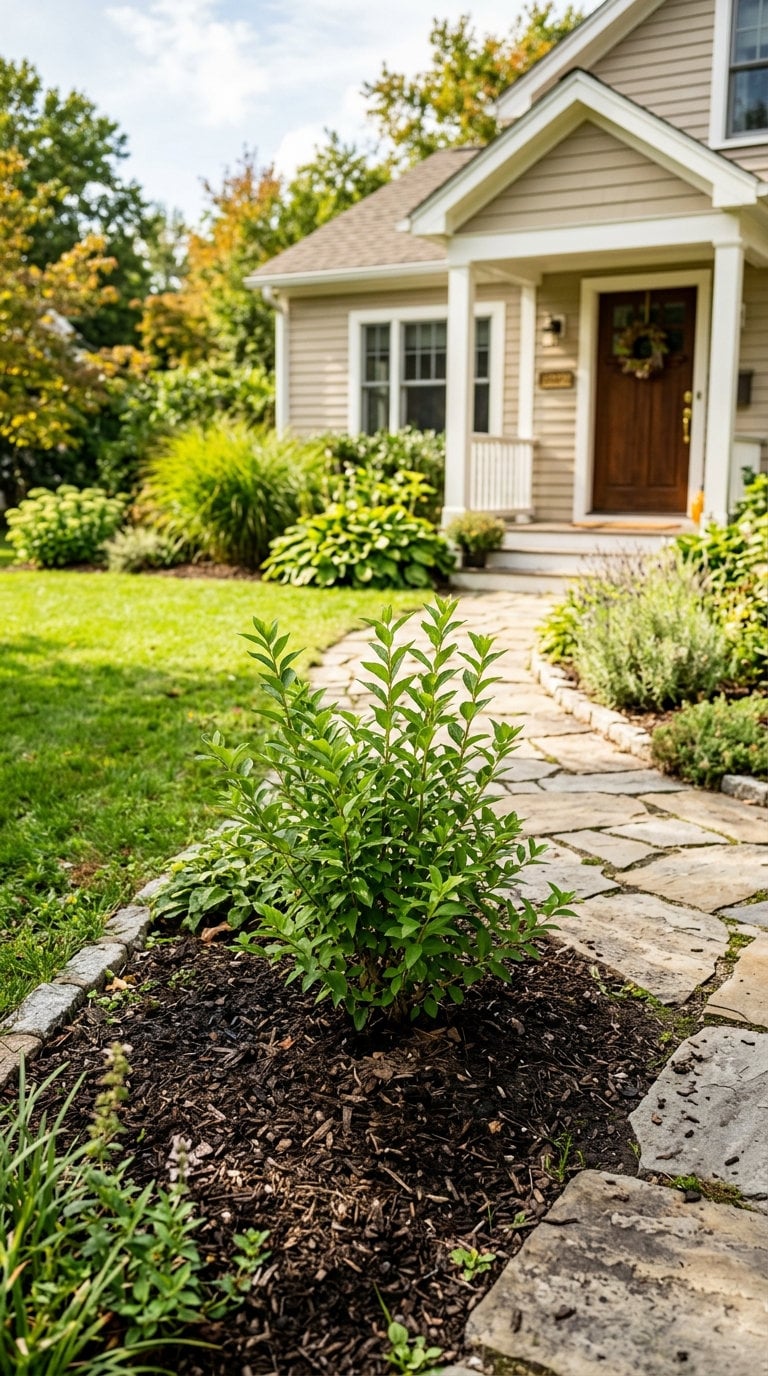
Forsythia is the shrub responsible for that wall of yellow that shows up in yards everywhere the moment winter breaks. It’s also one of the fastest, easiest shrubs to establish from a fall planting, which makes it a good pick for anyone nervous about their first fall-planting attempt.
Mature size: 8-10 feet tall and wide (some compact cultivars stay smaller, check the tag). Hardiness zones: 5-8.
Give it full sun for the best bloom show, since forsythia planted in shade will survive but flower thin. Same hole rules apply: twice as wide as the root ball, same depth, water weekly.
Why September specifically: Forsythia is famously vigorous, it’s one of the few shrubs that can be planted, cut back hard, and still bounce back the same year. That vigor means it roots fast in September’s warm soil, often visibly settled in and putting out new white root tips within a few weeks, well ahead of the ground freezing.
What we learned the hard way
The biggest mistake isn’t planting too late in September. It’s planting and then walking away.
A newly planted tree or shrub still needs water every single week until the ground actually freezes, not just for the first two weeks. We’ve watched a redbud go from thriving to stressed in a single dry October because watering quietly stopped once the leaves started turning, on the assumption that fall rain would handle it. It didn’t, that year.
Another one worth flagging: digging the hole too deep and then trying to fix it by mounding loose soil back under the root ball. That loose fill settles over the following months, and the whole plant sinks with it, ending up lower than it started. Dig to the exact depth of the root ball, not deeper, check it with a shovel handle laid across the hole before you set the plant in.
And before any hole goes in the ground, especially anything auger-dug rather than hand-dug, call 811 or your local utility locator first. Buried gas, electric, and irrigation lines run shallower than a lot of people assume, and a red maple’s 2-foot-wide planting hole is plenty deep to hit one.
Before you start: budget and DIY vs. pro
A 3-5 gallon shrub like forsythia or arrowwood viburnum is a genuine weekend DIY project, usually under $50-80 per plant plus a bag of starter fertilizer. A young tree like red maple or eastern redbud in a 15-gallon container is still DIY-friendly for most people, though it’s a two-person lift and a real dig, budget a half-day.
Where it’s worth paying a pro: anything balled-and-burlapped over about 2 inches of trunk caliper, which gets heavy fast, or any planting near a septic line, foundation, or overhead power line where a mis-dug hole or a tree planted too close becomes an expensive problem in five years, not now.
Frequently asked questions
Is September too late to plant trees and shrubs?
No, and depending on your climate it might be closer to ideal than spring. The real cutoff isn’t a calendar date, it’s whether the plant gets 6-8 weeks of root-growing time before the ground freezes solid. In most of the continental US that means anywhere from early September through mid-October is fine, check your area’s average first hard frost date and count backward.
Do I need to fertilize a newly planted tree in fall?
A mycorrhizae-inoculated starter fertilizer worked into the backfill soil at planting time helps, since it supports root development specifically rather than pushing top growth the plant doesn’t need going into dormancy. Skip high-nitrogen lawn-style fertilizers this time of year, they encourage leafy growth right when the plant should be slowing down.
Should I stake a newly planted tree?
Only if the site is genuinely windy or the tree is top-heavy relative to its root ball, and only for one growing season. A permanently staked tree never develops the trunk flex it needs to grow strong on its own, per general nursery and extension guidance. Remove stakes after the first year.
How often should I water a fall-planted tree or shrub?
Deeply, once a week, until the ground freezes. “Deeply” means soaking the root zone, not a quick surface sprinkle, a slow-release watering bag or a hose left trickling for 20-30 minutes at the base does this better than a fast blast from a sprinkler.
Related posts
Products We Recommend
This post contains affiliate links. We may earn a commission on qualifying purchases at no extra cost to you.
Espoma Organic Bio-Tone Starter Plus 4-3-3, 18 lb Bag
Mycorrhizae-inoculated starter fertilizer for the planting hole, supports root development on all 6 plants above without pushing top growth
Shop Now
TCBWFY Garden Auger Drill Bit for Planting
Drill-mounted auger that speeds up digging a properly wide planting hole in compacted late-summer soil, sized for shrubs and smaller trees
Shop Now
Tree Watering Bag, 20-Gallon Slow Release (3-Pack)
Slow-release watering bag for the weekly deep-watering schedule described above, cuts down on forgetting to water through October
Shop NowNever miss an update — choose FarmFoodFamily as your preferred source on Google.
How it works: Tap the button below to open Google's settings page, then check the box next to FarmFoodFamily.
Tap the checkbox to turn it blue — that's how you know it's set.