7 Sneaky Signs Your Lawn Has Grubs Before They Destroy It This Fall
Spongy turf and random brown patches aren’t always drought, and if you wait for the lawn to look “obviously dead,” the grubs already won.

Never miss an update — choose FarmFoodFamily as your preferred source on Google.
How it works: Tap the button below to open Google’s settings page, then check the box next to FarmFoodFamily.
Tap the checkbox to turn it blue — that’s how you know it’s set.
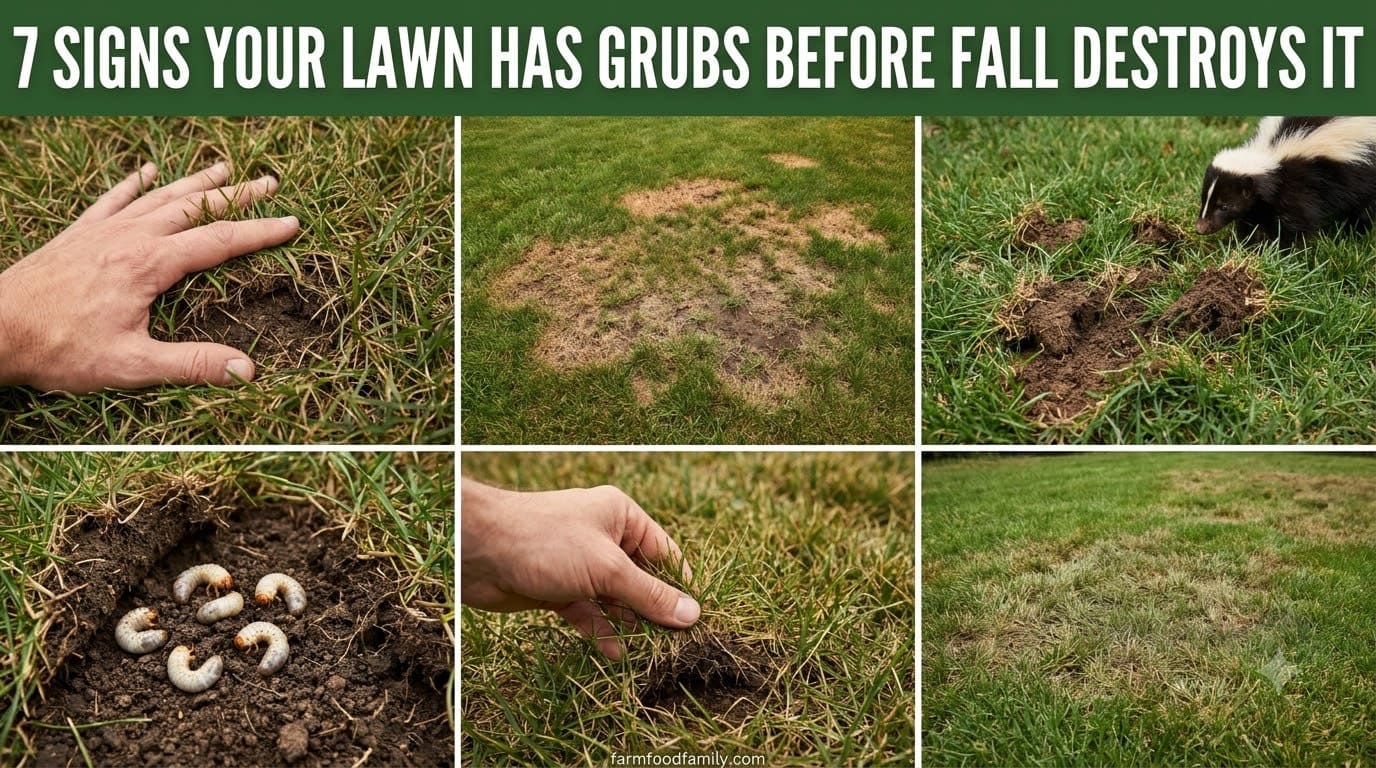
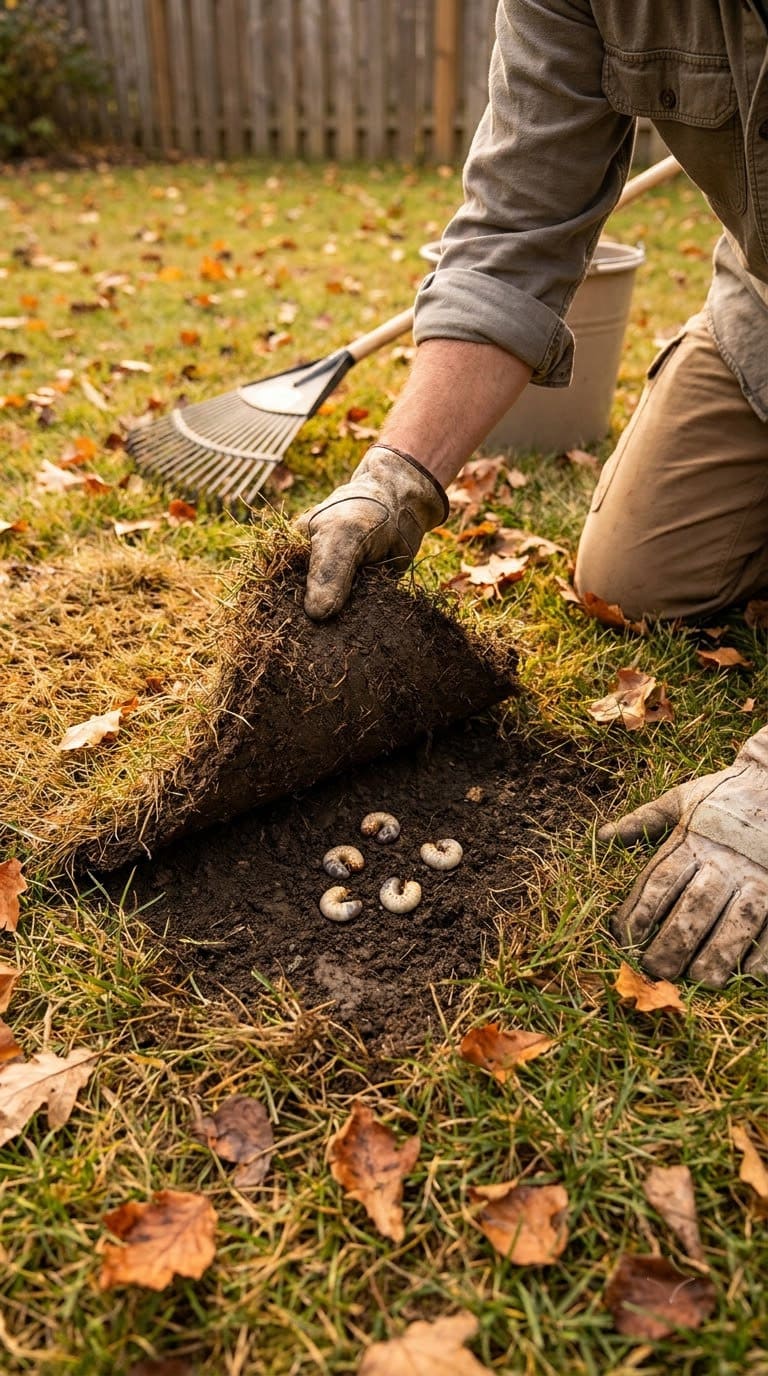
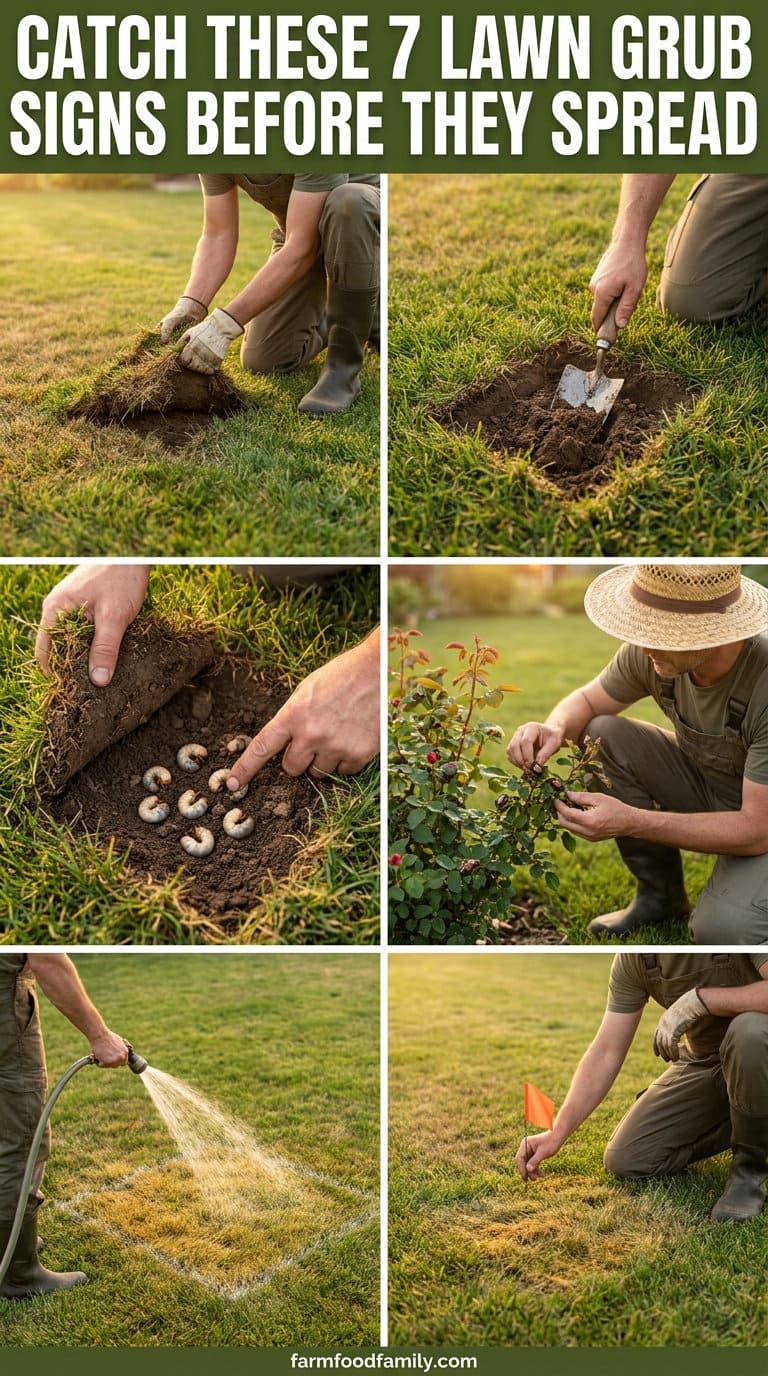
Your lawn probably has grubs if turf feels spongy underfoot, pulls up like loose carpet, and brown patches don’t green back up after watering. Confirm it by cutting a 1-square-foot flap at the edge of a damaged patch and counting the C-shaped white larvae underneath.
Ohio State University Extension sets the treatment threshold at roughly 10 or more grubs per square foot for most annual species, though it ranges from 3 to 20+ depending on the beetle species involved.
Fall is peak grub-feeding season, which is exactly when the damage accelerates fastest and why late-summer diagnosis matters more than any other time of year.
Increased digging from skunks, raccoons, and birds is often the loudest early clue, since they can smell grubs before you ever see turf damage. Ruling out drought, dog urine, and fungal disease first keeps you from treating the wrong problem.
Why I Started Checking for Grubs Every September
Three years ago I watched a patch of my own backyard go from “a little dull” to a mud puddle you could sink a boot into, in about ten days. I watered it. I watered it more.

It kept dying anyway, and I kept assuming heat stress because that’s what every brown patch had been all summer.
Answer 4 quick questions and get matched to the exact fix for your yard — drainage, budget, layout, or something else entirely.
Take the Free QuizIt wasn’t heat. When I finally knelt down and pulled on the grass, an entire flap came up in my hand like a loose toupee, roots and all. Underneath were a dozen fat white grubs curled into their C-shape, doing exactly what they’d been doing all along while I poured water on a problem that had nothing to do with moisture.
That’s the trap with grubs. They don’t announce themselves. The signs look almost identical to drought, to dog spots, to a fungus you’ve never heard of.
By the time the damage is undeniable, the roots are already gone and the grass isn’t coming back on its own. Catching it in the first week or two, instead of the third, is the entire difference between overseeding a small patch and re-sodding half the yard.
What Are Grubs, Exactly, and Why Do They Show Up in Fall?
White grubs are the larval stage of scarab beetles, Japanese beetles, June beetles, and European chafers among them. Adults lay eggs in moist summer soil, the eggs hatch into C-shaped larvae, and those larvae spend late summer and fall eating grass roots to bulk up before digging deeper to survive winter, according to Ohio State University Extension.
That fall feeding push is why damage that was barely noticeable in August can wreck a lawn by October. The grubs aren’t multiplying. They’re just eating more, faster, right before they disappear underground.
Sign #1: Turf That Feels Spongy and Lifts Like Loose Carpet
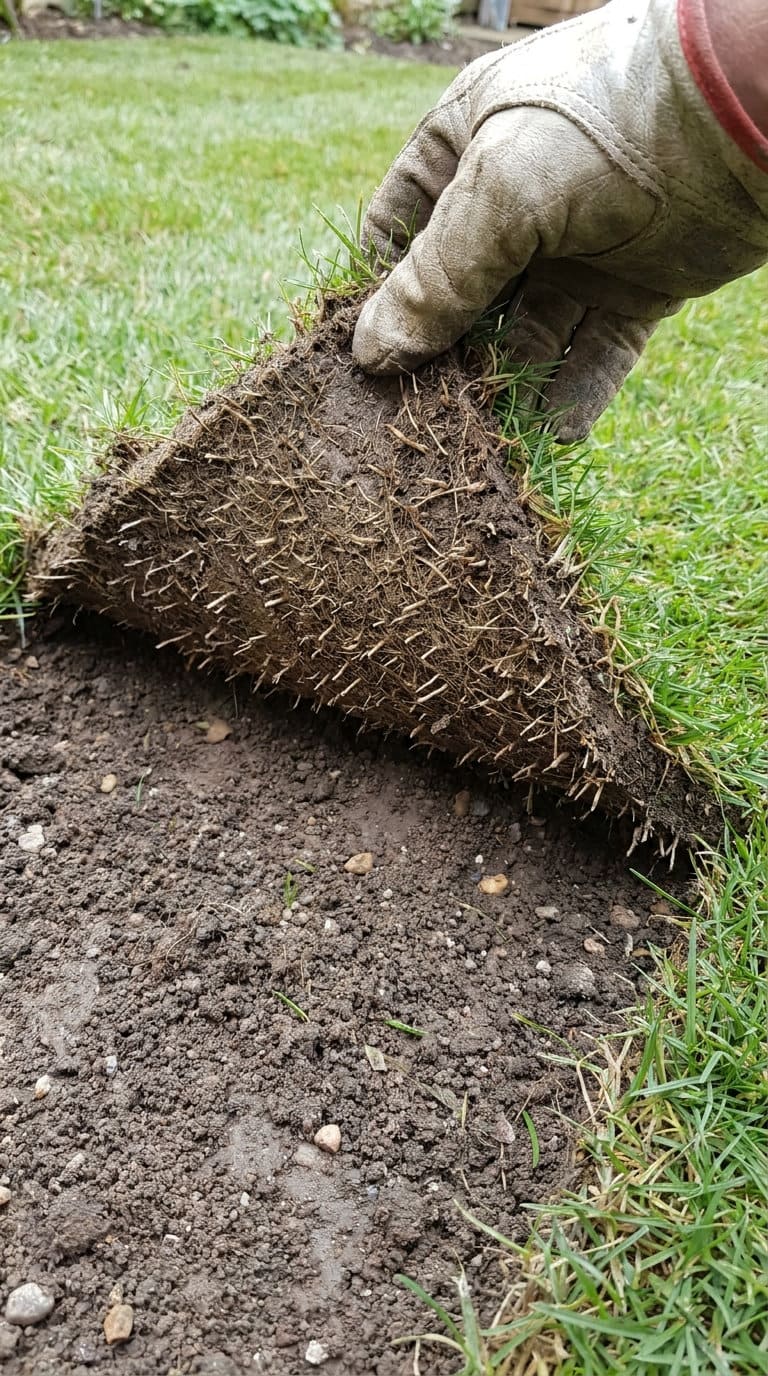
The mechanism: Grubs feed just below the soil surface, chewing through the mat of roots that normally anchors turf to the ground. Once enough roots are gone, the sod layer separates from the soil under it. You’re standing on grass that’s basically floating.
How to confirm it: Grab a handful of grass in a suspect area and pull. Healthy turf resists and tears in strands. Grub-damaged turf lifts in a loose flap, often a foot or more across, with short chewed root stubs or no roots at all attached to the underside.
Most yard problems trace back to one specific, fixable cause. Find yours in 4 quick questions.
Take the Free QuizRule out the lookalike: Compacted soil can feel spongy after heavy rain too, but it won’t lift in a mat, it just squishes and rebounds. If a section actually peels back like a rug, that’s roots gone, not water sitting on top.
A lawn kept on a solid organic feeding routine tends to show this test more clearly, since the surrounding healthy turf resists your tug so much harder by comparison.
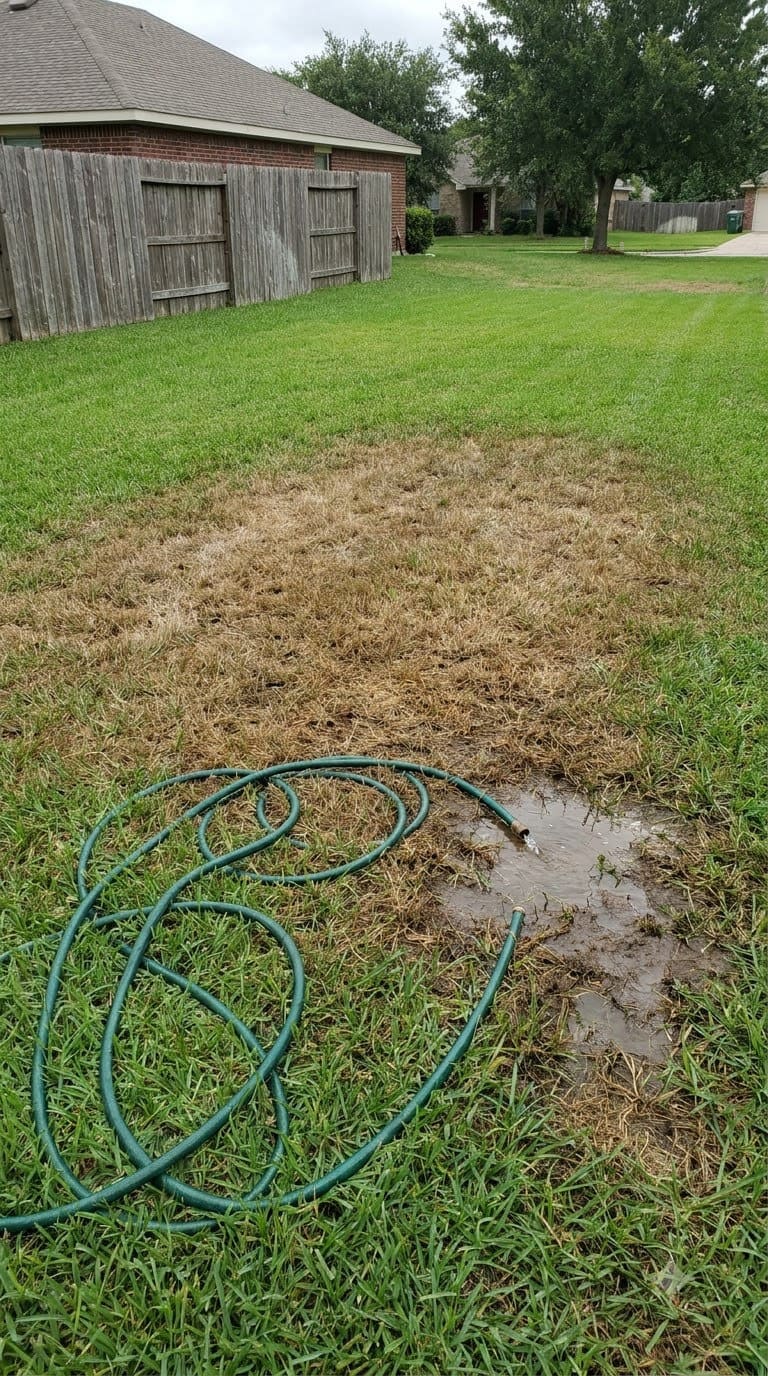
Sign #2: Irregular Brown Patches That Don’t Green Back Up With Watering
The mechanism: Once roots are severed, the grass above them physically can’t pull up water anymore, so no amount of irrigation fixes it. The patch keeps browning regardless of rainfall.
How to confirm it: Water the suspect patch deeply for two to three days in a row. Drought-stressed grass usually perks up within that window. Grub-damaged grass doesn’t, because the plumbing underneath it is gone.
Rule out the lookalike: Real drought stress tends to hit the whole lawn evenly, especially high spots and areas near pavement that dry out first. Grub damage shows up in scattered, irregular patches that don’t correlate with sun exposure or slope, which is your first tell before you even run the watering test. If you’re already comparing this against a normal summer dry spell routine, the lack of a clean recovery is the giveaway.
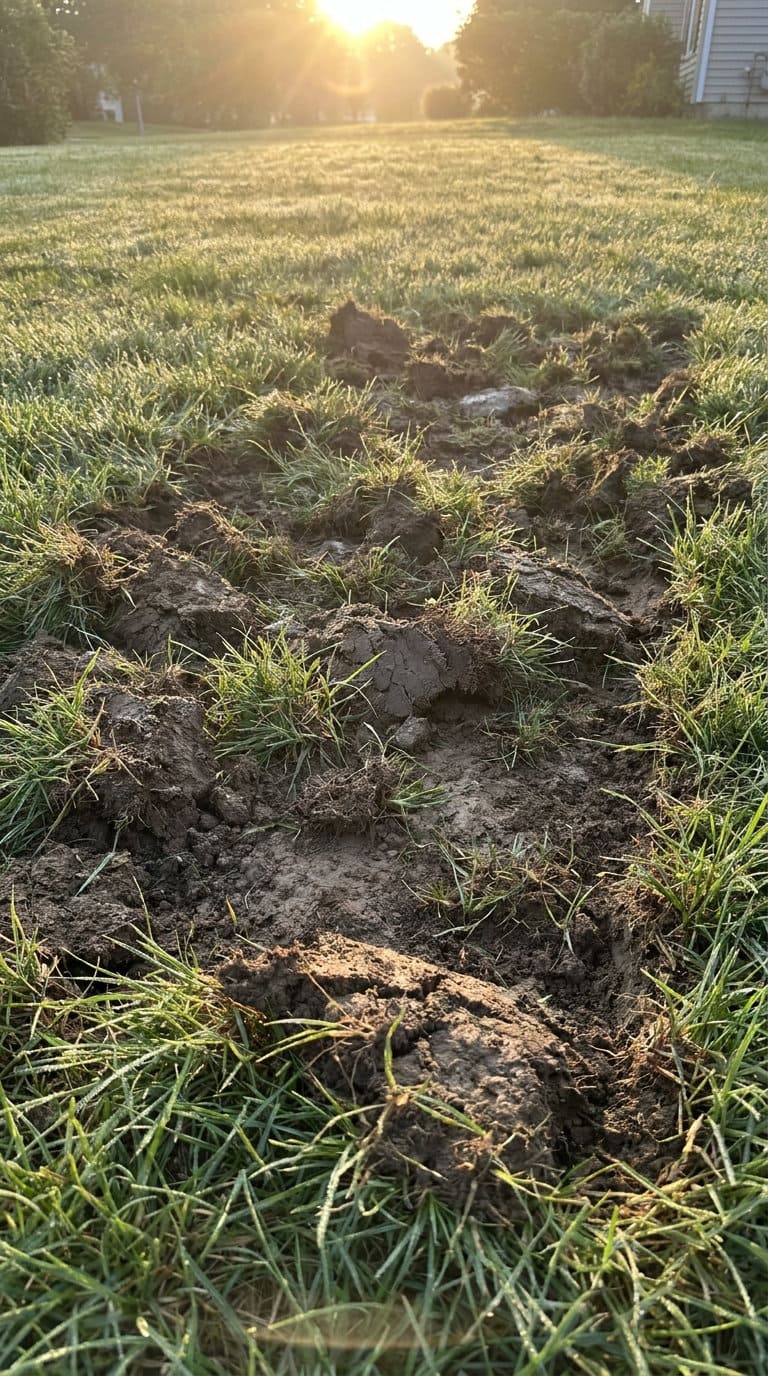
Sign #3: Skunks, Raccoons, or Birds Digging Up Your Lawn
The mechanism: These animals can smell or feel grubs in the root zone, and they’ll tear up turf to eat them. Per Ohio State Extension, this indirect animal damage is frequently more visually dramatic, and shows up faster, than the grubs’ own feeding damage.
How to confirm it: Look at where the digging concentrates. If it’s clustered in one irregular patch rather than scattered across the whole yard, that’s targeted foraging, not random animal behavior.
Rule out the lookalike: A single mole hunting earthworms leaves raised ridged tunnels, not torn-up turf. Skunk and raccoon grub damage looks shredded and messy, with turf actually flipped over and soil exposed, a different signature entirely.


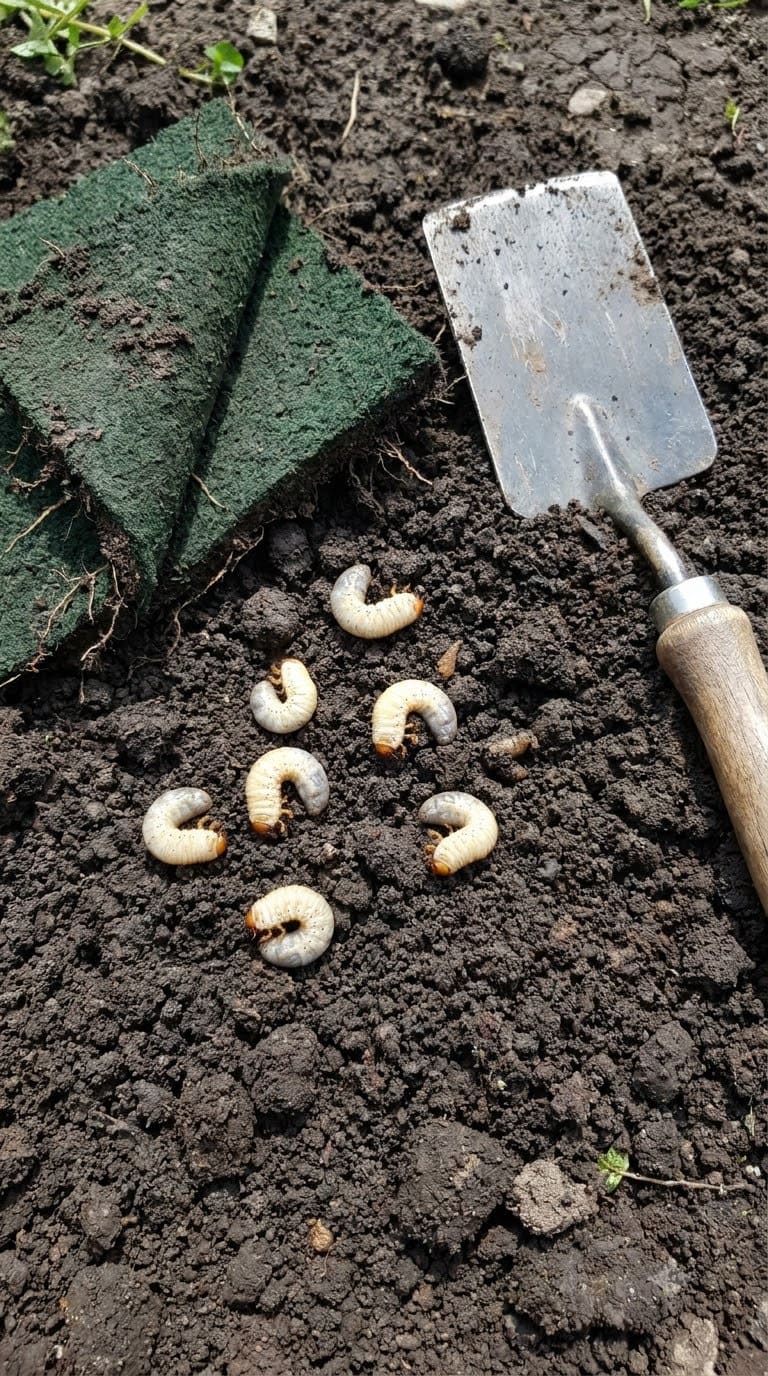
Sign #4: Visible C-Shaped White Grubs When You Dig
The mechanism: This one isn’t inference, it’s the larva itself. Confirming grubs directly is the only way to know for certain what you’re dealing with before you spend money treating the wrong thing.
How to confirm it: Using a flat spade, cut three sides of a 1-square-foot flap at the edge of a damaged patch (not dead center, where grubs have often already moved on), about 2 to 3 inches deep. Fold the flap back and count what you find in the soil and root zone.
What the count actually means: Ohio State University Extension puts the treatment threshold for most annual grub species at roughly 10 or more per square foot. But that number moves by species: research from Purdue and University of Wisconsin Extension puts May and June beetle grubs at a lower 3-4 per square foot threshold, Japanese beetle and European chafer closer to 6-10, and Asiatic garden beetle as high as 15-20 before treatment is warranted. Finding 1-5 grubs in a healthy, well-maintained lawn is usually nothing to worry about.
The average homeowner spends $616/year on yard fixes that don't address the real problem. Find out what yours actually is — before you spend another dollar.
Take the Free QuizRule out the lookalike: Make sure what you’re looking at is actually a scarab grub, C-shaped at rest with six legs clustered near the head, not a legless billbug larva, which causes similar-looking turf damage but needs a different treatment entirely.
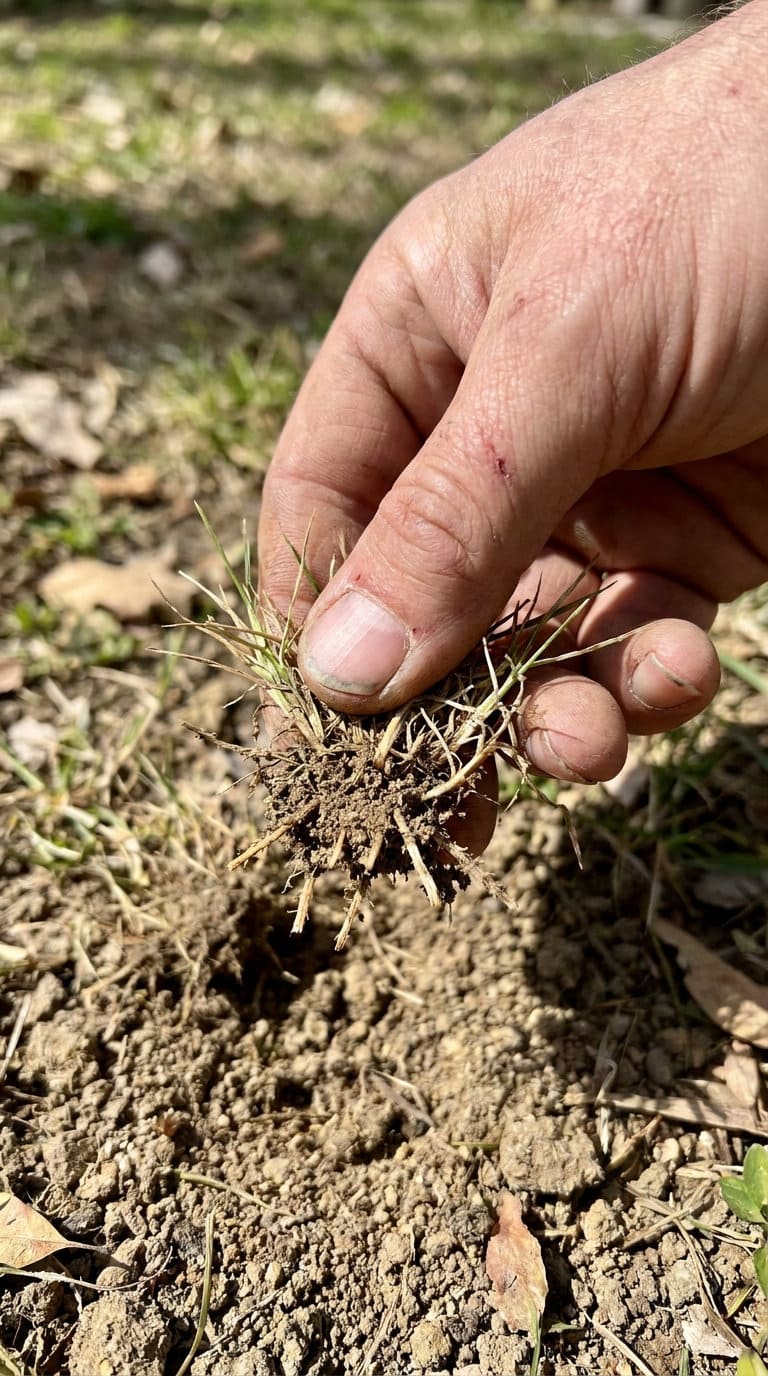
Sign #5: Thin Grass That Pulls Up Easily by Hand
The mechanism: This is the earlier, lighter version of sign #1, thinning before full carpet-lift. Root damage is happening but hasn’t progressed to total detachment yet, which makes this your best chance to catch a problem early.
How to confirm it: In a patch that’s thinning but not yet dead, tug gently on a clump of blades. If they come free with almost no resistance and the stubs underneath are short and chewed-looking rather than long healthy roots, that’s grub feeding, not normal seasonal shedding.
Rule out the lookalike: Normal fall shedding releases individual old blades, not whole rooted plugs. If entire little clumps come up together, roots and all, with minimal effort, treat that as an early grub signal worth digging to confirm.
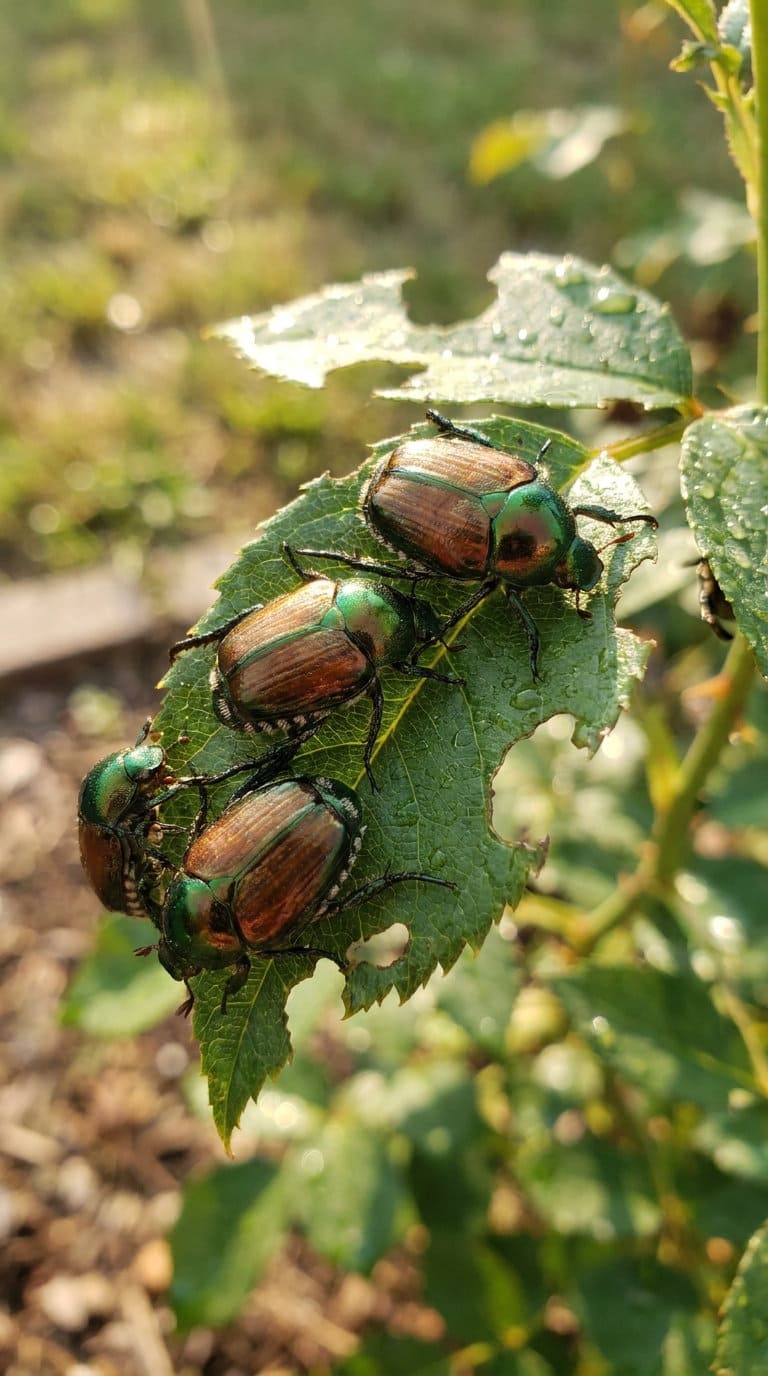
Sign #6: Heavy Adult Beetle Activity Back in Early Summer
The mechanism: Adult beetles that swarm and mate in June and July are the parents of the grubs that will be chewing your lawn come September. This sign shows up weeks before any turf symptom does, which makes it the earliest possible warning if you know to watch for it.
How to confirm it: Think back to early summer. Did you notice Japanese beetles clustered on roses, grapevines, or linden trees, or June bugs bumping into porch lights at dusk in real numbers? A heavy local adult population in June predicts a heavier grub population in that same yard by fall.
Rule out the lookalike: A few random beetles on one plant isn’t diagnostic. This sign only matters if the activity was dense and repeated, actual swarming, not the occasional bug you’d expect in any yard.
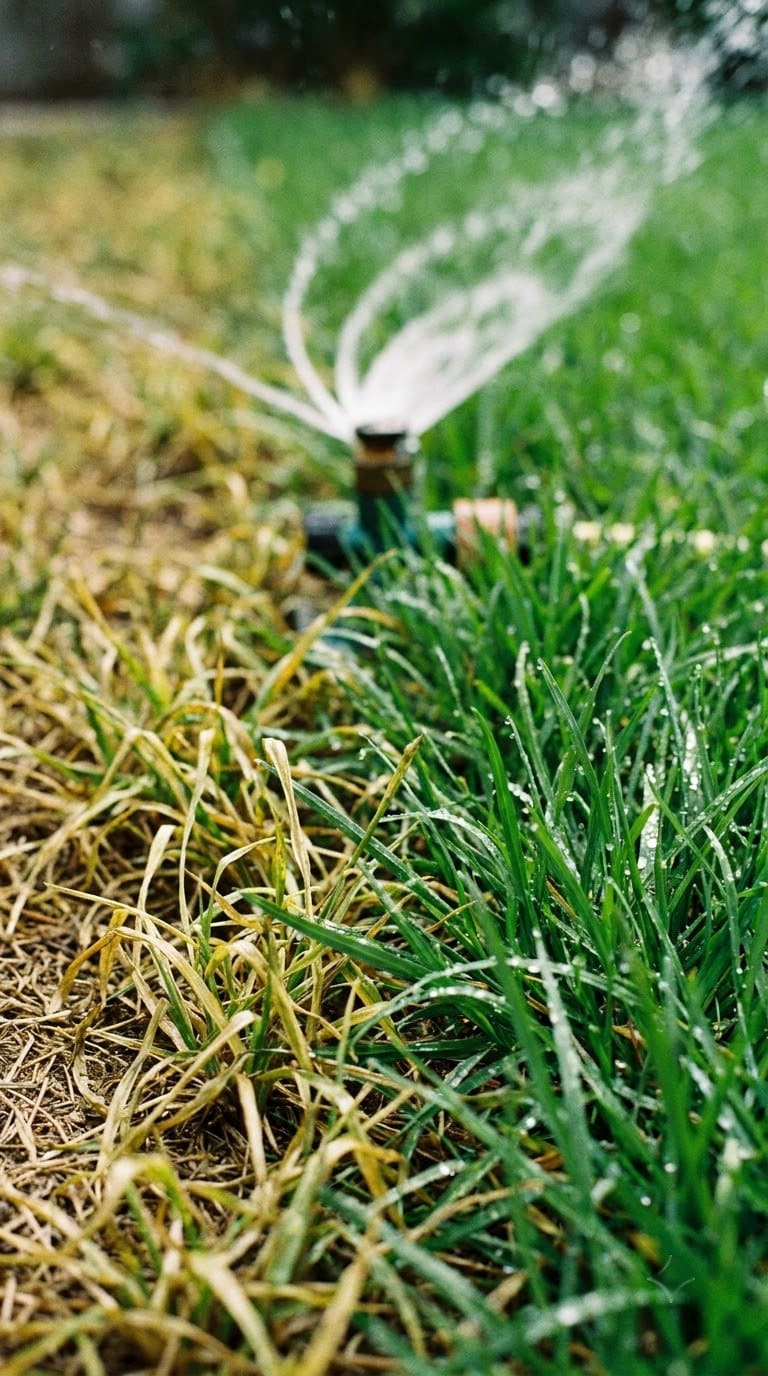
Sign #7: Grass Wilting or Dulling in Color Despite Regular Watering
The mechanism: Same root-loss problem as sign #2, but this is the earliest, mildest version, a slight dulling or wilt before the patch actually browns. Catching it here is a full stage ahead of waiting for obvious dead grass.
How to confirm it: Press a finger into the suspect patch. If it feels unusually soft or spongy (see sign #1) and the color looks slightly off despite a normal watering schedule, don’t wait for it to get worse before checking underneath.
Rule out the lookalike: Heat and drought wilt bounce back within a day or two of watering. If the dulling persists through a normal watering routine and the area also feels soft underfoot, that combination points to roots, not moisture.
Grubs vs. Lookalike Lawn Problems: Comparison Table
| Symptom | Grub Cause | Common Lookalike | How to Tell Them Apart |
|---|---|---|---|
| Brown patches | Severed roots can’t absorb water | Drought stress | Water deeply for 2-3 days: drought greens back up, grub damage doesn’t |
| Spongy, loose turf | Root mat detached from soil | Fungal disease (like necrotic ring spot) | Grub turf lifts in a solid flap with no roots, fungal patches show white or gray mycelium threads instead, not a clean lift |
| Circular vs. irregular dead spots | Grub feeding is patchy and irregular | Dog urine spots | Dog spots are tight, round, and often ringed with dark green, grub patches are ragged-edged and spread week to week |
| Animal digging | Skunks and raccoons hunting grubs | Voles or moles tunneling for earthworms | Grub-hunting damage is torn, shredded turf, mole tunnels are raised ridges instead, not torn patches |
| Wilting despite watering | Root damage blocks water uptake | Underwatering or compacted soil | Deep watering test, plus check if footprints stay visibly indented, a compaction sign, not a root sign |
How Many Grubs Actually Justify Treatment?
This is the part most articles flatten into one number, and it isn’t one number. Ohio State University Extension sets roughly 10 grubs per square foot as the general treatment threshold for most annual species.
But per Purdue and University of Wisconsin Extension entomology research, May and June beetle larvae justify treatment at a lower 3-4 per square foot, while Japanese beetle and European chafer run closer to 6-10, and the smaller black turfgrass ataenius grub doesn’t become a real problem until 30-80 per square foot in spring. Well-maintained, stress-free turf can tolerate more grubs than a struggling lawn before damage shows. Count what you actually find before deciding whether to treat.
Sunny, well-irrigated lawns are also the ones beetles prefer to lay eggs in, according to Ginny Rosenkranz, Principal Agent Associate with University of Maryland Extension, which is a frustrating detail if your lawn is otherwise doing everything right. The healthiest-looking part of the yard is often where grubs show up first.
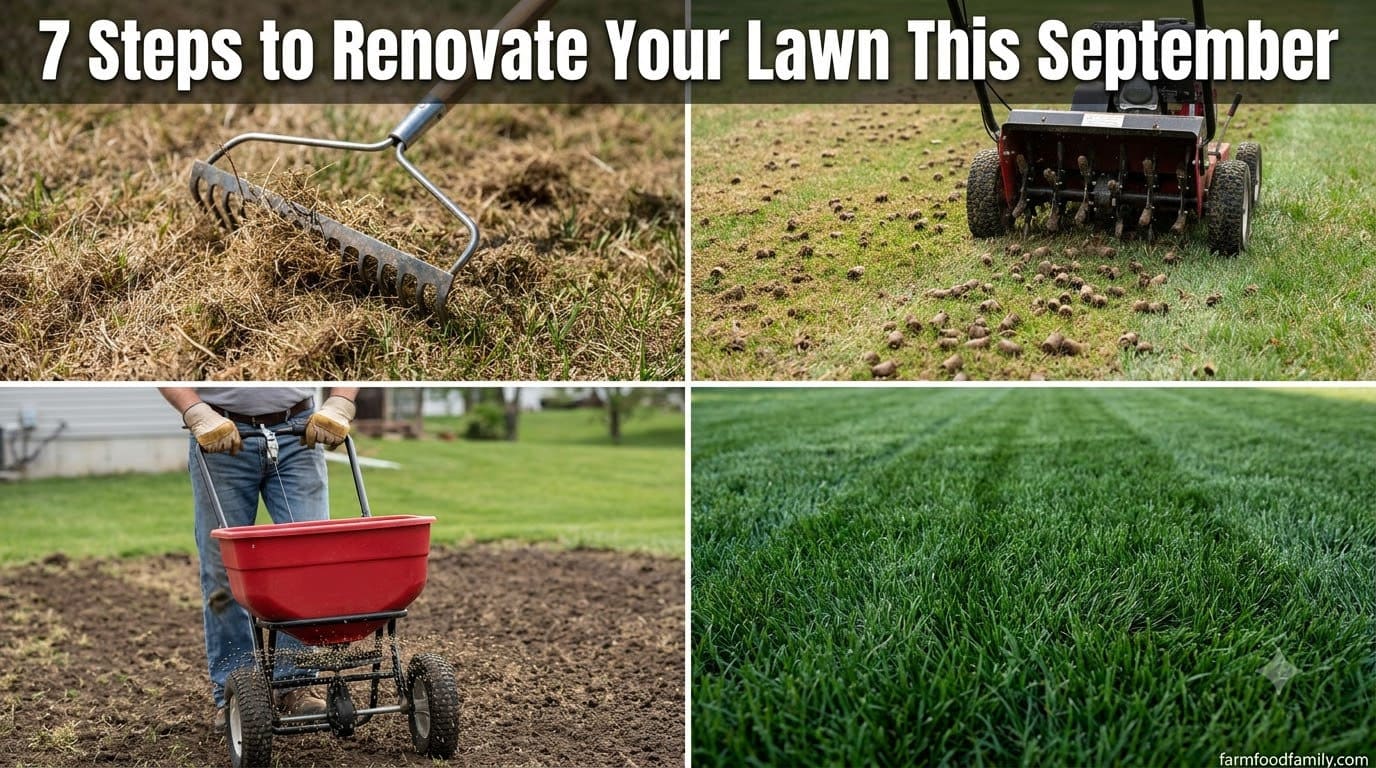
If your lawn is already due for a fall renovation, confirm grubs aren’t the underlying cause before you spend money on aeration and overseeding a patch that’s just going to get eaten again.
Frequently Asked Questions
Can grubs kill a lawn permanently?
Not permanently, but a heavy infestation can kill enough turf that the area needs reseeding or sodding rather than simple recovery. The soil itself isn’t damaged, only the root system growing in it.
Is it too late to treat grubs in fall?
No. Fall grubs are actively feeding and close to the surface, which actually makes it one of the more effective windows to treat, compared to spring when larger, more resistant grubs are harder to kill.
Will grass grow back after grub damage?
Thin, early-stage damage often recovers on its own once grubs are controlled and the lawn is watered normally. Areas where turf has fully detached usually need overseeding or sod, since the original root system is gone.
Do all lawns with a few grubs need treatment?
No. Finding one to five grubs per square foot in an otherwise healthy lawn is common and rarely worth treating. Get your lawn ready for winter with normal fall care and recheck before assuming the worst.
Related Posts
Never miss an update — choose FarmFoodFamily as your preferred source on Google.
How it works: Tap the button below to open Google's settings page, then check the box next to FarmFoodFamily.
Tap the checkbox to turn it blue — that's how you know it's set.