15 Striking No Flower Garden Ideas Built on Foliage, Not Blooms
A garden built from leaf color and texture instead of flowers looks good in January too, but it will not solve your allergies on its own.

Never miss an update — choose FarmFoodFamily as your preferred source on Google.
How it works: Tap the button below to open Google’s settings page, then check the box next to FarmFoodFamily.
Tap the checkbox to turn it blue — that’s how you know it’s set.
My neighbor spent three summers fighting a flower bed that looked amazing for six weeks and sad for the other ten months. That’s the honest starting point for this whole idea. A no-flower garden is not a punishment or a compromise, it is a different design system, and once you see it working you kind of can’t unsee it.
This guide is for four different people: the allergy sufferer who wants a real yard back, the person who is done deadheading, the shade gardener who’s been told for years that their yard is “just not a flower spot,” and the homeowner who wants a cleaner, more modern look. All four solutions overlap more than you’d think.
What is a no-flower garden, exactly
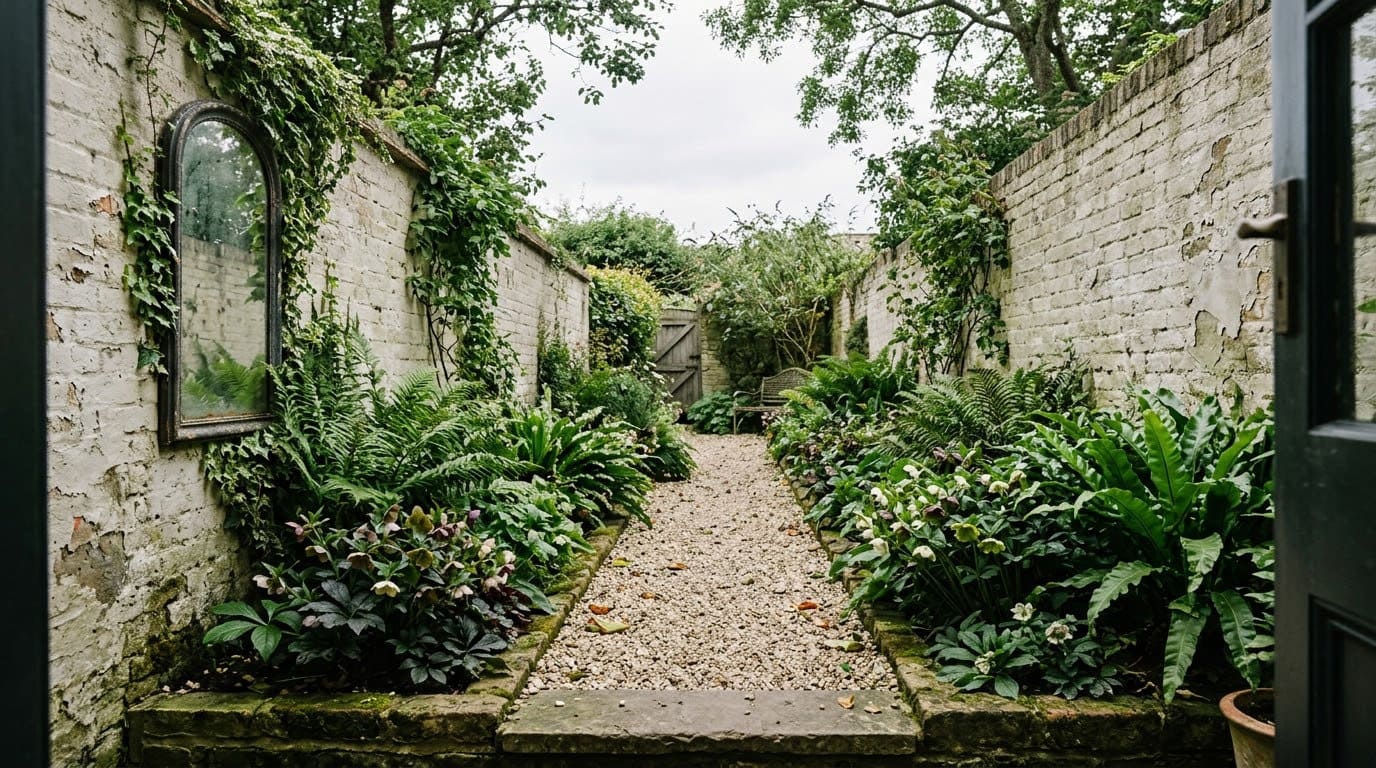
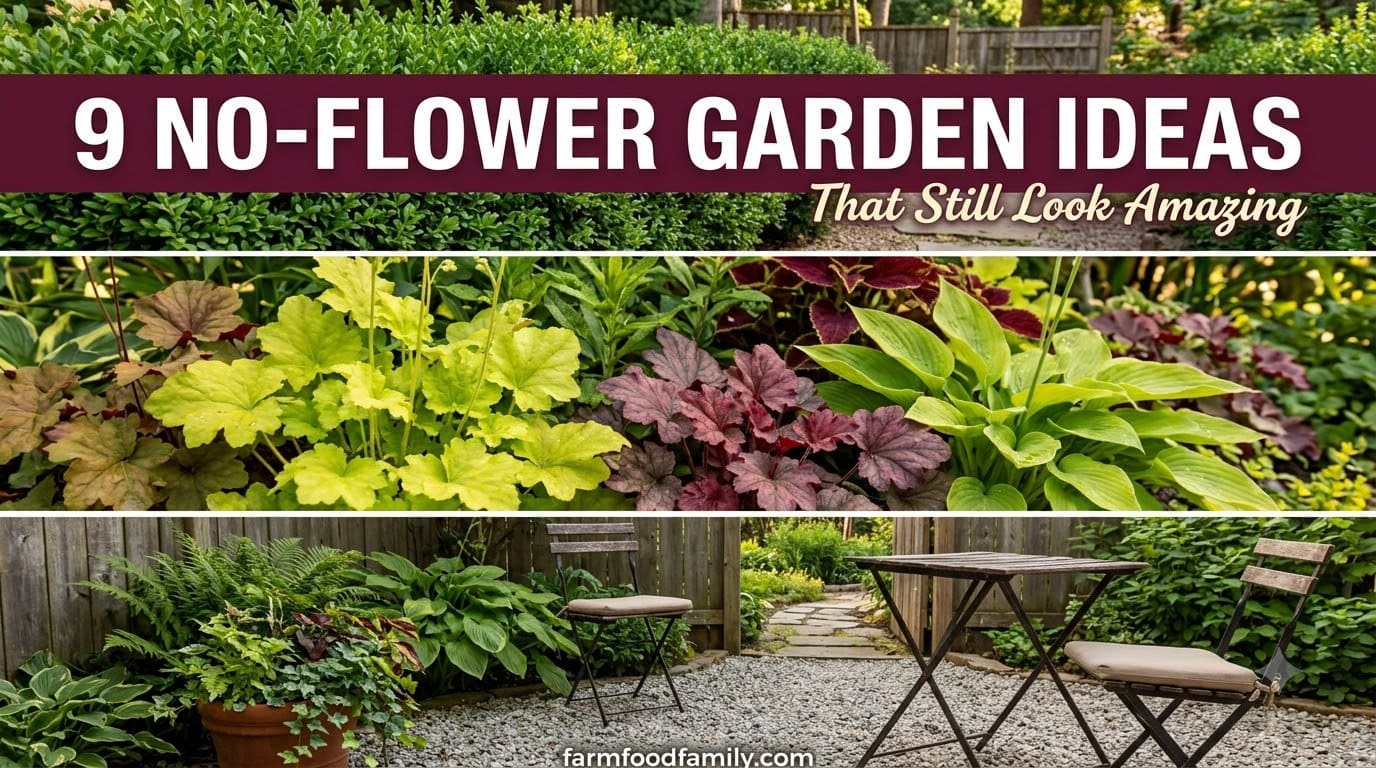
A no-flower garden replaces bloom color with leaf color, texture, and structure as the main design tool. Instead of choosing plants for petal color and bloom season, you choose them for how their leaves look next to each other: chartreuse against burgundy, broad hosta leaves against fine fern fronds, a stiff upright grass against a mounded evergreen shrub.
Evergreens and ornamental grasses supply the “bones” that hold the design together in every season, not just the six or eight weeks a flower bed peaks.
This approach solves the two biggest complaints about traditional flower beds directly: the bare, dead look for most of the year, and the ongoing work of deadheading, dividing, and replanting annuals.
It is genuinely lower-maintenance once established, but it is not maintenance-free, and it is not a guaranteed fix for pollen allergies either, more on that below.
Answer 4 quick questions and get matched to the exact fix for your yard — drainage, budget, layout, or something else entirely.
Take the Free Quiz1. Use structural evergreens as the garden’s bones
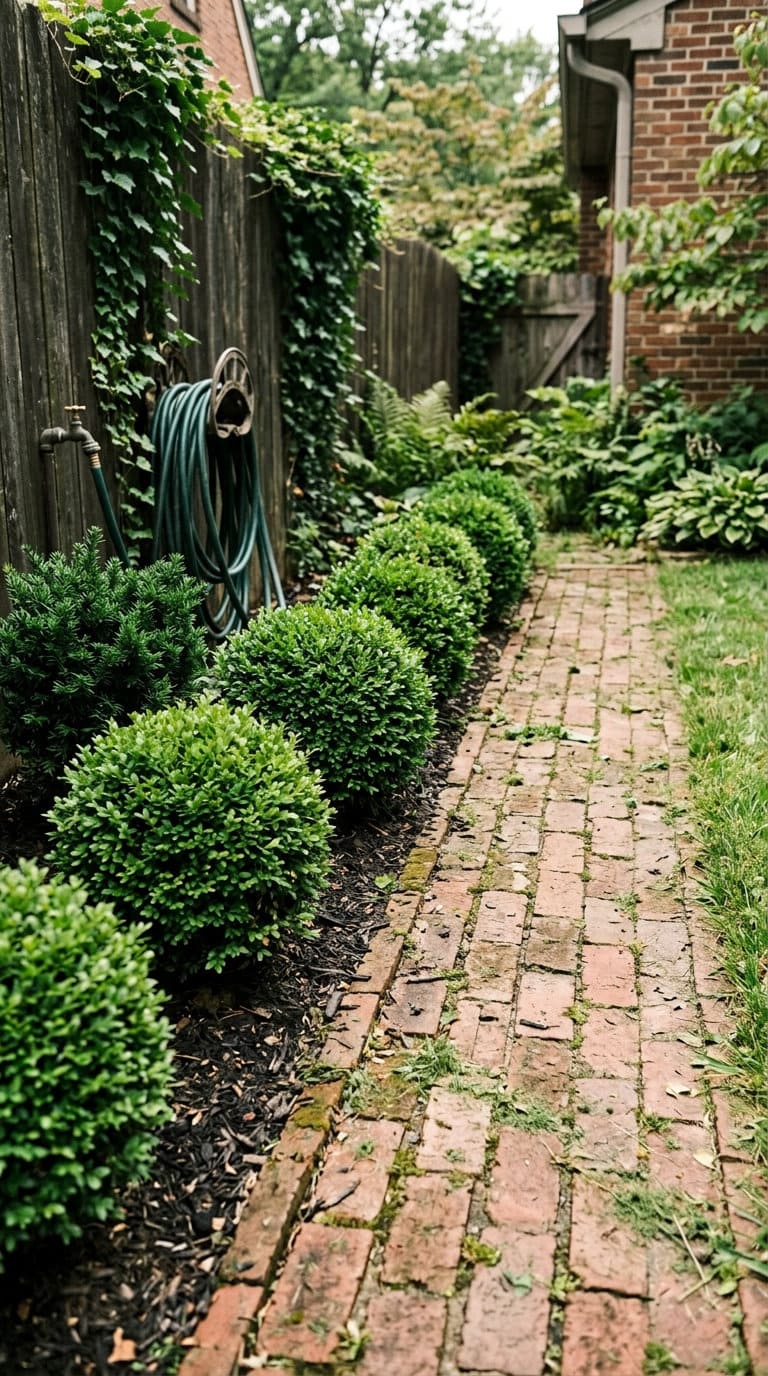
Start with the plants that will look the same in July and January. Boxwood, dwarf yew, and dwarf Alberta spruce are the workhorses here because they hold a clean shape without much pruning and they never have an “off season.”
Garden designer Alasdair Cameron built an entire small London garden this way, keeping to a mostly evergreen palette of yew domes and tree ferns because, as he put it, “In such a small space, I like to keep things simple, otherwise it gets too busy and makes the space look smaller” (Gardens Illustrated).
Budget tier: a 1-gallon boxwood runs about $12 to $18 at most garden centers, and a row of five along a walkway is a weekend project under $100. Mid-range is a 3-gallon dwarf yew at $35 to $50 each for faster structure. The splurge tier is a mature, already-shaped specimen shrub, which can run $150 and up but gives you an instant “finished” look instead of a three-year wait.
Aim for evergreens to cover roughly a third to half of the total planting area. That’s enough to carry winter interest without turning the whole yard into a hedge farm, and if you want more shrub options beyond boxwood, our low-maintenance foundation shrub picks cover several that hold their shape with minimal pruning.
2. Build your color palette entirely from leaves
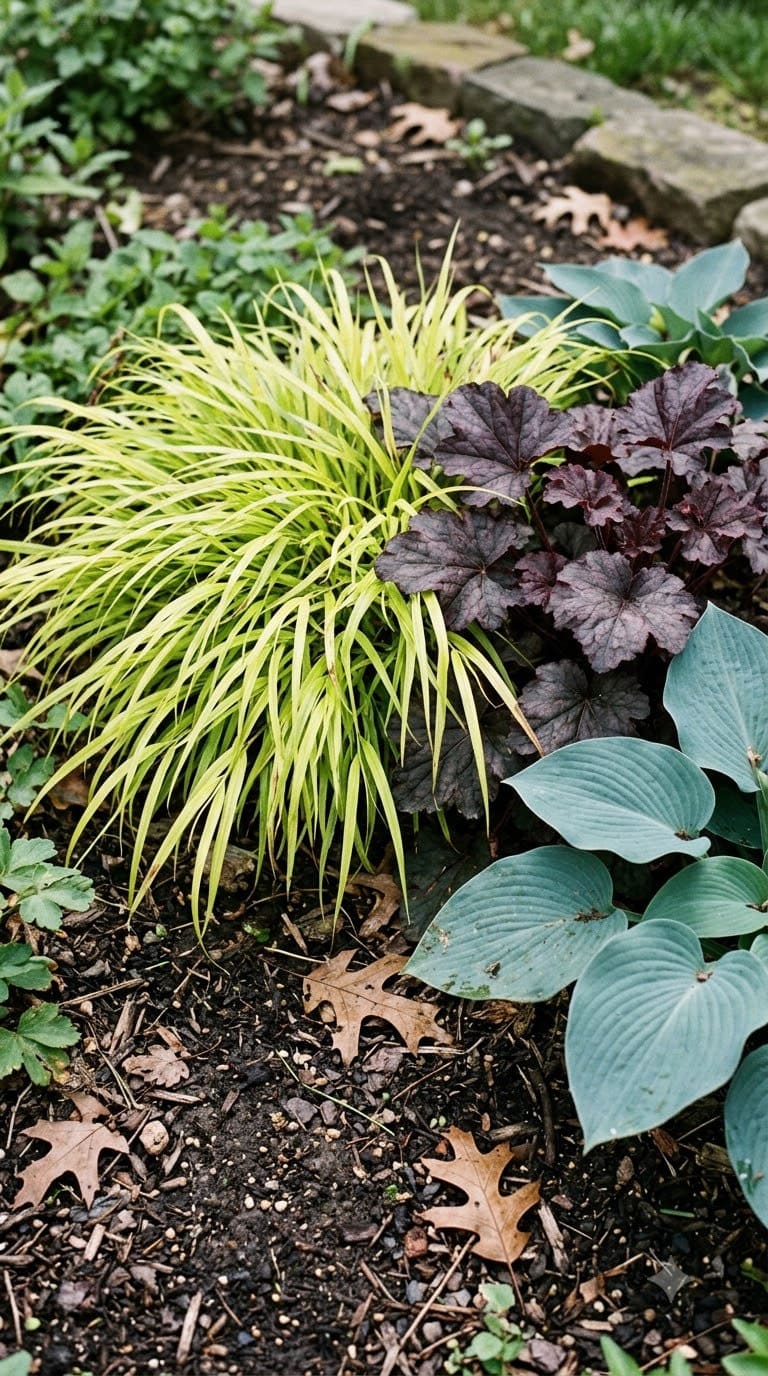
This is the part that surprises people the most. You can absolutely have a colorful garden with zero flowers, you just pull the color from foliage instead of petals. Chartreuse and gold tones (Hakone grass, golden creeping Jenny) read as “bright” the same way yellow flowers do.
Burgundy and near-black leaves (heuchera ‘Obsidian’, black mondo grass) do the job dark red or purple blooms usually handle. Blue-gray foliage (blue fescue, hosta ‘Halcyon’) supplies the cool, calming tone.
The trick professional designers use is a color echo: pick one accent color and repeat small doses of it through the bed instead of using it once. A little burgundy heuchera near the front, then a burgundy-tinged coral bell further back, ties the whole bed together the way repeating a flower color would.
Most yard problems trace back to one specific, fixable cause. Find yours in 4 quick questions.
Take the Free QuizBudget tier for this idea: most foliage perennials in 1-quart pots run $8 to $14, so a color-echo grouping of 5 to 7 plants lands around $60 to $90. If hosta is going to anchor your color work, our hosta landscaping ideas guide has more variety-specific pairings.
3. Layer texture the way a flower gardener layers bloom color
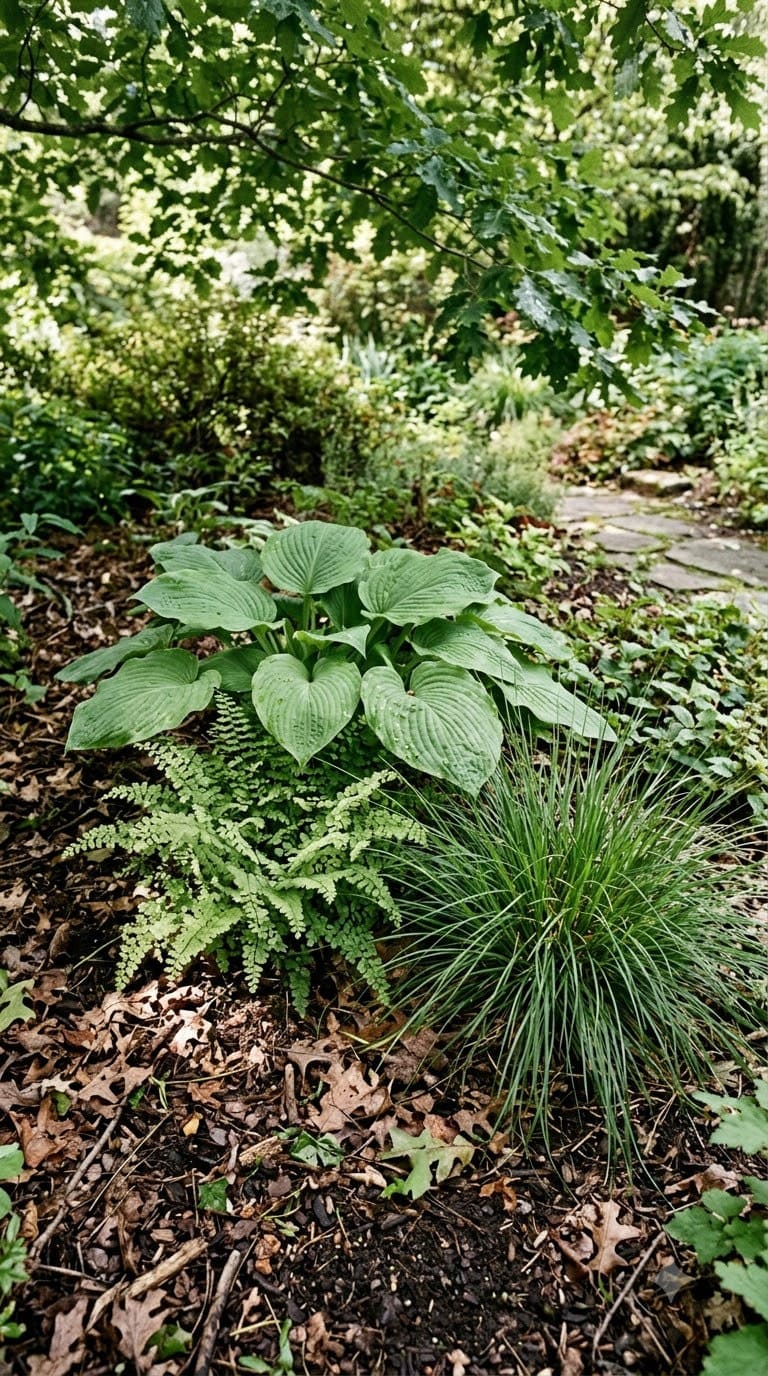
Texture becomes your main design tool once bloom color is off the table. Pair a bold, broad-leafed plant like hosta, bergenia, or phormium with something fine and airy nearby, a fern, an ornamental grass, or threadleaf coreopsis. That contrast is what keeps a foliage-only bed from reading as a flat wall of green.
A good rule of thumb, borrowed from the “bold against fine” method that shows up across foliage-garden design writing: for every big, broad-leafed anchor plant, add two or three fine-textured companions around it.
This is a $0 rule since it’s about arrangement, not new purchases, but a starter fine-textured perennial adds another $8 to $12 per pot if you’re filling gaps.
4. Plant ornamental grasses for movement and winter interest
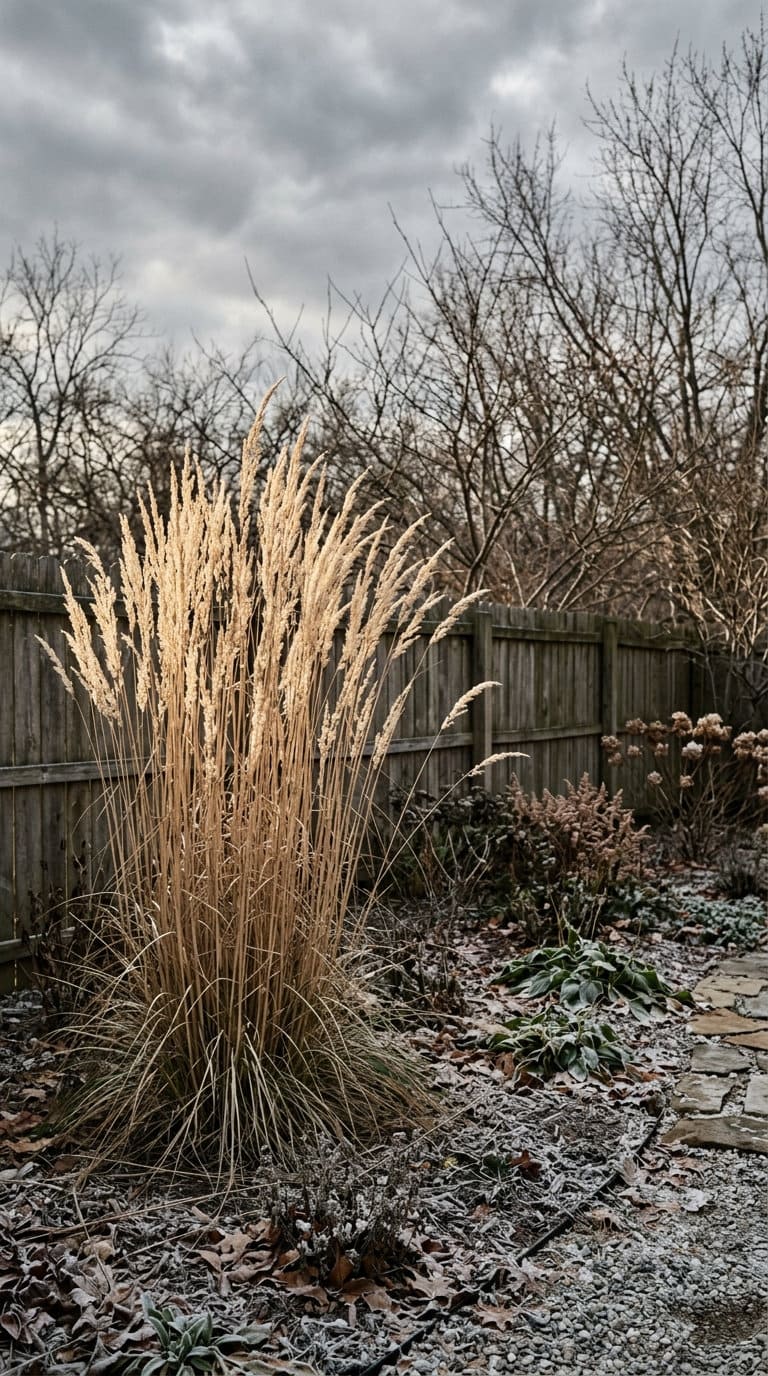
Grasses solve the exact complaint that kills most flower beds: the dead, bare look from November through March. Feather reed grass and little bluestem hold their seed heads and stem color through winter and catch light and wind in a way flowers never do.
Japanese forest grass (Hakonechloa macra) works in part shade and gives you that same movement at a smaller scale.
Budget tier: 1-gallon ornamental grasses run $10 to $20 each, and most varieties fill in fast, so you don’t need to overbuy for density in year one.

5. Design a shade-only foliage plan
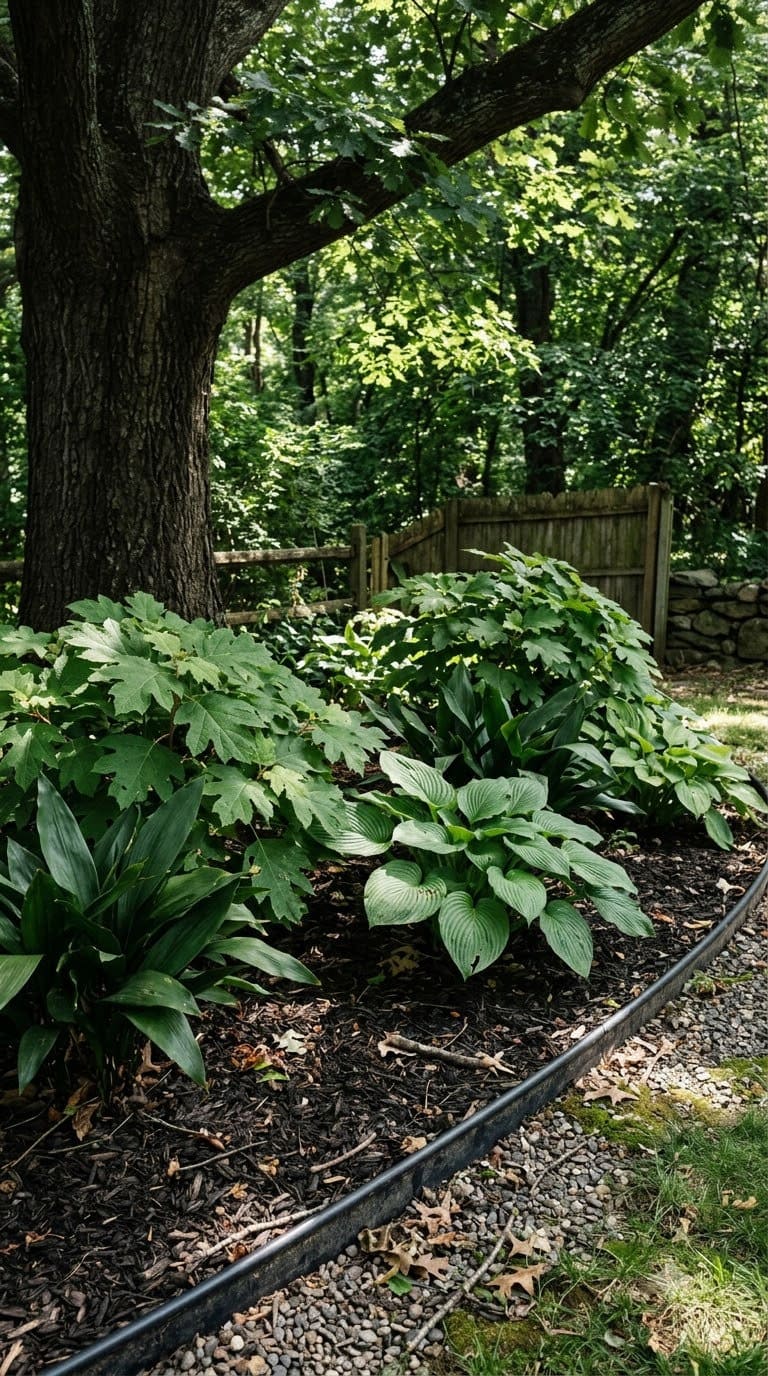
Shade gardeners get told for years that they’re stuck with “boring” options, and that’s mostly because most advice is still flower-first. NC State Extension’s Master Gardener℠ Program Coordinator, Charlotte Glen, points shade gardeners toward oak leaf hydrangea, dwarf palmetto, cast iron plant, and gold dust plant as reliable starting picks, all chosen for foliage diversity rather than bloom (NC State Extension).
Combine those with hostas and ferns (see our types of ferns guide for shade-tolerant picks) and you get a bed with real texture variety in an area most people write off entirely.
If you already have a shade bed you’re trying to fix rather than build from scratch, our shade garden ideas roundup has more layout options.
The average homeowner spends $616/year on yard fixes that don't address the real problem. Find out what yours actually is — before you spend another dollar.
Take the Free Quiz6. Design a sun-only foliage plan
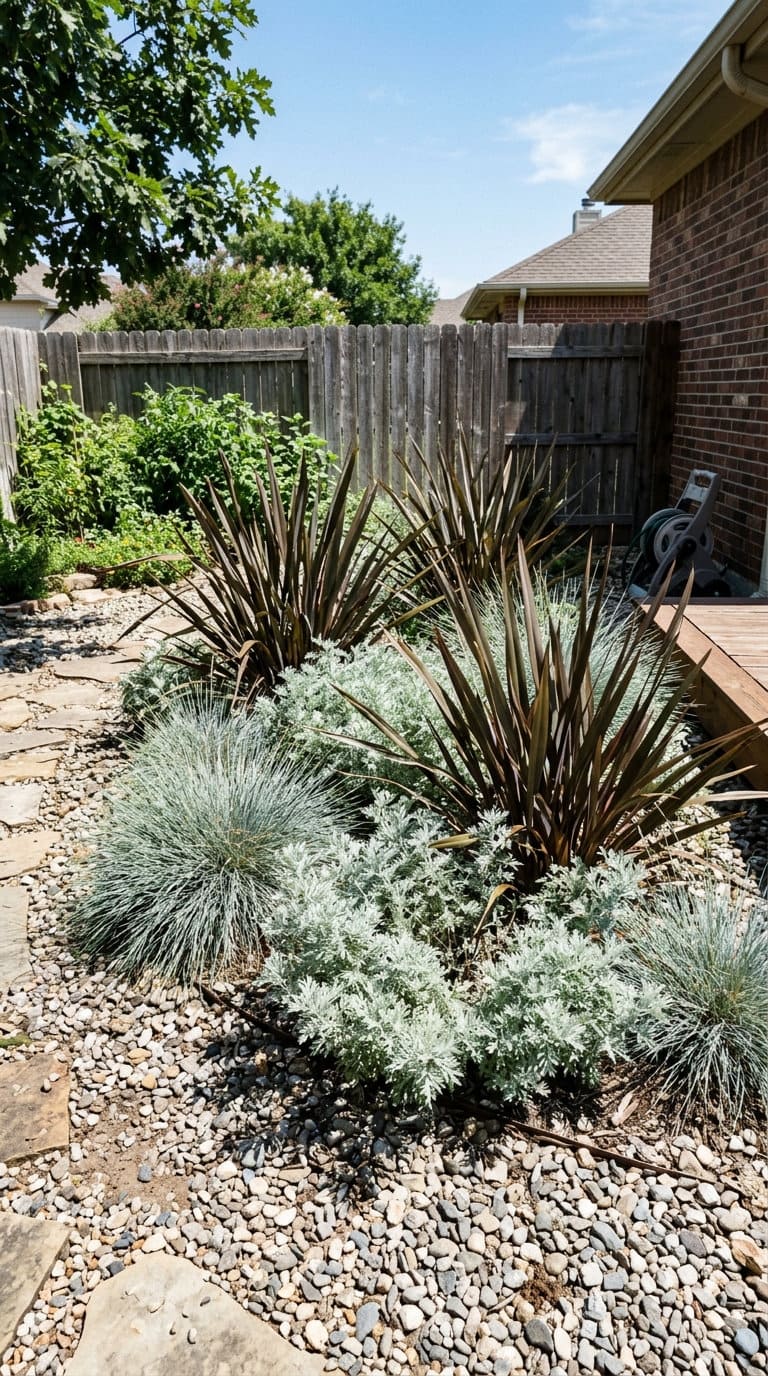
Full sun gets its own plan because the plants that thrive there are different. Phormium (New Zealand flax) gives you bold, sword-shaped structure in full sun, blue fescue supplies that cool blue-gray tone, and silver-leafed plants like artemisia hold up in heat and reflect light instead of scorching.
This is the segment for the minimalist-aesthetic homeowner who wants clean lines and doesn’t have shade to work with.
Don’t mix the shade plan and the sun plan in the same bed just because both are “no-flower.” Most shade foliage plants will scorch in full sun, and most sun-loving foliage plants will get leggy and pale in shade, so match the plan to the actual light in that spot of your yard.
If your sunny bed also runs dry, our xeriscape gardening ideas guide overlaps well with this plan since many drought-tolerant plants are also foliage-first by nature.
7. Use hardscape as negative space, not filler
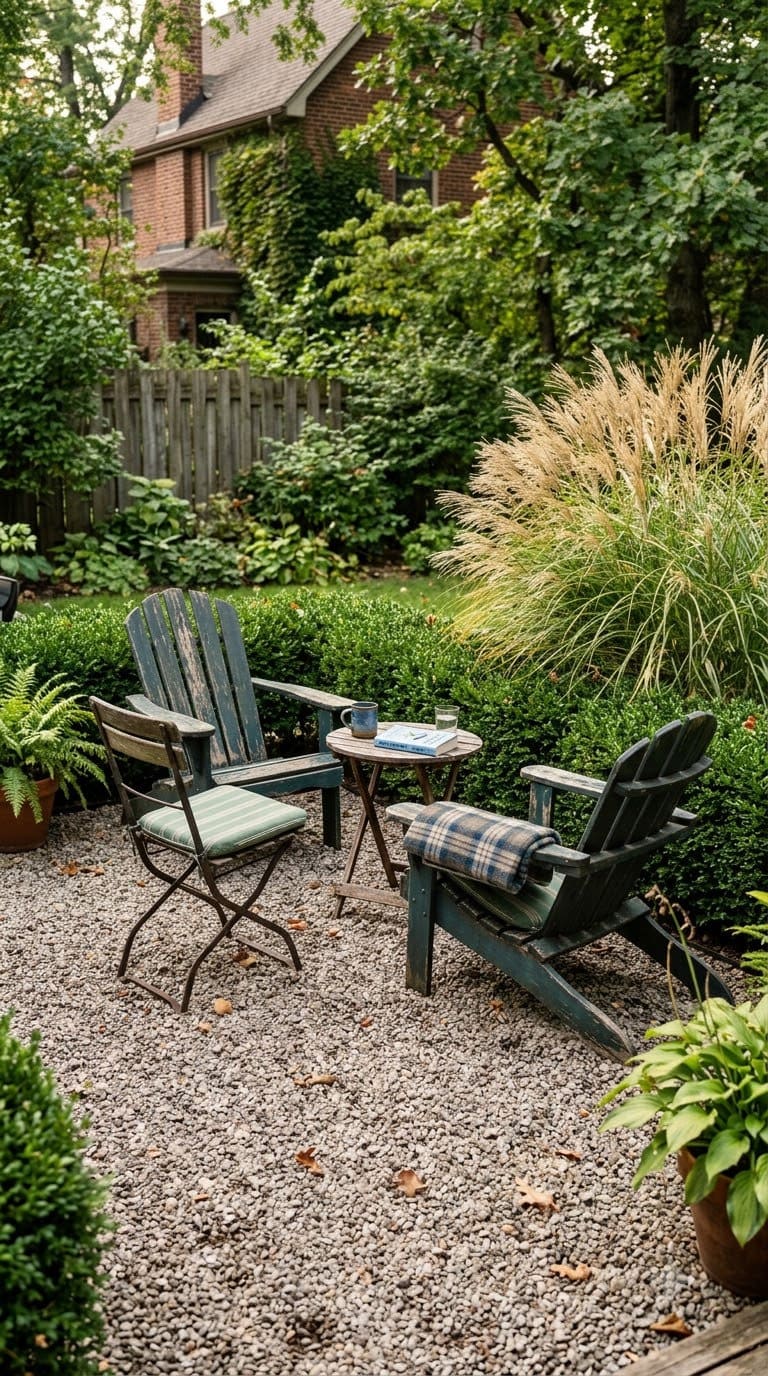
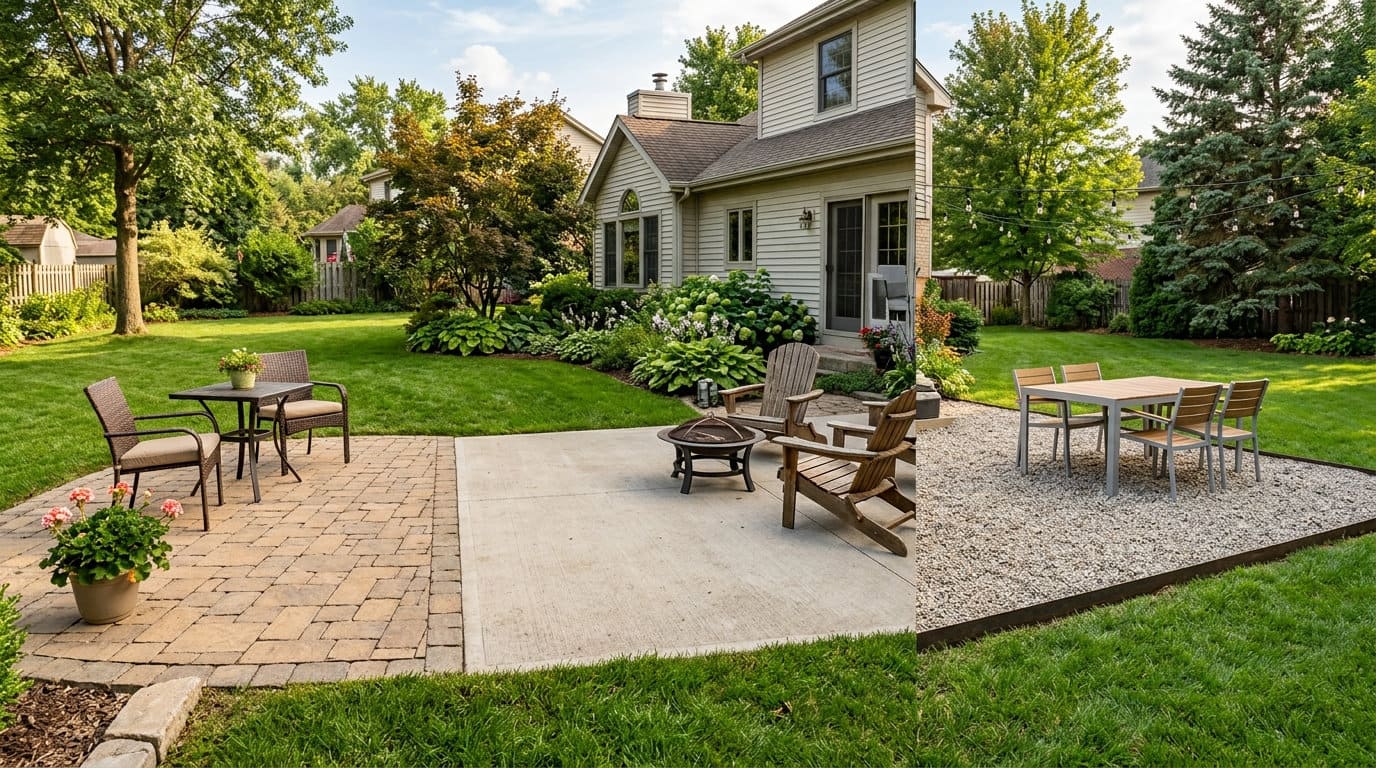
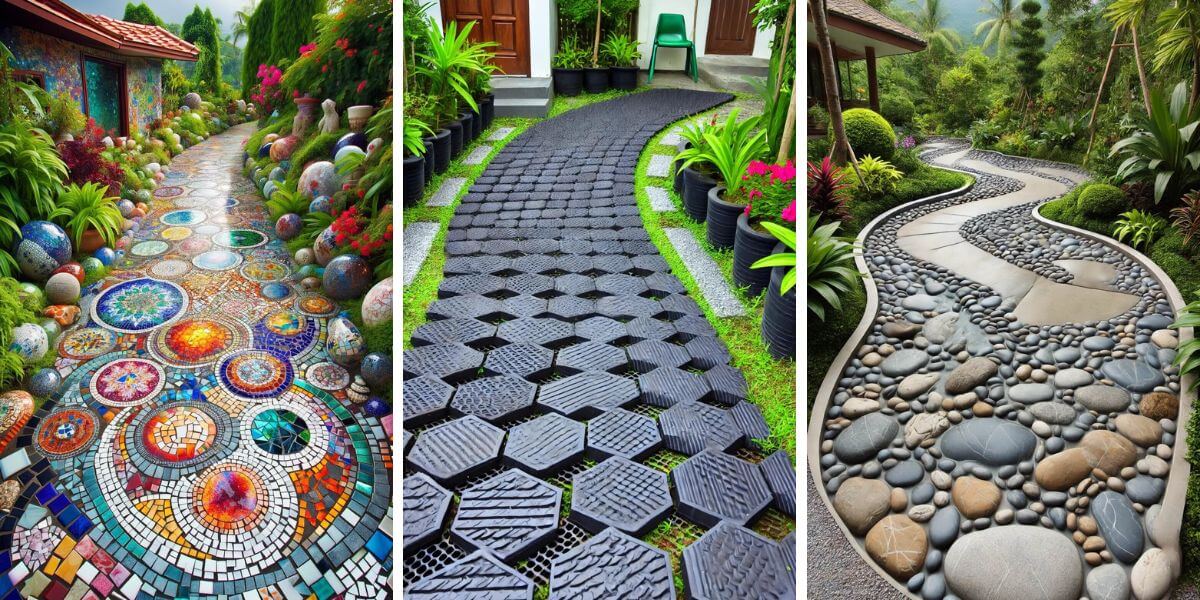
Gravel paths, stone patios, and mulched beds are not just practical, they’re a design tool. A foliage-first garden actually reads better with more hardscape than a flower garden does, because the hard surfaces give your eye a place to rest between the textured plantings.
There’s a real allergy angle here too, though it needs an honest caveat. Hardscape surfaces don’t accumulate pollen the way turf grass and dense groundcover can, so a patio or gravel seating area surrounded by low-pollen foliage plants gives you a genuinely cleaner spot to sit outside during allergy season.
It is not a pollen-free bubble, since wind still carries pollen from your neighbor’s yard and beyond, but it reduces one source you actually control.
Aim for roughly 30 to 40 percent hardscape-to-planting ratio if this is your main goal, more than the 15 to 20 percent typical in a flower-heavy yard. Our backyard hardscape ideas roundup has layout options if you’re starting the hard-surface plan from scratch, and a mulch and rock landscaping bed edge is an easy way to define the transition between the two.
8. Get honest about the allergy angle before you commit to it
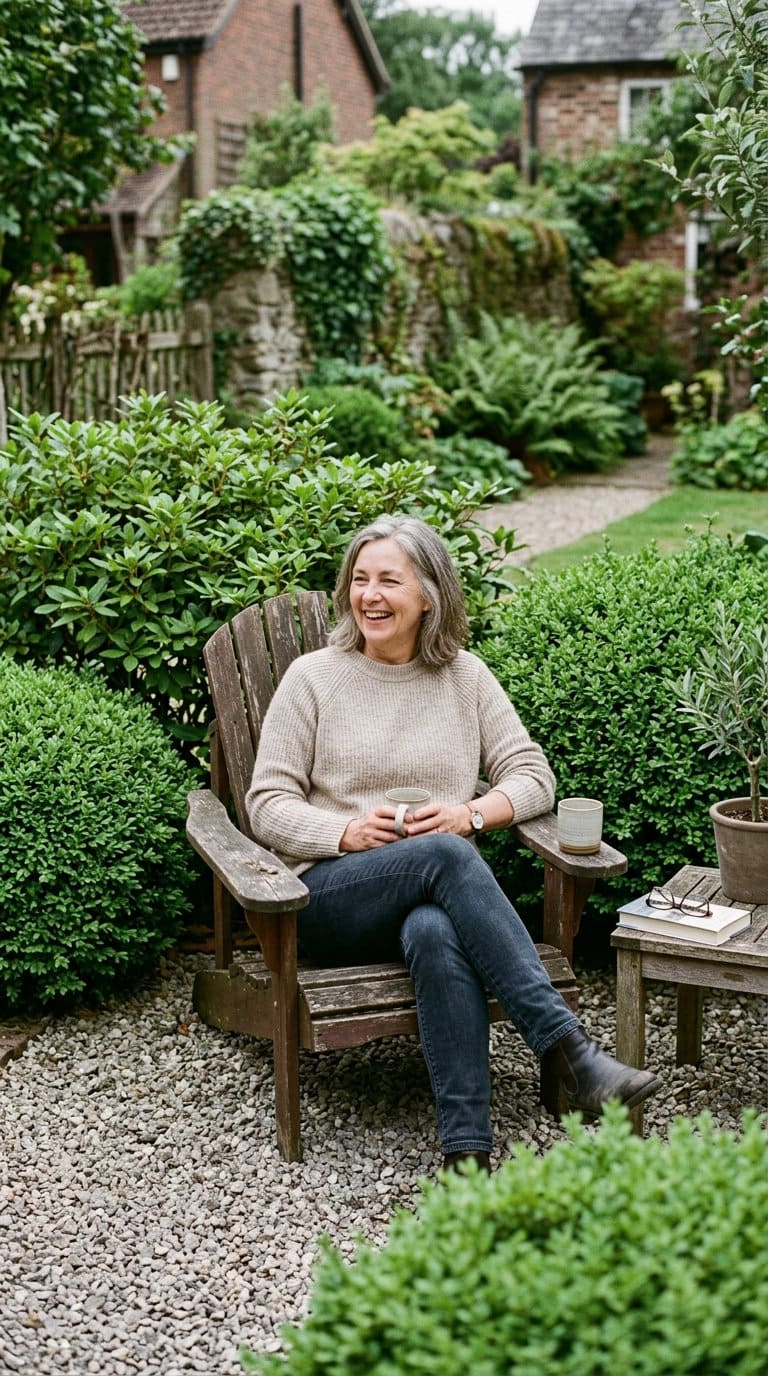
Here’s the thing nobody wants to hear: removing flowers does not mean removing pollen. Flowers are mostly insect-pollinated, which means their pollen is heavier, stickier, and less likely to become airborne.
The real allergy triggers are wind-pollinated plants, and that category includes plenty of trees, grasses, and even some foliage shrubs that never produce a visible bloom you’d notice.
The Asthma and Allergy Foundation of America publishes gardening guidance built around this exact distinction, steering allergy-conscious gardeners toward insect-pollinated, lower-pollen species rather than toward “no flowers” as a blanket rule (AAFA).
Boxwood, azalea, and rhododendron show up repeatedly across allergy-friendly plant lists because they add structure without heavy pollen loads, and that’s a more useful filter than “does it have petals.”
So if allergies are your main driver, don’t stop at “no flowers.” Cross-reference your plant list against a low-pollen guide before you buy, and lean on hardscape (idea #7) to create pollen-reduced zones you can actually sit in.
9. Plan for four seasons of interest, not one bloom window
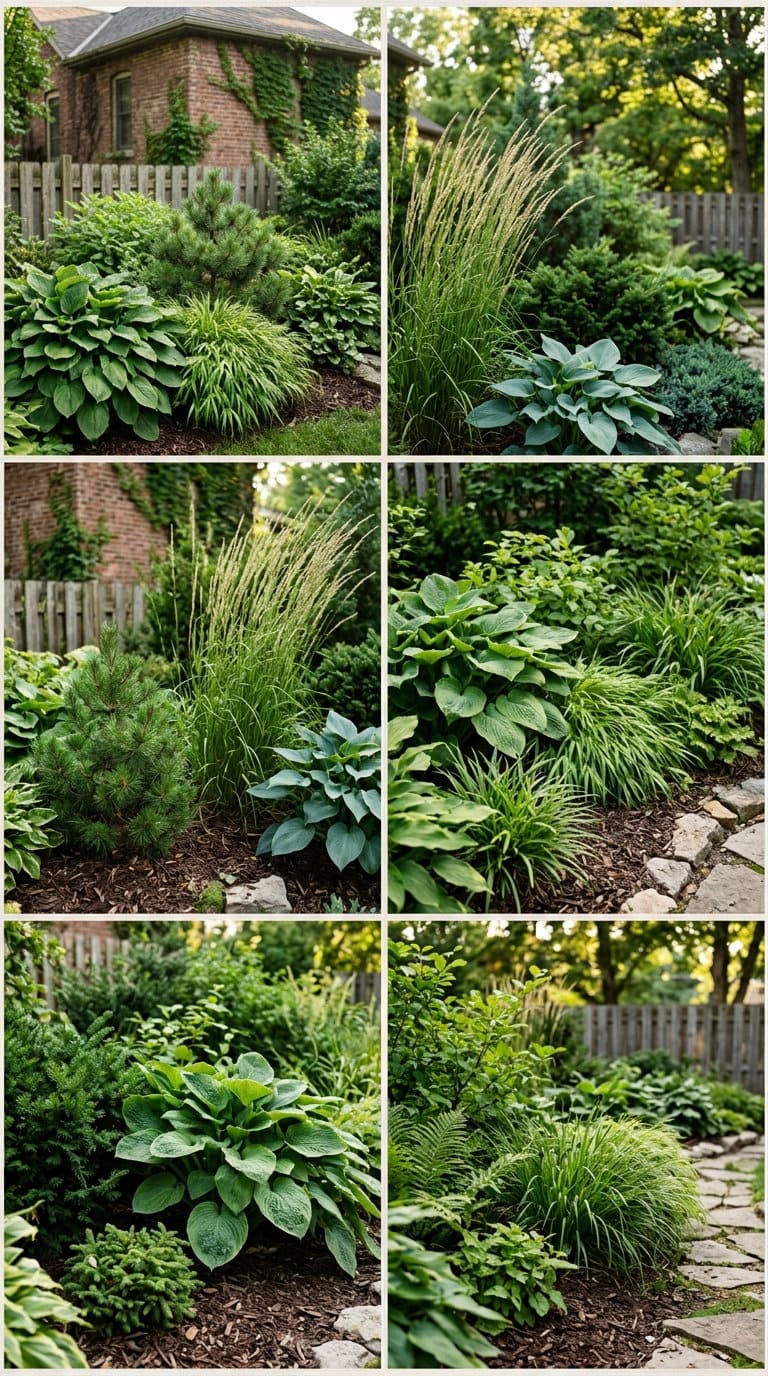
A flower bed usually peaks for a few weeks and coasts the rest of the year. A foliage-first garden can actually hold interest in every season if you plan for it on purpose.
Spring brings a flush of new growth color on plants like Japanese maple and many heucheras, often brighter than their mature summer color. Summer is when your texture and color-echo work carries the whole load.
Fall brings genuine foliage color shift on deciduous shrubs and grasses, not just from trees. Winter is where evergreens, ornamental grass seed heads, and colored bark (red-twig dogwood is a solid pick here) do work a flower bed simply can’t do in January.
My actual experience switching a bed over
I ripped out a struggling perennial flower border two summers ago after getting tired of replacing dead annuals every spring for about $80 a pop. It took roughly one full season for the replacement foliage bed, mostly hostas, a feather reed grass clump, and three boxwoods, to fill in and stop looking sparse.
Honestly, the first few months it looked worse than the flowers did. That’s the part nobody tells you. But by the second fall, the grass seed heads were doing something the old flower bed never did in October, and I stopped dreading the “what’s blooming” question from neighbors because there wasn’t one, the whole bed just looked finished, all the time.
I’m not going to pretend it fixed my allergies completely either. I still get hit some mornings in early spring when the trees two yards over are doing their thing, and no amount of boxwood changes that. What it did fix was the yard feeling abandoned every winter, and that’s the tradeoff I’d make again.
Budget comparison: three ways to start
| Approach | Typical cost | Time to establish | Best for |
|---|---|---|---|
| DIY budget plan (1-gal plants, gravel path by hand) | $300 to $600 for a 100 sq ft bed | 2 to 3 growing seasons to fill in | Patient homeowners on a tight budget |
| Mid-range plan (3-gal shrubs, some pro-installed hardscape) | $1,200 to $2,500 for a 100 sq ft bed | 1 to 2 seasons | Most homeowners wanting faster results |
| Professional design and install | $4,000 and up for a full bed redesign | Looks finished on day one | Larger properties or full front-yard overhauls |
Shade plan vs. sun plan vs. hardscape-heavy plan
| Plan | Best light condition | Signature plants | Maintenance level |
|---|---|---|---|
| Shade foliage plan | Under 4-6 hours direct sun | Hosta, oak leaf hydrangea, cast iron plant, ferns | Low, mostly seasonal cleanup |
| Sun foliage plan | 6+ hours direct sun | Phormium, blue fescue, artemisia, feather reed grass | Low to moderate, occasional dividing |
| Hardscape-heavy plan | Either, hardscape does the work | Boxwood, gravel, structural evergreens | Very low, minimal plant care |
Frequently asked questions
Does a no-flower garden still need weeding?
Yes. A foliage garden reduces deadheading and seasonal replanting, but weeds don’t care whether your design has flowers in it. Mulch and a tighter planting spacing cut down on weeding time significantly, but they don’t eliminate it.
Is a foliage garden actually better for allergies?
It can help, but only if you’re deliberate about it. Removing flowers alone doesn’t remove pollen, since many wind-pollinated trees and grasses have no visible bloom. Choose insect-pollinated, low-pollen species specifically, per guidance from groups like the Asthma and Allergy Foundation of America, and add hardscape zones, rather than assuming “no flowers” automatically means “no pollen.”
Can I add a few flowers back later without ruining the design?
Yes, and a lot of foliage-first gardeners do exactly this once the bones are in. A few well-placed flowering accents (annuals like ammi or orlaya in a color that matches your existing palette) can brighten a bed for a season without undoing the structure underneath.
What’s the cheapest way to start a no-flower garden?
Start with one small bed instead of the whole yard. A single 1-gallon boxwood grouping plus a clump of ornamental grass, filled in with mulch, can cost under $100 and still demonstrate the whole design idea before you commit to a bigger budget.
Related Posts
- 20 Whimsical Evergreen Landscaping Ideas for Year-Round Beauty
- 70+ Stunning Landscaping Ideas Without Grass for a Lush Yard
- 40+ Genius Artificial Grass and Rock Ideas for a Stunning Yard
Never miss an update — choose FarmFoodFamily as your preferred source on Google.
How it works: Tap the button below to open Google's settings page, then check the box next to FarmFoodFamily.
Tap the checkbox to turn it blue — that's how you know it's set.