12 Serene Beige Christmas Tree Decorating Ideas That Never Look Bland
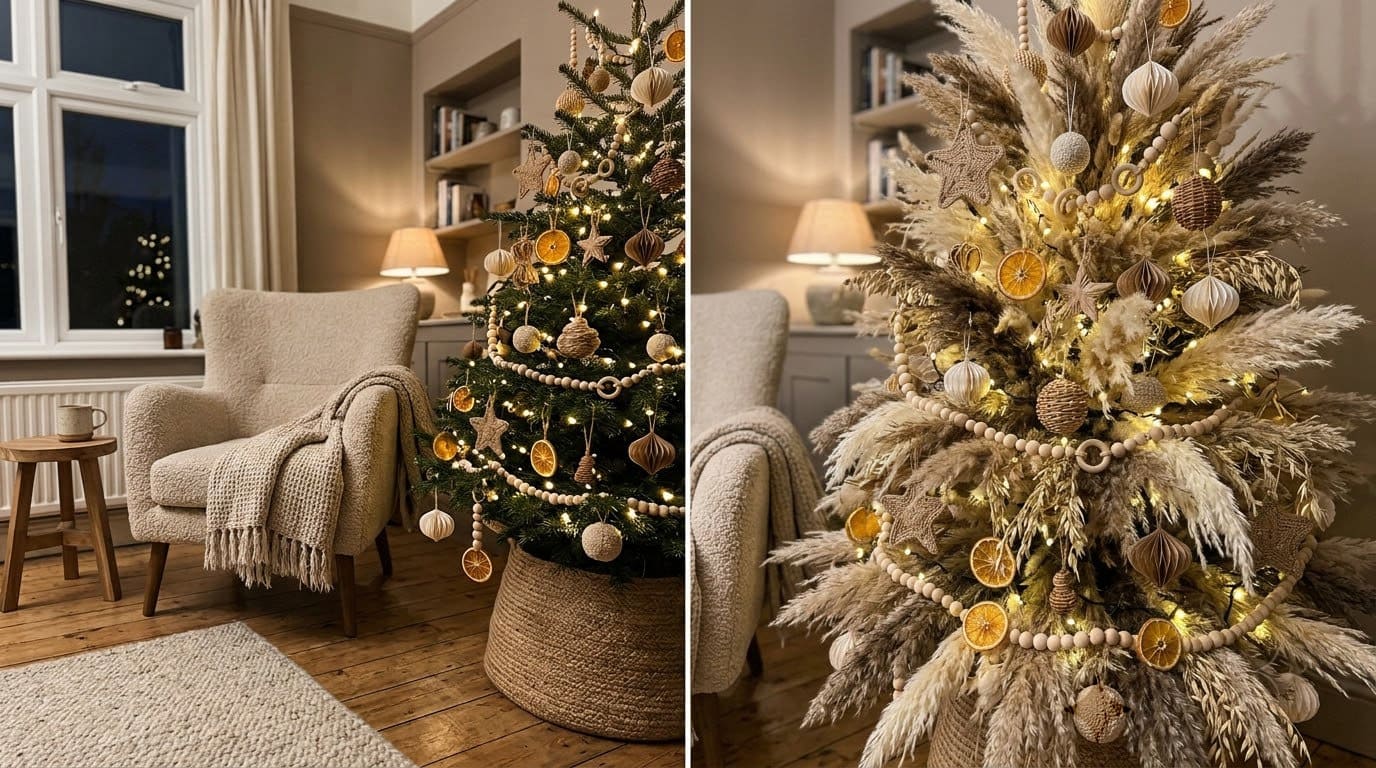
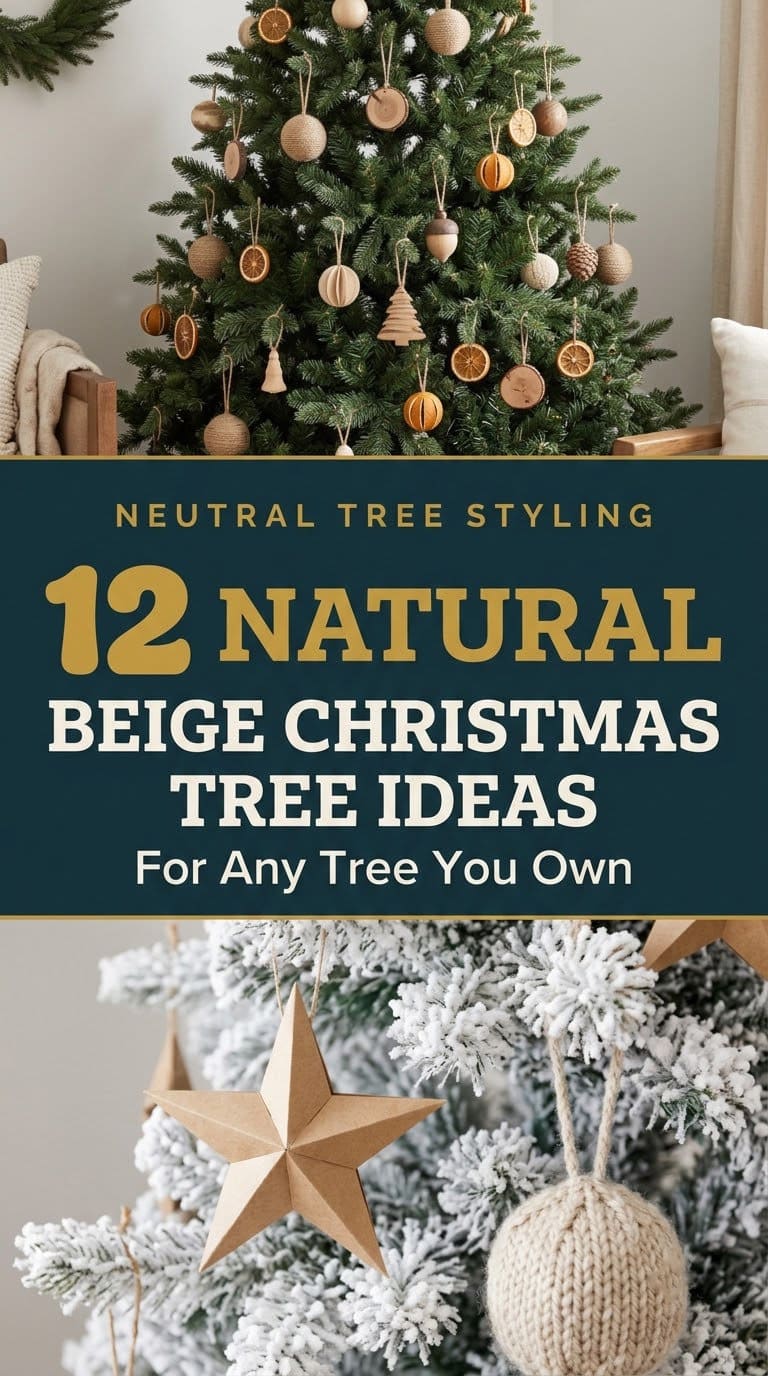
A beige tree works on light and shade, not color. So the fix for a flat one is contrast and texture, not another cream ornament.

Never miss an update — choose FarmFoodFamily as your preferred source on Google.
How it works: Tap the button below to open Google’s settings page, then check the box next to FarmFoodFamily.
Tap the checkbox to turn it blue — that’s how you know it’s set.
Beige is the hardest tree color to get right. Everything you hang sits at about the same lightness, so the tree quietly flattens into one soft blur.
I watched this play out in public once. A shop posted a lovely neutral tree tutorial, and the comments filled up with people asking why the second ribbon was invisible.
Below are 12 beige tree ideas with real materials, sizes and budget notes. We also cover the lights, the fire risk nobody mentions, and whether the “sad beige” jokes are fair.
Quick Answer
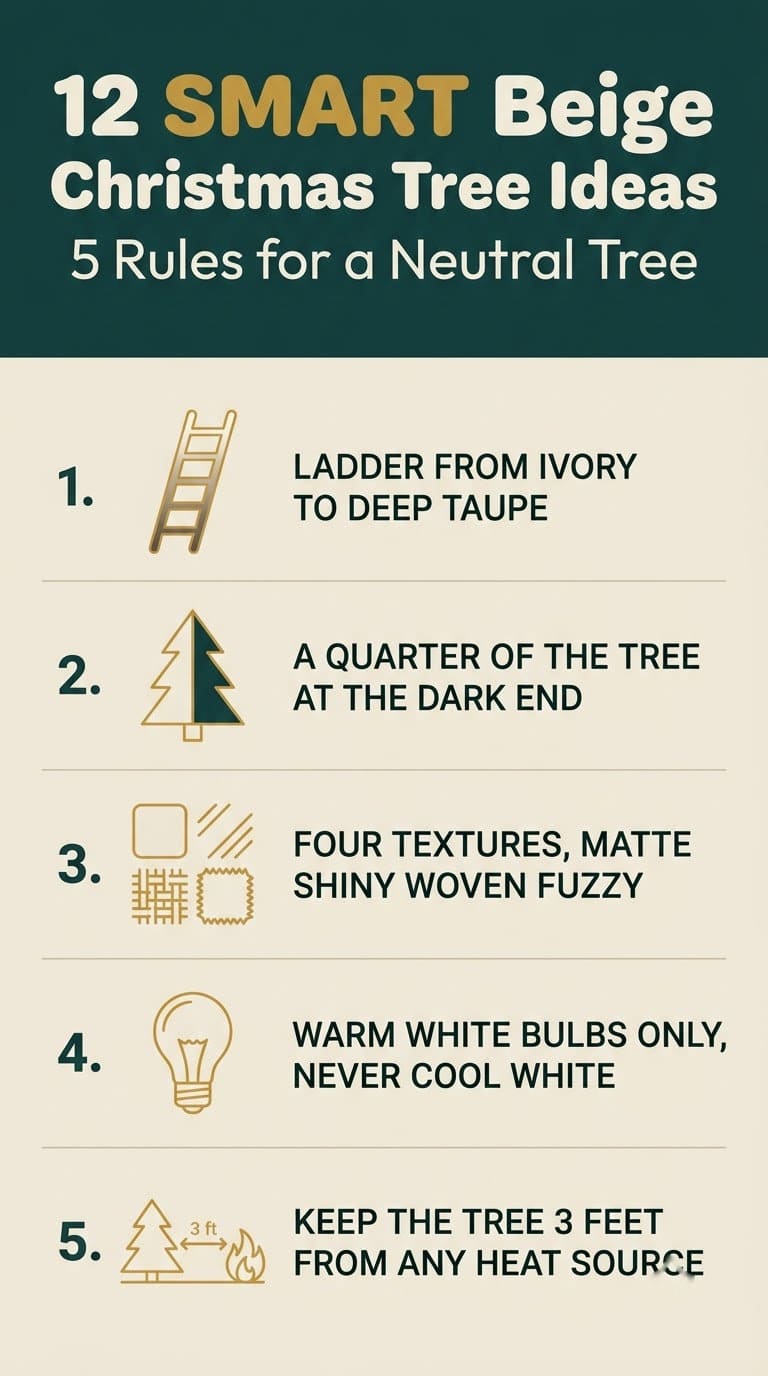
To keep a beige Christmas tree from looking bland, build contrast with light and dark instead of color. Run a ladder from ivory through oat and camel to a deep taupe, and let texture do the rest.
Use warm white lights, never cool white. Cool light pulls the warmth out of beige, and it starts to read gray and a bit dirty.

Then take the dried material seriously. Dried citrus, wheat, paper and jute all burn, and this look is candle-heavy. Prince William County Fire & Rescue says to keep a tree at least three feet from “fireplace, space heater, radiator, candles, heat vents or lights.”
And hear the criticism out. Atlanta designer Brandy Rinehart told House Digest that “there was a time when ‘neutral holiday’ meant classy. Now it’s just… beige.”
She is right about flat beige. She is not right about beige with depth in it.
Why Does a Beige Christmas Tree Look Flat or Dingy?
Every other tree color gets contrast for free. This one does not.
A red ornament on a green tree stands out. An oat ornament on a cream tree does not.
There is a perfect example of this online. Under a neutral tree tutorial with two layered ribbons, viewer after viewer asked the same thing: “Why use a double layer of expensive ribbon if its never seen?”
They were right. The two ribbons were so close in tone that the lower one vanished.
| Problem | What it looks like | The fix |
|---|---|---|
| One value throughout | Soft blur, nothing separates | Ladder from ivory to deep taupe |
| Two ribbons, same tone | The second ribbon vanishes | Make one ribbon clearly darker |
| Smooth finishes only | Flat, no light play | Add jute, wood, bouclé, paper |
| Cool white lights | Gray, slightly dirty | Warm white only |
| Everything at the tips | No depth | Push darker pieces deep near the trunk |

The value ladder in one box. Brown at the dark end, white at the light end, which is the whole fix in idea 1 and the part most neutral sets leave out
Shop NowThis post contains affiliate links. We may earn a commission on qualifying purchases at no extra cost to you.
Not one of these fixes means buying more beige. Two of them mean buying darker.
Do You Actually Need a Beige Tree?
Almost certainly not. Beige artificial trees are rare and pricey, and most of the trees you have saved on Pinterest are not beige at all.
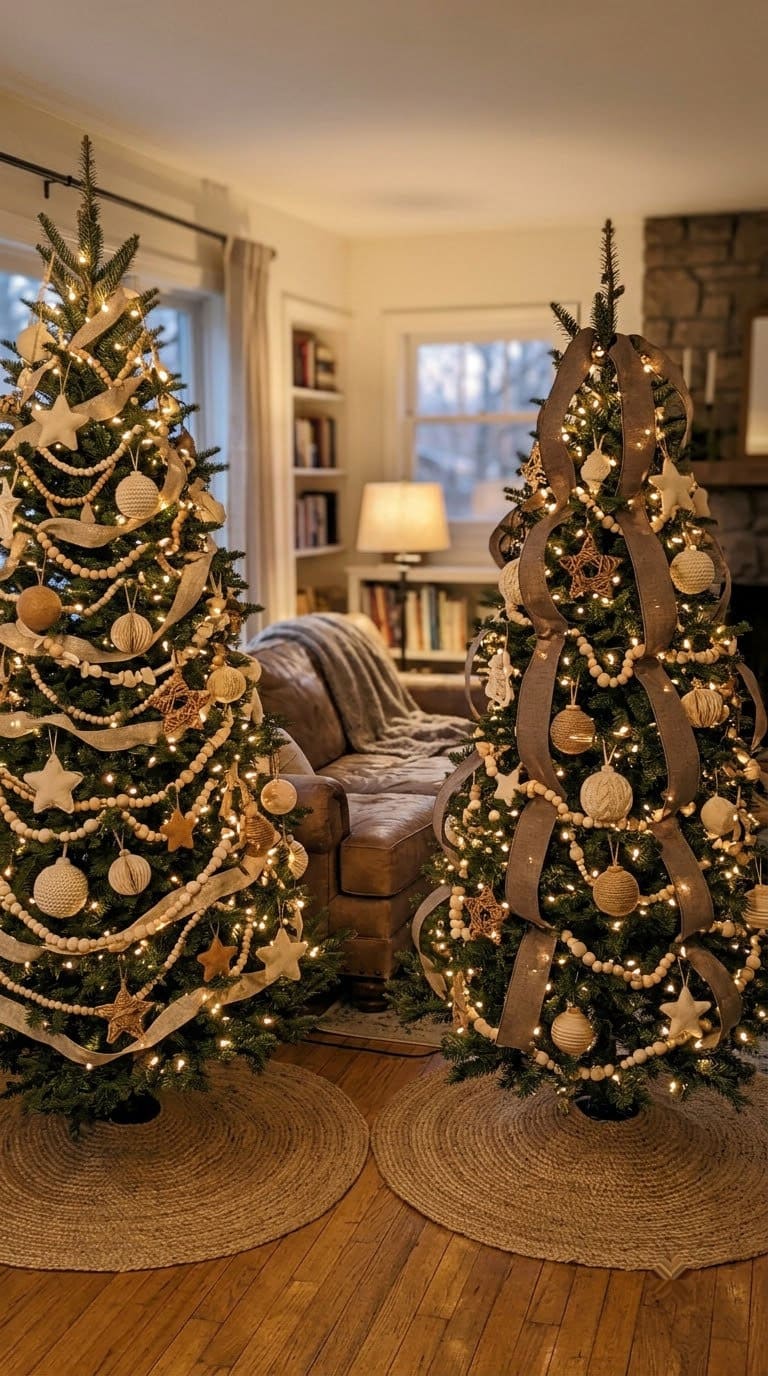
They are a green, white or flocked tree wearing a beige scheme. That is the whole trick.
| Tree you own | How beige it can go | What to add |
|---|---|---|
| Green | Warm, woodland version | Jute, wood, dried citrus, wheat |
| White | Crisp, Scandi version | Paper, bouclé, pale wood, black accents |
| Flocked | Softest version | Cream velvet, taupe ribbon, matte wood |
| Actually beige | Hardest to style | Dark accents are mandatory, not optional |
If you do own a beige tree, you need the dark end of the ladder most of all. Without it there is nothing for your eye to catch.
Our broader tree decorating tips for every theme cover the other directions.
How Do You Build Contrast Without Adding Color?
Two ways, and you need both. Value and texture.
Value means light to dark. Before you hang anything, sort your ornaments into four steps: ivory, oat, camel and deep taupe. Aim for about a quarter of the tree at that darkest step.
That dark quarter is the part people skip. It is also the part that makes the tree readable from across a room, so put most of it deep near the trunk.
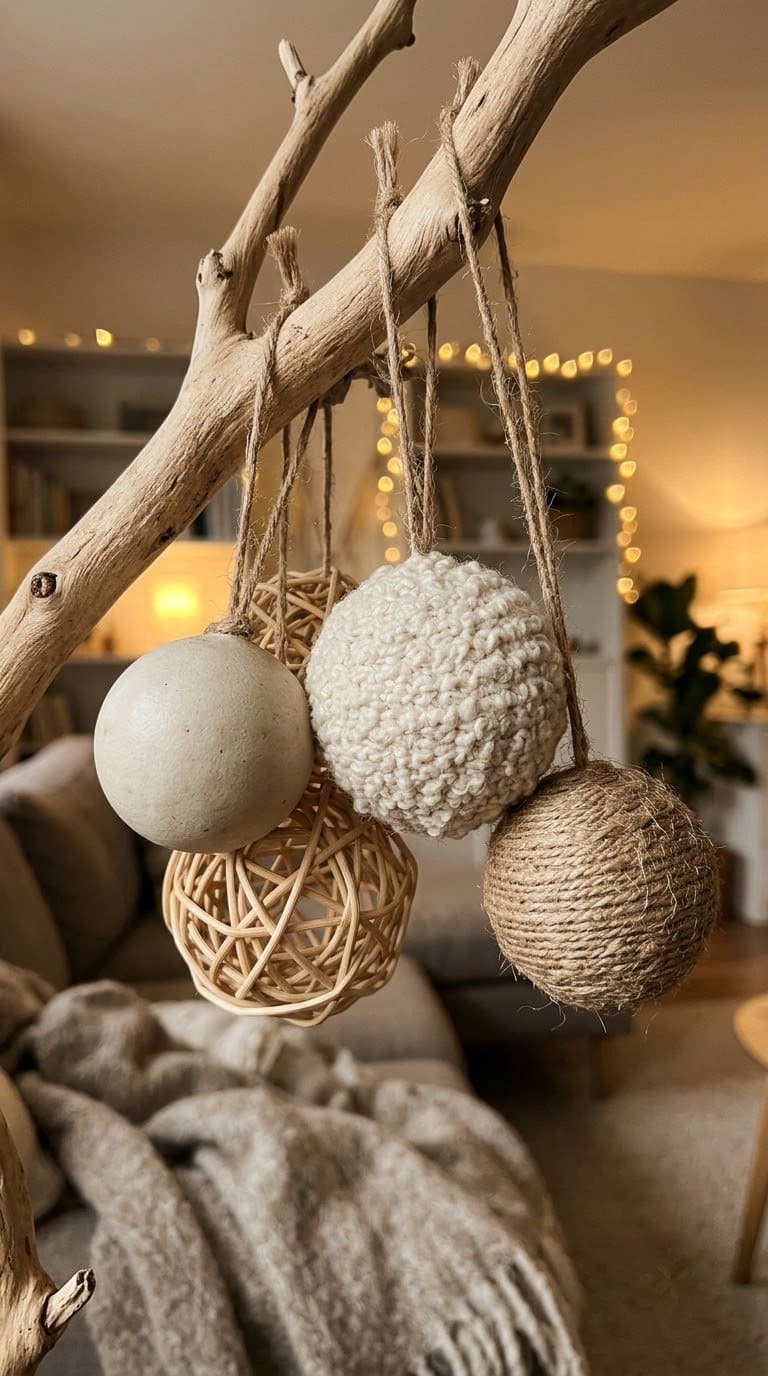
Texture is the second lever. A beige tree wants four surfaces that catch light differently: matte, glossy, woven and fuzzy.
Think jute rope, wood beads, knit and paper. Set a glossy ceramic ball next to a woven one, and that gap does the work color usually would.
What Lights Work on a Beige Tree?
Warm white, and this one is not a preference. Cool white light pulls the warmth out of every beige on the tree and turns it gray.
Wrap the strands on the inner branches first, then work outward. Light from inside gives the woven and knit pieces something to cast shadows against.
Skip color-changing and multicolor sets here. They fight the one thing this tree is trying to do.
If you want the rest of the house to match, our roundup of Christmas light ideas covers the other rooms.
Is “Sad Beige” a Fair Criticism?
Partly, yes. Working designers are calling flat neutral holiday decor stale right now, and there is no point pretending they are not.
Brandy Rinehart, who owns Rinehart Design Group in Atlanta, put it bluntly. Whitewashed wreaths, bleached trees and “excessive burlap bows had their moment,” she said, “but the pendulum has swung back toward warmth and authenticity.”
She is naming one specific failure, though, not the whole palette. The trees getting mocked have no light-to-dark range and no texture, with burlap doing all the work.
Her replacement list is useful: “Deep currant reds, mossy greens, ochres, and muted metallics are taking over.” Every one of those works on a beige tree as the dark end of the ladder.
Whitney Vredenburgh of Nested Spaces makes a similar swap. She opts for “muted greens like sage or olive and soft red or burgundy” instead.
And New York designer Artem Kropovinsky of Arsight Studio defends the natural finish itself. “A cleaner, more natural finish creates a fresher backdrop for ornaments,” he says.
So here is the honest answer. Beige as a backdrop is fine. Beige as the whole tree is what people are tired of.
Are Dried Botanicals and Candles a Fire Risk?
This is the part this look really needs. The beige tree is the one covered in dried fruit, wheat, paper and jute, in a room full of candles.
The county fire release is worth reading twice. “DO NOT put the tree within 3 feet of a heat source, i.e., fireplace, space heater, radiator, candles, heat vents or lights.”
Its numbers, credited to the NFPA, make the point sharper. “More than two of every five decorative fires were too close to a heat source.”
And “more than one-third of home decoration fires are started by candles,” rising to about half during December.
The release also says “Christmas is the peak day for candle fires.” If your plan is a neutral tree and a shelf of pillar candles, battery candles near the tree are the easy call.
Two more rules from the same page. Replace any light set with “exposed or frayed wires, loose connections, and broken sockets.”
And “read the manufacturer’s instructions on the number of strand lights to connect.” That number is printed on your own box of lights.
One last rule fits this tree exactly. Keep anything that “look like food or candy” off “the lower branches where small children can reach them.”
Dried orange slices and cinnamon bundles look like food because they are.
Which Beige Palette Suits Your Room?
Beige needs a partner at the dark end. Pick one and stop there.
| Pairing | Mood | Works best in |
|---|---|---|
| Beige and black | Sharp, modern Scandi | White or gray rooms |
| Beige and walnut | Warm, woodland | Rooms with wood floors and beams |
| Beige and sage or olive | Soft, natural | Rooms with plants and linen |
| Beige and burgundy | Traditional, warm | Rooms with antiques or leather |
| Beige and ochre | Earthy, 70s-leaning | Rooms with terracotta or rattan |
| Beige and charcoal | Quiet, architectural | Minimal rooms with concrete or steel |
If your room already runs cool gray, skip the camel and ochre end and go beige with charcoal instead. There’s more on making neutrals work together in our neutral living room guide.
12 Serene Beige Christmas Tree Decorating Ideas
1. The Cream to Taupe Value Ladder
Less a look than the rule the others sit on. Sort ornaments into four steps, ivory through deep taupe, and hang about a quarter at the darkest step.
Use 6 inch pieces at the dark end, set deep near the trunk. Keep the 2.5 to 4 inch pieces lighter and further out. Budget: low, since this is mostly rearranging.
Pairs with every other idea here. If you do nothing else on this list, do this.
2. The Texture Stack
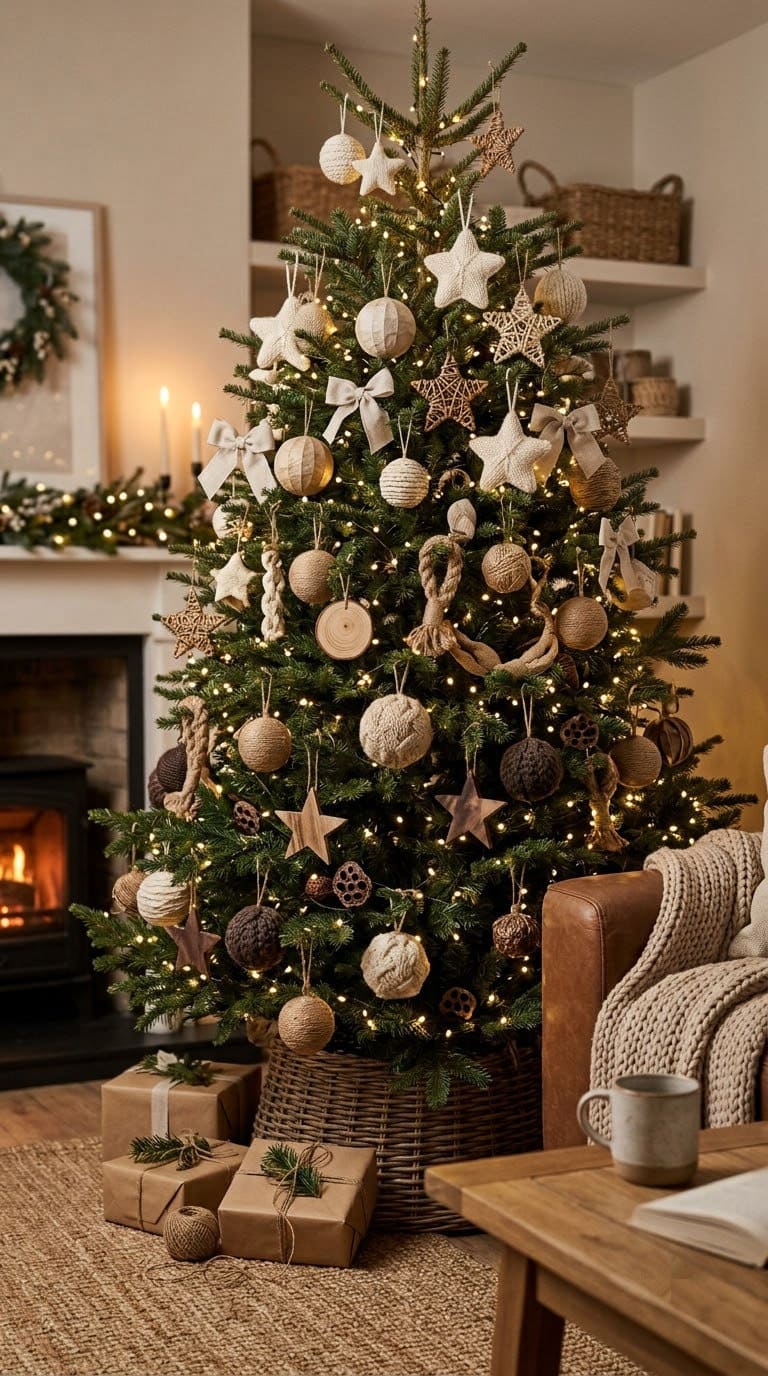
Four surfaces at least: matte, shiny, woven and fuzzy. In practice that means jute, ceramic, rattan and knit.
Group them in odd clusters of three or five, rather than spacing them evenly. About six clusters covers a 7 foot tree.
Budget: mid. This is the idea that answers the “beige is boring” complaint best.
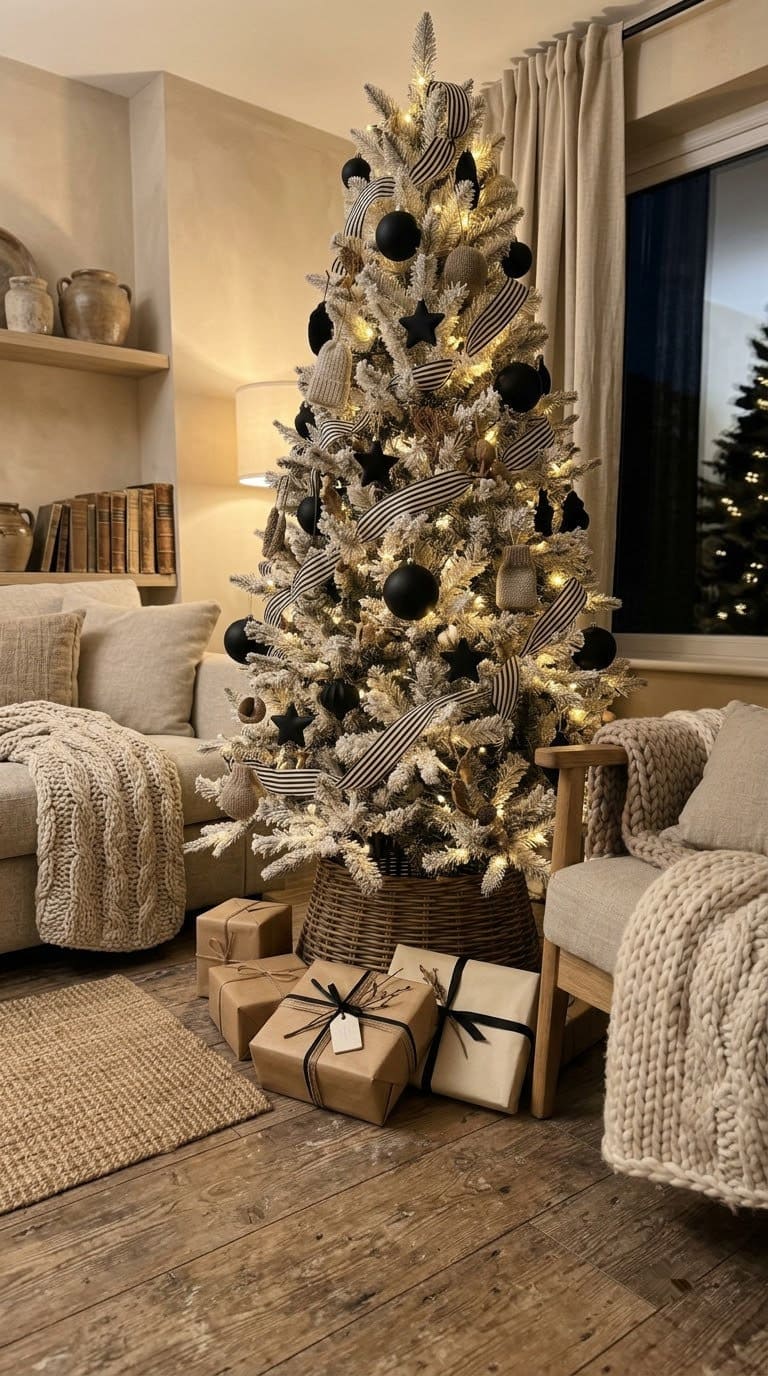
3. Beige and Black
The highest-contrast idea here, and the one I would pick first in a modern room. Use matte black in 4 inch, about 10 pieces, with a black and white striped ribbon.
Keep black under a fifth of the tree. Past that, it stops being a beige tree.
Budget: low to mid. It is also the most renter-friendly version, since a few black pieces change a plain white tree completely.
There is a similar restraint in our minimalist Christmas ideas.
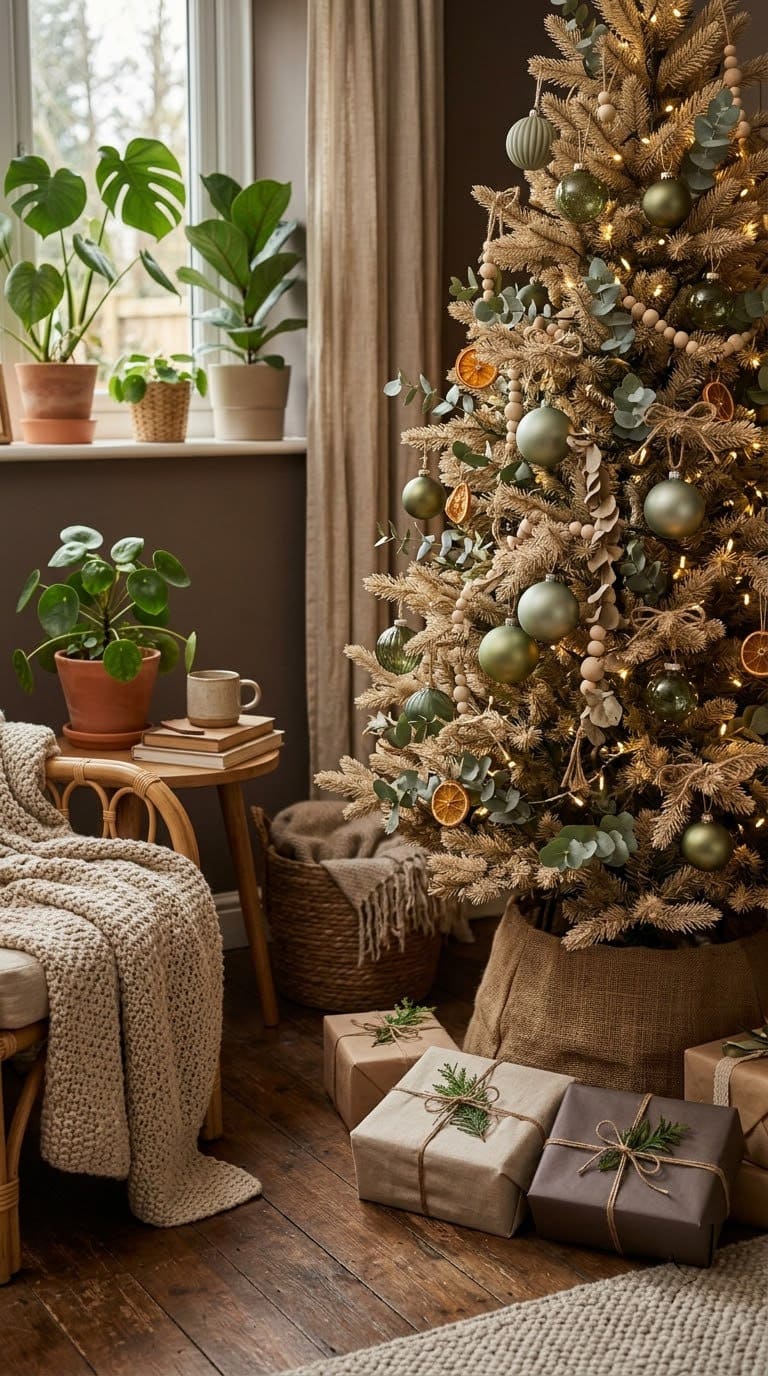
4. Beige and Muted Green
The version Whitney Vredenburgh points at. Use sage or olive in 4 inch matte, about 12 pieces, plus real or faux eucalyptus tucked deep.
Add 8 to 10 stems so the green reads as leaves rather than as ornaments. Budget: mid, less if you already own faux greenery.
Best in a room with actual plants. Pairs well with idea 9’s dried grasses.
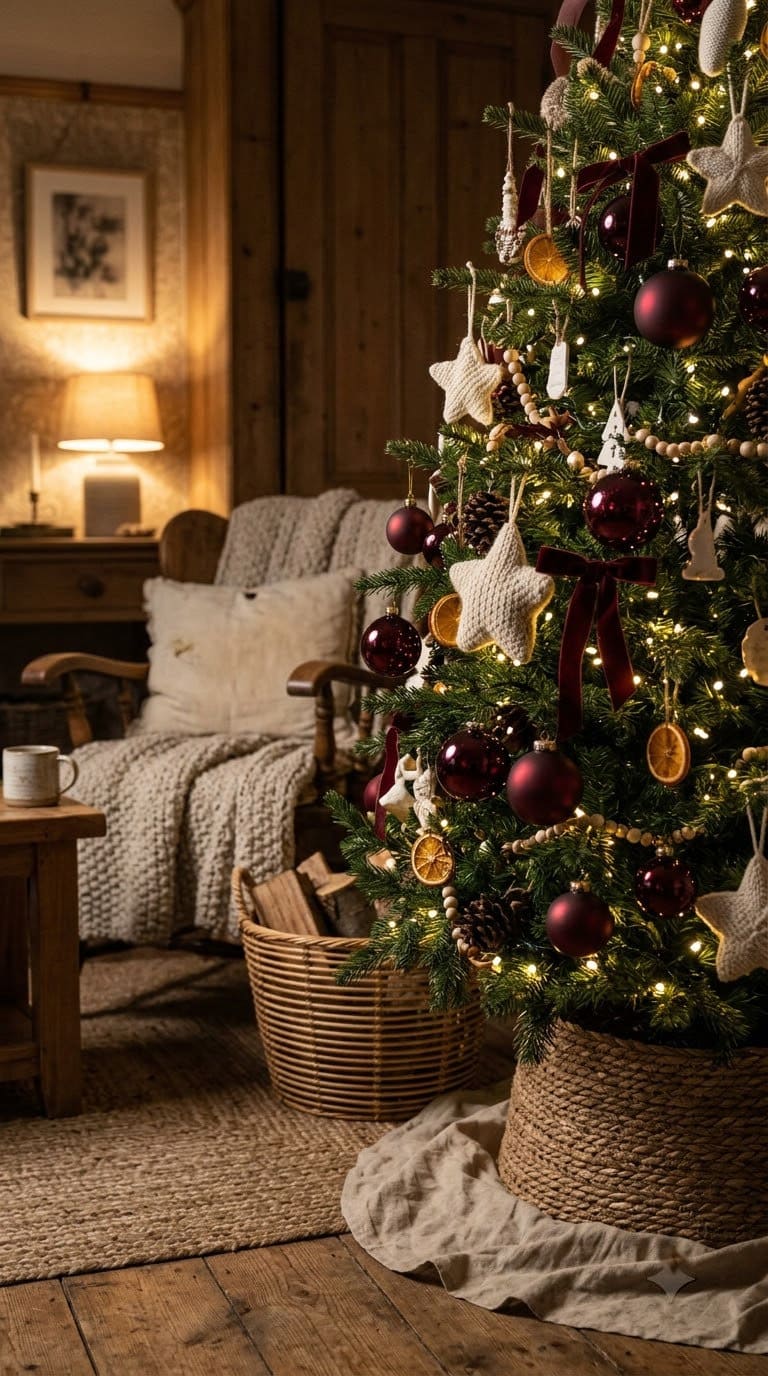
5. Beige and Currant
Rinehart’s “deep currant reds” on a neutral tree, and it is more traditional than it sounds. Use a deep burgundy red in 4 inch, about 10 pieces, kept low and deep rather than scattered.
Add one burgundy velvet ribbon at 2.5 inches, tucked short. Budget: mid.
This is the idea to pick if your family wants a traditional tree and you want a calm one.
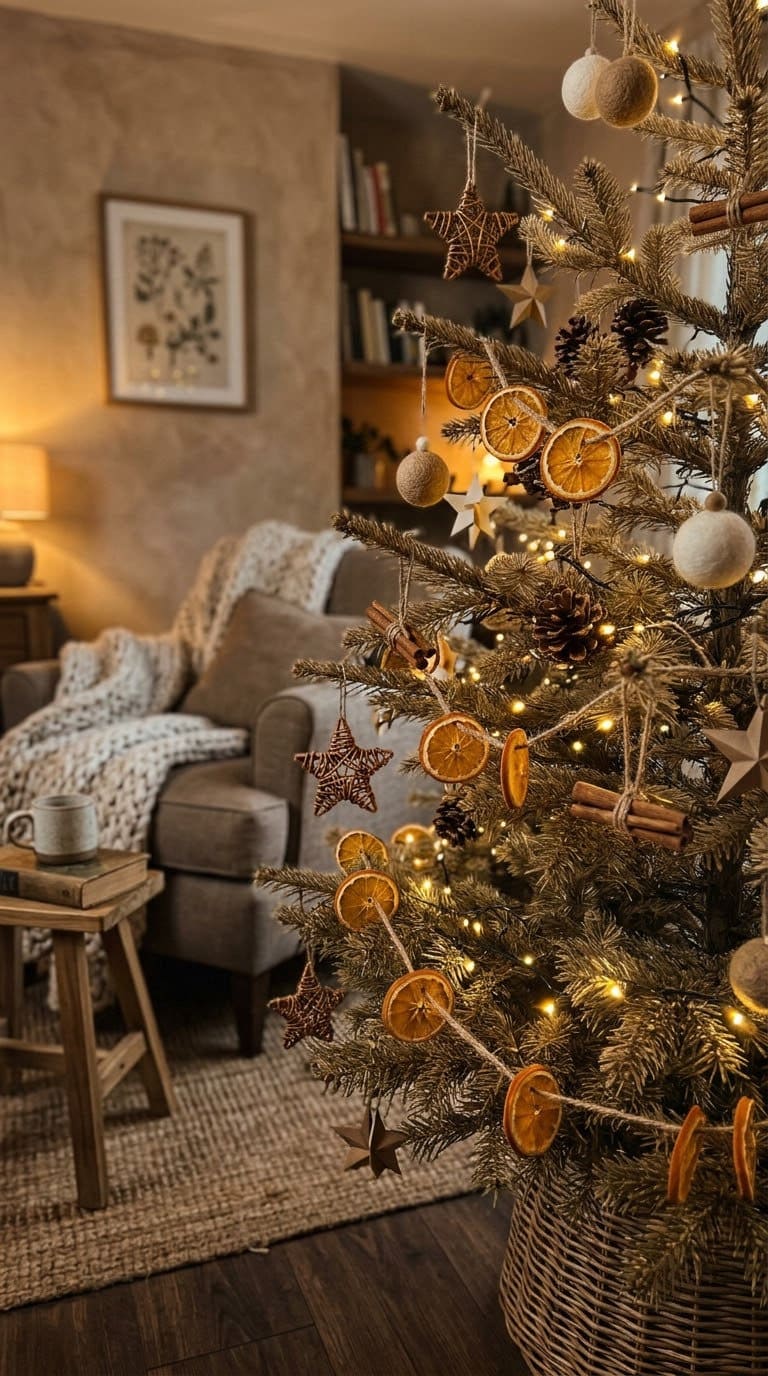
6. Dried Orange Slices and Cinnamon
The one that smells as good as it looks, with one caveat. Dry 15 to 20 orange slices in a low oven, thread them on jute, and tie cinnamon sticks in threes with twine.
Keep all of it away from bulbs. And keep it off the low branches, per the fire rules above, since it looks like food.
Budget: low. Our guide to decorating with things you can pick or forage has more in this direction.
7. Paper Stars and Folded Paper
The Scandinavian route, and the cheapest idea here. Use 10 to 12 folded paper stars in cream and kraft, in two sizes, plus a paper garland or two.
Hang the large stars deep, where the light comes through the paper. Budget: low, and most of it is one craft evening.
Keep paper well clear of bulbs. There’s more of this style in our Scandinavian Christmas ideas.
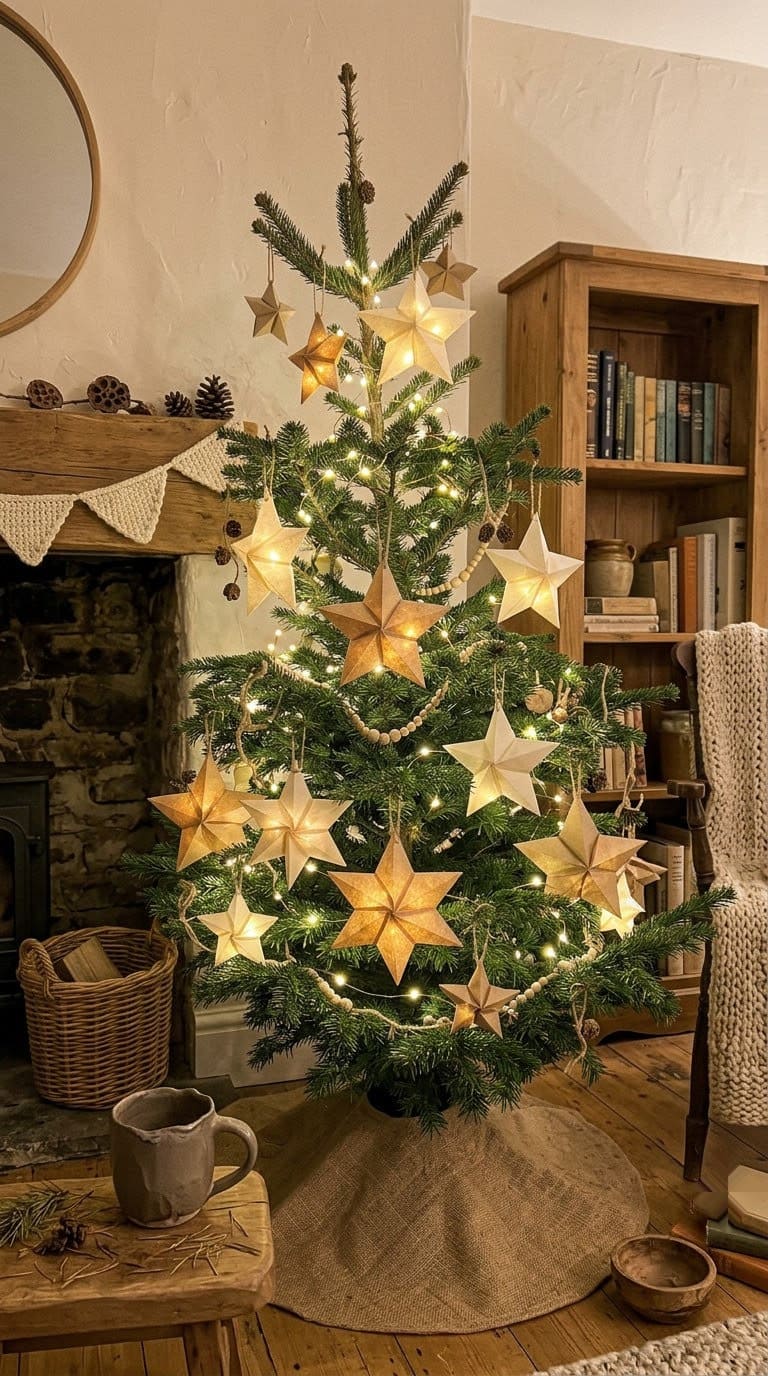
8. Wood Bead Garland and Jute Rope
Two materials, both cheap, both doing the texture job. Run a wood bead garland in loose swags and a jute rope in the opposite direction.
Use beads around 1 inch, and let each swag hang 6 to 8 inches deep. Budget: low.
This is also the best no-ribbon option, and two viewers asked for one under that tutorial. If ribbon puts you off, garland is the way around it.
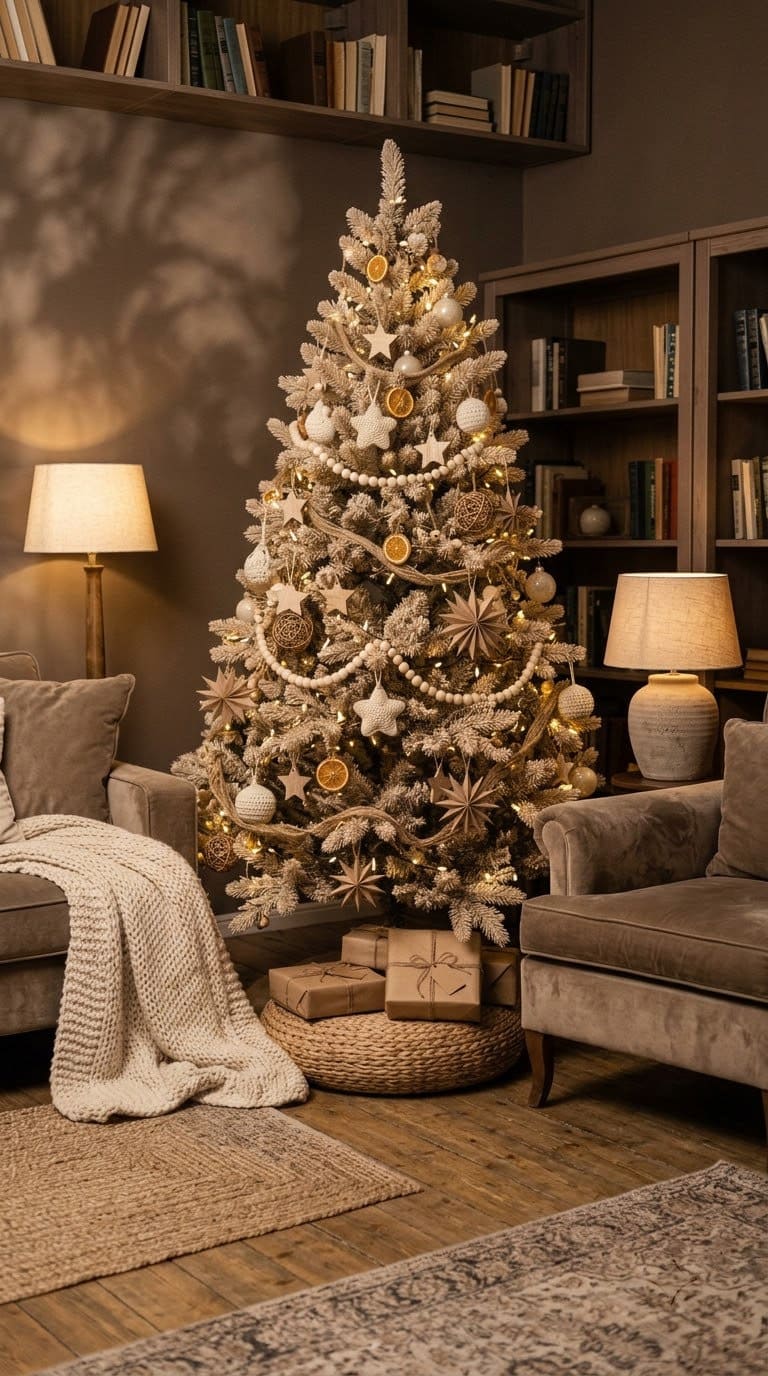
9. Dried Grasses and Wheat
The boho end of beige. Use 12 to 15 stems of wheat, bunny tail grass or dried fern, pushed in deep so the stems vanish.
Cluster them in threes, pointing up rather than drooping. Budget: mid.
Dried grasses shed, so set the tree up over a sheet and expect to vacuum. Keep them away from bulbs and candles, same as idea 6.
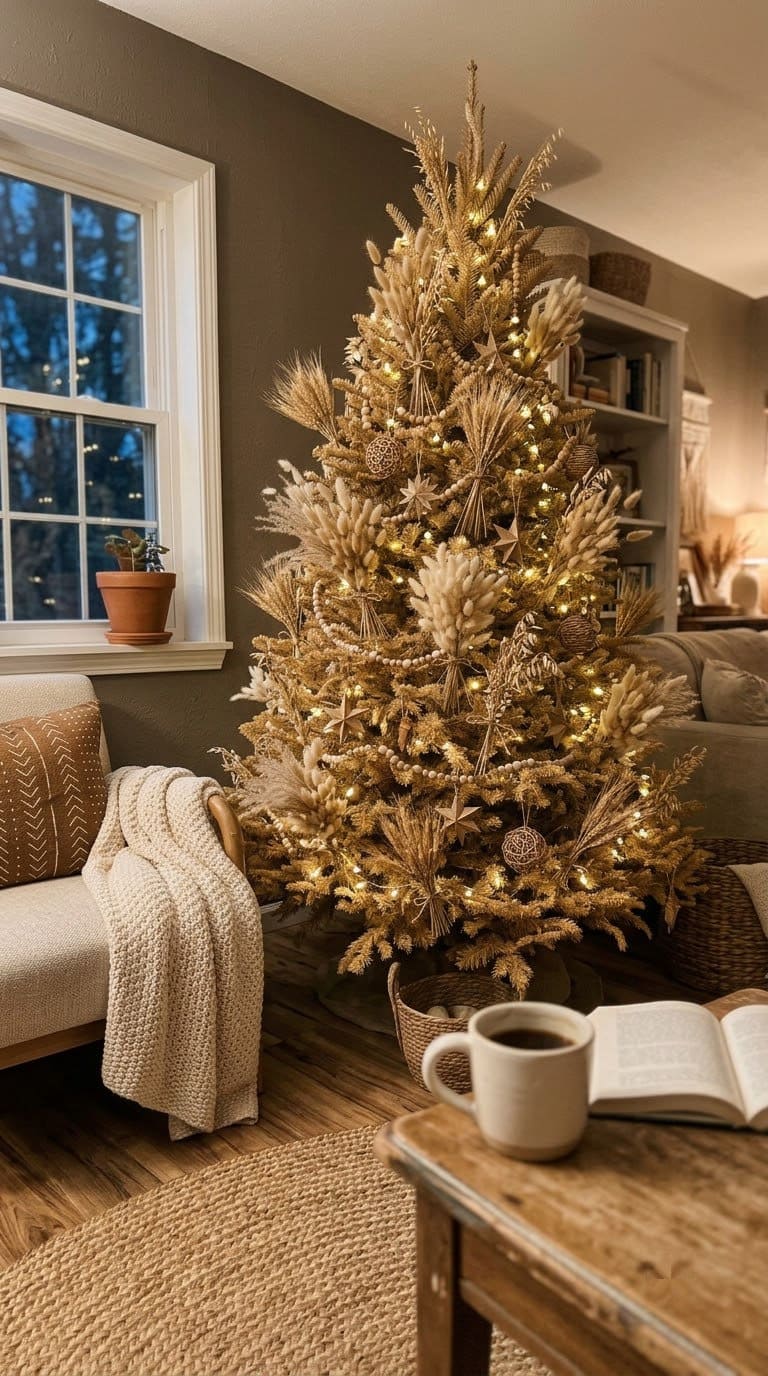
10. Bouclé and Knit Ornaments
The coziest idea, and the one that photographs best. Use 12 to 15 knit or bouclé balls in 3 to 4 inch, in two tones of cream and oat.
Mix them with something hard and shiny so the fuzz has something to play off. Budget: mid to invest, since knit ornaments cost more than plastic.
Pairs well with idea 2’s texture stack and idea 3’s black accents.
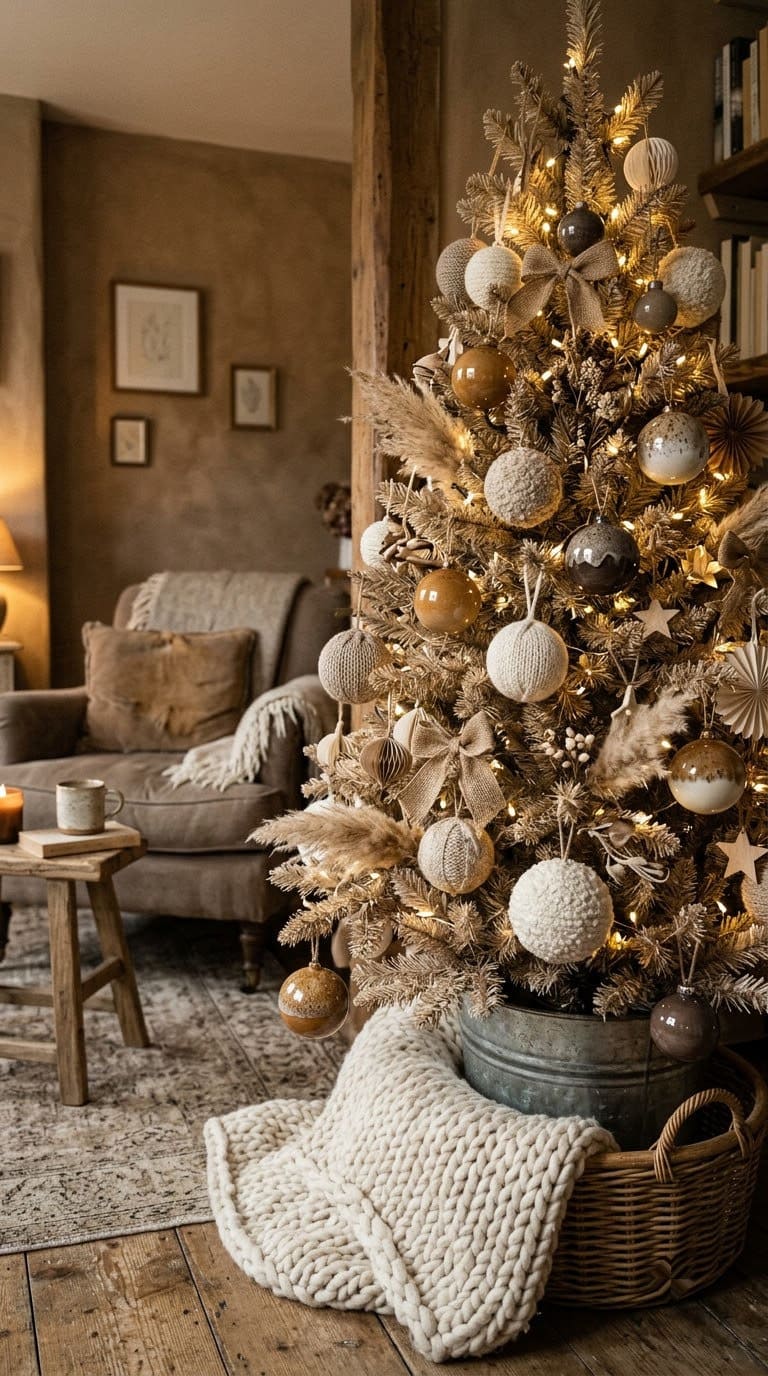
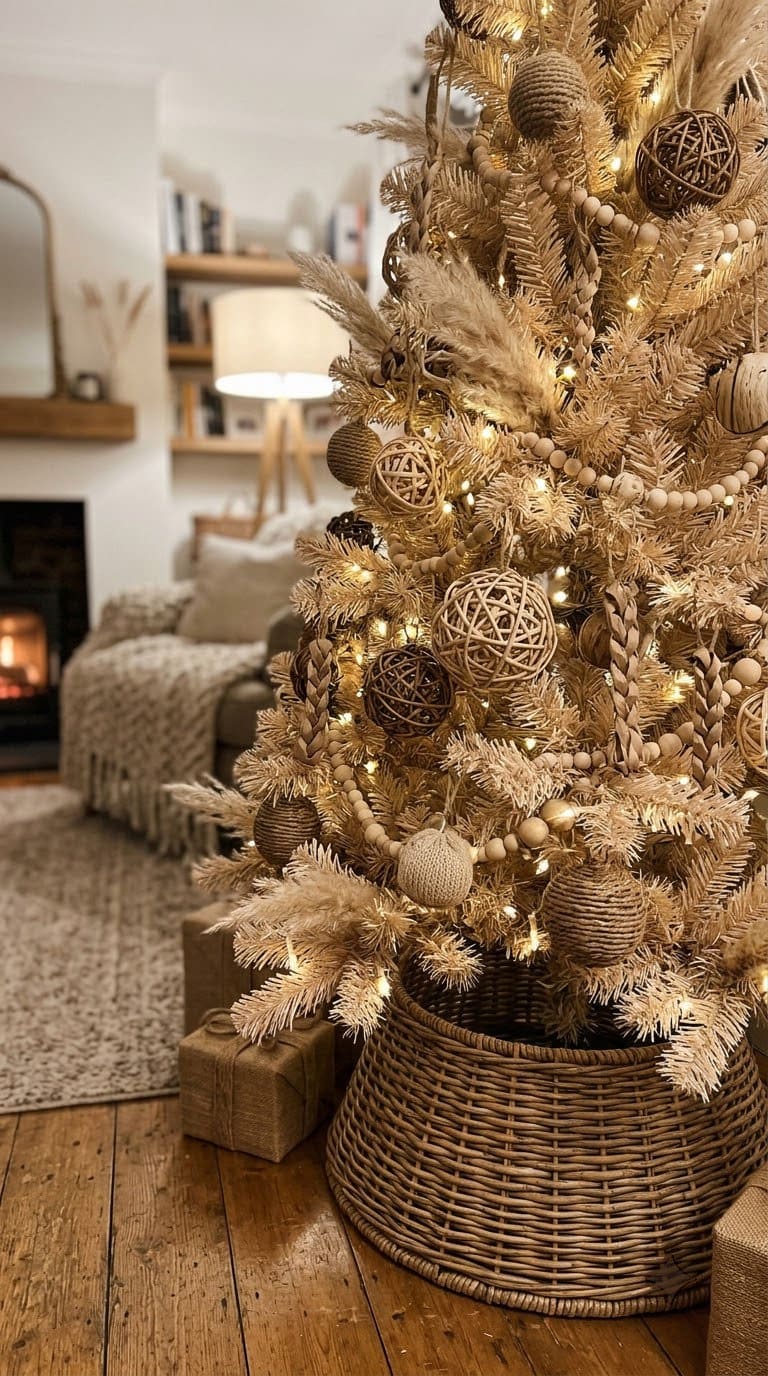
11. Wicker, Rattan, and a Woven Collar
Weave, top to bottom. Use 10 to 12 rattan or wicker balls in 3 to 5 inch, then swap the tree skirt for a woven basket collar.
The collar is the part people notice, and it hides the stand better than a fabric skirt. Budget: mid to invest.
Great in a room that already has baskets or rattan furniture. There’s a rustic cousin of this look in our rustic Christmas decor ideas.
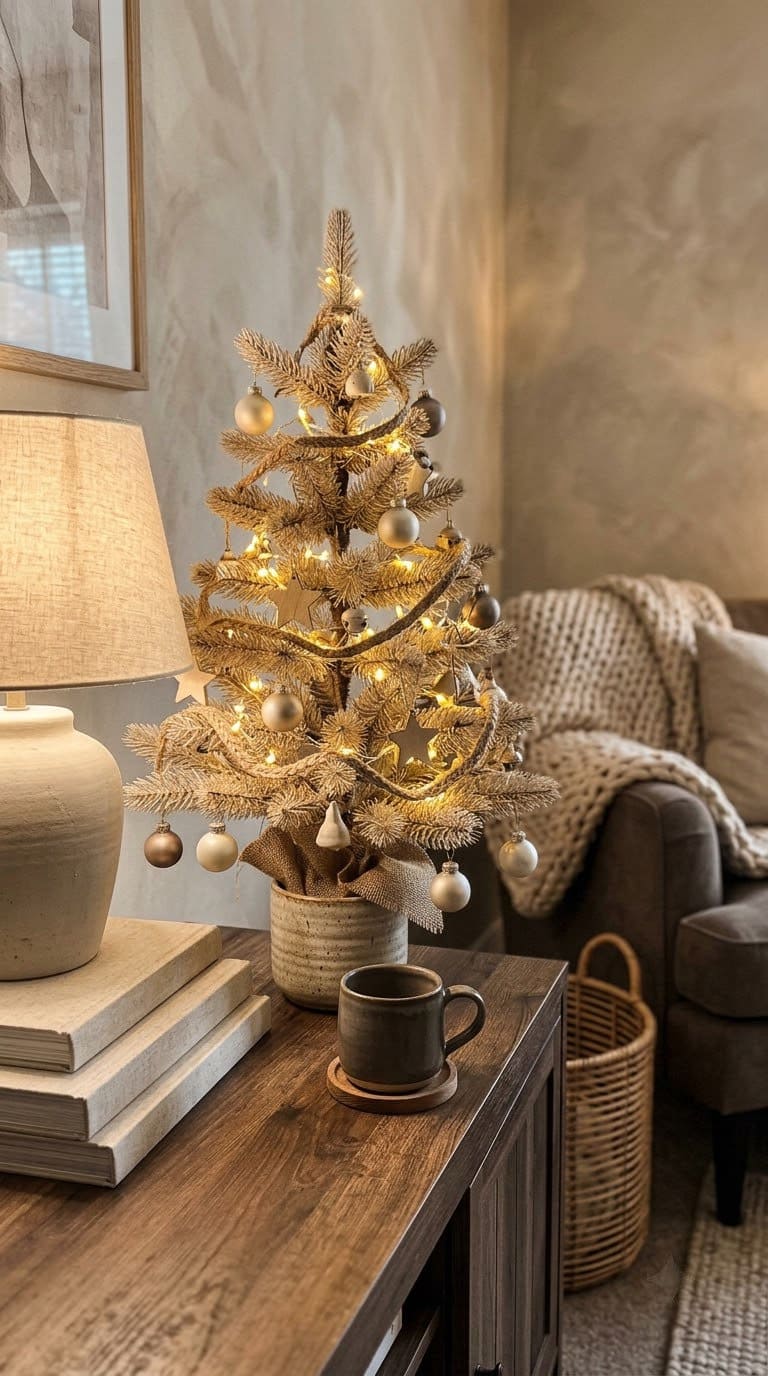
12. Tabletop Beige Tree
Everything above, at a quarter of the size. Use a 2 to 3 foot tree and 2 inch balls only, about 15 of them, plus one narrow jute garland.
Keep the light-to-dark ladder even at this size. A small tone-on-tone tree vanishes faster than a big one.
Budget: low. Good for renters and offices, and for anyone whose living room already has a full tree.
Do You Have to Decorate the Back of the Tree?
No, and a professional said so on camera. A viewer asked a tree shop whether they do the back, and the answer was refreshingly honest.
“Not usually,” they replied. “But it depends on your space. I probably do about 2/3 of the tree.”
That matters more on a beige tree than most. Your budget is going into texture, and texture is expensive, so spend it on the two thirds people see.
If your tree sits in the middle of a room, ignore all this. If it sits in a corner or against a wall, that back third is money you get to keep.
What Most People Get Wrong
The big one is buying more beige to fix a beige problem. It never works, and that invisible ribbon thread is the proof.
Those viewers were not being picky. They watched someone spend real money on a second ribbon the camera could not even find.
The second is skipping the dark end. People buy ivory, cream and oat, then wonder why the tree reads like fog. A quarter of the tree in deep taupe fixes it in one evening.
The third is cool white lights, usually because they came with the tree. Swap them out and the whole palette warms up.
And the fourth is leaning on florals so hard the tree stops being a tree. One viewer asked plainly for a version “with more ornaments and less floral.”
From what I have seen, stems should fill gaps rather than carry the design.
Your Two-Weekend Plan
Weekend one is sorting. Put the tree up, fluff it, and lay every neutral ornament you own on a bedsheet.
Then sort by value, not by color. Ivory, oat, camel, deep taupe, four piles.
You will probably own nothing in the darkest pile. That tells you exactly what to buy.
Weekend two is layering. Warm white lights on the inner branches first, then the darkest pieces deep near the trunk.
After that comes garland or ribbon, then the texture clusters, then the lightest pieces out at the tips.
Take a photo after each layer, and switch it to black and white if your phone will do that. A gray photo shows at once whether you have a value range or a fog bank.
Frequently Asked Questions
Why does my beige Christmas tree look flat?
Everything on it sits at the same lightness. Sort your pieces from ivory to deep taupe, and make sure about a quarter of the tree sits at the dark end.
Do I need to buy a beige tree?
No. Most beige trees online are green, white or flocked trees wearing a neutral scheme. A white tree is the easiest base to start from.
What lights go with a beige tree?
Warm white only. Cool white light drains the warmth out of beige and makes the whole tree read gray.
Is a beige Christmas tree out of style?
Flat beige is taking real criticism, and fairly. Designer Brandy Rinehart says the neutral holiday look is now “just… beige,” though a tree with a real light-to-dark range is a different thing.
What colors go with beige on a tree?
Black, walnut, sage or olive, burgundy, ochre and charcoal. Pick one, and keep it to about a quarter of the pieces.
Are dried oranges and wheat safe on a Christmas tree?
Keep them away from bulbs. Keep the tree three feet from any heat source, per Prince William County Fire & Rescue. And hang anything that looks like food up high, away from small children.
How do I get a neutral tree to look expensive?
Texture, not color. Use four surfaces, matte, shiny, woven and fuzzy, grouped in clusters rather than spread out evenly.
Can I do a beige tree without ribbon?
Yes. A wood bead garland and a jute rope running opposite ways give you the same movement, with none of the ribbon skill.
Do I have to decorate the back of the tree?
Not if it sits against a wall. One tree shop says it does “about 2/3 of the tree,” which is a sensible place to stop.
Related Posts
Products We Recommend
This post contains affiliate links. We may earn a commission on qualifying purchases at no extra cost to you.
Lunmon 64 Pc Neutral Christmas Ball Ornaments, Brown, Green and White
The value ladder in one box. Brown at the dark end, white at the light end, which is the whole fix in idea 1 and the part most neutral sets leave out
Shop Now
Syhood 9 Pc Jute Rope Wrapped Ball Ornaments, 2.36 Inch
The woven surface in the four-texture stack from idea 2, and the cheapest way to stop a neutral tree reading as all one finish
Shop Now
48 Ft Natural Wood Bead Garland
For the no-ribbon route in idea 8, which two viewers asked for by name. Long enough to run swags and a second pass in the opposite direction on a full-size tree
Shop NowNever miss an update — choose FarmFoodFamily as your preferred source on Google.
How it works: Tap the button below to open Google's settings page, then check the box next to FarmFoodFamily.
Tap the checkbox to turn it blue — that's how you know it's set.