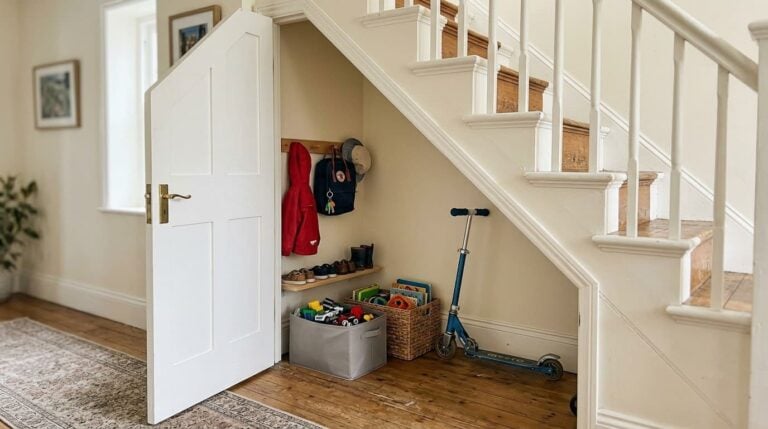
21 Smart Linen Closet Organization Ideas That Actually Stay Neat
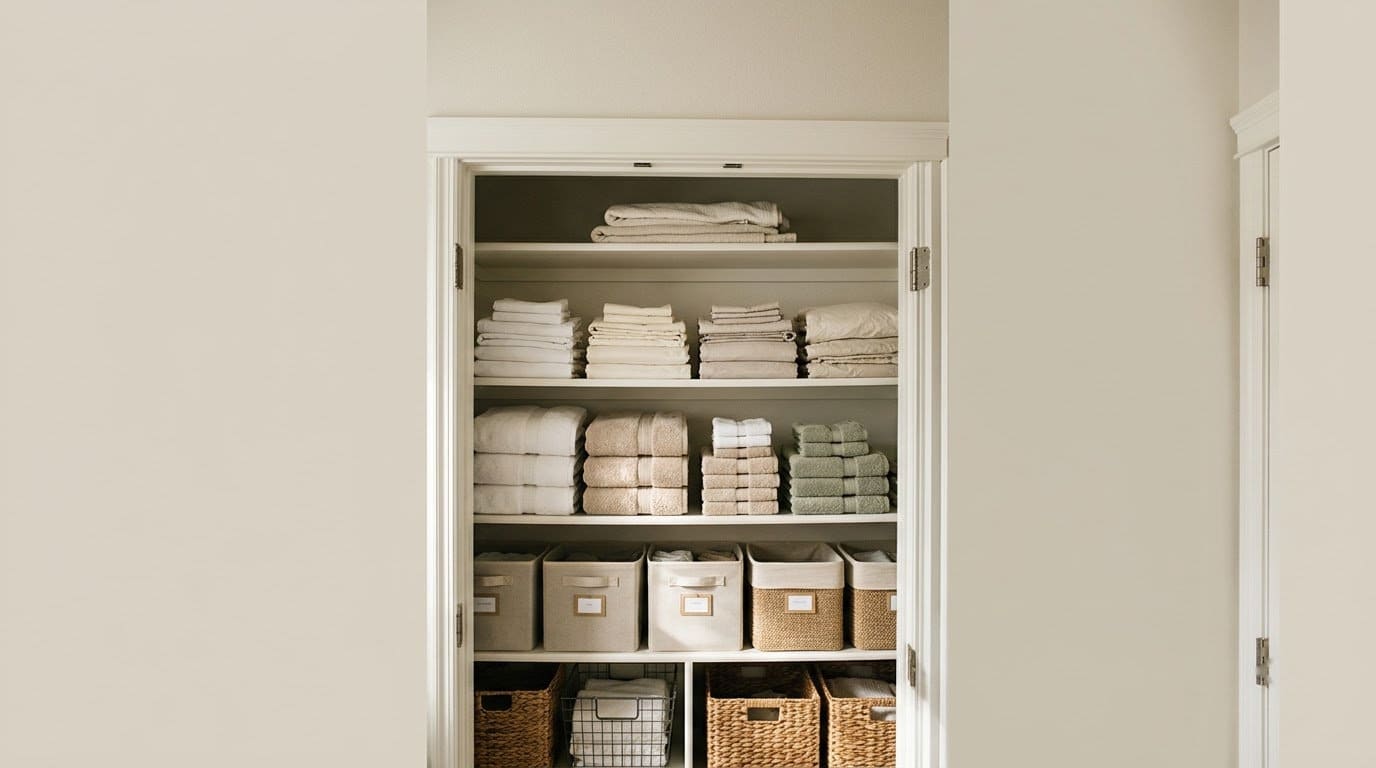
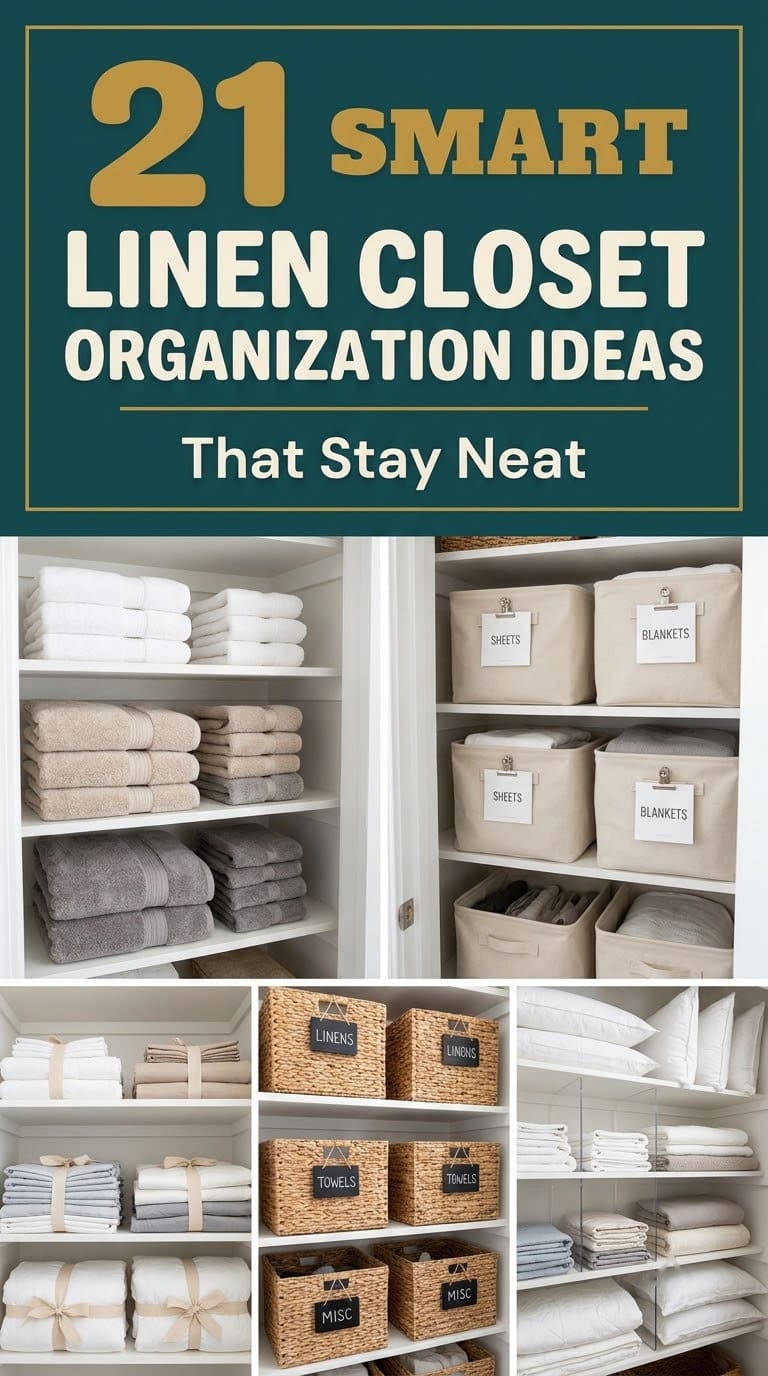
A linen closet stays neat when each shelf has a job, each bin has a label and nothing damp goes in.

Never miss an update — choose FarmFoodFamily as your preferred source on Google.
How it works: Tap the button below to open Google’s settings page, then check the box next to FarmFoodFamily.
Tap the checkbox to turn it blue — that’s how you know it’s set.
Open the linen closet door and something always slides out. Towels lean, sheets scatter and the fitted sheet wins every time.
We read what professional organizers say, then built 21 ideas around the real problems: sorting, stacking, humidity and safety. Most ideas come with a practical tip and a catch to know before you buy. For bathroom towels, see our towel storage ideas.
Quick Answer
Start by emptying the closet and sorting everything. Toss torn or stained items, and keep two sheet sets per bed, the one in use and a spare.
Then give each shelf a job. Put daily towels and sheets at eye level and just below, and bulky blankets up high or down low. Bundle each sheet set in its own pillowcase, and label every bin on the outside.
But don’t skip the unglamorous parts. Keep the closet dry, because damp linens grow mildew, and keep medicines and cleaners well out of children’s reach.


Start with your biggest annoyance. If stacks lean, add dividers. If sets get separated, use pillowcase bundles.
Below are 21 ideas for every closet size and budget, from deep shelves to a narrow hall cabinet. Most come with a practical tip and a catch.
Before You Start
Empty the whole closet onto a bed. Sort it into keep, donate and toss, and check each item.
Professional organizer Jenny Dietsch of Getting it Done Organizing told Real Homes to purge first and get rid of anything torn, stained or unusable. Organizer Rivka Davidowitz of Organize It adds that every client’s space differs, so there is no right or wrong answer.
Measure your shelves before you buy anything. Write down the depth, width and the height between shelves. That one list will save you from returning bins.
Here’s how we’d scale it by budget.
| Level | What you do | Good for |
|---|---|---|
| Renter ($) | Fabric bins, shelf dividers, an over-the-door organizer | Apartments, hall cabinets |
| Refresh ($$) | Adjustable shelves, matching baskets, labels | Most closets |
| Build ($$$) | Custom shelving and a new door | Remodels |
Two safety rules apply to every idea. First, keep humidity down. The EPA says to keep indoor humidity below 60 percent, ideally between 30 and 50 percent.
Second, keep medicines up and out of reach. The CDC says to store medicines, vitamins and supplements where children can’t reach or see them, and to put them away after every use.

Each divider is 11 inches long and 8 inches tall and fits shelves 0.4 to 0.95 inches thick. It suits idea 8. Rated 4.6 stars from 595 ratings.
Shop NowThis post contains affiliate links. We may earn a commission on qualifying purchases at no extra cost to you.
21 Linen Closet Organization Ideas
1. Empty Everything and Sort
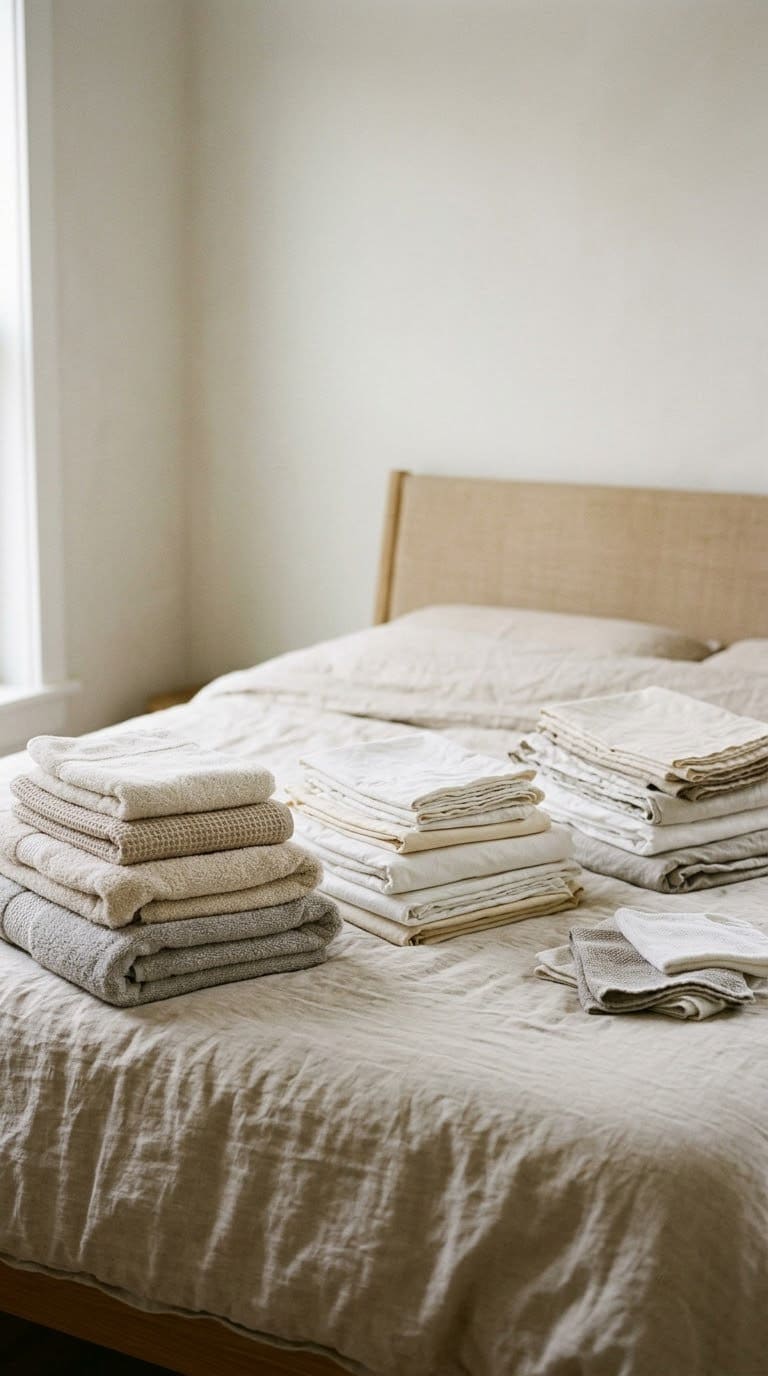
Every good closet starts with a blank slate. Pull out every towel, sheet and blanket.
Sort into three piles: keep, donate and toss. Torn, stained and bleach-spotted items go in the toss pile, and unused extras go to donation.
Organizer Jenny Dietsch suggests storing sentimental items, like baby towels, with your other heirlooms instead of the daily shelves.
Do it in one sitting. Half-sorted piles tend to drift back onto the shelves.
2. Keep Two Sheet Sets Per Bed
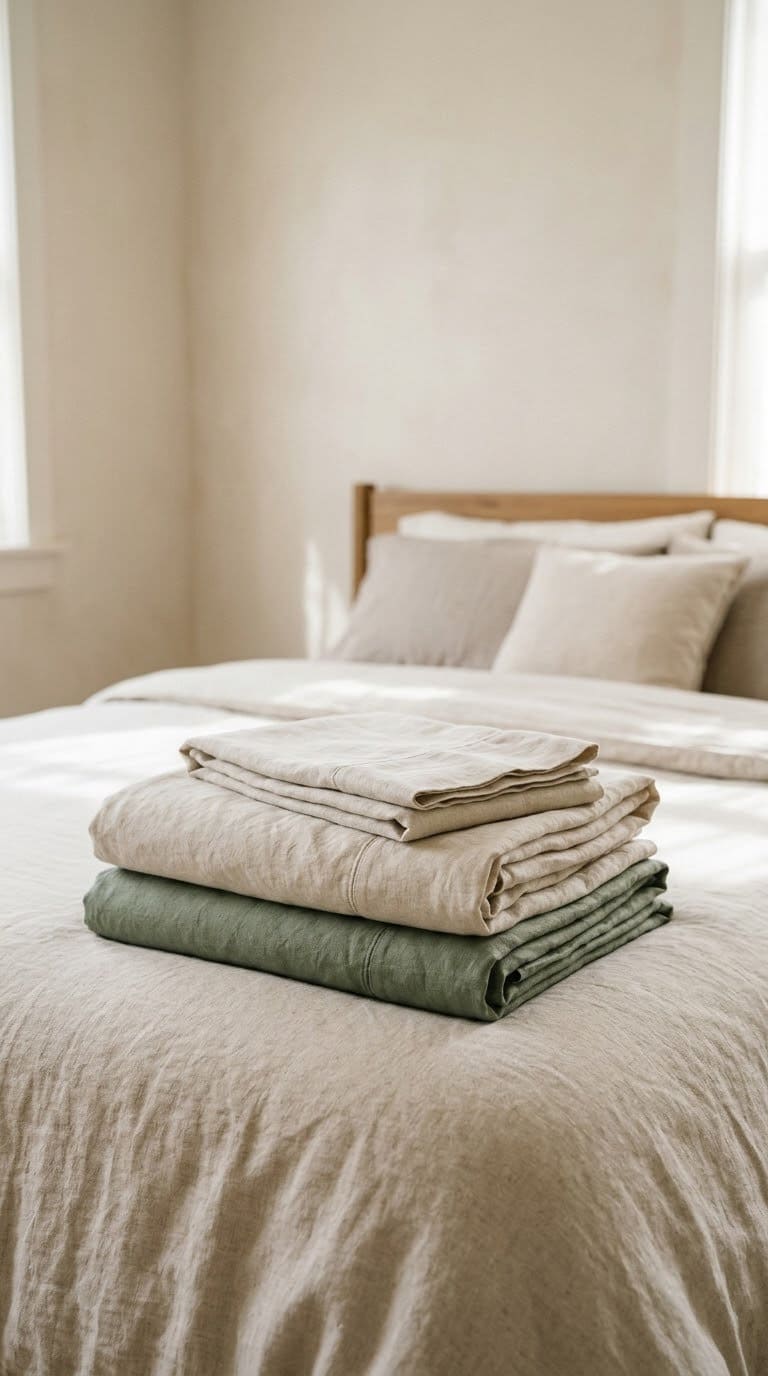
Consumer Reports advises two sheet sets per bed, the one in use and a spare. That’s enough to get through laundry day.
Count what you own and donate the extras. Fewer sets means smaller stacks that stay straight.
Spare sets for guests are fine, but they don’t need prime shelf space.
Seasonal flannel sets can ride in the spare slot when the weather turns.


3. Set Your Zones Before You Buy
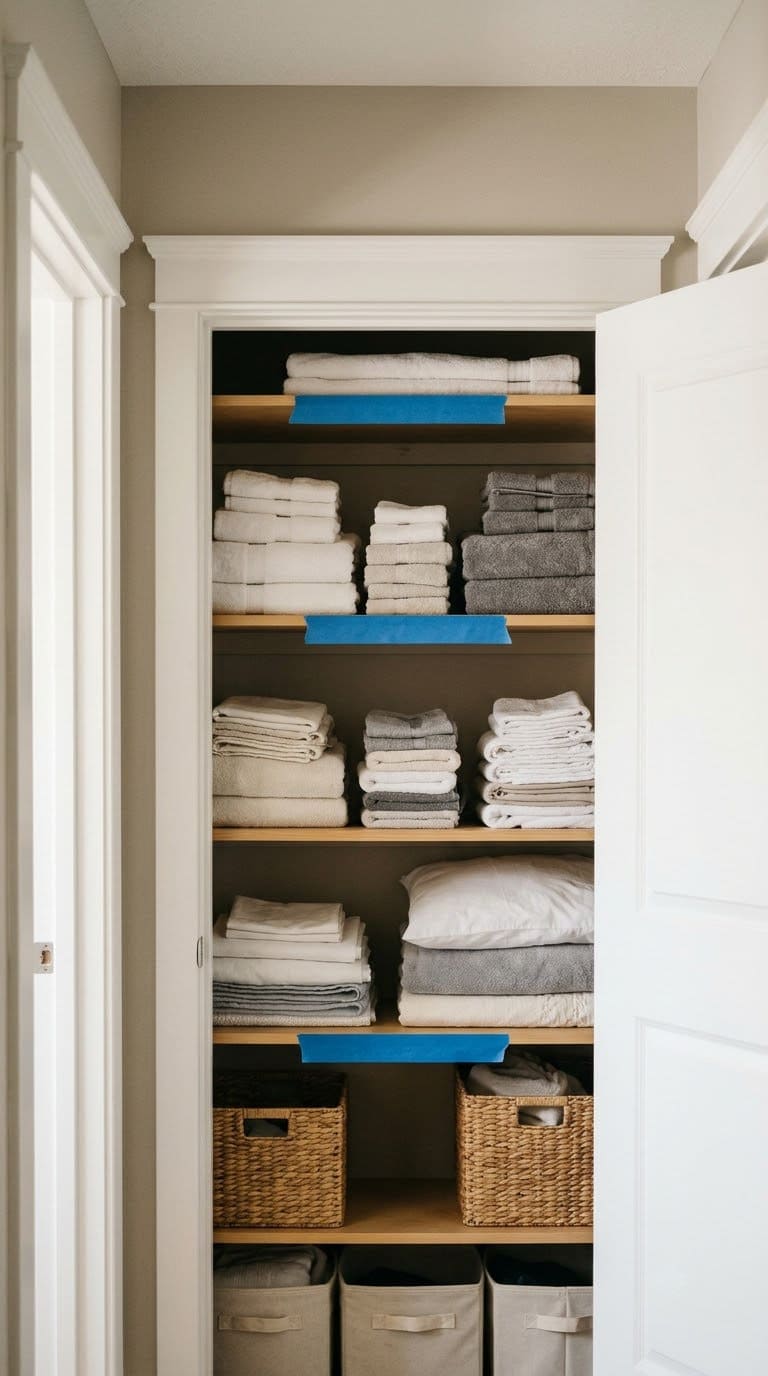
Decide which shelf holds what before you spend a cent. Mark the zones with tape if it helps.
Hunker calls this the reach-in rule: put the most-used items where they’re easiest to grab. Consumer Reports agrees and says to put frequently used items at eye level and just below.
Rarely used items belong up high or down low. A shelf plan prevents impulse buys that don’t fit.
Take a photo of your plan. You’ll thank yourself when it’s time to restock.
4. Eye-Level Shelf for Daily Towels and Sheets
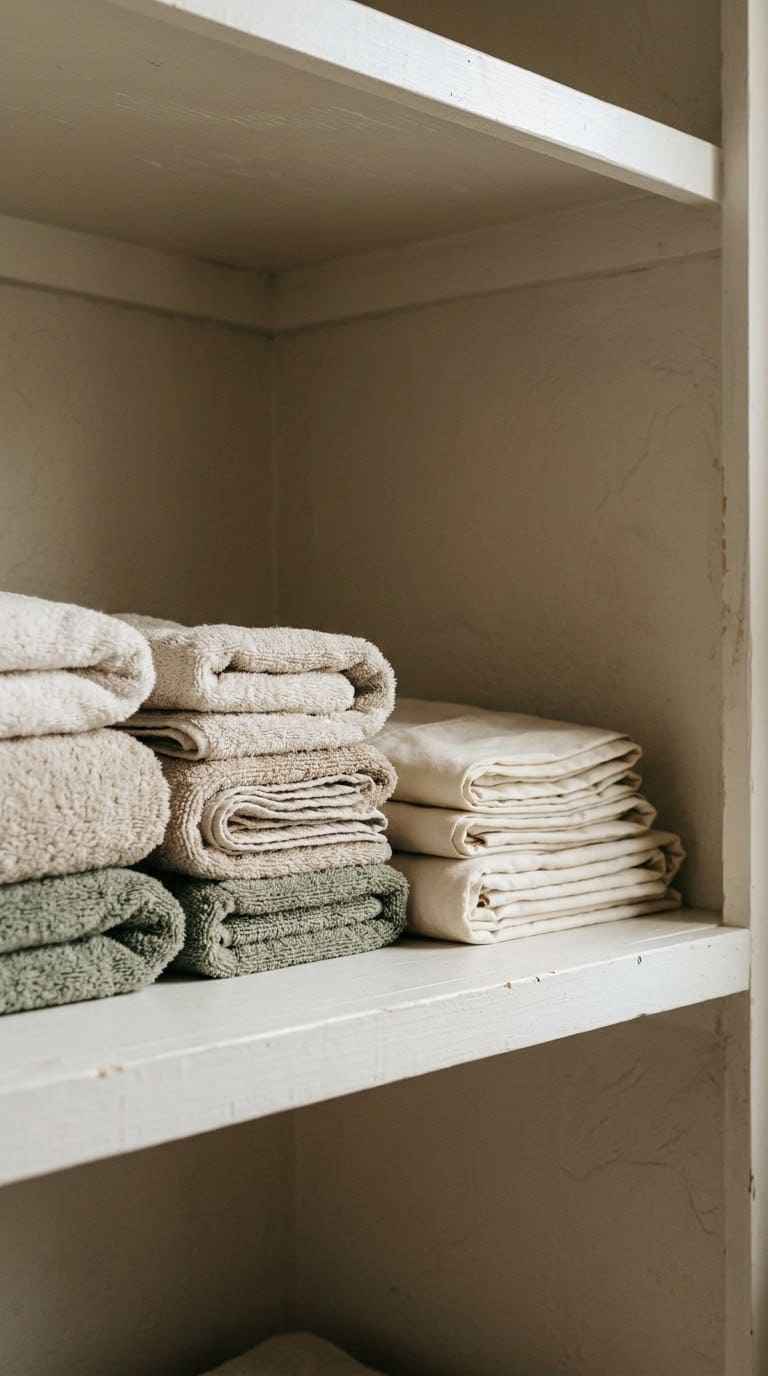
The shelf at eye level is prime space. Give it to the towels and sheets you use every week.
Stack towels with the folded edge facing out, as Hunker suggests. That makes stacks look tidy and easy to pull from.
A tall stack can lean, so keep stacks short. Use a shelf divider (idea 8) if they tip.
Put the freshly washed linens at the back and move older ones to the front. This keeps items rotating.
5. Top Shelf for Seasonal Bedding
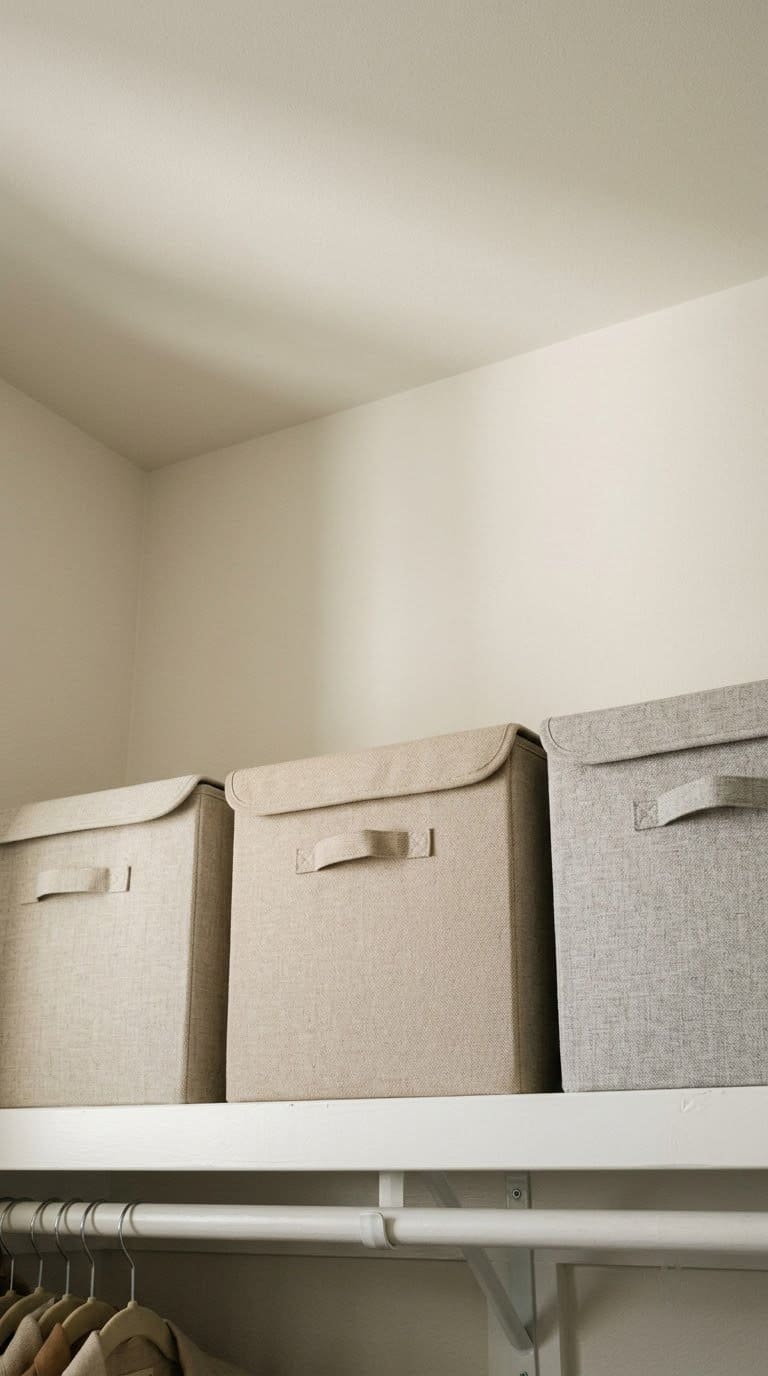
Use the highest shelf for the things you need a few times a year. Winter blankets, extra pillows and guest bedding all fit.
Consumer Reports suggests bulky rarely used items go on upper shelves or the floor. Put them in lidded bins to keep dust off.
You’ll need a step stool, so keep it nearby. Don’t store heavy items overhead.
Label the front of each bin with the season. It saves digging.
6. Bottom Shelf for Bulky Blankets
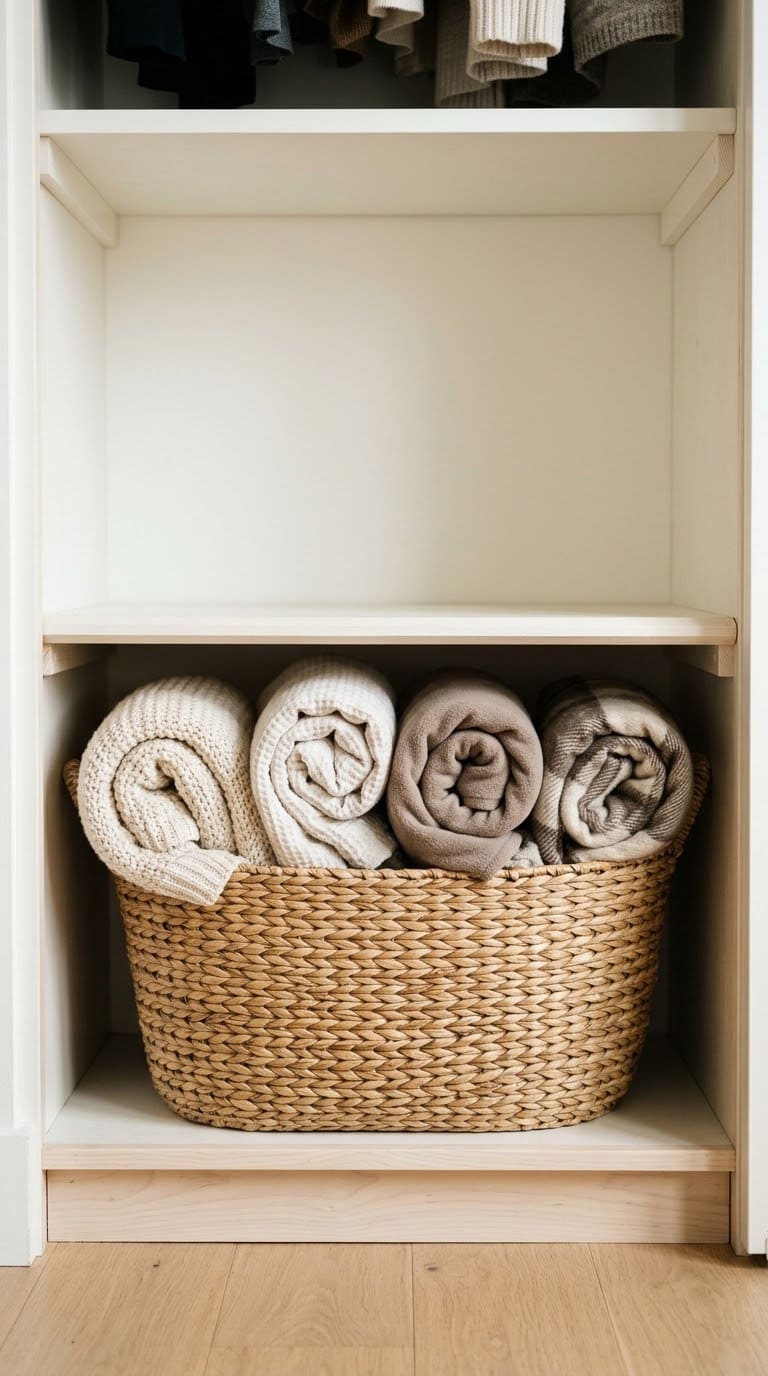
The bottom shelf or floor holds the big, heavy items. Large baskets work well for blankets and comforters.
Hunker suggests rolling and tying a comforter and keeping it in an oversize basket. A rolling bin on wheels slides out for easy access.
Heavy items stay safer near the floor. Leave gaps so air can move.
Check the floor for moisture. A damp floor is the wrong place for fabric.
7. Adjustable Shelves or Shelf Liners
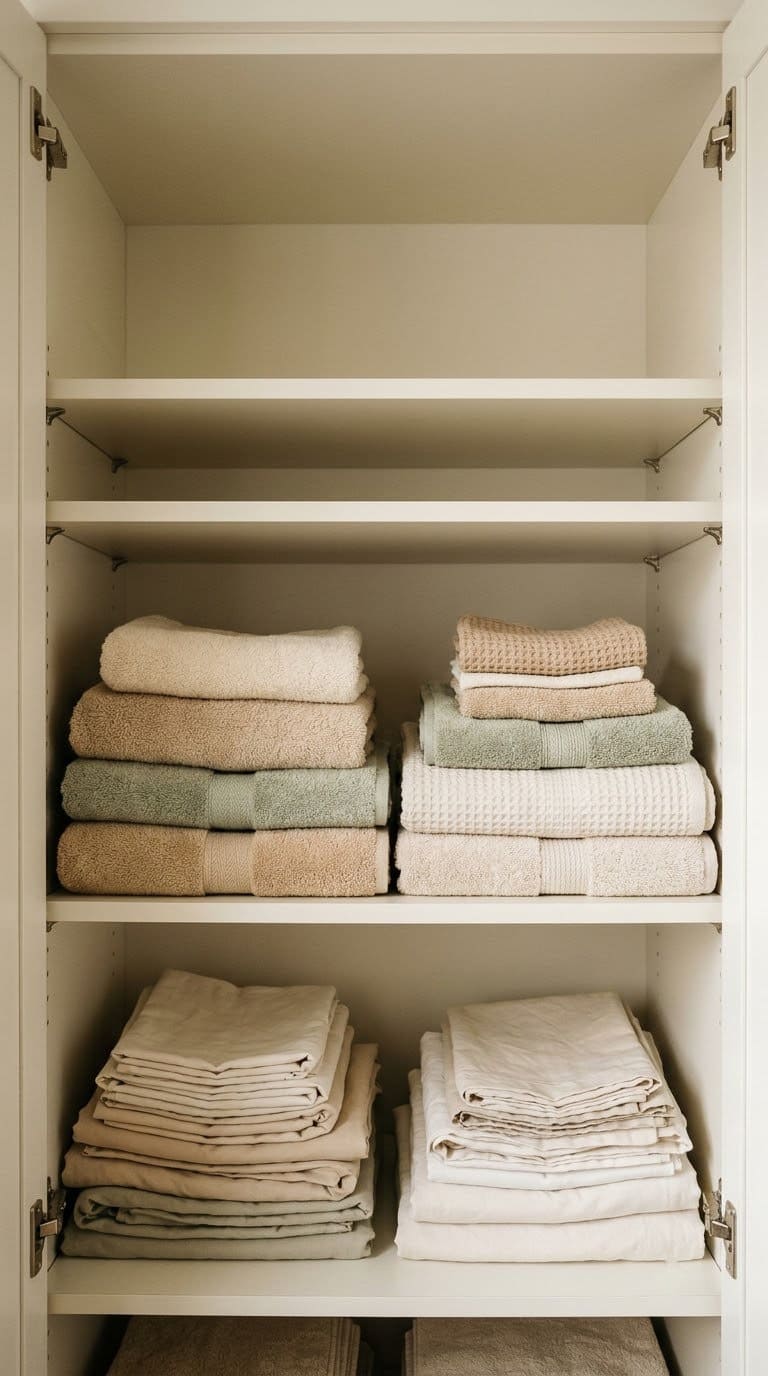
Fixed shelves rarely match your linens. Adjustable shelves let you set the height to fit.
Measure the stacks you want to store. Leave a couple of inches of headroom above each so you can slide items out.
Check the weight limit before you load a shelf. A bowed shelf is a warning sign.
If you can’t change the shelves, add a liner. It protects the surface and makes the shelf easy to wipe.
8. Shelf Dividers to Stop Leaning Stacks
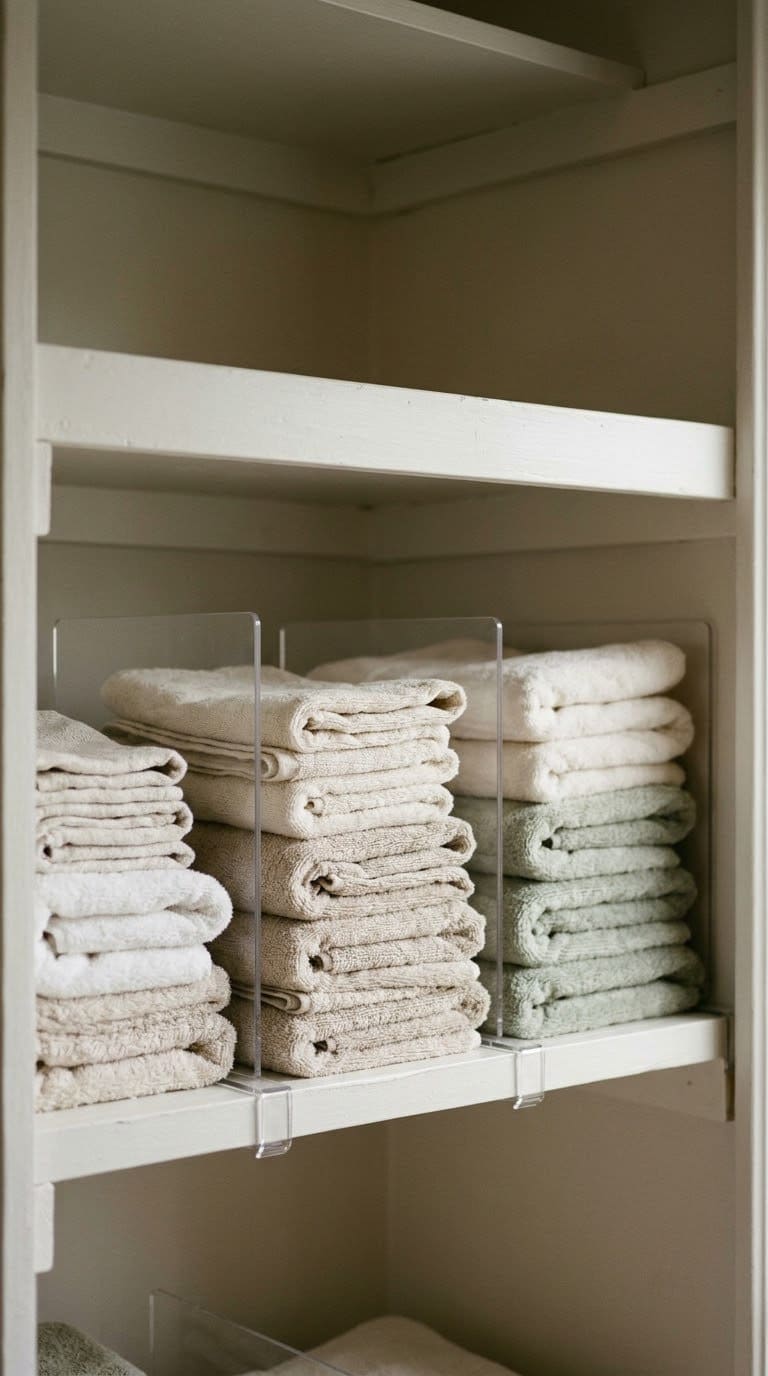
Dividers split a wide shelf into sections so stacks stay put. They also stop towels from sliding into the sheets.
Our product pick is 11 inches long and 8 inches tall and clips on shelves 0.4 to 0.95 inches thick. Check your shelf thickness first.
Dividers don’t help with soft, floppy items. Use them for flat stacks.
Pair them with labels (idea 9) so each section has a clear job.
9. Label Shelf Edges
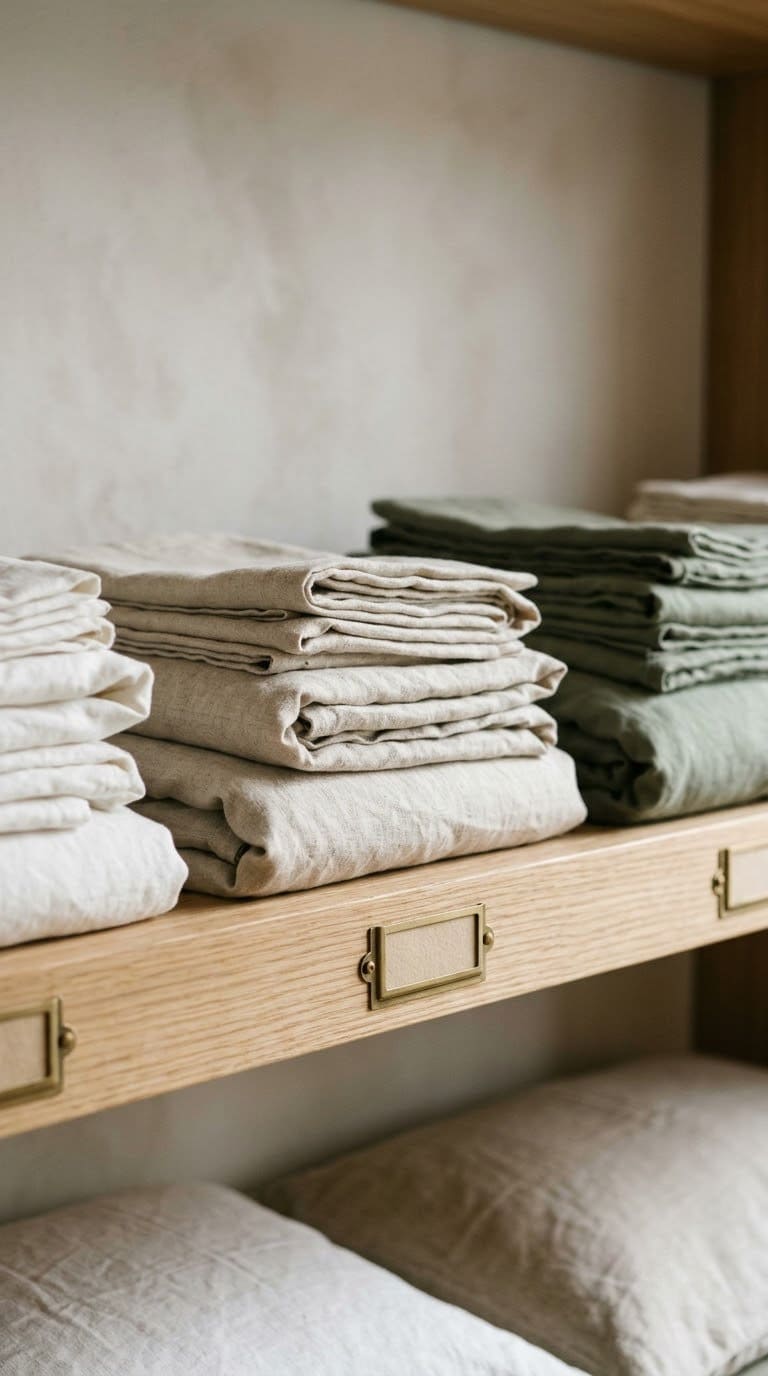
Labels make a system last because everyone can follow it. Hunker suggests labeling shelves or baskets by towel size.
Organizer Kasey Moore of Moore Organized says to label each basket. Add labels for bed size or room on sheet sets.
Use a label maker or removable tags. Permanent marker on a shelf is hard to change.
Choose one label style and use it everywhere. It looks neater and is easier to learn.
10. Sheet Sets Inside Their Own Pillowcase
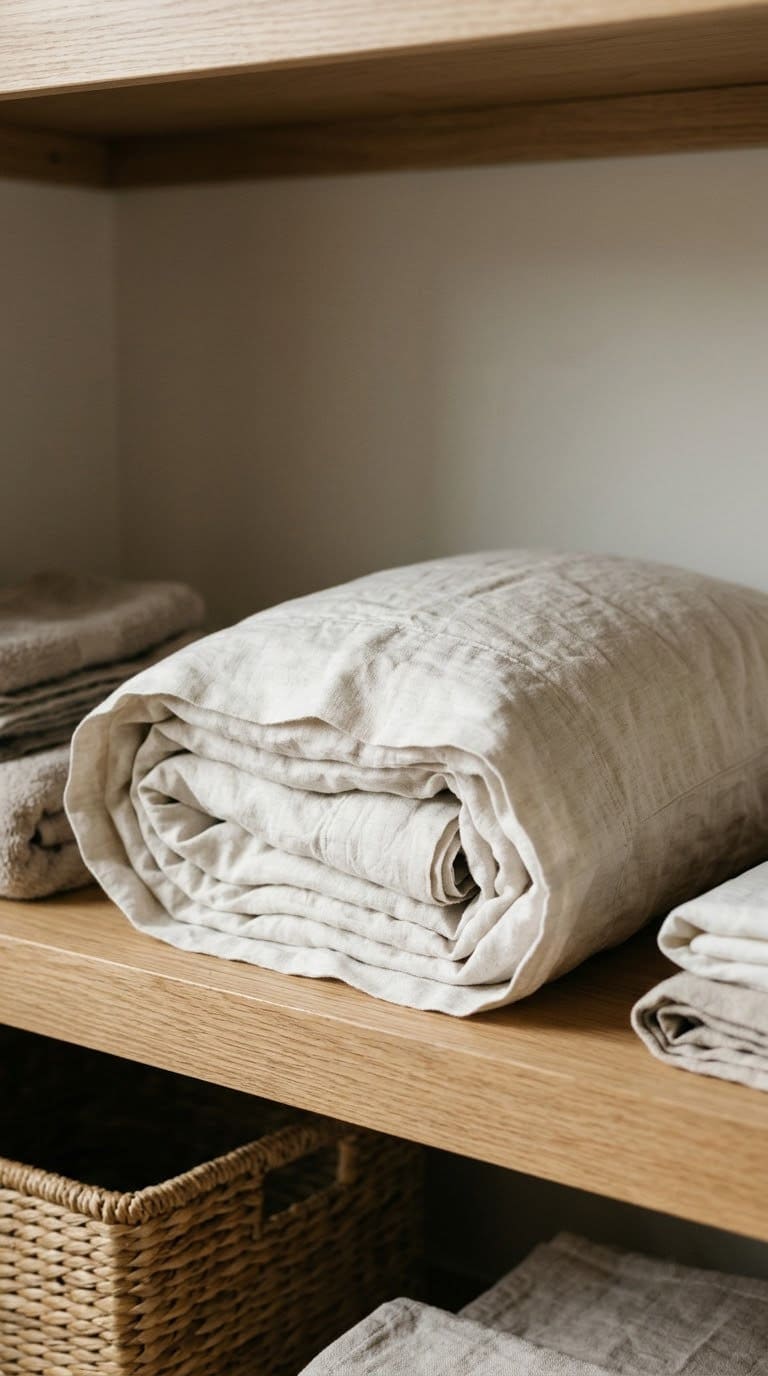
This is the single best trick for sheets. Fold the flat sheet, fitted sheet and spare pillowcase and tuck them in one matching case.
Certified professional organizer Amy Tokos, president of NAPO, recommends this in Consumer Reports. The set stays together, and you pull out one bundle.
Hunker says the same, and suggests labeling the bundle by bed size or room.
Stack the bundles with the opening facing out so the case doesn’t unfold.
11. Fold Towels With the Folded Edge Out
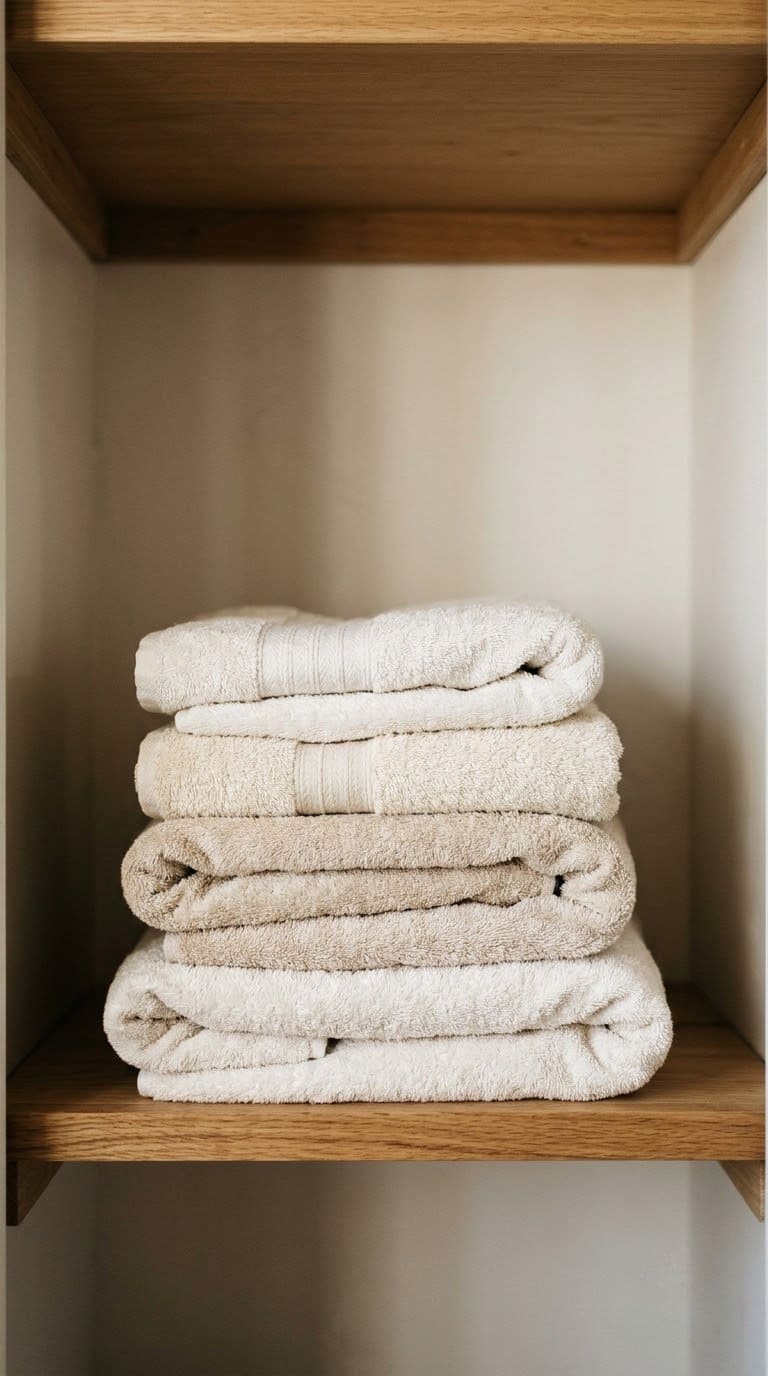
A clean edge out makes a stack look tidy and keeps the loose edges hidden. Hunker recommends this for towels and sheets.
Fold bath towels in thirds, then in half. Match the size of each stack to your shelf depth.
The catch is that a deep shelf hides what’s at the back. Use a basket to pull items forward.
Keep one stack per towel size so you don’t dig through the pile.
12. Roll Towels in a Tight Closet
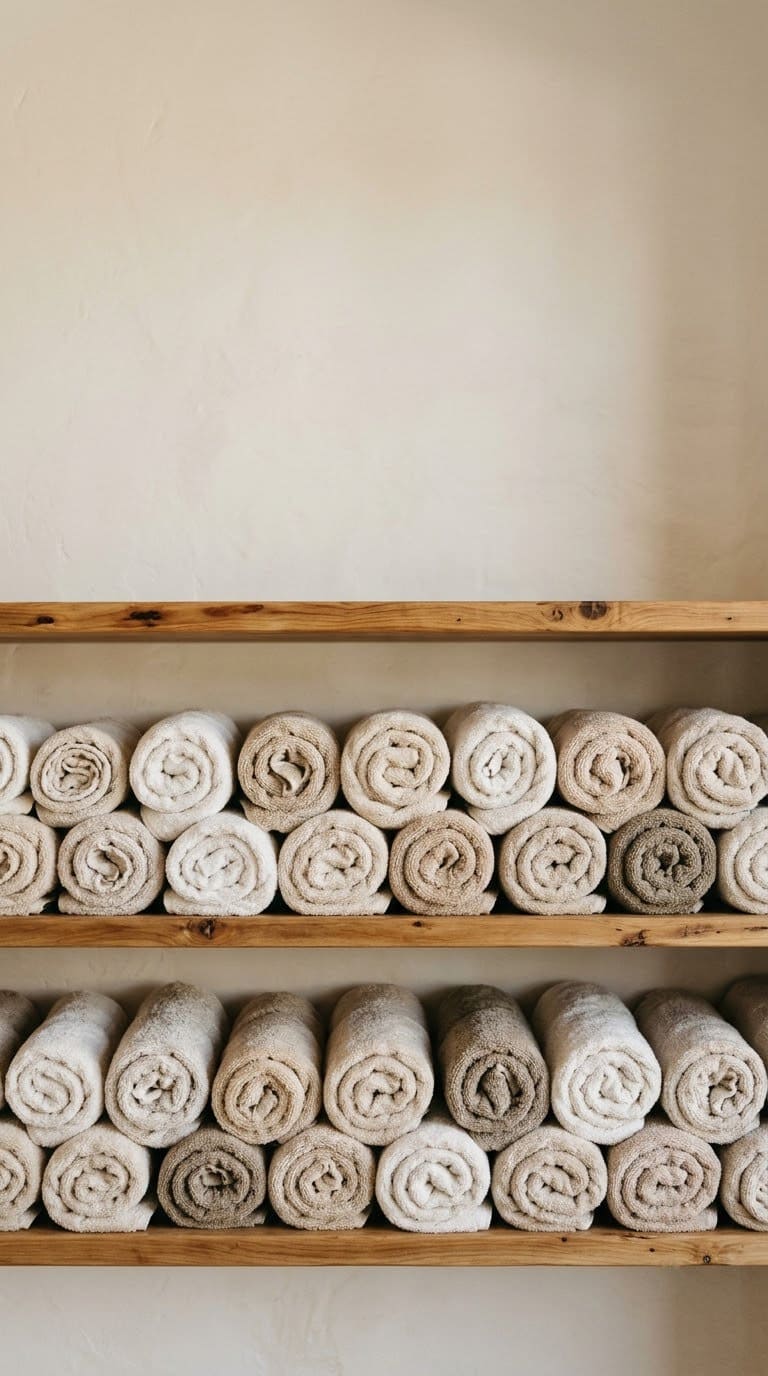
Rolling saves vertical space and can look sleek. It also makes towels easy to grab one at a time.
Roll tightly and place the seam side down. Line them up in rows like a spa.
Rolled towels take up more shelf width than flat stacks. Measure first.
Mix it up: roll bath towels and fold the rest.
13. Stand Small Items Upright in a Basket
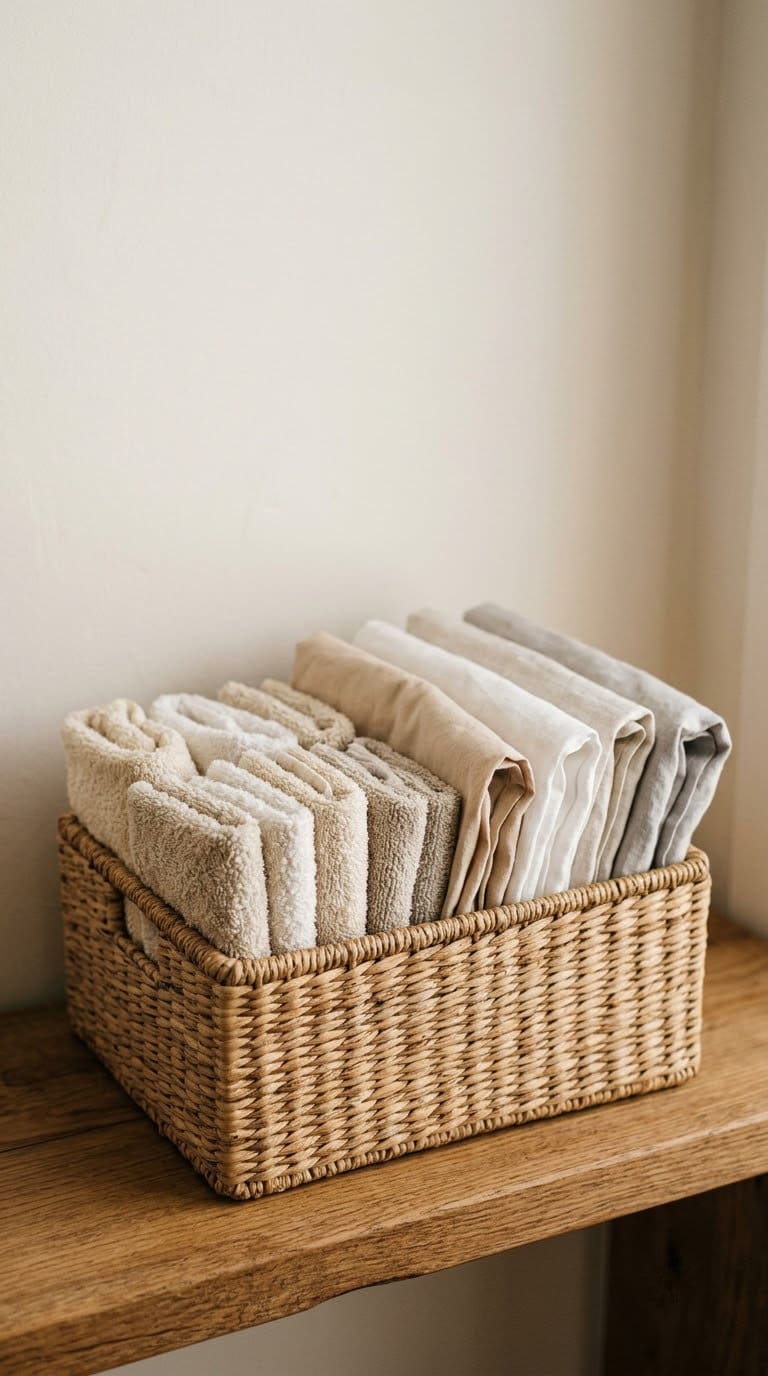
Small linens flop over when stacked. Fold or roll them and stand them upright in a basket.
Consumer Reports suggests washcloths go in a rectangular basket. Hunker also recommends standing small items upright.
Choose a basket sized to your shelf. A rectangular one wastes less space than a round one.
You can see every item at a glance, which keeps the basket from becoming a heap.
14. Roll and Tie a Bulky Comforter
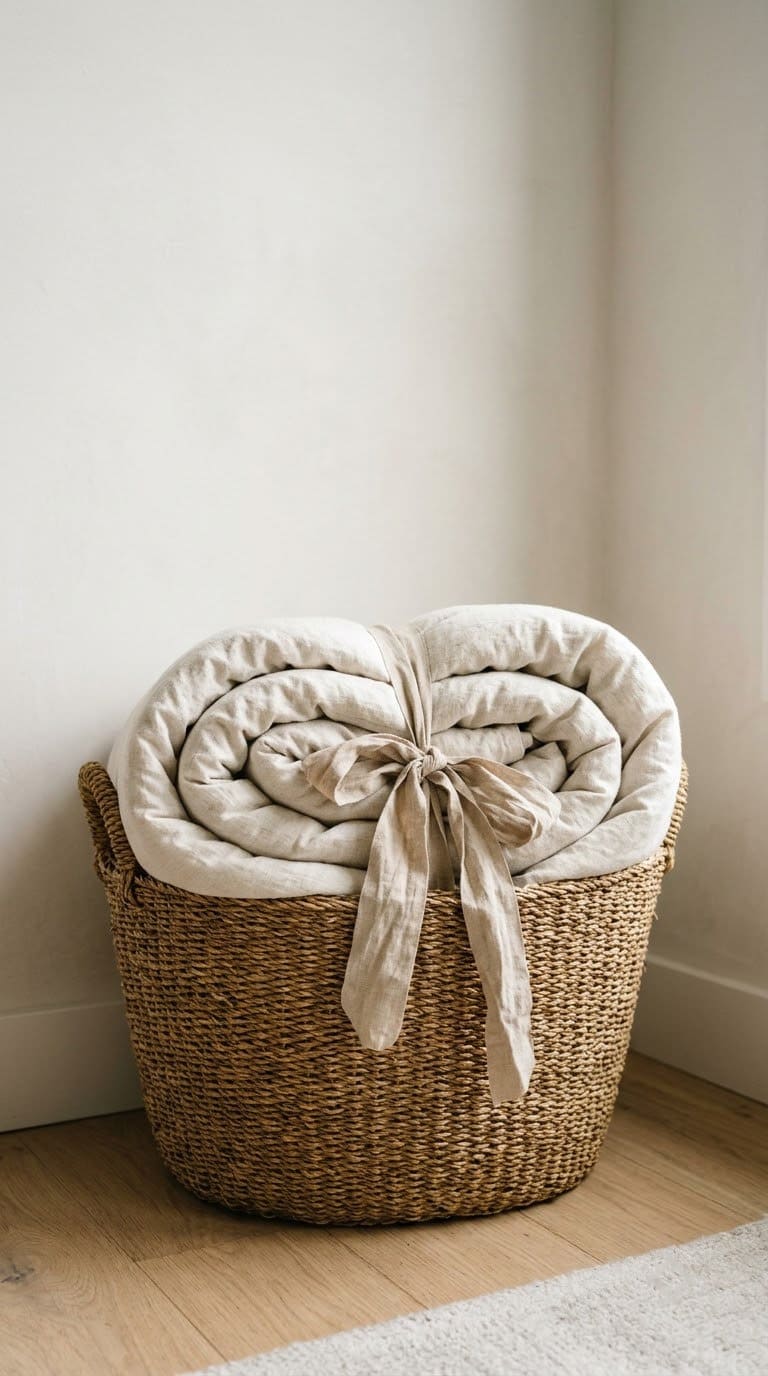
A rolled and tied comforter takes less space than a folded one. Tie it with a strap or a wide ribbon.
Hunker suggests storing it in an oversize basket or a bin on wheels. Make sure the comforter is clean and fully dry first.
Store it where air can circulate. Avoid sealing it in plastic for long periods.
Label the basket with the bed size.
15. Opaque Lidded Bins for the Jumble
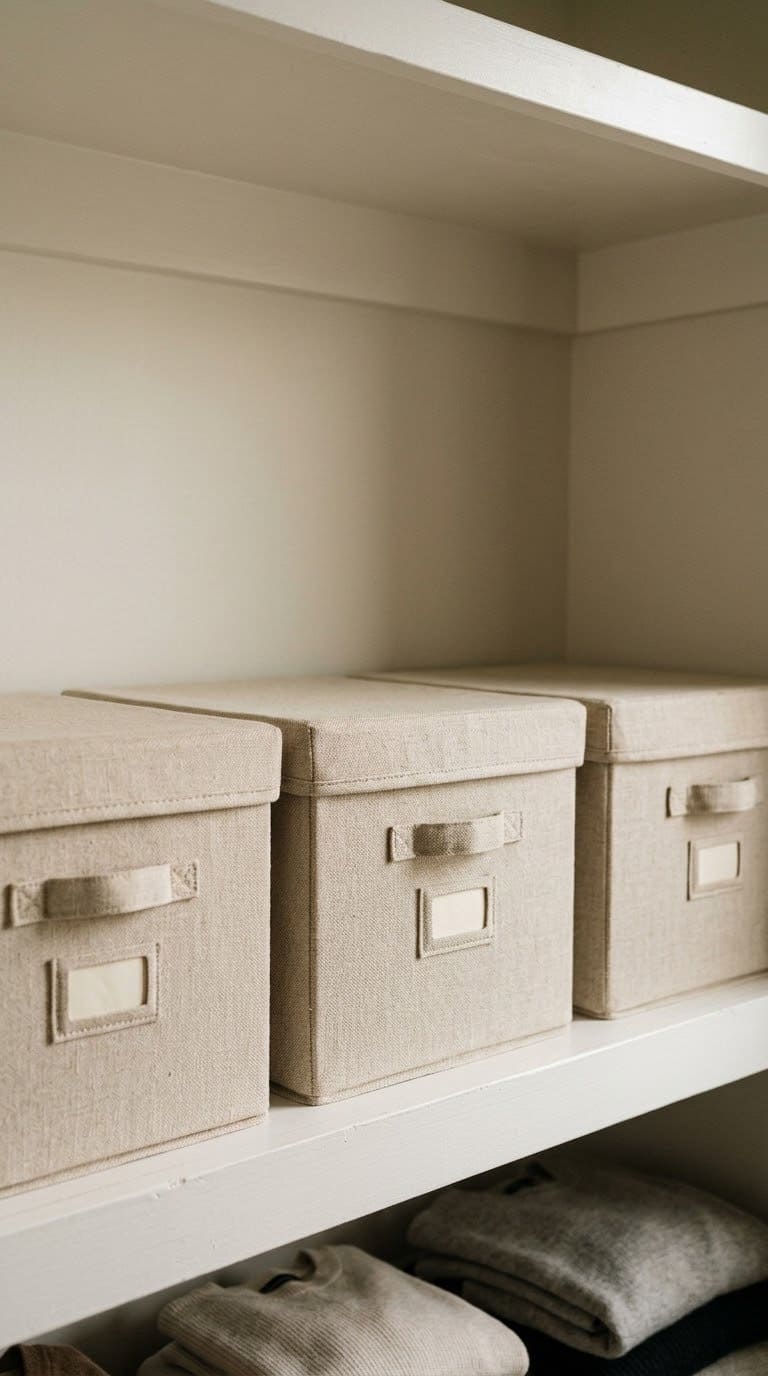
Not everything looks neat out in the open. Consumer Reports advises opaque small bins that hide the jumble inside, labeled on the outside.
Use them for hair ties, spare toiletries and travel items. A lid also keeps dust off.
Our product pick is a foldable, stackable lidded fabric bin. Measure your shelf before you buy a set.
Hunker suggests mixing open and closed storage.
16. Clear Bins for Backstock
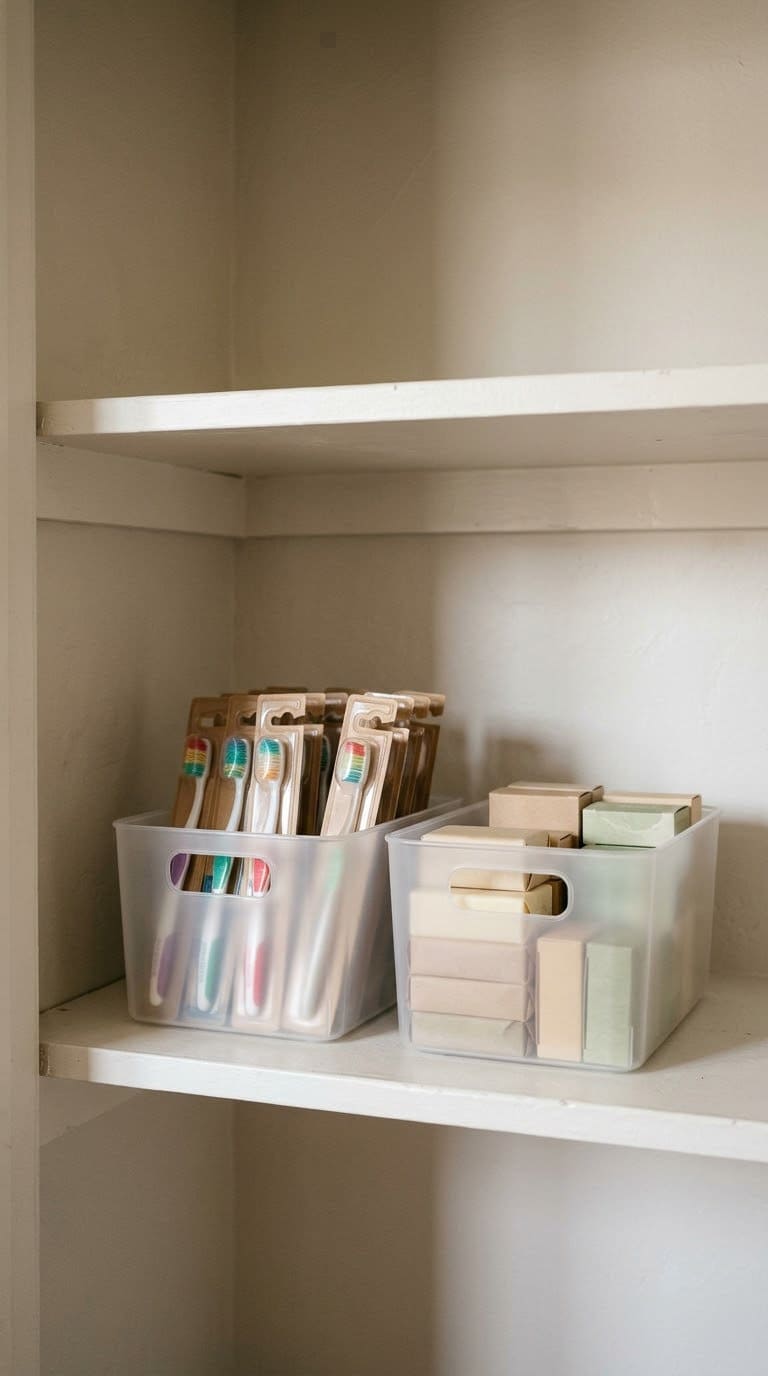
Clear bins let you see what you have. They suit backstock like soap, razors and spare toothbrushes.
Consumer Reports suggests keeping bulk paper goods in the basement or garage and restocking small amounts as needed. That keeps the shelves from filling up.
Keep a small restock list on the door.
Don’t mix medicine in with the backstock bins. Medicines have their own rule (idea 21).
17. Rectangular Baskets for Washcloths and Hand Towels
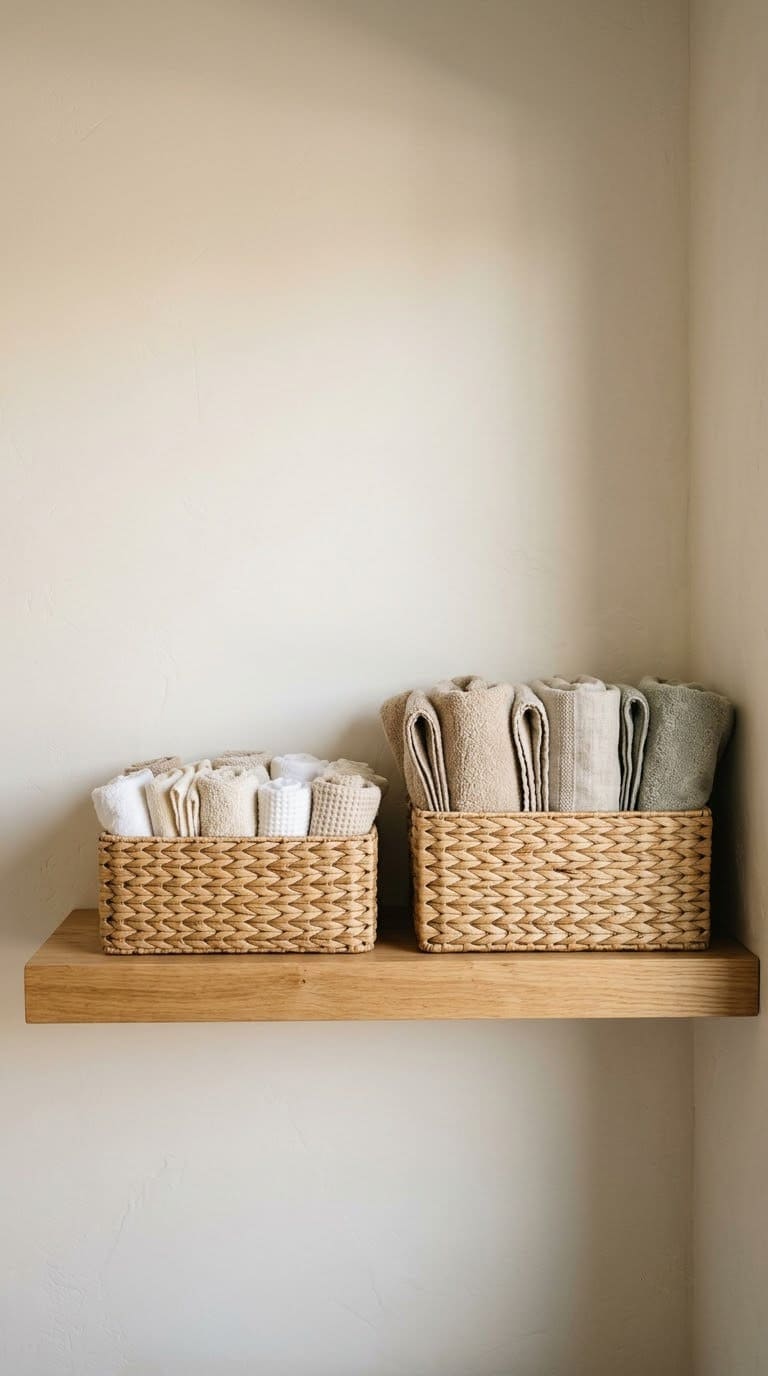
A basket gives small towels a home and keeps them from sliding. Choose rectangular baskets that match your shelf depth.
Organizer Stacy Chia of A Mindful Method uses baskets for mismatched items and suggests them for hand towels and extra blankets.
Baskets also suit people who don’t love folding. Kasey Moore says baskets help if you’re not skilled at folding.
Label each basket and keep the type consistent.
18. Sort by Room, Not Just by Type
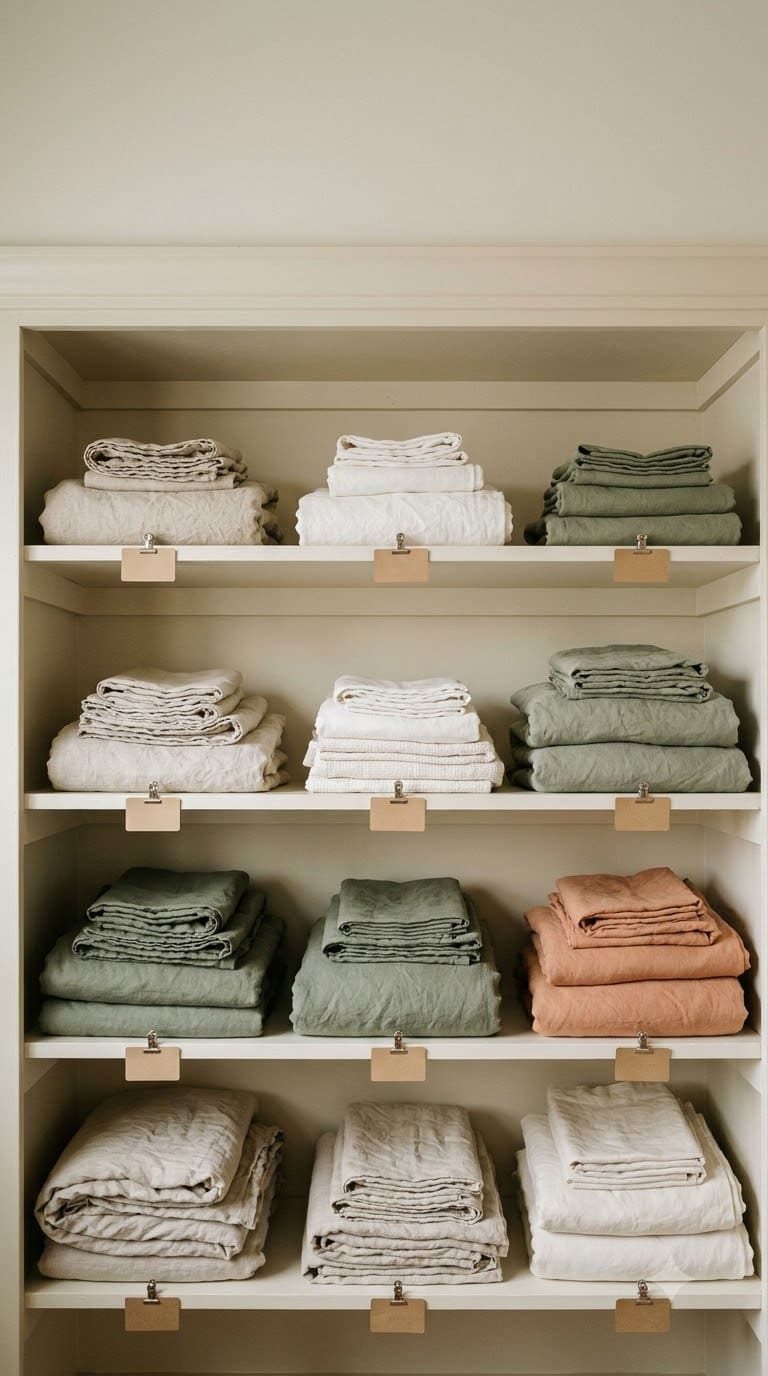
Real Homes quotes an organizer named Cobb who stores linens by type and room, dividing matching sheets by bedroom. This makes it easy to put clean linens back where they belong.
Give each bedroom its own section. Label the section with the room name or the bed size.
The catch is shelf space. If you have many rooms, you’ll need to shrink the sets.
Keep guest linens in their own marked spot.
19. Over-the-Door Organizer for Small Items
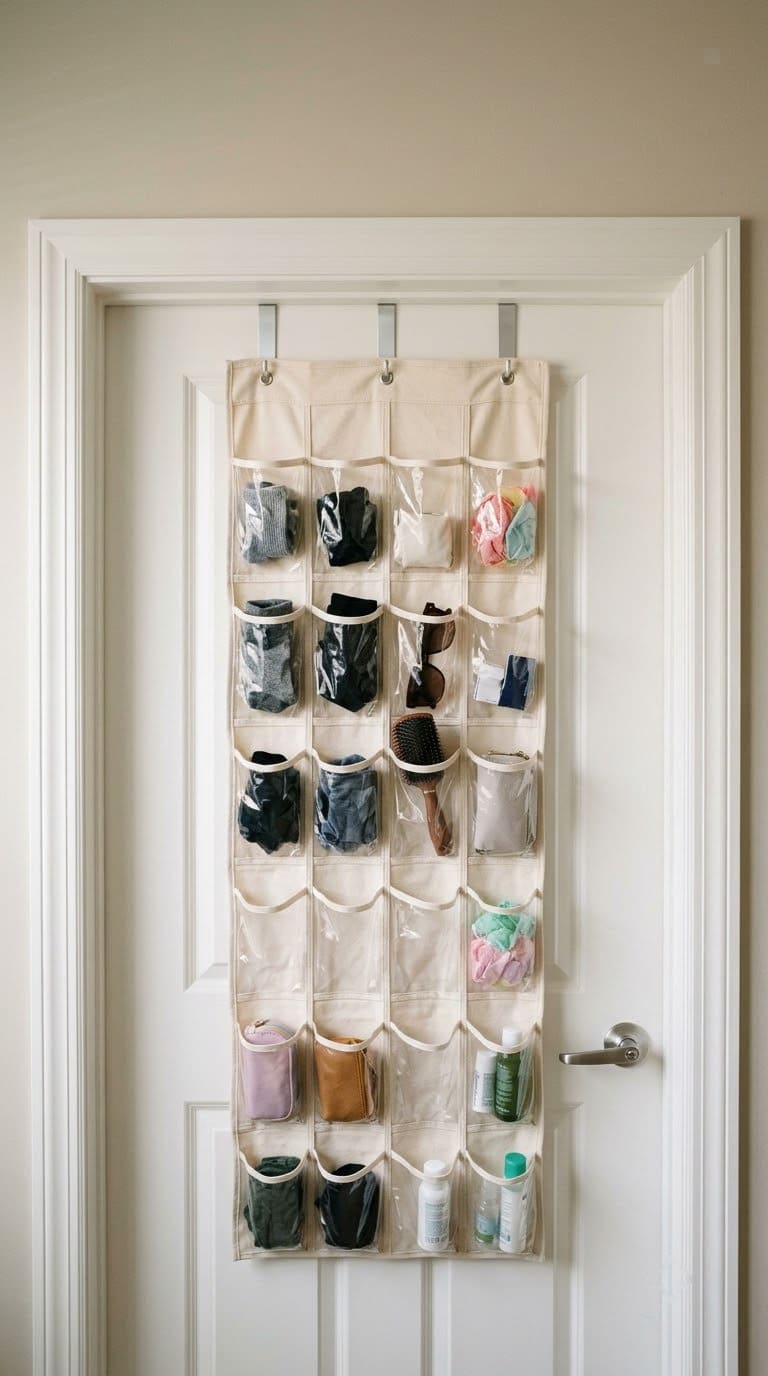
The back of the door is free space. An organizer with pockets holds small items like cloths and travel bottles.
Check that the door still closes, and keep the load light. A heavy organizer can strain the hinges.
Put only items you use often in the pockets. Rarely used things belong on shelves.
Keep medicines and cleaners out of these pockets, since kids can reach them.
20. A Humidity Meter on the Shelf
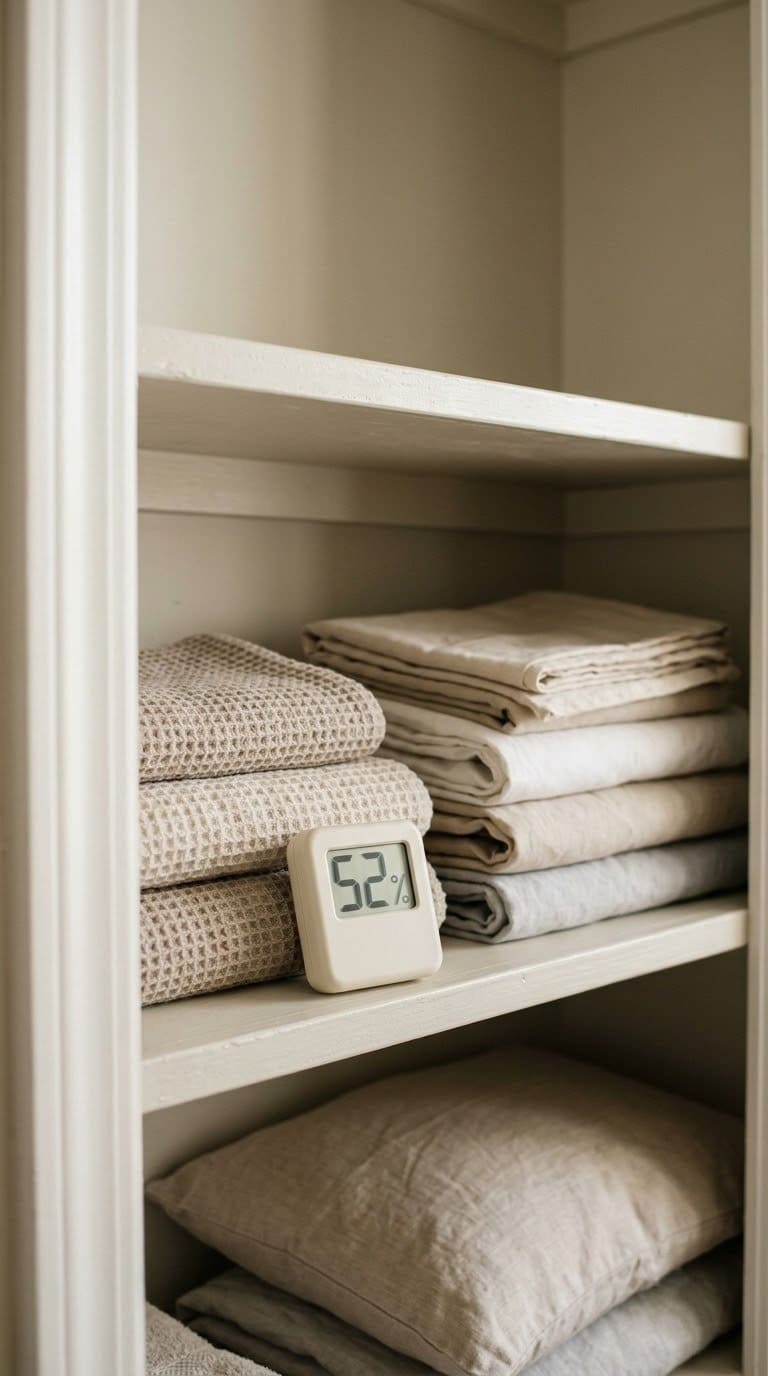
A humidity meter tells you whether the closet is too damp. The EPA says a basic meter costs about $10 to $50.
Place it on a middle shelf and check it for a week. If readings stay above 60 percent, the EPA says to reduce moisture and use fans or a dehumidifier when needed.
The EPA’s advice isn’t specific to closets, so treat it as a general guide. Move damp items out right away.
Never put damp towels away. Dry them fully first.
21. Safe Storage for Medicines and Cleaners
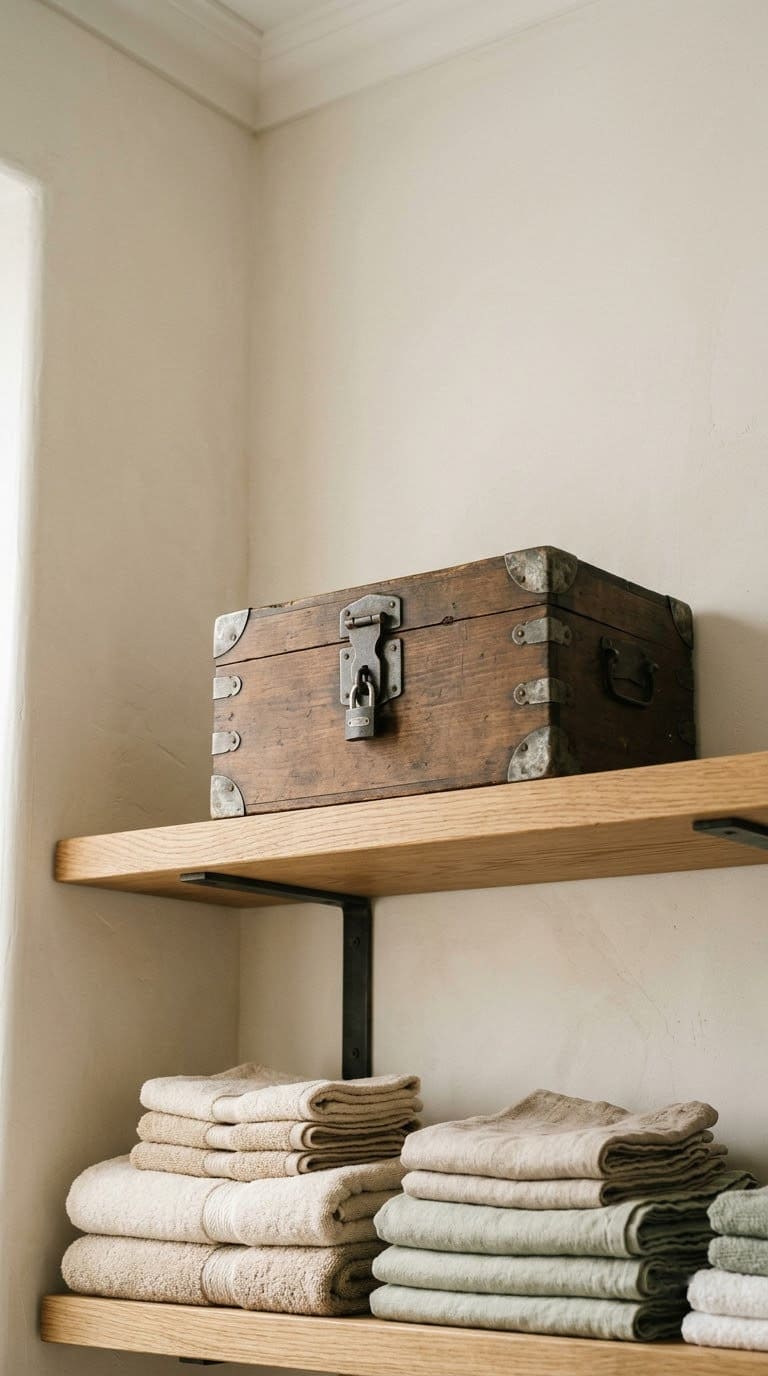
Many linen closets double as the family’s spare storage. Keep medicines and cleaners up high and out of sight.
The CDC says to put medicines, vitamins and supplements away after every use and to relock the cap. It adds that safety caps aren’t foolproof, so keep all medicine up and away and out of sight.
Call Poison Help at 800-222-1222 if a child may have gotten into a medicine or supplement. Save the number in your phone.
Use a locked box or a high shelf your kids can’t reach.
What Goes Wrong (and What We’d Do Differently)
Most linen closets fail in one of three ways.
The first is the pile that never gets purged. Old, stained towels crowd out good ones. We’d sort first and set a limit of two sets per bed.
The second is dampness. A closet near a bathroom or a laundry room can hold moisture. The EPA says to keep humidity below 60 percent, so we’d add a meter and check it.
The third is clutter that includes unsafe items. Medicines and cleaners end up on a low shelf. If there’s one thing worth doing differently, it’s moving them up and out of sight before you do anything else.
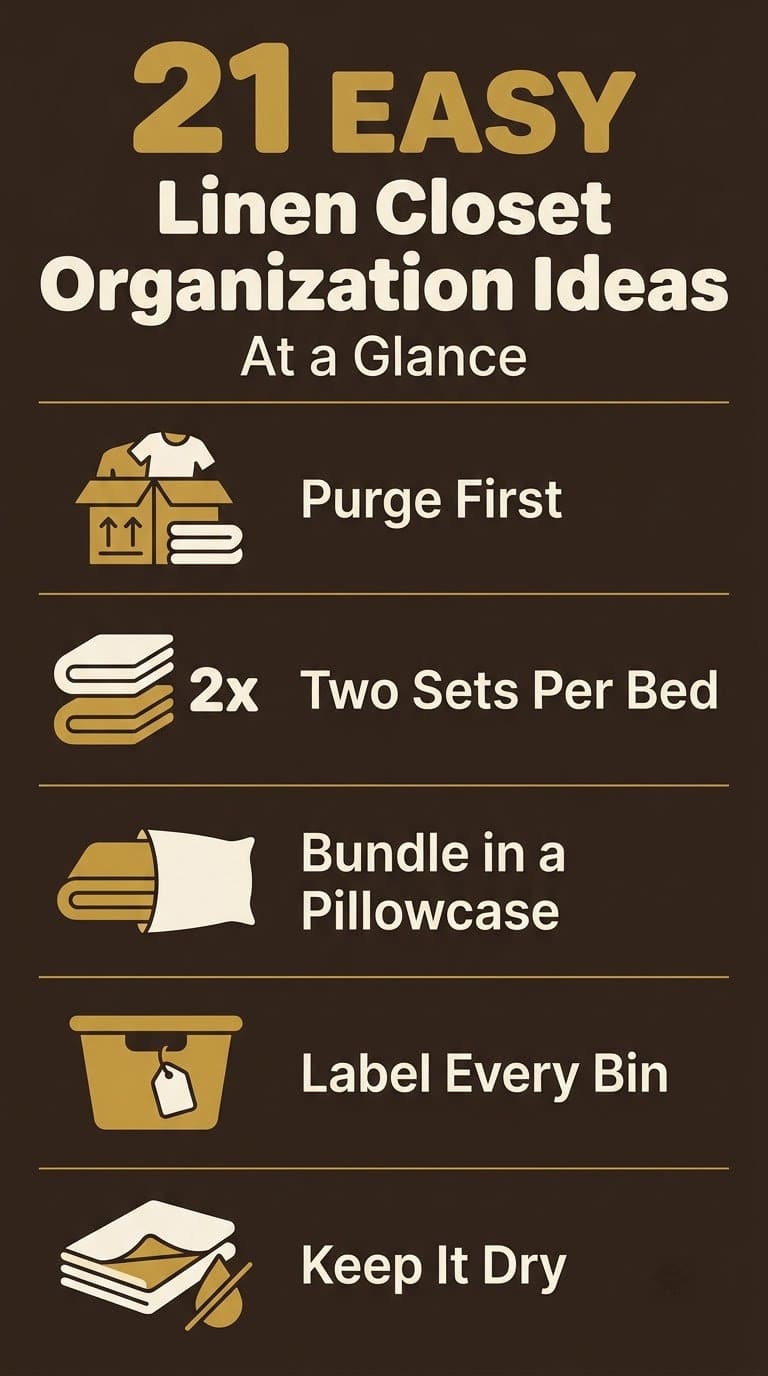
Folding Cheat Sheet
| Item | Method | Why |
|---|---|---|
| Bath towels | Fold with the folded edge out | Neat, tidy stacks (Hunker) |
| Sheet sets | Tuck inside a matching pillowcase | Keeps sets together (Consumer Reports) |
| Washcloths | Fold and stand upright in a rectangular basket | Easy to see and grab (Consumer Reports, Hunker) |
| Comforters | Roll, tie and store in a basket | Saves space (Hunker) |
| Small towels | Baskets, labeled | Works even if folding isn’t your thing (Real Homes) |
Linen Closet FAQs
How many sheet sets should I keep?
Two per bed, according to Consumer Reports: the one on the bed and a spare. Donate the rest.
How do I keep sheet sets together?
Tuck the flat sheet, fitted sheet and spare pillowcase inside one matching pillowcase. Label the bundle with the bed size or room.
Where do I put bulky blankets?
On the upper shelves or at the bottom of the closet, in a large basket or lidded bin. Roll and tie comforters, and make sure they’re clean and dry.
How do I prevent mildew in a linen closet?
Keep linens fully dry before storing them. The EPA says to keep indoor humidity below 60 percent, ideally 30 to 50 percent, and to dry wet items within 24 to 48 hours.
Is it safe to store medicine in a linen closet?
Only if children can’t reach or see it. The CDC says to store medicines up and away and out of sight, and to put them away after every use.
Products We Recommend
This post contains affiliate links. We may earn a commission on qualifying purchases at no extra cost to you.
BAUMFEUER 12-Pack Clear Acrylic Shelf Dividers
Each divider is 11 inches long and 8 inches tall and fits shelves 0.4 to 0.95 inches thick. It suits idea 8. Rated 4.6 stars from 595 ratings.
Shop Now
StorageWorks Fabric Storage Bins With Lids, Ivory White
Foldable, stackable natural-fiber bins with removable lids and rope handles. It suits idea 15. Rated 4.7 stars from 3,248 ratings.
Shop Now
TempPro TP50 Digital Hygrometer
A humidity and temperature meter with a stated accuracy of plus or minus 2 to 3 percent relative humidity, a magnetic back and a battery included. It suits idea 20. Rated 4.6 stars from 155,943 ratings.
Shop NowNever miss an update — choose FarmFoodFamily as your preferred source on Google.
How it works: Tap the button below to open Google's settings page, then check the box next to FarmFoodFamily.
Tap the checkbox to turn it blue — that's how you know it's set.