20+ Brilliant Xeriscape Gardening Ideas for a Stunning, Water-Wise Yard
Xeriscaping can cut irrigation by up to 75 percent, but only if you skip the “rip out the lawn, dump gravel everywhere” version everyone’s HOA complains about.

Never miss an update — choose FarmFoodFamily as your preferred source on Google.
How it works: Tap the button below to open Google’s settings page, then check the box next to FarmFoodFamily.
Tap the checkbox to turn it blue — that’s how you know it’s set.
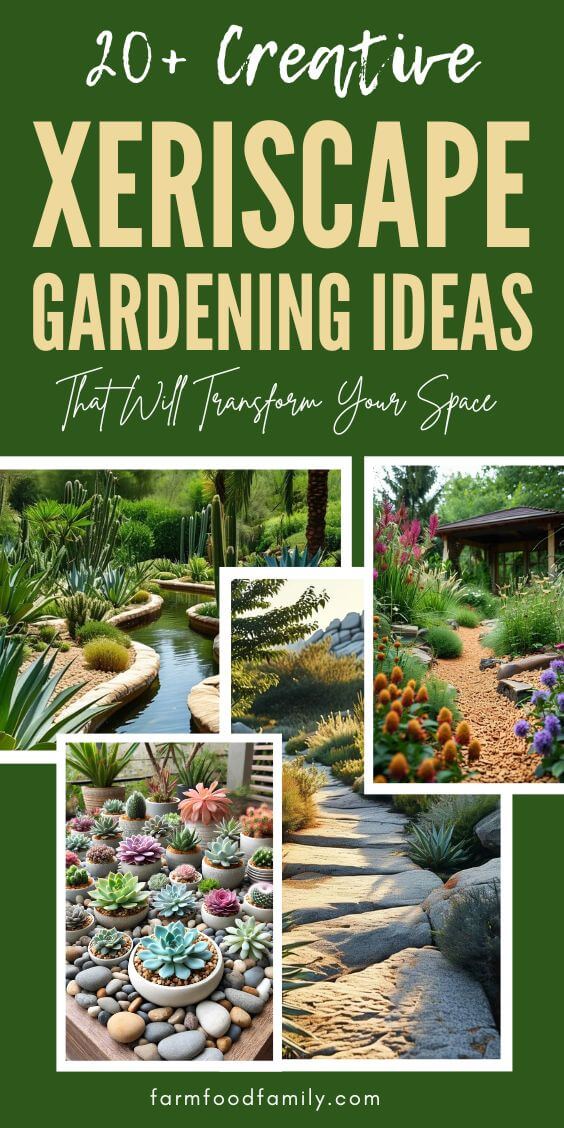
Xeriscape gardening is an ingenious method of landscaping aimed at reducing or altogether avoiding the need for supplemental water through irrigation.
It’s ideally suited for dry climates but proves beneficial across various settings due to its significant water, time, and resource conservation. Below are twenty xeriscape gardening strategies to transform your outdoor area into a both stunning and sustainable space.
Quick Answer
Xeriscaping is a whole-yard water-conservation system, not just a rock garden. Colorado State University Extension, the office that literally wrote the original framework, says a well-designed xeriscape cuts irrigation needs by 50 to 75 percent compared to a traditional turf yard.
The term itself was coined in 1981 by Nancy Leavitt, a Denver Water employee, who combined the Greek “xeros” (dry) with “landscape” during a Colorado drought, the first demonstration garden opened at Denver Water’s offices in 1982.
The 18 ideas below group into three moves: hydrozoning your yard by water need first, replacing thirsty turf with region-appropriate plants and inorganic groundcover, and capturing or slowing the water you do use. Every idea below lists which US regions and USDA zones it actually suits, since most xeriscape guides skip that and leave you guessing.

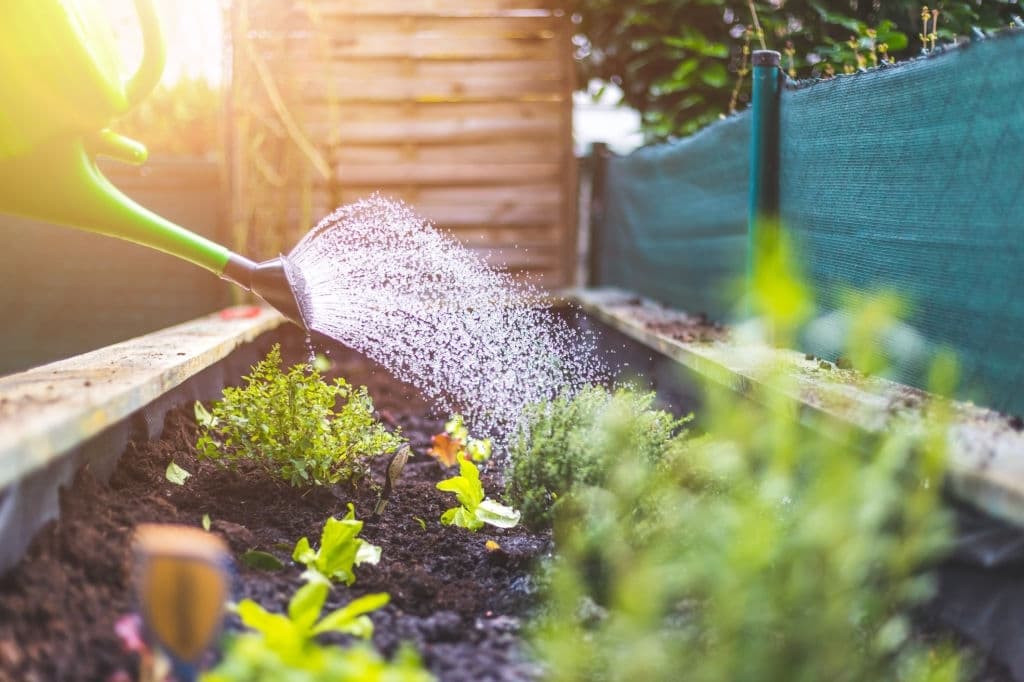
Xeriscaping Has a Branding Problem
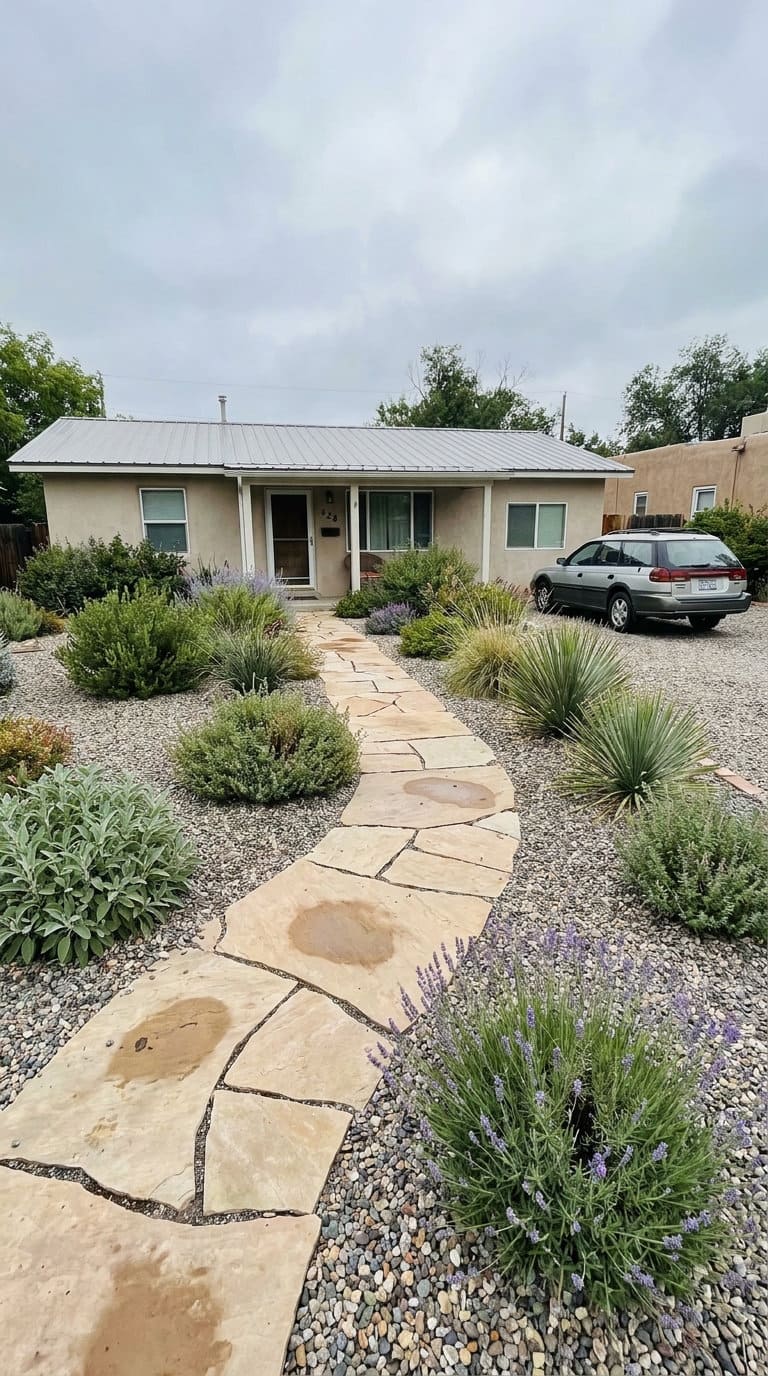
Say the word and most people picture a front yard paved over in white gravel with three sad cacti, the kind of thing that gets a passive-aggressive letter from the HOA. That’s not what the term was built to mean, and it’s not what the 18 ideas below actually look like done right.
Here’s the part that surprised me doing the research for this: xeriscaping isn’t a Southwest-only thing pretending to be national advice. But it’s also not a rock-yard gimmick either. It’s a real framework, invented in Denver in 1981 and built around seven specific principles, with water-savings numbers that come from a university extension office, not a marketing blog.
Once you see the actual system instead of the gravel-yard stereotype, it gets a lot easier to pull two or three ideas into a normal-looking yard instead of converting the whole property overnight.
The Real Problem With Most “Rip Out Your Lawn” Advice
Most xeriscape guides tell you to tear out turf and start over. In practice, that’s how you end up with a half-finished yard that’s bare dirt and mulch for two summers while plants establish, an HOA letter about “unmaintained landscaping,” and a bigger up-front bill than anyone mentioned going in.
The fix isn’t to abandon the idea, it’s to sequence it. Hydrozone first (idea #1 below), convert the thirstiest, most visible turf strip first (usually a side yard or parking strip nobody uses anyway), and let the rest of the lawn shrink over two or three seasons instead of one weekend. Every plant on this list needs consistent watering for its first full growing season regardless of how “drought tolerant” the tag says it is, the water savings only show up in year two and beyond.
Hardscape Groundcover Comparison
Three of the most common xeriscape materials get compared constantly and confused just as often. Here’s how they actually stack up.
Answer 4 quick questions and get matched to the exact fix for your yard — drainage, budget, layout, or something else entirely.
Take the Free Quiz| Material | Cost per sq ft (installed) | Drainage | Heat retention | Weed control | Best for |
|---|---|---|---|---|---|
| Pea gravel | $1-3 | Excellent | High (reflects heat onto nearby plants) | Good with edging + weed barrier | Paths, borders, small accent beds |
| Crushed/landscape rock | $2-5 | Excellent | Very high (absorbs and radiates heat) | Good | Large open beds, arid-region full-sun yards |
| Decomposed granite (DG) | $3-6 | Good (compacts, sheds some rain) | High | Fair, needs periodic refresh | Pathways, patios, a firmer walkable surface than loose gravel |
18 Real Xeriscape Ideas, Region by Region
1. Hydrozone Your Yard First
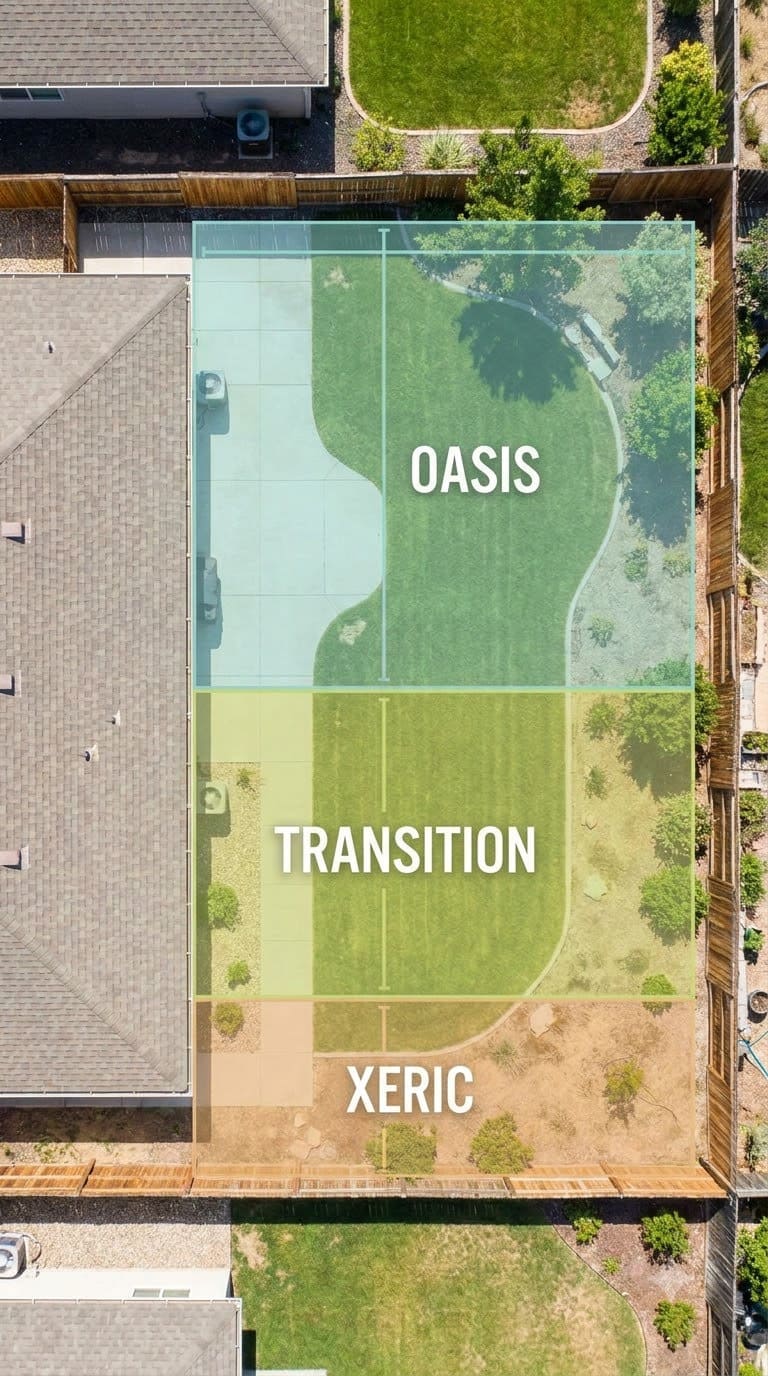
This is the step every other idea on this list depends on, and the original framing most xeriscape articles skip. Colorado State University Extension lists it as one of the seven core xeriscape principles: group plants by how much water they actually need, then water each zone separately instead of running one sprinkler schedule for the whole yard (source: CSU Extension, “The 7 principles of xeriscape landscaping”).
In practice, that means a small “oasis zone” near the patio or front door where you keep a few thirstier plants for visual impact, a “transition zone” of moderate-water perennials further out, and an outer “xeric zone” of the toughest, lowest-water plants near property lines. Best for: every US region and USDA zone, this is a planning step, not a plant choice, so it applies whether you’re in Phoenix or Portland, Maine.

Directly supports idea #1 (hydrozoning) and idea #4 (herb havens), efficient zone-by-zone watering is one of CSU's seven core principles. ~$30, 4.2★ (308 ratings), Amazon's Choice.
Shop NowThis post contains affiliate links. We may earn a commission on qualifying purchases at no extra cost to you.
Cost tier: free (it’s a planning decision), though it may mean splitting one irrigation zone into two or three, a modest sprinkler-valve retrofit.
2. Native Plant Selection
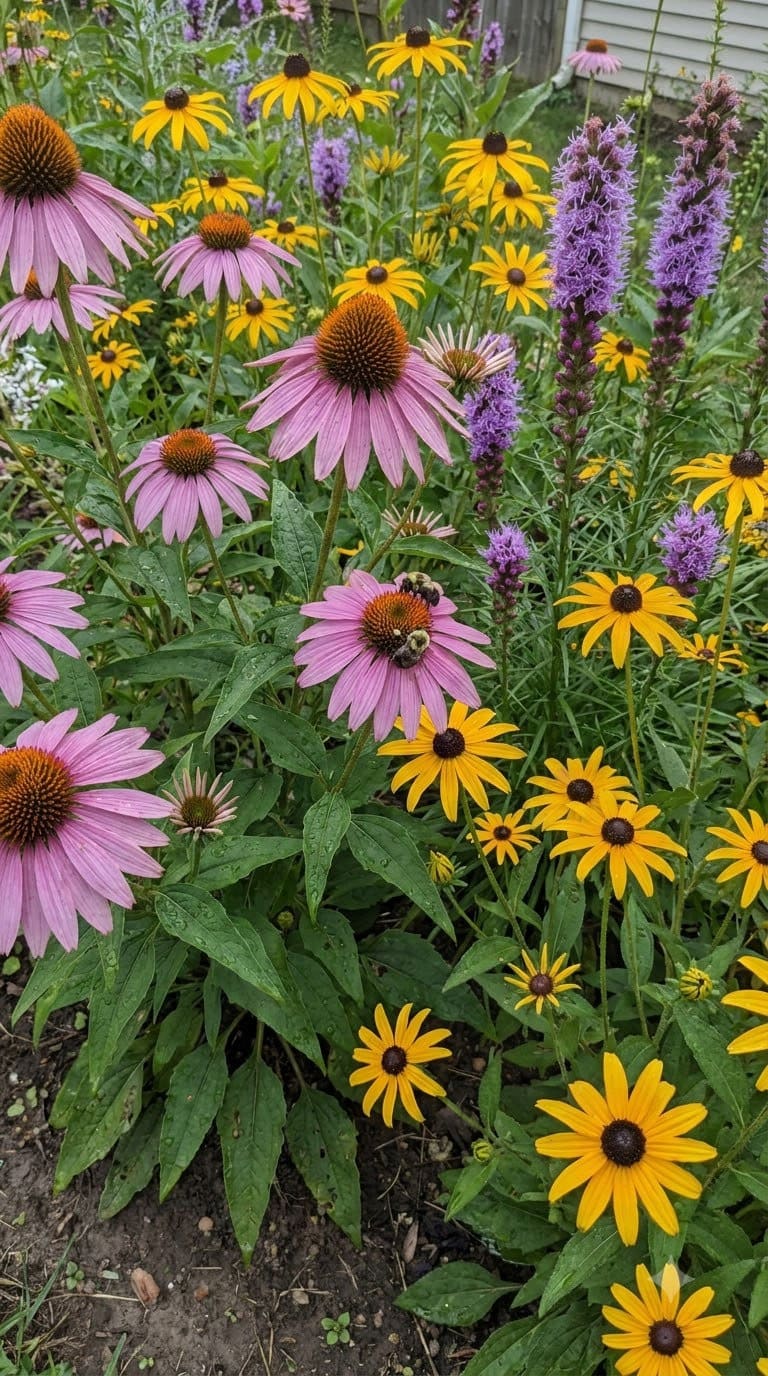
Indigenous species already survive your region’s actual dry stretches without help, because they evolved through them. For the specific plant-by-plant breakdown, region, USDA zone, and bloom season, see our companion guide, 10 Resilient Native Wildflowers for a Drought-Proof Yard, rather than duplicating that list here.
The one thing worth adding here: “native” is a regional claim, not a national one, so check your specific state’s native plant society list before buying, not just the plant tag at a big-box store. Best for: every region, but the specific species change entirely by region, check local extension resources first.
Most yard problems trace back to one specific, fixable cause. Find yours in 4 quick questions.
Take the Free QuizMaintenance: low once established (year 2+). Cost tier: low, especially if sourced from a native plant sale rather than a nursery premium.
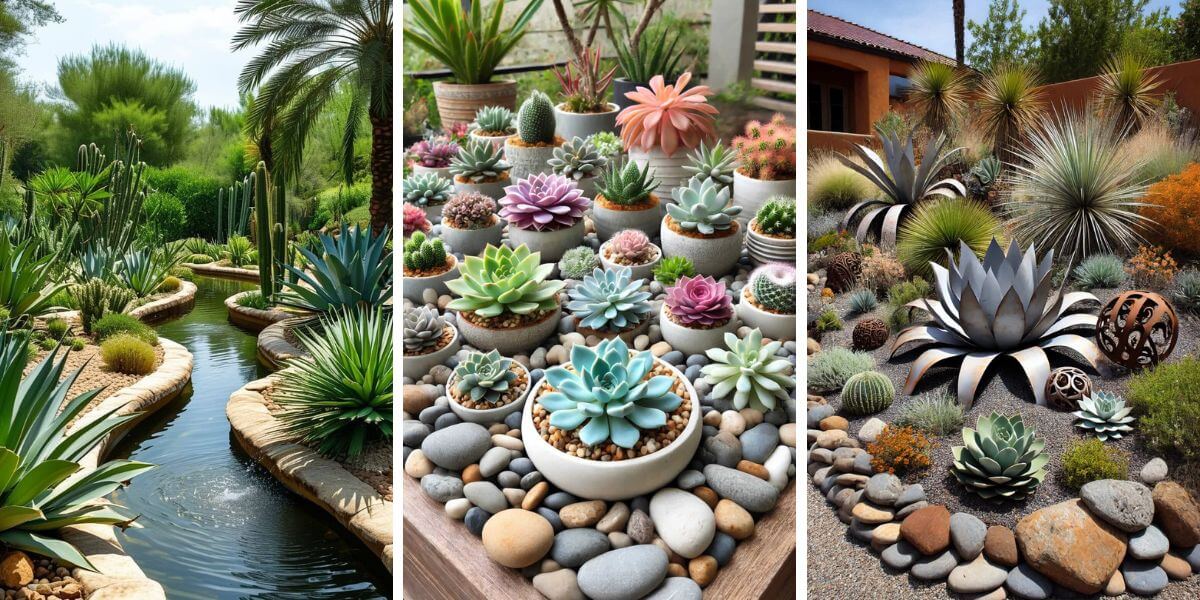
3. Succulent Showcases
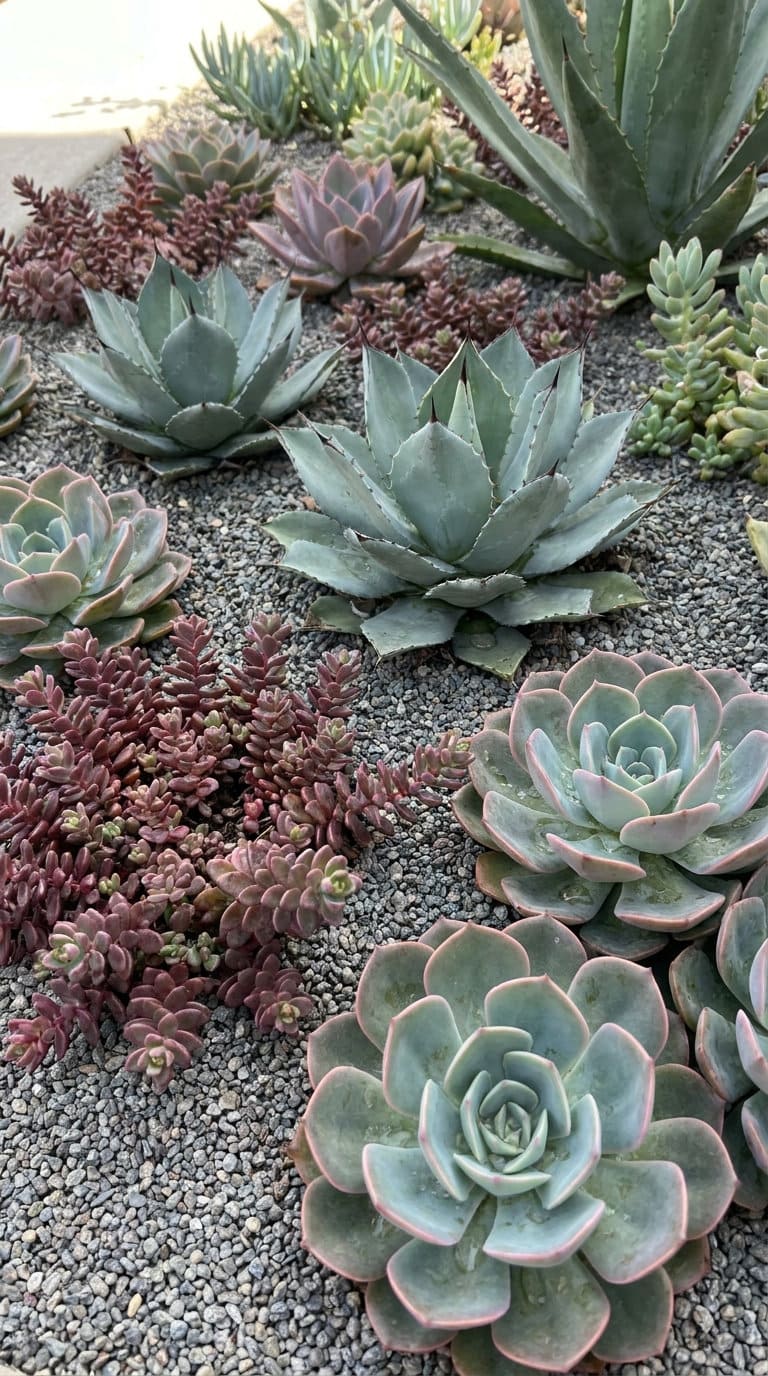
Succulents like agave, sedum, and echeveria store water in thick leaves, which is why they shrug off weeks without rain. For deeper plant-by-plant care detail, see our succulent garden ideas guide and types of succulents.
The catch for anyone outside true desert climates: most popular succulents are only reliably winter-hardy to about USDA zone 8-9 outdoors. In colder zones (5-7), stick to hardy sedum varieties outdoors and treat agave and echeveria as container plants you bring in before frost. Best for: zones 8-11 outdoors year-round, zones 5-7 with hardy sedum only, or containers.
Cost tier: low to moderate depending on mature-size specimens chosen.
4. Herb Havens
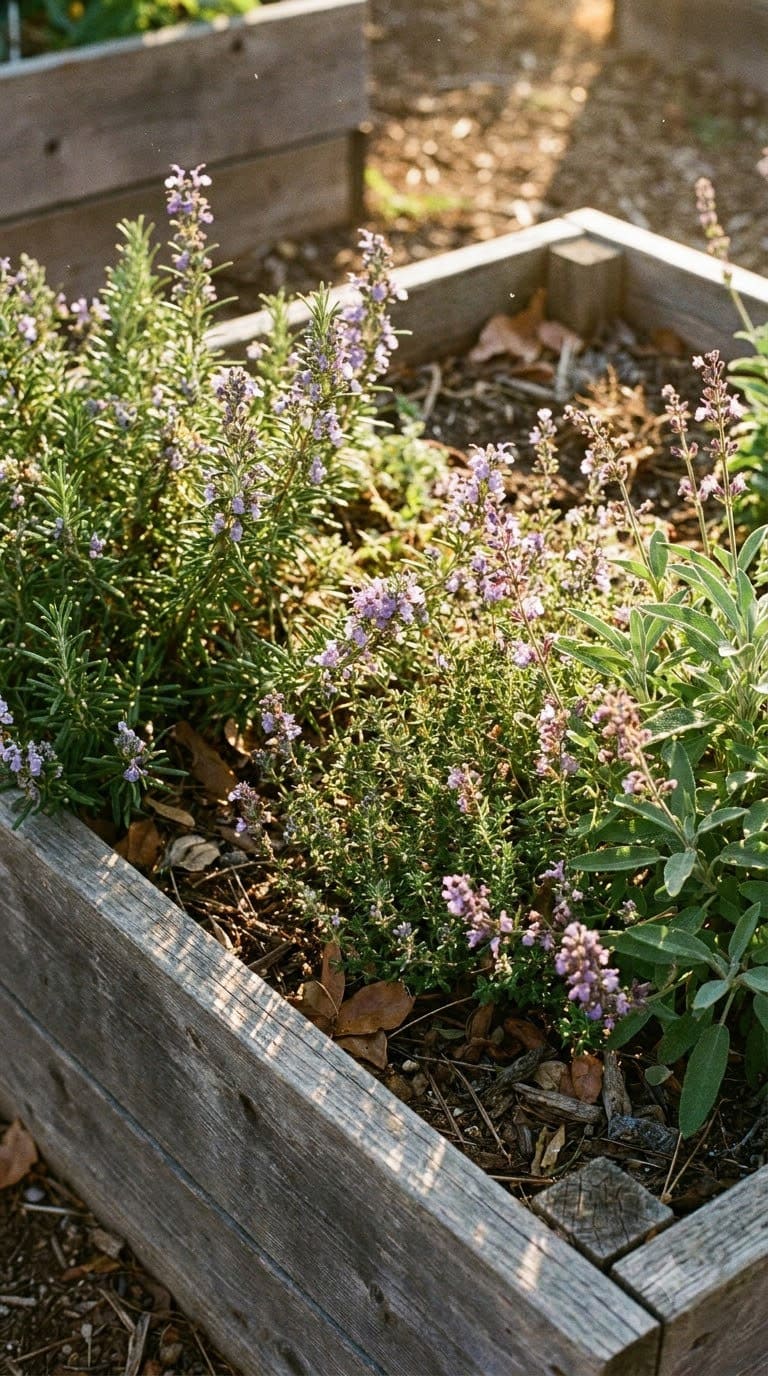
Rosemary, thyme, oregano, and sage all evolved in dry Mediterranean hillsides, so they’re some of the most drought-tolerant edible plants you can grow, and they double as a working kitchen garden instead of a purely ornamental bed. Rosemary in particular can go three to four weeks without supplemental water once established in well-drained soil.
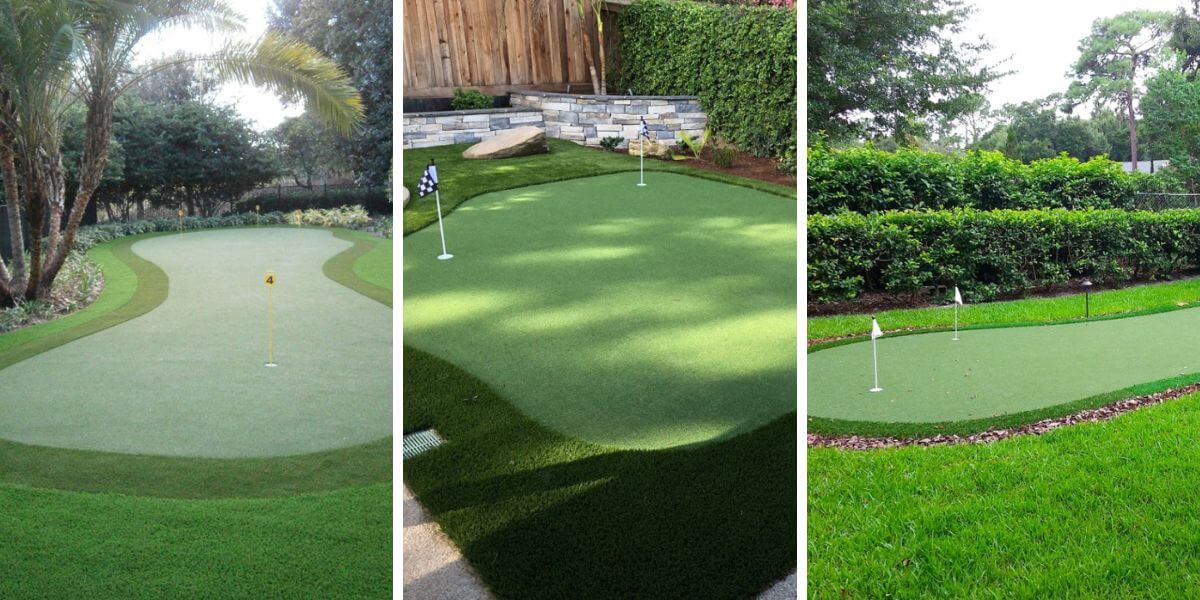
Plant these in the driest, sunniest, most reflective-heat spot in the yard, up against a south-facing wall works especially well, since these herbs actually prefer more heat stress than most ornamentals tolerate. Best for: zones 6-10 for rosemary as a perennial, treat as an annual in colder zones or bring pots indoors.
Cost tier: low, herb starts are inexpensive and multiply readily from cuttings.
5. Drought-Tolerant Ornamental Grasses
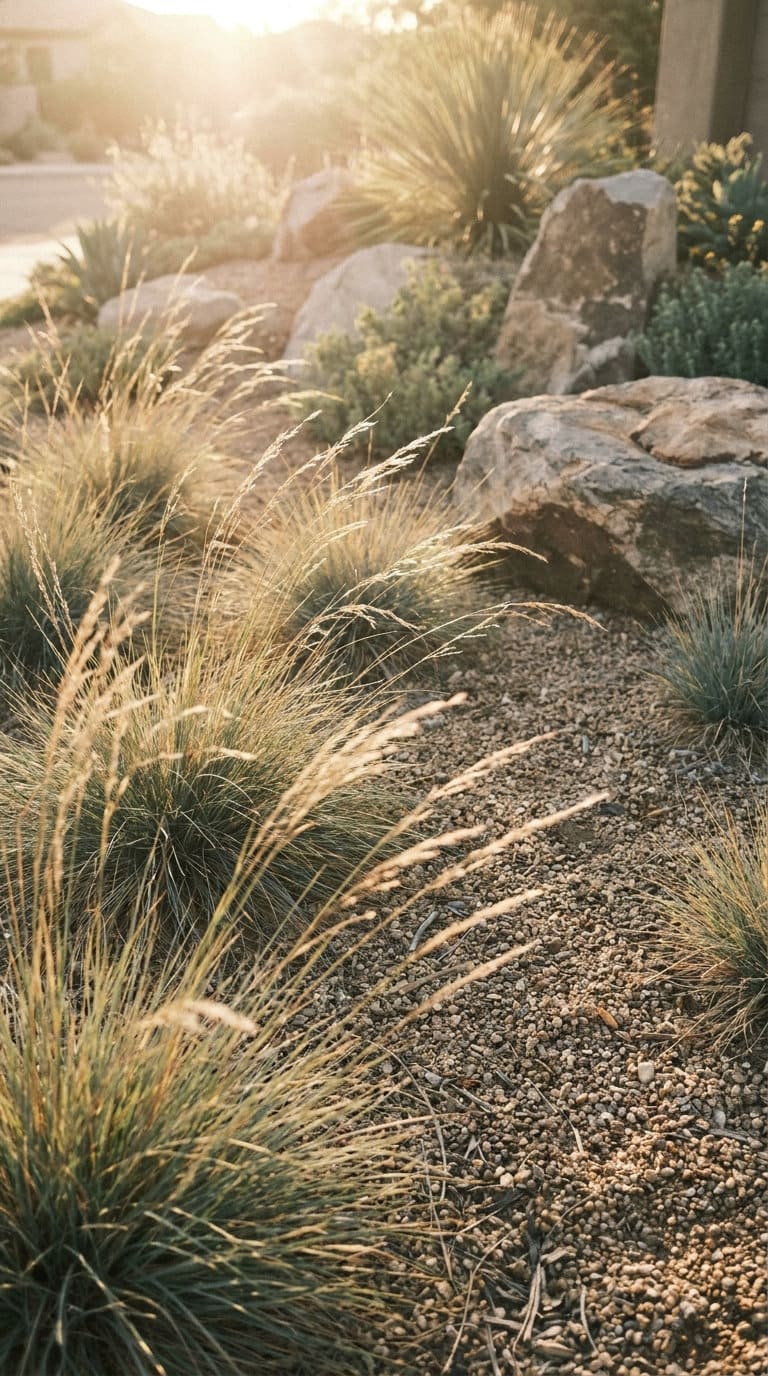
Grasses like little bluestem, blue fescue, and muhly grass hold their structure through a dry summer and add motion and texture that a static rock bed can’t. Little bluestem in particular is native across most of the central and eastern US and tolerates both drought and poor soil.
These need almost no supplemental water after their first season and only one hard cutback in late winter, which makes them one of the lowest-maintenance choices on this entire list. Best for: zones 3-9 depending on species, little bluestem is one of the widest-ranging drought grasses available.
Cost tier: low.
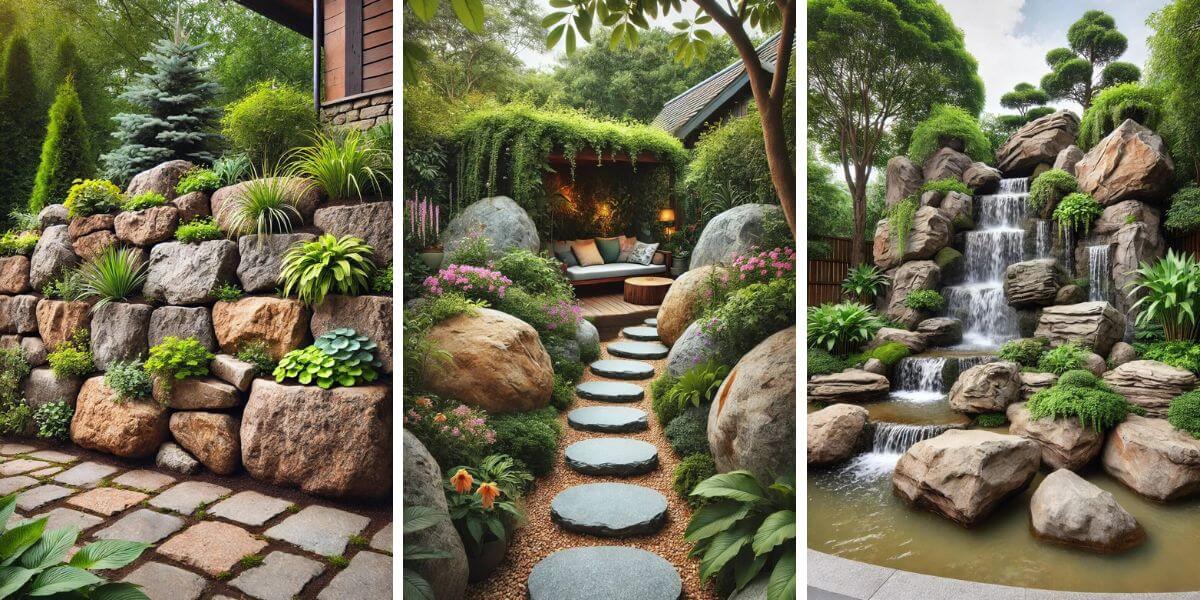
6. Rock, Gravel, and Decomposed Granite Groundcover
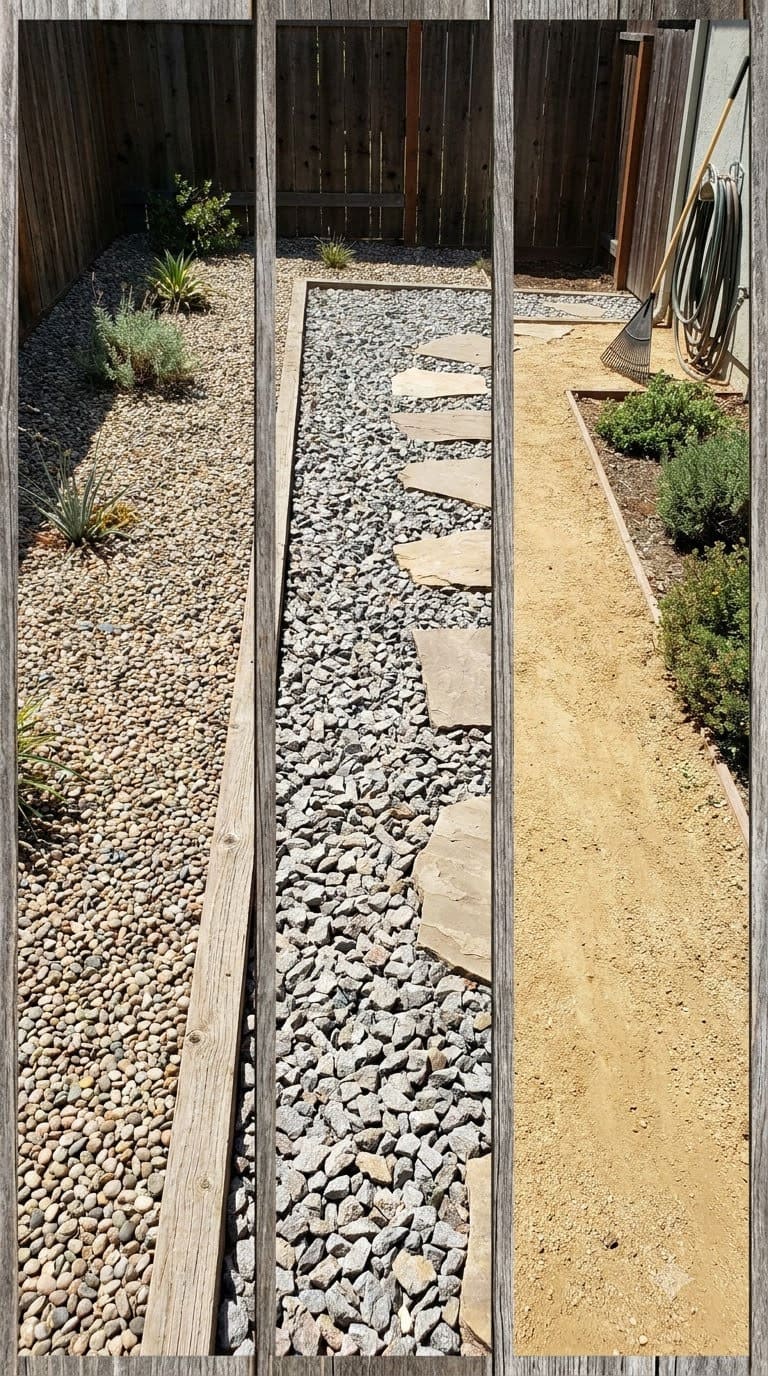
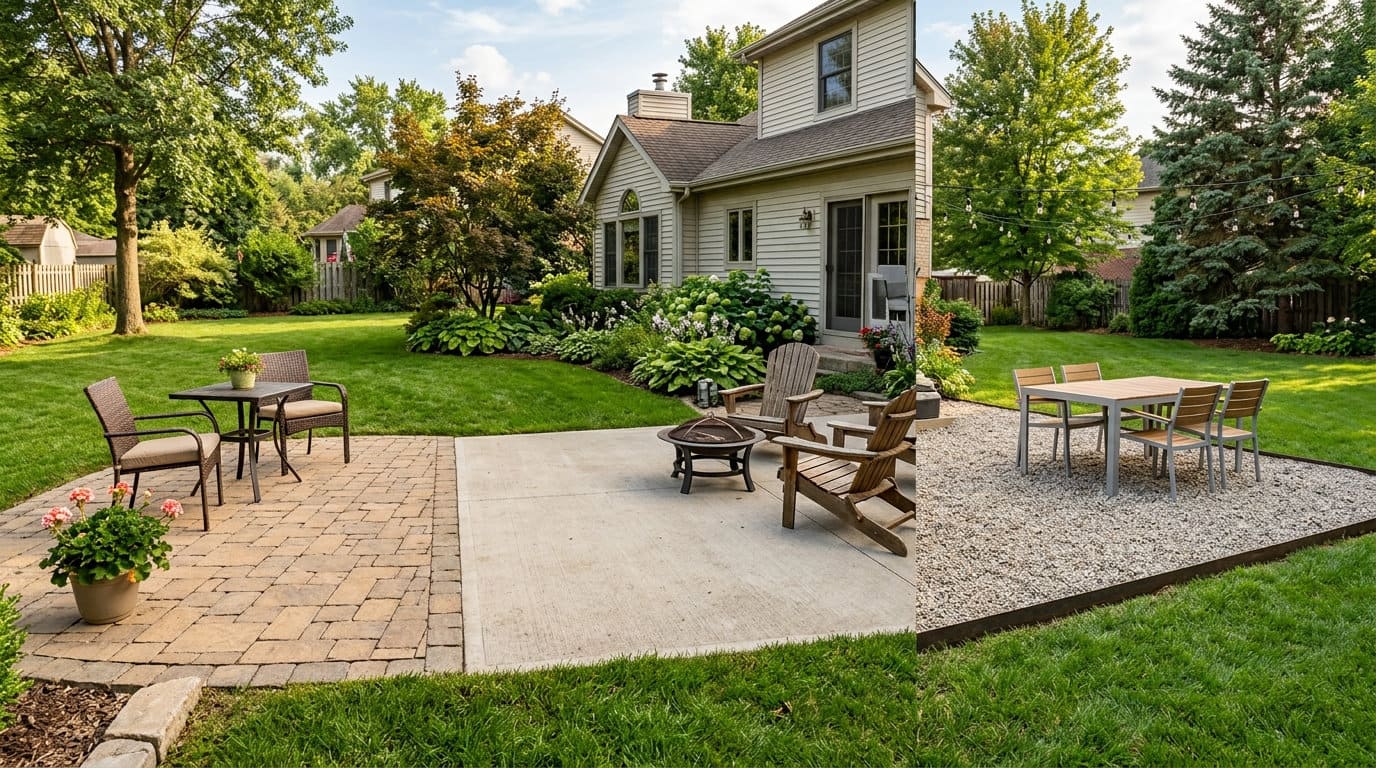
These three materials get lumped into “just put down rocks,” but they behave differently (see the comparison table above). Pea gravel drains fastest and looks the most refined for small accent beds, crushed rock covers ground cheapest for large open areas, decomposed granite compacts into a firmer, more walkable surface, better for paths and patios than loose gravel.
The average homeowner spends $616/year on yard fixes that don't address the real problem. Find out what yours actually is — before you spend another dollar.
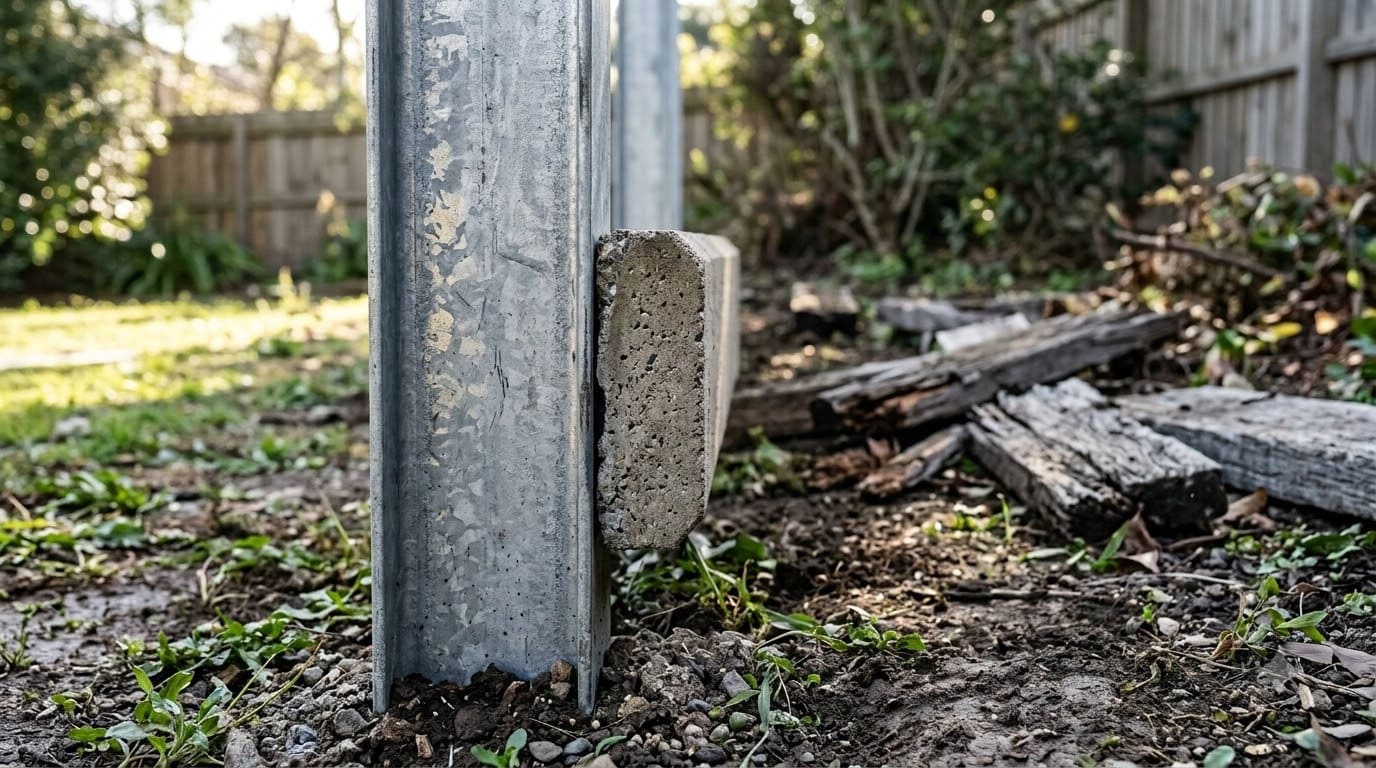
Take the Free QuizThe mistake that ages any of these badly: skipping a woven landscape fabric or steel edging underneath. Without it, gravel migrates into the lawn and weeds punch through within a season. Best for: hot, sunny, low-rainfall regions, especially the Southwest and high plains, where heat-reflecting rock doesn’t stress nearby plants as much as it does in already-hot humid climates.
Cost tier: low to moderate, see comparison table for per-square-foot pricing.
7. Permeable Paving
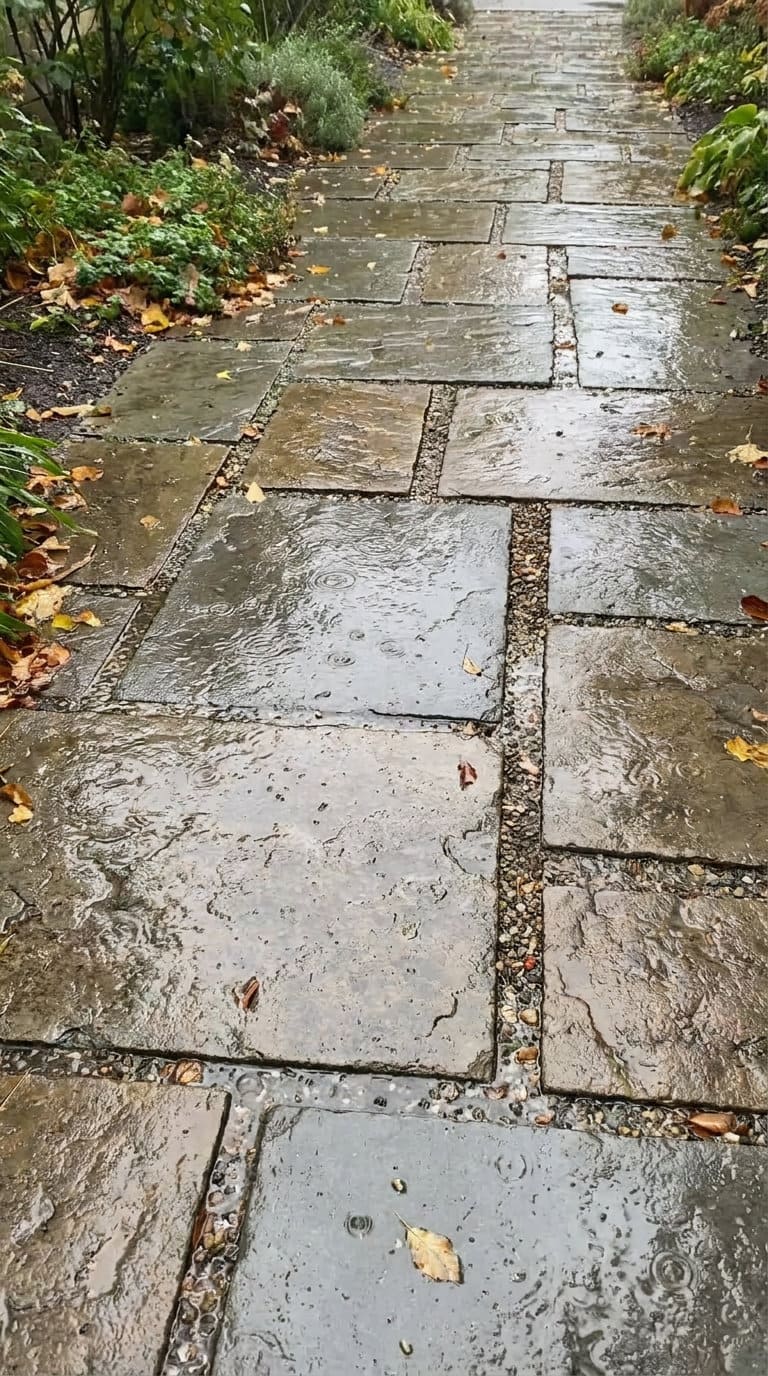
Permeable pavers, gravel, or jointed flagstone let rainwater filter down into the soil instead of running off into a storm drain, which both waters nearby plantings for free and reduces runoff pollution. Some municipalities offer stormwater credits or rebates for permeable surfaces, worth checking before you commit to a material.
Best for: any region with defined rainy seasons where capturing that water matters, especially useful paired with idea #17’s rain barrels downstream of a permeable path.
Cost tier: moderate, typically higher than standard concrete per square foot, offset in some areas by stormwater rebates.
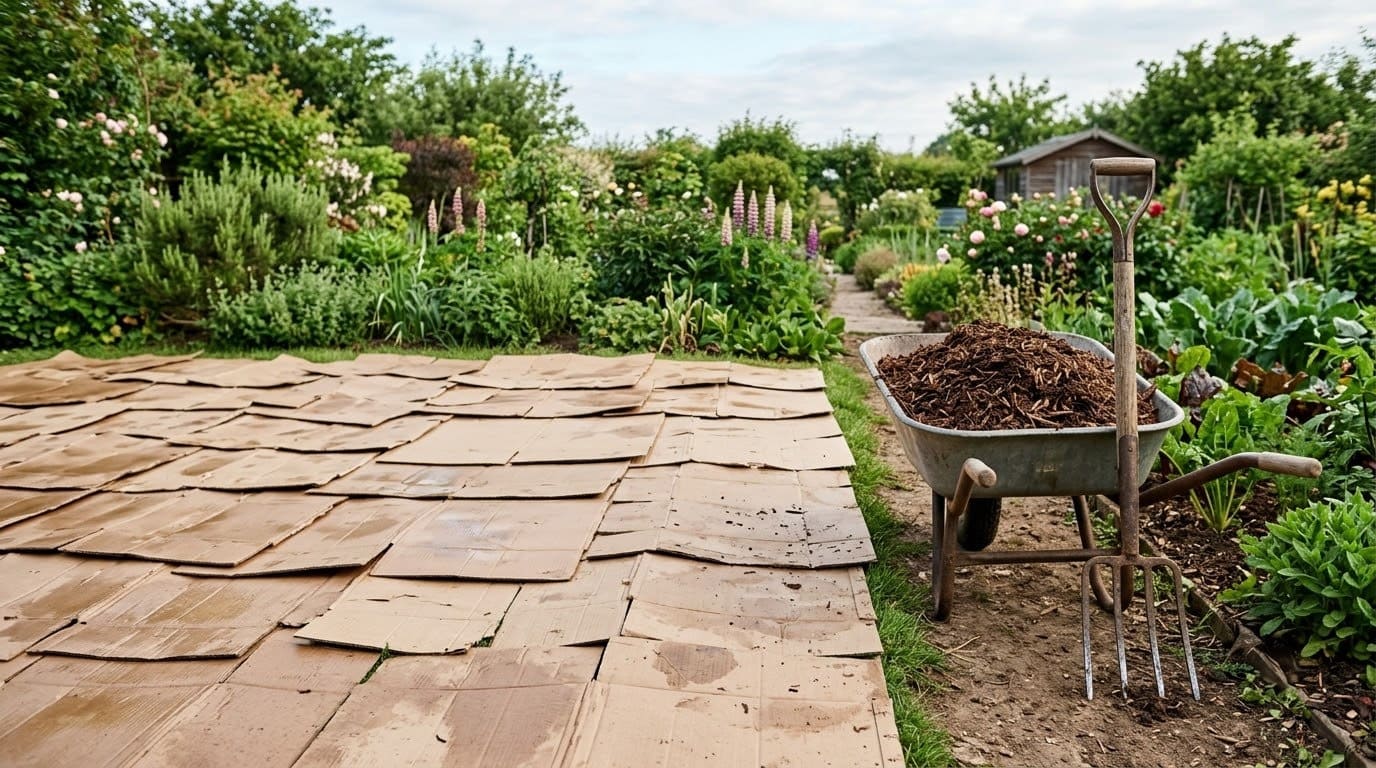
8. Mulch Matters
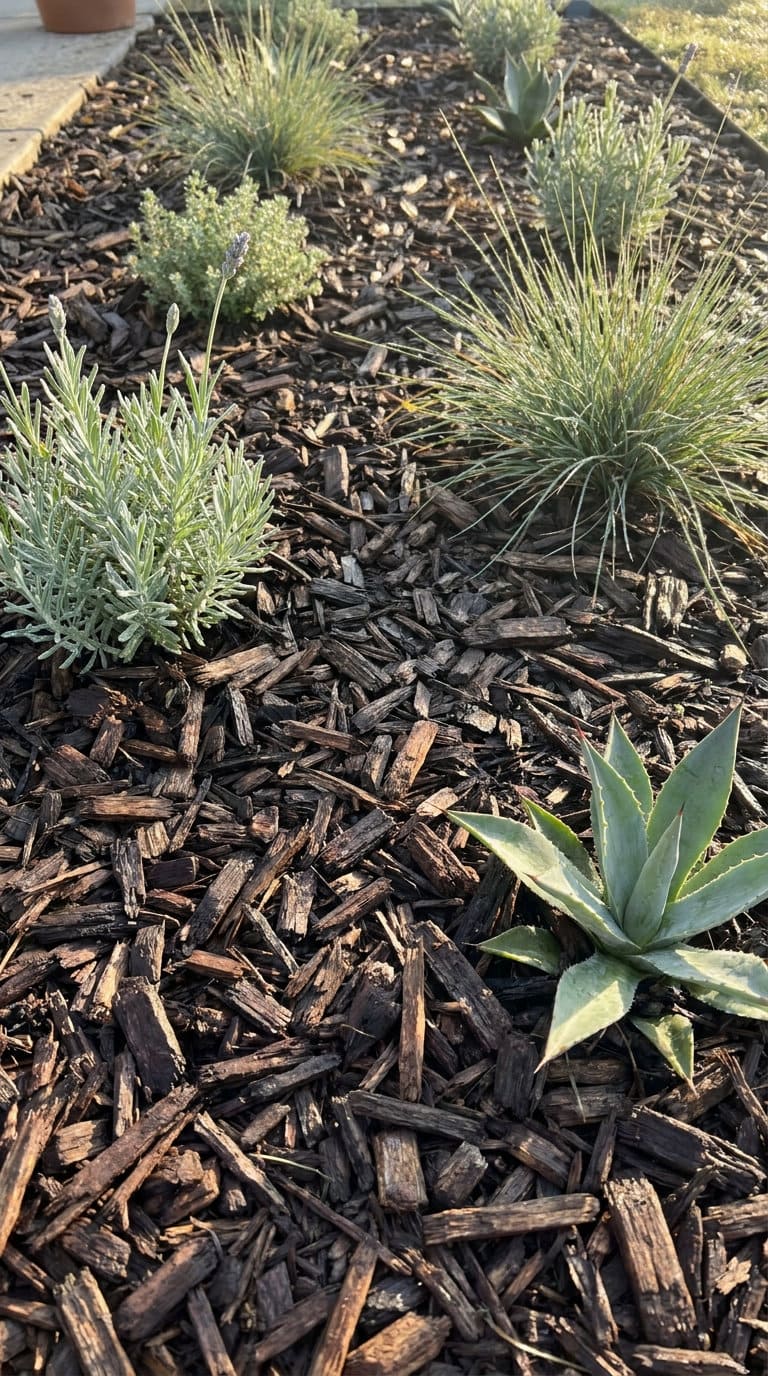
A 2- to 3-inch layer of organic mulch (wood chips, bark) slows evaporation, suppresses weeds, and moderates soil temperature swings, one of CSU Extension’s seven core xeriscape principles in its own right, not just a finishing touch. For gravel-and-mulch combination beds specifically, see our landscaping ideas with mulch and rocks guide and mulch edging ideas.
Keep mulch pulled back a couple inches from plant stems and tree trunks, piled directly against them, it traps moisture and invites rot and pests. Best for: every region and zone, organic mulch works everywhere, though hot arid climates see the biggest evaporation-reduction benefit.
Cost tier: low, and it needs topping off annually as it breaks down.
9. Recirculating Water Features
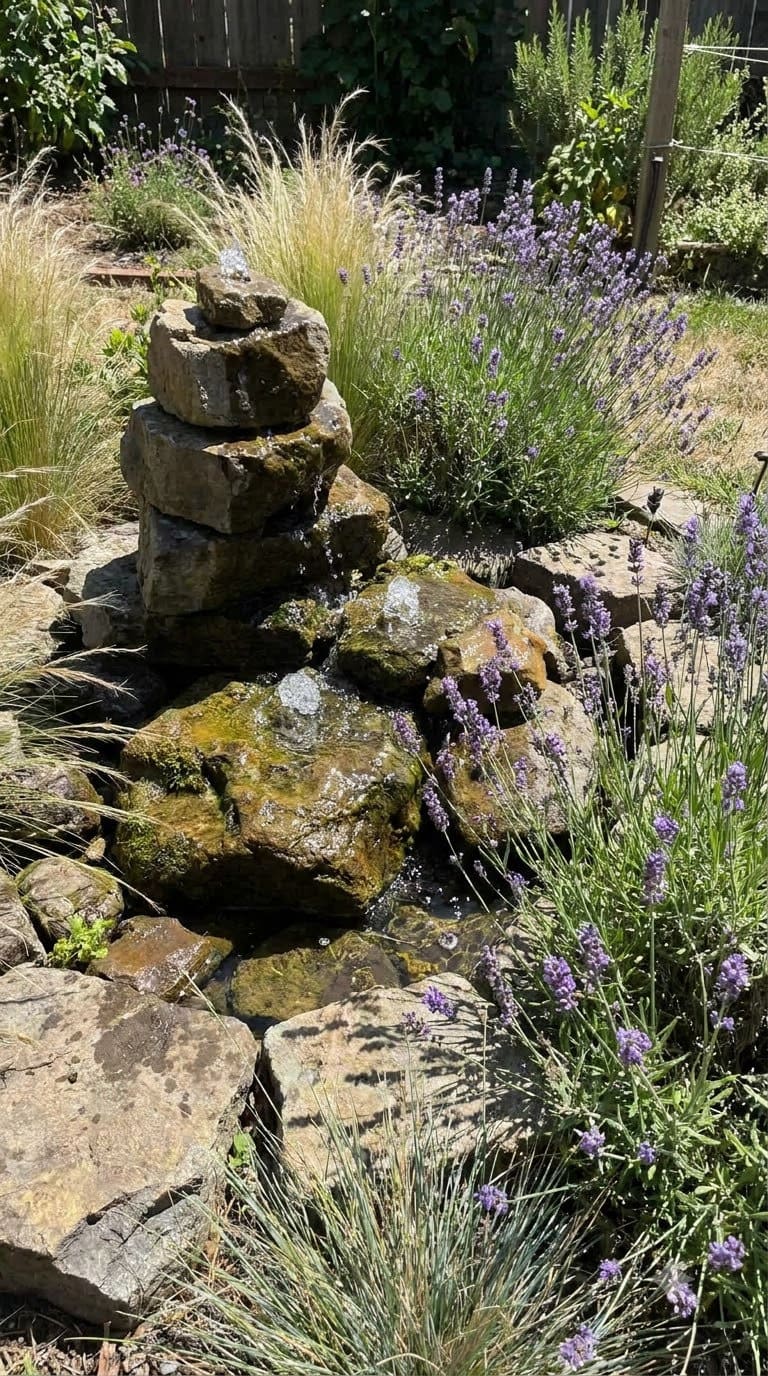
A small recirculating pump-driven fountain or bubbling rock uses a fixed, contained volume of water, not a constant fresh supply, so it adds humidity, sound, and wildlife appeal to a dry-climate garden without meaningfully raising water use. Skip anything that requires a constant refill or a large open pond in a genuinely water-restricted region.
Best for: any region, just confirm local water restrictions don’t specifically limit decorative water features during drought stages.
Cost tier: moderate for the feature itself, low ongoing cost since it recirculates.
10. Vertical Gardening
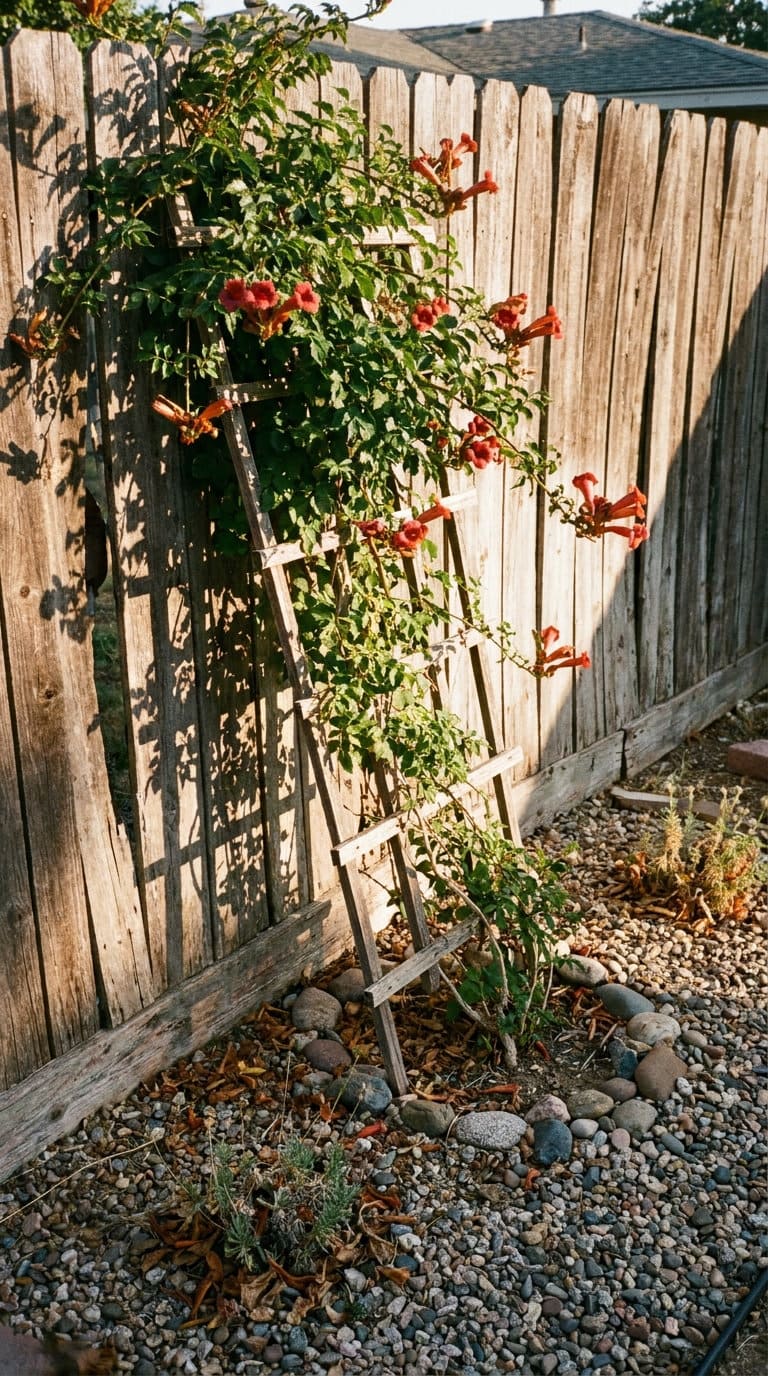
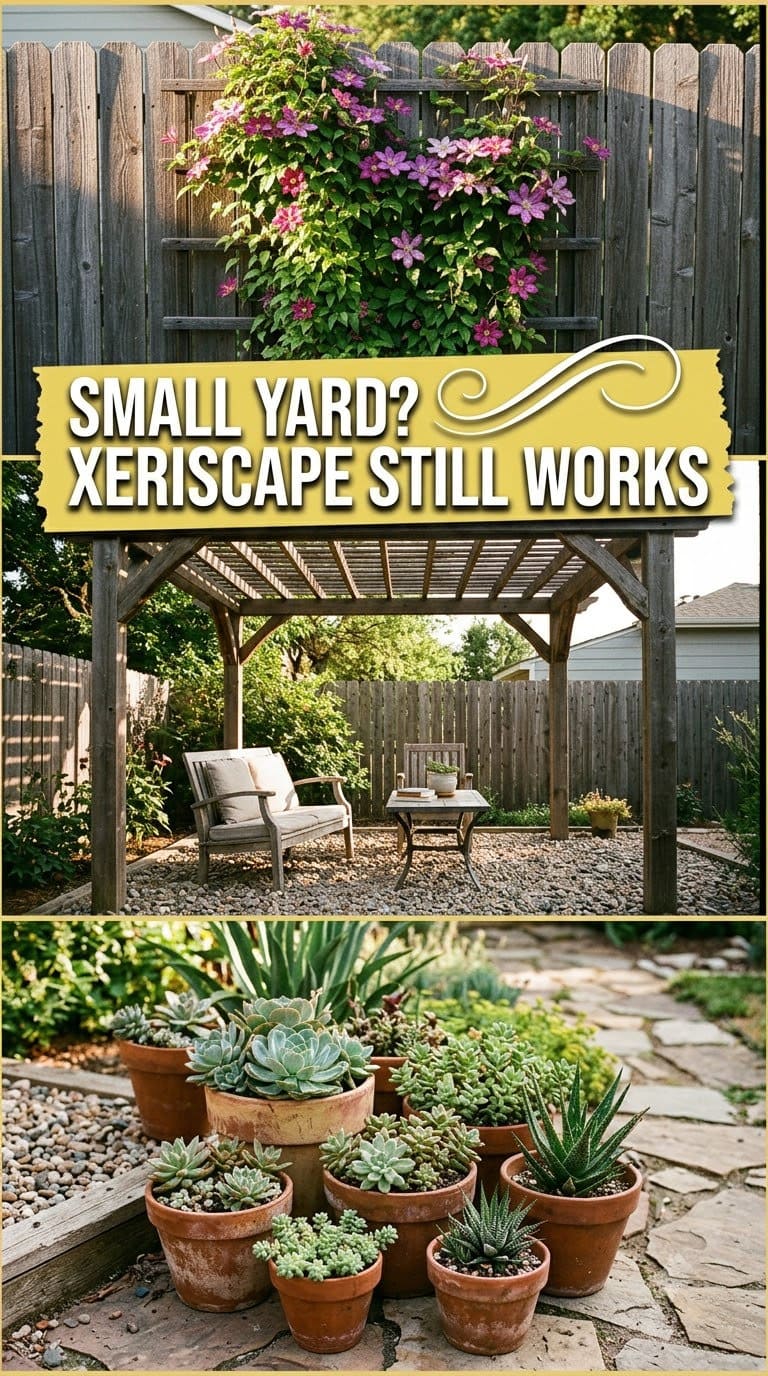
Trellised climbers like trumpet vine, certain clematis varieties, or even climbing roses bred for heat tolerance add height and screening without consuming additional ground-level planting space or irrigation zones. This matters more than it sounds in a smaller xeriscape yard where ground space is already tight between hardscape and hydrozones.
Best for: every region, choose the specific climbing species for your zone and sun exposure.
Cost tier: low to moderate depending on trellis material.
11. Shade Structures
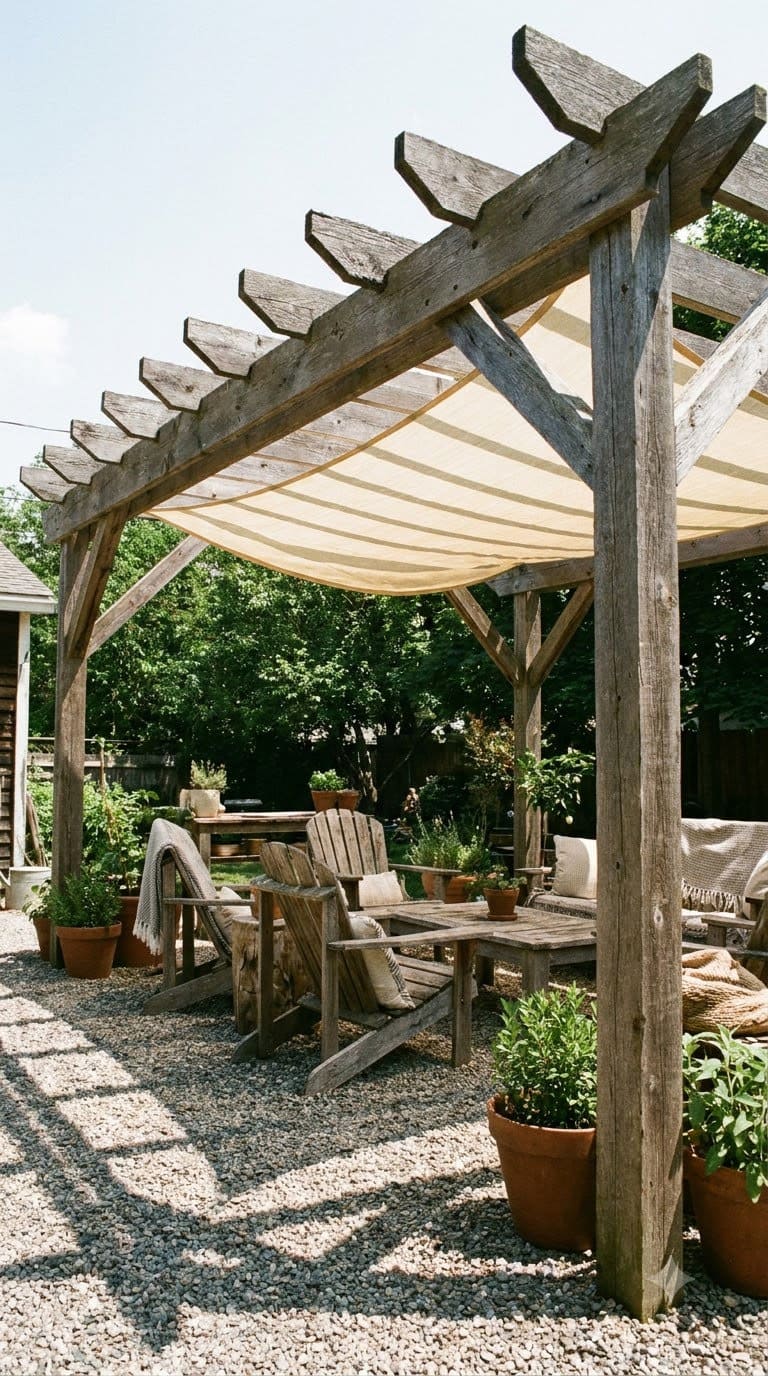
A pergola, shade sail, or well-placed shade tree drops the ambient temperature and soil-surface heat in the area beneath it, which directly lowers how much water nearby plants lose to evaporation. This is a genuinely underused xeriscape move since most guides focus on plants and forget that shade itself is a water-conservation tool.
Best for: hot, high-sun regions especially, the Southwest, Texas, and the Southeast in peak summer, where afternoon shade meaningfully cuts irrigation need in the beds beneath it.
Cost tier: moderate to high for a built structure, low if using a fast-growing shade tree instead.
12. Artistic Accents
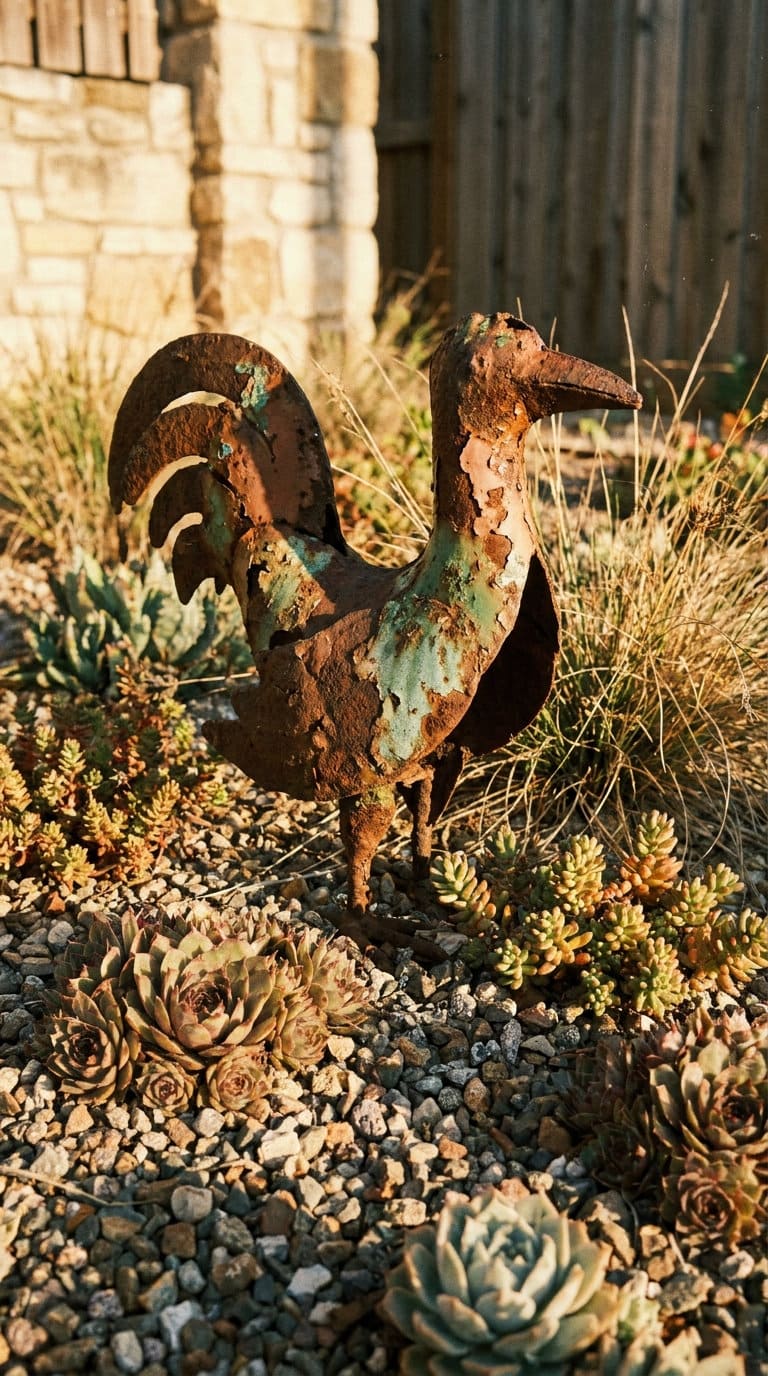
Sculptures, oversized ceramic pots, or arranged boulders add visual interest and personality to a xeriscape bed without adding any water demand at all, which makes them one of the easiest ways to make a low-water yard look intentional rather than sparse.
Best for: every region, purely a design layer, not a climate-dependent choice.
Cost tier: varies widely, from a single striking found boulder (free) to commissioned garden sculpture.
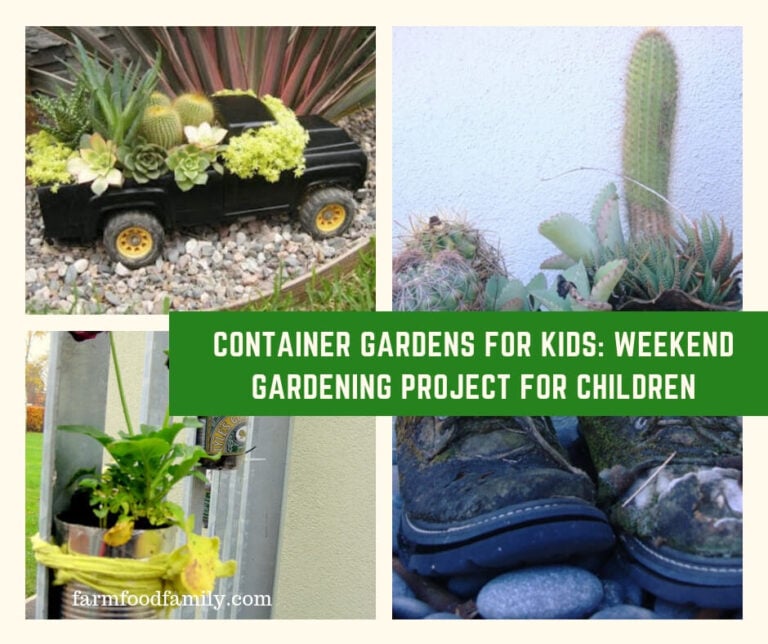
13. Container Gardening
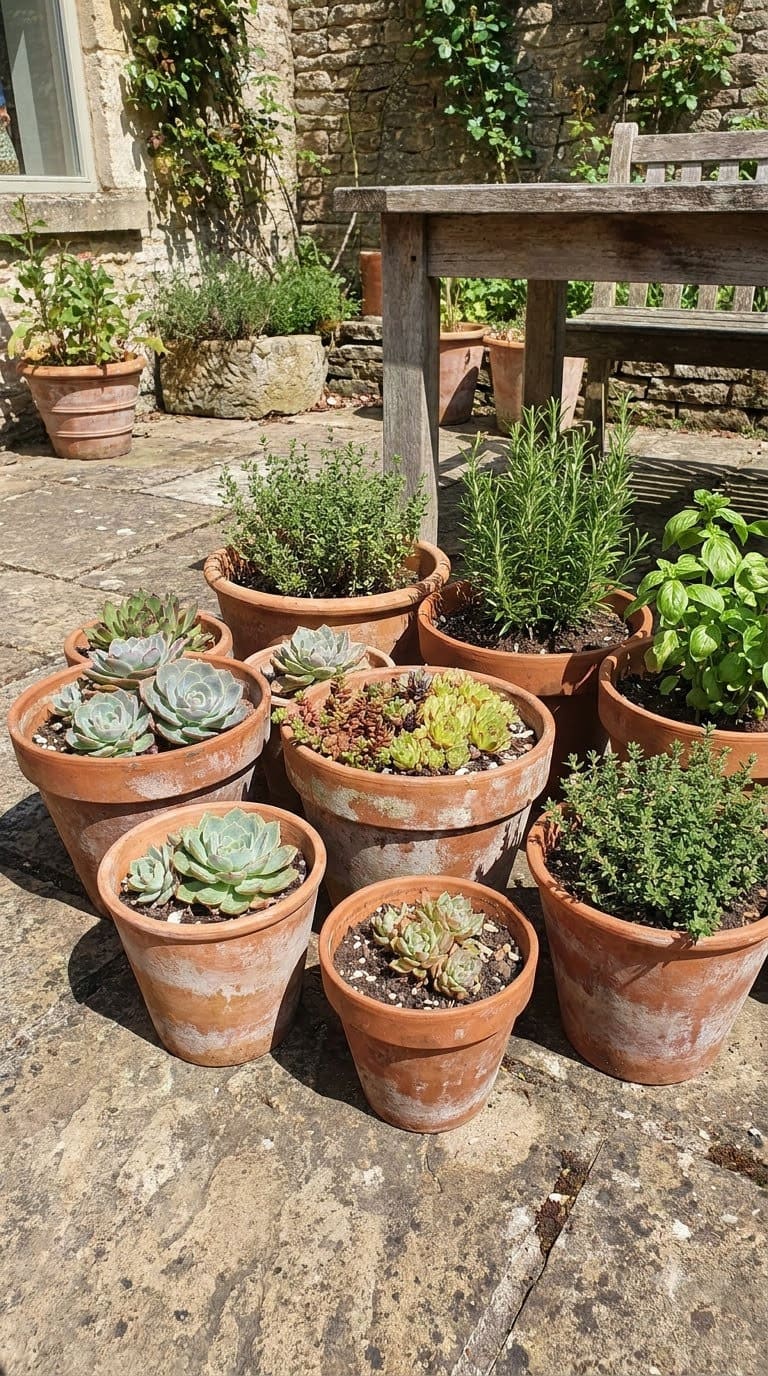
Containers let you control soil quality precisely and reposition plants for optimal sun, which matters a lot for succulents and herbs that need more heat than an in-ground bed might offer, and it’s the easiest way to bring tender plants like agave indoors before a hard frost in colder zones.
Best for: every region, especially useful in zones 5-7 for extending true desert-plant options beyond their outdoor hardiness range.
Cost tier: low to moderate depending on container material, terracotta breathes better for succulents than glazed ceramic or plastic.
14. Seasonal Color (Drought-Tolerant Annuals)
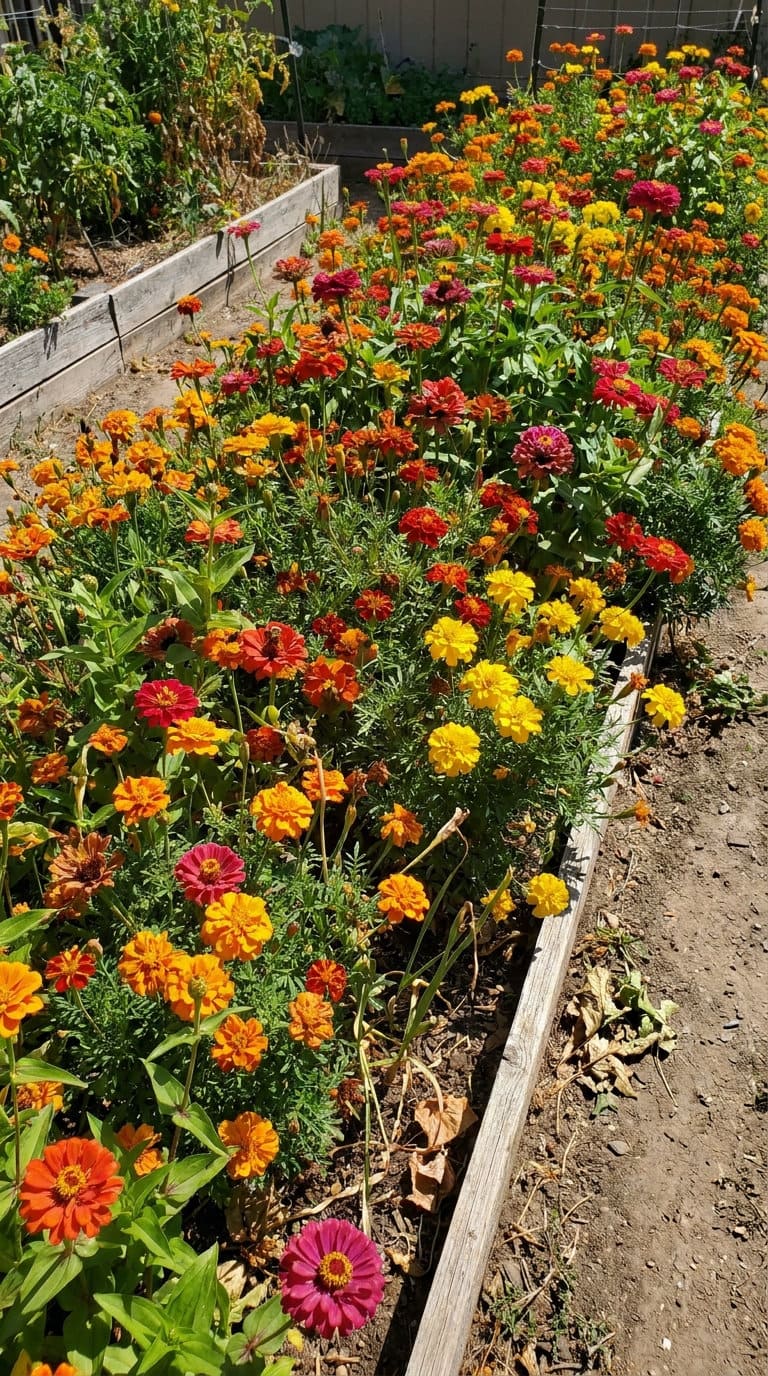
Marigolds, zinnias, and gazania add saturated seasonal color without the water demand of typical bedding annuals like impatiens or petunias, which is a useful trade for anyone who still wants a burst of color near the front door without abandoning water goals entirely.
Best for: every region as a warm-season annual, direct-sow after last frost for the cheapest option.
Cost tier: low, especially from seed rather than nursery six-packs.
15. Mediterranean Motifs
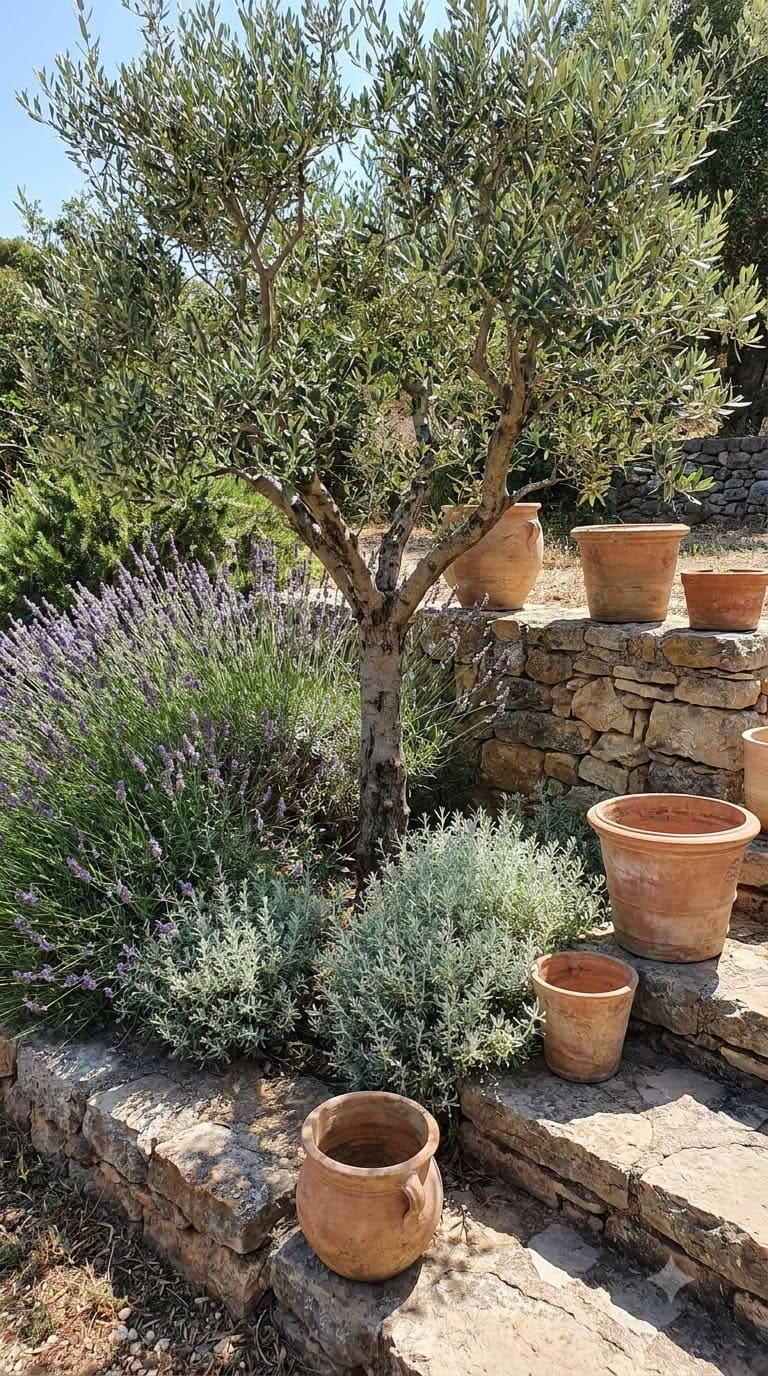
Plants that evolved in the actual Mediterranean basin, olive trees, lavender, santolina, rosemary, share the same dry-summer, mild-winter adaptation that makes them a natural design language for xeriscape yards, terracotta pots and warm stone tones reinforce the look.
Best for: zones 8-10 for true olive trees outdoors (California, Arizona, the Gulf Coast in sheltered spots), lavender and santolina extend to zone 5-6 with good drainage.
Cost tier: moderate, mature olive specimens run considerably more than the herbaceous companions.
16. Edible Drought-Tolerant Plants
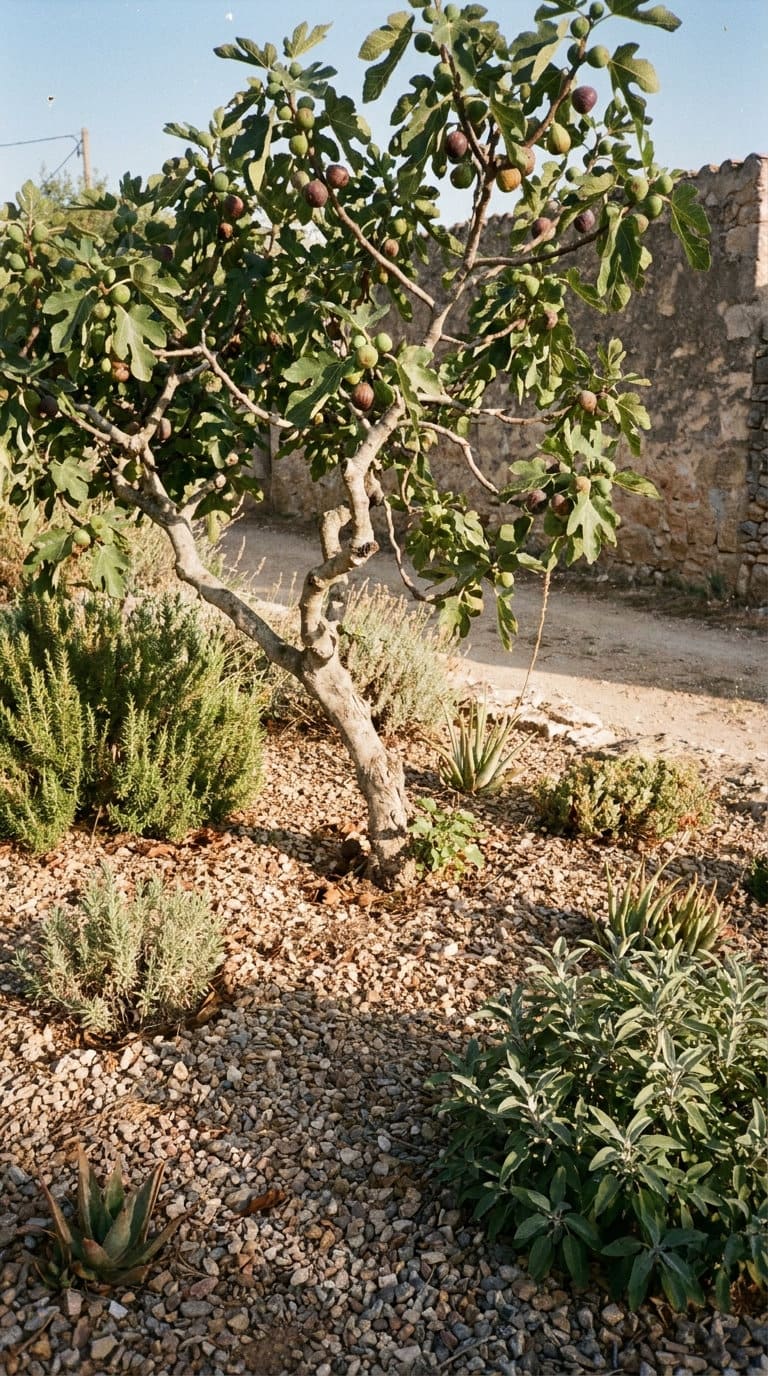
Pomegranate and fig both tolerate extended dry spells once established and still produce real fruit, which makes them a genuinely productive alternative to a purely ornamental xeriscape bed. Figs in particular tolerate poor soil and minimal water better than almost any other common fruit tree.
Best for: figs in zones 7-10 (with winter protection at the cold edge of that range), pomegranates in zones 8-11.
Cost tier: moderate for an established nursery specimen, both root readily from cuttings for a cheaper start.
17. Rainwater Harvesting
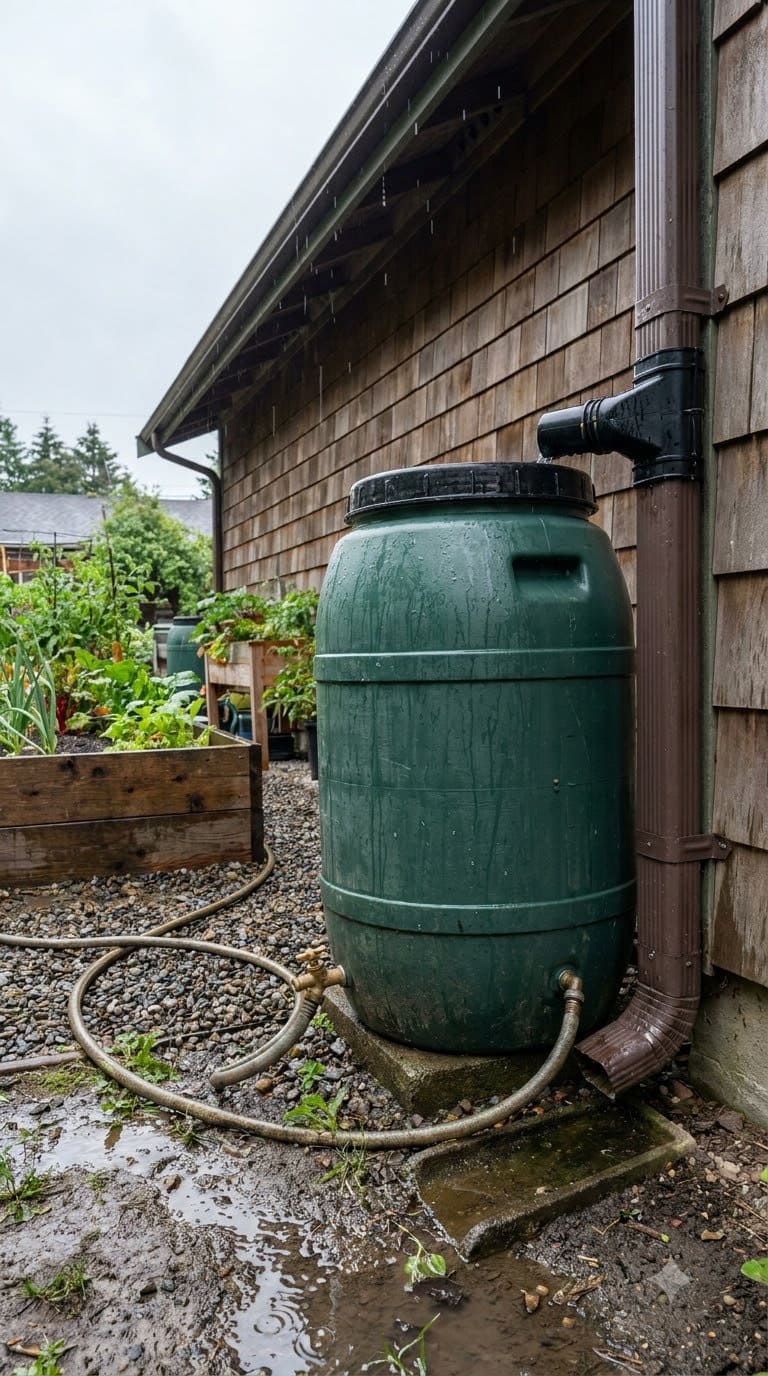
A rain barrel under a downspout captures roof runoff for free irrigation during dry stretches, directly extending the water savings from every other idea on this list instead of relying solely on reduced plant demand. Pair it with idea #7’s permeable paving to capture even more of a storm’s total runoff.
Best for: every region with any seasonal rainfall, even a modest 50-gallon barrel meaningfully offsets container and new-planting watering.
Cost tier: low, a basic barrel-and-diverter kit costs less than a single month’s water bill in most markets.
18. Wildflower Meadows
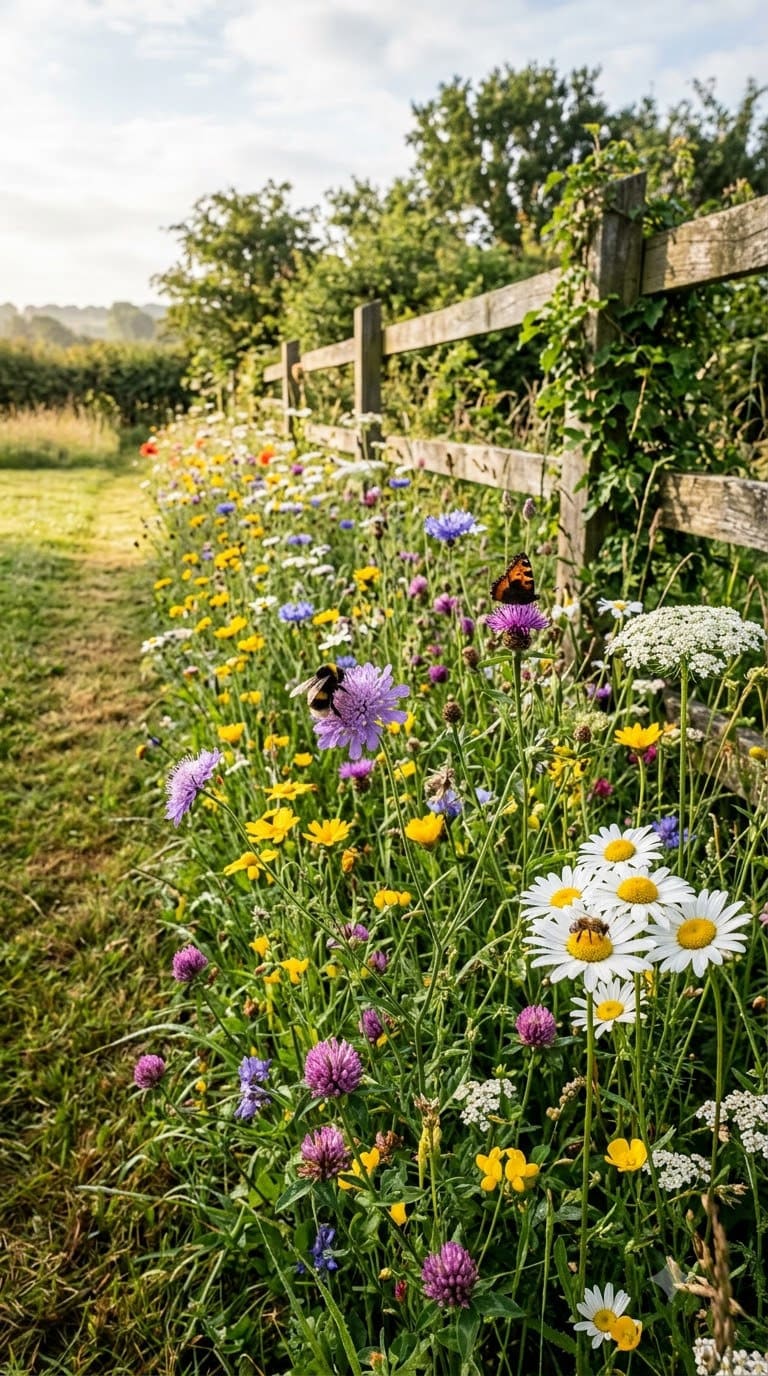
A wildflower meadow patch, sown once and mowed once a year instead of weekly, thrives on natural rainfall alone once established and supports far more pollinator activity than mowed turf ever will.
For the region-by-region native wildflower breakdown that determines exactly which species belong in your meadow, see 10 Resilient Native Wildflowers for a Drought-Proof Yard rather than repeating that list here, also check drought-tolerant plants that attract pollinators for companion species.
Best for: every region, provided you use regionally native seed mixes, not a generic “wildflower mix” that may include species that aren’t actually adapted to your area.
Cost tier: low per square foot converted, one of the cheapest ways to retire a large section of turf.
Frequently Asked Questions
What is xeriscaping, really?
It’s a seven-principle landscaping system developed by Denver Water in the early 1980s: planning, soil improvement, practical turf areas, appropriate plant selection grouped by water need, efficient irrigation, mulch, and ongoing maintenance suited to a dry climate. It is not simply “replace your lawn with rocks.”
How much water does xeriscaping actually save?
Colorado State University Extension puts full xeriscape conversion at 50 to 75 percent less irrigation than traditional turf. The EPA’s WaterSense program cites a more conservative 20 to 50 percent reduction from smarter plant choice and design alone, without a full conversion, saving an average of $30 to $60 a month on the water bill.
Is xeriscaping worth it in a humid climate, not just the desert Southwest?
Yes, partially. You won’t need the full “eliminate turf” version in the Southeast or Pacific Northwest, but hydrozoning, mulch, drought-tolerant grasses, and rain barrels still cut water use and mowing time in any climate. Treat the ideas below as a menu, not an all-or-nothing conversion.
How much does it cost to xeriscape a yard?
A full-yard xeriscape conversion typically runs more than a standard sod relandscape up front, mostly in soil prep, irrigation retrofit, and hardscape materials, but pays that back over several years in lower water bills. Converting one section at a time (a side yard or parking strip) keeps the up-front cost manageable.
Do I need permission from my HOA before xeriscaping?
Often yes. Many HOAs have covenants specifying turf percentage or landscaping style. Check your covenants and, where required, submit a landscape plan before removing lawn, especially for anything visible from the street.
Conclusion

This guide not only aids in establishing an efficient garden but also ensures it is vibrant and full of charm. With these strategies, you’ll discover that xeriscape gardening is not only practical but creatively fulfilling and enjoyable.
Related Posts:
- 10 Resilient Native Wildflowers for a Drought-Proof Yard
- 20+ Creative Southwest Landscaping Ideas for a Water-Wise Garden
- 48+ Best Landscaping Ideas & Designs With Mulch And Rocks
Products We Recommend
This post contains affiliate links. We may earn a commission on qualifying purchases at no extra cost to you.
240 ft Drip Irrigation System Kit (1/2" and 1/4" tubing)
Directly supports idea #1 (hydrozoning) and idea #4 (herb havens), efficient zone-by-zone watering is one of CSU's seven core principles. ~$30, 4.2★ (308 ratings), Amazon's Choice.
Shop Now
Anivia Rain Barrel Diverter Kit (fits 2x3" or 3x4" downspouts)
Directly supports idea #17 (rainwater harvesting). ~$25, 4.0★ (507 ratings), Amazon's Choice, 600+ bought past month.
Shop Now
Anleolife Galvanized Steel Landscape Edging, 60 ft x 8"
Directly supports idea #6 (rock/gravel/decomposed granite groundcover), the edge restraint that prevents the gravel-migration problem called out in that section. ~$69/roll, 4.4★ (44 ratings).
Shop NowNever miss an update — choose FarmFoodFamily as your preferred source on Google.
How it works: Tap the button below to open Google's settings page, then check the box next to FarmFoodFamily.
Tap the checkbox to turn it blue — that's how you know it's set.