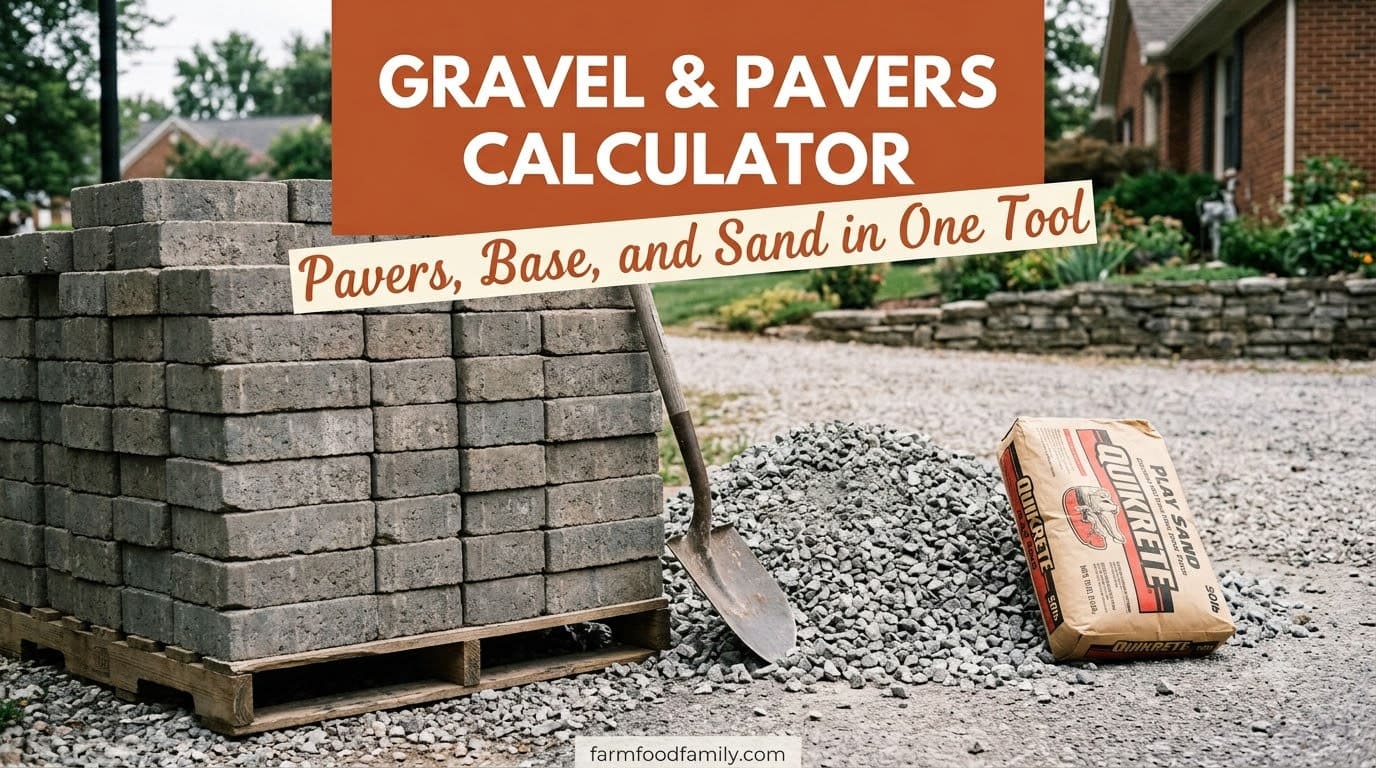
Gravel & Paver Calculator: Pavers, Base, and Sand in One Tool
Enter your area and paver size. Get the exact paver count, gravel base, and bedding sand you need, plus a warning if your sand depth could cause your patio to sink.

Never miss an update — choose FarmFoodFamily as your preferred source on Google.
How it works: Tap the button below to open Google’s settings page, then check the box next to FarmFoodFamily.
Tap the checkbox to turn it blue — that’s how you know it’s set.
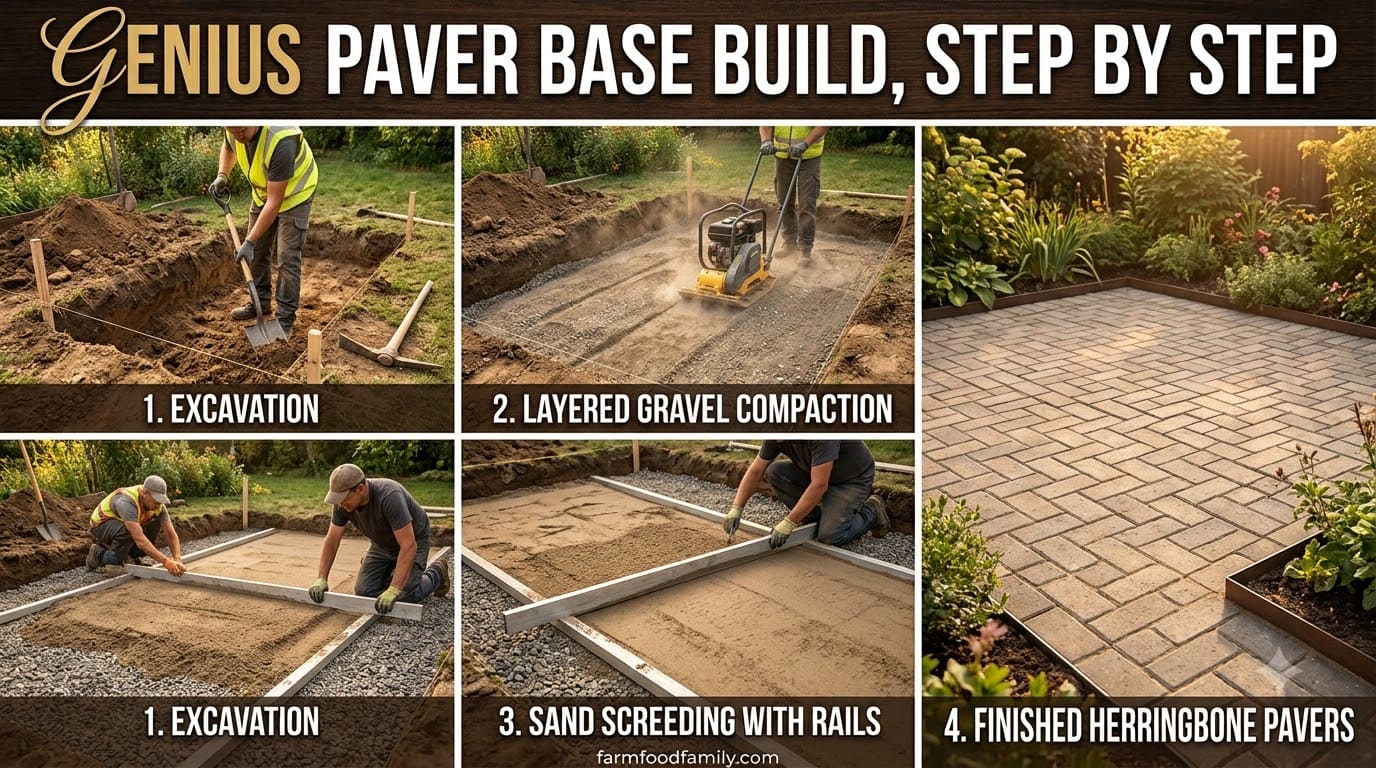
A paver project needs three materials: pavers, a compacted gravel base, and a thin layer of bedding sand. For a 120 sq ft patio with 8×4 inch pavers, that’s about 555 pavers with a 3/16 inch joint and 10% waste, 1.78 cubic yards of gravel at a 4 inch base depth, and 0.37 cubic yards of sand at the standard 1 inch depth.
Base depth depends on what you’re building. A patio or walkway needs at least 4 inches of compacted gravel. A driveway needs at least 6 inches.
Bedding sand should always stay at 1 inch. Thicker sand does not fix an uneven base, it just settles unevenly later.
The calculator below handles all three materials at once. It adds up multiple areas of different shapes, sets the right base depth for your project type, and warns you if your numbers drift from what actually holds up over time.
Gravel & Paver Calculator
Calculate pavers, base gravel, and bedding sand for any patio, walkway, or driveway. Supports multiple areas of different shapes, auto-sets the correct base depth for your project type, and estimates total material cost.
1. Project type & units
2. Area to cover
3. Paver size & joints
4. Base & bedding
5. Pricing (optional)
Results
| Material | Volume | Est. weight |
|---|---|---|
| Gravel base | – | – |
| Bedding sand | – | – |
Why This Calculator Beats a Typical Paver or Gravel Tool
Most calculators online solve one piece of this project, not the whole thing. Some give you a paver count but skip the base. Others give you gravel volume but ignore pavers entirely.
A few tools do both, but only for a single rectangle.
This tool combines all three materials in one pass. It also handles multiple areas at once, like an L-shaped patio plus a walkway.
Answer 4 quick questions and get matched to the exact fix for your yard — drainage, budget, layout, or something else entirely.
Take the Free QuizEvery default ties back to a real standard, not a guess. The base depth field auto-fills from your project type, using figures from the Interlocking Concrete Pavement Institute (ICPI).
That’s the industry body behind most paver construction specs. Change the project type and the number updates.
How Paver Count Is Actually Calculated
Most simple calculators just divide your area by one paver’s area. That’s wrong, because it ignores the joint gap between pavers, which adds up fast across a whole patio.
The correct formula accounts for the joint on both sides of each paver:
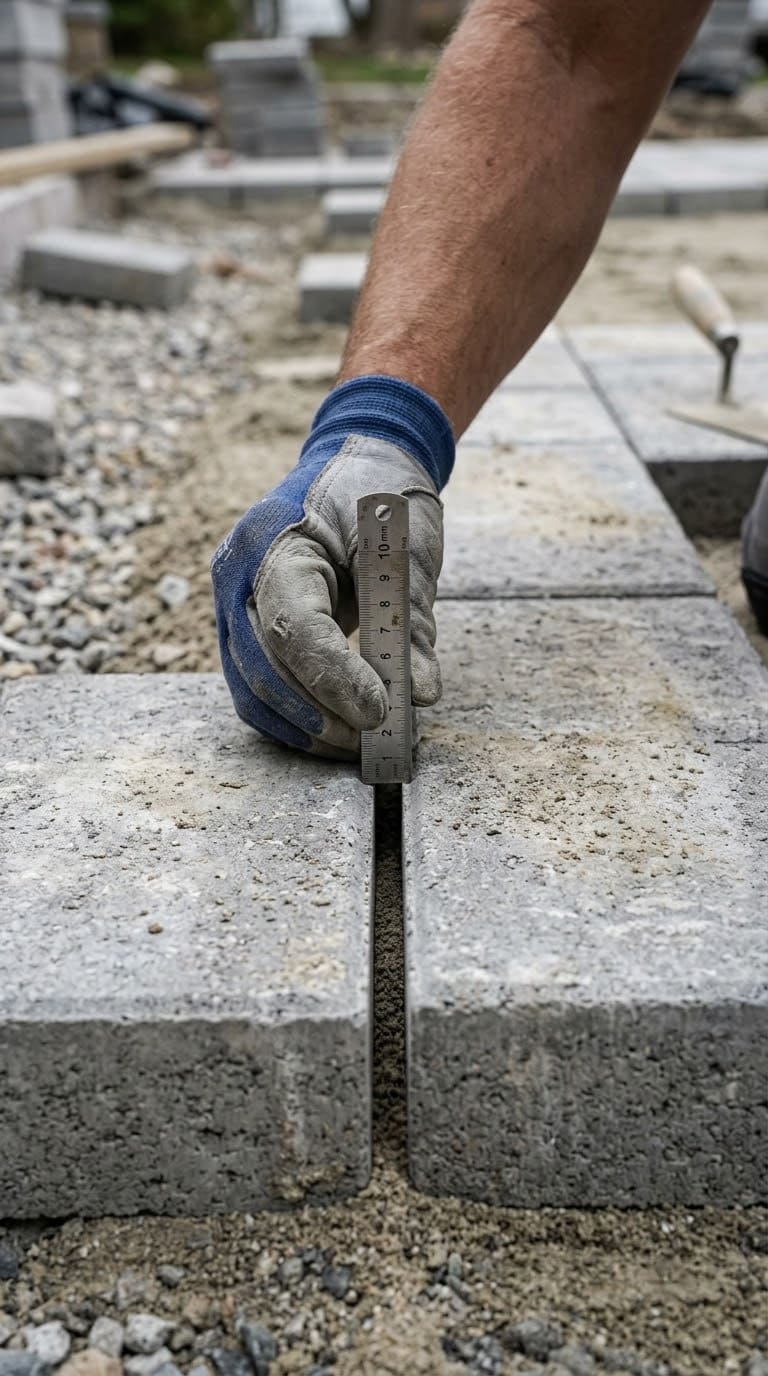
Paver footprint (sq ft) = (Paver length + joint) x (Paver width + joint)Pavers needed = (Total area / Paver footprint) x (1 + waste %)An 8×4 inch paver with a 3/16 inch joint doesn’t cover an 8×4 inch space. It covers roughly 8.19 x 4.19 inches once you count the gap it shares with its neighbors. Skip this step and you’ll under-order pavers on any project over a few hundred square feet.
Joint gap: how wide should it be?
ICPI recommends a joint gap between 1/16 and 3/16 inch (2 to 5 mm), with no more than 5% of joints exceeding 1/4 inch. Most installers land around 3/16 inch as a practical middle ground. Wider joints use less paver material but need more polymeric sand to fill, so extreme widths aren’t actually cheaper once you count both materials.
Base Depth by Project Type (ICPI Standard)
| Project type | Minimum compacted base depth | Notes |
|---|---|---|
| Patio, walkway, pool deck | 4 in (100 mm) | Add 2-4 in more in cold climates or clay soil |
| Residential driveway | 6 in (150 mm) | Add 2-4 in more in cold climates or clay soil |
| Heavy-duty (RV pad, commercial) | 8-10 in (200-250 mm) | Needs an engineered design for true commercial loads |
These figures come from the ICPI Tech Spec 2 construction guide. It’s the standard most paver manufacturers and contractors build to.
Most yard problems trace back to one specific, fixable cause. Find yours in 4 quick questions.
Take the Free QuizPoor soil drainage, freeze-thaw cycles, and heavy vehicle loads all push you toward the higher end of each range. Some push you past it entirely for real commercial work.
Why Bedding Sand Stays at 1 Inch, No Matter What
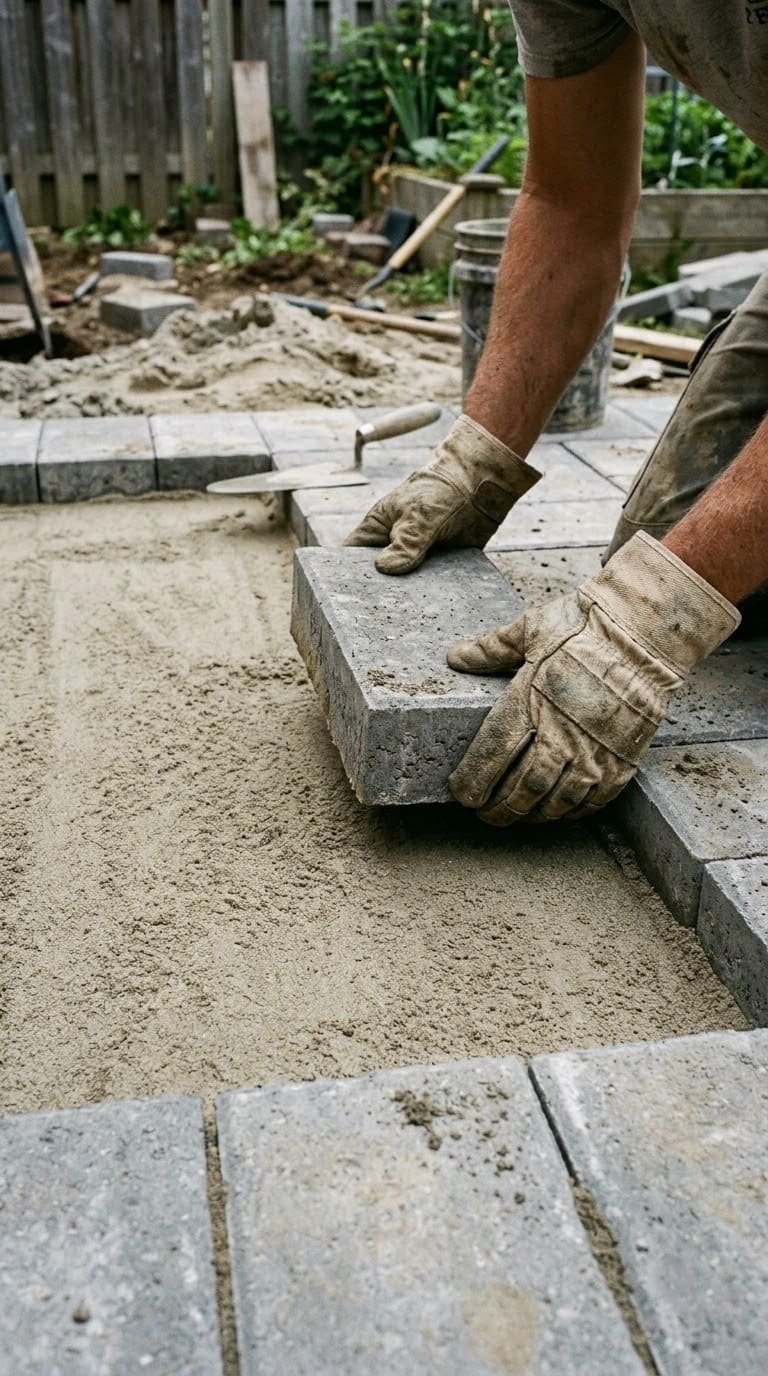
This is the single most common mistake in DIY paver projects. If the gravel base ends up slightly uneven, the instinct is to pile on extra sand to level things out before setting the pavers.
Don’t do that. ICPI’s own construction guide is direct here: bedding sand should be screeded to a nominal 1 inch (25 mm) thickness. If the base underneath is uneven, “the bedding sand should not be used to compensate for it.”
Uneven sand depth reflects straight through to the surface over time. That’s exactly how a patio ends up with dips and low spots a year or two after installation.
If your base isn’t flat, fix the base first. Re-grade and re-compact the gravel layer until it’s level, then screed a consistent 1 inch of sand on top. The calculator flags this for you if your entered sand depth goes much past the standard.
Compaction: Why You Need More Gravel Than the Math Suggests
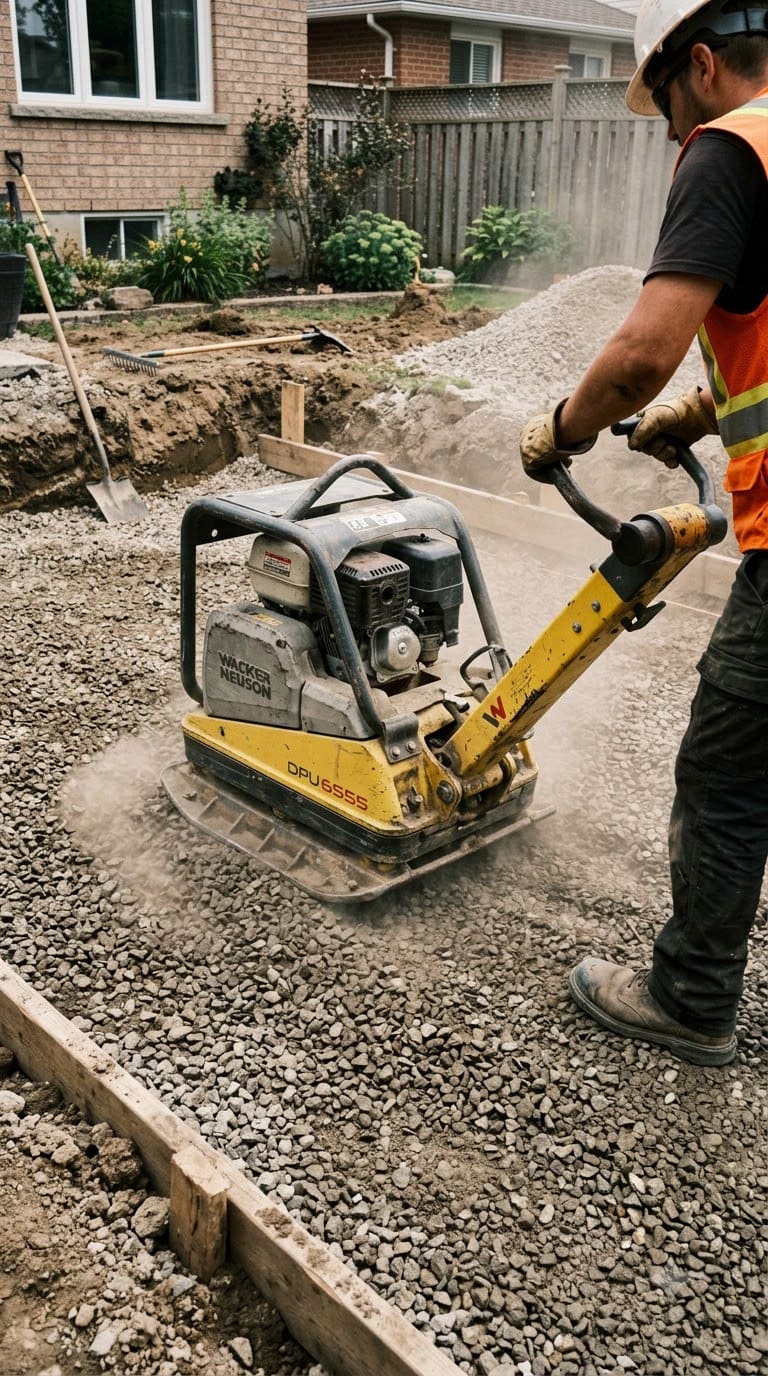
Loose gravel takes up more space than compacted gravel. A delivery truck drops off loose stone. Once you run a plate compactor over it, the layer gets denser and shallower.
So if your project needs a 4 inch finished base, you need to order more than “area times 4 inches” of material. Some of that volume disappears during compaction. A common rule of thumb is about 20% extra loose material to hit your target depth.
This 20% figure isn’t an ICPI-published number. It’s a widely used practical allowance. The calculator lists it as a typical estimate, and you can turn it off if your supplier already builds this into their delivery quote.
Converting Volume to Weight for Ordering
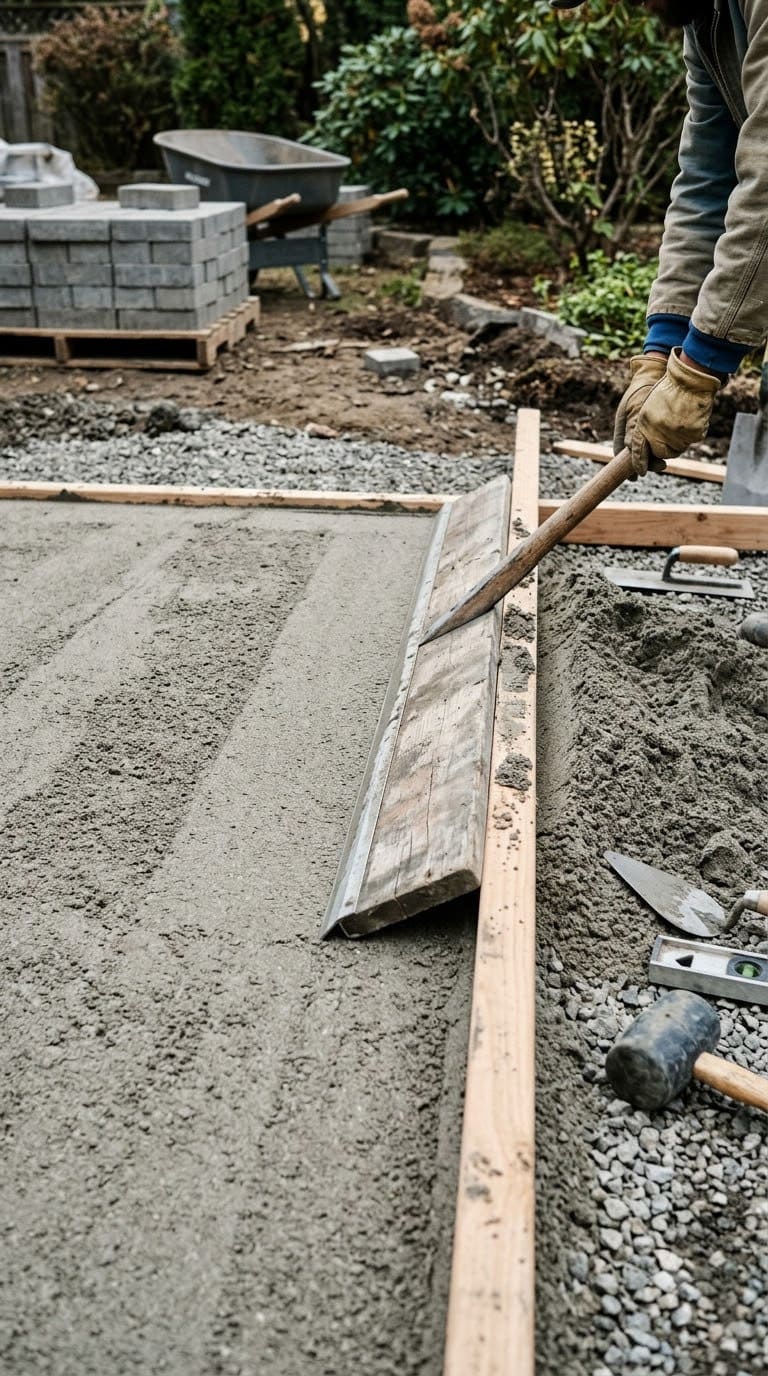
Gravel and sand are usually priced by the ton, not the yard. This matters most on big driveway jobs.
The calculator does this math for you. It uses typical figures: about 1.4 tons per cubic yard for crushed stone, and about 1.3 tons per cubic yard for sand.
These are typical ranges, not a fixed rule. Real weight shifts with material type and how wet it is.
The average homeowner spends $616/year on yard fixes that don't address the real problem. Find out what yours actually is — before you spend another dollar.
Take the Free QuizAsk your local supplier for their exact number before a big order. Their own spec sheet always beats a general guess.
How to Measure an L-Shaped or Irregular Patio
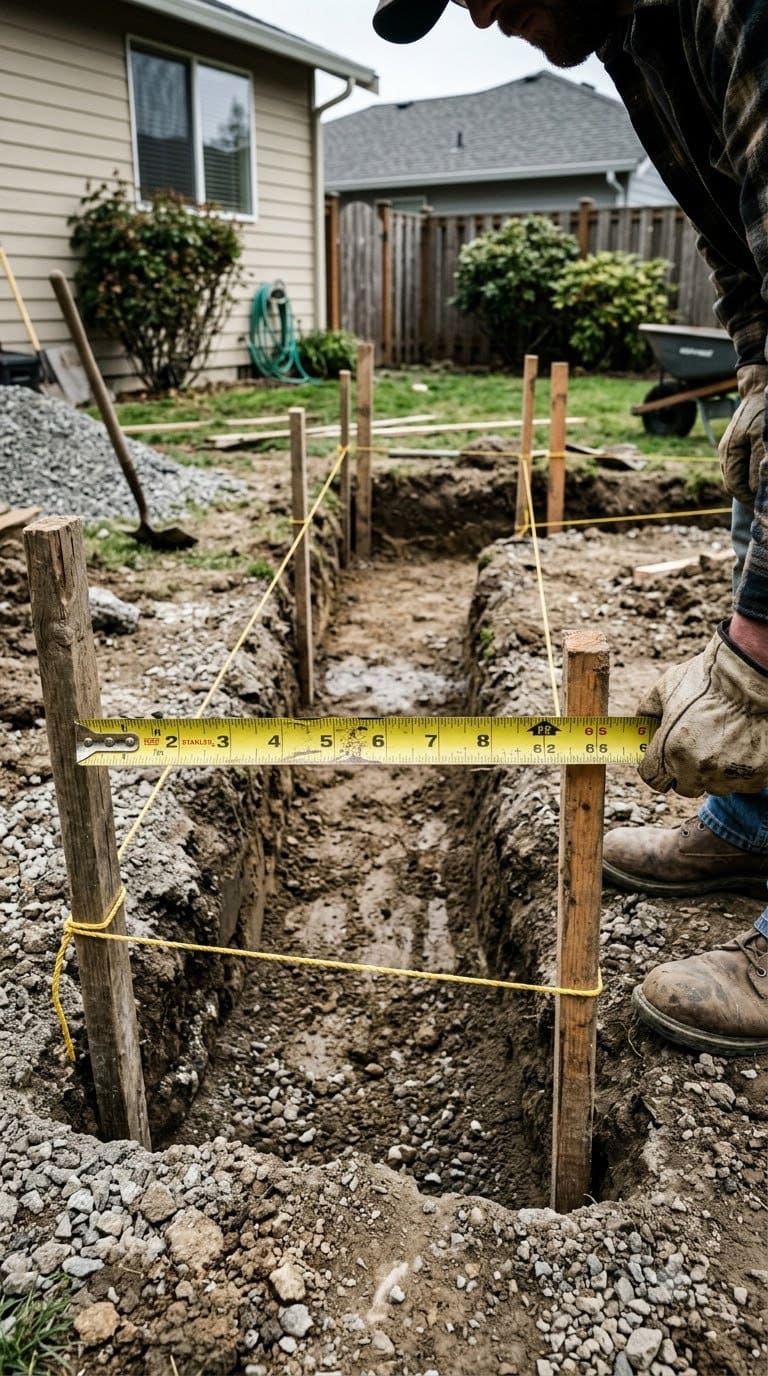
Most patios aren’t a single clean rectangle. A common layout is a main rectangle plus a smaller landing near a door, or a curved edge along a garden bed.
Break the space into simple shapes first. An L-shaped patio is just two rectangles. A patio with one rounded end is a rectangle plus a half-circle.
Measure and enter each piece as its own area in the calculator, and it adds the totals for you.
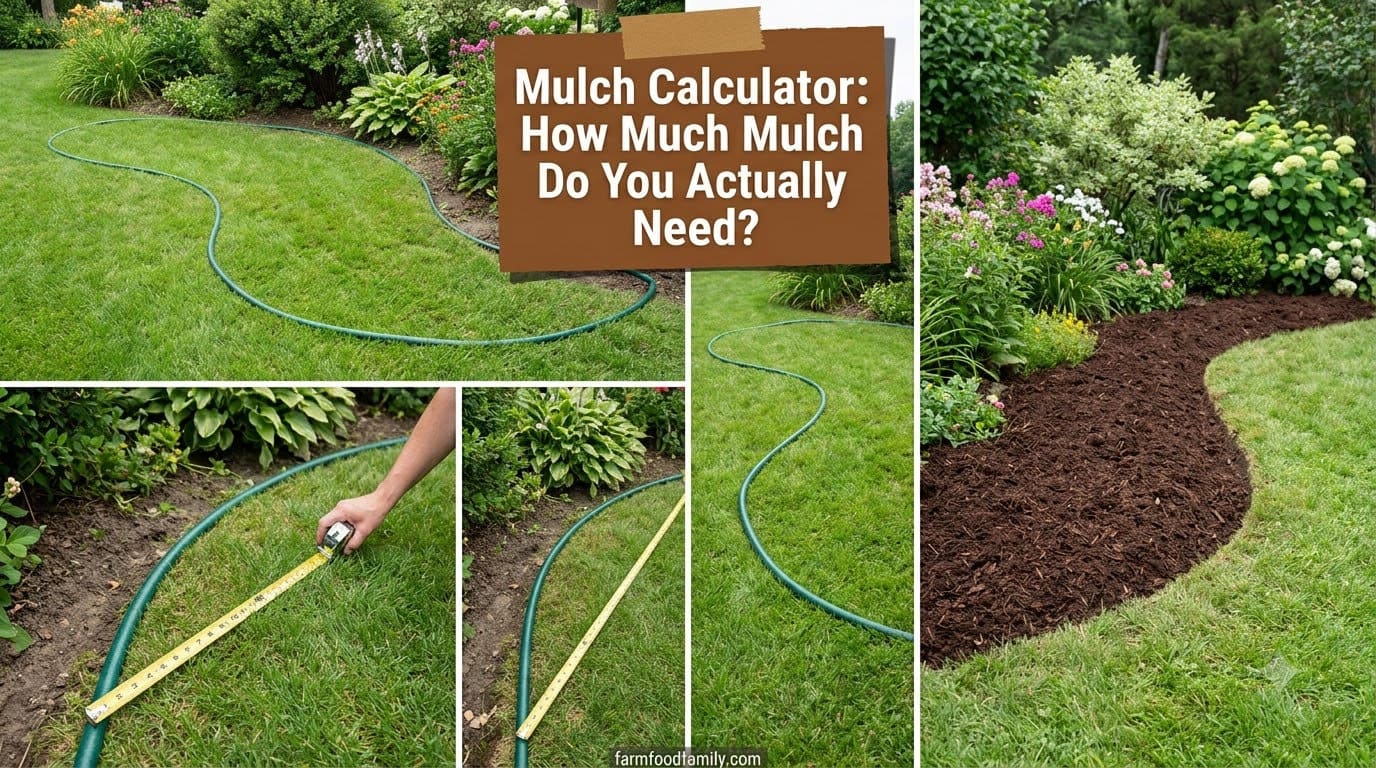
For a curved or free-form edge, lay a garden hose along the line to trace it, then measure the length and average width of that outline. This is close enough for material ordering, even if it isn’t a perfect measurement. Round up slightly rather than down, since running short on pavers mid-project means a possible color-batch mismatch on the reorder.
Common Paver Installation Mistakes Beyond Sand Depth
Sand depth isn’t the only place DIY paver projects go wrong. A few other mistakes show up just as often:
- Skipping edge restraints. Pavers on the outer edge of a patio need a plastic or metal restraint staked into the ground behind them. Without one, edge pavers creep outward over time and the whole field loses its tight joints.
- Compacting the base in one pass. A 6 inch base compacted all at once won’t reach full density. Compact in layers of about 2 inches each, running the plate compactor over every layer before adding the next.
- Skipping a woven geotextile fabric under the gravel. On clay or poorly draining soil, a fabric layer between the native soil and the gravel base keeps the two from mixing over time, which would otherwise weaken the base.
- Using the wrong sand in the joints. Regular play sand or mason sand in the joints washes out with rain. Polymeric sand, swept in and activated with water, actually locks the pavers together.
FAQs
How many pavers do I need for 100 square feet? It depends entirely on paver size and joint gap. For a common 8×4 inch paver with a 3/16 inch joint and 10% waste, expect roughly 460 to 470 pavers for 100 sq ft. Larger pavers need far fewer units for the same area.
Can I skip the gravel base and just use sand? No, for any surface that sees foot or vehicle traffic. Sand alone doesn’t provide load-bearing support or drainage. It compresses unevenly under weight, which is why pavers set directly on sand without a gravel base tend to shift and sink within a season.
What’s the difference between paver sand and polymeric sand? Bedding sand goes underneath the pavers as a leveling layer before installation. Polymeric sand goes into the joints between pavers after they’re set, and hardens when wetted to lock the pavers in place and resist weeds. This calculator covers bedding sand, not the joint-fill polymeric sand.
Do I need a different base depth for clay soil? Yes, add 2 to 4 inches to the standard depth for your project type. Clay drains poorly and holds more water, which makes freeze-thaw heaving worse and weakens the base’s load-bearing strength over time.
How much does a paver patio cost per square foot? Material cost alone (pavers, gravel, sand) typically runs a few dollars per square foot depending on paver style, with labor often adding several times that. Use this calculator’s price fields to estimate your own material total, then add local labor rates separately since those vary widely by region.
Can I use this calculator for a gravel-only path with no pavers? Yes, leave the paver fields at zero and read the gravel base numbers only. Pick “Patio / walkway” as the project type for a typical 4 inch depth, or enter a custom depth if you’re building a deeper gravel driveway with no pavers at all.
What happens if I use the wrong joint gap? Too narrow, and pavers can chip against each other as the ground shifts slightly with temperature changes. Too wide, and you need more joint sand and the surface looks less finished. Staying within the ICPI range of 1/16 to 3/16 inch avoids both problems.
Glossary
- ICPI: The Interlocking Concrete Pavement Institute. This group publishes the construction standards most paver installers in North America follow.
- Compacted base: Gravel that has been pressed down with a plate compactor. This makes it denser and stronger than loose gravel.
- Bedding sand: A thin, leveled layer of sand between the base and the pavers. It gives the pavers a flat, even surface to sit on.
- Polymeric sand: Sand mixed with a binding agent. It gets swept into the joints after the pavers are set, then hardens when wetted to lock everything in place.
Sources & References
- Interlocking Concrete Pavement Institute. Tech Spec 2: Construction of Interlocking Concrete Pavements
For budget planning, our paver patio ideas on a budget guide breaks down real cost ranges. If you’re still deciding on base material, types of gravel for driveways and landscaping covers the options, and gravel patio ideas shows layout inspiration.
For driveway-specific layouts, see driveway paving ideas and herringbone driveway ideas. Building around a pool instead? Pavers around pool ideas covers material and drainage considerations specific to pool decks.
Never miss an update — choose FarmFoodFamily as your preferred source on Google.
How it works: Tap the button below to open Google's settings page, then check the box next to FarmFoodFamily.
Tap the checkbox to turn it blue — that's how you know it's set.