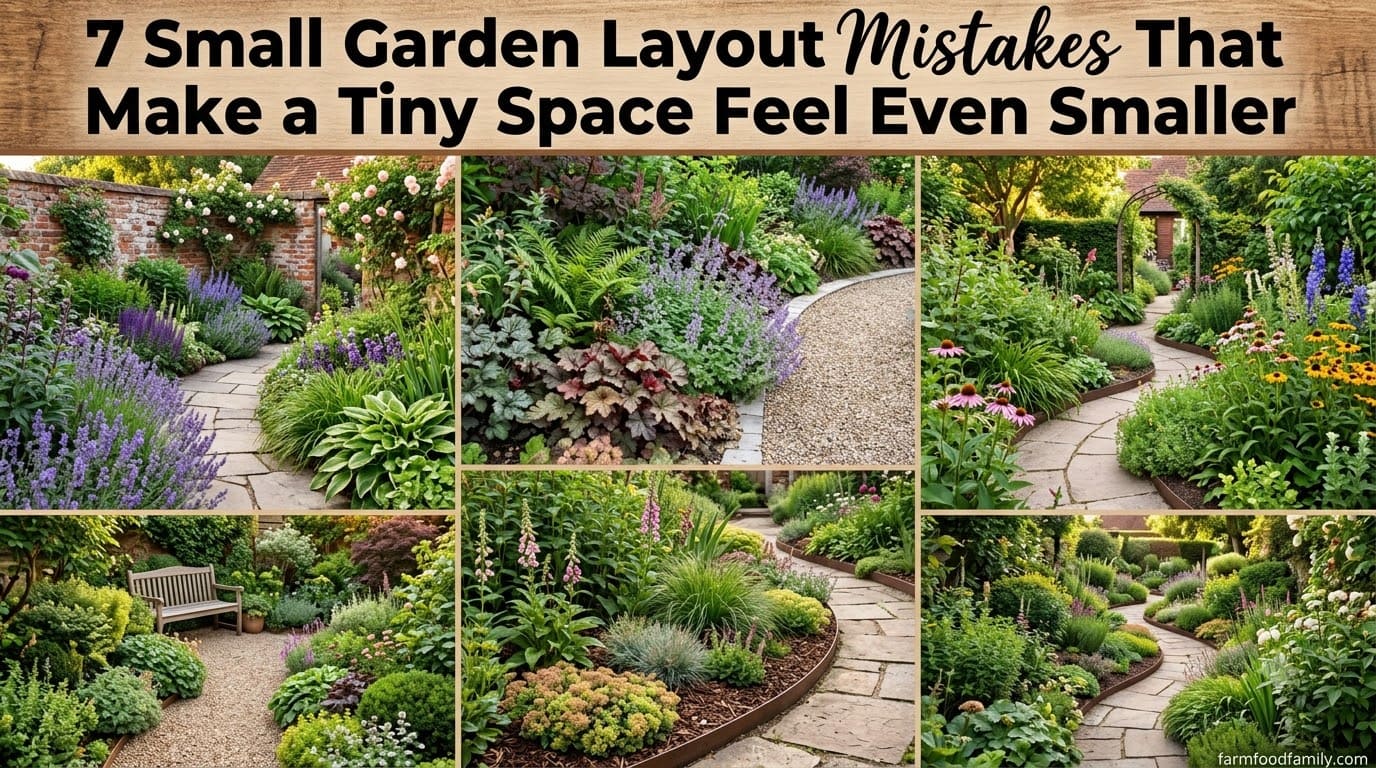
7 Small Garden Layout Mistakes That Make a Tiny Space Feel Even Smaller
Most small gardens aren’t actually small, they’re just laid out in a way that makes every square foot fight against you, and these 7 fixes stop that.

Never miss an update — choose FarmFoodFamily as your preferred source on Google.
How it works: Tap the button below to open Google’s settings page, then check the box next to FarmFoodFamily.
Tap the checkbox to turn it blue — that’s how you know it’s set.
A small garden can feel genuinely spacious. Or it can feel like a closet with grass in it. The difference almost never comes down to the actual square footage. It comes down to a handful of layout decisions that either work with the space or fight against it.
The frustrating part is most of these mistakes look reasonable on paper. Planting only around the edges to “keep the middle open.” Adding a straight path because it seems tidy. None of them are obviously wrong, until you see what they actually do to how the space reads.
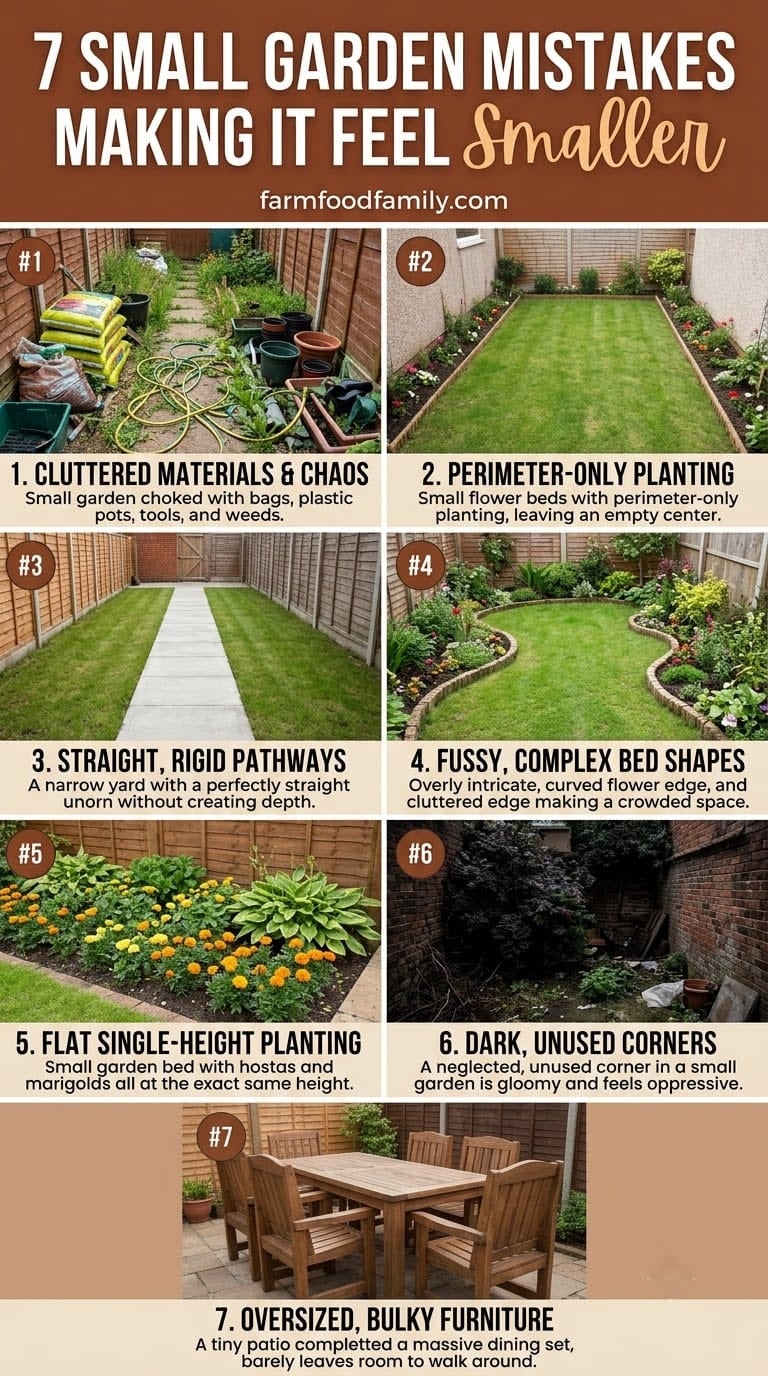
Quick Answer: Small gardens feel smaller than they are because of 7 recurring layout mistakes. Too many different materials and elements crammed in at once. All the planting pushed to the perimeter, leaving the center empty. One straight path across the lawn that shows the whole route in a glance. Fussy, intricate bed shapes that read as clutter at eye level. Everything planted at one flat height, with no layers of depth. Corners left dark and unlit after dusk. And furniture or ornaments at the wrong scale for the space. Garden designers Gavin McWilliam, Andy Sturgeon, and Helen Elks-Smith each point to a piece of the same fix: break up straight lines, keep shapes simple, and build in layers of height instead of one flat plane. None of it needs more land.
At a Glance: The 7 Mistakes vs. The Fix
| # | Mistake | The Fix |
|---|---|---|
| 1 | Too many elements competing at once | Repeat the same materials, colors, and plant groups throughout |
| 2 | Planting pushed only to the perimeter | Bring some planting toward the middle to break the boundary-hugging effect |
| 3 | A straight path across the lawn | Curve it or break it up with planting, trees, or boulders |
| 4 | Fussy, intricate bed shapes | Use simple sweeping curves or clean geometric lines |
| 5 | Everything planted at one height | Layer low, mid, and tall plants to add depth |
| 6 | Dark, unlit corners | Add low-voltage lighting to open up the space visually after dusk |
| 7 | Furniture and ornaments at the wrong scale | Match every piece’s size to the actual footprint of the garden |
Mistake #1: Too Many Elements Competing at Once
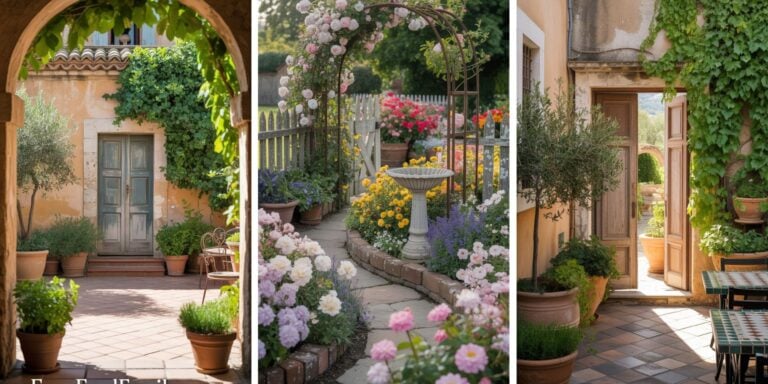
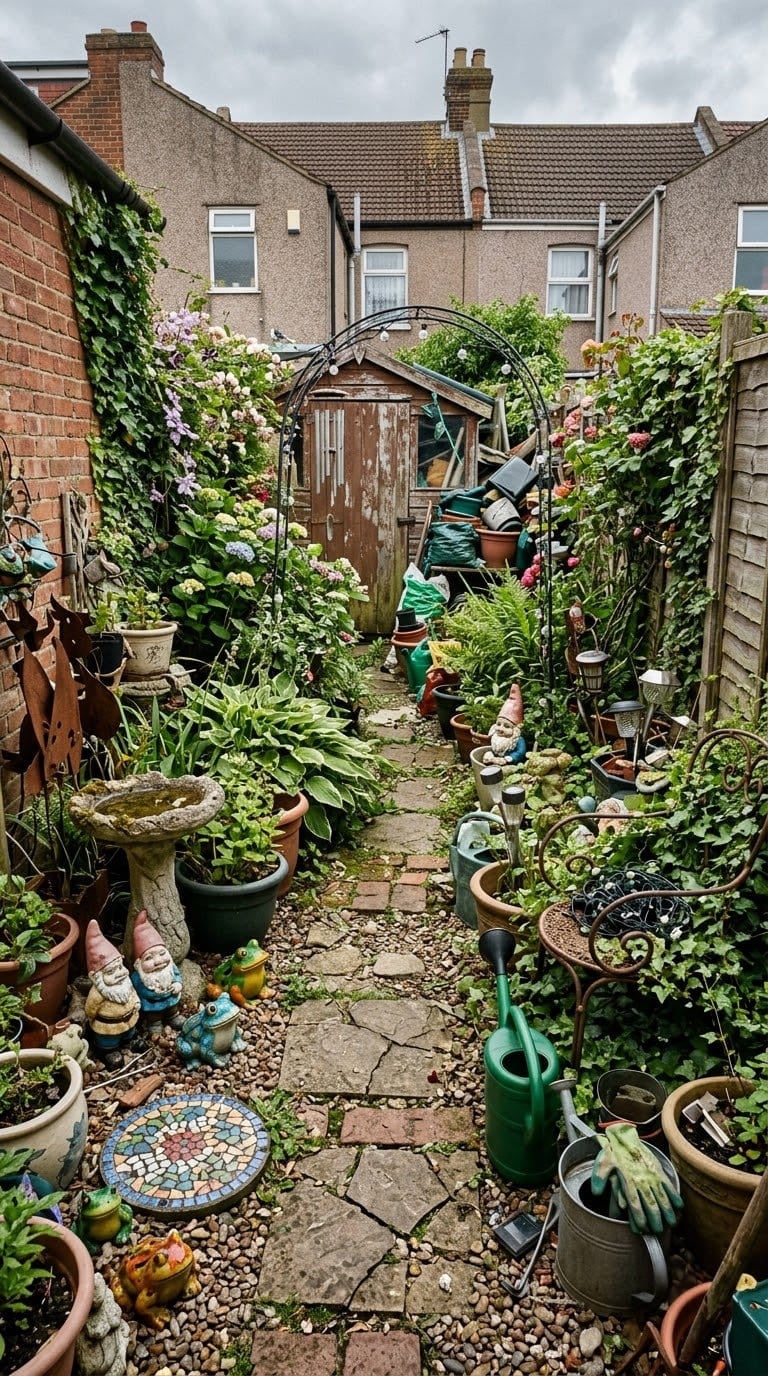
A small garden with five paving materials, three ornament styles, and a dozen unrelated plants reads as chaos. Even if every piece is nice on its own. In a large garden, variety gets absorbed by the sheer amount of space. In a small one, every extra material or style competes for the same handful of square feet.
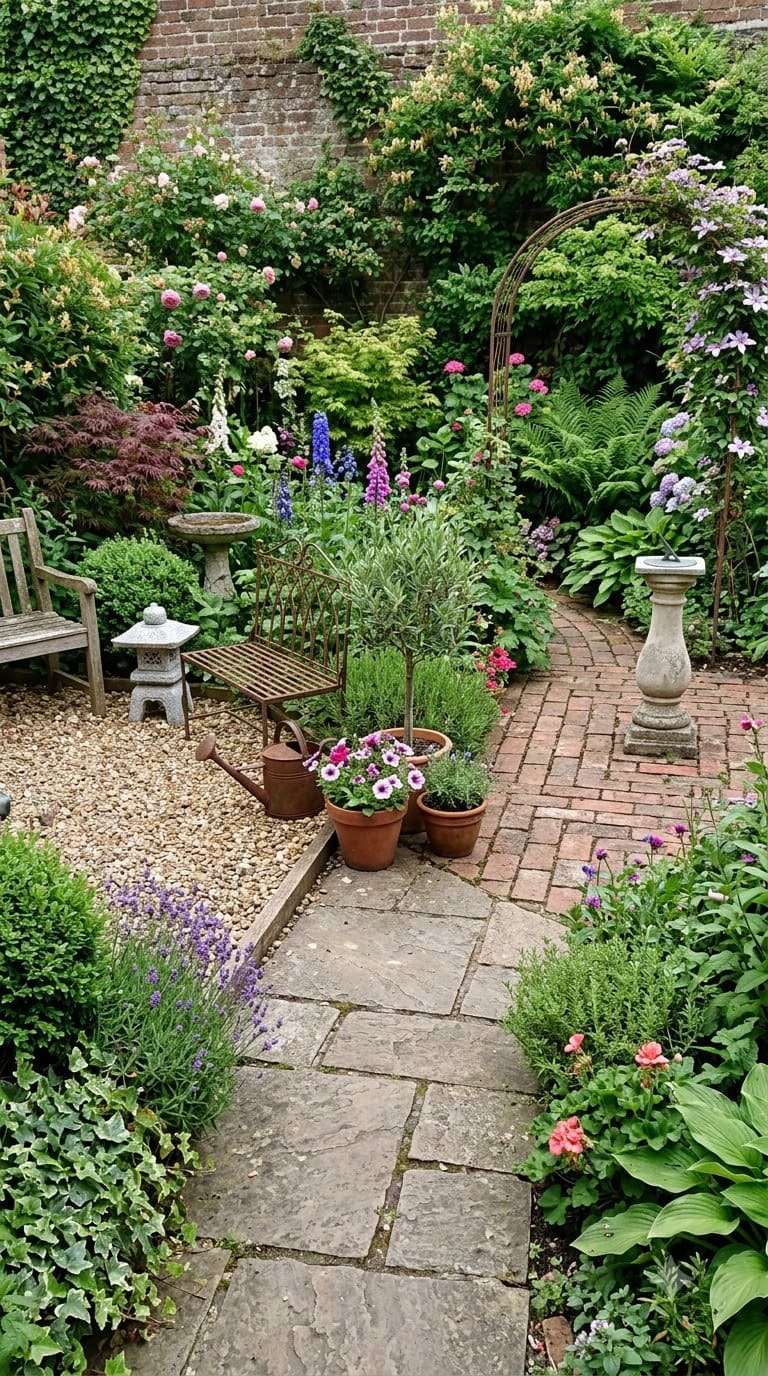
The fix is repetition, not restriction. Pick one or two hardscape materials, a limited color palette, and a small number of plant groups. Repeat them through the space instead of adding something new in every bed. A curated small garden reads as intentional. A crowded one reads as smaller than it is.


Quick tip: Walk the garden with a notepad and list every distinct material and ornament style you can see from one spot. If the list runs past four or five items, you’ve found your clutter problem in about two minutes, without needing to redesign anything yet. Cutting the list down, not adding a theme on top of it, is usually the actual fix.
Answer 4 quick questions and get matched to the exact fix for your yard — drainage, budget, layout, or something else entirely.
Take the Free QuizMistake #2: Planting Pushed Only to the Perimeter
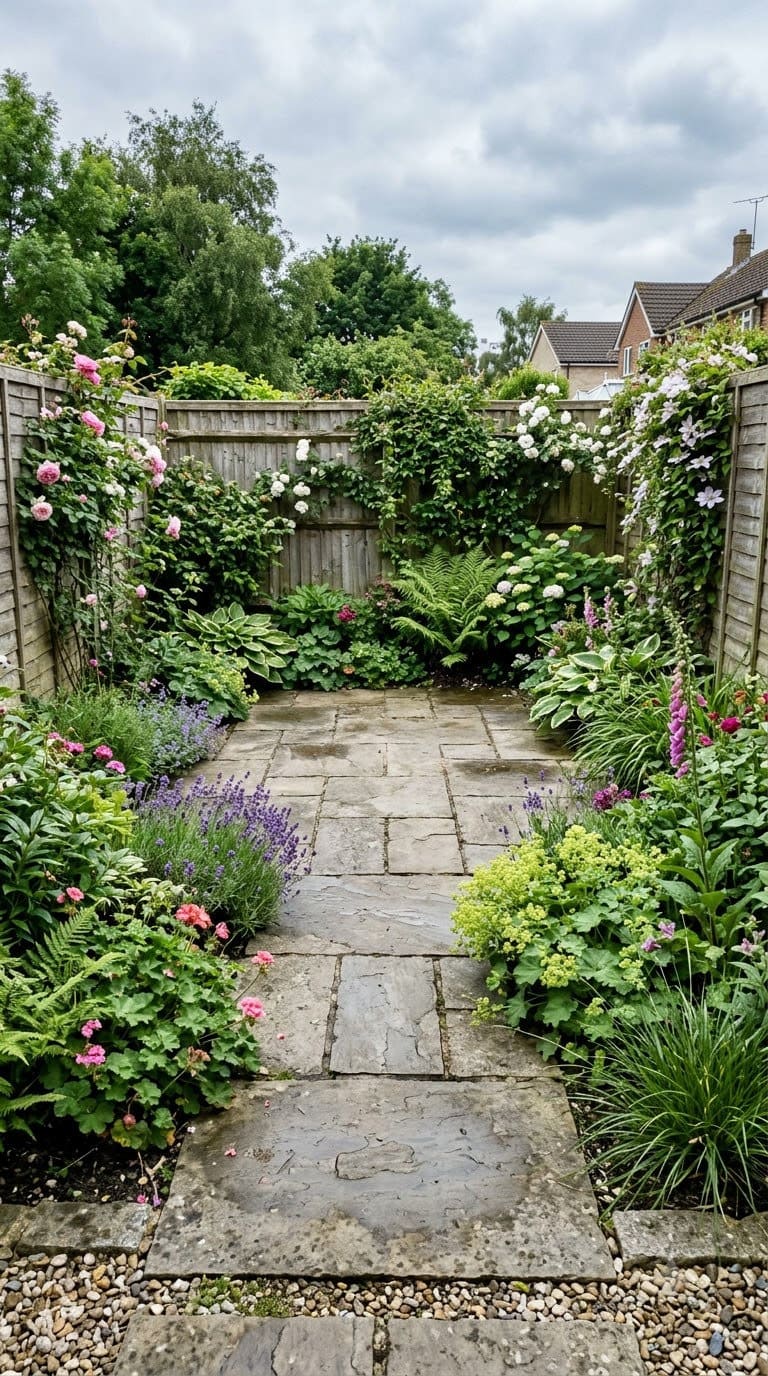
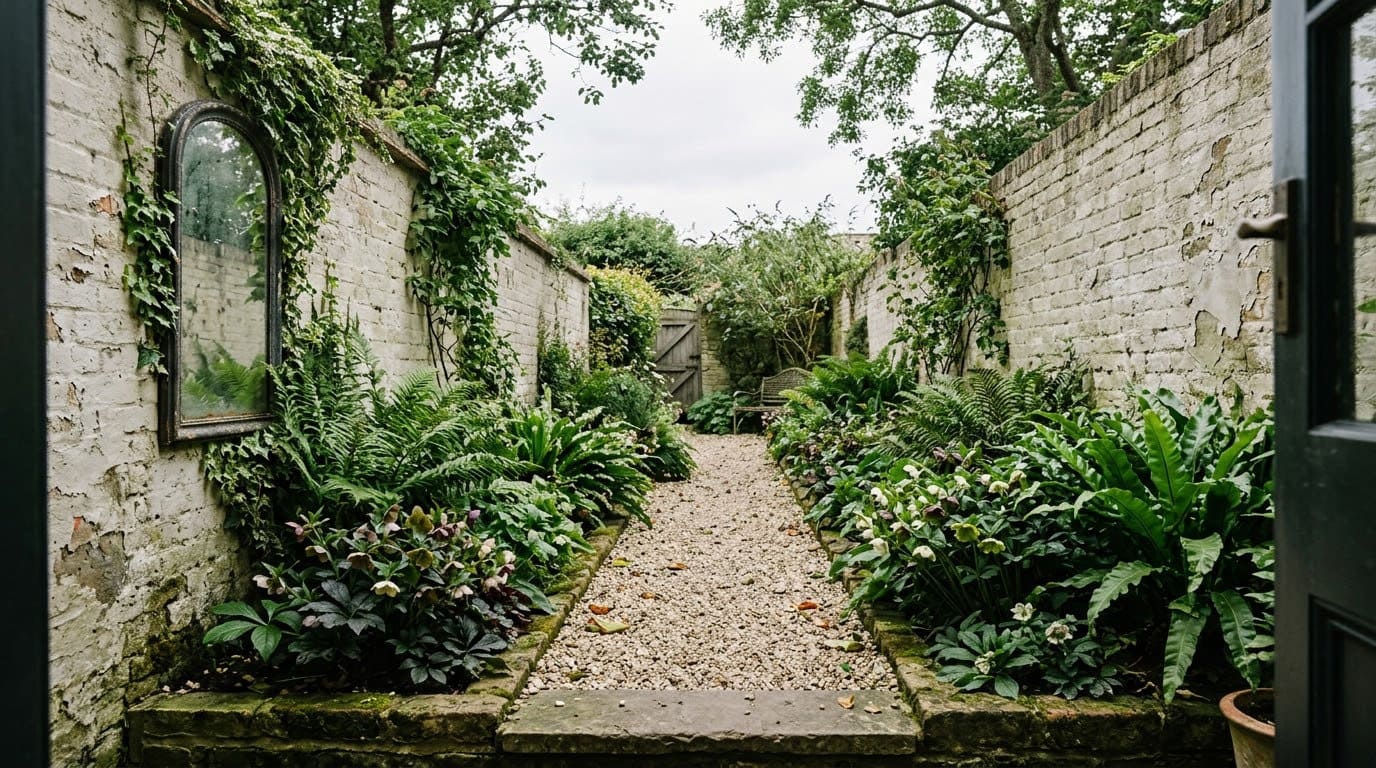
The instinct in a small garden is to keep the center open and push everything to the edges. The idea is that an open middle makes the space feel bigger. It usually does the opposite. Fences and hedges already create a strong vertical line around the garden. Stacking all your planting right against that line just reinforces how close those walls really are.
Bring even a modest amount of planting toward the middle: one specimen plant, a low bed that juts inward. That breaks the unbroken ring of enclosure. The eye stops reading one continuous wall and starts reading depth instead.
Quick tip: Start with one container, not a dug bed, if you’re not ready to commit. A single large pot placed a few feet in from the fence line lets you test how the space feels with the center broken up, before you invest in digging a permanent bed. Move it around for a week or two and see which spot actually changes how the garden reads.
Mistake #3: A Straight Path Across the Lawn
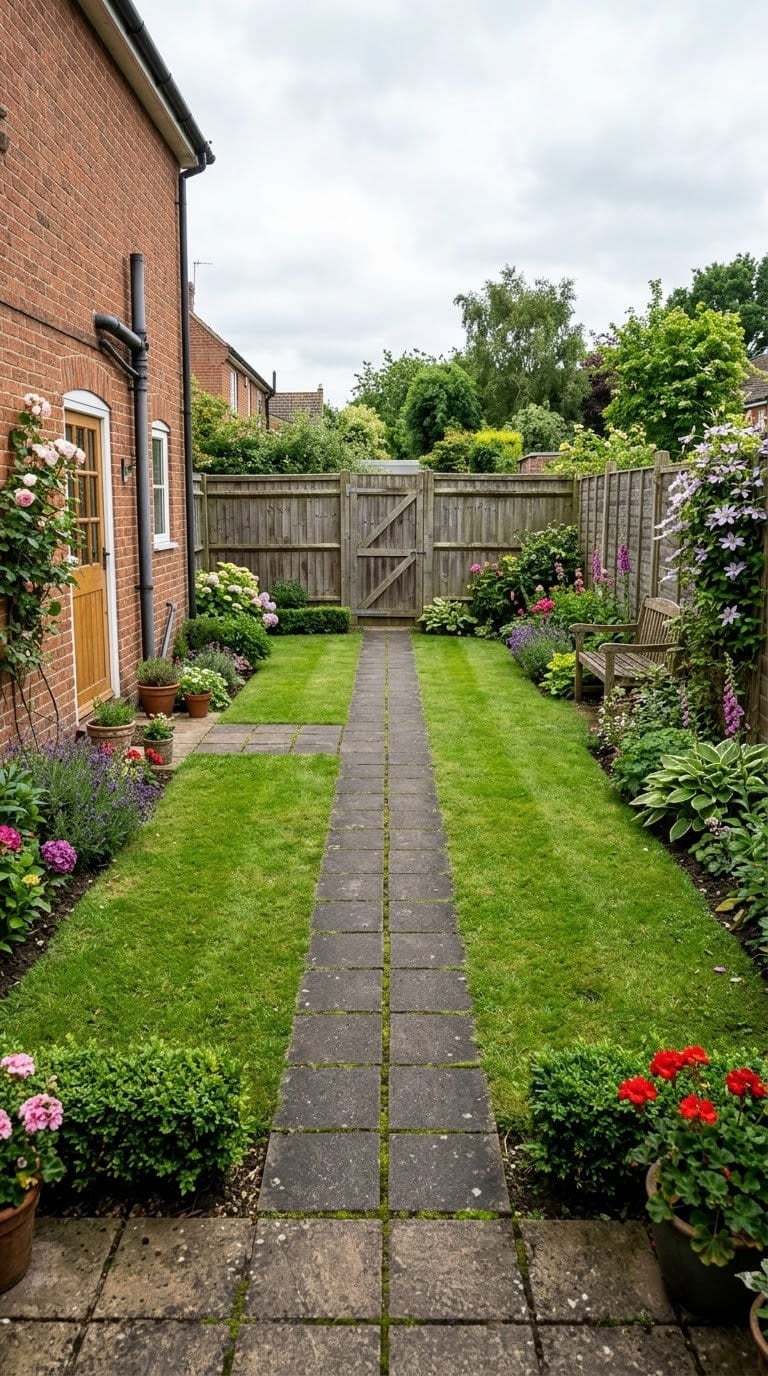
A straight path from the back door to the far fence does two things at once. It visually slices the space into two smaller pieces. And it tells the eye exactly how short the distance is, in a single glance.
London designer Gavin McWilliam recommends breaking up straight paths “with planting, trees, boulders.” That builds a sense of intrigue instead of showing the whole route at once. Even a slight curve, or a bed that partly interrupts the sightline, does more for how big a small garden feels than a few extra feet of actual land ever would.
Quick tip: If the path is already built and replacing it isn’t realistic this season, a single large boulder or dense shrub placed just off one edge, partway down the route, does most of the work of a full curve. It forces a slight detour on foot and breaks the straight sightline without touching the actual paving.
Mistake #4: Fussy, Intricate Bed Shapes
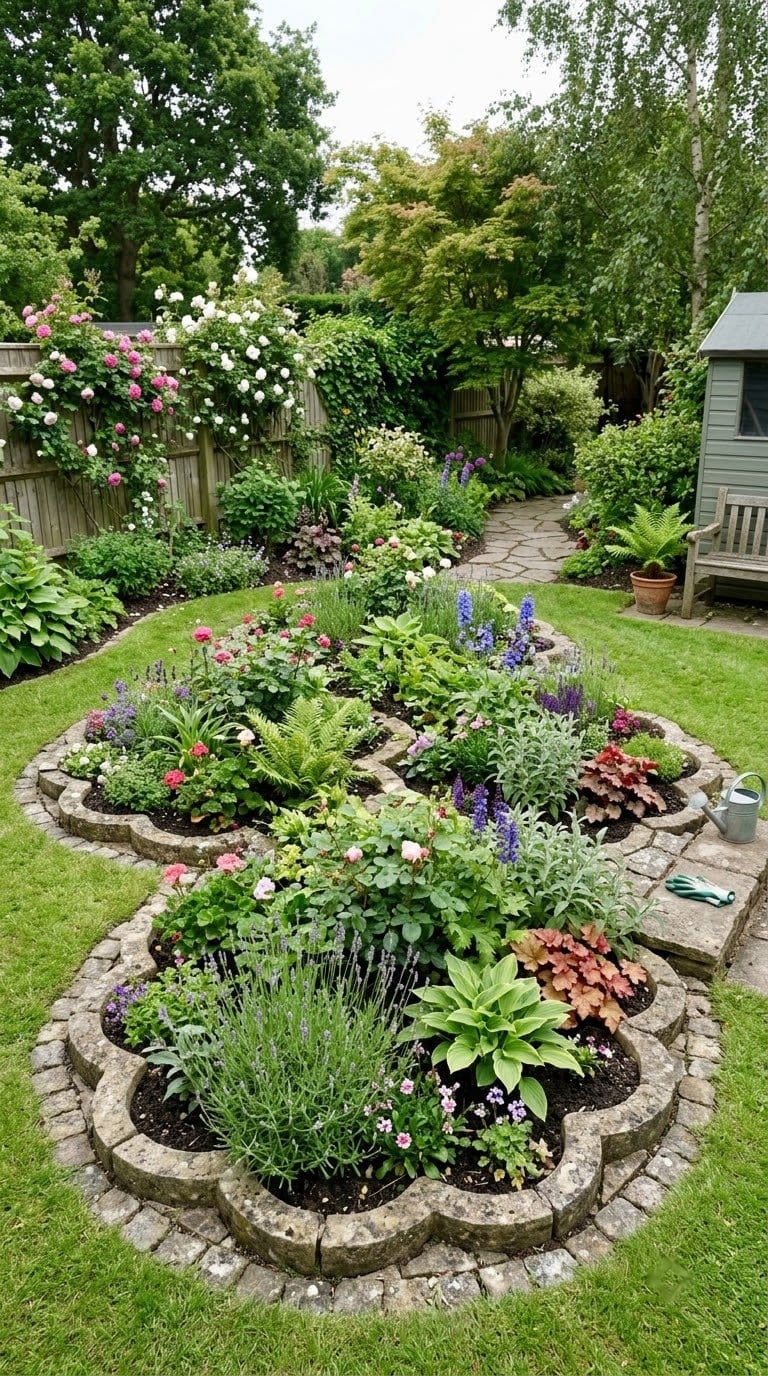
Elaborate scalloped edges, tight zigzags, and busy bed outlines might look detailed on a plan. But at eye level in a small garden, they just read as noise. There isn’t enough distance for the eye to resolve an intricate shape the way it could in a larger space.
Most yard problems trace back to one specific, fixable cause. Find yours in 4 quick questions.
Take the Free Quiz
Directly solves Mistake #6 (dark, unlit corners)
Shop NowThis post contains affiliate links. We may earn a commission on qualifying purchases at no extra cost to you.
Designer Andy Sturgeon puts it directly: “intricate shapes are unreadable at eye level and can simply look messy.” He recommends sweeping curves or clean geometric shapes instead. One clean curve or one straight edge reads as deliberate. A fussy one reads as clutter, the last thing a small space needs.
Quick tip: Photograph the bed outline from standing height, not from above, before you commit to a shape. A plan sketched from a bird’s-eye view almost always looks more detailed and interesting on paper than the same shape does from the angle you’ll actually see it every day. If the photo looks busy, simplify it before you dig, not after.
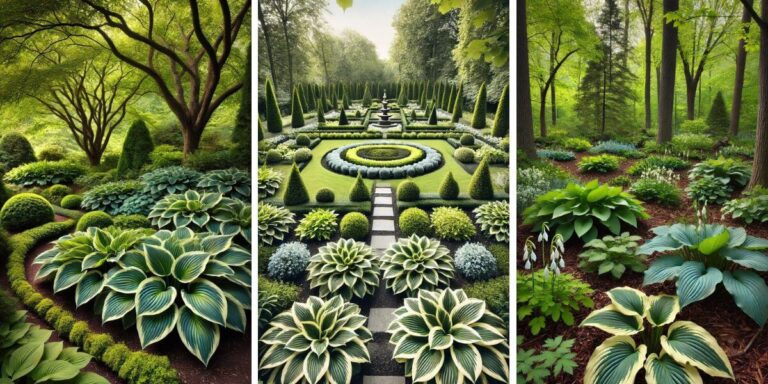
Mistake #5: Everything Planted at One Height
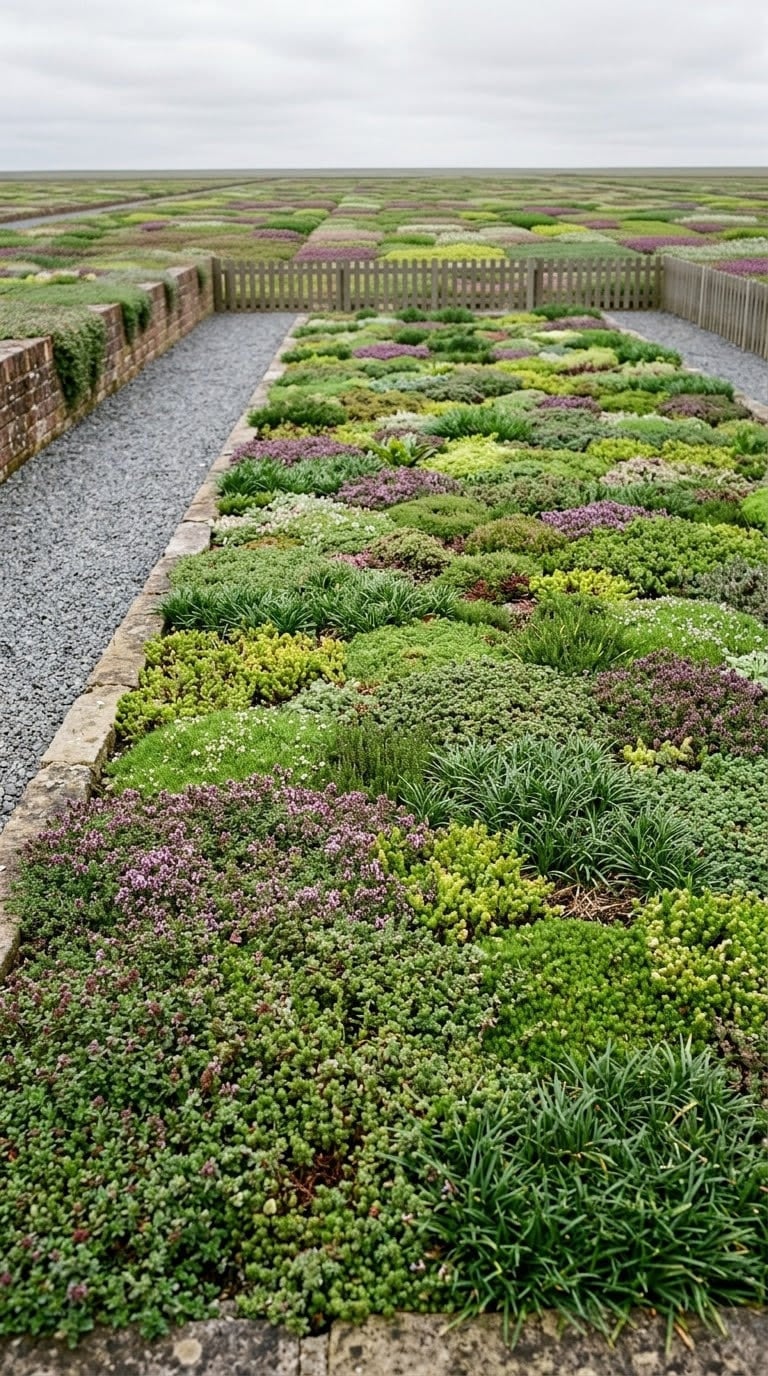
A garden where every plant sits at roughly knee height creates a flat plane. The eye has nowhere to travel except sideways, exactly the direction that emphasizes how little space there is. Height is the dimension most small gardens forget to use.
Designer Helen Elks-Smith recommends “layers of planting, paths, lawns and seating,” because layering helps “visually push boundaries further” outward. A tall specimen at the back, mid-height shrubs in the middle, low planting up front. That does more for a sense of depth than adding width ever could, because the eye reads layered height as distance.
Quick tip: You don’t need three separate plants to create three heights. A single well-chosen large shrub pruned to show a bit of bare stem at the base, with low ground cover planted underneath it, reads as two layers on its own. That’s a faster, cheaper way to test layering before committing to a full three-tier planting scheme.
Mistake #6: Dark, Unlit Corners
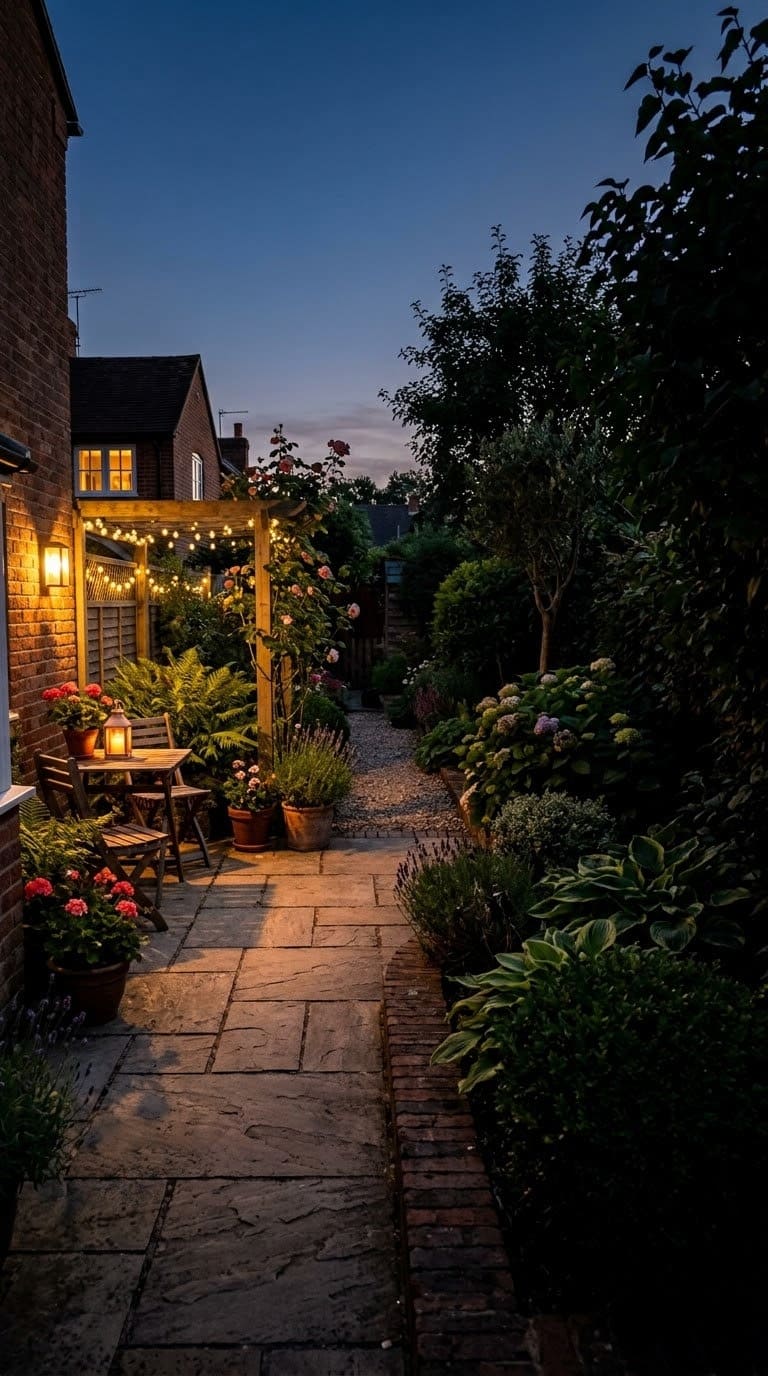
A small garden that goes fully dark at dusk shrinks to whatever’s visible from the kitchen window. The unlit corners disappear from the mental map of the space entirely. That’s true even when those corners do real visual work during the day.
A single low-voltage fixture in a dark corner, or a simple string of path lights along an edge, keeps that part of the garden visible after sunset. It’s a small, cheap fix. But it’s the difference between a garden that reads as one space at night and one that reads as a lit patio with a black void behind it.
Quick tip: Aim the light at the plant or feature, not straight down at the ground. A fixture angled up into foliage or across a textured wall creates shadow and depth, the same effect a single lamp has in a living room. A light pointed straight down just creates a bright circle on the paving and leaves everything around it just as dark as before.

Mistake #7: Furniture and Ornaments at the Wrong Scale
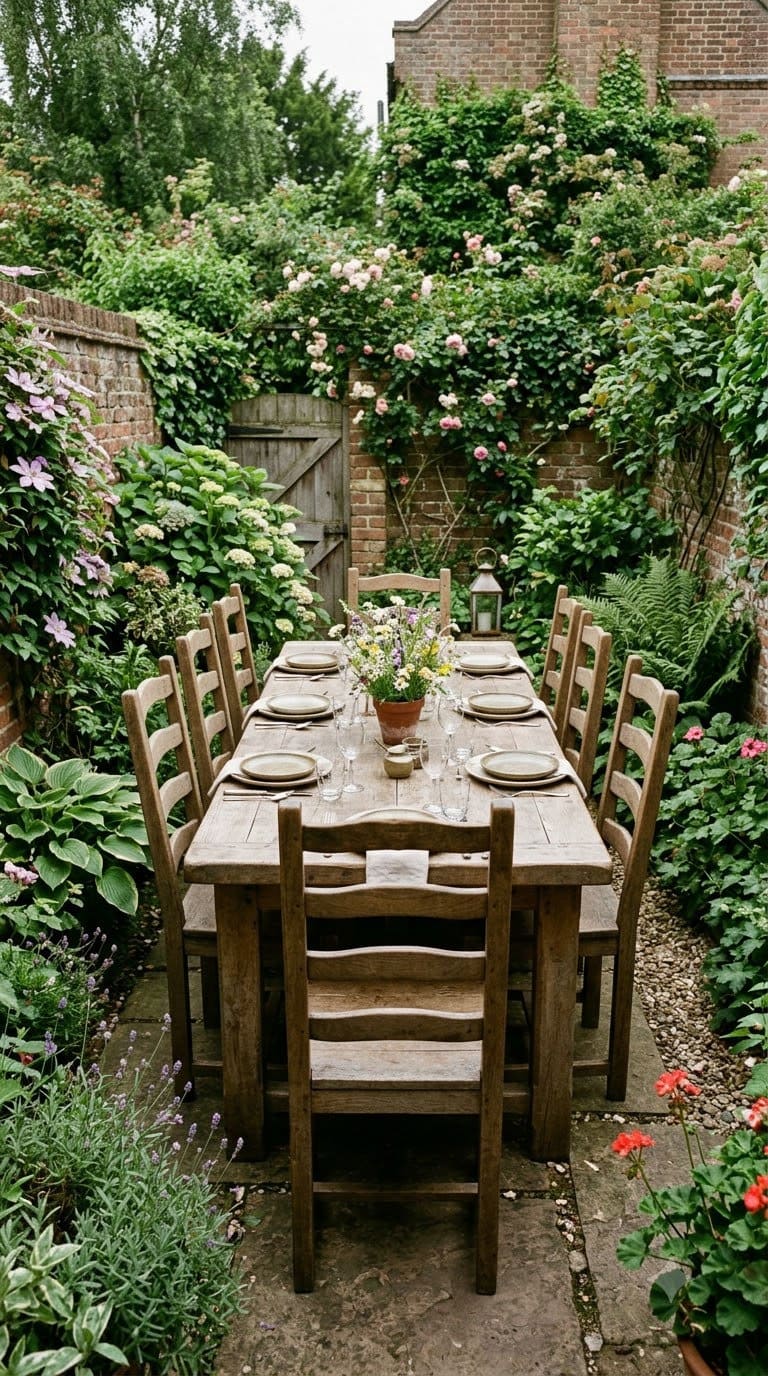
An oversized dining set, an outsized sculpture, or a tree never scaled to the space will dominate a small garden. The same way an oversized couch dominates a small living room. But the opposite problem exists too: ornaments so tiny they get visually lost and read as clutter instead of a feature.
The average homeowner spends $616/year on yard fixes that don't address the real problem. Find out what yours actually is — before you spend another dollar.
Take the Free QuizThe fix is to use yourself, standing in the garden, as the reference point for scale. Size every element relative to that. A dining set with a couple of feet of clearance on every side. A specimen plant sized for the actual bed, not its eventual 20-foot spread. Ornaments large enough to register as a real feature instead of disappearing into the planting.
Quick tip: Before buying furniture, mark its footprint on the ground with tape or chalk, chairs pulled out included, not just the table. Live with that outline for a few days. Most oversized-furniture mistakes only become obvious once you try to actually walk around the marked shape, which is a much cheaper test than returning a delivered set.
Which Mistake to Fix First
If you’re only tackling one thing this weekend, fix Mistake #1 before any of the others. Simplifying materials and color doesn’t cost anything beyond your own time, and it changes how every other mistake on this list actually looks. A crowded, over-materialed garden makes a straight path look even more out of place, and a fussy bed shape look even busier, than the same features would in a simplified space.
After that, tackle whichever mistake is cheapest for your situation. Dark corners (Mistake #6) are usually the fastest and least expensive to fix, often a single afternoon and one light fixture. Planting height (Mistake #5) and furniture scale (Mistake #7) take longer since they involve buying or growing something new. Save the path (Mistake #3) for last if it’s already built and functional, since it’s the most disruptive and expensive to redo, and the other six fixes will already do most of the work of making the space feel bigger.
What We Learned Fixing Our Own Small Garden
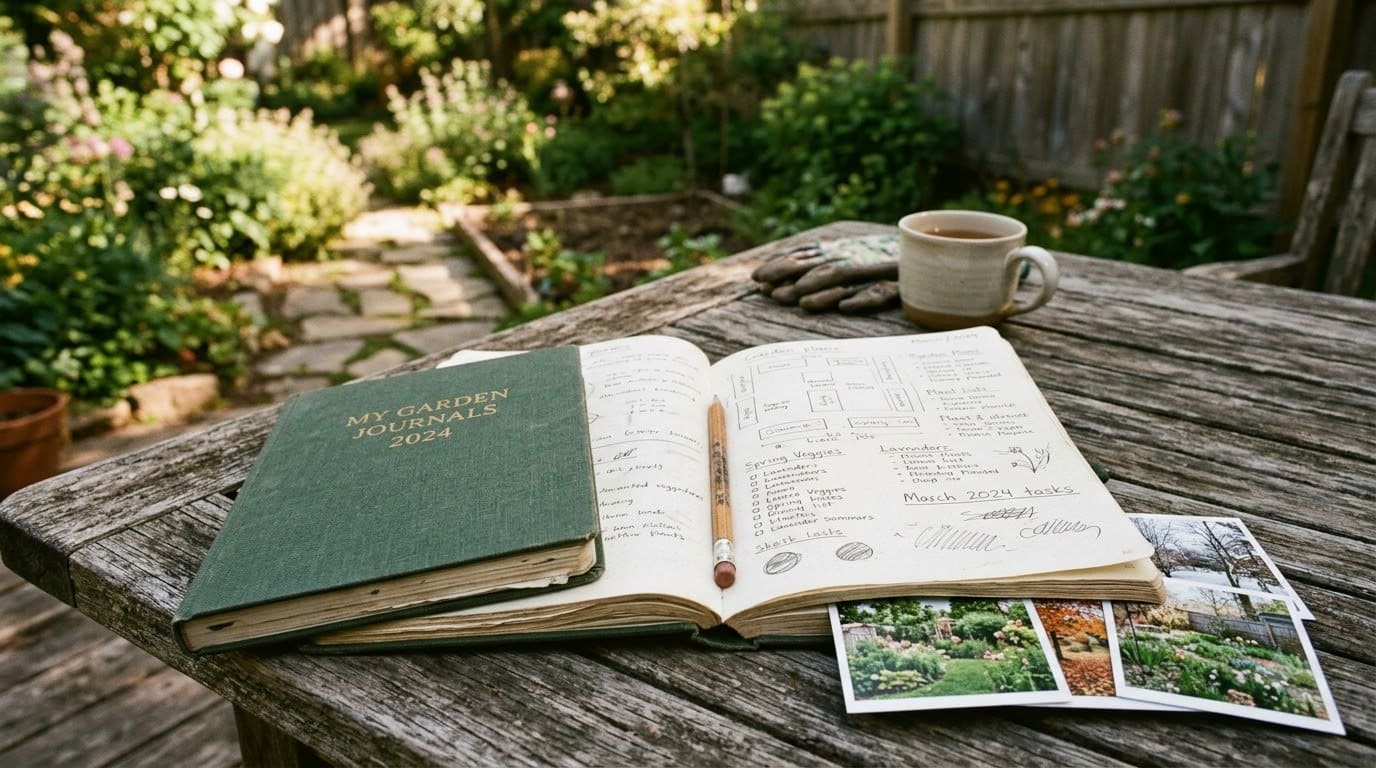
Our own back garden is under 200 square feet. For a long time it felt smaller than that. We’d made almost every mistake on this list at once: straight path, everything hugging the fence, one flat height of planting.
The single change that made the biggest visible difference wasn’t adding anything, it was subtracting. We pulled three different paving materials down to one, and let one tall grass grow in a spot we’d always kept clipped low. The garden didn’t get any bigger. It just stopped fighting us at every turn.
We fixed things in almost the exact order listed above, materials first, then the dark corner by the back fence, and only tackled the furniture last, once we could actually see how much room was left once everything else settled. Doing it in that order meant we never bought furniture twice. If we’d started with a new table and chairs, like we almost did, we’d have picked something sized for the cluttered version of the garden, not the simplified one it became a month later.
Frequently Asked Questions
Does adding more plants make a small garden feel smaller?
Not if they’re layered by height and kept to a limited palette. The problem isn’t the number of plants, it’s a flat single height combined with too many unrelated materials and colors competing for attention in a small space.
Is a straight path always a mistake in a small garden?
Not always, but a fully straight path that shows the entire route in one glance tends to shrink the perceived distance. Curving it slightly or interrupting the sightline with a planting bed usually reads as a bigger garden without changing the actual path length.
Should I avoid raised beds in a small garden?
Not necessarily, but the added height of a raised bed can create more enclosure in an already tight space, especially along a narrow plot’s edges. A lower-profile bed or in-ground planting is often the safer default in a genuinely small garden.
What’s the fastest way to make a small garden feel bigger without spending money?
Simplify what’s already there before adding anything new. Reducing the number of different materials, ornament styles, and plant varieties to a smaller, repeated set usually does more for how spacious a small garden feels than any new purchase.
Related Posts
Products We Recommend
This post contains affiliate links. We may earn a commission on qualifying purchases at no extra cost to you.

Alpine Corporation 3-Piece Folding Bistro Set
Directly solves Mistake #7 (right-scaled, compact furniture for a small footprint)
Shop Now
DEVISEFUN 6.6ft Metal Obelisk Trellis, 2-Pack
Directly solves Mistake #5 (a tall vertical element to add height/layers to flat planting)
Shop NowNever miss an update — choose FarmFoodFamily as your preferred source on Google.
How it works: Tap the button below to open Google's settings page, then check the box next to FarmFoodFamily.
Tap the checkbox to turn it blue — that's how you know it's set.