7 Indoor Plants That Are Good Luck in Feng Shui — And Where to Place Them
Each of these seven plants has a specific bagua placement that’s stayed consistent across nearly every real source checked, and four of the seven carry a genuine pet-safety flag that almost never makes it into the usual “lucky plants” roundup.

Never miss an update — choose FarmFoodFamily as your preferred source on Google.
How it works: Tap the button below to open Google’s settings page, then check the box next to FarmFoodFamily.
Tap the checkbox to turn it blue — that’s how you know it’s set.
Kathryn Weber, publisher of the Red Lotus Letter and a feng shui consultant, treats specific plant choice and placement as more effective than just adding greenery anywhere convenient, each of these seven is tied to a distinct bagua zone and a distinct kind of luck.
Here’s where each one goes, plus the real safety or botanical fact worth knowing about it.
1. Lucky Bamboo, placed in the wealth corner
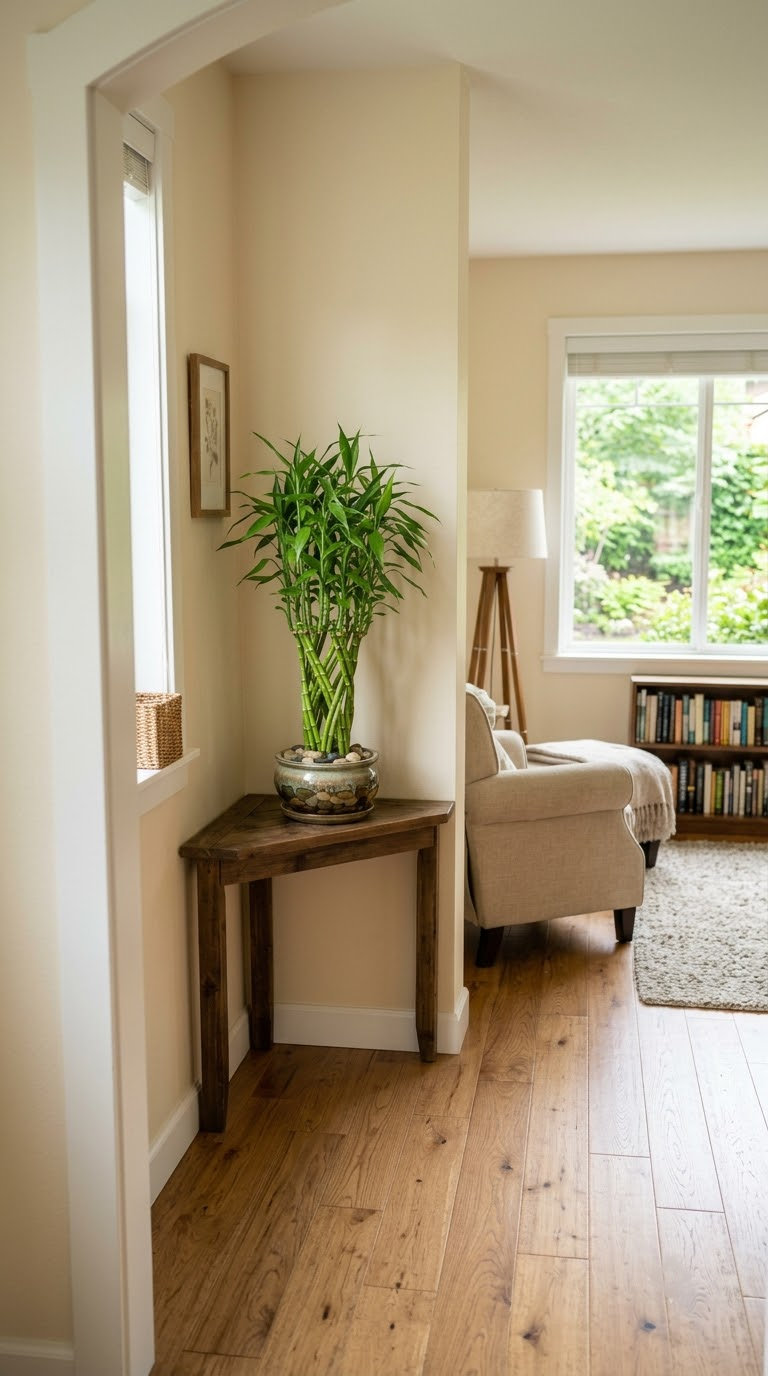
Lucky Bamboo (technically Dracaena sanderiana, not true bamboo at all) is considered to balance all five elements at once and is placed in the wealth corner of a home or room per the bagua map, typically the far-left corner from the main entrance.
Real fact worth knowing: per ASPCA data, Dracaena sanderiana is confirmed toxic to cats and dogs, despite “lucky bamboo” sounding harmless.
True bamboo (Phyllostachys species) is non-toxic, but that’s a different plant entirely, check the botanical name before assuming safety based on the common name.

2. Money Tree, placed in wealth, health, or fame areas
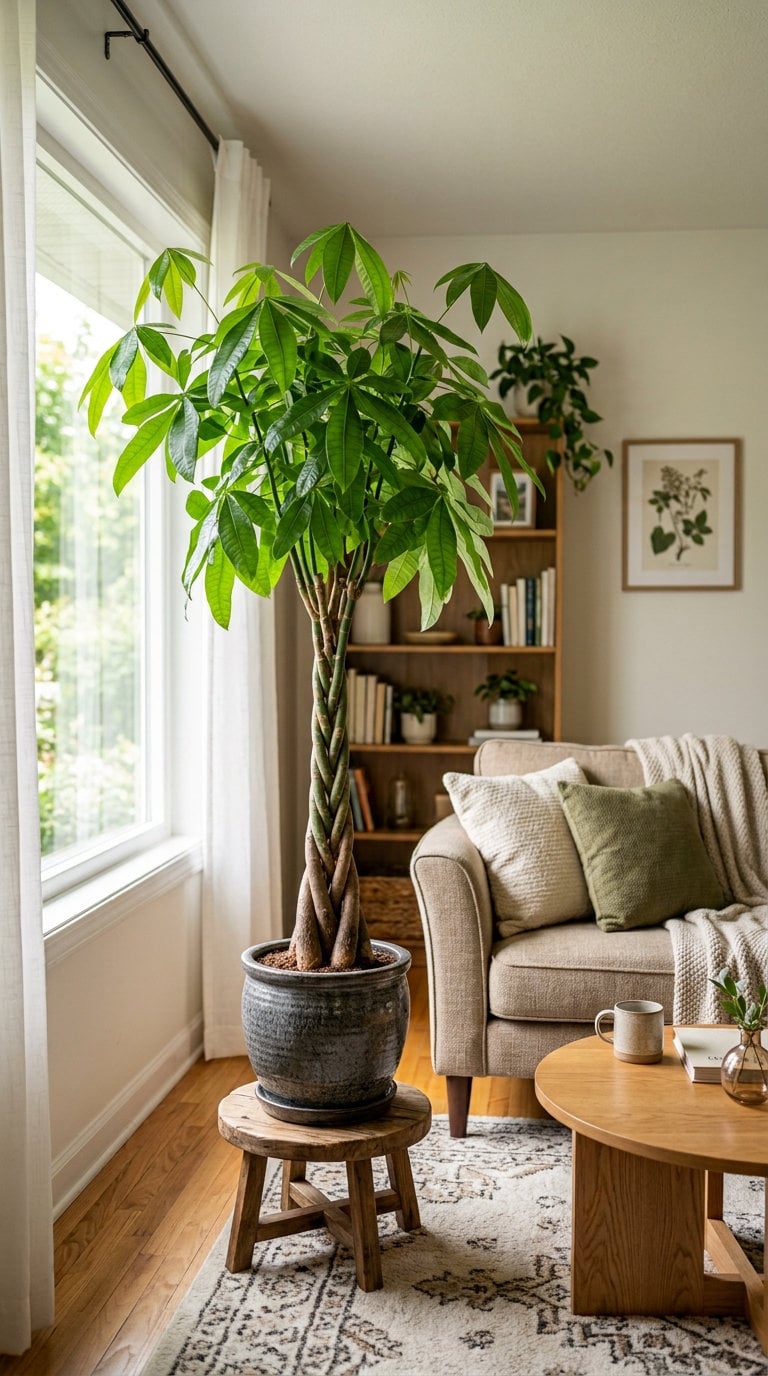
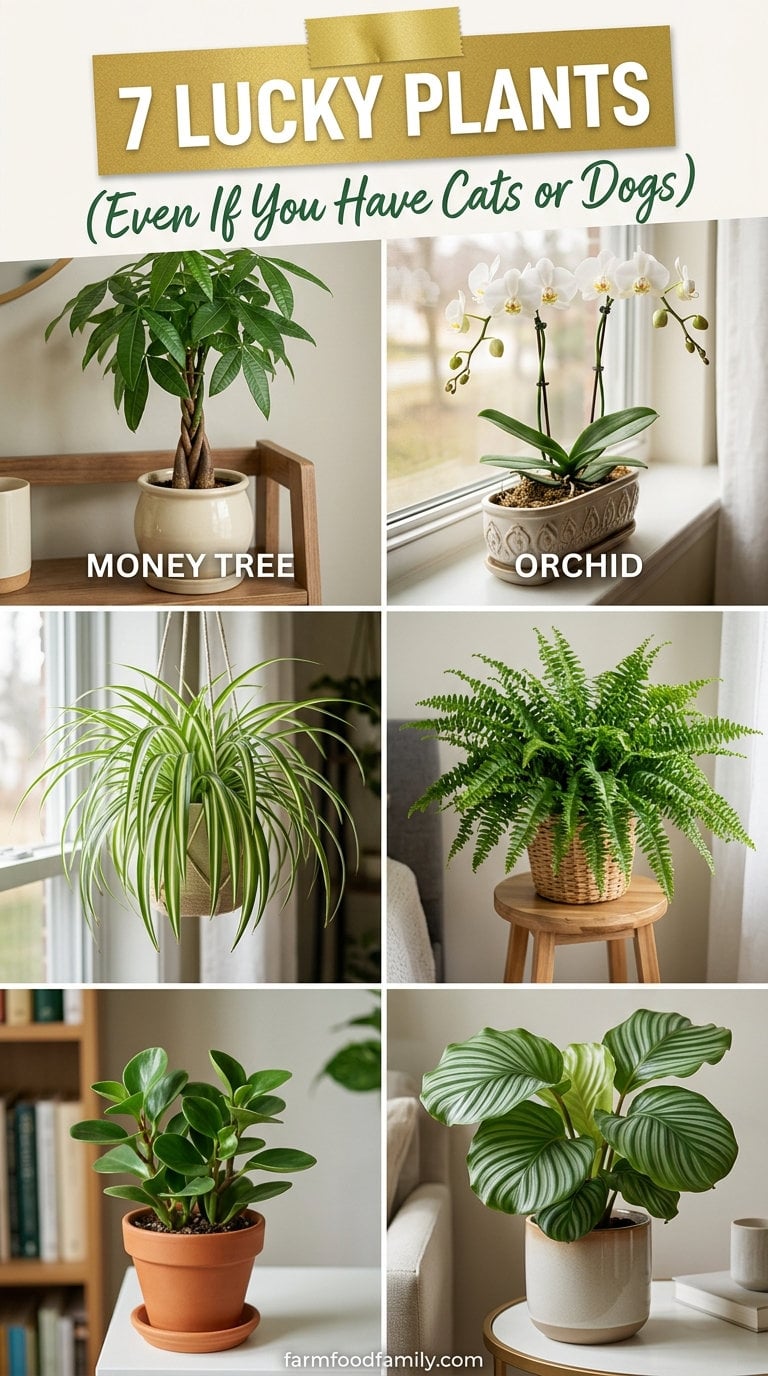
The braided-stem Money Tree (Pachira aquatica) is the most widely recognized feng shui wealth plant, placed in the wealth, health, or fame bagua zones depending on which goal you’re prioritizing. Our money tree plant care guide covers the growing side in more depth.
Answer 4 quick questions and get matched to the exact fix for your yard — drainage, budget, layout, or something else entirely.
Take the Free QuizReal fact worth knowing: this is a genuinely good pick if pets are a concern, Pachira aquatica is confirmed non-toxic to cats, dogs, and horses per the ASPCA, one of the few plants on this list you don’t need to worry about placement-for-safety reasons.
3. Jade Plant, placed in the money corner
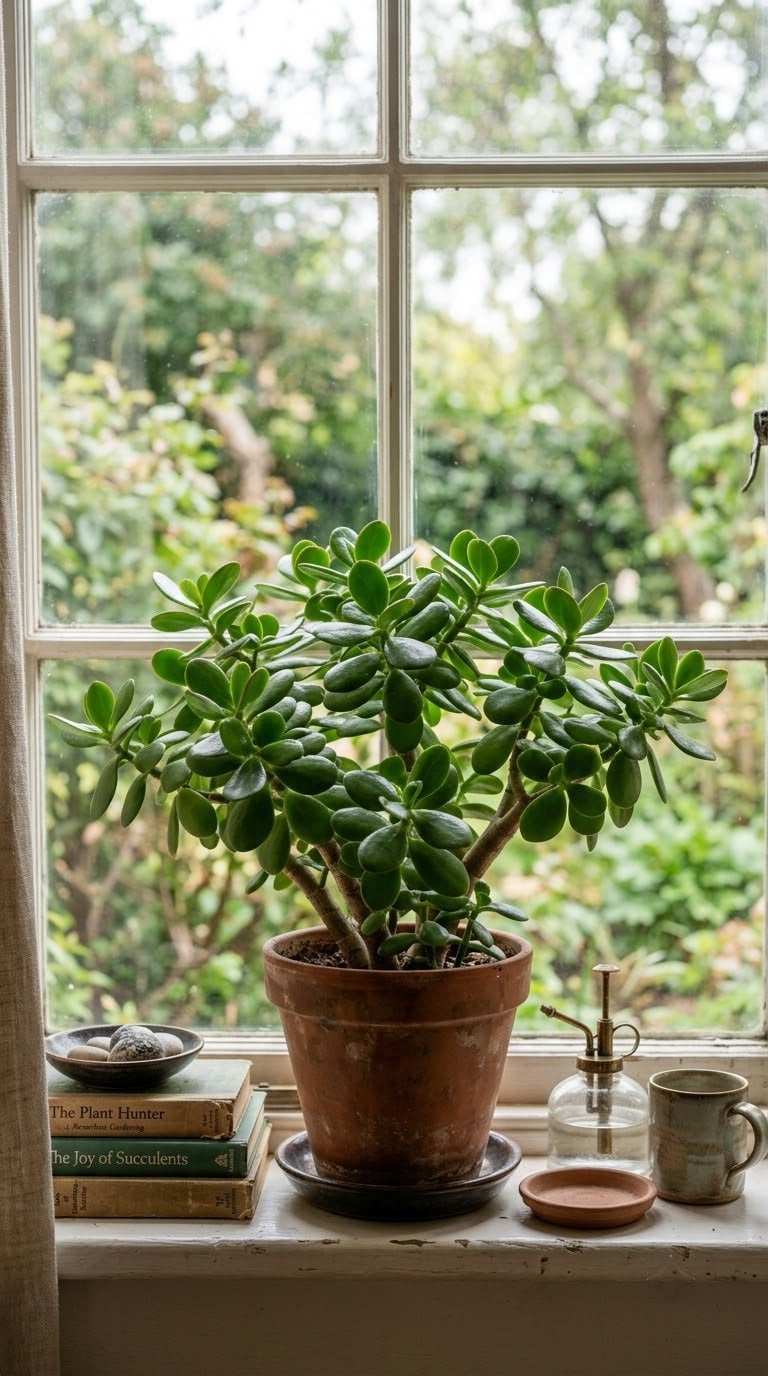
Jade Plant’s round, coin-shaped leaves are read as a direct symbol of accumulating wealth, placed in the money corner (often the far-left area from the entrance, same general zone as lucky bamboo).
Our types of jade plants guide covers the many varieties available if you’re choosing one.
Real fact worth knowing: Jade Plant is confirmed toxic to cats and dogs per ASPCA data. If pets have household access, keep it elevated or in a room they can’t reach.
4. Snake Plant, placed by the front door, a large window, or in a home office
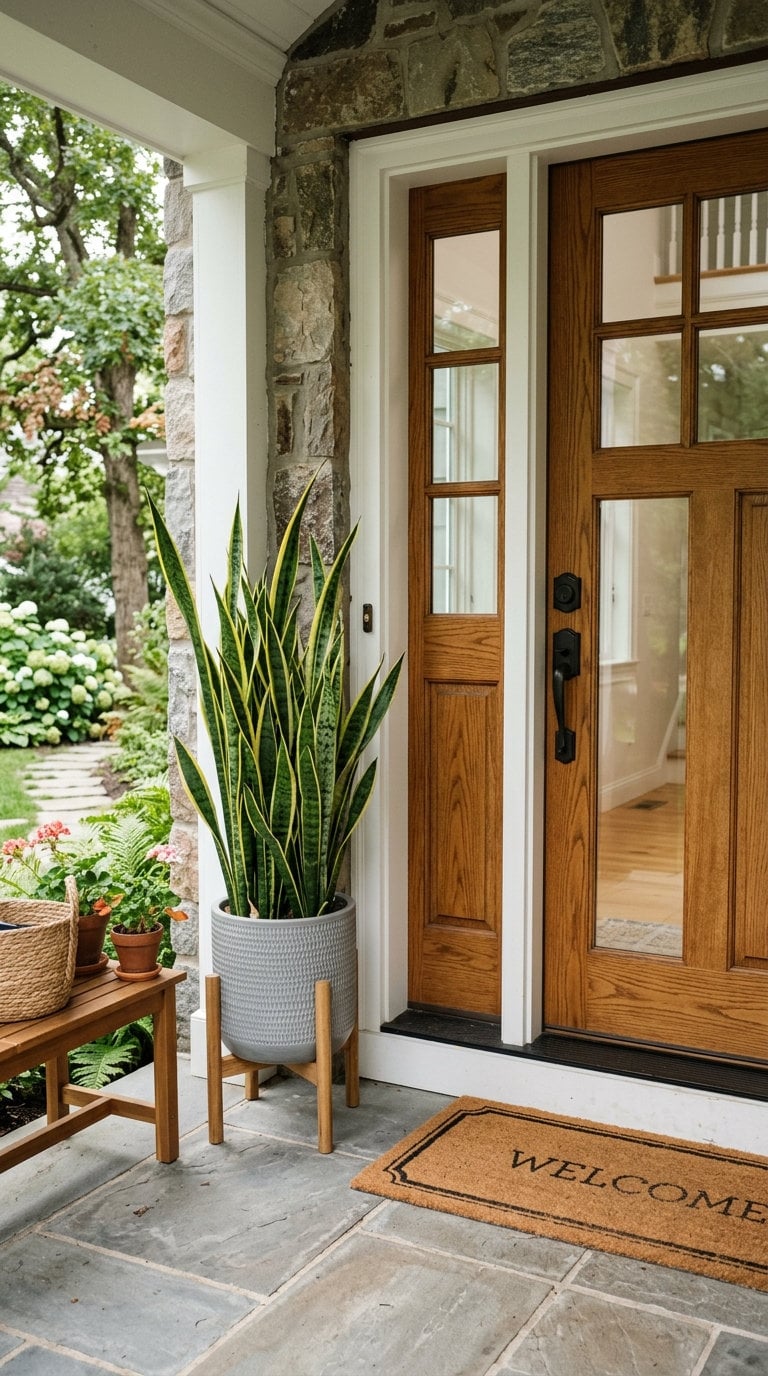
Snake Plant is considered a protector when placed near the front door or a large window, and it’s also favored in home offices for bringing vibrant, focused energy. Our types of snake plants guide has real variety options if you’re choosing one for this purpose.
Real fact worth knowing: this is one of the few entries where the real botanical science and the feng shui tradition point the same direction. Snake plants use CAM (crassulacean acid metabolism) photosynthesis, genuinely opening their stomata and releasing oxygen at night rather than during the day like most plants.
The actual contribution to a room’s oxygen level is modest, not medically significant, but it’s real, verified science, distinct from the debunked “plants purify your air” overstatement covered in this project’s houseplants-feng-shui guide.
Most yard problems trace back to one specific, fixable cause. Find yours in 4 quick questions.
Take the Free QuizIt’s also worth noting Snake Plant is confirmed toxic to both cats and dogs per ASPCA, so front-door or window placement (rather than a low table pets can reach) is the safer default anyway.
5. Peace Lily, placed in an office area
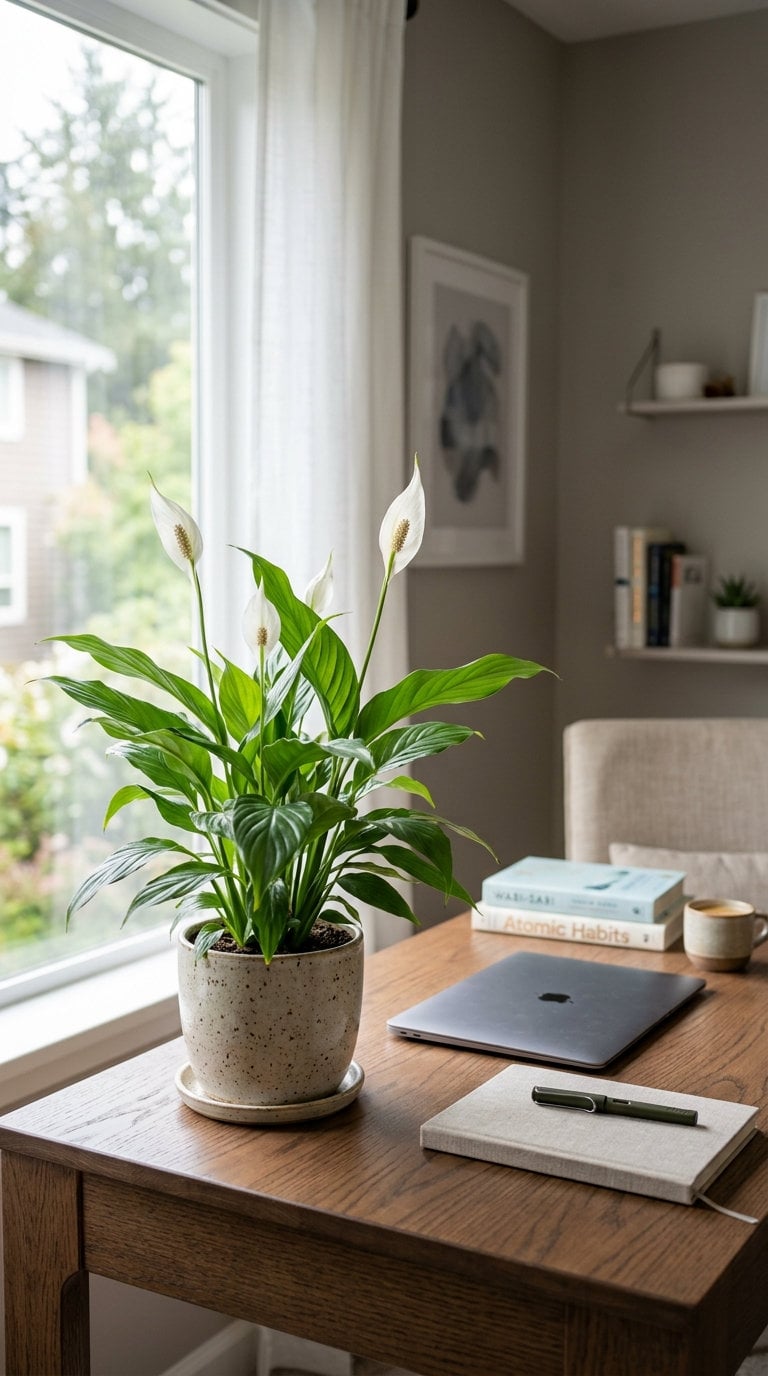
Peace Lily is favored for offices specifically, thought to help correct energetic imbalances in a workspace and pair well with focused work. It’s also genuinely easy to care for compared to some of the more finicky entries on this list.
Real fact worth knowing: Peace Lily contains calcium oxalate crystals and is confirmed toxic per ASPCA, but it’s important to get the severity right, this is mild oral irritation (swollen lips, tongue, general discomfort), not the severe, sometimes fatal kidney failure risk associated with true lilies like Easter or Asiatic lilies.
Still worth keeping out of reach of a curious pet, but not the same level of emergency as an actual lily.
6. Orchids, placed in the relationship area
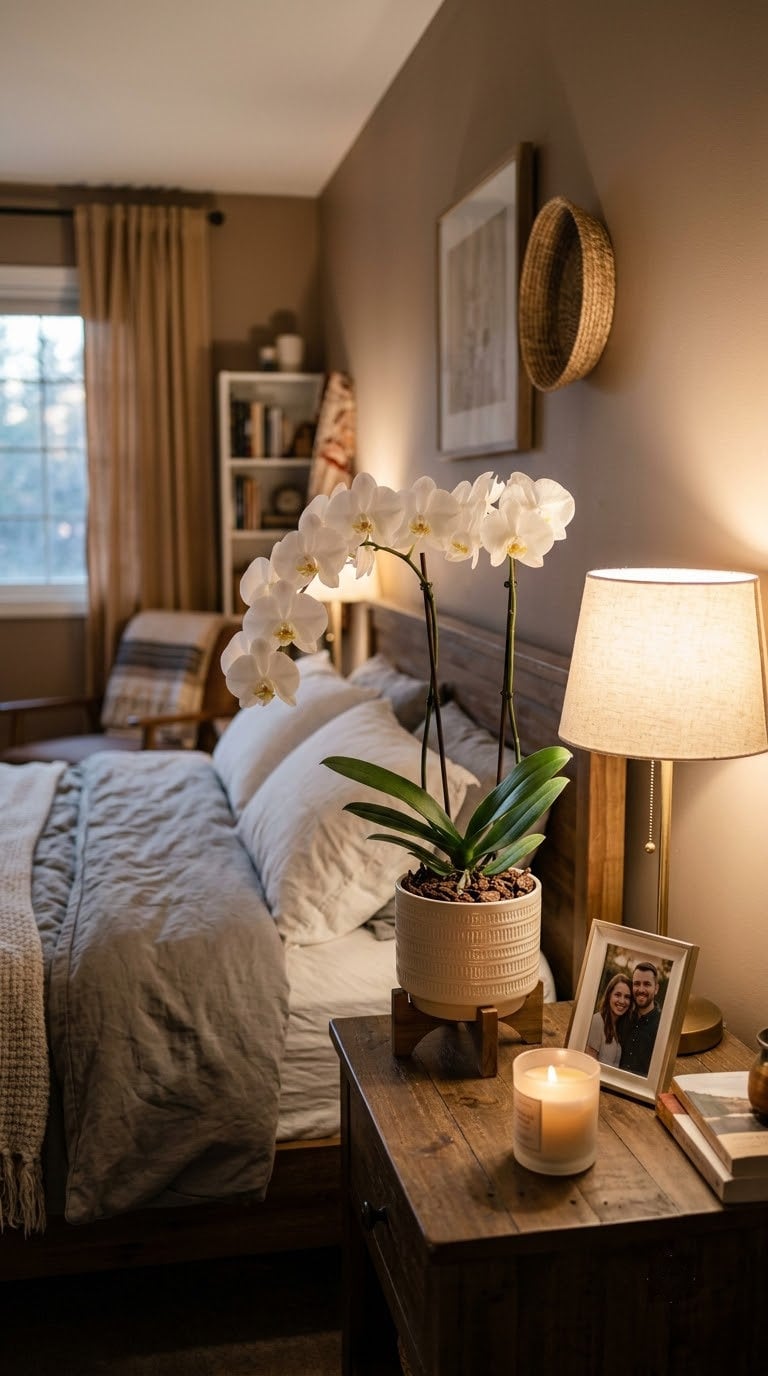
Orchids go in the relationship area of the home overall, or the relationship corner of a bedroom specifically, tied to romantic and relational harmony rather than wealth.
Real fact worth knowing: orchids (Phalaenopsis, the common houseplant variety) are generally considered non-toxic to cats and dogs, a genuinely low-risk choice for a bedroom placement if pets have access to that room.
7. Philodendron, placed in dark or cold corners
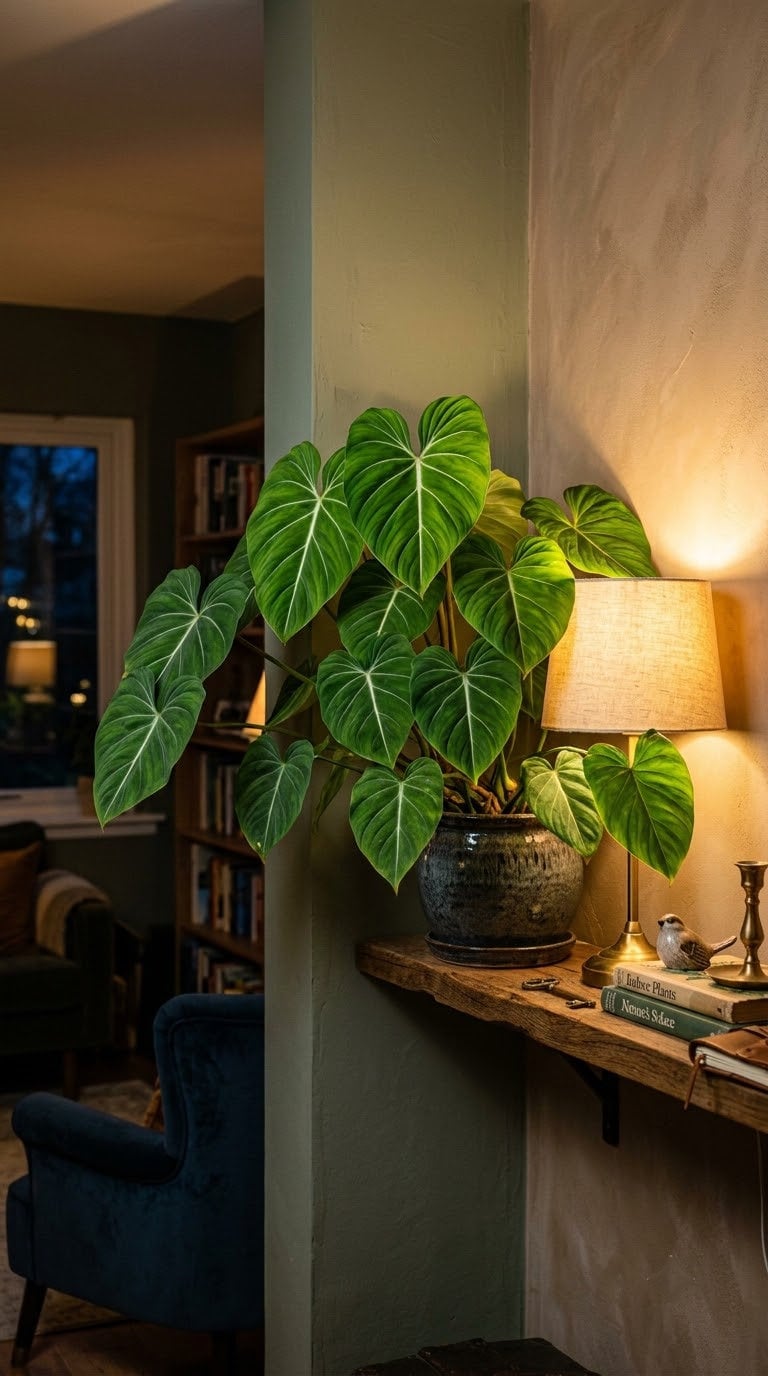
Philodendron’s leaf shape is associated with the fire element, and it’s specifically recommended for brightening dark or cold corners of a room, bringing yang energy to a spot that would otherwise feel stagnant.
Real fact worth knowing: Philodendron is confirmed toxic via insoluble calcium oxalate crystals, and real sources note it’s “widely sold without pet-safety warnings,” making it one of the more commonly under-flagged toxic houseplants on the market.

If you’re placing one in a dark corner specifically because it’s out of the way, that positioning happens to double as a reasonable pet-safety choice too.
The 7 plants at a glance
| Plant | Placement | Pet safety (ASPCA) |
|---|---|---|
| Lucky Bamboo | Wealth corner | Toxic to cats/dogs |
| Money Tree | Wealth, health, or fame areas | Non-toxic |
| Jade Plant | Money corner | Toxic to cats/dogs |
| Snake Plant | Front door, large window, home office | Toxic to cats/dogs |
| Peace Lily | Office area | Mild irritation only (not true-lily severity) |
| Orchids | Relationship area | Non-toxic |
| Philodendron | Dark or cold corners | Toxic to cats/dogs |
What we learned the hard way
The common-name confusion trips people up more than any other detail on this list. “Lucky bamboo” isn’t bamboo, and knowing that distinction is the difference between correctly checking Dracaena sanderiana’s real toxicity data and incorrectly assuming it’s as harmless as true bamboo.
The Peace Lily/true lily mixup is the other thing worth getting right. Treating Peace Lily’s mild oral irritation the same as a true lily’s severe kidney-failure risk causes unnecessary panic in one direction, or dangerous complacency in the other if the confusion runs the opposite way, the actual severity difference matters for how urgently you’d need to respond.
The average homeowner spends $616/year on yard fixes that don't address the real problem. Find out what yours actually is — before you spend another dollar.
Take the Free QuizFAQs
Which of these 7 plants is the safest choice if I have pets? Money Tree (Pachira aquatica) and orchids (Phalaenopsis) are both confirmed non-toxic per ASPCA data, the two lowest-risk choices on this list if pet safety is your main concern.
Do I need all 7 plants to get the full feng shui benefit? No, each plant is tied to a different bagua zone and goal (wealth, protection, relationships, etc.). Choose based on which area of your life you’re prioritizing rather than trying to collect all seven.
Is the snake plant’s nighttime oxygen release actually meaningful? It’s real, verified science (CAM photosynthesis), but the practical effect on a room’s oxygen level is modest, not something that meaningfully changes air quality on its own.
What’s the real difference between Peace Lily and true lily toxicity? Peace Lily causes mild oral irritation from calcium oxalate crystals. True lilies (Easter, Asiatic, daylilies) can cause severe, sometimes fatal kidney failure in cats specifically, even from pollen contact. They’re unrelated plants despite the shared “lily” name.
Related reading on farmfoodfamily.com: for the general placement rules and maintenance principles behind this list, see our 5 Feng Shui Rules for House Plants Indoors guide.
Related Posts
- 5 Feng Shui Rules for House Plants Indoors
- Money Tree Plant Care Guide
- Types of Jade Plants
- Types of Snake Plants
- Non-Toxic Houseplants
- Types of Anthuriums
Never miss an update — choose FarmFoodFamily as your preferred source on Google.
How it works: Tap the button below to open Google's settings page, then check the box next to FarmFoodFamily.
Tap the checkbox to turn it blue — that's how you know it's set.