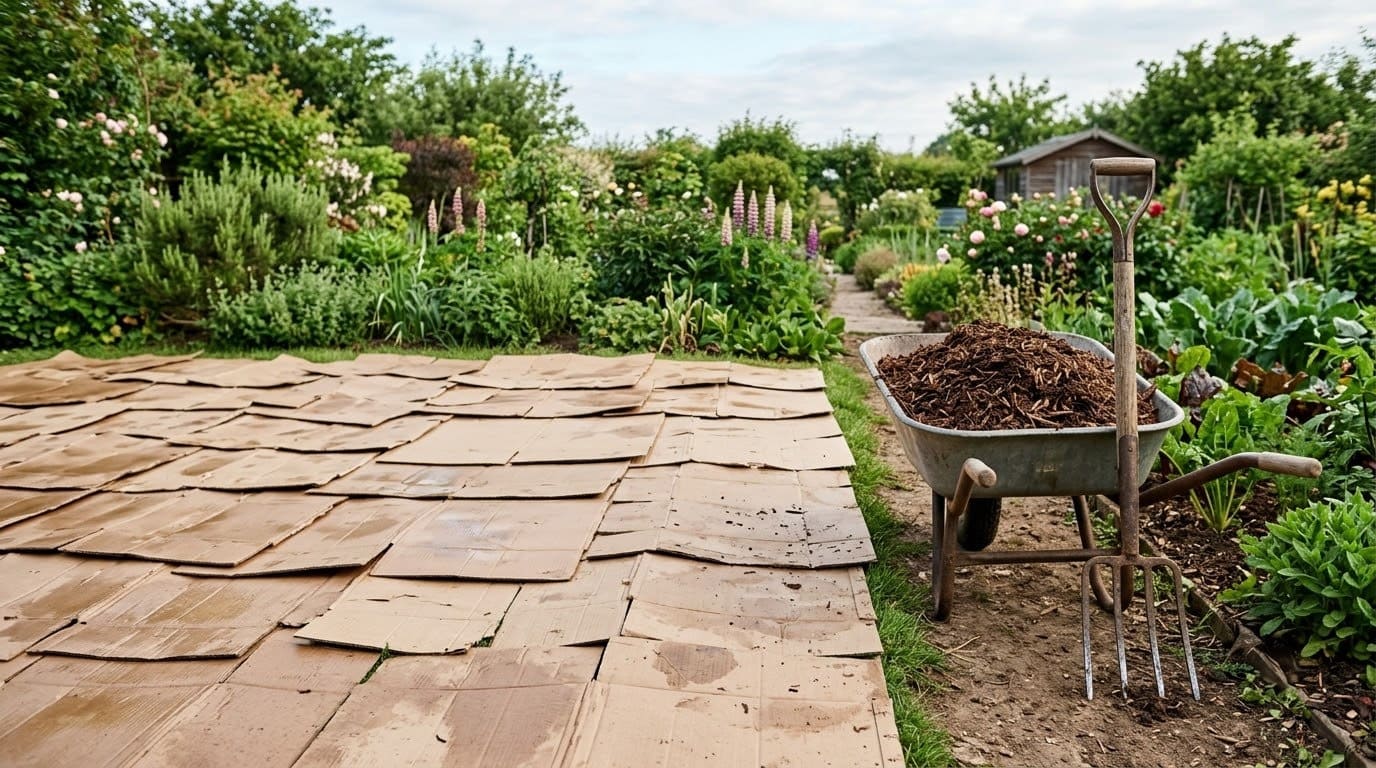
Mulch Calculator: How Much Mulch Do You Actually Need?
Most garden beds need 2 to 4 inches of mulch. The math is simple. Take your area in square feet. Multiply it by the depth in inches, then divide by 12 to get cubic feet. Divide that by 27 to get cubic yards, since that is how bulk mulch is sold. For a typical 100 sq…

Never miss an update — choose FarmFoodFamily as your preferred source on Google.
How it works: Tap the button below to open Google’s settings page, then check the box next to FarmFoodFamily.
Tap the checkbox to turn it blue — that’s how you know it’s set.
Most garden beds need 2 to 4 inches of mulch. The math is simple.
Take your area in square feet. Multiply it by the depth in inches, then divide by 12 to get cubic feet. Divide that by 27 to get cubic yards, since that is how bulk mulch is sold.
For a typical 100 sq ft bed at 3 inches deep, that comes out to about 1 cubic yard. That is roughly 10 bags of 3-cu-ft mulch. Add 10% extra for settling and uneven ground, since loose mulch always compacts a bit after the first rain.
The calculator below does all of this for you. It sums multiple beds of any shape in one pass. It also warns you if your chosen depth is too thick for the mulch type you picked, since bark, wood chips, and compost all have different safe ranges.
Mulch Calculator
Calculate exactly how much mulch you need — supports multiple garden beds of different shapes, auto-suggests the correct depth per mulch type, and estimates cost.
Results
| Bag size | Bags needed |
|---|---|
| 1.5 cu ft bags | – |
| 2 cu ft bags (standard US) | – |
| 3 cu ft bags | – |
How to Calculate Mulch Volume (The Formula Behind This Tool)
The core math never changes. Volume equals area times depth.
But getting the area right depends on your bed’s shape. Here is the exact formula for each shape this calculator supports, using feet for length and inches for depth.
Rectangle or square bed
Answer 4 quick questions and get matched to the exact fix for your yard — drainage, budget, layout, or something else entirely.
Take the Free QuizArea (sq ft) = Length × WidthCubic feet = Area × (Depth in inches ÷ 12)Cubic yards = Cubic feet ÷ 27Circular bed
Area (sq ft) = π × (Diameter ÷ 2)²Cubic feet = Area × (Depth in inches ÷ 12)Ring / border bed (mulching around a tree, leaving the trunk bare)
Area (sq ft) = π × [(Outer diameter ÷ 2)² − (Inner diameter ÷ 2)²]Cubic feet = Area × (Depth in inches ÷ 12)Triangular bed
Area (sq ft) = ½ × Base × HeightCubic feet = Area × (Depth in inches ÷ 12)Irregular bed you’ve already measured Already know your square footage from a site plan or landscaping design? Skip the shape math. Just enter the area.
Worked example
A 10 ft × 10 ft rectangular bed (100 sq ft) at a 3-inch depth:
Cubic feet = 100 × (3 ÷ 12) = 25 cu ft+ 10% settling buffer = 27.5 cu ftCubic yards = 27.5 ÷ 27 = 1.02 cu ydThat works out to about 10 bags of 3-cu-ft mulch, or 14 bags if you’re buying the more common 2-cu-ft bags.
How Bag Count Is Calculated
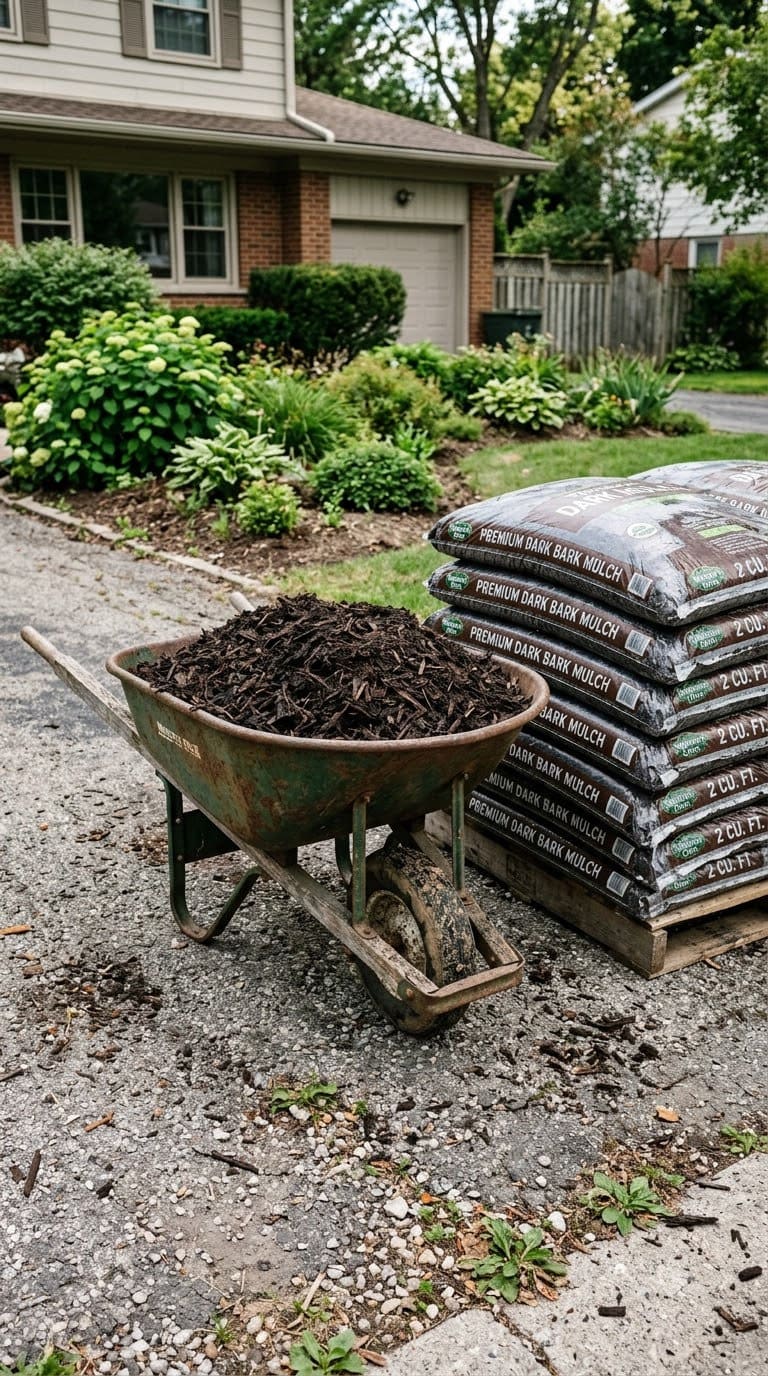
Bulk mulch is priced and delivered by the cubic yard. Bagged mulch is sold by cubic feet per bag instead, usually 1.5, 2, or 3 cu ft at most garden centers. To get bag count, divide your total cubic feet by the bag’s labeled volume and round up, since stores don’t sell partial bags.
Most yard problems trace back to one specific, fixable cause. Find yours in 4 quick questions.
Take the Free QuizBags needed = ROUNDUP(Total cubic feet ÷ Bag size in cu ft)For the 27.5 cu ft example above: 27.5 ÷ 2 = 13.75 → 14 bags of 2-cu-ft mulch.
Recommended Mulch Depth by Type
| Mulch type | Recommended depth | Why |
|---|---|---|
| Shredded hardwood / bark | 2–3 in | Fine particles pack down. More than 3 in restricts oxygen to roots |
| Wood chips (coarse) | 3–4 in | Larger particles leave air gaps, so a thicker layer stays breathable |
| Pine straw / pine needles | 3–4 in loose | Settles to roughly half its loose depth within a few weeks |
| Straw (vegetable garden beds) | 2–3 in | A thinner layer is fine since it’s usually replaced each season |
| Compost | 1–2 in | A soil amendment, not a weed barrier. Too thick can crust and shed water |
| Rubber mulch | 2–3 in | Doesn’t decompose, so extra depth never settles and can smother roots |
| Gravel / rock (inorganic) | 2–3 in | Heavier material. Deeper layers just add weight and cost |
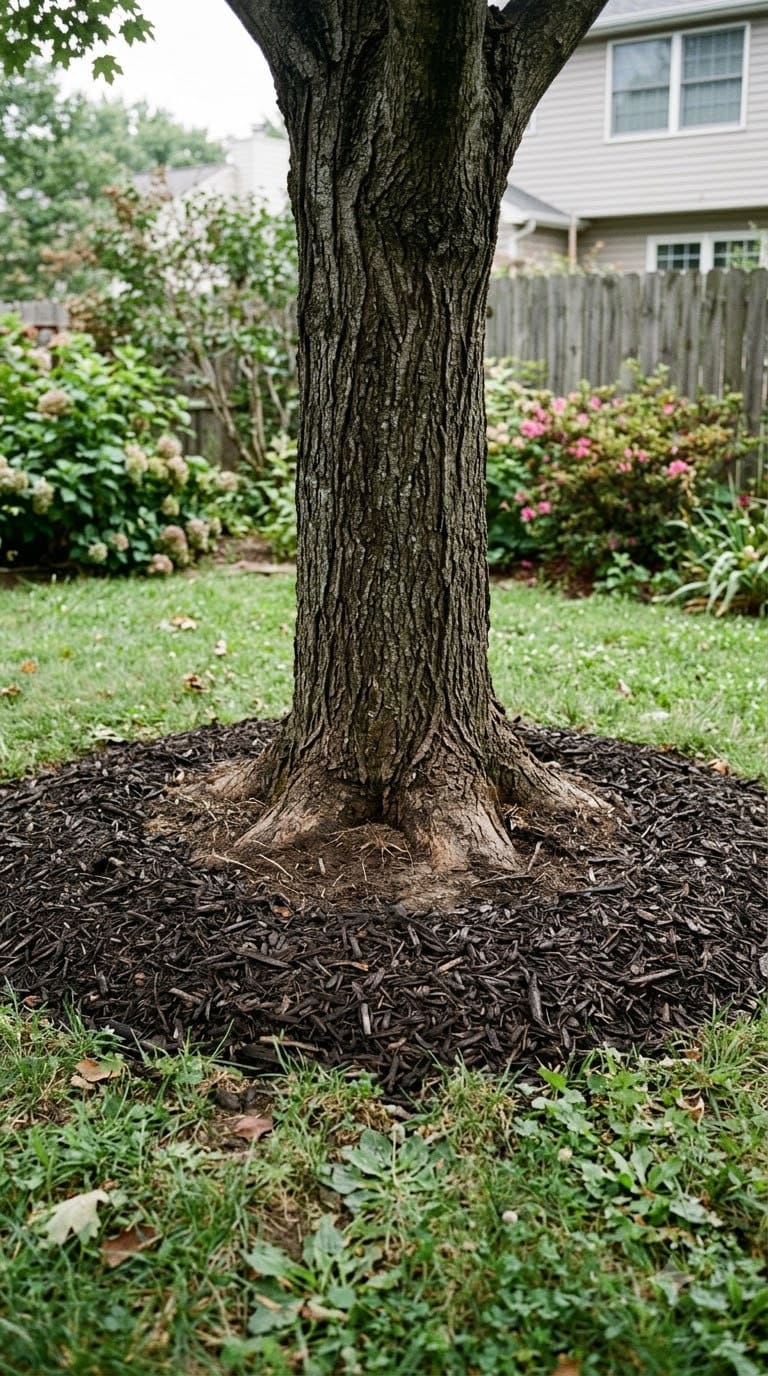
The Clemson Cooperative Extension says wood and bark mulches “should not be more than 2 to 3 inches deep.” Keep all mulch about 2 to 3 inches away from tree trunks and plant stems, no matter the type.
The University of Maryland Extension says mulch “should never touch the trunk of the tree.” Piling mulch into a cone against the trunk is often called “volcano mulching.” It traps water against the bark and is a top cause of tree decline in home yards.
Dyed vs. Natural Mulch: Does It Change the Math?
Dyed mulch (black, brown, or red) and natural undyed bark cover the same depth range for the same base material. The color itself doesn’t change the volume formula. But it does change how often you’ll be back at the calculator.
Dye sits on the surface of the wood, so it fades with UV exposure well before the mulch underneath has broken down. Most dyed mulch needs a fresh top layer for color alone within 12 to 18 months, even though the structural mulch layer could still be doing its job for another year or two.
If color matters to you, plan on ordering a thinner refresh layer (about 1 inch) more often, rather than a full 2 to 3 inch reapplication every time. Run the calculator with a 1-inch depth for just the refresh volume, using the same bed dimensions you already measured.
Tools You’ll Need to Spread Mulch
Beyond the mulch itself, a few tools make the job faster and keep your depth consistent across the whole bed:
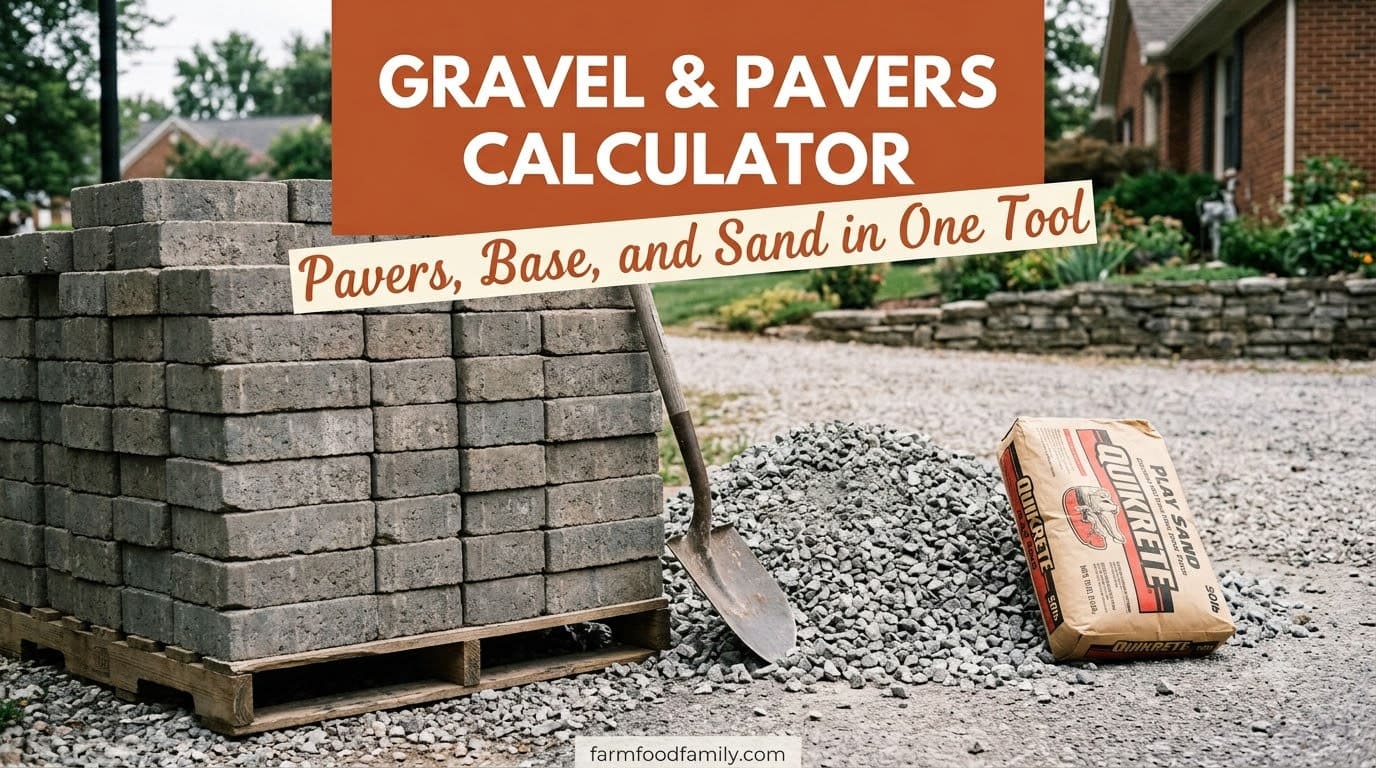
- A wheelbarrow or garden cart to move mulch from the pile or bags to each bed without repeated trips by hand.
- A garden rake or bow rake to spread and level mulch to an even depth, rather than leaving mounds and thin spots.
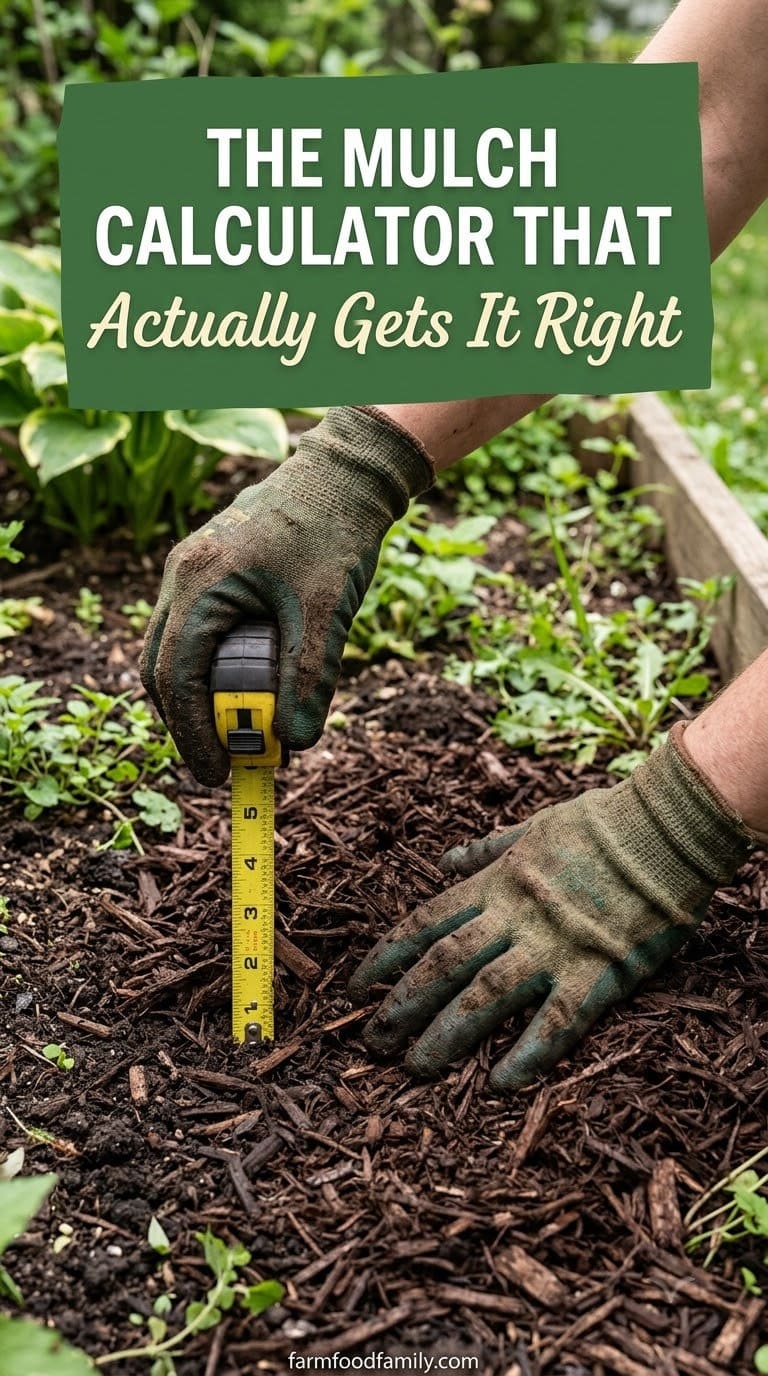
- A tape measure or a marked stick to spot-check depth in two or three places per bed as you go, so you catch an uneven layer before it’s spread over the whole area.
- Gloves for handling bark and wood chips, which can have sharp edges or splinters, especially in coarser wood chip mulch.
- A tarp, if you’re working with bulk mulch delivered to your driveway, to protect the surface underneath and make cleanup faster.
How to Measure an Irregular Bed
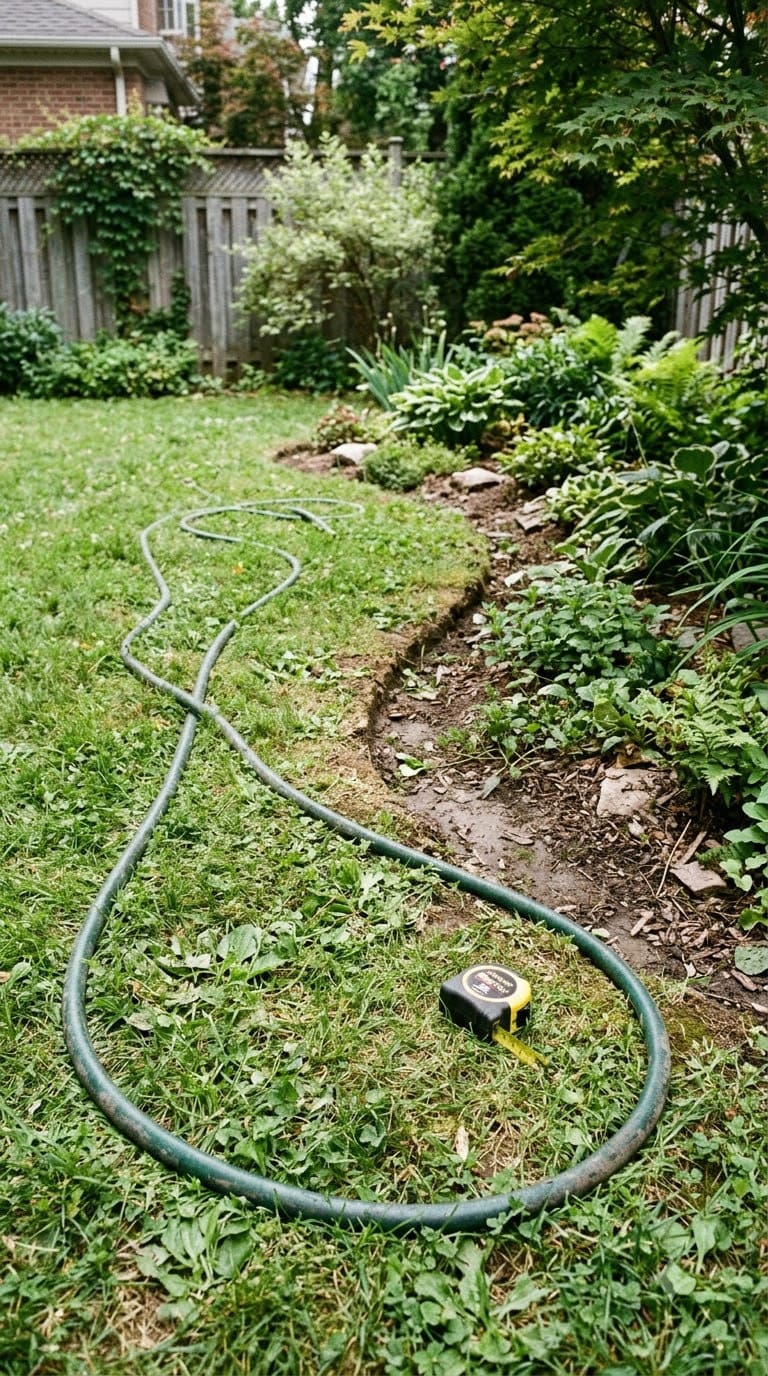
Few beds are perfect rectangles. Two reliable ways to measure without a survey tool:
- Break it into shapes. A kidney-shaped bed can usually be split into a rectangle plus a triangle, or a rectangle plus a half-circle. Measure and calculate each piece on its own. The calculator’s “add another bed” button lets you enter each shape and adds up the total for you.
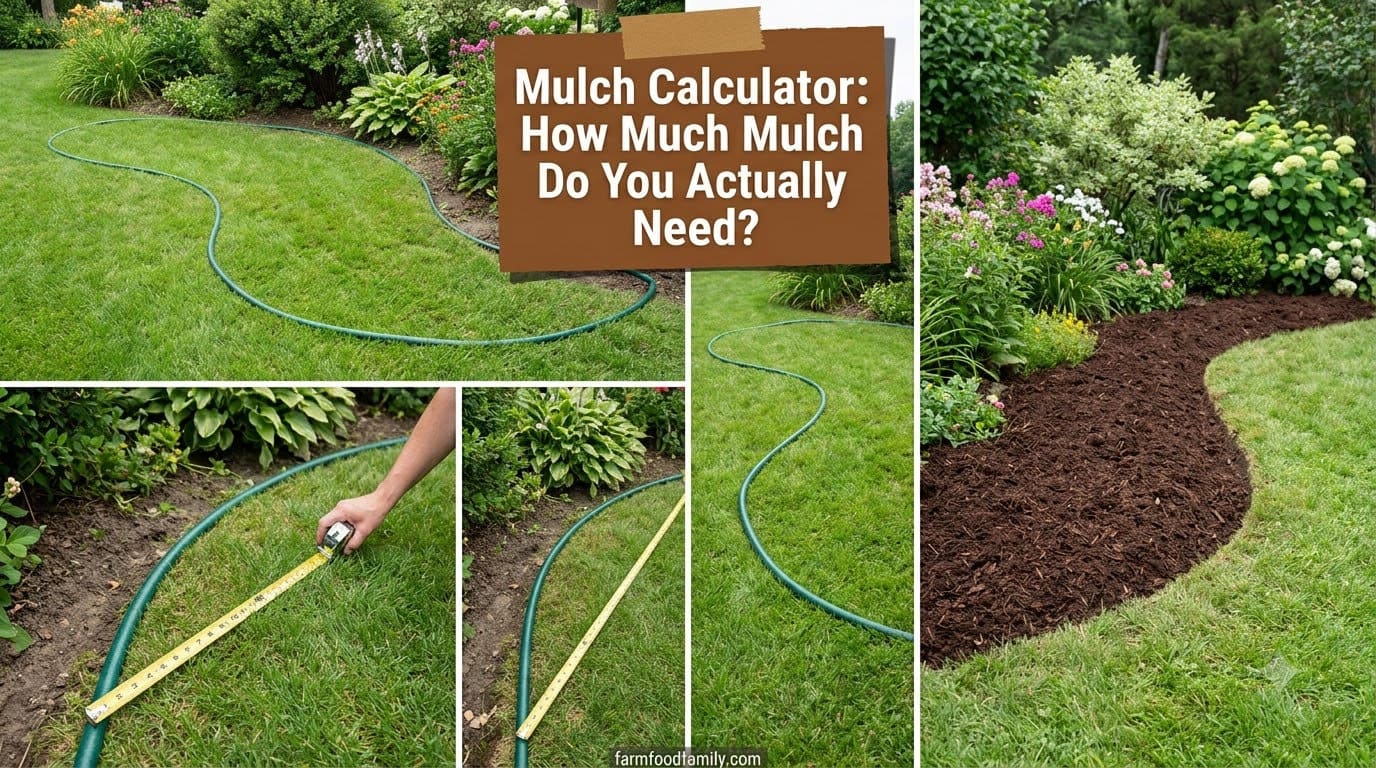
- Hose-and-tape method. Lay a garden hose or rope along the bed’s outer edge to trace the shape. Then measure the length and average width of the outline. This works well for the curved beds common in front yard flower beds.
For a ring bed around a tree, measure the outer edge of the mulched area first. Then measure the bare ring you’re leaving around the trunk, about 6 to 12 inches out. See our guide to edging around trees for ways to define that inner border.
Bulk vs. Bagged Mulch: Which Is Cheaper?
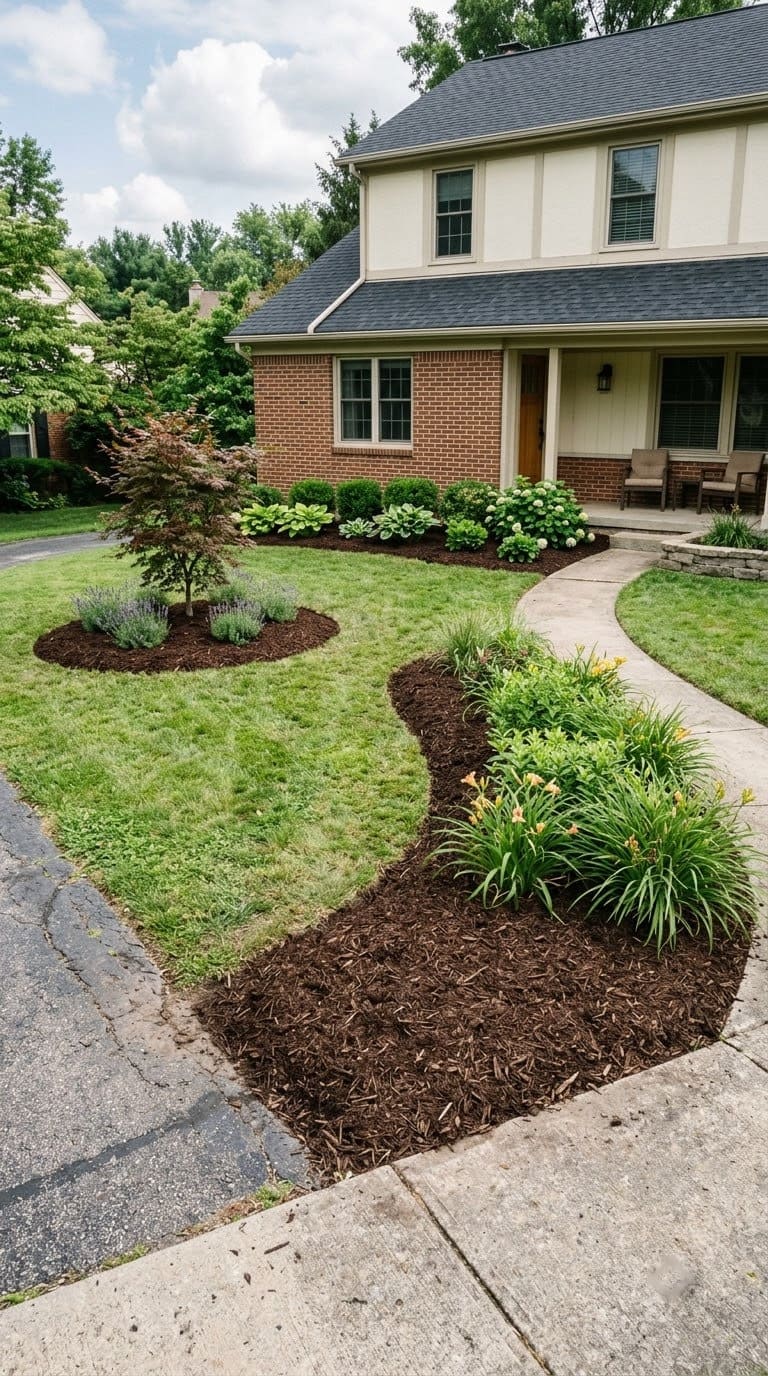
- Bulk mulch is almost always cheaper per cubic yard once you need more than about 3 cubic yards, roughly a 300 sq ft bed at 3 inches deep. It does require delivery or a truck, plus a place to pile it before spreading.
- Bagged mulch costs more per cubic yard. But it has zero waste, no delivery minimum, and is far easier to carry into tight spaces or small, oddly-shaped beds like those in a driveway flower bed.
- Use the calculator’s optional price field to compare directly. Enter a bulk price per cubic yard and note the total. Then switch to a bagged price per 2 or 3 cu ft bag and compare the two totals side by side before you buy.
Mulch and Rock: Do You Need Both?
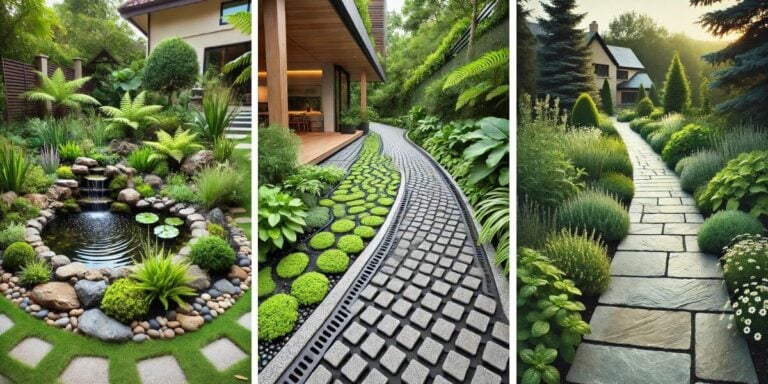
Many yards mix mulch beds with rock or gravel paths, borders, and drainage areas. See our landscaping ideas with mulch and rocks for layout ideas.
If your bed mixes both, run the calculator twice. Do the mulched section first, then the rock section on its own, since rock is often priced by weight as well as volume.
The average homeowner spends $616/year on yard fixes that don't address the real problem. Find out what yours actually is — before you spend another dollar.
Take the Free QuizFAQs
How much mulch do I need for a 10×10 area? At the commonly recommended 3-inch depth, a 10×10 ft (100 sq ft) bed needs about 25 cubic feet before buffer. That’s roughly 0.93 to 1.02 cubic yards with a 10% settling allowance, about 9 to 10 bags of 3-cu-ft mulch.
How often should I re-mulch? Bark, wood chips, and straw break down over time, so plan to top them up once a year, with a full refresh every 2 to 3 years. Rubber and gravel rarely need replacing, just an occasional rake to keep them looking fresh.
Does mulch depth need to change by season? Not usually, the same 2 to 4 inch range works all year in most climates. In cold-winter areas, one extra inch in fall can help protect roots, just don’t go past 4 inches.
Can I put new mulch over old mulch? Yes, if the old layer is under 2 inches. If it’s already 3 to 4 inches, rake it loose first instead of adding more on top. That’s how beds quietly end up too deep.
Why does the calculator warn me even though I only entered 4 inches? The safe depth depends on your mulch type. Four inches is fine for coarse wood chips, but it’s too deep for compost or shredded hardwood, so the warning matches your exact material, not one fixed rule.
Is landscape fabric needed under mulch? Usually not, for planted beds. It stops mulch from feeding the soil as it breaks down, and it can block water and roots. It works better under gravel in bare areas, like a dry creek bed.
How much does mulch weigh, and does that affect delivery? Organic mulch weighs about 400 to 800 lbs per cubic yard, based on how wet it is. A pickup truck bed (about 2 cubic yards loose) can usually carry this safely. Past 3 cubic yards, most suppliers suggest delivery instead.
What’s the difference between “cubic yards” and “yards” of mulch? Mulch is sold by volume, in cubic yards, never in plain linear yards. “A yard of mulch” means one cubic yard. That covers 100 sq ft at 3 inches deep, or 324 sq ft at 1 inch deep.
Can I use this calculator for compost instead of mulch? Yes, pick “Compost” as the mulch type and the tool suggests the right 1 to 2 inch top layer instead of a deeper mulch bed. For mixing ratios, see our guide to making garden compost.
Glossary
- Cubic yard: A volume measurement equal to 27 cubic feet (3 ft × 3 ft × 3 ft). The standard unit bulk mulch is sold in.
- Volcano mulching: Piling mulch in a cone shape against a tree trunk. This traps moisture against the bark and promotes rot, insects, and root suffocation.
- Settling: The natural compaction of loose mulch after rain and foot traffic, typically reducing depth by about 10% within the first season.
- Root flare: The point where a tree trunk widens into its root system at the soil line. Mulch should never cover this area.
Sources & References
- Clemson Cooperative Extension, Home & Garden Information Center. “Mulch”
- University of Maryland Extension. “Mulching Trees and Shrubs”
Never miss an update — choose FarmFoodFamily as your preferred source on Google.
How it works: Tap the button below to open Google's settings page, then check the box next to FarmFoodFamily.
Tap the checkbox to turn it blue — that's how you know it's set.