9 Signs You Hung Your Curtains Wrong (and It’s Shrinking Your Windows)
Your curtains aren’t just decor. Hung wrong, they can visually cut your windows down to size. Here’s how to tell, and the exact inches to fix it.

Never miss an update — choose FarmFoodFamily as your preferred source on Google.
How it works: Tap the button below to open Google’s settings page, then check the box next to FarmFoodFamily.
Tap the checkbox to turn it blue — that’s how you know it’s set.
You bought curtains you love. You hung them up, stood back, and something still feels off. The window looks smaller than it did bare, and you can’t quite say why.
Here’s the truth. Curtains aren’t just fabric. They’re a frame.
A frame drawn in the wrong place makes the thing inside it look smaller. Not bigger.
Most curtain mistakes come down to a handful of measurements, not taste.
Below are nine signs your curtains are working against your windows, not for them. Each one comes with the exact inches that fix it.


Quick Answer
Curtains hung wrong usually shrink a window in one of three ways: the rod sits too low, the rod is too narrow, or the panels stop short of the floor. Each mistake pulls the eye down or in. That makes the window read smaller than it actually is.
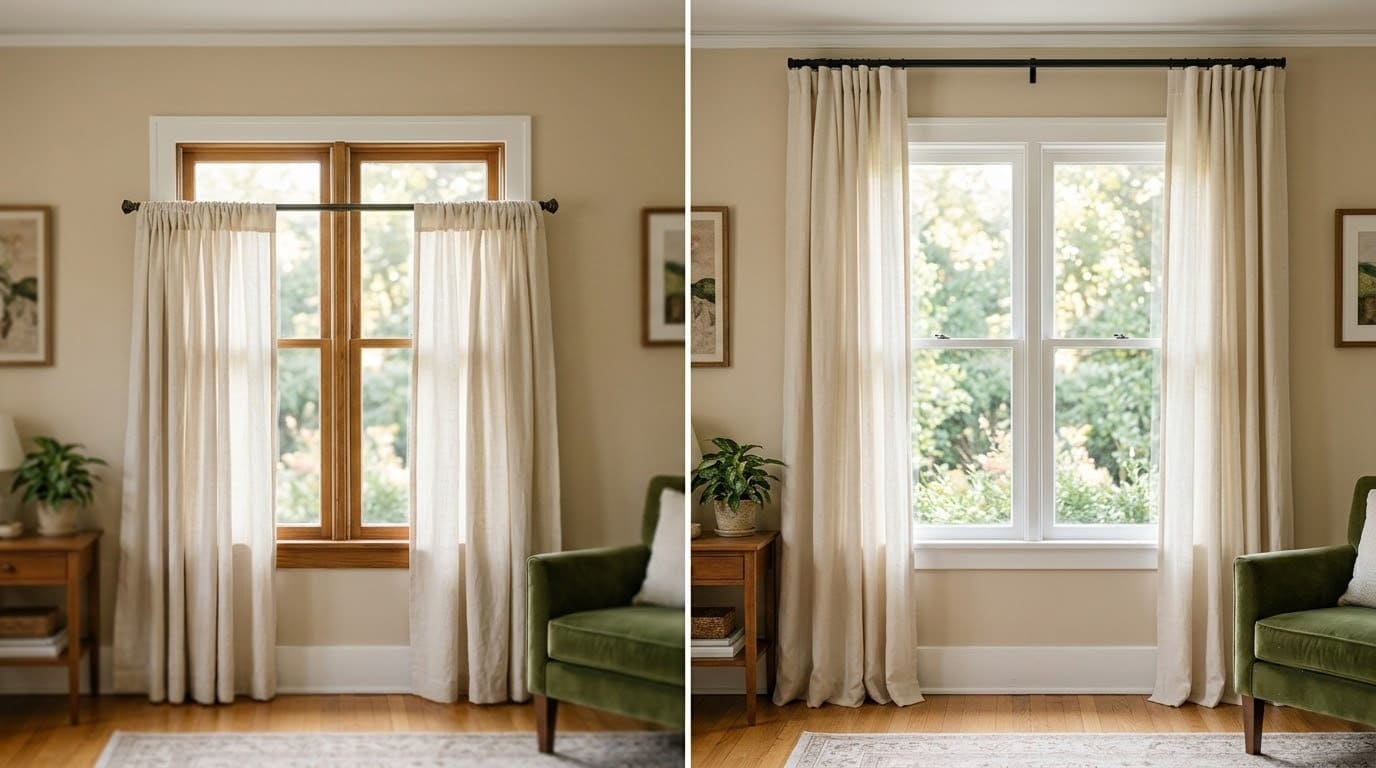
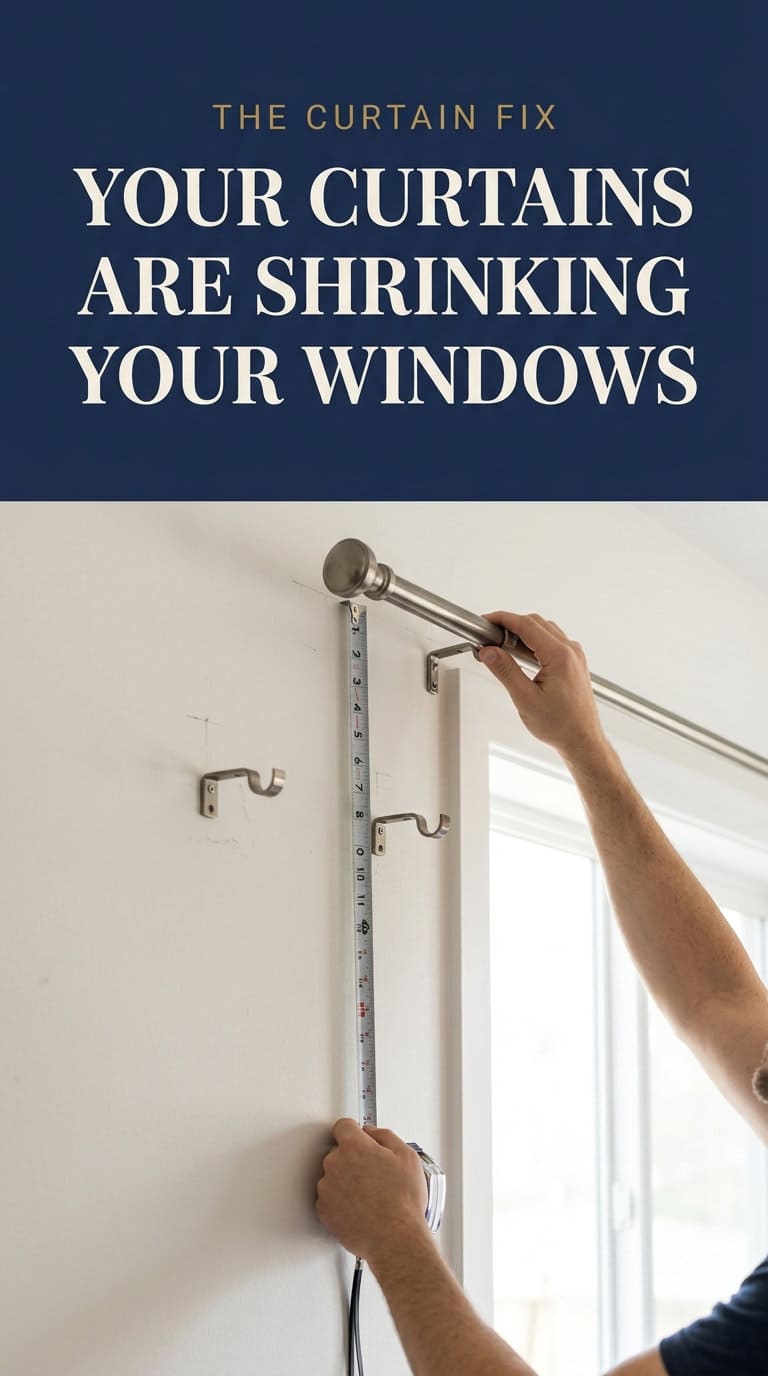
Designer Lucie Ayres of 22 Interiors puts it plainly: “It is an absolute must to hang the drapery rod six to ten inches above the window frame and 10 to 12 past the window on both sides.” That extra height and width tricks the eye. It sees a taller, wider window than the one actually there.
Length matters just as much. Maggie Griffin of Maggie Griffin Design calls floor-length curtains “an interior designer’s favorite trick to maximize a small room.”
The fix for most homes is simple. A taller, wider rod and a longer panel. Not new furniture or a repaint.
How to use this list
Go through the nine signs below with your own windows in mind. Most rooms show at least two or three of these at once.
The height, width, and length mistakes tend to travel together. Each sign includes the exact measurement to fix it.
1. Your curtain rod sits right on top of the window frame
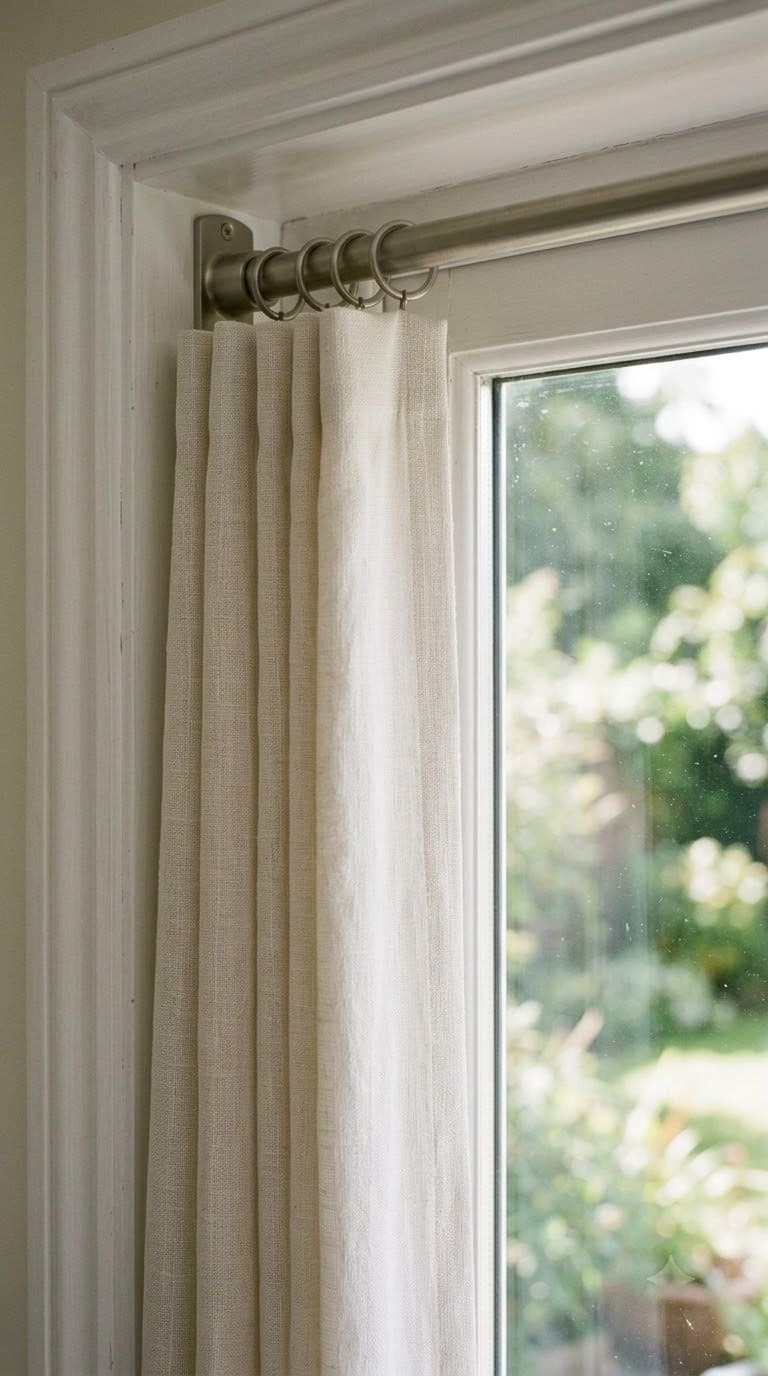
This is the single most common mistake, and it feels like the obvious choice. The rod sits right where the window ends. The curtain starts exactly where the glass starts.
Here’s why. Your eye reads the top of the curtain as the top of the window.

Fixes the too-narrow rod mistake directly, extends far past most windows on both sides
Shop NowThis post contains affiliate links. We may earn a commission on qualifying purchases at no extra cost to you.
When the rod sits low, the window reads short. It doesn’t matter how tall the actual glass is.
Quick fix: Move the rod 6 to 10 inches above the window frame. Designer Lucie Ayres calls this “an absolute must” for a reason. That gap between the frame and the rod becomes part of the window’s visual height. It’s really just wall. The eye doesn’t know that.
2. Your rod is the exact same width as your window
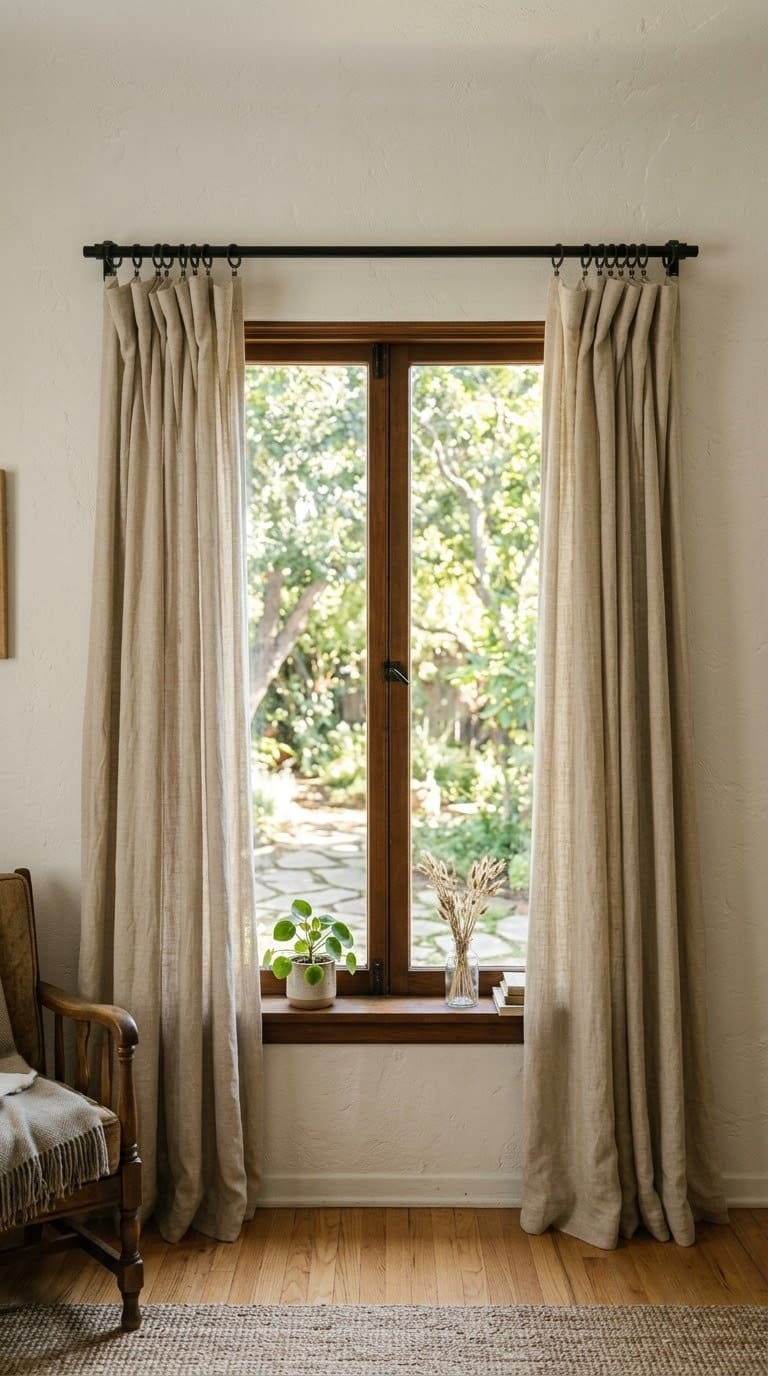
A rod cut to match the window frame seems logical. It’s also the reason your curtains eat into your actual window when they’re open.
When the rod ends where the frame ends, the fabric has nowhere else to go. It lands right on the glass.
Even pulled all the way open, the panels stack up. They block light and view.
Quick fix: Extend the rod 10 to 12 inches past each side of the window frame, per Lucie Ayres’ rule. Open panels then stack on the wall instead of the glass. The window gets to show its full width. Our living room curtain ideas guide has more on choosing a rod length for different window sizes.
3. Your curtains stop inches above the floor
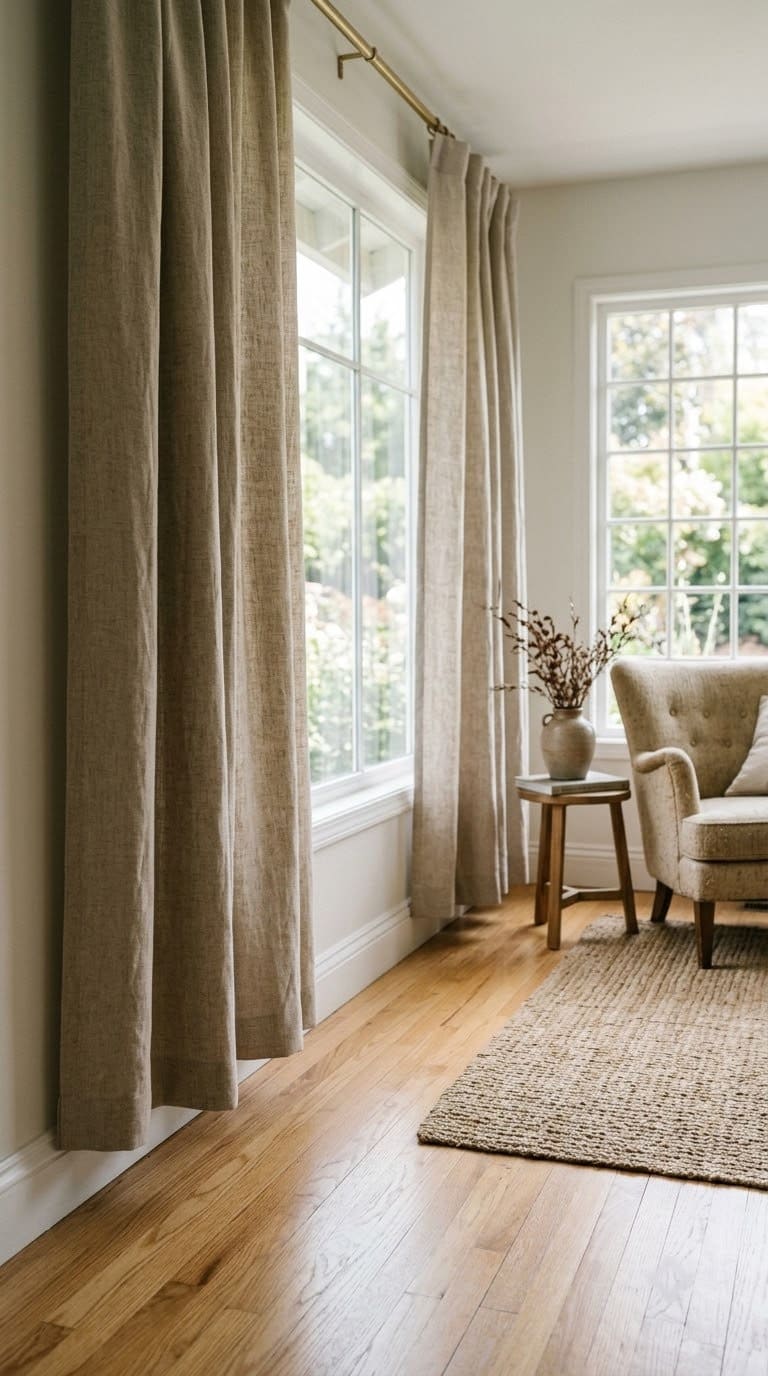
Short curtains create an awkward, unfinished gap between the fabric and the floor. It’s the curtain version of pants that are a little too short.
That gap breaks the vertical line. Your eye wants to follow it from ceiling to floor. Instead of one long, continuous sweep, the room reads as two disconnected pieces.

Quick fix: Curtains should reach the floor, or come within a half inch of it. Maggie Griffin’s rule of thumb is floor-length, or just a touch above. It’s the fastest way to make a small room read bigger. Check our should curtains touch the floor guide for exact length math by window height.
4. Your panels are too flat and thin to fully cover the window when closed
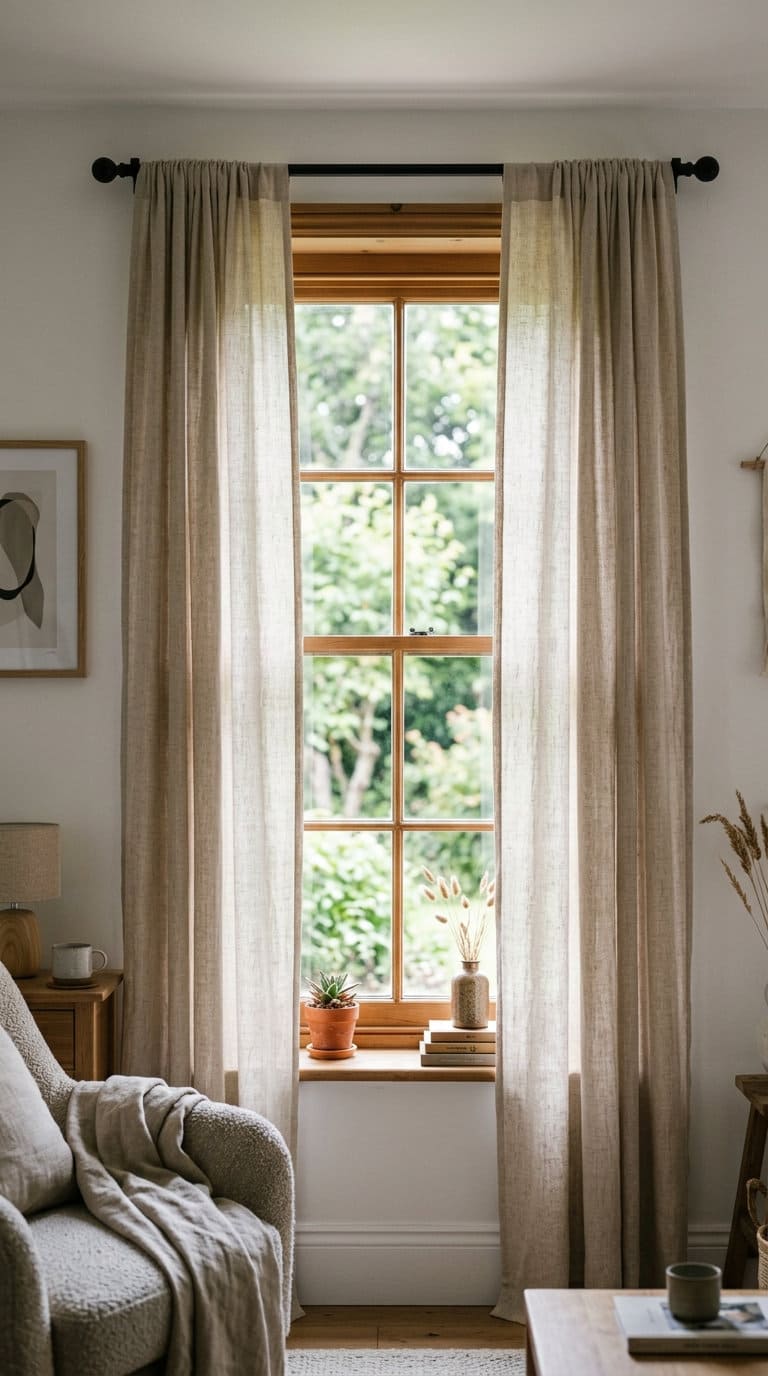
Some fabric is thin enough that even a correctly sized rod can’t hide it. Light leaks through the weave, and the panel looks stretched rather than full.
A curtain that can’t do its job when closed reads as undersized. That’s true even if the measurements are technically right. Fullness is part of how a window looks finished.
Quick fix: Look for panels rated at double or triple fullness relative to your rod length. That extra width lets the fabric gather instead of stretching flat across the glass.
Two thinner panels layered together can also solve this without buying new hardware. A sheer layer underneath a solid panel adds body during the day. You can still close both for privacy at night.
5. You only hung one panel, not two
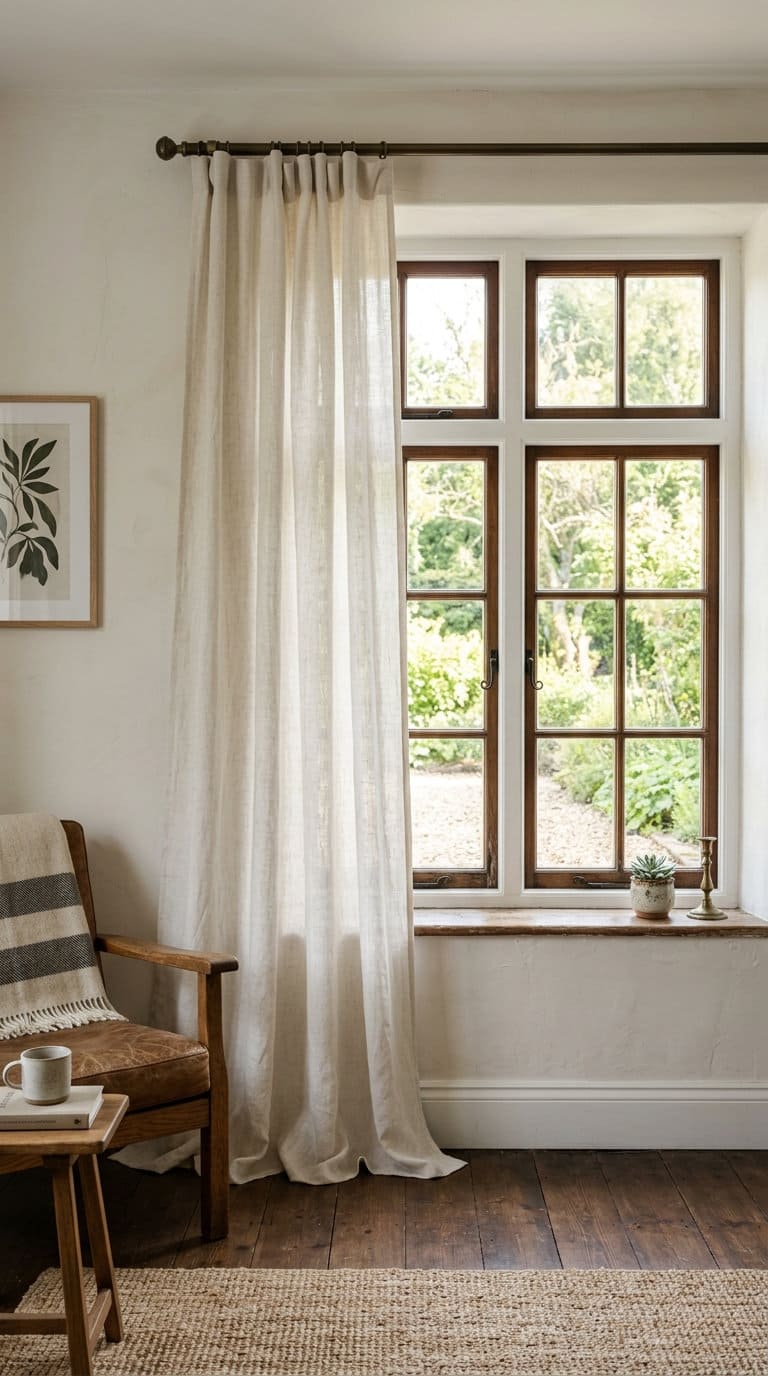
One panel pushed to one side is common in rentals and quick fixes, but it reads as unfinished no matter how nice the fabric is. A window with curtains on only one side looks lopsided.
Symmetry is doing a lot of work here. Two matching panels, one on each side, frame the window. Think of it like a picture frame around a photo.
Quick fix: Add a second panel that matches the first. Tight budget? A second panel in a similar tone from a different retailer still works. Just match the length and fullness.
6. Your curtains puddle in a heap on the floor
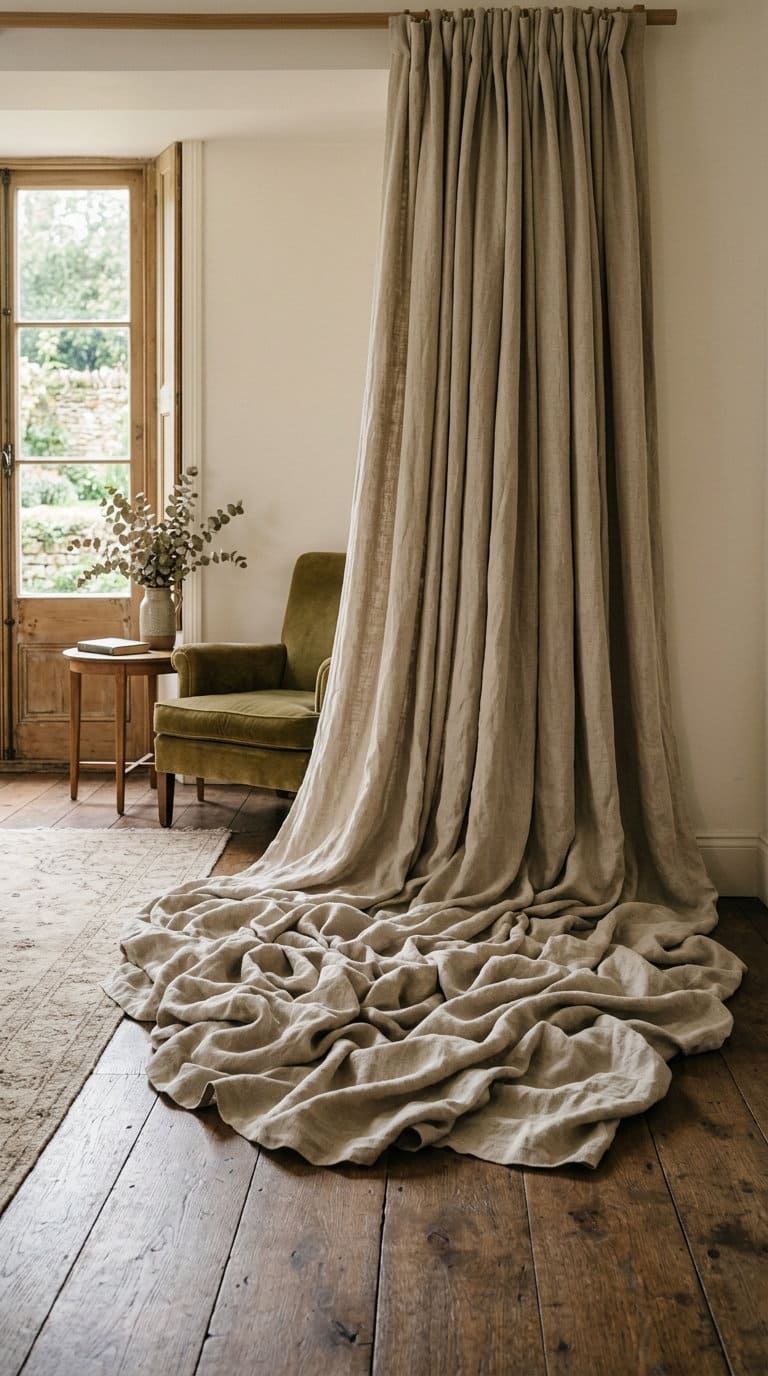
This one seems like the opposite problem, extra fabric instead of too little. But a heavy puddle at the bottom draws the eye down. It makes the floor area feel cluttered.
Lucie Ayres is direct about this in smaller rooms. The fabric should “just kiss the ground,” not gather in a pile.
A puddle can work in a formal, oversized space. In most rooms, it fights against a small window instead of helping it.
Quick fix: Rehem or re-hang so the fabric grazes the floor without extra length pooling underneath. Most ready-made panels come slightly long on purpose. A simple hem adjustment often solves this.
7. Your curtain color blends into the wall instead of framing the window
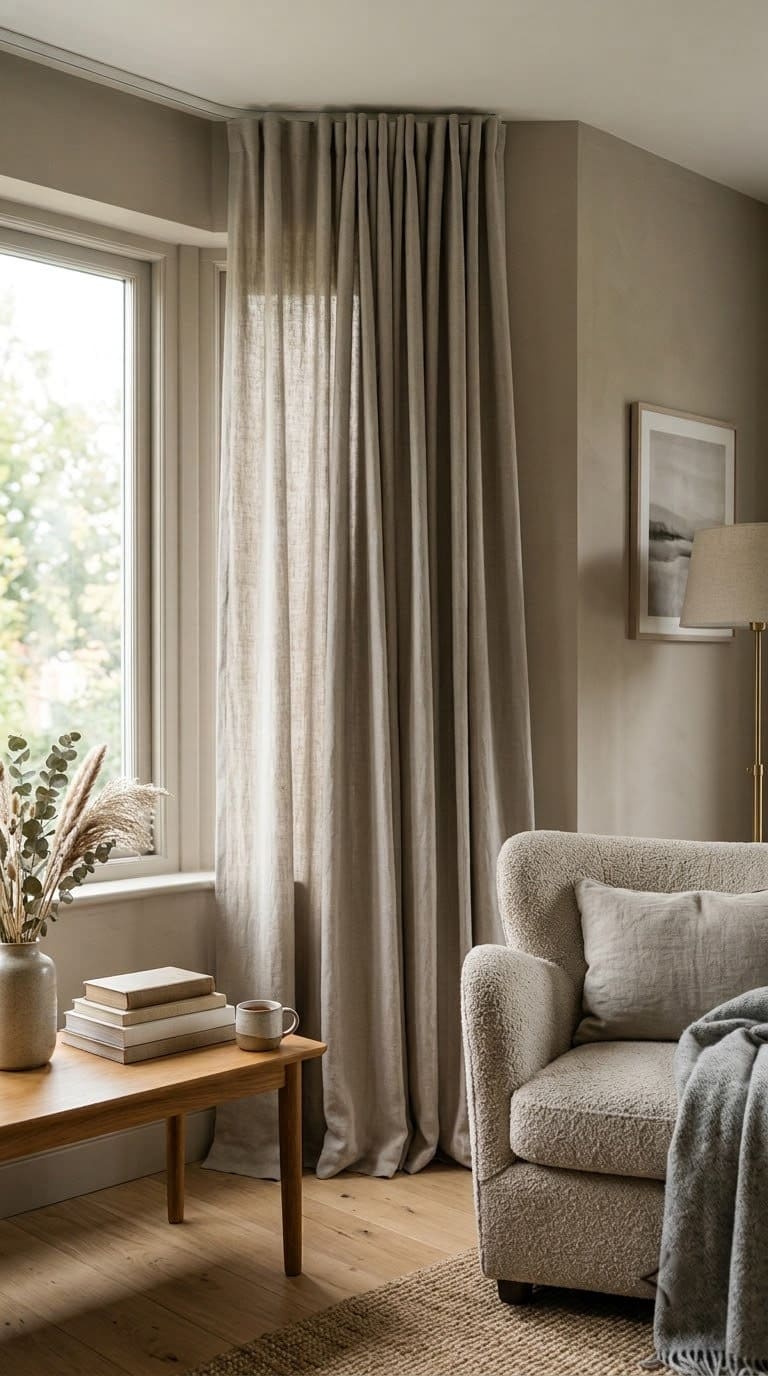
Matching your curtains exactly to your wall color feels safe, but it erases the frame effect curtains are supposed to create. The eye can’t find the edge of the window because nothing marks it.
A window needs some contrast to register as a shape in the room. Otherwise it reads as just a break in the wall.
Quick fix: Pick a curtain shade with at least a little contrast from the wall. Even a few shades lighter or darker in the same color family is enough. Our sheer curtains guide covers how sheers can add texture-based contrast without a bold color change.
8. You centered the rod on the window instead of the wall
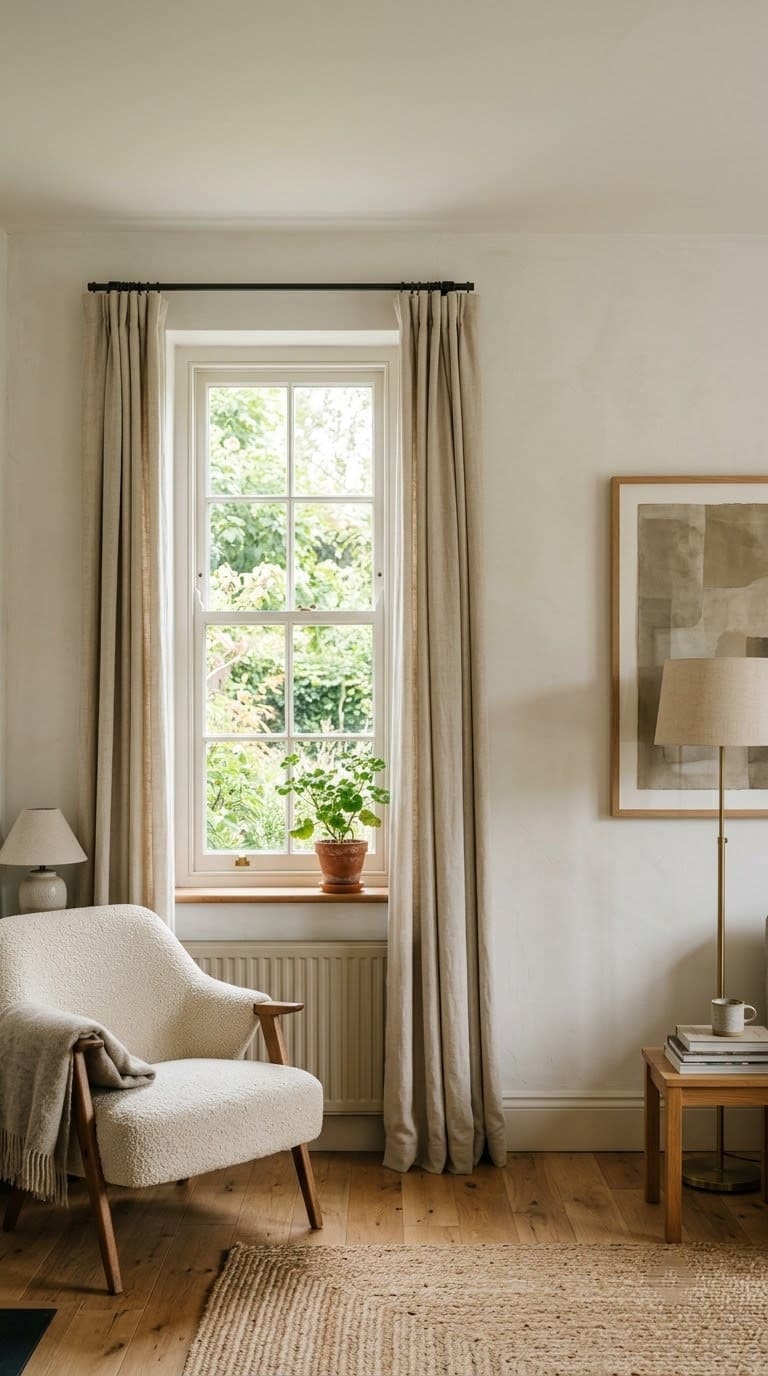
If your window isn’t centered on the wall, a rod centered exactly on the window will look crooked in the room, even though it’s technically straight.
The eye judges the curtain against the whole wall, not just the glass. A rod that ignores the wall’s actual proportions reads as slightly wrong. Nobody can quite say why.
Quick fix: Step back and look at the wall as a whole before mounting the rod. Center the curtains on the wall space when the window is off-center. Don’t center them on the window itself.
A quick way to check: measure the wall from corner to corner. Mark the true center point, then compare it to the window’s center.
If the two points don’t match, split the difference. Let the curtains favor the wall’s balance over the glass alone.
9. You never open your curtains all the way, so they still block light and view
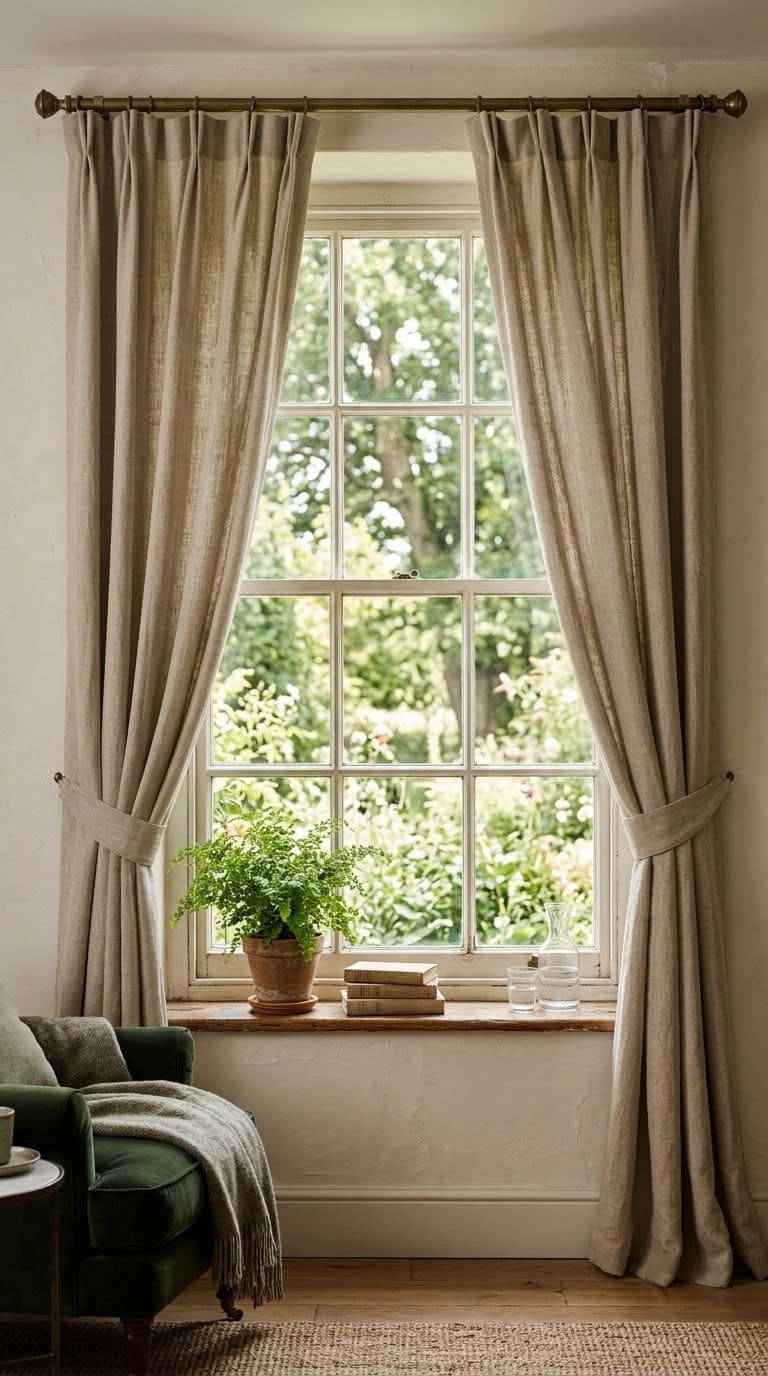
Even a correctly sized rod doesn’t help if the panels never get pulled all the way open. Half-open curtains still block part of the window every single day.
This is less about hardware and more about habit. A daily habit that quietly shrinks the window anyway.
Quick fix: Use tiebacks or holdbacks to pull panels fully off the glass during the day. A curtain that’s actually open all the way makes the extra rod width worth having. Mostly open doesn’t count.
Why rod placement matters more than the curtains themselves
The single biggest lever in this whole list is the rod, not the fabric. A beautiful, expensive curtain on a low, narrow rod still makes a window look small. A plain, budget curtain hung high and wide will make the same window look bigger.
That’s because the eye reads vertical lines first. A tall rod placement stretches that line before the glass even starts.
Lucie Ayres’ rule: six to ten inches above the frame, 10 to 12 past each side. It exists because it gives the eye more line to read in both directions.
Once the rod is right, almost every other fix on this list becomes easier. Fullness, length, and color all read better against a frame that already works.
The exact measurements to fix it
| Mistake | Wrong measurement | Fixed measurement |
|---|---|---|
| Rod height | At or just above the frame | 6-10 inches above the frame |
| Rod width | Same width as the window | 10-12 inches past each side |
| Curtain length | Stops a few inches above the floor | Reaches the floor, within a half inch |
| Fullness | Flat, single-layer panel | Double or triple fullness relative to rod length |
| Panel count | One panel on one side | Two matching panels, one per side |
What we learned fixing rooms like this
We’ve seen the same question asked over and over in home design communities: is my curtain rod too low? People genuinely cannot tell without a second opinion. A few inches doesn’t look dramatic in a single photo.
One thread on a home design forum nailed both problems at once. A commenter reviewing someone’s curtain photo said the rod was too low and too narrow.
The room also needed four panels total to pleat properly. That’s the two most common mistakes, named in a single sentence.
The person had no design training, just an eye for what looked off.
The flip side shows up just as often. People who finally hang their rod higher start to second-guess themselves. They worry they went too far.
The reassurance we’ve seen repeated is almost always the same: higher is better. A rod mounted too high is rare in a home with standard ceilings.
What to fix first
| Priority | Fix | Why it’s first |
|---|---|---|
| 1 | Raise the rod 6-10 inches above the frame | Biggest visual impact, no new curtains needed |
| 2 | Extend the rod 10-12 inches past each side | Lets open panels clear the glass completely |
| 3 | Lengthen curtains to reach the floor | Restores the vertical line from ceiling to floor |
| 4 | Add a second panel if you only have one | Fixes the lopsided, unfinished look |
| 5 | Upgrade to fuller fabric or double up panels | Solves light leaks and a stretched appearance |
Frequently asked questions
How high above the window should curtain rods be? Six to 10 inches above the top of the window frame, according to designer Lucie Ayres. Tight on space between the window and ceiling? Hang the rod midway between the two instead.
How far past the window should a curtain rod extend? 10 to 12 inches past each side of the window frame. That lets open panels stack on the wall, not the glass.
Should curtains touch the floor? Yes, in most rooms. Floor-length curtains read as more finished. So do curtains within a half inch of the floor. Both make a small room feel larger. Our guide on should curtains touch the floor breaks down the exact math by window height.
Can I fix a too-narrow rod without buying a whole new one? Sometimes. Some curtain rods extend or telescope wider than they look. Check the maximum length before replacing anything. Extended brackets are another low-cost option. They mount a few inches further from the wall than standard hardware. That gives a short rod a little more clearance without a full replacement. If the rod truly can’t extend far enough, buy an inexpensive extendable one. It usually costs less than most single curtain panels.
Do dark curtains make a small window look even smaller? Not necessarily. Color matters less than contrast against the wall, and less than rod placement. A dark curtain hung high and wide can still make a window look bigger. A pale curtain hung low and narrow can’t.
Related Posts
Products We Recommend
This post contains affiliate links. We may earn a commission on qualifying purchases at no extra cost to you.
YaFex Heavy Duty Curtain Rod, 32-144 Inch Adjustable
Fixes the too-narrow rod mistake directly, extends far past most windows on both sides
Shop Now
Adjustable Curtain Rod Brackets, 5 Inch, 2-Pack
A cheaper fix when your existing rod just needs a little more width or height off the wall
Shop Now
Guken Cream Linen Blackout Curtains, 84 Inch Length
Solves the too-short mistake with a ready-made floor-length option
Shop NowNever miss an update — choose FarmFoodFamily as your preferred source on Google.
How it works: Tap the button below to open Google's settings page, then check the box next to FarmFoodFamily.
Tap the checkbox to turn it blue — that's how you know it's set.