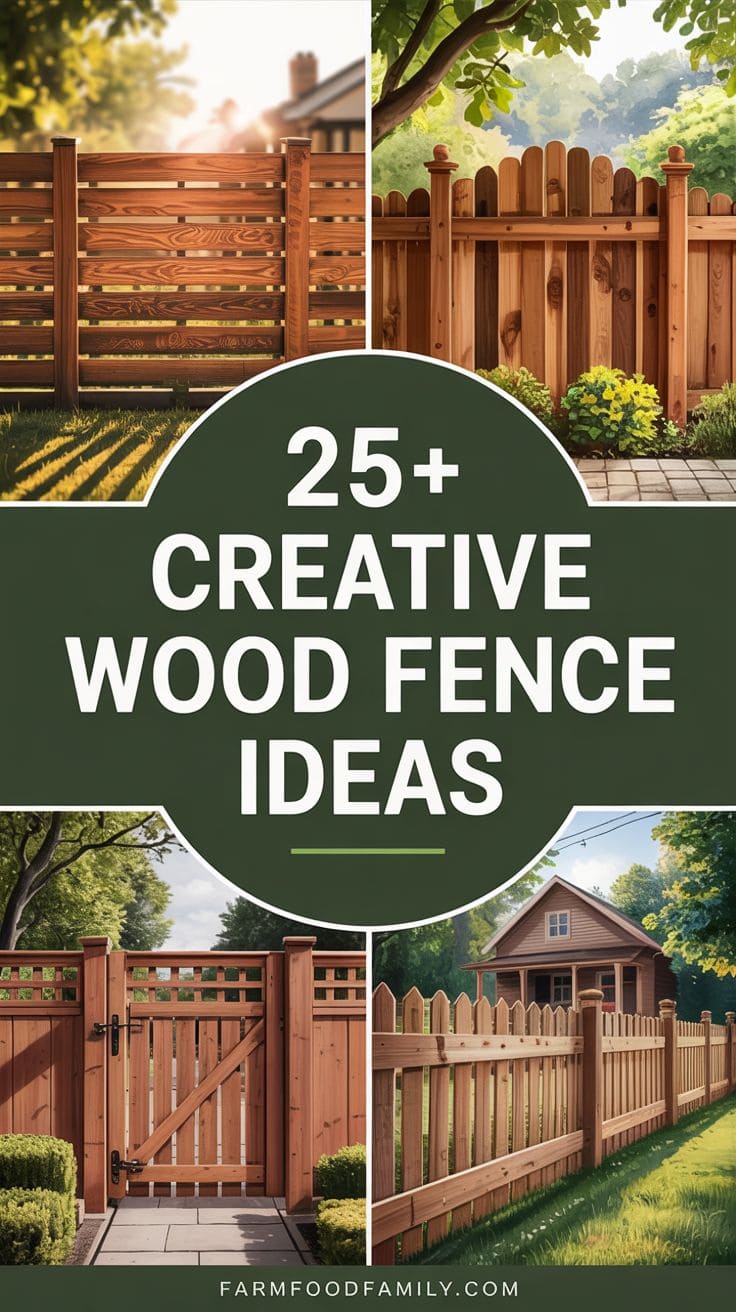
25 Wood Fence Ideas (Plus Property Line Rules to Check)
My uncle built a beautiful board-and-batten fence one summer, only to find out two years later it sat eight inches over his property line once his neighbor finally got a survey done for a home addition. He had to move the whole thing, which was honestly a miserable weekend of re-digging post holes. Nobody warns…

Never miss an update — choose FarmFoodFamily as your preferred source on Google.
How it works: Tap the button below to open Google’s settings page, then check the box next to FarmFoodFamily.
Tap the checkbox to turn it blue — that’s how you know it’s set.
My uncle built a beautiful board-and-batten fence one summer, only to find out two years later it sat eight inches over his property line once his neighbor finally got a survey done for a home addition.
He had to move the whole thing, which was honestly a miserable weekend of re-digging post holes. Nobody warns you that the fun part, picking a style, isn’t actually the part most likely to go wrong.
Before you build: property lines and height limits
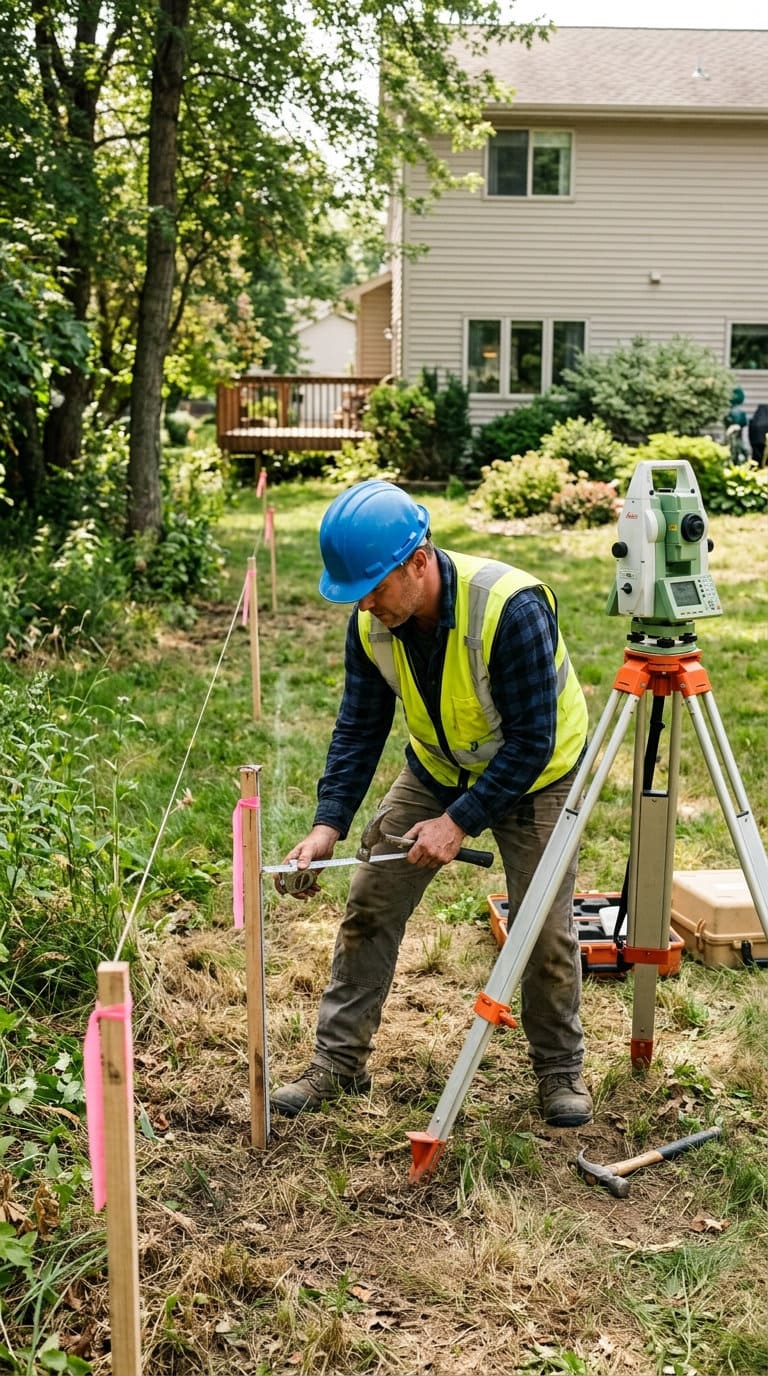
Get a professional survey before setting any posts near a boundary line, not after a dispute starts. It’s a small upfront cost compared to moving a finished fence. And it’s the kind of thing that feels unnecessary right up until it isn’t.
Most jurisdictions also cap fence height by location: front-yard fences are commonly limited to around 3.5-4 feet, while backyard fences can usually go up to about 6 feet, though this varies by municipality.
Building unusually tall specifically to block a neighbor’s view or annoy them, sometimes called a “spite fence,” is a recognized legal violation in several states, California’s statute specifically bars a fence unnecessarily exceeding 10 feet built with malicious intent, worth knowing if a dispute is already brewing rather than purely hypothetical.
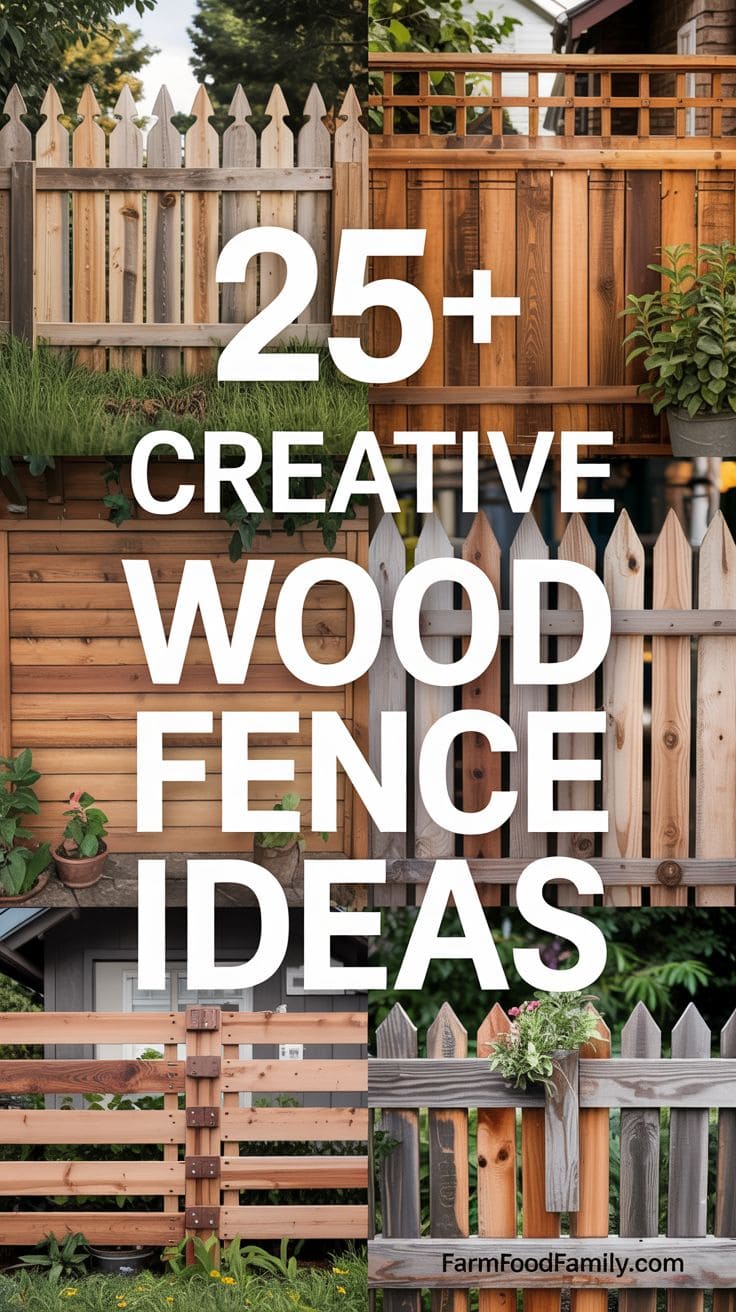
24 wood fence ideas
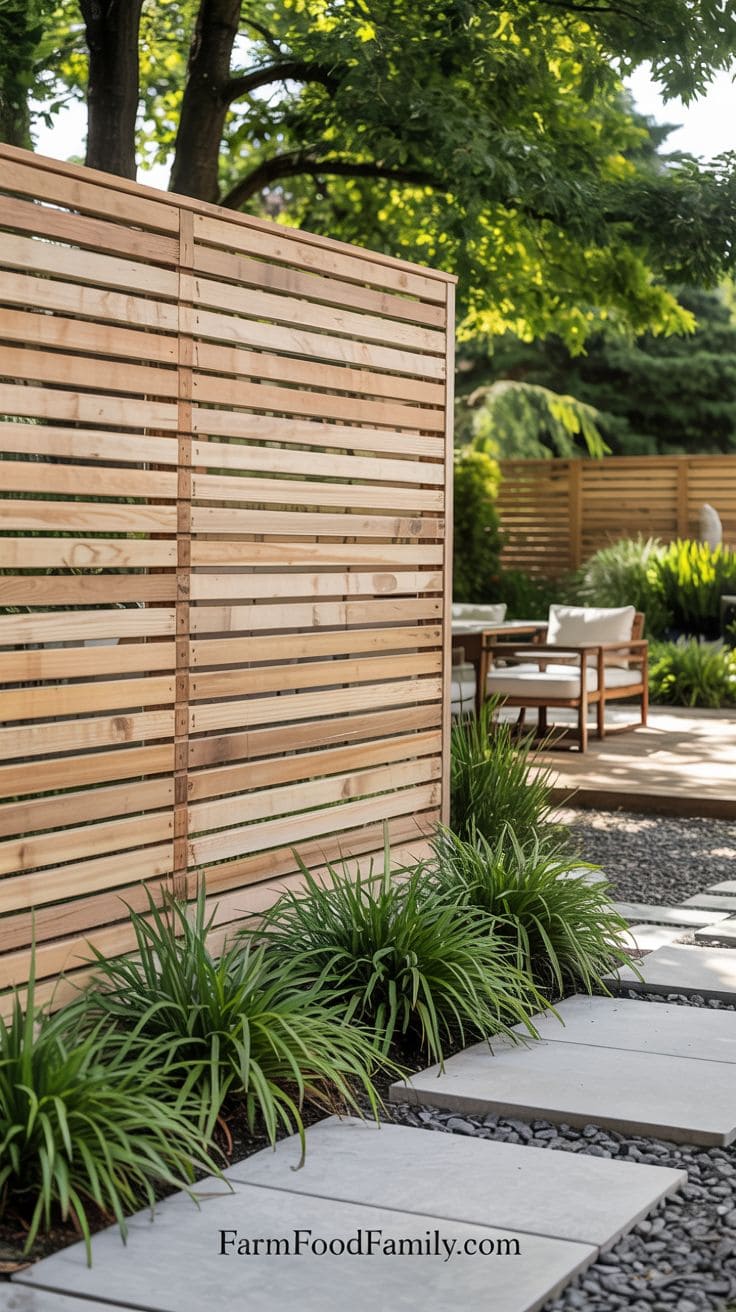
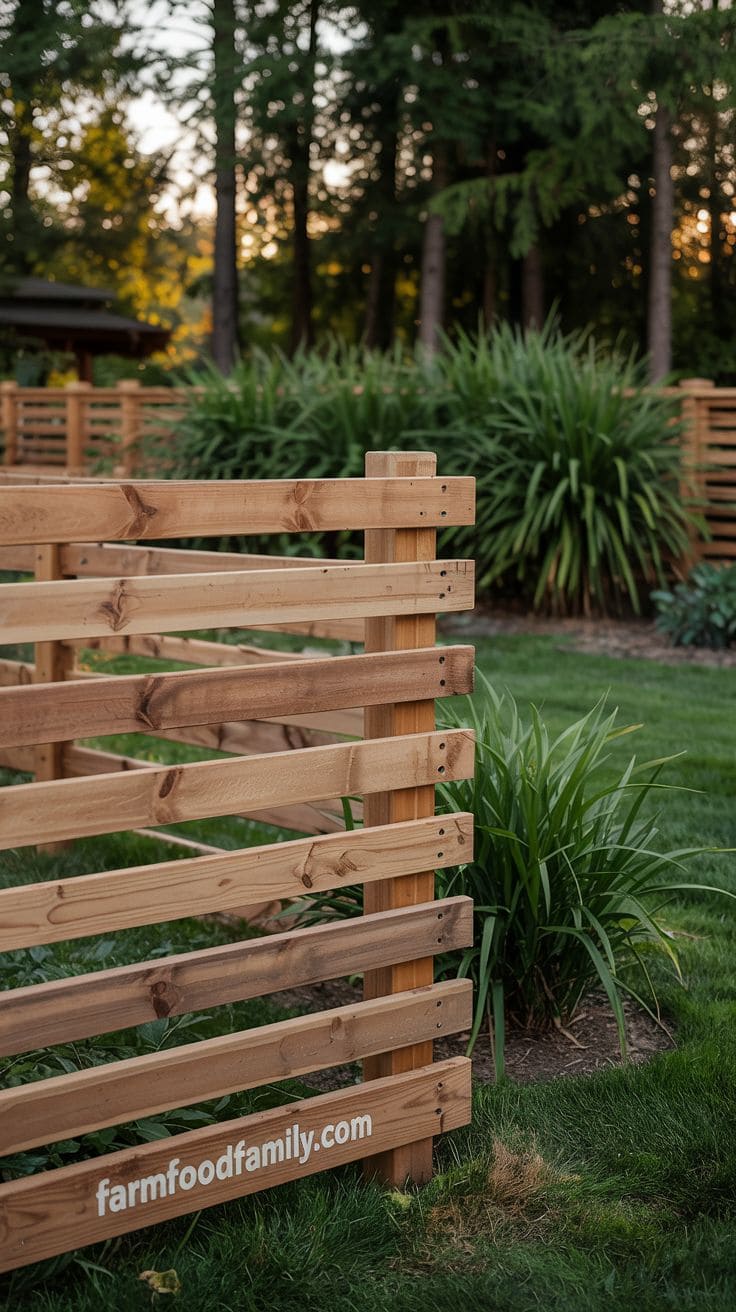
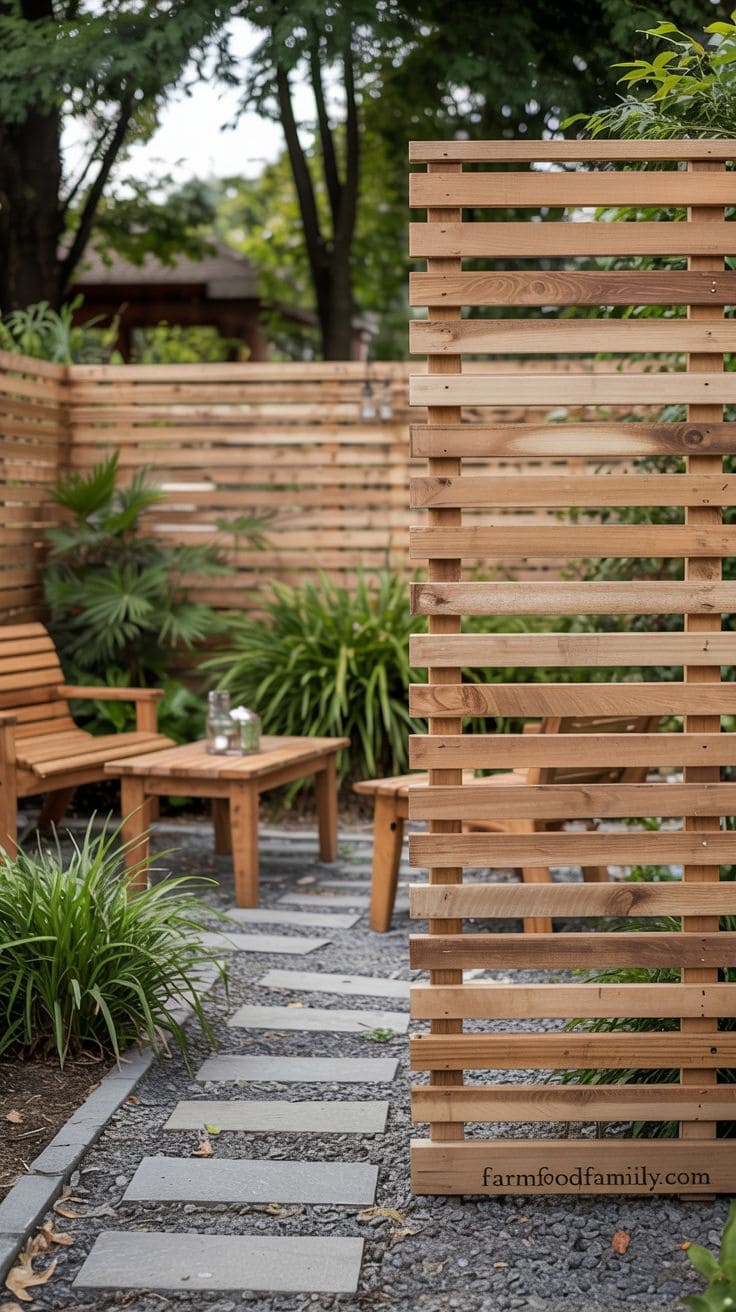
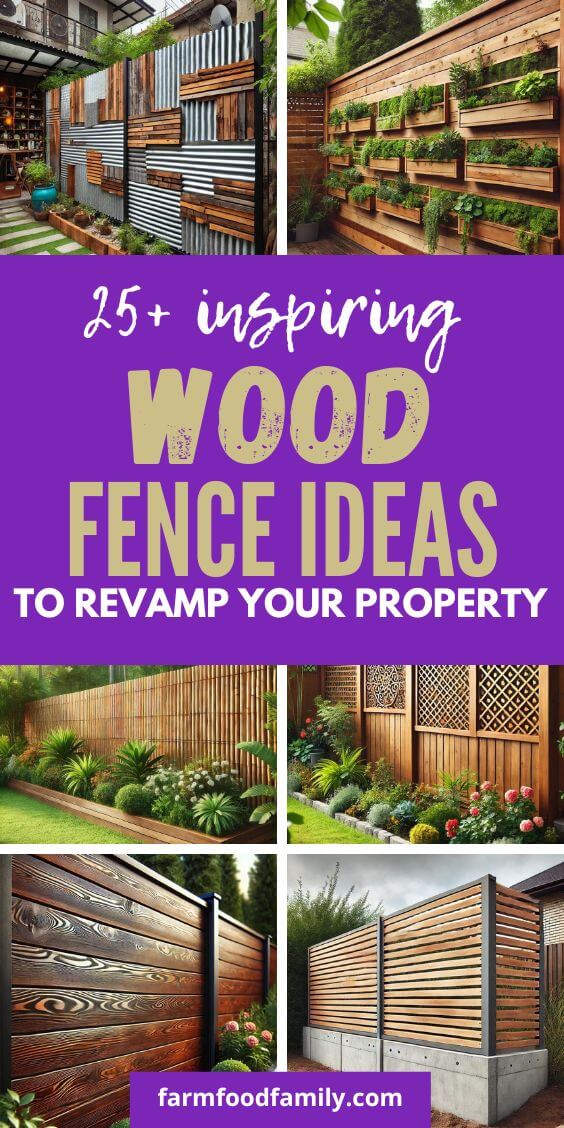
1. Horizontal Cedar Slat Fence
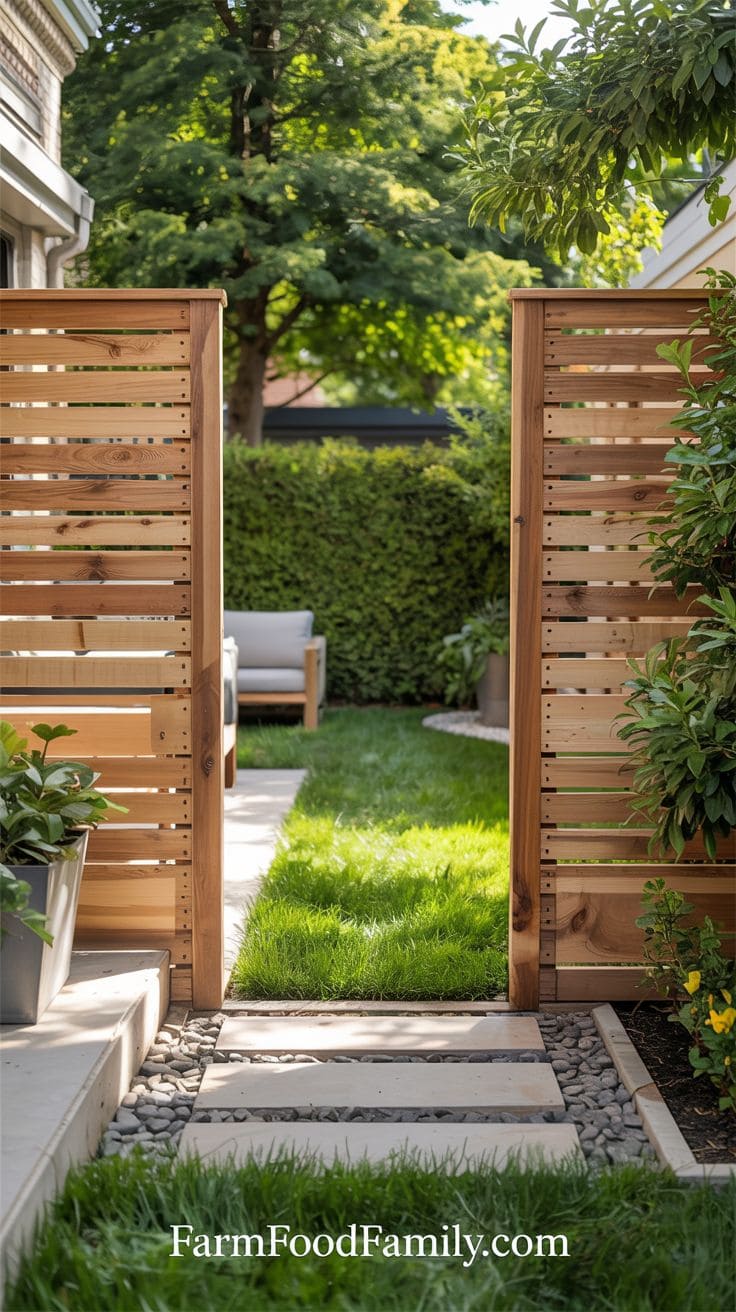
Horizontal slats are popular in modern homes, and cedar is a good wood choice because of its natural resistance to insects and deterioration.
Answer 4 quick questions and get matched to the exact fix for your yard — drainage, budget, layout, or something else entirely.
Take the Free QuizThis type of fence offers sleek, clean lines to your yard, giving it a modern vibe without being overly stark.
Wide boards make a big statement, while narrow, evenly spaced slats create a more elegant, airy aspect.
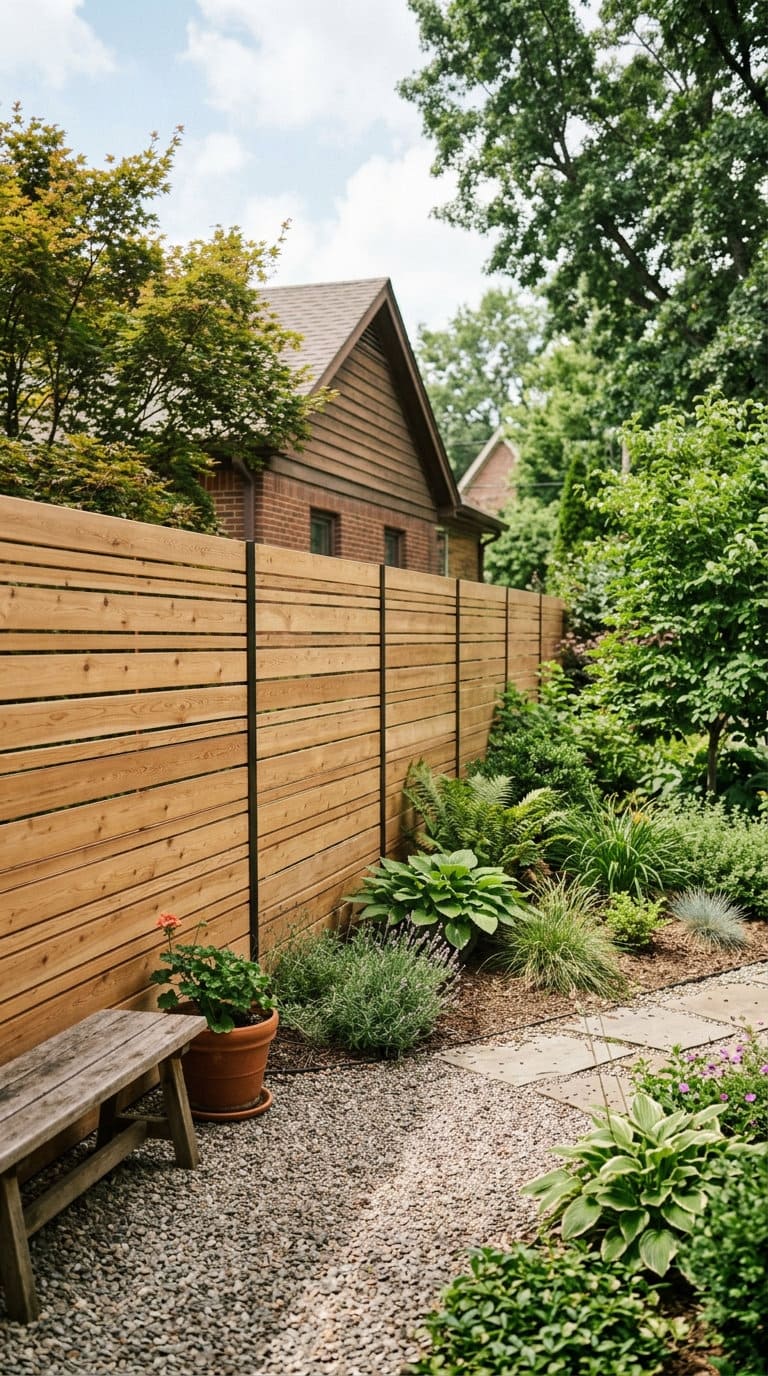
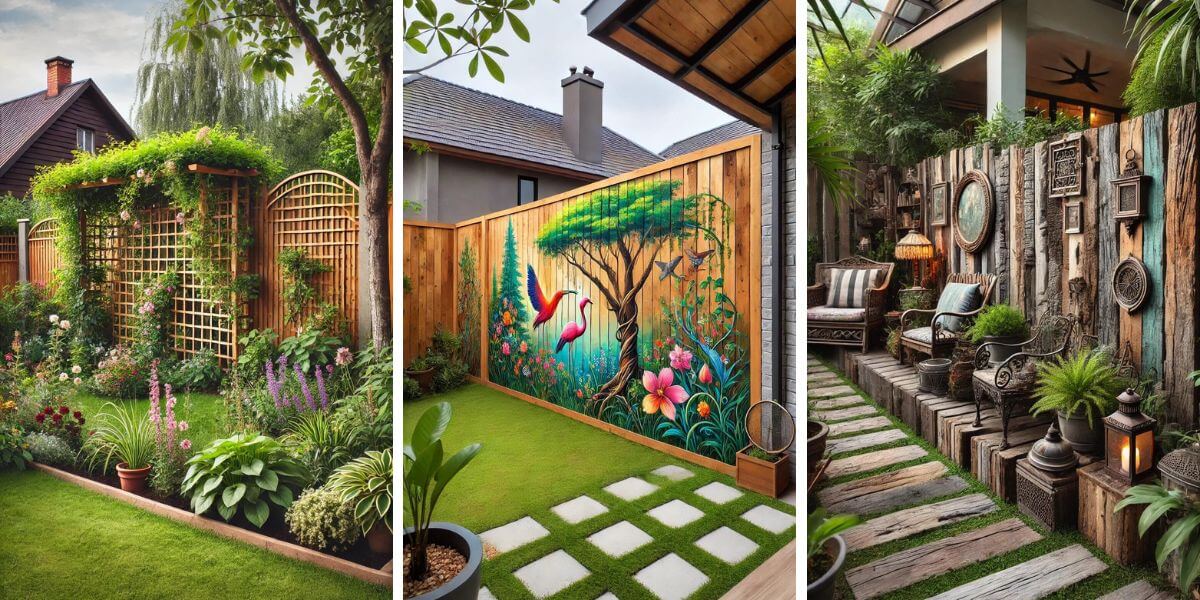
This style looks well with gravel yards, simple planters, and modern patio furniture. You can accent the fence with ornamental grasses or bamboo if you want to spice it up.
Applying a clear sealer will keep cedar’s warm color, but it also looks great when left to age into a silvery patina, producing an earthy, lived-in beauty.
2. Board and Batten Privacy Fence
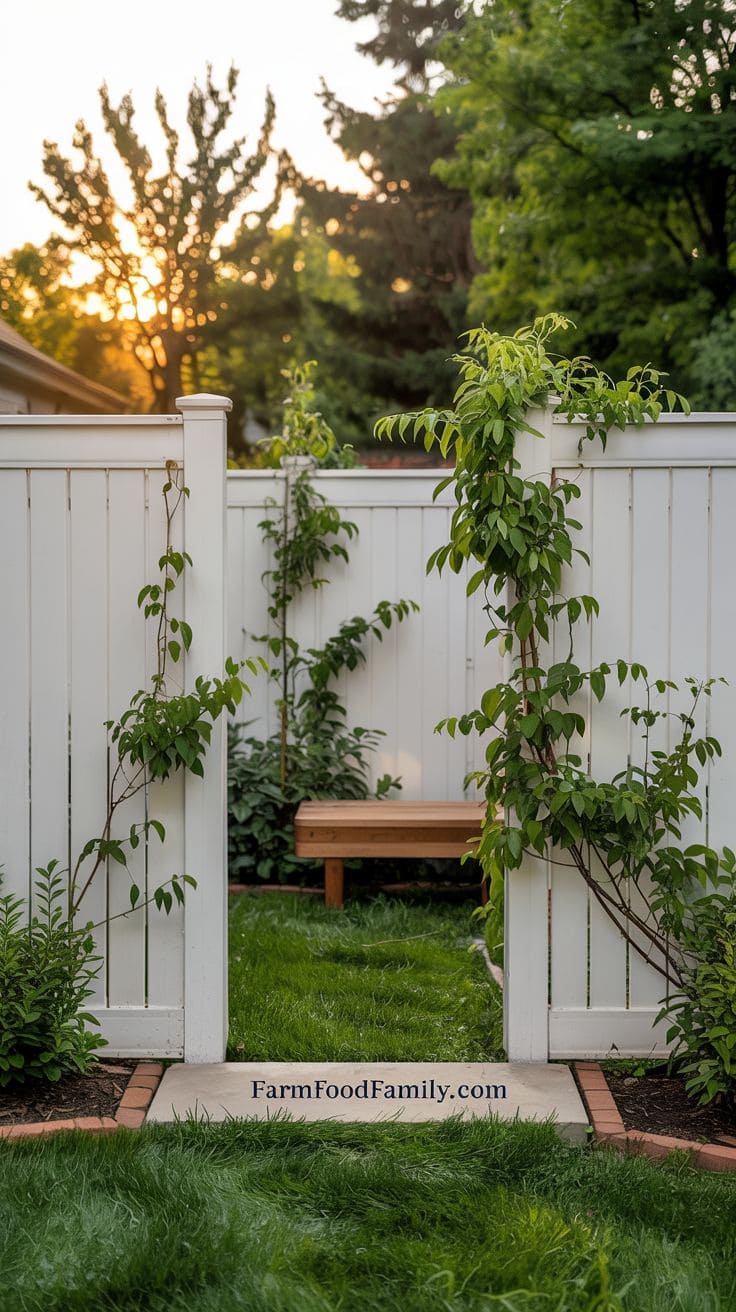
If privacy is your first need, a board and batten fence offers both functionality and timeless beauty.
This style features wide vertical boards with narrow battens concealing the seams, resulting in a smooth and solid barrier.
It’s ideal for enclosing backyards or pool areas when privacy is essential.
Most yard problems trace back to one specific, fixable cause. Find yours in 4 quick questions.
Take the Free QuizIt mixes in seamlessly with most landscaping types when painted in gentle neutral tones such as warm white, sage green, or charcoal.
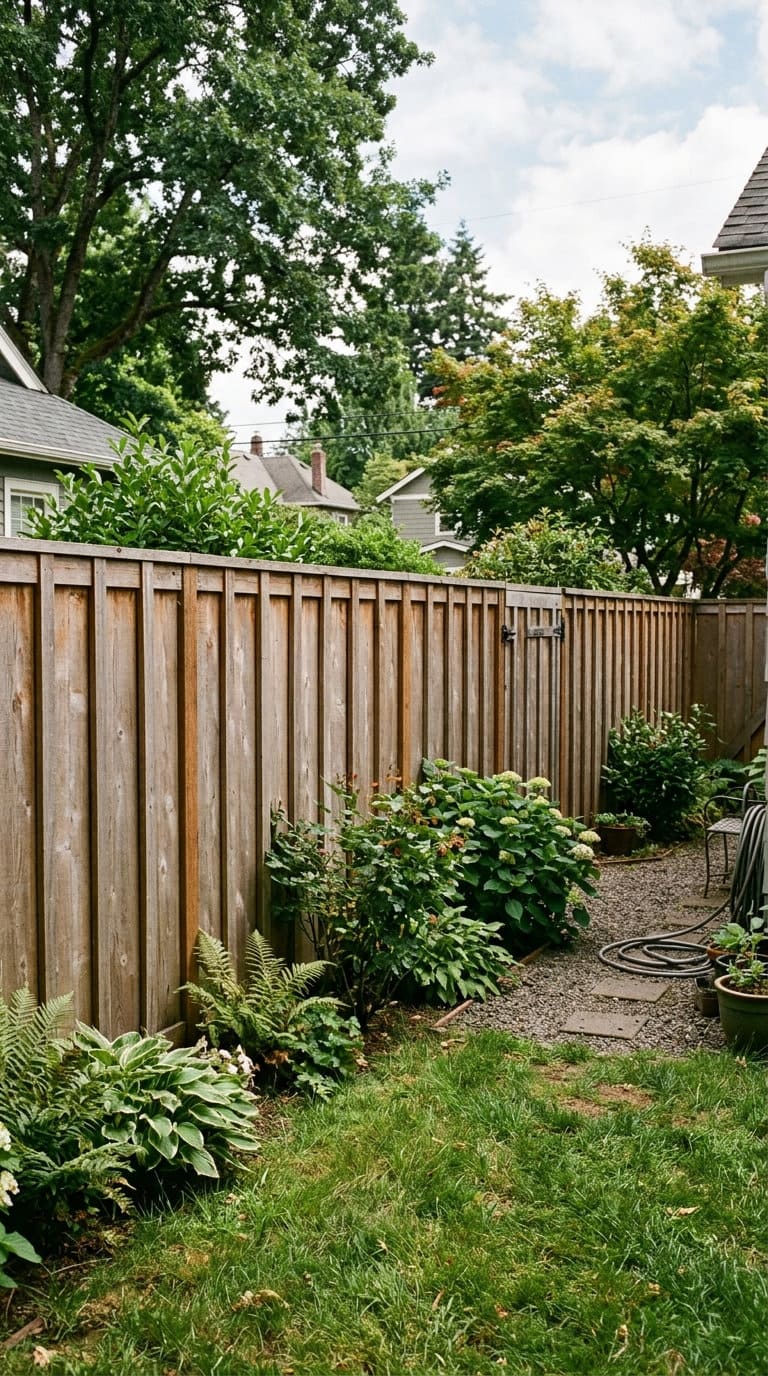
You can even complete the top with ornate trim or a ledge for a more finished architectural look.
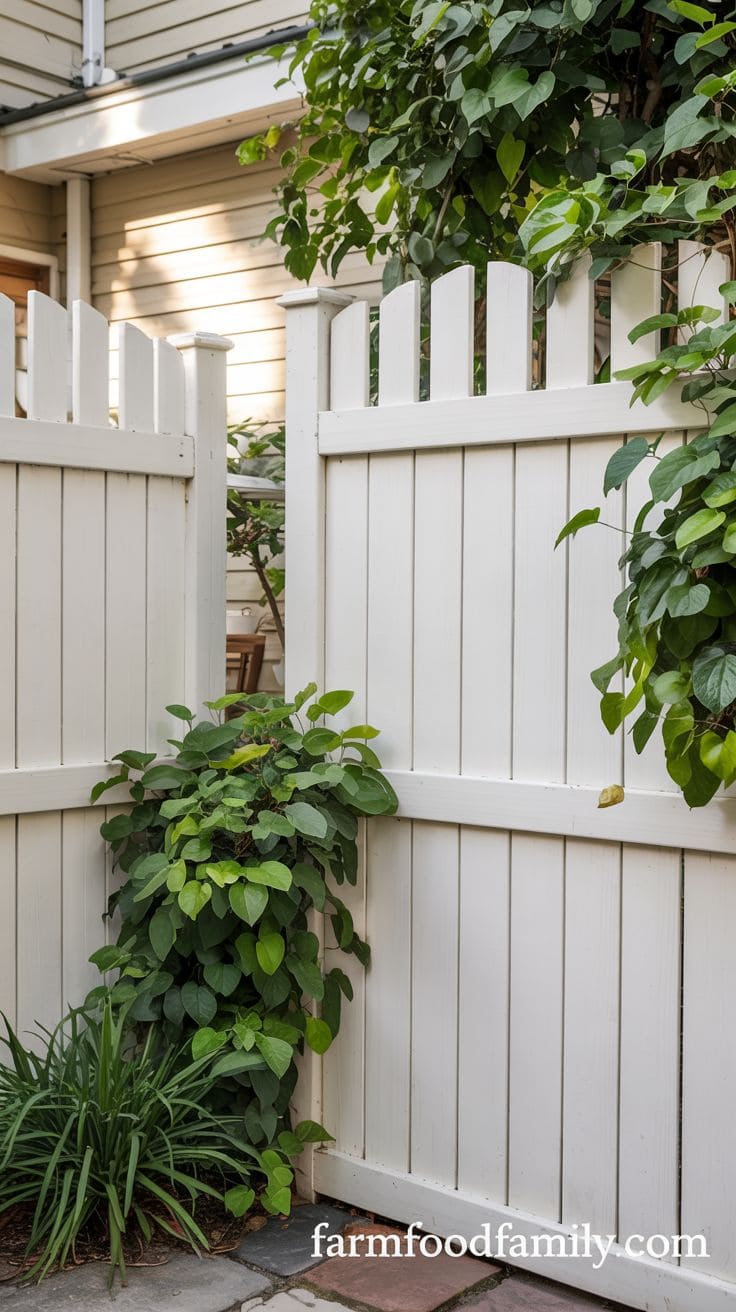
Layer climbing plants such as clematis or ivy at the base to soften the effect, or add vertical interest with trellises.
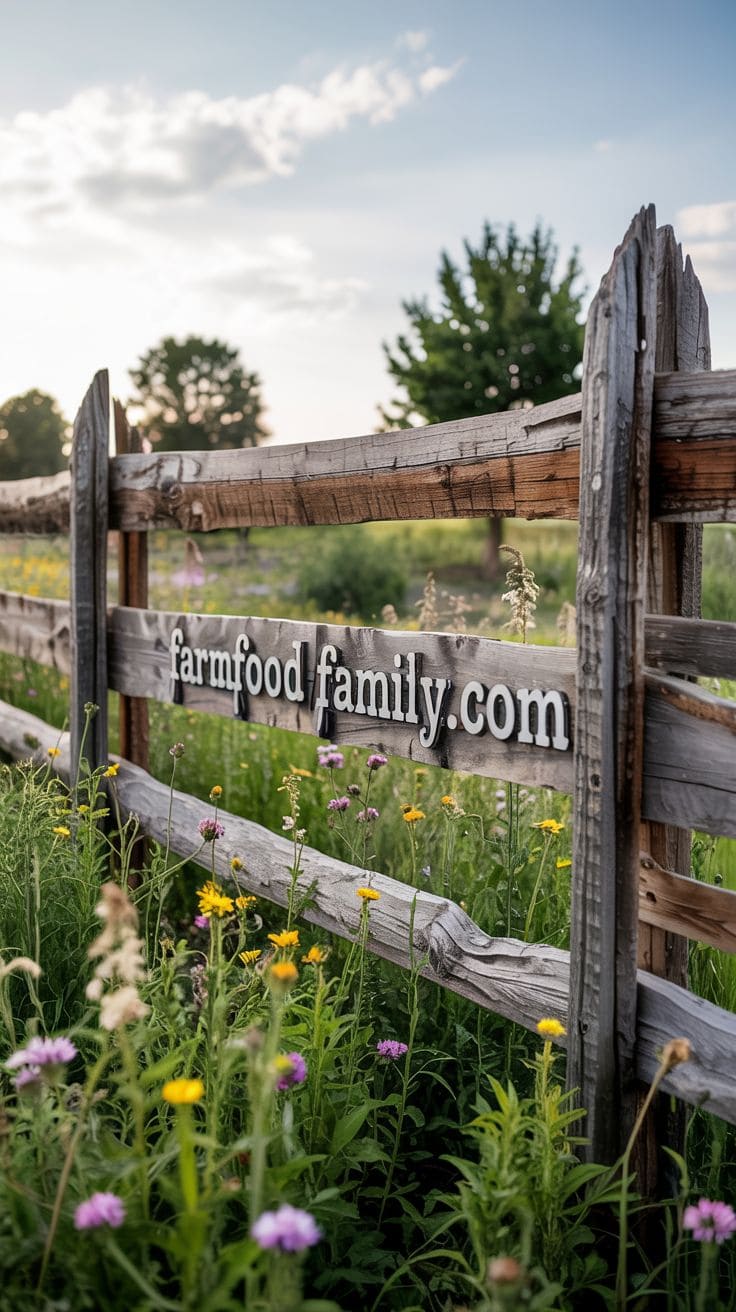
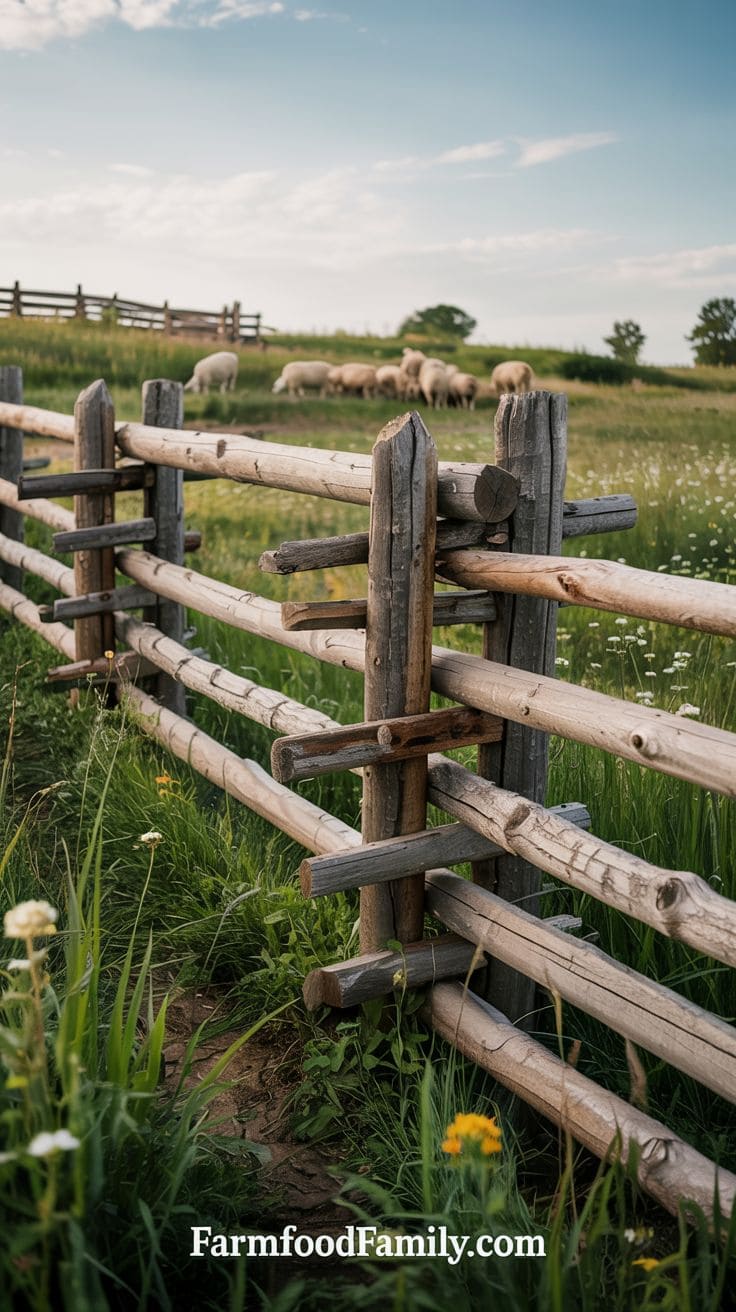
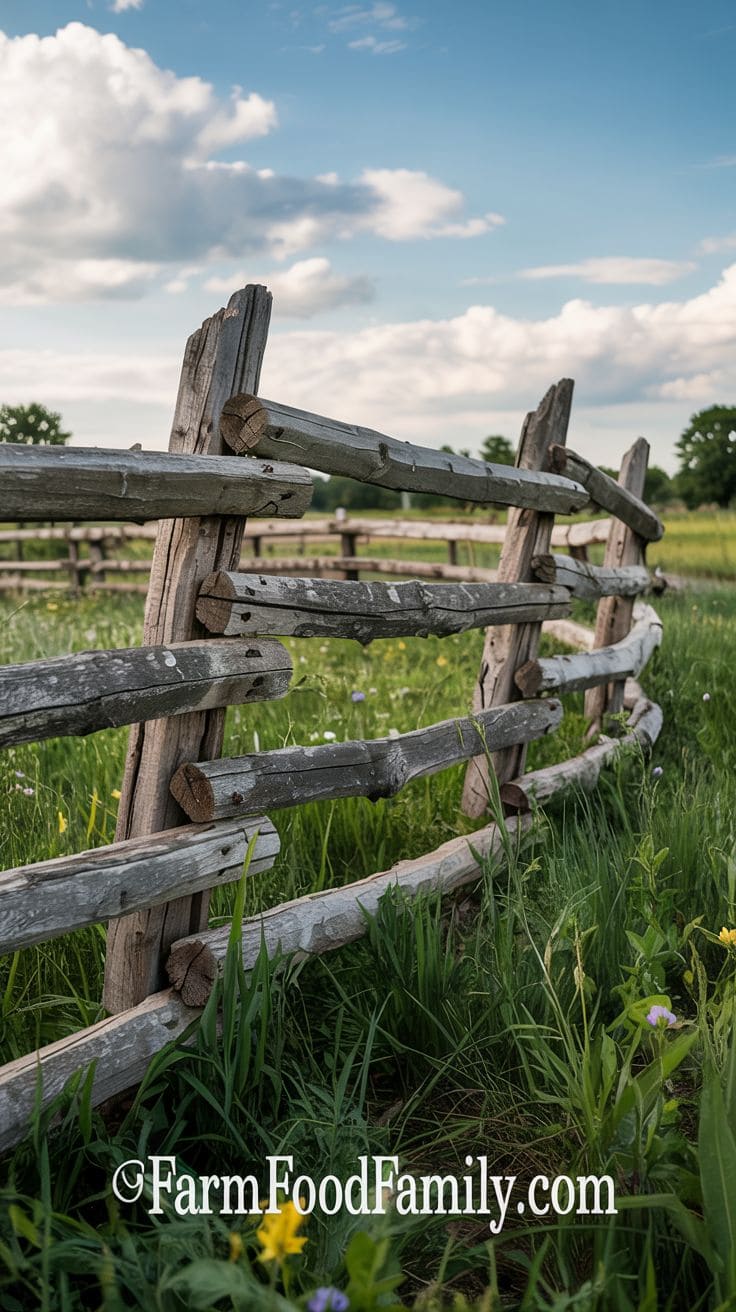
3. Rustic Split Rail Fence
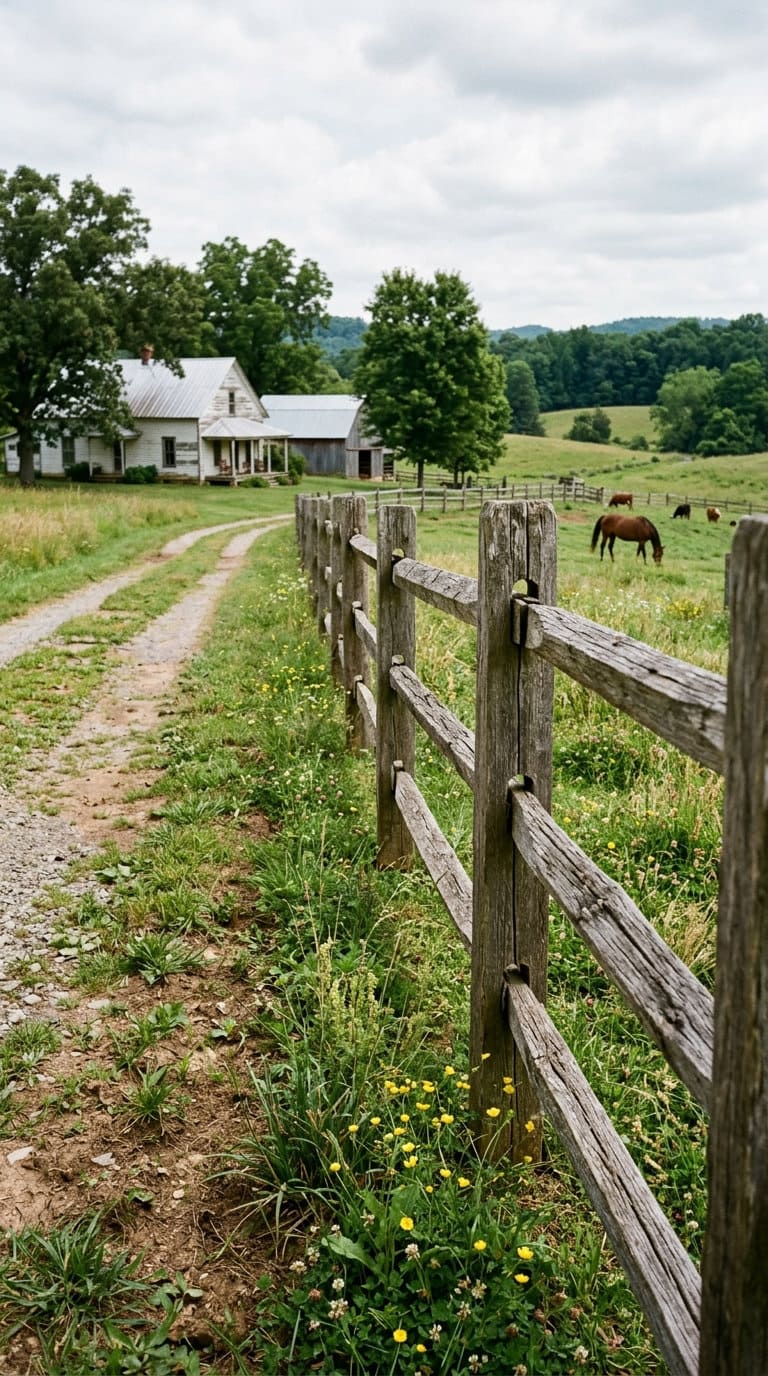
For a country or farmhouse look, the classic split rail fence adds rustic charm and openness.
This fence, made of rough-hewn timber rails and posts, is ideal for big properties, front yards, or natural environments where maintaining clear vistas is important.
It does not provide much solitude, but its beauty rests in its simplicity and pastoral atmosphere.
The wood ages elegantly, especially if left untreated. Wildflowers, decorative grasses, or a border of huge stones or logs can all help to complete the rustic look.
This fence is also great for creating garden zones or animal enclosures in a discreet, visually appealing manner.
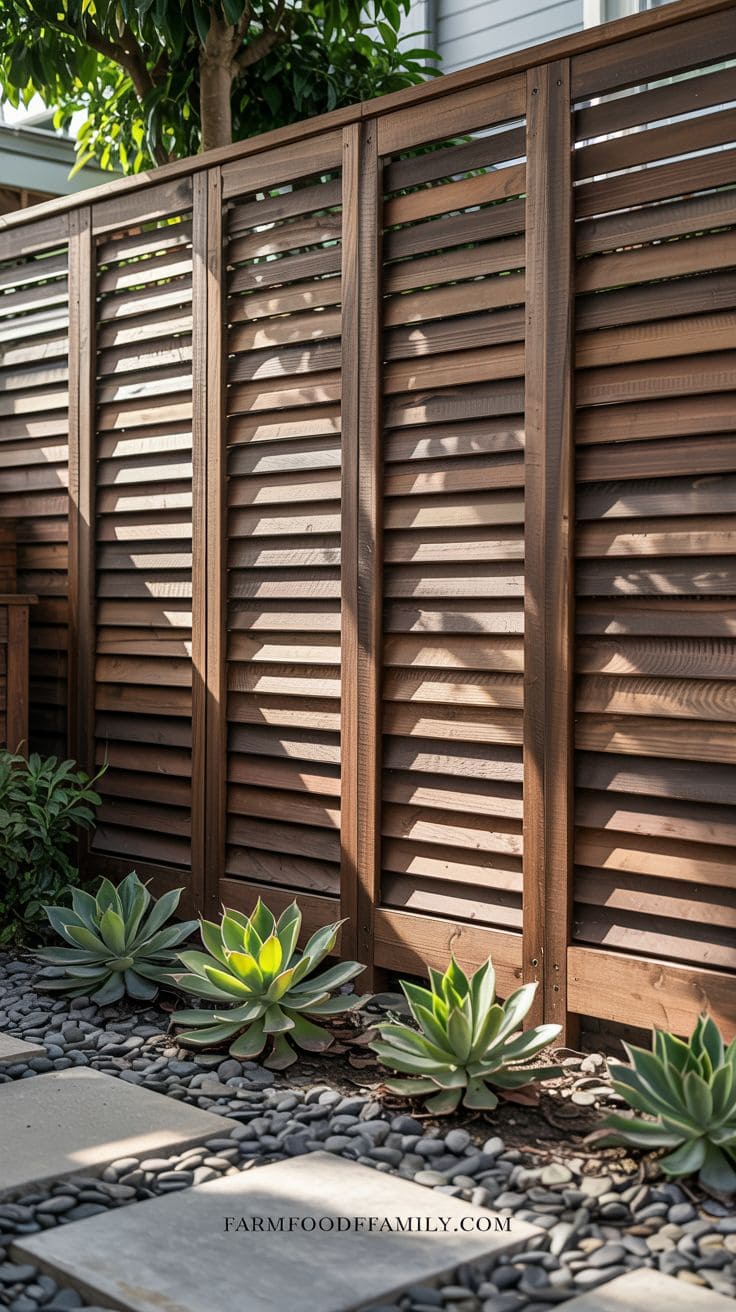
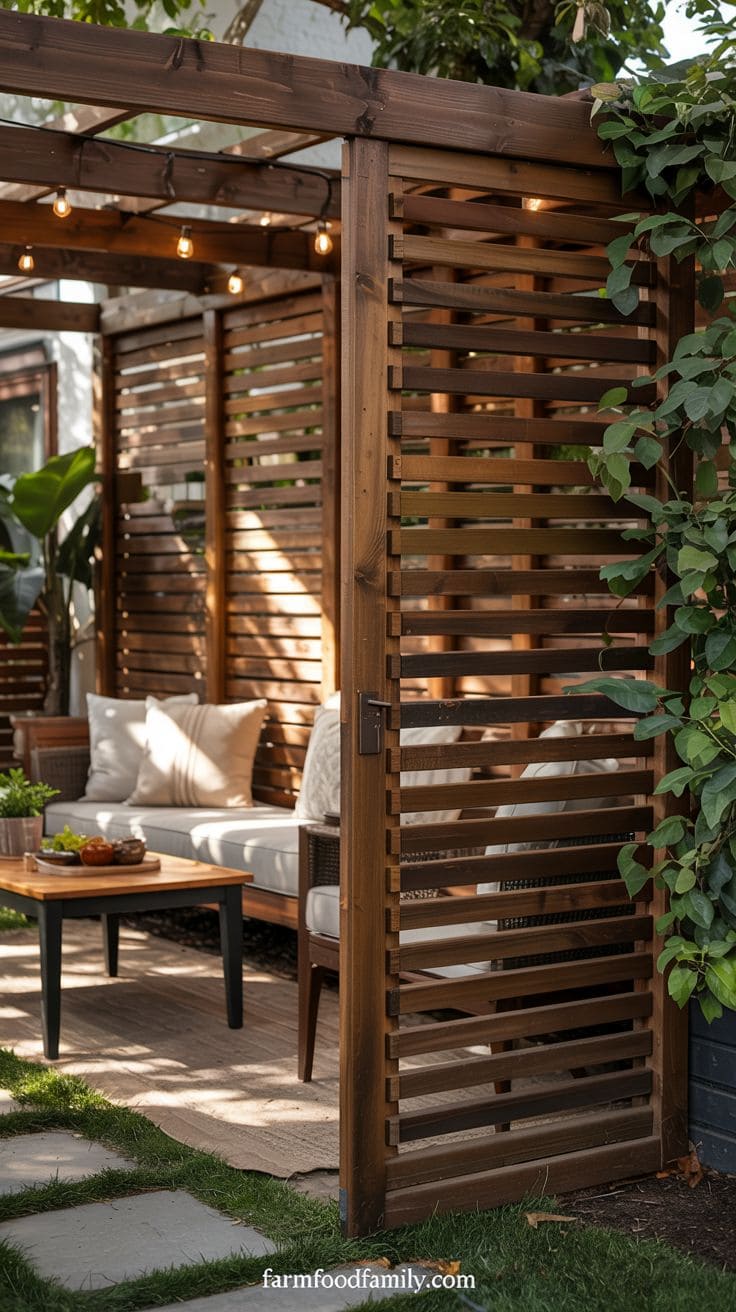
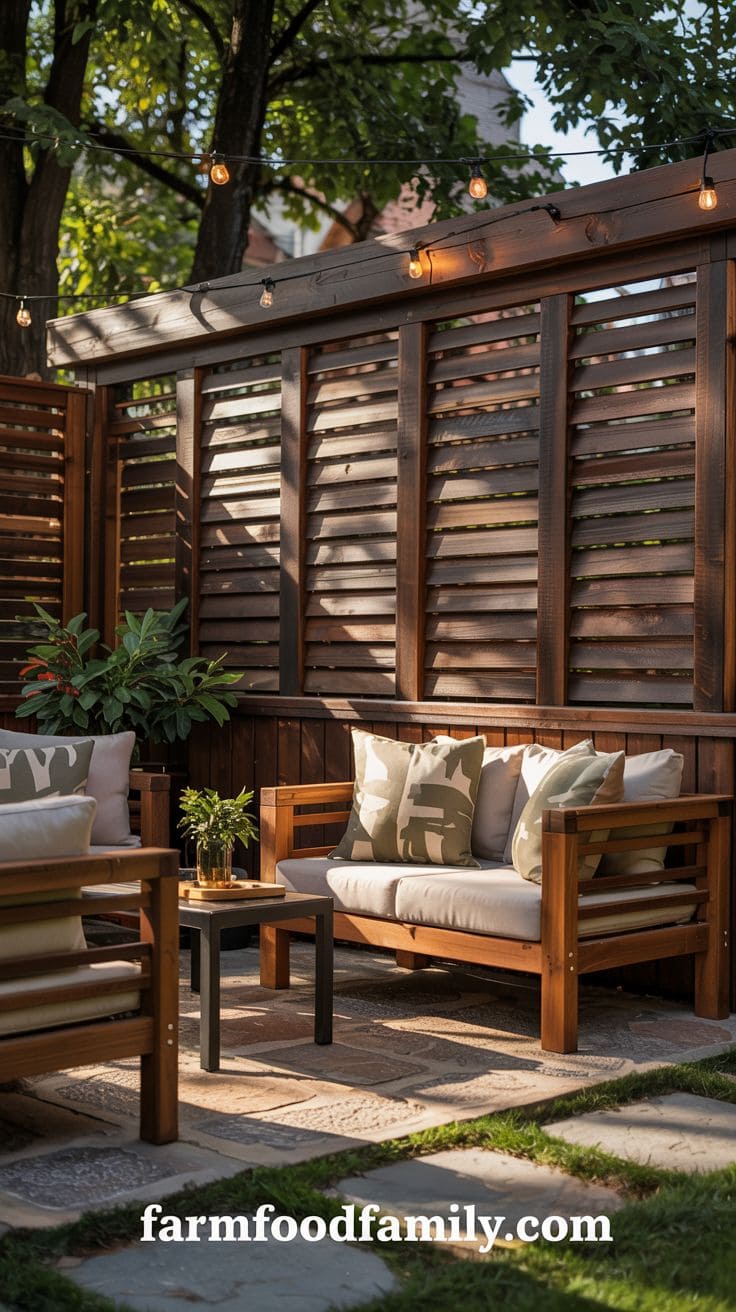
4. Louvered Wooden Fence
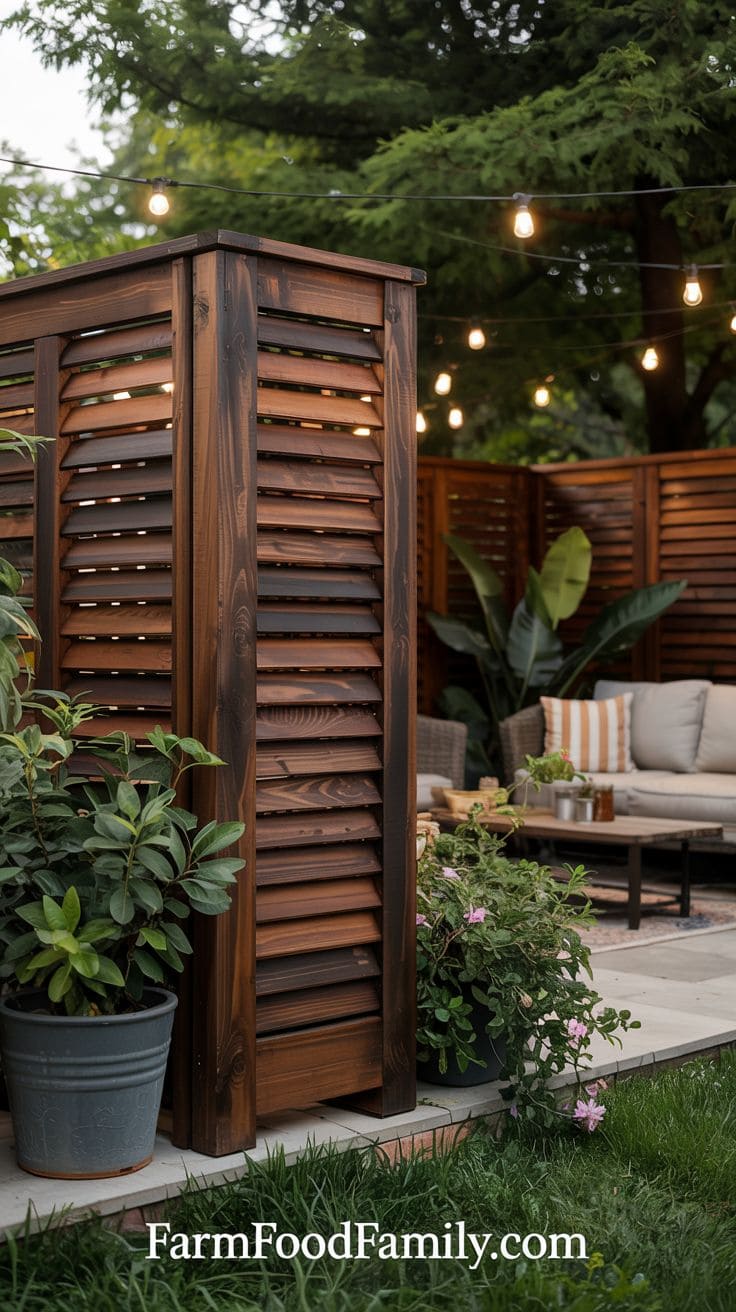
A louvered fence offers the ideal blend of privacy and circulation.
Angled hardwood boards are spaced so that they impede sightlines while allowing breezes to pass through. This style is both stylish and utilitarian, ideal for patios or decks where air and light are still crucial.
You can stain it in rich espresso tones for a dramatic look, or leave it natural to highlight the wood grain.
The average homeowner spends $616/year on yard fixes that don't address the real problem. Find out what yours actually is — before you spend another dollar.
Take the Free Quiz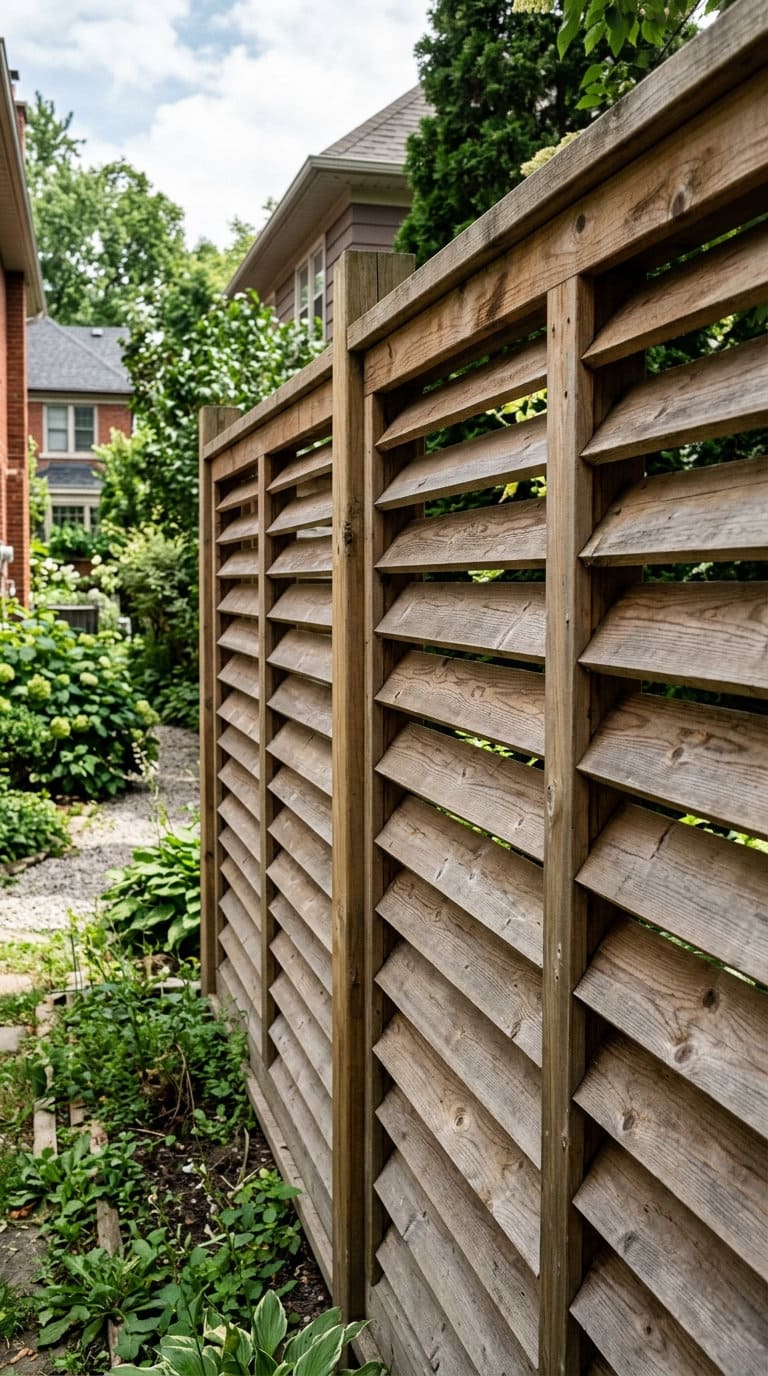
To create a coherent look, match the louvers on surrounding window shutters or privacy screens.
This layout quickly changes into a stunning feature wall with some LED strip lights or hanging planters.
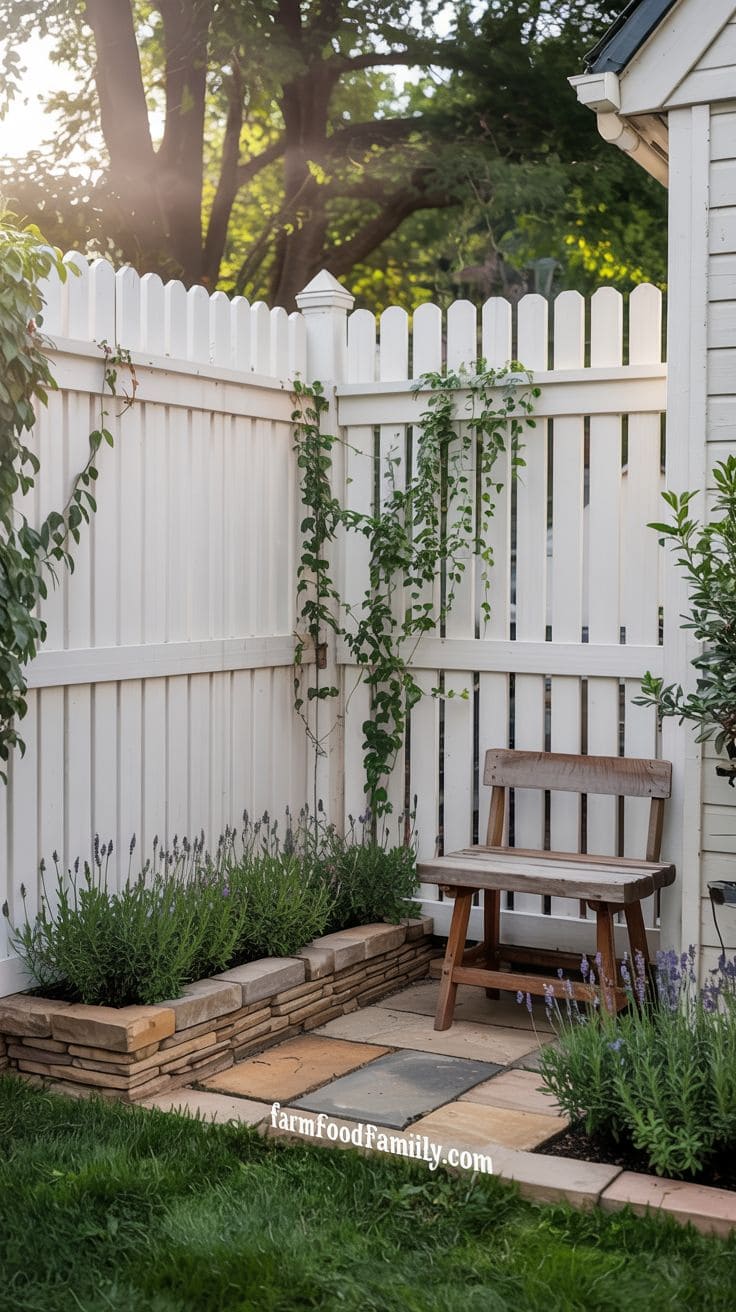
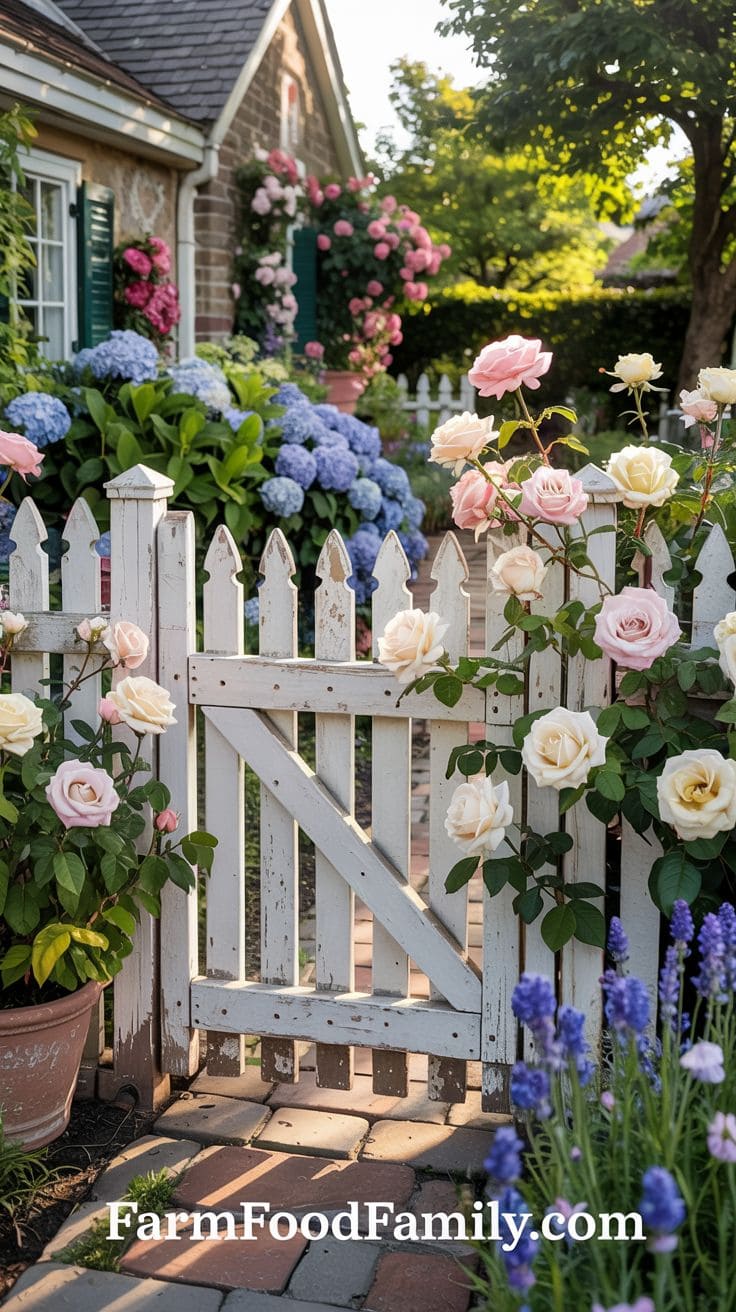
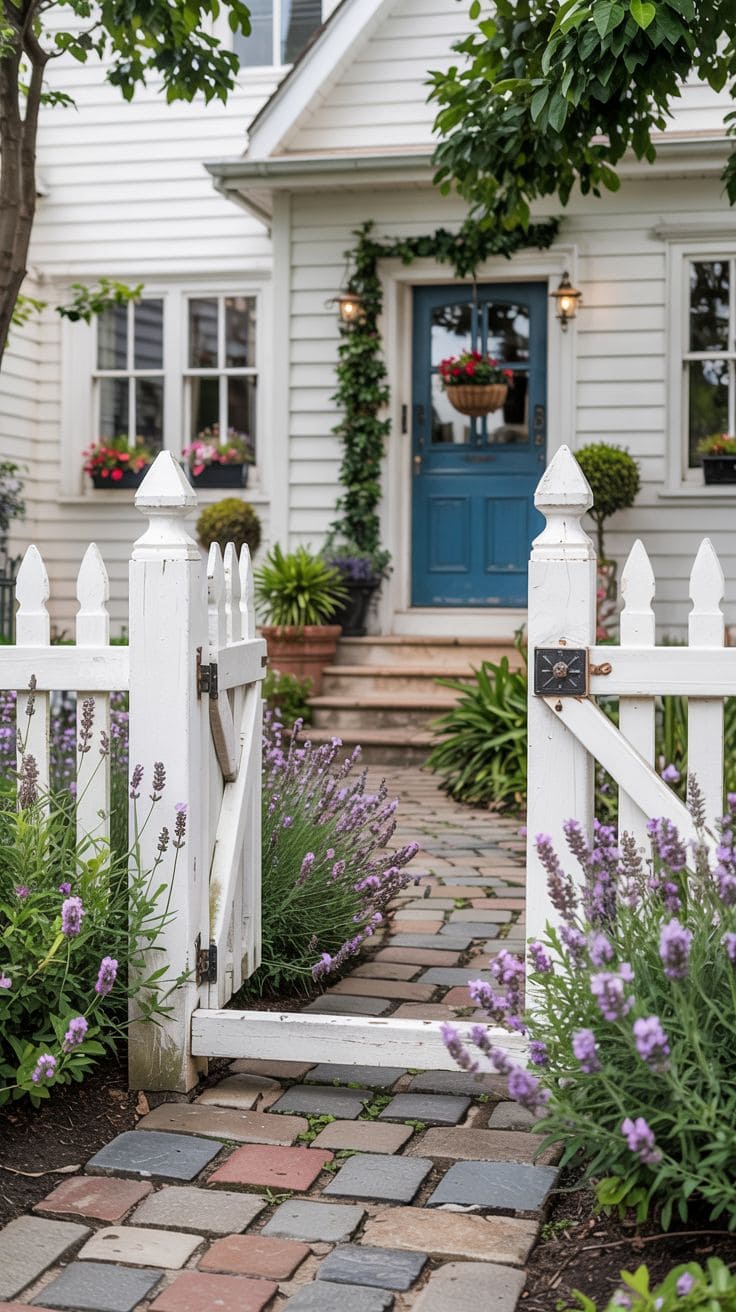
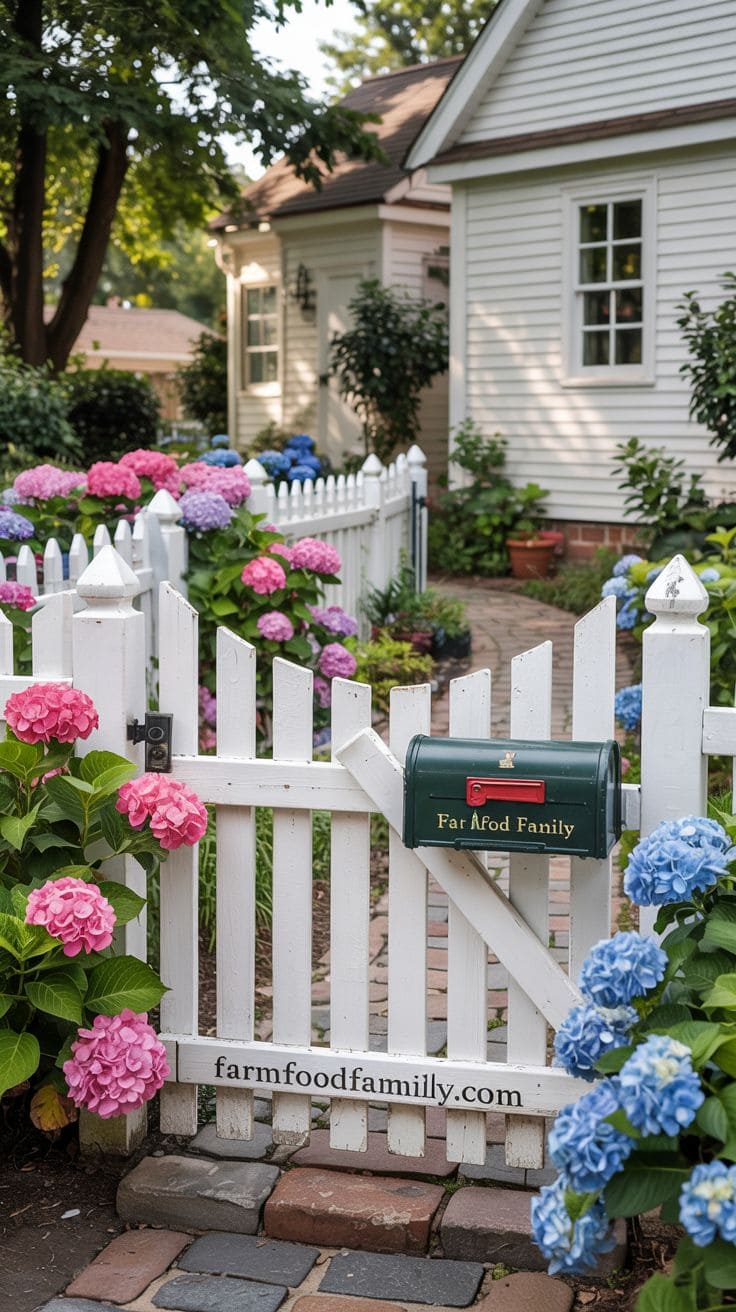
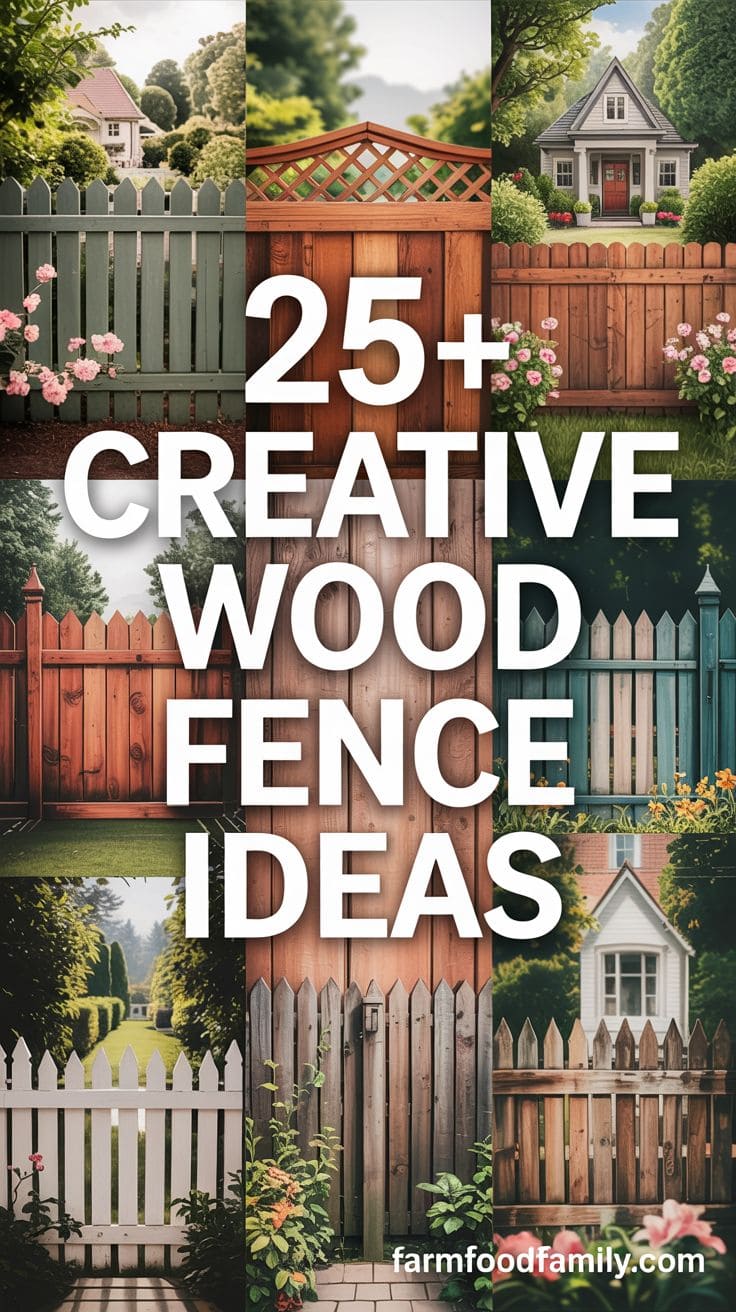
5. Traditional White Picket Fence
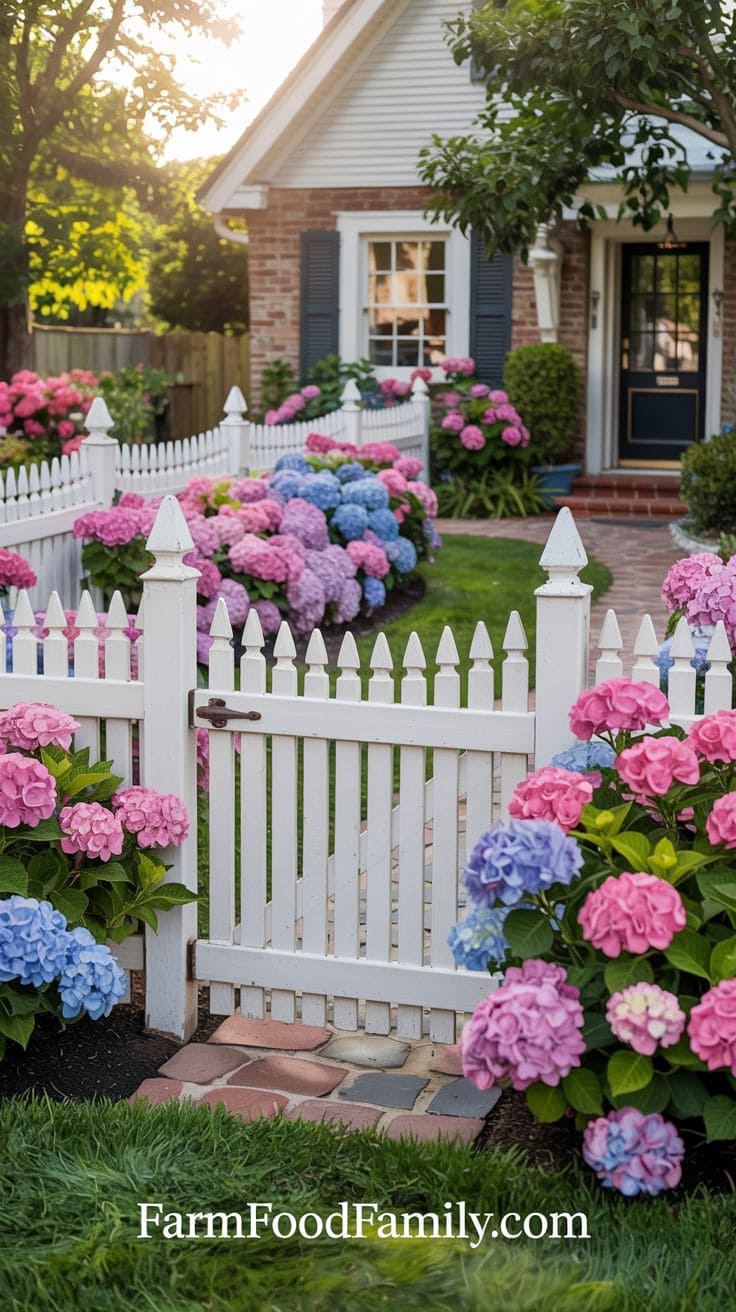
You can’t go wrong with the quintessential white picket fence.
It’s charming, iconic, and immediately brings a sense of warmth to any front yard. No matter what you’re using it for, a well-maintained white picket fence invites guests in while still subtly defining the space.
Opt for pointed or scalloped pickets depending on the mood you want to strike.
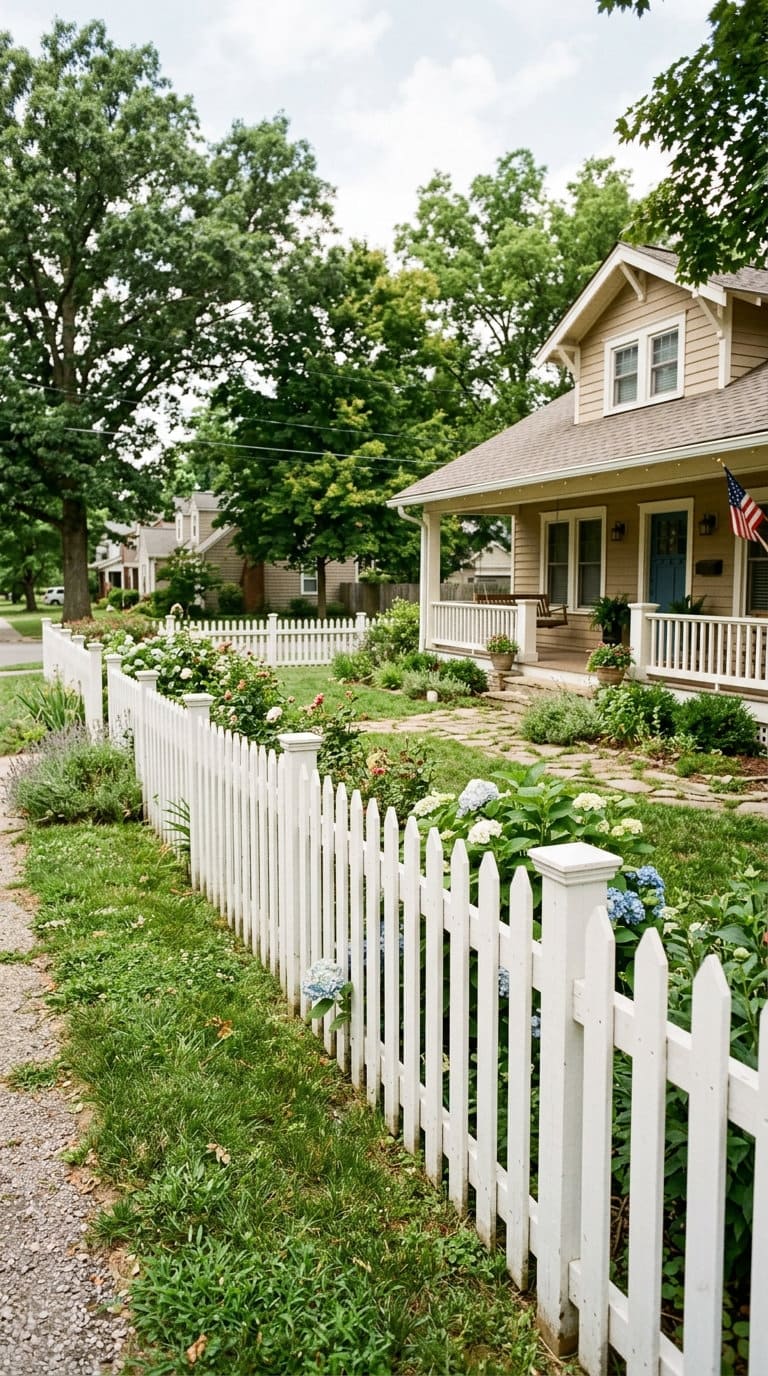
Accentuate it with flowering shrubs like hydrangeas, climbing roses, or lavender for a storybook effect that always feels fresh.
White paint keeps it classic, but don’t be afraid to go off-white or even soft gray for a modern twist.
6. Horizontal Plank Fence
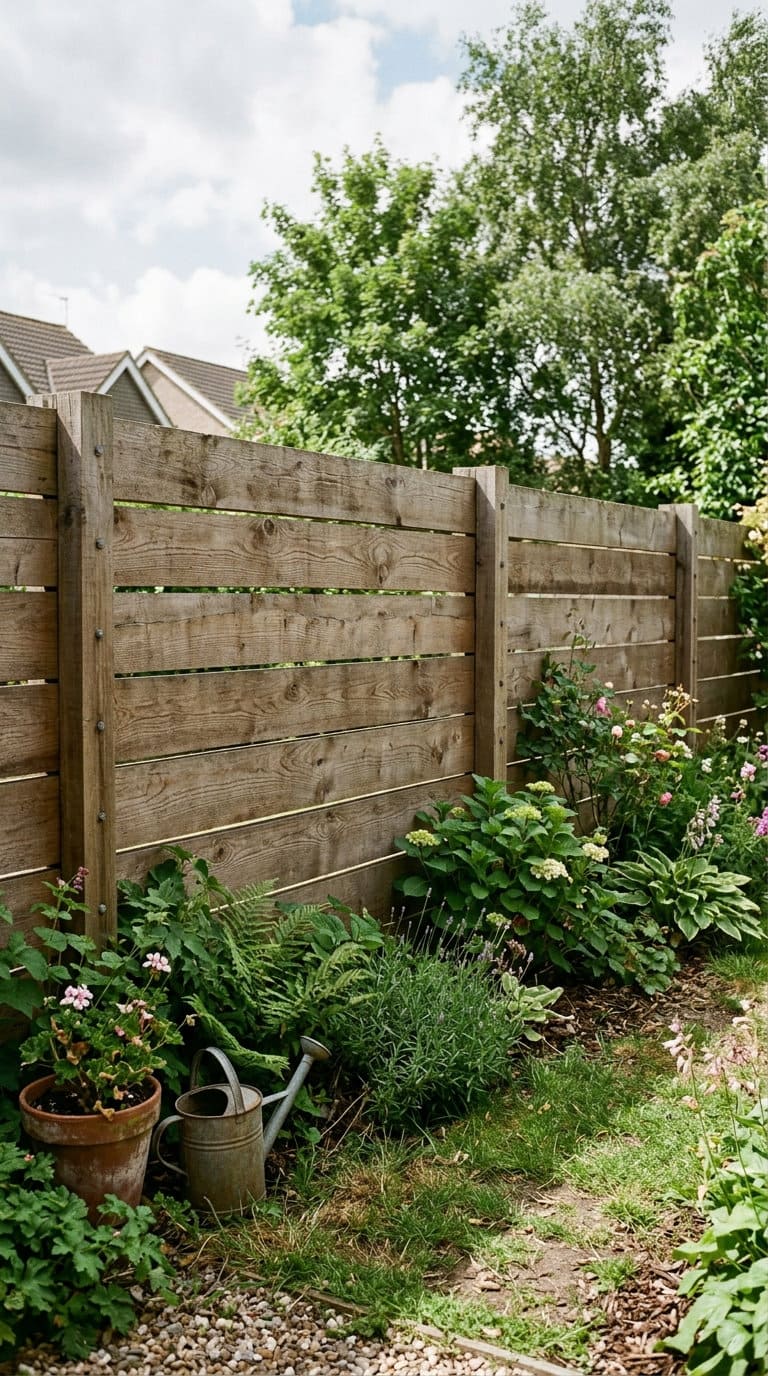
Wider, thicker planks than the slim slats in idea #1 give this style a bolder, more substantial look while keeping the same horizontal-line modern appeal.
Wider planks also mean fewer total boards and fewer seams, a genuine labor-and-material savings on a longer fence run.
7. Basket Weave Fence
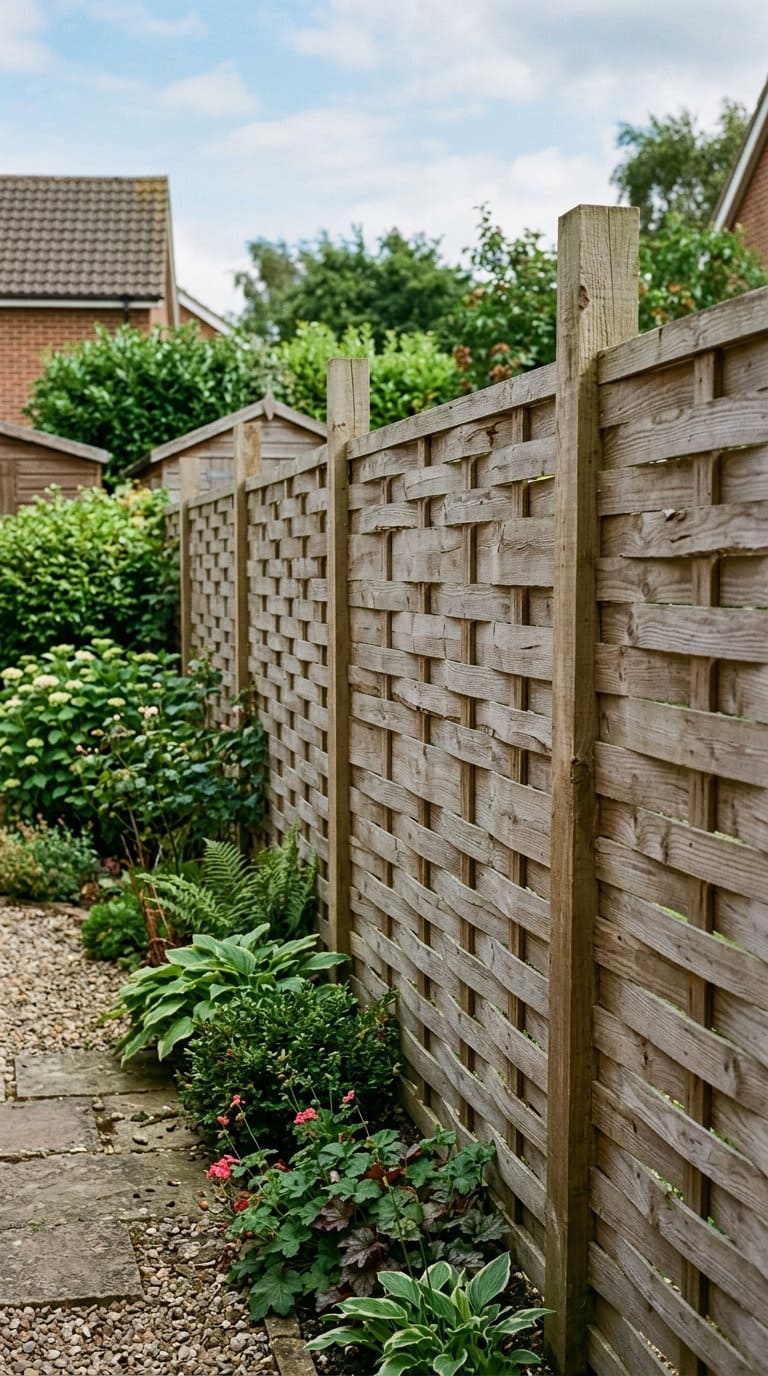
Thin horizontal wood strips interlace around the fence posts in an alternating over-under pattern, creating real visible texture that a flat panel fence can’t match.
This style takes more labor to install than a standard panel fence, but the woven look genuinely can’t be replicated any other way.
8. Board on board fence
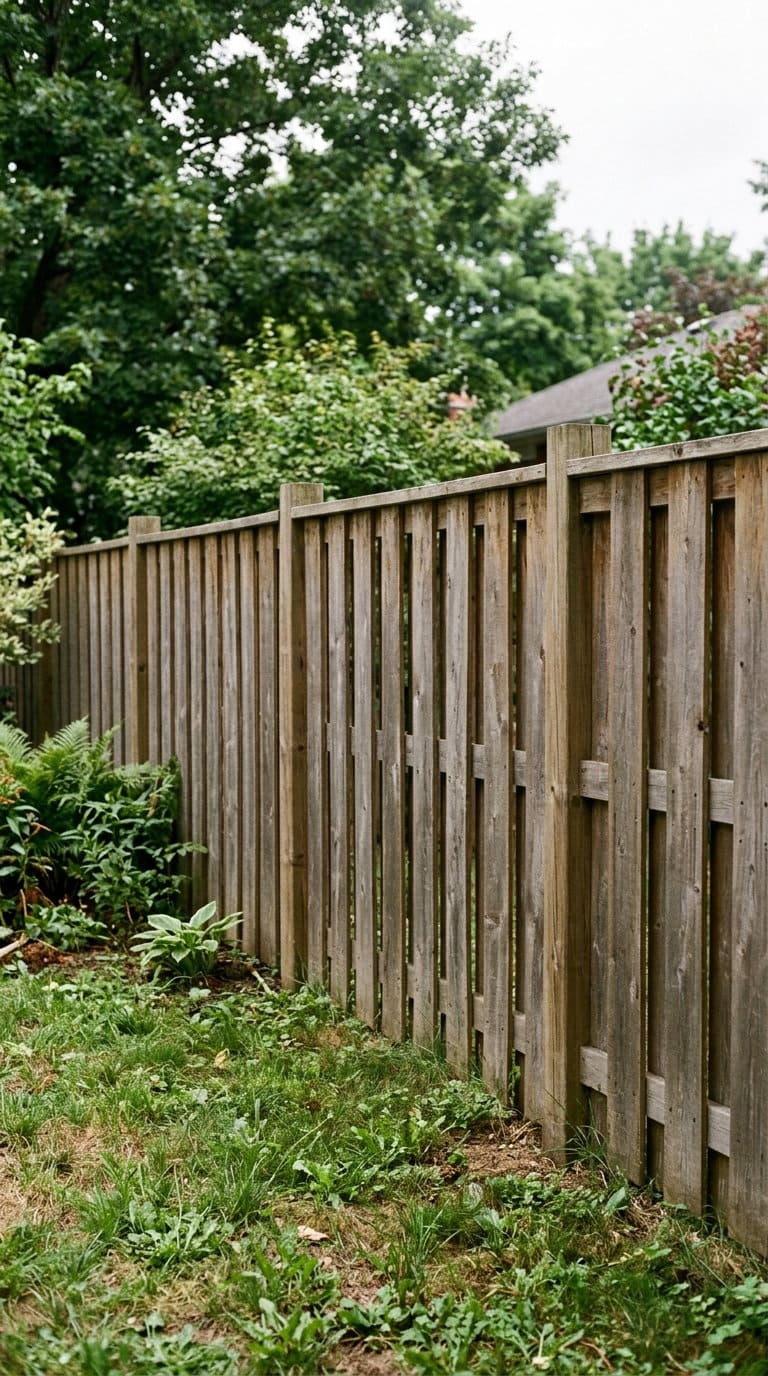
Unlike board and batten, board on board uses two overlapping layers of full-width boards rather than a board-plus-narrow-batten combination, which means privacy holds up even as the wood shrinks slightly with age and weathering, since there’s no thin batten strip to gap open.
This is a real practical advantage over board and batten in climates with big seasonal humidity swings.
9. Shadow box fence
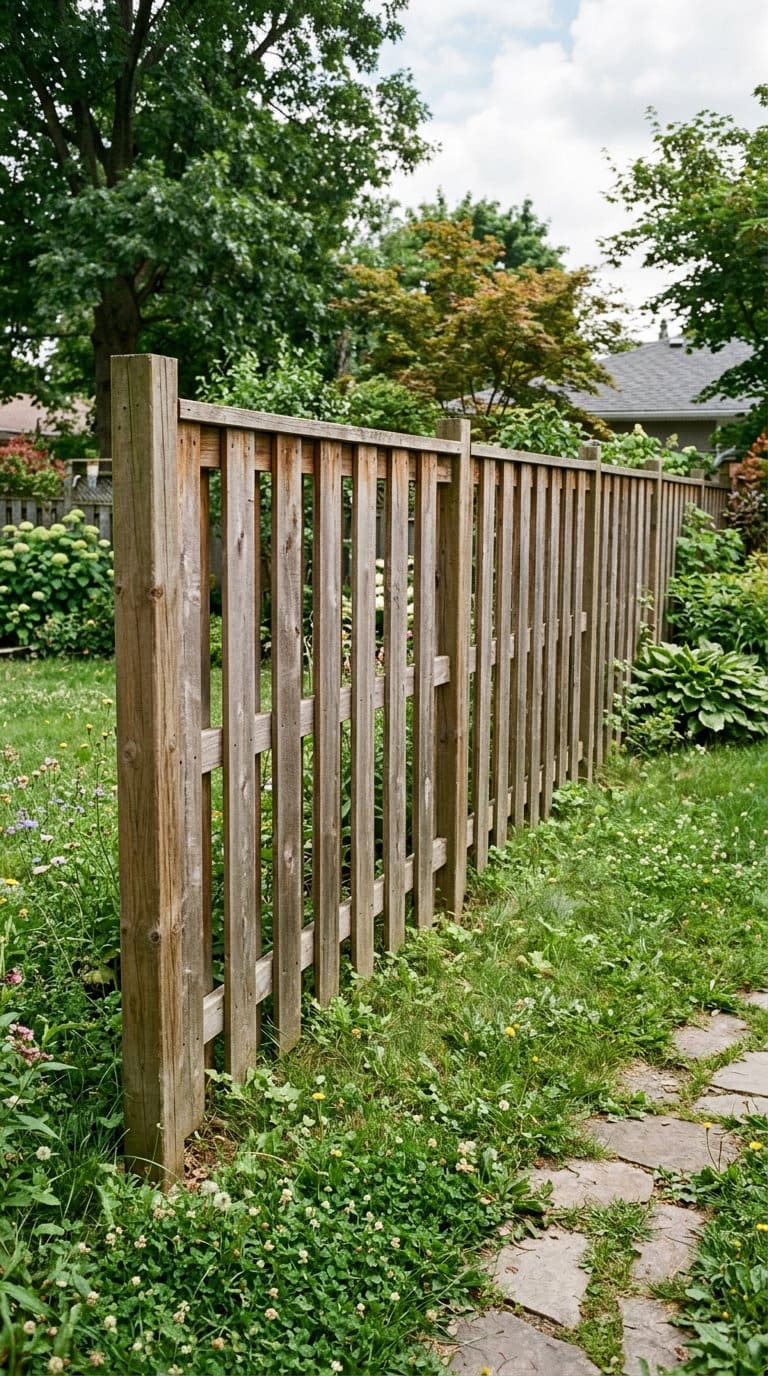
A shadow box fence alternates boards on both faces of the fence rather than all facing one direction, which means it looks identical, and equally finished, from both your yard and your neighbor’s side, a genuine advantage for a shared boundary fence.
The alternating pattern also allows some airflow and dappled light through small gaps while still blocking a direct straight-on view.
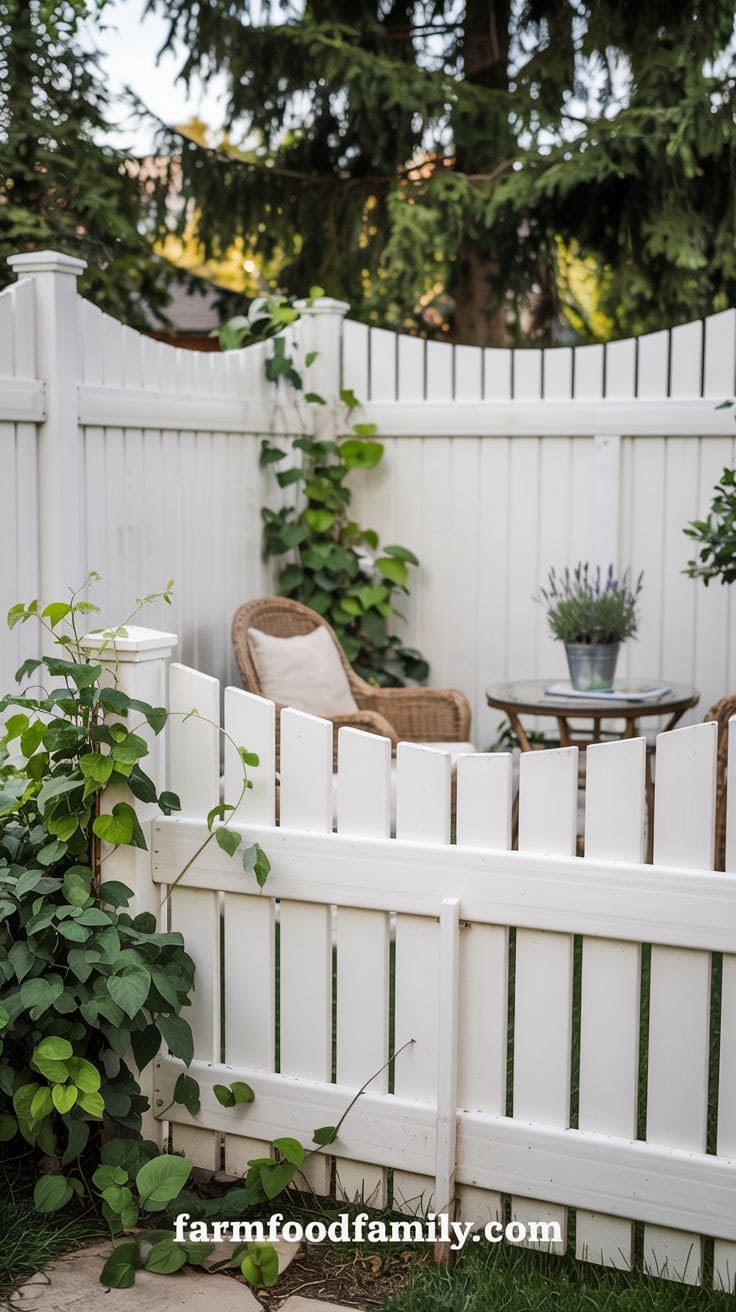
10. Curved fence panels
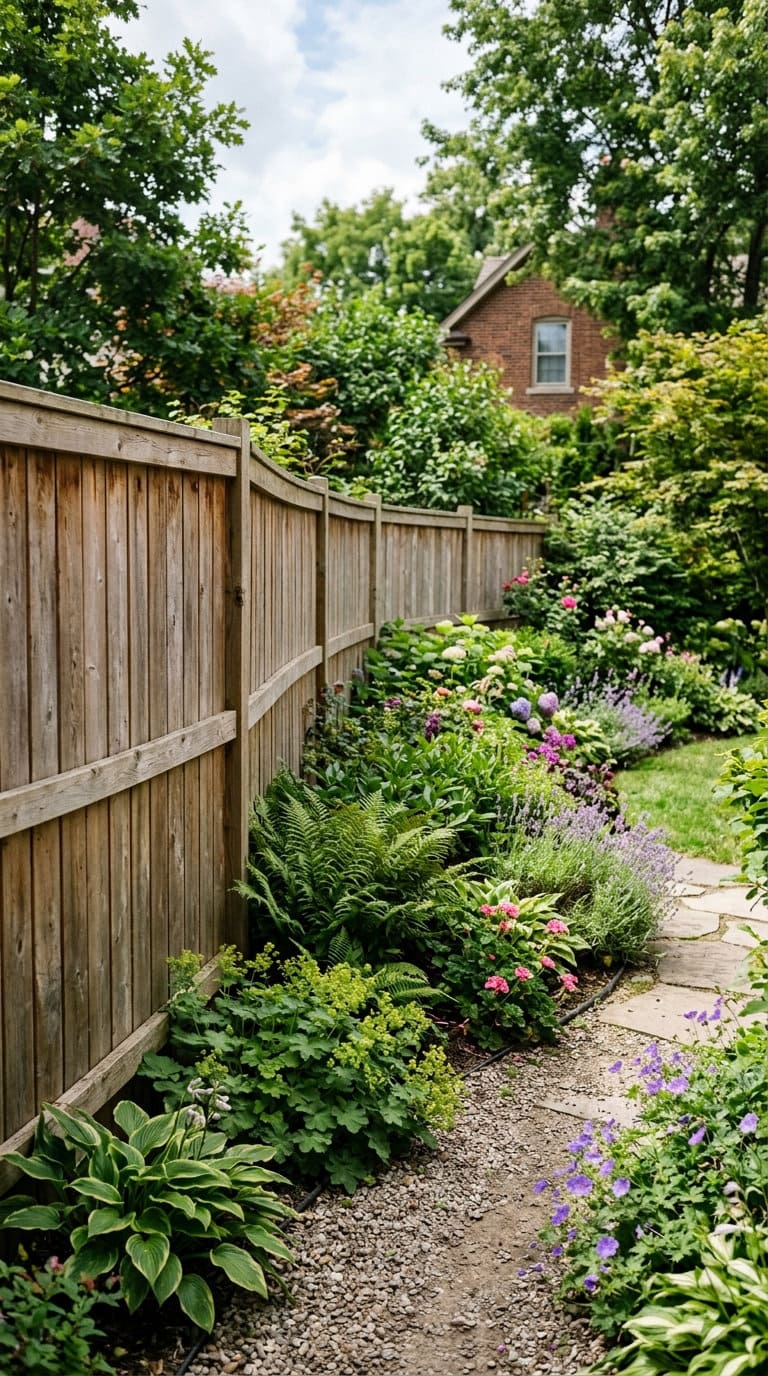
Rather than running in a straight line, curved fence panels follow a gentle arc, softening a yard’s overall geometry and working especially well around a garden bed or a pool area where straight lines feel too rigid.
Curved sections cost more to build than straight runs, since the framing has to be custom-cut rather than assembled from standard straight lumber.
11. Tall picket fence
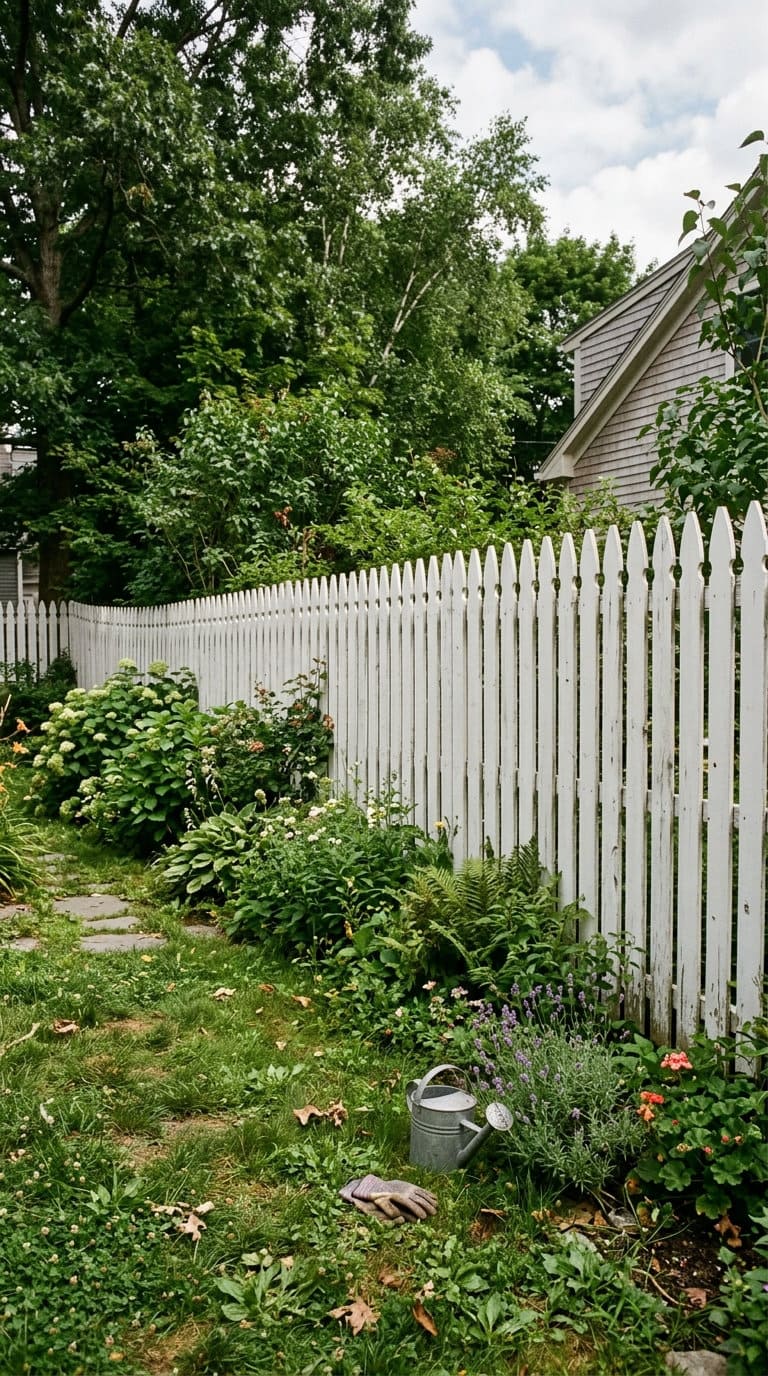
A taller version of the classic picket style, typically 5-6 feet instead of the traditional 3-4 foot decorative height, trades some of picket style’s open, welcoming feel for genuine privacy while keeping the classic pointed-top silhouette.
Check your local height limit before building this one specifically, tall pickets are more likely to bump into a backyard height cap than the traditional short version.
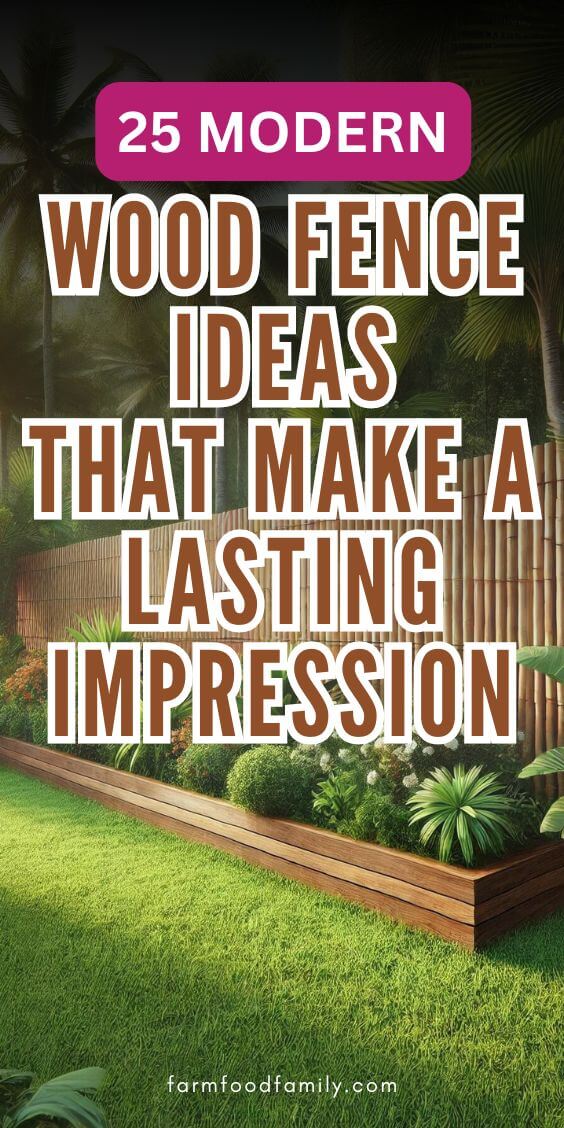
12. Bamboo fence
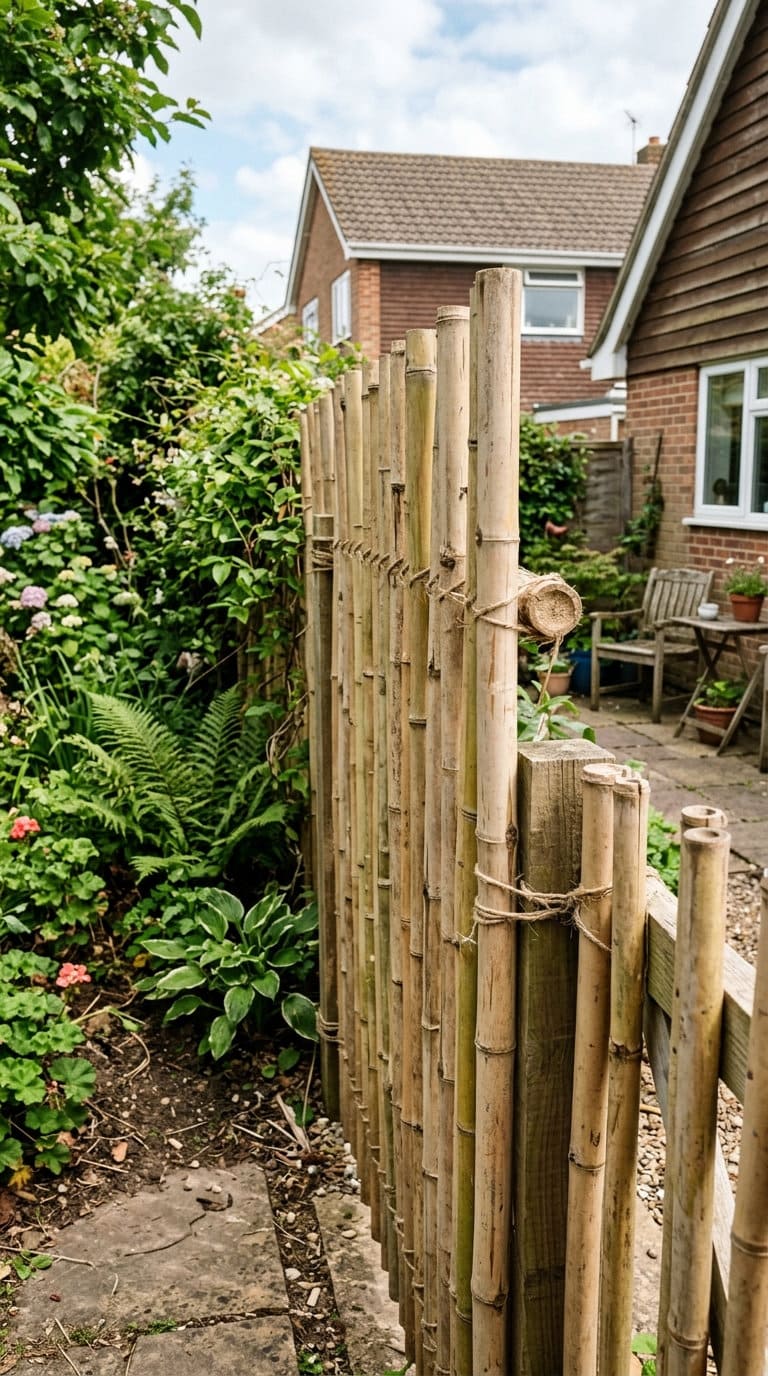
Bamboo poles lashed or wired together (either as a standalone fence or as a screening layer over an existing chain-link or wood frame) bring a distinct natural texture unlike any other wood-adjacent material on this list.
Bamboo grows fast and is a genuinely renewable choice, though it needs a sealant reapplied periodically to resist the same rot and UV damage any organic material faces outdoors.
13. Chevron pattern fence
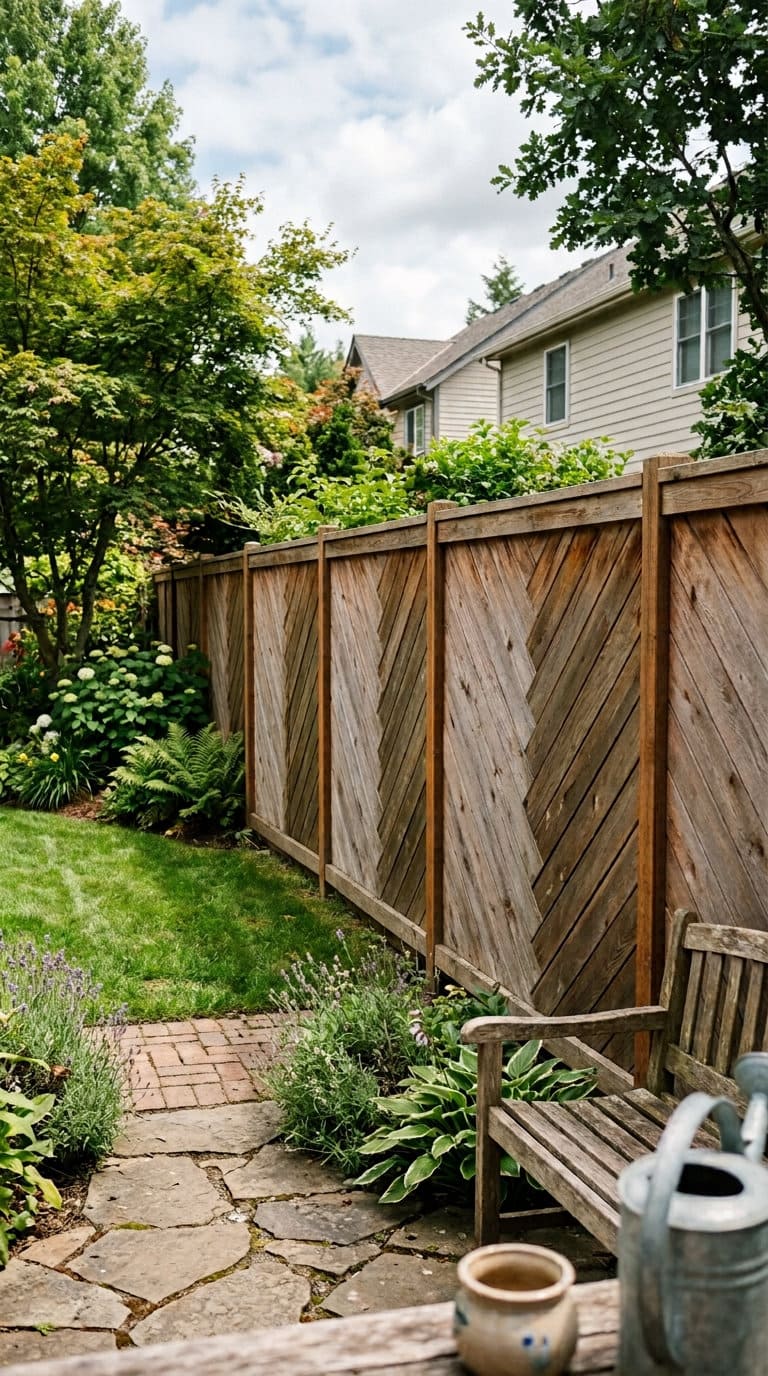
Boards installed at opposing diagonal angles meet in a V-shaped chevron pattern, a genuinely eye-catching design that reads as custom and high-end compared to a standard straight-board fence.
This pattern takes real precision to install correctly, angled cuts have to line up perfectly at the seams, so it’s worth budgeting for a contractor rather than treating it as a first DIY fence project.
14. Fence with built-in shelves
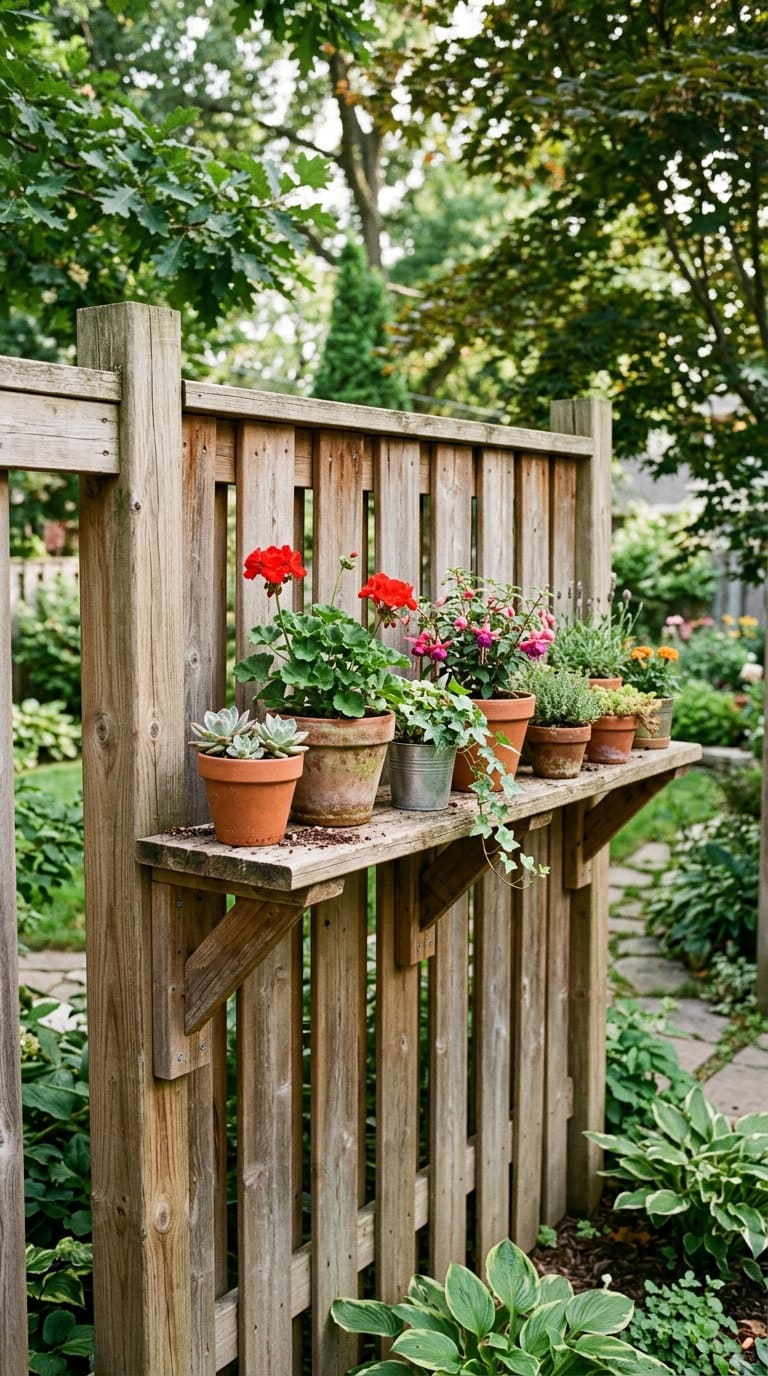
Small shelf brackets or a simple shelf board integrated directly into a fence section turns dead vertical space into real storage or display area, potted herbs, garden tools, or decor, without taking up any yard footprint.
Position shelves on the side of the fence facing your own yard specifically, not your neighbor’s, for the obvious reason that it’s your storage to use.
15. Reclaimed wood fence
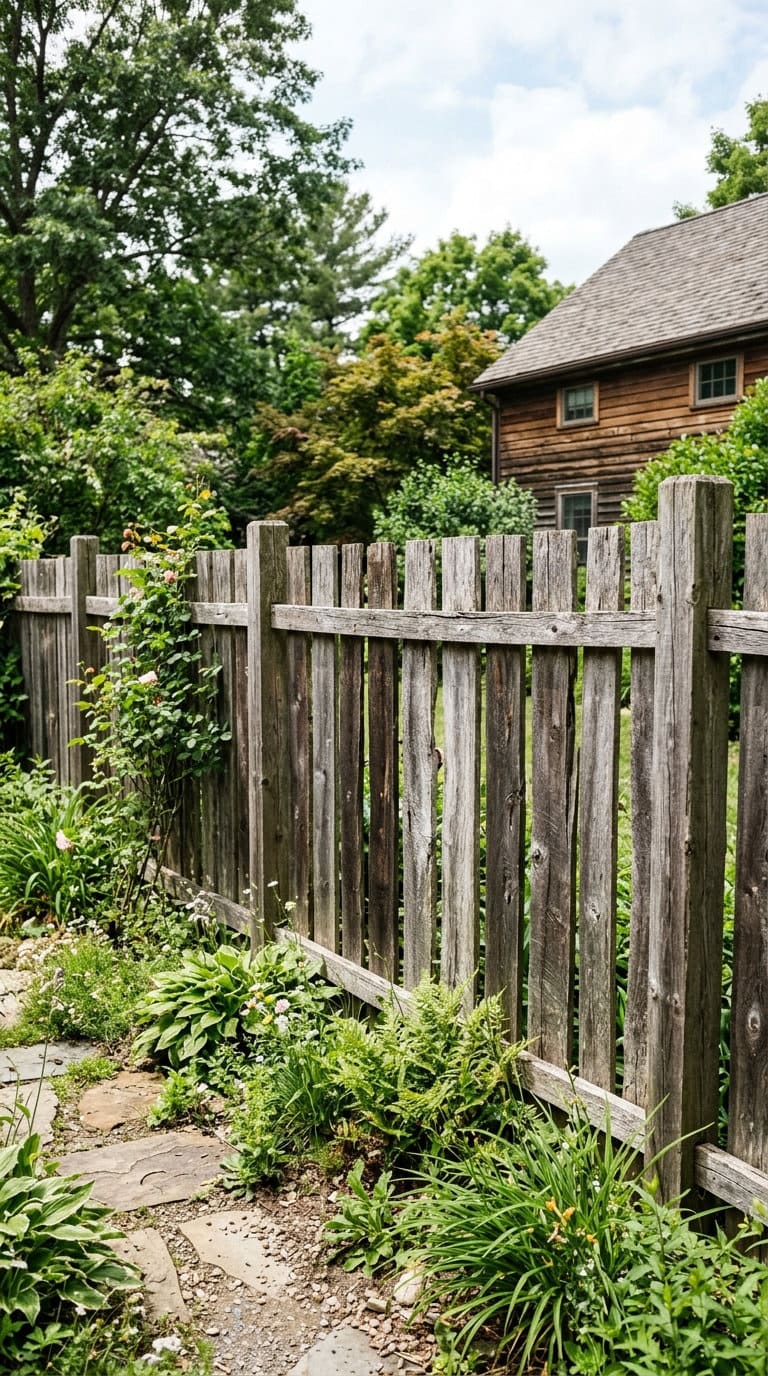
Salvaged barn wood, old pallet boards, or reclaimed lumber from a demolition gives a fence real weathered character no new lumber can fake, plus it’s a genuinely sustainable choice since it keeps usable wood out of a landfill.
Inspect reclaimed material carefully for rot, insect damage, or old nails before building with it, not every salvaged board is structurally sound just because it looks charming.
16. Fence with integrated lighting
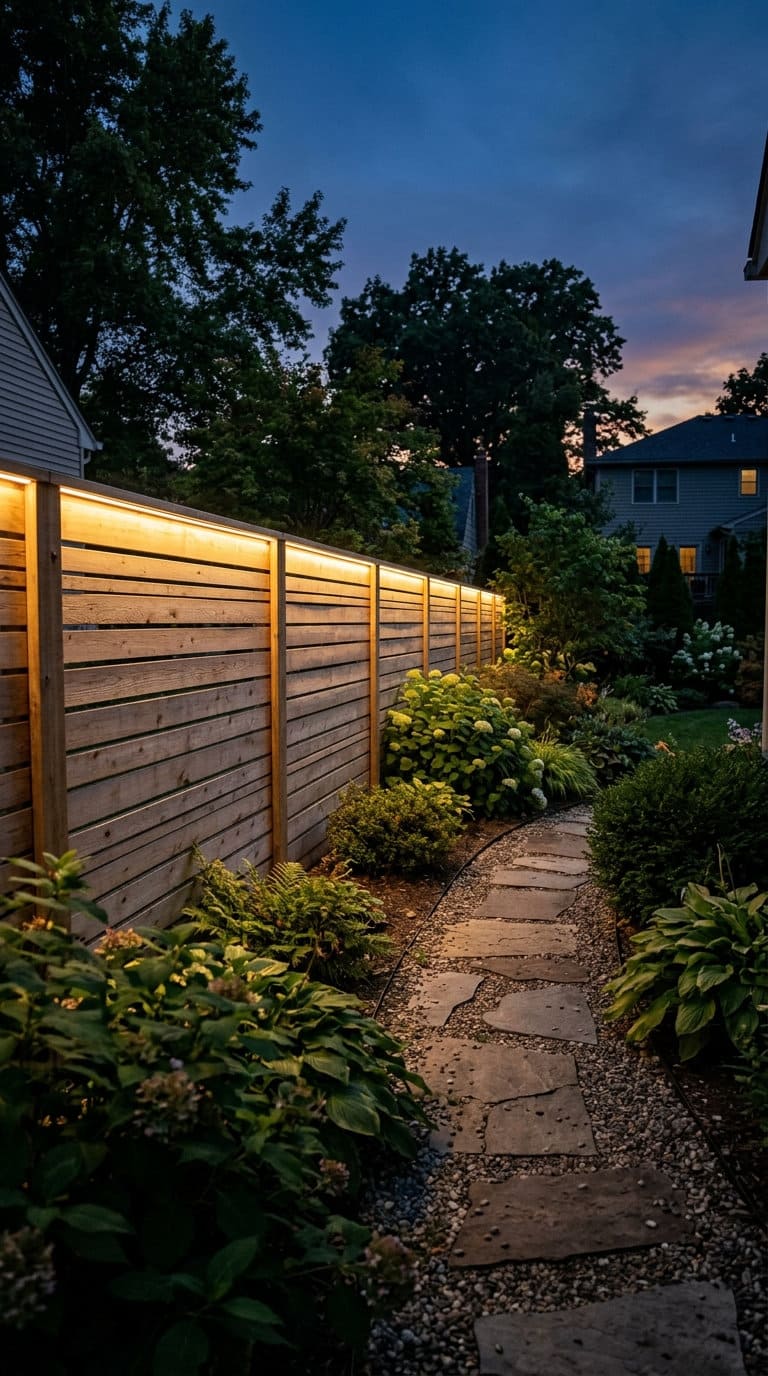
Low-voltage LED strip lighting or small solar-powered fixtures mounted along the top rail or recessed into fence posts extend how usable a yard is after dark without needing separate freestanding lamps.
See our fence lighting ideas article for more on layout options and whether solar or wired lighting fits your setup better.
17. Painted mural fence
A flat-panel or board-and-batten fence section works as a real canvas for a hand-painted mural, murals read as a genuine neighborhood landmark when done well, and exterior-rated paint holds up for years with occasional touch-ups.
This works best on a fence facing your own property or a shared community space rather than a boundary a neighbor might object to decorating without their input.

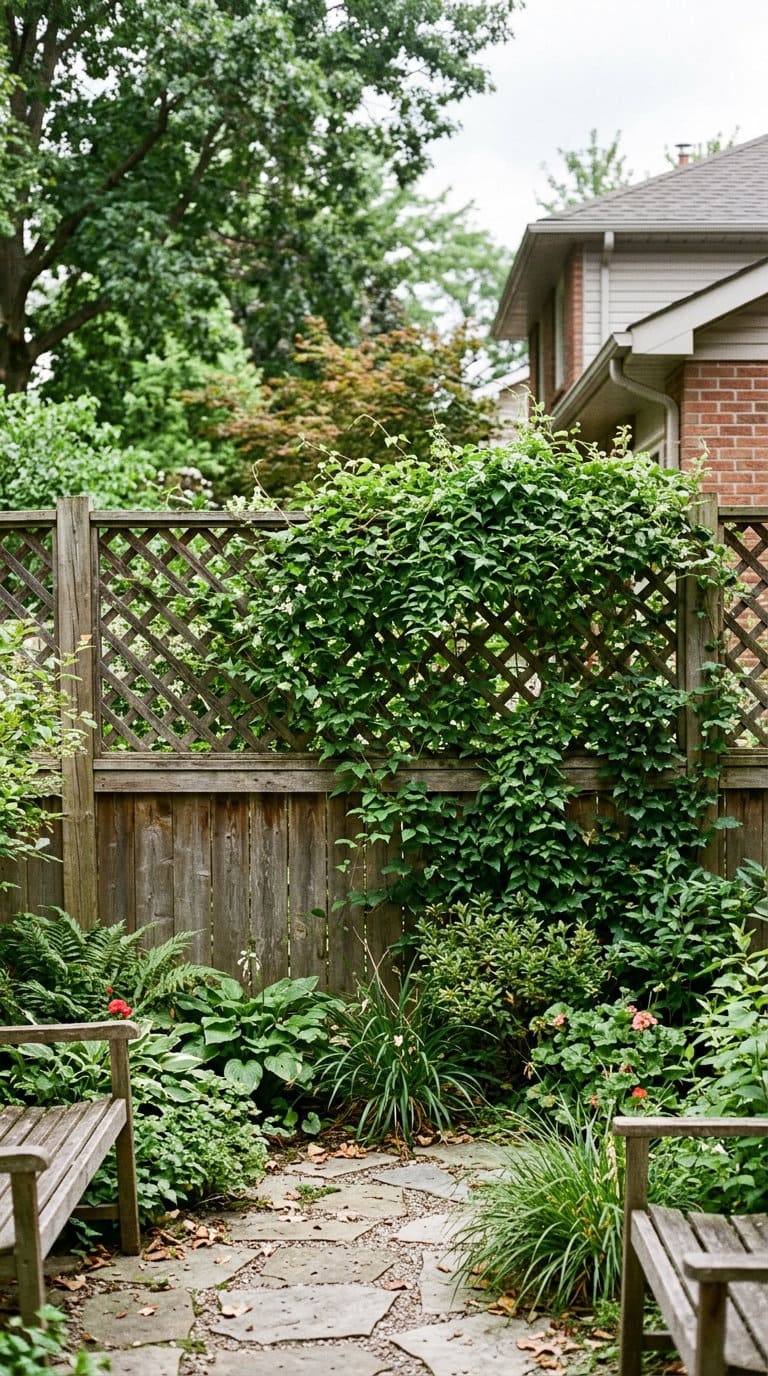
18. Trellis top fence
Adding an open lattice or trellis section above a solid privacy fence base increases total height for climbing plants without violating a solid-fence height cap in areas where open lattice is measured differently than a solid barrier, worth checking your local code specifically on this distinction.
Vines like clematis or climbing roses fill in the lattice over a season or two for a softer, greener top edge than solid wood alone.
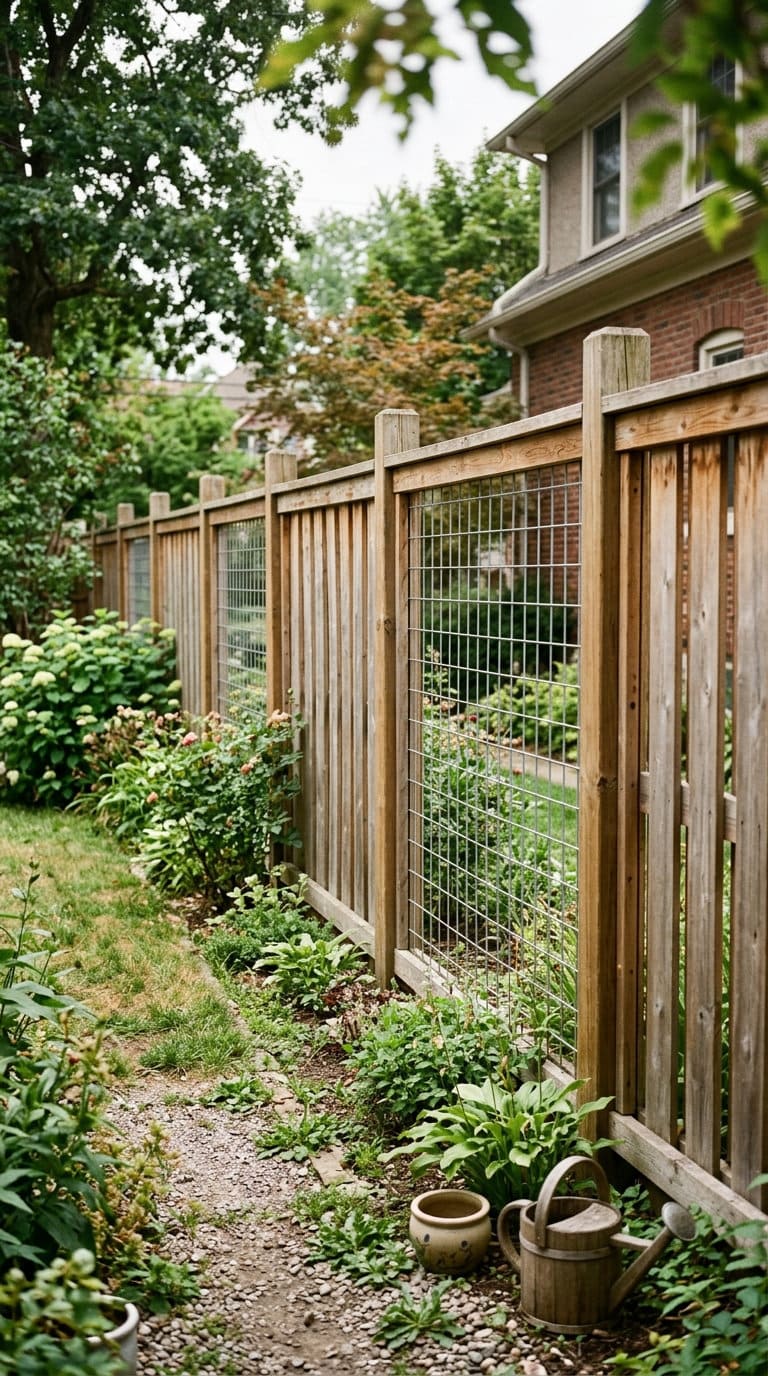
19. Mixed materials fence
Combining wood with metal, stone, or wire mesh sections (wood posts with metal panel infill, for example) stretches a limited wood budget further while adding real visual variety along a longer fence run.
This also works well when you want privacy in some sections and open visibility or airflow in others, rather than one uniform treatment the entire length.
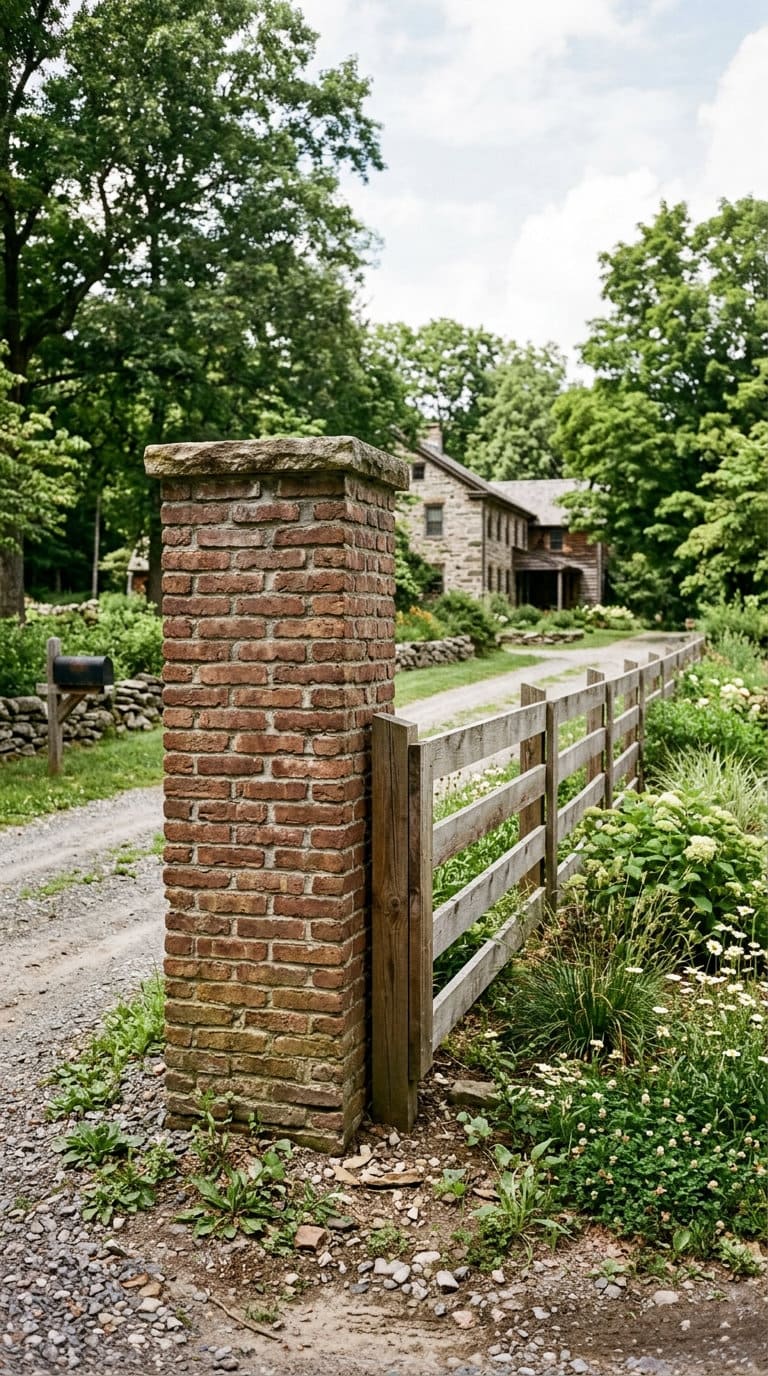
20. Fence with stone columns
Stone or brick columns anchoring wood fence sections at intervals add real substance and a more permanent, upscale feel than wood posts alone, especially at a driveway entrance or a fence’s start and end points.
This is one of the pricier upgrades on this list, since masonry columns cost significantly more per unit than a standard wood post, budget accordingly if you’re only adding a couple of accent columns rather than columns at every post.
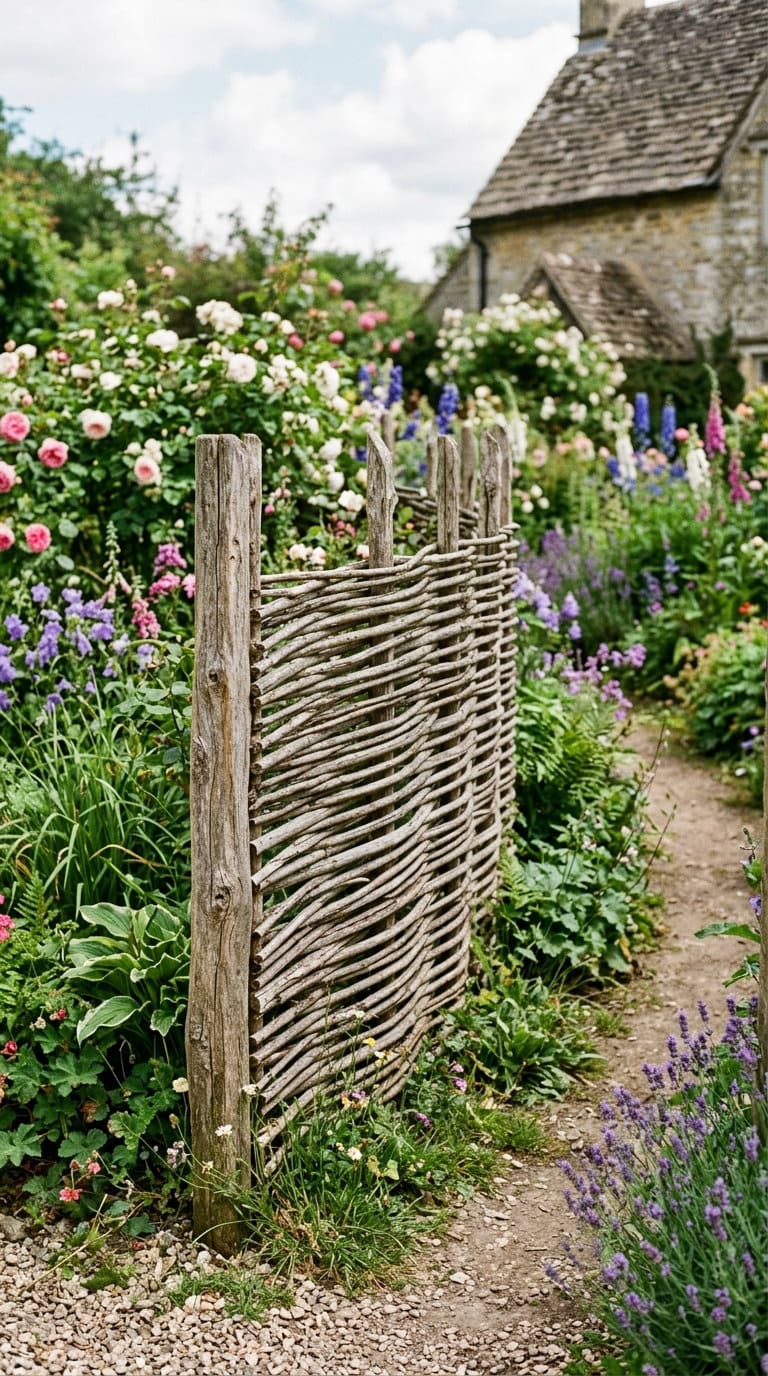
21. Woven wood fence
Thin, flexible wood strips (willow, hazel, or thin cedar) are woven horizontally between upright stakes for an organic, almost basket-like texture, distinct from the more rigid basket weave style in idea #7 since the strips bend and curve rather than sitting flat.
This style suits a cottage garden or naturalistic landscape better than a formal or modern yard.
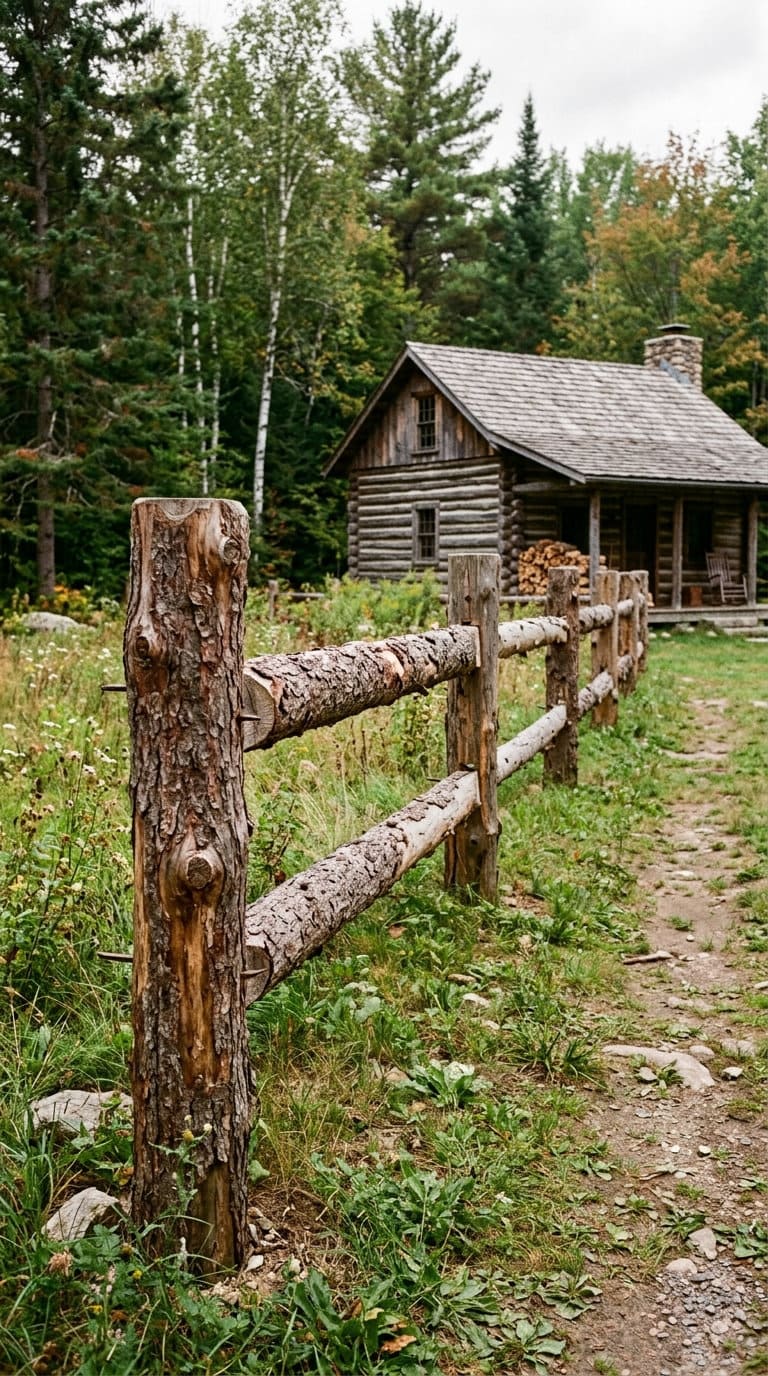
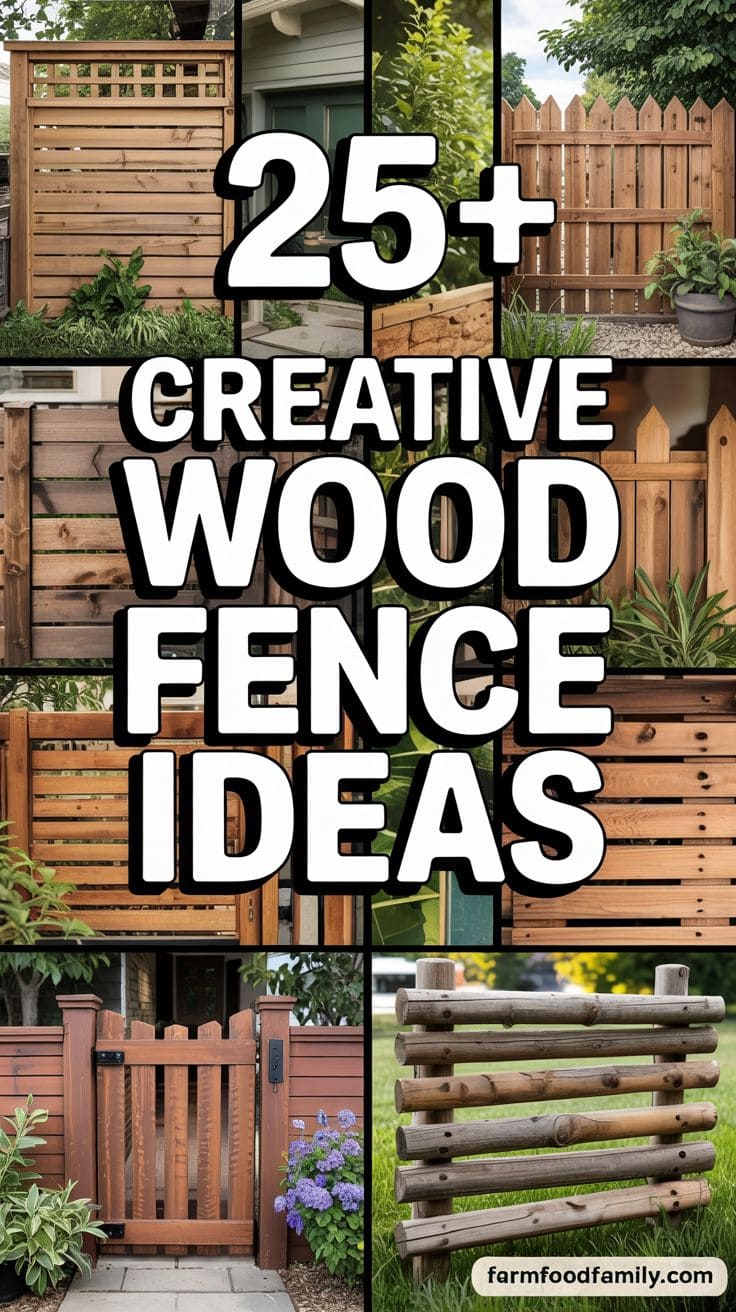
22. Rustic log fence
Whole or half logs, bark left on or peeled depending on the look you want, stacked or upright, bring genuine cabin and homestead character that milled lumber can’t replicate. See our rustic fence ideas article for more log and reclaimed-material styles in this same aesthetic family.
23. Geometric fence
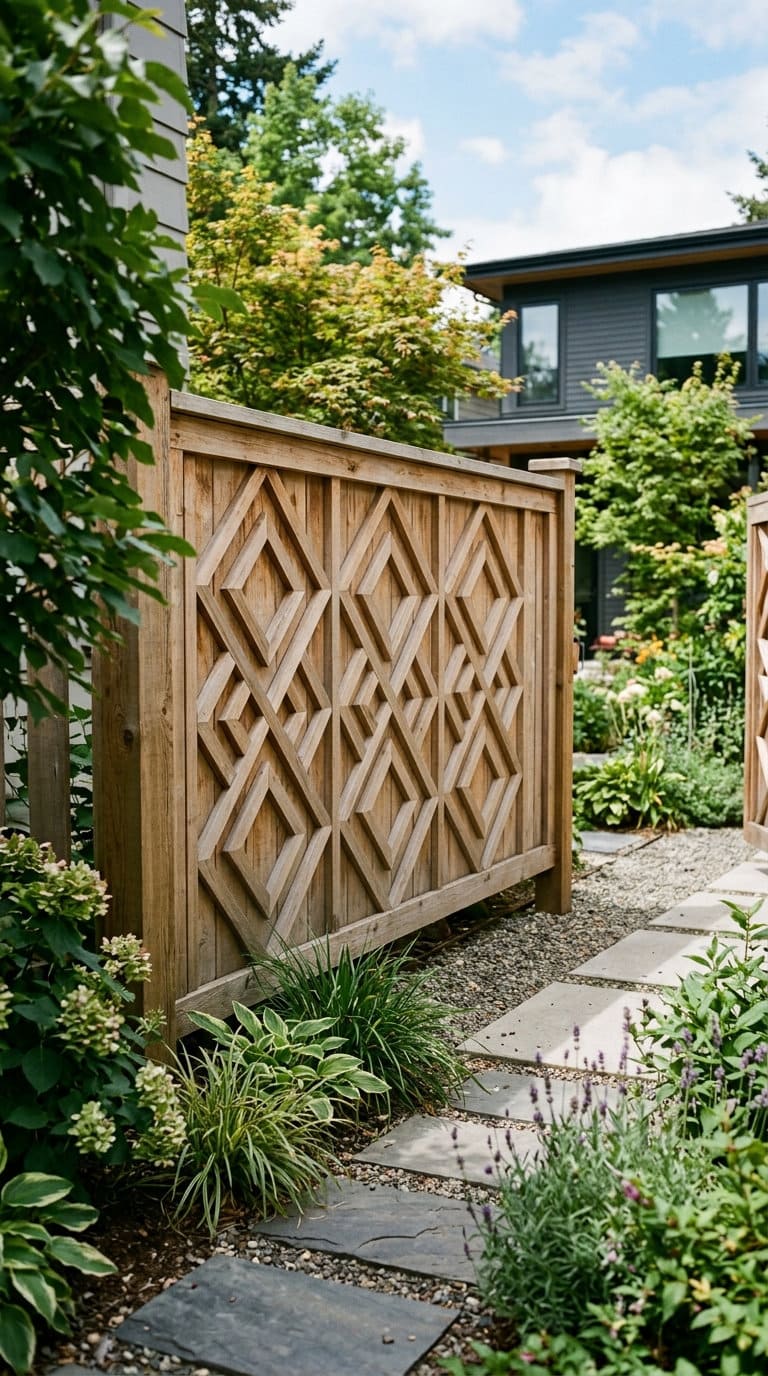
Repeating angular patterns, squares, diamonds, or an interlocking grid, built into fence panels create a genuinely modern, architectural statement piece rather than a plain boundary marker.
This style works best as a feature section (a gate area or a single accent panel) rather than the material choice for an entire long fence run, both for cost and so the pattern stays a highlight rather than visual noise.
24. Fence with window cutouts
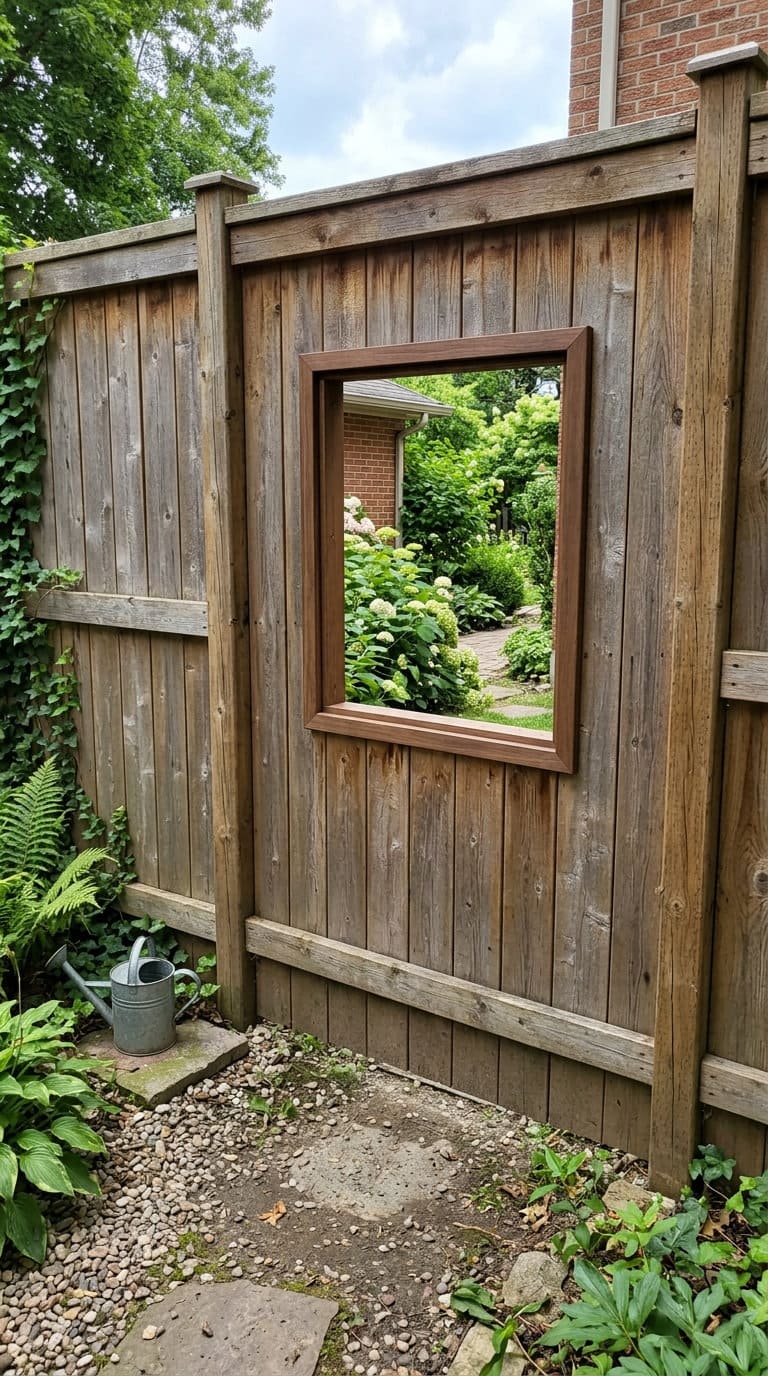
Small square, round, or arched openings cut into an otherwise solid fence section let in glimpses of light and view without sacrificing overall privacy, a genuinely clever middle ground between a fully solid fence and an open style like split rail.
Frame the cutout edges cleanly with trim, an unfinished cut edge weathers and splinters faster than the rest of the fence.
FAQs on wood fences
How far from the property line should a wood fence sit?
Get a professional survey before building near any boundary, guessing based on an old plat map or a neighbor’s fence line has caused real disputes, like a fence built inches or feet over the actual line that later has to be moved. The survey cost is small compared to relocating a finished fence.
What’s the maximum legal fence height?
It varies by municipality, but front-yard fences are commonly capped around 3.5 to 4 feet, while backyard fences can typically go up to about 6 feet. Building unusually tall specifically to block a neighbor’s view, sometimes called a “spite fence”, is a recognized legal violation in several states. Check your specific local zoning code before finalizing a height, especially for taller styles like idea #11’s tall picket fence.
Which wood species lasts longest for a fence?
Cedar is the most rot- and insect-resistant option without chemical treatment and typically lasts 20-30 years, needing restaining roughly every 2-3 years to maintain its color, and runs $25 to $55 per linear foot installed, according to Ergeon. Pressure-treated pine costs less upfront ($18-38/ft) but generally lasts 5-10 years. Redwood sits at the top end, often lasting 25-40 years, but also costs more per linear foot ($40-65/ft) than either cedar or pine.
Should you mix cedar with pressure-treated rails?
It’s a common cost-saving combination, cedar pickets with pressure-treated structural rails, but be aware the two materials weather differently over time: cedar fades to a silver-gray while pressure-treated lumber turns more brown-gray, which can create a visibly mismatched look that’s hard to correct with stain later. If a uniform weathered look matters to you, staining both materials the same color from the start helps them age more consistently together.
Wood fences offer an unbeatable combination of style, structure, and customization. Whether you want to evoke country charm, urban sophistication, or bohemian creativity, wood can be shaped, stained, and styled to fit your vision.
By blending your fencing with thoughtful landscaping, lighting, and design elements, you can create a boundary that not only serves its purpose but also becomes a memorable part of your home’s personality. Leave a comment if you liked this article and then share it with your friends!
Never miss an update — choose FarmFoodFamily as your preferred source on Google.
How it works: Tap the button below to open Google's settings page, then check the box next to FarmFoodFamily.
Tap the checkbox to turn it blue — that's how you know it's set.