15+ Innovative Chain Link Fence Ideas (With Real Costs and What Not to Plant)
A guy on my street let wisteria take over his chain link fence for about six years, and it looked incredible right up until the top rail started bowing inward like a bad smile. He honestly had no idea the vine’s weight was doing that until a fence contractor pointed it out while quoting a…

Never miss an update — choose FarmFoodFamily as your preferred source on Google.
How it works: Tap the button below to open Google’s settings page, then check the box next to FarmFoodFamily.
Tap the checkbox to turn it blue — that’s how you know it’s set.
A guy on my street let wisteria take over his chain link fence for about six years, and it looked incredible right up until the top rail started bowing inward like a bad smile.
He honestly had no idea the vine’s weight was doing that until a fence contractor pointed it out while quoting a full replacement. That’s the kind of detail most chain link decorating guides skip entirely, they’ll tell you to plant vines and never mention some of them can slowly wreck the fence underneath.
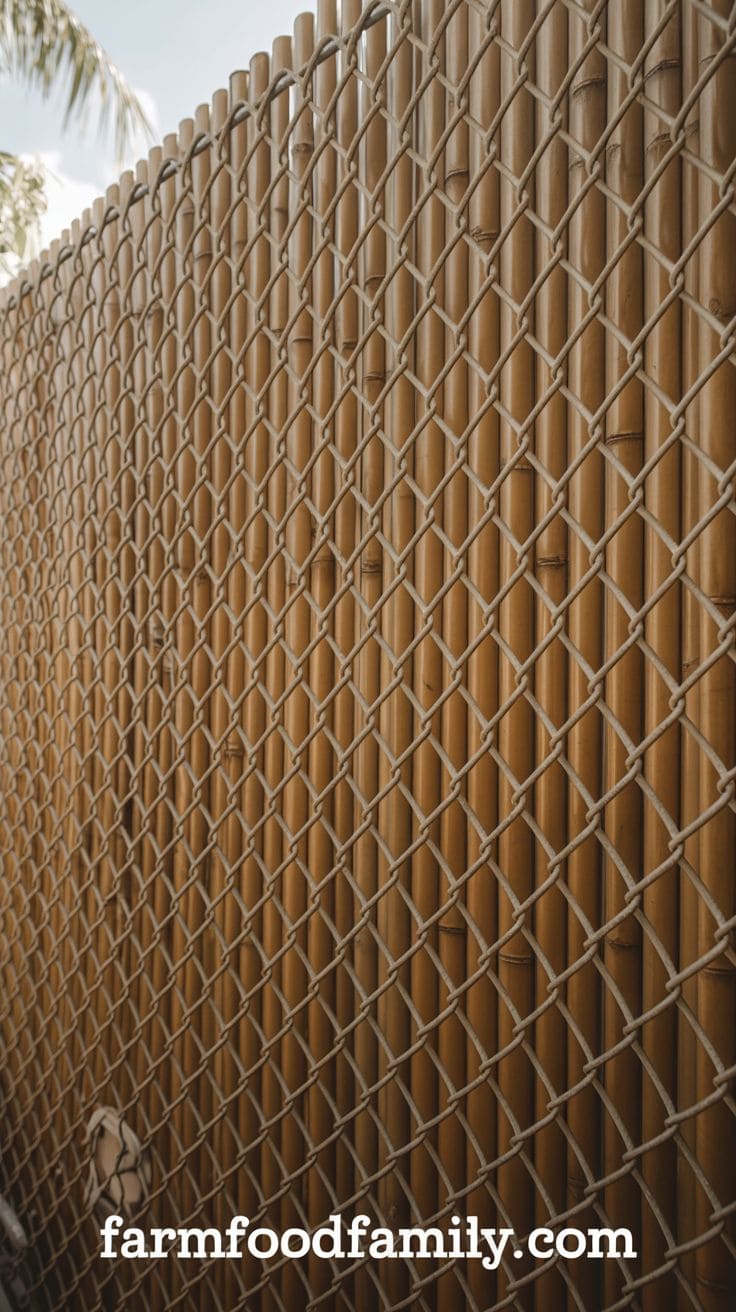
“Bamboo screening creates an instant transformation that feels like a high-end resort in your own backyard,” says Brad Smith, Senior Interior Designer (NCIDQ Certified) at Omni Home Ideas. “The natural material softens the industrial look of chain link while providing excellent privacy.”
That’s the real opportunity with chain link, it’s the cheapest fence you can buy, which leaves real budget left over for the decorative layer that actually makes it look good.
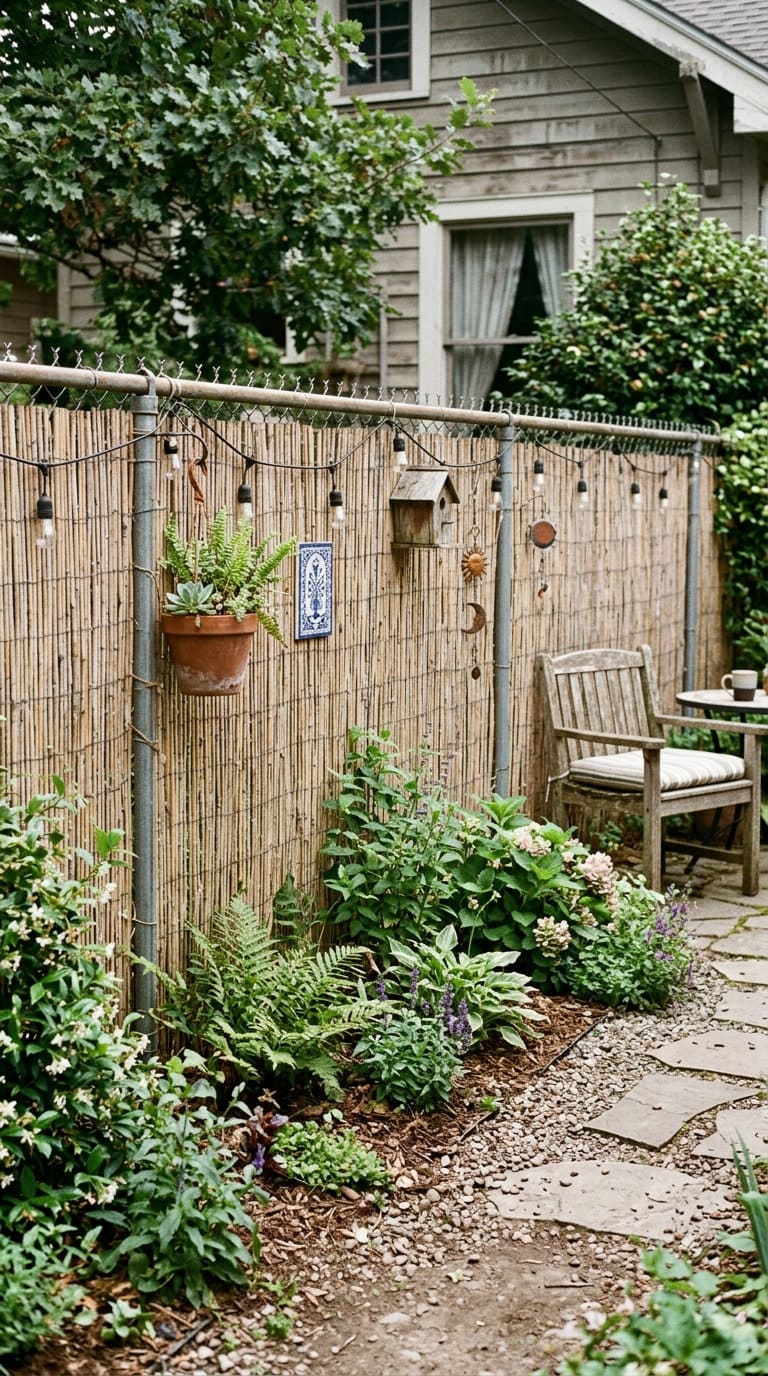
15 chain link fence ideas
1. Intertwined Beauty

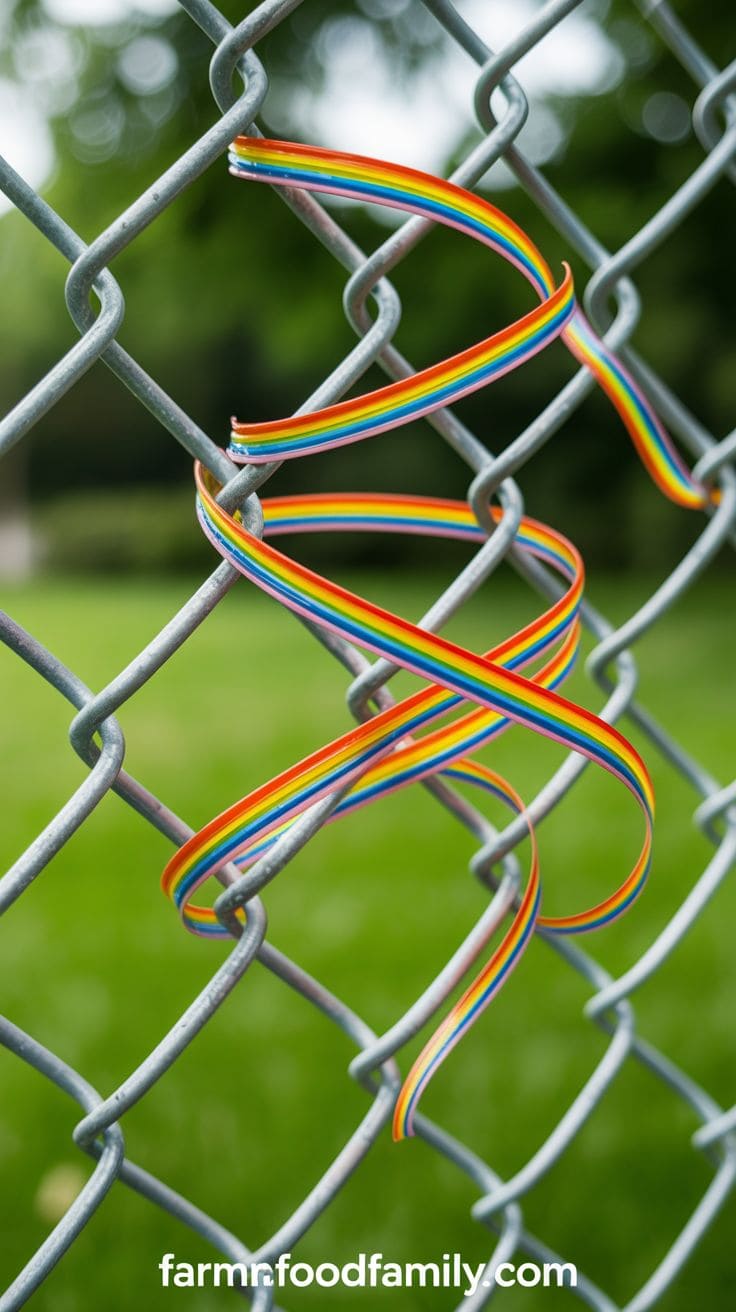
Thread strips of vinyl or ribbon (specifically made for this, sold as “fence weave” material) horizontally through the diamond openings to create stripes, patterns, or even simple pixel-art images across the fence.


Pre-cut fence-weave kits are far faster to install than cutting your own strips, and they hold up to weather better than fabric ribbon, which fades and frays within a season or two.
Answer 4 quick questions and get matched to the exact fix for your yard — drainage, budget, layout, or something else entirely.
Take the Free Quiz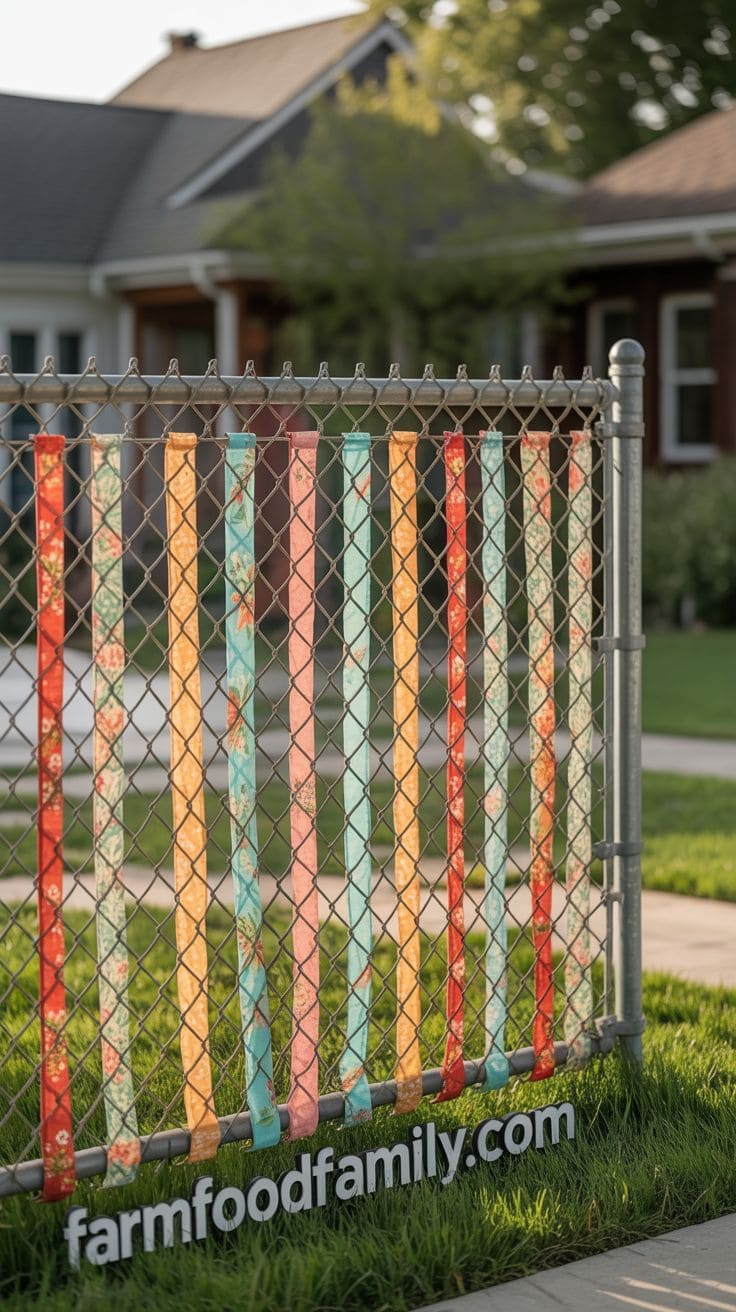
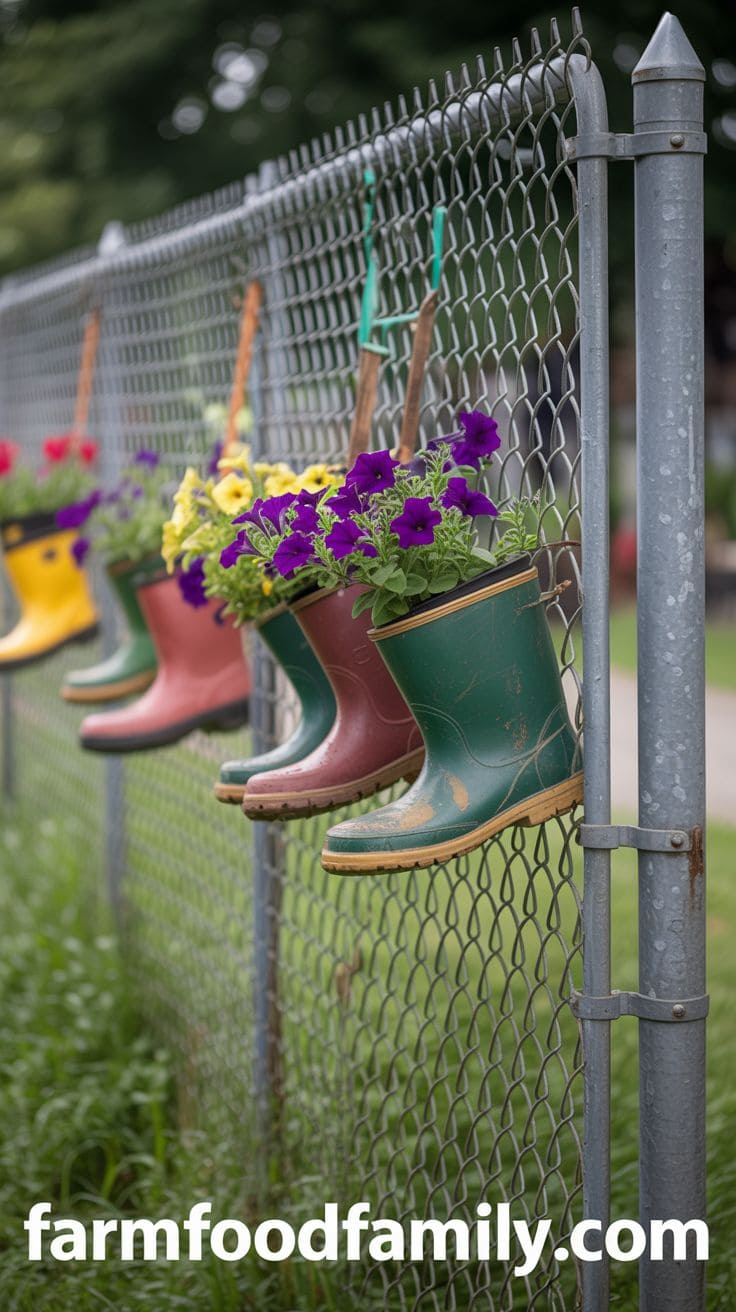
2. Hang in There
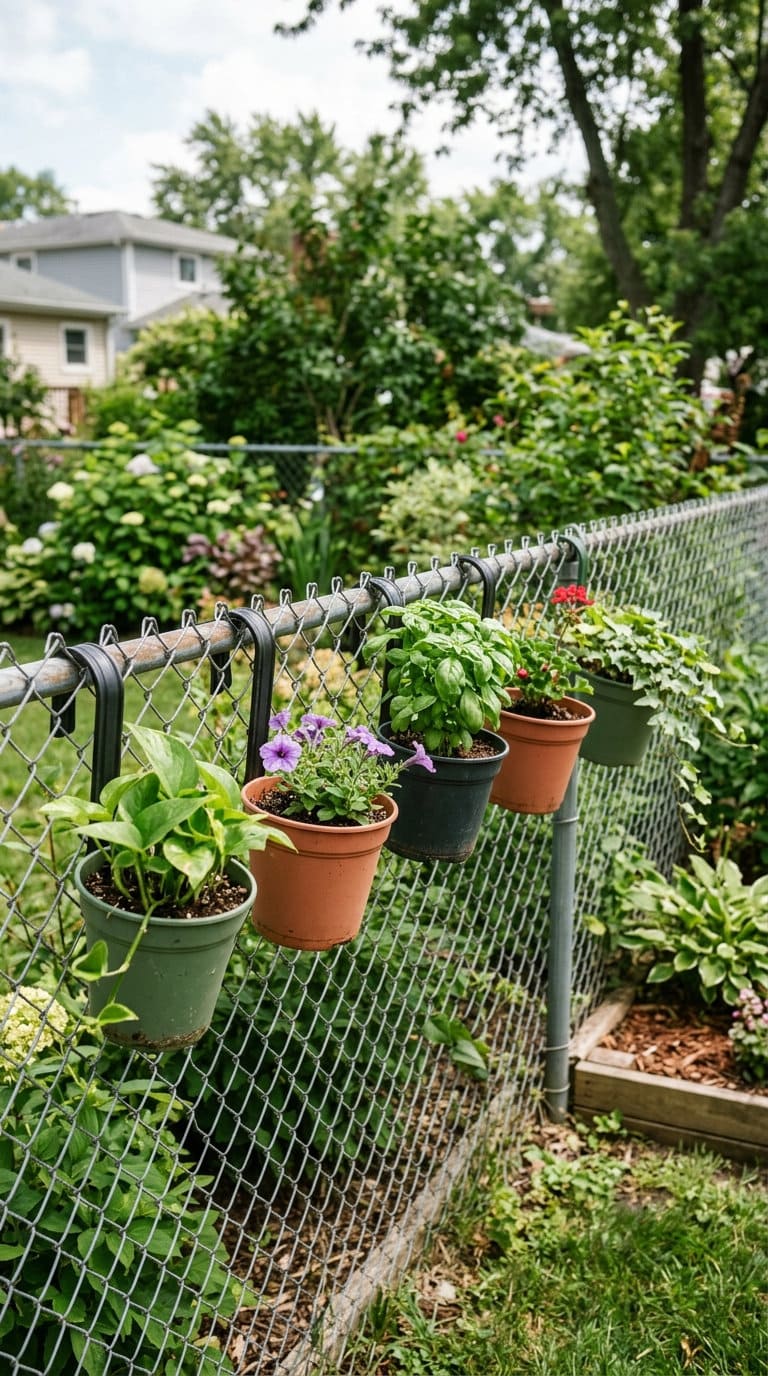
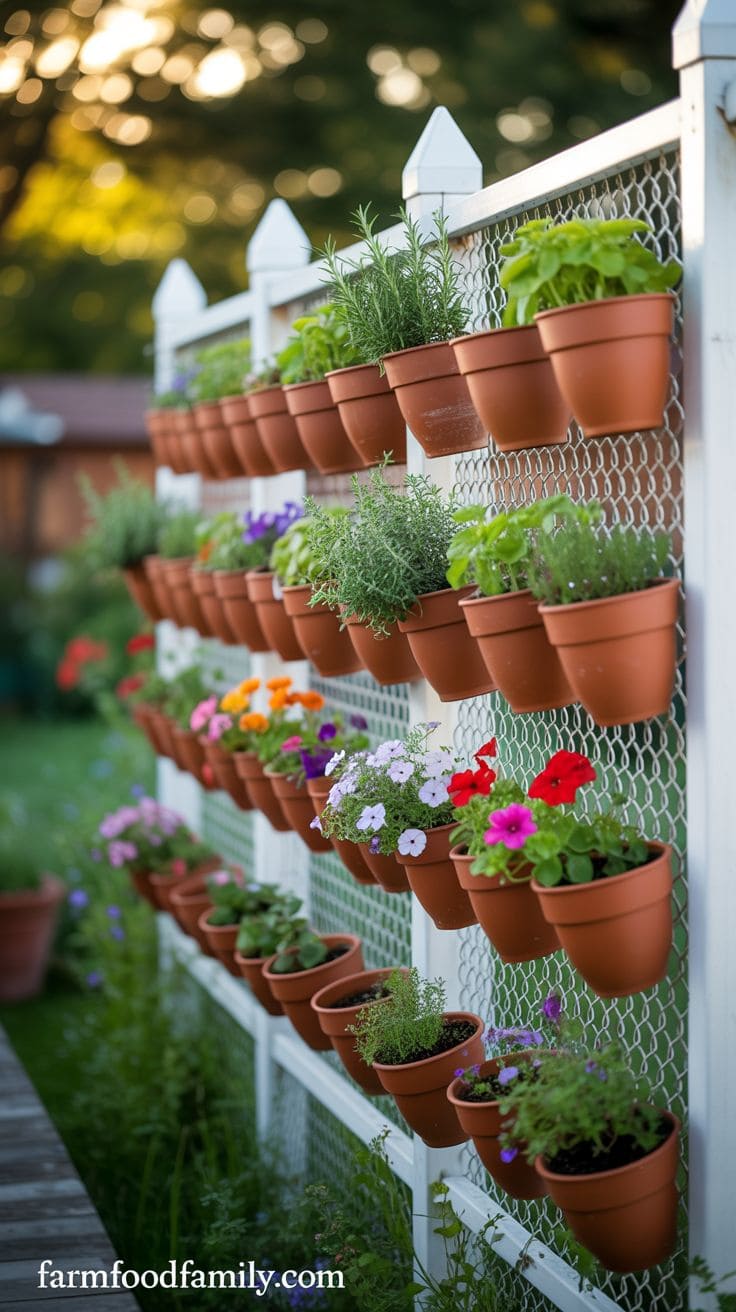
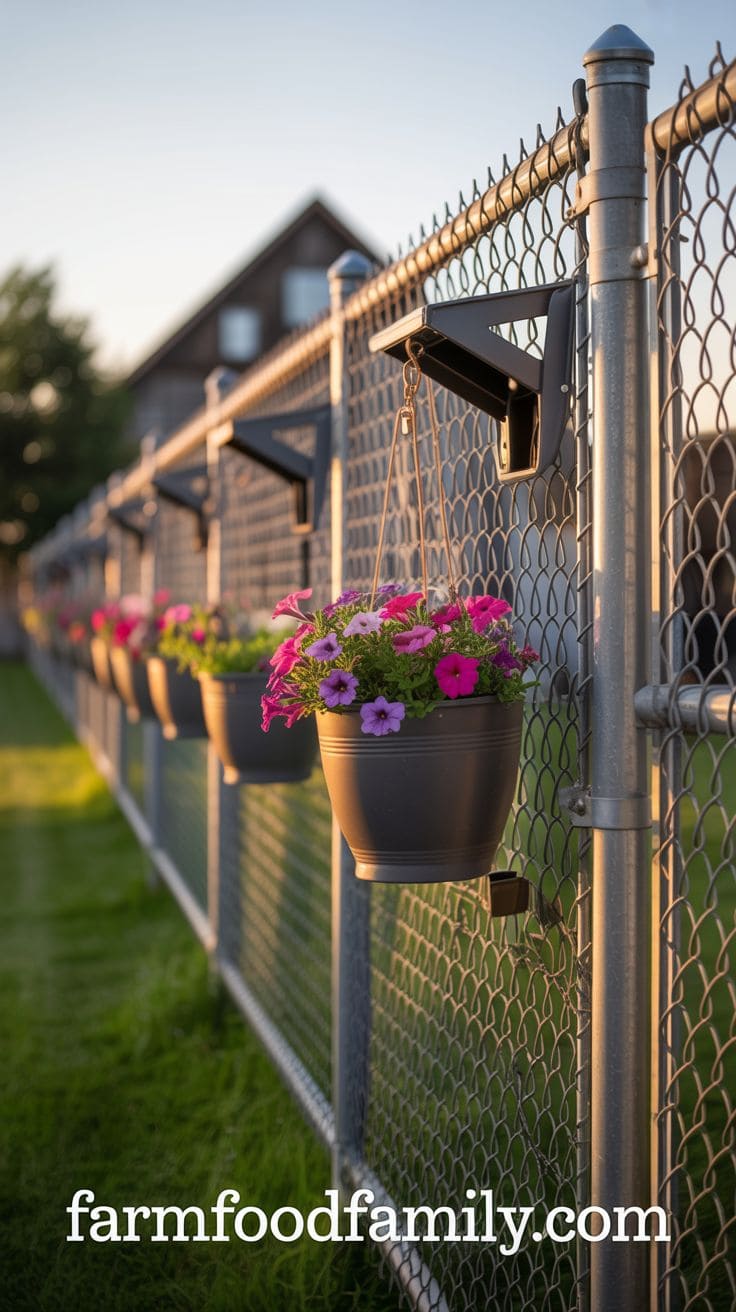
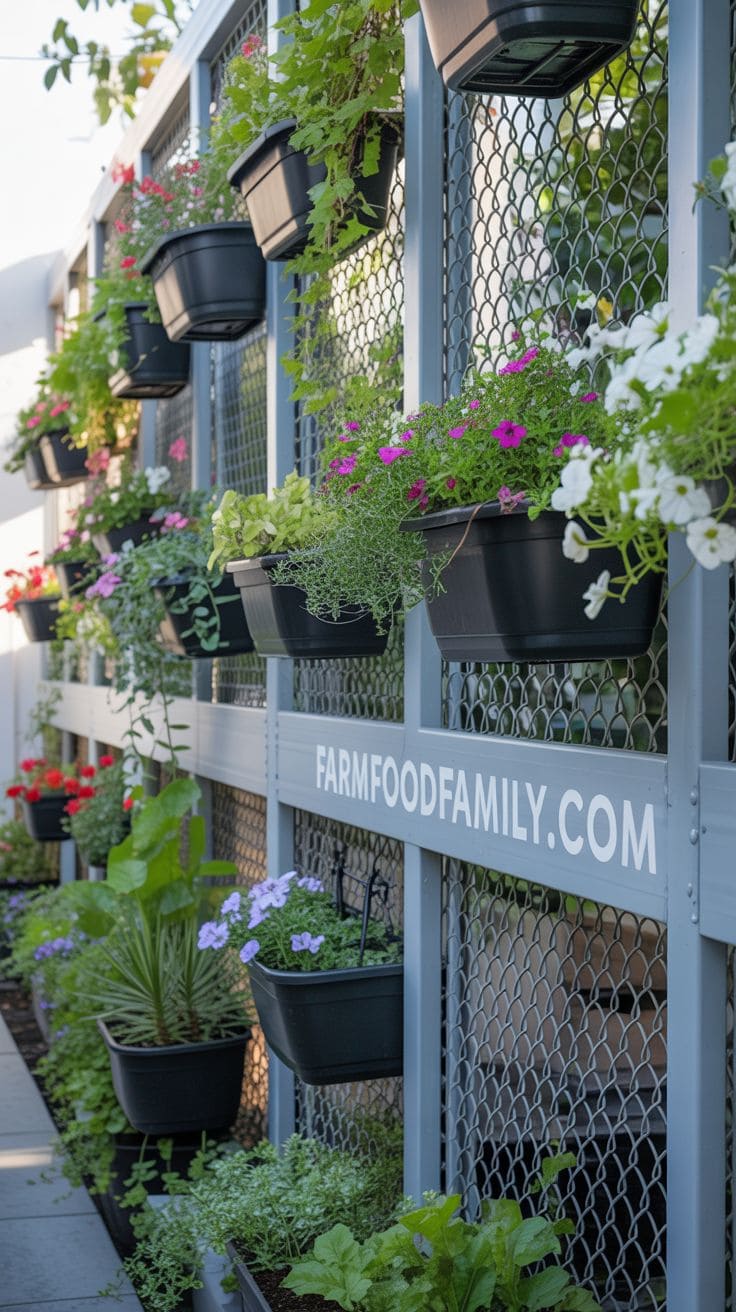
Clip-on pot holders (sold for exactly this purpose, no drilling needed) let you hang a full row of potted plants along the fence line without any permanent modification.
Choose lightweight plastic or resin pots over ceramic, a fully watered ceramic pot hanging from a thin wire clip is genuinely heavy enough to bend the clip or sag the link it’s attached to over time.
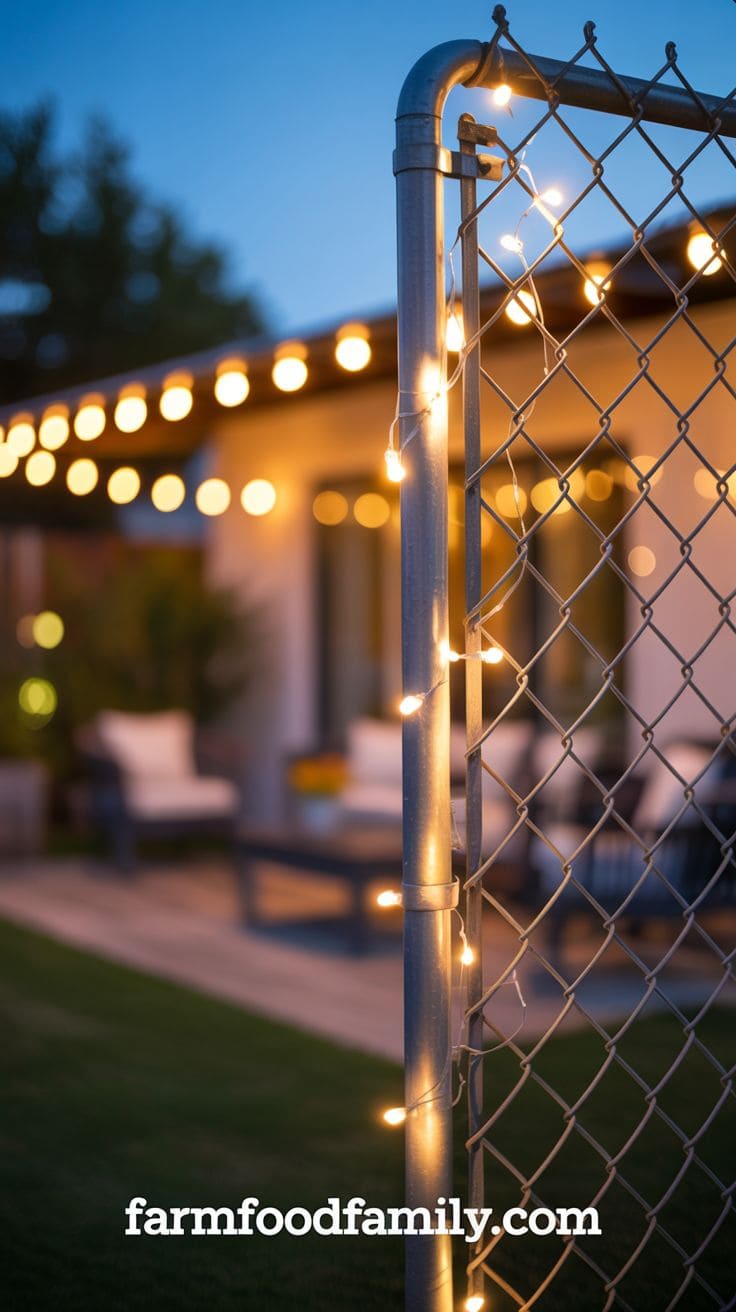
3. Light It Up
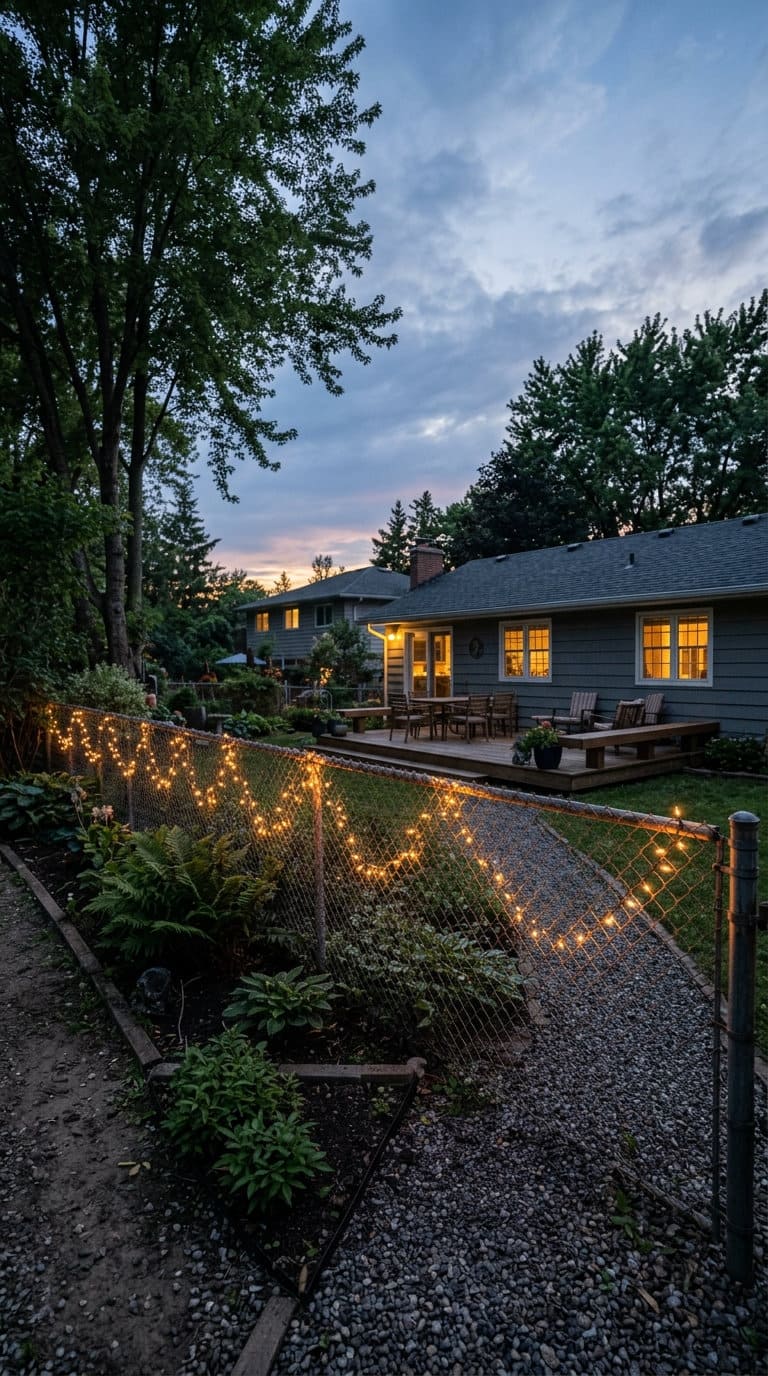
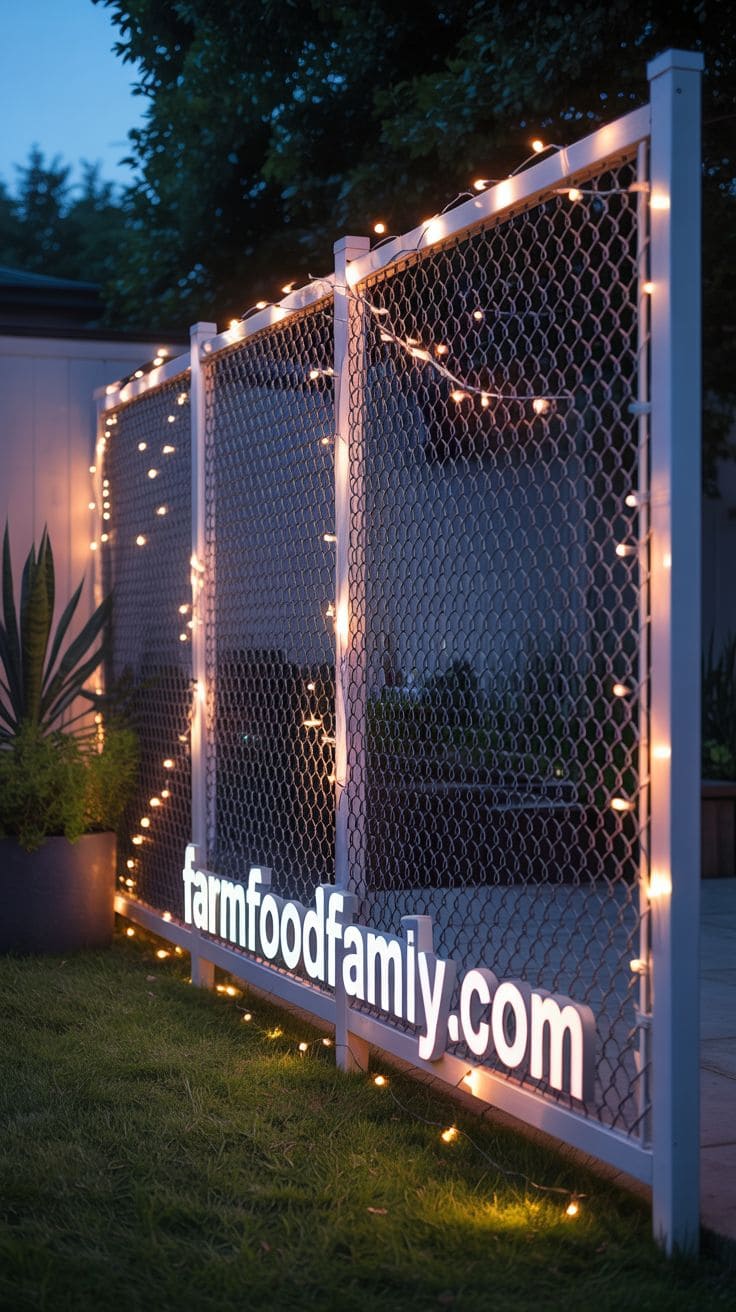
Wind outdoor-rated string lights through the diamond pattern, following the natural zigzag rather than running them straight across, which uses the fence’s own shape as the light’s layout instead of fighting it.
Solar string lights avoid running any wiring at all, a real advantage for a fence that isn’t near an outdoor outlet.
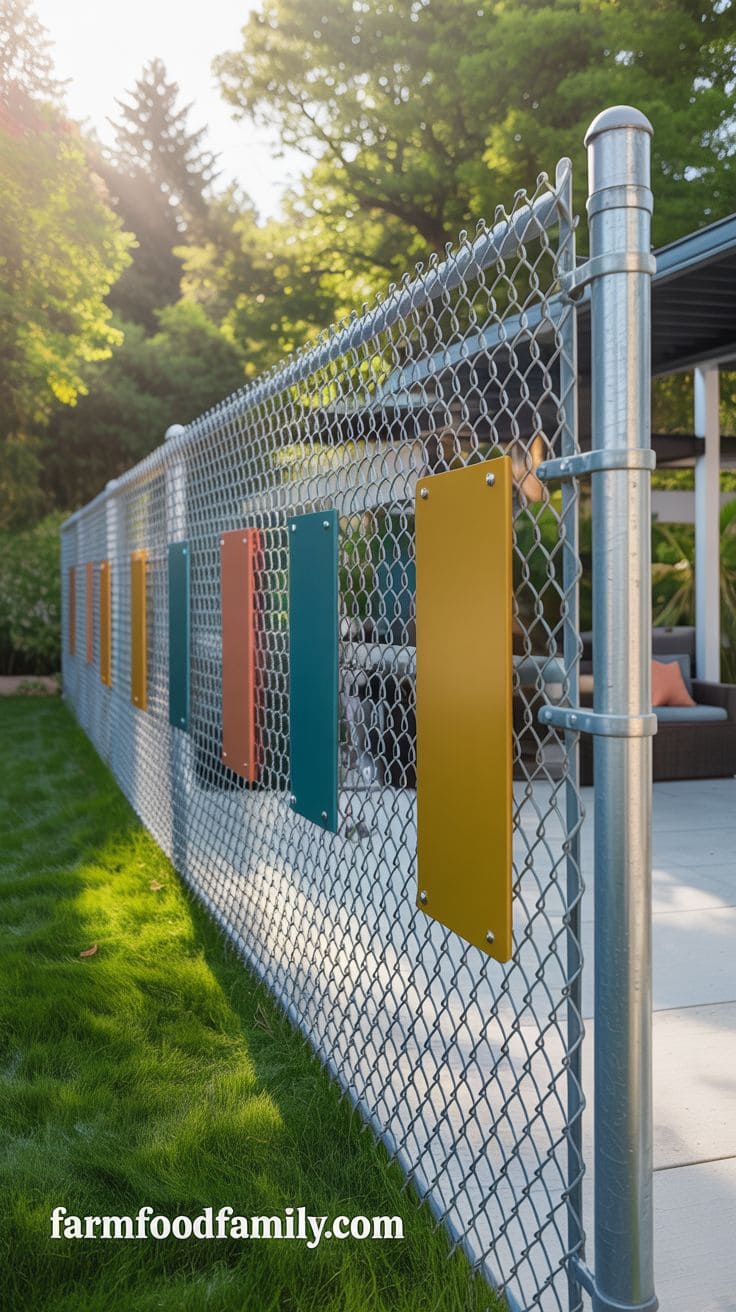
4. The Art Wall
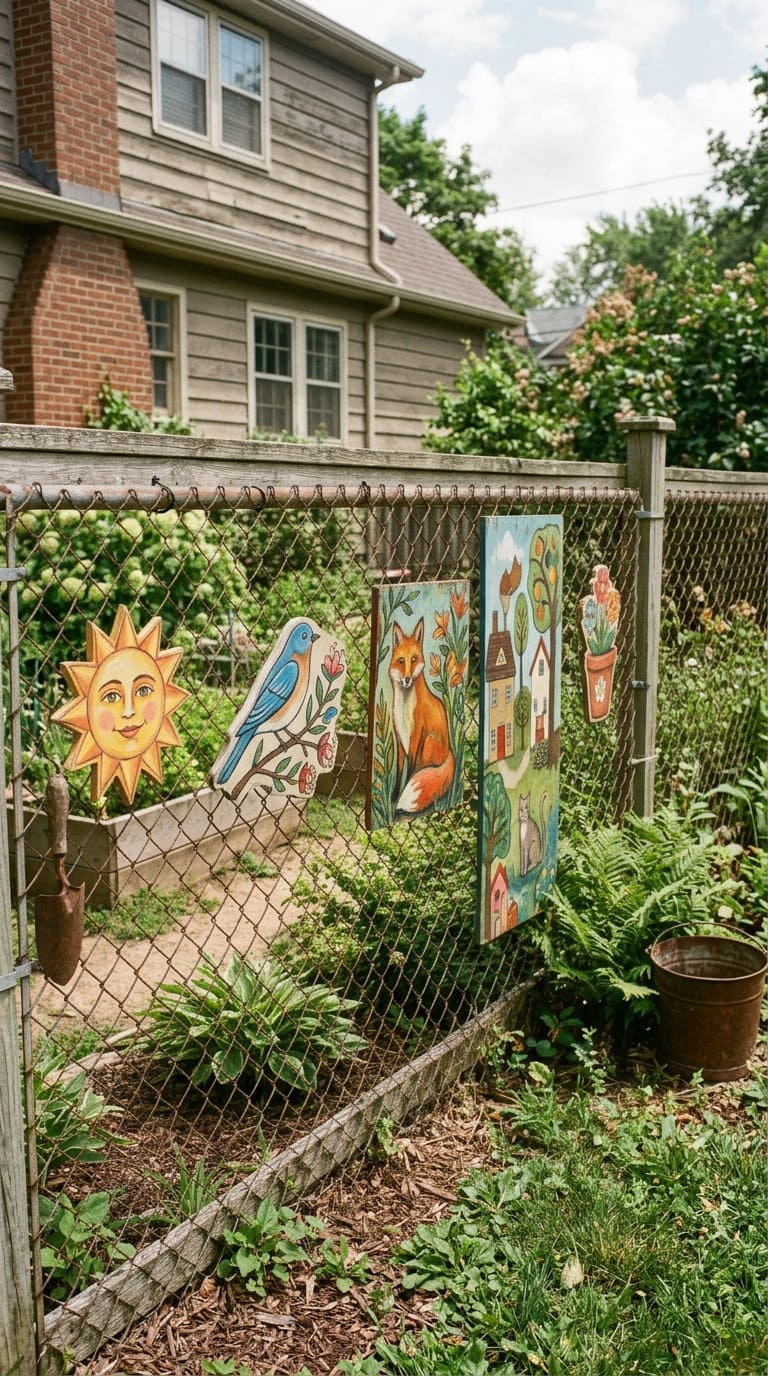
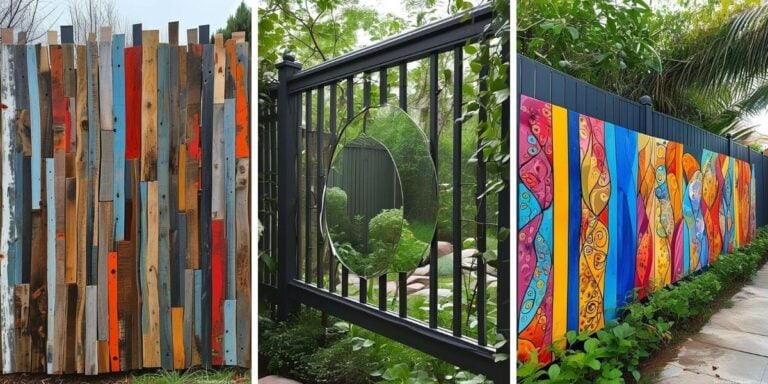
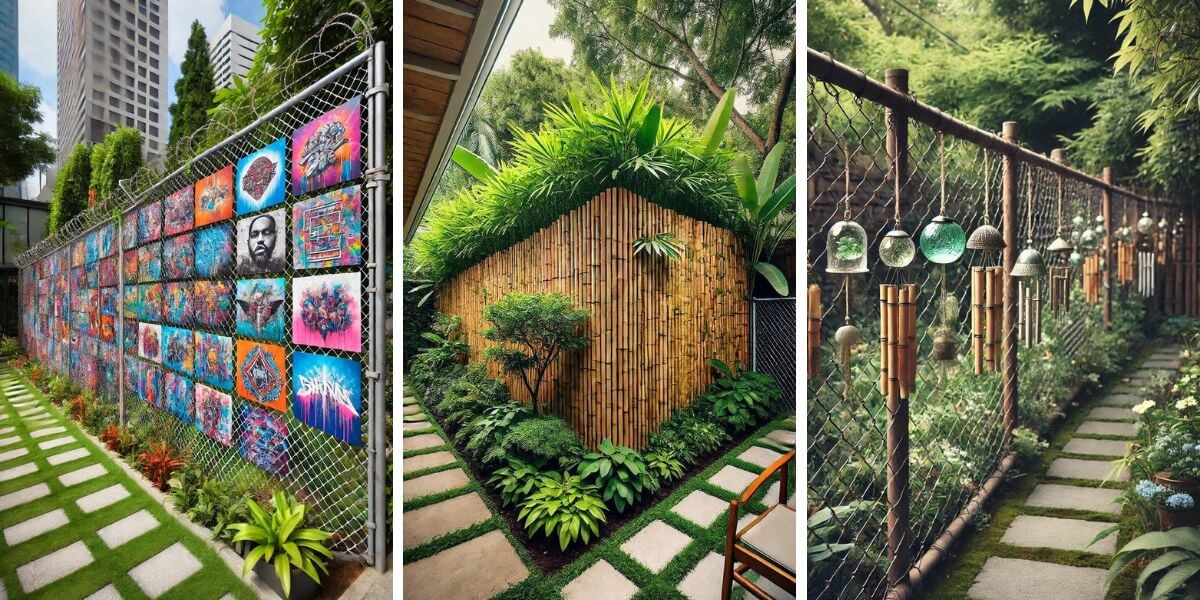
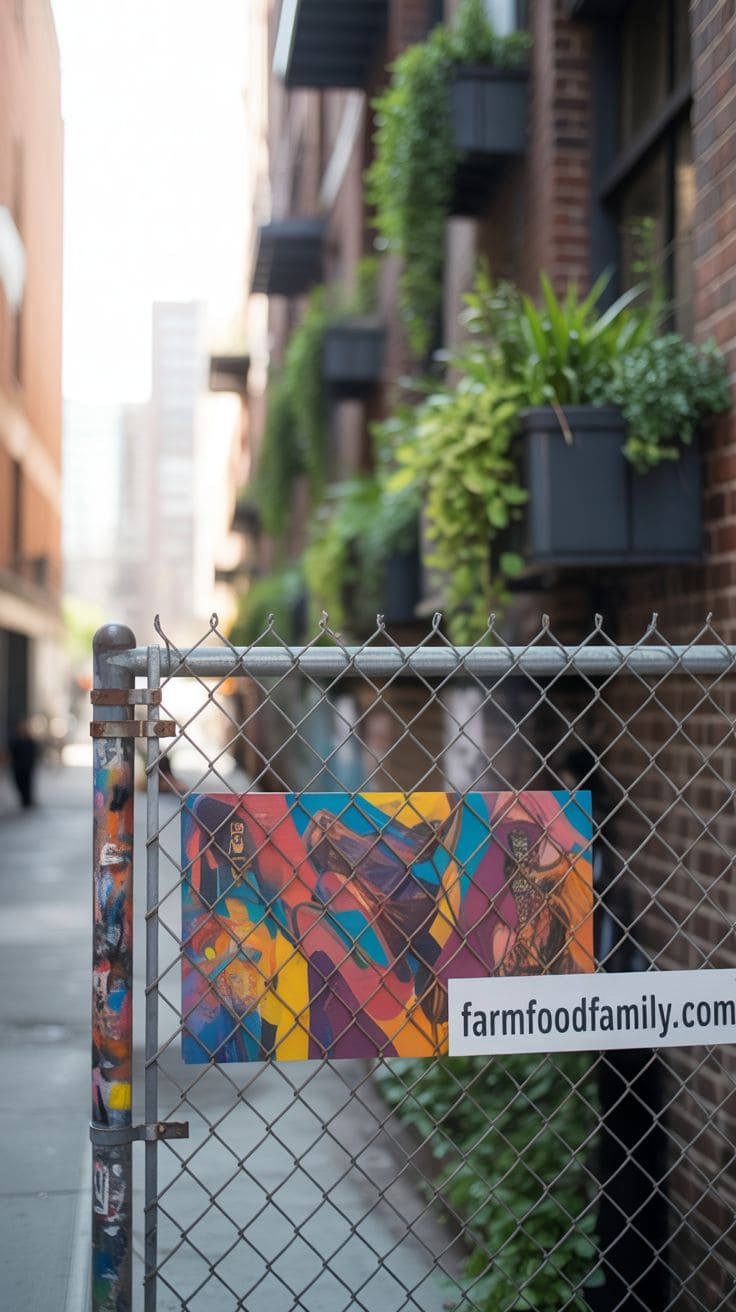
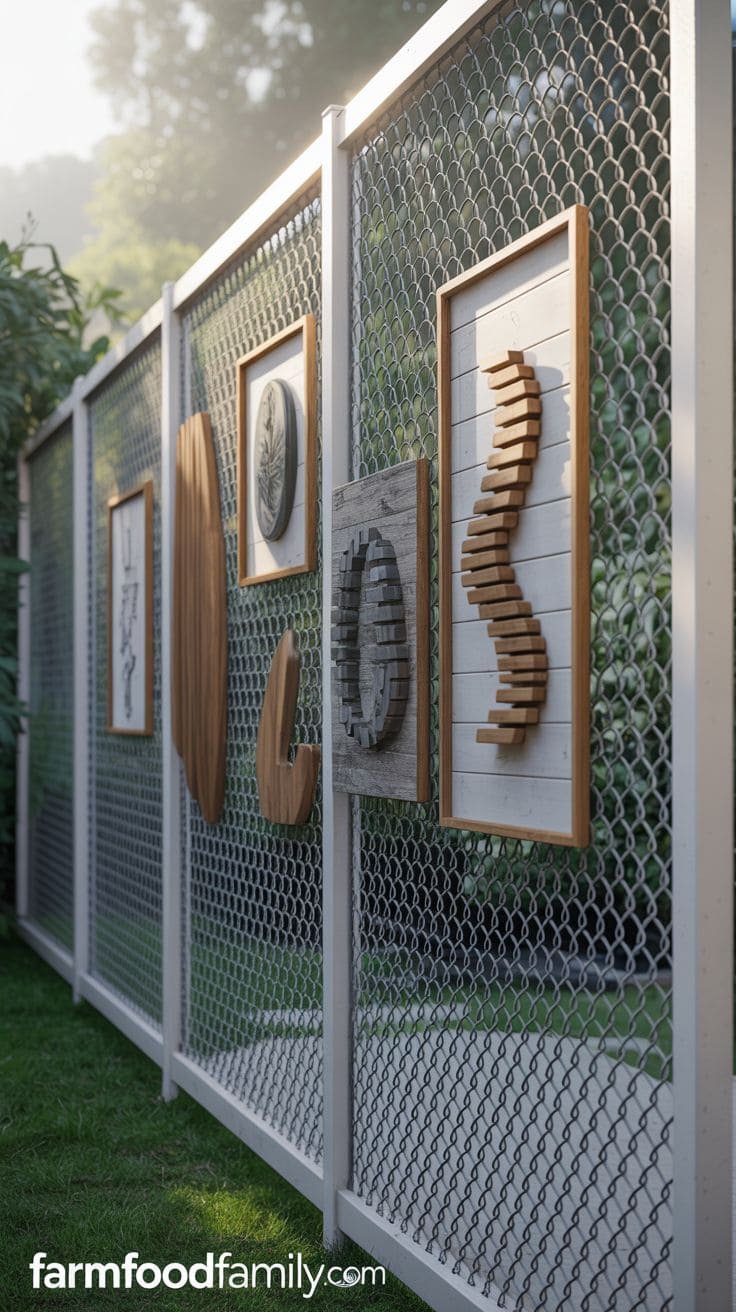
Zip-tie or wire weatherproof outdoor art panels, tile mosaics, or painted plywood cutouts directly to the fence mesh, turning it into a rotating gallery space rather than a permanent installation.
Exterior-rated paint and sealed plywood are worth the extra cost here, unsealed wood art warps and delaminates fast when it’s rained on repeatedly.
5. Climbing Vines
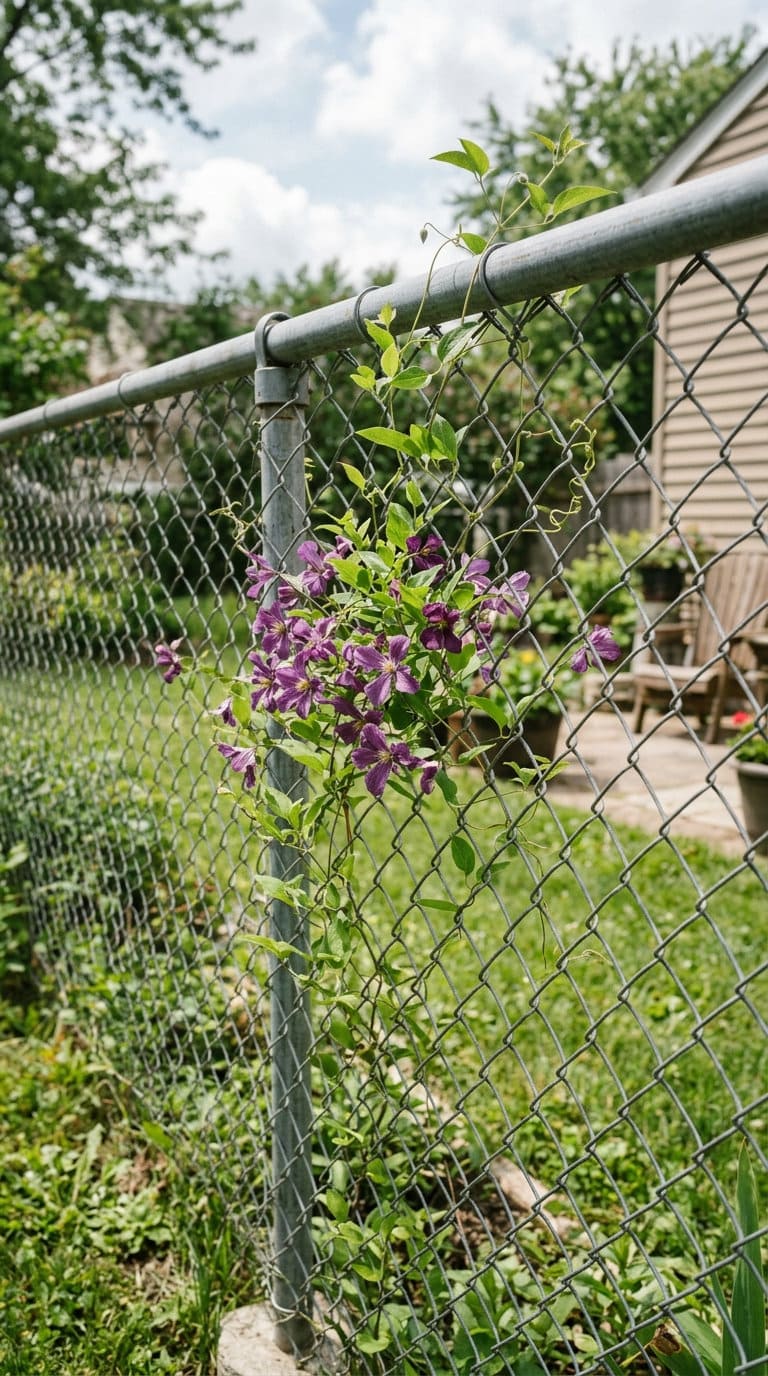
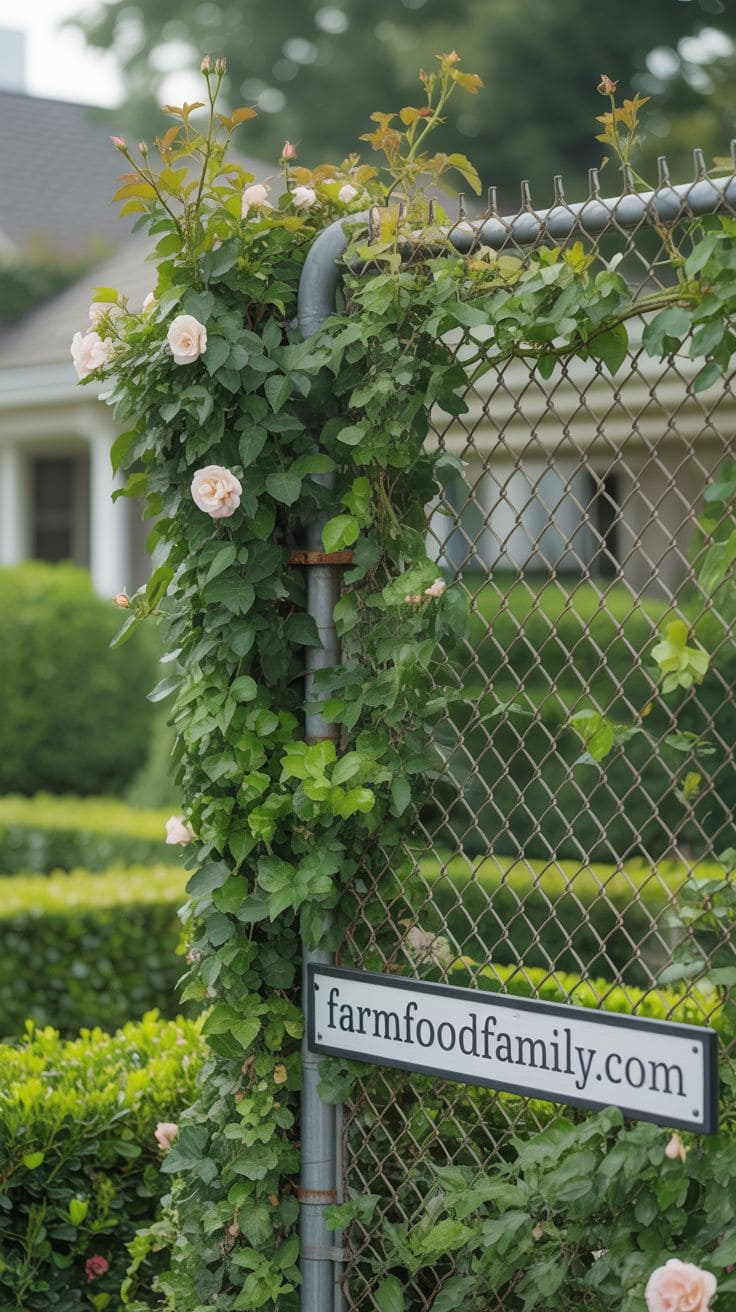
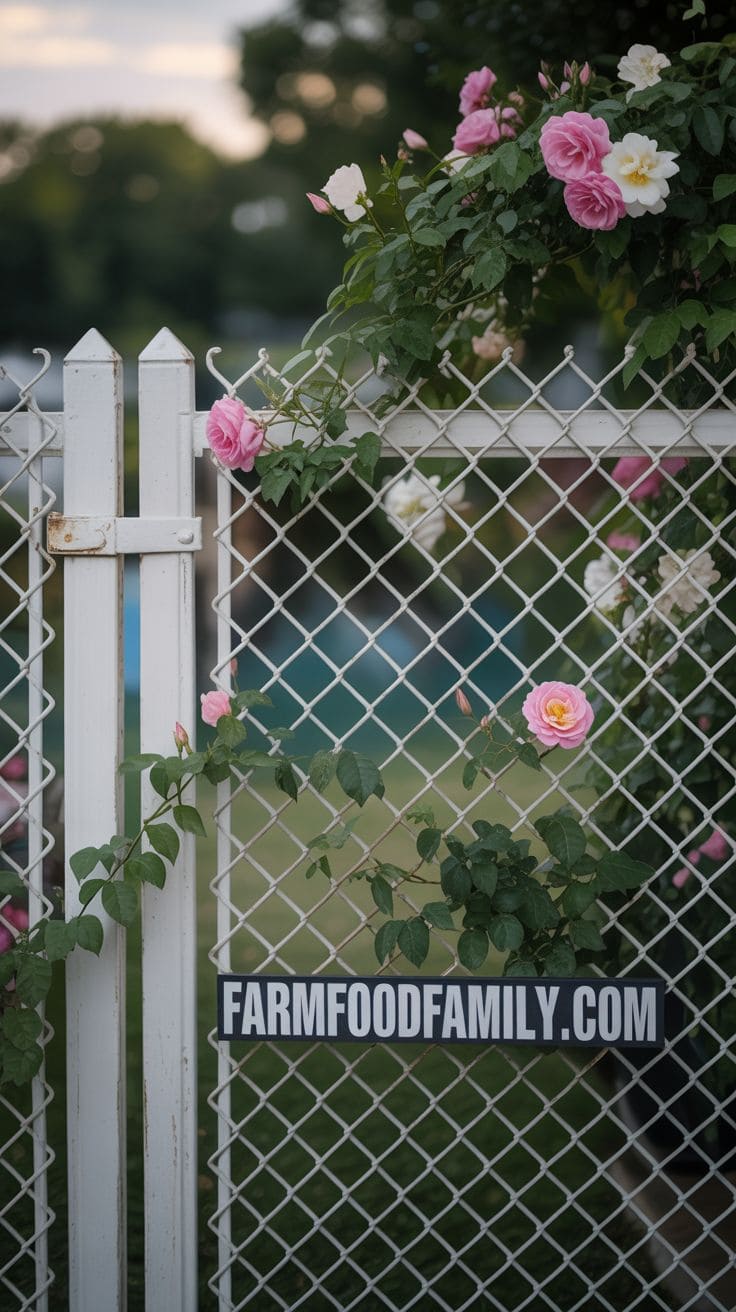
Vines are the classic chain link fix, but not every vine is a safe long-term choice for this specific fence type.
Most yard problems trace back to one specific, fixable cause. Find yours in 4 quick questions.
Take the Free QuizLighter climbers like morning glory or clematis are fine, they wrap and cling without much real weight. But heavy, woody climbers, mature wisteria and trumpet vine especially, can genuinely bend a chain link fence’s top rail and put real stress on the posts as the vine matures over several years, a documented issue among fence contractors, not a hypothetical one.
If you do plant a heavier vine, trim it back hard every season rather than letting it build up years of woody growth.
6. Bamboo Screen
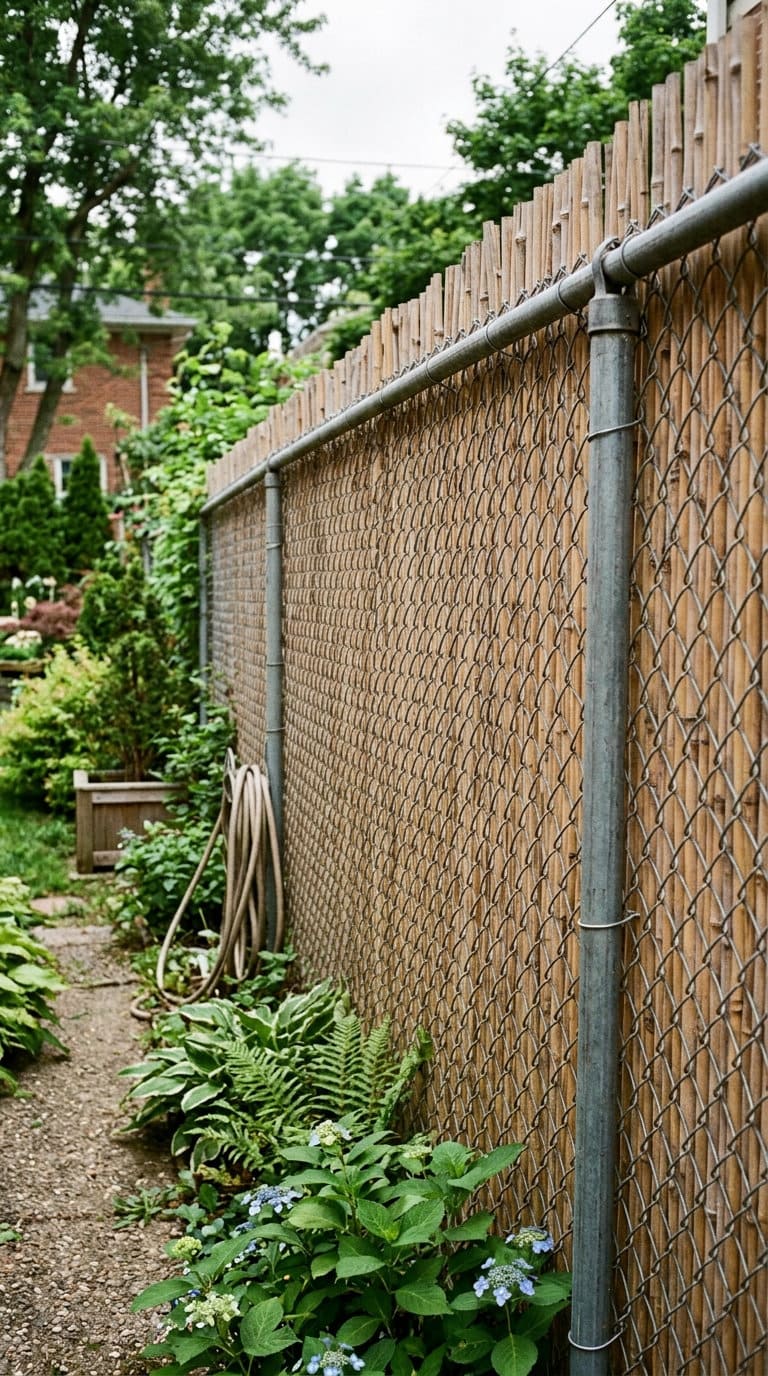
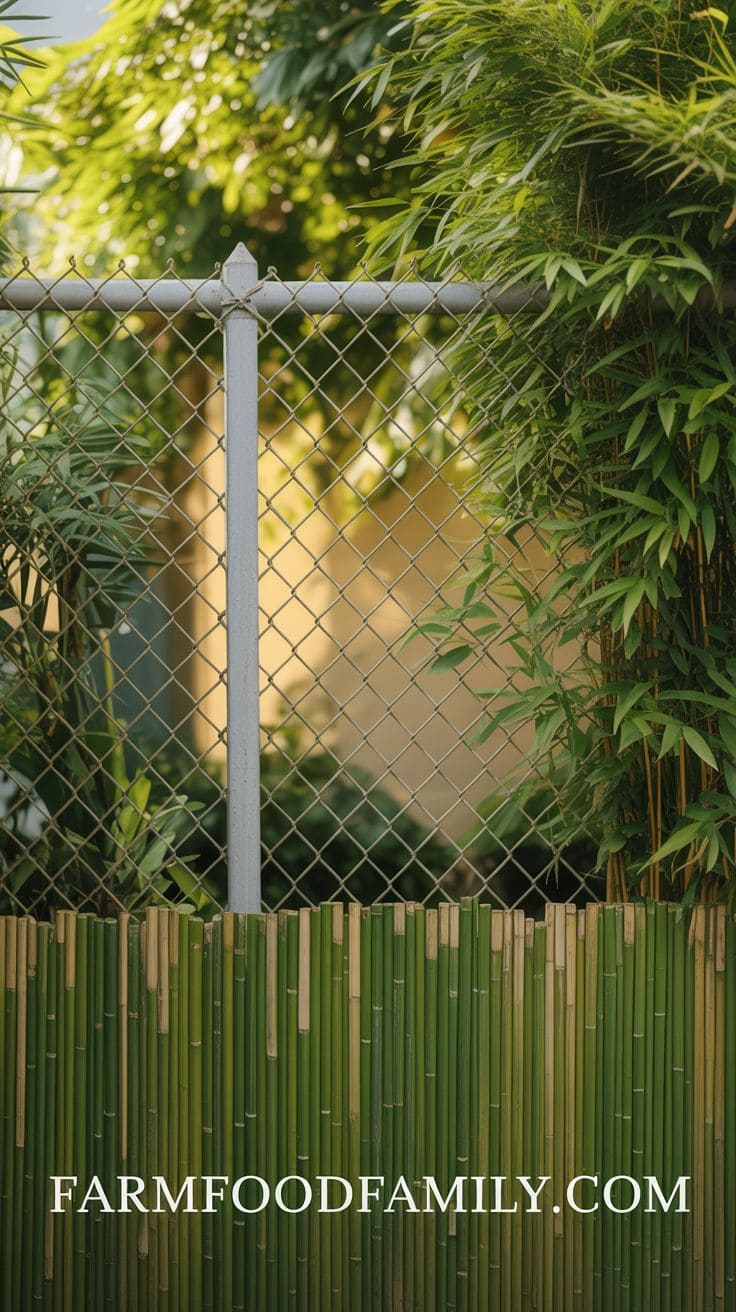
Pre-made bamboo rolls or individual bamboo slats woven vertically through the fence create real privacy while softening chain link’s industrial look, exactly the transformation Brad Smith describes above.
See our bamboo fence ideas article for more on choosing and installing bamboo screening specifically.
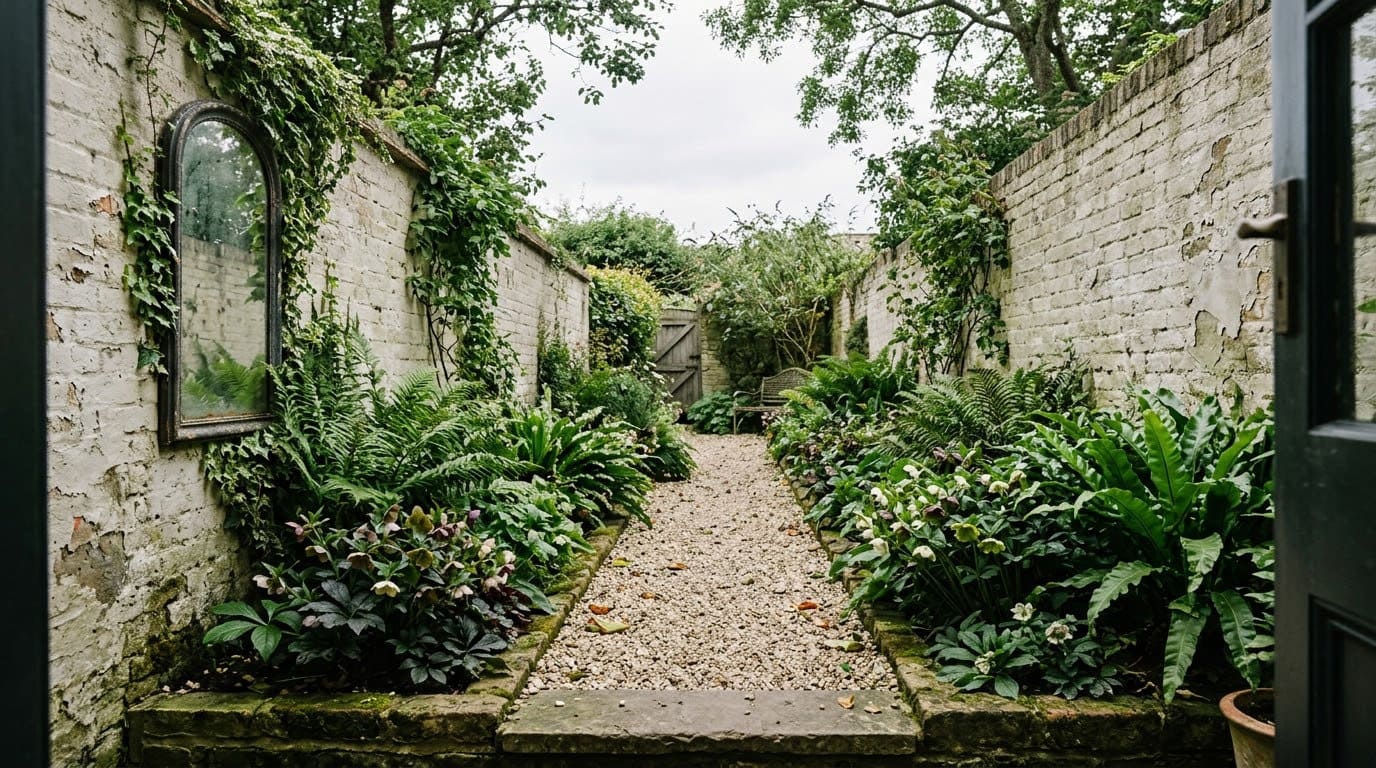
7. The Mirror Trick
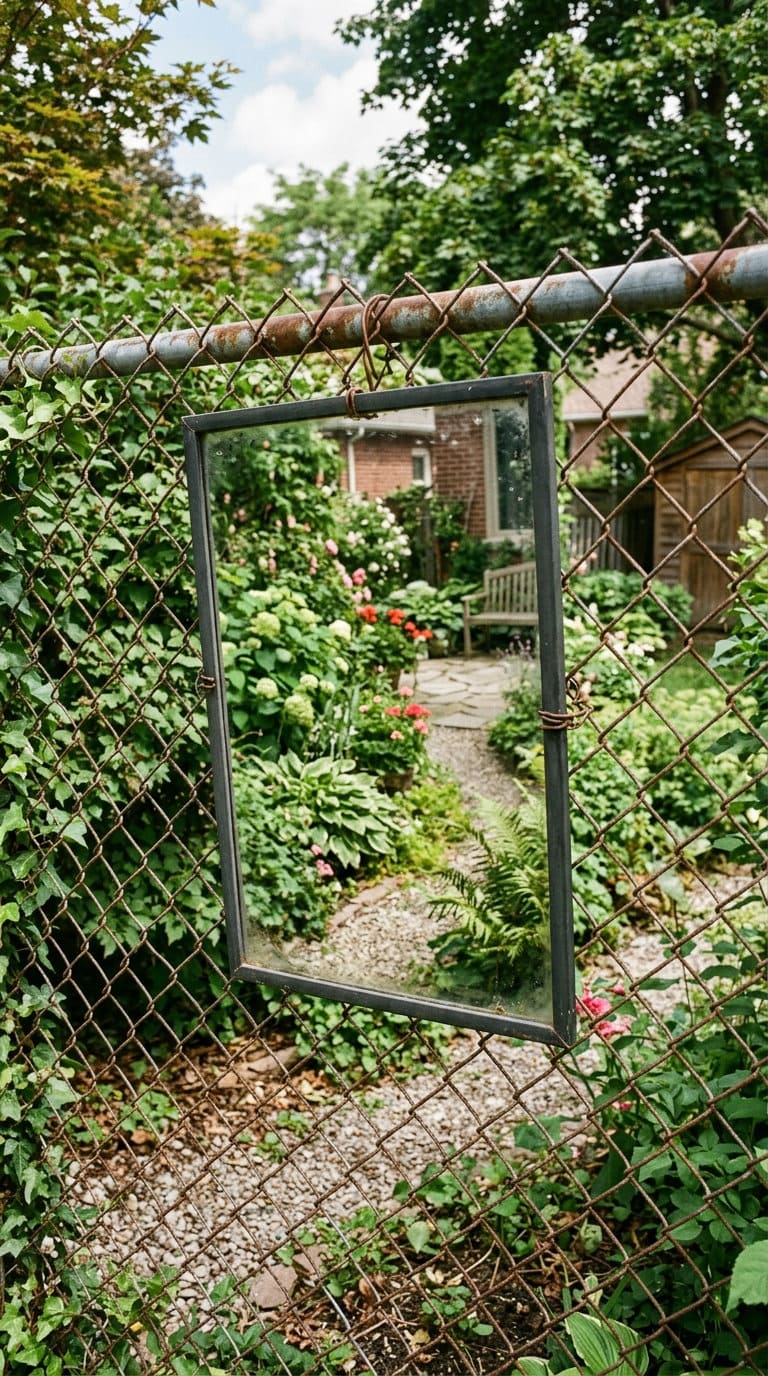
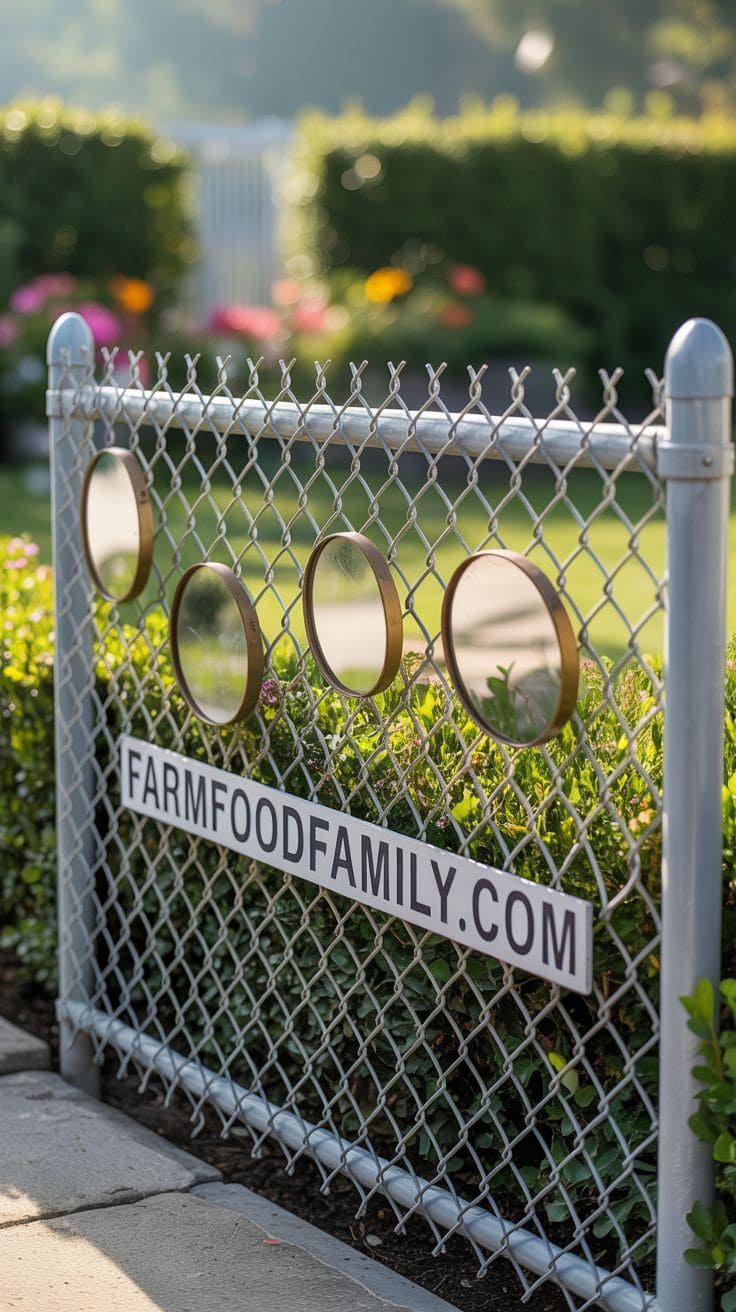
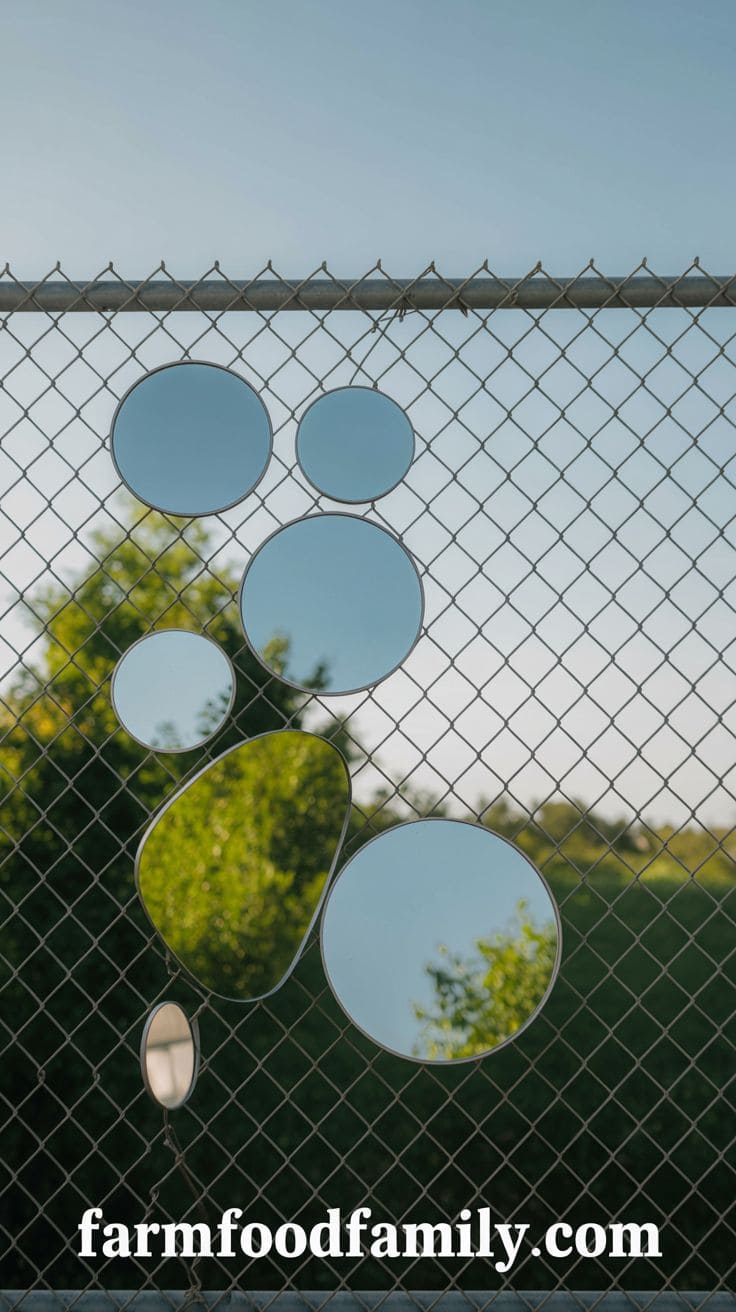
Weatherproof outdoor mirrors (acrylic mirror panels are safer than glass near a yard with kids or pets, since acrylic won’t shatter) mounted on the fence reflect light and greenery, making a small yard read as visually larger.
Angle the mirror slightly rather than mounting it perfectly flat, a straight-on mirror mostly reflects sky, an angled one reflects more of the actual garden.
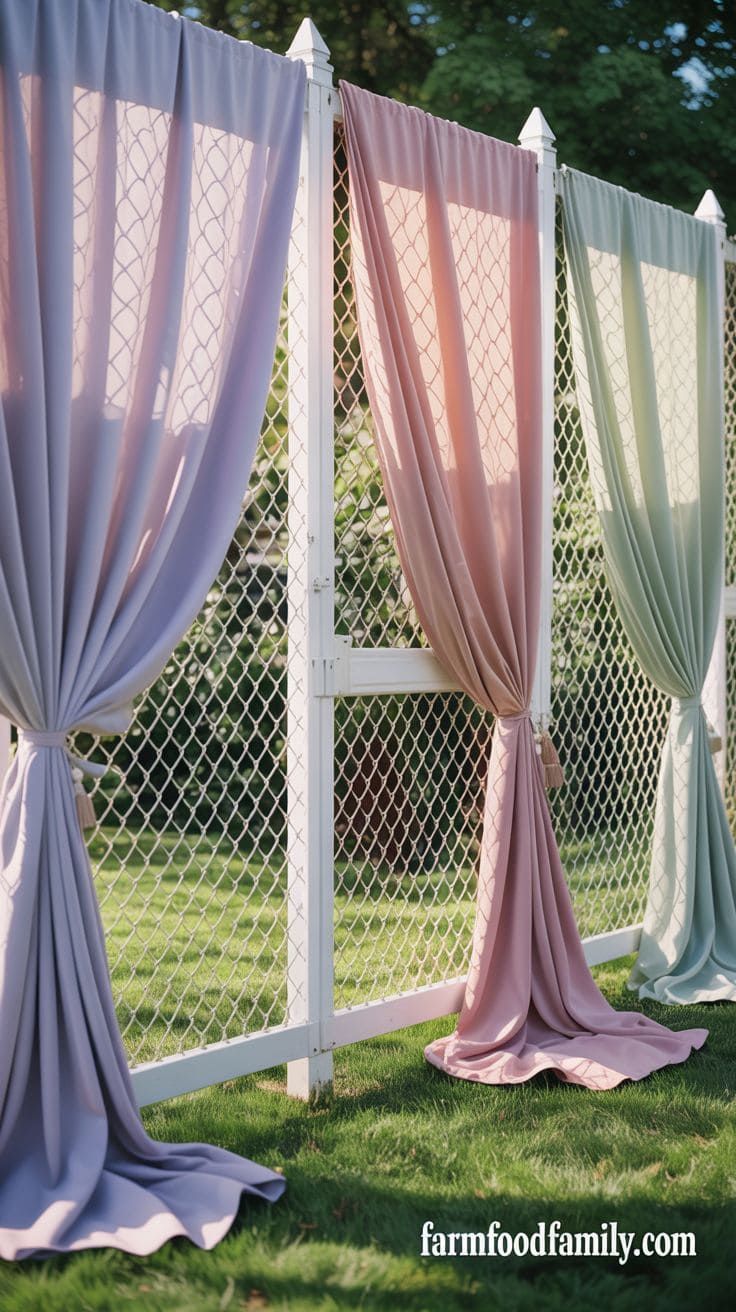
8. Fabric Drapes
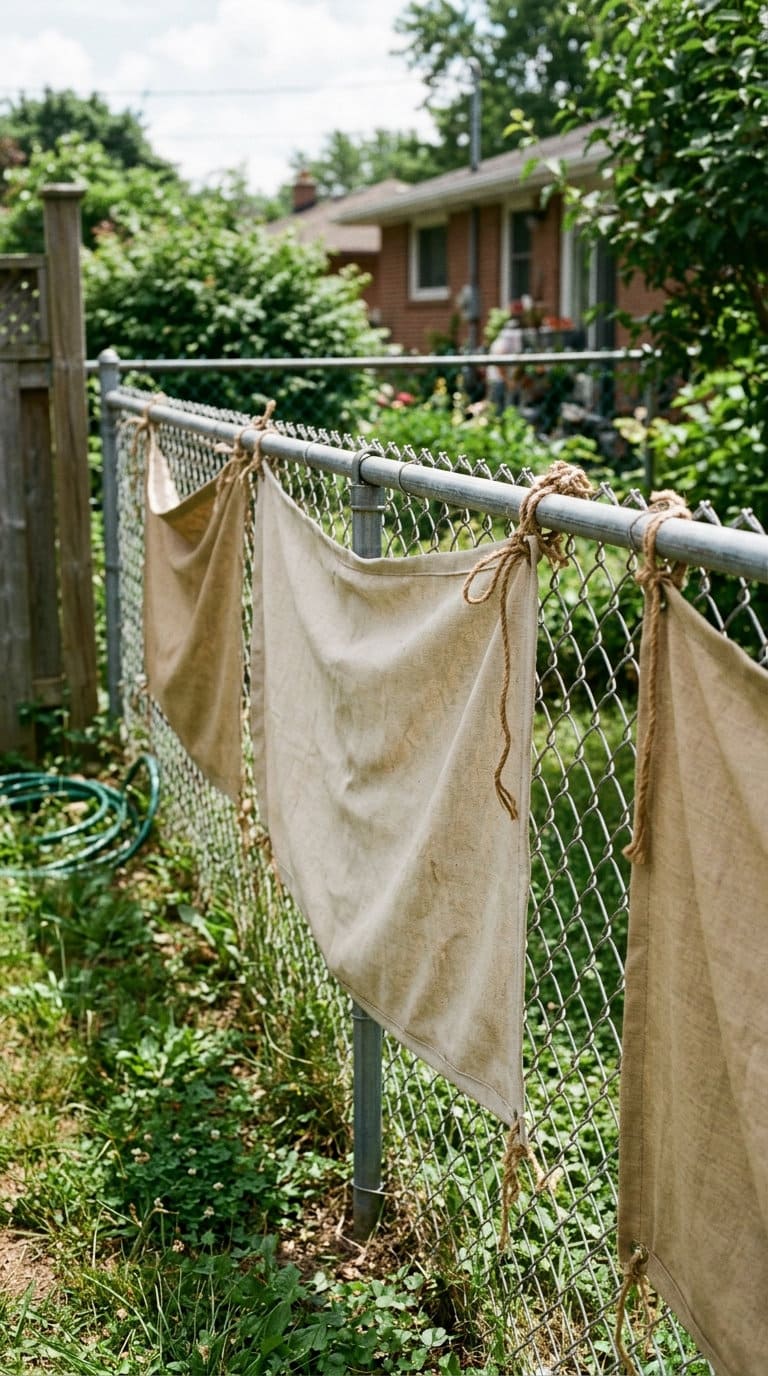
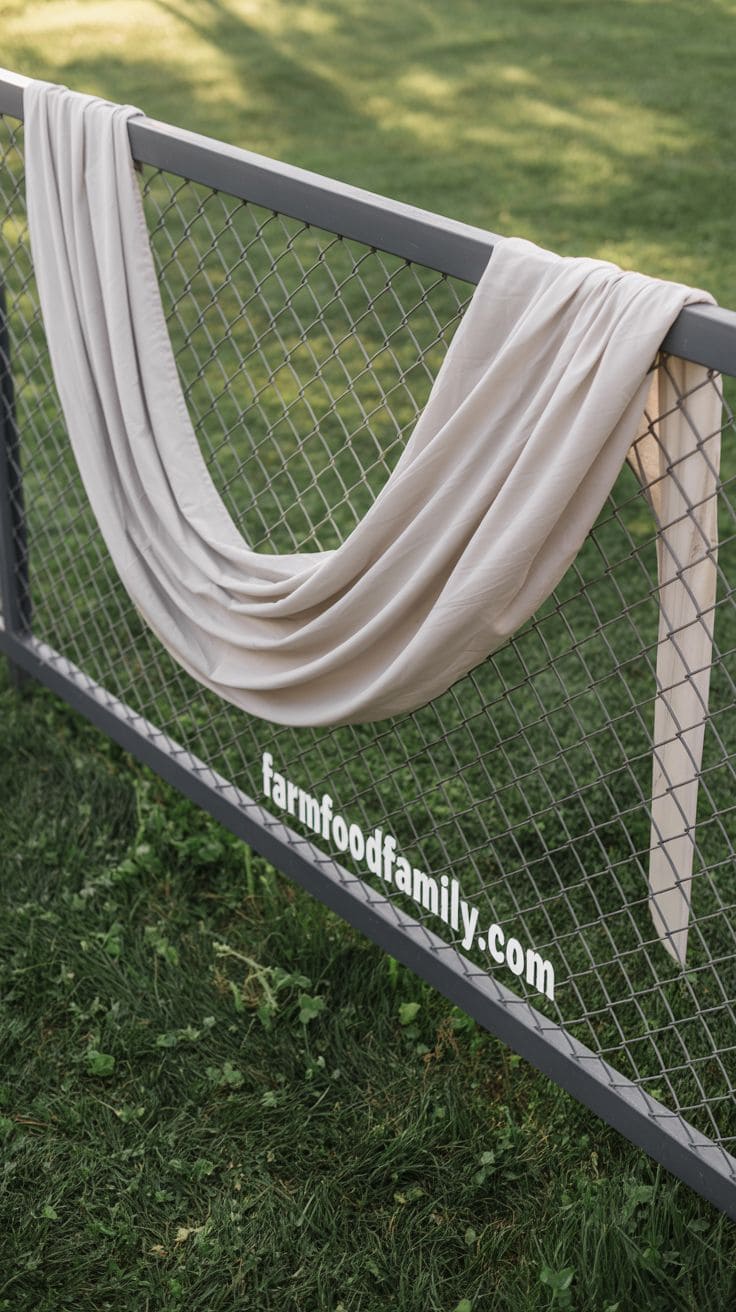
Weather-resistant outdoor fabric, marine-grade canvas or treated cotton duck, draped and tied along sections of the fence adds a soft, romantic texture that hard materials can’t match.
Choose fabric rated for outdoor UV exposure specifically, standard indoor fabric fades and rots within a single season left outside.


9. Privacy Slats
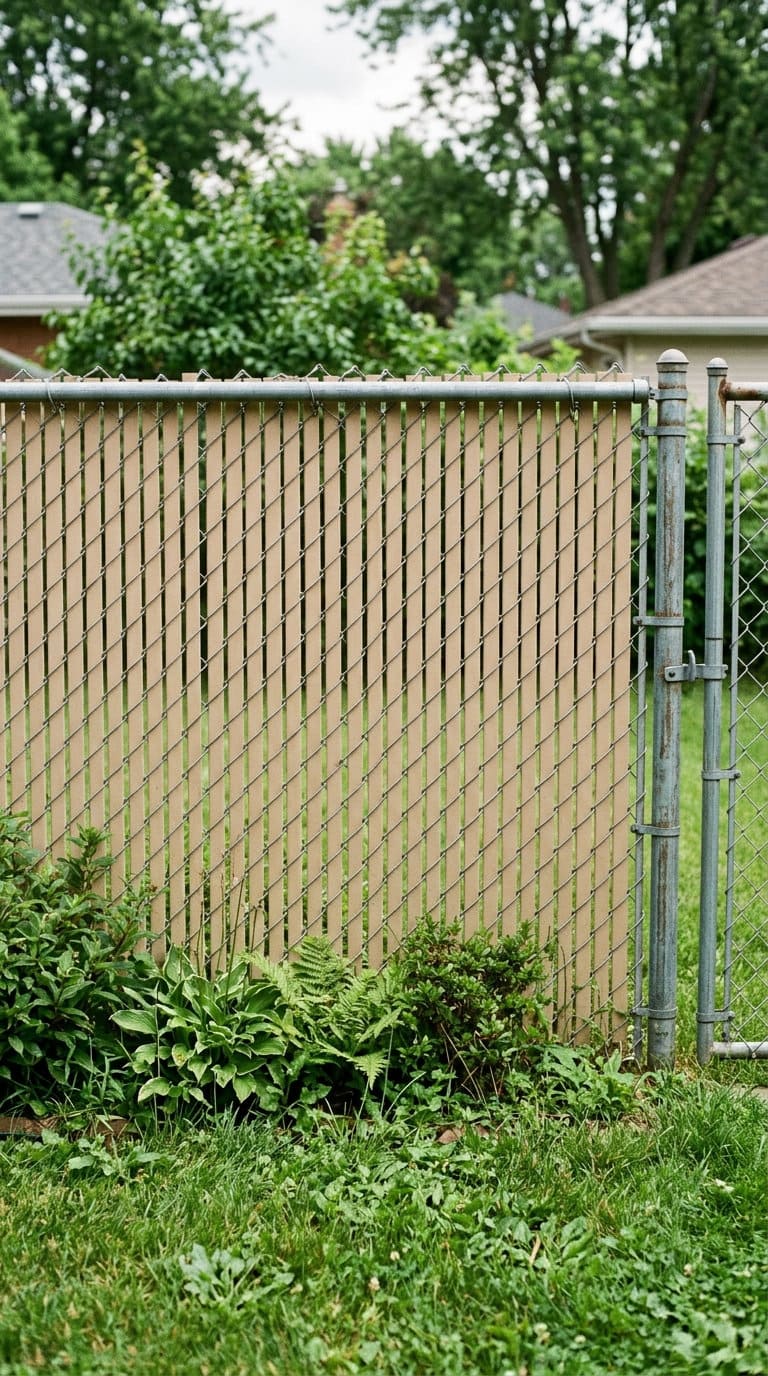
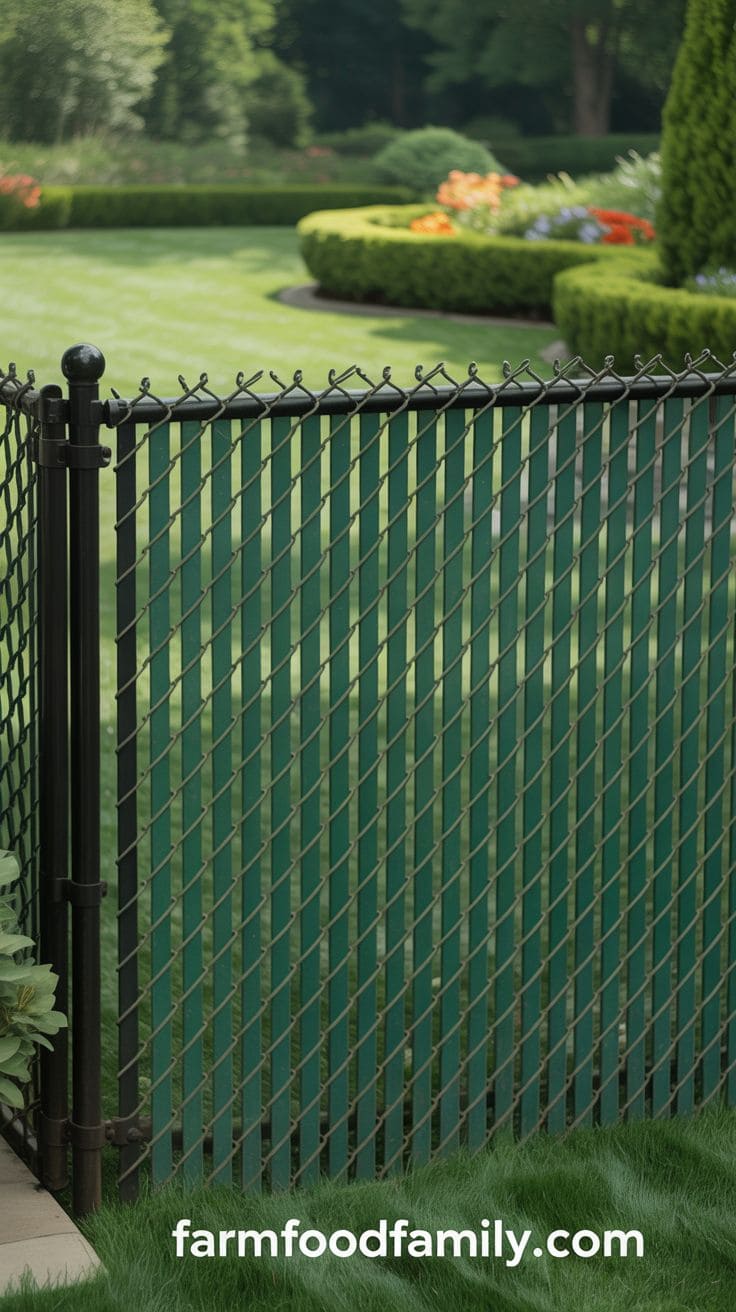
Slide-in privacy slats (PVC, aluminum, or wood-look composite) thread directly into the fence’s diamond pattern one row at a time, giving real, immediate privacy without replacing the fence itself.
Composite and aluminum slats cost more upfront than basic PVC but resist UV fading and wind damage significantly longer, worth the difference if you’re not planning to replace them again in three years.
10. Birdhouse Bonanza
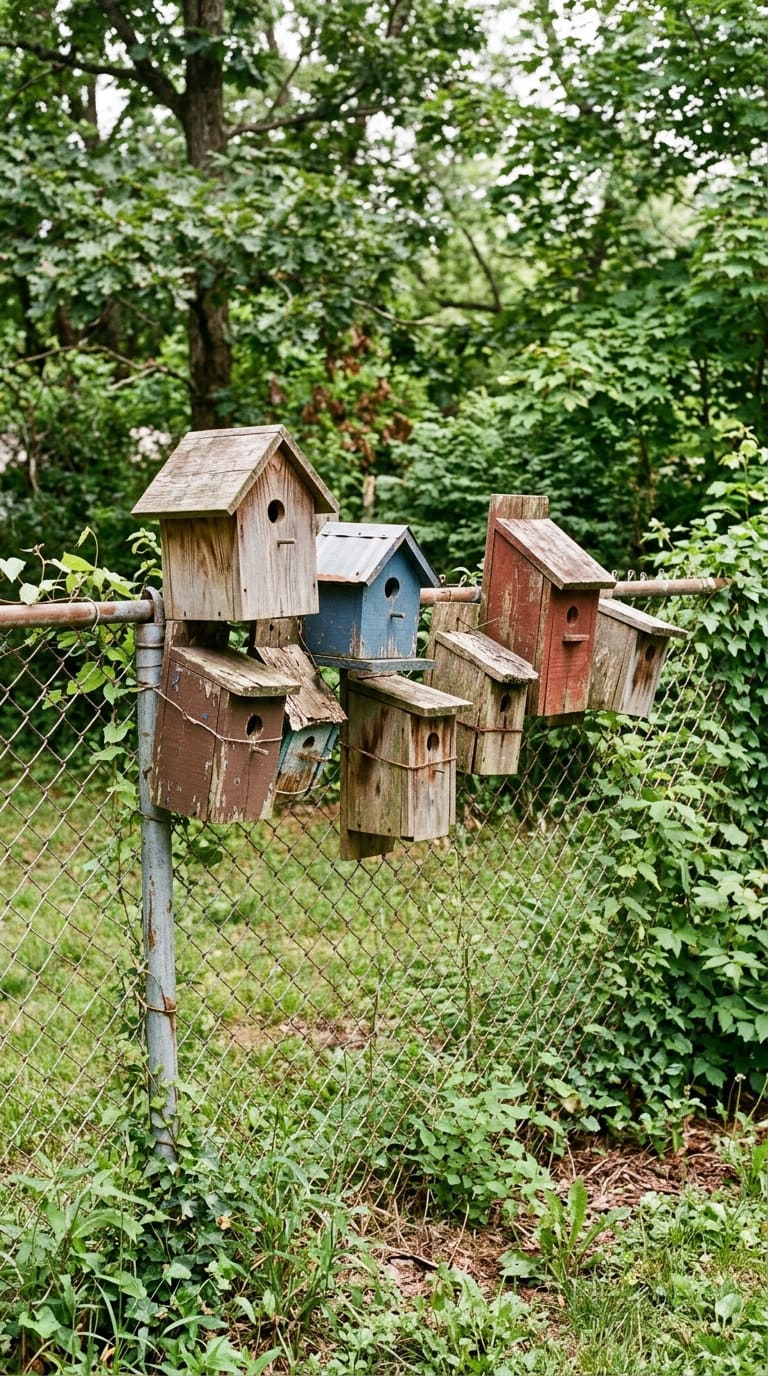
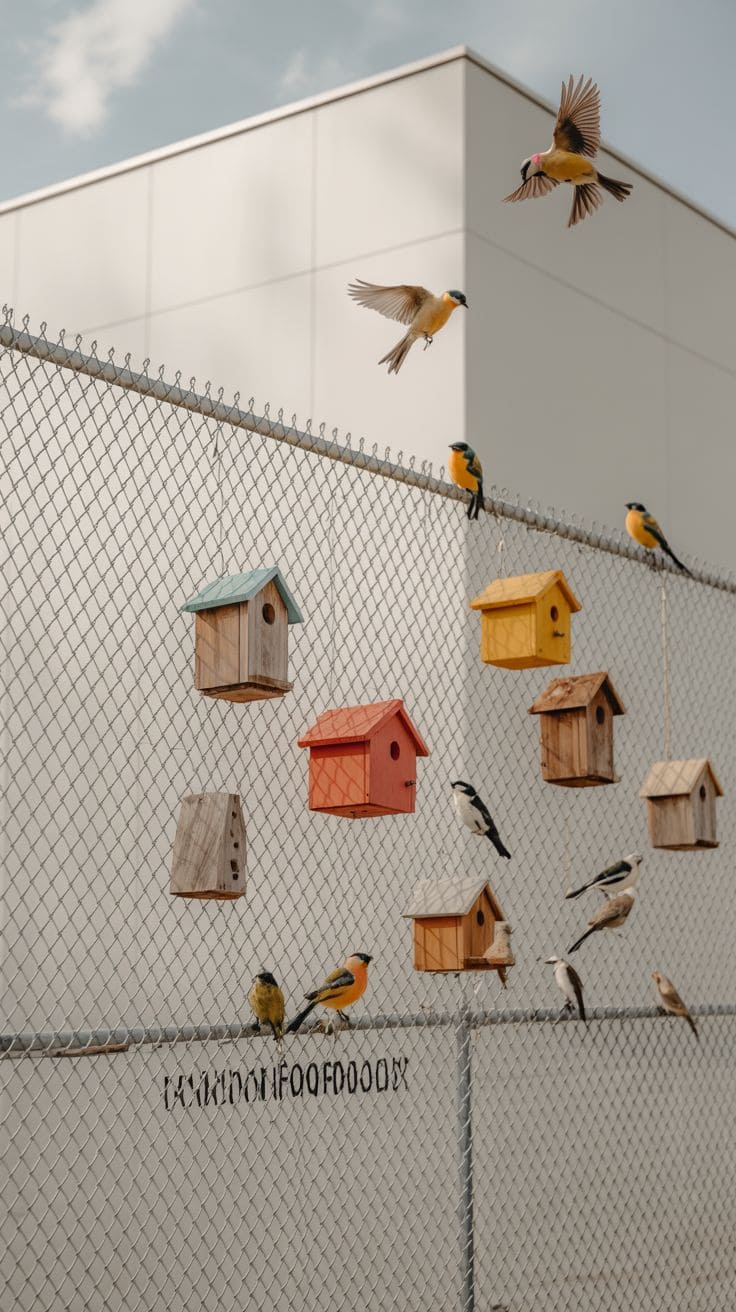
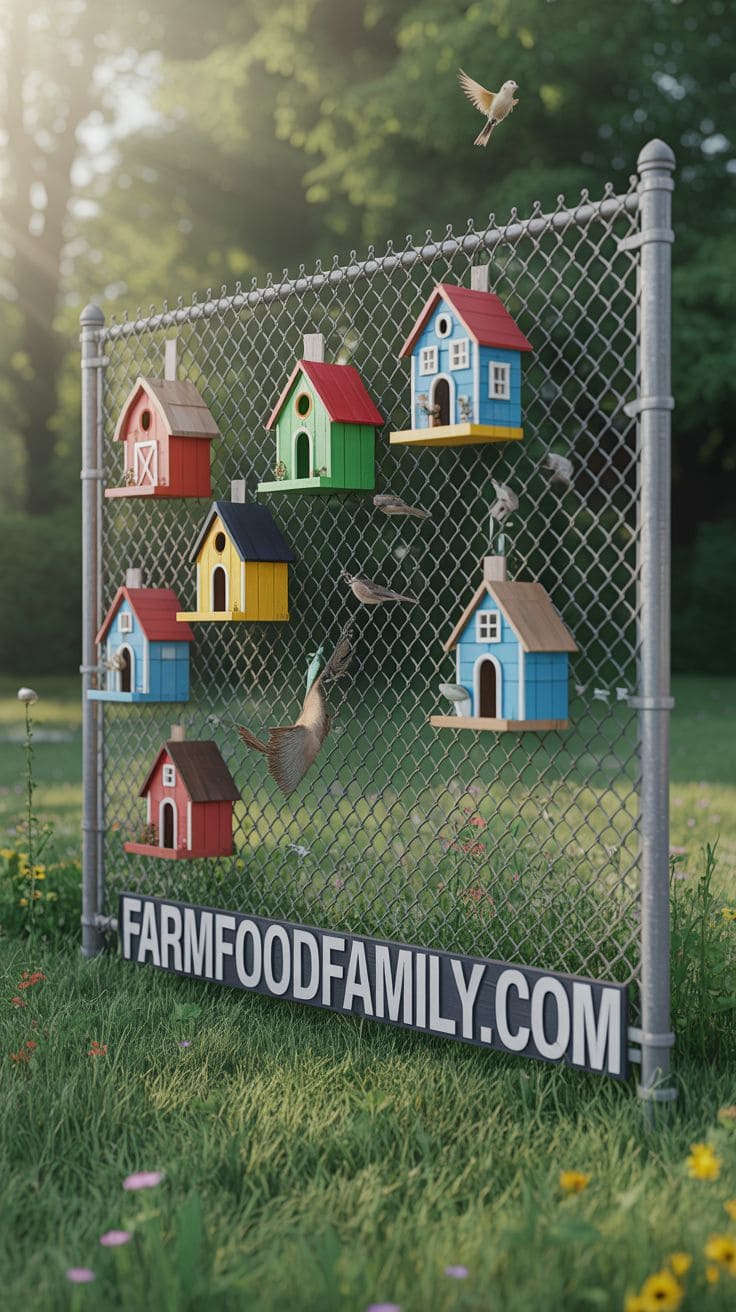
A cluster of birdhouses wired or zip-tied to fence posts and top rail sections creates a genuine bird habitat if at least some of them are properly sized and ventilated for actual nesting, not purely decorative.
The average homeowner spends $616/year on yard fixes that don't address the real problem. Find out what yours actually is — before you spend another dollar.
Take the Free QuizFace entry holes away from prevailing wind and afternoon sun for birdhouses meant for real use, a detail purely decorative versions can skip.
11. The Sporty Angle
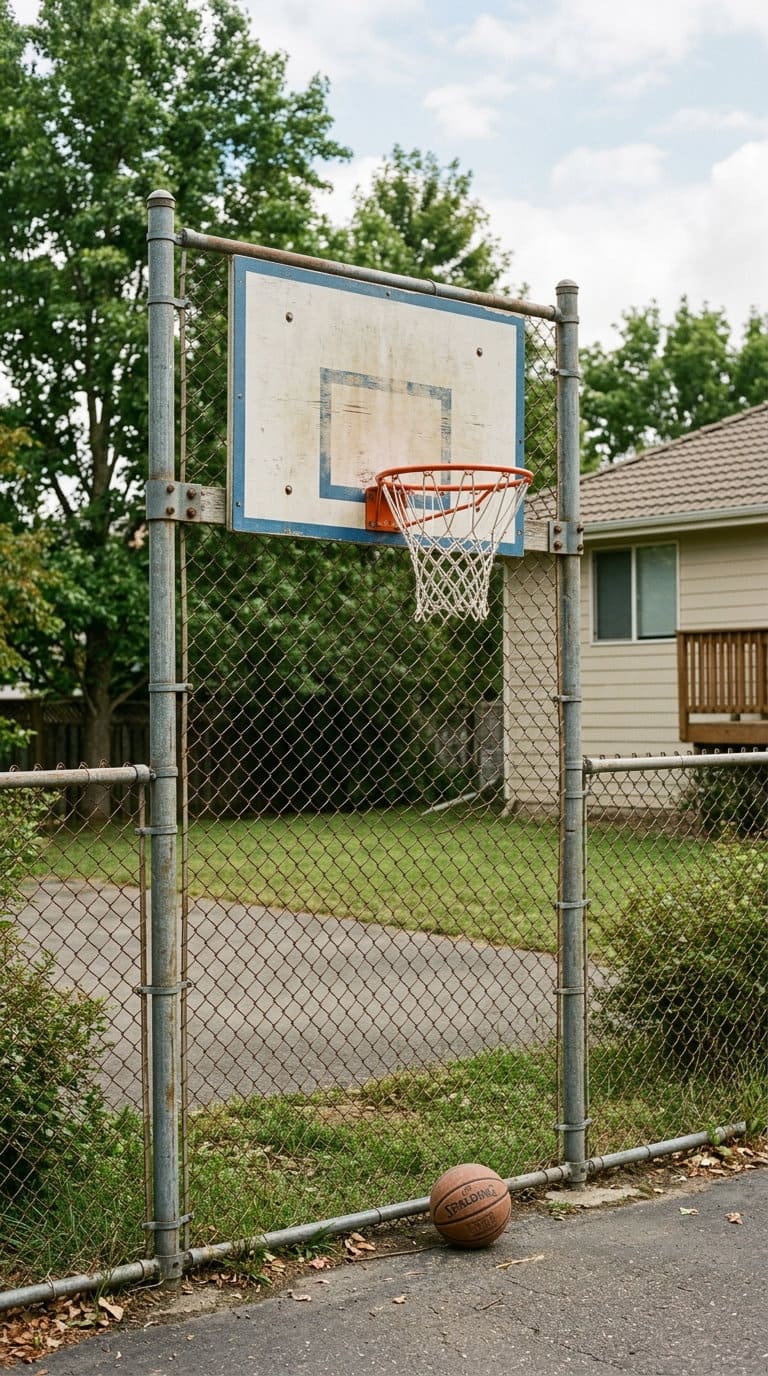
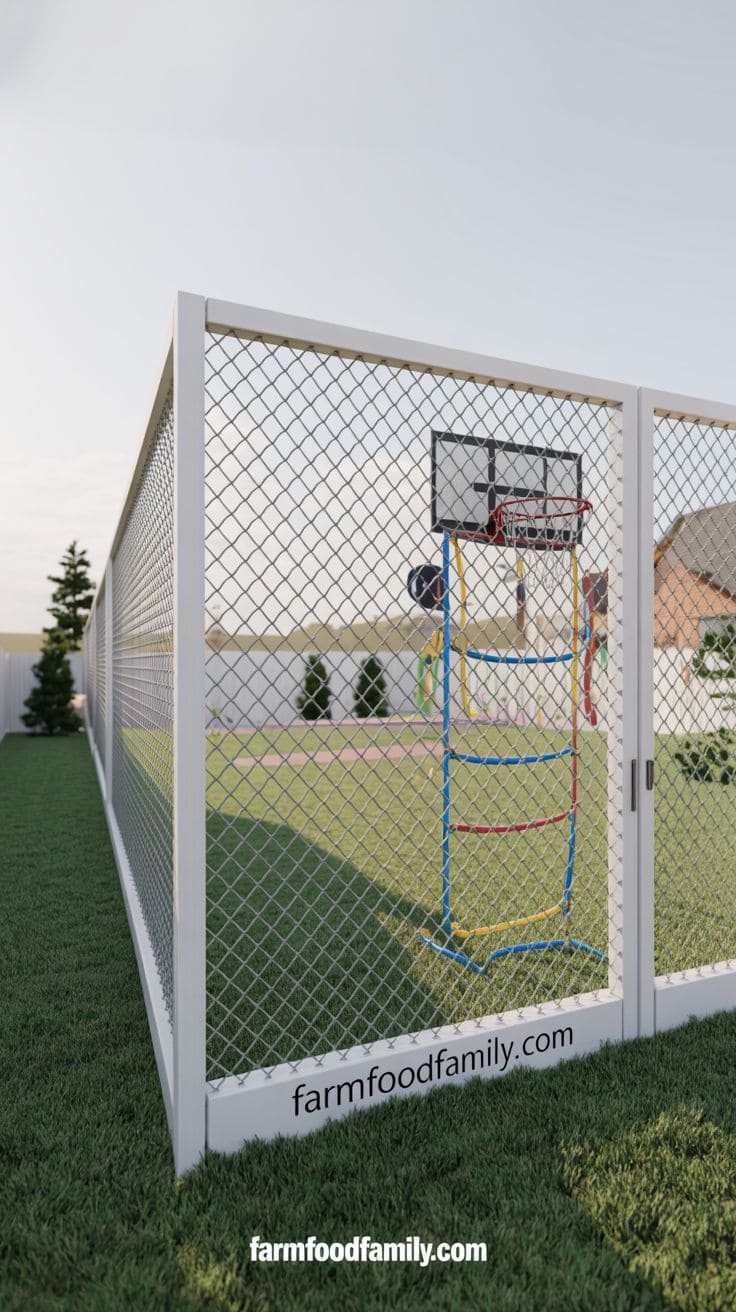
A chain link fence already resembles a backstop, so mounting a basketball hoop, hanging a soccer rebound net, or chalking a strike zone directly onto a taped-off section turns unused fence line into real practice space.
Reinforce the mounting points with extra hardware if you’re hanging anything with real impact force, like a rebound net, standard fence-tie wire isn’t rated for repeated ball strikes.

12. DIY Chalkboard
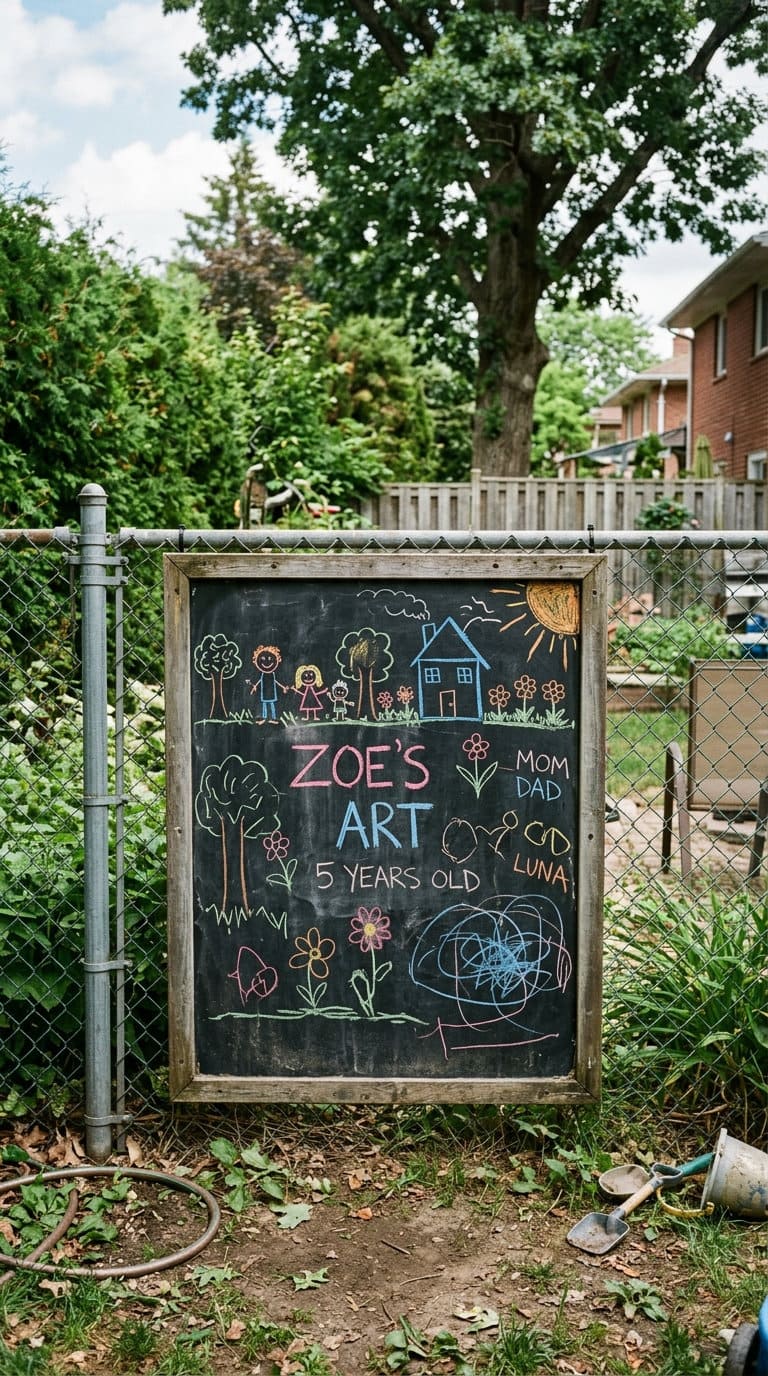
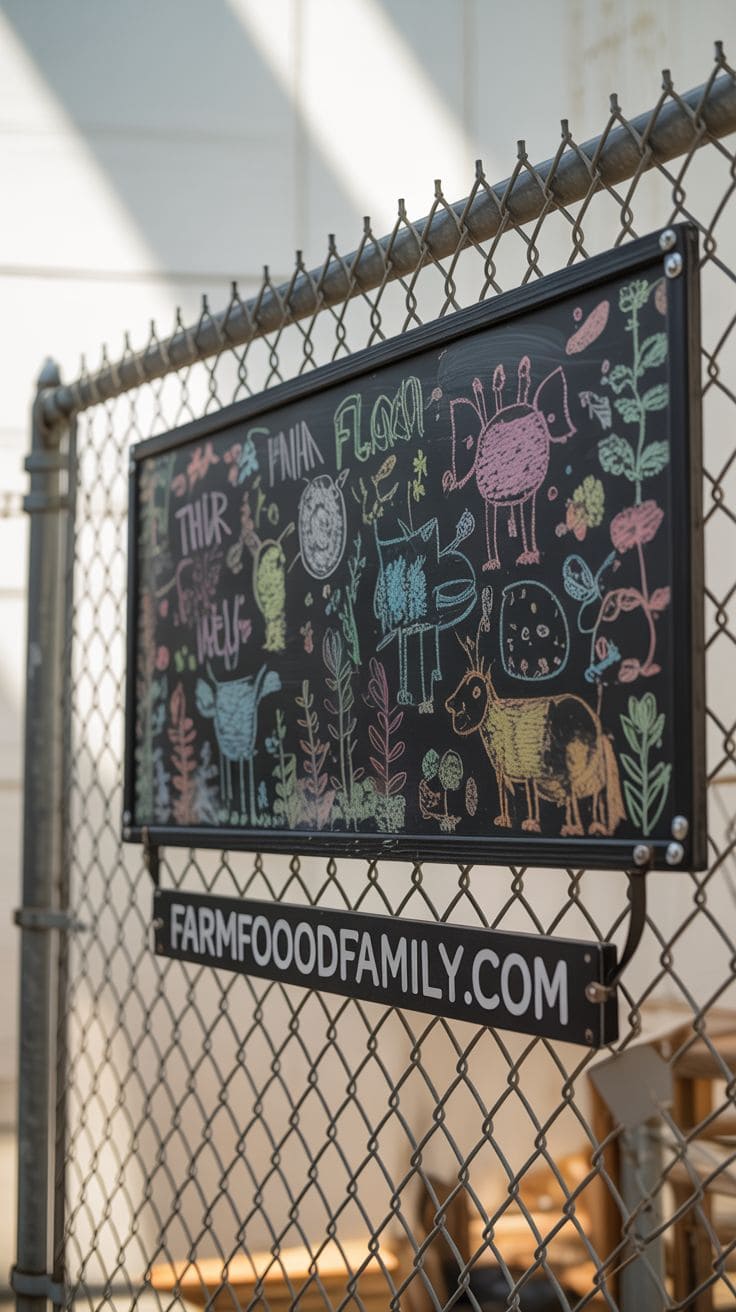
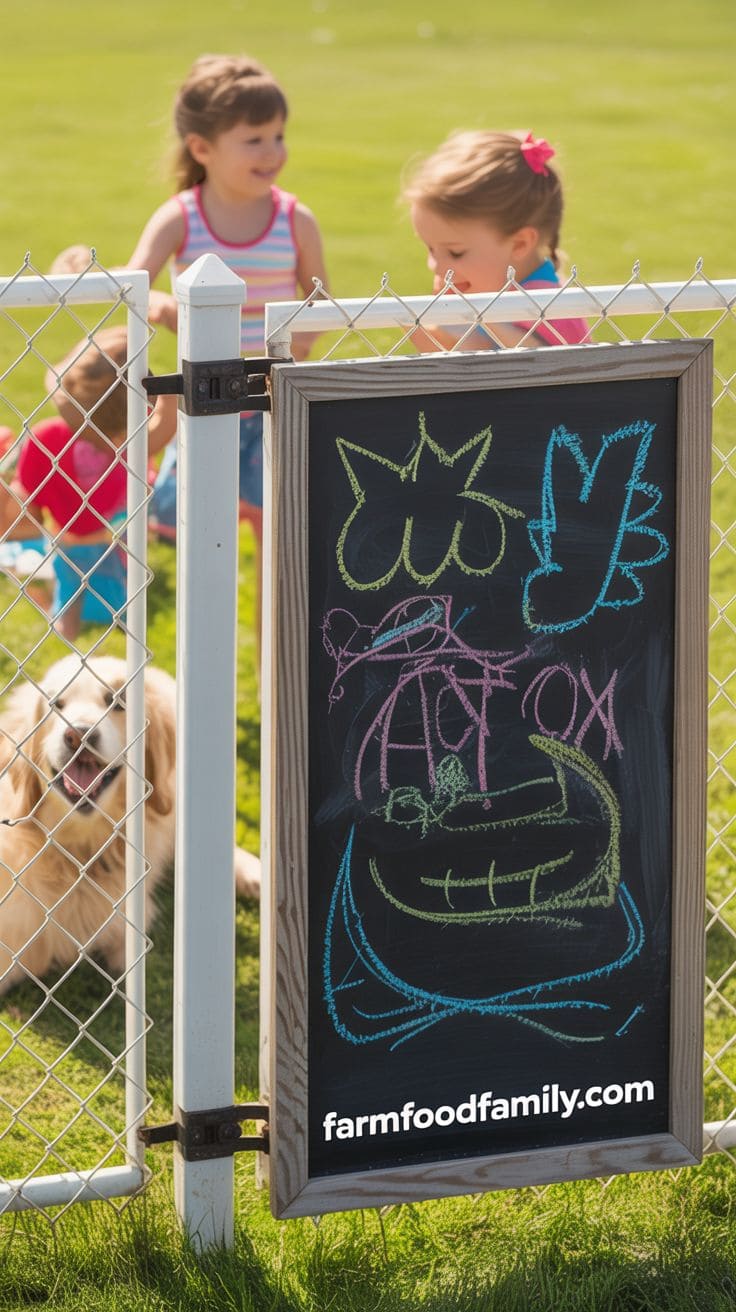
A large exterior-grade chalkboard panel (marine plywood with chalkboard paint holds up far better outdoors than an indoor chalkboard product) zip-tied to the fence gives kids a genuine outdoor art space.
Bring chalk inside after use or store it in a small weatherproof box attached nearby, chalk left outside turns to mush after the first rain.
13. Wind Chimes
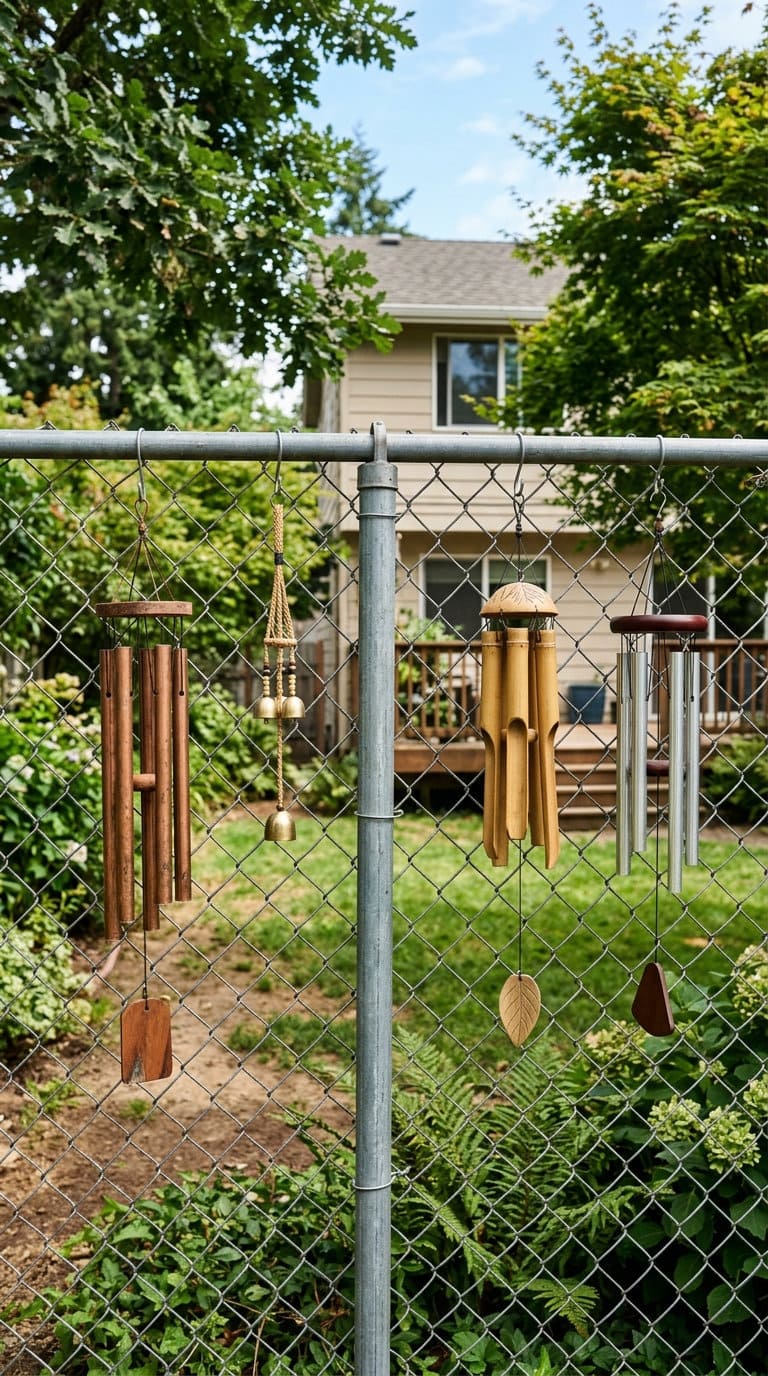
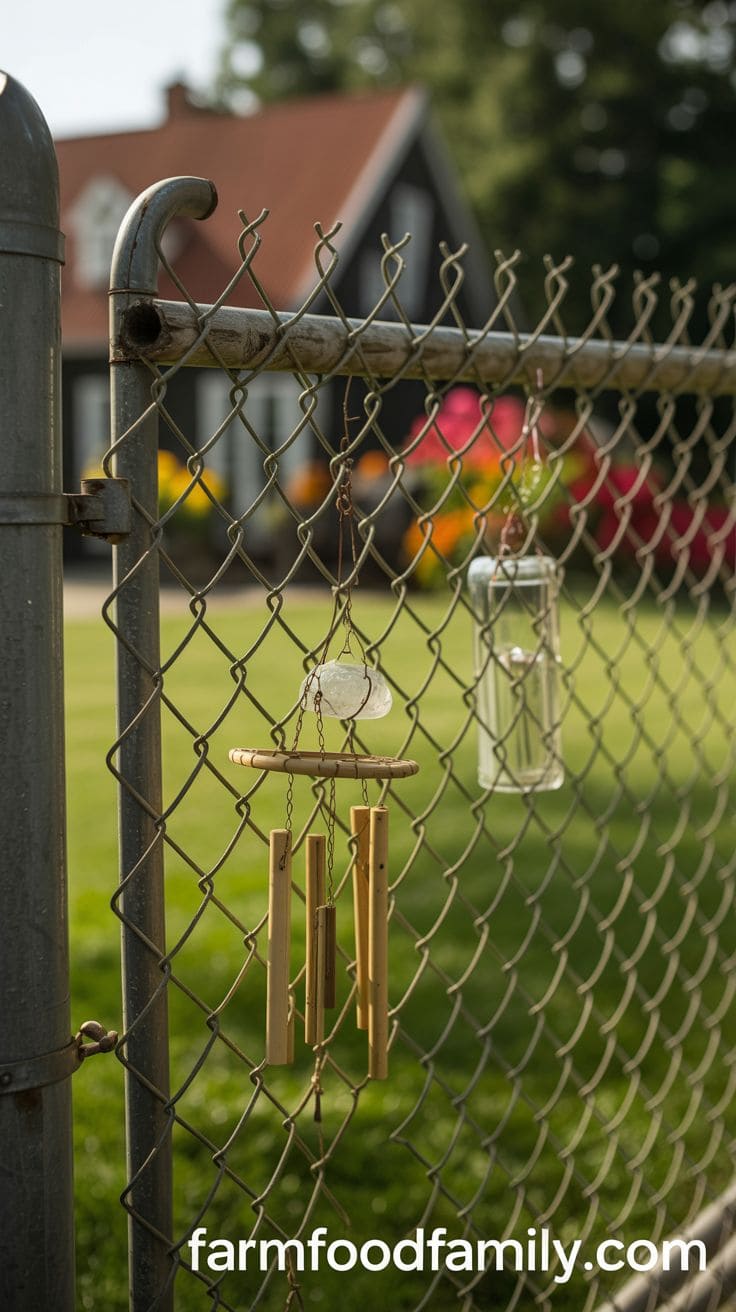
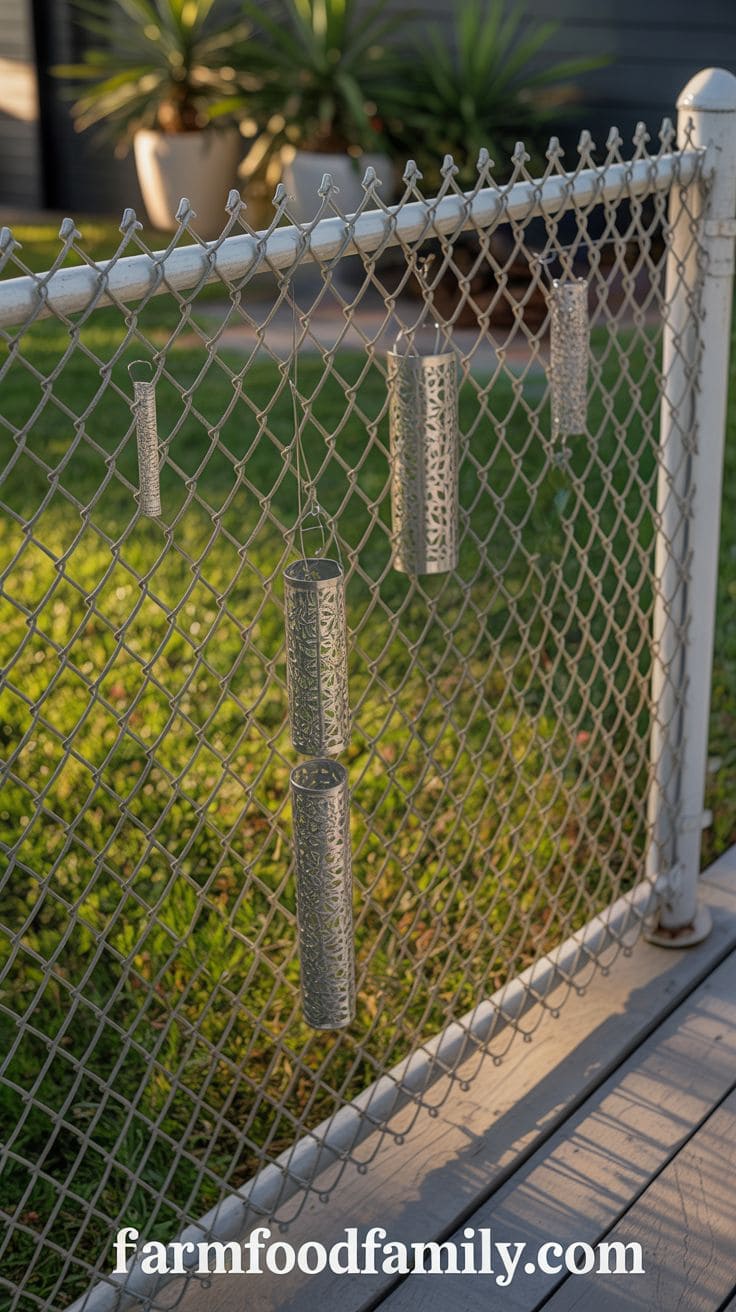
Hang wind chimes from the top rail at a few different points along the fence rather than clustering them all together, which spreads the sound out instead of creating one loud spot.
Metal chimes carry sound further than wood or bamboo chimes, worth knowing if a neighbor’s window is close by and volume matters.
14. Recycled Decor
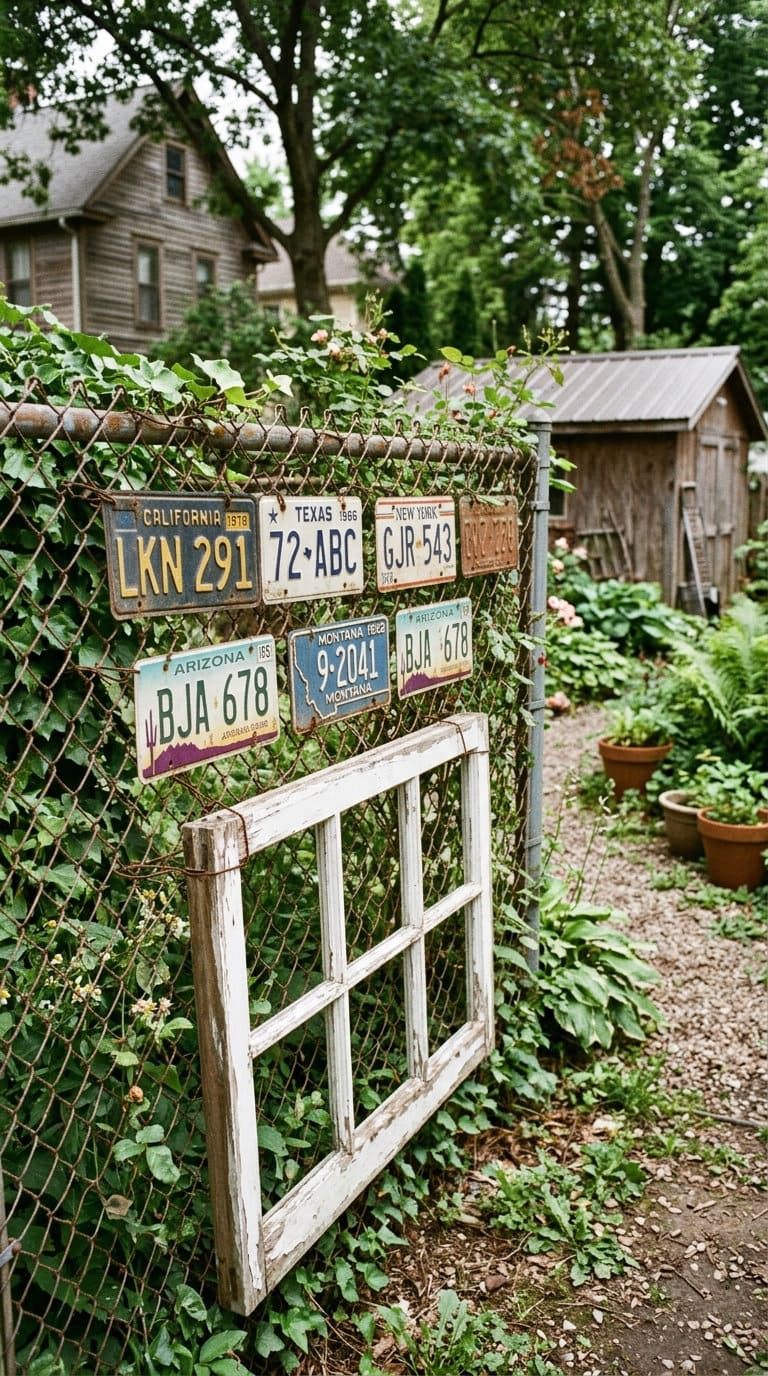
Old license plates, reclaimed window frames, or salvaged metal signs wired to the fence give it real character built from things that would otherwise be thrown out.
Drill mounting holes rather than relying on wire loops through existing holes alone for anything heavier than a license plate, a heavy salvaged piece hung on wire alone can work itself loose in wind over a season.
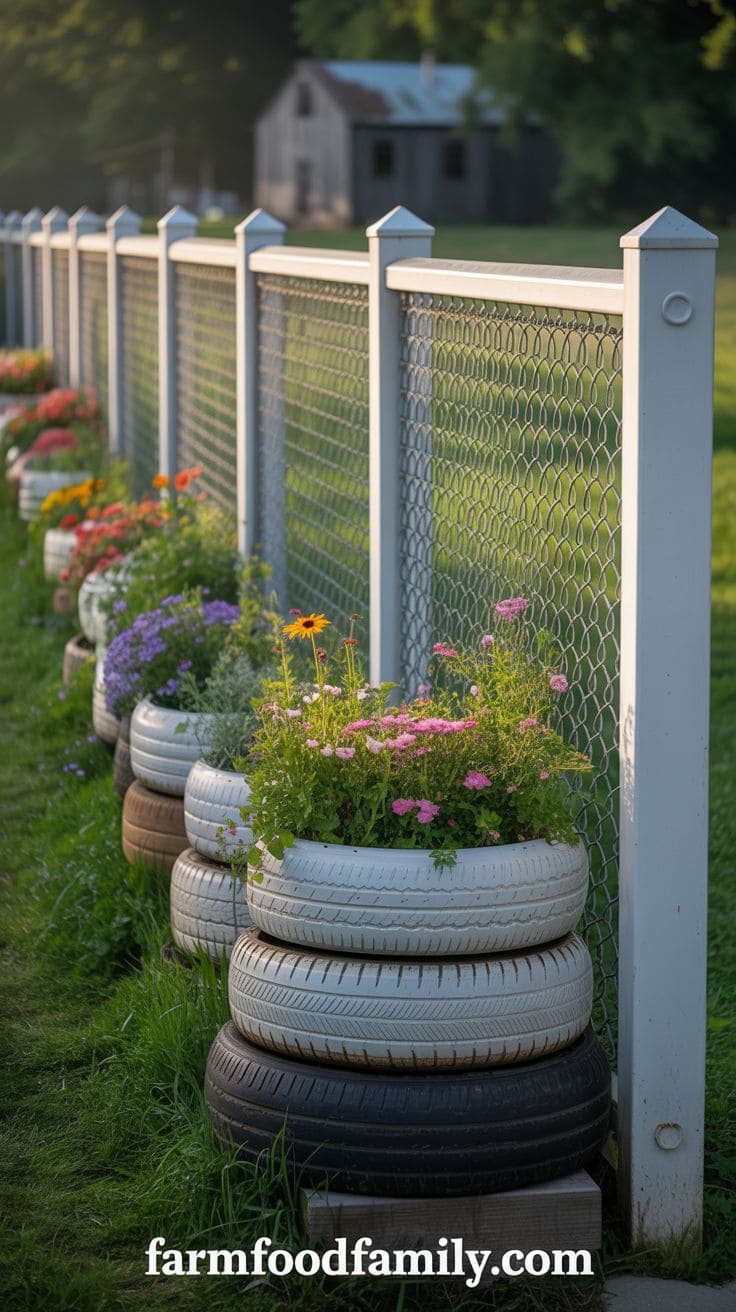
15. Vertical Garden
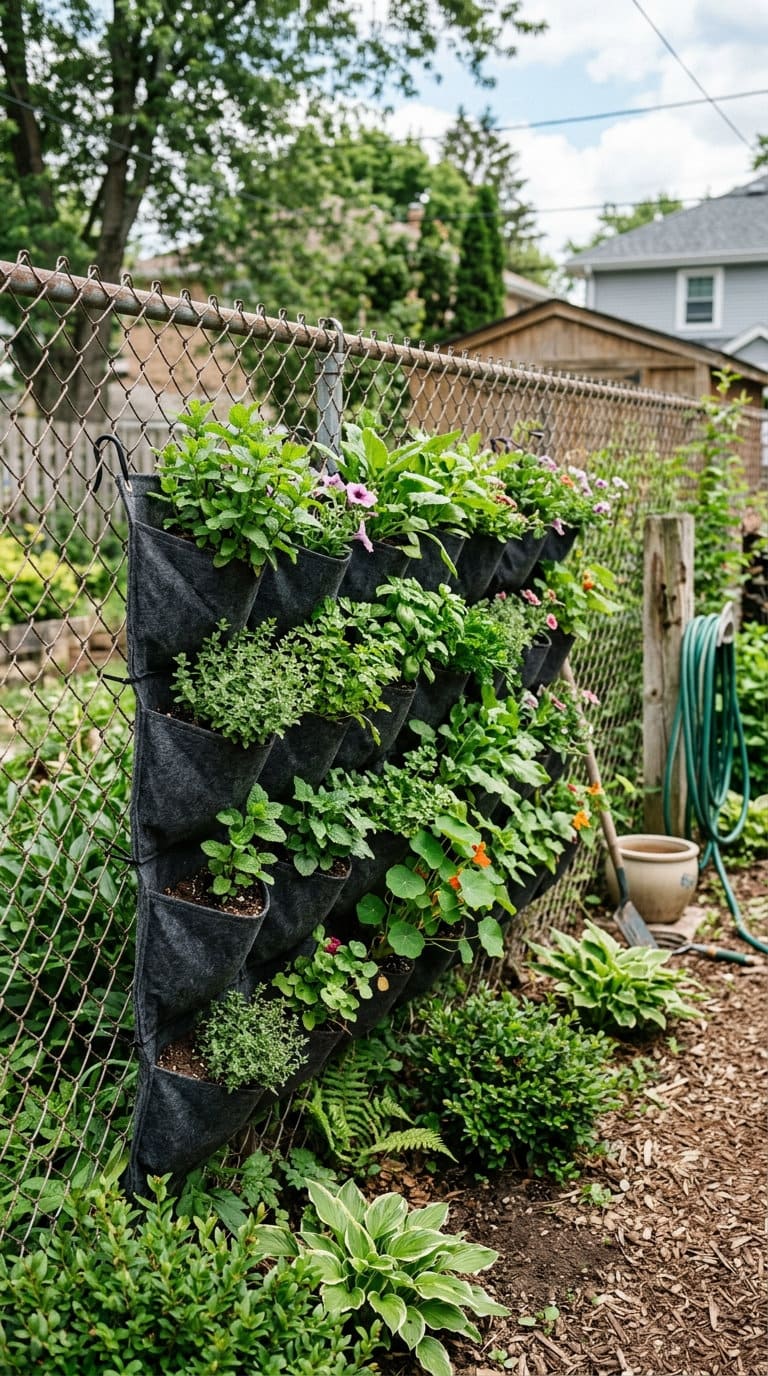
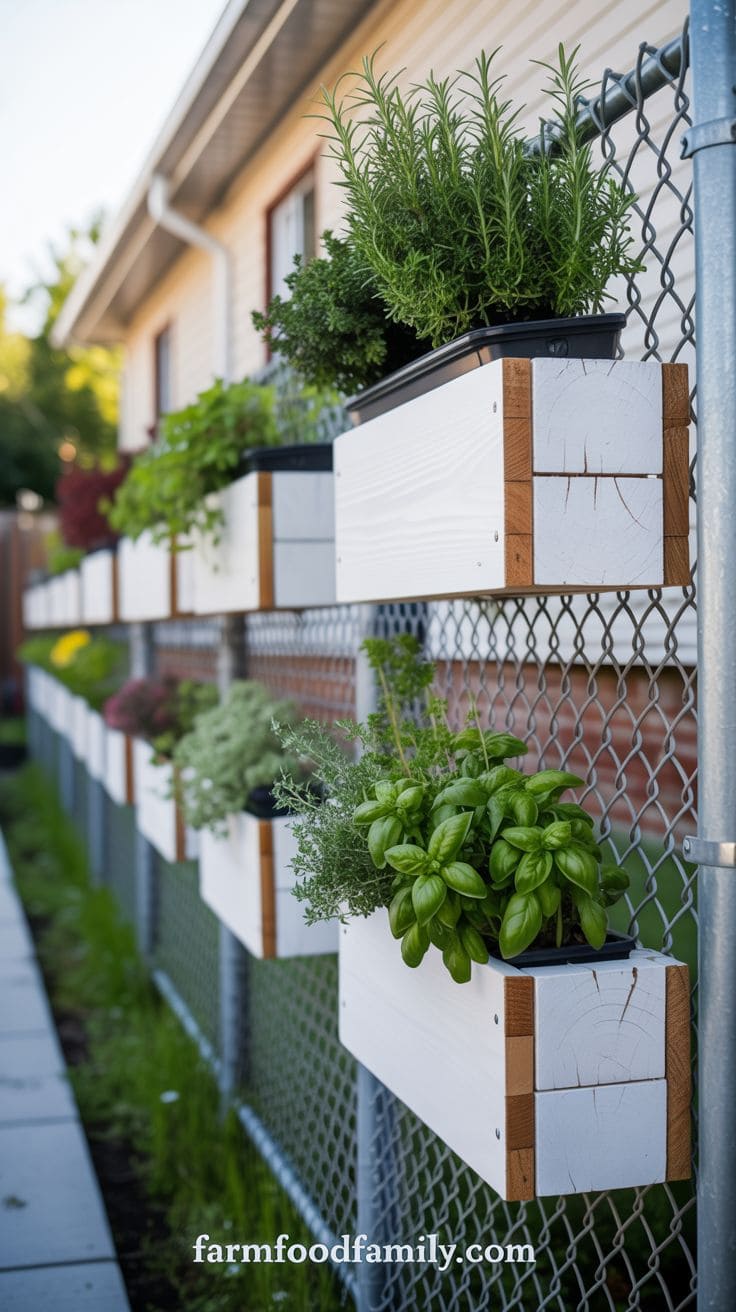
A vertical planting system (pocket-style fabric planters or a wire grid with individual pots) turns the fence into real growing space rather than just a mounting surface for other decor. See our landscaping along a fence article for more on choosing plants that do well in this kind of vertical, fence-mounted setup specifically.
For more on support structures if you’re leaning toward the climbing-plant route, our fence trellis ideas article covers options beyond just letting a vine climb the chain link mesh directly.
FAQs about chain link fences
Can chain link fences be stylish?
Genuinely, yes. With the right decorative layer, woven fabric, bamboo screening, mounted art, or layered plantings, a chain link fence can look as intentional as any other fence style, while costing meaningfully less as the base structure. The mesh itself is just a blank canvas, the ideas above are what actually make it read as styled rather than bare.
How do you maintain a chain link fence?
Rinse it down periodically to clear dust and debris, and inspect for rust spots at least once a year, especially near the ground where moisture collects longest. Treat any rust spots early with a wire brush and rust-inhibiting paint made for galvanized metal, catching it early is far easier than dealing with a fully corroded section later.
Are chain link fences costly?
They’re the cheapest fence category by a wide margin. Professional installation runs $32 to $71 per linear foot (median around $44), according to Ergeon, while DIY materials alone run $3 to $15 per linear foot. A typical 150-foot, 4-foot-high residential fence costs $1,500 to $6,000 installed, or roughly $450 to $2,250 if you install it yourself.
Can I put up a chain link fence on my own?
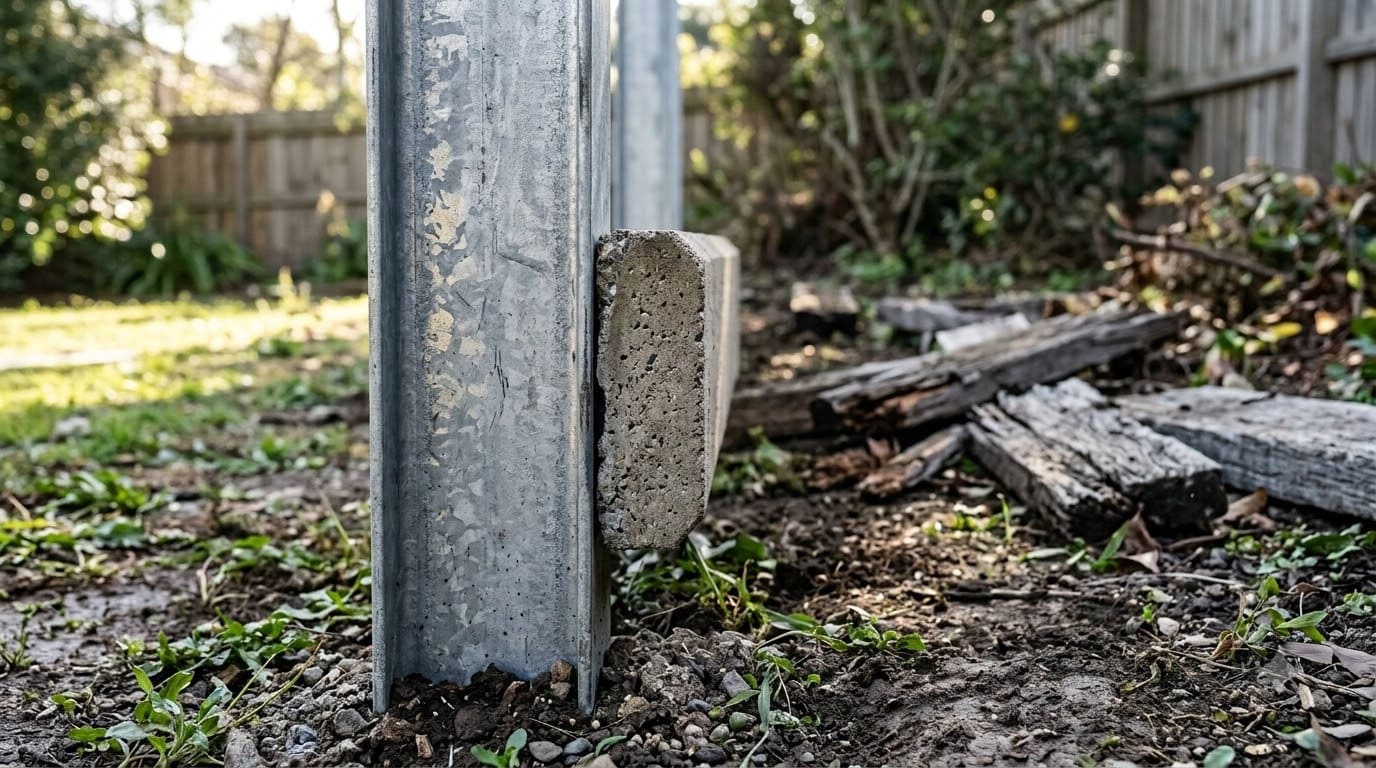
Yes, for a standard residential height (4-6 feet), with basic tools: a post-hole digger or auger, a level, fence pliers, and a helper for holding sections steady while you attach them. Setting posts in concrete and letting it cure properly is the step people rush most, and it’s the one that determines whether the fence stays straight for years or starts leaning within a season.
What’s the ideal plant for a chain link fence?
Lighter climbers like morning glory, clematis, or climbing roses work well without adding much real weight to the structure. Be cautious with heavy, woody climbers like mature wisteria or trumpet vine, they can bend the fence’s top rail and stress the posts over several years of growth, a real issue fence contractors see regularly. If you want one of these heavier vines, plan on trimming it back hard every season rather than letting years of woody growth accumulate.
Never miss an update — choose FarmFoodFamily as your preferred source on Google.
How it works: Tap the button below to open Google's settings page, then check the box next to FarmFoodFamily.
Tap the checkbox to turn it blue — that's how you know it's set.