How to Heat and Cool Rooms Without Ductwork
A ductless mini-split heats and cools one room from a single wall unit, but sizing, wiring, and installer support decide whether it pays off.

Never miss an update — choose FarmFoodFamily as your preferred source on Google.
How it works: Tap the button below to open Google's settings page, then check the box next to FarmFoodFamily.
Tap the checkbox to turn it blue — that's how you know it's set.
A ductless mini-split heats and cools one room from a single wall unit, but sizing, wiring, and installer support decide whether it pays off.
Quick answer: how do you heat and cool a room without ductwork?
To heat and cool a room without ductwork, use a ductless mini-split heat pump. One indoor wall head connects to an outdoor condenser through a small hole in the wall, so you skip cutting into walls for ducts. It’s a practical fit for sunrooms, finished attics, and detached workshops.
The Department of Energy lists ductless mini-splits among its heat pump types and says heat pumps can be an energy-efficient alternative to furnaces and air conditioners in moderate climates.
Size the unit with a load calculation, not just a coverage chart. Check the model’s voltage, MCA, and MOCP with a licensed electrician, plan the condensate drain, and confirm a local technician will commission the system.
Until then, use space heaters carefully. The CPSC says to keep them three feet from anything that can burn and plug them directly into a wall outlet.
In plenty of older houses, changing seasons means hauling heavy gear in and out of storage. Every May, a 60-pound window air conditioner comes out of the shed, gets wedged into a wooden sill with foam strips, and blocks half the glass until fall. By November, the window box goes back into storage and plug-in space heaters come out so you can use the sunroom or workshop without keeping a coat on indoors.
Adding central ductwork to an older farmhouse, finished attic, or detached garage can run into five figures and means cutting into plaster walls or sacrificing closet space for chases. A ductless heat pump puts year-round heating and cooling in those rooms from one wall unit without tearing up the structure of the house.
What Window Units and Space Heaters Cost to Run
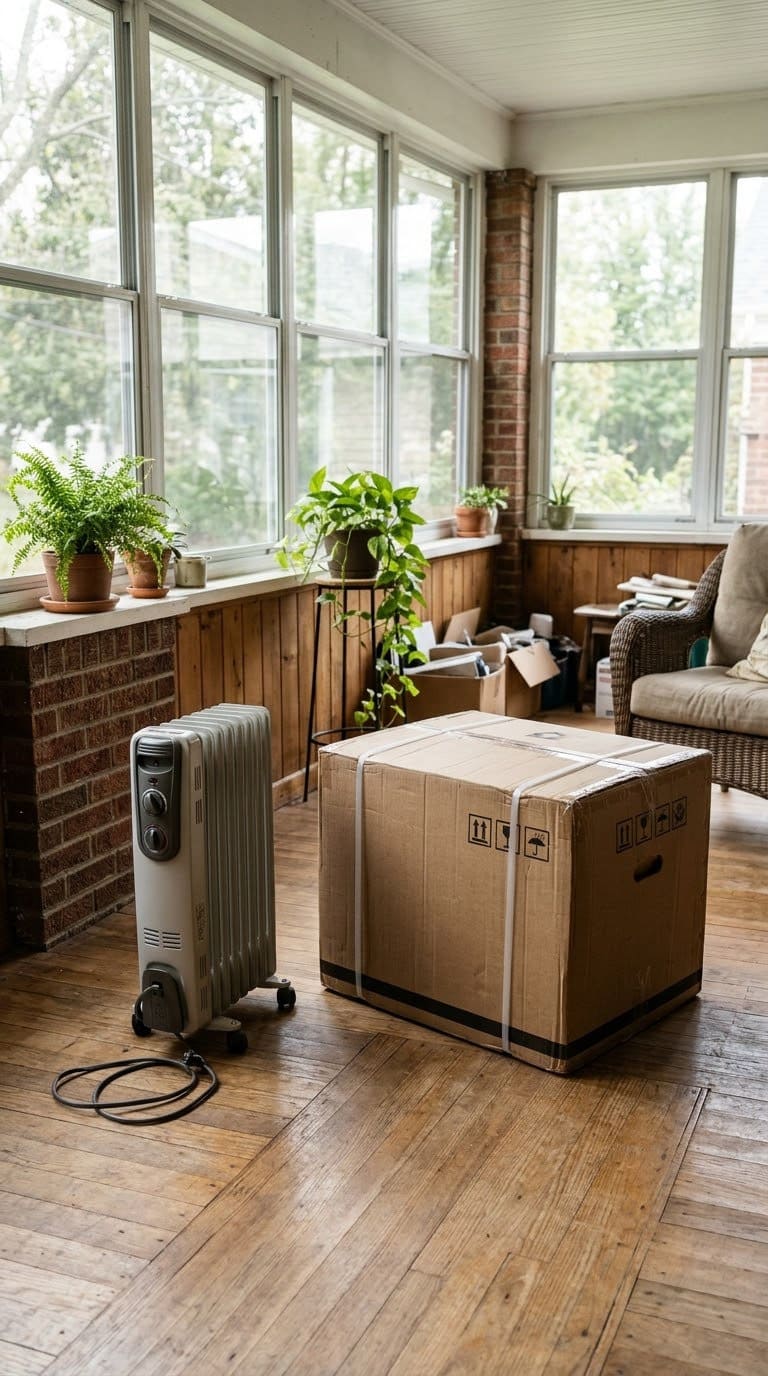
The Math on a Plug-In Space Heater
A portable space heater looks cheap at the hardware store, often under $70. On high, however, a standard plug-in heater pulls 1,500 watts through a metal coil or ceramic plate, converting one unit of electricity into one unit of heat. Run a single 1,500-watt heater for eight hours a day and it uses 12 kilowatt-hours daily, or 360 kilowatt-hours a month. At an illustrative rate of 16 cents per kilowatt-hour, one heater adds nearly $58 a month to your electric bill just to warm one drafty room. Run two in a sunroom or shop and the monthly cost climbs fast.
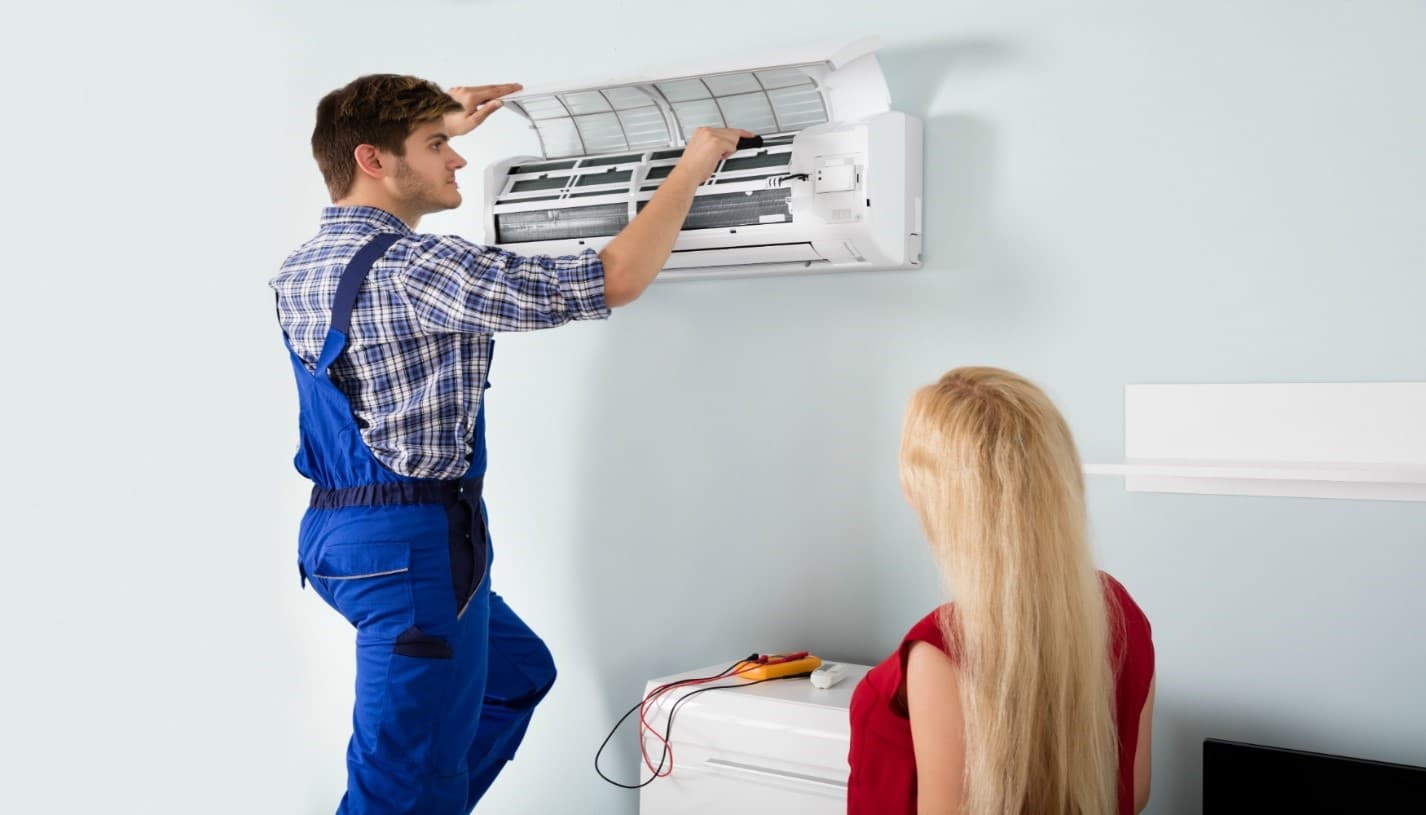


Older wiring hits its limit even sooner. One 1,500-watt heater takes up most of a standard 15-amp circuit by itself, so plugging a vacuum or miter saw into the same breaker trips the power. Exposed heating coils are also a poor fit around woodshop sawdust and pets. Window air conditioners bring their own waste: thin accordion side panels let humid summer air leak inside and let indoor heat escape all winter if you leave the unit sitting in the sash.
One Wall Unit for Summer and Winter
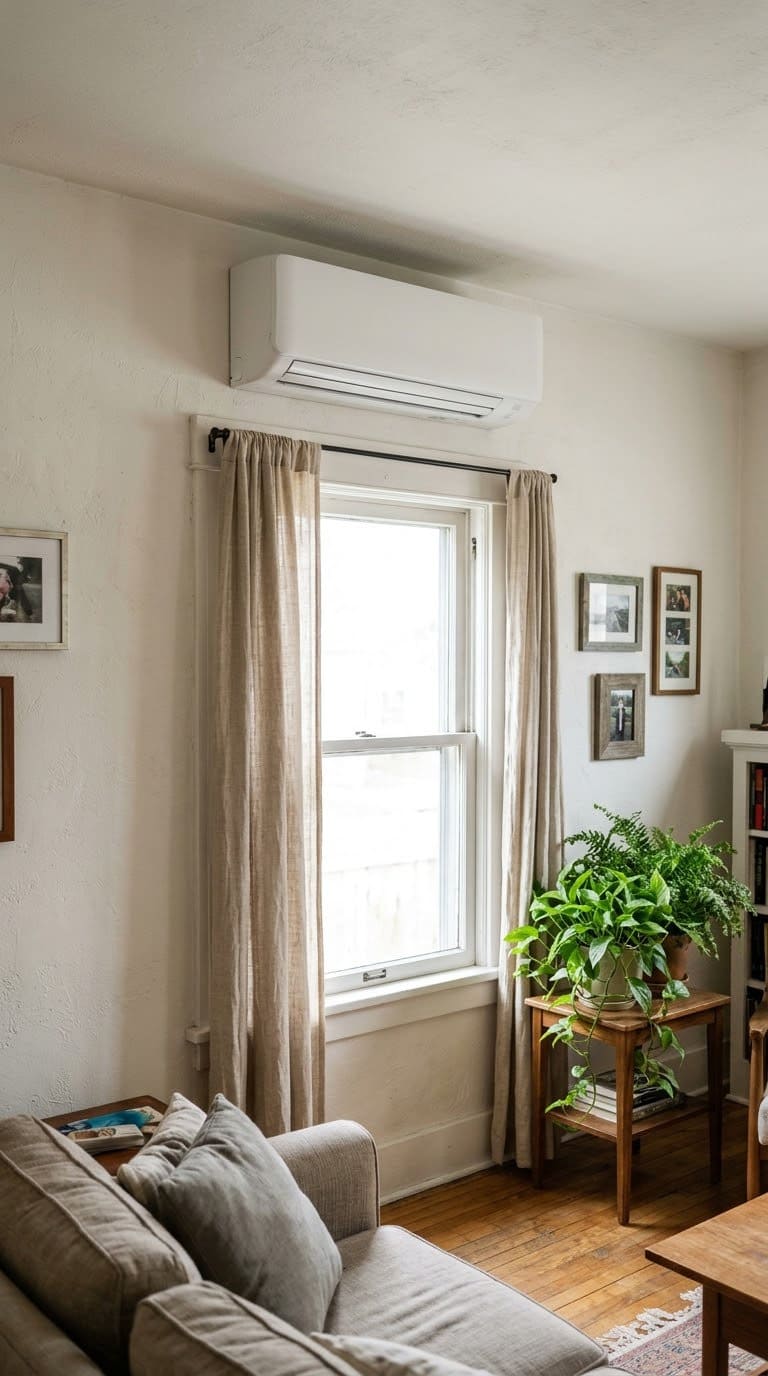
A ductless heat pump heats a room without glowing resistance coils. It uses refrigerant and a variable-speed compressor to move existing heat across the wall, pushing indoor heat and humidity outdoors in summer and reversing flow to bring outdoor heat inside during winter.
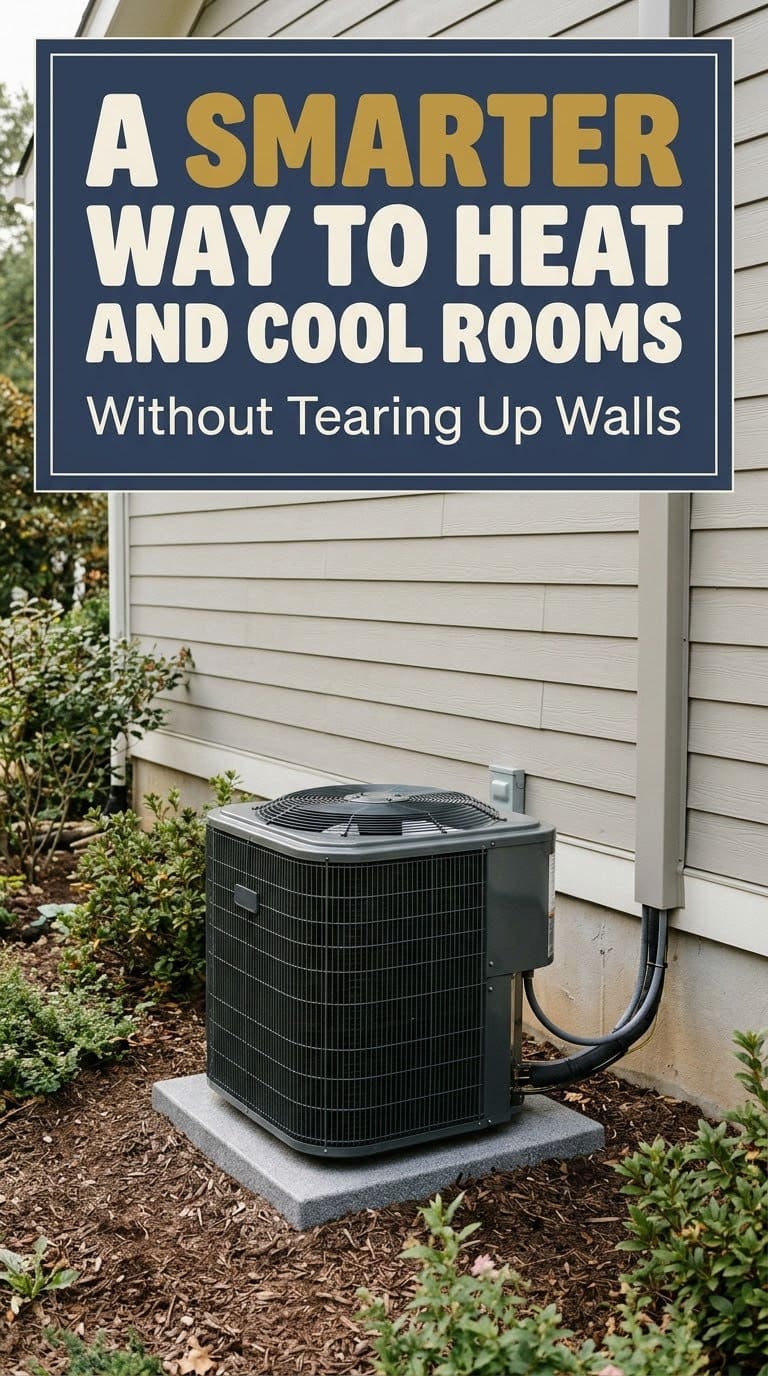
Connecting the indoor wall head to the outdoor condenser takes one sloped hole about three inches wide through the exterior wall. A single mini split AC and heater handles summer humidity and winter cold from the wall. Your window stays clear for daylight, and your household outlets stay open for tools and everyday appliances.
Spaces Where Ductless Heat Pumps Make Sense
Older Farmhouses, Sunrooms, and Finished Attics
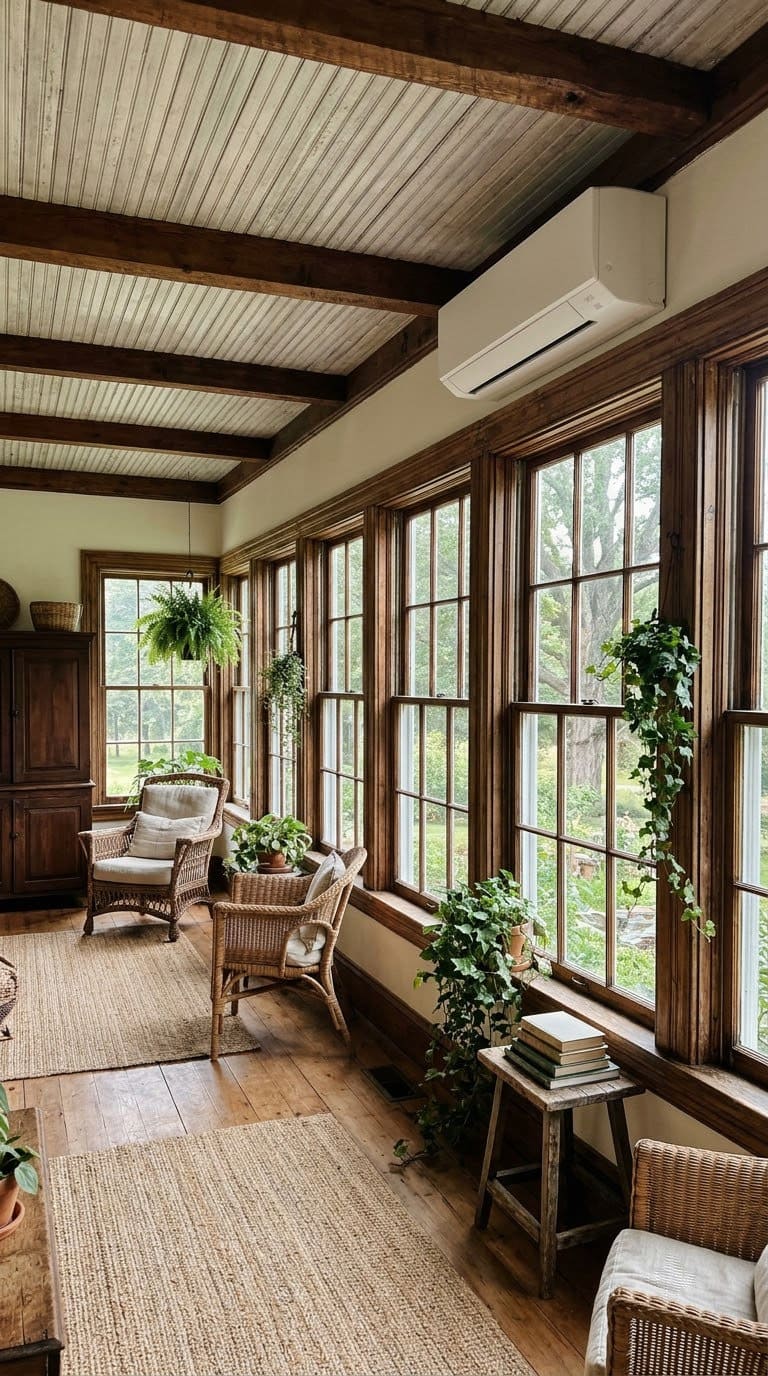
Older rural homes were built around wood stoves, cast-iron radiators, or floor furnaces long before central air became common. Running sheet-metal trunks through a 1920s farmhouse eats up closet space, cuts original trim, and drops tall ceilings. Hanging an indoor head high on the wall leaves the framing and woodwork intact.
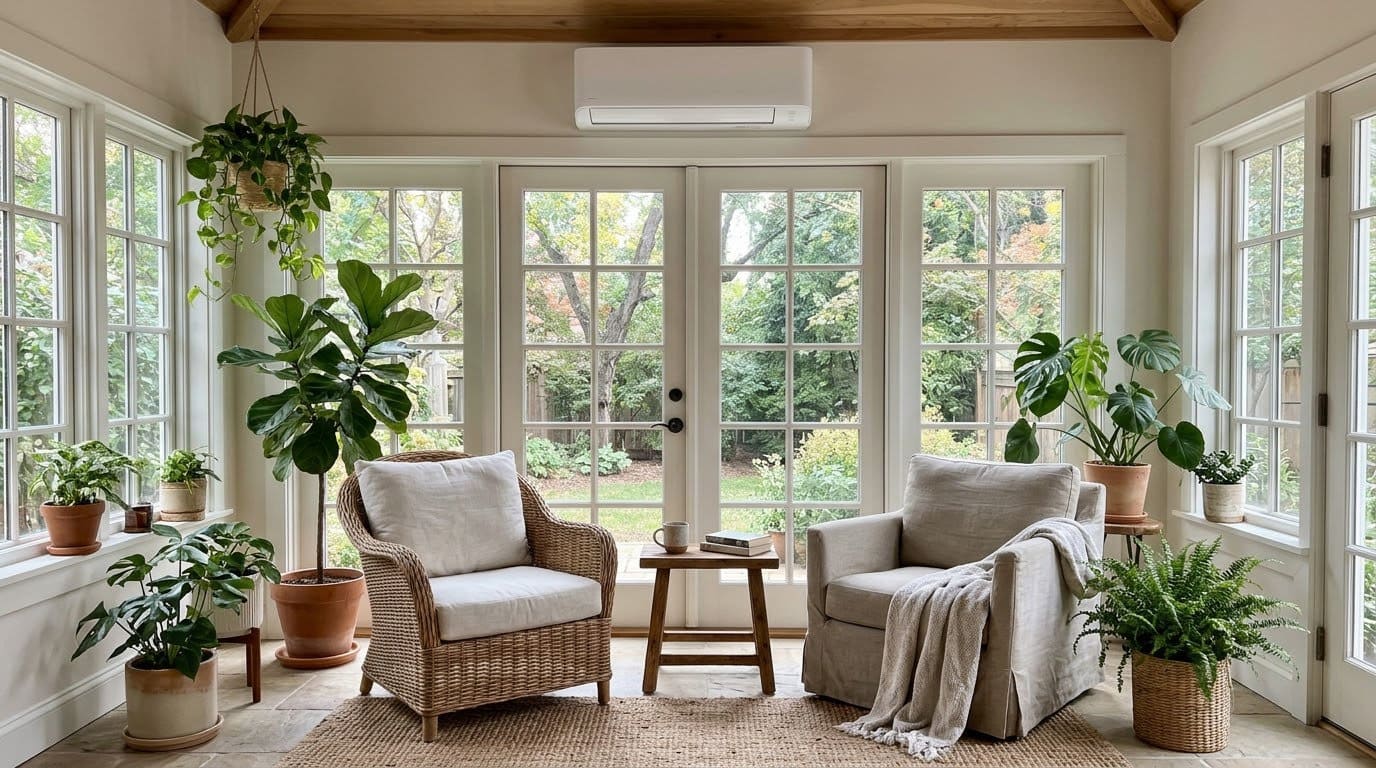
Sunrooms and enclosed porches get a practical upgrade too, provided the shell of the room can hold conditioned air. With glass on two or three sides, those spaces bake in August and turn freezing once the sun drops in winter. With adequate insulation, air sealing, and correctly sized equipment, a three-season porch can become a more comfortable year-round dining nook or sitting room.
Garages, Woodshops, and Detached Outbuildings
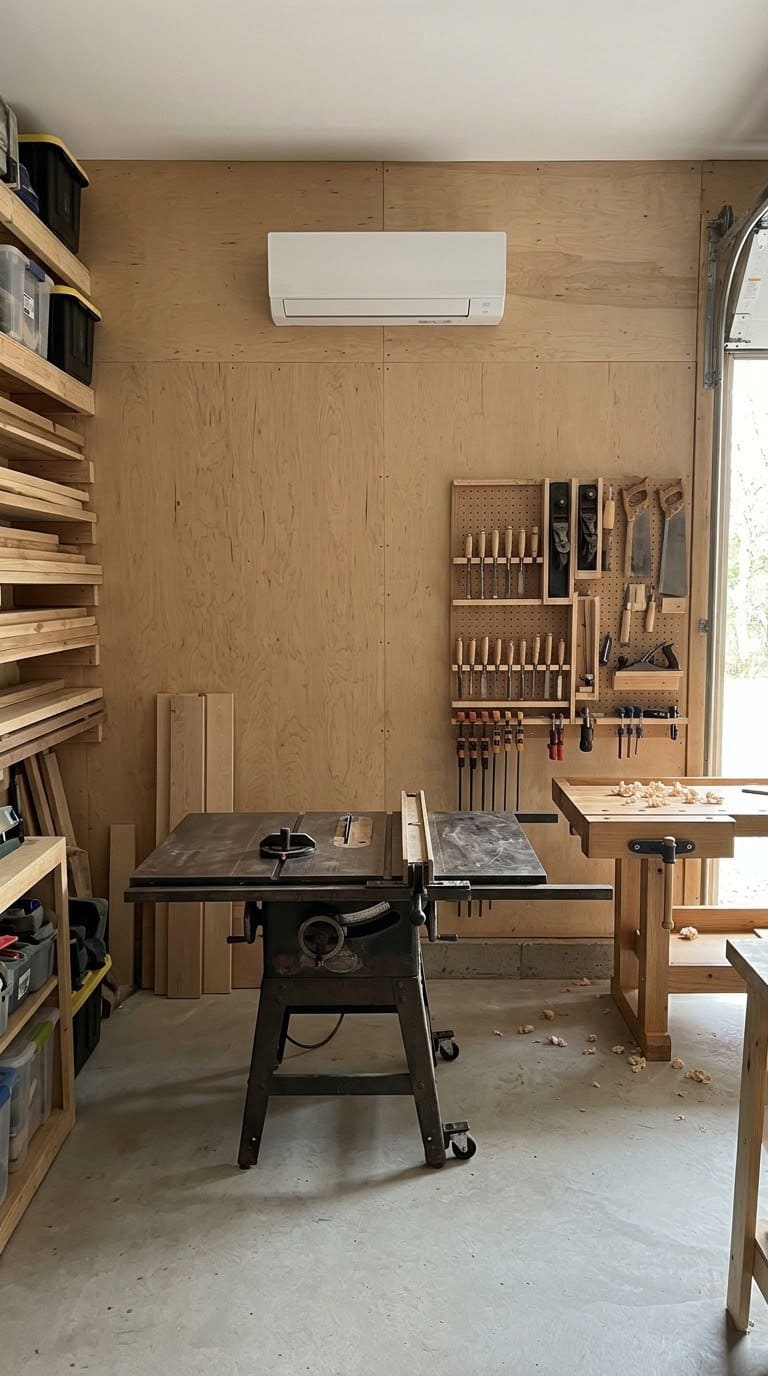
Residential building codes restrict connecting an attached garage to a home’s central ductwork, because exhaust fumes and paint vapors can migrate into living quarters. Detached structures such as barn offices, woodshops, and backyard studios have no duct link to the main house anyway.
Conditioning a workshop helps stop summer humidity from rusting cast-iron saw tables and hand tools, and keeps the space warm enough to finish winter projects. A DELLA mini split is one practical option for an insulated shop or sunroom, as long as you start with the room’s actual heating load, available electrical power, and line-set route.
Load Sizing, SEER2, and HSPF2 Basics
Why Coverage Tables Are Only a Rough Starting Point
BTU stands for British Thermal Units and measures how much heating or cooling a unit delivers per hour. An undersized system runs flat out on hot afternoons and falls behind, while an oversized unit can short-cycle and leave indoor air cool and clammy.
These are rough cooling coverage ranges for insulated rooms with standard 8-foot ceilings, not final equipment sizes. A drafty workshop or detached garage needs a separate heating and cooling load calculation:
| Room Size | Rough Cooling Capacity | Typical Insulated Spaces |
|---|---|---|
| Up to 400 sq. ft. | 9,000 BTU | Small bedroom, backyard office, insulated sunroom |
| 400 to 550 sq. ft. | 12,000 BTU | Large bedroom, finished studio |
| 550 to 1,000 sq. ft. | 18,000 BTU | Open, insulated living area |
| 1,000 to 1,400 sq. ft. | 24,000 BTU | Large, insulated open room |
For garages, workshops, and older additions, have an installer run a proper load calculation (such as Manual J) after checking insulation, air leaks, windows, garage doors, and local winter design temperatures. Sealing worn door sweeps and obvious air gaps first also keeps you from buying extra capacity just to lose heat outdoors.
Cooling Efficiency, Heating Efficiency, and Payback
New systems carry a yellow EnergyGuide label showing its SEER2 rating. Think of SEER2 like miles per gallon on a pickup truck: a higher number means less electricity used to deliver the same cooling.
For a shop you only condition on Saturday mornings, a standard-efficiency model keeps upfront costs sensible. For a room used every day, compare the installed price difference against estimated annual cooling and heating costs rather than assuming a single SEER2 cutoff pays back automatically. SEER2 measures cooling efficiency. But HSPF2 and cold-weather heating capacity matter just as much when winter warmth is a big part of the job.
Space heater, window AC, or ductless: which fits?
Here’s how the three options compare, using the numbers above.
| Option | Running cost or efficiency | Wiring | Season |
|---|---|---|---|
| Plug-in space heater | 1,500 watts on high, about $58 a month at 8 hours a day and 16 cents per kWh | Takes most of a 15-amp circuit | Winter only |
| Window air conditioner | Side panels leak air in summer and winter | Shares a household outlet | Summer only, blocks the window |
| Ductless heat pump | Moves heat instead of making it, rated by SEER2 and HSPF2 | Needs a dedicated circuit checked by an electrician | Year-round from one wall unit |
Using space heaters safely until the install
If you’re still heating with a plug-in unit this winter, follow the CPSC’s basic rules.
- Keep the heater at least three feet from drapes, furniture, bedding, and other things that can burn.
- Plug it directly into a wall outlet, never into an extension cord or power strip.
- Turn it off when you go to sleep.
We’d add one more rule for shops: keep the heater well away from sawdust and finishing products.
How to read SEER2 and HSPF2
SEER2 covers cooling. HSPF2 covers heating. A higher number on either label means less electricity for the same comfort.


For a room you mostly heat, compare HSPF2 and cold-weather heating capacity first. For a room you mostly cool, SEER2 carries more weight. For a shop you use a few hours a week, a standard-efficiency model often makes more sense than paying extra up front.
Questions to ask your installer
Bring this list to the first call.
- Will you run a load calculation, such as Manual J, for this room?
- What voltage, MCA, and MOCP does this model need, and does my panel have room for a dedicated circuit?
- Where will the condensate drain run, and does it need a pump?
- Will you pressure-test, evacuate, and commission equipment I buy myself?
- Which electrical and refrigerant steps need a licensed pro here?
- What clearance does the outdoor unit need on each side?
Common mistakes to avoid
Most disappointing mini-split jobs trace back to the same few shortcuts. These come from the advice above.
- Sizing a drafty workshop or garage from a coverage chart instead of a load calculation.
- Buying a bigger unit than the room needs, which short-cycles and leaves the air cool and clammy.
- Assuming a 115-volt model puts less demand on an older panel.
- Skipping air sealing and door sweeps, then buying extra capacity to make up for it.
- Leaving a window unit in the sash all winter, where it leaks heat.
- Plugging shop tools into the same circuit as a 1,500-watt heater.
- Unboxing equipment before you know who will commission it.
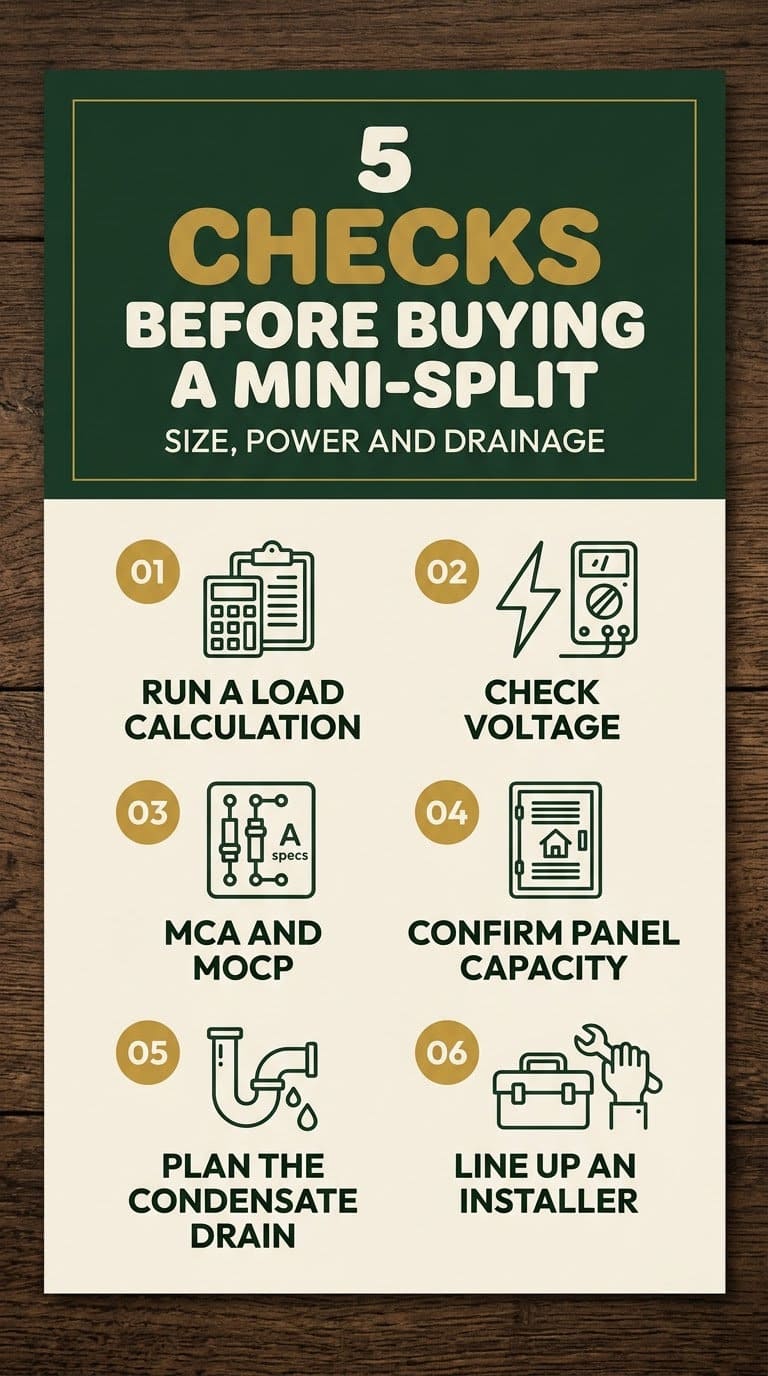
Your before-you-buy checklist
- Measure the room and note insulation, windows, and doors.
- Get a load calculation for garages, shops, and older additions.
- Confirm the circuit and panel capacity with a licensed electrician.
- Pick the indoor head location and the condensate route.
- Line up a technician who will commission the system.
Electrical, Drainage, and Installer Checks Before Ordering
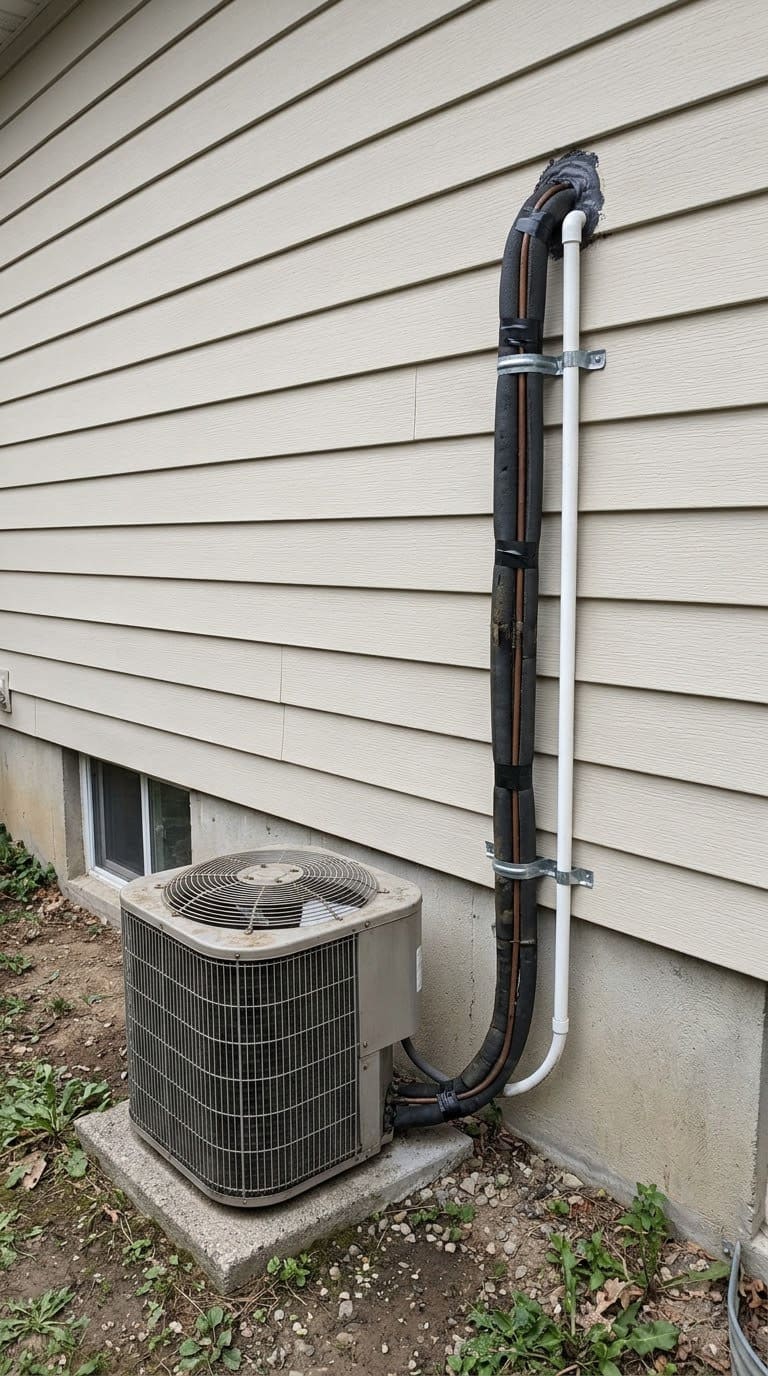
Sort out three job-site details before ordering equipment online:
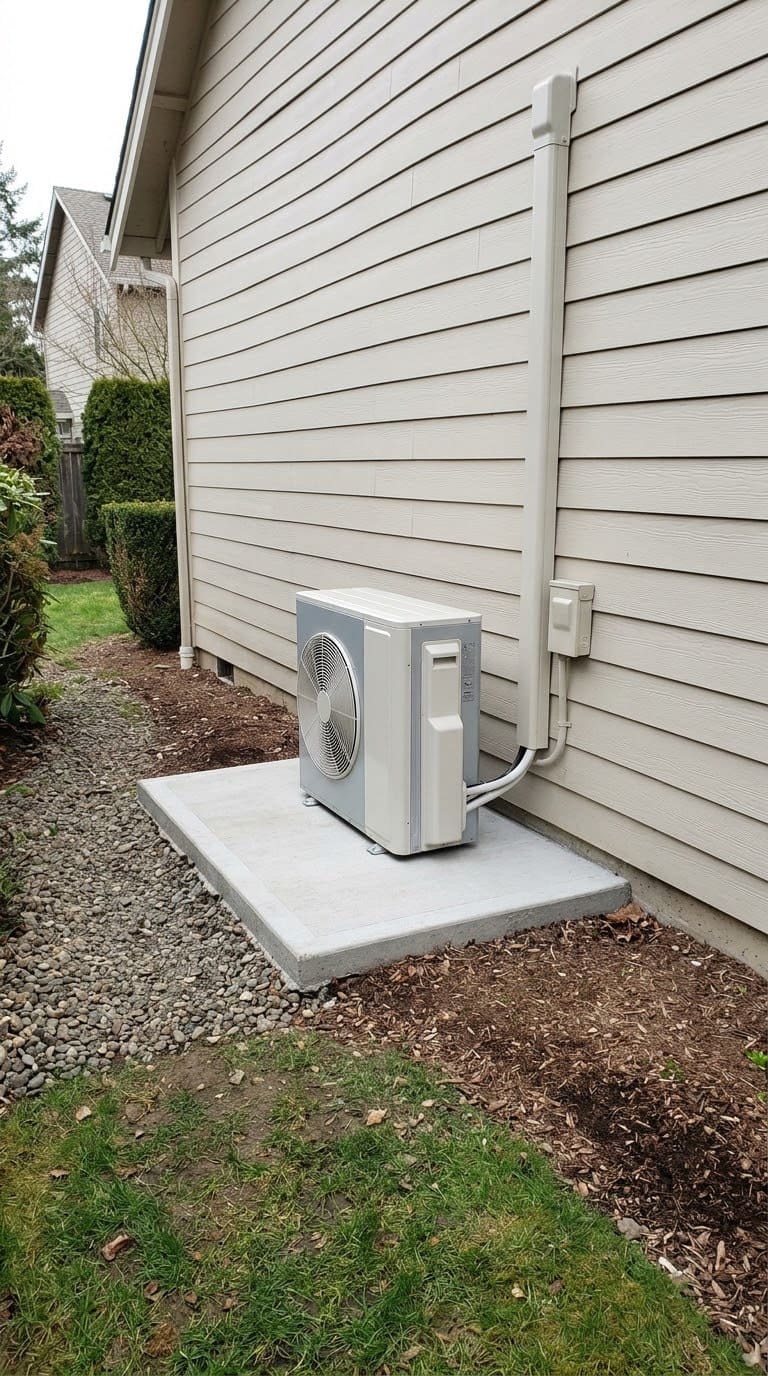
- Check the exact model’s voltage, minimum circuit ampacity (MCA), and maximum overcurrent protection (MOCP) before buying. Some 9,000 and 12,000 BTU units come in 115-volt versions alongside 208/230-volt models, but a 115-volt model draws roughly twice the current for the same power and doesn’t automatically put less demand on an older panel. Have a licensed electrician verify available panel capacity and the required dedicated circuit.
- Plan the condensate drain path early. Every indoor head pulls water out of humid summer air. An exterior-wall location often gives the drain tube a short gravity-drain route straight outside. An interior-wall spot can also drain by gravity if the tubing maintains a continuous downward slope. You only need a condensate pump when gravity drainage is not practical.
- Confirm local installation help before unboxing anything. DIY prep can include picking the indoor mounting spot and building a level outdoor pad, while following the exact model’s manual for clearance on every side, especially in front of the outdoor fan. Ask local HVAC technicians upfront whether they will pressure-test, evacuate, and commission customer-supplied equipment, and check which electrical and refrigerant steps require licensed pros in your area. DELLA allows registered DIY installations under its parts warranty, though damage caused by improper installation is not covered.
Before ordering the equipment, confirm the room’s heat loss, the available electrical circuit, and whether a local technician will install a customer-supplied system. The payoff is a room you can use more often without hauling a window AC in and out or leaning on a portable space heater for everyday warmth.
Ductless Heating and Cooling FAQs
How much does it cost to run a space heater?
A 1,500-watt heater running eight hours a day uses 12 kilowatt-hours daily, or about 360 a month. At an illustrative 16 cents per kilowatt-hour, that’s nearly $58 a month for one room.
How big a hole does a mini split need?
Connecting the indoor wall head to the outdoor condenser takes one sloped hole about three inches wide through the exterior wall.
What size mini split do I need?
As a rough starting point for insulated rooms with 8-foot ceilings, about 9,000 BTU covers up to 400 square feet and 12,000 BTU covers 400 to 550 square feet. Drafty workshops, garages, and older additions need a proper load calculation, such as Manual J.
Can I install a mini split myself?
You can often handle prep, such as picking the mounting spot and building a level pad. Ask local HVAC technicians whether they will pressure-test, evacuate, and commission customer-supplied equipment, and check which steps require licensed pros in your area.
Does a 115-volt mini split use less power?
No. A 115-volt model draws roughly twice the current of a 208/230-volt model for the same power, so it doesn’t automatically put less demand on an older panel. Have a licensed electrician check your panel and circuit.
Do I need a condensate pump for a mini split?
Only when gravity drainage isn’t practical. An exterior-wall location often allows a short gravity drain, and an interior-wall spot can also drain by gravity if the tubing keeps a continuous downward slope.
Never miss an update — choose FarmFoodFamily as your preferred source on Google.
How it works: Tap the button below to open Google's settings page, then check the box next to FarmFoodFamily.
Tap the checkbox to turn it blue — that's how you know it's set.