The $1 Irish Spring Soap Hack: Does It Really Keep Deer and Rabbits Away?
A grated bar of Irish Spring soap costs about a dollar and genuinely deters deer for some gardeners, but the real evidence is far more mixed than the hack’s popularity suggests.

Never miss an update — choose FarmFoodFamily as your preferred source on Google.
How it works: Tap the button below to open Google’s settings page, then check the box next to FarmFoodFamily.
Tap the checkbox to turn it blue — that’s how you know it’s set.
Does Irish Spring Soap Keep Deer and Rabbits Away?
Irish Spring soap can help deter deer for some gardeners, but the evidence is mixed, not proven. The method comes from Gary L. Wade, Extension Horticulturist at the University of Georgia, who recommends grating a bar into a bucket of water, diluting the mixture, and spraying it weekly on landscape plants deer tend to browse.
The theory is that the soap’s strong fragrance overwhelms a deer’s sense of smell, which it relies on heavily while feeding. But no university has run a controlled scientific study testing Irish Spring specifically, and real field reports are inconsistent, including at least one documented case where deer bedded down undisturbed right next to soap bars.
Rabbit evidence is weaker still. Most wildlife biologists don’t consider soap a reliable repellent for either animal, and university Extension guidance generally recommends purpose-made plant repellents or physical fencing over bar soap, since soap’s effect on plants and soil over repeated use isn’t well studied either.
Why This Hack Exists
The logic behind the Irish Spring hack is simple: deer and rabbits rely heavily on scent to locate food and detect danger, and a strongly fragranced bar of soap, especially one with a scent as sharp as Irish Spring’s, can mask the smell of nearby plants or read as a potential threat.
Gardeners reach for it because it’s cheap, already sitting in most bathroom cabinets, and doesn’t require spraying anything directly onto edible plants. That accessibility is a big part of why it’s spread so widely online, not necessarily because it’s been proven more effective than other options.


At roughly a dollar a bar, it’s also cheaper than nearly every commercial repellent on the market, which matters for anyone protecting a large perimeter rather than a single flower bed. That low cost is exactly why it’s worth testing even with mixed evidence behind it, the downside of trying it and having it not work is small compared to the downside of a fenced-off garden staying unprotected while you wait for proof.
Answer 4 quick questions and get matched to the exact fix for your yard — drainage, budget, layout, or something else entirely.
Take the Free QuizHow to Do the Irish Spring Soap Hack, Step by Step
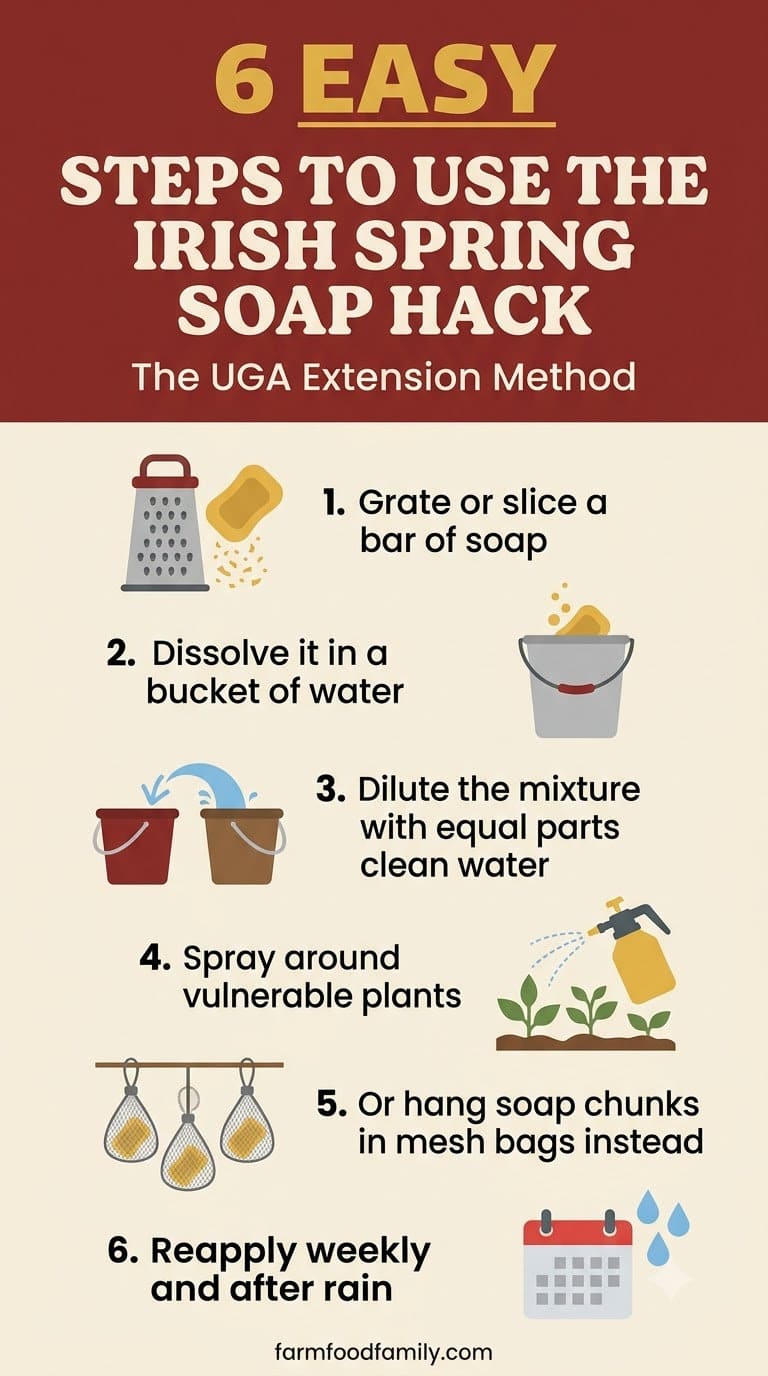
Step 1: Grate or Slice a Bar of Soap
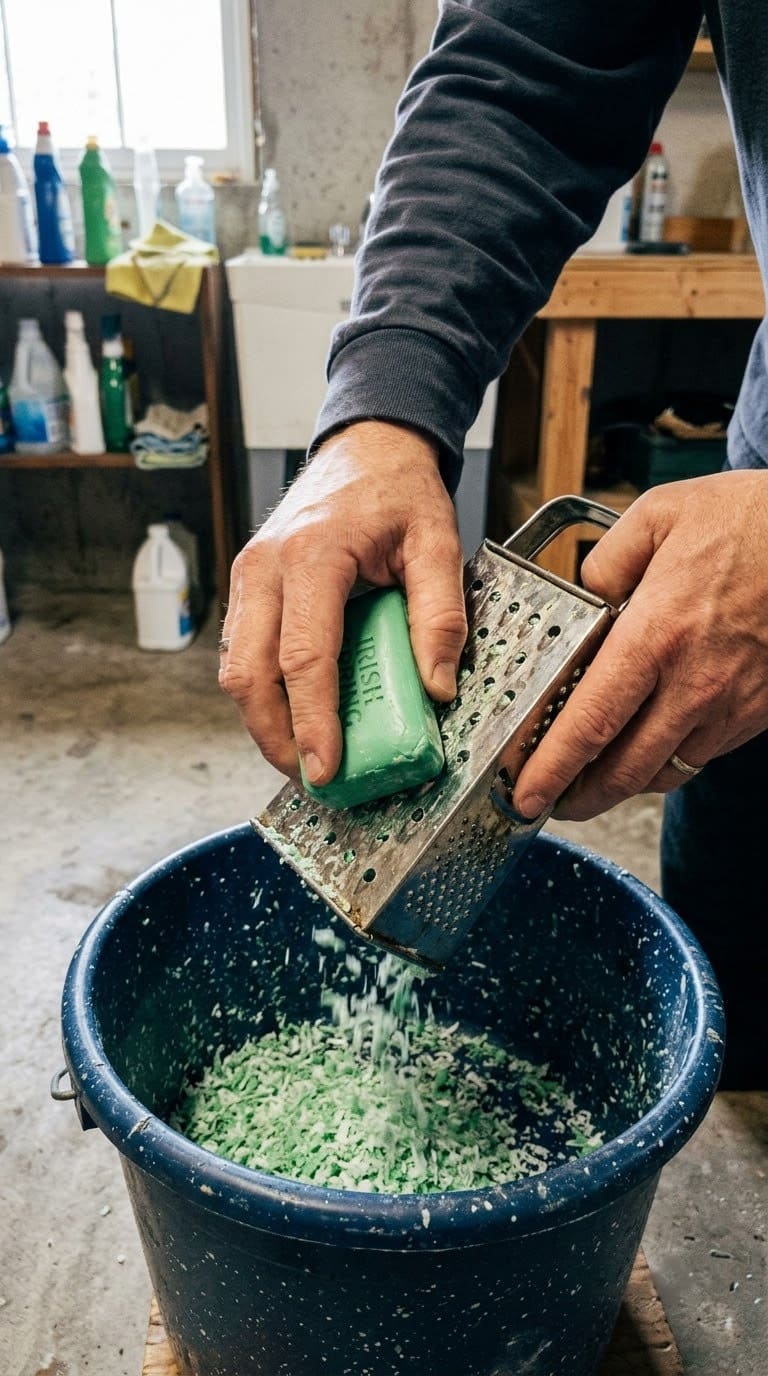
Grate one bar of Irish Spring soap into small shavings, or cut it into thin slices, to help it dissolve faster in the next step.
Step 2: Dissolve It in a Bucket of Water
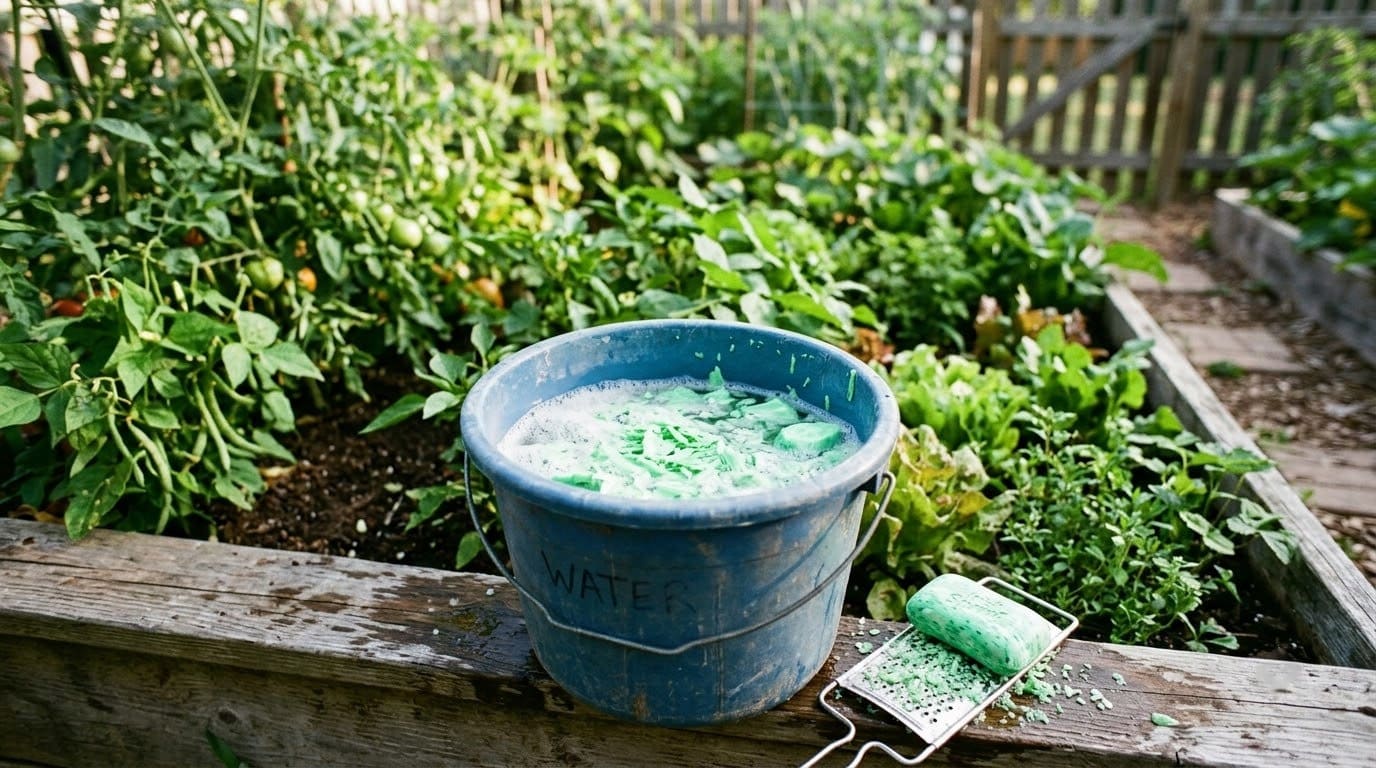
Place the shavings into a bucket of water and let them sit until mostly dissolved, following Gary Wade’s UGA Extension method of grating a bar into water as the base for a weekly spray.
Step 3: Dilute the Mixture
Dilute the soapy water with an equal amount of clean water before using it as a spray, so the concentration isn’t strong enough to affect the plants themselves.
Step 4: Spray Around Vulnerable Plants
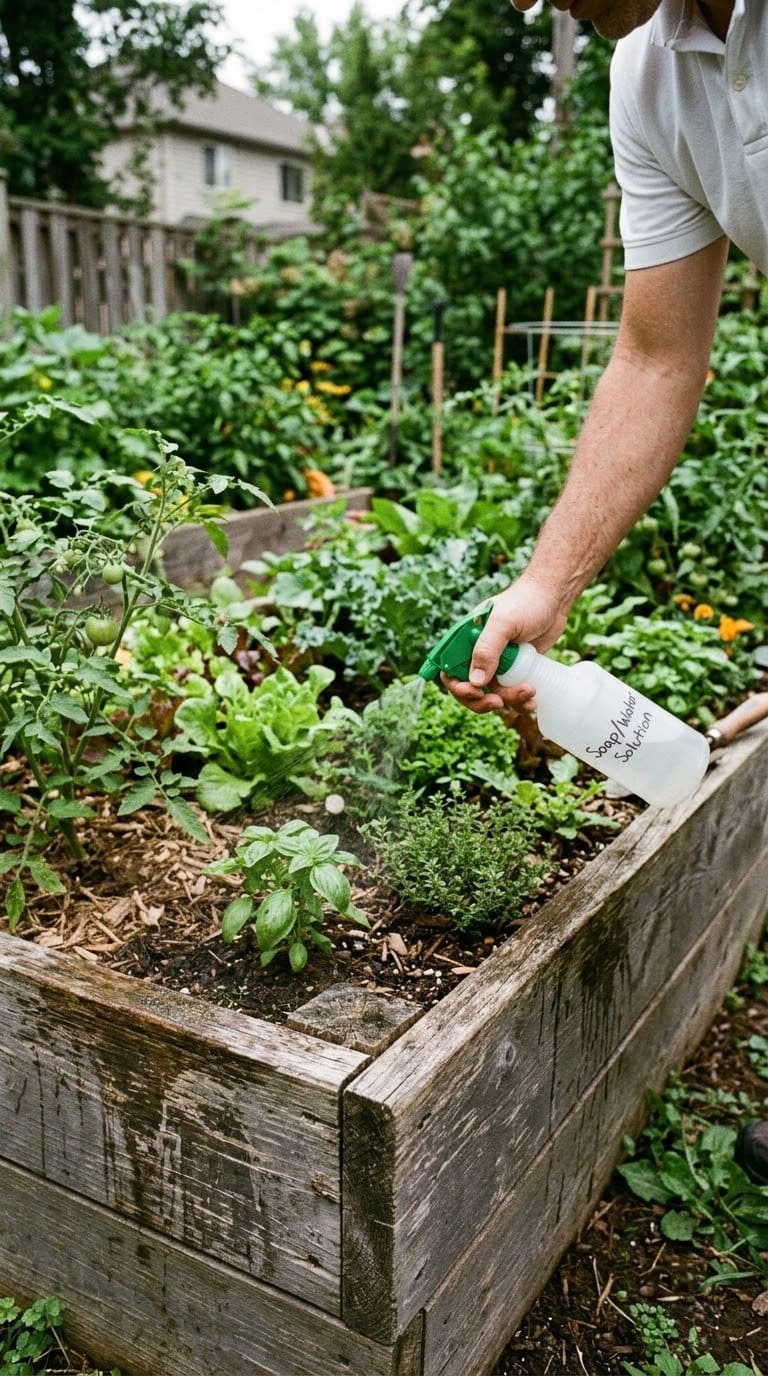
Spray the diluted solution around the perimeter of the plants deer or rabbits tend to browse, focusing on the outer edges of the bed rather than directly on leaves meant for harvest.
Step 5: Alternatively, Hang Bars Directly
If you’d rather not spray, cut a bar into chunks, place them in mesh bags or old stockings, and hang them from stakes or string around the garden’s perimeter at roughly nose height for deer.
Step 6: Reapply Weekly and After Rain
Reapply the spray or refresh hung bars about once a week, and always after a heavy rain, since both the scent and the physical soap wash away quickly outdoors.
Does It Actually Work? What the Real Evidence Says
This is the part most articles about this hack skip entirely. Per the University of Georgia CAES Field Report on wildlife damage control, few if any homemade pest-repellent recipes, soap included, have actually been validated by university-conducted scientific tests. That doesn’t mean it never works, it means the evidence is mostly anecdotal rather than controlled.
Most yard problems trace back to one specific, fixable cause. Find yours in 4 quick questions.
Take the Free Quiz
The bar soap itself, at bulk pricing for anyone testing the hack across a full garden perimeter.
Shop NowThis post contains affiliate links. We may earn a commission on qualifying purchases at no extra cost to you.
Real-world results back that up. Some gardeners report it genuinely reduces deer browsing for weeks at a time. Others report the opposite: one documented field account from a central Virginia farm found deer photographed bedding down undisturbed right next to Irish Spring bars, suggesting the soap had no deterrent effect at all in that setting.
Extension guidance adds one more caveat worth knowing before you rely on it: purpose-made repellents formulated for landscape use are generally recommended over bar soap, since a bath soap’s ingredients haven’t been well studied for their effect on plants and soil with repeated outdoor use.
Deer vs. Rabbits: Why the Evidence Isn’t the Same
Every competitor guide treats this as a two-for-one hack that works the same way on both animals. It doesn’t, at least not according to the evidence available.
Deer at least have Gary Wade’s UGA Extension method and a real, if mixed, body of gardener field reports behind the soap hack. Rabbits have considerably less. According to Extension guidance gathered for this article, there is even less evidence for rabbits than for deer, and most wildlife biologists don’t recommend soap as a reliable repellent for either animal, rabbits included.
If rabbits are your main problem, a physical barrier is the better-supported option. University of Georgia Extension specialists recommend chicken wire fencing at least 2 feet tall, with the bottom buried at least 3 inches into the soil so rabbits can’t dig underneath it, a far more consistently effective deterrent for rabbits than any scent-based hack.
Other Scent-Based Hacks People Pair This With
Irish Spring rarely stands alone in a deer-deterrent routine, and knowing what else is in the same toolbox helps you judge whether it’s worth adding.
Human hair clippings from a barbershop, scattered in mesh bags around a bed, work on the same scent-masking theory as soap, though the evidence behind it is just as anecdotal.
Bar-of-soap alternatives like Dial or Irish Spring’s competitors get mentioned occasionally, but Extension sources don’t single any one brand out as more effective than another, the fragrance strength matters more than the specific product.

Predator urine granules, a commercial product sold specifically for deer deterrence, rely on a different mechanism (signaling danger rather than masking food scent) and are one of the purpose-made options Extension guidance points to as better-studied than bar soap.
The average homeowner spends $616/year on yard fixes that don't address the real problem. Find out what yours actually is — before you spend another dollar.
Take the Free QuizNone of these substitute for the fencing recommendation above if a garden bed holds something genuinely irreplaceable, like a young fruit tree or a season’s worth of vegetables. Scent-based hacks are best treated as a first line of defense, not a guarantee.
Soap Hack vs. Other Deer and Rabbit Deterrents
| Method | Upfront cost | Real evidence behind it | Reapplication needed |
|---|---|---|---|
| Irish Spring soap hack | About $1 per bar | Mixed, no controlled university study, real field failures documented | Weekly, and after every rain |
| Purpose-made repellent spray | $10-20 per bottle | Formulated and tested for landscape use, per Extension guidance | Every 2-4 weeks per label |
| Physical fencing (2ft+, buried 3in) | $50-200+ depending on size | Most consistently effective per University of Georgia Extension | Rare, mainly storm repair |
What We Learned the Hard Way
A dollar bar of soap sounds like a foolproof fix, and for some gardeners it genuinely helps. For others, the results are frustrating, and knowing why in advance saves some wasted effort.
Rain undoes it fast. Both the scent and the physical soap wash away in a single storm, so a week of dry weather followed by heavy rain can erase whatever deterrent effect you had. Reapplying on a fixed weekly schedule, not just when you remember, keeps the coverage more consistent.
Deer habituate to the scent over time. Per Ask Extension, any single repellent’s effectiveness is “sadly temporary” because deer get used to the smell, so a bar that worked well for the first month may stop working by the third. Rotating between soap and a purpose-made repellent every few weeks tends to hold up better than sticking with one method indefinitely.
Your neighbors’ choices matter too. If deer in your area have already grown used to Irish Spring’s scent from other yards using it, the same hack may do noticeably less in your own garden, a factor that has nothing to do with how you applied it.
Mistakes to Avoid
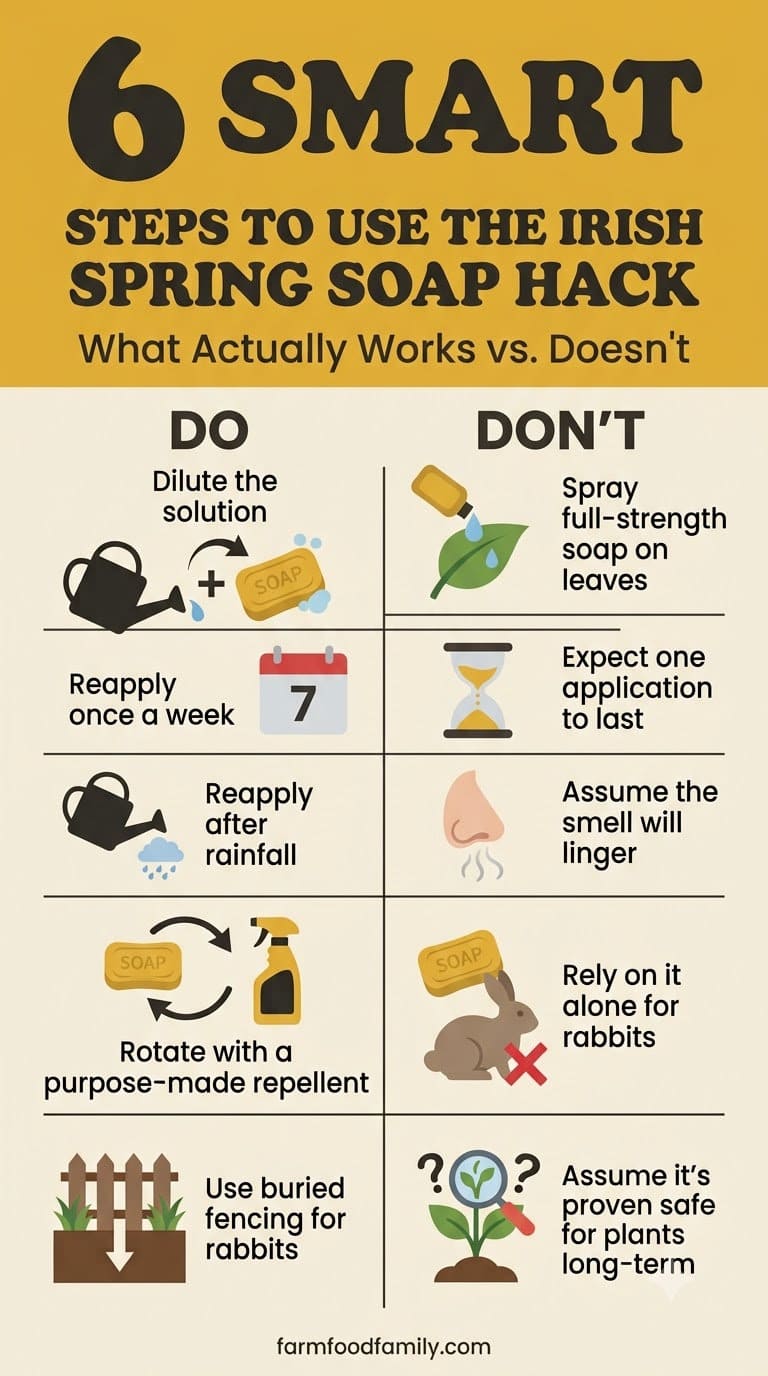
- Spraying full-strength, undiluted soap directly on plants. Dilute it first; the goal is scent, not a heavy soap coating on leaves.
- Setting it up once and forgetting it. Reapply weekly and immediately after rain, or the effect fades fast.
- Relying on it alone for a serious rabbit problem. The evidence is weaker for rabbits than deer, lean on fencing instead.
- Assuming one method will work indefinitely. Rotate with a purpose-made repellent every few weeks to slow habituation.
- Skipping a physical barrier for high-value plants. For anything you can’t afford to lose, fencing is the better-supported choice.
FAQ
Does Irish Spring soap really keep deer away? It can help for some gardeners, but the evidence is mixed rather than proven. No university has run a controlled study testing Irish Spring specifically, and real field reports include both successes and documented failures.
Does it work on rabbits too? The evidence for rabbits is weaker than for deer. Most wildlife biologists don’t consider soap a reliable repellent for either animal, but rabbits especially, and a physical barrier like buried chicken wire fencing is the better-supported option for a serious rabbit problem.
How often do I need to reapply it? About once a week, and always again after a heavy rain, since both the physical soap and its scent wash away outdoors.
Is it safe for my plants? No harm has been reported anecdotally, but Extension guidance notes that a bath soap’s effects on plants and soil with repeated outdoor use haven’t been well studied, unlike repellents formulated specifically for landscape use.
Why Irish Spring specifically, instead of any other strong-smelling soap? No Extension source singles it out as scientifically superior to other fragranced soaps. Its popularity as the go-to choice for this hack comes down to how widely available and cheap it is, plus a strong, consistent scent, not any documented advantage over a comparable bar from a different brand.
Related Posts
- 24 Best Plants That Repel Deer and Rabbits
- Alliums: Deer-Resistant Garden Flowers
- Plants That Repel Squirrels
Products We Recommend
This post contains affiliate links. We may earn a commission on qualifying purchases at no extra cost to you.
Irish Spring Bar Soap, 3.7oz, 8-Pack
The bar soap itself, at bulk pricing for anyone testing the hack across a full garden perimeter.
Shop Now
Liquid Fence Deer & Rabbit Repellent, Ready-to-Use, 1 Gallon (2-Pack)
A purpose-made repellent spray, the Extension-recommended alternative for landscape use over bar soap.
Shop Now
YARDGARD 2-Inch Galvanized Poultry Netting, 24in x 150ft
Chicken wire fencing at the 2-foot minimum height University of Georgia Extension recommends for rabbit exclusion.
Shop NowNever miss an update — choose FarmFoodFamily as your preferred source on Google.
How it works: Tap the button below to open Google's settings page, then check the box next to FarmFoodFamily.
Tap the checkbox to turn it blue — that's how you know it's set.