9 Sneaky Plants Not to Grow Near a Well or Water Source
Thirsty roots can crack a well casing or buried water line within a few seasons, so the plant you pick and the distance you keep matter more than most owners expect.

Never miss an update — choose FarmFoodFamily as your preferred source on Google.
How it works: Tap the button below to open Google’s settings page, then check the box next to FarmFoodFamily.
Tap the checkbox to turn it blue — that’s how you know it’s set.
Picture this. A farmer named Sims noticed his water pressure fading, so he went to pull the pump. The pipe snapped, because roots from a pecan tree with an 8-foot circumference had packed the casing solid.
He ended up building a rotary cutter out of rebar and clearing roots 66 feet down. Then he cut the tree. That’s a lot of work for one plant that looked harmless for years.
So which plants cause this kind of trouble? And what should you grow near a well instead? We dug into extension research, state water agencies, and real repair stories to build the list below.
Quick Answer
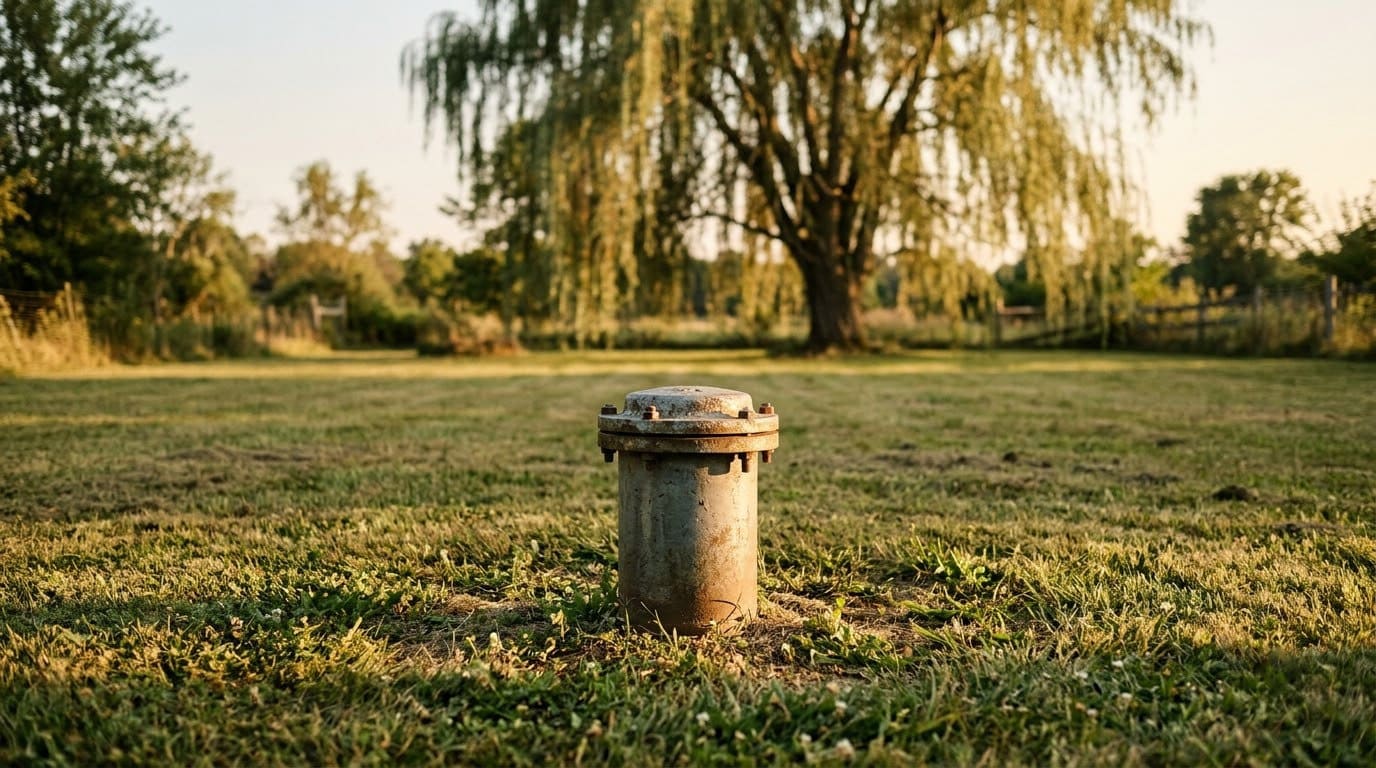
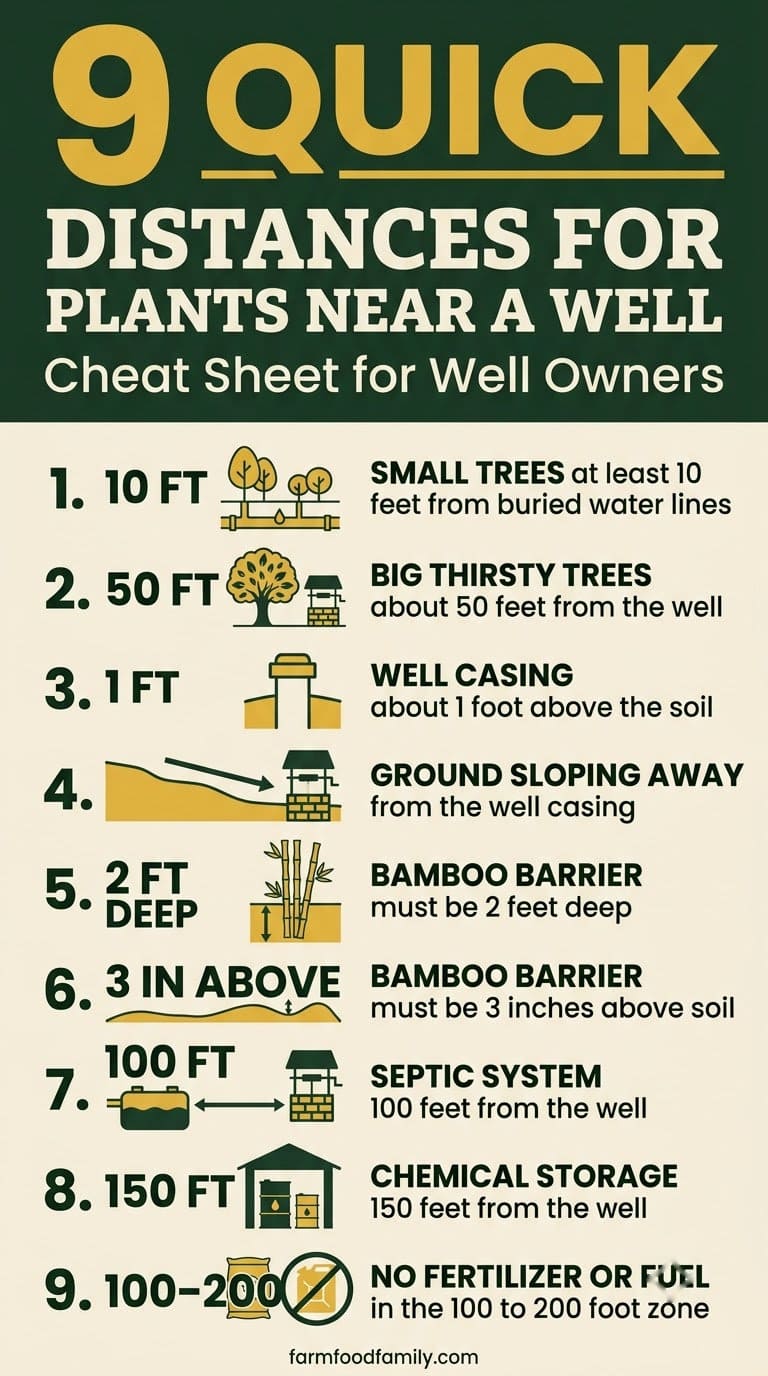
Keep large, thirsty trees at least 50 feet from your well, and never closer than 10 feet to any buried water line. The Saskatchewan Water Security Agency says roots can enter a well through cracks and joints, which opens a path for dirt and bacteria.
Plants themselves rarely make water unsafe. But they signal a casing fault that can.


The University of Kentucky notes that roots grow through holes in metal casing. Those same holes can let contaminants in, and roots give rodents, insects, and bacteria a place to live.
Answer 4 quick questions and get matched to the exact fix for your yard — drainage, budget, layout, or something else entirely.
Take the Free QuizChemicals matter too. Purdue Extension describes a sanitary zone of 100 to 200 feet around the well, where fuel, salt, and fertilizer use should be prohibited. So the safest plan keeps thirsty roots away from the casing and heavy feeding programs away from the wellhead.
Are Roots or Chemicals the Bigger Risk to Your Water?
Both can hurt you, but they work in different ways. Roots are a plumbing problem. Fertilizer and pesticide are a water quality problem.
Here’s how the three risks in this guide compare.
| Risk | What causes it | What it does | Usual fix |
|---|---|---|---|
| Root invasion | Thirsty trees and shrubs near casing or pipe | Blocks the well, snaps pipe, opens cracks | Remove plant, repair casing (often a pro job) |
| Chemical runoff | Fertilized turf, roses, sprayed beds near the wellhead | Carries nitrate and pesticide toward groundwater | Move the planting, switch to low-input plants |
| Bank takeover | Invasive plants at a pond or stream | Erodes banks, crowds out native cover | Remove early, replant native cover |
You may have heard that roots can’t hurt a healthy pipe. Nature Hills Nursery says roots don’t cause problems with sound, intact pipes. A seeping or aging pipe, though, becomes an irresistible water source.
We think that’s fair. It just means your well is only as safe as its oldest joint.
This guide fits four kinds of owners. Private well owners should read every section. If your septic tank sits on the same lot, check our guide to how different septic systems work too.
Pond or stream owners should focus on idea 7. City water users still have buried supply lines, so the root rules apply to you as well.
Most yard problems trace back to one specific, fixable cause. Find yours in 4 quick questions.
Take the Free Quiz
A home screening kit for well and tap water that checks bacteria, nitrates, pH, hardness, and lead. A handy yearly check, though a state-certified lab is still the final word.
Shop NowThis post contains affiliate links. We may earn a commission on qualifying purchases at no extra cost to you.
How Can You Check Your Own Yard in 15 Minutes?
Grab a tape measure and walk out from the casing. Stop at 10 feet, 50 feet, and 100 feet, and note every tree, shrub, and bed you pass. Anything on the list below inside 50 feet deserves a closer look.
Next, look at the wellhead itself. The casing should stand about 1 foot above the soil, with a snug cap and soil sloping away. Pooled water, a cracked cap, or a gap around the casing is a bigger problem than any tree.
Last, mark where your buried water line runs. Old plans, your pump house, or a pipe locator can help. Call 811 before any digging.
Which 9 Plants Should You Keep Away From a Well?
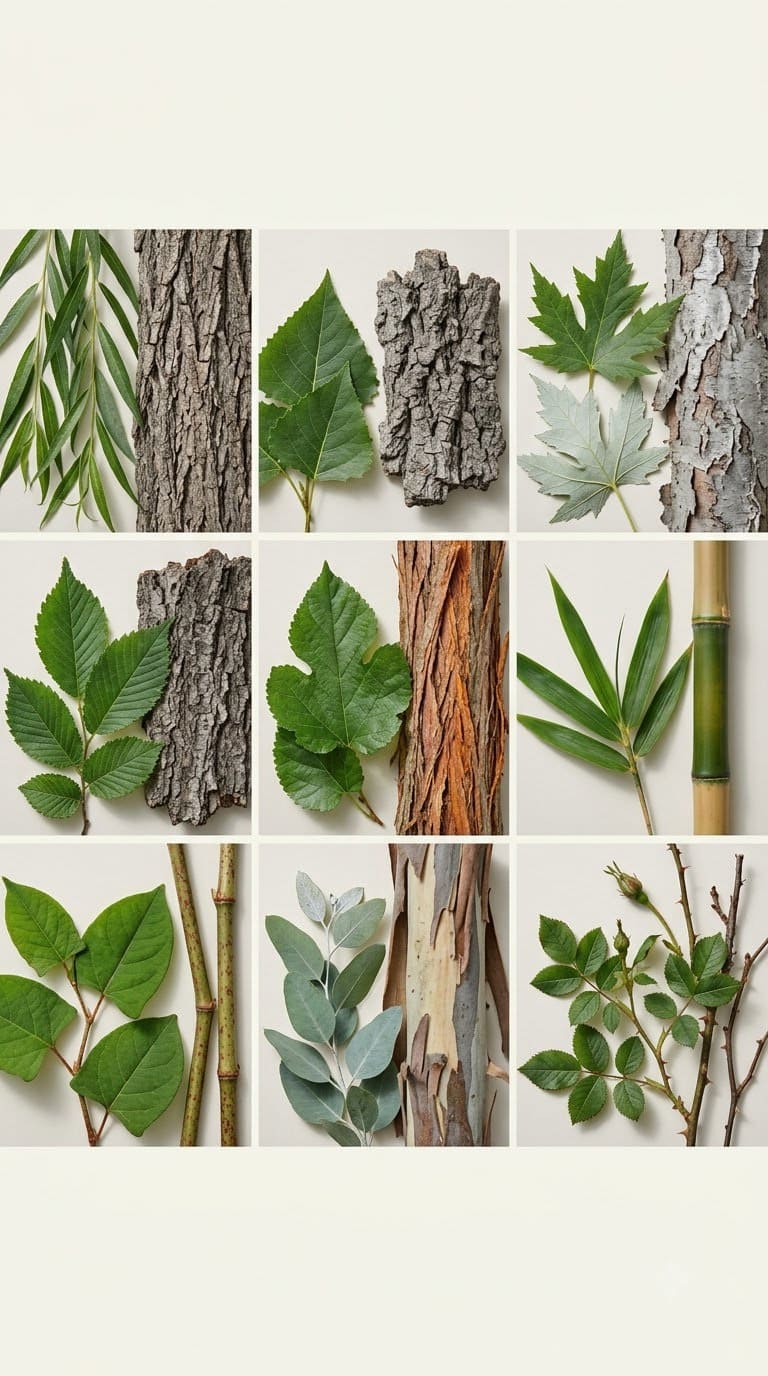
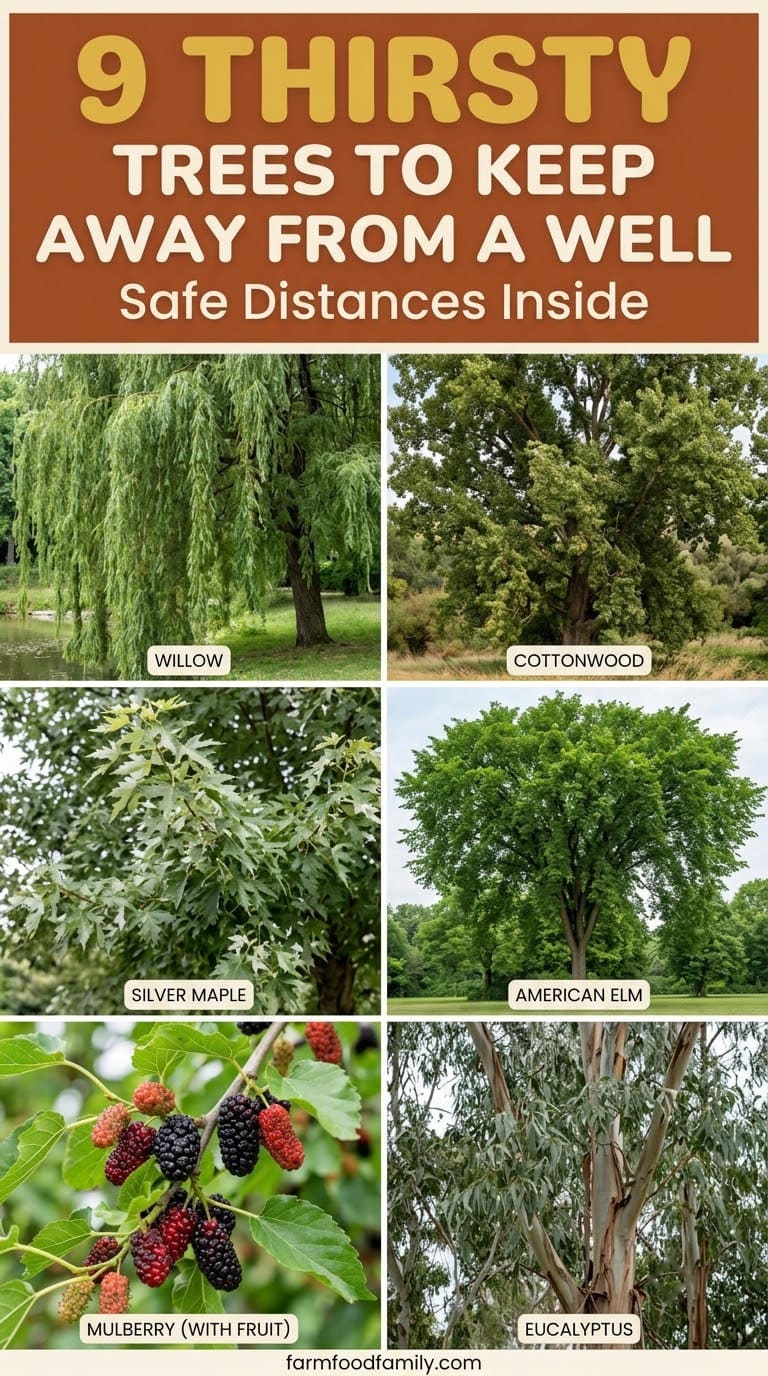
1. Weeping Willow
Willows are the poster child for this problem. They love wet ground and send out wide, tangled roots to find it. A leaking joint near your well looks like a free drink.
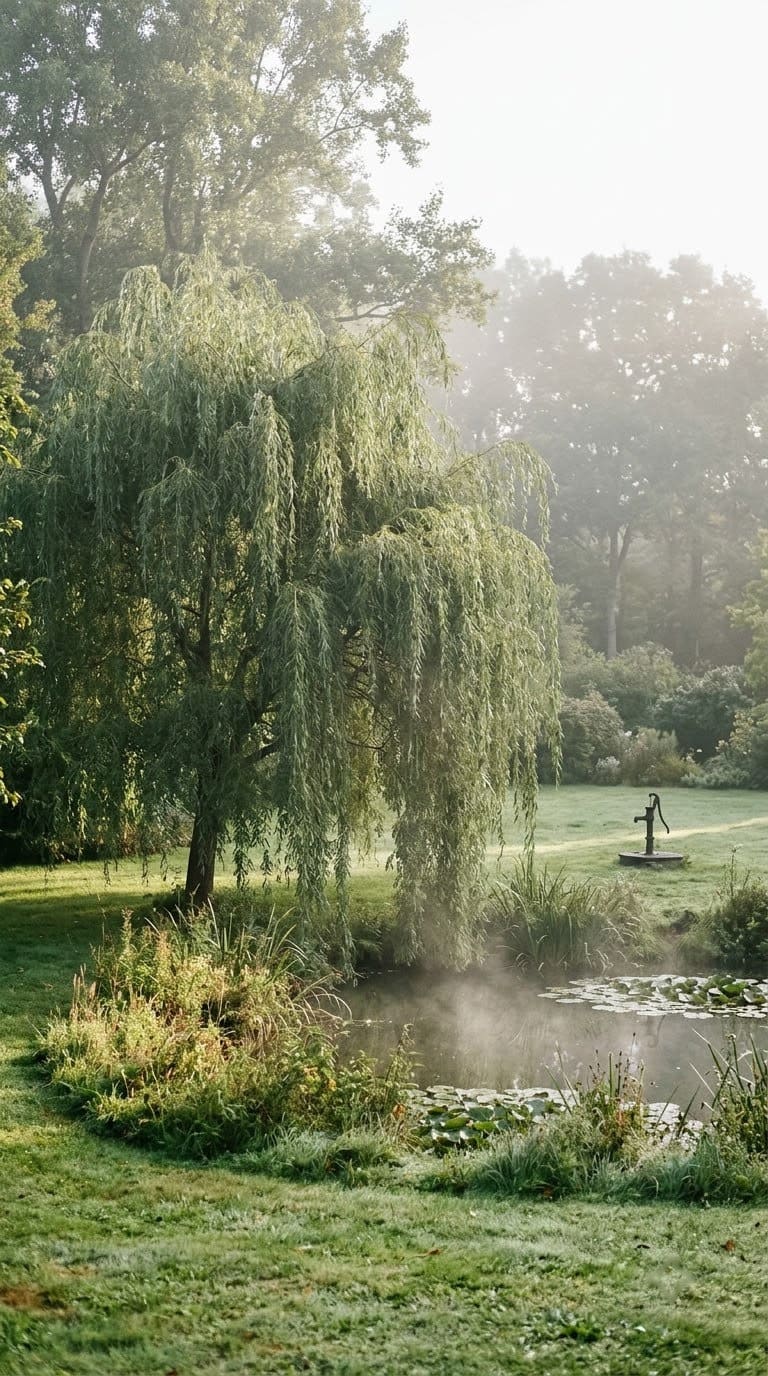
Hunker, which cites University of Tennessee Extension, lists willows among the most aggressively thirsty trees. Nature Hills suggests doubling the usual planting distance for willows and poplars near structures. For a mature willow, we’d stay 50 feet or more from the casing.
Removing a willow is a big job that usually needs a tree crew. Pulling roots out of a well is a bigger job and needs a driller. So plant the willow far away from the start, or skip it.
Swap it for a dogwood or redbud at a safe distance. Both stay small. If you love the weeping look, a weeping cherry stays far smaller than a willow.
2. Poplar, Cottonwood, and Aspen
These three share a family and a habit. They grow fast and spread roots across a wide area. Many also send up suckers far from the trunk.

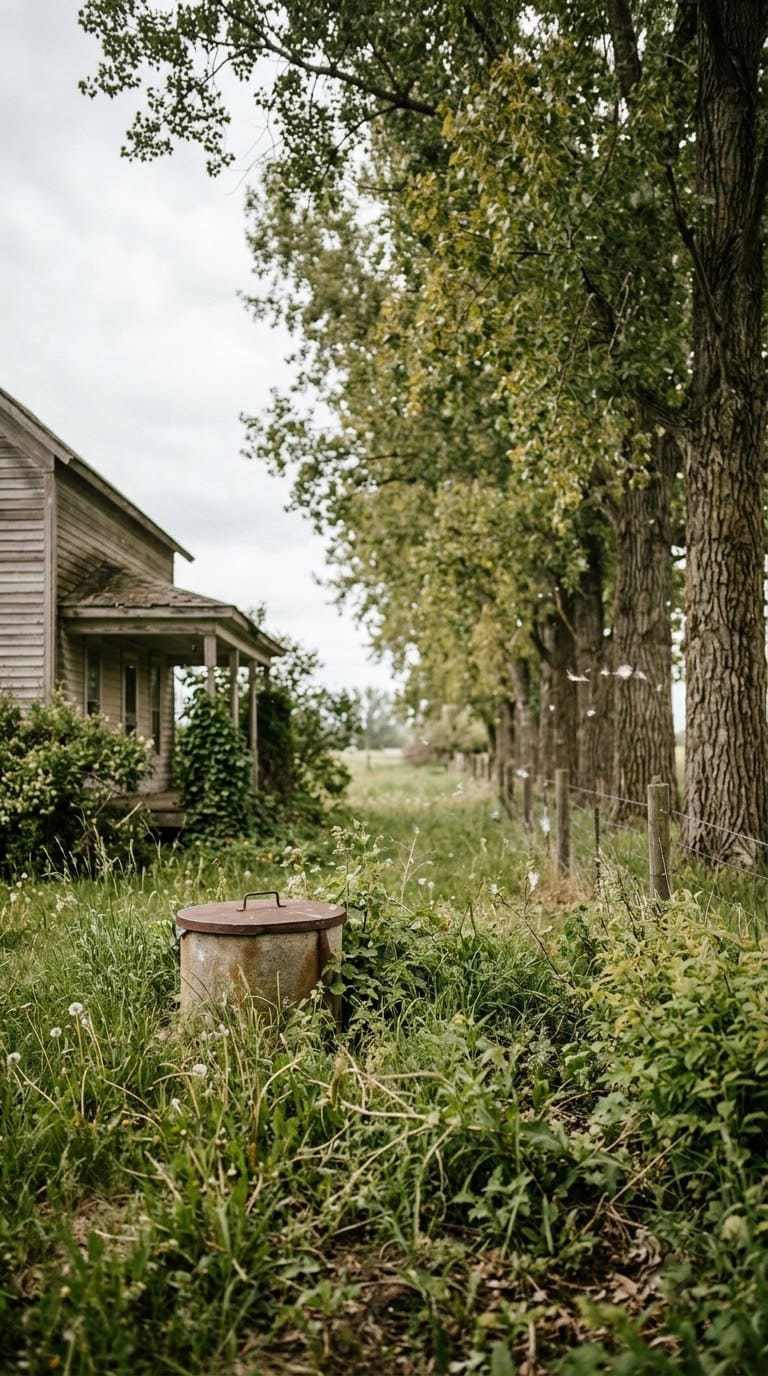
Hunker’s list of the thirstiest trees names aspens, cottonwoods, and poplars together. House Digest also flags poplar roots as quick-spreading and far-reaching. Brittle limbs add a second risk, since a dropped branch can land on a wellhead.
The average homeowner spends $616/year on yard fixes that don't address the real problem. Find out what yours actually is — before you spend another dollar.
Take the Free QuizTreat all three like willows for spacing. A windbreak of poplars is fine at the far edge of the property, but not on the well side.
Swap them for a row of arborvitae planted well away, or a shrub hedge of lilac. Both give screening without huge roots.
3. Silver Maple
Silver maples grow fast, reach up to about 80 feet, and have shallow, hungry roots. That mix explains why plumbers and septic pros talk about them so often.
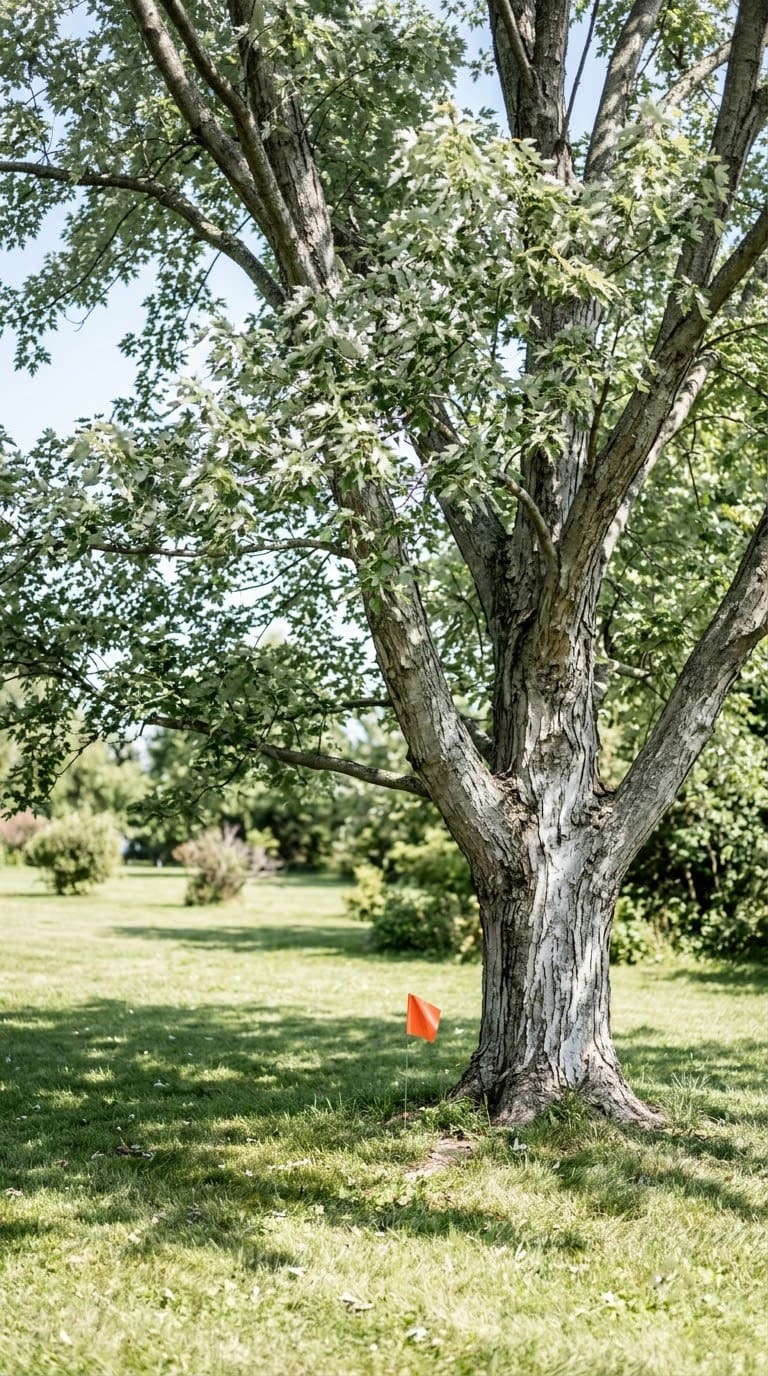
House Digest calls the silver maple’s root system highly aggressive. Hunker says most maples belong on a “do not plant” list near wells. Nature Hills agrees that silver maples and willows rank as aggressive.
Cost matters here. A young silver maple is cheap, but removing a big one near utilities is a major job. It’s a tree you plant far from everything or not at all.
Swap it for an amur or paperbark maple. Hunker lists both as safer choices.
4. American Elm
Elms have shallow, spreading roots that thicken with age. House Digest says elms are notorious for getting into drain and sewer lines. Hunker also puts American elm on its do-not-plant list.
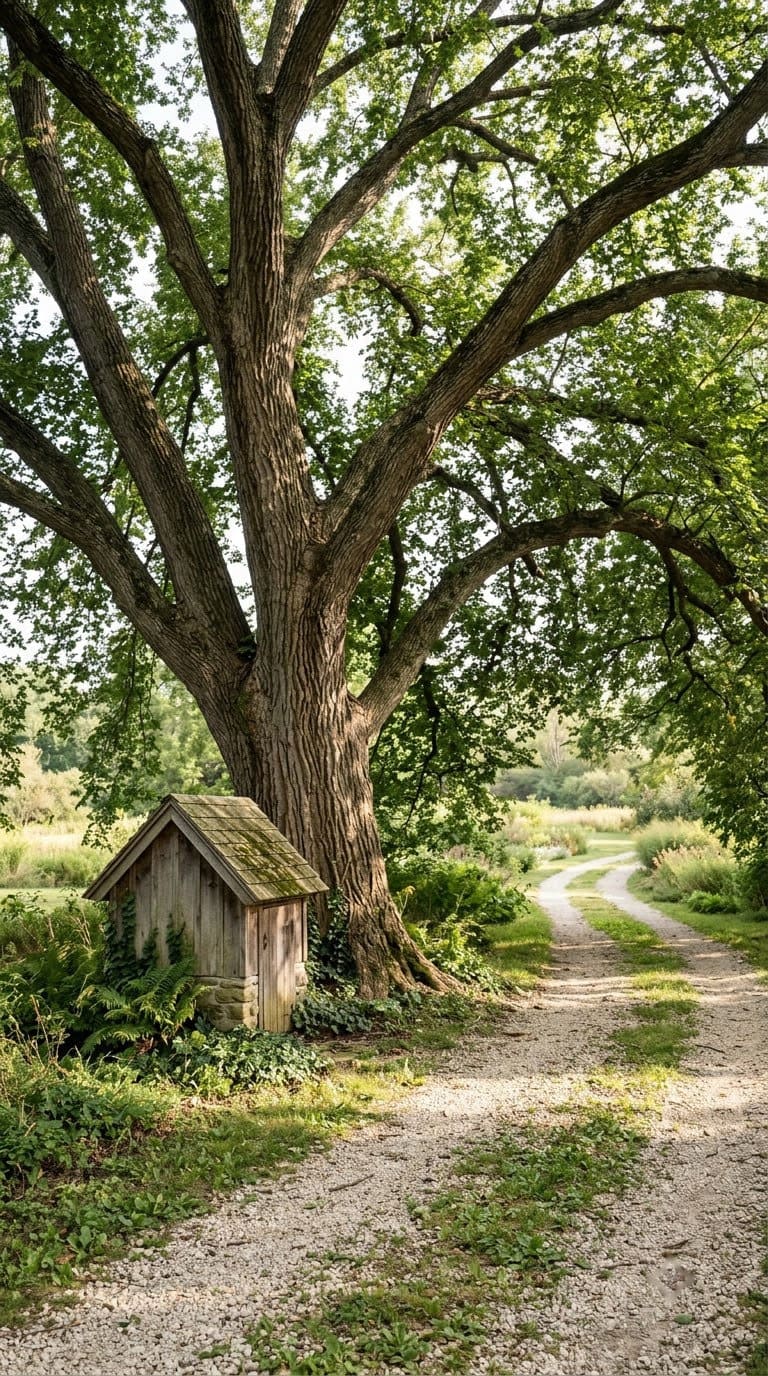
If you plant an elm, give it the full 50 feet. The roots will outgrow any small yard plan.
Swap it for a ginkgo. Hunker lists ginkgo varieties among safer trees, and they handle city soil well.
5. Mulberry
Mulberries get a bad rap for stained sidewalks, but the roots deserve attention too. Hunker lists mulberry among the most aggressively thirsty trees. The fruit also spreads, so volunteers can pop up near your casing.
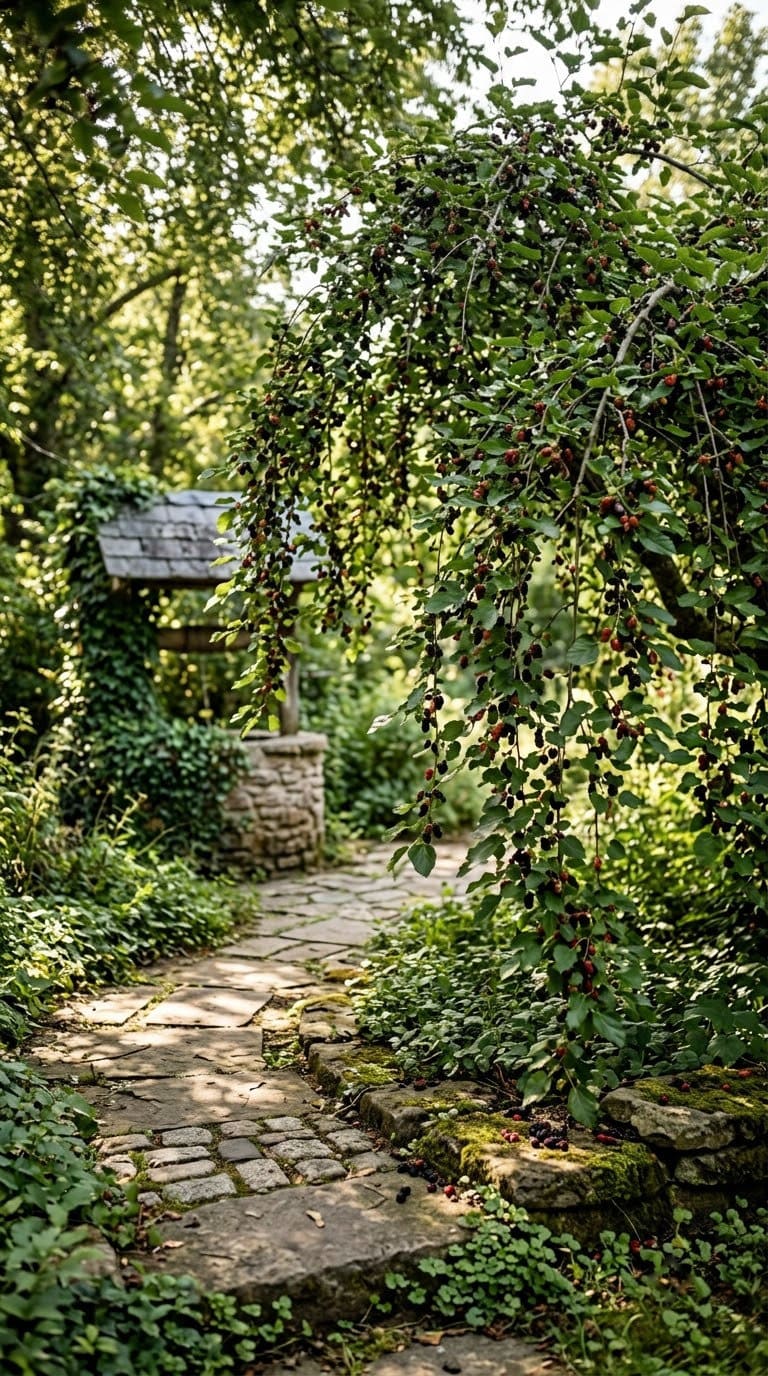
Even if you don’t plant one, a seedling can show up. Check the area around your wellhead every spring and pull seedlings while the roots are thin. It’s a quick chore that can save you a driller’s visit.
Swap it for a crabapple. It gives fruit for wildlife and a smaller root system.
6. Running Bamboo
Bamboo is a different kind of threat. It isn’t deep, so it won’t reach down your casing. Instead it travels sideways.
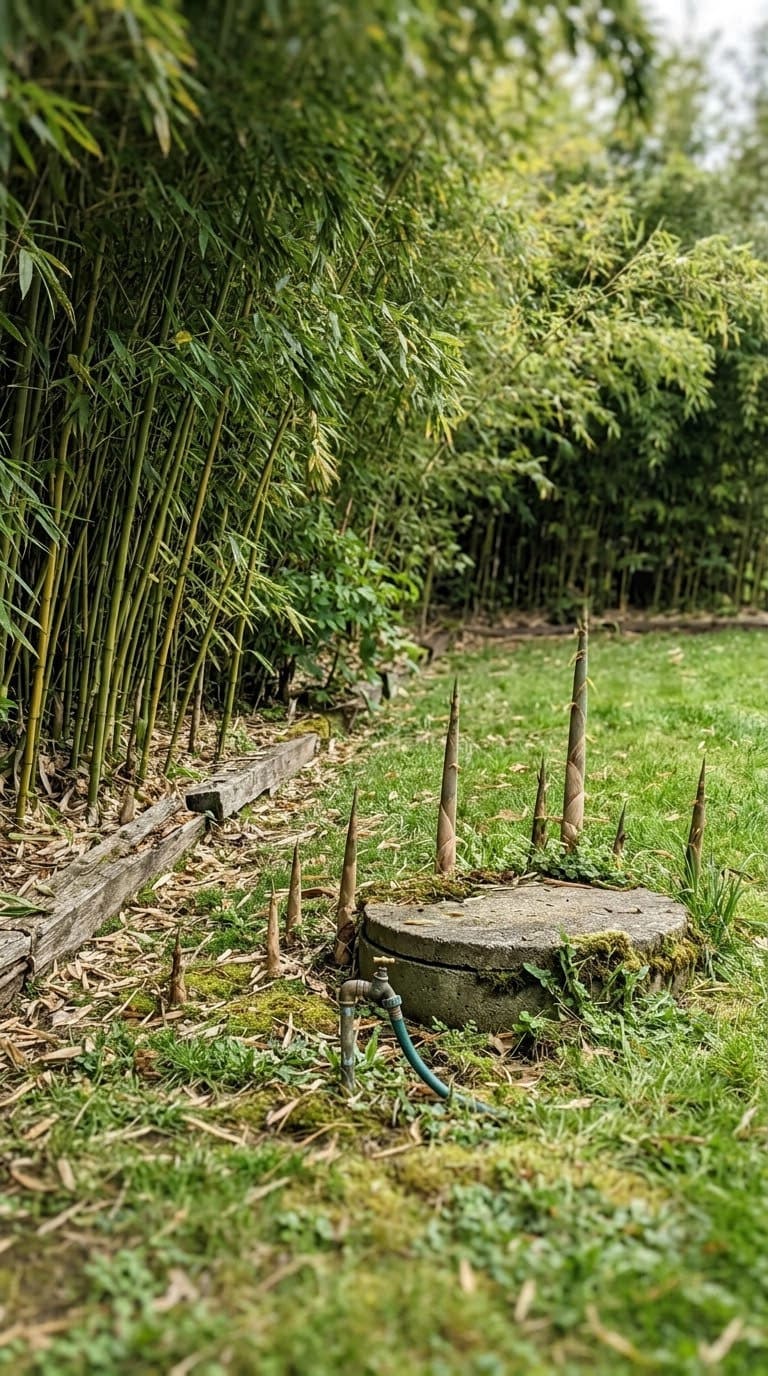
The Royal Horticultural Society says rhizomes generally grow in the top 1 foot of soil and can spread over 3 feet each year in good conditions. That makes shallow supply lines, wellhead pits, and wiring runs the targets. Inspectapedia also lists bamboo as a plant with aggressive roots near septic systems.
If you already have it, the RHS says a barrier should sit at least 2 feet deep and stand 3 inches above the soil, with overlapping joints. Barrier work is DIY-friendly, but removing an escaped grove is hard.
Swap it for a clumping bamboo or tall ornamental grass such as miscanthus. Both stay put.
7. Japanese Knotweed
This one is for pond, creek, and ditch owners. Knotweed looks like bamboo, grows tall and dense, and takes over banks. Inspectapedia says its roots can reach about 2 meters deep.
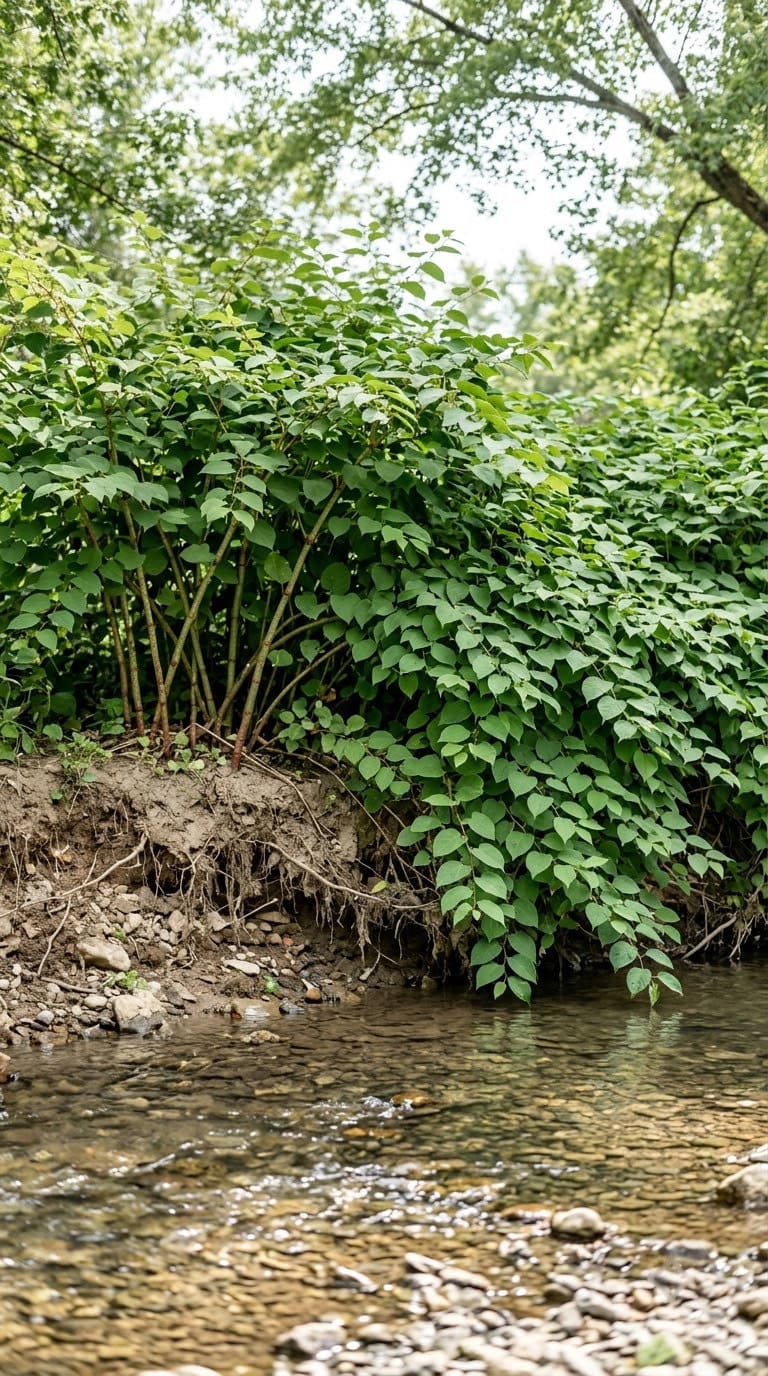
Small fragments can regrow, so digging it out wrong makes things worse. Bare soil under dense stands also erodes in winter.
Check our guide to invasive plants for how to spot it.
Check with your state or county extension office before you start, since they can confirm the ID and advise on removal. Replace it with native sedges or switchgrass, which hold banks without taking over.
Swap it for native shrubs along the water edge. Our pond edging ideas show good options.
8. Eucalyptus and Other Thirsty Warm-Climate Trees
In the South and West, a few trees cause the same trouble as willows. Hunker names the California pepper tree, eucalyptus, honey locust, mesquite, Russian olive, and sissoo as problem trees in warmer climates. Inspectapedia also flags eucalyptus for aggressive, deep roots.
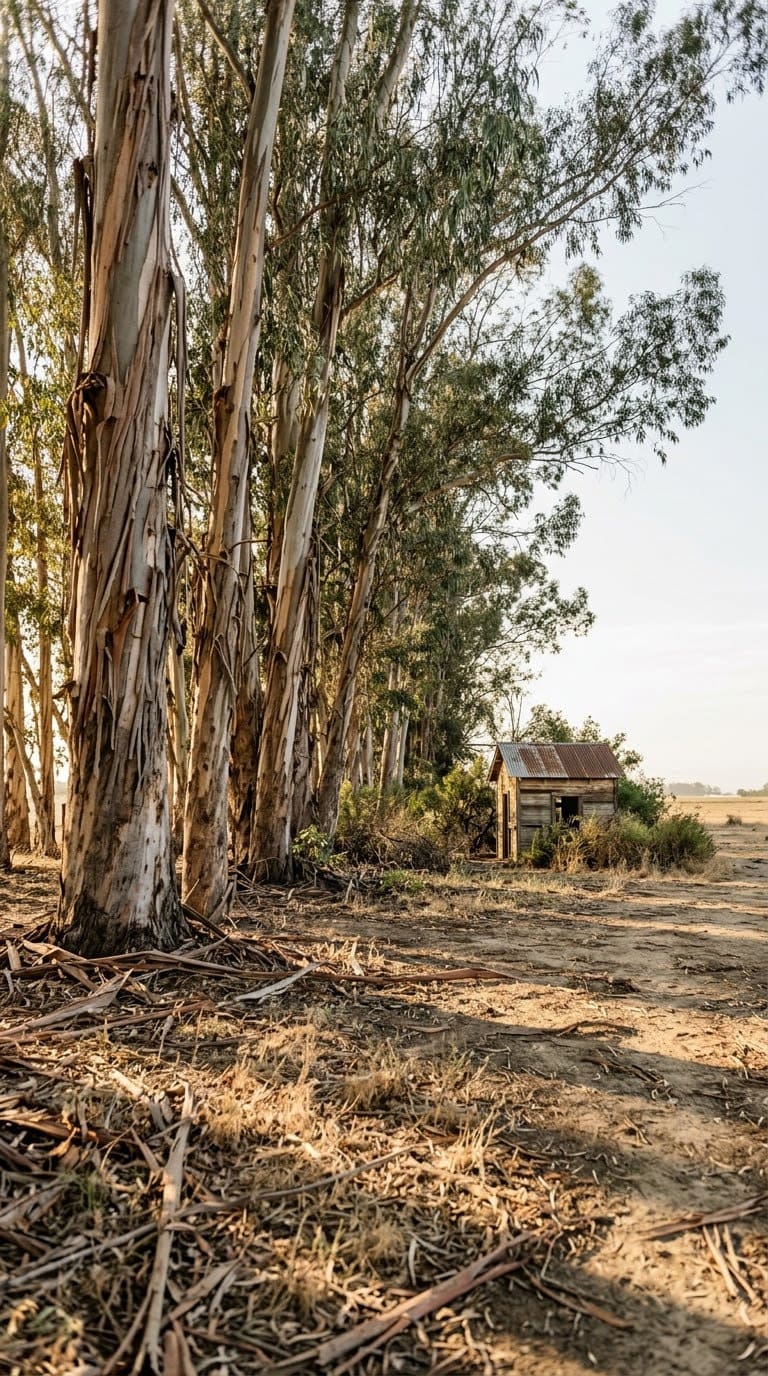
Deep roots matter most in dry country, because your well may be the only wet spot for miles. Dry-climate trees chase it. Keep these species well away, and check your local extension office for a regional list.
Swap them for desert willow or a native oak variety that suits your region. Ask a local nursery which ones stay shallow.
9. Heavy-Feeder Turf and Roses at the Wellhead
This last one isn’t about roots. It’s about what you do to the plant. A lawn that gets fed four times a year, or a rose bed that gets sprayed, puts nitrate and pesticide in the soil right over your water supply.
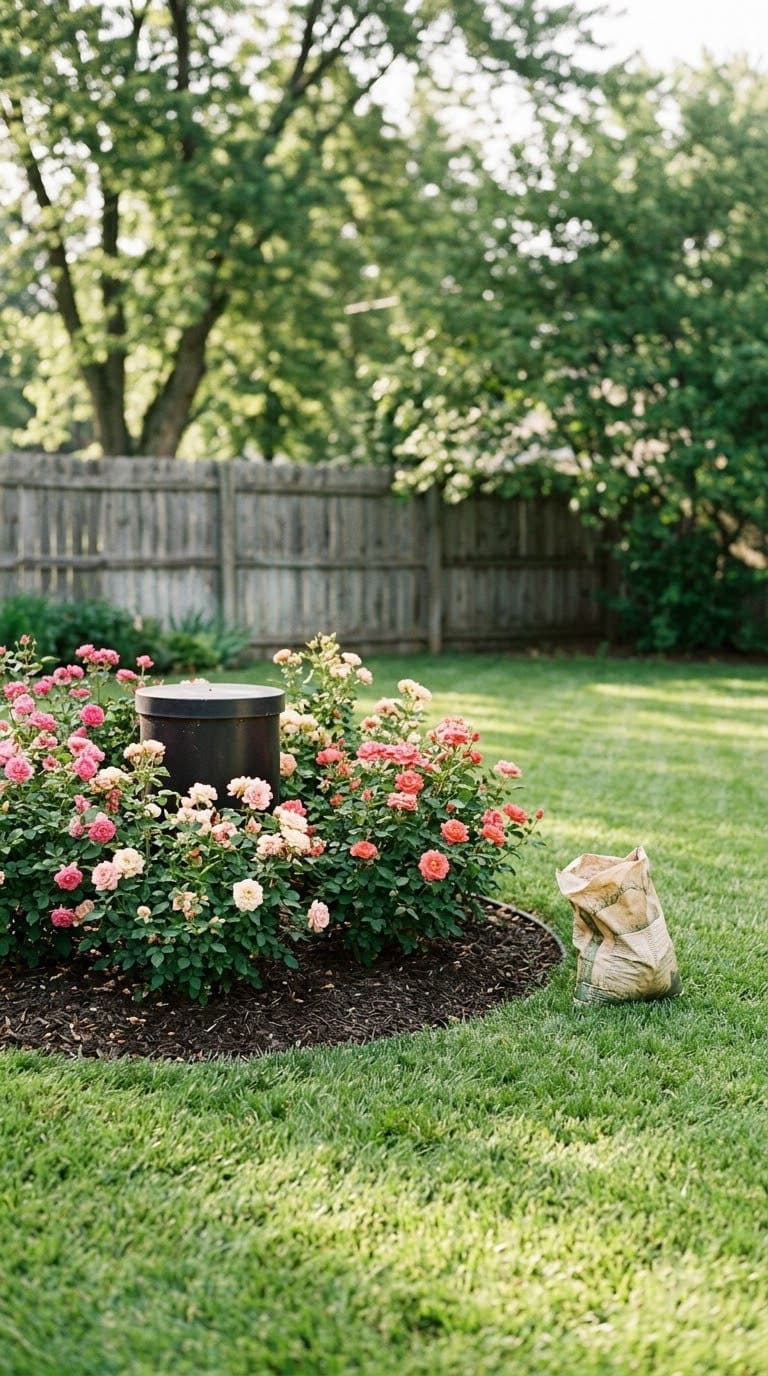
Jessica Curl and Laura Bell of Alabama Extension say sandy soils let pollutants travel farther. They also advise keeping wells away from chemical storage areas by 150 feet. Our post on pesticides in well water covers what to test for.
The fix is cheap. Leave a no-feed circle around the casing and mow it, but skip the fertilizer. Keep the top of the casing at least 1 foot above the soil and slope soil away from it.
Swap it for creeping thyme, sedum, lavender, or ornamental grasses. They need little feeding and no spray.
What Should You Plant Near a Well Instead?
These plants stay small or have gentler roots. Distances here are general guidance, so check your local rules.
| Plant | Mature size | Why it’s safer | Still keep back |
|---|---|---|---|
| Dogwood | Small tree | Smaller, less aggressive roots | 10 to 20 feet |
| Redbud | Small tree | Modest root spread | 10 to 20 feet |
| Crabapple | Small tree | Compact root zone | 10 to 20 feet |
| Crape myrtle | Small tree | Slow, tidy roots | 10 feet |
| Amur or paperbark maple | Small tree | Smaller than silver or red maples | 10 to 20 feet |
| Creeping thyme, sedum, lavender | Ground cover | Shallow, no deep roots | Fine near the casing |
Hunker lists these small trees as safer picks. The ground covers are common low-root choices, so confirm with a local nursery. For wet spots and runoff, a small rain garden can handle water that would otherwise pool near the casing.
How Far Should a Plant Be From Your Well?
Sources disagree, so here’s how they compare. We follow the strictest number for big trees, since a repair costs far more than a longer walk to the garden.
| Source | Distance | Applies to |
|---|---|---|
| Saskatchewan Water Security Agency | 50 feet | Trees near a well |
| Hunker | 10 feet minimum, 20 to 30 feet | Wells, septic, sewer for aggressive trees |
| Nature Hills | 10 feet | Sewer or water lines |
| Alabama Extension | 100 feet / 150 feet | Septic / chemical and livestock storage |
| Purdue Extension | 100 to 200 feet | Fuel, fertilizer, salt exclusion zone |
Our rule is simple. Use 50 feet for any tree on the list above and 10 feet for small, gentle trees. Check your state or county health department too, because well codes vary.
What Did We Learn the Hard Way About Trees and Wells?
If there’s one lesson here, it’s that the tree looks innocent for years. Roots grow quietly, and the first sign is often a failed pump pull or a drop in pressure.
Most people blame the pipe first. That’s a mistake. The Kentucky page makes the point well: roots only get in through holes, so the tree is a symptom as much as a cause.
Another trap is the “just one small willow” plan. A sapling is two feet tall, but a mature willow can fill a yard. We’d rather plant a shrub and be done.
The last one hurts most. People cut the tree and never fix the casing. The hole is still there, and now bacteria have a free path with no roots in the way.
What Do You Do If Roots Are Already in Your Well?
Start by watching for signs. Low pressure, sand or debris in the water, a pump that strains, or sudden cloudiness all deserve attention.
Don’t haul on the pump with a winch. Sims learned that when the drop pipe snapped. Call a licensed well driller instead.
A driller can cut roots, inspect the casing, and repair or sleeve it. That’s a pro job, and costs depend on depth and region. After repairs, shock chlorinate and send a sample to a state-certified lab.
Digging near buried lines can also be risky. Call 811 before you dig anywhere. Well work and setbacks are regulated by your state or county, so check before you cut or move a well.
For a drainage fix that keeps water moving away from the wellhead, our drainage ditch landscaping ideas are a handy starting point.
FAQ
Can tree roots break a well?
Rarely on their own. Nature Hills says roots don’t cause problems with sound, intact pipes, but seeping or aging parts attract them. A cracked casing or loose joint is the usual entry point.
How close can I plant a tree to my well?
Ten feet is the lowest number we found, and it’s meant for small trees. For big, thirsty trees, we use 50 feet. Local rules may be stricter.
Is it safe to keep a willow I already have?
If it’s within 50 feet of your well, we’d get a pro to inspect the casing first. You may not need to remove it. But catching a crack early is cheaper than a repair after roots arrive.
Can I plant grass around the wellhead?
Yes, but skip the fertilizer and pesticide there. Keep the casing at least 1 foot above the soil and slope the ground away from it.
What if I have a pond or stream instead of a well?
The same rules help, and invasive plants like knotweed matter more at the water’s edge. Native shrubs and sedges hold banks better than invasive stands.
Does city water change any of this?
You don’t have a casing, but buried supply lines still exist. Keep thirsty trees at least 10 feet from them.
Products We Recommend
This post contains affiliate links. We may earn a commission on qualifying purchases at no extra cost to you.
Watersafe Original Water Testing Kit
A home screening kit for well and tap water that checks bacteria, nitrates, pH, hardness, and lead. A handy yearly check, though a state-certified lab is still the final word.
Shop Now
Safe Home DIY Bacteria in Water Test Kit
A coliform bacteria test to use after a casing repair or root removal, with results in as little as 6 hours. Pair it with a lab sample after you shock chlorinate.
Shop Now
Garden Root Barrier, 30 in x 25 ft, HDPE
A heavy plastic rhizome barrier deep enough for the 2-foot depth the RHS advises for running bamboo. Useful for containing a grove away from shallow lines and the wellhead pit.
Shop NowNever miss an update — choose FarmFoodFamily as your preferred source on Google.
How it works: Tap the button below to open Google's settings page, then check the box next to FarmFoodFamily.
Tap the checkbox to turn it blue — that's how you know it's set.