13 Plants Should Never Grow Next to Tomatoes (and Why)
A few of these are genuine deal-breakers, like a black walnut that can wilt a tomato overnight from 60 feet away, and a few are just cautious folk wisdom that matters only in a wet year or a tight bed. This sorts out which is which.

Never miss an update — choose FarmFoodFamily as your preferred source on Google.
How it works: Tap the button below to open Google’s settings page, then check the box next to FarmFoodFamily.
Tap the checkbox to turn it blue — that’s how you know it’s set.
Most “don’t plant this near tomatoes” lists stop at “they don’t get along.” That’s not useful. The fix depends entirely on why.
A soil toxin needs distance. A shared beetle needs a row cover. A thirsty Mediterranean herb just needs its own pot.
Lump them all together and you end up moving plants that were fine and keeping the ones that weren’t.
So here are 13 plants. Each one gets the real mechanism, a source, and what to do if it’s already next to your tomatoes. There’s a short list of good neighbors at the end too.
Quick Answer
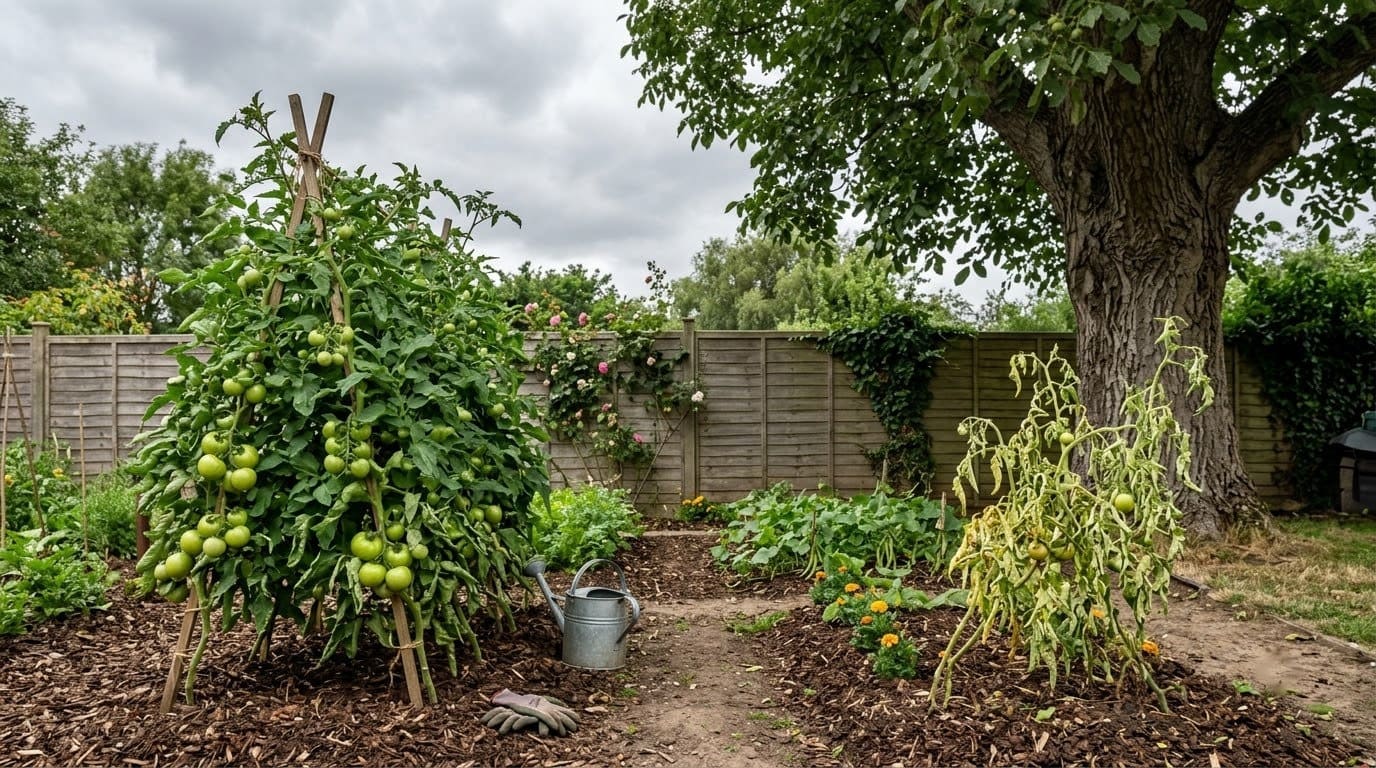
Four mechanisms explain every bad tomato neighbor. The first is soil chemistry. Black walnut releases juglone and fennel releases allelopathic compounds, and both stunt or kill tomatoes nearby.
The second is shared disease. Potatoes, peppers, eggplant, and strawberries host the same pathogens as tomatoes, above all late blight and Verticillium wilt.
Answer 4 quick questions and get matched to the exact fix for your yard — drainage, budget, layout, or something else entirely.
Take the Free QuizThe third is shared insects. Corn and tomatoes feed the exact same caterpillar. The fourth is plain competition for food, water, and light.
Three plants are close to non-negotiable: black walnut, fennel, and any nightshade relative in a wet blight year. The rest are lower risk if you rotate the nightshade bed every three to four years and space plants well.
Keep mint in a buried pot. Grow fennel off on its own. And plant dill where you won’t mind pulling it once it flowers.
What actually makes a plant a bad tomato neighbor?
Four mechanisms cover all 13. Knowing which one you’re dealing with tells you whether to move a plant, treat the soil, or just change how you water.
Soil chemistry and allelopathy. Some plants poison the ground around them. Black walnut is the famous one. Fennel does a milder version through compounds released by its roots and decaying leaves.
Shared disease. Tomatoes are a nightshade, along with potatoes, peppers, and eggplant. They pass the same fungal, bacterial, and viral diseases back and forth, and the spores or resting bodies sit in the soil for years. Strawberries and cucumbers share a couple of the big ones too.
Shared insect pests. When two crops feed the same pest, planting them together just builds a bigger population. Corn and tomatoes are the clearest case. So are the flea beetles and Colorado potato beetles that move between tomatoes, potatoes, and eggplant.
Most yard problems trace back to one specific, fixable cause. Find yours in 4 quick questions.
Take the Free Quiz
OMRI-listed Bacillus thuringiensis spray that kills tomato fruitworm and hornworm larvae without harming bees or predatory insects, useful when corn or bolted dill nearby has raised the caterpillar pressure.
Shop NowThis post contains affiliate links. We may earn a commission on qualifying purchases at no extra cost to you.
Resource competition. Heavy feeders like corn and cabbage strip the same nutrients tomatoes need. Tall or sprawling plants shade the tomato and cut the airflow that keeps fungal disease down. And a few plants simply want a different amount of water than a tomato does.
The 13 plants at a glance
| Plant | Main mechanism | Risk level | The fix |
|---|---|---|---|
| Black walnut | Juglone toxicity | Severe | 60+ ft away, or grow tomatoes in containers with fresh mix |
| Fennel | Allelopathy | Severe | Its own bed, several feet from anything |
| Potatoes | Late blight, Colorado potato beetle | High | Separate beds, 3 to 4 year rotation, pull volunteers |
| Peppers | Verticillium, viruses, shared pests | Moderate | Same rotation block, do not interplant in a wet climate |
| Eggplant | Verticillium, flea beetles, potato beetle | Moderate | Separate, floating row cover early |
| Strawberries | Verticillium wilt | Moderate | Never plant into ground that grew tomatoes recently |
| Corn | Corn earworm / tomato fruitworm, heavy feeder, shade | High | Opposite corners of the garden |
| Dill (flowering) | Growth inhibition, hornworm draw | Low to moderate | Fine young, pull it before it bolts |
| Brassicas | Nutrient competition, pH mismatch | Moderate | Different beds, feed both heavily |
| Rosemary | Opposite water and soil needs | Low | Keep rosemary in its own dry pot |
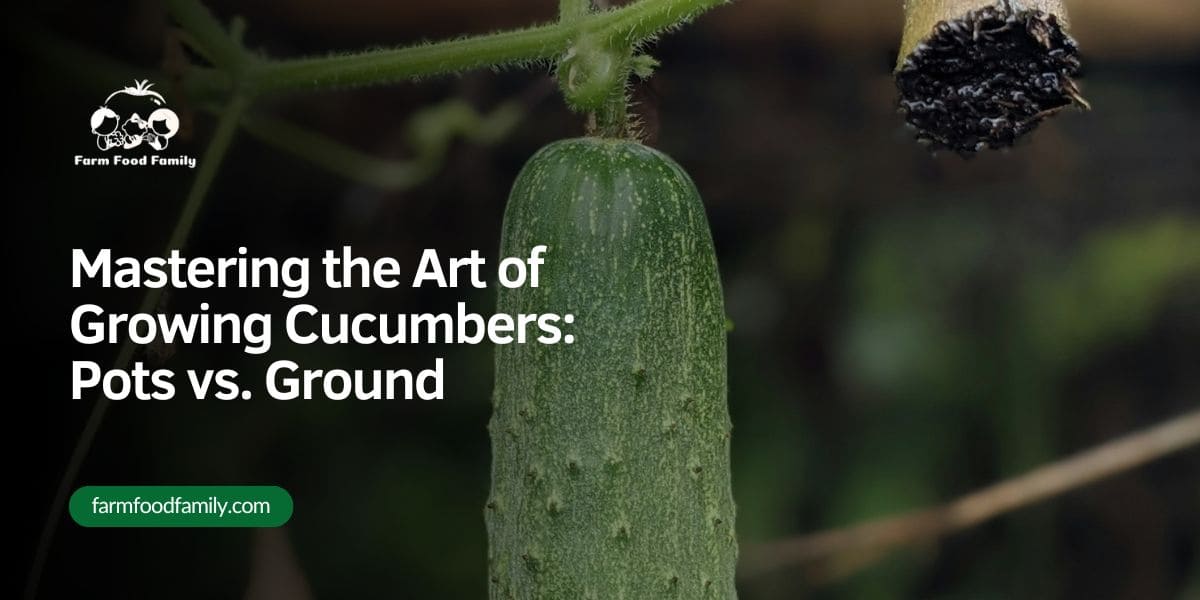
| Cucumbers | Shared blight, shade, crowding | Low to moderate | Trellis cucumbers away from the tomato row |
| Mint | Rhizome invasion | Moderate | Buried container only, never in-ground |
| Sunflowers | Allelopathy, shade, root competition | Low to moderate | North side of the garden, or 4+ ft away |
1. Black walnut and butternut
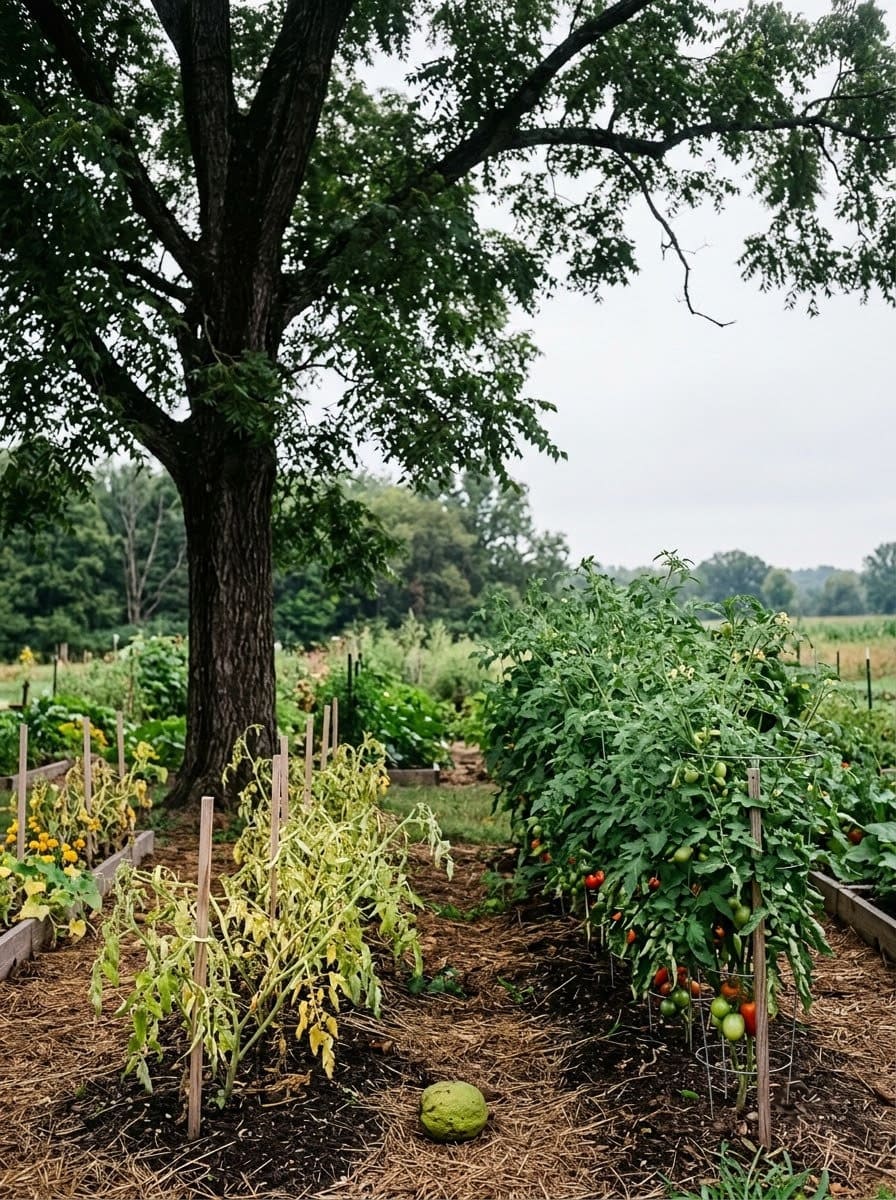
This is the one that actually kills tomatoes, and fast. Black walnut (Juglans nigra) and its cousin butternut produce a compound called juglone.
It sits in the buds, nut hulls, and roots, and it’s toxic to a long list of plants. Tomatoes are near the top of that list.
Gardeners call it walnut wilt. A tomato looks fine one evening and is drooping and curling the next.
A black walnut toxicity factsheet from University of Wisconsin-Madison Extension, written by plant pathologists Ann Joy and Brian Hudelson with horticulturist Laura Jull, puts the toxic zone at “50 to 80 feet from the trunk of the tree, with the greatest toxicity occurring within the tree’s dripline.”
Cutting the tree down doesn’t fix it right away. Leftover root pieces “may continue to exude toxins for several years as they decay.”
The fix: get your tomatoes at least 60 to 80 feet from the trunk, well outside the dripline. If that’s not possible, grow them in raised beds or big containers of fresh soil that never touches the native ground. Water so the runoff doesn’t carry juglone back in.
Already planted: move the tomatoes now, into containers with clean mix. A quick transplant can save a plant if you catch the wilt early.
And if a big walnut sits near your only sunny spot, check which walnut species it is first. English walnut grafted on black rootstock still leaks juglone into the soil.
The average homeowner spends $616/year on yard fixes that don't address the real problem. Find out what yours actually is — before you spend another dollar.
Take the Free Quiz2. Fennel
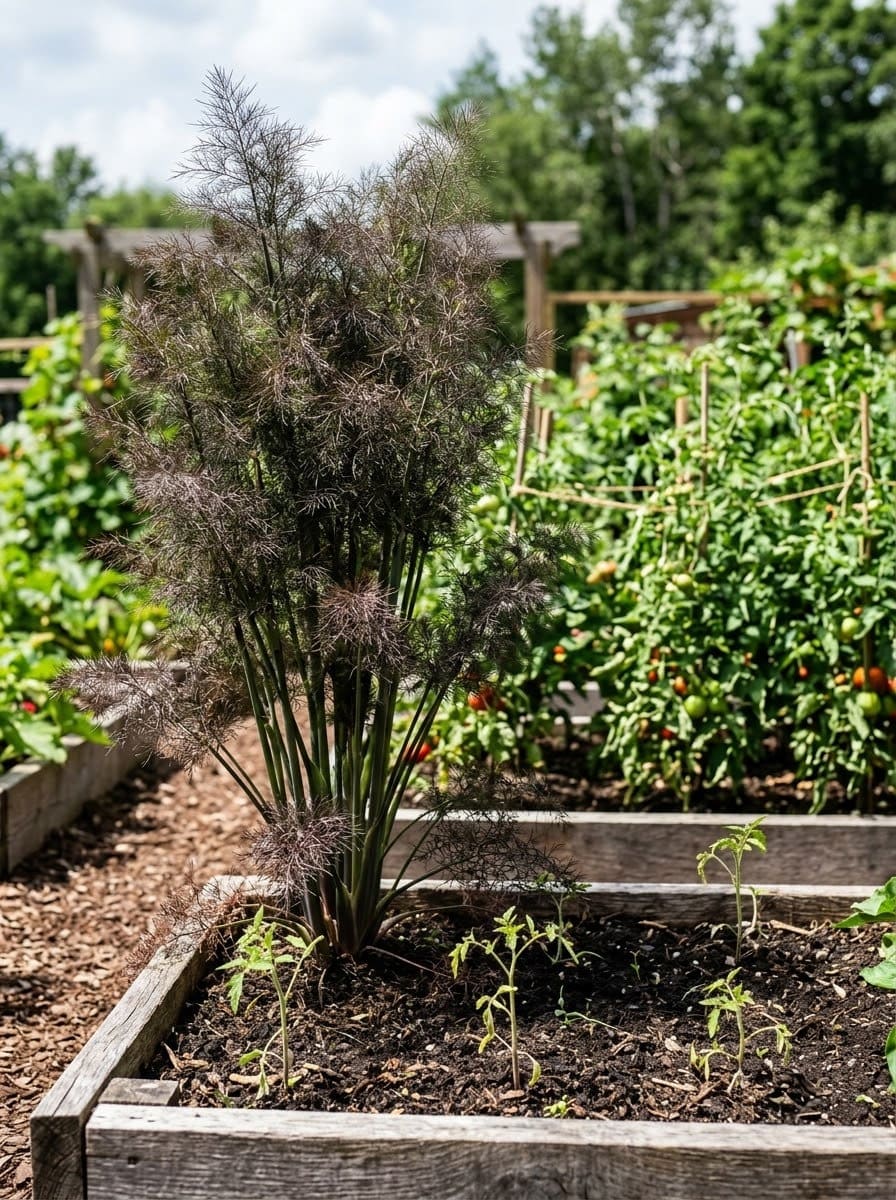
Fennel is the herb that poisons its own neighborhood. It’s not aggressive like mint and it’s not a disease carrier. It just chemically suppresses the plants around it.
A study on the allelopathic potential of fennel tested its oil and water extract on seeds. Both cut germination and seedling growth sharply. The two crop plants in the test, tomato and radish, were more sensitive to it than the weeds were.
Fennel puts these compounds out through its roots and its decaying leaves. So the effect builds over a season. Most companion charts say to keep fennel three to four feet away, but gardeners still see stunted tomatoes at that range.
The fix: grow fennel in its own bed or a large dedicated container, as far from your tomatoes as your garden allows. Treat it like rue or black walnut, a plant that gets a solitary spot on purpose.
Already planted: move one of the two. Don’t spend a month troubleshooting nutrients or water first. Our fennel growing guide covers the container-versus-bed decision, and it’s worth reading before you plant fennel anywhere near food crops.
3. Potatoes
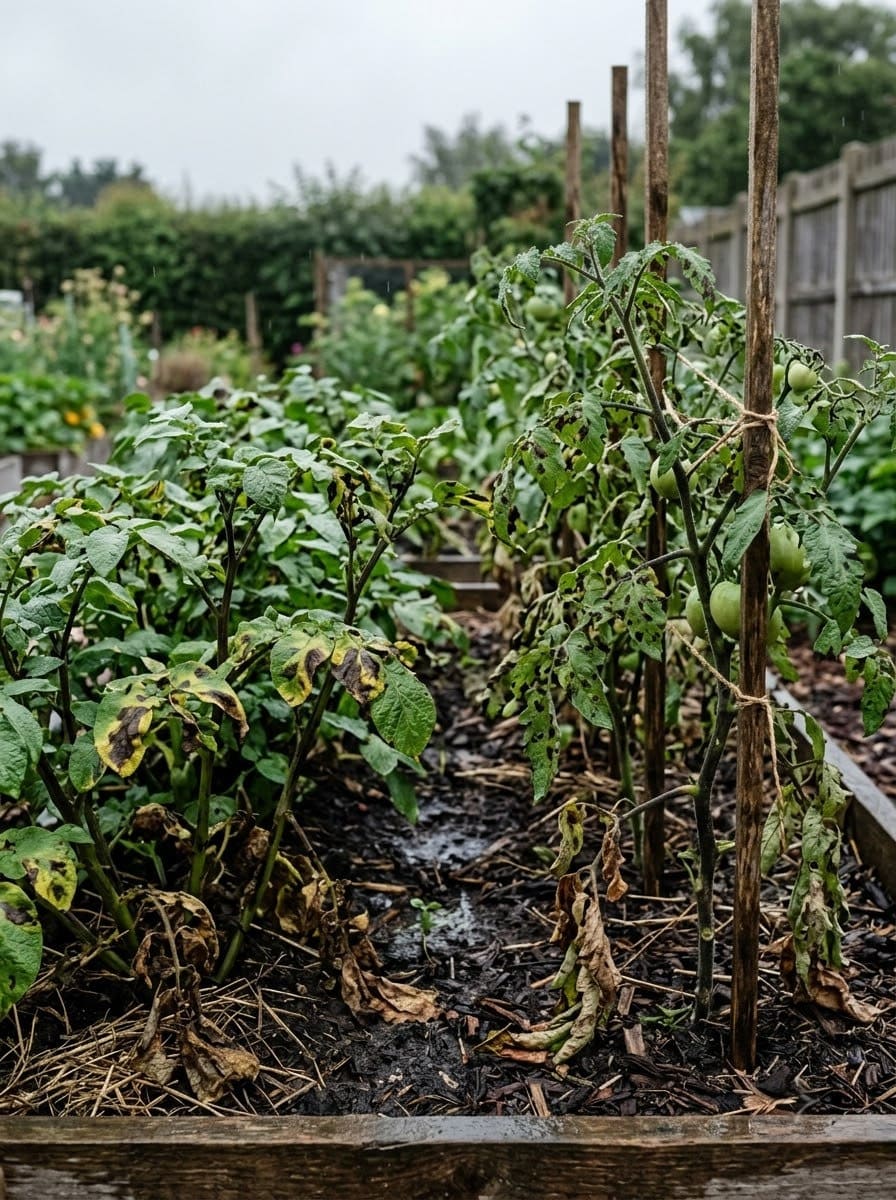
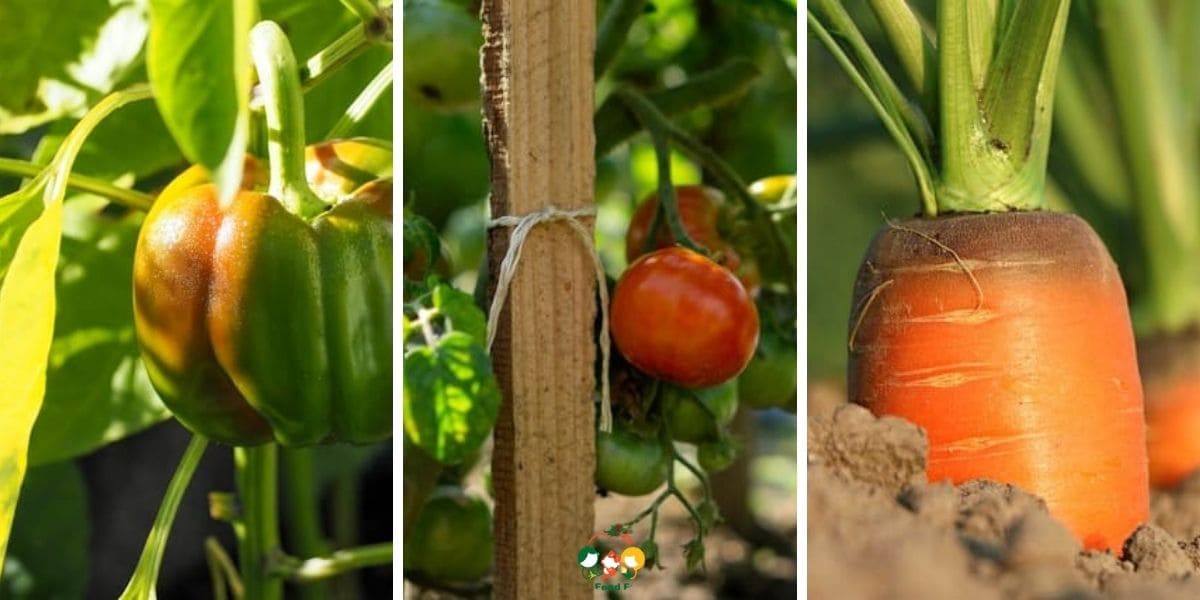
Potatoes and tomatoes are both nightshades, and they trade the worst disease in the vegetable garden: late blight.
UC Statewide IPM Program says the pathogen Phytophthora infestans has “a wide host range, including tomato, potato, pepper, and eggplant.” It names “adjacent plantings of potatoes or tomatoes that are affected” as a direct source of infection.
Late blight is the disease behind the Irish famine. In a wet summer it can flatten a tomato patch in under two weeks.
On top of that, both plants feed the Colorado potato beetle. And digging potatoes tears through the shallow roots of any tomato next to them.
The fix: keep potatoes in their own bed, ideally at the far end of the garden. Rotate the whole nightshade block to fresh ground every three to four years. Never compost blighted plants.
Already planted: if either crop shows blight, pull and bag the whole plant, don’t just strip leaves. The ongoing job is staying ahead of potato beetles before they cross over. And watch for volunteer potatoes next spring, since a missed tuber is a classic hidden disease bridge.
4. Peppers
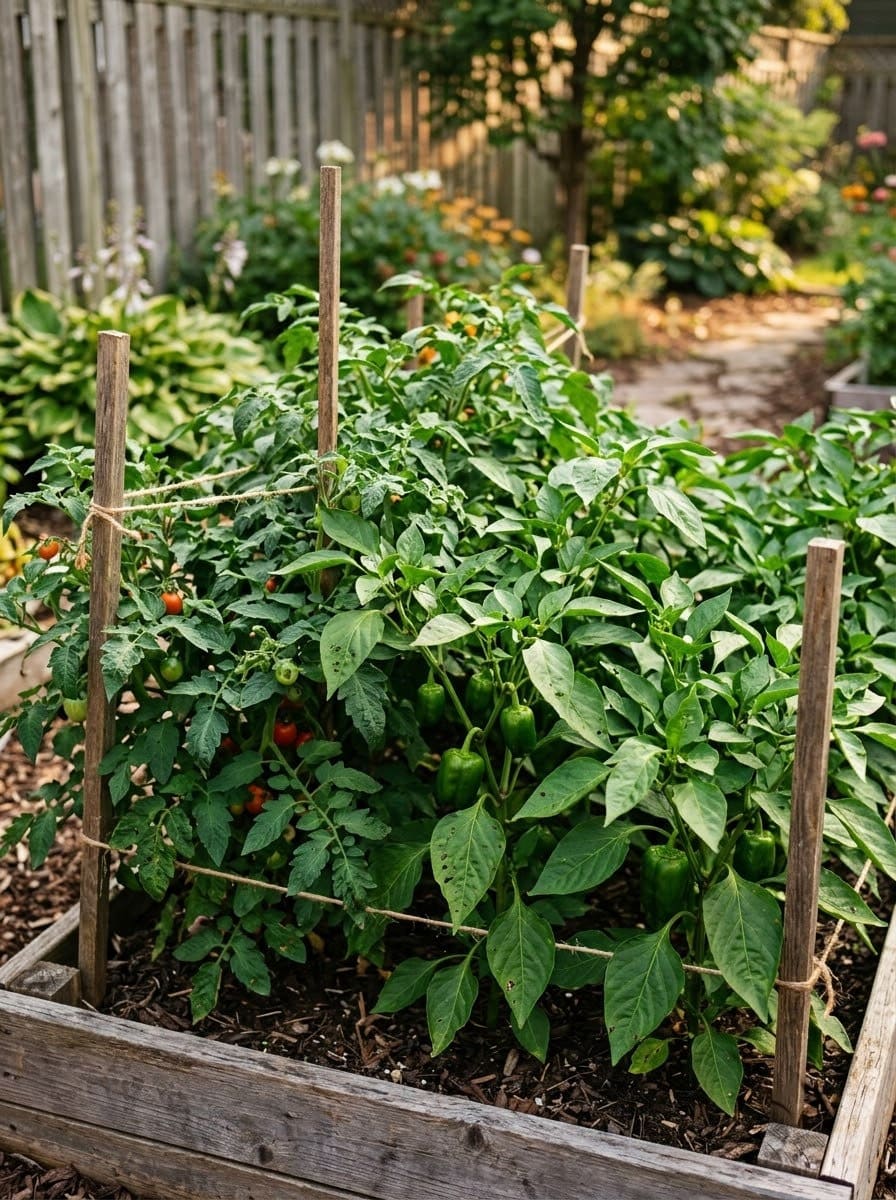
Peppers are the borderline case. They’re nightshades, so they share tomato diseases, but the day-to-day risk is lower than potatoes.
The shared list includes bacterial leaf spot, several mosaic viruses, and Verticillium wilt. University of Connecticut’s Home & Garden Education Center says Verticillium has “over 350 host plants,” the nightshades included. Its advice after an infected tomato crop: don’t “replace the next several years with peppers or other nightshade family plants.”
In a dry climate with good airflow, peppers and tomatoes side by side are usually fine. In a humid one, they feed each other’s disease.
The fix: treat peppers and tomatoes as one rotation group. Plant them in the same block one year, then move that whole block. Give them enough space that leaves aren’t touching, so a spot on one doesn’t rain spores onto the other.
Already planted: it’s not an emergency. Just don’t do it again in a wet region, and never follow this bed with more nightshades next season. If you start peppers from seed, our chili growing walkthrough covers spacing.
5. Eggplant
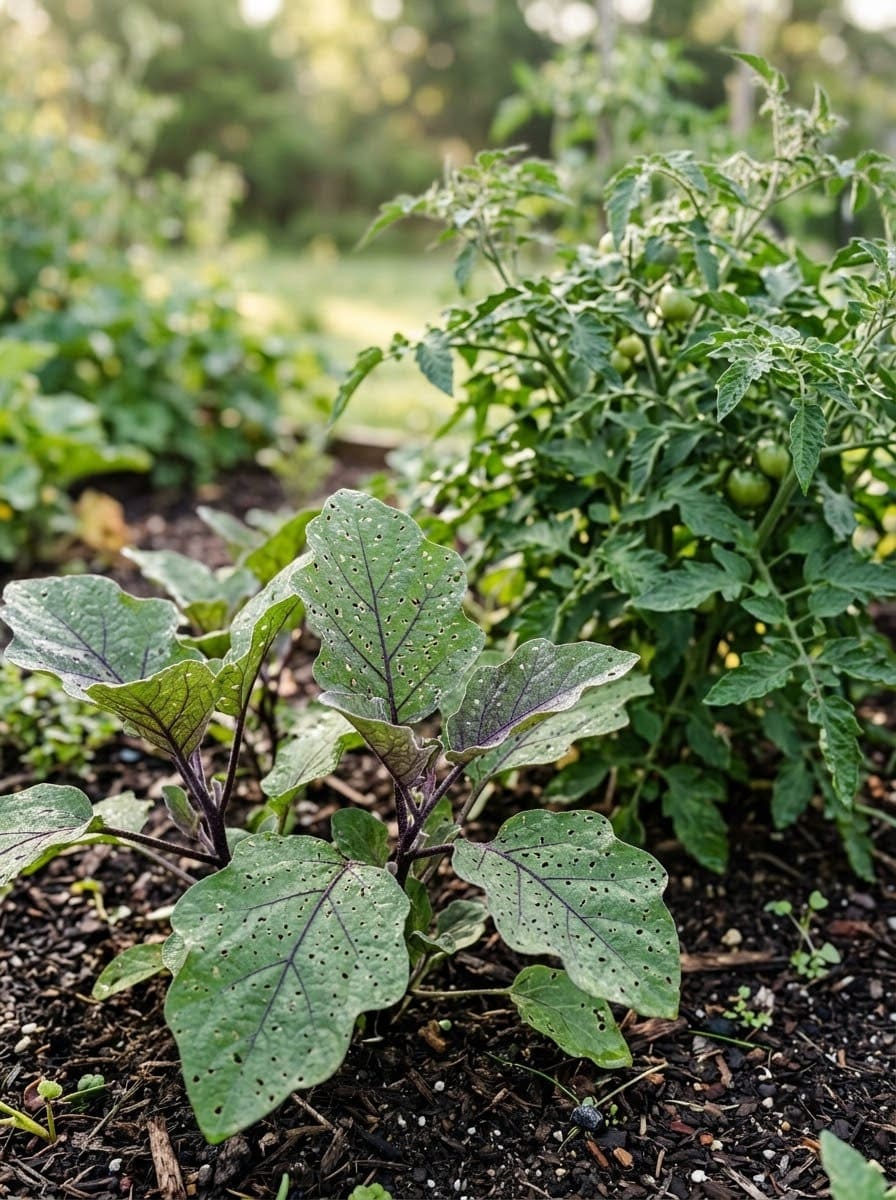
Eggplant is a nightshade too, and it brings the same diseases as peppers plus a worse pest problem.
Flea beetles hammer eggplant, chewing the leaves into a sieve of tiny holes, and they’ll move onto young tomatoes next door. Eggplant also feeds the Colorado potato beetle and tomato hornworm, and it’s one of the more Verticillium-prone crops in the family.
The fix: keep eggplant with the rest of the nightshade rotation block, not tucked next to individual tomatoes. Cover young plants with floating row cover from transplant until they flower. That breaks the flea beetle cycle early and protects the tomatoes too.
Already planted: if flea beetles are already shredding the eggplant, get row cover on the tomatoes before the beetles spread. It’s mostly cosmetic damage on an established plant, but it stresses seedlings badly.
6. Strawberries
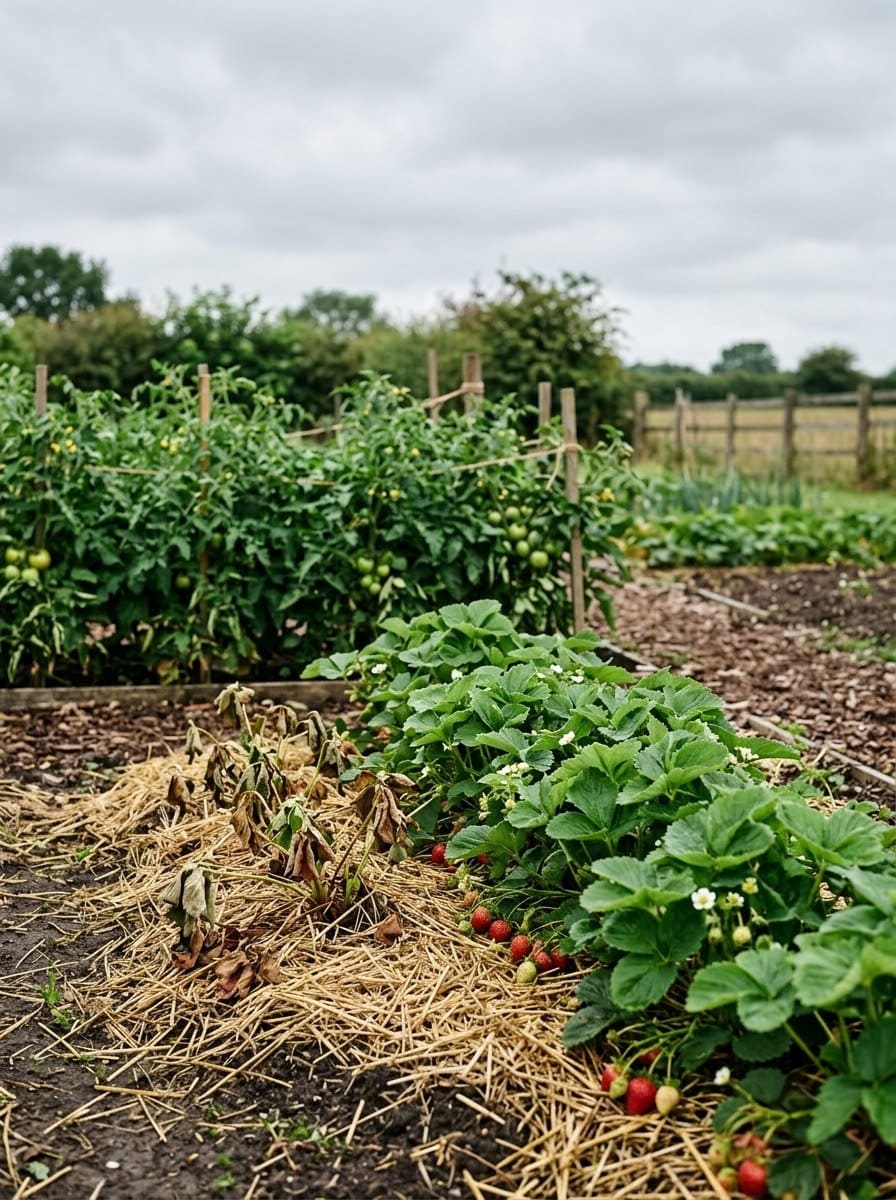
Strawberries seem harmless next to tomatoes. The problem is invisible and it’s in the soil: Verticillium wilt.
Strawberries are a major Verticillium host, and so are tomatoes. Per UConn’s factsheet, the fungus forms resting bodies that “can survive in the soil anywhere from 4 to 15 years.”
Plant strawberries where tomatoes just grew, or tomatoes into an old strawberry bed, and you hand the disease a fresh host. A telltale sign is wilting on just one side of the plant.
The fix: never rotate strawberries and tomatoes onto each other’s ground. Keep a permanent strawberry patch well away from your annual nightshade beds, and don’t let bed edges overlap.
Already planted: if nothing is wilting, you’ve probably been lucky with clean soil, so leave it but don’t repeat it. If you see one-sided wilt and vascular browning when you cut a stem, that ground is now a Verticillium reservoir for years. Growing strawberries in their own dedicated organic bed is the safer long-term setup.
7. Corn
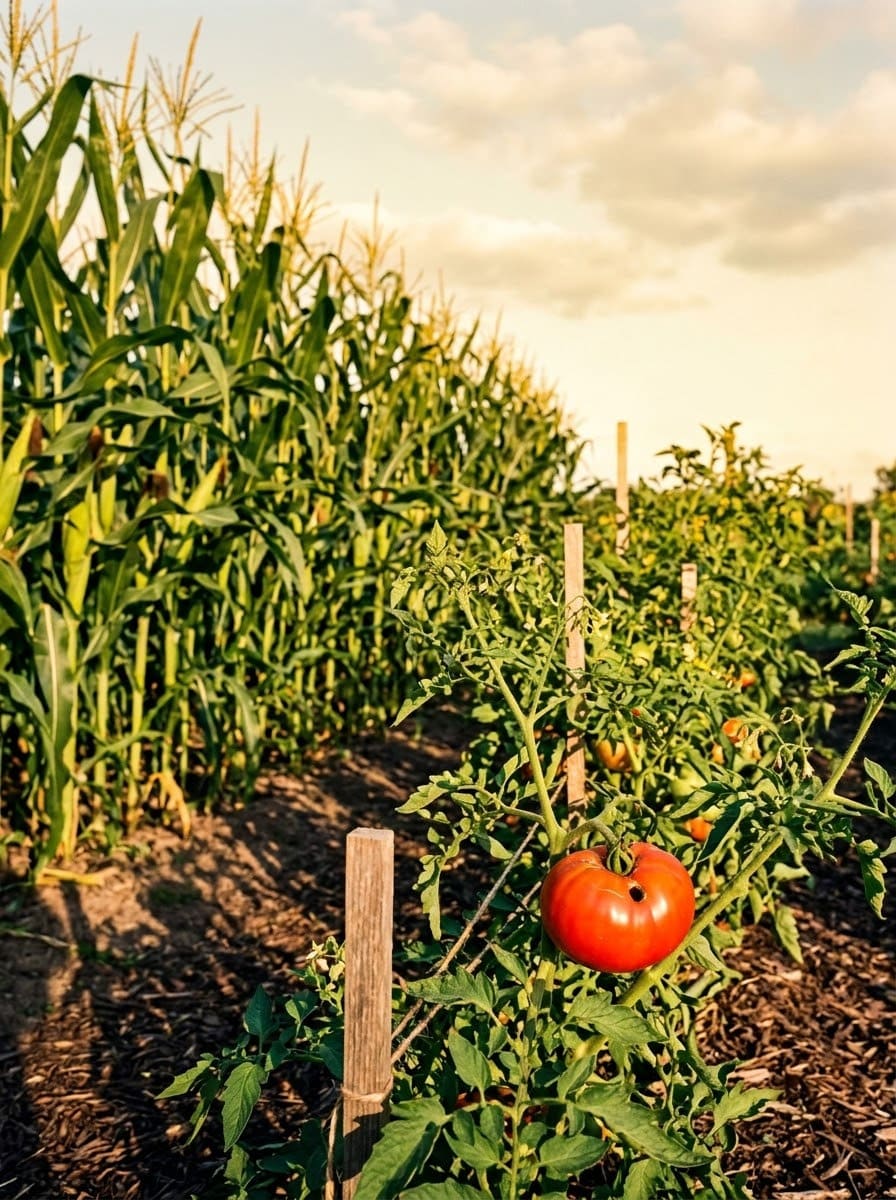
Corn and tomatoes feed the very same caterpillar. Not a similar one, the same species.
Missouri Botanical Garden explains that Helicoverpa zea is called corn earworm in an ear of corn and tomato fruitworm in a tomato. One insect, many names.
Their guidance is blunt: “avoid planting tomatoes near corn or other hosts of the fruitworm to minimize populations.” On a tomato, the damage is “a visible black hole at the base of the fruit stem.” Corn also throws heavy shade and competes hard for nitrogen.
The fix: put corn and tomatoes in opposite corners of the garden. If you grow both every year, don’t let them share a bed edge.
Already planted: check the fruit for entry holes. A Bt spray on the fruit trusses works, since it kills the caterpillar without hurting bees. Knowing the worst garden pests on sight helps you catch this one before it’s in the fruit.
8. Dill, once it flowers
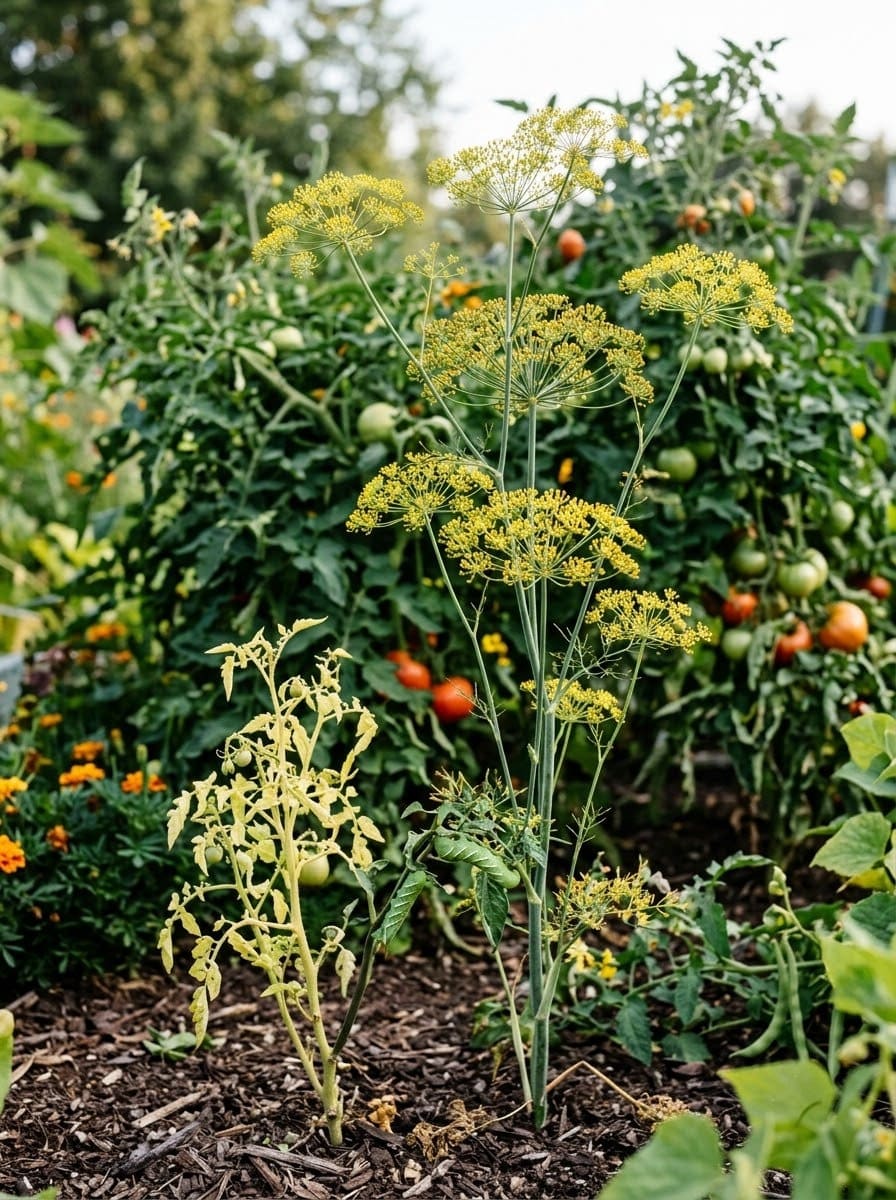
Dill is a genuine trap. Young dill is a good tomato companion, it draws in the wasps and lacewings that eat aphids. Then it bolts, and it flips.
Mature, flowering dill releases compounds that slow tomato growth, and gardeners consistently report a tomato next to bolted dill lagging its siblings. The big umbels also happen to attract tomato hornworm moths looking to lay eggs.
The fix: plant dill where you’ll see it and use it. Pull it as soon as it sends up a flower stalk. Don’t let it stand next to a tomato in full bloom.
Already planted: just pull the dill if it’s flowering. You lose nothing, since dill re-sows itself and you can start more.
This young-good, mature-bad pattern shows up with other herbs too, which is the whole point of our guide to herbs that fight each other.
9. Brassicas: cabbage, broccoli, cauliflower, kale, kohlrabi
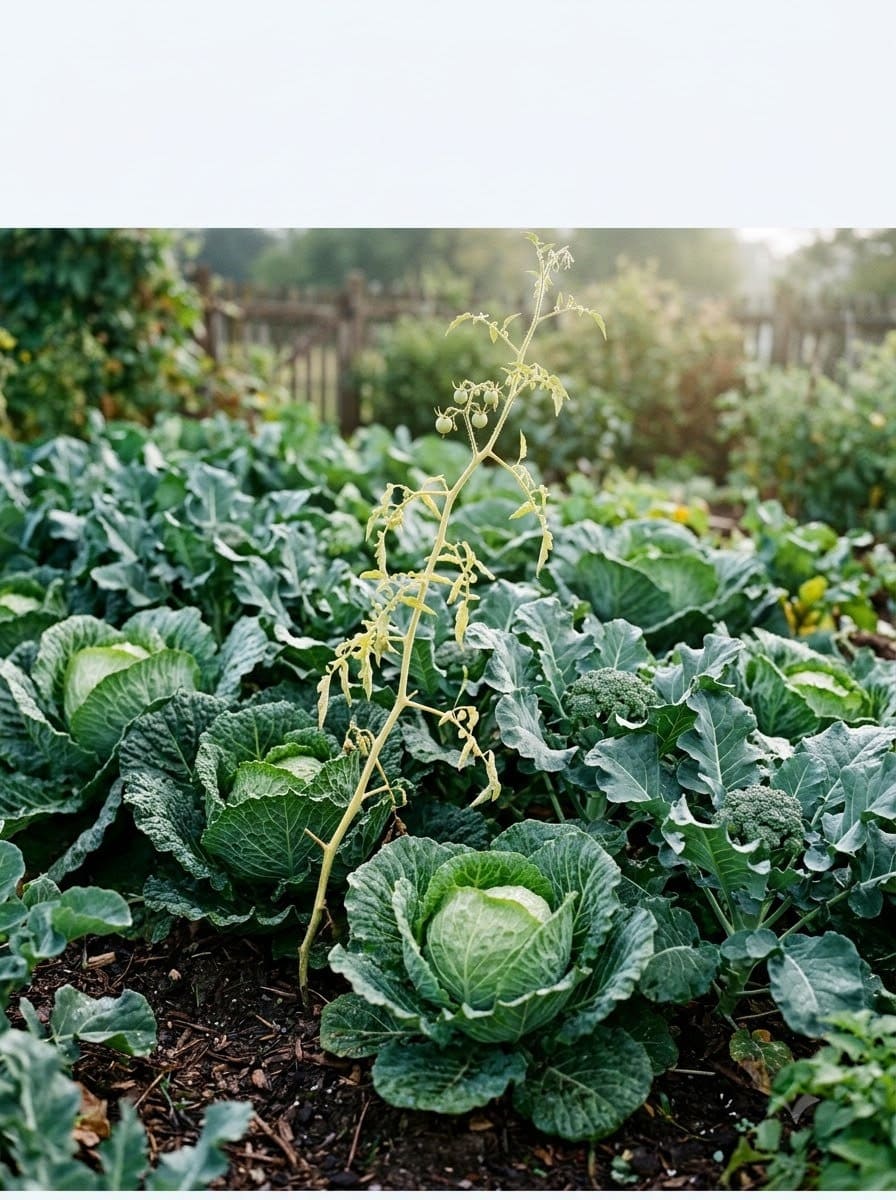
Brassicas and tomatoes are both greedy, and they’re greedy for slightly different soil.
The cabbage family are heavy feeders. They pull hard on nitrogen and calcium, the same nutrients a fruiting tomato needs most. In a tomato, short calcium shows up as blossom end rot.
Brassicas also want more alkaline soil, roughly 6.5 to 7.5. Tomatoes do best a little more acidic, around 6.0 to 6.8. Whichever way you lime the bed, one crop is off its mark.
The fix: give brassicas their own bed and feed both crops well. They actually rotate nicely in sequence, brassicas one year, tomatoes the next, just not shoulder to shoulder in the same season.
Already planted: side-dress both with a balanced fertilizer and keep the tomato’s calcium up with even watering. It’ll be fine, just probably not your best tomato. A quick read on how to build up vegetable-bed soil helps if this bed is doing double duty.
10. Rosemary and other Mediterranean herbs
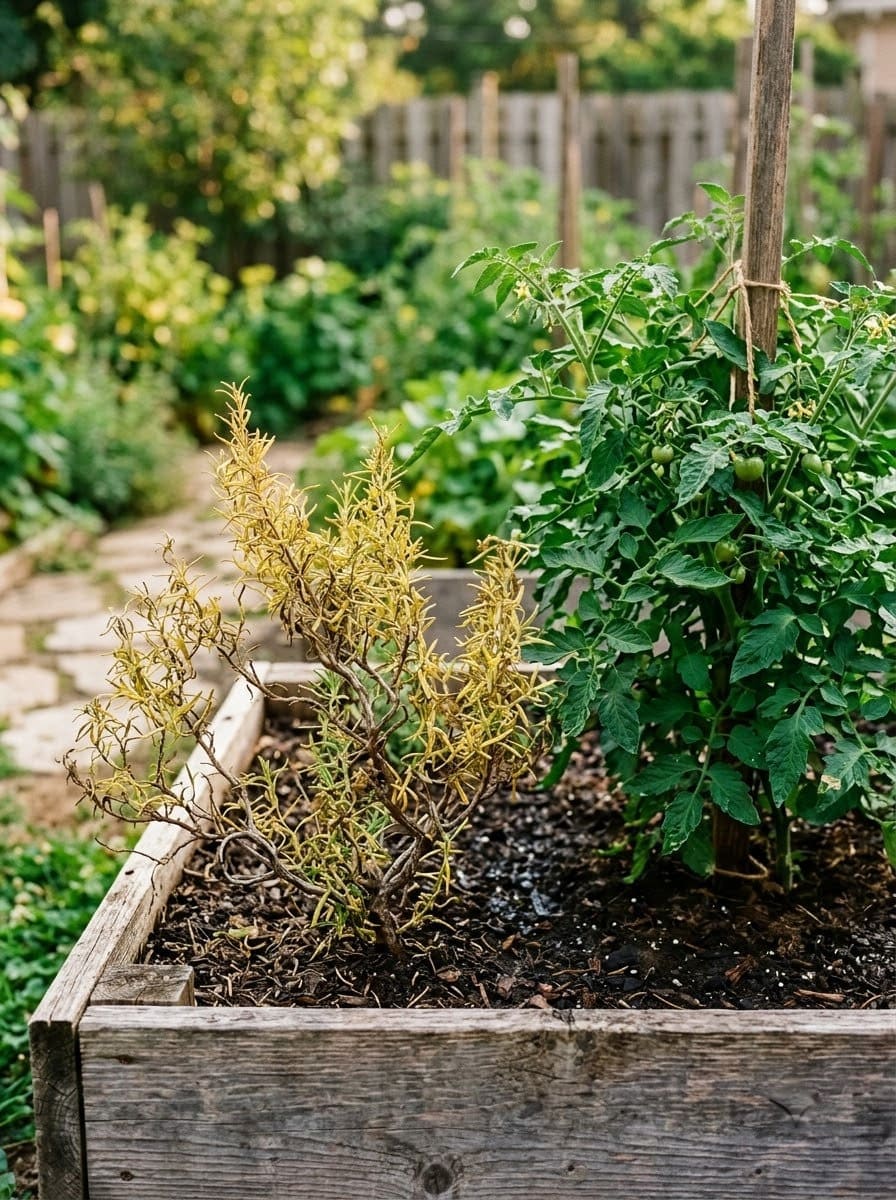
Rosemary isn’t a disease or pest threat. It just wants to live a completely different life than a tomato.
Rosemary, sage, thyme, oregano, and lavender all evolved in dry, lean, rocky soil. They want to dry out fully between waterings. A tomato wants rich soil and steady moisture.
Put them in one bed and you have to pick a watering schedule that shortchanges one of them. Either the rosemary sits wet and rots at the root, or you keep it lean and the tomato gets stressed and cracks its fruit.
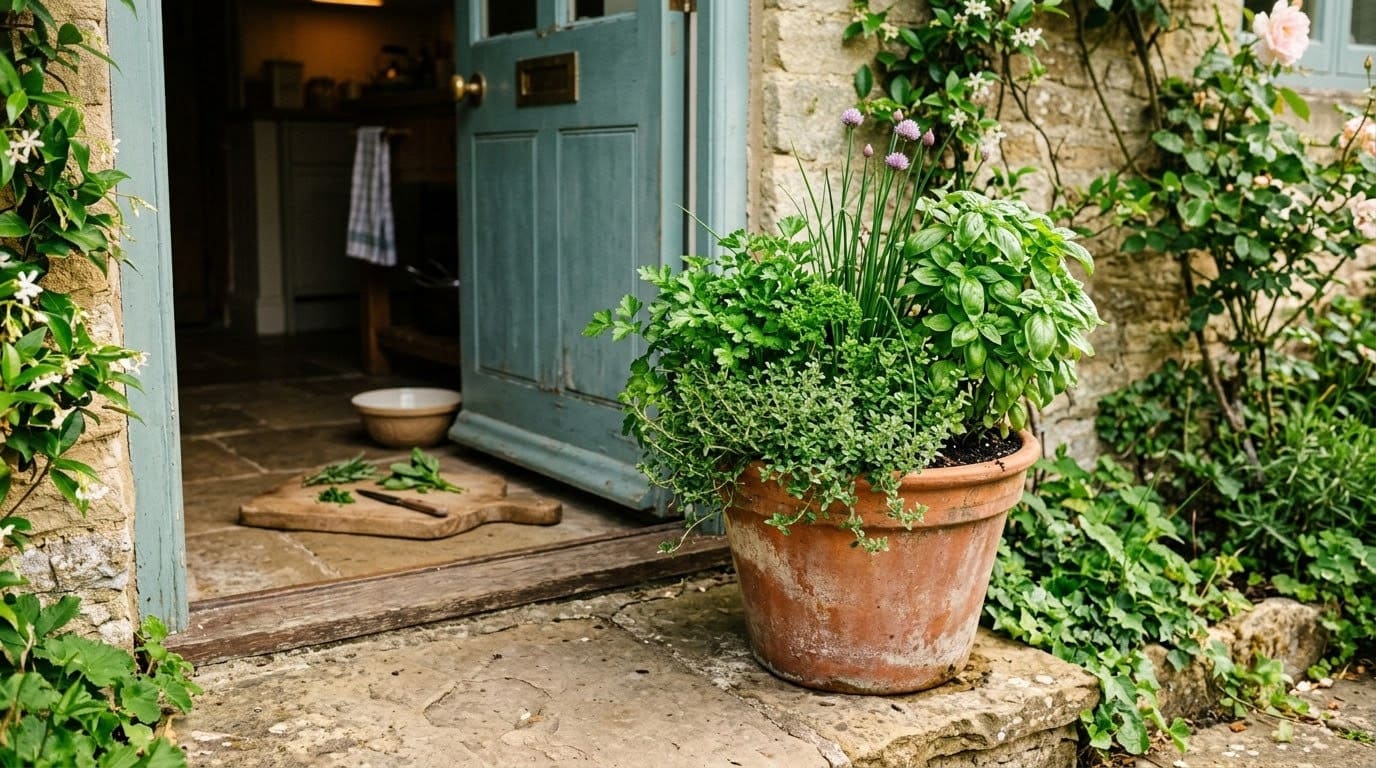
The fix: keep rosemary and the other woody Mediterranean herbs in their own pots or a dedicated dry, sharply drained bed. Basil is the herb that actually belongs next to a tomato.
Already planted: if the rosemary looks yellow and sad in a well-watered tomato bed, it’s too wet, so lift it into a gritty pot. This is the same water-mismatch problem we covered with rosemary and basil in the herb garden.
11. Cucumbers, melons, and squash
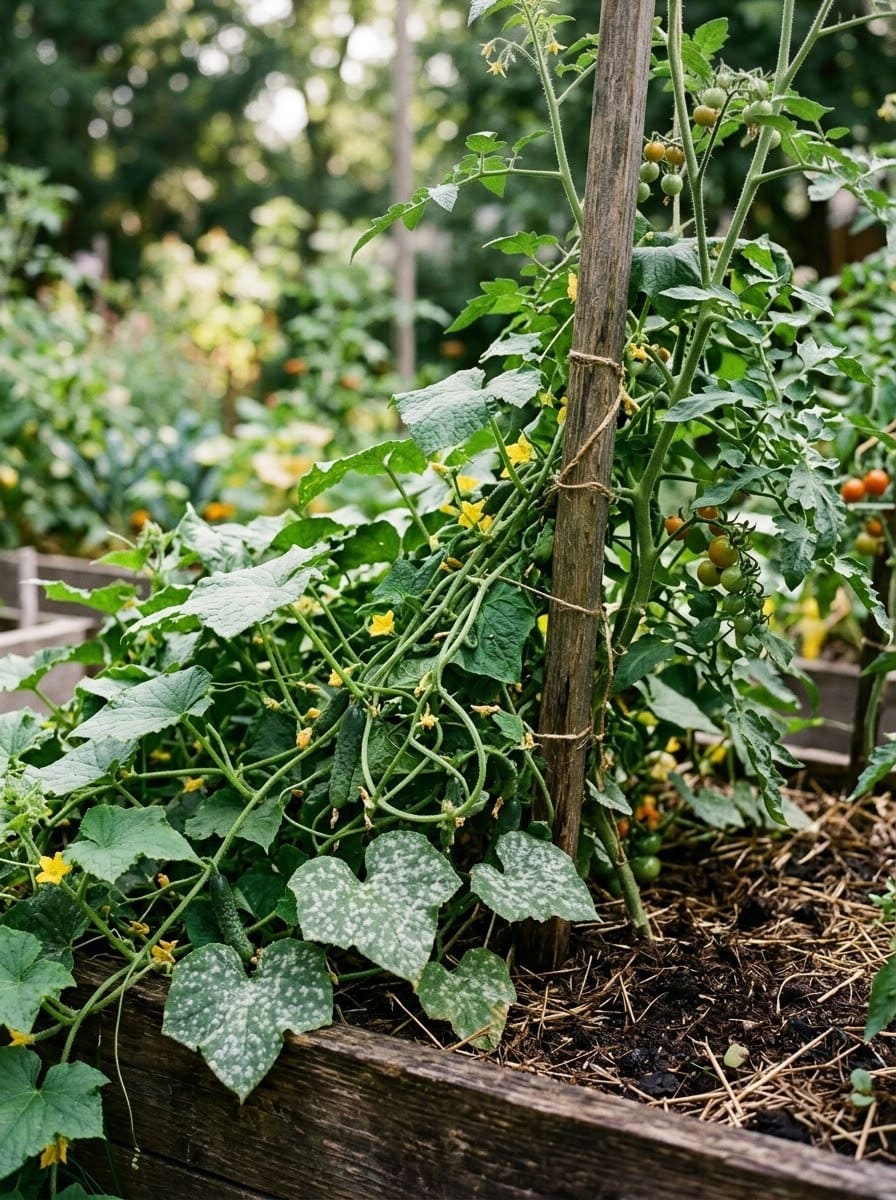
Cucurbits and tomatoes aren’t a disaster together, but in a small bed they work against each other.
Both are heavy feeders and both are thirsty. They also share a couple of diseases, and cucumber mosaic virus moves between them on aphids.
But the real issue is usually simpler. Sprawling vines cover the ground around the tomato, trap humidity against the lower leaves, and cut the airflow that keeps early blight down.
The fix: grow cucumbers and squash on a trellis set apart from the tomato row, so each plant has open air around its base. If they must share a bed, put the cucumber at the opposite end and train it up and away.
Already planted: get the cucumber vines off the ground and onto a support, and strip the lowest tomato leaves so air moves through. Mulch helps too, since bare wet soil under crowded plants is where the fungal trouble starts.
12. Mint
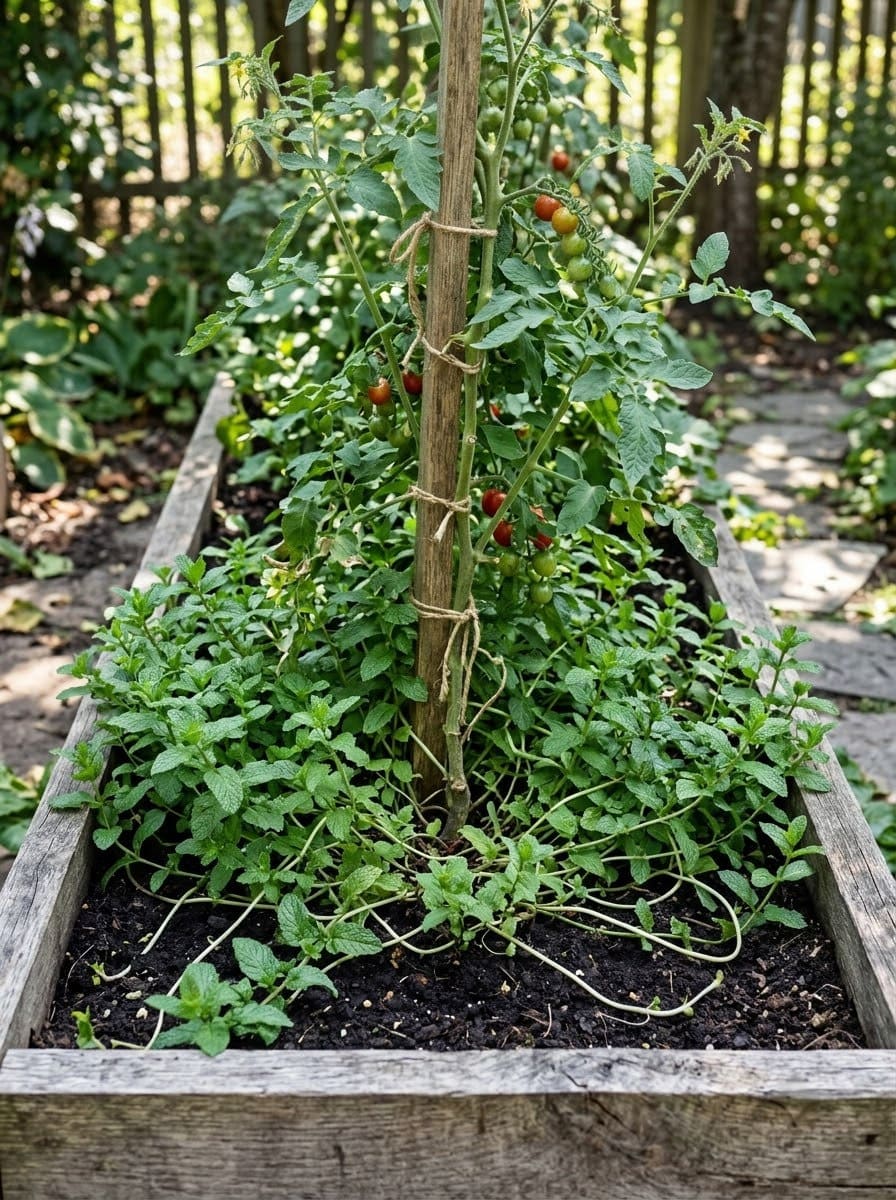
Mint doesn’t compete with a tomato so much as it moves in and takes the root zone.
Mint spreads by rhizomes. These are underground stems that push out sideways and send up new plants wherever they land, whatever is already growing there.
Utah State University Extension says containing it takes a barrier “3 to 4 inches above and 10 to 15 inches below the soil surface.” Anything less and it’s through. And once mint is in a tomato bed, it’s drinking the water you meant for the tomato.
The fix: never plant mint in the ground near vegetables. Grow it in a container sitting on a hard surface, not on soil, since rhizomes escape through drainage holes into the ground below.
Already planted: plan on a full season of pulling every runner and root fragment, because mint regrows from the pieces you leave. Choosing the right mint and growing it properly means starting it in a pot from day one.
13. Sunflowers
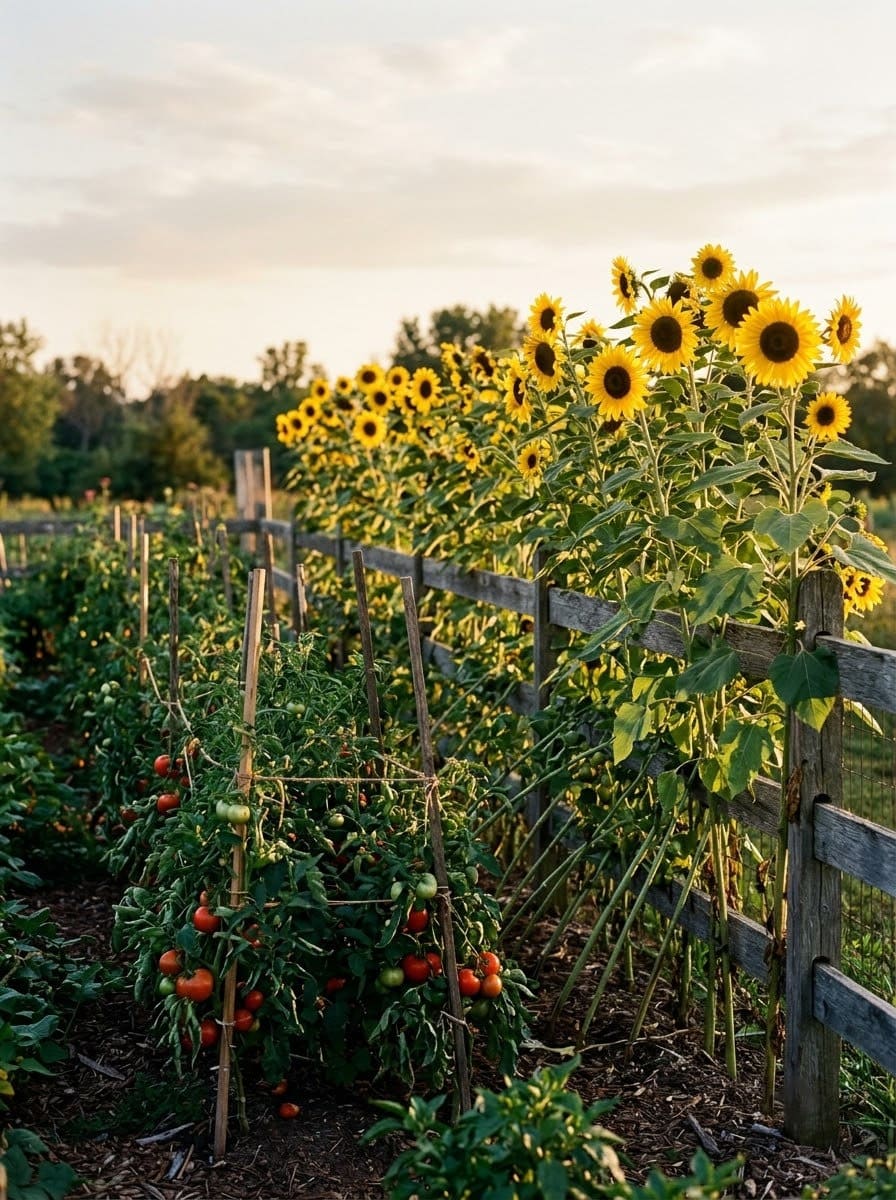
Sunflowers are the debated one on this list, and the honest answer is that it depends on distance.
Sunflowers release allelopathic compounds from their roots. Their spent hulls and leaf litter suppress the germination and growth of nearby plants, tomatoes included.
They also grow tall fast, throw a lot of shade, and run a deep taproot that competes for water. A mature sunflower right next to a tomato usually means fewer tomatoes.
The fix: plant sunflowers on the north side of the garden, where the shadow falls away from your crops. Or keep them at least four feet from the tomato row. Clean up dropped hulls instead of letting them pile up in the bed.
Already planted: if the tomatoes are leaning and light on fruit, the sunflowers are probably why. Cut the lower sunflower leaves, or move next year’s planting. Small pollinator sunflowers a few feet off are a fair trade for the bees they bring.
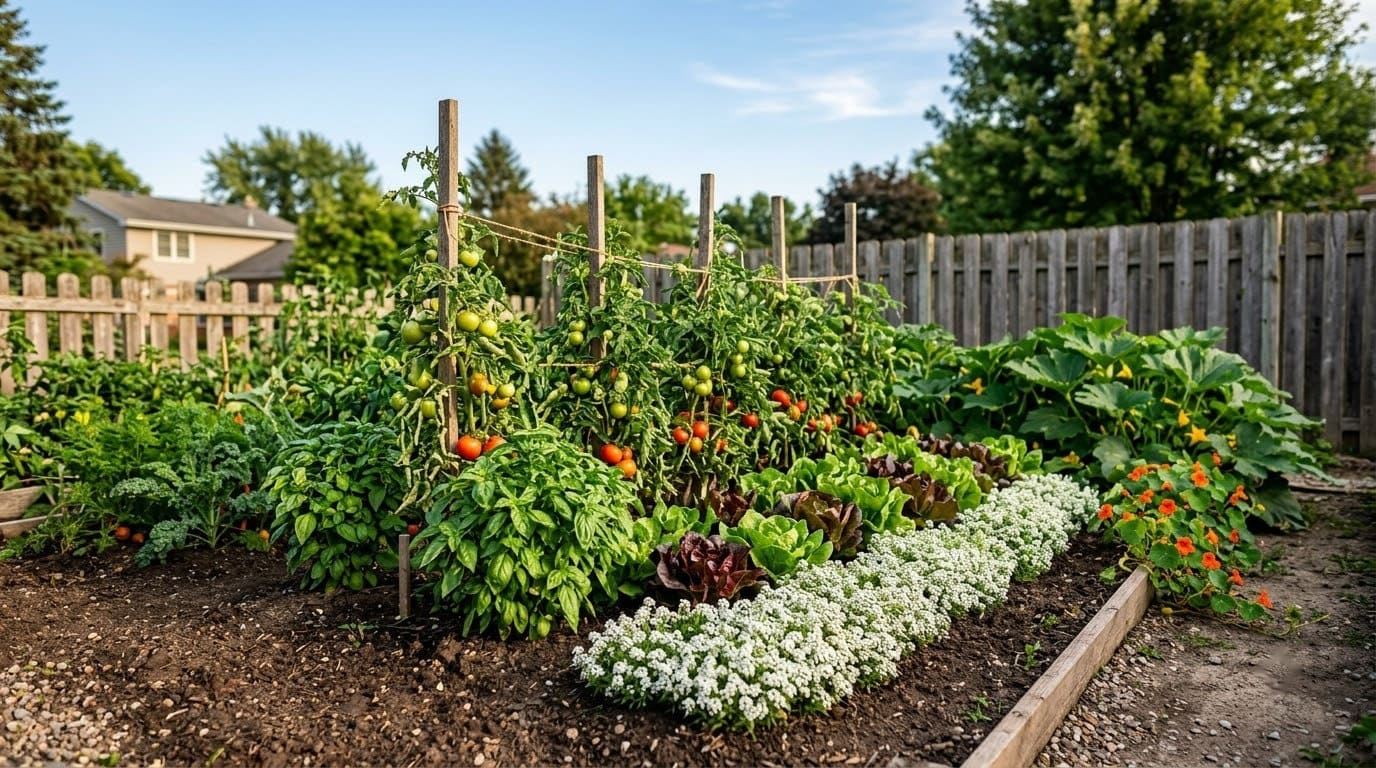
What to plant next to tomatoes instead
The garden doesn’t have to be all restrictions. These are the neighbors that actually earn their spot next to a tomato.
| Plant | Why it works |
|---|---|
| Basil | Repels some thrips and whiteflies, wants the same rich moist soil |
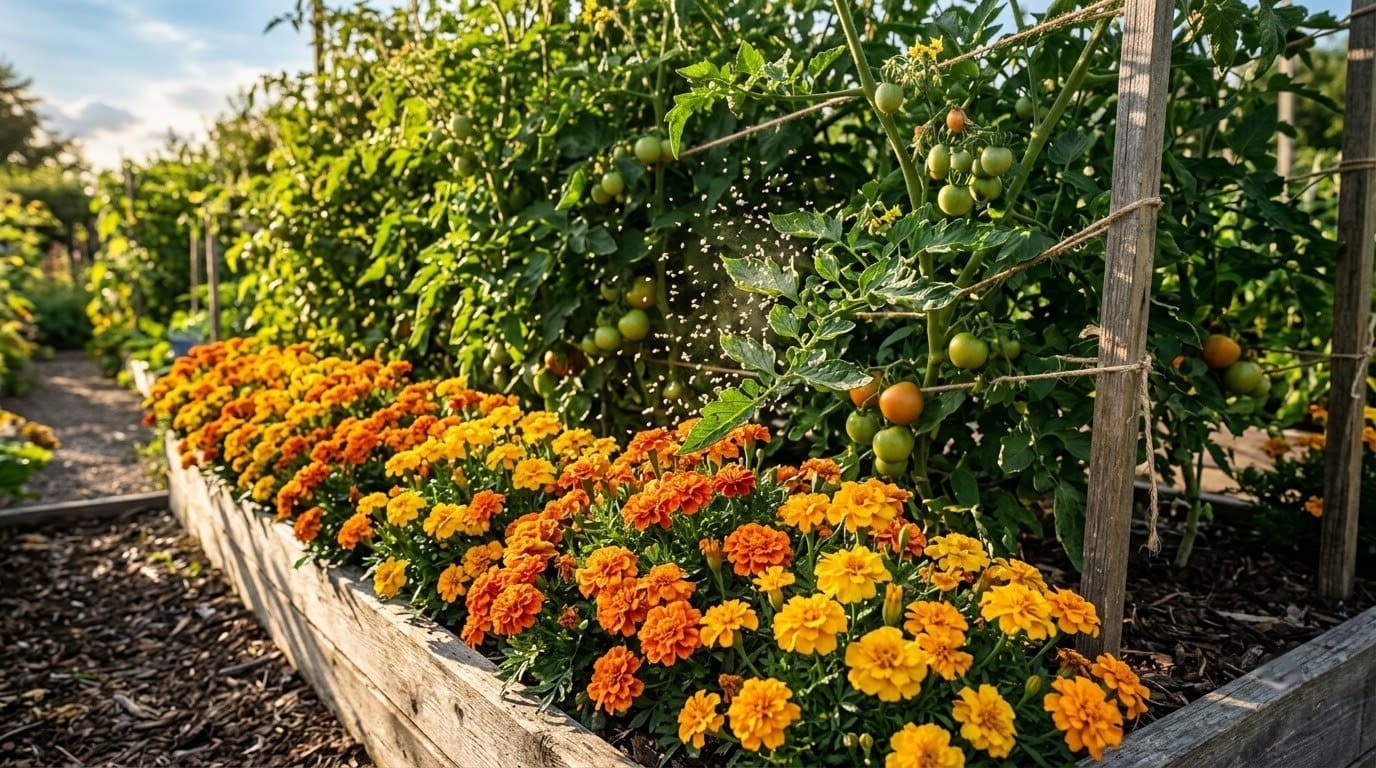
| Marigolds | French marigolds suppress root-knot nematodes in the soil |
| Nasturtium | Draws aphids away as a trap crop, sprawls as living mulch |
| Chives, garlic, onions | Alliums deter aphids and spider mites, take up little room |
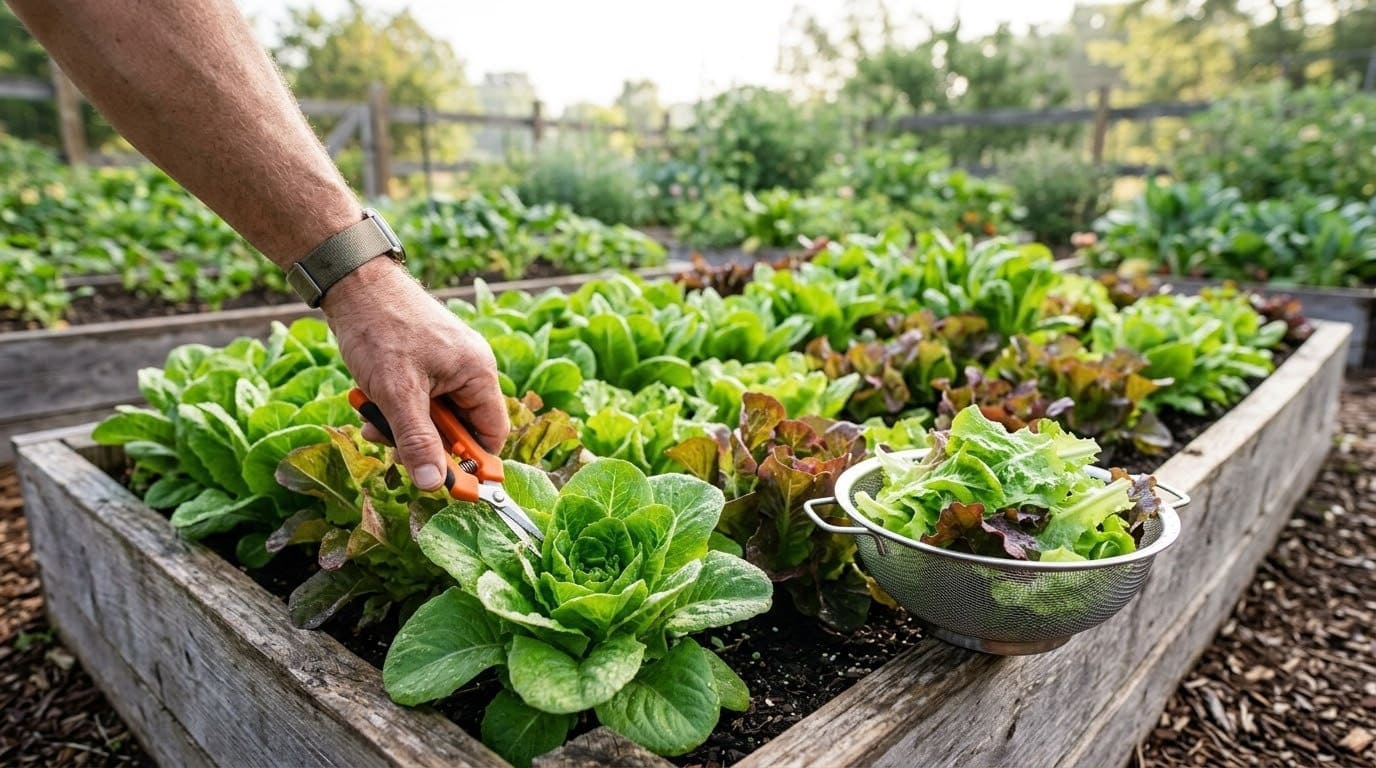
| Lettuce and spinach | Shallow-rooted, low, use the space before the tomato fills in |
| Carrots | Different root depth, no pest or disease overlap |
| Borage | Brings in pollinators and predatory insects, said to deter hornworms |
What we’d do differently: real talk from the research
Check for a walnut before you pick the tomato bed. If tomatoes wilt overnight for no clear reason, look up. We’ve seen a whole row fail 40 feet from a walnut that nobody connected to the problem for two summers. Juglone doesn’t care how good your soil is.
Keep every nightshade and the strawberries on one moving block. Tomatoes, peppers, eggplant, potatoes, and strawberries all feed the same soil diseases. Treat them as one group. It lands on fresh ground every year and doesn’t come back to a bed for three or four seasons.
Dill will fool you. Every companion chart calls it a friend, and it is, for about six weeks. Then it flowers, the tomato beside it stalls, and hornworm moths show up for the umbels. Plant it somewhere you’ll pull it without a second thought.
Do not “just put the mint in this corner.” It’s never just that corner. A buried pot, or a pot sitting on pavement, is the only mint that stays where you put it. People relearn this every year.
Frequently asked questions
Can I plant peppers next to tomatoes?
You can, but treat them as one rotation group and don’t repeat it in a humid climate. They share Verticillium wilt, bacterial spot, and several viruses, per UConn Extension, so a wet season with both crops touching multiplies the disease pressure. Space them so the leaves don’t touch.
What happens if tomatoes grow near a black walnut tree?
They can develop walnut wilt: sudden wilting, yellowing, and curling leaves, often collapsing within days. University of Wisconsin-Madison Extension says a mature tree’s toxic zone reaches 50 to 80 feet from the trunk. Grow tomatoes well outside that, or in containers with fresh soil that never touches the ground.
Are potatoes and tomatoes really that bad together?
In a dry year, interplanted potatoes and tomatoes might be fine. In a wet one, they trade late blight freely. UC IPM names adjacent affected plantings as a direct infection source.
They also share the Colorado potato beetle, and digging potatoes damages tomato roots. Separate beds and a three to four year rotation solve it.
Is dill good or bad for tomatoes?
Both, depending on age. Young dill attracts beneficial insects and is a fine companion. Once dill bolts and flowers it releases growth-inhibiting compounds and draws tomato hornworm moths, so pull it before it goes to seed.
How far apart should tomatoes and fennel be?
Farther than most charts say. The usual advice is three to four feet.
But gardeners still see stunted tomatoes at that range, because fennel’s compounds build up in the soil over the season. Give fennel its own bed, as far from the tomatoes as your space allows.
What is the best thing to plant with tomatoes?
Basil, French marigolds, nasturtium, and alliums like chives and garlic. Basil shares the tomato’s soil and water needs.
Marigolds suppress root-knot nematodes. Nasturtium works as an aphid trap crop, and alliums deter aphids and mites.
Related Posts
Products We Recommend
This post contains affiliate links. We may earn a commission on qualifying purchases at no extra cost to you.
Fertilome Caterpillar Killer Spray with Bt (8 oz concentrate)
OMRI-listed Bacillus thuringiensis spray that kills tomato fruitworm and hornworm larvae without harming bees or predatory insects, useful when corn or bolted dill nearby has raised the caterpillar pressure.
Shop Now
Agfabric Floating Row Cover, 10 ft x 50 ft, 1.2 oz
Breathable frost and insect fabric to cover young eggplant, peppers, and tomatoes and break the flea beetle cycle early before it spreads down the bed.
Shop Now
Square Tomato Cages, 41 in, 6-pack (heavy-duty steel)
Open cages that hold plants upright and keep air moving through the row, the airflow that helps hold off the early blight cucumbers and potatoes bring into shared ground.
Shop NowNever miss an update — choose FarmFoodFamily as your preferred source on Google.
How it works: Tap the button below to open Google's settings page, then check the box next to FarmFoodFamily.
Tap the checkbox to turn it blue — that's how you know it's set.