15 Risky Plants That Shouldn’t Grow Near Strawberries
Most of this list comes down to one soil fungus that sticks around for decades, and a few plants that simply outrun a low, runner-spreading strawberry for space and light. Knowing which is which tells you whether to move a plant or move the whole bed.

Never miss an update — choose FarmFoodFamily as your preferred source on Google.
How it works: Tap the button below to open Google’s settings page, then check the box next to FarmFoodFamily.
Tap the checkbox to turn it blue — that’s how you know it’s set.
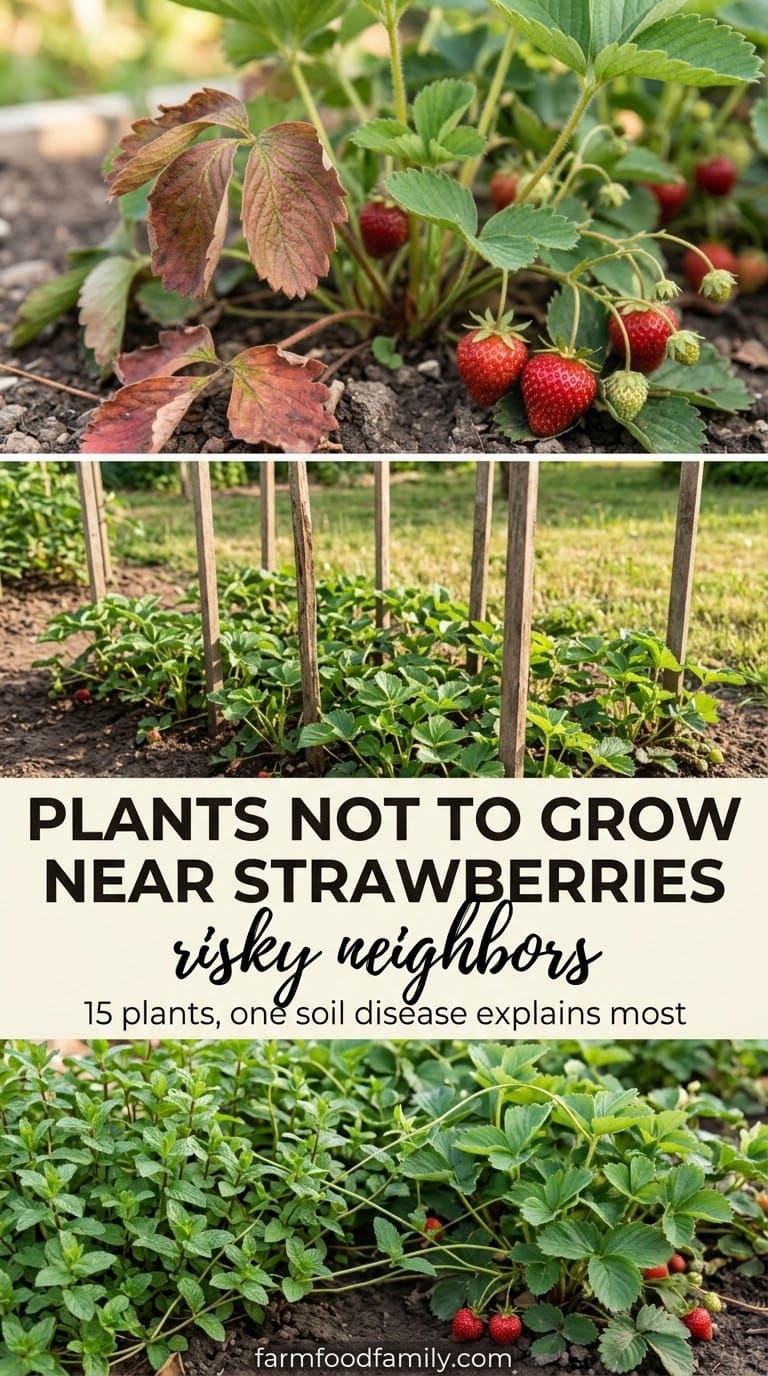
Strawberries have one big enemy, and it lives in the dirt. Verticillium wilt is a soil fungus that infects strawberries and a long list of common garden plants. It stays in the ground for years after those plants are gone.
That single disease explains most of a strawberry bad-neighbor list. The rest is competition. Strawberries are low and they spread by runner, so they lose the race for light and root space to anything taller or faster.
Here are 15 plants, the real reason each one is a problem, and what to do if it’s already there. And a short list of what to plant instead.
Quick Answer
One disease drives most of this list: Verticillium wilt. Ohio State University Extension says not to plant strawberries where these crops “have grown for the past five years”: tomato, peppers, potato, eggplant, melons, okra, mint, brambles, stone fruits, chrysanthemums, and rose. The fungus can survive in soil “25 years or longer.”
A second problem is grubs. University of Maine Extension warns against planting strawberries into recently plowed grass sod, where white grubs “feed upon strawberry roots.”
The last problem is crowding. Mint, brambles, and grass all spread faster than a strawberry and take the bed. Tall plants like sunflowers and fruit trees shade it out.
Answer 4 quick questions and get matched to the exact fix for your yard — drainage, budget, layout, or something else entirely.
Take the Free QuizSo check what grew in that ground for four or five years first. Give strawberries full sun. Plant a resistant cultivar like Earliglow or Allstar, and put a root barrier between the bed and anything that runs.
What makes a plant a bad strawberry neighbor?
Three mechanisms cover all 15. Which one applies tells you whether to move a plant or write off the soil.
Verticillium wilt. This is the big one. A soilborne fungus infects strawberries and a wide range of vegetables, flowers, and woody plants. It builds up in the soil under an infected crop, then hits the strawberries you plant there later.
Rosaceae family overlap. Strawberries are in the rose family, along with roses, raspberries, blackberries, and stone fruit trees. Same family means shared pests and diseases that move easily between them.
Competition and crowding. Strawberries are short and spread by runner. Heavy feeders strip the same nutrients and tall plants block the sun.
Aggressive spreaders like mint and grass are the worst of it. They simply take the ground a strawberry was using.
The Verticillium wilt problem, explained once
Verticillium is the reason most of this list exists, so it’s worth understanding once.
Most yard problems trace back to one specific, fixable cause. Find yours in 4 quick questions.
Take the Free QuizThe fungus lives in the soil as tiny resting bodies. University of Connecticut Extension puts the host range at “over 350 host plants.” Those resting bodies “can survive in the soil anywhere from 4 to 15 years,” and Ohio State’s figure for a badly infested site is 25 years or more.
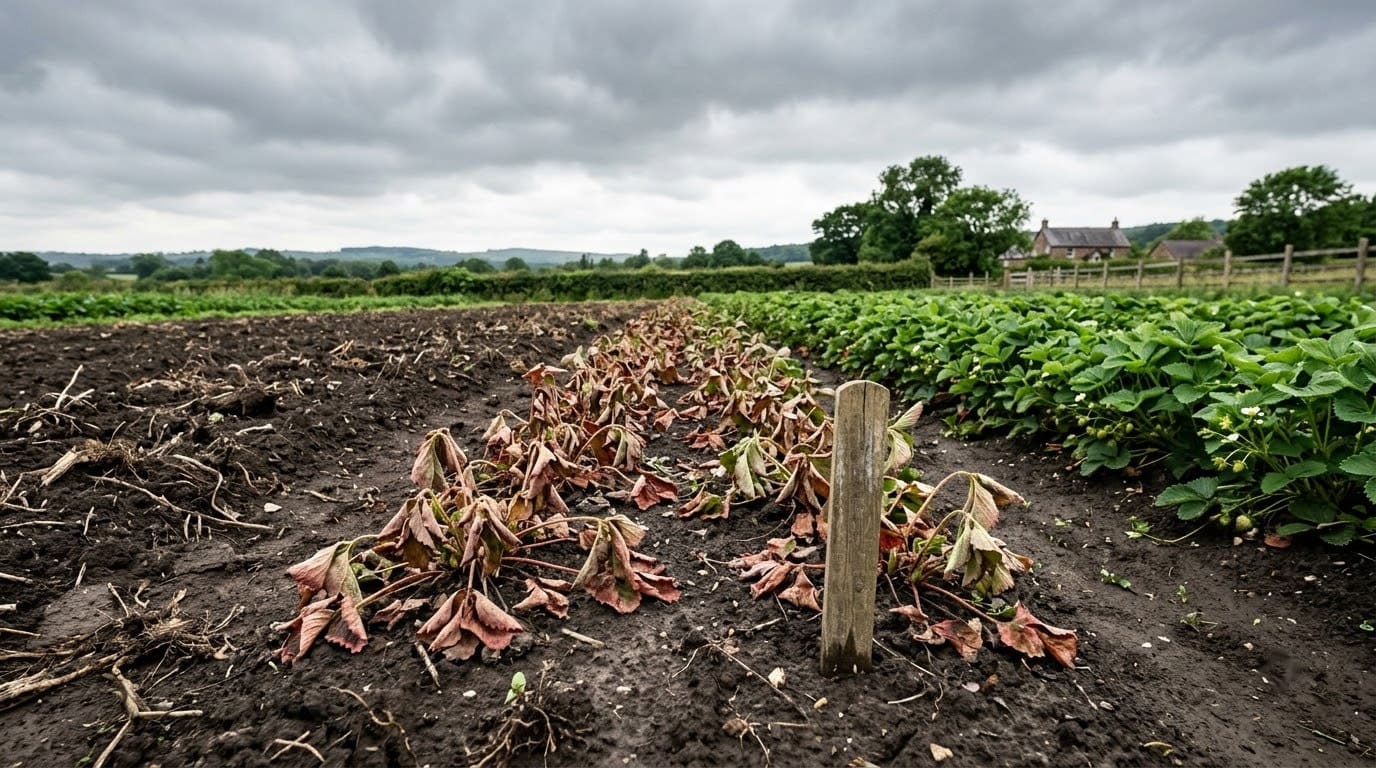
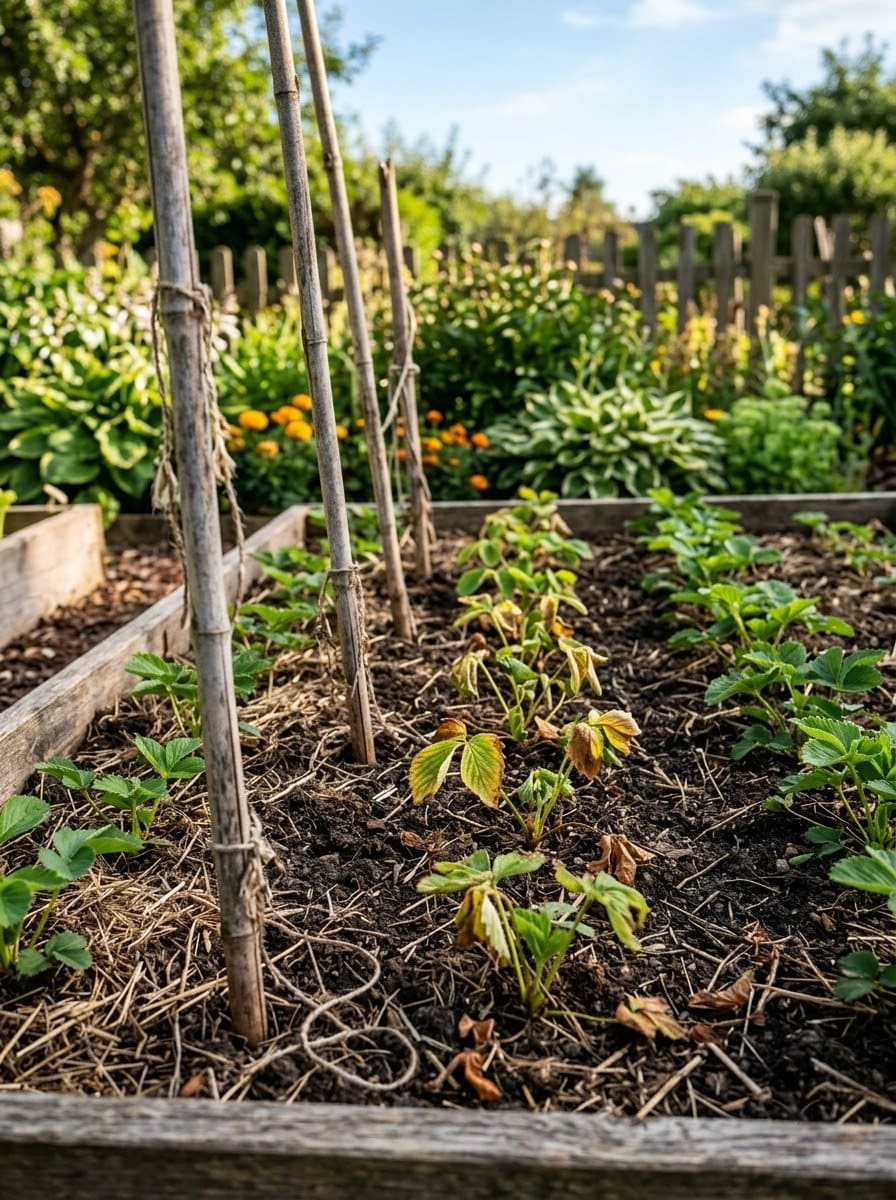
On a strawberry, the signs are specific. Per Ohio State, “the outer and older leaves droop, wilt, turn dry and become reddish-yellow or dark brown at the margins.” The wilt often shows on one side of the plant first, and the runners can carry dark streaks.
There’s no spray for it. The only real defenses are knowing the bed’s history, rotating away from host crops for four to five years, and planting resistant cultivars. Ohio State lists Allstar, Earliglow, Guardian, and Tristar among the resistant June-bearers.
No idea what grew there? How to check
If you’re taking over a garden and don’t know its history, you have a few options.
Ask the previous gardener or the neighbors what was in that ground. A vegetable plot almost always held tomatoes or potatoes at some point, so treat an unknown veg bed as suspect.
Run a test crop. Plant a few cheap tomato or eggplant seedlings in the questionable spot in spring, since both catch Verticillium easily. If they wilt on one side by midsummer, the soil has the fungus and it’s not for strawberries.
Or skip the risk entirely. A raised bed or a large container filled with fresh bagged soil sidesteps the whole problem, and it’s the standard fix for a small backyard where clean ground is scarce. Strawberries do well in containers, and a vertical strawberry planter gets a lot of plants into a small clean footprint.
The 15 plants at a glance
| Plant | Main mechanism | Risk level | The fix |
|---|---|---|---|
| Tomatoes | Verticillium host | High | Don’t follow tomatoes for 4 to 5 years |
| Peppers | Verticillium host | High | Same rotation rule as tomatoes |
| Eggplant | Verticillium host | High | Same rotation rule, plus flea beetles |
| Potatoes | Verticillium host, root pests | High | Separate bed, 4 to 5 year gap |
| Okra | Verticillium host, heavy shade | Moderate to high | Keep well away, or grow strawberries first |
| Melons, cucumbers, squash | Verticillium host, sprawl and shade | Moderate | Trellis cucurbits away from the bed |
| Chrysanthemums, cosmos | Verticillium host flowers | Moderate | Don’t interplant in a strawberry bed |
| Stone fruit trees | Verticillium host, shade, root competition | Moderate to high | Don’t plant strawberries under the canopy |
| Roses | Rose family, shared pests, Verticillium | Moderate | Separate beds, don’t share soil |
| Raspberries, blackberries | Rose family, shared disease, suckering | High | 20+ ft away, root barrier |
| Mint | Verticillium spreader, rhizome takeover | High | Buried container only |
| Fennel | Allelopathy | High | Its own bed, well away |
| Sunflowers, Jerusalem artichokes | Allelopathy, shade, aggressive roots | Moderate | North edge, or a contained bed |
| Broccoli, cabbage, cauliflower, kale | Nutrient competition | Moderate | Different bed, feed both well |
| Grass, lawn edges, fresh sod | White grubs, relentless root competition | High | Wait 2 years after sod, edge the bed |
1. Tomatoes
Tomatoes are the plant strawberry growers regret most, and it’s almost always Verticillium.
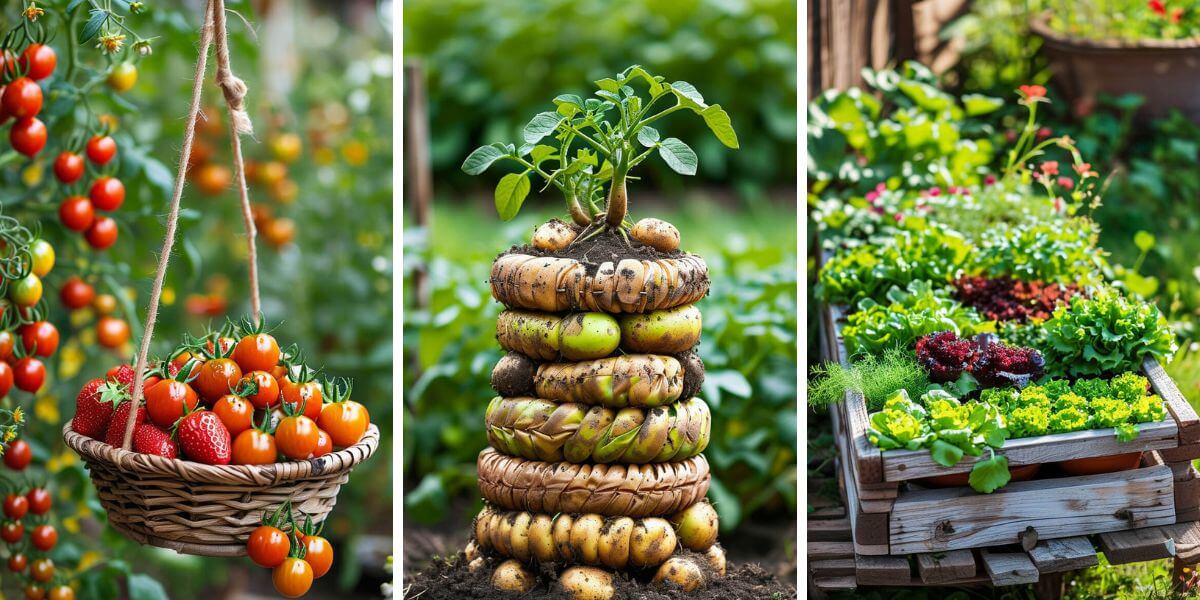

Tomatoes are one of the most common Verticillium hosts. They build the fungus up in the soil over a season, and it stays there. Ohio State names tomato first on the list of crops strawberries shouldn’t follow “for the past five years.”
The strawberry that goes in afterward looks fine for a few weeks, then the outer leaves dry and redden and the plant collapses.
The fix: never plant strawberries into ground that grew tomatoes, peppers, potatoes, or eggplant in the last four to five years. If you’re not sure of the history, use a raised bed with fresh soil, or plant a resistant cultivar.
The average homeowner spends $616/year on yard fixes that don't address the real problem. Find out what yours actually is — before you spend another dollar.
Take the Free QuizAlready planted: if strawberries near an old tomato patch are wilting one-sided, that’s likely Verticillium, and the bed is compromised. Move the healthy plants to clean soil now. Our guide to what not to plant next to tomatoes covers the same disease from the tomato side.
2. Peppers
Peppers carry the same problem as tomatoes, for the same reason.
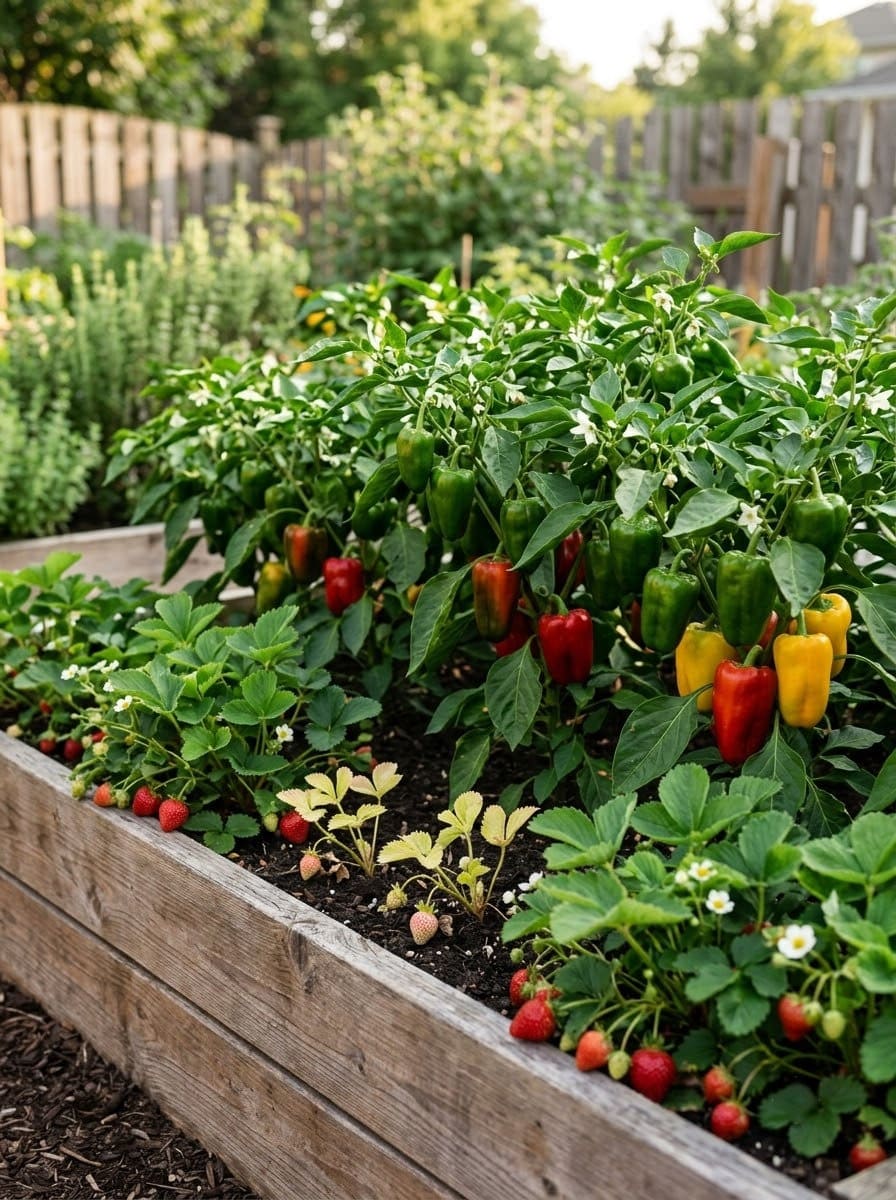
Peppers are nightshades, and nightshades are prime Verticillium hosts. A pepper crop leaves the fungus in the soil the same way a tomato crop does. Ohio State’s rotation list treats them together.
The fix: keep peppers and strawberries in separate beds, and treat the whole nightshade group as one rotation block that strawberries follow only after four to five clear years.
Already planted: it’s the soil history that matters here, not the current spacing. If nothing is wilting, you’re probably on clean ground.
If plants are dying one-sided, move them to fresh soil. Starting peppers from seed is covered separately.
3. Eggplant
Eggplant is the third nightshade to keep out of strawberry ground, with a pest problem on top.
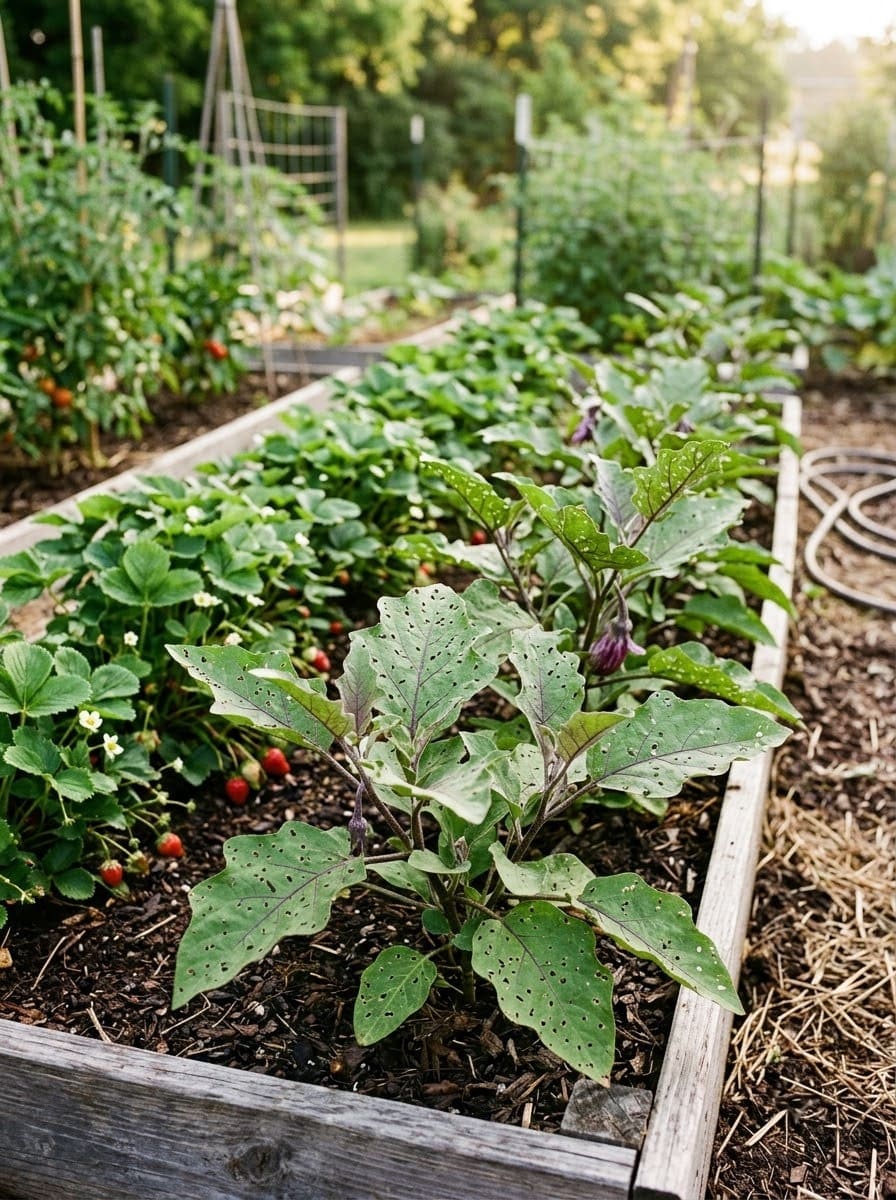
Like tomatoes and peppers, eggplant is a strong Verticillium host, so it belongs on the same four-to-five-year rotation. Eggplant also draws flea beetles hard, and those will move onto strawberry foliage next door.
The fix: same rule as the other nightshades. Don’t plant strawberries where eggplant grew recently, and don’t interplant the two.
Already planted: watch for one-sided wilt on the strawberries. Cover young eggplant with row cover to keep flea beetles from spreading.
4. Potatoes
Potatoes bring Verticillium and a few root pests that strawberries share.
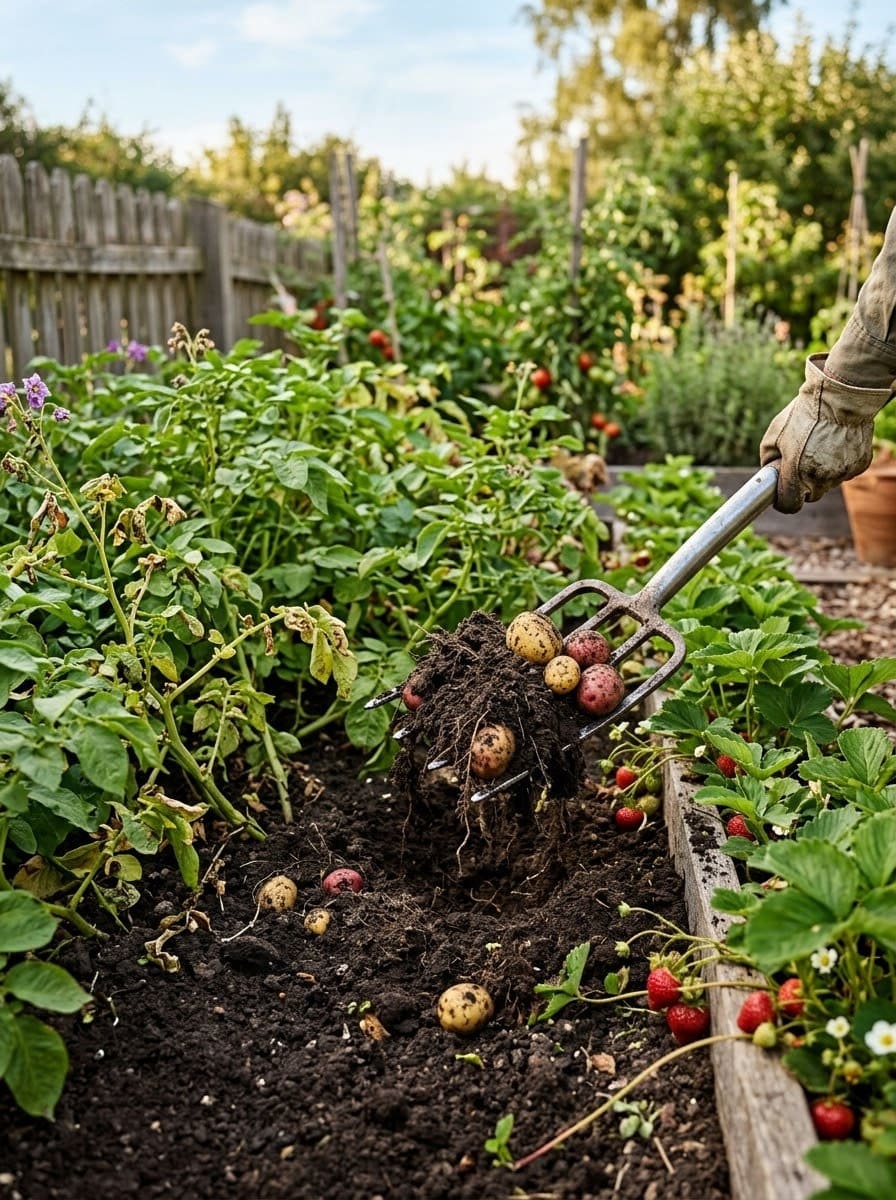
Potatoes are a classic Verticillium host, named on Ohio State’s list. They also carry wireworms and white grubs that feed on strawberry roots. And digging potatoes tears through the shallow strawberry root system next to them.
The fix: grow potatoes in their own bed, well away, and keep them in the strawberry rotation exclusion, four to five years minimum.
Already planted: harvest potatoes carefully, lifting from outside the strawberry root zone. If strawberries wilt one-sided afterward, suspect Verticillium and move the survivors. Growing potatoes has more on their own pests.
5. Okra
Okra is a strong Verticillium host and a tall one, so it hits strawberries two ways.
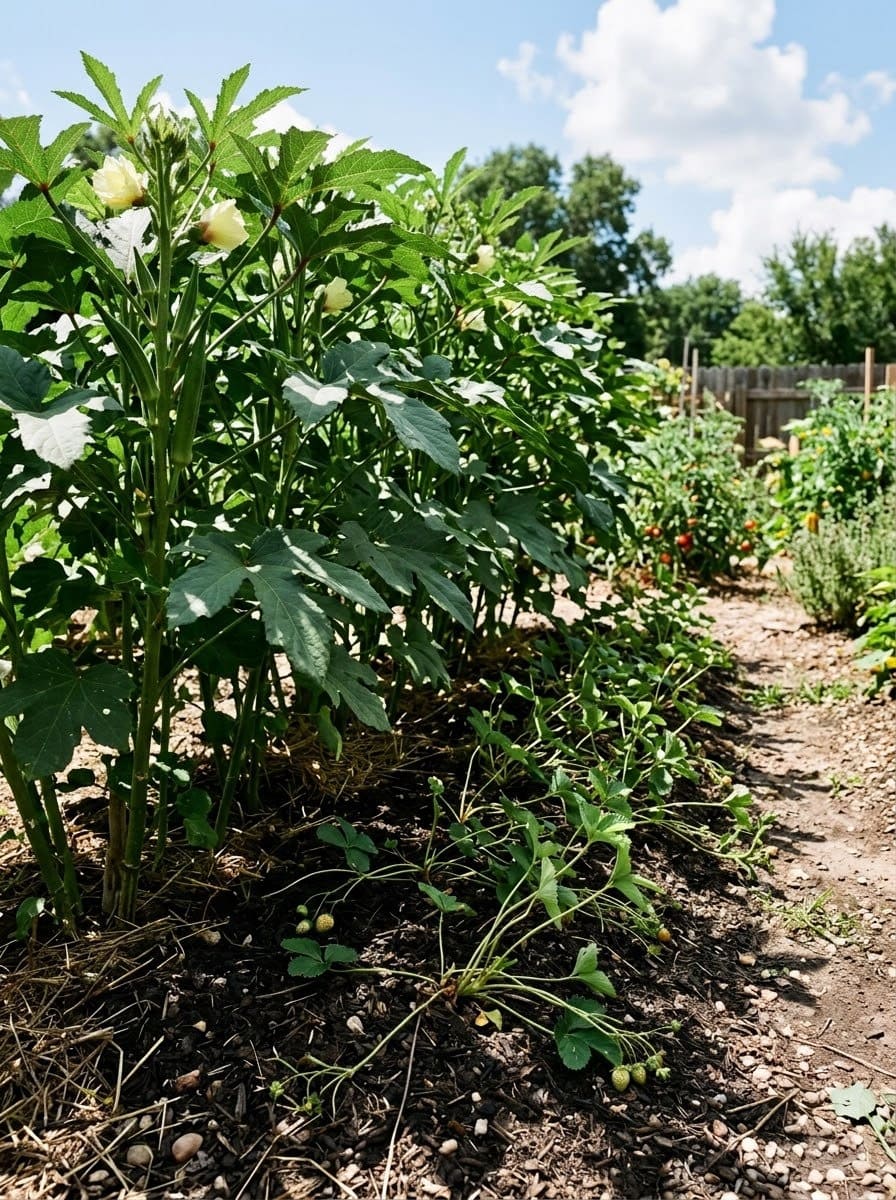
Ohio State’s list names okra specifically. It suffers heavily from Verticillium, which means it loads the soil with the fungus.
Okra also grows tall and broad. It will shade a low strawberry bed through the hottest part of the summer, when the fruit needs the most sun.
The fix: keep okra out of any bed you plan to grow strawberries in, now or in the next few years. If you grow both, put the strawberries where the okra’s shadow won’t reach.
Already planted: move the strawberries into the sun. Don’t replant strawberries in that okra ground for four to five years.
6. Melons, cucumbers, and squash
Cucurbits are on the Verticillium list, and they physically bury a strawberry bed.
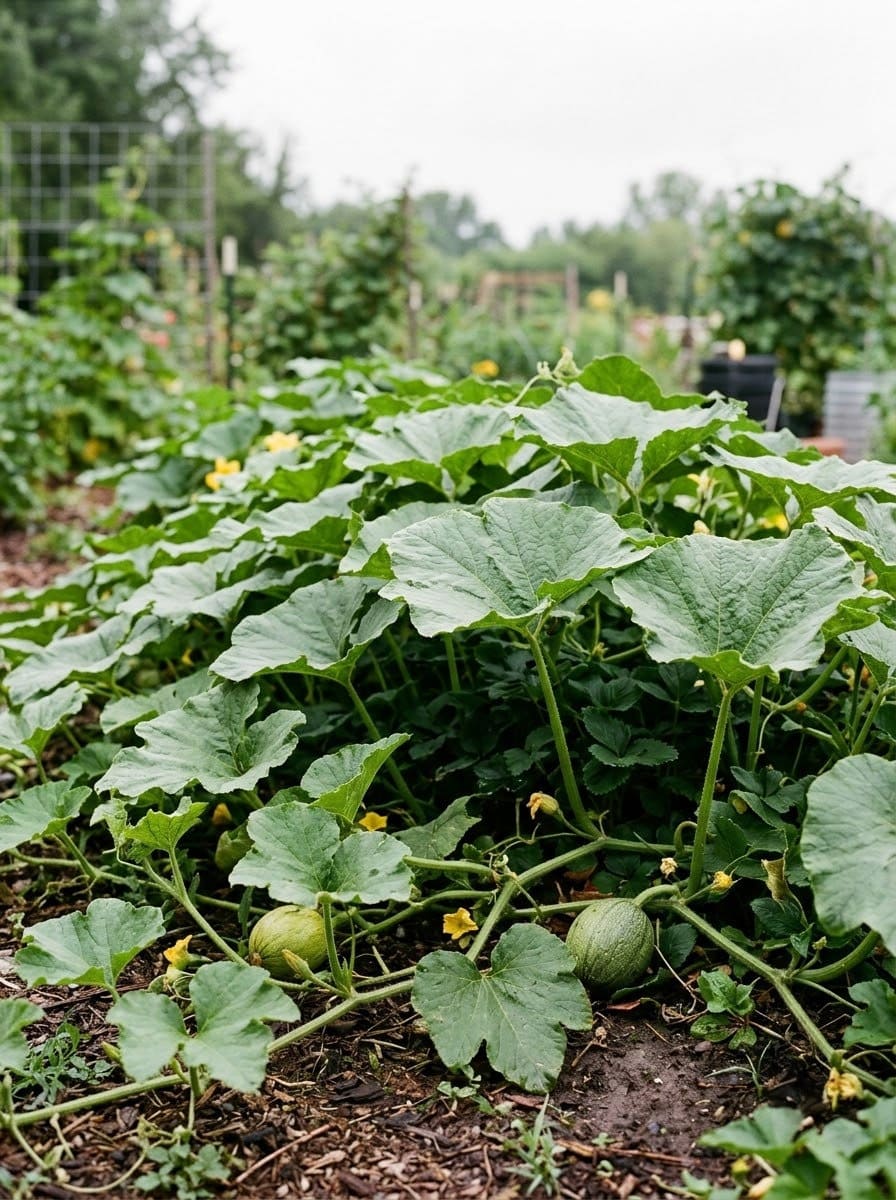
Ohio State names melons among the crops strawberries shouldn’t follow. Cucumbers and squash share the susceptibility. On top of the disease, cucurbit vines sprawl fast and wide, covering low strawberry plants, cutting their light, and trapping humidity against the fruit.
The fix: grow cucurbits on a trellis in a separate bed, several feet from the strawberries. Keep the vines trained up and away.
Already planted: lift the vines onto a support to uncover the strawberries. Our rundown of what not to plant with cucumbers covers the cucurbit side.
7. Chrysanthemums and other Verticillium-host flowers
The Verticillium list isn’t just vegetables. Some common ornamentals carry it too.
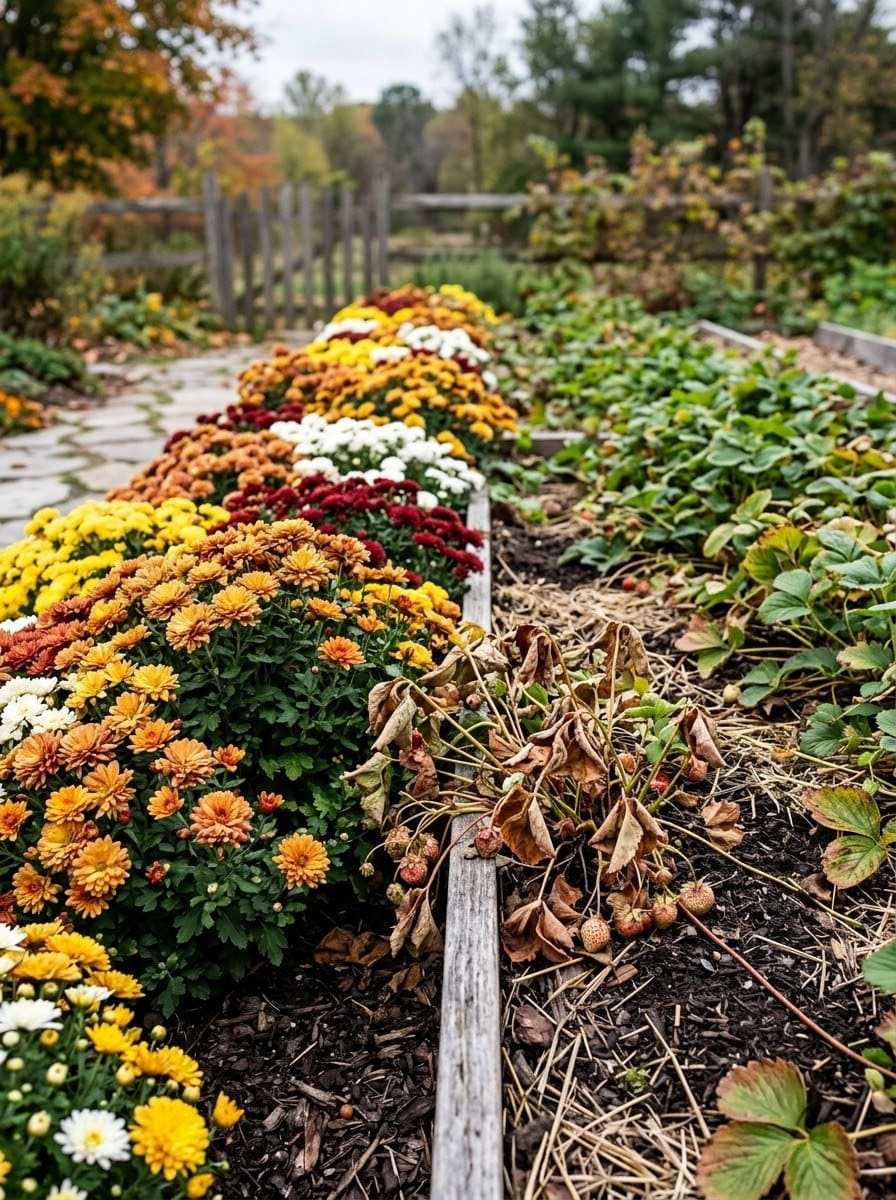
Ohio State names chrysanthemum on the same do-not-follow list as tomato and potato. Cosmos, dahlia, and several other garden flowers are hosts as well. A mum border along a strawberry bed slowly seeds the shared soil with the fungus.
The fix: don’t plant chrysanthemums or other known Verticillium-host flowers in or directly beside a strawberry bed. Keep a clear buffer.
Already planted: the flowers themselves are easy to move. The concern is the soil they’ve been growing in, so treat that strip as questionable ground for strawberries for several years.
8. Stone fruit trees
Cherry, plum, apricot, and peach trees combine Verticillium with heavy shade and root competition.
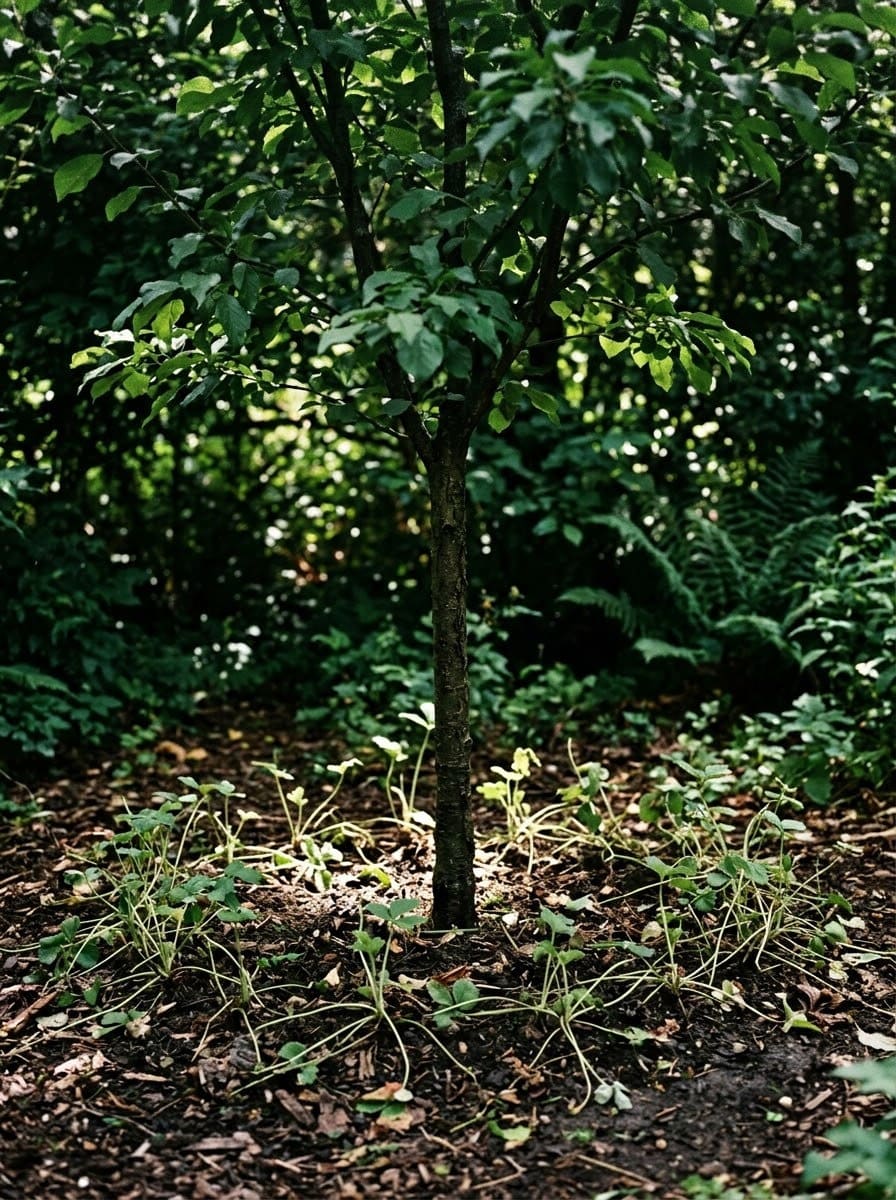
Stone fruit trees are on Ohio State’s Verticillium list. They’re also in the rose family with strawberries, so the pest and disease overlap runs deep.
A mature tree throws shade over anything beneath it. It also pulls water and nutrients from a wide root zone.
The fix: don’t plant strawberries under or right beside a stone fruit tree. Give them an open, sunny bed of their own.
Already planted: move the strawberries into full sun. A strawberry under a fruit tree rarely produces enough to be worth the space.
9. Roses
Roses and strawberries are close relatives, and that’s the problem.
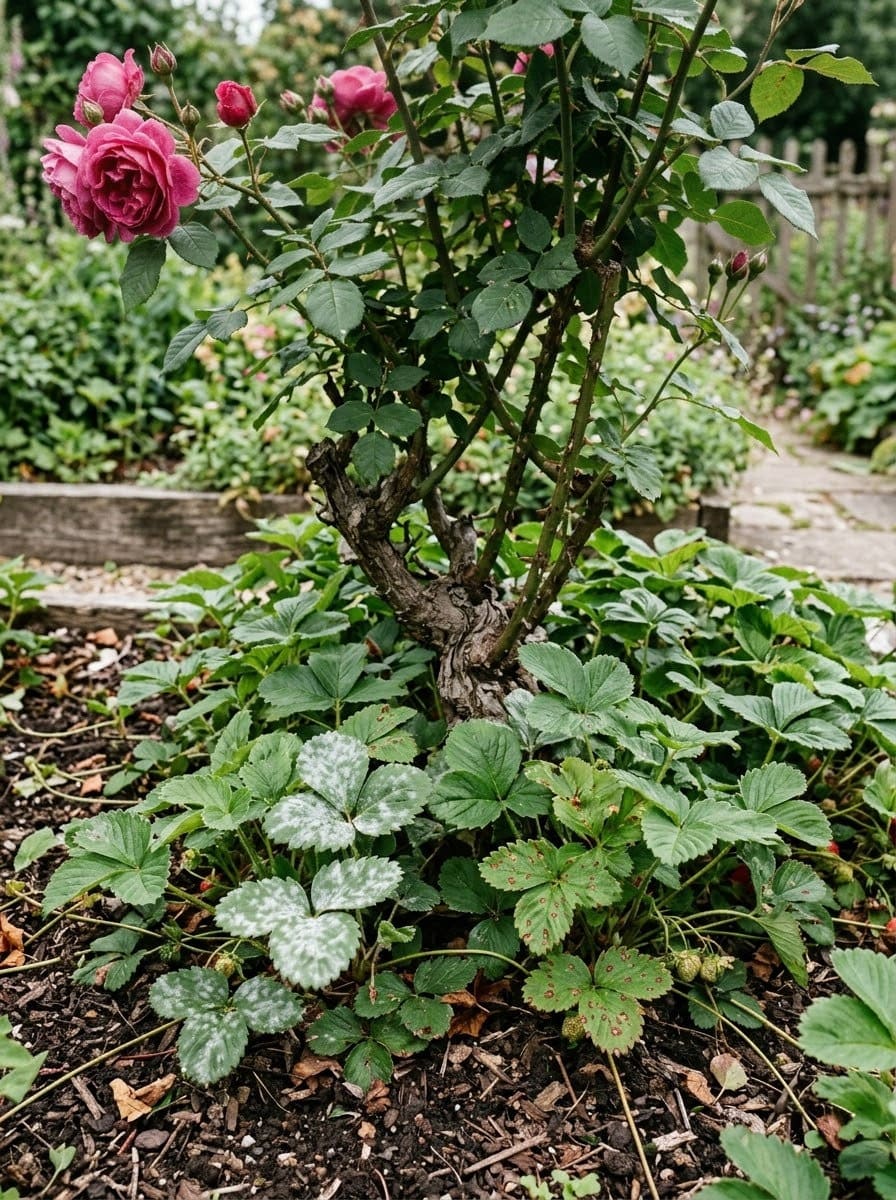
Both are in the rose family. They share Japanese beetles, spider mites, powdery mildew, and Verticillium.
That’s why Ohio State lists rose among the crops to keep out of strawberry ground. A woody rose also outcompetes a low strawberry for water and root room.
The fix: keep roses and strawberries in separate beds with their own soil. Don’t tuck strawberries in as a rose underplanting.
Already planted: move the strawberries. If the roses have had Verticillium, that soil is off for strawberries for years. Rose garden layouts work better without edible underplanting anyway.
10. Raspberries and blackberries
Brambles share strawberry’s family, its diseases, and a habit of taking over.
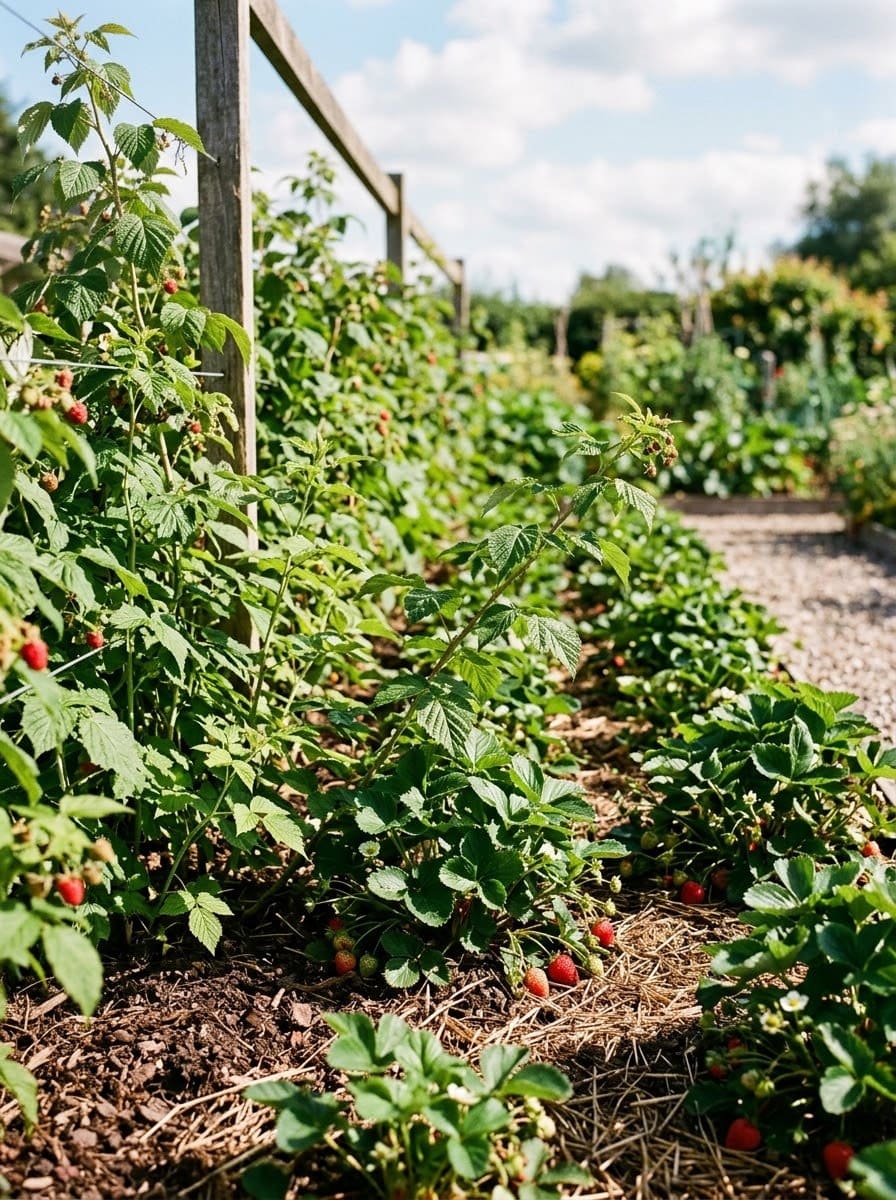
Raspberries and blackberries are on Ohio State’s Verticillium list, and as rose-family relatives they also swap anthracnose, spider mites, and several viruses with strawberries. Worse, brambles sucker. New canes push up from spreading roots and march into a strawberry bed a foot or two a year.
The fix: plant brambles at least 20 feet from strawberries, and sink a root barrier between them. Never share a bed.
Already planted: cut and dig the bramble suckers out of the strawberry rows every spring, and install a barrier along the line. If either crop has shown wilt, keep them apart permanently.
11. Mint
Mint hits strawberries three ways: disease, roots, and water.
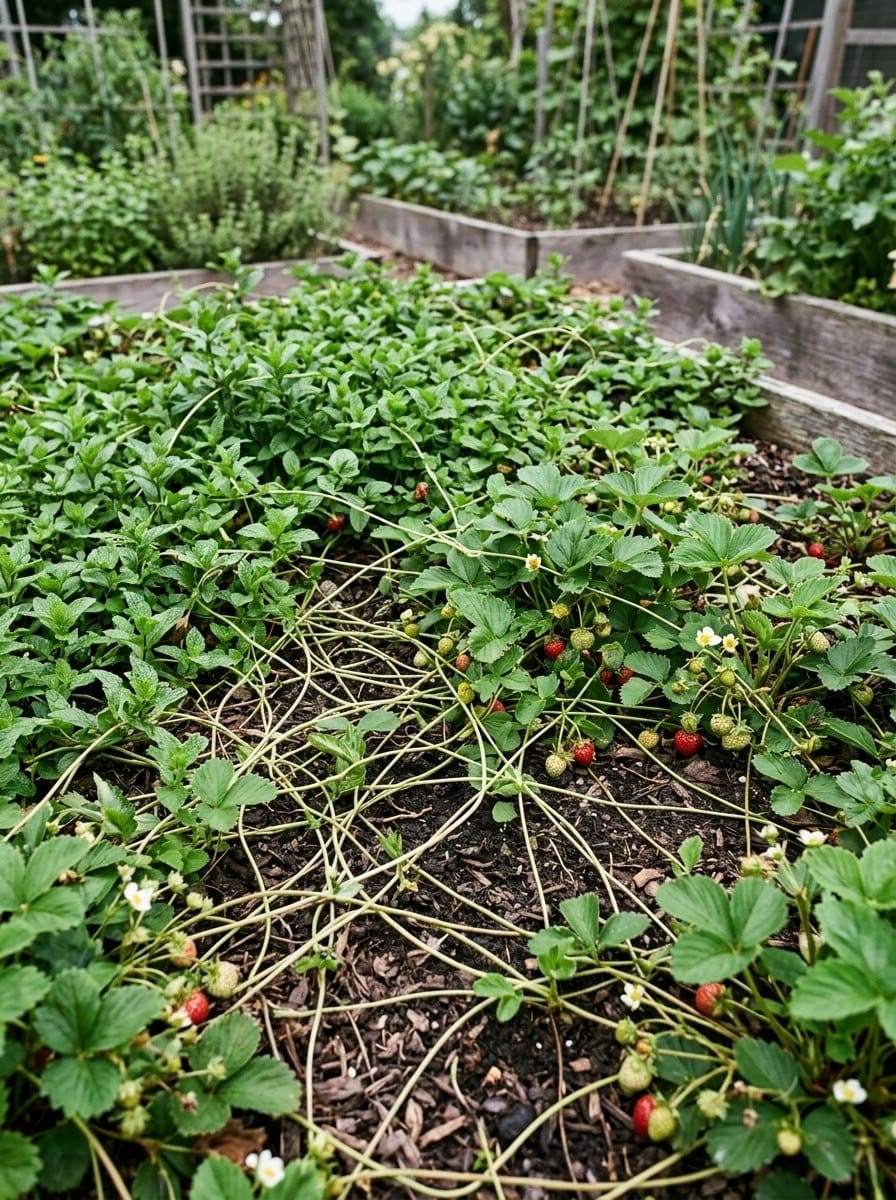
Ohio State lists mint among the plants that spread Verticillium through an aggressive root system. And Utah State University Extension says containing mint takes a barrier “3 to 4 inches above and 10 to 15 inches below the soil surface.”
Mint is also a heavy drinker. In a strawberry bed it’s a straight fight between mint rhizomes and strawberry runners, and the mint wins.
The fix: never plant mint in the ground near strawberries. Grow it in a container on a hard surface.
Already planted: plan on a full season of pulling every mint runner and root piece, because mint regrows from fragments. Growing mint properly means potting it from the start.
12. Fennel
Fennel is the herb that chemically suppresses whatever grows near it.
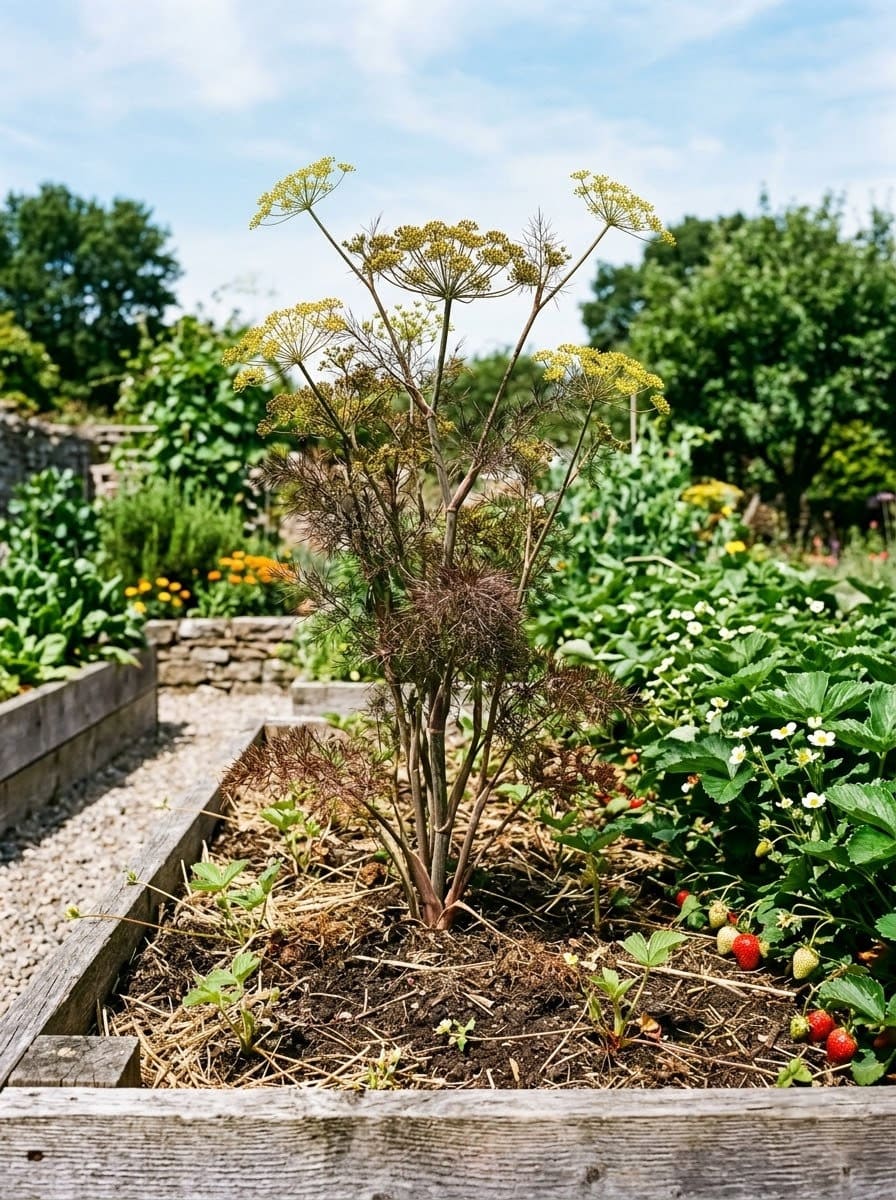
Fennel releases allelopathic compounds through its roots and its decaying leaves. A study on the allelopathic potential of fennel found its extracts sharply cut germination and seedling growth.
The crop plants in that test were more sensitive than the weeds. Penn State Extension treats this kind of chemical interference as a real garden problem.
The fix: grow fennel in its own bed or a large container, as far from the strawberries as your garden allows.
Already planted: move one of the two. Don’t spend weeks adjusting water and feed first. Our fennel guide covers the container-versus-bed call.
13. Sunflowers and Jerusalem artichokes
Both are tall, both compete hard, and both release growth-slowing compounds.
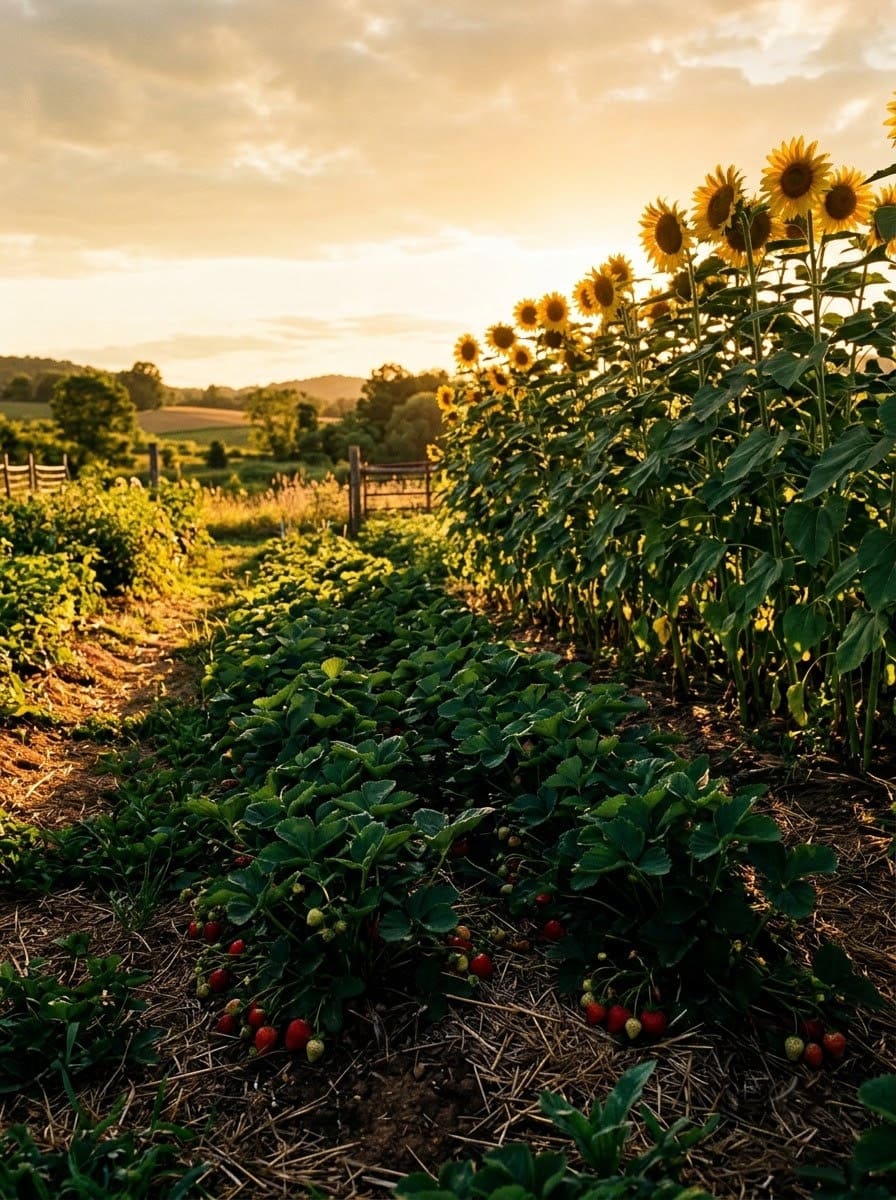
Penn State Extension lists sunflowers among garden plants that release allelopathic compounds. Jerusalem artichokes, a perennial sunflower relative, do the same and spread aggressively by tuber. Both grow 6 feet or taller and cast heavy shade over a sun-hungry strawberry bed, and both run deep competing roots.
The fix: plant sunflowers on the north side of the garden where their shadow falls away from crops. Grow Jerusalem artichokes in a contained bed, well away.
Already planted: if the strawberries are stretched and light on fruit, the shade is the cause. Move next year’s sunflowers, or the strawberries.
14. Broccoli, cabbage, cauliflower, and kale
Brassicas aren’t a disease threat to strawberries. They’re a nutrient fight.
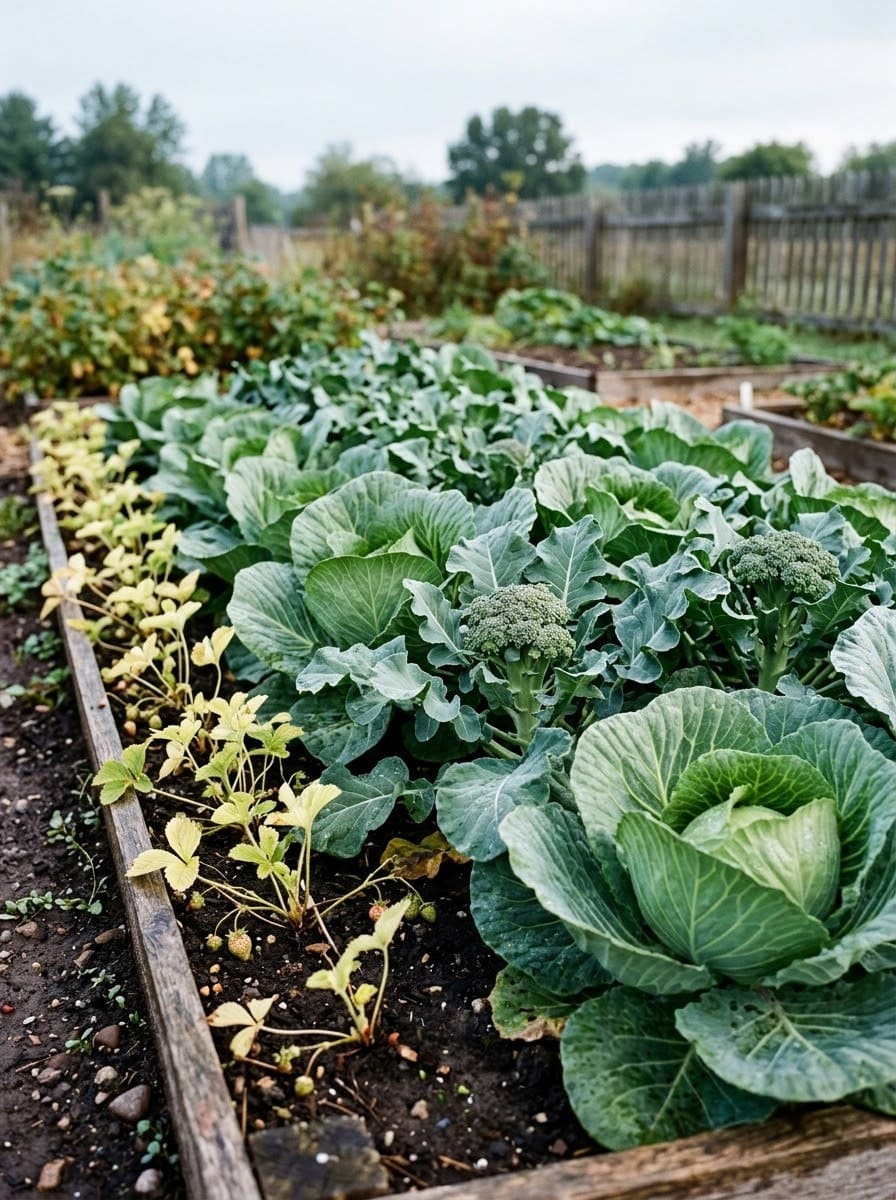
The cabbage family are heavy feeders that pull hard on nitrogen and other nutrients. Strawberry guides consistently flag them as a poor match for the same bed.
Two hungry crops in one space, and the low strawberry usually comes out behind.
The fix: grow brassicas and strawberries in separate beds. They rotate fine in sequence, just not side by side.
Already planted: feed both crops well and keep the strawberries watered. Building up the bed’s soil fertility helps when it’s doing double duty.
15. Grass, lawn edges, and freshly turned sod
Grass is the neighbor that does the most damage and gets the least attention.
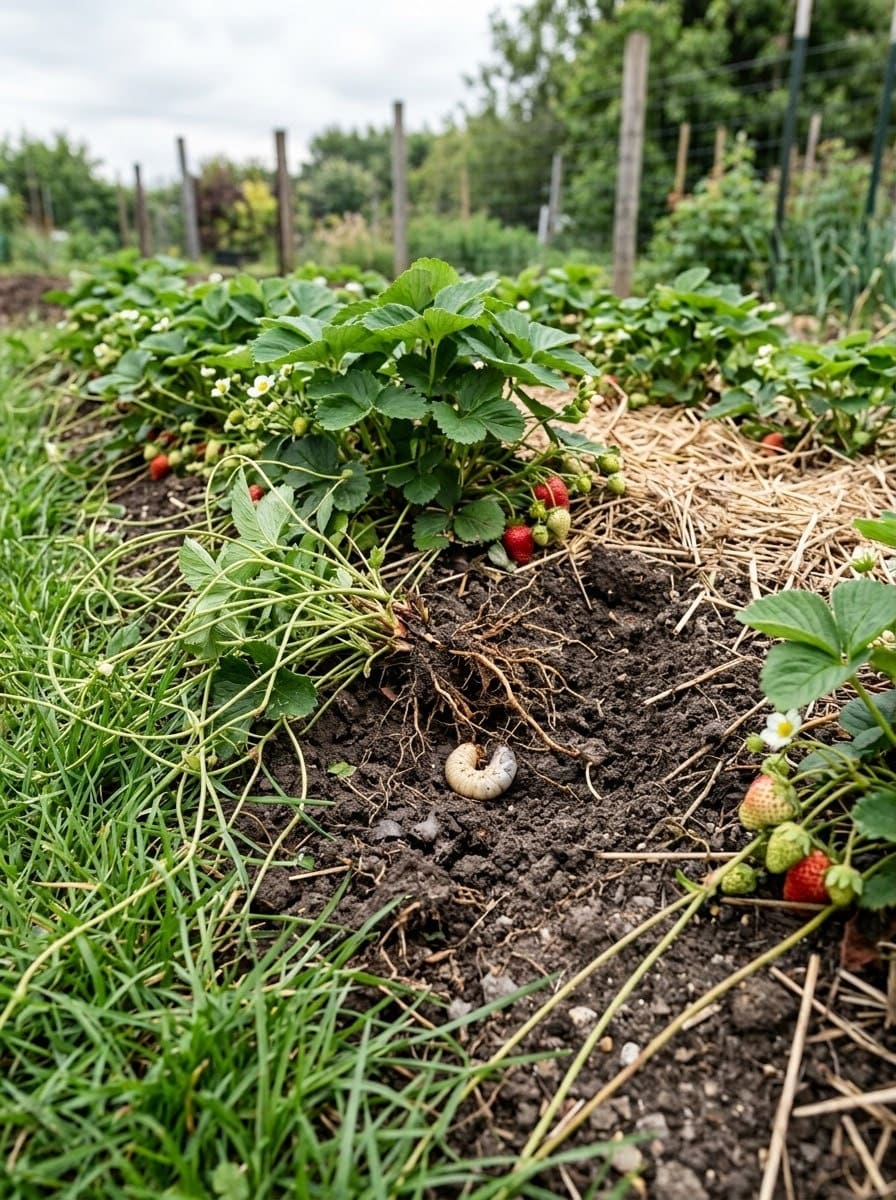
Two problems. First, freshly turned sod is full of white grubs, the larvae of Japanese and June beetles. University of Maine Extension warns that these “feed upon strawberry roots.”
The standard advice is to wait about two years after grass before planting strawberries there. Second, grass is a relentless root competitor. Bermuda, quackgrass, and other running grasses invade from a bed edge and choke out the strawberries at the margin.
The fix: never dig a strawberry bed straight into old lawn. Cultivate the area for a year first, or wait two. Then edge the finished bed with a deep barrier to keep grass from creeping back in.
Already planted: dig the invading grass out completely, roots and all, and install edging. If plants are pulling out easily with chewed roots, that’s grubs, and beneficial nematodes are the organic option.
What to plant with strawberries instead
Strawberries do have good neighbors. These help without crowding or carrying disease.
| Plant | Why it works |
|---|---|
| Borage | The classic strawberry companion, brings pollinators and is said to boost vigor and flavor |
| Bush beans and peas | Fix nitrogen, share no diseases with strawberries |
| Spinach and lettuce | Shallow-rooted and quick, harvested before the strawberries mat over |
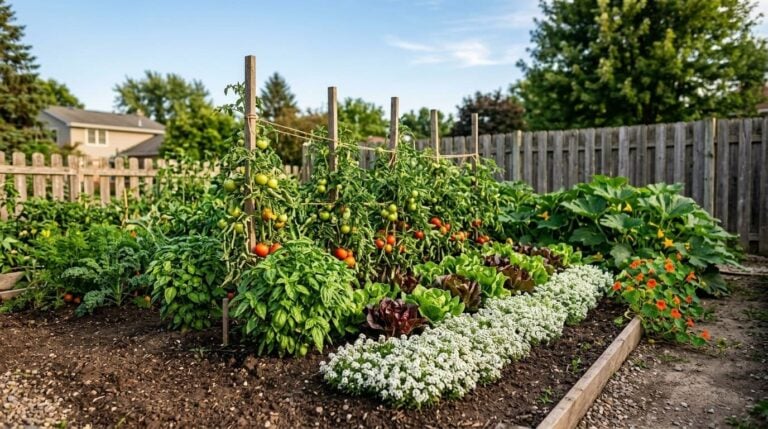
| Thyme and low creeping herbs | Living mulch between rows, keeps fruit off the soil and deters some pests |
| Garlic, chives, and onions | Deter aphids and spider mites, take up little room |
| French marigold | Suppresses root-knot nematodes in the soil |
| Asparagus | Deep-rooted and permanent, works a different soil layer |
What we’d do differently: real talk from the research
Find out what grew in that ground first. This is the whole game with strawberries. If tomatoes, potatoes, peppers, or eggplant grew there in the last four or five years, pick a different spot or build a raised bed with fresh soil.
Verticillium doesn’t wash out, and there’s no cure once the plants are infected. We’ve watched a full bed die plant by plant in one July because nobody checked.
Never dig a strawberry bed straight into lawn. It’s tempting, because the grass is already gone once you strip the sod. But the grubs stay, and they eat the roots, and the grass comes back from every fragment. Cultivate the area for a full season first, or plant something else there for a year or two.
Put a real barrier between strawberries and anything that runs. Mint, brambles, and running grass all move faster than a strawberry. A buried edging strip, 6 inches deep at least, is the difference between a strawberry bed and a mint bed two summers from now.
Buy resistant cultivars and certified crowns. Earliglow, Allstar, and the other resistant June-bearers cost the same as any other plant, and certified disease-free crowns cost a little more. That’s the cheapest insurance in the whole project against the disease that ruins most strawberry beds.
Frequently asked questions
Can I plant strawberries where tomatoes grew?
Not for four to five years. Tomatoes are a major Verticillium wilt host, and the fungus stays in the soil long after the tomato plants are gone.
University of Maine Extension sets the minimum at four years. If you can’t wait, use a raised bed with fresh soil, or plant a resistant cultivar like Earliglow.
Why are my strawberry plants wilting and dying?
If the outer leaves droop, dry, and turn reddish-brown, and the wilt shows on one side of the plant first, it’s likely Verticillium wilt. Per Ohio State Extension, the runners may also show dark streaks.
There’s no spray. Remove the affected plants and move the healthy ones to soil that hasn’t grown tomatoes, potatoes, peppers, or eggplant recently.
Can strawberries and raspberries grow together?
No. They’re both in the rose family and both Verticillium hosts, so they trade diseases, and raspberry canes sucker aggressively into a strawberry bed. Keep brambles at least 20 feet away with a root barrier between them.
What should you not plant next to strawberries?
The nightshades (tomato, pepper, potato, eggplant), other Verticillium hosts (okra, melons, chrysanthemum, stone fruit), rose-family relatives (roses, brambles), aggressive spreaders (mint, running grass), and tall shade plants like sunflowers. Brassicas compete heavily for nutrients too.
How long does Verticillium stay in the soil?
University of Connecticut Extension says the fungus’s resting bodies survive 4 to 15 years. Ohio State says a badly infested site can stay contaminated for 25 years or longer. A four-to-five-year rotation away from host crops is the practical minimum.
What can I plant with strawberries?
Borage, bush beans, spinach and lettuce planted early, low creeping herbs like thyme between the rows, and alliums like garlic and chives. French marigolds help with soil nematodes, and asparagus works a deeper soil layer without competing.
Related Posts
- Vegetable Garden Layouts
- Herbs That Control Vegetable Garden Pests
- Growing Strawberries in a Small Garden
Never miss an update — choose FarmFoodFamily as your preferred source on Google.
How it works: Tap the button below to open Google's settings page, then check the box next to FarmFoodFamily.
Tap the checkbox to turn it blue — that's how you know it's set.