8 Effortless Self-Seeding Flowers That Replant Your Garden For You
Plant these once and they’ll come back on their own, but two of the eight are biennials in disguise and at least one can turn into a real headache outside its native range.

Never miss an update — choose FarmFoodFamily as your preferred source on Google.
How it works: Tap the button below to open Google’s settings page, then check the box next to FarmFoodFamily.
Tap the checkbox to turn it blue — that’s how you know it’s set.
Quick answer
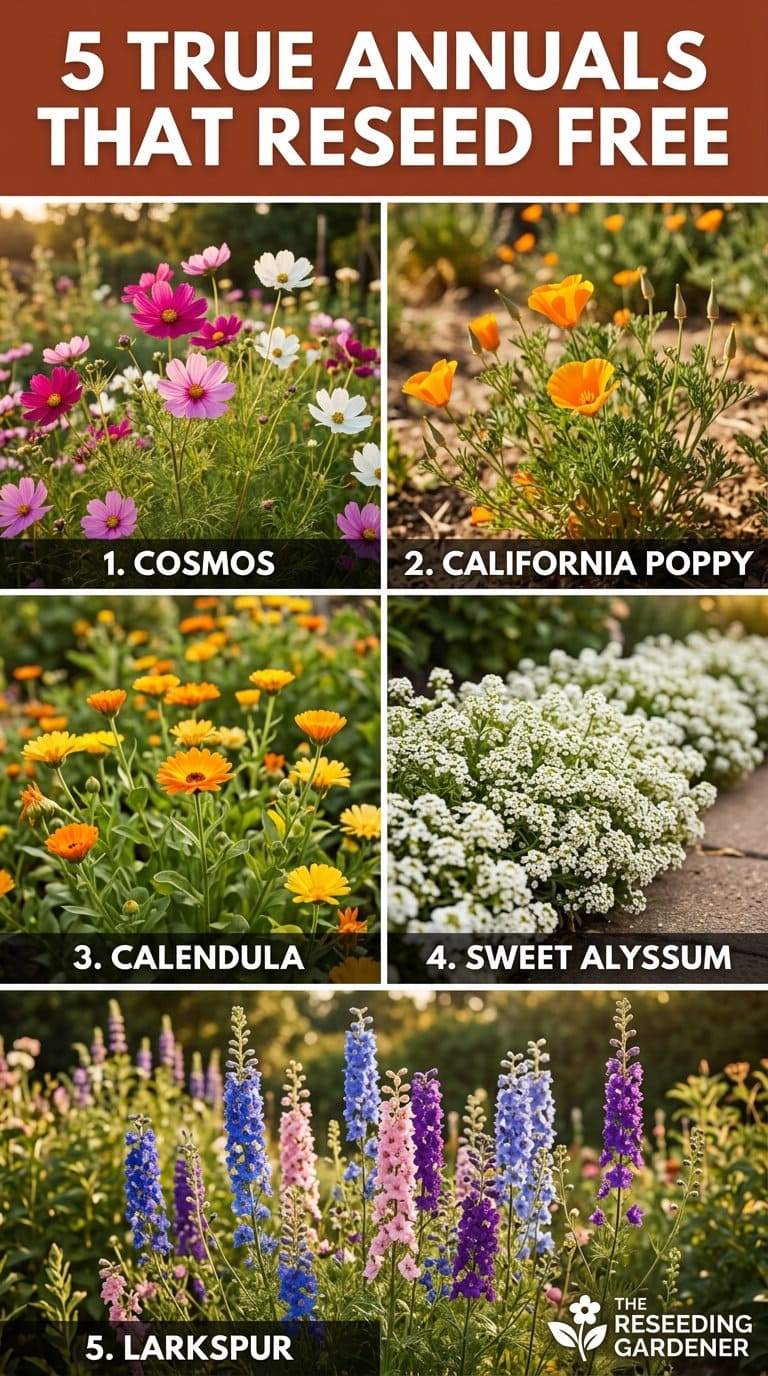
Cosmos, California poppy, calendula, sweet alyssum, larkspur, and love-in-a-mist are true annuals that die completely every fall and depend entirely on the seed they drop to return next spring. Foxglove and hollyhock are biennials, not annuals, they spend year one as a low rosette and only bloom and set seed in year two, so a self-seeding patch is really an overlapping relay of different-aged plants, not one plant coming back.
The catch: deadheading spent blooms gives you more flowers this season but fewer volunteers next year, so you have to stop cutting late in the season for any of this to work. And California poppy and foxglove both spread aggressively outside their home ranges. NC State Extension lists poppy as native only to CA, WA, NV, and NM, while Wisconsin Horticulture Extension documents foxglove as invasive across the Pacific Northwest.
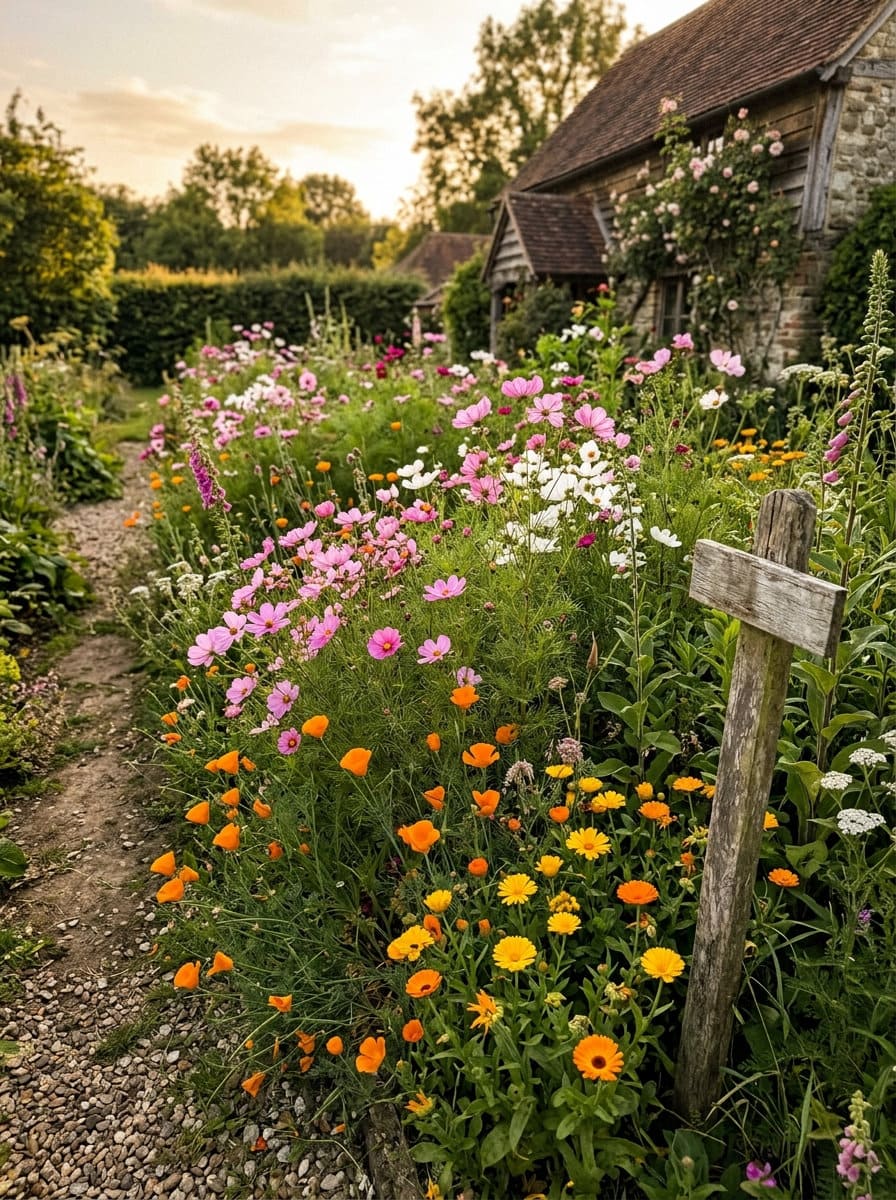
I used to think “self-seeding” just meant lazy gardening that pays off. It does, mostly. But it also means reading the fine print on which plants actually die every year and which ones are quietly running a two-year con on you, plus knowing exactly when to stop deadheading so any of it happens at all.
This list skips tansy on purpose. It shows up on a lot of “easy self-seeder” roundups, but it’s flagged elsewhere on this project as genuinely invasive, not just enthusiastic, so it’s not getting a spot on a “flowers you want to see spread” list.
At a glance: annual, biennial, and how much each one spreads
| Flower | True annual or biennial/perennial | Self-seeding aggressiveness | Regional caution |
|---|---|---|---|
| Cosmos | True annual | Moderate | None significant |
| California poppy | True annual | High outside native range | Native only to CA, WA, NV, NM per NC State Extension; can spread aggressively elsewhere |
| Calendula | True annual | Moderate | None significant |
| Sweet alyssum | True annual | High | Can carpet a bed faster than expected in mild climates |
| Larkspur | True annual (cool-season) | Moderate | None significant |
| Love-in-a-mist (Nigella) | True annual | Moderate | None significant |
| Foxglove | Biennial | High where established | Documented invasive in the US Pacific Northwest per Wisconsin Horticulture Extension; all parts toxic |
| Hollyhock | Biennial/short-lived perennial | Moderate to high | Volunteers often bloom a different color than the parent |
Cosmos: the true annual that barely needs help
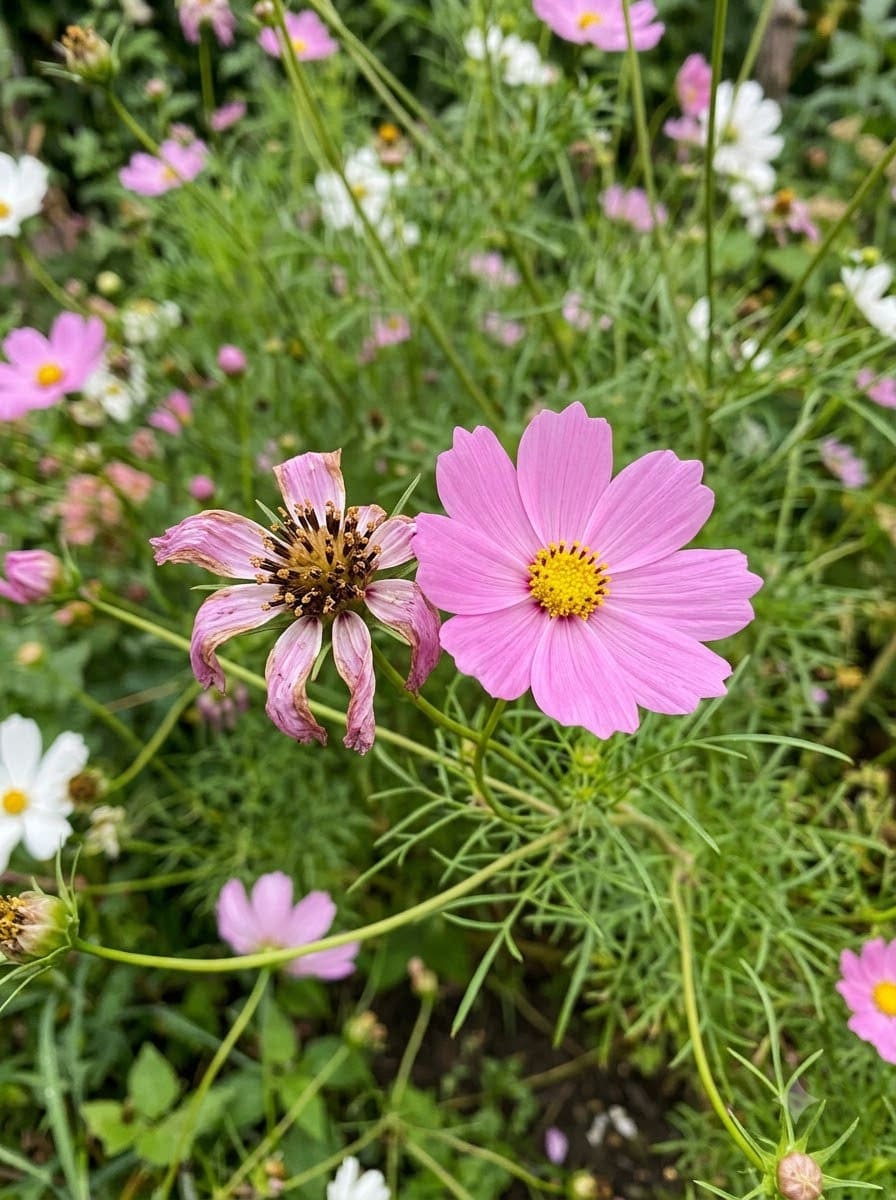
Cosmos blooms from early summer through the first frost, and it’s about as close to foolproof as a self-seeder gets. Each spent bloom dries into a cluster of thin, dark seeds that drop straight into the soil under the plant.


Deadhead through July and August for a longer, fuller bloom window. Then, around 4 to 6 weeks before your average first frost, stop cutting and let the last flush of flowers dry on the stem.
Answer 4 quick questions and get matched to the exact fix for your yard — drainage, budget, layout, or something else entirely.
Take the Free QuizCosmos volunteers show up reliably but not aggressively, usually a loose scatter within a couple feet of the parent plant, not a solid mat. It’s a good starter self-seeder for anyone nervous about losing control of a bed, and it pairs well with California poppy below for a longer, staggered bloom season in the same bed.
If you’d rather scatter several easy annuals at once instead of picking one, a beginner’s rundown on low-effort flower beds covers where cosmos fits into a wider low-maintenance layout.
Is California poppy safe to let self-seed anywhere?
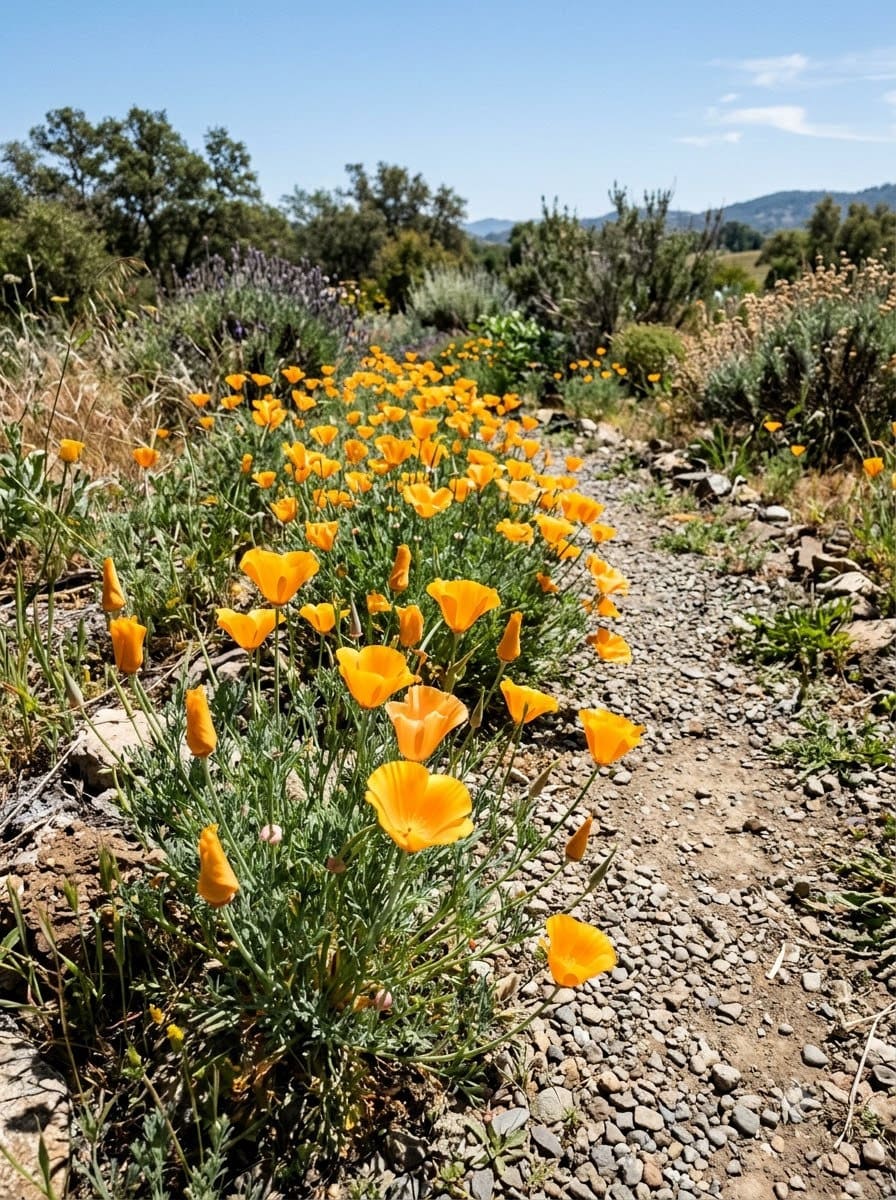
Not automatically, and this is the article’s clearest regional flag. California poppy blooms from late spring into early summer, closing up at night and on cloudy days, and it can produce enough seed capsules to carpet a bed within two seasons.
NC State Extension’s plant toolbox lists its actual native distribution as California, Washington, Nevada, and New Mexico, growing wild in washes, grassland, and sagebrush country. Outside that range, the extension’s own guidance is to deadhead specifically to limit self-seeding, not just to tidy the plant.
That doesn’t mean skip it if you live outside the Southwest. It means treat it like sweet alyssum below, decide up front how much bed space you’re willing to give it, and deadhead through most of the season if you want it contained. Check your state’s invasive-plant list before letting a full season go to seed, especially in mild-winter regions where volunteers overwinter easily.
Calendula: the annual that reseeds into a longer season than you planted for
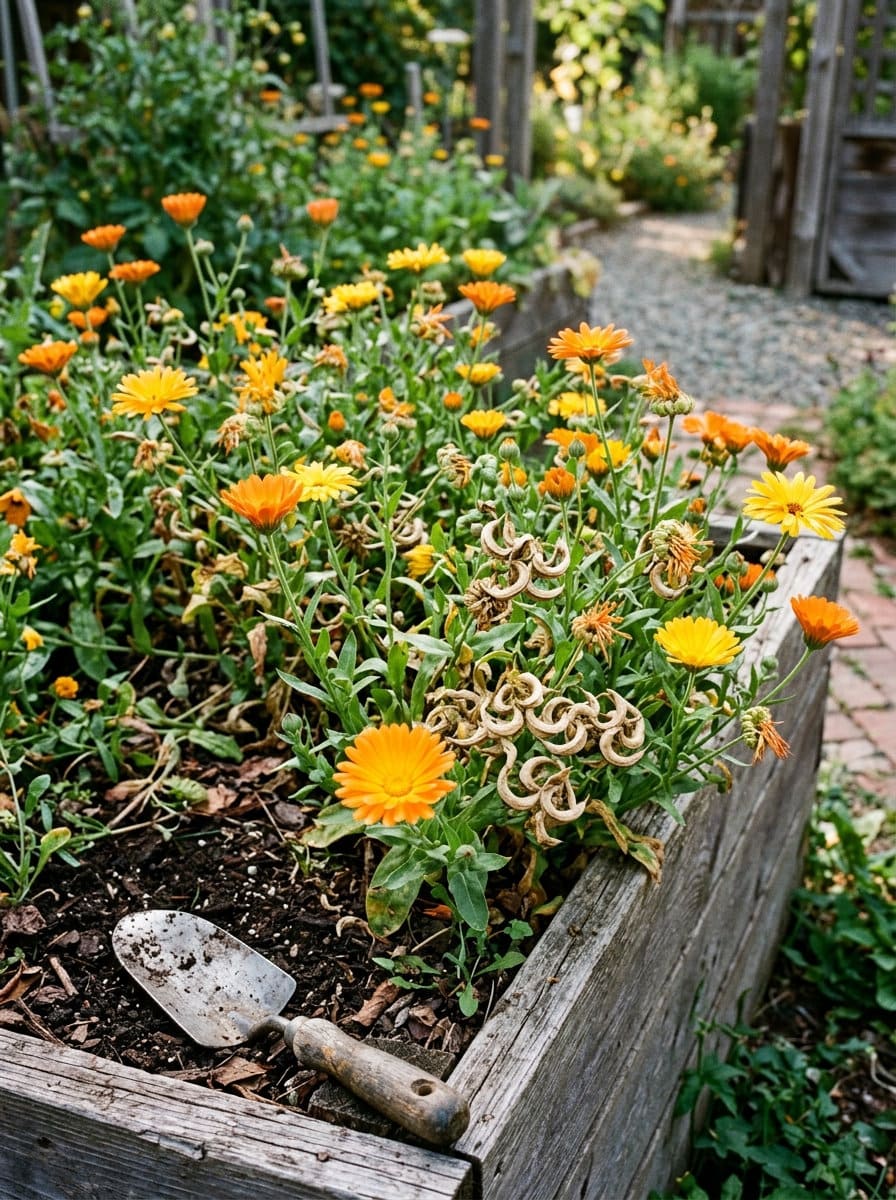
Calendula, also called pot marigold, blooms in flushes from spring through fall in most climates and tolerates a light frost better than most annuals on this list. It’s a true annual, no plant survives winter, but it self-seeds reliably enough that a single fall’s worth of dropped seed often produces an earlier, denser bloom the following spring than the original planting did.
Deadhead weekly through the main season for continuous flowers. Around early fall, let one or two plants go fully to seed, the curled, crescent-shaped seeds are easy to spot and even easier to collect by hand if you’d rather control where next year’s plants land instead of leaving it to chance.
Most yard problems trace back to one specific, fixable cause. Find yours in 4 quick questions.
Take the Free Quiz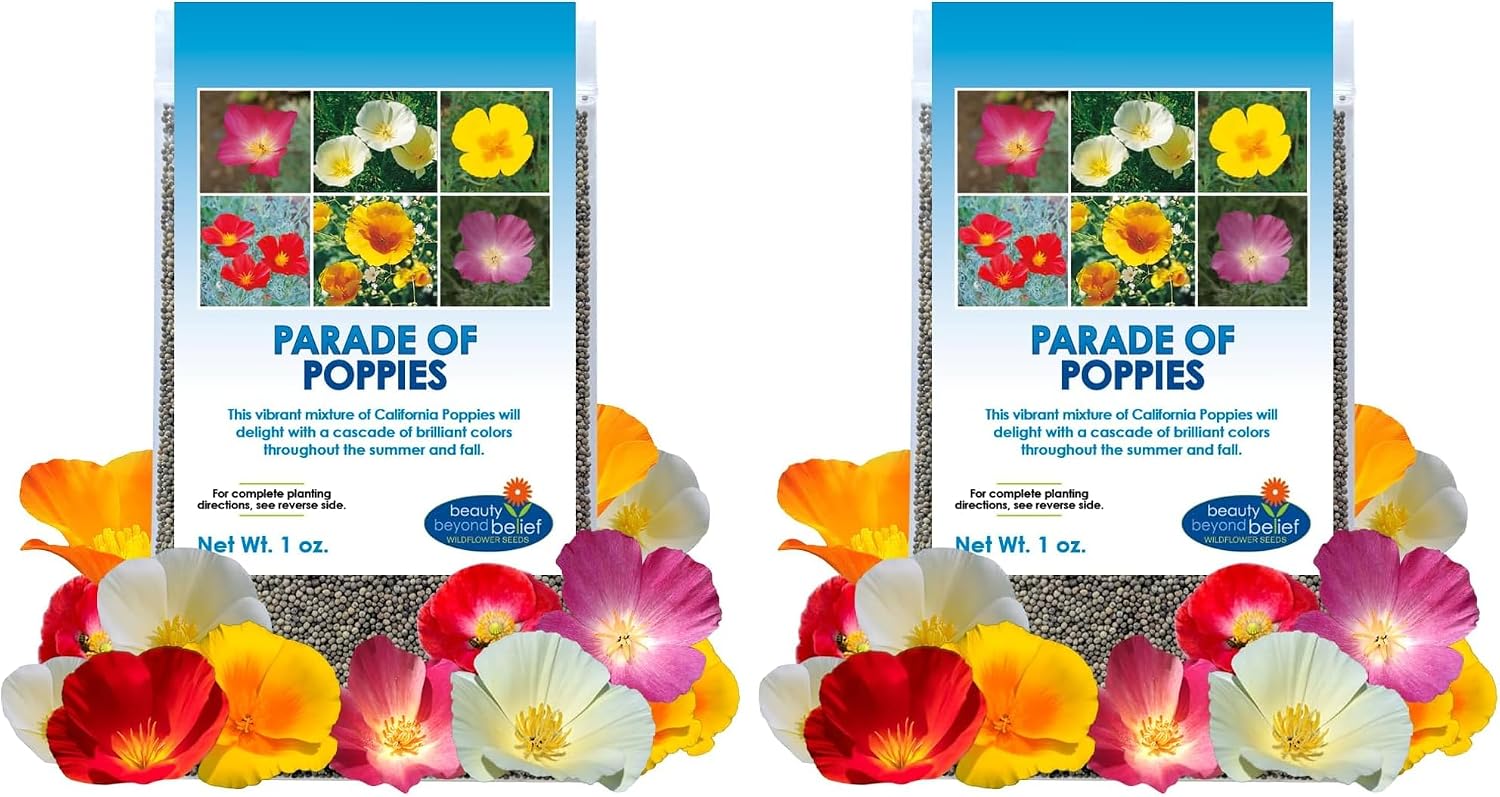
4.1 stars, 703 ratings; a fast way to start one of this article's featured self-seeders directly, with the regional-caution flag noted in that plant's own section
Shop NowThis post contains affiliate links. We may earn a commission on qualifying purchases at no extra cost to you.
It’s a solid pick for a vegetable garden border since it also draws in the same pollinator-friendly plants most beds are already trying to attract, without competing hard for nutrients the way some flowers on the flowers that sabotage a vegetable garden list can.
Sweet alyssum: the fast spreader you need to budget bed space for
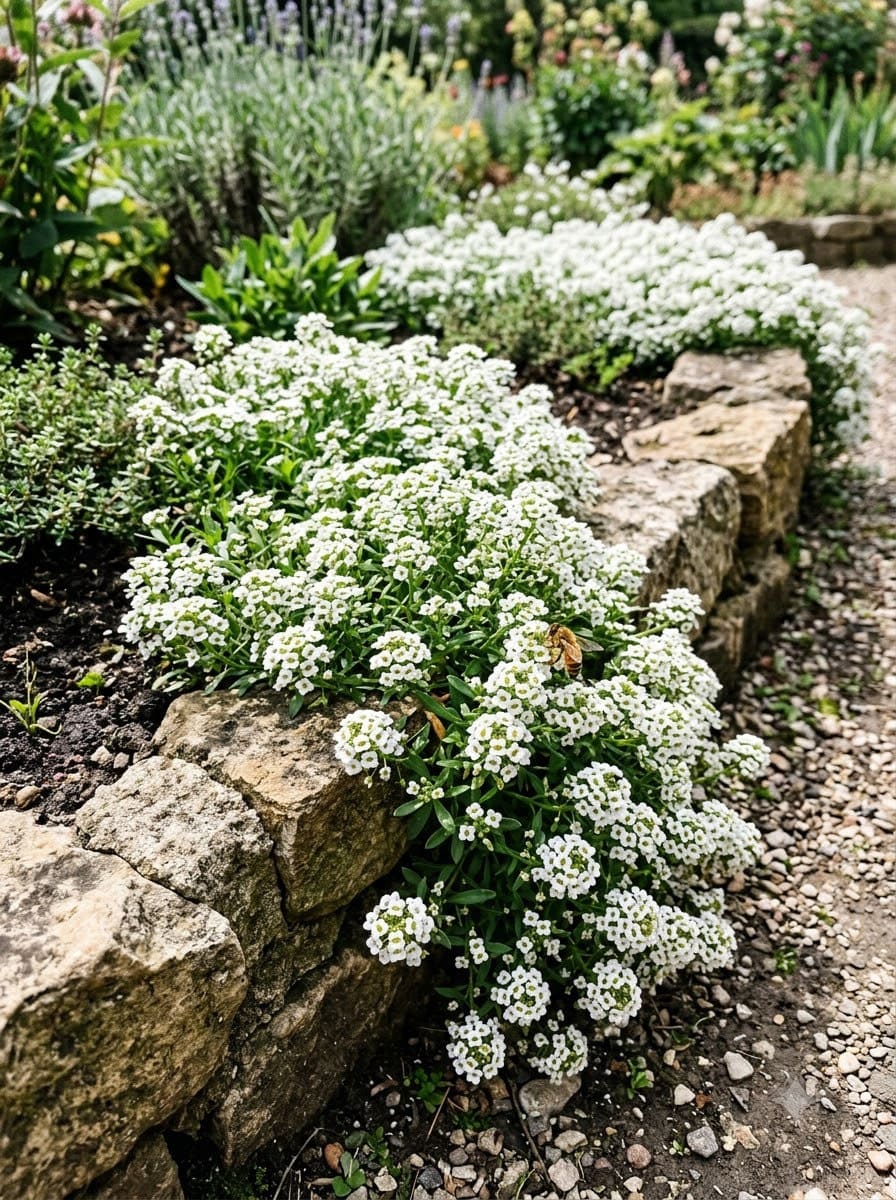
Sweet alyssum is a true annual, but calling it “moderate” would undersell it. In mild climates it can behave almost like a groundcover, blooming continuously and dropping seed fast enough that a single spring planting fills gaps between pavers and other plants by midsummer.
That’s a feature in a cottage bed and a genuine problem in a small, structured garden where you don’t want volunteers crowding out other plants. If you’re working with a tight bed, deadhead the whole planting hard through summer and only let a small, deliberately chosen patch go to seed at season’s end.
Alyssum’s aggressiveness is also its real value for a specific job: filling bare soil between slower-establishing perennials or under young shrubs, where a fast, low-growing self-seeder does useful work instead of causing a headache.
Larkspur: the cool-season annual that seeds itself before summer heat hits
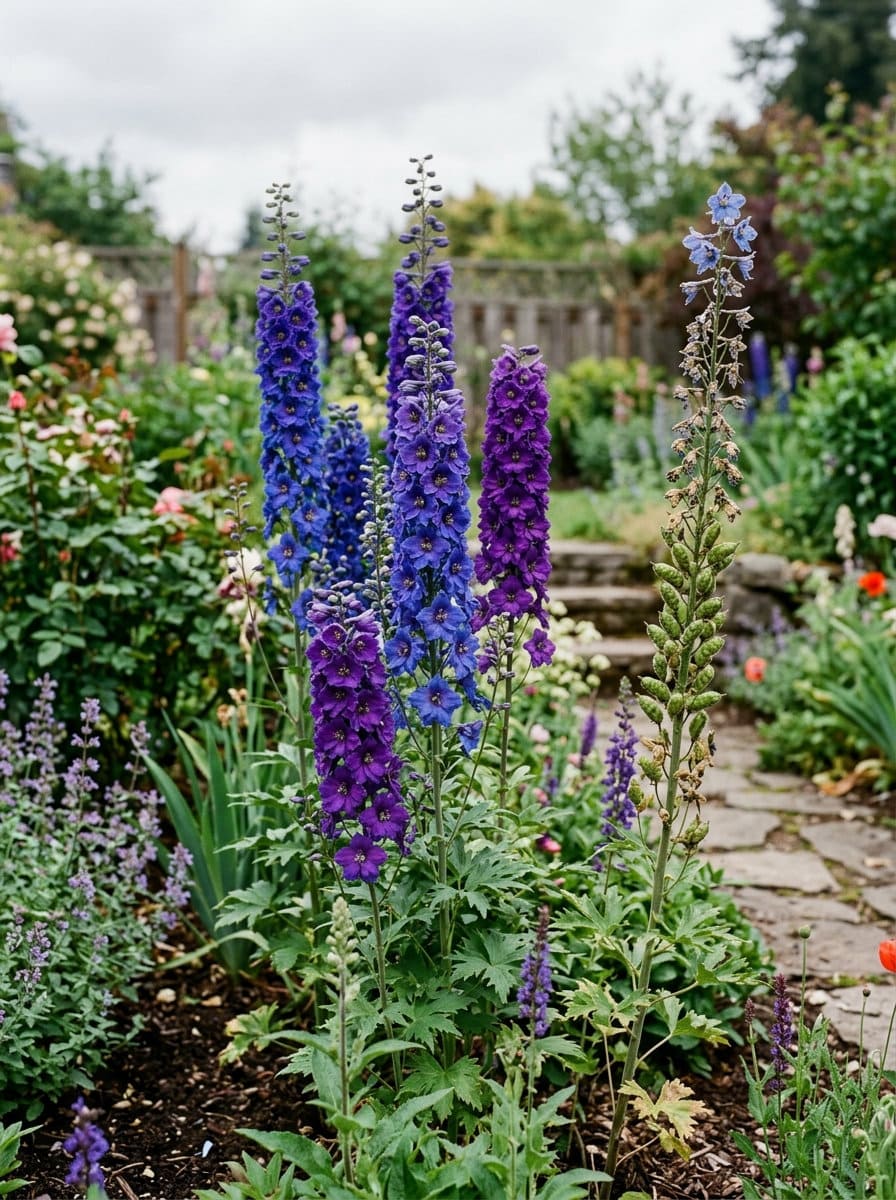
Larkspur is a true annual and a cool-season one specifically, it blooms in late spring and starts fading once real summer heat arrives, which is actually when its self-seeding does most of its work. UNH Extension’s Yard and Garden Infoline lists larkspur by name among its confirmed self-sowing annuals, noting that its seeds mature naturally as the plant declines in summer heat.
Because larkspur’s decline and its seed-set happen at the same time, there’s less of a deliberate deadhead-then-stop decision to make than with cosmos or calendula. Let the plant fade in place through early summer instead of pulling it as soon as it looks spent, and the bed reseeds itself with almost no extra effort.
One real caveat: larkspur seedlings look a lot like weeds in early spring. Photograph a few seedlings the first year you grow it so next spring’s volunteers don’t get pulled by accident.

Love-in-a-mist: the annual with its own built-in seed display
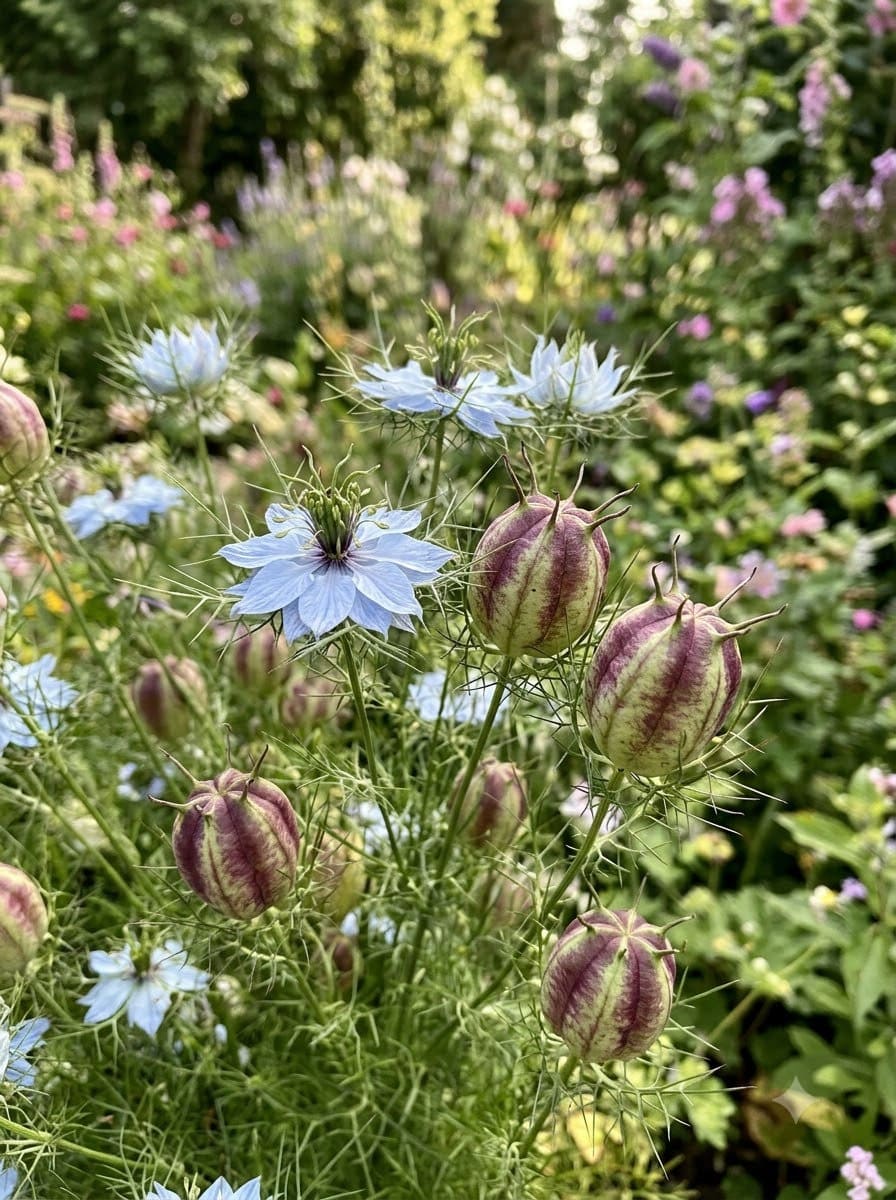
Love-in-a-mist, botanically Nigella damascena, is a true annual that blooms in early summer and then produces one of the more ornamental seed structures of any flower on this list, an inflated, papery pod striped in maroon and green that looks good enough to leave standing on its own merits.
The average homeowner spends $616/year on yard fixes that don't address the real problem. Find out what yours actually is — before you spend another dollar.
Take the Free QuizThat overlap between “looks nice dried on the plant” and “is literally the seed source for next year” makes this one of the easiest self-seeders to manage well. There’s no real tension between deadheading for looks and letting it set seed, because the seed pod is the look, at least for the back half of the bloom season.
UNH Extension’s same self-sowing annuals list groups love-in-a-mist with cosmos and calendula as a genuine set-it-and-forget-it option for a cottage bed, and it pairs particularly well near a cut-flower garden planned for continuous blooms since the dried pods work in arrangements too.
Should you let foxglove self-seed? Read this first
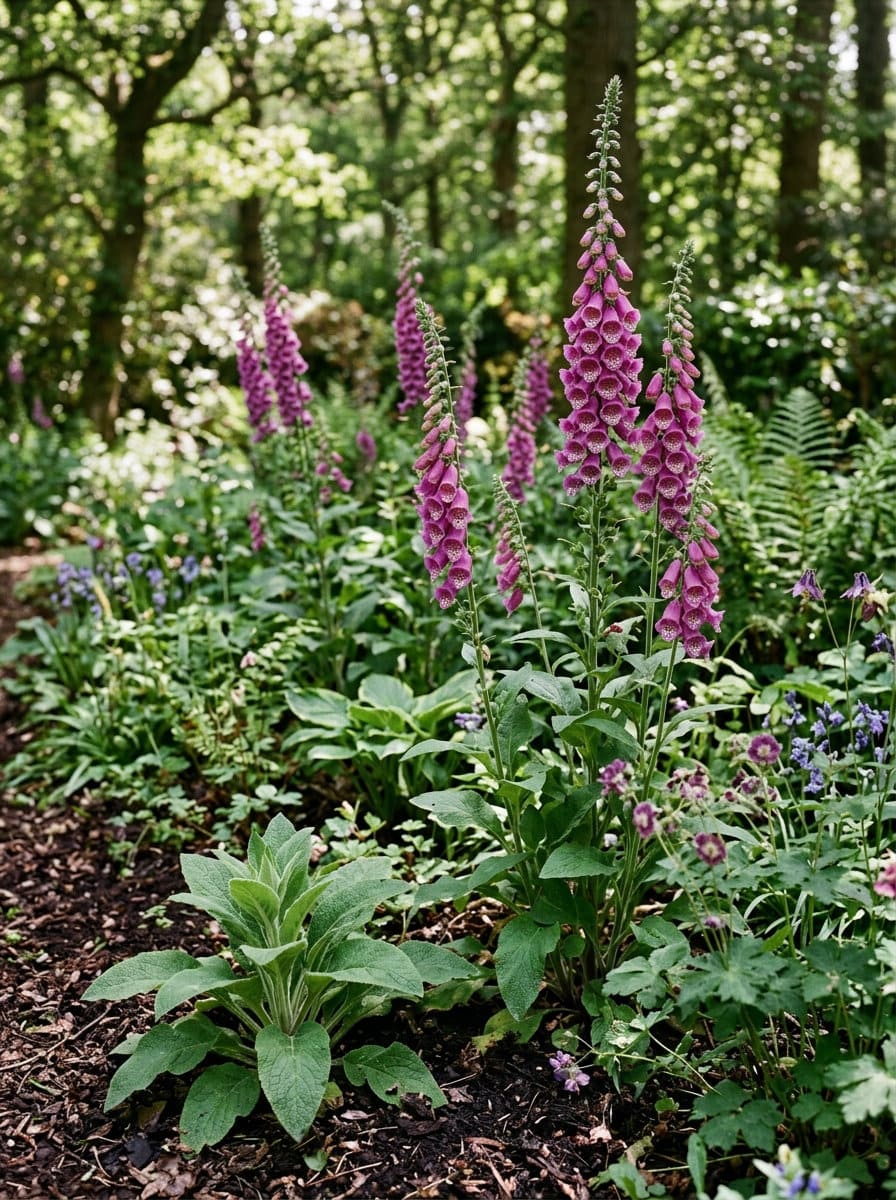
Foxglove is where this list needs to slow down, because it’s not a true annual at all. Wisconsin Horticulture Extension classifies Digitalis purpurea as an herbaceous biennial or short-lived perennial, meaning every individual plant spends its first year as a low rosette of leaves and only sends up its famous flower spike in year two. What looks like a permanent foxglove patch is actually an overlapping relay of first-year and second-year plants.
That relay only keeps running if you let it self-seed, and foxglove is very good at self-seeding. The same Wisconsin Extension page puts the seed count at 1 to 2 million seeds per plant, and documents the species as invasive in the US Pacific Northwest and naturalized as a roadside weed in other parts of the country outside its native western Europe.
Every part of foxglove is toxic if eaten, and handling the leaves can irritate sensitive skin, worth flagging directly for anyone with young kids or curious pets in the yard, and worth a look at this guide to flowers that are toxic to pets rather than treating the warning as a footnote.
If you garden in the Pacific Northwest specifically, deadhead spent spikes before seed drops instead of letting a patch self-perpetuate, and check your state’s noxious-weed list before planting foxglove at all. Everywhere else, foxglove is a manageable, genuinely useful biennial self-seeder, just budget two years per bloom cycle and expect to see young rosettes doing nothing visually interesting in year one.
Hollyhock: the biennial that gambles on color every year
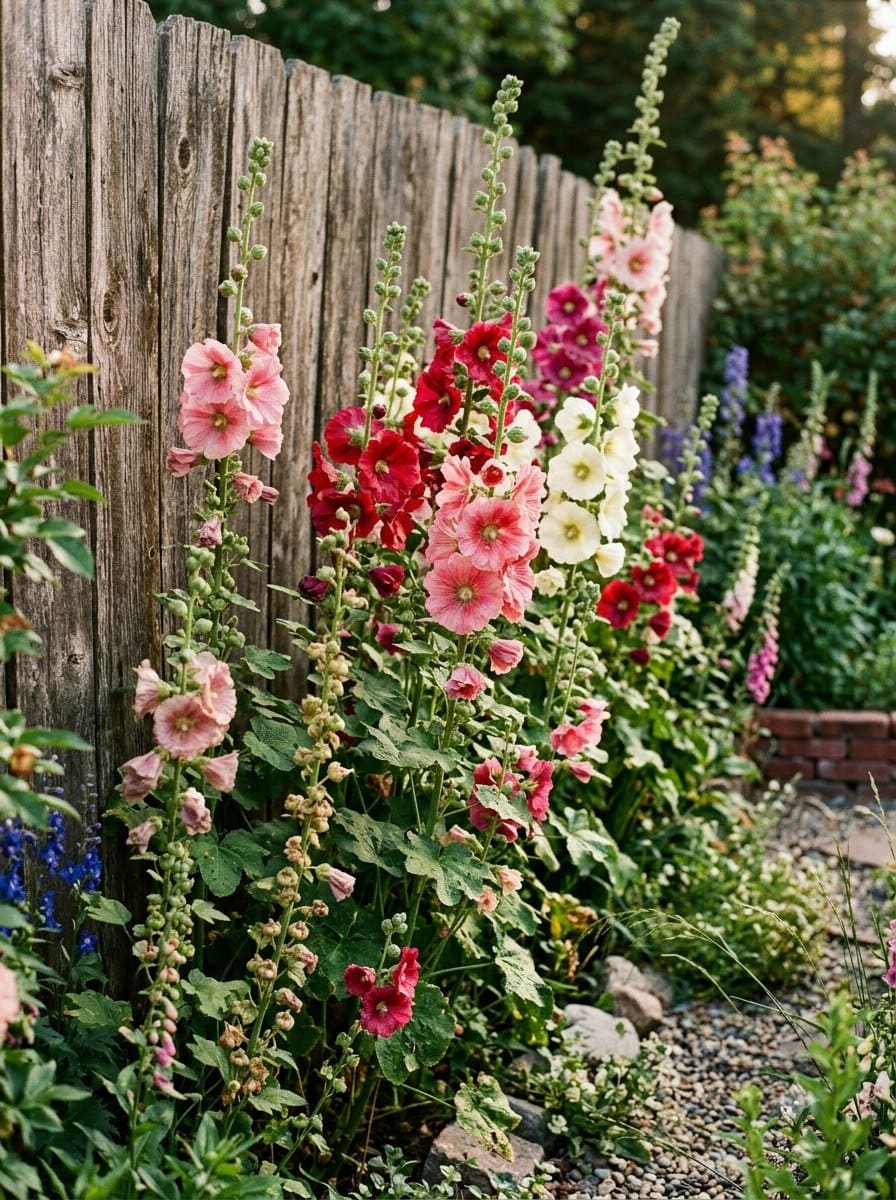
Hollyhock follows the same two-year biennial pattern as foxglove, a rosette in year one, a tall flowering stalk in year two, though some varieties behave as short-lived perennials that squeeze out a third or fourth season before dying back.
Its self-seeding is genuinely reliable once established, but there’s a real tradeoff most roundups skip. Hollyhocks cross-pollinate freely, so a volunteer seedling grown from a red parent might bloom pink, white, or a muddy in-between color the following year. If you want a specific color scheme to stay consistent, you need to actually replant named varieties every couple years instead of relying on self-seed.
Let a few stalks finish their full bloom and dry seed pods before cutting anything back at season’s end, and expect a wider color mix over time, not a copy of what you planted. For gardeners who want that unpredictability, it’s part of the charm. For anyone planning a color-coordinated bed, it’s a real limitation to plan around, not a surprise to discover later.
What I learned the hard way about “effortless”
The first year I let sweet alyssum go fully to seed along a garden path, I thought I was being smart, free groundcover, less weeding, why wouldn’t I.
By the second spring it had jumped the path entirely and was working its way into a perennial bed about six feet away, crowding out some coreopsis I actually cared about more.
It wasn’t a disaster. Alyssum pulls easily and doesn’t have roots that fight back. But it took me most of a Saturday afternoon in May, coffee going cold on the porch rail, to pull about 340 seedlings out of a bed they had no business being in.
And honestly, that’s the part nobody tells you about self-seeding flowers. The plants that make it easy to reseed a bed make it just as easy to reseed the wrong bed. I actually love how alyssum behaves now, I just budget for one spring cleanup pass every year instead of pretending it stays where I put it.
The deadhead-vs-self-seed tension nobody explains
Most general gardening advice tells you to deadhead everything, all season, for more flowers. That’s correct advice for plants you’re not trying to self-seed. It’s exactly backwards for the eight flowers on this list.
Deadheading works because a plant reads a faded flower as “done, time to make seed,” and redirecting that energy into another bloom instead is literally why cutting spent flowers gets you more flowers, covered in more depth in this guide to common deadheading mistakes. But that mechanism only produces more flowers if you keep the seed from ever forming.
The fix isn’t choosing one approach all season. It’s switching partway through. Deadhead through your plant’s main bloom window for a longer, fuller show, then stop cutting 4 to 8 weeks before your first fall frost (later-blooming plants like calendula need a shorter buffer, earlier ones like larkspur need more) and let that last flush mature into seed undisturbed.
How much self-seeding is too much
There’s no universal number, but there’s a useful test: if you’re pulling more volunteer seedlings than you’re keeping every spring, that plant needs a tighter seed-head budget next fall, not a bigger bed.
For aggressive spreaders like sweet alyssum and California poppy outside its native range, deadhead almost everything and deliberately leave just one or two seed heads per plant standing. For moderate spreaders like cosmos, calendula, and love-in-a-mist, letting a full late-season flush go to seed is usually fine in an average-sized bed.
Physical borders help too. A mowed strip, a paver edge, or even a shallow trench between a self-seeding bed and the lawn or vegetable garden next to it stops most seed from crossing over on its own. And if a patch does get away from you, most of these are shallow-rooted annuals or young biennial rosettes, easy to hand-pull compared to an actual invasive perennial weed.
FAQs
Will self-seeding flowers eventually take over my whole garden? Not if you manage the seed-head count, but yes, some of them will spread further than you planted if you let every bloom go to seed every year. Sweet alyssum and California poppy outside its native range are the two on this list most likely to surprise you, foxglove is the one with actual documented invasive status in specific regions.
Do I need to buy new seed packets every year? For the true annuals on this list, no, that’s the whole point, one packet’s worth of plants can reseed a bed for years. For hollyhock and foxglove, you’ll get volunteers without buying seed too, just expect color drift on hollyhock and give foxglove two years per bloom cycle.
Can I mix self-seeding annuals with a vegetable garden? Calendula and cosmos both work well as borders since they draw pollinators without heavy nutrient competition. Skip letting aggressive spreaders like sweet alyssum self-seed directly inside a vegetable bed, where volunteer seedlings compete with what you’re actually trying to grow.
Is it too late to start self-seeding flowers if I’m planting mid-season? No. Plant nursery starts or direct-sow seed now for this year’s bloom, then simply stop deadheading the last flush before frost. The self-seeding cycle starts working from year two regardless of when in year one you planted.
Related Posts
- Perennial Flowers for Nonstop Color From Spring to Frost
- How to Find Free Plants for Your Flower Garden
- Starting a Cottage Garden From Seed
Products We Recommend
This post contains affiliate links. We may earn a commission on qualifying purchases at no extra cost to you.
BBB Seed California Poppy Seeds, Annual Mix
4.1 stars, 703 ratings; a fast way to start one of this article's featured self-seeders directly, with the regional-caution flag noted in that plant's own section
Shop Now
Waterproof Plant Labels, 120-Pack with Marking Pen
4.8 stars, 2.3K ratings; useful for tagging first-year foxglove/hollyhock rosettes so they don't get weeded out by mistake
Shop Now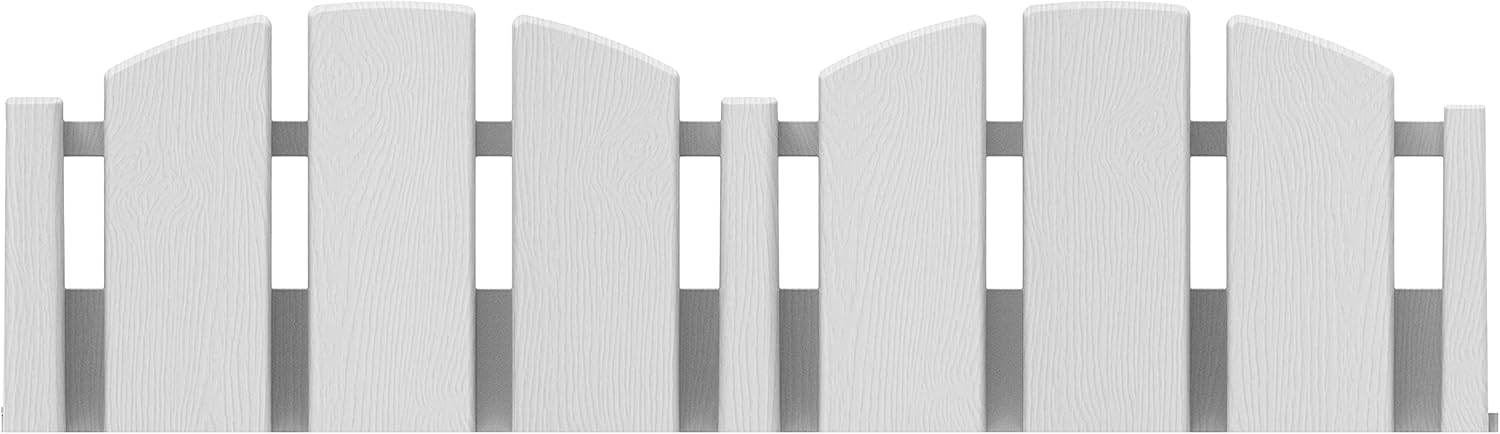
EasyFlex No-Dig Landscape Edging Kit, 15 ft
4.4 stars, 2.2K ratings; a physical border to contain aggressive self-seeders like sweet alyssum or California poppy
Shop NowNever miss an update — choose FarmFoodFamily as your preferred source on Google.
How it works: Tap the button below to open Google's settings page, then check the box next to FarmFoodFamily.
Tap the checkbox to turn it blue — that's how you know it's set.