How to Plan a Cut Flower Garden That Blooms All Season (And How to Visualize It Before You Plant)
Stop guessing and start growing—a complete succession planting guide for suburban gardeners who want fresh blooms from May through October. 🌿 Key Findings at a Glance You can have fresh-cut flowers on your kitchen table every single week from May through the first frost. That is not a fantasy. It is a planning problem, and…

Never miss an update — choose FarmFoodFamily as your preferred source on Google.
How it works: Tap the button below to open Google’s settings page, then check the box next to FarmFoodFamily.
Tap the checkbox to turn it blue — that’s how you know it’s set.
Stop guessing and start growing—a complete succession planting guide for suburban gardeners who want fresh blooms from May through October.
🌿 Key Findings at a Glance
- A well-planned 100 sq ft cut flower bed can produce 200+ stems per season with succession planting, according to Johnny’s Selected Seeds.
- Most beginner gardens peak in July and crash by August—because they plant once instead of in 2–3 week intervals.
- Combining cool-season, warm-season, and perennial varieties is the only way to guarantee blooms from May through October in most U.S. climates.
- Photographing your existing garden bed and editing it with a free AI image editor before you dig saves the average homeowner $200+ in trial-and-error plant purchases.
You can have fresh-cut flowers on your kitchen table every single week from May through the first frost. That is not a fantasy. It is a planning problem, and this guide solves it. The secret is not a rare cultivar or a greenhouse—it is understanding bloom windows, succession planting, and mapping out your beds before you put a single seed in the ground.
Why Do Most Cut Flower Gardens Fail After July?
The single most common mistake suburban gardeners make is planting everything at the same time in spring, then wondering why the cutting bed looks barren by late summer. According to the University of Vermont Extension, most annual flowers have a peak bloom window of just 4 to 6 weeks. Plant them all in May and you will have a stunning July. You will have nothing in September.
The second mistake is choosing plants based on what looks pretty at the nursery rather than what blooms when. Impatiens and begonias are everywhere in May, but they make terrible cut flowers with almost no vase life. Meanwhile, zinnias, lisianthus, and dahlias—the backbone of any serious cutting garden—require planning and patience.
78% of home flower gardeners report their cutting garden “dies out” before September, according to a 2024 survey by the National Gardening Association.
Source: National Gardening Association, 2024 Home Gardening Report
The fix is not more plants. It is better timing, smarter variety selection, and visualizing your entire season on paper—or on screen—before you spend a dollar at the nursery.
What Does a Cut Flower Garden Actually Need?
Before you choose a single variety, lock down your growing conditions. Skipping this step is why many gardeners buy the wrong plants for their situation.
Sun Requirements
Almost every high-yielding cut flower—zinnia, sunflower, lisianthus, dahlia, celosia—requires a minimum of 6 full hours of direct sunlight per day. Fewer than 6 hours and you will get leggy stems and sparse blooms. Shade-tolerant cut flowers exist (anemone, astilbe, sweet William), but they are the exception, not the rule. According to the Iowa State University Extension, south-facing beds receive up to 40% more usable light than north-facing beds in the Northern Hemisphere.
Soil Preparation
Cut flowers are heavy feeders. The University of Maryland Extension recommends amending beds with 3–4 inches of compost worked 12 inches deep before the first planting season. A soil pH between 6.0 and 7.0 suits the widest range of cutting garden varieties. Test your soil first—kits are available at most extension offices for under $20, or mail-in tests from your state university cooperative extension run $15–$30.
Answer 4 quick questions and get matched to the exact fix for your yard — drainage, budget, layout, or something else entirely.
Take the Free QuizWater Access
Drip irrigation saves significant labor and reduces fungal disease. Research from Oregon State University shows that overhead watering increases Botrytis (gray mold) incidence on cut flowers by up to 35% compared to drip systems. If you can run even a simple soaker hose setup, do it before planting season begins.
Space Planning
Most beginners underestimate space. Dahlias need 18–24 inches between plants. Sunflowers need 12 inches minimum. A productive cutting garden for a family of four—enough for weekly arrangements plus extras—typically requires 200 to 400 square feet, according to florist and author Erin Benzakein of Floret Flower Farm.
“The biggest shift for home flower growers is moving from ‘what looks pretty’ to ‘what will I actually be cutting in August.’ Those are very different plant lists.”— Lisa Mason Ziegler, author of Vegetables Love Flowers and owner of The Gardener’s Workshop
How Do I Build a Bloom Calendar That Covers All Season?
An all-season cutting garden is built from three layers of plants that bloom at different times. Think of it as a relay race: when one group finishes, the next group takes over.
🌷 Cool-Season (April–June)
- Larkspur
- Snapdragons
- Sweet Peas
- Bachelor’s Button
- Nigella
- Ranunculus
☀️ Warm-Season (June–September)
- Zinnias
- Cosmos
- Sunflowers
- Celosia
- Lisianthus
- Dahlias
🍂 Fall Extenders (Sept–Frost)
- Mexican Sage
- Rudbeckia
- Echinacea
- Strawflower
- Calendula
- Tithonia
The Succession Planting Bloom Chart
Use this reference table when mapping your planting schedule. Days-to-bloom figures are based on direct sow in USDA Hardiness Zones 5–7.
| Flower | Type | Days to Bloom | Vase Life | Succession Interval |
|---|---|---|---|---|
| Zinnia | Warm | 60–70 days | 7–10 days | Every 2 weeks |
| Sunflower | Warm | 55–70 days | 5–7 days | Every 3 weeks |
| Snapdragon | Cool | 80–100 days | 10–14 days | Every 3 weeks |
| Larkspur | Cool | 65–90 days | 7–10 days | Direct sow fall + spring |
| Cosmos | Warm | 50–60 days | 5–7 days | Every 2 weeks |
| Dahlia | Warm | 90–120 days (tuber) | 5–8 days | Plant tubers once; deadhead continuously |
| Rudbeckia | Perennial | 75–90 days (year 1) | 7–10 days | Perennial; returns each year |
| Echinacea | Perennial | July–September | 10–14 days | Perennial; returns each year |
How Can I Visualize My Garden Before I Plant?

This is the step most gardeners skip entirely—and the one that costs them the most money. Buying plants for a space you have not truly mapped means impulse purchases, wrong spacing, and color combinations you hate once they are in the ground.
The most practical tool available to home gardeners in 2026 is a browser-based AI Image Editor. Here is exactly how to use it for garden planning:
Most yard problems trace back to one specific, fixable cause. Find yours in 4 quick questions.
Take the Free Quiz1. Photograph Your Existing Bed
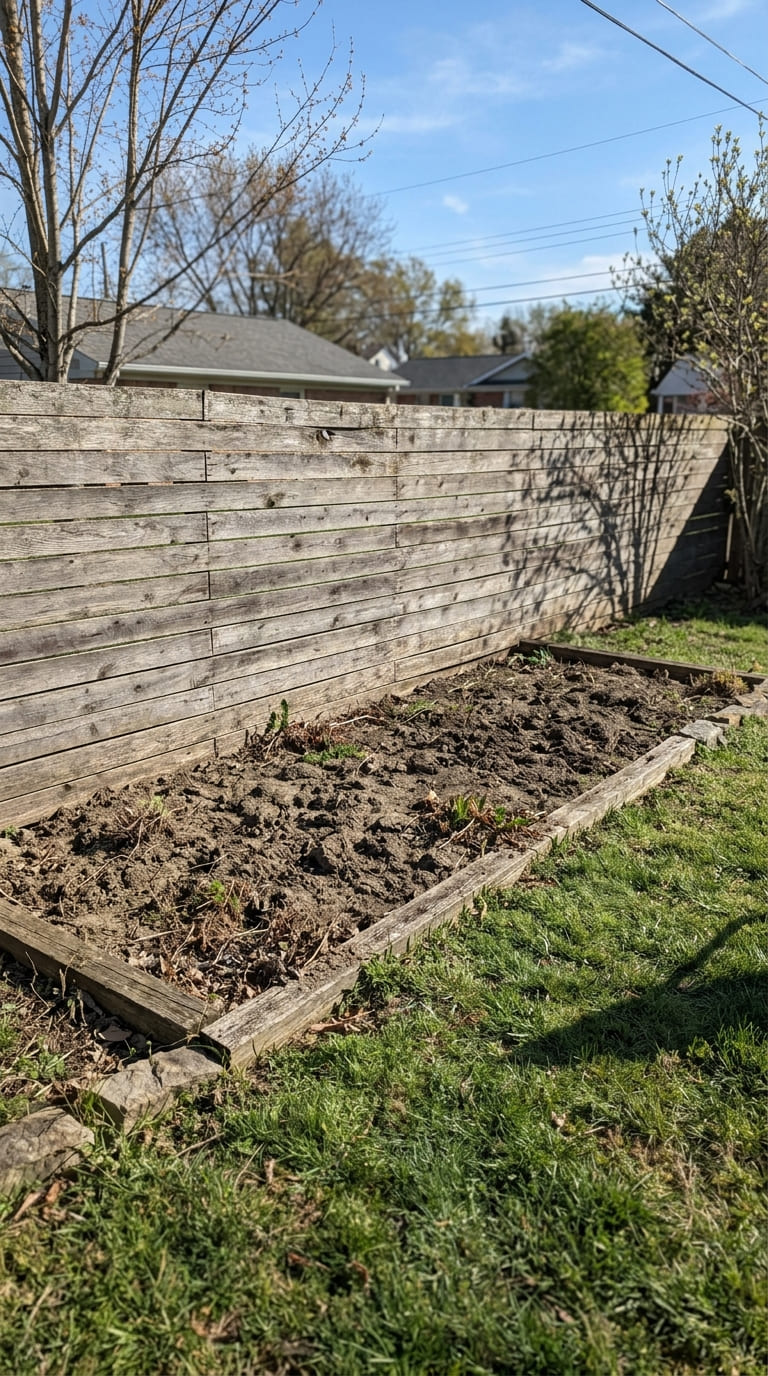
Walk outside on a sunny morning and take a clear photo of the area where you plan to plant. Include the full bed, the surrounding fence or structure, and any permanent plants nearby. A smartphone photo is more than sufficient.
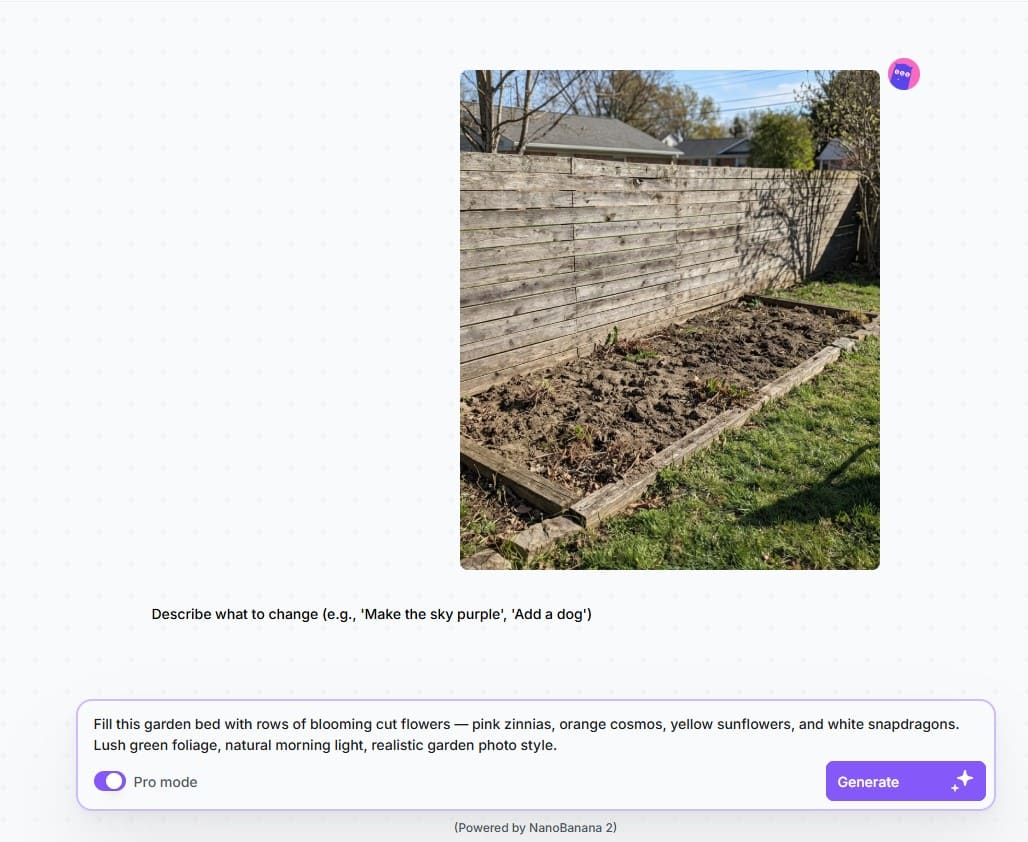
2. Upload to the AI Image Editor
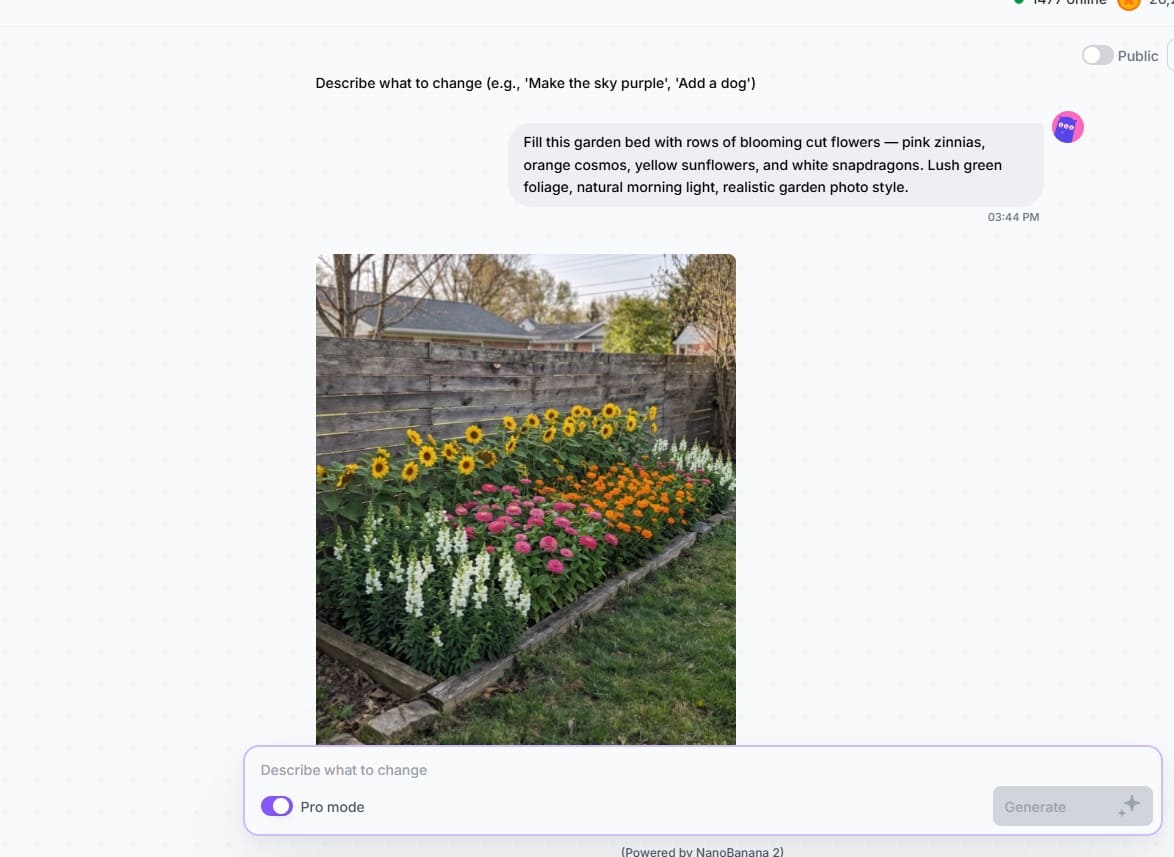
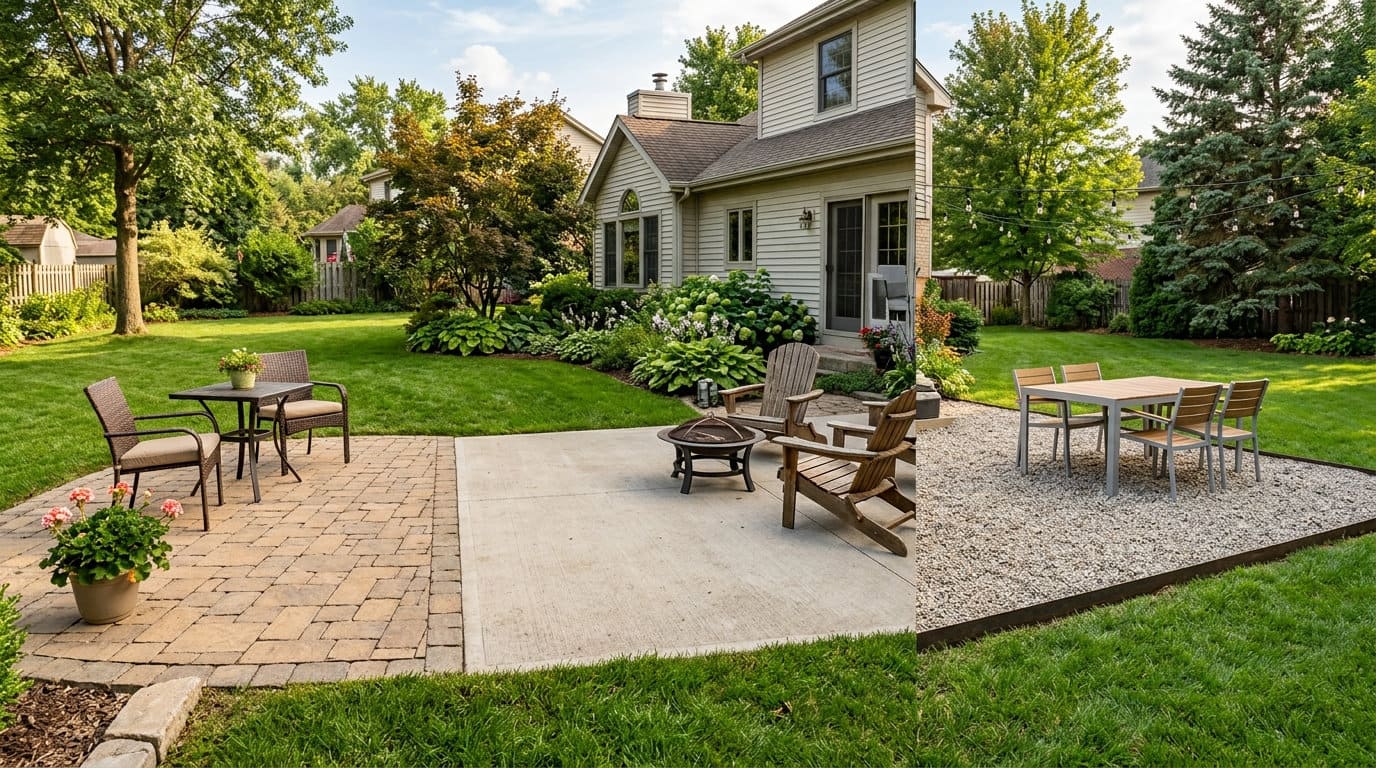
Open the AI image editor in your browser—no software download required. Upload your garden photo. The tool lets you use generative AI to alter specific areas of the image: remove existing weeds or old mulch, add flower color blocks, or test a raised bed shape directly over your lawn area.
3. Test Color Combinations
One of the most common regrets home flower growers report is planting color combinations that clash. Use the AI editor to paint in rough color zones—a block of hot pink zinnias next to orange marigolds, for example—before committing. What looks good in a catalog often looks jarring at full scale in your actual yard.
4. Try Different Bed Shapes
Rectangle beds are efficient. Curved beds are more visually interesting from a house window. Use the eraser and fill tools to test both options on your actual yard photo before you pick up a shovel. Moving garden bed edges digitally takes 30 seconds. Moving them in real life takes an afternoon.


5. Save and Compare Versions
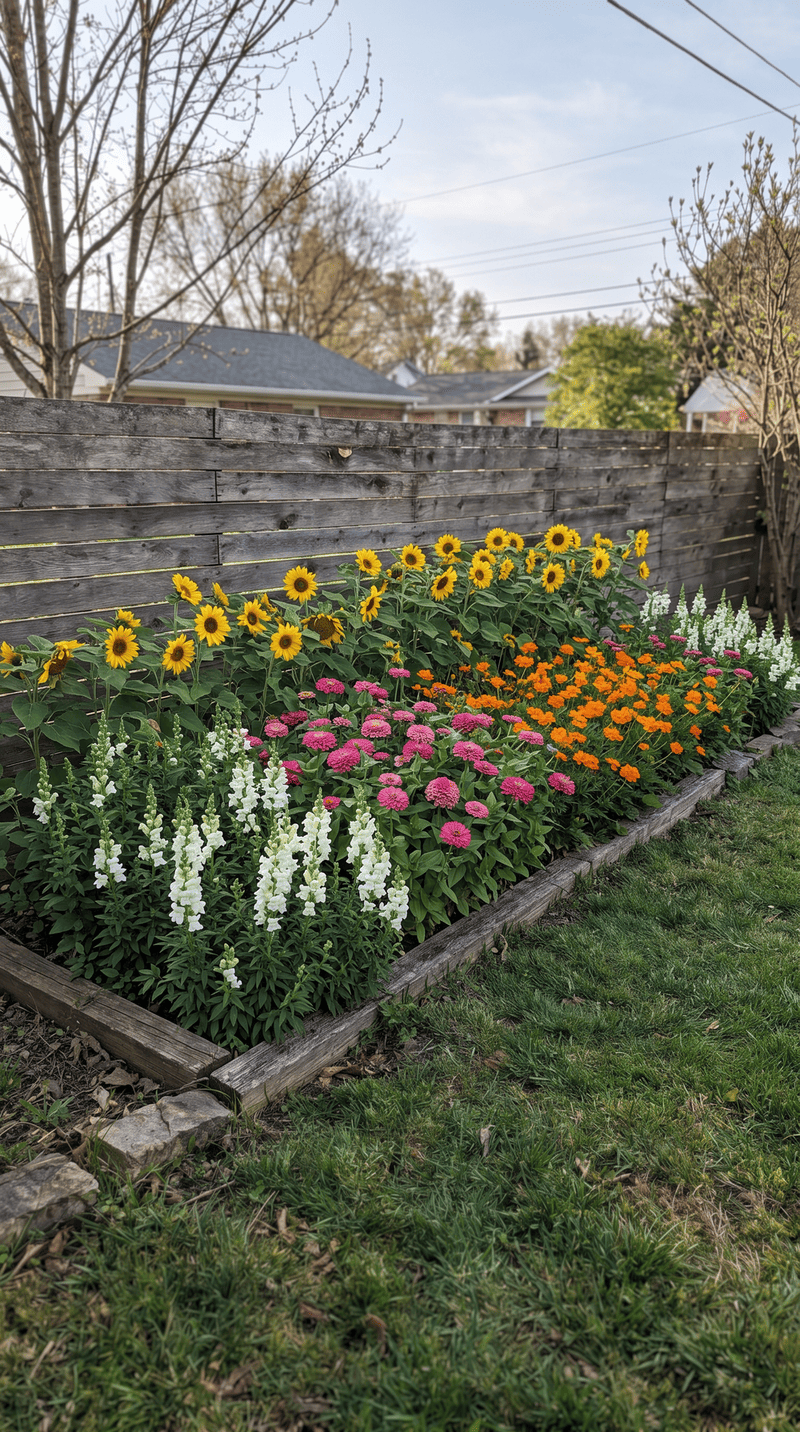
Save 2–3 versions of your edited garden photo. Share them with your household before you purchase anything. This one step prevents more buyer’s remorse than any other planning method.
$340 is the average amount U.S. homeowners spend on plants they ultimately remove or relocate within the first growing season, according to a 2024 Angi Homeowners Report.
Source: Angi 2024 Homeowner Survey
Spending 20 minutes editing a photo of your yard before buying anything is the single highest-ROI garden planning activity available to a home grower. The AI image editor does not require design skills. If you can point and click, you can use it effectively.
What Is Succession Planting and How Do I Use It for Cut Flowers?
Succession planting means sowing the same species multiple times at 2–3 week intervals rather than all at once. It is the core technique behind every professional cut flower operation, from small farms to commercial growers.
Here is why it matters: a single sowing of zinnias will bloom for roughly 4–6 weeks before heat and age reduce flower quality. If you make four successions starting in late May, you extend your zinnia harvest from July all the way through October.
A Simple Succession Schedule for Zones 5–7
| Sowing Date | What to Sow | Expected Bloom Window |
|---|---|---|
| 4 weeks before last frost | Snapdragons, larkspur (direct sow) | May–June |
| Last frost date | Zinnias (succession 1), cosmos, sunflowers | Late June–July |
| 2 weeks after last frost | Zinnias (succession 2), celosia | July–August |
| 4 weeks after last frost | Zinnias (succession 3), tithonia | August–September |
| 6 weeks after last frost | Zinnias (succession 4), calendula | September–Frost |
“Succession planting is not optional for cut flower growers who want a continuous harvest. It is the whole game. One sowing gives you one flush. Four sowings give you a season.”— Erin Benzakein, Floret Flower Farm, Cut Flower Garden (Chronicle Books, 2023 edition)
Step-by-Step: How to Set Up Your Cut Flower Garden From Scratch
1. Choose Your Location (Week 1)
Select a spot with 6–8 hours of direct sun. Avoid low spots that collect water. Proximity to a water source matters—most cutting gardens need 1 inch of water per week during the growing season.
The average homeowner spends $616/year on yard fixes that don't address the real problem. Find out what yours actually is — before you spend another dollar.
Take the Free Quiz2. Photograph and Visualize the Space (Week 1)
Before digging anything, photograph your chosen area and open a free AI photo editor in your browser. Upload the photo and use the generative fill tools to mock up your bed: where the rows will go, what color blocks you want, and how the bed edges will be shaped. This takes 20–30 minutes and eliminates the most common planning mistakes.
3. Test Your Soil (Week 2)
Purchase a basic soil test kit or mail a sample to your state’s cooperative extension. You need to know your pH and basic nutrient levels before amending. Guessing costs more money than testing.
4. Prepare Your Bed (Weeks 2–3)
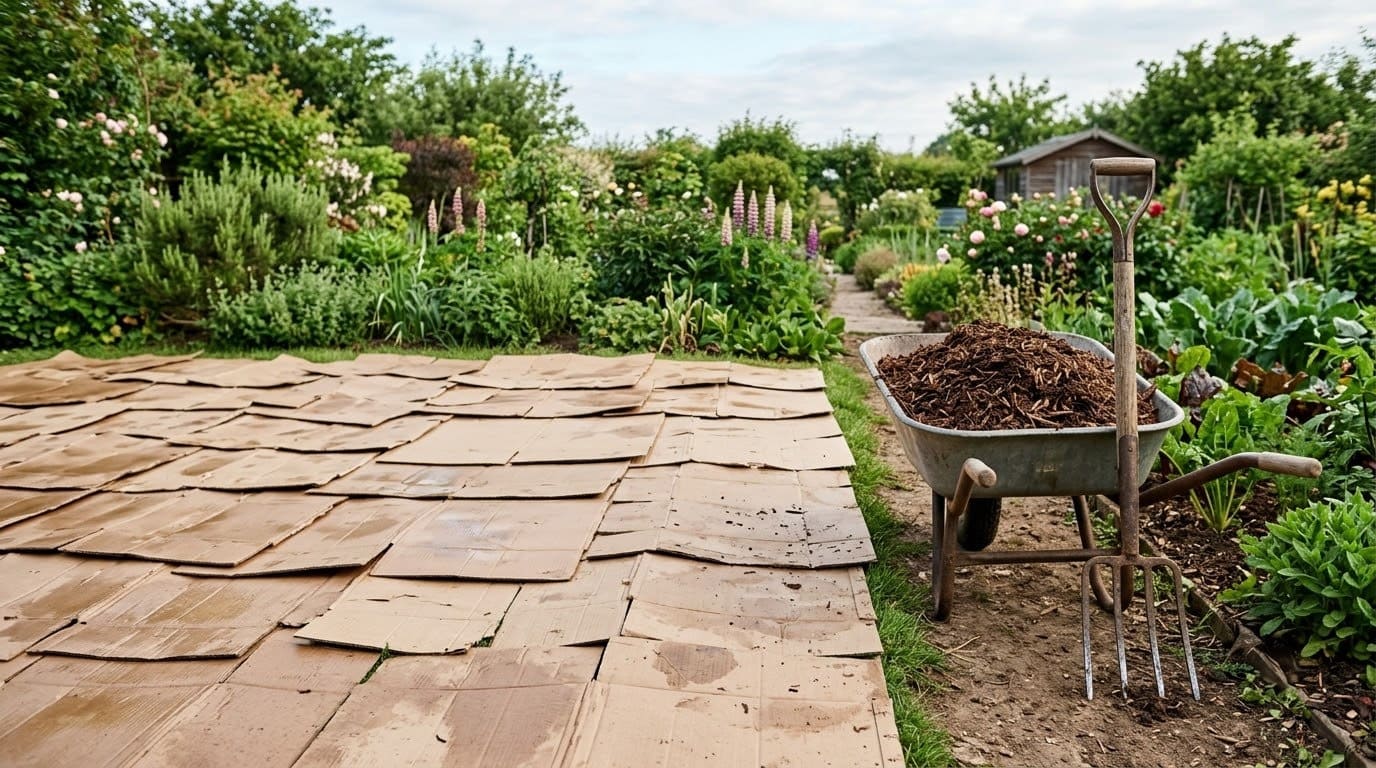
Smother existing grass with cardboard (no-till method) or remove it by hand. Add 3–4 inches of compost and work it 10–12 inches deep. If your soil test shows pH below 6.0, add ground limestone per the test recommendations.
5. Order Seeds and Tubers (6–8 Weeks Before Last Frost)
Order from reputable seed companies: Johnny’s Selected Seeds, Baker Creek, Floret, or your regional farm supply. Ordering early ensures you get popular varieties—dahlia tubers and specialty zinnias sell out by February most years.
6. Start Indoors Where Needed (8–10 Weeks Before Last Frost)
Snapdragons, lisianthus, and dahlias (from seed) benefit from indoor starting. Zinnias, sunflowers, and cosmos prefer direct sow. Check each variety’s seed packet for timing.
7. Plant, Label, and Schedule Successions
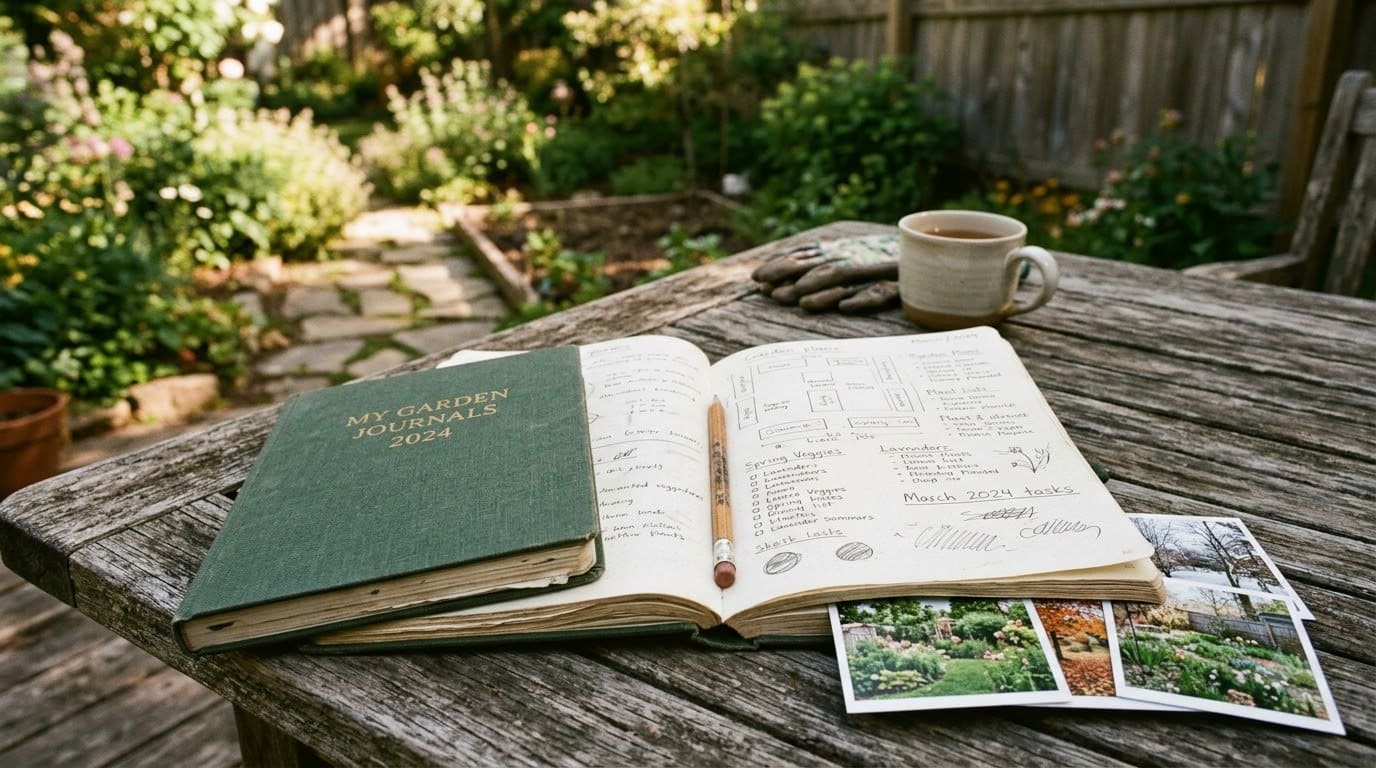
Label every row with variety name, sow date, and expected bloom date. Put your succession sowing dates on your phone calendar now. Missing a succession window by even one week in midsummer can push your next bloom batch past first frost.
How and When Should I Harvest Cut Flowers?
Harvest timing dramatically affects vase life. Most home gardeners cut too late—when flowers are fully open—and wonder why they last only 2–3 days in a vase.
The Right Stage to Cut Each Flower Type
- Zinnias: Cut when the first layer of petals is fully open but the center is still firm. At this stage, zinnias last 7–10 days in water.
- Sunflowers: Cut when the petals are just beginning to unfurl and the center disk is still tight. Cutting fully-open sunflowers reduces vase life by 30–40%, according to the University of California Cooperative Extension.
- Cosmos: Cut in bud stage, just before petals open. They continue opening in the vase.
- Dahlias: Cut when the flower is 75–80% open. Dahlias do not continue opening after cutting.
- Snapdragons: Cut when the bottom 3–4 florets on the spike have opened. The remaining buds open progressively over 10–14 days in a vase.
The Best Time of Day to Cut
Cut in the early morning, before 8 AM if possible. Stems are fully hydrated after the cool night. Avoid cutting in the afternoon heat—stems cut at 2 PM in July can lose up to 20% of their water content before you get them inside, drastically reducing vase life. Place stems immediately into a bucket of cool water.
Early-morning-cut flowers last an average of twice as long in a vase compared to afternoon-cut stems, according to researchers at Cornell University’s Department of Horticulture.
Source: Cornell University Cooperative Extension, Cut Flower Production Guide
What Are the Biggest Mistakes Beginner Flower Growers Make?
- Planting only annuals with no perennials. Perennials like echinacea, rudbeckia, and salvia return each year and require no replanting. Building a perennial backbone in your cutting garden reduces annual seed costs by 20–30% by year three.
- Skipping the soil test. Amendments applied to soil you have not tested are guesswork. High-pH soil locks out iron and manganese, causing yellowing leaves regardless of how much fertilizer you apply.
- Planting without visualizing first. Color combinations, bed shapes, and plant heights interact in ways that are hard to predict from a flat planting plan. Taking 20 minutes to edit your garden photo digitally—testing color blocks and layouts in a free AI photo editor—prevents the most common visual planning mistakes before you spend money on plants.
- Not deadheading aggressively. Most annuals stop producing when they set seed. Removing spent blooms—deadheading—signals the plant to produce more flowers. Consistent deadheading can increase zinnia yield by 40% or more over the course of a season.
- Overwatering versus underwatering. Most established cut flower plants need 1 inch of water per week total, from rain or irrigation. Overwatering promotes fungal disease; underwatering stresses plants during bloom. A rain gauge is one of the cheapest and most useful tools in any cutting garden.
🌿 Visualize Your Garden Before You Dig
Photograph your backyard, upload it to Creative Fabrica’s AI Image Editor, and test flower colors, bed shapes, and layouts in minutes—no design skills needed. It’s free to try.
Frequently Asked Questions
What flowers should I plant for a cut flower garden that blooms all season?
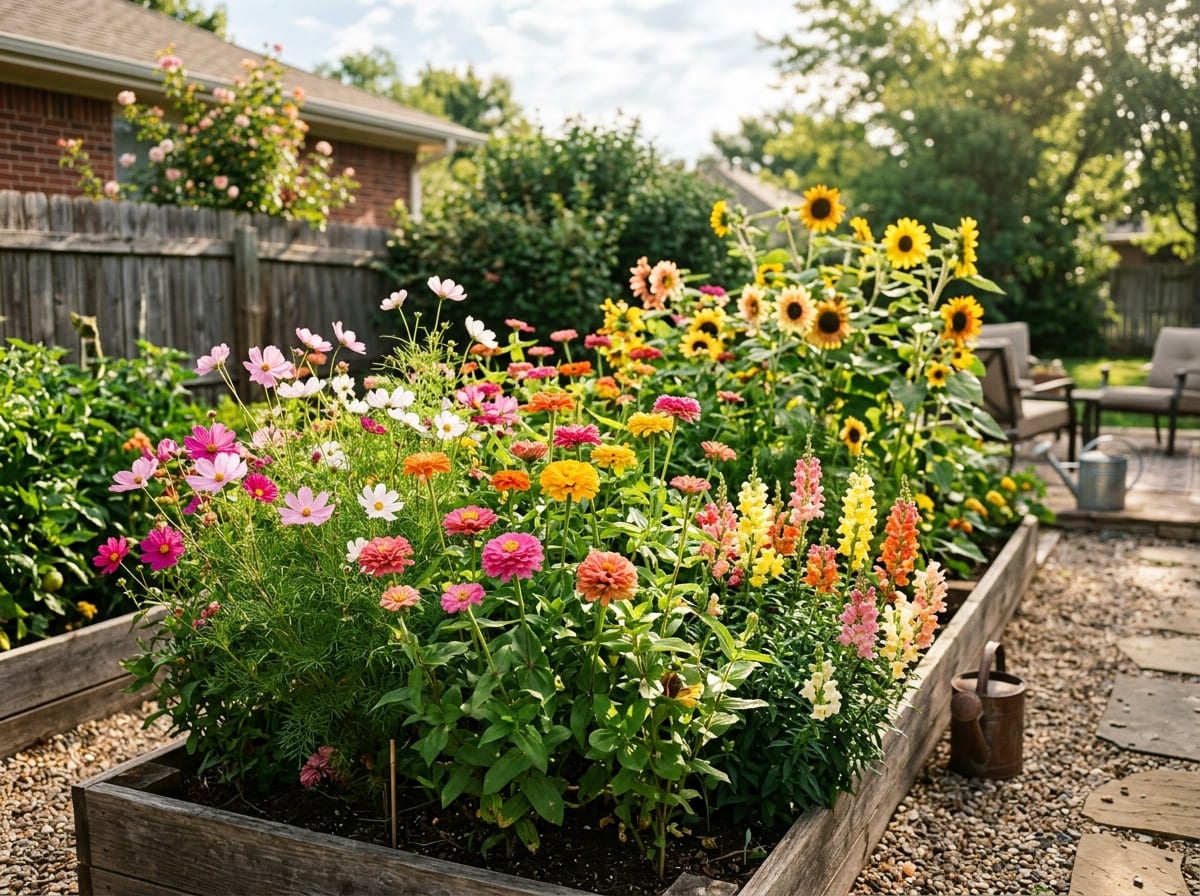
For continuous blooms from spring through fall, combine cool-season annuals like larkspur, snapdragons, and sweet peas with warm-season workhorses like zinnias, cosmos, and sunflowers. Add perennials like echinacea and rudbeckia for repeat bloom year after year. Succession sowing every 2–3 weeks extends your harvest window significantly, especially for zinnias and cosmos.
How big should a cut flower garden be for a beginner?
Start with a 4×8-foot raised bed or a 100-square-foot in-ground plot. According to Johnny’s Selected Seeds, a well-planted 100 sq ft bed can yield enough flowers for weekly arrangements plus extras to share. Once you have one season under your belt, expand to 200–400 square feet if weekly bouquets are your goal.
Can I visualize my flower garden before I plant it?
Yes—and you should. The easiest method is to photograph your existing garden bed and upload that photo to an AI image editor like the one at Creative Fabrica Studio. You can digitally add flower colors, adjust bed shapes, and test different layouts before spending anything on plants or soil. This saves the average homeowner $200–$300 in misplaced or wrong-size purchases.
What is succession planting and why does it matter for cut flowers?
Succession planting means sowing the same species every 2–3 weeks instead of all at once. This staggers bloom times so you always have flowers at the right cutting stage. Without succession planting, most annuals peak in a single 4–6 week window, leaving a long stretch with nothing to cut. With four successions of zinnias, for example, you can harvest from July through October.
What are the easiest cut flowers for beginners to grow?
Zinnias, sunflowers, and cosmos consistently top beginner lists because they germinate quickly, tolerate summer heat, and produce generously with minimal fuss. Zinnias alone can yield 1–2 stems per plant per week at peak season, according to the University of Florida IFAS Extension. All three are direct-sow after last frost with no indoor starting required.
How much does it cost to start a cut flower garden?
A basic 100 sq ft in-ground cutting bed can be started for $75–$200 in seeds, compost, and basic tools, according to average figures reported by the National Gardening Association. A raised bed setup with lumber adds $150–$400. Using a free AI photo editor to plan your layout before purchasing eliminates the most expensive beginner mistake: buying the wrong plants for your space.
Sources
- National Gardening Association. 2024 Home Gardening Report. nationalgardenassociation.org
- University of Vermont Extension. Annual Flower Production for Cut Flower Gardens. extension.uvm.edu
- Iowa State University Extension and Outreach. Site Selection for Flower Gardens. extension.iastate.edu
- University of Maryland Extension. Soil Preparation for Annual Beds. extension.umd.edu
- Oregon State University. Botrytis Management in Cut Flower Production. extension.oregonstate.edu
- Cornell University Cooperative Extension. Cut Flower Production and Post-Harvest Care. gardening.cals.cornell.edu
- University of California Cooperative Extension. Postharvest Handling of Cut Flowers. ucanr.edu
- University of Florida IFAS Extension. Zinnia Production for Home and Market Gardens. edis.ifas.ufl.edu
- Johnny’s Selected Seeds. Cut Flower Production Guide. johnnyseeds.com
- Benzakein, Erin. Cut Flower Garden. Chronicle Books, 2023 edition.
- Ziegler, Lisa Mason. Vegetables Love Flowers. Cool Springs Press, 2018.
- Angi. 2024 Homeowner Survey: Outdoor Living Spending Report. angi.com
Never miss an update — choose FarmFoodFamily as your preferred source on Google.
How it works: Tap the button below to open Google's settings page, then check the box next to FarmFoodFamily.
Tap the checkbox to turn it blue — that's how you know it's set.