Japanese Beetles Are Back: 5 Ways to Save Your Garden Before They Strip It Bare
Japanese beetles skeletonize a rose bed overnight, and the pheromone trap everybody buys can actually make it worse, here’s what real extension research says to do instead.

Never miss an update — choose FarmFoodFamily as your preferred source on Google.
How it works: Tap the button below to open Google’s settings page, then check the box next to FarmFoodFamily.
Tap the checkbox to turn it blue — that’s how you know it’s set.
If your roses looked fine on Tuesday and lacy by Saturday, that’s not your imagination. Japanese beetles feed in groups, and once a few land on a plant, they release a scent that calls in more.
By the time you notice the damage, there can already be dozens working the same few leaves. And they don’t hide about it either, they feed right out in the open, mid-afternoon, on the sunniest side of the plant.
This guide covers five things that actually move the needle, including one popular fix (the pheromone trap) that two separate university extension offices warn can backfire. It also covers a mistake that trips up a lot of people: treating your lawn for grubs at the wrong time of year and wondering why the adult beetles showed up anyway.
If pest damage on other vegetables is also part of what’s going on this season, catching the early warning signs before they spread is worth doing alongside beetle control.
Quick answer: what actually works against Japanese beetles?
Hand-picking into soapy water, done early morning while beetles are sluggish, is the single most reliable free method. Skip pheromone traps near anything you’re trying to protect.
Colorado State University Extension and Iowa State University Extension both warn, independently, that the floral and pheromone lures pull in more beetles than the trap actually catches, so a trap hung near your rose bed can make the damage worse, not better.

Net or spray only your real beetle magnets (roses, linden, grapes, raspberries), not the whole yard. Lawn grub treatment is a separate job on a separate calendar, mid-June through mid-July for preventive products, and treating grubs won’t stop adult damage this season since adults can fly in from up to 15 miles away. And check whether beetles are even established where you garden. They’re not established everywhere in the US, some western states are under active USDA quarantine specifically to keep it that way.
Control method comparison
| Method | How it works | Real effectiveness caveat | Best timing |
|---|---|---|---|
| Hand-picking | Knock sluggish beetles into soapy water | Free and effective on small numbers, but daily effort during peak weeks | Early morning, June through August |
| Pheromone/floral trap | Lures beetles with scent into a bag | Can attract more beetles to the area than it catches, per CSU and Iowa State Extension; place 30+ feet from anything valuable, if at all | Not recommended near valued plants |
| Fine mesh netting | Physical barrier over susceptible plants | Works well but blocks pollinators too, so time it around bloom | Peak feeding weeks, mid-June to mid-August |
| Neem oil | Larvae ingest it through treated foliage, disrupts development | Needs reapplication every 7-10 days; toxic to bees if sprayed on open blooms | Evening, avoid open flowers |
| Milky spore | Bacterial disease that infects grubs in soil | Takes 2-4 years to build an effective spore bank, not a same-season fix | Applied once, works for years after |
| Beneficial nematodes | Parasitize grubs underground | Needs moist soil and soil temps above 60°F to survive | Late summer, especially the last three weeks of August |
| Preventive grub insecticide | Kills newly hatched grubs before they do lawn damage | Wrong timing (spring) wastes the application entirely | Mid-June through mid-July |
| Systemic/contact insecticide on adults | Kills beetles feeding on treated foliage | Last resort per University of Missouri guidance, since it also harms pollinators and predators | Early July onward, follow label |
Are Japanese beetles actually established where you live?
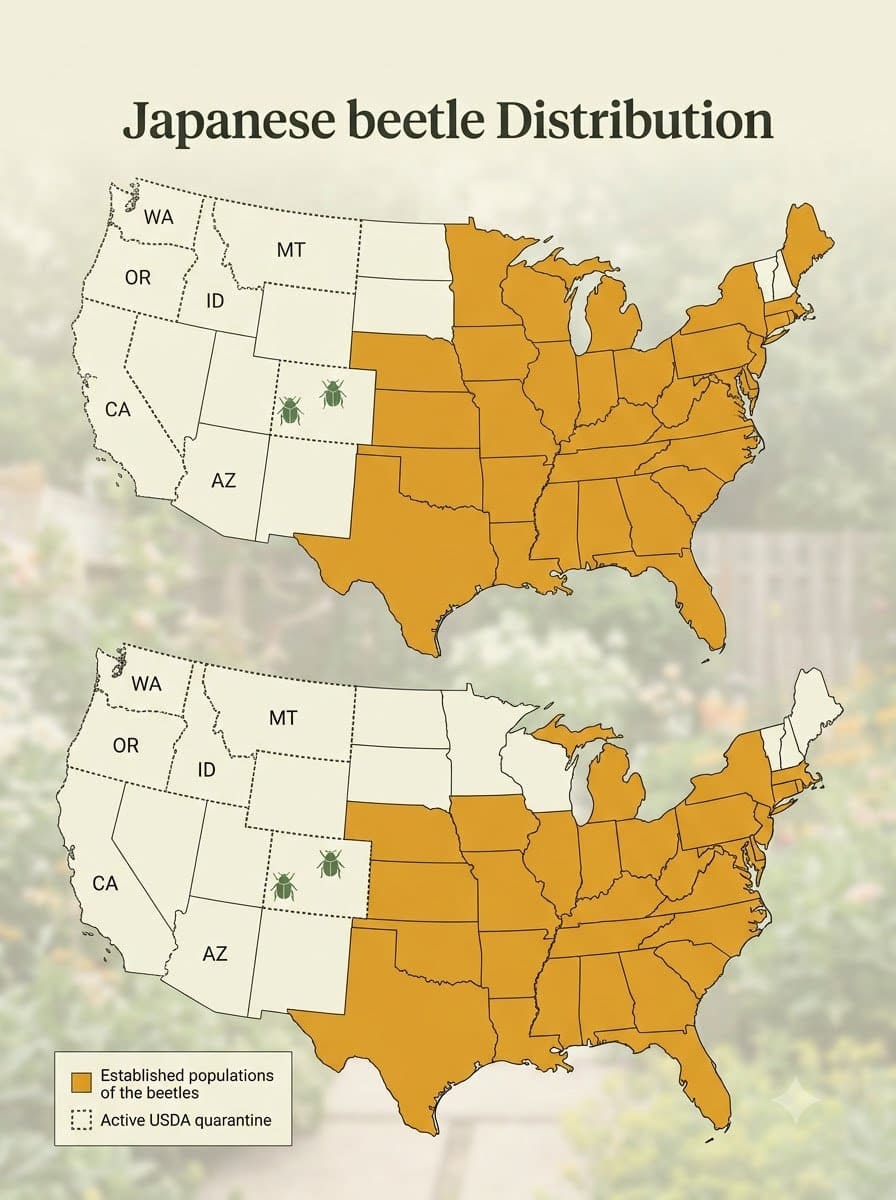
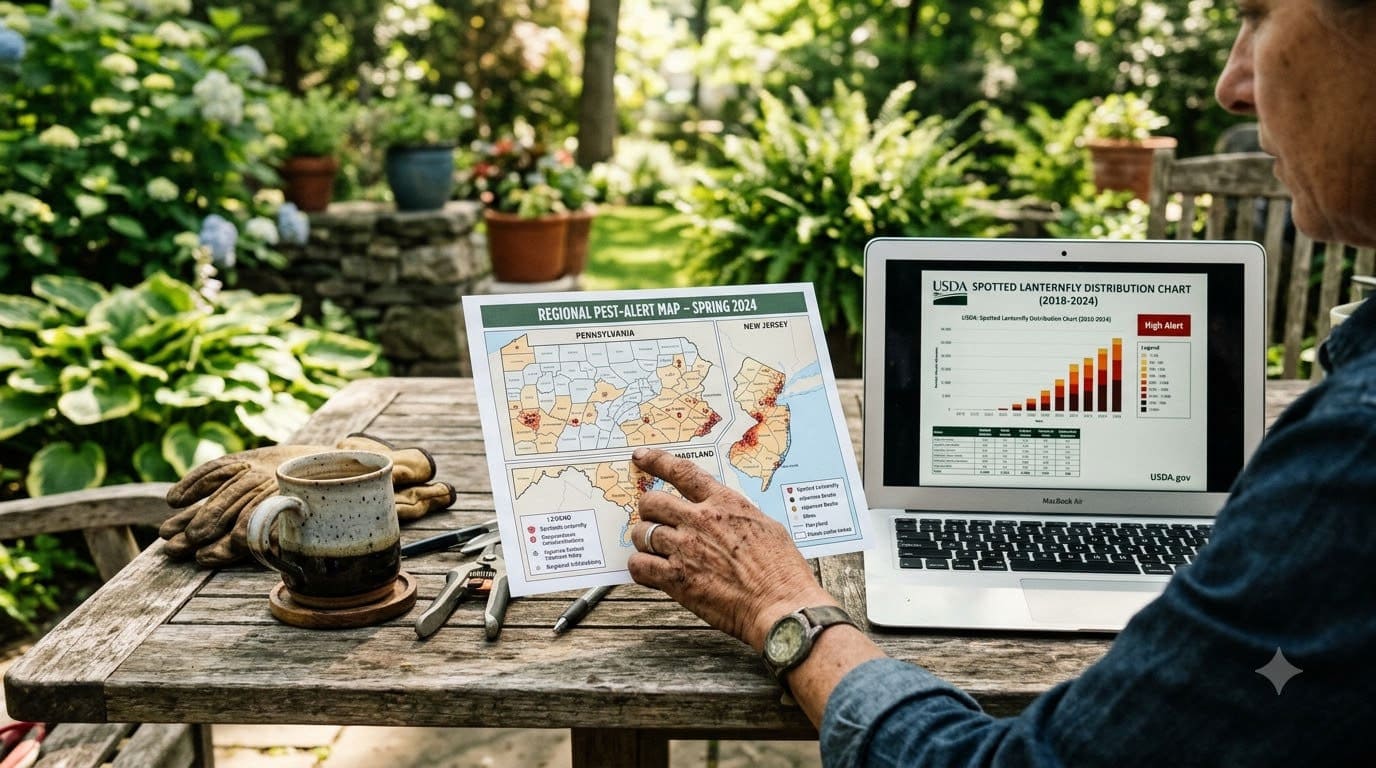
This matters more than most articles admit. Japanese beetle is a federally regulated pest under USDA APHIS Title 7, Part 301, which exists specifically because the beetle is not established everywhere.
Answer 4 quick questions and get matched to the exact fix for your yard — drainage, budget, layout, or something else entirely.
Take the Free QuizIt’s dense throughout most states east of the Mississippi River. West of that line, it gets patchy fast.
USDA’s own invasive species program lists partial, still-developing populations in states like Arkansas, Iowa, Kansas, Minnesota, Missouri, Nebraska, North Dakota, Oklahoma, and South Dakota. Colorado has a confirmed breeding population along the Front Range and in Mesa County on the Western Slope, per Colorado State University Extension.
Washington State detected an infestation in 2021 and has an active eradication effort underway, not a “learn to live with it” situation like the East Coast.
That’s the point of the quarantine. APHIS regulates interstate shipment of nursery stock and soil specifically to keep hitchhiking beetles off flights and trucks headed to California, Nevada, Utah, Oregon, Washington, New Mexico, Arizona, Idaho, and Montana.
So if you garden in the Pacific Northwest or the Mountain West and you’ve never seen one, that’s not luck exactly, it’s a coordinated regulatory effort working as intended. Don’t panic-buy traps for a beetle that hasn’t shown up in your county yet, and definitely don’t move plants, soil, or firewood out of an infested area into one of these states.
Where they’re headed next
| Region | Status | What this means for you |
|---|---|---|
| East of the Mississippi | Fully established | Manage annually, this isn’t going away |
| Partial-infestation states (IA, KS, MN, MO, NE, ND, OK, SD, AR) | Spreading, uneven by county | Check with your local extension office before assuming either way |
| Colorado Front Range / Mesa County | Confirmed breeding population | Treat as established, not a one-off sighting |
| Washington, other Pacific states | Under active eradication | Report sightings to your state department of agriculture, don’t just spray and move on |
| Rest of the interior West | Not established | Quarantine on interstate plant/soil shipments exists to keep it that way |
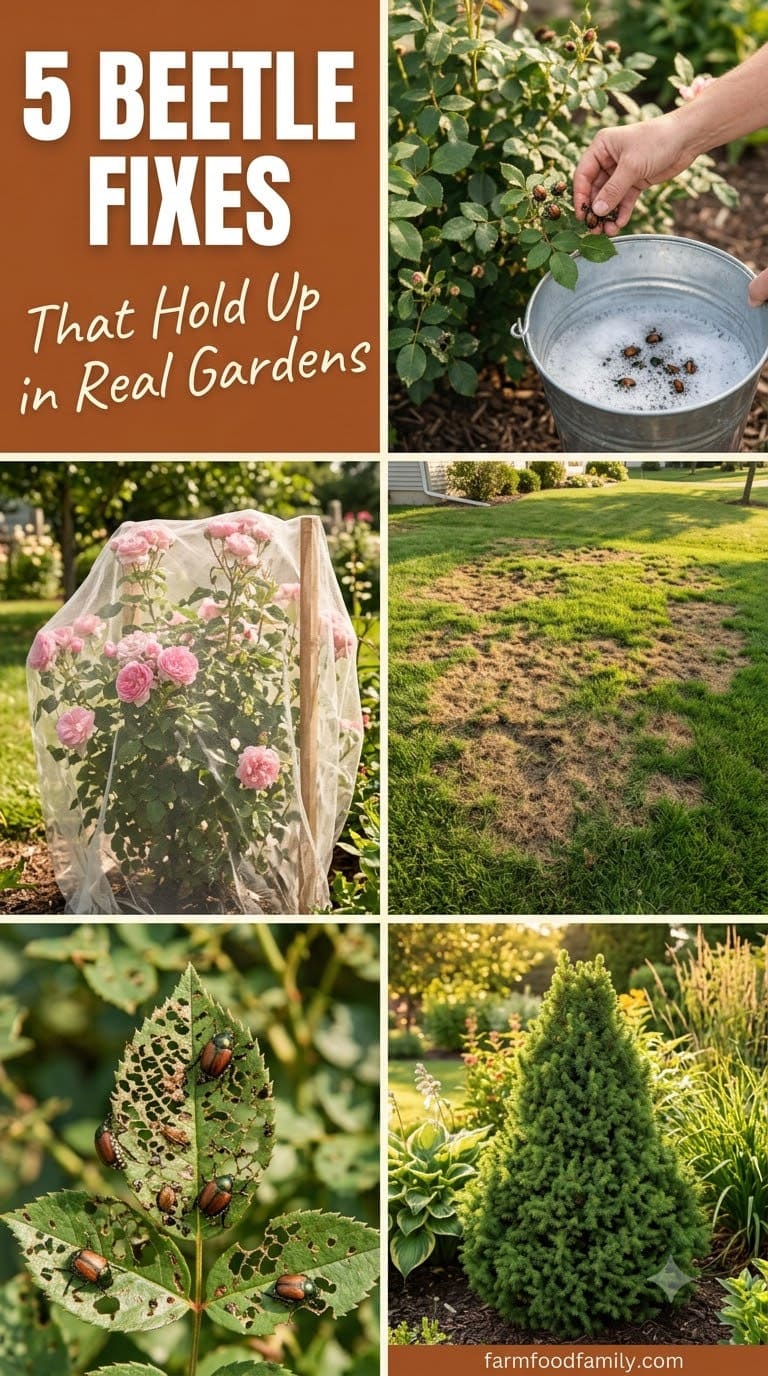
Method 1: hand-pick before 9am, every single day during peak weeks
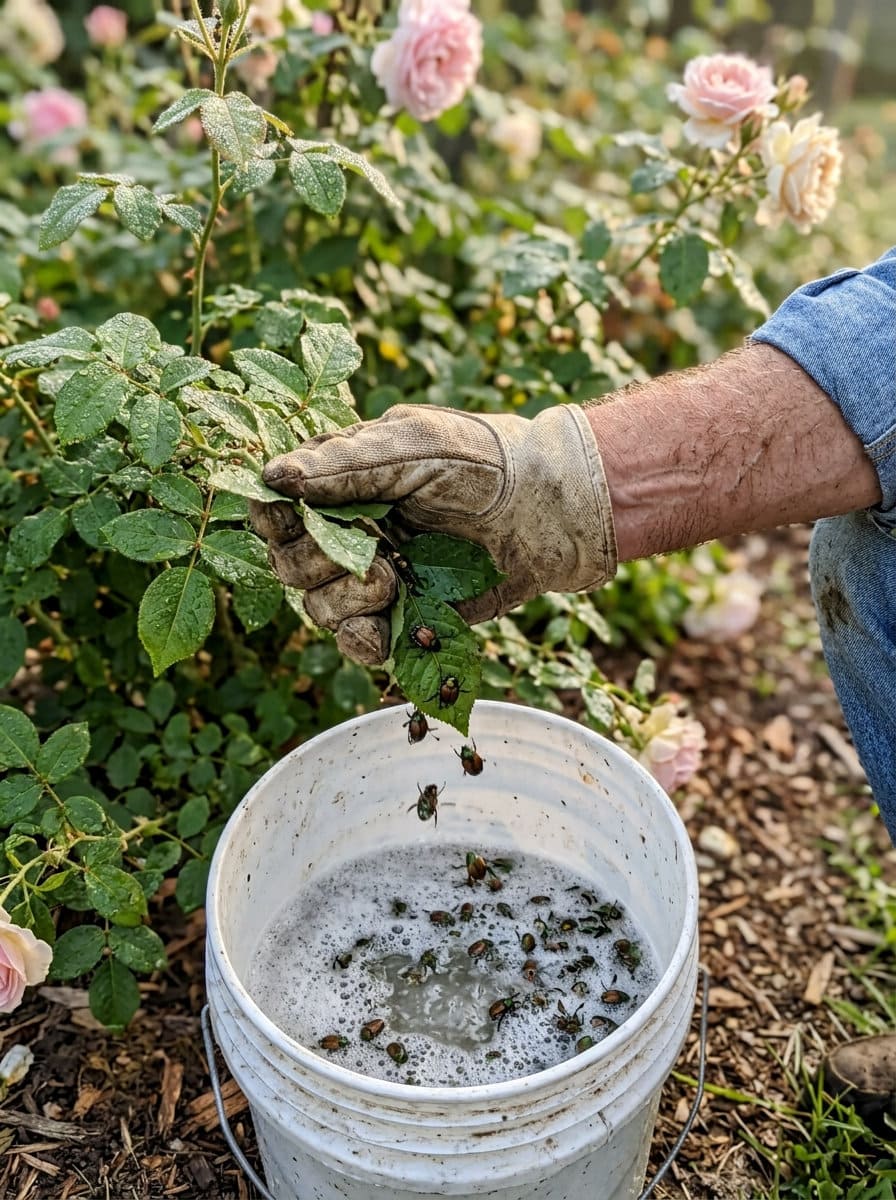
Japanese beetles are cold-blooded and genuinely slow before the day warms up. Early morning, while they’re still sluggish from the overnight temperature drop, is when hand-picking actually works instead of just chasing them around a leaf.

4.4 stars, 4.3K ratings; for Method 3, physically excluding beetles from roses, grapes, raspberries during peak weeks
Most yard problems trace back to one specific, fixable cause. Find yours in 4 quick questions.
Take the Free QuizThis post contains affiliate links. We may earn a commission on qualifying purchases at no extra cost to you.
Hold a bucket with an inch or two of water and a squirt of dish soap directly under the cluster, then brush or shake the beetles down into it. They drop reflexively when disturbed, so you rarely need to grab them one at a time.
The soap breaks the surface tension so they can’t just float and fly off. Leave the bucket a few hours and dump it somewhere away from the garden.
Do this daily, not every few days, during the peak six to eight week window (roughly late June through August, depending on your region). Skipping even three or four days lets a small problem multiply, since beetles already on a plant release an aggregation scent that pulls in more of their own kind.
It’s tedious, honestly, there’s no way around that. But it’s free, it doesn’t touch pollinators, and it works on populations that are still small enough to matter.
Method 2: skip the pheromone trap, or keep it far from anything you love
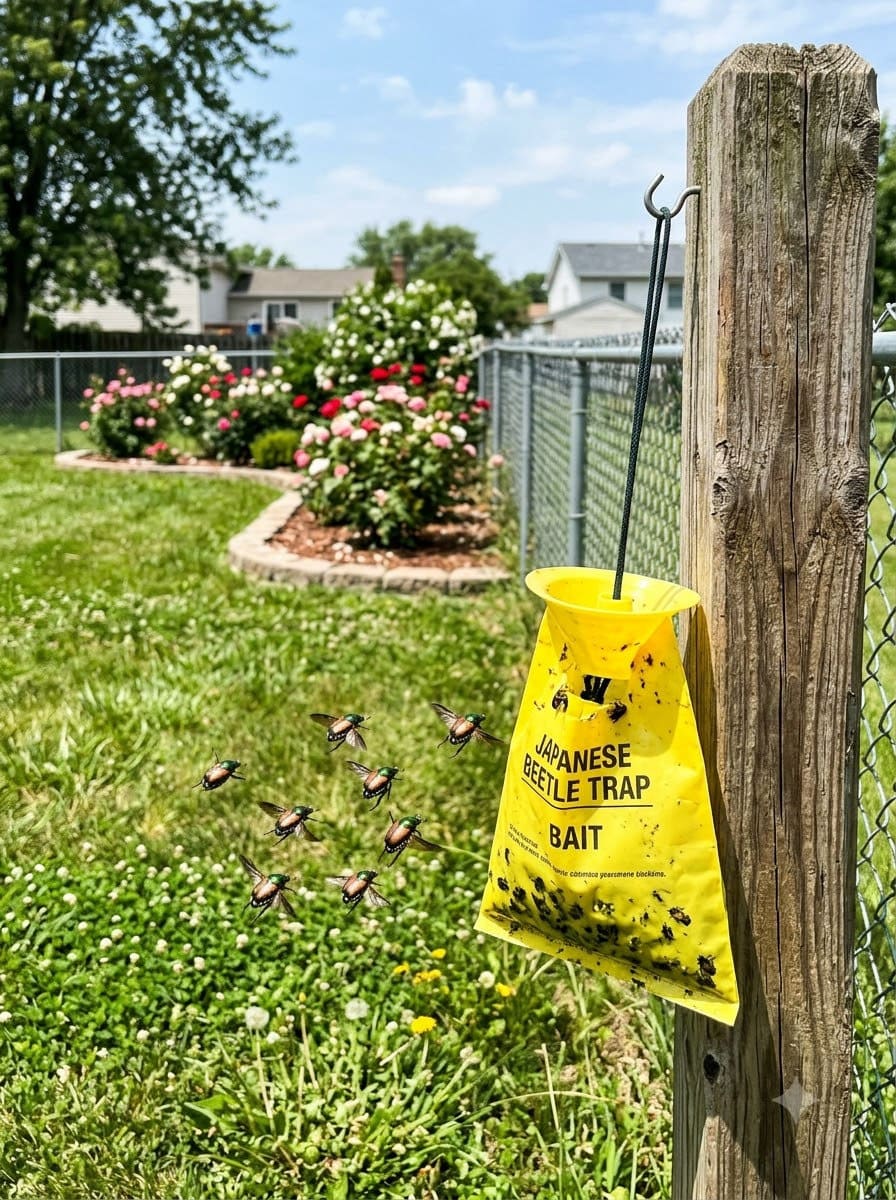
This is the fix everybody reaches for first, and it’s also the one two separate university extension programs specifically warn against.
Colorado State University Extension’s own resource states plainly that “use of such traps does not reduce the number of beetles damaging nearby vegetation,” and that traps can worsen the problem by pulling in more beetles than they actually capture.
Iowa State University Extension’s Laura Iles says almost the identical thing independently: “traps do not protect your plants and can increase the feeding damage to nearby plants by attracting more beetles than they catch.”
Two extension offices, in two different states, landing on the same warning without citing each other, is about as strong a signal as this kind of consumer product problem gets.


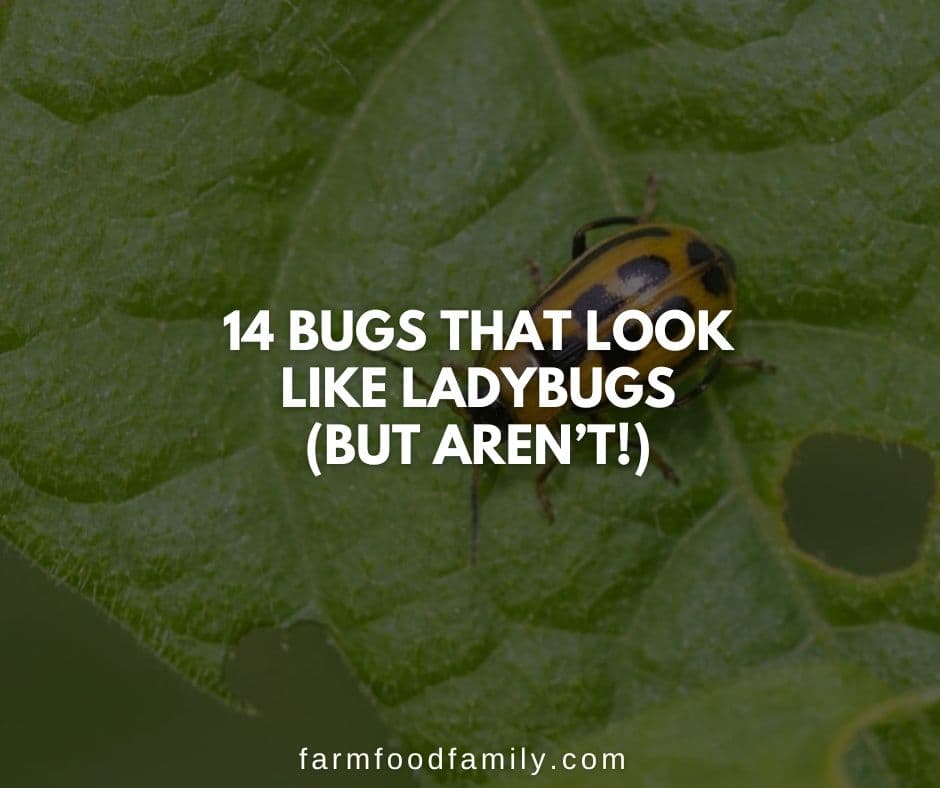
The mechanism is simple once you see it. The lure combines a floral scent and a sex pheromone that beetles can detect from a real distance. They fly in from all directions toward that scent cone, and a meaningful share of them land on nearby foliage before ever finding the bag opening.
If you’re going to use one anyway, the only responsible placement is far, at least 30 feet, from any plant you actually care about, ideally on the downwind edge of the property, never near a rose bed or a vegetable patch.
The average homeowner spends $616/year on yard fixes that don't address the real problem. Find out what yours actually is — before you spend another dollar.
Take the Free QuizHonestly, for most home gardens, skipping the trap entirely and putting that same effort into hand-picking is the better trade.
Method 3: net or spray your actual beetle magnets, not the whole yard
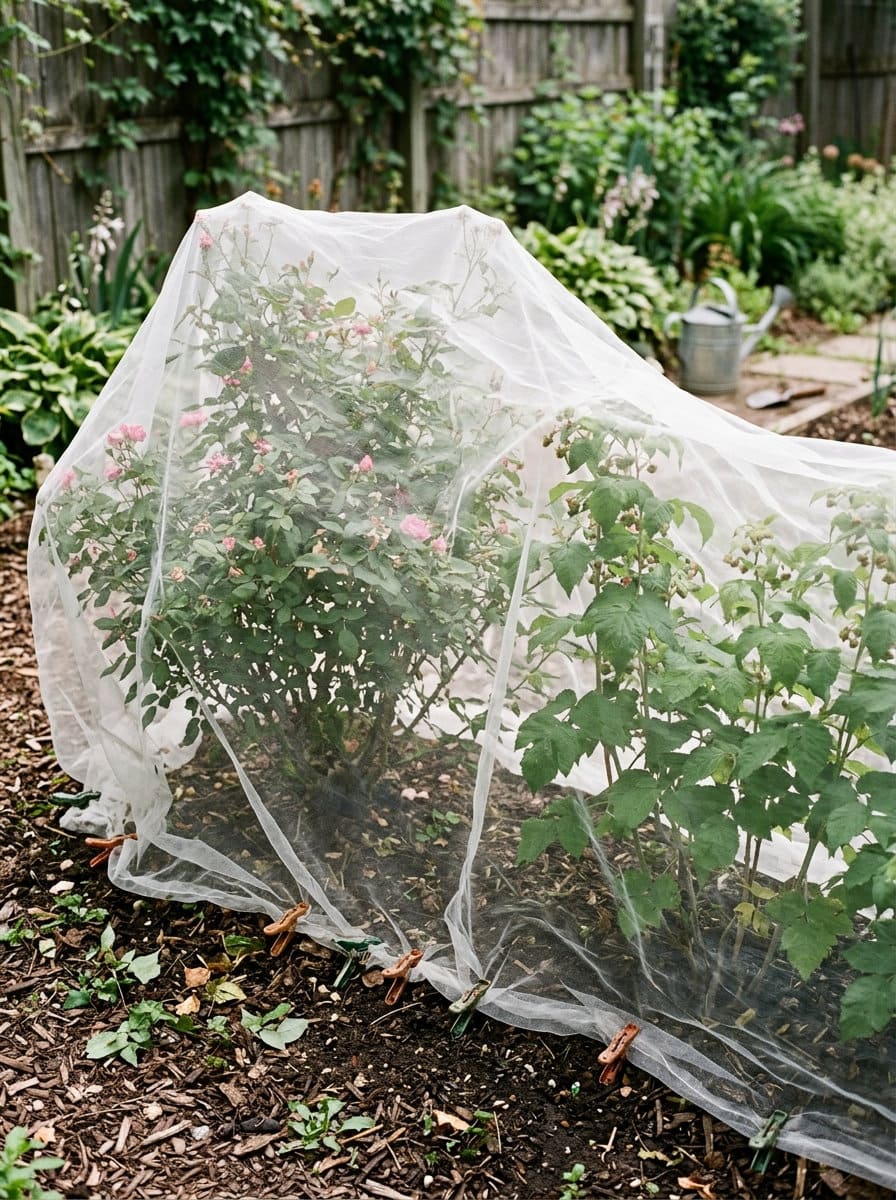
Not every plant is equally at risk, and treating the whole yard the same way wastes effort on plants that were never going to get hit hard.
Roses, linden trees, grapes, and raspberries are the classic magnets. Crabapple, birch, Norway maple, Virginia creeper, and green beans are close behind. If a beetle has options, these are what it picks first.
On the other end, conifers, dogwood, and oak are genuinely low-risk, per Iowa State Extension’s resistant-plant list. If your landscape leans that direction already, you’re mostly fine as-is.
For the true magnets, fine mesh netting during the peak feeding window is the most reliable non-chemical option, since it’s a physical barrier the beetles can’t get past. Cinch it at the base so nothing crawls in underneath.
The tradeoff: netting also blocks pollinators, so time it carefully around bloom on anything you need pollinated, like raspberries or grapes, and pull it back once the beetles thin out in late summer.
Neem oil is the middle option. Beetles that feed on treated leaves ingest it, which disrupts development in a way that also passes through to eggs, but it needs reapplying every 7 to 10 days and should only go on in the evening, never on open blooms, since it’s toxic to bees on contact with wet foliage.
If deer are also working the same beds as the beetles, this site’s roundup of plants roses pair badly with is a useful companion read, since a stressed, crowded rose bed is more attractive to pests generally, not just beetles.
Method 4: treat lawn grubs on the right calendar, not when you spot adults
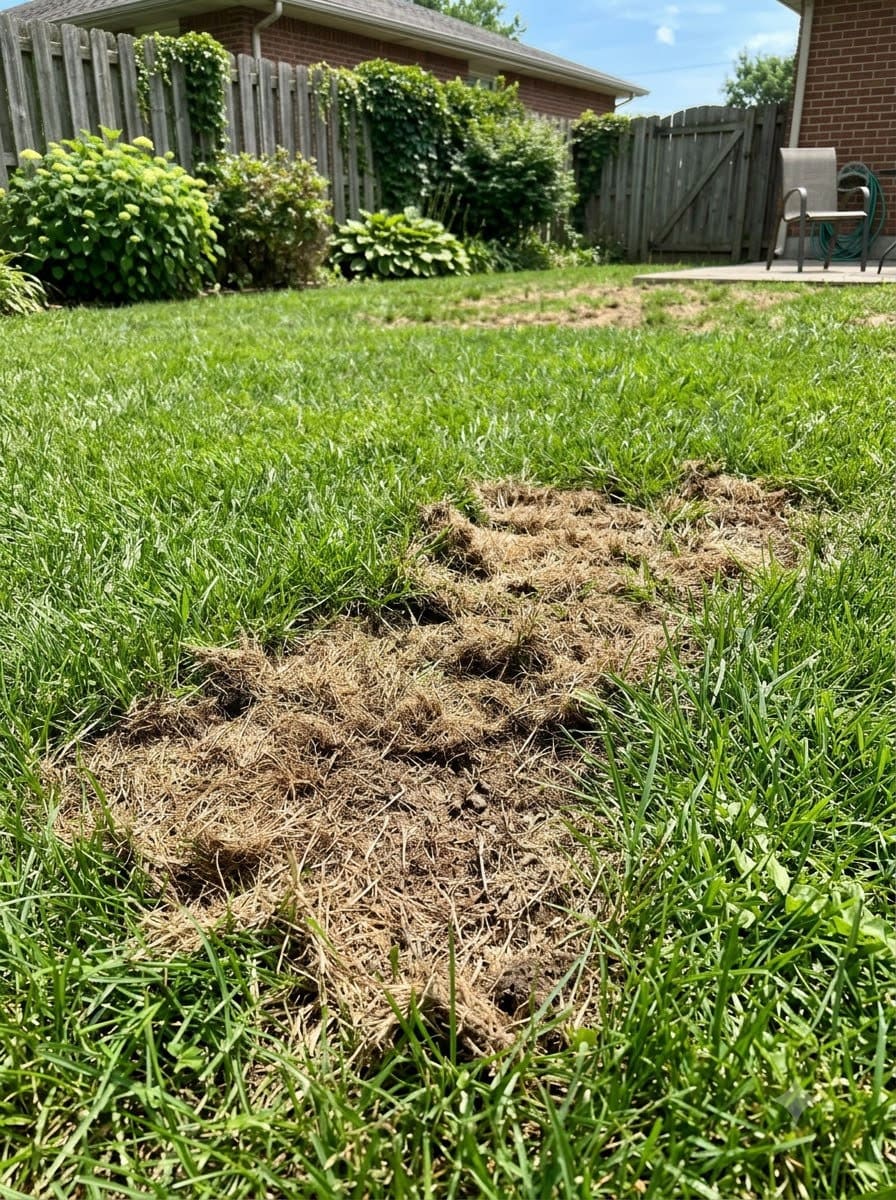
This is the mistake that trips up more people than any other on this list: seeing adult beetles on the roses in July and immediately dumping grub killer on the lawn that same week, then being confused when it doesn’t seem to do anything.
Grubs and adults are different life stages on different calendars, and treating for one doesn’t touch the other in any useful timeframe.
Michigan State University Extension’s Nate Walton and Kevin Frank lay out the actual windows. Preventive products (imidacloprid, thiamethoxam, clothianidin) need to go down between June 1 and July 15, before eggs hatch, to catch grubs while they’re small and vulnerable.
Chlorantraniliprole has a wider window, April through mid-July, but still works best applied before June. Curative products like carbaryl or trichlorfon are for existing grubs and go down in fall or spring, before May 15 specifically.
Here’s the part that actually explains the confusion: even a perfectly-timed, perfectly-effective grub treatment this year does nothing to stop adult beetles from showing up and eating your roses this same season, since those adults already emerged from last year’s grubs and can fly in from up to 15 miles away regardless of what your own lawn is doing.
Grub treatment is a next-year investment in your own lawn’s health, not a this-week fix for the beetles currently on your plants. Treat both problems, on their own separate calendars, and stop expecting one to fix the other.
One more label detail worth checking: products containing only lambda-cyhalothrin, bifenthrin, or permethrin won’t touch grubs at all, since those bind to soil particles instead of reaching the root zone where grubs actually feed. Read the active ingredient, not just the word “grub” on the front of the bag.
the watering and mowing habits that make grubs less comfortable in the first place are worth pairing with whatever product timing you land on.
Method 5: build next year’s planting plan around what beetles actually skip
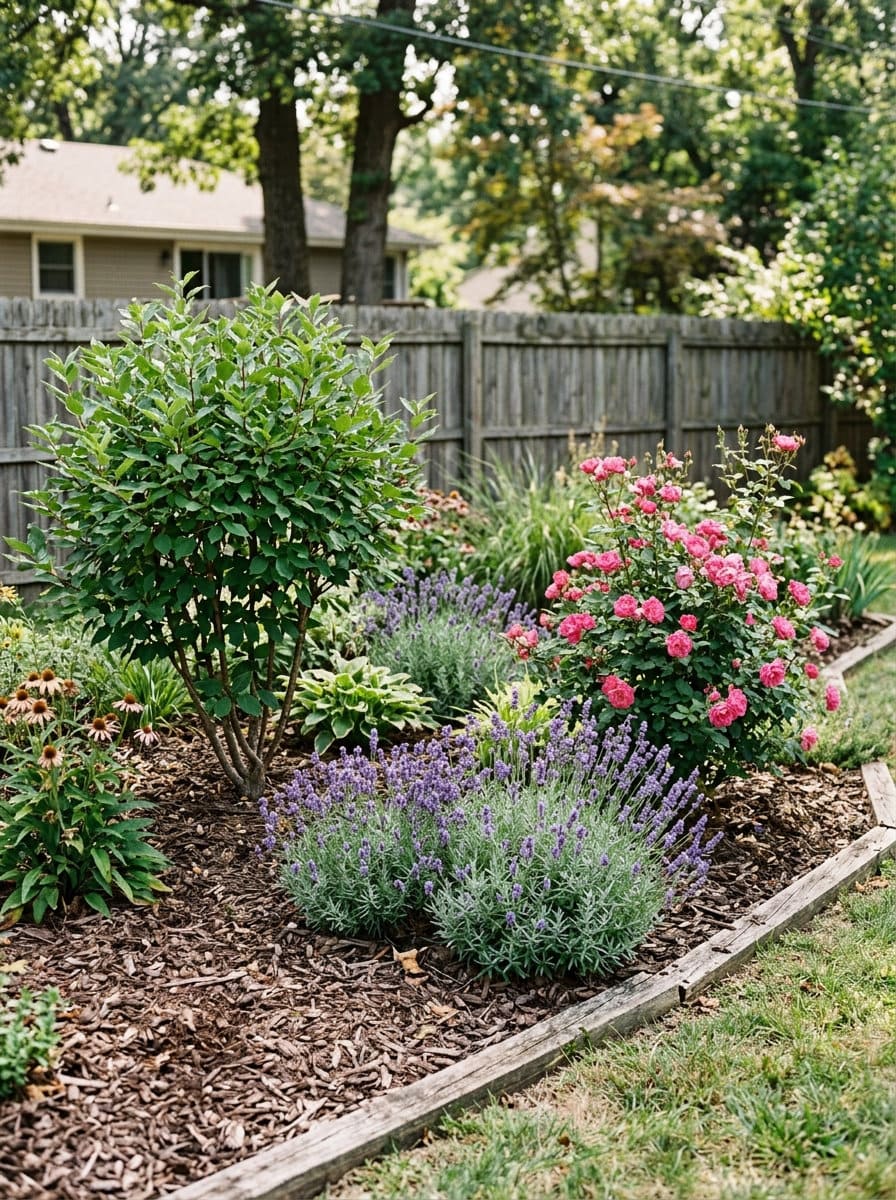
If this year’s damage was bad, the cheapest long-term fix isn’t a bigger chemical arsenal, it’s rethinking what’s planted next to what.
Beetles cluster where their favorite plants are clustered. Spacing susceptible species apart, instead of massing all the roses or all the grapevines together, slows how fast a small group turns into a swarm.
Deterrent plants genuinely help here too, not as a total barrier but as a real disruption. Garlic, chives, and other alliums confuse the beetles’ scent tracking. Catnip, tansy, and rue work similarly.
Geraniums deserve a specific mention. Beetles that eat geranium petals become temporarily paralyzed, which leaves them exposed to predators for long enough that a fair number don’t recover, an odd but genuinely documented deterrent effect.
For the resistant side of the plan, conifers, dogwood, oak, and most native shrubs simply aren’t on the beetle’s preferred list. If a bed keeps getting hit hard every year, that’s a signal to swap in something the beetles pass over instead of fighting the same battle every July.
swapping in dwarf evergreen shrubs is a reasonable place to start if a beetle-magnet bed near the house needs a genuine replacement rather than another season of spraying.
What I’ve actually learned dealing with these things
The year I lost the most rose growth to Japanese beetles was also the year I’d just bought a trap, hung it proudly on a post about ten feet from the bed, and felt very proactive about it.
Within a week the bed looked worse than the neighbor’s roses two doors down, who wasn’t doing anything at all. That’s when I actually read the fine print on the trap packaging, which, to its credit, does say to hang it away from valued plants. I just hadn’t taken that seriously.
And honestly, moving it to the far side of the yard the next season made a real difference, not a miracle, but a real one. The beetles still showed up. There just weren’t extras flying in from a scent cone aimed straight at my roses.
The other thing that took me embarrassingly long to connect: I sprayed the lawn for grubs in July one year, the same week I was hand-picking beetles off the roses, and got annoyed that “it wasn’t working” when the roses kept getting hit. It was working, just for a completely different problem on a completely different timeline. Two separate jobs, not one.
If there’s one thing worth doing differently before the season gets bad, it’s checking the actual USDA distribution data for your state before assuming you even have a real Japanese beetle problem versus a different pest doing similar leaf damage. A lot of panic-buying happens over a misidentified bug.
FAQs
Do Japanese beetle traps actually work? Not the way most people hope. Colorado State University Extension and Iowa State University Extension both found that traps can attract more beetles into an area than they catch, meaning nearby plants often take more damage, not less. If you use one, keep it at least 30 feet from anything you’re protecting.
Will treating my lawn for grubs stop the adult beetles eating my roses? No, not this season. Grubs and adults are separate life stages on separate calendars, and adult beetles can fly in from miles away regardless of your own lawn’s grub population. Grub treatment protects next year’s lawn, it doesn’t fix this year’s foliage damage.
Are Japanese beetles in every US state? No. They’re established through most states east of the Mississippi River, with partial and spreading populations in some Midwest and Plains states. Several western states, including Washington and much of the interior West, are under active USDA quarantine and eradication programs specifically because the beetle isn’t established there yet.
Is neem oil safe for bees if I’m also trying to protect pollinators? Only if applied carefully. Spray in the evening after bees have finished foraging, and never apply directly to open blooms, since neem oil is toxic to bees on contact with wet, treated foliage.
What plants should I stop planting if beetles keep destroying them? Roses, linden trees, grapes, and raspberries are the most consistent magnets. If a bed gets hit hard every single year, conifers, dogwood, oak, and most native shrubs are genuinely lower-risk substitutes.
Related Posts
- 6 Signs Your Vegetable Garden Has a Pest Problem
- 8 Plants You Should Never Plant Next to Roses
- Dwarf Evergreen Shrubs Worth Planting
Products We Recommend
This post contains affiliate links. We may earn a commission on qualifying purchases at no extra cost to you.
Fine Mesh Insect Netting, 10ft x 30ft
4.4 stars, 4.3K ratings; for Method 3, physically excluding beetles from roses, grapes, raspberries during peak weeks
Shop Now
Plantovika Pure Neem Oil, Cold-Pressed, 16 oz
4.6 stars, 683 ratings, 100% concentrate; for Method 3, foliar treatment that disrupts larval development
Shop NowNever miss an update — choose FarmFoodFamily as your preferred source on Google.
How it works: Tap the button below to open Google's settings page, then check the box next to FarmFoodFamily.
Tap the checkbox to turn it blue — that's how you know it's set.