12 Clever DIY Race Car Tracks for Kids (With Safe Magnets and Easy Ramps)
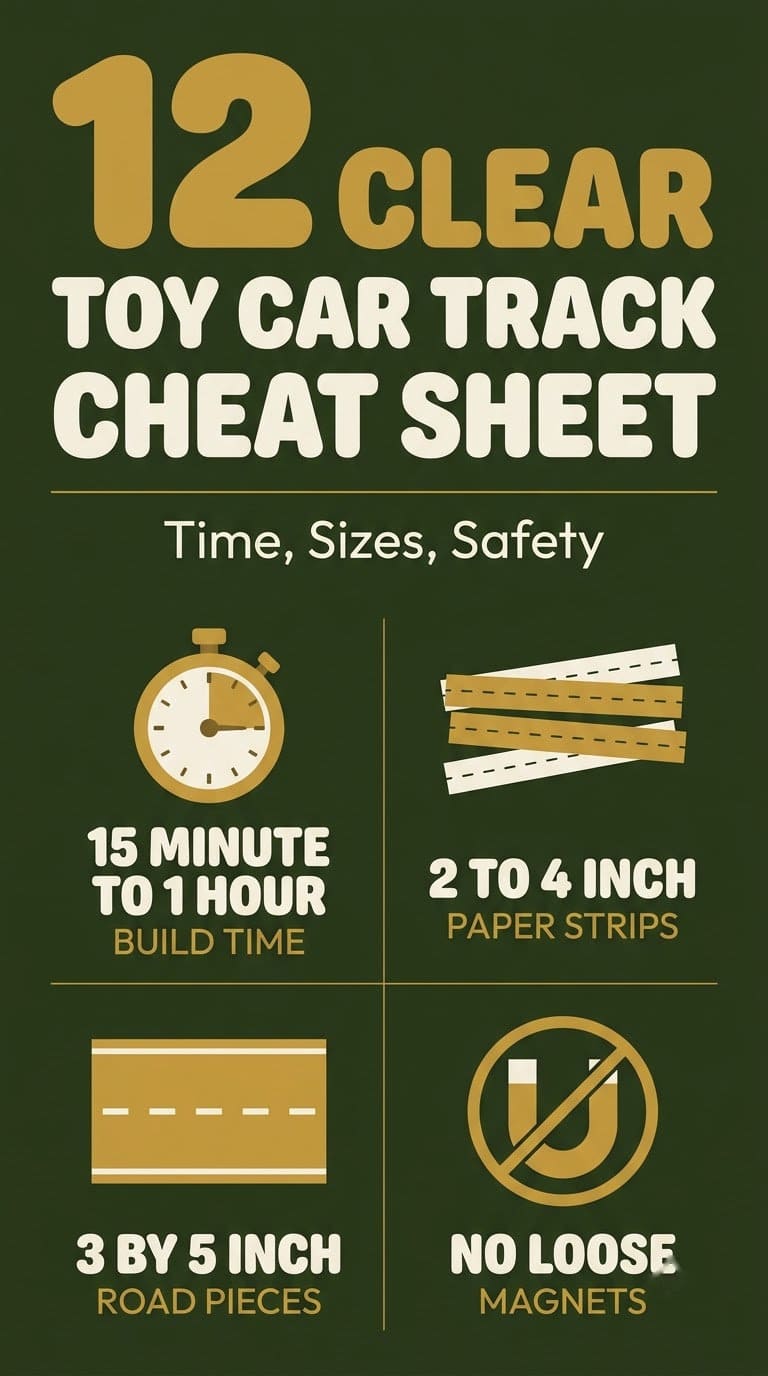
You can build a toy car track from a cardboard box in under an hour, as long as you keep small parts and loose magnets away from little hands.

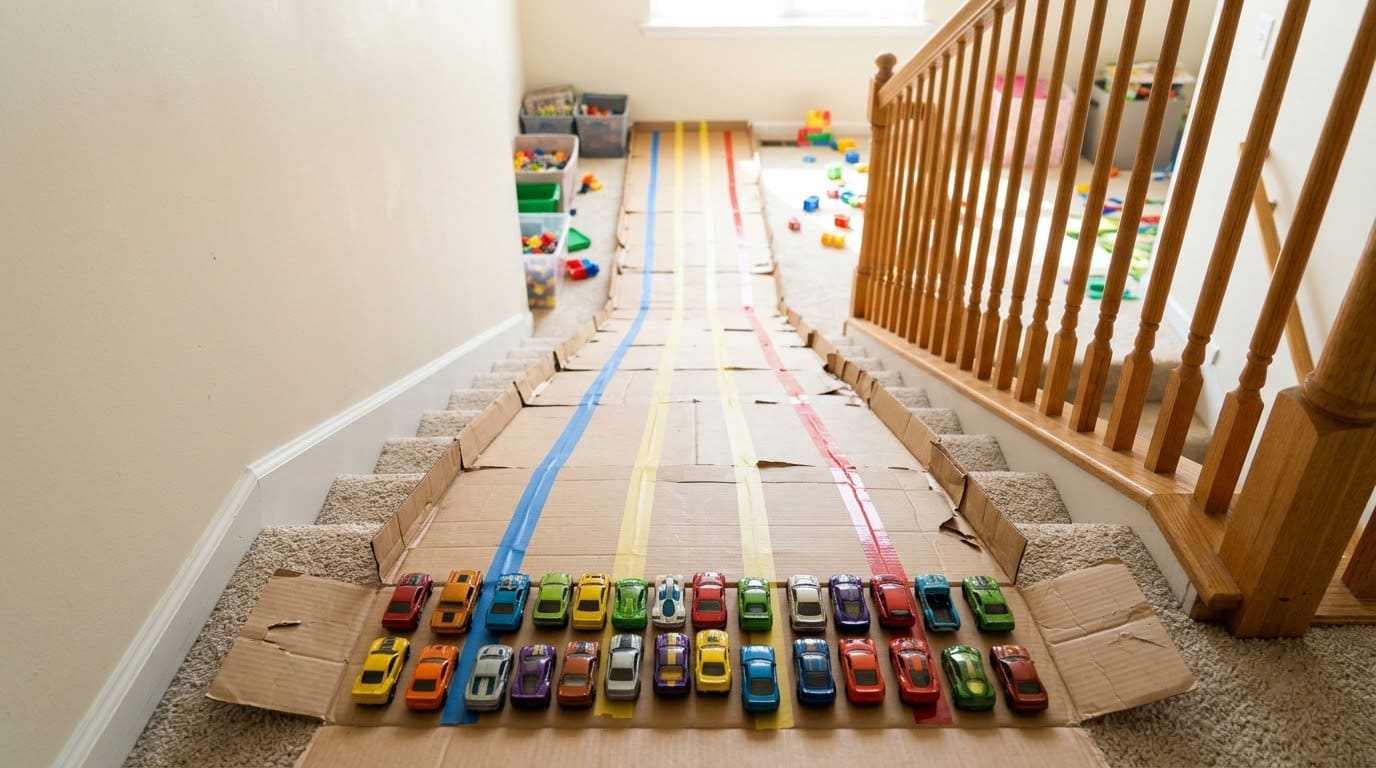
Never miss an update — choose FarmFoodFamily as your preferred source on Google.
How it works: Tap the button below to open Google's settings page, then check the box next to FarmFoodFamily.
Tap the checkbox to turn it blue — that's how you know it's set.
You can build a toy car track from a cardboard box in under an hour, as long as you keep small parts and loose magnets away from little hands.
Products We Recommend
This post contains affiliate links. We may earn a commission on qualifying purchases at no extra cost to you.

PlayTape Road Tape for Toy Cars, 30 ft x 4 in, Asphalt Road
Peel-and-stick road for a floor track, with no tape pieces to cut
Shop Now
Hot Wheels Toy Cars and Trucks 20-Pack, 1:64 Scale
A bundle of test cars for ramps and lanes
Shop Now
Mini Hot Glue Gun Set for Class Projects, 8 Pieces
Small glue gun for an adult to set straw lane guides
Shop NowThe easiest DIY car track is a strip of cardboard with taped lanes, set on a stair or a chair. A project from Science Friday says a first track takes 15 minutes to an hour. Paper folded into a V, a cut pool noodle or a cardboard tube all work as the road.
Test the ramp on a flat floor first, then move it to the stairs for speed. Add a pillow at the bottom so cars stop softly.
Keep cars with small parts away from children under three. And skip loose magnets in toddler play, because the Consumer Product Safety Commission warns that swallowed magnets can cause serious injury.
Answer 4 quick questions and get matched to the exact fix for your yard — drainage, budget, layout, or something else entirely.
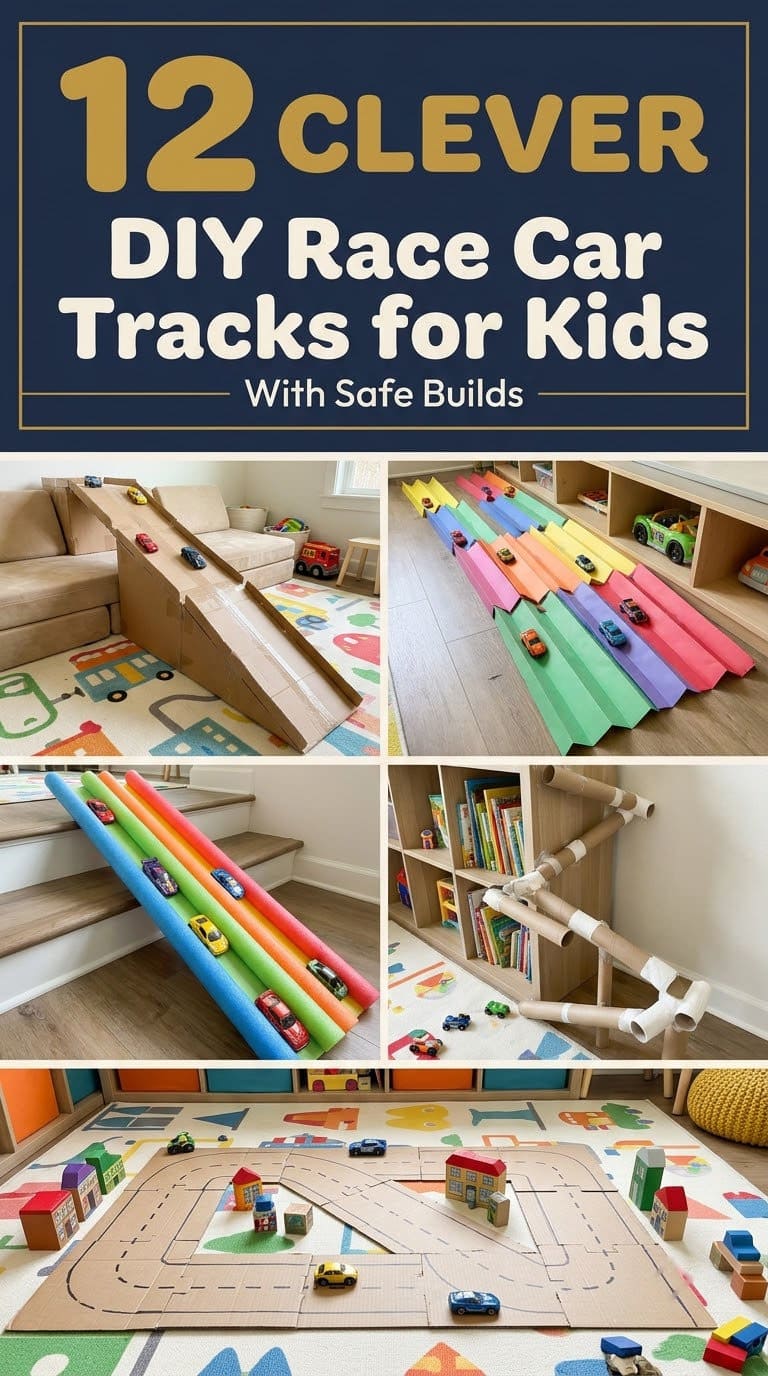
Take the Free QuizBelow are 12 builds for floors, stairs, tables and yards. You’ll also find a comparison of three tested methods, a cutting safety guide and a short science challenge for older kids.
What Do You Need to Build a Toy Car Track?
Most tracks need three things. You need a surface that holds the car in a lane, a slope for speed and an end that stops the car. Everyday materials cover all three.
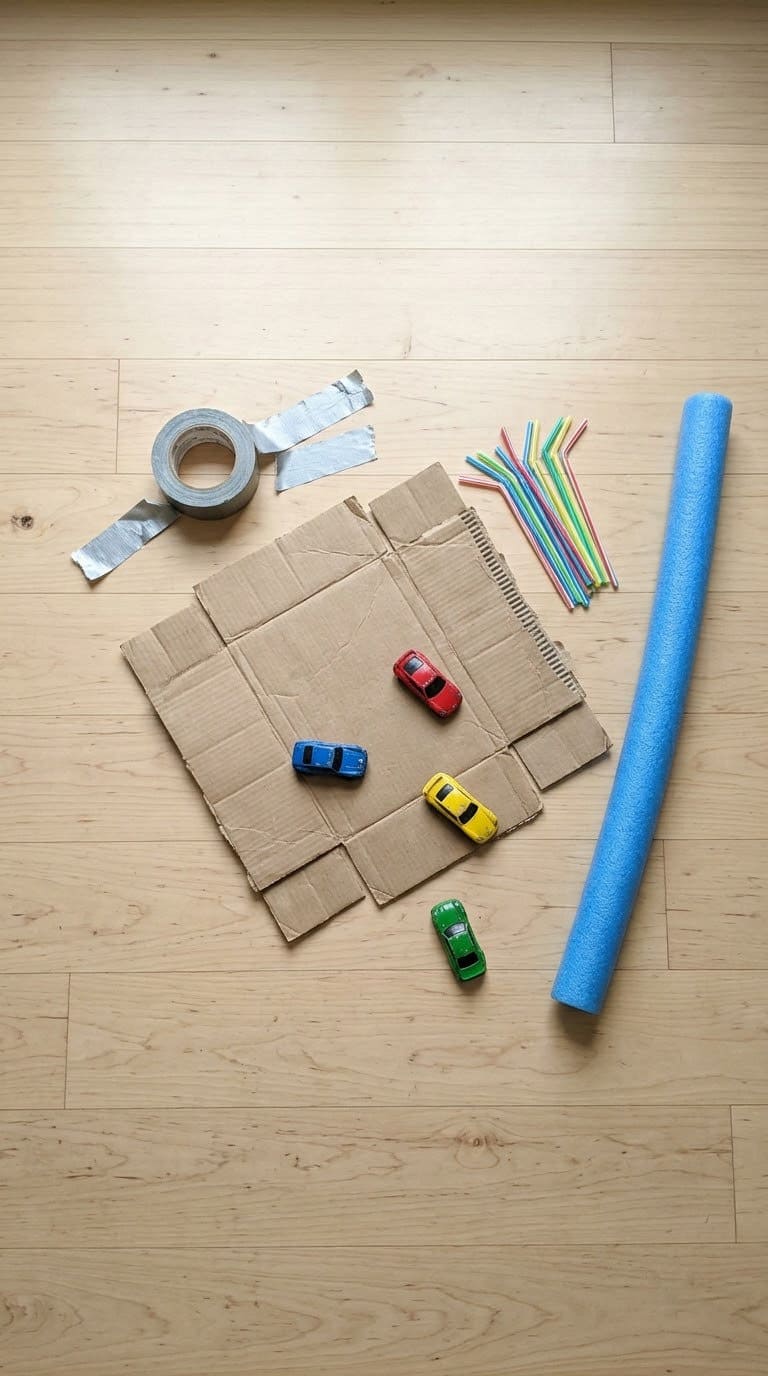
| Material | Used for | Source |
|---|---|---|
| Large cardboard box | A long flat road you can lay on stairs | Planning Playtime |
| Duct tape | Lane lines on the road | Planning Playtime |
| Drinking straws | Lane guides that keep cars from drifting | Planning Playtime |
| Pool noodle cut lengthwise | A rounded channel for a car or ball | Science Friday |
| Paper or cardboard tube cut lengthwise | A curved track with hills and turns | Science Friday |
| Thick used cardboard and washi tape | Road pieces, tunnels and houses | DeSerres |
Some of these steps need an adult. A utility knife cuts the box and a hot glue gun sets the straws. Let children decorate, tape and test.
You also need a few test cars. Use sturdy ones for the first runs. Save delicate cars for the flat track.


Which DIY Track Method Works Best?
Three sources give three different builds. Each has a clear strength. This table puts them side by side so you can pick one.
Most yard problems trace back to one specific, fixable cause. Find yours in 4 quick questions.
Take the Free Quiz| Method | Materials | Best for | Watch out for |
|---|---|---|---|
| Paper V-track (Science Friday) | Paper strips 2 to 4 inches wide, tape, a chair or table | A quick first test with a small ball or car | Paper bends under a heavy car |
| Cardboard box ramp (Planning Playtime) | Large box, duct tape, straws, hot glue | A long race down the stairs | Fragile cars may fly off the end |
| Cardboard road set (DeSerres) | Thick cardboard, knife, washi tape, markers | A small town with roads and tunnels | Cutting thick cardboard takes adult help |
The paper V-track is the fastest. Cut printer paper into three long strips and tape them into one. Fold the strip in half lengthwise to make a V, tape one end to the floor and rest the other end on a chair.
The box ramp lasts longest. Planning Playtime reports that its track held up well over several days of play. The road set is the most creative, and it works well on a table.
How Do You Make the Ramp Fast and Safe?
Start flat. Set the track on the floor and roll a car down it by hand. If the car drifts off the road, add lane guides before you add height.
Then add the slope. Planning Playtime laid its cardboard strip over a staircase and got what it called great speed. A chair or coffee table works for a gentler slope, which is the Science Friday starter setup.
Protect delicate cars. Planning Playtime suggests starting those cars partway down the stairs so they roll off at the bottom. Put a pillow or cushion at the end of the track to stop cars.
Our tape notes are our own advice and not from the sources. Test any tape on a hidden spot of the floor before you stick down a long road. Press it flat so small hands can’t peel it up.
How Do You Cut Cardboard Safely?
Cutting is the one step that needs an adult. DeSerres lists a utility knife, a metal ruler and a cutting mat for its track. The mat protects the table, and the metal ruler keeps the blade on a straight line.
Peel-and-stick road for a floor track, with no tape pieces to cut
Shop NowThis post contains affiliate links. We may earn a commission on qualifying purchases at no extra cost to you.
Thick cardboard folds badly if you just bend it. DeSerres has a tip for that: cut a thin line on the surface only, then fold along the line with a ruler. That makes clean tunnel arches and tidy edges.
Let kids do the safe parts. They can draw the roads, color the lanes and place the tape. They can also test every run and decide where the hills go.
The average homeowner spends $616/year on yard fixes that don't address the real problem. Find out what yours actually is — before you spend another dollar.
Take the Free QuizDeSerres also saves time with a simple order of work. Cut the longest roads you can, decorate them first and cut them apart after. That is easier than decorating twenty tiny pieces.
Can a Car Track Teach Kids Science?
Yes, with a few rules. Science Friday turns its track into an engineering challenge. The car must roll or slide without falling off, and the track must hold the car on course.
The challenge also asks for at least one hill, turn, loop, jump or dip. That gives kids something to aim for. They can test, change one thing and test again.
Science Friday lists extra challenges too. Build the highest track you can, add one or two loops or add a jump from one track to another. Try ending the ride with a slow, gentle stop.
Older kids can keep notes on each run. Which car went farthest, and did a taller ramp change the finish? Those questions are our own idea, and the answers are the fun part.
Which Track Fits Your Space?
Pick the track by the room you have. This table is our own planning guide and not a sourced chart. It uses the builds from the sources above.
| Space | Good fit | Why |
|---|---|---|
| Small table | Cardboard road puzzle and tunnels | Pieces are small and easy to rearrange |
| Living room floor | Cardboard box ramp with straw lanes | One long strip fits against a wall |
| Staircase | Stair race ramp | Gives the speed that Planning Playtime reports |
| Driveway or patio | Chalk speedway | Room for big toys and wide lanes |
| Garden bed | Dirt road | Easy to reshape after rain |
Think about cleanup before you start. A cardboard track folds flat and slides under a bed. A taped floor road has to come up in one go.
Is a DIY Car Track Safe for Little Kids?
Mostly yes, but two things need your attention. One is small parts. The other is magnets.
The CPSC small parts rules ban products intended for children under three if they pose a choking, aspiration or ingestion hazard from small parts. The CPSC says the test cylinder approximates the size of a fully expanded throat of a child under three.
You can use that idea at home. If a car, a bead or a piece of tape fits in a toddler’s mouth, keep it away from the track.
Magnets are the bigger worry.
A CPSC release from 2021 says swallowed magnets can interact with each other or with other metal objects. They can lodge in the digestive system and cause perforation, blockage, infection, blood poisoning and death. The CPSC counts at least an estimated 4,500 magnet-related emergency room cases and two deaths from 2009 to 2018.
Its advice is clear.
Remove magnet sets, small magnets and small magnet pieces from homes where children might swallow them. Check toys and play areas for loose or missing magnets. If you think a child swallowed one, get emergency care right away and don’t wait for symptoms.
For that reason, none of our 12 ideas use magnets. If you want a magnetic track, buy a finished toy made for the child’s age. Read its label.
12 DIY Race Car Track Ideas
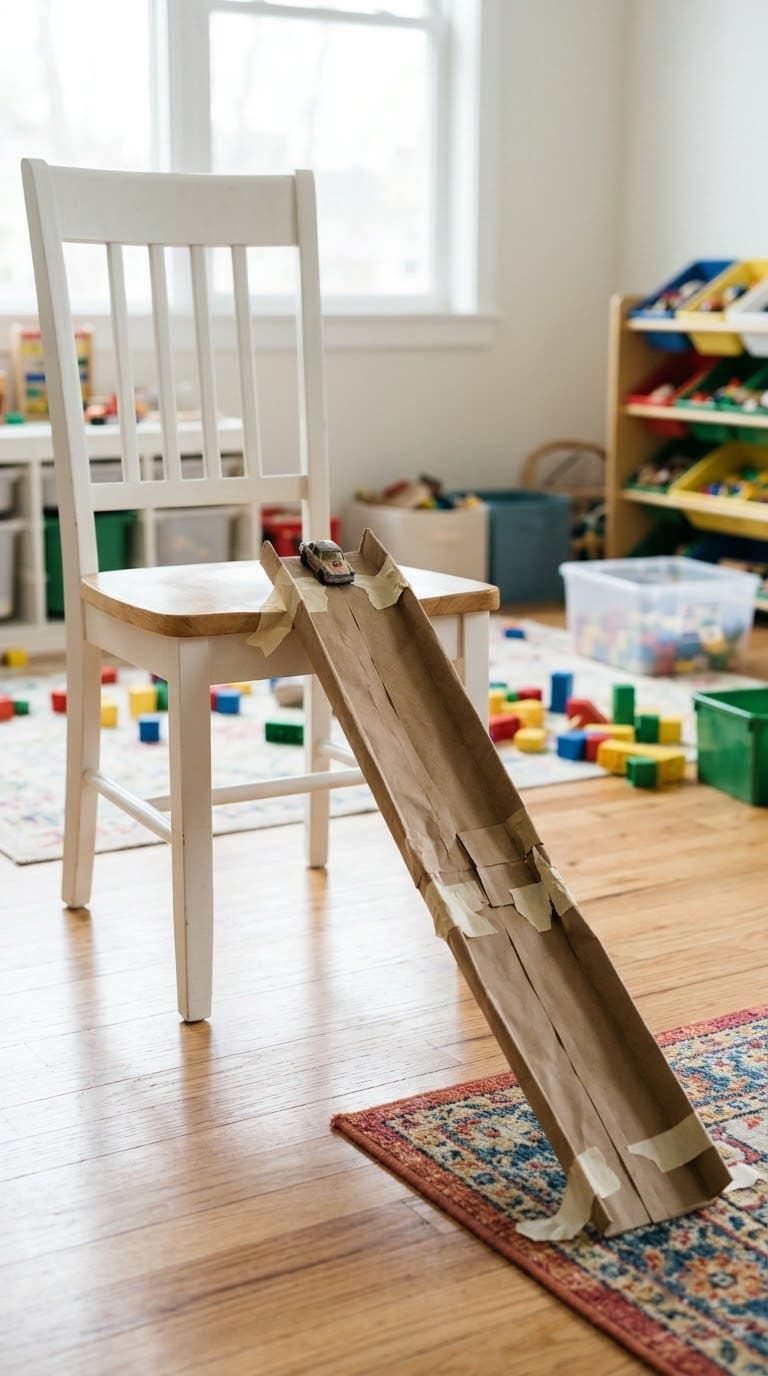
1. Paper V-Track on a Chair
This is the quickest build. Cut paper into strips 2 to 4 inches wide, tape them end to end and fold the long strip in half. Tape one end to the floor and the other to a chair seat.
Release a small car or ball at the top. Science Friday asks every track to include at least one hill, turn, loop, jump or dip. Tape a second strip to make a jump.
2. Cardboard Box Ramp
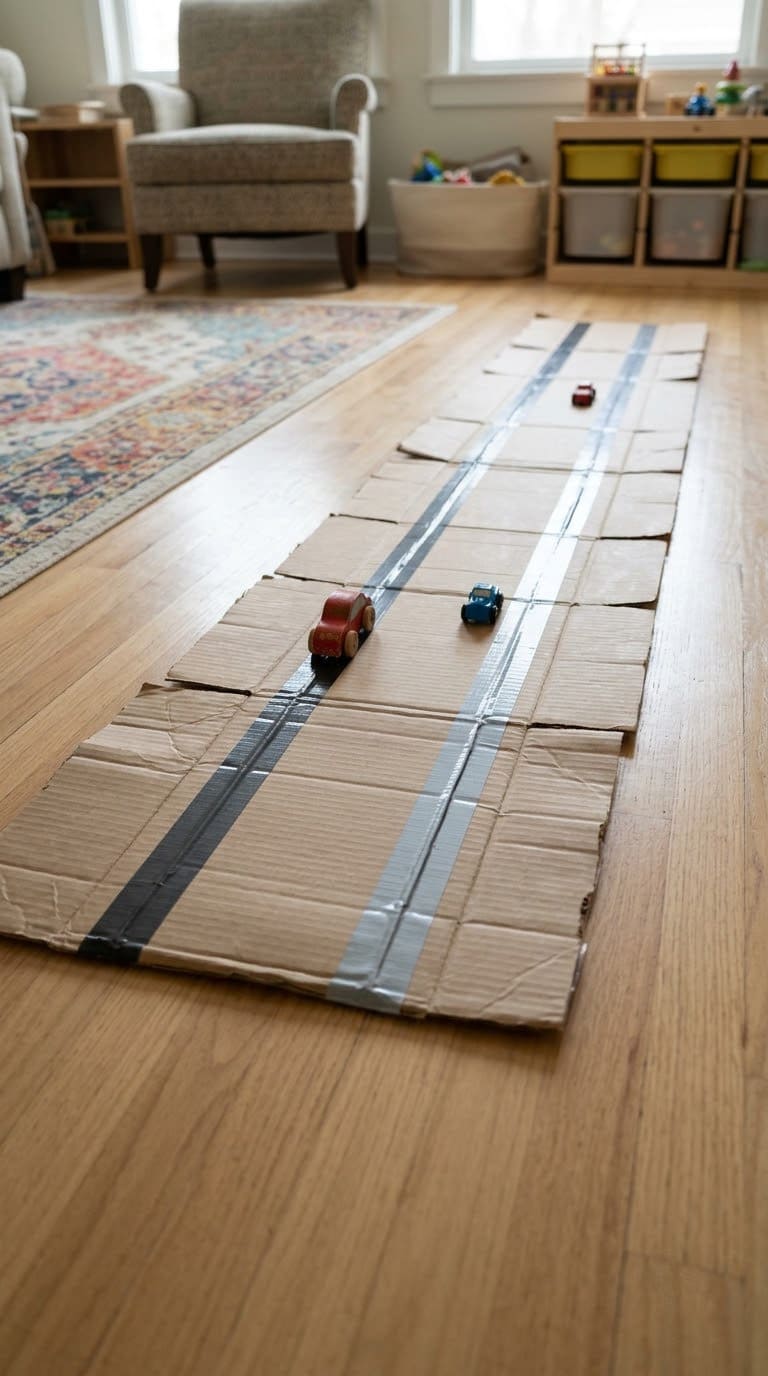
Cut the short sides off a large box and fold the long sides down into one flat strip. Planning Playtime describes the track as a very long straight rectangle. Lay it on a flat floor first, then on the stairs.
Mark lanes with duct tape. Keep the edges smooth so cars don’t catch. This is a good first project for a rainy afternoon.
3. Straw-Lane Track
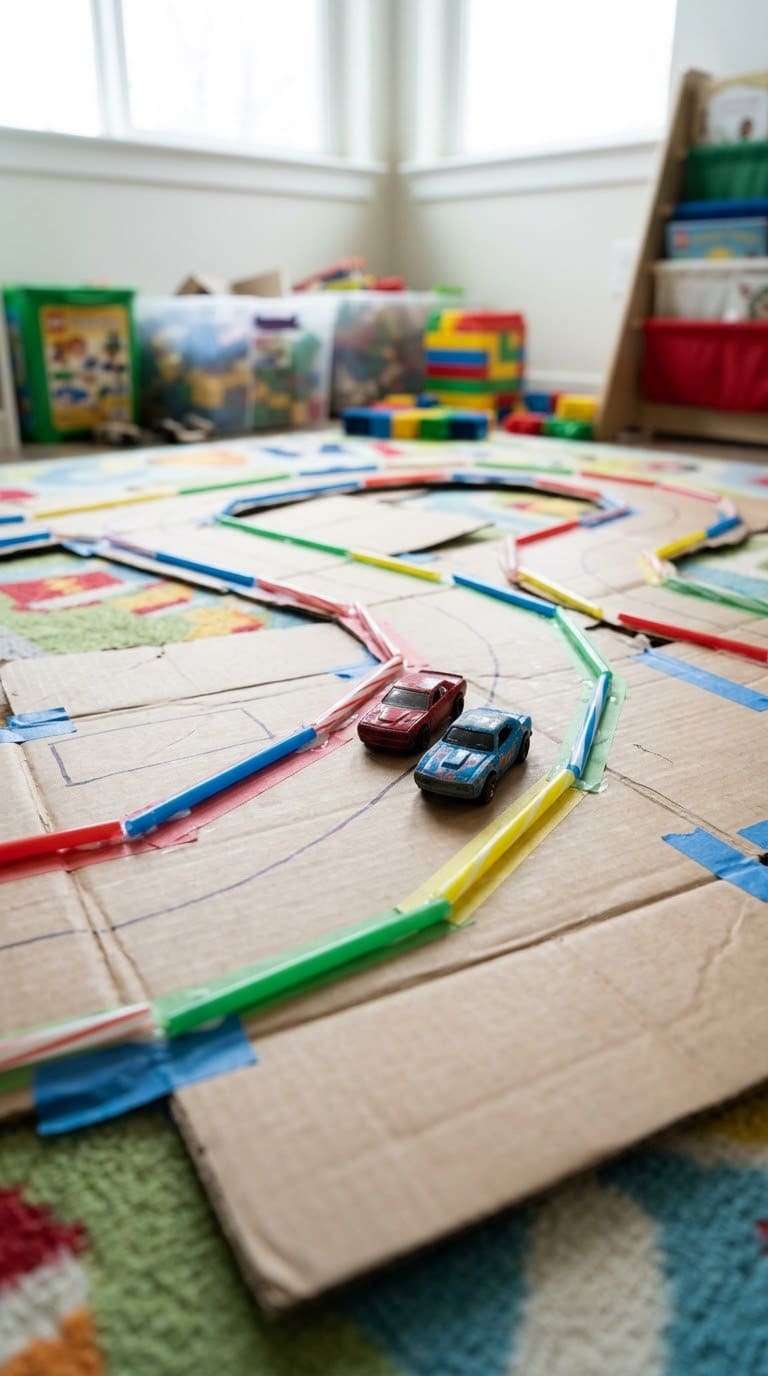
Hot glue drinking straws along the tape lines. The straws form a low wall that keeps cars in their lanes. Planning Playtime used a different color of straw for each lane.
An adult should run the glue gun. Let the glue cool before kids play. Trim any straw ends so they don’t poke up.
4. Stair Race Ramp
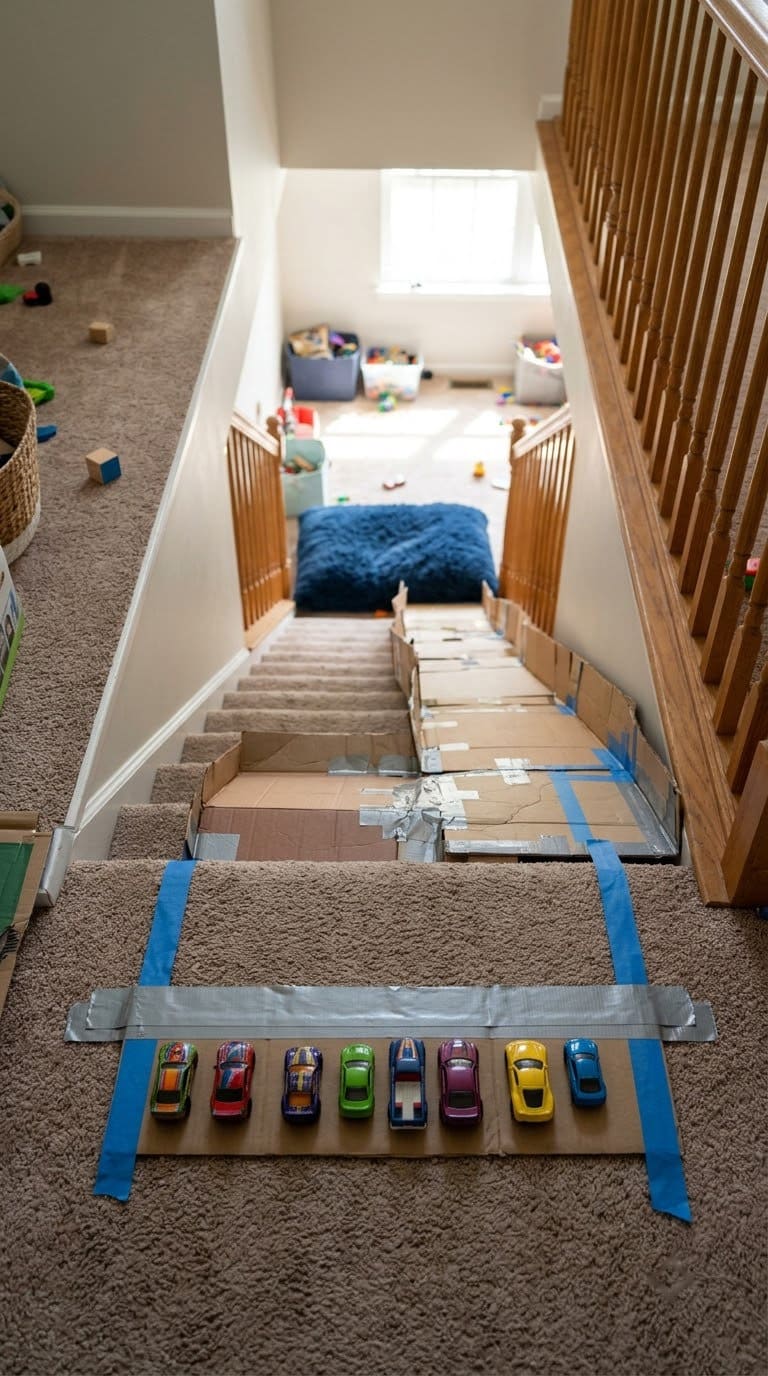
Lay the box strip down a staircase for a steep, fast ramp. Planning Playtime found the stairs gave great speed. Start sturdy cars at the top.
Put a pillow at the bottom. Keep the stairs clear of people while the race is on. Use this idea with adult supervision only.
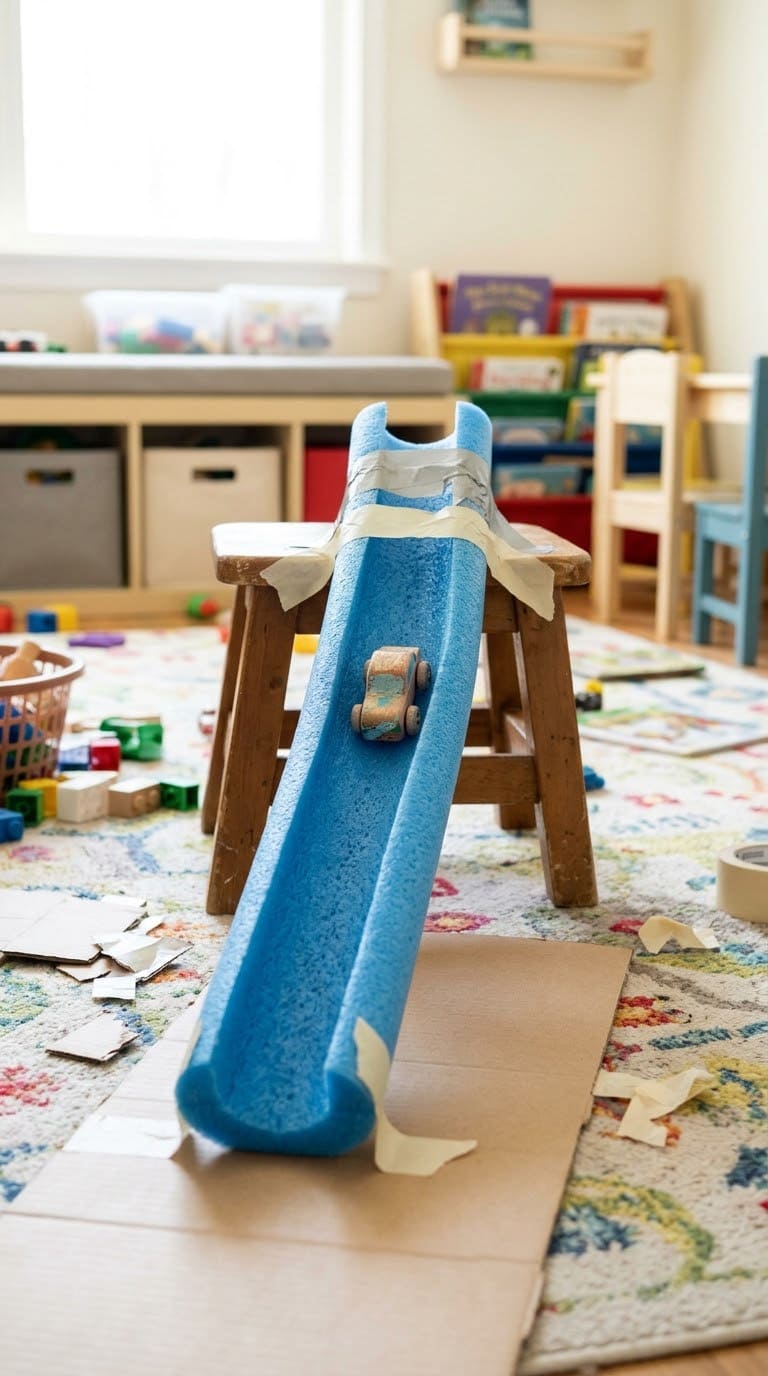
5. Pool Noodle Channel
Science Friday lists pool noodles cut lengthwise in half as a track material. The curved half makes a channel that holds a car or ball. Prop one end on a stool or the arm of a sofa.
An adult should cut the noodle with a sharp knife. Tape two halves side by side for a two-lane race. Add a cardboard stop at the end.
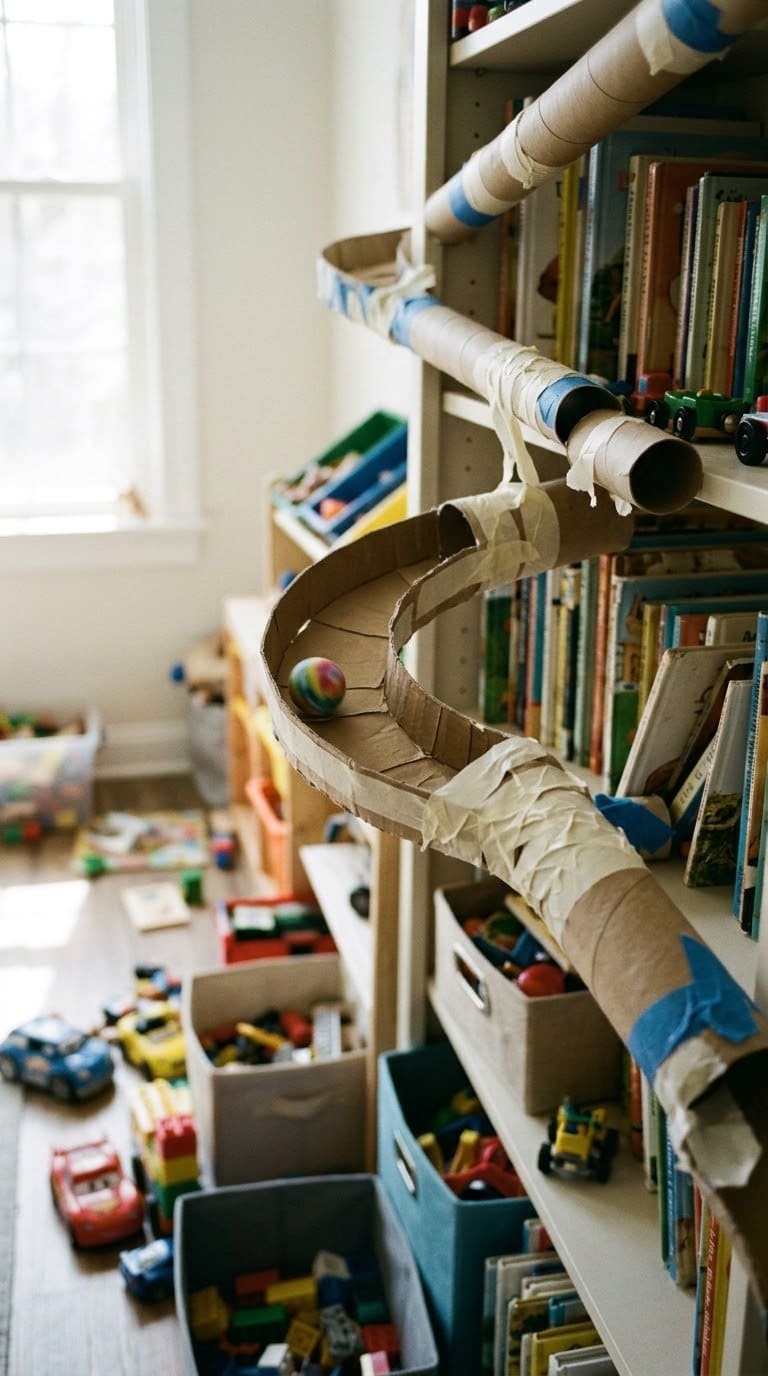
6. Cardboard Tube Coaster
Cut empty paper towel or toilet paper rolls lengthwise. Tape the halves end to end and bend them into hills and turns. Science Friday lists these rolls as track material.
Aim for at least one hill, turn, loop, jump or dip, which is the rule in the Science Friday challenge. The same project suggests a loop or a jump as an extra challenge. End the ride with a gentle slope so the car stops slowly.
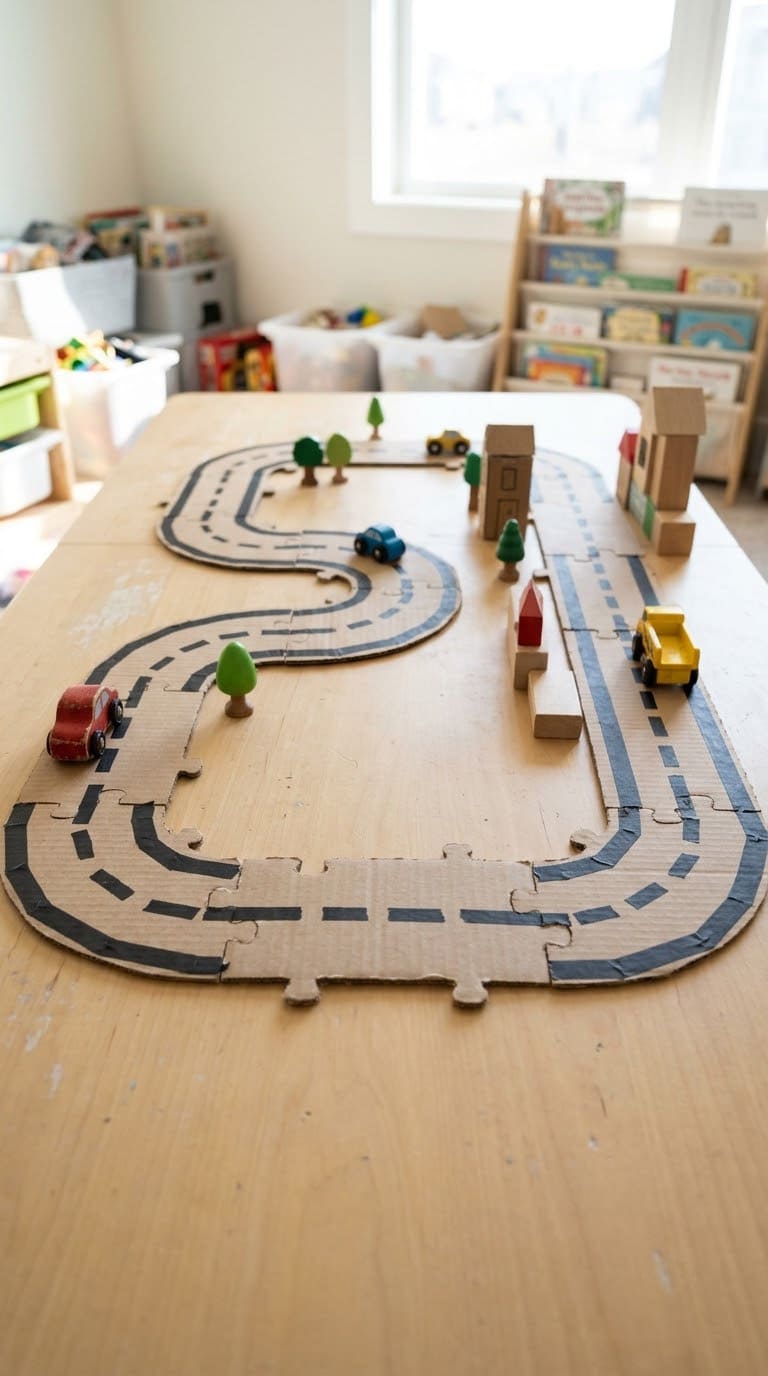
7. Cardboard Road Puzzle
DeSerres cuts roads from thick used cardboard, each 3 inches wide and 5 inches long. The roads can be simple strips or puzzle-piece shapes. Puzzle roads take more work but hold together better in play.
Decorate the roads with washi tape lines before you cut. Kids can then connect the pieces into any town layout. An adult should handle the utility knife.
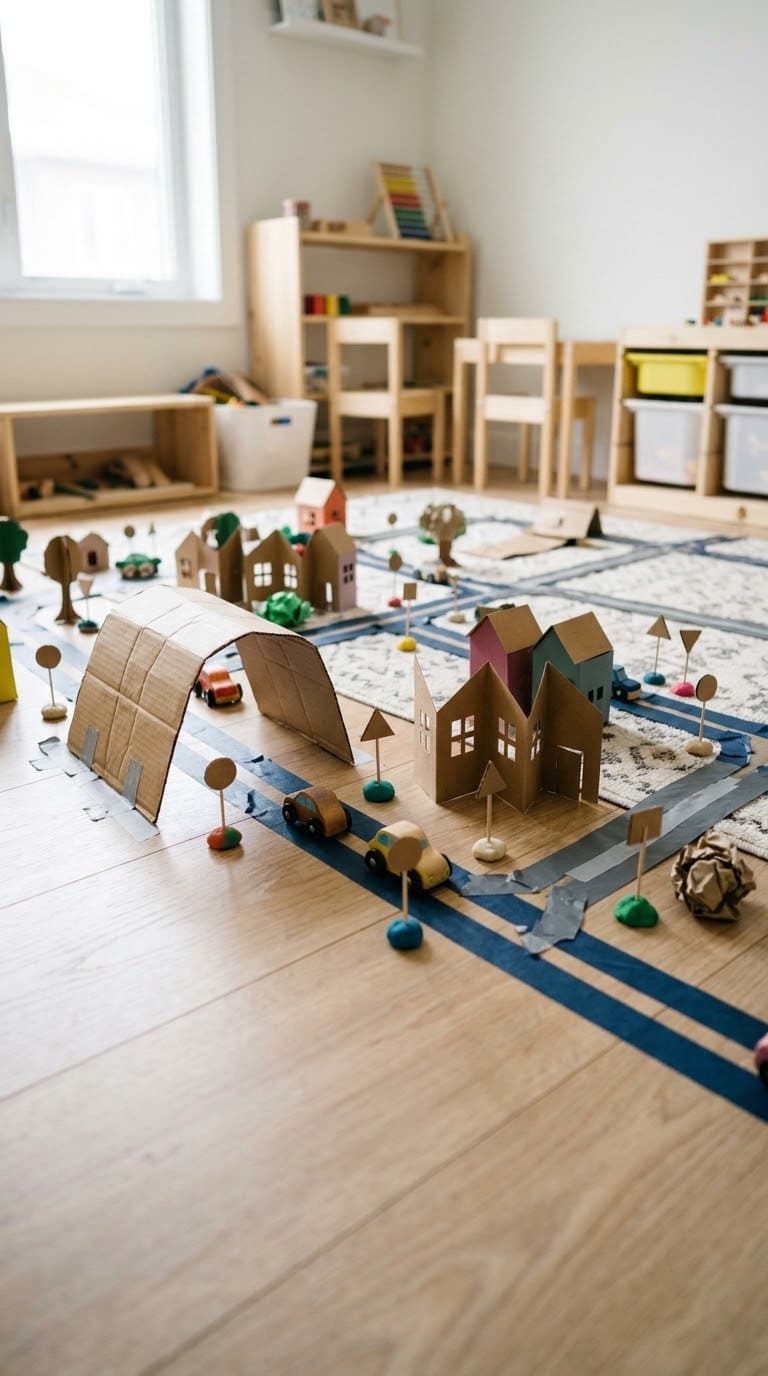
8. Tunnels and Little Houses
Score a strip of cardboard with a blade, then fold it along a metal ruler to make a tunnel. DeSerres closes the tunnel edges with washi tape. It also draws small houses in sets of 3 or 5 and folds the cardboard like an accordion between them.
The houses stand up along the road without glue. Add road signs from scrap paper. Kids will want to rebuild the town every day.
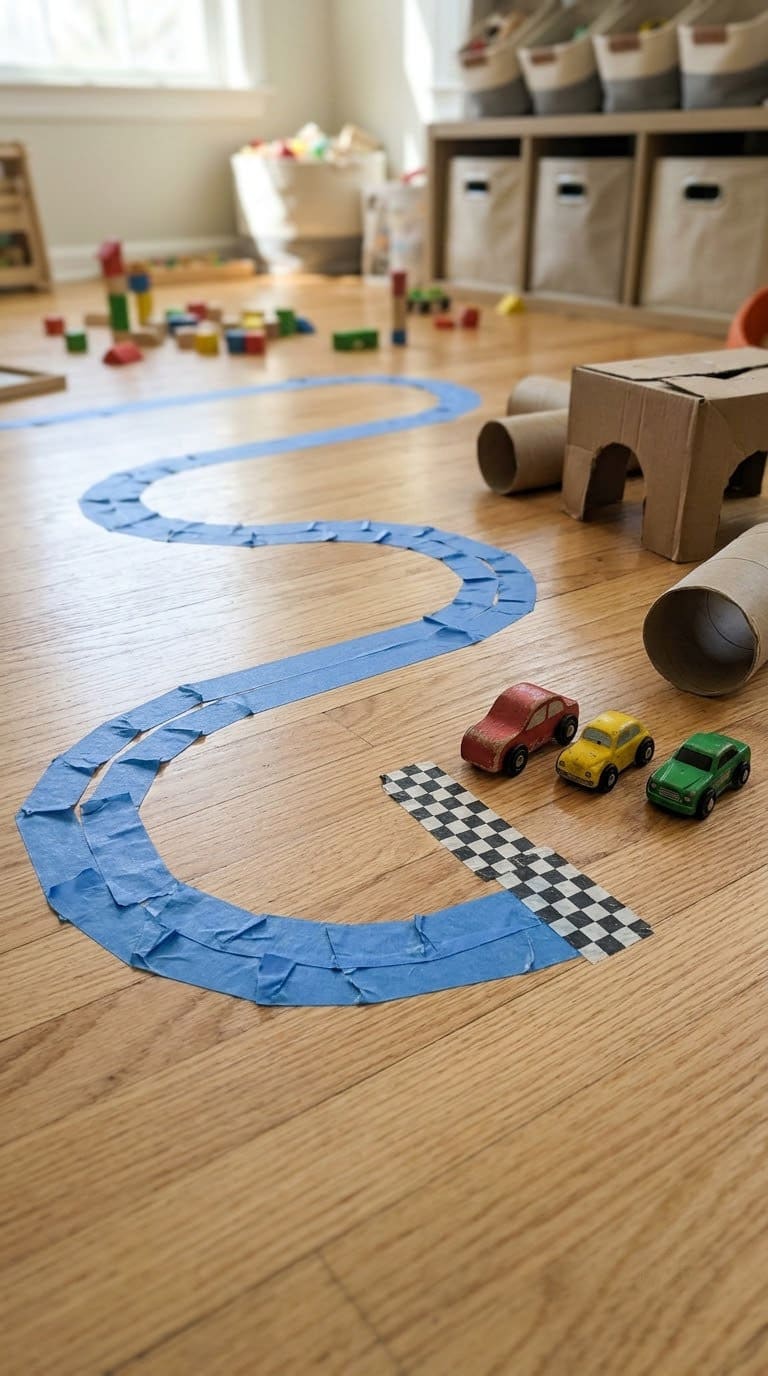
9. Floor Tape Road
Tape works on a hard floor when you don’t have a box. Draw a winding road with painter’s or washi tape and add a parking spot, a start line and a finish line. The idea is our own, so test the tape on a hidden spot first.
Press the edges flat. Check the tape often and replace lifting pieces. Keep tape away from the youngest children, since pieces peeled off can end up in a mouth.
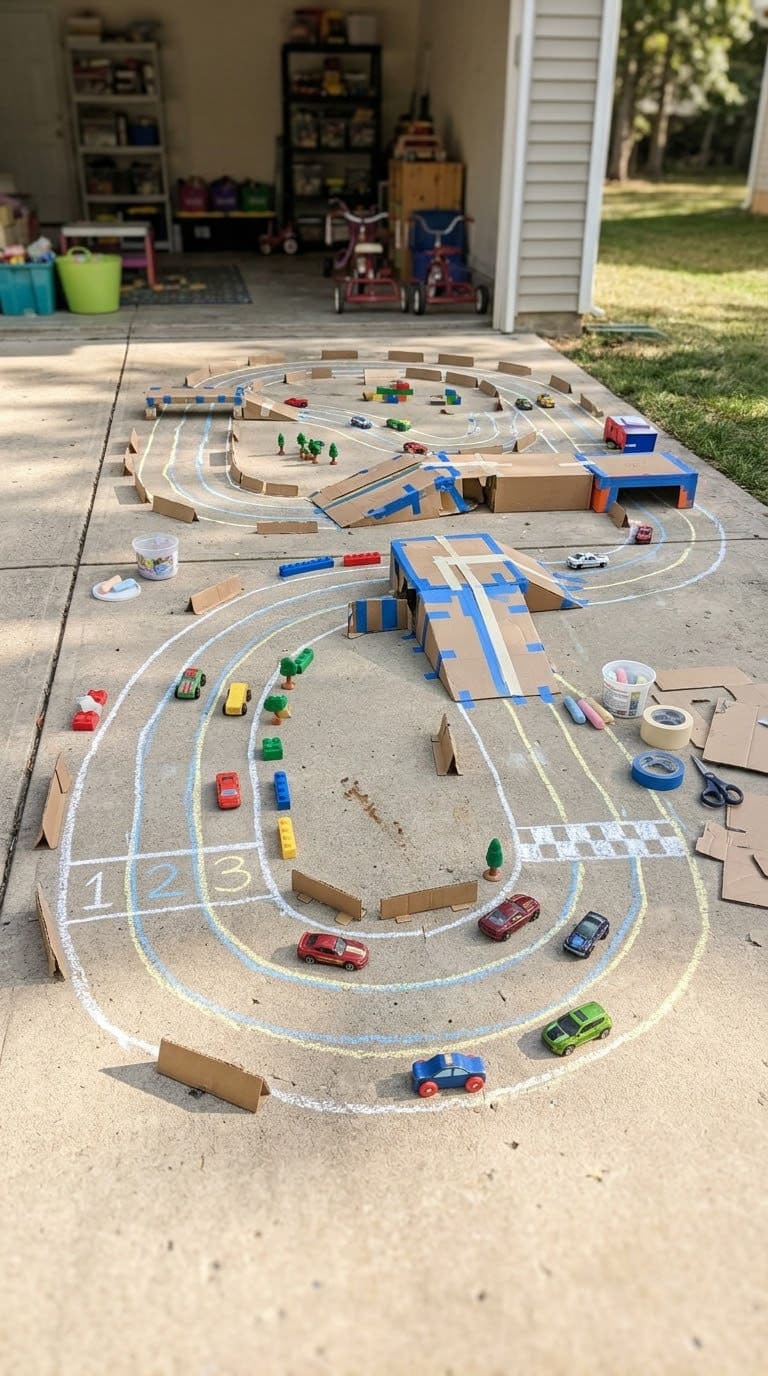
10. Sidewalk Chalk Speedway
Draw a track on a driveway or patio with chalk and race ride-on or push toys. Add lane numbers, a pit stop and a start line. This is a good idea for a warm day.
Keep the track wide for bigger toys. Check the surface for cracks that could trip a child. See our biking with kids in the garden tips for more outdoor play.
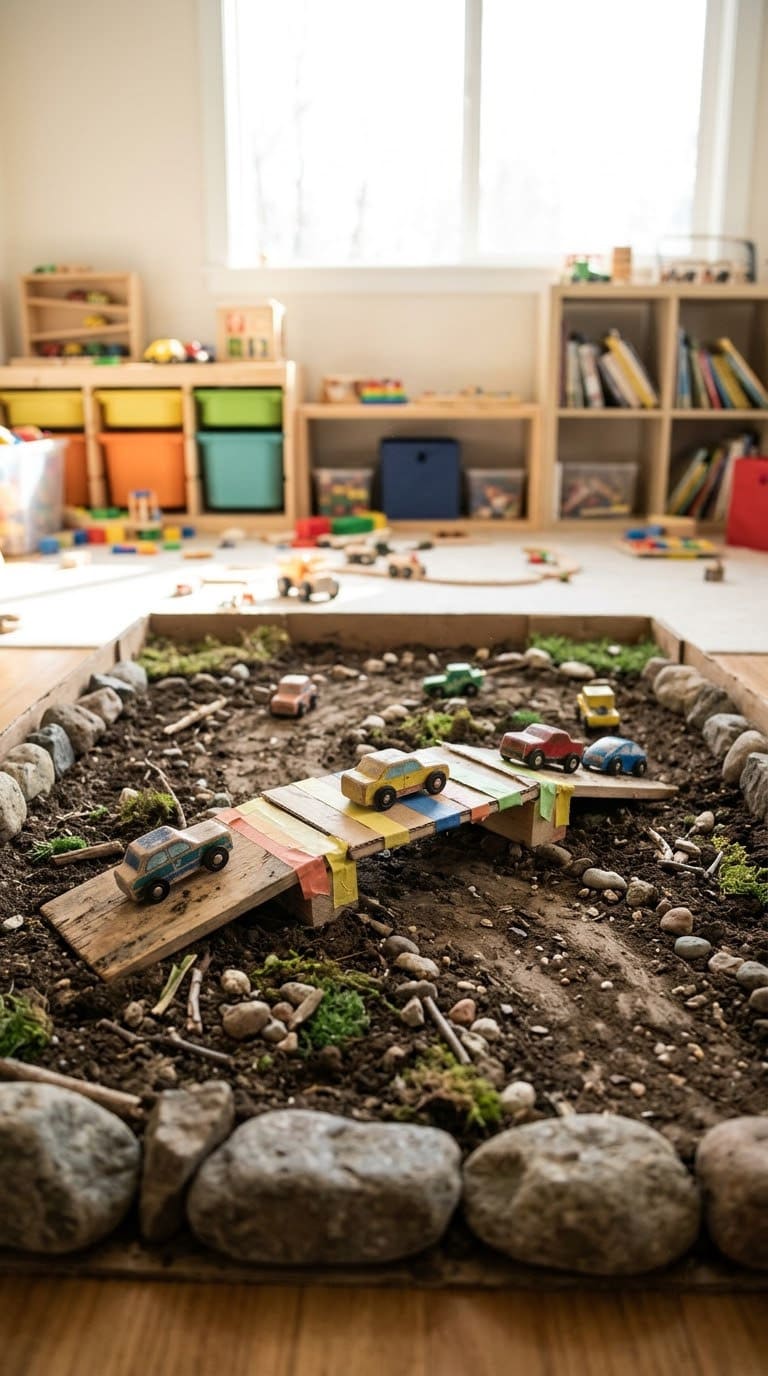
11. Dirt Road in the Garden
Scrape a shallow road in a bare patch of soil and let small cars drive over it. Add stones along the edges, a bridge from a flat board and a tunnel from a cut pipe. Kids can reshape the road after rain.
Pick a spot away from vegetable beds. Remove sharp stones and glass first. Our container gardens for kids page has ideas for the plants next door.
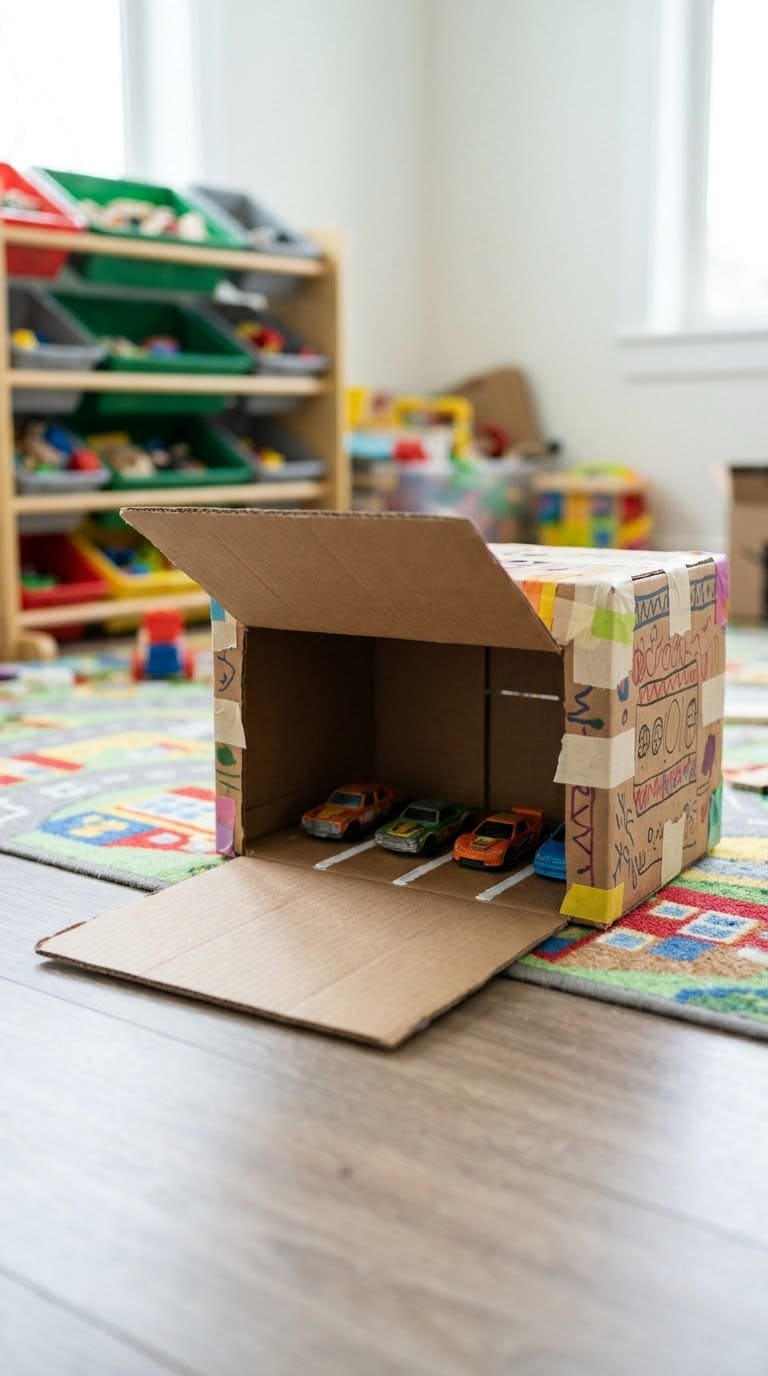
12. Cardboard Garage and Parking Lot
Build a garage from a box with a cut door and a taped roof. Mark parking spots on the lid with a marker. DeSerres shows how to draw and cut small buildings from cardboard.
Make the door big enough for the largest car. Sand or tape rough cut edges. Our cool crafts for kids page has more cardboard projects.
Common Mistakes to Avoid
The most common mistake is skipping the flat test. A track that fails on the floor will fail on the stairs. Planning Playtime tested its track flat before using the stairs, and lane guides fixed the drifting.
The second is using a fragile car on a steep ramp. Start those cars partway down the stairs, as Planning Playtime suggests, and use sturdy cars at the top.
The third is leaving magnets in toddler play. The CPSC says to remove magnet sets and small magnets from homes where children might swallow them. It also says to check play areas for loose or missing magnets.
The fourth is forgetting the end of the track. A pillow or cushion stops cars before they hit the wall.
If you only change one thing, keep small parts out of reach of children under three.
Frequently Asked Questions
How long does it take to build a DIY car track?
Science Friday lists 15 minutes to an hour for its track challenge. A simple paper V-track is the fastest.
What is the best material for a DIY race car track?
A large cardboard box works well. Planning Playtime reports that its box track held up over several days of play. Pool noodles and paper tubes cut lengthwise are good options for curves.
How do you keep toy cars on the track?
Glue drinking straws along the lane lines. Planning Playtime used straws as low walls so cars stayed in their lanes.
Are magnets safe in a homemade car track?
The CPSC warns that swallowed magnets can cause serious injury or death. It advises removing small magnets from homes where children might swallow them, so we skip them.
Is a DIY track safe for toddlers?
Keep small cars, tape pieces and other small parts away from children under three. The CPSC small parts rules exist because of choking and ingestion hazards.
Never miss an update — choose FarmFoodFamily as your preferred source on Google.
How it works: Tap the button below to open Google's settings page, then check the box next to FarmFoodFamily.
Tap the checkbox to turn it blue — that's how you know it's set.