Are Pets Behind the Rise in UK Lawn Damage?
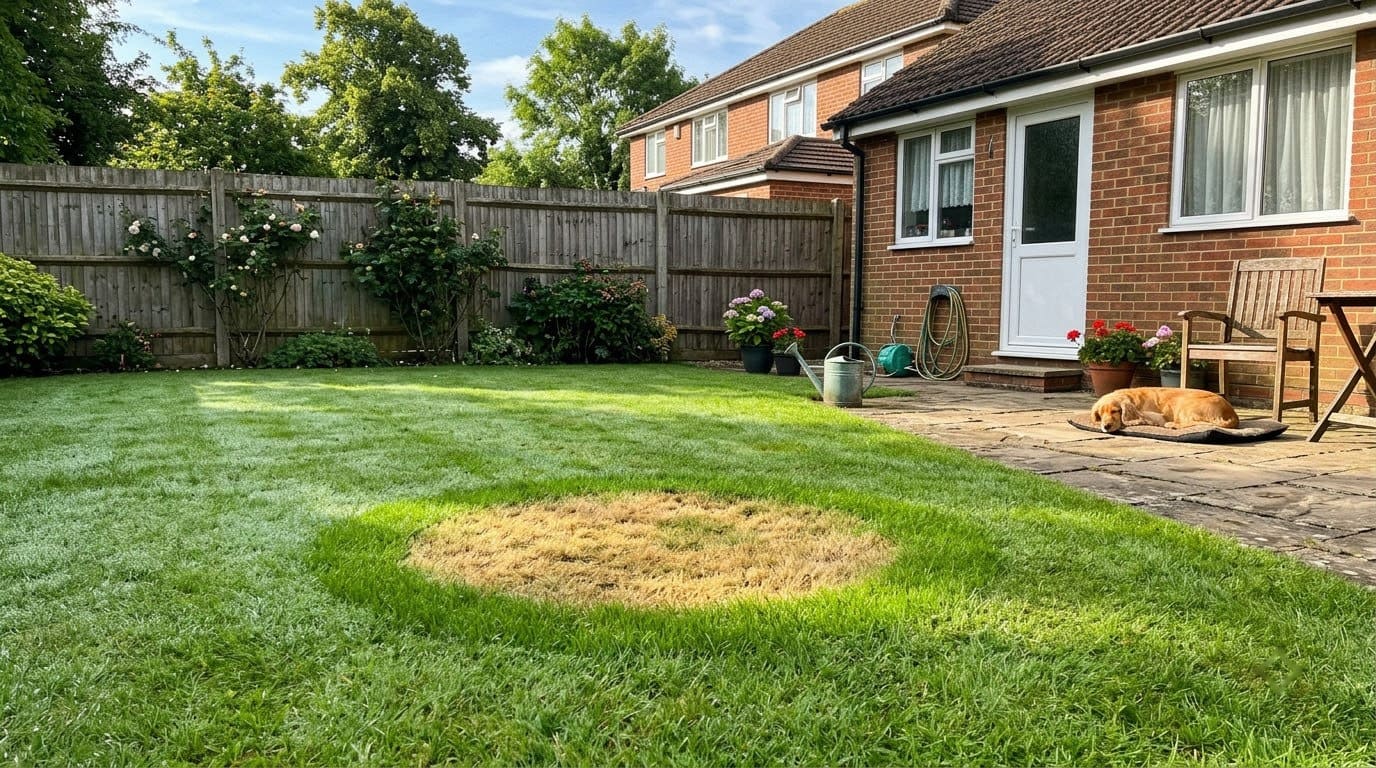
You stepped outside this morning to admire the yard and found a yellow patch roughly the size and shape of a sitting spaniel. The dog in question is currently asleep on the couch, entirely unbothered. And you’re standing on the patio wondering whether to blame him, the weather, or the soil underneath. It’s a fair…

Never miss an update — choose FarmFoodFamily as your preferred source on Google.
How it works: Tap the button below to open Google’s settings page, then check the box next to FarmFoodFamily.
Tap the checkbox to turn it blue — that’s how you know it’s set.
You stepped outside this morning to admire the yard and found a yellow patch roughly the size and shape of a sitting spaniel.
The dog in question is currently asleep on the couch, entirely unbothered. And you’re standing on the patio wondering whether to blame him, the weather, or the soil underneath.
It’s a fair question, and the answer is more interesting than a straight yes. Here’s what’s really going on out there, and what you can do about it.
Yes, but It’s Not Just Your Pet
Your four-legged companion is almost certainly contributing to the state of your lawn. But the reason so many UK yards look worse than they did five years ago comes down to several things happening at once.
- Pet ownership has climbed sharply. Far more UK households have welcomed a dog, a cat, or a pair of rabbits than a decade ago, and most of them get the run of the yard every day.
- Working from home changed the pattern. Yards that once got used at weekends now get used from breakfast until bedtime, so wear that used to spread across months builds up in weeks.
- Yards are getting smaller. New-build plots squeeze all that happy chaos into a tighter space, and the same few hundred square feet absorb every bit of it.
- Damper winters leave the ground soft. Saturated soil gives way under paws far more easily than firm soil does, which is why February causes more damage than June.
- Drier summers remove the natural rinse. Rain dilutes urine before it burns, and watering restrictions across the South East take that safety net away entirely.
So your pet supplies the pressure, but the unpredictable weather determines how much damage your lawn sustains.


How Can You Tell If Pets Are Causing the Damage?
Not every brown patch comes from a pet. Before you blame the dog, check the pattern, because a wrong diagnosis means the wrong fix.
Answer 4 quick questions and get matched to the exact fix for your yard — drainage, budget, layout, or something else entirely.
Take the Free QuizPet urine leaves a dead center with a dark green ring around it, and the patches show up in the same spots again and again. Fungal disease looks different. The patches are irregular or ring-shaped, often with a fuzzy or slimy edge in humid weather, and they appear whether or not a pet uses that corner.
Grubs and crane fly larvae (called leatherjackets in the UK) eat the roots, so the turf lifts like a loose carpet. Birds and foxes tearing at the lawn is another giveaway. Drought stress turns broad areas straw-colored, usually on sunny, high, or south-facing ground, and your footprints stay visible after you walk across it.
Here’s a quick test. Tug a handful of the damaged grass. If it peels away with no roots, suspect grubs. If the roots are firm and the patch matches your pet’s habits, you’ve found your culprit.
How Pets Damage a Lawn
Pet damage arrives in a few fairly distinct forms, and each one leaves a different signature on your grass. Work out which you’re dealing with, and you’ll know how to fix it.
Urine Burn
It takes months of careful fertilizing to build a healthy lawn and about three seconds of dog pee to destroy a patch of it. Pet urine carries a concentrated dose of nitrogen and salts, and when all of that lands in one favorite spot, the roots underneath simply can’t cope.
Look for a dead center surrounded by a ring of grass that’s noticeably greener than everything around it. The outer ring gets a nice dose of fertilizer, while the middle gets scorched to a crisp.
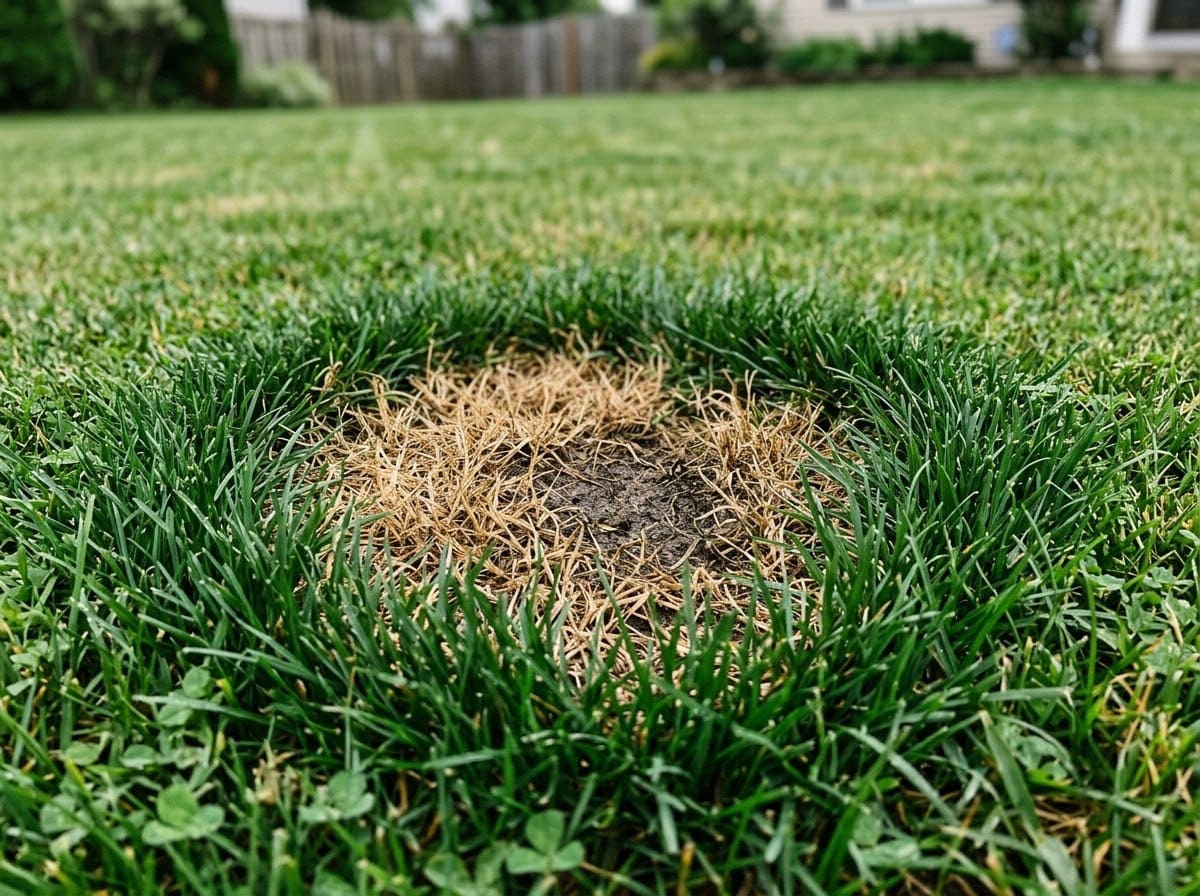
Female dogs leave the clearest evidence simply because squatting delivers the entire payload directly to one square inch.
Most yard problems trace back to one specific, fixable cause. Find yours in 4 quick questions.
Take the Free QuizCats rarely cause this, mostly because they consider open turf beneath their dignity and prefer burying their business in your freshly turned flower beds.
The fix costs nothing at all. Keep a watering can by the back door and soak the spot after your dog has finished their business. It turns out the best defense against a $50 lawn care disaster is about a gallon of tap water applied within thirty seconds.
Digging, Scraping, and Torn Turf
Some dogs dig purely for the joy of it, while others are convinced something fascinating lives under the border. Cats work with rather more precision, and any patch of loose, bare soil in your lawn is exactly what those dainty paws are hunting for.
That’s the maddening part for cat owners. A patch you reseeded last weekend is soft, warm, and freshly turned, which makes it the most inviting spot in the entire yard.
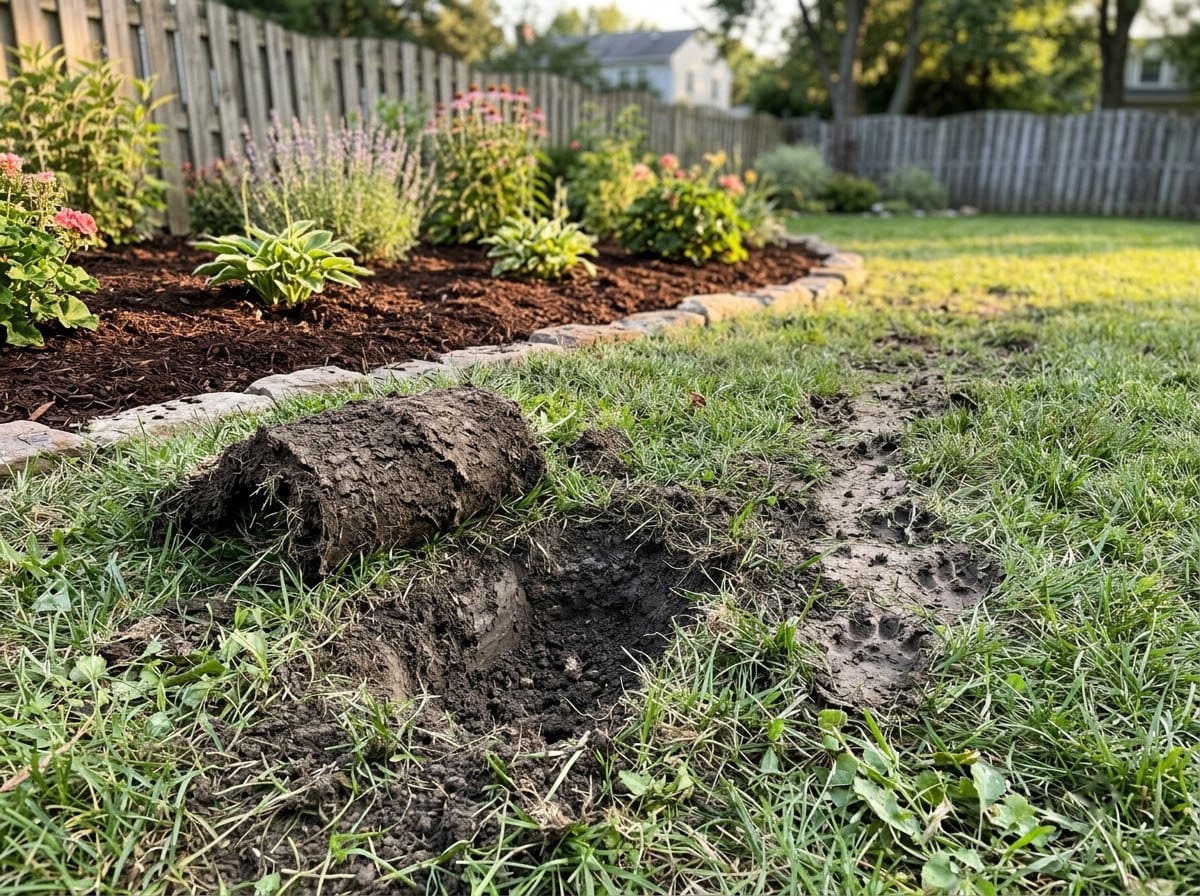
Backyard chickens take this to another level entirely. A small flock will scratch a lawn down to bare earth in a matter of two weeks, and they’ll add a dust-bathing crater or two while they’re at it.
Bare soil never stays bare for long, whoever made the hole. Moss and weeds move in within a single season, so a small scrape in November becomes a scruffy patch of clover by April.
So make sure to refill these spots properly, and reseed while the surrounding grass is still growing. Netting over fresh seed keeps your furry companions off it long enough for the new grass to establish.
Compacted Running Tracks
Your four-legged companion has a route, and they take it seriously. They take the same line along the fence every morning, greeting the neighbors, warning off the neighbor’s cat, and pressing the soil a little tighter with every lap.
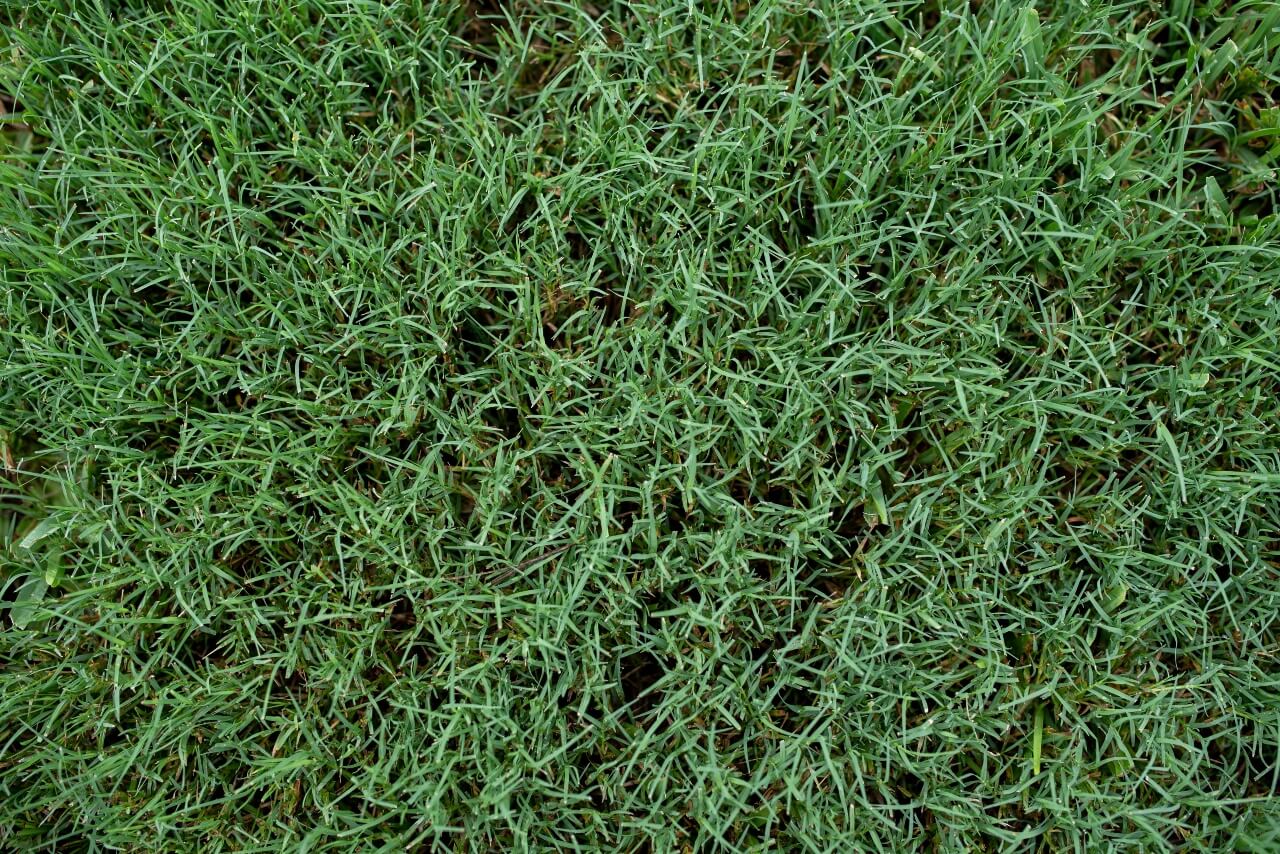
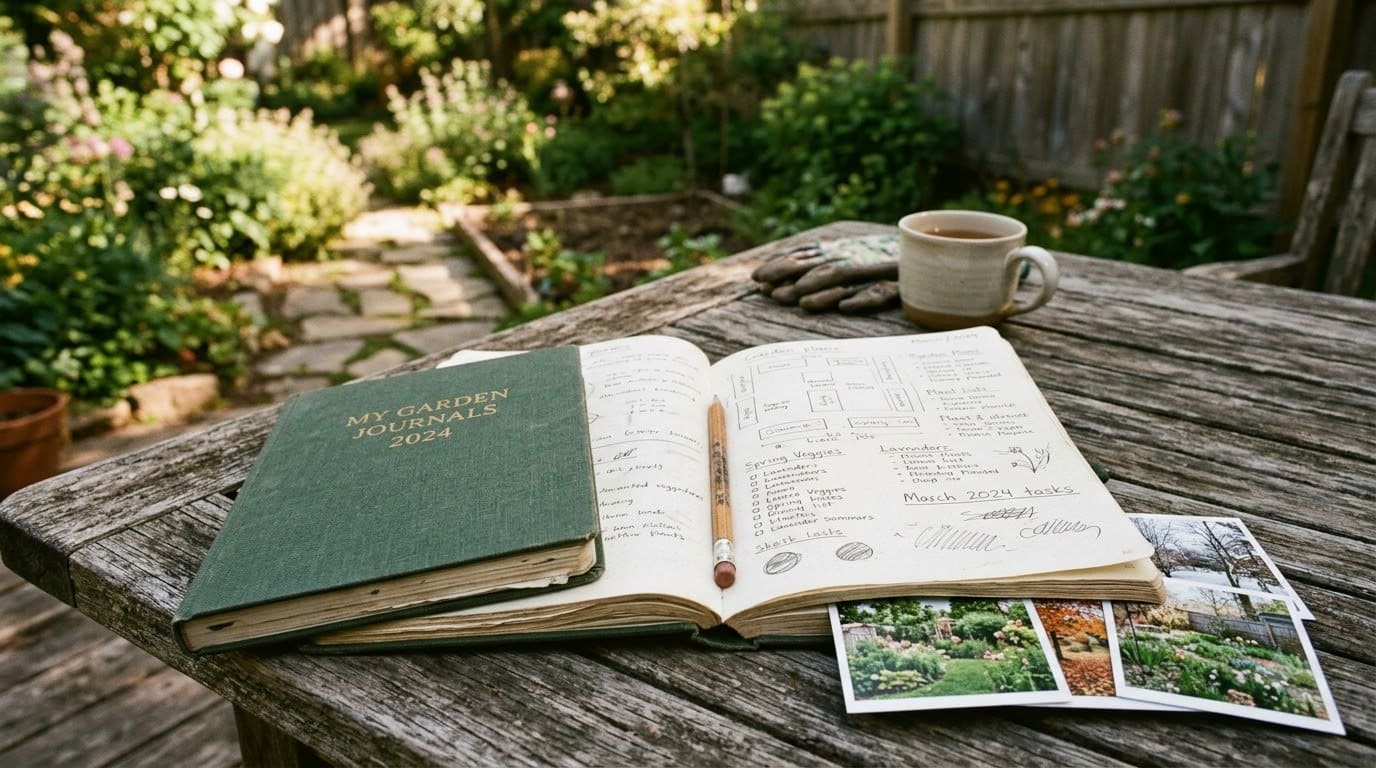

You’ll spot it as a flat, thin, faintly bald line that follows the boundary and turns sharply at the corners. Compacted soil suffocates the roots below, leaving a bare, lifeless track while the surrounding grass stays green.
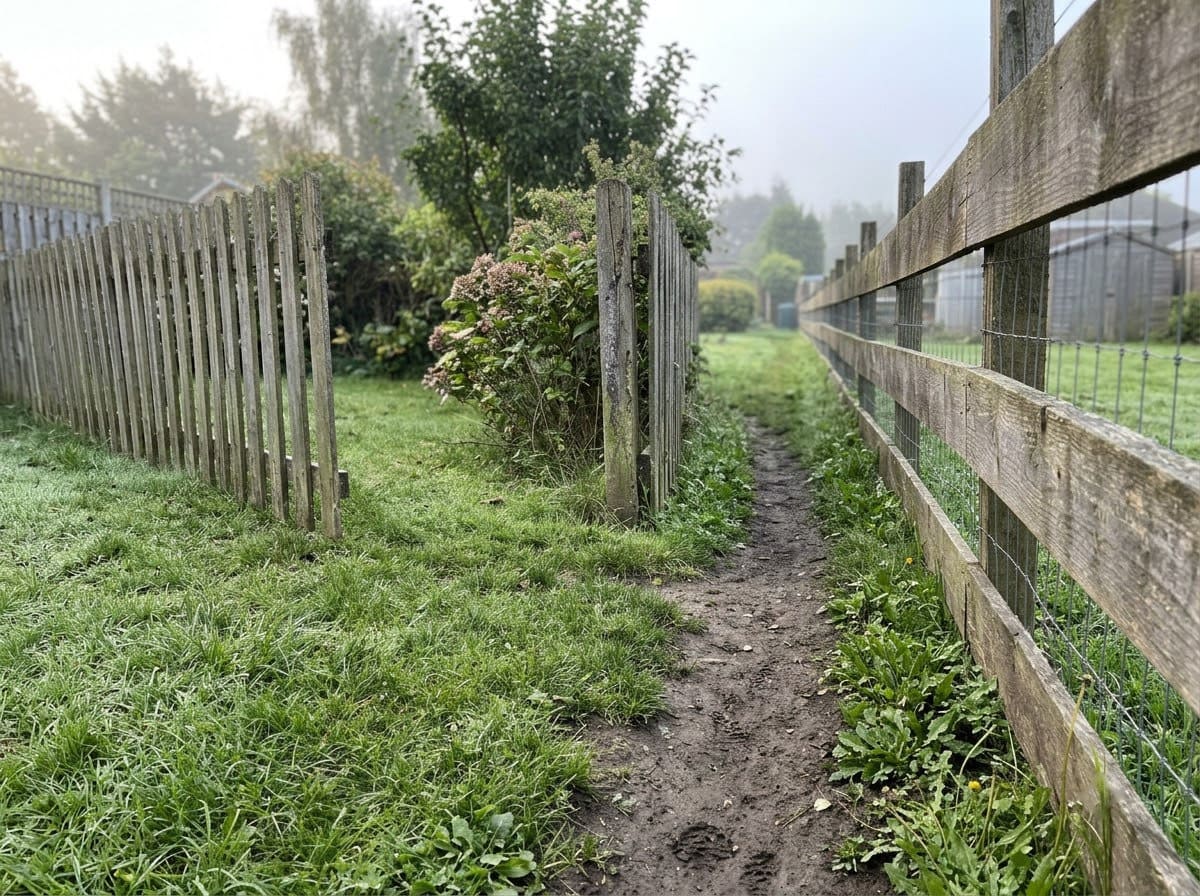
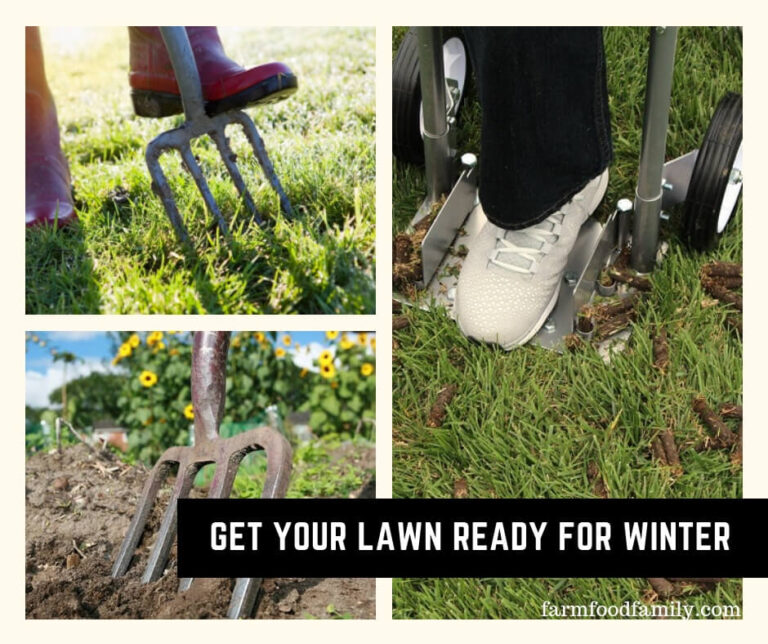
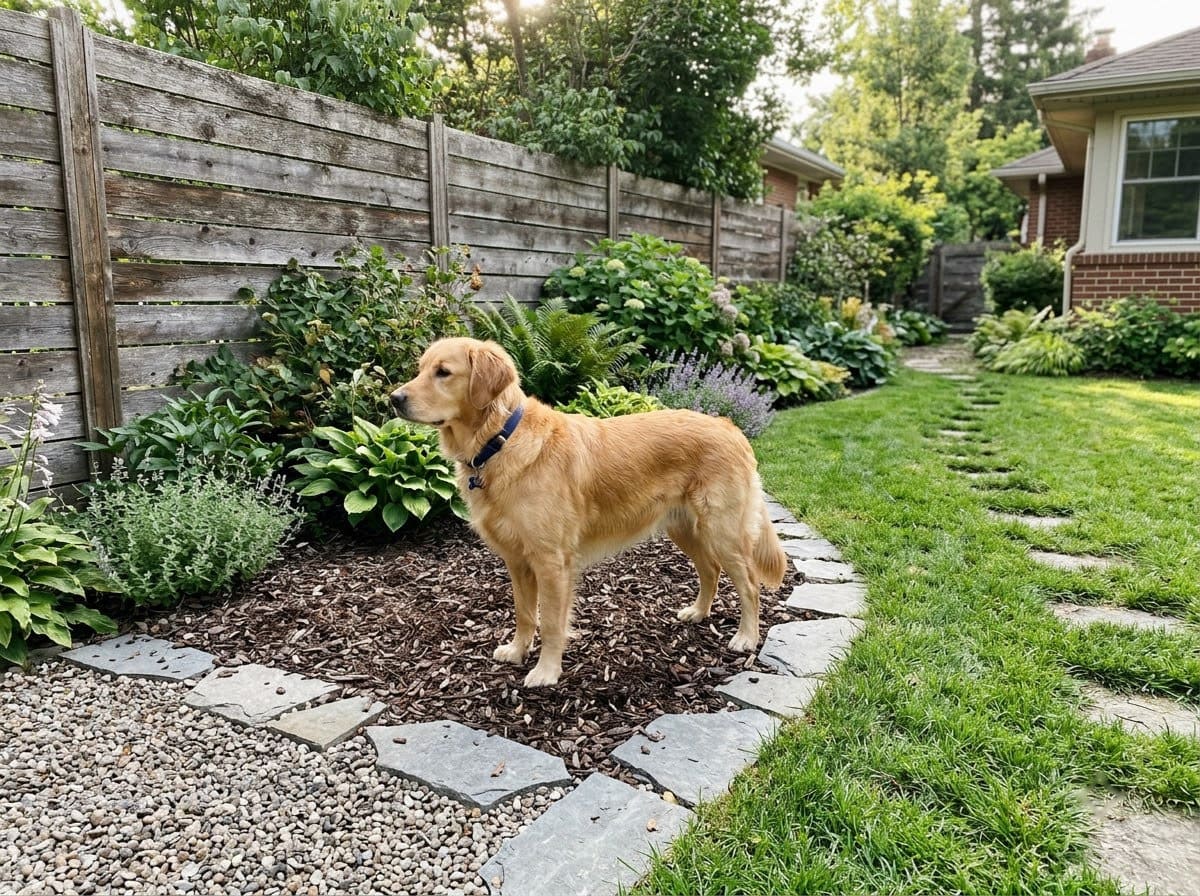
Aerating will relieve that pressure, though your dog’s patrols will most likely resume the moment you put the fork away. Laying stepping stones or a mulch path along the fence line gives your dog a dedicated runway and stops the grass from wearing away.
Flattened and Grazed Patches
Every pet has a favorite sunbathing spot, and the grass there takes a beating from the constant weight and shade of a snoozing body. What’s left behind is a thinned, slightly gray patch that never quite recovers on its own.
The average homeowner spends $616/year on yard fixes that don't address the real problem. Find out what yours actually is — before you spend another dollar.
Take the Free QuizRabbits, guinea pigs, and chickens do the same damage with surprising efficiency. Leave a run or a coop in one position for two weeks, and you’ll find bare, cropped earth underneath, plus a generous helping of droppings that scorch the grass much like dog urine does.
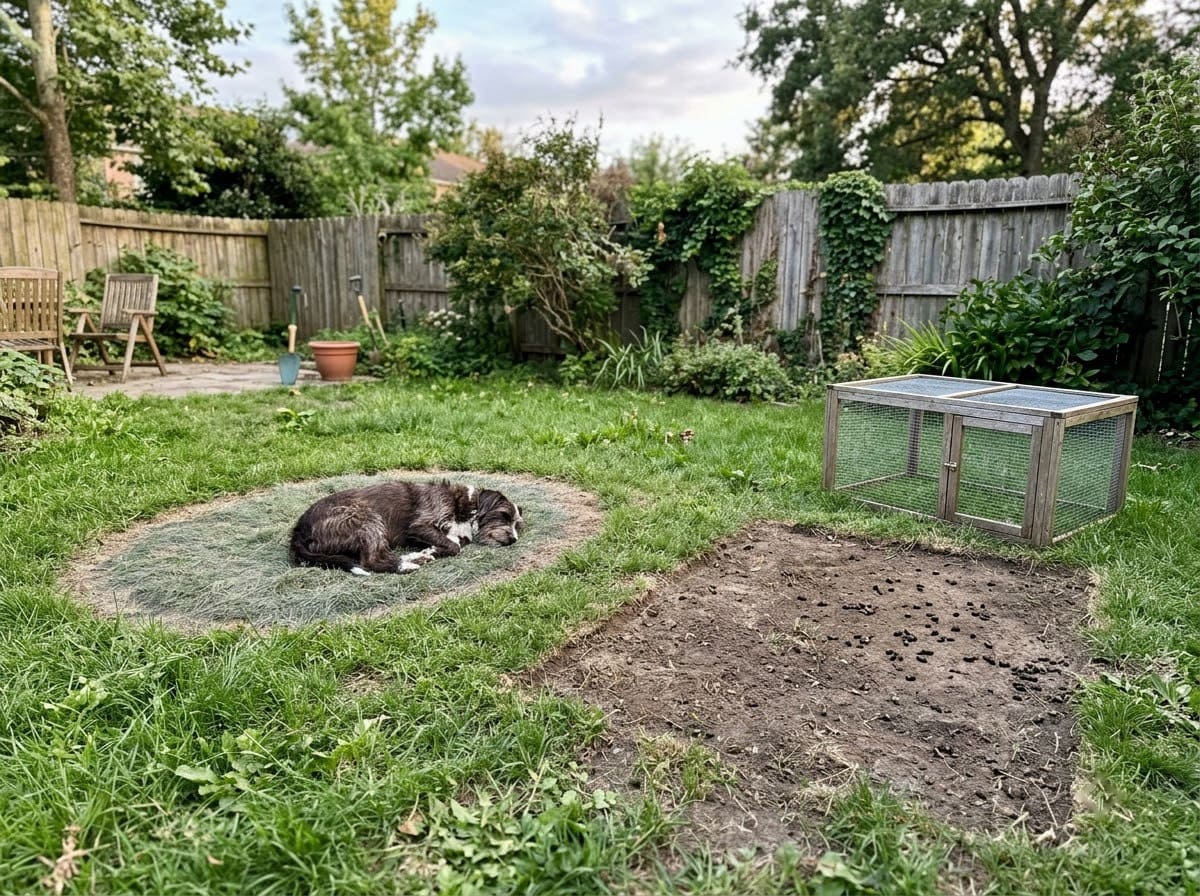
Moving any run or pen every couple of days fixes this almost completely. And shifting garden furniture, toys, and beds around spreads the pressure so no single patch carries all of that wear.
How to Repair Pet Damage on Your Lawn
Most pet damage is fixable in a weekend, as long as you work in the right order. Here is the process that works for urine burn, digging, and worn tracks alike.
Step 1: Rake out the dead grass. Use a stiff rake to pull out dead blades and debris until you see bare soil. Remove any dug-up clumps of turf.
Step 2: Flush the spot. For urine burn, soak the patch with plenty of water to wash the salts down and away from the root zone. Let it drain before you go on.
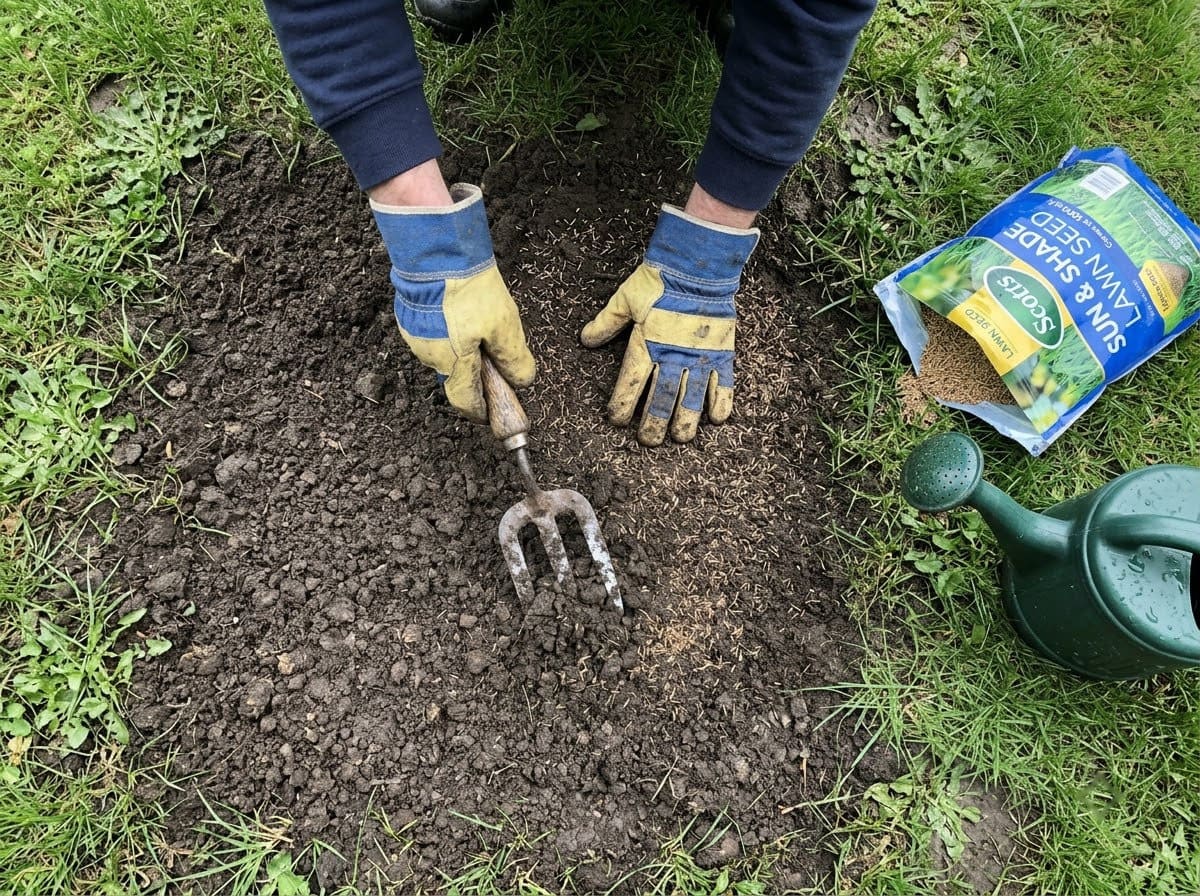
Step 3: Loosen the soil. Break up the top two to three inches with a hand fork so the new roots can get through. This matters most on compacted running tracks.
Step 4: Add a thin layer of topsoil or compost. Level the hole so it sits slightly proud of the lawn, because it will settle. Rake it smooth.
Step 5: Sow grass seed. Choose a mix that suits your lawn, and press it lightly into the soil. Early fall and spring give the best results.
Step 6: Water lightly every day. Keep the seedbed damp, not soaking, until the shoots appear. Cover the patch with netting or a low fence so paws stay off.
Keep your pet away until the new grass has been mown a few times. That usually takes three to four weeks, depending on the season and the seed.
How to Prevent Pet Lawn Damage
Repair only works if the damage stops coming back. A few small habits will protect your lawn without taking anything away from your pet.
Give your dog a designated spot. A small area of gravel, mulch, or bark chips near the back door becomes their bathroom, and the lawn stays untouched. Reward them each time they use it, and the habit sticks within a few weeks.
Dilute every time. Water the spot straight after your dog goes. Encouraging your dog to drink more also makes their urine less concentrated, which softens the impact on grass.
Skip the miracle products. Supplements sold to “neutralize” urine haven’t been shown to protect lawns reliably, and changing your dog’s diet without advice can cause health problems. Talk to your vet before you try one.
Rotate the wear. Move toys, beds, runs, and furniture regularly, and put stepping stones on the routes your pet walks every day.
Which Grass Holds Up Best to Pets?
Perennial ryegrass and tall fescue handle heavy wear well and recover quickly from small scrapes. Fine-bladed ornamental grasses look lovely but tear easily, so they’re a poor match for an active dog.
If you’re reseeding anyway, ask your garden center for a hard-wearing or “family” mix. It costs the same as a standard blend and pays you back within a season.
When to Bring in the Professionals
There comes a point where patching individual spots stops paying off. If more than a third of your lawn has gone bare, or the same damage returns every spring no matter what you reseed, you’ve moved beyond minor repair territory.
Professionals bring machinery that pulls plugs of soil out of packed ground, strips away years of built-up thatch, and gets air down to roots that have been struggling without it. They’ll also test your soil, which will save you from guessing what is going wrong.
If you’d rather hand the heavy work to someone with the proper kit, professional lawn care for homeowners will provide solutions that include aeration, dethatching, and a seasonal feeding program matched to your grass.
Frequently Asked Questions
Does dog pee kill grass?
Yes, it can. Dog urine contains concentrated nitrogen and salts, and when it lands in one spot the roots get burned. Diluting the area with water right after your dog goes usually prevents the damage.
Will grass grow back after dog urine burn?
Sometimes, if the roots are still alive, but dead patches usually need help. Rake out the dead grass, flush the soil with water, and reseed. New grass typically fills in within a few weeks.
How do I stop my dog from killing the grass?
Water the spot after each visit, train your dog to use a mulch or gravel area, and move play and rest spots around. Choosing a hard-wearing grass seed helps too.
Do cat and rabbit droppings damage lawns?
Cats rarely burn turf, but they dig in loose or freshly seeded soil. Rabbits, guinea pigs, and chickens can scorch and flatten grass when a run or coop stays in one place. Moving the pen every couple of days solves most of it.
What is the best grass seed for lawns with dogs?
Perennial ryegrass and tall fescue are the most common choices. They wear well and recover quickly. Ask your garden center for a hard-wearing mix suited to your soil and sunlight.
How long should I keep pets off reseeded grass?
Wait until the new grass has been mown three or four times, which usually takes three to four weeks. Netting or a temporary fence protects the patch while it establishes.
Are lawn treatments safe for pets?
Many are safe once they have been watered in and the grass is dry, but products differ. Read the label for re-entry times, and ask your vet or lawn care provider if you’re not sure.
Conclusion
You don’t need to choose between a gorgeous lawn and a happy pet; you just need a game plan. Tweak a few habits, fix your soil, and you can stop playing lawn referee and get back to enjoying your yard with your favorite chaos-demon!
Never miss an update — choose FarmFoodFamily as your preferred source on Google.
How it works: Tap the button below to open Google's settings page, then check the box next to FarmFoodFamily.
Tap the checkbox to turn it blue — that's how you know it's set.